EP3556465B1 - CATALYST AND METHOD FOR REMOVING NOx FROM COMBUSTION EXHAUST GAS - Google Patents
CATALYST AND METHOD FOR REMOVING NOx FROM COMBUSTION EXHAUST GAS Download PDFInfo
- Publication number
- EP3556465B1 EP3556465B1 EP17880629.5A EP17880629A EP3556465B1 EP 3556465 B1 EP3556465 B1 EP 3556465B1 EP 17880629 A EP17880629 A EP 17880629A EP 3556465 B1 EP3556465 B1 EP 3556465B1
- Authority
- EP
- European Patent Office
- Prior art keywords
- pore volume
- catalyst
- less
- ratio
- range
- Prior art date
- Legal status (The legal status is an assumption and is not a legal conclusion. Google has not performed a legal analysis and makes no representation as to the accuracy of the status listed.)
- Active
Links
Images




Classifications
-
- B—PERFORMING OPERATIONS; TRANSPORTING
- B01—PHYSICAL OR CHEMICAL PROCESSES OR APPARATUS IN GENERAL
- B01D—SEPARATION
- B01D53/00—Separation of gases or vapours; Recovering vapours of volatile solvents from gases; Chemical or biological purification of waste gases, e.g. engine exhaust gases, smoke, fumes, flue gases, aerosols
- B01D53/34—Chemical or biological purification of waste gases
- B01D53/74—General processes for purification of waste gases; Apparatus or devices specially adapted therefor
- B01D53/86—Catalytic processes
-
- B—PERFORMING OPERATIONS; TRANSPORTING
- B01—PHYSICAL OR CHEMICAL PROCESSES OR APPARATUS IN GENERAL
- B01D—SEPARATION
- B01D53/00—Separation of gases or vapours; Recovering vapours of volatile solvents from gases; Chemical or biological purification of waste gases, e.g. engine exhaust gases, smoke, fumes, flue gases, aerosols
- B01D53/34—Chemical or biological purification of waste gases
- B01D53/74—General processes for purification of waste gases; Apparatus or devices specially adapted therefor
- B01D53/86—Catalytic processes
- B01D53/8621—Removing nitrogen compounds
- B01D53/8625—Nitrogen oxides
- B01D53/8628—Processes characterised by a specific catalyst
-
- B—PERFORMING OPERATIONS; TRANSPORTING
- B01—PHYSICAL OR CHEMICAL PROCESSES OR APPARATUS IN GENERAL
- B01D—SEPARATION
- B01D53/00—Separation of gases or vapours; Recovering vapours of volatile solvents from gases; Chemical or biological purification of waste gases, e.g. engine exhaust gases, smoke, fumes, flue gases, aerosols
- B01D53/34—Chemical or biological purification of waste gases
- B01D53/74—General processes for purification of waste gases; Apparatus or devices specially adapted therefor
- B01D53/86—Catalytic processes
- B01D53/90—Injecting reactants
-
- B—PERFORMING OPERATIONS; TRANSPORTING
- B01—PHYSICAL OR CHEMICAL PROCESSES OR APPARATUS IN GENERAL
- B01D—SEPARATION
- B01D53/00—Separation of gases or vapours; Recovering vapours of volatile solvents from gases; Chemical or biological purification of waste gases, e.g. engine exhaust gases, smoke, fumes, flue gases, aerosols
- B01D53/34—Chemical or biological purification of waste gases
- B01D53/92—Chemical or biological purification of waste gases of engine exhaust gases
- B01D53/94—Chemical or biological purification of waste gases of engine exhaust gases by catalytic processes
- B01D53/9404—Removing only nitrogen compounds
- B01D53/9409—Nitrogen oxides
- B01D53/9413—Processes characterised by a specific catalyst
-
- B—PERFORMING OPERATIONS; TRANSPORTING
- B01—PHYSICAL OR CHEMICAL PROCESSES OR APPARATUS IN GENERAL
- B01J—CHEMICAL OR PHYSICAL PROCESSES, e.g. CATALYSIS OR COLLOID CHEMISTRY; THEIR RELEVANT APPARATUS
- B01J21/00—Catalysts comprising the elements, oxides, or hydroxides of magnesium, boron, aluminium, carbon, silicon, titanium, zirconium, or hafnium
- B01J21/06—Silicon, titanium, zirconium or hafnium; Oxides or hydroxides thereof
- B01J21/063—Titanium; Oxides or hydroxides thereof
-
- B—PERFORMING OPERATIONS; TRANSPORTING
- B01—PHYSICAL OR CHEMICAL PROCESSES OR APPARATUS IN GENERAL
- B01J—CHEMICAL OR PHYSICAL PROCESSES, e.g. CATALYSIS OR COLLOID CHEMISTRY; THEIR RELEVANT APPARATUS
- B01J23/00—Catalysts comprising metals or metal oxides or hydroxides, not provided for in group B01J21/00
- B01J23/16—Catalysts comprising metals or metal oxides or hydroxides, not provided for in group B01J21/00 of arsenic, antimony, bismuth, vanadium, niobium, tantalum, polonium, chromium, molybdenum, tungsten, manganese, technetium or rhenium
- B01J23/20—Vanadium, niobium or tantalum
- B01J23/22—Vanadium
-
- B—PERFORMING OPERATIONS; TRANSPORTING
- B01—PHYSICAL OR CHEMICAL PROCESSES OR APPARATUS IN GENERAL
- B01J—CHEMICAL OR PHYSICAL PROCESSES, e.g. CATALYSIS OR COLLOID CHEMISTRY; THEIR RELEVANT APPARATUS
- B01J23/00—Catalysts comprising metals or metal oxides or hydroxides, not provided for in group B01J21/00
- B01J23/16—Catalysts comprising metals or metal oxides or hydroxides, not provided for in group B01J21/00 of arsenic, antimony, bismuth, vanadium, niobium, tantalum, polonium, chromium, molybdenum, tungsten, manganese, technetium or rhenium
- B01J23/24—Chromium, molybdenum or tungsten
- B01J23/28—Molybdenum
-
- B—PERFORMING OPERATIONS; TRANSPORTING
- B01—PHYSICAL OR CHEMICAL PROCESSES OR APPARATUS IN GENERAL
- B01J—CHEMICAL OR PHYSICAL PROCESSES, e.g. CATALYSIS OR COLLOID CHEMISTRY; THEIR RELEVANT APPARATUS
- B01J23/00—Catalysts comprising metals or metal oxides or hydroxides, not provided for in group B01J21/00
- B01J23/16—Catalysts comprising metals or metal oxides or hydroxides, not provided for in group B01J21/00 of arsenic, antimony, bismuth, vanadium, niobium, tantalum, polonium, chromium, molybdenum, tungsten, manganese, technetium or rhenium
- B01J23/24—Chromium, molybdenum or tungsten
- B01J23/30—Tungsten
-
- B—PERFORMING OPERATIONS; TRANSPORTING
- B01—PHYSICAL OR CHEMICAL PROCESSES OR APPARATUS IN GENERAL
- B01J—CHEMICAL OR PHYSICAL PROCESSES, e.g. CATALYSIS OR COLLOID CHEMISTRY; THEIR RELEVANT APPARATUS
- B01J35/00—Catalysts, in general, characterised by their form or physical properties
- B01J35/60—Catalysts, in general, characterised by their form or physical properties characterised by their surface properties or porosity
-
- B—PERFORMING OPERATIONS; TRANSPORTING
- B01—PHYSICAL OR CHEMICAL PROCESSES OR APPARATUS IN GENERAL
- B01J—CHEMICAL OR PHYSICAL PROCESSES, e.g. CATALYSIS OR COLLOID CHEMISTRY; THEIR RELEVANT APPARATUS
- B01J35/00—Catalysts, in general, characterised by their form or physical properties
- B01J35/60—Catalysts, in general, characterised by their form or physical properties characterised by their surface properties or porosity
- B01J35/64—Pore diameter
- B01J35/647—2-50 nm
-
- B—PERFORMING OPERATIONS; TRANSPORTING
- B01—PHYSICAL OR CHEMICAL PROCESSES OR APPARATUS IN GENERAL
- B01J—CHEMICAL OR PHYSICAL PROCESSES, e.g. CATALYSIS OR COLLOID CHEMISTRY; THEIR RELEVANT APPARATUS
- B01J35/00—Catalysts, in general, characterised by their form or physical properties
- B01J35/60—Catalysts, in general, characterised by their form or physical properties characterised by their surface properties or porosity
- B01J35/64—Pore diameter
- B01J35/651—50-500 nm
-
- B—PERFORMING OPERATIONS; TRANSPORTING
- B01—PHYSICAL OR CHEMICAL PROCESSES OR APPARATUS IN GENERAL
- B01J—CHEMICAL OR PHYSICAL PROCESSES, e.g. CATALYSIS OR COLLOID CHEMISTRY; THEIR RELEVANT APPARATUS
- B01J35/00—Catalysts, in general, characterised by their form or physical properties
- B01J35/60—Catalysts, in general, characterised by their form or physical properties characterised by their surface properties or porosity
- B01J35/66—Pore distribution
-
- B—PERFORMING OPERATIONS; TRANSPORTING
- B01—PHYSICAL OR CHEMICAL PROCESSES OR APPARATUS IN GENERAL
- B01J—CHEMICAL OR PHYSICAL PROCESSES, e.g. CATALYSIS OR COLLOID CHEMISTRY; THEIR RELEVANT APPARATUS
- B01J35/00—Catalysts, in general, characterised by their form or physical properties
- B01J35/60—Catalysts, in general, characterised by their form or physical properties characterised by their surface properties or porosity
- B01J35/66—Pore distribution
- B01J35/69—Pore distribution bimodal
-
- F—MECHANICAL ENGINEERING; LIGHTING; HEATING; WEAPONS; BLASTING
- F01—MACHINES OR ENGINES IN GENERAL; ENGINE PLANTS IN GENERAL; STEAM ENGINES
- F01N—GAS-FLOW SILENCERS OR EXHAUST APPARATUS FOR MACHINES OR ENGINES IN GENERAL; GAS-FLOW SILENCERS OR EXHAUST APPARATUS FOR INTERNAL-COMBUSTION ENGINES
- F01N3/00—Exhaust or silencing apparatus having means for purifying, rendering innocuous, or otherwise treating exhaust
- F01N3/08—Exhaust or silencing apparatus having means for purifying, rendering innocuous, or otherwise treating exhaust for rendering innocuous
-
- F—MECHANICAL ENGINEERING; LIGHTING; HEATING; WEAPONS; BLASTING
- F01—MACHINES OR ENGINES IN GENERAL; ENGINE PLANTS IN GENERAL; STEAM ENGINES
- F01N—GAS-FLOW SILENCERS OR EXHAUST APPARATUS FOR MACHINES OR ENGINES IN GENERAL; GAS-FLOW SILENCERS OR EXHAUST APPARATUS FOR INTERNAL-COMBUSTION ENGINES
- F01N3/00—Exhaust or silencing apparatus having means for purifying, rendering innocuous, or otherwise treating exhaust
- F01N3/08—Exhaust or silencing apparatus having means for purifying, rendering innocuous, or otherwise treating exhaust for rendering innocuous
- F01N3/0807—Exhaust or silencing apparatus having means for purifying, rendering innocuous, or otherwise treating exhaust for rendering innocuous by using absorbents or adsorbents
- F01N3/0828—Exhaust or silencing apparatus having means for purifying, rendering innocuous, or otherwise treating exhaust for rendering innocuous by using absorbents or adsorbents characterised by the absorbed or adsorbed substances
- F01N3/0842—Nitrogen oxides
-
- F—MECHANICAL ENGINEERING; LIGHTING; HEATING; WEAPONS; BLASTING
- F01—MACHINES OR ENGINES IN GENERAL; ENGINE PLANTS IN GENERAL; STEAM ENGINES
- F01N—GAS-FLOW SILENCERS OR EXHAUST APPARATUS FOR MACHINES OR ENGINES IN GENERAL; GAS-FLOW SILENCERS OR EXHAUST APPARATUS FOR INTERNAL-COMBUSTION ENGINES
- F01N3/00—Exhaust or silencing apparatus having means for purifying, rendering innocuous, or otherwise treating exhaust
- F01N3/08—Exhaust or silencing apparatus having means for purifying, rendering innocuous, or otherwise treating exhaust for rendering innocuous
- F01N3/10—Exhaust or silencing apparatus having means for purifying, rendering innocuous, or otherwise treating exhaust for rendering innocuous by thermal or catalytic conversion of noxious components of exhaust
-
- B—PERFORMING OPERATIONS; TRANSPORTING
- B01—PHYSICAL OR CHEMICAL PROCESSES OR APPARATUS IN GENERAL
- B01D—SEPARATION
- B01D2255/00—Catalysts
- B01D2255/20—Metals or compounds thereof
- B01D2255/207—Transition metals
- B01D2255/20707—Titanium
-
- B—PERFORMING OPERATIONS; TRANSPORTING
- B01—PHYSICAL OR CHEMICAL PROCESSES OR APPARATUS IN GENERAL
- B01D—SEPARATION
- B01D2255/00—Catalysts
- B01D2255/20—Metals or compounds thereof
- B01D2255/207—Transition metals
- B01D2255/20723—Vanadium
-
- B—PERFORMING OPERATIONS; TRANSPORTING
- B01—PHYSICAL OR CHEMICAL PROCESSES OR APPARATUS IN GENERAL
- B01D—SEPARATION
- B01D2255/00—Catalysts
- B01D2255/20—Metals or compounds thereof
- B01D2255/207—Transition metals
- B01D2255/20769—Molybdenum
-
- B—PERFORMING OPERATIONS; TRANSPORTING
- B01—PHYSICAL OR CHEMICAL PROCESSES OR APPARATUS IN GENERAL
- B01D—SEPARATION
- B01D2255/00—Catalysts
- B01D2255/20—Metals or compounds thereof
- B01D2255/207—Transition metals
- B01D2255/20776—Tungsten
-
- B—PERFORMING OPERATIONS; TRANSPORTING
- B01—PHYSICAL OR CHEMICAL PROCESSES OR APPARATUS IN GENERAL
- B01D—SEPARATION
- B01D2255/00—Catalysts
- B01D2255/90—Physical characteristics of catalysts
- B01D2255/92—Dimensions
- B01D2255/9205—Porosity
-
- B—PERFORMING OPERATIONS; TRANSPORTING
- B01—PHYSICAL OR CHEMICAL PROCESSES OR APPARATUS IN GENERAL
- B01D—SEPARATION
- B01D2258/00—Sources of waste gases
- B01D2258/01—Engine exhaust gases
-
- B—PERFORMING OPERATIONS; TRANSPORTING
- B01—PHYSICAL OR CHEMICAL PROCESSES OR APPARATUS IN GENERAL
- B01J—CHEMICAL OR PHYSICAL PROCESSES, e.g. CATALYSIS OR COLLOID CHEMISTRY; THEIR RELEVANT APPARATUS
- B01J2523/00—Constitutive chemical elements of heterogeneous catalysts
- B01J2523/40—Constitutive chemical elements of heterogeneous catalysts of Group IV (IVA or IVB) of the Periodic Table
- B01J2523/47—Titanium
-
- B—PERFORMING OPERATIONS; TRANSPORTING
- B01—PHYSICAL OR CHEMICAL PROCESSES OR APPARATUS IN GENERAL
- B01J—CHEMICAL OR PHYSICAL PROCESSES, e.g. CATALYSIS OR COLLOID CHEMISTRY; THEIR RELEVANT APPARATUS
- B01J2523/00—Constitutive chemical elements of heterogeneous catalysts
- B01J2523/50—Constitutive chemical elements of heterogeneous catalysts of Group V (VA or VB) of the Periodic Table
- B01J2523/55—Vanadium
-
- B—PERFORMING OPERATIONS; TRANSPORTING
- B01—PHYSICAL OR CHEMICAL PROCESSES OR APPARATUS IN GENERAL
- B01J—CHEMICAL OR PHYSICAL PROCESSES, e.g. CATALYSIS OR COLLOID CHEMISTRY; THEIR RELEVANT APPARATUS
- B01J2523/00—Constitutive chemical elements of heterogeneous catalysts
- B01J2523/60—Constitutive chemical elements of heterogeneous catalysts of Group VI (VIA or VIB) of the Periodic Table
- B01J2523/68—Molybdenum
-
- B—PERFORMING OPERATIONS; TRANSPORTING
- B01—PHYSICAL OR CHEMICAL PROCESSES OR APPARATUS IN GENERAL
- B01J—CHEMICAL OR PHYSICAL PROCESSES, e.g. CATALYSIS OR COLLOID CHEMISTRY; THEIR RELEVANT APPARATUS
- B01J2523/00—Constitutive chemical elements of heterogeneous catalysts
- B01J2523/60—Constitutive chemical elements of heterogeneous catalysts of Group VI (VIA or VIB) of the Periodic Table
- B01J2523/69—Tungsten
Definitions
- the present invention relates to a catalyst and a method for removing NOx from a combustion exhaust gas. More specifically, the present invention relates to a catalyst and a method for removing NOx from a combustion exhaust gas, preferably a low-NOx combustion exhaust gas, in which SILICA is unlikely to be deposited and in which even when the amount of SILICA deposited is increased, denitration performance is hardly lowered.
- Patent Literature 1 discloses an ammonia catalytic reduction denitration catalyst comprising oxides of titanium and molybdenum, having a first pore group having an average diameter in a range of about 1 ⁇ 10 3 to 1 ⁇ 10 4 ⁇ and a second pore group having an average diameter in a range of about 10 2 to 10 3 ⁇ , wherein the first pore group falls within a range of 10 to 50% of a total pore volume.
- Patent Literature 2 discloses a denitration catalyst for reducing and detoxifying a nitrogen oxide in an exhaust gas, comprising titanium oxide as the main component, and having a total pore volume of 0.20 to 0.45 ml/g and a pore volume occupied by pores whose diameters are not less than 1000 ⁇ of 0.05 to 0.2 ml/g.
- Patent Literature 3 discloses an ammonia catalytic reduction denitration catalyst which is formed by carrying denitration active components on titanium oxide, having an average pore diameter of not more than 10000 ⁇ , and a ratio of a volume occupied by pores whose pore diameters are 400 to 5000 ⁇ relative to a total pore volume of not less than 50%.
- Patent Literature 4 discloses a nitrogen oxide removal catalyst characterized in that a denitration catalyst component is carried on a carrier that a titania sol is impregnated in and carried on a macropore having a size of 100 to 10000 nm, wherein the macropore is formed by secondary aggregation of a mesoporous silica having mesopores having an average pore diameter of not more than 5 nm, and the titania sol has a particle diameter larger than a diameter of the mesopores.
- SILICA (here, the meaning of the "SILICA” includes all the states of Si, and the same is true in the following description) is adhered and deposited on the surface of the catalyst, which facilitates deterioration of the denitration catalyst. It is considered that this deterioration may be caused by the fact that Si contained in coal and the like is not sufficiently oxidized in low-NOx combustion and that a large amount of gaseous SILICA such as siloxanes is contained in the combustion exhaust gas.
- US 2005/255021 A1 discloses monolithic structural catalysts.
- the catalysts have a high open frontal area structure and composition advantageous for use in high particulate matter environments such as coal-fired industrial applications.
- the disclosure provides a monolithic structural catalyst body comprising a high open frontal area structure and composition that can achieve an efficient selective reduction of nitrogen oxides while minimizing the oxidation of sulfur dioxide wherein the structure of the catalyst body is resistant to plugging by particulate matter.
- JP H10323570 A discloses a catalyst for reducing NOx in a flue gas which contains a metallic component consisting of Ti, V and W or the metallic component consisting of Ti, V, Mo and W and is prepared by using a starting material obtained by mixing titania and a tungsten and heat-treating the mixture.
- WO 95/32789 A1 discloses an SCR catalyst, containing titanium, molybdenum and vanadium, with the particular characteristic that its catalytic activity is significantly less than that of a tungsten-containing catalyst. This disadvantage has been compensated for in the past by using a comparatively large volume of catalyst.
- the disclosure proposes that the molybdenum content of the catalyst, in the form of molybdenum trioxide Mois about 0.01 to 5% by wt., preferably 1.5 to 4% by wt., relative to the weight of the catalyst.
- a catalyst containing this amount of molybdenum thus has an activity comparable to that of a tungsten-containing catalyst.
- the disclosure is applicable to all deNOX catalysts which call for the simultaneous presence of a reducing agent, in particular plate-type and honeycomb-type catalysts.
- a first object of the present invention is to provide a catalyst and a method for removing NOx from a combustion exhaust gas.
- a second object of the present invention is to provide a catalyst and a method for removing NOx from a combustion exhaust gas, particularly a low-NOx combustion exhaust gas, in which SILICA is unlikely to be deposited and in which even when the amount of SILICA deposited is increased, denitration performance is hardly lowered.
- a ratio of a pore volume in a range of pore diameter of not less than 40 ⁇ and not more than 3000 ⁇ to a total pore volume is preferably not less than 80% and more preferably not less than 85%.
- the catalyst of the present invention preferably has almost no pores having a pore diameter of more than 3000 ⁇ and less than 40 ⁇ .
- a ratio of a pore volume in a range of pore diameter of not less than 1000 ⁇ to the total pore volume is preferably not less than 10% and not more than 45%, more preferably not less than 11% and not more than 42% and further preferably not less than 7.5% and not more than 28%.
- SILICA is unlikely to be deposited on the surface of the catalyst, and even when SILICA is adhered and deposited, denitration performance is hardly lowered.
- the pore volume distribution in the present invention is obtained by measurements with a mercury injection method.
- the catalyst in the present invention preferably comprises an oxide of titanium, an oxide of molybdenum and/or tungsten and an oxide of vanadium.
- Examples of the preferred form of the catalyst in the present invention can include TiO 2 -V 2 O 3 -WO 3 , TiO 2 -V 2 O 3 -MoO 3 , TiO 2 -V 2 O 3 -WO 3 -MoO 3 and the like.
- a ratio of V element to Ti element in terms of a weight percentage of V 2 O 5 /TiO 2 , is preferably not more than 2% by weight, and more preferably not more than 1% by weight.
- a ratio of Mo element and/or W element to Ti element, in terms of a weight percentage of (MoO 3 +WO 3 )/TiO 2 when oxides of molybdenum and tungsten are used together is preferably not more than 10% by weight, and more preferably not more than 5% by weight.
- raw material of the oxide of titanium used can be titanium oxide powder or a titanium oxide precursor.
- the titanium oxide precursor can include titanium oxide slurry, a titanium oxide sol, titanium sulfate, titanium tetrachloride, titanate and the like.
- raw material of the oxide of titanium one forming into an anatase-type titanium oxide is preferably used.
- a vanadium compound such as vanadium pentoxide, ammonium metavanadate or vanadyl sulfate can be used.
- ammonium paratungstate ammonium metatungstate
- tungsten trioxide tungsten chloride or the like
- tungsten chloride or the like As raw material of the oxide of tungsten, ammonium paratungstate, ammonium metatungstate, tungsten trioxide, tungsten chloride or the like can be used.
- ammonium molybdate, molybdenum trioxide or the like can be used as raw material of the oxide of molybdenum.
- the catalyst in the present invention there is no particular limitation to a method for manufacturing it.
- the catalyst in the present invention can be manufactured using a method of controlling pore volume distribution which is known in the present technical field.
- titanium oxide powder or a titanium oxide precursor is preliminarily calcined, then catalyst component such as V, W, Mo and the like and a promoter component or an additive as necessary are added, which are subjected to shape forming, and thereafter main calcining is performed, or alternatively, an organic polymer compound such as polyvinyl alcohol or polyethylene oxide and catalyst component such as V, W, Mo and the like, and a promoter component or an additive as necessary are added to titanium oxide powder or a titanium oxide precursor, which are subjected to shape forming, and thereafter main calcining is performed, with the result that the catalyst of the present invention can be obtained.
- a honeycomb compact C was obtained in the same manner as in example 1 except that the amount of microcrystalline cellulose was changed to 0% by weight based on catalyst dry weight.
- the honeycomb compact C had outside diameters of 150 mm ⁇ 150 mm, a length in the axial direction of 800 mm, a cell pitch of 7.4 mm, an internal wall thickness of 1.15 mm and a pore volume distribution shown in FIG. 3 .
- the honeycomb compact A was exposed to a simulant exhaust gas containing siloxane in a laboratory. Thereafter, a denitration ratio was measured.
- a relationship (indicated by ⁇ ) between the ratio of the pore volume in a range of pore diameter of not less than 500 ⁇ and not more than 3000 ⁇ to the total pore volume and the reaction rate constant ratio k/k 0 is shown in FIG. 5 .
- a relationship (indicated by x) between the ratio of the pore volume in a range of pore diameter of not less than 500 ⁇ to the total pore volume and the reaction rate constant ratio k/k 0 is shown in FIG. 6 .
- a honeycomb compact D was obtained in the same manner as in example 1 except that the amount of microcrystalline cellulose was changed to 18% by weight based on catalyst dry weight.
- the honeycomb compact D had outside diameters of 150 mm ⁇ 150 mm, a length in the axial direction of 800 mm, a cell pitch of 7.4 mm, an internal wall thickness of 1.15 mm and a pore volume distribution shown in FIG. 7 .
- the honeycomb compact D was exposed to the simulant exhaust gas containing siloxane in the laboratory. Thereafter, a denitration ratio was measured.
- a relationship (indicated by •) between the ratio of the pore volume in a range of pore diameter of not less than 500 ⁇ and not more than 3000 ⁇ to the total pore volume and the reaction rate constant ratio k/k 0 is shown in FIG. 5 .
- a relationship (indicated by •) between the ratio of the pore volume in a range of pore diameter of not less than 500 ⁇ to the total pore volume and the reaction rate constant ratio k/k 0 is shown in FIG. 6 .
- a honeycomb compact E was obtained in the same manner as in example 1 except that the amount of microcrystalline cellulose was changed to 16% by weight based on catalyst dry weight.
- the honeycomb compact E had outside diameters of 150 mm ⁇ 150 mm, a length in the axial direction of 800 mm, a cell pitch of 7.4 mm, an internal wall thickness of 1.15 mm and a pore volume distribution shown in FIG. 8 .
- a ratio of the pore volume in a range of pore diameter of not less than 40 ⁇ and not more than 3000 ⁇ to the total pore volume was not less than 80%, a ratio of the pore volume in a range of pore diameter of not less than 500 ⁇ to the total pore volume was 33%, a ratio of the pore volume in a range of pore diameter of not less than 500 ⁇ and not more than 3000 ⁇ to the total pore volume was 30% and a ratio of the pore volume in a range of pore diameter of not less than 1000 ⁇ to the total pore volume was 23%.
- the honeycomb compact E was exposed to the simulant exhaust gas containing siloxane in the laboratory. Thereafter, a denitration ratio was measured.
- a relationship (indicated by o) between the ratio of the pore volume in a range of pore diameter of not less than 500 ⁇ and not more than 3000 ⁇ to the total pore volume and the reaction rate constant ratio k/k 0 is shown in FIG. 5 .
- a relationship (indicated by o) between the ratio of the pore volume in a range of pore diameter of not less than 500 ⁇ to the total pore volume and the reaction rate constant ratio k/k 0 is shown in FIG. 6 .
- a honeycomb compact F was obtained in the same manner as in example 1 except that the amount of microcrystalline cellulose was changed to 20% by weight based on catalyst dry weight.
- the honeycomb compact F had outside diameters of 150 mm ⁇ 150 mm, a length in the axial direction of 800 mm, a cell pitch of 7.4 mm, an internal wall thickness of 1.15 mm and a pore volume distribution shown in FIG. 9 .
Landscapes
- Chemical & Material Sciences (AREA)
- Engineering & Computer Science (AREA)
- Chemical Kinetics & Catalysis (AREA)
- Organic Chemistry (AREA)
- Materials Engineering (AREA)
- Environmental & Geological Engineering (AREA)
- Health & Medical Sciences (AREA)
- General Chemical & Material Sciences (AREA)
- Oil, Petroleum & Natural Gas (AREA)
- Biomedical Technology (AREA)
- Analytical Chemistry (AREA)
- Combustion & Propulsion (AREA)
- Mechanical Engineering (AREA)
- General Engineering & Computer Science (AREA)
- Toxicology (AREA)
- Catalysts (AREA)
- Exhaust Gas Treatment By Means Of Catalyst (AREA)
- Nanotechnology (AREA)
Description
- The present invention relates to a catalyst and a method for removing NOx from a combustion exhaust gas. More specifically, the present invention relates to a catalyst and a method for removing NOx from a combustion exhaust gas, preferably a low-NOx combustion exhaust gas, in which SILICA is unlikely to be deposited and in which even when the amount of SILICA deposited is increased, denitration performance is hardly lowered.
- NOx generated by the combustion of fuels such as coal and biomass is broadly divided into fuel NOx resulting from oxidation of a nitrogen component in the fuel and thermal NOx resulting from oxidation of nitrogen in air. As a combustion method (low-NOx combustion method) for reducing NOx contained in a combustion exhaust gas, known are a low air ratio combustion method, an air multistage combustion method, a fuel multistage combustion method, an exhaust gas recirculation combustion method, a lean premixed combustion method and the like. A low-NOx combustion exhaust gas has a content of NOx being low as compared with a normal combustion exhaust gas, even so, denitration processing is preferably performed for reducing an environmental load.
- As a conventional denitration catalyst, for example,
Patent Literature 1 discloses an ammonia catalytic reduction denitration catalyst comprising oxides of titanium and molybdenum, having a first pore group having an average diameter in a range of about 1 × 10³ to 1 × 10⁴ Å and a second pore group having an average diameter in a range of about 102 to 103 Å, wherein the first pore group falls within a range of 10 to 50% of a total pore volume. - Patent Literature 2 discloses a denitration catalyst for reducing and detoxifying a nitrogen oxide in an exhaust gas, comprising titanium oxide as the main component, and having a total pore volume of 0.20 to 0.45 ml/g and a pore volume occupied by pores whose diameters are not less than 1000 Å of 0.05 to 0.2 ml/g.
- Patent Literature 3 discloses an ammonia catalytic reduction denitration catalyst which is formed by carrying denitration active components on titanium oxide, having an average pore diameter of not more than 10000 Å, and a ratio of a volume occupied by pores whose pore diameters are 400 to 5000 Å relative to a total pore volume of not less than 50%.
- Patent Literature 4 discloses a nitrogen oxide removal catalyst characterized in that a denitration catalyst component is carried on a carrier that a titania sol is impregnated in and carried on a macropore having a size of 100 to 10000 nm, wherein the macropore is formed by secondary aggregation of a mesoporous silica having mesopores having an average pore diameter of not more than 5 nm, and the titania sol has a particle diameter larger than a diameter of the mesopores.
- However, when denitration processing on a low-NOx combustion exhaust gas is performed with the conventional denitration catalyst as described above, it is likely that SILICA (here, the meaning of the "SILICA" includes all the states of Si, and the same is true in the following description) is adhered and deposited on the surface of the catalyst, which facilitates deterioration of the denitration catalyst. It is considered that this deterioration may be caused by the fact that Si contained in coal and the like is not sufficiently oxidized in low-NOx combustion and that a large amount of gaseous SILICA such as siloxanes is contained in the combustion exhaust gas.
-
US 2005/255021 A1 discloses monolithic structural catalysts. The catalysts have a high open frontal area structure and composition advantageous for use in high particulate matter environments such as coal-fired industrial applications. The disclosure provides a monolithic structural catalyst body comprising a high open frontal area structure and composition that can achieve an efficient selective reduction of nitrogen oxides while minimizing the oxidation of sulfur dioxide wherein the structure of the catalyst body is resistant to plugging by particulate matter. -
JP H10323570 A -
WO 95/32789 A1 -
- Patent Literature 1 :
JP H05-66175 A - Patent Literature 2 :
JP S63-147547 A - Patent Literature 3 :
JP H01-130720 A - Patent Literature 4 :
JP 2009-219980 A - Patent Literature 5 :
US 2005/255021 A1 - Patent Literature 6 :
JP H10323570 A - Patent Literature 7 :
WO 95/32789 A1 -
- Non-patent Literature 1 : Matsumoto et al., "Development of Ultra-low-NOx Coal Fired M-PM Burner", Mitsubishi Heavy Industries Technical Review Vol. 50 No. 3 (2013) Power Generation Technology Special Feature P18.
- Non-patent Literature 2 : Naito, "Reduction of Environmental Load of Heating Furnace with Ultra-low-NOx Burner" PETROTEC Vol. 31 No. 9 (2008).
- Non-patent Literature 3 : Watanabe, "Coal Combustion Technology for Thermal Power Generation" NAGARE 31 (2012) 339-344.
- A first object of the present invention is to provide a catalyst and a method for removing NOx from a combustion exhaust gas. A second object of the present invention is to provide a catalyst and a method for removing NOx from a combustion exhaust gas, particularly a low-NOx combustion exhaust gas, in which SILICA is unlikely to be deposited and in which even when the amount of SILICA deposited is increased, denitration performance is hardly lowered.
- The above object is achieved by a catalyst according to
claim 1 and a method according toclaim 6. The dependent claims are directed to different advantageous aspects of the invention. - The present invention includes the following preferred aspects.
- [8] A catalyst for removing NOx from a combustion exhaust gas, wherein the catalyst has a ratio of a pore volume in a range of pore diameter of not less than 40 Å and not more than 3000 Å relative to a total pore volume of not less than 80% and a ratio of a pore volume in a range of pore diameter of not less than 500 Å relative to the total pore volume of not less than 25% and not more than 50% and a ratio of a pore volume in a range of pore diameter of not less than 40 Å relative to the total pore volume of not less than 90% in a pore volume distribution in a range of pore diameter of not more than 105 Å.
- [10] The catalyst described in [8] or [9], wherein the catalyst has a ratio of a pore volume in a range of pore diameter of not less than 1000 Å relative to the total pore volume of not less than 10% and not more than 45% in the pore volume distribution in the range of pore diameter of not more than 105 Å.
- [11] A method comprising bringing a combustion exhaust gas into contact with the catalyst described in any one of [8] to [10] in the presence of ammonia to remove NOx from the combustion exhaust gas.
- [12] The method described in [11], wherein the combustion exhaust gas is a low-NOx combustion exhaust gas.
- [13] The method described in [11], wherein the combustion exhaust gas has a NOx concentration of not more than 350 ppm.
- The catalyst of the present invention is suitable for an ammonia catalytic reduction reaction for removing NOx from a combustion exhaust gas. In the catalyst of the present invention, SILICA is unlikely to be adhered and deposited on the surface of the catalyst, and even when SILICA is adhered and deposited, denitration performance is hardly lowered, with the result that the catalyst is highly resistant to the deposition of SILICA. The catalyst of the present invention is suitable for an ammonia catalytic reduction reaction for removing NOx from a low-NOx combustion exhaust gas.
- According to the method of the present invention, even when SILICA is adhered and deposited on the surface of the catalyst, denitration performance is hardly lowered, and thus it is possible to reduce frequency with which the catalyst is replaced, with the result that it is possible to reduce costs related to purification of a combustion exhaust gas.
- Since pore diameter of less than 500 Å is smaller than mean free path of gas, the gas easily collides with internal wall of the pore. Hence, it is considered that gaseous SILICA such as siloxanes reacts on the surface of catalyst pores to generate silica, SILICA is deposited, and the denitration performance of the catalyst whose pore diameters are small is lowered. On the other hand, a pore diameter of not less than 500 Å is close to or larger than mean free path of gas. It is considered that the collision of gaseous molecules within the pores is relatively lowered to reduce the deposition of SILICA, and that thus it is possible to inhibit a decrease in denitration performance.
-
-
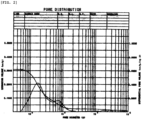
FIG. 1 is a diagram showing a pore volume distribution of a catalyst (honeycomb compact A) obtained in example 1. -
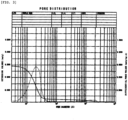
FIG. 2 is a diagram showing a pore volume distribution of a catalyst (honeycomb compact B) obtained in example 2. -
FIG. 3 is a diagram showing a pore volume distribution of a catalyst (honeycomb compact C) obtained in comparative example 1. -
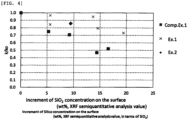
FIG. 4 is a diagram showing a relationship between the amount of SILICA deposited on the surface of the catalyst and a reaction rate constant ratio k/k0. -
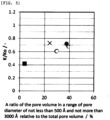
FIG. 5 is a diagram showing a relationship between the ratio of a pore volume in a range of pore diameter of not less than 500 Å and not more than 3000 Å to the total pore volume and the reaction rate constant ratio k/k0. -
FIG. 6 is a diagram showing a relationship between the ratio of a pore volume in a range of pore diameter of not less than 500 Å to the total pore volume and the reaction rate constant ratio k/k0. -
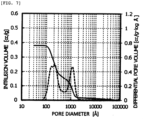
FIG. 7 is a diagram showing a pore volume distribution of a catalyst (honeycomb compact D) obtained in example 4. -
FIG. 8 is a diagram showing a pore volume distribution of a catalyst (honeycomb compact E) obtained in example 5. -
FIG. 9 is a diagram showing a pore volume distribution of a catalyst (honeycomb compact F) obtained in example 6. - The catalyst in the present invention is for removing NOx from a combustion exhaust gas.
- The catalyst in the present invention has a pore volume distribution as described below.
- In the catalyst in the present invention, in a pore volume distribution in a range of pore diameter of not more than 105 Å, a ratio of a pore volume in a range of pore diameter of not less than 40 Å and not more than 3000 Å to a total pore volume is preferably not less than 80% and more preferably not less than 85%. The catalyst of the present invention preferably has almost no pores having a pore diameter of more than 3000 Å and less than 40 Å. Specifically, in the pore volume distribution in the range of pore diameter of not more than 105 Å, a ratio of a pore volume in a range of pore diameter of not less than 3000 Å to the total pore volume is preferably not more than 10% and more preferably not more than 8%, and a ratio of a pore volume in a range of pore diameter of not less than 40 Å to the total pore volume is preferably not less than 90%, and more preferably not less than 93%.
- In the catalyst in the present invention, in the pore volume distribution in the range of pore diameter of not more than 105 Å, a ratio of a pore volume in a range of pore diameter of not less than 500 Å and not more than 3000 Å to the total pore volume is preferably not less than 15% and not more than 40%, and more preferably not less than 19% and not more than 39%. A ratio of a pore volume in a range of pore diameter of not less than 500 Å to the total pore volume is preferably not less than 25% and not more than 50%, more preferably not less than 26% and not more than 49% and further preferably not less than 23% and not more than 45%. Furthermore, a ratio of a pore volume in a range of pore diameter of not less than 1000 Å to the total pore volume is preferably not less than 10% and not more than 45%, more preferably not less than 11% and not more than 42% and further preferably not less than 7.5% and not more than 28%.
- In the catalyst having the novel pore volume distribution as described above, SILICA is unlikely to be deposited on the surface of the catalyst, and even when SILICA is adhered and deposited, denitration performance is hardly lowered.
- Additionally, the pore volume distribution in the present invention is obtained by measurements with a mercury injection method.
- The catalyst in the present invention preferably comprises an oxide of titanium, an oxide of molybdenum and/or tungsten and an oxide of vanadium. Examples of the preferred form of the catalyst in the present invention can include TiO2-V2O3-WO3, TiO2-V2O3-MoO3, TiO2-V2O3-WO3-MoO3 and the like.
- A ratio of V element to Ti element, in terms of a weight percentage of V2O5/TiO2, is preferably not more than 2% by weight, and more preferably not more than 1% by weight. A ratio of Mo element and/or W element to Ti element, in terms of a weight percentage of (MoO3+WO3)/TiO2 when oxides of molybdenum and tungsten are used together is preferably not more than 10% by weight, and more preferably not more than 5% by weight.
- In the preparation of the catalyst, as raw material of the oxide of titanium, used can be titanium oxide powder or a titanium oxide precursor. Examples of the titanium oxide precursor can include titanium oxide slurry, a titanium oxide sol, titanium sulfate, titanium tetrachloride, titanate and the like.
- In the present invention, as raw material of the oxide of titanium, one forming into an anatase-type titanium oxide is preferably used.
- As raw material of the oxide of vanadium, a vanadium compound such as vanadium pentoxide, ammonium metavanadate or vanadyl sulfate can be used.
- As raw material of the oxide of tungsten, ammonium paratungstate, ammonium metatungstate, tungsten trioxide, tungsten chloride or the like can be used.
- As raw material of the oxide of molybdenum, ammonium molybdate, molybdenum trioxide or the like can be used.
- In the catalyst in the present invention, as a promoter component or an additive, an oxide of P, an oxide of S, an oxide of Al (for example, alumina), an oxide of Si (for example, glass fiber), an oxide of Zr (for example, zirconia), a gypsum (for example, dihydrate gypsum), zeolite or the like may be contained. These can be used in the form of powder, sol, slurry, fiber or the like when the catalyst is prepared.
- In the catalyst in the present invention, there is no limitation to the shape thereof, and, for example, a shape such as a pellet shape, a spherical shape, a cylindrical shape, a honeycomb shape, a plate shape, a mesh shape or a corrugated shape can be adopted.
- In the catalyst in the present invention, there is no particular limitation to a method for manufacturing it. The catalyst in the present invention can be manufactured using a method of controlling pore volume distribution which is known in the present technical field. For example, titanium oxide powder or a titanium oxide precursor is preliminarily calcined, then catalyst component such as V, W, Mo and the like and a promoter component or an additive as necessary are added, which are subjected to shape forming, and thereafter main calcining is performed, or alternatively, an organic polymer compound such as polyvinyl alcohol or polyethylene oxide and catalyst component such as V, W, Mo and the like, and a promoter component or an additive as necessary are added to titanium oxide powder or a titanium oxide precursor, which are subjected to shape forming, and thereafter main calcining is performed, with the result that the catalyst of the present invention can be obtained.
- The method in the present invention comprises bringing a combustion exhaust gas into contact with the catalyst of the present invention in the presence of ammonia to remove NOx from the combustion exhaust gas.
- The combustion exhaust gas is preferably a low-NOx combustion exhaust gas and more preferably a combustion exhaust gas having a NOx concentration of not more than 350 ppm.
- Ammonia can be added to the combustion exhaust gas according to a method known in the present technical field. The amount of ammonia is not particularly limited as long as the reduction reaction proceeds smoothly.
- Bringing the combustion exhaust gas into contact with the catalyst of the present invention in the presence of ammonia can lead to, for example, a reduction reaction represented by formula (1) to convert a nitrogen oxide into nitrogen and water which are not toxic.
NO + NH3 + 1/4O2 → N2 + H2O (1)
- The present invention will be more specifically described based on examples and comparative examples below, but the present invention is not limited to the examples described below at all.
- Into a kneader, 820 kg of titanium dioxide was charged, a monoethanol aqueous solution in which 8.9 kg of ammonium metavanadate and 69.6 kg of ammonium paratungstate were dissolved was added, 46.7 kg of glass fiber, 46.7 kg of activated white earth and 9.3 kg of polyethylene oxide were added. And they were kneaded with the kneader. Thereafter, microcrystalline cellulose was added so as to be 15% by weight based on catalyst dry weight, and kneading was performed while regulating water content. Thereafter, the kneaded product was extruded with a screw-type vacuum extruder equipped with a honeycomb extrusion nozzle to obtain a honeycomb shaped product. The honeycomb shaped product was naturally dried and was then dried under ventilation at 100 °C for 5 hours. Thereafter, both ends in an axial direction were cut so as to be aligned, calcining was performed at 600 °C within an electric furnace to obtain a honeycomb compact A having outside diameters of 150 mm × 150 mm, a length in the axial direction of 800 mm, a cell pitch of 7.4 mm, an internal wall thickness of 1.15 mm and a pore volume distribution shown in
FIG. 1 . A ratio of the pore volume in a range of pore diameter of not less than 40 Å and not more than 3000 Å to the total pore volume was not less than 80%, a ratio of the pore volume in a range of pore diameter of not less than 500 Å to the total pore volume was 33%, a ratio of the pore volume in a range of pore diameter of not less than 500 Å and not more than 3000 Å to the total pore volume was 24%, and a ratio of the pore volume in a range of pore diameter of not less than 1000 Å to the total pore volume was 19%. - The honeycomb compact A was placed in a denitration device of a low-NOx combustion boiler, and the removal of NOx from a combustion exhaust gas (concentration of NOx was 200 ppm) was performed for 56 thousand hours. An amount of SILICA deposited on the surface of the catalyst and a denitration ratio were measured. A relationship (indicated by ×) between the amount of SILICA deposited on the surface of the catalyst and a reaction rate constant ratio k/k0 is shown in
FIG. 4 . - A honeycomb compact B was obtained in the same manner as in example 1 except that the amount of microcrystalline cellulose was changed to 10% by weight based on catalyst dry weight. The honeycomb compact B had outside diameters of 150 mm × 150 mm, a length in the axial direction of 800 mm, a cell pitch of 7.4 mm, an internal wall thickness of 1.15 mm and a pore volume distribution shown in
FIG. 2 . A ratio of the pore volume in a range of pore diameter of not less than 40 Å and not more than 3000 Å to the total pore volume was not less than 80%, a ratio of the pore volume in a range of pore diameter of not less than 500 Å and not more than 3000 Å to the total pore volume was 26%, a ratio of the pore volume in a range of pore diameter of not less than 500 Å and not more than 3000 Å to the total pore volume was 18% and a ratio of the pore volume in a range of pore diameter of not less than 1000 Å to the total pore volume was 11%. - The honeycomb compact B was placed in the denitration device of the low-NOx combustion boiler, and the removal of NOx from a combustion exhaust gas (concentration of NOx was 350 ppm) was performed for 15 thousand hours. An amount of SILICA deposited on the surface of the catalyst and a denitration ratio were measured. A relationship (indicated by ◆) between the amount of SILICA deposited on the surface of the catalyst and the reaction rate constant ratio k/k0 is shown in
FIG. 4 . - A honeycomb compact C was obtained in the same manner as in example 1 except that the amount of microcrystalline cellulose was changed to 0% by weight based on catalyst dry weight. The honeycomb compact C had outside diameters of 150 mm × 150 mm, a length in the axial direction of 800 mm, a cell pitch of 7.4 mm, an internal wall thickness of 1.15 mm and a pore volume distribution shown in
FIG. 3 . A ratio of the pore volume in a range of pore diameter of not less than 500 Å to the total pore volume was 9%, a ratio of the pore volume in a range of pore diameter of not less than 500 Å and not more than 3000 Å to the total pore volume was 4%, and a ratio of the pore volume in a range of pore diameter of not less than 1000 Å to the total pore volume was 7%. - The honeycomb compact C was placed in the denitration device of the low-NOx combustion boiler, and the removal of NOx from a combustion exhaust gas (concentration of NOx was 270 ppm) was performed for 30 thousand hours. An amount of SILICA deposited on the surface of the catalyst and a denitration ratio were measured. A relationship (indicated by ■) between the amount of SILICA deposited on the surface of the catalyst and the reaction rate constant ratio k/k0 is shown in
FIG. 4 . - As described above, with the catalyst of the present invention, it is possible to remove NOx from a combustion exhaust gas, preferably a low-NOx combustion exhaust gas, and denitration performance is hardly lowered even when the amount of SILICA deposited on the surface of the catalyst is increased.
- Furthermore, SILICA processing was performed for a certain period of time in a laboratory experiment, and the reaction rate constant ratio k/k0 was measured.
- The honeycomb compact A was exposed to a simulant exhaust gas containing siloxane in a laboratory. Thereafter, a denitration ratio was measured. A relationship (indicated by ×) between the ratio of the pore volume in a range of pore diameter of not less than 500 Å and not more than 3000 Å to the total pore volume and the reaction rate constant ratio k/k0 is shown in
FIG. 5 . A relationship (indicated by x) between the ratio of the pore volume in a range of pore diameter of not less than 500 Å to the total pore volume and the reaction rate constant ratio k/k0 is shown inFIG. 6 . - A honeycomb compact D was obtained in the same manner as in example 1 except that the amount of microcrystalline cellulose was changed to 18% by weight based on catalyst dry weight. The honeycomb compact D had outside diameters of 150 mm × 150 mm, a length in the axial direction of 800 mm, a cell pitch of 7.4 mm, an internal wall thickness of 1.15 mm and a pore volume distribution shown in
FIG. 7 . A ratio of the pore volume in a range of pore diameter of not less than 40 Å and not more than 3000 Å to the total pore volume was not less than 80%, a ratio of the pore volume in a range of pore diameter of not less than 500 Å to the total pore volume was 42%, a ratio of the pore volume in a range of pore diameter of not less than 500 Å and not more than 3000 Å to the total pore volume was 38%, and a ratio of the pore volume in a range of pore diameter of not less than 1000 Å to the total pore volume was 27%. - The honeycomb compact D was exposed to the simulant exhaust gas containing siloxane in the laboratory. Thereafter, a denitration ratio was measured. A relationship (indicated by •) between the ratio of the pore volume in a range of pore diameter of not less than 500 Å and not more than 3000 Å to the total pore volume and the reaction rate constant ratio k/k0 is shown in
FIG. 5 . A relationship (indicated by •) between the ratio of the pore volume in a range of pore diameter of not less than 500 Å to the total pore volume and the reaction rate constant ratio k/k0 is shown inFIG. 6 . - A honeycomb compact E was obtained in the same manner as in example 1 except that the amount of microcrystalline cellulose was changed to 16% by weight based on catalyst dry weight. The honeycomb compact E had outside diameters of 150 mm × 150 mm, a length in the axial direction of 800 mm, a cell pitch of 7.4 mm, an internal wall thickness of 1.15 mm and a pore volume distribution shown in
FIG. 8 . A ratio of the pore volume in a range of pore diameter of not less than 40 Å and not more than 3000 Å to the total pore volume was not less than 80%, a ratio of the pore volume in a range of pore diameter of not less than 500 Å to the total pore volume was 33%, a ratio of the pore volume in a range of pore diameter of not less than 500 Å and not more than 3000 Å to the total pore volume was 30% and a ratio of the pore volume in a range of pore diameter of not less than 1000 Å to the total pore volume was 23%. - The honeycomb compact E was exposed to the simulant exhaust gas containing siloxane in the laboratory. Thereafter, a denitration ratio was measured. A relationship (indicated by o) between the ratio of the pore volume in a range of pore diameter of not less than 500 Å and not more than 3000 Å to the total pore volume and the reaction rate constant ratio k/k0 is shown in
FIG. 5 . A relationship (indicated by o) between the ratio of the pore volume in a range of pore diameter of not less than 500 Å to the total pore volume and the reaction rate constant ratio k/k0 is shown inFIG. 6 . - A honeycomb compact F was obtained in the same manner as in example 1 except that the amount of microcrystalline cellulose was changed to 20% by weight based on catalyst dry weight. The honeycomb compact F had outside diameters of 150 mm × 150 mm, a length in the axial direction of 800 mm, a cell pitch of 7.4 mm, an internal wall thickness of 1.15 mm and a pore volume distribution shown in
FIG. 9 . A ratio of the pore volume in a range of pore diameter of not less than 40 Å and not more than 3000 Å to the total pore volume was not less than 80%, a ratio of the pore volume in a range of pore diameter was not less than 500 Å to the total pore volume was 49%, a ratio of the pore volume in a range of pore diameter of not less than 500 Å and not more than 3000 Å to the total pore volume was 39% and a ratio of the pore volume in a range of pore diameter of not less than 1000 Å to the total pore volume was 42%. - The honeycomb compact F was exposed to the simulant exhaust gas containing siloxane in the laboratory. Thereafter, a denitration ratio was measured. A relationship (indicated by *) between the ratio of the pore volume in a range of pore diameter of not less than 500 Å and not more than 3000 Å to the total pore volume and the reaction rate constant ratio k/k0 is shown in
FIG. 5 . A relationship (indicated by ◊) between the ratio of the pore volume in a range of pore diameter of not less than 500 Å to the total pore volume and the reaction rate constant ratio k/k0 is shown inFIG. 6 . - The honeycomb compact C was exposed to the simulant exhaust gas containing siloxane in the laboratory. Thereafter, an amount of SILICA deposited on the surface of the catalyst and a denitration ratio were measured. A relationship (indicated by ■) between the ratio of the pore volume in a range of pore diameter of not less than 500 Å and not more than 3000 Å to the total pore volume and the reaction rate constant ratio k/k0 is shown in
FIG. 5 . A relationship (indicated by ■) between the ratio of the pore volume in a range of pore diameter of not less than 500 Å to the total pore volume and the reaction rate constant ratio k/k0 is shown inFIG. 6 .
Claims (8)
- A catalyst for removing NOx from a combustion exhaust gas, wherein the catalyst has a ratio of a pore volume in a range of pore diameter of not less than 500 Å and not more than 3000 Å relative to a total pore volume of not less than 15% and not more than 40% in a pore volume distribution in a range of pore diameter of not more than 105 Å, the pore volume distribution being determined by measurements with a mercury injection method, andwherein the catalyst comprises an oxide of titanium, an oxide of molybdenum and/or tungsten, and an oxide of vanadium,characterized in that a ratio of V element to Ti element is not more than 2% by weight in terms of a weight percentage of V2O5/TiO2, and a ratio of Mo element and/or W element to Ti element is not more than 10% by weight in terms of a weight percentage of (MoO3+WO3)/TiO2; anda ratio of a pore volume in a range of pore diameter of not less than 500 Å relative to the total pore volume of not less than 25% and not more than 50%, and a ratio of a pore volume in a range of pore diameter of not less than 1000 Å relative to the total pore volume of not less than 10% and not more than 45%.
- The catalyst according to claim 1, wherein the catalyst has a ratio of a pore volume in a range of pore diameter of not less than 40 Å and not more than 3000 Å relative to the total pore volume of not less than 80% in the pore volume distribution in the range of pore diameter of not more than 105 Å.
- The catalyst according to claim 1 or 2, wherein the catalyst has a ratio of a pore volume in a range of pore diameter of not less than 40 Å relative to the total pore volume of not less than 90% in the pore volume distribution in the range of pore diameter of not more than 105 Å.
- The catalyst according to any one of claims 1 to 3, wherein the catalyst has a ratio of a pore volume in a range of pore diameter of not less than 3000 Å relative to the total pore volume of not more than 10% in the pore volume distribution in the range of pore diameter of not more than 105 Å.
- The catalyst according to any one of claims 1 to 4, wherein the ratio of Mo element and/or W element to Ti element is not more than 5% by weight in terms of a weight percentage of (MoO3+WO3)/TiO2.
- A method comprising bringing a combustion exhaust gas into contact with the catalyst according to any one of claims 1 to 5 in the presence of ammonia to remove NOx from the combustion exhaust gas.
- The method according to claim 6, wherein the combustion exhaust gas is a low-NOx combustion exhaust gas.
- The method according to claim 7, wherein the combustion exhaust gas has a NOx concentration of not more than 350 ppm.
Applications Claiming Priority (2)
| Application Number | Priority Date | Filing Date | Title |
|---|---|---|---|
| JP2016243167A JP6833494B2 (en) | 2016-12-15 | 2016-12-15 | Catalysts and methods for removing NOx from flue gas |
| PCT/JP2017/044753 WO2018110604A1 (en) | 2016-12-15 | 2017-12-13 | CATALYST AND METHOD FOR REMOVING NOx FROM COMBUSTION EXHAUST GAS |
Publications (3)
| Publication Number | Publication Date |
|---|---|
| EP3556465A1 EP3556465A1 (en) | 2019-10-23 |
| EP3556465A4 EP3556465A4 (en) | 2020-08-19 |
| EP3556465B1 true EP3556465B1 (en) | 2025-01-29 |
Family
ID=62559499
Family Applications (1)
| Application Number | Title | Priority Date | Filing Date |
|---|---|---|---|
| EP17880629.5A Active EP3556465B1 (en) | 2016-12-15 | 2017-12-13 | CATALYST AND METHOD FOR REMOVING NOx FROM COMBUSTION EXHAUST GAS |
Country Status (6)
| Country | Link |
|---|---|
| US (1) | US11376566B2 (en) |
| EP (1) | EP3556465B1 (en) |
| JP (1) | JP6833494B2 (en) |
| KR (1) | KR102230840B1 (en) |
| CN (1) | CN110087770A (en) |
| WO (1) | WO2018110604A1 (en) |
Families Citing this family (1)
| Publication number | Priority date | Publication date | Assignee | Title |
|---|---|---|---|---|
| JP6695524B1 (en) * | 2018-11-12 | 2020-05-20 | 株式会社コナミアミューズメント | Slot machine |
Citations (1)
| Publication number | Priority date | Publication date | Assignee | Title |
|---|---|---|---|---|
| WO1995032789A1 (en) * | 1994-05-30 | 1995-12-07 | Siemens Aktiengesellschaft | DeNOX CATALYST FOR REDUCING THE NOX CONCENTRATION IN A STREAM OF FLUID, AND METHOD OF MANUFACTURING THE CATALYST |
Family Cites Families (16)
| Publication number | Priority date | Publication date | Assignee | Title |
|---|---|---|---|---|
| GB1029461A (en) * | 1963-07-29 | 1966-05-11 | Grace W R & Co | Catalytic purification of exhaust gases |
| US4435278A (en) * | 1980-06-09 | 1984-03-06 | Chezon Research Co. | Hydroprocessing with a catalyst having bimodal pore distribution |
| JPS6331540A (en) | 1986-07-25 | 1988-02-10 | Mitsubishi Petrochem Co Ltd | Catalyst for reducing nitrogen oxide in exhaust gas by ammonia |
| JPS63147547A (en) | 1986-07-29 | 1988-06-20 | Catalysts & Chem Ind Co Ltd | Denitration catalyst resistant to arsenic and calcium poisoning |
| JPH0817939B2 (en) * | 1986-11-19 | 1996-02-28 | 三菱化学株式会社 | Flue gas denitration catalyst |
| JP2653799B2 (en) | 1987-11-16 | 1997-09-17 | バブコツク日立株式会社 | Method for removing nitrogen oxides and catalyst used in the method |
| JPH0566175A (en) | 1991-09-06 | 1993-03-19 | Hitachi Ltd | High enthalpy supersonic wind tunnel device |
| JP3076421B2 (en) * | 1991-10-08 | 2000-08-14 | バブコック日立株式会社 | DeNOx catalyst suppressing sulfur dioxide oxidation and method for producing the same |
| JPH09253499A (en) | 1996-03-22 | 1997-09-30 | Sumitomo Metal Mining Co Ltd | Denitration catalyst, denitration catalyst coating structure, and denitration method using the same |
| JPH10323570A (en) * | 1997-05-26 | 1998-12-08 | Babcock Hitachi Kk | Catalyst for denitration of flue gas and its production |
| US7776786B2 (en) * | 2004-05-04 | 2010-08-17 | Cormetech, Inc. | Catalyst systems advantageous for high particulate matter environments |
| JP4982721B2 (en) | 2008-03-14 | 2012-07-25 | バブコック日立株式会社 | Nitrogen oxide removing catalyst and method for producing the same |
| JP5616256B2 (en) * | 2010-03-12 | 2014-10-29 | 日本碍子株式会社 | Zeolite structure and method for producing the same |
| JP5701185B2 (en) * | 2011-09-09 | 2015-04-15 | 三菱重工業株式会社 | Method for reducing SO2 oxidation rate increase of denitration catalyst |
| JP6103067B2 (en) * | 2013-09-10 | 2017-03-29 | 新日鐵住金株式会社 | Oxidation catalyst, exhaust gas treatment device, regenerative combustion burner, method for oxidizing combustible components in gas, and method for removing nitrogen oxides in gas |
| JP6669568B2 (en) * | 2016-03-31 | 2020-03-18 | イビデン株式会社 | Method for producing honeycomb catalyst |
-
2016
- 2016-12-15 JP JP2016243167A patent/JP6833494B2/en active Active
-
2017
- 2017-12-13 US US16/469,885 patent/US11376566B2/en active Active
- 2017-12-13 WO PCT/JP2017/044753 patent/WO2018110604A1/en not_active Ceased
- 2017-12-13 EP EP17880629.5A patent/EP3556465B1/en active Active
- 2017-12-13 CN CN201780077240.3A patent/CN110087770A/en active Pending
- 2017-12-13 KR KR1020197016218A patent/KR102230840B1/en active Active
Patent Citations (1)
| Publication number | Priority date | Publication date | Assignee | Title |
|---|---|---|---|---|
| WO1995032789A1 (en) * | 1994-05-30 | 1995-12-07 | Siemens Aktiengesellschaft | DeNOX CATALYST FOR REDUCING THE NOX CONCENTRATION IN A STREAM OF FLUID, AND METHOD OF MANUFACTURING THE CATALYST |
Also Published As
| Publication number | Publication date |
|---|---|
| US11376566B2 (en) | 2022-07-05 |
| EP3556465A1 (en) | 2019-10-23 |
| JP2018094520A (en) | 2018-06-21 |
| JP6833494B2 (en) | 2021-02-24 |
| US20190314789A1 (en) | 2019-10-17 |
| WO2018110604A1 (en) | 2018-06-21 |
| EP3556465A4 (en) | 2020-08-19 |
| CN110087770A (en) | 2019-08-02 |
| KR102230840B1 (en) | 2021-03-24 |
| KR20190079661A (en) | 2019-07-05 |
Similar Documents
| Publication | Publication Date | Title |
|---|---|---|
| JP6595088B2 (en) | SCR catalyst for removing nitrogen oxides and method for producing the same | |
| JP2013091045A (en) | Exhaust gas treating method | |
| KR101700433B1 (en) | Titanium dioxide nanocomposites for Plate-type Selective Catalytic Reduction | |
| JP2012139625A (en) | Titanium containing powder, exhaust gas treatment catalyst, and method of manufacturing titanium containing powder | |
| US10773252B2 (en) | Catalyst for treating an exhaust gas, an exhaust system and a method | |
| JP6697287B2 (en) | Catalyst for oxidation reaction of metallic mercury and reduction reaction of nitrogen oxide, and method for purifying exhaust gas | |
| JP2004000943A (en) | Titanium dioxide powder for honeycomb-type exhaust gas treatment catalyst and honeycomb-type exhaust gas treatment catalyst using the titanium dioxide powder | |
| WO2010013729A1 (en) | Method for purifying exhaust gas containing mercury metal, oxidation catalyst for mercury metal in exhaust gas and method for producing the same | |
| JP5215990B2 (en) | Exhaust gas treatment catalyst and exhaust gas treatment method | |
| WO2012086413A1 (en) | Carrier for nox reduction catalyst | |
| WO2018178710A1 (en) | A catalyst for treating an exhaust gas, an exhaust system and a method | |
| JP6591919B2 (en) | Method for manufacturing honeycomb-type denitration catalyst | |
| US11376566B2 (en) | Catalyst and method for removing NOX from combustion exhaust gas | |
| JP7183081B2 (en) | Denitrification catalyst and method for producing the same | |
| JPH11300213A (en) | Denitration catalyst | |
| JP3749078B2 (en) | NOx removal catalyst and NOx removal method | |
| KR102665354B1 (en) | DeNOx CATALYST LOADED WITH POROUS FLAKE MgO AND METHOD FOR PREPARATION OF THE SAME | |
| JP2005342710A (en) | Heat-resistant denitration catalyst | |
| JP6016572B2 (en) | Exhaust gas treatment catalyst and exhaust gas treatment method | |
| JP2012206058A (en) | Denitration catalyst and denitrification method | |
| KR102758432B1 (en) | DeNOx CATALYST LOADED WITH CRYSTALLINE ZEOLITES AND METHOD FOR PREPARATION OF THE SAME | |
| JP6261260B2 (en) | Ship exhaust gas treatment catalyst and exhaust gas treatment method | |
| JPH11342333A (en) | Shared of nox removal catalyst and its production | |
| JP5078958B2 (en) | Exhaust gas treatment catalyst, exhaust gas treatment method and exhaust gas treatment device | |
| TW201941816A (en) | Catalyst and method for removing NOx from combustion exhaust |
Legal Events
| Date | Code | Title | Description |
|---|---|---|---|
| STAA | Information on the status of an ep patent application or granted ep patent |
Free format text: STATUS: THE INTERNATIONAL PUBLICATION HAS BEEN MADE |
|
| PUAI | Public reference made under article 153(3) epc to a published international application that has entered the european phase |
Free format text: ORIGINAL CODE: 0009012 |
|
| STAA | Information on the status of an ep patent application or granted ep patent |
Free format text: STATUS: REQUEST FOR EXAMINATION WAS MADE |
|
| 17P | Request for examination filed |
Effective date: 20190709 |
|
| AK | Designated contracting states |
Kind code of ref document: A1 Designated state(s): AL AT BE BG CH CY CZ DE DK EE ES FI FR GB GR HR HU IE IS IT LI LT LU LV MC MK MT NL NO PL PT RO RS SE SI SK SM TR |
|
| AX | Request for extension of the european patent |
Extension state: BA ME |
|
| DAV | Request for validation of the european patent (deleted) | ||
| DAX | Request for extension of the european patent (deleted) | ||
| A4 | Supplementary search report drawn up and despatched |
Effective date: 20200717 |
|
| RIC1 | Information provided on ipc code assigned before grant |
Ipc: F01N 3/08 20060101ALI20200713BHEP Ipc: B01D 53/86 20060101ALI20200713BHEP Ipc: B01D 53/90 20060101ALI20200713BHEP Ipc: B01J 23/30 20060101ALI20200713BHEP Ipc: B01J 35/10 20060101AFI20200713BHEP Ipc: B01J 23/28 20060101ALI20200713BHEP |
|
| RAP1 | Party data changed (applicant data changed or rights of an application transferred) |
Owner name: MITSUBISHI POWER, LTD. |
|
| RAP1 | Party data changed (applicant data changed or rights of an application transferred) |
Owner name: MITSUBISHI HEAVY INDUSTRIES, LTD. |
|
| STAA | Information on the status of an ep patent application or granted ep patent |
Free format text: STATUS: EXAMINATION IS IN PROGRESS |
|
| 17Q | First examination report despatched |
Effective date: 20231011 |
|
| GRAP | Despatch of communication of intention to grant a patent |
Free format text: ORIGINAL CODE: EPIDOSNIGR1 |
|
| STAA | Information on the status of an ep patent application or granted ep patent |
Free format text: STATUS: GRANT OF PATENT IS INTENDED |
|
| REG | Reference to a national code |
Ref country code: DE Ref legal event code: R079 Free format text: PREVIOUS MAIN CLASS: B01J0035100000 Ipc: B01J0035640000 Ref country code: DE Ref legal event code: R079 Ref document number: 602017087593 Country of ref document: DE Free format text: PREVIOUS MAIN CLASS: B01J0035100000 Ipc: B01J0035640000 |
|
| INTG | Intention to grant announced |
Effective date: 20240118 |
|
| GRAJ | Information related to disapproval of communication of intention to grant by the applicant or resumption of examination proceedings by the epo deleted |
Free format text: ORIGINAL CODE: EPIDOSDIGR1 |
|
| STAA | Information on the status of an ep patent application or granted ep patent |
Free format text: STATUS: EXAMINATION IS IN PROGRESS |
|
| RIC1 | Information provided on ipc code assigned before grant |
Ipc: B01J 35/69 20240101ALI20240122BHEP Ipc: B01J 35/66 20240101ALI20240122BHEP Ipc: B01J 35/64 20240101AFI20240122BHEP |
|
| INTC | Intention to grant announced (deleted) | ||
| GRAP | Despatch of communication of intention to grant a patent |
Free format text: ORIGINAL CODE: EPIDOSNIGR1 |
|
| STAA | Information on the status of an ep patent application or granted ep patent |
Free format text: STATUS: GRANT OF PATENT IS INTENDED |
|
| INTG | Intention to grant announced |
Effective date: 20240408 |
|
| GRAJ | Information related to disapproval of communication of intention to grant by the applicant or resumption of examination proceedings by the epo deleted |
Free format text: ORIGINAL CODE: EPIDOSDIGR1 |
|
| STAA | Information on the status of an ep patent application or granted ep patent |
Free format text: STATUS: EXAMINATION IS IN PROGRESS |
|
| GRAP | Despatch of communication of intention to grant a patent |
Free format text: ORIGINAL CODE: EPIDOSNIGR1 |
|
| STAA | Information on the status of an ep patent application or granted ep patent |
Free format text: STATUS: GRANT OF PATENT IS INTENDED |
|
| INTC | Intention to grant announced (deleted) | ||
| INTG | Intention to grant announced |
Effective date: 20240731 |
|
| GRAS | Grant fee paid |
Free format text: ORIGINAL CODE: EPIDOSNIGR3 |
|
| GRAA | (expected) grant |
Free format text: ORIGINAL CODE: 0009210 |
|
| STAA | Information on the status of an ep patent application or granted ep patent |
Free format text: STATUS: THE PATENT HAS BEEN GRANTED |
|
| AK | Designated contracting states |
Kind code of ref document: B1 Designated state(s): AL AT BE BG CH CY CZ DE DK EE ES FI FR GB GR HR HU IE IS IT LI LT LU LV MC MK MT NL NO PL PT RO RS SE SI SK SM TR |
|
| REG | Reference to a national code |
Ref country code: GB Ref legal event code: FG4D |
|
| REG | Reference to a national code |
Ref country code: CH Ref legal event code: EP |
|
| REG | Reference to a national code |
Ref country code: DE Ref legal event code: R096 Ref document number: 602017087593 Country of ref document: DE |
|
| REG | Reference to a national code |
Ref country code: IE Ref legal event code: FG4D |
|
| REG | Reference to a national code |
Ref country code: NL Ref legal event code: MP Effective date: 20250129 |
|
| PG25 | Lapsed in a contracting state [announced via postgrant information from national office to epo] |
Ref country code: NL Free format text: LAPSE BECAUSE OF FAILURE TO SUBMIT A TRANSLATION OF THE DESCRIPTION OR TO PAY THE FEE WITHIN THE PRESCRIBED TIME-LIMIT Effective date: 20250129 |
|
| PG25 | Lapsed in a contracting state [announced via postgrant information from national office to epo] |
Ref country code: RS Free format text: LAPSE BECAUSE OF FAILURE TO SUBMIT A TRANSLATION OF THE DESCRIPTION OR TO PAY THE FEE WITHIN THE PRESCRIBED TIME-LIMIT Effective date: 20250429 |
|
| PG25 | Lapsed in a contracting state [announced via postgrant information from national office to epo] |
Ref country code: FI Free format text: LAPSE BECAUSE OF FAILURE TO SUBMIT A TRANSLATION OF THE DESCRIPTION OR TO PAY THE FEE WITHIN THE PRESCRIBED TIME-LIMIT Effective date: 20250129 |
|
| PG25 | Lapsed in a contracting state [announced via postgrant information from national office to epo] |
Ref country code: PL Free format text: LAPSE BECAUSE OF FAILURE TO SUBMIT A TRANSLATION OF THE DESCRIPTION OR TO PAY THE FEE WITHIN THE PRESCRIBED TIME-LIMIT Effective date: 20250129 |
|
| PG25 | Lapsed in a contracting state [announced via postgrant information from national office to epo] |
Ref country code: ES Free format text: LAPSE BECAUSE OF FAILURE TO SUBMIT A TRANSLATION OF THE DESCRIPTION OR TO PAY THE FEE WITHIN THE PRESCRIBED TIME-LIMIT Effective date: 20250129 |
|
| REG | Reference to a national code |
Ref country code: LT Ref legal event code: MG9D |
|
| PG25 | Lapsed in a contracting state [announced via postgrant information from national office to epo] |
Ref country code: NO Free format text: LAPSE BECAUSE OF FAILURE TO SUBMIT A TRANSLATION OF THE DESCRIPTION OR TO PAY THE FEE WITHIN THE PRESCRIBED TIME-LIMIT Effective date: 20250429 Ref country code: IS Free format text: LAPSE BECAUSE OF FAILURE TO SUBMIT A TRANSLATION OF THE DESCRIPTION OR TO PAY THE FEE WITHIN THE PRESCRIBED TIME-LIMIT Effective date: 20250529 |
|
| PG25 | Lapsed in a contracting state [announced via postgrant information from national office to epo] |
Ref country code: HR Free format text: LAPSE BECAUSE OF FAILURE TO SUBMIT A TRANSLATION OF THE DESCRIPTION OR TO PAY THE FEE WITHIN THE PRESCRIBED TIME-LIMIT Effective date: 20250129 |
|
| PG25 | Lapsed in a contracting state [announced via postgrant information from national office to epo] |
Ref country code: LV Free format text: LAPSE BECAUSE OF FAILURE TO SUBMIT A TRANSLATION OF THE DESCRIPTION OR TO PAY THE FEE WITHIN THE PRESCRIBED TIME-LIMIT Effective date: 20250129 Ref country code: PT Free format text: LAPSE BECAUSE OF FAILURE TO SUBMIT A TRANSLATION OF THE DESCRIPTION OR TO PAY THE FEE WITHIN THE PRESCRIBED TIME-LIMIT Effective date: 20250529 |
|
| PG25 | Lapsed in a contracting state [announced via postgrant information from national office to epo] |
Ref country code: BG Free format text: LAPSE BECAUSE OF FAILURE TO SUBMIT A TRANSLATION OF THE DESCRIPTION OR TO PAY THE FEE WITHIN THE PRESCRIBED TIME-LIMIT Effective date: 20250129 Ref country code: GR Free format text: LAPSE BECAUSE OF FAILURE TO SUBMIT A TRANSLATION OF THE DESCRIPTION OR TO PAY THE FEE WITHIN THE PRESCRIBED TIME-LIMIT Effective date: 20250430 |
|
| PG25 | Lapsed in a contracting state [announced via postgrant information from national office to epo] |
Ref country code: SE Free format text: LAPSE BECAUSE OF FAILURE TO SUBMIT A TRANSLATION OF THE DESCRIPTION OR TO PAY THE FEE WITHIN THE PRESCRIBED TIME-LIMIT Effective date: 20250129 |
|
| PG25 | Lapsed in a contracting state [announced via postgrant information from national office to epo] |
Ref country code: SM Free format text: LAPSE BECAUSE OF FAILURE TO SUBMIT A TRANSLATION OF THE DESCRIPTION OR TO PAY THE FEE WITHIN THE PRESCRIBED TIME-LIMIT Effective date: 20250129 |
|
| PG25 | Lapsed in a contracting state [announced via postgrant information from national office to epo] |
Ref country code: DK Free format text: LAPSE BECAUSE OF FAILURE TO SUBMIT A TRANSLATION OF THE DESCRIPTION OR TO PAY THE FEE WITHIN THE PRESCRIBED TIME-LIMIT Effective date: 20250129 |
|
| PG25 | Lapsed in a contracting state [announced via postgrant information from national office to epo] |
Ref country code: IT Free format text: LAPSE BECAUSE OF FAILURE TO SUBMIT A TRANSLATION OF THE DESCRIPTION OR TO PAY THE FEE WITHIN THE PRESCRIBED TIME-LIMIT Effective date: 20250129 |
|
| PG25 | Lapsed in a contracting state [announced via postgrant information from national office to epo] |
Ref country code: EE Free format text: LAPSE BECAUSE OF FAILURE TO SUBMIT A TRANSLATION OF THE DESCRIPTION OR TO PAY THE FEE WITHIN THE PRESCRIBED TIME-LIMIT Effective date: 20250129 Ref country code: CZ Free format text: LAPSE BECAUSE OF FAILURE TO SUBMIT A TRANSLATION OF THE DESCRIPTION OR TO PAY THE FEE WITHIN THE PRESCRIBED TIME-LIMIT Effective date: 20250129 |
|
| PG25 | Lapsed in a contracting state [announced via postgrant information from national office to epo] |
Ref country code: RO Free format text: LAPSE BECAUSE OF FAILURE TO SUBMIT A TRANSLATION OF THE DESCRIPTION OR TO PAY THE FEE WITHIN THE PRESCRIBED TIME-LIMIT Effective date: 20250129 |
|
| PG25 | Lapsed in a contracting state [announced via postgrant information from national office to epo] |
Ref country code: SK Free format text: LAPSE BECAUSE OF FAILURE TO SUBMIT A TRANSLATION OF THE DESCRIPTION OR TO PAY THE FEE WITHIN THE PRESCRIBED TIME-LIMIT Effective date: 20250129 |
|
| REG | Reference to a national code |
Ref country code: DE Ref legal event code: R097 Ref document number: 602017087593 Country of ref document: DE |
|
| PLBE | No opposition filed within time limit |
Free format text: ORIGINAL CODE: 0009261 |
|
| STAA | Information on the status of an ep patent application or granted ep patent |
Free format text: STATUS: NO OPPOSITION FILED WITHIN TIME LIMIT |
|
| 26N | No opposition filed |
Effective date: 20251030 |
|
| PGFP | Annual fee paid to national office [announced via postgrant information from national office to epo] |
Ref country code: DE Payment date: 20251028 Year of fee payment: 9 |
|
| PGFP | Annual fee paid to national office [announced via postgrant information from national office to epo] |
Ref country code: AT Payment date: 20251126 Year of fee payment: 9 |