EP3551763B1 - Verfahren ein versuch durchzuführen - Google Patents
Verfahren ein versuch durchzuführen Download PDFInfo
- Publication number
- EP3551763B1 EP3551763B1 EP17835720.8A EP17835720A EP3551763B1 EP 3551763 B1 EP3551763 B1 EP 3551763B1 EP 17835720 A EP17835720 A EP 17835720A EP 3551763 B1 EP3551763 B1 EP 3551763B1
- Authority
- EP
- European Patent Office
- Prior art keywords
- substrate
- wells
- assay
- backside
- cells
- Prior art date
- Legal status (The legal status is an assumption and is not a legal conclusion. Google has not performed a legal analysis and makes no representation as to the accuracy of the status listed.)
- Active
Links
Images




Classifications
-
- G—PHYSICS
- G01—MEASURING; TESTING
- G01N—INVESTIGATING OR ANALYSING MATERIALS BY DETERMINING THEIR CHEMICAL OR PHYSICAL PROPERTIES
- G01N33/00—Investigating or analysing materials by specific methods not covered by groups G01N1/00 - G01N31/00
- G01N33/48—Biological material, e.g. blood, urine; Haemocytometers
- G01N33/50—Chemical analysis of biological material, e.g. blood, urine; Testing involving biospecific ligand binding methods; Immunological testing
- G01N33/53—Immunoassay; Biospecific binding assay; Materials therefor
- G01N33/5302—Apparatus specially adapted for immunological test procedures
- G01N33/5304—Reaction vessels, e.g. agglutination plates
-
- B—PERFORMING OPERATIONS; TRANSPORTING
- B01—PHYSICAL OR CHEMICAL PROCESSES OR APPARATUS IN GENERAL
- B01L—CHEMICAL OR PHYSICAL LABORATORY APPARATUS FOR GENERAL USE
- B01L3/00—Containers or dishes for laboratory use, e.g. laboratory glassware; Droppers
- B01L3/50—Containers for the purpose of retaining a material to be analysed, e.g. test tubes
- B01L3/508—Rigid containers without fluid transport within
- B01L3/5085—Rigid containers without fluid transport within for multiple samples, e.g. microtitration plates
-
- C—CHEMISTRY; METALLURGY
- C12—BIOCHEMISTRY; BEER; SPIRITS; WINE; VINEGAR; MICROBIOLOGY; ENZYMOLOGY; MUTATION OR GENETIC ENGINEERING
- C12M—APPARATUS FOR ENZYMOLOGY OR MICROBIOLOGY; APPARATUS FOR CULTURING MICROORGANISMS FOR PRODUCING BIOMASS, FOR GROWING CELLS OR FOR OBTAINING FERMENTATION OR METABOLIC PRODUCTS, i.e. BIOREACTORS OR FERMENTERS
- C12M23/00—Constructional details, e.g. recesses, hinges
- C12M23/02—Form or structure of the vessel
- C12M23/12—Well or multiwell plates
-
- G—PHYSICS
- G01—MEASURING; TESTING
- G01N—INVESTIGATING OR ANALYSING MATERIALS BY DETERMINING THEIR CHEMICAL OR PHYSICAL PROPERTIES
- G01N33/00—Investigating or analysing materials by specific methods not covered by groups G01N1/00 - G01N31/00
- G01N33/48—Biological material, e.g. blood, urine; Haemocytometers
- G01N33/50—Chemical analysis of biological material, e.g. blood, urine; Testing involving biospecific ligand binding methods; Immunological testing
- G01N33/5005—Chemical analysis of biological material, e.g. blood, urine; Testing involving biospecific ligand binding methods; Immunological testing involving human or animal cells
- G01N33/5008—Chemical analysis of biological material, e.g. blood, urine; Testing involving biospecific ligand binding methods; Immunological testing involving human or animal cells for testing or evaluating the effect of chemical or biological compounds, e.g. drugs, cosmetics
-
- B—PERFORMING OPERATIONS; TRANSPORTING
- B01—PHYSICAL OR CHEMICAL PROCESSES OR APPARATUS IN GENERAL
- B01J—CHEMICAL OR PHYSICAL PROCESSES, e.g. CATALYSIS OR COLLOID CHEMISTRY; THEIR RELEVANT APPARATUS
- B01J2219/00—Chemical, physical or physico-chemical processes in general; Their relevant apparatus
- B01J2219/00274—Sequential or parallel reactions; Apparatus and devices for combinatorial chemistry or for making arrays; Chemical library technology
- B01J2219/00277—Apparatus
- B01J2219/00279—Features relating to reactor vessels
- B01J2219/00306—Reactor vessels in a multiple arrangement
- B01J2219/00313—Reactor vessels in a multiple arrangement the reactor vessels being formed by arrays of wells in blocks
- B01J2219/00315—Microtiter plates
- B01J2219/00317—Microwell devices, i.e. having large numbers of wells
-
- B—PERFORMING OPERATIONS; TRANSPORTING
- B01—PHYSICAL OR CHEMICAL PROCESSES OR APPARATUS IN GENERAL
- B01J—CHEMICAL OR PHYSICAL PROCESSES, e.g. CATALYSIS OR COLLOID CHEMISTRY; THEIR RELEVANT APPARATUS
- B01J2219/00—Chemical, physical or physico-chemical processes in general; Their relevant apparatus
- B01J2219/00274—Sequential or parallel reactions; Apparatus and devices for combinatorial chemistry or for making arrays; Chemical library technology
- B01J2219/00718—Type of compounds synthesised
- B01J2219/0072—Organic compounds
- B01J2219/00722—Nucleotides
-
- B—PERFORMING OPERATIONS; TRANSPORTING
- B01—PHYSICAL OR CHEMICAL PROCESSES OR APPARATUS IN GENERAL
- B01J—CHEMICAL OR PHYSICAL PROCESSES, e.g. CATALYSIS OR COLLOID CHEMISTRY; THEIR RELEVANT APPARATUS
- B01J2219/00—Chemical, physical or physico-chemical processes in general; Their relevant apparatus
- B01J2219/00274—Sequential or parallel reactions; Apparatus and devices for combinatorial chemistry or for making arrays; Chemical library technology
- B01J2219/00718—Type of compounds synthesised
- B01J2219/0072—Organic compounds
- B01J2219/0074—Biological products
- B01J2219/00743—Cells
-
- B—PERFORMING OPERATIONS; TRANSPORTING
- B01—PHYSICAL OR CHEMICAL PROCESSES OR APPARATUS IN GENERAL
- B01L—CHEMICAL OR PHYSICAL LABORATORY APPARATUS FOR GENERAL USE
- B01L2200/00—Solutions for specific problems relating to chemical or physical laboratory apparatus
- B01L2200/06—Fluid handling related problems
- B01L2200/0647—Handling flowable solids, e.g. microscopic beads, cells, particles
-
- B—PERFORMING OPERATIONS; TRANSPORTING
- B01—PHYSICAL OR CHEMICAL PROCESSES OR APPARATUS IN GENERAL
- B01L—CHEMICAL OR PHYSICAL LABORATORY APPARATUS FOR GENERAL USE
- B01L2300/00—Additional constructional details
- B01L2300/08—Geometry, shape and general structure
- B01L2300/0809—Geometry, shape and general structure rectangular shaped
- B01L2300/0829—Multi-well plates; Microtitration plates
-
- B—PERFORMING OPERATIONS; TRANSPORTING
- B01—PHYSICAL OR CHEMICAL PROCESSES OR APPARATUS IN GENERAL
- B01L—CHEMICAL OR PHYSICAL LABORATORY APPARATUS FOR GENERAL USE
- B01L2300/00—Additional constructional details
- B01L2300/08—Geometry, shape and general structure
- B01L2300/0848—Specific forms of parts of containers
- B01L2300/0851—Bottom walls
-
- C—CHEMISTRY; METALLURGY
- C12—BIOCHEMISTRY; BEER; SPIRITS; WINE; VINEGAR; MICROBIOLOGY; ENZYMOLOGY; MUTATION OR GENETIC ENGINEERING
- C12Q—MEASURING OR TESTING PROCESSES INVOLVING ENZYMES, NUCLEIC ACIDS OR MICROORGANISMS; COMPOSITIONS OR TEST PAPERS THEREFOR; PROCESSES OF PREPARING SUCH COMPOSITIONS; CONDITION-RESPONSIVE CONTROL IN MICROBIOLOGICAL OR ENZYMOLOGICAL PROCESSES
- C12Q1/00—Measuring or testing processes involving enzymes, nucleic acids or microorganisms; Compositions therefor; Processes of preparing such compositions
- C12Q1/68—Measuring or testing processes involving enzymes, nucleic acids or microorganisms; Compositions therefor; Processes of preparing such compositions involving nucleic acids
- C12Q1/6844—Nucleic acid amplification reactions
- C12Q1/686—Polymerase chain reaction [PCR]
Definitions
- the present invention relates to a method of selecting a cell by performing an assay for a compound excreted by cells using a device, wherein the device comprises
- a method of performing an assay is disclosed by Christopher Love in “A microengraving method for rapid selection of single cells producing antigen-specific antibodies” ( Nature Biotechnology, 2006, vol. 24(6) p. 703 ).
- an assay is performed using a device comprising a plurality of wells, wherein the content (supernatant) of all the wells is transferred simultaneously to a substrate (glass plate), which substrate is used for the assay.
- each well of the plurality of wells comprises a bottom provided with a through-hole extending from the well to the backside of the device, wherein said through-hole has smaller dimensions than the cells in the plurality of wells thus physically retaining the cells in the wells ; wherein the method comprises the steps of
- the selected cell may be used for a variety of purposes, such as propagation, sequencing etc. Typically selecting the cell will involve its removal from the well.
- This method has a variety of applications, for example selecting high-producing hybridoma cells.
- the method allows for the convenient detection of the compound.
- the risk that a cell is dislodged from the well is reduced as it is not necessary to hold the device upside down.
- the device is for example a MEMS array, as it allows for a great number of wells (thousands or even millions).
- the through-hole is typically not capable of letting the cell pass through the through-hole, and thus will typically be of smaller dimensions than the cells in the plurality of wells.
- At least a part of the plurality of wells contains at least one cell.
- the cells are typically eukaryotic cells, such as a mammalian cell. It may be an immortal cell (which term includes an immortalised cell), or non-immortal cell.
- the liquid comprising the compound excreted by a cell is commonly referred to as supernatant.
- the liquid flowing from the well passes the cell, which is hence in contact with medium during this step of the procedure and thus isn't cut off from medium during this step. It is conceivable that there is a layer of fresh medium on top of the device during this step.
- Incubation of the cells in the wells of the device may be done for, for example, at least 1 minute or for longer periods such as at least one hour or at least 24 hours, as desired or needed for the particular objective of the assay and the compound to be detected using the assay.
- the cells are arranged in the device.
- the method allows for the convenient detection of the compound. It is not necessary to hold the device upside down.
- the device is for example a MEMS array.
- the through-hole allows for transfer of liquid containing the compound to a spot of relatively small size, in particular smaller than the surface area of the well in the main plane of the device.
- the compound is advantageously a compound excreted by a cell.
- the compound is typically an organic compound, such as a metabolite, or a protein.
- an assay will involve the addition of a reagent, such as a labelled antibody or labelled antigen.
- a reagent such as a labelled antibody or labelled antigen.
- the substrate will typically have a planar side for contacting the backside of the device, and in general will be a planar substrate, such as a sheet of material. It will be held in contact with the backside of the device to pass compound from the well to the substrate. As liquid is transferred from the multitude of wells to the substrate, this substrate comprises a corresponding multitude of areas contacted with liquid from the device. Typically the substrate will be taken away (separated from the device) to perform the assay. This allows the cells to be kept under conditions suitable for keeping them alive and/or reduced the risk of contamination of the cells and/or avoid contact of the cells with any reagents for the assay.
- the assay may be of any type, including a radioactive tracer-based assay, it is convenient if the assay is some type of optical assay, such as a chemiluminescence-based assay, a fluorescence-based assay or enzyme-based assay where the enzyme effects a change in color (or fluorescence).
- optical assay such as a chemiluminescence-based assay, a fluorescence-based assay or enzyme-based assay where the enzyme effects a change in color (or fluorescence).
- the compound transferred through the through-holes will be adsorbed on the substrate, using specific absorption or a-specific adsorption as desired.
- the assay can be performed in little time, such as in 2 hours or less.
- At least 10% of the plurality of wells contain a single cell.
- the through-hole has dimensions that do not allow the cell to pass through the through-hole.
- the cell is physically retained in the well, allowing it to be available for further use, such as for a further assay. It also ensures that the cell does not contact the substrate.
- the cell is kept physically separated from the substrate.
- typical dimensions of the through-hole are 5 ⁇ m or smaller in at least one dimension parallel to the backside of the device and preferably less than 3 ⁇ m. Preferably these values go for both dimensions parallel to the backside of the device.
- the assay is an immunoassay.
- the immunuoassay allows a great variety of compounds to be detected.
- the immunuoassay may be of any type, such as a sandwich assay. It has been found that the method according to the present invention is capable of determining proteins such as antibodies in an amount of less than 1 ng.
- the substrate comprises a micro-porous substrate.
- the substrate allows for a greater rate of transport of liquid in a direction transverse to the main plane of the substrate than in a direction parallel to the main plane. This helps to avoid cross-contamination and to keep the compound from a particular well with in more localised area of the substrate.
- the method of Love would not allow for the use of micro-porous substrate as the adjacent supernatants would contact each other and/or cells would be devoid of medium during the overnight incubation.
- the substrate is for example glassfiber, paper, or nitrocellulose.
- the pores of the micro-porous substrate will be between 0.05 ⁇ m and 10 ⁇ m, preferably between 0.2 ⁇ m and 2 ⁇ m.
- the liquid is transferred using a pressure difference with a relatively low pressure at a side of the substrate opposite of the device.
- the pressure may for example be achieved by increasing the air pressure at the front side of the device.
- suction may be applied in any suitable manner, e.g. using reduced pressure ("vacuum") at the backside of the substrate or by using an absorbing pad in contact with the backside of substrate.
- the substrate is a polymer, preferably a polymer chosen from i) polyvinylidene difluoride, and ii) nitrocellulose.
- the substrates are very well suited for assays, in particular optical assays and immunoassays.
- polyvinylidene difluoride is most preferred. It is in particular preferred that the polymer substrate is a micro-porous polymer.
- the device comprises a frontside with the plurality of wells and a backside, the backside comprising a plurality of protruding capillaries, the capillaries running transverse to the main plane of the substrate.
- the compound remains more localized on the substrate, rendering it easier to detect.
- the backside of the device is a hydrophobic backside.
- the backside may for example have been provided with a hydrophobic coating, or may have been chemically treated to render it hydrophobic. If the device is a silicon-based device, it may for example be treated with tetramethyl-silane.
- the compound is an antibody.
- the selected cell is propagated.
- the selected cell contains a poly nucleic acid sequence and the method comprises at least one further step chosen from i) multiplication of the poly nucleic acid sequence, ii) determining the nucleotide sequence of the poly nucleic acid sequence, and iii) isolating the poly nucleic acid sequence.
- the device is separated from the substrate.
- Transferring compound may be done during incubation of the device containing cells, or may be done by stamping the device containing cells on the substrate and the cells may be incubated further as desired.
- micro-sieve 390 ( Fig. 3O ) suitable for use in the present invention
- micro-sieve 390 has capillaries 360' (tubes) protruding from the backside of the device 390.
- Single crystal silicon can used as a main structural material for the membrane.
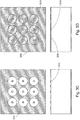
- Fig. 3A The process starts with a silicon wafer 300.
- a ⁇ 100 silicon wafer is preferential because in that case wet anisotropic etching can be used to release the membrane.
- Fig. 3B Deposition of a silicon nitride layer 310 using Low Pressure Chemical Vapor Deposition (LPCVD).
- LPCVD Low Pressure Chemical Vapor Deposition
- Fig. 3C Patterning of silicon nitride 310 using Reactive Ion Etching (RIE).
- RIE Reactive Ion Etching
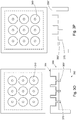
- a 3 x 3 matrix is schematically shown, but in practice the matrix is much larger for example 100 x 100.
- the plurality of wells to be formed is not limited to a particular shape, such as rectangular, although a grid-like placement of the wells is preferred.
- Fig. 3D Local Oxidation of Silicon (LOCOS) to form a temporary silicon oxide layer 319.
- LOCOS Local Oxidation of Silicon
- Fig. 3E Resist patterning, with resist layer 329.
- Fig. 3F Selective removal of silicon nitride using RIE.
- Fig. 3G Deep Reactive Etching of Silicon (DRIE) to form small round holes 330.
- DRIE Deep Reactive Etching of Silicon
- Fig. 3H Resist removal using O 2 -ashing and chemical cleaning with 100% HNO 3 .
- Fig. 3I Selective removal of silicon oxide of the temporary layer 319 using wet chemical etching in hydrofluoric acid (HF) or buffered HF.
- HF hydrofluoric acid
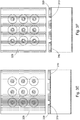
- Fig. 3J Deep Reactive Etching of Silicon (DRIE) to form cups 340 (wells 340) and at the same time to further deepen the holes 330.
- DRIE Deep Reactive Etching of Silicon
- Fig. 3K Removal of the first silicon nitride layer 310 using HF or hot phosphoric acid (H 3 PO 4 ).
- Fig. 3L Deposition of a first low stress silicon nitride layer 350' (SiRN) and second low stress silicon nitride layer 350" on the backside of the wafer 300 by LPCVD.
- Fig. 3M Patterning of the second silicon nitride layer 350" on the backside of the wafer 300 using RIE of silicon nitride.
- Fig. 3N Backside etching of silicon in order to form a silicon membrane and expose closed silicon nitride tubes 360. Note that the bottom of the cups 340 is not exposed in this step.
- wet anisotropic etching of silicon in TMAH may be used. DRIE process could be used as well, alone or in combination with wet anisotropic etching.
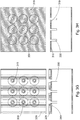
- Fig. 3O RIE directional etching of silicon nitride from the backside of the wafer 300 in order to create open capillaries 360' (defining through-holes 370).
- This is a device 390 suitable for use in the method according to the invention, with a frontside 391 and a backside 392.
- the through-hole 370 of a capillary 360' connects a well 340 with the backside 392.
- Fig. 3P Backside etching to expose the bottom of the cups 340 in order to make the membrane locally optically transparent, more specifically the (thin) bottoms of the cups 340.
- the invention also relates to a method of manufacturing a device using the method steps described above, with any step involving the removal of resist or a previously formed layer not being limited to the specific chemicals and/or concentrations thereof mentioned.
- PVDF Polyvinylidene difluoride membrane
- Immun-Blot® low fluorescence PVDF membrane BioRad Laboratories B.V., Veenendaal, The Netherlands
- the PVDF membrane was placed onto filter paper (Bio-Rad, included with the purchased PVDF) wetted in PBS.
- rhEpCAM recombinant human EpCAM protein, ACRO Biosystems, EPM-H5223, Bethesda, MD, USA
- the PVDF membrane with spots A) - G) was incubated with 2 mL blocking buffer (PBS, 1% BSA) for 15 minutes.
- the blocking buffer was removed and the PVDF membrane was incubated for 15 minutes in 2 mL anti-human EpCAM FITC solution.
- the antibody solution was removed and the PVDF membrane was washed in washing buffer (PBS) for 2x 5 minutes.
- PBS washing buffer
- the PVDF strip was viewed under a fluorescence microscope.
- the spot diameter was 2 mm and a concentration of 1 ng/ ⁇ l (C) was clearly visible ( Fig. 1 ) while the 100 pg/ ⁇ l spot was discernible with the eye.
- the spot diameter in Fig. 1 is 2 mm, i.e. quite large, indicating that the read-out sensitivity for smaller spots with the same fluorescent-protein concentration is below 1 ng. If the diameter of the spots is smaller, then the sensitivity is even well below 1 ng.
- microsieve was de-aerated in methanol and washed with MilliQ.
- the microsieve was obtained from VyCap BV (Deventer, The Netherlands) and used without the plastic holder it is sold in.
- the microsieve has through-holes with a diameter of 5 ⁇ m.
- PVDF Polyvinylidene difluoride membrane (0.20 ⁇ m pore size, Immun-Blot® low fluorescence PVDF membrane, BioRad Laboratories B.V., Veenendaal, The Netherlands) was activated in methanol and MilliQ according to protocol manufacturer.
- microsieve without holder was placed onto a wet PVDF membrane floating on MilliQ in a Petri dish. (In another experiment, the microsieve was placed onto filter paper (Bio-Rad, included with the purchased PVDF wetted in MilliQ) which also worked).
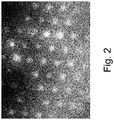
- the microsieve was removed by lifting it vertically and the PVDF membrane was imaged under a fluorescence microscope. It was found that the solution was successfully passed through the microsieve and tiny fluorescent spots were visible. These spots had a diameter of about 40 ⁇ m.
- Activation step Activate the micro-porous PVDF membrane in methanol and MilliQ according to protocol manufacturer.
- the PVDF membrane with a pore size of 0.45 ⁇ m was Immun-Blot® low fluorescence PVDF membrane (BioRad Laboratories B.V., Veenendaal, The Netherlands).
- Coating step Apply 500 ⁇ L 10 ng/ ⁇ L antigen on PVDF and incubate for 15 minutes.
- Blocking step Incubate PVDF 15 minutes in PBS, 1% BSA.
- microsieve suitable for use in these experiments can be obtained from VyCap BV (Deventer, The Netherlands) and its plastic holder will be removed for our experiments.
- This microsieve will be de-aerated in methanol, washed with MilliQ in accordance with the protocol of the manufacturer and placed in PBS.
- Hybridoma cells can be cultivated in a suitable culture medium (such as Gibco® CD hybridoma, + 4 mM L-Glutamine, + 1% penicillin/streptomycin).
- a suitable culture medium such as Gibco® CD hybridoma, + 4 mM L-Glutamine, + 1% penicillin/streptomycin.
- the hybridoma cell suspension will be centrifuged at 300 rpm for 5 minutes. Excess medium will be removed and the cells will be re-suspended in fresh medium at a concentration of approximately 3000 cells in 50 ⁇ L medium.
- the microsieve will be loaded with cells in accordance to the instructions of the manufacturer, with the microsieve being placed on a sponge (Vycap BV).
- the cell suspension will be pipetted onto the microsieve and, after the cells are sufficiently loaded into the wells, the microsieve may be submerged fully in medium. Excess medium will be removed before further handling of the microsieve.
- the antigen-coated PVDF membrane will be placed on top of said filter paper taking care that no air is trapped between the filter paper and the membrane.
- the microsieve with cells will be placed on the PVDF membrane and allowed to sit overnight in an incubator at 37°C, 100% humidity, 5% CO 2 .
- the PVDF will be removed and rinsed with PBS (2x 5 minutes) and incubated with 10 ng/ ⁇ L anti-IgG-PE for 15 minutes.
- Anti-IgG-PE (Sigma-Aldrich Corp., St. Louis, MO, USA) contains phycoerythrin as a fluorescent label.
- the PVDF membrane can be examined under a fluorescence microscope. The differences in fluorescence intensity are proportional to the antibody production levels of individual hybridomas cells.
- This experiment can be performed analogous to Example 3 except for the PVDF preparation which will not be coated with the antigen.
- the PVDF membrane After contacting the PVDF membrane with the liquid from the wells, the PVDF membrane is blocked, e.g. using the BSA solution and then incubated with the fluorescently labelled anti-antibody.
- the PVDF membrane can be examined under a fluorescence microscope. Differences in fluorescence intensity are proportional to differences in antibody production levels of individual hybridomas cells.
- Experiment 3 can be continued as follows. After the overnight incubation, the microsieve of Example 3 can be placed for 5 minutes on a freshly prepared PVDF membrane coated with antigen as described in Example 3.
Landscapes
- Health & Medical Sciences (AREA)
- Life Sciences & Earth Sciences (AREA)
- Engineering & Computer Science (AREA)
- Chemical & Material Sciences (AREA)
- Immunology (AREA)
- Biomedical Technology (AREA)
- Hematology (AREA)
- Urology & Nephrology (AREA)
- Molecular Biology (AREA)
- General Health & Medical Sciences (AREA)
- Analytical Chemistry (AREA)
- Microbiology (AREA)
- Biotechnology (AREA)
- Biochemistry (AREA)
- Bioinformatics & Cheminformatics (AREA)
- Medicinal Chemistry (AREA)
- Physics & Mathematics (AREA)
- Cell Biology (AREA)
- Food Science & Technology (AREA)
- General Physics & Mathematics (AREA)
- Pathology (AREA)
- Chemical Kinetics & Catalysis (AREA)
- Clinical Laboratory Science (AREA)
- Wood Science & Technology (AREA)
- Organic Chemistry (AREA)
- Zoology (AREA)
- Toxicology (AREA)
- Tropical Medicine & Parasitology (AREA)
- Sustainable Development (AREA)
- General Engineering & Computer Science (AREA)
- Genetics & Genomics (AREA)
- Apparatus Associated With Microorganisms And Enzymes (AREA)
- Measuring Or Testing Involving Enzymes Or Micro-Organisms (AREA)
Claims (13)
- Verfahren zum Auswählen einer Zelle durch Durchführen eines Assays für eine Verbindung, die von Zellen ausgeschieden wird, unter Verwendung einer Vorrichtung (390), wobei die Vorrichtung (390) umfasst- eine Vorderseite (391) mit einer Vielzahl von Vertiefungen (340) und- eine Rückseite (392);wobei die Vielzahl von Vertiefungen (340) der Vorrichtung (390) Zellen enthält;
wobei das Verfahren die folgenden Schritte umfasst- Übertragen von Flüssigkeit aus den Vertiefungen (340) auf das Substrat, und- Verwenden des Substrats zum Durchführen des Assays; dadurch gekennzeichnet, dass jede Vertiefung der Vielzahl von Vertiefungen (340) einen Boden umfasst, der mit einem Durchgangsloch versehen ist, das sich von der Vertiefung zur Rückseite der Vorrichtung (390) erstreckt, wobei das Durchgangsloch kleinere Abmessungen hat als die Zellen in der Vielzahl von Vertiefungen, wodurch die Zellen in den Vertiefungen physikalisch gehalten werden;wobei das Verfahren die folgenden Schritte umfasst- Kontaktieren der Rückseite der Vorrichtung (390) mit dem Substrat,- Durchführen des Schritts des Übertragens von Flüssigkeit aus den Vertiefungen (340) auf das Substrat durch Übertragen von Flüssigkeit aus den Vertiefungen (340) über die Durchgangslöcher (370) auf das Substrat, und- Durchführen des Schritts des Durchführens des Assays unter Verwendung des Substrats, wobei die Verbindung durch die Zellen in der Vorrichtung ausgeschieden wird, woraufhin der Schritt des Durchführens des Assays unter Verwendung des Substrats durchgeführt wird, undwobei die Zelle ausgewählt wird. - Verfahren nach Anspruch 1, wobei mindestens 10 % der Vielzahl von Vertiefungen (340) eine einzelne Zelle enthalten.
- Verfahren nach Anspruch 1 oder 2, wobei das Durchgangsloch Abmessungen aufweist, die es der Zelle nicht erlauben, durch das Durchgangsloch hindurchzugehen.
- Verfahren nach einem der vorstehenden Ansprüche, wobei der Assay ein Immunoassay ist.
- Verfahren nach einem der vorstehenden Ansprüche, wobei das Substrat ein mikroporöses Substrat umfasst.
- Verfahren nach Anspruch 5, wobei die Flüssigkeit unter Verwendung einer Druckdifferenz mit einem relativ niedrigen Druck auf einer Seite des Substrats gegenüber der Vorrichtung (390) übertragen wird.
- Verfahren nach einem der vorstehenden Ansprüche, wobei das Substrat ein Polymer ist, vorzugsweise ein Polymer, ausgewählt aus i) Polyvinylidendifluorid und ii) Nitrocellulose.
- Verfahren nach einem der vorstehenden Ansprüche, wobei die Vorrichtung (390) eine Vorderseite (391) mit einer Vielzahl von Vertiefungen (340) und eine Rückseite (392) umfasst, wobei die Rückseite (392) eine Vielzahl von vorstehenden Kapillaren (360') umfasst, wobei die Kapillaren (360') quer zur Hauptebene des Substrats verlaufen.
- Verfahren nach einem der vorstehenden Ansprüche, wobei die Rückseite der Vorrichtung (390) eine hydrophobe Rückseite ist.
- Verfahren nach einem der vorstehenden Ansprüche, wobei die Verbindung ein Antikörper ist.
- Verfahren nach einem der vorstehenden Ansprüche, wobei die ausgewählte Zelle propagiert wird.
- Verfahren nach einem der vorstehenden Ansprüche, wobei die ausgewählte Zelle eine Polynukleinsäuresequenz enthält und das Verfahren mindestens einen weiteren Schritt umfasst, ausgewählt aus i) Multiplizierung der Polynukleinsäuresequenz, ii) Bestimmung der Nukleotidsequenz der Polynukleinsäuresequenz und iii) Isolierung der Polynukleinsäuresequenz.
- Verfahren nach einem der vorstehenden Ansprüche, wobei nach dem Schritt des Übertragens der Flüssigkeit auf die Vorrichtung und vor der Verwendung des Substrats für den Test die Vorrichtung vom Substrat getrennt wird.
Applications Claiming Priority (3)
| Application Number | Priority Date | Filing Date | Title |
|---|---|---|---|
| NL2017979 | 2016-12-12 | ||
| NL2017982A NL2017982B1 (en) | 2016-12-12 | 2016-12-12 | A method of performing an assay |
| PCT/NL2017/050804 WO2018111096A1 (en) | 2016-12-12 | 2017-12-01 | A method of performing an assay |
Publications (2)
| Publication Number | Publication Date |
|---|---|
| EP3551763A1 EP3551763A1 (de) | 2019-10-16 |
| EP3551763B1 true EP3551763B1 (de) | 2020-12-09 |
Family
ID=61028140
Family Applications (1)
| Application Number | Title | Priority Date | Filing Date |
|---|---|---|---|
| EP17835720.8A Active EP3551763B1 (de) | 2016-12-12 | 2017-12-01 | Verfahren ein versuch durchzuführen |
Country Status (5)
| Country | Link |
|---|---|
| US (1) | US11994515B2 (de) |
| EP (1) | EP3551763B1 (de) |
| KR (1) | KR20190095349A (de) |
| ES (1) | ES2860474T3 (de) |
| WO (1) | WO2018111096A1 (de) |
Families Citing this family (1)
| Publication number | Priority date | Publication date | Assignee | Title |
|---|---|---|---|---|
| JP7635934B2 (ja) * | 2021-03-03 | 2025-02-26 | 国立大学法人 東京大学 | 評価用器具及び評価方法 |
Family Cites Families (7)
| Publication number | Priority date | Publication date | Assignee | Title |
|---|---|---|---|---|
| EP1490520A4 (de) | 2002-03-12 | 2006-06-07 | Surface Logix Inc | Testvorrichtung, die die absorption, den stoffwechsel, die permeabiltät und/oder toxizität einer kandidatenverbindung analysiert |
| GB0311902D0 (en) | 2003-05-22 | 2003-06-25 | Cambridge Life Sciences | Assay method and apparatus |
| US20080269707A1 (en) * | 2007-04-30 | 2008-10-30 | Kimberly-Clark Worldwide, Inc. | Lateral Flow Device for Attachment to an Absorbent Article |
| SG174373A1 (en) * | 2009-03-20 | 2011-10-28 | Agency Science Tech & Res | Devices for separating cells and methods of using them |
| WO2011011350A2 (en) | 2009-07-20 | 2011-01-27 | Siloam Biosciences, Inc. | Microfluidic assay platforms |
| CA2842359A1 (en) * | 2011-08-01 | 2013-02-07 | Denovo Sciences | Cell capture system and method of use |
| WO2013180567A2 (en) | 2012-06-01 | 2013-12-05 | Vycap B.V. | A microsieve diagnostic device in the isolation and analysis of single cells |
-
2017
- 2017-12-01 EP EP17835720.8A patent/EP3551763B1/de active Active
- 2017-12-01 KR KR1020197019970A patent/KR20190095349A/ko not_active Withdrawn
- 2017-12-01 WO PCT/NL2017/050804 patent/WO2018111096A1/en not_active Ceased
- 2017-12-01 ES ES17835720T patent/ES2860474T3/es active Active
- 2017-12-01 US US16/467,661 patent/US11994515B2/en active Active
Non-Patent Citations (1)
| Title |
|---|
| None * |
Also Published As
| Publication number | Publication date |
|---|---|
| ES2860474T3 (es) | 2021-10-05 |
| US11994515B2 (en) | 2024-05-28 |
| WO2018111096A1 (en) | 2018-06-21 |
| KR20190095349A (ko) | 2019-08-14 |
| EP3551763A1 (de) | 2019-10-16 |
| US20190369090A1 (en) | 2019-12-05 |
Similar Documents
| Publication | Publication Date | Title |
|---|---|---|
| AU666821B2 (en) | Analyte detection device and process | |
| EP0442969B1 (de) | Völlig mikrohergestellte biosensoren und verfahren zur herstellung und verwendung | |
| US7785862B2 (en) | Thin film coated microwell arrays | |
| US6306594B1 (en) | Methods for microdispensing patterened layers | |
| CN101738465B (zh) | 用于分析液相和固相之间的生物反应的方法和装置 | |
| CN101939427B (zh) | 反应治具和反应方法、以及cDNA的合成方法 | |
| US20070231880A1 (en) | Microfluidic interface for highly parallel addressing of sensing arrays | |
| JPH05240748A (ja) | 表面上の薄片試料を毛管流により処理するための方法 | |
| EP2646156A2 (de) | Prüfanordnung und verfahren | |
| JP2001525063A (ja) | 膜ベースでの検定のための分析装置 | |
| JPH11510601A (ja) | 診断装置 | |
| CN106153891B (zh) | 三维生物标志物检测装置、制备方法及检测生物标志物的方法 | |
| US20110200986A1 (en) | Bio-assay using liquid crystals | |
| CN110168366A (zh) | 用于基于颗粒的生物测定的过筛垂直流系统 | |
| US11994515B2 (en) | Method of performing an assay | |
| JP4705000B2 (ja) | 免疫学的検定のための製品およびプロセス | |
| JPH02210242A (ja) | 吸着性表面を備えた器具およびその製法 | |
| NL2017982B1 (en) | A method of performing an assay | |
| JPH0755810A (ja) | 被検体を検出する装置および方法 | |
| EP2295532A1 (de) | Mit integrierten Silizium- und Zellkulturtechniken erzeugte Testverfahren auf Zellbasis mit hohem Durchsatz | |
| US20150369802A1 (en) | Biomolecule Binding Composite Surfaces, Methods Of Making Such Surfaces, Devices Incorporating Such Surfaces, And Methods Of Using Such Surfaces In Biomolecule Binding Assays, And Devices Therefor | |
| JP3640354B2 (ja) | 特異結合分析方法およびこれに用いるデバイス | |
| JP4842828B2 (ja) | 多層分析要素の製造方法 | |
| JP2007531532A (ja) | 改良された診断試験装置 | |
| WO2005080979A1 (ja) | 多層分析要素 |
Legal Events
| Date | Code | Title | Description |
|---|---|---|---|
| STAA | Information on the status of an ep patent application or granted ep patent |
Free format text: STATUS: UNKNOWN |
|
| STAA | Information on the status of an ep patent application or granted ep patent |
Free format text: STATUS: THE INTERNATIONAL PUBLICATION HAS BEEN MADE |
|
| PUAI | Public reference made under article 153(3) epc to a published international application that has entered the european phase |
Free format text: ORIGINAL CODE: 0009012 |
|
| STAA | Information on the status of an ep patent application or granted ep patent |
Free format text: STATUS: REQUEST FOR EXAMINATION WAS MADE |
|
| 17P | Request for examination filed |
Effective date: 20190711 |
|
| AK | Designated contracting states |
Kind code of ref document: A1 Designated state(s): AL AT BE BG CH CY CZ DE DK EE ES FI FR GB GR HR HU IE IS IT LI LT LU LV MC MK MT NL NO PL PT RO RS SE SI SK SM TR |
|
| AX | Request for extension of the european patent |
Extension state: BA ME |
|
| DAV | Request for validation of the european patent (deleted) | ||
| DAX | Request for extension of the european patent (deleted) | ||
| GRAP | Despatch of communication of intention to grant a patent |
Free format text: ORIGINAL CODE: EPIDOSNIGR1 |
|
| STAA | Information on the status of an ep patent application or granted ep patent |
Free format text: STATUS: GRANT OF PATENT IS INTENDED |
|
| RIC1 | Information provided on ipc code assigned before grant |
Ipc: C12Q 1/68 20180101AFI20200813BHEP Ipc: G01N 33/50 20060101ALI20200813BHEP Ipc: C12Q 1/686 20180101ALI20200813BHEP Ipc: C12M 1/32 20060101ALI20200813BHEP Ipc: B01L 3/00 20060101ALI20200813BHEP Ipc: G01N 33/53 20060101ALI20200813BHEP |
|
| INTG | Intention to grant announced |
Effective date: 20200914 |
|
| GRAS | Grant fee paid |
Free format text: ORIGINAL CODE: EPIDOSNIGR3 |
|
| GRAA | (expected) grant |
Free format text: ORIGINAL CODE: 0009210 |
|
| STAA | Information on the status of an ep patent application or granted ep patent |
Free format text: STATUS: THE PATENT HAS BEEN GRANTED |
|
| AK | Designated contracting states |
Kind code of ref document: B1 Designated state(s): AL AT BE BG CH CY CZ DE DK EE ES FI FR GB GR HR HU IE IS IT LI LT LU LV MC MK MT NL NO PL PT RO RS SE SI SK SM TR |
|
| REG | Reference to a national code |
Ref country code: GB Ref legal event code: FG4D |
|
| REG | Reference to a national code |
Ref country code: AT Ref legal event code: REF Ref document number: 1343513 Country of ref document: AT Kind code of ref document: T Effective date: 20201215 Ref country code: CH Ref legal event code: EP |
|
| REG | Reference to a national code |
Ref country code: DE Ref legal event code: R096 Ref document number: 602017029422 Country of ref document: DE |
|
| REG | Reference to a national code |
Ref country code: IE Ref legal event code: FG4D |
|
| REG | Reference to a national code |
Ref country code: CH Ref legal event code: NV Representative=s name: NOVAGRAAF INTERNATIONAL SA, CH |
|
| REG | Reference to a national code |
Ref country code: NL Ref legal event code: FP |
|
| PG25 | Lapsed in a contracting state [announced via postgrant information from national office to epo] |
Ref country code: RS Free format text: LAPSE BECAUSE OF FAILURE TO SUBMIT A TRANSLATION OF THE DESCRIPTION OR TO PAY THE FEE WITHIN THE PRESCRIBED TIME-LIMIT Effective date: 20201209 Ref country code: FI Free format text: LAPSE BECAUSE OF FAILURE TO SUBMIT A TRANSLATION OF THE DESCRIPTION OR TO PAY THE FEE WITHIN THE PRESCRIBED TIME-LIMIT Effective date: 20201209 Ref country code: GR Free format text: LAPSE BECAUSE OF FAILURE TO SUBMIT A TRANSLATION OF THE DESCRIPTION OR TO PAY THE FEE WITHIN THE PRESCRIBED TIME-LIMIT Effective date: 20210310 Ref country code: NO Free format text: LAPSE BECAUSE OF FAILURE TO SUBMIT A TRANSLATION OF THE DESCRIPTION OR TO PAY THE FEE WITHIN THE PRESCRIBED TIME-LIMIT Effective date: 20210309 |
|
| REG | Reference to a national code |
Ref country code: AT Ref legal event code: MK05 Ref document number: 1343513 Country of ref document: AT Kind code of ref document: T Effective date: 20201209 |
|
| PG25 | Lapsed in a contracting state [announced via postgrant information from national office to epo] |
Ref country code: BG Free format text: LAPSE BECAUSE OF FAILURE TO SUBMIT A TRANSLATION OF THE DESCRIPTION OR TO PAY THE FEE WITHIN THE PRESCRIBED TIME-LIMIT Effective date: 20210309 Ref country code: SE Free format text: LAPSE BECAUSE OF FAILURE TO SUBMIT A TRANSLATION OF THE DESCRIPTION OR TO PAY THE FEE WITHIN THE PRESCRIBED TIME-LIMIT Effective date: 20201209 Ref country code: LV Free format text: LAPSE BECAUSE OF FAILURE TO SUBMIT A TRANSLATION OF THE DESCRIPTION OR TO PAY THE FEE WITHIN THE PRESCRIBED TIME-LIMIT Effective date: 20201209 |
|
| PG25 | Lapsed in a contracting state [announced via postgrant information from national office to epo] |
Ref country code: HR Free format text: LAPSE BECAUSE OF FAILURE TO SUBMIT A TRANSLATION OF THE DESCRIPTION OR TO PAY THE FEE WITHIN THE PRESCRIBED TIME-LIMIT Effective date: 20201209 |
|
| REG | Reference to a national code |
Ref country code: LT Ref legal event code: MG9D |
|
| PG25 | Lapsed in a contracting state [announced via postgrant information from national office to epo] |
Ref country code: SM Free format text: LAPSE BECAUSE OF FAILURE TO SUBMIT A TRANSLATION OF THE DESCRIPTION OR TO PAY THE FEE WITHIN THE PRESCRIBED TIME-LIMIT Effective date: 20201209 Ref country code: LT Free format text: LAPSE BECAUSE OF FAILURE TO SUBMIT A TRANSLATION OF THE DESCRIPTION OR TO PAY THE FEE WITHIN THE PRESCRIBED TIME-LIMIT Effective date: 20201209 Ref country code: EE Free format text: LAPSE BECAUSE OF FAILURE TO SUBMIT A TRANSLATION OF THE DESCRIPTION OR TO PAY THE FEE WITHIN THE PRESCRIBED TIME-LIMIT Effective date: 20201209 Ref country code: CZ Free format text: LAPSE BECAUSE OF FAILURE TO SUBMIT A TRANSLATION OF THE DESCRIPTION OR TO PAY THE FEE WITHIN THE PRESCRIBED TIME-LIMIT Effective date: 20201209 Ref country code: RO Free format text: LAPSE BECAUSE OF FAILURE TO SUBMIT A TRANSLATION OF THE DESCRIPTION OR TO PAY THE FEE WITHIN THE PRESCRIBED TIME-LIMIT Effective date: 20201209 Ref country code: PT Free format text: LAPSE BECAUSE OF FAILURE TO SUBMIT A TRANSLATION OF THE DESCRIPTION OR TO PAY THE FEE WITHIN THE PRESCRIBED TIME-LIMIT Effective date: 20210409 Ref country code: SK Free format text: LAPSE BECAUSE OF FAILURE TO SUBMIT A TRANSLATION OF THE DESCRIPTION OR TO PAY THE FEE WITHIN THE PRESCRIBED TIME-LIMIT Effective date: 20201209 |
|
| PG25 | Lapsed in a contracting state [announced via postgrant information from national office to epo] |
Ref country code: PL Free format text: LAPSE BECAUSE OF FAILURE TO SUBMIT A TRANSLATION OF THE DESCRIPTION OR TO PAY THE FEE WITHIN THE PRESCRIBED TIME-LIMIT Effective date: 20201209 Ref country code: AT Free format text: LAPSE BECAUSE OF FAILURE TO SUBMIT A TRANSLATION OF THE DESCRIPTION OR TO PAY THE FEE WITHIN THE PRESCRIBED TIME-LIMIT Effective date: 20201209 |
|
| REG | Reference to a national code |
Ref country code: DE Ref legal event code: R097 Ref document number: 602017029422 Country of ref document: DE |
|
| PG25 | Lapsed in a contracting state [announced via postgrant information from national office to epo] |
Ref country code: IS Free format text: LAPSE BECAUSE OF FAILURE TO SUBMIT A TRANSLATION OF THE DESCRIPTION OR TO PAY THE FEE WITHIN THE PRESCRIBED TIME-LIMIT Effective date: 20210409 |
|
| PLBE | No opposition filed within time limit |
Free format text: ORIGINAL CODE: 0009261 |
|
| STAA | Information on the status of an ep patent application or granted ep patent |
Free format text: STATUS: NO OPPOSITION FILED WITHIN TIME LIMIT |
|
| PG25 | Lapsed in a contracting state [announced via postgrant information from national office to epo] |
Ref country code: AL Free format text: LAPSE BECAUSE OF FAILURE TO SUBMIT A TRANSLATION OF THE DESCRIPTION OR TO PAY THE FEE WITHIN THE PRESCRIBED TIME-LIMIT Effective date: 20201209 |
|
| 26N | No opposition filed |
Effective date: 20210910 |
|
| PG25 | Lapsed in a contracting state [announced via postgrant information from national office to epo] |
Ref country code: DK Free format text: LAPSE BECAUSE OF FAILURE TO SUBMIT A TRANSLATION OF THE DESCRIPTION OR TO PAY THE FEE WITHIN THE PRESCRIBED TIME-LIMIT Effective date: 20201209 Ref country code: SI Free format text: LAPSE BECAUSE OF FAILURE TO SUBMIT A TRANSLATION OF THE DESCRIPTION OR TO PAY THE FEE WITHIN THE PRESCRIBED TIME-LIMIT Effective date: 20201209 |
|
| PG25 | Lapsed in a contracting state [announced via postgrant information from national office to epo] |
Ref country code: IS Free format text: LAPSE BECAUSE OF FAILURE TO SUBMIT A TRANSLATION OF THE DESCRIPTION OR TO PAY THE FEE WITHIN THE PRESCRIBED TIME-LIMIT Effective date: 20210409 |
|
| PG25 | Lapsed in a contracting state [announced via postgrant information from national office to epo] |
Ref country code: MC Free format text: LAPSE BECAUSE OF FAILURE TO SUBMIT A TRANSLATION OF THE DESCRIPTION OR TO PAY THE FEE WITHIN THE PRESCRIBED TIME-LIMIT Effective date: 20201209 |
|
| PG25 | Lapsed in a contracting state [announced via postgrant information from national office to epo] |
Ref country code: CY Free format text: LAPSE BECAUSE OF FAILURE TO SUBMIT A TRANSLATION OF THE DESCRIPTION OR TO PAY THE FEE WITHIN THE PRESCRIBED TIME-LIMIT Effective date: 20201209 |
|
| PG25 | Lapsed in a contracting state [announced via postgrant information from national office to epo] |
Ref country code: HU Free format text: LAPSE BECAUSE OF FAILURE TO SUBMIT A TRANSLATION OF THE DESCRIPTION OR TO PAY THE FEE WITHIN THE PRESCRIBED TIME-LIMIT; INVALID AB INITIO Effective date: 20171201 |
|
| PGFP | Annual fee paid to national office [announced via postgrant information from national office to epo] |
Ref country code: LU Payment date: 20231002 Year of fee payment: 7 |
|
| PGFP | Annual fee paid to national office [announced via postgrant information from national office to epo] |
Ref country code: TR Payment date: 20231005 Year of fee payment: 7 Ref country code: IT Payment date: 20231228 Year of fee payment: 7 Ref country code: IE Payment date: 20231002 Year of fee payment: 7 |
|
| PGFP | Annual fee paid to national office [announced via postgrant information from national office to epo] |
Ref country code: BE Payment date: 20231002 Year of fee payment: 7 |
|
| PGFP | Annual fee paid to national office [announced via postgrant information from national office to epo] |
Ref country code: ES Payment date: 20240105 Year of fee payment: 7 |
|
| PG25 | Lapsed in a contracting state [announced via postgrant information from national office to epo] |
Ref country code: MK Free format text: LAPSE BECAUSE OF FAILURE TO SUBMIT A TRANSLATION OF THE DESCRIPTION OR TO PAY THE FEE WITHIN THE PRESCRIBED TIME-LIMIT Effective date: 20201209 |
|
| PGFP | Annual fee paid to national office [announced via postgrant information from national office to epo] |
Ref country code: CH Payment date: 20240101 Year of fee payment: 7 |
|
| PG25 | Lapsed in a contracting state [announced via postgrant information from national office to epo] |
Ref country code: MT Free format text: LAPSE BECAUSE OF FAILURE TO SUBMIT A TRANSLATION OF THE DESCRIPTION OR TO PAY THE FEE WITHIN THE PRESCRIBED TIME-LIMIT Effective date: 20201209 |
|
| PGFP | Annual fee paid to national office [announced via postgrant information from national office to epo] |
Ref country code: DE Payment date: 20241210 Year of fee payment: 8 |
|
| PGFP | Annual fee paid to national office [announced via postgrant information from national office to epo] |
Ref country code: NL Payment date: 20241210 Year of fee payment: 8 |
|
| PGFP | Annual fee paid to national office [announced via postgrant information from national office to epo] |
Ref country code: GB Payment date: 20241210 Year of fee payment: 8 |
|
| PGFP | Annual fee paid to national office [announced via postgrant information from national office to epo] |
Ref country code: FR Payment date: 20241210 Year of fee payment: 8 |
|
| REG | Reference to a national code |
Ref country code: CH Ref legal event code: PL |
|
| PG25 | Lapsed in a contracting state [announced via postgrant information from national office to epo] |
Ref country code: LU Free format text: LAPSE BECAUSE OF NON-PAYMENT OF DUE FEES Effective date: 20241201 |
|
| REG | Reference to a national code |
Ref country code: BE Ref legal event code: MM Effective date: 20241231 |
|
| PG25 | Lapsed in a contracting state [announced via postgrant information from national office to epo] |
Ref country code: IT Free format text: LAPSE BECAUSE OF NON-PAYMENT OF DUE FEES Effective date: 20241201 |
|
| PG25 | Lapsed in a contracting state [announced via postgrant information from national office to epo] |
Ref country code: BE Free format text: LAPSE BECAUSE OF NON-PAYMENT OF DUE FEES Effective date: 20241231 |
|
| PG25 | Lapsed in a contracting state [announced via postgrant information from national office to epo] |
Ref country code: CH Free format text: LAPSE BECAUSE OF NON-PAYMENT OF DUE FEES Effective date: 20241231 |
|
| PG25 | Lapsed in a contracting state [announced via postgrant information from national office to epo] |
Ref country code: IE Free format text: LAPSE BECAUSE OF NON-PAYMENT OF DUE FEES Effective date: 20241201 |
|
| REG | Reference to a national code |
Ref country code: ES Ref legal event code: FD2A Effective date: 20260126 |
|
| PG25 | Lapsed in a contracting state [announced via postgrant information from national office to epo] |
Ref country code: ES Free format text: LAPSE BECAUSE OF NON-PAYMENT OF DUE FEES Effective date: 20241202 |