EP3548002B1 - Hydrophile fluorierte moleküle für liposomale 19f-mri-sonden mit einzigartigen mr-signaturen - Google Patents
Hydrophile fluorierte moleküle für liposomale 19f-mri-sonden mit einzigartigen mr-signaturen Download PDFInfo
- Publication number
- EP3548002B1 EP3548002B1 EP17877351.1A EP17877351A EP3548002B1 EP 3548002 B1 EP3548002 B1 EP 3548002B1 EP 17877351 A EP17877351 A EP 17877351A EP 3548002 B1 EP3548002 B1 EP 3548002B1
- Authority
- EP
- European Patent Office
- Prior art keywords
- contrast
- liposome
- molecule
- molecules
- nmr
- Prior art date
- Legal status (The legal status is an assumption and is not a legal conclusion. Google has not performed a legal analysis and makes no representation as to the accuracy of the status listed.)
- Active
Links
Images






Classifications
-
- C—CHEMISTRY; METALLURGY
- C07—ORGANIC CHEMISTRY
- C07D—HETEROCYCLIC COMPOUNDS
- C07D249/00—Heterocyclic compounds containing five-membered rings having three nitrogen atoms as the only ring hetero atoms
- C07D249/02—Heterocyclic compounds containing five-membered rings having three nitrogen atoms as the only ring hetero atoms not condensed with other rings
- C07D249/04—1,2,3-Triazoles; Hydrogenated 1,2,3-triazoles
-
- A—HUMAN NECESSITIES
- A61—MEDICAL OR VETERINARY SCIENCE; HYGIENE
- A61K—PREPARATIONS FOR MEDICAL, DENTAL OR TOILETRY PURPOSES
- A61K51/00—Preparations containing radioactive substances for use in therapy or testing in vivo
- A61K51/02—Preparations containing radioactive substances for use in therapy or testing in vivo characterised by the carrier, i.e. characterised by the agent or material covalently linked or complexing the radioactive nucleus
- A61K51/04—Organic compounds
- A61K51/041—Heterocyclic compounds
- A61K51/044—Heterocyclic compounds having nitrogen as a ring hetero atom, e.g. guanethidine, rifamycins
- A61K51/0453—Heterocyclic compounds having nitrogen as a ring hetero atom, e.g. guanethidine, rifamycins having five-membered rings with two or more ring hetero atoms, at least one of which being nitrogen, e.g. tetrazole
-
- A—HUMAN NECESSITIES
- A61—MEDICAL OR VETERINARY SCIENCE; HYGIENE
- A61K—PREPARATIONS FOR MEDICAL, DENTAL OR TOILETRY PURPOSES
- A61K49/00—Preparations for testing in vivo
- A61K49/06—Nuclear magnetic resonance [NMR] contrast preparations; Magnetic resonance imaging [MRI] contrast preparations
- A61K49/08—Nuclear magnetic resonance [NMR] contrast preparations; Magnetic resonance imaging [MRI] contrast preparations characterised by the carrier
- A61K49/10—Organic compounds
-
- A—HUMAN NECESSITIES
- A61—MEDICAL OR VETERINARY SCIENCE; HYGIENE
- A61K—PREPARATIONS FOR MEDICAL, DENTAL OR TOILETRY PURPOSES
- A61K49/00—Preparations for testing in vivo
- A61K49/06—Nuclear magnetic resonance [NMR] contrast preparations; Magnetic resonance imaging [MRI] contrast preparations
- A61K49/08—Nuclear magnetic resonance [NMR] contrast preparations; Magnetic resonance imaging [MRI] contrast preparations characterised by the carrier
- A61K49/10—Organic compounds
- A61K49/12—Macromolecular compounds
- A61K49/124—Macromolecular compounds dendrimers, dendrons, hyperbranched compounds
-
- A—HUMAN NECESSITIES
- A61—MEDICAL OR VETERINARY SCIENCE; HYGIENE
- A61K—PREPARATIONS FOR MEDICAL, DENTAL OR TOILETRY PURPOSES
- A61K49/00—Preparations for testing in vivo
- A61K49/06—Nuclear magnetic resonance [NMR] contrast preparations; Magnetic resonance imaging [MRI] contrast preparations
- A61K49/18—Nuclear magnetic resonance [NMR] contrast preparations; Magnetic resonance imaging [MRI] contrast preparations characterised by a special physical form, e.g. emulsions, microcapsules, liposomes
- A61K49/1806—Suspensions, emulsions, colloids, dispersions
- A61K49/1812—Suspensions, emulsions, colloids, dispersions liposomes, polymersomes, e.g. immunoliposomes
-
- A—HUMAN NECESSITIES
- A61—MEDICAL OR VETERINARY SCIENCE; HYGIENE
- A61K—PREPARATIONS FOR MEDICAL, DENTAL OR TOILETRY PURPOSES
- A61K51/00—Preparations containing radioactive substances for use in therapy or testing in vivo
- A61K51/02—Preparations containing radioactive substances for use in therapy or testing in vivo characterised by the carrier, i.e. characterised by the agent or material covalently linked or complexing the radioactive nucleus
- A61K51/04—Organic compounds
- A61K51/0491—Sugars, nucleosides, nucleotides, oligonucleotides, nucleic acids, e.g. DNA, RNA, nucleic acid aptamers
-
- A—HUMAN NECESSITIES
- A61—MEDICAL OR VETERINARY SCIENCE; HYGIENE
- A61K—PREPARATIONS FOR MEDICAL, DENTAL OR TOILETRY PURPOSES
- A61K51/00—Preparations containing radioactive substances for use in therapy or testing in vivo
- A61K51/12—Preparations containing radioactive substances for use in therapy or testing in vivo characterised by a special physical form, e.g. emulsion, microcapsules, liposomes, characterized by a special physical form, e.g. emulsions, dispersions, microcapsules
- A61K51/1217—Dispersions, suspensions, colloids, emulsions, e.g. perfluorinated emulsion, sols
- A61K51/1234—Liposomes
-
- C—CHEMISTRY; METALLURGY
- C07—ORGANIC CHEMISTRY
- C07B—GENERAL METHODS OF ORGANIC CHEMISTRY; APPARATUS THEREFOR
- C07B59/00—Introduction of isotopes of elements into organic compounds ; Labelled organic compounds per se
-
- C—CHEMISTRY; METALLURGY
- C07—ORGANIC CHEMISTRY
- C07C—ACYCLIC OR CARBOCYCLIC COMPOUNDS
- C07C43/00—Ethers; Compounds having groups, groups or groups
- C07C43/02—Ethers
- C07C43/20—Ethers having an ether-oxygen atom bound to a carbon atom of a six-membered aromatic ring
- C07C43/23—Ethers having an ether-oxygen atom bound to a carbon atom of a six-membered aromatic ring containing hydroxy or O-metal groups
-
- C—CHEMISTRY; METALLURGY
- C07—ORGANIC CHEMISTRY
- C07C—ACYCLIC OR CARBOCYCLIC COMPOUNDS
- C07C69/00—Esters of carboxylic acids; Esters of carbonic or haloformic acids
- C07C69/62—Halogen-containing esters
- C07C69/63—Halogen-containing esters of saturated acids
-
- C—CHEMISTRY; METALLURGY
- C07—ORGANIC CHEMISTRY
- C07D—HETEROCYCLIC COMPOUNDS
- C07D403/00—Heterocyclic compounds containing two or more hetero rings, having nitrogen atoms as the only ring hetero atoms, not provided for by group C07D401/00
- C07D403/02—Heterocyclic compounds containing two or more hetero rings, having nitrogen atoms as the only ring hetero atoms, not provided for by group C07D401/00 containing two hetero rings
- C07D403/12—Heterocyclic compounds containing two or more hetero rings, having nitrogen atoms as the only ring hetero atoms, not provided for by group C07D401/00 containing two hetero rings linked by a chain containing hetero atoms as chain links
-
- C—CHEMISTRY; METALLURGY
- C07—ORGANIC CHEMISTRY
- C07H—SUGARS; DERIVATIVES THEREOF; NUCLEOSIDES; NUCLEOTIDES; NUCLEIC ACIDS
- C07H15/00—Compounds containing hydrocarbon or substituted hydrocarbon radicals directly attached to hetero atoms of saccharide radicals
- C07H15/18—Acyclic radicals, substituted by carbocyclic rings
-
- C—CHEMISTRY; METALLURGY
- C07—ORGANIC CHEMISTRY
- C07H—SUGARS; DERIVATIVES THEREOF; NUCLEOSIDES; NUCLEOTIDES; NUCLEIC ACIDS
- C07H15/00—Compounds containing hydrocarbon or substituted hydrocarbon radicals directly attached to hetero atoms of saccharide radicals
- C07H15/26—Acyclic or carbocyclic radicals, substituted by hetero rings
-
- C—CHEMISTRY; METALLURGY
- C07—ORGANIC CHEMISTRY
- C07B—GENERAL METHODS OF ORGANIC CHEMISTRY; APPARATUS THEREFOR
- C07B2200/00—Indexing scheme relating to specific properties of organic compounds
- C07B2200/05—Isotopically modified compounds, e.g. labelled
Definitions
- the invention generally relates to the fields of radiology and organic chemistry.
- the invention concerns hydrophilic, non-toxic Fluorine-19 ( 19 F) contrast agents for 19 F MRI.
- PET and SPECT nuclear molecular imaging methods
- mSv millisieverts
- Optical molecular imaging techniques are limited by imaging depth. These techniques find use in small animal studies, and are less useful in larger animals. A versatile, non-radioactive molecular imaging probe with no tissue depth limitations is therefore highly desirable.
- the ideal molecular imaging probe When administered in vivo, the ideal molecular imaging probe should detect, localize and report on a process/activity within a cell or tissue, with high sensitivity and specificity.
- sensitivity can easily be maximized by optimizing the payload capacity per particle.
- 19 F MRI is emerging as a molecular imaging modality with broad applications in biomedicine for several reasons. Fluorine's gyromagnetic ratio is very close to that of the proton ( 1 H), so current 1 H MRI hardware requires minimal changes to acquire 19 F-based images. Further, there is no MRI-detectable endogenous 19 F, leading to images with very high signal-to-noise ratios (SNR). There is a linear relationship between contrast agent concentration and signal intensity, which allows direct and unambiguous quantification of disease activity [8,9]. Most importantly, organofluorine molecules have a broad chemical shift range of >350 ppm. Current receiver bandwidth suggests a peak separation of ⁇ 12 ppm to individually image multiple 19 F species without introducing chemical shift artifacts. This allows the concurrent use of as many as 30 19 F probes with unique MRI signatures.
- 19 F MRI is limited by sensitivity, and a large number of 19 F atoms must be present in each voxel of target volume to enable high conspicuity.
- a number of nanoparticle formulations have been suggested to address this limitation. These include perfluorocarbons (PFCs), perfluoropolyethers (PFPEs), dendrimers, fluorinated amphiphiles and other hyperfluorinated molecules such as PERFECTA [10].
- PFCs and PFPEs dominate the preclinical/clinical space, but they have several drawbacks, including low aqueous solubility (limiting formulation to water emulsions requiring surfactants), limited shelf stability [11], and magnetically diverse fluorine atoms (resulting in chemical shift artifacts and diffuse images) [12].
- Tirotta et al, Chemical Reviews 2014, 115, 2, 1106-1129 provides a review of 19 F magnetic resonance imaging.
- Lim et al Journal of Fluorine Chemistry 2006, 127, 6, 730-735 describes the synthesis of amphiphilic perfluoroalkyl ester functionalized ⁇ -cyclodextrin and complex formation with anionic surfactants.
- Pandey et al, Tetrahedron 59 (2003), 10059-10073 describes the synthesis, photophysical, electrochemical, intracellular localization, in vitro photosensitizing efficacy and determination of tumor-updated by 19 F in vivo NMR spectroscopy of a series of fluorinated porphyrin containing photosensitizers.
- the solution resides in highly hydrophilic, nonionic, fluorinated probes bearing a plurality of magnetically equivalent 19 F atoms. Such probes are able to form stable aqueous formulations using a liposome nanoparticle.
- multiple probes having distinct 19 F MRI signatures can be employed for simultaneous assessment of multiple molecular targets within the same target volume, without any chemical shift artifacts or interference with the signal of the inhalable anesthesia isoflurane.
- the invention provides a nonionic 19 F-MR contrast molecule having the formula X - (R) n , wherein: X comprises at least two magnetically equivalent fluorine atoms and is selected from the group consisting of and
- nonionic 19 F-MR contrast molecules comprising at least a saccharide moiety.
- the saccharide moiety is a hexose moiety.
- the hexose moiety is a glucose moiety.
- the 19 F-MR contrast molecules disclosed herein are not dendrimeric, i.e., they are not repetitively branched. In some aspects, the 19 F-MR contrast molecules disclosed herein have a molecular weight of less than 900 g/mole. In some embodiments, the 19 F-MR contrast molecules disclosed herein are water soluble. In further embodiments, the 19 F-MR contrast molecules disclosed herein are hydrophilic. The 19 F-MR contrast molecules disclosed herein comprise polar functional groups which impart hydrophilic character on the molecules.
- the polar functional groups include but are not limited to amides; ethers; alcohols; polyols, for example, vicinal diols; saccharides, for example, glucose; and heterocycles, including 1,2,3-triazoles.
- the 19 F-MR contrast molecules disclosed herein have an n-octanol/water partition coefficient (logP) of less than -1.
- the n-octanol/water partition coefficient of a molecule is determined by dissolving the molecule in an immiscible mixture of n-octanol and water and measuring the respective equilibrium concentrations of the molecule in the n-octanol and water phases; the partition coefficient, logP, is calculated as the logarithm of [molecule] n-octanol divided by [molecule] water .
- the 19 F-MR contrast molecules disclosed herein have a calculated n-octanol/water partition coefficient (ClogP) of less than -1.
- each of the 19 F-MR contrast molecules disclosed herein comprises a polar surface area that contributes to the molecule's hydrophilicity.
- each of the 19 F-MR contrast molecules disclosed herein comprises a minimum topological polar surface area.
- the 19 F-MR contrast molecules' minimum topological polar surface area is 80.
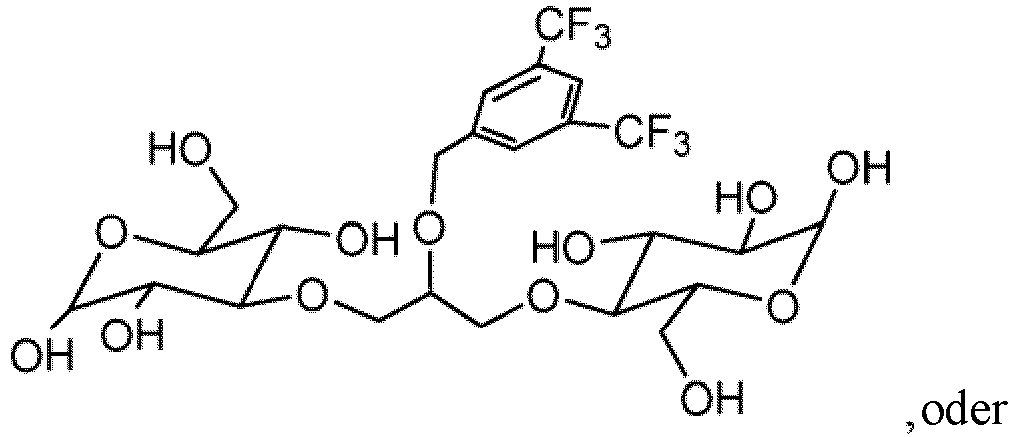
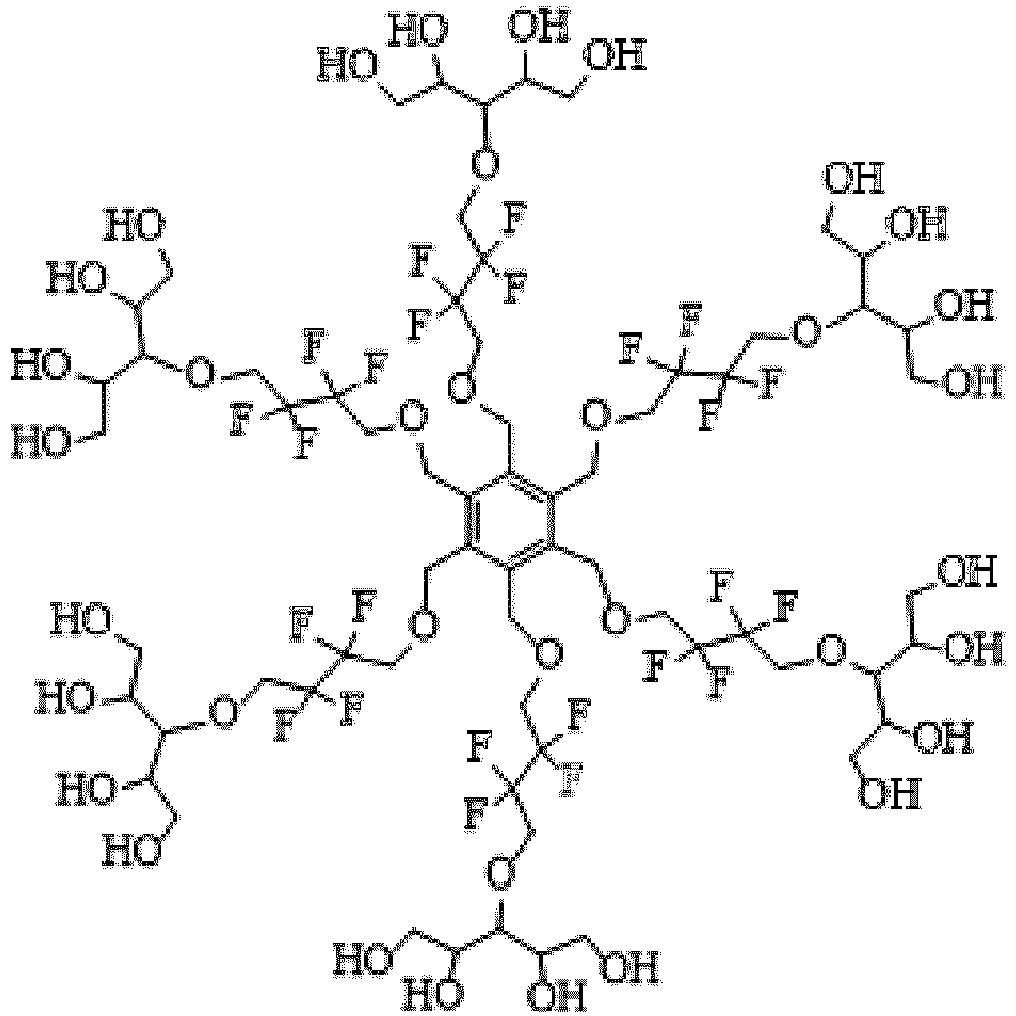
- the 19 F-MR contrast molecules disclosed herein include and
- the invention further provides a liposome composition for the administration of one or more 19 F-MR contrast molecules, the liposome composition comprising: a liposome and one or more of the 19 F-MR contrast molecules.
- the liposome may comprise a unilaminar bilayer of at least one lipid.
- the liposome is a multilamellar liposome.
- each the one or more 19 F-MR contrast molecules comprises at least two fluorine atoms, at least one 1,2,3-triazole moiety, and at least one vicinal diol group.
- the liposome composition may comprise any of the 19 F-MR contrast molecules disclosed herein.
- the liposome lipid comprises one or more hydrocarbon chains and a polar head group.
- Liposome lipids may be selected from the lipid families that include glycerolipids, propylene glycol phospholipids, glycerophospholipids (phospholipids), sphingolipids, prenol lipids, sterol lipids, saccharolipids, and polyketides.
- a glycerolipid may be a mono-, di-, or tri-substituted glycerol.
- Exemplary glycerophospholipids include phosphatidyl cholines, phosphatidylethanolamines, phosphatidic acids, and phosphatidylinositols.
- liposome phospholipids include 1,2-didecanoyl-sn-glycero-3-phosphocholine, 1,2-dierucoyl-sn-glycero-3-phosphate, 1,2-dierucoyl-sn-glycero-3-phosphoethanolamine, 1,2-dierucoyl-sn-glycero-3-phosphocholine, 1,2-dilinoleoyl-sn-glycero-3-phosphocholine, 1,2-dilauroyl-sn-glycero-3-phosphate, 1,2-eilauroyl-sn-glycero-3-phosphocholine, 1,2-dilauroyl-sn-glycero-3-phosphoethanolamine, 1,2-eilauroyl-sn-glycero-3-phosphoserine, 1,2-dimyristoyl-sn-glycero-3-phosphate, 1,2-eimyristoyl-sn-glycero-3-phosphocholine, 1,2-dimyristoyl-sn
- the liposome composition may comprise a polymer.
- Suitable polymers include polyethyleneglycol (PEG) polyvinylpyrrolidone, polyvinylmethylether, polymethyloxazoline, polyethyloxazoline, polyhydroxypropyloxazoline, polyhydroxypropylmethacrylamide, polymethacrylamide, polydimethylacrylamide, polyhydroxypropylrnethacrylate, polyhydroxyethylacrylate, hydroxymethylcellulose, hydroxyethylcellulose, polyaspartamide, and hydrophilic peptide sequences.
- the polymer is a lipid-conjugated polymer.
- lipid-conjugated polymers examples include PEG-phospholipids, carbamate-linked PEG-phospholipids, monoacylglycerol-PEG, diacylglycerol-PEG, and polyacryloyl-phospholipids.
- the polymer is 1,2-distearoyl-sn-glycero-3-phosphoethanolamine-N-[methoxy (polyethylene glycol)-2000].
- the liposome composition may comprise one or more additives.
- the one or more additives may be a stabilizing agent, a free-space-filling agent, an agent to limit lateral lipid diffusion, an agent to affect the phase transition of lipids, a diffusion coefficient altering agent, and an elastic modulus altering agent.
- cholesterol is used as a liposome composition additive.
- a liposome composition is a passive targeting liposome. In other embodiments, a liposome composition is an active targeting liposome. In some aspects, an active targeting liposome comprises at least one targeting moiety. Targeting moieties may be selected from the group of targeting moieties that include antibodies, peptides, polymers, and small molecules.
- the liposome composition 19 F-MR contrast molecule is at least one of and
- the invention also provides a method of profiling multiple molecular species within a subject, the method comprising imaging contrast molecules with 19 F MRI in a subject to whom at least two of the 19 F-MR contrast molecules with unique 19 F-MR signals have been administered
- the at least two 19 F-MR contrast molecules are at least two different 19 F-MR contrast molecule formulations.
- a 19 F-MR contrast molecule formulation may include a liposome, a tablet, buccal tablet, troche, capsule, elixir, suspension, syrup, wafer, and the like.
- the liposomes may be administered in a capsule, such as a gelatin capsule or a soft gel capsule as known in the art.
- a 19 F-MR contrast molecule liposome composition is a passive targeting liposome composition.
- a 19 F-MR contrast molecule liposome composition is an active targeting liposome composition
- the at least two 19 F-MR contrast molecules with unique 19 F-MR signals are administered to different tissues.
- the at least two 19 F-MR contrast molecules with unique 19 F-MR signals are targeted to different tissues.
- targeting to different tissues comprises administering at least two 19 F-MR contrast molecules by different routes.
- One example of administration by different routes is administering one 19 F-MR contrast molecule formulation orally and administering a different 19 F-MR contrast molecule formulation intratumorally.
- targeting to different tissues comprises administering at least two 19 F-MR contrast molecules with different tissue targeting propensities.
- administering at least two 19 F-MR contrast molecules with different tissue targeting propensities comprises administering one 19 F-MR contrast molecule in an active targeting liposome and administering a different 19 F-MR contrast molecule in a passive targeting liposome.
- administering at least two 19 F-MR contrast molecules with different tissue targeting propensities comprises administering one 19 F-MR contrast molecule in an active targeting liposome and administering a different 19 F-MR contrast molecule in an active targeting liposome with a different targeting moiety.
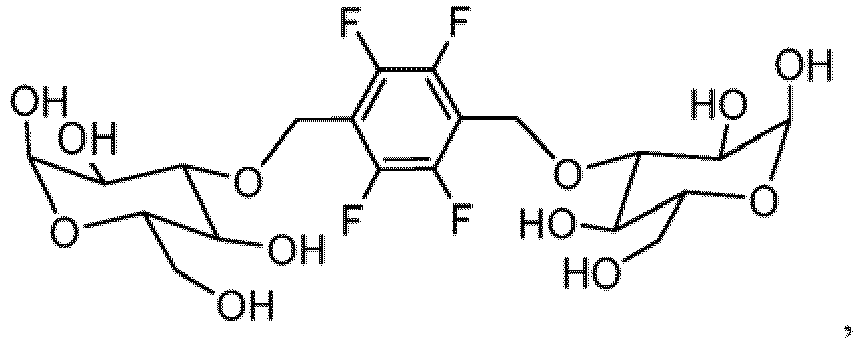
- a method of profiling multiple molecular species within a subject comprises administering to the subject at least two 19 F-MR contrast molecules selected from the group consisting of and
- any of the 19 F-MR contrast molecules described herein can be used in combination with one or more other 19 F-MR contrast molecules described herein in methods of profiling multiple molecular species or of imaging multiple biological features.
- the methods may include use of 2, 3, 4, 5, 6 or more of the 19 F-MR contrast molecules described herein.
- Compatible 19 F-MR contrast molecules for use in a single imaging experiment can be determined by the respective 19 F MR spectra of the molecules-if two different molecules have non-overlapping peaks on a 19 F MR spectrum, then they can be distinguished in a single imaging experiment.
- two or more different 19 F-MR contrast molecules can be used simultaneously to image different structural features in a single imaging experiment.
- the invention also provides a method of imaging a biological feature, which has been contacted a with a composition comprising any of the 19 F-MR contrast molecules disclosed herein and comprising detecting the molecule with 19 F-MRI
- Contacting the biological feature with 19 F-MR contrast molecule may comprise administering the 19 F-MR contrast molecule to an organism, which may be a living organism. This may require preparing a formulation of the 19 F-MR contrast molecule with a pharmaceutically acceptable carrier or other biologically compatible composition so that the 19 F-MR contrast molecule can be brought into contact with the biological feature or structure.
- Novel 19 F-MR contrast molecules are described herein, along with synthesis methods of such molecules, formulations that include such molecules, and methods of using such molecules. Aspects of the present invention are discussed in further detail in the following sections.
- the symbol "----" represents an optional bond, which if present is either single or double.
- the symbol “ - - - - " represents a single bond or a double bond.
- the structure includes the structures and As will be understood by a person of skill in the art, no one such ring atom forms part of more than one double bond.
- the symbol “ " ", when drawn perpendicularly across a bond indicates a point of attachment of the group. It is noted that the point of attachment is typically only identified in this manner for larger groups in order to assist the reader in rapidly and unambiguously identifying a point of attachment.
- R may replace any hydrogen atom attached to any of the ring atoms, including a depicted, implied, or expressly defined hydrogen, so long as a stable structure is formed.
- R may replace any hydrogen atom attached to any of the ring atoms, including a depicted, implied, or expressly defined hydrogen, so long as a stable structure is formed.
- R may replace any hydrogen attached to any of the ring atoms of either of the fused rings unless specified otherwise.
- Replaceable hydrogens include depicted hydrogens (e.g., the hydrogen attached to the nitrogen in the formula above), implied hydrogens (e.g., a hydrogen of the formula above that is not shown but understood to be present), expressly defined hydrogens, and optional hydrogens whose presence depends on the identity of a ring atom ( e.g., a hydrogen attached to group X, when X equals -CH-), so long as a stable structure is formed.
- R may reside on either the 5-membered or the 6-membered ring of the fused ring system.
- (Cn) defines the exact number (n) of carbon atoms in the group/class.
- (C ⁇ n) defines the maximum number (n) of carbon atoms that can be in the group/class, with the minimum number as small as possible for the group in question, e.g., it is understood that the minimum number of carbon atoms in the group “alkenyl (C ⁇ 8) " or the class “alkene (C ⁇ 8) " is two.
- alkoxy (C ⁇ 10) designates those alkoxy groups having from 1 to 10 carbon atoms ( e.g., 1, 2, 3, 4, 5, 6, 7, 8, 9, or 10, or any range derivable therein ( e.g., 3 to 10 carbon atoms).
- Cn-n' defines both the minimum (n) and maximum number (n') of carbon atoms in the group.
- alkyl (C2-10) designates those alkyl groups having from 2 to 10 carbon atoms (e.g., 2, 3, 4, 5, 6, 7, 8, 9, or 10, or any range derivable therein ( e.g., 3 to 10 carbon atoms)).
- saturated means the compound or group so modified has no carbon-carbon double and no carbon-carbon triple bonds, except as noted below.
- the term does not preclude carbon-heteroatom multiple bonds, for example a carbon oxygen double bond or a carbon nitrogen double bond. Moreover, it does not preclude a carbon-carbon double bond that may occur as part of keto-enol tautomerism or imine/enamine tautomerism.
- aliphatic when used without the "substituted” modifier signifies that the compound/group so modified is an acyclic or cyclic, but non-aromatic hydrocarbon compound or group.
- the carbon atoms can be joined together in straight chains, branched chains, or non-aromatic rings (alicyclic).
- Aliphatic compounds/groups can be saturated, that is joined by single bonds (alkanes/alkyl), or unsaturated, with one or more double bonds (alkenes/alkenyl) or with one or more triple bonds (alkynes/alkynyl).
- one or more hydrogen atom has been independently replaced by -OH, -F, -Cl, -Br, -I, -NH 2 , -NO 2 , -CO 2 H, -CO 2 CH 3 , -CN, -SH, -OCH 3 , -OCH 2 CH 3 , -C(O)CH 3 , -N(CH 3 ) 2 , - C(O)NH 2 , -OC(O)CH 3 , or -S(O) 2 NH 2 .
- alkyl when used without the "substituted” modifier refers to a monovalent saturated aliphatic group with a carbon atom as the point of attachment, a linear or branched, cyclo, cyclic or acyclic structure, and no atoms other than carbon and hydrogen.
- cycloalkyl is a subset of alkyl.
- the groups -CH 3 (Me), -CH 2 CH 3 (Et), -CH 2 CH 2 CH 3 ( n -Pr), -CH(CH 3 ) 2 ( iso-P r), -CH(CH 2 ) 2 (cyclopropyl), -CH 2 CH 2 CH 2 CH 3 ( n- Bu), -CH(CH 3 )CH 2 CH 3 ( sec -butyl), -CH 2 CH(CH 3 ) 2 ( iso -butyl), -C(CH 3 ) 3 ( tert -butyl), -CH 2 C(CH 3 ) 3 ( neo -pentyl), cyclobutyl, cyclopentyl, cyclohexyl, and cyclohexylmethyl are examples of alkyl groups.
- alkanediyl when used without the "substituted” modifier refers to a divalent saturated aliphatic group, with one or two saturated carbon atom(s) as the point(s) of attachment, a linear or branched, cyclo, cyclic or acyclic structure, no carbon-carbon double or triple bonds, and no atoms other than carbon and hydrogen.
- one or more hydrogen atom has been independently replaced by -OH, -F, -Cl, -Br, -I, -NH 2 , -NO 2 , -CO 2 H, -CO 2 CH 3 , -CN, -SH, -OCH 3 , -OCH 2 CH 3 , -C(O)CH 3 , -N(CH 3 ) 2 , -C(O)NH 2 , -OC(O)CH 3 , or -S(O) 2 NH 2 .
- the following groups are examples of substituted alkyl groups: -CH 2 OH, -CH 2 Cl, -CF 3 , -CH 2 CN, -CH 2 C(O)OH, -CH 2 C(O)OCH 3 , -CH 2 C(O)NH 2 , -CH 2 C(O)CH 3 , -CH 2 OCH 3 , -CHzOC(O)CH 3 , -CH 2 NH 2 , -CH 2 N(CH 3 ) 2 , and -CH 2 CH 2 Cl.
- haloalkyl is a subset of substituted alkyl, in which one or more hydrogen atoms has been substituted with a halo group and no other atoms aside from carbon, hydrogen and halogen are present.
- the group, -CH 2 Cl is an example of a haloalkyl.
- An “alkane” refers to the compound H-R, wherein R is alkyl.
- fluoroalkyl is a subset of substituted alkyl, in which one or more hydrogen has been substituted with a fluoro group and no other atoms aside from carbon, hydrogen and fluorine are present.
- alkane refers to the compound H-R, wherein R is alkyl.
- alkyl alcohol is a subset of substituted alkyl, in which one or more hydrogen atoms has been substituted with a hydroxyl group (-OH).
- alkenyl when used without the "substituted” modifier refers to an monovalent unsaturated aliphatic group with a carbon atom as the point of attachment, a linear or branched, cyclo, cyclic or acyclic structure, at least one nonaromatic carbon-carbon double bond, no carbon-carbon triple bonds, and no atoms other than carbon and hydrogen.
- alkenediyl when used without the "substituted” modifier refers to a divalent unsaturated aliphatic group, with two carbon atoms as points of attachment, a linear or branched, cyclo, cyclic or acyclic structure, at least one nonaromatic carbon-carbon double bond, no carbon-carbon triple bonds, and no atoms other than carbon and hydrogen.
- alkynyl when used without the "substituted” modifier refers to an monovalent unsaturated aliphatic group with a carbon atom as the point of attachment, a linear or branched, cyclo, cyclic or acyclic structure, at least one carbon-carbon triple bond, and no atoms other than carbon and hydrogen.
- alkynyl does not preclude the presence of one or more non-aromatic carbon-carbon double bonds.
- the groups, -C ⁇ CH, -C ⁇ CCH 3 , and -CH 2 C ⁇ CCH 3 are examples of alkynyl groups.
- alkynyl When alkynyl is used with the "substituted" modifier one or more hydrogen atom has been independently replaced by -OH, -F, -Cl, -Br, -I, -NH 2 , -NO 2 , -CO 2 H, -CO 2 CH 3 , -CN, -SH, -OCH 3 , -OCH 2 CH 3 , - C(O)CH 3 , -N(CH 3 ) 2 , -C(O)NH 2 , -OC(O)CH 3 , or -S(O) 2 NH 2 .
- An "alkyne” refers to the compound H-R, wherein R is alkynyl.
- aryl when used without the "substituted” modifier refers to a monovalent unsaturated aromatic group with an aromatic carbon atom as the point of attachment, said carbon atom forming part of a one or more six-membered aromatic ring structure, wherein the ring atoms are all carbon, and wherein the group consists of no atoms other than carbon and hydrogen. If more than one ring is present, the rings may be fused or unfused. As used herein, the term does not preclude the presence of one or more alkyl group (carbon number limitation permitting) attached to the first aromatic ring or any additional aromatic ring present.
- aryl groups include phenyl (Ph), methylphenyl, (dimethyl)phenyl, -C 6 H 4 CH 2 CH 3 (ethylphenyl), naphthyl, and the monovalent group derived from biphenyl.
- aromaticiyl when used without the "substituted” modifier refers to a divalent aromatic group, with two aromatic carbon atoms as points of attachment, said carbon atoms forming part of one or more six-membered aromatic ring structure(s) wherein the ring atoms are all carbon, and wherein the monovalent group consists of no atoms other than carbon and hydrogen.
- the term does not preclude the presence of one or more alkyl group (carbon number limitation permitting) attached to the first aromatic ring or any additional aromatic ring present. If more than one ring is present, the rings may be fused or unfused.
- alkyl group carbon number limitation permitting
- arenediyl groups include:
- one or more hydrogen atom has been independently replaced by -OH, -F, -Cl, -Br, -I, -NH 2 , -NO 2 , -CO 2 H, -CO 2 CH 3 , -CN, -SH, -OCH 3 , -OCH 2 CH 3 , -C(O)CH 3 , -N(CH 3 ) 2 , -C(O)NH 2 , -OC(O)CH 3 , or -S(O) 2 NH 2 .
- An "arene” refers to the compound H-R, wherein R is aryl.
- aralkyl when used without the “substituted” modifier refers to the monovalent group -alkanediyl-aryl, in which the terms alkanediyl and aryl are each used in a manner consistent with the definitions provided above.
- Examples of aralkyls are: phenylmethyl (benzyl, Bn) and 2-phenyl-ethyl.
- substituted aralkyls are: (3-chlorophenyl)-methyl, and 2-chloro-2-phenyl-eth-1-yl.
- heteroaryl when used without the "substituted” modifier refers to a monovalent aromatic group with an aromatic carbon atom or nitrogen atom as the point of attachment, said carbon atom or nitrogen atom forming part of one or more aromatic ring structures wherein at least one of the ring atoms is nitrogen, oxygen or sulfur, and wherein the heteroaryl group consists of no atoms other than carbon, hydrogen, aromatic nitrogen, aromatic oxygen and aromatic sulfur.
- the term does not preclude the presence of one or more alkyl, aryl, and/or aralkyl groups (carbon number limitation permitting) attached to the aromatic ring or aromatic ring system. If more than one ring is present, the rings may be fused or unfused.
- heteroaryl groups include furanyl, imidazolyl, indolyl, indazolyl (Im), isoxazolyl, methylpyridinyl, oxazolyl, phenylpyridinyl, pyridinyl, pyrrolyl, pyrimidinyl, pyrazinyl, quinolyl, quinazolyl, quinoxalinyl, triazinyl, tetrazolyl, thiazolyl, thienyl, and triazolyl.
- heteroarenediyl when used without the "substituted” modifier refers to an divalent aromatic group, with two aromatic carbon atoms, two aromatic nitrogen atoms, or one aromatic carbon atom and one aromatic nitrogen atom as the two points of attachment, said atoms forming part of one or more aromatic ring structure(s) wherein at least one of the ring atoms is nitrogen, oxygen or sulfur, and wherein the divalent group consists of no atoms other than carbon, hydrogen, aromatic nitrogen, aromatic oxygen and aromatic sulfur.
- the term does not preclude the presence of one or more alkyl, aryl, and/or aralkyl groups (carbon number limitation permitting) attached to the aromatic ring or aromatic ring system. If more than one ring is present, the rings may be fused or unfused. Examples of heteroarenediyl groups include:
- one or more hydrogen atom has been independently replaced by -OH, -F, -Cl, -Br, -I, -NH 2 , -NO 2 , -CO 2 H, -CO 2 CH 3 , -CN, -SH, -OCH 3 , -OCH 2 CH 3 , -C(O)CH 3 , -N(CH 3 ) 2 , -C(O)NH 2 , -OC(O)CH 3 , or -S(O) 2 NH 2 .
- heterocycloalkyl when used without the "substituted” modifier refers to a monovalent non-aromatic group with a carbon atom or nitrogen atom as the point of attachment, said carbon atom or nitrogen atom forming part of one or more non-aromatic ring structures wherein at least one of the ring atoms is nitrogen, oxygen or sulfur, and wherein the heterocycloalkyl group consists of no atoms other than carbon, hydrogen, nitrogen, oxygen and sulfur.
- the term does not preclude the presence of one or more alkyl groups (carbon number limitation permitting) attached to the ring or ring system. If more than one ring is present, the rings may be fused or unfused.
- heterocycloalkyl groups include aziridinyl, azetidinyl, pyrrolidinyl, piperidinyl, piperazinyl, morpholinyl, thiomorpholinyl, tetrahydrofuranyl, tetrahydrothiofuranyl, tetrahydropyranyl, and pyranyl.
- heterocycloalkyl used with the "substituted" modifier one or more hydrogen atom has been independently replaced by -OH, -F, -Cl, -Br, -I, -NH 2 , -NO 2 , -CO 2 H, -CO 2 CH 3 , -CN, -SH, -OCH 3 , -OCH 2 CH 3 , -C(O)CH 3 , -N(CH 3 ) 2 , -C(O)NH 2 , -OC(O)CH 3 , or -S(O) 2 NH 2 .
- acyl when used without the “substituted” modifier refers to the group -C(O)R, in which R is a hydrogen, alkyl, aryl, aralkyl or heteroaryl, as those terms are defined above.
- the groups, -CHO, -C(O)CH 3 (acetyl, Ac), -C(O)CH 2 CH 3 , -C(O)CH 2 CH 2 CH 3 , -C(O)CH(CH 3 ) 2 , -C(O)CH(CH 2 ) 2 , -C(O)C 6 H 5 , -C(O)C 6 H 4 CH 3 , -C(O)CH 2 C 6 H 5 , -C(O)(imidazolyl) are examples of acyl groups.
- a "thioacyl" is defined in an analogous manner, except that the oxygen atom of the group -C(O)R has been replaced with a sulfur atom, -C(S)R.
- one or more hydrogen atom has been independently replaced by-OH, -F, -Cl, -Br, -I, -NH 2 , -NO 2 , -CO 2 H, -CO 2 CH 3 , -CN, -SH, -OCH 3 , -OCH 2 CH 3 , -C(O)CH 3 , -N(CH 3 ) 2 , - C(O)NH 2 , -OC(O)CH 3 , or -S(O) 2 NH 2 .
- the groups, -C(O)CH 2 CF 3 , -CO 2 H (carboxyl), -CO 2 CH 3 (methylcarboxyl), -CO 2 CH 2 CH 3 , -C(O)NH 2 (carbamoyl), and -CON(CH 3 ) 2 are examples of substituted acyl groups.
- alkoxy when used without the "substituted” modifier refers to the group -OR, in which R is an alkyl, as that term is defined above.
- alkoxy groups include: -OCH 3 (methoxy), -OCH 2 CH 3 (ethoxy), -OCH 2 CH 2 CH 3 , -OCH(CH 3 ) 2 (isopropoxy), -OCH(CH 2 ) 2 , -O-cyclopentyl, and -O-cyclohexyl.
- alkenyloxy when used without the “substituted” modifier, refers to groups, defined as -OR, in which R is alkenyl, alkynyl, aryl, aralkyl, heteroaryl, and acyl, respectively.
- alkoxydiyl refers to the divalent group -O-alkanediyl-, -O-alkanediyl-O-, or -alkanediyl-O-alkanediyl-.
- alkylthio and acylthio when used without the “substituted” modifier refers to the group -SR, in which R is an alkyl and acyl, respectively.
- R is an alkyl and acyl, respectively.
- one or more hydrogen atom has been independently replaced by -OH, -F, -Cl, -Br, -I, -NH 2 , -NO 2 , -CO 2 H, -CO 2 CH 3 , -CN, -SH, -OCH 3 , -OCH 2 CH 3 , -C(O)CH 3 , -N(CH 3 ) 2 , -C(O)NH 2 , -OC(O)CH 3 , or -S(O) 2 NH 2 .
- alcohol corresponds to an alkane, as defined above, wherein at least one of the hydrogen atoms has been replaced with a hydroxy group.
- alkylamino when used without the "substituted” modifier refers to the group -NHR, in which R is an alkyl, as that term is defined above.
- alkylamino groups include: -NHCH 3 and -NHCH 2 CH 3 .
- dialkylamino when used without the "substituted” modifier refers to the group -NRR', in which R and R' can be the same or different alkyl groups, or R and R' can be taken together to represent an alkanediyl.
- dialkylamino groups include: -N(CH 3 ) 2 , -N(CH 3 )(CH 2 CH 3 ), and N-pyrrolidinyl.
- alkoxyamino refers to groups, defined as -NHR, in which R is alkoxy, alkenyl, alkynyl, aryl, aralkyl, heteroaryl, and alkylsulfonyl, respectively.
- R is alkoxy, alkenyl, alkynyl, aryl, aralkyl, heteroaryl, and alkylsulfonyl, respectively.
- An example of an arylamino group is -NHC 6 H 5 .
- amido when used without the “substituted” modifier, refers to the group -NHR, in which R is acyl, as that term is defined above.
- An example of an amido group is -NHC(O)CH 3 .
- alkylaminodiyl refers to the divalent group -NH-alkanediyl-, -NH-alkanediyl-NH-, or -alkanediyl-NH-alkanediyl-.
- a "chiral auxiliary” refers to a removable chiral group that is capable of influencing the stereoselectivity of a reaction. Persons of skill in the art are familiar with such compounds, and many are commercially available.
- hydrate when used as a modifier to a compound means that the compound has less than one (e.g., hemihydrate), one ( e.g., monohydrate), or more than one ( e.g ., dihydrate) water molecules associated with each compound molecule, such as in solid forms of the compound.
- IC 50 refers to an inhibitory dose which is 50% of the maximum response obtained. This quantitative measure indicates how much of a particular drug or other substance (inhibitor) is needed to inhibit a given biological, biochemical or chemical process (or component of a process, i.e. an enzyme, cell, cell receptor or microorganism) by half.
- An "isomer" of a first compound is a separate compound in which each molecule contains the same constituent atoms as the first compound, but where the configuration of those atoms in three dimensions differs.
- the term "patient” or “subject” refers to a living mammalian organism, such as a human, monkey, cow, sheep, goat, dog, cat, mouse, rat, guinea pig, or transgenic species thereof.
- the patient or subject is a primate. Examples of human subjects are adults, juveniles, infants and fetuses.
- pharmaceutically acceptable refers to those compounds, materials, compositions, and/or dosage forms which are, within the scope of sound medical judgment, suitable for use in contact with the tissues, organs, and/or bodily fluids of human beings and animals without excessive toxicity, irritation, allergic response, or other problems or complications commensurate with a reasonable benefit/risk ratio.
- “Pharmaceutically acceptable salts” means salts of compounds of the present invention which are pharmaceutically acceptable, as defined above, and which possess the desired pharmacological activity. Such salts include acid addition salts formed with inorganic acids such as hydrochloric acid, hydrobromic acid, sulfuric acid, nitric acid, phosphoric acid, and the like; or with organic acids such as 1,2-ethanedisulfonic acid, 2-hydroxyethanesulfonic acid, 2-naphthalenesulfonic acid, 3-phenylpropionic acid, 4,4'-methylenebis(3-hydroxy-2-ene-1-carboxylic acid), 4-methylbicyclo[2.2.2]oct-2-ene-1-carboxylic acid, acetic acid, aliphatic mono- and dicarboxylic acids, aliphatic sulfuric acids, aromatic sulfuric acids, benzenesulfonic acid, benzoic acid, camphorsulfonic acid, carbonic acid, cinnamic acid, citric acid,
- Pharmaceutically acceptable salts also include base addition salts which may be formed when acidic protons present are capable of reacting with inorganic or organic bases.
- Acceptable inorganic bases include sodium hydroxide, sodium carbonate, potassium hydroxide, aluminum hydroxide and calcium hydroxide.
- Acceptable organic bases include ethanolamine, diethanolamine, triethanolamine, tromethamine, N -methylglucamine and the like. It should be recognized that the particular anion or cation forming a part of any salt of this invention is not critical, so long as the salt, as a whole, is pharmacologically acceptable. Additional examples of pharmaceutically acceptable salts and their methods of preparation and use are presented in Handbook of Pharmaceutical Salts: Properties, and Use (2002 ).
- pharmaceutically acceptable carrier means a pharmaceutically-acceptable material, composition or vehicle, such as a liquid or solid filler, diluent, excipient, solvent or encapsulating material, involved in carrying or transporting a chemical agent.
- saturated when referring to an atom means that the atom is connected to other atoms only by means of single bonds.
- a “stereoisomer” or “optical isomer” is an isomer of a given compound in which the same atoms are bonded to the same other atoms, but where the configuration of those atoms in three dimensions differs.
- “Enantiomers” are stereoisomers of a given compound that are mirror images of each other, like left and right hands.
- “Diastereomers” are stereoisomers of a given compound that are not enantiomers.
- Chiral molecules contain a chiral center, also referred to as a stereocenter or stereogenic center, which is any point, though not necessarily an atom, in a molecule bearing groups such that an interchanging of any two groups leads to a stereoisomer.
- the chiral center is typically a carbon, phosphorus or sulfur atom, though it is also possible for other atoms to be stereocenters in organic and inorganic compounds.
- a molecule can have multiple stereocenters, giving it many stereoisomers.
- the total number of hypothetically possible stereoisomers will not exceed 2n, where n is the number of tetrahedral stereocenters.
- Molecules with symmetry frequently have fewer than the maximum possible number of stereoisomers.
- a 50:50 mixture of enantiomers is referred to as a racemic mixture.
- a mixture of enantiomers can be enantiomerically enriched so that one enantiomer is present in an amount greater than 50%.
- enantiomers and/or diasteromers can be resolved or separated using techniques known in the art. It is contemplated that that for any stereocenter or axis of chirality for which stereochemistry has not been defined, that stereocenter or axis of chirality can be present in its R form, S form, or as a mixture of the R and S forms, including racemic and non-racemic mixtures.
- the phrase "substantially free from other stereoisomers” means that the composition contains ⁇ 15%, more preferably ⁇ 10%, even more preferably ⁇ 5%, or most preferably ⁇ 1% of another stereoisomer(s).
- the invention disclosed herein includes diagnostic compositions comprising the one or more 19 F MR contrast agents, which compositions may be administered to a subject, including to a mammal.
- the diagnostic compositions may be combined with one or more excipients appropriate to the indicated route of administration.
- the diagnostic compositions may be admixed with lactose, sucrose, starch powder, cellulose esters of alkanoic acids, cellulose alkyl esters, talc, stearic acid, magnesium stearate, magnesium oxide, sodium and calcium salts of phosphoric and sulfuric acids, gelatin, acacia, sodium alginate, polyvinylpyrrolidone, and/or polyvinyl alcohol, and tableted or encapsulated for convenient administration.
- the diagnostic compositions may be dissolved in water, polyethylene glycol, propylene glycol, ethanol, corn oil, cottonseed oil, peanut oil, sesame oil, benzyl alcohol, sodium chloride, and/or various buffers. Other excipients and modes of administration are well and widely known in the pharmaceutical art.
- the diagnostic compositions may be subjected to conventional pharmaceutical operations such as sterilization and/or may contain conventional pharmaceutical carriers and excipients such as preservatives, stabilizers, wetting agents, emulsifiers, buffers, etc.
- the diagnostic compositions described in the present disclosure may be administered by a variety of methods, e.g., orally or by injection ( e.g. subcutaneous, intravenous, intraperitoneal, etc. ) .
- the diagnostic compositions may be coated in a material to protect the compositions from the action of acids and other natural conditions which may inactivate the compositions. They may also be administered by continuous perfusion/infusion of a disease or wound site.
- a diagnostic composition by other than parenteral administration, it may be necessary to coat the composition with, or co-administer the composition with, a material to prevent its inactivation.
- a diagnosit compound may be administered to a patient in an appropriate carrier, for example, liposomes, or a diluent.
- Pharmaceutically acceptable diluents include saline and aqueous buffer solutions.
- Liposomes include water-in-oil-in-water CGF emulsions as well as conventional liposomes.
- the diagnostic compositions may also be administered parenterally, intraperitoneally, intraspinally, or intracerebrally.
- Dispersions can be prepared in glycerol, liquid polyethylene glycols, and mixtures thereof and in oils. Under ordinary conditions of storage and use, these preparations may contain a preservative to prevent the growth of microorganisms.
- compositions suitable for injectable use include sterile aqueous solutions (where water soluble) or dispersions and sterile powders for the extemporaneous preparation of sterile injectable solutions or dispersion.
- the composition must be sterile and must be fluid to the extent that easy syringability exists. It must be stable under the conditions of manufacture and storage and must be preserved against the contaminating action of microorganisms such as bacteria and fungi.
- the carrier can be a solvent or dispersion medium containing, for example, water, ethanol, polyol (such as, glycerol, propylene glycol, and liquid polyethylene glycol, and the like), suitable mixtures thereof, and vegetable oils.
- the proper fluidity can be maintained, for example, by the use of a coating such as lecithin, by the maintenance of the required particle size in the case of dispersion and by the use of surfactants.
- Prevention of the action of microorganisms can be achieved by various antibacterial and antifungal agents, for example, parabens, chlorobutanol, phenol, ascorbic acid, thimerosal, and the like.
- isotonic agents for example, sugars, sodium chloride, or polyalcohols such as mannitol and sorbitol, in the composition.
- Prolonged absorption of the injectable compositions can be brought about by including in the composition an agent which delays absorption, for example, aluminum monostearate or gelatin.
- Sterile injectable solutions can be prepared by incorporating the diagnostic composition in the required amount in an appropriate solvent with one or a combination of ingredients enumerated above, as required, followed by filtered sterilization.
- dispersions are prepared by incorporating the diagnostic composition into a sterile carrier which contains a basic dispersion medium and the required other ingredients from those enumerated above.
- the preferred methods of preparation are vacuum drying and freeze-drying which yields a powder of the active ingredient (i.e., the therapeutic compound) plus any additional desired ingredient from a previously sterile-filtered solution thereof.
- a diagnostic composition can be orally administered, for example, with an inert diluent or an assimilable edible carrier.
- the diagnostic composition and other ingredients may also be enclosed in a hard or soft shell gelatin capsule, compressed into tablets, or incorporated directly into the subject's diet.
- the diagnostic composition may be incorporated with excipients and used in the form of ingestible tablets, buccal tablets, troches, capsules, elixirs, suspensions, syrups, wafers, and the like.
- the percentage of the diagnostic composition in the compositions and preparations may, of course, be varied. The amount of the diagnostic composition in such diagnostically useful compositions is such that a suitable dosage will be obtained.
- Dosage unit form refers to physically discrete units suited as unitary dosages for the subjects to be treated; each unit containing a predetermined quantity of diagnostic composition calculated to produce the desired diagnostic effect in association with the required pharmaceutical carrier.
- the specification for the dosage unit forms of the invention are dictated by and directly dependent on (a) the unique characteristics of the diagnostic composition and the particular diagnostic effect to be achieved, and (b) the limitations inherent in the art of compounding such a diagnostic compound for imaging in a patient. Diagnostic compositions are administered at a diagnostically effective dosage sufficient to be imaged in a subject.
- the actual dosage amount of a compound of the present disclosure or composition comprising a compound of the present disclosure administered to a subject may be determined by physical and physiological factors such as age, sex, body weight, severity of condition, the type of disease being diagnosed, previous or concurrent therapeutic interventions, idiopathy of the subject and on the route of administration. These factors may be determined by a skilled artisan. The practitioner responsible for administration will typically determine the concentration of diagnostic compound in a composition and appropriate dose(s) for the individual subject. The dosage may be adjusted by the individual physician in the event of any complication.
- An effective amount for effective visualization of target tissues typically will vary from about 0.001 mg/kg to about 1000 mg/kg, from about 0.01 mg/kg to about 750 mg/kg, from about 100 mg/kg to about 500 mg/kg, from about 1.0 mg/kg to about 250 mg/kg, from about 10.0 mg/kg to about 150 mg/kg in one or more dose administrations daily, for one or several days (depending of course of the mode of administration and the factors discussed above).
- Other suitable dose ranges include 1 mg to 10000 mg per day, 100 mg to 10000 mg per day, 500 mg to 10000 mg per day, and 500 mg to 1000 mg per day. In some particular embodiments, the amount is less than 10,000 mg per day with a range of 750 mg to 9000 mg per day.
- the effective amount may be less than 1 mg/kg/day, less than 500 mg/kg/day, less than 250 mg/kg/day, less than 100 mg/kg/day, less than 50 mg/kg/day, less than 25 mg/kg/day or less than 10 mg/kg/day. It may alternatively be in the range of 1 mg/kg/day to 200 mg/kg/day.
- a dose of a diagnostic compound or composition may also comprise from about 1 microgram/kg/body weight, about 5 microgram/kg/body weight, about 10 microgram/kg/body weight, about 50 microgram/kg/body weight, about 100 microgram/kg/body weight, about 200 microgram/kg/body weight, about 350 microgram/kg/body weight, about 500 microgram/kg/body weight, about 1 milligram/kg/body weight, about 5 milligram/kg/body weight, about 10 milligram/kg/body weight, about 50 milligram/kg/body weight, about 100 milligram/kg/body weight, about 200 milligram/kg/body weight, about 350 milligram/kg/body weight, about 500 milligram/kg/body weight, to about 1000 mg/kg/body weight or more per administration, and any range derivable therein.
- a range of about 5 mg/kg/body weight to about 100 mg/kg/body weight, about 5 microgram/kg/body weight to about 500 milligram/kg/body weight, etc. can be administered, based on the numbers described above.
- a diagnostic composition of the present disclosure may comprise, for example, at least about 0.1% of a compound of the present disclosure.
- the compound of the present disclosure may comprise between about 2% to about 75% of the weight of the unit, or between about 25% to about 60%, for example, and any range derivable therein.
- Desired time intervals for delivery of multiple doses can be determined by one of ordinary skill in the art employing no more than routine experimentation. As an example, subjects may be administered two doses daily at approximately 12 hour intervals. In some embodiments, the agent is administered once a day.
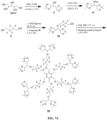
- FIGS. 6A and 6B and Examples 2 to 19 below set forth synthesis pathways by which four 19 F MR contrast molecules, ET0863 (reference example), ET0876, ET0886, and ET0890, can be synthesized.
- the pathways include azide-based click chemistry and result in molecules with 1,2,3-triazole moieties.
- Different synthesis strategies may additionally be employed to synthesize the 19 F MR contrast molecules disclosed herein.
- the synthesis strategies may result in different types of linkages between hydrophilic terminal moieties and 19 F-containing core moieties. For example, FIGS.
- Example 22 demonstrate synthesis of a 19 F MR contrast molecule, ET1084, that includes terminal hydrophilic moieties linked to a 19 F-containing core moiety via an ether linkage. Other linkages between hydrophilic terminal moieties and 19 F-containing core moieties can also be used.
- FIG. 8 shows synthesis pathways by which additional 19 F MR contrast molecules can be synthesized.
- Compounds 21, 23, 25, and 28 of FIG. 8 are analogous to molecules ET0863, ET0876, ET0886, and ET0890 of FIG. 6B , but have ether linkages between the nonionic hydrophilic moieties and the 19 F-containing core moieties and do not have a 1,2,3-triazole moiety.
- the molecules and methods disclosed herein are the first examples of a facile, versatile and highly reproducible approach to molecular painting by 19 F MRI.
- Previous attempts at liposome formulations have focused on the use of perfluoro fatty acids or sulfonate amphiphiles to incorporate fluorine in the bilayer of the particle [20,21], or the use of inorganic fluoride [22]. These approaches suffer from limited payload capacity and toxicity.
- hydrophilic organofluorine molecules disclosed herein allow facile synthetic access to water-soluble molecules with magnetically equivalent fluorine atoms which generate 19 F MRI images with no chemical shift artifacts.
- they access the broad chemical shift spectrum of organofluorine species, enabling numerous targeted probes with unique 19 F MR signatures.
- Such probes have the potential to enable noninvasive simultaneous visualization of multiple hot spots within the same region of interest (ROI), by 19 F MRI as demonstrated in both phantom and in vivo assessment of the three formulations.
- Isoflurane the commonly used inhalable anesthesia in small animal studies, is fluorinated and highly lipophilic. It is therefore readily absorbed by adipose tissue in vivo. Its 19 F MR signature is comparable to that of most PFCs and PFPEs. As shown in Fig 7 , this can greatly interfere with any signal from a PFC or PFPE probe, complicating data interpretation. Non-fluorinated injectable anesthesias such as ketamine and zylazine must therefore be used when running in vivo 19 F MRI animal experiments with such probes. This is generally time consuming and in most cases greatly hinders work-flow. The approach disclosed herein allows for facile access to probes that can be imaged without interference from the isoflurane signal.
- the most active formulation carries 22.7 mg 19 F/mL, borne on a molecule with a molecular weight of 472.4 g/mol. Dimers and oligomers of these molecules can be readily accessed to increase the 19 F content/particle of each formulation.
- a clear signal was observed after an 8-fold dilution. This corresponds to about 250 ⁇ L injected into the circulation of a 25 g mouse (blood volume ⁇ 2ml), about 2X lower than the maximum allowed volume, suggesting that the SNR should be sufficient for vascular imaging with each of these formulations.
- Carbon nuclear magnetic resonances ( 13 C NMR) spectra were recorded at 150 MHz on a Bruker 600 NMR spectrometer or at 75 MHz on a Bruker 300 NMR spectrometer. Fluorine nuclear magnetic resonances ( 19 F NMR) spectra were recorded at 282 MHz on a Bruker 300 NMR spectrometer. Chemical shifts are reported in parts per million (ppm) from an internal standard acetone (2.05 ppm), chloroform (7.26 ppm), or water (4.79 ppm) for 1 H NMR; and from an internal standard of either residual acetone (206.26 ppm), chloroform (77.00 ppm), or dimethyl sulfoxide (39.52 ppm) for 13 C NMR.
- NMR peak multiplicities are denoted as follows: s (singlet), d (doublet), t (triplet), q (quartet), p (pentet), bs (broad singlet), dd (doublet of doublet), tt (triplet of triplet), ddd (doublet of doublet of doublet), and m (multiplet). Coupling constants ( J ) are given in hertz (Hz). High resolution mass (HRMS) spectra were obtained from the Mass Spectrometry Unit of the Bioscience Research Collaborative at Rice University, Houston, Texas. Thin layer chromatography (TLC) was performed on silica gel 60 F254 plates from EMD Chemical Inc. and components were visualized by ultraviolet light (254 nm) and/or phosphomolybdic acid, 20 wt% solution in ethanol. SiliFlash silica gel (230-400 mesh) was used for all column chromatography.
- FIGS. 6A-6B set forth the synthetic schemes for 19 F MR contrast agents disclosed herein. In this Example and in further Examples that follow, additional details are provided for the chemical synthesis procedures for compounds shown in FIGS. 6A-6B .
- Alcohol 9 (8.4 g, 61.7 mmol) was added to a suspension of NaH (60% in mineral oil, 1.4 g, 58.0 mmol), in THF (250 mL), cooled in an ice/water bath. The mixture was stirred at 0 °C for 30 mins, followed by addition of 3,5-bis(trifluoromethyl)benzyl bromide (10 g, 32.6 mmol), and the ensuing mixture allowed to warm to ambient temperature for 12 h. The reaction was quenched by pouring into crushed ice, extracted with ether, rinsed with brine, and dried over anhydrous Na 2 SO 4 . Following filtration, the solvent was removed in vacuo to give a crude mixture.
- a lipid mixture consisting of 1,2-dipalmitoyl-sn-glycero-3-phosphocholine (DPPC), cholesterol, and 1,2-distearoyl-sn-glycero-3-phosphoethanolamine-N-[methoxy (polyethylene glycol)-2000] (DSPE-mPEG-2000) in a molar ratio of 55:40:5 was used to make liposomes.
- a pre warmed solution of the desired compound dissolved in histidine/saline buffer (10 mM with no pH adjustment) was added: for ET0863 (reference example) and ET0876, the concentration of the compound was 1.0 M while for ET0886 and ET0890 the concentrations were 0.8 and 0.5 M respectively.
- the resulting mixture was incubated at 60-64 °C for 45 min and the spontaneously formed multilamellar liposomes extruded on a Lipex thermoline extruder (Northern Lipids Inc., Canada), beginning with five passes through a 400 nm Nuclepore membrane (Waterman, Newton, MA) followed by eight passes through a 100 nm membrane.
- the resulting preparation was subjected to diafiltration through a 500 kD membrane (Spectrum Labs, Collinso Dominguez, CA) for 10 volume exchanges to practically eliminate any unencapsulated compound.
- Mean particle size was determined by Dynamic Light Scattering on a BI-90 goniometer/autocorrelator system at 90 ° using a 532 nm solid state laser source (Brookhaven Instruments Corp, Holtville, NY), and the final 19 F content determined by comparing 19F NMR integrals against a standard solution prepared from analytical grade trifluoroacetic acid (Sigma Aldrich), as previously described [13].
- mice were anethetized by exposure to Isoflurane prior to injection of probes and maintained under anethesia for the duration of the experiment, as well as a temperature of 37 °C using a temperature controlled air-flow system. Dicoms obtained from scans were processed using the OsiriX v.5.8.5 software (Pixmeo SARL, Bernex, Switzerland).
- the liposome nanoparticle platform for formulation was chosen primarily because of its versatility as a nano vector and its long history of in vivo use. Additionally, liposome surfaces can easily be modified with a variety of ligands and targeting moieties including small molecules and antibodies to bind specific in vivo molecular targets with high efficiency [9]. Formulation of all four compounds using standard protocols as described in the methods section proceeded smoothly. Particle size measured by dynamic light scattering (DLS), showed a mean diameter of 164.76 ⁇ 1.16 nm and a polydispersity of 0.10 ⁇ 0.04.
- DLS dynamic light scattering
- ET0876, ET0886, and ET0890 were 22.7 ⁇ 1.4, 21.9 ⁇ 0.3, and 16.6 ⁇ 1.7 mg/mL respectively, reflective of the concentration of individual compounds in the hydration buffer.
- Preliminary stability testing in plasma at 37 °C showed that ET0863 particles leaked more than 5% of their content within a 1.5 hour test period.
- ET0876, ET0886, and ET0890 particles all showed less than 5% leak, and were retained for use in subsequent experiments.
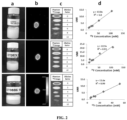
- FIG. 2 shows 19 F MRI scans on phantoms of each neat formulation ( a ), using similar scan parameters as in the solution phantoms ( b ), gave 19 F signals with SNR of 21.1, 14.0, and 11.6 for ET0876, ET0886, and ET0890 formulations, respectively.
- Dilution studies ( c ) showed that each of them was detectable at an 8 fold dilution, and a plot of the SNR against concentration ( d ) shows a linear relationship between concentration and signal intensity.
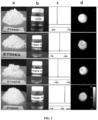
- FIG. 2 shows a single pulse 19 F MR frequency sweep ( a ), showed peaks corresponding to all the fluorine species in all the phantoms: ET0890 (one peak), Isoflurane (two peaks), ET0876 (one peak), and ET0886 (one peak).
- mice anesthetized with isoflurane were imaged with a scan sequence optimized for studies with one of the most popular PFPEs currently in use. As shown in FIG. 5 , the anesthesia generates a very strong in vivo 19 F MRI signal attributed to the high lipophilicity of the gas.
- Compound 19 of FIG. 7A Alcohol 5 ( FIG. 6A ) (25.0 g, 154 mmol) was added slowly to a suspension of NaH powder (12.3 g, 308 mmol, 60% in mineral oil) in dry diglyme (1 L) at 0 °C. The mixture was stirred for 1h followed by addition of mesylate 18 (19.2 g, 61.7 mmol). The ice/water bath was replaced with an oil bath and heated at 90 °C for 8 hours. The resultant dark solution was carefully poured into ice/water solution followed by removal of volatiles by rotary evaporation under high vacuum.
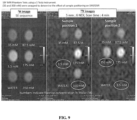
- 19 F MRI phantom images were generated by scanning 300 ⁇ l of an aqueous solution of ET1084 at the indicated concentrations using a 19 F spin echo scan protocol in a 1 Tesla instrument. Phantom images shown in FIG. 9 illustrate that ET1084 gives a concentration-dependent signal in a 19 F MRI imaging experiment.
- a graph of contrast-to-noise ratio (CNR) for various concentrations of ET1084 in 19 F MRI scans is shown in FIG. 10
- a 19 F NMR spectrum of ET1084 is shown in FIG. 11 .
Landscapes
- Health & Medical Sciences (AREA)
- Chemical & Material Sciences (AREA)
- Organic Chemistry (AREA)
- Life Sciences & Earth Sciences (AREA)
- General Health & Medical Sciences (AREA)
- Veterinary Medicine (AREA)
- Epidemiology (AREA)
- Animal Behavior & Ethology (AREA)
- Public Health (AREA)
- Medicinal Chemistry (AREA)
- Radiology & Medical Imaging (AREA)
- Nuclear Medicine, Radiotherapy & Molecular Imaging (AREA)
- Pharmacology & Pharmacy (AREA)
- Optics & Photonics (AREA)
- Physics & Mathematics (AREA)
- Dispersion Chemistry (AREA)
- Engineering & Computer Science (AREA)
- Biochemistry (AREA)
- Biotechnology (AREA)
- Molecular Biology (AREA)
- Proteomics, Peptides & Aminoacids (AREA)
- Immunology (AREA)
- Genetics & Genomics (AREA)
- Medicines Containing Antibodies Or Antigens For Use As Internal Diagnostic Agents (AREA)
Claims (11)
- Nichtionisches 19F-MR-Kontrastmolekül mit der Formel X - (R)n, wobei:X wenigstens zwei magnetisch äquivalente Fluoratome umfasst und aus der Gruppe ausgewählt ist, bestehend aus
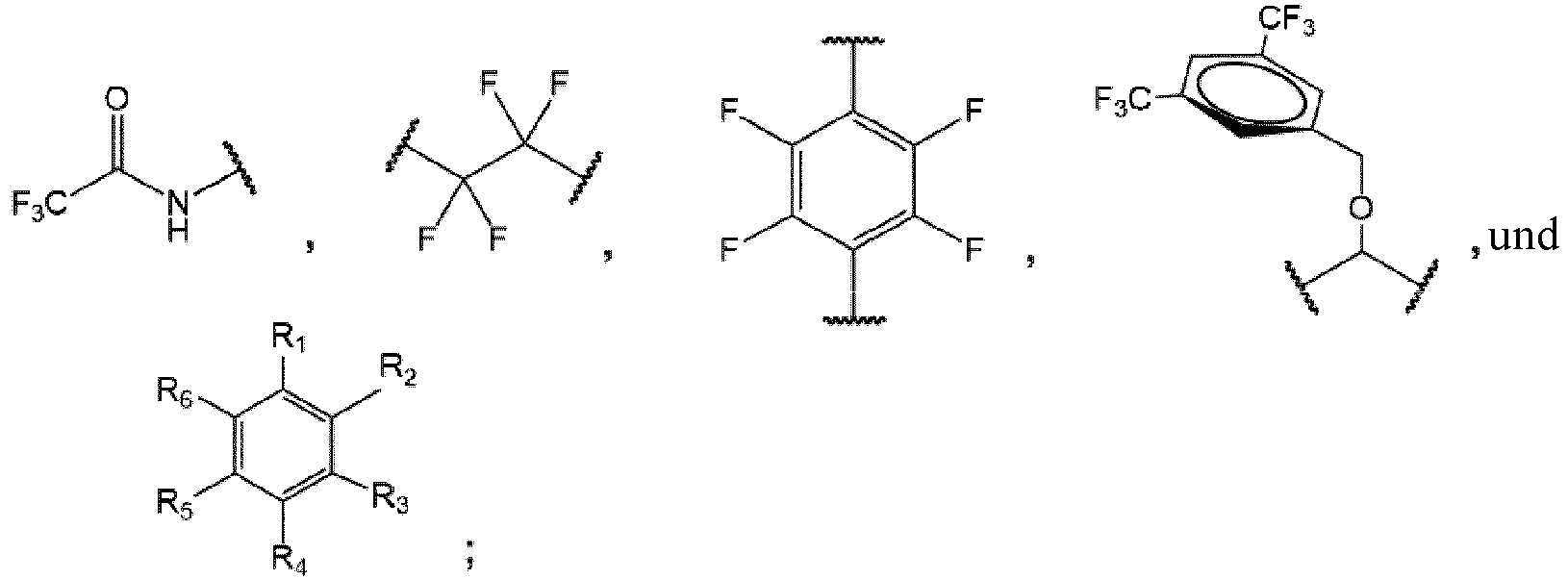 wobei:R1-R6 jeweils unabhängig voneinander H oder -(CH2O)a(CH2)6(CF2)c(CH2)a-sind;wenigstens eines von R1-R6 -(CH2O)a(CH2)6(CF2)c(CH2)a- ist;a, b und d jeweils unabhängig voneinander eine ganze Zahl von 0 bis 5 sind; undc eine ganze Zahl von 1 bis 5 ist,R ein nichtionischer, hydrophiler Teil ist, der wenigstens zwei Alkylalkoholteile umfasst, wobei R wenigstens eine vicinale Diolgruppe umfasst und wobei "Alkyl" sich auf eine monovalente gesättigte aliphatische Gruppe mit einem Kohlenstoffatom als den Anlagerungspunkt, einer linearen oder verzweigten, cyclo-, zyklischen oder azyklischen Struktur und keinen anderen Atomen als Kohlenstoff und Wasserstoff bezieht; undn eine ganze Zahl gleich oder größer als 1 ist.
 - Nichtionisches 19F-MR-Kontrastmolekül nach Anspruch 1, wobei n gleich 1, 2, 3, 4, 5 oder 6 ist.
- Nichtionisches 19F-MR-Kontrastmolekül nach Anspruch 1, wobei das Molekül eine Struktur aufweist, die ist:



- Verfahren zum Abbilden eines biologischen Merkmals, das mit einer Zusammensetzung, die das nichtionische 19F-MR-Kontrastmolekül nach einem der Ansprüche 1 bis 3 umfasst, in Berührung gebracht wurde, umfassend das Erkennen des Moleküls mit 19F-MRT.
- Liposomale Zusammensetzung für die Verabreichung von einem oder mehreren 19F-MR-Kontrastmolekülen, wobei die liposomale Zusammensetzung umfasst: ein Liposom und ein oder mehrere 19F-MR-Kontrastmoleküle, wobei das eine oder die mehreren 19F-MR-Kontrastmoleküle das nichtionische 19F-MR-Kontrastmolekül nach einem der Ansprüche 1 bis 3 umfasst/umfassen.
- Liposomale Zusammensetzung nach Anspruch 5, wobei:das wenigstens eine Lipid eine polare Kopfgruppe und einen oder mehrere Kohlenwasserstoffe umfasst; und/oderdas Liposom ferner ein Polymer umfasst, wobei das Polymer vorzugsweise ein lipidkonjugiertes Polymer ist; und/oderdas Liposom ferner wenigstens ein Additiv umfasst, wobei das wenigstens eine Additiv vorzugsweise Cholesterin ist.
- Liposomale Zusammensetzung nach Anspruch 5 oder 6, wobei:das Liposom ein passives abzielendes Liposom ist; oderdas Liposom ein aktives abzielendes Liposom ist, vorzugsweise wobei das aktive abzielende Liposom ferner wenigstens einen abzielenden Teil umfasst, wobei der wenigstens eine abzielende Teil optional ein Antikörper, ein Peptid oder ein kleines Molekül ist.
- Verfahren zum Erstellen von Profilen mehrerer molekularer Spezies in einem Subjekt, wobei das Verfahren das Abbilden von Kontrastmolekülen mit 19F-MRT in einem Subjekt umfasst, dem wenigstens zwei 19F-MR-Kontrastmoleküle nach einem der Ansprüche 1 bis 3 verabreicht worden sind, wobei die wenigstens zwei 19F-MR-Kontrastmoleküle eindeutige 19F-MR-Signale aufweisen.
- Verfahren nach Anspruch 8, wobei:(i) die wenigstens zwei 19F-MR-Kontrastmoleküle mit eindeutigen 19F-MR-Signalen an verschiedene Gewebe verabreicht worden sind; oder(ii) die wenigstens zwei 19F-MR-Kontrastmoleküle mit eindeutigen 19F-MR-Signalen auf unterschiedliche Gewebe zielgerichtet sind,
vorzugsweise wobei das Abzielen auf verschiedene Gewebe umfasst, dass die wenigstens zwei 19F-MR-Kontrastmoleküle auf unterschiedlichen Wegen verabreicht wurden oder wenigstens zwei 19F-MR-Kontrastmolekülformulierungen mit unterschiedlichen auf Gewebe abzielende Neigungen verabreicht wurden,
stärker bevorzugt wobei wenigstens eine 19F-MR-Kontrastmolekülformulierung eine liposomale Zusammensetzung ist, wobei die liposomale 19F-MR-Kontrastmolekülzusammensetzung optional eine passive abzielende liposomale Zusammensetzung oder eine aktiv abzielende liposomale Zusammensetzung ist; oder(iii) wenigstens eines der wenigstens zwei 19F-MR-Kontrastmoleküle in einer liposomalen Zusammensetzung vorliegt. - Verfahren nach Anspruch 8 oder 9, wobei die wenigstens zwei 19F-MR-Kontrastmittel aus der Gruppe ausgewählt sind, bestehend aus:




- Verwendung des nichtionischen 19F-MR-Kontrastmoleküls nach einem der Ansprüche 1 bis 3 als ein Kontrastmittel in einem Verfahren zum 19F-MRT-Abbilden.
Applications Claiming Priority (2)
| Application Number | Priority Date | Filing Date | Title |
|---|---|---|---|
| US201662428434P | 2016-11-30 | 2016-11-30 | |
| PCT/IB2017/057555 WO2018100540A1 (en) | 2016-11-30 | 2017-11-30 | Hydrophilic fluorinated molecules for liposomal 19f mri probes with unique mr signatures |
Publications (4)
| Publication Number | Publication Date |
|---|---|
| EP3548002A1 EP3548002A1 (de) | 2019-10-09 |
| EP3548002A4 EP3548002A4 (de) | 2020-09-30 |
| EP3548002B1 true EP3548002B1 (de) | 2025-04-30 |
| EP3548002C0 EP3548002C0 (de) | 2025-04-30 |
Family
ID=62240710
Family Applications (1)
| Application Number | Title | Priority Date | Filing Date |
|---|---|---|---|
| EP17877351.1A Active EP3548002B1 (de) | 2016-11-30 | 2017-11-30 | Hydrophile fluorierte moleküle für liposomale 19f-mri-sonden mit einzigartigen mr-signaturen |
Country Status (4)
| Country | Link |
|---|---|
| US (1) | US11241510B2 (de) |
| EP (1) | EP3548002B1 (de) |
| CN (1) | CN110022859B (de) |
| WO (1) | WO2018100540A1 (de) |
Family Cites Families (8)
| Publication number | Priority date | Publication date | Assignee | Title |
|---|---|---|---|---|
| SE348110B (de) * | 1966-12-02 | 1972-08-28 | Pharmacia Ab | |
| JPH11217385A (ja) * | 1998-01-30 | 1999-08-10 | Nihon Schering Kk | 含フッ素ポルフィリン錯体およびそれを含有する造影剤 |
| US20030236407A1 (en) | 2002-02-28 | 2003-12-25 | Schering Ag | Perfluoroalkyl group-containing micelle-forming triiodoaromatic compounds, process for their production and their use as contrast media |
| GB0708411D0 (en) | 2007-05-01 | 2007-06-06 | Univ Durham | Lanthanide probes |
| WO2009155335A2 (en) | 2008-06-19 | 2009-12-23 | University Of Maryland, Baltimore | Conjugates of 19f mr imaging tracers and chemotherapeutic agents for drug quantification and drug dose individualization |
| EP2407157A1 (de) | 2010-07-13 | 2012-01-18 | Koninklijke Philips Electronics N.V. | Lipid-Doppelschicht-Träger für Arzneimittel oder Abbildungsmittel |
| KR102035187B1 (ko) * | 2011-04-06 | 2019-11-08 | 보드 오브 리전츠 오브 더 유니버시티 오브 텍사스 시스템 | 지질-기반 나노입자들 |
| AU2015330824A1 (en) | 2014-10-08 | 2017-05-25 | Ananth Annapragada | MRI imaging of amyloid plaque using liposomes |
-
2017
- 2017-11-30 EP EP17877351.1A patent/EP3548002B1/de active Active
- 2017-11-30 CN CN201780073599.3A patent/CN110022859B/zh active Active
- 2017-11-30 WO PCT/IB2017/057555 patent/WO2018100540A1/en not_active Ceased
- 2017-11-30 US US15/827,782 patent/US11241510B2/en active Active
Non-Patent Citations (2)
| Title |
|---|
| PANDEY S K ET AL: "Fluorinated photosensitizers: synthesis, photophysical, electrochemical, intracellular localization, in vitro photosensitizing efficacy and determination of tumor-uptake by ^1^9F in vivo NMR spectroscopy", TETRAHEDRON, ELSEVIER SIENCE PUBLISHERS, AMSTERDAM, NL, vol. 59, no. 50, 8 December 2003 (2003-12-08), pages 10059 - 10073, XP004474453, ISSN: 0040-4020, DOI: 10.1016/J.TET.2003.10.016 * |
| TANIFUM ERIC A. ET AL: "Hydrophilic fluorinated molecules for spectral 19F MRI", SCIENTIFIC REPORTS, vol. 8, no. 1, 13 February 2018 (2018-02-13), pages 2889, XP055817968, Retrieved from the Internet <URL:https://www.nature.com/articles/s41598-018-21178-3.pdf> DOI: 10.1038/s41598-018-21178-3 * |
Also Published As
| Publication number | Publication date |
|---|---|
| CN110022859B (zh) | 2022-10-28 |
| US11241510B2 (en) | 2022-02-08 |
| EP3548002A1 (de) | 2019-10-09 |
| EP3548002C0 (de) | 2025-04-30 |
| US20180154025A1 (en) | 2018-06-07 |
| WO2018100540A1 (en) | 2018-06-07 |
| EP3548002A4 (de) | 2020-09-30 |
| CN110022859A (zh) | 2019-07-16 |
Similar Documents
| Publication | Publication Date | Title |
|---|---|---|
| EP0806968B1 (de) | Kontrastmittel für diagnostische bildgebung mit verlängerter verweilzeit im blut | |
| EP3283493B1 (de) | Texaphyrin-phospholipid-konjugate und verfahren zur herstellung davon | |
| Misra et al. | Biological and clinical aspects of lanthanide coordination compounds | |
| JP2744920B2 (ja) | マクロサイクリックキレート薬およびそのキレート | |
| EP3442949B1 (de) | Kontrastmittel | |
| Kamaly et al. | A novel bimodal lipidic contrast agent for cellular labelling and tumour MRI | |
| KR20190091441A (ko) | 다이머 조영제 | |
| EP3548002B1 (de) | Hydrophile fluorierte moleküle für liposomale 19f-mri-sonden mit einzigartigen mr-signaturen | |
| KR101347145B1 (ko) | 디에틸렌트리아민형 금속 킬레이트 구조를 갖는 고급지방산 트리에스테르 및 아미드 유도체 | |
| AU2017440592B2 (en) | Preparation for magnetic resonance diagnostics for oncological diseases, comprising deuterated 2-amino-2-methylpropionic acid and/or 2-(N-methylamino)-2-methylpropionic acid, and diagnostic method using said preparation | |
| JP2008297268A (ja) | ジエチレントリアミン型金属キレート構造を有する高級脂肪酸トリエステル化合物 | |
| HK40011830B (en) | Hydrophilic fluorinated molecules for liposomal 19f mri probes with unique mr signatures | |
| HK40011830A (en) | Hydrophilic fluorinated molecules for liposomal 19f mri probes with unique mr signatures | |
| WO2018067551A1 (en) | Texaphyrin and antitumor antibiotic conjugates | |
| CN113507943B (zh) | 含有氘代肌氨酸的磁共振成像药物及使用所述药物的诊断方法 | |
| Class et al. | Patent application title: TEXAPHYRIN-PHOSPHOLIPID CONJUGATES AND METHODS OF PREPARING SAME Inventors: Gang Zheng (Toronto, CA) Gang Zheng (Toronto, CA) Joseph Keca (Fonthill, CA) | |
| JP2009019016A (ja) | ジエチレントリアミン型金属キレート構造を有する高級脂肪酸ヘキサエステル及びアミド誘導体 | |
| Ospina et al. | Stereoselective synthesis of highly branched chiral cyclobutane-cored triamines and their conjugation to Gd-DOTA | |
| Ozaki et al. | Synthesis, in vitro and in vivo studies of Gd-DTPA-XDA-D1-Glc (OH) complex as a new potential MRI contrast agent | |
| EP1795208A1 (de) | Glycerophosphorsäureesterderivat mit polyfunktioneller Metallchelatstruktur | |
| HK1097191A (en) | Diagnostic imaging contrast agents with extended blood retention | |
| MXPA97005823A (en) | Agents of contrast for formation of images for diagnosis that exhibit a greater retention in the san |
Legal Events
| Date | Code | Title | Description |
|---|---|---|---|
| STAA | Information on the status of an ep patent application or granted ep patent |
Free format text: STATUS: THE INTERNATIONAL PUBLICATION HAS BEEN MADE |
|
| PUAI | Public reference made under article 153(3) epc to a published international application that has entered the european phase |
Free format text: ORIGINAL CODE: 0009012 |
|
| STAA | Information on the status of an ep patent application or granted ep patent |
Free format text: STATUS: REQUEST FOR EXAMINATION WAS MADE |
|
| 17P | Request for examination filed |
Effective date: 20190524 |
|
| AK | Designated contracting states |
Kind code of ref document: A1 Designated state(s): AL AT BE BG CH CY CZ DE DK EE ES FI FR GB GR HR HU IE IS IT LI LT LU LV MC MK MT NL NO PL PT RO RS SE SI SK SM TR |
|
| AX | Request for extension of the european patent |
Extension state: BA ME |
|
| DAV | Request for validation of the european patent (deleted) | ||
| DAX | Request for extension of the european patent (deleted) | ||
| RIC1 | Information provided on ipc code assigned before grant |
Ipc: A61K 49/12 20060101ALI20200602BHEP Ipc: A61K 49/10 20060101AFI20200602BHEP Ipc: A61K 49/18 20060101ALI20200602BHEP |
|
| A4 | Supplementary search report drawn up and despatched |
Effective date: 20200827 |
|
| RIC1 | Information provided on ipc code assigned before grant |
Ipc: A61K 49/18 20060101ALI20200821BHEP Ipc: C07D 403/12 20060101ALI20200821BHEP Ipc: C07H 19/00 20060101ALI20200821BHEP Ipc: C07D 249/04 20060101ALI20200821BHEP Ipc: C07B 59/00 20060101ALI20200821BHEP Ipc: C07C 43/00 20060101ALI20200821BHEP Ipc: A61K 49/12 20060101ALI20200821BHEP Ipc: A61K 49/10 20060101AFI20200821BHEP Ipc: C07C 69/00 20060101ALI20200821BHEP |
|
| STAA | Information on the status of an ep patent application or granted ep patent |
Free format text: STATUS: EXAMINATION IS IN PROGRESS |
|
| 17Q | First examination report despatched |
Effective date: 20210630 |
|
| REG | Reference to a national code |
Ref legal event code: R079 Free format text: PREVIOUS MAIN CLASS: A61K0009100000 Ref country code: DE Ref legal event code: R079 Ref document number: 602017089248 Country of ref document: DE Free format text: PREVIOUS MAIN CLASS: A61K0009100000 Ipc: A61K0049100000 |
|
| RIC1 | Information provided on ipc code assigned before grant |
Ipc: C07H 15/26 20060101ALI20241001BHEP Ipc: C07H 15/18 20060101ALI20241001BHEP Ipc: C07H 19/00 20060101ALI20241001BHEP Ipc: C07D 403/12 20060101ALI20241001BHEP Ipc: C07D 249/04 20060101ALI20241001BHEP Ipc: C07C 69/63 20060101ALI20241001BHEP Ipc: C07C 43/23 20060101ALI20241001BHEP Ipc: C07B 59/00 20060101ALI20241001BHEP Ipc: A61K 49/12 20060101ALI20241001BHEP Ipc: A61K 49/18 20060101ALI20241001BHEP Ipc: A61K 49/10 20060101AFI20241001BHEP |
|
| GRAP | Despatch of communication of intention to grant a patent |
Free format text: ORIGINAL CODE: EPIDOSNIGR1 |
|
| STAA | Information on the status of an ep patent application or granted ep patent |
Free format text: STATUS: GRANT OF PATENT IS INTENDED |
|
| INTG | Intention to grant announced |
Effective date: 20241125 |
|
| GRAS | Grant fee paid |
Free format text: ORIGINAL CODE: EPIDOSNIGR3 |
|
| GRAA | (expected) grant |
Free format text: ORIGINAL CODE: 0009210 |
|
| STAA | Information on the status of an ep patent application or granted ep patent |
Free format text: STATUS: THE PATENT HAS BEEN GRANTED |
|
| AK | Designated contracting states |
Kind code of ref document: B1 Designated state(s): AL AT BE BG CH CY CZ DE DK EE ES FI FR GB GR HR HU IE IS IT LI LT LU LV MC MK MT NL NO PL PT RO RS SE SI SK SM TR |
|
| REG | Reference to a national code |
Ref country code: CH Ref legal event code: EP Ref country code: GB Ref legal event code: FG4D |
|
| REG | Reference to a national code |
Ref country code: IE Ref legal event code: FG4D |
|
| REG | Reference to a national code |
Ref country code: DE Ref legal event code: R096 Ref document number: 602017089248 Country of ref document: DE |
|
| U01 | Request for unitary effect filed |
Effective date: 20250501 |
|
| U07 | Unitary effect registered |
Designated state(s): AT BE BG DE DK EE FI FR IT LT LU LV MT NL PT RO SE SI Effective date: 20250508 |
|
| PG25 | Lapsed in a contracting state [announced via postgrant information from national office to epo] |
Ref country code: ES Free format text: LAPSE BECAUSE OF FAILURE TO SUBMIT A TRANSLATION OF THE DESCRIPTION OR TO PAY THE FEE WITHIN THE PRESCRIBED TIME-LIMIT Effective date: 20250430 |
|
| PG25 | Lapsed in a contracting state [announced via postgrant information from national office to epo] |
Ref country code: GR Free format text: LAPSE BECAUSE OF FAILURE TO SUBMIT A TRANSLATION OF THE DESCRIPTION OR TO PAY THE FEE WITHIN THE PRESCRIBED TIME-LIMIT Effective date: 20250731 Ref country code: NO Free format text: LAPSE BECAUSE OF FAILURE TO SUBMIT A TRANSLATION OF THE DESCRIPTION OR TO PAY THE FEE WITHIN THE PRESCRIBED TIME-LIMIT Effective date: 20250730 |
|
| PG25 | Lapsed in a contracting state [announced via postgrant information from national office to epo] |
Ref country code: PL Free format text: LAPSE BECAUSE OF FAILURE TO SUBMIT A TRANSLATION OF THE DESCRIPTION OR TO PAY THE FEE WITHIN THE PRESCRIBED TIME-LIMIT Effective date: 20250430 |
|
| PG25 | Lapsed in a contracting state [announced via postgrant information from national office to epo] |
Ref country code: HR Free format text: LAPSE BECAUSE OF FAILURE TO SUBMIT A TRANSLATION OF THE DESCRIPTION OR TO PAY THE FEE WITHIN THE PRESCRIBED TIME-LIMIT Effective date: 20250430 |
|
| PG25 | Lapsed in a contracting state [announced via postgrant information from national office to epo] |
Ref country code: RS Free format text: LAPSE BECAUSE OF FAILURE TO SUBMIT A TRANSLATION OF THE DESCRIPTION OR TO PAY THE FEE WITHIN THE PRESCRIBED TIME-LIMIT Effective date: 20250731 |
|
| PG25 | Lapsed in a contracting state [announced via postgrant information from national office to epo] |
Ref country code: IS Free format text: LAPSE BECAUSE OF FAILURE TO SUBMIT A TRANSLATION OF THE DESCRIPTION OR TO PAY THE FEE WITHIN THE PRESCRIBED TIME-LIMIT Effective date: 20250830 |
|
| PG25 | Lapsed in a contracting state [announced via postgrant information from national office to epo] |
Ref country code: SM Free format text: LAPSE BECAUSE OF FAILURE TO SUBMIT A TRANSLATION OF THE DESCRIPTION OR TO PAY THE FEE WITHIN THE PRESCRIBED TIME-LIMIT Effective date: 20250430 |
|
| PG25 | Lapsed in a contracting state [announced via postgrant information from national office to epo] |
Ref country code: CZ Free format text: LAPSE BECAUSE OF FAILURE TO SUBMIT A TRANSLATION OF THE DESCRIPTION OR TO PAY THE FEE WITHIN THE PRESCRIBED TIME-LIMIT Effective date: 20250430 |
|
| PG25 | Lapsed in a contracting state [announced via postgrant information from national office to epo] |
Ref country code: SK Free format text: LAPSE BECAUSE OF FAILURE TO SUBMIT A TRANSLATION OF THE DESCRIPTION OR TO PAY THE FEE WITHIN THE PRESCRIBED TIME-LIMIT Effective date: 20250430 |
|
| PLBE | No opposition filed within time limit |
Free format text: ORIGINAL CODE: 0009261 |
|
| STAA | Information on the status of an ep patent application or granted ep patent |
Free format text: STATUS: NO OPPOSITION FILED WITHIN TIME LIMIT |
|
| REG | Reference to a national code |
Ref country code: CH Ref legal event code: L10 Free format text: ST27 STATUS EVENT CODE: U-0-0-L10-L00 (AS PROVIDED BY THE NATIONAL OFFICE) Effective date: 20260311 |
|
| 26N | No opposition filed |
Effective date: 20260202 |