EP3545895A1 - Medizinisches wegnavigationsverfahren und -system sowie medizinisches wegplanungsverfahren - Google Patents
Medizinisches wegnavigationsverfahren und -system sowie medizinisches wegplanungsverfahren Download PDFInfo
- Publication number
- EP3545895A1 EP3545895A1 EP16922382.3A EP16922382A EP3545895A1 EP 3545895 A1 EP3545895 A1 EP 3545895A1 EP 16922382 A EP16922382 A EP 16922382A EP 3545895 A1 EP3545895 A1 EP 3545895A1
- Authority
- EP
- European Patent Office
- Prior art keywords
- ablation
- ablation catheter
- region
- airway
- image
- Prior art date
- Legal status (The legal status is an assumption and is not a legal conclusion. Google has not performed a legal analysis and makes no representation as to the accuracy of the status listed.)
- Withdrawn
Links
Images




Classifications
-
- A—HUMAN NECESSITIES
- A61—MEDICAL OR VETERINARY SCIENCE; HYGIENE
- A61B—DIAGNOSIS; SURGERY; IDENTIFICATION
- A61B18/00—Surgical instruments, devices or methods for transferring non-mechanical forms of energy to or from the body
- A61B18/04—Surgical instruments, devices or methods for transferring non-mechanical forms of energy to or from the body by heating
- A61B18/12—Surgical instruments, devices or methods for transferring non-mechanical forms of energy to or from the body by heating by passing a current through the tissue to be heated, e.g. high-frequency current
-
- A—HUMAN NECESSITIES
- A61—MEDICAL OR VETERINARY SCIENCE; HYGIENE
- A61B—DIAGNOSIS; SURGERY; IDENTIFICATION
- A61B18/00—Surgical instruments, devices or methods for transferring non-mechanical forms of energy to or from the body
- A61B18/04—Surgical instruments, devices or methods for transferring non-mechanical forms of energy to or from the body by heating
- A61B18/12—Surgical instruments, devices or methods for transferring non-mechanical forms of energy to or from the body by heating by passing a current through the tissue to be heated, e.g. high-frequency current
- A61B18/14—Probes or electrodes therefor
- A61B18/1492—Probes or electrodes therefor having a flexible, catheter-like structure, e.g. for heart ablation
-
- A—HUMAN NECESSITIES
- A61—MEDICAL OR VETERINARY SCIENCE; HYGIENE
- A61B—DIAGNOSIS; SURGERY; IDENTIFICATION
- A61B34/00—Computer-aided surgery; Manipulators or robots specially adapted for use in surgery
- A61B34/10—Computer-aided planning, simulation or modelling of surgical operations
-
- A—HUMAN NECESSITIES
- A61—MEDICAL OR VETERINARY SCIENCE; HYGIENE
- A61B—DIAGNOSIS; SURGERY; IDENTIFICATION
- A61B34/00—Computer-aided surgery; Manipulators or robots specially adapted for use in surgery
- A61B34/20—Surgical navigation systems; Devices for tracking or guiding surgical instruments, e.g. for frameless stereotaxis
-
- A—HUMAN NECESSITIES
- A61—MEDICAL OR VETERINARY SCIENCE; HYGIENE
- A61B—DIAGNOSIS; SURGERY; IDENTIFICATION
- A61B17/00—Surgical instruments, devices or methods
- A61B2017/00743—Type of operation; Specification of treatment sites
- A61B2017/00809—Lung operations
-
- A—HUMAN NECESSITIES
- A61—MEDICAL OR VETERINARY SCIENCE; HYGIENE
- A61B—DIAGNOSIS; SURGERY; IDENTIFICATION
- A61B18/00—Surgical instruments, devices or methods for transferring non-mechanical forms of energy to or from the body
- A61B2018/00005—Cooling or heating of the probe or tissue immediately surrounding the probe
- A61B2018/00011—Cooling or heating of the probe or tissue immediately surrounding the probe with fluids
- A61B2018/00023—Cooling or heating of the probe or tissue immediately surrounding the probe with fluids closed, i.e. without wound contact by the fluid
-
- A—HUMAN NECESSITIES
- A61—MEDICAL OR VETERINARY SCIENCE; HYGIENE
- A61B—DIAGNOSIS; SURGERY; IDENTIFICATION
- A61B18/00—Surgical instruments, devices or methods for transferring non-mechanical forms of energy to or from the body
- A61B2018/00315—Surgical instruments, devices or methods for transferring non-mechanical forms of energy to or from the body for treatment of particular body parts
- A61B2018/00541—Lung or bronchi
-
- A—HUMAN NECESSITIES
- A61—MEDICAL OR VETERINARY SCIENCE; HYGIENE
- A61B—DIAGNOSIS; SURGERY; IDENTIFICATION
- A61B18/00—Surgical instruments, devices or methods for transferring non-mechanical forms of energy to or from the body
- A61B2018/00571—Surgical instruments, devices or methods for transferring non-mechanical forms of energy to or from the body for achieving a particular surgical effect
- A61B2018/00577—Ablation
-
- A—HUMAN NECESSITIES
- A61—MEDICAL OR VETERINARY SCIENCE; HYGIENE
- A61B—DIAGNOSIS; SURGERY; IDENTIFICATION
- A61B18/00—Surgical instruments, devices or methods for transferring non-mechanical forms of energy to or from the body
- A61B2018/00571—Surgical instruments, devices or methods for transferring non-mechanical forms of energy to or from the body for achieving a particular surgical effect
- A61B2018/00589—Coagulation
-
- A—HUMAN NECESSITIES
- A61—MEDICAL OR VETERINARY SCIENCE; HYGIENE
- A61B—DIAGNOSIS; SURGERY; IDENTIFICATION
- A61B18/00—Surgical instruments, devices or methods for transferring non-mechanical forms of energy to or from the body
- A61B18/04—Surgical instruments, devices or methods for transferring non-mechanical forms of energy to or from the body by heating
- A61B18/12—Surgical instruments, devices or methods for transferring non-mechanical forms of energy to or from the body by heating by passing a current through the tissue to be heated, e.g. high-frequency current
- A61B18/1206—Generators therefor
- A61B2018/1246—Generators therefor characterised by the output polarity
- A61B2018/1253—Generators therefor characterised by the output polarity monopolar
-
- A—HUMAN NECESSITIES
- A61—MEDICAL OR VETERINARY SCIENCE; HYGIENE
- A61B—DIAGNOSIS; SURGERY; IDENTIFICATION
- A61B18/00—Surgical instruments, devices or methods for transferring non-mechanical forms of energy to or from the body
- A61B18/04—Surgical instruments, devices or methods for transferring non-mechanical forms of energy to or from the body by heating
- A61B18/12—Surgical instruments, devices or methods for transferring non-mechanical forms of energy to or from the body by heating by passing a current through the tissue to be heated, e.g. high-frequency current
- A61B18/1206—Generators therefor
- A61B2018/1246—Generators therefor characterised by the output polarity
- A61B2018/126—Generators therefor characterised by the output polarity bipolar
-
- A—HUMAN NECESSITIES
- A61—MEDICAL OR VETERINARY SCIENCE; HYGIENE
- A61B—DIAGNOSIS; SURGERY; IDENTIFICATION
- A61B34/00—Computer-aided surgery; Manipulators or robots specially adapted for use in surgery
- A61B34/10—Computer-aided planning, simulation or modelling of surgical operations
- A61B2034/101—Computer-aided simulation of surgical operations
- A61B2034/105—Modelling of the patient, e.g. for ligaments or bones
-
- A—HUMAN NECESSITIES
- A61—MEDICAL OR VETERINARY SCIENCE; HYGIENE
- A61B—DIAGNOSIS; SURGERY; IDENTIFICATION
- A61B34/00—Computer-aided surgery; Manipulators or robots specially adapted for use in surgery
- A61B34/10—Computer-aided planning, simulation or modelling of surgical operations
- A61B2034/107—Visualisation of planned trajectories or target regions
-
- A—HUMAN NECESSITIES
- A61—MEDICAL OR VETERINARY SCIENCE; HYGIENE
- A61B—DIAGNOSIS; SURGERY; IDENTIFICATION
- A61B34/00—Computer-aided surgery; Manipulators or robots specially adapted for use in surgery
- A61B34/20—Surgical navigation systems; Devices for tracking or guiding surgical instruments, e.g. for frameless stereotaxis
- A61B2034/2046—Tracking techniques
- A61B2034/2051—Electromagnetic tracking systems
-
- A—HUMAN NECESSITIES
- A61—MEDICAL OR VETERINARY SCIENCE; HYGIENE
- A61B—DIAGNOSIS; SURGERY; IDENTIFICATION
- A61B34/00—Computer-aided surgery; Manipulators or robots specially adapted for use in surgery
- A61B34/20—Surgical navigation systems; Devices for tracking or guiding surgical instruments, e.g. for frameless stereotaxis
- A61B2034/2046—Tracking techniques
- A61B2034/2055—Optical tracking systems
Definitions
- aspects of the present application provide a medical path navigation method, a planning method and a system for accurately navigating an ablation catheter to a lesion position that is not reachable by a bronchoscope, such as lesion positions at the periphery of the lung, so that the ablation catheter is no longer subjected to a reachable range of the bronchoscope.
- a medical path planning method in an embodiment of the present application, including:
- the navigation module is further configured to locate an actual position of the ablation catheter in the lesion region based on the localization sensor during a moving process of the ablation catheter in the lesion region, and adjust a position and a direction of the ablation catheter in the lesion region according to a deviation relation between the actual position of the ablation catheter in the lesion region and other ablation regions except for the initial ablation region in the at least one ablation region until the ablation catheter is navigated to other ablation regions.
- the localization sensor of the ablation catheter is used to perform path navigation in an ablation process.
- the navigation path planned on the basis of the CT image or the three-dimensional model is combined with the localization sensor to locate the ablation catheter to an initial ablation region in the lesion region.
- An embodiment of the present application provides a medical path navigation method which is applicable to an ablation catheter with a localization sensor.
- the medical path navigation method cooperates with the localization sensor of the ablation catheter to perform path navigation in an ablation process, thereby solving the problem that the ablation catheter cannot be accurately located to a lesion position due to a limitation of the reachable range of a bronchoscope, and accurately locating the ablation catheter to a lesion position that is not reachable by a bronchoscope, such as lesion at the periphery of the lungs.
- the localization sensor 20 is fixedly arranged inside the catheter body 10, and is mainly used for locating the ablation catheter to accurately locate the ablation catheter to a lesion position.
- the localization sensor 20 may be fixedly arranged inside the catheter body 10 by various methods such as a hot melt method, an adhesive-based adhesion method, and etc.
- the ablation electrode 31 is fixedly arranged on the outer surface of the catheter body 10, and is mainly used for performing ablation treatment on a lesion.
- the ablation electrode 31 may be fixedly arranged on the outer surface of the catheter body 10 by using various methods such as the hot melt method, the adhesion method, a swaging method and a microfluidic technology.
- Fig. 1 is only an implementation structure of the ablation catheter, and other structures may be further evolved on the basis of the structure shown in Fig. 1 .
- the ablation catheter may include two or more localization sensors, so as to improve the localization accuracy.
- the ablation catheter in addition to the localization sensor, also may include a water-cooling structure used for accommodating electrode cooling liquid, so as to reduce the temperature of the tissue, avoid overheating and scarring, and improve the effectiveness of ablation in the ablation process.
- the various ablation catheters provided by the above-mentioned embodiments include the localization sensors in addition to the ablation electrodes.
- the ablation catheters can be accurately located to the lesion positions through the navigation by the localization sensors.
- the positions of the ablation catheters may be further tracked in real time, thereby overcoming the inaccurate positions of the ablation catheters due to various reasons and enhancing the therapeutic effect of the ablation.
- a path planning stage the CT data of the diseased organ is imported to construct the CT image and the three-dimensional model, and the lesion region on the diseased organ is determined on the basis of the CT image or the three-dimensional model.
- the lesion region may be defined as a single-connected closed three-dimensional region of any shape.
- it may be a single-connected closed three-dimensional region of a regular shape, such as an ellipsoidal shape; or, the lesion region may also be defined as a simply-connected closed three-dimensional region of any irregular shape.
- the whole lesion region can be covered through multiple ablations.
- the lesion region may be divided into at least one ablation region. Therefore, one ablation region is ablated each time, and the at least one ablation region is superposed to cover the whole lesion region.
- the ablation region may be spherical, ellipsoidal, sausage shaped or the like.
- One ablation region is selected as an initial ablation region from the at least one ablation region.
- one ablation region may be randomly selected as the initial ablation region, or the ablation region located in the center of the lesion region may be selected as the initial ablation region, or the ablation region farthest from a main trachea or a bronchus also may be selected as the initial ablation region.
- the initial ablation region represents the lesion region. The arrival of the ablation catheter to the initial ablation region means the lesion region has been reached. Therefore, the navigation path to the initial ablation region may be planned on the basis of the CT image or the three-dimensional model.
- a path from one ablation region to another ablation region may be further planned until all the ablation regions are reached in turn.
- a first navigation stage after the navigation path to the initial ablation region is planned, the ablation catheter with the localization sensor is delivered into a natural airway leading to the lesion region according to the navigation path, and the ablation catheter may move in the airway.
- the ablation catheter is navigated in combination with the localization sensor of the ablation catheter on the basis of the navigation path.
- the control system may select the first localization sensor, and calculate the actual position of the ablation catheter in the airway according to the induced current generated by the first localization sensor sensing the electromagnetic field at the position of the ablation catheter in the airway.
- the control system may select the second localization sensor, and calculate the actual position of the ablation catheter in the airway according to the induced current generated by the second localization sensor sensing the electromagnetic field at the position of the ablation catheter in the airway.
- control system may select the first localization sensor and the second localization sensor, and calculate the actual position of the ablation catheter in the airway according to the induced currents generated by the first localization sensor and the second localization sensor sensing the electromagnetic field at the position of the ablation catheter in the airway.
- one of the two localization sensors is in the working state, so that the actual position of the ablation catheter in the airway may be calculated according to the induced current generated by the localization sensor in the working state through sensing the electromagnetic field at the position of the ablation catheter in the airway.
- adjusting the position and the direction of the ablation catheter in the airway according to the deviation relation may be, but not limited to, the following methods that: tracking the position and the direction of the ablation catheter in the airway on the basis of the CT image or the three-dimensional model, wherein the navigation path to the initial ablation region may be displayed on the CT image or the three-dimensional model, so that the deviation relation between the actual position of the ablation catheter in the airway and the navigation path can be determined on the basis of the CT image or the three-dimensional model, and the position and the direction of the ablation catheter in the airway can be adjusted on the basis of this deviation relation until the ablation catheter is navigated to the initial ablation region.
- navigating the ablation catheter to the initial ablation region may be that: navigating an ablation center of the ablation catheter to the center of the initial ablation region, such that an ablation catheter actually ablated region may cover the planned initial ablation region more effectively.
- the second navigation state the arrival of the ablation catheter to the initial ablation region means that the ablation catheter is in the lesion region, and if there are other ablation regions, it means that the ablation catheter is required to move from the current ablation region to another ablation region. If a navigation path between the ablation regions is planned in advance, the ablation catheter may move from one ablation region to another ablation region along the planned path. If the navigation path between the ablation regions is not planned in advance, a next ablation region that is required to be arrived to may be randomly selected.
- the localization sensor is in the working state, so that the actual position of the ablation catheter in the lesion region may be located on the basis of the localization sensor, and a moving direction of the ablation catheter in the lesion region is adjusted according to the deviation relation between the actual position of the ablation catheter in the lesion region and other ablation regions until the ablation catheter is navigated to other ablation regions.
- the ablation catheter includes two localization sensors, which are respectively a first localization sensor and a second localization sensor.
- the first localization sensor is located at the head portion of the ablation catheter, and the first localization sensor and the second localization sensor are separated by a certain distance.
- the two localization sensors of the ablation catheter are simultaneously in working states. Namely, the two localization sensors may both sense the electromagnetic field at the position of the ablation catheter in the airway to generate induced currents and transmit the induced currents to the control system.
- the control system may select the second localization sensor located behind the ablation electrode, and calculate the actual position of the ablation catheter in the airway according to the induced current generated by the second localization sensor sensing the electromagnetic field at the position of the ablation catheter in the airway.
- the second localization sensor is located at the rear end of the ablation electrode, it is less interfered by the ablation electrode.
- the actual position of the ablation catheter in the airway is calculated on the basis of the second localization sensor, which is beneficial to improve the accuracy of a calculation result.
- a shielding layer may be further provided for the second localization sensor and lead wires connected with the second localization sensor.
- the second localization sensor may be controlled to be in the working state, and the first localization sensor may be controlled to be in a nonworking state. It should be noted that the use of the second localization sensor is preferable, but it is not limited to this.
- navigation of the ablation catheter to other ablation regions may be that: an ablation center of the ablation catheter is navigated to the centers of other ablation regions, so as to enable an ablation catheter actually ablated region may cover other ablation regions more effectively.
- the ablation catheter is located to other ablation regions based on the localization sensor in turn, thereby solving the problem that the ablation catheter cannot be accurately located to a lesion position due to a limitation of the reachable range of a bronchoscope, and accurately locating the ablation catheter to a lesion position that is not reachable by a bronchoscope, such as lesion positions at the periphery of the lung, which is no longer subjected to the reachable range of the bronchoscope, and is particularly applicable to some lesion positions that are not reachable by a bronchoscope.
- X-ray assisted navigation is not required, so that radiation injury caused by the X-ray to a human body may be avoided.
- the ablation catheter is required to be navigated to a lesion region of the diseased organ when used for ablation treatment on a diseased organ.
- a process that the ablation catheter is navigated to the lesion region includes several stages: a path planning stage, a registration state, a first navigation stage and a second navigation stage.
- the path planning stage in the present embodiment is same as that in the embodiment as shown in Fig. 2 , and may refer to the embodiment as shown in Fig. 2 , which is not described here in detail.
- the ablation catheter may be controlled to arrive to the predetermined carina for registration, and the actual position (namely, position coordinates of the carina in the magnetic field coordinate system) of the carina in the airway is located on the basis of the localization sensor. Then, the magnetic field coordinate system where the airway is located and the coordinate system where the CT image or the three-dimensional model is located are registered according to the actual position of the carina in the airway and the position coordinates of a carina mark on the CT image or the three-dimensional model, so as to acquire the mapping relation between the magnetic field coordinate system and the coordinate system where the CT image or the three-dimensional model is located.
- a bronchoscope may be used for guidance.
- the carina can be achieved under the assistance of the image of the bronchoscope, and the front end of a current tool (such as the ablation catheter) with the localization sensor touches a selected position on the carina to acquire accurate coordinates of the actual position of the carina.
- positions of centers of other ablation regions may be displayed on the CT image or the three-dimensional model, so that deviation relations between the position as well as the direction of the ablation catheter and the centers of other ablation regions may be displayed on the CT image or the three-dimensional model, and then the position and the direction of the ablation catheter are adjusted on the basis of the deviation relations until the ablation catheter is navigated to the other ablation regions.
- Other descriptions of the second navigation stage may refer to the embodiment as shown in Fig. 2 , and no more details will be described here.
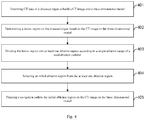
- step 401 computed tomography (CT) data of a diseased organ are imported to construct a CT image and a three-dimensional model.
- CT computed tomography
- an initial ablation region is selected from the at least one ablation region
- step 405 a navigation path to the initial ablation region is planned on the CT image or the three-dimensional model.
- the sizes of different ablation regions may be the same or different.
- the initial ablation region may be randomly selected, or the initial ablation region which may be the farthest, or may be the nearest, or may have the widest regional range and the like may be selected.
- the navigation path to the initial ablation catheter region may be planned on the CT image or the three-dimensional model.
- the ablation catheter may ablate the initial ablation region.
- the ablation catheter may move from the initial ablation region to the next ablation region, as shown in Fig. 5f , and ablate the ablation region as shown in Fig. 5f .
- the ablation catheter may continuously move to the next ablation region, as shown in Fig. 5g , to repeatedly perform the ablation until all the ablation regions are ablated.
- dark grey regions represent ablated regions in the lesion region
- light grey regions represent non-ablated regions.
- the medical path planning method provided by the present embodiment is no longer limited by the ellipsoidal shape, so that a planning process and subsequent ablation processes are higher in flexibility and relatively high in efficiency.
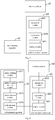
- Fig. 6 is a schematic diagram of a structure of a medical path navigation system provided by another embodiment of the present application. As shown in Fig. 6 , the system includes: a path planning apparatus 61, an ablation catheter 62 with a localization sensor, and a path navigation apparatus 63.
- the ablation catheter 62 is delivered into an airway leading to the lesion region according to the navigation path to ablate the lesion region.
- the registration module 634 is configured to control the ablation catheter 62 to arrive to a predetermined carina for registration during the moving process of the ablation catheter 62 in the airway before the navigation module 633 navigates the ablation catheter 62, locate an actual position of the carina in the airway based on the localization sensor, and perform coordinate registration on a magnetic field coordinate system where the airway is located and a coordinate system where the CT image or the three-dimensional model is located according to the actual position of the carina in the airway, so as to acquire a mapping relation between the magnetic field coordinate system and the coordinate system where the CT image or the three-dimensional model is located.
- the navigation module 633 is specifically configured to: map the actual position of the ablation catheter in the airway onto the CT image or the three-dimensional model based on the mapping relation between the magnetic field coordinate system and the coordinate system where the CT image or the three-dimensional model is located, and adjust the position and the direction of the ablation catheter in the airway according to the deviation relations between the position as well as the direction, which are displayed on the CT image or the three-dimensional model, of the ablation catheter and the navigation path.
- the localization sensor includes a first localization sensor and a second localization sensor.
- the first localization sensor is located at the head portion of the ablation catheter 62, and the first localization sensor and the second localization sensor are respectively located on two sides of an ablation electrode on the ablation catheter 62.
- the navigation module 633 when locating the actual position of the ablation catheter 62 in the airway based on the localization sensor, is specifically configured to: calculate the actual position of the ablation catheter 62 in the airway according to the induced current generated by the first localization sensor and/or the second localization sensor sensing the electromagnetic field at the position of the ablation catheter 62 in the airway.
- the navigation module 633 is specifically configured to: calculate the actual position of the ablation catheter 62 in the lesion region according to the induced current generated by the second localization sensor sensing the electromagnetic field at the position of the ablation catheter 62 in the lesion region.
- the image construction module 611 is configured to import the CT data of the diseased organ to construct the CT image and the three-dimensional model.
- the ablation region division module 612 is configured to determine the lesion region on the diseased organ based on the CT image or the three-dimensional model, and divide the lesion region into at least one ablation region according to a single ablation range of the used ablation catheter.
- the initial selection module 613 is configured to select the initial ablation region from the at least one ablation region.
- each flow and/or each block in the flowcharts and/or the block diagrams and a combination of the flows and/or the blocks in the flowcharts and/or the block diagrams may be implemented by the computer program instructions.
- These computer program instructions may be provided for a processor of a general computer, a dedicated computer, an embedded processor or other programmable data processing devices to generate a machine, so that an apparatus for achieving functions designated in one or more flows of the flowcharts and/or one or more blocks of the block diagrams is generated via instructions executed by the processor of the computers or the other programmable data processing devices.
Landscapes
- Health & Medical Sciences (AREA)
- Surgery (AREA)
- Engineering & Computer Science (AREA)
- Life Sciences & Earth Sciences (AREA)
- Medical Informatics (AREA)
- General Health & Medical Sciences (AREA)
- Biomedical Technology (AREA)
- Heart & Thoracic Surgery (AREA)
- Nuclear Medicine, Radiotherapy & Molecular Imaging (AREA)
- Molecular Biology (AREA)
- Animal Behavior & Ethology (AREA)
- Veterinary Medicine (AREA)
- Public Health (AREA)
- Physics & Mathematics (AREA)
- Plasma & Fusion (AREA)
- Otolaryngology (AREA)
- Robotics (AREA)
- Cardiology (AREA)
- Apparatus For Radiation Diagnosis (AREA)
Applications Claiming Priority (2)
| Application Number | Priority Date | Filing Date | Title |
|---|---|---|---|
| CN201611042473.3A CN106539624B (zh) | 2016-11-23 | 2016-11-23 | 医疗路径导航方法、规划方法及系统 |
| PCT/CN2016/113824 WO2018094847A1 (zh) | 2016-11-23 | 2016-12-30 | 医疗路径导航方法、规划方法及系统 |
Publications (2)
| Publication Number | Publication Date |
|---|---|
| EP3545895A1 true EP3545895A1 (de) | 2019-10-02 |
| EP3545895A4 EP3545895A4 (de) | 2020-03-04 |
Family
ID=58394854
Family Applications (1)
| Application Number | Title | Priority Date | Filing Date |
|---|---|---|---|
| EP16922382.3A Withdrawn EP3545895A4 (de) | 2016-11-23 | 2016-12-30 | Medizinisches wegnavigationsverfahren und -system sowie medizinisches wegplanungsverfahren |
Country Status (4)
| Country | Link |
|---|---|
| US (1) | US20190374283A1 (de) |
| EP (1) | EP3545895A4 (de) |
| CN (1) | CN106539624B (de) |
| WO (1) | WO2018094847A1 (de) |
Families Citing this family (23)
| Publication number | Priority date | Publication date | Assignee | Title |
|---|---|---|---|---|
| CN106344150A (zh) * | 2016-11-23 | 2017-01-25 | 常州朗合医疗器械有限公司 | 射频消融导管及系统 |
| CN107260300A (zh) * | 2017-07-20 | 2017-10-20 | 常州朗合医疗器械有限公司 | 射频消融导管及系统 |
| US12004830B2 (en) * | 2017-08-16 | 2024-06-11 | Intuitive Surgical Operations , Inc. | Systems and methods for monitoring patient motion during a medical procedure |
| CN115944392A (zh) * | 2017-11-21 | 2023-04-11 | 深圳迈瑞生物医疗电子股份有限公司 | 用于规划消融的超声系统及方法 |
| FR3089780B1 (fr) * | 2018-12-12 | 2022-07-22 | Quantum Surgical | Recalage automatique d’un bras robot pour une intervention médicale |
| CN110400302B (zh) * | 2019-07-25 | 2021-11-09 | 杭州依图医疗技术有限公司 | 一种确定、显示乳房图像中病灶信息的方法及装置 |
| CN114081625B (zh) * | 2020-07-31 | 2023-08-25 | 上海微创卜算子医疗科技有限公司 | 导航路径规划方法、系统和可读存储介质 |
| CN114376728B (zh) * | 2020-10-16 | 2025-03-07 | 常州朗合医疗器械有限公司 | 医疗系统 |
| CN112690899A (zh) * | 2021-01-11 | 2021-04-23 | 北京华康同邦科技有限公司 | 一种利用磁场导航定位微波针的方法 |
| CN113069206B (zh) * | 2021-03-23 | 2022-08-05 | 江西麦帝施科技有限公司 | 一种基于电磁导航的图像引导方法及系统 |
| CN113413213B (zh) * | 2021-07-14 | 2023-03-14 | 广州医科大学附属第一医院(广州呼吸中心) | Ct结果的处理方法、导航处理方法、装置与检测系统 |
| CN113712674B (zh) * | 2021-09-13 | 2023-05-09 | 上海微创微航机器人有限公司 | 导管机器人及系统与控制方法、可读存储介质及电子设备 |
| CN114305656A (zh) * | 2021-11-15 | 2022-04-12 | 上海市胸科医院 | 磁导航射频消融电极及系统 |
| CN114504374A (zh) * | 2021-12-31 | 2022-05-17 | 杭州堃博生物科技有限公司 | 肺部治疗组件、肺部治疗系统、肺部治疗系统的使用方法和针对肺部的治疗方法 |
| CN114767031B (zh) * | 2022-03-31 | 2024-03-08 | 常州朗合医疗器械有限公司 | 内窥镜设备、内窥镜的位置引导设备、系统、方法和计算机可读存储介质 |
| CN115715703B (zh) * | 2023-01-10 | 2023-05-02 | 佗道医疗科技有限公司 | 一种通道规划方法 |
| CN116747015B (zh) * | 2023-05-05 | 2026-03-31 | 常州朗合医疗器械有限公司 | 针对肺部气管的配准系统及电子设备 |
| CN117257459B (zh) * | 2023-11-22 | 2024-03-12 | 杭州先奥科技有限公司 | 一种抗呼吸干扰的电磁导航支气管镜术中地图拓展方法及系统 |
| CN117942161B (zh) * | 2023-12-12 | 2024-07-09 | 中国人民解放军总医院第一医学中心 | 单根穿刺针功率确认方法、装置、电子设备及存储介质 |
| CN117883179B (zh) * | 2024-01-24 | 2024-10-15 | 天津市鹰泰利安康医疗科技有限责任公司 | 一种高频电穿孔脉冲消融装置及其图像引导方法 |
| CN119184849B (zh) * | 2024-11-25 | 2025-06-27 | 温州医科大学附属第一医院 | 人工智能结合气道工具进行智能多模式定位以及预警系统 |
| CN119745505B (zh) * | 2024-12-30 | 2025-11-07 | 天津市鹰泰利安康医疗科技有限责任公司 | 一种实时监测的穿刺机器人肿瘤消融方法及系统 |
| CN120451151B (zh) * | 2025-07-09 | 2025-09-19 | 西安交通大学医学院第一附属医院 | 一种肾脏病损消融引导规划方法、系统 |
Family Cites Families (18)
| Publication number | Priority date | Publication date | Assignee | Title |
|---|---|---|---|---|
| US6972016B2 (en) * | 2001-05-01 | 2005-12-06 | Cardima, Inc. | Helically shaped electrophysiology catheter |
| US7998062B2 (en) * | 2004-03-29 | 2011-08-16 | Superdimension, Ltd. | Endoscope structures and techniques for navigating to a target in branched structure |
| EP1912565B1 (de) * | 2005-08-05 | 2011-09-14 | Koninklijke Philips Electronics N.V. | Katheternavigationssystem |
| JP5227180B2 (ja) * | 2005-12-02 | 2013-07-03 | コーニンクレッカ フィリップス エレクトロニクス エヌ ヴィ | アブレーション手順を自動化して人の手の介入の必要性を最少化する方法及び装置 |
| CN100536770C (zh) * | 2007-03-29 | 2009-09-09 | 新奥博为技术有限公司 | 一种磁共振图像引导下的手术系统及手术导航方法 |
| EP2519175A1 (de) * | 2009-12-30 | 2012-11-07 | Koninklijke Philips Electronics N.V. | Dynamische ablationsvorrichtung |
| EP2741696B1 (de) * | 2011-08-09 | 2022-05-18 | Koninklijke Philips N.V. | Verschiebungsrückkopplungsvorrichtung zur erfassung von therapieverabreichungssonden |
| US20130317339A1 (en) * | 2012-05-23 | 2013-11-28 | Biosense Webster (Israel), Ltd. | Endobronchial catheter |
| US9002437B2 (en) * | 2012-12-27 | 2015-04-07 | General Electric Company | Method and system for position orientation correction in navigation |
| US9592095B2 (en) * | 2013-05-16 | 2017-03-14 | Intuitive Surgical Operations, Inc. | Systems and methods for robotic medical system integration with external imaging |
| US9603668B2 (en) * | 2014-07-02 | 2017-03-28 | Covidien Lp | Dynamic 3D lung map view for tool navigation inside the lung |
| US20160000414A1 (en) * | 2014-07-02 | 2016-01-07 | Covidien Lp | Methods for marking biopsy location |
| US9770216B2 (en) * | 2014-07-02 | 2017-09-26 | Covidien Lp | System and method for navigating within the lung |
| CN204364123U (zh) * | 2014-11-07 | 2015-06-03 | 刘弘毅 | 医疗导航系统 |
| CN104306072B (zh) * | 2014-11-07 | 2016-08-31 | 常州朗合医疗器械有限公司 | 医疗导航系统及方法 |
| EP3240492B1 (de) * | 2014-12-31 | 2020-03-25 | Covidien LP | System zur behandlung von copd und emphysemen |
| JP6858127B2 (ja) * | 2015-02-17 | 2021-04-14 | コーニンクレッカ フィリップス エヌ ヴェKoninklijke Philips N.V. | 組織アブレーションを支援するための装置及び方法 |
| US10709352B2 (en) * | 2015-10-27 | 2020-07-14 | Covidien Lp | Method of using lung airway carina locations to improve ENB registration |
-
2016
- 2016-11-23 CN CN201611042473.3A patent/CN106539624B/zh active Active
- 2016-12-30 EP EP16922382.3A patent/EP3545895A4/de not_active Withdrawn
- 2016-12-30 WO PCT/CN2016/113824 patent/WO2018094847A1/zh not_active Ceased
- 2016-12-30 US US16/463,301 patent/US20190374283A1/en not_active Abandoned
Also Published As
| Publication number | Publication date |
|---|---|
| CN106539624B (zh) | 2019-12-03 |
| CN106539624A (zh) | 2017-03-29 |
| WO2018094847A1 (zh) | 2018-05-31 |
| US20190374283A1 (en) | 2019-12-12 |
| EP3545895A4 (de) | 2020-03-04 |
Similar Documents
| Publication | Publication Date | Title |
|---|---|---|
| US20190374283A1 (en) | Medical path navigation method, planning method and system | |
| CN114650780B (zh) | 用于跟踪消融设备和生成病变线的方法、系统和装置 | |
| US20200146749A1 (en) | Radiofrequency ablation catheter and system | |
| EP3335657B1 (de) | Vorrichtung zur ablationsplanung und -steuerung | |
| CN108720921B (zh) | 在导管消融处理期间视角的自动跟踪和调整 | |
| CN102971048B (zh) | 用于引导的自适应近距治疗的系统和方法 | |
| CN108324245B (zh) | 通过合并当前和先前的标测图提升重复消融的效率 | |
| US20230105973A1 (en) | Cardiac ablation catheters with integrated navigation sensors | |
| US20170189721A1 (en) | Radiation Treatment Planning and Delivery for Moving Targets in the Heart | |
| US20130296687A1 (en) | Videographic display of real-time medical treatment | |
| CN102781356A (zh) | 动态消融装置 | |
| WO2018094848A1 (zh) | 射频消融导管及系统 | |
| EP3038706B1 (de) | System und verfahren zur visualisierung von informationen in einem verfahren zur platzierung von quellen | |
| US20220071703A1 (en) | Systems for monitoring ablation progress using remote temperature probes | |
| Salas et al. | Atrial mapping during pulmonary vein pacing: a novel maneuver to detect and close residual conduction gaps in an ablation line | |
| US11241590B2 (en) | Radiation treatment planning and delivery for moving targets in the heart | |
| US12446963B2 (en) | Automatic projection of a cardiac chamber posterior wall ablation line | |
| Liu et al. | Automated microwave ablation therapy planning with single and multiple entry points | |
| EP4389004B1 (de) | Erkennung einer lokalen aktivierungsquelle bei vorhofflimmern | |
| US12575881B2 (en) | Caliper tool with toggling between multiple ablation modes | |
| US20260013939A1 (en) | Methods and systems for identifying conduction flow paths in anatomical maps |
Legal Events
| Date | Code | Title | Description |
|---|---|---|---|
| STAA | Information on the status of an ep patent application or granted ep patent |
Free format text: STATUS: THE INTERNATIONAL PUBLICATION HAS BEEN MADE |
|
| PUAI | Public reference made under article 153(3) epc to a published international application that has entered the european phase |
Free format text: ORIGINAL CODE: 0009012 |
|
| STAA | Information on the status of an ep patent application or granted ep patent |
Free format text: STATUS: REQUEST FOR EXAMINATION WAS MADE |
|
| 17P | Request for examination filed |
Effective date: 20190520 |
|
| AK | Designated contracting states |
Kind code of ref document: A1 Designated state(s): AL AT BE BG CH CY CZ DE DK EE ES FI FR GB GR HR HU IE IS IT LI LT LU LV MC MK MT NL NO PL PT RO RS SE SI SK SM TR |
|
| AX | Request for extension of the european patent |
Extension state: BA ME |
|
| DAV | Request for validation of the european patent (deleted) | ||
| DAX | Request for extension of the european patent (deleted) | ||
| A4 | Supplementary search report drawn up and despatched |
Effective date: 20200205 |
|
| RIC1 | Information provided on ipc code assigned before grant |
Ipc: A61B 18/12 20060101ALI20200130BHEP Ipc: A61B 17/00 20060101ALN20200130BHEP Ipc: A61B 34/10 20160101ALI20200130BHEP Ipc: A61B 90/00 20160101ALI20200130BHEP Ipc: A61B 34/20 20160101AFI20200130BHEP Ipc: A61B 18/00 20060101ALN20200130BHEP |
|
| STAA | Information on the status of an ep patent application or granted ep patent |
Free format text: STATUS: EXAMINATION IS IN PROGRESS |
|
| 17Q | First examination report despatched |
Effective date: 20230609 |
|
| STAA | Information on the status of an ep patent application or granted ep patent |
Free format text: STATUS: THE APPLICATION IS DEEMED TO BE WITHDRAWN |
|
| 18D | Application deemed to be withdrawn |
Effective date: 20250128 |