EP3544254B1 - Ims-anwendungsserver-überlastschutz - Google Patents
Ims-anwendungsserver-überlastschutz Download PDFInfo
- Publication number
- EP3544254B1 EP3544254B1 EP18163616.8A EP18163616A EP3544254B1 EP 3544254 B1 EP3544254 B1 EP 3544254B1 EP 18163616 A EP18163616 A EP 18163616A EP 3544254 B1 EP3544254 B1 EP 3544254B1
- Authority
- EP
- European Patent Office
- Prior art keywords
- application server
- requests
- ifc
- end point
- sender
- Prior art date
- Legal status (The legal status is an assumption and is not a legal conclusion. Google has not performed a legal analysis and makes no representation as to the accuracy of the status listed.)
- Active
Links
Images
Classifications
-
- H—ELECTRICITY
- H04—ELECTRIC COMMUNICATION TECHNIQUE
- H04L—TRANSMISSION OF DIGITAL INFORMATION, e.g. TELEGRAPHIC COMMUNICATION
- H04L63/00—Network architectures or network communication protocols for network security
- H04L63/14—Network architectures or network communication protocols for network security for detecting or protecting against malicious traffic
- H04L63/1441—Countermeasures against malicious traffic
- H04L63/1458—Denial of Service
-
- H—ELECTRICITY
- H04—ELECTRIC COMMUNICATION TECHNIQUE
- H04L—TRANSMISSION OF DIGITAL INFORMATION, e.g. TELEGRAPHIC COMMUNICATION
- H04L65/00—Network arrangements, protocols or services for supporting real-time applications in data packet communication
- H04L65/10—Architectures or entities
- H04L65/1016—IP multimedia subsystem [IMS]
-
- H—ELECTRICITY
- H04—ELECTRIC COMMUNICATION TECHNIQUE
- H04L—TRANSMISSION OF DIGITAL INFORMATION, e.g. TELEGRAPHIC COMMUNICATION
- H04L65/00—Network arrangements, protocols or services for supporting real-time applications in data packet communication
- H04L65/10—Architectures or entities
- H04L65/1046—Call controllers; Call servers
-
- H—ELECTRICITY
- H04—ELECTRIC COMMUNICATION TECHNIQUE
- H04L—TRANSMISSION OF DIGITAL INFORMATION, e.g. TELEGRAPHIC COMMUNICATION
- H04L65/00—Network arrangements, protocols or services for supporting real-time applications in data packet communication
- H04L65/10—Architectures or entities
- H04L65/1063—Application servers providing network services
-
- H—ELECTRICITY
- H04—ELECTRIC COMMUNICATION TECHNIQUE
- H04L—TRANSMISSION OF DIGITAL INFORMATION, e.g. TELEGRAPHIC COMMUNICATION
- H04L65/00—Network arrangements, protocols or services for supporting real-time applications in data packet communication
- H04L65/1066—Session management
- H04L65/1069—Session establishment or de-establishment
-
- H—ELECTRICITY
- H04—ELECTRIC COMMUNICATION TECHNIQUE
- H04L—TRANSMISSION OF DIGITAL INFORMATION, e.g. TELEGRAPHIC COMMUNICATION
- H04L65/00—Network arrangements, protocols or services for supporting real-time applications in data packet communication
- H04L65/1066—Session management
- H04L65/1101—Session protocols
- H04L65/1104—Session initiation protocol [SIP]
Definitions
- the invention refers to a control system for controlling requests to contact an end point of a network, particularly of an Internet Protocol Multimedia Subsystem network.
- the invention also refers to a method for use in a control system.
- IMS internet protocol multimedia subsystem
- a network element may be, for instance, user equipment (UE) or an IMS Application Server (AS), e.g. the multimedia telephony service application server (MMtel AS).
- UE user equipment
- AS IMS Application Server
- MMtel AS multimedia telephony service application server
- DOS attacks available resources corresponding to occupancy rates of these application servers are consumed.
- regular traffic cannot be handled by the application servers in this case. Regulation of regular traffic may be partially or completely impossible for application servers being affected by attacks.
- each IMS network entity has means to protect itself from overload scenarios in order to provide services although it suffers attacks.
- CS PLMN refers to a circuit service of the public land mobile network
- a Subscriber is an entity (comprising one or more users) that is engaged in a subscription with a service provider.
- the subscriber is allowed to subscribe and unsubscribe services, to register a user or a list of user authorized to enjoy these services, and also to set the limits relative to the use that users make of these services.
- inter-operator interconnections The calls to the attacked subscriber enter the network via so-called inter-operator interconnections.
- CAPS call attempts per second
- attack durations from several seconds to even several minutes. It is problematic that these DOS attacks are not blocked by protection means at the interconnection border even in the case of several hundred of CAPS. Protection against those attacks cannot be provided at this stage due to elements at the interconnection border do not survey traffic on a single end-user/UE level. Rather, network nodes at the network border provide protection on an interconnection point level.
- Several hundreds of CAPS are not critical on this level, because an interconnection handles a higher degree of traffic volume/CAPS, which is in a degree of some tens or hundreds of thousands. This means that they have load limiting capabilities taking into account the traffic being transmitted within the interconnection as a whole.
- a possible scenario for the attacker is the scenario of a "car dealer": The attacker provides, as an end user, a car selling offer in an internet portal. The attacker wants to block the destination number as given within the internet portal for a defined period of time so that nobody else can place an offer and can make the deal. The attacker uses one of some numbers from which he can choose. Frequently, the numbers vary. Usually, callbacks to these numbers are not answered.
- interconnection nodes limit the number of calls/CAPS entering the network. However, these nodes are not appropriate for protection based on per calling/called subscriber level. Furthermore, several interconnection points exist in a network. Thus, the aforementioned DOS attack pattern cannot be detected and no countermeasures are possible since the attack pattern does not exceed the interface thresholds.
- Most network elements limit the traffic load/CAPS based on total traffic values corresponding to the occupancy rate of the network element. For example, if the occupancy rate corresponds to 80% of the node capacity (interface throughput, CPU, RAM), the network element will limit the traffic load. However, the aforementioned DOS attack does not exceed the corresponding thresholds so that the aforementioned attack scenario cannot be detected and no countermeasures are possible at this stage.
- SIP Session Initiation Protocol
- P-CSCF Proxy Call Session Control Function
- Other network elements do not provide any user specific throttling capabilities.
- DOS attack countermeasures cannot be used for protecting an application server in the terminating use case; the P-CSCF is passed after the application server.
- the objective of the present invention is to provide means which allow protecting application servers, and particularly end points, against overload and DoS attacks more effectively.
- a control system for controlling requests to contact an end point of a network, particularly of an Internet Protocol Multimedia Subsystem network, comprising receiving means being configured to receive requests from a sender via the network to contact an end point, control means being configured to limit a number of requests to contact the end point according to initial filter criteria, iFC, defining a predetermined number of allowed requests in a predetermined period of time T1, and transmitting means being configured to transmit a request to an application server if the request fulfills the iFC, wherein the application server is configured to host at least one connection to the at least one end point.
- initial filter criteria iFC
- a method for use in a control system for controlling requests to contact an end point of a network, particularly of an Internet Protocol Multimedia Subsystem network, comprising receiving requests from a sender via the network to contact an end point, limiting a number of requests to contact the end point according to iFC, defining a predetermined number of allowed requests in a predetermined period of time T1, and transmitting a request to an application server if the request fulfills the iFC, wherein the application server is configured to host at least one connection to the at least one end point.
- the invention has the advantage that it allows protecting all kind of application servers that are invoked by the control means, particularly by the Service-Call Session Control Function (S-CSCF) against overload.
- S-CSCF Service-Call Session Control Function
- the MMTel application server that is used by GSMA IR.92 (V. 11.0) for VoLTE speech communication is protected against attack patterns.
- the abbreviation VoLTE means Voice-over-IP over LTE.
- VoLTE is defined by the IR.88 LTE and EPC roaming guidelines V1 6.0.
- Any IMS service that is provided by an application server can be protected, including Rich Communication Suite (RCS) services as defined by the GSMA RCS/joyn specifications, SMS over IMS, Push-to-Talk over Cellular, etc.
- RCS Rich Communication Suite
- the invention allows adapting protection means corresponding to the control means, and particularly the CSCF, to individual properties of application servers, i.e. individual maximum occupancy rates and capacities of the application servers are taken into account.
- the method and the system according to the invention can be used in any IMS environment, e.g. in Mobile Network IMS, Fixed Network IMS and in Business IMS Networks.
- the invention is based on the iFC (initial Filter Criteria) of the control means, particularly comprised by the CSCF, more preferably comprised by the S-CSCF.
- the system and the method according to the invention are granular, which means that they provide protection on a per served user basis, per IMS session case (originating, terminating, etc.) basis, per SIP method, per IMS service on basis or combinations thereof.
- the method and the system according to the invention are, for example, applicable in the case that invocation of an IMS application server is done via iFC according to the technical specifications 3GPP TS 23.228, 3GPP TS 23.216, 3GPP TS 24.229, 3GPP TS 29.228 and 3GPP TS 29.229 V14.2.0, for example according to the versions 3GPP TS 23.228 V15.1.0 (2017-12 ), 3GPP TS 23.216 V15.1.0 (2017-12 ), 3GPP TS 24.229 V15.1.0 (2017-12 ), 3GPP TS 29.228 V14.5.0 (2017-12 ) and 3GPP TS 29.229 V14.2.0 (2017-06 ).
- an application server such as the MMtel application server, is configured to handle service requests on a user/destination number basis.
- the system and the method take into account that an application server can cope much better with attack patterns than interconnection border elements on a user-aware level.
- the invention provides that, for example within the Mobile IMS, in which the used product has a plurality of input queues which are shared by a plurality of users/subscribers that one user's requests cannot impact the service of other users. In other words, it can be avoided that one user gets hundreds of terminating call attempts inducing that the shared queue is filled up and due to limited processing capabilities.
- CST Call Setup Time
- the incident may be avoided that the S-CSCF determines that the application server has service problems or is out of service. This may result in that the S-CSCF blacklists the application server triggering a failover to a redundant application servers. Therefore, toggling and service issues in case the service restoration does not cover this case properly can be avoided, as well.
- the application server is configured to provide access to the at least one end point via at least one of a plurality of queues, wherein particularly the at least one queue of the plurality of queues is shared by a plurality of the end points, wherein particularly the iFC defines an occupancy rate of the application server, wherein particularly the occupancy rate of the application server takes into account a number of sessions in the at least one of the plurality of queues.
- the control means is configured to reject access to the application server to the sender.
- the control means recognizes a critical attack pattern it does not need to check occupancy rates of any application server.
- the control means is configured to send a special response back to the sender of the request.
- the special response comprises at least one response code, wherein the control means, CSCF, is configured to send the at least one response code to the sender for rejecting the request, wherein the at least one response code is defined by at least one parameter of the iFC.
- the at least one parameter of the iFC relates to a trigger target address of the application server, and wherein the trigger target address of the application server is invoked when iFC Service Point Triggers, SPTs, match with the incoming request from the sender.
- control means more preferably the CSCF, is configured to reject access for another predetermined period of time T2, wherein the other predetermined period of time T2 is equal to or different from, particularly longer than, the predetermined period of time T1.
- the iFC comprises an invocation-count limit and/or an invocation window and/or an invocation-rate.
- control means is configured to limit a number of requests to contact the end point according to the iFC comprising at least one parameter specifying application server destination addresses that are resolved via a Domain Name System.
- the Domain Name System (DNS) translates memorized domain names to the numerical IP addresses needed for locating and identifying end points with underlying network protocols.
- DNS Domain Name System
- the control means defines application server addresses in the iFC. The end points are contacted via the application servers so that by defining the application server addresses in the iFC, requests to end points being permitted to be contacted are limited, too.
- a precursor means being configured to drop or to reject all requests of the sender is provided, wherein the precursor means is connected to the network, wherein the precursor means is located closer to the sender than the application server, wherein particularly the precursor means is located at a border of a network of an operator.
- the precursor means is configured to drop or to reject all requests of the sender to contact the end point for which the sender sent a plurality of requests succeeding the number of requests to contact the end point according to the iFC limits.
- the precursor means is configured to drop or to reject all requests according to at least one criterion which is defined by the at least one signaling information element.
- the at least one signaling information element is comprised in the at least one response code, in particular in a header field of the at least one response code.
- the method comprises accordingly defined processing steps to implement the afore-mentioned preferable features of the system as described before.
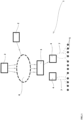
- the control system 1 comprises at least one control means 3, which is particularly a Call Session Control Function (CSCF), more preferably a Service-Call Session Control Function (S-CSCF).
- the control means 3 is configured to administer access to at least one application server 4.
- the application server 4 is configured to host at least one connection to the at least one end point 5. That is, the application server 4 controls access to the end points 5.
- Access to end points 5 is provided by queues 7.
- at least one end point 5 can be accessed by a queue 7. More preferably, a plurality of the end points 5 share the at least one queue 7.
- the control means 3 is configured to control requests from senders 2 to contact end points 5. That is, the control means 3 is configured to transmit a limited number of requests to the end point 5 for which the sender 2 sends the requests.
- configuration of the control means 3 is defined by initial Filter criteria, iFC.
- IFCs trigger service point triggers (SPTs) in order to send session initiation protocol requests (SIP requests) to a requested application server 4.
- SPTs service point triggers
- the iFC may contain the following information: address of the application server 4, sequence of filter criteria, trigger points composed of service point triggers, service point triggers chained through Boolean operators, default handling and optional info to be added to the message body.
- the iFC determines a predetermined number of allowed requests in a predetermined period of time T1.
- the iFC may address an individual application server 4.
- An end-user corresponding to an end-point 5 may be subscribed to multiple services provided by different application servers 4. For this, a plurality of iFC may be provided by the control means 3.
- iFC defines an occupancy rate of each of the application server 4, wherein the occupancy rate takes into account a number of sessions in the at least one of the plurality of queues 7 which is established by the application server 4.
- the control means 3 takes into account the numbers of sessions which each of the application servers 4 has established.
- the control means 3 may select an appropriate application server 4 for which the occupancy rate has not exceeded a predetermined rate of invocations.
- the system 1 comprises besides the control means 3 at least one receiving means and at least one transmitting means which are not depicted in Figure 1 .
- the receiving means is configured to receive requests from the senders 2 via the network 6 to contact an end point 5.
- the transmitting means is configured to transmit a request to the application server 4 if the request fulfills the iFC, wherein the application server 4 is configured to host at least one connection to the at least one end point 5.
- the control means 3 checks the number of requests of this sender 2 in the period of time T1. That is, the control means 3 checks if the current request fulfills the iFC, particularly taking into account a history of requests of this sender 2. In the case that the number of requests is less than a predetermined number in the predetermined period of time T1, the transmitting means transmits the requests to an application server 4.
- the control means 3 checks the number of requests of this sender 2 in the period of time T1. In the case that the control means 3 determines after checking if the request fulfills the iFC that the iFC is not fulfilled, the transmitting means is configured not to transmit the request to any of the application servers 4.
- the transmitting means and/or the control means 3 may be configured to drop the request of the sender 2. That means that the request is not forwarded to be received by the end point 5 and that the control means 3 and/or the transmitting means does not communicate with the sender 2.
- the transmitting means and/or the control means 3 may be configured to reject the request of the sender 2. That means that the request is not forwarded to be received by an end point 5 and that the control means 3 and/or the transmitting means communicates with the sender 2 that the request of the sender 2 is rejected.
- the activity of rejecting may comprise answering negatively, e.g. with an error response, such as a code 500 which corresponds to the incident of an internal error within a server.
- control means 3 and/or the application server 4 is configured to reject the session initiation protocol request with a final response/error code, e.g. 500, 486, 600, 603.
- the application server 4 and/or the control means 3 may be configured to use the CSCF, more preferably the S-CSCF, in this case.
- the control means 3, particularly the CSCF is configured to reject access to the application server 4 to the sender 2.
- a certain sender 2 is a sender 2 which has already been identified by the control means 3 and/or by any other means of the system 1, for example when sending a request in a previous time.
- An arbitrary sender may be any sender 2 which is not known to the control means 3 and/or to any other means of the system 1.
- the control means 3 is configured to send a special response back to the sender 2 of the request.
- the special response comprises at least one response code
- the control means 3, particularly the CSCF is configured to send the at least one response code to the sender 2 for rejecting the request, wherein the at least one response code is defined by at least one parameter of the iFC.
- the at least one parameter of the iFC relates to a trigger target address of the application server 4, wherein the trigger target address of the application server 4 is invoked when iFC service point triggers match with the incoming request from the sender 2.
- the trigger target address of the application server 4 is invoked when iFC service point triggers match with the incoming request from the sender 2.
- one iFC comprises several service point triggers.
- service point triggers may be possible: initial service point trigger methods (INVITE, OPTIONS, etc.), registration type, existence of specific headers, content of specific headers or request-uniform resource identifies (URI), or identification of the user, that is mobile-originated or mobile-terminated and session description information.
- Service point triggers may be logically combined as follows: INVITE and speech service and terminating call.
- control means 3 is configured to reject access for another predetermined period of time T2.
- the other predetermined period of time T2 is particularly equal to or different from, more particularly longer than, the predetermined period of time T1.
- the predetermined period of time T2 is determined based on a recognized duration of identified critical attack patterns.
- the iFC comprises an invocation-count limit and/or an invocation window and/or an invocation-rate.
- the invocation-count limit may take into account how many times the application server 4 was invoked in order to forward requests of different senders 2.
- the invocation window may be the predetermined period of time T1 in which the control means 3 receives requests from one or a plurality of senders 2 to contact an end point 5. Additionally or alternatively, the invocation window may be the predetermined period of time T1 in which the control means 3 receives requests from one or a plurality of senders 2 to contact a plurality of end points 5, wherein access to the end points 5 may be given via one application server 4.
- the invocation rate may be a predetermined number defining how many times the iFC invokes the application server 4 after having received the request from the sender 2 to contact the end point 5.
- control means 3 is configured to limit a number of requests to contact the end point 5 according to the iFC comprising at least one parameter specifying application server destination addresses that are resolved via a Domain Name System.
- the system 1 comprises a precursor means being configured to drop or to reject all requests of the sender 2.
- the precursor means is not depicted in the figures.
- the precursor means is connected to the network 6 and is located closer to the sender 2 than the application server 4. More preferably, the precursor means is located at a border 8 of a network 6 of an operator. That is, a border 8 of a network 6 of an operator is a boundary between the networks of different service providers.
- the precursor means is configured to drop or to reject all requests of the sender 2 to contact the end point 5 for which the sender 2 sent a plurality of requests succeeding the number of requests to contact the end point 5 according to limitations of the iFC.
- the precursor means is configured to drop or to reject all requests according to at least one criterion which is defined by the at least one signaling information element.
- the at least one signaling information element is comprised in the at least one response code, in particular in a header field of the at least one response code.
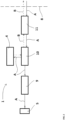
- FIG. 2 A more detailed configuration of the system 1 is shown in Figure 2 .
- the control means 3 comprises a Service-Call Session Control Function (S-CSCF) 10.
- S-CSCF Service-Call Session Control Function
- the system 1 comprises, besides the aforementioned components, preferably a Proxy Call Session Control Function (P-CSCF) 9 and an Interconnect Border Control Function (IBCF) 11.
- P-CSCF Proxy Call Session Control Function
- IBCF Interconnect Border Control Function
- the IBCF 11 is located closer to the border 8 of the network 6 than other components of the system 1.
- this precursor means may be located closer to the border 8 than the IBCF 11.
- the control means 3 which is the S-CSCF 10, in this case, is configured to execute iFCs defining a limitation of the invocation rate of the application server 4.
- the control means 3 frequently checks the occupancy rate of the application server 4, or at least checks the occupancy rate of the application server 4 when the control means 3 receives a request of the sender 2 to contact the end point 5 via the application server 4.
- the IBCF 11 receives a request from a sender 2 which is marked by A in Figure 2 .
- This request may be "INVITE UE1", for example.
- the UE1 may, e.g., correspond to the end point 5 in Figure 2 .
- the occupancy rate of the application server 4 is low, for example 40 % of a capacity in the queues being controlled by the application server 4 is currently in use.
- the control means 3 which receives from the IBCF 11 the request A, forwards for this reason the request to the P-CSCF 9 which forwards the request A to the end point 5, which is the LTE1.
- the occupancy rate of the application server 4 high for example 80 % of the capacity in the queues the application server 4 administers is occupied.
- the control means 3 which receives from the IBCF 11 the request A, does not forward the request to the P-CSCF 9 or to the application server 4 but it drops the request or it forwards a response B to the sender 2 via the IBCF 11.
- the response B may be an error code 603, for example.
- the iFC consists of rules that determine when an initial session initiation protocol request is routed to the application server 4 that is determined by the trigger target address.
- the application server 4 may provide additional services, e.g. Call Diversion or Message Storing.
- Call Diversion or Message Storing.
- Table 1 an example for iFC is provided.
- the trigger target address of the application server 4 that is invoked when a Service Point Trigger of the iFC matches with an incoming SIP request can be seen in the first row of Table 1.
- the iFCs are extended to be configured to control a number of invocations of the application server 4 within the predetermined period of time T1, i.e. its rate.
- the number of invocations is controlled by defining new proprietary parameters of the trigger target address of the application server 4.
- the parameters are defined such that, the control means 3, preferably the S-CSCF, is configured not to invoke the application server 4 in case that the occupancy rate of the application server 4, comprising the invocation rate of the application server 4 is exceeded.
- the S-CSCF is configured to reject the session initiation protocol request with a final response or error code, e.g. 500, 486, 600, 603.
- a final response or error code e.g. 500, 486, 600, 603.
- TABLE 1 Exemplary embodiment of iFC.
- Application Server Trigger Target Address, NAPTR
- NAPTR Trigger Target Address
- URI parameter of the Trigger Target Address type mmtel
- TS 29.228 Originating (0), Originating_Unregistered (3), Terminating_Registered (1), Terminating_Unregistered (2), Originating_CDIV (4) No Originating_Unregistred case is needed as MMtel AS does not create out of the blue calls for any scenario
- the new parameters are added to the address of the application server 4 that is put into a SIP route header in the same way in which it is done with other parameters that are transferred to the S-CSCF and the application server 4.
- a SIP route header may be:
- the iFCs are part of a subscriber's user profile and/or a service profile that is downloaded from a Home Subscriber Server (HSS) during IMS registration of the user.
- HSS Home Subscriber Server
- the application server 4 is configured to change the iFCs via a Sh interface.
- the S-CSCF is configured to receive the new parameters by downloading the iFCs and the S-CSCF is configured to apply the iFCs.
- the predefined time period T1 is a sliding or fixed time window. In case of more SIP requests enter the S-CSCF and result in an invocation of this application server 4, the S-CSCF will reject the request without invoking any application server 4.
- the application server 4 receives these parameters as a part of its own Route header entry. However, it is not necessary that the application server 4 is appropriately configured to interpret these extensions. Rather, the application server 4 can simply ignore these extensions. In other words, the application server 4 does not need to implement any new functionality. That is, the system 1 according to the invention provides that the functionality of the S-CSCF is enhanced.
- the S-CSCF is configured to control the invocation rate of the application server 4 per an individual destination address as given in the SIP Request URI or to a header in an originating session case of the user equipment (UE), and/or and individual source address as given in the From header or P-Asserted-Identity header if present in the UE terminating session case.
- the S-CSCF is configured to apply the invocation limitation in total for application server destination addresses that are resolved via the Domain Name System (DNS). This results in considering alternative application server addresses altogether and limits the invocation rate for all of them in total.
- DNS Domain Name System
Landscapes
- Engineering & Computer Science (AREA)
- Multimedia (AREA)
- Computer Networks & Wireless Communication (AREA)
- Signal Processing (AREA)
- Computer Security & Cryptography (AREA)
- Business, Economics & Management (AREA)
- General Business, Economics & Management (AREA)
- Computer Hardware Design (AREA)
- Computing Systems (AREA)
- General Engineering & Computer Science (AREA)
- Computer And Data Communications (AREA)
- Telephonic Communication Services (AREA)
Claims (14)
- Steuersystem (1) zur Steuerung von Anfragen, einen Endpunkt (5) eines Internetprotokoll-Multimedia-Subsystem-Netzwerks zu kontaktieren, das aufweist:eine Empfangseinrichtung, die konfiguriert ist, Anfragen von einem Sender (2) über das Netzwerk (6) zu empfangen, einen Endpunkt (5) zu kontaktieren;eine Steuereinrichtung, die konfiguriert ist, eine Anzahl von Anfragen, den Endpunkt (5) zu kontaktieren, gemäß anfänglichen Filterkriterien, iFC, zu begrenzen, die eine vorbestimmte Anzahl zulässiger Anfragen in einer vorbestimmten Zeitspanne T1 definieren, undeine Übertragungseinrichtung, die konfiguriert ist, eine Anfrage an einen Anwendungsserver (4) zu übertragen, wenn die Anfrage die iFC erfüllt, wobei der Anwendungsserver (4) konfiguriert ist, mindestens eine Verbindung zu dem mindestens einen Endpunkt (5) zu hosten,dadurch gekennzeichnet, dass die Steuereinrichtung (3) konfiguriert ist, eine Anzahl von Anfragen, den Endpunkt (5) zu kontaktieren, gemäß den iFC zu begrenzen, die mindestens einen Parameter aufweisen, der Zieladressen des Anwendungsservers (4) angibt, die über ein Domain-Name-System aufgelöst werden, undwodurch insgesamt alternative Adressen des Anwendungsservers (4) berücksichtigt werden und eine Aufrufrate für alle von ihnen insgesamt begrenzt wird.
- System (1) nach Anspruch 1,wobei der Anwendungsserver (4) konfiguriert ist, den Zugriff auf den mindestens einen Endpunkt (5) über mindestens eine von mehreren Warteschlangen (7) zu ermöglichen,wobei die mindestens eine Warteschlange (7) der mehreren Warteschlangen (7) von mehreren Endpunkten (5) gemeinsam genutzt wird,wobei die iFC eine Belegungsrate des Anwendungsservers (4) definieren, undwobei die Belegungsrate des Anwendungsservers (4) eine Anzahl von Sitzungen in der mindestens einen der mehreren Warteschlangen (7) berücksichtigt.
- System (1) nach Anspruch 1 oder 2,
wobei in einem Fall, dass die Anzahl der Anfragen vom Sender (2) in der vorbestimmten Zeitspanne T1 die vorbestimmte Anzahl von Anfragen überschreitet, die Steuereinrichtung (3) konfiguriert ist, dem Sender (2) den Zugriff auf den Anwendungsserver (4) abzulehnen. - System (1) nach einem der Ansprüche 1 bis 3,
wobei in einem Fall, dass die vorbestimmte Anzahl von Anfragen in der vorbestimmten Zeitspanne T1 überschritten wird, die Steuereinrichtung (3) konfiguriert ist, eine spezielle Antwort an den Sender (2) der Anfrage zurückzusenden. - System (1) nach Anspruch 4,wobei die spezielle Antwort mindestens einen Antwortcode aufweist,wobei die Steuereinrichtung (3) konfiguriert ist, den mindestens einen Antwortcode an den Sender (2) zum Ablehnen der Anfrage zu senden, undwobei der mindestens eine Antwortcode durch mindestens einen Parameter der iFC definiert ist.
- System (1) nach Anspruch 5,
wobei der mindestens eine Parameter der iFC sich auf eine Trigger-Zieladresse des Anwendungsservers (4) bezieht, wobei die Trigger-Zieladresse des Anwendungsservers (4) aufgerufen wird, wenn iFC Service Point Triggers, SPTs, mit der eingehenden Anfrage vom Sender (2) übereinstimmen. - System (1) nach einem der Ansprüche 1 bis 6,wobei die Steuereinrichtung (3) konfiguriert ist, den Zugriff für eine andere vorbestimmte Zeitspanne T2 abzulehnen, undwobei die andere vorbestimmte Zeitspanne T2 gleich oder verschieden von der vorbestimmten Zeitspanne T1 ist.
- System (1) nach einem der Ansprüche 1 bis 7,
wobei die iFC eine Aufrufzahlgrenze und/oder ein Aufruffenster und/oder eine Aufrufrate aufweisen. - System (1) nach einem der Ansprüche 1 bis 8,das eine Vorläufereinrichtung aufweist, die konfiguriert ist, alle Anfragen des Senders (2) zu verwerfen oder abzulehnen,wobei die Vorläufereinrichtung mit dem Netzwerk (6) verbunden ist.
- System (1) nach Anspruch 9,
wobei die Vorläufereinrichtung konfiguriert ist, alle Anfragen des Senders (2), den Endpunkt (5) zu kontaktieren, für den der Sender (2) mehrere Anfragen gesendet hat, die der Anzahl von Anfragen, den Endpunkt (5) zu kontaktieren, gemäß den iFC folgen, zu verwerfen oder abzulehnen. - System (1) nach Anspruch 9 oder 10, wobei die Vorläufereinrichtung konfiguriert ist, alle Anfragen gemäß mindestens einem Kriterium, das durch das mindestens eine Signalisierungsinformationselement definiert ist, zu verwerfen oder abzulehnen.
- System (1) nach Anspruch 11, wobei das mindestens eine Signalisierungsinformationselement in dem mindestens einen Antwortcode enthalten ist.
- Verfahren zur Verwendung in einem Steuersystem zur Steuerung von Anfragen, einen Endpunkt eines Internetprotokoll-Multimedia-Subsystem-Netzwerks zu kontaktieren, das aufweist:Empfangen von Anfragen von einem Sender (2) über das Netzwerk (6), einen Endpunkt (5) zu kontaktieren;Begrenzen einer Anzahl von Anfragen, den Endpunkt (5) zu kontaktieren, gemäß anfänglichen Filterkriterien, iFC, die eine vorbestimmte Anzahl von erlaubten Anfragen in einer vorbestimmten Zeitspanne T1 definieren, undÜbertragen einer Anfrage an einen Anwendungsserver (4), wenn die Anfrage die iFC erfüllt, wobei der Anwendungsserver (4) konfiguriert ist, mindestens eine Verbindung zu dem mindestens einen Endpunkt (5) zu hosten,dadurch gekennzeichnet, dass die Begrenzung einer Anzahl von Anfragen, den Endpunkt (5) zu kontaktieren, gemäß den iFC durchgeführt wird, die mindestens einen Parameter aufweisen, der Zieladressen des Anwendungsservers (4) angibt, die über ein Domain-Name-System aufgelöst werden,wodurch insgesamt alternative Adressen des Anwendungsservers (4) berücksichtigt werden und eine Aufrufrate für alle von ihnen insgesamt begrenzt wird.
- Verfahren nach Anspruch 13, wobei das Steuersystem das System (1) nach einem der vorhergehenden Ansprüche 1 bis 12 ist.
Priority Applications (1)
| Application Number | Priority Date | Filing Date | Title |
|---|---|---|---|
| EP18163616.8A EP3544254B1 (de) | 2018-03-23 | 2018-03-23 | Ims-anwendungsserver-überlastschutz |
Applications Claiming Priority (1)
| Application Number | Priority Date | Filing Date | Title |
|---|---|---|---|
| EP18163616.8A EP3544254B1 (de) | 2018-03-23 | 2018-03-23 | Ims-anwendungsserver-überlastschutz |
Publications (2)
| Publication Number | Publication Date |
|---|---|
| EP3544254A1 EP3544254A1 (de) | 2019-09-25 |
| EP3544254B1 true EP3544254B1 (de) | 2024-09-11 |
Family
ID=61827513
Family Applications (1)
| Application Number | Title | Priority Date | Filing Date |
|---|---|---|---|
| EP18163616.8A Active EP3544254B1 (de) | 2018-03-23 | 2018-03-23 | Ims-anwendungsserver-überlastschutz |
Country Status (1)
| Country | Link |
|---|---|
| EP (1) | EP3544254B1 (de) |
Families Citing this family (1)
| Publication number | Priority date | Publication date | Assignee | Title |
|---|---|---|---|---|
| CN113067715B (zh) * | 2020-01-02 | 2023-01-13 | 中国移动通信有限公司研究院 | 一种业务触发方法和相关设备 |
Citations (1)
| Publication number | Priority date | Publication date | Assignee | Title |
|---|---|---|---|---|
| US8582567B2 (en) * | 2005-08-09 | 2013-11-12 | Avaya Inc. | System and method for providing network level and nodal level vulnerability protection in VoIP networks |
Family Cites Families (3)
| Publication number | Priority date | Publication date | Assignee | Title |
|---|---|---|---|---|
| US8224954B2 (en) * | 2008-10-20 | 2012-07-17 | At&T Intellectual Property I, L.P. | Protecting subscriber database data integrity in geographical redundant deployments |
| EP2709291B1 (de) * | 2011-05-11 | 2018-10-10 | LG Electronics Inc. | Verfahren und vorrichtung für mtc in einem drahtlosen kommunikationssystem |
| US9912678B2 (en) * | 2015-06-24 | 2018-03-06 | Verisign, Inc. | Techniques for automatically mitigating denial of service attacks via attack pattern matching |
-
2018
- 2018-03-23 EP EP18163616.8A patent/EP3544254B1/de active Active
Patent Citations (1)
| Publication number | Priority date | Publication date | Assignee | Title |
|---|---|---|---|---|
| US8582567B2 (en) * | 2005-08-09 | 2013-11-12 | Avaya Inc. | System and method for providing network level and nodal level vulnerability protection in VoIP networks |
Also Published As
| Publication number | Publication date |
|---|---|
| EP3544254A1 (de) | 2019-09-25 |
Similar Documents
| Publication | Publication Date | Title |
|---|---|---|
| US8737594B2 (en) | Emergency services for packet networks | |
| EP2112798B1 (de) | Dienstkontrolle in einem Dienste bereitstellenden System | |
| US9641561B2 (en) | Method and system for managing a SIP server | |
| EP2183908B1 (de) | Verfahren, systeme und computerprogrammprodukte zur überprüfung von nachrichtenhinterlassungstransaktionen | |
| US7590122B2 (en) | Method and apparatus for session control | |
| EP2224664A1 (de) | Verfahren und System zum Steuern der Anrufannahme in IMS | |
| EP2323332A1 (de) | Steuerung einer Sitzung in einem Dienstbereitstellungssystem | |
| US8537993B2 (en) | Telephone number mapping | |
| US20090103518A1 (en) | Call origination by an application server in an internet protogol multimedia core network subsystem | |
| US20170230428A1 (en) | Session initiation protocol (sip) communications over trusted hardware | |
| CN110661773A (zh) | 用于管理基于sip的通信系统中的传输资源的方法和系统 | |
| CA2853983A1 (en) | Disable of supplementary service on emergency in ims network | |
| US9037729B2 (en) | SIP server overload control | |
| WO2005039145A1 (en) | Sessions in a communication system | |
| EP2569998B1 (de) | Ermöglichung der Einrichtung einer Verbindung von einem nicht registrierten Benutzergerät in IMS | |
| EP3544254B1 (de) | Ims-anwendungsserver-überlastschutz | |
| US8732321B2 (en) | Control entity and method for setting up a session in a communications network, subscriber database and communications network | |
| WO2010150043A1 (en) | A method of providing a call completion service to a not registered or not available user in a telecommunication network | |
| EP2467988B1 (de) | Verfahren und vorrichtung in einem telekommunikationsnetzwerk | |
| JP5381087B2 (ja) | 通信システム及び通信制御方法 | |
| EP3269106B1 (de) | Dynamische dienstpunktauslösung in einem ip-multimedia-subsystem | |
| US7606223B2 (en) | Handling communications between stations in a digital telecommunications system | |
| EP4096181B1 (de) | Verfahren und netzwerksystem zum überwinden von medienkoordinierten angriffen auf notrufnetzwerke | |
| WO2018224859A1 (en) | Communication session transfer upon data transmission restriction | |
| CN110089097B (zh) | 通信网络中的呼叫碰撞解决 |
Legal Events
| Date | Code | Title | Description |
|---|---|---|---|
| PUAI | Public reference made under article 153(3) epc to a published international application that has entered the european phase |
Free format text: ORIGINAL CODE: 0009012 |
|
| STAA | Information on the status of an ep patent application or granted ep patent |
Free format text: STATUS: THE APPLICATION HAS BEEN PUBLISHED |
|
| AK | Designated contracting states |
Kind code of ref document: A1 Designated state(s): AL AT BE BG CH CY CZ DE DK EE ES FI FR GB GR HR HU IE IS IT LI LT LU LV MC MK MT NL NO PL PT RO RS SE SI SK SM TR |
|
| AX | Request for extension of the european patent |
Extension state: BA ME |
|
| STAA | Information on the status of an ep patent application or granted ep patent |
Free format text: STATUS: REQUEST FOR EXAMINATION WAS MADE |
|
| 17P | Request for examination filed |
Effective date: 20200221 |
|
| RBV | Designated contracting states (corrected) |
Designated state(s): AL AT BE BG CH CY CZ DE DK EE ES FI FR GB GR HR HU IE IS IT LI LT LU LV MC MK MT NL NO PL PT RO RS SE SI SK SM TR |
|
| STAA | Information on the status of an ep patent application or granted ep patent |
Free format text: STATUS: EXAMINATION IS IN PROGRESS |
|
| 17Q | First examination report despatched |
Effective date: 20210115 |
|
| RIC1 | Information provided on ipc code assigned before grant |
Ipc: H04L 65/10 20220101AFI20221212BHEP |
|
| REG | Reference to a national code |
Ref country code: DE Ref legal event code: R079 Free format text: PREVIOUS MAIN CLASS: H04L0029060000 Ipc: H04L0009400000 Ref country code: DE Ref legal event code: R079 Ref document number: 602018074183 Country of ref document: DE Free format text: PREVIOUS MAIN CLASS: H04L0029060000 Ipc: H04L0009400000 |
|
| GRAP | Despatch of communication of intention to grant a patent |
Free format text: ORIGINAL CODE: EPIDOSNIGR1 |
|
| STAA | Information on the status of an ep patent application or granted ep patent |
Free format text: STATUS: GRANT OF PATENT IS INTENDED |
|
| RIC1 | Information provided on ipc code assigned before grant |
Ipc: H04L 65/1016 20220101ALI20240527BHEP Ipc: H04L 9/40 20220101AFI20240527BHEP |
|
| INTG | Intention to grant announced |
Effective date: 20240620 |
|
| GRAS | Grant fee paid |
Free format text: ORIGINAL CODE: EPIDOSNIGR3 |
|
| GRAA | (expected) grant |
Free format text: ORIGINAL CODE: 0009210 |
|
| STAA | Information on the status of an ep patent application or granted ep patent |
Free format text: STATUS: THE PATENT HAS BEEN GRANTED |
|
| AK | Designated contracting states |
Kind code of ref document: B1 Designated state(s): AL AT BE BG CH CY CZ DE DK EE ES FI FR GB GR HR HU IE IS IT LI LT LU LV MC MK MT NL NO PL PT RO RS SE SI SK SM TR |
|
| REG | Reference to a national code |
Ref country code: GB Ref legal event code: FG4D |
|
| REG | Reference to a national code |
Ref country code: CH Ref legal event code: EP |
|
| REG | Reference to a national code |
Ref country code: DE Ref legal event code: R096 Ref document number: 602018074183 Country of ref document: DE |
|
| REG | Reference to a national code |
Ref country code: IE Ref legal event code: FG4D |
|
| REG | Reference to a national code |
Ref country code: LT Ref legal event code: MG9D |
|
| PG25 | Lapsed in a contracting state [announced via postgrant information from national office to epo] |
Ref country code: NO Free format text: LAPSE BECAUSE OF FAILURE TO SUBMIT A TRANSLATION OF THE DESCRIPTION OR TO PAY THE FEE WITHIN THE PRESCRIBED TIME-LIMIT Effective date: 20241211 |
|
| REG | Reference to a national code |
Ref country code: NL Ref legal event code: MP Effective date: 20240911 |
|
| PG25 | Lapsed in a contracting state [announced via postgrant information from national office to epo] |
Ref country code: GR Free format text: LAPSE BECAUSE OF FAILURE TO SUBMIT A TRANSLATION OF THE DESCRIPTION OR TO PAY THE FEE WITHIN THE PRESCRIBED TIME-LIMIT Effective date: 20241212 Ref country code: FI Free format text: LAPSE BECAUSE OF FAILURE TO SUBMIT A TRANSLATION OF THE DESCRIPTION OR TO PAY THE FEE WITHIN THE PRESCRIBED TIME-LIMIT Effective date: 20240911 |
|
| PG25 | Lapsed in a contracting state [announced via postgrant information from national office to epo] |
Ref country code: BG Free format text: LAPSE BECAUSE OF FAILURE TO SUBMIT A TRANSLATION OF THE DESCRIPTION OR TO PAY THE FEE WITHIN THE PRESCRIBED TIME-LIMIT Effective date: 20240911 |
|
| PG25 | Lapsed in a contracting state [announced via postgrant information from national office to epo] |
Ref country code: LV Free format text: LAPSE BECAUSE OF FAILURE TO SUBMIT A TRANSLATION OF THE DESCRIPTION OR TO PAY THE FEE WITHIN THE PRESCRIBED TIME-LIMIT Effective date: 20240911 |
|
| PG25 | Lapsed in a contracting state [announced via postgrant information from national office to epo] |
Ref country code: HR Free format text: LAPSE BECAUSE OF FAILURE TO SUBMIT A TRANSLATION OF THE DESCRIPTION OR TO PAY THE FEE WITHIN THE PRESCRIBED TIME-LIMIT Effective date: 20240911 |
|
| PG25 | Lapsed in a contracting state [announced via postgrant information from national office to epo] |
Ref country code: RS Free format text: LAPSE BECAUSE OF FAILURE TO SUBMIT A TRANSLATION OF THE DESCRIPTION OR TO PAY THE FEE WITHIN THE PRESCRIBED TIME-LIMIT Effective date: 20241211 Ref country code: ES Free format text: LAPSE BECAUSE OF FAILURE TO SUBMIT A TRANSLATION OF THE DESCRIPTION OR TO PAY THE FEE WITHIN THE PRESCRIBED TIME-LIMIT Effective date: 20240911 |
|
| PG25 | Lapsed in a contracting state [announced via postgrant information from national office to epo] |
Ref country code: RS Free format text: LAPSE BECAUSE OF FAILURE TO SUBMIT A TRANSLATION OF THE DESCRIPTION OR TO PAY THE FEE WITHIN THE PRESCRIBED TIME-LIMIT Effective date: 20241211 Ref country code: NO Free format text: LAPSE BECAUSE OF FAILURE TO SUBMIT A TRANSLATION OF THE DESCRIPTION OR TO PAY THE FEE WITHIN THE PRESCRIBED TIME-LIMIT Effective date: 20241211 Ref country code: LV Free format text: LAPSE BECAUSE OF FAILURE TO SUBMIT A TRANSLATION OF THE DESCRIPTION OR TO PAY THE FEE WITHIN THE PRESCRIBED TIME-LIMIT Effective date: 20240911 Ref country code: HR Free format text: LAPSE BECAUSE OF FAILURE TO SUBMIT A TRANSLATION OF THE DESCRIPTION OR TO PAY THE FEE WITHIN THE PRESCRIBED TIME-LIMIT Effective date: 20240911 Ref country code: GR Free format text: LAPSE BECAUSE OF FAILURE TO SUBMIT A TRANSLATION OF THE DESCRIPTION OR TO PAY THE FEE WITHIN THE PRESCRIBED TIME-LIMIT Effective date: 20241212 Ref country code: FI Free format text: LAPSE BECAUSE OF FAILURE TO SUBMIT A TRANSLATION OF THE DESCRIPTION OR TO PAY THE FEE WITHIN THE PRESCRIBED TIME-LIMIT Effective date: 20240911 Ref country code: ES Free format text: LAPSE BECAUSE OF FAILURE TO SUBMIT A TRANSLATION OF THE DESCRIPTION OR TO PAY THE FEE WITHIN THE PRESCRIBED TIME-LIMIT Effective date: 20240911 Ref country code: BG Free format text: LAPSE BECAUSE OF FAILURE TO SUBMIT A TRANSLATION OF THE DESCRIPTION OR TO PAY THE FEE WITHIN THE PRESCRIBED TIME-LIMIT Effective date: 20240911 |
|
| REG | Reference to a national code |
Ref country code: AT Ref legal event code: MK05 Ref document number: 1723656 Country of ref document: AT Kind code of ref document: T Effective date: 20240911 |
|
| PG25 | Lapsed in a contracting state [announced via postgrant information from national office to epo] |
Ref country code: NL Free format text: LAPSE BECAUSE OF FAILURE TO SUBMIT A TRANSLATION OF THE DESCRIPTION OR TO PAY THE FEE WITHIN THE PRESCRIBED TIME-LIMIT Effective date: 20240911 |
|
| PG25 | Lapsed in a contracting state [announced via postgrant information from national office to epo] |
Ref country code: PT Free format text: LAPSE BECAUSE OF FAILURE TO SUBMIT A TRANSLATION OF THE DESCRIPTION OR TO PAY THE FEE WITHIN THE PRESCRIBED TIME-LIMIT Effective date: 20250113 Ref country code: IS Free format text: LAPSE BECAUSE OF FAILURE TO SUBMIT A TRANSLATION OF THE DESCRIPTION OR TO PAY THE FEE WITHIN THE PRESCRIBED TIME-LIMIT Effective date: 20250111 |
|
| PG25 | Lapsed in a contracting state [announced via postgrant information from national office to epo] |
Ref country code: RO Free format text: LAPSE BECAUSE OF FAILURE TO SUBMIT A TRANSLATION OF THE DESCRIPTION OR TO PAY THE FEE WITHIN THE PRESCRIBED TIME-LIMIT Effective date: 20240911 Ref country code: SM Free format text: LAPSE BECAUSE OF FAILURE TO SUBMIT A TRANSLATION OF THE DESCRIPTION OR TO PAY THE FEE WITHIN THE PRESCRIBED TIME-LIMIT Effective date: 20240911 |
|
| PG25 | Lapsed in a contracting state [announced via postgrant information from national office to epo] |
Ref country code: EE Free format text: LAPSE BECAUSE OF FAILURE TO SUBMIT A TRANSLATION OF THE DESCRIPTION OR TO PAY THE FEE WITHIN THE PRESCRIBED TIME-LIMIT Effective date: 20240911 Ref country code: AT Free format text: LAPSE BECAUSE OF FAILURE TO SUBMIT A TRANSLATION OF THE DESCRIPTION OR TO PAY THE FEE WITHIN THE PRESCRIBED TIME-LIMIT Effective date: 20240911 |
|
| PG25 | Lapsed in a contracting state [announced via postgrant information from national office to epo] |
Ref country code: CZ Free format text: LAPSE BECAUSE OF FAILURE TO SUBMIT A TRANSLATION OF THE DESCRIPTION OR TO PAY THE FEE WITHIN THE PRESCRIBED TIME-LIMIT Effective date: 20240911 Ref country code: PL Free format text: LAPSE BECAUSE OF FAILURE TO SUBMIT A TRANSLATION OF THE DESCRIPTION OR TO PAY THE FEE WITHIN THE PRESCRIBED TIME-LIMIT Effective date: 20240911 |
|
| PG25 | Lapsed in a contracting state [announced via postgrant information from national office to epo] |
Ref country code: SK Free format text: LAPSE BECAUSE OF FAILURE TO SUBMIT A TRANSLATION OF THE DESCRIPTION OR TO PAY THE FEE WITHIN THE PRESCRIBED TIME-LIMIT Effective date: 20240911 Ref country code: IT Free format text: LAPSE BECAUSE OF FAILURE TO SUBMIT A TRANSLATION OF THE DESCRIPTION OR TO PAY THE FEE WITHIN THE PRESCRIBED TIME-LIMIT Effective date: 20240911 |
|
| REG | Reference to a national code |
Ref country code: DE Ref legal event code: R097 Ref document number: 602018074183 Country of ref document: DE |
|
| PG25 | Lapsed in a contracting state [announced via postgrant information from national office to epo] |
Ref country code: DK Free format text: LAPSE BECAUSE OF FAILURE TO SUBMIT A TRANSLATION OF THE DESCRIPTION OR TO PAY THE FEE WITHIN THE PRESCRIBED TIME-LIMIT Effective date: 20240911 |
|
| PLBE | No opposition filed within time limit |
Free format text: ORIGINAL CODE: 0009261 |
|
| STAA | Information on the status of an ep patent application or granted ep patent |
Free format text: STATUS: NO OPPOSITION FILED WITHIN TIME LIMIT |
|
| 26N | No opposition filed |
Effective date: 20250612 |
|
| PG25 | Lapsed in a contracting state [announced via postgrant information from national office to epo] |
Ref country code: SE Free format text: LAPSE BECAUSE OF FAILURE TO SUBMIT A TRANSLATION OF THE DESCRIPTION OR TO PAY THE FEE WITHIN THE PRESCRIBED TIME-LIMIT Effective date: 20240911 |
|
| PG25 | Lapsed in a contracting state [announced via postgrant information from national office to epo] |
Ref country code: MC Free format text: LAPSE BECAUSE OF FAILURE TO SUBMIT A TRANSLATION OF THE DESCRIPTION OR TO PAY THE FEE WITHIN THE PRESCRIBED TIME-LIMIT Effective date: 20240911 |
|
| REG | Reference to a national code |
Ref country code: CH Ref legal event code: H13 Free format text: ST27 STATUS EVENT CODE: U-0-0-H10-H13 (AS PROVIDED BY THE NATIONAL OFFICE) Effective date: 20251023 |
|
| PG25 | Lapsed in a contracting state [announced via postgrant information from national office to epo] |
Ref country code: LU Free format text: LAPSE BECAUSE OF NON-PAYMENT OF DUE FEES Effective date: 20250323 |
|
| REG | Reference to a national code |
Ref country code: BE Ref legal event code: MM Effective date: 20250331 |
|
| PG25 | Lapsed in a contracting state [announced via postgrant information from national office to epo] |
Ref country code: BE Free format text: LAPSE BECAUSE OF NON-PAYMENT OF DUE FEES Effective date: 20250331 |
|
| PG25 | Lapsed in a contracting state [announced via postgrant information from national office to epo] |
Ref country code: CH Free format text: LAPSE BECAUSE OF NON-PAYMENT OF DUE FEES Effective date: 20250331 |
|
| PG25 | Lapsed in a contracting state [announced via postgrant information from national office to epo] |
Ref country code: IE Free format text: LAPSE BECAUSE OF NON-PAYMENT OF DUE FEES Effective date: 20250323 |
|
| PGFP | Annual fee paid to national office [announced via postgrant information from national office to epo] |
Ref country code: GB Payment date: 20260324 Year of fee payment: 9 |
|
| PGFP | Annual fee paid to national office [announced via postgrant information from national office to epo] |
Ref country code: DE Payment date: 20260320 Year of fee payment: 9 |
|
| PGFP | Annual fee paid to national office [announced via postgrant information from national office to epo] |
Ref country code: FR Payment date: 20260324 Year of fee payment: 9 |