EP4096181B1 - Verfahren und netzwerksystem zum überwinden von medienkoordinierten angriffen auf notrufnetzwerke - Google Patents
Verfahren und netzwerksystem zum überwinden von medienkoordinierten angriffen auf notrufnetzwerke Download PDFInfo
- Publication number
- EP4096181B1 EP4096181B1 EP21175767.9A EP21175767A EP4096181B1 EP 4096181 B1 EP4096181 B1 EP 4096181B1 EP 21175767 A EP21175767 A EP 21175767A EP 4096181 B1 EP4096181 B1 EP 4096181B1
- Authority
- EP
- European Patent Office
- Prior art keywords
- esrp
- media
- psap
- call
- transcoding
- Prior art date
- Legal status (The legal status is an assumption and is not a legal conclusion. Google has not performed a legal analysis and makes no representation as to the accuracy of the status listed.)
- Active
Links
Images


Classifications
-
- H—ELECTRICITY
- H04—ELECTRIC COMMUNICATION TECHNIQUE
- H04W—WIRELESS COMMUNICATION NETWORKS
- H04W12/00—Security arrangements; Authentication; Protecting privacy or anonymity
- H04W12/12—Detection or prevention of fraud
- H04W12/121—Wireless intrusion detection systems [WIDS]; Wireless intrusion prevention systems [WIPS]
- H04W12/122—Counter-measures against attacks; Protection against rogue devices
-
- H—ELECTRICITY
- H04—ELECTRIC COMMUNICATION TECHNIQUE
- H04L—TRANSMISSION OF DIGITAL INFORMATION, e.g. TELEGRAPHIC COMMUNICATION
- H04L63/00—Network architectures or network communication protocols for network security
- H04L63/14—Network architectures or network communication protocols for network security for detecting or protecting against malicious traffic
- H04L63/1441—Countermeasures against malicious traffic
- H04L63/1458—Denial of Service
-
- H—ELECTRICITY
- H04—ELECTRIC COMMUNICATION TECHNIQUE
- H04L—TRANSMISSION OF DIGITAL INFORMATION, e.g. TELEGRAPHIC COMMUNICATION
- H04L63/00—Network architectures or network communication protocols for network security
- H04L63/14—Network architectures or network communication protocols for network security for detecting or protecting against malicious traffic
- H04L63/1408—Network architectures or network communication protocols for network security for detecting or protecting against malicious traffic by monitoring network traffic
- H04L63/1425—Traffic logging, e.g. anomaly detection
-
- H—ELECTRICITY
- H04—ELECTRIC COMMUNICATION TECHNIQUE
- H04W—WIRELESS COMMUNICATION NETWORKS
- H04W4/00—Services specially adapted for wireless communication networks; Facilities therefor
- H04W4/90—Services for handling of emergency or hazardous situations, e.g. earthquake and tsunami warning systems [ETWS]
Definitions
- the present invention relates to a method, a network system, and a computer program product for defeating media-coordinated attacks on emergency call networks.
- NG911 Next Generation 911
- NG112 Next Generation 112
- PSAP Public Safety Answering Point
- Every emergency caller can initiate an emergency session without any restriction regarding the media details of the call (i.e. the codecs that will be used in the SIP INVITE request).
- the latest Next Generation 911 (NG911) standard in the i3 version defines that the emergency calls could be served using audio, video and/or text.
- One key element of Emergency Services IP network architecture pertains to the transcoding engines which are responsible for connecting endpoints that may not come to a media negotiation (i.e. successful RTP stream establishment).
- the transcoding engine is responsible for translating different types of incompatible RTP streams on the fly.
- the transcoding process has a special meaning in NG911 or NG112 ecosystems.
- the vendors are obliged to serve every emergency call. So, in theory it is not possible to deny the emergency service in callers which do not support the same media details to the devices (i.e. desk phones) which reside on the PSAP side.
- SDP bodies i.e. HD videos
- These SDP bodies require a particularly large amount of CPU resources to perform the transcoding. It should be noted here that the more information and the better the quality in a stream, the more intensive the real-time RTP translation in terms of CPU cost.
- a zombie virus gains access to a computer or smartphone system through the Internet and takes control of its resources. It uses the infected computer as its launch-pad - sending viruses, Trojan horses, or malicious data to other systems. While the virus and the harm it creates spreads, the original perpetrator's identity remains hidden. In the world of IT (information technology), the infected computer is known as a zombie computer. The perpetrator typically uses the infected computer to carry out illegal activities.
- an attacker can cause paralysis in specific elements of an emergency services network architecture only by using a portion of the session initiation messages that are usually be used on a pure volumetric Distributed Denial of Service (DDoS), for example in a media server that hosts the transcoding engine.
- DDoS Distributed Denial of Service
- the aim of the attack is to circumvent the network guards by sending a smaller number of SIP messages, compared to a traditional DDoS attack. This action will generate Real-time Transport Protocol (RTP) streams, which bring about resource draining operations in the emergency network.
- RTP Real-time Transport Protocol
- the emergency calling centers are equipped with a set of digital signaling processing (DSP) modules which perform transcoding and are usually shipped in a media server element.
- the position of the transcoder may be in a different emergency network element, such as the PSAP.
- the most important problem with these types of modules is related to their costs and the number of streams which they can handle.
- the emergency network would need hundreds of these DSP modules to cover the transcoding needs. Or even worse, the machines that host these DSP modules would most probably be led to paralysis.
- ETSI TS 103 479 V1.1.1 (2019-12) “Emergency Communications (EMTEL); Core elements for network independent access to emergency services " describes the architecture, the core elements and corresponding technical interfaces for network independent access to emergency services.
- GURI MORDECHAI ET AL "9-1-1 DDoS: Attacks, Analysis and Mitigation" contains a description of the launching of anonymized DDoS attacks on the 911 network of the United States.
- a rootkit placed within the baseband firmware of a mobile phone can mask and randomize all cellular identifiers, causing the device to have no genuine identification within the cellular network.
- Such anonymized phones can issue repeated emergency calls that cannot be blocked by the network or the emergency call centers.
- WO 2019/168418 describes a method for mitigating DoS attacks on emergency centers.
- a possible DoS attack situation is identified by checking the number of incoming calls per time unit against a threshold. If the threshold is reached, the web history of the calling user is fetched from the internet provider and it is compared to the history of previous callers. If the histories partly match, it is assumed that the call was initiated by a bot and the call is treated in a special way, e.g. with lower priority than usual.
- the present invention is based on the object to provide a method, a corresponding network system and a corresponding computer program product for defeating media-coordinated attacks on emergency call networks.
- a method, a corresponding network system and a corresponding computer program product for defeating media-coordinated attacks on emergency call networks.
- to reduce the possibility of transcoding operations in the emergency network thus, to eliminate the overhead in the corresponding elements and additionally to mitigate a media-coordinated DDoS attack which aims on the paralysis of the transcoding engine.
- a method for defeating media-coordinated attacks on emergency call networks comprising the steps: Receiving, by a first ESRP element, a session initiation request with a session description Protocol (SDP) body wherein the session initiation request deviates from a preconfigured media threshold k from a caller. Following, logging, by the first ESRP element, the session initiation request which deviates from a preconfigured media threshold k in a set of requests which meet the requirements of the first step.
- SDP session description Protocol
- the first ESRP evaluates, by the first ESRP, the alert notifications from the second ESRP element and/or other ESRP elements to deduce if there is any media-capable PSAP element in any one of the ESRP elements in the network which can handle the call without transcoding. If this is possible then the call is routed to a second PSAP element without transcoding. However, if this is not possible then downgrading, by the first ESRP element, the call to audio only and routing the call to the first PSAP element.
- the preconfigured media threshold k is in a timeframe of x seconds and/or is based on the media capabilities of the devices present in PSAP elements which are monitored by the first ESRP element.
- the media threshold corresponds to the limit of the bandwidth, which is set from the emergency service, e.g., per ESRP element, which indicates the limit that can be handled by this ESRP, including the PSAP elements under this ESRP, with respect to the bandwidth and the transcoding capabilities of the hardware (i.e., media server, transcoder, devices).
- the media-coordinated attack is a DoS or a DDoS attack.
- the alert notification comprises the transcoding impact if existing and/or the media capabilities of the devices present in PSAP elements which are monitored by the first ESRP element.
- the method further comprising initiating a call in a private line between call takers of the first and second PSAP elements at the same time.
- a network system comprising a plurality of ESRP elements wherein each of the ESRP elements comprise a plurality of corresponding PSAP elements with at least one device capable to receive calls, wherein the PSAP elements are monitored by their corresponding ESRP element and wherein the network system is configured to perform the method for defeating media-coordinated attacks on emergency networks according to claims 1 to 10.
- system further comprising at least one social media source and/or at least one media transcoder component.
- the system further comprising at least one machine learning (ML) element, Interactive Voice Response (IVR) system, Gateway (GW), Border Control Function (BCF) and/or Session Border Control (SBC).
- ML machine learning
- IVR Interactive Voice Response
- GW Gateway
- Border Control Function BCF
- SBC Session Border Control
- a computer program product comprising code to perform the method for defeating media-coordinated attacks on emergency networks according to claims 1 to 11.
- Fig. 1 shows a schematic illustration of how RTP streams may need to be transcoded on the fly in the context of an emergency communication path.
- the core network elements for successfully routing an emergency call in an emergency network comprise elements like the Emergency Services Routing Proxy (ESRP), and the Public Safety Answering Point (PSAP).
- ESRP Emergency Services Routing Proxy
- PSAP Public Safety Answering Point
- the first is responsible for selecting the appropriate answering point based on the caller's location while the latter is the last frontier of the network, namely the entity which hosts the call takers.
- the PSAP always offers the possibility to connect a caller with an Interactive Voice Response (IVR) system in case a call taker is not readily available.
- IVR Interactive Voice Response
- the network topology is not the same in each network installation and thus the number of the ESRP and the PSAP elements typically varies between different deployments.
- the problem here relates to the fact that the streams either audio or video which are established between the caller and the call taker are solely based on the PSAP device capabilities.
- the emergency management application i.e. GEMMA
- the emergency management application which is used by the call taker is only available for managing the calls by sending instructions to the hardware phone devices that reside on the PSAP side (DeskPhone1, DeskPhoneN).
- the communication between the emergency management application (i.e. GEMMA) and a PBX (i.e. Open Scape Voice (OSV)) is realized using a different protocol like for example the Computer-Supported Telecommunications Applications (CSTA).
- CSTA Computer-Supported Telecommunications Applications
- CSTA is a common protocol for this purpose.
- the web application only caters for remote control to the desk phones, meaning that the audio and video streams solely rely on the capabilities of the latter.
- the devices which reside on the PSAP cannot handle all the types of codecs that will be offered by the callers. They can only handle these codecs which are shipped with their firmware. Therefore, the emergency architecture needs transcoders. It is usual that different PSAP elements may have devices from different vendors and thus support different codecs.
- caller sends a SIP INVITE request comprising in the SDP body a preferred Codec A to a PSAP in an emergency network.
- the SIP INVITE request may previously pass-through other components of the network such as an ESRP and a Border Control Function (BCF), most often combined with a Session Border Controller (SBC) component associated with a media server transcoder.
- BCF Border Control Function
- SBC Session Border Controller
- the desk phones within the PSAP only support codecs B, C or E.
- the PSAP responds with 200 OK to the SIP request, but then the RTP stream of the caller must be transcoded from Codec A to Codec C using the transcoder connected for example to the BCF/SBC. This transcoding of course costs CPU resources.
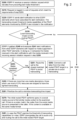
- a first ESRP element hereinafter called ESRP-X receives a session initiation request with a session description Protocol (SDP) body.
- SDP session description Protocol
- the session initiation request deviates from a preconfigured media threshold k from a caller.
- the preconfigured media threshold k is in a timeframe of x seconds and/or is based on the media capabilities of the devices present in PSAP elements which are monitored by ESRP-X.
- This "anomalous" session initiation request is logged or included in S210 by the ESRP-X in a set of requests which meet the requirements of step S200.
- the anomalous messages can be stored either in a DB in the ESRP, or in a remote cloud storage which can be accessed from other network elements in the ESlnet for forensic reasons.
- ESRP-X sends an alert notification to another second ESRP element hereinafter called ESRP-N element and/or other ESRP elements in the network which have also subscribed for a potential media-coordinated DDoS attack, using a SUBSCRIBE/NOTIFY mechanism.
- the alert notification may further comprise the transcoding impact, if such an impact exists and/or the media capabilities of the devices present in PSAP elements which are monitored by ESRP-X.
- S230 it is verified if there is a transcoding impact in the routing to a first PSAP element hereinafter also called initial routed PSAP target of ESRP-X that will handle the call.
- ESRP-X gathers and analyzes alert notifications which have been received using the SUBSCRIBE/NOTIFY mechanism for potential media-coordinated attacks from ESRP-N and/or other ESRP elements in the network.
- the other ESRP elements also meet the requirements of step S200 regarding the threshold value k and/or timeframe x in seconds. Further the transcoding impact threat and/or media capabilities of the PSAP elements monitored by other ESRP elements can also be included in the notifications if such information is available.
- ESRP-X compares the media received in the alert notifications with the media received in the incoming session initiation request in S200.
- the ESRP-X evaluates the alert notifications from ESRP-N elements and/or other ESRP elements to deduce if there is any media-capable PSAP element in any one of the ESRP elements in the network which can handle the call without transcoding. If any PSAP is media-capable, in S251 the call is routed without transcoding to this second PSAP element hereinafter also called the closest matched PSAP element and in S252 the call taker from the initial routed PSAP target is connected in a private line with the new call taker in the closest matched PSAP.
- ESRP-X element evaluates if there are more than one media descriptors in the SDP body of the session initiation request. If this is the case, those media codecs which use most CPU resources are stripped to have the lightest transcoding possible. Then, in S261 the call is prioritized over other emergency calls to minimize the effects of transcoding time.
- the initial routed PSAP target performs a content query in a social media source to find similar media content with same media codec to this presented in the transcoding stream. In case if similar media content with same media codec to this presented in the transcoding stream is found, the caller is presented with the media content from the social media source.
- Fig. 3 shows a schematic illustration of a communication path of method for defeating media-coordinated attacks on emergency call networks according to another embodiment of the invention.
- the ESRP-X receives a session initiation request with SDP for codecs A, B for video and audio that targets the emergency service. The request deviates from a predefined media threshold that contains media description details which consider the initiation of an audio and video call.
- the ESRP-X logs this message under a set of messages which meet the same requirements defined in S200.
- the ESRP-X sends a NOTIFY message to ESRP-N in order to inform about a potential media-coordinated DDoS attack (MediaBtnAttack).
- MediaBtnAttack media-coordinated DDoS attack
- the ESRP-X sends the media details of the PSAP elements which are monitored by the ESRP-X as well as a possible transcoding impact S230.
- the transcoding impact is added in the notification message as a binary piece of information, but the codec which caused the transcoding, in this case the SDP A, B, is also included as a notification information. This is important for the other ESRP elements in order to deduce if there are other PSAP elements that may support the requested codecs A and B.
- the ESRP-X receives from the ESRP-N, a notification about a potential media-coordinated DDoS attack which contains the binary information of the transcoding, in this case is 0 (i.e., the stream does not need to be transcoded). Moreover, it receives the media details of the PSAP elements which operate under the umbrella of ESRP-N which are equal to codecs C and E. In S250 ESRP-X identifies that there are not available codecs in the PSAP elements of ESRP-N that match A or B. Thus, in S260 the ESRP-X strips codec A from the SDP body of the session initiation request which is examined.
- the ESRP-X forwards the call to the PSAP only with SDP B details.
- a priority label is also added in the call in order to be delivered to the call taker with a priority.
- the transcoding time will be reduced for the examined call due to the fact that even if the caller waits in the call queue the stream is transcoded in order to deliver an audio/video stream from an Interactive Voice Response system (IVR).
- IVR Interactive Voice Response system
- the call is connected between the caller and the call taker.
- the PSAP element queries the social media server in order to retrieve media related to the emergency incident of the examined call.
- the method offers the caller videos from the social media delivered in the media format that the caller understands after the ML comparison has identified that this video retrieved from the social media is similar to the original stream presented by the caller.
- this RTP connection is not related to the device capabilities, i.e. to the codecs supported by the devices in the PSAP and thus it is possible to deliver this content using the same codec that the caller requests.
- S280 offers the caller with videos from the social media which are not only similar to the original stream, but more importantly are offered to the caller using the same media encoding format which entails that there is no need for a transcoding operation and the call on PSAP side can be dropped to audio only.
- the PSAP element does not reach the video transcoding limit, thus the method does not perform any operation in this step.
Landscapes
- Engineering & Computer Science (AREA)
- Computer Security & Cryptography (AREA)
- Computer Networks & Wireless Communication (AREA)
- Signal Processing (AREA)
- Computing Systems (AREA)
- General Engineering & Computer Science (AREA)
- Computer Hardware Design (AREA)
- Business, Economics & Management (AREA)
- Health & Medical Sciences (AREA)
- Emergency Management (AREA)
- Environmental & Geological Engineering (AREA)
- Public Health (AREA)
- Telephonic Communication Services (AREA)
Claims (15)
- Verfahren zur Abwehr von medienkoordinierten Angriffen auf Notrufnetzwerke, wobei das Verfahren umfasst:- (S200) Empfangen einer Session Initiation Anfrage mit einem Session Description Protocol-Körper, SDP, durch ein erstes Notrufdienst-Routing-Proxy-Element, ESRP, wobei die Sitzungseinleitungsanforderung von einem vorkonfigurierten Medienschwellenwert k eines Anrufers abweicht;- (S210) Protokollieren der Sitzungseinleitungsanforderung, die von einem vorkonfigurierten Medienschwellenwert abweicht, durch das erste ESRP-Element in einer Reihe von Anfragen, die die Anforderungen von Schritt (S200) erfüllen;- (S220) Senden einer Warnmeldung durch das erste ESRP-Element an ein zweites ESRP-Element und/oder andere ESRP-Elemente, die sich unter Verwendung eines "subscribed/notify"-Mechanismus für einen potenziellen medienkoordinierten Angriff angemeldet haben;- (S230) Überprüfen durch das erste ESRP-Element, ob eine Transkodierungsauswirkung bei der Weiterleitung zu einem ersten Notrufzentralen-Element, PSAP, des ersten ESRP-Elements vorliegt, das den Anruf bearbeiten wird; wenn keine Transkodierungsauswirkung vorliegt, wird der Anruf an das erste PSAP-Element weitergeleitet, andernfalls;- (S240) Sammeln und (S241) Analysieren von Warnmeldungen durch das erste ESRP-Element, die unter Verwendung des "subscribed/notify"-Mechanismus für einen potenziellen medienkoordinierten Angriff von dem zweiten ESRP-Element und/oder anderen ESRP-Elementen im Netzwerk empfangen wurden;- (S250) Auswerten der Warnmeldungen vom zweiten ESRP-Element und/oder anderen ESRP-Elementen durch den ersten ESRP, um abzuleiten, ob es in einem der ESRP-Elemente im Netzwerk ein medienfähiges PSAP-Element gibt, das den Anruf ohne Transkodierung bearbeiten kann, (S251) wenn ja, wird der Anruf ohne Transkodierung an ein zweites PSAP-Element weitergeleitet, andernfalls;- (S290) Herabstufen des Anrufs durch das erste ESRP-Element auf nur Audio und Weiterleitung des Anrufs an das erste PSAP-Element.
- Verfahren nach Anspruch 1, bei dem der vorkonfigurierte Medienschwellenwert k in einem Zeitrahmen von x Sekunden liegt und/oder auf den Medienfähigkeiten der Geräte in PSAP-Elementen basiert, die von dem ersten ESRP-Element überwacht werden.
- Verfahren nach einem der vorhergehenden Ansprüche, wobei es sich bei den koordinierten Medienangriffen um Denial of Service-, DoS, oder Distributed Denial of Service-Angriffe, DDoS, handelt.
- Verfahren nach einem der vorhergehenden Ansprüche, wobei die Warnmeldung die Auswirkungen der Transkodierung, falls vorhanden, und/oder die Medienfähigkeiten der Geräte in PSAP-Elementen, die vom ersten ESRP-Element überwacht werden, umfasst.
- Verfahren nach einem der vorhergehenden Ansprüche, bei dem in Schritt (S251) gleichzeitig ein Anruf auf einer privaten Leitung zwischen den Dispatchern der ersten und zweiten PSAP-Elemente (S252) eingeleitet wird.
- Verfahren nach einem der vorhergehenden Ansprüche, wobei (S260) in dem Fall, dass es kein medienfähiges PSAP-Element in einem der ESRP-Elemente im Netzwerk gibt, das den Anruf ohne Transkodierung bearbeiten kann, durch das erste ESRP-Element bewertet wird, ob es mehr als einen Mediendeskriptor im SDP-Körper der Session Initiation Anfrage gibt, und durch das erste ESRP-Element diejenigen Mediencodecs entfernt werden, die die meisten CPU-Ressourcen verwenden, und dann der Transkodierungsprozess durchgeführt wird.
- Verfahren nach Anspruch 6, bei dem (S261) der Anruf durch das erste ESRP-Element vor der Transkodierung gegenüber anderen Notrufen priorisiert wird.
- Verfahren nach Anspruch 6 oder 7, wobei (S270) während des Transkodierungsprozesses das erste PSAP-Element eine Inhaltsabfrage in einem Social-Media-Server des ersten PSAP-Elements durchführt, um ähnliche Medieninhalte mit demselben Mediencodec wie die im Transkodierungsstrom dargestellten zu finden, und wenn ähnliche Medieninhalte mit demselben Mediencodec wie die im Transkodierungsstrom dargestellten vorliegen, der Anrufer mit den Medieninhalten vom Social-Media-Server angezeigt wird.
- Verfahren nach Anspruch 8, wobei (S271) die Abfrage des Medieninhalts unter Verwendung von maschinellen Lerntechniken erfolgt.
- Verfahren nach Anspruch 8, bei dem (S272) der Anruf durch die Notrufzentrale dann auf nur Audio umgestellt wird, wenn gemäß Schritt (S270) ein ähnlicher Medieninhalt gefunden wurde.
- Verfahren nach einem der Ansprüche 6 bis 8, bei dem (S280) der Anruf durch die Notrufzentrale dann auf nur Audio umgestellt wird, wenn die erste Notrufzentrale einen bestimmten Schwellenwert n für die Medientranskodierung erreicht hat.
- Netzwerk, das eine Vielzahl von ESRP-Elementen umfasst, wobei jedes der ESRP-Elemente eine Vielzahl von korrespondierenden PSAP-Elementen mit mindestens einer Vorrichtung umfasst, die in der Lage ist, Anrufe zu empfangen, wobei die PSAP-Elemente von ihrem entsprechenden ESRP-Element überwacht werden und wobei das Netzwerk konfiguriert ist, um das Verfahren zur Abwehr von medienkoordinierten Angriffen auf Notrufnetzwerke gemäß den Ansprüchen 1 bis 11 durchzuführen.
- Das Netzwerk nach Anspruch 12, das ferner mindestens eine Social-Media-Server-Komponente und/oder mindestens eine Medien-Transcoder-Komponente umfasst..
- Das Netz nach Anspruch 12 oder 13, das ferner mindestens ein Element des maschinellen Lernens, ML, ein Interactive Voice Response-System, IVR, ein Gateway, GW, eine Border Control Function, BCF, und/oder eine Session Border Control, SBC, umfasst.
- Computerprogrammprodukt mit maschinenlesbaren Befehlen auf einem nicht transitorischen Speichermedium eines Netzwerks, wobei das Computerprogrammprodukt einen Code zur Durchführung des Verfahrens zur Abwehr von medienkoordinierten Angriffen auf Notfallnetzwerke nach den Ansprüchen 1 bis 11 umfasst.
Priority Applications (2)
| Application Number | Priority Date | Filing Date | Title |
|---|---|---|---|
| EP21175767.9A EP4096181B1 (de) | 2021-05-25 | 2021-05-25 | Verfahren und netzwerksystem zum überwinden von medienkoordinierten angriffen auf notrufnetzwerke |
| US17/746,314 US12035138B2 (en) | 2021-05-25 | 2022-05-17 | Method and network system for defeating media-coordinated attacks on emergency call networks |
Applications Claiming Priority (1)
| Application Number | Priority Date | Filing Date | Title |
|---|---|---|---|
| EP21175767.9A EP4096181B1 (de) | 2021-05-25 | 2021-05-25 | Verfahren und netzwerksystem zum überwinden von medienkoordinierten angriffen auf notrufnetzwerke |
Publications (2)
| Publication Number | Publication Date |
|---|---|
| EP4096181A1 EP4096181A1 (de) | 2022-11-30 |
| EP4096181B1 true EP4096181B1 (de) | 2023-11-15 |
Family
ID=76137900
Family Applications (1)
| Application Number | Title | Priority Date | Filing Date |
|---|---|---|---|
| EP21175767.9A Active EP4096181B1 (de) | 2021-05-25 | 2021-05-25 | Verfahren und netzwerksystem zum überwinden von medienkoordinierten angriffen auf notrufnetzwerke |
Country Status (2)
| Country | Link |
|---|---|
| US (1) | US12035138B2 (de) |
| EP (1) | EP4096181B1 (de) |
Family Cites Families (15)
| Publication number | Priority date | Publication date | Assignee | Title |
|---|---|---|---|---|
| US9426304B2 (en) * | 2011-09-26 | 2016-08-23 | Solacom Technologies Inc. | Answering or releasing emergency calls from a map display for an emergency services platform |
| CN106537931B (zh) * | 2014-07-23 | 2020-03-03 | 高通股份有限公司 | 车辆发起的紧急呼叫 |
| US11665276B2 (en) * | 2016-08-09 | 2023-05-30 | Onvoy Spectrum, Llc | Provisioning location information sourced independently from communications network |
| US10242554B2 (en) * | 2017-04-18 | 2019-03-26 | Carbyne Ltd. | System and method thereof for automatically routing a communication request addressed to a public safety answering point (PSAP) to a suitable dispatch unit |
| US10367947B2 (en) * | 2017-06-06 | 2019-07-30 | Bandwith.com, Inc. | Techniques for migrating legacy 911 systems to NG-911 systems |
| US10616412B1 (en) * | 2017-12-20 | 2020-04-07 | Geo-Comm, Inc. | Processing an emergency services call |
| US10820181B2 (en) * | 2018-02-09 | 2020-10-27 | Rapidsos, Inc. | Emergency location analysis system |
| US11095681B2 (en) * | 2018-02-28 | 2021-08-17 | Motorola Solutions, Inc. | Method to handle the distributed denial-of-service attacks 911 answering centers |
| US10498894B1 (en) * | 2018-10-31 | 2019-12-03 | Motorola Solutions, Inc. | System, device, and method for routing communications in an emergency service network |
| US10667199B1 (en) * | 2019-03-19 | 2020-05-26 | NG911 Services, Inc. | Systems and methods for improving routing of communications to emergency services |
| US11388575B2 (en) * | 2020-01-09 | 2022-07-12 | 911 Datamaster | Height-floor indexing for call routing and responder determination |
| WO2021163154A1 (en) * | 2020-02-11 | 2021-08-19 | NG911 Services, Inc | Routing an emergency services call |
| US20210368320A1 (en) * | 2020-05-25 | 2021-11-25 | NG911 Services, Inc | Employing data from a combination of cell sectors |
| US11399409B2 (en) * | 2020-09-17 | 2022-07-26 | T-Mobile Usa, Inc. | Timer for emergency text messages |
| US11330664B1 (en) * | 2020-12-31 | 2022-05-10 | Rapidsos, Inc. | Apparatus and method for obtaining emergency data and providing a map view |
-
2021
- 2021-05-25 EP EP21175767.9A patent/EP4096181B1/de active Active
-
2022
- 2022-05-17 US US17/746,314 patent/US12035138B2/en active Active
Also Published As
| Publication number | Publication date |
|---|---|
| US12035138B2 (en) | 2024-07-09 |
| EP4096181A1 (de) | 2022-11-30 |
| US20220386127A1 (en) | 2022-12-01 |
Similar Documents
| Publication | Publication Date | Title |
|---|---|---|
| US8161540B2 (en) | System and method for unified communications threat management (UCTM) for converged voice, video and multi-media over IP flows | |
| CN102546621B (zh) | 用于融合的VoIP服务的VoIP蜜罐的系统和方法 | |
| US8730946B2 (en) | System and method to precisely learn and abstract the positive flow behavior of a unified communication (UC) application and endpoints | |
| US20150040220A1 (en) | System and Method for Unified Communications Threat Management (UCTM) for Converged Voice, Video and Multi-Media Over IP Flows | |
| US12008143B2 (en) | Selective replacement of information within communication metadata | |
| Park et al. | Security problems of 5G voice communication | |
| Antonova et al. | Ways of the Asterisk software PBX protection | |
| Shan et al. | Research on security mechanisms of SIP-based VoIP system | |
| EP1894350B1 (de) | Sicherung der ip-telefonie | |
| US20060039540A1 (en) | Denial of 911 emergency service attacks prevention method | |
| EP4096181B1 (de) | Verfahren und netzwerksystem zum überwinden von medienkoordinierten angriffen auf notrufnetzwerke | |
| Voznak et al. | Threats to voice over IP communications systems | |
| Řezáč et al. | Security risks in IP telephony | |
| KR101379779B1 (ko) | 발신 정보가 변조된 보이스 피싱 및 문자 피싱 공격을 탐지 및 차단하는 방법 | |
| US9430279B2 (en) | System and method for dynamic influencing of sequence vector by sequenced applications | |
| Tsiatsikas et al. | At your service 24/7 or not? Denial of service on ESInet systems | |
| Ahmad et al. | VoIP security: A model proposed to mitigate DDoS attacks on SIP based VoIP network | |
| Farley et al. | Exploiting VoIP softphone vulnerabilities to disable host computers: Attacks and mitigation | |
| Areo | Transforming Communication: A Critical Review of VoIP and Its Role in Global Networking | |
| Moore | Denial-of-Service (DoS) Attacks Against the Availability of the Next Generation 911 (NG9-1-1) System | |
| Yang et al. | Implementation and performance of VoIP interception based on SIP session border controller | |
| Alkali | Voice over Internet Protocol Networks: Security Pitfalls | |
| Raza et al. | A restrictive model (RM) for detection and prevention of INVITE flooding attack | |
| El-Mousa et al. | The design of a secure SIP-based architecture for broadband service providers | |
| Aziz | Real-time Detection & Mitigation of SIP-based VoIP Toll Fraud Attacks |
Legal Events
| Date | Code | Title | Description |
|---|---|---|---|
| PUAI | Public reference made under article 153(3) epc to a published international application that has entered the european phase |
Free format text: ORIGINAL CODE: 0009012 |
|
| STAA | Information on the status of an ep patent application or granted ep patent |
Free format text: STATUS: THE APPLICATION HAS BEEN PUBLISHED |
|
| AK | Designated contracting states |
Kind code of ref document: A1 Designated state(s): AL AT BE BG CH CY CZ DE DK EE ES FI FR GB GR HR HU IE IS IT LI LT LU LV MC MK MT NL NO PL PT RO RS SE SI SK SM TR |
|
| STAA | Information on the status of an ep patent application or granted ep patent |
Free format text: STATUS: REQUEST FOR EXAMINATION WAS MADE |
|
| 17P | Request for examination filed |
Effective date: 20230213 |
|
| RBV | Designated contracting states (corrected) |
Designated state(s): AL AT BE BG CH CY CZ DE DK EE ES FI FR GB GR HR HU IE IS IT LI LT LU LV MC MK MT NL NO PL PT RO RS SE SI SK SM TR |
|
| REG | Reference to a national code |
Ref country code: DE Free format text: PREVIOUS MAIN CLASS: H04L0029060000 Ref country code: DE Ref legal event code: R079 Ref document number: 602021006768 Country of ref document: DE Free format text: PREVIOUS MAIN CLASS: H04L0029060000 Ipc: H04L0009400000 |
|
| GRAP | Despatch of communication of intention to grant a patent |
Free format text: ORIGINAL CODE: EPIDOSNIGR1 |
|
| STAA | Information on the status of an ep patent application or granted ep patent |
Free format text: STATUS: GRANT OF PATENT IS INTENDED |
|
| RIC1 | Information provided on ipc code assigned before grant |
Ipc: H04L 9/40 20220101AFI20230526BHEP |
|
| INTG | Intention to grant announced |
Effective date: 20230622 |
|
| GRAS | Grant fee paid |
Free format text: ORIGINAL CODE: EPIDOSNIGR3 |
|
| GRAA | (expected) grant |
Free format text: ORIGINAL CODE: 0009210 |
|
| STAA | Information on the status of an ep patent application or granted ep patent |
Free format text: STATUS: THE PATENT HAS BEEN GRANTED |
|
| AK | Designated contracting states |
Kind code of ref document: B1 Designated state(s): AL AT BE BG CH CY CZ DE DK EE ES FI FR GB GR HR HU IE IS IT LI LT LU LV MC MK MT NL NO PL PT RO RS SE SI SK SM TR |
|
| REG | Reference to a national code |
Ref country code: CH Ref legal event code: EP Ref country code: GB Ref legal event code: FG4D |
|
| REG | Reference to a national code |
Ref country code: DE Ref legal event code: R096 Ref document number: 602021006768 Country of ref document: DE |
|
| REG | Reference to a national code |
Ref country code: IE Ref legal event code: FG4D |
|
| REG | Reference to a national code |
Ref country code: LT Ref legal event code: MG9D |
|
| REG | Reference to a national code |
Ref country code: NL Ref legal event code: MP Effective date: 20231115 |
|
| PG25 | Lapsed in a contracting state [announced via postgrant information from national office to epo] |
Ref country code: GR Free format text: LAPSE BECAUSE OF FAILURE TO SUBMIT A TRANSLATION OF THE DESCRIPTION OR TO PAY THE FEE WITHIN THE PRESCRIBED TIME-LIMIT Effective date: 20240216 |
|
| PG25 | Lapsed in a contracting state [announced via postgrant information from national office to epo] |
Ref country code: IS Free format text: LAPSE BECAUSE OF FAILURE TO SUBMIT A TRANSLATION OF THE DESCRIPTION OR TO PAY THE FEE WITHIN THE PRESCRIBED TIME-LIMIT Effective date: 20240315 |
|
| PG25 | Lapsed in a contracting state [announced via postgrant information from national office to epo] |
Ref country code: LT Free format text: LAPSE BECAUSE OF FAILURE TO SUBMIT A TRANSLATION OF THE DESCRIPTION OR TO PAY THE FEE WITHIN THE PRESCRIBED TIME-LIMIT Effective date: 20231115 |
|
| REG | Reference to a national code |
Ref country code: AT Ref legal event code: MK05 Ref document number: 1632775 Country of ref document: AT Kind code of ref document: T Effective date: 20231115 |
|
| PG25 | Lapsed in a contracting state [announced via postgrant information from national office to epo] |
Ref country code: NL Free format text: LAPSE BECAUSE OF FAILURE TO SUBMIT A TRANSLATION OF THE DESCRIPTION OR TO PAY THE FEE WITHIN THE PRESCRIBED TIME-LIMIT Effective date: 20231115 |
|
| PG25 | Lapsed in a contracting state [announced via postgrant information from national office to epo] |
Ref country code: AT Free format text: LAPSE BECAUSE OF FAILURE TO SUBMIT A TRANSLATION OF THE DESCRIPTION OR TO PAY THE FEE WITHIN THE PRESCRIBED TIME-LIMIT Effective date: 20231115 |
|
| PG25 | Lapsed in a contracting state [announced via postgrant information from national office to epo] |
Ref country code: ES Free format text: LAPSE BECAUSE OF FAILURE TO SUBMIT A TRANSLATION OF THE DESCRIPTION OR TO PAY THE FEE WITHIN THE PRESCRIBED TIME-LIMIT Effective date: 20231115 |
|
| PG25 | Lapsed in a contracting state [announced via postgrant information from national office to epo] |
Ref country code: NL Free format text: LAPSE BECAUSE OF FAILURE TO SUBMIT A TRANSLATION OF THE DESCRIPTION OR TO PAY THE FEE WITHIN THE PRESCRIBED TIME-LIMIT Effective date: 20231115 Ref country code: LT Free format text: LAPSE BECAUSE OF FAILURE TO SUBMIT A TRANSLATION OF THE DESCRIPTION OR TO PAY THE FEE WITHIN THE PRESCRIBED TIME-LIMIT Effective date: 20231115 Ref country code: IS Free format text: LAPSE BECAUSE OF FAILURE TO SUBMIT A TRANSLATION OF THE DESCRIPTION OR TO PAY THE FEE WITHIN THE PRESCRIBED TIME-LIMIT Effective date: 20240315 Ref country code: GR Free format text: LAPSE BECAUSE OF FAILURE TO SUBMIT A TRANSLATION OF THE DESCRIPTION OR TO PAY THE FEE WITHIN THE PRESCRIBED TIME-LIMIT Effective date: 20240216 Ref country code: ES Free format text: LAPSE BECAUSE OF FAILURE TO SUBMIT A TRANSLATION OF THE DESCRIPTION OR TO PAY THE FEE WITHIN THE PRESCRIBED TIME-LIMIT Effective date: 20231115 Ref country code: BG Free format text: LAPSE BECAUSE OF FAILURE TO SUBMIT A TRANSLATION OF THE DESCRIPTION OR TO PAY THE FEE WITHIN THE PRESCRIBED TIME-LIMIT Effective date: 20240215 Ref country code: AT Free format text: LAPSE BECAUSE OF FAILURE TO SUBMIT A TRANSLATION OF THE DESCRIPTION OR TO PAY THE FEE WITHIN THE PRESCRIBED TIME-LIMIT Effective date: 20231115 Ref country code: PT Free format text: LAPSE BECAUSE OF FAILURE TO SUBMIT A TRANSLATION OF THE DESCRIPTION OR TO PAY THE FEE WITHIN THE PRESCRIBED TIME-LIMIT Effective date: 20240315 |
|
| PG25 | Lapsed in a contracting state [announced via postgrant information from national office to epo] |
Ref country code: SE Free format text: LAPSE BECAUSE OF FAILURE TO SUBMIT A TRANSLATION OF THE DESCRIPTION OR TO PAY THE FEE WITHIN THE PRESCRIBED TIME-LIMIT Effective date: 20231115 Ref country code: RS Free format text: LAPSE BECAUSE OF FAILURE TO SUBMIT A TRANSLATION OF THE DESCRIPTION OR TO PAY THE FEE WITHIN THE PRESCRIBED TIME-LIMIT Effective date: 20231115 Ref country code: PL Free format text: LAPSE BECAUSE OF FAILURE TO SUBMIT A TRANSLATION OF THE DESCRIPTION OR TO PAY THE FEE WITHIN THE PRESCRIBED TIME-LIMIT Effective date: 20231115 Ref country code: NO Free format text: LAPSE BECAUSE OF FAILURE TO SUBMIT A TRANSLATION OF THE DESCRIPTION OR TO PAY THE FEE WITHIN THE PRESCRIBED TIME-LIMIT Effective date: 20240215 Ref country code: LV Free format text: LAPSE BECAUSE OF FAILURE TO SUBMIT A TRANSLATION OF THE DESCRIPTION OR TO PAY THE FEE WITHIN THE PRESCRIBED TIME-LIMIT Effective date: 20231115 Ref country code: HR Free format text: LAPSE BECAUSE OF FAILURE TO SUBMIT A TRANSLATION OF THE DESCRIPTION OR TO PAY THE FEE WITHIN THE PRESCRIBED TIME-LIMIT Effective date: 20231115 |
|
| PG25 | Lapsed in a contracting state [announced via postgrant information from national office to epo] |
Ref country code: DK Free format text: LAPSE BECAUSE OF FAILURE TO SUBMIT A TRANSLATION OF THE DESCRIPTION OR TO PAY THE FEE WITHIN THE PRESCRIBED TIME-LIMIT Effective date: 20231115 |
|
| PG25 | Lapsed in a contracting state [announced via postgrant information from national office to epo] |
Ref country code: CZ Free format text: LAPSE BECAUSE OF FAILURE TO SUBMIT A TRANSLATION OF THE DESCRIPTION OR TO PAY THE FEE WITHIN THE PRESCRIBED TIME-LIMIT Effective date: 20231115 |
|
| PG25 | Lapsed in a contracting state [announced via postgrant information from national office to epo] |
Ref country code: SK Free format text: LAPSE BECAUSE OF FAILURE TO SUBMIT A TRANSLATION OF THE DESCRIPTION OR TO PAY THE FEE WITHIN THE PRESCRIBED TIME-LIMIT Effective date: 20231115 |
|
| PG25 | Lapsed in a contracting state [announced via postgrant information from national office to epo] |
Ref country code: SM Free format text: LAPSE BECAUSE OF FAILURE TO SUBMIT A TRANSLATION OF THE DESCRIPTION OR TO PAY THE FEE WITHIN THE PRESCRIBED TIME-LIMIT Effective date: 20231115 Ref country code: SK Free format text: LAPSE BECAUSE OF FAILURE TO SUBMIT A TRANSLATION OF THE DESCRIPTION OR TO PAY THE FEE WITHIN THE PRESCRIBED TIME-LIMIT Effective date: 20231115 Ref country code: RO Free format text: LAPSE BECAUSE OF FAILURE TO SUBMIT A TRANSLATION OF THE DESCRIPTION OR TO PAY THE FEE WITHIN THE PRESCRIBED TIME-LIMIT Effective date: 20231115 Ref country code: IT Free format text: LAPSE BECAUSE OF FAILURE TO SUBMIT A TRANSLATION OF THE DESCRIPTION OR TO PAY THE FEE WITHIN THE PRESCRIBED TIME-LIMIT Effective date: 20231115 Ref country code: EE Free format text: LAPSE BECAUSE OF FAILURE TO SUBMIT A TRANSLATION OF THE DESCRIPTION OR TO PAY THE FEE WITHIN THE PRESCRIBED TIME-LIMIT Effective date: 20231115 Ref country code: DK Free format text: LAPSE BECAUSE OF FAILURE TO SUBMIT A TRANSLATION OF THE DESCRIPTION OR TO PAY THE FEE WITHIN THE PRESCRIBED TIME-LIMIT Effective date: 20231115 Ref country code: CZ Free format text: LAPSE BECAUSE OF FAILURE TO SUBMIT A TRANSLATION OF THE DESCRIPTION OR TO PAY THE FEE WITHIN THE PRESCRIBED TIME-LIMIT Effective date: 20231115 |
|
| REG | Reference to a national code |
Ref country code: DE Ref legal event code: R097 Ref document number: 602021006768 Country of ref document: DE |
|
| PLBE | No opposition filed within time limit |
Free format text: ORIGINAL CODE: 0009261 |
|
| STAA | Information on the status of an ep patent application or granted ep patent |
Free format text: STATUS: NO OPPOSITION FILED WITHIN TIME LIMIT |
|
| 26N | No opposition filed |
Effective date: 20240819 |
|
| PG25 | Lapsed in a contracting state [announced via postgrant information from national office to epo] |
Ref country code: SI Free format text: LAPSE BECAUSE OF FAILURE TO SUBMIT A TRANSLATION OF THE DESCRIPTION OR TO PAY THE FEE WITHIN THE PRESCRIBED TIME-LIMIT Effective date: 20231115 |
|
| PG25 | Lapsed in a contracting state [announced via postgrant information from national office to epo] |
Ref country code: SI Free format text: LAPSE BECAUSE OF FAILURE TO SUBMIT A TRANSLATION OF THE DESCRIPTION OR TO PAY THE FEE WITHIN THE PRESCRIBED TIME-LIMIT Effective date: 20231115 |
|
| REG | Reference to a national code |
Ref country code: DE Ref legal event code: R081 Ref document number: 602021006768 Country of ref document: DE Owner name: UNIFY BETEILIGUNGSVERWALTUNG GMBH & CO. KG, DE Free format text: FORMER OWNER: UNIFY PATENTE GMBH & CO. KG, 81739 MUENCHEN, DE |
|
| REG | Reference to a national code |
Ref country code: CH Ref legal event code: PL |
|
| PG25 | Lapsed in a contracting state [announced via postgrant information from national office to epo] |
Ref country code: MC Free format text: LAPSE BECAUSE OF FAILURE TO SUBMIT A TRANSLATION OF THE DESCRIPTION OR TO PAY THE FEE WITHIN THE PRESCRIBED TIME-LIMIT Effective date: 20231115 |
|
| PG25 | Lapsed in a contracting state [announced via postgrant information from national office to epo] |
Ref country code: LU Free format text: LAPSE BECAUSE OF NON-PAYMENT OF DUE FEES Effective date: 20240525 |
|
| PG25 | Lapsed in a contracting state [announced via postgrant information from national office to epo] |
Ref country code: MC Free format text: LAPSE BECAUSE OF FAILURE TO SUBMIT A TRANSLATION OF THE DESCRIPTION OR TO PAY THE FEE WITHIN THE PRESCRIBED TIME-LIMIT Effective date: 20231115 Ref country code: LU Free format text: LAPSE BECAUSE OF NON-PAYMENT OF DUE FEES Effective date: 20240525 Ref country code: CH Free format text: LAPSE BECAUSE OF NON-PAYMENT OF DUE FEES Effective date: 20240531 |
|
| REG | Reference to a national code |
Ref country code: BE Ref legal event code: MM Effective date: 20240531 |
|
| PG25 | Lapsed in a contracting state [announced via postgrant information from national office to epo] |
Ref country code: IE Free format text: LAPSE BECAUSE OF NON-PAYMENT OF DUE FEES Effective date: 20240525 |
|
| PG25 | Lapsed in a contracting state [announced via postgrant information from national office to epo] |
Ref country code: BE Free format text: LAPSE BECAUSE OF NON-PAYMENT OF DUE FEES Effective date: 20240531 |
|
| PGFP | Annual fee paid to national office [announced via postgrant information from national office to epo] |
Ref country code: DE Payment date: 20250402 Year of fee payment: 5 |
|
| PGFP | Annual fee paid to national office [announced via postgrant information from national office to epo] |
Ref country code: FR Payment date: 20250401 Year of fee payment: 5 |
|
| PG25 | Lapsed in a contracting state [announced via postgrant information from national office to epo] |
Ref country code: HU Free format text: LAPSE BECAUSE OF FAILURE TO SUBMIT A TRANSLATION OF THE DESCRIPTION OR TO PAY THE FEE WITHIN THE PRESCRIBED TIME-LIMIT; INVALID AB INITIO Effective date: 20210525 |
|
| PG25 | Lapsed in a contracting state [announced via postgrant information from national office to epo] |
Ref country code: CY Free format text: LAPSE BECAUSE OF FAILURE TO SUBMIT A TRANSLATION OF THE DESCRIPTION OR TO PAY THE FEE WITHIN THE PRESCRIBED TIME-LIMIT; INVALID AB INITIO Effective date: 20210525 |
|
| PG25 | Lapsed in a contracting state [announced via postgrant information from national office to epo] |
Ref country code: FI Free format text: LAPSE BECAUSE OF FAILURE TO SUBMIT A TRANSLATION OF THE DESCRIPTION OR TO PAY THE FEE WITHIN THE PRESCRIBED TIME-LIMIT Effective date: 20231115 |
|
| REG | Reference to a national code |
Ref country code: GB Ref legal event code: 732E Free format text: REGISTERED BETWEEN 20250925 AND 20251001 |
|
| PGFP | Annual fee paid to national office [announced via postgrant information from national office to epo] |
Ref country code: GB Payment date: 20260310 Year of fee payment: 6 |