EP3540376B1 - Verfahren und vorrichtung zur erkennung eines stationären zustandes - Google Patents
Verfahren und vorrichtung zur erkennung eines stationären zustandes Download PDFInfo
- Publication number
- EP3540376B1 EP3540376B1 EP17876759.6A EP17876759A EP3540376B1 EP 3540376 B1 EP3540376 B1 EP 3540376B1 EP 17876759 A EP17876759 A EP 17876759A EP 3540376 B1 EP3540376 B1 EP 3540376B1
- Authority
- EP
- European Patent Office
- Prior art keywords
- standard deviation
- static
- dynamic
- probability
- curve
- Prior art date
- Legal status (The legal status is an assumption and is not a legal conclusion. Google has not performed a legal analysis and makes no representation as to the accuracy of the status listed.)
- Active
Links
Images



Classifications
-
- G—PHYSICS
- G01—MEASURING; TESTING
- G01C—MEASURING DISTANCES, LEVELS OR BEARINGS; SURVEYING; NAVIGATION; GYROSCOPIC INSTRUMENTS; PHOTOGRAMMETRY OR VIDEOGRAMMETRY
- G01C25/00—Manufacturing, calibrating, cleaning, or repairing instruments or devices referred to in the other groups of this subclass
- G01C25/005—Manufacturing, calibrating, cleaning, or repairing instruments or devices referred to in the other groups of this subclass initial alignment, calibration or starting-up of inertial devices
-
- G—PHYSICS
- G01—MEASURING; TESTING
- G01C—MEASURING DISTANCES, LEVELS OR BEARINGS; SURVEYING; NAVIGATION; GYROSCOPIC INSTRUMENTS; PHOTOGRAMMETRY OR VIDEOGRAMMETRY
- G01C25/00—Manufacturing, calibrating, cleaning, or repairing instruments or devices referred to in the other groups of this subclass
-
- G—PHYSICS
- G01—MEASURING; TESTING
- G01C—MEASURING DISTANCES, LEVELS OR BEARINGS; SURVEYING; NAVIGATION; GYROSCOPIC INSTRUMENTS; PHOTOGRAMMETRY OR VIDEOGRAMMETRY
- G01C21/00—Navigation; Navigational instruments not provided for in groups G01C1/00 - G01C19/00
- G01C21/10—Navigation; Navigational instruments not provided for in groups G01C1/00 - G01C19/00 by using measurements of speed or acceleration
- G01C21/12—Navigation; Navigational instruments not provided for in groups G01C1/00 - G01C19/00 by using measurements of speed or acceleration executed aboard the object being navigated; Dead reckoning
-
- G—PHYSICS
- G01—MEASURING; TESTING
- G01C—MEASURING DISTANCES, LEVELS OR BEARINGS; SURVEYING; NAVIGATION; GYROSCOPIC INSTRUMENTS; PHOTOGRAMMETRY OR VIDEOGRAMMETRY
- G01C21/00—Navigation; Navigational instruments not provided for in groups G01C1/00 - G01C19/00
- G01C21/20—Instruments for performing navigational calculations
Definitions
- This application relates to the field of inertial navigation technologies, and in particular, to a static state determining method and apparatus.
- An inertial navigation system (Inertial Navigation System, INS) is a dead reckoning system, and includes an inertial measurement unit (Inertial Measurement Unit, IMU) and an inertial navigation mechanization algorithm.
- IMU Inertial Measurement Unit
- ZUPT Zero velocity update
- Zero velocity update is to determine a time period in which a carrier is in a static state, based on data measured by the IMU.
- a zero velocity update detection method in the prior art is a threshold method. Appropriate thresholds are preset for collected data measured by the IMU, when the INS is in a moving state and when the INS is in a static state. In a process of using the INS, the data measured by the IMU or new data that is obtained through projection transformation performed on the data is compared with the thresholds. When the data measured by the IMU or the new data is less than or equal to the thresholds, a time period in which the INS is in the static state is determined.
- Embodiments of the present invention provide a static state determining method and apparatus, to improve accuracy of determining a static state of a target vehicle, a device, or an apparatus.
- an embodiment of the present invention provides a static state determining method, including: obtaining, by an inertial navigation system, first running data that is measured by an inertial measurement unit IMU in first specified duration, where the first running data includes running data of each of N axes that is measured by the IMU in the first specified duration, and N is a positive integer greater than or equal to 1, and preferably, the first specified duration is 1 second and N is 6; determining, by the inertial navigation system, a first standard deviation corresponding to the running data of each axis in the first specified duration, that is, determining N first standard deviations; matching, by the inertial navigation system, the N first standard deviations with a prestored database, to determine N second standard deviations the same as the N first standard deviations; and determining, by the inertial navigation system in the prestored database, first information corresponding to each of the N second standard deviations, where the first information includes a first probability that the second standard deviation is static, and a weight corresponding to the second
- the N first standard deviations are from the N axes respectively, and the second standard deviations included in the database are also from the N axes.
- the first information includes the first probability that the second standard deviation is static, to be specific, the first probability that an axis corresponding to the second standard deviation is static.
- the weight corresponding to the second standard deviation is a weight of the axis corresponding to the second standard deviation.
- the inertial navigation system multiplies the first probability in each of the N pieces of first information by the corresponding weight, and adds N values obtained through the multiplication, where a value obtained through the addition is determined as a second probability that the N first standard deviations are static; and when the second probability is greater than or equal to the static probability threshold, the inertial navigation system determines that a device in which the inertial navigation system is located is in a static state in the first specified duration; or when the second probability is less than the static probability threshold, determines that a device in which the inertial navigation system is located is in a moving state in the first specified duration.
- the inertial navigation system measures, by using the IMU, running data of N axes in the first specified duration; calculates first standard deviations corresponding to the running data of the N axes; queries the database for the calculated N first standard deviations, to determine the N second standard deviations the same as the N first standard deviations; determines, in the database, the first probabilities corresponding to the N second standard deviations respectively, and the weights corresponding to axes on which the N second standard deviations are located; determines, based on the N determined first probabilities and weights corresponding to the N axes, the second probability that the device in which the inertial navigation system is located is static in the first specified duration; compares the second probability with the static probability threshold; and when the second probability is greater than or equal to the static probability threshold, determines that the device in which the inertial navigation system is located is static in the first specified duration. According to the foregoing method, accuracy of determining a static state is improved.
- a correspondence between the second standard deviation and the weight of the axis on which the second standard deviation is located is formed through the following process: determining, by the inertial navigation system, sample data, measured by the IMU in second specified duration, of any axis; determining, by the inertial navigation system, sample data corresponding to each first specified duration in the second specified duration as static data or dynamic data, determining a static standard deviation based on the static data, and determining a dynamic standard deviation based on the dynamic data, where a value of the first specified duration in the second specified duration is determined in a form of a sliding window; grouping a plurality of determined static standard deviations based on first specified threshold ranges, and determining a quantity of static standard deviations in each first specified threshold range; and dividing the first threshold specified range into a plurality of groups, where values of fixed intervals are grouped into one group to obtain a static standard deviation distribution histogram; and grouping a plurality of determined dynamic sample standard-deviations based on second specified threshold ranges, determining
- a correspondence between the second standard deviation and the first probability is formed through the following process: placing the static standard deviation curve and the dynamic standard deviation curve in a same coordinate system, where when the area of the intersecting part of the static standard deviation curve and the dynamic standard deviation curve is determined, each of the static standard deviation curve and the dynamic standard deviation curve has two intersection points with a horizontal axis of the coordinate system; in the two intersection points, an intersection point a has a shorter distance to an origin of the coordinate system, and an intersection point b has a longer distance to the origin of the coordinate system; and an intersection point of the static standard deviation curve and the dynamic standard deviation curve is an intersection point c; and when the second standard deviation is a value less than or equal to the intersection point a, a probability that the second standard deviation is static is a corresponding probability value of the second standard deviation on the static standard deviation curve; when the second data is a value greater than or equal to the intersection point b, a probability that the second standard deviation is static is 0; and when the second data is a value greater than the point a
- an embodiment of the present invention provides a static state determining apparatus, including: an obtaining module, configured to obtain first running data that is measured by an inertial measurement unit IMU in first specified duration, where the first running data includes running data of each of N axes that is measured by the IMU in the first specified duration, and N is a positive integer greater than or equal to 1; a determining module, configured to determine N first standard deviations of the first running data; a matching module, configured to match the N first standard deviations with a prestored database, to determine N second standard deviations the same as the N first standard deviations; a searching module, configured to determine, in the prestored database, first information corresponding to each of the N second standard deviations, where the first information includes a first probability that the second standard deviation is static, and a weight corresponding to the second standard deviation; a processing module, configured to: multiply the first probability in each of the N pieces of first information by the corresponding weight, and add N values obtained through the multiplication, where a value obtained through
- an inertial navigation system measures, by using the IMU, running data of N axes in the first specified duration; calculates first standard deviations corresponding to the running data of the N axes; queries the database for the calculated N first standard deviations, to determine the N second standard deviations the same as the N first standard deviations; determines, in the database, the first probabilities corresponding to the N second standard deviations respectively, and weights corresponding to axes on which the N second standard deviations are located; determines, based on the N determined first probabilities and weights corresponding to the N axes, the second probability that the device in which the inertial navigation system is located is static in the first specified duration; compares the second probability with the static probability threshold; and when the second probability is greater than or equal to the static probability threshold, determines that the device in which the inertial navigation system is located is static in the first specified duration. According to the foregoing method, accuracy of determining a static state is improved.
- a correspondence between the second standard deviation and the weight is formed through the following process: determining static data and dynamic data, measured by the IMU in second specified duration, of any axis; determining, in the second specified duration, static data corresponding to each first specified duration and dynamic sample data corresponding to the first specified duration, determining a static standard deviation based on the static data corresponding to the first specified duration, and determining a dynamic sample standard-deviation based on the dynamic sample data corresponding to the first specified duration; grouping a plurality of determined static standard deviations based on first specified threshold ranges, and determining a quantity of static standard deviations in each first specified threshold range, to obtain a distribution histogram of the static standard deviations; and grouping a plurality of determined dynamic sample standard-deviations based on second specified threshold ranges, and determining a quantity of dynamic standard deviations in each second specified threshold range, to obtain a distribution histogram of the dynamic standard deviations; separately performing curve fitting on the histogram of the static standard deviations and the distribution histogram of the
- a correspondence between the second standard deviation and the first probability is formed through the following process: placing the static standard deviation curve and the dynamic standard deviation curve in a same coordinate system, where when the area of the intersecting part of the static standard deviation curve and the dynamic standard deviation curve is determined, each of the static standard deviation curve and the dynamic standard deviation curve has two intersection points with a horizontal axis of the coordinate system; in the two intersection points, an intersection point a has a shorter distance to an origin of the coordinate system, and an intersection point b has a longer distance to the origin of the coordinate system; and an intersection point of the static standard deviation curve and the dynamic standard deviation curve is an intersection point c; and when the second standard deviation is a value less than or equal to the intersection point a, a probability that the second standard deviation is static is a corresponding probability value of the second standard deviation on the static standard deviation curve; when the second data is a value greater than or equal to the intersection point b, a probability that the second standard deviation is static is 0; and when the second data is a value greater than the point a
- N is 6.
- a static state determining apparatus including a processor and a memory connected to the processor, where the memory is configured to store program code executed by the processor; and the processor is configured to execute the program code stored in the memory to perform the following process: obtaining first running data that is measured by an inertial measurement unit IMU in first specified duration, where the first running data includes running data of each of N axes that is measured by the IMU in the first specified duration, and N is a positive integer greater than or equal to 1; determining N first standard deviations of the first running data; matching the N first standard deviations with a prestored database, to determine N second standard deviations the same as the N first standard deviations; determining, in the prestored database, first information corresponding to each of the N second standard deviations, where the first information includes a first probability that the second standard deviation is static, and a weight corresponding to the second standard deviation; multiplying the first probability in each of the N pieces of first information by the corresponding weight, and adding N values obtained through the multi
- an inertial navigation system measures, by using the IMU, running data of N axes in the first specified duration; calculates first standard deviations corresponding to the running data of the N axes; queries the database for the calculated N first standard deviations, to determine the N second standard deviations the same as the N first standard deviations; determines, in the database, the first probabilities corresponding to the N second standard deviations respectively, and the weights corresponding to axes on which the N second standard deviations are located; determines, based on the N determined first probabilities and weights corresponding to the N axes, the second probability that the device in which the inertial navigation system is located is static in the first specified duration; compares the second probability with the static probability threshold; and when the second probability is greater than or equal to the static probability threshold, determines that the device in which the inertial navigation system is located is static in the first specified duration. According to the foregoing method, accuracy of determining a static state is improved.
- An inertial navigation system INS is a dead reckoning system, and includes an inertial measurement unit IMU and an inertial navigation mechanization algorithm.
- an INS error becomes larger as time increases.
- an embodiment of the present invention provides a static state determining method, to improve accuracy of determining a static state.
- a static standard deviation curve and a dynamic standard deviation curve shown in FIG. 1 are obtained through fitting, by using any axis as an example.
- a specific process is shown in FIG. 2 :
- group spacings are set by using 5 as a step, and then a plurality of groups, 0-4, 5-9, 10-14, ..., 96-100 are obtained through division.
- division of the group spacings may be determined as required. This is not limited in the present invention.
- Step S25 Separately perform curve fitting on the static standard deviation histogram and the dynamic standard deviation distribution histogram, normalize an area enclosed by curves and a standard deviation (standard deviation, STD) axis, to determine a static standard deviation curve and a dynamic standard deviation curve, that is, a standard deviation-frequency distribution curve whose horizontal axis is a standard deviation value and whose vertical axis is a frequency value.
- a standard deviation standard deviation, STD
- Step S26 Place the static standard deviation curve and the dynamic standard deviation curve in a same coordinate system, to obtain FIG. 1 in an ideal case.
- a probability that any standard deviation is static can be calculated.
- Each of the static standard deviation curve and the dynamic standard deviation curve has two intersection points with a horizontal axis of the coordinate system; in the two intersection points, an intersection point std a has a shorter distance to an origin of the coordinate system, and an intersection point std_b has a longer distance to the origin of the coordinate system; and an intersection point of the static standard deviation curve and the dynamic standard deviation curve is an intersection point std c; and when the standard deviation is a value less than or equal to the intersection point std a, a probability that the standard deviation is static is a corresponding probability value of the standard deviation on the static standard deviation curve, that is, a probability that the standard deviation is static is 100%; when the standard deviation is a value greater than or equal to the intersection point std_b, a probability that the standard deviation is static is 0; and when the standard deviation std0 is a value greater than the
- a probability that a standard deviation of a region A is static is 100%
- probabilities that standard deviations of a region B and a region C are static are calculated by using the foregoing formula
- a probability that a standard deviation of a region D is static is 0.
- a reciprocal of the area enclosed by the static standard deviation curve and the dynamic standard deviation curve and the horizontal axis is a weight K of the axis.
- the determined weight K, a probability that any standard deviation is static, and the standard deviations are determined as a database, and subsequently, the database is used when a status of new data needs to be determined.
- forming of the database is described by using data of six axes that is collected by a vehicle inertial sensor.
- Sample data is from a plurality of sports car experiments in different application scenarios.
- a car stopping phenomenon frequently occurs due to traffic jam or intentional reasons, and original output data is collected.
- the original data includes angular velocities collected by a gyroscope in three directions of an X-axis, a Y-axis, and a Z-axis, and accelerations collected by an accelerometer in the three directions of the X-axis, the Y-axis, and the Z-axis.
- the collected data is processed according to steps S21 to S26, to obtain static standard deviation curves and dynamic standard deviation curves of axes shown in FIG. 4 .
- a curve of probabilities that a standard deviation of an overlapping part of a static standard deviation curve and a static standard deviation of each axis shown in FIG. 5 are determined as static is determined.
- Table 1 Gyroscope _X-axis Gyroscope _Y-axis Gyroscope _Z-axis Acceleration_X-axis Acceleration_Y-axis Acceleration_Z-axis Reciprocal of an area 7.0918 10.2050 3.0086 21.7084 15.7428 2.4484 K (after normalization) 0.1178 0.1695 0.0500 0.3606 0.2615 0.0407
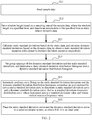
- An embodiment of the present invention further provides a static state determining method. As shown in FIG. 6 , the method includes the following process:
- the inertial navigation system measures, by using the IMU, running data of N axes in the first specified duration; calculates first standard deviations corresponding to the running data of the N axes; queries the database for the calculated N first standard deviations, to determine the N second standard deviations the same as the N first standard deviations; determines, in the database, the first probabilities corresponding to the N second standard deviations respectively, and the weights corresponding to axes on which the N second standard deviations are located; determines, based on the N determined first probabilities and weights corresponding to the N axes, the second probability that the device in which the inertial navigation system is located is static in the first specified duration; compares the second probability with the static probability threshold; and when the second probability is greater than or equal to the static probability threshold, determines that the device in which the inertial navigation system is located is static in the first specified duration. According to the foregoing method, accuracy of determining a static state is improved.
- an embodiment of the present invention provides a static state determining apparatus 70. As shown in FIG. 7 , the apparatus includes:
- an inertial navigation system measures, by using the IMU, running data of N axes in the first specified duration; calculates first standard deviations corresponding to the running data of the N axes; queries the database for the calculated N first standard deviations, to determine the N second standard deviations the same as the N first standard deviations; determines, in the database, the first probabilities corresponding to the N second standard deviations respectively, and the weights corresponding to axes on which the N second standard deviations are located; determines, based on the N determined first probabilities and weights corresponding to the N axes, the second probability that the device in which the inertial navigation system is located is static in the first specified duration; compares the second probability with the static probability threshold; and when the second probability is greater than or equal to the static probability threshold, determines that the device in which the inertial navigation system is located is static in the first specified duration. According to the foregoing method, accuracy of determining a static state is improved.
- a correspondence between the second standard deviation and the weight is formed through the following process:
- a correspondence between the second standard deviation and the first probability is formed through the following process, including:
- N is 6.
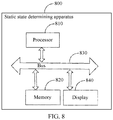
- the static state determining apparatus 800 includes a processor 810, a memory 820 connected to the processor, a display 840 that is connected to a bus 830 and that is configured to display a static state, and the memory 820 and the processor 810 are connected to each other by using the bus 830.
- the memory 820 is configured to store program code executed by the processor.
- the processor 810 is configured to execute the program code stored in the memory to perform any step counting method in the foregoing embodiments, for example, perform the following process: obtaining first running data that is measured by an inertial measurement unit IMU in first specified duration, where the first running data includes running data of each of N axes that is measured by the IMU in the first specified duration, and N is a positive integer greater than or equal to 1; determining N first standard deviations of the first running data; matching the N first standard deviations with a prcstorcd database, to determine N second standard deviations the same as the N first standard deviations; determining, in the prestored database, first information corresponding to each of the N second standard deviations, where the first information includes a first probability that the second standard deviation is static, and a weight corresponding to the second standard deviation; multiplying the first probability in each of the N pieces of first information by the corresponding weight, and adding N values obtained through the multiplication, where a value obtained through the addition is determined as a second probability that the N first standard deviations are
- the embodiments of the present invention may be provided as a method, a system, or a computer program product. Therefore, the present invention may use a form of hardware only embodiments, software only embodiments, or embodiments with a combination of software and hardware. Moreover, the present invention may use a form of a computer program product that is implemented on one or more computer-usable storage media (including but not limited to a disk memory, a CD-ROM, an optical memory, and the like) that include computer-usable program code.
- computer-usable storage media including but not limited to a disk memory, a CD-ROM, an optical memory, and the like
- These computer program instructions may be provided for a general-purpose computer, a dedicated computer, an embedded processor, or a processor of any other programmable data processing device to generate a machine, so that the instructions executed by a computer or a processor of any other programmable data processing device generate an apparatus for implementing a specific function in one or more processes in the flowcharts and/or in one or more blocks in the block diagrams.
- These computer program instructions may be stored in a computer readable memory that can instruct the computer or any other programmable data processing device to work in a specific manner, so that the instructions stored in the computer readable memory generate an artifact that includes an instruction apparatus.
- the instruction apparatus implements a specific function in one or more processes in the flowcharts and/or in one or more blocks in the block diagrams.
- These computer program instructions may be loaded onto a computer or another programmable data processing device, so that a series of operations and steps are performed on the computer or the another programmable device, thereby generating computer-implemented processing. Therefore, the instructions executed on the computer or the another programmable device provide steps for implementing a specific function in one or more processes in the flowcharts and/or in one or more blocks in the block diagrams.
Landscapes
- Engineering & Computer Science (AREA)
- Radar, Positioning & Navigation (AREA)
- Remote Sensing (AREA)
- Physics & Mathematics (AREA)
- General Physics & Mathematics (AREA)
- Manufacturing & Machinery (AREA)
- Automation & Control Theory (AREA)
- Navigation (AREA)
Claims (4)
- Verfahren zum Bestimmen eines statischen Zustands, das Folgendes umfasst:Erhalten (S61) von ersten laufenden Daten, die von einer Trägheitsmesseinheit IMU in einer ersten spezifizierten Dauer gemessen werden, durch ein Trägheitsnavigationssystem, wobei die ersten laufenden Daten laufende Daten von jeder von N Achsen umfassen, die von der IMU in der ersten spezifizierten Dauer gemessen werden, und N eine positive Ganzzahl größer als oder gleich 1 ist;Bestimmen (S62) von N ersten Standardabweichungen der ersten laufenden Daten durch das Trägheitsnavigationssystem;Abgleichen (S63) der N ersten Standardabweichungen durch das Trägheitsnavigationssystem mit einer Datenbank, um N zweite Standardabweichungen zu bestimmen, die dieselben sind wie die N ersten Standardabweichungen;Bestimmen (S64) von ersten Informationen, die jeder der N zweiten Standardabweichungen entsprechen, durch das Trägheitsnavigationssystem in der Datenbank, wobei die ersten Informationen eine erste Wahrscheinlichkeit, dass die zweite Standardabweichung statisch ist, und eine Gewichtung, die der zweiten Standardabweichung entspricht, umfassen;Multiplizieren (S65) der ersten Wahrscheinlichkeit in jedem der N Teile von ersten Informationen mit der entsprechenden Gewichtung und Addieren von N Werten, die durch die Multiplikation erhalten werden, durch das Trägheitsnavigationssystem, wobei ein Wert, der durch die Addition erhalten wird, eine zweite Wahrscheinlichkeit ist, dass die N ersten Standardabweichungen statisch sind; undwenn die zweite Wahrscheinlichkeit größer als oder gleich dem Statikwahrscheinlichkeitsschwellwert ist, Bestimmen (S66), dass sich eine Vorrichtung, in der sich das Trägheitsnavigationssystem befindet, in der ersten spezifizierten Dauer in einem statischen Zustand befindet;wobei eine Entsprechung zwischen der zweiten Standardabweichung und der Gewichtung über den folgenden Prozess gebildet wird:Bestimmen von Probendaten, die von der IMU in einer zweiten spezifizierten Dauer gemessen werden, jeder Achse durch das Trägheitsnavigationssystem;Bestimmen von Probendaten, die jeder ersten spezifizierten Dauer entsprechen, in der zweiten spezifizierten Dauer als statische Daten oder dynamische Daten, Bestimmen einer statischen Standardabweichung auf Basis der statischen Daten und Bestimmen einer dynamischen Standardabweichung auf Basis der dynamischen Daten durch das Trägheitsnavigationssystem;Gruppieren einer Vielzahl von bestimmten statischen Standardabweichungen auf Basis von ersten spezifizierten Schwellwertbereichen und Bestimmen einer Menge von statischen Standardabweichungen in jedem ersten spezifizierten Schwellwertbereich, um ein Verteilungshistogramm der statischen Standardabweichungen zu erhalten; undGruppieren einer Vielzahl von bestimmten dynamischen Standardabweichungen auf Basis von zweiten spezifizierten Schwellwertbereichen und Bestimmen einer Menge von dynamischen Standardabweichungen in jedem zweiten spezifizierten Schwellwertbereich, um ein Verteilungshistogramm der dynamischen Standardabweichungen zu erhalten;separates Durchführen einer Kurvenanpassung am Histogramm der statischen Standardabweichungen und am Verteilungshistogramm der dynamischen Standardabweichungen und Normalisieren von Kurven, die durch das Anpassen erhalten werden, um eine statische Standardabweichungskurve und eine dynamische Standardabweichungskurve zu bestimmen;Platzieren der statischen Standardabweichungskurve und der dynamischen Standardabweichungskurve in ein selbes Koordinatensystem und Bestimmen einer Region eines Überschneidungsteils der statischen Standardabweichungskurve und der dynamischen Standardabweichungskurve, wobei die Region des Überschneidungsteils der überlappende Teil der statischen Standardabweichungskurve und der dynamischen Standardabweichungskurve ist; undBestimmen eines Kehrwerts der Region des Überschneidungsteils als eine Gewichtung der Vielzahl von statischen Standardabweichungen und der Vielzahl von dynamischen Standardabweichungen, die einer beliebigen Achse entsprechen; undwobei eine Entsprechung zwischen der zweiten Standardabweichung und der ersten Wahrscheinlichkeit über den folgenden Prozess gebildet wird:Platzieren der statischen Standardabweichungskurve und der dynamischen Standardabweichungskurve in ein selbes Koordinatensystem, wobei, wenn die Region des Überschneidungsteils der statischen Standardabweichungskurve und der dynamischen Standardabweichungskurve bestimmt wird, jede der statischen Standardabweichungskurve und der dynamischen Standardabweichungskurve zwei Überschneidungspunkte mit einer horizontalen Achse des Koordinatensystems aufweist, ein Überschneidungspunkt a der zwei Überschneidungspunkte einen kürzeren Abstand zu einem Ursprung des Koordinatensystems aufweist und ein Überschneidungspunkt b einen längeren Abstand zum Ursprung des Koordinatensystems aufweist und ein Überschneidungspunkt der statischen Standardabweichungskurve und der dynamischen Standardabweichungskurve ein Überschneidungspunkt c ist; undwenn die zweite Standardabweichung ein Wert ist, der kleiner als oder gleich dem Überschneidungspunkt a ist, ist eine Wahrscheinlichkeit, dass die zweite Standardabweichung statisch ist, ein entsprechender Wahrscheinlichkeitswert der zweiten Standardabweichung in der statischen Standardabweichungskurve;wenn die zweiten Daten ein Wert sind, der größer als oder gleich dem Überschneidungspunkt b ist, ist eine Wahrscheinlichkeit, dass die zweite Standardabweichung statisch ist, 0; undwenn die zweiten Daten ein Wert sind, der größer als der Punkt a und kleiner als der Punkt b ist, ist eine Wahrscheinlichkeit, dass die zweite Standardabweichung statisch ist, Folgendes: ein Verhältnis des entsprechenden Wahrscheinlichkeitswerts der zweiten Standardabweichung in der statischen Standardabweichungskurve zu einer Summe des entsprechenden Wahrscheinlichkeitswerts der zweiten Standardabweichung in der statischen Standardabweichungskurve und einem entsprechenden Wahrscheinlichkeitswert der zweiten Standardabweichung in der dynamischen Standardabweichungskurve.
- Verfahren nach Anspruch 1, wobei N 6 ist.
- Einrichtung zum Bestimmen eines statischen Zustands, die Folgendes umfasst:ein Erhaltungsmodul (71), das dazu ausgelegt ist, erste laufende Daten, die von einer Trägheitsmesseinheit IMU in einer ersten spezifizierten Dauer gemessen werden, zu erhalten, wobei die ersten laufenden Daten laufende Daten von jeder von N Achsen umfassen, die von der IMU in der ersten spezifizierten Dauer gemessen werden, und N eine positive Ganzzahl größer als oder gleich 1 ist;ein Bestimmungsmodul (72), das dazu ausgelegt ist, N erste Standardabweichungen der ersten laufenden Daten zu bestimmen;ein Abgleichungsmodul (73), das dazu ausgelegt ist, die N ersten Standardabweichungen mit einer Datenbank abzugleichen, um N zweite Standardabweichungen zu bestimmen, die dieselben sind wie die N ersten Standardabweichungen;ein Durchsuchungsmodul (74), das dazu ausgelegt ist, erste Informationen, die jeder der N zweiten Standardabweichungen entsprechen, in der Datenbank zu bestimmen, wobei die ersten Informationen eine erste Wahrscheinlichkeit, dass die zweite Standardabweichung statisch ist, und eine Gewichtung, die der zweiten Standardabweichung entspricht, umfassen;ein Verarbeitungsmodul (75), das zu Folgendem ausgelegt ist: Multiplizieren der ersten Wahrscheinlichkeit in jedem der N Teile von ersten Informationen mit der entsprechenden Gewichtung und Addieren von N Werten, die durch die Multiplikation erhalten werden, wobei ein Wert, der durch die Addition erhalten wird, eine zweite Wahrscheinlichkeit ist, dass die N ersten Standardabweichungen statisch sind; undein Beurteilungsmodul (76), das zu Folgendem ausgelegt ist: Bestimmen, ob die zweite Wahrscheinlichkeit größer ist als der Statikwahrscheinlichkeitsschwellwert; und wenn die zweite Wahrscheinlichkeit größer als oder gleich dem Statikwahrscheinlichkeitsschwellwert ist, Bestimmen, dass sich eine Vorrichtung, in der sich die Trägheitsmesseinheit befindet, in der ersten spezifizierten Dauer in einem statischen Zustand befindet;wobei das Durchsuchungsmodul ferner dazu ausgelegt ist, eine Entsprechung zwischen der zweiten Standardabweichung und der Gewichtung im folgenden Prozess zu bilden:Bestimmen von Probendaten, die von der IMU in einer zweiten spezifizierten Dauer gemessen werden, jeder Achse;Bestimmen von Probendaten, die jeder ersten spezifizierten Dauer entsprechen, in der zweiten spezifizierten Dauer als statische Daten oder dynamische Daten, Bestimmen einer statischen Standardabweichung auf Basis der statischen Daten und Bestimmen einer dynamischen Standardabweichung auf Basis der dynamischen Daten;Gruppieren einer Vielzahl von bestimmten statischen Standardabweichungen auf Basis von ersten spezifizierten Schwellwertbereichen und Bestimmen einer Menge von statischen Standardabweichungen in jedem ersten spezifizierten Schwellwertbereich, um ein Verteilungshistogramm der statischen Standardabweichungen zu erhalten; undGruppieren einer Vielzahl von bestimmten dynamischen Standardabweichungen auf Basis von zweiten spezifizierten Schwellwertbereichen und Bestimmen einer Menge von dynamischen Standardabweichungen in jedem zweiten spezifizierten Schwellwertbereich, um ein Verteilungshistogramm der dynamischen Standardabweichungen zu erhalten;separates Durchführen einer Kurvenanpassung am Histogramm der statischen Standardabweichungen und am Verteilungshistogramm der dynamischen Standardabweichungen und Normalisieren von Kurven, die durch das Anpassen erhalten werden, um eine statische Standardabweichungskurve und eine dynamische Standardabweichungskurve zu bestimmen;Platzieren der statischen Standardabweichungskurve und der dynamischen Standardabweichungskurve in ein selbes Koordinatensystem und Bestimmen einer Region eines Überschneidungsteils der statischen Standardabweichungskurve und der dynamischen Standardabweichungskurve; wobei die Region des Überschneidungsteils der überlappende Teil der statischen Standardabweichungskurve und der dynamischen Standardabweichungskurve ist; undBestimmen eines Kehrwerts der Region des Überschneidungsteils als eine Gewichtung der Vielzahl von statischen Standardabweichungen und der Vielzahl von dynamischen Standardabweichungen, die einer beliebigen Achse entsprechen; undwobei das Verarbeitungsmodul ferner dazu ausgelegt ist, eine Entsprechung zwischen der zweiten Standardabweichung und der ersten Wahrscheinlichkeit im folgenden Prozess zu bilden:Platzieren der statischen Standardabweichungskurve und der dynamischen Standardabweichungskurve in ein selbes Koordinatensystem, wobei, wenn die Region des Überschneidungsteils der statischen Standardabweichungskurve und der dynamischen Standardabweichungskurve bestimmt wird, jede der statischen Standardabweichungskurve und der dynamischen Standardabweichungskurve zwei Überschneidungspunkte mit einer horizontalen Achse des Koordinatensystems aufweist, ein Überschneidungspunkt a der zwei Überschneidungspunkte einen kürzeren Abstand zu einem Ursprung des Koordinatensystems aufweist und ein Überschneidungspunkt b einen längeren Abstand zum Ursprung des Koordinatensystems aufweist und ein Überschneidungspunkt der statischen Standardabweichungskurve und der dynamischen Standardabweichungskurve ein Überschneidungspunkt c ist; undwenn die zweite Standardabweichung ein Wert ist, der kleiner als oder gleich dem Überschneidungspunkt a ist, ist eine Wahrscheinlichkeit, dass die zweite Standardabweichung statisch ist, ein entsprechender Wahrscheinlichkeitswert der zweiten Standardabweichung in der statischen Standardabweichungskurve;wenn die zweiten Daten ein Wert sind, der größer als oder gleich dem Überschneidungspunkt b ist, ist eine Wahrscheinlichkeit, dass die zweite Standardabweichung statisch ist, 0; undwenn die zweiten Daten ein Wert sind, der größer als der Punkt a und kleiner als der Punkt b ist, ist eine Wahrscheinlichkeit, dass die zweite Standardabweichung statisch ist, Folgendes: ein Verhältnis des entsprechenden Wahrscheinlichkeitswerts der zweiten Standardabweichung in der statischen Standardabweichungskurve zu einer Summe des entsprechenden Wahrscheinlichkeitswerts der zweiten Standardabweichung in der statischen Standardabweichungskurve und einem entsprechenden Wahrscheinlichkeitswert der zweiten Standardabweichung in der dynamischen Standardabweichungskurve.
- Einrichtung nach Anspruch 3, wobei N 6 ist.
Applications Claiming Priority (2)
| Application Number | Priority Date | Filing Date | Title |
|---|---|---|---|
| CN201611088239.4A CN108120450B (zh) | 2016-11-29 | 2016-11-29 | 一种静止状态的判断方法及装置 |
| PCT/CN2017/092650 WO2018099089A1 (zh) | 2016-11-29 | 2017-07-12 | 一种静止状态的判断方法及装置 |
Publications (3)
| Publication Number | Publication Date |
|---|---|
| EP3540376A1 EP3540376A1 (de) | 2019-09-18 |
| EP3540376A4 EP3540376A4 (de) | 2019-12-18 |
| EP3540376B1 true EP3540376B1 (de) | 2021-04-28 |
Family
ID=62226673
Family Applications (1)
| Application Number | Title | Priority Date | Filing Date |
|---|---|---|---|
| EP17876759.6A Active EP3540376B1 (de) | 2016-11-29 | 2017-07-12 | Verfahren und vorrichtung zur erkennung eines stationären zustandes |
Country Status (5)
| Country | Link |
|---|---|
| US (1) | US20190277657A1 (de) |
| EP (1) | EP3540376B1 (de) |
| JP (1) | JP6849803B2 (de) |
| CN (1) | CN108120450B (de) |
| WO (1) | WO2018099089A1 (de) |
Families Citing this family (2)
| Publication number | Priority date | Publication date | Assignee | Title |
|---|---|---|---|---|
| CN109855617A (zh) * | 2019-02-28 | 2019-06-07 | 深圳市元征科技股份有限公司 | 一种车辆定位方法、车辆定位装置及终端设备 |
| US11480432B2 (en) | 2019-06-27 | 2022-10-25 | Novatel Inc. | System and method for IMU motion detection utilizing standard deviation |
Family Cites Families (22)
| Publication number | Priority date | Publication date | Assignee | Title |
|---|---|---|---|---|
| JP3591130B2 (ja) * | 1996-05-20 | 2004-11-17 | 松下電器産業株式会社 | ナビゲーション装置 |
| JP4779891B2 (ja) * | 2006-09-04 | 2011-09-28 | ソニー株式会社 | ナビゲーション装置、停止検出方法及び停止検出プログラム |
| US8224575B2 (en) * | 2008-04-08 | 2012-07-17 | Ensco, Inc. | Method and computer-readable storage medium with instructions for processing data in an internal navigation system |
| US7979231B2 (en) * | 2008-11-13 | 2011-07-12 | Honeywell International Inc. | Method and system for estimation of inertial sensor errors in remote inertial measurement unit |
| US9177200B2 (en) * | 2009-05-14 | 2015-11-03 | Bae Systems Plc | Object classification |
| CN101814112B (zh) * | 2010-01-11 | 2012-05-23 | 北京世纪高通科技有限公司 | 处理数据的方法和装置 |
| JP2012256239A (ja) * | 2011-06-09 | 2012-12-27 | Toyota Central R&D Labs Inc | 目的地予測装置及びプログラム |
| CN102355530A (zh) * | 2011-09-27 | 2012-02-15 | 周小伟 | 利用信号强度波动判断移动终端运动状态的方法 |
| JP5978747B2 (ja) * | 2012-05-09 | 2016-08-24 | 富士通株式会社 | 測位システム、測位方法、及びプログラム |
| US20140288867A1 (en) * | 2013-03-21 | 2014-09-25 | Sony Corporation | Recalibrating an inertial navigation system |
| CN103499354B (zh) * | 2013-09-24 | 2017-01-18 | 哈尔滨工程大学 | 一种基于内曼‑皮尔逊准则的零速检测方法 |
| CN103630147B (zh) * | 2013-11-26 | 2017-11-14 | 哈尔滨工程大学 | 一种基于hmm的个人自主导航系统零速检测方法 |
| CN103701991A (zh) * | 2013-12-20 | 2014-04-02 | 百度在线网络技术(北京)有限公司 | 移动终端状态识别方法和移动终端 |
| CN104061934B (zh) * | 2014-06-10 | 2017-04-26 | 哈尔滨工业大学 | 基于惯性传感器的行人室内位置跟踪方法 |
| CN104504066B (zh) * | 2014-12-19 | 2018-11-02 | 百度在线网络技术(北京)有限公司 | 出行方式判断方法和装置 |
| JP2017021519A (ja) * | 2015-07-09 | 2017-01-26 | 三菱電機株式会社 | 運転評価装置およびナビゲーション装置 |
| CN105021192B (zh) * | 2015-07-30 | 2018-10-09 | 华南理工大学 | 一种基于零速校正的组合导航系统的实现方法 |
| CN105534527B (zh) * | 2015-12-01 | 2018-07-13 | 深圳还是威健康科技有限公司 | 智能穿戴设备特殊状态的识别方法及智能穿戴设备 |
| CN105806340B (zh) * | 2016-03-17 | 2018-09-07 | 武汉际上导航科技有限公司 | 一种基于窗口平滑的自适应零速更新算法 |
| CN105894329A (zh) * | 2016-03-31 | 2016-08-24 | 乐视控股(北京)有限公司 | 一种数据分析方法和装置 |
| CN106017461B (zh) * | 2016-05-19 | 2018-11-06 | 北京理工大学 | 基于人体/环境约束的行人导航系统三维空间定位方法 |
| CN106108913B (zh) * | 2016-07-25 | 2019-05-07 | 北京顺源开华科技有限公司 | 误计步消除方法、装置及可穿戴设备 |
-
2016
- 2016-11-29 CN CN201611088239.4A patent/CN108120450B/zh active Active
-
2017
- 2017-07-12 WO PCT/CN2017/092650 patent/WO2018099089A1/zh not_active Ceased
- 2017-07-12 EP EP17876759.6A patent/EP3540376B1/de active Active
- 2017-07-12 JP JP2019528760A patent/JP6849803B2/ja active Active
-
2019
- 2019-05-28 US US16/424,190 patent/US20190277657A1/en not_active Abandoned
Non-Patent Citations (1)
| Title |
|---|
| None * |
Also Published As
| Publication number | Publication date |
|---|---|
| WO2018099089A1 (zh) | 2018-06-07 |
| JP6849803B2 (ja) | 2021-03-31 |
| EP3540376A1 (de) | 2019-09-18 |
| US20190277657A1 (en) | 2019-09-12 |
| EP3540376A4 (de) | 2019-12-18 |
| CN108120450A (zh) | 2018-06-05 |
| JP2019536045A (ja) | 2019-12-12 |
| CN108120450B (zh) | 2020-06-26 |
Similar Documents
| Publication | Publication Date | Title |
|---|---|---|
| CN112639502B (zh) | 机器人位姿估计 | |
| CN109959379B (zh) | 定位方法及电子设备 | |
| Gao et al. | Smartphone-based real time vehicle tracking in indoor parking structures | |
| CN106814753B (zh) | 一种目标位置矫正方法、装置及系统 | |
| CN114972668B (zh) | 基于高度信息的激光slam方法和系统 | |
| US9253603B1 (en) | Accelerometer-based calibration of vehicle and smartphone coordinate systems | |
| US20140358434A1 (en) | Peer-Assisted Dead Reckoning | |
| CN104424648A (zh) | 对象跟踪方法和设备 | |
| JP5464706B2 (ja) | 加速度センサ及び地磁気センサを用いて歩行者の進行方向を決定する携帯端末、プログラム及び方法 | |
| CN107764273B (zh) | 一种车辆导航定位方法及系统 | |
| CN104748735A (zh) | 基于智能终端的室内定位方法和设备 | |
| RU2017135221A (ru) | Системы и способы использования транспортным средством транспортного потока | |
| EP3540376B1 (de) | Verfahren und vorrichtung zur erkennung eines stationären zustandes | |
| CN103076023A (zh) | 一种步长计算方法和装置 | |
| CN104121930A (zh) | 一种基于加表耦合的mems陀螺漂移误差的补偿方法 | |
| EP4071740A1 (de) | Informationsverarbeitungsgerät, steuerungsverfahren, programm und speichermedium | |
| JP2019082328A (ja) | 位置推定装置 | |
| CN108248604A (zh) | 一种判定车辆碰撞的方法及设备 | |
| CN102721416A (zh) | 一种定位的方法和移动终端 | |
| CN106441295A (zh) | 步行者行进方向确定方法及装置 | |
| CN114663854A (zh) | 一种车道线评测方法、装置和存储介质 | |
| US9086281B1 (en) | Using accelerometer data to determine movement direction | |
| CN115267667B (zh) | 井下高精度定位修正方法、装置、设备及存储介质 | |
| CN117870702A (zh) | 基于机器人的地图构建方法、设备以及存储介质 | |
| JP2015099153A (ja) | 携帯機器と自律航法演算法 |
Legal Events
| Date | Code | Title | Description |
|---|---|---|---|
| STAA | Information on the status of an ep patent application or granted ep patent |
Free format text: STATUS: THE INTERNATIONAL PUBLICATION HAS BEEN MADE |
|
| PUAI | Public reference made under article 153(3) epc to a published international application that has entered the european phase |
Free format text: ORIGINAL CODE: 0009012 |
|
| STAA | Information on the status of an ep patent application or granted ep patent |
Free format text: STATUS: REQUEST FOR EXAMINATION WAS MADE |
|
| 17P | Request for examination filed |
Effective date: 20190612 |
|
| AK | Designated contracting states |
Kind code of ref document: A1 Designated state(s): AL AT BE BG CH CY CZ DE DK EE ES FI FR GB GR HR HU IE IS IT LI LT LU LV MC MK MT NL NO PL PT RO RS SE SI SK SM TR |
|
| AX | Request for extension of the european patent |
Extension state: BA ME |
|
| A4 | Supplementary search report drawn up and despatched |
Effective date: 20191114 |
|
| RIC1 | Information provided on ipc code assigned before grant |
Ipc: G01C 21/12 20060101ALI20191108BHEP Ipc: G01C 25/00 20060101AFI20191108BHEP |
|
| DAV | Request for validation of the european patent (deleted) | ||
| DAX | Request for extension of the european patent (deleted) | ||
| GRAP | Despatch of communication of intention to grant a patent |
Free format text: ORIGINAL CODE: EPIDOSNIGR1 |
|
| STAA | Information on the status of an ep patent application or granted ep patent |
Free format text: STATUS: GRANT OF PATENT IS INTENDED |
|
| INTG | Intention to grant announced |
Effective date: 20201208 |
|
| GRAS | Grant fee paid |
Free format text: ORIGINAL CODE: EPIDOSNIGR3 |
|
| GRAA | (expected) grant |
Free format text: ORIGINAL CODE: 0009210 |
|
| STAA | Information on the status of an ep patent application or granted ep patent |
Free format text: STATUS: THE PATENT HAS BEEN GRANTED |
|
| AK | Designated contracting states |
Kind code of ref document: B1 Designated state(s): AL AT BE BG CH CY CZ DE DK EE ES FI FR GB GR HR HU IE IS IT LI LT LU LV MC MK MT NL NO PL PT RO RS SE SI SK SM TR |
|
| REG | Reference to a national code |
Ref country code: GB Ref legal event code: FG4D |
|
| REG | Reference to a national code |
Ref country code: CH Ref legal event code: EP |
|
| REG | Reference to a national code |
Ref country code: AT Ref legal event code: REF Ref document number: 1387554 Country of ref document: AT Kind code of ref document: T Effective date: 20210515 |
|
| REG | Reference to a national code |
Ref country code: DE Ref legal event code: R096 Ref document number: 602017037837 Country of ref document: DE |
|
| REG | Reference to a national code |
Ref country code: IE Ref legal event code: FG4D |
|
| REG | Reference to a national code |
Ref country code: LT Ref legal event code: MG9D |
|
| REG | Reference to a national code |
Ref country code: AT Ref legal event code: MK05 Ref document number: 1387554 Country of ref document: AT Kind code of ref document: T Effective date: 20210428 |
|
| PG25 | Lapsed in a contracting state [announced via postgrant information from national office to epo] |
Ref country code: NL Free format text: LAPSE BECAUSE OF FAILURE TO SUBMIT A TRANSLATION OF THE DESCRIPTION OR TO PAY THE FEE WITHIN THE PRESCRIBED TIME-LIMIT Effective date: 20210428 Ref country code: BG Free format text: LAPSE BECAUSE OF FAILURE TO SUBMIT A TRANSLATION OF THE DESCRIPTION OR TO PAY THE FEE WITHIN THE PRESCRIBED TIME-LIMIT Effective date: 20210728 Ref country code: AT Free format text: LAPSE BECAUSE OF FAILURE TO SUBMIT A TRANSLATION OF THE DESCRIPTION OR TO PAY THE FEE WITHIN THE PRESCRIBED TIME-LIMIT Effective date: 20210428 Ref country code: HR Free format text: LAPSE BECAUSE OF FAILURE TO SUBMIT A TRANSLATION OF THE DESCRIPTION OR TO PAY THE FEE WITHIN THE PRESCRIBED TIME-LIMIT Effective date: 20210428 Ref country code: FI Free format text: LAPSE BECAUSE OF FAILURE TO SUBMIT A TRANSLATION OF THE DESCRIPTION OR TO PAY THE FEE WITHIN THE PRESCRIBED TIME-LIMIT Effective date: 20210428 Ref country code: LT Free format text: LAPSE BECAUSE OF FAILURE TO SUBMIT A TRANSLATION OF THE DESCRIPTION OR TO PAY THE FEE WITHIN THE PRESCRIBED TIME-LIMIT Effective date: 20210428 |
|
| PG25 | Lapsed in a contracting state [announced via postgrant information from national office to epo] |
Ref country code: IS Free format text: LAPSE BECAUSE OF FAILURE TO SUBMIT A TRANSLATION OF THE DESCRIPTION OR TO PAY THE FEE WITHIN THE PRESCRIBED TIME-LIMIT Effective date: 20210828 Ref country code: GR Free format text: LAPSE BECAUSE OF FAILURE TO SUBMIT A TRANSLATION OF THE DESCRIPTION OR TO PAY THE FEE WITHIN THE PRESCRIBED TIME-LIMIT Effective date: 20210729 Ref country code: LV Free format text: LAPSE BECAUSE OF FAILURE TO SUBMIT A TRANSLATION OF THE DESCRIPTION OR TO PAY THE FEE WITHIN THE PRESCRIBED TIME-LIMIT Effective date: 20210428 Ref country code: NO Free format text: LAPSE BECAUSE OF FAILURE TO SUBMIT A TRANSLATION OF THE DESCRIPTION OR TO PAY THE FEE WITHIN THE PRESCRIBED TIME-LIMIT Effective date: 20210728 Ref country code: PL Free format text: LAPSE BECAUSE OF FAILURE TO SUBMIT A TRANSLATION OF THE DESCRIPTION OR TO PAY THE FEE WITHIN THE PRESCRIBED TIME-LIMIT Effective date: 20210428 Ref country code: PT Free format text: LAPSE BECAUSE OF FAILURE TO SUBMIT A TRANSLATION OF THE DESCRIPTION OR TO PAY THE FEE WITHIN THE PRESCRIBED TIME-LIMIT Effective date: 20210830 Ref country code: SE Free format text: LAPSE BECAUSE OF FAILURE TO SUBMIT A TRANSLATION OF THE DESCRIPTION OR TO PAY THE FEE WITHIN THE PRESCRIBED TIME-LIMIT Effective date: 20210428 Ref country code: RS Free format text: LAPSE BECAUSE OF FAILURE TO SUBMIT A TRANSLATION OF THE DESCRIPTION OR TO PAY THE FEE WITHIN THE PRESCRIBED TIME-LIMIT Effective date: 20210428 |
|
| REG | Reference to a national code |
Ref country code: NL Ref legal event code: MP Effective date: 20210428 |
|
| PG25 | Lapsed in a contracting state [announced via postgrant information from national office to epo] |
Ref country code: ES Free format text: LAPSE BECAUSE OF FAILURE TO SUBMIT A TRANSLATION OF THE DESCRIPTION OR TO PAY THE FEE WITHIN THE PRESCRIBED TIME-LIMIT Effective date: 20210428 Ref country code: EE Free format text: LAPSE BECAUSE OF FAILURE TO SUBMIT A TRANSLATION OF THE DESCRIPTION OR TO PAY THE FEE WITHIN THE PRESCRIBED TIME-LIMIT Effective date: 20210428 Ref country code: SK Free format text: LAPSE BECAUSE OF FAILURE TO SUBMIT A TRANSLATION OF THE DESCRIPTION OR TO PAY THE FEE WITHIN THE PRESCRIBED TIME-LIMIT Effective date: 20210428 Ref country code: SM Free format text: LAPSE BECAUSE OF FAILURE TO SUBMIT A TRANSLATION OF THE DESCRIPTION OR TO PAY THE FEE WITHIN THE PRESCRIBED TIME-LIMIT Effective date: 20210428 Ref country code: CZ Free format text: LAPSE BECAUSE OF FAILURE TO SUBMIT A TRANSLATION OF THE DESCRIPTION OR TO PAY THE FEE WITHIN THE PRESCRIBED TIME-LIMIT Effective date: 20210428 Ref country code: DK Free format text: LAPSE BECAUSE OF FAILURE TO SUBMIT A TRANSLATION OF THE DESCRIPTION OR TO PAY THE FEE WITHIN THE PRESCRIBED TIME-LIMIT Effective date: 20210428 Ref country code: RO Free format text: LAPSE BECAUSE OF FAILURE TO SUBMIT A TRANSLATION OF THE DESCRIPTION OR TO PAY THE FEE WITHIN THE PRESCRIBED TIME-LIMIT Effective date: 20210428 |
|
| REG | Reference to a national code |
Ref country code: DE Ref legal event code: R097 Ref document number: 602017037837 Country of ref document: DE |
|
| REG | Reference to a national code |
Ref country code: CH Ref legal event code: PL |
|
| REG | Reference to a national code |
Ref country code: GB Ref legal event code: 732E Free format text: REGISTERED BETWEEN 20220203 AND 20220209 |
|
| PLBE | No opposition filed within time limit |
Free format text: ORIGINAL CODE: 0009261 |
|
| STAA | Information on the status of an ep patent application or granted ep patent |
Free format text: STATUS: NO OPPOSITION FILED WITHIN TIME LIMIT |
|
| PG25 | Lapsed in a contracting state [announced via postgrant information from national office to epo] |
Ref country code: MC Free format text: LAPSE BECAUSE OF FAILURE TO SUBMIT A TRANSLATION OF THE DESCRIPTION OR TO PAY THE FEE WITHIN THE PRESCRIBED TIME-LIMIT Effective date: 20210428 |
|
| REG | Reference to a national code |
Ref country code: BE Ref legal event code: MM Effective date: 20210731 |
|
| 26N | No opposition filed |
Effective date: 20220131 |
|
| PG25 | Lapsed in a contracting state [announced via postgrant information from national office to epo] |
Ref country code: LI Free format text: LAPSE BECAUSE OF NON-PAYMENT OF DUE FEES Effective date: 20210731 Ref country code: CH Free format text: LAPSE BECAUSE OF NON-PAYMENT OF DUE FEES Effective date: 20210731 |
|
| REG | Reference to a national code |
Ref country code: DE Ref legal event code: R081 Ref document number: 602017037837 Country of ref document: DE Owner name: XFUSION DIGITAL TECHNOLOGIES CO., LTD., ZHENGZ, CN Free format text: FORMER OWNER: HUAWEI TECHNOLOGIES CO., LTD., SHENZHEN, GUANGDONG, CN |
|
| PG25 | Lapsed in a contracting state [announced via postgrant information from national office to epo] |
Ref country code: IS Free format text: LAPSE BECAUSE OF FAILURE TO SUBMIT A TRANSLATION OF THE DESCRIPTION OR TO PAY THE FEE WITHIN THE PRESCRIBED TIME-LIMIT Effective date: 20210828 Ref country code: LU Free format text: LAPSE BECAUSE OF NON-PAYMENT OF DUE FEES Effective date: 20210712 Ref country code: AL Free format text: LAPSE BECAUSE OF FAILURE TO SUBMIT A TRANSLATION OF THE DESCRIPTION OR TO PAY THE FEE WITHIN THE PRESCRIBED TIME-LIMIT Effective date: 20210428 |
|
| PG25 | Lapsed in a contracting state [announced via postgrant information from national office to epo] |
Ref country code: IT Free format text: LAPSE BECAUSE OF FAILURE TO SUBMIT A TRANSLATION OF THE DESCRIPTION OR TO PAY THE FEE WITHIN THE PRESCRIBED TIME-LIMIT Effective date: 20210428 Ref country code: IE Free format text: LAPSE BECAUSE OF NON-PAYMENT OF DUE FEES Effective date: 20210712 Ref country code: BE Free format text: LAPSE BECAUSE OF NON-PAYMENT OF DUE FEES Effective date: 20210731 |
|
| PG25 | Lapsed in a contracting state [announced via postgrant information from national office to epo] |
Ref country code: CY Free format text: LAPSE BECAUSE OF FAILURE TO SUBMIT A TRANSLATION OF THE DESCRIPTION OR TO PAY THE FEE WITHIN THE PRESCRIBED TIME-LIMIT Effective date: 20210428 |
|
| PG25 | Lapsed in a contracting state [announced via postgrant information from national office to epo] |
Ref country code: HU Free format text: LAPSE BECAUSE OF FAILURE TO SUBMIT A TRANSLATION OF THE DESCRIPTION OR TO PAY THE FEE WITHIN THE PRESCRIBED TIME-LIMIT; INVALID AB INITIO Effective date: 20170712 |
|
| PG25 | Lapsed in a contracting state [announced via postgrant information from national office to epo] |
Ref country code: MK Free format text: LAPSE BECAUSE OF FAILURE TO SUBMIT A TRANSLATION OF THE DESCRIPTION OR TO PAY THE FEE WITHIN THE PRESCRIBED TIME-LIMIT Effective date: 20210428 |
|
| PG25 | Lapsed in a contracting state [announced via postgrant information from national office to epo] |
Ref country code: TR Free format text: LAPSE BECAUSE OF FAILURE TO SUBMIT A TRANSLATION OF THE DESCRIPTION OR TO PAY THE FEE WITHIN THE PRESCRIBED TIME-LIMIT Effective date: 20210428 |
|
| PG25 | Lapsed in a contracting state [announced via postgrant information from national office to epo] |
Ref country code: MT Free format text: LAPSE BECAUSE OF FAILURE TO SUBMIT A TRANSLATION OF THE DESCRIPTION OR TO PAY THE FEE WITHIN THE PRESCRIBED TIME-LIMIT Effective date: 20210428 |
|
| PGFP | Annual fee paid to national office [announced via postgrant information from national office to epo] |
Ref country code: GB Payment date: 20250626 Year of fee payment: 9 |
|
| PGFP | Annual fee paid to national office [announced via postgrant information from national office to epo] |
Ref country code: FR Payment date: 20250623 Year of fee payment: 9 |
|
| PGFP | Annual fee paid to national office [announced via postgrant information from national office to epo] |
Ref country code: DE Payment date: 20250624 Year of fee payment: 9 |