EP3534603A1 - Dispositif de capture d'image, système de capture d'image, corps mobile et procédé de capture d'image - Google Patents
Dispositif de capture d'image, système de capture d'image, corps mobile et procédé de capture d'image Download PDFInfo
- Publication number
- EP3534603A1 EP3534603A1 EP17863548.8A EP17863548A EP3534603A1 EP 3534603 A1 EP3534603 A1 EP 3534603A1 EP 17863548 A EP17863548 A EP 17863548A EP 3534603 A1 EP3534603 A1 EP 3534603A1
- Authority
- EP
- European Patent Office
- Prior art keywords
- image
- infrared
- infrared light
- controller
- imaging apparatus
- Prior art date
- Legal status (The legal status is an assumption and is not a legal conclusion. Google has not performed a legal analysis and makes no representation as to the accuracy of the status listed.)
- Granted
Links
Images


Classifications
-
- G—PHYSICS
- G03—PHOTOGRAPHY; CINEMATOGRAPHY; ANALOGOUS TECHNIQUES USING WAVES OTHER THAN OPTICAL WAVES; ELECTROGRAPHY; HOLOGRAPHY
- G03B—APPARATUS OR ARRANGEMENTS FOR TAKING PHOTOGRAPHS OR FOR PROJECTING OR VIEWING THEM; APPARATUS OR ARRANGEMENTS EMPLOYING ANALOGOUS TECHNIQUES USING WAVES OTHER THAN OPTICAL WAVES; ACCESSORIES THEREFOR
- G03B15/00—Special procedures for taking photographs; Apparatus therefor
- G03B15/02—Illuminating scene
- G03B15/03—Combinations of cameras with lighting apparatus; Flash units
- G03B15/05—Combinations of cameras with electronic flash apparatus; Electronic flash units
-
- H—ELECTRICITY
- H04—ELECTRIC COMMUNICATION TECHNIQUE
- H04N—PICTORIAL COMMUNICATION, e.g. TELEVISION
- H04N23/00—Cameras or camera modules comprising electronic image sensors; Control thereof
- H04N23/70—Circuitry for compensating brightness variation in the scene
- H04N23/72—Combination of two or more compensation controls
-
- G—PHYSICS
- G03—PHOTOGRAPHY; CINEMATOGRAPHY; ANALOGOUS TECHNIQUES USING WAVES OTHER THAN OPTICAL WAVES; ELECTROGRAPHY; HOLOGRAPHY
- G03B—APPARATUS OR ARRANGEMENTS FOR TAKING PHOTOGRAPHS OR FOR PROJECTING OR VIEWING THEM; APPARATUS OR ARRANGEMENTS EMPLOYING ANALOGOUS TECHNIQUES USING WAVES OTHER THAN OPTICAL WAVES; ACCESSORIES THEREFOR
- G03B15/00—Special procedures for taking photographs; Apparatus therefor
-
- G—PHYSICS
- G03—PHOTOGRAPHY; CINEMATOGRAPHY; ANALOGOUS TECHNIQUES USING WAVES OTHER THAN OPTICAL WAVES; ELECTROGRAPHY; HOLOGRAPHY
- G03B—APPARATUS OR ARRANGEMENTS FOR TAKING PHOTOGRAPHS OR FOR PROJECTING OR VIEWING THEM; APPARATUS OR ARRANGEMENTS EMPLOYING ANALOGOUS TECHNIQUES USING WAVES OTHER THAN OPTICAL WAVES; ACCESSORIES THEREFOR
- G03B15/00—Special procedures for taking photographs; Apparatus therefor
- G03B15/02—Illuminating scene
-
- G—PHYSICS
- G03—PHOTOGRAPHY; CINEMATOGRAPHY; ANALOGOUS TECHNIQUES USING WAVES OTHER THAN OPTICAL WAVES; ELECTROGRAPHY; HOLOGRAPHY
- G03B—APPARATUS OR ARRANGEMENTS FOR TAKING PHOTOGRAPHS OR FOR PROJECTING OR VIEWING THEM; APPARATUS OR ARRANGEMENTS EMPLOYING ANALOGOUS TECHNIQUES USING WAVES OTHER THAN OPTICAL WAVES; ACCESSORIES THEREFOR
- G03B17/00—Details of cameras or camera bodies; Accessories therefor
- G03B17/02—Bodies
-
- G—PHYSICS
- G03—PHOTOGRAPHY; CINEMATOGRAPHY; ANALOGOUS TECHNIQUES USING WAVES OTHER THAN OPTICAL WAVES; ELECTROGRAPHY; HOLOGRAPHY
- G03B—APPARATUS OR ARRANGEMENTS FOR TAKING PHOTOGRAPHS OR FOR PROJECTING OR VIEWING THEM; APPARATUS OR ARRANGEMENTS EMPLOYING ANALOGOUS TECHNIQUES USING WAVES OTHER THAN OPTICAL WAVES; ACCESSORIES THEREFOR
- G03B7/00—Control of exposure by setting shutters, diaphragms or filters, separately or conjointly
- G03B7/08—Control effected solely on the basis of the response, to the intensity of the light received by the camera, of a built-in light-sensitive device
- G03B7/091—Digital circuits
-
- H—ELECTRICITY
- H04—ELECTRIC COMMUNICATION TECHNIQUE
- H04N—PICTORIAL COMMUNICATION, e.g. TELEVISION
- H04N23/00—Cameras or camera modules comprising electronic image sensors; Control thereof
-
- H—ELECTRICITY
- H04—ELECTRIC COMMUNICATION TECHNIQUE
- H04N—PICTORIAL COMMUNICATION, e.g. TELEVISION
- H04N23/00—Cameras or camera modules comprising electronic image sensors; Control thereof
- H04N23/10—Cameras or camera modules comprising electronic image sensors; Control thereof for generating image signals from different wavelengths
- H04N23/11—Cameras or camera modules comprising electronic image sensors; Control thereof for generating image signals from different wavelengths for generating image signals from visible and infrared light wavelengths
-
- H—ELECTRICITY
- H04—ELECTRIC COMMUNICATION TECHNIQUE
- H04N—PICTORIAL COMMUNICATION, e.g. TELEVISION
- H04N23/00—Cameras or camera modules comprising electronic image sensors; Control thereof
- H04N23/56—Cameras or camera modules comprising electronic image sensors; Control thereof provided with illuminating means
-
- H—ELECTRICITY
- H04—ELECTRIC COMMUNICATION TECHNIQUE
- H04N—PICTORIAL COMMUNICATION, e.g. TELEVISION
- H04N23/00—Cameras or camera modules comprising electronic image sensors; Control thereof
- H04N23/60—Control of cameras or camera modules
-
- H—ELECTRICITY
- H04—ELECTRIC COMMUNICATION TECHNIQUE
- H04N—PICTORIAL COMMUNICATION, e.g. TELEVISION
- H04N23/00—Cameras or camera modules comprising electronic image sensors; Control thereof
- H04N23/70—Circuitry for compensating brightness variation in the scene
- H04N23/71—Circuitry for evaluating the brightness variation
-
- H—ELECTRICITY
- H04—ELECTRIC COMMUNICATION TECHNIQUE
- H04N—PICTORIAL COMMUNICATION, e.g. TELEVISION
- H04N23/00—Cameras or camera modules comprising electronic image sensors; Control thereof
- H04N23/70—Circuitry for compensating brightness variation in the scene
- H04N23/74—Circuitry for compensating brightness variation in the scene by influencing the scene brightness using illuminating means
-
- H—ELECTRICITY
- H04—ELECTRIC COMMUNICATION TECHNIQUE
- H04N—PICTORIAL COMMUNICATION, e.g. TELEVISION
- H04N23/00—Cameras or camera modules comprising electronic image sensors; Control thereof
- H04N23/95—Computational photography systems, e.g. light-field imaging systems
- H04N23/951—Computational photography systems, e.g. light-field imaging systems by using two or more images to influence resolution, frame rate or aspect ratio
-
- H—ELECTRICITY
- H04—ELECTRIC COMMUNICATION TECHNIQUE
- H04N—PICTORIAL COMMUNICATION, e.g. TELEVISION
- H04N5/00—Details of television systems
- H04N5/222—Studio circuitry; Studio devices; Studio equipment
- H04N5/262—Studio circuits, e.g. for mixing, switching-over, change of character of image, other special effects ; Cameras specially adapted for the electronic generation of special effects
- H04N5/265—Mixing
-
- H—ELECTRICITY
- H04—ELECTRIC COMMUNICATION TECHNIQUE
- H04N—PICTORIAL COMMUNICATION, e.g. TELEVISION
- H04N7/00—Television systems
- H04N7/18—Closed-circuit television [CCTV] systems, i.e. systems in which the video signal is not broadcast
-
- H—ELECTRICITY
- H04—ELECTRIC COMMUNICATION TECHNIQUE
- H04N—PICTORIAL COMMUNICATION, e.g. TELEVISION
- H04N7/00—Television systems
- H04N7/18—Closed-circuit television [CCTV] systems, i.e. systems in which the video signal is not broadcast
- H04N7/183—Closed-circuit television [CCTV] systems, i.e. systems in which the video signal is not broadcast for receiving images from a single remote source
-
- H—ELECTRICITY
- H04—ELECTRIC COMMUNICATION TECHNIQUE
- H04N—PICTORIAL COMMUNICATION, e.g. TELEVISION
- H04N9/00—Details of colour television systems
- H04N9/77—Circuits for processing the brightness signal and the chrominance signal relative to each other, e.g. adjusting the phase of the brightness signal relative to the colour signal, correcting differential gain or differential phase
-
- B—PERFORMING OPERATIONS; TRANSPORTING
- B60—VEHICLES IN GENERAL
- B60R—VEHICLES, VEHICLE FITTINGS, OR VEHICLE PARTS, NOT OTHERWISE PROVIDED FOR
- B60R2300/00—Details of viewing arrangements using cameras and displays, specially adapted for use in a vehicle
- B60R2300/10—Details of viewing arrangements using cameras and displays, specially adapted for use in a vehicle characterised by the type of camera system used
- B60R2300/103—Details of viewing arrangements using cameras and displays, specially adapted for use in a vehicle characterised by the type of camera system used using camera systems provided with artificial illumination device, e.g. IR light source
Definitions
- the present disclosure relates to an imaging apparatus, an imaging system, a moving body, and an imaging method.
- an imaging apparatus configured to reproduce the color of a subject in an environment with a small amount of visible light is described in, for example, PTL 1 set forth below.
- the imaging apparatus described in PTL 1 is configured to sequentially emit infrared light of different wavelengths respectively associated with red, blue, and green.
- This imaging apparatus is configured to generate a synthesized image on the basis of images captured when the respective infrared light are emitted.
- the present disclosure provides an imaging system, a moving body, and an imaging method having a simple configuration capable of generating an image that includes colors and has high brightness contrast even in a dark environment.
- An imaging apparatus includes an image sensor and a controller.
- the controller acquires an infrared image generated by the image sensor when infrared light is higher than a predetermined light amount.
- the controller acquires a normal image generated by the image sensor when the infrared light is lower than the predetermined light amount.
- the controller generates a synthesized image on the basis of the infrared image and the normal image.
- An imaging system includes an infrared light source and an imaging apparatus.
- the infrared light source is configured to emit infrared light.
- the imaging apparatus includes an image sensor and a controller.
- the controller is configured to acquire an infrared image generated by the image sensor when the infrared light is higher than a predetermined light amount.
- the controller is configured to acquire a normal image generated by the image sensor when the infrared light is lower than the predetermined light amount.
- the controller generates a synthesized image on the basis of the infrared image and the normal image.
- a moving body includes an imaging system.
- the imaging system includes an infrared light source and an imaging apparatus.
- the infrared light source is configured to emit infrared light.
- the imaging apparatus includes an image sensor and a controller.
- the controller acquires an infrared image generated by the image sensor when the infrared light is higher than a predetermined light amount.
- the controller acquires a normal image generated by the image sensor when the infrared light is lower than the predetermined light amount.
- the controller generates a synthesized image on the basis of the infrared image and the normal image.
- An imaging method is an imaging method of an imaging apparatus.
- the imaging apparatus acquires an infrared image captured by an image sensor when infrared light is higher than a predetermined light amount.
- the imaging apparatus acquires a normal image captured by the image sensor when the infrared light is lower than the predetermined light amount.
- the imaging apparatus generates a synthesized image on the basis of the infrared image and the normal image.
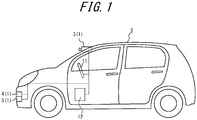
- an imaging system 1 that includes an imaging apparatus 3 according to the present embodiment can be mounted on a moving body 2.
- the imaging apparatus 3 is positioned to capture an image in a predetermined direction viewed from the moving body 2.
- An infrared light source 4 and a white light source 5 are mounted in such a manner as to be able to emit infrared light and white light, respectively, within an imaging range of the imaging apparatus 3.
- moving body encompasses vehicles, ships, and aircrafts.
- vehicle as used herein encompasses, but is not limited to, automobiles, rail vehicles, industrial vehicles, and domestic vehicles.
- vehicles may include aircraft that travel on a runway.
- Automobiles may include, but are not limited to, cars, trucks, buses, motorcycles, trolley buses, and other automobiles that travel on a road.
- Guideway vehicles may include, but are not limited to, locomotives, freight cars, passenger cars, trams, guided railways, ropeways, cable cars, linear motor trains, and monorails.
- Guided railways may include other types of vehicles that travel along a track.
- Industrial vehicles include agricultural vehicles and construction vehicles. Industrial vehicles include vehicles for agricultural purposes and vehicles for industrial purposes.
- Industrial vehicles for industrial purposes include, but are not limited to, forklifts and golf carts.
- Industrial vehicles for agricultural purpose include, but are not limited to, tractors, tillers, transplanters, binders, combine harvesters, and lawn mowers.
- Industrial vehicles for construction purposes include, but are not limited to, bulldozers, scrapers, excavators, crane trucks, dump trucks, and load rollers.
- Domestic vehicles include, but are not limited to, bicycles, wheelchairs, strollers, wheelbarrows, and electric stand-up motorcycles.
- Engines for powering the vehicles include, but are not limited to, diesel engines, gasoline engines, internal-combustion engines including hydrogen engines, and electric engines including motors.
- the vehicles include those that travel under human power. Classification of the vehicles is not limited to the above.
- the vehicles may include industrial vehicles authorized to travel on the road.
- a plurality of categories may include the same type of vehicles.
- the imaging system 1 includes the imaging apparatus 3, the infrared light source 4, and the white light source 5.
- the imaging apparatus 3 includes an optical system 6, an image sensor 7, a communication interface 8, a controller 9, and a memory 10.
- the optical system 6 includes at least one optical element such as a lens, an aperture and the like matched to a desired optical property.
- the optical system 6 is designed to satisfy the desired optical property such as a focal length and a focal depth.
- the optical system 6 forms an image of a subject on the image sensor 7.
- the image sensor 7 is positioned such that a light receiving surface of the image sensor 7 is perpendicular to an optical axis of the optical system 6.
- the image sensor 7 is arranged such that the optical axis of the optical system 6 crosses substantially at the center of the light receiving surface.
- the image sensor 7 captures an image of the subject formed on the light receiving surface via the optical system 6 and outputs an image signal corresponding to the captured image.
- the image sensor 7 may be, for example, a CCD (Charge Coupled Device) image sensor or a CMOS (Complementary Metal Oxide Semiconductor) image sensor.
- the image sensor 7 is sensitive at least to visible light and near infrared light and converts the visible light and the near infrared light received by the light receiving surface into an image signal.
- a filter configured to absorb or reflect the infrared light of the wavelength longer than the wavelength of the near infrared light may be disposed on the object side of the image sensor 7.
- the communication interface 8 transmits a control signal output by the controller 9 to the infrared light source 4.
- the control signal is a signal for controlling the infrared light source 4 to emit infrared light higher or lower than a predetermined light amount. By turning on the infrared light, the infrared light becomes higher than the predetermined light amount. By switching off the infrared light, the infrared light becomes lower than the predetermined light amount.
- the communication interface 8 can transmit the image signal externally from the imaging apparatus 3.
- the communication interface 8 can transmit a synthesized image generated by the controller 9 externally from the imaging apparatus 3.
- the synthesized image is transmitted to, for example, a display apparatus 11 mounted in the moving body 2, an ECU (Electric Control Unit) 12 of the moving body 2, or an apparatus external to the moving body 2 connected via wireless communication network.
- the controller 9 is, for example, an ISP (Image Signal Processor) configured to acquire and process the image captured by the image sensor 7.
- ISP Image Signal Processor
- the memory 10 stores the image acquired by the controller 9 from the image sensor 7.
- the memory 10 also stores the image processed by the controller 9.
- the infrared light source 4 emits infrared light.
- An irradiation range of the infrared light source 4 corresponds to a part of an irradiation range of the white light source 5, which will be described later.
- the infrared light source 4 includes a communication interface 13, a controller 14, and a light emitting element 17.
- the communication interface 13 exchanges signals with an external apparatus.
- the controller 14 causes the light emitting element 17 to emit and stop emitting the infrared light.
- the light emitting element 17 emits and does not emit the infrared light on the basis of the control of the controller 14.
- the light emitting element 17 is attached to the moving body 2 in such a manner as to be able to irradiate at least a part of the imaging range of the image sensor 7 with the infrared light.
- the white light source 5 emits white light.
- the white light source 5 includes a communication interface 15, a controller 16, and a light emitting element 18.
- the communication interface 15 exchanges signals with an external apparatus.
- the controller 16 causes the light emitting element 18 to emit and stop emitting the white light.
- the light emitting element 18 emits and stops emitting white light on the basis of control by the controller 16.
- the light emitting element 18 is attached to the moving body 2 in such a manner so as to be able to irradiate at least a part of the imaging range of the image sensor 7 with the white light.
- the white light source 5 is attached to the moving body 2.
- the white light source 5 may be a so-called headlight.
- the white light source 5 can switch between two irradiation ranges for irradiating the white light.
- the two irradiation ranges are different at least in a direction vertical to a road surface.
- An irradiation range in a vertically lower range corresponds to a "first irradiation range”
- an irradiation range in a vertically upper range corresponds to a "second irradiation range” that includes a range vertically above the first irradiation range.
- the white light source 5 irradiates the vertically lower range
- the white light emitted from the white light source 5 is a so-called low beam.
- the white light source 5 irradiates the vertically upper range the white light emitted from the white light source 5 is a so-called high beam.
- the image sensor 7 generates an image by capturing a subject in a direction in which the infrared light source 4 can emit infrared light and the white light source 5 can emit white light.
- the controller 9 causes the image sensor 7 to capture an image at each frame imaging time.
- the image sensor 7 generates an image of one frame by imaging the subject at a frame imaging time corresponding to a preset frame rate.
- the controller 9 transmits a control signal in synchronization with the frame imaging time to the infrared light source 4 via the communication interface 8.
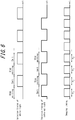
- the controller 9 transmits the control signal for causing the infrared light source 4 to emit infrared light in a period P 1 as illustrated in FIG. 3 .
- the controller 9 causes the image sensor 7 to generate an image in the period P 1 .
- the controller 9 transmits a control signal for causing the infrared light source 4 to stop emitting infrared light in a frame imaging time (period P 2 ) subsequent to the frame imaging time corresponding to the period P 1 .
- the period P 1 and the period P 2 correspond to "first period" and "second period", respectively.
- the controller 9 transmits a control signal for causing the infrared light source 4 to emit infrared light in the next frame imaging time (period Pi). As described above, the controller 9 alternately transmits the control signals for causing the infrared light source 4 to start and stop emission of infrared light, in a manner corresponding to the frame imaging times in the period P 1 and the period P 2 repeated alternatively.
- the communication interface 13 of the infrared light source 4 receives the control signals transmitted from the imaging apparatus 3.
- the controller 14 of the infrared light source 4 causes starting and stopping of the emission on the basis of the control signals received by the communication interface 13.
- emission of infrared light is alternatively started and stopped in a repeating manner in synchronization with the frame imaging times corresponding to the frame rate of the imaging apparatus 3.
- infrared light is emitted in one frame imaging time and stopped in the subsequent frame imaging time. The starting and stopping of emission of infrared light as described above is performed repeatedly.
- the controller 9 transmits a control signal for emitting the white light at all times to the white light source 5 via the communication interface 8.
- the communication interface 15 of the white light source 5 receives the control signal transmitted from the imaging apparatus 3.
- the controller 16 of the white light source 5 causes emission of the white light on the basis of the control signal received by the communication interface 15.
- the white light is emitted at all times as illustrated in FIG. 3 .
- the controller 9 receives an image captured by the image sensor 7 when infrared light is emitted or not emitted.
- An image captured when infrared light is emitted corresponds to an "infrared image”
- an image captured when infrared light is not emitted corresponds to a "normal image”.
- the controller 9 generates a synthesized image on the basis of the infrared image and the normal image acquired from the image sensor 7.
- the controller 9 calculates an intensity of a luminance signal Y from a pixel signal of each of the pixels constituting the infrared image.
- the controller 9 also calculates intensities of color difference signals Cb and Cr from the pixel signal of each of the pixels constituting the normal image. Then, the controller 9 generates color signals by using the luminance signal Y of each of the pixels and the color difference signals Cb and Cr of corresponding pixels.
- the controller 9 may perform gain correction on the color difference signals Cb and Cr when generating the synthesized image.
- the controller 9 performs the gain correction on the basis of the intensity of the luminance signal Y and the intensities of the color difference signals Cb and Cr.
- the controller 9 calculates a value based on the intensities of the luminance signals Y of all the pixels constituting the infrared image.
- the value based on the intensities of the luminance signals Y of all the pixels is, for example, a representative value Y r (a statistical value of the mean, median, and maximum values) of the luminance signals Y
- the controller 9 also calculates a value based on the color difference signals Cb and Cr of all the pixels constituting the normal image.
- the values based on the color difference signals Cb and Cr of all the pixels are, for example, representative values Cb r and Cr r (statistical values of the mean, median, and maximum values) of the respective intensities the color difference signals Cb and Cr.
- the controller 9 calculates gains to multiply the color difference signals Cb and Cr of each pixel such that a difference between the mean value of the representative values Cb r and Cr r and the representative value Y r or a ratio of the mean value of the representative values Cb r and Cr r to the representative value Y r fall within a predetermined range.
- the controller 9 multiplies the color difference signals Cb and Cr of each pixel by the calculated gains.
- the controller 9 generates the color signals on the basis of the luminance signal Y of each pixel and corresponding corrected color difference signals Cb1 and Cr1 of each pixel.
- the controller 9 calculates the representative values Y r , Cb r , and Cr r on the basis of all of the pixels constituting the infrared image and the normal image
- the controller 9 may calculate the representative values Y r , Cb r , and Cr r on the basis of some of the pixels constituting the infrared image and the normal image.
- the imaging apparatus 3 starts processing when the white light source 5 starts emitting white light.
- the white light source 5 starts emitting white light upon receiving an instruction to start the operation from a user of the imaging system 1.
- the white light source 5 may start emitting white light when controlled by the ECU which detects that it is dark in the environment based on a light sensor.
- the controller 9 causes the image sensor 7 to start imaging (step S1). That is, the controller 9 causes the image sensor 7 to capture images in succession according to the preset frame rate.
- the controller 9 transmits the control signal to emit infrared light to the infrared light source 4 via the communication interface 8 (step S2).
- the controller 9 acquires the infrared image captured when infrared light is emitted on the basis of the control signal transmitted in step S2 and stores the infrared image in the memory 10 (step S3).
- the controller 9 generates the synthesized image on the basis of the luminance signal Y of the infrared image stored in the memory 10 in step S3 and the corrected color difference signals Cr1 and Cb1 of the normal image captured most recently among the normal images already stored in the memory 10 (step S4).
- the controller 9 transmits the control signal for stopping the emission of infrared light to the infrared light source 4 via the communication interface 8 in synchronization with the next frame imaging time (step S5).
- step S5 When the control signal is transmitted in step S5, the controller 9 acquires the normal image captured when the infrared light is not emitted on the basis of the control signal transmitted in step S5 and stores the normal image in the memory 10 (step S6).
- the controller 9 performs the gain correction on the color difference signals Cr and Cb of the normal image acquired in step S6 (step S7).
- the controller 9 calculates the representative value Y r of the intensity of the luminance signal Y of the infrared image that is acquired immediately before the normal image is acquired in step S5 and stored in the memory 10 (step S71).
- the controller 9 calculates the representative values Cr r and Cb r of the intensities of the color difference signals Cr and Cb of the normal image acquired in step S5 (step S72).
- the processing of step S72 may be performed before the processing of step S71.
- the controller 9 generates the corrected color difference signals Cr1 and Cb1 by performing the gain correction on the color difference signals Cr and Cb of each pixel on the basis of the representative value Y r and the representative values Cr r and Cb r (step S73).
- the controller 9 may calculate the gains for multiplying the intensities of the color difference signals Cb and Cr of each pixel such that the difference between the mean value of the representative values Cr r and Cb r and the representative value Y r or the ratio of the mean value of the representative values Cr r and Cb r to the representative value Y r falls within the predetermined range. Then, the controller 9 multiplies the intensities of the color difference signals Cb and Cr of each pixel by the gains.
- the controller 9 when the gain correction is performed in step S7, the controller 9 generates the synthesized image on the basis of the corrected color difference signals Cr1 and Cb1 of the normal image and the luminance signal Y of the infrared image among the infrared images already stored in the memory 10 that is captured immediately beforehand (step S8).
- the controller 9 determines whether a stopping instruction is input in respect of the imaging apparatus 3 (step S9).
- the imaging apparatus 3 stops the operation.
- the controller 9 determines that the stopping instruction is not input, the controller 9 returns to step S2 and transmits the control signal. Then, the controller 9 repeats step S2 to step S9.
- the imaging apparatus 3 generates an image on the basis of an infrared image and a normal image.
- the imaging apparatus 3 generates a synthesized image that includes the luminance signal Y of the infrared image and the color difference signals Cb and Cr of the normal image.
- the infrared light has higher reflectivity from a subject than the white light even in a dark environment.
- the controller 9 can acquire, from the infrared image, the luminance signal Y of higher intensity and larger contrast than that of the normal image.
- the controller 9 can acquire the color difference signals Cr and Cb from the normal image.
- the imaging apparatus 3 can generate, on the basis of the luminance signal Y, an image having a low S/N ratio and high contrast including colors based on the color difference signals Cb and Cr even in a dark environment such as at night.
- the imaging apparatus 3 performs the gain correction only in respect of the color difference signals Cb and Cr of the normal image. Because the overall intensity of the pixel signals is low in a dark environment, the intensities of the color difference signals Cb and Cr are relatively low, and the color of the synthesized image may become dull. However, the gain correction can increase the intensities of the color difference signals Cb and Cr, and thus color tones can be reproduced strongly. Because the gain correction is not performed in respect of the luminance signal Y, whitening of the entire image can be prevented. Accordingly, the imaging apparatus 3 can generate an image with high brightness contrast and vivid colors.
- the infrared light source 4 emits the infrared light as a high beam. To avoid dazzling a user of an oncoming moving body or a user of a moving body running ahead, most drivers typically emit the white light emitted from the white light source 5 as the low beam. The human eye does not sense the infrared light. Thus, the imaging apparatus 3 can cause the infrared light source 4 to emit the infrared light without dazzling the users, and capture a subject in a detectable manner.
- the white light source 5 emits the white light at all times. This offers an advantage that the user of the imaging system 1 will not have a sense of discomfort caused by flashing as the white light is turned off when the infrared light is turned on and turned on when the infrared light is turned off.
- the controller 9 transmits the control signals for controlling the emission of infrared light by the infrared light source 4 via the communication interface 8, this is not restrictive.
- the controller 9 may receive an emission state signal indicating an emission state of the infrared light from the infrared light source 4 via the communication interface 8.
- the emission state signal is a signal indicating that the infrared light is emitted or a signal indicating that the infrared light is not emitted.
- the controller 9 when the controller 9 receives the emission state signal indicating that the infrared light is emitted from the infrared light source 4, the controller 9 acquires the image generated by the image sensor 7 when the infrared light is emitted as the infrared image. Also, when the communication interface 8 receives the emission state signal indicating that the infrared light is not emitted from the infrared light source 4, the controller 9 acquires the image generated by the image sensor 7 when the infrared light is not emitted as the normal image.
- the white light source 5 may stop emitting the white light when the infrared light source 4 emits the infrared light, and emit the white light when the infrared light source 4 does not emit the infrared light, as illustrated in FIG. 6 .
- the emission and the stopping of the emission of the white light are repeated at a high speed which cannot be recognized by the human eye. In this way, discomforting the human by emitting and stopping the emission of the light in succession can be avoided.
- the controller 9 calculates the gains by using both the representative value Cb r and the representative value Cr r , this is not restrictive.
- the controller 9 may use one of the representative value Cb r and the representative value Cr r for calculating a gain for correcting the corresponding one of the color difference signal Cb or the color difference signal Cr.
- the gain calculation method of the controller 9 may be appropriately determined according to characteristics of the synthesized image required by the user according to the usage.
Landscapes
- Engineering & Computer Science (AREA)
- Multimedia (AREA)
- Signal Processing (AREA)
- Physics & Mathematics (AREA)
- General Physics & Mathematics (AREA)
- Computing Systems (AREA)
- Theoretical Computer Science (AREA)
- Studio Devices (AREA)
- Color Television Image Signal Generators (AREA)
- Transforming Light Signals Into Electric Signals (AREA)
- Camera Bodies And Camera Details Or Accessories (AREA)
Applications Claiming Priority (2)
| Application Number | Priority Date | Filing Date | Title |
|---|---|---|---|
| JP2016212325 | 2016-10-28 | ||
| PCT/JP2017/037678 WO2018079372A1 (fr) | 2016-10-28 | 2017-10-18 | Dispositif de capture d'image, système de capture d'image, corps mobile et procédé de capture d'image |
Publications (3)
| Publication Number | Publication Date |
|---|---|
| EP3534603A1 true EP3534603A1 (fr) | 2019-09-04 |
| EP3534603A4 EP3534603A4 (fr) | 2020-04-29 |
| EP3534603B1 EP3534603B1 (fr) | 2022-07-20 |
Family
ID=62023425
Family Applications (1)
| Application Number | Title | Priority Date | Filing Date |
|---|---|---|---|
| EP17863548.8A Not-in-force EP3534603B1 (fr) | 2016-10-28 | 2017-10-18 | Dispositif de capture d'image et procédé de capture d'image |
Country Status (4)
| Country | Link |
|---|---|
| US (1) | US10742890B2 (fr) |
| EP (1) | EP3534603B1 (fr) |
| JP (1) | JPWO2018079372A1 (fr) |
| WO (1) | WO2018079372A1 (fr) |
Families Citing this family (6)
| Publication number | Priority date | Publication date | Assignee | Title |
|---|---|---|---|---|
| US10958830B2 (en) | 2018-05-24 | 2021-03-23 | Magna Electronics Inc. | Vehicle vision system with infrared LED synchronization |
| CN111770281B (zh) * | 2018-07-30 | 2025-01-17 | 华为技术有限公司 | 时分复用补光成像装置和方法 |
| CN110493495B (zh) * | 2019-05-31 | 2022-03-08 | 杭州海康威视数字技术股份有限公司 | 图像采集装置和图像采集的方法 |
| CN110493493B (zh) * | 2019-05-31 | 2022-04-29 | 杭州海康威视数字技术股份有限公司 | 全景细节摄像机及获取图像信号的方法 |
| JP7524777B2 (ja) * | 2021-01-26 | 2024-07-30 | 株式会社デンソー | 画像形成装置 |
| CN219960728U (zh) * | 2023-05-15 | 2023-11-03 | 腾讯科技(深圳)有限公司 | 摄像模组和交互设备 |
Family Cites Families (18)
| Publication number | Priority date | Publication date | Assignee | Title |
|---|---|---|---|---|
| JP2006013884A (ja) * | 2004-06-25 | 2006-01-12 | Fuji Photo Film Co Ltd | カメラ |
| JP4984634B2 (ja) * | 2005-07-21 | 2012-07-25 | ソニー株式会社 | 物理情報取得方法および物理情報取得装置 |
| DE112007003473B4 (de) | 2007-05-07 | 2017-04-06 | Fujitsu Limited | Nachtsichtgerät |
| JP4434234B2 (ja) | 2007-05-30 | 2010-03-17 | トヨタ自動車株式会社 | 車両用撮像システム、及び車両用制御装置 |
| KR100863497B1 (ko) | 2007-06-19 | 2008-10-14 | 마루엘에스아이 주식회사 | 이미지 감지 장치, 이미지 신호 처리 방법, 광 감지 소자, 제어 방법 및 화소 어레이 |
| JP2010103740A (ja) * | 2008-10-23 | 2010-05-06 | Panasonic Corp | デジタルカメラ |
| JP5158063B2 (ja) * | 2009-12-02 | 2013-03-06 | 株式会社デンソー | 車両用表示装置 |
| JP2011199798A (ja) * | 2010-03-24 | 2011-10-06 | Sony Corp | 物理情報取得装置、固体撮像装置、物理情報取得方法 |
| US9200895B2 (en) * | 2010-11-16 | 2015-12-01 | Konica Minolta, Inc. | Image input device and image processing device |
| JP6055681B2 (ja) * | 2013-01-10 | 2016-12-27 | 株式会社 日立産業制御ソリューションズ | 撮像装置 |
| WO2014192876A1 (fr) * | 2013-05-30 | 2014-12-04 | 独立行政法人産業技術総合研究所 | Système et procédé d'imagerie |
| JP6533358B2 (ja) * | 2013-08-06 | 2019-06-19 | 三菱電機エンジニアリング株式会社 | 撮像装置 |
| KR20150021353A (ko) * | 2013-08-20 | 2015-03-02 | 삼성테크윈 주식회사 | 영상 융합 시스템 및 그 방법 |
| US10051211B2 (en) * | 2013-12-05 | 2018-08-14 | Omnivision Technologies, Inc. | Image sensors for capturing both visible light images and infrared light images, and associated systems and methods |
| JP6183238B2 (ja) | 2014-02-06 | 2017-08-23 | 株式会社Jvcケンウッド | 撮像装置及び撮像装置の制御方法 |
| CN105917638B (zh) | 2014-02-06 | 2018-02-16 | Jvc 建伍株式会社 | 摄像装置和摄像装置的控制方法、以及摄像系统和摄像系统的控制方法 |
| JP2016096430A (ja) | 2014-11-13 | 2016-05-26 | パナソニックIpマネジメント株式会社 | 撮像装置及び撮像方法 |
| JP2017097645A (ja) | 2015-11-25 | 2017-06-01 | ソニー株式会社 | 情報処理装置、および情報処理方法、並びにプログラム |
-
2017
- 2017-10-18 US US16/345,636 patent/US10742890B2/en active Active
- 2017-10-18 EP EP17863548.8A patent/EP3534603B1/fr not_active Not-in-force
- 2017-10-18 WO PCT/JP2017/037678 patent/WO2018079372A1/fr not_active Ceased
- 2017-10-18 JP JP2018547598A patent/JPWO2018079372A1/ja active Pending
Also Published As
| Publication number | Publication date |
|---|---|
| US20190273858A1 (en) | 2019-09-05 |
| WO2018079372A1 (fr) | 2018-05-03 |
| EP3534603A4 (fr) | 2020-04-29 |
| US10742890B2 (en) | 2020-08-11 |
| JPWO2018079372A1 (ja) | 2019-09-12 |
| EP3534603B1 (fr) | 2022-07-20 |
Similar Documents
| Publication | Publication Date | Title |
|---|---|---|
| US10742890B2 (en) | Imaging apparatus, imaging system, moving body, and imaging method | |
| US12556827B2 (en) | Real-time HDR video for vehicle control | |
| US20250184595A1 (en) | Multiple Operating Modes to Expand Dynamic Range | |
| US20220345606A1 (en) | Imaging device | |
| KR102666651B1 (ko) | 화상 처리 장치, 화상 처리 방법, 및 촬상 장치 | |
| US10097733B2 (en) | Image correction parameter output apparatus, camera system and correction parameter output method | |
| CN110447221B (zh) | 图像处理装置、图像处理方法和电子设备 | |
| US20220191449A1 (en) | Image processing device, image capturing device, mobile body, and image processing method | |
| US20220166908A1 (en) | Image pickup control apparatus, image pickup apparatus, control method for image pickup control apparatus, and non-transitory computer readable medium | |
| US10304312B2 (en) | Imaging apparatus, imaging system, target person monitoring system and control method of imaging apparatus | |
| JP6727946B2 (ja) | 車両用カメラモニタシステム及び車両 | |
| JP2020177242A (ja) | 車両用カメラモニタシステム及びその制御方法 | |
| JP6655504B2 (ja) | 画像処理装置、画像処理システム、移動体、及び画像処理方法 | |
| US12206992B2 (en) | Image capture with varied illuminations | |
| JP5285543B2 (ja) | 撮像装置 |
Legal Events
| Date | Code | Title | Description |
|---|---|---|---|
| STAA | Information on the status of an ep patent application or granted ep patent |
Free format text: STATUS: THE INTERNATIONAL PUBLICATION HAS BEEN MADE |
|
| PUAI | Public reference made under article 153(3) epc to a published international application that has entered the european phase |
Free format text: ORIGINAL CODE: 0009012 |
|
| STAA | Information on the status of an ep patent application or granted ep patent |
Free format text: STATUS: REQUEST FOR EXAMINATION WAS MADE |
|
| 17P | Request for examination filed |
Effective date: 20190426 |
|
| AK | Designated contracting states |
Kind code of ref document: A1 Designated state(s): AL AT BE BG CH CY CZ DE DK EE ES FI FR GB GR HR HU IE IS IT LI LT LU LV MC MK MT NL NO PL PT RO RS SE SI SK SM TR |
|
| AX | Request for extension of the european patent |
Extension state: BA ME |
|
| DAV | Request for validation of the european patent (deleted) | ||
| DAX | Request for extension of the european patent (deleted) | ||
| A4 | Supplementary search report drawn up and despatched |
Effective date: 20200330 |
|
| RIC1 | Information provided on ipc code assigned before grant |
Ipc: H04N 9/04 20060101ALI20200324BHEP Ipc: G03B 15/05 20060101ALI20200324BHEP Ipc: H04N 5/33 20060101ALI20200324BHEP Ipc: G03B 15/00 20060101ALI20200324BHEP Ipc: G03B 15/02 20060101ALI20200324BHEP Ipc: H04N 5/225 20060101ALI20200324BHEP Ipc: G03B 17/02 20060101ALI20200324BHEP Ipc: H04N 5/232 20060101AFI20200324BHEP Ipc: G03B 7/091 20060101ALI20200324BHEP Ipc: H04N 5/235 20060101ALI20200324BHEP |
|
| STAA | Information on the status of an ep patent application or granted ep patent |
Free format text: STATUS: EXAMINATION IS IN PROGRESS |
|
| 17Q | First examination report despatched |
Effective date: 20210318 |
|
| GRAP | Despatch of communication of intention to grant a patent |
Free format text: ORIGINAL CODE: EPIDOSNIGR1 |
|
| STAA | Information on the status of an ep patent application or granted ep patent |
Free format text: STATUS: GRANT OF PATENT IS INTENDED |
|
| RIC1 | Information provided on ipc code assigned before grant |
Ipc: H04N 7/18 20060101ALI20220113BHEP Ipc: G03B 15/00 20060101ALI20220113BHEP Ipc: G03B 15/02 20060101ALI20220113BHEP Ipc: G03B 15/05 20060101ALI20220113BHEP Ipc: G03B 17/02 20060101ALI20220113BHEP Ipc: H04N 5/225 20060101ALI20220113BHEP Ipc: H04N 9/04 20060101ALI20220113BHEP Ipc: H04N 5/33 20060101ALI20220113BHEP Ipc: H04N 5/235 20060101ALI20220113BHEP Ipc: G03B 7/091 20060101ALI20220113BHEP Ipc: H04N 5/232 20060101AFI20220113BHEP |
|
| INTG | Intention to grant announced |
Effective date: 20220211 |
|
| GRAS | Grant fee paid |
Free format text: ORIGINAL CODE: EPIDOSNIGR3 |
|
| GRAA | (expected) grant |
Free format text: ORIGINAL CODE: 0009210 |
|
| STAA | Information on the status of an ep patent application or granted ep patent |
Free format text: STATUS: THE PATENT HAS BEEN GRANTED |
|
| AK | Designated contracting states |
Kind code of ref document: B1 Designated state(s): AL AT BE BG CH CY CZ DE DK EE ES FI FR GB GR HR HU IE IS IT LI LT LU LV MC MK MT NL NO PL PT RO RS SE SI SK SM TR |
|
| REG | Reference to a national code |
Ref country code: CH Ref legal event code: EP |
|
| REG | Reference to a national code |
Ref country code: DE Ref legal event code: R096 Ref document number: 602017059734 Country of ref document: DE |
|
| REG | Reference to a national code |
Ref country code: AT Ref legal event code: REF Ref document number: 1506319 Country of ref document: AT Kind code of ref document: T Effective date: 20220815 |
|
| REG | Reference to a national code |
Ref country code: IE Ref legal event code: FG4D |
|
| REG | Reference to a national code |
Ref country code: LT Ref legal event code: MG9D |
|
| REG | Reference to a national code |
Ref country code: NL Ref legal event code: MP Effective date: 20220720 |
|
| REG | Reference to a national code |
Ref country code: DE Ref legal event code: R079 Ref document number: 602017059734 Country of ref document: DE Free format text: PREVIOUS MAIN CLASS: H04N0005232000 Ipc: H04N0023600000 |
|
| PG25 | Lapsed in a contracting state [announced via postgrant information from national office to epo] |
Ref country code: SE Free format text: LAPSE BECAUSE OF FAILURE TO SUBMIT A TRANSLATION OF THE DESCRIPTION OR TO PAY THE FEE WITHIN THE PRESCRIBED TIME-LIMIT Effective date: 20220720 Ref country code: RS Free format text: LAPSE BECAUSE OF FAILURE TO SUBMIT A TRANSLATION OF THE DESCRIPTION OR TO PAY THE FEE WITHIN THE PRESCRIBED TIME-LIMIT Effective date: 20220720 Ref country code: PT Free format text: LAPSE BECAUSE OF FAILURE TO SUBMIT A TRANSLATION OF THE DESCRIPTION OR TO PAY THE FEE WITHIN THE PRESCRIBED TIME-LIMIT Effective date: 20221121 Ref country code: NO Free format text: LAPSE BECAUSE OF FAILURE TO SUBMIT A TRANSLATION OF THE DESCRIPTION OR TO PAY THE FEE WITHIN THE PRESCRIBED TIME-LIMIT Effective date: 20221020 Ref country code: NL Free format text: LAPSE BECAUSE OF FAILURE TO SUBMIT A TRANSLATION OF THE DESCRIPTION OR TO PAY THE FEE WITHIN THE PRESCRIBED TIME-LIMIT Effective date: 20220720 Ref country code: LV Free format text: LAPSE BECAUSE OF FAILURE TO SUBMIT A TRANSLATION OF THE DESCRIPTION OR TO PAY THE FEE WITHIN THE PRESCRIBED TIME-LIMIT Effective date: 20220720 Ref country code: LT Free format text: LAPSE BECAUSE OF FAILURE TO SUBMIT A TRANSLATION OF THE DESCRIPTION OR TO PAY THE FEE WITHIN THE PRESCRIBED TIME-LIMIT Effective date: 20220720 Ref country code: FI Free format text: LAPSE BECAUSE OF FAILURE TO SUBMIT A TRANSLATION OF THE DESCRIPTION OR TO PAY THE FEE WITHIN THE PRESCRIBED TIME-LIMIT Effective date: 20220720 Ref country code: ES Free format text: LAPSE BECAUSE OF FAILURE TO SUBMIT A TRANSLATION OF THE DESCRIPTION OR TO PAY THE FEE WITHIN THE PRESCRIBED TIME-LIMIT Effective date: 20220720 |
|
| REG | Reference to a national code |
Ref country code: AT Ref legal event code: MK05 Ref document number: 1506319 Country of ref document: AT Kind code of ref document: T Effective date: 20220720 |
|
| PG25 | Lapsed in a contracting state [announced via postgrant information from national office to epo] |
Ref country code: PL Free format text: LAPSE BECAUSE OF FAILURE TO SUBMIT A TRANSLATION OF THE DESCRIPTION OR TO PAY THE FEE WITHIN THE PRESCRIBED TIME-LIMIT Effective date: 20220720 Ref country code: IS Free format text: LAPSE BECAUSE OF FAILURE TO SUBMIT A TRANSLATION OF THE DESCRIPTION OR TO PAY THE FEE WITHIN THE PRESCRIBED TIME-LIMIT Effective date: 20221120 Ref country code: HR Free format text: LAPSE BECAUSE OF FAILURE TO SUBMIT A TRANSLATION OF THE DESCRIPTION OR TO PAY THE FEE WITHIN THE PRESCRIBED TIME-LIMIT Effective date: 20220720 Ref country code: GR Free format text: LAPSE BECAUSE OF FAILURE TO SUBMIT A TRANSLATION OF THE DESCRIPTION OR TO PAY THE FEE WITHIN THE PRESCRIBED TIME-LIMIT Effective date: 20221021 |
|
| REG | Reference to a national code |
Ref country code: DE Ref legal event code: R097 Ref document number: 602017059734 Country of ref document: DE |
|
| PG25 | Lapsed in a contracting state [announced via postgrant information from national office to epo] |
Ref country code: SM Free format text: LAPSE BECAUSE OF FAILURE TO SUBMIT A TRANSLATION OF THE DESCRIPTION OR TO PAY THE FEE WITHIN THE PRESCRIBED TIME-LIMIT Effective date: 20220720 Ref country code: RO Free format text: LAPSE BECAUSE OF FAILURE TO SUBMIT A TRANSLATION OF THE DESCRIPTION OR TO PAY THE FEE WITHIN THE PRESCRIBED TIME-LIMIT Effective date: 20220720 Ref country code: DK Free format text: LAPSE BECAUSE OF FAILURE TO SUBMIT A TRANSLATION OF THE DESCRIPTION OR TO PAY THE FEE WITHIN THE PRESCRIBED TIME-LIMIT Effective date: 20220720 Ref country code: CZ Free format text: LAPSE BECAUSE OF FAILURE TO SUBMIT A TRANSLATION OF THE DESCRIPTION OR TO PAY THE FEE WITHIN THE PRESCRIBED TIME-LIMIT Effective date: 20220720 Ref country code: AT Free format text: LAPSE BECAUSE OF FAILURE TO SUBMIT A TRANSLATION OF THE DESCRIPTION OR TO PAY THE FEE WITHIN THE PRESCRIBED TIME-LIMIT Effective date: 20220720 |
|
| PLBE | No opposition filed within time limit |
Free format text: ORIGINAL CODE: 0009261 |
|
| STAA | Information on the status of an ep patent application or granted ep patent |
Free format text: STATUS: NO OPPOSITION FILED WITHIN TIME LIMIT |
|
| PG25 | Lapsed in a contracting state [announced via postgrant information from national office to epo] |
Ref country code: SK Free format text: LAPSE BECAUSE OF FAILURE TO SUBMIT A TRANSLATION OF THE DESCRIPTION OR TO PAY THE FEE WITHIN THE PRESCRIBED TIME-LIMIT Effective date: 20220720 Ref country code: MC Free format text: LAPSE BECAUSE OF FAILURE TO SUBMIT A TRANSLATION OF THE DESCRIPTION OR TO PAY THE FEE WITHIN THE PRESCRIBED TIME-LIMIT Effective date: 20220720 Ref country code: EE Free format text: LAPSE BECAUSE OF FAILURE TO SUBMIT A TRANSLATION OF THE DESCRIPTION OR TO PAY THE FEE WITHIN THE PRESCRIBED TIME-LIMIT Effective date: 20220720 |
|
| REG | Reference to a national code |
Ref country code: CH Ref legal event code: PL |
|
| P01 | Opt-out of the competence of the unified patent court (upc) registered |
Effective date: 20230508 |
|
| REG | Reference to a national code |
Ref country code: BE Ref legal event code: MM Effective date: 20221031 |
|
| 26N | No opposition filed |
Effective date: 20230421 |
|
| PG25 | Lapsed in a contracting state [announced via postgrant information from national office to epo] |
Ref country code: LU Free format text: LAPSE BECAUSE OF NON-PAYMENT OF DUE FEES Effective date: 20221018 Ref country code: AL Free format text: LAPSE BECAUSE OF FAILURE TO SUBMIT A TRANSLATION OF THE DESCRIPTION OR TO PAY THE FEE WITHIN THE PRESCRIBED TIME-LIMIT Effective date: 20220720 |
|
| PG25 | Lapsed in a contracting state [announced via postgrant information from national office to epo] |
Ref country code: LI Free format text: LAPSE BECAUSE OF NON-PAYMENT OF DUE FEES Effective date: 20221031 Ref country code: CH Free format text: LAPSE BECAUSE OF NON-PAYMENT OF DUE FEES Effective date: 20221031 |
|
| PG25 | Lapsed in a contracting state [announced via postgrant information from national office to epo] |
Ref country code: SI Free format text: LAPSE BECAUSE OF FAILURE TO SUBMIT A TRANSLATION OF THE DESCRIPTION OR TO PAY THE FEE WITHIN THE PRESCRIBED TIME-LIMIT Effective date: 20220720 |
|
| PG25 | Lapsed in a contracting state [announced via postgrant information from national office to epo] |
Ref country code: BE Free format text: LAPSE BECAUSE OF NON-PAYMENT OF DUE FEES Effective date: 20221031 |
|
| PG25 | Lapsed in a contracting state [announced via postgrant information from national office to epo] |
Ref country code: IE Free format text: LAPSE BECAUSE OF NON-PAYMENT OF DUE FEES Effective date: 20221018 |
|
| PG25 | Lapsed in a contracting state [announced via postgrant information from national office to epo] |
Ref country code: HU Free format text: LAPSE BECAUSE OF FAILURE TO SUBMIT A TRANSLATION OF THE DESCRIPTION OR TO PAY THE FEE WITHIN THE PRESCRIBED TIME-LIMIT; INVALID AB INITIO Effective date: 20171018 |
|
| PG25 | Lapsed in a contracting state [announced via postgrant information from national office to epo] |
Ref country code: CY Free format text: LAPSE BECAUSE OF FAILURE TO SUBMIT A TRANSLATION OF THE DESCRIPTION OR TO PAY THE FEE WITHIN THE PRESCRIBED TIME-LIMIT Effective date: 20220720 |
|
| PG25 | Lapsed in a contracting state [announced via postgrant information from national office to epo] |
Ref country code: MK Free format text: LAPSE BECAUSE OF FAILURE TO SUBMIT A TRANSLATION OF THE DESCRIPTION OR TO PAY THE FEE WITHIN THE PRESCRIBED TIME-LIMIT Effective date: 20220720 Ref country code: IT Free format text: LAPSE BECAUSE OF FAILURE TO SUBMIT A TRANSLATION OF THE DESCRIPTION OR TO PAY THE FEE WITHIN THE PRESCRIBED TIME-LIMIT Effective date: 20220720 |
|
| PG25 | Lapsed in a contracting state [announced via postgrant information from national office to epo] |
Ref country code: TR Free format text: LAPSE BECAUSE OF FAILURE TO SUBMIT A TRANSLATION OF THE DESCRIPTION OR TO PAY THE FEE WITHIN THE PRESCRIBED TIME-LIMIT Effective date: 20220720 |
|
| PG25 | Lapsed in a contracting state [announced via postgrant information from national office to epo] |
Ref country code: BG Free format text: LAPSE BECAUSE OF FAILURE TO SUBMIT A TRANSLATION OF THE DESCRIPTION OR TO PAY THE FEE WITHIN THE PRESCRIBED TIME-LIMIT Effective date: 20220720 |
|
| PG25 | Lapsed in a contracting state [announced via postgrant information from national office to epo] |
Ref country code: MT Free format text: LAPSE BECAUSE OF FAILURE TO SUBMIT A TRANSLATION OF THE DESCRIPTION OR TO PAY THE FEE WITHIN THE PRESCRIBED TIME-LIMIT Effective date: 20220720 |
|
| PGFP | Annual fee paid to national office [announced via postgrant information from national office to epo] |
Ref country code: GB Payment date: 20240829 Year of fee payment: 8 |
|
| PGFP | Annual fee paid to national office [announced via postgrant information from national office to epo] |
Ref country code: FR Payment date: 20240909 Year of fee payment: 8 |
|
| PGFP | Annual fee paid to national office [announced via postgrant information from national office to epo] |
Ref country code: DE Payment date: 20240828 Year of fee payment: 8 |
|
| REG | Reference to a national code |
Ref country code: DE Ref legal event code: R119 Ref document number: 602017059734 Country of ref document: DE |
|
| GBPC | Gb: european patent ceased through non-payment of renewal fee |
Effective date: 20251018 |
|
| PG25 | Lapsed in a contracting state [announced via postgrant information from national office to epo] |
Ref country code: GB Free format text: LAPSE BECAUSE OF NON-PAYMENT OF DUE FEES Effective date: 20251018 |
|
| PG25 | Lapsed in a contracting state [announced via postgrant information from national office to epo] |
Ref country code: DE Free format text: LAPSE BECAUSE OF NON-PAYMENT OF DUE FEES Effective date: 20260501 |
|
| PG25 | Lapsed in a contracting state [announced via postgrant information from national office to epo] |
Ref country code: FR Free format text: LAPSE BECAUSE OF NON-PAYMENT OF DUE FEES Effective date: 20251031 |