EP3528429A1 - Verfahren und vorrichtung zur weiterleitung von quantenschlüsseln auf der basis von zentralisierter verwaltung und steuernetzwerk - Google Patents
Verfahren und vorrichtung zur weiterleitung von quantenschlüsseln auf der basis von zentralisierter verwaltung und steuernetzwerk Download PDFInfo
- Publication number
- EP3528429A1 EP3528429A1 EP17867144.2A EP17867144A EP3528429A1 EP 3528429 A1 EP3528429 A1 EP 3528429A1 EP 17867144 A EP17867144 A EP 17867144A EP 3528429 A1 EP3528429 A1 EP 3528429A1
- Authority
- EP
- European Patent Office
- Prior art keywords
- key
- node
- quantum
- path
- nodes
- Prior art date
- Legal status (The legal status is an assumption and is not a legal conclusion. Google has not performed a legal analysis and makes no representation as to the accuracy of the status listed.)
- Pending
Links
Images




Classifications
-
- H—ELECTRICITY
- H04—ELECTRIC COMMUNICATION TECHNIQUE
- H04L—TRANSMISSION OF DIGITAL INFORMATION, e.g. TELEGRAPHIC COMMUNICATION
- H04L9/00—Cryptographic mechanisms or cryptographic arrangements for secret or secure communications; Network security protocols
- H04L9/08—Key distribution or management, e.g. generation, sharing or updating, of cryptographic keys or passwords
- H04L9/0816—Key establishment, i.e. cryptographic processes or cryptographic protocols whereby a shared secret becomes available to two or more parties, for subsequent use
- H04L9/0852—Quantum cryptography
- H04L9/0855—Quantum cryptography involving additional nodes, e.g. quantum relays, repeaters, intermediate nodes or remote nodes
-
- H—ELECTRICITY
- H04—ELECTRIC COMMUNICATION TECHNIQUE
- H04L—TRANSMISSION OF DIGITAL INFORMATION, e.g. TELEGRAPHIC COMMUNICATION
- H04L9/00—Cryptographic mechanisms or cryptographic arrangements for secret or secure communications; Network security protocols
- H04L9/08—Key distribution or management, e.g. generation, sharing or updating, of cryptographic keys or passwords
-
- H—ELECTRICITY
- H04—ELECTRIC COMMUNICATION TECHNIQUE
- H04L—TRANSMISSION OF DIGITAL INFORMATION, e.g. TELEGRAPHIC COMMUNICATION
- H04L9/00—Cryptographic mechanisms or cryptographic arrangements for secret or secure communications; Network security protocols
- H04L9/08—Key distribution or management, e.g. generation, sharing or updating, of cryptographic keys or passwords
- H04L9/0816—Key establishment, i.e. cryptographic processes or cryptographic protocols whereby a shared secret becomes available to two or more parties, for subsequent use
- H04L9/0838—Key agreement, i.e. key establishment technique in which a shared key is derived by parties as a function of information contributed by, or associated with, each of these
-
- H—ELECTRICITY
- H04—ELECTRIC COMMUNICATION TECHNIQUE
- H04L—TRANSMISSION OF DIGITAL INFORMATION, e.g. TELEGRAPHIC COMMUNICATION
- H04L9/00—Cryptographic mechanisms or cryptographic arrangements for secret or secure communications; Network security protocols
- H04L9/08—Key distribution or management, e.g. generation, sharing or updating, of cryptographic keys or passwords
- H04L9/0816—Key establishment, i.e. cryptographic processes or cryptographic protocols whereby a shared secret becomes available to two or more parties, for subsequent use
- H04L9/0852—Quantum cryptography
Definitions
- This application relates to the field of secure communication, and in particular, to a quantum key relay method based on a centralized management and control network, and an apparatus.
- Quantum cryptography is an interdisciplinary product of quantum mechanics and cryptology, and security of the quantum cryptography is ensured based on a principle of quantum mechanics. Any operation for attempting to intercept or measure a quantum key causes a quantum state to change.
- a receive end can determine, based on a quantum state change, whether there is an eavesdropper in a communication process, to determine whether to discard a current key, thereby unconditionally ensuring communication security.
- a quantum key network node usually includes a classical communications terminal connected to a classical communications network and a quantum device terminal connected to a quantum key distribution (Quantum Key Distribution, QKD for short) network.
- classical communication an amplifier is used to resolve a channel loss problem.
- a relay process of "regeneration and amplification" in the classical communication cannot be directly used in quantum communication.
- channel attenuation increases as a distance increases.
- an average photon quantity at the receive end is rather small.
- the average photon quantity is almost equal to a dark count of a single-photon detector, basically no secure key can be generated any longer. Therefore, an effective transmission distance of quantum key distribution is limited. Based on the limited effective transmission distance and limited network construction costs, no direct quantum links exist between many terminals, and quantum key sharing of the terminals requires forwarding performed by a relay node.
- FIG. 1 shows an example of a schematic diagram of a quantum key transmission model based on trusted relay in the prior art.
- quantum communication needs to be performed between a transmit end node (Alice) and a receive end node (Bob), and a key negotiation path between the transmit end node and the receive end node includes a total of three relay nodes: a relay node 1, a relay node 2, and a relay node 3.
- a key distribution link is established between Alice and the trusted relay node 1, to perform quantum key negotiation and generate a key K1.
- a key distribution link is established between the relay node 1 and the relay node 2, to perform quantum key negotiation and generate a shared key K2.
- a key distribution link is established between the relay node 2 and the relay node 3, to perform quantum key negotiation and generate a shared key K3.
- a key distribution link is established between the relay node 3 and Bob, to perform quantum key negotiation and generate a shared key K4.
- the relay node 1 encrypts the key K1 by using K2 and then transmits the encrypted K1 to the trusted relay node 2. Then, the relay node 2 decrypts, by using K2, the received K1 encrypted by using K2, to obtain K1, encrypts K1 by using K3, and transmits the encrypted K1 to the trusted relay node 3. Next, the relay node 3 decrypts, by using K3, the received K1 encrypted by using K3, to obtain K1, encrypts K1 by using K4, and transmits the encrypted K1 to Bob. Finally, Bob receives K1 encrypted by using the key K4 and decrypts K1 by using K4, to obtain K1. In this way, quantum communication can be performed between Alice and Bob by using the key K1.
- T represents a transmit interface, for example, interfaces T1, T2, T3, and T4 in FIG. 1
- R represents a receive interface, for example, interfaces R1, R2, R3, and R4 in FIG. 1 .
- Embodiments of this application provide a quantum key relay method based on a centralized management and control network, and an apparatus, to determine a globally optimal key relay instruction, so that a source key node and a destination key node perform quantum key relay based on the globally optimal key relay instruction.
- an embodiment of this application provides a quantum key relay method based on a centralized management and control network, applicable to a centralized management and control network.
- the centralized management and control network includes a centralized controller, N service nodes, and M key nodes, and both N and M are integers greater than or equal to 2.
- the method includes: obtaining, by the centralized controller, Z service requests, where Z is an integer greater than or equal to 1; determining, by the centralized controller based on each of the Z service requests, an identifier of a source service node and an identifier of a destination service node that are corresponding to each service request, and a quantum key consumption parameter of the service request, where the source service node is corresponding to a source key node, and the destination service node is corresponding to a destination key node; determining, by the centralized controller based on the identifier of the source service node and the identifier of the destination service node that are corresponding to each of the Z service requests, the quantum key consumption parameter, and topology information of the key nodes in the centralized management and control network, key relay instructions corresponding to G service requests, where G is an integer less than or equal to Z and greater than or equal to 1; and delivering, by the centralized controller, the key relay instructions corresponding to the G service requests to key nodes corresponding to the key relay instructions
- the key node is added to the centralized management and control network, to construct a new quantum key distribution network, implement centralized control over the quantum key and services by using the centralized management and control network, implement multi-layer multi-domain collaboration and global optimization in the quantum key distribution network, achieve environmental friendliness and energy conservation, reduce device hardware costs, and the like.
- quantum key relay and the centralized management and control network are combined, based on features such as separation between control and forwarding of the centralized management and control network and implementation of centralized control, key relay instructions of all service requests can be efficiently and uniformly analyzed and calculated, and the key relay instructions are globally determined based on the topology information of all the key nodes in the entire centralized management and control network, so that a key relay instruction corresponding to each service request is globally optimal, and current and future key requirements can be met to a maximum extent.
- the centralized controller efficiently and uniformly analyzes and calculates the key relay instructions of all the service requests, to be specific, the centralized controller may consider that there are simultaneously Z service requests, the centralized controller may consider the Z service requests concurrently, and allocate, to the utmost, appropriate key relay instructions that do not conflict with each other to all the G service requests.
- the centralized controller delivers the key relay instructions to the key nodes after determining the key relay instructions, and the key nodes may only need to perform quantum key relay based on the received key relay instructions. In this way, a computing resource requirement of the key node is significantly reduced, thereby simplifying a function of the key node, and reducing complexity and costs of the key node.
- the topology information of all the key nodes in the centralized management and control network is stored on the centralized controller and does not need to be stored on each key node, when information about a key node is stolen, the topology information of the key nodes in the entire centralized management and control network is not stolen, so that security of the entire centralized management and control network is enhanced.
- the centralized controller in this embodiment of this application may determine the key relay instructions based on the quantum key consumption parameter and the topology information of the key nodes in the centralized management and control network, the centralized controller can determine one or more paths to meet a service request requirement.
- a network scale can be flexibly expanded based on the centralized management and control network, and a service node and/or a key node can be flexibly added to the centralized management and control network, to implement centralized and automatic network management and the like.
- the topology information of the key nodes in the centralized management and control network includes an identifier of each key node, a status of a quantum link between each key node and one or more other key nodes, and an edge weight of any two adjacent key nodes.
- Two adjacent key nodes on each path from the source key node to the destination key node are corresponding to one edge weight, and a smaller edge weight corresponding to two key nodes indicates a weaker quantum key providing capability of the two adjacent key nodes.
- Each path includes one minimum-edge-weight node pair, and the minimum-edge-weight node pair on each path is two key nodes with a minimum edge weight on the path.
- the key relay instruction may be determined based on a quantum key providing capability of two adjacent key nodes on each path.
- the edge weight corresponding to the two adjacent key nodes includes any one of the following content: a sum of a quantity of inventory quantum keys shared by the two adjacent key nodes and a generation quantity of quantum keys that are shared by the two key nodes in the preset duration; a quantity of inventory quantum keys shared by the two adjacent key nodes; and a generation speed of the quantum keys shared by the two adjacent key nodes.
- a quantum key providing capability is accurately reflected by using any one or more of the quantity of inventory quantum keys, the generation quantity of the quantum keys that are shared by the two key nodes in the preset duration, and the generation speed of the quantum keys.
- the method further includes: for each of the Z service requests, performing the following operations: determining, by the centralized controller, each of all paths from the source key node to the destination key node; determining, by the centralized controller for each of all the paths, a current quantum key generation speed of two adjacent key nodes on the path; and if the centralized controller determines that another service request has not been allocated on the path and there is no plan to allocate another service request on the path, determining the current quantum key generation speed as a quantum key generation speed of the two adjacent key nodes; or if the centralized controller determines that another service request has been allocated on the path or there is a plan to allocate another service request on the path, determining a quantum key consumption speed, corresponding to the another service request, of the two adjacent key nodes, and determining a difference between the current quantum key generation speed and the quantum key consumption speed corresponding to the another service request as a quantum
- the method further includes: for each of the Z service requests, performing the following operations: determining, by the centralized controller, each of all paths from the source key node to the destination key node; determining, by the centralized controller for each of all the paths, a quantity of inventory quantum keys currently shared by two adjacent key nodes on the path; and if the centralized controller determines that another service request has not been allocated on the path and there is no plan to allocate another service request on the path, determining the quantity of currently shared inventory quantum keys as a quantity of inventory quantum keys shared by the two adjacent key nodes; or if the centralized controller determines that another service request has been allocated on the path or there is a plan to allocate another service request on the path, determining a quantum key consumption quantity, corresponding to the another service request, of the two adjacent key nodes, and determining a difference between the quantity of currently shared inventory quantum keys and the quantum key consumption quantity corresponding to
- the centralized controller after obtaining the Z service requests, the centralized controller separately processes the service requests, or processes the Z service requests concurrently. For example, the centralized controller processes a service request 1 and plans to allocate the service request 1 on a path 1, and in this case, when the centralized controller processes a service request 2, the centralized controller needs to consider that there is already a plan to allocate the service request 1 on the path 1, so that a plurality of appropriate key relay instructions that do not conflict with each other are more accurately allocated for a plurality of service requests.
- the method further includes: for each of the Z service requests, performing the following operations: determining, by the centralized controller from the centralized management and control network based on the topology information of the key nodes, all the paths from the source key node to the destination key node, to obtain a first path set; and determining, by the centralized controller from the first path set, Q second paths that meet a first condition corresponding to the key consumption parameter, where Q is an integer greater than or equal to 0; if the key consumption parameter includes a total key consumption quantity K and service duration t, the first condition corresponding to the key consumption parameter is: P+P m +w m *t ⁇ K; or if the key consumption parameter includes a service
- the topology information of the key nodes includes a status of a link between key nodes
- all the paths from the source key node to the destination key node may be first determined from the centralized management and control network based on the topology information of the key nodes, and then the Q second paths that meet the first condition are determined from all the paths, to implement quantum key relay by using the Q second paths, so that a determined key relay path meets a quantity of keys required by the service request.
- the determining, by the centralized controller, key relay instructions corresponding to G service requests includes: if Q is equal to 1, determining, by the centralized controller, the second path as a key relay path, and determining, based on the key relay path, a key relay instruction corresponding to the service request; or if Q is greater than 1, determining, by the centralized controller, a minimum-edge-weight node pair on each second path and an edge weight of each minimum-edge-weight node pair, determining a minimum-edge-weight node pair with a maximum edge weight from the minimum-edge-weight node pairs of all the second paths, determining, as the key relay path, a second path corresponding to the minimum-edge-weight node pair with the maximum edge weight, and determining, based on the key relay path, a key relay instruction corresponding to the service request.
- Q is greater than 1
- the determining, by the centralized controller, S paths from all paths included in the first path set, to obtain a third path set includes: if the centralized controller determines that any two paths in the first path set do not have an overlapping edge, determining that all the paths included in the first path set are the S paths; or if the centralized controller determines that at least two paths in the first path set have an overlapping edge, determining, for each overlapping edge in the first path set, T paths corresponding to the overlapping edge, and using, as one of the S paths, a path corresponding to a minimum-edge-weight node pair with a maximum edge weight in the T paths, where T is an integer greater than or equal to 2.
- quantum key consumption quantities are allocated for the S paths in the third path set, minimum-edge-weight node pairs on all the paths have a same quantity of remaining keys, so that the S paths can better provide a quantum key for a next service request.
- an embodiment of this application provides a quantum key relay method based on a centralized management and control network, applicable to a centralized management and control network.
- the centralized management and control network includes a centralized controller, N service nodes, and M key nodes, and both N and M are integers greater than or equal to 2.
- the method includes: reporting, by the key node, topology information of the key node to the centralized controller; receiving, by the key node, a key relay instruction delivered by the centralized controller; and performing, by the key node, quantum key relay based on the key relay instruction delivered by the centralized controller, where the key relay instruction is used to indicate any one or more of the following content: the key node determines, as a quantum key shared by the key node and a destination key node, a determined first target quantum key shared by the key node and a next-hop key node of the key node; the key node determines a second target quantum key shared by the key node and a previous-hop key node of the key node, encrypts the second target quantum key by using a first encryption and decryption quantum key shared by the key node and a next-hop key node of the key node, and transmits the obtained encrypted second target quantum key to the next-hop key node of the key node; the key
- the key relay instruction is further used to indicate any one or more of the following content: a key bit length of the first target quantum key, a key bit length of the second target quantum key, a key bit length of the third target quantum key, a key bit length of the fourth target quantum key, a key bit length of the first encryption and decryption quantum key, a key bit length of the second encryption and decryption quantum key, a key bit length of the third encryption and decryption quantum key, and a key bit length of the fourth encryption and decryption quantum key; a key relay rate between the key node and the previous-hop key node of the key node; a key relay rate between the key node and the next-hop key node of the key node; key relay duration between the key node and the previous-hop key node of the key node; key relay duration between the key node and the next-hop key node of the key node; a key relay amount between the key node and the previous-hop key node of the key node; and
- the reporting, by the key node, topology information of the key node to the centralized controller includes: periodically reporting, by the key node, the topology information of the key node to the centralized controller, where the topology information of the key node includes an identifier of each key node in the centralized management and control network, a status of a quantum link between each key node and one or more other key nodes, and an edge weight of any two adjacent key nodes; any two key nodes on each path from the source key node to the destination key node are corresponding to one edge weight, and a larger edge weight corresponding to two key nodes indicates a stronger quantum key providing capability of the two key nodes; and each path includes one minimum-edge-weight node pair, and the minimum-edge-weight node pair on each path is two key nodes with a minimum edge weight on the path.
- a centralized controller including a processor and a memory.
- the memory is configured to store a computer program
- the processor is configured to invoke the computer program from the memory and run the computer program, so that the centralized controller performs the method in any possible implementation of the first aspect.
- processors there is one or more processors, and there is one or more memories.
- the memory may be integrated into the processor, or the memory and the processor are disposed separately.
- the centralized controller further includes a transceiver, and the transceiver includes a transmitter (transmitter) and a receiver (receiver).
- a network device including a transceiver, a processor, and a memory.
- the processor is configured to control the transceiver to transmit and receive signals
- the memory is configured to store a computer program
- the transceiver is configured to transmit and receive signaling
- the processor is configured to invoke the computer program from the memory and run the computer program, so that the terminal device performs the method in any possible implementation of the first aspect.
- a key node including a processor and a memory.
- the memory is configured to store a computer program
- the processor is configured to invoke the computer program from the memory and run the computer program, so that the key node performs the method in any possible implementation of the second aspect.
- processors there is one or more processors, and there is one or more memories.
- the memory may be integrated into the processor, or the memory and the processor are disposed separately.
- the key node further includes a transceiver, and the transceiver includes a transmitter (transmitter) and a receiver (receiver).
- a terminal device including a transceiver, a processor, and a memory.
- the processor is configured to control the transceiver to transmit and receive signals
- the transceiver is configured to transmit and receive signaling
- the memory is configured to store a computer program
- the processor is configured to invoke the computer program from the memory and run the computer program, so that the network device performs the method in any possible implementation of the second aspect.
- a centralized controller including each unit or module that can be configured to perform the communication method in any possible implementation of the first aspect.
- a key node includes a storage unit, a processing unit, and a transceiver unit.
- a key node including each unit or module that can be configured to perform the communication method in any possible implementation of the second aspect.
- the key node includes a key pool, a transceiver unit, and a key relay unit.
- a system includes the foregoing centralized controller and key node.
- a computer program product includes a computer program (which may also be referred to as code or an instruction).
- a computer program which may also be referred to as code or an instruction.
- a computer-readable medium stores a computer program (which may also be referred to as code or an instruction).
- the computer program runs on a computer, the computer is enabled to perform the method in any possible implementation of the first aspect, or the computer is enabled to perform the method in any possible implementation of the second aspect.
- quantum key relay and the centralized management and control network are combined, based on features such as separation between control and forwarding of the centralized management and control network and implementation of centralized control, key relay paths for all service requests can be efficiently and uniformly analyzed and calculated, and a globally optimal key relay instruction is globally determined based on the topology information of all the key nodes in the entire centralized management and control network, so that the source key node and the destination key node perform quantum key relay based on the globally optimal key relay instruction.
- a centralized management and control network is used.
- the centralized management and control network is a software defined network (Software Defined Network, SDN for short).
- SDN Software Defined Network
- the SDN is a new network architecture.
- a design concept of the SDN is to separate a control plane of the network from a data forwarding plane, so as to control underlying hardware in a programmable manner by using a software platform on a centralized controller, and flexibly schedule and distribute network resources depending on requirements.
- a network device is only responsible for data forwarding, and may use commodity hardware; and an operating system that is originally responsible for control is promoted to an independent network operating system, and is responsible for adapting to different service features.
- communication among the network operating system, the service feature, and the hardware device may be implemented through programming.
- the SDN network has the following basic features:
- the SDN network mainly includes three functional units: an application unit, including various different services and applications; a control unit, mainly responsible for orchestrating data plane resources, maintaining a network topology and status information, and the like; and an infrastructure unit, responsible for data processing and forwarding and status collection based on a flow table.
- the SDN network essentially has three features: "separation between control and forwarding", “device resource virtualization”, and "programmable commodity hardware and software”.
- the SDN network can normalize device hardware. The hardware focuses on only forwarding and storage capabilities, is decoupled from a service feature, and may be implemented by using a relatively inexpensive commercially available architecture.
- SDN network intelligence of the network is implemented by software only, a type and a function of a network device depend on software configuration, and network operation control and running are completed by a server that is used as a network operating system.
- the SDN network responds to a service more quickly, and various services are flexibly added or deleted and customized, so that various network parameters can be customized and configured in the network in real time, and a time for opening a specific service is shortened.
- the centralized management and control network may be another same or similar network, for example, a transport network, a router network, an access network, or a wireless network that is based on a unified network management and control system.
- the centralized controller in the embodiments of this application is an apparatus in the centralized management and control network, for example, may be an SDN controller in the SDN network, or may be a network management server in the transport network, the router network, the access network, or the wireless network.
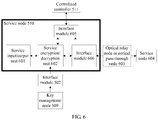
- FIG. 2 is a schematic architectural diagram of a system to which an embodiment of this application is applied.
- the system may include a centralized controller 201 and a centralized management and control network, and the centralized management and control network includes a service layer 202, a key management layer 203, and a key generation layer 204.
- the service layer 202 includes a plurality of service nodes 205
- the key management layer 203 includes a plurality of key management nodes 206
- the key generation layer 204 includes a plurality of key generation nodes 207.
- the service layer, the key management layer, the key generation layer, and the corresponding service node, key management node, and key generation node are obtained through logical definition and division.
- the service node, the key management node, and the key generation node may be different functional components that are integrated into one device, or the service node may be one device, and the key management node and the key generation node are integrated into another device.
- the plurality of key management nodes included at the key management layer 203 may be linked to each other, to relay a quantum key.
- the plurality of key generation nodes included at the key generation layer 204 may be linked to each other, to generate a quantum key.
- the key management nodes 206 at the key management layer 203 are in a one-to-one correspondence with the key generation nodes 207 at the key generation layer 204. In other words, one key management node is corresponding to one key generation node.
- a key node in this embodiment of this application includes a key management node and a key generation node corresponding to the key management node.
- 2 may generate symmetric keys by using a quantum key distribution mechanism, or by using another method such as a discrete logarithm (Diffie-Hellman, DH for short) algorithm.
- a discrete logarithm Diffie-Hellman, DH for short
- work of generating a key by the key node is completed by the key generation node, and other work performed by the key node is completed by the key management node.
- the service layer 202 may include a plurality of service nodes.
- the plurality of service nodes are linked to each other, to transmit a service between the service nodes.
- the service node may be a node that requires secure communication, or may be a node that does not require secure communication.
- the service node that does not require secure communication may not be corresponding to a key node, but each service node that requires secure communication is corresponding to a key node.
- This embodiment of this application focuses on description of a secure communication solution, and therefore all the service nodes described in this embodiment of this application are service nodes that require secure communication.
- a quantity of service nodes may be less than a quantity of key nodes.
- one service node is corresponding to one key node, but there is also a key node that does not need to be corresponding to a service node.
- a key generation node is linked to a key management node corresponding to the key generation node, so that the key management node relays a quantum key generated by the key generation node.
- the key management node is linked to a service node corresponding to the key management node, so that the service node performs encryption and decryption by using quantum key service information obtained through cooperation between the key management node and the key generation node, to implement secure communication.
- the centralized controller is linked to each service node and is configured to obtain information such as a service request reported by each service node.
- the centralized controller is linked to all key nodes in the centralized management and control network and is configured to obtain topology information of the key nodes reported by the key nodes.
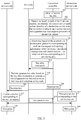
- FIG. 3 shows an example of a quantum key relay method based on a centralized management and control network according to an embodiment of this application.
- the quantum key relay method is applicable to a centralized management and control network.
- the centralized management and control network includes a centralized controller, N service nodes, and M key nodes.
- One service node is corresponding to one key node, and both N and M are integers greater than or equal to 2.
- the method includes the following steps.
- Step 301 The centralized controller obtains Z service requests, where Z is an integer greater than or equal to 1.
- Step 302 The centralized controller determines, based on each of the Z service requests, an identifier of a source service node and an identifier of a destination service node that are corresponding to each service request, and a quantum key consumption parameter of the service request, where the source service node is corresponding to a source key node, the destination service node is corresponding to a destination key node, and the source service node and the destination service node are two of the N service nodes in the centralized management and control network.
- the Z service requests include Z source service nodes and Z destination service nodes
- the Z source service nodes include at least two different source service nodes
- the Z destination service nodes include at least two different destination service nodes.
- Step 303 The centralized controller determines, based on the identifier of the source service node and the identifier of the destination service node that are corresponding to each of the Z service requests, the quantum key consumption parameter, and topology information of the key nodes in the centralized management and control network, key relay instructions corresponding to G service requests, where G is an integer less than or equal to Z and greater than or equal to 1.
- the key node reports the topology information of the key nodes to the centralized controller before step 303.
- Step 304 The centralized controller delivers the key relay instructions corresponding to the G service requests to key nodes corresponding to the key relay instructions, so that the key nodes perform quantum key relay based on the key relay instructions, to generate a shared quantum key between the source key node and the destination key node.
- step 305 may be performed:
- the key nodes receive the key relay instructions delivered by the centralized controller, and perform quantum key relay based on the key relay instructions, to generate the shared quantum key between the source key node and the destination key node.
- the shared quantum key between the source key node and the destination key node may be generated by the source key node, and is transmitted to the destination key node based on the key relay instruction; or may be generated by the destination key node, and is transmitted to the source key node based on the key relay instruction.
- the shared quantum key generated between the source key node and the destination key node is stored on both the source key node and the destination key node.
- the key relay instruction is determined by the centralized controller based on the identifier of the source service node and the identifier of the destination service node that are corresponding to each of the Z service requests, the quantum key consumption parameter, and the topology information of the key nodes in the centralized management and control network after obtaining the Z service requests.
- step 306 may be performed: The source service node obtains a quantum key from the source key node, and the destination service node obtains a quantum key from the destination key node.
- step 307 may be performed:
- the source service node encrypts, by using the quantum key shared by the source key node and the destination key node, a service corresponding to the service request.
- the destination service node encrypts, by using the quantum key shared by the source key node and the destination key node, the service corresponding to the service request.
- the source service node obtains, from the source key node, the quantum key shared by the source key node and the destination key node.
- the destination service node obtains, from the destination key node, the quantum key shared by the source key node and the destination key node.
- the source service node and the destination service node in this embodiment of this application each are one of the service nodes.
- step 308 may be performed:
- the source service node sends the service encrypted by using the quantum key to the destination service node.
- the destination service node sends the service encrypted by using the quantum key to the source service node.
- step 309 may be performed:
- the destination service node performs decryption by using the quantum key that is shared by the source key node and the destination key node and that is obtained from the destination key node, to obtain the service corresponding to the service request.
- the source service node performs decryption by using the quantum key that is shared by the source key node and the destination key node and that is obtained from the source key node, to obtain the service corresponding to the service request.
- the key node is added to the centralized management and control network, to construct a new quantum key distribution network, implement centralized control over the quantum key and services by using the centralized management and control network, implement multi-layer multi-domain collaboration and global optimization in the quantum key distribution network, achieve environmental friendliness and energy conservation, reduce device hardware costs, and the like.
- quantum key relay and the centralized management and control network are combined, based on features such as separation between control and forwarding of the centralized management and control network and implementation of centralized control, key relay instructions of all service requests can be efficiently and uniformly analyzed and calculated, and the key relay instructions are globally determined based on the topology information of all the key nodes in the entire centralized management and control network, so that a key relay instruction corresponding to each service request is globally optimal, and current and future key requirements can be met to a maximum extent.
- the centralized controller efficiently and uniformly analyzes and calculates the key relay instructions of all the service requests, to be specific, the centralized controller may consider that there are simultaneously Z service requests, the centralized controller may consider the Z service requests concurrently, and allocate, to the utmost, appropriate key relay instructions that do not conflict with each other to all the G service requests.
- the centralized controller delivers the key relay instructions to the key nodes after determining the key relay instructions, and the key nodes may only need to perform quantum key relay based on the received key relay instructions. In this way, a computing resource requirement of the key node is significantly reduced, thereby simplifying a function of the key node, and reducing complexity and costs of the key node.
- the topology information of all the key nodes in the centralized management and control network is stored on the centralized controller and does not need to be stored on each key node, when information about a key node is stolen, the topology information of the key nodes in the entire centralized management and control network is not stolen, so that security of the entire centralized management and control network is enhanced.
- the centralized controller in this embodiment of this application may determine the key relay instructions based on the quantum key consumption parameter and the topology information of the key nodes in the centralized management and control network, the centralized controller can determine one or more paths to meet a service request requirement.
- a network scale can be flexibly expanded based on the centralized management and control network, and a service node and/or a key node can be flexibly added to the centralized management and control network, to implement centralized and automatic network management and the like.
- the centralized controller may collect information about a service layer, a key management layer, and a key generation layer, and manage the service node and the key node.
- the centralized controller is described by using the following implementation a1, implementation a2, implementation a3, and implementation a4 as examples.
- the topology information of the centralized management and control network includes at least an identifier of each key node and a status of a quantum link between each key node and one or more other key nodes.
- the status of the quantum link may include a status of a link between a key node and another key node, for example, there is a linked link between two key nodes, or there is no linked link between two key nodes; and may further be used to indicate whether the link between the key node and the another key node is in a normal working state or an abnormal state.
- the newly added key node may determine whether a quantum link between the key node and a neighboring key node is in a normal working state or an abnormal state; and if the link is in a normal working state, report related information of the newly added key node to the centralized controller, to add the related information to the centralized management and control network.
- the related information, reported to the centralized controller, of the newly added key node may be an identifier of the newly added key node, a status of a quantum link between the newly added key node and another key node, or the like.
- the key node may report an abnormal state of the neighboring key node of the key node to the centralized controller.
- the centralized controller sends a detection signal to the neighboring key node based on received information about the abnormal state of the key node. If the centralized controller does not receive, within predetermined duration, a response signal sent by the neighboring key node, the centralized controller determines that the neighboring key node is unavailable, and deletes information about the neighboring key node from the centralized management and control network.
- the centralized controller can flexibly add and delete a key node, so as to flexibly expand a network scale, and support innovation of various new network system architectures and new services in the future. This has higher deployment feasibility than distributed control.
- a service node can be added and deleted by using a method similar to the foregoing method, so that the network scale is flexibly expanded. The method is similar to the method for adding and deleting a key node and determining an exception, and details are not described herein again.
- the centralized controller may identify a user of each service node in the centralized management and control network.
- all service nodes in each area may be further corresponding to a group identifier, and different group identifiers are used for different areas to facilitate management.
- the group identifier of the service nodes may be similar to an area code of a telephone number.
- the centralized controller may identify a user of each key node in the centralized management and control network.
- all key nodes in each area may be further corresponding to a group identifier, and different group identifiers are used for different areas to facilitate management.
- the group identifier of the key nodes may be similar to an area code of a telephone number.
- the centralized controller may determine, based on user permission corresponding to the source service node and/or the destination service node, whether to provide a quantum key for the service request. If the source service node has permission to obtain a quantum key, a quantum key is provided for the service request. If the source service node has no permission to obtain a quantum key, the service request is directly rejected.
- the service request when a user makes a service request for using a quantum key, the service request includes an identifier of a source service node, an identifier of a destination service node, and a quantum key consumption parameter of the service request.
- information such as a quantity of opened services, priorities of the services, and whether a service that needs to be opened is a common service may be further provided.
- the centralized controller obtains the Z service requests.
- the Z service requests there are a plurality of possible manners. In this embodiment of this application, the following several manners are described as examples.
- the source service node reports the service request to the centralized controller.
- the service request includes the identifier of the destination service node and the quantum key consumption parameter of the service request.
- the centralized controller may determine the identifier of the source service node, and further the centralized controller may determine the identifier of the destination service node and the quantum key consumption parameter of the service request based on content included in the service request.
- the destination service node reports the service request to the centralized controller.
- the service request includes the identifier of the source service node and the quantum key consumption parameter of the service request.
- the centralized controller may determine the identifier of the destination service node, and further the centralized controller may determine the identifier of the source service node and the quantum key consumption parameter of the service request based on content included in the service request.
- the centralized controller initiates the service request between the source service node and the destination service node at predetermined time according to a preset rule.
- the preset rule may include the identifier of the source service node, the identifier of the destination service node, and information about the quantum key consumption parameter of the service request.
- an operator or a third-party program directly configures the centralized controller to initiate the service request between the source service node and the destination service node at predetermined time.
- a preset rule may include the identifier of the source service node, the identifier of the destination service node, and information about the quantum key consumption parameter of the service request.
- a possible implementation is that the centralized controller periodically obtains topology information, reported by the key nodes in the centralized management and control network, of the key nodes.
- the key nodes periodically report topology information of the key nodes to the centralized controller. In this way, the centralized controller can control latest topology information of the key nodes at any time, to provide a more accurate and appropriate key relay path.
- the topology information of the key nodes in the centralized management and control network includes at least an identifier of each key node, a status of a quantum link between each key node and one or more other key nodes, and an edge weight of any two adjacent key nodes.
- FIG. 3a is an example of a schematic diagram of a key node connection architecture in a centralized management and control network according to an embodiment of this application. As shown in FIG. 3a , a key node A, a key node B, a key node E, a key node D, a key node C, and the key node A are successively connected. Each key node stores a quantum key shared by the key node and another key node. For example, in FIG.
- the key node A pre-stores a quantum key shared by the key node A and the key node B, a quantum key shared by the key node A and the key node C, a quantum key shared by the key node A and the key node D, and a quantum key shared by the key node A and the key node E.
- the key node C pre-stores a quantum key shared by the key node C and the key node A and a quantum key shared by the key node C and the key node D.
- a shared quantum key may be stored between two key nodes corresponding to two service nodes that frequently perform service transmission.
- the inventory quantum key between the key nodes corresponding to the two service nodes may be directly used, and a quantum key shared by the key nodes corresponding to the two service nodes does not need to be re-generated, so that a key providing response speed is increased.
- the key node A, the key node B, the key node E, the key node D, the key node C, and the key node A are successively connected physically.
- the key node A and the key node B may be referred to as two adjacent key nodes
- the key node B and the key node E may be referred to as two adjacent key nodes
- the key node E and the key node D may be referred to as two adjacent key nodes
- the key node D and the key node C may be referred to as two adjacent key nodes
- the key node C and the key node A may be referred to as two adjacent key nodes.
- the foregoing two quantum key nodes that are physically in a link connection relationship are referred to as two adjacent key nodes, and besides, two key nodes that store a shared quantum key are also referred to as two adjacent key nodes.
- two adjacent key nodes For example, as shown in FIG. 3a , a shared quantum key is stored between the key node A and the key node E, and therefore the key node A and the key node E may be referred to as two adjacent key nodes.
- a shared quantum key is stored between the key node A and the key node D, and therefore the key node A and the key node D may be referred to as two adjacent key nodes.
- Two key nodes separately store a quantum key shared by the two quantum keys, a shared key pool is created on the key nodes, and quantum keys are pre-stored in the key pool.
- a large quantity of keys can be provided rapidly.
- the key pool may be supplemented until the key pool is full.
- a key is not allowed to enter the key pool again after being discharged from the key pool.
- quantum keys may be stored to the key pool of key nodes in a data queue form, and a quantum key that is first generated enters the key pool first, and is also first extracted when the quantum key needs to be used.
- the quantum key receives a plurality of key relay instructions
- the quantum keys may be successively extracted from the key pool based on sorting of the plurality of key relay instructions.
- the plurality of key relay instructions may be sorted on the centralized controller, or may be sorted on the key node. In this way, when two key nodes extract a quantum key based on two key relay instructions in a same service request, a same shared quantum key can be extracted from the shared key pool.
- the key node may further create a plurality of point-to-point quantum key distribution systems concurrently, and the systems can work simultaneously, so that a quantum key storage rate can be increased.
- a shared quantum key is generated and stored between the key node A and the key node B
- a shared quantum key may be generated and stored between the key node A and the key node C.
- a quantum key distribution system of the key node A and the key node B and a quantum key distribution system of the key node A and the key node C are independent of each other and can work simultaneously, so that the quantum key storage rate is increased.
- the centralized controller may deliver an instruction to relay a quantum key between the two key nodes, generate a shared quantum key between the two key nodes, and add the shared quantum key to the key pool, to increase the quantity of inventory quantum keys between the two key nodes.
- the centralized controller After obtaining the service request, the centralized controller needs to determine whether a quantum key relay operation needs to be performed. Optionally, specific determining may be performed based on different key consumption parameters.
- the key consumption parameter includes a total key consumption quantity K.
- the key consumption parameter includes a total key consumption quantity K and service duration t.
- the key consumption parameter includes a service's key consumption speed V. Therefore, the centralized controller can more accurately determine a key relay path based on the specific key consumption parameter, and better provide a quantum key for a service corresponding to the service request.
- the following provides descriptions by using several possible cases as examples.
- the centralized controller obtains a quantity P of inventory quantum keys between the source key node and the destination key node.
- the centralized controller determines that the key relay operation does not need to be performed. In this way, the quantum key shared by the source key node and the destination key node can be directly obtained from the key node, so as to implement a service encryption and decryption process.
- the centralized controller obtains a quantity P of inventory quantum keys between the source key node and the destination key node.
- the centralized controller determines that the key relay operation needs to be performed.
- the centralized controller determines that the key relay operation needs to be performed. In this way, a quantity of quantum keys required by a service corresponding to a service request whose service duration is any duration can be ensured to the utmost.
- the topology information of the key nodes in the centralized management and control network includes an identifier of each key node, a status of a quantum link between each key node and one or more other key nodes, and an edge weight of any two adjacent key nodes.
- two adjacent key nodes on each path from the source key node to the destination key node are corresponding to one edge weight, and a smaller edge weight corresponding to two key nodes indicates a weaker quantum key providing capability of the two adjacent key nodes.
- Each path includes one minimum-edge-weight node pair, and the minimum-edge-weight node pair on each path is two key nodes with a minimum edge weight on the path.
- the key relay instruction may be determined based on a quantum key providing capability of two adjacent key nodes on each path.
- the edge weight corresponding to the two adjacent key nodes includes any one of the following content: a sum of a quantity of inventory quantum keys shared by the two adjacent key nodes and a generation quantity of quantum keys that are shared by the two key nodes in the preset duration; a quantity of inventory quantum keys shared by the two adjacent key nodes; and a generation speed of the quantum keys shared by the two adjacent key nodes.
- the generation quantity of the quantum keys that are shared by the two key nodes in the preset duration is a product of the preset duration and the generation speed of the quantum keys shared by the two key nodes. In this way, a quantum key providing capability is accurately reflected by using any one or more of the quantity of inventory quantum keys, the generation quantity of the quantum keys that are shared by the two key nodes in the preset duration, and the generation speed of the quantum keys.
- the centralized controller after obtaining the Z service requests, and before determining the key relay instructions corresponding to the G service requests, the centralized controller further performs the following operations for each of the Z service requests:
- the centralized controller determines each of all paths from the source key node to the destination key node; for each of all the paths, the centralized controller determines a current quantum key generation speed of two adjacent key nodes on the path; and if the centralized controller determines that another service request has not been allocated on the path and there is no plan to allocate another service request on the path, the centralized controller determines the current quantum key generation speed as a quantum key generation speed of the two adjacent key nodes; or if the centralized controller determines that another service request has been allocated on the path or there is a plan to allocate another service request on the path, the centralized controller determines a quantum key consumption speed, corresponding to the another service request, of the two adjacent key nodes, and determines a difference between the current quantum key generation speed and the quantum key consumption speed corresponding to the another service request as a quantum key generation speed of the two adjacent key nodes.
- the centralized controller after obtaining the Z service requests, and before determining the key relay instructions corresponding to the G service requests, the centralized controller further performs the following operations for each of the Z service requests:
- the centralized controller determines each of all paths from the source key node to the destination key node; for each of all the paths, the centralized controller determines a quantity of inventory quantum keys currently shared by two adjacent key nodes on the path; and if the centralized controller determines that another service request has not been allocated on the path and there is no plan to allocate another service request on the path, the centralized controller determines the quantity of currently shared inventory quantum keys as a quantity of inventory quantum keys shared by the two adjacent key nodes; or if the centralized controller determines that another service request has been allocated on the path or there is a plan to allocate another service request on the path, the centralized controller determines a quantum key consumption quantity, corresponding to the another service request, of the two adjacent key nodes, and determines a difference between the quantity of currently shared inventory quantum keys and the quantum key consumption quantity corresponding to the another service request as a quantity of inventory quantum keys shared by the two adjacent key nodes.
- the centralized controller after obtaining the Z service requests, the centralized controller separately processes the service requests, or processes the Z service requests concurrently. For example, the centralized controller processes a service request 1 and plans to allocate the service request 1 on a path 1, and in this case, when the centralized controller processes a service request 2, the centralized controller needs to consider that there is already a plan to allocate the service request 1 on the path 1, so that a plurality of appropriate key relay instructions that do not conflict with each other are more accurately allocated for a plurality of service requests.
- the method further includes: for each of the Z service requests, performing the following operations: determining, by the centralized controller from the centralized management and control network based on the topology information of the key nodes, all the paths from the source key node to the destination key node, to obtain a first path set; and determining, by the centralized controller from the first path set, Q second paths that meet a first condition corresponding to the key consumption parameter, where Q is an integer greater than or equal to 0.
- the first condition corresponding to the key consumption parameter is Formula (1): P + P m + w m ⁇ t ⁇ K
- P is a quantity of inventory quantum keys between the source key node and the destination key node
- P m is a quantity of inventory quantum keys of a minimum-edge-weight node pair on a path
- w m is a quantum key generation speed of the minimum-edge-weight node pair on the path
- t is the service duration
- K is the total key consumption quantity.
- the key consumption parameter includes only the total key consumption quantity K
- t is assumed to be 0 in the foregoing Formula (1), and then calculation is performed.
- the first condition corresponding to the key consumption parameter is: w m ⁇ V
- w m is a quantum key generation speed of a minimum-edge-weight node pair on a path
- V is the service's key consumption speed
- the topology information of the key nodes includes a status of a link between key nodes
- all the paths from the source key node to the destination key node may be first determined from the centralized management and control network based on the topology information of the key nodes, and then the Q second paths that meet the first condition are determined from all the paths, to implement quantum key relay by using the Q second paths, so that a determined key relay path meets a quantity of keys required by the service request.
- the centralized controller determines the second path as a key relay path, and determines, based on the key relay path, a key relay instruction corresponding to the service request.
- an optimal path may be selected from the Q second paths as a key relay path, for example, a path on which a minimum-edge-weight node pair has a highest quantum key generation speed is selected from the Q second paths, or a path on which a minimum-edge-weight node pair has a largest quantity of inventory quantum keys is selected from the Q second paths.
- the centralized controller determines a minimum-edge-weight node pair on each second path and an edge weight of each minimum-edge-weight node pair, determines a minimum-edge-weight node pair with a maximum edge weight from the minimum-edge-weight node pairs of all the second paths, determines, as the key relay path, a second path corresponding to the minimum-edge-weight node pair with the maximum edge weight, and determines, based on the key relay path, a key relay instruction corresponding to the service request. In this way, it can be ensured that the selected key relay path meets a quantity of keys required by the service request, and that there are a relatively large quantity of remaining inventory quantum keys after execution of the service request is completed.
- a plurality of paths are selected to simultaneously perform quantum key relay, so that a generated quantum key meets a requirement of the service request.
- the centralized controller determines S paths from all paths included in the first path set, to obtain a third path set, where S is an integer greater than or equal to 2, and any two paths included in the third path set do not have an overlapping edge; if the centralized controller determines that the S paths meet a second condition corresponding to the key consumption parameter, the centralized controller determines the S paths as the key relay paths, and determines, based on the key relay paths, a key relay instruction corresponding to the service request.
- P is a quantity of inventory quantum keys between the source key node and the destination key node, a value range of i is [1, S], S is a quantity of paths in the third path set, P; is a quantity of inventory quantum keys of a minimum-edge-weight node pair on an i th path, w i is a quantum key generation speed of the minimum-edge-weight node pair on the i th path, t is the service duration, and K is the total key consumption quantity.
- the service request includes the service duration t.
- t is assumed to be 0. In other words, only a quantity of inventory quantum keys on the path is considered.
- a value range of i is [1, S]
- S is a quantity of paths in the third path set
- w i is a quantum key generation speed of a minimum-edge-weight node pair on an i th path
- V is the service's key consumption speed.
- the topology information of the key nodes includes a status of a link between key nodes
- all the paths from the source key node to the destination key node may be first determined from the centralized management and control network based on the topology information of the key nodes, and then the S paths are determined from all the paths, to ensure that the S paths meet the second condition.
- a plurality of paths can be simultaneously used to perform quantum key relay, to ensure that the determined key relay path meets the quantity of keys required by the service request.
- one key node may be linked to a plurality of key nodes, there may be an overlapping edge between different paths. For example, an overlapping edge between a path "key node A-key node B-key node C-key node D" and a path "key node A-key node B-key node E-key node D" is key node A-key node B.
- a quantum key needs to be generated on each path when quantum key relay is simultaneously performed by using a plurality of paths; in this case, the overlapping edge is simultaneously located on the plurality of paths.
- the S paths, in the third path set, between which there is no overlapping edge are determined from all the paths in this embodiment of this application.
- one path is selected from a plurality of paths with an overlapping edge. In this way, a plurality of paths in the third path set that meet the foregoing second condition can be selected.
- This embodiment of this application provides an optional implementation that is used to determine the S paths from the first path set, to obtain the third path set. Specifically, if the centralized controller determines that any two paths in the first path set do not have an overlapping edge, the centralized controller determines that all the paths included in the first path set are the S paths; or if the centralized controller determines that at least two paths in the first path set have an overlapping edge, for each overlapping edge in the first path set, the centralized controller performs the following operations: determining T paths corresponding to the overlapping edge, and determining, as one of the S paths, a path corresponding to a minimum-edge-weight node pair with a maximum edge weight on the T paths, where T is an integer greater than or equal to 2.
- the path corresponding to the minimum-edge-weight node pair with the maximum edge weight is selected, the path can provide more sufficient quantum keys for the service request.
- a difference between a quantity of inventory keys of the minimum-edge-weight node pair on the path and a quantity of inventory keys of a minimum-edge-weight node pair on another path is minimized, so that load capabilities of all paths in the centralized management and control network are balanced.
- sufficient quantum keys can be provided for the service request by the S paths in the third path set.
- a quantum key consumption quantity may be randomly allocated for each path.
- minimum-edge-weight node pairs on all the paths have a same quantity of remaining keys, so that the S paths can better provide a quantum key for a next service request.
- L i is the quantum key consumption quantity corresponding to each key node corresponding to the i th path of the S paths, a value range of i is [1, S], S is a quantity of paths in the third path set, P; is a quantity of inventory quantum keys of a minimum-edge-weight node pair on the i th path, w i is a quantum key generation speed of the minimum-edge-weight node pair on the i th path, t is the service duration, and R is a quantity of remaining keys of the minimum-edge-weight node pair on each path in the third path set.
- the service request includes the service duration t.
- t is assumed to be 0. In other words, only a quantity of inventory quantum keys on the path is considered.
- R is a quantity of remaining keys of a minimum-edge-weight node pair on each path in the third path set, a value range of i is [1, S], S is a quantity of paths in the third path set, P; is a quantity of inventory quantum keys of a minimum-edge-weight node pair on an i th path, w i is a quantum key generation speed of the minimum-edge-weight node pair on the i th path, t is the service duration, P is a quantity of inventory quantum keys between the source key node and the destination key node, and K is the total key consumption quantity.
- the service request includes the service duration t.
- t is assumed to be 0. In other words, only a quantity of inventory quantum keys on the path is considered.
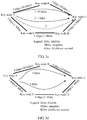
- FIG. 3b is an example of a schematic diagram of a key relay path according to an embodiment of this application.
- the centralized management and control network includes a key node A, a key node B, a key node C, a key node D, and a key node E, and the five key nodes are successively linked.
- a quantity of inventory quantum keys between the key node A and the key node B is 50 kbits (kilobit)
- a quantity of inventory quantum keys between the key node B and the key node E is 50 kbits
- a quantity of inventory quantum keys between key node E and the key node D is 1 Mbit (megabit)
- a quantity of inventory quantum keys between the key node C and the key node D is 1 Mbit
- a quantity of inventory quantum keys between the key node C and the key node A is 1 Mbit.
- a total key consumption quantity of a service request is 50 kbits, and this service request is a one-off key consumption request.
- t is assumed to be 0.
- an edge weight that is a quantity of inventory quantum keys shared by two key nodes is used to determine the key relay path.
- a source key node is the key node A
- a destination key node is the key node E.
- a specific process of selection performed by the centralized controller is: The centralized controller determines all paths from the key node A to the key node E. The paths are "key node A-key node B-key node E" and "key node A-key node C-key node D-key node E", and the two paths form a first path set.
- a minimum-edge-weight node pair on the path is either the key node A and the key node B or the key node B and the key node E. Because quantities of inventory quantum keys between adjacent key nodes on the path "key node A-key node C-key node D-key node E" are all 1 Mbit, a minimum-edge-weight node pair on the path is any one of the key node A and the key node C, the key node C and the key node D, and the key node D and the key node E.
- Both the two paths in the first path set meet the foregoing first condition, and therefore the two paths in the first path set are two second paths that meet the first condition.
- an edge weight is a quantity of inventory quantum keys shared by two key nodes
- an edge weight of the minimum-edge-weight node pair on the path "key node A-key node B-key node E” is 50 kbits
- an edge weight of the minimum-edge-weight node pair on the path "key node A-key node C-key node D-key node E" is 1 Mbit.
- a second path corresponding to a minimum-edge-weight node pair with a maximum edge weight is selected as the key relay path, to be specific, the path "key node A-key node C-key node D-key node E" whose edge weight is 1 Mbit is used as the key relay path.
- FIG. 3c is an example of a schematic diagram of selection of another key relay path according to an embodiment of this application.
- the centralized management and control network includes a key node A, a key node B, a key node C, a key node D, and a key node E, and the five key nodes are successively linked.
- a quantity of inventory quantum keys between the key node A and the key node B is 50 kbits, and a quantum key generation speed is 5 kbps (kilobit per second); a quantity of inventory quantum keys between the key node B and the key node E is 50 kbits, and a quantum key generation speed is 5 kbps; a quantity of inventory quantum keys between the key node E and the key node D is 1 Mbit, and a quantum key generation speed is 3 kbps; a quantity of inventory quantum keys between the key node C and the key node D is 1 Mbit, and a quantum key generation speed is 3 kbps; and a quantity of inventory quantum keys between the key node C and the key node A is 1 Mbit, and a quantum key generation speed is 3 kbps.
- t is assumed to be 0. In other words, only a quantity of inventory keys on the path is considered.
- an edge weight that is a quantity of inventory quantum keys shared by two key nodes is used to determine the key relay path.
- a source key node is the key node A
- a destination key node is the key node E.
- a specific process of selection performed by the centralized controller is: The centralized controller determines all paths from the key node A to the key node E. The paths are "key node A-key node B-key node E" and "key node A-key node C-key node D-key node E", and the two paths form a first path set.
- a minimum-edge-weight node pair on the path is either the key node A and the key node B or the key node B and the key node E. Because quantities of inventory quantum keys between adjacent key nodes on the path "key node A-key node C-key node D-key node E" are all 1 Mbit, a minimum-edge-weight node pair on the path is any one of the key node A and the key node C, the key node C and the key node D, and the key node D and the key node E.
- the total key consumption quantity is 1.05 Mbits and is equal to a sum of a quantity (50 kbits) of inventory quantum keys of a minimum-edge-weight node pair on the path "key node A-key node B-key node E" and a quantity (1 Mbit) of inventory quantum keys of a minimum-edge-weight node pair on the path "key node A-key node C-key node D-key node E".
- S paths that have no overlapping edge are determined from the first path set, to obtain a third path set. Because there is no overlapping edge between two paths in the first path set, the first path set is the same as the third path set. In this case, both the two paths are determined as key relay paths, and quantum key relay is simultaneously performed by using the two paths.
- a quantum key consumption quantity corresponding to each key node allocated for the path "key node A-key node B-key node E" is 50 kbits
- a quantum key consumption quantity corresponding to each key node allocated for the path "key node A-key node C-key node D-key node E" is 1 Mbit.
- quantities of remaining keys on both paths with an identifier "1" are 0. In other words, in a process of performing a service request, inventory quantum keys on the two paths are consumed. However, as the service request proceeds, a new quantum key is generated on the two paths.
- a quantum key generation speed of a minimum-edge-weight node pair on the path "key node A-key node C-key node D-key node E" (a path with an identifier "2" in FIG. 3c ) is greater than or equal to 0.05 Mbit, and the total key consumption quantity of the service request is less than 1.05 Mbit, in consideration that a real-time quantum key generation speed on the path is greater than or equal to 0.05 Mbit, only this path may be selected as the key relay path.
- the total key consumption quantity of the service request is equal to 1.05 Mbits, to avoid a case in which all quantum keys on the path are consumed, two paths may be selected in this case.
- FIG. 3d is an example of a schematic diagram of selection of another key relay path according to an embodiment of this application. As shown in FIG. 3d , a structure of the centralized management and control network is consistent with that in FIG. 3c , and details are not described herein again.
- the service's key consumption speed of the service request is 7 kbps.
- an edge weight that is a generation speed of a quantum key shared by two key nodes is used to determine the key relay path.
- a source key node is a key node A
- a destination key node is a key node E.
- a specific process of selection performed by the centralized controller is: The centralized controller determines all paths from the key node A to the key node E. The paths are "key node A-key node B-key node E" and "key node A-key node C-key node D-key node E", and the two paths form a first path set.
- a minimum-edge-weight node pair on the path is either the key node A and the key node B or the key node B and the key node E. Because a generation speed of a quantum key shared by adjacent key nodes on the path "key node A-key node C-key node D-key node E" is 3 kbps, a minimum-edge-weight node pair on the path is any one of the key node A and the key node C, the key node C and the key node D, and the key node D and the key node E.
- the service's key consumption speed 7 kbps is less than a sum of a quantum key generation speed (5 kbps) of a minimum-edge-weight node pair on the path "key node A-key node B-key node E" and a quantum key generation speed (5 kbps) of a minimum-edge-weight node pair on the path "key node A-key node C-key node D-key node E".
- S paths that have no overlapping edge are determined from the first path set, to obtain a third path set. Because there is no overlapping edge between two paths in the first path set, the first path set is the same as the third path set. In this case, both the two paths are determined as key relay paths, and quantum key relay is simultaneously performed by using the two paths.
- the key consumption parameter includes the service's key consumption speed V
- the centralized controller determines a quantum key consumption speed corresponding to each of Y paths.
- a smaller quantity of inventory quantum keys of a minimum-edge-weight node pair corresponding to each of the Y paths indicates a larger difference between a quantum key generation speed corresponding to the minimum-edge-weight node pair and a quantum key consumption speed corresponding to the path corresponding to the minimum-edge-weight node pair. In this way, it can be ensured to the utmost that after each path has served the service request, minimum-edge-weight node pairs on all the paths have a same quantity of remaining keys.
- a difference between a quantum key generation speed of a minimum-edge-weight node pair on the path and a quantum key consumption speed needs to be relatively large. Therefore, a quantum key consumption speed corresponding to each key node allocated for the path "key node A-key node B-key node E" is 4 kbps, and a quantum key consumption speed corresponding to each key node allocated for the path "key node A-key node C-key node D-key node E" is 3 kbps.
- a difference between the quantum key generation speed of the minimum-edge-weight node pair on the path "key node A-key node B-key node E" and the quantum key consumption speed is 1 kbps
- a difference between the quantum key generation speed of the minimum-edge-weight node pair on the path "key node A-key node C-key node D-key node E" and the quantum key consumption speed is 0 kbps.
- the following operations are performed: determining, by the centralized controller, each of all paths from the source key node to the destination key node; determining, by the centralized controller for each of all the paths, a current quantum key generation speed of two adjacent key nodes on the path; and if the centralized controller determines that another service request has not been allocated on the path and there is no plan to allocate another service request on the path, determining the current quantum key generation speed as a quantum key generation speed of the two adjacent key nodes; or if the centralized controller determines that another service request has been allocated on the path or there is a plan to allocate another service request on the path, determining a quantum key consumption speed, corresponding to the another service request, of the two adjacent key nodes, and determining a difference between the current quantum key generation speed and the quantum key consumption speed corresponding to the another service request as a quantum key generation speed of the two adjacent key nodes.
- FIG. 3e is an example of a schematic diagram of selection of another key relay path according to an embodiment of this application.
- the centralized management and control network includes a key node A, a key node B, a key node C, a key node D, and a key node E, the five key nodes are successively linked, and the key node C is linked to the key node B.
- a quantity of inventory quantum keys between the key node A and the key node B is 3 Mbits
- a quantity of inventory quantum keys between the key node B and the key node E is 3 Mbits
- a quantity of inventory quantum keys between the key node E and the key node D is 1 Mbit
- a quantity of inventory quantum keys between the key node C and the key node D is 1 Mbit
- a quantity of inventory quantum keys between the key node C and the key node A is 0 Mbits
- a quantity of inventory quantum keys between the key node C and the key node B is 2 Mbits.
- a total key consumption quantity of a service request q1 is 2 Mbits
- a total key consumption quantity of a service request q2 is 2 Mbits.
- a source key node in the service request q1 is the key node C
- a destination key node is the key node E.
- a source key node in the service request q2 is the key node A
- a destination key node is the key node E.
- an edge weight that is a quantity of inventory quantum keys shared by two key nodes is used to determine the key relay path.
- the source key node in the service request q1 is the key node C
- the destination key node is the key node E.
- a specific process of selection performed by the centralized controller is: The centralized controller determines all paths from the key node C to the key node E. The paths are "key node C-key node B-key node E" and "key node C-key node D-key node E", and the two paths form a first path set.
- a minimum-edge-weight node pair on the path is the key node C and the key node B. Because quantities of inventory quantum keys between adjacent key nodes on the path "key node C-key node D-key node E" each are 1 Mbit, a minimum-edge-weight node pair on the path is either the key node C and the key node D or the key node D and the key node E.
- the two paths form the first path set.
- the source key node in the service request q2 is the key node A
- the destination key node is the key node E.
- a specific process of selection performed by the centralized controller is: The centralized controller determines all paths from the key node A to the key node E. The paths are "key node A-key node B-key node E" and "key node A-key node C-key node D-key node E", and the two paths form a first path set.
- a minimum-edge-weight node pair on the path is either the key node A and the key node B or the key node B and the key node E. Because quantities of inventory quantum keys between adjacent key nodes on the path "key node A-key node C-key node D-key node E" are respectively 0 Mbits, 1 Mbit, and 1 Mbit, a minimum-edge-weight node pair on the path is the key node A and the key node C.
- a relay path is allocated for the request q1 first, the path "key node C-key node B-key node E" that meets the first condition is selected. However, after the allocation, a quantity of remaining keys of "key node B-key node E" is only 1 Mbit, and an effective relay path cannot be allocated for the request q2.
- the centralized controller attempts to allocate a relay path for the request q2 first, and selects the path "key node A-key node B-key node E" that meets the first condition.
- a current quantity of inventory quantum keys of "key node B-key node E" is 3 Mbits, and a quantity of inventory quantum keys expected to be consumed is 2 Mbits, a quantity of inventory keys of "key node B-key node E” is 1 Mbit.
- the centralized controller efficiently and uniformly analyzes and calculates key relay paths for all service requests.
- the centralized controller may consider that there are simultaneously a plurality of service requests, and separately allocate appropriate key relay paths that do not conflict with each other to all the service requests. Key requirements of both the service requests q1 and q2 are met.
- a solution is provided in which paths are allocated for a plurality of service requests one by one.
- a set of all paths that meet the first condition, the second condition, and the third condition may be calculated for all the service requests, as many service requests as possible are met while priorities of the service requests are considered in combination, and key relay paths are determined for the plurality of service requests through analysis and calculation.
- FIG. 3f is an example of a schematic diagram of selection of another key relay path according to an embodiment of this application. As shown in FIG. 3f , a structure is the same as that in FIG. 3c , and details are not described herein again.
- a service's key consumption speed of a service request q1 is 4 kbps
- a source key node is a key node A
- a destination key node is a key node E.
- a service's key consumption speed of a subsequently added service request q2 is 4 kbps
- a source key node is the key node A
- a destination key node is the key node E.
- the service request q1 is further allocated on "key node A-key node B-key node E”
- a current quantum key generation speed of "key node A-key node B-key node E” is 5 kbps
- a quantum key consumption speed corresponding to another service request is 4 kbps. Therefore, a quantum key generation speed of "key node A-key node B-key node E" is 1 kbps.
- key relay paths are determined for the service request q2.
- the key relay paths are the two paths.
- a quantum key consumption speed corresponding to each key node allocated for the path "key node A-key node B-key node E” is 1 kbps
- a quantum key consumption speed corresponding to each key node allocated for the path "key node A-key node C-key node D-key node E" is 3 kbps.
- the centralized controller after determining the key relay path by using the various solutions provided above, delivers the key relay path to each key node included in the key relay path.
- the key node receives the key relay path delivered by the centralized controller, and the key node performs quantum key relay based on the key relay path delivered by the centralized controller.
- the performing, by the key node, quantum key relay based on the key relay path delivered by the centralized controller includes: determining, by the key node, E previous-hop key nodes and F next-hop key nodes of the key node from the key relay path, where both E and F are integers greater than or equal to 0; and performing, by the key node, quantum key relay with the E previous-hop key nodes and the F next-hop key nodes.
- the key relay path includes at least two paths from the source key node to the destination key node, details are as follows: if the key node is the source key node, E is 0, and F is an integer greater than or equal to 2; if the key node is the destination key node, E is an integer greater than or equal to 2, and F is 0; and if the key node is a key node in an intermediate position on the key relay path, both E and F are 1, or both E and F are integers greater than or equal to 1.
- a quantity of quantum keys required by each service request can be ensured to a maximum extent.
- FIG. 3g is an example of a schematic flowchart of a quantum key relay method according to an embodiment of this application. As shown in FIG. 3g , the method includes the following steps.
- Step 2701 A centralized controller obtains a service request and topology information of key nodes in a centralized management and control network, determines a key relay path, and determines a key relay instruction.
- the key node reports the topology information of the key nodes to the centralized controller.
- the key node receives the key relay instruction delivered by the centralized controller, and the key node performs quantum key relay based on the key relay instruction delivered by the centralized controller.
- the key node is one of M key nodes included in the centralized management and control network in this embodiment of this application.
- the key relay instruction is used to indicate any one or more of the following content:
- a source key node is a key node A
- the destination key node is a key node E
- the key relay path is "key node A-key node B-key node E".
- the centralized controller delivers the key relay path to the key node A, the key node B, and the key node E.
- the key relay instruction is further used to indicate any one or more of the following content: a key bit length of the first target quantum key, a key bit length of the second target quantum key, a key bit length of the third target quantum key, a key bit length of the fourth target quantum key, a key bit length of the first encryption and decryption quantum key, a key bit length of the second encryption and decryption quantum key, a key bit length of the third encryption and decryption quantum key, and a key bit length of the fourth encryption and decryption quantum key; a key relay rate between the key node and the previous-hop key node of the key node; a key relay rate between the key node and the next-hop key node of the key node; key relay duration between the key node and the previous-hop key node of the key node; key relay duration between the key node and the next-hop key node of the key node; a key relay amount between the key node and the previous-hop key node of the key node; and
- the centralized controller analyzes, calculates, and generates, based on information reported by the key node and a service node, a configuration command that needs to be delivered to each key management node (the configuration command includes the key relay path); encapsulates the configuration command into a complete data block according to a specific format; encapsulates the data block into a standard Internet Protocol (Internet Protocol, IP for short) packet, an optical transport network (Optical Transport Network, OTN for short) data frame, or the like; and transmits the standard Internet Protocol packet, the optical transport network data frame, or the like to the key node by using a network.
- Internet Protocol Internet Protocol
- OTN optical Transport Network
- the key node receives the standard IP packet, the OTN data frame, or the like; parses out the data block in the standard IP packet, the OTN data frame, or the like; reads, according to a pre-agreed encapsulation format, the configuration command included in the data block; obtains the key relay path; and performs corresponding key processing.
- each key node After receiving the key relay path, each key node performs step 2702, step 2703, step 2704, and step 2705 to generate a quantum key shared by the key node A and the key node E. Details are as follows:
- step 2707 and step 2708 secure communication is implemented between the service node A and the service node E.
- a service node corresponding to the key node A is the service node A
- a service node corresponding to the key node E is the service node E.
- the key node in this embodiment of this application may include various interfaces and is configured to connect to the service node and the centralized controller, and each service node also includes various interfaces and is configured to connect to the centralized controller and the key node.
- the key nodes in this embodiment of this application may be classified into a key management node and a key generation node at a key generation layer.
- FIG. 4 is an example of a schematic structural diagram of a centralized controller according to an embodiment of this application.
- the centralized controller is configured to perform the foregoing method procedure, and the centralized controller 400 is applicable to a centralized management and control network.
- the centralized management and control network includes the centralized controller, N service nodes, and M key nodes.
- One service node is corresponding to one key node, both N and M are integers greater than or equal to 2
- the centralized controller 400 includes a processor 401, a memory 402, and a transceiver 405.
- the centralized controller 400 further includes a bus 404 and a communications interface 403.
- the memory is configured to store a program and an instruction.
- the processor is configured to perform the following operations by invoking the program and the instruction that are stored in the memory: determining, based on each of Z service requests obtained by the transceiver, an identifier of a source service node and an identifier of a destination service node that are corresponding to each service request, and a quantum key consumption parameter of the service request; and determining, based on the identifier of the source service node and the identifier of the destination service node that are corresponding to each of the Z service requests, the quantum key consumption parameter, and topology information of the key nodes in the centralized management and control network, key relay instructions corresponding to G service requests, where the source service node is corresponding to a source key node, the destination service node is corresponding to a destination key node, Z is an integer greater than or equal to 1, and G is an integer less than or equal to Z and greater than or equal to 1.
- the transceiver is configured to: obtain the Z service requests, and deliver the key relay instructions corresponding to the G service requests to key nodes corresponding to the key relay instructions, so that the key nodes perform quantum key relay based on the key relay instructions, to generate a shared quantum key between the source key node and the destination key node.
- the bus may be a Peripheral Component Interconnect (peripheral component interconnect, PCI for short) bus, an Extended Industry Standard Architecture (extended industry standard architecture, EISA for short) bus, or the like.
- PCI Peripheral Component Interconnect
- EISA Extended Industry Standard Architecture
- the bus may be classified into an address bus, a data bus, a control bus, and the like.
- the bus is represented by using only one bold line in FIG. 4 , but it does not indicate that there is only one bus or one type of bus.
- the memory may include a volatile memory (volatile memory), for example, a random-access memory (random-access memory, RAM for short); or the memory may include a non-volatile memory (non-volatile memory), for example, a flash memory (flash memory), a hard disk drive (hard disk drive, HDD for short), or a solid-state drive (solid-state drive, SSD for short); or the memory may include a combination of the foregoing types of memories.
- volatile memory volatile memory
- RAM random-access memory
- non-volatile memory non-volatile memory
- flash memory flash memory
- HDD hard disk drive
- SSD solid-state drive
- the communications interface may be a wired communications interface, a wireless communications interface, or a combination thereof.
- the wired communications interface may be, for example, an Ethernet interface.
- the Ethernet interface may be an optical interface, an electrical interface, or a combination thereof.
- the wireless communications interface may be a WLAN interface.
- the processor may be a central processing unit (central processing unit, CPU for short), a network processor (network processor, NP for short), or a combination of a CPU and an NP.
- the processor may further include a hardware chip.
- the hardware chip may be an application-specific integrated circuit (application-specific integrated circuit, ASIC for short), a programmable logic device (programmable logic device, PLD for short), or a combination thereof.
- the PLD may be a complex programmable logic device (complex programmable logic device, CPLD for short), a field-programmable logic gate array (field-programmable gate array, FPGA for short), a generic array logic (generic array logic, GAL for short), or any combination thereof.
- the topology information of the key nodes in the centralized management and control network includes an identifier of each key node, a status of a quantum link between each key node and one or more other key nodes, and an edge weight of any two adjacent key nodes.
- Two adjacent key nodes on each path from the source key node to the destination key node are corresponding to one edge weight, and a smaller edge weight corresponding to two key nodes indicates a weaker quantum key providing capability of the two adjacent key nodes.
- Each path includes one minimum-edge-weight node pair, and the minimum-edge-weight node pair on each path is two key nodes with a minimum edge weight on the path.
- the edge weight corresponding to the two adjacent key nodes includes any one of the following content: a sum of a quantity of inventory quantum keys shared by the two adjacent key nodes and a generation quantity of quantum keys that are shared by the two key nodes in the preset duration; a quantity of inventory quantum keys shared by the two adjacent key nodes; and a generation speed of the quantum keys shared by the two adjacent key nodes.
- the processor is further configured to: for each of the Z service requests, perform the following operations: determining, by the centralized controller, each of all paths from the source key node to the destination key node; determining, by the centralized controller for each of all the paths, a current quantum key generation speed of two adjacent key nodes on the path; and if the centralized controller determines that another service request has not been allocated on the path and there is no plan to allocate another service request on the path, determining the current quantum key generation speed as a quantum key generation speed of the two adjacent key nodes; or if the centralized controller determines that another service request has been allocated on the path or there is a plan to allocate another service request on the path, determining a quantum key consumption speed, corresponding to the another service request, of the two adjacent key nodes, and determining a difference between the current quantum key generation speed and the quantum key consumption speed corresponding to the another service request as a quantum key generation speed of the two adjacent key nodes.
- the processor is further configured to: for each of the Z service requests, perform the following operations: determining, by the centralized controller, each of all paths from the source key node to the destination key node; determining, by the centralized controller for each of all the paths, a quantity of inventory quantum keys currently shared by two adjacent key nodes on the path; and if the centralized controller determines that another service request has not been allocated on the path and there is no plan to allocate another service request on the path, determining the quantity of currently shared inventory quantum keys as a quantity of inventory quantum keys shared by the two adjacent key nodes; or if the centralized controller determines that another service request has been allocated on the path or there is a plan to allocate another service request on the path, determining a quantum key consumption quantity, corresponding to the another service request, of the two adjacent key nodes, and determining a difference between the quantity of currently shared inventory quantum keys and the quantum key consumption quantity corresponding to the another service request as a quantity of inventory quantum keys shared by the two adjacent key nodes.
- the processor is further configured to: for each of the Z service requests, perform the following operations: determining, by the centralized controller from the centralized management and control network based on the topology information of the key nodes, all the paths from the source key node to the destination key node, to obtain a first path set; and determining, by the centralized controller from the first path set, Q second paths that meet a first condition corresponding to the key consumption parameter, where Q is an integer greater than or equal to 0; if the key consumption parameter includes a total key consumption quantity K and service duration t, the first condition corresponding to the key consumption parameter is: P+P m +w m *t ⁇ K; or if the key consumption parameter includes a service's key consumption speed V, the first condition corresponding to the key consumption parameter is: w m ⁇ V, where P is a quantity of inventory quantum keys between the source key node and the destination key node, P m is a quantity of inventory quantum keys of a minimum-edge-weight node pair on a path,
- the processor is further configured to: if Q is equal to 1, determine, by the centralized controller, the second path as a key relay path, and determine, based on the key relay path, a key relay instruction corresponding to the service request; or if Q is greater than 1, determine, by the centralized controller, a minimum-edge-weight node pair on each second path and an edge weight corresponding to each minimum-edge-weight node pair, determine a minimum-edge-weight node pair with a maximum edge weight from the minimum-edge-weight node pairs of all the second paths, determine, as the key relay path, a second path corresponding to the minimum-edge-weight node pair with the maximum edge weight, and determine, based on the key relay path, a key relay instruction corresponding to the service request.
- the processor is configured to: if the centralized controller determines that any two paths in the first path set do not have an overlapping edge, determine that all the paths included in the first path set are the S paths; or if the centralized controller determines that at least two paths in the first path set have an overlapping edge, for each overlapping edge in the first path set, perform the following operations: determining T paths corresponding to the overlapping edge, and determining, as one of the S paths, a path corresponding to a minimum-edge-weight node pair with a maximum edge weight on the T paths, where T is an integer greater than or equal to 2.
- FIG. 4a is an example of a schematic structural diagram of a key node according to an embodiment of this application.
- the key node is configured to perform the foregoing method procedure, and the key node 410 is applicable to a centralized management and control network.
- the centralized management and control network includes a centralized controller, N service nodes, and M key nodes.
- One service node is corresponding to one key node, both N and M are integers greater than or equal to 2
- the key node 410 includes a processor 411, a memory 412, and a transceiver 415.
- the key node 410 further includes a bus 414 and a communications interface 413.
- the memory is configured to store a program and an instruction, and may also store a quantum key.
- the processor is configured to perform quantum key relay based on a key relay instruction delivered by the centralized controller.
- the transceiver is configured to: report topology information of the key node to the centralized controller, and receive the key relay instruction delivered by the centralized controller.
- the bus may be a Peripheral Component Interconnect (peripheral component interconnect, PCI for short) bus, an Extended Industry Standard Architecture (extended industry standard architecture, EISA for short) bus, or the like.
- PCI Peripheral Component Interconnect
- EISA Extended Industry Standard Architecture
- the bus may be classified into an address bus, a data bus, a control bus, and the like.
- the bus is represented by using only one bold line in FIG. 4 , but it does not indicate that there is only one bus or one type of bus.
- the memory may include a volatile memory (volatile memory), for example, a random-access memory (random-access memory, RAM for short); or the memory may include a non-volatile memory (non-volatile memory), for example, a flash memory (flash memory), a hard disk drive (hard disk drive, HDD for short), or a solid-state drive (solid-state drive, SSD for short); or the memory may include a combination of the foregoing types of memories.
- volatile memory volatile memory
- RAM random-access memory
- non-volatile memory non-volatile memory
- flash memory flash memory
- HDD hard disk drive
- SSD solid-state drive
- the communications interface may be a wired communications interface, a wireless communications interface, or a combination thereof.
- the wired communications interface may be, for example, an Ethernet interface.
- the Ethernet interface may be an optical interface, an electrical interface, or a combination thereof.
- the wireless communications interface may be a WLAN interface.
- the processor may be a central processing unit (central processing unit, CPU for short), a network processor (network processor, NP for short), or a combination of a CPU and an NP.
- the processor may further include a hardware chip.
- the hardware chip may be an application-specific integrated circuit (application-specific integrated circuit, ASIC for short), a programmable logic device (programmable logic device, PLD for short), or a combination thereof.
- the PLD may be a complex programmable logic device (complex programmable logic device, CPLD for short), a field-programmable logic gate array (field-programmable gate array, FPGA for short), a generic array logic (generic array logic, GAL for short), or any combination thereof.
- the transceiver is configured to: periodically report the topology information of the key node to the centralized controller, where the topology information of the key node includes an identifier of each key node in the centralized management and control network, a status of a quantum link between each key node and one or more other key nodes, and an edge weight of any two adjacent key nodes; any two key nodes on each path from a source key node to a destination key node are corresponding to one edge weight, and a larger edge weight corresponding to two key nodes indicates a stronger quantum key providing capability of the two key nodes; and each path includes one minimum-edge-weight node pair, and the minimum-edge-weight node pair on each path is two key nodes with a minimum edge weight on the path.
- FIG. 4b is a schematic diagram of a centralized controller according to an embodiment of this application.
- the centralized controller 420 may be a network device, or may be a chip or a circuit, for example, a chip or a circuit that can be disposed on a network device.
- a communications device on the centralized controller 420 can implement steps performed by the centralized controller in the method corresponding to any one or more items shown in FIG. 3 .
- the communications device on the centralized controller 420 may include a transceiver unit 421, a processing unit 422, and a storage unit 423.
- the storage unit is configured to store related information in the foregoing method procedure, for example, topology information of the key nodes in the centralized management and control network.
- the processing unit is configured to perform the following operations by invoking a program and an instruction that are stored in the memory: determining, based on each of the Z service requests obtained by the transceiver, an identifier of a source service node and an identifier of a destination service node that are corresponding to each service request, and a quantum key consumption parameter of the service request; and determining, based on the identifier of the source service node and the identifier of the destination service node that are corresponding to each of the Z service requests, the quantum key consumption parameter, and the topology information of the key nodes in the centralized management and control network, key relay instructions corresponding to G service requests, where the source service node is corresponding to a source key node, the destination service node is corresponding to a destination key node, Z is an integer greater than or equal to 1, and G is an integer less than or equal to Z and greater than or equal to 1.
- the transceiver unit is configured to: obtain the Z service requests, and deliver the key relay instructions corresponding to the G service requests to key nodes corresponding to the key relay instructions, so that the key nodes perform quantum key relay based on the key relay instructions, to generate a shared quantum key between the source key node and the destination key node.
- the transceiver unit 421 may be implemented by a transceiver 405, and the processing unit 422 may be implemented by a processor 401.
- a centralized controller 400 may include the processor 401, the transceiver 405, and a memory 402.
- the memory 402 may be configured to store code used by the processor 401 to perform a solution, where the code may be a program/code pre-installed when the centralized controller is delivered from a factory.
- FIG. 5 is an example of a schematic structural diagram of a key node according to an embodiment of this application.
- the key node is configured to perform the foregoing method procedure, and the key node is applicable to a centralized management and control network.
- the centralized management and control network includes a centralized controller, N service nodes, and M key nodes.
- One service node is corresponding to one key node, and both N and M are integers greater than or equal to 2.
- the key node is one of the M key nodes, and the key node includes a transceiver unit, a key pool 505, and a key relay unit 507.
- the transceiver unit includes various interface modules.
- the transceiver unit shown in FIG. 5 may include an interface module 501, an interface module 502, an interface module 503, an interface module 504, and the like.
- a key node 410 may include the processor 411, the transceiver 415, and a memory 412.
- the memory 412 may be configured to store code used by the processor 411 to perform a solution, where the code may be a program/code pre-installed when the key node 410 is delivered from a factory.
- the key pool 505 is configured to store a quantum key.
- the transceiver unit is configured to: report topology information of the key nodes to a centralized controller 511, and receive a key relay instruction delivered by the centralized controller 511.
- the key relay unit 507 is configured to perform quantum key relay based on the key relay instruction delivered by the centralized controller 511.
- the key relay instruction is used to indicate any one or more of the following content:
- the key relay instruction is further used to indicate any one or more of the following content:
- the transceiver unit is configured to: periodically report the topology information of the key node to the centralized controller, where the topology information of the key node includes an identifier of each key node in the centralized management and control network, a status of a quantum link between each key node and one or more other key nodes, and an edge weight of any two adjacent key nodes; any two adjacent key nodes on each path from a source key node to a destination key node are corresponding to one edge weight, and a larger edge weight corresponding to two key nodes indicates a stronger quantum key providing capability of the two key nodes; and each path includes one minimum-edge-weight node pair, and the minimum-edge-weight node pair on each path is two key nodes with a minimum edge weight on the path.
- the key node includes a key management node 509 and a key generation node included at a key generation layer 513.
- the key management node 509 on the key node may include the key pool 505 configured to store a quantum key, a key access unit 506 configured to store a quantum key to the key pool 505, the key relay unit 507 configured to perform quantum key relay, and a key extraction unit 508 configured to extract a quantum key in the key pool 505 for encryption.
- the key management node 509 is connected to the key generation layer 513 by using the interface module 503. Specifically, the key management node 509 is connected to the key generation node by using the interface module 503.
- the interface module 503 is configured to import a key generation status of an adjacent key node pair at the key generation layer 513 to the key management node 509. A shared key generated by the key generation layer 513 is stored to the key pool 505 by using the interface module 503.
- the key management node 509 is connected to a neighboring key management node 512 by using the interface module 504.
- the interface module 504 is configured to exchange a link status of adjacent key management nodes between the adjacent key management nodes by using the interface module 504. If the neighboring key management node 512 is a relay node, a quantum key shared by the key management node 509 and the neighboring key management node 512 needs to be extracted from the key pool 505, to decrypt and encrypt a key that needs to be transmitted, and the key that needs to be transmitted is forwarded to a next key management node by using the interface module 504.
- the centralized controller 511 is connected to the key management node 509 by using the interface module 501 of the key management node 509, and the centralized controller 511 is connected to a service node 510.
- the interface module 501 is configured to feed back a key generation speed of an adjacent key generation node pair (the key generation speed is imported to the key management node 509 by the key generation layer 513 by using the interface module 503), a quantity of inventory quantum keys of each key management node pair (the quantity of inventory quantum keys is imported from the key pool 505), and a link status of the neighboring key management node 512 (the neighboring key management node 512 is connected by using the interface module 504) to the centralized controller 511 by using the interface module 501.
- the centralized controller 511 generates a key relay path based on a service request and existing information, delivers the key relay path to the key access unit 506 on the key management node 509 by using the interface module 501, and completes relay by using the key relay unit 507.
- the key management node 509 is connected to the service node 510 by using the interface module 502.
- the interface module 502 is configured to: if the key management node 509 is the source key node or the destination key node, extract a key shared by the key management node 509 and the neighboring key management node 512 from the key pool 505 to decrypt a relayed quantum key, and then import the decrypted quantum key to the key pool 505. If a service needs to be encrypted or decrypted, the key management node 509 finds a corresponding quantum key from the key pool 505, imports the corresponding quantum key to a service node by using an interface module 2, and encrypts or decrypts the corresponding service.
- the key generation layer 513 is responsible for secure point-to-point key generation, and ensures security of an entire QKD network.
- Entity functions of this layer usually include: first, original quantum key bases, bit error estimation, and the like based on the QKD protocol, including various protocols such as BB84, E91, B92, and SARG04; second, error correction, that is, performing error correction for quantum key information obtained after base comparison; third, privacy amplification, that is, deleting information about a key learned by an eavesdropper (Eve); and fourth, identity authentication, that is, performing point-to-point identity authentication between adjacent nodes, to resist a man-in-the-middle attack.
- FIG. 6 is an example of a schematic structural diagram of a possible service node according to an embodiment of this application.
- a service node 510 may include a service input/output unit 601 configured to receive and send service requests, a service encryption/decryption unit 602 configured to encrypt or decrypt a service, and different interface modules, such as an interface module 606 and an interface module 605.
- functions of the units and the interface modules are as follows:
- the service node 510 is connected to a centralized controller 511 by using the interface module 605.
- a link status of the service node 510 and a key requirement status of a service node pair are transmitted to the centralized controller 511 by using the interface module 605.
- Information exchange between the service node 510 and the centralized controller 511 is also implemented by the interface module 605.
- the service node 510 is connected to a key management node 509 corresponding to the service node 510 by using an interface module 502.
- the interface module 502 is configured to: extract a quantum key at a key management layer, and apply the quantum key to the service node 510 to encrypt or decrypt a service.
- the service node 510 is connected to a service node 604 by using the interface module 606 and an optical relay node or optical pass-through node 603.
- a link status of service nodes (such as a neighboring service node 604) is imported by the interface module 606.
- the key management node 509 imports a quantum key used for encryption to the service node 510 by using the interface module 502, and after the service encryption/decryption unit 602 encrypts the service, the interface module 606 transmits the service to a next service node (which may be referred to as a relay service node).
- a quantum key used for decryption is imported from the key management node 509 to the service node 604 by the interface module 502, and the service encryption/decryption unit 602 decrypts the service and outputs the service.
- the centralized controller, the service node, and the key node that are provided in the embodiments of this application may be provided by different manufacturers.
- a possible interface solution is provided.
- unit division in the embodiments of this application is an example, is merely logical function division, and there may be another division manner in actual implementation.
- Functional units in the embodiments of this application may be integrated into one processing unit, or each of the units may exist alone physically, or at least two units are integrated into one unit.
- the integrated unit may be implemented in a form of hardware, or may be implemented in a form of a software functional unit.
- sequence numbers of the foregoing processes do not mean execution sequences in various embodiments of this application.
- the execution sequences of the processes should be determined according to functions and internal logic of the processes, and should not be construed as any limitation on the implementation processes of the embodiments of this application.
- the disclosed system, apparatus, and method may be implemented in other manners.
- the described apparatus embodiment is merely an example.
- the unit division is merely logical function division, and may be other division in actual implementation.
- a plurality of units or components may be combined or integrated into another system, or some features may be ignored or not performed.
- the displayed or discussed mutual couplings or direct couplings or communication connections may be implemented by using some interfaces.
- the indirect couplings or communication connections between the apparatuses or units may be implemented in electronic, mechanical, or other forms.
- the units described as separate parts may or may not be physically separate, and parts displayed as units may or may not be physical units, may be located in one position, or may be distributed on a plurality of network units. Some or all of the units may be selected depending on actual requirements to achieve the objectives of the solutions of the embodiments.
- All or some of the foregoing embodiments may be implemented by using software, hardware, firmware, or any combination thereof.
- the embodiments may be implemented completely or partially in a form of a computer program product.
- the computer program product includes one or more computer instructions.
- the computer may be a general-purpose computer, a dedicated computer, a computer network, or another programmable apparatuses.
- the computer instructions may be stored in a computer-readable storage medium or may be transmitted from a computer-readable storage medium to another computer-readable storage medium.
- the computer instructions may be transmitted from a website, computer, server, or data center to another website, computer, server, or data center in a wired (for example, a coaxial cable, an optical fiber, or a digital subscriber line (DSL)) or wireless (for example, infrared, radio, or microwave) manner.
- the computer-readable storage medium may be any usable medium accessible by a computer, or a data storage device, such as a server or a data center, integrating one or more usable media.
- the usable medium may be a magnetic medium (for example, a floppy disk, a hard disk, or a magnetic tape), an optical medium (for example, DVD), a semiconductor medium (for example, a solid state disk Solid State Disk (SSD)), or the like.
- a magnetic medium for example, a floppy disk, a hard disk, or a magnetic tape
- an optical medium for example, DVD
- a semiconductor medium for example, a solid state disk Solid State Disk (SSD)
Landscapes
- Engineering & Computer Science (AREA)
- Computer Security & Cryptography (AREA)
- Computer Networks & Wireless Communication (AREA)
- Signal Processing (AREA)
- Physics & Mathematics (AREA)
- Electromagnetism (AREA)
- Theoretical Computer Science (AREA)
- Data Exchanges In Wide-Area Networks (AREA)
- Optical Communication System (AREA)
Applications Claiming Priority (2)
| Application Number | Priority Date | Filing Date | Title |
|---|---|---|---|
| CN201610967885.1A CN108023725B (zh) | 2016-11-04 | 2016-11-04 | 一种基于集中管理与控制网络的量子密钥中继方法和装置 |
| PCT/CN2017/093389 WO2018082345A1 (zh) | 2016-11-04 | 2017-07-18 | 一种基于集中管理与控制网络的量子密钥中继方法和装置 |
Publications (2)
| Publication Number | Publication Date |
|---|---|
| EP3528429A1 true EP3528429A1 (de) | 2019-08-21 |
| EP3528429A4 EP3528429A4 (de) | 2019-10-30 |
Family
ID=62075687
Family Applications (1)
| Application Number | Title | Priority Date | Filing Date |
|---|---|---|---|
| EP17867144.2A Pending EP3528429A4 (de) | 2016-11-04 | 2017-07-18 | Verfahren und vorrichtung zur weiterleitung von quantenschlüsseln auf der basis von zentralisierter verwaltung und steuernetzwerk |
Country Status (6)
| Country | Link |
|---|---|
| US (1) | US12028450B2 (de) |
| EP (1) | EP3528429A4 (de) |
| JP (2) | JP6773904B2 (de) |
| KR (1) | KR102327941B1 (de) |
| CN (2) | CN112217637B (de) |
| WO (1) | WO2018082345A1 (de) |
Cited By (3)
| Publication number | Priority date | Publication date | Assignee | Title |
|---|---|---|---|---|
| EP3826224A1 (de) * | 2019-11-20 | 2021-05-26 | Deutsche Telekom AG | Übertragung von qkd-signalen in quantengesicherter multiknoten-netztopologie |
| NL2027091B1 (en) * | 2020-12-10 | 2022-07-08 | Abn Amro Bank N V | Orchestrated quantum key distribution |
| EP4432601A3 (de) * | 2023-03-17 | 2024-11-13 | Kabushiki Kaisha Toshiba | Schlüsselmanager, quantenkryptographisches kommunikationssystem, qkdn-steuerungsvorrichtung, informationsverarbeitungsvorrichtung, schlüsselverwaltungsverfahren, qkdn-steuerungsverfahren, informationsverarbeitungsverfahren und computerprogramm |
Families Citing this family (95)
| Publication number | Priority date | Publication date | Assignee | Title |
|---|---|---|---|---|
| CN110380844B (zh) * | 2018-04-13 | 2021-01-29 | 华为技术有限公司 | 一种量子密钥分发方法、设备及存储介质 |
| CN108768661B (zh) * | 2018-05-29 | 2021-02-02 | 如般量子科技有限公司 | 一种基于对称密钥池和跨中继的改进型aka身份认证系统和方法 |
| CN110688167A (zh) * | 2018-07-04 | 2020-01-14 | 中国电信股份有限公司 | 功能链接集中生成方法和装置、计算机可读存储介质 |
| CN109067519B (zh) * | 2018-07-25 | 2021-11-09 | 科华数据股份有限公司 | 一种调整量子密钥更新频率的方法、系统及相关装置 |
| CN109257166B (zh) * | 2018-08-31 | 2020-04-07 | 西安电子科技大学 | 一种用于量子中继器的量子纠错编码方法 |
| CN111355655B (zh) * | 2018-12-21 | 2021-12-14 | 山东量子科学技术研究院有限公司 | 一种量子密码网络量子路由检测方法和服务器 |
| CN109756329B (zh) * | 2019-01-15 | 2021-08-31 | 如般量子科技有限公司 | 基于私钥池的抗量子计算共享密钥协商方法和系统 |
| US11212085B2 (en) * | 2019-03-29 | 2021-12-28 | Intel Corporation | Technologies for accelerated hierarchical key caching in edge systems |
| CN111865566A (zh) * | 2019-04-26 | 2020-10-30 | 上海铁路通信有限公司 | 一种用于铁路信号系统的量子安全数据网系统 |
| CN110224815B (zh) * | 2019-05-08 | 2021-02-09 | 北京邮电大学 | Qkd网络资源分配方法及系统 |
| CN110138552B (zh) | 2019-05-08 | 2021-07-20 | 北京邮电大学 | 多用户量子密钥供应方法及装置 |
| CN110149204B (zh) * | 2019-05-09 | 2021-01-05 | 北京邮电大学 | Qkd网络的密钥资源分配方法及系统 |
| EP4000215A1 (de) | 2019-07-19 | 2022-05-25 | IDAC Holdings, Inc. | Verfahren, systeme und vorrichtung zum ermöglichen und verwalten von quantennetzwerken |
| US11483140B2 (en) * | 2019-08-02 | 2022-10-25 | Quantumxchange, Inc. | Secure out-of-band symmetric encryption key delivery |
| CN110601974B (zh) * | 2019-08-05 | 2021-10-29 | 国网内蒙古东部电力有限公司信息通信分公司 | 一种共享保护路径的选择方法 |
| CN110351154B (zh) * | 2019-08-19 | 2022-09-06 | 哈尔滨工业大学 | 一种量子保密通信网络的性能评价方法 |
| CN110690928B (zh) * | 2019-09-01 | 2020-10-16 | 成都量安区块链科技有限公司 | 一种量子中继链路虚拟化方法与装置 |
| CN112367163B (zh) * | 2019-09-01 | 2023-09-26 | 成都量安区块链科技有限公司 | 一种量子网络虚拟化方法与装置 |
| CN110690961B (zh) * | 2019-09-01 | 2022-04-12 | 成都量安区块链科技有限公司 | 一种量子网络功能虚拟化方法与装置 |
| CN110690962B (zh) * | 2019-09-01 | 2022-06-28 | 成都量安区块链科技有限公司 | 一种服务节点的应用方法与装置 |
| US11258580B2 (en) * | 2019-10-04 | 2022-02-22 | Red Hat, Inc. | Instantaneous key invalidation in response to a detected eavesdropper |
| CN110690964B (zh) * | 2019-10-11 | 2022-06-28 | 成都量安区块链科技有限公司 | 一种量子服务区块链的创建方法与应用系统 |
| US11496225B2 (en) | 2019-12-06 | 2022-11-08 | At&T Intellectual Property I, L.P. | System and method for network distribution of quantum entanglement |
| US11387991B2 (en) | 2019-12-06 | 2022-07-12 | At&T Intellectual Property I, L.P. | Quantum enabled hybrid fiber cable loop |
| CN111147378B (zh) * | 2019-12-18 | 2021-07-02 | 北京邮电大学 | 一种基于加密业务的路由分配方法及电子设备 |
| KR102944641B1 (ko) | 2019-12-23 | 2026-03-27 | 주식회사 케이티 | 양자키 분배 네트워크에서의 양자키 중계 제어 방법, 장치 및 시스템 |
| US11818256B2 (en) | 2020-03-02 | 2023-11-14 | Red Hat, Inc. | Providing cascading quantum encryption services in quantum computing systems |
| CN113452509B (zh) * | 2020-03-24 | 2023-06-02 | 国科量子通信网络有限公司 | 一种基于sdn的多路径量子密钥分发方法 |
| CN113765654B (zh) * | 2020-06-03 | 2022-09-27 | 科大国盾量子技术股份有限公司 | 一种负载均衡的量子密钥管理装置 |
| CN114362923B (zh) * | 2020-09-28 | 2024-05-17 | 如般量子科技有限公司 | 一种量子保密通信系统中的密钥刷新系统及方法 |
| JP7642348B2 (ja) * | 2020-11-06 | 2025-03-10 | 株式会社東芝 | 転送装置、通信システム、転送方法及びプログラム |
| JP7395455B2 (ja) | 2020-11-06 | 2023-12-11 | 株式会社東芝 | 転送装置、鍵管理サーバ装置、通信システム、転送方法及びプログラム |
| US11444756B2 (en) * | 2020-11-20 | 2022-09-13 | At&T Intellectual Property I, L.P. | Quantum key distribution network security survivability |
| CN114584288B (zh) * | 2020-11-30 | 2023-09-26 | 如般量子科技有限公司 | 一种基于线型量子密钥分发网络的密钥分发方法 |
| US11683165B2 (en) * | 2020-11-30 | 2023-06-20 | At&T Intellectual Property I, L.P. | Quantum key distribution networking as a service |
| CN114650101B (zh) * | 2020-12-21 | 2024-08-30 | 科大国盾量子技术股份有限公司 | 量子通信网络的域间路由方法、装置、量子通信网络及路由系统 |
| CN114697011B (zh) * | 2020-12-30 | 2024-10-15 | 科大国盾量子技术股份有限公司 | 一种提高量子密钥中继服务质量的方法 |
| CN112787807B (zh) * | 2020-12-31 | 2022-03-18 | 清华大学 | 一种基于安全中继的量子通信方法和通信网络 |
| US11990943B2 (en) | 2021-01-04 | 2024-05-21 | At&T Intellectual Property I, L.P. | System and method for quantum-enabled cyber security in a wireless mobile network |
| CN112910636B (zh) * | 2021-01-11 | 2023-01-10 | 国家电网有限公司 | 一种基于sdn的量子密钥分发物联网发布及订阅系统 |
| GB2603113B (en) * | 2021-01-13 | 2023-12-20 | Arqit Ltd | System and method for key establishment |
| JP7770772B2 (ja) * | 2021-01-29 | 2025-11-17 | 株式会社東芝 | 量子鍵配送サービスプラットフォーム |
| CN112910639B (zh) * | 2021-02-05 | 2022-06-24 | 北京邮电大学 | 多域场景下的量子加密业务传输方法及相关设备 |
| EP4298757B1 (de) * | 2021-02-23 | 2024-08-21 | Telefonaktiebolaget LM Ericsson (publ) | Verfahren und vorrichtung für ein softwaredefiniertes netzwerk |
| US20240163078A1 (en) * | 2021-03-02 | 2024-05-16 | Sri International | Attribute based encryption with bounded collusion resistance |
| US11652619B2 (en) * | 2021-03-15 | 2023-05-16 | Evolutionq Inc. | System and method for optimizing the routing of quantum key distribution (QKD) key material in a network |
| CN115085908B (zh) * | 2021-03-16 | 2025-03-21 | 南京如般量子科技有限公司 | 基于量子通信卫星和dh算法的密钥分发方法及系统 |
| CN115085907B (zh) * | 2021-03-16 | 2025-07-18 | 南京如般量子科技有限公司 | 基于量子密钥分发网络和非对称密码学的密钥分发方法 |
| CN113179514B (zh) * | 2021-03-25 | 2022-08-05 | 北京邮电大学 | 中继共存场景下的量子密钥分发方法及相关设备 |
| CN113033828B (zh) * | 2021-04-29 | 2022-03-22 | 江苏超流信息技术有限公司 | 模型训练方法、使用方法、系统、可信节点及设备 |
| US12088703B2 (en) | 2021-05-10 | 2024-09-10 | Electronics And Telecommunications Research Institute | Method and apparatus for control action based on software defined networking associated with quantum key distribution network management in quantum key distribution network |
| US12301710B2 (en) | 2021-05-10 | 2025-05-13 | Electronics And Telecommunications Research Institute | Method and apparatus for key relay control based on software defined networking in quantum key distribution network |
| RU2764458C1 (ru) * | 2021-05-17 | 2022-01-17 | Акционерное Общество "Информационные Технологии И Коммуникационные Системы" | Способ распределения симметричных ключей между узлами вычислительной сети с системой квантового распределения ключей |
| EP4335050A4 (de) * | 2021-05-31 | 2024-07-24 | Huawei Technologies Canada Co., Ltd. | Verfahren und systeme für ein 2-qubit-multibenutzer-quantenschlüsselverteilungsprotokoll |
| EP4374541A4 (de) * | 2021-07-20 | 2025-05-28 | The Research Foundation for The State University of New York | System und verfahren für quantensichere mikronetze |
| KR102404153B1 (ko) * | 2021-08-20 | 2022-05-31 | 국민대학교산학협력단 | 양자보안 통신장치 통합형 수배전반 보안 시스템 및 방법 |
| KR102404156B1 (ko) * | 2021-08-20 | 2022-05-31 | 국민대학교산학협력단 | 양자보안 통신장치 통합형 plc/hmi 제어 시스템 및 방법 |
| KR102404138B1 (ko) * | 2021-08-20 | 2022-05-31 | 국민대학교산학협력단 | 양자보안 통신장치 통합형 자율이동체 이동기록 시스템 및 방법 |
| KR102404148B1 (ko) * | 2021-08-20 | 2022-05-31 | 국민대학교산학협력단 | 양자보안 통신장치 통합형 자율이동체 식별 시스템 및 방법 |
| JP7609283B2 (ja) * | 2021-08-25 | 2025-01-07 | 日本電信電話株式会社 | 鍵交換システム、サーバ、方法、及びプログラム |
| JP7596239B2 (ja) * | 2021-09-15 | 2024-12-09 | 株式会社東芝 | 通信装置、通信方法、通信システムおよびプログラム |
| JP7520787B2 (ja) | 2021-09-16 | 2024-07-23 | 株式会社東芝 | 量子暗号通信システム、鍵管理装置、量子暗号通信装置、プログラム、鍵管理方法及び量子暗号通信方法 |
| CN114006694B (zh) * | 2021-09-26 | 2023-09-22 | 北京邮电大学 | 量子密钥的处理方法、装置、电子设备及存储介质 |
| KR102778317B1 (ko) * | 2021-11-08 | 2025-03-10 | 한국과학기술정보연구원 | 양자키 관리장치 및 그 동작 방법 |
| JP7612557B2 (ja) | 2021-11-11 | 2025-01-14 | 株式会社東芝 | 量子暗号ストレージシステム、分散制御装置及びプログラム |
| CN114499834B (zh) * | 2021-12-20 | 2024-05-14 | 北京邮电大学 | 物联网量子密钥分发方法、系统、电子设备及存储介质 |
| CN114448620B (zh) * | 2022-01-07 | 2023-10-03 | 南京邮电大学 | 多协议量子密钥分发网络的业务路径选择方法及相关设备 |
| GB2616048A (en) * | 2022-02-25 | 2023-08-30 | Toshiba Kk | A quantum network and authentication method |
| JP7693596B2 (ja) * | 2022-03-17 | 2025-06-17 | 株式会社東芝 | 鍵管理装置、量子暗号通信システム及びプログラム |
| KR102814559B1 (ko) * | 2022-05-30 | 2025-05-29 | 한국과학기술정보연구원 | 양자키분배 네트워크장치 및 양자키분배 네트워크 운용 방법 |
| US12549536B2 (en) * | 2022-05-30 | 2026-02-10 | Omnissa, Llc | Bypassing a user passcode when accessing a gateway of a virtual disktop infrastructure system |
| CN114844639B (zh) * | 2022-07-04 | 2022-09-06 | 中国长江三峡集团有限公司 | 基于量子密钥的数据传输方法、系统及存储介质 |
| CN115664537A (zh) * | 2022-09-14 | 2023-01-31 | 北京量子信息科学研究院 | 用于量子通信网络的控制系统及控制方法 |
| WO2024075244A1 (ja) * | 2022-10-06 | 2024-04-11 | 日本電気株式会社 | 通信システム、制御装置、通信方法、制御方法、及び非一時的なコンピュータ可読媒体 |
| US12513551B2 (en) * | 2022-11-15 | 2025-12-30 | Rakuten Mobile, Inc. | Generating a configuration dump report of a wireless network |
| CN115865334B (zh) * | 2022-11-24 | 2023-07-21 | 北京百度网讯科技有限公司 | 量子密钥分发方法、装置及电子设备 |
| JP7757267B2 (ja) * | 2022-11-30 | 2025-10-21 | 株式会社東芝 | 量子暗号通信制御装置、量子暗号通信制御方法及びプログラム |
| FR3143933B1 (fr) * | 2022-12-20 | 2025-09-19 | Airbus Defence & Space Sas | Procede de transmission d’un contenu a l’aide d’un reseau de distribution quantique de cles. |
| WO2024150850A1 (ko) * | 2023-01-12 | 2024-07-18 | 엘지전자 주식회사 | 양자 통신 시스템에서 비연속 경로 선택 기반 양자 자원 할당을 수행하기 위한 장치 및 방법 |
| WO2024150852A1 (ko) * | 2023-01-12 | 2024-07-18 | 엘지전자 주식회사 | 양자 통신 시스템에서 링크 셋 구성 기반 양자 자원 할당을 수행하기 위한 장치 및 방법 |
| FR3145664B1 (fr) * | 2023-02-02 | 2025-09-26 | Airbus Defence & Space Sas | Procede ameliore de transmission d’un contenu a l’aide d’un reseau de distribution quantique de cles. |
| JP2024118747A (ja) * | 2023-02-21 | 2024-09-02 | 日本電気株式会社 | 連続量量子鍵配送システムにおける受信機、共有情報生成方法、通信制御方法およびプログラム |
| JP7822990B2 (ja) * | 2023-03-20 | 2026-03-03 | 株式会社東芝 | 鍵管理装置、qkdn制御装置、量子暗号通信システム、鍵管理方法、qkdn制御方法及びプログラム |
| KR20240150966A (ko) | 2023-04-10 | 2024-10-17 | 한국과학기술정보연구원 | 양자키 관리 장치 및 양자키 관리 방법 |
| US12543039B2 (en) | 2023-06-16 | 2026-02-03 | T-Mobile Innovations Llc | Authentication management method for non-3GPP access of a UE device to a 5G network |
| US20250106012A1 (en) * | 2023-09-26 | 2025-03-27 | Ciena Corporation | Quantum key distribution in an optical network and quantum-secured optical channels |
| US20250119734A1 (en) * | 2023-10-06 | 2025-04-10 | T-Mobile Innovations Llc | Method for Device Security Gateway Function |
| CN117176345B (zh) * | 2023-10-31 | 2024-01-09 | 中电信量子科技有限公司 | 量子密码网络密钥中继动态路由方法、装置及系统 |
| US12574226B2 (en) * | 2023-11-30 | 2026-03-10 | Cisco Technology, Inc. | Native continuous-variable quantum repeater |
| DE102024102662A1 (de) * | 2024-01-31 | 2025-07-31 | Rohde & Schwarz GmbH & Co. Kommanditgesellschaft | System zur sicheren leitweglenkung in einem quantenschlüsselverteilungsnetz |
| US20250286706A1 (en) * | 2024-03-05 | 2025-09-11 | Transportation Ip Holdings, Llc | Communication system and method |
| CN118118411B (zh) * | 2024-04-26 | 2024-06-28 | 中国科学技术大学 | 一种基于优先级感知进行密钥资源预分配的分布式路由方法 |
| CN118921168B (zh) * | 2024-08-21 | 2025-12-16 | 中电信量子科技有限公司 | 集中式量子网络密钥资源管理的中继方法及装置 |
| CN119449290A (zh) * | 2024-10-21 | 2025-02-14 | 中电信量子科技有限公司 | 一种基于集中控制器的光传送网络跨域量子密钥分发方法 |
| CN119653265B (zh) * | 2024-10-31 | 2026-01-06 | 苏州大学 | 混合中继qkd光网络的路由与资源最优化方法与系统 |
Family Cites Families (49)
| Publication number | Priority date | Publication date | Assignee | Title |
|---|---|---|---|---|
| US6895091B1 (en) * | 2000-07-07 | 2005-05-17 | Verizon Corporate Services Group Inc. | Systems and methods for encryption key archival and auditing in a quantum-cryptographic communications network |
| US7324647B1 (en) * | 2000-10-23 | 2008-01-29 | Bbn Technologies Corp. | Quantum cryptographic key distribution networks with untrusted switches |
| JP2003018144A (ja) * | 2001-06-29 | 2003-01-17 | Nec Corp | 量子暗号多ノードネットワーク及び多ノードネットワーク上の鍵配布方法及び量子暗号装置 |
| US7068790B1 (en) * | 2001-08-31 | 2006-06-27 | Bbn Technologies Corp. | Systems and methods for path set-up in a quantum key distribution network |
| US7392378B1 (en) * | 2003-03-19 | 2008-06-24 | Verizon Corporate Services Group Inc. | Method and apparatus for routing data traffic in a cryptographically-protected network |
| US20040184615A1 (en) * | 2003-03-21 | 2004-09-23 | Elliott Brig Barnum | Systems and methods for arbitrating quantum cryptographic shared secrets |
| US7512242B2 (en) * | 2003-03-21 | 2009-03-31 | Bbn Technologies Corp. | Systems and methods for quantum cryptographic key transport |
| US7430295B1 (en) | 2003-03-21 | 2008-09-30 | Bbn Technologies Corp. | Simple untrusted network for quantum cryptography |
| US7706535B1 (en) * | 2003-03-21 | 2010-04-27 | Bbn Technologies Corp. | Systems and methods for implementing routing protocols and algorithms for quantum cryptographic key transport |
| JP2005117511A (ja) * | 2003-10-10 | 2005-04-28 | Nec Corp | 量子暗号通信システム及びそれに用いる量子暗号鍵配布方法 |
| US20050286723A1 (en) * | 2004-06-28 | 2005-12-29 | Magiq Technologies, Inc. | QKD system network |
| US7646873B2 (en) * | 2004-07-08 | 2010-01-12 | Magiq Technologies, Inc. | Key manager for QKD networks |
| US7889868B2 (en) * | 2005-09-30 | 2011-02-15 | Verizon Business Global Llc | Quantum key distribution system |
| US7809268B2 (en) | 2006-03-13 | 2010-10-05 | Cisco Technology, Inc. | Integrated optical service channel and quantum key distribution channel |
| JP2007288694A (ja) * | 2006-04-19 | 2007-11-01 | Nec Corp | 秘匿通信システムおよびチャネル制御方法 |
| US8050410B2 (en) * | 2006-12-08 | 2011-11-01 | Uti Limited Partnership | Distributed encryption methods and systems |
| US20080144836A1 (en) * | 2006-12-13 | 2008-06-19 | Barry Sanders | Distributed encryption authentication methods and systems |
| US7577257B2 (en) * | 2006-12-21 | 2009-08-18 | Verizon Services Operations, Inc. | Large scale quantum cryptographic key distribution network |
| JP5288087B2 (ja) * | 2007-06-11 | 2013-09-11 | 日本電気株式会社 | 秘匿通信ネットワークにおける暗号鍵管理方法および装置 |
| GB0801395D0 (en) * | 2008-01-25 | 2008-03-05 | Qinetiq Ltd | Network having quantum key distribution |
| JP2009265159A (ja) * | 2008-04-22 | 2009-11-12 | Nec Corp | 秘匿通信ネットワークにおける共有乱数管理方法および管理システム |
| GB0819665D0 (en) * | 2008-10-27 | 2008-12-03 | Qinetiq Ltd | Quantum key dsitribution |
| GB0822253D0 (en) * | 2008-12-05 | 2009-01-14 | Qinetiq Ltd | Method of establishing a quantum key for use between network nodes |
| GB0917060D0 (en) * | 2009-09-29 | 2009-11-11 | Qinetiq Ltd | Methods and apparatus for use in quantum key distribution |
| GB201020424D0 (en) * | 2010-12-02 | 2011-01-19 | Qinetiq Ltd | Quantum key distribution |
| CN102130769A (zh) * | 2011-03-10 | 2011-07-20 | 北京邮电大学 | 一种用于量子密钥分配请求控制与自动实现的模型和方法 |
| EP2697931B1 (de) * | 2011-04-15 | 2017-12-13 | Quintessencelabs Pty Ltd | Qkd-schlüsselverwaltungssystem |
| JP5624526B2 (ja) * | 2011-08-26 | 2014-11-12 | 株式会社東芝 | 鍵共有装置、鍵共有方法および鍵共有プログラム |
| JP5694247B2 (ja) * | 2012-07-17 | 2015-04-01 | 株式会社東芝 | 鍵生成装置、通信方法および通信システム |
| JP2014103514A (ja) * | 2012-11-19 | 2014-06-05 | Toshiba Corp | 通信装置、通信システムおよびプログラム |
| CN103001875B (zh) * | 2013-01-07 | 2015-03-11 | 山东量子科学技术研究院有限公司 | 一种量子密码网络动态路由方法 |
| CN104579964B (zh) * | 2013-01-07 | 2017-10-13 | 山东量子科学技术研究院有限公司 | 一种量子密码网络动态路由架构系统 |
| US9374376B2 (en) * | 2013-02-27 | 2016-06-21 | The Boeing Company | Anti-hacking system for quantum communication |
| JP6054224B2 (ja) * | 2013-03-25 | 2016-12-27 | 株式会社東芝 | 通信装置、通信システム、通信方法およびプログラム |
| US10560265B2 (en) * | 2013-06-08 | 2020-02-11 | Quantumctek Co., Ltd. | Mobile secret communications method based on quantum key distribution network |
| CN106972922B (zh) * | 2013-06-08 | 2019-06-14 | 科大国盾量子技术股份有限公司 | 一种基于量子密钥分配网络的移动保密通信方法 |
| JP6192998B2 (ja) * | 2013-06-11 | 2017-09-06 | 株式会社東芝 | 通信装置、通信方法、プログラムおよび通信システム |
| JP6211818B2 (ja) * | 2013-06-11 | 2017-10-11 | 株式会社東芝 | 通信装置、通信方法、プログラムおよび通信システム |
| JP6359285B2 (ja) * | 2014-02-17 | 2018-07-18 | 株式会社東芝 | 量子鍵配送装置、量子鍵配送システムおよび量子鍵配送方法 |
| JP6223884B2 (ja) * | 2014-03-19 | 2017-11-01 | 株式会社東芝 | 通信装置、通信方法およびプログラム |
| CN104113407A (zh) * | 2014-06-26 | 2014-10-22 | 北京邮电大学 | 一种多用户量子密钥分发网络装置 |
| CN204258827U (zh) | 2014-07-24 | 2015-04-08 | 安徽问天量子科技股份有限公司 | 量子密钥分发中心控制装置 |
| KR101776137B1 (ko) * | 2014-10-30 | 2017-09-19 | 에스케이 텔레콤주식회사 | 양자 키 분배 시스템에서 복수의 장치에 키를 공급하는 장치 및 방법 |
| KR102047541B1 (ko) * | 2014-10-31 | 2019-11-21 | 아이디 퀀티크 에스.에이. | 링과 스타 구조가 결합된 네트워크에서 양자 암호통신 방법 |
| CN105827397B (zh) * | 2015-01-08 | 2019-10-18 | 阿里巴巴集团控股有限公司 | 基于可信中继的量子密钥分发系统、方法及装置 |
| CN105871538B (zh) * | 2015-01-22 | 2019-04-12 | 阿里巴巴集团控股有限公司 | 量子密钥分发系统、量子密钥分发方法及装置 |
| JP6478749B2 (ja) * | 2015-03-24 | 2019-03-06 | 株式会社東芝 | 量子鍵配送装置、量子鍵配送システムおよび量子鍵配送方法 |
| EP3220574B1 (de) * | 2016-03-14 | 2020-04-22 | Kabushiki Kaisha Toshiba | Quantenschlüsselverteilungsvorrichtung, quantenschlüsselverteilungssystem und quantenschlüsselverteilungsverfahren |
| US10356064B1 (en) * | 2016-05-02 | 2019-07-16 | Rockwell Collins, Inc. | Distributed on-demand key management for rangeless environments |
-
2016
- 2016-11-04 CN CN202010983119.0A patent/CN112217637B/zh active Active
- 2016-11-04 CN CN201610967885.1A patent/CN108023725B/zh active Active
-
2017
- 2017-07-18 JP JP2019523832A patent/JP6773904B2/ja active Active
- 2017-07-18 EP EP17867144.2A patent/EP3528429A4/de active Pending
- 2017-07-18 WO PCT/CN2017/093389 patent/WO2018082345A1/zh not_active Ceased
- 2017-07-18 KR KR1020197015527A patent/KR102327941B1/ko active Active
-
2019
- 2019-05-03 US US16/402,525 patent/US12028450B2/en active Active
-
2020
- 2020-10-01 JP JP2020166928A patent/JP7026748B2/ja active Active
Cited By (5)
| Publication number | Priority date | Publication date | Assignee | Title |
|---|---|---|---|---|
| EP3826224A1 (de) * | 2019-11-20 | 2021-05-26 | Deutsche Telekom AG | Übertragung von qkd-signalen in quantengesicherter multiknoten-netztopologie |
| NL2027091B1 (en) * | 2020-12-10 | 2022-07-08 | Abn Amro Bank N V | Orchestrated quantum key distribution |
| WO2022123068A3 (en) * | 2020-12-10 | 2022-07-21 | Abn Amro Bank N.V. | Orchestrated quantum key distribution |
| US12348623B2 (en) | 2020-12-10 | 2025-07-01 | Abn Amro Bank N.V. | Orchestrated quantum key distribution |
| EP4432601A3 (de) * | 2023-03-17 | 2024-11-13 | Kabushiki Kaisha Toshiba | Schlüsselmanager, quantenkryptographisches kommunikationssystem, qkdn-steuerungsvorrichtung, informationsverarbeitungsvorrichtung, schlüsselverwaltungsverfahren, qkdn-steuerungsverfahren, informationsverarbeitungsverfahren und computerprogramm |
Also Published As
| Publication number | Publication date |
|---|---|
| JP2021010179A (ja) | 2021-01-28 |
| US20190260581A1 (en) | 2019-08-22 |
| WO2018082345A1 (zh) | 2018-05-11 |
| CN108023725A (zh) | 2018-05-11 |
| KR102327941B1 (ko) | 2021-11-17 |
| KR20190073520A (ko) | 2019-06-26 |
| CN112217637A (zh) | 2021-01-12 |
| JP7026748B2 (ja) | 2022-02-28 |
| JP2020501413A (ja) | 2020-01-16 |
| CN108023725B (zh) | 2020-10-09 |
| JP6773904B2 (ja) | 2020-10-21 |
| CN112217637B (zh) | 2024-03-15 |
| EP3528429A4 (de) | 2019-10-30 |
| US12028450B2 (en) | 2024-07-02 |
Similar Documents
| Publication | Publication Date | Title |
|---|---|---|
| US12028450B2 (en) | Quantum key relay method based on centralized management and control network, and apparatus | |
| US11539576B2 (en) | Dynamic path selection and data flow forwarding | |
| JP7574438B2 (ja) | 機械学習モデル管理方法及び装置とシステム | |
| US10397221B2 (en) | Network controller provisioned MACsec keys | |
| WO2018121672A1 (zh) | 一种服务提供方法、装置和系统 | |
| US20140115154A1 (en) | Linked Identifiers for Multiple Domains | |
| Lopez et al. | Applying QKD to improve next-generation network infrastructures | |
| US20240275802A1 (en) | Methods and systems of operating software-defined networks | |
| CN111740893A (zh) | 软件定义vpn的实现方法、装置、系统、介质和设备 | |
| US12519716B2 (en) | Methods and systems of operating software-defined networks | |
| KR20170006950A (ko) | Sdn 기반의 네트워크 플랫트닝 시스템 및 그 방법 | |
| Ushakov et al. | Problems of building infrastructure vehicular ad hoc networks based on sd-wan technologies | |
| CN108900518A (zh) | 可信的软件定义云网络数据分发系统 | |
| US12489613B2 (en) | Method and device for QoS assurance of quantum key distribution network based on machine learning and autonomic life cycle management | |
| KR101707073B1 (ko) | Sdn 기반의 에러 탐색 네트워크 시스템 | |
| Aguado et al. | VNF Deployment and Service Automation to Provide End-to-End Quantum Encryption |
Legal Events
| Date | Code | Title | Description |
|---|---|---|---|
| STAA | Information on the status of an ep patent application or granted ep patent |
Free format text: STATUS: THE INTERNATIONAL PUBLICATION HAS BEEN MADE |
|
| PUAI | Public reference made under article 153(3) epc to a published international application that has entered the european phase |
Free format text: ORIGINAL CODE: 0009012 |
|
| STAA | Information on the status of an ep patent application or granted ep patent |
Free format text: STATUS: REQUEST FOR EXAMINATION WAS MADE |
|
| 17P | Request for examination filed |
Effective date: 20190515 |
|
| AK | Designated contracting states |
Kind code of ref document: A1 Designated state(s): AL AT BE BG CH CY CZ DE DK EE ES FI FR GB GR HR HU IE IS IT LI LT LU LV MC MK MT NL NO PL PT RO RS SE SI SK SM TR |
|
| AX | Request for extension of the european patent |
Extension state: BA ME |
|
| A4 | Supplementary search report drawn up and despatched |
Effective date: 20191001 |
|
| RIC1 | Information provided on ipc code assigned before grant |
Ipc: H04L 9/08 20060101AFI20190925BHEP |
|
| DAV | Request for validation of the european patent (deleted) | ||
| DAX | Request for extension of the european patent (deleted) | ||
| STAA | Information on the status of an ep patent application or granted ep patent |
Free format text: STATUS: EXAMINATION IS IN PROGRESS |
|
| 17Q | First examination report despatched |
Effective date: 20210628 |