EP3527769B1 - Fenster oder dergleichen und verfahren zur führung einer datenbank für komponenten eines fensters - Google Patents
Fenster oder dergleichen und verfahren zur führung einer datenbank für komponenten eines fensters Download PDFInfo
- Publication number
- EP3527769B1 EP3527769B1 EP19155578.8A EP19155578A EP3527769B1 EP 3527769 B1 EP3527769 B1 EP 3527769B1 EP 19155578 A EP19155578 A EP 19155578A EP 3527769 B1 EP3527769 B1 EP 3527769B1
- Authority
- EP
- European Patent Office
- Prior art keywords
- window
- data memory
- electronic data
- data
- memory
- Prior art date
- Legal status (The legal status is an assumption and is not a legal conclusion. Google has not performed a legal analysis and makes no representation as to the accuracy of the status listed.)
- Active
Links
Images
Classifications
-
- E—FIXED CONSTRUCTIONS
- E06—DOORS, WINDOWS, SHUTTERS, OR ROLLER BLINDS IN GENERAL; LADDERS
- E06B—FIXED OR MOVABLE CLOSURES FOR OPENINGS IN BUILDINGS, VEHICLES, FENCES OR LIKE ENCLOSURES IN GENERAL, e.g. DOORS, WINDOWS, BLINDS, GATES
- E06B3/00—Window sashes, door leaves, or like elements for closing wall or like openings; Layout of fixed or moving closures, e.g. windows in wall or like openings; Features of rigidly-mounted outer frames relating to the mounting of wing frames
Definitions
- the invention relates to a window or the like with a sash that can be pivoted against a frame and with an electronic data memory, with the electronic data memory forming a structural unit with the window. Furthermore, the invention relates to a method for managing a database for components of a window.
- windows or the like mean windows, such as sliding or hinged windows of all kinds, balcony doors or doors which are composed of several components.
- a plate has become known which can be used, for example, as a door.
- An identification element is inserted in a cavity of the plate in order to identify the plate from the outside.
- a data store for windows is from the DE 10 2007 026 859 A1 known. With this, data of the window are stored on a server. The server can be queried via a data network.
- the invention is based on the problem of developing a window or the like of the type mentioned at the outset in such a way that the individual components can be traced back very easily. Furthermore, a particularly simple method for managing a database for components of a window is to be created.
- the electronic data memory contains data about components of the window and can be read out on the window.
- an electronic service book can be stored in the electronic data memory, in which all data of the profile, the fitting parts, the glass used and the like are stored. It is also possible to store important data for the window fitter that he needs on the construction site. On the one hand, this can be the assignment of at least one wing to the frame and, on the other hand, the installation location of the frame. In this way, there is a simple assignment between frame and sash and the window installer can at least assign the installation location of the frame, and thus of the window, simply and reliably as recorded during the measurement. This makes the logistical effort much easier, especially on construction sites with a large number of different windows.
- the physical assignment of the electronic data memory to the window reliably avoids a time-consuming search for data or a risk of confusing different windows.
- a time-consuming search or subsequent measurements of the components of the window can be avoided thanks to the invention.
- the data can also be stored in a central data store, for example with a cloud service provider (cloud for short), in order to enable remote access to the data.
- the electronic data memory is preferably arranged at the same point in the window in each case, so that the data can be read out in a particularly simple manner.
- An electronic service record can be kept in the electronic data storage device particularly easily if the electronic data storage device can be written to. In this way, who has done what can be seen at any time via the data storage and via the cloud.
- the Certain data can be saved automatically, for example the time of reading and who read the data. Photos and videos can also be imported in order to obtain complete documentation, eg of the installation.
- the arrangement of the electronic data memory is particularly simple if the frame or the wing has a recess for accommodating the electronic data memory.
- the electronic data memory can be easily retrofitted and dismantled if the electronic data memory is fastened to the surface of the frame or sash.
- a material-to-material attachment such as gluing or potting, or a non-positive attachment by screwing or riveting is suitable as attachment, for example.
- the outlay for installing the electronic memory on the window can be kept particularly low if the electronic data memory is connected to a component of a connecting rod fitting form a structural unit.
- the electronic data memory can be installed together with a component of the drive rod fitting, such as a frame-side locking part, a corner drive, a faceplate or an edge gear.
- a further processing step for mounting the electronic data memory on the window can be avoided thanks to the invention.
- the data memory is preferably arranged in a slot or in a recess in the area of the underside of the closing part or in an associated lining for profile adjustment and is held there by the recess in a form-fitting and/or non-positive manner or also glued or shed. If the frame-side locking part is always, for example, the tilting locking part of the espagnolette fitting, this also always defines the exact position of the data memory in the window.
- reading out is particularly convenient if data is exchanged with the electronic data memory in a contactless manner. Furthermore, data can easily be entered into the electronic data memory in this way.
- the data memory is structurally particularly simple if the electronic data memory is designed as a passive transponder. Furthermore, such a passive transponder does not require its own power supply because it is supplied with electrical power during reading by induction.
- the electronic data memory can be assembled from existing standard components if the electronic data memory is arranged in an RFID, RFID with NFC function or EPC memory chip.
- RFID chips with NFC function Mifare Desfire
- EPC Electronic Product Code
- Memory chips with NFC function have the advantage that they can be read using a smartphone.
- Memory chips with EPC transponders have the advantage of a high reading range and particularly low production costs for large quantities, but require a separate reading hardware unit and are therefore particularly advantageous for use in the glazing rebate area, eg in fixed-glazed windows without espagnolette fittings.
- the electronic data storage device enables service work to be simplified if the electronic data storage device contains manufacturer data and dimensions of the components of the window.
- a service technician can, for example, simply read the data memory to determine a required replacement part of the fitting with the article number or a replacement in the event of glass breakage by reading the data memory and forward an order or inventory query.
- the manufacturer data and dimensions of the components of the window can preferably be stored in the form of parts lists.
- the second problem mentioned namely the creation of a method for managing a database for components of a window, is solved according to the invention in that data of the components of the window are stored in an electronic data memory located on the window after the window has been completed.
- the window manufacturer preferably stores the data for the components of the window, since the window manufacturer has all the data relating to the window at the time the window is manufactured. This data is usually already available in electronic form.
- the window builder receives this basic data on the individual components of the window in electronic form from his suppliers, or by entering the key data of the window into the window construction software. This electronic data can be transmitted from the window construction software to the data memory at this point in time simply via an interface.
- a selection of data directed at the reading target group can be easily output if the data is read from the electronic data memory after a query about the authorization of the person reading and that, depending on the authorization of the person reading, a subarea of the Data is issued.
- This design makes it possible to separate sensitive information from different people from one another. For example, a technique that prevents certain people from writing to and reading from a memory chip is suitable for this purpose.
- These different authorizations can be subdivided for different stakeholder groups such as end users, property owners, window installers, service technicians, window builders, window dealers, building hardware dealers and building hardware manufacturers.
- the authorization of the person reading the data is also required to read the data from the cloud.
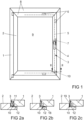
- figure 1 shows a window with a sash 2 that can be pivoted against a frame 1 and with other components.
- the components can be components of a connecting rod fitting 3 for selectively locking or unlocking the leaf 2 relative to the frame 1.
- the espagnolette fitting 3 has as further components a drive rod 5 that can be driven by a handle 4 for locking closures 6.
- the espagnolette fitting 3 can be a so-called turn-and-tilt fitting or rotary fitting.
- the handle 4 has a drive gear 7 for driving the connecting rod 5.
- the window also has components such as profile elements 8 or a disc element 9.
- the window also has an electronic data memory 10, in which data on the components of the window are contained. The data can be about the type, properties and act on the nature of the components. Article numbers and dimensions of the components can also be stored in the electronic data memory 10 .
- FIG. 12 shows an enlarged sectional illustration through a partial area of the window containing the data memory 10.
- FIG figure 1 along the line II - II, that the frame 1 has a recess 11 designed as a fitting groove for receiving the espagnolette fitting 3 .
- the electronic data memory 10 is arranged in a memory chip 12 fastened to the base of the recess 11 designed as a fitting groove.
- the recess 11 can also be produced by a bore and alternatively be arranged in the wing 2 .
- Figure 2b shows a further embodiment for the arrangement of the electronic data memory 10. This embodiment differs from that of FIG Figure 2a only in that the memory chip 12 with the data memory 10 is fixed in one on the surface of the frame, in an invisible place under a wing flap 18.
- the memory chip 12 can be glued or encapsulated on the surface, for example.
- Figure 2c shows a further embodiment for arranging the electronic data memory 10 on the window.
- the electronic data memory 10 forms a structural unit with the memory chip and with a faceplate 19 component of the espagnolette fitting 3 .
- the electronic data memory 10 is thus mounted on the window together with the components of the drive rod fitting.
- the data memory can also be arranged (not shown) on a frame-side locking part of the espagnolette fitting, preferably in a slot or in a recess in the area of the underside of the locking part or in an associated lining for profile adjustment, and is shaped and/or shaped there by the recess. or held in a non-positive manner or also glued or cast. If the frame-side locking part is always, for example, the tilting locking part of the espagnolette fitting, this also always defines the exact position of the data memory in the window.
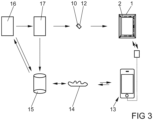
- FIG 3 shows a diagram for entering data and reading out the in the window figure 1 used data memory 10.
- data memory 10 can be read out and programmed by means of a reading device 13, such as a smartphone, or by means of a reading device.
- a reading device 13 such as a smartphone
- data can be read out about the existing components in the existing window or a service book can be kept and data entered.
- the data such as dimensions and insulation value of the pane element 9 component can be read out and the pane element 9 component can be reordered.
- the article number of the installed component can be read out and reordered.
- the readout device 13 is connected via a data network 14 to a cloud service with a database 15, for example of the manufacturer of the espagnolette fitting 3.
- This database 15 is always kept up to date by a data processing system 16 belonging to the manufacturer, so that the request for reordering is processed further.
- the data processing system 16 of the manufacturer of the components of the espagnolette fitting 3 is connected in the present example to a data processing system 17 of a window builder who mounted the memory chip 12 with the data memory 10 on or in the window during initial assembly.
- the database 15 is also maintained via the window manufacturer's data processing system 17 . For clarity, data streams are in figure 3 marked with arrows.
Landscapes
- Engineering & Computer Science (AREA)
- Civil Engineering (AREA)
- Structural Engineering (AREA)
- Management, Administration, Business Operations System, And Electronic Commerce (AREA)
- Storage Device Security (AREA)
Description
- Die Erfindung betrifft ein Fenster oder dergleichen mit einem gegen einen Rahmen schwenkbaren Flügel und mit einem elektronischen Datenspeicher, wobei der elektronische Datenspeicher mit dem Fenster eine bauliche Einheit bildet. Weiterhin betrifft die Erfindung ein Verfahren zur Führung einer Datenbank für Komponenten eines Fensters. Mit Fenster oder dergleichen sind vorliegend Fenster, wie Schiebe- oder Klappfenster aller Art, Fenstertüren oder Türen, welche aus mehreren Komponenten zusammengesetzt sind, gemeint.
- Aus der
DE 10 2006 023 812 A1 ist ein Verfahren zur Herstellung von Kunststoff-Fenstern bekannt geworden, bei dem einzelne Teile des Fensters mit mindestens einem Mikrochip und einer berührungslosen Empfangseinheit bestückten Transponder versehen werden. Damit kann zumindest ein nachfolgender Bearbeitungsvorgang in Habhängigkeit von den gespeicherten und ausgelesenen Informationen durchgeführt werden. Hierdurch sollen Fehlbearbeitungen vermieden werden. - Aus der
NL 2005 2129 C - Aus der
EP 1 801 328 A2 ist eine Verriegelungsanordnung für ein Fenster bekannt geworden, bei dem ein Transponder vorhanden ist. - Ein Datenspeicher für Fenster ist aus der
DE 10 2007 026 859 A1 bekannt. Bei diesem werden Daten des Fensters auf einem Server abgelegt. Der Server lässt sich über ein Datennetz abfragen. - Jedoch ist die Zuordnung von Daten zu einem einzelnen Fenster sehr schwierig, insbesondere wenn verschiedene Unternehmen, wie Fensterbauer, deren Zulieferer und Servicedienstleister, Leistungen erbringen. Sobald ein Fenster hergestellt ist, ist daher eine Rückverfolgung der verbauten Beschläge, Profile, Dichtungen oder Scheiben/Füllungen nur mit großem manuellem Aufwand möglich.
- Der Erfindung liegt das Problem zugrunde, ein Fenster oder dergleichen der eingangs genannten Art so weiter zu bilden, dass sich eine Rückverfolgung der einzelnen Komponenten sehr einfach gestaltet. Weiterhin soll ein besonders einfaches Verfahren zur Führung einer Datenbank für Komponenten eines Fensters geschaffen werden.
- Dieses Problem wird erfindungsgemäß dadurch gelöst, dass der elektronische Datenspeicher Daten über Komponenten des Fensters enthält und am Fenster auslesbar ist.
- Durch diese Gestaltung lässt sich in dem elektronischen Datenspeicher ein elektronisches Serviceheft hinterlegen, in dem sämtliche Daten des Profils, der Beschlagteile, des eingesetzten Glases und dergleichen hinterlegt sind. Ebenso ist es möglich, wichtige Daten für den Fenstermonteur zu hinterlegen, die er auf der Baustelle benötigt. Dies können zum einen die Zuordnung des mindesten einen Flügels zum Rahmen und zum anderen der Einbauort des Rahmens sein. So ist eine einfache Zuordnung zwischen Rahmen und Flügel gegeben und der Fenstermonteur kann zumindest den beim Aufmaß erfassten Einbauort des Rahmens, und damit des Fensters, einfach und sicher zuordnen. Dies erleichtert den logistischen Aufwand insbesondere auf Baustellen mit einer großen Anzahl unterschiedlicher Fenster sehr. Durch die räumliche Zuordnung des elektronischen Datenspeichers an dem Fenster wird eine aufwändige Suche nach Daten oder eine Verwechslungsgefahr verschiedener Fenster zuverlässig vermieden. Eine aufwändige Suche oder Nachmessungen der Bauteile des Fensters lassen sich dank der Erfindung vermeiden. Selbstverständlich können die Daten zusätzlich in einem zentralen Datenspeicher, beispielsweise bei einem Cloud-Dienstleister (kurz Cloud), abgespeichert werden, um Möglichkeiten des Fernzugriffs auf die Daten zu ermöglichen. Vorzugsweise ist der elektronische Datenspeicher jeweils an derselben Stelle des Fensters angeordnet, so dass sich das Auslesen der Daten besonders einfach gestaltet.
- Ein elektronisches Serviceheft lässt sich in dem elektronischen Datenspeicher besonders einfach führen, wenn der elektronische Datenspeicher beschreibbar ist. So ist über den Datenspeicher als auch über die Cloud jederzeit ersichtlich, wer was gemacht hat. Das Speichern bestimmter Daten, z.B. der Zeitpunkt des Auslesens und wer ausgelesen hat, kann automatisch erfolgen. Auch Fotos und Videos können eingelesen werden, um eine lückenlose Dokumentation, z.B. des Einbaus, zu erhalten.
- Die Anordnung des elektronischen Datenspeichers gestaltet sich gemäß einer anderen vorteilhaften Weiterbildung der Erfindung besonders einfach, wenn der Rahmen oder der Flügel eine Ausnehmung zur Aufnahme des elektronischen Datenspeichers hat.
- Der elektronische Datenspeicher lässt sich gemäß einer anderen vorteilhaften Weiterbildung der Erfindung einfach nachträglich montieren und demontieren, wenn der elektronische Datenspeicher auf der Oberfläche des Rahmens oder des Flügels befestigt ist. Als Befestigung eignet sich zum Beispiel eine stoffschlüssige Befestigung, wie ein Verkleben oder Vergießen, oder eine kraftschlüssige Befestigung durch Verschrauben oder Vernieten.
- Der Montageaufwand zur Montage des elektronischen Speichers am Fenster lässt sich gemäß einer anderen vorteilhaften Weiterbildung der Erfindung besonders gering halten, wenn der elektronische Datenspeicher mit einer Komponente eines Treibstangenbeschlages eine bauliche Einheit bildet. Damit kann der elektronische Datenspeicher zusammen mit einer Komponente des Treibstangenbeschlages, wie beispielsweise einem rahmenseitigen Schließteil, einer Eckumlenkung, einer Stulpschiene oder einem Kantengetriebe montiert werden. Ein weiterer Bearbeitungsschritt zur Montage des elektronischen Datenspeichers am Fenster lässt sich dank der Erfindung vermeiden. Der Datenspeicher wird bei der Montage an einem rahmenseitigen Schließteil des Treibstangenbeschlages bevorzugt in einem Schlitz oder in eine Ausnehmung im Bereich der Unterseite des Schließteils oder in einer dazugehörigen Unterfütterung zur Profilanpassung angeordnet und wird dort durch die Ausnehmung form- und/oder kraftschlüssig gehalten oder ebenfalls verklebt oder vergossen. Wenn das rahmenseitige Schließteil immer z.B. das Kipp-Schließteil des Treibstangenbeschlages ist, ist dadurch auch immer die genaue Lage des Datenspeichers im Fenster definiert.
- Das Auslesen gestaltet sich gemäß einer anderen vorteilhaften Weiterbildung der Erfindung besonders komfortabel, wenn ein Datenaustausch mit dem elektronischen Datenspeicher kontaktlos gestaltet ist. Weiterhin lassen sich hierdurch einfach Daten in den elektronischen Datenspeicher eingeben.
- Der Datenspeicher gestaltet sich gemäß einer anderen vorteilhaften Weiterbildung der Erfindung konstruktiv besonders einfach, wenn der elektronische Datenspeicher als passiver Transponder ausgebildet ist. Weiterhin benötigt ein solcher passiver Transponder keine eigene Stromversorgung, weil dieser beim Auslesen durch Induktion mit elektrischem Strom versorgt wird.
- Der elektronische Datenspeicher lässt sich gemäß einer anderen vorteilhaften Weiterbildung der Erfindung aus vorhandenen Standardbauteilen zusammenstellen, wenn der elektronische Datenspeicher in einem RFID-, RFID mit NFC Funktion- oder EPC-Speicherchip angeordnet ist. Als Technologie für den Speicherchip eignen sich vorzugsweise RFID-Chips mit NFC Funktion (Mifare Desfire) auf 13,56 MHz Basis oder Electronic Product Code (EPC) Transponder im 868 MHz Band. Speicherchips mit NFC-Funktion haben den Vorteil, mittels eines Smartphones ausgelesen werden zu können. Speicherchips mit EPC Transponder haben den Vorteil einer hohen Lesereichweite und besonders geringer Herstellungskosten bei großen Stückzahlen, erfordern aber eine separate Auslesehardwareeinheit und sind daher für den Einsatz im Glasfalzbereich, z.B. bei festverglasten Fenstern ohne Treibstangenbeschlag besonders vorteilhaft.
- Der elektronische Datenspeicher ermöglicht gemäß einer anderen vorteilhaften Weiterbildung der Erfindung Vereinfachungen von Servicearbeiten, wenn der elektronische Datenspeicher Herstellerdaten und Maße der Komponenten des Fensters enthält. Durch diese Gestaltung kann beispielsweise ein Servicetechniker durch Auslesen des Datenspeichers ein benötigtes Ersatzteil des Beschlages mit Artikelnummer oder Ersatz bei Glasbruch einfach durch Auslesen des Datenspeichers ermitteln und eine Bestellung oder Abfrage eines Lagerbestandes weiterleiten. Die Herstellerdaten und Maße der Komponenten des Fensters können bevorzugt in Form von Stücklisten hinterlegt werden.
- Das zweitgenannte Problem, nämlich die Schaffung eines Verfahrens zur Führung einer Datenbank für Komponenten eines Fensters, wird erfindungsgemäß dadurch gelöst, dass Daten der Komponenten des Fensters nach der Fertigstellung des Fensters in einem am Fenster befindlichen elektronischen Datenspeicher abgespeichert werden.
- Durch diese Gestaltung sind die Daten dem Fenster räumlich zugeordnet. Damit können verschiedene Hersteller und Dienstleister die Daten des Fensters in dem elektronischen Datenspeicher eingeben und ggf. abrufen. Durch die räumliche Zuordnung des Datenspeichers an dem Fenster ist die Gefahr von Verwechselungen besonders gering und das Verfahren zur Führung der Datenbank gestaltet sich besonders einfach. Das Abspeichern der Daten der Komponenten des Fensters erfolgt vorzugsweise durch den Fensterbauer, da dem Fensterbauer bei dem Zeitpunkt der Fensterherstellung alle Daten zum Fenster vorliegen. Diese Daten liegen üblicherweise auch schon in elektronischer Form vor. Der Fensterbauer erhält diese Basisdaten zu den einzelnen Komponenten des Fensters in elektronischer Form von seinen Lieferanten, bzw. durch die Eingabe der Eckdaten des Fensters in die Fensterbausoftware. Die Übermittlung dieser elektronischen Daten aus der Fensterbausoftware auf den Datenspeicher kann zu diesem Zeitpunkt einfach über eine Schnittstelle erfolgen.
- In der Regel benötigen verschiedene Personen unterschiedliche Daten. Beispielsweise könnte der Besitzer Daten des Herstellers und einer Wärmedämmklasse des Fensters benötigen, während ein Glaser Daten zu Abmessungen und Art des Glases und ein Servicetechniker Daten des eingesetzten Beschlages benötigt. Eine auf die auslesende Zielgruppe gerichtete Auswahl von Daten lässt sich gemäß einer anderen vorteilhaften Weiterbildung der Erfindung einfach ausgeben, wenn ein Auslesen der Daten aus dem elektronischen Datenspeicher nach einer Abfrage der Berechtigung des Auslesenden erfolgt und dass in Abhängigkeit von der Berechtigung des Auslesenden ein Teilbereich der Daten ausgegeben wird. Durch diese Gestaltung lassen sich schützenswerte Informationen unterschiedlicher Personen voneinander abgrenzen. Hierfür eignet sich beispielsweise eine Technik, die das Beschreiben und Auslesen eines Speicherchips bestimmten Personen vorenthält. Diese unterschiedlichen Berechtigungen lassen sich für verschiedene Anspruchsgruppen wie Endanwender, Objekteigentümer, Fensterinstallateur, ServiceTechniker, Fensterbauer, Fensterhändler, Baubeschlaghändler und Baubeschlaghersteller unterteilen. Für das Auslesen der Daten aus der Cloud ist ebenso die Berechtigung des Auslesenden erforderlich.
- Die Erfindung lässt zahlreiche Ausführungsformen zu. Zur weiteren Verdeutlichung ihres Grundprinzips sind mehrere davon in der Zeichnung dargestellt und werden nachfolgend beschrieben. Diese zeigt in
- Fig. 1
- ein erfindungsgemäßes Fenster,
- Fig. 2a
- vergrößert ein Teilbereich des Fensters aus
Figur 1 mit einer ersten Ausführungsform zur Anordnung eines Datenspeichers, - Fig. 2b
- eine zweite Ausführungsform zur Anordnung des Datenspeichers,
- Fig. 2c
- eine dritte Ausführungsform zur Anordnung des Datenspeichers,
- Fig. 3
- schematisch ein Schaubild zum Einpflegen und Auslesen des Datenspeichers.
-
Figur 1 zeigt ein Fenster mit einem gegen einen Rahmen 1 schwenkbaren Flügel 2 und mit weiteren Komponenten. Bei den Komponenten kann es sich um Bauteile eines Treibstangenbeschlages 3 zur wahlweisen Verriegelung oder Entriegelung des Flügels 2 gegenüber dem Rahmen 1 handeln. Der Treibstangenbeschlag 3 hat als weitere Komponenten eine von einer Handhabe 4 antreibbare Treibstange 5 zur Verriegelung von Verschlüssen 6. Bei dem Treibstangenbeschlag 3 kann es sich um einen so genannten Dreh-Kipp-Beschlag oder Dreh-Beschlag handeln. Die Handhabe 4 hat ein Antriebsgetriebe 7 zum Antrieb der Treibstange 5. Weiterhin hat das Fenster Komponenten wie Profilelemente 8 oder ein Scheibenelement 9. Weiterhin hat das Fenster einen elektronischen Datenspeicher 10, in welchem Daten der Komponenten des Fensters enthalten sind. Bei den Daten kann es sich um solche zur Art, Eigenschaften und Beschaffenheit der Komponenten handeln. Ebenso können Artikelnummern und Abmessungen der Komponenten in dem elektronischen Datenspeicher 10 abgespeichert sein. -
Figur 2a zeigt in einer vergrößerten Schnittdarstellung durch einen den Datenspeicher 10 aufweisenden Teilbereich des Fensters ausFigur 1 entlang der Linie II - II, dass der Rahmen 1 eine als Beschlagnut ausgebildete Ausnehmung 11 zur Aufnahme des Treibstangenbeschlages 3 hat. Der elektronische Datenspeicher 10 ist in diesem Ausführungsbeispiel in einem am Grund der als Beschlagnut ausgebildeten Ausnehmung 11 befestigten Speicherchip 12 angeordnet. In einer alternativen Ausführungsform kann die Ausnehmung 11 auch durch eine Bohrung erzeugt sein und alternativ im Flügel 2 angeordnet sein. -
Figur 2b zeigt eine weitere Ausführungsform zur Anordnung des elektronischen Datenspeichers 10. Diese Ausführungsform unterscheidet sich von der ausFigur 2a nur dadurch, dass der Speicherchip 12 mit dem Datenspeicher 10 in einem auf der Oberfläche des Rahmens, an einer unsichtbaren Stelle unter einem Flügelüberschlag 18 befestigt ist. Der Speicherchip 12 kann beispielsweise auf der Oberfläche aufgeklebt oder vergossen sein. -
Figur 2c zeigt eine weitere Ausführungsform zur Anordnung des elektronischen Datenspeichers 10 am Fenster. Bei dieser Ausführungsform bildet der elektronische Datenspeicher 10 mit dem Speicherchip und mit einer als Stulpschiene 19 ausgebildeten Komponente des Treibstangenbeschlages 3 eine bauliche Einheit. Damit wird der elektronische Datenspeicher 10 zusammen mit den Komponenten des Treibstangenbeschlags am Fenster montiert. Der Datenspeicher kann aber auch an einem rahmenseitigen Schließteil des Treibstangenbeschlages, bevorzugt in einem Schlitz oder in eine Ausnehmung im Bereich der Unterseite des Schließteils oder in einer dazugehörigen Unterfütterung zur Profilanpassung, angeordnet werden (nicht dargestellt) und wird dort durch die Ausnehmung form- und/oder kraftschlüssig gehalten oder ebenfalls verklebt oder vergossen. Wenn das rahmenseitige Schließteil immer z.B. das Kipp-Schließteil des Treibstangenbeschlages ist, ist dadurch auch immer die genaue Lage des Datenspeichers im Fenster definiert. -
Figur 3 zeigt ein Schaubild zum Einpflegen von Daten und zum Auslesen des in das Fenster ausFigur 1 eingesetzten Datenspeichers 10. Der im Fenster montierte elektronische Datenspeicher 10 lässt sich je nach Art des Datenspeichers 10 mittels eines Auslesegeräts 13, wie beispielsweise einem Smartphone oder mittels eines Lesegerätes auslesen und programmieren. Damit können bei bestehendem Fenster Daten über die vorhandenen Komponenten ausgelesen werden oder ein Servicebuch geführt und Daten eingegeben werden. Damit können beispielsweise bei Glasbruch, die Daten, wie Abmessungen und Dämmwert der Komponente Scheibenelement 9 ausgelesen und die Komponente Scheibenelement 9 nachbestellt werden. Bei einem Defekt einer Komponente des Treibstangenbeschlages 3 lässt sich im einfachsten Fall die Artikelnummer der montierten Komponente auslesen und nachbestellen. - Zur Nachbestellung ist das Auslesegerät 13 über ein Datennetz 14 mit einer Cloud-Dienstleistung mit einer Datenbank 15, beispielsweise des Herstellers des Treibstangenbeschlages 3 verbunden. Diese Datenbank 15 wird von einer Datenverarbeitungsanlage 16 des Herstellers immer auf dem aktuellen Stand gehalten, so dass die Anfrage zur Nachbestellung weiter verarbeitet wird. Die Datenverarbeitungsanlage 16 des Herstellers der Komponenten des Treibstangenbeschlages 3 ist im vorliegenden Beispiel mit einer Datenverarbeitungsanlage 17 eines Fensterbauers verbunden, der bei der Erstmontage den Speicherchip 12 mit dem Datenspeicher 10 am oder im Fenster montiert. Über die Datenverarbeitungsanlage 17 des Fensterbauers wird die Datenbank 15 ebenfalls gepflegt. Zur Verdeutlichung sind Datenströme in
Figur 3 mit Pfeilen gekennzeichnet.
Claims (11)
- Fenster oder dergleichen mit einem Rahmen (1), mit einem gegen den Rahmen (1) schwenkbaren Flügel (2) und mit einem elektronischen Datenspeicher (10), wobei der elektronische Datenspeicher (10) mit dem Fenster eine bauliche Einheit bildet, dadurch gekennzeichnet, dass der elektronische Datenspeicher (10) Daten über Komponenten des Fensters enthält und am Fenster auslesbar ist.
- Fenster oder dergleichen nach Anspruch 1, dadurch gekennzeichnet, dass der elektronische Datenspeicher (10) beschreibbar ist.
- Fenster oder dergleichen nach Anspruch 1, dadurch gekennzeichnet, dass der Rahmen (1) oder der Flügel (2) eine Ausnehmung (11) zur Aufnahme des elektronischen Datenspeichers (10) hat.
- Fenster oder dergleichen nach Anspruch 1, dadurch gekennzeichnet, dass der elektronische Datenspeicher (10) auf der Oberfläche des Rahmens (1) oder des Flügels (2) befestigt ist.
- Fenster oder dergleichen nach Anspruch 1, dadurch gekennzeichnet, dass der elektronische Datenspeicher (10) mit einer Komponente eines Treibstangenbeschlages (3) eine bauliche Einheit bildet.
- Fenster oder dergleichen nach einem der vorhergehenden Ansprüche, dadurch gekennzeichnet, dass ein Datenaustausch mit dem elektronischen Datenspeicher (10) kontaktlos gestaltet ist.
- Fenster oder dergleichen nach einem der vorhergehenden Ansprüche, dadurch gekennzeichnet, dass der elektronische Datenspeicher (10) als passiver Transponder ausgebildet ist.
- Fenster oder dergleichen nach einem der vorhergehenden Ansprüche, dadurch gekennzeichnet, dass der elektronische Datenspeicher (10) in einem RFID-, RFID mit NFC Funktion- oder EPC-Speicherchip (12) angeordnet ist.
- Fenster oder dergleichen nach einem der vorhergehenden Ansprüche, dadurch gekennzeichnet, dass der elektronische Datenspeicher (10) Herstellerdaten und Maße der Komponenten des Fensters enthält.
- Verfahren zur Führung einer Datenbank für Komponenten eines Fensters, dadurch gekennzeichnet, dass Daten der Komponenten des Fensters nach der Fertigstellung des Fensters in einem am Fenster befindlichen elektronischen Datenspeicher (10) abgespeichert werden.
- Verfahren nach Anspruch 10, dadurch gekennzeichnet, dass ein Auslesen der Daten aus dem elektronischen Datenspeicher (10) nach einer Abfrage der Berechtigung des Auslesenden erfolgt und dass in Abhängigkeit von der Berechtigung des Auslesenden ein Teilbereich der Daten ausgegeben wird.
Applications Claiming Priority (1)
| Application Number | Priority Date | Filing Date | Title |
|---|---|---|---|
| DE102018202495.2A DE102018202495A1 (de) | 2018-02-19 | 2018-02-19 | Fenster oder dergleichen und Verfahren zur Führung einer Datenbank für Komponenten eines Fensters |
Publications (2)
| Publication Number | Publication Date |
|---|---|
| EP3527769A1 EP3527769A1 (de) | 2019-08-21 |
| EP3527769B1 true EP3527769B1 (de) | 2023-07-12 |
Family
ID=65324273
Family Applications (1)
| Application Number | Title | Priority Date | Filing Date |
|---|---|---|---|
| EP19155578.8A Active EP3527769B1 (de) | 2018-02-19 | 2019-02-05 | Fenster oder dergleichen und verfahren zur führung einer datenbank für komponenten eines fensters |
Country Status (4)
| Country | Link |
|---|---|
| EP (1) | EP3527769B1 (de) |
| DE (1) | DE102018202495A1 (de) |
| ES (1) | ES2955068T3 (de) |
| PL (1) | PL3527769T3 (de) |
Family Cites Families (4)
| Publication number | Priority date | Publication date | Assignee | Title |
|---|---|---|---|---|
| DE102005000182A1 (de) * | 2005-12-13 | 2007-06-21 | Aug. Winkhaus Gmbh & Co. Kg | Überwachbare Verriegelungsanordnung für ein Fenster, eine Türe oder dergleichen und Verfahren zum Betrieb einer solchen Verriegelungsanordnung |
| DE102006023812A1 (de) * | 2006-05-20 | 2007-11-22 | Willi Stürtz Maschinenbau GmbH | Verfahren zur Herstellung von Kunststoff-Fenstern |
| DE102007026859A1 (de) | 2007-06-11 | 2008-07-10 | Vbh Holding Aktiengesellschaft | Verfahren und Anorndung zur automatischen Leistungsfähigkeitsbeurteilung eines komplexen Gegenstands |
| NL2005129C2 (nl) * | 2010-07-22 | 2012-01-24 | Mill Panel B V | Paneel, deur gevormd door een dergelijk paneel en werkwijze voor het van identificatiemiddelen voorzien van een dergelijk paneel. |
-
2018
- 2018-02-19 DE DE102018202495.2A patent/DE102018202495A1/de not_active Withdrawn
-
2019
- 2019-02-05 ES ES19155578T patent/ES2955068T3/es active Active
- 2019-02-05 PL PL19155578.8T patent/PL3527769T3/pl unknown
- 2019-02-05 EP EP19155578.8A patent/EP3527769B1/de active Active
Also Published As
| Publication number | Publication date |
|---|---|
| ES2955068T3 (es) | 2023-11-28 |
| PL3527769T3 (pl) | 2023-09-04 |
| EP3527769A1 (de) | 2019-08-21 |
| DE102018202495A1 (de) | 2019-08-22 |
Similar Documents
| Publication | Publication Date | Title |
|---|---|---|
| DE102008016516B3 (de) | Zugangskontrollvorrichtung | |
| DE102008022276A1 (de) | Sensorsystem bestehend aus einem elektronischen Kompass und einen Rotationssensor zur Bestimmung des Verschluss- und Verriegelungszustandes | |
| EP3103057A1 (de) | Verfahren zum zugang zu einem physisch abgesicherten rack sowie computernetz-infrastruktur | |
| EP1877641A1 (de) | Mehrfachfensterscheibe mit einem elektrischen einbauelement | |
| EP0809835B1 (de) | Einrichtung zum erfassen und auswerten von zeit-und/oder betriebsdaten | |
| DE102014105388B4 (de) | Türflügel einer Tür | |
| EP1282846B2 (de) | Smartcards zur authentisierungsprüfung in maschinensteuerungen | |
| EP3527769B1 (de) | Fenster oder dergleichen und verfahren zur führung einer datenbank für komponenten eines fensters | |
| AT510842B1 (de) | Türvorrichtung für ein tier | |
| DE102020111660A1 (de) | Steckverbinder mit Informationsgeber | |
| DE69404207T2 (de) | System zur Zentralisierung von verschiedenartigen Informationen, die mit einer Identität verbunden sind und an örtlich verbreiteten Pfosten gesammelt und zeitgestempelt werden | |
| WO2021156344A1 (de) | Einlageelement für einen kunststoffschalungspaneelrahmen | |
| DE102014105601A1 (de) | Rahmen für ein Fenster oder eine Tür | |
| EP4195171A1 (de) | Werkzeugausgabesystem, verfahren zur verwaltung und ausgabe von werkzeugen und verwendung eines elektronischen schlosses | |
| DE19708262A1 (de) | Einsetzbares und verriegelbares Fenster- oder Tür-Element | |
| DE29506799U1 (de) | Vorrichtung an einem Türschloß | |
| AT519097A4 (de) | Schwenktür | |
| DE102006023812A1 (de) | Verfahren zur Herstellung von Kunststoff-Fenstern | |
| EP3091513A1 (de) | Kommunikationseinrichtung mit einer stationären leseeinrichtung | |
| DE102015109789A1 (de) | Zugangskontrollsystem zur Zugangskontrolle zu einem Bereich und Verfahren zur Inbetriebnahme eines Zugangskontrollsystems zur Zugangskontrolle zu einem Bereich | |
| EP3298464B1 (de) | Fernwartungssystem mit einer mobilen fernwartungseinheit und ein konfigurationsverfahren | |
| DE10023198B4 (de) | System und Verfahren zur Auslesung und Abrechnung von Verbrauchswerten einer Liegenschaft | |
| DE202014102914U1 (de) | Antriebssystem für ein Tor | |
| WO2006056085A1 (de) | Zutrittskontrollanlage mit mehreren schliessvorrichtungen | |
| EP1811112A2 (de) | Scheibenverklebung |
Legal Events
| Date | Code | Title | Description |
|---|---|---|---|
| PUAI | Public reference made under article 153(3) epc to a published international application that has entered the european phase |
Free format text: ORIGINAL CODE: 0009012 |
|
| STAA | Information on the status of an ep patent application or granted ep patent |
Free format text: STATUS: THE APPLICATION HAS BEEN PUBLISHED |
|
| AK | Designated contracting states |
Kind code of ref document: A1 Designated state(s): AL AT BE BG CH CY CZ DE DK EE ES FI FR GB GR HR HU IE IS IT LI LT LU LV MC MK MT NL NO PL PT RO RS SE SI SK SM TR |
|
| AX | Request for extension of the european patent |
Extension state: BA ME |
|
| STAA | Information on the status of an ep patent application or granted ep patent |
Free format text: STATUS: REQUEST FOR EXAMINATION WAS MADE |
|
| 17P | Request for examination filed |
Effective date: 20200123 |
|
| RBV | Designated contracting states (corrected) |
Designated state(s): AL AT BE BG CH CY CZ DE DK EE ES FI FR GB GR HR HU IE IS IT LI LT LU LV MC MK MT NL NO PL PT RO RS SE SI SK SM TR |
|
| GRAP | Despatch of communication of intention to grant a patent |
Free format text: ORIGINAL CODE: EPIDOSNIGR1 |
|
| STAA | Information on the status of an ep patent application or granted ep patent |
Free format text: STATUS: GRANT OF PATENT IS INTENDED |
|
| INTG | Intention to grant announced |
Effective date: 20230306 |
|
| GRAS | Grant fee paid |
Free format text: ORIGINAL CODE: EPIDOSNIGR3 |
|
| GRAA | (expected) grant |
Free format text: ORIGINAL CODE: 0009210 |
|
| STAA | Information on the status of an ep patent application or granted ep patent |
Free format text: STATUS: THE PATENT HAS BEEN GRANTED |
|
| P01 | Opt-out of the competence of the unified patent court (upc) registered |
Effective date: 20230516 |
|
| AK | Designated contracting states |
Kind code of ref document: B1 Designated state(s): AL AT BE BG CH CY CZ DE DK EE ES FI FR GB GR HR HU IE IS IT LI LT LU LV MC MK MT NL NO PL PT RO RS SE SI SK SM TR |
|
| REG | Reference to a national code |
Ref country code: CH Ref legal event code: EP |
|
| REG | Reference to a national code |
Ref country code: DE Ref legal event code: R096 Ref document number: 502019008446 Country of ref document: DE |
|
| REG | Reference to a national code |
Ref country code: IE Ref legal event code: FG4D Free format text: LANGUAGE OF EP DOCUMENT: GERMAN |
|
| REG | Reference to a national code |
Ref country code: NL Ref legal event code: FP |
|
| REG | Reference to a national code |
Ref country code: SK Ref legal event code: T3 Ref document number: E 42106 Country of ref document: SK |
|
| REG | Reference to a national code |
Ref country code: LT Ref legal event code: MG9D |
|
| REG | Reference to a national code |
Ref country code: ES Ref legal event code: FG2A Ref document number: 2955068 Country of ref document: ES Kind code of ref document: T3 Effective date: 20231128 |
|
| PG25 | Lapsed in a contracting state [announced via postgrant information from national office to epo] |
Ref country code: GR Free format text: LAPSE BECAUSE OF FAILURE TO SUBMIT A TRANSLATION OF THE DESCRIPTION OR TO PAY THE FEE WITHIN THE PRESCRIBED TIME-LIMIT Effective date: 20231013 |
|
| PG25 | Lapsed in a contracting state [announced via postgrant information from national office to epo] |
Ref country code: IS Free format text: LAPSE BECAUSE OF FAILURE TO SUBMIT A TRANSLATION OF THE DESCRIPTION OR TO PAY THE FEE WITHIN THE PRESCRIBED TIME-LIMIT Effective date: 20231112 |
|
| PG25 | Lapsed in a contracting state [announced via postgrant information from national office to epo] |
Ref country code: SE Free format text: LAPSE BECAUSE OF FAILURE TO SUBMIT A TRANSLATION OF THE DESCRIPTION OR TO PAY THE FEE WITHIN THE PRESCRIBED TIME-LIMIT Effective date: 20230712 Ref country code: RS Free format text: LAPSE BECAUSE OF FAILURE TO SUBMIT A TRANSLATION OF THE DESCRIPTION OR TO PAY THE FEE WITHIN THE PRESCRIBED TIME-LIMIT Effective date: 20230712 Ref country code: PT Free format text: LAPSE BECAUSE OF FAILURE TO SUBMIT A TRANSLATION OF THE DESCRIPTION OR TO PAY THE FEE WITHIN THE PRESCRIBED TIME-LIMIT Effective date: 20231113 Ref country code: NO Free format text: LAPSE BECAUSE OF FAILURE TO SUBMIT A TRANSLATION OF THE DESCRIPTION OR TO PAY THE FEE WITHIN THE PRESCRIBED TIME-LIMIT Effective date: 20231012 Ref country code: LV Free format text: LAPSE BECAUSE OF FAILURE TO SUBMIT A TRANSLATION OF THE DESCRIPTION OR TO PAY THE FEE WITHIN THE PRESCRIBED TIME-LIMIT Effective date: 20230712 Ref country code: LT Free format text: LAPSE BECAUSE OF FAILURE TO SUBMIT A TRANSLATION OF THE DESCRIPTION OR TO PAY THE FEE WITHIN THE PRESCRIBED TIME-LIMIT Effective date: 20230712 Ref country code: IS Free format text: LAPSE BECAUSE OF FAILURE TO SUBMIT A TRANSLATION OF THE DESCRIPTION OR TO PAY THE FEE WITHIN THE PRESCRIBED TIME-LIMIT Effective date: 20231112 Ref country code: HR Free format text: LAPSE BECAUSE OF FAILURE TO SUBMIT A TRANSLATION OF THE DESCRIPTION OR TO PAY THE FEE WITHIN THE PRESCRIBED TIME-LIMIT Effective date: 20230712 Ref country code: GR Free format text: LAPSE BECAUSE OF FAILURE TO SUBMIT A TRANSLATION OF THE DESCRIPTION OR TO PAY THE FEE WITHIN THE PRESCRIBED TIME-LIMIT Effective date: 20231013 Ref country code: FI Free format text: LAPSE BECAUSE OF FAILURE TO SUBMIT A TRANSLATION OF THE DESCRIPTION OR TO PAY THE FEE WITHIN THE PRESCRIBED TIME-LIMIT Effective date: 20230712 |
|
| REG | Reference to a national code |
Ref country code: DE Ref legal event code: R097 Ref document number: 502019008446 Country of ref document: DE |
|
| PG25 | Lapsed in a contracting state [announced via postgrant information from national office to epo] |
Ref country code: SM Free format text: LAPSE BECAUSE OF FAILURE TO SUBMIT A TRANSLATION OF THE DESCRIPTION OR TO PAY THE FEE WITHIN THE PRESCRIBED TIME-LIMIT Effective date: 20230712 Ref country code: RO Free format text: LAPSE BECAUSE OF FAILURE TO SUBMIT A TRANSLATION OF THE DESCRIPTION OR TO PAY THE FEE WITHIN THE PRESCRIBED TIME-LIMIT Effective date: 20230712 Ref country code: EE Free format text: LAPSE BECAUSE OF FAILURE TO SUBMIT A TRANSLATION OF THE DESCRIPTION OR TO PAY THE FEE WITHIN THE PRESCRIBED TIME-LIMIT Effective date: 20230712 Ref country code: DK Free format text: LAPSE BECAUSE OF FAILURE TO SUBMIT A TRANSLATION OF THE DESCRIPTION OR TO PAY THE FEE WITHIN THE PRESCRIBED TIME-LIMIT Effective date: 20230712 |
|
| PLBE | No opposition filed within time limit |
Free format text: ORIGINAL CODE: 0009261 |
|
| STAA | Information on the status of an ep patent application or granted ep patent |
Free format text: STATUS: NO OPPOSITION FILED WITHIN TIME LIMIT |
|
| 26N | No opposition filed |
Effective date: 20240415 |
|
| PG25 | Lapsed in a contracting state [announced via postgrant information from national office to epo] |
Ref country code: SI Free format text: LAPSE BECAUSE OF FAILURE TO SUBMIT A TRANSLATION OF THE DESCRIPTION OR TO PAY THE FEE WITHIN THE PRESCRIBED TIME-LIMIT Effective date: 20230712 |
|
| PG25 | Lapsed in a contracting state [announced via postgrant information from national office to epo] |
Ref country code: MC Free format text: LAPSE BECAUSE OF FAILURE TO SUBMIT A TRANSLATION OF THE DESCRIPTION OR TO PAY THE FEE WITHIN THE PRESCRIBED TIME-LIMIT Effective date: 20230712 |
|
| REG | Reference to a national code |
Ref country code: CH Ref legal event code: PL |
|
| PG25 | Lapsed in a contracting state [announced via postgrant information from national office to epo] |
Ref country code: LU Free format text: LAPSE BECAUSE OF NON-PAYMENT OF DUE FEES Effective date: 20240205 |
|
| PG25 | Lapsed in a contracting state [announced via postgrant information from national office to epo] |
Ref country code: CH Free format text: LAPSE BECAUSE OF NON-PAYMENT OF DUE FEES Effective date: 20240229 |
|
| PG25 | Lapsed in a contracting state [announced via postgrant information from national office to epo] |
Ref country code: LU Free format text: LAPSE BECAUSE OF NON-PAYMENT OF DUE FEES Effective date: 20240205 Ref country code: CH Free format text: LAPSE BECAUSE OF NON-PAYMENT OF DUE FEES Effective date: 20240229 |
|
| PG25 | Lapsed in a contracting state [announced via postgrant information from national office to epo] |
Ref country code: BG Free format text: LAPSE BECAUSE OF FAILURE TO SUBMIT A TRANSLATION OF THE DESCRIPTION OR TO PAY THE FEE WITHIN THE PRESCRIBED TIME-LIMIT Effective date: 20230712 |
|
| REG | Reference to a national code |
Ref country code: DE Ref legal event code: R081 Ref document number: 502019008446 Country of ref document: DE Owner name: AUG. WINKHAUS SE & CO. KG, DE Free format text: FORMER OWNER: AUG. WINKHAUS GMBH & CO. KG, 48291 TELGTE, DE Ref country code: DE Ref legal event code: R081 Ref document number: 502019008446 Country of ref document: DE Owner name: AUG. WINKHAUS SE, DE Free format text: FORMER OWNER: AUG. WINKHAUS GMBH & CO. KG, 48291 TELGTE, DE |
|
| PG25 | Lapsed in a contracting state [announced via postgrant information from national office to epo] |
Ref country code: BG Free format text: LAPSE BECAUSE OF FAILURE TO SUBMIT A TRANSLATION OF THE DESCRIPTION OR TO PAY THE FEE WITHIN THE PRESCRIBED TIME-LIMIT Effective date: 20230712 |
|
| PG25 | Lapsed in a contracting state [announced via postgrant information from national office to epo] |
Ref country code: CY Free format text: LAPSE BECAUSE OF FAILURE TO SUBMIT A TRANSLATION OF THE DESCRIPTION OR TO PAY THE FEE WITHIN THE PRESCRIBED TIME-LIMIT; INVALID AB INITIO Effective date: 20190205 |
|
| REG | Reference to a national code |
Ref country code: DE Ref legal event code: R081 Ref document number: 502019008446 Country of ref document: DE Owner name: AUG. WINKHAUS SE, DE Free format text: FORMER OWNER: AUG. WINKHAUS SE & CO. KG, 48291 TELGTE, DE |
|
| PG25 | Lapsed in a contracting state [announced via postgrant information from national office to epo] |
Ref country code: HU Free format text: LAPSE BECAUSE OF FAILURE TO SUBMIT A TRANSLATION OF THE DESCRIPTION OR TO PAY THE FEE WITHIN THE PRESCRIBED TIME-LIMIT; INVALID AB INITIO Effective date: 20190205 |
|
| PG25 | Lapsed in a contracting state [announced via postgrant information from national office to epo] |
Ref country code: TR Free format text: LAPSE BECAUSE OF FAILURE TO SUBMIT A TRANSLATION OF THE DESCRIPTION OR TO PAY THE FEE WITHIN THE PRESCRIBED TIME-LIMIT Effective date: 20230712 |
|
| PGFP | Annual fee paid to national office [announced via postgrant information from national office to epo] |
Ref country code: NL Payment date: 20260218 Year of fee payment: 8 |
|
| PGFP | Annual fee paid to national office [announced via postgrant information from national office to epo] |
Ref country code: GB Payment date: 20260219 Year of fee payment: 8 |
|
| PGFP | Annual fee paid to national office [announced via postgrant information from national office to epo] |
Ref country code: ES Payment date: 20260319 Year of fee payment: 8 |
|
| PGFP | Annual fee paid to national office [announced via postgrant information from national office to epo] |
Ref country code: DE Payment date: 20260217 Year of fee payment: 8 Ref country code: IE Payment date: 20260218 Year of fee payment: 8 |
|
| PGFP | Annual fee paid to national office [announced via postgrant information from national office to epo] |
Ref country code: AT Payment date: 20260216 Year of fee payment: 8 |
|
| PGFP | Annual fee paid to national office [announced via postgrant information from national office to epo] |
Ref country code: BE Payment date: 20260218 Year of fee payment: 8 Ref country code: IT Payment date: 20260227 Year of fee payment: 8 |
|
| PGFP | Annual fee paid to national office [announced via postgrant information from national office to epo] |
Ref country code: FR Payment date: 20260219 Year of fee payment: 8 |
|
| PGFP | Annual fee paid to national office [announced via postgrant information from national office to epo] |
Ref country code: CZ Payment date: 20260123 Year of fee payment: 8 |
|
| PGFP | Annual fee paid to national office [announced via postgrant information from national office to epo] |
Ref country code: PL Payment date: 20260129 Year of fee payment: 8 |
|
| PGFP | Annual fee paid to national office [announced via postgrant information from national office to epo] |
Ref country code: SK Payment date: 20260129 Year of fee payment: 8 |