EP3526343B1 - Thermal stable luciferase with improved resistance to inhibition by luciferin break-down products - Google Patents
Thermal stable luciferase with improved resistance to inhibition by luciferin break-down products Download PDFInfo
- Publication number
- EP3526343B1 EP3526343B1 EP17860669.5A EP17860669A EP3526343B1 EP 3526343 B1 EP3526343 B1 EP 3526343B1 EP 17860669 A EP17860669 A EP 17860669A EP 3526343 B1 EP3526343 B1 EP 3526343B1
- Authority
- EP
- European Patent Office
- Prior art keywords
- luciferase
- days
- luciferin
- atp
- inhibitor
- Prior art date
- Legal status (The legal status is an assumption and is not a legal conclusion. Google has not performed a legal analysis and makes no representation as to the accuracy of the status listed.)
- Active
Links
Images


Classifications
-
- C—CHEMISTRY; METALLURGY
- C12—BIOCHEMISTRY; BEER; SPIRITS; WINE; VINEGAR; MICROBIOLOGY; ENZYMOLOGY; MUTATION OR GENETIC ENGINEERING
- C12Q—MEASURING OR TESTING PROCESSES INVOLVING ENZYMES, NUCLEIC ACIDS OR MICROORGANISMS; COMPOSITIONS OR TEST PAPERS THEREFOR; PROCESSES OF PREPARING SUCH COMPOSITIONS; CONDITION-RESPONSIVE CONTROL IN MICROBIOLOGICAL OR ENZYMOLOGICAL PROCESSES
- C12Q1/00—Measuring or testing processes involving enzymes, nucleic acids or microorganisms; Compositions therefor; Processes of preparing such compositions
- C12Q1/66—Measuring or testing processes involving enzymes, nucleic acids or microorganisms; Compositions therefor; Processes of preparing such compositions involving luciferase
-
- C—CHEMISTRY; METALLURGY
- C12—BIOCHEMISTRY; BEER; SPIRITS; WINE; VINEGAR; MICROBIOLOGY; ENZYMOLOGY; MUTATION OR GENETIC ENGINEERING
- C12N—MICROORGANISMS OR ENZYMES; COMPOSITIONS THEREOF; PROPAGATING, PRESERVING, OR MAINTAINING MICROORGANISMS; MUTATION OR GENETIC ENGINEERING; CULTURE MEDIA
- C12N9/00—Enzymes; Proenzymes; Compositions thereof; Processes for preparing, activating, inhibiting, separating or purifying enzymes
- C12N9/0004—Oxidoreductases (1.)
- C12N9/0069—Oxidoreductases (1.) acting on single donors with incorporation of molecular oxygen, i.e. oxygenases (1.13)
-
- C—CHEMISTRY; METALLURGY
- C12—BIOCHEMISTRY; BEER; SPIRITS; WINE; VINEGAR; MICROBIOLOGY; ENZYMOLOGY; MUTATION OR GENETIC ENGINEERING
- C12Q—MEASURING OR TESTING PROCESSES INVOLVING ENZYMES, NUCLEIC ACIDS OR MICROORGANISMS; COMPOSITIONS OR TEST PAPERS THEREFOR; PROCESSES OF PREPARING SUCH COMPOSITIONS; CONDITION-RESPONSIVE CONTROL IN MICROBIOLOGICAL OR ENZYMOLOGICAL PROCESSES
- C12Q1/00—Measuring or testing processes involving enzymes, nucleic acids or microorganisms; Compositions therefor; Processes of preparing such compositions
- C12Q1/008—Measuring or testing processes involving enzymes, nucleic acids or microorganisms; Compositions therefor; Processes of preparing such compositions for determining co-enzymes or co-factors, e.g. NAD, ATP
-
- C—CHEMISTRY; METALLURGY
- C12—BIOCHEMISTRY; BEER; SPIRITS; WINE; VINEGAR; MICROBIOLOGY; ENZYMOLOGY; MUTATION OR GENETIC ENGINEERING
- C12Y—ENZYMES
- C12Y113/00—Oxidoreductases acting on single donors with incorporation of molecular oxygen (oxygenases) (1.13)
- C12Y113/12—Oxidoreductases acting on single donors with incorporation of molecular oxygen (oxygenases) (1.13) with incorporation of one atom of oxygen (internal monooxygenases or internal mixed function oxidases)(1.13.12)
- C12Y113/12007—Photinus-luciferin 4-monooxygenase (ATP-hydrolysing) (1.13.12.7), i.e. firefly-luciferase
Definitions
- luciferase mutants are provided that are thermal stable and exhibit improved resistance to inhibition by luciferin break-down products such as dehydroluciferin.
- thermostable mutant luciferases e.g., beetle luciferases, which have one or more desired properties, such as increased thermostability, increased resistance to inhibition by a substrate inhibitor, e.g., a substrate analog and the use of these luciferases in methods for detecting / quantifying ATP.
- luciferase mutants are provided that are thermal stable and exhibit improved resistance to inhibition by luciferin break-down products such as dehydroluciferin.
- luciferin break-down products which inhibit luciferase and result in decreased light output. These breakdown products are particularly problematic when luciferin and luciferase are stored together as single liquid reagent, resulting in reduced shelf-life. Dehydroluciferin has been identified as the major inhibitory breakdown product of luciferin.
- inhibitor-resistant luciferases comprising enhanced resistance to inhibition by dehydroluciferin compared to a luciferase of SEQ ID NO: 3.
- the inhibitor-resistant luciferase exhibits a smaller relative reduction in activity when exposed to dehydroluciferin than a luciferase of SEQ ID NO: 3.
- the inhibitor-resistant luciferase comprises at least 70% (e.g., 70%, 75%, 80%, 85%, 90%, 95%, 100%) sequence identity with SEQ ID NO: 3 and comprises at least one substitution relative to SEQ ID NO: 3 at a position selected from 240, 244, 254, 300, 344, and/or 396 of SEQ ID NO: 3.
- the inhibitor-resistant luciferase comprises at least one substitution relative to SEQ ID NO: 3, the at least one substitution selected from I240L, H244R, Y254S, C300G, T344A, I396K, and/or conservative or semi-conservative variations of such substitutions.
- the inhibitor-resistant luciferase comprises a substitution relative to SEQ ID NO: 3 at position 396 of SEQ ID NO: 3.
- the inhibitor-resistant luciferase comprises an I396K substitution, or a conservative or semi-conservative variation thereof, relative to SEQ ID NO: 3.
- inhibitor-resistant luciferases comprising enhanced resistance inhibition by to dehydroluciferin compared to a luciferase of SEQ ID NO: 1.
- the inhibitor-resistant luciferase exhibits a smaller relative reduction in activity when exposed to dehydroluciferin than a luciferase of SEQ ID NO: 1.
- the inhibitor-resistant luciferase comprises at least 70% (e.g., 70%, 75%, 80%, 85%, 90%, 95%, 100%) sequence identity with SEQ ID NO: 1 and comprises at least one substitution relative to SEQ ID NO: 1 at a position selected from 240, 244, 254, 300, 344, and/or 396 of SEQ ID NO: 1.
- the inhibitor-resistant luciferase comprises at least one substitution relative to SEQ ID NO: 1, the at least one substitution selected from I240L, H244R, Y254S, C300G, T344A, I396K, and/or conservative or semi-conservative variations of such substitutions.
- the inhibitor-resistant luciferase comprises a substitution relative to SEQ ID NO: 1 at position 396 of SEQ ID NO: 1.
- the inhibitor-resistant luciferase comprises an I396K substitution, or a conservative or semi-conservative variation thereof, relative to SEQ ID NO: 1.
- the inhibitor-resistant luciferase comprises at least 70% (e.g., 70%, 75%, 80%, 85%, 90%, 95%, 100%) sequence identity with SEQ ID NO: 5 and comprises at least one substitution relative to SEQ ID NO: 3, said substitution at a position selected from 244, 300, and/or 396 of SEQ ID NO: 3.
- the inhibitor-resistant luciferase comprises at least one substitution relative to SEQ ID NO: 3, the at least one substitution selected from H244R, C300G, I396K, and/or conservative or semi-conservative variations of such substitutions.
- the inhibitor-resistant luciferase comprises at least 70% (e.g., 70%, 75%, 80%, 85%, 90%, 95%, 100%) sequence identity with SEQ ID NO: 7 and comprises at least one substitution relative to SEQ ID NO: 3, said substitution at a position selected from 240, 254, 344, and/or 396 of SEQ ID NO: 3.
- the inhibitor-resistant luciferase comprises at least one substitution relative to SEQ ID NO: 3, the at least one substitution selected from I240L, Y254S, T344A, I396K, and/or conservative or semi-conservative variations of such substitutions.
- the inhibitor-resistant luciferase comprises at least 70% (e.g., 70%, 75%, 80%, 85%, 90%, 95%, 100%) sequence identity with SEQ ID NO: 9 and comprises at least one substitution relative to SEQ ID NO: 3, said substitution at a position selected from 244, 344 and/or 396 of SEQ ID NO: 3.
- the inhibitor-resistant luciferase comprises at least one substitution relative to SEQ ID NO: 3, the at least one substitution selected from H244R, T344A, I396K, and/or conservative or semi-conservative variations of such substitutions.
- the inhibitor-resistant luciferase of the invention comprises at least 70% (e.g., 70%, 75%, 80%, 85%, 90%, 95%, 100%) sequence identity with SEQ ID NO: 11 and comprises substitutions relative to SEQ ID NO: 3, said substitutions at positions 244, 300, 344 and 396 of SEQ ID NO: 3.
- the inhibitor-resistant luciferase comprises the substitutions H244R, C300G, T344A, I396K, and/or conservative or semi-conservative variations of such substitutions.
- inhibitor-resistant luciferases comprise at least 10% (e.g., 10%, 15%, 20%, 25%, 30%, 35%, 40%, 45%, 50%, 55%, 60%, 65%, 70%, 75%, 80%, 85%, 90%, 95%, 100%, or more, or ranges therebetween) of the bioluminescent activity of a luciferase of SEQ ID NO: 3, when neither inhibitor-resistant luciferase nor the luciferase of SEQ ID NO: 3 have been exposed to dehydroluciferin.
- reagent compositions comprising (i) an inhibitor-resistant luciferase of the invention and (ii) luciferin.
- a reagent composition further comprises a contaminant comprising a degradation product of luciferin.
- the contaminant is dehydroluciferin.
- a reagent composition further comprises magnesium.
- Luciferin derivative refers to a class of compounds that are structurally related to luciferin, having similar ring structure, and similar, but not necessarily identical, substitutes. Luciferin derivatives typically differ from luciferin by the presence or absence of double bonds in the ring structure, and or the presence or different substituents (e.g., halogen group, oxo group, amino group, OH group, CH 3 group, CN, etc.). Some luciferin derivatives are substrates of firefly luciferase, others are inhibitors of firefly luciferase.
- luciferin reaction product refers to luciferin derivatives that are not substrates for a firefly luciferase, the production of which from a luciferin is catalyzed by a luciferase (e.g., a firefly luciferase) in a light-producing reaction.
- luciferin reaction products include oxyluciferin, aminooxyluciferin, fluorooxyluciferin, etc.
- luciferin degradation product refers to luciferin derivatives that are not substrates for a firefly luciferase, the production of which occurs by chemical degradation of a luciferin, in a reaction that is typically not catalyzed by a luciferase and does not result in significant light production.
- luciferin reaction products include deydroluciferin, aminodehydroluciferin, fluorodehydroluciferin, etc.
- sample is used herein in its broadest sense. It is meant to include: a specimen, culture, lysate, etc. It includes a prepared solution or mixture, and both biological and environmental samples.
- Biological samples may take the form of a fluid or solid, and may be obtained from any suitable biological source (e.g., animal, including human, microbiological, etc.).
- Environmental samples include environmental material such as surface matter, soil, plants, and water. These examples are not to be construed as limiting the sample types applicable to the present invention.
- luciferases are provided that are thermal stable and exhibit improved resistance to inhibition by luciferin break-down products such as dehydroluciferin.
- the invention is defined by the appended claims.
- a luciferase herein exhibits less than 20% (e.g., 19%, 18%, 17%, 16%, 15%, 14%, 13%, 12%, 11%, 10%, 9%, 8%, 7%, 6%, 5%, 4%, 3%, 2%, 1%, or less, or ranges therebetween (e.g., 5% or less)) loss of activity when stored at temperatures above 0°C (e.g., 1°C, 2°C, 3°C, 4°C, 5°C, 6°C, 7°C, 8°C, 9°C, 10°C, 11°C, 12°C, 13°C, 14°C, 15°C, 16°C, 17°C, 18°C, 19°C, 20°C, 21°C, 22°C, 23°C, 24°C, 25°C, 26°C, 27°C, 28°C, 29°C, 30°C, 31°C, 32°C, 33°C, 34°C,
- a luciferase herein exhibits enhanced thermal stability relative to a luciferase of SEQ ID NO: 1 and/or SEQ ID NO: 3.
- a luciferase of SEQ ID NO: 1 and/or SEQ ID NO: 3 exhibits reduced activity relative to a luciferase herein following storage at temperatures above 0°C (e.g., 1°C, 2°C, 3°C, 4°C, 5°C, 6°C, 7°C, 8°C, 9°C, 10°C, 11°C, 12°C, 13°C, 14°C, 15°C, 16°C, 17°C, 18°C, 19°C, 20°C, 21°C, 22°C, 23°C, 24°C, 25°C, 26°C, 27°C, 28°C, 29°C, 30°C, 31°C, 32°C, 33°C, 34°C, 35°C, 36°C, 37°C, 38
- luciferases that are thermally stable (e.g., stable at incubation temperatures above room temperature (e.g., 25°C, 26°C, 27°C, 28°C, 29°C, 30°C, 31°C, 32°C, 33°C, 34°C, 35°C, 36°C, 37°C, 38°C, 39°C, 40°C, 41°C, 42°C, 43°C, 44°C, 45°C, 46°C, 47°C, 48°C, 49°C, 50°C or ranges therebetween)).
- thermally stable e.g., stable at incubation temperatures above room temperature (e.g., 25°C, 26°C, 27°C, 28°C, 29°C, 30°C, 31°C, 32°C, 33°C, 34°C, 35°C, 36°C, 37°C, 38°C, 39°C, 40°C, 41°C, 42°C, 43°C, 44°C, 45°C, 46°C
- a luciferase herein exhibits less than 20% (e.g., 19%, 18%, 17%, 16%, 15%, 14%, 13%, 12%, 11%, 10%, 9%, 8%, 7%, 6%, 5%, 4%, 3%, 2%, 1%, or less, or ranges therebetween (e.g., 5% or less)) loss of activity following incubation temperatures above room temperature (e.g., 25°C, 26°C, 27°C, 28°C, 29°C, 30°C, 31°C, 32°C, 33°C, 34°C, 35°C, 36°C, 37°C, 38°C, 39°C, 40°C, 41°C, 42°C, 43°C, 44°C, 45°C, 46°C, 47°C, 48°C, 49°C, 50°C or ranges therebetween) for 1 to 100 minutes (e.g., 1 minute, 2 minutes, 5 minutes, 10 minutes 15 minutes, 20 minutes,
- a luciferase herein exhibits enhanced thermal stability relative to a luciferase of SEQ ID NO: 1 and/or SEQ ID NO: 3.
- a luciferase of SEQ ID NO: 1 and/or SEQ ID NO: 3 exhibits reduced activity relative to a luciferase herein following incubation temperatures above room temperature (e.g., 25°C, 26°C, 27°C, 28°C, 29°C, 30°C, 31°C, 32°C, 33°C, 34°C, 35°C, 36°C, 37°C, 38°C, 39°C, 40°C, 41°C, 42°C, 43°C, 44°C, 45°C, 46°C, 47°C, 48°C, 49°C, 50°C or ranges therebetween) for 1 to 100 minutes (e.g., 1 minute, 2 minutes, 5 minutes, 10 minutes 15 minutes, 20 minutes, 25 minutes, 30 minutes, 35 minutes, 40 minutes, 45
- luciferases herein are stable when stored in the presence of luciferin (e.g., D-luciferin, racemic luciferin mix) and/or luciferin derivatives (e.g., fluoroluciferin, aminoluciferin, etc.).
- luciferin e.g., D-luciferin, racemic luciferin mix
- luciferin derivatives e.g., fluoroluciferin, aminoluciferin, etc.
- a luciferase herein exhibits less than 20% (e.g., 19%, 18%, 17%, 16%, 15%, 14%, 13%, 12%, 11%, 10%, 9%, 8%, 7%, 6%, 5%, 4%, 3%, 2%, 1%, or less, or ranges therebetween (e.g., 5% or less)) loss of activity when stored in the presence of luciferin and/or luciferin derivatives (e.g., fluoroluciferin, aminoluciferin, etc.) for 1 to 365 days (e.g., 1 day, 2 days, 5 days, 10 days, 20 days, 30 days, 40 days, 50 days, 75 days, 100 days, 150 days, 200 days, 250 days, 300 days, 350 days, 365 days, or ranges therebetween).
- luciferin derivatives e.g., fluoroluciferin, aminoluciferin, etc.
- a luciferase of SEQ ID NO: 1 and/or SEQ ID NO: 3 exhibits reduced activity relative to a luciferase herein following storage in the presence of luciferin and/or luciferin derivatives (e.g., fluoroluciferin, aminoluciferin, etc.) for 1 to 365 days (e.g., 1 day, 2 days, 5 days, 10 days, 20 days, 30 days, 40 days, 50 days, 75 days, 100 days, 150 days, 200 days, 250 days, 300 days, 350 days, 365 days, or ranges therebetween).
- luciferin derivatives e.g., fluoroluciferin, aminoluciferin, etc.
- luciferases herein are stable in the presence of luciferin break-down products (e.g., dehydroluciferin) and/or the breakdown products of luciferin derivatives (e.g., fluorodehydroluciferin, aminodehydroluciferin, etc.).
- luciferin break-down products e.g., dehydroluciferin
- breakdown products of luciferin derivatives e.g., fluorodehydroluciferin, aminodehydroluciferin, etc.
- a luciferase of SEQ ID NO: 1 and/or SEQ ID NO: 3 exhibits reduced activity relative to a luciferase herein following storage in the presence of luciferin break-down products (e.g., dehydroluciferin) and/or the breakdown products of luciferin derivatives (e.g., fluorodehydroluciferin, aminodehydroluciferin, etc.) for 1 to 365 days (e.g., 1 day, 2 days, 5 days, 10 days, 20 days, 30 days, 40 days, 50 days, 75 days, 100 days, 150 days, 200 days, 250 days, 300 days, 350 days, 365 days, or ranges therebetween).
- luciferin break-down products e.g., dehydroluciferin
- the breakdown products of luciferin derivatives e.g., fluorodehydroluciferin, aminodehydroluciferin, etc.
- 1 to 365 days e.g., 1 day, 2 days, 5
- luciferases herein are stable in the presence of L-luciferin and/or a racemic luciferin mix.
- a luciferase herein exhibits less than 20% (e.g., 19%, 18%, 17%, 16%, 15%, 14%, 13%, 12%, 11%, 10%, 9%, 8%, 7%, 6%, 5%, 4%, 3%, 2%, 1%, or less, or ranges therebetween (e.g., 5% or less)) loss of activity when stored in the presence of L-luciferin and/or a racemic luciferin mix for 1 to 365 days (e.g., 1 day, 2 days, 5 days, 10 days, 20 days, 30 days, 40 days, 50 days, 75 days, 100 days, 150 days, 200 days, 250 days, 300 days, 350 days, 365 days, or ranges therebetween).
- a luciferase herein exhibits enhanced resistance to inhibition by L-luciferin and/or a racemic luciferin mix relative to a luciferase of SEQ ID NO: 1 and/or SEQ ID NO: 3.
- luciferases herein are thermally stable when stored in the presence of luciferin (e.g., D-luciferin, racemic luciferin mix) and/or luciferin derivatives (e.g., fluoroluciferin, aminoluciferin, racemic luciferin, etc.).
- luciferin e.g., D-luciferin, racemic luciferin mix
- luciferin derivatives e.g., fluoroluciferin, aminoluciferin, racemic luciferin, etc.
- a luciferase herein exhibits less than 20% (e.g., 19%, 18%, 17%, 16%, 15%, 14%, 13%, 12%, 11%, 10%, 9%, 8%, 7%, 6%, 5%, 4%, 3%, 2%, 1%, or less, or ranges therebetween (e.g., 5% or less)) loss of activity when stored above 0°C (e.g., 1°C, 2°C, 3°C, 4°C, 5°C, 6°C, 7°C, 8°C, 9°C, 10°C, 11°C, 12°C, 13°C, 14°C, 15°C, 16°C, 17°C, 18°C, 19°C, 20°C, 21°C, 22°C, 23°C, 24°C, 25°C, 26°C, 27°C, 28°C, 29°C, 30°C, 31°C, 32°C, 33°C, 34°C, 35°C
- a luciferase of SEQ ID NO: 1 and/or SEQ ID NO: 3 exhibits reduced activity relative to a luciferase herein following storage above 0°C (e.g., 1°C, 2°C, 3°C, 4°C, 5°C, 6°C, 7°C, 8°C, 9°C, 10°C, 11°C, 12°C, 13°C, 14°C, 15°C, 16°C, 17°C, 18°C, 19°C, 20°C, 21°C, 22°C, 23°C, 24°C, 25°C, 26°C, 27°C, 28°C, 29°C, 30°C, 31°C, 32°C, 33°C, 34°C, 35°C, 36°C, 37°C, 38°C, 39°C, 40°C, or ranges therebetween) in the presence of luciferin (e.g., D-luciferin, racemic luciferin mix) and/or
- luciferases herein are thermally stable in the presence of luciferin break-down products (e.g., dehydroluciferin) and/or break-down products of luciferin derivatives (e.g., aminodehydroluciferin, fluorodehydroluciferin, etc.).
- luciferin break-down products e.g., dehydroluciferin
- break-down products of luciferin derivatives e.g., aminodehydroluciferin, fluorodehydroluciferin, etc.
- a luciferase herein exhibits less than 20% (e.g., 19%, 18%, 17%, 16%, 15%, 14%, 13%, 12%, 11%, 10%, 9%, 8%, 7%, 6%, 5%, 4%, 3%, 2%, 1%, or less, or ranges therebetween (e.g., 5% or less)) loss of activity when stored above 0°C (e.g., 1°C, 2°C, 3°C, 4°C, 5°C, 6°C, 7°C, 8°C, 9°C, 10°C, 11°C, 12°C, 13°C, 14°C, 15°C, 16°C, 17°C, 18°C, 19°C, 20°C, 21°C, 22°C, 23°C, 24°C, 25°C, 26°C, 27°C, 28°C, 29°C, 30°C, 31°C, 32°C, 33°C, 34°C, 35°C
- a luciferase herein exhibits enhanced thermal stability in the presence of luciferin break-down products (e.g., dehydroluciferin) and/or break-down products of luciferin derivatives (e.g., aminodehydroluciferin, fluorodehydroluciferin, etc.) relative to a luciferase of SEQ ID NO: 1 and/or SEQ ID NO: 3.
- luciferin break-down products e.g., dehydroluciferin
- break-down products of luciferin derivatives e.g., aminodehydroluciferin, fluorodehydroluciferin, etc.
- a luciferase of SEQ ID NO: 1 and/or SEQ ID NO: 3 exhibits reduced activity relative to a luciferase herein following storage above 0°C (e.g., 1°C, 2°C, 3°C, 4°C, 5°C, 6°C, 7°C, 8°C, 9°C, 10°C, 11°C, 12°C, 13°C, 14°C, 15°C, 16°C, 17°C, 18°C, 19°C, 20°C, 21°C, 22°C, 23°C, 24°C, 25°C, 26°C, 27°C, 28°C, 29°C, 30°C, 31°C, 32°C, 33°C, 34°C, 35°C, 36°C, 37°C, 38°C, 39°C, 40°C, or ranges therebetween) in the presence of luciferin break-down products (e.g., dehydroluciferin) and/or break-down
- luciferases herein are thermally stable in the presence of L-luciferin and/or a racemic luciferin mix.
- a luciferase herein exhibits less than 20% (e.g., 19%, 18%, 17%, 16%, 15%, 14%, 13%, 12%, 11%, 10%, 9%, 8%, 7%, 6%, 5%, 4%, 3%, 2%, 1%, or less, or ranges therebetween (e.g., 5% or less)) loss of activity when stored above 0°C (e.g., 1°C, 2°C, 3°C, 4°C, 5°C, 6°C, 7°C, 8°C, 9°C, 10°C, 11°C, 12°C, 13°C, 14°C, 15°C, 16°C, 17°C, 18°C, 19°C, 20°C, 21°C, 22°C, 23°C, 24°C, 25°C,
- a luciferase herein exhibits enhanced thermal stability in the presence of L-luciferin and/or a racemic luciferin mix relative to a luciferase of SEQ ID NO: 1 and/or SEQ ID NO: 3.
- a luciferase of SEQ ID NO: 1 and/or SEQ ID NO: 3 exhibits reduced activity relative to a luciferase herein following storage above 0°C (e.g., 1°C, 2°C, 3°C, 4°C, 5°C, 6°C, 7°C, 8°C, 9°C, 10°C, 11°C, 12°C, 13°C, 14°C, 15°C, 16°C, 17°C, 18°C, 19°C, 20°C, 21°C, 22°C, 23°C, 24°C, 25°C, 26°C, 27°C, 28°C, 29°C, 30°C, 31°C, 32°C, 33°C, 34°C, 35°C, 36°C, 37°C, 38°C, 39°C, 40°C, or ranges therebetween) in the presence of L-luciferin and/or a racemic luciferin mix for 1 to 365 days (e.g., 1°
- luciferases herein are thermally stable when incubated in the presence of luciferin.
- a luciferase herein exhibits less than 20% (e.g., 19%, 18%, 17%, 16%, 15%, 14%, 13%, 12%, 11%, 10%, 9%, 8%, 7%, 6%, 5%, 4%, 3%, 2%, 1%, or less, or ranges therebetween (e.g., 5% or less)) loss of activity when incubated above room temperature (e.g., 25°C, 26°C, 27°C, 28°C, 29°C, 30°C, 31°C, 32°C, 33°C, 34°C, 35°C, 36°C, 37°C, 38°C, 39°C, 40°C, 41°C, 42°C, 43°C, 44°C, 45°C, 46°C, 47°C, 48°C, 49°C, 50°C or ranges therebetween)
- a luciferase herein exhibits enhanced thermal stability when incubated in the presence of luciferin relative to a luciferase of SEQ ID NO: 1 and/or SEQ ID NO: 3.
- a luciferase of SEQ ID NO: 1 and/or SEQ ID NO: 3 exhibits reduced activity relative to a luciferase herein following incubation above room temperature (e.g., 25°C, 26°C, 27°C, 28°C, 29°C, 30°C, 31°C, 32°C, 33°C, 34°C, 35°C, 36°C, 37°C, 38°C, 39°C, 40°C, 41°C, 42°C, 43°C, 44°C, 45°C, 46°C, 47°C, 48°C, 49°C, 50°C or ranges therebetween) in the presence of luciferin for 1 to 100 minutes (e.g., 1 minute, 2 minutes, 5 minutes, 10 minutes
- luciferases herein are thermally stable when incubated in the presence of luciferin break-down products (e.g., dehydroluciferin) and/or break-down products of luciferin derivatives (e.g., aminodehydroluciferin, fluorodehydroluciferin, etc.).
- luciferin break-down products e.g., dehydroluciferin
- break-down products of luciferin derivatives e.g., aminodehydroluciferin, fluorodehydroluciferin, etc.
- a luciferase herein exhibits less than 20% (e.g., 19%, 18%, 17%, 16%, 15%, 14%, 13%, 12%, 11%, 10%, 9%, 8%, 7%, 6%, 5%, 4%, 3%, 2%, 1%, or less, or ranges therebetween (e.g., 5% or less)) loss of activity when incubated above room temperature (e.g., 25°C, 26°C, 27°C, 28°C, 29°C, 30°C, 31°C, 32°C, 33°C, 34°C, 35°C, 36°C, 37°C, 38°C, 39°C, 40°C, 41°C, 42°C, 43°C, 44°C, 45°C, 46°C, 47°C, 48°C, 49°C, 50°C or ranges therebetween) in the presence of luciferin break-down products (e.g., dehydroluciferin) and/or break
- a luciferase herein exhibits enhanced thermal stability when incubated in the presence of luciferin break-down products (e.g., dehydroluciferin) and/or break-down products of luciferin derivatives (e.g., aminodehydroluciferin, fluorodehydroluciferin, etc.) relative to a luciferase of SEQ ID NO: 1 and/or SEQ ID NO: 3.
- luciferin break-down products e.g., dehydroluciferin
- break-down products of luciferin derivatives e.g., aminodehydroluciferin, fluorodehydroluciferin, etc.
- a luciferase of SEQ ID NO: 1 and/or SEQ ID NO: 3 exhibits reduced activity relative to a luciferase herein following incubation above room temperature (e.g., 25°C, 26°C, 27°C, 28°C, 29°C, 30°C, 31°C, 32°C, 33°C, 34°C, 35°C, 36°C, 37°C, 38°C, 39°C, 40°C, 41°C, 42°C, 43°C, 44°C, 45°C, 46°C, 47°C, 48°C, 49°C, 50°C or ranges therebetween) in the presence of luciferin break-down products (e.g., dehydroluciferin) and/or break-down products of luciferin derivatives (e.g., aminodehydroluciferin, fluorodehydroluciferin, etc.) for 1 to 100 minutes (e.g., 1 minute, 2 minutes, 5 minutes, 10 minutes
- luciferases herein are thermally stable when incubated in the presence of L-luciferin and/or a racemic luciferin mix.
- a luciferase herein exhibits less than 20% (e.g., 19%, 18%, 17%, 16%, 15%, 14%, 13%, 12%, 11%, 10%, 9%, 8%, 7%, 6%, 5%, 4%, 3%, 2%, 1%, or less, or ranges therebetween (e.g., 5% or less)) loss of activity when incubated above room temperature (e.g., 25°C, 26°C, 27°C, 28°C, 29°C, 30°C, 31°C, 32°C, 33°C, 34°C, 35°C, 36°C, 37°C, 38°C, 39°C, 40°C, 41°C, 42°C, 43°C, 44°C, 45°C, 46°C, 47°C, 48°C,
- room temperature e.
- a luciferase herein exhibits enhanced thermal stability when incubated in the presence of L-luciferin and/or a racemic luciferin mix relative to a luciferase of SEQ ID NO: 1 and/or SEQ ID NO: 3.
- a luciferase of SEQ ID NO: 1 and/or SEQ ID NO: 3 exhibits reduced activity relative to a luciferase herein following incubation above room temperature (e.g., 25°C, 26°C, 27°C, 28°C, 29°C, 30°C, 31°C, 32°C, 33°C, 34°C, 35°C, 36°C, 37°C, 38°C, 39°C, 40°C, 41°C, 42°C, 43°C, 44°C, 45°C, 46°C, 47°C, 48°C, 49°C, 50°C or ranges therebetween) in the presence of L-luciferin and/or a racemic luciferin mix for 1 to 100 minutes (e.g., 1 minute, 2 minutes, 5 minutes, 10 minutes 15 minutes, 20 minutes, 25 minutes, 30 minutes, 35 minutes, 40 minutes, 45 minutes, 50 minutes, 55 minutes, 60 minutes, 65 minutes, 70 minutes, 75 minutes, 80 minutes, 85 minutes,
- luciferases described herein are resistant to inhibition by one or more (e.g., 2, 3, 4, 5,6, 7, 8, 9, 10, or more, or ranges therebetween) luciferin break-down products, luciferin reaction products, and other non-substrate (e.g., not a luciferase (e.g., firefly luciferase) substrate) luciferin derivatives, such as, dehydroluciferin, aminodehydroluciferin, fluorodehydroluciferin, L-luciferin, oxoluciferin, fluorooxoluciferin, aminooxoluciferin, etc..
- luciferin derivatives such as, dehydroluciferin, aminodehydroluciferin, fluorodehydroluciferin, L-luciferin, oxoluciferin, fluorooxoluciferin, aminooxoluciferin, etc.
- a luciferase described herein exhibits enhanced signal stability (e.g., as measured by the half-life of decay of the signal in a time-course (e.g., 10% increase, 20% increase, 30% increase, 40% increase, 50% increase, 60% increase, 70% increase, 80% increase, 90% increase, 2-fold increase, 3-fold increase, 4-fold increase, 5-fold increase, 6-fold increase, 7-fold increase, 8-fold increase, 9-fold increase, 10-fold increase, 20-fold increase, 50-fold increase, 100-fold increase, 1000-fold increase, or more, or ranges therebetween)) when compared to a reference luciferase (e.g., a native, wild-type luciferase (e.g., SEQ ID NO: 1), an enhanced synthetic luciferase (e.g., SEQ ID NO: 3), etc.).
- a reference luciferase e.g., a native, wild-type luciferase (e.g., SEQ ID NO:
- a luciferase described herein exhibits enhanced apparent signal stability (e.g., as measured by the half-life of decay of the signal in a time-course (e.g., 10% increase, 20% increase, 30% increase, 40% increase, 50% increase, 60% increase, 70% increase, 80% increase, 90% increase, 2-fold increase, 3-fold increase, 4-fold increase, 5-fold increase, 6-fold increase, 7-fold increase, 8-fold increase, 9-fold increase, 10-fold increase, 20-fold increase, 50-fold increase, 100-fold increase, 1000-fold increase, or more, or ranges therebetween)) in the presence of an inhibitor when compared to its stability in the absence of the inhibitor.
- enhanced apparent signal stability e.g., as measured by the half-life of decay of the signal in a time-course (e.g., 10% increase, 20% increase, 30% increase, 40% increase, 50% increase, 60% increase, 70% increase, 80% increase, 90% increase, 2-fold increase, 3-fold increase, 4-fold increase, 5-fold increase, 6-fold increase, 7-fold increase, 8-
- the inhibitor is one or more of a dehydroluciferin (e.g., dehydroluciferin, dehydrooxoluciferin, dehydroaminoluciferin, dehydroaminooxoluciferin, and L-luciferin
- a dehydroluciferin e.g., dehydroluciferin, dehydrooxoluciferin, dehydroaminoluciferin, dehydroaminooxoluciferin, and L-luciferin
- a luciferase described herein exhibits an increase in enhancement of apparent signal stability (e.g., as measured by the half-life of decay of the signal in a time-course (e.g., 10% increase, 20% increase, 30% increase, 40% increase, 50% increase, 60% increase, 70% increase, 80% increase, 90% increase, 2-fold increase, 3-fold increase, 4-fold increase, 5-fold increase, 6-fold increase, 7-fold increase, 8-fold increase, 9-fold increase, 10-fold increase, 20-fold increase, 50-fold increase, 100-fold increase, 1000-fold increase, or more, or ranges therebetween)) in the presence of an inhibitor when compared to its stability in the absence of the inhibitor, when compared to the signal stability enhancement in the presence of the inhibitor of a reference luciferase (e.g., a native, wild-type luciferase (e.g., SEQ ID NO: 1), an enhanced synthetic luciferase (e.g., SEQ ID NO: 3), etc.).
- the luciferase of the invention comprises a substitution at amino acid position 244, relative to SEQ ID NO: 3.
- the luciferase comprises a H244R substitution relative to SEQ ID NO: 3.
- the luciferase of the invention further comprises a substitution at amino acid position 300, relative to SEQ ID NO: 3.
- the luciferase comprises a C300G substitution relative to SEQ ID NO: 3.
- the luciferase of the invention further comprises a substitution at amino acid position 396, relative to SEQ ID NO: 3.
- the luciferase comprises a I396K substitution relative to SEQ ID NO: 3.
- the luciferase comprises a substitution at nucleotide position 222, relative to SEQ ID NO: 4. In some embodiments, the luciferase comprises a C to T substitution at nucleotide position 222 relative to SEQ ID NO: 4.
- thermally-stable and/or inhibitor-resistant luciferase that comprises at least 70% (e.g., 70%, 75%, 80%, 85%, 90%, 95%, 96%, 97%, 98%, 99%, 100%, or ranges therebetween) sequence identity with SEQ ID NO: 5.
- a thermally-stable and/or inhibitor-resistant (e.g., dehydroluciferin-resistant) luciferase comprises at least 70% (e.g., 70%, 75%, 80%, 85%, 90%, 95%, 96%, 97%, 98%, 99%, 100%, or ranges therebetween) sequence similarity (e.g., conservative or semi-conservative) with SEQ ID NO: 5.
- a luciferase comprises 100 or fewer (e.g., 0, 1, 2, 3, 4, 5, 6, 7, 8, 9, 10, 15, 20, 25, 30, 35, 40, 45, 50, 60, 70, 80, 90, 100, or ranges therebetween) substitutions relative to SEQ ID NO: 5.
- a luciferase comprises 100 or fewer (e.g., 0, 1, 2, 3, 4, 5, 6, 7, 8, 9, 10, 15, 20, 25, 30, 35, 40, 45, 50, 60, 70, 80, 90, 100, or ranges therebetween) non-conservative substitutions relative to SEQ ID NO: 5. In some instances, a luciferase comprises 100 or fewer (e.g., 0, 1, 2, 3, 4, 5, 6, 7, 8, 9, 10, 15, 20, 25, 30, 35, 40, 45, 50, 60, 70, 80, 90, 100, or ranges therebetween) semi-conservative substitutions relative to SEQ ID NO: 5.
- a luciferase comprises 100 or fewer (e.g., 0, 1, 2, 3, 4, 5, 6, 7, 8, 9, 10, 15, 20, 25, 30, 35, 40, 45, 50, 60, 70, 80, 90, 100, or ranges therebetween) conservative substitutions relative to SEQ ID NO: 5.
- a luciferase that comprises a substitution at amino acid position 240, such as a I240L substitution relative to SEQ ID NO: 3.
- a luciferase comprises a substitution at amino acid position 254, such as a Y254S substitution relative to SEQ ID NO: 3.
- a luciferase comprises a substitution at amino acid position 344, such as a T344A substitution relative to SEQ ID NO: 3.
- a luciferase comprises a substitution at amino acid position 396, such as a I396K substitution relative to SEQ ID NO: 3.
- thermally-stable and/or inhibitor-resistant luciferase that comprises at least 70% (e.g., 70%, 75%, 80%, 85%, 90%, 95%, 96%, 97%, 98%, 99%, 100%, or ranges therebetween) sequence identity with SEQ ID NO: 7.
- a thermally-stable and/or inhibitor-resistant (e.g., dehydroluciferin-resistant) luciferase comprises at least 70% (e.g., 70%, 75%, 80%, 85%, 90%, 95%, 96%, 97%, 98%, 99%, 100%, or ranges therebetween) sequence similarity (e.g., conservative or semi-conservative) with SEQ ID NO: 7.
- a luciferase comprises 100 or fewer (e.g., 0, 1, 2, 3, 4, 5, 6, 7, 8, 9, 10, 15, 20, 25, 30, 35, 40, 45, 50, 60, 70, 80, 90, 100, or ranges therebetween) substitutions relative to SEQ ID NO: 7.
- a luciferase comprises 100 or fewer (e.g., 0, 1, 2, 3, 4, 5, 6, 7, 8, 9, 10, 15, 20, 25, 30, 35, 40, 45, 50, 60, 70, 80, 90, 100, or ranges therebetween) non-conservative substitutions relative to SEQ ID NO: 7. In some instances, a luciferase comprises 100 or fewer (e.g., 0, 1, 2, 3, 4, 5, 6, 7, 8, 9, 10, 15, 20, 25, 30, 35, 40, 45, 50, 60, 70, 80, 90, 100, or ranges therebetween) semi-conservative substitutions relative to SEQ ID NO: 7.
- a luciferase comprises 100 or fewer (e.g., 0, 1, 2, 3, 4, 5, 6, 7, 8, 9, 10, 15, 20, 25, 30, 35, 40, 45, 50, 60, 70, 80, 90, 100, or ranges therebetween) conservative substitutions relative to SEQ ID NO: 7.
- thermally-stable and/or inhibitor-resistant luciferase that comprises at least 70% (e.g., 70%, 75%, 80%, 85%, 90%, 95%, 96%, 97%, 98%, 99%, 100%, or ranges therebetween) sequence identity with SEQ ID NO: 9.
- a thermally-stable and/or inhibitor-resistant (e.g., dehydroluciferin-resistant) luciferase comprises at least 70% (e.g., 70%, 75%, 80%, 85%, 90%, 95%, 96%, 97%, 98%, 99%, 100%, or ranges therebetween) sequence similarity (e.g., conservative or semi-conservative) with SEQ ID NO: 9.
- a luciferase comprises 100 or fewer (e.g., 0, 1, 2, 3, 4, 5, 6, 7, 8, 9, 10, 15, 20, 25, 30, 35, 40, 45, 50, 60, 70, 80, 90, 100, or ranges therebetween) substitutions relative to SEQ ID NO: 9.
- a luciferase comprises 100 or fewer (e.g., 0, 1, 2, 3, 4, 5, 6, 7, 8, 9, 10, 15, 20, 25, 30, 35, 40, 45, 50, 60, 70, 80, 90, 100, or ranges therebetween) non-conservative substitutions relative to SEQ ID NO: 9.
- a luciferase comprises 100 or fewer (e.g., 0, 1, 2, 3, 4, 5, 6, 7, 8, 9, 10, 15, 20, 25, 30, 35, 40, 45, 50, 60, 70, 80, 90, 100, or ranges therebetween) semi-conservative substitutions relative to SEQ ID NO: 9.
- a luciferase comprises 100 or fewer (e.g., 0, 1, 2, 3, 4, 5, 6, 7, 8, 9, 10, 15, 20, 25, 30, 35, 40, 45, 50, 60, 70, 80, 90, 100, or ranges therebetween) conservative substitutions relative to SEQ ID NO: 9.
- thermally-stable and/or inhibitor-resistant luciferase that comprises at least 70% (e.g., 70%, 75%, 80%, 85%, 90%, 95%, 96%, 97%, 98%, 99%, 100%, or ranges therebetween) sequence identity with SEQ ID NO: 11.
- a thermally-stable and/or inhibitor-resistant (e.g., dehydroluciferin-resistant) luciferase comprises at least 70% (e.g., 70%, 75%, 80%, 85%, 90%, 95%, 96%, 97%, 98%, 99%, 100%, or ranges therebetween) sequence similarity (e.g., conservative or semi-conservative) with SEQ ID NO: 11.
- a luciferase comprises 100 or fewer (e.g., 0, 1, 2, 3, 4, 5, 6, 7, 8, 9, 10, 15, 20, 25, 30, 35, 40, 45, 50, 60, 70, 80, 90, 100, or ranges therebetween) substitutions relative to SEQ ID NO: 11.
- a luciferase comprises 100 or fewer (e.g., 0, 1, 2, 3, 4, 5, 6, 7, 8, 9, 10, 15, 20, 25, 30, 35, 40, 45, 50, 60, 70, 80, 90, 100, or ranges therebetween) non-conservative substitutions relative to SEQ ID NO: 11.
- a luciferase comprises 100 or fewer (e.g., 0, 1, 2, 3, 4, 5, 6, 7, 8, 9, 10, 15, 20, 25, 30, 35, 40, 45, 50, 60, 70, 80, 90, 100, or ranges therebetween) semi-conservative substitutions relative to SEQ ID NO: 11.
- a luciferase comprises 100 or fewer (e.g., 0, 1, 2, 3, 4, 5, 6, 7, 8, 9, 10, 15, 20, 25, 30, 35, 40, 45, 50, 60, 70, 80, 90, 100, or ranges therebetween) conservative substitutions relative to SEQ ID NO: 11.
- nucleic acids e.g., DNA, RNA, etc.
- vectors comprising nucleic acids (e.g., DNA, RNA, etc.) encoding the polypeptides described herein
- cells expressing the polypeptides described herein and fusion proteins comprising the polypeptides described herein.
- the relative light unit (RLU) value generated by the luciferase reaction at a timepoint of interest after the reagent composition is combined with a sample may be measured.
- the relative light output may be compared to a control value (e.g., to determine the stability of the activity of the luciferase).
- the luciferases described herein exhibit enhanced stability and/or activity in the presence of break-down products of luciferin (e.g., compounds that inhibit ATP-dependent luciferases that utilize luciferin as a substrate (e.g., dehydroluciferin, etc.), etc.).
- break-down products of luciferin e.g., compounds that inhibit ATP-dependent luciferases that utilize luciferin as a substrate (e.g., dehydroluciferin, etc.), etc.).
- this enhanced stability allows the luciferases herein to be in contact with (e.g., stored with) luciferin under conditions (e.g., >0°C, 10°C, 15°C, 20°C, 25°C, 30°C, 35°C, 40°C, 45°C, 50°C, or more) that result in the production of luciferin degradation products over time (e.g., 1 day, 2 days, 3 days, 4 days, 5 days, 6 days, 7 days, 8 days, 9 days, 10 days, 12 days, 14 days, 16 days, 18, days, 20 days, 25 days, 30 days, 40 days, 50 days, 75 days, 100 days, 150 days, 200 days, 250 days, 300 days, 365 days, or more).
- conditions e.g., >0°C, 10°C, 15°C, 20°C, 25°C, 30°C, 35°C, 40°C, 45°C, 50°C, or more
- luciferin degradation products e.g., 1 day, 2
- reagent compositions comprising a luciferase described herein and luciferin.
- reagent compositions comprising a luciferase described herein, luciferin, and one or more luciferin degradation products (e.g., dehydroluciferin, etc.).
- reagent compositions described herein are useful in a variety of assays, including for the detection of ATP in a sample. Because the bioluminescence of the luciferases described herein is dependent upon the presence of luciferin and ATP, contacting a sample comprising ATP with a reagent composition herein (e.g., comprising luciferase and luciferin) results in detectable bioluminescence.
- luciferases described herein are resistant to inhibition by luciferin degradation products, such reagent compositions maintain activity over time and are useful in the quantification of ATP in sample over time (e.g., the activity of the reagent composition does not decrease (e.g., loss of activity is reduced compared to other luciferases)).
- reagent compositions in addition to a luciferase described herein and luciferin (and potentially luciferin degradation products), reagent compositions further comprise additional components for storage (e.g., for enzyme stability), handling (e.g., to facilitate dispensing of the reagent composition), and/or assay performance.
- a reagent composition additional comprises salts or metal ions (e.g., Mg 2+ ), detergents, buffers, etc.
- additional components are part of the reagent composition, and stored in the same container at the luciferase and luciferin.
- a reagent composition (e.g., comprising luciferase and luciferin) is provided as part of a kit, the kit comprising additional components/reagents that are stored in a separate contained from the reagent composition.
- a kit or reagent composition comprises a luciferase described herein and aminothiothymidine (ATT). In some embodiments, a kit or reagent composition comprises a luciferase described herein and dehydroluciferin. In some embodiments, a kit or reagent composition comprises a luciferase described herein, ATT, and dehydroluciferin.
- a kit or reagent composition comprises a luciferase described herein, D-luciferin, and ATT. In some embodiments, a kit or reagent composition comprises a luciferase described herein, D-luciferin, and dehydroluciferin. In some embodiments, a kit or reagent composition comprises a luciferase described herein, D-luciferin, ATT, and dehydroluciferin. In some embodiments, a kit or reagent composition comprises a luciferase described herein and a racemic luciferin mixture. In some embodiments, a kit or reagent composition comprises a luciferase described herein and a racemic luciferin mixture.
- a kit or reagent composition comprises a luciferase described herein, dehydroluciferin, and a racemic luciferin mixture. In some embodiments, a kit or reagent composition comprises a luciferase described herein, ATT, and a racemic luciferin mixture. In some embodiments, a kit or reagent composition comprises a luciferase described herein, ATT, dehydroluciferin, and a racemic luciferin mixture.
- luciferin may be replaced by other luciferin substrates (e.g., aminoluciferin, fluoroluciferin, etc.) and/or dehydroluciferin may be replaced by other luciferin degradation products (e.g., aminodehydroluciferin, fluorodehydroluciferin, etc.
- a kit or reagent composition comprises a luciferase (e.g., inhibitor resistant luciferase), luciferin (e.g., D-luciferin), and one or more inhibitors of the luciferase (e.g., dehydroluciferin, aminodehydroluciferin, fluorodehydroluciferin, L-luciferin, etc.).
- a luciferase e.g., inhibitor resistant luciferase
- luciferin e.g., D-luciferin
- one or more inhibitors of the luciferase e.g., dehydroluciferin, aminodehydroluciferin, fluorodehydroluciferin, L-luciferin, etc.
- inclusion of one or more inhibitors of the luciferase in the kit or reagent composition provides enhancement of one or more of signal duration, apparent enzyme stability, and/or storage stability.
- the enhanced resistance of the luciferase to inhibitor provides a reagent composition or kit with one or more of enhanced signal duration, enhanced apparent enzyme stability, and/or enhanced storage stability, while providing sufficient signal (e.g., due to the inhibitor resistance) to be useful in assays and other applications.
- a kit or reagent composition comprises between 10:1 and 1:10 ratio (e.g., 10:1, 9:1, 8:1, 7:1, 6:1, 5:1, 4:1, 3:1, 2:1, 1:1, 1:2, 1:3, 1:4, 1:5, 1:6, 1:7, 18, 1:9, 1:10, or ranges therebetween) of D-luciferin (and/or D-luciferin-related substrate (e.g., aminoluciferin, fluoroluciferin, etc.) to inhibitor (e.g., dehydroluciferin, aminodehydroluciferin, fluorodehydroluciferin, L-luciferin, etc.).
- D-luciferin and/or D-luciferin-related substrate
- inhibitor e.g., dehydroluciferin, aminodehydroluciferin, fluorodehydroluciferin, L-luciferin, etc.
- a luciferin:inhibitor ratio is selected to minimize the net gain of inhibitor (e.g., dehyro breakdown products) over a relevant timescale (e.g., over the course of an assay (e.g., 1 minute, 5 minutes, 10 minutes, 20 minutes, 40 minutes, 1 hour, 2 hours, 4 hours, 6 hours, 12 hours, or more, or ranges therebetween), over the course of storage (e.g., 1 day, 2 days, 4 days, 6 days, 8 days, 10 days, 15 days, 20 days, 30 days, 40 days, 60 days, 80 days, 100 days, 150 days, 200 days, 300 days, or more, ore ranges therebetween), etc.).
- conditions affecting the optimal ratio of luciferin:inhibitor include the kinetics of the luciferase and the starting or storage concentration of the luciferin.
- a kit or reagent composition comprises one or more suitable buffers. Any buffers that maintain suitable pH for the working solution and do not significantly interfere with the luciferase-luciferin reaction are contemplated.
- the preferred pH range is between about pH 4.5 and about pH 9.0 (e.g., about pH 6.0 and about pH 8.0 (e.g., 6.0, 6.2, 6.4, 6.6, 6.8, 7.0, 7.2, 7.4, 7.6, 7.8, 8.0, and ranges therebetween)).
- Suitable buffers include MES, citrate buffers, phosphate buffered saline (PBS), Tris-N-(2-Hydroxyethyl)piperazine-N'-(2-ethanesulfonic acid) (HEPES), piperazine-1,4-bis(2-ethanesulfonic acid) (PIPES), borate, and any other buffer known to those of skill in the art may be suitable. Selection of appropriate buffers depends on pH buffering capacity and interaction with the luciferase-luciferin reaction.
- a kit or reagent composition comprises one or more defoamers.
- Defoaming agents are desirable to prevent foam from interfering with the detection of bioluminescence, especially in applications that quantify luminescence.
- Defoming agents such as MAZU, may be organic or silicone based. Selection of defoamers depends on their ability to eliminate foam without interfering with the luciferase-luciferin reaction.
- a kit or reagent composition comprises magnesium.
- the luciferase-luciferin reaction is dependent not only on ATP, but also on magnesium ions.
- magnesium is exogenously supplied.
- other salts of magnesium are contemplated, such as magnesium chloride, magnesium gluconate, magnesium acetate, magnesium bromide, magnesium carbonate, or any magnesium complex that dissociates in the reagent composition or in the sample to yield Mg 2+ ions available to the luciferase and does not interfere with the luciferase-luciferin reaction.
- other cations are provided in addition to or in place of magnesium, such as calcium and manganese.
- the endogenous magnesium of the sample is sufficient to allow the luciferase-luciferin bioluminescence in the presence of ATP; in such embodiments, magnesium may not be included in a kit or reagent composition.
- kits or reagent composition comprises a component containing one or more ATPase inhibitors within a solution optionally containing other functional components, such as buffers, defoamers, enzyme stabilizers, and the like. This component may be supplied as a working solution or as a concentrate.
- an ATPase inhibitor is a detergent with a charged group (e.g., cationic detergent (e.g., DTAB (dodecyltrimethylammonium bromide), Benzalkonium Chloride, CTAB (cetyltmethylammonium), BDDABr (benzyldimethyldodecylammonium bromide), etc.), anionic detergent (e.g., deoxycholate or SDS) or zwitterionic detergent (e.g., sulfobetaine 3-10), etc.).
- cationic detergent e.g., DTAB (dodecyltrimethylammonium bromide), Benzalkonium Chloride, CTAB (cetyltmethylammonium), BDDABr (benzyldimethyldodecylammonium bromide), etc.
- anionic detergent e.g., deoxycholate or SDS
- zwitterionic detergent e.g., s
- Such inhibitors prevent ATPases in a sample from processing ATP to adenosine diphosphate (ADP) and adenosine monophosphate (AMP), for example, before the luciferase is able to utilize the ATP in the luciferase-luciferin reaction.
- ATPase inhibitors may inactivate ATPases directly or indirectly. They may bind to ATPases, either in the active sites, thus preventing substrate binding, or denature ATPases, such as by denaturing detergents, or they may selectively sequester ATPases from their substrates.
- a kit or reagent composition comprises a component containing one or more inhibitors of ATP-generating enzymes.
- enzymes such as kinases may be active, allowing for continued production of ATP. Because the ATP concentration is determined at a specific time, such enzymatic activity may result in an overestimation of the ATP concentration.
- reagent compositions and/or kits herein comprise inhibitors of ATP production. Examples of useful compounds include NaF, which is useful at concentrations of at least 1 mM, 2 mM, 5 mM, 10 mM 20 mM 50 mM, 100 mM or more, or ranges therebetween.
- inhibitors of ATP-generating enzymes include, but are not limited to, vanadate, paranitrophenylphosphate and dichloroacetic acid.
- a kit or reagent composition comprises a cell lysing agent and/or ATP-extraction agent.
- reagents may be provided to lyse cells and/or liberate ATP from cells.
- cell lysing agents such as non-ionic detergents, are included.
- Any cell lysing agent is contemplated including other non-ionic detergents, (e.g., Triton series detergents) cationic, anionic and zwitterionic detergents, bile salts, chaotropes, and any other agent that disrupts cellular membranes, including bacterial toxins such as oxylysins.
- any agent that allows for ATP extraction from a cell is contemplated (e.g., CTAB).
- Agents that allow for ATP extraction from a cell include detergents present at a concentration that permeablizes the cell membrane, allowing for ATP within the cell to leach into the surrounding media, but not present at such a concentration that produces a cell lysate.
- a kit or reagent composition comprises one or more stabilizing agents.
- the stabilizing agent can be any compound that stabilizes the luciferase from degradation.
- Suitable stabilizing agents include proteins (e.g., bovine serum albumin, gelatin, etc.), detergents (e.g., non-ionic detergents, such as THESIT), etc.
- kits or reagent compositions may include substances that are known to enhance the duration of luminescence resulting from a luciferase reaction, such as co-enzyme A (CoA), thiol reagents such as dithiothreitol, ⁇ mercaptoethanol, and metal ion chelators, such as EDTA, to prolong the signal, protease inhibitors, or salts (e.g., NaCl, KCl, Na 2 SO 4 , NAHCO 3 , NaH 2 PO 4 , etc.).
- CoA co-enzyme A
- thiol reagents such as dithiothreitol
- ⁇ mercaptoethanol ⁇ mercaptoethanol
- metal ion chelators such as EDTA
- a reagent composition and/or other components of a kit are contained in one or more containers or vessels.
- the components of a reagent composition are contained within a single container or vessel.
- a kit may comprise multiple containers or vessels containing the reagent composition.
- a kit comprises one or more containers or vessels containing reagents other than the reagent composition (see above).
- components and reagents included in a kit are supplied in containers of any sort such that the life of the different components are preserved, and are not adsorbed or altered by the materials of the container.
- Containers or vessels may comprise or consist of any suitable material, such as glass, organic polymers, such as polycarbonate, polystyrene, etc., ceramic, metal or any other material typically employed to hold reagents.
- suitable containers include ampules, bottles, envelopes, test tubes, vials, flasks, bottles, syringes, or the like.
- kits comprise, and/or reagent compositions are provided with, appropriate instruction materials.
- Instructions may be printed on paper or other substrate, and/or may be supplied as an electronic-readable medium, such as a floppy disc, CD-ROM, DVD-ROM, Zip disc, videotape, audio tape, etc.
- Detailed instructions may not be physically associated with the kit; instead, a user may be directed to an internet web site specified by the manufacturer or distributor of the kit, or supplied as electronic mail.
- the instructions instruct the user to combine reagent composition (e.g., comprising luciferase and luciferin) with a sample to detect or quantify ATP.
- a reagent composition is provided as a liquid reagent.
- a reagent composition is provided in lyophilized form.
- other components of a kit herein may be provided as one or multiple liquid or dried compositions.
- the luciferases and reagent compositions e.g., comprising luciferase and luciferin
- the luciferases and reagent compositions described herein are not limited to use in any particular method or application, due to their stability and activity in the presence of degradation products of luciferin, the luciferases and reagent compositions described herein are particularly useful for the detection of ATP in a sample.
- the luciferases and reagent compositions described herein find use in assays for to detect and/or quantify ATP.
- the luciferase-luciferin reaction allows ATP to be detected in a sample containing as little as 10 -16 moles of ATP or less.
- luciferases and reagent compositions find use in the detection of ATP on surfaces, in non-cellular samples (e.g., water), for hygiene monitoring, etc.
- methods comprise the addition of a single reagent composition that comprises a luciferase and luciferin (and possibly dehydroluciferin) to a sample (e.g., a sample comprising or suspected of possibly comprising ATP) and detecting luminescence.
- additional components and /or reagents are included with the reagent composition or added separately (e.g., a kinase inhibitor, a compound that prevents accumulation of ATP, a cell-lysing agent (e.g., a polyoxyethylene such as THESIT), an ATP extracting agent, magnesium, a buffer, salts, etc.).
- the inclusion of the luciferase and luciferin in a single reagent speeds ATP detection, simplifies assays and handling, and increases reproducibility.
- compositions and kits herein are particularly useful for the qualitative or quantitative detection of ATP (or ATP an analogue which can function as a luciferase substrate) in a sample.
- a simple qualitative experiment in which luminescence is generated in a sample using a reagent composition indicates the presence of ATP.
- an assay is provided in which the amount of ATP in a sample is quantitated. ATP may be detected (e.g., qualitatively) and/or quantitated as a single time-point, at multiple time-points, or in real time using the luciferases, reagent compositions, and/or kits herein.
- a sample is anything that contains or is suspected of containing ATP or a suitable ATP analogue, such as cell lysates, intact cells, biopsies, foods, beverages, water, swabs wiped on surfaces such as those of animals, plants, or inanimate objects, and the like.
- suitable ATP analogue such as cell lysates, intact cells, biopsies, foods, beverages, water, swabs wiped on surfaces such as those of animals, plants, or inanimate objects, and the like.
- Other examples of samples include compositions of a known ATP concentration.
- Cells or cell lysates may be from any organism, prokaryotic or eukaryotic.
- Eukaryotic cells may be from plants, animals, fungi, insects, etc. or cultured cells from such organisms. These examples are furnished only as examples and are not meant to be limiting.
- a cell lysate comprises cellular components that are no longer organized into a recognizable intact cellular architecture.
- Cell lysates may have soluble and insoluble components, either of which may be removed before using the lysate.
- Lysates may be prepared by any means, including physical disruption using sonication, a dounce, mortar and pestle, freeze-thaw cycling, or any other device or process that destroys the physical integrity of cells; or lysis by detergents, such as those in which luciferase activity is maintained, such as zwitterionic and nonionic detergents, or cationic detergents DTAB or CTAB.
- the cell lysate is produced in such a way that the integrity of the ATP concentration is preserved at the time the cells are harvested.
- ATP-generating enzymes those enzymes that would degrade cellular ATP or those that would generate ATP are preferably inhibited or removed.
- Inhibitors of ATP-generating enzymes those enzymes that have as a product or by-product ATP, such as the activity of kinases, may be incorporated into the reagent composition (e.g., comprising luciferase and luciferin) or into a kit comprising a reagent composition.
- the luciferases, reagent compositions, methods, and kits herein permit a user to quantify the amount of ATP in a sample by quantifying the amount of luminescence.
- the luciferase and luciferin (in a single composition) are applied to a test sample of interest.
- the luciferase and luciferin (in a single composition) are also applied to a sample containing known amounts of ATP (control). The magnitude of the signal generated from the test sample correlates to the concentration of ATP in the sample.
- the magnitude of the luminescent signal from the sample of unknown ATP concentration is correlated to signal generated either by internal controls (the addition of a known amount of ATP to a sample and measuring the subsequent luminescence) or external standard curves generated by measuring the luminescence of several samples of known ATP concentrations and plotting them graphically.
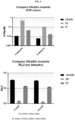
- a library of random mutants was created using Diversify ® PCR Random Mutagenesis Kit (Clonetech) and DNA from a thermal stable luciferase as a template. Mutant colonies were picked into 96-well plates and then grown for ⁇ 17 hours in LB media. The cultures were then diluted into LB induction media containing 0.02% rhamnose and 0.05% glucose. The induced cultures were then lysed and assayed with two assay reagents: Luciferin+ATP+detergent and Luciferin+ATP+detergent+dehydroluciferin.
- a ratio of the RLU values for each mutant was calculated (RLU+dehydroluciferin/RLU no dehydroluciferin), and samples that had the highest ratio were selected ( Figure 1 ). DNA from each of the mutants was isolated, pooled, and recombination mutagenesis was performed.
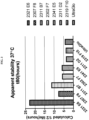
- Detection reagent (Luciferin in detergent) was prepared and then aliquots were incubated at 37°C. Aliquots were removed from 37°C at various time-points and stored at 4°C. ATP was added to an aliquot of each of the detection reagent series, and then the detection reagent was combined with each of the lysed mutant luciferases. Luminescence was measured on a GloMax ® -Multi+ luminometer (Promega). An apparent stability was calculated using GraphPad Prism One phase decay regression ( Figure 3 ).
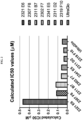
- a 3x dilution series of F-dehydroluciferin and H-dehydroluciferin were prepared starting with 0.5mM using the earlier prepared racemic luciferin mixtures as a diluent. 50uL of each dehydroluciferin tiration series was then combined with 50uL of 100nM ATP. Samples were incubated for 1 minute, luminescence (RLU) was then measured using GloMax ® -Multi+ luminometer (Promega), and IC50 values for each enzyme ( Figure 4 ).
- the mutant Triple + 300 H244W, T344A, I396K, C300G was screened for its resistance to dehydroluciferin.
- luciferase enzymes were serially diluted from stocks in 1xTBS+1.0% Prionex to a concentration of 0.01 mg/ml.
- Racemic F-luciferin was serially diluted from stocks in water to 22mM.
- Racemic dehydro-F-luciferin was serially diluted from stocks in water to 10mM, and then 8 consecutive 4-fold serial dilutions were carried out for each concentration tested.
- ATP was diluted to 1mM in BrightGlo Buffer or Detection Reagent buffer (depending on final reaction destination) to 1mM concentration.
Landscapes
- Chemical & Material Sciences (AREA)
- Life Sciences & Earth Sciences (AREA)
- Organic Chemistry (AREA)
- Health & Medical Sciences (AREA)
- Wood Science & Technology (AREA)
- Zoology (AREA)
- Engineering & Computer Science (AREA)
- Bioinformatics & Cheminformatics (AREA)
- Genetics & Genomics (AREA)
- Proteomics, Peptides & Aminoacids (AREA)
- Biochemistry (AREA)
- General Health & Medical Sciences (AREA)
- General Engineering & Computer Science (AREA)
- Molecular Biology (AREA)
- Biotechnology (AREA)
- Microbiology (AREA)
- Physics & Mathematics (AREA)
- Analytical Chemistry (AREA)
- Biophysics (AREA)
- Immunology (AREA)
- Biomedical Technology (AREA)
- Medicinal Chemistry (AREA)
- Enzymes And Modification Thereof (AREA)
- Measuring Or Testing Involving Enzymes Or Micro-Organisms (AREA)
- Apparatus Associated With Microorganisms And Enzymes (AREA)
Applications Claiming Priority (2)
| Application Number | Priority Date | Filing Date | Title |
|---|---|---|---|
| US201662407815P | 2016-10-13 | 2016-10-13 | |
| PCT/US2017/056571 WO2018071807A2 (en) | 2016-10-13 | 2017-10-13 | Thermal stable luciferase with improved resistance to inhibition by luciferin break-down products |
Publications (3)
| Publication Number | Publication Date |
|---|---|
| EP3526343A2 EP3526343A2 (en) | 2019-08-21 |
| EP3526343A4 EP3526343A4 (en) | 2020-08-05 |
| EP3526343B1 true EP3526343B1 (en) | 2025-04-16 |
Family
ID=61905997
Family Applications (1)
| Application Number | Title | Priority Date | Filing Date |
|---|---|---|---|
| EP17860669.5A Active EP3526343B1 (en) | 2016-10-13 | 2017-10-13 | Thermal stable luciferase with improved resistance to inhibition by luciferin break-down products |
Country Status (4)
| Country | Link |
|---|---|
| US (1) | US11261478B2 (enExample) |
| EP (1) | EP3526343B1 (enExample) |
| JP (2) | JP7175881B2 (enExample) |
| WO (1) | WO2018071807A2 (enExample) |
Families Citing this family (4)
| Publication number | Priority date | Publication date | Assignee | Title |
|---|---|---|---|---|
| JP7563668B2 (ja) * | 2018-06-05 | 2024-10-08 | プロメガ コーポレイション | 熱安定性ルシフェリンと共に生物発光アッセイに使用するためのルシフェラーゼ酵素 |
| US11596895B2 (en) | 2020-07-17 | 2023-03-07 | Air Products And Chemicals, Inc. | Radial adsorber, adsorption system, and adsorption methods |
| CN120457210A (zh) | 2023-01-27 | 2025-08-08 | 龟甲万株式会社 | 萤光素酶突变体 |
| CN117925547B (zh) * | 2023-08-01 | 2024-10-11 | 上海碧云天生物技术股份有限公司 | 经改造的萤火虫萤光素酶、其制备方法及应用 |
Family Cites Families (15)
| Publication number | Priority date | Publication date | Assignee | Title |
|---|---|---|---|---|
| DE69535744T2 (de) | 1994-01-03 | 2009-07-02 | Promega Corp., Madison | Mutierte luziferasen |
| GB9707486D0 (en) * | 1997-04-11 | 1997-05-28 | Secr Defence | Enzyme assays |
| US6602677B1 (en) * | 1997-09-19 | 2003-08-05 | Promega Corporation | Thermostable luciferases and methods of production |
| JP3749628B2 (ja) * | 1997-12-26 | 2006-03-01 | キッコーマン株式会社 | ルシフェラーゼおよびそれを用いる細胞内atpの測定法 |
| GB9823468D0 (en) * | 1998-10-28 | 1998-12-23 | Secr Defence | Novel enzyme |
| US7192729B2 (en) * | 1999-07-06 | 2007-03-20 | General Atomics | Methods for assaying homocysteine |
| US7083911B2 (en) * | 2001-02-16 | 2006-08-01 | Promega Corporation | Method for detection of ATP |
| US7183092B2 (en) * | 2003-10-03 | 2007-02-27 | Board Of Control Of Michigan Technological University | Modified luciferase |
| DE102006054562A1 (de) * | 2006-11-20 | 2008-05-21 | Bayer Healthcare Ag | Verfahren zum Nachweis von Pyrophosphat mit Biolumineszenz Detektion |
| JP5188771B2 (ja) * | 2007-09-26 | 2013-04-24 | 株式会社日立製作所 | 変異型ホタルルシフェラーゼ |
| CN101861397B (zh) * | 2007-11-20 | 2014-04-16 | 龟甲万株式会社 | 核酸分析用组合物 |
| WO2009140662A1 (en) * | 2008-05-15 | 2009-11-19 | Illumina, Inc. | Engineered luciferases |
| EP2569423B1 (en) * | 2010-05-11 | 2015-12-02 | Promega Corporation | Mutant protease biosensors with enhanced detection characteristics |
| WO2012109470A2 (en) * | 2011-02-09 | 2012-08-16 | University Of Massachusetts | Mutant luciferases |
| US10241109B2 (en) * | 2013-11-08 | 2019-03-26 | Mcmaster University | Method of stabilizing molecules without refrigeration using water soluble polymers and applications thereof in performing chemical reactions |
-
2017
- 2017-10-13 US US16/335,638 patent/US11261478B2/en active Active
- 2017-10-13 JP JP2019519212A patent/JP7175881B2/ja active Active
- 2017-10-13 WO PCT/US2017/056571 patent/WO2018071807A2/en not_active Ceased
- 2017-10-13 EP EP17860669.5A patent/EP3526343B1/en active Active
-
2022
- 2022-10-07 JP JP2022162232A patent/JP7615100B2/ja active Active
Also Published As
| Publication number | Publication date |
|---|---|
| EP3526343A4 (en) | 2020-08-05 |
| WO2018071807A2 (en) | 2018-04-19 |
| JP7175881B2 (ja) | 2022-11-21 |
| WO2018071807A3 (en) | 2018-05-24 |
| EP3526343A2 (en) | 2019-08-21 |
| US11261478B2 (en) | 2022-03-01 |
| US20190309342A1 (en) | 2019-10-10 |
| JP7615100B2 (ja) | 2025-01-16 |
| JP2023011608A (ja) | 2023-01-24 |
| JP2019537434A (ja) | 2019-12-26 |
Similar Documents
| Publication | Publication Date | Title |
|---|---|---|
| JP7615100B2 (ja) | ルシフェリン分解産物による阻害に対して改善された耐性を持つ熱安定性ルシフェラーゼ | |
| JP4125600B2 (ja) | 改良されたatp検出法 | |
| US7422868B2 (en) | Microbial ATP extraction and detection system | |
| Mackintosh et al. | Assay and purification of protein (serine/threonine) phosphatases | |
| JP2007330270A6 (ja) | 改良されたatp検出法 | |
| US20230416699A1 (en) | Luciferase enzymes for use with thermostable luciferins in bioluminescent assays | |
| US20100021949A1 (en) | Method for Detecting Transferase Enzymatic Activity | |
| NO318646B1 (no) | Fremgangsmate for a detektere og analysere mikroorganismer samt testkit og reagens derfor | |
| CN116814568A (zh) | 萤火虫萤光素酶突变体、蛋白质、核酸、重组载体、重组菌、试剂组合物及制备方法 | |
| Baum | Discovery of a Non-β-Lactam Inhibitor of Escherichia Coli L, Dcarboxypeptidase A Using a Coupled Fluorescent Assay |
Legal Events
| Date | Code | Title | Description |
|---|---|---|---|
| STAA | Information on the status of an ep patent application or granted ep patent |
Free format text: STATUS: THE INTERNATIONAL PUBLICATION HAS BEEN MADE |
|
| PUAI | Public reference made under article 153(3) epc to a published international application that has entered the european phase |
Free format text: ORIGINAL CODE: 0009012 |
|
| STAA | Information on the status of an ep patent application or granted ep patent |
Free format text: STATUS: REQUEST FOR EXAMINATION WAS MADE |
|
| 17P | Request for examination filed |
Effective date: 20190430 |
|
| AK | Designated contracting states |
Kind code of ref document: A2 Designated state(s): AL AT BE BG CH CY CZ DE DK EE ES FI FR GB GR HR HU IE IS IT LI LT LU LV MC MK MT NL NO PL PT RO RS SE SI SK SM TR |
|
| AX | Request for extension of the european patent |
Extension state: BA ME |
|
| DAV | Request for validation of the european patent (deleted) | ||
| DAX | Request for extension of the european patent (deleted) | ||
| A4 | Supplementary search report drawn up and despatched |
Effective date: 20200703 |
|
| RIC1 | Information provided on ipc code assigned before grant |
Ipc: C12M 1/34 20060101ALI20200629BHEP Ipc: C12Q 1/66 20060101AFI20200629BHEP Ipc: C07K 14/00 20060101ALI20200629BHEP Ipc: C12N 9/02 20060101ALI20200629BHEP Ipc: C12Q 1/00 20060101ALI20200629BHEP |
|
| STAA | Information on the status of an ep patent application or granted ep patent |
Free format text: STATUS: EXAMINATION IS IN PROGRESS |
|
| 17Q | First examination report despatched |
Effective date: 20221028 |
|
| REG | Reference to a national code |
Ref country code: DE Ref legal event code: R079 Free format text: PREVIOUS MAIN CLASS: C12Q0001660000 Ipc: C12N0009020000 Ref country code: DE Ref legal event code: R079 Ref document number: 602017088984 Country of ref document: DE Free format text: PREVIOUS MAIN CLASS: C12Q0001660000 Ipc: C12N0009020000 |
|
| GRAP | Despatch of communication of intention to grant a patent |
Free format text: ORIGINAL CODE: EPIDOSNIGR1 |
|
| STAA | Information on the status of an ep patent application or granted ep patent |
Free format text: STATUS: GRANT OF PATENT IS INTENDED |
|
| RIC1 | Information provided on ipc code assigned before grant |
Ipc: C12Q 1/00 20060101ALI20240612BHEP Ipc: C12Q 1/66 20060101ALI20240612BHEP Ipc: C12N 9/02 20060101AFI20240612BHEP |
|
| INTG | Intention to grant announced |
Effective date: 20240708 |
|
| GRAJ | Information related to disapproval of communication of intention to grant by the applicant or resumption of examination proceedings by the epo deleted |
Free format text: ORIGINAL CODE: EPIDOSDIGR1 |
|
| STAA | Information on the status of an ep patent application or granted ep patent |
Free format text: STATUS: EXAMINATION IS IN PROGRESS |
|
| GRAP | Despatch of communication of intention to grant a patent |
Free format text: ORIGINAL CODE: EPIDOSNIGR1 |
|
| STAA | Information on the status of an ep patent application or granted ep patent |
Free format text: STATUS: GRANT OF PATENT IS INTENDED |
|
| INTC | Intention to grant announced (deleted) | ||
| INTG | Intention to grant announced |
Effective date: 20241114 |
|
| GRAS | Grant fee paid |
Free format text: ORIGINAL CODE: EPIDOSNIGR3 |
|
| GRAA | (expected) grant |
Free format text: ORIGINAL CODE: 0009210 |
|
| STAA | Information on the status of an ep patent application or granted ep patent |
Free format text: STATUS: THE PATENT HAS BEEN GRANTED |
|
| AK | Designated contracting states |
Kind code of ref document: B1 Designated state(s): AL AT BE BG CH CY CZ DE DK EE ES FI FR GB GR HR HU IE IS IT LI LT LU LV MC MK MT NL NO PL PT RO RS SE SI SK SM TR |
|
| REG | Reference to a national code |
Ref country code: GB Ref legal event code: FG4D |
|
| REG | Reference to a national code |
Ref country code: CH Ref legal event code: EP |
|
| REG | Reference to a national code |
Ref country code: IE Ref legal event code: FG4D |
|
| REG | Reference to a national code |
Ref country code: DE Ref legal event code: R096 Ref document number: 602017088984 Country of ref document: DE |
|
| REG | Reference to a national code |
Ref country code: NL Ref legal event code: MP Effective date: 20250416 |
|
| PG25 | Lapsed in a contracting state [announced via postgrant information from national office to epo] |
Ref country code: NL Free format text: LAPSE BECAUSE OF FAILURE TO SUBMIT A TRANSLATION OF THE DESCRIPTION OR TO PAY THE FEE WITHIN THE PRESCRIBED TIME-LIMIT Effective date: 20250416 |
|
| REG | Reference to a national code |
Ref country code: AT Ref legal event code: MK05 Ref document number: 1785693 Country of ref document: AT Kind code of ref document: T Effective date: 20250416 |
|
| PG25 | Lapsed in a contracting state [announced via postgrant information from national office to epo] |
Ref country code: FI Free format text: LAPSE BECAUSE OF FAILURE TO SUBMIT A TRANSLATION OF THE DESCRIPTION OR TO PAY THE FEE WITHIN THE PRESCRIBED TIME-LIMIT Effective date: 20250416 Ref country code: PT Free format text: LAPSE BECAUSE OF FAILURE TO SUBMIT A TRANSLATION OF THE DESCRIPTION OR TO PAY THE FEE WITHIN THE PRESCRIBED TIME-LIMIT Effective date: 20250818 Ref country code: ES Free format text: LAPSE BECAUSE OF FAILURE TO SUBMIT A TRANSLATION OF THE DESCRIPTION OR TO PAY THE FEE WITHIN THE PRESCRIBED TIME-LIMIT Effective date: 20250416 |
|
| REG | Reference to a national code |
Ref country code: LT Ref legal event code: MG9D |
|
| PG25 | Lapsed in a contracting state [announced via postgrant information from national office to epo] |
Ref country code: NO Free format text: LAPSE BECAUSE OF FAILURE TO SUBMIT A TRANSLATION OF THE DESCRIPTION OR TO PAY THE FEE WITHIN THE PRESCRIBED TIME-LIMIT Effective date: 20250716 Ref country code: GR Free format text: LAPSE BECAUSE OF FAILURE TO SUBMIT A TRANSLATION OF THE DESCRIPTION OR TO PAY THE FEE WITHIN THE PRESCRIBED TIME-LIMIT Effective date: 20250717 |
|
| PG25 | Lapsed in a contracting state [announced via postgrant information from national office to epo] |
Ref country code: PL Free format text: LAPSE BECAUSE OF FAILURE TO SUBMIT A TRANSLATION OF THE DESCRIPTION OR TO PAY THE FEE WITHIN THE PRESCRIBED TIME-LIMIT Effective date: 20250416 |
|
| PG25 | Lapsed in a contracting state [announced via postgrant information from national office to epo] |
Ref country code: BG Free format text: LAPSE BECAUSE OF FAILURE TO SUBMIT A TRANSLATION OF THE DESCRIPTION OR TO PAY THE FEE WITHIN THE PRESCRIBED TIME-LIMIT Effective date: 20250416 |
|
| PG25 | Lapsed in a contracting state [announced via postgrant information from national office to epo] |
Ref country code: HR Free format text: LAPSE BECAUSE OF FAILURE TO SUBMIT A TRANSLATION OF THE DESCRIPTION OR TO PAY THE FEE WITHIN THE PRESCRIBED TIME-LIMIT Effective date: 20250416 |
|
| PG25 | Lapsed in a contracting state [announced via postgrant information from national office to epo] |
Ref country code: AT Free format text: LAPSE BECAUSE OF FAILURE TO SUBMIT A TRANSLATION OF THE DESCRIPTION OR TO PAY THE FEE WITHIN THE PRESCRIBED TIME-LIMIT Effective date: 20250416 |
|
| PG25 | Lapsed in a contracting state [announced via postgrant information from national office to epo] |
Ref country code: RS Free format text: LAPSE BECAUSE OF FAILURE TO SUBMIT A TRANSLATION OF THE DESCRIPTION OR TO PAY THE FEE WITHIN THE PRESCRIBED TIME-LIMIT Effective date: 20250716 |
|
| PG25 | Lapsed in a contracting state [announced via postgrant information from national office to epo] |
Ref country code: IS Free format text: LAPSE BECAUSE OF FAILURE TO SUBMIT A TRANSLATION OF THE DESCRIPTION OR TO PAY THE FEE WITHIN THE PRESCRIBED TIME-LIMIT Effective date: 20250816 |
|
| PG25 | Lapsed in a contracting state [announced via postgrant information from national office to epo] |
Ref country code: LV Free format text: LAPSE BECAUSE OF FAILURE TO SUBMIT A TRANSLATION OF THE DESCRIPTION OR TO PAY THE FEE WITHIN THE PRESCRIBED TIME-LIMIT Effective date: 20250416 |