EP3522268B1 - Positive electrode active material for lithium ion battery, method for producing positive electrode active material for lithium ion battery, positive electrode for lithium ion battery and lithium ion battery - Google Patents
Positive electrode active material for lithium ion battery, method for producing positive electrode active material for lithium ion battery, positive electrode for lithium ion battery and lithium ion battery Download PDFInfo
- Publication number
- EP3522268B1 EP3522268B1 EP19155384.1A EP19155384A EP3522268B1 EP 3522268 B1 EP3522268 B1 EP 3522268B1 EP 19155384 A EP19155384 A EP 19155384A EP 3522268 B1 EP3522268 B1 EP 3522268B1
- Authority
- EP
- European Patent Office
- Prior art keywords
- positive electrode
- active material
- electrode active
- ion battery
- lithium ion
- Prior art date
- Legal status (The legal status is an assumption and is not a legal conclusion. Google has not performed a legal analysis and makes no representation as to the accuracy of the status listed.)
- Active
Links
Images

Classifications
-
- H—ELECTRICITY
- H01—ELECTRIC ELEMENTS
- H01M—PROCESSES OR MEANS, e.g. BATTERIES, FOR THE DIRECT CONVERSION OF CHEMICAL ENERGY INTO ELECTRICAL ENERGY
- H01M4/00—Electrodes
- H01M4/02—Electrodes composed of, or comprising, active material
- H01M4/13—Electrodes for accumulators with non-aqueous electrolyte, e.g. for lithium-accumulators; Processes of manufacture thereof
- H01M4/131—Electrodes based on mixed oxides or hydroxides, or on mixtures of oxides or hydroxides, e.g. LiCoOx
-
- H—ELECTRICITY
- H01—ELECTRIC ELEMENTS
- H01M—PROCESSES OR MEANS, e.g. BATTERIES, FOR THE DIRECT CONVERSION OF CHEMICAL ENERGY INTO ELECTRICAL ENERGY
- H01M10/00—Secondary cells; Manufacture thereof
- H01M10/05—Accumulators with non-aqueous electrolyte
- H01M10/052—Li-accumulators
- H01M10/0525—Rocking-chair batteries, i.e. batteries with lithium insertion or intercalation in both electrodes; Lithium-ion batteries
-
- H—ELECTRICITY
- H01—ELECTRIC ELEMENTS
- H01M—PROCESSES OR MEANS, e.g. BATTERIES, FOR THE DIRECT CONVERSION OF CHEMICAL ENERGY INTO ELECTRICAL ENERGY
- H01M4/00—Electrodes
- H01M4/02—Electrodes composed of, or comprising, active material
- H01M4/04—Processes of manufacture in general
- H01M4/0471—Processes of manufacture in general involving thermal treatment, e.g. firing, sintering, backing particulate active material, thermal decomposition, pyrolysis
-
- H—ELECTRICITY
- H01—ELECTRIC ELEMENTS
- H01M—PROCESSES OR MEANS, e.g. BATTERIES, FOR THE DIRECT CONVERSION OF CHEMICAL ENERGY INTO ELECTRICAL ENERGY
- H01M4/00—Electrodes
- H01M4/02—Electrodes composed of, or comprising, active material
- H01M4/04—Processes of manufacture in general
- H01M4/049—Manufacturing of an active layer by chemical means
- H01M4/0497—Chemical precipitation
-
- H—ELECTRICITY
- H01—ELECTRIC ELEMENTS
- H01M—PROCESSES OR MEANS, e.g. BATTERIES, FOR THE DIRECT CONVERSION OF CHEMICAL ENERGY INTO ELECTRICAL ENERGY
- H01M4/00—Electrodes
- H01M4/02—Electrodes composed of, or comprising, active material
- H01M4/13—Electrodes for accumulators with non-aqueous electrolyte, e.g. for lithium-accumulators; Processes of manufacture thereof
- H01M4/139—Processes of manufacture
- H01M4/1391—Processes of manufacture of electrodes based on mixed oxides or hydroxides, or on mixtures of oxides or hydroxides, e.g. LiCoOx
-
- H—ELECTRICITY
- H01—ELECTRIC ELEMENTS
- H01M—PROCESSES OR MEANS, e.g. BATTERIES, FOR THE DIRECT CONVERSION OF CHEMICAL ENERGY INTO ELECTRICAL ENERGY
- H01M4/00—Electrodes
- H01M4/02—Electrodes composed of, or comprising, active material
- H01M4/36—Selection of substances as active materials, active masses, active liquids
- H01M4/362—Composites
- H01M4/364—Composites as mixtures
-
- H—ELECTRICITY
- H01—ELECTRIC ELEMENTS
- H01M—PROCESSES OR MEANS, e.g. BATTERIES, FOR THE DIRECT CONVERSION OF CHEMICAL ENERGY INTO ELECTRICAL ENERGY
- H01M4/00—Electrodes
- H01M4/02—Electrodes composed of, or comprising, active material
- H01M4/36—Selection of substances as active materials, active masses, active liquids
- H01M4/48—Selection of substances as active materials, active masses, active liquids of inorganic oxides or hydroxides
- H01M4/50—Selection of substances as active materials, active masses, active liquids of inorganic oxides or hydroxides of manganese
- H01M4/505—Selection of substances as active materials, active masses, active liquids of inorganic oxides or hydroxides of manganese of mixed oxides or hydroxides containing manganese for inserting or intercalating light metals, e.g. LiMn2O4 or LiMn2OxFy
-
- H—ELECTRICITY
- H01—ELECTRIC ELEMENTS
- H01M—PROCESSES OR MEANS, e.g. BATTERIES, FOR THE DIRECT CONVERSION OF CHEMICAL ENERGY INTO ELECTRICAL ENERGY
- H01M4/00—Electrodes
- H01M4/02—Electrodes composed of, or comprising, active material
- H01M4/36—Selection of substances as active materials, active masses, active liquids
- H01M4/48—Selection of substances as active materials, active masses, active liquids of inorganic oxides or hydroxides
- H01M4/52—Selection of substances as active materials, active masses, active liquids of inorganic oxides or hydroxides of nickel, cobalt or iron
- H01M4/525—Selection of substances as active materials, active masses, active liquids of inorganic oxides or hydroxides of nickel, cobalt or iron of mixed oxides or hydroxides containing iron, cobalt or nickel for inserting or intercalating light metals, e.g. LiNiO2, LiCoO2 or LiCoOxFy
-
- H—ELECTRICITY
- H01—ELECTRIC ELEMENTS
- H01M—PROCESSES OR MEANS, e.g. BATTERIES, FOR THE DIRECT CONVERSION OF CHEMICAL ENERGY INTO ELECTRICAL ENERGY
- H01M4/00—Electrodes
- H01M4/02—Electrodes composed of, or comprising, active material
- H01M4/62—Selection of inactive substances as ingredients for active masses, e.g. binders, fillers
- H01M4/624—Electric conductive fillers
-
- H—ELECTRICITY
- H01—ELECTRIC ELEMENTS
- H01M—PROCESSES OR MEANS, e.g. BATTERIES, FOR THE DIRECT CONVERSION OF CHEMICAL ENERGY INTO ELECTRICAL ENERGY
- H01M10/00—Secondary cells; Manufacture thereof
- H01M10/42—Methods or arrangements for servicing or maintenance of secondary cells or secondary half-cells
- H01M10/4235—Safety or regulating additives or arrangements in electrodes, separators or electrolyte
-
- H—ELECTRICITY
- H01—ELECTRIC ELEMENTS
- H01M—PROCESSES OR MEANS, e.g. BATTERIES, FOR THE DIRECT CONVERSION OF CHEMICAL ENERGY INTO ELECTRICAL ENERGY
- H01M4/00—Electrodes
- H01M4/02—Electrodes composed of, or comprising, active material
- H01M4/36—Selection of substances as active materials, active masses, active liquids
- H01M4/362—Composites
- H01M4/366—Composites as layered products
-
- Y—GENERAL TAGGING OF NEW TECHNOLOGICAL DEVELOPMENTS; GENERAL TAGGING OF CROSS-SECTIONAL TECHNOLOGIES SPANNING OVER SEVERAL SECTIONS OF THE IPC; TECHNICAL SUBJECTS COVERED BY FORMER USPC CROSS-REFERENCE ART COLLECTIONS [XRACs] AND DIGESTS
- Y02—TECHNOLOGIES OR APPLICATIONS FOR MITIGATION OR ADAPTATION AGAINST CLIMATE CHANGE
- Y02E—REDUCTION OF GREENHOUSE GAS [GHG] EMISSIONS, RELATED TO ENERGY GENERATION, TRANSMISSION OR DISTRIBUTION
- Y02E60/00—Enabling technologies; Technologies with a potential or indirect contribution to GHG emissions mitigation
- Y02E60/10—Energy storage using batteries
Definitions
- the present invention relates to a positive electrode active material for a lithium ion battery, a method for producing a positive electrode active material for a lithium ion battery, a positive electrode for a lithium ion battery, and a lithium ion battery.
- a lithium-containing transition metal oxide is used for a positive electrode active material for a lithium secondary battery.
- the transition metal oxide is a layered compound lithium cobalt oxide (LiCoO 2 ), a layered compound lithium nickel oxide (LiNiO 2 ), a spinel compound lithium manganate (LiMn 2 O 4 ), or the like.
- Compounding (blending, granulating or the like) of them is being advanced in order to improve characteristics (high capacity, cycle characteristics, storage characteristics, reduced internal resistance, rate characteristics) or improve safety.
- Lithium secondary batteries for large-scale applications such as power sources for motor vehicles and for load leveling are required to have characteristics different from conventional those for mobile phones and PCs.
- Lithium ion batteries using positive electrode active materials include all-solid batteries and liquid-based batteries. Recently, it is known in the art that battery characteristics are improved by providing a coating of lithium niobate on a surface of a lithium-containing transition metal oxide to alleviate an increase in interfacial resistance, or by suppressing reaction with an electrolytic solution (Patent Document 1).
- Patent Document 1 Japanese Patent Application Publication No. 2014-238957 A
- JP 2017 509126 A discloses a cathode for an electrochemical energy accumulator, in particular a lithium cell, with particles having a first active material which can be lithiated and which is based on a transitional metal oxide, characterised in that the particle or a base body comprising the particle is/are provided at least partially with a functional layer, which conducts lithium ions and comprises at least one redox active element.
- US 2009/104530 A1 discloses a powder of a lithium transition-metal compound for a positive-electrode material in a lithium secondary battery, which is said to achieve a good balance of improved battery performance, cost reduction, resistance to a higher voltage, and a higher safety level.
- the powder is characterized in that in a mercury intrusion curve obtained by mercury intrusion porosimetry, the amount of mercury intruded is in the range of 0.8 cm 3 /g to 3 cm 3 /g when the pressure is increased from 3.86 kPa to 413 MPa.
- US 2016/043391 A1 discloses a lithium-transition metal oxide powder with a coating layer containing lithium niobate formed on a part or the whole part of a surface of a lithium-transition metal oxide particle and having a low powder compact resistance, and a positive electrode active material for a lithium ion battery containing the aforesaid powder.
- the powder is composed of a lithium-transition metal oxide particle with a part or the whole part of a surface coated with a coating layer containing lithium niobate, wherein a carbon-content is 0.03 mass % or less.
- CN 106 684 323 A discloses a ternary lithium-ion battery cathode material improved by active oxide multiply and a preparation method thereof.
- the active oxide is Nb 2 O 5 and is applied as a coating on the base material particles.
- JP 2017 107827 A discloses a positive electrode active material for a nonaqueous electrolyte secondary battery, which maintains initial battery performance and suppresses gelatinization of a paste-like composition.
- the material comprises a lithium nickel composite oxide particle which includes a surface layer portion disposed on the surface thereof and a central portion other than the surface layer portion, and which has a composition represented by the formula Li t Ni 1-x-y Co x M1 y M2 z O 2+ ⁇ , wherein M1 is at least one element selected from Mg, Al, Ca, Ti, V, Cr, Mn, Zr, Nb, Mo and W, M2 is at least one element of Al and Nb, and 0.01 ⁇ t ⁇ 1.20, 0 ⁇ x ⁇ 0.22, 0 ⁇ y ⁇ 0.15, 0 ⁇ z ⁇ 0.03, and 0 ⁇ 0.1, and M2 is included in the surface layer portion.
- US 2009/081548 A1 discloses a positive electrode for a lithium ion secondary battery, which material includes active material particles containing a lithium composite oxide composed mainly of nickel and represented by a particular compositional formula, and which may contain certain selected metals distributed more in the surface layer portions of the active material particles compared with the inner portions thereof.
- JP 2000 323143 A discloses a positive electrode active material for a lithium secondary battery, which has improved safety in an internal short circuit test.
- the material has a layered crystalline structure and is a powder of a composite oxide expressed by a particular compositional formula containing Li and Ni as main constituents.
- the conductivity of the pressed powder is set to be within a specific defined range.
- US 2015/010821 A1 teaches positive electrode active materials for a lithium ion battery, the material comprising a lithium metal oxide comprising at least Ni and Mn, whereby in the examples, molar ratios of Ni 0.33, 0.5 or 0.7 are used.
- Some of the materials are preferably doped with one or more additive elements among Zr, W, Sr and Nb.
- the dopant element is assumed by the authors to be present on the surface and the boundary surface of the crystal particle.
- W and Zr are stated to be preferable, whereby more preferable are both W and Zr.
- Several of the examples of the document use a dopant, however mostly a single one only. The last one of the examples uses Zr and W together as the dopant.
- the material of these examples has however Ni molar ratio of 0.33 with respect to the total amount of Ni, Mn and Co.
- Patent Document 1 when the coating of lithium niobate is provided on the surface of the lithium-containing transition metal oxide by the method known in the prior art (in Patent Document 1), the reaction resistance in the charge-discharge cycles of the lithium ion battery may be increased. Therefore, there would be a need for further improvement.
- An object of the present invention is to provide a positive electrode active material for a lithium ion battery, which has good battery characteristics.
- the present invention relates to a positive electrode active material for a lithium ion battery, the positive electrode active material comprising:
- the positive electrode active material for the lithium ion battery when observing a cross section of the positive electrode active material with a scanning electron microscope (SEM), at least a part that is not covered with the covering layer can be observed on surface parts of the positive electrode active material particles by SEM-EDX measurement.
- SEM scanning electron microscope
- the positive electrode active material for the lithium ion battery according to the present invention, has a ratio of Nb, Zr and W to the total amount of Ni, Co and Mn of from 0.4 to 1.2 mol%.
- the present invention relates to a method for producing the positive electrode active material for the lithium ion battery according to the first aspect of the present invention, the method comprising:
- an average particle diameter D50 on volume basis of Nb 2 O 5 as a powder is from 0.3 to 0.8 ⁇ m.
- an average particle diameter D50 on volume basis of each of Nb 2 O 5 , ZrO 2 and WO 3 as a powder is from 0.3 to 0.8 ⁇ m.
- the present invention relates to a positive electrode for a lithium ion battery, comprising the positive electrode active material for the lithium ion battery according to the first aspect of the present invention.
- the present invention relates to a lithium ion battery comprising the positive electrode for the lithium ion battery according to the preceding aspect of the present invention.
- a positive electrode active material for a lithium ion battery according to this Reference Embodiment includes: positive electrode active material particles each having a composition represented by the following formula: Li a Ni b Co c Mn d O 2
- the entire positive electrode active material is covered with lithium niobate in order to prevent reaction between the positive electrode active material and sulfur in a sulfide-based solid electrolyte.
- the entire positive electrode active material is covered with lithium niobate in order to suppress reaction with an electrolytic solution.
- lithium niobate has high resistance, the covering of the entire positive electrode active material results in increased reaction resistance during charging and discharging, so that battery characteristics may be deteriorated.
- the positive electrode active material for the lithium ion battery according to this Reference Embodiment partially provides the coating layer containing lithium niobate on the surfaces of the positive electrode active material particles represented by the compositional formula: Li a Ni b Co c Mn d O 2 .
- Such a structure suppresses an increase in reaction resistance in charge-discharge cycles of a lithium ion battery using the positive electrode active material, and also improves a discharge capacity and cycle characteristics.
- the positive electrode active material for the lithium ion battery according to this Reference Embodiment has a higher composition ratio of Ni to the total amount of Ni, Co, and Mn of the lithium-containing transition metal oxide forming the positive electrode active material particles, which ratio is 0.8 or more and 0.9 or less. In general, such a higher ratio of Ni in the positive electrode active material tends to react with the electrolytic solution when used for the lithium ion battery.
- the positive electrode active material for the lithium ion battery according to this Reference Embodiment provides the coating layer containing lithium niobate on a part of the surfaces of the positive electrode active material particles, so that the reaction with the electrolytic solution is satisfactorily suppressed. Therefore, it is possible to prevent deterioration of battery performance such as the discharge capacity and cycle characteristics.
- the ratio of Nb to the total amount of Ni, Co and Mn is controlled to be from 0.4 to 1.2 mol%. Such a configuration can hardly decrease a discharge capacity, suppress an increase in reaction resistance in a charge-discharge cycles, and improve cycle characteristics.
- the ratio of Nb to the total amount of Ni, Co and Mn may be preferably from 0.5 to 1.1 mol%, and more preferably from 0.6 to 1.0 mol%.
- a method for producing the positive electrode active material for the lithium ion battery according to this Reference Embodiment may include the steps of: dispersing Nb 2 O 5 in pure water to prepare an additive slurry; adding the additive slurry to a medium containing the positive electrode active material particles in pure water and dispersing the resulting mixture with stirring to prepare a surface-treated slurry; drying the surface-treated slurry by a micro-mist dryer to obtain surface-treated particles; and subjecting the surface-treated particles to a heat treatment at a temperature of from 650 to 800 °C.
- a method for producing the positive electrode active material for the lithium ion battery according to this Reference Embodiment may include the steps of: dispersing Nb 2 O 5 in pure water to prepare an additive slurry; adding the additive slurry to a medium containing nickel-cobalt-manganese hydroxide in pure water and dispersing the resulting mixture with stirring to prepare a surface-treated slurry; drying the surface-treated slurry by a micro-mist dryer to obtain a surface-treated precursor; and adding a lithium source to the surface-treated precursor and firing the resulting mixture at a temperature of from 650 °C to 800 °C.
- the additive slurry obtained by dispersing Nb 2 O 5 in pure water is added to a medium obtained by introducing the positive electrode active material particles in pure water, and dispersed with stirring to prepare a surface-treated slurry. Therefore, the coating layer containing lithium niobate can be provided on the surfaces of the positive electrode active material particles by simple steps.
- the additive slurry is preferably prepared by dispersing Nb 2 O 5 in pure water with stirring and ultrasonically dispersing it. With such a manner, the additive slurry in which Nb 2 O 5 is more satisfactorily dispersed can be prepared.
- the surface-treated slurry is dried by a micro-mist dryer to obtain surface-treated particles or a surface-treated precursor, so that the surface-treated particles or surface-treated precursor without fine powder can be obtained during drying with the micro-mist dryer. Therefore, a classification step for removing the fine powder is eliminated, and a surface-treated positive electrode active material having improved battery characteristics, in particular improved charge-discharge cycle characteristics, can be produced at lower cost.
- the positive electrode active material for the lithium ion battery according to this Reference Embodiment has a higher composition ratio of Ni to the total amount of Ni, Co, and Mn of the lithium-containing transition metal oxide forming the positive electrode active material particles, the ratio being 0.8 or more and 9 or less.
- the niobium oxide Nb 2 O 5 used for preparing the additive slurry has an average particle diameter D50 on volume basis as a powder of from 0.3 to 0.8 ⁇ m.
- Nb 2 O 5 added to the surfaces of the positive electrode active material particles is allowed to be present without waste, so that Nb 2 O 5 reacts with residual alkali Li to form lithium niobate.
- the residual alkali on the surface of the positive electrode active material is reduced, so that it is possible to satisfactorily prevent gelation in preparation of the positive electrode slurry and deterioration of battery performance such as cycle characteristics.
- the entire positive electrode active material is covered with lithium niobate in order to prevent reaction between the positive electrode active material and sulfur in a sulfide-based solid electrolyte.
- the entire positive electrode active material is covered with lithium niobate in order to suppress reaction with an electrolytic solution.
- lithium niobate has high resistance, the covering of the entire positive electrode active material results in increased reaction resistance during charging and discharging, so that battery characteristics may be deteriorated.
- the positive electrode active material for the lithium ion battery according to this Invention Embodiment of the present invention partially provides the coating layer containing lithium niobate and both of lithium zirconate and lithium tungstate on the surfaces of the positive electrode active material particles represented by the compositional formula: Li a Ni b Co c Mn d O 2 .
- Such a structure suppresses an increase in reaction resistance in charge-discharge cycles of a lithium ion battery using the positive electrode active material, and also improves a discharge capacity and cycle characteristics.
- the positive electrode active material for the lithium ion battery according to this Invention Embodiment of the present invention has a higher composition ratio of Ni to the total amount of Ni, Co, and Mn of the lithium-containing transition metal oxide forming the positive electrode active material particles, which ratio is 0.8 or more and 0.9 or less. In general, such a higher ratio of Ni in the positive electrode active material tends to react with the electrolytic solution when used for the lithium ion battery.
- the positive electrode active material for the lithium ion battery according to this Invention Embodiment of the present invention provides the coating layer containing lithium niobate and both of lithium zirconate and lithium tungstate on a part of the surfaces of the positive electrode active material particles, so that the reaction with the electrolytic solution is satisfactorily suppressed. Therefore, it is possible to prevent deterioration of battery performance such as a discharge capacity and cycle characteristics.
- the ratio of Nb, Zr and W to the total amount of Ni, Co and Mn is controlled to be from 0.4 to 1.2 mol%. Such a configuration can hardly decrease a discharge capacity, suppress an increase in reaction resistance in charge-discharge cycles, and improve cycle characteristics.
- the ratio of Nb, Zr and W to the total amount of Ni, Co and Mn may be preferably from 0.5 to 1.1 mol%, and more preferably from 0.6 to 1.0 mol%.
- the method for producing the positive electrode active material for the lithium ion battery according to this Invention Embodiment of the present invention may include the steps of: dispersing Nb 2 O 5 and both of ZrO 2 and WO 3 in pure water to prepare an additive slurry; adding the additive slurry to a medium containing the positive electrode active material particles in pure water and dispersing the resulting mixture with stirring to prepare a surface-treated slurry; drying the surface-treated slurry by a micro-mist dryer to obtain surface-treated particles; and subjecting the surface-treated particles to a heat treatment at a temperature of from 650 to 800 °C.
- the method for producing the positive electrode active material for the lithium ion battery according to this Invention Embodiment of the present invention may include the steps of: dispersing Nb 2 O 5 and both of ZrO 2 and WO 3 in pure water to prepare an additive slurry; adding the additive slurry to a medium containing nickel-cobalt-manganese hydroxide in pure water and dispersing the resulting mixture with stirring to prepare a surface-treated slurry; drying the surface-treated slurry by a micro-mist dryer to obtain a surface-treated precursor; and adding a lithium source to the surface-treated precursor and firing the resulting mixture at a temperature of from 650 °C to 800 °C.
- the additive slurry obtained by dispersing Nb 2 O 5 and both of ZrO 2 and WO 3 in pure water is added to a medium obtained by introducing the positive electrode active material particles in pure water, and dispersed with stirring to prepare the surface-treated slurry. Therefore, the coating layer containing lithium niobate and both of lithium zirconate and lithium tungstate can be provided on the surfaces of the positive electrode active material particles by simple steps.
- the surface-treated slurry is prepared by dispersing Nb 2 O 5 and both of ZrO 2 and WO 3 in pure water to prepare the additive slurry, adding the additive slurry to the medium containing the nickel-cobalt-manganese hydroxide in pure water and dispersing the resulting mixture with stirring. Therefore, the coating layer containing lithium niobate and both of lithium zirconate and lithium tungstate can be provided on the surfaces of the positive electrode active material particles by simple steps.
- the additive slurry is preferably prepared by dispersing Nb 2 O 5 and both of ZrO 2 and WO 3 in pure water with stirring and ultrasonically dispersing them. With such a manner, the additive slurry in which Nb 2 O 5 and both of ZrO 2 and WO 3 are more satisfactorily dispersed can be prepared.
- the surface-treated slurry is dried by the micro-mist dryer to obtain the surface-treated particles or the surface treatment precursor, so that surface-treated particles or a surface-treated precursor without fine powder can be obtained during drying with the micro-mist dryer. Therefore, a classification step for removing fine powder is eliminated, and a surface-treated positive electrode active material having improved battery characteristics, in particular improved charge/discharge cycle characteristics, can be produced at lower cost.
- the positive electrode active material for the lithium ion battery according to this Invention Embodiment of the present invention has a higher composition ratio of Ni to the total amount of Ni, Co, and Mn of the lithium-containing transition metal oxide forming the positive electrode active material particles, the ratio being 0.8 or more and 9 or less.
- Nb 2 O 5 , ZrO 2 and WO 3 used for preparing the additive slurry have an average particle diameter D50 on volume basis as a powder of from 0.3 to 0.8 ⁇ m.
- Nb 2 O 5 , ZrO 2 and WO 3 added to the surfaces of the positive electrode active material particles are allowed to be present without waste, so that Nb 2 O 5 , ZrO 2 and WO 3 react with residual alkali Li to form lithium niobate and both of lithium zirconate and lithium tungstate.
- the residual alkali on the surface of the positive electrode active material is reduced, so that it is possible to satisfactorily prevent gelation in preparation of the positive electrode slurry and deterioration of battery performance such as cycle characteristics.
- the positive electrode for the lithium ion battery according to each of the above Reference Embodiment and the above Invention Embodiment of the present invention has a structure in which a positive electrode agent prepared by mixing the positive electrode active material for the lithium ion battery as stated above, a conductive auxiliary agent and a binder is provided on one side or both sides of a current collector made of an aluminum foil or the like.
- the lithium ion battery according to an embodiment of that aspect of the present invention includes the positive electrode for the lithium ion battery having such a structure according to the above Invention Embodiment.
- the lithium ion battery according to an embodiment of the present invention may be a liquid-based lithium ion battery or an all-solid lithium ion battery.
- Examples A1 to A9 and Examples B1 and B2 are all Reference Examples which, although strictly speaking they are outside the scope of the claimed invention, are nevertheless presented as useful further examples illustrating the production and properties of materials similar to those within the actual scope of the claimed invention.
- Example B3 is an actual Invention Example which falls within the scope of the present invention as defined in the appended claims.
- Nb 2 O 5 having an average particle diameter D50 of 0.5 ⁇ m was dispersed in pure water with stirring and ultrasonically dispersed to prepare an additive slurry.
- the additive slurry was added to a medium which had been separately prepared by introducing nickel-cobalt-manganese hydroxide in pure water, and the resulting mixture was dispersed with stirring to prepare a surface-treated slurry.
- the surface-treated slurry was then dried by a micro-mist dryer at 120 °C to remove fine powder and obtain a surface-treated precursor.
- To the surface-treated precursor was then added lithium hydroxide, and fired in an oxygen atmosphere at 740 °C for 12 hours.
- each positive electrode active material including positive electrode active material particles having each composition as shown in Table 1 and a coating layer containing lithium niobate partially covering the surfaces of the positive electrode active material particles was obtained.
- Nb 2 O 5 having an average particle diameter D50 of 0.5 ⁇ m was dispersed in pure water with stirring and ultrasonically dispersed to prepare an additive slurry.
- the additive slurry was added to a medium which had been separately prepared by introducing positive electrode active material particles having the composition as shown in Table 1 in pure water, and the resulting mixture was dispersed with stirring to prepare a surface-treated slurry.
- the surface-treated slurry was then dried by a micro-mist dryer at 120 °C to remove fine powder and obtain surface-treated particles.
- the surface-treated particles were then subjected to a heat treatment in an oxygen atmosphere at 700 °C for 12 hours.
- a positive electrode active material including positive electrode active material particles having the composition as shown in Table 1 and a coating layer containing lithium niobate partially covering the surfaces of the positive electrode active material particles was obtained.
- a positive electrode active material was prepared under the same conditions as those in Example A1, with the exception that Nb 2 O 5 having an average particle diameter D50 of 0.2 ⁇ m was used as a sample to be dispersed in pure water with stirring.
- a positive electrode active material was prepared under the same conditions as those in Example A1, with the exception that Nb 2 O 5 having an average particle diameter D50 of 0.3 ⁇ m was used as a sample to be dispersed in pure water with stirring.
- a positive electrode active material was prepared under the same conditions as those in Example A1, with the exception that Nb 2 O 5 having an average particle diameter D50 of 0.8 ⁇ m was used as a sample to be dispersed in pure water with stirring.
- a positive electrode active material was prepared under the same conditions as those in Example A1, with the exception that Nb 2 O 5 having an average particle diameter D50 of 0.9 ⁇ m was used as a sample to be dispersed in pure water with stirring.
- a lithium foil was added to absolute ethanol and pentaethoxy niobium was then added to prepare an additive slurry.
- To the additive slurry were then added positive electrode active material particles having the composition as shown in Table 1, and dispersed with stirring to prepare a surface-treated slurry.
- the surface-treated slurry was then dried by a micro-mist dryer at 120 °C to remove fine powder and obtain surface-treated particles.
- the surface-treated particles were then subjected to a heat treatment in an oxygen atmosphere at 400 °C for 12 hours.
- a positive electrode active material including positive electrode active material particles having the composition as shown in Table 1 and a coating layer containing lithium niobate covering the surfaces of the positive electrode active material particles was obtained.
- Nickel-cobalt-manganese hydroxide was charged into pure water and dispersed with stirring to prepare a slurry, which was dried at 120 °C by a micro-mist drier to remove fine powder and obtain a surface-treated precursor. To the surface-treated precursor was then added lithium hydroxide, and fired in an oxygen atmosphere at 740 °C for 12 hours. Thus, a positive electrode active material having the composition as shown in Table 1 was obtained.
- a positive electrode active material was prepared under the same conditions as those in Reference Example A1, with the exception that a surface-treated slurry was placed in a stainless steel tray and introduced in a thermostat chamber at 120 °C for 12 hours and dried.
- Nb 2 O 5 and ZrO 2 each having an average particle diameter D50 of 0.5 ⁇ m were dispersed in pure water with stirring and ultrasonically dispersed to prepare an additive slurry.
- the additive slurry was added to a medium which had been separately prepared by introducing nickel-cobalt-manganese hydroxide in pure water, and the resulting mixture was dispersed with stirring to prepare a surface-treated slurry.
- the surface-treated slurry was then dried by a micro-mist dryer at 120 °C to remove fine powder and obtain a surface-treated precursor.
- To the surface-treated precursor was then added lithium hydroxide, and fired in an oxygen atmosphere at 740 °C for 12 hours.
- a positive electrode active material including positive electrode active material particles having the composition as shown in Table 2 and a coating layer containing lithium niobate and lithium zirconate partially covering the surfaces of the positive electrode active material particles was obtained.
- Nb 2 O 5 and WO 3 each having an average particle diameter D50 of 0.5 ⁇ m were dispersed in pure water with stirring and ultrasonically dispersed to prepare an additive slurry.
- the additive slurry was then added to a medium which had been separately prepared by introducing nickel-cobalt-manganese hydroxide in pure water, and the resulting mixture was dispersed with stirring to prepare a surface-treated slurry.
- the surface-treated slurry was then dried by a micro-mist dryer at 120 °C to remove fine powder and obtain a surface-treated precursor.
- To the surface-treated precursor was then added lithium hydroxide, and fired in an oxygen atmosphere at 740 °C for 12 hours.
- a positive electrode active material including positive electrode active material particles having the composition as shown in Table 2 and a coating layer containing lithium niobate and lithium tungstate partially covering the surfaces of the positive electrode active material particles was obtained.
- Nb 2 O 5 , ZrO 2 and WO 3 each having an average particle diameter D50 of 0.5 ⁇ m were dispersed in pure water with stirring and ultrasonically dispersed to prepare an additive slurry.
- the additive slurry was then added to a medium which had been separately prepared by introducing nickel-cobalt-manganese hydroxide in pure water, and the resulting mixture was dispersed with stirring to prepare a surface-treated slurry.
- the surface-treated slurry was then dried by a micro-mist dryer at 120 °C to remove fine powder and obtain a surface-treated precursor.
- To the surface-treated precursor was then added lithium hydroxide, and fired in an oxygen atmosphere at 740 °C for 12 hours.
- a positive electrode active material including positive electrode active material particles having the composition as shown in Table 2 and a coating layer containing lithium niobate, lithium zirconate and lithium tungstate partially covering the surfaces of the positive electrode active material particles was obtained.
- Nb 2 O 5 was dispersed in pure water with stirring and ultrasonically dispersed to prepare an additive slurry.
- the additive slurry was then added to a medium which had been separately prepared by introducing nickel-cobalt-manganese hydroxide in pure water, and the resulting mixture was dispersed with stirring to prepare a surface-treated slurry.
- the surface-treated slurry was then dried by a micro-mist dryer at 120 °C to remove fine powder and obtain a surface-treated precursor.
- To the surface-treated precursor was then added lithium hydroxide, and fired in an oxygen atmosphere at 740 °C for 12 hours.
- each positive electrode active material including positive electrode active material particles having each composition as shown in Table 2 and a coating layer containing lithium niobate partially covering the surfaces of the positive electrode active material particles was obtained.
- each coating layer was partially formed on the surfaces of the positive electrode active material particles, whereas in Comparative Example A1, the coating layer was formed on the entire surface of the positive electrode active material particles, and in Comparative Example A2, no coating layer was formed.
- the phrase "coating layer was partially formed" means that it could be confirmed by the SEM-EDX that the coating layer was present on a part of the surfaces of the positive electrode active material particles, rather than on the entire surface of the positive electrode active material particles.
- the residual alkali amount was determined by dispersing 1 g of each produced positive electrode active material powder in 50 mL of pure water, stirring it for 10 minutes and filtering it, and then measuring a potential difference for a mixed solution of 10 mL of the filtrate and 15 mL of pure water by 0.1 N HCl.
- Each positive electrode active material, acetylene black as a conductive material, and polyvinylidene fluoride as a binder were weighed at a ratio of 90:5:5, and polyvinylidene fluoride as a binder was dissolved in an organic solvent (N-methylpyrrolidone) and mixed with each active material and the conductive material to form a slurry. The slurry was applied on an aluminum foil, dried, and press-molded to form a positive electrode. Then, as a battery structure, a 2032-type coin cell for evaluation was prepared such that a negative electrode as a counter electrode was Li, and an electrolytic solution was 1 M-LiPF 6 dissolved in EC-DMC (3:7). Using the coin cell, a discharge capacity (0.05 C), charge-discharge cycles (capacity retention), and a resistance after charge-discharge cycles (increased ratio) were measured under the following conditions:
- Tables 1 and 2 show the test conditions and evaluation results of Reference Examples A1 to A9, Reference Examples B1 and B2 and Invention Example B3, Comparative Examples A1 to A3, and Comparative Examples B1 and B2.
- the numerical values in the column of "Coating Layer, LiNbOs mol%" in Table 1 correspond to a ratio of Nb to the total amount of Ni, Co and Mn
- the numerical values in the columns of "Coating Layer, LiNbOs mol%", “Coating Layer, Li 2 ZrO 3 mol%” and “Coating layer, Li 2 WO 4 mol%” correspond to each ratio of Nb, Zr and W to the total amount of Ni, Co and Mn
- the composition of the whole of each positive electrode active material was as follows:
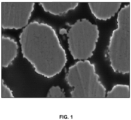
- FIG. 1 shows a observation photograph of a SEM cross section in Reference Example A1
- FIG. 2 shows a SEM cross section-EDX Ni mapping result in Reference Example A1
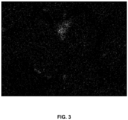
- FIG. 3 shows a SEM cross section-EDX Nb mapping result in Reference Example A1.
Landscapes
- Chemical & Material Sciences (AREA)
- General Chemical & Material Sciences (AREA)
- Chemical Kinetics & Catalysis (AREA)
- Electrochemistry (AREA)
- Engineering & Computer Science (AREA)
- Manufacturing & Machinery (AREA)
- Materials Engineering (AREA)
- Inorganic Chemistry (AREA)
- Composite Materials (AREA)
- Battery Electrode And Active Subsutance (AREA)
Description
- The present invention relates to a positive electrode active material for a lithium ion battery, a method for producing a positive electrode active material for a lithium ion battery, a positive electrode for a lithium ion battery, and a lithium ion battery.
- In general, a lithium-containing transition metal oxide is used for a positive electrode active material for a lithium secondary battery. Specifically, the transition metal oxide is a layered compound lithium cobalt oxide (LiCoO2), a layered compound lithium nickel oxide (LiNiO2), a spinel compound lithium manganate (LiMn2O4), or the like. Compounding (blending, granulating or the like) of them is being advanced in order to improve characteristics (high capacity, cycle characteristics, storage characteristics, reduced internal resistance, rate characteristics) or improve safety. Lithium secondary batteries for large-scale applications such as power sources for motor vehicles and for load leveling are required to have characteristics different from conventional those for mobile phones and PCs.
- Lithium ion batteries using positive electrode active materials include all-solid batteries and liquid-based batteries. Recently, it is known in the art that battery characteristics are improved by providing a coating of lithium niobate on a surface of a lithium-containing transition metal oxide to alleviate an increase in interfacial resistance, or by suppressing reaction with an electrolytic solution (Patent Document 1).
- Patent Document 1:
Japanese Patent Application Publication No. 2014-238957 A - In other related prior art:
JP 2017 509126 A -
US 2009/104530 A1 discloses a powder of a lithium transition-metal compound for a positive-electrode material in a lithium secondary battery, which is said to achieve a good balance of improved battery performance, cost reduction, resistance to a higher voltage, and a higher safety level. The powder is characterized in that in a mercury intrusion curve obtained by mercury intrusion porosimetry, the amount of mercury intruded is in the range of 0.8 cm3/g to 3 cm3/g when the pressure is increased from 3.86 kPa to 413 MPa. -
US 2016/043391 A1 discloses a lithium-transition metal oxide powder with a coating layer containing lithium niobate formed on a part or the whole part of a surface of a lithium-transition metal oxide particle and having a low powder compact resistance, and a positive electrode active material for a lithium ion battery containing the aforesaid powder. Specifically, the powder is composed of a lithium-transition metal oxide particle with a part or the whole part of a surface coated with a coating layer containing lithium niobate, wherein a carbon-content is 0.03 mass % or less. -
CN 106 684 323 A discloses a ternary lithium-ion battery cathode material improved by active oxide multiply and a preparation method thereof. The active oxide is Nb2O5 and is applied as a coating on the base material particles. -
JP 2017 107827 A -
US 2009/081548 A1 discloses a positive electrode for a lithium ion secondary battery, which material includes active material particles containing a lithium composite oxide composed mainly of nickel and represented by a particular compositional formula, and which may contain certain selected metals distributed more in the surface layer portions of the active material particles compared with the inner portions thereof. -
JP 2000 323143 A - The conductivity of the pressed powder is set to be within a specific defined range.
-
US 2015/010821 A1 teaches positive electrode active materials for a lithium ion battery, the material comprising a lithium metal oxide comprising at least Ni and Mn, whereby in the examples, molar ratios of Ni 0.33, 0.5 or 0.7 are used. Some of the materials are preferably doped with one or more additive elements among Zr, W, Sr and Nb. The dopant element is assumed by the authors to be present on the surface and the boundary surface of the crystal particle. W and Zr are stated to be preferable, whereby more preferable are both W and Zr. Several of the examples of the document use a dopant, however mostly a single one only. The last one of the examples uses Zr and W together as the dopant. The material of these examples has however Ni molar ratio of 0.33 with respect to the total amount of Ni, Mn and Co. - However, based on Patent Document 1, when the coating of lithium niobate is provided on the surface of the lithium-containing transition metal oxide by the method known in the prior art (in Patent Document 1), the reaction resistance in the charge-discharge cycles of the lithium ion battery may be increased. Therefore, there would be a need for further improvement.
- An object of the present invention is to provide a positive electrode active material for a lithium ion battery, which has good battery characteristics.
- In one aspect, the present invention relates to a positive electrode active material for a lithium ion battery, the positive electrode active material comprising:
- positive electrode active material particles each having a composition represented by the following formula:
LiaNibCocMndO2
- a coating layer containing lithium niobate, which partially covers surfaces of the positive electrode active material particles, wherein the coating layer partially covering surfaces of the positive electrode active material particles contains lithium niobate and both of lithium zirconate and lithium tungstate;
- wherein the positive electrode active material has a ratio of Nb to the total amount of Ni, Co and Mn of from 0.4 to 1.2 mol%.
- In an embodiment of the positive electrode active material for the lithium ion battery according to the present invention, the entire positive electrode active material has a composition represented by the following formula:
LiaNibCocMndNbαO2+3α
in which 1.004 ≤ a ≤ 1.02; 0.8 ≤ b ≤ 0.9; b + c + d = 1; and 0.004 ≤ α ≤ 0.012. - In another embodiment of the positive electrode active material for the lithium ion battery according to the present invention, when observing a cross section of the positive electrode active material with a scanning electron microscope (SEM), at least a part that is not covered with the covering layer can be observed on surface parts of the positive electrode active material particles by SEM-EDX measurement.
- In yet another embodiment of the positive electrode active material for the lithium ion battery according to the present invention, the positive electrode active material has a ratio of Nb, Zr and W to the total amount of Ni, Co and Mn of from 0.4 to 1.2 mol%.
- In another aspect, the present invention relates to a method for producing the positive electrode active material for the lithium ion battery according to the first aspect of the present invention, the method comprising:
- (i) dispersing Nb2O5 in pure water to prepare an additive slurry, wherein this step (i) comprises dispersing Nb2O5 and both of ZrO2 and WO3 in pure water to prepare the additive slurry;
and then either of the following series of steps (ii) or (iii): - (ii)
- (a) adding the additive slurry to a medium containing the positive electrode active material particles in pure water and dispersing the resulting mixture with stirring to prepare a surface-treated slurry,
- (b) drying the surface-treated slurry by a micro-mist dryer to obtain surface-treated particles, and
- (c) subjecting the surface-treated particles to a heat treatment at a temperature of from 650 to 800 °C; or
- (iii)
- (a) adding the additive slurry to a medium containing nickel-cobalt-manganese hydroxide in pure water and dispersing the resulting mixture with stirring to prepare a surface-treated slurry,
- (b) drying the surface-treated slurry by a micro-mist dryer to obtain a surface-treated precursor, and
- (c) adding a lithium source to the surface-treated precursor and firing the resulting mixture at a temperature of from 650 °C to 800 °C.
- In an embodiment of the method for producing the positive electrode active material for the lithium ion battery according to the preceding aspect of the present invention, an average particle diameter D50 on volume basis of Nb2O5 as a powder is from 0.3 to 0.8 µm.
- In another embodiment of the method for producing the positive electrode active material for the lithium ion battery according to the embodiment defined in the preceding paragraph, an average particle diameter D50 on volume basis of each of Nb2O5, ZrO2 and WO3 as a powder is from 0.3 to 0.8 µm.
- In yet another aspect, the present invention relates to a positive electrode for a lithium ion battery, comprising the positive electrode active material for the lithium ion battery according to the first aspect of the present invention.
- In yet another aspect, the present invention relates to a lithium ion battery comprising the positive electrode for the lithium ion battery according to the preceding aspect of the present invention.
- According to the present invention, it is possible to provide a positive electrode active material for a lithium ion battery, which has good battery characteristics.
-
-
FIG. 1 shows an observation photograph for an SEM cross section in Example A1. -
FIG. 2 shows a SEM cross section-EDX Ni mapping result in Example A1. -
FIG. 3 shows a SEM cross section-EDX Nb mapping result in Example A1. - This is a Reference Embodiment which falls outside the scope of the present invention defined in the appended claims, but is nevertheless presented for illustrative purposes only.
- A positive electrode active material for a lithium ion battery according to this Reference Embodiment includes: positive electrode active material particles each having a composition represented by the following formula:
LiaNibCocMndO2
- in which 1.00 ≤ a ≤ 1.02; 0.8 ≤ b ≤ 0.9; and b + c + d = 1; and
- a coating layer containing lithium niobate, which partially covers surfaces of the positive electrode active material particles. As used herein, the positive electrode active material particle refers to a component of only a core part that does not include the coating layer, and the positive electrode active material refers to the entire component including the coating layer and the positive electrode active material particles.
- Conventionally, in an all-solid battery, the entire positive electrode active material is covered with lithium niobate in order to prevent reaction between the positive electrode active material and sulfur in a sulfide-based solid electrolyte. Also, in a liquid-based battery, the entire positive electrode active material is covered with lithium niobate in order to suppress reaction with an electrolytic solution. However, since lithium niobate has high resistance, the covering of the entire positive electrode active material results in increased reaction resistance during charging and discharging, so that battery characteristics may be deteriorated. On the other hand, as described above, the positive electrode active material for the lithium ion battery according to this Reference Embodiment partially provides the coating layer containing lithium niobate on the surfaces of the positive electrode active material particles represented by the compositional formula: LiaNibCocMndO2. Such a structure suppresses an increase in reaction resistance in charge-discharge cycles of a lithium ion battery using the positive electrode active material, and also improves a discharge capacity and cycle characteristics.
- The positive electrode active material for the lithium ion battery according to this Reference Embodiment has a higher composition ratio of Ni to the total amount of Ni, Co, and Mn of the lithium-containing transition metal oxide forming the positive electrode active material particles, which ratio is 0.8 or more and 0.9 or less. In general, such a higher ratio of Ni in the positive electrode active material tends to react with the electrolytic solution when used for the lithium ion battery. However, the positive electrode active material for the lithium ion battery according to this Reference Embodiment provides the coating layer containing lithium niobate on a part of the surfaces of the positive electrode active material particles, so that the reaction with the electrolytic solution is satisfactorily suppressed. Therefore, it is possible to prevent deterioration of battery performance such as the discharge capacity and cycle characteristics.
- In the positive electrode active material for the lithium ion battery according to this Reference Embodiment, the ratio of Nb to the total amount of Ni, Co and Mn is controlled to be from 0.4 to 1.2 mol%. Such a configuration can hardly decrease a discharge capacity, suppress an increase in reaction resistance in a charge-discharge cycles, and improve cycle characteristics. The ratio of Nb to the total amount of Ni, Co and Mn may be preferably from 0.5 to 1.1 mol%, and more preferably from 0.6 to 1.0 mol%.
- In the positive electrode active material for the lithium ion battery according to this Reference Embodiment, the composition of the entire positive electrode active material may be represented by the following formula:
LiaNibCocMndNbαO2+3α
with 1.004 ≤ a ≤ 1.02; 0.8 ≤ b ≤ 0.9; b + c + d = 1; and 0.004 ≤ α ≤ 0.012. - In the positive electrode active material for the lithium ion battery according to this Reference Embodiment, when a cross section of the positive electrode active material is observed with a scanning electron microscope (SEM), SEM-EDX measurement can indicate parts that are not covered with the coating layer on the surface parts of the positive electrode active material particles.
- A method for producing the positive electrode active material for the lithium ion battery according to this Reference Embodiment may include the steps of: dispersing Nb2O5 in pure water to prepare an additive slurry; adding the additive slurry to a medium containing the positive electrode active material particles in pure water and dispersing the resulting mixture with stirring to prepare a surface-treated slurry; drying the surface-treated slurry by a micro-mist dryer to obtain surface-treated particles; and subjecting the surface-treated particles to a heat treatment at a temperature of from 650 to 800 °C.
- In another reference embodiment, a method for producing the positive electrode active material for the lithium ion battery according to this Reference Embodiment may include the steps of: dispersing Nb2O5 in pure water to prepare an additive slurry; adding the additive slurry to a medium containing nickel-cobalt-manganese hydroxide in pure water and dispersing the resulting mixture with stirring to prepare a surface-treated slurry; drying the surface-treated slurry by a micro-mist dryer to obtain a surface-treated precursor; and adding a lithium source to the surface-treated precursor and firing the resulting mixture at a temperature of from 650 °C to 800 °C.
- According to the method for producing the positive electrode active material for the lithium ion battery according to this Reference Embodiment as described above, the additive slurry obtained by dispersing Nb2O5 in pure water is added to a medium obtained by introducing the positive electrode active material particles in pure water, and dispersed with stirring to prepare a surface-treated slurry. Therefore, the coating layer containing lithium niobate can be provided on the surfaces of the positive electrode active material particles by simple steps. In the step of dispersing Nb2O5 in pure water to prepare the additive slurry, the additive slurry is preferably prepared by dispersing Nb2O5 in pure water with stirring and ultrasonically dispersing it. With such a manner, the additive slurry in which Nb2O5 is more satisfactorily dispersed can be prepared.
- Further, the surface-treated slurry is dried by a micro-mist dryer to obtain surface-treated particles or a surface-treated precursor, so that the surface-treated particles or surface-treated precursor without fine powder can be obtained during drying with the micro-mist dryer. Therefore, a classification step for removing the fine powder is eliminated, and a surface-treated positive electrode active material having improved battery characteristics, in particular improved charge-discharge cycle characteristics, can be produced at lower cost.
- The positive electrode active material for the lithium ion battery according to this Reference Embodiment has a higher composition ratio of Ni to the total amount of Ni, Co, and Mn of the lithium-containing transition metal oxide forming the positive electrode active material particles, the ratio being 0.8 or more and 9 or less. In general, such a higher ratio of Ni in the positive electrode active material tends to increase residual alkali. Therefore, it is more preferable that the niobium oxide Nb2O5 used for preparing the additive slurry has an average particle diameter D50 on volume basis as a powder of from 0.3 to 0.8 µm. According to such a configuration, Nb2O5 added to the surfaces of the positive electrode active material particles is allowed to be present without waste, so that Nb2O5 reacts with residual alkali Li to form lithium niobate. As a result, the residual alkali on the surface of the positive electrode active material is reduced, so that it is possible to satisfactorily prevent gelation in preparation of the positive electrode slurry and deterioration of battery performance such as cycle characteristics.
- This is an Invention Embodiment which falls within the scope of the present invention defined in the appended claims.
- A positive electrode active material for a lithium ion battery according to this Invention Embodiment of the present invention includes:
- positive electrode active material particles each having a composition represented by the following formula:
LiaNibCocMndO2
- in which 1.00 ≤ a ≤ 1.02; 0.8 ≤ b ≤ 0.9. and b + c + d = 1; and
- a coating layer partially covering surfaces of the positive electrode active material particles, the coating layer containing lithium niobate and both of lithium zirconate and lithium tungstate.
- Conventionally, in an all-solid battery, the entire positive electrode active material is covered with lithium niobate in order to prevent reaction between the positive electrode active material and sulfur in a sulfide-based solid electrolyte. Also, in a liquid-based battery, the entire positive electrode active material is covered with lithium niobate in order to suppress reaction with an electrolytic solution. However, since lithium niobate has high resistance, the covering of the entire positive electrode active material results in increased reaction resistance during charging and discharging, so that battery characteristics may be deteriorated. On the other hand, as described above, the positive electrode active material for the lithium ion battery according to this Invention Embodiment of the present invention partially provides the coating layer containing lithium niobate and both of lithium zirconate and lithium tungstate on the surfaces of the positive electrode active material particles represented by the compositional formula: LiaNibCocMndO2. Such a structure suppresses an increase in reaction resistance in charge-discharge cycles of a lithium ion battery using the positive electrode active material, and also improves a discharge capacity and cycle characteristics.
- The positive electrode active material for the lithium ion battery according to this Invention Embodiment of the present invention has a higher composition ratio of Ni to the total amount of Ni, Co, and Mn of the lithium-containing transition metal oxide forming the positive electrode active material particles, which ratio is 0.8 or more and 0.9 or less. In general, such a higher ratio of Ni in the positive electrode active material tends to react with the electrolytic solution when used for the lithium ion battery. However, the positive electrode active material for the lithium ion battery according to this Invention Embodiment of the present invention provides the coating layer containing lithium niobate and both of lithium zirconate and lithium tungstate on a part of the surfaces of the positive electrode active material particles, so that the reaction with the electrolytic solution is satisfactorily suppressed. Therefore, it is possible to prevent deterioration of battery performance such as a discharge capacity and cycle characteristics.
- In the positive electrode active material for the lithium ion battery according to this Invention Embodiment of the present invention, the ratio of Nb, Zr and W to the total amount of Ni, Co and Mn is controlled to be from 0.4 to 1.2 mol%. Such a configuration can hardly decrease a discharge capacity, suppress an increase in reaction resistance in charge-discharge cycles, and improve cycle characteristics. The ratio of Nb, Zr and W to the total amount of Ni, Co and Mn may be preferably from 0.5 to 1.1 mol%, and more preferably from 0.6 to 1.0 mol%.
- In the positive electrode active material for the lithium ion battery according to this Invention Embodiment of the present invention, the composition of the entire positive electrode active material may be represented by the following formula:
LiaNibCocMndNbαZrβWγO2+3α+3β+4γ
in which 1.004 ≤ a ≤ 1.02; 0.8 ≤ b ≤ 0.9; b + c + d = 1; and 0.004 ≤ α +β + γ ≤ 0.012. - In the positive electrode active material for the lithium ion battery according to this Invention Embodiment of the present invention, when a cross section of the positive electrode active material is observed with a scanning electron microscope (SEM), SEM-EDX measurement can indicate parts that are not covered with the coating layer on the surface parts of the positive electrode active material particles.
- The method for producing the positive electrode active material for the lithium ion battery according to this Invention Embodiment of the present invention may include the steps of: dispersing Nb2O5 and both of ZrO2 and WO3 in pure water to prepare an additive slurry; adding the additive slurry to a medium containing the positive electrode active material particles in pure water and dispersing the resulting mixture with stirring to prepare a surface-treated slurry; drying the surface-treated slurry by a micro-mist dryer to obtain surface-treated particles; and subjecting the surface-treated particles to a heat treatment at a temperature of from 650 to 800 °C.
- Further, the method for producing the positive electrode active material for the lithium ion battery according to this Invention Embodiment of the present invention may include the steps of: dispersing Nb2O5 and both of ZrO2 and WO3 in pure water to prepare an additive slurry; adding the additive slurry to a medium containing nickel-cobalt-manganese hydroxide in pure water and dispersing the resulting mixture with stirring to prepare a surface-treated slurry; drying the surface-treated slurry by a micro-mist dryer to obtain a surface-treated precursor; and adding a lithium source to the surface-treated precursor and firing the resulting mixture at a temperature of from 650 °C to 800 °C.
- According to the method for producing the positive electrode active material for the lithium ion battery according to this Invention Embodiment of the present invention as described above, the additive slurry obtained by dispersing Nb2O5 and both of ZrO2 and WO3 in pure water is added to a medium obtained by introducing the positive electrode active material particles in pure water, and dispersed with stirring to prepare the surface-treated slurry. Therefore, the coating layer containing lithium niobate and both of lithium zirconate and lithium tungstate can be provided on the surfaces of the positive electrode active material particles by simple steps. Further, according to the method for producing the positive electrode active material for the lithium ion battery according to this Invention Embodiment of the present invention, the surface-treated slurry is prepared by dispersing Nb2O5 and both of ZrO2 and WO3 in pure water to prepare the additive slurry, adding the additive slurry to the medium containing the nickel-cobalt-manganese hydroxide in pure water and dispersing the resulting mixture with stirring. Therefore, the coating layer containing lithium niobate and both of lithium zirconate and lithium tungstate can be provided on the surfaces of the positive electrode active material particles by simple steps. In the step of dispersing Nb2O5 and both of ZrO2 and WO3 in pure water to prepare the additive slurry, the additive slurry is preferably prepared by dispersing Nb2O5 and both of ZrO2 and WO3 in pure water with stirring and ultrasonically dispersing them. With such a manner, the additive slurry in which Nb2O5 and both of ZrO2 and WO3 are more satisfactorily dispersed can be prepared.
- Further, the surface-treated slurry is dried by the micro-mist dryer to obtain the surface-treated particles or the surface treatment precursor, so that surface-treated particles or a surface-treated precursor without fine powder can be obtained during drying with the micro-mist dryer. Therefore, a classification step for removing fine powder is eliminated, and a surface-treated positive electrode active material having improved battery characteristics, in particular improved charge/discharge cycle characteristics, can be produced at lower cost.
- The positive electrode active material for the lithium ion battery according to this Invention Embodiment of the present invention has a higher composition ratio of Ni to the total amount of Ni, Co, and Mn of the lithium-containing transition metal oxide forming the positive electrode active material particles, the ratio being 0.8 or more and 9 or less. In general, such a higher ratio of Ni in the positive electrode active material tends to increase residual alkali. Therefore, it is more preferable that Nb2O5, ZrO2 and WO3 used for preparing the additive slurry have an average particle diameter D50 on volume basis as a powder of from 0.3 to 0.8 µm. According to such a configuration, Nb2O5, ZrO2 and WO3 added to the surfaces of the positive electrode active material particles are allowed to be present without waste, so that Nb2O5, ZrO2 and WO3 react with residual alkali Li to form lithium niobate and both of lithium zirconate and lithium tungstate. As a result, the residual alkali on the surface of the positive electrode active material is reduced, so that it is possible to satisfactorily prevent gelation in preparation of the positive electrode slurry and deterioration of battery performance such as cycle characteristics.
- The positive electrode for the lithium ion battery according to each of the above Reference Embodiment and the above Invention Embodiment of the present invention has a structure in which a positive electrode agent prepared by mixing the positive electrode active material for the lithium ion battery as stated above, a conductive auxiliary agent and a binder is provided on one side or both sides of a current collector made of an aluminum foil or the like. Further, the lithium ion battery according to an embodiment of that aspect of the present invention includes the positive electrode for the lithium ion battery having such a structure according to the above Invention Embodiment. Furthermore, the lithium ion battery according to an embodiment of the present invention may be a liquid-based lithium ion battery or an all-solid lithium ion battery.
- Hereinafter, Examples are provided for better understanding of the present invention and its advantages, but the present invention is not limited to these Examples.
- Of these Examples, Examples A1 to A9 and Examples B1 and B2 are all Reference Examples which, although strictly speaking they are outside the scope of the claimed invention, are nevertheless presented as useful further examples illustrating the production and properties of materials similar to those within the actual scope of the claimed invention. Example B3 is an actual Invention Example which falls within the scope of the present invention as defined in the appended claims.
- Nb2O5 having an average particle diameter D50 of 0.5 µm was dispersed in pure water with stirring and ultrasonically dispersed to prepare an additive slurry. The additive slurry was added to a medium which had been separately prepared by introducing nickel-cobalt-manganese hydroxide in pure water, and the resulting mixture was dispersed with stirring to prepare a surface-treated slurry. The surface-treated slurry was then dried by a micro-mist dryer at 120 °C to remove fine powder and obtain a surface-treated precursor. To the surface-treated precursor was then added lithium hydroxide, and fired in an oxygen atmosphere at 740 °C for 12 hours. Thus, each positive electrode active material including positive electrode active material particles having each composition as shown in Table 1 and a coating layer containing lithium niobate partially covering the surfaces of the positive electrode active material particles was obtained.
- Nb2O5 having an average particle diameter D50 of 0.5 µm was dispersed in pure water with stirring and ultrasonically dispersed to prepare an additive slurry. The additive slurry was added to a medium which had been separately prepared by introducing positive electrode active material particles having the composition as shown in Table 1 in pure water, and the resulting mixture was dispersed with stirring to prepare a surface-treated slurry. The surface-treated slurry was then dried by a micro-mist dryer at 120 °C to remove fine powder and obtain surface-treated particles. The surface-treated particles were then subjected to a heat treatment in an oxygen atmosphere at 700 °C for 12 hours. Thus, a positive electrode active material including positive electrode active material particles having the composition as shown in Table 1 and a coating layer containing lithium niobate partially covering the surfaces of the positive electrode active material particles was obtained.
- A positive electrode active material was prepared under the same conditions as those in Example A1, with the exception that Nb2O5 having an average particle diameter D50 of 0.2 µm was used as a sample to be dispersed in pure water with stirring.
- A positive electrode active material was prepared under the same conditions as those in Example A1, with the exception that Nb2O5 having an average particle diameter D50 of 0.3 µm was used as a sample to be dispersed in pure water with stirring.
- A positive electrode active material was prepared under the same conditions as those in Example A1, with the exception that Nb2O5 having an average particle diameter D50 of 0.8 µm was used as a sample to be dispersed in pure water with stirring.
- A positive electrode active material was prepared under the same conditions as those in Example A1, with the exception that Nb2O5 having an average particle diameter D50 of 0.9 µm was used as a sample to be dispersed in pure water with stirring.
- A lithium foil was added to absolute ethanol and pentaethoxy niobium was then added to prepare an additive slurry. To the additive slurry were then added positive electrode active material particles having the composition as shown in Table 1, and dispersed with stirring to prepare a surface-treated slurry. The surface-treated slurry was then dried by a micro-mist dryer at 120 °C to remove fine powder and obtain surface-treated particles. The surface-treated particles were then subjected to a heat treatment in an oxygen atmosphere at 400 °C for 12 hours. Thus, a positive electrode active material including positive electrode active material particles having the composition as shown in Table 1 and a coating layer containing lithium niobate covering the surfaces of the positive electrode active material particles was obtained.
- Nickel-cobalt-manganese hydroxide was charged into pure water and dispersed with stirring to prepare a slurry, which was dried at 120 °C by a micro-mist drier to remove fine powder and obtain a surface-treated precursor. To the surface-treated precursor was then added lithium hydroxide, and fired in an oxygen atmosphere at 740 °C for 12 hours. Thus, a positive electrode active material having the composition as shown in Table 1 was obtained.
- A positive electrode active material was prepared under the same conditions as those in Reference Example A1, with the exception that a surface-treated slurry was placed in a stainless steel tray and introduced in a thermostat chamber at 120 °C for 12 hours and dried.
- Nb2O5 and ZrO2 each having an average particle diameter D50 of 0.5 µm were dispersed in pure water with stirring and ultrasonically dispersed to prepare an additive slurry. The additive slurry was added to a medium which had been separately prepared by introducing nickel-cobalt-manganese hydroxide in pure water, and the resulting mixture was dispersed with stirring to prepare a surface-treated slurry. The surface-treated slurry was then dried by a micro-mist dryer at 120 °C to remove fine powder and obtain a surface-treated precursor. To the surface-treated precursor was then added lithium hydroxide, and fired in an oxygen atmosphere at 740 °C for 12 hours. Thus, a positive electrode active material including positive electrode active material particles having the composition as shown in Table 2 and a coating layer containing lithium niobate and lithium zirconate partially covering the surfaces of the positive electrode active material particles was obtained.
- Nb2O5 and WO3 each having an average particle diameter D50 of 0.5 µm were dispersed in pure water with stirring and ultrasonically dispersed to prepare an additive slurry. The additive slurry was then added to a medium which had been separately prepared by introducing nickel-cobalt-manganese hydroxide in pure water, and the resulting mixture was dispersed with stirring to prepare a surface-treated slurry. The surface-treated slurry was then dried by a micro-mist dryer at 120 °C to remove fine powder and obtain a surface-treated precursor. To the surface-treated precursor was then added lithium hydroxide, and fired in an oxygen atmosphere at 740 °C for 12 hours. Thus, a positive electrode active material including positive electrode active material particles having the composition as shown in Table 2 and a coating layer containing lithium niobate and lithium tungstate partially covering the surfaces of the positive electrode active material particles was obtained.
- Nb2O5, ZrO2 and WO3 each having an average particle diameter D50 of 0.5 µm were dispersed in pure water with stirring and ultrasonically dispersed to prepare an additive slurry. The additive slurry was then added to a medium which had been separately prepared by introducing nickel-cobalt-manganese hydroxide in pure water, and the resulting mixture was dispersed with stirring to prepare a surface-treated slurry. The surface-treated slurry was then dried by a micro-mist dryer at 120 °C to remove fine powder and obtain a surface-treated precursor. To the surface-treated precursor was then added lithium hydroxide, and fired in an oxygen atmosphere at 740 °C for 12 hours. Thus, a positive electrode active material including positive electrode active material particles having the composition as shown in Table 2 and a coating layer containing lithium niobate, lithium zirconate and lithium tungstate partially covering the surfaces of the positive electrode active material particles was obtained.
- Nb2O5 was dispersed in pure water with stirring and ultrasonically dispersed to prepare an additive slurry. The additive slurry was then added to a medium which had been separately prepared by introducing nickel-cobalt-manganese hydroxide in pure water, and the resulting mixture was dispersed with stirring to prepare a surface-treated slurry. The surface-treated slurry was then dried by a micro-mist dryer at 120 °C to remove fine powder and obtain a surface-treated precursor. To the surface-treated precursor was then added lithium hydroxide, and fired in an oxygen atmosphere at 740 °C for 12 hours. Thus, each positive electrode active material including positive electrode active material particles having each composition as shown in Table 2 and a coating layer containing lithium niobate partially covering the surfaces of the positive electrode active material particles was obtained.
- Each positive electrode active material of Reference Examples A1 to A9, Reference Examples B1 and B2 and Invention Example B3, Comparative Examples A1 to A3, and Comparative Examples B1 and B2 was evaluated as follows.
- By measuring each positive electrode active material by SEM-EDX, a SEM observation photograph of the cross section was taken and a coated state of the coating layer was visually observed. In Reference Examples A1 to A9 and Reference Examples B1 and B2 and Invention Example B3, each coating layer was partially formed on the surfaces of the positive electrode active material particles, whereas in Comparative Example A1, the coating layer was formed on the entire surface of the positive electrode active material particles, and in Comparative Example A2, no coating layer was formed. As used herein, the phrase "coating layer was partially formed" means that it could be confirmed by the SEM-EDX that the coating layer was present on a part of the surfaces of the positive electrode active material particles, rather than on the entire surface of the positive electrode active material particles.
- The residual alkali amount was determined by dispersing 1 g of each produced positive electrode active material powder in 50 mL of pure water, stirring it for 10 minutes and filtering it, and then measuring a potential difference for a mixed solution of 10 mL of the filtrate and 15 mL of pure water by 0.1 N HCl.
- Each positive electrode active material, acetylene black as a conductive material, and polyvinylidene fluoride as a binder were weighed at a ratio of 90:5:5, and polyvinylidene fluoride as a binder was dissolved in an organic solvent (N-methylpyrrolidone) and mixed with each active material and the conductive material to form a slurry. The slurry was applied on an aluminum foil, dried, and press-molded to form a positive electrode. Then, as a battery structure, a 2032-type coin cell for evaluation was prepared such that a negative electrode as a counter electrode was Li, and an electrolytic solution was 1 M-LiPF6 dissolved in EC-DMC (3:7). Using the coin cell, a discharge capacity (0.05 C), charge-discharge cycles (capacity retention), and a resistance after charge-discharge cycles (increased ratio) were measured under the following conditions:
- Discharge Capacity (0.05 C)
A temperature of 25 °C; Charge: 4.30 V, 0.05 C, 20 h; Discharge: 3.0 V, 0.05 C; - Charge-Discharge Cycles (Capacity Retention)
- A temperature of 55 °C; Charge: 4.30 V, 1 C, 2.5 h; Discharge: 3.0 V, 1 C;
- A ratio of a discharge capacity at the 20th cycle to a discharge capacity at the 1st cycle.
- Resistance after Charge-Discharge Cycles (Increased Ratio)
- A temperature of 55 °C; Charge: 4.30 V, 1 C, 2.5 h; Discharge: 3.0 V, 1 C;
- A ratio of a DC resistance value at the 20th cycle to a DC resistance value at the 1st cycle.
- Tables 1 and 2 show the test conditions and evaluation results of Reference Examples A1 to A9, Reference Examples B1 and B2 and Invention Example B3, Comparative Examples A1 to A3, and Comparative Examples B1 and B2. In addition, the numerical values in the column of "Coating Layer, LiNbOs mol%" in Table 1 correspond to a ratio of Nb to the total amount of Ni, Co and Mn, and the numerical values in the columns of "Coating Layer, LiNbOs mol%", "Coating Layer, Li2ZrO3 mol%" and "Coating layer, Li2WO4 mol%" correspond to each ratio of Nb, Zr and W to the total amount of Ni, Co and Mn, and the composition of the whole of each positive electrode active material was as follows:
- Reference Example B1: Li1.02Ni0.82Co0.15Mn0.03Nb0.004Zr0.004O2.024;
- Reference Example B2: Li1.02Ni0.82Co0.15Mn0.03Nb0.004W0.004O2.028;
- Invention Example B3: Li1.02Ni0.82Co0.15Mn0.03Nb0.004Zr0.002W0.002O2.026;
-
FIG. 1 shows a observation photograph of a SEM cross section in Reference Example A1,FIG. 2 shows a SEM cross section-EDX Ni mapping result in Reference Example A1, andFIG. 3 shows a SEM cross section-EDX Nb mapping result in Reference Example A1.
| Composition of Positive Electrode Active Material Particles LiaNibCocMndO2 | Drying Method of Surface-Treated Slurry | Coating Layer | Coated State | Residual Alkali | Discharge Capacity | Charge-Discharge Cycles | Resistance after Charge-Discharge Cycles | ||||
| Li | Ni/ (Ni+Co+Mn) | Co/ (Ni+Co+Mn) | Mn/ (Ni+Co+Mn) | LiNbO3 | Presence or Absence of Uncoated Part | % by mass | 0.05 C Load | Capacity Retention | Increased Ratio | ||
| (a) | (b) | (c) | (d) | mol% | mAh/g | % | % | ||||
| Example A1 | 1.02 | 0.82 | 0.15 | 0.03 | MMD | 0.8 | Present | 0.70 | 215 | 95.9 | 89 |
| Example A2 | 1.02 | 0.82 | 0.15 | 0.03 | MMD | 0.4 | Present | 0.75 | 217 | 95.5 | 93 |
| Example A3 | 1.02 | 0.82 | 0.15 | 0.03 | MMD | 1.2 | Present | 0.67 | 211 | 95.8 | 88 |
| Example A4 | 1.01 | 0.82 | 0.15 | 0.03 | MMD | 0.8 | Present | 0.60 | 213 | 95.8 | 90 |
| Example A5 | 1.02 | 0.90 | 0.07 | 0.03 | MMD | 0.8 | Present | 0.80 | 223 | 95.2 | 95 |
| Example A6 | 1.02 | 0.82 | 0.15 | 0.03 | MMD | 0.8 | Present | 0.76 | 213 | 94.7 | 105 |
| Example A7 | 1.02 | 0.82 | 0.15 | 0.03 | MMD | 0.8 | Present | 0.74 | 214 | 95.2 | 97 |
| Example A8 | 1.02 | 0.82 | 0.15 | 0.03 | MMD | 0.8 | Present | 0.74 | 214 | 95.1 | 98 |
| Example A9 | 1.02 | 0.82 | 0.15 | 0.03 | MMD | 0.8 | Present | 0.77 | 213 | 94.5 | 107 |
| Comparative Example A1 | 1.02 | 0.82 | 0.15 | 0.03 | MMD | 0.8 | Absent | 0.85 | 209 | 94.4 | 185 |
| Comparative Example A2 | 1.02 | 0.82 | 0.15 | 0.03 | MMD | - | Present | 0.86 | 216 | 94.3 | 150 |
| Comparative Example A3 | 1.02 | 0.82 | 0.15 | 0.03 | Tray Drying | 0.8 | Present | 0.71 | 215 | 94.3 | 120 |
| *MMD: Drying By Micro-Mist Dryer |
| Composition of Positive Electrode Active Material Particles LiaNibCocMndO2 | Drying Method of Surface-Treated Slurry | Coating Layer | Coated State | Residual Alkali | Discharge Capacity | Charge-Discharge Cycles | Resistance after Charge-Discharge Cycles | ||||||
| Li | Ni/ (Ni+Co+Mn) | Co/ (Ni+Co+Mn) | Mn/ (Ni+Co+Mn) | LiNbO3 | Li2ZrO3 | Li2WO4 | Presence or Absence of Uncoated Part | % by mass | 0.05 C Load | Capacity Retention | Increased Ratio | ||
| (a) | (b) | (c) | (d) | mol% | mol% | mol% | mAh/g | % | % | ||||
| Example B1 | 1.02 | 0.82 | 0.15 | 0.03 | MMD | 0.4 | 0.4 | - | Present | 0.69 | 216 | 96.1 | 81 |
| Example B2 | 1.02 | 0.82 | 0.15 | 0.03 | MMD | 0.4 | - | 0.4 | Present | 0.72 | 216 | 96.2 | 80 |
| Example B3 | 1.02 | 0.82 | 0.15 | 0.03 | MMD | 0.4 | 0.2 | 0.2 | Present | 0.67 | 215 | 96.9 | 78 |
| Comparative Example B1 | 1.02 | 0.5 | 0.2 | 0.3 | MMD | 0.8 | - | - | Present | 0.35 | 160 | 97.1 | 50 |
| Comparative Example B2 | 1.02 | 0.33 | 0.33 | 0.33 | MMD | 0.8 | - | - | Present | 0.25 | 165 | 96.4 | 30 |
| *MMD: Drying By Micro-Mist Dryer |
Claims (9)
- A positive electrode active material for a lithium ion battery, the positive electrode active material comprising:positive electrode active material particles each having a composition represented by the following formula:
LiaNibCocMndO2
in which 1.00 ≤ a ≤ 1.02; 0.8 ≤ b ≤ 0.9; and b + c + d = 1; anda coating layer containing lithium niobate, which partially covers surfaces of the positive electrode active material particles, wherein the coating layer partially covering surfaces of the positive electrode active material particles contains lithium niobate and both of lithium zirconate and lithium tungstate;wherein the positive electrode active material has a ratio of Nb to the total amount of Ni, Co and Mn of from 0.4 to 1.2 mol%. - The positive electrode active material for the lithium ion battery according to claim 1, wherein the entire positive electrode active material has a composition represented by the following formula:
LiaNibCocMndNbαO2+3α
in which1.004 ≤ a ≤ 1.02; 0.8 ≤ b ≤ 0.9; b + c + d = 1; and 0.004 ≤ α ≤ 0.012. - The positive electrode active material for the lithium ion battery according to claim 1 or 2, wherein when observing a cross section of the positive electrode active material with a scanning electron microscope (SEM), at least a part that is not covered with the covering layer can be observed on surface parts of the positive electrode active material particles by SEM-EDX measurement.
- A positive electrode active material for a lithium ion battery according to any one of claims 1 to 3, wherein the positive electrode active material has a ratio of Nb, Zr and W to the total amount of Ni, Co and Mn of from 0.4 to 1.2 mol%.
- A method for producing the positive electrode active material for the lithium ion battery according to any one of claims 1 to 3, the method comprising:(i) dispersing Nb2O5 in pure water to prepare an additive slurry, wherein this step (i) comprises dispersing Nb2O5 and both of ZrO2 and WO3 in pure water to prepare the additive slurry;
and then either of the following series of steps (ii) or (iii):(ii)(a) adding the additive slurry to a medium containing the positive electrode active material particles in pure water and dispersing the resulting mixture with stirring to prepare a surface-treated slurry,(b) drying the surface-treated slurry by a micro-mist dryer to obtain surface-treated particles, and(c) subjecting the surface-treated particles to a heat treatment at a temperature of from 650 to 800 °C; or(iii)(a) adding the additive slurry to a medium containing nickel-cobalt-manganese hydroxide in pure water and dispersing the resulting mixture with stirring to prepare a surface-treated slurry,(b) drying the surface-treated slurry by a micro-mist dryer to obtain a surface-treated precursor, and(c) adding a lithium source to the surface-treated precursor and firing the resulting mixture at a temperature of from 650 °C to 800 °C. - The method according to claim 5, wherein an average particle diameter D50 on volume basis of Nb2O5 as a powder is from 0.3 to 0.8 µm.
- The method according to claim 5 of claim 6, wherein an average particle diameter D50 on volume basis of each of Nb2O5, ZrO2 and WO3 as a powder is from 0.3 to 0.8 µm.
- A positive electrode for a lithium ion battery, comprising the positive electrode active material for the lithium ion battery according to any one of claims 1 to 4.
- A lithium ion battery comprising the positive electrode for the lithium ion battery according to claim 8.
Applications Claiming Priority (1)
| Application Number | Priority Date | Filing Date | Title |
|---|---|---|---|
| JP2018019623A JP6744880B2 (en) | 2018-02-06 | 2018-02-06 | Positive electrode active material for lithium ion battery, method for producing positive electrode active material for lithium ion battery, positive electrode for lithium ion battery and lithium ion battery |
Publications (2)
| Publication Number | Publication Date |
|---|---|
| EP3522268A1 EP3522268A1 (en) | 2019-08-07 |
| EP3522268B1 true EP3522268B1 (en) | 2023-12-13 |
Family
ID=65279497
Family Applications (1)
| Application Number | Title | Priority Date | Filing Date |
|---|---|---|---|
| EP19155384.1A Active EP3522268B1 (en) | 2018-02-06 | 2019-02-04 | Positive electrode active material for lithium ion battery, method for producing positive electrode active material for lithium ion battery, positive electrode for lithium ion battery and lithium ion battery |
Country Status (2)
| Country | Link |
|---|---|
| EP (1) | EP3522268B1 (en) |
| JP (1) | JP6744880B2 (en) |
Families Citing this family (17)
| Publication number | Priority date | Publication date | Assignee | Title |
|---|---|---|---|---|
| AU2019283439B2 (en) | 2018-06-08 | 2024-10-10 | Cambridge Enterprise Limited | Metal oxide-based electrode compositions |
| JP6640434B1 (en) * | 2018-08-03 | 2020-02-05 | Jx金属株式会社 | Positive electrode active material for all-solid-state lithium-ion battery, positive electrode for all-solid-state lithium-ion battery, all-solid-state lithium-ion battery |
| JP6633161B1 (en) * | 2018-09-14 | 2020-01-22 | Jx金属株式会社 | Positive electrode active material, method for producing the same, positive electrode, and lithium ion battery |
| GB2592341B (en) | 2019-10-16 | 2022-10-19 | Nyobolt Ltd | Electrode compositions |
| US20230074355A1 (en) * | 2020-03-24 | 2023-03-09 | Mitsui Mining & Smelting Co., Ltd. | Active material, electrode mixture containing said active material, and battery |
| JP7256150B2 (en) * | 2020-07-30 | 2023-04-11 | トヨタ自動車株式会社 | All-solid battery |
| KR20220029853A (en) * | 2020-09-01 | 2022-03-10 | 현대자동차주식회사 | Cathode active material for all solid state battery comprising coating layer including ternary oxide and preparing method thereof |
| CN113964314B (en) * | 2021-09-18 | 2023-06-13 | 广东邦普循环科技有限公司 | Method for modifying surface of lithium transition metal oxide positive electrode material |
| KR102886213B1 (en) * | 2021-12-07 | 2025-11-13 | 주식회사 엘지에너지솔루션 | Positive electrode active material for sulfide all-solid-state battery |
| JPWO2023176503A1 (en) * | 2022-03-18 | 2023-09-21 | ||
| KR102645493B1 (en) * | 2022-03-24 | 2024-03-11 | 제이엑스금속주식회사 | Positive electrode active material for lithium ion batteries, positive electrode for lithium ion batteries, lithium ion battery, positive electrode active material for all-solid lithium ion batteries, positive electrode for all-solid lithium ion batteries, all-solid lithium ion batteries, method for producing positive electrode active materials for lithium ion batteries, and all-solid lithium ion batteries. Method for producing positive electrode active material |
| CN115172713B (en) * | 2022-07-28 | 2026-01-30 | 宁波容百新能源科技股份有限公司 | A low-alkali residual cathode material, its preparation method, and its application. |
| WO2024115679A1 (en) | 2022-11-30 | 2024-06-06 | Basf Se | Method for treating positive electrode active material particles, and positive electrode active material and nonaqueous electrolyte secondary battery employing same |
| KR102885371B1 (en) * | 2022-12-16 | 2025-11-11 | 포스코홀딩스 주식회사 | Positive active material for rechargeable lithium battery, method of preparing the same, and rechargeable lithium battery including the same |
| CN116314750B (en) * | 2023-02-06 | 2025-11-21 | 湘潭大学 | Preparation method of positive electrode material, positive electrode plate and lithium ion battery |
| CN116525815B (en) * | 2023-06-30 | 2023-11-17 | 宜宾锂宝新材料有限公司 | Spherical lithium nickel manganate cathode material, preparation method thereof and composite cathode material |
| JP2025152756A (en) * | 2024-03-28 | 2025-10-10 | Jx金属株式会社 | Evaluation method for positive electrode active material for lithium ion battery and positive electrode active material for lithium ion battery |
Citations (5)
| Publication number | Priority date | Publication date | Assignee | Title |
|---|---|---|---|---|
| JP2000323143A (en) * | 1999-04-30 | 2000-11-24 | Dowa Mining Co Ltd | Positive electrode active material and lithium secondary battery using the positive electrode active material |
| US20090081548A1 (en) * | 2005-06-16 | 2009-03-26 | Kensuke Nakura | Lithium ion secondary battery |
| US20150010821A1 (en) * | 2011-12-26 | 2015-01-08 | Toyota Jidosha Kabushiki Kaisha | Positive electrode active material for non-aqueous secondary battery and non-aqueous lithium secondary battery |
| CN106684323A (en) * | 2016-12-22 | 2017-05-17 | 广州朝锂新能源科技有限公司 | Ternary lithium-ion battery cathode material improved by active oxide multiply and preparation method thereof |
| JP2017107827A (en) * | 2015-11-27 | 2017-06-15 | 住友金属鉱山株式会社 | Cathode active material for non-aqueous electrolyte secondary battery, method for producing the same, and non-aqueous electrolyte secondary battery |
Family Cites Families (16)
| Publication number | Priority date | Publication date | Assignee | Title |
|---|---|---|---|---|
| JP3835412B2 (en) * | 2003-02-21 | 2006-10-18 | 三菱化学株式会社 | Positive electrode active material, positive electrode material, lithium secondary battery using surface modified lithium nickel composite oxide, and method for producing surface modified lithium nickel composite oxide |
| CN102044673B (en) * | 2006-04-07 | 2012-11-21 | 三菱化学株式会社 | Lithium-nickel-manganese-cobalt composite oxide powder for cathode material of lithium secondary battery |
| JP5023912B2 (en) * | 2007-09-19 | 2012-09-12 | トヨタ自動車株式会社 | Method for producing positive electrode active material |
| JP2010073539A (en) * | 2008-09-19 | 2010-04-02 | Toyota Motor Corp | Electrode body, method of manufacturing the same, and lithium ion secondary battery |
| JP5681427B2 (en) * | 2010-09-28 | 2015-03-11 | Dowaホールディングス株式会社 | Lithium-transition metal oxide powder and production method thereof, positive electrode active material for lithium ion battery, and lithium ion secondary battery |
| JP2013137947A (en) * | 2011-12-28 | 2013-07-11 | Panasonic Corp | Lithium ion secondary battery and method of manufacturing cathode active material for lithium ion secondary battery |
| JP5987401B2 (en) * | 2012-03-28 | 2016-09-07 | 住友金属鉱山株式会社 | Cathode active material for non-aqueous electrolyte secondary battery, method for producing the same, and secondary battery |
| KR101713454B1 (en) * | 2012-08-28 | 2017-03-07 | 스미토모 긴조쿠 고잔 가부시키가이샤 | Method for producing positive electrode active material for nonaqueous electrolyte secondary batteries, positive electrode active material for nonaqueous electrolyte secondary batteries, and nonaqueous electrolyte secondary battery using same |
| JP6189649B2 (en) | 2013-06-07 | 2017-08-30 | Dowaホールディングス株式会社 | Positive electrode active material powder and production method thereof |
| DE102014205356A1 (en) * | 2014-03-21 | 2015-09-24 | Robert Bosch Gmbh | Electrode for a lithium cell |
| JP6438297B2 (en) * | 2014-12-25 | 2018-12-12 | Jx金属株式会社 | Positive electrode active material for lithium ion battery, positive electrode for lithium ion battery, and lithium ion battery |
| JP6569544B2 (en) * | 2015-05-26 | 2019-09-04 | 住友金属鉱山株式会社 | Positive electrode active material for non-aqueous electrolyte secondary battery, method for producing the same, and non-aqueous electrolyte secondary battery using the positive electrode active material |
| JP6983494B2 (en) * | 2015-06-02 | 2021-12-17 | Jx金属株式会社 | Positive electrode active material for lithium-ion batteries, positive electrode for lithium-ion batteries, and lithium-ion batteries |
| US11411214B2 (en) * | 2015-10-28 | 2022-08-09 | Sumitomo Metal Mining Co., Ltd. | Positive electrode active material for nonaqueous electrolyte secondary batteries, production method thereof, positive electrode mixture material paste for nonaqueous electrolyte secondary batteries, and nonaqueous electrolyte secondary battery |
| JP6533733B2 (en) * | 2015-10-29 | 2019-06-19 | Jx金属株式会社 | Positive electrode active material for lithium ion battery, positive electrode for lithium ion battery and lithium ion battery, and method for manufacturing positive electrode active material for lithium ion battery |
| KR101944381B1 (en) * | 2015-11-30 | 2019-01-31 | 주식회사 엘지화학 | Surface-treated cathode active material for a lithium secondary battery, method of preparing for the same, and a lithium secondary battery comprising the same |
-
2018
- 2018-02-06 JP JP2018019623A patent/JP6744880B2/en active Active
-
2019
- 2019-02-04 EP EP19155384.1A patent/EP3522268B1/en active Active
Patent Citations (5)
| Publication number | Priority date | Publication date | Assignee | Title |
|---|---|---|---|---|
| JP2000323143A (en) * | 1999-04-30 | 2000-11-24 | Dowa Mining Co Ltd | Positive electrode active material and lithium secondary battery using the positive electrode active material |
| US20090081548A1 (en) * | 2005-06-16 | 2009-03-26 | Kensuke Nakura | Lithium ion secondary battery |
| US20150010821A1 (en) * | 2011-12-26 | 2015-01-08 | Toyota Jidosha Kabushiki Kaisha | Positive electrode active material for non-aqueous secondary battery and non-aqueous lithium secondary battery |
| JP2017107827A (en) * | 2015-11-27 | 2017-06-15 | 住友金属鉱山株式会社 | Cathode active material for non-aqueous electrolyte secondary battery, method for producing the same, and non-aqueous electrolyte secondary battery |
| CN106684323A (en) * | 2016-12-22 | 2017-05-17 | 广州朝锂新能源科技有限公司 | Ternary lithium-ion battery cathode material improved by active oxide multiply and preparation method thereof |
Also Published As
| Publication number | Publication date |
|---|---|
| JP6744880B2 (en) | 2020-08-19 |
| JP2019139862A (en) | 2019-08-22 |
| EP3522268A1 (en) | 2019-08-07 |
Similar Documents
| Publication | Publication Date | Title |
|---|---|---|
| EP3522268A1 (en) | Positive electrode active material for lithium ion battery, method for producing positive electrode active material for lithium ion battery, positive electrode for lithium ion battery and lithium ion battery | |
| EP3663265B1 (en) | Positive electrode active material for lithium secondary battery and lithium secondary battery including the same | |
| EP4137460A1 (en) | Method for solid-state synthesis of ni-rich lithium composite transition metal oxide cathode active material single particle, ni-rich lithium composite transition metal oxide cathode active material single particle synthesized thereby, and cathode and lithium secondary battery, each containing same | |
| EP2741353B1 (en) | Cathode active material, method for preparing the same, and lithium secondary batteries including the same | |
| EP3248232B1 (en) | Lithium nickel-manganese-cobalt oxide cathode powders for high voltage lithium-ion batteries | |
| EP2096692B1 (en) | Cathode active material, and cathode and lithium battery including the same | |
| EP4350812A1 (en) | Positive electrode active material, battery and preparation method therefor | |
| EP3597604A1 (en) | Positive active material, preparation method thereof and positive electrode plate and lithium-ion secondary battery | |
| JP6575048B2 (en) | The positive electrode composition for nonaqueous electrolyte secondary batteries, the nonaqueous electrolyte secondary battery, and the manufacturing method of the positive electrode composition for nonaqueous electrolyte secondary batteries. | |
| EP4645468A1 (en) | Multi-element-coated modified single-crystalline nickel cobalt lithium manganate positive electrode material, preparation method therefor and lithium ion battery | |
| EP4535460A1 (en) | Positive electrode material, and positive electrode sheet and battery comprising same | |
| EP3242348B1 (en) | Method for producing positive active material precursor and positive active material for lithium secondary batteries, exhibiting concentration gradient, and positive active material precursor and positive active material for lithium secondary batteries, exhibiting concentration gradient, produced by same | |
| KR102178807B1 (en) | Positive electrode active material for rechargable lithium battery, method for manufacturing the same, and rechargable lithium battery including the same | |
| EP3806204A1 (en) | Positive electrode active material for non-aqueous electrolyte secondary battery, and non-aqueous electrolyte secondary battery | |
| JP2015111560A (en) | Positive electrode composition for non-aqueous electrolyte secondary battery and method for producing the same | |
| EP4394933A1 (en) | Ternary positive electrode material, and preparation method therefor and use thereof | |
| EP4489122A1 (en) | Positive electrode active material, method for producing same and nonaqueous electrolyte secondary battery | |
| US20250122097A1 (en) | Cathode material, preparation method thereof, and lithium-ion battery | |
| EP4046966A1 (en) | Positive electrode active material and lithium ion secondary battery | |
| JP6852747B2 (en) | A method for producing a positive electrode composition for a non-aqueous electrolyte secondary battery, a non-aqueous electrolyte secondary battery, and a positive electrode composition for a non-aqueous electrolyte secondary battery. | |
| US10305095B2 (en) | Method of producing positive electrode active material for non-aqueous electrolyte secondary battery, positive electrode for non-aqueous electrolyte secondary battery, and non-aqueous electrolyte secondary battery | |
| EP3998236B1 (en) | Positive electrode active material for lithium-ion secondary battery and lithium-ion secondary battery | |
| EP4145556A1 (en) | Negative electrode material and battery | |
| EP4040542A1 (en) | Cathode active material for lithium secondary battery, and lithium secondary battery including same | |
| EP3223343A1 (en) | Positive electrode for lithium ion secondary batteries, and lithium ion secondary battery using same |
Legal Events
| Date | Code | Title | Description |
|---|---|---|---|
| PUAI | Public reference made under article 153(3) epc to a published international application that has entered the european phase |
Free format text: ORIGINAL CODE: 0009012 |
|
| STAA | Information on the status of an ep patent application or granted ep patent |
Free format text: STATUS: THE APPLICATION HAS BEEN PUBLISHED |
|
| AK | Designated contracting states |
Kind code of ref document: A1 Designated state(s): AL AT BE BG CH CY CZ DE DK EE ES FI FR GB GR HR HU IE IS IT LI LT LU LV MC MK MT NL NO PL PT RO RS SE SI SK SM TR |
|
| AX | Request for extension of the european patent |
Extension state: BA ME |
|
| STAA | Information on the status of an ep patent application or granted ep patent |
Free format text: STATUS: REQUEST FOR EXAMINATION WAS MADE |
|
| 17P | Request for examination filed |
Effective date: 20200207 |
|
| RBV | Designated contracting states (corrected) |
Designated state(s): AL AT BE BG CH CY CZ DE DK EE ES FI FR GB GR HR HU IE IS IT LI LT LU LV MC MK MT NL NO PL PT RO RS SE SI SK SM TR |
|
| STAA | Information on the status of an ep patent application or granted ep patent |
Free format text: STATUS: EXAMINATION IS IN PROGRESS |
|
| 17Q | First examination report despatched |
Effective date: 20210709 |
|
| RIC1 | Information provided on ipc code assigned before grant |
Ipc: C01G 53/00 20060101ALN20230803BHEP Ipc: H01M 10/42 20060101ALN20230803BHEP Ipc: H01M 4/525 20100101ALI20230803BHEP Ipc: H01M 4/505 20100101ALI20230803BHEP Ipc: H01M 4/36 20060101ALI20230803BHEP Ipc: H01M 10/0525 20100101ALI20230803BHEP Ipc: H01M 4/04 20060101ALI20230803BHEP Ipc: H01M 4/62 20060101ALI20230803BHEP Ipc: H01M 4/1391 20100101ALI20230803BHEP Ipc: H01M 4/131 20100101AFI20230803BHEP |
|
| GRAP | Despatch of communication of intention to grant a patent |
Free format text: ORIGINAL CODE: EPIDOSNIGR1 |
|
| STAA | Information on the status of an ep patent application or granted ep patent |
Free format text: STATUS: GRANT OF PATENT IS INTENDED |
|
| INTG | Intention to grant announced |
Effective date: 20230908 |
|
| GRAS | Grant fee paid |
Free format text: ORIGINAL CODE: EPIDOSNIGR3 |
|
| GRAA | (expected) grant |
Free format text: ORIGINAL CODE: 0009210 |
|
| STAA | Information on the status of an ep patent application or granted ep patent |
Free format text: STATUS: THE PATENT HAS BEEN GRANTED |
|
| RAP3 | Party data changed (applicant data changed or rights of an application transferred) |
Owner name: JX METALS CORPORATION |
|
| P01 | Opt-out of the competence of the unified patent court (upc) registered |
Effective date: 20231031 |
|
| AK | Designated contracting states |
Kind code of ref document: B1 Designated state(s): AL AT BE BG CH CY CZ DE DK EE ES FI FR GB GR HR HU IE IS IT LI LT LU LV MC MK MT NL NO PL PT RO RS SE SI SK SM TR |
|
| REG | Reference to a national code |
Ref country code: GB Ref legal event code: FG4D |
|
| REG | Reference to a national code |
Ref country code: CH Ref legal event code: EP |
|
| REG | Reference to a national code |
Ref country code: DE Ref legal event code: R096 Ref document number: 602019043086 Country of ref document: DE |
|
| REG | Reference to a national code |
Ref country code: IE Ref legal event code: FG4D |
|
| PG25 | Lapsed in a contracting state [announced via postgrant information from national office to epo] |
Ref country code: GR Free format text: LAPSE BECAUSE OF FAILURE TO SUBMIT A TRANSLATION OF THE DESCRIPTION OR TO PAY THE FEE WITHIN THE PRESCRIBED TIME-LIMIT Effective date: 20240314 |
|
| REG | Reference to a national code |
Ref country code: LT Ref legal event code: MG9D |
|
| PG25 | Lapsed in a contracting state [announced via postgrant information from national office to epo] |
Ref country code: LT Free format text: LAPSE BECAUSE OF FAILURE TO SUBMIT A TRANSLATION OF THE DESCRIPTION OR TO PAY THE FEE WITHIN THE PRESCRIBED TIME-LIMIT Effective date: 20231213 |
|
| REG | Reference to a national code |
Ref country code: NL Ref legal event code: MP Effective date: 20231213 |
|
| PG25 | Lapsed in a contracting state [announced via postgrant information from national office to epo] |
Ref country code: ES Free format text: LAPSE BECAUSE OF FAILURE TO SUBMIT A TRANSLATION OF THE DESCRIPTION OR TO PAY THE FEE WITHIN THE PRESCRIBED TIME-LIMIT Effective date: 20231213 |
|
| PG25 | Lapsed in a contracting state [announced via postgrant information from national office to epo] |
Ref country code: LT Free format text: LAPSE BECAUSE OF FAILURE TO SUBMIT A TRANSLATION OF THE DESCRIPTION OR TO PAY THE FEE WITHIN THE PRESCRIBED TIME-LIMIT Effective date: 20231213 Ref country code: GR Free format text: LAPSE BECAUSE OF FAILURE TO SUBMIT A TRANSLATION OF THE DESCRIPTION OR TO PAY THE FEE WITHIN THE PRESCRIBED TIME-LIMIT Effective date: 20240314 Ref country code: ES Free format text: LAPSE BECAUSE OF FAILURE TO SUBMIT A TRANSLATION OF THE DESCRIPTION OR TO PAY THE FEE WITHIN THE PRESCRIBED TIME-LIMIT Effective date: 20231213 Ref country code: BG Free format text: LAPSE BECAUSE OF FAILURE TO SUBMIT A TRANSLATION OF THE DESCRIPTION OR TO PAY THE FEE WITHIN THE PRESCRIBED TIME-LIMIT Effective date: 20240313 |
|
| REG | Reference to a national code |
Ref country code: AT Ref legal event code: MK05 Ref document number: 1641232 Country of ref document: AT Kind code of ref document: T Effective date: 20231213 |
|
| PG25 | Lapsed in a contracting state [announced via postgrant information from national office to epo] |
Ref country code: NL Free format text: LAPSE BECAUSE OF FAILURE TO SUBMIT A TRANSLATION OF THE DESCRIPTION OR TO PAY THE FEE WITHIN THE PRESCRIBED TIME-LIMIT Effective date: 20231213 |
|
| PG25 | Lapsed in a contracting state [announced via postgrant information from national office to epo] |
Ref country code: SE Free format text: LAPSE BECAUSE OF FAILURE TO SUBMIT A TRANSLATION OF THE DESCRIPTION OR TO PAY THE FEE WITHIN THE PRESCRIBED TIME-LIMIT Effective date: 20231213 Ref country code: RS Free format text: LAPSE BECAUSE OF FAILURE TO SUBMIT A TRANSLATION OF THE DESCRIPTION OR TO PAY THE FEE WITHIN THE PRESCRIBED TIME-LIMIT Effective date: 20231213 Ref country code: NO Free format text: LAPSE BECAUSE OF FAILURE TO SUBMIT A TRANSLATION OF THE DESCRIPTION OR TO PAY THE FEE WITHIN THE PRESCRIBED TIME-LIMIT Effective date: 20240313 Ref country code: NL Free format text: LAPSE BECAUSE OF FAILURE TO SUBMIT A TRANSLATION OF THE DESCRIPTION OR TO PAY THE FEE WITHIN THE PRESCRIBED TIME-LIMIT Effective date: 20231213 Ref country code: LV Free format text: LAPSE BECAUSE OF FAILURE TO SUBMIT A TRANSLATION OF THE DESCRIPTION OR TO PAY THE FEE WITHIN THE PRESCRIBED TIME-LIMIT Effective date: 20231213 Ref country code: HR Free format text: LAPSE BECAUSE OF FAILURE TO SUBMIT A TRANSLATION OF THE DESCRIPTION OR TO PAY THE FEE WITHIN THE PRESCRIBED TIME-LIMIT Effective date: 20231213 |
|
| PG25 | Lapsed in a contracting state [announced via postgrant information from national office to epo] |
Ref country code: IS Free format text: LAPSE BECAUSE OF FAILURE TO SUBMIT A TRANSLATION OF THE DESCRIPTION OR TO PAY THE FEE WITHIN THE PRESCRIBED TIME-LIMIT Effective date: 20240413 |
|
| PG25 | Lapsed in a contracting state [announced via postgrant information from national office to epo] |
Ref country code: AT Free format text: LAPSE BECAUSE OF FAILURE TO SUBMIT A TRANSLATION OF THE DESCRIPTION OR TO PAY THE FEE WITHIN THE PRESCRIBED TIME-LIMIT Effective date: 20231213 Ref country code: CZ Free format text: LAPSE BECAUSE OF FAILURE TO SUBMIT A TRANSLATION OF THE DESCRIPTION OR TO PAY THE FEE WITHIN THE PRESCRIBED TIME-LIMIT Effective date: 20231213 |
|
| PG25 | Lapsed in a contracting state [announced via postgrant information from national office to epo] |
Ref country code: SK Free format text: LAPSE BECAUSE OF FAILURE TO SUBMIT A TRANSLATION OF THE DESCRIPTION OR TO PAY THE FEE WITHIN THE PRESCRIBED TIME-LIMIT Effective date: 20231213 |
|
| PG25 | Lapsed in a contracting state [announced via postgrant information from national office to epo] |
Ref country code: SM Free format text: LAPSE BECAUSE OF FAILURE TO SUBMIT A TRANSLATION OF THE DESCRIPTION OR TO PAY THE FEE WITHIN THE PRESCRIBED TIME-LIMIT Effective date: 20231213 Ref country code: SK Free format text: LAPSE BECAUSE OF FAILURE TO SUBMIT A TRANSLATION OF THE DESCRIPTION OR TO PAY THE FEE WITHIN THE PRESCRIBED TIME-LIMIT Effective date: 20231213 Ref country code: RO Free format text: LAPSE BECAUSE OF FAILURE TO SUBMIT A TRANSLATION OF THE DESCRIPTION OR TO PAY THE FEE WITHIN THE PRESCRIBED TIME-LIMIT Effective date: 20231213 Ref country code: IT Free format text: LAPSE BECAUSE OF FAILURE TO SUBMIT A TRANSLATION OF THE DESCRIPTION OR TO PAY THE FEE WITHIN THE PRESCRIBED TIME-LIMIT Effective date: 20231213 Ref country code: IS Free format text: LAPSE BECAUSE OF FAILURE TO SUBMIT A TRANSLATION OF THE DESCRIPTION OR TO PAY THE FEE WITHIN THE PRESCRIBED TIME-LIMIT Effective date: 20240413 Ref country code: EE Free format text: LAPSE BECAUSE OF FAILURE TO SUBMIT A TRANSLATION OF THE DESCRIPTION OR TO PAY THE FEE WITHIN THE PRESCRIBED TIME-LIMIT Effective date: 20231213 Ref country code: CZ Free format text: LAPSE BECAUSE OF FAILURE TO SUBMIT A TRANSLATION OF THE DESCRIPTION OR TO PAY THE FEE WITHIN THE PRESCRIBED TIME-LIMIT Effective date: 20231213 Ref country code: AT Free format text: LAPSE BECAUSE OF FAILURE TO SUBMIT A TRANSLATION OF THE DESCRIPTION OR TO PAY THE FEE WITHIN THE PRESCRIBED TIME-LIMIT Effective date: 20231213 |
|
| PG25 | Lapsed in a contracting state [announced via postgrant information from national office to epo] |
Ref country code: PL Free format text: LAPSE BECAUSE OF FAILURE TO SUBMIT A TRANSLATION OF THE DESCRIPTION OR TO PAY THE FEE WITHIN THE PRESCRIBED TIME-LIMIT Effective date: 20231213 Ref country code: PT Free format text: LAPSE BECAUSE OF FAILURE TO SUBMIT A TRANSLATION OF THE DESCRIPTION OR TO PAY THE FEE WITHIN THE PRESCRIBED TIME-LIMIT Effective date: 20240415 |
|
| PG25 | Lapsed in a contracting state [announced via postgrant information from national office to epo] |
Ref country code: PT Free format text: LAPSE BECAUSE OF FAILURE TO SUBMIT A TRANSLATION OF THE DESCRIPTION OR TO PAY THE FEE WITHIN THE PRESCRIBED TIME-LIMIT Effective date: 20240415 Ref country code: PL Free format text: LAPSE BECAUSE OF FAILURE TO SUBMIT A TRANSLATION OF THE DESCRIPTION OR TO PAY THE FEE WITHIN THE PRESCRIBED TIME-LIMIT Effective date: 20231213 |
|
| REG | Reference to a national code |
Ref country code: DE Ref legal event code: R097 Ref document number: 602019043086 Country of ref document: DE |
|
| PG25 | Lapsed in a contracting state [announced via postgrant information from national office to epo] |
Ref country code: MC Free format text: LAPSE BECAUSE OF FAILURE TO SUBMIT A TRANSLATION OF THE DESCRIPTION OR TO PAY THE FEE WITHIN THE PRESCRIBED TIME-LIMIT Effective date: 20231213 |
|
| REG | Reference to a national code |
Ref country code: CH Ref legal event code: PL |
|
| PG25 | Lapsed in a contracting state [announced via postgrant information from national office to epo] |
Ref country code: DK Free format text: LAPSE BECAUSE OF FAILURE TO SUBMIT A TRANSLATION OF THE DESCRIPTION OR TO PAY THE FEE WITHIN THE PRESCRIBED TIME-LIMIT Effective date: 20231213 |
|
| PG25 | Lapsed in a contracting state [announced via postgrant information from national office to epo] |
Ref country code: LU Free format text: LAPSE BECAUSE OF NON-PAYMENT OF DUE FEES Effective date: 20240204 |
|
| PLBE | No opposition filed within time limit |
Free format text: ORIGINAL CODE: 0009261 |
|
| STAA | Information on the status of an ep patent application or granted ep patent |
Free format text: STATUS: NO OPPOSITION FILED WITHIN TIME LIMIT |
|
| PG25 | Lapsed in a contracting state [announced via postgrant information from national office to epo] |
Ref country code: CH Free format text: LAPSE BECAUSE OF NON-PAYMENT OF DUE FEES Effective date: 20240229 |
|
| PG25 | Lapsed in a contracting state [announced via postgrant information from national office to epo] |
Ref country code: SI Free format text: LAPSE BECAUSE OF FAILURE TO SUBMIT A TRANSLATION OF THE DESCRIPTION OR TO PAY THE FEE WITHIN THE PRESCRIBED TIME-LIMIT Effective date: 20231213 |
|
| PG25 | Lapsed in a contracting state [announced via postgrant information from national office to epo] |
Ref country code: SI Free format text: LAPSE BECAUSE OF FAILURE TO SUBMIT A TRANSLATION OF THE DESCRIPTION OR TO PAY THE FEE WITHIN THE PRESCRIBED TIME-LIMIT Effective date: 20231213 Ref country code: LU Free format text: LAPSE BECAUSE OF NON-PAYMENT OF DUE FEES Effective date: 20240204 Ref country code: DK Free format text: LAPSE BECAUSE OF FAILURE TO SUBMIT A TRANSLATION OF THE DESCRIPTION OR TO PAY THE FEE WITHIN THE PRESCRIBED TIME-LIMIT Effective date: 20231213 Ref country code: CH Free format text: LAPSE BECAUSE OF NON-PAYMENT OF DUE FEES Effective date: 20240229 |
|
| 26N | No opposition filed |
Effective date: 20240916 |
|
| GBPC | Gb: european patent ceased through non-payment of renewal fee |
Effective date: 20240313 |
|
| REG | Reference to a national code |
Ref country code: BE Ref legal event code: MM Effective date: 20240229 |
|
| PG25 | Lapsed in a contracting state [announced via postgrant information from national office to epo] |
Ref country code: BE Free format text: LAPSE BECAUSE OF NON-PAYMENT OF DUE FEES Effective date: 20240229 |
|
| PG25 | Lapsed in a contracting state [announced via postgrant information from national office to epo] |
Ref country code: GB Free format text: LAPSE BECAUSE OF NON-PAYMENT OF DUE FEES Effective date: 20240313 |
|
| PG25 | Lapsed in a contracting state [announced via postgrant information from national office to epo] |
Ref country code: FR Free format text: LAPSE BECAUSE OF NON-PAYMENT OF DUE FEES Effective date: 20240213 |
|
| PG25 | Lapsed in a contracting state [announced via postgrant information from national office to epo] |
Ref country code: IE Free format text: LAPSE BECAUSE OF NON-PAYMENT OF DUE FEES Effective date: 20240204 |
|
| PG25 | Lapsed in a contracting state [announced via postgrant information from national office to epo] |
Ref country code: IE Free format text: LAPSE BECAUSE OF NON-PAYMENT OF DUE FEES Effective date: 20240204 Ref country code: GB Free format text: LAPSE BECAUSE OF NON-PAYMENT OF DUE FEES Effective date: 20240313 Ref country code: FR Free format text: LAPSE BECAUSE OF NON-PAYMENT OF DUE FEES Effective date: 20240213 Ref country code: BE Free format text: LAPSE BECAUSE OF NON-PAYMENT OF DUE FEES Effective date: 20240229 |
|
| PG25 | Lapsed in a contracting state [announced via postgrant information from national office to epo] |
Ref country code: CY Free format text: LAPSE BECAUSE OF FAILURE TO SUBMIT A TRANSLATION OF THE DESCRIPTION OR TO PAY THE FEE WITHIN THE PRESCRIBED TIME-LIMIT; INVALID AB INITIO Effective date: 20190204 |
|
| PG25 | Lapsed in a contracting state [announced via postgrant information from national office to epo] |
Ref country code: HU Free format text: LAPSE BECAUSE OF FAILURE TO SUBMIT A TRANSLATION OF THE DESCRIPTION OR TO PAY THE FEE WITHIN THE PRESCRIBED TIME-LIMIT; INVALID AB INITIO Effective date: 20190204 |
|
| PG25 | Lapsed in a contracting state [announced via postgrant information from national office to epo] |
Ref country code: FI Free format text: LAPSE BECAUSE OF FAILURE TO SUBMIT A TRANSLATION OF THE DESCRIPTION OR TO PAY THE FEE WITHIN THE PRESCRIBED TIME-LIMIT Effective date: 20231213 |
|
| PG25 | Lapsed in a contracting state [announced via postgrant information from national office to epo] |
Ref country code: TR Free format text: LAPSE BECAUSE OF FAILURE TO SUBMIT A TRANSLATION OF THE DESCRIPTION OR TO PAY THE FEE WITHIN THE PRESCRIBED TIME-LIMIT Effective date: 20231213 |
|
| PGFP | Annual fee paid to national office [announced via postgrant information from national office to epo] |
Ref country code: DE Payment date: 20251230 Year of fee payment: 8 |