EP3516385B1 - Einstufige kapillare isoelektrische fokussierung und mobilisierung von analyten - Google Patents
Einstufige kapillare isoelektrische fokussierung und mobilisierung von analyten Download PDFInfo
- Publication number
- EP3516385B1 EP3516385B1 EP17828636.5A EP17828636A EP3516385B1 EP 3516385 B1 EP3516385 B1 EP 3516385B1 EP 17828636 A EP17828636 A EP 17828636A EP 3516385 B1 EP3516385 B1 EP 3516385B1
- Authority
- EP
- European Patent Office
- Prior art keywords
- capillary
- solution
- separation capillary
- analytes
- separation
- Prior art date
- Legal status (The legal status is an assumption and is not a legal conclusion. Google has not performed a legal analysis and makes no representation as to the accuracy of the status listed.)
- Active
Links
Images

Classifications
-
- G—PHYSICS
- G01—MEASURING; TESTING
- G01N—INVESTIGATING OR ANALYSING MATERIALS BY DETERMINING THEIR CHEMICAL OR PHYSICAL PROPERTIES
- G01N27/00—Investigating or analysing materials by the use of electric, electrochemical, or magnetic means
- G01N27/26—Investigating or analysing materials by the use of electric, electrochemical, or magnetic means by investigating electrochemical variables; by using electrolysis or electrophoresis
- G01N27/416—Systems
- G01N27/447—Systems using electrophoresis
- G01N27/44756—Apparatus specially adapted therefor
- G01N27/44795—Isoelectric focusing
-
- C—CHEMISTRY; METALLURGY
- C07—ORGANIC CHEMISTRY
- C07K—PEPTIDES
- C07K1/00—General methods for the preparation of peptides, i.e. processes for the organic chemical preparation of peptides or proteins of any length
- C07K1/14—Extraction; Separation; Purification
- C07K1/24—Extraction; Separation; Purification by electrochemical means
- C07K1/26—Electrophoresis
- C07K1/28—Isoelectric focusing
-
- G—PHYSICS
- G01—MEASURING; TESTING
- G01N—INVESTIGATING OR ANALYSING MATERIALS BY DETERMINING THEIR CHEMICAL OR PHYSICAL PROPERTIES
- G01N27/00—Investigating or analysing materials by the use of electric, electrochemical, or magnetic means
- G01N27/26—Investigating or analysing materials by the use of electric, electrochemical, or magnetic means by investigating electrochemical variables; by using electrolysis or electrophoresis
- G01N27/416—Systems
- G01N27/447—Systems using electrophoresis
-
- G—PHYSICS
- G01—MEASURING; TESTING
- G01N—INVESTIGATING OR ANALYSING MATERIALS BY DETERMINING THEIR CHEMICAL OR PHYSICAL PROPERTIES
- G01N27/00—Investigating or analysing materials by the use of electric, electrochemical, or magnetic means
- G01N27/26—Investigating or analysing materials by the use of electric, electrochemical, or magnetic means by investigating electrochemical variables; by using electrolysis or electrophoresis
- G01N27/416—Systems
- G01N27/447—Systems using electrophoresis
- G01N27/44704—Details; Accessories
- G01N27/44743—Introducing samples
-
- G—PHYSICS
- G01—MEASURING; TESTING
- G01N—INVESTIGATING OR ANALYSING MATERIALS BY DETERMINING THEIR CHEMICAL OR PHYSICAL PROPERTIES
- G01N30/00—Investigating or analysing materials by separation into components using adsorption, absorption or similar phenomena or using ion-exchange, e.g. chromatography or field flow fractionation
- G01N30/02—Column chromatography
- G01N30/62—Detectors specially adapted therefor
- G01N30/72—Mass spectrometers
-
- G—PHYSICS
- G01—MEASURING; TESTING
- G01N—INVESTIGATING OR ANALYSING MATERIALS BY DETERMINING THEIR CHEMICAL OR PHYSICAL PROPERTIES
- G01N30/00—Investigating or analysing materials by separation into components using adsorption, absorption or similar phenomena or using ion-exchange, e.g. chromatography or field flow fractionation
- G01N2030/009—Extraction
-
- G—PHYSICS
- G01—MEASURING; TESTING
- G01N—INVESTIGATING OR ANALYSING MATERIALS BY DETERMINING THEIR CHEMICAL OR PHYSICAL PROPERTIES
- G01N27/00—Investigating or analysing materials by the use of electric, electrochemical, or magnetic means
- G01N27/26—Investigating or analysing materials by the use of electric, electrochemical, or magnetic means by investigating electrochemical variables; by using electrolysis or electrophoresis
- G01N27/416—Systems
- G01N27/447—Systems using electrophoresis
- G01N27/44704—Details; Accessories
- G01N27/44717—Arrangements for investigating the separated zones, e.g. localising zones
Definitions
- cIEF Capillary isoelectric focusing
- the focused sample is mobilized to a detector placed at the capillary's distal end.
- Two kinds of mobilization approaches are typically employed. Hydraulic mobilization is produced using pressure, vacuum, or syphon.
- chemical mobilization as first proposed by Hjertén (J. Chromatogr. 1987, 387, 127-138 ), is performed by changing the catholyte to lower pH buffer. Chemical mobilization avoids Taylor dispersion due to laminar flow during pressure mobilization.
- WO 2013/166297 A2 discloses a method and system for on-line coupling of capillary isoelectric focusing (clEF) to high-resolution mass spectrometry in which a sheath flow buffer comprising polar organic solvent and organic acid is used as both an immobilization solution for (clEF) and an ionization solution for electrospray ionization (ESI).
- clEF capillary isoelectric focusing
- ESI electrospray ionization
- XUEFEI ZHONG ET AL "Flow-Through Microvial Facilitating Interface of Capillary Isoelectric Focusing and Electrospray Ionization Mass Spectrometry", ANALYTICAL CHEMISTRY, vol. 83, no. 22, 15 November 2011 (2011-11-15), pages 8748-8755 , discloses a capillary electrophoresis mass spectrometry (CE-MS) interface utilizing a flow-through microvial to ensure the electric continuity and supply the catholyte and mobilizer solutions during the capillary isoelectric focusing (cIEF) and mobilization process.
- CE-MS capillary electrophoresis mass spectrometry
- the flow-through microvial provides a stable chemical environment and helps to improve the ionization efficiency without significantly diluting the analyte.
- cIEF has been coupled to a range of detectors, including UV absorbance, laser-induced fluorescence, and mass spectrometry.
- Mass spectrometry provides information-rich identification such as accurate molecular weight and fragmentation information.
- a capillary isoelectric focusing (cIEF) system based on a sandwich injection method for automated chemical mobilization is described herein.
- This system was coupled with an electrokinetically pumped nanoelectrospray interface to a mass spectrometer (such as an ion trap or time of flight mass spectrometer).
- the nanoelectrospray emitter employed an acidic sheath electrolyte.
- a plug of ammonium hydroxide was first injected into the capillary, followed by a section of mixed sample and ampholyte. During focusing, the NH 3 H 2 O section worked as catholyte.
- the NH 3 H 2 O section was titrated to lower pH buffer by the acidic sheath buffer. Chemical mobilization started automatically once the ammonium hydroxide was consumed by the acidic sheath flow electrolyte, which then acted as the mobilization solution.
- the lengths of the NH 3 H 2 O section and sample were optimized. With a 1-meter long capillary, a relative short plug of the NH 3 H 2 O section (3 cm) produced both fast migration and reasonable separation resolution.
- the automated CIEF-MS system produced base peak intensity relative standard deviation of 8.5 % and migration time relative standard deviation ⁇ 0.6 % for myoglobin and cytochrome C in triplicate runs.
- this invention provides a method for one-step capillary isoelectric focusing (cIEF) and chemical mobilization according to claim 1.
- the analytes are separated during a focusing step. To be detected and isolated, the analytes must be moved past the point of detection. This separate process follows the focusing step.
- the point of detection in a capillary electrophoresis instrument is placed towards the outlet end of the separation capillary.
- the individual analyte zones are distributed along the capillary from lowest to highest pI before the point of detection. Thus, the analyte zones must be moved toward the capillary outlet to pass the point of detection (See Agilent Technologies primer, 5991-1660EN, by T. Kristi et al., Principles and Application of Capillary Isoelectric Focusing 2014 ).
- An approach that has become established for this purpose is chemical mobilization. In practical terms, this has been a manual two-step process that is cumbersome.
- the anolyte or catholyte is replaced by another electrolyte solution with high ionic strength or different pH.
- the sample analytes and carrier ampholytes acquire a net charge and start to move towards the outlet thereby passing the point of detection.
- a solution of weak acid can be used to replace the catholyte.
- the negative ions from the chemical mobilizer (the weak acid) enter the capillary from the cathodic side, whereas the hydronium ions from the anolyte enter the capillary from the anodic side.
- the pH gradient is disrupted by the weak acid and carrier ampholytes, and analytes are provided with a net positive charge which leads to their mobilization towards the cathode, the capillary side where the point of detection is situated.
- references in the specification to "one embodiment”, “an embodiment”, etc., indicate that the embodiment described may include a particular aspect, feature, structure, moiety, or characteristic, but not every embodiment necessarily includes that aspect, feature, structure, moiety, or characteristic. Moreover, such phrases may, but do not necessarily, refer to the same embodiment referred to in other portions of the specification. Further, when a particular aspect, feature, structure, moiety, or characteristic is described in connection with an embodiment, it is within the knowledge of one skilled in the art to affect or connect such aspect, feature, structure, moiety, or characteristic with other embodiments, whether or not explicitly described.
- ranges recited herein also encompass any and all possible sub-ranges and combinations of sub-ranges thereof, as well as the individual values making up the range, particularly integer values. It is therefore understood that each unit between two particular units are also disclosed. For example, if 10 to 15 is disclosed, then 11, 12, 13, and 14 are also disclosed, individually, and as part of a range.
- a recited range e.g., weight percentages or carbon groups
- any listed range can be easily recognized as sufficiently describing and enabling the same range being broken down into at least equal halves, thirds, quarters, fifths, or tenths.
- each range discussed herein can be readily broken down into a lower third, middle third and upper third, etc.
- all language such as “up to”, “at least”, “greater than”, “less than”, “more than”, “or more”, and the like include the number recited and such terms refer to ranges that can be subsequently broken down into sub-ranges as discussed above.
- all ratios recited herein also include all sub-ratios falling within the broader ratio. Accordingly, specific values recited for radicals, substituents, and ranges, are for illustration only; they do not exclude other defined values or other values within defined ranges for radicals and substituents. It will be further understood that the endpoints of each of the ranges are significant both in relation to the other endpoint, and independently of the other endpoint.
- contacting refers to the act of touching, making contact, or of bringing to immediate or close proximity, including at the cellular or molecular level, for example, to bring about a physiological reaction, a chemical reaction, or a physical change, e.g., in a solution, in a reaction mixture, in vitro, or in vivo.
- substantially is a broad term and is used in its ordinary sense, including, without limitation, being largely but not necessarily wholly that which is specified.
- the term could refer to a numerical value that may not be 100% the full numerical value.
- the full numerical value may be less by about 1 %, about 2%, about 3%, about 4%, about 5%, about 6%, about 7%, about 8%, about 9%, about 10%, about 15%, or about 20%.
- separation capillary generally refers to a tubular device with a narrow bore that is capable of separating analytes into purified substances within its inner surface and over its length.
- the separation capillary can be made or a variety of substances. It may comprise a coating, a stationary phase, a mobile phase, or a combination thereof.
- electrosis refers to separation of analytes bases on the differential speed of movement of charged species in an electric field.
- electroosmotic flow refers to a characteristic of electrophoresis.
- electrolyte solution for example, along the axis of a separation capillary
- the excess of cations close to the wall of the capillary, which are mobile are drawn to the electrode of the opposite charge dragging along their solvation shell.
- the electroosmotic flow phenomenon also occurs in the glass emitter of an electrospray interface when a potential applied to a reservoir of sheath electrolyte electrokinetically drives (or pumps) the sheath fluid through the interface to generate an electrospray.
- ampholyte refers to amphoteric molecules that contain both acidic and basic groups and will exist mostly as zwitterions in a certain range of pH (for example, proteins and polypeptides).
- pH for example, proteins and polypeptides.
- the pH at which the average charge is zero is known as the molecule's isoelectric point (pI).
- Ampholytes are used to establish a stable pH gradient for use in isoelectric focusing.
- anolyte and catholyte refer to different electrolyte species in solution, wherein anolyte is localized near the anode and the catholyte is localized near the cathode.
- length refers to a volume of solution, for example, a sample comprising a mixture of ampholytes and analytes, that has a length in a separation capillary having a certain inner diameter.
- length as used herein, is also synonymous with the term "plug".
- a plug of a sample, or a plug of a catholyte refers to a solution of a sample, or a solution of a catholyte, that has been, for instance, injected or somehow introduced into a capillary, wherein the volume of the solution of the sample or the catholyte that was introduced has a length inside the capillary that is a fraction (or percentage) of the total length of the capillary.
- a method for one-step capillary isoelectric focusing (cIEF) and chemical mobilization according to claim 1 is disclosed.
- the separation capillary is a silica capillary, a fused silica capillary, or a capillary used for separating analytes.
- the separation capillary is a glass or a polymer.
- the separation capillary is coated or uncoated.
- the catholyte solution has a length in the separation capillary of about or at least 1 cm, 2 cm, 3 cm, 4 cm. 5 cm, 6 cm, 7 cm, 8 cm, 9 cm, 10 cm, 15 cm, 20 cm, 30 cm, 40 cm, 50 cm, 75 cm, or 100 cm upon initial filling.
- the catholyte solution has a length in the separation capillary, wherein the length of the capillary is expressed as a fraction or percentage (%) of the length of the separation capillary.
- the length of the capillary solution as a percent of the length of the silica capillary is about 1% to about 99%, about 2% to about 80%, about 4% to about 60%, about 5% to about 50%, about 5% to about 40%, about 5% to about 30%, about 5% to about 20%, about 5% to about 10%, 1%, 2%, 3%, 4%, 5%, 6%, 7%, 8%, 9%, 10%, 11%, 12%, 13%, 14%, 15%, 16%, 17%, 18%, 19%, 20%, 21%, 22%, 23%, 24%, or 25%.
- the inner diameter of the separation capillary is about or less than 1 mm, 0.5 mm, 0.4 mm, 0.3 mm, 0.25 mm, 0.2 mm, 0.1 mm, 0.05 mm, 0.025 mm, 0.01 mm, or 0.005 mm.
- mass spectrometers can be, but is not limited to, an ion trap mass spectrometer, a time of flight mass spectrometer, an inductively coupled plasma-MS, a matrix assisted laser desorption ionization MS, a surface enhanced laser desorption ionization MS, a tandem MS, or a combination of the aforementioned mass spectrometer types thereof.
- the catholyte solution comprises ammonium hydroxide, sodium hydroxide, or any alkaline solution.
- the alkaline catholyte solution can be 0.01M to 15M, or 0.1% v/v to 99% v/v base.
- the mixture comprising an ampholyte and analytes has a length in the separation capillary of at least 1 cm, 2 cm, 3 cm, 4 cm. 5 cm, 6 cm, 7 cm, 8 cm, 9 cm, 10 cm, 15 cm, 20 cm, 30 cm, 40 cm, 50 cm, 75 cm, or 100 cm upon initial filling.
- the length of the mixture as a percent of the length of the silica capillary is about 1% to about 99%, about 2% to about 80%, about 4% to about 60%, about 5% to about 50%, about 5% to about 40%, about 5% to about 30%, about 5% to about 20%, about 5% to about 10%, 1%, 2%, 3%, 4%, 5%, 6%, 7%, 8%, 9%, 10%, 11%, 12%, 13%, 14%, 15%, 16%, 17%, 18%, 19%, 20%, 21%, 22%, 23%, 24%, or 25%.
- the mixture comprises one or more ampholytes and one or more analytes.
- the anolyte solution comprises a (C 1 -C 8 )carboxylic acid such as formic acid, acetic acid, propionic acid, or butyric acid, and/or a mineral acid such as sulfuric acid, phosphoric acid, or hydrochloric acid.
- the anolyte solution can be 0.01M to 15M, or 0.1% v/v to 99% v/v acid.
- the ampholyte comprises has a high buffering capacity per pH unit, a linear pH gradient, and even conductivity across the ampholyte.
- the ampholyte comprises Pharmalyte ® 3-10.
- the high buffering capacity per pH unit of the ampholyte ranges from pH 3-10, pH 3-4, pH 3-5, pH 3-6, pH 3-7, pH 3-8, pH 4-7, pH 4-8, pH 5-8, pH 5-9, pH 5-10, pH 6-8, pH 6-9, pH 6-10, pH 7-9, pH 7-10, or pH 8-10.
- the acidic sheath electrolyte solution comprises formic acid, acetic acid, a (C 3 -C 8 )carboxylic acid, sulfuric acid, phosphoric acid, hydrochloric acid, or another mineral acid.
- the acidic sheath electrolyte solution can be 0.01M to 15M, or 0.1% v/v to 99% v/v acid.
- the acidic sheath electrolyte solution further comprises an organic solvent, an alcohol, or acetonitrile.
- the alcohol can be methanol, ethanol, propanol, isopropanol, butanol, or any (C 1 -C 8 )alcohol.
- the acidic sheath electrolyte solution can comprise about 0.1% to about 50% alcohol, or about 1% to about 20% alcohol.
- the acidic sheath electrolyte solution can comprise about 0.1% to about 50% acetonitrile, or about 1% to about 20% acetonitrile.
- the voltage applied for isoelectric focusing and chemical mobilization ranges from about 50 V/cm to about 500 V/cm, about 100 V/cm to about 400 V/cm, or about 150 V/cm to about 350 V/cm.
- chemical mobilization automatically follows isoelectric focusing without manual physical manipulation of the separation capillary.
- the separation capillary has an inner surface coated with a polymer.
- the polymer comprises a linear polyacrylamide, linear polyacrylamide (LPA), or any polymer suitable for cIEF.
- the separation capillary has a length of at least 10 cm, 20 cm, 50 cm, 100 cm, 500 cm, 1 m, 2 m, 5 m, 10 m, or 100 m.
- the outer diameter of the tip of the cathode end of the separation capillary is reduced relative to the outer diameter of the remainder of the separation capillary.
- the tip having a reduced outer diameter of a distal end of the capillary has a length of less than 5 mm, 3 mm, 2 mm, 1 mm, 0.5 mm, 0.25 mm, 0.1 mm, 0.05mm, or 0.02 mm.
- the outer diameter of the tip can be reduced by about 1% to about 80%, about 5% to about 50%, or about 10% to about 30%.
- the outer diameter of the tip of the cathode end of the separation capillary is 20%-50% larger than the inner diameter of the separation capillary. In other embodiments, the outer diameter of the tip of the cathode end of the separation capillary is about 10%, 25%, 30%, 35%, 40%, 45%, 50%, 60%, 70%, or 80% larger than the inner diameter of the separation capillary.
- the mixture comprising an ampholyte and analytes comprises more than one different analyte.
- the analytes comprise peptides, proteins, or drug-protein conjugates.
- the peaks of an electropherogram of proteins, or drug-protein conjugates detected by the mass spectrometer are substantially resolved, partially resolved, or entirely resolved. In other embodiments, the electropherogram is substantially reproducible, or completely reproducible.
- kits for one-step capillary isoelectric focusing (cIEF) and chemical mobilization comprising (a) the catholyte solution, (b) the anolyte solution, (c) the acidic sheath electrolyte solution, (d) the ampholyte, and (e) instructions for use according to claim 1.
- the catholyte solution comprises ammonium hydroxide
- the anolyte solution comprises formic acid
- the acidic sheath electrolyte solution comprises formic acid and an organic solvent, such as, methanol or acetonitrile, and the ampholyte, for example, Pharmalyte ® 3-10.
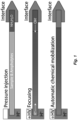
- the electrokinetically driven sheath-flow nanospray based automated cIEF-MS employed a sandwich injection method to automate focusing and mobilization.
- the cathode end of capillary was held in an electrospray emitter throughout the cIEF-MS process and the anode end capillary was fixed in a PrinCE autosampler.
- a plug of NH 3 H 2 O was injected into the capillary followed by a plug of a mixture of sample and ampholytes.
- the anode end of capillary was then placed into a vial of anolyte for cIEF (0. 1% formic acid).
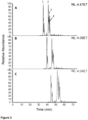
- FIG. 1 shows the base peak electropherograms of cytochrome C and myoglobin generated by cIEF-MS with the same sample plug length (60 cm) and different NH 3 H 2 O plug lengths (1 cm, 3 cm, 5 cm, and 10 cm). With a 10 cm long NH 3 H 2 O plug, components migrated after 80 min, the separation had poor resolution, and the signal intensity was low.
- electropherograms generated with 5 cm, 3 cm, and 1 cm long NH 3 H 2 O plug lengths produced similar separation resolution, and the migration time decreased in proportion to the NH 3 H 2 O plug length.
- the 3 cm long NH 3 H 2 O plug generated the highest signal intensity. Due to the acceptable migration time, good separation resolution, and high signal intensity, a 3 cm long NH 3 H 2 O plug length was chosen for subsequent experiments.
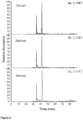
- FIG. 3 shows the base peak electropherograms of the four proteins by cIEF-MS with a 3-cm NH 3 H 2 O plug length and different sample plug lengths (50 cm, 60 cm, and 80 cm). Longer sample plugs tend to produce longer migration times and better separation resolution.
- beta-lactoglobulin with a lower pI (5.1) value migrated faster than carbonic anhydrase with slightly higher pI value (5.4).
- beta-lactoglobulin is 18 kDa, which is much smaller than that of carbonic anhydrase (29 kDa). Due to the smaller molecular weight and similar pI value, beta-lactoglobulin will presumably have a smaller size to charge ratio, and move faster than carbonic anhydrase, which could cause the migration order of these two proteins to switch.
- This mixed mode separation is a limitation of this form of chemical mobilization in cIEF.
- APS ammonium persulfate
- cIEF capillary isoelectric focusing
- DTT dithiothreitol
- FA formic acid
- IAA iodoacetamide
- LPA linear polyacrylamide
- MS mass spectrometry.
- Acrylamide, ammonium persulfate, cytochrome c from bovine heart, myoglobin from equine skeletal muscle, beta-lactoglobulin from bovine milk, carbonic anhydrase from bovine erythrocyte, urea, ammonium bicarbonate (NH 4 HCO 3 ), dithiothreitol (DTT), iodoacetamide (IAA), and 3-(trimethoxysilyl)propyl methacrylate were purchased from Sigma-Aldrich (St. Louis, MO). Formic acid (FA) was purchased from Fisher Scientific (Pittsburgh, PA). Methanol and water were purchased from Honeywell Burdick & Jackson (Wicklow, Ireland).
- Ampholytes (Pharmalytes 3-10) were purchased from GE Healthcare (Piscataway, NJ, USA). Uncoated fused silica capillaries (50 ⁇ m i.d./365 ⁇ m o.d.) were purchased from Polymicro Technologies (Phoenix, AZ).
- LPA coated capillary Preparation of linear polyacrylamide (LPA) coated capillary .
- LPA coated capillary We have reported a simple and reproducible method for preparation of LPA coated capillary ( Zhu et al, Talanta 2016, 146, 839 ).
- the capillary was flushed with 1 M hydrochloric acid for 30 min, water for 10 min, 1 M sodium hydroxide for 30 min, water for 10 min, and finally washed with methanol for 30 min by using a syringe pump at a flow rate of 2 ⁇ L/min.
- the capillary was then dried under a flow of nitrogen at room temperature for 4 hours.
- the capillary was incubated in a 50°C water bath for 30 min. The capillary then was flushed with water to remove excess reagents, and stored at room temperature before use. A ⁇ 1-mm length of the outside of the distal tip of the capillary was etched with HF for 90 min to reduce the outer diameter of the etched part to ⁇ 70- ⁇ m; the detailed protocol for HF etching is described by Sun et al (Angew Chem Int Ed Engl. 2013, 52, 13661 ).
- cIEF-ESI-MS/MS A polyacrylamide coated capillary (50 ⁇ m i.d., 50 cm long) that was prepared as described above was used for the cIEF separation.
- a PrinCE autosampler (Prince Technologies B.V., Netherlands) was used for automated injection and separation voltage control.
- a third-generation electrokinetically driven sheath-flow CE-MS nanospray interface was used to couple the separation with an LTQ-XL (Thermo Fisher Scientific) mass spectrometer. Full MS scans were acquired over the 600-2000 m/z.
- the capillary was flushed with water at 1,500 mbar pressure for 10 min.
- the anode end of the capillary was placed in formic acid (0.1%, pH 2.5), and the cathode end was insert into the clectrospray emitter (20 ⁇ m) that had been filled with the sheath electrolyte (0.1% formic acid with 10% methanol).
- a plug of 0.3% NH 3 H 2 O was injected into the capillary using pressure injection at 200 mbar for 0.1 min, 0.3 min, 0.5 min, or 1 min, followed by a plug of sample/ampholytes by using pressure injection at 200 mbar for 5 min, 6 min, or 8 min.
- the focusing/mobilization voltage was 250 V/cm.
Landscapes
- Chemical & Material Sciences (AREA)
- Life Sciences & Earth Sciences (AREA)
- Health & Medical Sciences (AREA)
- Molecular Biology (AREA)
- General Health & Medical Sciences (AREA)
- Analytical Chemistry (AREA)
- Biochemistry (AREA)
- Chemical Kinetics & Catalysis (AREA)
- Electrochemistry (AREA)
- General Physics & Mathematics (AREA)
- Physics & Mathematics (AREA)
- Immunology (AREA)
- Pathology (AREA)
- Organic Chemistry (AREA)
- General Chemical & Material Sciences (AREA)
- Biophysics (AREA)
- Genetics & Genomics (AREA)
- Medicinal Chemistry (AREA)
- Proteomics, Peptides & Aminoacids (AREA)
- Other Investigation Or Analysis Of Materials By Electrical Means (AREA)
Claims (14)
- Verfahren zur einstufigen kapillaren isoelektrischen Fokussierung (cIEF) und chemischen Mobilisierung, wobei das Verfahren Folgendes umfasst:(a) teilweises Füllen des Anodenendes einer Trennkapillare für cIEF zunächst mit einer Länge einer Katholytlösung, dann zweitens mit einer Mischung, die einen Ampholyten und Analyten umfasst, gefolgt von einer Anolytlösung, wobei das Kathodenende der Trennkapillare mit einem elektrokinetisch gepumpten Nanoelektrospray-Emitter auf einem Massenspektrometer verbunden ist;(b) Leiten eines Flusses einer sauren Hüllelektrolytlösung und der Anolytlösung in Richtung des Nanoelektrospray-Emitters, wobei die Anolytlösung in den Nanoelektrospray-Emitter gelangt, indem sie aus dem Kathodenende der Trennkapillare herausfließt;(c) Anlegen einer Spannung an die Anoden- und Kathodenenden der Trennkapillare;(d) Induzieren einer isoelektrischen Fokussierung der Analyten und einer damit einhergehenden chemischen Mobilisierung der Analyten in Richtung des Kathodenendes der Trennkapillare, indem ermöglicht wird, dass der Katholyt durch den sauren Hüllstromelektrolyten verbraucht wird, der dann als chemische Mobilisierungslösung fungiert; und(e) Bilden eines Nanoelektrosprays, wobei die saure Hüllelektrolytlösung die fokussierten Analyten von Schritt (d) umhüllt, die aus dem Kathodenende der Trennkapillare fließen; wobei zunächst ein pH-Gradient durch die Katholytlösung und die Anolytlösung aufgebaut wird, um eine isoelektrische Fokussierung der Analyten in der Mischung zu induzieren, und beim Titrieren der Katholytlösung durch die saure Hüllelektrolytlösung auf einen niedrigeren pH-Wert die fokussierten Analyten chemisch mobilisiert werden und dann von der sauren Hüllelektrolytlösung elektrokinetisch zum Massenspektrometer gepumpt werden, wodurch das Nanoelektrospray gebildet wird.
- Verfahren nach Anspruch 1, wobei die Katholytlösung beim anfänglichen Befüllen eine Länge in der Trennkapillare von mindestens 1 cm aufweist und wobei der Innendurchmesser der Kapillare weniger als 300 µm beträgt.
- Verfahren nach Anspruch 2, wobei die Katholytlösung Ammoniumhydroxid umfasst; oder
wobei die Mischung, die Ampholyt und Analyten umfasst, beim anfänglichen Befüllen eine Länge in der Trennkapillare von mindestens 1 cm aufweist. - Verfahren nach Anspruch 1, wobei die Anolytlösung Ameisensäure umfasst.
- Verfahren nach Anspruch 1, wobei der Ampholyt eine hohe Pufferkapazität pro pH-Einheit, einen linearen pH-Gradienten und eine gleichmäßige Leitfähigkeit über den gesamten Ampholyten aufweist;
wobei optional die hohe Pufferkapazität pro pH-Einheit des Ampholyten im Bereich von pH 3-10, pH 3-6, pH 5-8 oder pH 7-10 liegt. - Verfahren nach Anspruch 1, wobei die saure Hüllelektrolytlösung Ameisensäure umfasst.
- Verfahren nach Anspruch 6, wobei die saure Hüllelektrolytlösung außerdem einen Alkohol oder Acetonitril umfasst.
- Verfahren nach Anspruch 1, wobei die zur isoelektrischen Fokussierung und chemischen Mobilisierung angelegte Spannung im Bereich von etwa 50 V/cm bis etwa 500 V/cm liegt.
- Verfahren nach Anspruch 1, wobei die Trennkapillare eine mit einem Polymer beschichtete Innenfläche aufweist;
wobei das Polymer optional ein lineares Polyacrylamid (LPA) umfasst. - Verfahren nach Anspruch 1, wobei die Trennkapillare eine Länge von mindestens 10 cm aufweist.
- Verfahren nach Anspruch 1, wobei der Außendurchmesser der Spitze des Kathodenendes der Trennkapillare im Verhältnis zum Außendurchmesser des Rests der Trennkapillare verringert ist; wobei optional der Außendurchmesser der Spitze des Kathodenendes der Trennkapillare 20-50 % größer als der Innendurchmesser der Trennkapillare ist.
- Verfahren nach Anspruch 1, wobei die Analyten Proteine oder Arzneistoff-Protein-Konjugate umfassen.
- Kit für eine einstufige kapillare isoelektrische Fokussierung (cIEF) und chemische Mobilisierung, wobei das Kit (a) die Katholytlösung, (b) die Anolytlösung, (c) die saure Hüllelektrolytlösung, (d) den Ampholyten und (e) Gebrauchsanweisungen nach Anspruch 1 umfasst.
- Kit nach Anspruch 13, wobei die Katholytlösung Ammoniumhydroxid umfasst.
Applications Claiming Priority (2)
| Application Number | Priority Date | Filing Date | Title |
|---|---|---|---|
| US201662399267P | 2016-09-23 | 2016-09-23 | |
| PCT/US2017/052952 WO2018057885A1 (en) | 2016-09-23 | 2017-09-22 | One-step capillary isoelectric focusing and mobilization of analytes |
Publications (4)
| Publication Number | Publication Date |
|---|---|
| EP3516385A1 EP3516385A1 (de) | 2019-07-31 |
| EP3516385A4 EP3516385A4 (de) | 2019-07-31 |
| EP3516385B1 true EP3516385B1 (de) | 2024-04-24 |
| EP3516385C0 EP3516385C0 (de) | 2024-04-24 |
Family
ID=61690059
Family Applications (1)
| Application Number | Title | Priority Date | Filing Date |
|---|---|---|---|
| EP17828636.5A Active EP3516385B1 (de) | 2016-09-23 | 2017-09-22 | Einstufige kapillare isoelektrische fokussierung und mobilisierung von analyten |
Country Status (5)
| Country | Link |
|---|---|
| US (1) | US10578580B2 (de) |
| EP (1) | EP3516385B1 (de) |
| JP (1) | JP7078228B2 (de) |
| CN (1) | CN108603866B (de) |
| WO (1) | WO2018057885A1 (de) |
Families Citing this family (2)
| Publication number | Priority date | Publication date | Assignee | Title |
|---|---|---|---|---|
| SE2130189A1 (en) * | 2021-07-06 | 2023-01-07 | Biomotif Ab | Apparatus and method for capillary isoelectric focusing of biomolecules |
| CN115541686B (zh) * | 2022-11-25 | 2023-04-21 | 黑龙江飞鹤乳业有限公司 | 乳制品鉴别方法 |
Family Cites Families (15)
| Publication number | Priority date | Publication date | Assignee | Title |
|---|---|---|---|---|
| JP2001083119A (ja) | 1999-09-13 | 2001-03-30 | Yokogawa Analytical Systems Inc | アミノ酸分析方法及び装置 |
| JP3341765B1 (ja) | 2001-07-25 | 2002-11-05 | 学校法人慶應義塾 | 陰イオン性化合物の分離分析方法及び装置 |
| JP2005530151A (ja) | 2002-06-18 | 2005-10-06 | インヴィトロジェン コーポレーション | プレキャスト水和可能分離媒体の低抵抗電気泳動のための方法および装置 |
| US7655477B1 (en) | 2003-02-26 | 2010-02-02 | Science Applications International Corporation | System and method for the separation of analytes |
| US20050161332A1 (en) | 2004-01-23 | 2005-07-28 | Gyula Vigh | Method and apparatus to improve the concentration detection sensitivity in isoelectric focusing systems |
| CN1865991A (zh) * | 2005-05-18 | 2006-11-22 | 中国科学院大连化学物理研究所 | 一种新型毛细管等电聚焦驱动方法 |
| EP2049233A4 (de) | 2006-07-10 | 2011-08-31 | Convergent Bioscience Ltd | Verfahren und vorrichtung zur präzisen auswahl und extraktion einer fokussierten komponente bei der in mikrokanälen durchgeführten isolelektrischen fokussierung |
| PL2167951T3 (pl) * | 2007-06-20 | 2013-03-29 | Becton Dickinson Co | Metoda FFE wykorzystująca medium rozdzielające zawierające lotny bufor |
| US10107782B2 (en) * | 2008-01-25 | 2018-10-23 | ProteinSimple | Method to perform limited two dimensional separation of proteins and other biologicals |
| JP2009210356A (ja) | 2008-03-03 | 2009-09-17 | Masataka Wakayama | 陰イオン性物質の分離分析方法及び装置 |
| CN101556260B (zh) * | 2009-05-25 | 2012-01-11 | 北京理工大学 | 固定化pH梯度毛细管等电聚焦测定微生物等电点的方法 |
| US9234880B2 (en) * | 2011-06-03 | 2016-01-12 | University Of Washington Through Its Center For Commercialization | Sheath-flow electrospray interface |
| WO2013166297A2 (en) * | 2012-05-03 | 2013-11-07 | Medimmune, Llc | Method for analyzing sample components |
| HK1226142A1 (zh) | 2013-08-29 | 2017-09-22 | University Of Notre Dame Du Lac | 高灵敏度电喷射接口 |
| JP6422131B2 (ja) | 2013-11-12 | 2018-11-14 | 公立大学法人福島県立医科大学 | 分離分析用キャピラリーデバイス、分離分析用マイクロ流体チップ、タンパク質又はペプチド分析方法、電気泳動装置、及び分離分析用マイクロ流体チップ電気泳動装置 |
-
2017
- 2017-09-22 EP EP17828636.5A patent/EP3516385B1/de active Active
- 2017-09-22 JP JP2018501229A patent/JP7078228B2/ja active Active
- 2017-09-22 WO PCT/US2017/052952 patent/WO2018057885A1/en not_active Ceased
- 2017-09-22 CN CN201780004092.2A patent/CN108603866B/zh active Active
- 2017-09-22 US US15/741,883 patent/US10578580B2/en active Active
Non-Patent Citations (1)
| Title |
|---|
| ZHONG XUEFEI ET AL: "SUPPORTING INFORMATION Flow-through micro-vial facilitates interface of capillary isoelectric focusing and electrospray ionization mass spectrometry", ANALYTICAL CHEMISTRY, 15 November 2011 (2011-11-15), XP055908831, Retrieved from the Internet <URL:https://pubs.acs.org/doi/abs/10.1021/ac202130f?casa_token=YWRzVh7vupIAAAAA:kwM6Z2OOpPpHVH8drIjENZXfD9SlvpL_fWXH-nUC5138cAoeVEt2mmt8U2td9YNFumE5bd5vb5SALqM> [retrieved on 20220404] * |
Also Published As
| Publication number | Publication date |
|---|---|
| EP3516385A1 (de) | 2019-07-31 |
| JP2019531459A (ja) | 2019-10-31 |
| EP3516385A4 (de) | 2019-07-31 |
| WO2018057885A1 (en) | 2018-03-29 |
| US20190004010A1 (en) | 2019-01-03 |
| US10578580B2 (en) | 2020-03-03 |
| EP3516385C0 (de) | 2024-04-24 |
| CN108603866B (zh) | 2021-07-09 |
| CN108603866A (zh) | 2018-09-28 |
| JP7078228B2 (ja) | 2022-05-31 |
Similar Documents
| Publication | Publication Date | Title |
|---|---|---|
| Chen et al. | Capillary zone electrophoresis–mass spectrometry with microliter-scale loading capacity, 140 min separation window and high peak capacity for bottom-up proteomics | |
| US9362102B2 (en) | High sensitivity electrospray interface | |
| Zhu et al. | Thermally-initiated free radical polymerization for reproducible production of stable linear polyacrylamide coated capillaries, and their application to proteomic analysis using capillary zone electrophoresis–mass spectrometry | |
| Li et al. | Rapid and sensitive separation of trace level protein digests using microfabricated devices coupled to a quadrupole‐time‐of‐flight mass spectrometer | |
| Sun et al. | Capillary zone electrophoresis for bottom‐up analysis of complex proteomes | |
| Sun et al. | Capillary zone electrophoresis for analysis of complex proteomes using an electrokinetically pumped sheath flow nanospray interface | |
| Zhu et al. | Simplified capillary isoelectric focusing with chemical mobilization for intact protein analysis | |
| EP2844373A2 (de) | Verfahren zur analyse von probenkomponenten | |
| US10054566B2 (en) | Multi-segment injection-capillary electrophoresis-mass spectrometry (MSI-CE-MS): A multiplexed screening platform and data workflow for chemical analysis | |
| Yang et al. | Two-dimensional capillary electrophoresis involving capillary isoelectric focusing and capillary zone electrophoresis | |
| Sun et al. | Capillary zone electrophoresis-electrospray ionization-tandem mass spectrometry for quantitative parallel reaction monitoring of peptide abundance and single-shot proteomic analysis of a human cell line | |
| Fang et al. | A compact short‐capillary based high‐speed capillary electrophoresis bioanalyzer | |
| US10578580B2 (en) | One-step capillary isoelectric focusing and mobilization of analytes | |
| Kerr et al. | Capillary isoelectric focusing of proteins and peptides using an In-Line cIEF-ESI interface with improved MS characteristics | |
| CN109444247B (zh) | 一种瞬态毛细管等速电泳-电喷雾-质谱联用装置及方法 | |
| Zamfir et al. | Separation and identification of glycoforms by capillary electrophoresis with electrospray ionization mass spectrometric detection | |
| Li et al. | A stable and high-resolution isoelectric focusing capillary array device for micropreparative separation of proteins | |
| US12259370B2 (en) | Electrospray assisted capillary device for processing ultra low-volume samples | |
| Foret et al. | Ionic boundaries in biological capillary electrophoresis | |
| Singh et al. | Practical considerations of capillary electrophoresis-mass spectrometry for the analysis of biotherapeutics | |
| Hamidli | Intact protein analysis using capillary zone electrophoresis-mass spectrometry in different capillaries | |
| Huang | Development and application of spray-capillary, a novel device for microsampling, and online capillary zone electrophoresis mass spectrometry analysis on nanoscale omics study | |
| CN117030422A (zh) | 一种基于毛细管等速电泳的蛋白质浓缩及分离鉴定方法 | |
| Tycova et al. | Trends in CE‐MS and Applications | |
| Hebbi et al. | BIOTECHNOLOGY TODAY |
Legal Events
| Date | Code | Title | Description |
|---|---|---|---|
| STAA | Information on the status of an ep patent application or granted ep patent |
Free format text: STATUS: UNKNOWN |
|
| STAA | Information on the status of an ep patent application or granted ep patent |
Free format text: STATUS: THE INTERNATIONAL PUBLICATION HAS BEEN MADE |
|
| PUAI | Public reference made under article 153(3) epc to a published international application that has entered the european phase |
Free format text: ORIGINAL CODE: 0009012 |
|
| STAA | Information on the status of an ep patent application or granted ep patent |
Free format text: STATUS: REQUEST FOR EXAMINATION WAS MADE |
|
| 17P | Request for examination filed |
Effective date: 20180122 |
|
| A4 | Supplementary search report drawn up and despatched |
Effective date: 20180816 |
|
| AK | Designated contracting states |
Kind code of ref document: A1 Designated state(s): AL AT BE BG CH CY CZ DE DK EE ES FI FR GB GR HR HU IE IS IT LI LT LU LV MC MK MT NL NO PL PT RO RS SE SI SK SM TR |
|
| AX | Request for extension of the european patent |
Extension state: BA ME |
|
| DAV | Request for validation of the european patent (deleted) | ||
| DAX | Request for extension of the european patent (deleted) | ||
| STAA | Information on the status of an ep patent application or granted ep patent |
Free format text: STATUS: EXAMINATION IS IN PROGRESS |
|
| 17Q | First examination report despatched |
Effective date: 20220408 |
|
| GRAP | Despatch of communication of intention to grant a patent |
Free format text: ORIGINAL CODE: EPIDOSNIGR1 |
|
| STAA | Information on the status of an ep patent application or granted ep patent |
Free format text: STATUS: GRANT OF PATENT IS INTENDED |
|
| GRAS | Grant fee paid |
Free format text: ORIGINAL CODE: EPIDOSNIGR3 |
|
| INTG | Intention to grant announced |
Effective date: 20240221 |
|
| GRAA | (expected) grant |
Free format text: ORIGINAL CODE: 0009210 |
|
| STAA | Information on the status of an ep patent application or granted ep patent |
Free format text: STATUS: THE PATENT HAS BEEN GRANTED |
|
| AK | Designated contracting states |
Kind code of ref document: B1 Designated state(s): AL AT BE BG CH CY CZ DE DK EE ES FI FR GB GR HR HU IE IS IT LI LT LU LV MC MK MT NL NO PL PT RO RS SE SI SK SM TR |
|
| REG | Reference to a national code |
Ref country code: GB Ref legal event code: FG4D |
|
| REG | Reference to a national code |
Ref country code: CH Ref legal event code: EP |
|
| REG | Reference to a national code |
Ref country code: DE Ref legal event code: R096 Ref document number: 602017081349 Country of ref document: DE |
|
| REG | Reference to a national code |
Ref country code: IE Ref legal event code: FG4D |
|
| U01 | Request for unitary effect filed |
Effective date: 20240513 |
|
| U07 | Unitary effect registered |
Designated state(s): AT BE BG DE DK EE FI FR IT LT LU LV MT NL PT SE SI Effective date: 20240524 |
|
| PG25 | Lapsed in a contracting state [announced via postgrant information from national office to epo] |
Ref country code: IS Free format text: LAPSE BECAUSE OF FAILURE TO SUBMIT A TRANSLATION OF THE DESCRIPTION OR TO PAY THE FEE WITHIN THE PRESCRIBED TIME-LIMIT Effective date: 20240824 |
|
| PG25 | Lapsed in a contracting state [announced via postgrant information from national office to epo] |
Ref country code: HR Free format text: LAPSE BECAUSE OF FAILURE TO SUBMIT A TRANSLATION OF THE DESCRIPTION OR TO PAY THE FEE WITHIN THE PRESCRIBED TIME-LIMIT Effective date: 20240424 |
|
| PG25 | Lapsed in a contracting state [announced via postgrant information from national office to epo] |
Ref country code: GR Free format text: LAPSE BECAUSE OF FAILURE TO SUBMIT A TRANSLATION OF THE DESCRIPTION OR TO PAY THE FEE WITHIN THE PRESCRIBED TIME-LIMIT Effective date: 20240725 |
|
| PG25 | Lapsed in a contracting state [announced via postgrant information from national office to epo] |
Ref country code: ES Free format text: LAPSE BECAUSE OF FAILURE TO SUBMIT A TRANSLATION OF THE DESCRIPTION OR TO PAY THE FEE WITHIN THE PRESCRIBED TIME-LIMIT Effective date: 20240424 |
|
| PG25 | Lapsed in a contracting state [announced via postgrant information from national office to epo] |
Ref country code: PL Free format text: LAPSE BECAUSE OF FAILURE TO SUBMIT A TRANSLATION OF THE DESCRIPTION OR TO PAY THE FEE WITHIN THE PRESCRIBED TIME-LIMIT Effective date: 20240424 |
|
| U20 | Renewal fee for the european patent with unitary effect paid |
Year of fee payment: 8 Effective date: 20240925 |
|
| PG25 | Lapsed in a contracting state [announced via postgrant information from national office to epo] |
Ref country code: PL Free format text: LAPSE BECAUSE OF FAILURE TO SUBMIT A TRANSLATION OF THE DESCRIPTION OR TO PAY THE FEE WITHIN THE PRESCRIBED TIME-LIMIT Effective date: 20240424 Ref country code: NO Free format text: LAPSE BECAUSE OF FAILURE TO SUBMIT A TRANSLATION OF THE DESCRIPTION OR TO PAY THE FEE WITHIN THE PRESCRIBED TIME-LIMIT Effective date: 20240724 Ref country code: IS Free format text: LAPSE BECAUSE OF FAILURE TO SUBMIT A TRANSLATION OF THE DESCRIPTION OR TO PAY THE FEE WITHIN THE PRESCRIBED TIME-LIMIT Effective date: 20240824 Ref country code: HR Free format text: LAPSE BECAUSE OF FAILURE TO SUBMIT A TRANSLATION OF THE DESCRIPTION OR TO PAY THE FEE WITHIN THE PRESCRIBED TIME-LIMIT Effective date: 20240424 Ref country code: GR Free format text: LAPSE BECAUSE OF FAILURE TO SUBMIT A TRANSLATION OF THE DESCRIPTION OR TO PAY THE FEE WITHIN THE PRESCRIBED TIME-LIMIT Effective date: 20240725 Ref country code: ES Free format text: LAPSE BECAUSE OF FAILURE TO SUBMIT A TRANSLATION OF THE DESCRIPTION OR TO PAY THE FEE WITHIN THE PRESCRIBED TIME-LIMIT Effective date: 20240424 Ref country code: RS Free format text: LAPSE BECAUSE OF FAILURE TO SUBMIT A TRANSLATION OF THE DESCRIPTION OR TO PAY THE FEE WITHIN THE PRESCRIBED TIME-LIMIT Effective date: 20240724 |
|
| PG25 | Lapsed in a contracting state [announced via postgrant information from national office to epo] |
Ref country code: CZ Free format text: LAPSE BECAUSE OF FAILURE TO SUBMIT A TRANSLATION OF THE DESCRIPTION OR TO PAY THE FEE WITHIN THE PRESCRIBED TIME-LIMIT Effective date: 20240424 |
|
| PG25 | Lapsed in a contracting state [announced via postgrant information from national office to epo] |
Ref country code: RO Free format text: LAPSE BECAUSE OF FAILURE TO SUBMIT A TRANSLATION OF THE DESCRIPTION OR TO PAY THE FEE WITHIN THE PRESCRIBED TIME-LIMIT Effective date: 20240424 Ref country code: SK Free format text: LAPSE BECAUSE OF FAILURE TO SUBMIT A TRANSLATION OF THE DESCRIPTION OR TO PAY THE FEE WITHIN THE PRESCRIBED TIME-LIMIT Effective date: 20240424 |
|
| REG | Reference to a national code |
Ref country code: DE Ref legal event code: R097 Ref document number: 602017081349 Country of ref document: DE |
|
| PG25 | Lapsed in a contracting state [announced via postgrant information from national office to epo] |
Ref country code: SM Free format text: LAPSE BECAUSE OF FAILURE TO SUBMIT A TRANSLATION OF THE DESCRIPTION OR TO PAY THE FEE WITHIN THE PRESCRIBED TIME-LIMIT Effective date: 20240424 |
|
| PG25 | Lapsed in a contracting state [announced via postgrant information from national office to epo] |
Ref country code: SM Free format text: LAPSE BECAUSE OF FAILURE TO SUBMIT A TRANSLATION OF THE DESCRIPTION OR TO PAY THE FEE WITHIN THE PRESCRIBED TIME-LIMIT Effective date: 20240424 Ref country code: SK Free format text: LAPSE BECAUSE OF FAILURE TO SUBMIT A TRANSLATION OF THE DESCRIPTION OR TO PAY THE FEE WITHIN THE PRESCRIBED TIME-LIMIT Effective date: 20240424 Ref country code: RO Free format text: LAPSE BECAUSE OF FAILURE TO SUBMIT A TRANSLATION OF THE DESCRIPTION OR TO PAY THE FEE WITHIN THE PRESCRIBED TIME-LIMIT Effective date: 20240424 Ref country code: CZ Free format text: LAPSE BECAUSE OF FAILURE TO SUBMIT A TRANSLATION OF THE DESCRIPTION OR TO PAY THE FEE WITHIN THE PRESCRIBED TIME-LIMIT Effective date: 20240424 |
|
| PLBE | No opposition filed within time limit |
Free format text: ORIGINAL CODE: 0009261 |
|
| STAA | Information on the status of an ep patent application or granted ep patent |
Free format text: STATUS: NO OPPOSITION FILED WITHIN TIME LIMIT |
|
| 26N | No opposition filed |
Effective date: 20250127 |
|
| PG25 | Lapsed in a contracting state [announced via postgrant information from national office to epo] |
Ref country code: MC Free format text: LAPSE BECAUSE OF FAILURE TO SUBMIT A TRANSLATION OF THE DESCRIPTION OR TO PAY THE FEE WITHIN THE PRESCRIBED TIME-LIMIT Effective date: 20240424 |
|
| REG | Reference to a national code |
Ref country code: CH Ref legal event code: PL |
|
| PG25 | Lapsed in a contracting state [announced via postgrant information from national office to epo] |
Ref country code: CH Free format text: LAPSE BECAUSE OF NON-PAYMENT OF DUE FEES Effective date: 20240930 |
|
| PG25 | Lapsed in a contracting state [announced via postgrant information from national office to epo] |
Ref country code: IE Free format text: LAPSE BECAUSE OF NON-PAYMENT OF DUE FEES Effective date: 20240922 |
|
| PGFP | Annual fee paid to national office [announced via postgrant information from national office to epo] |
Ref country code: GB Payment date: 20250919 Year of fee payment: 9 |
|
| U20 | Renewal fee for the european patent with unitary effect paid |
Year of fee payment: 9 Effective date: 20250924 |
|
| PG25 | Lapsed in a contracting state [announced via postgrant information from national office to epo] |
Ref country code: CY Free format text: LAPSE BECAUSE OF FAILURE TO SUBMIT A TRANSLATION OF THE DESCRIPTION OR TO PAY THE FEE WITHIN THE PRESCRIBED TIME-LIMIT; INVALID AB INITIO Effective date: 20170922 |
|
| PG25 | Lapsed in a contracting state [announced via postgrant information from national office to epo] |
Ref country code: HU Free format text: LAPSE BECAUSE OF FAILURE TO SUBMIT A TRANSLATION OF THE DESCRIPTION OR TO PAY THE FEE WITHIN THE PRESCRIBED TIME-LIMIT; INVALID AB INITIO Effective date: 20170922 |