EP3515212B1 - Apoaequorin and vitamin d-containing compositions and methods of using same - Google Patents
Apoaequorin and vitamin d-containing compositions and methods of using same Download PDFInfo
- Publication number
- EP3515212B1 EP3515212B1 EP17788336.0A EP17788336A EP3515212B1 EP 3515212 B1 EP3515212 B1 EP 3515212B1 EP 17788336 A EP17788336 A EP 17788336A EP 3515212 B1 EP3515212 B1 EP 3515212B1
- Authority
- EP
- European Patent Office
- Prior art keywords
- vitamin
- apoaequorin
- calcium
- compositions
- composition
- Prior art date
- Legal status (The legal status is an assumption and is not a legal conclusion. Google has not performed a legal analysis and makes no representation as to the accuracy of the status listed.)
- Active
Links
Images


Classifications
-
- A—HUMAN NECESSITIES
- A23—FOODS OR FOODSTUFFS; TREATMENT THEREOF, NOT COVERED BY OTHER CLASSES
- A23L—FOODS, FOODSTUFFS OR NON-ALCOHOLIC BEVERAGES, NOT OTHERWISE PROVIDED FOR; PREPARATION OR TREATMENT THEREOF
- A23L33/00—Modifying nutritive qualities of foods; Dietetic products; Preparation or treatment thereof
- A23L33/10—Modifying nutritive qualities of foods; Dietetic products; Preparation or treatment thereof using additives
- A23L33/15—Vitamins
- A23L33/155—Vitamins A or D
-
- A—HUMAN NECESSITIES
- A23—FOODS OR FOODSTUFFS; TREATMENT THEREOF, NOT COVERED BY OTHER CLASSES
- A23L—FOODS, FOODSTUFFS OR NON-ALCOHOLIC BEVERAGES, NOT OTHERWISE PROVIDED FOR; PREPARATION OR TREATMENT THEREOF
- A23L33/00—Modifying nutritive qualities of foods; Dietetic products; Preparation or treatment thereof
- A23L33/10—Modifying nutritive qualities of foods; Dietetic products; Preparation or treatment thereof using additives
- A23L33/17—Amino acids, peptides or proteins
-
- A—HUMAN NECESSITIES
- A61—MEDICAL OR VETERINARY SCIENCE; HYGIENE
- A61K—PREPARATIONS FOR MEDICAL, DENTAL OR TOILETRY PURPOSES
- A61K31/00—Medicinal preparations containing organic active ingredients
- A61K31/59—Compounds containing 9, 10- seco- cyclopenta[a]hydrophenanthrene ring systems
- A61K31/593—9,10-Secocholestane derivatives, e.g. cholecalciferol, i.e. vitamin D3
-
- A—HUMAN NECESSITIES
- A61—MEDICAL OR VETERINARY SCIENCE; HYGIENE
- A61K—PREPARATIONS FOR MEDICAL, DENTAL OR TOILETRY PURPOSES
- A61K38/00—Medicinal preparations containing peptides
- A61K38/16—Peptides having more than 20 amino acids; Gastrins; Somatostatins; Melanotropins; Derivatives thereof
- A61K38/17—Peptides having more than 20 amino acids; Gastrins; Somatostatins; Melanotropins; Derivatives thereof from animals; from humans
- A61K38/1767—Peptides having more than 20 amino acids; Gastrins; Somatostatins; Melanotropins; Derivatives thereof from animals; from humans from invertebrates
-
- A—HUMAN NECESSITIES
- A61—MEDICAL OR VETERINARY SCIENCE; HYGIENE
- A61K—PREPARATIONS FOR MEDICAL, DENTAL OR TOILETRY PURPOSES
- A61K9/00—Medicinal preparations characterised by special physical form
- A61K9/48—Preparations in capsules, e.g. of gelatin, of chocolate
-
- A—HUMAN NECESSITIES
- A61—MEDICAL OR VETERINARY SCIENCE; HYGIENE
- A61P—SPECIFIC THERAPEUTIC ACTIVITY OF CHEMICAL COMPOUNDS OR MEDICINAL PREPARATIONS
- A61P19/00—Drugs for skeletal disorders
- A61P19/08—Drugs for skeletal disorders for bone diseases, e.g. rachitism, Paget's disease
-
- A—HUMAN NECESSITIES
- A61—MEDICAL OR VETERINARY SCIENCE; HYGIENE
- A61P—SPECIFIC THERAPEUTIC ACTIVITY OF CHEMICAL COMPOUNDS OR MEDICINAL PREPARATIONS
- A61P25/00—Drugs for disorders of the nervous system
- A61P25/02—Drugs for disorders of the nervous system for peripheral neuropathies
-
- A—HUMAN NECESSITIES
- A61—MEDICAL OR VETERINARY SCIENCE; HYGIENE
- A61P—SPECIFIC THERAPEUTIC ACTIVITY OF CHEMICAL COMPOUNDS OR MEDICINAL PREPARATIONS
- A61P25/00—Drugs for disorders of the nervous system
- A61P25/18—Antipsychotics, i.e. neuroleptics; Drugs for mania or schizophrenia
-
- A—HUMAN NECESSITIES
- A61—MEDICAL OR VETERINARY SCIENCE; HYGIENE
- A61P—SPECIFIC THERAPEUTIC ACTIVITY OF CHEMICAL COMPOUNDS OR MEDICINAL PREPARATIONS
- A61P25/00—Drugs for disorders of the nervous system
- A61P25/28—Drugs for disorders of the nervous system for treating neurodegenerative disorders of the central nervous system, e.g. nootropic agents, cognition enhancers, drugs for treating Alzheimer's disease or other forms of dementia
-
- A—HUMAN NECESSITIES
- A61—MEDICAL OR VETERINARY SCIENCE; HYGIENE
- A61P—SPECIFIC THERAPEUTIC ACTIVITY OF CHEMICAL COMPOUNDS OR MEDICINAL PREPARATIONS
- A61P29/00—Non-central analgesic, antipyretic or antiinflammatory agents, e.g. antirheumatic agents; Non-steroidal antiinflammatory drugs [NSAID]
-
- A—HUMAN NECESSITIES
- A61—MEDICAL OR VETERINARY SCIENCE; HYGIENE
- A61P—SPECIFIC THERAPEUTIC ACTIVITY OF CHEMICAL COMPOUNDS OR MEDICINAL PREPARATIONS
- A61P3/00—Drugs for disorders of the metabolism
- A61P3/02—Nutrients, e.g. vitamins, minerals
-
- A—HUMAN NECESSITIES
- A61—MEDICAL OR VETERINARY SCIENCE; HYGIENE
- A61P—SPECIFIC THERAPEUTIC ACTIVITY OF CHEMICAL COMPOUNDS OR MEDICINAL PREPARATIONS
- A61P43/00—Drugs for specific purposes, not provided for in groups A61P1/00-A61P41/00
-
- A—HUMAN NECESSITIES
- A23—FOODS OR FOODSTUFFS; TREATMENT THEREOF, NOT COVERED BY OTHER CLASSES
- A23V—INDEXING SCHEME RELATING TO FOODS, FOODSTUFFS OR NON-ALCOHOLIC BEVERAGES AND LACTIC OR PROPIONIC ACID BACTERIA USED IN FOODSTUFFS OR FOOD PREPARATION
- A23V2002/00—Food compositions, function of food ingredients or processes for food or foodstuffs
-
- A—HUMAN NECESSITIES
- A23—FOODS OR FOODSTUFFS; TREATMENT THEREOF, NOT COVERED BY OTHER CLASSES
- A23V—INDEXING SCHEME RELATING TO FOODS, FOODSTUFFS OR NON-ALCOHOLIC BEVERAGES AND LACTIC OR PROPIONIC ACID BACTERIA USED IN FOODSTUFFS OR FOOD PREPARATION
- A23V2200/00—Function of food ingredients
-
- A—HUMAN NECESSITIES
- A23—FOODS OR FOODSTUFFS; TREATMENT THEREOF, NOT COVERED BY OTHER CLASSES
- A23V—INDEXING SCHEME RELATING TO FOODS, FOODSTUFFS OR NON-ALCOHOLIC BEVERAGES AND LACTIC OR PROPIONIC ACID BACTERIA USED IN FOODSTUFFS OR FOOD PREPARATION
- A23V2250/00—Food ingredients
- A23V2250/54—Proteins
- A23V2250/542—Animal Protein
- A23V2250/543—Fish protein
-
- A—HUMAN NECESSITIES
- A23—FOODS OR FOODSTUFFS; TREATMENT THEREOF, NOT COVERED BY OTHER CLASSES
- A23V—INDEXING SCHEME RELATING TO FOODS, FOODSTUFFS OR NON-ALCOHOLIC BEVERAGES AND LACTIC OR PROPIONIC ACID BACTERIA USED IN FOODSTUFFS OR FOOD PREPARATION
- A23V2250/00—Food ingredients
- A23V2250/70—Vitamins
- A23V2250/71—Vitamin D
- A23V2250/7106—Vitamin D3
-
- A—HUMAN NECESSITIES
- A61—MEDICAL OR VETERINARY SCIENCE; HYGIENE
- A61K—PREPARATIONS FOR MEDICAL, DENTAL OR TOILETRY PURPOSES
- A61K2300/00—Mixtures or combinations of active ingredients, wherein at least one active ingredient is fully defined in groups A61K31/00 - A61K41/00
Definitions
- This invention relates generally to compositions useful for the maintenance of calcium homeostasis.
- this invention is directed to apoaequorin and vitamin D-containing compositions useful in preventing and/or alleviating diseases or symptoms associated with calcium imbalance and vitamin D deficiency.
- CaBPs calcium-binding proteins
- calcium homeostasis As the body requires specific concentrations of calcium ions to carry out requisite physiological processes, the maintenance of calcium homeostasis is of critical importance for bodily health. Proper ionic calcium concentrations in plasma and body fluids are understood by the medical community to be critical in bodily functions, including, but not limited to, neuronal excitability, muscle contraction, membrane permeability, cell division, hormone secretion and bone mineralization. A disruption in calcium homeostasis, i.e., a calcium imbalance, is associated with many diseases, syndromes and conditions, including, but not limited to, cancer, heart disease and neurodegenerative disease.
- calcium channel antagonists which block the flow of calcium between cell interiors and interstitial fluid, have been widely-prescribed as pharmaceutical agents useful in the prevention of calcium-related disorders including hypertension, angina, asthma, migraines and neural deterioration.
- nimidopine has been found to improve clinical symptomatology and cognitive functions in dementia by alleviating a calcium imbalance which causes neural deterioration.
- many of these calcium channel antagonists have unwanted side effects including, but not limited to, malaise, fluid retention, heartburn, erratic heart rate, dizziness, upset stomach and, in rare cases, fainting, fever and excessive bleeding.
- compositions which have reduced side effects as compared to prior agents are desired and, if discovered, would meet a long felt need in the medical and nutritional health communities.
- compositions which are advantageous in the alleviation and/or prevention of symptoms or disorders associated with calcium imbalance and vitamin D deficiency.
- Such compositions include apoaequorin and vitamin D in combination with acceptable carriers for administration to a subject by a variety of routes.
- compositions for use in treating a symptom or disorder associated with at least one of calcium imbalance and vitamin D deficiency, wherein the symptom or disorder is related to cell death following ischemia comprising: (a) an effective amount of apoaequorin; (b) an effective amount of vitamin D; and (c) a pharmaceutically acceptable carrier wherein: (a) the therapeutically effective amount of apoaequorin in the unit dosage is about 10 mg to about 20 mg; and (b) the therapeutically effective amount of vitamin D in the unit dosage is about 25 mcg to about 75 mcg.
- nutraceutical compositions include, in addition to apoaequorin and vitamin D, at least one other component recognized as providing nutraceutical benefit such as, for example, an immune boosting agent, anti-inflammatory agent, anti-oxidant agent, anti-viral agent, or a mixture thereof.
- Apoaequorin and vitamin D compositions in certain embodiments are provided in a unit dosage form selected from a tablet, a capsule, a solution, a suspension, a syrup, a beverage, an oral or ophthalmic formulation or an injection.
- a method for treating a symptom or disorder associated with calcium imbalance and vitamin D deficiency comprising administering to a subject in need of such treatment an effective amount of apoaequorin and vitamin D.
- Methods described herein are useful in treating a wide variety of symptoms or disorders associated with calcium imbalance and vitamin D deficiency, including but not limited to sleep quality, energy quality, mood quality, pain, memory quality.
- the calcium imbalance and vitamin D deficiency is physiologically-related to neuronal excitability, muscle contraction, membrane permeability, cell division, hormone secretion, bone mineralization, or cell death following ischemia.
- apoaequorin and vitamin D are preferably administered to the subject in the form of a nutraceutical composition.
- apoaequorin and vitamin D for the manufacture of a nutraceutical composition for treating a symptom or disorder associated with calcium imbalance and vitamin D deficiency in a subject administered the nutraceutical composition.
- exemplary symptoms or disorders treated by such compositions include those associated with sleep, energy, mood, pain, or memory.
- the present invention further contemplates apoaequorin and vitamin D for use in treating a symptom or disorder associated with calcium imbalance and vitamin D deficiency in a subject, including those symptoms or disorders associated with, e.g., sleep, energy, mood, pain, or memory in a subject.
- the present invention provides various advantages over prior compositions and methods in that it provides for the general improvement of a subject's mental and physical health.
- Aequorin is a photo-protein originally isolated from luminescent jellyfish and other marine organisms.
- the aequorin complex comprises a 22,285-dalton apoaequorin protein, molecular oxygen and the luminophore coelenterazine.
- coelenterazine is oxidized to coelentermide, with a concomitant release of carbon dioxide and blue light.
- Aequorin is not exported or secreted by cells, nor is it compartmentalized or sequestered within cells. Accordingly, aequorin measurements have been used to detect Ca 2 changes that occur over relatively long periods. In several experimental systems, aequorin's luminescence was detectable many hours to days after cell loading. It is further known that aequorin also does not disrupt cell functions or embryo development.
- Aequorea victoria aequorin has been specifically used to: (1) analyze the secretion response of single adrenal chromaffin cells to nicotinic cholinergic agonists; (2) clarify the role of Ca 2 release in heart muscle damage; (3) demonstrate the massive release of Ca 2 during fertilization; (4) study the regulation of the sarcoplasmic reticulum C2 pump expression in developing chick myoblasts; and (5) calibrate micropipets with injection volumes of as little as three picoliters.
- Apoaequorin has an approximate molecular weight of 22 kDa. Apoaequorin can be used to regenerate aequorin by reducing the disulfide bond in apoaequorin. The calcium-loaded apoaequorin retains the same compact scaffold and overall folding pattern as unreacted photoproteins containing a bound substrate.
- aequorin from the jellyfish Aequorea victoria requires laborious extraction procedures and sometimes yields preparations that are substantially heterogeneous or that are toxic to the organisms under study. Two tons of jellyfish typically yield approximately 125mg of the purified photoprotein.
- recombinant aequorin is preferably produced by purifying apoaequorin from genetically engineered Esclierichia coli, followed by reconstitution of the aequorin complex in vitro with pure coelenterazine.
- Apoaequorin useful in the present invention has been described and is commercially-obtainable through purification schemes and/or syntheses known to those of skill in the art. S. Inouye, S. Zenno, Y. Sakaki, and F. Tsuji. High level expression and Purification of apoaequorin. (199 1) Protein Expression and Purification 2,122-126 .
- Vitamin D is a group of fat-soluble secosteroids responsible for increasing intestinal absorption of calcium, iron, magnesium, phosphate, and zinc. Vitamin D is produced by the body in response to the skin being exposed to ultraviolet rays from sunlight. It is also found in naturally occurring foods such as fish, fish liver oils, egg yolks, and in fortified dairy and grain products. In dietary supplements, the two most common compound forms of vitamin D are vitamin D3 (cholecalciferol) and vitamin D2 (ergocalciferol).
- Vitamin D is a fat soluble vitamin that is biologically inert and must undergo two hydroxylations in the body for activation. The first occurs in the liver and converts vitamin D to 25-hydroxyvitamin D [25(OH)D], also known as calcifediol. The second occurs primarily in the kidney and forms the physiologically active 1,25-dihydroxyvitamin D [1,25(OH)2D], also known as calcitriol.
- the active form of vitamin D, calcitriol circulates as a hormone in the blood, regulating the concentration of calcium and phosphate in the bloodstream and promoting the healthy growth and remodeling of bone.
- Vitamin D promotes calcium absorption and maintains adequate serum calcium and phosphate concentrations to enable normal mineralization of bone and to prevent hypocalcemic tetany. It is also used for bone growth and bone remodeling by osteoblasts and osteoclasts. It has also been shown to play a role in modulation of cell growth, neuromuscular and immune function, and reduction of inflammation.
- Vitamin D deficiency may contribute to calcium imbalances.
- the maintenance of ionic calcium concentrations in plasma and body fluids is understood to be critical to a wide variety of bodily functions, including, but not limited to neuronal excitability, muscle contraction, membrane permeability, cell division, hormone secretion, bone mineralization, or the prevention of cell death following ischemia.
- Disruption in calcium homeostasis i.e., a calcium imbalance, is understood to cause and/or correlate with many diseases, syndromes and conditions. Such diseases, syndromes and conditions include those associated with sleep quality, energy quality, mood quality, and memory quality and pain perception.
- the study of CaBPs has led to their recognition as protective factors acting in the maintenance of proper ionic calcium levels.
- Vitamin D deficiency is most associated with rickets, a disease in which the bone tissues does not properly mineralize, leading to soft bones and skeletal deformities.
- RDA recommended dietary allowance
- the methods described herein comprise administering apoaequorin in combination with vitamin D for treating calcium imbalance, for delaying the progression of calcium imbalance, for preventing the onset of calcium imbalance, for preventing and/or treating the recurrence of calcium imbalance, and for treating vitamin D deficiency.
- methods which comprise administering apoaequorin and vitamin D in combination with one or more additional agents having known therapeutic or nutraceutical value.
- Particularly preferred applications of apoaequorin and vitamin D are in treating one or more symptoms and disorders related to quality of sleep, energy, mood, and memory and pain perception.
- the term “treating” includes preventative as well as disorder remittent treatment.
- the terms “reducing”, “alleviating”, “suppressing” and “inhibiting” have their commonly understood meaning of lessening or decreasing.
- progression means increasing in scope or severity, advancing, growing or becoming worse.
- recurrence means the return of a disease after a remission.
- administering refers to bringing a patient, tissue, organ or cell in contact with apoaequorin and vitamin D.
- administration can be accomplished in vitro, i.e., in a test tube, or in vivo, i.e., in cells or tissues of living organisms, for example, humans.
- the present invention encompasses administering the compositions useful in the present invention to a patient or subject.
- a “patient” or “subject”, used equivalently herein, refers to a mammal, preferably a human, that either: (1) has a calcium imbalance-related disorder and/or vitamin D deficiency remediable or treatable by administration of apoaequorin and vitamin D; or (2) is susceptible to a calcium imbalance-related disorder and/or vitamin D deficiency that is preventable by administering apoaequorin and vitamin D.
- the terms "effective amount” and “therapeutically effective amount” refer to the quantity of active agents sufficient to yield a desired therapeutic response without undue adverse side effects such as toxicity, irritation, or allergic response.
- the specific "effective amount” will, obviously, vary with such factors as the particular condition being treated, the physical condition of the patient, the type of animal being treated, the duration of the treatment, the nature of concurrent therapy (if any), and the specific formulations employed and the structure of the compounds or its derivatives.
- an amount would be deemed therapeutically effective if it resulted in one or more of the following: (1) the prevention of a calcium imbalance-related disorder and/or vitamin D deficiency; and (2) the reversal or stabilization of a calcium imbalance-related disorder and/or vitamin D deficiency.
- the optimum effective amounts can be readily determined by one of ordinary skill in the art using routine experimentation.
- apoaequorin is formulated with at least one acceptable carrier at a dosage of approximately 10 to 50 mg/dose, a dose preferably in capsule form, with recommended dosage for a subject being approximately 20 mg/day.
- vitamin D in the form of D3 cholecalciferol
- compositions according to the present invention include liquids or lyophilized or otherwise dried formulations and include diluents of various buffer content (e.g., Tris-HCl, acetate, phosphate), pH and ionic strength, additives such as albumin or gelatin to prevent absorption to surfaces, detergents (e.g., Tween 20, Tween 80, Pluronic F68, bile acid salts), solubilizing agents (e.g., glycerol, polyethylene glycerol), anti-oxidants (e.g., ascorbic acid, sodium metabisulfite), preservatives (e.g., Thimerosal, benzyl alcohol, parabens), bulking substances or tonicity modifiers (e.g., lactose, mannitol), covalent attachment of polymers such as polyethylene glycol to the protein, complexation with metal ions, or incorporation of the material into or onto particulate preparations of polymeric compounds such as polylactic acid, polygly
- compositions coated with polymers e.g., poloxamers or poloxamines.
- Other embodiments of the compositions incorporate particulate forms protective coatings, protease inhibitors or permeation enhancers for various routes of administration, including parenteral, pulmonary, nasal and oral.
- the composition is administered parenterally, paracancerally, transmucosally, intramuscularly, intravenously, intradermally, subcutaneously, intraperitonealy, intraventricularly, intracranially or intratumorally.
- pharmaceutically acceptable carriers are well known to those skilled in the art and include, but are not limited to, 0.0141M and preferably 0.05M phosphate buffer or 0.9% saline. Additionally, such pharmaceutically acceptable carriers may be aqueous or non-aqueous solutions, suspensions and emulsions. Examples of non-aqueous solvents are propylene glycol, polyethylene glycol, vegetable oils such as olive oil and injectable organic esters such as ethyl oleate. Aqueous carriers include water, alcoholic/aqueous solutions, emulsions or suspensions, including saline and buffered media.
- Parenteral vehicles include sodium chloride solution, Ringer's dextrose, dextrose and sodium chloride, lactated Ringer's and fixed oils.
- Intravenous vehicles include fluid and nutrient replenishers, electrolyte replenishers such as those based on Ringer's dextrose, and the like. Preservatives and other additives may also be present, such as, for example, antimicrobials, antioxidants, collating agents, inert gases and the like.
- Controlled or sustained release compositions administrable according to the invention include formulation in lipophilic depots (e.g., fatty acids, waxes, oils). Also comprehended by the invention are particulate compositions coated with polymers (e.g., poloxamers or poloxamines) and the compound coupled to antibodies directed against tissue-specific receptors, ligands or antigens or coupled to ligands of tissue-specific receptors.
- lipophilic depots e.g., fatty acids, waxes, oils.
- particulate compositions coated with polymers e.g., poloxamers or poloxamines
- compositions administered according to the invention incorporate particulate forms, protective coatings, protease inhibitors or permeation enhancers for various routes of administration, including parenteral, pulmonary, nasal, ophthalmic and oral.
- Chemical entities modified by the covalent attachment of water-soluble polymers such as polyethylene glycol, copolymers of polyethylene glycol and polypropylene glycol, carboxymethyl cellulose, dextran, polyvinyl alcohol, polyvinylpyrrolidone or polyproline are known to exhibit substantially longer half-lives in blood following intravenous injection than do the corresponding unmodified compounds.
- Such modifications may also increase the chemical entities solubility in aqueous solution, eliminate aggregation, enhance the physical and chemical stability of the compound, and greatly reduce the immunogenicity and reactivity of the compound.
- the desired in vivo biological activity may be achieved by the administration of such polymer-entity abducts less frequently or in lower doses than with the unmodified entity.
- the composition can be delivered in a controlled release system.
- the agent may be administered using intravenous infusion, an implantable osmotic pump, a transdermal patch, liposomes, or other modes of administration.
- a pump may be used.
- polymeric materials can be used.
- a controlled release system can be placed in proximity to the therapeutic target, i.e., the brain, thus requiring only a fraction of the systemic dose.
- the composition can comprise apoaequorin and vitamin D, or can further include a pharmaceutically acceptable carrier, and can be in solid or liquid form such as tablets, powders, capsules, pellets, solutions, suspensions, elixirs, syrups, beverages, emulsions, gels, creams, ophthalmic formulations, or suppositories, including rectal and urethral suppositories.
- Pharmaceutically acceptable carriers also include gums, starches, sugars, cellulosic materials, and mixtures thereof.
- the composition containing apoaequorin and vitamin D can be administered to a patient by, for example, subcutaneous implantation of a pellet.
- a pellet provides for controlled release of apoaequorin and/or vitamin D over a period of time.
- the composition can also be administered by intravenous, intra-arterial, intramuscular injection of a liquid, oral administration of a liquid or solid, or by topical application. Administration can also be accomplished by use of a rectal suppository or a urethral suppository.
- compositions described herein can be prepared by known dissolving, mixing, granulating, or tablet-forming processes.
- apoaequorin or its physiologically-tolerated derivatives such as salts, esters, N-oxides, and the like and/or vitamin D or its physiologically-tolerated derivatives such as salts, esters, N-oxides, and the like are mixed with additives customary for this purpose, such as vehicles, stabilizers, or inert diluents, and converted by customary methods into suitable forms for administration, such as tablets, coated tablets, hard or soft gelatin capsules, aqueous, alcoholic or oily solutions.
- suitable inert vehicles are conventional tablet bases such as lactose, sucrose, or cornstarch in combination with binders such as acacia, cornstarch, gelatin, with disintegrating agents such as cornstarch, potato starch, alginic acid, or with a lubricant such as stearic acid or magnesium stearate.
- binders such as acacia, cornstarch, gelatin
- disintegrating agents such as cornstarch, potato starch, alginic acid, or with a lubricant such as stearic acid or magnesium stearate.
- suitable oily vehicles or solvents are vegetable or animal oils such as sunflower oil or fish-liver oil. Compositions can be effected both as dry and as wet granules.
- parenteral administration subcutaneous, intravenous, intraarterial, or intramuscular injection
- the chemical entity or its physiologically tolerated derivatives such as salts, esters, N-oxides, and the like are converted into a solution, suspension, or expulsion, if desired with the substances customary and suitable for this purpose, for example, solubilizers or other auxiliaries.
- sterile liquids such as water and oils, with or without the addition of a surfactant and other pharmaceutically acceptable adjuvants.
- oils are those of petroleum, animal, vegetable, or synthetic origin, for example, peanut oil, soybean oil or mineral oil.
- water, saline, aqueous dextrose and related sugar solutions, and glycols such as propylene glycols or polyethylene glycol are preferred liquid carriers, particularly for injectable solutions.
- compositions which contain an active component are well understood in the art. Such compositions may be prepared as aerosols delivered to the nasopharynx or as injectables, either as a liquid solutions or suspensions; however, solid forms suitable for solution in, or suspension in, liquid prior to injection can also be prepared.
- the composition can also be emulsified.
- the active therapeutic ingredient is often mixed with excipients which are pharmaceutically acceptable and compatible with the active ingredient. Suitable excipients include, for example, water, saline, dextrose, glycerol, ethanol, or the like or any combination thereof.
- the composition can contain minor amounts of auxiliary substances such as wetting or emulsifying agents, pH buffering agents which enhance the effectiveness of the active ingredient.
- compositions can be formulated into the composition as neutralized pharmaceutically acceptable salt forms.
- Pharmaceutically acceptable salts include the acid addition salts, which are formed with inorganic acids such as, for example, hydrochloric, or phosphoric acids, or such organic acids as acetic, tartaric, mandelic, and the like. Salts formed from the free carboxyl groups can also be derived from inorganic bases such as, for example, sodium, potassium, ammonium, calcium, or ferric hydroxides, and such organic bases as isopropylamine, trimethylainine, 2-ethylamino ethanol, histidine, procaine, and the like.
- apoaequorin or its physiologically-tolerated derivates and/or vitamin D or its physiologically-tolerated derivates are prepared and applied as solutions, suspensions, or emulsions in a physiologically acceptable diluent with or without a pharmaceutical carrier.
- the active component can be delivered in a vesicle, in particular, a liposome (see Langer, Science 249:1527-1533 (1990 ); Treat et al., Liposomes in the Therapy of Infectious Disease and Cancer, Lopez-Berestein and Fidler (eds.), Liss, N.Y., pp.353-365 (1989 ).
- a liposome see Langer, Science 249:1527-1533 (1990 ); Treat et al., Liposomes in the Therapy of Infectious Disease and Cancer, Lopez-Berestein and Fidler (eds.), Liss, N.Y., pp.353-365 (1989 ).
- Salts of apoaequorin and/or vitamin D are preferably pharmaceutically acceptable salts. Other salts may, however, be useful in the preparation of the compositions according to the invention or of their pharmaceutically acceptable salts.
- Suitable pharmaceutically acceptable salts include acid addition salts which may, for example, be formed by mixing a solution of apoaequorin and/or vitamin D with a solution of a pharmaceutically acceptable acid such as hydrochloric acid, sulphuric acid, methanesuiphonic acid, fumaric acid, maleic acid, succinic acid, acetic acid, benzoic acid, oxalic acid, citric acid, tartaric acid, carbonic acid or phosphoric acid.
- a pharmaceutically acceptable acid such as hydrochloric acid, sulphuric acid, methanesuiphonic acid, fumaric acid, maleic acid, succinic acid, acetic acid, benzoic acid, oxalic acid, citric acid, tartaric acid, carbonic acid
- apoaequorin and vitamin D-containing compositions described herein may be provided in the form of nutraceutical compositions where apoaequorin and vitamin D prevent the onset of or reduce or stabilize various deleterious calcium imbalance-related disorders and vitamin D deficiency.
- the term "nutraceutical” or “nutraceutical composition”, for the purpose of this specification, refers to a food item, or a part of a food item, that offers medical health benefits, including prevention and/or treatment of disease.
- a nutraceutical composition according to the present invention may contain only apoaequorin and vitamin D as active ingredients, or alternatively, may further comprise, in admixture with dietary supplements including vitamins, co-enzymes, minerals, herbs, amino acids and the like which supplement the diet by increasing the total intake of that substance.
- nutraceutical compositions containing apoaequorin and vitamin D.
- Such compositions generally include a "nutraceutically-acceptable carrier" which, as referred to herein, is any carrier suitable for oral delivery including aforementioned pharmaceutically-acceptable carriers suitable for the oral route.
- nutraceutical compositions according to the invention comprise dietary supplements which, defined on a functional basis, include immune boosting agents, anti-inflammatory agents, anti-oxidant agents, anti-viral agents, or mixtures thereof.
- Immune boosters and/or anti-viral agents are useful for accelerating wound-healing and improved immune function; and they include extracts from the coneflowers, or herbs of the genus Echinacea, extracts from herbs of the genus Sambuca, and Goldenseal extracts. Herbs of the genus Astragalus are also effective immune boosters in either their natural or processed forms. Astragalus stimulates development of stem cells in the marrow and lymph tissue active immune cells. Zinc and its bioactive salts, such as zinc gluconate and zinc acetate, also act as immune boosters in the treatment of the common cold.
- Antioxidants include the natural, sulfur-containing amino acid allicin, which acts to increase the level of antioxidant enzymes in the blood.
- Herbs or herbal extracts such as garlic, which contain allicin, are also effective antioxidants.
- the catechins, and the extracts of herbs such as green tea containing catechins are also effective antioxidants. Extracts of the genus Astragalus also show antioxidant activity.
- the bioflavonoids such as quercetin, hesperidin, rutin, and mixtures thereof, are also effective as antioxidants.
- the primary beneficial role of the bioflavonoids may be in protecting vitamin C from oxidation in the body. This makes more vitamin C, or ascorbic acid, available for use by the body.
- Bioflavonoids such as quercetin are also effective anti-inflammatory agents, and may be used as such in the inventive compositions.
- Anti-inflammatory herbal supplements and anti-inflammatory compounds derived from plants or herbs may also be used as anti-inflammatory agents in the inventive composition. These include bromolain, a proteolytic enzyme found in pineapple; teas and extracts of stinging nettle; turmeric, extracts of turmeric, or curcumin, a yellow pigment isolated from turmeric.
- ginger derived from herbs of the genus Zingiber. This has been found to possess cardiotonic activity due to compounds such as gingerol and the related compound shogaol as well as providing benefits in the treatment of dizziness, and vestibular disorders. Ginger is also effective in the treatment of nausea and other stomach disorders.
- Supplements which assist in rebuilding soft tissue structures, particularly in rebuilding cartilage, are useful in compositions for treating the pain of arthritis and other joint disorders.
- Glucosamine, glucosamine sulfate, chondroitin may be derived from a variety of sources such as Elk Velvet Antler. Marine lipid complexes, omega 3 fatty acid complexes, and fish oil are also known to be useful in treating pain associated with arthritis.
- Supplements useful in treating migraine headaches include feverfew and Gingko biloba.
- the main active ingredient in feverfew is the sesquiteipene lactone parthenolide, which inhibits the secretions of prostaglandins which in turn cause pain through vasospastic activity in the blood vessels.
- Feverfew also exhibits anti-inflammatory properties.
- Fish oil owing to its platelet-stabilizing and antivasospastic actions, may also be useful in treating migraine headaches.
- the herb Gingko biloba also assists in treatment of migraines by stabilizing arteries and improving blood circulation.
- Example 1 Administration of apoaequorin over a ninety (90) day time course results in improved quality of life for test subjects.
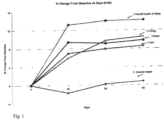
- the present analysis an open-label study, of 32 patients over a 90 day period shows an increase in overall quality of sleep, energy, mood, pain, general health. Changes in performance were measured via a standardized battery of questions. These included assessments of qualitative cognitive test, a sleep index, a headache index and a Quality of Life questionnaire. The study shows improved performance. No participants discontinued the study due to an adverse event.
- Fig. 1 show the percent change from baseline of scores from the areas mentioned; we have excluded the memory scores for another graph.
- the analysis here is shown as marked on the graph as 1, 2, 3, 4 and 5 vs. days 0 through 90.
- the graph shows an increase in overall quality of sleep, energy, mood, pain and general health.
- the baseline was known from a pre-study phase.
- Example 2 Administration of apoaequorin over a thirty (30) day time course results in improved quality of life for test subjects.
- the present study was an open-label study for 56 participants over a 30 day period. Changes in performance were measured via a memory screening tool. As illustrated in Fig. 2 , the study showed improved memory performance as early as eight days but with statistically greater improvement at day 30. No participants discontinued the study due to an adverse event.
- Example 3 Administration of apoaequorin over a ninety (90) day time course results in improved cognition for test subjects.
- Example 4 Administration of apoaequorin and vitamin D-containing composition.
- An apoaequorin and vitamin D-containing composition is administered to a patient in capsule form containing an admixture of apoaequorin and vitamin D3.
- the composition contains 50 mcg of vitamin D3 (in the form of D3 cholecalciferol) and 20 mg of apoaequorin.
- the nutraceutical composition is carried in a nutraceutically-acceptable vegetable capsule (vegetable cellulose, water).
- the composition further contains microcrystalline cellulose, sugar, and small amounts of acacia (gum Arabic), casein peptones, corn starch, lactose, magnesium stearate (vegetable source), medium chain triglycerides (vegetable oil), salt, soy peptones, DL- ⁇ -tacopheral, tricalcium phosphate, and water.
- acacia gum Arabic
- casein peptones corn starch
- lactose magnesium stearate
- medium chain triglycerides vegetable oil
- salt soy peptones
- DL- ⁇ -tacopheral tricalcium phosphate
- water water.
- One capsule taken daily provides a recommended dosage. Such dosage contains approximately 250% of the recommended daily allowance of vitamin D.
- Vitamin D suitable for use in the invention is available from BASF and sold as "Dry Vitamin D3 100 GFP/HP”.
- the single dose may alternatively be formulated to contain other amounts of apoaequorin, including single dosage
- Example 5 Evaluation of neuroprotection by AQ (apoaequorin) and Vitamin D in rat hippocampal brain slices.
Landscapes
- Health & Medical Sciences (AREA)
- Life Sciences & Earth Sciences (AREA)
- Chemical & Material Sciences (AREA)
- Engineering & Computer Science (AREA)
- Animal Behavior & Ethology (AREA)
- Veterinary Medicine (AREA)
- Medicinal Chemistry (AREA)
- Public Health (AREA)
- General Health & Medical Sciences (AREA)
- Pharmacology & Pharmacy (AREA)
- Bioinformatics & Cheminformatics (AREA)
- General Chemical & Material Sciences (AREA)
- Organic Chemistry (AREA)
- Nuclear Medicine, Radiotherapy & Molecular Imaging (AREA)
- Chemical Kinetics & Catalysis (AREA)
- Epidemiology (AREA)
- Nutrition Science (AREA)
- Polymers & Plastics (AREA)
- Food Science & Technology (AREA)
- Mycology (AREA)
- Proteomics, Peptides & Aminoacids (AREA)
- Neurosurgery (AREA)
- Biomedical Technology (AREA)
- Neurology (AREA)
- Zoology (AREA)
- Immunology (AREA)
- Gastroenterology & Hepatology (AREA)
- Rheumatology (AREA)
- Physical Education & Sports Medicine (AREA)
- Psychiatry (AREA)
- Hematology (AREA)
- Obesity (AREA)
- Hospice & Palliative Care (AREA)
- Diabetes (AREA)
- Orthopedic Medicine & Surgery (AREA)
- Pain & Pain Management (AREA)
- Pharmaceuticals Containing Other Organic And Inorganic Compounds (AREA)
- Medicinal Preparation (AREA)
- Coloring Foods And Improving Nutritive Qualities (AREA)
- Medicines That Contain Protein Lipid Enzymes And Other Medicines (AREA)
Priority Applications (3)
| Application Number | Priority Date | Filing Date | Title |
|---|---|---|---|
| SI201731542T SI3515212T1 (sl) | 2016-09-23 | 2017-09-25 | Sestavki, ki vsebujejo apoaequorin in vitamin d, ter načini njihove uporabe |
| HRP20241093TT HRP20241093T1 (hr) | 2016-09-23 | 2017-09-25 | Sastavi koji sadrže apoaequorin i vitamin d i postupci uporabe istih |
| RS20240889A RS65868B1 (sr) | 2016-09-23 | 2017-09-25 | Kompozicije koje sadrže apoekvorin i vitamin d i postupci za njihovu upotrebu |
Applications Claiming Priority (2)
| Application Number | Priority Date | Filing Date | Title |
|---|---|---|---|
| US201662398669P | 2016-09-23 | 2016-09-23 | |
| PCT/US2017/053279 WO2018058050A1 (en) | 2016-09-23 | 2017-09-25 | Apoaequorin and vitamin d-containing compositions and methods of using same |
Publications (2)
| Publication Number | Publication Date |
|---|---|
| EP3515212A1 EP3515212A1 (en) | 2019-07-31 |
| EP3515212B1 true EP3515212B1 (en) | 2024-07-24 |
Family
ID=60164782
Family Applications (1)
| Application Number | Title | Priority Date | Filing Date |
|---|---|---|---|
| EP17788336.0A Active EP3515212B1 (en) | 2016-09-23 | 2017-09-25 | Apoaequorin and vitamin d-containing compositions and methods of using same |
Country Status (19)
| Country | Link |
|---|---|
| US (2) | US20190365854A1 (pl) |
| EP (1) | EP3515212B1 (pl) |
| JP (2) | JP2019532936A (pl) |
| KR (1) | KR102571660B1 (pl) |
| CN (1) | CN109803547A (pl) |
| AU (1) | AU2017330451B2 (pl) |
| DK (1) | DK3515212T3 (pl) |
| ES (1) | ES2989042T3 (pl) |
| FI (1) | FI3515212T3 (pl) |
| HR (1) | HRP20241093T1 (pl) |
| HU (1) | HUE067969T2 (pl) |
| IL (1) | IL265515B (pl) |
| LT (1) | LT3515212T (pl) |
| PL (1) | PL3515212T3 (pl) |
| PT (1) | PT3515212T (pl) |
| RS (1) | RS65868B1 (pl) |
| SI (1) | SI3515212T1 (pl) |
| WO (1) | WO2018058050A1 (pl) |
| ZA (1) | ZA201902187B (pl) |
Families Citing this family (1)
| Publication number | Priority date | Publication date | Assignee | Title |
|---|---|---|---|---|
| EP4199901A1 (en) * | 2020-08-20 | 2023-06-28 | Quincy Bioscience, LLC | Effervescent formulation containing apoaequorin |
Family Cites Families (6)
| Publication number | Priority date | Publication date | Assignee | Title |
|---|---|---|---|---|
| CN1324045C (zh) * | 2004-09-22 | 2007-07-04 | 中国科学院海洋研究所 | 从水母中分离的具有抗氧化活性的蛋白及其应用 |
| MX2010008906A (es) * | 2008-02-13 | 2010-11-05 | Dsm Ip Assets Bv | Uso combinado de 25-hidroxi-vitamina d3 y vitamina d3 para mejorar la densidad mineral osea y para tratar osteoporosis. |
| WO2009114597A1 (en) * | 2008-03-11 | 2009-09-17 | Quincy Bioscience, Llc | Apoaequorin-containing compositions and methods of using same |
| BR112014011630A2 (pt) * | 2011-11-15 | 2017-06-27 | Quincy Bioscience Llc | composições e métodos para redução de lesões neuronais devido à isquemia |
| MX369389B (es) * | 2012-09-27 | 2019-11-07 | Quincy Bioscience Llc | Apoaecuorina para usarse en aliviar un síntoma asociado con esclerosis múltiple en un sujeto. |
| MA40959A (fr) | 2014-11-11 | 2017-09-19 | Quincy Bioscience Llc | Compositions contenant de l'apoaéquorine et leurs procédés d'utilisation pour traiter l'inflammation neuronale |
-
2017
- 2017-09-25 EP EP17788336.0A patent/EP3515212B1/en active Active
- 2017-09-25 HU HUE17788336A patent/HUE067969T2/hu unknown
- 2017-09-25 FI FIEP17788336.0T patent/FI3515212T3/fi active
- 2017-09-25 JP JP2019515902A patent/JP2019532936A/ja active Pending
- 2017-09-25 ES ES17788336T patent/ES2989042T3/es active Active
- 2017-09-25 IL IL265515A patent/IL265515B/en unknown
- 2017-09-25 SI SI201731542T patent/SI3515212T1/sl unknown
- 2017-09-25 HR HRP20241093TT patent/HRP20241093T1/hr unknown
- 2017-09-25 CN CN201780059049.6A patent/CN109803547A/zh active Pending
- 2017-09-25 RS RS20240889A patent/RS65868B1/sr unknown
- 2017-09-25 PL PL17788336.0T patent/PL3515212T3/pl unknown
- 2017-09-25 DK DK17788336.0T patent/DK3515212T3/da active
- 2017-09-25 PT PT177883360T patent/PT3515212T/pt unknown
- 2017-09-25 WO PCT/US2017/053279 patent/WO2018058050A1/en not_active Ceased
- 2017-09-25 LT LTEPPCT/US2017/053279T patent/LT3515212T/lt unknown
- 2017-09-25 AU AU2017330451A patent/AU2017330451B2/en active Active
- 2017-09-25 KR KR1020197010889A patent/KR102571660B1/ko active Active
- 2017-09-25 US US16/336,016 patent/US20190365854A1/en not_active Abandoned
-
2019
- 2019-04-08 ZA ZA2019/02187A patent/ZA201902187B/en unknown
-
2020
- 2020-12-11 US US17/119,075 patent/US12005096B2/en active Active
-
2024
- 2024-01-09 JP JP2024001111A patent/JP2024045186A/ja active Pending
Non-Patent Citations (1)
| Title |
|---|
| KAJTA M ET AL: "Neuroprotection by co-treatment and post-treating with calcitriol following the ischemic and excitotoxic insult in vivo and in vitro", NEUROCHEMISTRY INTERNATIONAL, ELSEVIER, AMSTERDAM, NL, vol. 55, no. 5, 1 October 2009 (2009-10-01), pages 265 - 274, XP026251694, ISSN: 0197-0186, [retrieved on 20090326], DOI: 10.1016/J.NEUINT.2009.03.010 * |
Also Published As
| Publication number | Publication date |
|---|---|
| EP3515212A1 (en) | 2019-07-31 |
| PL3515212T3 (pl) | 2024-10-14 |
| CA3037892A1 (en) | 2018-03-29 |
| NZ751897A (en) | 2025-05-30 |
| LT3515212T (lt) | 2024-09-25 |
| JP2019532936A (ja) | 2019-11-14 |
| SI3515212T1 (sl) | 2024-10-30 |
| DK3515212T3 (da) | 2024-08-26 |
| CN109803547A (zh) | 2019-05-24 |
| PT3515212T (pt) | 2024-08-14 |
| AU2017330451A1 (en) | 2019-04-11 |
| HRP20241093T1 (hr) | 2024-11-08 |
| FI3515212T3 (fi) | 2024-08-09 |
| ES2989042T3 (es) | 2024-11-25 |
| IL265515A (en) | 2019-05-30 |
| US20210169981A1 (en) | 2021-06-10 |
| US20190365854A1 (en) | 2019-12-05 |
| IL265515B (en) | 2022-09-01 |
| HUE067969T2 (hu) | 2024-12-28 |
| US12005096B2 (en) | 2024-06-11 |
| RS65868B1 (sr) | 2024-09-30 |
| WO2018058050A1 (en) | 2018-03-29 |
| KR20190057331A (ko) | 2019-05-28 |
| AU2017330451B2 (en) | 2022-01-20 |
| KR102571660B1 (ko) | 2023-08-25 |
| JP2024045186A (ja) | 2024-04-02 |
| ZA201902187B (en) | 2020-10-28 |
| BR112019005669A2 (pt) | 2019-06-04 |
Similar Documents
| Publication | Publication Date | Title |
|---|---|---|
| CA2717322C (en) | Apoaequorin-containing compositions and methods of using same | |
| US20100152117A1 (en) | Aequorin-Containing Compositions and Methods of Using Same | |
| US12005096B2 (en) | Apoaequorin and vitamin d-containing compositions and methods of using same | |
| CA3037892C (en) | Apoaequorin and vitamin d-containing compositions and methods of using same | |
| HK40012790B (en) | Apoaequorin and vitamin d-containing compositions and methods of using same | |
| HK40012790A (en) | Apoaequorin and vitamin d-containing compositions and methods of using same | |
| HK40009364A (en) | Apoaequorin and vitamin d-containing compositions and methods of using same | |
| BR112019005669B1 (pt) | Composição para tratamento de um sintoma ou transtorno associado a pelo menos um desequilíbrio de cálcio e deficiência de vitamina d, e uso de apoaequorina e vitamina d | |
| HK1154217A (zh) | 含有脱辅基水母蛋白的组合物及其使用方法 | |
| HK1238166A1 (en) | Apoaequorin-containing compositions and methods of using same | |
| HK1180974A (en) | Aequorin-containing compositions and methods of using same |
Legal Events
| Date | Code | Title | Description |
|---|---|---|---|
| REG | Reference to a national code |
Ref country code: HR Ref legal event code: TUEP Ref document number: P20241093T Country of ref document: HR |
|
| STAA | Information on the status of an ep patent application or granted ep patent |
Free format text: STATUS: UNKNOWN |
|
| STAA | Information on the status of an ep patent application or granted ep patent |
Free format text: STATUS: THE INTERNATIONAL PUBLICATION HAS BEEN MADE |
|
| PUAI | Public reference made under article 153(3) epc to a published international application that has entered the european phase |
Free format text: ORIGINAL CODE: 0009012 |
|
| STAA | Information on the status of an ep patent application or granted ep patent |
Free format text: STATUS: REQUEST FOR EXAMINATION WAS MADE |
|
| 17P | Request for examination filed |
Effective date: 20190322 |
|
| AK | Designated contracting states |
Kind code of ref document: A1 Designated state(s): AL AT BE BG CH CY CZ DE DK EE ES FI FR GB GR HR HU IE IS IT LI LT LU LV MC MK MT NL NO PL PT RO RS SE SI SK SM TR |
|
| AX | Request for extension of the european patent |
Extension state: BA ME |
|
| DAV | Request for validation of the european patent (deleted) | ||
| DAX | Request for extension of the european patent (deleted) | ||
| REG | Reference to a national code |
Ref country code: HK Ref legal event code: DE Ref document number: 40012790 Country of ref document: HK |
|
| STAA | Information on the status of an ep patent application or granted ep patent |
Free format text: STATUS: EXAMINATION IS IN PROGRESS |
|
| 17Q | First examination report despatched |
Effective date: 20230403 |
|
| GRAP | Despatch of communication of intention to grant a patent |
Free format text: ORIGINAL CODE: EPIDOSNIGR1 |
|
| STAA | Information on the status of an ep patent application or granted ep patent |
Free format text: STATUS: GRANT OF PATENT IS INTENDED |
|
| INTG | Intention to grant announced |
Effective date: 20240227 |
|
| GRAS | Grant fee paid |
Free format text: ORIGINAL CODE: EPIDOSNIGR3 |
|
| GRAA | (expected) grant |
Free format text: ORIGINAL CODE: 0009210 |
|
| STAA | Information on the status of an ep patent application or granted ep patent |
Free format text: STATUS: THE PATENT HAS BEEN GRANTED |
|
| AK | Designated contracting states |
Kind code of ref document: B1 Designated state(s): AL AT BE BG CH CY CZ DE DK EE ES FI FR GB GR HR HU IE IS IT LI LT LU LV MC MK MT NL NO PL PT RO RS SE SI SK SM TR |
|
| REG | Reference to a national code |
Ref country code: GB Ref legal event code: FG4D |
|
| REG | Reference to a national code |
Ref country code: CH Ref legal event code: EP |
|
| REG | Reference to a national code |
Ref country code: FI Ref legal event code: FGE |
|
| REG | Reference to a national code |
Ref country code: PT Ref legal event code: SC4A Ref document number: 3515212 Country of ref document: PT Date of ref document: 20240814 Kind code of ref document: T Free format text: AVAILABILITY OF NATIONAL TRANSLATION Effective date: 20240807 Ref country code: IE Ref legal event code: FG4D Ref country code: DE Ref legal event code: R096 Ref document number: 602017083545 Country of ref document: DE |
|
| REG | Reference to a national code |
Ref country code: DK Ref legal event code: T3 Effective date: 20240819 |
|
| REG | Reference to a national code |
Ref country code: SE Ref legal event code: TRGR |
|
| P01 | Opt-out of the competence of the unified patent court (upc) registered |
Free format text: CASE NUMBER: APP_43306/2024 Effective date: 20240724 |
|
| REG | Reference to a national code |
Ref country code: NL Ref legal event code: FP |
|
| REG | Reference to a national code |
Ref country code: EE Ref legal event code: FG4A Ref document number: E024401 Country of ref document: EE Effective date: 20240822 |
|
| REG | Reference to a national code |
Ref country code: GR Ref legal event code: EP Ref document number: 20240401916 Country of ref document: GR Effective date: 20241007 |
|
| REG | Reference to a national code |
Ref country code: HR Ref legal event code: ODRP Ref document number: P20241093T Country of ref document: HR Payment date: 20240923 Year of fee payment: 8 |
|
| REG | Reference to a national code |
Ref country code: SK Ref legal event code: T3 Ref document number: E 44875 Country of ref document: SK |
|
| REG | Reference to a national code |
Ref country code: HR Ref legal event code: T1PR Ref document number: P20241093 Country of ref document: HR |
|
| REG | Reference to a national code |
Ref country code: ES Ref legal event code: FG2A Ref document number: 2989042 Country of ref document: ES Kind code of ref document: T3 Effective date: 20241125 |
|
| REG | Reference to a national code |
Ref country code: HU Ref legal event code: AG4A Ref document number: E067969 Country of ref document: HU |
|
| PG25 | Lapsed in a contracting state [announced via postgrant information from national office to epo] |
Ref country code: SM Free format text: LAPSE BECAUSE OF FAILURE TO SUBMIT A TRANSLATION OF THE DESCRIPTION OR TO PAY THE FEE WITHIN THE PRESCRIBED TIME-LIMIT Effective date: 20240724 |
|
| PG25 | Lapsed in a contracting state [announced via postgrant information from national office to epo] |
Ref country code: MC Free format text: LAPSE BECAUSE OF FAILURE TO SUBMIT A TRANSLATION OF THE DESCRIPTION OR TO PAY THE FEE WITHIN THE PRESCRIBED TIME-LIMIT Effective date: 20240724 |
|
| REG | Reference to a national code |
Ref country code: DE Ref legal event code: R097 Ref document number: 602017083545 Country of ref document: DE |
|
| PLBE | No opposition filed within time limit |
Free format text: ORIGINAL CODE: 0009261 |
|
| STAA | Information on the status of an ep patent application or granted ep patent |
Free format text: STATUS: NO OPPOSITION FILED WITHIN TIME LIMIT |
|
| 26N | No opposition filed |
Effective date: 20250425 |
|
| REG | Reference to a national code |
Ref country code: CH Ref legal event code: U11 Free format text: ST27 STATUS EVENT CODE: U-0-0-U10-U11 (AS PROVIDED BY THE NATIONAL OFFICE) Effective date: 20251001 |
|
| PGFP | Annual fee paid to national office [announced via postgrant information from national office to epo] |
Ref country code: FI Payment date: 20250922 Year of fee payment: 9 Ref country code: PT Payment date: 20250912 Year of fee payment: 9 |
|
| PGFP | Annual fee paid to national office [announced via postgrant information from national office to epo] |
Ref country code: LT Payment date: 20250911 Year of fee payment: 9 Ref country code: DK Payment date: 20250922 Year of fee payment: 9 |
|
| REG | Reference to a national code |
Ref country code: HR Ref legal event code: ODRP Ref document number: P20241093 Country of ref document: HR Payment date: 20250916 Year of fee payment: 9 |
|
| PGFP | Annual fee paid to national office [announced via postgrant information from national office to epo] |
Ref country code: GR Payment date: 20250918 Year of fee payment: 9 Ref country code: NO Payment date: 20250919 Year of fee payment: 9 |
|
| PGFP | Annual fee paid to national office [announced via postgrant information from national office to epo] |
Ref country code: NL Payment date: 20250922 Year of fee payment: 9 Ref country code: LU Payment date: 20250922 Year of fee payment: 9 Ref country code: PL Payment date: 20250908 Year of fee payment: 9 Ref country code: TR Payment date: 20250917 Year of fee payment: 9 |
|
| PGFP | Annual fee paid to national office [announced via postgrant information from national office to epo] |
Ref country code: BG Payment date: 20250917 Year of fee payment: 9 Ref country code: BE Payment date: 20250919 Year of fee payment: 9 Ref country code: HU Payment date: 20250917 Year of fee payment: 9 Ref country code: GB Payment date: 20250923 Year of fee payment: 9 |
|
| PGFP | Annual fee paid to national office [announced via postgrant information from national office to epo] |
Ref country code: HR Payment date: 20250916 Year of fee payment: 9 |
|
| PGFP | Annual fee paid to national office [announced via postgrant information from national office to epo] |
Ref country code: FR Payment date: 20250924 Year of fee payment: 9 Ref country code: AT Payment date: 20250918 Year of fee payment: 9 |
|
| PGFP | Annual fee paid to national office [announced via postgrant information from national office to epo] |
Ref country code: MT Payment date: 20250919 Year of fee payment: 9 Ref country code: SE Payment date: 20250922 Year of fee payment: 9 |
|
| PGFP | Annual fee paid to national office [announced via postgrant information from national office to epo] |
Ref country code: IE Payment date: 20250919 Year of fee payment: 9 Ref country code: RS Payment date: 20250916 Year of fee payment: 9 Ref country code: EE Payment date: 20250922 Year of fee payment: 9 Ref country code: CZ Payment date: 20250912 Year of fee payment: 9 |
|
| PGFP | Annual fee paid to national office [announced via postgrant information from national office to epo] |
Ref country code: RO Payment date: 20250918 Year of fee payment: 9 |
|
| PGFP | Annual fee paid to national office [announced via postgrant information from national office to epo] |
Ref country code: SK Payment date: 20250918 Year of fee payment: 9 |
|
| PGFP | Annual fee paid to national office [announced via postgrant information from national office to epo] |
Ref country code: IS Payment date: 20250924 Year of fee payment: 9 |
|
| PGFP | Annual fee paid to national office [announced via postgrant information from national office to epo] |
Ref country code: LV Payment date: 20250923 Year of fee payment: 9 |
|
| PGFP | Annual fee paid to national office [announced via postgrant information from national office to epo] |
Ref country code: SI Payment date: 20250915 Year of fee payment: 9 |
|
| PGFP | Annual fee paid to national office [announced via postgrant information from national office to epo] |
Ref country code: MK Payment date: 20250912 Year of fee payment: 9 |
|
| PGFP | Annual fee paid to national office [announced via postgrant information from national office to epo] |
Ref country code: DE Payment date: 20251112 Year of fee payment: 9 |
|
| PGFP | Annual fee paid to national office [announced via postgrant information from national office to epo] |
Ref country code: IT Payment date: 20250930 Year of fee payment: 9 |
|
| PGFP | Annual fee paid to national office [announced via postgrant information from national office to epo] |
Ref country code: CH Payment date: 20251001 Year of fee payment: 9 |
|
| PGFP | Annual fee paid to national office [announced via postgrant information from national office to epo] |
Ref country code: CY Payment date: 20250912 Year of fee payment: 9 |
|
| PGFP | Annual fee paid to national office [announced via postgrant information from national office to epo] |
Ref country code: ES Payment date: 20251020 Year of fee payment: 9 |
|
| REG | Reference to a national code |
Ref country code: AT Ref legal event code: UEP Ref document number: 1705398 Country of ref document: AT Kind code of ref document: T Effective date: 20240724 |