EP3502215B1 - Reduktion der schadstoffemission von verbrennungsmotoren - Google Patents
Reduktion der schadstoffemission von verbrennungsmotoren Download PDFInfo
- Publication number
- EP3502215B1 EP3502215B1 EP17209709.9A EP17209709A EP3502215B1 EP 3502215 B1 EP3502215 B1 EP 3502215B1 EP 17209709 A EP17209709 A EP 17209709A EP 3502215 B1 EP3502215 B1 EP 3502215B1
- Authority
- EP
- European Patent Office
- Prior art keywords
- citric acid
- glyoxal
- additive
- polymerisate
- glycerine
- Prior art date
- Legal status (The legal status is an assumption and is not a legal conclusion. Google has not performed a legal analysis and makes no representation as to the accuracy of the status listed.)
- Active
Links
Images

Classifications
-
- C—CHEMISTRY; METALLURGY
- C10—PETROLEUM, GAS OR COKE INDUSTRIES; TECHNICAL GASES CONTAINING CARBON MONOXIDE; FUELS; LUBRICANTS; PEAT
- C10L—FUELS NOT OTHERWISE PROVIDED FOR; NATURAL GAS; SYNTHETIC NATURAL GAS OBTAINED BY PROCESSES NOT COVERED BY SUBCLASSES C10G OR C10K; LIQUIFIED PETROLEUM GAS; USE OF ADDITIVES TO FUELS OR FIRES; FIRE-LIGHTERS
- C10L1/00—Liquid carbonaceous fuels
- C10L1/10—Liquid carbonaceous fuels containing additives
- C10L1/14—Organic compounds
- C10L1/18—Organic compounds containing oxygen
- C10L1/192—Macromolecular compounds
- C10L1/198—Macromolecular compounds obtained otherwise than by reactions involving only carbon-to-carbon unsaturated bonds homo- or copolymers of compounds having one or more unsaturated aliphatic radicals, each having only one carbon to carbon double bond, and at least one being terminated by an acyloxy radical of a saturated carboxylic acid, of carbonic acid
- C10L1/1983—Macromolecular compounds obtained otherwise than by reactions involving only carbon-to-carbon unsaturated bonds homo- or copolymers of compounds having one or more unsaturated aliphatic radicals, each having only one carbon to carbon double bond, and at least one being terminated by an acyloxy radical of a saturated carboxylic acid, of carbonic acid polyesters
-
- C—CHEMISTRY; METALLURGY
- C10—PETROLEUM, GAS OR COKE INDUSTRIES; TECHNICAL GASES CONTAINING CARBON MONOXIDE; FUELS; LUBRICANTS; PEAT
- C10L—FUELS NOT OTHERWISE PROVIDED FOR; NATURAL GAS; SYNTHETIC NATURAL GAS OBTAINED BY PROCESSES NOT COVERED BY SUBCLASSES C10G OR C10K; LIQUIFIED PETROLEUM GAS; USE OF ADDITIVES TO FUELS OR FIRES; FIRE-LIGHTERS
- C10L1/00—Liquid carbonaceous fuels
- C10L1/10—Liquid carbonaceous fuels containing additives
- C10L1/12—Inorganic compounds
- C10L1/1233—Inorganic compounds oxygen containing compounds, e.g. oxides, hydroxides, acids and salts thereof
- C10L1/125—Inorganic compounds oxygen containing compounds, e.g. oxides, hydroxides, acids and salts thereof water
-
- C—CHEMISTRY; METALLURGY
- C10—PETROLEUM, GAS OR COKE INDUSTRIES; TECHNICAL GASES CONTAINING CARBON MONOXIDE; FUELS; LUBRICANTS; PEAT
- C10L—FUELS NOT OTHERWISE PROVIDED FOR; NATURAL GAS; SYNTHETIC NATURAL GAS OBTAINED BY PROCESSES NOT COVERED BY SUBCLASSES C10G OR C10K; LIQUIFIED PETROLEUM GAS; USE OF ADDITIVES TO FUELS OR FIRES; FIRE-LIGHTERS
- C10L10/00—Use of additives to fuels or fires for particular purposes
- C10L10/02—Use of additives to fuels or fires for particular purposes for reducing smoke development
-
- C—CHEMISTRY; METALLURGY
- C11—ANIMAL OR VEGETABLE OILS, FATS, FATTY SUBSTANCES OR WAXES; FATTY ACIDS THEREFROM; DETERGENTS; CANDLES
- C11B—PRODUCING, e.g. BY PRESSING RAW MATERIALS OR BY EXTRACTION FROM WASTE MATERIALS, REFINING OR PRESERVING FATS, FATTY SUBSTANCES, e.g. LANOLIN, FATTY OILS OR WAXES; ESSENTIAL OILS; PERFUMES
- C11B5/00—Preserving by using additives, e.g. anti-oxidants
- C11B5/0021—Preserving by using additives, e.g. anti-oxidants containing oxygen
- C11B5/0028—Carboxylic acids; Their derivates
-
- F—MECHANICAL ENGINEERING; LIGHTING; HEATING; WEAPONS; BLASTING
- F02—COMBUSTION ENGINES; HOT-GAS OR COMBUSTION-PRODUCT ENGINE PLANTS
- F02B—INTERNAL-COMBUSTION PISTON ENGINES; COMBUSTION ENGINES IN GENERAL
- F02B47/00—Methods of operating engines involving adding non-fuel substances or anti-knock agents to combustion air, fuel, or fuel-air mixtures of engines
- F02B47/04—Methods of operating engines involving adding non-fuel substances or anti-knock agents to combustion air, fuel, or fuel-air mixtures of engines the substances being other than water or steam only
-
- F—MECHANICAL ENGINEERING; LIGHTING; HEATING; WEAPONS; BLASTING
- F02—COMBUSTION ENGINES; HOT-GAS OR COMBUSTION-PRODUCT ENGINE PLANTS
- F02M—SUPPLYING COMBUSTION ENGINES IN GENERAL WITH COMBUSTIBLE MIXTURES OR CONSTITUENTS THEREOF
- F02M25/00—Engine-pertinent apparatus for adding non-fuel substances or small quantities of secondary fuel to combustion-air, main fuel or fuel-air mixture
- F02M25/022—Adding fuel and water emulsion, water or steam
- F02M25/025—Adding water
- F02M25/028—Adding water into the charge intakes
-
- F—MECHANICAL ENGINEERING; LIGHTING; HEATING; WEAPONS; BLASTING
- F02—COMBUSTION ENGINES; HOT-GAS OR COMBUSTION-PRODUCT ENGINE PLANTS
- F02M—SUPPLYING COMBUSTION ENGINES IN GENERAL WITH COMBUSTIBLE MIXTURES OR CONSTITUENTS THEREOF
- F02M25/00—Engine-pertinent apparatus for adding non-fuel substances or small quantities of secondary fuel to combustion-air, main fuel or fuel-air mixture
- F02M25/022—Adding fuel and water emulsion, water or steam
- F02M25/025—Adding water
- F02M25/03—Adding water into the cylinder or the pre-combustion chamber
-
- C—CHEMISTRY; METALLURGY
- C10—PETROLEUM, GAS OR COKE INDUSTRIES; TECHNICAL GASES CONTAINING CARBON MONOXIDE; FUELS; LUBRICANTS; PEAT
- C10L—FUELS NOT OTHERWISE PROVIDED FOR; NATURAL GAS; SYNTHETIC NATURAL GAS OBTAINED BY PROCESSES NOT COVERED BY SUBCLASSES C10G OR C10K; LIQUIFIED PETROLEUM GAS; USE OF ADDITIVES TO FUELS OR FIRES; FIRE-LIGHTERS
- C10L1/00—Liquid carbonaceous fuels
- C10L1/10—Liquid carbonaceous fuels containing additives
- C10L1/14—Organic compounds
- C10L1/18—Organic compounds containing oxygen
- C10L1/185—Ethers; Acetals; Ketals; Aldehydes; Ketones
- C10L1/1857—Aldehydes; Ketones
-
- C—CHEMISTRY; METALLURGY
- C10—PETROLEUM, GAS OR COKE INDUSTRIES; TECHNICAL GASES CONTAINING CARBON MONOXIDE; FUELS; LUBRICANTS; PEAT
- C10L—FUELS NOT OTHERWISE PROVIDED FOR; NATURAL GAS; SYNTHETIC NATURAL GAS OBTAINED BY PROCESSES NOT COVERED BY SUBCLASSES C10G OR C10K; LIQUIFIED PETROLEUM GAS; USE OF ADDITIVES TO FUELS OR FIRES; FIRE-LIGHTERS
- C10L2230/00—Function and purpose of a components of a fuel or the composition as a whole
- C10L2230/22—Function and purpose of a components of a fuel or the composition as a whole for improving fuel economy or fuel efficiency
-
- C—CHEMISTRY; METALLURGY
- C10—PETROLEUM, GAS OR COKE INDUSTRIES; TECHNICAL GASES CONTAINING CARBON MONOXIDE; FUELS; LUBRICANTS; PEAT
- C10L—FUELS NOT OTHERWISE PROVIDED FOR; NATURAL GAS; SYNTHETIC NATURAL GAS OBTAINED BY PROCESSES NOT COVERED BY SUBCLASSES C10G OR C10K; LIQUIFIED PETROLEUM GAS; USE OF ADDITIVES TO FUELS OR FIRES; FIRE-LIGHTERS
- C10L2270/00—Specifically adapted fuels
- C10L2270/02—Specifically adapted fuels for internal combustion engines
-
- C—CHEMISTRY; METALLURGY
- C10—PETROLEUM, GAS OR COKE INDUSTRIES; TECHNICAL GASES CONTAINING CARBON MONOXIDE; FUELS; LUBRICANTS; PEAT
- C10L—FUELS NOT OTHERWISE PROVIDED FOR; NATURAL GAS; SYNTHETIC NATURAL GAS OBTAINED BY PROCESSES NOT COVERED BY SUBCLASSES C10G OR C10K; LIQUIFIED PETROLEUM GAS; USE OF ADDITIVES TO FUELS OR FIRES; FIRE-LIGHTERS
- C10L2270/00—Specifically adapted fuels
- C10L2270/02—Specifically adapted fuels for internal combustion engines
- C10L2270/026—Specifically adapted fuels for internal combustion engines for diesel engines, e.g. automobiles, stationary, marine
-
- C—CHEMISTRY; METALLURGY
- C10—PETROLEUM, GAS OR COKE INDUSTRIES; TECHNICAL GASES CONTAINING CARBON MONOXIDE; FUELS; LUBRICANTS; PEAT
- C10L—FUELS NOT OTHERWISE PROVIDED FOR; NATURAL GAS; SYNTHETIC NATURAL GAS OBTAINED BY PROCESSES NOT COVERED BY SUBCLASSES C10G OR C10K; LIQUIFIED PETROLEUM GAS; USE OF ADDITIVES TO FUELS OR FIRES; FIRE-LIGHTERS
- C10L2290/00—Fuel preparation or upgrading, processes or apparatus therefore, comprising specific process steps or apparatus units
- C10L2290/14—Injection, e.g. in a reactor or a fuel stream during fuel production
- C10L2290/141—Injection, e.g. in a reactor or a fuel stream during fuel production of additive or catalyst
-
- F—MECHANICAL ENGINEERING; LIGHTING; HEATING; WEAPONS; BLASTING
- F02—COMBUSTION ENGINES; HOT-GAS OR COMBUSTION-PRODUCT ENGINE PLANTS
- F02B—INTERNAL-COMBUSTION PISTON ENGINES; COMBUSTION ENGINES IN GENERAL
- F02B47/00—Methods of operating engines involving adding non-fuel substances or anti-knock agents to combustion air, fuel, or fuel-air mixtures of engines
- F02B47/02—Methods of operating engines involving adding non-fuel substances or anti-knock agents to combustion air, fuel, or fuel-air mixtures of engines the substances being water or steam
-
- Y—GENERAL TAGGING OF NEW TECHNOLOGICAL DEVELOPMENTS; GENERAL TAGGING OF CROSS-SECTIONAL TECHNOLOGIES SPANNING OVER SEVERAL SECTIONS OF THE IPC; TECHNICAL SUBJECTS COVERED BY FORMER USPC CROSS-REFERENCE ART COLLECTIONS [XRACs] AND DIGESTS
- Y02—TECHNOLOGIES OR APPLICATIONS FOR MITIGATION OR ADAPTATION AGAINST CLIMATE CHANGE
- Y02T—CLIMATE CHANGE MITIGATION TECHNOLOGIES RELATED TO TRANSPORTATION
- Y02T10/00—Road transport of goods or passengers
- Y02T10/10—Internal combustion engine [ICE] based vehicles
- Y02T10/12—Improving ICE efficiencies
Definitions
- the present invention relates to a method for reducing the pollutant emission of internal combustion engines, an additive with which the pollutant emission can be reduced, and its use for reducing the pollutant emission.
- citric acid esters are described as a fuel substitute or additive, which are said to achieve reduced soot formation.
- the reduction in pollutant emissions is not clearly disclosed, however.
- the use of citric acid esters as a fuel substitute or as an additive in what is considered to be an effective amount of 10% should be difficult to enforce for price reasons.
- the above object is therefore achieved by a method for reducing pollutant emissions in internal combustion engines, in which, as an additive, an aqueous solution containing a polymer of citric acid and glycerol is fed into the combustion chamber of the engine.
- an additive for reducing the pollutant emission of internal combustion engines consisting of an aqueous solution of a polymer made from citric acid and glycerin and glyoxal, and by using a polymer made from citric acid and glycerin to reduce the pollutant emission.
- the polymer of citric acid and glycerin, in short citric acid polymer is combined with aqueous glyoxal by either containing glyoxal in the additive and / or by additionally adding aqueous glyoxal solution.
- the process therefore suggests the use of citric acid polymer or a combination of citric acid polymer and glyoxal in aqueous solution to reduce the pollutant emissions of internal combustion engines.
- the additive can be sucked in via the intake tract or injected directly into the combustion chamber.
- the An important difference to the previously proposed fuel additives is that the substances are no longer added to the fuel in advance.
- Combustion engines are primarily diesel and gasoline engines, but also all other engines, e.g. Turbines that are operated by burning hydrocarbons and / or their substitutes such as biodiesel.
- the polymer made from citric acid and glycerin has a clear advantage on the injection pump because it has a high viscosity and is of a gel-like consistency. This protects the moving parts.
- the polymer itself can be used in any aqueous solution and can therefore be mixed with the aqueous glyoxal solution without difficulty.
- Another advantage is that the more complete combustion can reduce fuel consumption and / or increase performance.
- the method according to the invention also has the advantage that, when injected into the combustion chamber, the aqueous solution reproduces the cooling effect in the combustion process.
- the glyoxal as a radical inductor accelerates the combustion process catalytically. Since aqueous glyoxal solutions are stable, no emulsifying additives are required. By combining the glyoxal with the citric acid polymer, values in reducing pollutant emissions can be achieved that were previously unknown.
- Aqueous glyoxal solution is a commercial product.
- the citric acid polymer can be made from commercially available citric acid with the addition of glycerin and heating to 90 to 150 ° C, for example by microwaves, without much effort.
- Citric acid and glycerol are usually used in a weight ratio of 1: 1 to 10: 1, preferably 1: 1 to 5: 1 and in particular approximately 2: 1.
- the conversion of 30 g citric acid and 15 g glycerol with a microwave power of 800 W only takes 1 to 5 minutes.
- a possible structure of the polymer is shown in the following formula 1.
- the citric acid polymer Due to its abundance of carbonyl groups, the citric acid polymer has the decisive catalytic effect. It has a gel-like consistency, is hydrophilic and binds moisture well.
- the polymer is particularly suitable on its own or as a base substance in the combination of citric acid polymer-glyoxal solution in the air filter or intake tract.
- the citric acid polymer also has the advantage of being completely non-toxic.
- the additive, citric acid polymer and / or glyoxal solution according to the invention is directly injected into the combustion chamber for cooling instead of the water injection customary in high-performance engines. This is done using the same device. In this way, an aqueous solution of citric acid polymer and / or glyoxal can be fed into the combustion chamber of the engine without any problems. No fundamental changes to the engine are necessary.
- the additive or citric acid polymer to the combustion process in vapor form, which can be done, for example, by introducing it into the intake tract without great technical effort.
- the citric acid polymer or additive is also fed into the combustion chamber of the engine by being carried along by the intake combustion air.
- the introduction takes place by soaking the air filter, since the evaporation of the solution is particularly effective due to the large surface area of the filter and the technical outlay is impressively low.
- the evaporation process can also be promoted and regulated by an ultrasound source.
- the cooling effect on the combustion process can be increased by increasing the water content.
- the same additive or preferably an additive with a content of glyoxal and citric acid polymer can be used, in particular also the combination of the supply of citric acid polymer into the intake tract and of glyoxal solution into the combustion chamber.
- a constant addition of citric acid polymer or glyoxal-citric acid polymer solution via the air filter is combined as a basic catalytic process with a load-dependent controlled injection of an aqueous glyoxal or glyoxal-citric acid polymer solution directly into the combustion chamber and thus the pollutant emission is regulated depending on the load.
- the supply amount of citric acid polymer and glyoxal is very variable. However, it has proven useful if the additive is directly introduced into the combustion chamber contains glyoxal and even consists predominantly of the glyoxal solution. This means that the ratio of glyoxal to polymer made from citric acid and glycerol should expediently be in the range from 10: 1 to 1: 1. When introduced into the intake tract, however, the additive should preferably consist entirely or predominantly of the citric acid polymer. Accordingly, ratios of glyoxal to polymer made from citric acid and glycerol in the range from 1: 1 to 1:10 in the additive are suitable.
- citric acid polymer or the additive according to the invention (both components in total) is in the lower per mille range, typically 0.1-2 per mille based on the fuel is sufficient, preferably 0.5 to 1 per mille based on the volume.
- glyoxal solution can also be injected and citric acid polymer solution can be applied to the air filter.
- citric acid polymer solution can therefore be supplied separately.
- the invention also relates to all combinations of preferred configurations, insofar as these are not mutually exclusive.
- the information "about” or “approx.” in connection with a number means that at least 10% higher or lower values or 5% higher or lower values and in any case 1% higher or lower values are included.
- citric acid polymer 30 g of citric acid monohydrate with 15 g of glycerin were stirred in a glass using a motorized whisk and placed in a conventional microwave oven (here model Koenic KMW 4441 DB) with a nominal output power of 1450 watts and frequency of 2450 MHz , The mixture was heated for 2 minutes. The formation of water vapor at the top of the glass was observed. After cooling, a clear, viscous mass was obtained, which easily dissolved in water.
- a conventional microwave oven here model Koenic KMW 4441 DB
Landscapes
- Chemical & Material Sciences (AREA)
- Engineering & Computer Science (AREA)
- Oil, Petroleum & Natural Gas (AREA)
- Combustion & Propulsion (AREA)
- Organic Chemistry (AREA)
- Chemical Kinetics & Catalysis (AREA)
- General Engineering & Computer Science (AREA)
- Mechanical Engineering (AREA)
- General Chemical & Material Sciences (AREA)
- Health & Medical Sciences (AREA)
- Emergency Medicine (AREA)
- Inorganic Chemistry (AREA)
- Life Sciences & Earth Sciences (AREA)
- Wood Science & Technology (AREA)
- Organic Low-Molecular-Weight Compounds And Preparation Thereof (AREA)
- Solid Fuels And Fuel-Associated Substances (AREA)
- Processing Of Solid Wastes (AREA)
Description
- Die vorliegende Erfindung betrifft ein Verfahren zur Reduktion der Schadstoffemission von Verbrennungsmotoren, ein Additiv mit welchem die Schadstoffemission reduziert werden kann, sowie dessen Verwendung zur Reduktion der Schadstoffemission.
- Neben dem eindeutigen Nachweis der Veränderung des Klimas durch zunehmende Erwärmung, u.a. bedingt durch den CO2-Ausstoß bei der Oxidation fossiler Brennstoffe, wird die Umwelt darüber hinaus beim Dieselmotor durch Fein- und Feinststaub sowie durch Stickoxide belastet. Die Reduzierung dieser Schadstoffe durch Partikelfilter zeigt die Bedeutung der Schademissionen. Der ideale Weg wäre die vollständige Verbrennung der fossilen Brennstoffe direkt im Energiegewinnungsprozess und nicht die nachträgliche Beseitigung im Abgas. Der Vorteil läge nicht nur in der Reduktion der Schademissionen, sondern auch in der zusätzlichen Energiegewinnung und damit Verminderung des Kraftstoffverbrauchs und damit letztendlich auch in der Reduktion der CO2-Emission.
- Lösungen dieses Problems wurden bereits in vielfältiger Weise aufgezeigt. Beispielsweise beschreibt
WO 00/17290 A1 - In der
WO 2010/112158 A1 werden Citronensäureester als Treibstoffersatz oder -zusatz beschrieben, die eine verringerte Rußbildung erreichen sollen. Die Verringerung der Schadstoffemission wird aber nicht exakt nachvollziehbar offenbart. Der Einsatz von Citronensäureestern als Treibstoffersatz oder als Zusatz in den für wirksam gehaltenen Megen von 10 % dürfte aus Preisgründen nur schwer durchsetzbar sein. - Es besteht daher die Aufgabe, die Schadstoffemission zu verringern. Überraschend wurde nun gefunden, dass die Zufuhr eines Additivs enthaltend ein Polymerisat aus Citronensäure und Glycerin, also einen verzweigten Polyester, in den Verbrennungsraum eines Motors die Schadstoffemission drastisch senkt.
- Die obige Aufgabe wird daher durch ein Verfahren zur Senkung des Schadstoffausstoßes bei Verbrennungsmotoren gelöst, bei dem als Additiv eine wässrige Lösung enthaltend ein Polymerisat aus Citronensäure und Glycerin in den Verbrennungsraum des Motors zugeführt wird. Die Aufgabe wird auch durch ein Additiv zur Reduzierung der Schadstoffemission von Verbrennungsmotoren bestehend aus einer wässrigen Lösung eines Polymerisat aus Citronensäure und Glycerin sowie Glyoxal gelöst, sowie durch die Verwendung eines Polymerisat aus Citronensäure und Glycerin zur Reduktion der Schadstoffemission. In einer bevorzugten Ausführungsform wird das Polymerisat aus Citronensäure und Glycerin, kurz Citronensäurepolymerisat, mit wässrigem Glyoxal kombiniert, indem entweder Glyoxal in dem Additiv enthalten ist und/oder wässrige Glyoxal-Lösung zusätzlich zugeführt wird.
- Das Verfahren schlägt also die Anwendung von Citronensäurepolymerisat oder von einer Kombination aus Citronensäurepolymerisat und Glyoxal in wässriger Lösung zur Senkung des Schadstoffausstoßes von Verbrennungsmotoren vor. Das Additiv kann sowohl über den Ansaugtrakt angesaugt, als auch direkt in den Verbrennungsraum eingespritzt werden. Der wichtige Unterschied zu den bisher vorgeschlagenen Kraftstoffadditiven liegt darin, dass die Substanzen nicht mehr dem Kraftstoff vorab zugefügt werden.
- Mit Verbrennungsmotor sind hier vor allem Diesel- und Ottomotoren gemeint, aber auch alle anderen Motoren, z.B. Turbinen, die durch Verbrennung von Kohlenwasserstoffen und/oder deren Ersatzstoffen wie Biodiesel betrieben werden.
- Das Polymerisat aus Citronensäure und Glycerin ist von eindeutigem Vorteil auf die Einspritzpumpe, da es eine hohe Viskosität hat und von gelartiger Konsistenz ist. Damit wird eine Schonung der beweglichen Teile erreicht. Das Polymerisat selbst kann in beliebiger wässriger Lösung verwendet werden und lässt sich daher auch ohne Schwierigkeit mit der wässrigen Glyoxal-Lösung mischen.
- Ein weiterer Vorteil ist, dass durch die vollständigere Verbrennung der Kraftstoffverbrauch gesenkt und/oder die Leistung gesteigert werden kann.
- Das erfindungsgemäße Verfahren hat außerdem den Vorteil, dass bei Einspritzung in den Verbrennungsraum die wässrige Lösung den Kühlungseffekt im Verbrennungsprozess nachvollzieht.
- Das Glyoxal als Radikalinduktor beschleunigt den Verbrennungsprozess katalytisch. Da wässrige Glyoxal-Lösungen stabil sind, werden keine emulgierenden Zusätze benötigt. Durch die Kombination des Glyoxal mit dem Citronensäurepolymerisat lassen sich Werte in der Minderung der Schadstoffemissionen erzielen, die bislang unbekannt waren.
- Ein weiterer Vorteil der Erfindung ist, dass die beiden Komponenten des Additivs preiswert und leicht zugänglich sind. Wässrige Glyoxal-Lösung ist ein Handelsprodukt. Das Citronensäurepolymerisat lässt sich aus handelsüblicher Citronensäure unter Zugabe von Glycerin und Erhitzung auf 90 bis 150 °C, z.B. durch Mikrowellen, ohne großen Aufwand herstellen. Üblicherweise werden Citronensäure und Glycerin im Gewichtsverhältnis von 1:1 bis 10:1, bevorzugt von 1:1 bis 5:1 und insbesondere von etwa 2:1 eingesetzt. In der Regel dauert die Umsetzung von 30 g Citronensäure und 15 g Glycerin bei einer Mikrowellenleistung von 800 W nur 1 bis 5 Minuten. Eine mögliche Struktur des Polymerisats ist in der folgenden Formel 1 dargestellt.

- Polymere aus Citronensäure und Glycerin sind an sich bekannt. Die
US 2013/337712 A1 beschreibt Polyester aus mindestens dreiwertigen Carbonsäuren und mehrwertigen Alkoholen, u.a. aus Citronensäure und Glycerin, als Bindemittel. Der Artikel Mohsen Adeli et al., "Hyperbranched poly(citric acid) and its applications in anticancer drug delivery systems" betrifft die Verwendung von Polymeren aus Citronensäure und Glycerin für Arzneimittel. InCN 104 559 237 sind Polymere aus Fettsäuren, u.a. Citronensäure, und Glycerin als Fluxmittel für Warmasphalt beschrieben. Mit Verbrennungmotoren haben diese Veröffentlichungen nichts zu tun. - Das Citronensäurepolymerisat weist durch seinen Reichtum an Carbonylgruppen den entscheidenden katalytischen Effekt auf, es ist von gelartiger Konsistenz, ist hydrophil und bindet Feuchtigkeit gut.
- Das Polymerisat ist allein oder als Basissubstanz in der Kombination Citronensäurepolymerisat-Glyoxal-Lösung im Luftfilter respektive Ansaugtrakt in besonderem Maße geeignet. Das Citronensäurepolymerisat hat darüber hinaus den Vorteil vollständig untoxisch zu sein.
- Aufgrund seiner Funktion als Radikalinduktor ist eine Direkteinspritzung der wässrigen Glyoxal-Lösung in mengenmäßig überwiegendem Anteil in den Brennraum bei plötzlichen Lastwechseln vorzuziehen. Beide Substanzen sowie die Verfahren der Zufuhr in den Ansaugtrakt und in den Brennraum ergänzen sich und es wurde auch gefunden, dass sie sich in ihrer Schadstoffreduzierenden Wirkung summieren.
- In einer Ausführungsform wird anstelle der bei Hochleistungsmotoren üblichen Wassereinspritzung in den Verbrennungsraum zur Kühlung das erfindungsgemäße Additiv, Citronensäurepolymerisat und/oder Glyoxal-Lösung direkt eingespritzt. Dies erfolgt mittels derselben Vorrichtung. So lässt sich völlig problemlos eine wässrige Lösung von Citronensäurepolymerisat und/oder von Glyoxal in den Verbrennungsraum des Motors zuführen. Es sind keine prinzipiellen Veränderungen am Motor notwendig.
- Von besonderem Vorteil ist es, das Additiv oder Citronensäurepolymerisat dem Verbrennungsprozess dampfförmig zuzuführen, was z.B. durch Einbringen in den Ansaugtrakt ohne großen technischen Aufwand erfolgen kann. Durch Einbringen in den Ansaugtrakt wird das Citronensäurepolymerisat oder Additiv ebenfalls in den Verbrennungsraum des Motors zugeführt, indem es von der angesaugten Verbrennungsluft mitgenommen wird. In einer bevorzugten Variante erfolgt das Einbringen durch Tränken des Luftfilters, da durch die große Oberfläche des Filters die Verdampfung der Lösung besonders effektiv und der technische Aufwand geradezu bestechend gering ist. Der Verdampfungsprozess kann außerdem durch eine Ultraschallquelle gefördert und reguliert werden.
- Es ist von besonderem Vorteil die Zufuhr des Citronensäurepolymerisats, insbesondere dampfförmig, in den Ansaugtrakt und die Einspritzung der wässrigen Additiv- oder Glyoxal-Lösung in den Verbrennungsraum zu kombinieren. Dabei kann beispielsweise durch Erhöhung des Wasseranteils der Kühlungseffekt auf den Verbrennungsvorgang erhöht werden. Es kann entweder jeweils dasselbe Additiv oder vorzugsweise ein im Gehalt an Glyoxal und Citronensäurepolymerisat angepasstes Additiv verwendet werden, insbesondere auch die Kombination der Zufuhr von Citronensäurepolymerisat in den Ansaugtrakt und von Glyoxal-Lösung in den Verbrennungsraum. In einer bevorzugten Ausführungsform wird eine konstante Zugabe von Citronensäurepolymerisat oder Glyoxal-CitronensäurepolymerisatLösung über den Luftfilter als katalytischer Basisprozess mit einer lastabhängig gesteuerten Einspritzung einer wässrigen Glyoxal- oder Glyoxal-Citronensäurepolymerisat-Lösung direkt in den Verbrennungsraum kombiniert und somit die Schadstoffemission lastabhängig reguliert.
- Es ist ebenfalls denkbar, eine ganz eigene Vorrichtung zur Zufuhr des Additivs zu schaffen. Dies wird jedoch nur bei Motorneuentwicklungen wirtschaftlich sein, nachträgliche Umbauten sind in der Regel zu teuer. Technisch spricht jedoch nichts dagegen.
- Die Zufuhrmenge an Citronensäurepolymerisat und Glyoxal ist sehr variabel. Es hat sich jedoch bewährt, wenn das Additiv bei direkter Einbringung in den Verbrennungsraum Glyoxal enthält und sogar überwiegend aus der Glyoxal-Lösung besteht. Das heißt, das Verhältnis von Glyoxal zu Polymerisat aus Citronensäure und Glycerin sollte zweckmäßig im Bereich von 10:1 bis 1:1 liegen. Bei Einbringung in den Ansaugtrakt sollte das Additiv dagegen vorzugsweise ganz oder überwiegend aus dem Citronensäurepolymerisat bestehen. Demgemäß eignen sich Verhältnisse von Glyoxal zu Polymerisat aus Citronensäure und Glycerin im Bereich von 1:1 bis 1:10 in dem Additiv.
- Insgesamt liegt der Einsatz des Citronensäurepolymerisats oder des erfindungsgemäßen Additivs (beide Komponenten in Summe) im unteren Promillebereich, typischerweise reichen 0,1-2 Promille bezogen auf den Kraftstoff aus, bevorzugt sind 0,5 bis 1 Promille, bezogen auf das Volumen.
- Erfolgt eine Zufuhr sowohl direkt durch Einspritzen in den Verbrennungsraum als auch durch Einbringen in den Ansaugtrakt, so kann auch Glyoxallösung eingespritzt und Citronensäurepolymerisatlösung auf das Luftfilter aufgebracht werden. Die Zufuhr der Komponenten kann in dieser Ausführungsform also getrennt erfolgen.
- Die Erfindung soll anhand der folgenden Beispiele erläutert werden, ohne jedoch auf die speziell beschriebenen Ausführungsformen beschränkt zu sein. Soweit nichts anderes angegeben ist oder sich aus dem Zusammenhang zwingend anders ergibt, beziehen sich Prozentangaben auf das Volumen, im Zweifel auf das Gesamtvolumen der Mischung.
- Die Erfindung bezieht sich auch auf sämtliche Kombinationen von bevorzugten Ausgestaltungen, soweit diese sich nicht gegenseitig ausschließen. Die Angaben "etwa" oder "ca." in Verbindung mit einer Zahlenangabe bedeuten, dass zumindest um 10 % höhere oder niedrigere Werte oder um 5 % höhere oder niedrigere Werte und in jedem Fall um 1 % höhere oder niedrigere Werte eingeschlossen sind.
- Zur Herstellung des Citronensäurepolymerisats wurden 30 g Citronensäuremonohydrat mit 15 g Glycerin in einem Glas mit Hilfe eines motorisch betriebenen Quirls verrührt und in einen Haushalts-üblichen Mikrowellenofen (hier Modell Koenic KMW 4441 DB) mit einer nominellen Ausgangsleistung von 1450 Watt und Frequenz von 2450 MHz gestellt. Die Mischung wurde 2 Minuten lang erhitzt. Dabei konnte die Bildung von Wasserdampf am oberen Glasrand beobachtet werden. Nach dem Abkühlen wurde eine klare, zähflüssige Masse erhalten, die sich leicht in Wasser löste.
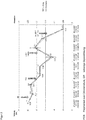
- Bei einem ersten Versuch an einem Mini Cooper D wurde das Luftfilter mit 40ml einer 50%igen Lösung aus Citronensäurepolymerisat und Wasser (PCS) getränkt, und zwar vor Kilometer 106 411 und vor Kilometer 106 930. Zusätzlich wurde vor Kilometer 106 943 anstatt Wasser 20ml 40%ige Glyoxallösung (GR) im Luftfilter zugefügt. Bei 35l Tankinhalt entspricht dies einer Additivmenge von 0,5 Promille aktive Substanz pro 1l Kraftstoff vor Kilometer 106411 und 0,5 Promille vor Kilometer 106930 plus 8ml Gyoxal entsprechend 0,2 Promille pro 1l Diesel vor Kilometer 106943.
- In
Figur 1 sind die Ergebnisse der Messung von Trübung in 1/m und Absorption in % dargestellt. Gemessen wurde nach dem amtlichen, deutschen Messverfahren für die Abgasuntersuchung. Sowohl die Trübung als auch die Absorption sind ein Maß für den Gehalt an Rußpartikeln im Abgas. Ausgehend von einer anfänglichen Trübung von 14,1 1/m konnte durch die Tränkung des Luftfilters mit Citronensäurepolymerisat entsprechend dem erfindungsgemäßen Verfahren eine Reduktion auf 1 1/m erreicht werden. Die zusätzliche Zugabe von Glyoxal-Lösung führte zu einer weiteren Reduktion auf 0,3 1/m. Wie die Messergebnisse zeigen, lassen sich also mit dem erfindungsgemäßen Verfahren insbesondere in der Anwendung der Kombination von Citronensäurepolymerisat mit Glyoxal Minderungen der Schadstoff-Emissionen erzielen, die bislang unbekannt waren. Es wurden Reduzierungen des Feinstaubs von annähernd 100% erzielt. - In einem zweiten Versuch an einem VW Touareg R50 wurden zunächst 100ml einer 40%igen Glyoxal-Lösung in die beiden Luftfilter gegeben (vor KM 148 706). Gemäß der Erfindung wurden außerdem 100ml einer 50%igen Citronensäurepolymerisatlösung in die beiden Luftfilter gegeben. Bei einer Tankfüllung von 80l Diesel entspricht die Zugabe von 100ml Glyoxal-Lösung und 100ml Citronensäurepolymerisatlösung einer Additivmenge von 0,5 Promille in einem Liter Diesel. Vor der 4. Kontrolle waren es 0,65 Promille aktive Substanz pro 1l Diesel (Tankinhalt 76l Diesel) wobei angenommen wird, dass über den Ansaugtrakt nur ein Bruchteil in den Brennraum gelangt, wahrscheinlich im Mikrogrammbereich.
- In
Figur 2 sind die gemessenen Werte für Trübung und Absorption dargestellt. Man erkennt, dass wieder sehr deutliche Schadstoffreduzierungen erreicht wurden. Bei der zum Vergleich erfolgten Zugabe von Glyoxal-Lösung alleine ergab sich eine Reduktion der Trübung von 10 1/m auf 9 1/m. Die zusätzliche Zugabe von Citronensäurepolymerisatlösung erreichte eine Verringerung auf 4,8 1/m. Es ist jedoch anzunehmen, dass bei Zugabe des Citronensäurepolymerisat das Glyoxal bereits verbraucht war (Anstieg der Trübung auf 9,5 1/m bei Kilometer 148 782). Die Zugabe der Kombination aus Glyoxal- und Citronensäurepolymerisatlösung vor Kilometer 149 135 führte zu einer drastischen Reduktion der Trübung auf 2,2 1/m. - Der Feinstaub bei Dieselmotoren besteht zu einem erheblichen Anteil aus Ruß, einem Energieträger, der mithin nicht genutzt wird. Die extreme Absenkung des unverbrannten Materials lässt rein rechnerisch den Schluss einer Verbrauchssenkung zu. Diesbezügliche Hinweise ließen sich in Erfahrungswerten an 7 verschiedenen Fahrzeugen finden (BMW 530 Diesel, BMW 750 12 Zylinder, 3 Audi AG Diesel verschiedener Baureihen, Mini Cooper D, VW Touareg R50). Es wurden Verbrauchssenkungen von 12,5 bis 20 % festgestellt, je nach Fahrweise und Fahrzeug, woraus sich wiederum eine Absenkung des CO2 Ausstoßes und durch das Zusatzangebot am Engergieträger, hier Kohlestaub, eine Leistungssteigerung ableiten lässt.
Claims (15)
- Verfahren zur Reduktion der Schadstoffemission von Verbrennungsmotoren, dadurch gekennzeichnet, dass eine wässrige Lösung enthaltend ein Polymerisat aus Citronensäure und Glycerin als Additiv dem Verbrennungsraum des Motors zugeführt wird.
- Verfahren gemäß Anspruch 1, dadurch gekennzeichnet, dass das Additiv zusätzlich Glyoxal enthält.
- Verfahren gemäß Anspruch 1 oder 2, dadurch gekennzeichnet, dass das Additiv durch ein Hochdruckpumpensystem direkt in den Verbrennungsraum eingespritzt wird.
- Verfahren gemäß Anspruch 2 und 3, dadurch gekennzeichnet, dass das Volumenverhältnis von Glyoxal zu Polymerisat aus Citronensäure und Glycerin im Bereich von 10:1 bis 1:1 liegt.
- Verfahren gemäß einem der Ansprüche 1 bis 4, dadurch gekennzeichnet, dass der Kühlungsbedarf des Motors durch Variation des Wasseranteils des Additivs geregelt wird.
- Verfahren gemäß Anspruch 1 oder 2, dadurch gekennzeichnet, dass das Additiv in den Ansaugtrakt des Motors eingebracht, vorzugsweise im Ansaugtrakt, vorzugsweise über das damit getränkte Luftfilter, verdampft wird.
- Verfahren gemäß Anspruch 2 und 6, dadurch gekennzeichnet, dass das Volumenverhältnis von Glyoxal zu Polymerisat aus Citronensäure und Glycerin im Bereich von 1:10 bis 1:1 liegt.
- Verfahren gemäß Anspruch 2, dadurch gekennzeichnet, dass direkt in den Verbrennungsraum wässrige Glyoxallösung und in den Ansaugtrakt wässrige Lösung von Polymerisat aus Citronensäure und Glycerin zugeführt wird.
- Verfahren gemäß Anspruch 8, dadurch gekennzeichnet, dass die wässrige Glyoxallösung durch ein Hochdruckpumpensystem in den Verbrennungsraum eingespritzt wird und/oder das Polymerisat aus Citronensäure und Glycerin in dem Ansaugtrakt, vorzugsweise über das damit getränkte Luftfilter, verdampft wird.
- Additiv zur Reduzierung der Schadstoffemission von Verbrennungsmotoren bestehend aus einer wässrigen Lösung von Glyoxal und einem Polymerisat aus Citronensäure und Glycerin.
- Additiv gemäß Anspruch 10, dadurch gekennzeichnet, dass für eine direkte Einspritzung in den Verbrennungsraum des Motors das Volumenverhältnis von Glyoxal zu Polymerisat aus Citronensäure und Glycerin im Bereich von 10:1 bis 1:1 liegt.
- Additiv gemäß Anspruch 10, dadurch gekennzeichnet, dass für eine Einbringung in den Ansaugtrakt das Volumenverhältnis von Glyoxal zu Polymerisat aus Citronensäure und Glycerin im Bereich von 1:10 bis 1:1 liegt.
- Verwendung eines Additivs bestehend aus einer wässrigen Lösung enthaltend ein Polymerisat aus Citronensäure und Glycerin zur Reduktion der Schadstoffemission von Verbrennungsmotoren, dadurch gekennzeichnet, dass das Additiv dem Verbrennungsraum des Motors zugeführt wird und nicht dem Kraftstoff beigemischt wird.
- Verwendung gemäß Anspruch 13, dadurch gekennzeichnet, dass das Additiv zusätzlich Glyoxal enthält.
- Verwendung gemäß Anspruch 13, dadurch gekennzeichnet, dass wässrige Glyoxallösung direkt in den Verbrennungsraum, vorzugsweise durch ein Hochdruckpumpensystem, und wässrige Lösung von Polymerisat aus Citronensäure und Glycerin in den Ansaugtrakt, vorzugsweise über das damit getränkte Luftfilter verdampft, zugeführt wird.
Priority Applications (8)
| Application Number | Priority Date | Filing Date | Title |
|---|---|---|---|
| DK17209709.9T DK3502215T3 (da) | 2017-12-21 | 2017-12-21 | Reduktion af emission af forurenende stoffer fra forbrændingsmotorer |
| RS20200598A RS60376B1 (sr) | 2017-12-21 | 2017-12-21 | Smanjenje emisije zagađivača iz motora sa unutrašnjim sagorevanjem |
| ES17209709T ES2791313T3 (es) | 2017-12-21 | 2017-12-21 | Reducción de la emisión de sustancias contaminantes de motores de combustión |
| EP17209709.9A EP3502215B8 (de) | 2017-12-21 | 2017-12-21 | Reduktion der schadstoffemission von verbrennungsmotoren |
| HUE17209709A HUE049513T2 (hu) | 2017-12-21 | 2017-12-21 | Belsõégésû motorok károsanyag-kibocsátásának a csökkentése |
| PL17209709T PL3502215T3 (pl) | 2017-12-21 | 2017-12-21 | Sposób redukcji emisji zanieczyszczeń z silników spalinowych |
| PT172097099T PT3502215T (pt) | 2017-12-21 | 2017-12-21 | Processo para a redução da emissão de poluentes em motores de combustão interna |
| HRP20200604TT HRP20200604T1 (hr) | 2017-12-21 | 2020-04-16 | Smanjivanje emisija zagađenja iz motora s unutarnjim izgaranjem |
Applications Claiming Priority (1)
| Application Number | Priority Date | Filing Date | Title |
|---|---|---|---|
| EP17209709.9A EP3502215B8 (de) | 2017-12-21 | 2017-12-21 | Reduktion der schadstoffemission von verbrennungsmotoren |
Publications (3)
| Publication Number | Publication Date |
|---|---|
| EP3502215A1 EP3502215A1 (de) | 2019-06-26 |
| EP3502215B1 true EP3502215B1 (de) | 2020-02-26 |
| EP3502215B8 EP3502215B8 (de) | 2020-04-08 |
Family
ID=60954759
Family Applications (1)
| Application Number | Title | Priority Date | Filing Date |
|---|---|---|---|
| EP17209709.9A Active EP3502215B8 (de) | 2017-12-21 | 2017-12-21 | Reduktion der schadstoffemission von verbrennungsmotoren |
Country Status (8)
| Country | Link |
|---|---|
| EP (1) | EP3502215B8 (de) |
| DK (1) | DK3502215T3 (de) |
| ES (1) | ES2791313T3 (de) |
| HR (1) | HRP20200604T1 (de) |
| HU (1) | HUE049513T2 (de) |
| PL (1) | PL3502215T3 (de) |
| PT (1) | PT3502215T (de) |
| RS (1) | RS60376B1 (de) |
Families Citing this family (1)
| Publication number | Priority date | Publication date | Assignee | Title |
|---|---|---|---|---|
| US20220251463A1 (en) * | 2019-05-17 | 2022-08-11 | Thorsten Kief | Reduction of pollutant emissions of internal combustion engines |
Family Cites Families (5)
| Publication number | Priority date | Publication date | Assignee | Title |
|---|---|---|---|---|
| DE19843380A1 (de) | 1998-09-22 | 2000-03-23 | Kief Horst | Glyoxal in wässriger Lösung als Additiv zur Schadstoffemissionssenkung bei fossilen Brennstoffen |
| DE102009015441A1 (de) | 2009-03-28 | 2010-09-30 | Ingendoh, Axel, Dr. | Zitronensäureester als Kraft- und Heizstoffe |
| US8980774B2 (en) * | 2012-06-15 | 2015-03-17 | Hexion Inc. | Compositions and methods for making polyesters and articles therefrom |
| CN104559237B (zh) * | 2013-10-22 | 2017-01-25 | 中国石油化工股份有限公司 | 一种非离子液晶型沥青温拌剂及其制备方法 |
| DE102015208509A1 (de) * | 2015-05-07 | 2016-11-10 | Robert Bosch Gmbh | Verfahren zum Betrieb einer Vorrichtung zur Wassereinspritzung in eine Brennkraftmaschine |
-
2017
- 2017-12-21 RS RS20200598A patent/RS60376B1/sr unknown
- 2017-12-21 ES ES17209709T patent/ES2791313T3/es active Active
- 2017-12-21 PL PL17209709T patent/PL3502215T3/pl unknown
- 2017-12-21 DK DK17209709.9T patent/DK3502215T3/da active
- 2017-12-21 PT PT172097099T patent/PT3502215T/pt unknown
- 2017-12-21 HU HUE17209709A patent/HUE049513T2/hu unknown
- 2017-12-21 EP EP17209709.9A patent/EP3502215B8/de active Active
-
2020
- 2020-04-16 HR HRP20200604TT patent/HRP20200604T1/hr unknown
Non-Patent Citations (1)
| Title |
|---|
| None * |
Also Published As
| Publication number | Publication date |
|---|---|
| EP3502215B8 (de) | 2020-04-08 |
| ES2791313T3 (es) | 2020-11-03 |
| HRP20200604T1 (hr) | 2020-07-10 |
| EP3502215A1 (de) | 2019-06-26 |
| PT3502215T (pt) | 2020-04-30 |
| DK3502215T3 (da) | 2020-05-25 |
| HUE049513T2 (hu) | 2020-09-28 |
| PL3502215T3 (pl) | 2020-07-27 |
| RS60376B1 (sr) | 2020-07-31 |
Similar Documents
| Publication | Publication Date | Title |
|---|---|---|
| WO2010003664A1 (de) | Selbstzündende verbrennungskraftmaschine mit ether-fumigation der verbrennungsluft für fahrzeuge und verfahren zur ether-fumigation der verbrennungsluft in einer selbstzündenden verbrennungskraftmaschine für fahrzeuge | |
| DE102007028449A1 (de) | Misch- und/oder Verdampfungseinrichtung und zugehöriges Herstellungsverfahren | |
| WO2008131573A1 (de) | Einrichtung und verfahren zur regeneration von partikelfiltern, sowie verwendung eines mediums zur regeneration von partikelfiltern, und nachfüllpackung mit dem medium | |
| DE102009005356A1 (de) | Verfahren und Vorrichtung zum Betrieb eines Dieselmotors mit einem Mischkraftstoff | |
| WO2004051059A1 (de) | Kraftfahrzeug mit einem diesel-antriebsmotor | |
| EP3502215B1 (de) | Reduktion der schadstoffemission von verbrennungsmotoren | |
| DE60203389T2 (de) | Verfahren zum dosieren eines additives in einem kraftstoff | |
| DE102016000761A1 (de) | Emulgiersystem und Emulgierverfahren | |
| DE3325292A1 (de) | Verfahren zur herstellung eines katalysators fuer die abgasreinigung | |
| EP2907866B1 (de) | Kraftstoff für selbstzündungsmotoren auf basis von polyoxymethylendialkylethern | |
| DE60113697T2 (de) | Zusatz zur teilchenreduzierung in dieselölverbrennungsemissionen | |
| WO2020233768A1 (de) | Reduktion der schadstoffemission von verbrennungsmotoren | |
| DE69923575T2 (de) | Glyoxal als brennstoffzusatz | |
| EP2106434A1 (de) | Flüssige brennstoffe als dieselkraftstoffgemisch oder leichtes heizöl | |
| DE69008176T2 (de) | Kraftstoffzusätze. | |
| EP2803846A1 (de) | Antriebsvorrichtung sowie Verfahren zum Betreiben derselben unter Verwendung eines partiell oxidierten Dieselkraftstoffs | |
| DE19635861A1 (de) | Dieselverbrennungsmaschine | |
| WO2019042683A1 (de) | Fahrzeugantriebssystem und verfahren zum betreiben davon | |
| DE3784834T2 (de) | Verbrennungshilfsmittel. | |
| WO1987004717A1 (fr) | Procede de production d'un additif pour lubrifiants et pour agents de chauffage et combustibles aqueux ainsi que ses possibilites speciales d'application | |
| DE102012022156B4 (de) | Verfahren zur Kraftstoffeinspritzung in einen Dieselmotor sowie Steuereinrichtung | |
| Roß et al. | Stephan Gereke1, Kay Mahler1, Gunnar Richter1 | |
| WO2009047294A1 (de) | Verbrennungsmotor, insbesondere dieselmotor, mit wasseremulsionsvoreinspritzung | |
| DE102018108685A1 (de) | Dieselmotor und Verfahren zum Betreiben eines Dieselmotors | |
| DE102008016376A1 (de) | Verfahren zum Betreiben einer Antriebsvorrichtung für ein Kraftfahrzeug mit einem Verbrennungsmotor und Antriebsvorrichtung |
Legal Events
| Date | Code | Title | Description |
|---|---|---|---|
| STAA | Information on the status of an ep patent application or granted ep patent |
Free format text: STATUS: EXAMINATION IS IN PROGRESS |
|
| PUAI | Public reference made under article 153(3) epc to a published international application that has entered the european phase |
Free format text: ORIGINAL CODE: 0009012 |
|
| 17P | Request for examination filed |
Effective date: 20190211 |
|
| AK | Designated contracting states |
Kind code of ref document: A1 Designated state(s): AL AT BE BG CH CY CZ DE DK EE ES FI FR GB GR HR HU IE IS IT LI LT LU LV MC MK MT NL NO PL PT RO RS SE SI SK SM TR |
|
| AX | Request for extension of the european patent |
Extension state: BA ME |
|
| GRAP | Despatch of communication of intention to grant a patent |
Free format text: ORIGINAL CODE: EPIDOSNIGR1 |
|
| STAA | Information on the status of an ep patent application or granted ep patent |
Free format text: STATUS: GRANT OF PATENT IS INTENDED |
|
| RIC1 | Information provided on ipc code assigned before grant |
Ipc: F02M 25/028 20060101ALI20190624BHEP Ipc: C10L 10/02 20060101ALI20190624BHEP Ipc: F02M 25/03 20060101ALI20190624BHEP Ipc: C10L 1/185 20060101ALI20190624BHEP Ipc: F02B 47/02 20060101ALI20190624BHEP Ipc: C10L 1/12 20060101AFI20190624BHEP Ipc: F02B 47/04 20060101ALI20190624BHEP Ipc: C10L 1/198 20060101ALI20190624BHEP |
|
| INTG | Intention to grant announced |
Effective date: 20190724 |
|
| GRAS | Grant fee paid |
Free format text: ORIGINAL CODE: EPIDOSNIGR3 |
|
| GRAL | Information related to payment of fee for publishing/printing deleted |
Free format text: ORIGINAL CODE: EPIDOSDIGR3 |
|
| GRAS | Grant fee paid |
Free format text: ORIGINAL CODE: EPIDOSNIGR3 |
|
| GRAA | (expected) grant |
Free format text: ORIGINAL CODE: 0009210 |
|
| STAA | Information on the status of an ep patent application or granted ep patent |
Free format text: STATUS: THE PATENT HAS BEEN GRANTED |
|
| GRAT | Correction requested after decision to grant or after decision to maintain patent in amended form |
Free format text: ORIGINAL CODE: EPIDOSNCDEC |
|
| AK | Designated contracting states |
Kind code of ref document: B1 Designated state(s): AL AT BE BG CH CY CZ DE DK EE ES FI FR GB GR HR HU IE IS IT LI LT LU LV MC MK MT NL NO PL PT RO RS SE SI SK SM TR |
|
| REG | Reference to a national code |
Ref country code: GB Ref legal event code: FG4D Free format text: NOT ENGLISH |
|
| REG | Reference to a national code |
Ref country code: CH Ref legal event code: EP |
|
| REG | Reference to a national code |
Ref country code: DE Ref legal event code: R081 Ref document number: 502017003963 Country of ref document: DE Owner name: LAPIDE GMBH, DE Free format text: FORMER OWNERS: KIEF, HORST, 67069 LUDWIGSHAFEN, DE; KIEF, THORSTEN, 67227 FRANKENTHAL, DE |
|
| RAP2 | Party data changed (patent owner data changed or rights of a patent transferred) |
Owner name: LAPIDE GMBH |
|
| RIN2 | Information on inventor provided after grant (corrected) |
Inventor name: KIEF, THORSTEN Inventor name: KIEF, HORST |
|
| REG | Reference to a national code |
Ref country code: CH Ref legal event code: PK Free format text: BERICHTIGUNG B8 |
|
| REG | Reference to a national code |
Ref country code: AT Ref legal event code: REF Ref document number: 1237617 Country of ref document: AT Kind code of ref document: T Effective date: 20200315 |
|
| REG | Reference to a national code |
Ref country code: IE Ref legal event code: FG4D Free format text: LANGUAGE OF EP DOCUMENT: GERMAN |
|
| REG | Reference to a national code |
Ref country code: DE Ref legal event code: R096 Ref document number: 502017003963 Country of ref document: DE |
|
| REG | Reference to a national code |
Ref country code: HR Ref legal event code: TUEP Ref document number: P20200604 Country of ref document: HR |
|
| REG | Reference to a national code |
Ref country code: PT Ref legal event code: SC4A Ref document number: 3502215 Country of ref document: PT Date of ref document: 20200430 Kind code of ref document: T Free format text: AVAILABILITY OF NATIONAL TRANSLATION Effective date: 20200422 |
|
| REG | Reference to a national code |
Ref country code: NL Ref legal event code: FP |
|
| REG | Reference to a national code |
Ref country code: FI Ref legal event code: FGE |
|
| REG | Reference to a national code |
Ref country code: DK Ref legal event code: T3 Effective date: 20200520 |
|
| REG | Reference to a national code |
Ref country code: NO Ref legal event code: T2 Effective date: 20200226 |
|
| REG | Reference to a national code |
Ref country code: SE Ref legal event code: TRGR |
|
| REG | Reference to a national code |
Ref country code: HR Ref legal event code: T1PR Ref document number: P20200604 Country of ref document: HR |
|
| REG | Reference to a national code |
Ref country code: GR Ref legal event code: EP Ref document number: 20200401323 Country of ref document: GR Effective date: 20200716 |
|
| REG | Reference to a national code |
Ref country code: SK Ref legal event code: T3 Ref document number: E 34349 Country of ref document: SK |
|
| REG | Reference to a national code |
Ref country code: LT Ref legal event code: MG4D |
|
| PG25 | Lapsed in a contracting state [announced via postgrant information from national office to epo] |
Ref country code: IS Free format text: LAPSE BECAUSE OF FAILURE TO SUBMIT A TRANSLATION OF THE DESCRIPTION OR TO PAY THE FEE WITHIN THE PRESCRIBED TIME-LIMIT Effective date: 20200626 Ref country code: LV Free format text: LAPSE BECAUSE OF FAILURE TO SUBMIT A TRANSLATION OF THE DESCRIPTION OR TO PAY THE FEE WITHIN THE PRESCRIBED TIME-LIMIT Effective date: 20200226 |
|
| REG | Reference to a national code |
Ref country code: CH Ref legal event code: NV Representative=s name: SCHNEIDER FELDMANN AG PATENT- UND MARKENANWAEL, CH |
|
| REG | Reference to a national code |
Ref country code: HU Ref legal event code: AG4A Ref document number: E049513 Country of ref document: HU |
|
| REG | Reference to a national code |
Ref country code: CH Ref legal event code: PFA Owner name: LAPIDE GMBH, DE Free format text: FORMER OWNER: LAPIDE GMBH, DE |
|
| PG25 | Lapsed in a contracting state [announced via postgrant information from national office to epo] |
Ref country code: SM Free format text: LAPSE BECAUSE OF FAILURE TO SUBMIT A TRANSLATION OF THE DESCRIPTION OR TO PAY THE FEE WITHIN THE PRESCRIBED TIME-LIMIT Effective date: 20200226 Ref country code: EE Free format text: LAPSE BECAUSE OF FAILURE TO SUBMIT A TRANSLATION OF THE DESCRIPTION OR TO PAY THE FEE WITHIN THE PRESCRIBED TIME-LIMIT Effective date: 20200226 Ref country code: LT Free format text: LAPSE BECAUSE OF FAILURE TO SUBMIT A TRANSLATION OF THE DESCRIPTION OR TO PAY THE FEE WITHIN THE PRESCRIBED TIME-LIMIT Effective date: 20200226 |
|
| REG | Reference to a national code |
Ref country code: ES Ref legal event code: FG2A Ref document number: 2791313 Country of ref document: ES Kind code of ref document: T3 Effective date: 20201103 |
|
| REG | Reference to a national code |
Ref country code: DE Ref legal event code: R097 Ref document number: 502017003963 Country of ref document: DE |
|
| REG | Reference to a national code |
Ref country code: HR Ref legal event code: ODRP Ref document number: P20200604 Country of ref document: HR Payment date: 20201217 Year of fee payment: 4 |
|
| PLBE | No opposition filed within time limit |
Free format text: ORIGINAL CODE: 0009261 |
|
| STAA | Information on the status of an ep patent application or granted ep patent |
Free format text: STATUS: NO OPPOSITION FILED WITHIN TIME LIMIT |
|
| PGFP | Annual fee paid to national office [announced via postgrant information from national office to epo] |
Ref country code: CZ Payment date: 20201214 Year of fee payment: 4 Ref country code: GR Payment date: 20201215 Year of fee payment: 4 Ref country code: HR Payment date: 20201217 Year of fee payment: 4 Ref country code: RO Payment date: 20201215 Year of fee payment: 4 |
|
| 26N | No opposition filed |
Effective date: 20201127 |
|
| PGFP | Annual fee paid to national office [announced via postgrant information from national office to epo] |
Ref country code: SK Payment date: 20201210 Year of fee payment: 4 Ref country code: RS Payment date: 20201218 Year of fee payment: 4 |
|
| PG25 | Lapsed in a contracting state [announced via postgrant information from national office to epo] |
Ref country code: MC Free format text: LAPSE BECAUSE OF FAILURE TO SUBMIT A TRANSLATION OF THE DESCRIPTION OR TO PAY THE FEE WITHIN THE PRESCRIBED TIME-LIMIT Effective date: 20200226 |
|
| PG25 | Lapsed in a contracting state [announced via postgrant information from national office to epo] |
Ref country code: LU Free format text: LAPSE BECAUSE OF NON-PAYMENT OF DUE FEES Effective date: 20201221 |
|
| PG25 | Lapsed in a contracting state [announced via postgrant information from national office to epo] |
Ref country code: MT Free format text: LAPSE BECAUSE OF FAILURE TO SUBMIT A TRANSLATION OF THE DESCRIPTION OR TO PAY THE FEE WITHIN THE PRESCRIBED TIME-LIMIT Effective date: 20200226 Ref country code: CY Free format text: LAPSE BECAUSE OF FAILURE TO SUBMIT A TRANSLATION OF THE DESCRIPTION OR TO PAY THE FEE WITHIN THE PRESCRIBED TIME-LIMIT Effective date: 20200226 |
|
| PG25 | Lapsed in a contracting state [announced via postgrant information from national office to epo] |
Ref country code: MK Free format text: LAPSE BECAUSE OF FAILURE TO SUBMIT A TRANSLATION OF THE DESCRIPTION OR TO PAY THE FEE WITHIN THE PRESCRIBED TIME-LIMIT Effective date: 20200226 Ref country code: AL Free format text: LAPSE BECAUSE OF FAILURE TO SUBMIT A TRANSLATION OF THE DESCRIPTION OR TO PAY THE FEE WITHIN THE PRESCRIBED TIME-LIMIT Effective date: 20200226 |
|
| REG | Reference to a national code |
Ref country code: HR Ref legal event code: PBON Ref document number: P20200604 Country of ref document: HR Effective date: 20211221 |
|
| PG25 | Lapsed in a contracting state [announced via postgrant information from national office to epo] |
Ref country code: RO Free format text: LAPSE BECAUSE OF NON-PAYMENT OF DUE FEES Effective date: 20211221 Ref country code: CZ Free format text: LAPSE BECAUSE OF NON-PAYMENT OF DUE FEES Effective date: 20211221 |
|
| REG | Reference to a national code |
Ref country code: SK Ref legal event code: MM4A Ref document number: E 34349 Country of ref document: SK Effective date: 20211221 |
|
| PG25 | Lapsed in a contracting state [announced via postgrant information from national office to epo] |
Ref country code: SK Free format text: LAPSE BECAUSE OF NON-PAYMENT OF DUE FEES Effective date: 20211221 Ref country code: HR Free format text: LAPSE BECAUSE OF NON-PAYMENT OF DUE FEES Effective date: 20211221 Ref country code: GR Free format text: LAPSE BECAUSE OF NON-PAYMENT OF DUE FEES Effective date: 20220706 |
|
| PGFP | Annual fee paid to national office [announced via postgrant information from national office to epo] |
Ref country code: SE Payment date: 20221221 Year of fee payment: 6 Ref country code: NO Payment date: 20221220 Year of fee payment: 6 Ref country code: NL Payment date: 20221220 Year of fee payment: 6 Ref country code: IE Payment date: 20221219 Year of fee payment: 6 Ref country code: GB Payment date: 20221222 Year of fee payment: 6 Ref country code: FR Payment date: 20221219 Year of fee payment: 6 Ref country code: FI Payment date: 20221216 Year of fee payment: 6 Ref country code: DK Payment date: 20221221 Year of fee payment: 6 Ref country code: BG Payment date: 20221216 Year of fee payment: 6 Ref country code: AT Payment date: 20221216 Year of fee payment: 6 |
|
| PGFP | Annual fee paid to national office [announced via postgrant information from national office to epo] |
Ref country code: PT Payment date: 20221216 Year of fee payment: 6 Ref country code: PL Payment date: 20221209 Year of fee payment: 6 Ref country code: HU Payment date: 20221210 Year of fee payment: 6 Ref country code: BE Payment date: 20221220 Year of fee payment: 6 |
|
| PGFP | Annual fee paid to national office [announced via postgrant information from national office to epo] |
Ref country code: TR Payment date: 20221220 Year of fee payment: 6 Ref country code: ES Payment date: 20230119 Year of fee payment: 6 Ref country code: CH Payment date: 20230103 Year of fee payment: 6 |
|
| PG25 | Lapsed in a contracting state [announced via postgrant information from national office to epo] |
Ref country code: RS Free format text: LAPSE BECAUSE OF NON-PAYMENT OF DUE FEES Effective date: 20220712 |
|
| PGFP | Annual fee paid to national office [announced via postgrant information from national office to epo] |
Ref country code: IT Payment date: 20221230 Year of fee payment: 6 Ref country code: DE Payment date: 20221221 Year of fee payment: 6 |
|
| PG25 | Lapsed in a contracting state [announced via postgrant information from national office to epo] |
Ref country code: SI Free format text: LAPSE BECAUSE OF FAILURE TO SUBMIT A TRANSLATION OF THE DESCRIPTION OR TO PAY THE FEE WITHIN THE PRESCRIBED TIME-LIMIT Effective date: 20200226 |
|
| REG | Reference to a national code |
Ref country code: DE Ref legal event code: R119 Ref document number: 502017003963 Country of ref document: DE |
|
| REG | Reference to a national code |
Ref country code: DK Ref legal event code: EBP Effective date: 20231231 |
|
| REG | Reference to a national code |
Ref country code: SE Ref legal event code: EUG |
|
| PG25 | Lapsed in a contracting state [announced via postgrant information from national office to epo] |
Ref country code: FI Free format text: LAPSE BECAUSE OF NON-PAYMENT OF DUE FEES Effective date: 20231221 Ref country code: BG Free format text: LAPSE BECAUSE OF NON-PAYMENT OF DUE FEES Effective date: 20231221 |
|
| REG | Reference to a national code |
Ref country code: CH Ref legal event code: PL |
|
| PG25 | Lapsed in a contracting state [announced via postgrant information from national office to epo] |
Ref country code: PT Free format text: LAPSE BECAUSE OF NON-PAYMENT OF DUE FEES Effective date: 20240621 |
|
| REG | Reference to a national code |
Ref country code: NL Ref legal event code: MM Effective date: 20240101 |
|
| REG | Reference to a national code |
Ref country code: AT Ref legal event code: MM01 Ref document number: 1237617 Country of ref document: AT Kind code of ref document: T Effective date: 20231221 |
|
| GBPC | Gb: european patent ceased through non-payment of renewal fee |
Effective date: 20231221 |
|
| REG | Reference to a national code |
Ref country code: BE Ref legal event code: MM Effective date: 20231231 |
|
| PG25 | Lapsed in a contracting state [announced via postgrant information from national office to epo] |
Ref country code: PT Free format text: LAPSE BECAUSE OF NON-PAYMENT OF DUE FEES Effective date: 20240621 |
|
| PG25 | Lapsed in a contracting state [announced via postgrant information from national office to epo] |
Ref country code: NL Free format text: LAPSE BECAUSE OF NON-PAYMENT OF DUE FEES Effective date: 20240101 |
|
| PG25 | Lapsed in a contracting state [announced via postgrant information from national office to epo] |
Ref country code: NL Free format text: LAPSE BECAUSE OF NON-PAYMENT OF DUE FEES Effective date: 20240101 |
|
| REG | Reference to a national code |
Ref country code: IE Ref legal event code: MM4A |
|
| PG25 | Lapsed in a contracting state [announced via postgrant information from national office to epo] |
Ref country code: DE Free format text: LAPSE BECAUSE OF NON-PAYMENT OF DUE FEES Effective date: 20240702 Ref country code: IE Free format text: LAPSE BECAUSE OF NON-PAYMENT OF DUE FEES Effective date: 20231221 |
|
| PG25 | Lapsed in a contracting state [announced via postgrant information from national office to epo] |
Ref country code: GB Free format text: LAPSE BECAUSE OF NON-PAYMENT OF DUE FEES Effective date: 20231221 |
|
| PG25 | Lapsed in a contracting state [announced via postgrant information from national office to epo] |
Ref country code: BE Free format text: LAPSE BECAUSE OF NON-PAYMENT OF DUE FEES Effective date: 20231231 |
|
| PG25 | Lapsed in a contracting state [announced via postgrant information from national office to epo] |
Ref country code: FR Free format text: LAPSE BECAUSE OF NON-PAYMENT OF DUE FEES Effective date: 20231231 |
|
| PG25 | Lapsed in a contracting state [announced via postgrant information from national office to epo] |
Ref country code: CH Free format text: LAPSE BECAUSE OF NON-PAYMENT OF DUE FEES Effective date: 20231231 |
|
| PG25 | Lapsed in a contracting state [announced via postgrant information from national office to epo] |
Ref country code: AT Free format text: LAPSE BECAUSE OF NON-PAYMENT OF DUE FEES Effective date: 20231221 |
|
| PG25 | Lapsed in a contracting state [announced via postgrant information from national office to epo] |
Ref country code: HU Free format text: LAPSE BECAUSE OF NON-PAYMENT OF DUE FEES Effective date: 20231222 |
|
| PG25 | Lapsed in a contracting state [announced via postgrant information from national office to epo] |
Ref country code: NO Free format text: LAPSE BECAUSE OF NON-PAYMENT OF DUE FEES Effective date: 20231231 Ref country code: IE Free format text: LAPSE BECAUSE OF NON-PAYMENT OF DUE FEES Effective date: 20231221 Ref country code: HU Free format text: LAPSE BECAUSE OF NON-PAYMENT OF DUE FEES Effective date: 20231222 Ref country code: GB Free format text: LAPSE BECAUSE OF NON-PAYMENT OF DUE FEES Effective date: 20231221 Ref country code: FR Free format text: LAPSE BECAUSE OF NON-PAYMENT OF DUE FEES Effective date: 20231231 Ref country code: DE Free format text: LAPSE BECAUSE OF NON-PAYMENT OF DUE FEES Effective date: 20240702 Ref country code: CH Free format text: LAPSE BECAUSE OF NON-PAYMENT OF DUE FEES Effective date: 20231231 Ref country code: BE Free format text: LAPSE BECAUSE OF NON-PAYMENT OF DUE FEES Effective date: 20231231 Ref country code: AT Free format text: LAPSE BECAUSE OF NON-PAYMENT OF DUE FEES Effective date: 20231221 |
|
| PG25 | Lapsed in a contracting state [announced via postgrant information from national office to epo] |
Ref country code: DK Free format text: LAPSE BECAUSE OF NON-PAYMENT OF DUE FEES Effective date: 20231231 |
|
| PG25 | Lapsed in a contracting state [announced via postgrant information from national office to epo] |
Ref country code: DK Free format text: LAPSE BECAUSE OF NON-PAYMENT OF DUE FEES Effective date: 20231231 |
|
| REG | Reference to a national code |
Ref country code: ES Ref legal event code: FD2A Effective date: 20250131 |
|
| PG25 | Lapsed in a contracting state [announced via postgrant information from national office to epo] |
Ref country code: ES Free format text: LAPSE BECAUSE OF NON-PAYMENT OF DUE FEES Effective date: 20231222 |
|
| PG25 | Lapsed in a contracting state [announced via postgrant information from national office to epo] |
Ref country code: PL Free format text: LAPSE BECAUSE OF NON-PAYMENT OF DUE FEES Effective date: 20231221 |
|
| PG25 | Lapsed in a contracting state [announced via postgrant information from national office to epo] |
Ref country code: IT Free format text: LAPSE BECAUSE OF NON-PAYMENT OF DUE FEES Effective date: 20231221 |
|
| PG25 | Lapsed in a contracting state [announced via postgrant information from national office to epo] |
Ref country code: SE Free format text: LAPSE BECAUSE OF NON-PAYMENT OF DUE FEES Effective date: 20231222 |