EP3499211A2 - Inspektionsvorrichtung, inspektionsverfahren und inspektionssystem - Google Patents
Inspektionsvorrichtung, inspektionsverfahren und inspektionssystem Download PDFInfo
- Publication number
- EP3499211A2 EP3499211A2 EP18196915.5A EP18196915A EP3499211A2 EP 3499211 A2 EP3499211 A2 EP 3499211A2 EP 18196915 A EP18196915 A EP 18196915A EP 3499211 A2 EP3499211 A2 EP 3499211A2
- Authority
- EP
- European Patent Office
- Prior art keywords
- engine
- engine oil
- inspection
- elements
- exhaust gas
- Prior art date
- Legal status (The legal status is an assumption and is not a legal conclusion. Google has not performed a legal analysis and makes no representation as to the accuracy of the status listed.)
- Withdrawn
Links
- 238000007689 inspection Methods 0.000 title claims abstract description 85
- 238000000034 method Methods 0.000 title claims description 15
- 239000010705 motor oil Substances 0.000 claims abstract description 109
- 238000004458 analytical method Methods 0.000 claims abstract description 70
- 238000013500 data storage Methods 0.000 claims abstract description 16
- 239000004615 ingredient Substances 0.000 claims description 22
- 239000000446 fuel Substances 0.000 claims description 15
- 239000002245 particle Substances 0.000 description 16
- 238000005070 sampling Methods 0.000 description 16
- 229910052717 sulfur Inorganic materials 0.000 description 14
- NINIDFKCEFEMDL-UHFFFAOYSA-N Sulfur Chemical compound [S] NINIDFKCEFEMDL-UHFFFAOYSA-N 0.000 description 12
- 238000005259 measurement Methods 0.000 description 12
- 239000011593 sulfur Substances 0.000 description 12
- 239000011575 calcium Substances 0.000 description 8
- 238000004364 calculation method Methods 0.000 description 7
- 239000000203 mixture Substances 0.000 description 6
- 239000000463 material Substances 0.000 description 5
- 238000004804 winding Methods 0.000 description 5
- 230000005250 beta ray Effects 0.000 description 4
- 230000006870 function Effects 0.000 description 4
- 239000003921 oil Substances 0.000 description 4
- 239000000843 powder Substances 0.000 description 4
- 239000000470 constituent Substances 0.000 description 3
- 230000003247 decreasing effect Effects 0.000 description 3
- 238000010586 diagram Methods 0.000 description 3
- 230000000694 effects Effects 0.000 description 3
- 238000004868 gas analysis Methods 0.000 description 3
- 238000004445 quantitative analysis Methods 0.000 description 3
- 238000002485 combustion reaction Methods 0.000 description 2
- 239000004810 polytetrafluoroethylene Substances 0.000 description 2
- 229920001343 polytetrafluoroethylene Polymers 0.000 description 2
- 239000011701 zinc Substances 0.000 description 2
- OYPRJOBELJOOCE-UHFFFAOYSA-N Calcium Chemical compound [Ca] OYPRJOBELJOOCE-UHFFFAOYSA-N 0.000 description 1
- VEXZGXHMUGYJMC-UHFFFAOYSA-M Chloride anion Chemical compound [Cl-] VEXZGXHMUGYJMC-UHFFFAOYSA-M 0.000 description 1
- ZOKXTWBITQBERF-UHFFFAOYSA-N Molybdenum Chemical compound [Mo] ZOKXTWBITQBERF-UHFFFAOYSA-N 0.000 description 1
- HCHKCACWOHOZIP-UHFFFAOYSA-N Zinc Chemical compound [Zn] HCHKCACWOHOZIP-UHFFFAOYSA-N 0.000 description 1
- 238000003705 background correction Methods 0.000 description 1
- 229910052791 calcium Inorganic materials 0.000 description 1
- 239000003153 chemical reaction reagent Substances 0.000 description 1
- 239000011248 coating agent Substances 0.000 description 1
- 238000000576 coating method Methods 0.000 description 1
- 238000009833 condensation Methods 0.000 description 1
- 230000005494 condensation Effects 0.000 description 1
- 238000001514 detection method Methods 0.000 description 1
- 239000012895 dilution Substances 0.000 description 1
- 238000010790 dilution Methods 0.000 description 1
- 239000003365 glass fiber Substances 0.000 description 1
- BHEPBYXIRTUNPN-UHFFFAOYSA-N hydridophosphorus(.) (triplet) Chemical compound [PH] BHEPBYXIRTUNPN-UHFFFAOYSA-N 0.000 description 1
- 230000001678 irradiating effect Effects 0.000 description 1
- 239000010687 lubricating oil Substances 0.000 description 1
- 238000007726 management method Methods 0.000 description 1
- 238000012986 modification Methods 0.000 description 1
- 230000004048 modification Effects 0.000 description 1
- 229910052750 molybdenum Inorganic materials 0.000 description 1
- 239000011733 molybdenum Substances 0.000 description 1
- 238000012545 processing Methods 0.000 description 1
- 239000000243 solution Substances 0.000 description 1
- 229910052725 zinc Inorganic materials 0.000 description 1
Images


Classifications
-
- G—PHYSICS
- G01—MEASURING; TESTING
- G01N—INVESTIGATING OR ANALYSING MATERIALS BY DETERMINING THEIR CHEMICAL OR PHYSICAL PROPERTIES
- G01N1/00—Sampling; Preparing specimens for investigation
- G01N1/02—Devices for withdrawing samples
- G01N1/22—Devices for withdrawing samples in the gaseous state
- G01N1/2247—Sampling from a flowing stream of gas
- G01N1/2252—Sampling from a flowing stream of gas in a vehicle exhaust
-
- F—MECHANICAL ENGINEERING; LIGHTING; HEATING; WEAPONS; BLASTING
- F01—MACHINES OR ENGINES IN GENERAL; ENGINE PLANTS IN GENERAL; STEAM ENGINES
- F01M—LUBRICATING OF MACHINES OR ENGINES IN GENERAL; LUBRICATING INTERNAL COMBUSTION ENGINES; CRANKCASE VENTILATING
- F01M11/00—Component parts, details or accessories, not provided for in, or of interest apart from, groups F01M1/00 - F01M9/00
- F01M11/10—Indicating devices; Other safety devices
- F01M11/12—Indicating devices; Other safety devices concerning lubricant level
-
- G—PHYSICS
- G01—MEASURING; TESTING
- G01M—TESTING STATIC OR DYNAMIC BALANCE OF MACHINES OR STRUCTURES; TESTING OF STRUCTURES OR APPARATUS, NOT OTHERWISE PROVIDED FOR
- G01M15/00—Testing of engines
- G01M15/04—Testing internal-combustion engines
- G01M15/10—Testing internal-combustion engines by monitoring exhaust gases or combustion flame
- G01M15/102—Testing internal-combustion engines by monitoring exhaust gases or combustion flame by monitoring exhaust gases
-
- G—PHYSICS
- G01—MEASURING; TESTING
- G01N—INVESTIGATING OR ANALYSING MATERIALS BY DETERMINING THEIR CHEMICAL OR PHYSICAL PROPERTIES
- G01N23/00—Investigating or analysing materials by the use of wave or particle radiation, e.g. X-rays or neutrons, not covered by groups G01N3/00 – G01N17/00, G01N21/00 or G01N22/00
- G01N23/22—Investigating or analysing materials by the use of wave or particle radiation, e.g. X-rays or neutrons, not covered by groups G01N3/00 – G01N17/00, G01N21/00 or G01N22/00 by measuring secondary emission from the material
- G01N23/223—Investigating or analysing materials by the use of wave or particle radiation, e.g. X-rays or neutrons, not covered by groups G01N3/00 – G01N17/00, G01N21/00 or G01N22/00 by measuring secondary emission from the material by irradiating the sample with X-rays or gamma-rays and by measuring X-ray fluorescence
-
- G—PHYSICS
- G01—MEASURING; TESTING
- G01N—INVESTIGATING OR ANALYSING MATERIALS BY DETERMINING THEIR CHEMICAL OR PHYSICAL PROPERTIES
- G01N33/00—Investigating or analysing materials by specific methods not covered by groups G01N1/00 - G01N31/00
- G01N33/26—Oils; Viscous liquids; Paints; Inks
- G01N33/28—Oils, i.e. hydrocarbon liquids
- G01N33/2835—Specific substances contained in the oils or fuels
- G01N33/287—Sulfur content
-
- G—PHYSICS
- G01—MEASURING; TESTING
- G01N—INVESTIGATING OR ANALYSING MATERIALS BY DETERMINING THEIR CHEMICAL OR PHYSICAL PROPERTIES
- G01N33/00—Investigating or analysing materials by specific methods not covered by groups G01N1/00 - G01N31/00
- G01N33/26—Oils; Viscous liquids; Paints; Inks
- G01N33/28—Oils, i.e. hydrocarbon liquids
- G01N33/2888—Lubricating oil characteristics, e.g. deterioration
-
- F—MECHANICAL ENGINEERING; LIGHTING; HEATING; WEAPONS; BLASTING
- F01—MACHINES OR ENGINES IN GENERAL; ENGINE PLANTS IN GENERAL; STEAM ENGINES
- F01M—LUBRICATING OF MACHINES OR ENGINES IN GENERAL; LUBRICATING INTERNAL COMBUSTION ENGINES; CRANKCASE VENTILATING
- F01M2250/00—Measuring
- F01M2250/60—Operating parameters
-
- G—PHYSICS
- G01—MEASURING; TESTING
- G01N—INVESTIGATING OR ANALYSING MATERIALS BY DETERMINING THEIR CHEMICAL OR PHYSICAL PROPERTIES
- G01N15/00—Investigating characteristics of particles; Investigating permeability, pore-volume or surface-area of porous materials
- G01N15/06—Investigating concentration of particle suspensions
- G01N15/0606—Investigating concentration of particle suspensions by collecting particles on a support
- G01N15/0618—Investigating concentration of particle suspensions by collecting particles on a support of the filter type
-
- G—PHYSICS
- G01—MEASURING; TESTING
- G01N—INVESTIGATING OR ANALYSING MATERIALS BY DETERMINING THEIR CHEMICAL OR PHYSICAL PROPERTIES
- G01N15/00—Investigating characteristics of particles; Investigating permeability, pore-volume or surface-area of porous materials
- G01N2015/0042—Investigating dispersion of solids
- G01N2015/0046—Investigating dispersion of solids in gas, e.g. smoke
-
- G—PHYSICS
- G01—MEASURING; TESTING
- G01N—INVESTIGATING OR ANALYSING MATERIALS BY DETERMINING THEIR CHEMICAL OR PHYSICAL PROPERTIES
- G01N15/00—Investigating characteristics of particles; Investigating permeability, pore-volume or surface-area of porous materials
- G01N2015/03—Electro-optical investigation of a plurality of particles, the analyser being characterised by the optical arrangement
-
- G—PHYSICS
- G01—MEASURING; TESTING
- G01N—INVESTIGATING OR ANALYSING MATERIALS BY DETERMINING THEIR CHEMICAL OR PHYSICAL PROPERTIES
- G01N21/00—Investigating or analysing materials by the use of optical means, i.e. using sub-millimetre waves, infrared, visible or ultraviolet light
- G01N21/62—Systems in which the material investigated is excited whereby it emits light or causes a change in wavelength of the incident light
- G01N21/63—Systems in which the material investigated is excited whereby it emits light or causes a change in wavelength of the incident light optically excited
- G01N21/64—Fluorescence; Phosphorescence
- G01N21/6428—Measuring fluorescence of fluorescent products of reactions or of fluorochrome labelled reactive substances, e.g. measuring quenching effects, using measuring "optrodes"
- G01N21/643—Measuring fluorescence of fluorescent products of reactions or of fluorochrome labelled reactive substances, e.g. measuring quenching effects, using measuring "optrodes" non-biological material
Definitions
- the present invention relates to an inspection apparatus, an inspection method, and an inspection system that inspect an internal state of an engine including engine oil.
- a fluorescent X-ray analyzing instrument analyzes a specific element (specifically, a sulfur ingredient or a chloride ingredient) in the exhaust gas collected by a reagent impregnated filter to measure the engine oil consumption.
- ingredients in the exhaust gas discharged from burnt engine oil may be measured to inspect the internal state of the engine.
- the internal state of the engine cannot be correctly inspected by measuring any single ingredient.
- Patent Literature 1 Japanese Unexamined Patent Application Publication No. 1989-239441
- the present invention is devised to solve the above-mentioned problems, and its object is to correctly inspect the engine oil consumption and the internal state of the engine.
- An engine oil consumption measurement apparatus is an inspection apparatus for inspecting an internal state of an engine including engine oil by using an exhaust gas of the engine, and the inspection apparatus includes a data storage unit that stores content information about a plurality of elements contained in the engine oil, a data acceptance unit that accepts analysis information about a plurality of elements contained in the exhaust gas, and an inspection unit that compares the content information about the engine oil with the analysis information to inspect the internal state of the engine.
- An inspection method is an inspection method for inspecting an internal state of an engine including engine oil by using an exhaust gas of the engine, and the inspection method includes acquiring content information about a plurality of elements contained in the engine oil, acquiring analysis information about a plurality of elements contained in the exhaust gas, and comparing the content information with the analysis information to inspect the internal state of the engine.
- the method of the present invention of comparing the plurality of elements contained in the engine oil with the plurality of elements contained in the exhaust gas can inspect the internal state of the engine more correctly.
- the internal state of the engine include the engine oil consumption and the wearing of components of the engine.
- the inspection unit desirably calculates the engine oil consumption as the internal state of the engine.
- the engine oil consumption can be correctly measured based on the plurality of elements in the engine oil.
- the inspection unit uses analysis results of sulfur S as conventional, as well as a plurality of elements including phosphorous P, calcium Ca, zinc Zn, and molybdenum Mo in the engine oil.
- the engine oil consumption measurement apparatus of the present invention can measure the engine oil consumption more correctly.
- the elements contained in the exhaust gas may include elements derived from the fuel for the engine and elements caused by the wearing of the engine, in addition to the elements caused by consumption of the engine oil. For this reason, the inspection unit compares ratios of the plurality of elements in the engine oil with ratios of the plurality of elements in the exhaust gas, and calculates the engine oil consumption using the element having a difference between the both ratios within a predetermined range. This can measure the engine oil consumption more correctly.
- the data storage unit may further store content information about a plurality of elements contained in the fuel for the engine, and the inspection unit may compare the content information about the engine oil and the content information about the fuel with the analysis information acquired by the element analysis unit to calculate the engine oil consumption.
- the elements contained in the exhaust gas may include elements caused by the wearing of the engine, in addition to the elements caused by the consumption of the engine oil.
- wear powders generated by the wearing in the engine are easily dissolved in the engine oil, and when the engine oil is consumed by burning and the like, the wear powders are discharged together with the exhaust gas. Since the content information about the elements contained in the engine oil is known, the elements caused by wearing of the engine can be identified by analyzing the elements in the exhaust gas. Accordingly, the inspection unit can also inspect the wearing of the engine.
- the inspection unit desirably compares the ratios of the plurality of elements in the engine oil with the ratios of the plurality of elements in the exhaust gas, and detects the element having a difference between the both ratios out of the predetermined range as a wear element generated by wearing.
- the data storage unit may further store usage information about a plurality of elements in each component of the engine, and the inspection unit may identify the wear position in the engine based on the usage information and the wear element.
- An inspection system using the above-mentioned inspection apparatus includes a filter that collects ingredients contained in an exhaust gas of an engine, an element analysis apparatus that analyzes elements in the ingredients collected by the filter, and the inspection apparatus according to any one of claims 1 to 7.
- the data acceptance unit accepts analysis information acquired by the element analysis apparatus, and the inspection unit inspects the internal state of the engine using the analysis information acquired by the element analysis apparatus.
- the plurality of elements contained in the engine oil can be compared with the plurality of elements contained in the exhaust gas to correctly inspect the internal state of the engine.
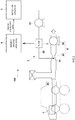
- An inspection system 100 inspects an internal state of an engine E by analyzing elements contained in an exhaust gas discharged from the engine E.
- the inspection system 100 analyzes the elements contained in the exhaust gas to measure engine oil consumption in the engine E.
- the engine E may be connected alone to an engine dynamo to receive a load, may be mounted in a vehicle travelling on a chassis dynamometer, or may be mounted in a vehicle travelling on an actual road.
- the engine is used in vehicles, ships, and airplanes, and may be an internal combustion engine or an external combustion engine.
- the engine oil may be also described as lubricating oil.
- the inspection system 100 includes a sampling apparatus 2 that samples a part or whole of exhaust gas flowing in an exhaust pipe E1 connected to the engine E, a filter 3 that is provided in the sampling apparatus 2 and collects ingredients (here, PM particles) contained in the exhaust gas, an element analysis apparatus 4 that analyzes elements in the PM particles collected by the filter 3, and an inspection apparatus 5 that measures the engine oil consumption using analysis results of the element analysis apparatus 4.
- a sampling apparatus 2 that samples a part or whole of exhaust gas flowing in an exhaust pipe E1 connected to the engine E
- a filter 3 that is provided in the sampling apparatus 2 and collects ingredients (here, PM particles) contained in the exhaust gas
- an element analysis apparatus 4 that analyzes elements in the PM particles collected by the filter 3
- an inspection apparatus 5 that measures the engine oil consumption using analysis results of the element analysis apparatus 4.
- the sampling apparatus 2 has a sampling port 21 that samples the exhaust gas flowing in the exhaust pipe E1, an exhaust gas channel 22 connected to the sampling port 21, and a suction pump 23 that is provided in the exhaust gas channel 22 and sucks the exhaust gas from the sampling port 21.
- a filter attachment unit to which the filter 3 is exchangeably attached, is provided between the sampling port 21 and the suction pump 23.
- the exhaust gas channel 22 may be provided with a dehumidifier (cooler), and may be provided with, in place of the dehumidifier, a heater for suppressing condensation of ingredients of the exhaust gas. According to the present embodiment, as shown in FIG.
- the sampling apparatus 2 is configured such that a constant volume sampling apparatus 6 (CVS) having a constant flow device 61 such as a critical flow venturi and a suction pump 62 dilutes exhaust gas from the exhaust pipe E1 with a dilution gas such as air.
- CVS constant volume sampling apparatus 6
- the filter 3 serves to collect PM particles in the exhaust gas, and may be an individually separated batch-type or a rolling-type using a feed roll and a winding roll.
- Examples of the material for the filter include PTFE coating glass fiber and PTFE.
- the element analysis apparatus 4 is a fluorescent X-ray analyzing instrument that irradiates a sample with an X ray and detects an occurred fluorescent X-ray to perform element analysis.
- the sample is a filter 3 that collects PM particles.
- the element analysis apparatus 4 according to the present embodiment can perform quantitative analysis the concentration (for example, the mass concentration or the element concentration) or the mass of the elements collected by the filter 3.
- the filter 3 is detached from the sampling apparatus 2 and set to the element analysis apparatus 4 for quantitative analysis.
- the element analysis apparatus 4 is installed near the filter 3, and performs quantitative analysis without detaching the filter 3 from the sampling apparatus 2.
- the filter 3 of winding type and the element analysis apparatus 4 may be united into an apparatus (element analysis apparatus with filter).
- the inspection apparatus 5 acquires data indicating analysis results from the element analysis apparatus 4 to measure the engine oil consumption.
- the inspection apparatus 5 is a dedicated or general-purpose computer including a CPU, an internal memory, an input/output interface, and an AD converter.
- the CPU and other components in the inspection apparatus 5 cooperate based on an inspection program stored in the internal memory, thereby performing functions of a data storage unit 51, a data acceptance unit 52, and an inspection unit 53 (a comparison unit 53a and a consumption calculation unit 53b).
- a data storage unit 51 a data acceptance unit 52
- an inspection unit 53 a comparison unit 53a and a consumption calculation unit 53b.
- the data storage unit 51 stores content information about a plurality of elements contained in the engine oil.
- the content information is digital data, and may include the known concentration (for example, the mass concentration) of the plurality of elements contained in the engine oil as well as the composition ratios of the plurality of elements.
- the content information may be previously inputted by the user, or may be transmitted from the server via the Internet.
- the data acceptance unit 52 accepts analysis information acquired by the element analysis apparatus 4.
- the analysis information is digital data, and may include measured concentration (for example, the mass concentration or the element concentration) of the plurality of elements contained in the engine oil as well as the composition ratios of the plurality of elements. Then, the data acceptance unit 52 transmits the accepted analysis information to the inspection unit 53.
- the inspection unit 53 compares the analysis information accepted by the data acceptance unit 52 with the content information stored in the data storage unit 51 to measure the engine oil consumption, in particular, functions as the comparison unit 53a and the consumption calculation unit 53b.
- the comparison unit 53a acquires the analysis information and the content information, and compares the ratios (proportions) of the plurality of elements in the engine oil with the ratios (proportions) of the plurality of elements in the exhaust gas. Then, the comparison unit 53a identifies the element having a difference between the both ratios (proportions) within a predetermined range.
- the predetermined range described herein is the range that can appropriately identify the ratios of the plurality of elements in the engine oil.
- the ratios of the plurality of elements in the engine oil is P:1, S:2, Ca:1, Ze:5, and Mo:1.
- the comparison unit 53a identifies P, S, Ze, and Mo as the elements within the predetermined range.
- the comparison unit 53a identifies Ca as an element outside the predetermined range.
- Ca is derived from the engine oil and any other source.
- Threshold values for determining whether each element falls within the predetermined range are, for example, values acquired by increasing and decreasing a predetermined proportion (for example, 50%) to and from the ratio of the element in the content information.
- the consumption calculation unit 53b calculates the engine oil consumption using the mass concentration of the elements identified as being within the predetermined range by the comparison unit 53a (in the above-described example, P, S, Ze, and Mo).
- the consumption calculation unit 53b calculates the engine oil consumption from the measured mass of the elements collected by the filter 3 and the mass concentration of the elements in the content information.
- the measured mass of the elements is measured by the element analysis apparatus 4.
- the consumption calculation unit 53b calculates the engine oil consumption for each of the ingredients as described above, and averages the engine oil consumptions acquired for the plurality of elements to output the engine oil consumption.
- the calculated engine oil consumption is outputted to output means such as a display.
- the consumption calculation unit 53b may calculate the mass of the elements collected by the filter 3 from the mass of the PM particles collected by the filter 3 and the mass concentration of the elements.
- the mass of the PM particles collected by the filter 3 may be found by subtracting the mass of the filter 3 before collection from the mass of the filter 3 after collection.
- the inspection system 100 may include a collected amount measurement unit for measuring the mass (collected amount) of the PM particles collected by the filter 3, and the consumption calculation unit 53b may use the collected amount measured by the collected amount measurement unit.
- the collected amount measurement unit has a ⁇ -ray source for irradiating the collected PM particles with ⁇ -rays, and a ⁇ -ray detector for detecting the ⁇ -rays that pass through the PM particles.
- the collected amount measurement unit finds the collected amount of the PM particles, based on the intensity of the ⁇ -ray detected by the ⁇ -ray detector .
- Step S1 Every predetermined sampling period from the start of the engine E, the exhaust gas is passed through each filter 3 to collect the PM particles (Step S1). Specifically, the filter 3 is changed every sampling period, and the exhaust gas is passed through the filter such that the exhaust gas is passed through the first filter 3 in a first sampling period, and the exhaust gas is passed through the second filter 3 in a next second sampling period. Then, after collection, the elements in the PM particles collected on the filter 3 are analyzed by using the element analysis apparatus 4 (Step S2). The analysis information acquired by the element analysis apparatus 4 for each filter 3 is transmitted to the inspection apparatus 5.
- the inspection apparatus 5 compares the analysis information for each filter 3 with the content information about the engine oil to calculate the engine oil consumption in the period of the collection of the particles by each filter 3 (Step S3). By calculating the engine oil consumption in each period and totalizing them, the inspection apparatus 5 can find changes in the engine oil consumption with time from the start of the engine, as shown in FIG. 4 (Step S4).
- the engine oil consumption may be calculated by calculating the discharged mass of the plurality of elements, in place of the engine oil consumption, in the period of collection of the particles by each filter 3, and totalizing the discharged mass.
- the engine oil consumption measurement apparatus 100 compares the plurality of elements in the engine oil with the plurality of elements in the exhaust gas. Therefore, for example, as compared to the case of measuring only the sulfur ingredient for the inspection, the engine oil consumption can be inspected more correctly.
- the engine oil consumption measurement apparatus 100 can reduce a time required to find each value (engine oil consumption) on a map. For example, by decreasing the period in which the exhaust gas is passed through the filter 3 to collect the PM particles (for example, one hour), and multiplying the engine oil consumption acquired by measuring the filter 3 by predetermined times (for example, 10 times), the same result as the result acquired by measuring for the predetermined period can be obtained. As a result, the time required to map the engine oil consumption can be reduced.
- the inspection system 100 can also identify a wear position within the engine E by analyzing elements in the exhaust gas.
- the present embodiment is different from the first embodiment in a configuration of the inspection apparatus 5.
- Wear powders generated due to a wear within the engine E are easily dissolved in the engine oil.
- the wear powders are also burnt and discharged together with the exhaust gas.
- the wear position within the engine E is identified utilizing this phenomenon.
- the inspection apparatus 5 acquires data indicating an analysis result acquired by the element analysis apparatus 4 to identify the wear position in the engine E.
- the inspection apparatus 5 is a dedicated or general-purpose computer including a CPU, an internal memory, an input/output interface, and an AD converter.
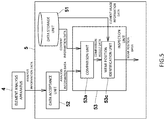
- the CPU and other constituents in the inspection apparatus 5 cooperate based on an inspection program stored in the internal memory, thereby performing functions of the data storage unit 51, the data acceptance unit 52, the inspection unit 53 (the comparison unit 53a and a wear position identification unit 53c) as shown in FIG. 5 .
- Each of the units will be described below.
- the data storage unit 51 stores content information about the plurality of elements contained in the engine oil and usage information about the plurality of elements used in each unit of the engine E.
- the content information and the usage information is digital data.
- the content information may include known concentration (for example, the mass concentration or the element concentration) on the plurality of elements contained in the engine oil as well as the composition ratio of the plurality of elements.
- the components of the engine are associated with compositions of materials for the components.
- the content information and the usage information may be previously inputted by the user, or may be transmitted from the server via the Internet.
- the data acceptance unit 52 accepts digital data indicating the analysis information acquired by the element analysis apparatus 4.
- the analysis information may include the measured concentration (for example, the mass concentration) of the plurality of elements contained in the engine oil as well as the composition ratio of the plurality of elements. Then, the data acceptance unit 52 transmits digital data indicating the accepted analysis information to the inspection unit 53.
- the inspection unit 53 compares the analysis information accepted by the data acceptance unit 52 with the content information stored in the data storage unit 51 to identify the wear position of the engine, in particular, functions as the comparison unit 53a and the wear position identification unit 53c.
- the comparison unit 53a acquires the analysis information and the content information, and compares the ratios (proportions) of the plurality of elements in the engine oil with the ratios (proportions) of the plurality of elements in the exhaust gas. Then, the comparison unit 53a identifies the element having a difference between the both ratios (proportions) outside the predetermined range.
- the predetermined range described herein is the range that can appropriately identify the ratios of the plurality of elements in the engine oil. In the case where an element that is not contained in the engine oil is contained in the exhaust gas, the element is identified as the element outside the predetermined range.
- the ratios of the plurality of elements in the engine oil is P:1, S:2, Ca:1, Ze:5, Mo:1.
- the comparison unit 53a identifies Fe as the element outside the redetermined range.
- the ratios of the elements of Cu:1, Sn:6, Si:1.5 are measured, it may be determined as a material for a metallic slide bearing.
- the wear position identification unit 53c detects an element identified as being out of the predetermined range by the comparison unit 53a, as a wear element generated by wearing. In the case where the element out of the range is not included in the plurality of elements in the usage information, the wear position identification unit 53c excludes the element out of the range from the wear element. Then, the wear position identification unit 53c identifies the wear position of the engine E based on the usage information and the wear element.
- the engine oil consumption measurement apparatus 100 may compare the plurality of elements in the engine oil with the plurality of elements in the exhaust gas, to detect the wear element generated by the wearing of the engine E.
- the wear position can be identified based on the wear element.
- the present invention is not limited to the above-mentioned embodiments.
- the exhaust gas may contain elements derived from the fuel for the engine E in addition to elements derived from the engine oil.
- the elements derived from the engine E may contribute to a measurement error of the engine oil consumption.
- the data storage unit 51 may further store content information about a plurality of elements in the fuel for engine E, and the inspection unit 53 may compare the content information about the engine oil and the content information about the fuel with the analysis information to calculate the engine oil consumption or the wear element.
- the quantity of the elements derived from the fuel in the analysis information may be subtracted from the fuel consumption and the fuel content information, or the element analysis apparatus 4 may measure the quantity of the elements contained only in the fuel, and the measured quantity of the elements derived from the fuel may be subtracted from the analysis information.
- the analysis information after the subtraction the engine oil consumption is calculated, or the wear element is detected as in the embodiments.
- the element analysis apparatus in the embodiments uses the fluorescent X-ray analyzing instrument and however, may be an element analysis apparatus using other measuring principles. Any element analysis apparatus that can quantitively analyze the discharged mass of the elements collected by the filter may measure the engine oil consumption using the discharged mass and the content information. Similarly, the wear position may be identified using the discharged mass, the content information, and the usage information.
- the filter collects the PM particles to analyze the elements and however, an analyzer for analyzing a plurality of elements may be provided in an exhaust gas path to measure the plurality of elements. Analysis information acquired by the analyzer is inputted to the inspection apparatus 5.
- the inspection apparatus may perform background correction. That is, the engine oil consumption may be calculated, or the wear element may be detected by detecting elements contained in air sucked into the engine, and subtracting the air-derived elements.
- the inspection apparatus may have an exhaust gas analysis apparatus for measuring the concentration of an ingredient to be measured, such as CO 2 , in the exhaust gas, and associate the concentration of the target ingredient, which is acquired by the exhaust gas analysis apparatus, with the detection state of engine oil consumption or the wear element and then to manage the association as data.
- the state of the engine or the engine oil may be checked based on the association.
- the inspection apparatus compares the content information about the engine oil with the analysis information acquired by the element analysis apparatus to inspect the internal state of the engine (the worn member and the wear position) and however, may be configured as follows. That is, the inspection apparatus may include the data storage unit that stores content information (for example, the constituent ratio of constituent elements) about the elements contained in materials for the components of the engine, the data acceptance unit that accepts analysis information about the plurality of elements contained in the exhaust gas from the element analysis apparatus, and the inspection unit that compares the content information about the materials for the components with the analysis information to identify the worn member or the wear position of the engine.
- the inspection apparatus may include the data storage unit that stores content information (for example, the constituent ratio of constituent elements) about the elements contained in materials for the components of the engine, the data acceptance unit that accepts analysis information about the plurality of elements contained in the exhaust gas from the element analysis apparatus, and the inspection unit that compares the content information about the materials for the components with the analysis information to identify the worn member or the wear position of the engine.
- content information for example, the constituent
Landscapes
- Chemical & Material Sciences (AREA)
- Engineering & Computer Science (AREA)
- Life Sciences & Earth Sciences (AREA)
- Health & Medical Sciences (AREA)
- General Physics & Mathematics (AREA)
- Physics & Mathematics (AREA)
- General Health & Medical Sciences (AREA)
- Pathology (AREA)
- Immunology (AREA)
- Biochemistry (AREA)
- Analytical Chemistry (AREA)
- Combustion & Propulsion (AREA)
- Oil, Petroleum & Natural Gas (AREA)
- General Chemical & Material Sciences (AREA)
- Chemical Kinetics & Catalysis (AREA)
- Medicinal Chemistry (AREA)
- Food Science & Technology (AREA)
- General Engineering & Computer Science (AREA)
- Mechanical Engineering (AREA)
- Biomedical Technology (AREA)
- Molecular Biology (AREA)
- Lubrication Details And Ventilation Of Internal Combustion Engines (AREA)
- Testing Of Engines (AREA)
- Investigating Or Analysing Materials By Optical Means (AREA)
- Dispersion Chemistry (AREA)
Applications Claiming Priority (1)
| Application Number | Priority Date | Filing Date | Title |
|---|---|---|---|
| JP2017240826A JP6913013B2 (ja) | 2017-12-15 | 2017-12-15 | 検査装置、検査方法及び検査システム |
Publications (2)
| Publication Number | Publication Date |
|---|---|
| EP3499211A2 true EP3499211A2 (de) | 2019-06-19 |
| EP3499211A3 EP3499211A3 (de) | 2019-07-31 |
Family
ID=63685745
Family Applications (1)
| Application Number | Title | Priority Date | Filing Date |
|---|---|---|---|
| EP18196915.5A Withdrawn EP3499211A3 (de) | 2017-12-15 | 2018-09-26 | Inspektionsvorrichtung, inspektionsverfahren und inspektionssystem |
Country Status (4)
| Country | Link |
|---|---|
| US (1) | US11215537B2 (de) |
| EP (1) | EP3499211A3 (de) |
| JP (1) | JP6913013B2 (de) |
| CN (1) | CN109932185A (de) |
Families Citing this family (6)
| Publication number | Priority date | Publication date | Assignee | Title |
|---|---|---|---|---|
| US9796191B2 (en) | 2015-03-20 | 2017-10-24 | Corning Incorporated | Method of inkjet printing decorations on substrates |
| JP6306626B2 (ja) * | 2016-03-09 | 2018-04-04 | 本田技研工業株式会社 | オープンエミッション分析の漏れ検出方法及びオープンエミッション分析装置 |
| US10151739B2 (en) * | 2016-04-25 | 2018-12-11 | Pratt & Whitney Canada Corp. | Method and system for evaluation of engine condition |
| US11867645B2 (en) * | 2018-10-18 | 2024-01-09 | Security Matters Ltd. | System and method for detection and identification of foreign elements in a substance by X-ray or Gamma-ray detection and emission |
| CN111397906B (zh) * | 2020-03-19 | 2023-09-08 | 上海齐耀动力技术有限公司 | 一种热气机动力系统综合试验台及试验方法 |
| CN115200867A (zh) * | 2021-04-13 | 2022-10-18 | 潍柴动力股份有限公司 | 一种发动机及发动机的异常磨损部位识别方法 |
Citations (1)
| Publication number | Priority date | Publication date | Assignee | Title |
|---|---|---|---|---|
| JPH01239441A (ja) | 1988-03-19 | 1989-09-25 | Horiba Ltd | エンジンオイル消費量測定方法 |
Family Cites Families (20)
| Publication number | Priority date | Publication date | Assignee | Title |
|---|---|---|---|---|
| US2957986A (en) * | 1955-04-22 | 1960-10-25 | Phillips Petroleum Co | Means of studying oil consumption in an engine |
| JPS6059408B2 (ja) * | 1977-01-14 | 1985-12-25 | トヨタ自動車株式会社 | 内燃機関の潤滑油消費量測定方法 |
| JPS5790134A (en) * | 1980-11-25 | 1982-06-04 | Mazda Motor Corp | Measurement of wear inside engine |
| JPS57159939A (en) * | 1981-03-30 | 1982-10-02 | Nissan Motor Co Ltd | Electronic controller of fuel injection amount in fuel injection internal combustion engine |
| JPS60198433A (ja) * | 1984-03-22 | 1985-10-07 | Toyota Motor Corp | エンジンのオイル消費量測定方法 |
| US10260388B2 (en) * | 2006-11-16 | 2019-04-16 | General Electric Company | Sensing system and method |
| US8223337B2 (en) * | 2008-10-31 | 2012-07-17 | Cummins Inc. | Apparatus, system, and method for aftertreatment control and diagnostics |
| US8109138B2 (en) * | 2008-11-19 | 2012-02-07 | GM Global Technology Operations LLC | Method and system for estimating engine oil life based on viscosity |
| JP2011247153A (ja) * | 2010-05-26 | 2011-12-08 | Toyota Motor Corp | 内燃機関のオイル劣化抑制装置 |
| JP5605166B2 (ja) * | 2010-10-28 | 2014-10-15 | トヨタ自動車株式会社 | オイル消費評価解析システム |
| JP6011779B2 (ja) * | 2012-05-31 | 2016-10-19 | 株式会社豊田中央研究所 | 排ガス浄化用触媒、その製造方法及びそれを用いた排ガス浄化方法 |
| JP5994440B2 (ja) * | 2012-07-09 | 2016-09-21 | いすゞ自動車株式会社 | 内燃機関の排気ガスの分析方法 |
| US8919106B2 (en) * | 2012-09-06 | 2014-12-30 | Daimler Ag | Method for operating a motor vehicle internal combustion engine with an exhaust particle filter |
| JP2014055890A (ja) * | 2012-09-13 | 2014-03-27 | National Maritime Research Institute | 排気ガスモニター装置及び潤滑油消費モニター装置及び船舶並びに潤滑油消費モニター方法 |
| DE202014006185U1 (de) * | 2013-08-12 | 2014-11-26 | Horiba Ltd. | Kraftstoffverbrauch-Berechnungseinheit, Kraftstoffverbrauch-Berechnungsprogramm, Kraftstoffverbrauch-Messgerät und Abgas-Messgerät |
| CN104074225B (zh) * | 2014-07-08 | 2017-02-08 | 湖南机电职业技术学院 | 一种液压挖掘机功率自适应控制系统 |
| CN104154963A (zh) * | 2014-08-25 | 2014-11-19 | 同济大学 | 一种发动机润滑油消耗量的实时测量方法 |
| CN105675457B (zh) * | 2016-01-26 | 2019-01-18 | 张继勇 | 一种润滑油滤芯金属磨屑检测系统及方法 |
| CN105806627A (zh) * | 2016-03-15 | 2016-07-27 | 南京汽车集团有限公司 | 一种车载排放测试装置及其测试方法 |
| CN105927385B (zh) * | 2016-05-27 | 2018-09-25 | 宁波吉利汽车研究开发有限公司 | 发动机积碳检测系统和检测方法 |
-
2017
- 2017-12-15 JP JP2017240826A patent/JP6913013B2/ja active Active
-
2018
- 2018-09-25 CN CN201811113731.1A patent/CN109932185A/zh active Pending
- 2018-09-26 EP EP18196915.5A patent/EP3499211A3/de not_active Withdrawn
- 2018-09-27 US US16/144,673 patent/US11215537B2/en not_active Expired - Fee Related
Patent Citations (1)
| Publication number | Priority date | Publication date | Assignee | Title |
|---|---|---|---|---|
| JPH01239441A (ja) | 1988-03-19 | 1989-09-25 | Horiba Ltd | エンジンオイル消費量測定方法 |
Also Published As
| Publication number | Publication date |
|---|---|
| JP6913013B2 (ja) | 2021-08-04 |
| CN109932185A (zh) | 2019-06-25 |
| US20190187030A1 (en) | 2019-06-20 |
| US11215537B2 (en) | 2022-01-04 |
| JP2019109083A (ja) | 2019-07-04 |
| EP3499211A3 (de) | 2019-07-31 |
Similar Documents
| Publication | Publication Date | Title |
|---|---|---|
| US11215537B2 (en) | Inspection apparatus and inspection system | |
| US9714931B2 (en) | System and method for estimating engine oil health | |
| US11543331B2 (en) | Brake dust measurement system and brake dust measurement method | |
| KR101244068B1 (ko) | 대기 및 수질 오염물질의 농도 측정 방법 | |
| Raposo et al. | Assessment of goodness-of-fit for the main analytical calibration models: Guidelines and case studies | |
| Flanagan et al. | PM2. 5 Speciation Trends Network: Evaluation of whole-system uncertainties using data from sites with collocated samplers | |
| Ambrose | Improved methods for signal processing in measurements of mercury by Tekran® 2537A and 2537B instruments | |
| CN118817616B (zh) | 一种基于数据分析的污水在线监测系统 | |
| EP2778651B1 (de) | Abgasanalysevorrichtung | |
| US8280645B2 (en) | Method and apparatus of measuring particulate matters | |
| EP3654013A1 (de) | Korrekturverfahren für teilchengrössenverteilungsmessvorrichtung, kalibrierverfahren einer teilchengrössenverteilungsmessvorrichtung, teilchengrössenverteilungsmessvorrichtung und gasanalysesystem | |
| JPWO2019225590A1 (ja) | 分析システム及び分析方法 | |
| Wang et al. | Evaluating the analytical quality control of urinary albumin measurements using sigma metrics | |
| Harvey et al. | Comparing plasma, serum and whole blood indium concentrations from workers at an indium-tin oxide (ITO) production facility | |
| US11475380B2 (en) | Vehicle test facility operation rate analysis system and method | |
| JP7366009B2 (ja) | 分析システム及び分析方法 | |
| CN111766368A (zh) | 一种铅同位素的重金属源解析方法 | |
| Farnsworth et al. | Limitations of free light chain assays caused by the matrix effect | |
| Fraga et al. | ROC-curve approach for determining the detection limit of a field chemical sensor | |
| No et al. | Measurement of ‘heavy metals’ in particulate matter in outdoor air | |
| Aloisio et al. | Implementation of an internal quality control programme for the photometric determination of icteric index | |
| CN119935974B (zh) | 一种液压润滑系统中污染物来源监测分析方法 | |
| Braun | Exploring aerosol-specific calibration and performance of three direct-reading photometers | |
| CN116793438A (zh) | 测量发动机机油消耗量的方法和系统 | |
| WO2020006217A1 (en) | Facile colorimetric detection of ambient aerosols |
Legal Events
| Date | Code | Title | Description |
|---|---|---|---|
| PUAI | Public reference made under article 153(3) epc to a published international application that has entered the european phase |
Free format text: ORIGINAL CODE: 0009012 |
|
| STAA | Information on the status of an ep patent application or granted ep patent |
Free format text: STATUS: THE APPLICATION HAS BEEN PUBLISHED |
|
| AK | Designated contracting states |
Kind code of ref document: A2 Designated state(s): AL AT BE BG CH CY CZ DE DK EE ES FI FR GB GR HR HU IE IS IT LI LT LU LV MC MK MT NL NO PL PT RO RS SE SI SK SM TR |
|
| AX | Request for extension of the european patent |
Extension state: BA ME |
|
| PUAL | Search report despatched |
Free format text: ORIGINAL CODE: 0009013 |
|
| AK | Designated contracting states |
Kind code of ref document: A3 Designated state(s): AL AT BE BG CH CY CZ DE DK EE ES FI FR GB GR HR HU IE IS IT LI LT LU LV MC MK MT NL NO PL PT RO RS SE SI SK SM TR |
|
| AX | Request for extension of the european patent |
Extension state: BA ME |
|
| RIC1 | Information provided on ipc code assigned before grant |
Ipc: G01M 15/10 20060101AFI20190625BHEP |
|
| STAA | Information on the status of an ep patent application or granted ep patent |
Free format text: STATUS: REQUEST FOR EXAMINATION WAS MADE |
|
| 17P | Request for examination filed |
Effective date: 20200110 |
|
| RBV | Designated contracting states (corrected) |
Designated state(s): AL AT BE BG CH CY CZ DE DK EE ES FI FR GB GR HR HU IE IS IT LI LT LU LV MC MK MT NL NO PL PT RO RS SE SI SK SM TR |
|
| STAA | Information on the status of an ep patent application or granted ep patent |
Free format text: STATUS: EXAMINATION IS IN PROGRESS |
|
| 17Q | First examination report despatched |
Effective date: 20220411 |
|
| STAA | Information on the status of an ep patent application or granted ep patent |
Free format text: STATUS: THE APPLICATION IS DEEMED TO BE WITHDRAWN |
|
| 18D | Application deemed to be withdrawn |
Effective date: 20240403 |