EP3482491B1 - Closed loop flux weakening for permanent magent synchronous motors - Google Patents
Closed loop flux weakening for permanent magent synchronous motors Download PDFInfo
- Publication number
- EP3482491B1 EP3482491B1 EP17795132.4A EP17795132A EP3482491B1 EP 3482491 B1 EP3482491 B1 EP 3482491B1 EP 17795132 A EP17795132 A EP 17795132A EP 3482491 B1 EP3482491 B1 EP 3482491B1
- Authority
- EP
- European Patent Office
- Prior art keywords
- axis
- motor
- stator
- voltage
- current
- Prior art date
- Legal status (The legal status is an assumption and is not a legal conclusion. Google has not performed a legal analysis and makes no representation as to the accuracy of the status listed.)
- Active
Links
Images


Classifications
-
- H—ELECTRICITY
- H02—GENERATION; CONVERSION OR DISTRIBUTION OF ELECTRIC POWER
- H02P—CONTROL OR REGULATION OF ELECTRIC MOTORS, ELECTRIC GENERATORS OR DYNAMO-ELECTRIC CONVERTERS; CONTROLLING TRANSFORMERS, REACTORS OR CHOKE COILS
- H02P21/00—Arrangements or methods for the control of electric machines by vector control, e.g. by control of field orientation
- H02P21/14—Estimation or adaptation of machine parameters, e.g. flux, current or voltage
- H02P21/141—Flux estimation
-
- H—ELECTRICITY
- H02—GENERATION; CONVERSION OR DISTRIBUTION OF ELECTRIC POWER
- H02P—CONTROL OR REGULATION OF ELECTRIC MOTORS, ELECTRIC GENERATORS OR DYNAMO-ELECTRIC CONVERTERS; CONTROLLING TRANSFORMERS, REACTORS OR CHOKE COILS
- H02P21/00—Arrangements or methods for the control of electric machines by vector control, e.g. by control of field orientation
- H02P21/0085—Arrangements or methods for the control of electric machines by vector control, e.g. by control of field orientation specially adapted for high speeds, e.g. above nominal speed
- H02P21/0089—Arrangements or methods for the control of electric machines by vector control, e.g. by control of field orientation specially adapted for high speeds, e.g. above nominal speed using field weakening
Definitions
- the present disclosure relates generally to a closed loop flux weakening method and apparatus, and more particularly to a closed loop flux weakening method and apparatus that provides energy savings for permanent magnet synchronous motors.
- PMSMs Permanent magnet synchronous motors
- These applications require the PMSMs to operate beyond the nominal speed, which is the maximum speed of the motor limited by voltage without flux weakening, for an extended period of time. Operating beyond the nominal speed requires the motor to operate in an inefficient flux weakening zone or field weakening zone.
- Fig. 1 shows a block diagram of a control circuit for a PMSM.
- the d-axis reference current I dref 100 is input into a first difference circuit 105 as part of the circuit for controlling the operation of the motor 110.
- the d-axis reference current I dref may be determined in a variety of ways.
- the d-axis reference current I dref may be determined using a lookup table (LUT) that provides the d-axis reference current I dref for various motor speeds.
- LUT lookup table
- this method requires operating the motor at different speeds to determine the d-axis reference current I dref in order to generate the LUT.
- a different LUT is needed for each different type of motor that is to be controlled.
- the d-axis reference current I dref may be determined using an open loop equation, as described by R. Krishnan, PMSM Flux Weakening Operation, Permanent Magnet Synchronous and Brushless DC Motor Drives, CRC 2010 (http://www. eecs. ucf. edu/ ⁇ tomwu/course/eel6208/notes/27%20PMSM%20Flux%20Weakening %20Operation.pdf ), which is incorporated herein by reference.
- an open loop approach there is no indication whether the calculated d-axis reference current I dref is accurate.
- a closed loop system may be used to determine the d-axis reference current I dref .
- Many of such closed loop systems use the maximum voltage of the motor V 2 max without any feed forward input to calculate the d-axis reference current I dref .
- this approach requires significant efforts to tune the controller based on the motor variants. Accordingly, an improved control circuit that accurately determines the d-axis reference current I dref without requiring significant manual tuning is needed.
- the LUT, open loop equation, and closed loop systems that do not use feed forward input to calculate the d-axis reference current I dref have limited efficiency, and therefore a more efficient control circuit is needed.
- EP 0 631 373 A2 can be consulted, which relates to method and apparatus for controlling a hybrid excitation type permanent magnet synchronous motor.
- US 6,965,212 B1 relates to inverter control in an AC motor drive system, and more particularly to a method and apparatus for controlling field weakening in an AC motor drive system, the teaching of this document corresponds to the preamble of present claims 1 and 6.
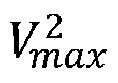
- V qref V max 2 ⁇ V d 2 ; wherein V max 2 is the square of a maximum voltage that can be applied to the motor; and wherein Vd is the square of a d-axis voltage of the motor.
- the difference circuit may receive the q-axis reference voltage at a positive input of the difference circuit and receives the q-axis voltage at a negative input of the difference circuit.
- Fig. 2 shows a closed loop flux weakening circuit for determining the d-axis reference current I dref according to an exemplary embodiment.
- the q-axis reference voltage V q ref and a q-axis voltage V q are input to a difference circuit 200, which outputs the difference between the q-axis reference voltage V q ref and the q-axis voltage V q to a PI controller 205.
- the PI controller 205 may be a PI controller that is well known in the art, and a description of the functionality thereof is omitted here to avoid obscuring other aspects of the disclosure.
- the PI controller 205 receives the difference between the q-axis reference voltage V q ref and a q-axis voltage V q and outputs a corrective d-axis current of the stator of the motor, I ds_corr .
- a summation circuit 210 receives the corrective d-axis stator current I ds_corr and adds it to the feed forward d-axis current of the stator, I ds_feedfw to obtain the d-axis reference current I dref .
- the d-axis reference current I dref determined by the exemplary circuit of Fig. 2 may be input as d-axis reference current I dref 100 into first difference circuit 105.
- V q ref V max 2 ⁇ V d 2
- V max 2 refers to the square of the maximum voltage that can be applied to the motor
- Vd is the square of the d-axis voltage.
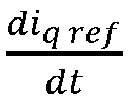
- Equation 2 r s refers to the stator resistance of the motor, i q ref refers to the q-axis reference current, L qs refers q-axis inductance of the stator of the motor, di q ref dt refers to the derivative of the q-axis reference current with respect to time, E refers to the back electromotive force (EMF) of the motor, ⁇ refers to the electrical speed of the motor, and L ds refers to the d-axis inductance of the stator of the motor.
- EMF back electromotive force
- ⁇ the electrical speed of the motor
- L ds refers to the d-axis inductance of the stator of the motor.
- a low pass digital filter may be used to determine di q ref dt and E, depending on the application.
- a second difference circuit 115 that receives a reference speed ⁇ ref of the motor and the measured speed of the motor ⁇ , and outputs the difference between the two signals to PI controller 120.
- PI controller 120 outputs the q-axis reference current i q ref , which is used to calculate the feed forward d-axis current of the stator, I ds_feedfw in Equation 2.
- a third difference circuit 125 receives the q-axis reference current i q ref and the q-axis current of the motor i q , and outputs the difference thereof.
- the d-axis reference current I dref 100 is input into a first difference circuit 105, which outputs the difference between the d-axis reference current I dref 100 and the d-axis current of the motor i d .
- PI controller 130 receives the difference between the q-axis reference current i q ref and the q-axis current of the motor i q output by the third difference circuit 125.
- the PI controller 130 outputs a q-axis voltage V q , which is input into the difference circuit 200 in Fig. 2 .
- PI controller 135 receives the difference between the d-axis reference current I dref 100 and the d-axis current of the motor i d output by the first difference circuit 105.
- PI controller 135 outputs a d-axis voltage V d , which is used to calculate the q-axis reference voltage V q ref in Equation 1.
- the q-axis voltage V q and the d-axis voltage V d are input into a first transform 140 that transforms q-axis voltage V q and the d-axis voltage V d to V ⁇ and V ⁇ , respectively, using angle ⁇ , which represents the position of the rotor of the motor 110.
- Space vector modulator 145 further transforms voltage signals V ⁇ and V ⁇ to three-phase voltage signals V a , V b , and V c , which are input into 3-phase bridge 150.
- the 3-phase bridge 150 outputs three phase currents i a , i b , and i c , which are received by the motor 110.
- the three phase currents i a , i b , and i c are input into a second transform 155 that transforms the three phase currents i a , i b , and i c into current signals i ⁇ and i ⁇ .
- the current signals i ⁇ and i ⁇ are input into third transform 160, which transforms the current signals i ⁇ and i ⁇ into q-axis current i q and d-axis current i d based on the position of the rotor ⁇ .
- the q-axis current i q and the d-axis current i d are respectively input into third difference circuit 125 and first difference circuit 105.
- the positioning and velocity sensing circuit 165 is coupled to the motor 110 and monitors the speed of the motor 110 and the position of the rotor.
- the positioning and velocity sensing circuit 165 outputs the speed of the motor ⁇ to the second difference circuit 115, and the position of the rotor ⁇ to first and third transforms 140 and 160.
- the positioning and velocity sensing circuit 165 may be hardware-based, such as an encoder or resolver, or may be software-based, such as speed and angle estimators.
- Fig. 3 shows a block diagram of a control circuit for a PMSM according to one or more exemplary embodiments.
- the control circuit shown in Fig. 3 is similar to the control circuit shown in Fig. 1 , and therefore only the differences from Fig. 1 will be described here to avoid redundancy.
- the control circuit according to the exemplary embodiment may include a closed loop flux weakening circuit 300 that may include the control circuit shown in Fig. 2 .
- the closed loop flux weakening circuit 300 receives as inputs q-axis reference current i q ref and the d-axis voltage V d to generate the d-axis reference current i d ref .
- the position and velocity sensing circuit 365 of Fig. 3 outputs the speed of the motor ⁇ and the position of the rotor ⁇ , but also outputs back EMF E, which is input to the closed loop flux weakening circuit 300 and used to determine the d-axis reference current i d ref .
- Fig. 4 illustrates a closed loop flux weakening circuit according to one or more exemplary embodiments.
- the q-axis reference voltage V q ref and a q-axis voltage V q are input to a difference circuit 400, which outputs the difference between the q-axis reference voltage V q ref and the q-axis voltage V q to a PI controller 405.
- a difference circuit 400 which outputs the difference between the q-axis reference voltage V q ref and the q-axis voltage V q to a PI controller 405.
- the q-axis reference voltage V q ref is input to the negative terminal of the difference circuit 400
- the q-axis voltage V q is input to the positive terminal of the difference circuit 400.
- the PI controller 405 receives the difference between the q-axis reference voltage V q ref and a q-axis voltage V q and outputs a corrective q-axis voltage of the stator ⁇ qs near steady state.
- the corrective q-axis voltage of the stator ⁇ qs near steady state is received by gate K 410, which divides the corrective q-axis voltage of the stator ⁇ qs near steady state by the product of ⁇ and L ds , where ⁇ refers to the electrical speed of the motor, and L ds refers to the d-axis inductance of the stator of the motor, to obtain the corrective d-axis current of the stator I ds_corr .
- ⁇ ds ⁇ refers to the perturbed d-axis current in the stator near steady state.
- the plant transfer function has a unity gain, which allows the closed loop feed forward circuit to be used as part of a control circuit for various motors with minimal tuning of the control circuit.
- a summation circuit 415 receives the corrective d-axis stator current I ds_corr and adds it to the feed forward d-axis current of the stator, I ds_feedfw to obtain the d-axis reference current I dref .
- the closed loop flux weakening circuit shown in Fig. 4 may be used as the closed loop flux weakening circuit 300 shown in Fig. 3 .
- the closed loop flux weakening circuit shown in Fig. 2 may be used as the closed loop flux weakening circuit 300 shown in Fig. 3 .
- the exemplary closed loop flux weakening circuits described herein may be embodied in hardware and/or software.
- the closed loop flux weakening circuits of the exemplary embodiments may be configured to reside in an addressable storage medium and to execute on one or more processors.
- the exemplary embodiments may include, by way of example, components, such as software components, object-oriented software components, class components and task components, processes, functions, attributes, procedures, subroutines, segments of program code, drivers, firmware, microcode, circuitry, data, databases, data structures, tables, arrays, and variables.
Landscapes
- Engineering & Computer Science (AREA)
- Power Engineering (AREA)
- Control Of Ac Motors In General (AREA)
Description
- The present disclosure relates generally to a closed loop flux weakening method and apparatus, and more particularly to a closed loop flux weakening method and apparatus that provides energy savings for permanent magnet synchronous motors.
- Permanent magnet synchronous motors (PMSMs) are used in a variety of devices, such as washing machines, electric vehicles, refrigerators, and air compressors. Many of these applications require the PMSMs to operate beyond the nominal speed, which is the maximum speed of the motor limited by voltage without flux weakening, for an extended period of time. Operating beyond the nominal speed requires the motor to operate in an inefficient flux weakening zone or field weakening zone.
- Multiple solutions have been proposed for controlling the motor in the flux weakening zone.
Fig. 1 shows a block diagram of a control circuit for a PMSM. Referring toFig. 1 , the d-axis reference current Idref 100 is input into afirst difference circuit 105 as part of the circuit for controlling the operation of themotor 110. The d-axis reference current Idref may be determined in a variety of ways. For example, the d-axis reference current Idref may be determined using a lookup table (LUT) that provides the d-axis reference current Idref for various motor speeds. However, this method requires operating the motor at different speeds to determine the d-axis reference current Idref in order to generate the LUT. In addition, a different LUT is needed for each different type of motor that is to be controlled. - As an alternative to LUTs, the d-axis reference current Idref may be determined using an open loop equation, as described by R. Krishnan, PMSM Flux Weakening Operation, Permanent Magnet Synchronous and Brushless DC Motor Drives, CRC 2010 (http://www. eecs. ucf. edu/~tomwu/course/eel6208/notes/27%20PMSM%20Flux%20Weakening %20Operation.pdf), which is incorporated herein by reference. However, in an open loop approach, there is no indication whether the calculated d-axis reference current Idref is accurate.
- As yet another alternative, a closed loop system may be used to determine the d-axis reference current Idref. Many of such closed loop systems use the maximum voltage of the motor V2 max without any feed forward input to calculate the d-axis reference current Idref. However, this approach requires significant efforts to tune the controller based on the motor variants. Accordingly, an improved control circuit that accurately determines the d-axis reference current Idref without requiring significant manual tuning is needed. Moreover, the LUT, open loop equation, and closed loop systems that do not use feed forward input to calculate the d-axis reference current Idref have limited efficiency, and therefore a more efficient control circuit is needed.
- For further technical background,
EP 0 631 373 A2 can be consulted, which relates to method and apparatus for controlling a hybrid excitation type permanent magnet synchronous motor. Furthermore,US 6,965,212 B1 relates to inverter control in an AC motor drive system, and more particularly to a method and apparatus for controlling field weakening in an AC motor drive system, the teaching of this document corresponds to the preamble of present claims 1 and 6. - The apparatus according to the invention is defined in claim 1.
- The q-axis reference voltage, Vqref, may be determined based on the following equation:

- The feed forward d-axis current of the stator of the motor, Ids_feedfw , is determined based on the following equation:


- The difference circuit may receive the q-axis reference voltage at a positive input of the difference circuit and receives the q-axis voltage at a negative input of the difference circuit.
- The method according to the invention is defined in claim 6.
-
-
Fig. 1 shows a block diagram of a control circuit for a PMSM according to one or more exemplary embodiments. -
Fig. 2 shows a closed loop flux weakening circuit for determining the d-axis reference current Idref according to an exemplary embodiment. -
Fig. 3 shows a block diagram of a control circuit for a PMSM according to one or more exemplary embodiments. -
Fig. 4 shows a closed loop flux weakening circuit for determining the d-axis reference current Idref according to another exemplary embodiment. - Reference will now be made in detail to the following exemplary embodiments, which are illustrated in the accompanying drawings, wherein like reference numerals refer to like elements throughout. The exemplary embodiments may be embodied in various forms without being limited to the exemplary embodiments set forth herein. Descriptions of well-known parts are omitted for clarity.
-
Fig. 2 shows a closed loop flux weakening circuit for determining the d-axis reference current Idref according to an exemplary embodiment. Referring toFigs. 1 and2 , the q-axis reference voltage Vq ref and a q-axis voltage Vq are input to adifference circuit 200, which outputs the difference between the q-axis reference voltage Vq ref and the q-axis voltage Vq to aPI controller 205. ThePI controller 205 may be a PI controller that is well known in the art, and a description of the functionality thereof is omitted here to avoid obscuring other aspects of the disclosure. ThePI controller 205 receives the difference between the q-axis reference voltage Vq ref and a q-axis voltage Vq and outputs a corrective d-axis current of the stator of the motor, Ids_corr.A summation circuit 210 receives the corrective d-axis stator current Ids_corr and adds it to the feed forward d-axis current of the stator, Ids_feedfw to obtain the d-axis reference current Idref. Referring toFig. 1 , the d-axis reference current Idref determined by the exemplary circuit ofFig. 2 may be input as d-axis reference current Idref 100 intofirst difference circuit 105. - The q-axis reference voltage Vq ref can be obtained using the following Equation 1:

- In Equation 1,
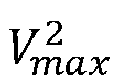

- In Equation 2, rs refers to the stator resistance of the motor, iq ref refers to the q-axis reference current, Lqs refers q-axis inductance of the stator of the motor,

- Referring again to
Fig. 1 , asecond difference circuit 115 that receives a reference speed ωref of the motor and the measured speed of the motor ω, and outputs the difference between the two signals toPI controller 120.PI controller 120 outputs the q-axis reference current iq ref, which is used to calculate the feed forward d-axis current of the stator, Ids_feedfw in Equation 2. Athird difference circuit 125 receives the q-axis reference current iq ref and the q-axis current of the motor iq, and outputs the difference thereof. As discussed above, the d-axis reference current Idref 100 is input into afirst difference circuit 105, which outputs the difference between the d-axis reference current Idref 100 and the d-axis current of the motor id. -
PI controller 130 receives the difference between the q-axis reference current iq ref and the q-axis current of the motor iq output by thethird difference circuit 125. ThePI controller 130 outputs a q-axis voltage Vq, which is input into thedifference circuit 200 inFig. 2 .PI controller 135 receives the difference between the d-axis reference current Idref 100 and the d-axis current of the motor id output by thefirst difference circuit 105.PI controller 135 outputs a d-axis voltage Vd , which is used to calculate the q-axis reference voltage Vq ref in Equation 1. The q-axis voltage Vq and the d-axis voltage Vd are input into afirst transform 140 that transforms q-axis voltage Vq and the d-axis voltage Vd to Vα and Vβ, respectively, using angle θ, which represents the position of the rotor of themotor 110.Space vector modulator 145 further transforms voltage signals Vα and Vβ to three-phase voltage signals Va, Vb, and Vc, which are input into 3-phase bridge 150. The 3-phase bridge 150 outputs three phase currents ia, ib, and ic, which are received by themotor 110. The three phase currents ia, ib, and ic are input into asecond transform 155 that transforms the three phase currents ia, ib, and ic into current signals iα and iβ. The current signals iα and iβ are input intothird transform 160, which transforms the current signals iα and iβ into q-axis current iq and d-axis current id based on the position of the rotor θ. The q-axis current iq and the d-axis current id are respectively input intothird difference circuit 125 andfirst difference circuit 105. The positioning andvelocity sensing circuit 165 is coupled to themotor 110 and monitors the speed of themotor 110 and the position of the rotor. The positioning andvelocity sensing circuit 165 outputs the speed of the motor ω to thesecond difference circuit 115, and the position of the rotor θ to first andthird transforms velocity sensing circuit 165 may be hardware-based, such as an encoder or resolver, or may be software-based, such as speed and angle estimators. -
Fig. 3 shows a block diagram of a control circuit for a PMSM according to one or more exemplary embodiments. The control circuit shown inFig. 3 is similar to the control circuit shown inFig. 1 , and therefore only the differences fromFig. 1 will be described here to avoid redundancy. Referring toFig. 3 , the control circuit according to the exemplary embodiment may include a closed loopflux weakening circuit 300 that may include the control circuit shown inFig. 2 . The closed loopflux weakening circuit 300 receives as inputs q-axis reference current iq ref and the d-axis voltage Vd to generate the d-axis reference current id ref. In addition, like the positioning andvelocity sensing circuit 165 ofFig. 1 , the position andvelocity sensing circuit 365 ofFig. 3 outputs the speed of the motor ω and the position of the rotor θ, but also outputs back EMF E, which is input to the closed loopflux weakening circuit 300 and used to determine the d-axis reference current id ref. -
Fig. 4 illustrates a closed loop flux weakening circuit according to one or more exemplary embodiments. Referring toFig. 4 , the q-axis reference voltage Vq ref and a q-axis voltage Vq are input to adifference circuit 400, which outputs the difference between the q-axis reference voltage Vq ref and the q-axis voltage Vq to aPI controller 405. This is similar to the exemplary circuit shown inFig. 2 , except that the q-axis reference voltage Vq ref is input to the negative terminal of thedifference circuit 400, and the q-axis voltage Vq is input to the positive terminal of thedifference circuit 400. ThePI controller 405 receives the difference between the q-axis reference voltage Vq ref and a q-axis voltage Vq and outputs a corrective q-axis voltage of the stator Ṽqs near steady state. The corrective q-axis voltage of the stator Ṽqs near steady state is received bygate K 410, which divides the corrective q-axis voltage of the stator Ṽqs near steady state by the product of ω and Lds, where ω refers to the electrical speed of the motor, and Lds refers to the d-axis inductance of the stator of the motor, to obtain the corrective d-axis current of the stator Ids_corr. Accordingly, the linearized plant transfer function for the closed loop flux weakening circuit is given as follows in Equation 3:
- In
Equation 3,
Fig. 4 , the plant transfer function has a unity gain, which allows the closed loop feed forward circuit to be used as part of a control circuit for various motors with minimal tuning of the control circuit. With further referenced toFig. 4 , asummation circuit 415 receives the corrective d-axis stator current Ids_corr and adds it to the feed forward d-axis current of the stator, Ids_feedfw to obtain the d-axis reference current Idref. The closed loop flux weakening circuit shown inFig. 4 may be used as the closed loopflux weakening circuit 300 shown inFig. 3 . Alternatively, the closed loop flux weakening circuit shown inFig. 2 may be used as the closed loopflux weakening circuit 300 shown inFig. 3 . - The exemplary closed loop flux weakening circuits described herein may be embodied in hardware and/or software. For example, the closed loop flux weakening circuits of the exemplary embodiments may be configured to reside in an addressable storage medium and to execute on one or more processors. The exemplary embodiments may include, by way of example, components, such as software components, object-oriented software components, class components and task components, processes, functions, attributes, procedures, subroutines, segments of program code, drivers, firmware, microcode, circuitry, data, databases, data structures, tables, arrays, and variables.
Claims (8)
- An apparatus for generating a d-axis reference current used for controlling a motor, the apparatus comprising:a difference circuit (200, 400) that obtains a difference between a q-axis reference voltageand a q-axis voltage;a) a first controller (205) that converts the difference between the q-axis reference voltage and the q-axis voltage into a corrective d-axis current of a stator of the motor; orb) a second controller (405) that converts the difference between the q-axis reference voltage and the q-axis voltage into a corrective q-axis voltage of the stator of the motor; and a gate (410) that converts the corrective q-axis voltage of the stator of the motor into the corrective d-axis current of the stator of the motor;the apparatus further comprising:a summation circuit (415) that obtains the d-axis reference current by adding the corrective d-axis current of the stator of the motor and a feed forward d-axis current of the stator of the motor;wherein the d-axis reference current is used to control the motor,characterized in thatthe feed forward d-axis current of the stator of the motor, Ids_feedfw is determined based on the following equation:
 wherein, rs is a stator resistance of the motor;wherein, iqref is a q-axis reference current;wherein, Lqs is a q-axis inductance of the stator of the motor;wherein,
 wherein, E is the back electromotive force of the motor;wherein, ω is the electrical speed of the motor; andwherein, Lds is the d-axis inductance of the stator of the motor.
 - The apparatus of claim 1, wherein the difference circuit (200) receives the q-axis reference voltage at a positive input of the difference circuit and receives the q-axis voltage at a negative input of the difference circuit (200) for outputting the difference to the first controller (205)
- The apparatus of claim 1, wherein the difference circuit (400) receives the q-axis reference voltage at a negative input of the difference circuit and receives the q-axis voltage at a positive input of the difference circuit (400) for outputting the difference to the second controller (405)
- The apparatus of claim 1, wherein the gate (410) converts the q-axis voltage of the stator of the motor into the corrective d-axis current of the stator of the motor by dividing the q-axis voltage of the stator of the motor by the product of an electrical speed of the motor and a d-axis inductance of the stator of the motor.
- The apparatus of claim 1, wherein the q-axis reference voltage, Vqref, is determined based on the following equation:


- A method for generating a d-axis reference current used for controlling a motor, the method comprising:obtaining a difference between a q-axis reference voltage and a q-axis voltage of the motor;converting the difference between the q-axis reference voltage and the q-axis voltage into a corrective d-axis current of a stator of the motor;determining the d-axis reference current by adding the corrective d-axis current of the stator of the motor and a feed forward d-axis current of the stator of the motor;wherein the d-axis reference current is used to control the motor,characterized bydetermining the feed forward d-axis current of the stator of the motor, Ids_feedfw, based on the following equation:
 wherein, rs is a stator resistance of the motor;wherein, iqref is a q-axis reference current;wherein, Lqs is a q-axis inductance of the stator of the motor;wherein,
 wherein, E is the back electromotive force of the motor;wherein, ω is the electrical speed of the motor; andwherein, Lds is the d-axis inductance of the stator of the motor.
 - The method of claim 6, wherein the converting the difference between the q-axis reference voltage and the q-axis voltage into the corrective d-axis current of the stator of the motor comprises: converting the difference between the q-axis reference voltage and the q-axis voltage into a q-axis voltage of the stator of the motor; and
converting the q-axis voltage of the stator of the motor into the corrective d-axis current of the stator of the motor. - The method of claim 6, further comprising determining the q-axis reference voltage, Vqref, based on the following equation:
 wherein
 wherein
Applications Claiming Priority (2)
| Application Number | Priority Date | Filing Date | Title |
|---|---|---|---|
| US15/333,249 US10008967B2 (en) | 2016-10-25 | 2016-10-25 | Closed loop flux weakening for permanent magnet synchronous motors |
| PCT/US2017/057873 WO2018080996A1 (en) | 2016-10-25 | 2017-10-23 | Closed loop flux weakening for permanent magent synchronous motors |
Publications (2)
| Publication Number | Publication Date |
|---|---|
| EP3482491A1 EP3482491A1 (en) | 2019-05-15 |
| EP3482491B1 true EP3482491B1 (en) | 2024-01-10 |
Family
ID=60269945
Family Applications (1)
| Application Number | Title | Priority Date | Filing Date |
|---|---|---|---|
| EP17795132.4A Active EP3482491B1 (en) | 2016-10-25 | 2017-10-23 | Closed loop flux weakening for permanent magent synchronous motors |
Country Status (7)
| Country | Link |
|---|---|
| US (1) | US10008967B2 (en) |
| EP (1) | EP3482491B1 (en) |
| JP (1) | JP2019532609A (en) |
| KR (1) | KR20190067886A (en) |
| CN (1) | CN109804550B (en) |
| TW (1) | TW201830845A (en) |
| WO (1) | WO2018080996A1 (en) |
Families Citing this family (6)
| Publication number | Priority date | Publication date | Assignee | Title |
|---|---|---|---|---|
| CN108900121B (en) * | 2018-07-10 | 2021-02-19 | 东莞市李群自动化技术有限公司 | Motor initial phase and phase sequence detection method and permanent magnet synchronous motor control system |
| CN110224650B (en) * | 2019-07-05 | 2021-08-27 | 珠海格力节能环保制冷技术研究中心有限公司 | Flux-weakening control method and device and motor |
| CN112398372B (en) * | 2019-08-13 | 2022-11-11 | 华大半导体(成都)有限公司 | Method for flux-weakening control |
| CN112398371B (en) * | 2019-08-13 | 2022-04-19 | 华大半导体(成都)有限公司 | System, equipment and method for flux weakening control |
| TWI723605B (en) * | 2019-10-31 | 2021-04-01 | 國立中央大學 | Motor control system and control method of maximum power factor controller thereof |
| CN114567214A (en) * | 2022-02-24 | 2022-05-31 | 矽力杰半导体技术(杭州)有限公司 | Three-phase permanent magnet motor counter electromotive force sensing circuit and driving module applying same |
Family Cites Families (22)
| Publication number | Priority date | Publication date | Assignee | Title |
|---|---|---|---|---|
| JP3331734B2 (en) | 1993-05-18 | 2002-10-07 | 株式会社明電舎 | Control method of rotating electric machine |
| JPH08182398A (en) * | 1994-12-27 | 1996-07-12 | Fuji Electric Co Ltd | Permanent magnet type synchronous motor drive device |
| US5689169A (en) * | 1995-03-10 | 1997-11-18 | Allen-Bradley Company, Inc. | Transient inductance identifier for motor control |
| JPH1127996A (en) * | 1997-06-30 | 1999-01-29 | Yaskawa Electric Corp | Current vector control method for AC motor and AC motor drive device |
| EP1139554A3 (en) * | 2000-03-29 | 2003-12-17 | Microchip Technology Inc. | Microcontroller operated electric motor soft start using a table drive equation with variable timing |
| JP4068435B2 (en) * | 2002-11-18 | 2008-03-26 | 東芝三菱電機産業システム株式会社 | Synchronous motor control system |
| JP4380437B2 (en) * | 2004-07-01 | 2009-12-09 | 株式会社日立製作所 | Control device and module for permanent magnet synchronous motor |
| US6965212B1 (en) | 2004-11-30 | 2005-11-15 | Honeywell International Inc. | Method and apparatus for field weakening control in an AC motor drive system |
| JP4754378B2 (en) * | 2006-03-22 | 2011-08-24 | 本田技研工業株式会社 | Electric motor control device |
| CN103812411B (en) * | 2006-07-24 | 2017-04-19 | 株式会社东芝 | Variable-flux motor drive system |
| US7622877B2 (en) * | 2007-03-13 | 2009-11-24 | Gm Global Technology Operations, Inc. | Method and system for controlling permanent magnet AC machines |
| US7759886B2 (en) * | 2007-07-27 | 2010-07-20 | Gm Global Technology Operations, Inc. | Linearity for field weakening in an interior permanent magnet machine |
| KR101562419B1 (en) * | 2011-07-05 | 2015-10-22 | 엘에스산전 주식회사 | Apparatus for operating interior permanent magnet synchronous machine |
| US8519648B2 (en) * | 2011-07-22 | 2013-08-27 | GM Global Technology Operations LLC | Temperature compensation for improved field weakening accuracy |
| JP5409727B2 (en) * | 2011-09-02 | 2014-02-05 | 三菱電機株式会社 | AC motor speed control device |
| CN103187919B (en) * | 2011-12-28 | 2016-06-15 | 苏州汇川技术有限公司 | A kind of system and method for permagnetic synchronous motor weak-magnetic speed-regulating |
| JP2013187931A (en) * | 2012-03-06 | 2013-09-19 | Aisin Seiki Co Ltd | Motor control device |
| KR101619567B1 (en) * | 2012-11-09 | 2016-05-18 | 엘에스산전 주식회사 | Apparatus for estimating parameters in induction machine |
| CN104135202A (en) * | 2014-05-29 | 2014-11-05 | 三弘重工科技有限公司 | Flux-weakening control method of permanent magnet synchronous motor |
| US9941828B2 (en) * | 2015-02-27 | 2018-04-10 | General Electric Company | System and method for stabilizing sub-synchronous interaction of a wind turbine generator |
| CN104993761B (en) * | 2015-07-21 | 2018-02-02 | 广东美的制冷设备有限公司 | The method and a device for controlling weak magnetism of permanent-magnet brushless DC electric machine |
| CN105450121B (en) * | 2015-12-30 | 2018-06-15 | 南京埃斯顿自动控制技术有限公司 | A kind of motor field weakening control method |
-
2016
- 2016-10-25 US US15/333,249 patent/US10008967B2/en active Active
-
2017
- 2017-10-23 TW TW106136352A patent/TW201830845A/en unknown
- 2017-10-23 KR KR1020197014415A patent/KR20190067886A/en not_active Abandoned
- 2017-10-23 EP EP17795132.4A patent/EP3482491B1/en active Active
- 2017-10-23 CN CN201780054625.8A patent/CN109804550B/en active Active
- 2017-10-23 JP JP2019519243A patent/JP2019532609A/en not_active Abandoned
- 2017-10-23 WO PCT/US2017/057873 patent/WO2018080996A1/en not_active Ceased
Also Published As
| Publication number | Publication date |
|---|---|
| EP3482491A1 (en) | 2019-05-15 |
| CN109804550A (en) | 2019-05-24 |
| CN109804550B (en) | 2022-10-11 |
| KR20190067886A (en) | 2019-06-17 |
| US20180115267A1 (en) | 2018-04-26 |
| TW201830845A (en) | 2018-08-16 |
| US10008967B2 (en) | 2018-06-26 |
| WO2018080996A1 (en) | 2018-05-03 |
| JP2019532609A (en) | 2019-11-07 |
Similar Documents
| Publication | Publication Date | Title |
|---|---|---|
| EP3482491B1 (en) | Closed loop flux weakening for permanent magent synchronous motors | |
| EP2582036B1 (en) | Parameter estimating apparatus for permanent magnet synchronous motor driving system | |
| US9093932B2 (en) | Control system for three-phase rotary machine | |
| JP6776066B2 (en) | Inverter controller and motor drive system | |
| US9112436B2 (en) | System for controlling controlled variable of rotary machine | |
| JP4881635B2 (en) | Vector controller for permanent magnet motor | |
| CN107078675A (en) | Control device for inverter and motor driven systems | |
| US7576511B2 (en) | Motor control device and motor control method | |
| US9602035B2 (en) | Driving apparatus for electric motor | |
| CA2660380A1 (en) | Permanent magnet synchronization motor vector control device | |
| US8975842B2 (en) | Permanent magnet motor control | |
| EP3116120A1 (en) | Motor system | |
| EP3128668B1 (en) | Electric apparatus drive device | |
| JP5511700B2 (en) | Inverter device, fan drive device, compressor drive device, and air conditioner | |
| US11575338B2 (en) | Power conversion device | |
| JP2010093931A (en) | Device and method for controlling permanent magnet-type synchronous motor | |
| JP2010063336A (en) | Controller for rotary machine | |
| KR20160141940A (en) | Apparatus for controlling interior permanent magnet synchronous motor | |
| CN104883106B (en) | Control the control device of electric motor of synchronous motor | |
| JP7099226B2 (en) | Motor control device | |
| Hoang et al. | Online feedback-based field weakening control of interior permanent magnet brushless AC drives for traction applications accounting for nonlinear inverter characteristics | |
| JP6582393B2 (en) | Control device for motor drive device | |
| US12348168B2 (en) | Control device for electric motor | |
| JP2005033957A (en) | Motor drive device for compressor of air conditioner | |
| CN119522540A (en) | Rotating electrical machine control device |
Legal Events
| Date | Code | Title | Description |
|---|---|---|---|
| STAA | Information on the status of an ep patent application or granted ep patent |
Free format text: STATUS: UNKNOWN |
|
| STAA | Information on the status of an ep patent application or granted ep patent |
Free format text: STATUS: THE INTERNATIONAL PUBLICATION HAS BEEN MADE |
|
| PUAI | Public reference made under article 153(3) epc to a published international application that has entered the european phase |
Free format text: ORIGINAL CODE: 0009012 |
|
| STAA | Information on the status of an ep patent application or granted ep patent |
Free format text: STATUS: REQUEST FOR EXAMINATION WAS MADE |
|
| 17P | Request for examination filed |
Effective date: 20190207 |
|
| AK | Designated contracting states |
Kind code of ref document: A1 Designated state(s): AL AT BE BG CH CY CZ DE DK EE ES FI FR GB GR HR HU IE IS IT LI LT LU LV MC MK MT NL NO PL PT RO RS SE SI SK SM TR |
|
| AX | Request for extension of the european patent |
Extension state: BA ME |
|
| DAV | Request for validation of the european patent (deleted) | ||
| DAX | Request for extension of the european patent (deleted) | ||
| STAA | Information on the status of an ep patent application or granted ep patent |
Free format text: STATUS: EXAMINATION IS IN PROGRESS |
|
| 17Q | First examination report despatched |
Effective date: 20200602 |
|
| GRAP | Despatch of communication of intention to grant a patent |
Free format text: ORIGINAL CODE: EPIDOSNIGR1 |
|
| STAA | Information on the status of an ep patent application or granted ep patent |
Free format text: STATUS: GRANT OF PATENT IS INTENDED |
|
| INTG | Intention to grant announced |
Effective date: 20230811 |
|
| GRAS | Grant fee paid |
Free format text: ORIGINAL CODE: EPIDOSNIGR3 |
|
| GRAA | (expected) grant |
Free format text: ORIGINAL CODE: 0009210 |
|
| STAA | Information on the status of an ep patent application or granted ep patent |
Free format text: STATUS: THE PATENT HAS BEEN GRANTED |
|
| AK | Designated contracting states |
Kind code of ref document: B1 Designated state(s): AL AT BE BG CH CY CZ DE DK EE ES FI FR GB GR HR HU IE IS IT LI LT LU LV MC MK MT NL NO PL PT RO RS SE SI SK SM TR |
|
| REG | Reference to a national code |
Ref country code: GB Ref legal event code: FG4D |
|
| REG | Reference to a national code |
Ref country code: CH Ref legal event code: EP |
|
| REG | Reference to a national code |
Ref country code: DE Ref legal event code: R096 Ref document number: 602017078371 Country of ref document: DE |
|
| REG | Reference to a national code |
Ref country code: IE Ref legal event code: FG4D |
|
| REG | Reference to a national code |
Ref country code: LT Ref legal event code: MG9D |
|
| REG | Reference to a national code |
Ref country code: NL Ref legal event code: MP Effective date: 20240110 |
|
| REG | Reference to a national code |
Ref country code: AT Ref legal event code: MK05 Ref document number: 1649668 Country of ref document: AT Kind code of ref document: T Effective date: 20240110 |
|
| PG25 | Lapsed in a contracting state [announced via postgrant information from national office to epo] |
Ref country code: NL Free format text: LAPSE BECAUSE OF FAILURE TO SUBMIT A TRANSLATION OF THE DESCRIPTION OR TO PAY THE FEE WITHIN THE PRESCRIBED TIME-LIMIT Effective date: 20240110 |
|
| PG25 | Lapsed in a contracting state [announced via postgrant information from national office to epo] |
Ref country code: NL Free format text: LAPSE BECAUSE OF FAILURE TO SUBMIT A TRANSLATION OF THE DESCRIPTION OR TO PAY THE FEE WITHIN THE PRESCRIBED TIME-LIMIT Effective date: 20240110 |
|
| PG25 | Lapsed in a contracting state [announced via postgrant information from national office to epo] |
Ref country code: IS Free format text: LAPSE BECAUSE OF FAILURE TO SUBMIT A TRANSLATION OF THE DESCRIPTION OR TO PAY THE FEE WITHIN THE PRESCRIBED TIME-LIMIT Effective date: 20240510 |
|
| PG25 | Lapsed in a contracting state [announced via postgrant information from national office to epo] |
Ref country code: LT Free format text: LAPSE BECAUSE OF FAILURE TO SUBMIT A TRANSLATION OF THE DESCRIPTION OR TO PAY THE FEE WITHIN THE PRESCRIBED TIME-LIMIT Effective date: 20240110 |
|
| PG25 | Lapsed in a contracting state [announced via postgrant information from national office to epo] |
Ref country code: GR Free format text: LAPSE BECAUSE OF FAILURE TO SUBMIT A TRANSLATION OF THE DESCRIPTION OR TO PAY THE FEE WITHIN THE PRESCRIBED TIME-LIMIT Effective date: 20240411 |
|
| PG25 | Lapsed in a contracting state [announced via postgrant information from national office to epo] |
Ref country code: RS Free format text: LAPSE BECAUSE OF FAILURE TO SUBMIT A TRANSLATION OF THE DESCRIPTION OR TO PAY THE FEE WITHIN THE PRESCRIBED TIME-LIMIT Effective date: 20240410 Ref country code: HR Free format text: LAPSE BECAUSE OF FAILURE TO SUBMIT A TRANSLATION OF THE DESCRIPTION OR TO PAY THE FEE WITHIN THE PRESCRIBED TIME-LIMIT Effective date: 20240110 |
|
| PG25 | Lapsed in a contracting state [announced via postgrant information from national office to epo] |
Ref country code: ES Free format text: LAPSE BECAUSE OF FAILURE TO SUBMIT A TRANSLATION OF THE DESCRIPTION OR TO PAY THE FEE WITHIN THE PRESCRIBED TIME-LIMIT Effective date: 20240110 |
|
| PG25 | Lapsed in a contracting state [announced via postgrant information from national office to epo] |
Ref country code: AT Free format text: LAPSE BECAUSE OF FAILURE TO SUBMIT A TRANSLATION OF THE DESCRIPTION OR TO PAY THE FEE WITHIN THE PRESCRIBED TIME-LIMIT Effective date: 20240110 |
|
| PG25 | Lapsed in a contracting state [announced via postgrant information from national office to epo] |
Ref country code: RS Free format text: LAPSE BECAUSE OF FAILURE TO SUBMIT A TRANSLATION OF THE DESCRIPTION OR TO PAY THE FEE WITHIN THE PRESCRIBED TIME-LIMIT Effective date: 20240410 Ref country code: NO Free format text: LAPSE BECAUSE OF FAILURE TO SUBMIT A TRANSLATION OF THE DESCRIPTION OR TO PAY THE FEE WITHIN THE PRESCRIBED TIME-LIMIT Effective date: 20240410 Ref country code: LT Free format text: LAPSE BECAUSE OF FAILURE TO SUBMIT A TRANSLATION OF THE DESCRIPTION OR TO PAY THE FEE WITHIN THE PRESCRIBED TIME-LIMIT Effective date: 20240110 Ref country code: IS Free format text: LAPSE BECAUSE OF FAILURE TO SUBMIT A TRANSLATION OF THE DESCRIPTION OR TO PAY THE FEE WITHIN THE PRESCRIBED TIME-LIMIT Effective date: 20240510 Ref country code: HR Free format text: LAPSE BECAUSE OF FAILURE TO SUBMIT A TRANSLATION OF THE DESCRIPTION OR TO PAY THE FEE WITHIN THE PRESCRIBED TIME-LIMIT Effective date: 20240110 Ref country code: GR Free format text: LAPSE BECAUSE OF FAILURE TO SUBMIT A TRANSLATION OF THE DESCRIPTION OR TO PAY THE FEE WITHIN THE PRESCRIBED TIME-LIMIT Effective date: 20240411 Ref country code: ES Free format text: LAPSE BECAUSE OF FAILURE TO SUBMIT A TRANSLATION OF THE DESCRIPTION OR TO PAY THE FEE WITHIN THE PRESCRIBED TIME-LIMIT Effective date: 20240110 Ref country code: BG Free format text: LAPSE BECAUSE OF FAILURE TO SUBMIT A TRANSLATION OF THE DESCRIPTION OR TO PAY THE FEE WITHIN THE PRESCRIBED TIME-LIMIT Effective date: 20240110 Ref country code: AT Free format text: LAPSE BECAUSE OF FAILURE TO SUBMIT A TRANSLATION OF THE DESCRIPTION OR TO PAY THE FEE WITHIN THE PRESCRIBED TIME-LIMIT Effective date: 20240110 |
|
| PG25 | Lapsed in a contracting state [announced via postgrant information from national office to epo] |
Ref country code: PT Free format text: LAPSE BECAUSE OF FAILURE TO SUBMIT A TRANSLATION OF THE DESCRIPTION OR TO PAY THE FEE WITHIN THE PRESCRIBED TIME-LIMIT Effective date: 20240510 Ref country code: PL Free format text: LAPSE BECAUSE OF FAILURE TO SUBMIT A TRANSLATION OF THE DESCRIPTION OR TO PAY THE FEE WITHIN THE PRESCRIBED TIME-LIMIT Effective date: 20240110 |
|
| PG25 | Lapsed in a contracting state [announced via postgrant information from national office to epo] |
Ref country code: SE Free format text: LAPSE BECAUSE OF FAILURE TO SUBMIT A TRANSLATION OF THE DESCRIPTION OR TO PAY THE FEE WITHIN THE PRESCRIBED TIME-LIMIT Effective date: 20240110 Ref country code: PT Free format text: LAPSE BECAUSE OF FAILURE TO SUBMIT A TRANSLATION OF THE DESCRIPTION OR TO PAY THE FEE WITHIN THE PRESCRIBED TIME-LIMIT Effective date: 20240510 Ref country code: PL Free format text: LAPSE BECAUSE OF FAILURE TO SUBMIT A TRANSLATION OF THE DESCRIPTION OR TO PAY THE FEE WITHIN THE PRESCRIBED TIME-LIMIT Effective date: 20240110 Ref country code: LV Free format text: LAPSE BECAUSE OF FAILURE TO SUBMIT A TRANSLATION OF THE DESCRIPTION OR TO PAY THE FEE WITHIN THE PRESCRIBED TIME-LIMIT Effective date: 20240110 |
|
| PG25 | Lapsed in a contracting state [announced via postgrant information from national office to epo] |
Ref country code: DK Free format text: LAPSE BECAUSE OF FAILURE TO SUBMIT A TRANSLATION OF THE DESCRIPTION OR TO PAY THE FEE WITHIN THE PRESCRIBED TIME-LIMIT Effective date: 20240110 |
|
| REG | Reference to a national code |
Ref country code: DE Ref legal event code: R097 Ref document number: 602017078371 Country of ref document: DE |
|
| PG25 | Lapsed in a contracting state [announced via postgrant information from national office to epo] |
Ref country code: SM Free format text: LAPSE BECAUSE OF FAILURE TO SUBMIT A TRANSLATION OF THE DESCRIPTION OR TO PAY THE FEE WITHIN THE PRESCRIBED TIME-LIMIT Effective date: 20240110 |
|
| PG25 | Lapsed in a contracting state [announced via postgrant information from national office to epo] |
Ref country code: EE Free format text: LAPSE BECAUSE OF FAILURE TO SUBMIT A TRANSLATION OF THE DESCRIPTION OR TO PAY THE FEE WITHIN THE PRESCRIBED TIME-LIMIT Effective date: 20240110 Ref country code: CZ Free format text: LAPSE BECAUSE OF FAILURE TO SUBMIT A TRANSLATION OF THE DESCRIPTION OR TO PAY THE FEE WITHIN THE PRESCRIBED TIME-LIMIT Effective date: 20240110 |
|
| PG25 | Lapsed in a contracting state [announced via postgrant information from national office to epo] |
Ref country code: SK Free format text: LAPSE BECAUSE OF FAILURE TO SUBMIT A TRANSLATION OF THE DESCRIPTION OR TO PAY THE FEE WITHIN THE PRESCRIBED TIME-LIMIT Effective date: 20240110 |
|
| PG25 | Lapsed in a contracting state [announced via postgrant information from national office to epo] |
Ref country code: SM Free format text: LAPSE BECAUSE OF FAILURE TO SUBMIT A TRANSLATION OF THE DESCRIPTION OR TO PAY THE FEE WITHIN THE PRESCRIBED TIME-LIMIT Effective date: 20240110 Ref country code: SK Free format text: LAPSE BECAUSE OF FAILURE TO SUBMIT A TRANSLATION OF THE DESCRIPTION OR TO PAY THE FEE WITHIN THE PRESCRIBED TIME-LIMIT Effective date: 20240110 Ref country code: RO Free format text: LAPSE BECAUSE OF FAILURE TO SUBMIT A TRANSLATION OF THE DESCRIPTION OR TO PAY THE FEE WITHIN THE PRESCRIBED TIME-LIMIT Effective date: 20240110 Ref country code: EE Free format text: LAPSE BECAUSE OF FAILURE TO SUBMIT A TRANSLATION OF THE DESCRIPTION OR TO PAY THE FEE WITHIN THE PRESCRIBED TIME-LIMIT Effective date: 20240110 Ref country code: DK Free format text: LAPSE BECAUSE OF FAILURE TO SUBMIT A TRANSLATION OF THE DESCRIPTION OR TO PAY THE FEE WITHIN THE PRESCRIBED TIME-LIMIT Effective date: 20240110 Ref country code: CZ Free format text: LAPSE BECAUSE OF FAILURE TO SUBMIT A TRANSLATION OF THE DESCRIPTION OR TO PAY THE FEE WITHIN THE PRESCRIBED TIME-LIMIT Effective date: 20240110 |
|
| PLBE | No opposition filed within time limit |
Free format text: ORIGINAL CODE: 0009261 |
|
| STAA | Information on the status of an ep patent application or granted ep patent |
Free format text: STATUS: NO OPPOSITION FILED WITHIN TIME LIMIT |
|
| PG25 | Lapsed in a contracting state [announced via postgrant information from national office to epo] |
Ref country code: IT Free format text: LAPSE BECAUSE OF FAILURE TO SUBMIT A TRANSLATION OF THE DESCRIPTION OR TO PAY THE FEE WITHIN THE PRESCRIBED TIME-LIMIT Effective date: 20240110 |
|
| 26N | No opposition filed |
Effective date: 20241011 |
|
| PG25 | Lapsed in a contracting state [announced via postgrant information from national office to epo] |
Ref country code: IT Free format text: LAPSE BECAUSE OF FAILURE TO SUBMIT A TRANSLATION OF THE DESCRIPTION OR TO PAY THE FEE WITHIN THE PRESCRIBED TIME-LIMIT Effective date: 20240110 |
|
| PG25 | Lapsed in a contracting state [announced via postgrant information from national office to epo] |
Ref country code: SI Free format text: LAPSE BECAUSE OF FAILURE TO SUBMIT A TRANSLATION OF THE DESCRIPTION OR TO PAY THE FEE WITHIN THE PRESCRIBED TIME-LIMIT Effective date: 20240110 |
|
| REG | Reference to a national code |
Ref country code: CH Ref legal event code: PL |
|
| GBPC | Gb: european patent ceased through non-payment of renewal fee |
Effective date: 20241023 |
|
| PG25 | Lapsed in a contracting state [announced via postgrant information from national office to epo] |
Ref country code: MC Free format text: LAPSE BECAUSE OF FAILURE TO SUBMIT A TRANSLATION OF THE DESCRIPTION OR TO PAY THE FEE WITHIN THE PRESCRIBED TIME-LIMIT Effective date: 20240110 |
|
| PG25 | Lapsed in a contracting state [announced via postgrant information from national office to epo] |
Ref country code: GB Free format text: LAPSE BECAUSE OF NON-PAYMENT OF DUE FEES Effective date: 20241023 |
|
| PG25 | Lapsed in a contracting state [announced via postgrant information from national office to epo] |
Ref country code: BE Free format text: LAPSE BECAUSE OF NON-PAYMENT OF DUE FEES Effective date: 20241031 Ref country code: LU Free format text: LAPSE BECAUSE OF NON-PAYMENT OF DUE FEES Effective date: 20241023 |
|
| PG25 | Lapsed in a contracting state [announced via postgrant information from national office to epo] |
Ref country code: FR Free format text: LAPSE BECAUSE OF NON-PAYMENT OF DUE FEES Effective date: 20241031 |
|
| PG25 | Lapsed in a contracting state [announced via postgrant information from national office to epo] |
Ref country code: CH Free format text: LAPSE BECAUSE OF NON-PAYMENT OF DUE FEES Effective date: 20241031 |
|
| REG | Reference to a national code |
Ref country code: BE Ref legal event code: MM Effective date: 20241031 |
|
| PG25 | Lapsed in a contracting state [announced via postgrant information from national office to epo] |
Ref country code: FI Free format text: LAPSE BECAUSE OF FAILURE TO SUBMIT A TRANSLATION OF THE DESCRIPTION OR TO PAY THE FEE WITHIN THE PRESCRIBED TIME-LIMIT Effective date: 20240110 |
|
| PG25 | Lapsed in a contracting state [announced via postgrant information from national office to epo] |
Ref country code: IE Free format text: LAPSE BECAUSE OF NON-PAYMENT OF DUE FEES Effective date: 20241023 |
|
| PGFP | Annual fee paid to national office [announced via postgrant information from national office to epo] |
Ref country code: DE Payment date: 20250923 Year of fee payment: 9 |
|
| PG25 | Lapsed in a contracting state [announced via postgrant information from national office to epo] |
Ref country code: CY Free format text: LAPSE BECAUSE OF FAILURE TO SUBMIT A TRANSLATION OF THE DESCRIPTION OR TO PAY THE FEE WITHIN THE PRESCRIBED TIME-LIMIT; INVALID AB INITIO Effective date: 20171023 |
|
| PG25 | Lapsed in a contracting state [announced via postgrant information from national office to epo] |
Ref country code: HU Free format text: LAPSE BECAUSE OF FAILURE TO SUBMIT A TRANSLATION OF THE DESCRIPTION OR TO PAY THE FEE WITHIN THE PRESCRIBED TIME-LIMIT; INVALID AB INITIO Effective date: 20171023 |