EP3454406A1 - Lithium-rich antiperovskite compound, lithium secondary battery electrolyte comprising same, and lithium secondary battery comprising same - Google Patents
Lithium-rich antiperovskite compound, lithium secondary battery electrolyte comprising same, and lithium secondary battery comprising same Download PDFInfo
- Publication number
- EP3454406A1 EP3454406A1 EP17856656.8A EP17856656A EP3454406A1 EP 3454406 A1 EP3454406 A1 EP 3454406A1 EP 17856656 A EP17856656 A EP 17856656A EP 3454406 A1 EP3454406 A1 EP 3454406A1
- Authority
- EP
- European Patent Office
- Prior art keywords
- lithium
- compound
- hal
- substituted
- lirap
- Prior art date
- Legal status (The legal status is an assumption and is not a legal conclusion. Google has not performed a legal analysis and makes no representation as to the accuracy of the status listed.)
- Granted
Links
Images




Classifications
-
- H—ELECTRICITY
- H01—ELECTRIC ELEMENTS
- H01M—PROCESSES OR MEANS, e.g. BATTERIES, FOR THE DIRECT CONVERSION OF CHEMICAL ENERGY INTO ELECTRICAL ENERGY
- H01M10/00—Secondary cells; Manufacture thereof
- H01M10/05—Accumulators with non-aqueous electrolyte
- H01M10/056—Accumulators with non-aqueous electrolyte characterised by the materials used as electrolytes, e.g. mixed inorganic/organic electrolytes
- H01M10/0561—Accumulators with non-aqueous electrolyte characterised by the materials used as electrolytes, e.g. mixed inorganic/organic electrolytes the electrolyte being constituted of inorganic materials only
- H01M10/0562—Solid materials
-
- C—CHEMISTRY; METALLURGY
- C01—INORGANIC CHEMISTRY
- C01D—COMPOUNDS OF ALKALI METALS, i.e. LITHIUM, SODIUM, POTASSIUM, RUBIDIUM, CAESIUM, OR FRANCIUM
- C01D15/00—Lithium compounds
-
- C—CHEMISTRY; METALLURGY
- C01—INORGANIC CHEMISTRY
- C01D—COMPOUNDS OF ALKALI METALS, i.e. LITHIUM, SODIUM, POTASSIUM, RUBIDIUM, CAESIUM, OR FRANCIUM
- C01D15/00—Lithium compounds
- C01D15/04—Halides
-
- H—ELECTRICITY
- H01—ELECTRIC ELEMENTS
- H01M—PROCESSES OR MEANS, e.g. BATTERIES, FOR THE DIRECT CONVERSION OF CHEMICAL ENERGY INTO ELECTRICAL ENERGY
- H01M10/00—Secondary cells; Manufacture thereof
- H01M10/05—Accumulators with non-aqueous electrolyte
- H01M10/052—Li-accumulators
-
- H—ELECTRICITY
- H01—ELECTRIC ELEMENTS
- H01M—PROCESSES OR MEANS, e.g. BATTERIES, FOR THE DIRECT CONVERSION OF CHEMICAL ENERGY INTO ELECTRICAL ENERGY
- H01M10/00—Secondary cells; Manufacture thereof
- H01M10/05—Accumulators with non-aqueous electrolyte
- H01M10/058—Construction or manufacture
- H01M10/0585—Construction or manufacture of accumulators having only flat construction elements, i.e. flat positive electrodes, flat negative electrodes and flat separators
-
- H—ELECTRICITY
- H01—ELECTRIC ELEMENTS
- H01M—PROCESSES OR MEANS, e.g. BATTERIES, FOR THE DIRECT CONVERSION OF CHEMICAL ENERGY INTO ELECTRICAL ENERGY
- H01M12/00—Hybrid cells; Manufacture thereof
- H01M12/08—Hybrid cells; Manufacture thereof composed of a half-cell of a fuel-cell type and a half-cell of the secondary-cell type
-
- C—CHEMISTRY; METALLURGY
- C01—INORGANIC CHEMISTRY
- C01P—INDEXING SCHEME RELATING TO STRUCTURAL AND PHYSICAL ASPECTS OF SOLID INORGANIC COMPOUNDS
- C01P2002/00—Crystal-structural characteristics
- C01P2002/30—Three-dimensional structures
-
- C—CHEMISTRY; METALLURGY
- C01—INORGANIC CHEMISTRY
- C01P—INDEXING SCHEME RELATING TO STRUCTURAL AND PHYSICAL ASPECTS OF SOLID INORGANIC COMPOUNDS
- C01P2002/00—Crystal-structural characteristics
- C01P2002/50—Solid solutions
- C01P2002/52—Solid solutions containing elements as dopants
- C01P2002/54—Solid solutions containing elements as dopants one element only
-
- C—CHEMISTRY; METALLURGY
- C01—INORGANIC CHEMISTRY
- C01P—INDEXING SCHEME RELATING TO STRUCTURAL AND PHYSICAL ASPECTS OF SOLID INORGANIC COMPOUNDS
- C01P2002/00—Crystal-structural characteristics
- C01P2002/70—Crystal-structural characteristics defined by measured X-ray, neutron or electron diffraction data
- C01P2002/72—Crystal-structural characteristics defined by measured X-ray, neutron or electron diffraction data by d-values or two theta-values, e.g. as X-ray diagram
-
- C—CHEMISTRY; METALLURGY
- C01—INORGANIC CHEMISTRY
- C01P—INDEXING SCHEME RELATING TO STRUCTURAL AND PHYSICAL ASPECTS OF SOLID INORGANIC COMPOUNDS
- C01P2006/00—Physical properties of inorganic compounds
- C01P2006/40—Electric properties
-
- H—ELECTRICITY
- H01—ELECTRIC ELEMENTS
- H01M—PROCESSES OR MEANS, e.g. BATTERIES, FOR THE DIRECT CONVERSION OF CHEMICAL ENERGY INTO ELECTRICAL ENERGY
- H01M2300/00—Electrolytes
- H01M2300/0017—Non-aqueous electrolytes
- H01M2300/0065—Solid electrolytes
- H01M2300/0068—Solid electrolytes inorganic
-
- H—ELECTRICITY
- H01—ELECTRIC ELEMENTS
- H01M—PROCESSES OR MEANS, e.g. BATTERIES, FOR THE DIRECT CONVERSION OF CHEMICAL ENERGY INTO ELECTRICAL ENERGY
- H01M2300/00—Electrolytes
- H01M2300/0017—Non-aqueous electrolytes
- H01M2300/0065—Solid electrolytes
- H01M2300/0068—Solid electrolytes inorganic
- H01M2300/0071—Oxides
-
- H—ELECTRICITY
- H01—ELECTRIC ELEMENTS
- H01M—PROCESSES OR MEANS, e.g. BATTERIES, FOR THE DIRECT CONVERSION OF CHEMICAL ENERGY INTO ELECTRICAL ENERGY
- H01M2300/00—Electrolytes
- H01M2300/0017—Non-aqueous electrolytes
- H01M2300/0065—Solid electrolytes
- H01M2300/0068—Solid electrolytes inorganic
- H01M2300/008—Halides
-
- Y—GENERAL TAGGING OF NEW TECHNOLOGICAL DEVELOPMENTS; GENERAL TAGGING OF CROSS-SECTIONAL TECHNOLOGIES SPANNING OVER SEVERAL SECTIONS OF THE IPC; TECHNICAL SUBJECTS COVERED BY FORMER USPC CROSS-REFERENCE ART COLLECTIONS [XRACs] AND DIGESTS
- Y02—TECHNOLOGIES OR APPLICATIONS FOR MITIGATION OR ADAPTATION AGAINST CLIMATE CHANGE
- Y02E—REDUCTION OF GREENHOUSE GAS [GHG] EMISSIONS, RELATED TO ENERGY GENERATION, TRANSMISSION OR DISTRIBUTION
- Y02E60/00—Enabling technologies; Technologies with a potential or indirect contribution to GHG emissions mitigation
- Y02E60/10—Energy storage using batteries
-
- Y—GENERAL TAGGING OF NEW TECHNOLOGICAL DEVELOPMENTS; GENERAL TAGGING OF CROSS-SECTIONAL TECHNOLOGIES SPANNING OVER SEVERAL SECTIONS OF THE IPC; TECHNICAL SUBJECTS COVERED BY FORMER USPC CROSS-REFERENCE ART COLLECTIONS [XRACs] AND DIGESTS
- Y02—TECHNOLOGIES OR APPLICATIONS FOR MITIGATION OR ADAPTATION AGAINST CLIMATE CHANGE
- Y02P—CLIMATE CHANGE MITIGATION TECHNOLOGIES IN THE PRODUCTION OR PROCESSING OF GOODS
- Y02P70/00—Climate change mitigation technologies in the production process for final industrial or consumer products
- Y02P70/50—Manufacturing or production processes characterised by the final manufactured product
Definitions
- the present invention relates to a novel Li-rich antiperovskite compound having an antiperovskite crystal structure, an electrolyte for lithium secondary batteries including the same, and a lithium secondary battery including the electrolyte.
- a carbon material has been mainly used as a negative electrode active material for such lithium secondary batteries, and the use of lithium metals, sulfur compounds, and the like is under consideration.
- lithium-containing cobalt oxides LiCoO 2
- lithium-containing manganese oxides such as LiMnO 2 having a lamellar crystal structure, LiMn 2 O 4 having a spinel crystal structure, and the like
- lithium-containing nickel oxides LiNiO 2
- various materials such as liquid electrolytes, solid electrolytes, polymer electrolytes, and the like have been used as electrolytes.
- the lithium secondary batteries have drawbacks in that an internal short-circuit phenomenon may occur due to low stability to heat at a high temperature (e.g., 90 °C or higher), and the batteries swell up and explode. Particularly, when a liquid electrolyte is used, leakage of the electrolyte may occur. For this reason, a solid electrolyte or a polymer electrolyte was presented as an alternative electrolyte, but no satisfactory lithium ion conductivity may be secured.
- the antiperovskite crystal structure refers to a structure similar to perovskite, that is, a structure in which there are different positions between cations and other constituent elements in the crystal structure.
- the perovskite structure is generally represented by ABX 3 , wherein A represents a monovalent cation, B represents a bivalent cation, and X represents a monovalent anion.
- X refers to a cation such as an alkali metal
- a and B refer to an anion.
- perovskite and antiperovskite crystal structures are known depending on which atoms (or functional groups) exist on A, B and X, and also have different electrical characteristics in conductors, semiconductors, and non-conductors.
- Li 3 OCl as LiRAP, wherein the material has a high level of ion conductivity of 0.85 ⁇ 10 -3 S/cm at room temperature, and suggested that the material may be used as an electrolyte because the material has excellent stability at a high temperature due to its orthorhombic crystal structure having a tetragonal phase [ Yusheng Zhao et al., Superionic Conductivity in Lithium-Rich Anti-Perovskites, J. Am. Chem. Soc., 2012, 134 (36), pp 15042-15047 ; US Patent Application No. 2013-0202971 ].
- Yusheng Zhao and M. H. Braga et al. suggested compounds having a (Ba, Li) 3 OCl structure in which lithium ions are substituted with other metal ions, disclosing that the material may be used in batteries which need to be operated at a high temperature, such as metal-air batteries or all-solid-state batteries, because the material may enhance ion conductivity at room temperature and exhibits non-flammable characteristics at a high temperature.
- Patent Document 1 US Patent No. 2013-0202971 (August 08, 2013 ) entitled “Anti-Perovskite Solid Electrolyte Compositions"
- the present inventors have conducted research on a LiRAP compound such as Li 3 OCl, designed a structure in which a dopant for substitution is not substituted for a Cl site but is substituted for an oxygen (O) site, and found that a compound having such a novel structure has high ion conductivity and excellent stability at a high temperature as well. Therefore, the present invention has been completed based on the facts.
- a LiRAP compound such as Li 3 OCl
- a compound having a lithium-rich antiperovskite (LiRAP) crystal structure represented by the following Formula 1, 2 or 3: [Formula 1] Li 3-x ClO 1-x Hal x wherein Hal is F, Cl, Br, or I, and x is 0 ⁇ x ⁇ 1; [Formula 2] Li 3-y-x M y O 1-x Hal x Cl wherein M is Na, K, Rb, or Cs, Hal is F, Cl, Br, or I, and x and y are 0 ⁇ x ⁇ 1 and 0 ⁇ y ⁇ 2.
- an electrolyte for lithium secondary batteries which includes the compound having a lithium-rich antiperovskite (LiRAP) crystal structure represented by the following Formula 1, 2 or 3: [Formula 1] Li 3-x ClO 1-x Hal x wherein Hal is F, Cl, Br, or I, and x is 0 ⁇ x ⁇ 1; [Formula 2] Li 3-y-x M y O 1-x Hal x Cl wherein M is Na, K, Rb, or Cs, Hal is F, Cl, Br, or I, and x and y are 0 ⁇ x ⁇ 1 and 0 ⁇ y ⁇ 2.
- LiRAP lithium-rich antiperovskite
- a lithium secondary battery including the electrolyte for lithium secondary batteries.
- a lithium compound having a novel crystal structure according to the present invention has high ion conductivity because the lithium compound is formed by replacing a dopant with an oxygen atom rather than a lithium cation. Because such a lithium compound is used as a solid electrolyte of a lithium secondary battery, the lithium compound can be useful in maintaining high ion conductivity even when the battery is driven at a high temperature, and satisfies all characteristics such as an electrochemically stable potential window, low electrical conductivity, high-temperature stability, low toxicity, and the like.
- the lithium compound can be used as an electrolyte in the field of secondary batteries which are operated at a high temperature, such as solid oxide batteries, all-solid-state batteries, lithium-sulfur batteries, and the like.
- a lithium-rich antiperovskite (LiRAP) compound provided in the present invention is a compound having a lithium-rich antiperovskite crystal structure.
- the LiRAP compound has a structure in which a dopant is substituted in a basic crystal structure of Li 3 OCl to improve ion conductivity, that is, a structure in which the dopant is substituted for an O site rather than Cl as known in the art, preferably a chemical structure represented by the following Formula 1, 2 or 3: [Formula 1] Li 3-x ClO 1-x Hal x wherein Hal is F, Cl, Br, or I, and x is 0 ⁇ x ⁇ 1; [Formula 2] Li 3-y-x M y O 1-x Hal x Cl wherein M is Na, K, Rb, or Cs, Hal is F, Cl, Br, or I, and x and y are 0 ⁇ x ⁇ 1 and 0 ⁇ y ⁇ 2.
- the LiRAP compounds of Formulas 2 and 3 are compounds in which a Li cation is further substituted.
- the compounds of Formulas 1, 2 and 3 have ion conductivity (at 25 °C) of 10 to 10 -10 S/cm and exhibit excellent thermal stability, the ion conductivity at a high temperature may be substantially maintained.
- the LiRAP compounds of Formulas 1, 2 and 3 has a structure in which a halogen element such as F, Cl, Br or I, which is a dopant, is partially substituted for the O site, and thus has ion conductivity and thermal stability similar to or higher than conventional LiOCl compounds having a structure in which the dopant is not substituted.
- a halogen element such as F, Cl, Br or I
- the types of the dopant and the molar ratios represented by x and y have a direct influence on activation energy together with a band gap as will be described below.
- the molar ratios i.e., a content of the dopant
- the content of the dopant is preferably adjusted.
- the halogen element serving as the O dopant when the molar ratio of the halogen element serving as the O dopant is too low, an effect of enhancing ion conductivity may not be secured.
- the molar ratio of the halogen element when the molar ratio of the halogen element is too high, a decrease in band gap and an increase in activation energy may be caused, resulting in degraded ion conductivity. Therefore, the halogen element is properly used in this molar ratio range. This is true for a Li-substituted metal, that is, a metal represented by "M.”
- a diffusion mechanism for doping by the dopant includes substitutional diffusion and interstitial diffusion.
- the substitutional diffusion refers to diffusion through a vacancy on the lattice, that is, diffusion by which an atom escapes from a lattice site (i.e., a substitutional site) and pushes into an interstitial site to form a vacancy and a dopant enters this vacancy.
- the interstitial diffusion refers to diffusion by which a lattice jumps into an interstitial site. In this case, the interstitial diffusion causes atoms to be formed at a deep level in a semiconductor because the atoms are dispersed more rapidly and dispersed more deeply, compared to the substitutional diffusion.
- the dopant provided in the present invention is doped by an interstitial diffusion mechanism.
- interstitial diffusion because atoms migrate from an interstitial site to another interstitial site, energy of heat treatment is required for migration of such atoms. Because a change in electronic state, that is, a change in crystal structure is caused by addition of the dopant, the band gap and activation energy of the material is eventually changed.
- the LiRAP according to the present invention has a predetermined energy level before the LiRAP is doped with the dopant, an energy gap (Eg), that is, a band gap exists depending on the interaction and active state of the atoms constituting the LiRAP.
- Eg energy gap
- a vale of the band gap varies with a change in energy level of the LiRAP through doping by the dopant.
- the change in the band gap is typically highly affected by the type and concentration of the dopant.
- an insulating material has a band gap of 3.0 eV or more, the insulating material has very low electrical conductivity.
- the LiRAP has a band gap of approximately 5 eV, and the band gap of the LiRAP varies depending on the type of the dopant.
- the band gaps tend to decrease with respect to the LiRAP.
- dopants having such a tendency of decrease in the band gap may be considered to be candidates for preferred dopants.
- the band gaps of the LiRAP compounds of Formula 1, 2 and 3 may be predicted through the following calculation.
- FIG. 1 is a schematic diagram showing a crystal structure of Li 3 OCl, that is, a schematic diagram of a crystal structure of Li 81 Cl 7 O 27 having a 3 ⁇ 3 ⁇ 3 supercell crystal structure consisting of 135 atoms.
- Such a crystal structure is a structure in which there are large cations (A) at vertexes of a cubic unit lattice (8 ⁇ 1/8) and a small cation (B) at the center of the cubic unit lattice, and anions (X) at the centers of respective planes (6 ⁇ 1/2).
- FIG. 2 is a schematic diagram showing a crystal structure in which Li is substituted with a Ba cation.
- the Li 3 OCl compound having a crystal structure as shown in FIG. 1 and the (Li,M) 3 OCl compound having a crystal structure as shown in FIG. 2 is substituted with cations provided below, and doped with an anion. In this case, a change in band gap is calculated with respect to Li 3 OCl, and the resulting compound is shown in FIG. 3 .
- each of the cations is an element substituted for Li, and the anion is an element substituted for O.
- VASP version 5.3.5
- DFT density functional theory
- PBE exchange-correlation function
- a k-point mesh for supercell calculation is considered to include gamma points, and the optimization of the atomic structure is carried out using a conjugate gradient method until a force between atoms reaches ⁇ 0.01 eV/ ⁇ .
- a difference in energy between the conduction band minimum (CBM) and the valence band maximum (VBM) at a gamma point of the optimized structure corresponds to a band gap.
- FIG. 6 is a graph of comparing the results of a change in band gap of a LiRAP compound according to a dopant.
- the GGA-PBE band gap tends to be underestimated, compared to an actual band gap.
- values of the GGA-PBE band gap are slightly different from those of the actual band gap, only a relative comparison with respect to Li 3 OCl rather than a quantitative numerical change is judged to be significant.
- the insulating material has a GGA-PBE band gap of 3.0 eV or less, the insulating material is judged to have very low electrical conductivity.
- activation energy (Eg) for lithium ion migration is calculated.
- the activation energy is calculated by calculating a nudged elastic band (NEB), and five images, which are obtained by dividing a space between an initial structure before migration of Li+ ions and a final structure after the migration of Li+ ions by equidistant intervals, are used to model migration of Li+ ions in a [110] crystal direction.
- the NEB calculation is carried out using VASP (version 5.3.5) that is a PAW-based DFT calculation code.
- the activation energy is transferred to a Li-O interstitial site by means of the dopant.
- the activation energy required accordingly may be measured using VASP that is a density functional theory-based code.
- FIG. 7 is a graph of comparing the results of a change in activation energy of the LiRAP compound with respect to migration of lithium ions according to the dopant.
- Li 3 ClO has an activation energy Ea of 0.323 eV, the value of which is similar to an experimental value (0.36 eV) reported in the prior-art documents. Only the six elements such as Ba, Na, F (substituted with O), Cl (substituted with O), Br (substituted with O), and I (substituted with O) have energy lower than the Li 3 ClO.
- the Ea with respect to the Li+ migration tends to be similar or lower.
- the LiRAP compounds doped or substituted with Na (substituted with Li), Ba (substituted with Li), F (substituted with oxygen), Cl (substituted with oxygen), Br (substituted with oxygen), and I (substituted with oxygen) may have high ion conductivity, compared to the undoped Li 3 ClO.
- the LiRAP has a high band gap and low activation energy when the halogen element, that is, F, Cl, Br or I, is substituted for an anionic O site represented by Formula 1, 2 or 3 rather than Cl in the LiRAP, as known in the art. Also, it can be seen that, even when some of the Li cations are substituted with Na or Ba cations, the LiRAP may have lower activation energy, compared to before the LiRAP is doped with the cations.
- the preparation of the LiRAP compound of Formula 1, 2 or 3 according to the present invention is not particularly limited.
- the LiRAP compound is prepared by mixing a lithium precursor (LiNO 3 ) and Li Hal to synthesize a lithium oxyhalide (e.g., Li 1.963 O 0.963 F 0.037 ); and annealing a mixture in which LiCl is added to the lithium oxyhalide at a high temperature of 180 to 900 °C.
- a lithium precursor LiNO 3
- Li Hal Li Hal
- the compound represented by Formula 2 or 3 may be prepared by adding a metal-containing precursor at the first step.
- the precursor may include chlorides, nitrides, hydroxides, oxyhydroxides, alkoxides, and amides of the metal.
- an alkoxide may be used.
- the synthesis method is not particularly limited.
- the metal-containing precursor may be added at the step of synthesizing the lithium oxyhalide or annealing the mixture at a high temperature to synthesize the compound of Formula 2 or 3.
- the LiRAP compound of Formula 1, 2 or 3 may be applied to lithium secondary batteries due to high ion conductivity.
- a lithium secondary battery includes a positive electrode, a negative electrode, and an electrolyte interposed between the positive and negative electrodes.
- the LiRAP compound of Formula 1, 2 or 3 is used as the electrolyte.
- the LiRAP compound satisfies all characteristics such as an electrochemically stable potential window, low electrical conductivity, high-temperature stability, low toxicity, and the like, and simultaneously exhibits high lithium ion conductivity, compared to the conventional structure in which the dopant is substituted with Cl, the LiRAP compound is preferably used as the electrolyte of the battery to improve performance and thermal stability of the battery.
- the LiRAP compounds of Formulas 1, 2 and 3 When used as the electrolyte, the LiRAP compounds of Formulas 1, 2 and 3 may be used alone or in combination thereof, and may be used after the LiRAP compounds are mixed to have various combinations of M and X.
- the electrolyte may further include a material used for this purpose in order to further enhance the lithium ion conductivity.
- the electrolyte may further include lithium salts such as LiCl, LiBr, LiI, LiClO 4 , LiBF 4 , LiB 10 Cl 10 , LiPF 6 , LiCF 3 SO 3 , LiCF 3 CO 2 , LiAsF 6 , LiSbF 6 , LiAlCl 4 , CH 3 SO 3 Li, CF 3 SO 3 Li, LiSCN, LiC(CF 3 SO 2 ) 3 , (CF 3 SO 2 ) 2 NLi, (FSO 2 ) 2 NLi, chloroborane lithium, lower aliphatic lithium carboxylate, 4-phenyl lithium borate, lithium imide, and the like.
- lithium salts such as LiCl, LiBr, LiI, LiClO 4 , LiBF 4 , LiB 10 Cl 10 , LiPF 6 , LiCF 3 SO 3 , LiCF 3 CO 2 , LiAsF 6 , LiSbF 6 , LiAlCl 4 , CH 3 SO 3 Li,
- the electrolyte may further include an inorganic solid electrolyte or an organic solid electrolyte.
- the inorganic solid electrolyte is a ceramic-based material.
- a crystalline or amorphous material may be used as the inorganic solid electrolyte, and inorganic solid electrolytes such as Thio-LISICON (Li 3.25 Ge 0.25 P 0.75 S 4 ), Li 2 S-SiS 2 , LiI-Li 2 S-SiS 2 , LiI-Li 2 S-P 2 S 5 , LiI-Li 2 S-P 2 O 5 , LiI-Li 3 PO 4 -P 2 S 5 , Li 2 S-P 2 S 5 , Li 3 PS 4 , Li 7 P 3 S 11 , Li 2 O-B 2 O 3 , Li 2 O-B 2 O 3 -P 2 O 5 , Li 2 O-V 2 O 5 -SiO 2 , Li 2 O-B 2 O 3 , Li 3 PO 4 , Li
- organic solid electrolyte examples may include mixtures of the lithium salts with polymeric materials such as a polyethylene derivative, a polyethylene oxide derivative, a polypropylene oxide derivative, a phosphate ester polymer, polyagitation lysine, polyester sulfide, polyvinyl alcohol, polyvinylidene fluoride, and the like.
- polymeric materials such as a polyethylene derivative, a polyethylene oxide derivative, a polypropylene oxide derivative, a phosphate ester polymer, polyagitation lysine, polyester sulfide, polyvinyl alcohol, polyvinylidene fluoride, and the like.
- the aforementioned components may be used alone or in combination of two or more.
- the LiRAP compounds may be prepared in a powdery phase, and then compressed to prepare a pellet, which is applied as the solid electrolyte, or the LiRAP compounds may be mixed with known materials such as a binder, and applied in the form of a thick film subjected to slurry coating. When necessary, the LiRAP compounds may also be applied as the electrolyte in the form of a thin film subjected to a deposition process such as sputtering, and the like.
- electrolyte Specific methods for applications as the electrolyte are not particularly limited in the present invention, and methods known by a person having ordinary skill in the related art may be chosen or selected for applications.
- a positive electrode or a negative electrode is not limited.
- the positive or negative electrode may be applied to lithium-air batteries, lithium oxide batteries, lithium-sulfur batteries, lithium metal batteries, and all-solid-state batteries, all of which are operated at a high temperature.
- the positive electrode of the lithium secondary battery may include a lamellar compound or a compound substituted with one or more transition metals, such as lithium cobalt oxide (LiCoO 2 ), lithium nickel oxide (LiNiO 2 ), and the like; lithium manganese oxides such as Formula Li 1+x Mn 2-x O 4 (0 ⁇ x ⁇ 0.33), LiMnO 3 , LiMn 2 O 3 , LiMnO 2 , and the like; a lithium copper oxide (Li 2 CuO 2 ); vanadium oxides such as LiV 3 O 8 , LiFe 3 O 4 , V 2 O 5 , Cu 2 V 2 O 7 , and the like; an Ni-site-type lithium nickel oxide represented by the formula LiNi 1-x M x O 2 (where M is Co, Mn, Al, Cu, Fe, Mg, B or Ga; 0.01 ⁇ x ⁇ 0.3); a lithium-manganese complex oxide represented by the formula LiMn 2-x M x O 2 (
- Such a positive electrode active material may be formed on a positive electrode current collector.
- the positive electrode current collector is not particularly limited as long as the positive electrode current collector has conductivity without causing a chemical change in the corresponding battery.
- stainless steel, aluminum, nickel, titanium, baked carbon, or aluminum or stainless steel whose surface is surface-treated with carbon, nickel, titanium, silver, and the like may be used.
- the positive electrode current collector may be used in various forms of films, sheets, foil, nets, porous materials, foams, nonwoven fabrics, and the like, all of which have fine irregularities formed on a surface thereof, to enhance adhesion to the positive electrode active material.
- a negative electrode mixture layer including a negative electrode active material is formed on a negative electrode current collector, or a negative electrode mixture layer (e.g., lithium foil) is used alone.
- types of the negative electrode current collector or the negative electrode mixture layer are not particularly limited in the present invention. In this case, known materials may be used herein.
- the negative electrode current collector is not particularly limited as long as the negative electrode current collector has high conductivity without causing a chemical change in the corresponding battery.
- copper, stainless steel, aluminum, nickel, titanium, baked carbon, or copper or stainless steel whose surface is surface-treated with carbon, nickel, titanium, silver, and the like, an aluminum-cadmium alloy, and the like may be used.
- the negative electrode current collector may also be used in various forms of films, sheets, foil, nets, porous materials, foams, nonwoven fabrics, and the like, all of which have fine irregularities formed on a surface thereof.
- the negative electrode active material may include carbon-based materials selected from the group consisting of crystalline artificial graphite, crystalline natural graphite, amorphous hard carbon, poorly crystalline soft carbon, carbon black, acetylene black, ketjen black, Super-P, graphene, and fibrous carbon; Si-based materials; metal complex oxides such as LixFe 2 O 3 (0 ⁇ x ⁇ 1), Li x WO 2 (0 ⁇ x ⁇ 1), Sn x Me 1-x Me' y O z (Me: Mn, Fe, Pb, or Ge; Me': Al, B, P, Si, elements of the groups 1, 2, and 3 of the periodic table, or a halogen; 0 ⁇ x ⁇ 1; 1 ⁇ y ⁇ 3; and 1 ⁇ z ⁇ 8), and the like; lithium metals; lithium alloys; silicon-based alloys; tin-based alloys; metal oxides such as SnO, SnO 2 , PbO, PbO
- metal complex oxides such as SnxMe 1-x Me' y O z (Me: Mn, Fe, Pb, or Ge; Me': Al, B, P, Si, elements of the groups 1, 2, and 3 of the periodic table, or a halogen; 0 ⁇ x ⁇ 1; 1 ⁇ y ⁇ 3; and 1 ⁇ z ⁇ 8), and the like; oxides such as SnO, SnO 2 , PbO, PbO 2 , Pb 2 O 3 , Pb 3 O 4 , Sb 2 O 3 , Sb 2 O 4 , Sb 2 O 5 , GeO, GeO 2 , Bi 2 O 3 , Bi 2 O 4 , Bi 2 O 5 , and the like may be used as the negative electrode active material.
- carbon-based negative electrode active materials such as crystalline carbon, amorphous carbon, or a carbon complex may be used alone or in combination of two or more.
- the electrode mixture layer may further include a binder resin, a conductive material, a filler, and other additives.
- the binder resin is used to bind a conductive material to an electrode active material and used to bind to a current collector.
- a binder resin may include polyvinylidene fluoride (PVDF), polyvinyl alcohol, carboxymethyl cellulose (CMC), starch, hydroxypropyl cellulose, regenerated cellulose, polyvinyl pyrrolidone, tetrafluoroethylene, polyethylene, polypropylene, an ethylene-propylene-diene polymer (EPDM), sulfonated EPDM, a styrene-butadiene rubber, a fluorocarbon rubber, and various copolymers thereof.
- PVDF polyvinylidene fluoride
- CMC carboxymethyl cellulose
- EPDM ethylene-propylene-diene polymer
- EPDM ethylene-propylene-diene polymer
- sulfonated EPDM a styrene-butadiene rubber
- fluorocarbon rubber and various
- the conductive material is used to further enhance conductivity of the electrode active material.
- a conductive material is not particularly limited as long as the conductive material has conductivity without causing a chemical change in the corresponding battery.
- graphite such as natural graphite or artificial graphite
- carbon blacks such as carbon black, acetylene black, ketjen black, channel black, furnace black, lamp black, thermal black, and the like
- conductive fibers such as a carbon fiber or a metal fiber
- metal powders such as hydro fluorocarbon, aluminum, nickel powder, and the like
- conductive whiskers such as zinc oxide, potassium titanate, and the like
- conductive metal oxides such as titanium oxide, and the like
- a polyphenylene derivative, and the like may be used.
- the filler may be optionally used as a component for inhibiting expansion of an electrode, and is not particularly limited as long as the filler is a fibrous material without causing a chemical change in the corresponding battery.
- olefinic polymers such as polyethylene, polypropylene, and the like
- fibrous materials such as a glass fiber, a carbon fiber, and the like are used.
- the manufacture of the electrode for lithium secondary batteries according to the present invention is not particularly limited, and is performed according to a conventional process of manufacturing a battery.
- the electrode mixture layer and an electrode passivation layer are sequentially stacked on the electrode current collector.
- a shape of the lithium secondary battery is not particularly limited.
- the lithium secondary battery may have various shapes such as cylindrical, laminated, and coin-type shapes.
- the present invention provides a battery module including the lithium secondary battery as a unit battery, and also provides a battery pack including the battery module.
- the battery pack may be used as a power source of a medium/large device requiring high-temperature stability, long cycle characteristics, and high capacity characteristics.
- Examples of the medium/large device may include power tools that are operated by power received from a battery motor; electric vehicles including an electric vehicle (EV), a hybrid electric vehicle (HEV), and a plug-in hybrid electric vehicle (PHEV); electric bicycles including an E-bike and an electric scooter; electric golf carts; and power storage systems, but the present invention is not limited thereto.
- electric vehicles including an electric vehicle (EV), a hybrid electric vehicle (HEV), and a plug-in hybrid electric vehicle (PHEV)
- electric bicycles including an E-bike and an electric scooter
- electric golf carts and power storage systems, but the present invention is not limited thereto.
- the synthesized material was hand-mixed with 2.1 g of LiCl powder to prepare a ground mixed powder. 3 mL of H 2 O was added to the mixed powder to prepare a mixture in a gel phase. Thereafter, the mixture was heat-treated under an oxygen atmosphere for 2 hours or more in a 600 °C autoclave, and then dried at the same temperature for approximately an hour to prepare Li 2.926 Na 0.037 ClO 0.963 F 0.037 .
- the synthesized material was hand-mixed with 2.1 g of LiCl powder to prepare a ground mixed powder. 3 mL of H 2 O was added to the mixed powder to prepare a mixture in a gel phase. Thereafter, the mixture was heat-treated under an oxygen atmosphere for 2 hours or more in a 600 °C autoclave, and then dried at the same temperature for approximately an hour to prepare Li 1.889 Ba 0.037 ClO 0.963 F 0.037 .
- a first-principles calculation method based on the density functional theory (DFT) was used to calculate an optimal structure of a material in which F is substituted for an O site.
- DFT density functional theory
- a unit cell of Li 3 ClO was enlarged 3-fold in x-axis, y-axis, and z-axis directions to form a 3 ⁇ 3 ⁇ 3 supercell, and oxygen at the (0.5, 0.5, 0.5) position was then substituted with F.
- One of lithium atoms present in the vicinity of F substituted for the charge balance was removed to form a lithium vacancy.
- a structure used for calculation is as shown in the drawings, and has a formula of Li 79 Cl 27 O 26 F 1 .
- VASP plane wave-based density functional theory code
- GGA generalized gradient approximation
- PBE Perdew-Burke-Ernzerhof
- an electron had a kinetic energy cutoff of 400eV, and energy smearing was performed using a Gaussian method.
- FIGS. 8 , 9 , 10 , and 11 show the XRD peak spectra of Li 3 ClO, Li 2.963 ClO 0.963 F 0.037 , Li 2.926 Na 0.037 ClO 0.963 F 0.037 , and Li 1.889 Ba 0.037 ClO 0.963 F 0.037 calculated by the method.
Landscapes
- Chemical & Material Sciences (AREA)
- Engineering & Computer Science (AREA)
- Manufacturing & Machinery (AREA)
- General Chemical & Material Sciences (AREA)
- Electrochemistry (AREA)
- Chemical Kinetics & Catalysis (AREA)
- Inorganic Chemistry (AREA)
- Materials Engineering (AREA)
- Organic Chemistry (AREA)
- Physics & Mathematics (AREA)
- General Physics & Mathematics (AREA)
- Condensed Matter Physics & Semiconductors (AREA)
- Secondary Cells (AREA)
- Battery Electrode And Active Subsutance (AREA)
- Conductive Materials (AREA)
- Hybrid Cells (AREA)
Abstract
Description
- This application claims priority to and the benefit of Korean Patent Application No.
10-2016-0126258, filed September 30, 2016 10-2017-0118438, filed September 15, 2017 - The present invention relates to a novel Li-rich antiperovskite compound having an antiperovskite crystal structure, an electrolyte for lithium secondary batteries including the same, and a lithium secondary battery including the electrolyte.
- With the current growing interest in environmental issues, a lot of research has been conducted on electric vehicles and hybrid electric vehicles that may replace vehicles, such as gasoline vehicles, diesel vehicles, and the like, using fossil fuels, which has been pointed out as one of main causes of atmospheric pollution. Although a nickel metal hydride secondary battery has been mainly used as a power source for such electric vehicles, hybrid electric vehicles, and the like, research on the use of lithium secondary batteries having a high energy density and discharge voltage, a long cycle lifespan and a low self-discharge rate has been actively conducted, and some of the lithium secondary batteries are on a stage of commercialization.
- A carbon material has been mainly used as a negative electrode active material for such lithium secondary batteries, and the use of lithium metals, sulfur compounds, and the like is under consideration. Also, lithium-containing cobalt oxides (LiCoO2) have been mainly used as positive electrode active materials, and the use of lithium-containing manganese oxides such as LiMnO2 having a lamellar crystal structure, LiMn2O4 having a spinel crystal structure, and the like, and lithium-containing nickel oxides (LNiO2) is under consideration. Further, various materials such as liquid electrolytes, solid electrolytes, polymer electrolytes, and the like have been used as electrolytes.
- The lithium secondary batteries have drawbacks in that an internal short-circuit phenomenon may occur due to low stability to heat at a high temperature (e.g., 90 °C or higher), and the batteries swell up and explode. Particularly, when a liquid electrolyte is used, leakage of the electrolyte may occur. For this reason, a solid electrolyte or a polymer electrolyte was presented as an alternative electrolyte, but no satisfactory lithium ion conductivity may be secured.
- In recent years, compounds having a chemical structure such as Li3OBr or Li3OCl, that is, a lithium-rich antiperovskite (hereinafter referred to as 'LiRAP') crystal structure, have been suggested. Because such compounds have very excellent lithium ion conductivity and are also stable at high temperature, the compounds have been researched as an alternative to next-generation electrolytes.
- The antiperovskite crystal structure refers to a structure similar to perovskite, that is, a structure in which there are different positions between cations and other constituent elements in the crystal structure. The perovskite structure is generally represented by ABX3, wherein A represents a monovalent cation, B represents a bivalent cation, and X represents a monovalent anion. In the antiperovskite structure (ABX3), X refers to a cation such as an alkali metal, and A and B refer to an anion. Hundreds of different types of the perovskite and antiperovskite crystal structures are known depending on which atoms (or functional groups) exist on A, B and X, and also have different electrical characteristics in conductors, semiconductors, and non-conductors.
- Xujie Lu et al. suggested Li3OCl as LiRAP, wherein the material has a high level of ion conductivity of 0.85 × 10⁻³ S/cm at room temperature, and suggested that the material may be used as an electrolyte because the material has excellent stability at a high temperature due to its orthorhombic crystal structure having a tetragonal phase [Yusheng Zhao et al., Superionic Conductivity in Lithium-Rich Anti-Perovskites, J. Am. Chem. Soc., 2012, 134 (36), pp 15042-15047;
US Patent Application No. 2013-0202971 ]. - In the crystal structure such as LiRAP, a dopant is intentionally added as a foreign substance to enhance ion conductivity. In this regard, Yusheng Zhao et al. suggested that Br-doped Li3O (Cl0.5,Br0.5) has an ion conductivity of 10-2 S/cm, the value of which may be higher than that of Li3OCl (10-3 S/cm), and thus may be used as a solid electrolyte [Yusheng Zhao et al., Superionic Conductivity in Lithium-Rich Anti-Perovskites, J. Am. Chem. Soc., 2012, 134 (36), pp 15042-15047].
- Similarly, Yusheng Zhao and M. H. Braga et al. suggested compounds having a (Ba, Li)3OCl structure in which lithium ions are substituted with other metal ions, disclosing that the material may be used in batteries which need to be operated at a high temperature, such as metal-air batteries or all-solid-state batteries, because the material may enhance ion conductivity at room temperature and exhibits non-flammable characteristics at a high temperature.
- Patent Document 1:
US Patent No. 2013-0202971 (August 08, 2013 ) entitled "Anti-Perovskite Solid Electrolyte Compositions" -
- Non-patent Document 1: Xujie Lu et al., Li-rich anti-perovskite Li3OCl films with enhanced ionic conductivity, Chem. Commun., 2014, 50, 11520
- Non-patent Document 2: Yusheng Zhao et al., Superionic Conductivity in Lithium-Rich Anti-Perovskites, J. Am. Chem. Soc., 2012, 134 (36), pp 15042-15047
- Non-patent Document 3: M. H. Braga et al., Novel Li3ClO based glasses with superionic properties for lithium batteries, J. Mater. Chem. A, 2014, 2, 5470-5480
- Therefore, the present inventors have conducted research on a LiRAP compound such as Li3OCl, designed a structure in which a dopant for substitution is not substituted for a Cl site but is substituted for an oxygen (O) site, and found that a compound having such a novel structure has high ion conductivity and excellent stability at a high temperature as well. Therefore, the present invention has been completed based on the facts.
- Accordingly, it is an object of the present invention to provide a LiRAP compound having a novel structure.
- It is another object of the present invention to provide the use of the LiRAP compound applied to lithium secondary batteries.
- To solve the above problems, according to an aspect of the present invention, there is provided a compound having a lithium-rich antiperovskite (LiRAP) crystal structure represented by the following
Formula 1, 2 or 3:
[Formula 1] Li3-xClO1-xHalx
wherein Hal is F, Cl, Br, or I, and x is 0 < x < 1;
[Formula 2] Li3-y-xMyO1-xHalxCl
wherein M is Na, K, Rb, or Cs, Hal is F, Cl, Br, or I, and x and y are 0 < x < 1 and 0 < y < 2.
[Formula 3] Li3-2y-xMyO1-xHalxCl
wherein M is Mg, Ca, Sr, or Ba, Hal is F, Cl, Br, or I, and x and y are 0 < x < 1 and 0 < y < 1. - According to another aspect of the present invention, there is provided an electrolyte for lithium secondary batteries, which includes the compound having a lithium-rich antiperovskite (LiRAP) crystal structure represented by the following Formula 1, 2 or 3:
[Formula 1] Li3-xClO1-xHalx
wherein Hal is F, Cl, Br, or I, and x is 0 < x < 1;
[Formula 2] Li3-y-xMyO1-xHalxCl
wherein M is Na, K, Rb, or Cs, Hal is F, Cl, Br, or I, and x and y are 0 < x < 1 and 0 < y < 2.
[Formula 3] Li3-2y-xMyO1-xHalxCl
wherein M is Mg, Ca, Sr, or Ba, Hal is F, Cl, Br, or I, and x and y are 0 < x < 1 and 0 < y < 1. - According to still another aspect of the present invention, there is provided a lithium secondary battery including the electrolyte for lithium secondary batteries.
- A lithium compound having a novel crystal structure according to the present invention has high ion conductivity because the lithium compound is formed by replacing a dopant with an oxygen atom rather than a lithium cation. Because such a lithium compound is used as a solid electrolyte of a lithium secondary battery, the lithium compound can be useful in maintaining high ion conductivity even when the battery is driven at a high temperature, and satisfies all characteristics such as an electrochemically stable potential window, low electrical conductivity, high-temperature stability, low toxicity, and the like.
- Particularly, the lithium compound can be used as an electrolyte in the field of secondary batteries which are operated at a high temperature, such as solid oxide batteries, all-solid-state batteries, lithium-sulfur batteries, and the like.
-
-
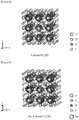
FIG. 1 is a schematic diagram showing a crystal structure of Li3OCl. -
FIG. 2 is a schematic diagram showing a crystal structure in which Li is substituted with a Ba cation. -
FIG. 3 is a schematic diagram showing a crystal structure in which O is substituted with an F anion. -
FIG. 4 is a schematic diagram showing a crystal structure in which Li and O are substituted with a Na cation and an F anion, respectively. -
FIG. 5 is a schematic diagram showing a crystal structure in which Li and O are substituted with a Ba cation and an F anion, respectively. -
FIG. 6 is a graph of comparing the results of a change in band gap of a LiRAP compound according to a dopant. -
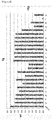
FIG. 7 is a graph of comparing the results of activation energy of the LiRAP compound with respect to migration of lithium ions according to the dopant. -
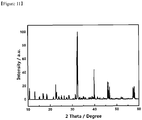
FIG. 8 shows the X-ray diffraction (XRD) spectra of Li3ClO according to one exemplary embodiment of the present invention. -
FIG. 9 shows the XRD spectra of Li2.963ClO0.963F0.037 according to one exemplary embodiment of the present invention. -
FIG. 10 shows the XRD spectra of Li2.926Na0.037ClO0.963F0.037 according to one exemplary embodiment of the present invention. -
FIG. 11 shows the XRD spectra of Li1.889Ba0.037ClO0.963F0.037 according to one exemplary embodiment of the present invention. - Hereinafter, the present invention will be described in detail.
- A lithium-rich antiperovskite (LiRAP) compound provided in the present invention is a compound having a lithium-rich antiperovskite crystal structure. Specifically, the LiRAP compound has a structure in which a dopant is substituted in a basic crystal structure of Li3OCl to improve ion conductivity, that is, a structure in which the dopant is substituted for an O site rather than Cl as known in the art, preferably a chemical structure represented by the following
Formula 1, 2 or 3:
[Formula 1] Li3-xClO1-xHalx
wherein Hal is F, Cl, Br, or I, and x is 0 < x < 1;
[Formula 2] Li3-y-xMyO1-xHalxCl
wherein M is Na, K, Rb, or Cs, Hal is F, Cl, Br, or I, and x and y are 0 < x < 1 and 0 < y < 2.
[Formula 3] Li3-2y-xMyO1-xHalxCl
wherein M is Mg, Ca, Sr, or Ba, Hal is F, Cl, Br, or I, and x and y are 0 < x < 1 and 0 < y < 1. - The LiRAP compounds of
Formulas 2 and 3 are compounds in which a Li cation is further substituted. - Because the compounds of
Formulas 1, 2 and 3 have ion conductivity (at 25 °C) of 10 to 10-10 S/cm and exhibit excellent thermal stability, the ion conductivity at a high temperature may be substantially maintained. - The LiRAP compounds of
Formulas 1, 2 and 3 has a structure in which a halogen element such as F, Cl, Br or I, which is a dopant, is partially substituted for the O site, and thus has ion conductivity and thermal stability similar to or higher than conventional LiOCl compounds having a structure in which the dopant is not substituted. - In this case, the types of the dopant and the molar ratios represented by x and y have a direct influence on activation energy together with a band gap as will be described below. Here, because the molar ratios (i.e., a content of the dopant) eventually have an influence on the ion conductivity, the content of the dopant is preferably adjusted.
- Preferably, when the molar ratio of the halogen element serving as the O dopant is too low, an effect of enhancing ion conductivity may not be secured. On the other hand, when the molar ratio of the halogen element is too high, a decrease in band gap and an increase in activation energy may be caused, resulting in degraded ion conductivity. Therefore, the halogen element is properly used in this molar ratio range. This is true for a Li-substituted metal, that is, a metal represented by "M."
- A diffusion mechanism for doping by the dopant includes substitutional diffusion and interstitial diffusion. The substitutional diffusion refers to diffusion through a vacancy on the lattice, that is, diffusion by which an atom escapes from a lattice site (i.e., a substitutional site) and pushes into an interstitial site to form a vacancy and a dopant enters this vacancy. Also, the interstitial diffusion refers to diffusion by which a lattice jumps into an interstitial site. In this case, the interstitial diffusion causes atoms to be formed at a deep level in a semiconductor because the atoms are dispersed more rapidly and dispersed more deeply, compared to the substitutional diffusion.
- The dopant provided in the present invention is doped by an interstitial diffusion mechanism. In the case of the interstitial diffusion, because atoms migrate from an interstitial site to another interstitial site, energy of heat treatment is required for migration of such atoms. Because a change in electronic state, that is, a change in crystal structure is caused by addition of the dopant, the band gap and activation energy of the material is eventually changed.
- That is, the LiRAP according to the present invention has a predetermined energy level before the LiRAP is doped with the dopant, an energy gap (Eg), that is, a band gap exists depending on the interaction and active state of the atoms constituting the LiRAP. A vale of the band gap varies with a change in energy level of the LiRAP through doping by the dopant. The change in the band gap is typically highly affected by the type and concentration of the dopant. Typically, when an insulating material has a band gap of 3.0 eV or more, the insulating material has very low electrical conductivity. For example, the LiRAP has a band gap of approximately 5 eV, and the band gap of the LiRAP varies depending on the type of the dopant.
- When Li or O is substituted with other elements, the band gaps tend to decrease with respect to the LiRAP. In this case, dopants having such a tendency of decrease in the band gap may be considered to be candidates for preferred dopants.
- When certain dopants such as the halogen elements as shown in
Formula 1, 2 and 3 are used, there is a small change in the band gap. Further, when Li is substituted with other metal ions, a change in the band gaps in Na and Ba tends to be slight. - The band gaps of the LiRAP compounds of
Formula 1, 2 and 3 may be predicted through the following calculation. -
FIG. 1 is a schematic diagram showing a crystal structure of Li3OCl, that is, a schematic diagram of a crystal structure of Li81Cl7O27 having a 3×3×3 supercell crystal structure consisting of 135 atoms. Such a crystal structure is a structure in which there are large cations (A) at vertexes of a cubic unit lattice (8×1/8) and a small cation (B) at the center of the cubic unit lattice, and anions (X) at the centers of respective planes (6×1/2). - Also,
FIG. 2 is a schematic diagram showing a crystal structure in which Li is substituted with a Ba cation. - The Li3OCl compound having a crystal structure as shown in
FIG. 1 and the (Li,M)3OCl compound having a crystal structure as shown inFIG. 2 is substituted with cations provided below, and doped with an anion. In this case, a change in band gap is calculated with respect to Li3OCl, and the resulting compound is shown inFIG. 3 . - Cations:
- Monovalent cations: Na, K, Rb, and Cs
- Bivalent cations: Mg, Ca, Sr, and Ba
- Trivalent cations: B, Al, Ga, In, Sc, Y, and La
- Tetravalent cations: Si, Ge, Ti, Zr, and Hf
- Anion:
O sties: F, Cl, Br, and I - In the candidates, each of the cations is an element substituted for Li, and the anion is an element substituted for O.
- To calculate the band gap, VASP (version 5.3.5) was used as a density functional theory (DFT) code based on projector augmented waves (PAWs). In this case, an electron has a kinetic energy cutoff of 500 eV, and an exchange-correlation function uses GGA (PBE).
- A k-point mesh for supercell calculation is considered to include gamma points, and the optimization of the atomic structure is carried out using a conjugate gradient method until a force between atoms reaches ± 0.01 eV/Å. A difference in energy between the conduction band minimum (CBM) and the valence band maximum (VBM) at a gamma point of the optimized structure corresponds to a band gap.
-
FIG. 6 is a graph of comparing the results of a change in band gap of a LiRAP compound according to a dopant. In this case, the GGA-PBE band gap tends to be underestimated, compared to an actual band gap. As shown inFIG. 6 , because values of the GGA-PBE band gap are slightly different from those of the actual band gap, only a relative comparison with respect to Li3OCl rather than a quantitative numerical change is judged to be significant. In this case, when an insulating material has a GGA-PBE band gap of 3.0 eV or less, the insulating material is judged to have very low electrical conductivity. - Referring to
FIG. 6 , when Li is substituted with other elements, all the band gaps tend to decrease with respect to the Li3ClO. Also, Na, K, Rb, Al, B, La, Ba, Ca, Sr, Mg, F (substituted with O), Cl (substituted with O), Br (substituted with O), and I (substituted with O), in which a decrease in the band gap is relatively small, may be preferred dopants. Also, when Li is substituted with the tetravalent cations, a concentration of the Li vacancy tends to increase but the band gaps tend to significantly decrease. - For a change in lithium ion conductivity with the change in the band gap, activation energy (Eg) for lithium ion migration is calculated.
- The activation energy is calculated by calculating a nudged elastic band (NEB), and five images, which are obtained by dividing a space between an initial structure before migration of Li+ ions and a final structure after the migration of Li+ ions by equidistant intervals, are used to model migration of Li+ ions in a [110] crystal direction. The NEB calculation is carried out using VASP (version 5.3.5) that is a PAW-based DFT calculation code.
- The activation energy is transferred to a Li-O interstitial site by means of the dopant. In this case, the activation energy required accordingly may be measured using VASP that is a density functional theory-based code.
-
FIG. 7 is a graph of comparing the results of a change in activation energy of the LiRAP compound with respect to migration of lithium ions according to the dopant. - Referring to
FIG. 7 , it is revealed that Li3ClO has an activation energy Ea of 0.323 eV, the value of which is similar to an experimental value (0.36 eV) reported in the prior-art documents. Only the six elements such as Ba, Na, F (substituted with O), Cl (substituted with O), Br (substituted with O), and I (substituted with O) have energy lower than the Li3ClO. - Also, when the monovalent and bivalent cations are substituted for a Li site, or the monovalent anion are substituted for an O site, the Ea with respect to the Li+ migration tends to be similar or lower.
- Therefore, the LiRAP compounds doped or substituted with Na (substituted with Li), Ba (substituted with Li), F (substituted with oxygen), Cl (substituted with oxygen), Br (substituted with oxygen), and I (substituted with oxygen) may have high ion conductivity, compared to the undoped Li3ClO.
- In summary, from the results of the band gap and the activation energy for lithium ion migration as shown in
FIGS. 6 and7 , it can be seen that the LiRAP has a high band gap and low activation energy when the halogen element, that is, F, Cl, Br or I, is substituted for an anionic O site represented byFormula 1, 2 or 3 rather than Cl in the LiRAP, as known in the art. Also, it can be seen that, even when some of the Li cations are substituted with Na or Ba cations, the LiRAP may have lower activation energy, compared to before the LiRAP is doped with the cations. - The preparation of the LiRAP compound of
Formula 1, 2 or 3 according to the present invention is not particularly limited. - According to one exemplary embodiment of the present invention, the LiRAP compound is prepared by mixing a lithium precursor (LiNO3) and Li Hal to synthesize a lithium oxyhalide (e.g., Li1.963O0.963F0.037); and annealing a mixture in which LiCl is added to the lithium oxyhalide at a high temperature of 180 to 900 °C.
- In this case, the compound represented by
Formula 2 or 3 may be prepared by adding a metal-containing precursor at the first step. The precursor may include chlorides, nitrides, hydroxides, oxyhydroxides, alkoxides, and amides of the metal. Preferably, an alkoxide may be used. - Also, when the compound of
Formula 2 or 3 is synthesized using metal-containing precursor, the synthesis method is not particularly limited. - For example, the metal-containing precursor may be added at the step of synthesizing the lithium oxyhalide or annealing the mixture at a high temperature to synthesize the compound of
Formula 2 or 3. - According to another exemplary embodiment of the present invention, a Li3OCl powder may react with HX (X = halide) to prepare the LiRAP compound of Formula 1, or a M precursor may react with a Li precursor to prepare (Li,M)3OCl and the (Li,M)3OCl may react with HX (X = halide) to prepare the LiRAP compound of
Formula 2 or 3. - The LiRAP compound of
Formula 1, 2 or 3 may be applied to lithium secondary batteries due to high ion conductivity. - A lithium secondary battery includes a positive electrode, a negative electrode, and an electrolyte interposed between the positive and negative electrodes. In this case, the LiRAP compound of
Formula 1, 2 or 3 is used as the electrolyte. - Because the LiRAP compound satisfies all characteristics such as an electrochemically stable potential window, low electrical conductivity, high-temperature stability, low toxicity, and the like, and simultaneously exhibits high lithium ion conductivity, compared to the conventional structure in which the dopant is substituted with Cl, the LiRAP compound is preferably used as the electrolyte of the battery to improve performance and thermal stability of the battery.
- When used as the electrolyte, the LiRAP compounds of
Formulas 1, 2 and 3 may be used alone or in combination thereof, and may be used after the LiRAP compounds are mixed to have various combinations of M and X. - Further, the electrolyte may further include a material used for this purpose in order to further enhance the lithium ion conductivity.
- For example, the electrolyte may further include lithium salts such as LiCl, LiBr, LiI, LiClO4, LiBF4, LiB10Cl10, LiPF6, LiCF3SO3, LiCF3CO2, LiAsF6, LiSbF6, LiAlCl4, CH3SO3Li, CF3SO3Li, LiSCN, LiC(CF3SO2)3, (CF3SO2)2NLi, (FSO2)2NLi, chloroborane lithium, lower aliphatic lithium carboxylate, 4-phenyl lithium borate, lithium imide, and the like.
- Also, the electrolyte may further include an inorganic solid electrolyte or an organic solid electrolyte. The inorganic solid electrolyte is a ceramic-based material. In this case, a crystalline or amorphous material may be used as the inorganic solid electrolyte, and inorganic solid electrolytes such as Thio-LISICON (Li3.25Ge0.25P0.75S4), Li2S-SiS2, LiI-Li2S-SiS2, LiI-Li2S-P2S5, LiI-Li2S-P2O5, LiI-Li3PO4-P2S5, Li2S-P2S5, Li3PS4, Li7P3S11, Li2O-B2O3, Li2O-B2O3-P2O5, Li2O-V2O5-SiO2, Li2O-B2O3, Li3PO4, Li2O-Li2WO4-B2O3, LiPON, LiBON, Li2O-SiO2, LiI, Li3N, Li5La3Ta2O12, Li7La3Zr2O12, Li6BaLa2Ta2O12, Li3PO(4-3/2w)Nw (w is w < 1), Li3.6Si0.6P0.4O4, and the like may also be used.
- Examples of the organic solid electrolyte that may be used may include mixtures of the lithium salts with polymeric materials such as a polyethylene derivative, a polyethylene oxide derivative, a polypropylene oxide derivative, a phosphate ester polymer, polyagitation lysine, polyester sulfide, polyvinyl alcohol, polyvinylidene fluoride, and the like. In this case, the aforementioned components may be used alone or in combination of two or more.
- Also, the LiRAP compounds may be prepared in a powdery phase, and then compressed to prepare a pellet, which is applied as the solid electrolyte, or the LiRAP compounds may be mixed with known materials such as a binder, and applied in the form of a thick film subjected to slurry coating. When necessary, the LiRAP compounds may also be applied as the electrolyte in the form of a thin film subjected to a deposition process such as sputtering, and the like.
- Specific methods for applications as the electrolyte are not particularly limited in the present invention, and methods known by a person having ordinary skill in the related art may be chosen or selected for applications.
- In the lithium secondary battery in which the LiRAP compound of
Formula 1, 2 or 3 is applicable as the electrolyte, a positive electrode or a negative electrode is not limited. In particular, the positive or negative electrode may be applied to lithium-air batteries, lithium oxide batteries, lithium-sulfur batteries, lithium metal batteries, and all-solid-state batteries, all of which are operated at a high temperature. - The positive electrode of the lithium secondary battery may include a lamellar compound or a compound substituted with one or more transition metals, such as lithium cobalt oxide (LiCoO2), lithium nickel oxide (LiNiO2), and the like; lithium manganese oxides such as Formula Li1+xMn2-xO4 (0 ≤ x ≤ 0.33), LiMnO3, LiMn2O3, LiMnO2, and the like; a lithium copper oxide (Li2CuO2); vanadium oxides such as LiV3O8, LiFe3O4, V2O5, Cu2V2O7, and the like; an Ni-site-type lithium nickel oxide represented by the formula LiNi1-xMxO2 (where M is Co, Mn, Al, Cu, Fe, Mg, B or Ga; 0.01 ≤ x ≤ 0.3); a lithium-manganese complex oxide represented by the formula LiMn2-xMxO2 (where M is Co, Ni, Fe, Cr, Zn or Ta; 0.01 ≤ x ≤ 0.1) or Li2Mn3MO8 (where M is Fe, Co, Ni, Cu or Zn); a lithium-manganese complex oxide having a spinel structure represented by LiNixMn2-xO4; LiMn2O4 in which some of Li ions in the formula are substituted with alkaline earth metal ions; a disulfide compound; Fe2(MoO4)3, and the like, but the present invention is not limited thereto.
- Such a positive electrode active material may be formed on a positive electrode current collector. The positive electrode current collector is not particularly limited as long as the positive electrode current collector has conductivity without causing a chemical change in the corresponding battery. For example, stainless steel, aluminum, nickel, titanium, baked carbon, or aluminum or stainless steel whose surface is surface-treated with carbon, nickel, titanium, silver, and the like may be used. In this case, the positive electrode current collector may be used in various forms of films, sheets, foil, nets, porous materials, foams, nonwoven fabrics, and the like, all of which have fine irregularities formed on a surface thereof, to enhance adhesion to the positive electrode active material.
- Also, in the negative electrode, a negative electrode mixture layer including a negative electrode active material is formed on a negative electrode current collector, or a negative electrode mixture layer (e.g., lithium foil) is used alone.
- In this case, types of the negative electrode current collector or the negative electrode mixture layer are not particularly limited in the present invention. In this case, known materials may be used herein.
- In addition, the negative electrode current collector is not particularly limited as long as the negative electrode current collector has high conductivity without causing a chemical change in the corresponding battery. For example, copper, stainless steel, aluminum, nickel, titanium, baked carbon, or copper or stainless steel whose surface is surface-treated with carbon, nickel, titanium, silver, and the like, an aluminum-cadmium alloy, and the like may be used. Like the positive electrode current collector, the negative electrode current collector may also be used in various forms of films, sheets, foil, nets, porous materials, foams, nonwoven fabrics, and the like, all of which have fine irregularities formed on a surface thereof.
- Further, the negative electrode active material may include carbon-based materials selected from the group consisting of crystalline artificial graphite, crystalline natural graphite, amorphous hard carbon, poorly crystalline soft carbon, carbon black, acetylene black, ketjen black, Super-P, graphene, and fibrous carbon; Si-based materials; metal complex oxides such as LixFe2O3 (0 ≤ x ≤ 1), LixWO2 (0 ≤ x ≤ 1), SnxMe1-xMe'yOz (Me: Mn, Fe, Pb, or Ge; Me': Al, B, P, Si, elements of the
groups 1, 2, and 3 of the periodic table, or a halogen; 0 < x ≤ 1; 1 ≤ y ≤ 3; and 1 ≤ z ≤ 8), and the like; lithium metals; lithium alloys; silicon-based alloys; tin-based alloys; metal oxides such as SnO, SnO2, PbO, PbO2, Pb2O3, Pb3O4, Sb2O3, Sb2O4, Sb2O5, GeO, GeO2, Bi2O3, Bi2O4, Bi2O5, and the like; conductive polymers such as polyacetylene, and the like; Li-Co-Ni-based materials; titanium oxides; lithium titanium oxides, and the like, but the present invention is not limited thereto. - In addition, metal complex oxides such SnxMe1-xMe'yOz (Me: Mn, Fe, Pb, or Ge; Me': Al, B, P, Si, elements of the
groups 1, 2, and 3 of the periodic table, or a halogen; 0 < x ≤ 1; 1 ≤ y ≤ 3; and 1 ≤ z ≤ 8), and the like; oxides such as SnO, SnO2, PbO, PbO2, Pb2O3, Pb3O4, Sb2O3, Sb2O4, Sb2O5, GeO, GeO2, Bi2O3, Bi2O4, Bi2O5, and the like may be used as the negative electrode active material. In this case, carbon-based negative electrode active materials such as crystalline carbon, amorphous carbon, or a carbon complex may be used alone or in combination of two or more. - In this case, the electrode mixture layer may further include a binder resin, a conductive material, a filler, and other additives.
- The binder resin is used to bind a conductive material to an electrode active material and used to bind to a current collector. Examples of such a binder resin may include polyvinylidene fluoride (PVDF), polyvinyl alcohol, carboxymethyl cellulose (CMC), starch, hydroxypropyl cellulose, regenerated cellulose, polyvinyl pyrrolidone, tetrafluoroethylene, polyethylene, polypropylene, an ethylene-propylene-diene polymer (EPDM), sulfonated EPDM, a styrene-butadiene rubber, a fluorocarbon rubber, and various copolymers thereof.
- The conductive material is used to further enhance conductivity of the electrode active material. Such a conductive material is not particularly limited as long as the conductive material has conductivity without causing a chemical change in the corresponding battery. For example, graphite such as natural graphite or artificial graphite; carbon blacks such as carbon black, acetylene black, ketjen black, channel black, furnace black, lamp black, thermal black, and the like; conductive fibers such as a carbon fiber or a metal fiber; metal powders such as hydro fluorocarbon, aluminum, nickel powder, and the like; conductive whiskers such as zinc oxide, potassium titanate, and the like; conductive metal oxides such as titanium oxide, and the like; a polyphenylene derivative, and the like may be used.
- The filler may be optionally used as a component for inhibiting expansion of an electrode, and is not particularly limited as long as the filler is a fibrous material without causing a chemical change in the corresponding battery. For example, olefinic polymers such as polyethylene, polypropylene, and the like; fibrous materials such as a glass fiber, a carbon fiber, and the like are used.
- The manufacture of the electrode for lithium secondary batteries according to the present invention is not particularly limited, and is performed according to a conventional process of manufacturing a battery. For example, the electrode mixture layer and an electrode passivation layer are sequentially stacked on the electrode current collector.
- A shape of the lithium secondary battery is not particularly limited. In this case, the lithium secondary battery may have various shapes such as cylindrical, laminated, and coin-type shapes.
- Also, the present invention provides a battery module including the lithium secondary battery as a unit battery, and also provides a battery pack including the battery module.
- The battery pack may be used as a power source of a medium/large device requiring high-temperature stability, long cycle characteristics, and high capacity characteristics.
- Examples of the medium/large device may include power tools that are operated by power received from a battery motor; electric vehicles including an electric vehicle (EV), a hybrid electric vehicle (HEV), and a plug-in hybrid electric vehicle (PHEV); electric bicycles including an E-bike and an electric scooter; electric golf carts; and power storage systems, but the present invention is not limited thereto.
- Hereinafter, preferred embodiments of the present invention will be described in order to aid in understanding the present invention. However, it should be understood that the description proposed herein is just a preferable example for the purpose of illustrations only. Therefore, it will be apparent to those skilled in the art that various changes and modifications can be made to the exemplary embodiments of the present invention without departing from the scope of the present invention, so it should be understood that the present invention covers all such changes and modifications provided they are within the scope of the appended claims and their equivalents.
- 6.528 g of LiNO3 powder and 0.048 g of LiF powder were dissolved in 100 mL of HNO3 (0.1 M), and then reacted at room temperature for 12 hours in a reaction vessel. After the reaction, the reaction mixture was dried using a rotary evaporator and an electric oven. The dried powder was calcined at 900 °C for 3 days, and then cooled to room temperature at a rate of 3 °C/min. The synthesized powder was washed several times with distilled water to remove unreacted materials, and re-calcined at 600 °C for an hour in the air. The synthesized material was hand-mixed with 2.1 g of LiCl powder to prepare a ground mixed powder. 3 mL of H2O was added to the mixed powder to prepare a mixture in a gel phase. Thereafter, the mixture was heat-treated under an oxygen atmosphere for 2 hours or more in a 600 °C autoclave, and then dried at the same temperature for approximately an hour to prepare Li2.963ClO0.963F0.037.
- 6.451 g of LiNO3 powder, 0.048 g of LiF powder, and 0.15 g of Na(CH3COO) powder were dissolved in 100 mL of HNO3 (0.1 M), and then reacted at room temperature for 12 hours in a reaction vessel. After the reaction, the reaction mixture was dried using a rotary evaporator and an electric oven. The dried powder was calcined at 900 °C for 3 days, and then cooled to room temperature at a rate of 3 °C/min. The synthesized powder was washed several times with distilled water to remove unreacted materials, and re-calcined at 600 °C for an hour in the air. The synthesized material was hand-mixed with 2.1 g of LiCl powder to prepare a ground mixed powder. 3 mL of H2O was added to the mixed powder to prepare a mixture in a gel phase. Thereafter, the mixture was heat-treated under an oxygen atmosphere for 2 hours or more in a 600 °C autoclave, and then dried at the same temperature for approximately an hour to prepare Li2.926Na0.037ClO0.963F0.037.
- 6.325 g of LiNO3 powder, 0.048 g of LiF powder, and 0.46 g of Ba(CH3COO)2 powder were dissolved in 100 mL of HNO3 (0.1 M), and then reacted at room temperature for 12 hours in a reaction vessel. After the reaction, the reaction mixture was dried using a rotary evaporator and an electric oven. The dried powder was calcined at 900 °C for 3 days, and then cooled to room temperature at a rate of 3 °C/min. The synthesized powder was washed several times with distilled water to remove unreacted materials, and re-calcined at 600 °C for an hour in the air. The synthesized material was hand-mixed with 2.1 g of LiCl powder to prepare a ground mixed powder. 3 mL of H2O was added to the mixed powder to prepare a mixture in a gel phase. Thereafter, the mixture was heat-treated under an oxygen atmosphere for 2 hours or more in a 600 °C autoclave, and then dried at the same temperature for approximately an hour to prepare Li1.889Ba0.037ClO0.963F0.037.
- A first-principles calculation method based on the density functional theory (DFT) was used to calculate an optimal structure of a material in which F is substituted for an O site. First, a unit cell of Li3ClO was enlarged 3-fold in x-axis, y-axis, and z-axis directions to form a 3×3×3 supercell, and oxygen at the (0.5, 0.5, 0.5) position was then substituted with F. One of lithium atoms present in the vicinity of F substituted for the charge balance was removed to form a lithium vacancy. A structure used for calculation is as shown in the drawings, and has a formula of Li79Cl27O26F1. As a plane wave-based density functional theory code, VASP was used for structural optimization, and an exchange correlation for simulating an electron-electron interaction in the calculation used the generalized gradient approximation (GGA) of Perdew-Burke-Ernzerhof (PBE) function. In this case, an electron had a kinetic energy cutoff of 400eV, and energy smearing was performed using a Gaussian method. A k-point mesh in a reciprocal lattice space to calculate energy (eigenvalue) of the electron used a requirement by which the k-point mesh includes gamma-points, and the calculations were repeated until a force acting between all atoms reached less than 0.01 eV/Å. An X-ray peak simulation was performed based on the structure thus optimized.
FIGS. 8 ,9 ,10 , and11 show the XRD peak spectra of Li3ClO, Li2.963ClO0.963F0.037, Li2.926Na0.037ClO0.963F0.037, and Li1.889Ba0.037ClO0.963F0.037 calculated by the method.
Claims (6)
- A compound having a lithium-rich antiperovskite (LiRAP) crystal structure represented by the following Formula 1, 2 or 3:
[Formula 1] Li3-xClO1-xHalx
wherein Hal is F, Cl, Br, or I, and x is 0 < x < 1;
[Formula 2] Li3-y-xMyO1-xHalxCl
wherein M is Na, K, Rb, or Cs, Hal is F, Cl, Br, or I, and x and y are 0 < x < 1 and 0 < y < 2.
[Formula 3] Li3-2y-xMyO1-xHalxCl
wherein M is Mg, Ca, Sr, or Ba, Hal is F, Cl, Br, or I, and x and y are 0 < x < 1 and 0 < y < 1. - The compound of claim 1, wherein the compound has an ion conductivity of 10 to 10-10 S/cm.
- An electrolyte for lithium secondary batteries comprising the compound having a lithium-rich antiperovskite (LiRAP) crystal structure represented by the following Formula 1, 2 or 3:
[Formula 1] Li3-xClO1-xHalx
wherein Hal is F, Cl, Br, or I, and x is 0 < x < 1;
[Formula 2] Li3-y-xMyO1-xHalxCl
wherein M is Na, K, Rb, or Cs, Hal is F, Cl, Br, or I, and x and y are 0 < x < 1 and 0 < y < 2.
[Formula 3] Li3-2y-xMyO1-xHalxCl
wherein M is Mg, Ca, Sr, or Ba, Hal is F, Cl, Br, or I, and x and y are 0 < x < 1 and 0 < y < 1. - The electrolyte of claim 3, wherein the compound has an ion conductivity of 10 to 10-10 S/cm.
- A lithium secondary battery comprising the electrolyte for lithium secondary batteries defined in claim 3 or 4.
- The lithium secondary battery of claim 5, wherein the lithium secondary battery comprises one selected from a lithium-air battery, a lithium oxide battery, a lithium-sulfur battery, a lithium metal battery, and an all-solid-state battery.
Applications Claiming Priority (3)
| Application Number | Priority Date | Filing Date | Title |
|---|---|---|---|
| KR20160126258 | 2016-09-30 | ||
| KR1020170118438A KR101886003B1 (en) | 2016-09-30 | 2017-09-15 | Lithium rich antiperovskite compound, electrolyte for lithium secondary battery comprising the same and lithium secondary battery comprising the same |
| PCT/KR2017/010415 WO2018062770A1 (en) | 2016-09-30 | 2017-09-21 | Lithium-rich antiperovskite compound, lithium secondary battery electrolyte comprising same, and lithium secondary battery comprising same |
Publications (3)
| Publication Number | Publication Date |
|---|---|
| EP3454406A1 true EP3454406A1 (en) | 2019-03-13 |
| EP3454406A4 EP3454406A4 (en) | 2019-08-07 |
| EP3454406B1 EP3454406B1 (en) | 2021-05-05 |
Family
ID=61978141
Family Applications (1)
| Application Number | Title | Priority Date | Filing Date |
|---|---|---|---|
| EP17856656.8A Active EP3454406B1 (en) | 2016-09-30 | 2017-09-21 | Lithium-rich antiperovskite compound, lithium secondary battery electrolyte comprising same, and lithium secondary battery comprising same |
Country Status (5)
| Country | Link |
|---|---|
| US (1) | US10680282B2 (en) |
| EP (1) | EP3454406B1 (en) |
| JP (1) | JP6615404B2 (en) |
| KR (1) | KR101886003B1 (en) |
| CN (1) | CN109075390B (en) |
Cited By (2)
| Publication number | Priority date | Publication date | Assignee | Title |
|---|---|---|---|---|
| CN110556170A (en) * | 2019-08-05 | 2019-12-10 | 仰恩大学 | A Prediction Method of Physical Properties of ZrBeO3 Superhard Material |
| WO2020240412A1 (en) * | 2019-05-26 | 2020-12-03 | Universidade Do Porto | A one-electrode cell and series of two or more cells as a device |
Families Citing this family (24)
| Publication number | Priority date | Publication date | Assignee | Title |
|---|---|---|---|---|
| KR102163020B1 (en) * | 2018-10-12 | 2020-10-07 | 서울대학교산학협력단 | Metal phosphide Negative electrode material for secondary battery, and preparation method thereof |
| CN109687017B (en) * | 2018-12-24 | 2020-11-06 | 郑州新世纪材料基因组工程研究院有限公司 | Sodium ion solid electrolyte and preparation method thereof |
| CN109687018B (en) * | 2018-12-25 | 2022-08-12 | 郑州新世纪材料基因组工程研究院有限公司 | Layered calcium-opposite-state ore structure sodium ion solid electrolyte and preparation method thereof |
| CN112840412B (en) | 2018-12-26 | 2023-12-08 | 松下知识产权经营株式会社 | Solid electrolytes and batteries using them |
| CN112930319B (en) * | 2018-12-26 | 2024-08-09 | 松下知识产权经营株式会社 | Solid electrolyte material and battery using the same |
| WO2020136952A1 (en) | 2018-12-26 | 2020-07-02 | パナソニックIpマネジメント株式会社 | Halide production method |
| JP7357299B2 (en) | 2018-12-26 | 2023-10-06 | パナソニックIpマネジメント株式会社 | Method for producing halides |
| CN109712823A (en) * | 2018-12-27 | 2019-05-03 | 上海奥威科技开发有限公司 | Solid glass electrolyte and its combination electrode material, diaphragm, electrode slice and all-solid-state supercapacitor |
| CN112993389A (en) * | 2018-12-28 | 2021-06-18 | 南方科技大学 | Lithium-rich anti-perovskite oxide composite electrolyte and preparation method and application thereof |
| CN109830741B (en) * | 2019-01-28 | 2021-12-17 | 蜂巢能源科技有限公司 | Sulfur-based lithium-rich solid electrolyte and preparation method and application thereof |
| JP7202218B2 (en) * | 2019-03-05 | 2023-01-11 | 日本特殊陶業株式会社 | Ionic conductors and storage devices |
| JP7150650B2 (en) * | 2019-03-22 | 2022-10-11 | 日本碍子株式会社 | Lithium-ion conductive material, all-solid secondary battery, and method for producing solid electrolyte |
| EP3996166A4 (en) * | 2019-07-04 | 2022-08-03 | Panasonic Intellectual Property Management Co., Ltd. | Solid electrolyte material and battery using same |
| JP7478988B2 (en) * | 2019-07-04 | 2024-05-08 | パナソニックIpマネジメント株式会社 | Solid electrolyte material and battery using same |
| JP7535703B2 (en) * | 2019-07-04 | 2024-08-19 | パナソニックIpマネジメント株式会社 | battery |
| US11374257B2 (en) * | 2019-09-03 | 2022-06-28 | GM Global Technology Operations LLC | Softened solid-state electrolytes for lithium ion batteries |
| JP2021136192A (en) * | 2020-02-28 | 2021-09-13 | 国立研究開発法人物質・材料研究機構 | Lithium-rich antiperovskite compounds, solid electrolytes for lithium-ion secondary batteries and lithium-ion solid secondary batteries |
| CN111446493B (en) * | 2020-03-06 | 2021-08-31 | 扬德电气集团有限公司 | Method for preparing electrolyte of all-solid-state lithium battery |
| JP2023068207A (en) * | 2020-03-27 | 2023-05-17 | 国立大学法人京都大学 | Antiperovskite compound, battery electrolyte, and battery |
| CN113735145A (en) * | 2020-05-28 | 2021-12-03 | 中国科学院上海硅酸盐研究所 | Negative and positive ion co-doped sodium-rich opposite perovskite type solid electrolyte material, preparation method thereof and all-solid-state sodium battery |
| CN111484042B (en) * | 2020-06-28 | 2020-09-11 | 长沙宝锋能源科技有限公司 | A crystalline Li3OCl inorganic lithium ion conductor and its preparation method and application |
| CN112768754B (en) * | 2020-12-30 | 2022-06-17 | 南方科技大学 | Solid electrolyte, preparation method thereof and all-solid-state battery |
| CN115000500B (en) * | 2022-06-10 | 2025-08-15 | 南方科技大学 | Solid electrolyte material, preparation method and all-solid lithium ion battery |
| WO2024220841A2 (en) * | 2023-04-21 | 2024-10-24 | Arizona Board Of Regents On Behalf Of Arizona State University | Antiperovskite compositions and methods of use thereof |
Family Cites Families (13)
| Publication number | Priority date | Publication date | Assignee | Title |
|---|---|---|---|---|
| KR101168253B1 (en) | 2004-03-06 | 2012-07-31 | 베르너 벱프너 | Chemically stable solid lithium ion conductors |
| DE102004010892B3 (en) * | 2004-03-06 | 2005-11-24 | Christian-Albrechts-Universität Zu Kiel | Chemically stable solid Li ion conductor of garnet-like crystal structure and high Li ion conductivity useful for batteries, accumulators, supercaps, fuel cells, sensors, windows displays |
| US9246188B2 (en) * | 2011-02-14 | 2016-01-26 | Los Alamos National Security, Llc | Anti-perovskite solid electrolyte compositions |
| WO2012112229A2 (en) | 2011-02-14 | 2012-08-23 | Los Alamos National Security, Llc | Anti-perovskite solid electrolyte compositions |
| US10008736B2 (en) * | 2012-10-23 | 2018-06-26 | Quantumscape Corporation | Method for forming and processing antiperovskite material doped with aluminum material |
| KR102454061B1 (en) * | 2014-02-26 | 2022-10-14 | 유니베르시다데 도 포르토 | A solid electrolyte glass for lithium or sodium ions conduction |
| KR101644684B1 (en) | 2014-02-28 | 2016-08-01 | 주식회사 엘지화학 | Lithium-nikel based cathod active material, preparation method thereof and lithium secondary battery comprising the same |
| US10044061B2 (en) * | 2014-06-11 | 2018-08-07 | Los Alamos National Security, Llc | Methods for growth of lithium-rich antiperovskite electrolyte films and use thereof |
| JP6332882B2 (en) * | 2014-09-05 | 2018-05-30 | 富士フイルム株式会社 | All-solid secondary battery, solid electrolyte composition, battery electrode sheet using the same, battery electrode sheet manufacturing method, and all-solid secondary battery manufacturing method |
| CN104466239B (en) * | 2014-11-27 | 2017-02-22 | 中国科学院物理研究所 | Lithium-enriched anti-perovskite sulfides, solid electrolyte material containing lithium-enriched anti-perovskite sulfides and application of solid electrolyte material |
| US20180006306A1 (en) | 2015-02-12 | 2018-01-04 | THE BOARD OF REGENTS OF THE NEVADA SYSTEM OF HIGHER EDUCATION on behalf of THE UNIV.OF NEVADA, | Transition-metals doped lithium-rich anti-perovskites for cathode applications |
| US10177406B2 (en) * | 2015-07-21 | 2019-01-08 | Samsung Electronics Co., Ltd. | Solid electrolyte and/or electroactive material |
| KR101790890B1 (en) * | 2016-09-23 | 2017-10-26 | 주식회사 엘지화학 | LCO type lithium composite coated with lithium rich antiperovskite compounds, preparation method thereof, positive active material and lithium secondary battery comprising the same |
-
2017
- 2017-09-15 KR KR1020170118438A patent/KR101886003B1/en active Active
- 2017-09-21 EP EP17856656.8A patent/EP3454406B1/en active Active
- 2017-09-21 US US16/093,332 patent/US10680282B2/en active Active
- 2017-09-21 JP JP2019503183A patent/JP6615404B2/en active Active
- 2017-09-21 CN CN201780026714.1A patent/CN109075390B/en active Active
Cited By (4)
| Publication number | Priority date | Publication date | Assignee | Title |
|---|---|---|---|---|
| WO2020240412A1 (en) * | 2019-05-26 | 2020-12-03 | Universidade Do Porto | A one-electrode cell and series of two or more cells as a device |
| US12040398B2 (en) | 2019-05-26 | 2024-07-16 | Universidade Do Porto | One-electrode cell and series of two or more cells as a device |
| CN110556170A (en) * | 2019-08-05 | 2019-12-10 | 仰恩大学 | A Prediction Method of Physical Properties of ZrBeO3 Superhard Material |
| CN110556170B (en) * | 2019-08-05 | 2023-05-09 | 仰恩大学 | A Prediction Method of Physical Properties of ZrBeO3 Superhard Material |
Also Published As
| Publication number | Publication date |
|---|---|
| US20190245240A1 (en) | 2019-08-08 |
| CN109075390B (en) | 2021-06-22 |
| JP6615404B2 (en) | 2019-12-04 |
| KR101886003B1 (en) | 2018-08-07 |
| EP3454406B1 (en) | 2021-05-05 |
| CN109075390A (en) | 2018-12-21 |
| EP3454406A4 (en) | 2019-08-07 |
| KR20180036536A (en) | 2018-04-09 |
| US10680282B2 (en) | 2020-06-09 |
| JP2019513687A (en) | 2019-05-30 |
Similar Documents
| Publication | Publication Date | Title |
|---|---|---|
| EP3454406B1 (en) | Lithium-rich antiperovskite compound, lithium secondary battery electrolyte comprising same, and lithium secondary battery comprising same | |
| EP3444880B1 (en) | Lithium-rich antiperovskite-coated lco-based lithium composite, method for preparing same, and positive electrode active material and lithium secondary battery comprising same | |
| KR101850901B1 (en) | All solid lithium secondary battery comprising gel polymer electrolyte and method for manufacturing the same | |
| KR102345015B1 (en) | Irreversible Additive Comprised in Cathode Material for Lithium Secondary Battery, Preparing Method thereof, and Cathode Material Comprising the Same | |
| JP6226430B2 (en) | Positive electrode active material, lithium secondary battery for controlling impurities or swelling, and method for producing positive electrode active material with improved productivity | |
| KR20190078392A (en) | Additives for positive electrode, method for manufacturing the same, positive electrode including the same, and lithium recharegable battery including the same | |
| KR101637898B1 (en) | Cathode Active Material and Lithium Secondary Battery Comprising the Same | |
| EP3582301A2 (en) | Positive electrode active material for high voltage, comprising lithium manganese-based oxide, and production method therefor | |
| KR20150131031A (en) | High voltage lithium ion battery | |
| WO2018048085A1 (en) | Positive electrode active material for lithium secondary battery, comprising lithium cobalt oxide for high voltage, and method for preparing same | |
| WO2018062770A1 (en) | Lithium-rich antiperovskite compound, lithium secondary battery electrolyte comprising same, and lithium secondary battery comprising same | |
| KR101469436B1 (en) | Cathode Active Material and Lithium Secondary Battery For Controlling Impurity or Swelling Comprising the Same and Method For Manufacturing Cathode Active Material Of Improved Productivity | |
| KR101239620B1 (en) | Positive Active Material for Secondary Battery of Improved Rate Capability | |
| KR20140026841A (en) | Composite cathode active material, and cathode and lithium battery containing the material | |
| KR101572078B1 (en) | Lithium Secondary Battery Improved Storage Characteristic and Method For Manufacturing Cathode Active Material Comprised the Same | |
| CN103109400B (en) | Novel electrode active material and lithium secondary battery comprising said novel electrode active material | |
| KR101431729B1 (en) | Novel Compound, Method for Preparation of the Same, and Lithium Secondary Battery Comprising the Same | |
| KR20130084362A (en) | Cathode active material and lithium secondary battery comprising the same | |
| KR20160082843A (en) | Cathode active material for a lithium secondary battery, preparation method thereof, and a lithium secondary battery containing the same | |
| KR101559731B1 (en) | Method For Manufacturing Lithium Composite Transition Metal Using Ion-exchange Reaction and Cathode Active Material Having Improved Lithium Ion Diffusion | |
| KR20190046224A (en) | Composite positive electrode active material, preparing method thereof, and lithium secondary battery comprising the same | |
| KR20140102907A (en) | Lithium-metal oxide and lithium secondary battery having the same |
Legal Events
| Date | Code | Title | Description |
|---|---|---|---|
| STAA | Information on the status of an ep patent application or granted ep patent |
Free format text: STATUS: THE INTERNATIONAL PUBLICATION HAS BEEN MADE |
|
| PUAI | Public reference made under article 153(3) epc to a published international application that has entered the european phase |
Free format text: ORIGINAL CODE: 0009012 |
|
| STAA | Information on the status of an ep patent application or granted ep patent |
Free format text: STATUS: REQUEST FOR EXAMINATION WAS MADE |
|
| 17P | Request for examination filed |
Effective date: 20181105 |
|
| AK | Designated contracting states |
Kind code of ref document: A1 Designated state(s): AL AT BE BG CH CY CZ DE DK EE ES FI FR GB GR HR HU IE IS IT LI LT LU LV MC MK MT NL NO PL PT RO RS SE SI SK SM TR |
|
| AX | Request for extension of the european patent |
Extension state: BA ME |
|
| A4 | Supplementary search report drawn up and despatched |
Effective date: 20190705 |
|
| RIC1 | Information provided on ipc code assigned before grant |
Ipc: H01M 12/08 20060101ALI20190701BHEP Ipc: C01D 15/00 20060101ALI20190701BHEP Ipc: C01D 15/04 20060101ALI20190701BHEP Ipc: H01M 10/0585 20100101ALI20190701BHEP Ipc: H01M 10/0562 20100101AFI20190701BHEP Ipc: H01M 10/052 20100101ALI20190701BHEP |
|
| DAV | Request for validation of the european patent (deleted) | ||
| DAX | Request for extension of the european patent (deleted) | ||
| STAA | Information on the status of an ep patent application or granted ep patent |
Free format text: STATUS: EXAMINATION IS IN PROGRESS |
|
| 17Q | First examination report despatched |
Effective date: 20200513 |
|
| GRAP | Despatch of communication of intention to grant a patent |
Free format text: ORIGINAL CODE: EPIDOSNIGR1 |
|
| STAA | Information on the status of an ep patent application or granted ep patent |
Free format text: STATUS: GRANT OF PATENT IS INTENDED |
|
| INTG | Intention to grant announced |
Effective date: 20210205 |
|
| GRAS | Grant fee paid |
Free format text: ORIGINAL CODE: EPIDOSNIGR3 |
|
| GRAA | (expected) grant |
Free format text: ORIGINAL CODE: 0009210 |
|
| STAA | Information on the status of an ep patent application or granted ep patent |
Free format text: STATUS: THE PATENT HAS BEEN GRANTED |
|
| AK | Designated contracting states |
Kind code of ref document: B1 Designated state(s): AL AT BE BG CH CY CZ DE DK EE ES FI FR GB GR HR HU IE IS IT LI LT LU LV MC MK MT NL NO PL PT RO RS SE SI SK SM TR |
|
| REG | Reference to a national code |
Ref country code: GB Ref legal event code: FG4D |
|
| REG | Reference to a national code |
Ref country code: CH Ref legal event code: EP |
|
| REG | Reference to a national code |
Ref country code: AT Ref legal event code: REF Ref document number: 1390962 Country of ref document: AT Kind code of ref document: T Effective date: 20210515 |
|
| REG | Reference to a national code |
Ref country code: IE Ref legal event code: FG4D |
|
| REG | Reference to a national code |
Ref country code: DE Ref legal event code: R096 Ref document number: 602017038343 Country of ref document: DE |
|
| REG | Reference to a national code |
Ref country code: LT Ref legal event code: MG9D |
|
| REG | Reference to a national code |
Ref country code: AT Ref legal event code: MK05 Ref document number: 1390962 Country of ref document: AT Kind code of ref document: T Effective date: 20210505 |
|
| PG25 | Lapsed in a contracting state [announced via postgrant information from national office to epo] |
Ref country code: HR Free format text: LAPSE BECAUSE OF FAILURE TO SUBMIT A TRANSLATION OF THE DESCRIPTION OR TO PAY THE FEE WITHIN THE PRESCRIBED TIME-LIMIT Effective date: 20210505 Ref country code: AT Free format text: LAPSE BECAUSE OF FAILURE TO SUBMIT A TRANSLATION OF THE DESCRIPTION OR TO PAY THE FEE WITHIN THE PRESCRIBED TIME-LIMIT Effective date: 20210505 Ref country code: BG Free format text: LAPSE BECAUSE OF FAILURE TO SUBMIT A TRANSLATION OF THE DESCRIPTION OR TO PAY THE FEE WITHIN THE PRESCRIBED TIME-LIMIT Effective date: 20210805 Ref country code: FI Free format text: LAPSE BECAUSE OF FAILURE TO SUBMIT A TRANSLATION OF THE DESCRIPTION OR TO PAY THE FEE WITHIN THE PRESCRIBED TIME-LIMIT Effective date: 20210505 Ref country code: LT Free format text: LAPSE BECAUSE OF FAILURE TO SUBMIT A TRANSLATION OF THE DESCRIPTION OR TO PAY THE FEE WITHIN THE PRESCRIBED TIME-LIMIT Effective date: 20210505 |
|
| PG25 | Lapsed in a contracting state [announced via postgrant information from national office to epo] |
Ref country code: RS Free format text: LAPSE BECAUSE OF FAILURE TO SUBMIT A TRANSLATION OF THE DESCRIPTION OR TO PAY THE FEE WITHIN THE PRESCRIBED TIME-LIMIT Effective date: 20210505 Ref country code: SE Free format text: LAPSE BECAUSE OF FAILURE TO SUBMIT A TRANSLATION OF THE DESCRIPTION OR TO PAY THE FEE WITHIN THE PRESCRIBED TIME-LIMIT Effective date: 20210505 Ref country code: PL Free format text: LAPSE BECAUSE OF FAILURE TO SUBMIT A TRANSLATION OF THE DESCRIPTION OR TO PAY THE FEE WITHIN THE PRESCRIBED TIME-LIMIT Effective date: 20210505 Ref country code: LV Free format text: LAPSE BECAUSE OF FAILURE TO SUBMIT A TRANSLATION OF THE DESCRIPTION OR TO PAY THE FEE WITHIN THE PRESCRIBED TIME-LIMIT Effective date: 20210505 Ref country code: NO Free format text: LAPSE BECAUSE OF FAILURE TO SUBMIT A TRANSLATION OF THE DESCRIPTION OR TO PAY THE FEE WITHIN THE PRESCRIBED TIME-LIMIT Effective date: 20210805 Ref country code: PT Free format text: LAPSE BECAUSE OF FAILURE TO SUBMIT A TRANSLATION OF THE DESCRIPTION OR TO PAY THE FEE WITHIN THE PRESCRIBED TIME-LIMIT Effective date: 20210906 Ref country code: GR Free format text: LAPSE BECAUSE OF FAILURE TO SUBMIT A TRANSLATION OF THE DESCRIPTION OR TO PAY THE FEE WITHIN THE PRESCRIBED TIME-LIMIT Effective date: 20210806 Ref country code: IS Free format text: LAPSE BECAUSE OF FAILURE TO SUBMIT A TRANSLATION OF THE DESCRIPTION OR TO PAY THE FEE WITHIN THE PRESCRIBED TIME-LIMIT Effective date: 20210905 |
|
| REG | Reference to a national code |
Ref country code: NL Ref legal event code: MP Effective date: 20210505 |
|
| PG25 | Lapsed in a contracting state [announced via postgrant information from national office to epo] |
Ref country code: NL Free format text: LAPSE BECAUSE OF FAILURE TO SUBMIT A TRANSLATION OF THE DESCRIPTION OR TO PAY THE FEE WITHIN THE PRESCRIBED TIME-LIMIT Effective date: 20210505 |
|
| RAP2 | Party data changed (patent owner data changed or rights of a patent transferred) |
Owner name: LG ENERGY SOLUTION LTD. |
|
| PG25 | Lapsed in a contracting state [announced via postgrant information from national office to epo] |
Ref country code: CZ Free format text: LAPSE BECAUSE OF FAILURE TO SUBMIT A TRANSLATION OF THE DESCRIPTION OR TO PAY THE FEE WITHIN THE PRESCRIBED TIME-LIMIT Effective date: 20210505 Ref country code: DK Free format text: LAPSE BECAUSE OF FAILURE TO SUBMIT A TRANSLATION OF THE DESCRIPTION OR TO PAY THE FEE WITHIN THE PRESCRIBED TIME-LIMIT Effective date: 20210505 Ref country code: RO Free format text: LAPSE BECAUSE OF FAILURE TO SUBMIT A TRANSLATION OF THE DESCRIPTION OR TO PAY THE FEE WITHIN THE PRESCRIBED TIME-LIMIT Effective date: 20210505 Ref country code: SM Free format text: LAPSE BECAUSE OF FAILURE TO SUBMIT A TRANSLATION OF THE DESCRIPTION OR TO PAY THE FEE WITHIN THE PRESCRIBED TIME-LIMIT Effective date: 20210505 Ref country code: SK Free format text: LAPSE BECAUSE OF FAILURE TO SUBMIT A TRANSLATION OF THE DESCRIPTION OR TO PAY THE FEE WITHIN THE PRESCRIBED TIME-LIMIT Effective date: 20210505 Ref country code: ES Free format text: LAPSE BECAUSE OF FAILURE TO SUBMIT A TRANSLATION OF THE DESCRIPTION OR TO PAY THE FEE WITHIN THE PRESCRIBED TIME-LIMIT Effective date: 20210505 Ref country code: EE Free format text: LAPSE BECAUSE OF FAILURE TO SUBMIT A TRANSLATION OF THE DESCRIPTION OR TO PAY THE FEE WITHIN THE PRESCRIBED TIME-LIMIT Effective date: 20210505 |
|
| REG | Reference to a national code |
Ref country code: DE Ref legal event code: R097 Ref document number: 602017038343 Country of ref document: DE |
|
| PLBE | No opposition filed within time limit |
Free format text: ORIGINAL CODE: 0009261 |
|
| STAA | Information on the status of an ep patent application or granted ep patent |
Free format text: STATUS: NO OPPOSITION FILED WITHIN TIME LIMIT |
|
| RAP4 | Party data changed (patent owner data changed or rights of a patent transferred) |
Owner name: LG ENERGY SOLUTION, LTD. |
|
| 26N | No opposition filed |
Effective date: 20220208 |
|
| REG | Reference to a national code |
Ref country code: CH Ref legal event code: PL |
|
| REG | Reference to a national code |
Ref country code: BE Ref legal event code: MM Effective date: 20210930 |
|
| PG25 | Lapsed in a contracting state [announced via postgrant information from national office to epo] |
Ref country code: IS Free format text: LAPSE BECAUSE OF FAILURE TO SUBMIT A TRANSLATION OF THE DESCRIPTION OR TO PAY THE FEE WITHIN THE PRESCRIBED TIME-LIMIT Effective date: 20210905 Ref country code: MC Free format text: LAPSE BECAUSE OF FAILURE TO SUBMIT A TRANSLATION OF THE DESCRIPTION OR TO PAY THE FEE WITHIN THE PRESCRIBED TIME-LIMIT Effective date: 20210505 Ref country code: AL Free format text: LAPSE BECAUSE OF FAILURE TO SUBMIT A TRANSLATION OF THE DESCRIPTION OR TO PAY THE FEE WITHIN THE PRESCRIBED TIME-LIMIT Effective date: 20210505 |
|
| PG25 | Lapsed in a contracting state [announced via postgrant information from national office to epo] |
Ref country code: LU Free format text: LAPSE BECAUSE OF NON-PAYMENT OF DUE FEES Effective date: 20210921 Ref country code: IT Free format text: LAPSE BECAUSE OF FAILURE TO SUBMIT A TRANSLATION OF THE DESCRIPTION OR TO PAY THE FEE WITHIN THE PRESCRIBED TIME-LIMIT Effective date: 20210505 Ref country code: IE Free format text: LAPSE BECAUSE OF NON-PAYMENT OF DUE FEES Effective date: 20210921 Ref country code: BE Free format text: LAPSE BECAUSE OF NON-PAYMENT OF DUE FEES Effective date: 20210930 |
|
| PG25 | Lapsed in a contracting state [announced via postgrant information from national office to epo] |
Ref country code: LI Free format text: LAPSE BECAUSE OF NON-PAYMENT OF DUE FEES Effective date: 20210930 Ref country code: CH Free format text: LAPSE BECAUSE OF NON-PAYMENT OF DUE FEES Effective date: 20210930 |
|
| REG | Reference to a national code |
Ref country code: DE Ref legal event code: R081 Ref document number: 602017038343 Country of ref document: DE Owner name: LG ENERGY SOLUTION, LTD., KR Free format text: FORMER OWNER: LG CHEM, LTD., SEOUL, KR |
|
| P01 | Opt-out of the competence of the unified patent court (upc) registered |
Effective date: 20230408 |
|
| PG25 | Lapsed in a contracting state [announced via postgrant information from national office to epo] |
Ref country code: CY Free format text: LAPSE BECAUSE OF FAILURE TO SUBMIT A TRANSLATION OF THE DESCRIPTION OR TO PAY THE FEE WITHIN THE PRESCRIBED TIME-LIMIT Effective date: 20210505 |
|
| PG25 | Lapsed in a contracting state [announced via postgrant information from national office to epo] |
Ref country code: HU Free format text: LAPSE BECAUSE OF FAILURE TO SUBMIT A TRANSLATION OF THE DESCRIPTION OR TO PAY THE FEE WITHIN THE PRESCRIBED TIME-LIMIT; INVALID AB INITIO Effective date: 20170921 |
|
| REG | Reference to a national code |
Ref country code: GB Ref legal event code: 732E Free format text: REGISTERED BETWEEN 20230901 AND 20230906 |
|
| PG25 | Lapsed in a contracting state [announced via postgrant information from national office to epo] |
Ref country code: MK Free format text: LAPSE BECAUSE OF FAILURE TO SUBMIT A TRANSLATION OF THE DESCRIPTION OR TO PAY THE FEE WITHIN THE PRESCRIBED TIME-LIMIT Effective date: 20210505 |
|
| PG25 | Lapsed in a contracting state [announced via postgrant information from national office to epo] |
Ref country code: MT Free format text: LAPSE BECAUSE OF FAILURE TO SUBMIT A TRANSLATION OF THE DESCRIPTION OR TO PAY THE FEE WITHIN THE PRESCRIBED TIME-LIMIT Effective date: 20210505 |
|
| PGFP | Annual fee paid to national office [announced via postgrant information from national office to epo] |
Ref country code: DE Payment date: 20250820 Year of fee payment: 9 |
|
| PGFP | Annual fee paid to national office [announced via postgrant information from national office to epo] |
Ref country code: GB Payment date: 20250820 Year of fee payment: 9 |
|
| PGFP | Annual fee paid to national office [announced via postgrant information from national office to epo] |
Ref country code: FR Payment date: 20250821 Year of fee payment: 9 |
|
| PG25 | Lapsed in a contracting state [announced via postgrant information from national office to epo] |
Ref country code: TR Free format text: LAPSE BECAUSE OF FAILURE TO SUBMIT A TRANSLATION OF THE DESCRIPTION OR TO PAY THE FEE WITHIN THE PRESCRIBED TIME-LIMIT Effective date: 20210505 |