EP3453046B1 - Glutaratverbindungen zur behandlung von ischämiebedingten reperfusionsverletzungen - Google Patents
Glutaratverbindungen zur behandlung von ischämiebedingten reperfusionsverletzungen Download PDFInfo
- Publication number
- EP3453046B1 EP3453046B1 EP17793057.5A EP17793057A EP3453046B1 EP 3453046 B1 EP3453046 B1 EP 3453046B1 EP 17793057 A EP17793057 A EP 17793057A EP 3453046 B1 EP3453046 B1 EP 3453046B1
- Authority
- EP
- European Patent Office
- Prior art keywords
- compound
- substituted
- injury
- event
- administered
- Prior art date
- Legal status (The legal status is an assumption and is not a legal conclusion. Google has not performed a legal analysis and makes no representation as to the accuracy of the status listed.)
- Active
Links
Images


Classifications
-
- A—HUMAN NECESSITIES
- A61—MEDICAL OR VETERINARY SCIENCE; HYGIENE
- A61K—PREPARATIONS FOR MEDICAL, DENTAL OR TOILETRY PURPOSES
- A61K31/00—Medicinal preparations containing organic active ingredients
- A61K31/185—Acids; Anhydrides, halides or salts thereof, e.g. sulfur acids, imidic, hydrazonic or hydroximic acids
- A61K31/19—Carboxylic acids, e.g. valproic acid
- A61K31/194—Carboxylic acids, e.g. valproic acid having two or more carboxyl groups, e.g. succinic, maleic or phthalic acid
-
- A—HUMAN NECESSITIES
- A61—MEDICAL OR VETERINARY SCIENCE; HYGIENE
- A61K—PREPARATIONS FOR MEDICAL, DENTAL OR TOILETRY PURPOSES
- A61K31/00—Medicinal preparations containing organic active ingredients
- A61K31/185—Acids; Anhydrides, halides or salts thereof, e.g. sulfur acids, imidic, hydrazonic or hydroximic acids
- A61K31/19—Carboxylic acids, e.g. valproic acid
- A61K31/195—Carboxylic acids, e.g. valproic acid having an amino group
- A61K31/197—Carboxylic acids, e.g. valproic acid having an amino group the amino and the carboxyl groups being attached to the same acyclic carbon chain, e.g. gamma-aminobutyric acid [GABA], beta-alanine, epsilon-aminocaproic acid or pantothenic acid
- A61K31/198—Alpha-amino acids, e.g. alanine or edetic acid [EDTA]
-
- A—HUMAN NECESSITIES
- A61—MEDICAL OR VETERINARY SCIENCE; HYGIENE
- A61K—PREPARATIONS FOR MEDICAL, DENTAL OR TOILETRY PURPOSES
- A61K31/00—Medicinal preparations containing organic active ingredients
- A61K31/33—Heterocyclic compounds
- A61K31/335—Heterocyclic compounds having oxygen as the only ring hetero atom, e.g. fungichromin
- A61K31/365—Lactones
-
- A—HUMAN NECESSITIES
- A61—MEDICAL OR VETERINARY SCIENCE; HYGIENE
- A61K—PREPARATIONS FOR MEDICAL, DENTAL OR TOILETRY PURPOSES
- A61K31/00—Medicinal preparations containing organic active ingredients
- A61K31/60—Salicylic acid; Derivatives thereof
- A61K31/612—Salicylic acid; Derivatives thereof having the hydroxy group in position 2 esterified, e.g. salicylsulfuric acid
- A61K31/616—Salicylic acid; Derivatives thereof having the hydroxy group in position 2 esterified, e.g. salicylsulfuric acid by carboxylic acids, e.g. acetylsalicylic acid
-
- A—HUMAN NECESSITIES
- A61—MEDICAL OR VETERINARY SCIENCE; HYGIENE
- A61P—SPECIFIC THERAPEUTIC ACTIVITY OF CHEMICAL COMPOUNDS OR MEDICINAL PREPARATIONS
- A61P9/00—Drugs for disorders of the cardiovascular system
- A61P9/10—Drugs for disorders of the cardiovascular system for treating ischaemic or atherosclerotic diseases, e.g. antianginal drugs, coronary vasodilators, drugs for myocardial infarction, retinopathy, cerebrovascula insufficiency, renal arteriosclerosis
Definitions
- the present invention relates to preventing, inhibiting, reducing, or treating ischemia-reperfusion injuries.
- Ischemia-reperfusion injury is a common clinical problem, whether resulting from spontaneous events (such as heart attack and stroke) or induced artificially during surgery and organ transplantation.
- Standard declotting and antiplatelet treatments as part of the reperfusion procedure aim to save the life of the patient, but do not address the debilitating tissue/organ damage caused by ischemia and/or reperfusion. Ischemia-reperfusion injuries are the leading cause of morbidity and mortality after such events.
- WO95/34301 describes infusible energy substrate preparations containing ⁇ -keto glutarate to improve ischaemic tolerance of organs.
- the pharmaceutical composition comprises a pharmaceutically acceptable carrier.
- the at least one glutarate compound is administered within 1 to 2 hours of the event that causes an IR injury. In some embodiments, the at least one glutarate compound is administered within 1 hour of the event that causes an IR injury. In some embodiments, the at least one glutarate compound is administered within 30 minutes of the event that causes an IR injury. In some embodiments, the at least one glutarate compound is administered during the event that causes an IR injury. In some embodiments, the at least one glutarate compound is administered immediately prior to the event that causes an IR injury. In some embodiments, the glutarate compound is administered after the event that causes an IR injury.
- the at least one glutarate compound is administered directly to the tissue in vivo, for example, to cardiac tissue during surgery on the heart. In some embodiments, the at least one glutarate compound is administered directly to the tissue ex vivo, for example, by preserving, flushing, or reperfusing the tissue with a fluid, such as preservation fluid, flush fluid, or reperfusion fluid used in organ transplantations, that comprises the at least one glutarate compound.
- the tissue is cardiac tissue.
- the tissue is an organ. In some embodiments, the organ is a heart, liver, lung, kidney, or the like.
- the event that causes an IR injury is ischemia, reperfusion, thromboembolism, vasoconstriction, cardiac standstill, myocardial infarction, stroke, or surgery. In some embodiments, the event is a myocardial infarction.
- the present invention provides an ex vivo method of preventing, inhibiting, reducing, or treating an ischemia-reperfusion injury (IR injury) to a tissue of a subject, which comprises administering to the tissue an effective amount of at least one glutarate compound before, during, and/or after an event that causes an IR injury, wherein the effective amount is 5 - 20 milligrams per kilogram, and wherein the at least one glutarate compound is ⁇ -ketoglutarate ( ⁇ -KG), 2-hydroxyglutaric acid, or disodium (S)-2-hydroxyglutarate (S-2HG).
- IR injury ischemia-reperfusion injury
- Described herein is a method of treating or reducing an ischemia-reperfusion injury (IR injury) to a tissue in or of a subject, which comprises administering to the tissue or the subject a pharmaceutical composition comprising a therapeutically effective amount of a compound of Formula I: wherein R 1 is hydrogen, halogen, -CHO, -OR 7 , -NR 8 R 9 , -COOR 7 , -CONR 8 R 9 , -SR 10 , substituted or unsubstituted alkyl, or substituted or unsubstituted heteroalkyl; R 2 and R 3 are each independently hydrogen, halogen, -CN, -CHO, -OR 7 , -NR 8 R 9 , -COOR 7 , -CONR 8 R 9 , -NO 2 , -SR 10 , substituted or unsubstituted alkyl, or substituted or unsubstituted heteroalkyl; or R 2 and R 3 , together with the atom to which
- R 4 and R 5 may each independently be hydrogen, -CHO, -OR 7 , -NR 8 R 9 , -COOR 7 , or -CONR 8 R 9 , wherein R 7 , R 8 , and R 9 are each independently hydrogen or C 1-20 substituted or unsubstituted alkyl.
- R 6 may be -CHO, -OR 7 , -NR 8 R 9 , -COOR 7 , or -CONR 8 R 9 , wherein R 7 , R 8 , and R 9 are each independently hydrogen or C 1-20 substituted or unsubstituted alkyl.
- Described herein is a method of preventing or inhibiting an ischemia-reperfusion injury (IR injury) to a tissue in or of a subject, which comprises administering to the tissue or the subject pharmaceutical composition comprising a therapeutically effective amount of a compound of Formula I: wherein R 1 is hydrogen, halogen, -CHO, -OR 7 , -NR 8 R 9 , -COOR 7 , -CONR 8 R 9 , -SR 10 , substituted or unsubstituted alkyl, or substituted or unsubstituted heteroalkyl; R 2 and R 3 are each independently hydrogen, halogen, -CN, -CHO, -OR 7 , -NR 8 R 9 , -COOR 7 , -CONR 8 R 9 , -NO 2 , -SR 10 , substituted or unsubstituted alkyl, or substituted or unsubstituted heteroalkyl; or R 2 and R 3 , together with the atom to which they
- R 4 and R 5 may each independently be hydrogen, -CHO, -OR 7 , -NR 8 R 9 , -COOR 7 , or -CONR 8 R 9 , wherein R 7 , R 8 , and R 9 are each independently hydrogen or C 1-20 substituted or unsubstituted alkyl.
- R 6 may be -NR 8 R 9 , -COOR 7 , -CONR 8 R 9 , wherein R 7 , R 8 , and R 9 are each independently hydrogen or C 1-20 substituted or unsubstituted alkyl.
- a therapeutically effective amount of one or more glutarate compounds as defined in the claims is administered as a daily dose of about 0.01-2, about 0.25-2, about 0.5-2, about 1-2, or about 2 grams per kilogram weight of the subject per day. In some embodiments, a therapeutically effective amount of one or more glutarate compounds is administered as a daily dose of about 0.1-1, about 0.25-1, about 0.5-1, or about 1 gram per kilogram weight of the subject per day. In some embodiments, one or more glutarate compounds is administered as a daily dose of about 0.01-1.0, about 0.01-0.5, or about 0.1-0.2 grams per kilogram weight of the subject per day. The skilled artisan will appreciate that certain factors may influence the dosage required to effectively treat a subject, including but not limited to the severity of the disease or disorder, previous treatments, the general health and/or age of the subject, and other diseases present.
- the therapeutically effective amount may be administered as a single dose or as multiple doses (e.g., 2, 3, 4, 5, 6, 7, 8, 9, 10, or more doses) over a period of time.
- a subject may be treated with one or more glutarate compounds as defined in the claims, at least once.
- the subject may be treated with one or more compounds of glutarate compounds from about one time per week to about once daily for a given treatment period.
- the length of the treatment period will depend on a variety of factors such as the severity of the disease or disorder, the concentration and activity of the one or more compounds of the present invention, or a combination thereof. It will also be appreciated that the effective dosage of the one or more glutarate compounds may increase or decrease over the course of a particular treatment.
- one or more glutarate compounds as defined in the claims are administered to a subject in combination with an additional therapeutic agent.
- the additional therapeutic agent is oligomycin.
- the additional therapeutic agent is aspirin.
- Toxicity and therapeutic efficacy of the one or more glutarate compounds can be determined by standard pharmaceutical procedures in cell cultures or experimental animals, e.g ., for determining the LD 50 (the dose lethal to 50% of the population) and the ED 50 (the dose therapeutically effective in 50% of the population).
- the dose ratio between toxic and therapeutic effects is the therapeutic index and it can be expressed as the ratio LD 50 /ED 50 .
- Compounds exhibiting large therapeutic indices are preferred. While compounds that exhibit toxic side effects may be used, care should be taken to design a delivery system that targets such compounds to the site of affected tissue in order to minimize potential damage to uninfected cells and, thereby, reduce side effects.
- the data obtained from the cell culture assays and animal studies can be used in formulating a range of dosage for use in humans.
- the dosage of such compounds lies preferably within a range of circulating concentrations that include the ED 50 with little or no toxicity.
- the dosage may vary within this range depending upon the dosage form employed and the route of administration utilized.
- the therapeutically effective dose can be estimated initially from cell culture assays.
- a dose may be formulated in animal models to achieve a circulating plasma concentration range that includes the IC 50 (i.e., the concentration of the test compound that achieves a half-maximal inhibition of symptoms) as determined in cell culture.
- IC 50 i.e., the concentration of the test compound that achieves a half-maximal inhibition of symptoms
- levels in plasma may be measured, for example, by high performance liquid chromatography.
- kits which comprise one or more glutarate compounds, optionally in a composition or in combination with one or more additional therapeutic agents, packaged together with one or more reagents or drug delivery devices for preventing, inhibiting, reducing, or treating an IR injury.
- kits include a carrier, package, or container that may be compartmentalized to receive one or more containers, such as vials, tubes, and the like.
- the kits may optionally include an identifying description or label or instructions relating to its use.
- the kits may comprise the one or more glutarate compounds, optionally in one or more unit dosage forms, packaged together as a pack and/or in drug delivery device, e.g., a pre-filled syringe.
- the kits may include information prescribed by a governmental agency that regulates the manufacture, use, or sale of compounds and compositions according to the present invention.
- Described herein is a method of treating or reducing an ischemia-reperfusion injury (IR injury) or a method of preventing or inhibiting an ischemia-reperfusion injury (IR injury) in a subject in need thereof, comprising administering to the subject a pharmaceutical composition comprising a therapeutically effective amount of a compound of Formula I: wherein: R 1 is hydrogen, halogen, -CHO, -OR 7 , -NR 8 R 9 , -COOR 7 , -CONR 8 R 9 , -SR 10 , substituted or unsubstituted alkyl, or substituted or unsubstituted heteroalkyl; R 2 and R 3 are each independently hydrogen, halogen, -CN, -CHO, -OR 7 , -NR 8 R 9 , -COOR 7 , -CONR 8 R 9 , -NO 2 , -SR 10 , substituted or unsubstituted alkyl, or substituted or unsubstituted heteroal
- R 1 may be hydrogen, halogen, -CHO, -OR 7 , -NR 8 R 9 , -COOR 7 , -CONR 8 R 9 , or -SR 10 .
- R 1 may be hydrogen, -CHO, or -OR 7 .
- R 1 may be -OR 7 , wherein R 7 is hydrogen, substituted or unsubstituted alkyl, or substituted or unsubstituted aryl.
- R 1 may be -OR 7 , wherein R 7 is C 1-20 substituted or unsubstituted alkyl.
- R 2 may be hydrogen, halogen, -CN, -CHO, or -NR 8 R 9 , wherein R 8 and R 9 are each independently hydrogen or substituted or unsubstituted alkyl.
- R 3 may be hydrogen, halogen, -CN, -CHO, or -NR 8 R 9 , wherein R 8 and R 9 are each independently hydrogen or substituted or unsubstituted alkyl.
- R 2 and R 3 may, together with the atom to which they are bound, form an oxo.
- Described herein is a method of treating or reducing an ischemia-reperfusion injury (IR injury) or a method of preventing or inhibiting an ischemia-reperfusion injury (IR injury) in a subject in need thereof, comprising administering to the subject a pharmaceutical composition comprising a therapeutically effective amount of a compound of Formula I: wherein: R 1 is -OR 7 or -NR 8 R 9 ; R 2 and R 3 are each independently hydrogen, -CHO, -OR 7 , -NR 8 R 9 , or unsubstituted alkyl; or R 2 and R 3 , together with the atom to which they are bound, form an oxo; R 4 , R 5 , and R 6 are each independently hydrogen, -OR 7 , -NR 8 R 9 , or unsubstituted alkyl; and R 7 , R 8 , R 9 , and R 10 are each independently hydrogen, or substituted or unsubstituted alkyl; or a salt thereof.
- Described herein is a method of treating or reducing an ischemia-reperfusion injury (IR injury) or a method of preventing or inhibiting an ischemia-reperfusion injury (IR injury) in a subject in need thereof, comprising administering to the subject a pharmaceutical composition comprising a therapeutically effective amount of a compound of Formula I: wherein: R 1 is -OR 7 ; R 2 and R 3 , together with the atom to which they are bound, form an oxo; R 4 , R 5 , and R 6 are each independently hydrogen or unsubstituted alkyl; and R 7 , R 8 , R 9 , and R 10 are each independently hydrogen or unsubstituted alkyl; or a salt thereof.
- Described herein is a method of treating or reducing an ischemia-reperfusion injury (IR injury) to a tissue in a subject, comprising administering to the subject a therapeutically effective amount of a pharmaceutical composition comprising: a therapeutically effective amount of a compound of Formula III: wherein: R 1 is hydrogen, halogen, -CHO, -OR 7 , -NR 8 R 9 , -COOR 7 , -CONR 8 R 9 , -SR 10 , substituted or unsubstituted alkyl, or substituted or unsubstituted heteroalkyl; R 2 and R 3 are each independently hydrogen, halogen, -CN, -CHO, -OR 7 , -NR 8 R 9 , -COOR 7 , -CONR 8 R 9 , -NO 2 , -SR 10 , substituted or unsubstituted alkyl, or substituted or unsubstituted heteroalkyl; or R 2 and R 3 , together with the
- R 1 may be hydrogen, halogen, -CHO, -OR 7 , -NR 8 R 9 , -COOR 7 , -CONR 8 R 9 , or -SR 10 .
- R 1 is hydrogen, -CHO, or -OR 7 .
- R 1 may be -OR 7 , wherein R 7 is hydrogen, substituted or unsubstituted alkyl, or substituted or unsubstituted aryl.
- R 1 may be -OR 7 , wherein R 7 is C 1-20 substituted or unsubstituted alkyl.
- R 2 may be hydrogen, halogen, -CN, -CHO, -OR 7 , -NR 8 R 9 , -COOR 7 , -CONR 8 R 9 , -NO 2 , -SR 10 , substituted or unsubstituted alkyl, or substituted or unsubstituted heteroalkyl and R 3 is hydrogen, halogen, -CN, -CHO, -OR 7 , -NR 8 R 9 , -COOR 7 , -CONR 8 R 9 , -NO 2 , -SR 10 , substituted or unsubstituted alkyl, or substituted or unsubstituted heteroalkyl.
- R 2 may be hydrogen, halogen, -CN, -CHO, or -NR 8 R 9 , wherein R 8 and R 9 are each independently hydrogen or substituted or unsubstituted alkyl.
- R 3 may be hydrogen, halogen, -CN, -CHO, or -NR 8 R 9 , wherein R 8 and R 9 are each independently hydrogen or substituted or unsubstituted alkyl.
- R 2 and R 3 may,together with the atom to which they are bound, form an oxo.
- R 4 may be hydrogen, -CHO, -OR 7 , -NR 8 R 9 , -COOR 7 , or -CONR 8 R 9 .
- R 5 may be hydrogen, -CHO, -OR 7 , -NR 8 R 9 , -COOR 7 , or -CONR 8 R 9 .
- R 6 may be -CHO, -OR 7 , -NR 8 R 9 , -COOR 7 , or -CONR 8 R 9 .
- R 7 may be hydrogen or C 1-20 substituted or unsubstituted alkyl.
- R 8 may be hydrogen or C 1-20 substituted or unsubstituted alkyl.
- R 9 may be hydrogen or C 1-20 substituted or unsubstituted alkyl.
- Described herein is a method of treating or reducing an ischemia-reperfusion injury (IR injury) or a method of preventing or inhibiting an ischemia-reperfusion injury (IR injury) in a subject in need thereof, comprising administering to the subject a pharmaceutical composition comprising a therapeutically effective amount of a compound of Formula III: wherein: R 1 is -CHO, -OR 7 , -NR 8 R 9 , -COOR 7 , -CONR 8 R 9 , -SR 10 ; R 2 and R 3 are each independently hydrogen, halogen, -CN, -CHO, -OR 7 , -NR 8 R 9 , -SR 10 , or substituted or unsubstituted alkyl; or R 2 and R 3 , together with the atom to which they are bound, form an oxo; R 4 and R 5 are each independently hydrogen, halogen, -OR 7 , -NR 8 R 9 , -COOR 7 , -CONR 8 R
- Described herein is a method of treating or reducing an ischemia-reperfusion injury (IR injury) or a method of preventing or inhibiting an ischemia-reperfusion injury (IR injury) in a subject in need thereof, comprising administering to the subject a pharmaceutical composition comprising a therapeutically effective amount of a compound of Formula III: wherein: R 1 is -OR 7 or -NR 8 R 9 ; R 2 and R 3 are each independently hydrogen, -CHO, -OR 7 , -NR 8 R 9 ,or unsubstituted alkyl; or R 2 and R 3 , together with the atom to which they are bound, form an oxo; R 4 and R 5 are each independently hydrogen, -OR 7 , -NR 8 R 9 , or unsubstituted alkyl; R 6 is -NR 8 R 9 , -COOR 7 , or -CONR 8 R 9 , and R 7 , R 8 , R 9 , and R 10 are each independently hydrogen, or
- a compound of Formula I or Formula III may be administered within 1 to 2 hours of the event.
- the compound of Formula I or Formula III may be administered within 1 hour of the event.
- the compound of Formula I or Formula III is administered within 30 minutes, 25 minutes, 20 minutes, 15 minutes, 10 minutes, or 5 minutes of the event.
- the compound of Formula I or Formula III is administered within 30 minutes of the event.
- the compound of Formula I or Formula III may be administered within 25 minutes of the event.
- the compound of Formula I or Formula III may be administered within 20 minutes of the event.
- the compound of Formula I or Formula III may be administered within 15 minutes of the event.
- the compound of Formula I or Formula III may be administered within 10 minutes of the event.
- the compound of Formula I or Formula III may be is administered within 5 minutes of the event.
- the compound of Formula I or Formula III may be administered to the subject in combination with an additional therapeutic agent.
- the additional therapeutic agent is oligomycin.
- the additional therapeutic agent is aspirin.
- diluent refers to chemical compounds that are used to dilute the compound of interest prior to delivery. Diluents can also be used to stabilize compounds because they can provide a more stable environment. Salts dissolved in buffered solutions (which also can provide pH control or maintenance) are utilized as diluents in the art, including, but not limited to a phosphate buffered saline solution. In certain embodiments, diluents increase bulk of the composition to facilitate compression or create sufficient bulk for homogenous blend for capsule filling.
- disintegrate includes both the dissolution and dispersion of the dosage form when contacted with gastrointestinal fluid.
- disintegration agents or disintegrants facilitate the breakup or disintegration of a substance.
- disintegration agents include a starch, e.g., a natural starch such as corn starch or potato starch, a pregelatinized starch such as National 1551 or Amijel ® , or sodium starch glycolate such as Promogel ® or Explotab ® , a cellulose such as a wood product, methylcrystalline cellulose, e.g., Avicel ® , Avicel ® PH101, Avicel ® PH102, Avicel ® PH105, Elcema ® P100, Emcocel ® , Vivacel ® , Ming Tia ® , and Solka-Floc ® , methylcellulose, croscarmellose, or a cross-linked cellulose, such as cross-linked sodium carboxymethylcellulose (Ac
- Drug absorption typically refers to the process of movement of drug from site of administration of a drug across a barrier into a blood vessel or the site of action, e.g., a drug moving from the gastrointestinal tract into the portal vein or lymphatic system.
- enteric coating is a substance that remains substantially intact in the stomach but dissolves and releases the drug in the small intestine or colon.
- the enteric coating comprises a polymeric material that prevents release in the low pH environment of the stomach but that ionizes at a higher pH, typically a pH of 6 to 7, and thus dissolves sufficiently in the small intestine or colon to release the active agent therein.
- Erosion facilitators include materials that control the erosion of a particular material in gastrointestinal fluid. Erosion facilitators are generally known to those of ordinary skill in the art. Exemplary erosion facilitators include, e.g., hydrophilic polymers, electrolytes, proteins, peptides, and amino acids.
- Filling agents include compounds such as lactose, calcium carbonate, calcium phosphate, dibasic calcium phosphate, calcium sulfate, microcrystalline cellulose, cellulose powder, dextrose, dextrates, dextran, starches, pregelatinized starch, sucrose, xylitol, lactitol, mannitol, sorbitol, sodium chloride, polyethylene glycol, and the like.
- “Flavoring agents” and/or “sweeteners” useful in the formulations described herein include, e.g., acacia syrup, acesulfame K, alitame, anise, apple, aspartame, banana, Bavarian cream, berry, black currant, butterscotch, calcium citrate, camphor, caramel, cherry, cherry cream, chocolate, cinnamon, bubble gum, citrus, citrus punch, citrus cream, cotton candy, cocoa, cola, cool cherry, cool citrus, cyclamate, cylamate, dextrose, eucalyptus, eugenol, fructose, fruit punch, ginger, glycyrrhetinate, glycyrrhiza (licorice) syrup, grape, grapefruit, honey, isomalt, lemon, lime, lemon cream, monoammonium glyrrhizinate (MagnaSweet ® ), maltol, mannitol, maple, marshmallow, menthol
- “Lubricants” and “glidants” are compounds that prevent, reduce or inhibit adhesion or friction of materials.
- Exemplary lubricants include, e.g., stearic acid, calcium hydroxide, talc, sodium stearyl fumerate, a hydrocarbon such as mineral oil, or hydrogenated vegetable oil such as hydrogenated soybean oil (Sterotex ® ), higher fatty acids and their alkali-metal and alkaline earth metal salts, such as aluminum, calcium, magnesium, zinc, stearic acid, sodium stearates, glycerol, talc, waxes, Stearowet ® , boric acid, sodium benzoate, sodium acetate, sodium chloride, leucine, a polyethylene glycol ( e.g., PEG-4000) or a methoxypolyethylene glycol such as Carbowax TM , sodium oleate, sodium benzoate, glyceryl behenate, polyethylene glycol, magnesium or sodium la
- a “measurable serum concentration” or “measurable plasma concentration” describes the blood serum or blood plasma concentration, typically measured in mg, ⁇ g, or ng of therapeutic agent per mL, dL, or L of blood serum, absorbed into the bloodstream after administration. As used herein, measurable plasma concentrations are typically measured in ng/ml or ⁇ g/ml.
- “Pharmacodynamics” refers to the factors which determine the biologic response observed relative to the concentration of drug at a site of action.
- “Pharmacokinetics” refers to the factors which determine the attainment and maintenance of the appropriate concentration of drug at a site of action.
- Plasticizers are compounds used to soften the microencapsulation material or film coatings to make them less brittle. Suitable plasticizers include, e.g., polyethylene glycols such as PEG 300, PEG 400, PEG 600, PEG 1450, PEG 3350, and PEG 800, stearic acid, propylene glycol, oleic acid, triethyl cellulose and triacetin. In some embodiments, plasticizers can also function as dispersing agents or wetting agents.
- Solubilizers include compounds such as triacetin, triethylcitrate, ethyl oleate, ethyl caprylate, sodium lauryl sulfate, sodium doccusate, vitamin E TPGS, dimethylacetamide, N-methylpyrrolidone, N-hydroxyethylpyrrolidone, polyvinylpyrrolidone, hydroxypropylmethyl cellulose, hydroxypropyl cyclodextrins, ethanol, n-butanol, isopropyl alcohol, cholesterol, bile salts, polyethylene glycol 200-600, glycofurol, transcutol, propylene glycol, and dimethyl isosorbide and the like.
- Stabilizers include compounds such as any antioxidation agents, buffers, acids, preservatives and the like.
- Step state is when the amount of drug administered is equal to the amount of drug eliminated within one dosing interval resulting in a plateau or constant plasma drug exposure.
- “Suspending agents” include compounds such as polyvinylpyrrolidone, e.g., polyvinylpyrrolidone K12, polyvinylpyrrolidone K17, polyvinylpyrrolidone K25, or polyvinylpyrrolidone K30, vinyl pyrrolidone/vinyl acetate copolymer (S630), polyethylene glycol, e.g., the polyethylene glycol can have a molecular weight of about 300 to about 6000, or about 3350 to about 4000, or about 7000 to about 5400, sodium carboxymethylcellulose, methylcellulose, hydroxypropylmethylcellulose, hydroxymethylcellulose acetate stearate, polysorbate-80, hydroxyethylcellulose, sodium alginate, gums, such as, e.g., gum tragacanth and gum acacia, guar gum, xanthans, including xanthan gum, sugars, cellulosics, such as, e
- “Surfactants” include compounds such as sodium lauryl sulfate, sodium docusate, Tween 60 or 80, triacetin, vitamin E TPGS, sorbitan monooleate, polyoxyethylene sorbitan monooleate, polysorbates, polaxomers, bile salts, glyceryl monostearate, copolymers of ethylene oxide and propylene oxide, e.g. , Pluronic ® (BASF), and the like.
- surfactants include polyoxyethylene fatty acid glycerides and vegetable oils, e.g ., polyoxyethylene (60) hydrogenated castor oil; and polyoxyethylene alkylethers and alkylphenyl ethers, e.g ., octoxynol 10, octoxynol 40. In some embodiments, surfactants may be included to enhance physical stability or for other purposes.
- “Viscosity enhancing agents” include, e.g ., methyl cellulose, xanthan gum, carboxymethyl cellulose, hydroxypropyl cellulose, hydroxypropylmethyl cellulose, hydroxypropylmethyl cellulose acetate stearate, hydroxypropylmethyl cellulose phthalate, carbomer, polyvinyl alcohol, alginates, acacia, chitosans and combinations thereof.
- Weight agents include compounds such as oleic acid, glyceryl monostearate, sorbitan monooleate, sorbitan monolaurate, triethanolamine oleate, polyoxyethylene sorbitan monooleate, polyoxyethylene sorbitan monolaurate, sodium docusate, sodium oleate, sodium lauryl sulfate, sodium doccusate, triacetin, Tween 80, vitamin E TPGS, ammonium salts and the like.
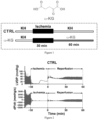
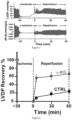
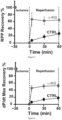
- Rate pressure product which is calculated as LVDP ⁇ heart rate, was also significantly higher in ⁇ -KG with about 70% recovery observed after 5 minutes of reperfusion vs. 5% in the control group, and about 80% after 30 minutes of reperfusion in ⁇ -KG compared to only 20% in control group ( Figure 5 ).
- the ⁇ -KG group also showed a much better LV dP/dt max compared to CTRL hearts ( Figure 6 ).
- ⁇ -KG inhibits complex V activity in mitochondria isolated from mouse heart at the baseline.
- the mitochondrial F 1 F O ATP synthase is the main source of ATP in mammals.
- the ATP synthase can switch to an ATP hydrolase under certain conditions, including myocardial ischemia, resulting in the loss of as much as 50-90% of the total ATP.
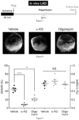
- oligomycin can alleviate IR injury when administered at the time of reperfusion. Oligomycin was found to be toxic at 5 ⁇ M, however, lower doses ( e.g., 10 nM) of oligomycin given at reperfusion were found to significantly reduce myocardial infarct size in mice ( Figure 8 and Figure 9 ).
- HIF-1 protein stability is regulated by prolyl hydroxylase domain containing proteins (PHD; encoded by Egl nine homolog or EGLN genes) for which ⁇ -KG is a cofactor (as is oxygen)
- PHD prolyl hydroxylase domain containing proteins
- S-2HG PHD inhibitor-2-hydroxyglutarate
- ⁇ -KG In addition to PHD in hypoxic response, many other dioxygenases also use ⁇ -KG as a co-substrate in a variety of cellular processes including epigenetic regulation. Because the protective effect of ⁇ -KG manifests within minutes of injection as shown by ex vivo experiments herein, and an inhibitor of ⁇ -KG-dependent epigenetic enzymes ( S -2HG) also confers similar extents of protection against IR injury in vivo, epigenetic mechanisms can largely be ruled out.
- ⁇ -KG inhibits the F 1 subunit of Complex V.
- ⁇ -KG increased CypD binding to Complex V ( Figure 14 ).
- the known Complex V inhibitor oligomycin which inhibits the F O subunit of ComplexV
- Bz-423 another Complex V inhibitor, reduces CypD affinity to Complex V and induces apoptosis.
- a and/or B means “A, B, or both A and B” and "A, B, C, and/or D” means “A, B, C, D, or a combination thereof” and said "combination thereof” means any subset of A, B, C, and D, for example, a single member subset ( e.g., A or B or C or D), a two-member subset ( e.g., A and B; A and C; etc.), or a three-member subset ( e.g., A, B, and C; or A, B, and D; etc.), or all four members ( e.g ., A, B, C, and D).
- a single member subset e.g., A or B or C or D
- a two-member subset e.g., A and B; A and C; etc.
- a three-member subset e.g., A, B, and C; or A, B, and D; etc.
- all four members
Landscapes
- Health & Medical Sciences (AREA)
- Life Sciences & Earth Sciences (AREA)
- Animal Behavior & Ethology (AREA)
- General Health & Medical Sciences (AREA)
- Public Health (AREA)
- Veterinary Medicine (AREA)
- Chemical & Material Sciences (AREA)
- Medicinal Chemistry (AREA)
- Pharmacology & Pharmacy (AREA)
- Epidemiology (AREA)
- Engineering & Computer Science (AREA)
- Bioinformatics & Cheminformatics (AREA)
- Urology & Nephrology (AREA)
- Vascular Medicine (AREA)
- Cardiology (AREA)
- Heart & Thoracic Surgery (AREA)
- Chemical Kinetics & Catalysis (AREA)
- General Chemical & Material Sciences (AREA)
- Nuclear Medicine, Radiotherapy & Molecular Imaging (AREA)
- Organic Chemistry (AREA)
- Pharmaceuticals Containing Other Organic And Inorganic Compounds (AREA)
- Acyclic And Carbocyclic Compounds In Medicinal Compositions (AREA)
- Agricultural Chemicals And Associated Chemicals (AREA)
- Medicines That Contain Protein Lipid Enzymes And Other Medicines (AREA)
Claims (14)
- Mindestens eine Glutaratverbindung zur Verwendung beim Verhindern, Hemmen, Reduzieren oder Behandeln einer ischämiebedingten Reperfusionsverletzung (IR-Verletzung) eines Gewebes bei einem Subjekt,wobei die mindestens eine Glutaratverbindung dem Gewebe oder dem Subjekt vor einem Ereignis, das eine IR-Verletzung verursacht, während dessen und/oder danach in einer therapeutisch wirksamen Menge verabreicht wird,wobei die therapeutisch wirksame Menge 5-20 Milligramm pro Kilogramm beträgt undwobei die mindestens eine Glutaratverbindung α-Ketoglutarat (α-KG), 2-Hydroxyglutarsäure oder Dinatrium(S)-2-hydroxyglutarat (S-2HG) ist.
- Mindestens eine Glutaratverbindung zur Verwendung nach Anspruch 1, wobei die therapeutisch wirksame Menge innerhalb von 1 bis 2 Stunden nach dem Ereignis verabreicht wird, das eine IR-Verletzung verursacht.
- Mindestens eine Glutaratverbindung zur Verwendung nach Anspruch 1 oder 2, wobei die therapeutisch wirksame Menge innerhalb von 1 Stunde nach dem Ereignis verabreicht wird, das eine IR-Verletzung verursacht.
- Mindestens eine Glutaratverbindung zur Verwendung nach einem der Ansprüche 1 bis 3, wobei die therapeutisch wirksame Menge innerhalb von 30 Minuten nach dem Ereignis verabreicht wird, das eine IR-Verletzung verursacht.
- Mindestens eine Glutaratverbindung zur Verwendung nach Anspruch 1, wobei die therapeutisch wirksame Menge während des Ereignisses verabreicht wird, das eine IR-Verletzung verursacht.
- Mindestens eine Glutaratverbindung zur Verwendung nach Anspruch 1, wobei die therapeutisch wirksame Menge unmittelbar vor dem Ereignis verabreicht wird, das eine IR-Verletzung verursacht.
- Mindestens eine Glutaratverbindung zur Verwendung nach Anspruch 1, wobei die therapeutisch wirksame Menge nach dem Ereignis verabreicht wird, das eine IR-Verletzung verursacht.
- Mindestens eine Glutaratverbindung zur Verwendung nach einem der vorhergehenden Ansprüche, wobei die therapeutisch wirksame Menge als Einzeldosis verabreicht wird.
- Mindestens eine Glutaratverbindung zur Verwendung nach einem der vorhergehenden Ansprüche, wobei die therapeutisch wirksame Menge 10-15 Milligramm pro Kilogramm Gewicht des Subjekts beträgt.
- Mindestens eine Glutaratverbindung zur Verwendung nach Anspruch 1, wobei die mindestens eine Glutaratverbindung α-Ketoglutarat ist und die therapeutisch wirksame Menge 5-15, 10-15 oder 11-12 Milligramm pro Kilogramm Gewicht des Subjekts beträgt.
- Mindestens eine Glutaratverbindung zur Verwendung nach Anspruch 1, wobei die mindestens eine Glutaratverbindung 2-Hydroxyglutarsäure oder Dinatrium(S)-2-hydroxyglutarat (S-2HG) ist und die therapeutisch wirksame Menge 10-20, 15-20 oder 15-16 Milligramm pro Kilogramm Gewicht des Subjekts beträgt.
- Mindestens eine Glutaratverbindung zur Verwendung nach einem der vorhergehenden Ansprüche, wobei das Ereignis ein Myokardinfarkt ist.
- Mindestens eine Glutaratverbindung zur Verwendung nach einem der vorhergehenden Ansprüche, wobei das Gewebe Herzgewebe ist.
- Ex-vivo-Verfahren zum Verhindern, Hemmen, Reduzieren oder Behandeln einer ischämiebedingten Reperfusionsverletzung (IR-Verletzung) an einem Gewebe eines Patienten, das Verabreichen einer wirksamen Menge mindestens einer Glutaratverbindung an das Gewebe vor einem Ereignis, das eine IR-Verletzung verursacht, während dessen und/oder danach umfasst, wobei die wirksame Menge 5-20 Milligramm pro Kilogramm beträgt und wobei die mindestens eine Glutaratverbindung α-Ketoglutarat (α-KG), 2-Hydroxyglutarsäure oder Dinatrium(S)-2-hydroxyglutarat (S-2HG) ist.
Applications Claiming Priority (2)
| Application Number | Priority Date | Filing Date | Title |
|---|---|---|---|
| US201662330178P | 2016-05-01 | 2016-05-01 | |
| PCT/US2017/030320 WO2017192413A1 (en) | 2016-05-01 | 2017-04-30 | Glutarate compounds for treating ischemia-reperfusion injuries |
Publications (3)
| Publication Number | Publication Date |
|---|---|
| EP3453046A1 EP3453046A1 (de) | 2019-03-13 |
| EP3453046A4 EP3453046A4 (de) | 2020-01-08 |
| EP3453046B1 true EP3453046B1 (de) | 2025-07-09 |
Family
ID=60203313
Family Applications (1)
| Application Number | Title | Priority Date | Filing Date |
|---|---|---|---|
| EP17793057.5A Active EP3453046B1 (de) | 2016-05-01 | 2017-04-30 | Glutaratverbindungen zur behandlung von ischämiebedingten reperfusionsverletzungen |
Country Status (7)
| Country | Link |
|---|---|
| US (3) | US10285962B2 (de) |
| EP (1) | EP3453046B1 (de) |
| CN (1) | CN109417016B (de) |
| DK (1) | DK3453046T3 (de) |
| ES (1) | ES3048139T3 (de) |
| TW (1) | TWI801337B (de) |
| WO (1) | WO2017192413A1 (de) |
Families Citing this family (4)
| Publication number | Priority date | Publication date | Assignee | Title |
|---|---|---|---|---|
| US10285962B2 (en) * | 2016-05-01 | 2019-05-14 | The Regents Of The University Of California | Glutarate compounds for treating ischemia-reperfusion injuries |
| CN109682894A (zh) * | 2018-12-13 | 2019-04-26 | 南通市产品质量监督检验所 | 一种饮料中索马甜的检测方法 |
| GB201918022D0 (en) * | 2019-12-09 | 2020-01-22 | Cambridge Entpr Ltd | Treatment or prevention of Ischaemic Stroke Reperfusion Injury |
| CN114028371A (zh) * | 2021-12-10 | 2022-02-11 | 中国人民解放军陆军特色医学中心 | α-酮戊二酸在制备治疗心肌梗死的药物中的应用 |
Family Cites Families (5)
| Publication number | Priority date | Publication date | Assignee | Title |
|---|---|---|---|---|
| SE9402027D0 (sv) * | 1994-06-10 | 1994-06-10 | Pharmacia Ab | Energy substrates |
| DE10222561B4 (de) | 2002-05-17 | 2009-12-10 | Dr. Franz Köhler Chemie GmbH | Protektive Lösung zur Verhinderung von Ischämieschäden |
| CN101579332A (zh) * | 2008-05-13 | 2009-11-18 | 北京嘉事联博医药科技有限公司 | 一种治疗心血管疾病的药物组合物及其用途 |
| CN101579331A (zh) | 2008-05-13 | 2009-11-18 | 北京嘉事联博医药科技有限公司 | α-酮戊二酸镁在制备抗心脑缺血疾病药物中的应用 |
| US10285962B2 (en) * | 2016-05-01 | 2019-05-14 | The Regents Of The University Of California | Glutarate compounds for treating ischemia-reperfusion injuries |
-
2017
- 2017-04-30 US US15/582,748 patent/US10285962B2/en active Active
- 2017-04-30 ES ES17793057T patent/ES3048139T3/es active Active
- 2017-04-30 EP EP17793057.5A patent/EP3453046B1/de active Active
- 2017-04-30 DK DK17793057.5T patent/DK3453046T3/da active
- 2017-04-30 CN CN201780037907.7A patent/CN109417016B/zh active Active
- 2017-04-30 WO PCT/US2017/030320 patent/WO2017192413A1/en not_active Ceased
- 2017-05-01 TW TW106114409A patent/TWI801337B/zh active
-
2019
- 2019-03-09 US US16/297,599 patent/US10500177B2/en active Active
- 2019-11-04 US US16/673,081 patent/US11007163B2/en active Active
Also Published As
| Publication number | Publication date |
|---|---|
| US20190201357A1 (en) | 2019-07-04 |
| TW201806590A (zh) | 2018-03-01 |
| US20170333373A1 (en) | 2017-11-23 |
| US20200069621A1 (en) | 2020-03-05 |
| TWI801337B (zh) | 2023-05-11 |
| ES3048139T3 (en) | 2025-12-09 |
| US10500177B2 (en) | 2019-12-10 |
| US10285962B2 (en) | 2019-05-14 |
| CN109417016B (zh) | 2022-06-03 |
| EP3453046A4 (de) | 2020-01-08 |
| CN109417016A (zh) | 2019-03-01 |
| US11007163B2 (en) | 2021-05-18 |
| EP3453046A1 (de) | 2019-03-13 |
| WO2017192413A1 (en) | 2017-11-09 |
| DK3453046T3 (da) | 2025-10-13 |
Similar Documents
| Publication | Publication Date | Title |
|---|---|---|
| US11007163B2 (en) | Glutarate compounds for treating ischemia-reperfusion injuries | |
| US20230144845A1 (en) | Alpha-Ketobutyrate, 2-Hydroxybutyrate, and Alpha-Ketoglutarate for Stimulating Hair Growth | |
| US6231894B1 (en) | Treatments based on discovery that nitric oxide synthase is a paraquat diaphorase | |
| US20150196500A1 (en) | Treatment of Mitochondria-Related Diseases and Improvement of Age-Related Metabolic Deficits | |
| US20150024040A1 (en) | Administration regime for n-hydroxy-4-benzamide | |
| RU2403039C2 (ru) | Лечение биполярных расстройств и сопутствующих симптомов | |
| TW201605434A (zh) | 使用半胱胺及其衍生物治療粒腺體疾病 | |
| KR20240110103A (ko) | 시트르산의 의약적으로 허용 가능한 염, 혹은 그 수화물 또는 그들의 혼합물을 포함하는 의약 조성물 | |
| US20200253907A1 (en) | Compositions and Methods for Treating Neurodegenerative Diseases | |
| JP2023504004A (ja) | トラピジルを使用した認知障害の治療 | |
| HK40005810A (en) | Glutarate compounds for treating ischemia-reperfusion injuries | |
| HK40005810B (en) | Glutarate compounds for treating ischemia-reperfusion injuries | |
| JPWO2016080516A1 (ja) | Drp1重合阻害剤 | |
| WO2016131321A1 (zh) | Nadph在制备治疗心脑血管疾病的药物中的应用 | |
| EP3855180B1 (de) | Verfahren zur bewertung der pathologie der herzinsuffizienz | |
| KR20140147799A (ko) | 독성유발기 및 n-아세틸-l-시스테인 중 적어도 어느 하나를 포함하는 의약품을 포함하는 약학조성물 | |
| RU2457202C1 (ru) | Производное 3-(2,2,2-триметилгидразиний)пропионата - 5- гидрокисиникотинат 3-(2,2,2-триметилгидразиний)пропионат калия, обладающее противоишемической активностью | |
| CN111214465A (zh) | 维拉帕米的抗衰老用途 | |
| US20190151315A1 (en) | Drug For Preventing Or Treating Lactic Acidosis |
Legal Events
| Date | Code | Title | Description |
|---|---|---|---|
| STAA | Information on the status of an ep patent application or granted ep patent |
Free format text: STATUS: THE INTERNATIONAL PUBLICATION HAS BEEN MADE |
|
| PUAI | Public reference made under article 153(3) epc to a published international application that has entered the european phase |
Free format text: ORIGINAL CODE: 0009012 |
|
| STAA | Information on the status of an ep patent application or granted ep patent |
Free format text: STATUS: REQUEST FOR EXAMINATION WAS MADE |
|
| 17P | Request for examination filed |
Effective date: 20181130 |
|
| AK | Designated contracting states |
Kind code of ref document: A1 Designated state(s): AL AT BE BG CH CY CZ DE DK EE ES FI FR GB GR HR HU IE IS IT LI LT LU LV MC MK MT NL NO PL PT RO RS SE SI SK SM TR |
|
| AX | Request for extension of the european patent |
Extension state: BA ME |
|
| DAV | Request for validation of the european patent (deleted) | ||
| DAX | Request for extension of the european patent (deleted) | ||
| A4 | Supplementary search report drawn up and despatched |
Effective date: 20191206 |
|
| RIC1 | Information provided on ipc code assigned before grant |
Ipc: H01J 49/00 20060101AFI20191202BHEP Ipc: G01N 33/487 20060101ALI20191202BHEP Ipc: G01N 30/72 20060101ALI20191202BHEP Ipc: G01N 30/88 20060101ALI20191202BHEP |
|
| REG | Reference to a national code |
Ref country code: HK Ref legal event code: DE Ref document number: 40005810 Country of ref document: HK |
|
| STAA | Information on the status of an ep patent application or granted ep patent |
Free format text: STATUS: EXAMINATION IS IN PROGRESS |
|
| 17Q | First examination report despatched |
Effective date: 20200903 |
|
| P01 | Opt-out of the competence of the unified patent court (upc) registered |
Effective date: 20230511 |
|
| REG | Reference to a national code |
Ref country code: DE Ref legal event code: R079 Free format text: PREVIOUS MAIN CLASS: H01J0049000000 Ipc: A61K0031194000 Ref country code: DE Ref legal event code: R079 Ref document number: 602017090471 Country of ref document: DE Free format text: PREVIOUS MAIN CLASS: H01J0049000000 Ipc: A61K0031194000 |
|
| RIC1 | Information provided on ipc code assigned before grant |
Ipc: A61P 9/10 20060101ALI20230724BHEP Ipc: A61K 31/616 20060101ALI20230724BHEP Ipc: A61K 31/365 20060101ALI20230724BHEP Ipc: A61K 31/198 20060101ALI20230724BHEP Ipc: G01N 33/487 20060101ALI20230724BHEP Ipc: G01N 30/72 20060101ALI20230724BHEP Ipc: G01N 30/88 20060101ALI20230724BHEP Ipc: H01J 49/00 20060101ALI20230724BHEP Ipc: A61K 31/194 20060101AFI20230724BHEP |
|
| GRAP | Despatch of communication of intention to grant a patent |
Free format text: ORIGINAL CODE: EPIDOSNIGR1 |
|
| STAA | Information on the status of an ep patent application or granted ep patent |
Free format text: STATUS: GRANT OF PATENT IS INTENDED |
|
| INTG | Intention to grant announced |
Effective date: 20250225 |
|
| GRAS | Grant fee paid |
Free format text: ORIGINAL CODE: EPIDOSNIGR3 |
|
| GRAA | (expected) grant |
Free format text: ORIGINAL CODE: 0009210 |
|
| STAA | Information on the status of an ep patent application or granted ep patent |
Free format text: STATUS: THE PATENT HAS BEEN GRANTED |
|
| AK | Designated contracting states |
Kind code of ref document: B1 Designated state(s): AL AT BE BG CH CY CZ DE DK EE ES FI FR GB GR HR HU IE IS IT LI LT LU LV MC MK MT NL NO PL PT RO RS SE SI SK SM TR |
|
| REG | Reference to a national code |
Ref country code: GB Ref legal event code: FG4D |
|
| REG | Reference to a national code |
Ref country code: CH Ref legal event code: EP |
|
| REG | Reference to a national code |
Ref country code: IE Ref legal event code: FG4D |
|
| REG | Reference to a national code |
Ref country code: DE Ref legal event code: R096 Ref document number: 602017090471 Country of ref document: DE |
|
| REG | Reference to a national code |
Ref country code: CH Ref legal event code: R17 Free format text: ST27 STATUS EVENT CODE: U-0-0-R10-R17 (AS PROVIDED BY THE NATIONAL OFFICE) Effective date: 20251008 |
|
| REG | Reference to a national code |
Ref country code: DK Ref legal event code: T3 Effective date: 20251010 |
|
| REG | Reference to a national code |
Ref country code: SE Ref legal event code: TRGR |
|
| REG | Reference to a national code |
Ref country code: NL Ref legal event code: FP |
|
| PG25 | Lapsed in a contracting state [announced via postgrant information from national office to epo] |
Ref country code: PT Free format text: LAPSE BECAUSE OF FAILURE TO SUBMIT A TRANSLATION OF THE DESCRIPTION OR TO PAY THE FEE WITHIN THE PRESCRIBED TIME-LIMIT Effective date: 20251110 |
|
| REG | Reference to a national code |
Ref country code: ES Ref legal event code: FG2A Ref document number: 3048139 Country of ref document: ES Kind code of ref document: T3 Effective date: 20251209 |
|
| REG | Reference to a national code |
Ref country code: AT Ref legal event code: MK05 Ref document number: 1811195 Country of ref document: AT Kind code of ref document: T Effective date: 20250709 |
|
| PG25 | Lapsed in a contracting state [announced via postgrant information from national office to epo] |
Ref country code: IS Free format text: LAPSE BECAUSE OF FAILURE TO SUBMIT A TRANSLATION OF THE DESCRIPTION OR TO PAY THE FEE WITHIN THE PRESCRIBED TIME-LIMIT Effective date: 20251109 |
|
| REG | Reference to a national code |
Ref country code: LT Ref legal event code: MG9D |
|
| PG25 | Lapsed in a contracting state [announced via postgrant information from national office to epo] |
Ref country code: AT Free format text: LAPSE BECAUSE OF FAILURE TO SUBMIT A TRANSLATION OF THE DESCRIPTION OR TO PAY THE FEE WITHIN THE PRESCRIBED TIME-LIMIT Effective date: 20250709 |
|
| PG25 | Lapsed in a contracting state [announced via postgrant information from national office to epo] |
Ref country code: FI Free format text: LAPSE BECAUSE OF FAILURE TO SUBMIT A TRANSLATION OF THE DESCRIPTION OR TO PAY THE FEE WITHIN THE PRESCRIBED TIME-LIMIT Effective date: 20250709 |
|
| PG25 | Lapsed in a contracting state [announced via postgrant information from national office to epo] |
Ref country code: HR Free format text: LAPSE BECAUSE OF FAILURE TO SUBMIT A TRANSLATION OF THE DESCRIPTION OR TO PAY THE FEE WITHIN THE PRESCRIBED TIME-LIMIT Effective date: 20250709 |
|
| PG25 | Lapsed in a contracting state [announced via postgrant information from national office to epo] |
Ref country code: GR Free format text: LAPSE BECAUSE OF FAILURE TO SUBMIT A TRANSLATION OF THE DESCRIPTION OR TO PAY THE FEE WITHIN THE PRESCRIBED TIME-LIMIT Effective date: 20251010 |
|
| PG25 | Lapsed in a contracting state [announced via postgrant information from national office to epo] |
Ref country code: LV Free format text: LAPSE BECAUSE OF FAILURE TO SUBMIT A TRANSLATION OF THE DESCRIPTION OR TO PAY THE FEE WITHIN THE PRESCRIBED TIME-LIMIT Effective date: 20250709 |
|
| PG25 | Lapsed in a contracting state [announced via postgrant information from national office to epo] |
Ref country code: PL Free format text: LAPSE BECAUSE OF FAILURE TO SUBMIT A TRANSLATION OF THE DESCRIPTION OR TO PAY THE FEE WITHIN THE PRESCRIBED TIME-LIMIT Effective date: 20250709 Ref country code: BG Free format text: LAPSE BECAUSE OF FAILURE TO SUBMIT A TRANSLATION OF THE DESCRIPTION OR TO PAY THE FEE WITHIN THE PRESCRIBED TIME-LIMIT Effective date: 20250709 |
|
| PG25 | Lapsed in a contracting state [announced via postgrant information from national office to epo] |
Ref country code: RS Free format text: LAPSE BECAUSE OF FAILURE TO SUBMIT A TRANSLATION OF THE DESCRIPTION OR TO PAY THE FEE WITHIN THE PRESCRIBED TIME-LIMIT Effective date: 20251009 |
|
| PG25 | Lapsed in a contracting state [announced via postgrant information from national office to epo] |
Ref country code: SM Free format text: LAPSE BECAUSE OF FAILURE TO SUBMIT A TRANSLATION OF THE DESCRIPTION OR TO PAY THE FEE WITHIN THE PRESCRIBED TIME-LIMIT Effective date: 20250709 |
|
| PG25 | Lapsed in a contracting state [announced via postgrant information from national office to epo] |
Ref country code: CZ Free format text: LAPSE BECAUSE OF FAILURE TO SUBMIT A TRANSLATION OF THE DESCRIPTION OR TO PAY THE FEE WITHIN THE PRESCRIBED TIME-LIMIT Effective date: 20250709 |
|
| PG25 | Lapsed in a contracting state [announced via postgrant information from national office to epo] |
Ref country code: EE Free format text: LAPSE BECAUSE OF FAILURE TO SUBMIT A TRANSLATION OF THE DESCRIPTION OR TO PAY THE FEE WITHIN THE PRESCRIBED TIME-LIMIT Effective date: 20250709 Ref country code: SK Free format text: LAPSE BECAUSE OF FAILURE TO SUBMIT A TRANSLATION OF THE DESCRIPTION OR TO PAY THE FEE WITHIN THE PRESCRIBED TIME-LIMIT Effective date: 20250709 |
|
| REG | Reference to a national code |
Ref country code: CH Ref legal event code: U11 Free format text: ST27 STATUS EVENT CODE: U-0-0-U10-U11 (AS PROVIDED BY THE NATIONAL OFFICE) Effective date: 20260501 |
|
| PLBE | No opposition filed within time limit |
Free format text: ORIGINAL CODE: 0009261 |
|
| STAA | Information on the status of an ep patent application or granted ep patent |
Free format text: STATUS: NO OPPOSITION FILED WITHIN TIME LIMIT |