EP3452136B1 - Dialysis concentrate - Google Patents
Dialysis concentrate Download PDFInfo
- Publication number
- EP3452136B1 EP3452136B1 EP17722016.7A EP17722016A EP3452136B1 EP 3452136 B1 EP3452136 B1 EP 3452136B1 EP 17722016 A EP17722016 A EP 17722016A EP 3452136 B1 EP3452136 B1 EP 3452136B1
- Authority
- EP
- European Patent Office
- Prior art keywords
- concentrate
- ready
- conc
- dialysis
- kit
- Prior art date
- Legal status (The legal status is an assumption and is not a legal conclusion. Google has not performed a legal analysis and makes no representation as to the accuracy of the status listed.)
- Active
Links
Images

Classifications
-
- A—HUMAN NECESSITIES
- A61—MEDICAL OR VETERINARY SCIENCE; HYGIENE
- A61K—PREPARATIONS FOR MEDICAL, DENTAL OR TOILETRY PURPOSES
- A61K31/00—Medicinal preparations containing organic active ingredients
- A61K31/185—Acids; Anhydrides, halides or salts thereof, e.g. sulfur acids, imidic, hydrazonic or hydroximic acids
- A61K31/19—Carboxylic acids, e.g. valproic acid
-
- A—HUMAN NECESSITIES
- A61—MEDICAL OR VETERINARY SCIENCE; HYGIENE
- A61K—PREPARATIONS FOR MEDICAL, DENTAL OR TOILETRY PURPOSES
- A61K31/00—Medicinal preparations containing organic active ingredients
- A61K31/70—Carbohydrates; Sugars; Derivatives thereof
- A61K31/7004—Monosaccharides having only carbon, hydrogen and oxygen atoms
-
- A—HUMAN NECESSITIES
- A61—MEDICAL OR VETERINARY SCIENCE; HYGIENE
- A61K—PREPARATIONS FOR MEDICAL, DENTAL OR TOILETRY PURPOSES
- A61K33/00—Medicinal preparations containing inorganic active ingredients
- A61K33/06—Aluminium, calcium or magnesium; Compounds thereof, e.g. clay
-
- A—HUMAN NECESSITIES
- A61—MEDICAL OR VETERINARY SCIENCE; HYGIENE
- A61K—PREPARATIONS FOR MEDICAL, DENTAL OR TOILETRY PURPOSES
- A61K33/00—Medicinal preparations containing inorganic active ingredients
- A61K33/14—Alkali metal chlorides; Alkaline earth metal chlorides
-
- A—HUMAN NECESSITIES
- A61—MEDICAL OR VETERINARY SCIENCE; HYGIENE
- A61K—PREPARATIONS FOR MEDICAL, DENTAL OR TOILETRY PURPOSES
- A61K33/00—Medicinal preparations containing inorganic active ingredients
- A61K33/24—Heavy metals; Compounds thereof
- A61K33/26—Iron; Compounds thereof
-
- A—HUMAN NECESSITIES
- A61—MEDICAL OR VETERINARY SCIENCE; HYGIENE
- A61K—PREPARATIONS FOR MEDICAL, DENTAL OR TOILETRY PURPOSES
- A61K47/00—Medicinal preparations characterised by the non-active ingredients used, e.g. carriers or inert additives; Targeting or modifying agents chemically bound to the active ingredient
- A61K47/02—Inorganic compounds
-
- A—HUMAN NECESSITIES
- A61—MEDICAL OR VETERINARY SCIENCE; HYGIENE
- A61K—PREPARATIONS FOR MEDICAL, DENTAL OR TOILETRY PURPOSES
- A61K9/00—Medicinal preparations characterised by special physical form
- A61K9/08—Solutions
-
- A—HUMAN NECESSITIES
- A61—MEDICAL OR VETERINARY SCIENCE; HYGIENE
- A61K—PREPARATIONS FOR MEDICAL, DENTAL OR TOILETRY PURPOSES
- A61K9/00—Medicinal preparations characterised by special physical form
- A61K9/48—Preparations in capsules, e.g. of gelatin, of chocolate
- A61K9/50—Microcapsules having a gas, liquid or semi-solid filling; Solid microparticles or pellets surrounded by a distinct coating layer, e.g. coated microspheres, coated drug crystals
- A61K9/5005—Wall or coating material
- A61K9/5021—Organic macromolecular compounds
- A61K9/5036—Polysaccharides, e.g. gums, alginate; Cyclodextrin
-
- A—HUMAN NECESSITIES
- A61—MEDICAL OR VETERINARY SCIENCE; HYGIENE
- A61M—DEVICES FOR INTRODUCING MEDIA INTO, OR ONTO, THE BODY; DEVICES FOR TRANSDUCING BODY MEDIA OR FOR TAKING MEDIA FROM THE BODY; DEVICES FOR PRODUCING OR ENDING SLEEP OR STUPOR
- A61M1/00—Suction or pumping devices for medical purposes; Devices for carrying-off, for treatment of, or for carrying-over, body-liquids; Drainage systems
- A61M1/14—Dialysis systems; Artificial kidneys; Blood oxygenators ; Reciprocating systems for treatment of body fluids, e.g. single needle systems for hemofiltration or pheresis
- A61M1/16—Dialysis systems; Artificial kidneys; Blood oxygenators ; Reciprocating systems for treatment of body fluids, e.g. single needle systems for hemofiltration or pheresis with membranes
- A61M1/1654—Dialysates therefor
-
- A—HUMAN NECESSITIES
- A61—MEDICAL OR VETERINARY SCIENCE; HYGIENE
- A61M—DEVICES FOR INTRODUCING MEDIA INTO, OR ONTO, THE BODY; DEVICES FOR TRANSDUCING BODY MEDIA OR FOR TAKING MEDIA FROM THE BODY; DEVICES FOR PRODUCING OR ENDING SLEEP OR STUPOR
- A61M1/00—Suction or pumping devices for medical purposes; Devices for carrying-off, for treatment of, or for carrying-over, body-liquids; Drainage systems
- A61M1/14—Dialysis systems; Artificial kidneys; Blood oxygenators ; Reciprocating systems for treatment of body fluids, e.g. single needle systems for hemofiltration or pheresis
- A61M1/28—Peritoneal dialysis ; Other peritoneal treatment, e.g. oxygenation
- A61M1/287—Dialysates therefor
Definitions
- the present invention relates to the field of medical treatments. More specifically, the present invention relates to solutions used for dialysis therapy.
- the present invention relates to a first concentrate that could be used for preparing a ready-to-use dialysis fluid after mixing with purified and/or sterilized water and/or one or more further concentrates.
- the invention also relates to a kit comprising at least a first and a second concentrate for preparing a ready-to-use dialysis fluid, wherein the ready-to-use dialysis fluid is prepared by mixing the at least first and second concentrate with optionally purified water.
- a person's renal system can fail.
- renal failure of any cause there are several physiological derangements. The balance of water, minerals, and the excretion of daily metabolic load are no longer possible in renal failure.
- toxic end products of nitrogen metabolism e.g., urea, creatinine, uric acid, and others
- Kidney failure and reduced kidney function have been treated with dialysis. Dialysis removes waste, toxins and excess water from the body that would otherwise have been removed by normal functioning kidneys. Dialysis treatment for replacement of kidney function is critical to many people because the treatment is life-saving.
- Hemodialysis, hemofiltration and peritoneal dialysis are three types of dialysis therapies generally used to treat loss of kidney function.
- Hemodialysis treatment removes waste, toxins and excess water directly from the patient's blood.
- the patient is connected to a hemodialysis machine and the patient's blood is pumped through the machine.
- needles or catheters can be inserted into the patient's veins and arteries to connect the blood flow to and from the dialysis machine.
- the dialyzer removes the waste, toxins and excess water from the patient's blood and returns the blood to infuse back into the patient.
- a large amount of dialysis fluid for example about 90 - 120 liters, is used by most hemodialysis machines to dialyze the blood during a single hemodialysis therapy.
- the spent dialysis fluid or dialysate is then discarded.
- Hemodialysis treatment lasts several hours and is generally performed in a treatment center about three times per week.
- Hemofiltration is a convection-based blood cleansing technique.
- Blood access can be venovenous or arteriovenous.
- a transmembrane pressure gradient between the blood compartment and the ultrafiltrate compartment causes plasma water to be filtered across the highly permeable membrane.
- As the water crosses the membrane it convects small and large molecules across the membrane and thus cleanses the blood.
- An excessive amount of plasma water is eliminated by filtration. Therefore, in order to keep the body water balanced, fluid must be substituted continuously by a balanced electrolyte solution (replacement or substitution fluid) infused intravenously.
- This substitution fluid can be infused either into the arterial blood line leading to the hemofilter (predilution) or into the venous blood line leaving the hemofilter (postdilution).
- Peritoneal dialysis utilizes a sterile dialysis fluid, which is infused into a patient's peritoneal cavity and into contact with the patient's peritoneal membrane. Waste, toxins and excess water pass from the patient's blood stream through the peritoneal membrane and into the dialysate. The transfer of waste, toxins and excess water from the bloodstream into the dialysate occurs due to diffusion and convection during a dwell period. The convective transport is due to that an osmotic agent in the dialysate creates an osmotic gradient across the membrane. The dialysate is later drained from the patient's peritoneal cavity to remove the waste, toxins and excess water from the patient.
- CAPD continuous ambulatory peritoneal dialysis
- APD automated peritoneal dialysis
- CAPD is a manual dialysis treatment, in which the patient connects the catheter to a bag of fresh dialysis fluid and allows the dialysis fluid to dwell within the cavity to transfer waste, toxins and excess water from the patient's blood stream to the dialysis fluid. After a dwell period, the patient drains the dialysate and then repeats the manual dialysis procedure.
- Tubing sets with "Y" connectors for the solution and drain bags are available that can reduce the number of connections the patient must make.
- the tubing sets can include pre-attached bags including, for example, an empty bag and a bag filled with the dialysis fluid.
- each treatment cycle which includes a drain, fill and dwell, takes about four to twelve hours.
- APD is similar to CAPD in that the dialysis treatment includes a drain, fill, and dwell cycle.
- a dialysis machine automatically performs three or more cycles of peritoneal dialysis treatment, typically overnight while the patient sleeps.
- an automated dialysis machine fluidly connects to an implanted catheter.
- the automated dialysis machine also fluidly connects to a source or bag of fresh dialysis fluid and to a fluid drain.
- the dialysis machine pumps dialysate from the peritoneal cavity, through the catheter, to the drain.
- the dialysis machine then pumps fresh dialysis fluid from the dialysis fluid source , through the catheter, and into the patient's peritoneal cavity.
- the automated machine allows the dialysis fluid to dwell within the cavity so that the transfer of waste, toxins and excess water from the patient's blood stream may occur.
- a computer controls the automated dialysis machine so that the dialysis treatment occurs automatically when the patient is connected to the dialysis machine, for example when the patient sleeps. That is, the dialysis system automatically and sequentially fills the peritoneal cavity with dialysis fluid, pumps dialysate out of the peritoneal cavity, and repeats the procedure.
- peritoneal dialysis fluids contain glucose at a concentration of 1.5% - 4.25% by weight to effect transport of water and metabolic waste across the peritoneal membrane.
- Glucose is generally recognized as a safe and effective osmotic agent, particularly for short dwell exchanges.
- Glucose-based peritoneal dialysis solutions are typically formulated at a pH of 5.0 to 5.5. This is to avoid discomfort and/or pain during infusion without excessive degradation of glucose.
- glucose degradation products (GDPs)
- GDPs glucose degradation products
- the GDPs may induce major problems in connection with peritoneal dialysis treatment.
- a first part includes a glucose concentrate and a second part includes a buffer concentrate.
- the first and second parts are separately sterilized at an acidic pH and then admixed prior to use, such as infusion into a patient during peritoneal dialysis.
- a dialysis fluid prepared by admixing two such solution parts has enhanced biocompatible characteristics such as reduced levels of glucose degradation products.
- the present invention solves this problem by providing a first concentrate having increased stability against precipitation when stored at temperatures from +4°C to +40°C.
- the present invention provides an aqueous first concentrate comprising lactate and calcium ions, said first concentrate having increased stability against precipitation at temperatures around +4°C.
- the first concentrate is useful for preparing a ready-to-use dialysis fluid by mixing said first concentrate with water and optionally a second concentrate comprising glucose.
- the lactate concentration L conc (expressed in moles per litre, M) of the first concentrate fulfills the conditions:
- the first concentrate also fulfills the condition c) L conce ⁇ 1.7 ⁇ 0.4 ⁇ Ca ready M wherein Ca ready has the same meaning as above.
- the first concentrate also fulfills the condition L conc > 0.80 M.
- the ratio R L conc / Ca conc is within the range of 20 - 40, wherein Ca conc is the calcium concentration of the first concentrate expressed in moles per liter (M).
- the ratio R is within the range of 22 - 33.
- the first concentrate has a pH within the range of 5.5 - 9.0.
- the first concentrate has a pH within the range of 6.5 - 8.0.
- the first concentrate has a pH within the range of 6.0 - 8.5.
- the first concentrate also comprises ions selected from the group of Na + , K + , Mg 2+ , and Cl - .
- the first concentrate is terminally sterilized.
- the invention provides a kit of parts for preparing a peritoneal dialysis fluid comprising:
- the second concentrate has a pH within the range of 1.5 - 4.
- the second concentrate has a pH within 2.0 - 3.2
- the second concentrate has been made acidic by adding hydrochloric acid.
- the second concentrate is a glucose concentrate saturated to a level within the range from 30% - 70%.
- said second concentrate is terminally sterilized.
- the invention provides a multi-chambered bag for storing a kit of parts according to the second aspect, wherein said first concentrate is stored in a first chamber, and said second concentrate is stored in a second chamber.
- the invention provides a method of producing a dialysis solution, the method comprising the steps of:
- the present invention generally relates to dialysis solutions.
- the present invention relates to concentrates for manufacturing ready-to-use dialysis solutions.
- Such ready-to-use dialysis solutions can be used in a variety of suitable applications.
- the dialysis solutions are used during peritoneal dialysis, such as during automated peritoneal dialysis.
- Dialysis therapy as the term or like terms are used throughout the text is meant to include and encompass any and all suitable forms of therapies that utilizes the patient's blood to remove waste, toxins and excess water from the patient.
- Such therapies such as hemodialysis, hemofiltration and hemodiafiltration, include both intermittent therapies and continuous therapies used for continuous renal replacement therapy (CRRT).
- CRRT continuous renal replacement therapy
- the continuous therapies include, for example, slow continuous ultrafiltration (SCUF), continuous venovenous hemodiafiltration (CVVH), continuous venovenous hemodialysis (CVVHD), continuous venovenous hemodiafiltration (CCVHDF), continuous arteriovenous hemodialysis (CAVHD), continuous arteriovenous hemodiafiltration (CAVHDF), continuous ultrafiltration periodic intermittent hemodialysis or the like.
- the dialysis solutions are used during peritoneal dialysis, such as automated peritoneal dialysis, continuous ambulatory peritoneal dialysis, continuous flow peritoneal dialysis and the like.
- the present invention in an embodiment, can be utilized in methods providing dialysis therapy for patients having chronic kidney failure or disease, it shall be appreciated that the present invention can be used for acute dialysis needs, for example in an emergency room setting.
- the intermittent forms of therapy i.e., hemofiltration, hemodialysis, peritoneal dialysis, and hemodiafiltration
- Hemodialysis involves withdrawing blood from the body and cleaning it in an extracorporeal blood circuit and then returning the cleansed blood to the body.
- the extracorporeal blood circuit includes a dialyzer which comprises a semipermeable membrane.
- the semipermeable membrane has a blood side and a dialysate side, and waste substances and excess fluid are removed from the blood passing on the blood side of the semipermeable membrane through the semipermeable membrane over to the dialysate side of the semipermeable membrane.
- Hemodialysis may be performed in three different treatment modes, hemodialysis, hemofiltration, and hemodiafiltration .
- Common to all three treatment modes is that the patient is connected by a blood line to the dialysis machine, which continuously withdraws blood from the patient. The blood is then brought in contact with the blood side of the semipermeable membrane within the dialyzer in a flowing manner.
- dialysis fluid In hemodialysis, an aqueous solution called dialysis fluid is brought in contact with the opposite membrane surface, the dialysate side, in a flowing manner. Waste substances (toxins) and solutes are removed/controlled mainly by diffusion. Excess fluid is removed by applying transmembrane pressure over the semipermeable membrane. Solutes and nutrients may diffuse in the opposite direction from the dialysis fluid, through the semipermeable membrane and into the blood.
- a correctly balanced electrolyte/buffer dialysis fluid (also named infusion fluid, replacement fluid, or substitution fluid) is infused into the extracorporeal blood circuit. This infusion may be done either pre the dialyzer (pre-infusion mode) or post the dialyzer (post-infusion mode) or both.
- Hemodiafiltration is a combination of hemodialysis and hemofiltration, a treatment mode that combines transport of waste substances and excess fluids through the semipermeable wall by both diffusion and convection.
- a dialysis fluid is brought in contact with the dialysate side of the semipermeable membrane in a continuously flowing manner, and a dialysis fluid (also named infusion fluid or replacement fluid) is used for infusion into the extracorporeal blood circuit in pre- infusion mode, post-infusion mode or both.
- hemodialysis is performed for 3-5 hours, three times per week. It is usually performed at a dialysis centre, although home dialysis is also possible.
- home dialysis patients are free to perform dialysis more frequently and also in more gentle treatments with longer treatment times, i.e. 4-8 hours per treatment and 5-7 treatments per week.
- the dose and treatment times may be adjusted due to different demand of the patients.
- a continuous treatment throughout a major portion of the entire day for up to several weeks, a continuous renal replacement therapy (CRRT), or intermittent renal replacement therapy (IRRT) is the indicated treatment depending on the patients' status.
- CRRT continuous renal replacement therapy
- IRRT intermittent renal replacement therapy
- the removal of waste substances and excess fluid from the patient is effected by any or a combination of the treatment modes hemodialysis, hemofiltration and hemodiafiltration.
- a hypertonic dialysis fluid is infused into the peritoneal cavity of the patient.
- solutes and water is exchanged in the capillary vessels of a patient's peritoneal membrane with said hypertonic dialysis fluid.
- the principle of this method is diffusion of solutes transferred according to the concentration gradient and water migration due to the osmotic differences over the peritoneal membrane.
- the dialysis fluids used in all the above dialysis techniques contain mainly electrolytes like sodium, magnesium, calcium, potassium, an acid/base buffer system and optionally glucose or a glucose-like compound. All the components in dialysis fluids are selected to control the levels of electrolytes and the acid-base equilibrium within the blood and to remove waste materials from the blood .
- One way of facilitating handling as well as reducing the need for transportation is to develop concentrates which can be diluted with optionally purified and/or sterilized water in order to produce a reconstituted ready-to-use dialysis fluid.
- Suitable containers for such concentrates are much smaller, less heavy, and consequently easier to handle.
- the transportation need is also reduced.
- the environmental impact of manufacturing as well as transporting concentrates is also reduced.
- the concentrate composition should also fulfill the condition: c) L conc ⁇ 1.85 ⁇ 0.4 ⁇ Ca ready M wherein Ca ready has the same meaning as above.
- Other similar variants of the equation of condition c) could also be considered, such as L conc ⁇ (1.75 - 0.4 x Ca ready ) M, L conc ⁇ (1.7 - 0.4 x Ca ready ) M, L conc ⁇ (1.8 - 0.4 x Ca ready ) M, and L conc ⁇ (1.65 - 0.4 x Ca ready ) M.
- the first concentrate of the present invention can include several different components. As already indicated, the first concentrate is buffered by lactate.
- the buffer pH can include any suitable level effective for formulating and sterilizing the concentrate composition and subsequently formulating a ready-to-use dialysis solution that includes a mixture of the first concentrate, a second concentrate, which is an acidic glucose concentrate and optionally purified water.
- the pH of the first concentrate should be within the range of 5.5 - 9.0, and preferably within the range of 6.5 - 8.0.
- the first concentrate may contain other electrolytes such as Cl - , Na + , Mg 2+ , and K + in addition to Ca 2+ .
- a pH adjusting agent can be added to the first concentrate, such as sodium hydroxide, hydrochloric acid, and/or the like.
- Typical concentrations of electrolytes are: Sodium chloride 1.5 - 3.3 M Calcium chloride 0.025 - 0.0375 M Magnesium chloride 0 - 0.008 M
- the first concentrate is intended to be used as one component of a kit of parts for preparing a peritoneal dialysis composition.
- Said kit also comprises a second concentrate, which is an acidic glucose concentrate.
- the acidic concentrate has a pH that ranges from 1.5 - 4.0, preferably from 2.0 - 3.2.
- the second concentrate may also include a pH-adjusting agent. Examples of pH adjusting agents include an inorganic acid, such as hydrochloric acid.
- the second concentrate is saturated to a level within the range of 30 % - 70%.
- the second concentrate may also be terminal sterilized.
- the first and second concentrates may be stored in a multi-chambered bag for convenience. Then, the first concentrate is stored in a first chamber and the second concentrate in a second chamber.
- a multi-chambered bag may be equipped with connections and conduits for connecting the chambers to a mixing unit, where the concentrates are mixed and diluted.
- the acid glucose concentrate, the concentration composition and the purified water can be formulated, sterilized and admixed in any suitable manner prior to use, such as prior to infusion by peritoneal dialysis.
- Water should be within limits that are safe from a microbiological and chemical perspective; this water could for example be “purified water”, “highly purified water”, “ultrapure water”, “water for injection” (WFI), “sterile WFI”, “water for hemodialysis”, “distilled water”, “sterile purified water” and “water for pharmaceutical use”.
- a mixed solution including specific amounts of the first and second concentrates and purified water are formulated into a desired peritoneal dialysis liquid by mixing.
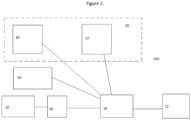
- Figure 2 provides a scheme 100 showing one way of how to prepare a desired peritoneal dialysis liquid.
- a container 10 comprising a first concentrate and a container 12 comprising a second concentrate are each connected to a mixer 16 by conduits.
- the containers 10, 12 may be chambers in a multi-chambered bag 50.
- a source 14 of purified water is also connected to the mixer 16 by a conduit.
- the mixer 16 is controlled by a controller 18 based on input from a user interface 20. Depending on such user input and control signals from the controller 18, the mixer 16 receives specific amounts of first and optionally second concentrates as well as water from said sources 10,12, 14, and produces a ready-to-use dialysis fluid that is delivered through output/container 22.
- Test solutions representing candidate concentrate compositions were prepared by adding different amounts of solid constituents to containers and finally adding purified water up to a desired volume. The test solutions were heat sterilized and incubated for more than two months at +4°C
- a table of ready-to-use dialysis liquids based on the first and second concentrates of each example is also provided at the end of each example.
- Ca ready is 1.75 mM for the ready-to-use solution and L conce is 1.40 M for the first concentrate of example 1.
- Condition a) above is fulfilled as L conc is larger than 0.75 M.
- Ca ready is 1.25 mM for the ready-to-use solution and L conce is 1.40 M for the first concentrate of example 1.
- Condition a) above is fulfilled as L conc is larger than 0.75 M.
- Ca ready is 1.75 mM for the ready-to-use solution and L conce is 1.20 M for the first concentrate of example 1.
- Condition a) above is fulfilled as L conc is larger than 0.75 M.
- Ca ready is 1.75 mM for the ready-to-use solution and L conce is 0.80 M for the first concentrate of example 1.
- Condition a) above is fulfilled as L conc is larger than 0.75 M.
- Ca ready is 1.25 mM for the ready-to-use solution and L conce is 0.80 M for the first concentrate of example 1.
- Condition a) above is fulfilled as L conc is larger than 0.75 M.
- Ca ready is 1.25 mM for the ready-to-use solution and L conce is 1.20 M for the first concentrate of example 1.
- Condition a) above is fulfilled as L conc is larger than 0.75 M.
- Ca ready is 1.75 mM for the ready-to-use solution and L conce is 1.00 M for the first concentrate of example 1.
- Condition a) above is fulfilled as L conc is larger than 0.75 M.
Landscapes
- Health & Medical Sciences (AREA)
- Life Sciences & Earth Sciences (AREA)
- Animal Behavior & Ethology (AREA)
- Veterinary Medicine (AREA)
- Public Health (AREA)
- General Health & Medical Sciences (AREA)
- Chemical & Material Sciences (AREA)
- Epidemiology (AREA)
- Medicinal Chemistry (AREA)
- Pharmacology & Pharmacy (AREA)
- Urology & Nephrology (AREA)
- Heart & Thoracic Surgery (AREA)
- Inorganic Chemistry (AREA)
- Emergency Medicine (AREA)
- Engineering & Computer Science (AREA)
- Vascular Medicine (AREA)
- Anesthesiology (AREA)
- Biomedical Technology (AREA)
- Hematology (AREA)
- Molecular Biology (AREA)
- Bioinformatics & Cheminformatics (AREA)
- External Artificial Organs (AREA)
Applications Claiming Priority (2)
| Application Number | Priority Date | Filing Date | Title |
|---|---|---|---|
| SE1650612 | 2016-05-06 | ||
| PCT/EP2017/060771 WO2017191302A1 (en) | 2016-05-06 | 2017-05-05 | Dialysis concentrate |
Publications (2)
| Publication Number | Publication Date |
|---|---|
| EP3452136A1 EP3452136A1 (en) | 2019-03-13 |
| EP3452136B1 true EP3452136B1 (en) | 2024-03-27 |
Family
ID=58672593
Family Applications (1)
| Application Number | Title | Priority Date | Filing Date |
|---|---|---|---|
| EP17722016.7A Active EP3452136B1 (en) | 2016-05-06 | 2017-05-05 | Dialysis concentrate |
Country Status (6)
| Country | Link |
|---|---|
| US (2) | US12144790B2 (pl) |
| EP (1) | EP3452136B1 (pl) |
| JP (1) | JP7034933B2 (pl) |
| ES (1) | ES2984566T3 (pl) |
| PL (1) | PL3452136T3 (pl) |
| WO (1) | WO2017191302A1 (pl) |
Families Citing this family (1)
| Publication number | Priority date | Publication date | Assignee | Title |
|---|---|---|---|---|
| CN112245691B (zh) | 2019-07-22 | 2024-07-05 | 巴克斯特医疗保健股份有限公司 | 从原水制备透析液的方法和系统 |
Citations (1)
| Publication number | Priority date | Publication date | Assignee | Title |
|---|---|---|---|---|
| JP2015218141A (ja) * | 2014-05-19 | 2015-12-07 | テルモ株式会社 | 腹膜透析液 |
Family Cites Families (17)
| Publication number | Priority date | Publication date | Assignee | Title |
|---|---|---|---|---|
| US6020007A (en) | 1984-06-22 | 2000-02-01 | Btg International Limited | Fluid therapy with l-lactate and/or pyruvate anions |
| US5344392A (en) | 1990-09-28 | 1994-09-06 | Baxter International Inc. | Method and apparatus for preparation of solutions from concentrates |
| US5827820A (en) | 1992-04-06 | 1998-10-27 | Baxter International Inc. | Aqueous peritoneal dialysis solution |
| US6399110B1 (en) | 1997-08-22 | 2002-06-04 | Shimizu Pharmaceutical Co., Ltd. | Glucose-containing preparation |
| US6610206B1 (en) * | 1998-10-20 | 2003-08-26 | Advanced Renal Technologies | Buffered compositions for dialysis |
| DE19912850B4 (de) | 1999-03-22 | 2005-04-07 | Fresenius Medical Care Deutschland Gmbh | Lösung, insbesondere für Hämo- oder Peritonealdialyse, sowie Verfahren zu deren Herstellung |
| SE9903331D0 (sv) | 1999-09-16 | 1999-09-16 | Gambro Lundia Ab | Method and apparatus for sterilising a heat sensitive fluid |
| SE0301577L (sv) | 2003-05-28 | 2004-11-29 | Gambro Lundia Ab | Lösning med låg natriumhalt |
| US7053059B2 (en) | 2003-07-25 | 2006-05-30 | Baxter International Inc. | Dialysis solutions with reduced levels of glucose degradation products |
| US20050276868A1 (en) | 2004-06-10 | 2005-12-15 | Bart Degreve | Bicarbonate-based peritoneal dialysis solutions |
| JP2006000482A (ja) * | 2004-06-18 | 2006-01-05 | Jms Co Ltd | 生体適合性薬液製剤、その製造方法及びその保存方法 |
| US7935070B2 (en) | 2005-01-28 | 2011-05-03 | Fresenius Medical Care North America | Systems and methods for dextrose containing peritoneal dialysis (PD) solutions with neutral pH and reduced glucose degradation product |
| CN103619372A (zh) | 2011-03-23 | 2014-03-05 | 纳科斯达格医药股份有限公司 | 腹膜透析系统、装置和方法 |
| DE112012006079T5 (de) | 2012-03-23 | 2014-12-04 | Nxstage Medical, Inc. | Peritonealdialyse-Systeme, -Vorrichtungen und -Verfahren |
| JPWO2014083612A1 (ja) * | 2012-11-27 | 2017-01-05 | テルモ株式会社 | 腹膜透析液 |
| EP2965747A1 (en) * | 2014-07-10 | 2016-01-13 | Nipro Renal Solutions Spain SRL | Dialysate acid precursor composition enriched with phosphorous |
| EP3439711A1 (en) * | 2016-04-04 | 2019-02-13 | Medtronic Inc. | Peritoneal dialysate fluid generation system |
-
2017
- 2017-05-05 JP JP2018550756A patent/JP7034933B2/ja active Active
- 2017-05-05 ES ES17722016T patent/ES2984566T3/es active Active
- 2017-05-05 WO PCT/EP2017/060771 patent/WO2017191302A1/en not_active Ceased
- 2017-05-05 US US16/095,094 patent/US12144790B2/en active Active
- 2017-05-05 PL PL17722016.7T patent/PL3452136T3/pl unknown
- 2017-05-05 EP EP17722016.7A patent/EP3452136B1/en active Active
-
2024
- 2024-10-10 US US18/912,392 patent/US20250032435A1/en active Pending
Patent Citations (1)
| Publication number | Priority date | Publication date | Assignee | Title |
|---|---|---|---|---|
| JP2015218141A (ja) * | 2014-05-19 | 2015-12-07 | テルモ株式会社 | 腹膜透析液 |
Also Published As
| Publication number | Publication date |
|---|---|
| PL3452136T3 (pl) | 2024-07-29 |
| JP7034933B2 (ja) | 2022-03-14 |
| US20190151265A1 (en) | 2019-05-23 |
| WO2017191302A1 (en) | 2017-11-09 |
| ES2984566T3 (es) | 2024-10-29 |
| US20250032435A1 (en) | 2025-01-30 |
| JP2019516428A (ja) | 2019-06-20 |
| EP3452136A1 (en) | 2019-03-13 |
| US12144790B2 (en) | 2024-11-19 |
Similar Documents
| Publication | Publication Date | Title |
|---|---|---|
| US7053059B2 (en) | Dialysis solutions with reduced levels of glucose degradation products | |
| EP1753437B1 (en) | Bicarbonate-based peritoneal dialysis solutions | |
| US20060128658A1 (en) | Biocompatible dialysis fluids containing icodextrins | |
| EP2413944B1 (en) | A multipart fluid system and a system for regional citrate anticoagulation in an extracorporeal blood circuit | |
| EP2052751A2 (en) | Use of high citrate dialysate | |
| WO2010112570A1 (en) | Dialysis solution | |
| EP4223290B1 (en) | Dialysis composition comprising citrate, calcium and magnesium | |
| EP2934483B1 (en) | Dialysis composition | |
| US11026968B2 (en) | Anticoagulation fluid comprising citrate and phosphate | |
| EP1511501A1 (en) | A stable bicarbonate-based solution in a single container | |
| US20250032435A1 (en) | Dialysis concentrate | |
| WO2010112547A1 (en) | Dialysis precursor composition | |
| US20200345762A1 (en) | Method and system for providing peritoneal dialysis fluids with varying sodium concentrations |
Legal Events
| Date | Code | Title | Description |
|---|---|---|---|
| STAA | Information on the status of an ep patent application or granted ep patent |
Free format text: STATUS: UNKNOWN |
|
| STAA | Information on the status of an ep patent application or granted ep patent |
Free format text: STATUS: THE INTERNATIONAL PUBLICATION HAS BEEN MADE |
|
| PUAI | Public reference made under article 153(3) epc to a published international application that has entered the european phase |
Free format text: ORIGINAL CODE: 0009012 |
|
| STAA | Information on the status of an ep patent application or granted ep patent |
Free format text: STATUS: REQUEST FOR EXAMINATION WAS MADE |
|
| 17P | Request for examination filed |
Effective date: 20181206 |
|
| AK | Designated contracting states |
Kind code of ref document: A1 Designated state(s): AL AT BE BG CH CY CZ DE DK EE ES FI FR GB GR HR HU IE IS IT LI LT LU LV MC MK MT NL NO PL PT RO RS SE SI SK SM TR |
|
| AX | Request for extension of the european patent |
Extension state: BA ME |
|
| DAV | Request for validation of the european patent (deleted) | ||
| DAX | Request for extension of the european patent (deleted) | ||
| STAA | Information on the status of an ep patent application or granted ep patent |
Free format text: STATUS: EXAMINATION IS IN PROGRESS |
|
| 17Q | First examination report despatched |
Effective date: 20221014 |
|
| GRAP | Despatch of communication of intention to grant a patent |
Free format text: ORIGINAL CODE: EPIDOSNIGR1 |
|
| STAA | Information on the status of an ep patent application or granted ep patent |
Free format text: STATUS: GRANT OF PATENT IS INTENDED |
|
| INTG | Intention to grant announced |
Effective date: 20231114 |
|
| GRAS | Grant fee paid |
Free format text: ORIGINAL CODE: EPIDOSNIGR3 |
|
| GRAA | (expected) grant |
Free format text: ORIGINAL CODE: 0009210 |
|
| STAA | Information on the status of an ep patent application or granted ep patent |
Free format text: STATUS: THE PATENT HAS BEEN GRANTED |
|
| AK | Designated contracting states |
Kind code of ref document: B1 Designated state(s): AL AT BE BG CH CY CZ DE DK EE ES FI FR GB GR HR HU IE IS IT LI LT LU LV MC MK MT NL NO PL PT RO RS SE SI SK SM TR |
|
| REG | Reference to a national code |
Ref country code: GB Ref legal event code: FG4D |
|
| REG | Reference to a national code |
Ref country code: CH Ref legal event code: EP |
|
| REG | Reference to a national code |
Ref country code: DE Ref legal event code: R096 Ref document number: 602017080362 Country of ref document: DE |
|
| REG | Reference to a national code |
Ref country code: IE Ref legal event code: FG4D |
|
| REG | Reference to a national code |
Ref country code: SE Ref legal event code: TRGR |
|
| PG25 | Lapsed in a contracting state [announced via postgrant information from national office to epo] |
Ref country code: LT Free format text: LAPSE BECAUSE OF FAILURE TO SUBMIT A TRANSLATION OF THE DESCRIPTION OR TO PAY THE FEE WITHIN THE PRESCRIBED TIME-LIMIT Effective date: 20240327 |
|
| REG | Reference to a national code |
Ref country code: LT Ref legal event code: MG9D |
|
| PG25 | Lapsed in a contracting state [announced via postgrant information from national office to epo] |
Ref country code: GR Free format text: LAPSE BECAUSE OF FAILURE TO SUBMIT A TRANSLATION OF THE DESCRIPTION OR TO PAY THE FEE WITHIN THE PRESCRIBED TIME-LIMIT Effective date: 20240628 |
|
| PG25 | Lapsed in a contracting state [announced via postgrant information from national office to epo] |
Ref country code: RS Free format text: LAPSE BECAUSE OF FAILURE TO SUBMIT A TRANSLATION OF THE DESCRIPTION OR TO PAY THE FEE WITHIN THE PRESCRIBED TIME-LIMIT Effective date: 20240627 Ref country code: HR Free format text: LAPSE BECAUSE OF FAILURE TO SUBMIT A TRANSLATION OF THE DESCRIPTION OR TO PAY THE FEE WITHIN THE PRESCRIBED TIME-LIMIT Effective date: 20240327 |
|
| PG25 | Lapsed in a contracting state [announced via postgrant information from national office to epo] |
Ref country code: RS Free format text: LAPSE BECAUSE OF FAILURE TO SUBMIT A TRANSLATION OF THE DESCRIPTION OR TO PAY THE FEE WITHIN THE PRESCRIBED TIME-LIMIT Effective date: 20240627 Ref country code: NO Free format text: LAPSE BECAUSE OF FAILURE TO SUBMIT A TRANSLATION OF THE DESCRIPTION OR TO PAY THE FEE WITHIN THE PRESCRIBED TIME-LIMIT Effective date: 20240627 Ref country code: LT Free format text: LAPSE BECAUSE OF FAILURE TO SUBMIT A TRANSLATION OF THE DESCRIPTION OR TO PAY THE FEE WITHIN THE PRESCRIBED TIME-LIMIT Effective date: 20240327 Ref country code: HR Free format text: LAPSE BECAUSE OF FAILURE TO SUBMIT A TRANSLATION OF THE DESCRIPTION OR TO PAY THE FEE WITHIN THE PRESCRIBED TIME-LIMIT Effective date: 20240327 Ref country code: GR Free format text: LAPSE BECAUSE OF FAILURE TO SUBMIT A TRANSLATION OF THE DESCRIPTION OR TO PAY THE FEE WITHIN THE PRESCRIBED TIME-LIMIT Effective date: 20240628 Ref country code: FI Free format text: LAPSE BECAUSE OF FAILURE TO SUBMIT A TRANSLATION OF THE DESCRIPTION OR TO PAY THE FEE WITHIN THE PRESCRIBED TIME-LIMIT Effective date: 20240327 Ref country code: BG Free format text: LAPSE BECAUSE OF FAILURE TO SUBMIT A TRANSLATION OF THE DESCRIPTION OR TO PAY THE FEE WITHIN THE PRESCRIBED TIME-LIMIT Effective date: 20240327 |
|
| REG | Reference to a national code |
Ref country code: NL Ref legal event code: MP Effective date: 20240327 |
|
| PG25 | Lapsed in a contracting state [announced via postgrant information from national office to epo] |
Ref country code: LV Free format text: LAPSE BECAUSE OF FAILURE TO SUBMIT A TRANSLATION OF THE DESCRIPTION OR TO PAY THE FEE WITHIN THE PRESCRIBED TIME-LIMIT Effective date: 20240327 |
|
| PG25 | Lapsed in a contracting state [announced via postgrant information from national office to epo] |
Ref country code: NL Free format text: LAPSE BECAUSE OF FAILURE TO SUBMIT A TRANSLATION OF THE DESCRIPTION OR TO PAY THE FEE WITHIN THE PRESCRIBED TIME-LIMIT Effective date: 20240327 |
|
| REG | Reference to a national code |
Ref country code: AT Ref legal event code: MK05 Ref document number: 1669315 Country of ref document: AT Kind code of ref document: T Effective date: 20240327 |
|
| PG25 | Lapsed in a contracting state [announced via postgrant information from national office to epo] |
Ref country code: NL Free format text: LAPSE BECAUSE OF FAILURE TO SUBMIT A TRANSLATION OF THE DESCRIPTION OR TO PAY THE FEE WITHIN THE PRESCRIBED TIME-LIMIT Effective date: 20240327 |
|
| PG25 | Lapsed in a contracting state [announced via postgrant information from national office to epo] |
Ref country code: IS Free format text: LAPSE BECAUSE OF FAILURE TO SUBMIT A TRANSLATION OF THE DESCRIPTION OR TO PAY THE FEE WITHIN THE PRESCRIBED TIME-LIMIT Effective date: 20240727 |
|
| PG25 | Lapsed in a contracting state [announced via postgrant information from national office to epo] |
Ref country code: PT Free format text: LAPSE BECAUSE OF FAILURE TO SUBMIT A TRANSLATION OF THE DESCRIPTION OR TO PAY THE FEE WITHIN THE PRESCRIBED TIME-LIMIT Effective date: 20240729 Ref country code: SM Free format text: LAPSE BECAUSE OF FAILURE TO SUBMIT A TRANSLATION OF THE DESCRIPTION OR TO PAY THE FEE WITHIN THE PRESCRIBED TIME-LIMIT Effective date: 20240327 |
|
| PG25 | Lapsed in a contracting state [announced via postgrant information from national office to epo] |
Ref country code: EE Free format text: LAPSE BECAUSE OF FAILURE TO SUBMIT A TRANSLATION OF THE DESCRIPTION OR TO PAY THE FEE WITHIN THE PRESCRIBED TIME-LIMIT Effective date: 20240327 |
|
| PG25 | Lapsed in a contracting state [announced via postgrant information from national office to epo] |
Ref country code: AT Free format text: LAPSE BECAUSE OF FAILURE TO SUBMIT A TRANSLATION OF THE DESCRIPTION OR TO PAY THE FEE WITHIN THE PRESCRIBED TIME-LIMIT Effective date: 20240327 |
|
| PG25 | Lapsed in a contracting state [announced via postgrant information from national office to epo] |
Ref country code: SK Free format text: LAPSE BECAUSE OF FAILURE TO SUBMIT A TRANSLATION OF THE DESCRIPTION OR TO PAY THE FEE WITHIN THE PRESCRIBED TIME-LIMIT Effective date: 20240327 |
|
| REG | Reference to a national code |
Ref country code: ES Ref legal event code: FG2A Ref document number: 2984566 Country of ref document: ES Kind code of ref document: T3 Effective date: 20241029 |
|
| PG25 | Lapsed in a contracting state [announced via postgrant information from national office to epo] |
Ref country code: SM Free format text: LAPSE BECAUSE OF FAILURE TO SUBMIT A TRANSLATION OF THE DESCRIPTION OR TO PAY THE FEE WITHIN THE PRESCRIBED TIME-LIMIT Effective date: 20240327 Ref country code: SK Free format text: LAPSE BECAUSE OF FAILURE TO SUBMIT A TRANSLATION OF THE DESCRIPTION OR TO PAY THE FEE WITHIN THE PRESCRIBED TIME-LIMIT Effective date: 20240327 Ref country code: RO Free format text: LAPSE BECAUSE OF FAILURE TO SUBMIT A TRANSLATION OF THE DESCRIPTION OR TO PAY THE FEE WITHIN THE PRESCRIBED TIME-LIMIT Effective date: 20240327 Ref country code: PT Free format text: LAPSE BECAUSE OF FAILURE TO SUBMIT A TRANSLATION OF THE DESCRIPTION OR TO PAY THE FEE WITHIN THE PRESCRIBED TIME-LIMIT Effective date: 20240729 Ref country code: IS Free format text: LAPSE BECAUSE OF FAILURE TO SUBMIT A TRANSLATION OF THE DESCRIPTION OR TO PAY THE FEE WITHIN THE PRESCRIBED TIME-LIMIT Effective date: 20240727 Ref country code: EE Free format text: LAPSE BECAUSE OF FAILURE TO SUBMIT A TRANSLATION OF THE DESCRIPTION OR TO PAY THE FEE WITHIN THE PRESCRIBED TIME-LIMIT Effective date: 20240327 Ref country code: AT Free format text: LAPSE BECAUSE OF FAILURE TO SUBMIT A TRANSLATION OF THE DESCRIPTION OR TO PAY THE FEE WITHIN THE PRESCRIBED TIME-LIMIT Effective date: 20240327 |
|
| REG | Reference to a national code |
Ref country code: DE Ref legal event code: R097 Ref document number: 602017080362 Country of ref document: DE |
|
| PG25 | Lapsed in a contracting state [announced via postgrant information from national office to epo] |
Ref country code: MC Free format text: LAPSE BECAUSE OF FAILURE TO SUBMIT A TRANSLATION OF THE DESCRIPTION OR TO PAY THE FEE WITHIN THE PRESCRIBED TIME-LIMIT Effective date: 20240327 |
|
| PG25 | Lapsed in a contracting state [announced via postgrant information from national office to epo] |
Ref country code: DK Free format text: LAPSE BECAUSE OF FAILURE TO SUBMIT A TRANSLATION OF THE DESCRIPTION OR TO PAY THE FEE WITHIN THE PRESCRIBED TIME-LIMIT Effective date: 20240327 |
|
| PG25 | Lapsed in a contracting state [announced via postgrant information from national office to epo] |
Ref country code: LU Free format text: LAPSE BECAUSE OF NON-PAYMENT OF DUE FEES Effective date: 20240505 |
|
| PG25 | Lapsed in a contracting state [announced via postgrant information from national office to epo] |
Ref country code: MC Free format text: LAPSE BECAUSE OF FAILURE TO SUBMIT A TRANSLATION OF THE DESCRIPTION OR TO PAY THE FEE WITHIN THE PRESCRIBED TIME-LIMIT Effective date: 20240327 Ref country code: LU Free format text: LAPSE BECAUSE OF NON-PAYMENT OF DUE FEES Effective date: 20240505 Ref country code: DK Free format text: LAPSE BECAUSE OF FAILURE TO SUBMIT A TRANSLATION OF THE DESCRIPTION OR TO PAY THE FEE WITHIN THE PRESCRIBED TIME-LIMIT Effective date: 20240327 |
|
| PLBE | No opposition filed within time limit |
Free format text: ORIGINAL CODE: 0009261 |
|
| STAA | Information on the status of an ep patent application or granted ep patent |
Free format text: STATUS: NO OPPOSITION FILED WITHIN TIME LIMIT |
|
| 26N | No opposition filed |
Effective date: 20250103 |
|
| PG25 | Lapsed in a contracting state [announced via postgrant information from national office to epo] |
Ref country code: IE Free format text: LAPSE BECAUSE OF NON-PAYMENT OF DUE FEES Effective date: 20240505 |
|
| PG25 | Lapsed in a contracting state [announced via postgrant information from national office to epo] |
Ref country code: SI Free format text: LAPSE BECAUSE OF FAILURE TO SUBMIT A TRANSLATION OF THE DESCRIPTION OR TO PAY THE FEE WITHIN THE PRESCRIBED TIME-LIMIT Effective date: 20240327 |
|
| PGFP | Annual fee paid to national office [announced via postgrant information from national office to epo] |
Ref country code: PL Payment date: 20250424 Year of fee payment: 9 Ref country code: DE Payment date: 20250423 Year of fee payment: 9 |
|
| PGFP | Annual fee paid to national office [announced via postgrant information from national office to epo] |
Ref country code: GB Payment date: 20250423 Year of fee payment: 9 Ref country code: ES Payment date: 20250602 Year of fee payment: 9 |
|
| PGFP | Annual fee paid to national office [announced via postgrant information from national office to epo] |
Ref country code: BE Payment date: 20250423 Year of fee payment: 9 Ref country code: IT Payment date: 20250423 Year of fee payment: 9 |
|
| PGFP | Annual fee paid to national office [announced via postgrant information from national office to epo] |
Ref country code: FR Payment date: 20250423 Year of fee payment: 9 |
|
| PGFP | Annual fee paid to national office [announced via postgrant information from national office to epo] |
Ref country code: CH Payment date: 20250601 Year of fee payment: 9 |
|
| PGFP | Annual fee paid to national office [announced via postgrant information from national office to epo] |
Ref country code: TR Payment date: 20250429 Year of fee payment: 9 |
|
| PGFP | Annual fee paid to national office [announced via postgrant information from national office to epo] |
Ref country code: CZ Payment date: 20250429 Year of fee payment: 9 |
|
| PGFP | Annual fee paid to national office [announced via postgrant information from national office to epo] |
Ref country code: SE Payment date: 20250423 Year of fee payment: 9 |
|
| PG25 | Lapsed in a contracting state [announced via postgrant information from national office to epo] |
Ref country code: CY Free format text: LAPSE BECAUSE OF FAILURE TO SUBMIT A TRANSLATION OF THE DESCRIPTION OR TO PAY THE FEE WITHIN THE PRESCRIBED TIME-LIMIT; INVALID AB INITIO Effective date: 20170505 |
|
| PG25 | Lapsed in a contracting state [announced via postgrant information from national office to epo] |
Ref country code: HU Free format text: LAPSE BECAUSE OF FAILURE TO SUBMIT A TRANSLATION OF THE DESCRIPTION OR TO PAY THE FEE WITHIN THE PRESCRIBED TIME-LIMIT; INVALID AB INITIO Effective date: 20170505 |