EP3445809B1 - Polymerisierbare zusammensetzung - Google Patents
Polymerisierbare zusammensetzung Download PDFInfo
- Publication number
- EP3445809B1 EP3445809B1 EP17712808.9A EP17712808A EP3445809B1 EP 3445809 B1 EP3445809 B1 EP 3445809B1 EP 17712808 A EP17712808 A EP 17712808A EP 3445809 B1 EP3445809 B1 EP 3445809B1
- Authority
- EP
- European Patent Office
- Prior art keywords
- weight
- sodium
- fibers
- polymerizable composition
- components
- Prior art date
- Legal status (The legal status is an assumption and is not a legal conclusion. Google has not performed a legal analysis and makes no representation as to the accuracy of the status listed.)
- Revoked
Links
- 239000000203 mixture Substances 0.000 title claims description 87
- 239000000835 fiber Substances 0.000 claims description 76
- JBKVHLHDHHXQEQ-UHFFFAOYSA-N epsilon-caprolactam Chemical compound O=C1CCCCCN1 JBKVHLHDHHXQEQ-UHFFFAOYSA-N 0.000 claims description 33
- 239000002131 composite material Substances 0.000 claims description 32
- 238000000034 method Methods 0.000 claims description 23
- 239000012190 activator Substances 0.000 claims description 22
- 239000003054 catalyst Substances 0.000 claims description 20
- 150000003950 cyclic amides Chemical class 0.000 claims description 18
- 238000006116 polymerization reaction Methods 0.000 claims description 18
- 238000004519 manufacturing process Methods 0.000 claims description 17
- 239000003365 glass fiber Substances 0.000 claims description 11
- 239000005056 polyisocyanate Substances 0.000 claims description 11
- 229920001228 polyisocyanate Polymers 0.000 claims description 11
- MOMGDEWWZBKDDR-UHFFFAOYSA-M sodium;3,4,5,6-tetrahydro-2h-azepin-7-olate Chemical compound [Na+].O=C1CCCCC[N-]1 MOMGDEWWZBKDDR-UHFFFAOYSA-M 0.000 claims description 11
- 239000002904 solvent Substances 0.000 claims description 10
- KWYUFKZDYYNOTN-UHFFFAOYSA-M Potassium hydroxide Chemical compound [OH-].[K+] KWYUFKZDYYNOTN-UHFFFAOYSA-M 0.000 claims description 6
- HEMHJVSKTPXQMS-UHFFFAOYSA-M Sodium hydroxide Chemical compound [OH-].[Na+] HEMHJVSKTPXQMS-UHFFFAOYSA-M 0.000 claims description 6
- JHWNWJKBPDFINM-UHFFFAOYSA-N Laurolactam Chemical group O=C1CCCCCCCCCCCN1 JHWNWJKBPDFINM-UHFFFAOYSA-N 0.000 claims description 5
- DGAQECJNVWCQMB-PUAWFVPOSA-M Ilexoside XXIX Chemical compound C[C@@H]1CC[C@@]2(CC[C@@]3(C(=CC[C@H]4[C@]3(CC[C@@H]5[C@@]4(CC[C@@H](C5(C)C)OS(=O)(=O)[O-])C)C)[C@@H]2[C@]1(C)O)C)C(=O)O[C@H]6[C@@H]([C@H]([C@@H]([C@H](O6)CO)O)O)O.[Na+] DGAQECJNVWCQMB-PUAWFVPOSA-M 0.000 claims description 4
- KEAYESYHFKHZAL-UHFFFAOYSA-N Sodium Chemical compound [Na] KEAYESYHFKHZAL-UHFFFAOYSA-N 0.000 claims description 4
- 239000011734 sodium Substances 0.000 claims description 4
- 229910052708 sodium Inorganic materials 0.000 claims description 4
- 239000012312 sodium hydride Substances 0.000 claims description 4
- 229910000104 sodium hydride Inorganic materials 0.000 claims description 4
- TWRXJAOTZQYOKJ-UHFFFAOYSA-L Magnesium chloride Chemical compound [Mg+2].[Cl-].[Cl-] TWRXJAOTZQYOKJ-UHFFFAOYSA-L 0.000 claims description 3
- WQDUMFSSJAZKTM-UHFFFAOYSA-N Sodium methoxide Chemical compound [Na+].[O-]C WQDUMFSSJAZKTM-UHFFFAOYSA-N 0.000 claims description 3
- OTCKOJUMXQWKQG-UHFFFAOYSA-L magnesium bromide Chemical compound [Mg+2].[Br-].[Br-] OTCKOJUMXQWKQG-UHFFFAOYSA-L 0.000 claims description 3
- FYYHWMGAXLPEAU-UHFFFAOYSA-N Magnesium Chemical compound [Mg] FYYHWMGAXLPEAU-UHFFFAOYSA-N 0.000 claims description 2
- ZLMJMSJWJFRBEC-UHFFFAOYSA-N Potassium Chemical compound [K] ZLMJMSJWJFRBEC-UHFFFAOYSA-N 0.000 claims description 2
- 239000012948 isocyanate Substances 0.000 claims description 2
- 150000002513 isocyanates Chemical class 0.000 claims description 2
- 239000011777 magnesium Substances 0.000 claims description 2
- 229910052749 magnesium Inorganic materials 0.000 claims description 2
- 239000011591 potassium Substances 0.000 claims description 2
- 229910052700 potassium Inorganic materials 0.000 claims description 2
- RPDAUEIUDPHABB-UHFFFAOYSA-N potassium ethoxide Chemical compound [K+].CC[O-] RPDAUEIUDPHABB-UHFFFAOYSA-N 0.000 claims description 2
- NTTOTNSKUYCDAV-UHFFFAOYSA-N potassium hydride Chemical compound [KH] NTTOTNSKUYCDAV-UHFFFAOYSA-N 0.000 claims description 2
- 229910000105 potassium hydride Inorganic materials 0.000 claims description 2
- BDAWXSQJJCIFIK-UHFFFAOYSA-N potassium methoxide Chemical compound [K+].[O-]C BDAWXSQJJCIFIK-UHFFFAOYSA-N 0.000 claims description 2
- AWDMDDKZURRKFG-UHFFFAOYSA-N potassium;propan-1-olate Chemical compound [K+].CCC[O-] AWDMDDKZURRKFG-UHFFFAOYSA-N 0.000 claims description 2
- QDRKDTQENPPHOJ-UHFFFAOYSA-N sodium ethoxide Chemical compound [Na+].CC[O-] QDRKDTQENPPHOJ-UHFFFAOYSA-N 0.000 claims description 2
- SYXYWTXQFUUWLP-UHFFFAOYSA-N sodium;butan-1-olate Chemical compound [Na+].CCCC[O-] SYXYWTXQFUUWLP-UHFFFAOYSA-N 0.000 claims description 2
- RCOSUMRTSQULBK-UHFFFAOYSA-N sodium;propan-1-olate Chemical compound [Na+].CCC[O-] RCOSUMRTSQULBK-UHFFFAOYSA-N 0.000 claims description 2
- 229910001623 magnesium bromide Inorganic materials 0.000 claims 1
- 229910001629 magnesium chloride Inorganic materials 0.000 claims 1
- MKNZKCSKEUHUPM-UHFFFAOYSA-N potassium;butan-1-ol Chemical compound [K+].CCCCO MKNZKCSKEUHUPM-UHFFFAOYSA-N 0.000 claims 1
- 239000004744 fabric Substances 0.000 description 16
- 229920000642 polymer Polymers 0.000 description 15
- 239000011159 matrix material Substances 0.000 description 14
- 229920002292 Nylon 6 Polymers 0.000 description 13
- 239000000178 monomer Substances 0.000 description 11
- 239000004753 textile Substances 0.000 description 11
- 239000000975 dye Substances 0.000 description 10
- 238000002156 mixing Methods 0.000 description 10
- 239000004033 plastic Substances 0.000 description 10
- 229920003023 plastic Polymers 0.000 description 10
- 230000002787 reinforcement Effects 0.000 description 10
- 238000004040 coloring Methods 0.000 description 9
- 239000000463 material Substances 0.000 description 9
- 229920000049 Carbon (fiber) Polymers 0.000 description 8
- 239000006229 carbon black Substances 0.000 description 8
- 235000019241 carbon black Nutrition 0.000 description 8
- 239000004917 carbon fiber Substances 0.000 description 8
- 239000000945 filler Substances 0.000 description 8
- 239000007788 liquid Substances 0.000 description 8
- 239000005057 Hexamethylene diisocyanate Substances 0.000 description 7
- 239000004952 Polyamide Substances 0.000 description 7
- 239000000654 additive Substances 0.000 description 7
- 239000003733 fiber-reinforced composite Substances 0.000 description 7
- RRAMGCGOFNQTLD-UHFFFAOYSA-N hexamethylene diisocyanate Chemical compound O=C=NCCCCCCN=C=O RRAMGCGOFNQTLD-UHFFFAOYSA-N 0.000 description 7
- 229920002647 polyamide Polymers 0.000 description 7
- PAYRUJLWNCNPSJ-UHFFFAOYSA-N Aniline Chemical compound NC1=CC=CC=C1 PAYRUJLWNCNPSJ-UHFFFAOYSA-N 0.000 description 6
- OKTJSMMVPCPJKN-UHFFFAOYSA-N Carbon Chemical compound [C] OKTJSMMVPCPJKN-UHFFFAOYSA-N 0.000 description 6
- 102100037642 Elongation factor G, mitochondrial Human genes 0.000 description 6
- 238000009826 distribution Methods 0.000 description 6
- 239000002657 fibrous material Substances 0.000 description 6
- 239000002245 particle Substances 0.000 description 5
- 239000000126 substance Substances 0.000 description 5
- IJGRMHOSHXDMSA-UHFFFAOYSA-N Atomic nitrogen Chemical compound N#N IJGRMHOSHXDMSA-UHFFFAOYSA-N 0.000 description 4
- CURLTUGMZLYLDI-UHFFFAOYSA-N Carbon dioxide Chemical compound O=C=O CURLTUGMZLYLDI-UHFFFAOYSA-N 0.000 description 4
- 239000004609 Impact Modifier Substances 0.000 description 4
- VYPSYNLAJGMNEJ-UHFFFAOYSA-N Silicium dioxide Chemical compound O=[Si]=O VYPSYNLAJGMNEJ-UHFFFAOYSA-N 0.000 description 4
- -1 enanthlactam Chemical compound 0.000 description 4
- 150000003951 lactams Chemical class 0.000 description 4
- 239000000155 melt Substances 0.000 description 4
- 238000002844 melting Methods 0.000 description 4
- 229910052751 metal Inorganic materials 0.000 description 4
- 239000002184 metal Substances 0.000 description 4
- 238000002360 preparation method Methods 0.000 description 4
- 239000012783 reinforcing fiber Substances 0.000 description 4
- 150000004760 silicates Chemical class 0.000 description 4
- 239000007787 solid Substances 0.000 description 4
- YOVRNJUIHVNXCB-UHFFFAOYSA-N 2-oxo-n-[6-[(2-oxoazepane-1-carbonyl)amino]hexyl]azepane-1-carboxamide Chemical compound C1CCCCC(=O)N1C(=O)NCCCCCCNC(=O)N1CCCCCC1=O YOVRNJUIHVNXCB-UHFFFAOYSA-N 0.000 description 3
- ZOXJGFHDIHLPTG-UHFFFAOYSA-N Boron Chemical compound [B] ZOXJGFHDIHLPTG-UHFFFAOYSA-N 0.000 description 3
- XEEYBQQBJWHFJM-UHFFFAOYSA-N Iron Chemical compound [Fe] XEEYBQQBJWHFJM-UHFFFAOYSA-N 0.000 description 3
- GWEVSGVZZGPLCZ-UHFFFAOYSA-N Titan oxide Chemical compound O=[Ti]=O GWEVSGVZZGPLCZ-UHFFFAOYSA-N 0.000 description 3
- 239000004760 aramid Substances 0.000 description 3
- 229920006231 aramid fiber Polymers 0.000 description 3
- 229910052796 boron Inorganic materials 0.000 description 3
- 239000003086 colorant Substances 0.000 description 3
- 229920001577 copolymer Polymers 0.000 description 3
- 230000008018 melting Effects 0.000 description 3
- LQNUZADURLCDLV-UHFFFAOYSA-N nitrobenzene Chemical compound [O-][N+](=O)C1=CC=CC=C1 LQNUZADURLCDLV-UHFFFAOYSA-N 0.000 description 3
- 239000004745 nonwoven fabric Substances 0.000 description 3
- 239000000047 product Substances 0.000 description 3
- 239000000243 solution Substances 0.000 description 3
- IQUPABOKLQSFBK-UHFFFAOYSA-N 2-nitrophenol Chemical compound OC1=CC=CC=C1[N+]([O-])=O IQUPABOKLQSFBK-UHFFFAOYSA-N 0.000 description 2
- 244000198134 Agave sisalana Species 0.000 description 2
- XKRFYHLGVUSROY-UHFFFAOYSA-N Argon Chemical compound [Ar] XKRFYHLGVUSROY-UHFFFAOYSA-N 0.000 description 2
- VTYYLEPIZMXCLO-UHFFFAOYSA-L Calcium carbonate Chemical compound [Ca+2].[O-]C([O-])=O VTYYLEPIZMXCLO-UHFFFAOYSA-L 0.000 description 2
- 244000025254 Cannabis sativa Species 0.000 description 2
- 235000012766 Cannabis sativa ssp. sativa var. sativa Nutrition 0.000 description 2
- 235000012765 Cannabis sativa ssp. sativa var. spontanea Nutrition 0.000 description 2
- RYGMFSIKBFXOCR-UHFFFAOYSA-N Copper Chemical compound [Cu] RYGMFSIKBFXOCR-UHFFFAOYSA-N 0.000 description 2
- 240000006240 Linum usitatissimum Species 0.000 description 2
- 235000004431 Linum usitatissimum Nutrition 0.000 description 2
- 229920000106 Liquid crystal polymer Polymers 0.000 description 2
- 239000004977 Liquid-crystal polymers (LCPs) Substances 0.000 description 2
- 239000004696 Poly ether ether ketone Substances 0.000 description 2
- 239000004698 Polyethylene Substances 0.000 description 2
- 239000004734 Polyphenylene sulfide Substances 0.000 description 2
- XLOMVQKBTHCTTD-UHFFFAOYSA-N Zinc monoxide Chemical compound [Zn]=O XLOMVQKBTHCTTD-UHFFFAOYSA-N 0.000 description 2
- 230000000996 additive effect Effects 0.000 description 2
- 125000002947 alkylene group Chemical group 0.000 description 2
- 150000001408 amides Chemical class 0.000 description 2
- MMCPOSDMTGQNKG-UHFFFAOYSA-N anilinium chloride Chemical compound Cl.NC1=CC=CC=C1 MMCPOSDMTGQNKG-UHFFFAOYSA-N 0.000 description 2
- 229920003235 aromatic polyamide Polymers 0.000 description 2
- QVGXLLKOCUKJST-UHFFFAOYSA-N atomic oxygen Chemical compound [O] QVGXLLKOCUKJST-UHFFFAOYSA-N 0.000 description 2
- 239000002585 base Substances 0.000 description 2
- 235000009120 camo Nutrition 0.000 description 2
- 229910052799 carbon Inorganic materials 0.000 description 2
- 239000001569 carbon dioxide Substances 0.000 description 2
- 229910002092 carbon dioxide Inorganic materials 0.000 description 2
- 229910021393 carbon nanotube Inorganic materials 0.000 description 2
- 239000002041 carbon nanotube Substances 0.000 description 2
- 238000009750 centrifugal casting Methods 0.000 description 2
- 239000000919 ceramic Substances 0.000 description 2
- 235000005607 chanvre indien Nutrition 0.000 description 2
- 230000000052 comparative effect Effects 0.000 description 2
- 229910052802 copper Inorganic materials 0.000 description 2
- 239000010949 copper Substances 0.000 description 2
- 238000011049 filling Methods 0.000 description 2
- 239000012458 free base Substances 0.000 description 2
- 239000011521 glass Substances 0.000 description 2
- 239000011487 hemp Substances 0.000 description 2
- 238000005470 impregnation Methods 0.000 description 2
- 238000011065 in-situ storage Methods 0.000 description 2
- 239000011261 inert gas Substances 0.000 description 2
- 238000001746 injection moulding Methods 0.000 description 2
- 239000011256 inorganic filler Substances 0.000 description 2
- 229910003475 inorganic filler Inorganic materials 0.000 description 2
- 229910052742 iron Inorganic materials 0.000 description 2
- 238000002955 isolation Methods 0.000 description 2
- 239000006082 mold release agent Substances 0.000 description 2
- 229910052757 nitrogen Inorganic materials 0.000 description 2
- 239000003921 oil Substances 0.000 description 2
- 239000001301 oxygen Substances 0.000 description 2
- 229910052760 oxygen Inorganic materials 0.000 description 2
- XUWHAWMETYGRKB-UHFFFAOYSA-N piperidin-2-one Chemical compound O=C1CCCCN1 XUWHAWMETYGRKB-UHFFFAOYSA-N 0.000 description 2
- 229920001643 poly(ether ketone) Polymers 0.000 description 2
- 229920000728 polyester Polymers 0.000 description 2
- 229920002530 polyetherether ketone Polymers 0.000 description 2
- 229920001601 polyetherimide Polymers 0.000 description 2
- 229920000069 polyphenylene sulfide Polymers 0.000 description 2
- 239000000377 silicon dioxide Substances 0.000 description 2
- 239000007858 starting material Substances 0.000 description 2
- XLYOFNOQVPJJNP-UHFFFAOYSA-N water Substances O XLYOFNOQVPJJNP-UHFFFAOYSA-N 0.000 description 2
- VNMOIBZLSJDQEO-UHFFFAOYSA-N 1,10-diisocyanatodecane Chemical compound O=C=NCCCCCCCCCCN=C=O VNMOIBZLSJDQEO-UHFFFAOYSA-N 0.000 description 1
- GFNDFCFPJQPVQL-UHFFFAOYSA-N 1,12-diisocyanatododecane Chemical compound O=C=NCCCCCCCCCCCCN=C=O GFNDFCFPJQPVQL-UHFFFAOYSA-N 0.000 description 1
- OVBFMUAFNIIQAL-UHFFFAOYSA-N 1,4-diisocyanatobutane Chemical compound O=C=NCCCCN=C=O OVBFMUAFNIIQAL-UHFFFAOYSA-N 0.000 description 1
- QUPKOUOXSNGVLB-UHFFFAOYSA-N 1,8-diisocyanatooctane Chemical compound O=C=NCCCCCCCCN=C=O QUPKOUOXSNGVLB-UHFFFAOYSA-N 0.000 description 1
- GAKLFAZBKQGUBO-UHFFFAOYSA-N 2-methyl-3-nitrophenol Chemical compound CC1=C(O)C=CC=C1[N+]([O-])=O GAKLFAZBKQGUBO-UHFFFAOYSA-N 0.000 description 1
- 229910018072 Al 2 O 3 Inorganic materials 0.000 description 1
- 239000005995 Aluminium silicate Substances 0.000 description 1
- 229920002748 Basalt fiber Polymers 0.000 description 1
- 239000004604 Blowing Agent Substances 0.000 description 1
- 229920000742 Cotton Polymers 0.000 description 1
- 240000000797 Hibiscus cannabinus Species 0.000 description 1
- 101000719024 Homo sapiens Ribosome-releasing factor 2, mitochondrial Proteins 0.000 description 1
- 240000000907 Musa textilis Species 0.000 description 1
- BPQQTUXANYXVAA-UHFFFAOYSA-N Orthosilicate Chemical compound [O-][Si]([O-])([O-])[O-] BPQQTUXANYXVAA-UHFFFAOYSA-N 0.000 description 1
- 239000005062 Polybutadiene Substances 0.000 description 1
- 239000004642 Polyimide Substances 0.000 description 1
- JUJWROOIHBZHMG-UHFFFAOYSA-N Pyridine Chemical compound C1=CC=NC=C1 JUJWROOIHBZHMG-UHFFFAOYSA-N 0.000 description 1
- 102100025784 Ribosome-releasing factor 2, mitochondrial Human genes 0.000 description 1
- 229910004298 SiO 2 Inorganic materials 0.000 description 1
- 229910000831 Steel Inorganic materials 0.000 description 1
- 229920002522 Wood fibre Polymers 0.000 description 1
- 239000002253 acid Substances 0.000 description 1
- 150000001252 acrylic acid derivatives Chemical class 0.000 description 1
- 239000000853 adhesive Substances 0.000 description 1
- 230000001070 adhesive effect Effects 0.000 description 1
- 125000001931 aliphatic group Chemical group 0.000 description 1
- 235000012211 aluminium silicate Nutrition 0.000 description 1
- 150000008064 anhydrides Chemical class 0.000 description 1
- 125000000129 anionic group Chemical group 0.000 description 1
- 239000003963 antioxidant agent Substances 0.000 description 1
- 239000002216 antistatic agent Substances 0.000 description 1
- 229910052786 argon Inorganic materials 0.000 description 1
- 239000012298 atmosphere Substances 0.000 description 1
- 230000015572 biosynthetic process Effects 0.000 description 1
- 239000002981 blocking agent Substances 0.000 description 1
- 229910000019 calcium carbonate Inorganic materials 0.000 description 1
- QXJJQWWVWRCVQT-UHFFFAOYSA-K calcium;sodium;phosphate Chemical compound [Na+].[Ca+2].[O-]P([O-])([O-])=O QXJJQWWVWRCVQT-UHFFFAOYSA-K 0.000 description 1
- 239000001913 cellulose Substances 0.000 description 1
- 229920002678 cellulose Polymers 0.000 description 1
- 239000007795 chemical reaction product Substances 0.000 description 1
- 238000010276 construction Methods 0.000 description 1
- 150000001879 copper Chemical class 0.000 description 1
- 125000005442 diisocyanate group Chemical group 0.000 description 1
- 101150016954 efg1 gene Proteins 0.000 description 1
- 238000007720 emulsion polymerization reaction Methods 0.000 description 1
- 125000003700 epoxy group Chemical group 0.000 description 1
- 238000000605 extraction Methods 0.000 description 1
- 239000003063 flame retardant Substances 0.000 description 1
- 238000009472 formulation Methods 0.000 description 1
- 238000010528 free radical solution polymerization reaction Methods 0.000 description 1
- 238000012685 gas phase polymerization Methods 0.000 description 1
- 101150100117 gfm1 gene Proteins 0.000 description 1
- 230000009477 glass transition Effects 0.000 description 1
- 229910021389 graphene Inorganic materials 0.000 description 1
- 239000010439 graphite Substances 0.000 description 1
- 229910002804 graphite Inorganic materials 0.000 description 1
- 150000004820 halides Chemical class 0.000 description 1
- 239000012535 impurity Substances 0.000 description 1
- 229910052500 inorganic mineral Inorganic materials 0.000 description 1
- NIMLQBUJDJZYEJ-UHFFFAOYSA-N isophorone diisocyanate Chemical compound CC1(C)CC(N=C=O)CC(C)(CN=C=O)C1 NIMLQBUJDJZYEJ-UHFFFAOYSA-N 0.000 description 1
- NLYAJNPCOHFWQQ-UHFFFAOYSA-N kaolin Chemical compound O.O.O=[Al]O[Si](=O)O[Si](=O)O[Al]=O NLYAJNPCOHFWQQ-UHFFFAOYSA-N 0.000 description 1
- 239000004611 light stabiliser Substances 0.000 description 1
- 239000000314 lubricant Substances 0.000 description 1
- 238000010309 melting process Methods 0.000 description 1
- 150000001247 metal acetylides Chemical class 0.000 description 1
- 229910001092 metal group alloy Inorganic materials 0.000 description 1
- 229910044991 metal oxide Inorganic materials 0.000 description 1
- 150000004706 metal oxides Chemical class 0.000 description 1
- 150000002739 metals Chemical class 0.000 description 1
- VNWKTOKETHGBQD-UHFFFAOYSA-N methane Chemical compound C VNWKTOKETHGBQD-UHFFFAOYSA-N 0.000 description 1
- 150000004767 nitrides Chemical class 0.000 description 1
- 229920001778 nylon Polymers 0.000 description 1
- 239000012766 organic filler Substances 0.000 description 1
- 125000000962 organic group Chemical group 0.000 description 1
- 239000011368 organic material Substances 0.000 description 1
- TWNQGVIAIRXVLR-UHFFFAOYSA-N oxo(oxoalumanyloxy)alumane Chemical compound O=[Al]O[Al]=O TWNQGVIAIRXVLR-UHFFFAOYSA-N 0.000 description 1
- 239000000049 pigment Substances 0.000 description 1
- 229920000058 polyacrylate Polymers 0.000 description 1
- 229920002239 polyacrylonitrile Polymers 0.000 description 1
- 229920002857 polybutadiene Polymers 0.000 description 1
- 229920000573 polyethylene Polymers 0.000 description 1
- 229920001721 polyimide Polymers 0.000 description 1
- 229920001195 polyisoprene Polymers 0.000 description 1
- 229920002959 polymer blend Polymers 0.000 description 1
- 229920005594 polymer fiber Polymers 0.000 description 1
- 229920001296 polysiloxane Polymers 0.000 description 1
- 239000004814 polyurethane Substances 0.000 description 1
- 229920002635 polyurethane Polymers 0.000 description 1
- CUQOHAYJWVTKDE-UHFFFAOYSA-N potassium;butan-1-olate Chemical compound [K+].CCCC[O-] CUQOHAYJWVTKDE-UHFFFAOYSA-N 0.000 description 1
- 238000003825 pressing Methods 0.000 description 1
- 239000006077 pvc stabilizer Substances 0.000 description 1
- DHERNFAJQNHYBM-UHFFFAOYSA-N pyrrolidin-2-one Chemical compound O=C1CCCN1.O=C1CCCN1 DHERNFAJQNHYBM-UHFFFAOYSA-N 0.000 description 1
- 238000010107 reaction injection moulding Methods 0.000 description 1
- 230000009257 reactivity Effects 0.000 description 1
- 239000012779 reinforcing material Substances 0.000 description 1
- 239000005368 silicate glass Substances 0.000 description 1
- HBMJWWWQQXIZIP-UHFFFAOYSA-N silicon carbide Chemical compound [Si+]#[C-] HBMJWWWQQXIZIP-UHFFFAOYSA-N 0.000 description 1
- 229910010271 silicon carbide Inorganic materials 0.000 description 1
- 235000012239 silicon dioxide Nutrition 0.000 description 1
- 239000008247 solid mixture Substances 0.000 description 1
- 239000004071 soot Substances 0.000 description 1
- 239000003381 stabilizer Substances 0.000 description 1
- 230000003068 static effect Effects 0.000 description 1
- 239000010959 steel Substances 0.000 description 1
- 238000003860 storage Methods 0.000 description 1
- 238000010557 suspension polymerization reaction Methods 0.000 description 1
- 229920001059 synthetic polymer Polymers 0.000 description 1
- 239000000454 talc Substances 0.000 description 1
- 229910052623 talc Inorganic materials 0.000 description 1
- 239000004408 titanium dioxide Substances 0.000 description 1
- 239000010456 wollastonite Substances 0.000 description 1
- 229910052882 wollastonite Inorganic materials 0.000 description 1
- 239000002025 wood fiber Substances 0.000 description 1
- 239000011787 zinc oxide Substances 0.000 description 1
Images


Classifications
-
- C—CHEMISTRY; METALLURGY
- C08—ORGANIC MACROMOLECULAR COMPOUNDS; THEIR PREPARATION OR CHEMICAL WORKING-UP; COMPOSITIONS BASED THEREON
- C08G—MACROMOLECULAR COMPOUNDS OBTAINED OTHERWISE THAN BY REACTIONS ONLY INVOLVING UNSATURATED CARBON-TO-CARBON BONDS
- C08G69/00—Macromolecular compounds obtained by reactions forming a carboxylic amide link in the main chain of the macromolecule
- C08G69/02—Polyamides derived from amino-carboxylic acids or from polyamines and polycarboxylic acids
- C08G69/08—Polyamides derived from amino-carboxylic acids or from polyamines and polycarboxylic acids derived from amino-carboxylic acids
- C08G69/14—Lactams
- C08G69/16—Preparatory processes
- C08G69/18—Anionic polymerisation
-
- C—CHEMISTRY; METALLURGY
- C08—ORGANIC MACROMOLECULAR COMPOUNDS; THEIR PREPARATION OR CHEMICAL WORKING-UP; COMPOSITIONS BASED THEREON
- C08G—MACROMOLECULAR COMPOUNDS OBTAINED OTHERWISE THAN BY REACTIONS ONLY INVOLVING UNSATURATED CARBON-TO-CARBON BONDS
- C08G18/00—Polymeric products of isocyanates or isothiocyanates
- C08G18/06—Polymeric products of isocyanates or isothiocyanates with compounds having active hydrogen
- C08G18/70—Polymeric products of isocyanates or isothiocyanates with compounds having active hydrogen characterised by the isocyanates or isothiocyanates used
- C08G18/72—Polyisocyanates or polyisothiocyanates
- C08G18/80—Masked polyisocyanates
- C08G18/8061—Masked polyisocyanates masked with compounds having only one group containing active hydrogen
- C08G18/807—Masked polyisocyanates masked with compounds having only one group containing active hydrogen with nitrogen containing compounds
- C08G18/8074—Lactams
-
- C—CHEMISTRY; METALLURGY
- C08—ORGANIC MACROMOLECULAR COMPOUNDS; THEIR PREPARATION OR CHEMICAL WORKING-UP; COMPOSITIONS BASED THEREON
- C08G—MACROMOLECULAR COMPOUNDS OBTAINED OTHERWISE THAN BY REACTIONS ONLY INVOLVING UNSATURATED CARBON-TO-CARBON BONDS
- C08G18/00—Polymeric products of isocyanates or isothiocyanates
- C08G18/06—Polymeric products of isocyanates or isothiocyanates with compounds having active hydrogen
- C08G18/08—Processes
- C08G18/16—Catalysts
- C08G18/22—Catalysts containing metal compounds
- C08G18/225—Catalysts containing metal compounds of alkali or alkaline earth metals
-
- C—CHEMISTRY; METALLURGY
- C08—ORGANIC MACROMOLECULAR COMPOUNDS; THEIR PREPARATION OR CHEMICAL WORKING-UP; COMPOSITIONS BASED THEREON
- C08G—MACROMOLECULAR COMPOUNDS OBTAINED OTHERWISE THAN BY REACTIONS ONLY INVOLVING UNSATURATED CARBON-TO-CARBON BONDS
- C08G18/00—Polymeric products of isocyanates or isothiocyanates
- C08G18/06—Polymeric products of isocyanates or isothiocyanates with compounds having active hydrogen
- C08G18/28—Polymeric products of isocyanates or isothiocyanates with compounds having active hydrogen characterised by the compounds used containing active hydrogen
- C08G18/30—Low-molecular-weight compounds
- C08G18/38—Low-molecular-weight compounds having heteroatoms other than oxygen
- C08G18/3819—Low-molecular-weight compounds having heteroatoms other than oxygen having nitrogen
- C08G18/3842—Low-molecular-weight compounds having heteroatoms other than oxygen having nitrogen containing heterocyclic rings having at least one nitrogen atom in the ring
- C08G18/3844—Low-molecular-weight compounds having heteroatoms other than oxygen having nitrogen containing heterocyclic rings having at least one nitrogen atom in the ring containing one nitrogen atom in the ring
-
- C—CHEMISTRY; METALLURGY
- C08—ORGANIC MACROMOLECULAR COMPOUNDS; THEIR PREPARATION OR CHEMICAL WORKING-UP; COMPOSITIONS BASED THEREON
- C08J—WORKING-UP; GENERAL PROCESSES OF COMPOUNDING; AFTER-TREATMENT NOT COVERED BY SUBCLASSES C08B, C08C, C08F, C08G or C08H
- C08J5/00—Manufacture of articles or shaped materials containing macromolecular substances
- C08J5/04—Reinforcing macromolecular compounds with loose or coherent fibrous material
- C08J5/0405—Reinforcing macromolecular compounds with loose or coherent fibrous material with inorganic fibres
- C08J5/042—Reinforcing macromolecular compounds with loose or coherent fibrous material with inorganic fibres with carbon fibres
-
- C—CHEMISTRY; METALLURGY
- C08—ORGANIC MACROMOLECULAR COMPOUNDS; THEIR PREPARATION OR CHEMICAL WORKING-UP; COMPOSITIONS BASED THEREON
- C08J—WORKING-UP; GENERAL PROCESSES OF COMPOUNDING; AFTER-TREATMENT NOT COVERED BY SUBCLASSES C08B, C08C, C08F, C08G or C08H
- C08J5/00—Manufacture of articles or shaped materials containing macromolecular substances
- C08J5/04—Reinforcing macromolecular compounds with loose or coherent fibrous material
- C08J5/0405—Reinforcing macromolecular compounds with loose or coherent fibrous material with inorganic fibres
- C08J5/043—Reinforcing macromolecular compounds with loose or coherent fibrous material with inorganic fibres with glass fibres
-
- C—CHEMISTRY; METALLURGY
- C08—ORGANIC MACROMOLECULAR COMPOUNDS; THEIR PREPARATION OR CHEMICAL WORKING-UP; COMPOSITIONS BASED THEREON
- C08J—WORKING-UP; GENERAL PROCESSES OF COMPOUNDING; AFTER-TREATMENT NOT COVERED BY SUBCLASSES C08B, C08C, C08F, C08G or C08H
- C08J5/00—Manufacture of articles or shaped materials containing macromolecular substances
- C08J5/04—Reinforcing macromolecular compounds with loose or coherent fibrous material
- C08J5/06—Reinforcing macromolecular compounds with loose or coherent fibrous material using pretreated fibrous materials
- C08J5/08—Reinforcing macromolecular compounds with loose or coherent fibrous material using pretreated fibrous materials glass fibres
-
- C—CHEMISTRY; METALLURGY
- C08—ORGANIC MACROMOLECULAR COMPOUNDS; THEIR PREPARATION OR CHEMICAL WORKING-UP; COMPOSITIONS BASED THEREON
- C08J—WORKING-UP; GENERAL PROCESSES OF COMPOUNDING; AFTER-TREATMENT NOT COVERED BY SUBCLASSES C08B, C08C, C08F, C08G or C08H
- C08J5/00—Manufacture of articles or shaped materials containing macromolecular substances
- C08J5/04—Reinforcing macromolecular compounds with loose or coherent fibrous material
- C08J5/10—Reinforcing macromolecular compounds with loose or coherent fibrous material characterised by the additives used in the polymer mixture
-
- C—CHEMISTRY; METALLURGY
- C08—ORGANIC MACROMOLECULAR COMPOUNDS; THEIR PREPARATION OR CHEMICAL WORKING-UP; COMPOSITIONS BASED THEREON
- C08J—WORKING-UP; GENERAL PROCESSES OF COMPOUNDING; AFTER-TREATMENT NOT COVERED BY SUBCLASSES C08B, C08C, C08F, C08G or C08H
- C08J5/00—Manufacture of articles or shaped materials containing macromolecular substances
- C08J5/24—Impregnating materials with prepolymers which can be polymerised in situ, e.g. manufacture of prepregs
- C08J5/241—Impregnating materials with prepolymers which can be polymerised in situ, e.g. manufacture of prepregs using inorganic fibres
- C08J5/244—Impregnating materials with prepolymers which can be polymerised in situ, e.g. manufacture of prepregs using inorganic fibres using glass fibres
-
- C—CHEMISTRY; METALLURGY
- C08—ORGANIC MACROMOLECULAR COMPOUNDS; THEIR PREPARATION OR CHEMICAL WORKING-UP; COMPOSITIONS BASED THEREON
- C08K—Use of inorganic or non-macromolecular organic substances as compounding ingredients
- C08K5/00—Use of organic ingredients
- C08K5/0008—Organic ingredients according to more than one of the "one dot" groups of C08K5/01 - C08K5/59
- C08K5/0041—Optical brightening agents, organic pigments
-
- C—CHEMISTRY; METALLURGY
- C08—ORGANIC MACROMOLECULAR COMPOUNDS; THEIR PREPARATION OR CHEMICAL WORKING-UP; COMPOSITIONS BASED THEREON
- C08L—COMPOSITIONS OF MACROMOLECULAR COMPOUNDS
- C08L77/00—Compositions of polyamides obtained by reactions forming a carboxylic amide link in the main chain; Compositions of derivatives of such polymers
- C08L77/02—Polyamides derived from omega-amino carboxylic acids or from lactams thereof
-
- C—CHEMISTRY; METALLURGY
- C08—ORGANIC MACROMOLECULAR COMPOUNDS; THEIR PREPARATION OR CHEMICAL WORKING-UP; COMPOSITIONS BASED THEREON
- C08J—WORKING-UP; GENERAL PROCESSES OF COMPOUNDING; AFTER-TREATMENT NOT COVERED BY SUBCLASSES C08B, C08C, C08F, C08G or C08H
- C08J2375/00—Characterised by the use of polyureas or polyurethanes; Derivatives of such polymers
- C08J2375/04—Polyurethanes
- C08J2375/12—Polyurethanes from compounds containing nitrogen and active hydrogen, the nitrogen atom not being part of an isocyanate group
-
- C—CHEMISTRY; METALLURGY
- C08—ORGANIC MACROMOLECULAR COMPOUNDS; THEIR PREPARATION OR CHEMICAL WORKING-UP; COMPOSITIONS BASED THEREON
- C08J—WORKING-UP; GENERAL PROCESSES OF COMPOUNDING; AFTER-TREATMENT NOT COVERED BY SUBCLASSES C08B, C08C, C08F, C08G or C08H
- C08J2377/00—Characterised by the use of polyamides obtained by reactions forming a carboxylic amide link in the main chain; Derivatives of such polymers
- C08J2377/02—Polyamides derived from omega-amino carboxylic acids or from lactams thereof
Definitions
- the present invention relates to a special polymerizable composition, a process for its preparation and its use and thus a process for the production of a fiber-reinforced composite material using this polymerizable composition.
- the fabric is first soaked in the low-viscosity monomer melt and then anionically polymerized in the form, the composite plastic component being formed directly or “in situ”. Such a process is referred to below as “reaction injection molding” of polyamide 6, or RIM PA 6 for short.
- Isocyanates and acid halides are preferably used as activators for the anionic caprolactam polymerization, in particular isocanates blocked with caprolactam.
- connection between fiber and matrix is important for fiber composite materials.
- reinforcing fibers are usually made with a so-called pre-treated adhesive to improve the low chemical similarity between fibers and the surrounding matrix.
- the applied sizes thus establish the connection or the frictional connection to the actual matrix.
- Black coloring of the polyamide matrix is desirable for many applications.
- a colorant for PA6 is out DE 69713193 known as the nigrosine product of the dye CI Solvent Black 7.
- Usual black coloring, such as those used in polyamide injection molding processes, are mainly based on carbon black, which is commercially available in various particle sizes.
- Such, preferably nanoparticulate soot particles are, however, poorly suited for use in RIM PA 6 processes, since an uneven distribution of the black pigments results in the resulting composite plastic.
- the composite plastic appears optically inhomogeneous and therefore inferior.
- the usual impurities contained in the carbon black often lead to an increase in the caprolactam residual monomer content in the finished composite plastic.
- Dyes such as azine dyes for blackening polyamide melts are also described, for example in DE 10117715
- the inventors have found that the polymerization is significantly disturbed when used before the polymerization, which is shown, inter alia, by increased residual monomer contents.
- the polymerizable composition according to the invention preferably contains 50 to 100% by weight of components a) to d), preferably 80 to 100% by weight, based on the total weight of the composition.
- the polymerizable composition according to the invention particularly preferably contains components a) to d) in an amount of more than 95% by weight, in particular more than 98% by weight.
- An amide of the general formula (I) is preferably used as the cyclic amide of component a), where R represents a C 3 -C 13 alkylene group, in particular a C 5 -C 11 alkylene group.
- Lactams of the formula (I) such as ⁇ -caprolactam, 2-piperidone ( ⁇ -Vaieroiactam), 2-pyrrolidone ( ⁇ -butyrolactam), enanthlactam, lauryllactam, laurolactam or mixtures thereof are particularly suitable as cyclic amides of component a).
- the cyclic amide of component a) is preferably caprolactam, lauryllactam or mixtures thereof. It is particularly preferred to use exclusively caprolactam or exclusively lauryl lactam as the lactam.
- the activator of component b) is preferably based on blocked aliphatic polyisocyanates such as isophorone diisocyanate (IPDI) or in particular those of the formula OCN- (CH 2 ) 4-20 -NCO such as butylene diisocyanate, hexamethylene diisocyanate (HDI), octamethylene diisocyanate, Decamethylene diisocyanate, undecamethylene diisocyanate or dodecamethylene diisocyanate.
- blocked hexamethylene diisocyanate (HDI) is particularly preferred.
- Lactam-blocked isocanate in particular caprolactam-blocked polyisocyanate, is preferred as the blocking agent for the polyisocyanates of component b).
- differently blocked polyisocyanates can also be used in a mixture.
- Caprolactam blocked HDI, N, N'-hexane-1,6-diylbis (hexahydro-2-oxo-1H-azepine-1-carboxamide), CAS No .: 5888-87-9 is particularly preferred.
- the mass ratio of the cyclic amide of component a) to the blocked polyisocyanate of component b) can be varied within wide limits and is generally 1: 1 to 10000: 1, preferably 5: 1 to 2000: 1, particularly preferably 20: 1 to 1000: 1.
- the catalyst c) for the polymerization of the cyclic amide is preferably selected from the group consisting of sodium caprolactamate, potassium caprolactamate, bromide-magnesium caprolactamate, chloride-magnesium caprolactamate, magnesium bis-capro-lactamate, sodium hydride, sodium, sodium hydroxide, sodium methoxide, sodium ethanolate, sodium propanolate, Sodium butoxide, potassium hydride, potassium hydroxide, potassium methoxide, potassium ethanolate, potassium propanolate and potassium butoxide, preferably from the group consisting of sodium hydride, sodium and sodium caprolactamate, particularly preferably sodium caprolactamate.
- the molar ratio of cyclic amide a) to catalyst c) can be varied within wide limits; it is generally 1: 1 to 10000: 1, preferably 5: 1 to 1000: 1, particularly preferably 1: 1 to 500: 1.
- C.I. Solvent Black 7 has different CAS numbers such as in particular CAS 8005-02-5 or CAS 101357-15-7.
- Preferred C.I. Solvent Black 7 are the commercially available Nubian Black® TH 807, Nubian Black® TN 870 from ORIENT CHEMICAL INDUSTRIES CO., LTD., 7-15,1-chome Minami-honmachi, Chuo-ku, Osaka, 541-0054, Japan , or NIGROSIN® from Lanxess Deutschland GmbH.
- the polymerisable composition according to the invention can contain one or more polymers, the polymer in principle being able to be selected from polymers which are obtained in the polymerization of the polymerisable composition according to the invention, different polymers and polymer blends thereof.
- the polymerizable composition according to the invention can also contain filler.
- Fillers particularly particulate fillers, can have a wide range of particle sizes, ranging from dusty to coarse-grained particles.
- Organic or inorganic fillers and / or fibrous materials are suitable as filler material.
- inorganic fillers such as kaolin, chalk, wollastonite, talc, calcium carbonate, silicates, titanium dioxide, zinc oxide, graphite, glass particles, e.g.
- nanoscale fillers such as carbon nanotubes, carbon black, nanoscale layered silicates, nanoscale aluminum oxide (Al 2 O 3 ), nanoscale titanium dioxide (TiO 2 ), carbon nanotubes, graphene, layered silicates and nanoscale silicon dioxide (SiO 2 ).
- Carbon blacks can also be used, but their proportion is preferably less than 1% by weight, in particular less than 0.1% by weight.
- Fillers are preferably used in an amount of 0 to 90% by weight, in particular 0 to 50% by weight, based on the polymerizable composition according to the invention.
- one or more fiber materials can be used. These are preferably selected from known inorganic reinforcing fibers, such as boron fibers, glass fibers, carbon fibers, silica fibers, ceramic fibers and basalt fibers; organic reinforcing fibers such as aramid fibers, polyester fibers, nylon fibers, polyethylene fibers and natural fibers such as wood fibers, flax fibers, hemp fibers and sisal fibers.
- inorganic reinforcing fibers such as boron fibers, glass fibers, carbon fibers, silica fibers, ceramic fibers and basalt fibers
- organic reinforcing fibers such as aramid fibers, polyester fibers, nylon fibers, polyethylene fibers and natural fibers such as wood fibers, flax fibers, hemp fibers and sisal fibers.
- glass fibers carbon fibers, aramid fibers, boron fibers or metal fibers is particularly preferred.
- the fibers mentioned are preferably used as continuous fibers, for example in the form of tapes, scrims, fabrics or knitted fabrics. It is also possible to use an unordered fiber tray, for example in the form of mats, nonwovens or also cut fibers of different fiber lengths, in particular from 0.1 mm to several cm in length, preferably up to 5 cm in length.
- these fiber materials are preferably only used when the polymerizable composition according to the invention is used to produce the fiber-reinforced composite material according to the invention.
- the polymerizable composition according to the invention can contain one or more further additives.
- Stabilizers such as copper salts, dyes, antistatic agents, mold release agents, antioxidants, light stabilizers, PVC stabilizers, lubricants, mold release agents, blowing agents, and combinations thereof can be added as additives. These additives are preferred in an amount of 0 to 5% by weight, preferably 0 to 4% by weight, particularly preferably 0 to 3.5% by weight, based on the total weight of the polymerizable composition. If flame retardants or impact modifiers are used as additives, these additives can be used in an amount of from 0 to 45% by weight, based on the total weight of the polymerizable composition.
- the polymerizable composition can contain at least one additive, preferably in an amount of at least 0.01% by weight, based on the total weight of the polymerizable composition, particularly preferably at least 0.1% by weight, based on the total weight of the polymerizable composition, in particular of at least 0.5 wt .-%, based on the total weight of the polymerizable composition.
- the composition which can be polymerized according to the invention preferably contains at least one impact modifier as an additive. If a polymeric compound is used as an impact modifier, this is added to the aforementioned polymers.
- a polydiene polymer e.g. polybutadiene, polyisoprene
- These preferably contain anhydride and / or epoxy groups.
- the polydiene polymer in particular has a glass transition temperature below 0 ° C, preferably below -10 ° C, particularly preferably below -20 ° C.
- the polydiene polymer can be based on a polydiene copolymer with polyacrylates, poly-ethylene acrylates and / or polysiloxanes and can be produced using the usual methods (e.g. emulsion polymerization, suspension polymerization, solution polymerization, gas phase polymerization).
- the polymerizable composition is preferably in the form of its melt. This is preferably the case at their melting temperature or above, preferably at a temperature greater than 70 ° C.
- the invention further relates to a process for the preparation of the polymerizable composition, characterized in that a cyclic amide of component a) is brought into contact with at least one blocked polyisocyanate of component b) and at least one catalyst of component c) and a dye of component d) ,
- components b) and c) are preferably first mixed independently of one another in a), then these individual mixtures are then mixed with one another. Furthermore, the dye d) is preferably added to one or both of the independent preparation of a) and b).
- the mixing can be carried out in solid form of the individual components a) and b) and d) and of a) and c) and d) or in liquid, molten form.
- D) is preferably mixed into a) and b).
- the activator composition according to the invention preferably contains 50 to 100% by weight of components a), b) and d), preferably 80 to 100% by weight, based on the total weight of the activator composition.
- the activator composition according to the invention particularly preferably contains components a), b) and d) in an amount of more than 95% by weight, in particular more than 98% by weight.
- the activator composition according to the invention preferably contains no catalyst of component c).
- the activator mixture according to the invention can also be present as a solid mixture in the form of its melt.
- a catalyst mixture containing components a) c) and d), the amount given for component c) being 0.8 to 2.0% by weight of at least one catalyst for the polymerization of the cyclic amide, based on the sum of a ), c) and d), and the other details correspond analogously to the above for the activator composition.
- the mixing of the previously prepared separate mixtures is preferably carried out in liquid form, preferably at a temperature of 70 to 120 ° C. Doing so the activator is used in particular in the form of the activator composition according to the invention.
- a temperature is preferably selected which is equal to or higher than the melting point of the resulting mixture.
- the components can be mixed batchwise or continuously. Suitable devices for mixing the components are known to the person skilled in the art. Stirred kettles or kneaders are preferably used for discontinuous mixing. Continuous mixing processes are preferably carried out in the extruder or an injection molding machine, and also by means of static mixing elements which are implemented in a mixing head or directly in the tool. High-pressure mixing heads known from polyurethane processing, in which the mixing is achieved by the kinetic energy of the material, can also be used.
- the mixing device can preferably be tempered.
- the components can, for example, be mixed continuously in an extruder.
- the individual components of the activators as well as the catalysts can also be used in the form of finished commercial products.
- a possible activator of component b) is caprolactam-blocked hexamethylene diisocyanate in caprolactam, for example commercially under the name Brüggolen® C20 from Brüggemann or Addonyl® 8120 from Rhein Chemie Rheinau GmbH.
- a solution of sodium caprolactamate in caprolactam e.g. Brüggolen ⁇ C10 from Brüggemann, which contains 17 to 19% by weight sodium caprolactamate in caprolactam or Addonyl KAT NL from Rhein Chemie Rheinau GmbH, which contains 18.5% by weight sodium caprolactamate in caprolactam.
- catalyst c) is also particularly suitable bromide magnesium caprolactamate, for. B. Brüggolen® C1 from Brüggemann.
- Nubian Black® from ORIENT CHEMICAL INDUSTRIES CO., LTD, Japan can be used as the dye, in particular the types TN 807 and TN 870.
- the polymerizable composition is generally handled in the liquid state near the polymerization temperature and therefore has a high reactivity, so that rapid contact with the fiber reinforcement is recommended.
- Fibers in particular textile reinforcement structures, being inserted into a heatable, pressure-tight mold.
- the polymerizable composition is then transferred into the mold by means of an overpressure of 1 to 150 bar and / or in the case of an underpressure of the mold (tool) of 10 to 900 mbar.
- the polymerization is carried out Temperatures from 120 to 250 ° C, preferably at 140 to 180 ° C.
- the composite component is created directly in the form.
- a change in pressure is applied to the pressure-tight mold, preferably from 5 to 800 mbar and the polymerizable composition is sucked into the mold and, after filling the mold with the polymerizable composition, the temperature for the polymerization is preferably set to Temperature is increased from 120 to 250 ° C.
- a combination of negative pressure and positive pressure for filling the mold with the polymerizable composition is also possible.
- the polymerizable composition being introduced into the mold in solid or liquid form and the fibers being introduced in the form of short fibers or in the form of previously laid out textile reinforcements.
- the proportion of components not involved in the production of the polymerizable composition or the fiber-reinforced composite material is low as possible.
- the components and equipment used are therefore essentially free of water, carbon dioxide and / or oxygen.
- the closed tool cavity used is first subjected to a vacuum before the melt is injected.
- inert gas such as nitrogen or argon.
- the polymerizable composition used as well as the fillers or reinforcing materials (fibers, such as textile fabrics) can be stored in an inert gas atmosphere or overlaid therewith.
- Short fibers, long fibers, continuous fibers or mixtures thereof are preferably used as fibers in the process according to the invention.
- short fibers have a length of 0.1 to 1 mm
- long fibers have a length of 1 to 50 mm
- continuous fibers have a length of greater than 50 mm.
- Continuous fibers are used to manufacture the fiber-reinforced composites, preferably in the form of a textile structure, e.g. B. used as woven, knitted, crocheted, laid or nonwoven. Components with stretched continuous fibers generally achieve very high stiffness and strength values.
- Preferred as the fiber material is one of parallel yarns or endless rovings, which form textile fabrics such as laid fabrics, tapes, braids and fabrics and the like. were processed further. These fabrics are also called reinforcement structures.
- Non-woven fabrics, multiaxial non-woven fabrics, (multiaxial) braids or fabrics are preferably used, which consist of two or more than two, preferably 2 to 12, layers.
- the fiber materials used preferably contain fibers made of inorganic minerals such as carbon, for example low-modulus carbon fibers or high-modulus carbon fibers, silicate and non-silicate glasses of various types, boron, silicon carbide, metals, metal alloys, metal oxides, metal nitrides, metal carbides and silicates, and organic materials such as natural ones and synthetic polymers, for example polyacrylonitriles, polyesters, polyamides, polyimides, aramids, liquid crystal polymers, polyphenylene sulfides, polyether ketones, polyether ether ketones, polyether imides, cotton, cellulose and other natural fibers, for example flax, sisal, kenaf, hemp, abaca.
- inorganic minerals such as carbon, for example low-modulus carbon fibers or high-modulus carbon fibers, silicate and non-silicate glasses of various types, boron, silicon carbide, metals, metal alloys, metal oxides, metal nitrides, metal carbides
- High-melting materials for example glasses, carbon, aramids, liquid crystal polymers, polyphenylene sulfides, polyether ketones, polyether ether ketones and polyether imides, are preferred.
- glass fibers, carbon fibers, aramid fibers, steel fibers, ceramic fibers and / or other sufficiently temperature-resistant polymer fibers or threads are particularly preferred.
- Fibers can be used in an amount of 5 to 65 vol.%, Based on the resulting fiber composite material, correspondingly, for example, when using glass fibers 10 to 80 wt.%, But preferably in an amount of 45 to 65 vol.% , based on the fiber composite material, particularly preferred fibers being glass fibers and carbon fibers.
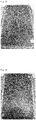
- the process according to the invention enables a very good impregnation of the reinforcing fibers with the colored activated caprolactam melt, a uniform coloring of the resulting composite plastic with low residual monomer contents at the same time and additionally economically acceptable polymerization times and the formation of products with good mechanical properties.
- the process according to the invention is particularly preferred if the polymerizable composition or its individual components a), b), c) and d) with 5 to 65% by volume of fibers, in particular glass fibers and carbon fibers, based on the resulting fiber composite material, preferably in an amount of 45-65 vol .-% in contact.
- the process according to the invention for producing a fiber composite material with a fiber content, in particular glass and carbon fiber content of 45-65% by volume, is particularly preferred, a residual monomeric amide a) content of at most 1.0% by weight, based on the polymer matrix, being achieved ,
- a second three-necked flask was filled with 200 g of ⁇ -caprolactam and with the amounts of activator Addonyl 8120, likewise specified in the tables, and with 1.0% by weight of black coloring agent of component d).
- Addonyl 8120 is a caprolactam-blocked hexamethylene diisocyanate on both sides, specifically N, N'-hexane-1,6-diylbis (hexahydro-2-oxo-1H-azepine-1-carboxamide), CAS No .: 5888- 87-9.
- both flasks were melted in oil baths preheated to 120 ° C. It was then evacuated at this temperature for 10 minutes. Then both flasks were filled with nitrogen and the oil baths removed. The melts were cooled until the temperature of the melts was 110 ° C.
- the content of the storage container is transferred into the cavity of the plate tool by the negative pressure of 100 mbar and polymerized therein.
- the fiber volume content was constant in all the composite panels produced and was approximately 50% by volume.
- the residual monomer contents of the fiber composite material were determined by extraction.
Landscapes
- Chemical & Material Sciences (AREA)
- Health & Medical Sciences (AREA)
- Chemical Kinetics & Catalysis (AREA)
- Medicinal Chemistry (AREA)
- Polymers & Plastics (AREA)
- Organic Chemistry (AREA)
- Engineering & Computer Science (AREA)
- Materials Engineering (AREA)
- Manufacturing & Machinery (AREA)
- Inorganic Chemistry (AREA)
- Polyamides (AREA)
- Reinforced Plastic Materials (AREA)
- Polyurethanes Or Polyureas (AREA)
- Compositions Of Macromolecular Compounds (AREA)
Description
- Die vorliegende Erfindung betrifft eine spezielle polymerisierbare Zusammensetzung, ein Verfahren zur ihrer Herstellung sowie ihre Verwendung und damit ein Verfahren zur Herstellung eines faserverstärkten Verbundwerkstoffs unter Verwendung dieser polymerisierbare Zusammensetzung.
- Es ist bekannt, dass bei der Herstellung von Verbundkunststoffen, die aus einer textilen Verstärkungsstruktur und einer Polyamid 6 Matrix aufgebaut sind und deren PA 6 Matrix mit Hilfe einer in-situ Polymerisation gebildet wird, üblicherweise ein Lactam zusammen mit mindestens einem Katalysator und mindestens einem Aktivator in eine Kavität überführt wird, in welche zuvor das textile Verstärkungsgewebe eingelegt wurde.
- Das Gewebe wird dabei zunächst durch die niedrigviskose Monomerschmelze getränkt und dann in der Form anionisch polymerisiert, wobei direkt oder "in-situ" das Verbundkunststoff-Bauteil entsteht. Ein solches Verfahren wird im Folgenden als "reaction injection moulding" von Polyamid 6, kurz RIM PA 6 bezeichnet.
- Die Kunststoffmatrix von RIM PA 6 Verbundkunststoffen entspricht klassischem "Guss-PA 6";, siehe dazu auch P. Wagner, Kunststoffe 73, 10 (1983), Seiten 588 - 590.
- Erst der Aktivator erlaubt es, die Polymerisationstemperatur so weit herabzusenken, dass die Polymerisation für technische Prozesse interessant wird und innerhalb weniger Minuten ein Verbundkörper aus der Form entnommen werden kann.
- Als Aktivatoren für die anionische Caprolactampolymerisation werden bevorzugt Isocyanate und Säurehalogenide eingesetzt, insbesondere mit Caprolactam geblockte Isocanate.
- Zur Erzielung guter mechanischer Eigenschaften ist bei FaserverbundWerkstoffen die Qualität der Anbindung zwischen Faser und Matrix wichtig. Aus diesem Grund werden Verstärkungsfasern meist mit einer sogenannten haftvermittelnden Schlichte vorbehandelt, um die geringe chemische Ähnlichkeit zwischen Fasern und umgebender Matrix zu verbessern. Die aufgebrachten Schlichten stellen damit die Verbindung oder den Kraftschluss zur eigentlichen Matrix her.
- Die Herstellung von Faserverbundwerkstoffen ist bereits aus zahlreichen Veröffentlichungen bekannt, so beschreiben die
WO2012/045806 und dieWO2014/086757 Verfahren bei denen jeweils eine Monomermischung von Lactam, Aktivator und Katalysator in einem Schmelzverfahren hergestellt werden und dann in einem nachgelagerten Schritt mit einem Fasermaterial zu einem Faserverbundwerkstoffen umgesetzt zu werden. Polymerisierbare Zusammensetzungen aus ε-Caprolactam und Katalysator sowie Aktivator sind ausWO 2013/144132 bekannt, ebenso wie der Zusatz von Farbstoffen. - Für viele Anwendungen ist eine Schwarzeinfärbung der Polyamid-Matrix wünschenswert. Als Färbemittel für PA6 ist aus
DE 69713193 als Nigrosinprodukt der u.a. der Farbstoff C.I. Solvent Black 7 bekannt. Übliche Schwarzeinfärbungen, wie Sie beispielsweise bei Polyamid-Sprizgussverfahren verwendet werden, basieren überwiegend auf Russ, der in verschiedenen Partikelgrößen kommerziell angeboten wird. Die Firma Orion Engineered Carbons GmbH, Hahnstrasse 49, 60528 Frankfurt, vertreibt derartige Russe unter der Bezeichnung Corax ®. - Derartige, vorzugsweise nanoteilige Russpartikel eignen sich jedoch schlecht für die Anwendung bei RIM PA 6 Verfahren, da eine ungleichmäßige Verteilung der Schwarzpigmente im resultierenden Verbundkunststoff resultiert. Der Verbundkunststoff erscheint optisch inhomogen und dadurch minderwertig. Darüber hinaus führen übliche im Russ enthaltenen Verunreinigungen häufig zu einer Erhöhung des Caprolactam-Restmonomergehaltes im fertigen Verbundkunststoff.
- Zwar sind auch Farbstoffe wie Azinfarbstoffe zur Schwarzfärbung von Polyamidschmelzen beschrieben wie beispielsweise in
DE 10117715 , jedoch haben die Erfinder gefunden, dass bei Einsatz vor der Polymerisation die Polymerisation signifikant gestört wird, was sich u.a. an erhöhten Restmonomergehalten zeigt. - Es besteht daher weiterhin Bedarf an einer Lösung zur Herstellung eines schwarz eingefärbten faserverstärkten Verbundwerkstoffs, insbesondere über ein RIM PA 6 Verfahren, bei dem die Nachteile der aus dem Stand der Technik bekannten Verfahren vermieden werden und insbesondere eine gleichmäßige Schwarzeinfärbung des Verbundkunststoffes resultiert und gleichzeitig die Restmonomergehalte, bezogen auf die reine PA 6-Matrix, unterhalb von 1.0 Gew.-% liegen.
- Überraschend wurde nun gefunden, dass man die gestellte Aufgabe mit einer polymerisierbaren Zusammensetzung lösen kann, enthaltend
- a) wenigstens ein zyklisches Amid,
- b) 1.6 bis 5.0, vorzugsweise 1.8 bis 3.5 Gew.-% wenigstens eines geblockten Polyisocyanats, und
- c) 0.8 bis 2.0 Gew.-% wenigstens eines Katalysators zur Polymerisation des zyklischen Amids und
- d) 0.1 bis 0.8, vorzugsweise 0.3 bis 0.6 Gew.-% des Farbstoffes C.I. Solvent Black 7,
- Bevorzugt enthält die erfindungsgemäße polymerisierbare Zusammensetzung 50 bis 100 Gew.-% der Komponenten a) bis d), vorzugsweise 80 bis 100 Gew.-%, bezogen auf das Gesamtgewicht der Zusammensetzung. Besonders bevorzugt enthält die erfindungsgemäße polymerisierbare Zusammensetzung die Komponenten a) bis d) zu mehr als 95 Gew.-%, insbesondere mehr als 98 Gew.-%.
- Auf diese Weise können tiefschwarze und vor allem gleichmäßig eingefärbte RIM PA6-Verbundkunststoffe hergestellt werden, die gleichzeitig geringe Restmonomergehalte unter 1.0 Gew.-%, bezogen auf die polymere Matrix, aufweisen.
- Als zyklisches Amid der Komponente a) wird vorzugsweise ein Amid der allgemeinen Formel (I) eingesetzt,

- Als zyklische Amide der Komponente a) eignen sich insbesondere Lactame der Formel (I), wie ε-Caprolactam, 2-Piperidon (δ-Vaieroiactam), 2-Pyrrolidon (γ-Butyrolactam), Önanthlactam, Lauryllactam, Laurinlactam oder deren Mischungen. Bevorzugt steht das zyklisches Amid der Komponente a) für Caprolactam, Lauryllactam oder deren Mischungen. Besonders bevorzugt wird als Lactam ausschließlich Caprolactam oder ausschließlich Lauryllactam eingesetzt.
- Bei dem Aktivator der Komponente b) handelt es sich vorzugsweise um solche auf Basis geblockte aliphatische Polyisocyanate, wie Isophorondiisocyanat (IPDI) oder insbesondere solche der Formel OCN-(CH2)4-20-NCO wie Butylendiisocyanat, Hexamethylendiisocyanat (HDI), Octamethylendiisocyanat, Decamethylendiisocyanat, Undecamethylendiisocyanat oder Dodecamethylen-diisocyanat. Besonders bevorzugt ist geblocktes Hexamethylendiisocyanat (HDI).
- Als Blockierungmittel der Polyisocyanate der Komponente b) ist Lactam blockiertes Isocanat bevorzugt, insbesondere Caprolactam-blockiertes Polyisocyanat. Dabei können grundsätzlich auch verschieden blockierte Polyisocyanate in einer Mischung zum Einsatz kommen.
- Besonders bevorzugt ist Caprolactam geblocktes HDI, N,N'-Hexan-1,6-diylbis(hexahydro-2-oxo-1H-azepine-1-carboxamid), CAS Nr.: 5888-87-9.
- Das Massenverhältnis von dem zyklischen Amid der Komponente a) zu dem geblockten Polyisocyanat der Komponente b) kann in weiten Grenzen variiert werden und beträgt in der Regel 1:1 bis 10000: 1, bevorzugt 5: 1 bis 2000: 1, besonders bevorzugt 20: 1 bis 1000: 1.
- Der Katalysator c) zur Polymerisation des zyklischen Amids wird vorzugsweise ausgewählt aus der Gruppe, bestehend aus Natriumcaprolactamat, Kaliumcaprolactamat, Bromid-Magnesiumcaprolactamat, Chlorid-Magnesiumcaprolactamat, Magnesium-bis-Capro-lactamat, Natriumhydrid, Natrium, Natriumhydroxid, Natriummethanolat, Natriumethanolat, Natriumpropanolat, Natriumbutanolat, Kaliumhydrid, Kaliumhydroxid, Kaliummethanolat, Kaliumethanolat, Kaliumpropanolat und Kaliumbutanolat, bevorzugt aus der Gruppe bestehend aus Natriumhydrid, Natrium und Natriumcaprolactamat, besonders bevorzugt Natriumcaprolactamat.
- Das Molverhältnis von zyklischem Amid a) zu Katalysator c) kann in weiten Grenzen variiert werden, es beträgt in der Regel 1: 1 bis 10000: 1, bevorzugt 5: 1 bis 1000: 1, besonders bevorzugt 1: 1 bis 500: 1.
- Der Farbstoff C.I. Solvent Black 7 besitzt verschiedene CAS-Nummer wie insbesondere CAS 8005-02-5 oder CAS 101357-15-7.
- C.I. Solvent Black 7 wird auch beschrieben als Reaktionsprodukt
- der Ausgangsstoffe Nitrobenzol, Anilin und Anilinhydrochlorid in Gegenwart eines Eisen- oder Kupfer-Katalysators, insbesondere bei einer Temperatur von 180 bis 200 °C und anschließender Isolierung als freie Base oder
- der Ausgangsstoffe Nitrophenol oder Nitrokresol, Anilin und Anilinhydrochlorid in Gegenwart eines Kupfer-Katalysators, insbesondere bei einer Temperatur von 180 bis 200 °C und anschließender Isolierung als freie Base.
- Bevorzugte Handelsprodukte von C.I. Solvent Black 7 sind die handelsüblichen Nubian Black® TH 807, Nubian Black® TN 870 der Firma ORIENT CHEMICAL INDUSTRIES CO., LTD., 7-15,1-chome Minami-honmachi, Chuo-ku, Osaka,541-0054, Japan, oder NIGROSIN® der Firma Lanxess Deutschland GmbH.
- Die erfindungsgemäße polymerisierbare Zusammensetzung kann ein oder mehrere Polymere enthalten, wobei das Polymer prinzipiell ausgewählt sein kann unter Polymeren, die bei der Polymerisation der erfindungsgemäß polymerisierbaren Zusammensetzung erhalten werden, davon verschiedenen Polymeren und Polymerblends.
- In einer geeigneten Ausführungsform kann die erfindungsgemäße polymerisierbare Zusammensetzung auch Füllstoff enthalten. Füllstoffe, insbesondere partikuläre Füllstoffe können eine weite Bandbreite von Teilchengrößen aufweisen, die von staubförmigen bis grobkörnigen Partikeln reichen. Als Füllmaterial kommen organische oder anorganische Füll- und/oder Faserstoffe in Frage. Beispielsweise können anorganische Füllstoffe, wie Kaolin, Kreide, Wollastonit, Talkum, Calciumcarbonat, Silikate, Titandioxid, Zinkoxid, Graphit, Glaspartikel, z.B. Glaskugeln, nanoskalige Füllstoffe, wie Kohlenstoff-Nanoröhren, Carbon black, nanoskalige Schichtsilikate, nanoskaliges Aluminiumoxid (Al2O3), nanoskaliges Titandioxid (TiO2), Carbon Nanotubes, Graphen, Schichtsilikate und nanoskaliges Siliciumdioxid (SiO2), eingesetzt werden. Zwar können Ruße auch mitverwendet werden, bevorzugt ist ihr Anteil jedoch kleiner als 1 Gew.-%, insbesondere kleiner als 0,1 Gew.-%.
- Bevorzugt werden Füllstoffe in einer Menge von 0 bis 90 Gew.-%, insbesondere von 0 bis 50 Gew.-%, bezogen auf die erfindungsgemäße polymerisierbare Zusammensetzung eingesetzt.
- Weiterhin können ein oder mehrere Faserstoffe zum Einsatz kommen. Diese sind vorzugsweise ausgewählt aus bekannten anorganischen Verstärkungsfasern, wie Borfasern, Glasfasern, Kohlenstofffasern, Kieselsäurefasern, Keramikfasern und Basaltfasern; organischen Verstärkungsfasern, wie Aramidfasern, Polyesterfasern, Nylonfasern, Polyethylenfasern und Naturfasern, wie Holzfasern, Flachsfasern, Hanffasern und Sisalfasern.
- Insbesondere bevorzugt ist der Einsatz von Glasfasern, Kohlenstofffasern, Aramidfasern, Borfasern oder Metallfasern. Die genannten Fasern werden bevorzugt als Endlosfasern, beispielsweise in Form von Tapes, Gelegen, Geweben oder Gestricken eingesetzt. Es ist auch möglich, eine nicht geordnete Faserablage, beispielsweise in Form von Matten, Vliesen oder auch Schnittfasern unterschiedlichen Faserlänge, insbesondere von 0,1 mm bis mehrere cm Länge, vorzugsweise bis 5 cm Länge einzusetzen.
- Der Einsatz dieser Fasermaterialien erfolgt jedoch vorzugsweise erst in der Anwendung der erfindungsgemäßen polymerisierbaren Zusammensetzung zur Herstellung der erfindungsgemäßen faserverstärkten Verbundwerkstoffs.
- In einer bevorzugten Ausführungsform kann die erfindungsgemäße polymerisierbare Zusammensetzung einen oder mehrere weitere Zusatzstoffe enthalten. Als Zusatzstoffe können beispielsweise Stabilisatoren, wie Kupfersalze, Farbstoffe, Antistatika, Trennmittel, Antioxidantien, Lichtstabilisatoren, PVC-Stabilisatoren, Gleitmittel, Trennmittel, Treibmittel, und Kombinationen daraus zugesetzt werden. Bevorzugt sind diese Zusatzstoffe in einer Menge von 0 bis 5 Gew.-%, bevorzugt von 0 bis 4 Gew.-%, besonders bevorzugt von 0 bis 3,5 Gew.-%, bezogen auf das Gesamtgewicht der polymerisierbaren Zusammensetzung. Werden als Zusatzstoffe Flammschutzmittel oder Schlagzähigkeitsverbesserer eingesetzt, so können diese Zusatzstoffe von 0 bis 45 Gew.-%, bezogen auf das Gesamtgewicht der polymerisierbaren Zusammensetzung eingesetzt werden.
- Die polymerisierbare Zusammensetzung kann wenigstens einen Zusatzstoff enthalten, vorzugsweise in einer Menge von wenigstens 0,01 Gew.-%, bezogen auf das Gesamtgewicht der polymerisierbaren Zusammensetzung, besonders bevorzugt von wenigstens 0,1 Gew.-%, bezogen auf das Gesamtgewicht der polymerisierbaren Zusammensetzung, insbesondere von wenigstens 0,5 Gew.-%, bezogen auf das Gesamtgewicht der polymerisierbaren Zusammensetzung.
- Bevorzugt enthält die erfindungsgemäß polymerisierbare Zusammensetzung als Zusatzstoff wenigstens einen Schlagzähigkeitsverbesserer. Wird als Schlagzähigkeitsveresserer eine polymere Verbindung eingesetzt, so wird diese den zuvor genannten Polymeren zugerechnet. Insbesondere wird als Schlagzähigkeitsverbesserer ein Polydien-Polymer (z. B. Polybutadien, Polyisopren) eingesetzt. Diese enthalten bevorzugt Anhydrid- und/oder Epoxigruppen. Das Polydien-Polymer weist insbesondere eine Glasübergangstemperatur unter 0 °C, bevorzugt unter -10 °C, besonders bevorzugt unter -20 °C auf. Das Polydien-Polymer kann auf der Basis eines Polydien-Copolymers mit Polyacrylaten, Poly-ethylenacrylaten und/oder Polysiloxanen basieren und mittels der gängigen Verfahren hergestellt werden (z.B. Emulsionspolymerisation, Suspensionspolymerisation, Lösungspolymerisation, Gasphasenpolymerisation).
- Bevorzugt liegt die polymerisierbare Zusammensetzung in Form ihrer Schmelze vor. Dies ist vorzugsweise der Fall bei ihrer Schmelztemperatur oder darüber, vorzugsweise bei einer Temperatur von größer 70 °C.
- Die Erfindung betrifft weiterhin ein Verfahren zur Herstellung der polymerisierbaren Zusammensetzung dadurch gekennzeichnet, dass man ein zyklisches Amid der Komponente a) mit wenigstens einem geblocketen Polyisocyanat der Komponente b) und wenigstens einem Katalysator der Komponente c) und einem Farbstoff der Komponente d) in Kontakt bringt.
- Vorzugsweise werden zur Bereitstellung der polymerisierbaren Zusammensetzung die Komponenten b) und c) zunächst unabhängig von einander in a) gemischt, anschließend dann diese Einzelmischungen miteinander gemischt. Weiterhin vorzugsweise wird der Farbstoff d) zu einer oder beiden der unabhängigen Bereitung von a) und b) zugegeben.
- Dabei kann das Mischen in fester Form der jeweiligen Einzelkomponenten a) und b) und d) sowie von a) und c) und d) erfolgen oder in flüssiger, aufgeschmolzener Form. Bevorzugt wird d) in a) und b) gemischt.
- Die dabei erhaltene Aktivatorzusammensetzung enthaltend
- a) wenigstens ein zyklisches Amid,
- b) 1.6 bis 5.0 vorzugsweise 1.8 bis 3.5 Gew.-% wenigstens eines geblockten Polyisocyanats, und
- d) 0.1 bis 0.8, vorzugsweise 0.3 bis 0.6 Gew.-% des Farbstoffs C.I. Solvent Black 7,
- Bevorzugt enthält die erfindungsgemäße Aktivatorzusammensetzung 50 bis 100 Gew.% der Komponenten a), b) und d), vorzugsweise 80 bis 100 Gew.-%, bezogen auf das Gesamtgewicht der Aktivatorzusammensetzung. Besonders bevorzugt enthält die erfindungsgemäße Aktivatorzusammensetzung die Komponenten a), b) und d) zu mehr als 95 Gew.%, insbesondere mehr als 98 Gew.-%.
- Die erfindungsgemäße Aktivatorzusammensetzung enthält vorzugsweise keinen Katalysator der Komponente c).
- Die erfindungsgemäße Aktivatormischung kann als feste Mischung aber auch in Form ihrer Schmelze vorliegen.
- Grundsätzlich gilt das gleiche auch für eine Katalysatormischung, enthalten die Komponenten a) c) und d), wobei die Mengenangabe für die Komponente c) 0.8 bis 2.0 Gew.-% wenigstens eines Katalysators zur Polymerisation des zyklischen Amids, bezogen auf die Summe von a), c) und d), beträgt und die übrigen Angaben den obigen zur Aktivatorzusammensetzung analog entsprechen.
- Bevorzugt erfolgt das Vermischen der zuvor bereiteten separaten Mischungen in flüssiger Form, vorzugsweise bei einer Temperatur von 70 bis 120 °C. Dabei wird der Aktivator insbesondere in Form der erfindungsgemäßen Aktivatorzusammensetzung eingesetzt. Zum Überführen der flüssigen Mischphase der Komponenten a), b), c) und d) wird vorzugsweise eine Temperatur gewählt, die gleich oder grösser ist als der Schmelzpunkt der resultierenden Mischung.
- Das Vermischen der Komponenten kann diskontinuierlich oder kontinuierlich erfolgen. Geeignete Vorrichtungen zum Vermischen der Komponenten sind dem Fachmann bekannt. Zum diskontinuierlichen Vermischen werden vorzugsweise Rührkessel oder Kneter verwendet. Kontinuierliche Mischvorgänge erfolgen vorzugsweise im Extruder oder einer Spritzgießmaschine, sowie auch durch statische Mischelemente, welche in einem Mischkopf oder direkt mit im Werkzeug implementiert sind. Auch aus der Polyurethan-Verarbeitung bekannte Hochdruck-Mischköpfe, bei denen die Vermischung durch die kinetische Energie des Materials erreicht wird, können eingesetzt werden.
- Die Mischvorrichtung ist vorzugsweise temperierbar. Das Vermischen der Komponenten kann beispielsweise kontinuierlich in einem Extruder erfolgen.
- Die Einzelkomponenten der Aktivatoren als auch die Katalysatoren, können auch in Form von fertigen Handelsprodukten eingesetzt werden.
- Ein möglicher Aktivator der Komponente b) ist Caprolactam-blockiertes Hexamethylendiisocyanat in Caprolactam, beispielsweise kommerziell unter der Bezeichnung Brüggolen® C20 von der Firma Brüggemann oder Addonyl® 8120 von der Firma Rhein Chemie Rheinau GmbH.
- Als Katalysator kann eine Lösung von Natriumcaprolactamat in Caprolactam eingesetzt werden, z.B. Brüggolen© C10 der Firma Brüggemann, das 17 bis 19 Gew.-% Natriumcaprolactamat in Caprolactam bzw. Addonyl KAT NL der Firma Rhein Chemie Rheinau GmbH, das 18,5 Gew.-% Natriumcaprolactamat in Caprolactam enthält. Als Katalysator c) eignet sich ebenfalls insbesondere Bromid-Magnesiumcaprolactamat, z. B. Brüggolen® C1 der Firma Brüggemann.
- Als Farbstoff kann Nubian Black® der Firma ORIENT CHEMICAL INDUSTRIES CO., LTD, Japan eingesetzt werden, insbesondere die Typen TN 807 und TN 870. Die polymerisierbare Zusammensetzung wird im Allgemeinen im flüssigen Zustand in der Nähe der Polymerisationstemperatur gehandhabt und besitzt daher eine hohe Reaktivität, so dass sich ein zügiges Inkontaktbringen mit der Faserverstärkung empfiehlt.
- Die Erfindung betrifft weiterhin ein Verfahren zur Herstellung eines Faserverbundwerkstoffs, dadurch gekennzeichnet, dass man
- i) die erfindungsgemäße polymerisierbare Zusammensetzung oder deren Einzelkomponenten a), b), c) und d) mit Fasern in Kontakt bringt und
- ii) die resultierende Zusammensetzung bei einer Temperatur von 120 bis 300 °C, vorzugsweise bei 120 bis 250 °C, insbesondere bei 140 bis 180 °C behandelt.
- Bevorzugt ist die erfindungsgemäße Herstellung eines Faserverbundwerkstoffs auch dadurch gekennzeichnet, dass man
- i) die erfindungsgemäße Aktivatorzusammensetzung mit der Einzelkomponente c), insbesondere mit einer Mischung der Komponenten a) und c) und anschließend mit Fasern in Kontakt bringt und
- ii) die resultierende Zusammensetzung bei einer Temperatur von 120 bis 300 °C behandelt.
- Hierbei können die Fasern mit der polymerisierbaren Zusammensetzung auf verschiedenen Wegen in Kontakt gebracht werden.
- 1) Indem in eine beheizte, vorzugsweise mit einer Temperatur von 120 bis 170 °C, druckdichte Form Fasern, insbesondere textile-Verstärkungsstrukturen, eingelegt werden und mittels Überdruck die polymerisierbare Zusammensetzung hineingepresst wird, wobei die Faser vorzugsweise infiltriert wird und dann ggf. bei einer erhöhten Temperatur, vorzugsweise bei 120 bis 300 °C, die polymerisierbare Zusammensetzung polymerisiert.
- 2) Indem bei ansonsten gleichem Aufbau wie unter 1 an der druckdichten Form ein Vakuum angelegt wird und die erfindungsgemäße polymerisierbare Zusammensetzung eingesogen wird.
- 3) Durch eine Kombination von Unterdruck und Überdruck wie unter 1 und 2 die polymerisierbare Zusammensetzung in die Form überführt wird.
- 4) Die Herstellung in einem Extruder stattfindet, dessen Eingangsströme Fasern, insbesondere Kurzfasern, und die polymerisierbare Zusammensetzung enthalten, wobei der Extruder bei einer Temperatur oberhalb der Schmelztemperatur des aus der polymerisierbaren Zusammensetzung resultierenden Polymers, insbesondere PA6, PA 12 bzw. die Copolymere betrieben wird.
- 5) Die Herstellung in einem Extruder stattfindet, dessen Eingangsströme eine oder mehrere Einzelkomponenten der erfindungsgemäßen polymerisierbaren Zusammensetzung in fester oder flüssiger Form und Fasern enthalten.
- 6) Die Herstellung durch klassisches Schleudergussverfahren stattfindet, wobei die erfindungsgemäßen polymerisierbare Zusammensetzung oder deren Einzelkomponenten a), b), c) und d) in fester oder flüssiger Form eingetragen werden und mit Fasern, vorzugsweise in Form von Kurzfasern oder in Form von textilen Verstärkungsstrukturen, verstärkt werden.
- 7) Die Herstellung kontinuierlich durch Tränkung von Fasern, insbesondere von Geweben erfolgt, die nach Aufbringen der erfindungsgemäßen polymerisierbaren Zusammensetzung in flüssiger Form bei einer Temperatur von 120 bis 300 °C polymerisiert wird, wodurch Composite Sheets oder Organobleche, Profile oder Rohre aus endlosfaserverstärkten Polyamiden entstehen.
- Bevorzugt ist die Alternative 1, 2 oder 3, wobei in eine beheizbare, druckdichte Form Fasern, insbesondere textile-Verstärkungsstrukturen, eingelegt werden. Anschließend wird die polymerisierbare Zusammensetzung mittels Überdruck von 1 bis 150 bar und/oder bei einem Unterdruck der Form (Werkzeug) von 10 bis 900 mbar in die Form überführt.
- Nach vollständiger Füllung der Form mit der erfindungsgemäßen polymerisierbaren, eingefärbten Zusammensetzung erfolgt die Polymerisation bei Temperaturen von 120 bis 250 °C, vorzugsweise bei 140 bis 180 °C. Es entsteht direkt in der Form das Verbundbauteil.
- Ebenfalls bevorzugt ist die obige Verfahrensweise, wobei in Abänderung an der druckdichten Form ein Unterdruck angelegt wird, vorzugsweise von 5 bis 800 mbar und die polymerisierbare Zusammensetzung in die Form gesogen wird und nach Befüllen der Form mit der polymerisierbaren Zusammensetzung die Temperatur zur Polymerisation vorzugsweise auf eine Temperatur von 120 bis 250 °C erhöht wird.
- Auch eine Kombination von Unterdruck und Überdruck zum Befüllen der Form mit der polymerisierbaren Zusammensetzung ist möglich.
- Vorteilhaft ist es weiterhin, die Polymerisation in einem klassischen Schleudergussverfahren vorzunehmen, wobei die polymerisierbare Zusammensetzung in fester oder flüssiger Form in die Form eingetragen wird und die Fasern in Form von Kurzfasern oder in Form von zuvor ausgelegten textilen Verstärkungen eingebracht werden.
- Bei der Herstellung der erfindungsgemäß polymerisierbaren Zusammensetzung, wie auch bei der erfindungsgemäßen Herstellung der faserverstärkten Verbundwerkstoffe, kann es vorteilhaft sein, den Anteil von an der Herstellung der polymerisierbaren Zusammensetzung oder des faserverstärkten Verbundwerkstoffs nicht beteiligten Komponenten so gering wie möglich zu halten. Dazu zählen speziell Wasser, Kohlendioxid und/oder Sauerstoff. In einer speziellen Ausführung sind daher die eingesetzten Komponenten und Apparaturen im Wesentlichen frei von Wasser, Kohlendioxid und/oder Sauerstoff. Eine Möglichkeit ist, dass die verwendete geschlossene Werkzeugkavität zunächst mit Vakuum beaufschlagt wird, bevor die Schmelze injiziert wird. Eine weitere zusätzliche Option ist das Verwenden von Inertgas, wie z.B. Stickstoff oder Argon. Die verwendete polymerisierbare Zusammensetzung wie auch die Füll- oder Verstärkungsstoffe (Fasern, wie textile Flächengebilde) können in Inertgasatmosphäre gelagert bzw. damit überlagert werden.
- Bevorzugt werden im erfindungsgemäßen Verfahren als Fasern Kurzfasern, Langfasern, Endlosfasern oder Mischungen davon eingesetzt.
- Im Sinne der Erfindung haben "Kurzfasern" eine Länge von 0,1 bis 1 mm, "Langfasern" eine Länge von 1 bis 50 mm und "Endlosfasern" eine Länge von grösser als 50 mm. Endlosfasern werden zur Herstellung der faserverstärkten Verbundwerkstoffe, vorzugsweise in Form einer textilen Struktur, z. B. als Gewebe, Gewirke, Gestricke, Gelege oder Vliese eingesetzt. Bauteile mit gestreckten Endlosfasern erzielen in der Regel sehr hohe Steifigkeits- und Festigkeitswerte.
- Bevorzugt wird als Fasermaterial ein aus parallel angeordneten Endlos-Garnen oder Endlos-Rovings, welche zu textilen Flächengebilden wie Gelegen, Tapes, Geflechten und Geweben u. ä. weiter verarbeitet wurden, eingesetzt. Diese Flächengebilde werden auch als Verstärkungsstrukturen bezeichnet.
- Die vorstehend benannten textilen Flächengebilde können ein- oder mehrlagig sowie in unterschiedlicher Kombination bezüglich textiler Flächengebilde, Faserarten und deren Fasermengen verwendet werden. Bevorzugt werden Gelege, Multiaxial-Gelege, (Multiaxial-) Geflechte oder Gewebe eingesetzt, die aus zwei oder mehr als zwei, vorzugsweise 2 bis 12 Lagen bestehen.
- Die eingesetzten Fasermaterialien enthalten als Fasern vorzugsweise solche aus anorganischen Mineralien wie Kohlenstoff, beispielsweise als Niedermodulcarbonfasern oder Hochmodulcarbonfasern, silikatische und nicht silikatische Gläser der verschiedensten Art, Bor, Siliciumcarbid, Metalle, Metalllegierungen, Metalloxide, Metallnitride, Metallcarbide und Silikate, sowie organische Materialien wie natürliche und synthetische Polymere, beispielsweise Polyacrylnitrile, Polyester, Polyamide, Polyimide, Aramide, Flüssigkristallpolymere, Polyphenylensulfide, Polyetherketone, Polyetheretherketone, Polyether-imide, Baumwolle, Cellulose und andere Naturfasern, beispielsweise Flachs, Sisal, Kenaf, Hanf, Abaca. Bevorzugt sind hochschmelzende Materialien, beispielsweise Gläser, Kohlenstoff, Aramide, Flüssigkristallpolymere, Polyphenylensulfide, Polyetherketone, Polyetheretherketone und Polyetherimide, besonders bevorzugt sind Glasfasern, Kohlenstofffasern, Aramidfasern, Stahlfasern, Keramikfasern und/oder sonstige hinreichend temperaturbeständige polymere Fasern oder Fäden.
- Fasern können in einer Menge von 5 bis 65 Vol.-%, bezogen auf den resultierenden Faserverbundwerkstoff, entsprechend beispielsweise bei Verwendung von Glasfasern 10 - 80 Gew.-%, eingesetzt werden, bevorzugt aber in einer Menge von 45-65 Vol.-%, bezogen auf den Faserverbundwerkstoff, wobei besonders bevorzugte Fasern Glasfasern und Kohlefasern sind.
- Das erfindungsgemäße Verfahren ermöglicht eine sehr gute Imprägnierung der Verstärkungsfasern mit der eingefärbten aktivierten Caprolactamschmelze, eine gleichmäßige Einfärbung des resultierenden Verbundkunststoffes bei gleichzeitig geringen Restmonomergehalten und zusätzlich wirtschaftlich akzeptable Polymerisationszeiten und die Bildung von Produkten mit guten mechanischen Eigenschaften.
- Mit Hilfe des erfindungsgemäßen Verfahrens ist es möglich, faserverstärkte Verbundwerkstoffe mit einem hohen Faseranteil und, falls vorhanden, Füllstoffanteil herzustellen.
- Besonders bevorzugt, ist das erfindungsgemäße Verfahren, wenn man die polymerisierbare Zusammensetzung oder deren Einzelkomponenten a), b), c) und d) mit 5 bis 65 Vol.-% Fasern, insbesondere Glasfasern und Kohlefasern, bezogen auf den resultierenden Faserverbundwerkstoff, bevorzugt in einer Menge von 45-65 Vol.-% in Kontakt bringt.
- Besonders bevorzugt ist das erfindungsgemäße Verfahren zur Herstellung eines Faserverbundwerkstoffs mit einem Faseranteil, insbesondere Glas- und Kohlefaseranteil von 45 - 65 Vol-%, wobei ein Restgehalt an monomerem Amid a) von höchstens 1.0 Gew.-%, bezogen auf die Polymermatrix, erzielt wird.
- In einem Dreihalskolben wurden 200 g ε-Caprolactam und die in den Tabellen angegebenen Mengen an Katalysator, Natriumcaprolactamat, CAS-Nr. 2123-24-2 (18,5 Gew.-%ig in Caprolactam; in Form von Addonyl Kat NL (Rhein Chemie Rheinau GmbH)) eingewogen.
- Ein zweiter Dreihalskolben wurde mit 200g ε-Caprolactam und mit der ebenfalls in den Tabellen spezifizierten Mengen an Aktivator Addonyl 8120 und mit 1.0 Gew.-% Schwarzeinfäbungsmittel der Komponente d) befüllt.
- Bei Addonyl 8120 handelt es sich um ein beidseitig Caprolactam-geblocktes Hexamethylendiisocyanat, konkret um N,N'-Hexan-1,6-diylbis(hexahydro-2-oxo-1H-azepine-1-carboxamid), CAS Nr.: 5888-87-9.
- Der Inhalt beider Kolben wurde in auf 120 °C vorgeheizten Ölbädern aufgeschmolzen. Anschließend wurde bei dieser Temperatur für 10 Minuten evakuiert. Dann wurden beide Kolben mit Stickstoff befüllt und die Ölbäder entfernt. Die Schmelzen wurden abgekühlt bis die Temperatur der Schmelzen 110 °C betrug.
- In eine auf 160 °C vortemperierte und mit N2 gespülte druckdichte Form (Plattenwerkzeug) wurden Glasfasergelege eingelegt und danach die Kavität evakuiert (100mbar).
- Im nächsten Schritt wird der Inhalt des Vorratsbehälters durch den Unterdruck von 100 mbar in die Kavität des Plattenwerkzeugs überführt und darin auspolymerisiert. Der Faservolumengehalt war bei allen hergestellten Verbundplatten konstant und lag bei ca. 50 Vol.-%. Die Restmonomergehalte des Faserverbundwerkstoffes wurden über Extraktion bestimmt.
- Kommerziell erhältliche Farbmittel bzw. Schwarzeinfärbungen wurden von folgenden Firmen verwendet:
- Nubian Black TH 807 und TN870 der Firma ORIENT CHEMICAL INDUSTRIES CO., LTD, Japan
- Corax N 660, N550, N339, Carbon Black XPB538 der Orion Engineered Carbons GmbH, Frankfurt
- Eisenoxisschwarz (Bayferrox®-schwarz, 375) der Lanxess Deutschland GmbH.
- Die Ergebnisse in tabellarischer Form:
Tabelle 1: Verwendete Polymerisationsrezepturen und die damit erzielten Restmonomergehalte sowie die Homogenität der Schwarzverteilung: Entnahme der Platte aus der Form nach 5 Minuten (Mengen in Gramm) Faser* Addonyl 8120 Kat NL** Homogenität der Schwarzverteilung auf der Verbundplatte (Notenschlüssel: siehe unten) RMG Gew-% Gew.-% VGB 1 A 1,69 3,21 1 1,6 VGB 2 A 1,69 3,21 1 2,5 VGB 3 A 1,69 3,21 3 1,0 VGB 4 A 1,69 3,21 3 1,1 VGB 5 A 1,69 3,21 3 0,9 VGB 6 A 1,69 3,21 5 1,0 VGB 7 A 1,69 3,21 5 1,0 * Verstärkung A: Glasfasergewebe der Firma Interglas, Typ 92125 mit einem Flächengewicht von 280g/m2. Dabei handelt es sich um eine Faser mit einer handelsüblichen, auf Polyamid abgestimmten, nicht reaktiven Schlichte. In die Kavität der Form des Plattenwerkzeugs wurden jeweils 9 Lagen des Gewebetyps eingelegt.
** Anteil an Katalysator pur: 0.59 Gew.-% bezogen auf die Matrix.Abkürzungen: VGB: Vergleichsbeispiel VGB 1: Nubian Black TH807 VGB 2: Nubian Black TN870 VGB 3: Corax N339 VGB 4: Corax N550 VGB 5: Corax N660 VGB 6: Bayferrox®-schwarz 375 VGB 7: Carbon Black XPB538 Beurteilung der Homogenität: 1: vollkommen gleichmäßige Verteilung 3: deutliche Unterschiede in der Einfärbung erkennbar 5: extreme Unterschiede in der Einfärbung RMG: Restmonomergehalt, bezogen auf die Polymer-Matrix Photographien der eingefärbten Verbundplatten zur Visualisierung der Schwarzeinfärbung, Reihenfolge entsprechend der Auflistung in Tabelle 1 siehe in Fig. 1 bis Fig. 7 .Tabelle 2: Verwendete Polymerisationsrezepturen und die damit erzielten Restmonomergehalte sowie die Verteilungsgüte und der optische Eindruck der Schwarzeinfärbung, Entnahme der Platte aus der Form nach 5 Minuten (Mengen in Gramm) Faser * Addonyl 8120 Kat NL** Homogenität der Schwarzverteilung auf der Verbundplatte (Notenschlüssel: siehe unten) RMG Gew-% Gew.-% EFG 1 A 2.0 6.0 1 0.7 EFG 2 A 2.0 6.0 1 0.8 VGB 8 A 2.0 6.0 3 0.9 VGB 9 A 2.0 6.0 3 0.9 VGB 10 A 2.0 6.0 3 0,8 VGB 11 A 2.0 6.0 5 0.9 VGB 12 A 2.0 6.0 5 0.8 * Verstärkung A: Glasfasergewebe der Firma Interglas, Typ 92125 mit einem Flächengewicht von 280g/m2. Dabei handelt es sich um eine Faser mit einer handelsüblichen, auf Polyamid abgestimmten, nicht reaktiven Schlichte. In die Kavität der Form des Plattenwerkzeugs wurden jeweils 9 Lagen des Gewebetyps eingelegt.
** Anteil an Katalysator pur: 1.11 Gew.-% bezogen auf die Matrix.Abkürzungen: VGB: Vergleichsbeispiel EFG: Erfindungsgemäß EFG 1: Erfindungsgemäß, Nubian Black TH807 EFG 2: Erfindungsgemäß, Nubian Black TN870 VGB 8: Corax N339 VGB 9: Corax N550 VGB 10: Corax N660 VGB 11: Bayferrox®-schwarz 375 VGB 12: Carbon Black XPB538 Beurteilung der Homogenität: 1: vollkommen gleichmäßige Verteilung 3: deutliche Unterschiede in der Einfärbung erkennbar 5: extreme Unterschiede in der Einfärbung RMG: Restmonomergehalt, bezogen auf die Polymer-Matrix Photographien der eingefärbten Verbundplatten zur Visualisierung der Schwarzeinfärbung, Reihenfolge entsprechend der Auflistung in Tabelle 2 siehe in Fig. 8 bis Fig. 14 (wobei EFG1 =Fig.8 , EFG2 =Fig.9 ...).
Claims (13)
- Polymerisierbare Zusammensetzung, enthaltenda) wenigstens ein zyklisches Amid,b) 1.6 bis 5.0 vorzugsweise 1.8 bis 3.5 Gew.-% wenigstens eines geblockten Polyisocyanats, undc) 0.8 bis 2.0 Gew.-% wenigstens eines Katalysators zur Polymerisation des zyklischen Amids undd) 0.1 bis 0.8, vorzugsweise 0.3 bis 0.6 Gew.-% des Farbstoffs C.I. Solvent Black 7,wobei die Gewichtsangaben der Komponenten b) bis d) sich auf die Summe der Komponenten a) bis d) beziehen und die Summe der Komponenten a) bis d) 100 % ergibt.
- Polymerisierbare Zusammensetzung gemäß Anspruch 1, dadurch gekennzeichnet, dass das zyklisches Amid der allgemeinen Formel (I) entspricht,

- Polymerisierbare Zusammensetzung nach wenigstens einem der Ansprüche 1 bis 2, dadurch gekennzeichnet, dass das zyklisches Amid Lauryllactam, Caprolactam oder deren Mischung entspricht.
- Polymerisierbare Zusammensetzung nach wenigstens einem der vorangegangenen Ansprüche, dadurch gekennzeichnet, die Komponente b) wenigstens HDI als geblocktes Isocyanat enthält.
- Polymerisierbare Zusammensetzung nach wenigstens einem der vorangegangenen Ansprüche 1 bis 4, enthaltend wenigstens einen Katalysator c) zur Polymerisation des cyclischen Amids ausgewählt aus der Gruppe, bestehend aus Natriumcaprolactamat, Kaliumcaprolactamat, Bromid-Magnesiumcaprolactamat, Chlorid-Magnesiumcaprolactamat, Magnesium-bis-Caprolactamat, Natriumhydrid, Natrium, Natriumhydroxid, Natriummethanolat, Natriumethanolat, Natriumpropanolat, Natriumbutanolat, Kalium-hydrid, Kaliumhydroxid, Kaliummethanolat, Kaliumethanolat, Kaliumpropanolat und Kalium-butanolat, bevorzugt aus der Gruppe bestehend aus Natriumhydrid, Natrium und Natriumcaprolactamat, besonders bevorzugt Natriumcaprolactamat.
- Polymerisierbare Zusammensetzung nach wenigstens einem der vorangegangenen Ansprüche 1 bis 5, dadurch gekennzeichnet, dass die Zusammensetzung zu mehr als 95 Gew.-%, insbesondere mehr als 98 Gew.-% aus den Komponenten a) bis d) besteht.
- Verfahren zur Herstellung einer Polymerisierbare Zusammensetzung nach wenigstens einem der vorangegangenen Ansprüche 1 bis 6, dadurch gekennzeichnet, dass man ein zyklisches Amid der Komponente a) mit wenigstens einem geblocketen Polyisocyanat der Komponente b) und wenigstens einen Katalysator der Komponente c) und wenigstens einem Farbstoff der Komponente d) in Kontakt bringt.
- Aktivatorzusammensetzung enthaltenda) wenigstens ein zyklisches Amid,b) 1.6 bis 5.0, vorzugsweise 1.8 bis 3.5 Gew.-% wenigstens eines geblockten Polyisocyanats, undd) 0.1 bis 0.8, vorzugsweise 0.3 bis 0.6 Gew.-% des Farbstoffs C.I. Solvent Black 7,wobei die Gewichtsangaben der Komponenten b) und d) sich auf die Summe der Komponenten a), b) und d) beziehen und die Summe der Komponenten a) b) und d) 100 % ergibt.
- Aktivatorzusammensetzung nach Anspruch 8, dadurch gekennzeichnet, dass die Zusammensetzung zu mehr als 95 Gew.-%, insbesondere mehr als 98 Gew.-% aus den Komponenten a), b) und d) besteht
- Verfahren zur Herstellung eines Faserverbundwerkstoffs, dadurch gekennzeichnet, dass mani) die polymerisierbare Zusammensetzung gemäß wenigstens einem der Ansprüche 1 bis 6 oder deren Einzelkomponenten a), b), c) und d) mit Fasern in Kontakt bringt undi) die resultierende Zusammensetzung bei einer Temperatur von 120 bis 300 °C behandelt.
- Verfahren zur Herstellung eines Faserverbundwerkstoffs gemäß Anspruch 10, dadurch gekennzeichnet, dass mani) die Aktivatorzusammensetzung nach Anspruch 9 oder Anspruch 10 mit der Einzelkomponente c), insbesondere mit einer Mischung der Komponenten a) und c) und anschließend mit Fasern in Kontakt bringt undii) die resultierende Zusammensetzung bei einer Temperatur von 120 bis 300 °C behandelt.
- Verfahren gemäß einem der Ansprüche 10 oder 11, dadurch gekennzeichnet, dass man die polymerisierbare Zusammensetzung gemäß wenigstens einem der Ansprüche 1 bis 6 oder deren Einzelkomponenten a), b), c) und d) mit 5 bis 65 Vol.-%, bevorzugt mit 45 bis 65 Vol.-% Fasern, bezogen auf den Faserverbundwerkstoff, in Kontakt bringt.
- Verfahren gemäß wenigstens einem der Ansprüche 10 bis 12, dadurch gekennzeichnet, dass als Fasern Glasfasern eingesetzt werden.
Applications Claiming Priority (2)
| Application Number | Priority Date | Filing Date | Title |
|---|---|---|---|
| EP16165758.0A EP3235861A1 (de) | 2016-04-18 | 2016-04-18 | Polymerisierbare zusammensetzung |
| PCT/EP2017/057351 WO2017182241A1 (de) | 2016-04-18 | 2017-03-29 | Polymerisierbare zusammensetzung |
Publications (2)
| Publication Number | Publication Date |
|---|---|
| EP3445809A1 EP3445809A1 (de) | 2019-02-27 |
| EP3445809B1 true EP3445809B1 (de) | 2020-01-22 |
Family
ID=55913452
Family Applications (2)
| Application Number | Title | Priority Date | Filing Date |
|---|---|---|---|
| EP16165758.0A Withdrawn EP3235861A1 (de) | 2016-04-18 | 2016-04-18 | Polymerisierbare zusammensetzung |
| EP17712808.9A Revoked EP3445809B1 (de) | 2016-04-18 | 2017-03-29 | Polymerisierbare zusammensetzung |
Family Applications Before (1)
| Application Number | Title | Priority Date | Filing Date |
|---|---|---|---|
| EP16165758.0A Withdrawn EP3235861A1 (de) | 2016-04-18 | 2016-04-18 | Polymerisierbare zusammensetzung |
Country Status (6)
| Country | Link |
|---|---|
| US (1) | US20190127512A1 (de) |
| EP (2) | EP3235861A1 (de) |
| CN (1) | CN109071870A (de) |
| ES (1) | ES2774496T3 (de) |
| HU (1) | HUE048515T2 (de) |
| WO (1) | WO2017182241A1 (de) |
Families Citing this family (1)
| Publication number | Priority date | Publication date | Assignee | Title |
|---|---|---|---|---|
| CN117924691A (zh) * | 2023-12-01 | 2024-04-26 | 巴斯夫欧洲公司 | 聚酰胺复合材料及其制备与应用 |
Citations (9)
| Publication number | Priority date | Publication date | Assignee | Title |
|---|---|---|---|---|
| US5804638A (en) | 1996-03-21 | 1998-09-08 | Orient Chemical Industries, Ltd. | Black polyamide resin composition |
| EP2093246A2 (de) | 2008-02-20 | 2009-08-26 | Rhein Chemie Rheinau GmbH | Anionische Polymerisation von Lactamen unter Verwendung spezieller Aktivatoren |
| US20120088899A1 (en) | 2010-10-07 | 2012-04-12 | Basf Se | Process for producing monomer compositions and use of these for producing a polyamide molding |
| WO2013034499A1 (de) | 2011-09-08 | 2013-03-14 | Rhein Chemie Rheinau Gmbh | Neue zusammensetzungen zur herstellung von gusspolyamiden |
| US20130261282A1 (en) | 2012-03-27 | 2013-10-03 | Basf Se | Process for Producing Polyamide Moldings From a Polymerizable Composition by Means of Rotomolding Processes |
| WO2013144132A1 (de) | 2012-03-27 | 2013-10-03 | Basf Se | Verfahren zur herstellung von polyamidformkörpern aus einer polymerisierbaren zusammensetzung mittels rotationsschmelzverfahren |
| EP2716716A1 (de) | 2012-10-02 | 2014-04-09 | Ems-Patent Ag | Polyamid-Formmassen und deren Verwendung bei der Herstellung von Formkörpern |
| WO2014086757A2 (de) | 2012-12-04 | 2014-06-12 | Basf Se | Verfahren zur herstellung eines faserverstärkten verbundwerkstoffs |
| EP3130622A1 (de) | 2015-08-11 | 2017-02-15 | LANXESS Deutschland GmbH | Polymerisierbare zusammensetzung |
Family Cites Families (4)
| Publication number | Priority date | Publication date | Assignee | Title |
|---|---|---|---|---|
| DE10117715B4 (de) | 2000-04-14 | 2008-09-25 | Asahi Kasei Kabushiki Kaisha | Glasfaserverstärkte Polyamidharz-Zusammensetzung |
| AT504841B1 (de) * | 2007-02-09 | 2009-03-15 | Theurl Leimholzbau Gmbh | Gleitbrettkern für schi oder snowboards |
| EP2625215B1 (de) | 2010-10-07 | 2019-02-13 | Basf Se | Verfahren zur herstellung von monomer-zusammensetzungen und deren verwendung zur herstellung eines polyamid-formteils |
| WO2017045988A1 (de) * | 2015-09-16 | 2017-03-23 | Basf Se | Anionische polymerisation von lactamen |
-
2016
- 2016-04-18 EP EP16165758.0A patent/EP3235861A1/de not_active Withdrawn
-
2017
- 2017-03-29 EP EP17712808.9A patent/EP3445809B1/de not_active Revoked
- 2017-03-29 WO PCT/EP2017/057351 patent/WO2017182241A1/de not_active Ceased
- 2017-03-29 US US16/094,404 patent/US20190127512A1/en not_active Abandoned
- 2017-03-29 CN CN201780023945.7A patent/CN109071870A/zh not_active Withdrawn
- 2017-03-29 ES ES17712808T patent/ES2774496T3/es active Active
- 2017-03-29 HU HUE17712808A patent/HUE048515T2/hu unknown
Patent Citations (9)
| Publication number | Priority date | Publication date | Assignee | Title |
|---|---|---|---|---|
| US5804638A (en) | 1996-03-21 | 1998-09-08 | Orient Chemical Industries, Ltd. | Black polyamide resin composition |
| EP2093246A2 (de) | 2008-02-20 | 2009-08-26 | Rhein Chemie Rheinau GmbH | Anionische Polymerisation von Lactamen unter Verwendung spezieller Aktivatoren |
| US20120088899A1 (en) | 2010-10-07 | 2012-04-12 | Basf Se | Process for producing monomer compositions and use of these for producing a polyamide molding |
| WO2013034499A1 (de) | 2011-09-08 | 2013-03-14 | Rhein Chemie Rheinau Gmbh | Neue zusammensetzungen zur herstellung von gusspolyamiden |
| US20130261282A1 (en) | 2012-03-27 | 2013-10-03 | Basf Se | Process for Producing Polyamide Moldings From a Polymerizable Composition by Means of Rotomolding Processes |
| WO2013144132A1 (de) | 2012-03-27 | 2013-10-03 | Basf Se | Verfahren zur herstellung von polyamidformkörpern aus einer polymerisierbaren zusammensetzung mittels rotationsschmelzverfahren |
| EP2716716A1 (de) | 2012-10-02 | 2014-04-09 | Ems-Patent Ag | Polyamid-Formmassen und deren Verwendung bei der Herstellung von Formkörpern |
| WO2014086757A2 (de) | 2012-12-04 | 2014-06-12 | Basf Se | Verfahren zur herstellung eines faserverstärkten verbundwerkstoffs |
| EP3130622A1 (de) | 2015-08-11 | 2017-02-15 | LANXESS Deutschland GmbH | Polymerisierbare zusammensetzung |
Non-Patent Citations (4)
| Title |
|---|
| "Addonyl® Kat NL Plastic Additives / Cast Nylon", DATENBLATT LANXESS, 26 August 2016 (2016-08-26), XP055726312 |
| "Engineered Products - Fibers", PPPRESENTATION JOHNS MANVILLE, 2013, XP055746467 |
| "Nigrosin - schadstoffarm und glanzend schwarz", PRESS RELEASE ROWA GROUP, 7 August 2014 (2014-08-07), XP055746439, Retrieved from the Internet <URL:https://www.pressebox.de/pressemitteilung/rowa-group-holding-gmbh/Nigrosin-schadstoffarm-und-glaenzend-schwarz/boxid/694728> |
| "Schwarzeinfarbung fur hochste Anspruche - Neue AF-Carbon® Schwarz-Masterbatches", AF-COLOR BROCHURE, September 2014 (2014-09-01), XP055746450 |
Also Published As
| Publication number | Publication date |
|---|---|
| HUE048515T2 (hu) | 2020-07-28 |
| CN109071870A (zh) | 2018-12-21 |
| WO2017182241A1 (de) | 2017-10-26 |
| EP3235861A1 (de) | 2017-10-25 |
| ES2774496T3 (es) | 2020-07-21 |
| EP3445809A1 (de) | 2019-02-27 |
| US20190127512A1 (en) | 2019-05-02 |
Similar Documents
| Publication | Publication Date | Title |
|---|---|---|
| EP2789641B1 (de) | Verfahren zur Herstellung von Monomer-Zusammensetzungen und deren Verwendung zur Herstellung eines Polyamid-Formteils | |
| DE102010040027B4 (de) | Verfahren zur Herstellung von faserverstärkten Gusspolyamid-Formkörpern | |
| EP2729515B1 (de) | Feste partikel, enthaltend lactam, aktivator und katalysator, sowie verfahren zu deren herstellung und deren verwendung | |
| EP3257893A1 (de) | Faser-matrix-halbzeug | |
| EP2957598A1 (de) | Komposit enthaltend ein matrixmaterial aus einem amorphen polyamid und dessen verwendung | |
| DE102008000352A1 (de) | Gusspolyamid-Herstellung unter Verwendung spezieller Aktivatoren | |
| EP2451621A2 (de) | Verfahren zur herstellung von faserverstärkten verbundwerkstoffen aus polyamid 6 und copolyamiden aus polyamid 6 und polyamid 12 | |
| DE102011055263A1 (de) | Verfahren zur Herstellung eines Faserverbundhalbzeuges, ein nach dem Verfahren hergestelltes Faserverbundhalbzeug, ein Verfahren zur Herstellung eines Faserverbundbauteiles sowie ein nach dem Verfahren hergestelltes Faserverbundbauteil | |
| EP2928653A2 (de) | Verfahren zur herstellung eines faserverstärkten verbundwerkstoffs | |
| DE102007031467A1 (de) | Verfahren zur Herstellung eines faserverstärkten Verbundstoffs und Verbundstoff | |
| EP3130622B1 (de) | Polymerisierbare zusammensetzung | |
| EP2681258B1 (de) | Verwendung von vinylaromat-dien-copolymeren in lactam-zusammensetzungen | |
| EP2666805B1 (de) | Verfahren zur Herstellung eines Faserverbund-Werkstoffs | |
| EP3405512B1 (de) | Polymerisierbare zusammensetzung | |
| EP2870191B1 (de) | Katalysatoren für die herstellung von gusspolyamid, verfahren zu deren herstellung und deren verwendung | |
| WO2016180830A1 (de) | Caprolactam formulierungen | |
| EP3235861A1 (de) | Polymerisierbare zusammensetzung | |
| EP3294791B1 (de) | Caprolactam formulierungen | |
| EP0134992A1 (de) | Verfahren zur Herstellung von flächigen Formteilen aus faserverstärktem Polyamid | |
| EP3305829A1 (de) | Polymerisierbare zusammensetzung | |
| EP2830844A1 (de) | Verfahren zur herstellung von polyamidformkörpern aus einer polymerisierbaren zusammensetzung mittels rotationsschmelzverfahren | |
| DE102017216315B4 (de) | Verbesserter faserverstärkter Verbundkunststoff und Verfahren zu dessen Herstellung | |
| DE202012013160U1 (de) | Katalysatoren für die Herstellung von Gusspolyamid | |
| EP2530074A1 (de) | Neue Zusammensetzung zur Herstellung von Gusspolyamiden | |
| JP2021143319A (ja) | アルカリ重合ナイロン用着色組成物及び着色アルカリ重合ナイロン成形品 |
Legal Events
| Date | Code | Title | Description |
|---|---|---|---|
| STAA | Information on the status of an ep patent application or granted ep patent |
Free format text: STATUS: UNKNOWN |
|
| STAA | Information on the status of an ep patent application or granted ep patent |
Free format text: STATUS: THE INTERNATIONAL PUBLICATION HAS BEEN MADE |
|
| PUAI | Public reference made under article 153(3) epc to a published international application that has entered the european phase |
Free format text: ORIGINAL CODE: 0009012 |
|
| STAA | Information on the status of an ep patent application or granted ep patent |
Free format text: STATUS: REQUEST FOR EXAMINATION WAS MADE |
|
| 17P | Request for examination filed |
Effective date: 20181119 |
|
| AK | Designated contracting states |
Kind code of ref document: A1 Designated state(s): AL AT BE BG CH CY CZ DE DK EE ES FI FR GB GR HR HU IE IS IT LI LT LU LV MC MK MT NL NO PL PT RO RS SE SI SK SM TR |
|
| AX | Request for extension of the european patent |
Extension state: BA ME |
|
| DAV | Request for validation of the european patent (deleted) | ||
| DAX | Request for extension of the european patent (deleted) | ||
| GRAP | Despatch of communication of intention to grant a patent |
Free format text: ORIGINAL CODE: EPIDOSNIGR1 |
|
| STAA | Information on the status of an ep patent application or granted ep patent |
Free format text: STATUS: GRANT OF PATENT IS INTENDED |
|
| INTG | Intention to grant announced |
Effective date: 20190920 |
|
| GRAS | Grant fee paid |
Free format text: ORIGINAL CODE: EPIDOSNIGR3 |
|
| GRAA | (expected) grant |
Free format text: ORIGINAL CODE: 0009210 |
|
| STAA | Information on the status of an ep patent application or granted ep patent |
Free format text: STATUS: THE PATENT HAS BEEN GRANTED |
|
| AK | Designated contracting states |
Kind code of ref document: B1 Designated state(s): AL AT BE BG CH CY CZ DE DK EE ES FI FR GB GR HR HU IE IS IT LI LT LU LV MC MK MT NL NO PL PT RO RS SE SI SK SM TR |
|
| REG | Reference to a national code |
Ref country code: GB Ref legal event code: FG4D Free format text: NOT ENGLISH |
|
| REG | Reference to a national code |
Ref country code: CH Ref legal event code: EP |
|
| REG | Reference to a national code |
Ref country code: AT Ref legal event code: REF Ref document number: 1226875 Country of ref document: AT Kind code of ref document: T Effective date: 20200215 |
|
| REG | Reference to a national code |
Ref country code: IE Ref legal event code: FG4D Free format text: LANGUAGE OF EP DOCUMENT: GERMAN |
|
| REG | Reference to a national code |
Ref country code: DE Ref legal event code: R096 Ref document number: 502017003532 Country of ref document: DE |
|
| REG | Reference to a national code |
Ref country code: NL Ref legal event code: FP |
|
| REG | Reference to a national code |
Ref country code: SE Ref legal event code: TRGR |
|
| REG | Reference to a national code |
Ref country code: ES Ref legal event code: FG2A Ref document number: 2774496 Country of ref document: ES Kind code of ref document: T3 Effective date: 20200721 |
|
| REG | Reference to a national code |
Ref country code: LT Ref legal event code: MG4D |
|
| REG | Reference to a national code |
Ref country code: HU Ref legal event code: AG4A Ref document number: E048515 Country of ref document: HU |
|
| PG25 | Lapsed in a contracting state [announced via postgrant information from national office to epo] |
Ref country code: PT Free format text: LAPSE BECAUSE OF FAILURE TO SUBMIT A TRANSLATION OF THE DESCRIPTION OR TO PAY THE FEE WITHIN THE PRESCRIBED TIME-LIMIT Effective date: 20200614 Ref country code: FI Free format text: LAPSE BECAUSE OF FAILURE TO SUBMIT A TRANSLATION OF THE DESCRIPTION OR TO PAY THE FEE WITHIN THE PRESCRIBED TIME-LIMIT Effective date: 20200122 Ref country code: RS Free format text: LAPSE BECAUSE OF FAILURE TO SUBMIT A TRANSLATION OF THE DESCRIPTION OR TO PAY THE FEE WITHIN THE PRESCRIBED TIME-LIMIT Effective date: 20200122 Ref country code: NO Free format text: LAPSE BECAUSE OF FAILURE TO SUBMIT A TRANSLATION OF THE DESCRIPTION OR TO PAY THE FEE WITHIN THE PRESCRIBED TIME-LIMIT Effective date: 20200422 |
|
| PG25 | Lapsed in a contracting state [announced via postgrant information from national office to epo] |
Ref country code: HR Free format text: LAPSE BECAUSE OF FAILURE TO SUBMIT A TRANSLATION OF THE DESCRIPTION OR TO PAY THE FEE WITHIN THE PRESCRIBED TIME-LIMIT Effective date: 20200122 Ref country code: BG Free format text: LAPSE BECAUSE OF FAILURE TO SUBMIT A TRANSLATION OF THE DESCRIPTION OR TO PAY THE FEE WITHIN THE PRESCRIBED TIME-LIMIT Effective date: 20200422 Ref country code: GR Free format text: LAPSE BECAUSE OF FAILURE TO SUBMIT A TRANSLATION OF THE DESCRIPTION OR TO PAY THE FEE WITHIN THE PRESCRIBED TIME-LIMIT Effective date: 20200423 Ref country code: LV Free format text: LAPSE BECAUSE OF FAILURE TO SUBMIT A TRANSLATION OF THE DESCRIPTION OR TO PAY THE FEE WITHIN THE PRESCRIBED TIME-LIMIT Effective date: 20200122 Ref country code: IS Free format text: LAPSE BECAUSE OF FAILURE TO SUBMIT A TRANSLATION OF THE DESCRIPTION OR TO PAY THE FEE WITHIN THE PRESCRIBED TIME-LIMIT Effective date: 20200522 |
|
| REG | Reference to a national code |
Ref country code: DE Ref legal event code: R026 Ref document number: 502017003532 Country of ref document: DE |
|
| PG25 | Lapsed in a contracting state [announced via postgrant information from national office to epo] |
Ref country code: RO Free format text: LAPSE BECAUSE OF FAILURE TO SUBMIT A TRANSLATION OF THE DESCRIPTION OR TO PAY THE FEE WITHIN THE PRESCRIBED TIME-LIMIT Effective date: 20200122 Ref country code: DK Free format text: LAPSE BECAUSE OF FAILURE TO SUBMIT A TRANSLATION OF THE DESCRIPTION OR TO PAY THE FEE WITHIN THE PRESCRIBED TIME-LIMIT Effective date: 20200122 Ref country code: SM Free format text: LAPSE BECAUSE OF FAILURE TO SUBMIT A TRANSLATION OF THE DESCRIPTION OR TO PAY THE FEE WITHIN THE PRESCRIBED TIME-LIMIT Effective date: 20200122 Ref country code: EE Free format text: LAPSE BECAUSE OF FAILURE TO SUBMIT A TRANSLATION OF THE DESCRIPTION OR TO PAY THE FEE WITHIN THE PRESCRIBED TIME-LIMIT Effective date: 20200122 Ref country code: LT Free format text: LAPSE BECAUSE OF FAILURE TO SUBMIT A TRANSLATION OF THE DESCRIPTION OR TO PAY THE FEE WITHIN THE PRESCRIBED TIME-LIMIT Effective date: 20200122 Ref country code: SK Free format text: LAPSE BECAUSE OF FAILURE TO SUBMIT A TRANSLATION OF THE DESCRIPTION OR TO PAY THE FEE WITHIN THE PRESCRIBED TIME-LIMIT Effective date: 20200122 Ref country code: MC Free format text: LAPSE BECAUSE OF FAILURE TO SUBMIT A TRANSLATION OF THE DESCRIPTION OR TO PAY THE FEE WITHIN THE PRESCRIBED TIME-LIMIT Effective date: 20200122 |
|
| PLBI | Opposition filed |
Free format text: ORIGINAL CODE: 0009260 |
|
| PLAX | Notice of opposition and request to file observation + time limit sent |
Free format text: ORIGINAL CODE: EPIDOSNOBS2 |
|
| 26 | Opposition filed |
Opponent name: JOHNS MANVILLE Effective date: 20201022 |
|
| RAP2 | Party data changed (patent owner data changed or rights of a patent transferred) |
Owner name: LANXESS DEUTSCHLAND GMBH |
|
| PG25 | Lapsed in a contracting state [announced via postgrant information from national office to epo] |
Ref country code: LU Free format text: LAPSE BECAUSE OF NON-PAYMENT OF DUE FEES Effective date: 20200329 |
|
| PG25 | Lapsed in a contracting state [announced via postgrant information from national office to epo] |
Ref country code: IE Free format text: LAPSE BECAUSE OF NON-PAYMENT OF DUE FEES Effective date: 20200329 |
|
| PG25 | Lapsed in a contracting state [announced via postgrant information from national office to epo] |
Ref country code: PL Free format text: LAPSE BECAUSE OF FAILURE TO SUBMIT A TRANSLATION OF THE DESCRIPTION OR TO PAY THE FEE WITHIN THE PRESCRIBED TIME-LIMIT Effective date: 20200122 Ref country code: SI Free format text: LAPSE BECAUSE OF FAILURE TO SUBMIT A TRANSLATION OF THE DESCRIPTION OR TO PAY THE FEE WITHIN THE PRESCRIBED TIME-LIMIT Effective date: 20200122 |
|
| PLBB | Reply of patent proprietor to notice(s) of opposition received |
Free format text: ORIGINAL CODE: EPIDOSNOBS3 |
|
| RDAF | Communication despatched that patent is revoked |
Free format text: ORIGINAL CODE: EPIDOSNREV1 |
|
| APAH | Appeal reference modified |
Free format text: ORIGINAL CODE: EPIDOSCREFNO |
|
| APBM | Appeal reference recorded |
Free format text: ORIGINAL CODE: EPIDOSNREFNO |
|
| APBP | Date of receipt of notice of appeal recorded |
Free format text: ORIGINAL CODE: EPIDOSNNOA2O |
|
| PG25 | Lapsed in a contracting state [announced via postgrant information from national office to epo] |
Ref country code: MT Free format text: LAPSE BECAUSE OF FAILURE TO SUBMIT A TRANSLATION OF THE DESCRIPTION OR TO PAY THE FEE WITHIN THE PRESCRIBED TIME-LIMIT Effective date: 20200122 Ref country code: CY Free format text: LAPSE BECAUSE OF FAILURE TO SUBMIT A TRANSLATION OF THE DESCRIPTION OR TO PAY THE FEE WITHIN THE PRESCRIBED TIME-LIMIT Effective date: 20200122 |
|
| PG25 | Lapsed in a contracting state [announced via postgrant information from national office to epo] |
Ref country code: MK Free format text: LAPSE BECAUSE OF FAILURE TO SUBMIT A TRANSLATION OF THE DESCRIPTION OR TO PAY THE FEE WITHIN THE PRESCRIBED TIME-LIMIT Effective date: 20200122 Ref country code: AL Free format text: LAPSE BECAUSE OF FAILURE TO SUBMIT A TRANSLATION OF THE DESCRIPTION OR TO PAY THE FEE WITHIN THE PRESCRIBED TIME-LIMIT Effective date: 20200122 |
|
| APBQ | Date of receipt of statement of grounds of appeal recorded |
Free format text: ORIGINAL CODE: EPIDOSNNOA3O |
|
| P01 | Opt-out of the competence of the unified patent court (upc) registered |
Effective date: 20230714 |
|
| PGFP | Annual fee paid to national office [announced via postgrant information from national office to epo] |
Ref country code: NL Payment date: 20240215 Year of fee payment: 8 |
|
| APBU | Appeal procedure closed |
Free format text: ORIGINAL CODE: EPIDOSNNOA9O |
|
| PGFP | Annual fee paid to national office [announced via postgrant information from national office to epo] |
Ref country code: AT Payment date: 20240226 Year of fee payment: 8 |
|
| REG | Reference to a national code |
Ref country code: DE Ref legal event code: R103 Ref document number: 502017003532 Country of ref document: DE Ref country code: DE Ref legal event code: R064 Ref document number: 502017003532 Country of ref document: DE |
|
| PGFP | Annual fee paid to national office [announced via postgrant information from national office to epo] |
Ref country code: HU Payment date: 20240220 Year of fee payment: 8 Ref country code: DE Payment date: 20240130 Year of fee payment: 8 Ref country code: CZ Payment date: 20240319 Year of fee payment: 8 Ref country code: GB Payment date: 20240108 Year of fee payment: 8 |
|
| PGFP | Annual fee paid to national office [announced via postgrant information from national office to epo] |
Ref country code: TR Payment date: 20240227 Year of fee payment: 8 Ref country code: SE Payment date: 20240212 Year of fee payment: 8 Ref country code: IT Payment date: 20240212 Year of fee payment: 8 Ref country code: FR Payment date: 20240213 Year of fee payment: 8 Ref country code: BE Payment date: 20240216 Year of fee payment: 8 |
|
| PGFP | Annual fee paid to national office [announced via postgrant information from national office to epo] |
Ref country code: CH Payment date: 20240401 Year of fee payment: 8 |
|
| PGFP | Annual fee paid to national office [announced via postgrant information from national office to epo] |
Ref country code: ES Payment date: 20240409 Year of fee payment: 8 |
|
| RDAG | Patent revoked |
Free format text: ORIGINAL CODE: 0009271 |
|
| STAA | Information on the status of an ep patent application or granted ep patent |
Free format text: STATUS: PATENT REVOKED |
|
| REG | Reference to a national code |
Ref country code: CH Ref legal event code: PL |
|
| 27W | Patent revoked |
Effective date: 20240423 |
|
| GBPR | Gb: patent revoked under art. 102 of the ep convention designating the uk as contracting state |
Effective date: 20240423 |
|
| REG | Reference to a national code |
Ref country code: AT Ref legal event code: MA03 Ref document number: 1226875 Country of ref document: AT Kind code of ref document: T Effective date: 20240423 |
|
| REG | Reference to a national code |
Ref country code: SE Ref legal event code: ECNC |