EP3434670A1 - Novel nitrogen-containing heterocyclic compound and organic electronic device using same - Google Patents
Novel nitrogen-containing heterocyclic compound and organic electronic device using same Download PDFInfo
- Publication number
- EP3434670A1 EP3434670A1 EP18194491.9A EP18194491A EP3434670A1 EP 3434670 A1 EP3434670 A1 EP 3434670A1 EP 18194491 A EP18194491 A EP 18194491A EP 3434670 A1 EP3434670 A1 EP 3434670A1
- Authority
- EP
- European Patent Office
- Prior art keywords
- group
- substituted
- unsubstituted
- organic
- nitrogen
- Prior art date
- Legal status (The legal status is an assumption and is not a legal conclusion. Google has not performed a legal analysis and makes no representation as to the accuracy of the status listed.)
- Granted
Links
- 0 CC1C2C(*)**C12 Chemical compound CC1C2C(*)**C12 0.000 description 7
- PUIAXCYSKMFFOU-UHFFFAOYSA-N Brc(cc1)cc2c1c(Br)ccc2 Chemical compound Brc(cc1)cc2c1c(Br)ccc2 PUIAXCYSKMFFOU-UHFFFAOYSA-N 0.000 description 1
- JUNIPKIMQJKCQC-UHFFFAOYSA-N CC1(C)OB(c(cc2)ccc2-c2nc3ccccc3[n]2C)OC1(C)C Chemical compound CC1(C)OB(c(cc2)ccc2-c2nc3ccccc3[n]2C)OC1(C)C JUNIPKIMQJKCQC-UHFFFAOYSA-N 0.000 description 1
- CDIKZUAJVJARKS-UHFFFAOYSA-N C[n]1c(-c(cc2)ccc2-c(cc2)cc3c2c(-c(cc2)ccc2-c2nc4ccccc4[n]2C)ccc3)nc2c1cccc2 Chemical compound C[n]1c(-c(cc2)ccc2-c(cc2)cc3c2c(-c(cc2)ccc2-c2nc4ccccc4[n]2C)ccc3)nc2c1cccc2 CDIKZUAJVJARKS-UHFFFAOYSA-N 0.000 description 1
Images


Classifications
-
- C—CHEMISTRY; METALLURGY
- C07—ORGANIC CHEMISTRY
- C07D—HETEROCYCLIC COMPOUNDS
- C07D235/00—Heterocyclic compounds containing 1,3-diazole or hydrogenated 1,3-diazole rings, condensed with other rings
- C07D235/02—Heterocyclic compounds containing 1,3-diazole or hydrogenated 1,3-diazole rings, condensed with other rings condensed with carbocyclic rings or ring systems
-
- C—CHEMISTRY; METALLURGY
- C07—ORGANIC CHEMISTRY
- C07D—HETEROCYCLIC COMPOUNDS
- C07D235/00—Heterocyclic compounds containing 1,3-diazole or hydrogenated 1,3-diazole rings, condensed with other rings
- C07D235/02—Heterocyclic compounds containing 1,3-diazole or hydrogenated 1,3-diazole rings, condensed with other rings condensed with carbocyclic rings or ring systems
- C07D235/04—Benzimidazoles; Hydrogenated benzimidazoles
- C07D235/18—Benzimidazoles; Hydrogenated benzimidazoles with aryl radicals directly attached in position 2
-
- C—CHEMISTRY; METALLURGY
- C07—ORGANIC CHEMISTRY
- C07D—HETEROCYCLIC COMPOUNDS
- C07D235/00—Heterocyclic compounds containing 1,3-diazole or hydrogenated 1,3-diazole rings, condensed with other rings
- C07D235/02—Heterocyclic compounds containing 1,3-diazole or hydrogenated 1,3-diazole rings, condensed with other rings condensed with carbocyclic rings or ring systems
- C07D235/04—Benzimidazoles; Hydrogenated benzimidazoles
- C07D235/20—Two benzimidazolyl-2 radicals linked together directly or via a hydrocarbon or substituted hydrocarbon radical
-
- C—CHEMISTRY; METALLURGY
- C07—ORGANIC CHEMISTRY
- C07D—HETEROCYCLIC COMPOUNDS
- C07D401/00—Heterocyclic compounds containing two or more hetero rings, having nitrogen atoms as the only ring hetero atoms, at least one ring being a six-membered ring with only one nitrogen atom
- C07D401/14—Heterocyclic compounds containing two or more hetero rings, having nitrogen atoms as the only ring hetero atoms, at least one ring being a six-membered ring with only one nitrogen atom containing three or more hetero rings
-
- C—CHEMISTRY; METALLURGY
- C07—ORGANIC CHEMISTRY
- C07D—HETEROCYCLIC COMPOUNDS
- C07D405/00—Heterocyclic compounds containing both one or more hetero rings having oxygen atoms as the only ring hetero atoms, and one or more rings having nitrogen as the only ring hetero atom
- C07D405/14—Heterocyclic compounds containing both one or more hetero rings having oxygen atoms as the only ring hetero atoms, and one or more rings having nitrogen as the only ring hetero atom containing three or more hetero rings
-
- C—CHEMISTRY; METALLURGY
- C07—ORGANIC CHEMISTRY
- C07D—HETEROCYCLIC COMPOUNDS
- C07D409/00—Heterocyclic compounds containing two or more hetero rings, at least one ring having sulfur atoms as the only ring hetero atoms
- C07D409/14—Heterocyclic compounds containing two or more hetero rings, at least one ring having sulfur atoms as the only ring hetero atoms containing three or more hetero rings
-
- C—CHEMISTRY; METALLURGY
- C09—DYES; PAINTS; POLISHES; NATURAL RESINS; ADHESIVES; COMPOSITIONS NOT OTHERWISE PROVIDED FOR; APPLICATIONS OF MATERIALS NOT OTHERWISE PROVIDED FOR
- C09B—ORGANIC DYES OR CLOSELY-RELATED COMPOUNDS FOR PRODUCING DYES, e.g. PIGMENTS; MORDANTS; LAKES
- C09B57/00—Other synthetic dyes of known constitution
-
- C—CHEMISTRY; METALLURGY
- C09—DYES; PAINTS; POLISHES; NATURAL RESINS; ADHESIVES; COMPOSITIONS NOT OTHERWISE PROVIDED FOR; APPLICATIONS OF MATERIALS NOT OTHERWISE PROVIDED FOR
- C09K—MATERIALS FOR MISCELLANEOUS APPLICATIONS, NOT PROVIDED FOR ELSEWHERE
- C09K11/00—Luminescent materials, e.g. electroluminescent or chemiluminescent
- C09K11/06—Luminescent materials, e.g. electroluminescent or chemiluminescent containing organic luminescent materials
-
- H—ELECTRICITY
- H10—SEMICONDUCTOR DEVICES; ELECTRIC SOLID-STATE DEVICES NOT OTHERWISE PROVIDED FOR
- H10K—ORGANIC ELECTRIC SOLID-STATE DEVICES
- H10K50/00—Organic light-emitting devices
- H10K50/10—OLEDs or polymer light-emitting diodes [PLED]
- H10K50/11—OLEDs or polymer light-emitting diodes [PLED] characterised by the electroluminescent [EL] layers
-
- H—ELECTRICITY
- H10—SEMICONDUCTOR DEVICES; ELECTRIC SOLID-STATE DEVICES NOT OTHERWISE PROVIDED FOR
- H10K—ORGANIC ELECTRIC SOLID-STATE DEVICES
- H10K50/00—Organic light-emitting devices
- H10K50/10—OLEDs or polymer light-emitting diodes [PLED]
- H10K50/14—Carrier transporting layers
- H10K50/16—Electron transporting layers
-
- H—ELECTRICITY
- H10—SEMICONDUCTOR DEVICES; ELECTRIC SOLID-STATE DEVICES NOT OTHERWISE PROVIDED FOR
- H10K—ORGANIC ELECTRIC SOLID-STATE DEVICES
- H10K85/00—Organic materials used in the body or electrodes of devices covered by this subclass
- H10K85/30—Coordination compounds
-
- H—ELECTRICITY
- H10—SEMICONDUCTOR DEVICES; ELECTRIC SOLID-STATE DEVICES NOT OTHERWISE PROVIDED FOR
- H10K—ORGANIC ELECTRIC SOLID-STATE DEVICES
- H10K85/00—Organic materials used in the body or electrodes of devices covered by this subclass
- H10K85/60—Organic compounds having low molecular weight
- H10K85/615—Polycyclic condensed aromatic hydrocarbons, e.g. anthracene
-
- H—ELECTRICITY
- H10—SEMICONDUCTOR DEVICES; ELECTRIC SOLID-STATE DEVICES NOT OTHERWISE PROVIDED FOR
- H10K—ORGANIC ELECTRIC SOLID-STATE DEVICES
- H10K85/00—Organic materials used in the body or electrodes of devices covered by this subclass
- H10K85/60—Organic compounds having low molecular weight
- H10K85/615—Polycyclic condensed aromatic hydrocarbons, e.g. anthracene
- H10K85/626—Polycyclic condensed aromatic hydrocarbons, e.g. anthracene containing more than one polycyclic condensed aromatic rings, e.g. bis-anthracene
-
- H—ELECTRICITY
- H10—SEMICONDUCTOR DEVICES; ELECTRIC SOLID-STATE DEVICES NOT OTHERWISE PROVIDED FOR
- H10K—ORGANIC ELECTRIC SOLID-STATE DEVICES
- H10K85/00—Organic materials used in the body or electrodes of devices covered by this subclass
- H10K85/60—Organic compounds having low molecular weight
- H10K85/631—Amine compounds having at least two aryl rest on at least one amine-nitrogen atom, e.g. triphenylamine
- H10K85/633—Amine compounds having at least two aryl rest on at least one amine-nitrogen atom, e.g. triphenylamine comprising polycyclic condensed aromatic hydrocarbons as substituents on the nitrogen atom
-
- H—ELECTRICITY
- H10—SEMICONDUCTOR DEVICES; ELECTRIC SOLID-STATE DEVICES NOT OTHERWISE PROVIDED FOR
- H10K—ORGANIC ELECTRIC SOLID-STATE DEVICES
- H10K85/00—Organic materials used in the body or electrodes of devices covered by this subclass
- H10K85/60—Organic compounds having low molecular weight
- H10K85/649—Aromatic compounds comprising a hetero atom
- H10K85/654—Aromatic compounds comprising a hetero atom comprising only nitrogen as heteroatom
-
- H—ELECTRICITY
- H10—SEMICONDUCTOR DEVICES; ELECTRIC SOLID-STATE DEVICES NOT OTHERWISE PROVIDED FOR
- H10K—ORGANIC ELECTRIC SOLID-STATE DEVICES
- H10K85/00—Organic materials used in the body or electrodes of devices covered by this subclass
- H10K85/60—Organic compounds having low molecular weight
- H10K85/649—Aromatic compounds comprising a hetero atom
- H10K85/655—Aromatic compounds comprising a hetero atom comprising only sulfur as heteroatom
-
- H—ELECTRICITY
- H10—SEMICONDUCTOR DEVICES; ELECTRIC SOLID-STATE DEVICES NOT OTHERWISE PROVIDED FOR
- H10K—ORGANIC ELECTRIC SOLID-STATE DEVICES
- H10K85/00—Organic materials used in the body or electrodes of devices covered by this subclass
- H10K85/60—Organic compounds having low molecular weight
- H10K85/649—Aromatic compounds comprising a hetero atom
- H10K85/657—Polycyclic condensed heteroaromatic hydrocarbons
- H10K85/6572—Polycyclic condensed heteroaromatic hydrocarbons comprising only nitrogen in the heteroaromatic polycondensed ring system, e.g. phenanthroline or carbazole
-
- C—CHEMISTRY; METALLURGY
- C09—DYES; PAINTS; POLISHES; NATURAL RESINS; ADHESIVES; COMPOSITIONS NOT OTHERWISE PROVIDED FOR; APPLICATIONS OF MATERIALS NOT OTHERWISE PROVIDED FOR
- C09K—MATERIALS FOR MISCELLANEOUS APPLICATIONS, NOT PROVIDED FOR ELSEWHERE
- C09K2211/00—Chemical nature of organic luminescent or tenebrescent compounds
- C09K2211/10—Non-macromolecular compounds
- C09K2211/1003—Carbocyclic compounds
- C09K2211/1011—Condensed systems
-
- C—CHEMISTRY; METALLURGY
- C09—DYES; PAINTS; POLISHES; NATURAL RESINS; ADHESIVES; COMPOSITIONS NOT OTHERWISE PROVIDED FOR; APPLICATIONS OF MATERIALS NOT OTHERWISE PROVIDED FOR
- C09K—MATERIALS FOR MISCELLANEOUS APPLICATIONS, NOT PROVIDED FOR ELSEWHERE
- C09K2211/00—Chemical nature of organic luminescent or tenebrescent compounds
- C09K2211/10—Non-macromolecular compounds
- C09K2211/1018—Heterocyclic compounds
- C09K2211/1025—Heterocyclic compounds characterised by ligands
- C09K2211/1029—Heterocyclic compounds characterised by ligands containing one nitrogen atom as the heteroatom
-
- C—CHEMISTRY; METALLURGY
- C09—DYES; PAINTS; POLISHES; NATURAL RESINS; ADHESIVES; COMPOSITIONS NOT OTHERWISE PROVIDED FOR; APPLICATIONS OF MATERIALS NOT OTHERWISE PROVIDED FOR
- C09K—MATERIALS FOR MISCELLANEOUS APPLICATIONS, NOT PROVIDED FOR ELSEWHERE
- C09K2211/00—Chemical nature of organic luminescent or tenebrescent compounds
- C09K2211/10—Non-macromolecular compounds
- C09K2211/1018—Heterocyclic compounds
- C09K2211/1025—Heterocyclic compounds characterised by ligands
- C09K2211/1044—Heterocyclic compounds characterised by ligands containing two nitrogen atoms as heteroatoms
-
- C—CHEMISTRY; METALLURGY
- C09—DYES; PAINTS; POLISHES; NATURAL RESINS; ADHESIVES; COMPOSITIONS NOT OTHERWISE PROVIDED FOR; APPLICATIONS OF MATERIALS NOT OTHERWISE PROVIDED FOR
- C09K—MATERIALS FOR MISCELLANEOUS APPLICATIONS, NOT PROVIDED FOR ELSEWHERE
- C09K2211/00—Chemical nature of organic luminescent or tenebrescent compounds
- C09K2211/10—Non-macromolecular compounds
- C09K2211/1018—Heterocyclic compounds
- C09K2211/1025—Heterocyclic compounds characterised by ligands
- C09K2211/1088—Heterocyclic compounds characterised by ligands containing oxygen as the only heteroatom
-
- C—CHEMISTRY; METALLURGY
- C09—DYES; PAINTS; POLISHES; NATURAL RESINS; ADHESIVES; COMPOSITIONS NOT OTHERWISE PROVIDED FOR; APPLICATIONS OF MATERIALS NOT OTHERWISE PROVIDED FOR
- C09K—MATERIALS FOR MISCELLANEOUS APPLICATIONS, NOT PROVIDED FOR ELSEWHERE
- C09K2211/00—Chemical nature of organic luminescent or tenebrescent compounds
- C09K2211/10—Non-macromolecular compounds
- C09K2211/1018—Heterocyclic compounds
- C09K2211/1025—Heterocyclic compounds characterised by ligands
- C09K2211/1092—Heterocyclic compounds characterised by ligands containing sulfur as the only heteroatom
-
- H—ELECTRICITY
- H10—SEMICONDUCTOR DEVICES; ELECTRIC SOLID-STATE DEVICES NOT OTHERWISE PROVIDED FOR
- H10K—ORGANIC ELECTRIC SOLID-STATE DEVICES
- H10K50/00—Organic light-emitting devices
- H10K50/10—OLEDs or polymer light-emitting diodes [PLED]
- H10K50/14—Carrier transporting layers
- H10K50/15—Hole transporting layers
-
- H—ELECTRICITY
- H10—SEMICONDUCTOR DEVICES; ELECTRIC SOLID-STATE DEVICES NOT OTHERWISE PROVIDED FOR
- H10K—ORGANIC ELECTRIC SOLID-STATE DEVICES
- H10K50/00—Organic light-emitting devices
- H10K50/10—OLEDs or polymer light-emitting diodes [PLED]
- H10K50/17—Carrier injection layers
-
- H—ELECTRICITY
- H10—SEMICONDUCTOR DEVICES; ELECTRIC SOLID-STATE DEVICES NOT OTHERWISE PROVIDED FOR
- H10K—ORGANIC ELECTRIC SOLID-STATE DEVICES
- H10K50/00—Organic light-emitting devices
- H10K50/10—OLEDs or polymer light-emitting diodes [PLED]
- H10K50/17—Carrier injection layers
- H10K50/171—Electron injection layers
-
- H—ELECTRICITY
- H10—SEMICONDUCTOR DEVICES; ELECTRIC SOLID-STATE DEVICES NOT OTHERWISE PROVIDED FOR
- H10K—ORGANIC ELECTRIC SOLID-STATE DEVICES
- H10K85/00—Organic materials used in the body or electrodes of devices covered by this subclass
- H10K85/60—Organic compounds having low molecular weight
- H10K85/649—Aromatic compounds comprising a hetero atom
- H10K85/657—Polycyclic condensed heteroaromatic hydrocarbons
- H10K85/6574—Polycyclic condensed heteroaromatic hydrocarbons comprising only oxygen in the heteroaromatic polycondensed ring system, e.g. cumarine dyes
-
- H—ELECTRICITY
- H10—SEMICONDUCTOR DEVICES; ELECTRIC SOLID-STATE DEVICES NOT OTHERWISE PROVIDED FOR
- H10K—ORGANIC ELECTRIC SOLID-STATE DEVICES
- H10K85/00—Organic materials used in the body or electrodes of devices covered by this subclass
- H10K85/60—Organic compounds having low molecular weight
- H10K85/649—Aromatic compounds comprising a hetero atom
- H10K85/657—Polycyclic condensed heteroaromatic hydrocarbons
- H10K85/6576—Polycyclic condensed heteroaromatic hydrocarbons comprising only sulfur in the heteroaromatic polycondensed ring system, e.g. benzothiophene
-
- Y—GENERAL TAGGING OF NEW TECHNOLOGICAL DEVELOPMENTS; GENERAL TAGGING OF CROSS-SECTIONAL TECHNOLOGIES SPANNING OVER SEVERAL SECTIONS OF THE IPC; TECHNICAL SUBJECTS COVERED BY FORMER USPC CROSS-REFERENCE ART COLLECTIONS [XRACs] AND DIGESTS
- Y02—TECHNOLOGIES OR APPLICATIONS FOR MITIGATION OR ADAPTATION AGAINST CLIMATE CHANGE
- Y02E—REDUCTION OF GREENHOUSE GAS [GHG] EMISSIONS, RELATED TO ENERGY GENERATION, TRANSMISSION OR DISTRIBUTION
- Y02E10/00—Energy generation through renewable energy sources
- Y02E10/50—Photovoltaic [PV] energy
- Y02E10/549—Organic PV cells
Definitions
- the present invention relates to a new nitrogen-containing heterocyclic compound and an organic electronic device using the same.
- An organic electronic device means a device that requires exchanging of electric charges between electrodes using holes and/or electrons and organic materials.
- the organic electronic device may be largely divided into the following two categories according to an operation principle.
- Examples of the organic electronic device include an organic light emitting device, an organic solar cell, an organic photoconductor (OPC), an organic transistor and the like, and all of the devices require a hole injection or transporting material, an electron injection or transporting material, or a light emitting material in order to drive the device.
- OPC organic photoconductor
- an organic light emitting device will be mainly described in detail, but in the organic electronic devices, the hole injection or transporting material, the electron injection or transporting material or the light emitting material are operated on the basis of a similar principle.
- an organic light emitting phenomenon refers to a phenomenon that converts electric energy into light energy by using an organic material.
- the organic light emitting device using the organic light emitting phenomenon has a structure which typically includes an anode, a cathode, and an organic material layer that is disposed therebetween.
- the organic material layer frequently has a multilayered structure that includes different materials in order to enhance efficiency and stability of the organic light emitting device, and may include, for example, a hole injection layer, a hole transporting layer, a light emitting layer, an electron transporting layer, an electron injection layer and the like.
- this organic light emitting device In the structure of the organic light emitting device, if a voltage is applied between two electrodes, holes are injected from an anode and electrons are injected from a cathode into the organic material layer, and when the injected holes and electrons meet each other, an exciton is formed, and light is emitted when the exciton falls to a bottom state. It is known that this organic light emitting device has properties such as self-light emission, high brightness, high efficiency, low driving voltage, a wide viewing angle, high contrast, a high speed responsiveness and the like.
- the material that is used as the organic material layer may be classified into a light emitting material and an electric charge transporting material, for example, a hole injection material, a hole transporting material, an electron transporting material, an electron injection material, and the like, according to a function thereof. Further, the light emitting material may be classified into blue, green, and red light emitting materials and yellow and orange light emitting materials required for implementing better natural colors, according to the emission color.
- a host/dopant system may be used as the light emitting material.
- a material constituting the organic material layer in the device for example, a hole injection material, a hole transporting material, a light emitting material, an electron transporting material, an electron injection material and the like need to be supported by stable and efficient materials above anything else, but the development of a stable and efficient organic material layer material for organic light emitting device has not been sufficiently achieved. Therefore, there is a continuous need for developing a new material, and the necessity for developing the aforementioned material is similarly applied to the above-described other organic electronic devices.
- the present inventors have found out a nitrogen-containing heterocyclic compound having a new structure.
- the present inventors have found out that when an organic material layer of an organic electronic device is formed by using the new nitrogen-containing heterocyclic compound, effects such as an increase in efficiency of the device, a drop in driving voltage, an increase in stability and the like may be shown.
- the present application has been made in an effort to provide a nitrogen-containing heterocyclic compound and an organic electronic device using the same.
- the present application provides a new nitrogen-containing heterocyclic compound.
- an organic electronic device including a first electrode, a second electrode, and an organic material layer having one or more layers disposed between the first electrode and the second electrode, in which one or more layers of the organic material layer include a new nitrogen-containing heterocyclic compound.
- the new nitrogen-containing heterocyclic compound according to the present application may be used as a material of an organic material layer of an organic electronic device including an organic light emitting device, and the organic electronic device including the organic light emitting device using the same shows excellent properties in terms of efficiency, driving voltage, service life, and the like.
- the new nitrogen-containing heterocyclic compound according to the present application has excellent thermal stability, a deep HOMO level, a high triplet state, and hole stability, and thus shows excellent properties.
- the new nitrogen-containing heterocyclic compound may be used either alone or in a mixture of impurities in organic electronic devices including an organic light emitting device, and may improve light efficiency, and life properties of the device due to thermal stability of the compound.
- FIGS. 1 to 5 are cross-sectional views exemplifying a structure of an organic electronic device according to the present application.
- An exemplary embodiment of the present application provides a nitrogen-containing heterocyclic compound represented by the following Formula 1.
- Formula 1 a nitrogen-containing heterocyclic compound represented by the following Formula 1.
- Another exemplary embodiment of the present application provides a nitrogen-containing heterocyclic compound represented by the following Formula 2.
- Formula 2 a nitrogen-containing heterocyclic compound represented by the following Formula 2.
- the new nitrogen-containing heterocyclic compound represented by Formula 1 may be represented by any one of the following Formulas 1-1 to 1-5.
- R 1 to R 8 , R 11 to R 17 , R 22 to R 25 , L 1 , L 2 , Alk1, Alk2, n, m, and X are the same as those defined above.
- the new nitrogen-containing heterocyclic compound represented by Formula 2 may be represented by any one of the following Formulas 2-1 to 2-5.
- R 1 to R 8 , R 11 to R 17 , R 22 to R 25 , L 3 , L 4 , Ar1, Ar2, n, m, and X are the same as those defined above.
- the alkyl group has a carbon number of 1 to 30 and does not cause a steric hindrance.
- Specific examples thereof include a methyl group, an ethyl group, a propyl group, an isopropyl group, a butyl group, a t-butyl group, a pentyl group, a hexyl group, a heptyl group and the like, but are not limited thereto.
- the alkoxy group may be a straight chain or branched chain.
- the carbon number of the alkoxy group is not particularly limited, but is preferably from 1 to 30, which is a range that does not cause a steric hindrance.
- the number of carbon atoms of the alkoxy group does not affect the conjugate length of the compound, but only affects the method of applying the compound to the organic electronic device, for example, a vacuum deposition method or a solution coating method. Therefore, the carbon number of the alkoxy group is not particularly limited.
- the alkenyl group may be a straight chain or branched chain, and is preferably an alkenyl group having from 2 to 40 carbon atoms, and specifically, the alkenyl group is preferably an alkenyl group in which an aryl group, such as a stylbenyl group, a styrenyl group and the like, is substituted, but is not limited thereto.
- the aryl group may be monocyclic or polycyclic, and the number of carbon atoms thereof is not particularly limited, but is preferably 6 to 60.
- Examples of a monocyclic aryl group include a phenyl group, a biphenyl group, a terphenyl group, a stilbene group, and the like
- examples of a polycyclic aryl group include a naphthyl group, an anthracenyl group, a phenanthrenyl group, a pyrenyl group, a perylenyl group, a tetracenyl group, a chrysenyl group, a fluorenyl group, an acenaphthacenyl group, a triphenylene group, a fluoranthrene group, and the like, but the scope of the present application is not limited to these examples.
- the heterocyclic group is a heterocyclic group including at least one of O, N, and S as a heteroatom, and the carbon number thereof is not particularly limited, but is preferably from 2 to 60.
- the heterocyclic group include a thiophene group, a furan group, a pyrrole group, an imidazole group, a thiazole group, an oxazole group, an oxadiazole group, a triazole group, a pyridyl group, a bipyridyl group, a triazine group, an acrydyl group, a pyridazine group, a quinolinyl group, an isoquinoline group, an indole group, a carbazole group, a benzoxazole group, a benzimidazole group, a benzothiazolyl group, a benzocarbazolyl group, a benzthiophene group, a di
- the cycloalkyl group may be monocyclic or polycyclic, and the number of carbon atoms is not particularly limited, but is preferably from 3 to 60.
- Examples of the cycloalkyl group include a cyclopentyl group and a cyclohexyl group.
- examples of a halogen group include fluorine, chlorine, bromine, or iodine.
- the fluorenyl group is a structure in which two cyclic organic compounds are linked to each other through one atom, and examples thereof include and the like.
- the fluorenyl group includes a structure of an open fluorenyl group
- the open fluorenyl group herein is a structure in which the link of one cyclic compound is broken in a structure in which two cyclic organic compounds are linked to each other through one atom, and examples thereof include and the like.
- examples of the arylamine group include a substituted or unsubstituted monocyclic diarylamine group, a substituted or unsubstituted polycyclic diarylamine group, or a substituted or unsubstituted monocyclic and polycyclic diraylamine group.
- the aryl group in the aryloxy group, the arylthioxy group, the arylsulfoxy group, and the aralkylamine group is the same as the above-described examples of the aryl group.
- the alkyl group in the alkylthioxy group, the alkylsulfoxy group, the alkylamine group, and the aralkylamine group is the same as the above-described examples of the alkyl group.
- heteroaryl group in the heteroarylamine group may be selected from the above-described examples of the heterocyclic group.
- the aralkyl group in the aralkylamine group is an alkyl group substituted with an aryl group
- the aryl group is the same as the above-described examples
- the alkyl group is the same as the above-described examples.
- substituted or unsubstituted means being substituted or unsubstituted with at least one substituent of deuterium; a halogen group; a nitrile group; a nitro group; a hydroxy group; an alkyl group; a cycloalkyl group; an alkoxy group; an aryloxy group; an alkylthioxy group; an arylthioxy group; an alkylsulfoxy group; an arylsulfoxy group; an alkenyl group; a silyl group; a boron group; an alkylamine group; an aralkylamine group; an arylamine group; an aryl group; a fluorenyl group; a carbazole group; and a heterocyclic group including one or more of N, O, and S atoms.
- unsubstituted means having no substituent other than hydrogen.
- an arylene group, an alkenylene group, a fluorenylene group, a carbazolylene group, and a heteroarylene group are a divalent group of an aryl group, an alkenyl group, a fluorenyl group, and a carbazole group, respectively. Except that these groups are each a divalent group, the above-described description of an aryl group, an alkenyl group, a fluorenyl group, and a carbazole group may be applied to these groups.
- oxygen means a divalent oxygen atom.
- sulfur means a divalent sulfur atom.
- the substituted or unsubstituted nitrogen means that in a secondary amine group, the other substituent is hydrogen, or selected from deuterium; a halogen group; a nitrile group; a nitro group; a hydroxy group; an alkyl group; a cycloalkyl group; an alkoxy group; an aryloxy group; an alkylthioxy group; an arylthioxy group; an alkylsulfoxy group; an arylsulfoxy group; an alkenyl group; a silyl group; a boron group; an alkylamine group; an aralkylamine group; an arylamine group; an aryl group; a fluorenyl group; a carbazole group; and a heterocyclic group including one or more of N, O, and S atoms.
- the substituted or unsubstituted phosphorus means that in a divalent phosphorus atom, the other substituent is hydrogen, or selected from deuterium; a halogen group; a nitrile group; a nitro group; a hydroxy group; an alkyl group; a cycloalkyl group; an alkoxy group; an aryloxy group; an alkylthioxy group; an arylthioxy group; an alkylsulfoxy group; an arylsulfoxy group; an alkenyl group; a silyl group; a boron group; an alkylamine group; an aralkylamine group; an arylamine group; an aryl group; a fluorenyl group; a carbazole group; and a heterocyclic group including one or more of N, O, and S atoms.
- the substituted arylene group means that a phenyl group, a biphenyl group, a naphthalene group, a fluorenyl group, a pyrenyl group, a phenanthrenyl group, a perylene group, a tetracenyl group, an anthracenyl group, and the like are substituted with another substituent.
- the substituted heteroarylene group means that a pyridyl group, a thiophenyl group, a triazine group, a quinoline group, a phenanthroline group, an imidazole group, a thiazole group, an oxazole group, a carbazole group, and a condensed heterocyclic group thereof, for example, a benzquinoline group, a benzimidazole group, a benzoxazol group, a benzothiazolyl group, a benzocarbazolyl group, a dibenzothiophenyl group, and the like are substituted with another substituent.
- Alk1 and Alk2 may be the same substituted or unsubstituted alkyl group; and substituted or unsubstituted cycloalkyl group.
- Ar1 and Ar2 may be the same substituted or unsubstituted aryl group; and substituted or unsubstituted heterocyclic group.
- the present application provides the new nitrogen-containing heterocyclic compound represented by Formula 1 or 2. Such a compound may be used as an organic material layer in an organic electronic device due to structural specificity thereof.
- Alk1 and Alk2 in Formula 1 are each a substituted or unsubstituted alkyl group, and may be methyl, ethyl, propyl, or isopropyl.
- Ar1 and Ar2 in Formula 2 may be a polycyclic aryl group having two or more rings, or a substituted aryl group.
- Ar1 and Ar2 may be biphenyl, naphthyl, anthracenyl, and the like.
- a polycyclic aryl having more abundant electrons for example, a group such as biphenyl, naphthyl, and the like is introduced as compared to the case where Ar1 or Ar2 is a monocyclic aryl, electron mobility is further increased. This contributes to the improvement in efficiency of the device, and thus a further excellent effect may be obtained.
- L 1 and L 2 in Formula 1 are each a direct bond, a substituted or unsubstituted arylene group, or a substituted or unsubstituted heteroarylene group, and may be specifically a phenylene group, a biphneylene group, or a pyridine group.
- L 3 and L 4 in Formula 2 are each a substituted or unsubstituted arylene group, or a substituted or unsubstituted heteroarylene group, and may be specifically a phenylene group, a biphneylene group, or a pyridine group.
- X is -O-, -S-, or - C (R 20 ) (R 21 ) -.
- R 20 and R 21 are the same as those defined above.
- R 20 and R 21 may be a substituted or unsubstituted alkyl group; or a substituted or unsubstituted aryl group, and may be specifically a methyl group; or an alkyl-substituted or unsubstituted phenyl group.
- R 3 and R 6 in Formula 1 or 2 are a substituted or unsubstituted aryl group, and specifically, a substituted or unsubstituted phenyl group, and R 1 , R 2 , R 4 , R 5 , R 7 , and R 8 are hydrogen.
- R 1 to R 8 in Formula 1 or 2 are hydrogen.
- the monocyclic or polycyclic ring when at least two of R 1 to R 8 form a monocyclic or polycyclic ring, the monocyclic or polycyclic ring may be a substituted or unsubstituted aliphatic or aromatic ring.
- the aliphatic or aromatic ring may be monocyclic or polycyclic.
- the aliphatic ring may be a cycloalkane.
- the aromatic ring includes benzene, naphthalene, anthracene, phenanthrene, and the like.
- R 1 and R 2 in Formula 1 or 2 form a substituted or unsubstituted aromatic ring.
- R 3 and R 4 in Formula 1 or 2 form a substituted or unsubstituted aromatic ring.
- R 5 and R 6 in Formula 1 or 2 form a substituted or unsubstituted aromatic ring.
- R 7 and R 8 in Formula 1 or 2 form a substituted or unsubstituted aromatic ring.
- R 1 and R 2 in Formula 1 or 2 form a substituted or unsubstituted aromatic ring
- R 7 and R 8 form a substituted or unsubstituted aromatic ring
- R 3 and R 4 in Formula 1 or 2 form a substituted or unsubstituted aromatic ring
- R 5 and R 6 form a substituted or unsubstituted aromatic ring
- R 1 and R 2 in Formula 1 or 2 form a substituted or unsubstituted aromatic ring
- R 3 and R 4 form a substituted or unsubstituted aromatic ring
- R 5 and R 6 form a substituted or unsubstituted aromatic ring
- R 7 and R 8 form a substituted or unsubstituted aromatic ring.
- R 20 and R 21 do not form a spiro structure with the structure.
- R 20 and R 21 form a spiro structure, the electron mobility is decreased, and thus the device efficiency may be adversely affected ( Chia-Ming Yang et al., Synthetic Metals, 158 (2008) 25-28 ).
- R 20 and R 21 are each preferably an alkyl group, and may be, for example, a methyl group.
- R 22 and R 23 are preferably an alkyl group, and may be, for example, a C 1-6 alkyl group, and more specifically, a methyl group.
- Preferred specific examples of the compound according to the present application include the following compounds, but are not limited thereto.
- the compound of Formula 1 or 2 may be prepared based on Preparation Examples to be described below.
- the present application provides an organic electronic device using the compound of Formula 1 or 2.
- the organic electronic device may be composed of a structure including a first electrode, a second electrode, and an organic material layer disposed therebetween.
- the organic electronic device may be manufactured by a usual method and material of manufacturing an organic electronic device, except that the compound according to the present application is used in the organic material layer of the organic electronic device.
- the organic electronic device may be selected from the group consisting of an organic light emitting device, an organic solar cell, an organic photoconductor (OPC) drum, and an organic transistor.
- OPC organic photoconductor
- the organic material layer of the organic electronic device includes a hole injection layer, or a hole transporting layer, and the hole injection layer or the hole transporting layer includes the nitrogen-containing heterocyclic compound.
- the organic material layer of the organic electronic device includes a light emitting layer, and the light emitting layer includes the nitrogen-containing heterocyclic compound.
- the nitrogen-containing heterocyclic compound may be included as a host of the light emitting layer.
- the organic material layer including the nitrogen-containing heterocyclic compound includes the nitrogen-containing heterocyclic compound as a host, and may include another organic compound, a metal, or a metal compound as a dopant.
- the organic material layer of the organic electronic device includes an electron transporting layer, and the electron transporting layer may include the nitrogen-containing heterocyclic compound.
- the organic material layer of the organic electronic device includes an electron transporting layer
- the electron transporting layer may include a metal or a metal complex compound along with the nitrogen-containing heterocyclic compound.
- the metal includes an alkali metal, an alkali earth metal, a rare earth metal, and the like.
- the alkali metal includes lithium, sodium, and potassium.
- the alkali earth metal includes magnesium, calcium, and the like.
- the electron transporting layer may include the nitrogen-containing heterocyclic compound, and a metal such as lithium and calcium, or a metal complex compound.
- the organic material layer of the organic electronic device includes a charge generating layer, and the charge generating layer may include the nitrogen-containing heterocyclic compound.
- the charge generating layer may additionally include a metal or a metal complex compound. Examples of the metal are the same as those described above.
- the charge generating layer may be provided between the light emitting units.
- the light emitting unit includes a light emitting layer having at least one layer, and may further include an additional organic material layer such as a charge transporting layer, if necessary.
- the charge generating layer may also be provided between a light emitting layer and any one electrode. Specifically, the charge generating layer may be provided between an anode and a light emitting layer.
- the charge generating layer may sequentially include an n-type organic material layer such as hexaazatriphenylene and a p-type organic material layer such as NPB on a surface close to a cathode.
- a p-type organic material layer, an n-type organic material layer, and a charge generating layer may be sequentially stacked from the cathode side and provided.
- the organic material layer of the organic electronic device may include a hole injection layer or a hole transporting layer including a compound that includes an aryl amino group, a carbazole group, or a benzocarbazolyl group, in addition to an organic material layer including the nitrogen-containing heterocyclic compound.
- FIGS. 1 to 5 The structure of the organic electronic device according to the present application is illustrated in FIGS. 1 to 5 .
- FIG. 1 illustrates a structure in which an anode 2, a hole injection layer 3, a hole transporting layer 4, a light emitting layer 5, an electron transporting layer 6, and a cathode 7 are stacked on a substrate 1.
- FIG. 2 illustrates a structure in which the anode 2, the hole injection layer 3, the hole transporting layer 4, the light emitting layer 5, and the cathode 7 are stacked on the substrate 1.
- FIG. 3 illustrates a structure in which the anode 2, the hole transporting layer 4, the light emitting layer 5, the electron transporting layer 6, and the cathode 7 are stacked on the substrate 1.
- FIG. 1 illustrates a structure in which an anode 2, a hole injection layer 3, a hole transporting layer 4, a light emitting layer 5, an electron transporting layer 6, and a cathode 7 are stacked on the substrate 1.
- FIG. 3 illustrates a structure in
- FIGS. 1 to 5 are provided only for illustrating the structure of the device, but the scope of the present application is not limited thereto.
- FIGS. 1 to 5 describe only a structure in which an anode, an organic material layer, and a cathode are sequentially stacked on a substrate, but the present application also includes a structure in which a cathode, an organic material layer, and an anode are sequentially stacked on a substrate.
- the organic electronic device may be manufactured by depositing a metal or a metal oxide having conductivity, or an alloy thereof on a substrate to form an anode by using a physical vapor deposition (PVD) method such as sputtering or e-beam evaporation, forming an organic material layer including a hole injection layer, a hole transporting layer, a light emitting layer, and an electron transporting layer thereon, and then depositing a material which may be used as a cathode thereon.
- PVD physical vapor deposition
- an organic electronic device may also be manufactured by sequentially depositing an organic material layer from a cathode material, and an anode material on a substrate (International Publication No. 2003/012890 ).
- the organic material layer may be a multi-layer structure including the hole injection layer, the hole transporting layer, the light emitting layer, the electron transporting layer and the like, but may be a mono-layer structure without being limited thereto.
- the organic material layer may be manufactured with a fewer number of layers by using various polymer materials by a solvent process other than a deposition method, such as, for example, spin coating, dip coating, doctor blading, screen printing, inkjet printing, a thermal transfer method or the like.
- anode material materials having a high work function are usually used so as to facilitate the injection of holes into the organic material layer.
- anode material which may be used in the present invention include: a metal such as vanadium, chromium, copper, zinc and gold, or an alloy thereof; a metal oxide such as zinc oxide, indium oxide, indium tin oxide (ITO) and indium zinc oxide (IZO); a combination of a metal and an oxide, such as ZnO:Al or SnO 2 :Sb; a conductive polymer such as poly(3-methylthiophene), poly[3,4-(ethylene-1,2-dioxy)thiophene] (PEDT), polypyrrole and polyaniline; and the like, but are not limited thereto.
- the cathode material materials having a low work function are usually used so as to facilitate the injection of electrons into the organic material layer.
- the cathode material include a metal such as magnesium, calcium, sodium, potassium, titanium, indium, yttrium, lithium, gadolinium, aluminum, silver, tin, and lead, or an alloy thereof; a multi-layer structured material such as LiF/Al or LiO 2 /Al, and the like, but are not limited thereto.
- the hole injection material is a material that is capable of well accepting holes from the anode at low voltage, and the highest occupied molecular orbital (HOMO) of the hole injection material is preferably a value between the work function of the anode material and the HOMO of the neighboring organic material layer.
- the hole injection material include metal porphyrine, oligothiophene, arylamine-based organic materials, hexanitrile hexaazatriphenylene, quinacridone-based organic materials, perylene-based organic materials, antraquinone, and polyaniline-based and polythiophene-based conductive polymers, and the like, but are not limited thereto.
- the hole transporting material is suitably a material having high hole mobility, which may accept holes from the anode or the hole injection layer and transfer the holes to the light emitting layer.
- a material having high hole mobility which may accept holes from the anode or the hole injection layer and transfer the holes to the light emitting layer.
- Specific examples thereof include arylamine-based organic materials, conductive polymers, block copolymers having both conjugated portions and non-conjugated portions, and the like, but are not limited thereto.
- the light emitting material is a material that is capable of emitting light in a visible light region by accepting and recombining holes from the hole transporting layer and electrons from the electron transporting layer, respectively, and preferably a material having high quantum efficiency for fluorescence and phosphorescence.
- Specific examples thereof include 8-hydroxy-quinoline-aluminum complex (Alq 3 ); carbazole-based compounds; dimerized styryl compounds; BAlq; 10-hydroxybenzoquinoline-metal compounds; benzoxazole-based, benzothiazole-based and benzimidazole-based compounds; poly(p-phenylenevinylene)(PPV)-based polymers; spiro compounds; and polyfluorene, rubrene, and the like, but are not limited thereto.
- Alq 3 8-hydroxy-quinoline-aluminum complex
- carbazole-based compounds dimerized styryl compounds
- BAlq 10-hydroxybenzoquinoline-metal compounds
- benzoxazole-based, benzothiazole-based and benzimidazole-based compounds poly(p-phenylenevinylene)(PPV)-based polymers
- spiro compounds and polyfluorene, rubrene, and the like, but are not limited thereto.
- the electron transporting material is suitably a material having high electron mobility, which may accept electrons from the cathode and transfer the electrons to the light emitting layer.
- Specific examples thereof include Al complexes of 8-hydroxyquinoline; complexes including Alq 3 ; organic radical compounds; hydroxyflavone-metal complexes, and the like, but are not limited thereto.
- the organic electronic device may be a front side light emission type, a rear side light emission type or a both-side light emission type according to the materials used.
- the compound of Formula 6-1 was prepared in the same manner as in Preparation Example 101, except that the compound 1,6-dibromophenanthrene was used instead of the compound 2,7-dibromonaphthalene in Preparation Example 101.
- MS: [M+H] + 540
- the compound of Formula 7-1 was prepared in the same manner as in Preparation Example 101, except that the compound 1,8-dibromonaphthalene was used instead of the compound 2,7-dibromonaphthalene in Preparation Example 101.
- MS: [M+H] + 540
- the compound of Formula 8-1 was prepared in the same manner as in Preparation Example 101, except that the compound 1,2-dibromonaphthalene was used instead of the compound 2,7-dibromonaphthalene in Preparation Example 101.
- MS: [M+H] + 540
- the compound of Formula 9-1 was prepared in the same manner as in Preparation Example 101, except that the compound 1,5-dibromonaphthalene was used instead of the compound 2,7-dibromonaphthalene in Preparation Example 101.
- MS: [M+H] + 540
- the compound of Formula 10-4 was prepared in the same manner as in Preparation Example 101, except that the compound 2,7-dibromo-9,9-dimethyl-9H-xanthene was used instead of the compound 2,7-dibromonaphthalene in Preparation Example 101.
- MS: [M+H] + 622
- a glass substrate on which a thin film of indium tin oxide (ITO) was coated to a thickness of 500 ⁇ was placed into distilled water in which a detergent was dissolved, and washed using ultrasonic waves.
- a product manufactured by Fischer Co. was used as the detergent
- distilled water which had been twice filtered by a filter manufactured by Millipore Co.
- ultrasonic washing was repeated twice by using distilled water for 10 minutes.
- ultrasonic washing was conducted using a solvent of isopropyl alcohol, acetone, and methanol, and the resultant product was dried and then transported to a plasma washing machine.
- the substrate was washed by using an oxygen plasma for 5 minutes, and then was transported to a vacuum deposition machine.
- Hexanitrile hexaazatriphenylene (HAT) of the following Formula was vacuum deposited to a thickness of 50 ⁇ by heating, on a transparent ITO electrode, which was thus prepared, so as to form a hole injection layer.
- a hole transporting layer was formed by vacuum depositing 4,4'-bis[N-(1-naphthyl)-N-phenylamino]biphenyl (NPB) (1,700 ⁇ ) of the above Formula on the hole injection layer.
- a light emitting layer was formed by vacuum depositing BH and GD shown below at a weight ratio of 20:1 in a film thickness of 230 ⁇ on the hole transporting layer.
- the electron injection and transporting layers were formed by vacuum depositing the compound of Formula 3-1, prepared in Preparation Example 101 on the light emitting layer in a thickness of 200 ⁇ .
- lithium fluoride (LiF) in a thickness of 15 ⁇ and aluminum in a thickness of 1,000 ⁇ were sequentially deposited to form a cathode.
- the deposition rate of the organic material was maintained at 0.4 to 0.7 ⁇ /sec
- the deposition rate of lithium fluoride of the cathode was maintained at 0.3 ⁇ /sec
- the deposition rate of aluminum was maintained at 2 ⁇ /sec
- the degree of vacuum during the deposition was maintained at 2 ⁇ 10 -7 to 5 ⁇ 10 -8 torr to manufacture an organic light emitting device.
- An organic light emitting device was manufactured in the same manner as in Experimental Example 1-1-1, except that a compound of the following Formula ET-A was used instead of the compound of Formula 3-1 in Experimental Example 1-1-1.
- a glass substrate on which a thin film of indium tin oxide (ITO) was coated to a thickness of 500 ⁇ was placed into distilled water in which a detergent was dissolved, and washed using ultrasonic waves.
- a product manufactured by Fischer Co. was used as the detergent
- distilled water which had been twice filtered by a filter manufactured by Millipore Co.
- ultrasonic washing was repeated twice by using distilled water for 10 minutes.
- ultrasonic washing was conducted using a solvent of isopropyl alcohol, acetone, and methanol, and the resultant product was dried and then transported to a plasma washing machine. Furthermore, the substrate was washed by using an oxygen plasma for 5 minutes, and then was transported to a vacuum deposition machine.
- Hexanitrile hexaazatriphenylene (HAT) of the following Formula was vacuum deposited to a thickness of 50 ⁇ by heating, on a transparent ITO electrode, which was thus prepared, so as to form a hole injection layer.
- a hole transporting layer was formed by vacuum depositing 4,4'-bis[N-(1-naphthyl)-N-phenylamino]biphenyl (NPB) (1,700 ⁇ ) of the above Formula on the hole injection layer.
- a light emitting layer was formed by vacuum depositing BH and GD shown below at a weight ratio of 20:1 in a film thickness of 230 ⁇ on the hole transporting layer.
- the electron injection and transporting layers were formed by vacuum depositing HBL shown below in a thickness of 100 ⁇ on the light emitting layer, and then vacuum depositing the compound of Formula 3-1 prepared in Preparation Example 101 and lithium at a weight ratio of 100:1 in a thickness of 100 ⁇ .
- the deposition rate of the organic material was maintained at 0.4 to 0.7 ⁇ /sec
- the deposition rate of aluminum of the cathode was maintained at 2 ⁇ /sec
- the degree of vacuum during the deposition was maintained at 2 ⁇ 10 -7 to 5 ⁇ 10 -8 torr to manufacture an organic light emitting device.
- An organic light emitting device was manufactured in the same manner as in Experimental Example 3-1-1, except that each compound shown in Table 2 was used instead of the compound of Formula 3-1 in Experimental Example 3-1-1.
- An organic light emitting device was manufactured in the same manner as in Experimental Example 3-1-1, except that a compound of ET-A was used instead of the compound of Formula 3-1 in Experimental Example 3-1-1.
Landscapes
- Chemical & Material Sciences (AREA)
- Organic Chemistry (AREA)
- Engineering & Computer Science (AREA)
- Materials Engineering (AREA)
- Physics & Mathematics (AREA)
- Spectroscopy & Molecular Physics (AREA)
- Optics & Photonics (AREA)
- Inorganic Chemistry (AREA)
- Electroluminescent Light Sources (AREA)
- Plural Heterocyclic Compounds (AREA)
- Photovoltaic Devices (AREA)
- Nitrogen And Oxygen Or Sulfur-Condensed Heterocyclic Ring Systems (AREA)
- Nitrogen Condensed Heterocyclic Rings (AREA)
Abstract
Description
- This application claims priority to and the benefit of Korean Patent Application No.
10-2012-0038395 - The present invention relates to a new nitrogen-containing heterocyclic compound and an organic electronic device using the same.
- An organic electronic device means a device that requires exchanging of electric charges between electrodes using holes and/or electrons and organic materials. The organic electronic device may be largely divided into the following two categories according to an operation principle. First, there is an electronic device in which an exiton is formed in an organic material layer by a photon that flows from an external light source to the device, the exiton is separated into electrons and holes, and the electrons and the holes are respectively transferred to different electrodes and used as a current source (voltage source). Second, there is an electronic device in which holes and/or electrons are injected into an organic material semiconductor forming an interface with the electrode by applying a voltage or a current to two or more electrodes, and the device is operated by the injected electrons and holes.
- Examples of the organic electronic device include an organic light emitting device, an organic solar cell, an organic photoconductor (OPC), an organic transistor and the like, and all of the devices require a hole injection or transporting material, an electron injection or transporting material, or a light emitting material in order to drive the device. Hereinafter, an organic light emitting device will be mainly described in detail, but in the organic electronic devices, the hole injection or transporting material, the electron injection or transporting material or the light emitting material are operated on the basis of a similar principle.
- In general, an organic light emitting phenomenon refers to a phenomenon that converts electric energy into light energy by using an organic material. The organic light emitting device using the organic light emitting phenomenon has a structure which typically includes an anode, a cathode, and an organic material layer that is disposed therebetween. Herein, the organic material layer frequently has a multilayered structure that includes different materials in order to enhance efficiency and stability of the organic light emitting device, and may include, for example, a hole injection layer, a hole transporting layer, a light emitting layer, an electron transporting layer, an electron injection layer and the like. In the structure of the organic light emitting device, if a voltage is applied between two electrodes, holes are injected from an anode and electrons are injected from a cathode into the organic material layer, and when the injected holes and electrons meet each other, an exciton is formed, and light is emitted when the exciton falls to a bottom state. It is known that this organic light emitting device has properties such as self-light emission, high brightness, high efficiency, low driving voltage, a wide viewing angle, high contrast, a high speed responsiveness and the like.
- In the organic light emitting device, the material that is used as the organic material layer may be classified into a light emitting material and an electric charge transporting material, for example, a hole injection material, a hole transporting material, an electron transporting material, an electron injection material, and the like, according to a function thereof. Further, the light emitting material may be classified into blue, green, and red light emitting materials and yellow and orange light emitting materials required for implementing better natural colors, according to the emission color. Meanwhile, when only one material is used as a light emitting material, due to interaction between molecules, there are problems in that the maximum light emitting wavelength moves to the long wavelength, the color purity is lowered, or efficiency of the device is lowered due to a reduced effect of light emission, and thus in order to increase light emission efficiency through increasing color purity and energy transfer, a host/dopant system may be used as the light emitting material.
- In order to allow the organic light emitting device to sufficiently show the above-described excellent properties, a material constituting the organic material layer in the device, for example, a hole injection material, a hole transporting material, a light emitting material, an electron transporting material, an electron injection material and the like need to be supported by stable and efficient materials above anything else, but the development of a stable and efficient organic material layer material for organic light emitting device has not been sufficiently achieved. Therefore, there is a continuous need for developing a new material, and the necessity for developing the aforementioned material is similarly applied to the above-described other organic electronic devices.
- The present inventors have found out a nitrogen-containing heterocyclic compound having a new structure. In addition, the present inventors have found out that when an organic material layer of an organic electronic device is formed by using the new nitrogen-containing heterocyclic compound, effects such as an increase in efficiency of the device, a drop in driving voltage, an increase in stability and the like may be shown.
- Thus, the present application has been made in an effort to provide a nitrogen-containing heterocyclic compound and an organic electronic device using the same.
- The present application provides a new nitrogen-containing heterocyclic compound.
- Further, the present application provides an organic electronic device including a first electrode, a second electrode, and an organic material layer having one or more layers disposed between the first electrode and the second electrode, in which one or more layers of the organic material layer include a new nitrogen-containing heterocyclic compound.
- The new nitrogen-containing heterocyclic compound according to the present application may be used as a material of an organic material layer of an organic electronic device including an organic light emitting device, and the organic electronic device including the organic light emitting device using the same shows excellent properties in terms of efficiency, driving voltage, service life, and the like. In particular, the new nitrogen-containing heterocyclic compound according to the present application has excellent thermal stability, a deep HOMO level, a high triplet state, and hole stability, and thus shows excellent properties. The new nitrogen-containing heterocyclic compound may be used either alone or in a mixture of impurities in organic electronic devices including an organic light emitting device, and may improve light efficiency, and life properties of the device due to thermal stability of the compound.
-
FIGS. 1 to 5 are cross-sectional views exemplifying a structure of an organic electronic device according to the present application. -
- 1
- Substrate
- 2
- Anode
- 3
- Hole injection layer
- 4
- Hole transporting layer
- 5
- Light emitting layer
- 6
- Electron transporting layer
- 7
- Cathode
- An exemplary embodiment of the present application provides a nitrogen-containing heterocyclic compound represented by the following Formula 1.

- R1 to R8 are the same as or different from each other, and are each independently hydrogen; deuterium; a halogen group; a nitrile group; a nitro group; a hydroxy group; a substituted or unsubstituted alkyl group; a substituted or unsubstituted cycloalkyl group; a substituted or unsubstituted alkoxy group; a substituted or unsubstituted aryloxy group; a substituted or unsubstituted alkylthioxy group; a substituted or unsubstituted arylthioxy group; a substituted or unsubstituted alkylsulfoxy group; a substituted or unsubstituted arylsulfoxy group; a substituted or unsubstituted alkenyl group; a substituted or unsubstituted silyl group; a substituted or unsubstituted boron group; a substituted or unsubstituted alkylamine group; a substituted or unsubstituted aralkylamine group; a substituted or unsubstituted arylamine group; a substituted or unsubstituted heteroarylamine group; a substituted or unsubstituted aryl group; a substituted or unsubstituted fluorenyl group; a substituted or unsubstituted carbazole group; or a substituted or unsubstituted heterocyclic group including one or more of N, O, and S atoms, or two or more adjacent groups of R1 to R8 form a monocyclic or polycyclic ring,
- Alk1 and Alk2 are the same as or different from each other, and are each independently a substituted or unsubstituted alkyl group; or a substituted or unsubstituted cycloalkyl group;
- L1 and L2 are the same as or different from each other, and are each independently a direct bond; oxygen; sulfur; substituted or unsubstituted nitrogen; substituted or unsubstituted phosphorus; a substituted or unsubstituted arylene group; a substituted or unsubstituted alkenylene group; a substituted or unsubstituted fluorenylene group; a substituted or unsubstituted carbazolylene group; or a substituted or unsubstituted heteroarylene group including one or more of N, O, and S atoms, and
- n is an integer from 1 to 3, m is an integer from 1 to 3, and when n and m are each present as two or more, the substituents in the parenthesis are each independently the same as or different from each other,
- A is selected from the following structures,


- o, p, q, r, s, t, v, and w are each an integer from 0 to 3, and u is an integer from 0 to 2,
- X is -O-, -S-, or -C (R20) (R21) -,
- R11 to R17, R20, R21, R24, and R25 are the same as or different from each other, and are each independently hydrogen; deuterium; a halogen group; a nitrile group; a nitro group; a hydroxy group; a substituted or unsubstituted alkyl group; a substituted or unsubstituted cycloalkyl group; a substituted or unsubstituted alkoxy group; a substituted or unsubstituted aryloxy group; a substituted or unsubstituted alkylthioxy group; a substituted or unsubstituted arylthioxy group; a substituted or unsubstituted alkylsulfoxy group; a substituted or unsubstituted arylsulfoxy group; a substituted or unsubstituted alkenyl group; a substituted or unsubstituted silyl group; a substituted or unsubstituted boron group; a substituted or unsubstituted alkylamine group; a substituted or unsubstituted aralkylamine group; a substituted or unsubstituted arylamine group; a substituted or unsubstituted heteroarylamine group; a substituted or unsubstituted aryl group; a substituted or unsubstituted fluorenyl group; a substituted or unsubstituted carbazole group; or a substituted or unsubstituted heterocyclic group including one or more of N, O, and S atoms, and
- R22 and R23 are the same as or different from each other, and are each independently hydrogen; or a substituted or unsubstituted alkyl group.
- Another exemplary embodiment of the present application provides a nitrogen-containing heterocyclic compound represented by the following Formula 2.


- R1 to R8, A, n, and m are the same as those defined in Formula 1,
- Ar1 and Ar2 are the same as or different from each other, and are each independently a substituted or unsubstituted aryl group; or a substituted or unsubstituted heterocyclic group;
- L3 and L4 are the same as or different from each other, and are each independently oxygen; sulfur; substituted or unsubstituted nitrogen; substituted or unsubstituted phosphorus; a substituted or unsubstituted arylene group; a substituted or unsubstituted alkenylene group; a substituted or unsubstituted fluorenylene group; a substituted or unsubstituted carbazolylene group; or a substituted or unsubstituted heteroarylene group including one or more of N, O, and S atoms.
- In
Formula 2, when L3 and L4 are a direct bond, Tg is low, and thus there is a problem in that device properties deteriorate. The problem may be solved by introducing L3 and L4 to increase Tg, rather than a direct bond. In particular, when A is phenanthrene, a better effect may be obtained by improving Tg.
InFormulas 


Formula 1. - According to an exemplary embodiment of the present application, the new nitrogen-containing heterocyclic compound represented by
Formula 1 may be represented by any one of the following Formulas 1-1 to 1-5.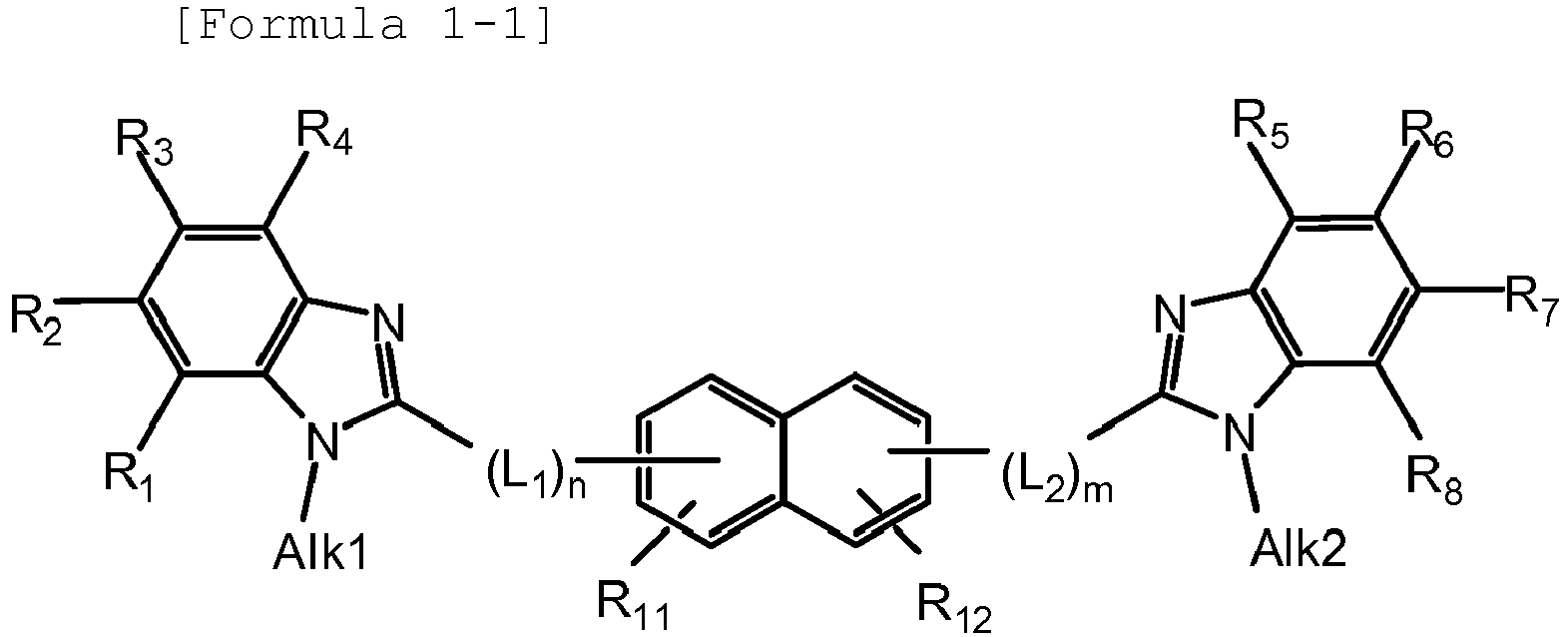


R1 to R8, R11 to R17, R22 to R25, L1, L2, Alk1, Alk2, n, m, and X are the same as those defined above. - According to an exemplary embodiment of the present application, the new nitrogen-containing heterocyclic compound represented by
Formula 2 may be represented by any one of the following Formulas 2-1 to 2-5.


R1 to R8, R11 to R17, R22 to R25, L3, L4, Ar1, Ar2, n, m, and X are the same as those defined above. - Examples of the substituents will be described below, but are not limited thereto.
- In the present application, it is preferred that the alkyl group has a carbon number of 1 to 30 and does not cause a steric hindrance. Specific examples thereof include a methyl group, an ethyl group, a propyl group, an isopropyl group, a butyl group, a t-butyl group, a pentyl group, a hexyl group, a heptyl group and the like, but are not limited thereto.
- In the present application, the alkoxy group may be a straight chain or branched chain. The carbon number of the alkoxy group is not particularly limited, but is preferably from 1 to 30, which is a range that does not cause a steric hindrance. The number of carbon atoms of the alkoxy group does not affect the conjugate length of the compound, but only affects the method of applying the compound to the organic electronic device, for example, a vacuum deposition method or a solution coating method. Therefore, the carbon number of the alkoxy group is not particularly limited.
- In the present application, the alkenyl group may be a straight chain or branched chain, and is preferably an alkenyl group having from 2 to 40 carbon atoms, and specifically, the alkenyl group is preferably an alkenyl group in which an aryl group, such as a stylbenyl group, a styrenyl group and the like, is substituted, but is not limited thereto.
- In the present specification, the aryl group may be monocyclic or polycyclic, and the number of carbon atoms thereof is not particularly limited, but is preferably 6 to 60. Examples of a monocyclic aryl group include a phenyl group, a biphenyl group, a terphenyl group, a stilbene group, and the like, and examples of a polycyclic aryl group include a naphthyl group, an anthracenyl group, a phenanthrenyl group, a pyrenyl group, a perylenyl group, a tetracenyl group, a chrysenyl group, a fluorenyl group, an acenaphthacenyl group, a triphenylene group, a fluoranthrene group, and the like, but the scope of the present application is not limited to these examples.
In the present application, the heterocyclic group is a heterocyclic group including at least one of O, N, and S as a heteroatom, and the carbon number thereof is not particularly limited, but is preferably from 2 to 60. Examples of the heterocyclic group include a thiophene group, a furan group, a pyrrole group, an imidazole group, a thiazole group, an oxazole group, an oxadiazole group, a triazole group, a pyridyl group, a bipyridyl group, a triazine group, an acrydyl group, a pyridazine group, a quinolinyl group, an isoquinoline group, an indole group, a carbazole group, a benzoxazole group, a benzimidazole group, a benzothiazolyl group, a benzocarbazolyl group, a benzthiophene group, a dibenzothiophene group, a benzfuranyl group, a dibenzofuranyl group and the like, but are not limited thereto. - In the present specification, the cycloalkyl group may be monocyclic or polycyclic, and the number of carbon atoms is not particularly limited, but is preferably from 3 to 60. Examples of the cycloalkyl group include a cyclopentyl group and a cyclohexyl group.
- In the present specification, examples of a halogen group include fluorine, chlorine, bromine, or iodine.
- In the present application, the fluorenyl group is a structure in which two cyclic organic compounds are linked to each other through one atom, and examples thereof include

- In the present application, the fluorenyl group includes a structure of an open fluorenyl group, and the open fluorenyl group herein is a structure in which the link of one cyclic compound is broken in a structure in which two cyclic organic compounds are linked to each other through one atom, and examples thereof include


- In the present application, examples of the arylamine group include a substituted or unsubstituted monocyclic diarylamine group, a substituted or unsubstituted polycyclic diarylamine group, or a substituted or unsubstituted monocyclic and polycyclic diraylamine group.
- In the present application, the aryl group in the aryloxy group, the arylthioxy group, the arylsulfoxy group, and the aralkylamine group is the same as the above-described examples of the aryl group.
- In the present application, the alkyl group in the alkylthioxy group, the alkylsulfoxy group, the alkylamine group, and the aralkylamine group is the same as the above-described examples of the alkyl group.
- In the present application, the heteroaryl group in the heteroarylamine group may be selected from the above-described examples of the heterocyclic group.
- In the present application, the aralkyl group in the aralkylamine group is an alkyl group substituted with an aryl group, the aryl group is the same as the above-described examples, and the alkyl group is the same as the above-described examples.
- In the present application, the term "substituted or unsubstituted" means being substituted or unsubstituted with at least one substituent of deuterium; a halogen group; a nitrile group; a nitro group; a hydroxy group; an alkyl group; a cycloalkyl group; an alkoxy group; an aryloxy group; an alkylthioxy group; an arylthioxy group; an alkylsulfoxy group; an arylsulfoxy group; an alkenyl group; a silyl group; a boron group; an alkylamine group; an aralkylamine group; an arylamine group; an aryl group; a fluorenyl group; a carbazole group; and a heterocyclic group including one or more of N, O, and S atoms. Herein, the term "unsubstituted" means having no substituent other than hydrogen.
- In the present application, an arylene group, an alkenylene group, a fluorenylene group, a carbazolylene group, and a heteroarylene group are a divalent group of an aryl group, an alkenyl group, a fluorenyl group, and a carbazole group, respectively. Except that these groups are each a divalent group, the above-described description of an aryl group, an alkenyl group, a fluorenyl group, and a carbazole group may be applied to these groups.
- In the present application, oxygen means a divalent oxygen atom.
- In the present application, sulfur means a divalent sulfur atom.
- In the present application, the substituted or unsubstituted nitrogen means that in a secondary amine group, the other substituent is hydrogen, or selected from deuterium; a halogen group; a nitrile group; a nitro group; a hydroxy group; an alkyl group; a cycloalkyl group; an alkoxy group; an aryloxy group; an alkylthioxy group; an arylthioxy group; an alkylsulfoxy group; an arylsulfoxy group; an alkenyl group; a silyl group; a boron group; an alkylamine group; an aralkylamine group; an arylamine group; an aryl group; a fluorenyl group; a carbazole group; and a heterocyclic group including one or more of N, O, and S atoms.
- In the present application, the substituted or unsubstituted phosphorus means that in a divalent phosphorus atom, the other substituent is hydrogen, or selected from deuterium; a halogen group; a nitrile group; a nitro group; a hydroxy group; an alkyl group; a cycloalkyl group; an alkoxy group; an aryloxy group; an alkylthioxy group; an arylthioxy group; an alkylsulfoxy group; an arylsulfoxy group; an alkenyl group; a silyl group; a boron group; an alkylamine group; an aralkylamine group; an arylamine group; an aryl group; a fluorenyl group; a carbazole group; and a heterocyclic group including one or more of N, O, and S atoms.
- In the present application, the substituted arylene group means that a phenyl group, a biphenyl group, a naphthalene group, a fluorenyl group, a pyrenyl group, a phenanthrenyl group, a perylene group, a tetracenyl group, an anthracenyl group, and the like are substituted with another substituent.
- In the present application, the substituted heteroarylene group means that a pyridyl group, a thiophenyl group, a triazine group, a quinoline group, a phenanthroline group, an imidazole group, a thiazole group, an oxazole group, a carbazole group, and a condensed heterocyclic group thereof, for example, a benzquinoline group, a benzimidazole group, a benzoxazol group, a benzothiazolyl group, a benzocarbazolyl group, a dibenzothiophenyl group, and the like are substituted with another substituent.
- According to an exemplary embodiment of the present application, Alk1 and Alk2 may be the same substituted or unsubstituted alkyl group; and substituted or unsubstituted cycloalkyl group.
- According to an exemplary embodiment of the present application, Ar1 and Ar2 may be the same substituted or unsubstituted aryl group; and substituted or unsubstituted heterocyclic group. The present application provides the new nitrogen-containing heterocyclic compound represented by
Formula - In an exemplary embodiment of the present application, Alk1 and Alk2 in
Formula 1 are each a substituted or unsubstituted alkyl group, and may be methyl, ethyl, propyl, or isopropyl. - In another exemplary embodiment of the present application, Ar1 and Ar2 in
Formula 2 may be a polycyclic aryl group having two or more rings, or a substituted aryl group. For example, Ar1 and Ar2 may be biphenyl, naphthyl, anthracenyl, and the like. InFormula 2, when a polycyclic aryl having more abundant electrons, for example, a group such as biphenyl, naphthyl, and the like is introduced as compared to the case where Ar1 or Ar2 is a monocyclic aryl, electron mobility is further increased. This contributes to the improvement in efficiency of the device, and thus a further excellent effect may be obtained. - In another exemplary embodiment of the present application, L1 and L2 in
Formula 1 are each a direct bond, a substituted or unsubstituted arylene group, or a substituted or unsubstituted heteroarylene group, and may be specifically a phenylene group, a biphneylene group, or a pyridine group. - In another exemplary embodiment of the present application, L3 and L4 in
Formula 2 are each a substituted or unsubstituted arylene group, or a substituted or unsubstituted heteroarylene group, and may be specifically a phenylene group, a biphneylene group, or a pyridine group. - In Formulas 1-2 and 2-2, X is -O-, -S-, or - C (R20) (R21) -. Herein, R20 and R21 are the same as those defined above. In an exemplary embodiment, R20 and R21 may be a substituted or unsubstituted alkyl group; or a substituted or unsubstituted aryl group, and may be specifically a methyl group; or an alkyl-substituted or unsubstituted phenyl group.
- In another exemplary embodiment, R3 and R6 in
Formula - In another exemplary embodiment, R1 to R8 in
Formula - In the exemplary embodiments, when at least two of R1 to R8 form a monocyclic or polycyclic ring, the monocyclic or polycyclic ring may be a substituted or unsubstituted aliphatic or aromatic ring. The aliphatic or aromatic ring may be monocyclic or polycyclic. The aliphatic ring may be a cycloalkane. The aromatic ring includes benzene, naphthalene, anthracene, phenanthrene, and the like.
- In another exemplary embodiment, R1 and R2 in
Formula - In another exemplary embodiment, R3 and R4 in
Formula - In another exemplary embodiment, R5 and R6 in
Formula - In another exemplary embodiment, R7 and R8 in
Formula - In another exemplary embodiment, R1 and R2 in
Formula - In another exemplary embodiment, R3 and R4 in
Formula - In another exemplary embodiment, R1 and R2 in
Formula - In the present application, when A is
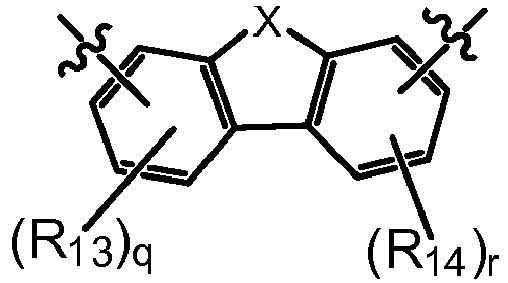
- In the present application, when A is

- Preferred specific examples of the compound according to the present application include the following compounds, but are not limited thereto.


- The compound of
Formula - The present application provides an organic electronic device using the compound of
Formula - In an exemplary embodiment of the present application, the organic electronic device may be composed of a structure including a first electrode, a second electrode, and an organic material layer disposed therebetween. The organic electronic device may be manufactured by a usual method and material of manufacturing an organic electronic device, except that the compound according to the present application is used in the organic material layer of the organic electronic device.
- The organic electronic device may be selected from the group consisting of an organic light emitting device, an organic solar cell, an organic photoconductor (OPC) drum, and an organic transistor.
- In an exemplary embodiment, the organic material layer of the organic electronic device includes a hole injection layer, or a hole transporting layer, and the hole injection layer or the hole transporting layer includes the nitrogen-containing heterocyclic compound.
- In another exemplary embodiment, the organic material layer of the organic electronic device includes a light emitting layer, and the light emitting layer includes the nitrogen-containing heterocyclic compound. As an example, the nitrogen-containing heterocyclic compound may be included as a host of the light emitting layer. As another example, the organic material layer including the nitrogen-containing heterocyclic compound includes the nitrogen-containing heterocyclic compound as a host, and may include another organic compound, a metal, or a metal compound as a dopant.
- In another exemplary embodiment, the organic material layer of the organic electronic device includes an electron transporting layer, and the electron transporting layer may include the nitrogen-containing heterocyclic compound.
- In another exemplary embodiment, the organic material layer of the organic electronic device includes an electron transporting layer, and the electron transporting layer may include a metal or a metal complex compound along with the nitrogen-containing heterocyclic compound. The metal includes an alkali metal, an alkali earth metal, a rare earth metal, and the like. The alkali metal includes lithium, sodium, and potassium. The alkali earth metal includes magnesium, calcium, and the like. As a specific example, the electron transporting layer may include the nitrogen-containing heterocyclic compound, and a metal such as lithium and calcium, or a metal complex compound.
- In another exemplary embodiment, the organic material layer of the organic electronic device includes a charge generating layer, and the charge generating layer may include the nitrogen-containing heterocyclic compound. The charge generating layer may additionally include a metal or a metal complex compound. Examples of the metal are the same as those described above. When the organic material layer includes two or more light emitting units, the charge generating layer may be provided between the light emitting units. The light emitting unit includes a light emitting layer having at least one layer, and may further include an additional organic material layer such as a charge transporting layer, if necessary. Further, the charge generating layer may also be provided between a light emitting layer and any one electrode. Specifically, the charge generating layer may be provided between an anode and a light emitting layer. The charge generating layer may sequentially include an n-type organic material layer such as hexaazatriphenylene and a p-type organic material layer such as NPB on a surface close to a cathode. Specifically, a p-type organic material layer, an n-type organic material layer, and a charge generating layer may be sequentially stacked from the cathode side and provided. In another exemplary embodiment, the organic material layer of the organic electronic device may include a hole injection layer or a hole transporting layer including a compound that includes an aryl amino group, a carbazole group, or a benzocarbazolyl group, in addition to an organic material layer including the nitrogen-containing heterocyclic compound.
- The structure of the organic electronic device according to the present application is illustrated in
FIGS. 1 to 5 .FIG. 1 illustrates a structure in which ananode 2, ahole injection layer 3, ahole transporting layer 4, alight emitting layer 5, anelectron transporting layer 6, and acathode 7 are stacked on asubstrate 1.FIG. 2 illustrates a structure in which theanode 2, thehole injection layer 3, thehole transporting layer 4, thelight emitting layer 5, and thecathode 7 are stacked on thesubstrate 1.FIG. 3 illustrates a structure in which theanode 2, thehole transporting layer 4, thelight emitting layer 5, theelectron transporting layer 6, and thecathode 7 are stacked on thesubstrate 1.FIG. 4 illustrates a structure in which theanode 2, thelight emitting layer 5, theelectron transporting layer 6, and thecathode 7 are stacked on thesubstrate 1.FIG. 5 illustrates a structure in which theanode 2, thelight emitting layer 5, and thecathode 7 are stacked on thesubstrate 1.FIGS. 1 to 5 are provided only for illustrating the structure of the device, but the scope of the present application is not limited thereto.FIGS. 1 to 5 describe only a structure in which an anode, an organic material layer, and a cathode are sequentially stacked on a substrate, but the present application also includes a structure in which a cathode, an organic material layer, and an anode are sequentially stacked on a substrate. - For example, the organic electronic device according to the present application may be manufactured by depositing a metal or a metal oxide having conductivity, or an alloy thereof on a substrate to form an anode by using a physical vapor deposition (PVD) method such as sputtering or e-beam evaporation, forming an organic material layer including a hole injection layer, a hole transporting layer, a light emitting layer, and an electron transporting layer thereon, and then depositing a material which may be used as a cathode thereon.
- In addition to these methods, an organic electronic device may also be manufactured by sequentially depositing an organic material layer from a cathode material, and an anode material on a substrate (International Publication No.
2003/012890 ). The organic material layer may be a multi-layer structure including the hole injection layer, the hole transporting layer, the light emitting layer, the electron transporting layer and the like, but may be a mono-layer structure without being limited thereto. In addition, the organic material layer may be manufactured with a fewer number of layers by using various polymer materials by a solvent process other than a deposition method, such as, for example, spin coating, dip coating, doctor blading, screen printing, inkjet printing, a thermal transfer method or the like. - It is preferred that as the anode material, materials having a high work function are usually used so as to facilitate the injection of holes into the organic material layer. Specific examples of the anode material which may be used in the present invention include: a metal such as vanadium, chromium, copper, zinc and gold, or an alloy thereof; a metal oxide such as zinc oxide, indium oxide, indium tin oxide (ITO) and indium zinc oxide (IZO); a combination of a metal and an oxide, such as ZnO:Al or SnO2:Sb; a conductive polymer such as poly(3-methylthiophene), poly[3,4-(ethylene-1,2-dioxy)thiophene] (PEDT), polypyrrole and polyaniline; and the like, but are not limited thereto.
- It is preferred that as the cathode material, materials having a low work function are usually used so as to facilitate the injection of electrons into the organic material layer. Specific examples of the cathode material include a metal such as magnesium, calcium, sodium, potassium, titanium, indium, yttrium, lithium, gadolinium, aluminum, silver, tin, and lead, or an alloy thereof; a multi-layer structured material such as LiF/Al or LiO2/Al, and the like, but are not limited thereto.
- The hole injection material is a material that is capable of well accepting holes from the anode at low voltage, and the highest occupied molecular orbital (HOMO) of the hole injection material is preferably a value between the work function of the anode material and the HOMO of the neighboring organic material layer. Specific examples of the hole injection material include metal porphyrine, oligothiophene, arylamine-based organic materials, hexanitrile hexaazatriphenylene, quinacridone-based organic materials, perylene-based organic materials, antraquinone, and polyaniline-based and polythiophene-based conductive polymers, and the like, but are not limited thereto.
- The hole transporting material is suitably a material having high hole mobility, which may accept holes from the anode or the hole injection layer and transfer the holes to the light emitting layer. Specific examples thereof include arylamine-based organic materials, conductive polymers, block copolymers having both conjugated portions and non-conjugated portions, and the like, but are not limited thereto.
- The light emitting material is a material that is capable of emitting light in a visible light region by accepting and recombining holes from the hole transporting layer and electrons from the electron transporting layer, respectively, and preferably a material having high quantum efficiency for fluorescence and phosphorescence. Specific examples thereof include 8-hydroxy-quinoline-aluminum complex (Alq3); carbazole-based compounds; dimerized styryl compounds; BAlq; 10-hydroxybenzoquinoline-metal compounds; benzoxazole-based, benzothiazole-based and benzimidazole-based compounds; poly(p-phenylenevinylene)(PPV)-based polymers; spiro compounds; and polyfluorene, rubrene, and the like, but are not limited thereto.
- The electron transporting material is suitably a material having high electron mobility, which may accept electrons from the cathode and transfer the electrons to the light emitting layer. Specific examples thereof include Al complexes of 8-hydroxyquinoline; complexes including Alq3; organic radical compounds; hydroxyflavone-metal complexes, and the like, but are not limited thereto.
- The organic electronic device according to the present application may be a front side light emission type, a rear side light emission type or a both-side light emission type according to the materials used.
- Hereinafter, the present invention will be described in more detail through Preparation Examples and Experimental Examples, but the scope of the present application is not limited by the following Preparation Examples and Experimental Examples.
-

- (Preparation Example 1-1) Preparation of Compound A-1 N-methyl-1,2-benzenediamine dihydrochloride (19.5 g, 99.95 mmol) and 4-bromobenzaldehyde (18.5 g, 99.98 mmol) were suspended in 1,4-dioxane (200 mL) and acetic acid (AcOH) (20 mL). The obtained mixture was stirred under reflux for about 6 hours, and cooled to normal temperature. The mixture was diluted with water (100 mL), and then the produced solid was filtered, and washed with water and hexane to prepare Compound A-1 (20.7 g, 72%). MS: [M+H]+ =288
- (Preparation Example 1-2) Preparation of Compound A-2 In Compound A-3 (11.7 g, 40.7 mmol) prepared in Preparation Example 1-1, bis(pinacolato)diboron (11.4 g, 44.9 mmol) and potassium acetate (KOAc) (12.0 g, 122 mmol) were suspended in dioxane (250 mL). Pd(dba)2 (0.70 g, 3 mol%) and PCy3 (0.69 g, 6 mol%) were added to the suspension. The mixture was stirred under reflux for about 8 hours, and cooled to normal temperature. The mixture was diluted with water (250 mL) and extracted with CH2Cl2 (3 x 100 mL). The organic extract dried over magnesium sulfate (MgSO4), and then filtered. The filtrate was concentrated under reduced pressure, and recrystallized with ethyl ether and hexane to prepare Compound A-2 (10.2 g, 75%). MS: [M+H]+ = 335
-

- Compound A-4 was prepared in the same manner as in Preparation Example 1, except that N-ethyl-1,2-benzenediamine was used instead of N-methyl-1,2-benzenediamine dihydrochloride in Preparation Example 1. MS: [M+H]+ = 349
-

- Compound A-6 was prepared in the same manner as in Preparation Example 1, except that 2-formyl-5-bromopyridine was used instead of 4-bromobenzaldehyde in Preparation Example 1. MS: [M+H]+ = 350
-

- Compound A-8 was prepared in the same manner as in Preparation Example 1, except that 6-bromo-2-naphthaldehyde was used instead of 4-bromobenzaldehyde in Preparation Example 1. MS: [M+H]+ = 385
-

- Compound A-10 was prepared in the same manner as in Preparation Example 1, except that N-phenylbenzene-1,2-diamine was used instead of N-methyl-1,2-benzenediamine dihydrochloride in Preparation Example 1. MS: [M+H]+ = 396
-

- Compound A-12 was prepared in the same manner as in Preparation Example 1, except that N-(naphthalen-1-yl)benzene-1,2-diamine was used instead of N-methyl-1,2-benzenediamine dihydrochloride in Preparation Example 1. MS: [M+H]+ = 446
-

- 2,7-dibromonaphthalene (2.86 g, 10.0 mmol) and Compound A-2 (7.21 g, 21.0 mmol) were dissolved in tetrahydrofuran (100 mL), a 2 M potassium carbonate aqueous solution (30 mL) was added thereto, tetrakis triphenylphosphino palladium (Pd(PPh3)4) (231 mg, 2 mol%) was put thereinto, and then the mixture was stirred under reflux for 5 hours. The temperature was decreased to normal temperature, and the produced solid was filtered. The filtered solid was recrystallized with chloroform and ethanol and filtered, and then dried to prepare a compound of Formula 3-1 (4.06 g, 75%). MS: [M+H]+ = 541
-

- The compound of Formula 3-2 was prepared in the same manner as in Preparation Example 101, except that compound A-4 was used instead of Compound A-2 in Preparation Example 101. MS: [M+H]+ = 569
-

- The compound of Formula 3-3 was prepared in the same manner as in Preparation Example 101, except that Compound A-6 was used instead of Compound A-2 in Preparation Example 101. MS: [M+H]+ = 543
-

- The compound of Formula 3-4 was prepared in the same manner as in Preparation Example 101, except that Compound A-8 was used instead of Compound A-2 in Preparation Example 101. MS: [M+H]+ = 641
-

- The compound of Formula 4-1 was prepared in the same manner as in Preparation Example 101, except that 2,7-dibromo-9,9-dimethylfluorene was used instead of 2,7-dibromobenzene in Preparation Example 101. MS: [M+H]+ = 607
-

- N-methyl-1,2-benzenediamine dihydrochloride (19.5 g, 99.95 mmol) and 2.7-naphthalenedicabaldehyde (8.767g, 47.6 mmol) were suspended in 1,4-dioxane (200 mL) and acetic acid (AcOH) (20 mL). The obtained mixture was stirred under reflux for about 6 hours, and cooled to normal temperature. The mixture was diluted with water (100 mL), and then the produced solid was filtered and washed with water and hexane. The filtered solid was recrystallized with chloroform and ethanol and filtered, and then dried to prepare a compound of Formula 3-13 (15.16 g, 82 %) . MS: [M+H]+ = 388
-

- The compound of Formula 3-14 was prepared in the same manner as in Preparation Example 101, except that Compound A-10 was used instead of Compound A-2 in Preparation Example 101. MS: [M+H]+ = 664
-

- The compound of Formula 5-2 was prepared in the same manner as in Preparation Example 101, except that the
compound 3,6-dibromophenanthrene was used instead of thecompound 2,7-dibromonaphthalene in Preparation Example 101. MS: [M+H]+ = 590 -

- The compound of Formula 5-3 was prepared in the same manner as in Preparation Example 101, except that Compound A-10 was used instead of Compound A-2 in Preparation Example 109. MS: [M+H]+ = 714
-

- The compound of Formula 3-14 was prepared in the same manner as in Preparation Example 101, except that Compound A-12 was used instead of Compound A-2 in Preparation Example 101. MS: [M+H]+ = 764
-

- The compound of Formula 6-1 was prepared in the same manner as in Preparation Example 101, except that the
compound 1,6-dibromophenanthrene was used instead of thecompound 2,7-dibromonaphthalene in Preparation Example 101. MS: [M+H]+ = 540 -

- The compound of Formula 7-1 was prepared in the same manner as in Preparation Example 101, except that the
compound 1,8-dibromonaphthalene was used instead of thecompound 2,7-dibromonaphthalene in Preparation Example 101. MS: [M+H]+ = 540 -

- The compound of Formula 8-1 was prepared in the same manner as in Preparation Example 101, except that the
compound 1,2-dibromonaphthalene was used instead of thecompound 2,7-dibromonaphthalene in Preparation Example 101. MS: [M+H]+ = 540 -

- The compound of Formula 9-1 was prepared in the same manner as in Preparation Example 101, except that the
compound 1,5-dibromonaphthalene was used instead of thecompound 2,7-dibromonaphthalene in Preparation Example 101. MS: [M+H]+ = 540 -

- The compound of Formula 10-4 was prepared in the same manner as in Preparation Example 101, except that the
compound 2,7-dibromo-9,9-dimethyl-9H-xanthene was used instead of thecompound 2,7-dibromonaphthalene in Preparation Example 101. MS: [M+H]+ = 622 - A glass substrate on which a thin film of indium tin oxide (ITO) was coated to a thickness of 500 Å was placed into distilled water in which a detergent was dissolved, and washed using ultrasonic waves. At this time, a product manufactured by Fischer Co. was used as the detergent, and distilled water, which had been twice filtered by a filter manufactured by Millipore Co., was used as the distilled water. After the ITO was washed for 30 minutes, ultrasonic washing was repeated twice by using distilled water for 10 minutes. After the washing using distilled water was completed, ultrasonic washing was conducted using a solvent of isopropyl alcohol, acetone, and methanol, and the resultant product was dried and then transported to a plasma washing machine. In addition, the substrate was washed by using an oxygen plasma for 5 minutes, and then was transported to a vacuum deposition machine.
- Hexanitrile hexaazatriphenylene (HAT) of the following Formula was vacuum deposited to a thickness of 50 Å by heating, on a transparent ITO electrode, which was thus prepared, so as to form a hole injection layer.

- A hole transporting layer was formed by vacuum depositing 4,4'-bis[N-(1-naphthyl)-N-phenylamino]biphenyl (NPB) (1,700 Å) of the above Formula on the hole injection layer.
- Subsequently, a light emitting layer was formed by vacuum depositing BH and GD shown below at a weight ratio of 20:1 in a film thickness of 230 Å on the hole transporting layer.

- The electron injection and transporting layers were formed by vacuum depositing the compound of Formula 3-1, prepared in Preparation Example 101 on the light emitting layer in a thickness of 200 Å.
- On the electron injection and transporting layers, lithium fluoride (LiF) in a thickness of 15 Å and aluminum in a thickness of 1,000 Å were sequentially deposited to form a cathode.
- In the above process, the deposition rate of the organic material was maintained at 0.4 to 0.7 Å/sec, the deposition rate of lithium fluoride of the cathode was maintained at 0.3 Å/sec, the deposition rate of aluminum was maintained at 2 Å/sec, and the degree of vacuum during the deposition was maintained at 2 × 10⁻⁷ to 5 × 10⁻⁸ torr to manufacture an organic light emitting device.
- An organic light emitting device was manufactured in the same manner as in Experimental Example 1-1-1, except that a compound of the following Formula ET-A was used instead of the compound of Formula 3-1 in Experimental Example 1-1-1.

- An organic light emitting device was manufactured in the same manner as in Experimental Example 1-1-1, except that each compound shown in Table 1 was used instead of the compound of Formula 3-1 in Experimental Example 1-1-1. When current (10 mA/cm2) was applied to the organic light emitting devices manufactured by Experimental Examples 1-1-2 to 1-1-16 and 2-2-1, the results shown in Table 1 were obtained.
[Table 1] Compound Voltage (V) Efficiency (cd/A) Color coordinate (x, y) Experimental Example 1-1-1 3-1 4.02 6.90 (0.137, 0.107) Experimental Example 1-1-2 3-2 4.07 6. 98 (0.138, 0.106) Experimental Example 1-1-3 3-3 4.32 6.35 (0.136, 0.109) Experimental Example 1-1-4 3-4 4.23 6.52 (0.137, 0.108) Experimental Example 1-1-5 3-13 4.11 6.83 (0.137, 0.106) Experimental Example 1-1-6 3-14 5.07 5.66 (0.138, 0.107) Experimental Example 1-1-7 4-1 4.05 6.87 (0.137, 0.108) Experimental Example 1-1-8 5-2 4.09 6.88 (0.137, 0.106) Experimental Example 1-1-9 5-3 4.73 6.12 (0.136, 0.107) Experimental Example 1-1-10 3-15 4.79 5.92 (0.136, 0.107) Experimental Example 1-1-12 6-1 4.09 6.87 (0.137, 0.108) Experimental Example 1-1-13 7-1 4.05 6.92 (0.136, 0.107) Experimental Example 1-1-14 8-1 4.19 6.88 (0.136, 0.108) Experimental Example 1-1-15 9-1 4.28 6.81 (0.137, 0.108) Experimental Example 1-1-16 10-4 4.12 6.91 (0.138, 0.106) Experimental Example 2-1-1 ET-A 5.89 4.86 (0.137, 0.107) - In the case of a device manufactured by using the compound represented by
Formula 1 of the present invention, it can be confirmed that the device exhibited a high current efficiency and a low driving voltage, and this is because the compound ofFormula 1 in the device serves an excellent role in electron transport along with electron injection. - A glass substrate on which a thin film of indium tin oxide (ITO) was coated to a thickness of 500 Å was placed into distilled water in which a detergent was dissolved, and washed using ultrasonic waves. At this time, a product manufactured by Fischer Co. was used as the detergent, and distilled water, which had been twice filtered by a filter manufactured by Millipore Co., was used as the distilled water. After the ITO was washed for 30 minutes, ultrasonic washing was repeated twice by using distilled water for 10 minutes. After the washing using distilled water was completed, ultrasonic washing was conducted using a solvent of isopropyl alcohol, acetone, and methanol, and the resultant product was dried and then transported to a plasma washing machine. Furthermore, the substrate was washed by using an oxygen plasma for 5 minutes, and then was transported to a vacuum deposition machine.
- Hexanitrile hexaazatriphenylene (HAT) of the following Formula was vacuum deposited to a thickness of 50 Å by heating, on a transparent ITO electrode, which was thus prepared, so as to form a hole injection layer.
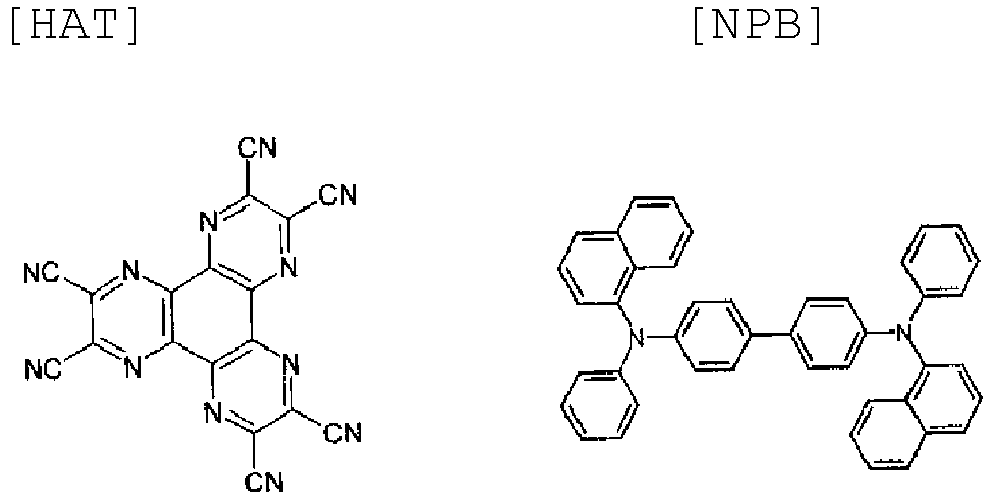
- A hole transporting layer was formed by vacuum depositing 4,4'-bis[N-(1-naphthyl)-N-phenylamino]biphenyl (NPB) (1,700 Å) of the above Formula on the hole injection layer.
- Subsequently, a light emitting layer was formed by vacuum depositing BH and GD shown below at a weight ratio of 20:1 in a film thickness of 230 Å on the hole transporting layer.


- The electron injection and transporting layers were formed by vacuum depositing HBL shown below in a thickness of 100 Å on the light emitting layer, and then vacuum depositing the compound of Formula 3-1 prepared in Preparation Example 101 and lithium at a weight ratio of 100:1 in a thickness of 100 Å.

- On the electron injection and transporting layers, aluminum was deposited in a thickness of 1,000 Å to form a cathode.
- In the above process, the deposition rate of the organic material was maintained at 0.4 to 0.7 Å/sec, the deposition rate of aluminum of the cathode was maintained at 2 Å/sec, and the degree of vacuum during the deposition was maintained at 2 × 10⁻⁷ to 5 × 10⁻⁸ torr to manufacture an organic light emitting device.
- An organic light emitting device was manufactured in the same manner as in Experimental Example 3-1-1, except that each compound shown in Table 2 was used instead of the compound of Formula 3-1 in Experimental Example 3-1-1.
- An organic light emitting device was manufactured in the same manner as in Experimental Example 3-1-1, except that a compound of ET-A was used instead of the compound of Formula 3-1 in Experimental Example 3-1-1.
- When current (10 mA/cm2) was applied to the organic light emitting devices manufactured by Experimental Examples 3-1-1 to 3-1-5 and 4-1-1, the results shown in Table 2 were obtained.
[Table 2] Compound Voltage (V) Efficiency (cd/A) Color coordinate (x,y) Experimental Example 3-1-1 3-1 3.89 7.12 (0.137, 0.107) Experimental Example 3-1-2 4-1 3.97 7.15 (0.137, 0.108) Experimental Example 3-1-3 6-1 4.01 7.02 (0.137, 0.108) Experimental Example 3-1-4 7-1 3.95 7.05 (0.136, 0.107) Experimental Example 3-1-5 10-4 4.02 6.99 (0.138, 0.106) Experimental Example 4-1-1 ET-A 5.56 4.99 (0.137, 0.107) - The following specific embodiments are encompassed:
- 1. A nitrogen-containing heterocyclic compound represented by the following Formula 1:

Formula 1,- R1 to R8 are the same as or different from each other, and are each independently hydrogen; deuterium; a halogen group; a nitrile group; a nitro group; a hydroxy group; a substituted or unsubstituted alkyl group; a substituted or unsubstituted cycloalkyl group; a substituted or unsubstituted alkoxy group; a substituted or unsubstituted aryloxy group; a substituted or unsubstituted alkylthioxy group; a substituted or unsubstituted arylthioxy group; a substituted or unsubstituted alkylsulfoxy group; a substituted or unsubstituted arylsulfoxy group; a substituted or unsubstituted alkenyl group; a substituted or unsubstituted silyl group; a substituted or unsubstituted boron group; a substituted or unsubstituted alkylamine group; a substituted or unsubstituted aralkylamine group; a substituted or unsubstituted arylamine group; a substituted or unsubstituted heteroarylamine group; a substituted or unsubstituted aryl group; a substituted or unsubstituted fluorenyl group; a substituted or unsubstituted carbazole group; or a substituted or unsubstituted heterocyclic group comprising one or more of N, O, and S atoms, or two or more adjacent groups of R1 to R8 form a monocyclic or polycyclic ring,
- Alk1 and Alk2 are the same as or different from each other, and are each independently a substituted or unsubstituted alkyl group; or a substituted or unsubstituted cycloalkyl group;
- L1 and L2 are the same as or different from each other, and are each independently a direct bond; oxygen; sulfur; substituted or unsubstituted nitrogen; substituted or unsubstituted phosphorus; a substituted or unsubstituted arylene group; a substituted or unsubstituted alkenylene group; a substituted or unsubstituted fluorenylene group; a substituted or unsubstituted carbazolylene group; or a substituted or unsubstituted heteroarylene group comprising one or more of N, O, and S atoms,
- n is an integer from 1 to 3, m is an integer from 1 to 3, and when n and m are each present as two or more, the substituents in the parenthesis are each independently the same as or different from each other,
- A is selected from the following structures,


- o, p, q, r, s, t, v, and w are each an integer from 0 to 3, and u is an integer from 0 to 2,
- X is -O-, -S-, or -C(R20) (R21)-,
- R11 to R17, R20, R21, R24, and R25 are the same as or different from each other, and are each independently hydrogen; deuterium; a halogen group; a nitrile group; a nitro group; a hydroxy group; a substituted or unsubstituted alkyl group; a substituted or unsubstituted cycloalkyl group; a substituted or unsubstituted alkoxy group; a substituted or unsubstituted aryloxy group; a substituted or unsubstituted alkylthioxy group; a substituted or unsubstituted arylthioxy group; a substituted or unsubstituted alkylsulfoxy group; a substituted or unsubstituted arylsulfoxy group; a substituted or unsubstituted alkenyl group; a substituted or unsubstituted silyl group; a substituted or unsubstituted boron group; a substituted or unsubstituted alkylamine group; a substituted or unsubstituted aralkylamine group; a substituted or unsubstituted arylamine group; a substituted or unsubstituted heteroarylamine group; a substituted or unsubstituted aryl group; a substituted or unsubstituted fluorenyl group; a substituted or unsubstituted carbazole group; or a substituted or unsubstituted heterocyclic group comprising one or more of N, O, and S atoms, and
- R22 and R23 are the same as or different from each other, and are each independently hydrogen; or a substituted or unsubstituted alkyl group.
- 2. The nitrogen-containing heterocyclic compound of
item 1, wherein A is represented by a group selected from the following Formulas:


R11 to R17 and R22 to R25 are the same as those defined initem 1. - 3. The nitrogen-containing heterocyclic compound of
item 1, whereinFormula 1 comprises a compound represented by any one of the following Formulas 1-1 to 1-5:


R1 to R8, R11 to R17, R22 to R25, L1, L2, Alk1, Alk2, n, m, and X are the same as those defined initem 1. - 4. The nitrogen-containing heterocyclic compound of
item 1, wherein the nitrogen-containing heterocyclic compound represented byFormula 1 is selected from the following compounds:


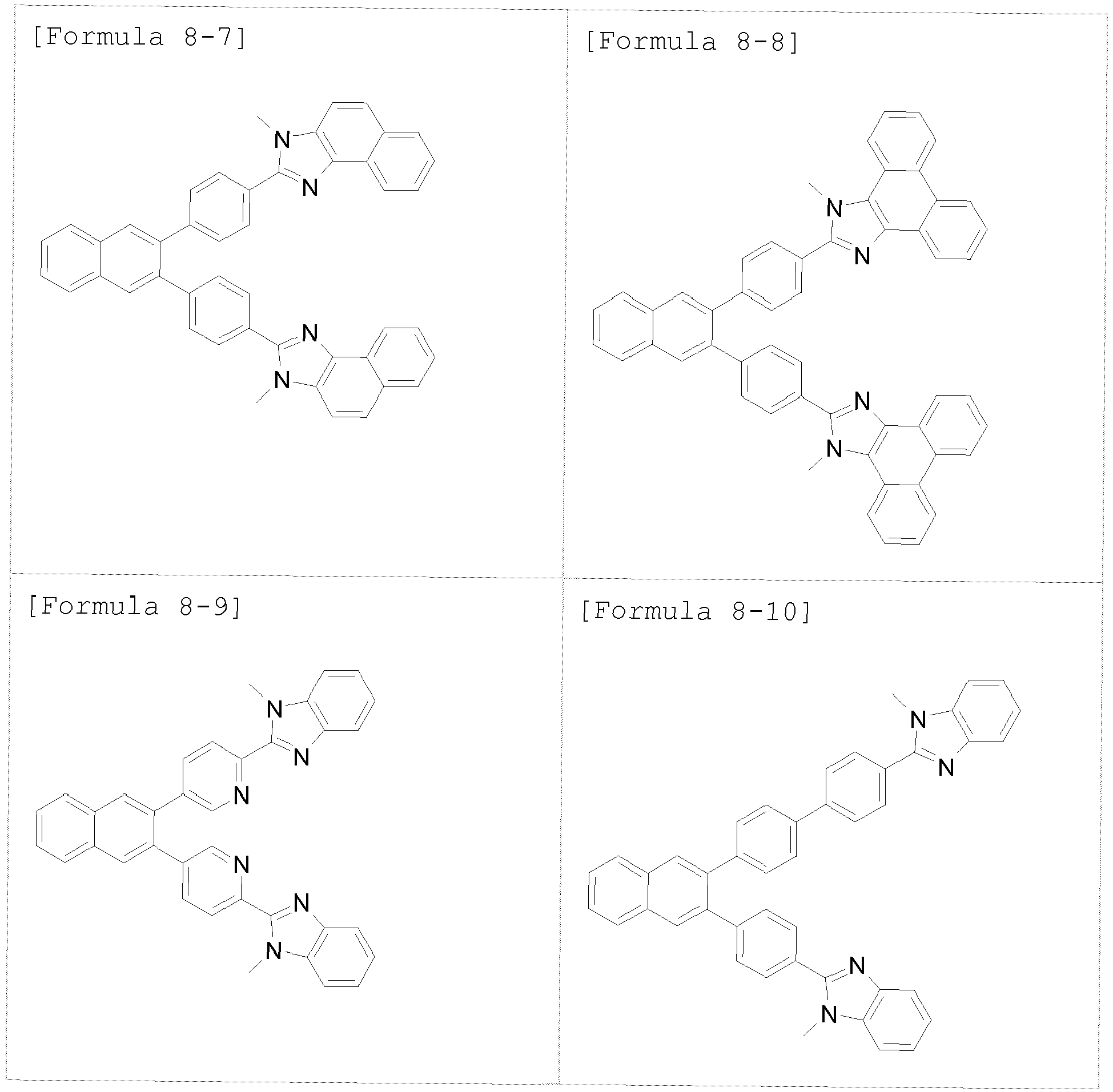


- 5. A nitrogen-containing heterocyclic compound represented by the following Formula 2:
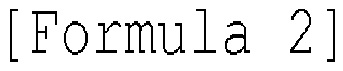

Formula 2,- R1 to R8 are the same as or different from each other, and are each independently hydrogen; deuterium; a halogen group; a nitrile group; a nitro group; a hydroxy group; a substituted or unsubstituted alkyl group; a substituted or unsubstituted cycloalkyl group; a substituted or unsubstituted alkoxy group; a substituted or unsubstituted aryloxy group; a substituted or unsubstituted alkylthioxy group; a substituted or unsubstituted arylthioxy group; a substituted or unsubstituted alkylsulfoxy group; a substituted or unsubstituted arylsulfoxy group; a substituted or unsubstituted alkenyl group; a substituted or unsubstituted silyl group; a substituted or unsubstituted boron group; a substituted or unsubstituted alkylamine group; a substituted or unsubstituted aralkylamine group; a substituted or unsubstituted arylamine group; a substituted or unsubstituted heteroarylamine group; a substituted or unsubstituted aryl group; a substituted or unsubstituted fluorenyl group; a substituted or unsubstituted carbazole group; or a substituted or unsubstituted heterocyclic group comprising one or more of N, O, and S atoms, or two or more adjacent groups of R1 to R8 form a monocyclic or polycyclic ring,
- Ar1 and Ar2 are the same as or different from each other, and are each independently a substituted or unsubstituted aryl group; or a substituted or unsubstituted heterocyclic group;
- L3 and L4 are the same as or different from each other, and are each independently oxygen; sulfur; substituted or unsubstituted nitrogen; substituted or unsubstituted phosphorus; a substituted or unsubstituted arylene group; a substituted or unsubstituted alkenylene group; a substituted or unsubstituted fluorenylene group; a substituted or unsubstituted carbazolylene group; or a substituted or unsubstituted heteroarylene group comprising one or more of N, O, and S atoms,
- n is an integer from 1 to 3, m is an integer from 1 to 3, and when n and m are each present as two or more, the substituents in the parenthesis are each independently the same as or different from each other,
- A is selected from the following structures,


- o, p, q, r, s, t, v, and w are each an integer from 0 to 3, and u is an integer from 0 to 2,
- X is -O-, -S-, or -C(R20) (R21)-,
- R11 to R17, R20, R21, R24, and R25 are the same as or different from each other, and are each independently hydrogen; deuterium; a halogen group; a nitrile group; a nitro group; a hydroxy group; a substituted or unsubstituted alkyl group; a substituted or unsubstituted cycloalkyl group; a substituted or unsubstituted alkoxy group; a substituted or unsubstituted aryloxy group; a substituted or unsubstituted alkylthioxy group; a substituted or unsubstituted arylthioxy group; a substituted or unsubstituted alkylsulfoxy group; a substituted or unsubstituted arylsulfoxy group; a substituted or unsubstituted alkenyl group; a substituted or unsubstituted silyl group; a substituted or unsubstituted boron group; a substituted or unsubstituted alkylamine group; a substituted or unsubstituted aralkylamine group; a substituted or unsubstituted arylamine group; a substituted or unsubstituted heteroarylamine group; a substituted or unsubstituted aryl group; a substituted or unsubstituted fluorenyl group; a substituted or unsubstituted carbazole group; or a substituted or unsubstituted heterocyclic group comprising one or more of N, O, and S atoms, and
- R22 and R23 are the same as or different from each other, and are each independently hydrogen; or a substituted or unsubstituted alkyl group.
- 6. The nitrogen-containing heterocyclic compound of
item 5, wherein A is represented by a group selected from the following Formulas:


R11 to R17 and R22 to R25 are the same as those defined initem 5. - 7. The nitrogen-containing heterocyclic compound of
item 5, whereinFormula 2 comprises a compound represented by any one of the following Formulas 2-1 to 2-5:


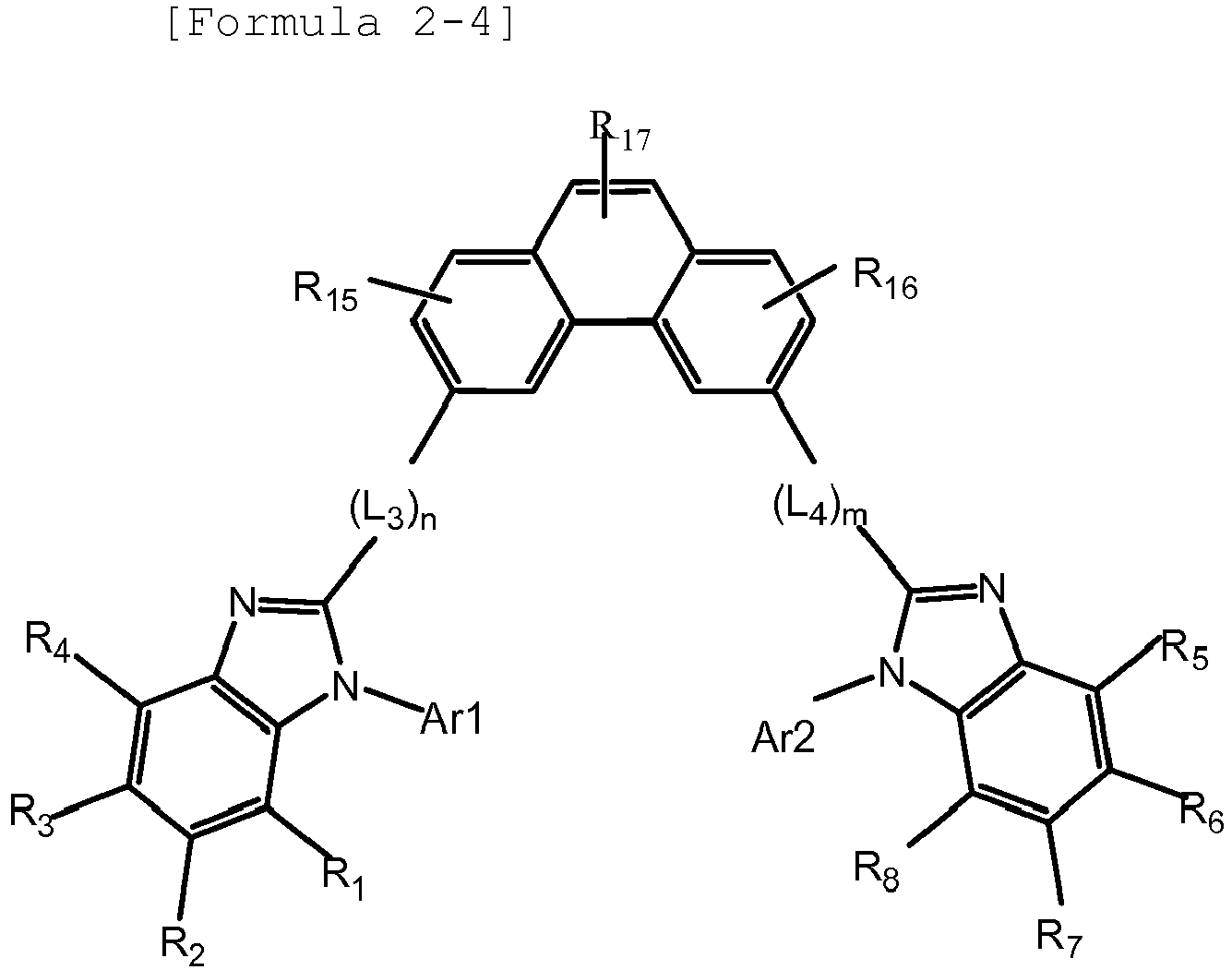

R1 to R8, R11 to R17, R22 to R25, L3, L4, Ar1, Ar2, n, m, and X are the same as those defined initem 5. - 8. The nitrogen-containing heterocyclic compound of
item 1, wherein the nitrogen-containing heterocyclic compound represented byFormula 1 is selected from the following compounds:
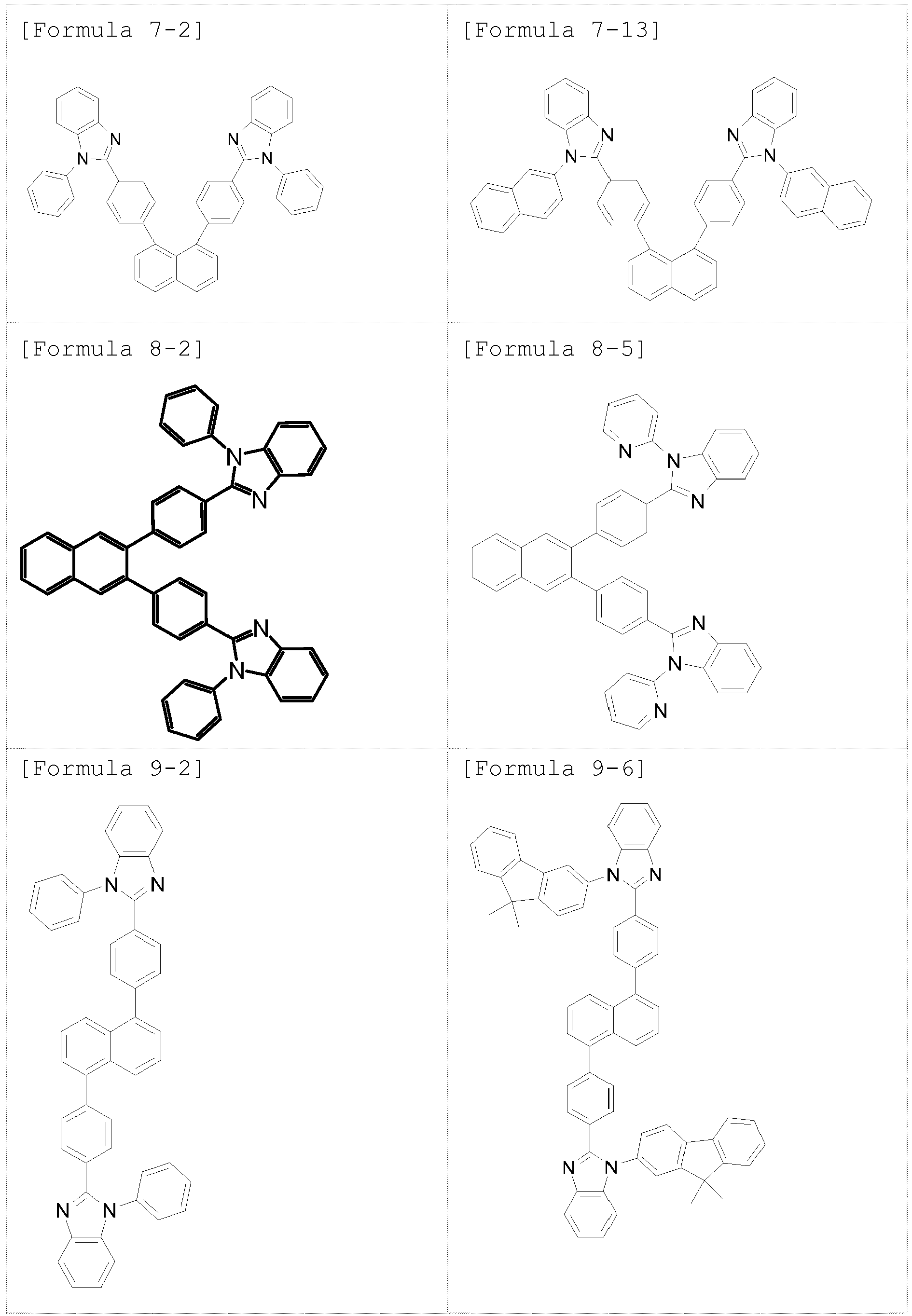
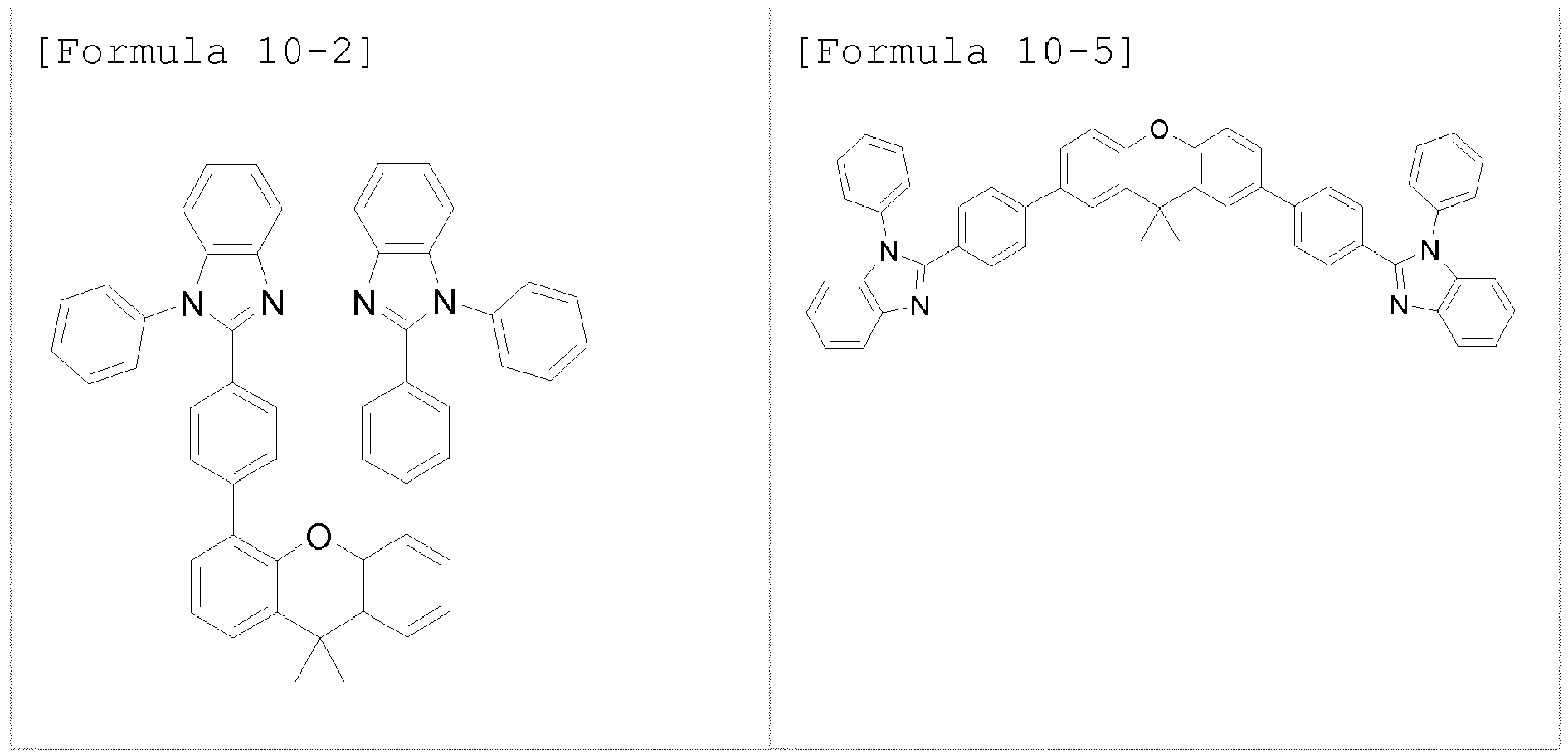
- 9. An organic electronic device comprising: a first electrode; a second electrode; and organic material layer having one or more layers disposed between the first electrode and the second electrode, wherein one or more layers of the organic material layer comprise the nitrogen-containing heterocyclic compound of any one of
items 1 to 8. - 10. The organic electronic device of item 9, wherein the organic material layer comprises a hole injection layer, or a hole transporting layer, and the hole injection layer or the hole transporting layer comprises the nitrogen-containing heterocyclic compound.
- 11. The organic electronic device of item 9, wherein the organic material layer comprises a light emitting layer, and the light emitting layer comprises the nitrogen-containing heterocyclic compound as a host of the light emitting layer.
- 12. The organic electronic device of item 9, wherein the organic material layer comprises an electron transporting layer, and the electron transporting layer comprises the nitrogen-containing heterocyclic compound.
- 13. The organic electronic device of item 9, wherein the organic material layer comprises a hole injection layer or a hole transporting layer comprising a compound that comprises an aryl amino group, a carbazole group, or a benzocarbazolyl group, in addition to an organic material layer comprising the nitrogen-containing heterocyclic compound.
- 14. The organic electronic device of item 9, wherein the organic material layer comprising the nitrogen-containing heterocyclic compound comprises the nitrogen-containing heterocyclic compound as a host, and comprises another organic compound, a metal, or a metal compound as a dopant.
- 15. The organic electronic device of item 12, wherein the electron transporting layer further comprises a metal or a metal complex.
- 16. The organic electronic device of item 9, wherein the organic material layer comprises a charge generating layer, and the charge generating layer comprises the nitrogen-containing heterocyclic compound.
- 17. The organic electronic device of item 16, wherein the charge generating layer further comprises a metal or a metal complex.
- 18. The organic electronic device of item 9, wherein the organic electronic device is selected from the group consisting of an organic light emitting device, an organic solar cell, an organic photoconductor (OPC) drum, and an organic transistor.
Claims (14)
- A nitrogen-containing heterocyclic compound represented by the following Formula 2:
 R1 to R8 are the same as or different from each other, and are each independently hydrogen; deuterium; a halogen group; a nitrile group; a nitro group; a hydroxy group; a substituted or unsubstituted alkyl group; a substituted or unsubstituted cycloalkyl group; a substituted or unsubstituted alkoxy group; a substituted or unsubstituted aryloxy group; a substituted or unsubstituted alkylthioxy group; a substituted or unsubstituted arylthioxy group; a substituted or unsubstituted alkylsulfoxy group; a substituted or unsubstituted arylsulfoxy group; a substituted or unsubstituted alkenyl group; a substituted or unsubstituted silyl group; a substituted or unsubstituted boron group; a substituted or unsubstituted alkylamine group; a substituted or unsubstituted aralkylamine group; a substituted or unsubstituted arylamine group; a substituted or unsubstituted heteroarylamine group; a substituted or unsubstituted aryl group; a substituted or unsubstituted fluorenyl group; a substituted or unsubstituted carbazole group; or a substituted or unsubstituted heterocyclic group comprising one or more of N, O, and S atoms, or two or more adjacent groups of R1 to R8 form a monocyclic or polycyclic ring,Ar1 and Ar2 are the same as or different from each other, and are each independently a substituted or unsubstituted aryl group; or a substituted or unsubstituted heterocyclic group;L3 and L4 are the same as or different from each other, and are each independently oxygen; sulfur; substituted or unsubstituted nitrogen; substituted or unsubstituted phosphorus; a substituted or unsubstituted arylene group; a substituted or unsubstituted alkenylene group; a substituted or unsubstituted fluorenylene group; a substituted or unsubstituted carbazolylene group; or a substituted or unsubstituted heteroarylene group comprising one or more of N, O, and S atoms,n is an integer from 1 to 3, m is an integer from 1 to 3, and when n and m are each present as two or more, the substituents in the parenthesis are each independently the same as or different from each other,A is selected from the following structures,
 o, p, s, t, v, and w are each an integer from 0 to 3, and u is an integer from 0 to 2,R11, R12, R15 to R17, R24, and R25 are the same as or different from each other, and are each independently hydrogen; deuterium; a halogen group; a nitrile group; a nitro group; a hydroxy group; a substituted or unsubstituted alkyl group; a substituted or unsubstituted cycloalkyl group; a substituted or unsubstituted alkoxy group; a substituted or unsubstituted aryloxy group; a substituted or unsubstituted alkylthioxy group; a substituted or unsubstituted arylthioxy group; a substituted or unsubstituted alkylsulfoxy group; a substituted or unsubstituted arylsulfoxy group; a substituted or unsubstituted alkenyl group; a substituted or unsubstituted silyl group; a substituted or unsubstituted boron group; a substituted or unsubstituted alkylamine group; a substituted or unsubstituted aralkylamine group; a substituted or unsubstituted arylamine group; a substituted or unsubstituted heteroarylamine group; a substituted or unsubstituted aryl group; a substituted or unsubstituted fluorenyl group; a substituted or unsubstituted carbazole group; or a substituted or unsubstituted heterocyclic group comprising one or more of N, O, and S atoms, andR22 and R23 are the same as or different from each other, and are each independently hydrogen; or a substituted or unsubstituted alkyl group.
 - The nitrogen-containing heterocyclic compound of claim 1, wherein A is represented by a group selected from the following Formulas:

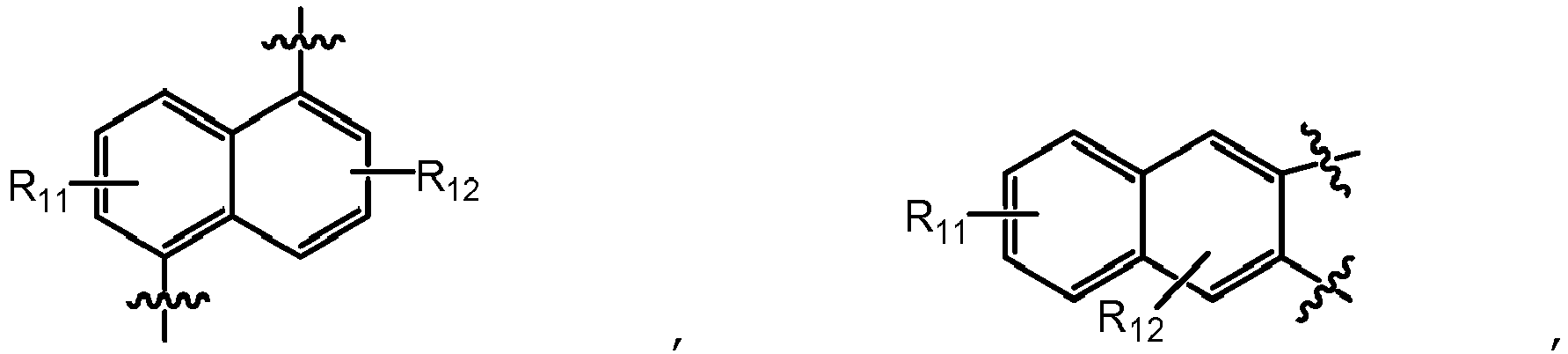


R11, R12, R15 to R17 and R22 to R25 are the same as those defined in claim 1. - The nitrogen-containing heterocyclic compound of claim 1, wherein Formula 2 comprises a compound represented by any one of the following Formulas 2-1 and 2-3 to 2-5:


R1 to R8, R11, R12, R15 to R17, R22 to R25, L3, L4, Ar1, Ar2, n and m are the same as those defined in claim 1. - The nitrogen-containing heterocyclic compound of claim 1, wherein the nitrogen-containing heterocyclic compound represented by Formula 2 is selected from the following compounds:


- An organic electronic device comprising: a first electrode; a second electrode; and organic material layer having one or more layers disposed between the first electrode and the second electrode, wherein one or more layers of the organic material layer comprise the nitrogen-containing heterocyclic compound of any one of claims 1 to 4.
- The organic electronic device of claim 5, wherein the organic material layer comprises a hole injection layer, or a hole transporting layer, and the hole injection layer or the hole transporting layer comprises the nitrogen-containing heterocyclic compound.
- The organic electronic device of claim 5, wherein the organic material layer comprises a light emitting layer, and the light emitting layer comprises the nitrogen-containing heterocyclic compound as a host of the light emitting layer.
- The organic electronic device of claim 5, wherein the organic material layer comprises an electron transporting layer, and the electron transporting layer comprises the nitrogen-containing heterocyclic compound.
- The organic electronic device of claim 5, wherein the organic material layer comprises a hole injection layer or a hole transporting layer comprising a compound that comprises an aryl amino group, a carbazole group, or a benzocarbazolyl group, in addition to an organic material layer comprising the nitrogen-containing heterocyclic compound.
- The organic electronic device of claim 5, wherein the organic material layer comprising the nitrogen-containing heterocyclic compound comprises the nitrogen-containing heterocyclic compound as a host, and comprises another organic compound, a metal, or a metal compound as a dopant.
- The organic electronic device of claim 8, wherein the electron transporting layer further comprises a metal or a metal complex.
- The organic electronic device of claim 5, wherein the organic material layer comprises a charge generating layer, and the charge generating layer comprises the nitrogen-containing heterocyclic compound.
- The organic electronic device of claim 12, wherein the charge generating layer further comprises a metal or a metal complex.
- The organic electronic device of claim 5, wherein the organic electronic device is selected from the group consisting of an organic light emitting device, an organic solar cell, an organic photoconductor (OPC) drum, and an organic transistor.
Applications Claiming Priority (3)
| Application Number | Priority Date | Filing Date | Title |
|---|---|---|---|
| KR20120038395 | 2012-04-13 | ||
| EP13775204.4A EP2749560B1 (en) | 2012-04-13 | 2013-04-12 | Novel nitrogen-containing heterocyclic compounds and organic electronic device using same |
| PCT/KR2013/003071 WO2013154378A1 (en) | 2012-04-13 | 2013-04-12 | Novel nitrogen-containing heterocyclic compound and organic electronic device using same |
Related Parent Applications (2)
| Application Number | Title | Priority Date | Filing Date |
|---|---|---|---|
| EP13775204.4A Division EP2749560B1 (en) | 2012-04-13 | 2013-04-12 | Novel nitrogen-containing heterocyclic compounds and organic electronic device using same |
| EP13775204.4A Division-Into EP2749560B1 (en) | 2012-04-13 | 2013-04-12 | Novel nitrogen-containing heterocyclic compounds and organic electronic device using same |
Publications (2)
| Publication Number | Publication Date |
|---|---|
| EP3434670A1 true EP3434670A1 (en) | 2019-01-30 |
| EP3434670B1 EP3434670B1 (en) | 2021-09-01 |
Family
ID=49327876
Family Applications (2)
| Application Number | Title | Priority Date | Filing Date |
|---|---|---|---|
| EP18194491.9A Active EP3434670B1 (en) | 2012-04-13 | 2013-04-12 | Novel nitrogen-containing heterocyclic compound and organic electronic device using same |
| EP13775204.4A Active EP2749560B1 (en) | 2012-04-13 | 2013-04-12 | Novel nitrogen-containing heterocyclic compounds and organic electronic device using same |
Family Applications After (1)
| Application Number | Title | Priority Date | Filing Date |
|---|---|---|---|
| EP13775204.4A Active EP2749560B1 (en) | 2012-04-13 | 2013-04-12 | Novel nitrogen-containing heterocyclic compounds and organic electronic device using same |
Country Status (7)
| Country | Link |
|---|---|
| US (1) | US9666812B2 (en) |
| EP (2) | EP3434670B1 (en) |
| JP (1) | JP6066146B2 (en) |
| KR (1) | KR101503134B1 (en) |
| CN (1) | CN104364250B (en) |
| TW (1) | TWI504592B (en) |
| WO (1) | WO2013154378A1 (en) |
Families Citing this family (35)
| Publication number | Priority date | Publication date | Assignee | Title |
|---|---|---|---|---|
| CN105408448B (en) | 2013-07-30 | 2018-11-02 | 默克专利有限公司 | Materials for Electronic Devices |
| KR20220025211A (en) * | 2013-07-30 | 2022-03-03 | 메르크 파텐트 게엠베하 | Materials for electronic devices |
| KR101542714B1 (en) | 2014-04-04 | 2015-08-12 | 주식회사 엘지화학 | Hetero-cyclic compound and organic light emitting device comprising the same |
| KR20150115622A (en) | 2014-04-04 | 2015-10-14 | 주식회사 엘지화학 | Hetero-cyclic compound and organic light emitting device comprising the same |
| KR101537500B1 (en) | 2014-04-04 | 2015-07-20 | 주식회사 엘지화학 | Organic light emitting diode |
| CN116655603A (en) * | 2014-07-21 | 2023-08-29 | 默克专利有限公司 | Material for electronic devices |
| KR102440238B1 (en) * | 2014-10-17 | 2022-09-06 | 엘지디스플레이 주식회사 | Space-through charge transfer compound, and Organic light emitting diode device and Display device using the same |
| CN104370823A (en) * | 2014-10-22 | 2015-02-25 | 上海大学 | Fluorenbenzimidazole derivatives and preparation method thereof |
| KR102285381B1 (en) | 2014-10-22 | 2021-08-04 | 삼성디스플레이 주식회사 | Compound and organic light emitting device comprising same |
| KR101560102B1 (en) * | 2014-11-20 | 2015-10-13 | 주식회사 엘지화학 | Organic light emitting device |
| CN104987309B (en) * | 2015-04-28 | 2019-03-19 | 南京高光半导体材料有限公司 | A kind of phenanthroimidazole symmetrical derivative host material and electroluminescent device |
| EP3680948B1 (en) * | 2015-08-21 | 2025-03-26 | Samsung Display Co., Ltd. | Organic light-emitting device |
| US10270033B2 (en) | 2015-10-26 | 2019-04-23 | Oti Lumionics Inc. | Method for patterning a coating on a surface and device including a patterned coating |
| CN105503736B (en) * | 2015-12-08 | 2019-10-18 | 华南理工大学 | A kind of n-type compound containing naphtho[1,2] imidazole and its preparation and application |
| KR101897907B1 (en) * | 2016-04-25 | 2018-09-12 | 주식회사 엘지화학 | Compound and organic electronic device comprising the same |
| KR102046930B1 (en) * | 2016-05-03 | 2019-11-20 | 주식회사 엘지화학 | Modifying agent and modified conjugated diene polymer prepared by using the same |
| CN116583131A (en) | 2017-04-26 | 2023-08-11 | Oti照明公司 | Method for patterning a coating on a surface and apparatus comprising the patterned coating |
| KR102536248B1 (en) | 2017-06-21 | 2023-05-25 | 삼성디스플레이 주식회사 | Heterocyclic compound and organic light emitting device comprising the same |
| KR102415376B1 (en) | 2017-08-04 | 2022-07-01 | 삼성디스플레이 주식회사 | Condensed-cyclic compound and organic light emitting device comprising the same |
| US11751415B2 (en) | 2018-02-02 | 2023-09-05 | Oti Lumionics Inc. | Materials for forming a nucleation-inhibiting coating and devices incorporating same |
| CN108383796A (en) * | 2018-02-07 | 2018-08-10 | 瑞声科技(南京)有限公司 | A kind of luminous organic material and its application |
| CN108409666A (en) * | 2018-02-07 | 2018-08-17 | 瑞声科技(南京)有限公司 | A kind of luminous organic material and its device application |
| KR102536246B1 (en) | 2018-03-23 | 2023-05-25 | 삼성디스플레이 주식회사 | Heterocyclic compound and organic light emitting device comprising the same |
| CN108822088A (en) * | 2018-08-12 | 2018-11-16 | 瑞声科技(南京)有限公司 | A kind of compound and its application based on glyoxaline structure |
| CN110878054A (en) * | 2018-09-06 | 2020-03-13 | 北京鼎材科技有限公司 | A kind of imidazole compound and its application |
| KR102228753B1 (en) * | 2018-10-04 | 2021-03-17 | 주식회사 엘지화학 | Compound and organic light emitting device comprising the same |
| JP7390739B2 (en) | 2019-03-07 | 2023-12-04 | オーティーアイ ルミオニクス インコーポレーテッド | Materials for forming nucleation-inhibiting coatings and devices incorporating the same |
| KR102831863B1 (en) | 2019-04-18 | 2025-07-10 | 오티아이 루미오닉스 인크. | Material for forming a nucleation-inhibiting coating and device comprising the same |
| JP7576337B2 (en) | 2019-05-08 | 2024-11-01 | オーティーアイ ルミオニクス インコーポレーテッド | Materials for forming nucleation-inhibiting coatings and devices incorporating same - Patents.com |
| WO2022123431A1 (en) | 2020-12-07 | 2022-06-16 | Oti Lumionics Inc. | Patterning a conductive deposited layer using a nucleation inhibiting coating and an underlying metallic coating |
| CN117777026A (en) * | 2022-09-16 | 2024-03-29 | 上海和辉光电股份有限公司 | An organic luminescent material and an organic electroluminescent device |
| CN121128344A (en) * | 2023-03-06 | 2025-12-12 | 夏普显示科技株式会社 | Electroluminescent devices, their manufacturing methods and display devices |
| WO2024184995A1 (en) * | 2023-03-06 | 2024-09-12 | シャープディスプレイテクノロジー株式会社 | Electroluminescent device, and manufacturing method and display device of same |
| WO2024184994A1 (en) * | 2023-03-06 | 2024-09-12 | シャープディスプレイテクノロジー株式会社 | Electroluminescent device, method for manufacturing same, and display device |
| CN120753027A (en) * | 2023-03-06 | 2025-10-03 | 夏普显示科技株式会社 | Electroluminescent device, method of manufacturing the same, and display device |
Citations (2)
| Publication number | Priority date | Publication date | Assignee | Title |
|---|---|---|---|---|
| WO2003012890A2 (en) | 2001-07-20 | 2003-02-13 | Novaled Gmbh | Light emitting component with organic layers |
| WO2003060956A2 (en) * | 2002-01-18 | 2003-07-24 | Lg Chem, Ltd. | New material for transporting electrons and organic electroluminescent display using the same |
Family Cites Families (19)
| Publication number | Priority date | Publication date | Assignee | Title |
|---|---|---|---|---|
| JPH07310071A (en) | 1994-05-16 | 1995-11-28 | Konica Corp | Electroluminescent element |
| US5935982A (en) | 1997-02-28 | 1999-08-10 | The University Of North Carolina At Chapel Hill | Methods of treating retroviral infection and compounds useful therefor |
| JP4120059B2 (en) * | 1998-09-24 | 2008-07-16 | コニカミノルタホールディングス株式会社 | Novel benzimidazole compounds, their production and use |
| JP2001097961A (en) | 1999-09-29 | 2001-04-10 | Fuji Photo Film Co Ltd | Bisbenzazole compound |
| JP4940504B2 (en) | 2000-09-01 | 2012-05-30 | コニカミノルタホールディングス株式会社 | Organic electroluminescence device |
| JP2004352655A (en) * | 2003-05-29 | 2004-12-16 | Idemitsu Kosan Co Ltd | Spiro bond-containing compound and organic electroluminescent device using the same |
| JP4834994B2 (en) * | 2004-01-22 | 2011-12-14 | 三菱化学株式会社 | Compound, charge transport material and organic electroluminescence device |
| KR100786947B1 (en) | 2005-06-30 | 2007-12-17 | 주식회사 엘지화학 | Pyrene derivatives and organic electronic device using pyrene derivatives |
| EP1937616B1 (en) * | 2005-10-21 | 2014-12-17 | LG Chem, Ltd. | New binaphthalene derivatives, preparation method thereof and organic electronic device using the same |
| KR100893044B1 (en) * | 2006-07-26 | 2009-04-15 | 주식회사 엘지화학 | Anthracene derivative, organic electronic device using the same, and electronic device including the organic electronic device |
| KR100989467B1 (en) | 2006-12-06 | 2010-10-22 | 주식회사 엘지화학 | Novel fluorene derivative and organic electronic device using same |
| TWI373987B (en) * | 2007-03-07 | 2012-10-01 | Sony Corp | Organic electroluminescent device and display device |
| US20090261557A1 (en) * | 2008-04-17 | 2009-10-22 | Sotto Llc | Bicycle Rear Suspension System |
| KR101551207B1 (en) * | 2008-09-04 | 2015-09-08 | 롬엔드하스전자재료코리아유한회사 | Novel organic electroluminescent compounds and organic electroluminescent device using the same |
| US8048542B2 (en) | 2009-04-02 | 2011-11-01 | National Tsing Hua University | Bis-phenanthroimidazolyl compound and electroluminescent device using the same |
| KR101233378B1 (en) | 2009-05-08 | 2013-02-15 | 제일모직주식회사 | Compoundsorganic photoelectricand organic photoelectriccontaining the same |
| KR101233379B1 (en) | 2009-10-30 | 2013-02-15 | 제일모직주식회사 | Compound for organic photoelectric device and organic photoelectric device comprising same |
| KR20110121147A (en) * | 2010-04-30 | 2011-11-07 | 다우어드밴스드디스플레이머티리얼 유한회사 | Novel organic light emitting compound and organic light emitting device comprising the same |
| CN102276514B (en) | 2011-01-20 | 2014-01-15 | 华中科技大学 | Fluorene-bridged blue phosphorescent main body material and preparation method and application thereof |
-
2013
- 2013-04-12 CN CN201380030532.3A patent/CN104364250B/en active Active
- 2013-04-12 WO PCT/KR2013/003071 patent/WO2013154378A1/en not_active Ceased
- 2013-04-12 EP EP18194491.9A patent/EP3434670B1/en active Active
- 2013-04-12 US US14/391,363 patent/US9666812B2/en active Active
- 2013-04-12 JP JP2015505643A patent/JP6066146B2/en active Active
- 2013-04-12 TW TW102113024A patent/TWI504592B/en active
- 2013-04-12 KR KR1020130040288A patent/KR101503134B1/en active Active
- 2013-04-12 EP EP13775204.4A patent/EP2749560B1/en active Active
Patent Citations (2)
| Publication number | Priority date | Publication date | Assignee | Title |
|---|---|---|---|---|
| WO2003012890A2 (en) | 2001-07-20 | 2003-02-13 | Novaled Gmbh | Light emitting component with organic layers |
| WO2003060956A2 (en) * | 2002-01-18 | 2003-07-24 | Lg Chem, Ltd. | New material for transporting electrons and organic electroluminescent display using the same |
Non-Patent Citations (2)
| Title |
|---|
| CHIA-MING YANG ET AL., SYNTHETIC METALS, vol. 158, 2008, pages 25 - 28 |
| MING-TZU KAO ET AL: "Using a double-doping strategy to prepare a bilayer device architecture for high-efficiency red PhOLEDs", JOURNAL OF MATERIALS CHEMISTRY, vol. 21, no. 6, 26 October 2010 (2010-10-26), pages 1846 - 1851, XP055185216, ISSN: 0959-9428, DOI: 10.1039/C0JM02992K * |
Also Published As
| Publication number | Publication date |
|---|---|
| KR20130116041A (en) | 2013-10-22 |
| US9666812B2 (en) | 2017-05-30 |
| EP3434670B1 (en) | 2021-09-01 |
| TWI504592B (en) | 2015-10-21 |
| EP2749560A4 (en) | 2015-05-27 |
| WO2013154378A1 (en) | 2013-10-17 |
| CN104364250A (en) | 2015-02-18 |
| WO2013154378A8 (en) | 2014-07-03 |
| TW201402554A (en) | 2014-01-16 |
| EP2749560B1 (en) | 2019-10-02 |
| JP6066146B2 (en) | 2017-01-25 |
| KR101503134B1 (en) | 2015-03-18 |
| JP2015520125A (en) | 2015-07-16 |
| CN104364250B (en) | 2017-05-31 |
| EP2749560A1 (en) | 2014-07-02 |
| US20150123089A1 (en) | 2015-05-07 |
Similar Documents
| Publication | Publication Date | Title |
|---|---|---|
| EP2749560B1 (en) | Novel nitrogen-containing heterocyclic compounds and organic electronic device using same | |
| EP2719742B1 (en) | Novel compounds and organic electronic device using same | |
| EP2924020B1 (en) | Fluoranthene compound, and organic electronic device comprising same | |
| KR101219481B1 (en) | Compound Containing Heterocyclic 5-Membered Ring Derivative Condensed Aryl Ring And Organic Electronic Element Using The Same, Terminal Thereof | |
| EP2730634A2 (en) | Novel compound and organic electronic device using same | |
| EP2937347B1 (en) | Novel compound and organic electronic element using same | |
| EP2876104B1 (en) | Polycyclic compound and organic electronic device comprising same | |
| EP2927225B1 (en) | Novel compound and organic electronic element using same | |
| KR20110134201A (en) | Compound containing carbazole and aromatic amine derivative and organic electric device using same, terminal thereof | |
| KR20110117549A (en) | Compound having a dibenzocyiophene and an arylamine derivative, an organic electric device using the same, the terminal | |
| KR20110068330A (en) | Spiro carbazole compounds and organic electric devices using same, terminals thereof | |
| KR20110103141A (en) | A compound comprising an indolo acridine derivative, an organic electric device using the same, and a terminal thereof | |
| KR101181267B1 (en) | Chemical Comprising Naphthylcarbazole Derivatives and Organic Electronic Element using the same, Terminal thereof | |
| KR20130100948A (en) | New anthracene derivatives and organic electronic device using the same | |
| KR20110103128A (en) | A compound comprising an indole derivative substituted with two tertiary amines, an organic electric device using the same, and a terminal thereof | |
| KR20110092262A (en) | Compound containing a hetero ring in the carbazole skeleton, and an organic electric device using the same, the terminal | |
| KR101625284B1 (en) | Aromatic compounds and organic electronic device using the same | |
| KR20120101620A (en) | Compound containing dibenzothiophene, arylamine derivatives and organic electronic element using the same, terminal thereof | |
| KR20080016007A (en) | Novel anthracene derivatives and organic electronic devices using the same | |
| KR101584855B1 (en) | Nitrogen-containing heterocyclic compounds and organic electronic device comprising the same | |
| KR101273057B1 (en) | New anthracene derivatives and organic electronic device using the same | |
| KR101350524B1 (en) | New anthracene derivatives and organic electronic device using the same | |
| KR20110100763A (en) | Compound containing benzoanthracene constituting a heterocyclic ring, and an organic electric device using the same, the terminal | |
| KR101251655B1 (en) | New bianthracene derivatives and organic electronic device using the same | |
| KR20080016005A (en) | Novel anthracene derivatives and organic electronic devices using the same |
Legal Events
| Date | Code | Title | Description |
|---|---|---|---|
| PUAI | Public reference made under article 153(3) epc to a published international application that has entered the european phase |
Free format text: ORIGINAL CODE: 0009012 |
|
| STAA | Information on the status of an ep patent application or granted ep patent |
Free format text: STATUS: THE APPLICATION HAS BEEN PUBLISHED |
|
| AC | Divisional application: reference to earlier application |
Ref document number: 2749560 Country of ref document: EP Kind code of ref document: P |
|
| AK | Designated contracting states |
Kind code of ref document: A1 Designated state(s): AL AT BE BG CH CY CZ DE DK EE ES FI FR GB GR HR HU IE IS IT LI LT LU LV MC MK MT NL NO PL PT RO RS SE SI SK SM TR |
|
| STAA | Information on the status of an ep patent application or granted ep patent |
Free format text: STATUS: REQUEST FOR EXAMINATION WAS MADE |
|
| 17P | Request for examination filed |
Effective date: 20190213 |
|
| RBV | Designated contracting states (corrected) |
Designated state(s): AL AT BE BG CH CY CZ DE DK EE ES FI FR GB GR HR HU IE IS IT LI LT LU LV MC MK MT NL NO PL PT RO RS SE SI SK SM TR |
|
| RIC1 | Information provided on ipc code assigned before grant |
Ipc: C07D 401/14 20060101ALN20210413BHEP Ipc: C07D 409/14 20060101ALN20210413BHEP Ipc: C07D 405/14 20060101ALN20210413BHEP Ipc: H01L 51/50 20060101ALN20210413BHEP Ipc: C09K 11/06 20060101ALN20210413BHEP Ipc: H01L 51/54 20060101ALI20210413BHEP Ipc: C07D 235/20 20060101AFI20210413BHEP |
|
| GRAP | Despatch of communication of intention to grant a patent |
Free format text: ORIGINAL CODE: EPIDOSNIGR1 |
|
| STAA | Information on the status of an ep patent application or granted ep patent |
Free format text: STATUS: GRANT OF PATENT IS INTENDED |
|
| RIC1 | Information provided on ipc code assigned before grant |
Ipc: C07D 401/14 20060101ALN20210519BHEP Ipc: C07D 409/14 20060101ALN20210519BHEP Ipc: C07D 405/14 20060101ALN20210519BHEP Ipc: H01L 51/50 20060101ALN20210519BHEP Ipc: C09K 11/06 20060101ALN20210519BHEP Ipc: H01L 51/54 20060101ALI20210519BHEP Ipc: C07D 235/20 20060101AFI20210519BHEP |
|
| INTG | Intention to grant announced |
Effective date: 20210611 |
|
| GRAS | Grant fee paid |
Free format text: ORIGINAL CODE: EPIDOSNIGR3 |
|
| GRAA | (expected) grant |
Free format text: ORIGINAL CODE: 0009210 |
|
| STAA | Information on the status of an ep patent application or granted ep patent |
Free format text: STATUS: THE PATENT HAS BEEN GRANTED |
|
| AC | Divisional application: reference to earlier application |
Ref document number: 2749560 Country of ref document: EP Kind code of ref document: P |
|
| AK | Designated contracting states |
Kind code of ref document: B1 Designated state(s): AL AT BE BG CH CY CZ DE DK EE ES FI FR GB GR HR HU IE IS IT LI LT LU LV MC MK MT NL NO PL PT RO RS SE SI SK SM TR |
|
| REG | Reference to a national code |
Ref country code: GB Ref legal event code: FG4D |
|
| REG | Reference to a national code |
Ref country code: CH Ref legal event code: EP Ref country code: AT Ref legal event code: REF Ref document number: 1426122 Country of ref document: AT Kind code of ref document: T Effective date: 20210915 |
|
| REG | Reference to a national code |
Ref country code: DE Ref legal event code: R096 Ref document number: 602013079142 Country of ref document: DE |
|
| REG | Reference to a national code |
Ref country code: IE Ref legal event code: FG4D |
|
| REG | Reference to a national code |
Ref country code: LT Ref legal event code: MG9D |
|
| REG | Reference to a national code |
Ref country code: NL Ref legal event code: MP Effective date: 20210901 |
|
| PG25 | Lapsed in a contracting state [announced via postgrant information from national office to epo] |
Ref country code: BG Free format text: LAPSE BECAUSE OF FAILURE TO SUBMIT A TRANSLATION OF THE DESCRIPTION OR TO PAY THE FEE WITHIN THE PRESCRIBED TIME-LIMIT Effective date: 20211201 Ref country code: LT Free format text: LAPSE BECAUSE OF FAILURE TO SUBMIT A TRANSLATION OF THE DESCRIPTION OR TO PAY THE FEE WITHIN THE PRESCRIBED TIME-LIMIT Effective date: 20210901 Ref country code: NO Free format text: LAPSE BECAUSE OF FAILURE TO SUBMIT A TRANSLATION OF THE DESCRIPTION OR TO PAY THE FEE WITHIN THE PRESCRIBED TIME-LIMIT Effective date: 20211201 Ref country code: FI Free format text: LAPSE BECAUSE OF FAILURE TO SUBMIT A TRANSLATION OF THE DESCRIPTION OR TO PAY THE FEE WITHIN THE PRESCRIBED TIME-LIMIT Effective date: 20210901 Ref country code: ES Free format text: LAPSE BECAUSE OF FAILURE TO SUBMIT A TRANSLATION OF THE DESCRIPTION OR TO PAY THE FEE WITHIN THE PRESCRIBED TIME-LIMIT Effective date: 20210901 Ref country code: HR Free format text: LAPSE BECAUSE OF FAILURE TO SUBMIT A TRANSLATION OF THE DESCRIPTION OR TO PAY THE FEE WITHIN THE PRESCRIBED TIME-LIMIT Effective date: 20210901 Ref country code: RS Free format text: LAPSE BECAUSE OF FAILURE TO SUBMIT A TRANSLATION OF THE DESCRIPTION OR TO PAY THE FEE WITHIN THE PRESCRIBED TIME-LIMIT Effective date: 20210901 Ref country code: SE Free format text: LAPSE BECAUSE OF FAILURE TO SUBMIT A TRANSLATION OF THE DESCRIPTION OR TO PAY THE FEE WITHIN THE PRESCRIBED TIME-LIMIT Effective date: 20210901 |
|
| REG | Reference to a national code |
Ref country code: AT Ref legal event code: MK05 Ref document number: 1426122 Country of ref document: AT Kind code of ref document: T Effective date: 20210901 |
|
| PG25 | Lapsed in a contracting state [announced via postgrant information from national office to epo] |
Ref country code: PL Free format text: LAPSE BECAUSE OF FAILURE TO SUBMIT A TRANSLATION OF THE DESCRIPTION OR TO PAY THE FEE WITHIN THE PRESCRIBED TIME-LIMIT Effective date: 20210901 Ref country code: LV Free format text: LAPSE BECAUSE OF FAILURE TO SUBMIT A TRANSLATION OF THE DESCRIPTION OR TO PAY THE FEE WITHIN THE PRESCRIBED TIME-LIMIT Effective date: 20210901 Ref country code: GR Free format text: LAPSE BECAUSE OF FAILURE TO SUBMIT A TRANSLATION OF THE DESCRIPTION OR TO PAY THE FEE WITHIN THE PRESCRIBED TIME-LIMIT Effective date: 20211202 |
|
| PG25 | Lapsed in a contracting state [announced via postgrant information from national office to epo] |
Ref country code: AT Free format text: LAPSE BECAUSE OF FAILURE TO SUBMIT A TRANSLATION OF THE DESCRIPTION OR TO PAY THE FEE WITHIN THE PRESCRIBED TIME-LIMIT Effective date: 20210901 |
|
| PG25 | Lapsed in a contracting state [announced via postgrant information from national office to epo] |
Ref country code: IS Free format text: LAPSE BECAUSE OF FAILURE TO SUBMIT A TRANSLATION OF THE DESCRIPTION OR TO PAY THE FEE WITHIN THE PRESCRIBED TIME-LIMIT Effective date: 20220101 Ref country code: SM Free format text: LAPSE BECAUSE OF FAILURE TO SUBMIT A TRANSLATION OF THE DESCRIPTION OR TO PAY THE FEE WITHIN THE PRESCRIBED TIME-LIMIT Effective date: 20210901 Ref country code: SK Free format text: LAPSE BECAUSE OF FAILURE TO SUBMIT A TRANSLATION OF THE DESCRIPTION OR TO PAY THE FEE WITHIN THE PRESCRIBED TIME-LIMIT Effective date: 20210901 Ref country code: RO Free format text: LAPSE BECAUSE OF FAILURE TO SUBMIT A TRANSLATION OF THE DESCRIPTION OR TO PAY THE FEE WITHIN THE PRESCRIBED TIME-LIMIT Effective date: 20210901 Ref country code: PT Free format text: LAPSE BECAUSE OF FAILURE TO SUBMIT A TRANSLATION OF THE DESCRIPTION OR TO PAY THE FEE WITHIN THE PRESCRIBED TIME-LIMIT Effective date: 20220103 Ref country code: NL Free format text: LAPSE BECAUSE OF FAILURE TO SUBMIT A TRANSLATION OF THE DESCRIPTION OR TO PAY THE FEE WITHIN THE PRESCRIBED TIME-LIMIT Effective date: 20210901 Ref country code: EE Free format text: LAPSE BECAUSE OF FAILURE TO SUBMIT A TRANSLATION OF THE DESCRIPTION OR TO PAY THE FEE WITHIN THE PRESCRIBED TIME-LIMIT Effective date: 20210901 Ref country code: CZ Free format text: LAPSE BECAUSE OF FAILURE TO SUBMIT A TRANSLATION OF THE DESCRIPTION OR TO PAY THE FEE WITHIN THE PRESCRIBED TIME-LIMIT Effective date: 20210901 Ref country code: AL Free format text: LAPSE BECAUSE OF FAILURE TO SUBMIT A TRANSLATION OF THE DESCRIPTION OR TO PAY THE FEE WITHIN THE PRESCRIBED TIME-LIMIT Effective date: 20210901 |
|
| REG | Reference to a national code |
Ref country code: DE Ref legal event code: R097 Ref document number: 602013079142 Country of ref document: DE |
|
| PLBE | No opposition filed within time limit |
Free format text: ORIGINAL CODE: 0009261 |
|
| STAA | Information on the status of an ep patent application or granted ep patent |
Free format text: STATUS: NO OPPOSITION FILED WITHIN TIME LIMIT |
|
| PG25 | Lapsed in a contracting state [announced via postgrant information from national office to epo] |
Ref country code: IT Free format text: LAPSE BECAUSE OF FAILURE TO SUBMIT A TRANSLATION OF THE DESCRIPTION OR TO PAY THE FEE WITHIN THE PRESCRIBED TIME-LIMIT Effective date: 20210901 Ref country code: DK Free format text: LAPSE BECAUSE OF FAILURE TO SUBMIT A TRANSLATION OF THE DESCRIPTION OR TO PAY THE FEE WITHIN THE PRESCRIBED TIME-LIMIT Effective date: 20210901 |
|
| 26N | No opposition filed |
Effective date: 20220602 |
|
| PG25 | Lapsed in a contracting state [announced via postgrant information from national office to epo] |
Ref country code: SI Free format text: LAPSE BECAUSE OF FAILURE TO SUBMIT A TRANSLATION OF THE DESCRIPTION OR TO PAY THE FEE WITHIN THE PRESCRIBED TIME-LIMIT Effective date: 20210901 |
|
| REG | Reference to a national code |
Ref country code: CH Ref legal event code: PL |
|
| REG | Reference to a national code |
Ref country code: BE Ref legal event code: MM Effective date: 20220430 |
|
| PG25 | Lapsed in a contracting state [announced via postgrant information from national office to epo] |
Ref country code: MC Free format text: LAPSE BECAUSE OF FAILURE TO SUBMIT A TRANSLATION OF THE DESCRIPTION OR TO PAY THE FEE WITHIN THE PRESCRIBED TIME-LIMIT Effective date: 20210901 Ref country code: LU Free format text: LAPSE BECAUSE OF NON-PAYMENT OF DUE FEES Effective date: 20220412 Ref country code: LI Free format text: LAPSE BECAUSE OF NON-PAYMENT OF DUE FEES Effective date: 20220430 Ref country code: CH Free format text: LAPSE BECAUSE OF NON-PAYMENT OF DUE FEES Effective date: 20220430 |
|
| PG25 | Lapsed in a contracting state [announced via postgrant information from national office to epo] |
Ref country code: BE Free format text: LAPSE BECAUSE OF NON-PAYMENT OF DUE FEES Effective date: 20220430 |
|
| PG25 | Lapsed in a contracting state [announced via postgrant information from national office to epo] |
Ref country code: IE Free format text: LAPSE BECAUSE OF NON-PAYMENT OF DUE FEES Effective date: 20220412 |
|
| PG25 | Lapsed in a contracting state [announced via postgrant information from national office to epo] |
Ref country code: HU Free format text: LAPSE BECAUSE OF FAILURE TO SUBMIT A TRANSLATION OF THE DESCRIPTION OR TO PAY THE FEE WITHIN THE PRESCRIBED TIME-LIMIT; INVALID AB INITIO Effective date: 20130412 |
|
| PG25 | Lapsed in a contracting state [announced via postgrant information from national office to epo] |
Ref country code: MK Free format text: LAPSE BECAUSE OF FAILURE TO SUBMIT A TRANSLATION OF THE DESCRIPTION OR TO PAY THE FEE WITHIN THE PRESCRIBED TIME-LIMIT Effective date: 20210901 Ref country code: CY Free format text: LAPSE BECAUSE OF FAILURE TO SUBMIT A TRANSLATION OF THE DESCRIPTION OR TO PAY THE FEE WITHIN THE PRESCRIBED TIME-LIMIT Effective date: 20210901 |
|
| PG25 | Lapsed in a contracting state [announced via postgrant information from national office to epo] |
Ref country code: TR Free format text: LAPSE BECAUSE OF FAILURE TO SUBMIT A TRANSLATION OF THE DESCRIPTION OR TO PAY THE FEE WITHIN THE PRESCRIBED TIME-LIMIT Effective date: 20210901 |
|
| PG25 | Lapsed in a contracting state [announced via postgrant information from national office to epo] |
Ref country code: MT Free format text: LAPSE BECAUSE OF FAILURE TO SUBMIT A TRANSLATION OF THE DESCRIPTION OR TO PAY THE FEE WITHIN THE PRESCRIBED TIME-LIMIT Effective date: 20210901 |
|
| PGFP | Annual fee paid to national office [announced via postgrant information from national office to epo] |
Ref country code: DE Payment date: 20250320 Year of fee payment: 13 |
|
| PGFP | Annual fee paid to national office [announced via postgrant information from national office to epo] |
Ref country code: GB Payment date: 20260324 Year of fee payment: 14 |
|
| PGFP | Annual fee paid to national office [announced via postgrant information from national office to epo] |
Ref country code: FR Payment date: 20260323 Year of fee payment: 14 |