EP3431485A1 - Engineered nucleic acids and methods of use thereof - Google Patents
Engineered nucleic acids and methods of use thereof Download PDFInfo
- Publication number
- EP3431485A1 EP3431485A1 EP18179157.5A EP18179157A EP3431485A1 EP 3431485 A1 EP3431485 A1 EP 3431485A1 EP 18179157 A EP18179157 A EP 18179157A EP 3431485 A1 EP3431485 A1 EP 3431485A1
- Authority
- EP
- European Patent Office
- Prior art keywords
- nucleic acid
- protein
- cell
- cells
- modified
- Prior art date
- Legal status (The legal status is an assumption and is not a legal conclusion. Google has not performed a legal analysis and makes no representation as to the accuracy of the status listed.)
- Granted
Links
Images


Classifications
-
- A—HUMAN NECESSITIES
- A61—MEDICAL OR VETERINARY SCIENCE; HYGIENE
- A61K—PREPARATIONS FOR MEDICAL, DENTAL OR TOILETRY PURPOSES
- A61K48/00—Medicinal preparations containing genetic material which is inserted into cells of the living body to treat genetic diseases; Gene therapy
- A61K48/005—Medicinal preparations containing genetic material which is inserted into cells of the living body to treat genetic diseases; Gene therapy characterised by an aspect of the 'active' part of the composition delivered, i.e. the nucleic acid delivered
- A61K48/0066—Manipulation of the nucleic acid to modify its expression pattern, e.g. enhance its duration of expression, achieved by the presence of particular introns in the delivered nucleic acid
-
- C—CHEMISTRY; METALLURGY
- C07—ORGANIC CHEMISTRY
- C07H—SUGARS; DERIVATIVES THEREOF; NUCLEOSIDES; NUCLEOTIDES; NUCLEIC ACIDS
- C07H19/00—Compounds containing a hetero ring sharing one ring hetero atom with a saccharide radical; Nucleosides; Mononucleotides; Anhydro-derivatives thereof
- C07H19/02—Compounds containing a hetero ring sharing one ring hetero atom with a saccharide radical; Nucleosides; Mononucleotides; Anhydro-derivatives thereof sharing nitrogen
- C07H19/04—Heterocyclic radicals containing only nitrogen atoms as ring hetero atom
- C07H19/06—Pyrimidine radicals
- C07H19/10—Pyrimidine radicals with the saccharide radical esterified by phosphoric or polyphosphoric acids
-
- C—CHEMISTRY; METALLURGY
- C07—ORGANIC CHEMISTRY
- C07H—SUGARS; DERIVATIVES THEREOF; NUCLEOSIDES; NUCLEOTIDES; NUCLEIC ACIDS
- C07H21/00—Compounds containing two or more mononucleotide units having separate phosphate or polyphosphate groups linked by saccharide radicals of nucleoside groups, e.g. nucleic acids
- C07H21/02—Compounds containing two or more mononucleotide units having separate phosphate or polyphosphate groups linked by saccharide radicals of nucleoside groups, e.g. nucleic acids with ribosyl as saccharide radical
-
- C—CHEMISTRY; METALLURGY
- C07—ORGANIC CHEMISTRY
- C07K—PEPTIDES
- C07K16/00—Immunoglobulins [IG], e.g. monoclonal or polyclonal antibodies
-
- C—CHEMISTRY; METALLURGY
- C07—ORGANIC CHEMISTRY
- C07K—PEPTIDES
- C07K16/00—Immunoglobulins [IG], e.g. monoclonal or polyclonal antibodies
- C07K16/18—Immunoglobulins [IG], e.g. monoclonal or polyclonal antibodies against material from animals or humans
- C07K16/28—Immunoglobulins [IG], e.g. monoclonal or polyclonal antibodies against material from animals or humans against receptors, cell surface antigens or cell surface determinants
- C07K16/2887—Immunoglobulins [IG], e.g. monoclonal or polyclonal antibodies against material from animals or humans against receptors, cell surface antigens or cell surface determinants against CD20
-
- C—CHEMISTRY; METALLURGY
- C12—BIOCHEMISTRY; BEER; SPIRITS; WINE; VINEGAR; MICROBIOLOGY; ENZYMOLOGY; MUTATION OR GENETIC ENGINEERING
- C12N—MICROORGANISMS OR ENZYMES; COMPOSITIONS THEREOF; PROPAGATING, PRESERVING, OR MAINTAINING MICROORGANISMS; MUTATION OR GENETIC ENGINEERING; CULTURE MEDIA
- C12N15/00—Mutation or genetic engineering; DNA or RNA concerning genetic engineering, vectors, e.g. plasmids, or their isolation, preparation or purification; Use of hosts therefor
- C12N15/09—Recombinant DNA-technology
- C12N15/10—Processes for the isolation, preparation or purification of DNA or RNA
- C12N15/102—Mutagenizing nucleic acids
-
- C—CHEMISTRY; METALLURGY
- C12—BIOCHEMISTRY; BEER; SPIRITS; WINE; VINEGAR; MICROBIOLOGY; ENZYMOLOGY; MUTATION OR GENETIC ENGINEERING
- C12N—MICROORGANISMS OR ENZYMES; COMPOSITIONS THEREOF; PROPAGATING, PRESERVING, OR MAINTAINING MICROORGANISMS; MUTATION OR GENETIC ENGINEERING; CULTURE MEDIA
- C12N15/00—Mutation or genetic engineering; DNA or RNA concerning genetic engineering, vectors, e.g. plasmids, or their isolation, preparation or purification; Use of hosts therefor
- C12N15/09—Recombinant DNA-technology
- C12N15/11—DNA or RNA fragments; Modified forms thereof; Non-coding nucleic acids having a biological activity
- C12N15/113—Non-coding nucleic acids modulating the expression of genes, e.g. antisense oligonucleotides; Antisense DNA or RNA; Triplex- forming oligonucleotides; Catalytic nucleic acids, e.g. ribozymes; Nucleic acids used in co-suppression or gene silencing
- C12N15/1136—Non-coding nucleic acids modulating the expression of genes, e.g. antisense oligonucleotides; Antisense DNA or RNA; Triplex- forming oligonucleotides; Catalytic nucleic acids, e.g. ribozymes; Nucleic acids used in co-suppression or gene silencing against growth factors, growth regulators, cytokines, lymphokines or hormones
-
- C—CHEMISTRY; METALLURGY
- C12—BIOCHEMISTRY; BEER; SPIRITS; WINE; VINEGAR; MICROBIOLOGY; ENZYMOLOGY; MUTATION OR GENETIC ENGINEERING
- C12N—MICROORGANISMS OR ENZYMES; COMPOSITIONS THEREOF; PROPAGATING, PRESERVING, OR MAINTAINING MICROORGANISMS; MUTATION OR GENETIC ENGINEERING; CULTURE MEDIA
- C12N15/00—Mutation or genetic engineering; DNA or RNA concerning genetic engineering, vectors, e.g. plasmids, or their isolation, preparation or purification; Use of hosts therefor
- C12N15/09—Recombinant DNA-technology
- C12N15/11—DNA or RNA fragments; Modified forms thereof; Non-coding nucleic acids having a biological activity
- C12N15/113—Non-coding nucleic acids modulating the expression of genes, e.g. antisense oligonucleotides; Antisense DNA or RNA; Triplex- forming oligonucleotides; Catalytic nucleic acids, e.g. ribozymes; Nucleic acids used in co-suppression or gene silencing
- C12N15/1138—Non-coding nucleic acids modulating the expression of genes, e.g. antisense oligonucleotides; Antisense DNA or RNA; Triplex- forming oligonucleotides; Catalytic nucleic acids, e.g. ribozymes; Nucleic acids used in co-suppression or gene silencing against receptors or cell surface proteins
-
- C—CHEMISTRY; METALLURGY
- C12—BIOCHEMISTRY; BEER; SPIRITS; WINE; VINEGAR; MICROBIOLOGY; ENZYMOLOGY; MUTATION OR GENETIC ENGINEERING
- C12N—MICROORGANISMS OR ENZYMES; COMPOSITIONS THEREOF; PROPAGATING, PRESERVING, OR MAINTAINING MICROORGANISMS; MUTATION OR GENETIC ENGINEERING; CULTURE MEDIA
- C12N15/00—Mutation or genetic engineering; DNA or RNA concerning genetic engineering, vectors, e.g. plasmids, or their isolation, preparation or purification; Use of hosts therefor
- C12N15/09—Recombinant DNA-technology
- C12N15/63—Introduction of foreign genetic material using vectors; Vectors; Use of hosts therefor; Regulation of expression
- C12N15/67—General methods for enhancing the expression
-
- C—CHEMISTRY; METALLURGY
- C12—BIOCHEMISTRY; BEER; SPIRITS; WINE; VINEGAR; MICROBIOLOGY; ENZYMOLOGY; MUTATION OR GENETIC ENGINEERING
- C12N—MICROORGANISMS OR ENZYMES; COMPOSITIONS THEREOF; PROPAGATING, PRESERVING, OR MAINTAINING MICROORGANISMS; MUTATION OR GENETIC ENGINEERING; CULTURE MEDIA
- C12N5/00—Undifferentiated human, animal or plant cells, e.g. cell lines; Tissues; Cultivation or maintenance thereof; Culture media therefor
- C12N5/06—Animal cells or tissues; Human cells or tissues
- C12N5/0602—Vertebrate cells
-
- C—CHEMISTRY; METALLURGY
- C12—BIOCHEMISTRY; BEER; SPIRITS; WINE; VINEGAR; MICROBIOLOGY; ENZYMOLOGY; MUTATION OR GENETIC ENGINEERING
- C12P—FERMENTATION OR ENZYME-USING PROCESSES TO SYNTHESISE A DESIRED CHEMICAL COMPOUND OR COMPOSITION OR TO SEPARATE OPTICAL ISOMERS FROM A RACEMIC MIXTURE
- C12P21/00—Preparation of peptides or proteins
-
- G—PHYSICS
- G01—MEASURING; TESTING
- G01N—INVESTIGATING OR ANALYSING MATERIALS BY DETERMINING THEIR CHEMICAL OR PHYSICAL PROPERTIES
- G01N33/00—Investigating or analysing materials by specific methods not covered by groups G01N1/00 - G01N31/00
- G01N33/48—Biological material, e.g. blood, urine; Haemocytometers
- G01N33/50—Chemical analysis of biological material, e.g. blood, urine; Testing involving biospecific ligand binding methods; Immunological testing
- G01N33/53—Immunoassay; Biospecific binding assay; Materials therefor
- G01N33/558—Immunoassay; Biospecific binding assay; Materials therefor using diffusion or migration of antigen or antibody
- G01N33/559—Immunoassay; Biospecific binding assay; Materials therefor using diffusion or migration of antigen or antibody through a gel, e.g. Ouchterlony technique
-
- C—CHEMISTRY; METALLURGY
- C07—ORGANIC CHEMISTRY
- C07K—PEPTIDES
- C07K2317/00—Immunoglobulins specific features
- C07K2317/20—Immunoglobulins specific features characterized by taxonomic origin
- C07K2317/24—Immunoglobulins specific features characterized by taxonomic origin containing regions, domains or residues from different species, e.g. chimeric, humanized or veneered
-
- C—CHEMISTRY; METALLURGY
- C12—BIOCHEMISTRY; BEER; SPIRITS; WINE; VINEGAR; MICROBIOLOGY; ENZYMOLOGY; MUTATION OR GENETIC ENGINEERING
- C12N—MICROORGANISMS OR ENZYMES; COMPOSITIONS THEREOF; PROPAGATING, PRESERVING, OR MAINTAINING MICROORGANISMS; MUTATION OR GENETIC ENGINEERING; CULTURE MEDIA
- C12N2310/00—Structure or type of the nucleic acid
- C12N2310/30—Chemical structure
- C12N2310/33—Chemical structure of the base
- C12N2310/334—Modified C
- C12N2310/3341—5-Methylcytosine
-
- C—CHEMISTRY; METALLURGY
- C12—BIOCHEMISTRY; BEER; SPIRITS; WINE; VINEGAR; MICROBIOLOGY; ENZYMOLOGY; MUTATION OR GENETIC ENGINEERING
- C12N—MICROORGANISMS OR ENZYMES; COMPOSITIONS THEREOF; PROPAGATING, PRESERVING, OR MAINTAINING MICROORGANISMS; MUTATION OR GENETIC ENGINEERING; CULTURE MEDIA
- C12N2310/00—Structure or type of the nucleic acid
- C12N2310/30—Chemical structure
- C12N2310/33—Chemical structure of the base
- C12N2310/335—Modified T or U
Definitions
- RNAs are synthesized from four basic ribonucleotides: ATP, CTP, UTP and GTP, but may contain post-transcriptionally modified nucleotides. Further, approximately one hundred different nucleoside modifications have been identified in RNA ( Rozenski, J, Crain, P, and McCloskey, J. (1999). The RNA Modification Database: 1999 update. Nucl Acids Res 27: 196-197 ). The role of nucleoside modifications on the immuno-stimulatory potential and on the translation efficiency of RNA, however, is unclear.
- heterologous DNA introduced into a cell can be inherited by daughter cells (whether or not the heterologous DNA has integrated into the chromosome) or by offspring. Introduced DNA can integrate into host cell genomic DNA at some frequency, resulting in alterations and/or damage to the host cell genomic DNA.
- multiple steps must occur before a protein is made. Once inside the cell, DNA must be transported into the nucleus where it is transcribed into RNA. The RNA transcribed from DNA must then enter the cytoplasm where it is translated into protein. This need for multiple processing steps creates lag times before the generation of a protein of interest. Further, it is difficult to obtain DNA expression in cells; frequently DNA enters cells but is not expressed or not expressed at reasonable rates or concentrations. This can be a particular problem when DNA is introduced into cells such as primary cells or modified cell lines.
- the method includes introducing a nucleic acid (e.g., a modified nucleic acid described herein) encoding a protein, polypeptide, or peptide of interest into a cell (e.g., a human cell), under conditions that the protein, polypeptide, or peptide of interest is produced ( e.g ., translated) in the cell.
- a nucleic acid e.g., a modified nucleic acid described herein
- the nucleic acid comprises one or more nucleoside modifications (e.g ., one or more nucleoside modifications described herein).
- the nucleic acid is capable of evading an innate immune response of a cell into which the nucleic acid is introduced.
- the protein, polypeptide, or peptide is a therapeutic protein described herein.
- the protein, polypeptide, or peptide comprises one or more post-translational modifications (e.g ., post-translational modifications present in human cells).
- Compositions and kits for protein production are also described herein. Further described herein are cells and cultures with altered protein levels ( e.g., generated by a method described herein).
- the disclosure features a method of producing a protein (e.g., a heterologous protein) of interest in a cell, the method comprising the steps: (i) providing a target cell capable of protein translation; and (ii) introducing into the target cell a composition comprising a first isolated nucleic acid comprising a translatable region encoding the protein of interest and a nucleoside modification, under conditions such that the protein of interest is produced in the cell.
- the method further comprises the step of substantially purifying the protein of interest from the cell.
- the protein of interest is a secreted protein.
- the disclosure features a method of producing a protein (e.g., a heterologous protein) of interest in a cell, the method comprising the steps: (i) providing a target cell capable of protein translation; and (ii) introducing into the target cell a composition comprising: (a) a first isolated nucleic acid comprising a translatable region encoding the protein of interest and a nucleoside modification; and (b) a second nucleic acid comprising an inhibitory nucleic acid, under conditions such that the protein of interest is produced in the cell.
- the method further comprises the step of substantially purifying the protein of interest from the cell.
- the protein of interest is a secreted protein.
- the disclosure features a method of increasing the production of a recombinantly expressed protein of interest in a cell, comprising the steps: (i) providing a target cell comprising a recombinant nucleic acid encoding the protein of interest; and (ii) introducing into the target cell a composition comprising a first isolated nucleic acid comprising a translatable region encoding a translation effector protein and a nucleoside modification under conditions such that the effector protein is produced in the cell, thereby increasing the production of the recombinantly expressed protein in the cell.
- the target cell is a mammalian cell. In some embodiments, the target cell is a yeast cell. In some embodiments, the target cell is a bacterial cell, an insect cell, or a plant cell. In some embodiments, the protein of interest is a secreted protein. In some embodiments, the protein of interest is a transmembrane protein. In some embodiments, the protein of interest is an antibody or an antigen-binding fragment thereof. In some embodiments, the protein of interest is a growth factor or cytokine. In some embodiments, the protein of interest is a peptide or peptidomimetic. In some embodiments, the translation effector protein is ceramide transfer protein (CERT).
- CERT ceramide transfer protein
- the translation effector protein is translated in the target cell in an amount effective to increase efficiency of translation of the recombinantly expressed protein. In some embodiments, the translation effector protein is translated in the target cell in an amount effective to reduce efficiency of translation of proteins in the cell other than the recombinantly expressed protein. In some embodiments, the translation effector protein is translated in the target cell in an amount effective to reduce formation of inclusion bodies containing the recombinantly expressed protein. In some embodiments, the translation effector protein is translated in the target cell in an amount effective to reduce intracellular degradation of the recombinantly expressed protein. In some embodiments, the translation effector protein is translated in the target cell in an amount effective to increase secretion of the recombinantly expressed protein.
- the disclosure features a method for altering the level of a protein of interest in a target cell, the method comprising the steps of: (i) modulating the activity of at least one translation effector molecule in the target cell; and (ii) culturing the cell.
- the target cell does not contain a recombinant nucleic acid.
- the method further comprises the step of isolating the protein of interest.
- the disclosure features a method for modulating the level of a protein of interest in a target cell, comprising the steps of: i) modulating the activity of at least one translation effector molecule in the target cell, wherein the modulation comprises introducing into the target cell a first isolated nucleic acid comprising a translatable region encoding the translation effector protein and a nucleoside modification; and ii) culturing the cell.
- the disclosure features an animal cell (e.g ., a mammalian cell) with an altered protein level, generated by the steps of: (i) introducing into the cell an effective amount of a first isolated nucleic acid comprising a translatable region encoding a translation effector protein and a nucleoside modification; and (ii) culturing the cell.
- the effective amount of the first isolated nucleic acid introduced into the cell is titrated against a desired amount of protein translated from the translatable region.
- the disclosure features a high density culture comprising a plurality of the cells described herein.
- the culture comprises a batch process.
- the culture comprises a continuous feed process.
- the disclosure features a composition for protein production, the composition comprising a first isolated nucleic acid comprising a translatable region and a nucleoside modification, wherein the nucleic acid exhibits reduced degradation by a cellular nuclease, and a mammalian cell suitable for translation of the translatable region of the first nucleic acid.
- the mammalian cell comprises a recombinant nucleic acid.
- the disclosure features a composition for protein production, the composition comprising: (i) a first isolated nucleic acid comprising a translatable region and a nucleoside modification, wherein the nucleic acid exhibits reduced degradation by a cellular nuclease; (ii) a second nucleic acid comprising an inhibitory nucleic acid; and (iii) a mammalian cell suitable for translation of the translatable region of the first nucleic acid, wherein the mammalian cell comprises a target nucleic acid capable of being acted upon by the inhibitory nucleic acid.
- the mammalian cell comprises a recombinant nucleic acid.
- the disclosure features a kit for protein production, the kit comprising a first isolated nucleic acid comprising a translatable region and a nucleic acid modification, wherein the nucleic acid is capable of evading an innate immune response of a cell into which the first isolated nucleic acid is introduced, and packaging and instructions therefor.
- the disclosure features a kit for protein production, the kit comprising: (i) a first isolated nucleic acid comprising a translatable region, provided in an amount effective to produce a desired amount of a protein encoded by the translatable region when introduced into a target cell; (ii) a second nucleic acid comprising an inhibitory nucleic acid, provided in an amount effective to substantially inhibit the innate immune response of the cell; and (iii) packaging and instructions therefor.
- the disclosure features a kit for protein production, the kit comprising a first isolated nucleic acid comprising a translatable region and a nucleoside modification, wherein the nucleic acid exhibits reduced degradation by a cellular nuclease, and packaging and instructions therefor.
- the disclosure features a kit for protein production, the kit comprising a first isolated nucleic acid comprising a translatable region and at least two different nucleoside modifications, wherein the nucleic acid exhibits reduced degradation by a cellular nuclease, and packaging and instructions therefor.
- the disclosure features a kit for protein production, the kit comprising: (i) a first isolated nucleic acid comprising a translatable region; (ii) a second nucleic acid comprising an inhibitory nucleic acid; and (iii) packaging and instructions therefor.
- the disclosure features a kit for protein production, the kit comprising: (i) a first isolated nucleic acid comprising a translatable region and at least one nucleoside modification, wherein the nucleic acid exhibits reduced degradation by a cellular nuclease; (ii) a second nucleic acid comprising an inhibitory nucleic acid; and (iii) packaging and instructions therefor.
- the disclosure features a kit for protein production, comprising a first isolated nucleic acid encoding a translatable region encoding a protein, wherein the first nucleic acid comprises a nucleic acid modification, wherein the first nucleic acid displays decreased degradation in a cell into which the first isolated nucleic acid is introduced as compared to a nucleic acid not comprising a nucleic acid modification, and packaging and instructions therefor.
- the disclosure features a kit for protein production, comprising a first isolated nucleic acid encoding a translatable region encoding a protein, wherein the first nucleic acid comprises a nucleic acid modification, wherein the first nucleic acid displays is more stable in a cell into which the first isolated nucleic acid is introduced as compared to a nucleic acid not comprising a nucleic acid modification, and packaging and instructions therefor.
- the disclosure features a kit for immunoglobulin protein production, comprising a first isolated nucleic acid comprising i) a translatable region encoding the immunoglobulin protein and ii) a nucleic acid modification, wherein the first nucleic acid is capable of evading an innate immune response of a cell into which the first isolated nucleic acid is introduced, wherein the translatable region is substantially devoid of cytidine and uracil nucleotides, and packaging and instructions therefor.
- the disclosure features a mammalian cell generated by use of a kit described herein.
- the disclosure features an isolated immunoglobulin protein produced from a production cell comprising a first isolated nucleic acid comprising i) a translatable region encoding the immunoglobulin protein and ii) a nucleic acid modification, wherein the first nucleic acid is capable of evading an innate immune response of the cell, wherein the translatable region is substantially devoid of either cytidine or uracil nucleotides or the combination of cytidine and uracil nucleotides.
- the disclosure features a pharmaceutical preparation comprising an effective amount of a protein described herein.
- the disclosure features a pharmaceutical preparation comprising an effective amount of a first nucleic acid comprising i) a translatable region encoding an immunoglobulin protein and ii) a nucleic acid modification, wherein the first nucleic acid exhibits reduced degradation by a cellular nuclease and is capable of evading an innate immune response of a cell into which the first nucleic acid is introduced, wherein the translatable region is substantially devoid of cytidine and uracil nucleotides.
- Embodiments of the aforesaid methods, cells, cultures, compositions, preparations, and kits may include one or more of the following features:
- the first isolated nucleic acid comprises messenger RNA (mRNA).
- the mRNA comprises at least one nucleoside selected from the group consisting of pyridin-4-one ribonucleoside, 5-aza-uridine, 2-thio-5-aza-uridine, 2-thiouridine, 4-thio-pseudouridine, 2-thio-pseudouridine, 5-hydroxyuridine, 3-methyluridine, 5-carboxymethyl-uridine, 1-carboxymethyl-pseudouridine, 5-propynyl-uridine, 1-propynyl-pseudouridine, 5-taurinomethyluridine, 1-taurinomethyl-pseudouridine, 5-taurinomethyl-2-thiouridine, 1-taurinomethyl-4-thio-uridine, 5-methyl-uridine, 1-methyl-pseudouridine, 4-thio-1-methyl-pseudouridine, 2-thio-1-methyl-methyl-methyl-
- the mRNA comprises at least one nucleoside selected from the group consisting of 5-aza-cytidine, pseudoisocytidine, 3-methyl-cytidine, N4-acetylcytidine, 5-formylcytidine, N4-methylcytidine, 5-hydroxymethylcytidine, 1-methyl-pseudoisocytidine, pyrrolo-cytidine, pyrrolo-pseudoisocytidine, 2-thio-cytidine, 2-thio-5-methyl-cytidine, 4-thio-pseudoisocytidine, 4-thio-1-methyl-pseudoisocytidine, 4-thio-1-methyl-1-deaza-pseudoisocytidine, 1-methyl-1-deaza-pseudoisocytidine, zebularine, 5-aza-zebularine, 5-methyl-zebularine, 5-aza-2-thio-
- the mRNA comprises at least one nucleoside selected from the group consisting of 2-aminopurine, 2, 6-diaminopurine, 7-deaza-adenine, 7-deaza-8-aza-adenine, 7-deaza-2-aminopurine, 7-deaza-8-aza-2-aminopurine, 7-deaza-2,6-diaminopurine, 7-deaza-8-aza-2,6-diaminopurine, 1-methyladenosine, N6-methyladenosine, N6-isopentenyladenosine, N6-(cis-hydroxyisopentenyl)adenosine, 2-methylthio-N6-(cis-hydroxyisopentenyl) adenosine, N6-glycinylcarbamoyladenosine, N6-threonylcarbamoyladenosine, 2-methylthio-N6-threonyl carbamoyladen
- mRNA comprises at least one nucleoside selected from the group consisting of inosine, 1-methyl-inosine, wyosine, wybutosine, 7-deaza-guanosine, 7-deaza-8-aza-guanosine, 6-thio-guanosine, 6-thio-7-deaza-guanosine, 6-thio-7-deaza-8-aza-guanosine, 7-methyl-guanosine, 6-thio-7-methyl-guanosine, 7-methylinosine, 6-methoxy-guanosine, 1-methylguanosine, N2-methylguanosine, N2,N2-dimethylguanosine, 8-oxo-guanosine, 7-methyl-8-oxo-guanosine, 1-methyl-6-thio-guanosine, N2-methyl-6-thio-guanosine, and N2,N2-dimethyl-6-thio-guanosine.
- nucleoside selected from the group consisting of ino
- the disclosure provides, at least in part, methods of producing a protein, polypeptide, or peptide (e.g ., a heterologous protein) of interest in a cell, methods increasing the production of a protein, polypeptide, or peptide (e.g ., a recombinantly expressed protein) of interest in a cell, and methods of altering the level of a protein, polypeptide, or peptide of interest in a cell.
- a protein, polypeptide, or peptide e.g ., a heterologous protein
- methods increasing the production of a protein, polypeptide, or peptide (e.g ., a recombinantly expressed protein) of interest in a cell
- methods of altering the level of a protein, polypeptide, or peptide of interest in a cell e.g a recombinantly expressed protein
- the methods can include the step of introducing a nucleic acid (e.g ., a modified nucleic acid described herein) encoding a protein, polypeptide, or peptide of interest into a cell (e.g ., a human cell), under conditions that the protein, polypeptide, or peptide of interest is produced ( e.g. , translated) in the cell.
- a nucleic acid e.g ., a modified nucleic acid described herein
- the nucleic acid comprises one or more nucleoside modifications (e.g ., one or more nucleoside modifications described herein).
- the nucleic acid is capable of evading an innate immune response of a cell into which the nucleic acid is introduced, thus increasing the efficiency of protein production in the cell.
- the protein is a therapeutic protein described herein.
- the protein comprises one or more post-translational modifications (e.g ., post-translational modifications present in human cells).
- Compositions and kits for protein production are also described herein. Further described herein are cells and cultures with altered protein levels (e.g ., generated by a method described herein).
- exogenous nucleic acids particularly viral nucleic acids
- exogenous nucleic acids introduced into cells induce an innate immune response, resulting in interferon (IFN) production and cell death.
- IFN interferon
- a nucleic acid e.g ., a ribonucleic acid (RNA)
- RNA ribonucleic acid
- nucleic acids encoding useful polypeptides capable of modulating a cell's function and/or activity, and methods of making and using these nucleic acids and polypeptides.
- these nucleic acids are capable of reducing the innate immune activity of a population of cells into which they are introduced, thus increasing the efficiency of protein production in that cell population. Further, one or more additional advantageous activities and/or properties of the nucleic acids and proteins of the invention are described.
- the methods provided herein are useful for enhancing protein product yield in a cell culture process.
- introduction of the modified mRNAs described herein results in increased protein production efficiency relative to a corresponding unmodified nucleic acid.
- Such increased protein production efficiency can be demonstrated, e.g ., by showing increased cell transfection, increased protein translation from the nucleic acid, decreased nucleic acid degradation, and/or reduced innate immune response of the host cell.
- Protein production can be measured by ELISA, and protein activity can be measured by various functional assays known in the art.
- the protein production may be generated in a continuous or a fed-batch process.
- the cells are cultured.
- Cells may be cultured in suspension or as adherent cultures.
- Cells may be cultured in a variety of vessels including, for example, bioreactors, cell bags, wave bags, culture plates, flasks, hyperflasks and other vessels well known to those of ordinary skill in the art.
- Cells may be cultured in IMDM (Invitrogen, Catalog number 12440-53) or any other suitable media including chemically defined media formulations.
- Ambient conditions suitable for cell culture, such as temperature and atmospheric composition, are also well known to those skilled in the art.
- the methods of the disclosure may be used with any cell that is suitable for use in protein production.
- the cells are selected from the group consisting of animal cells (e.g., mammalian cells), bacterial cells, plant, microbial, algal, and fungal cells.
- animal cells e.g., mammalian cells
- bacterial cells e.g., bacterial cells
- plant e.g., bacterial cells
- microbial cells e.g., bacterial cells
- algal cells e.g., bacterial cells
- algal cells e.g., bacterial cells
- algal e.g., algal cells
- fungal cells e.g., bacterial cells
- the cells are mammalian cells, such human, mouse, rat, goat, horse, rabbit, hamster or cow cells.
- the cells may be from any established cell line, including but not limited to HeLa, NS0, SP2/0, HEK 293T, Vero, Caco, Caco-2, MDCK, COS-1, COS-7, K562, Jurkat, CHO-K1, DG44, CHOK1SV, CHO-S, Huvec, CV-1, HuH-7, NIH3T3, HEK293, 293, A549, HepG2, IMR-90, MCF-7, U-20S, Per.C6, SF9, SF21, or Chinese Hamster Ovary (CHO) cells.
- the cells are fungal cells, such as cells selected from the group consisting of: Chrysosporium cells, Aspergillus cells, Trichoderma cells, Dictyostelium cells, Candida cells, Saccharomyces cells, Schizosaccharomyces cells, and Penicillium cells.
- the cells are bacterial cells, such as E. coli, B. subtilis, or BL21 cells.
- Primary and secondary cells to be transfected by the present method can be obtained from a variety of tissues and include all cell types which can be maintained in culture.
- primary and secondary cells which can be transfected by the present method include fibroblasts, keratinocytes, epithelial cells (e.g ., mammary epithelial cells, intestinal epithelial cells), endothelial cells, glial cells, neural cells, formed elements of the blood ( e.g ., lymphocytes, bone marrow cells), muscle cells and precursors of these somatic cell types.
- Primary cells can be obtained from a donor of the same species or another species (e.g ., mouse, rat, rabbit, cat, dog, pig, cow, bird, sheep, goat, horse).
- the cells of the present disclosure are useful for in vitro production of therapeutic products which can be purified and delivered by conventional routes of administration. With or without amplification, these cells can be subject to large-scale cultivation for harvest of intracellular or extracellular protein products.
- Methods of the present disclosure enhance nucleic acid delivery into a cell population, in vivo , ex vivo , or in culture.
- a cell culture containing a plurality of host cells e.g ., eukaryotic cells such as yeast or mammalian cells
- the composition also generally contains a transfection reagent or other compound that increases the efficiency of enhanced nucleic acid uptake into the host cells.
- the enhanced nucleic acid exhibits enhanced retention in the cell population, relative to a corresponding unmodified nucleic acid.
- the retention of the enhanced nucleic acid is greater than the retention of the unmodified nucleic acid. In some embodiments, it is at least about 50%, 75%, 90%, 95%, 100%, 150%, 200%, or more than 200% greater than the retention of the unmodified nucleic acid. Such retention advantage may be achieved by one round of transfection with the enhanced nucleic acid, or may be obtained following repeated rounds of transfection.
- RNAs introduction of modified or transient RNAs into cells for protein production.
- Transiently transfected cells may be generated by methods of transfection, electroporation, cationic agents, polymers, or lipid-based delivery molecules well known to those of ordinary skill in the art.
- the modified transient RNAs can be introduced into the cultured cells in either traditional batch like steps or continuous flow through steps if appropriate.
- the methods and compositions of the present disclosure may be used to produce cells with increased production of one or more protein of interest.
- Cells can be transfected or otherwise introduced with one or more RNA.
- the cells may be transfected with the two or more RNA constructs simultaneously or sequentially. In certain embodiments, multiple rounds of the methods described herein may be used to obtain cells with increased expression of one or more RNAs or proteins of interest.
- cells may be transfected with one or more RNA constructs that encode an RNA or protein of interest and isolated according to the methods described herein.
- the isolated cells may then be subjected to further rounds of transfection with one or more other RNA that encode an RNA or protein of interest and isolated once again.
- This method is useful, for example, for generating cells with increased expression of a complex of proteins, RNAs or proteins in the same or related biological pathway, RNAs or proteins that act upstream or downstream of each other, RNAs or proteins that have a modulating, activating or repressing function to each other, RNAs or proteins that are dependent on each other for function or activity, or RNAs or proteins that share homology ( e.g ., sequence, structural, or functional homology).
- this method may be used to generate a cell line with increased expression of the heavy and light chains of an immunoglobulin protein (e.g., IgA, IgD, IgE, IgG, and IgM) or antigen-binding fragments thereof.
- the immunoglobulin proteins may be fully human, humanized, or chimeric immunoglobulin proteins.
- An RNA that is transfected into a cell of the disclosure may comprise a sequence that is an RNA encoding a protein of interest. Any protein may be produced according to the methods described herein.
- proteins examples include, without limitation, peptide hormones (e.g ., insulin), glycoprotein hormones (e.g ., erythropoietin), antibiotics, cytokines, enzymes, vaccines ( e.g ., HIV vaccine, HPV vaccine, HBV vaccine), anticancer therapeutics (e.g ., Muc1), and therapeutic antibodies.
- peptide hormones e.g ., insulin
- glycoprotein hormones e.g ., erythropoietin
- antibiotics e.g ., erythropoietin
- cytokines cytokines
- enzymes e.g ., enzymes
- vaccines e.g ., HIV vaccine, HPV vaccine, HBV vaccine
- anticancer therapeutics e.g ., Muc1
- the RNA encodes an immunoglobulin protein or an antigen-binding fragment thereof, such as an immunoglobulin heavy chain, an immunoglobulin light chain, a single chain Fv, a fragment of an antibody, such as Fab, Fab', or (Fab') 2 , or an antigen binding fragment of an immunoglobulin.
- the RNA encodes erythropoietin.
- the RNA encodes one or more immunoglobulin proteins, or fragments thereof, that bind to and, optionally, antagonize or agonize a cell surface receptor: the epidermal growth factor receptor (EGFR), HER2, or c-ErbB-1, such as ErbituxTM (cetuximab).
- EGFR epidermal growth factor receptor
- HER2 epidermal growth factor receptor
- c-ErbB-1 such as ErbituxTM (cetuximab).
- the methods described herein can further comprise the step of isolating or purifying the proteins, polypeptides, or peptides produced by the methods described herein.
- Those of ordinary skill in the art can easily make a determination of the proper manner to purify or isolate the protein of interest from the cultured cells. Generally, this is done through a capture method using affinity binding or non-affinity purification. If the protein of interest is not secreted by the cultured cells, then a lysis of the cultured cells would be performed prior to purification or isolation as described above.
- the process can be conducted, if desired, in the bioreactor itself.
- the fluid may either be preconditioned to a desired stimulus such as pH, temperature or other stimulus characteristic or the fluid can be conditioned upon addition of the polymer(s) or the polymer(s) can be added to a carrier liquid that is properly conditioned to the required parameter for the stimulus condition required for that polymer to be solubilized in the fluid.
- the polymer(s) is allowed to circulate thoroughly with the fluid and then the stimulus is applied (change in pH, temperature, salt concentration, etc) and the desired protein and polymer(s) precipitate out of solution.
- the polymer and desired protein(s) is separated from the rest of the fluid and optionally washed one or more times to remove any trapped or loosely bound contaminants.
- the desired protein is then recovered from the polymer(s) such as by elution and the like. Typically, the elution is done under a set of conditions such that the polymer remains in its solid (precipitated) form and retains any impurities to it during the selective elution of the desired protein.
- the polymer and protein as well as any impurities can be solubilized in a new fluid such as water or a buffered solution and the protein be recovered by a means such as affinity, ion exchange, hydrophobic, or some other type of chromatography that has a preference and selectivity for the protein over that of the polymer or impurities.
- the eluted protein is then recovered and if desired subjected to additional processing steps, either traditional batch like steps or continuous flow through steps if appropriate.
- a specific polypeptide in a cell line or collection of cell lines of potential interest particularly an engineered protein such as a protein variant of a reference protein having a known activity.
- an engineered protein such as a protein variant of a reference protein having a known activity.
- a method of optimizing expression of an engineered protein in a target cell by providing a plurality of target cell types, and independently contacting with each of the plurality of target cell types a modified mRNA encoding an engineered polypeptide. Additionally, culture conditions may be altered to increase protein production efficiency.
- the presence and/or level of the engineered polypeptide in the plurality of target cell types is detected and/or quantitated, allowing for the optimization of an engineered polypeptide's expression by selection of an efficient target cell and cell culture conditions relating thereto.
- Such methods are particularly useful when the engineered polypeptide contains one or more post-translational modifications or has substantial tertiary structure, situations which often complicate efficient protein production.
- Proteins of interest include those provided herein and fragments, mutants, variants, and alterations thereof.
- desired proteins/polypeptides or proteins of interest are for example, but not limited to insulin, insulin-like growth factor, human growth hormone (hGH), tissue plasminogen activator (tPA), cytokines, such as interleukins (IL), e.g ., IL-1, IL-2, IL-3, IL-4, IL-5, IL-6, IL-7, IL-8, IL-9, IL-10, IL-11, IL-12, IL-13, IL-14, IL-15, IL-16, IL-17, IL-18, interferon (IFN) alpha, IFN beta, IFN gamma, IFN omega or IFN tau, tumor necrosis factor (TNF), such as TNF alpha and TNF beta, TNF gamma, TNF-related apoptosis-inducing ligand (TRAIL);
- TNF tumor necrosis factor
- Fab fragments fragment antigen-binding
- Fab fragments consist of the variable regions of both chains which are held together by the adjacent constant region. These may be formed by protease digestion, e.g ., with papain, from conventional antibodies, but similar Fab fragments may also be produced in the mean time by genetic engineering.
- Further antibody fragments include F(ab')2 fragments, which may be prepared by proteolytic cleaving with pepsin.
- the protein of interest is typically recovered from the culture medium as a secreted polypeptide, or it can be recovered from host cell lysates if expressed without a secretory signal. It is necessary to purify the protein of interest from other recombinant proteins and host cell proteins in a way that substantially homogenous preparations of the protein of interest are obtained.
- cells and/or particulate cell debris are removed from the culture medium or lysate.
- the product of interest thereafter is purified from contaminant soluble proteins, polypeptides and nucleic acids, for example, by fractionation on immunoaffinity or ionexchange columns, ethanol precipitation, reverse phase HPLC, Sephadex chromatography, chromatography on silica or on a cation exchange resin such as DEAE.
- methods teaching a skilled person how to purify a protein heterologous expressed by host cells are well known in the art. Such methods are for example described by ( Harris and Angal, Protein Purification Methods: A Practical Approach, Oxford University Press, 1995 ) or ( Robert Scopes, Protein Purification: Principles and Practice, Springer, 1988 ).
- Methods of the present disclosure enhance nucleic acid delivery into a cell population, in vivo , ex vivo , or in culture.
- a cell culture containing a plurality of host cells e.g., eukaryotic cells such as yeast or mammalian cells
- the composition also generally contains a transfection reagent or other compound that increases the efficiency of enhanced nucleic acid uptake into the host cells.
- the enhanced nucleic acid exhibits enhanced retention in the cell population, relative to a corresponding unmodified nucleic acid.
- the retention of the enhanced nucleic acid is greater than the retention of the unmodified nucleic acid. In some embodiments, it is at least about 50%, 75%, 90%, 95%, 100%, 150%, 200%, or more than 200% greater than the retention of the unmodified nucleic acid. Such retention advantage may be achieved by one round of transfection with the enhanced nucleic acid, or may be obtained following repeated rounds of transfection.
- the enhanced nucleic acid is delivered to a target cell population with one or more additional nucleic acids. Such delivery may be at the same time, or the enhanced nucleic acid is delivered prior to delivery of the one or more additional nucleic acids.
- the additional one or more nucleic acids may be modified nucleic acids or unmodified nucleic acids. It is understood that the initial presence of the enhanced nucleic acids does not substantially induce an innate immune response of the cell population and, moreover, that the innate immune response will not be activated by the later presence of the unmodified nucleic acids. In this regard, the enhanced nucleic acid may not itself contain a translatable region, if the protein desired to be present in the target cell population is translated from the unmodified nucleic acids.
- IL-12 and IL-23 receptor signaling is enhanced in chronic autoimmune disorders such as multiple sclerosis and inflammatory diseases such as rheumatoid arthritis, psoriasis, lupus erythematosus, ankylosing spondylitis and Crohn's disease ( Kikly K, Liu L, Na S, Sedgwick JD (2006) Curr. Opin. Immunol. 18 (6): 670-5 ).
- a nucleic acid encodes an antagonist for chemokine receptors.
- Chemokine receptors CXCR-4 and CCR-5 are required for HIV entry into host cells ( Arenzana-Seisdedos F et al, (1996) Nature. Oct 3; 383 (6599):400 ).
- modified nucleic acids are provided to express a protein-binding partner or a receptor on the surface of the cell, which functions to target the cell to a specific tissue space or to interact with a specific moiety, either in vivo or in vitro.
- Suitable protein-binding partners include antibodies and functional fragments thereof, scaffold proteins, or peptides.
- modified nucleic acids can be employed to direct the synthesis and extracellular localization of lipids, carbohydrates, or other biological moieties.
- a method for epigenetically silencing gene expression in a mammalian subject comprising a nucleic acid where the translatable region encodes a polypeptide or polypeptides capable of directing sequence-specific histone H3 methylation to initiate heterochromatin formation and reduce gene transcription around specific genes for the purpose of silencing the gene.
- a gain-of-function mutation in the Janus Kinase 2 gene is responsible for the family of Myeloproliferative Diseases.
- Fission yeast require two RNAi complexes for siRNA-mediated heterochromatin assembly: the RNA-induced transcriptional silencing (RITS) complex and the RNA-directed RNA polymerase complex (RDRC) ( Motamedi et al. Cell 2004, 119, 789-802 ).
- the RITS complex contains the siRNA binding Argonaute family protein Ago1, a chromodomain protein Chp1, and Tas3.
- the fission yeast RDRC complex is composed of an RNA-dependent RNA Polymerase Rdp1, a putative RNA helicase Hrr1, and a polyA polymerase family protein Cid12.
- Ago1 binds siRNA molecules generated through Dicer-mediated cleavage of Rdp1 co-transcriptionally generated dsRNA transcripts and allows for the sequence-specific direct association of Chp1, Tas3, Hrr1, and Clr4 to regions of DNA destined for methylation and histone modification and subsequent compaction into transcriptionally silenced heterochromatin.
- sequence-specific trans silencing is possible through co-transfection with double-stranded siRNAs for specific regions of DNA and concomitant RNAi-directed silencing of the siRNA ribonuclease Eri1 ( Buhler et al. Cell 2006, 125, 873-886 ).
- nucleic acids that encode variant polypeptides which have a certain identity with a reference polypeptide sequence.
- identity refers to a relationship between the sequences of two or more peptides, as determined by comparing the sequences. In the art, “identity” also means the degree of sequence relatedness between peptides, as determined by the number of matches between strings of two or more amino acid residues. “Identity” measures the percent of identical matches between the smaller of two or more sequences with gap alignments (if any) addressed by a particular mathematical model or computer program (i.e., "algorithms").
- Identity of related peptides can be readily calculated by known methods. Such methods include, but are not limited to, those described in Computational Molecular Biology, Lesk, A. M., ed., Oxford University Press, New York, 1988 ; Biocomputing: Informatics and Genome Projects, Smith, D. W., ed., Academic Press, New York, 1993 ; Computer Analysis of Sequence Data, Part 1, Griffin, A. M., and Griffin, H. G., eds., Humana Press, New Jersey, 1994 ; Sequence Analysis in Molecular Biology, von Heinje, G., Academic Press, 1987 ; Sequence Analysis Primer, Gribskov, M. and Devereux, J., eds., M. Stockton Press, New York, 1991 ; and Carillo et al., SIAM J. Applied Math. 48, 1073 (1988 ).
- the polypeptide variant has the same or a similar activity as the reference polypeptide.
- the variant has an altered activity (e.g., increased or decreased) relative to a reference polypeptide.
- variants of a particular polynucleotide or polypeptide of the disclosure will have at least about 40%, 45%, 50%, 55%, 60%, 65%, 70%, 75%, 80%, 85%, 90%, 91%, 92%, 93%, 94%, 95%, 96%, 97%, 98%, 99% or more sequence identity to that particular reference polynucleotide or polypeptide as determined by sequence alignment programs and parameters described herein and known to those skilled in the art.
- protein fragments, functional protein domains, and homologous proteins are also considered to be within the scope of this disclosure.
- any protein fragment of a reference protein meaning a polypeptide sequence at least one amino acid residue shorter than a reference polypeptide sequence but otherwise identical
- any protein that includes a stretch of about 20, about 30, about 40, about 50, or about 100 amino acids, which are about 40%, about 50%, about 60%, about 70%, about 80%, about 90%, about 95%, or about 100% identical to any of the sequences described herein can be utilized in accordance with the disclosure.
- a protein sequence to be utilized in accordance with the disclosure includes 2, 3, 4, 5, 6, 7, 8, 9, 10, or more mutations as shown in any of the sequences provided or referenced herein.
- polypeptide libraries can be used for production of polypeptide libraries.
- polynucleotide libraries containing nucleoside modifications wherein the polynucleotides individually contain a first nucleic acid sequence encoding a polypeptide, such as an antibody, protein binding partner, scaffold protein, and other polypeptides known in the art.
- the polynucleotides are mRNA in a form suitable for direct introduction into a target cell host, which in turn synthesizes the encoded polypeptide.
- multiple variants of a protein are produced and tested to determine the best variant in terms of pharmacokinetics, stability, biocompatibility, and/or biological activity, or a biophysical property such as expression level.
- a library may contain about 10, 10 2 , 10 3 , 10 4 , 10 5 , 10 6 , 10 7 , 10 8 , 10 9 , or over 10 9 possible variants (including substitutions, deletions of one or more residues, and insertion of one or more residues).
- polypeptide-nucleic acid complexes Proper protein translation involves the physical aggregation of a number of polypeptides and nucleic acids associated with the mRNA.
- protein-nucleic acid complexes containing a translatable mRNA having one or more nucleoside modifications (e.g ., at least two different nucleoside modifications) and one or more polypeptides bound to the mRNA.
- the proteins are provided in an amount effective to prevent or reduce an innate immune response of a cell into which the complex is introduced.
- mRNAs having sequences that are substantially not translatable are provided. Such mRNA is effective as a vaccine when administered to a mammalian subject.
- modified nucleic acids that contain one or more noncoding regions. Such modified nucleic acids are generally not translated, but are capable of binding to and sequestering one or more translational machinery component such as a ribosomal protein or a transfer RNA (tRNA), thereby effectively reducing protein expression in the cell.
- the modified nucleic acid may contain a small nucleolar RNA (sno-RNA), microRNA (miRNA), small interfering RNA (siRNA), small hairpin RNA (shRNA), or Piwi-interacting RNA (piRNA).
- RNAs such as messenger RNAs (mRNAs) that contain one or more modified nucleosides (termed “modified nucleic acids”), which have useful properties including the lack of a substantial induction of the innate immune response of a cell into which the mRNA is introduced.
- modified nucleic acids enhance the efficiency of protein production, intracellular retention of nucleic acids, and viability of contacted cells, as well as possess reduced immunogenicity, these nucleic acids having these properties are termed “enhanced nucleic acids” herein.
- nucleic acid in its broadest sense, includes any compound and/or substance that is or can be incorporated into an oligonucleotide chain.
- exemplary nucleic acids for use in accordance with the present disclosure include, but are not limited to, one or more of DNA, RNA including messenger mRNA (mRNA), hybrids thereof, RNA interference (RNAi)-inducing agents, RNAi agents, small interfering RNAs (siRNAs), small hairpin RNAs (shRNAs), microRNAs (miRNAs), antisense RNAs, ribozymes, catalytic DNA, RNAs that induce triple helix formation, aptamers, vectors, etc ., described in detail herein.
- modified nucleic acids containing a translatable region and one, two, or more than two different nucleoside modifications.
- the modified nucleic acid exhibits reduced degradation in a cell into which the nucleic acid is introduced, relative to a corresponding unmodified nucleic acid.
- the degradation rate of the modified nucleic acid is reduced by about 10%, 20%, 30%, 40%, 50%, 60%, 70%, 80%, 90%, or greater than 90%, compared to the degradation rate of the corresponding unmodified nucleic acid.
- nucleic acids include ribonucleic acids (RNAs), deoxyribonucleic acids (DNAs), threose nucleic acids (TNAs), glycol nucleic acids (GNAs), or a hybrid thereof.
- the modified nucleic acid includes messenger RNAs (mRNAs).
- mRNAs messenger RNAs
- the nucleic acids of the disclosure do not substantially induce an innate immune response of a cell into which the mRNA is introduced.
- modified nucleosides include pyridin-4-one ribonucleoside, 5-aza-uridine, 2-thio-5-aza-uridine, 2-thiouridine, 4-thio-pseudouridine, 2-thio-pseudouridine, 5-hydroxyuridine, 3-methyluridine, 5-carboxymethyl-uridine, 1-carboxymethyl-pseudouridine, 5-propynyl-uridine, 1-propynyl-pseudouridine, 5-taurinomethyluridine, 1-taurinomethyl-pseudouridine, 5-taurinomethyl-2-thio-uridine, 1-taurinomethyl-4-thio-uridine, 5-methyl-uridine, 1-methyl-pseudouridine, 4-thio-1-methyl-pseudouridine, 2-thio-1-methyl-pseudouridine, 1-methyl-1-deaza-pseudouridine, 2-thio-1-methyl-1-methyl-1-
- modified nucleosides include 5-aza-cytidine, pseudoisocytidine, 3-methyl-cytidine, N4-acetylcytidine, 5-formylcytidine, N4-methylcytidine, 5-hydroxymethylcytidine, 1-methyl-pseudoisocytidine, pyrrolo-cytidine, pyrrolo-pseudoisocytidine, 2-thio-cytidine, 2-thio-5-methyl-cytidine, 4-thio-pseudoisocytidine, 4-thio-1-methyl-pseudoisocytidine, 4-thio-1-methyl-1-deaza-pseudoisocytidine, 1-methyl-1-deaza-pseudoisocytidine, zebularine, 5-aza-zebularine, 5-methyl-zebularine, 5-aza-2-thio-zebularine, 2-thio-zebula
- modified nucleosides include 2-aminopurine, 2, 6-diaminopurine, 7-deaza-adenine, 7-deaza-8-aza-adenine, 7-deaza-2-aminopurine, 7-deaza-8-aza-2-aminopurine, 7-deaza-2,6-diaminopurine, 7-deaza-8-aza-2,6-diaminopurine, 1-methyladenosine, N6-methyladenosine, N6-isopentenyladenosine, N6-(cis-hydroxyisopentenyl)adenosine, 2-methylthio-N6-(cis-hydroxyisopentenyl) adenosine, N6-glycinylcarbamoyladenosine, N6-threonylcarbamoyladenosine, 2-methylthio-N6-threonyl carbamoyladenosine, N6,N6-dimethyl
- a modified nucleoside is 5'-O-(1-Thiophosphate)-Adenosine, 5'-O-(1-Thiophosphate)-Cytidine, 5'-O-(1-Thiophosphate)-Guanosine, 5'-O-(1-Thiophosphate)-Uridine or 5'-O-(1-Thiophosphate)-Pseudouridine.
- the ⁇ -thio substituted phosphate moiety is provided to confer stability to RNA and DNA polymers through the unnatural phosphorothioate backbone linkages.
- Phosphorothioate DNA and RNA have increased nuclease resistance and subsequently a longer half-life in a cellular environment.
- Phosphorothioate linked nucleic acids are expected to also reduce the innate immune response through weaker binding/activation of cellular innate immune molecules.
- the disclosure provides a modified nucleic acid containing a degradation domain, which is capable of being acted on in a directed manner within a cell.
- modified nucleosides include inosine, 1-methyl-inosine, wyosine, wybutosine, 7-deaza-guanosine, 7-deaza-8-aza-guanosine, 6-thio-guanosine, 6-thio-7-deaza-guanosine, 6-thio-7-deaza-8-aza-guanosine, 7-methyl-guanosine, 6-thio-7-methylguanosine, 7-methylinosine, 6-methoxy-guanosine, 1-methylguanosine, N2-methylguanosine, N2,N2-dimethylguanosine, 8-oxo-guanosine, 7-methyl-8-oxo-guanosine, 1-methyl-6-thio-guanosine, N2-methyl-6-thio-guanosine, and N2,N2-dimethyl-6-thio-guanosine.
- nucleic acid is optional, and are beneficial in some embodiments.
- a 5' untranslated region (UTR) and/or a 3'UTR are provided, wherein either or both may independently contain one or more different nucleoside modifications.
- nucleoside modifications may also be present in the translatable region.
- nucleic acids containing a Kozak sequence are also provided.
- nucleic acids containing one or more intronic nucleotide sequences capable of being excised from the nucleic acid.
- nucleic acids containing an internal ribosome entry site may act as the sole ribosome binding site, or may serve as one of multiple ribosome binding sites of an mRNA.
- An mRNA containing more than one functional ribosome binding site may encode several peptides or polypeptides that are translated independently by the ribosomes ("multicistronic mRNA").
- multicistronic mRNA When nucleic acids are provided with an IRES, further optionally provided is a second translatable region. Examples of IRES sequences that can be used according to the disclosure include without limitation, those from picornaviruses (e.g.
- FMDV pest viruses
- CFFV pest viruses
- PV polio viruses
- ECMV encephalomyocarditis viruses
- FMDV foot- and-mouth disease viruses
- HCV hepatitis C viruses
- CSFV classical swine fever viruses
- MLV murine leukemia virus
- SIV simian immune deficiency viruses
- CrPV cricket paralysis viruses
- the modified nucleic acids described herein are capable of evading an innate immune response of a cell into which the nucleic acids are introduced, thus increasing the efficiency of protein production in the cell.
- innate immune response includes a cellular response to exogenous single stranded nucleic acids, generally of viral or bacterial origin, which involves the induction of cytokine expression and release, particularly the interferons, and cell death. Protein synthesis is also reduced during the innate cellular immune response. While it is advantageous to eliminate the innate immune response in a cell, the disclosure provides modified mRNAs that substantially reduce the immune response, including interferon signaling, without entirely eliminating such a response.
- the immune response is reduced by about 10%, 20%, 30%, 40%, 50%, 60%, 70%, 80%, 90%, 95%, 99%, 99.9%, or greater than 99.9%, as compared to the immune response induced by a corresponding unmodified nucleic acid.
- a reduction can be measured by expression or activity level of Type 1 interferons or the expression of interferon-regulated genes such as the toll-like receptors ( e.g ., TLR7 and TLR8).
- Reduction of innate immune response can also be measured by decreased cell death following one or more administrations of modified RNAs to a cell population; e.g ., cell death is about 10%, 25%, 50%, 75%, 85%, 90%, 95%, or over 95% less than the cell death frequency observed with a corresponding unmodified nucleic acid.
- cell death may affect fewer than about 50%, 40%, 30%, 20%, 10%, 5%, 1%, 0.1%, 0.01%, or fewer than 0.01% of cells contacted with the modified nucleic acids.
- the disclosure provides for the repeated introduction (e.g., transfection) of modified nucleic acids into a target cell population, e.g ., in vitro , ex vivo , or in vivo.
- the step of contacting the cell population may be repeated one or more times (such as two, three, four, five, or more than five times).
- the step of contacting the cell population with the modified nucleic acids is repeated a number of times sufficient such that a predetermined efficiency of protein translation in the cell population is achieved. Given the reduced cytotoxicity of the target cell population provided by the nucleic acid modifications, such repeated transfections are achievable in a diverse array of cell types.
- Nucleic acids for use in accordance with the disclosure may be prepared according to any available technique including, but not limited to chemical synthesis, enzymatic synthesis, which is generally termed in vitro transcription, enzymatic or chemical cleavage of a longer precursor, etc.
- Methods of synthesizing RNAs are known in the art (see, e.g ., Gait, M.J. (ed.) Oligonucleotide synthesis: a practical approach, Oxford [Oxfordshire], Washington, DC: IRL Press, 1984 ; and Herdewijn, P. (ed.) Oligonucleotide synthesis: methods and applications, Methods in Molecular Biology, v. 288 (Clifton, N.J.) Totowa, N.J.: Humana Press, 2005 ; both of which are incorporated herein by reference).
- Modified nucleic acids need not be uniformly modified along the entire length of the molecule. Different nucleotide modifications and/or backbone structures may exist at various positions in the nucleic acid. One of ordinary skill in the art will appreciate that the nucleotide analogs or other modification(s) may be located at any position(s) of a nucleic acid such that the function of the nucleic acid is not substantially decreased. A modification may also be a 5' or 3' terminal modification.
- the nucleic acids may contain at a minimum one and at maximum 100% modified nucleotides, or any intervening percentage, such as at least about 50% modified nucleotides, at least about 80% modified nucleotides, or at least about 90% modified nucleotides.
- the length of a modified mRNA of the present disclosure is suitable for protein, polypeptide, or peptide production in a cell (e.g ., a human cell).
- the mRNA is of a length sufficient to allow translation of at least a dipeptide in a cell.
- the length of the modified mRNA is greater than 30 nucleotides.
- the length is greater than 35 nucleotides.
- the length is at least 40 nucleotides.
- the length is at least 45 nucleotides.
- the length is at least 55 nucleotides.
- the length is at least 60 nucleotides.
- the length is at least 60 nucleotides. In another embodiment, the length is at least 80 nucleotides. In another embodiment, the length is at least 90 nucleotides. In another embodiment, the length is at least 100 nucleotides. In another embodiment, the length is at least 120 nucleotides. In another embodiment, the length is at least 140 nucleotides. In another embodiment, the length is at least 160 nucleotides. In another embodiment, the length is at least 180 nucleotides. In another embodiment, the length is at least 200 nucleotides. In another embodiment, the length is at least 250 nucleotides. In another embodiment, the length is at least 300 nucleotides. In another embodiment, the length is at least 350 nucleotides.
- the length is at least 400 nucleotides. In another embodiment, the length is at least 450 nucleotides. In another embodiment, the length is at least 500 nucleotides. In another embodiment, the length is at least 600 nucleotides. In another embodiment, the length is at least 700 nucleotides. In another embodiment, the length is at least 800 nucleotides. In another embodiment, the length is at least 900 nucleotides. In another embodiment, the length is at least 1000 nucleotides. In another embodiment, the length is at least 1100 nucleotides. In another embodiment, the length is at least 1200 nucleotides. In another embodiment, the length is at least 1300 nucleotides.
- the length is at least 1400 nucleotides. In another embodiment, the length is at least 1500 nucleotides. In another embodiment, the length is at least 1600 nucleotides. In another embodiment, the length is at least 1800 nucleotides. In another embodiment, the length is at least 2000 nucleotides. In another embodiment, the length is at least 2500 nucleotides. In another embodiment, the length is at least 3000 nucleotides. In another embodiment, the length is at least 4000 nucleotides. In another embodiment, the length is at least 5000 nucleotides, or greater than 5000 nucleotides.
- proteins, polypeptides, or peptides produced by the methods described herein can be used as therapeutic agents to treat or prevent one or more diseases or conditions described herein.
- compositions, methods, kits, and reagents for treatment or prevention of disease or conditions in humans and other animals e.g., mammals.
- the active therapeutic agents of the disclosure include polypeptides translated from modified nucleic acids, cells containing modified nucleic acids or polypeptides translated from the modified nucleic acids, and cells contacted with cells containing modified nucleic acids or polypeptides translated from the modified nucleic acids.
- Such translation can be in vivo , ex vivo , in culture , or in vitro.
- the cell population is contacted with an effective amount of a composition containing a nucleic acid that has at least one nucleoside modification, and a translatable region encoding the recombinant polypeptide.
- the population is contacted under conditions such that the nucleic acid is localized into one or more cells of the cell population and the recombinant polypeptide is translated in the cell from the nucleic acid.
- An effective amount of the composition is provided based, at least in part, on the target tissue, target cell type, means of administration, physical characteristics of the protein translated from the modified nucleic acid (e.g ., size), and other determinants.
- compositions containing modified nucleic acids are formulated for administration intramuscularly, transarterially, intraperitoneally, intravenously, intranasally, subcutaneously, endoscopically, transdermally, or intrathecally.
- the composition is formulated for extended release.
- the subject to whom the therapeutic agent is administered suffers from or is at risk of developing a disease, disorder, or deleterious condition.
- GWAS genome-wide association studies
- the administered recombinant polypeptide translated from the modified nucleic acid described herein provide a functional activity which is substantially absent in the cell in which the recombinant polypeptide is administered.
- the missing functional activity may be enzymatic, structural, or gene regulatory in nature.
- the administered recombinant polypeptide replaces a polypeptide (or multiple polypeptides) that is substantially absent in the cell in which the recombinant polypeptide is administered. Such absence may be due to genetic mutation of the encoding gene or regulatory pathway thereof.
- the recombinant polypeptide functions to antagonize the activity of an endogenous protein present in, on the surface of, or secreted from the cell. Usually, the activity of the endogenous protein is deleterious to the subject, for example, due to mutation of the endogenous protein resulting in altered activity or localization.
- the recombinant polypeptide antagonizes, directly or indirectly, the activity of a biological moiety present in, on the surface of, or secreted from the cell.
- antagonized biological moieties include lipids (e.g ., cholesterol), a lipoprotein (e.g ., low density lipoprotein), a nucleic acid, a carbohydrate, or a small molecule toxin.
- the recombinant proteins described herein are engineered for localization within the cell, potentially within a specific compartment such as the nucleus, or are engineered for secretion from the cell or translocation to the plasma membrane of the cell.
- a useful feature of the modified nucleic acids of the disclosure is the capacity to reduce the innate immune response of a cell to an exogenous nucleic acid, e.g. , to increase protein production.
- the cell is contacted with a first composition that contains a first dose of a first exogenous nucleic acid including a translatable region and at least one nucleoside modification, and the level of the innate immune response of the cell to the first exogenous nucleic acid is determined.
- the cell is contacted with a second composition, which includes a second dose of the first exogenous nucleic acid, the second dose containing a lesser amount of the first exogenous nucleic acid as compared to the first dose.
- the cell is contacted with a first dose of a second exogenous nucleic acid.
- the second exogenous nucleic acid may contain one or more modified nucleosides, which may be the same or different from the first exogenous nucleic acid or, alternatively, the second exogenous nucleic acid may not contain modified nucleosides.
- the steps of contacting the cell with the first composition and/or the second composition may be repeated one or more times. Additionally, efficiency of protein production (e.g ., protein translation) in the cell is optionally determined, and the cell may be re-transfected with the first and/or second composition repeatedly until a target protein production efficiency is achieved.
- Therapeutics for diseases and conditions Provided are methods for treating or preventing a symptom of diseases characterized by missing or aberrant protein activity, by replacing the missing protein activity or overcoming the aberrant protein activity.
- Diseases characterized by dysfunctional or aberrant protein activity include, but not limited to, cancer and proliferative diseases, genetic diseases (e.g ., cystic fibrosis), autoimmune diseases, diabetes, neurodegenerative diseases, cardiovascular diseases, and metabolic diseases.
- the present disclosure provides a method for treating such conditions or diseases in a subject by introducing protein or cell-based therapeutics produced by a method using the modified nucleic acids provided herein, wherein the modified nucleic acids encode for a protein that antagonizes or otherwise overcomes the aberrant protein activity present in the cell of the subject.
- Specific examples of a dysfunctional protein are the missense mutation variants of the cystic fibrosis transmembrane conductance regulator (CFTR) gene, which produce a dysfunctional protein variant of CFTR protein, which causes cystic fibrosis.
- CFTR cystic fibrosis transmembrane conductance regulator
- CFTR cystic fibrosis transmembrane conductance regulator
- Typical target cells are epithelial cells, such as the lung, and methods of administration are determined in view of the target tissue; i.e., for lung delivery, the RNA molecules are formulated for administration by inhalation.
- the present disclosure provides a method for treating hyperlipidemia in a subject, by introducing into a cell population of the subject with Sortilin (a protein recently characterized by genomic studies) produced by a method described herein using a modified mRNA molecule encoding Sortilin, thereby ameliorating the hyperlipidemia in a subject.
- Sortilin a protein recently characterized by genomic studies
- the SORT1 gene encodes a trans-Golgi network (TGN) transmembrane protein called Sortilin.
- LDL low-density lipoprotein
- VLDL very-low-density lipoprotein
- compositions may optionally comprise one or more additional therapeutically active substances.
- a method of administering pharmaceutical compositions comprising one or more proteins to be delivered to a subject in need thereof is provided.
- compositions are administered to humans.
- active ingredient generally refers to a protein or protein-containing complex as described herein.
- compositions suitable for administration to humans are principally directed to pharmaceutical compositions which are suitable for administration to humans, it will be understood by the skilled artisan that such compositions are generally suitable for administration to animals of all sorts. Modification of pharmaceutical compositions suitable for administration to humans in order to render the compositions suitable for administration to various animals is well understood, and the ordinarily skilled veterinary pharmacologist can design and/or perform such modification with merely ordinary, if any, experimentation.
- Subjects to which administration of the pharmaceutical compositions is contemplated include, but are not limited to, humans and/or other primates; mammals, including commercially relevant mammals such as cattle, pigs, horses, sheep, cats, dogs, mice, and/or rats; and/or birds, including commercially relevant birds such as chickens, ducks, geese, and/or turkeys.
- Formulations of the pharmaceutical compositions described herein may be prepared by any method known or hereafter developed in the art of pharmacology. In general, such preparatory methods include the step of bringing the active ingredient into association with an excipient and/or one or more other accessory ingredients, and then, if necessary and/or desirable, shaping and/or packaging the product into a desired single- or multi-dose unit.
- a pharmaceutical composition in accordance with the disclosure may be prepared, packaged, and/or sold in bulk, as a single unit dose, and/or as a plurality of single unit doses.
- a "unit dose" is discrete amount of the pharmaceutical composition comprising a predetermined amount of the active ingredient.
- the amount of the active ingredient is generally equal to the dosage of the active ingredient which would be administered to a subject and/or a convenient fraction of such a dosage such as, for example, one-half or one-third of such a dosage.
- compositions in accordance with the disclosure will vary, depending upon the identity, size, and/or condition of the subject treated and further depending upon the route by which the composition is to be administered.
- the composition may comprise between 0.1% and 100% (w/w) active ingredient.
- compositions may be formulated to additionally comprise a pharmaceutically acceptable excipient, which, as used herein, includes any and all solvents, dispersion media, diluents, or other liquid vehicles, dispersion or suspension aids, surface active agents, isotonic agents, thickening or emulsifying agents, preservatives, solid binders, lubricants and the like, as suited to the particular dosage form desired.
- a pharmaceutically acceptable excipient includes any and all solvents, dispersion media, diluents, or other liquid vehicles, dispersion or suspension aids, surface active agents, isotonic agents, thickening or emulsifying agents, preservatives, solid binders, lubricants and the like, as suited to the particular dosage form desired.
- Remington's The Science and Practice of Pharmacy 21st Edition, A. R. Gennaro (Lippincott, Williams & Wilkins, Baltimore, MD, 2006 ; incorporated herein by reference) discloses various excip
- a pharmaceutically acceptable excipient is at least 95%, at least 96%, at least 97%, at least 98%, at least 99%, or 100% pure.
- an excipient is approved for use in humans and for veterinary use.
- an excipient is approved by United States Food and Drug Administration.
- an excipient is pharmaceutical grade.
- an excipient meets the standards of the United States Pharmacopoeia (USP), the European Pharmacopoeia (EP), the British Pharmacopoeia, and/or the International Pharmacopoeia.
- compositions used in the manufacture of pharmaceutical compositions include, but are not limited to, inert diluents, dispersing and/or granulating agents, surface active agents and/or emulsifiers, disintegrating agents, binding agents, preservatives, buffering agents, lubricating agents, and/or oils. Such excipients may optionally be included in pharmaceutical compositions. Excipients such as cocoa butter and suppository waxes, coloring agents, coating agents, sweetening, flavoring, and/or perfuming agents can be present in the composition, according to the judgment of the formulator.
- Exemplary diluents include, but are not limited to, calcium carbonate, sodium carbonate, calcium phosphate, dicalcium phosphate, calcium sulfate, calcium hydrogen phosphate, sodium phosphate lactose, sucrose, cellulose, microcrystalline cellulose, kaolin, mannitol, sorbitol, inositol, sodium chloride, dry starch, cornstarch, powdered sugar, etc., and/or combinations thereof.
- Exemplary granulating and/or dispersing agents include, but are not limited to, potato starch, corn starch, tapioca starch, sodium starch glycolate, clays, alginic acid, guar gum, citrus pulp, agar, bentonite, cellulose and wood products, natural sponge, cation-exchange resins, calcium carbonate, silicates, sodium carbonate, cross-linked poly(vinyl-pyrrolidone) (crospovidone), sodium carboxymethyl starch (sodium starch glycolate), carboxymethyl cellulose, cross-linked sodium carboxymethyl cellulose (croscarmellose), methylcellulose, pregelatinized starch (starch 1500), microcrystalline starch, water insoluble starch, calcium carboxymethyl cellulose, magnesium aluminum silicate (Veegum), sodium lauryl sulfate, quaternary ammonium compounds, etc., and/or combinations thereof.
- crospovidone cross-linked poly(vinyl-pyrrolidone)
- Exemplary surface active agents and/or emulsifiers include, but are not limited to, natural emulsifiers (e.g ., acacia, agar, alginic acid, sodium alginate, tragacanth, chondrux, cholesterol, xanthan, pectin, gelatin, egg yolk, casein, wool fat, cholesterol, wax, and lecithin), colloidal clays (e.g ., bentonite [aluminum silicate] and Veegum® [magnesium aluminum silicate]), long chain amino acid derivatives, high molecular weight alcohols ( e.g ., stearyl alcohol, cetyl alcohol, oleyl alcohol, triacetin monostearate, ethylene glycol distearate, glyceryl monostearate, and propylene glycol monostearate, polyvinyl alcohol), carbomers (e.g .
- Exemplary binding agents include, but are not limited to, starch ( e.g ., cornstarch and starch paste); gelatin; sugars (e.g ., sucrose, glucose, dextrose, dextrin, molasses, lactose, lactitol, mannitol,); natural and synthetic gums (e.g ., acacia, sodium alginate, extract of Irish moss, panwar gum, ghatti gum, mucilage of isapol husks, carboxymethylcellulose, methylcellulose, ethylcellulose, hydroxyethylcellulose, hydroxypropyl cellulose, hydroxypropyl methylcellulose, microcrystalline cellulose, cellulose acetate, poly(vinyl-pyrrolidone), magnesium aluminum silicate (Veegum®), and larch arabogalactan); alginates; polyethylene oxide; polyethylene glycol; inorganic calcium salts; silicic acid; polymethacrylates; waxes,
- Exemplary preservatives may include, but are not limited to, antioxidants, chelating agents, antimicrobial preservatives, antifungal preservatives, alcohol preservatives, acidic preservatives, and/or other preservatives.
- Exemplary antioxidants include, but are not limited to, alpha tocopherol, ascorbic acid, acorbyl palmitate, butylated hydroxyanisole, butylated hydroxytoluene, monothioglycerol, potassium metabisulfite, propionic acid, propyl gallate, sodium ascorbate, sodium bisulfite, sodium metabisulfite, and/or sodium sulfite.
- Exemplary chelating agents include ethylenediaminetetraacetic acid (EDTA), citric acid monohydrate, disodium edetate, dipotassium edetate, edetic acid, fumaric acid, malic acid, phosphoric acid, sodium edetate, tartaric acid, and/or trisodium edetate.
- EDTA ethylenediaminetetraacetic acid
- citric acid monohydrate disodium edetate
- dipotassium edetate dipotassium edetate
- edetic acid fumaric acid, malic acid, phosphoric acid, sodium edetate, tartaric acid, and/or trisodium edetate.
- antimicrobial preservatives include, but are not limited to, benzalkonium chloride, benzethonium chloride, benzyl alcohol, bronopol, cetrimide, cetylpyridinium chloride, chlorhexidine, chlorobutanol, chlorocresol, chloroxylenol, cresol, ethyl alcohol, glycerin, hexetidine, imidurea, phenol, phenoxyethanol, phenylethyl alcohol, phenylmercuric nitrate, propylene glycol, and/or thimerosal.
- Exemplary antifungal preservatives include, but are not limited to, butyl paraben, methyl paraben, ethyl paraben, propyl paraben, benzoic acid, hydroxybenzoic acid, potassium benzoate, potassium sorbate, sodium benzoate, sodium propionate, and/or sorbic acid.
- Exemplary alcohol preservatives include, but are not limited to, ethanol, polyethylene glycol, phenol, phenolic compounds, bisphenol, chlorobutanol, hydroxybenzoate, and/or phenylethyl alcohol.
- Exemplary acidic preservatives include, but are not limited to, vitamin A, vitamin C, vitamin E, beta-carotene, citric acid, acetic acid, dehydroacetic acid, ascorbic acid, sorbic acid, and/or phytic acid.
- preservatives include, but are not limited to, tocopherol, tocopherol acetate, deteroxime mesylate, cetrimide, butylated hydroxyanisol (BHA), butylated hydroxytoluened (BHT), ethylenediamine, sodium lauryl sulfate (SLS), sodium lauryl ether sulfate (SLES), sodium bisulfite, sodium metabisulfite, potassium sulfite, potassium metabisulfite, Glydant Plus®, Phenonip®, methylparaben, Germall®115, Germaben®II, NeoloneTM, KathonTM, and/or Euxyl®.
- Exemplary buffering agents include, but are not limited to, citrate buffer solutions, acetate buffer solutions, phosphate buffer solutions, ammonium chloride, calcium carbonate, calcium chloride, calcium citrate, calcium glubionate, calcium gluceptate, calcium gluconate, D-gluconic acid, calcium glycerophosphate, calcium lactate, propanoic acid, calcium levulinate, pentanoic acid, dibasic calcium phosphate, phosphoric acid, tribasic calcium phosphate, calcium hydroxide phosphate, potassium acetate, potassium chloride, potassium gluconate, potassium mixtures, dibasic potassium phosphate, monobasic potassium phosphate, potassium phosphate mixtures, sodium acetate, sodium bicarbonate, sodium chloride, sodium citrate, sodium lactate, dibasic sodium phosphate, monobasic sodium phosphate, sodium phosphate mixtures, tromethamine, magnesium hydroxide, aluminum hydroxide, alginic acid, pyrogen-free water, isotonic
- Exemplary lubricating agents include, but are not limited to, magnesium stearate, calcium stearate, stearic acid, silica, talc, malt, glyceryl behanate, hydrogenated vegetable oils, polyethylene glycol, sodium benzoate, sodium acetate, sodium chloride, leucine, magnesium lauryl sulfate, sodium lauryl sulfate, etc., and combinations thereof.
- oils include, but are not limited to, almond, apricot kernel, avocado, babassu, bergamot, black current seed, borage, cade, camomile, canola, caraway, carnauba, castor, cinnamon, cocoa butter, coconut, cod liver, coffee, corn, cotton seed, emu, eucalyptus, evening primrose, fish, flaxseed, geraniol, gourd, grape seed, hazel nut, hyssop, isopropyl myristate, jojoba, kukui nut, lavandin, lavender, lemon, litsea cubeba, macademia nut, mallow, mango seed, meadowfoam seed, mink, nutmeg, olive, orange, orange roughy, palm, palm kernel, peach kernel, peanut, poppy seed, pumpkin seed, rapeseed, rice bran, rosemary, safflower, sandalwood, sasquana, savoury
- oils include, but are not limited to, butyl stearate, caprylic triglyceride, capric triglyceride, cyclomethicone, diethyl sebacate, dimethicone 360, isopropyl myristate, mineral oil, octyldodecanol, oleyl alcohol, silicone oil, and/or combinations thereof.
- Liquid dosage forms for oral and parenteral administration include, but are not limited to, pharmaceutically acceptable emulsions, microemulsions, solutions, suspensions, syrups, and/or elixirs.
- liquid dosage forms may comprise inert diluents commonly used in the art such as, for example, water or other solvents, solubilizing agents and emulsifiers such as ethyl alcohol, isopropyl alcohol, ethyl carbonate, ethyl acetate, benzyl alcohol, benzyl benzoate, propylene glycol, 1,3-butylene glycol, dimethylformamide, oils (in particular, cottonseed, groundnut, corn, germ, olive, castor, and sesame oils), glycerol, tetrahydrofurfuryl alcohol, polyethylene glycols and fatty acid esters of sorbitan, and mixtures thereof.
- inert diluents commonly used in the art such as, for example,
- oral compositions can include adjuvants such as wetting agents, emulsifying and suspending agents, sweetening, flavoring, and/or perfuming agents.
- adjuvants such as wetting agents, emulsifying and suspending agents, sweetening, flavoring, and/or perfuming agents.
- compositions are mixed with solubilizing agents such as Cremophor®, alcohols, oils, modified oils, glycols, polysorbates, cyclodextrins, polymers, and/or combinations thereof.
- Injectable preparations for example, sterile injectable aqueous or oleaginous suspensions may be formulated according to the known art using suitable dispersing agents, wetting agents, and/or suspending agents.
- Sterile injectable preparations may be sterile injectable solutions, suspensions, and/or emulsions in nontoxic parenterally acceptable diluents and/or solvents, for example, as a solution in 1,3-butanediol.
- the acceptable vehicles and solvents that may be employed are water, Ringer's solution, U.S.P., and isotonic sodium chloride solution.
- Sterile, fixed oils are conventionally employed as a solvent or suspending medium.
- any bland fixed oil can be employed including synthetic mono- or diglycerides.
- Fatty acids such as oleic acid can be used in the preparation of injectables.
- Injectable compositions can be sterilized, for example, by filtration through a bacterial-retaining filter, and/or by incorporating sterilizing agents in the form of sterile solid compositions which can be dissolved or dispersed in sterile water or other sterile injectable medium prior to use.
- the rate of drug release can be controlled.
- biodegradable polymers include poly(orthoesters) and poly(anhydrides).
- Depot injectable compositions are formulated or prepared by entrapping the drug in liposomes or microemulsions which are compatible with body tissues.
- compositions for rectal or vaginal administration are typically suppositories which can be prepared by mixing compositions with suitable non-irritating excipients such as cocoa butter, polyethylene glycol or a suppository wax which are solid at ambient temperature but liquid at body temperature and therefore melt in the rectum or vaginal cavity and release the active ingredient.
- suitable non-irritating excipients such as cocoa butter, polyethylene glycol or a suppository wax which are solid at ambient temperature but liquid at body temperature and therefore melt in the rectum or vaginal cavity and release the active ingredient.
- Solid dosage forms for oral administration include capsules, tablets, pills, powders, and granules.
- an active ingredient is mixed with at least one inert, pharmaceutically acceptable excipient such as sodium citrate or dicalcium phosphate and/or fillers or extenders ( e.g ., starches, lactose, sucrose, glucose, mannitol, and silicic acid), binders ( e.g ., carboxymethylcellulose, alginates, gelatin, polyvinylpyrrolidinone, sucrose, and acacia), humectants (e.g.
- the dosage form may comprise buffering agents.
- disintegrating agents e.g ., agar, calcium carbonate, potato or tapioca starch, alginic acid, certain silicates, and sodium carbonate
- solution retarding agents e.g ., paraffin
- absorption accelerators e.g ., quaternary ammonium compounds
- wetting agents e.g ., cetyl alcohol and glycerol monostearate
- absorbents e.g ., kaolin and bentonite clay
- lubricants e.g ., talc, calcium stearate, magnesium stearate, solid polyethylene glycols, sodium lauryl sulfate
- the dosage form may comprise buffering agents.
- Solid compositions of a similar type may be employed as fillers in soft and hard-filled gelatin capsules using such excipients as lactose or milk sugar as well as high molecular weight polyethylene glycols and the like.
- Solid dosage forms of tablets, dragees, capsules, pills, and granules can be prepared with coatings and shells such as enteric coatings and other coatings well known in the pharmaceutical formulating art. They may optionally comprise opacifying agents and can be of a composition that they release the active ingredient(s) only, or preferentially, in a certain part of the intestinal tract, optionally, in a delayed manner. Examples of embedding compositions which can be used include polymeric substances and waxes.
- Solid compositions of a similar type may be employed as fillers in soft and hard-filled gelatin capsules using such excipients as lactose or milk sugar as well as high molecular weight polyethylene glycols and the like.
- Dosage forms for topical and/or transdermal administration of a composition may include ointments, pastes, creams, lotions, gels, powders, solutions, sprays, inhalants and/or patches.
- an active ingredient is admixed under sterile conditions with a pharmaceutically acceptable excipient and/or any needed preservatives and/or buffers as may be required.
- the present disclosure contemplates the use of transdermal patches, which often have the added advantage of providing controlled delivery of a compound to the body.
- dosage forms may be prepared, for example, by dissolving and/or dispensing the compound in the proper medium.
- rate may be controlled by either providing a rate controlling membrane and/or by dispersing the compound in a polymer matrix and/or gel.
- Suitable devices for use in delivering intradermal pharmaceutical compositions described herein include short needle devices such as those described in U.S. Patents 4,886,499 ; 5,190,521 ; 5,328,483 ; 5,527,288 ; 4,270,537 ; 5,015,235 ; 5,141,496 ; and 5,417,662 .
- Intradermal compositions may be administered by devices which limit the effective penetration length of a needle into the skin, such as those described in PCT publication WO 99/34850 and functional equivalents thereof. Jet injection devices which deliver liquid compositions to the dermis via a liquid jet injector and/or via a needle which pierces the stratum corneum and produces a jet which reaches the dermis are suitable.
- Jet injection devices are described, for example, in U.S. Patents 5,480,381 ; 5,599,302 ; 5,334,144 ; 5,993,412 ; 5,649,912 ; 5,569,189 ; 5,704,911 ; 5,383,851 ; 5,893,397 ; 5,466,220 ; 5,339,163 ; 5,312,335 ; 5,503,627 ; 5,064,413 ; 5,520,639 ; 4,596,556 ; 4,790,824 ; 4,941,880 ; 4,940,460 ; and PCT publications WO 97/37705 and WO 97/13537 .
- Ballistic powder/particle delivery devices which use compressed gas to accelerate vaccine in powder form through the outer layers of the skin to the dermis are suitable.
- conventional syringes may be used in the classical mantoux method of intradermal administration.
- compositions formulated for topical administration include, but are not limited to, liquid and/or semi liquid preparations such as liniments, lotions, oil in water and/or water in oil emulsions such as creams, ointments and/or pastes, and/or solutions and/or suspensions.
- Topically-administrable compositions may be formulated, for example, to comprise from about 1% to about 10% (w/w) active ingredient, although the concentration of active ingredient may be as high as the solubility limit of the active ingredient in the solvent.
- Compositions formulated for topical administration may further comprise one or more of the additional ingredients described herein.
- a pharmaceutical composition may be formulated, prepared, packaged, and/or sold for pulmonary administration via the buccal cavity.
- Such a composition may be formulated to comprise dry particles which comprise the active ingredient and which have a diameter in the range from about 0.5 nm to about 7 nm or from about 1 nm to about 6 nm.
- Such compositions are conveniently in the form of dry powders for administration using a device comprising a dry powder reservoir to which a stream of propellant may be directed to disperse the powder and/or using a self propelling solvent/powder dispensing container such as a device comprising the active ingredient dissolved and/or suspended in a low-boiling propellant in a sealed container.
- Such powders comprise particles wherein at least 98% of the particles by weight have a diameter greater than 0.5 nm and at least 95% of the particles by number have a diameter less than 7 nm. Alternatively, at least 95% of the particles by weight have a diameter greater than 1 nm and at least 90% of the particles by number have a diameter less than 6 nm.
- Dry powder compositions may include a solid fine powder diluent such as sugar and are conveniently provided in a unit dose form.
- Low boiling propellants generally include liquid propellants having a boiling point of below 65 °F at atmospheric pressure. Generally the propellant may constitute about 50% to about 99.9% (w/w) of the composition, and active ingredient may constitute about 0.1% to about 20% (w/w) of the composition.
- a propellant may further comprise additional ingredients such as a liquid non-ionic and/or solid anionic surfactant and/or a solid diluent (which may have a particle size of the same order as particles comprising the active ingredient).
- compositions formulated for pulmonary delivery may provide an active ingredient in the form of droplets of a solution and/or suspension.
- Such compositions may be formulated, prepared, packaged, and/or sold as aqueous and/or dilute alcoholic solutions and/or suspensions, optionally sterile, comprising active ingredient, and may conveniently be administered using any nebulization and/or atomization device.
- Such compositions may further comprise one or more additional ingredients including, but not limited to, a flavoring agent such as saccharin sodium, a volatile oil, a buffering agent, a surface active agent, and/or a preservative such as methylhydroxybenzoate.
- Droplets provided by this route of administration may have an average diameter in the range from about 0.1 nm to about 200 nm.
- Formulations described herein as being useful for pulmonary delivery are useful for intranasal delivery of a pharmaceutical composition.
- Another composition formulated for intranasal administration is a coarse powder comprising the active ingredient and having an average particle from about 0.2 ⁇ m to 500 ⁇ m.
- Such a composition is formulated for administration in the manner in which snuff is taken, i.e. by rapid inhalation through the nasal passage from a container of the powder held close to the nose.
- compositions formulated for nasal administration may, for example, comprise from about as little as 0.1% (w/w) and as much as 100% (w/w) of active ingredient, and may comprise one or more of the additional ingredients described herein.
- a pharmaceutical composition may be formulated, prepared, packaged, and/or sold for buccal administration. Such compositions may, for example, be formulated in the form of tablets and/or lozenges made using conventional methods, and may contain, for example, 0.1% to 20% (w/w) active ingredient, the balance comprising an orally dissolvable and/or degradable composition and, optionally, one or more of the additional ingredients described herein.
- compositions formulated for buccal administration may comprise a powder and/or an aerosolized and/or atomized solution and/or suspension comprising active ingredient.
- Such powdered, aerosolized, and/or aerosolized compositions when dispersed, may have an average particle and/or droplet size in the range from about 0.1 nm to about 200 nm, and may further comprise one or more of any additional ingredients described herein.
- a pharmaceutical composition may be formulated, prepared, packaged, and/or sold for ophthalmic administration.
- Such compositions may, for example, be formulated in the form of eye drops including, for example, a 0.1/1.0% (w/w) solution and/or suspension of the active ingredient in an aqueous or oily liquid excipient.
- Such drops may further comprise buffering agents, salts, and/or one or more other of any additional ingredients described herein.
- Other opthalmically-administrable compositions which are useful include those which comprise the active ingredient in microcrystalline form and/or in a liposomal preparation. Ear drops and/or eye drops are contemplated as being within the scope of this disclosure.
- the present disclosure provides methods comprising administering proteins or compositions produced by the methods described herein to a subject in need thereof.
- Proteins or complexes, or pharmaceutical, imaging, diagnostic, or prophylactic compositions thereof may be administered to a subject using any amount and any route of administration effective for preventing, treating, diagnosing, or imaging a disease, disorder, and/or condition (e.g ., a disease, disorder, and/or condition relating to working memory deficits).
- a disease, disorder, and/or condition e.g ., a disease, disorder, and/or condition relating to working memory deficits.
- the exact amount required will vary from subject to subject, depending on the species, age, and general condition of the subject, the severity of the disease, the particular composition, its mode of administration, its mode of activity, and the like.
- Compositions in accordance with the disclosure are typically formulated in dosage unit form for ease of administration and uniformity of dosage.
- compositions of the present disclosure will be decided by the attending physician within the scope of sound medical judgment.
- the specific therapeutically effective, prophylactially effective, or appropriate imaging dose level for any particular patient will depend upon a variety of factors including the disorder being treated and the severity of the disorder; the activity of the specific compound employed; the specific composition employed; the age, body weight, general health, sex and diet of the patient; the time of administration, route of administration, and rate of excretion of the specific compound employed; the duration of the treatment; drugs used in combination or coincidental with the specific compound employed; and like factors well known in the medical arts.
- Proteins to be delivered and/or pharmaceutical, prophylactic, diagnostic, or imaging compositions thereof may be administered to animals, such as mammals (e.g ., humans, domesticated animals, cats, dogs, mice, rats, etc. ). In some embodiments, pharmaceutical, prophylactic, diagnostic, or imaging compositions thereof are administered to humans.
- mammals e.g ., humans, domesticated animals, cats, dogs, mice, rats, etc.
- pharmaceutical, prophylactic, diagnostic, or imaging compositions thereof are administered to humans.
- Proteins to be delivered and/or pharmaceutical, prophylactic, diagnostic, or imaging compositions thereof in accordance with the present disclosure may be administered by any route.
- proteins and/or pharmaceutical, prophylactic, diagnostic, or imaging compositions thereof are administered by one or more of a variety of routes, including oral, intravenous, intramuscular, intra-arterial, intramedullary, intrathecal, subcutaneous, intraventricular, transdermal, interdermal, rectal, intravaginal, intraperitoneal, topical (e.g.
- proteins or complexes, and/or pharmaceutical, prophylactic, diagnostic, or imaging compositions thereof are administered by systemic intravenous injection.
- proteins or complexes and/or pharmaceutical, prophylactic, diagnostic, or imaging compositions thereof may be administered intravenously and/or orally.
- proteins or complexes, and/or pharmaceutical, prophylactic, diagnostic, or imaging compositions thereof may be administered in a way which allows the protein or complex to cross the blood-brain barrier, vascular barrier, or other epithelial barrier.
- the disclosure encompasses the delivery of proteins or complexes, and/or pharmaceutical, prophylactic, diagnostic, or imaging compositions thereof, by any appropriate route taking into consideration likely advances in the sciences of drug delivery.
- the most appropriate route of administration will depend upon a variety of factors including the nature of the protein or complex comprising proteins associated with at least one agent to be delivered (e.g ., its stability in the environment of the gastrointestinal tract, bloodstream, etc. ), the condition of the patient ( e.g., whether the patient is able to tolerate particular routes of administration), etc.
- the disclosure encompasses the delivery of the pharmaceutical, prophylactic, diagnostic, or imaging compositions by any appropriate route taking into consideration likely advances in the sciences of drug delivery.
- compositions in accordance with the disclosure may be administered at dosage levels sufficient to deliver from about 0.0001 mg/kg to about 100 mg/kg, from about 0.01 mg/kg to about 50 mg/kg, from about 0.1 mg/kg to about 40 mg/kg, from about 0.5 mg/kg to about 30 mg/kg, from about 0.01 mg/kg to about 10 mg/kg, from about 0.1 mg/kg to about 10 mg/kg, or from about 1 mg/kg to about 25 mg/kg, of subject body weight per day, one or more times a day, to obtain the desired therapeutic, diagnostic, prophylactic, or imaging effect.
- the desired dosage may be delivered three times a day, two times a day, once a day, every other day, every third day, every week, every two weeks, every three weeks, or every four weeks.
- the desired dosage may be delivered using multiple administrations (e.g ., two, three, four, five, six, seven, eight, nine, ten, eleven, twelve, thirteen, fourteen, or more administrations).
- Proteins or complexes may be used in combination with one or more other therapeutic, prophylactic, diagnostic, or imaging agents.
- combination with it is not intended to imply that the agents must be administered at the same time and/or formulated for delivery together, although these methods of delivery are within the scope of the disclosure.
- Compositions can be administered concurrently with, prior to, or subsequent to, one or more other desired therapeutics or medical procedures. In general, each agent will be administered at a dose and/or on a time schedule determined for that agent.
- the disclosure encompasses the delivery of pharmaceutical, prophylactic, diagnostic, or imaging compositions in combination with agents that improve their bioavailability, reduce and/or modify their metabolism, inhibit their excretion, and/or modify their distribution within the body.
- combination therapeutics containing one or more modified nucleic acids containing translatable regions that encode for a protein or proteins that boost a mammalian subject's immunity along with a protein that induces antibody-dependent cellular toxitity.
- G-CSF granulocyte-colony stimulating factor
- such combination therapeutics are useful in Her2+ breast cancer patients who develop induced resistance to trastuzumab. (See, e.g ., Albrecht, Immunotherapy. 2(6):795-8 (2010 )).
- therapeutically, prophylactically, diagnostically, or imaging active agents utilized in combination may be administered together in a single composition or administered separately in different compositions.
- agents utilized in combination with be utilized at levels that do not exceed the levels at which they are utilized individually. In some embodiments, the levels utilized in combination will be lower than those utilized individually.
- the particular combination of therapies (therapeutics or procedures) to employ in a combination regimen will take into account compatibility of the desired therapeutics and/or procedures and the desired therapeutic effect to be achieved. It will also be appreciated that the therapies employed may achieve a desired effect for the same disorder (for example, a composition useful for treating cancer in accordance with the disclosure may be administered concurrently with a chemotherapeutic agent), or they may achieve different effects ( e.g. , control of any adverse effects).
- kits for conveniently and/or effectively carrying out methods of the present disclosure are kits for conveniently and/or effectively carrying out methods of the present disclosure.
- described herein are kits for protein production using a modified nucleic acid described herein.
- kits will comprise sufficient amounts and/or numbers of components to allow a user to perform multiple treatments of a subject(s) and/or to perform multiple experiments.
- Modified mRNAs according to the invention were made using standard laboratory methods and materials.
- the open reading frame (ORF) of the gene of interest is flanked by a 5' untranslated region (UTR) containing a strong Kozak translational initiation signal and an alpha-globin 3' UTR terminating with an oligo(dT) sequence for templated addition of a polyA tail.
- the modRNAs were modified with pseudouridine ( ⁇ ) and 5-methyl-cytidine (5meC) to reduce the cellular innate immune response.
- pseudouridine ⁇
- 5-methyl-cytidine 5meC
- the cloning, gene synthesis and vector sequencing was performed by DNA2.0 Inc. (Menlo Park, CA). Vector sequences and insert sequences are set forth in SEQ ID NOs: 5-8.
- the ORFs were restriction digested using Xbal or HindIII and used for cDNA synthesis using tailed-PCR. This tailed-PCR cDNA product was used as the template for the modified mRNA synthesis reaction using 25mM each modified nucleotide mix (modified U/C was manufactured by TriLink Biotech, San Diego, CA, unmodifed A/G was purchased from Epicenter Biotechnologies, Madison, WI) and CellScript MegaScriptTM (Epicenter Biotechnologies, Madison, WI) complete mRNA synthesis kit.
- PCR reaction used HiFi PCR 2X Master MixTM (Kapa Biosystems, Woburn, MA).
- the In vitro transcribed mRNA product was run on an agarose gel and visualized.
- mRNA was purified with Ambion/Applied Biosystems (Austin, TX) MEGAClear RNATM purification kit.
- PureLinkTM PCR purification kit Invitrogen, Carlsbad, CA) or PCR cleanup kit (Qiagen, Valencia, CA).
- the product was quantified on NanodropTM UV Absorbance (ThermoFisher, Waltham, MA). Quality, UV absorbance quality and visualization of the product was performed on an 1.2% agarose gel.
- the product was resuspended in TE buffer.
- RNAs incorporating adenosine analogs were poly (A) tailed using yeast Poly (A) Polymerase (Affymetrix, Santa Clara, CA). PCR reaction used HiFi PCR 2X Master MixTM (Kapa Biosystems, Woburn, MA). Modified RNAs were post-transcriptionally capped using recombinant Vaccinia Virus Capping Enzyme (New England BioLabs, Ipswich, MA) and a recombinant 2'-o-methyltransferase (Epicenter Biotechnologies, Madison, WI) to generate the 5'-guanosine Cap1 structure. Cap 2 structure and Cap 3 structure may be generated using additional 2'-o-methyltransferases.
- RNA was purified with Ambion/Applied Biosystems (Austin, TX) MEGAClear RNATM purification kit.
- PCR PureLinkTM PCR purification kit (Invitrogen, Carlsbad, CA).
- the product was quantified on NanodropTM UV Absorbance (ThermoFisher, Waltham, MA). Quality, UV absorbance quality and visualization of the product was performed on an 1.2% agarose gel. The product was resuspended in TE buffer.
- RNA cap analogs to generate the 5'-guanosine cap structure according to manufacturer protocols: 3'-O-Me-m7G(5')ppp(5')G; G(5')ppp(5')A; G(5')ppp(5')G; m7G(5')ppp(5')A; m7G(5')ppp(5')G (New England BioLabs, Ipswich, MA).
- 5'-capping of modified RNA may be completed post-transcriptionally using a Vaccinia Virus Capping Enzyme to generate the "Cap 0" structure: m7G(5')ppp(5')G (New England BioLabs, Ipswich, MA).
- Cap 1 structure may be generated using both Vaccinia Virus Capping Enzyme and a 2'-O methyl-transferase to generate: m7G(5')ppp(5')G-2'-O-methyl.
- Cap 2 structure may be generated from the Cap 1 structure followed by the 2'-O-methylation of the 5'-antepenultimate nucleotide using a 2'-O methyl-transferase.
- Cap 3 structure may be generated from the Cap 2 structure followed by the 2'-O-methylation of the 5'-preantepenultimate nucleotide using a 2'-O methyl-transferase.
- Enzymes are preferably derived from a recombinant source.
- the modified mRNAs When transfected into mammalian cells, the modified mRNAs may have a stability of between 12-18 hours or more than 18 hours, e.g., 24, 36, 48, 60, 72 or greater than 72 hours.
- Example 2 De novo Generation of a Mammalian Commercial Production Cell Line Expressing Human G-CSF as a Therapeutic Agent in Model Bioreactor
- G-CSF granulocyte colony stimulating factor
- the nucleic acid sequence for G-CSF mRNA is set forth in SEQ ID NO: 2:
- modified mRNA (modRNA) is set forth in SEQ ID NO: 3:
- Figure 1 shows an Enzyme-linked immunosorbent assay (ELISA) for Human Granulocyte-Colony Stimulating Factor (G-CSF) from Chinese Hamster Ovary Cells (CHO) transfected with modRNA for G-CSF.
- the CHO cells were grown in CD CHO Medium with Supplement of L-Glutamine, Hypoxanthine and Thymidine.
- 2 x 10 6 Cells were transfected with 24ug modRNA complexed with RNAiMax from Invitrogen in a 75cm 2 culture flask from Corning with 7ml of medium.
- the RNA:RNAiMAX complex was formed by first incubating the RNA with CD CHO Medium in a 5X volumetric dilution for 10 minutes at room temperature.
- RNAiMAX reagent was incubated with CD CHO Medium in a 10X volumetric dilution for 10 minutes at room temperature.
- the RNA vial was then mixed with the RNAiMAX vial and incubated for 20-30 at room temperature before being added to the cells in a drop-wise fashion.
- the concentration of secreted huG-CSF in the culture medium was measured at 12 and 24 hours post-transfection.
- Cell supernatants were stored at -20°C.
- Secretion of Human Granulocyte-Colony Stimulating Factor (G-CSF) from transfected Human Embryonic Kidney cells was quantified using an ELISA kit from Invitrogen following the manufacturers recommended instructions.
- G-CSF Human Granulocyte-Colony Stimulating Factor
- Example 3 De novo Generation of a Mammalian Commercial Production Cell Line Expressing Humanized IgG Antibodies (Trastuzumab and Rituximab) as a Therapeutic Agent in Model Bioreactor
- the nucleic acid sequence for the Heavy Chain of Rituximab is set forth in SEQ ID NO: 4:
- the nucleic acid sequence for the mRNA for the Heavy Chain of Rituximab is set forth in SEQ ID NO: 5:
- nucleic acid sequence for the nucleic acid sequence for the Light Chain of Rituximab is set forth in SEQ ID NO: 6:
- the nucleic acid sequence for the mRNA of the Light Chain of Rituximab is set forth in SEQ ID NO: 7.
- nucleic acid sequence for the nucleic acid sequence for the Heavy Chain of Trastuzumab is set forth in SEQ ID NO: 8:
- nucleic acid sequence of the mRNA for the Heavy Chain of Trastuzumab is set forth in SEQ ID NO: 9:
- nucleic acid sequence for the nucleic acid sequence for the Light Chain of Trastuzumab is set forth in SEQ ID NO: 10:
- nucleic acid sequence for the mRNA of the Light Chain of Trastuzumab is set forth in SEQ ID NO: 11:
- nucleic acid sequence for nucleotide sequence of the wild type CERT protein is set forth in SEQ ID NO: 12:
- the protein sequence for the wild type CERT protein is set forth in SEQ ID NO: 13:
- the nucleic acid sequence for the nucleotide sequence of the Ser132A Cert mutant is set forth as SEQ ID NO: 14:
- the protein sequence of the Ser132A Cert mutant is set forth as SEQ ID NO. 15:
- FIGS. 2 and Figure 3 show an Enzyme-linked immunosorbent assay (ELISA) for Human IgG from Chinese Hamster Ovary's (CHO) and Human Embryonic Kidney (HEK, HER-2 Negative) 293 cells transfected with human IgG modRNA , respectively.
- the Human Embryonic Kidney (HEK) 293 were grown in CD 293 Medium with Supplement of L-Glutamine from Invitrogen until they reached a confluence of 80-90%.
- the CHO cells were grown in CD CHO Medium with Supplement of L-Glutamine, Hypoxanthine and Thymidine.
- RNAiMAX complex was formed by first incubating the RNA with CD 293 or CD CHO Medium in a 5X volumetric dilution for 10 minutes at room temperature. In a second vial, RNAiMAX reagent was incubated with CD 293 Medium or CD CHO Medium in a 10X volumetric dilution for 10 minutes at room temperature.
- RNA vial was then mixed with the RNAiMAX vial and incubated for 20-30 at room temperature before being added to the cells in a drop-wise fashion.
- concentration of secreted human IgG in the culture medium was measured at 12, 24, 36 hours post-transfection.
- secreted human IgG was measured at 36 hours.
- the culture supernatants were stored at 4 degrees. Secretion of Trastuzumab from transfected Human Embryonic Kidney 293 cells was quantified using an ELISA kit from Abcam following the manufacturers recommended instructions.
- Figure 4 shows a Western Blot of CHO-K1 cells co-transfected with 1 ⁇ g each of Heavy and Light Chain of Trastuzumab modRNA.
- cells were grown using standard protocols in 24-well plates, and cell supernatants or cell lysates were collected at 24 hours post-transfection and separated on a 12% SDS-Page gel and transferred onto a nitrocellulose membrane using the iBlot by Invitrogen.
- Figure 5 shows CHO-K1 cells co-transfected with 500ng each of Heavy and Light Chain of Trastuzumab or Rituximab.
- Cells were grown in F-12K Medium from Gibco and 10 % FBS. Cells were fixed with 4% paraformaldehyde in PBS and permeabilized with 0.1% Triton X-100 in PBS for 5-10 minutes at room temperature. Cells were then washed 3X with room temperature PBS.
- Trastuzumab and Rituximab staining was performed using rabbit polyclonal antibody to Human IgG conjugated to DyLight® 594 (ab96904, abcam, Cambridge, MA) according to the manufacturer's recommended dilutions. Nuclear DNA staining was performed with DAPI dye from Invitrogen. The protein for Trastuzumab and Rituximab is translated and localized to the cytoplasm upon modRNA transfection. The pictures were taken 13 hours post-transfection.
- Figure 6 shows a Binding Immunoblot detection assay for Trastuzumab and Rituximab. Varying concentrations of the ErB2 peptide (ab40048, abcam, Cambridge, MA),
- antigen for Trastuzumab and the CD20 peptide (ab97360, abcam, Cambridge, MA), antigen for Rituximab were run at varying concentrations (100ng/ul to Ong/ul) on a 12% SDS-Page gel and transferred onto a membrane using the iBlot from Invitrogen.
- the membranes were incubated for 1 hour with their respective cell supernatants from CHO-K1 cells co-transfected with 500ng each of Heavy and Light Chain of Trastuzumab or Rituximab.
- the membranes were blocked with 1% BSA and a secondary anti-human IgG antibody conjugated to alkaline phosphatase (abcam, Cambridge, MA) was added.
- Antibody detection was conducted using the Novex ® alkaline phosphatase chromogenic substrate by Invitrogen. This data show that a humanized IgG antibodies generated from modRNA are capable of recognizing and binding to their respective antigens.
- the SK-BR-3 cell line an adherent cell line derived from a human breast adenocarcinoma, which overexpress the HER2/neu receptor can be used to compare the antiproliferative properties of modRNA generated Trastuzumab. Varying concentrations of purified Trastuzumab generated from modRNA and trastuzumab can be added to cell cultures, and their effects on cell growth can be assessed in triplicate cytotoxicity and viability assays.
- the anti-cancer effects of modRNA generated Trastuzumab can be determined by consecutive injections of 1) modRNA Trastuzumab , 2) trastuzumab, and 3) modRNA Trastuzumab + modRNA GCSF over a period of 28 days in SKOV-3 xenograft mice. The reduction in tumor growth size can be monitored over time.
- An antibody producing CHO cell line (CHO DG44) secreting a humanized therapeutic IgG antibody is transfected a single time with lipid cationic delivery agent alone (control) or a synthetic mRNA transcript encoding wild type ceramide transfer protein (CERT) or a non-phosphorylation competent Ser132A CERT mutant.
- CERT is an essential cytosolic protein in mammalian cells that transfers the sphingolipid ceramide from the endoplasmic reticulum to the Golgi complex where it is converted to sphingomyelin (Hanada et al., 2003).
- Synthetic mRNA transcripts are pre-mixed with a lipid cationic delivery agent at a 2-5:1 carrier:RNA ratio.
- the initial seeding density is about 2 ⁇ 10 5 viable cells/mL.
- the synthetic mRNA transcript is delivered after initial culture seeding during the exponential culture growth phase to achieve a final synthetic mRNA copy number between 10x10 2 and 10x10 3 per cell.
- the basal cell culture medium used for all phases of cell inoculum generation and for growth of cultures in bioreactors is modified CD-CHO medium containing glutamine, sodium bicarbonate, insulin and methotrexate.
- the pH of the medium is adjusted to 7.0 with 1 N HCl or IN NaOH after addition of all components.
- Culture run times end on days 7, 14, 21 or 28+.
- Production-level 50 L scale reactors (stainless steel reactor with two marine impellers) may be used and are scalable to >10,000 L stainless steel reactors (described in commonly-assigned patent application U.S. Ser. No. 60/436,050, filed Dec. 23, 2002 , and U.S. Ser. No. 10/740,645 ).
- a data acquisition system (Intellution Fix 32) records temperature, pH, and dissolved oxygen (DO) throughout runs. Gas flows are controlled via rotameters. Air is sparged into the reactor via a submerged frit (5 ⁇ m pore size) and through the reactor head space for CO 2 removal. Molecular oxygen is sparged through the same frit for DO control. CO 2 is sparged through same frit as used for pH control. Samples of cells are removed from the reactor on a daily basis. A sample used for cell counting is stained with trypan blue (Sigma, St. Louis, Mo.). Cell count and cell viability determination are performed via hemocytometry using a microscope. For analysis of metabolites, additional samples are centrifuged for 20 minutes at 2000 rpm (4°C) for cell separation.
- Supernatant is analyzed for the following parameters: titer, sialic acid, glucose, lactate, glutamine, glutamate, pH, pO 2 , pCO 2 , ammonia, and, optionally, lactate dehydrogenase (LDH). Additional back-up samples are frozen at -20°C.
- titer sialic acid
- glucose lactate
- glutamine glutamate
- pH pH, pO 2 , pCO 2
- ammonia and, optionally, lactate dehydrogenase (LDH).
- LDH lactate dehydrogenase
- An antibody producing CHO cell line (CHO DG44) secreting humanized IgG antibody is transfected with lipid cationic delivery agent alone (control) or a synthetic mRNA transcript encoding wild type ceramide transfer protein or a non-phosphorylation competent Ser132A CERT mutant.
- Synthetic mRNA transcripts are pre-mixed with a lipid cationic delivery agent at a 2-5:1 carrier:RNA ratio. The initial seeding density was about 2 ⁇ 10 5 viable cells/mL.
- Synthetic mRNA transcript is delivered after initial culture seeding during the exponential culture growth phase to achieve a final synthetic mRNA copy number between 10x10 2 and 10x10 3 per cell.
- the basal cell culture medium used for all phases of cell inoculum generation and for growth of cultures in bioreactors was modified CD-CHO medium containing glutamine, sodium bicarbonate, insulin and methotrexate.
- the pH of the medium is adjusted to 7.0 with 1 N HCl or IN NaOH after addition of all components.
- Bioreactors of 5 L scale glass reactor with one marine impeller) are used to obtain maximum CERT protein production and secreted humanized IgG antibody curves.
- the culturing run time is increased by supplementing the culture medium one or more times daily (or continuously) with fresh medium during the run.
- the cultures receive feeding medium as a continuously-supplied infusion, or other automated addition to the culture, in a timed, regulated, and/or programmed fashion so as to achieve and maintain the appropriate amount of synthetic mRNA:carrier in the culture.
- the typical method is a feeding regimen of a once per day bolus feed with feeding medium containing synthetic mRNA:carrier on each day of the culture run, from the beginning of the culture run to the day of harvesting the cells.
- the daily feed amount is recorded on batch sheets.
- Production-level 50 L scale reactors stainless steel reactor with two marine impellers) were used and are scalable to >10,000 L stainless steel reactors.
- a data acquisition system (Intellution Fix 32) record temperature, pH, and dissolved oxygen (DO) throughout runs. Gas flows are controlled via rotameters. Air is sparged into the reactor via a submerged frit (5 ⁇ m pore size) and through the reactor head space for CO 2 removal. Molecular oxygen was sparged through the same frit for DO control. CO 2 is sparged through same frit as used for pH control. Samples of cells are removed from the reactor on a daily basis. A sample used for cell counting is typically stained with trypan blue (Sigma, St. Louis, Mo.). Cell count and cell viability determination are performed via hemocytometry using a microscope. For analysis of metabolites, additional samples are centrifuged for 20 minutes at 2000 rpm (4°C) for cell separation.
- Supernatant is analyzed for the following parameters: titer, sialic acid, glucose, lactate, glutamine, glutamate, pH, pO 2 , pCO 2 , ammonia, and, optionally, lactate dehydrogenase (LDH). Additional back-up samples are frozen at -20°C.
- titer sialic acid
- glucose lactate
- glutamine glutamate
- pH pH, pO 2 , pCO 2
- ammonia and, optionally, lactate dehydrogenase (LDH).
- LDH lactate dehydrogenase
- any particular embodiment of the present disclosure that falls within the prior art may be explicitly excluded from any one or more of the claims. Since such embodiments are deemed to be known to one of ordinary skill in the art, they may be excluded even if the exclusion is not set forth explicitly herein. Any particular embodiment of the compositions of the disclosure (e.g ., any protein; any nucleic acid; any method of production; any method of use; etc. ) can be excluded from any one or more claims, for any reason, whether or not related to the existence of prior art.
Landscapes
- Health & Medical Sciences (AREA)
- Chemical & Material Sciences (AREA)
- Life Sciences & Earth Sciences (AREA)
- Engineering & Computer Science (AREA)
- Genetics & Genomics (AREA)
- Organic Chemistry (AREA)
- Biotechnology (AREA)
- Molecular Biology (AREA)
- Biomedical Technology (AREA)
- Biochemistry (AREA)
- Zoology (AREA)
- Wood Science & Technology (AREA)
- General Health & Medical Sciences (AREA)
- Bioinformatics & Cheminformatics (AREA)
- General Engineering & Computer Science (AREA)
- Microbiology (AREA)
- Biophysics (AREA)
- Immunology (AREA)
- Physics & Mathematics (AREA)
- Plant Pathology (AREA)
- Medicinal Chemistry (AREA)
- Urology & Nephrology (AREA)
- Cell Biology (AREA)
- Hematology (AREA)
- Proteomics, Peptides & Aminoacids (AREA)
- Crystallography & Structural Chemistry (AREA)
- Chemical Kinetics & Catalysis (AREA)
- General Chemical & Material Sciences (AREA)
- Dispersion Chemistry (AREA)
- Food Science & Technology (AREA)
- Analytical Chemistry (AREA)
- General Physics & Mathematics (AREA)
- Pathology (AREA)
- Endocrinology (AREA)
- Pharmacology & Pharmacy (AREA)
- Epidemiology (AREA)
- Animal Behavior & Ethology (AREA)
- Public Health (AREA)
- Veterinary Medicine (AREA)
- Pharmaceuticals Containing Other Organic And Inorganic Compounds (AREA)
Abstract
Description
- The present application claims the benefit of
U.S. Provisional Application Number 61/404,413, filed October 1, 2010 - Naturally occurring RNAs are synthesized from four basic ribonucleotides: ATP, CTP, UTP and GTP, but may contain post-transcriptionally modified nucleotides. Further, approximately one hundred different nucleoside modifications have been identified in RNA (Rozenski, J, Crain, P, and McCloskey, J. (1999). The RNA Modification Database: 1999 update. Nucl Acids Res 27: 196-197). The role of nucleoside modifications on the immuno-stimulatory potential and on the translation efficiency of RNA, however, is unclear.
- There are multiple problems with prior methodologies of effecting protein expression. For example, heterologous DNA introduced into a cell can be inherited by daughter cells (whether or not the heterologous DNA has integrated into the chromosome) or by offspring. Introduced DNA can integrate into host cell genomic DNA at some frequency, resulting in alterations and/or damage to the host cell genomic DNA. In addition, multiple steps must occur before a protein is made. Once inside the cell, DNA must be transported into the nucleus where it is transcribed into RNA. The RNA transcribed from DNA must then enter the cytoplasm where it is translated into protein. This need for multiple processing steps creates lag times before the generation of a protein of interest. Further, it is difficult to obtain DNA expression in cells; frequently DNA enters cells but is not expressed or not expressed at reasonable rates or concentrations. This can be a particular problem when DNA is introduced into cells such as primary cells or modified cell lines.
- There is a need in the art for biological modalities to address the modulation of intracellular translation of nucleic acids.
- Unless explained otherwise, all technical and scientific terms used herein have the same meaning as commonly understood to one of ordinary skill in the art to which this disclosure belongs. Although methods and materials similar or equivalent to those described herein can be used in the practice or testing of the present disclosure, suitable methods and materials are described herein. The materials, methods, and examples are illustrative only and not intended to be limiting. Other features of the disclosure are apparent from the following detailed description and the claims.
- Described herein are methods of producing proteins, polypeptides, and peptides. For example, the method includes introducing a nucleic acid (e.g., a modified nucleic acid described herein) encoding a protein, polypeptide, or peptide of interest into a cell (e.g., a human cell), under conditions that the protein, polypeptide, or peptide of interest is produced (e.g., translated) in the cell. In some embodiments, the nucleic acid comprises one or more nucleoside modifications (e.g., one or more nucleoside modifications described herein). In some embodiments, the nucleic acid is capable of evading an innate immune response of a cell into which the nucleic acid is introduced. In some embodiments, the protein, polypeptide, or peptide is a therapeutic protein described herein. In some embodiments, the protein, polypeptide, or peptide comprises one or more post-translational modifications (e.g., post-translational modifications present in human cells). Compositions and kits for protein production are also described herein. Further described herein are cells and cultures with altered protein levels (e.g., generated by a method described herein).
- In one aspect, the disclosure features a method of producing a protein (e.g., a heterologous protein) of interest in a cell, the method comprising the steps: (i) providing a target cell capable of protein translation; and (ii) introducing into the target cell a composition comprising a first isolated nucleic acid comprising a translatable region encoding the protein of interest and a nucleoside modification, under conditions such that the protein of interest is produced in the cell. In some embodiments, the method further comprises the step of substantially purifying the protein of interest from the cell. In some embodiments, the protein of interest is a secreted protein.
- In another aspect, the disclosure features a method of producing a protein (e.g., a heterologous protein) of interest in a cell, the method comprising the steps: (i) providing a target cell capable of protein translation; and (ii) introducing into the target cell a composition comprising: (a) a first isolated nucleic acid comprising a translatable region encoding the protein of interest and a nucleoside modification; and (b) a second nucleic acid comprising an inhibitory nucleic acid, under conditions such that the protein of interest is produced in the cell. In some embodiments, the method further comprises the step of substantially purifying the protein of interest from the cell. In some embodiments, the protein of interest is a secreted protein.
- In one aspect, the disclosure features a method of increasing the production of a recombinantly expressed protein of interest in a cell, comprising the steps: (i) providing a target cell comprising a recombinant nucleic acid encoding the protein of interest; and (ii) introducing into the target cell a composition comprising a first isolated nucleic acid comprising a translatable region encoding a translation effector protein and a nucleoside modification under conditions such that the effector protein is produced in the cell, thereby increasing the production of the recombinantly expressed protein in the cell.
- In some embodiments, the target cell is a mammalian cell. In some embodiments, the target cell is a yeast cell. In some embodiments, the target cell is a bacterial cell, an insect cell, or a plant cell. In some embodiments, the protein of interest is a secreted protein. In some embodiments, the protein of interest is a transmembrane protein. In some embodiments, the protein of interest is an antibody or an antigen-binding fragment thereof. In some embodiments, the protein of interest is a growth factor or cytokine. In some embodiments, the protein of interest is a peptide or peptidomimetic. In some embodiments, the translation effector protein is ceramide transfer protein (CERT). In some embodiments, the translation effector protein is translated in the target cell in an amount effective to increase efficiency of translation of the recombinantly expressed protein. In some embodiments, the translation effector protein is translated in the target cell in an amount effective to reduce efficiency of translation of proteins in the cell other than the recombinantly expressed protein. In some embodiments, the translation effector protein is translated in the target cell in an amount effective to reduce formation of inclusion bodies containing the recombinantly expressed protein. In some embodiments, the translation effector protein is translated in the target cell in an amount effective to reduce intracellular degradation of the recombinantly expressed protein. In some embodiments, the translation effector protein is translated in the target cell in an amount effective to increase secretion of the recombinantly expressed protein.
- In another aspect, the disclosure features a method for altering the level of a protein of interest in a target cell, the method comprising the steps of: (i) modulating the activity of at least one translation effector molecule in the target cell; and (ii) culturing the cell. In some embodiments, the target cell does not contain a recombinant nucleic acid. In some embodiments, the method further comprises the step of isolating the protein of interest.
- In another aspect, the disclosure features a method for modulating the level of a protein of interest in a target cell, comprising the steps of: i) modulating the activity of at least one translation effector molecule in the target cell, wherein the modulation comprises introducing into the target cell a first isolated nucleic acid comprising a translatable region encoding the translation effector protein and a nucleoside modification; and ii) culturing the cell.
- In one aspect, the disclosure features an animal cell (e.g., a mammalian cell) with an altered protein level, generated by the steps of: (i) introducing into the cell an effective amount of a first isolated nucleic acid comprising a translatable region encoding a translation effector protein and a nucleoside modification; and (ii) culturing the cell. In some embodiments, the effective amount of the first isolated nucleic acid introduced into the cell is titrated against a desired amount of protein translated from the translatable region.
- In one aspect, the disclosure features a high density culture comprising a plurality of the cells described herein. In some embodiments, the culture comprises a batch process. In some embodiments, the culture comprises a continuous feed process.
- In one aspect, the disclosure features a composition for protein production, the composition comprising a first isolated nucleic acid comprising a translatable region and a nucleoside modification, wherein the nucleic acid exhibits reduced degradation by a cellular nuclease, and a mammalian cell suitable for translation of the translatable region of the first nucleic acid. In some embodiments, the mammalian cell comprises a recombinant nucleic acid.
- In another aspect, the disclosure features a composition for protein production, the composition comprising: (i) a first isolated nucleic acid comprising a translatable region and a nucleoside modification, wherein the nucleic acid exhibits reduced degradation by a cellular nuclease; (ii) a second nucleic acid comprising an inhibitory nucleic acid; and (iii) a mammalian cell suitable for translation of the translatable region of the first nucleic acid, wherein the mammalian cell comprises a target nucleic acid capable of being acted upon by the inhibitory nucleic acid. In some embodiments, the mammalian cell comprises a recombinant nucleic acid.
- In one aspect, the disclosure features a kit for protein production, the kit comprising a first isolated nucleic acid comprising a translatable region and a nucleic acid modification, wherein the nucleic acid is capable of evading an innate immune response of a cell into which the first isolated nucleic acid is introduced, and packaging and instructions therefor.
- In another aspect, the disclosure features a kit for protein production, the kit comprising: (i) a first isolated nucleic acid comprising a translatable region, provided in an amount effective to produce a desired amount of a protein encoded by the translatable region when introduced into a target cell; (ii) a second nucleic acid comprising an inhibitory nucleic acid, provided in an amount effective to substantially inhibit the innate immune response of the cell; and (iii) packaging and instructions therefor.
- In yet another aspect, the disclosure features a kit for protein production, the kit comprising a first isolated nucleic acid comprising a translatable region and a nucleoside modification, wherein the nucleic acid exhibits reduced degradation by a cellular nuclease, and packaging and instructions therefor.
- In one aspect, the disclosure features a kit for protein production, the kit comprising a first isolated nucleic acid comprising a translatable region and at least two different nucleoside modifications, wherein the nucleic acid exhibits reduced degradation by a cellular nuclease, and packaging and instructions therefor.
- In another aspect, the disclosure features a kit for protein production, the kit comprising: (i) a first isolated nucleic acid comprising a translatable region; (ii) a second nucleic acid comprising an inhibitory nucleic acid; and (iii) packaging and instructions therefor.
- In yet another aspect, the disclosure features a kit for protein production, the kit comprising: (i) a first isolated nucleic acid comprising a translatable region and at least one nucleoside modification, wherein the nucleic acid exhibits reduced degradation by a cellular nuclease; (ii) a second nucleic acid comprising an inhibitory nucleic acid; and (iii) packaging and instructions therefor.
- In one aspect, the disclosure features a kit for protein production, comprising a first isolated nucleic acid encoding a translatable region encoding a protein, wherein the first nucleic acid comprises a nucleic acid modification, wherein the first nucleic acid displays decreased degradation in a cell into which the first isolated nucleic acid is introduced as compared to a nucleic acid not comprising a nucleic acid modification, and packaging and instructions therefor.
- In another aspect, the disclosure features a kit for protein production, comprising a first isolated nucleic acid encoding a translatable region encoding a protein, wherein the first nucleic acid comprises a nucleic acid modification, wherein the first nucleic acid displays is more stable in a cell into which the first isolated nucleic acid is introduced as compared to a nucleic acid not comprising a nucleic acid modification, and packaging and instructions therefor.
- In one aspect, the disclosure features a kit for immunoglobulin protein production, comprising a first isolated nucleic acid comprising i) a translatable region encoding the immunoglobulin protein and ii) a nucleic acid modification, wherein the first nucleic acid is capable of evading an innate immune response of a cell into which the first isolated nucleic acid is introduced, wherein the translatable region is substantially devoid of cytidine and uracil nucleotides, and packaging and instructions therefor.
- In another aspect, the disclosure features a mammalian cell generated by use of a kit described herein.
- In yet another aspect, the disclosure features an isolated immunoglobulin protein produced from a production cell comprising a first isolated nucleic acid comprising i) a translatable region encoding the immunoglobulin protein and ii) a nucleic acid modification, wherein the first nucleic acid is capable of evading an innate immune response of the cell, wherein the translatable region is substantially devoid of either cytidine or uracil nucleotides or the combination of cytidine and uracil nucleotides.
- In one aspect, the disclosure features a pharmaceutical preparation comprising an effective amount of a protein described herein.
- In another aspect, the disclosure features a pharmaceutical preparation comprising an effective amount of a first nucleic acid comprising i) a translatable region encoding an immunoglobulin protein and ii) a nucleic acid modification, wherein the first nucleic acid exhibits reduced degradation by a cellular nuclease and is capable of evading an innate immune response of a cell into which the first nucleic acid is introduced, wherein the translatable region is substantially devoid of cytidine and uracil nucleotides.
- Embodiments of the aforesaid methods, cells, cultures, compositions, preparations, and kits may include one or more of the following features:
- In some embodiments, the first isolated nucleic acid comprises messenger RNA (mRNA). In some embodiments, the mRNA comprises at least one nucleoside selected from the group consisting of pyridin-4-one ribonucleoside, 5-aza-uridine, 2-thio-5-aza-uridine, 2-thiouridine, 4-thio-pseudouridine, 2-thio-pseudouridine, 5-hydroxyuridine, 3-methyluridine, 5-carboxymethyl-uridine, 1-carboxymethyl-pseudouridine, 5-propynyl-uridine, 1-propynyl-pseudouridine, 5-taurinomethyluridine, 1-taurinomethyl-pseudouridine, 5-taurinomethyl-2-thiouridine, 1-taurinomethyl-4-thio-uridine, 5-methyl-uridine, 1-methyl-pseudouridine, 4-thio-1-methyl-pseudouridine, 2-thio-1-methyl-pseudouridine, 1-methyl-1-deaza-pseudouridine, 2-thio-1-methyl-1-deaza-pseudouridine, dihydrouridine, dihydropseudouridine, 2-thio-dihydrouridine, 2-thio-dihydropseudouridine, 2-methoxyuridine, 2-methoxy-4-thio-uridine, 4-methoxy-pseudouridine, and 4-methoxy-2-thio-pseudouridine. In some embodiments, the mRNA comprises at least one nucleoside selected from the group consisting of 5-aza-cytidine, pseudoisocytidine, 3-methyl-cytidine, N4-acetylcytidine, 5-formylcytidine, N4-methylcytidine, 5-hydroxymethylcytidine, 1-methyl-pseudoisocytidine, pyrrolo-cytidine, pyrrolo-pseudoisocytidine, 2-thio-cytidine, 2-thio-5-methyl-cytidine, 4-thio-pseudoisocytidine, 4-thio-1-methyl-pseudoisocytidine, 4-thio-1-methyl-1-deaza-pseudoisocytidine, 1-methyl-1-deaza-pseudoisocytidine, zebularine, 5-aza-zebularine, 5-methyl-zebularine, 5-aza-2-thio-zebularine, 2-thio-zebularine, 2-methoxy-cytidine, 2-methoxy-5-methyl-cytidine, 4-methoxy-pseudoisocytidine, and 4-methoxy-1-methyl-pseudoisocytidine. In some embodiments, the mRNA comprises at least one nucleoside selected from the group consisting of 2-aminopurine, 2, 6-diaminopurine, 7-deaza-adenine, 7-deaza-8-aza-adenine, 7-deaza-2-aminopurine, 7-deaza-8-aza-2-aminopurine, 7-deaza-2,6-diaminopurine, 7-deaza-8-aza-2,6-diaminopurine, 1-methyladenosine, N6-methyladenosine, N6-isopentenyladenosine, N6-(cis-hydroxyisopentenyl)adenosine, 2-methylthio-N6-(cis-hydroxyisopentenyl) adenosine, N6-glycinylcarbamoyladenosine, N6-threonylcarbamoyladenosine, 2-methylthio-N6-threonyl carbamoyladenosine, N6,N6-dimethyladenosine, 7-methyladenine, 2-methylthio-adenine, and 2-methoxy-adenine. In some embodiments, mRNA comprises at least one nucleoside selected from the group consisting of inosine, 1-methyl-inosine, wyosine, wybutosine, 7-deaza-guanosine, 7-deaza-8-aza-guanosine, 6-thio-guanosine, 6-thio-7-deaza-guanosine, 6-thio-7-deaza-8-aza-guanosine, 7-methyl-guanosine, 6-thio-7-methyl-guanosine, 7-methylinosine, 6-methoxy-guanosine, 1-methylguanosine, N2-methylguanosine, N2,N2-dimethylguanosine, 8-oxo-guanosine, 7-methyl-8-oxo-guanosine, 1-methyl-6-thio-guanosine, N2-methyl-6-thio-guanosine, and N2,N2-dimethyl-6-thio-guanosine.
-
-
Figure 1 depicts bar graphs of an Enzyme-linked immunosorbent assay (ELISA) detection of Human G-CSF of in vitro transfected Chinese Hamster Ovary with modRNA encoding human G-CSF at 12 and 24 hours post-transfection. -
Figure 2 depicts bar graphs of an Enzyme-linked immunosorbent assay (ELISA) for Human IgG of in vitro transfected Chinese Hamster Ovary cells with the Heavy and Light chains of modRNA encoding Trastuzumab at 12, 24, and 36 hours post-transfection. -
Figure 3 depicts bar graphs of an Enzyme-linked immunosorbent assay (ELISA) for detection of Human IgG of in vitro transfected Human Embryonic Kidneys cells (HEK293) with Heavy and Light chains of modRNA encoding Trastuzumab at 36 hours post-transfection. R1,R2,R3 are triplicate transfection experiments performed in a 24-well plate and normalized to untreated samples. -
Figure 4 depicts an image of a western blot detection of in vitro transfected Chinese Hamster Ovary cells with the Heavy and Light chains of modRNA encoding Trastuzumab at 24 hours post-transfection. HC and LC indicate the Heavy Chain and Light Chain of Trastuzumab respectively. -
Figure 5 depicts images from cell immune-staining of in vitro-transfected Chinese Hamster Ovary cells with the Heavy and Light chains of modRNA encoding both Trastuzumab and Rituximab at 13 hours post-transfection. -
Figure 6 depicts images of a binding immunoblot assay of modRNA encoding Trastuzumab and Rituximab. The black boxes display the protein of interest. - Methods of producing proteins, polypeptides, and peptides are described herein. The disclosure provides, at least in part, methods of producing a protein, polypeptide, or peptide (e.g., a heterologous protein) of interest in a cell, methods increasing the production of a protein, polypeptide, or peptide (e.g., a recombinantly expressed protein) of interest in a cell, and methods of altering the level of a protein, polypeptide, or peptide of interest in a cell. For example, the methods can include the step of introducing a nucleic acid (e.g., a modified nucleic acid described herein) encoding a protein, polypeptide, or peptide of interest into a cell (e.g., a human cell), under conditions that the protein, polypeptide, or peptide of interest is produced (e.g., translated) in the cell. In some embodiments, the nucleic acid comprises one or more nucleoside modifications (e.g., one or more nucleoside modifications described herein). In some embodiments, the nucleic acid is capable of evading an innate immune response of a cell into which the nucleic acid is introduced, thus increasing the efficiency of protein production in the cell. In some embodiments, the protein is a therapeutic protein described herein. In some embodiments, the protein comprises one or more post-translational modifications (e.g., post-translational modifications present in human cells). Compositions and kits for protein production are also described herein. Further described herein are cells and cultures with altered protein levels (e.g., generated by a method described herein).
- In general, exogenous nucleic acids, particularly viral nucleic acids, introduced into cells induce an innate immune response, resulting in interferon (IFN) production and cell death. However, it is of great interest for recombinant protein production to deliver a nucleic acid, e.g., a ribonucleic acid (RNA) inside a cell, e.g., in cell culture, in vitro, in vivo, or ex vivo, such as to cause intracellular translation of the nucleic acid and production of the encoded protein. Provided herein in part are nucleic acids encoding useful polypeptides capable of modulating a cell's function and/or activity, and methods of making and using these nucleic acids and polypeptides. As described herein, these nucleic acids are capable of reducing the innate immune activity of a population of cells into which they are introduced, thus increasing the efficiency of protein production in that cell population. Further, one or more additional advantageous activities and/or properties of the nucleic acids and proteins of the invention are described.
- The methods provided herein are useful for enhancing protein product yield in a cell culture process. In a cell culture containing a plurality of host cells, introduction of the modified mRNAs described herein results in increased protein production efficiency relative to a corresponding unmodified nucleic acid. Such increased protein production efficiency can be demonstrated, e.g., by showing increased cell transfection, increased protein translation from the nucleic acid, decreased nucleic acid degradation, and/or reduced innate immune response of the host cell. Protein production can be measured by ELISA, and protein activity can be measured by various functional assays known in the art. The protein production may be generated in a continuous or a fed-batch process.
- In the methods of the disclosure, the cells are cultured. Cells may be cultured in suspension or as adherent cultures. Cells may be cultured in a variety of vessels including, for example, bioreactors, cell bags, wave bags, culture plates, flasks, hyperflasks and other vessels well known to those of ordinary skill in the art. Cells may be cultured in IMDM (Invitrogen, Catalog number 12440-53) or any other suitable media including chemically defined media formulations. Ambient conditions suitable for cell culture, such as temperature and atmospheric composition, are also well known to those skilled in the art. The methods of the disclosure may be used with any cell that is suitable for use in protein production. In one embodiment, the cells are selected from the group consisting of animal cells (e.g., mammalian cells), bacterial cells, plant, microbial, algal, and fungal cells. In some embodiments, the cells are mammalian cells, such human, mouse, rat, goat, horse, rabbit, hamster or cow cells. For instance, the cells may be from any established cell line, including but not limited to HeLa, NS0, SP2/0, HEK 293T, Vero, Caco, Caco-2, MDCK, COS-1, COS-7, K562, Jurkat, CHO-K1, DG44, CHOK1SV, CHO-S, Huvec, CV-1, HuH-7, NIH3T3, HEK293, 293, A549, HepG2, IMR-90, MCF-7, U-20S, Per.C6, SF9, SF21, or Chinese Hamster Ovary (CHO) cells. In certain embodiments, the cells are fungal cells, such as cells selected from the group consisting of: Chrysosporium cells, Aspergillus cells, Trichoderma cells, Dictyostelium cells, Candida cells, Saccharomyces cells, Schizosaccharomyces cells, and Penicillium cells. In certain other embodiments, the cells are bacterial cells, such as E. coli, B. subtilis, or BL21 cells. Primary and secondary cells to be transfected by the present method can be obtained from a variety of tissues and include all cell types which can be maintained in culture. For example, primary and secondary cells which can be transfected by the present method include fibroblasts, keratinocytes, epithelial cells (e.g., mammary epithelial cells, intestinal epithelial cells), endothelial cells, glial cells, neural cells, formed elements of the blood (e.g., lymphocytes, bone marrow cells), muscle cells and precursors of these somatic cell types. Primary cells can be obtained from a donor of the same species or another species (e.g., mouse, rat, rabbit, cat, dog, pig, cow, bird, sheep, goat, horse).
- The cells of the present disclosure are useful for in vitro production of therapeutic products which can be purified and delivered by conventional routes of administration. With or without amplification, these cells can be subject to large-scale cultivation for harvest of intracellular or extracellular protein products.
- Methods of the present disclosure enhance nucleic acid delivery into a cell population, in vivo, ex vivo, or in culture. For example, a cell culture containing a plurality of host cells (e.g., eukaryotic cells such as yeast or mammalian cells) is contacted with a composition that contains an enhanced nucleic acid having at least one nucleoside modification and, optionally, a translatable region. The composition also generally contains a transfection reagent or other compound that increases the efficiency of enhanced nucleic acid uptake into the host cells. The enhanced nucleic acid exhibits enhanced retention in the cell population, relative to a corresponding unmodified nucleic acid. The retention of the enhanced nucleic acid is greater than the retention of the unmodified nucleic acid. In some embodiments, it is at least about 50%, 75%, 90%, 95%, 100%, 150%, 200%, or more than 200% greater than the retention of the unmodified nucleic acid. Such retention advantage may be achieved by one round of transfection with the enhanced nucleic acid, or may be obtained following repeated rounds of transfection.
- Transiently transfected cells may be generated by methods of transfection, electroporation, cationic agents, polymers, or lipid-based delivery molecules well known to those of ordinary skill in the art. The modified transient RNAs can be introduced into the cultured cells in either traditional batch like steps or continuous flow through steps if appropriate. The methods and compositions of the present disclosure may be used to produce cells with increased production of one or more protein of interest. Cells can be transfected or otherwise introduced with one or more RNA. The cells may be transfected with the two or more RNA constructs simultaneously or sequentially. In certain embodiments, multiple rounds of the methods described herein may be used to obtain cells with increased expression of one or more RNAs or proteins of interest. For example, cells may be transfected with one or more RNA constructs that encode an RNA or protein of interest and isolated according to the methods described herein. The isolated cells may then be subjected to further rounds of transfection with one or more other RNA that encode an RNA or protein of interest and isolated once again. This method is useful, for example, for generating cells with increased expression of a complex of proteins, RNAs or proteins in the same or related biological pathway, RNAs or proteins that act upstream or downstream of each other, RNAs or proteins that have a modulating, activating or repressing function to each other, RNAs or proteins that are dependent on each other for function or activity, or RNAs or proteins that share homology (e.g., sequence, structural, or functional homology). For example, this method may be used to generate a cell line with increased expression of the heavy and light chains of an immunoglobulin protein (e.g., IgA, IgD, IgE, IgG, and IgM) or antigen-binding fragments thereof. The immunoglobulin proteins may be fully human, humanized, or chimeric immunoglobulin proteins. An RNA that is transfected into a cell of the disclosure may comprise a sequence that is an RNA encoding a protein of interest. Any protein may be produced according to the methods described herein. Examples of proteins that may be produced according the methods of the disclosure include, without limitation, peptide hormones (e.g., insulin), glycoprotein hormones (e.g., erythropoietin), antibiotics, cytokines, enzymes, vaccines (e.g., HIV vaccine, HPV vaccine, HBV vaccine), anticancer therapeutics (e.g., Muc1), and therapeutic antibodies. In a particular embodiment the RNA encodes an immunoglobulin protein or an antigen-binding fragment thereof, such as an immunoglobulin heavy chain, an immunoglobulin light chain, a single chain Fv, a fragment of an antibody, such as Fab, Fab', or (Fab')2, or an antigen binding fragment of an immunoglobulin. In a specific embodiment, the RNA encodes erythropoietin. In another specific embodiment, the RNA encodes one or more immunoglobulin proteins, or fragments thereof, that bind to and, optionally, antagonize or agonize a cell surface receptor: the epidermal growth factor receptor (EGFR), HER2, or c-ErbB-1, such as Erbitux™ (cetuximab).
- The methods described herein can further comprise the step of isolating or purifying the proteins, polypeptides, or peptides produced by the methods described herein. Those of ordinary skill in the art can easily make a determination of the proper manner to purify or isolate the protein of interest from the cultured cells. Generally, this is done through a capture method using affinity binding or non-affinity purification. If the protein of interest is not secreted by the cultured cells, then a lysis of the cultured cells would be performed prior to purification or isolation as described above. One can use unclarified cell culture fluid containing the protein of interest along with cell culture media components as well as cell culture additives, such as antifoam compounds and other nutrients and supplements, cells, cellular debris, host cell proteins, DNA, viruses and the like in the present disclosure. Moreover, the process can be conducted, if desired, in the bioreactor itself. The fluid may either be preconditioned to a desired stimulus such as pH, temperature or other stimulus characteristic or the fluid can be conditioned upon addition of the polymer(s) or the polymer(s) can be added to a carrier liquid that is properly conditioned to the required parameter for the stimulus condition required for that polymer to be solubilized in the fluid. The polymer(s) is allowed to circulate thoroughly with the fluid and then the stimulus is applied (change in pH, temperature, salt concentration, etc) and the desired protein and polymer(s) precipitate out of solution. The polymer and desired protein(s) is separated from the rest of the fluid and optionally washed one or more times to remove any trapped or loosely bound contaminants. The desired protein is then recovered from the polymer(s) such as by elution and the like. Typically, the elution is done under a set of conditions such that the polymer remains in its solid (precipitated) form and retains any impurities to it during the selective elution of the desired protein. Alternatively, the polymer and protein as well as any impurities can be solubilized in a new fluid such as water or a buffered solution and the protein be recovered by a means such as affinity, ion exchange, hydrophobic, or some other type of chromatography that has a preference and selectivity for the protein over that of the polymer or impurities. The eluted protein is then recovered and if desired subjected to additional processing steps, either traditional batch like steps or continuous flow through steps if appropriate.
- Additionally, it is useful to optimize the expression of a specific polypeptide in a cell line or collection of cell lines of potential interest, particularly an engineered protein such as a protein variant of a reference protein having a known activity. In one embodiment, provided is a method of optimizing expression of an engineered protein in a target cell, by providing a plurality of target cell types, and independently contacting with each of the plurality of target cell types a modified mRNA encoding an engineered polypeptide. Additionally, culture conditions may be altered to increase protein production efficiency. Subsequently, the presence and/or level of the engineered polypeptide in the plurality of target cell types is detected and/or quantitated, allowing for the optimization of an engineered polypeptide's expression by selection of an efficient target cell and cell culture conditions relating thereto. Such methods are particularly useful when the engineered polypeptide contains one or more post-translational modifications or has substantial tertiary structure, situations which often complicate efficient protein production.
- "Proteins of interest" or "desired proteins" include those provided herein and fragments, mutants, variants, and alterations thereof. Especially, desired proteins/polypeptides or proteins of interest are for example, but not limited to insulin, insulin-like growth factor, human growth hormone (hGH), tissue plasminogen activator (tPA), cytokines, such as interleukins (IL), e.g., IL-1, IL-2, IL-3, IL-4, IL-5, IL-6, IL-7, IL-8, IL-9, IL-10, IL-11, IL-12, IL-13, IL-14, IL-15, IL-16, IL-17, IL-18, interferon (IFN) alpha, IFN beta, IFN gamma, IFN omega or IFN tau, tumor necrosis factor (TNF), such as TNF alpha and TNF beta, TNF gamma, TNF-related apoptosis-inducing ligand (TRAIL); granulocyte colony-stimulating factor (G-CSF), granulocyte-macrophage colony-stimulating factor (GM-CSF), macrophage colony-stimulating factor (M-CSF), monocyte chemotactic protein-1 (MCP-1), and vascular endothelial growth factor (VEGF). Also included is the production of erythropoietin or any other hormone growth factors. The method according to the disclosure can also be advantageously used for production of antibodies or fragments thereof. Such fragments include e.g., Fab fragments (Fragment antigen-binding). Fab fragments consist of the variable regions of both chains which are held together by the adjacent constant region. These may be formed by protease digestion, e.g., with papain, from conventional antibodies, but similar Fab fragments may also be produced in the mean time by genetic engineering. Further antibody fragments include F(ab')2 fragments, which may be prepared by proteolytic cleaving with pepsin.
- The protein of interest is typically recovered from the culture medium as a secreted polypeptide, or it can be recovered from host cell lysates if expressed without a secretory signal. It is necessary to purify the protein of interest from other recombinant proteins and host cell proteins in a way that substantially homogenous preparations of the protein of interest are obtained. As a first step, cells and/or particulate cell debris are removed from the culture medium or lysate. The product of interest thereafter is purified from contaminant soluble proteins, polypeptides and nucleic acids, for example, by fractionation on immunoaffinity or ionexchange columns, ethanol precipitation, reverse phase HPLC, Sephadex chromatography, chromatography on silica or on a cation exchange resin such as DEAE. In general, methods teaching a skilled person how to purify a protein heterologous expressed by host cells, are well known in the art. Such methods are for example described by (Harris and Angal, Protein Purification Methods: A Practical Approach, Oxford University Press, 1995) or (Robert Scopes, Protein Purification: Principles and Practice, Springer, 1988).
- Methods of the present disclosure enhance nucleic acid delivery into a cell population, in vivo, ex vivo, or in culture. For example, a cell culture containing a plurality of host cells (e.g., eukaryotic cells such as yeast or mammalian cells) is contacted with a composition that contains an enhanced nucleic acid having at least one nucleoside modification and, optionally, a translatable region. The composition also generally contains a transfection reagent or other compound that increases the efficiency of enhanced nucleic acid uptake into the host cells. The enhanced nucleic acid exhibits enhanced retention in the cell population, relative to a corresponding unmodified nucleic acid. The retention of the enhanced nucleic acid is greater than the retention of the unmodified nucleic acid. In some embodiments, it is at least about 50%, 75%, 90%, 95%, 100%, 150%, 200%, or more than 200% greater than the retention of the unmodified nucleic acid. Such retention advantage may be achieved by one round of transfection with the enhanced nucleic acid, or may be obtained following repeated rounds of transfection.
- In some embodiments, the enhanced nucleic acid is delivered to a target cell population with one or more additional nucleic acids. Such delivery may be at the same time, or the enhanced nucleic acid is delivered prior to delivery of the one or more additional nucleic acids. The additional one or more nucleic acids may be modified nucleic acids or unmodified nucleic acids. It is understood that the initial presence of the enhanced nucleic acids does not substantially induce an innate immune response of the cell population and, moreover, that the innate immune response will not be activated by the later presence of the unmodified nucleic acids. In this regard, the enhanced nucleic acid may not itself contain a translatable region, if the protein desired to be present in the target cell population is translated from the unmodified nucleic acids.
- Methods and compositions described herein can be used to produced proteins that are capable of attenuating or blocking the endogenous agonist biological response and/or antagonizing a receptor or signaling molecule in a mammalian subject. For example, IL-12 and IL-23 receptor signaling is enhanced in chronic autoimmune disorders such as multiple sclerosis and inflammatory diseases such as rheumatoid arthritis, psoriasis, lupus erythematosus, ankylosing spondylitis and Crohn's disease (Kikly K, Liu L, Na S, Sedgwick JD (2006) Curr. Opin. Immunol. 18 (6): 670-5). In another embodiment, a nucleic acid encodes an antagonist for chemokine receptors. Chemokine receptors CXCR-4 and CCR-5 are required for HIV entry into host cells (Arenzana-Seisdedos F et al, (1996) Nature. Oct 3; 383 (6599):400).
- Targeting Moieties. In embodiments of the disclosure, modified nucleic acids are provided to express a protein-binding partner or a receptor on the surface of the cell, which functions to target the cell to a specific tissue space or to interact with a specific moiety, either in vivo or in vitro. Suitable protein-binding partners include antibodies and functional fragments thereof, scaffold proteins, or peptides. Additionally, modified nucleic acids can be employed to direct the synthesis and extracellular localization of lipids, carbohydrates, or other biological moieties.
- Permanent Gene Expression Silencing. A method for epigenetically silencing gene expression in a mammalian subject, comprising a nucleic acid where the translatable region encodes a polypeptide or polypeptides capable of directing sequence-specific histone H3 methylation to initiate heterochromatin formation and reduce gene transcription around specific genes for the purpose of silencing the gene. For example, a gain-of-function mutation in the Janus Kinase 2 gene is responsible for the family of Myeloproliferative Diseases.
- Mechanism details. Fission yeast require two RNAi complexes for siRNA-mediated heterochromatin assembly: the RNA-induced transcriptional silencing (RITS) complex and the RNA-directed RNA polymerase complex (RDRC) (Motamedi et al. Cell 2004, 119, 789-802). In fission yeast, the RITS complex contains the siRNA binding Argonaute family protein Ago1, a chromodomain protein Chp1, and Tas3. The fission yeast RDRC complex is composed of an RNA-dependent RNA Polymerase Rdp1, a putative RNA helicase Hrr1, and a polyA polymerase family protein Cid12. These two complexes require the Dicer ribonuclease and Clr4 histone H3 methyltransferase for activity. Together, Ago1 binds siRNA molecules generated through Dicer-mediated cleavage of Rdp1 co-transcriptionally generated dsRNA transcripts and allows for the sequence-specific direct association of Chp1, Tas3, Hrr1, and Clr4 to regions of DNA destined for methylation and histone modification and subsequent compaction into transcriptionally silenced heterochromatin. While this mechanism functions in cis- with centromeric regions of DNA, sequence-specific trans silencing is possible through co-transfection with double-stranded siRNAs for specific regions of DNA and concomitant RNAi-directed silencing of the siRNA ribonuclease Eri1 (Buhler et al. Cell 2006, 125, 873-886).
- Methods and compositions described herein can be used for production of polypeptide variants. Provided herein are nucleic acids that encode variant polypeptides, which have a certain identity with a reference polypeptide sequence. The term "identity" as known in the art, refers to a relationship between the sequences of two or more peptides, as determined by comparing the sequences. In the art, "identity" also means the degree of sequence relatedness between peptides, as determined by the number of matches between strings of two or more amino acid residues. "Identity" measures the percent of identical matches between the smaller of two or more sequences with gap alignments (if any) addressed by a particular mathematical model or computer program (i.e., "algorithms"). Identity of related peptides can be readily calculated by known methods. Such methods include, but are not limited to, those described in Computational Molecular Biology, Lesk, A. M., ed., Oxford University Press, New York, 1988; Biocomputing: Informatics and Genome Projects, Smith, D. W., ed., Academic Press, New York, 1993; Computer Analysis of Sequence Data, ; Sequence Analysis in Molecular Biology, von Heinje, G., Academic Press, 1987; Sequence Analysis Primer, Gribskov, M. and Devereux, J., eds., M. Stockton Press, New York, 1991; and Carillo et al., SIAM J. Applied Math. 48, 1073 (1988).
- In some embodiments, the polypeptide variant has the same or a similar activity as the reference polypeptide. Alternatively, the variant has an altered activity (e.g., increased or decreased) relative to a reference polypeptide. Generally, variants of a particular polynucleotide or polypeptide of the disclosure will have at least about 40%, 45%, 50%, 55%, 60%, 65%, 70%, 75%, 80%, 85%, 90%, 91%, 92%, 93%, 94%, 95%, 96%, 97%, 98%, 99% or more sequence identity to that particular reference polynucleotide or polypeptide as determined by sequence alignment programs and parameters described herein and known to those skilled in the art.
- As recognized by those skilled in the art, protein fragments, functional protein domains, and homologous proteins are also considered to be within the scope of this disclosure. For example, provided herein is any protein fragment of a reference protein (meaning a polypeptide sequence at least one amino acid residue shorter than a reference polypeptide sequence but otherwise identical) about 10, 20, 30, 40, 50, 60, 70, 80, 90, 100, or greater than 100 amino acids in length. In another example, any protein that includes a stretch of about 20, about 30, about 40, about 50, or about 100 amino acids, which are about 40%, about 50%, about 60%, about 70%, about 80%, about 90%, about 95%, or about 100% identical to any of the sequences described herein, can be utilized in accordance with the disclosure. In certain embodiments, a protein sequence to be utilized in accordance with the disclosure includes 2, 3, 4, 5, 6, 7, 8, 9, 10, or more mutations as shown in any of the sequences provided or referenced herein.
- Methods and compositions described herein can be used for production of polypeptide libraries. Provided herein are polynucleotide libraries containing nucleoside modifications, wherein the polynucleotides individually contain a first nucleic acid sequence encoding a polypeptide, such as an antibody, protein binding partner, scaffold protein, and other polypeptides known in the art. Typically, the polynucleotides are mRNA in a form suitable for direct introduction into a target cell host, which in turn synthesizes the encoded polypeptide.
- In certain embodiments, multiple variants of a protein, each with different amino acid modification(s), are produced and tested to determine the best variant in terms of pharmacokinetics, stability, biocompatibility, and/or biological activity, or a biophysical property such as expression level. Such a library may contain about 10, 102, 103, 104, 105, 106, 107, 108, 109, or over 109 possible variants (including substitutions, deletions of one or more residues, and insertion of one or more residues).
- Methods and compositions described herein can be used for production of polypeptide-nucleic acid complexes. Proper protein translation involves the physical aggregation of a number of polypeptides and nucleic acids associated with the mRNA. Provided by the disclosure are protein-nucleic acid complexes, containing a translatable mRNA having one or more nucleoside modifications (e.g., at least two different nucleoside modifications) and one or more polypeptides bound to the mRNA. Generally, the proteins are provided in an amount effective to prevent or reduce an innate immune response of a cell into which the complex is introduced.
- Methods and compositions described herein can be used for production of untranslatable modified nucleic acids. As described herein, provided are mRNAs having sequences that are substantially not translatable. Such mRNA is effective as a vaccine when administered to a mammalian subject.
- Also provided are modified nucleic acids that contain one or more noncoding regions. Such modified nucleic acids are generally not translated, but are capable of binding to and sequestering one or more translational machinery component such as a ribosomal protein or a transfer RNA (tRNA), thereby effectively reducing protein expression in the cell. The modified nucleic acid may contain a small nucleolar RNA (sno-RNA), microRNA (miRNA), small interfering RNA (siRNA), small hairpin RNA (shRNA), or Piwi-interacting RNA (piRNA).
- This disclosure provides methods of producing proteins using nucleic acids, including RNAs such as messenger RNAs (mRNAs) that contain one or more modified nucleosides (termed "modified nucleic acids"), which have useful properties including the lack of a substantial induction of the innate immune response of a cell into which the mRNA is introduced. Because these modified nucleic acids enhance the efficiency of protein production, intracellular retention of nucleic acids, and viability of contacted cells, as well as possess reduced immunogenicity, these nucleic acids having these properties are termed "enhanced nucleic acids" herein.
- The term "nucleic acid," in its broadest sense, includes any compound and/or substance that is or can be incorporated into an oligonucleotide chain. Exemplary nucleic acids for use in accordance with the present disclosure include, but are not limited to, one or more of DNA, RNA including messenger mRNA (mRNA), hybrids thereof, RNA interference (RNAi)-inducing agents, RNAi agents, small interfering RNAs (siRNAs), small hairpin RNAs (shRNAs), microRNAs (miRNAs), antisense RNAs, ribozymes, catalytic DNA, RNAs that induce triple helix formation, aptamers, vectors, etc., described in detail herein.
- Provided are modified nucleic acids containing a translatable region and one, two, or more than two different nucleoside modifications. In some embodiments, the modified nucleic acid exhibits reduced degradation in a cell into which the nucleic acid is introduced, relative to a corresponding unmodified nucleic acid. For example, the degradation rate of the modified nucleic acid is reduced by about 10%, 20%, 30%, 40%, 50%, 60%, 70%, 80%, 90%, or greater than 90%, compared to the degradation rate of the corresponding unmodified nucleic acid. Exemplary nucleic acids include ribonucleic acids (RNAs), deoxyribonucleic acids (DNAs), threose nucleic acids (TNAs), glycol nucleic acids (GNAs), or a hybrid thereof. In typical embodiments, the modified nucleic acid includes messenger RNAs (mRNAs). As described herein, the nucleic acids of the disclosure do not substantially induce an innate immune response of a cell into which the mRNA is introduced.
- In some embodiments, modified nucleosides include pyridin-4-one ribonucleoside, 5-aza-uridine, 2-thio-5-aza-uridine, 2-thiouridine, 4-thio-pseudouridine, 2-thio-pseudouridine, 5-hydroxyuridine, 3-methyluridine, 5-carboxymethyl-uridine, 1-carboxymethyl-pseudouridine, 5-propynyl-uridine, 1-propynyl-pseudouridine, 5-taurinomethyluridine, 1-taurinomethyl-pseudouridine, 5-taurinomethyl-2-thio-uridine, 1-taurinomethyl-4-thio-uridine, 5-methyl-uridine, 1-methyl-pseudouridine, 4-thio-1-methyl-pseudouridine, 2-thio-1-methyl-pseudouridine, 1-methyl-1-deaza-pseudouridine, 2-thio-1-methyl-1-deaza-pseudouridine, dihydrouridine, dihydropseudouridine, 2-thio-dihydrouridine, 2-thio-dihydropseudouridine, 2-methoxyuridine, 2-methoxy-4-thio-uridine, 4-methoxy-pseudouridine, and 4-methoxy-2-thio-pseudouridine.
- In some embodiments, modified nucleosides include 5-aza-cytidine, pseudoisocytidine, 3-methyl-cytidine, N4-acetylcytidine, 5-formylcytidine, N4-methylcytidine, 5-hydroxymethylcytidine, 1-methyl-pseudoisocytidine, pyrrolo-cytidine, pyrrolo-pseudoisocytidine, 2-thio-cytidine, 2-thio-5-methyl-cytidine, 4-thio-pseudoisocytidine, 4-thio-1-methyl-pseudoisocytidine, 4-thio-1-methyl-1-deaza-pseudoisocytidine, 1-methyl-1-deaza-pseudoisocytidine, zebularine, 5-aza-zebularine, 5-methyl-zebularine, 5-aza-2-thio-zebularine, 2-thio-zebularine, 2-methoxy-cytidine, 2-methoxy-5-methyl-cytidine, 4-methoxy-pseudoisocytidine, and 4-methoxy-1-methyl-pseudoisocytidine.
- In other embodiments, modified nucleosides include 2-aminopurine, 2, 6-diaminopurine, 7-deaza-adenine, 7-deaza-8-aza-adenine, 7-deaza-2-aminopurine, 7-deaza-8-aza-2-aminopurine, 7-deaza-2,6-diaminopurine, 7-deaza-8-aza-2,6-diaminopurine, 1-methyladenosine, N6-methyladenosine, N6-isopentenyladenosine, N6-(cis-hydroxyisopentenyl)adenosine, 2-methylthio-N6-(cis-hydroxyisopentenyl) adenosine, N6-glycinylcarbamoyladenosine, N6-threonylcarbamoyladenosine, 2-methylthio-N6-threonyl carbamoyladenosine, N6,N6-dimethyladenosine, 7-methyladenine, 2-methylthio-adenine, and 2-methoxy- adenine.
- In specific embodiments, a modified nucleoside is 5'-O-(1-Thiophosphate)-Adenosine, 5'-O-(1-Thiophosphate)-Cytidine, 5'-O-(1-Thiophosphate)-Guanosine, 5'-O-(1-Thiophosphate)-Uridine or 5'-O-(1-Thiophosphate)-Pseudouridine.

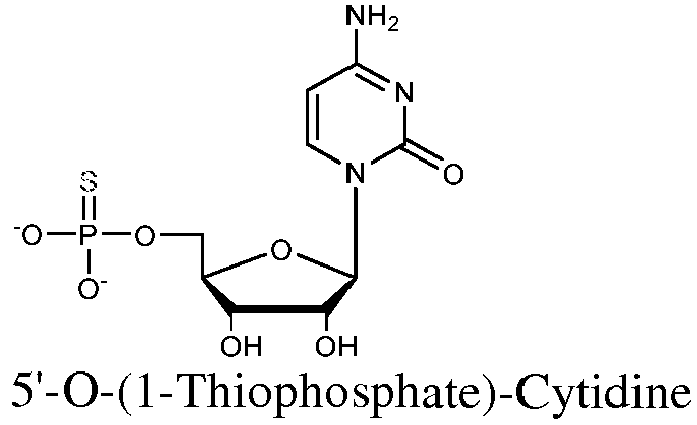

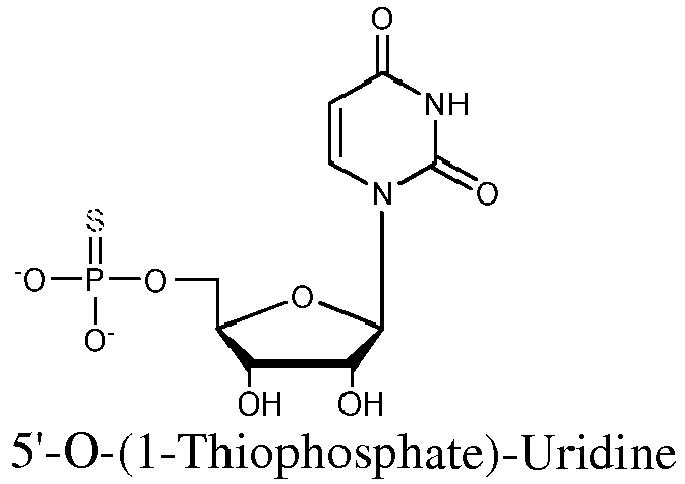

- The α-thio substituted phosphate moiety is provided to confer stability to RNA and DNA polymers through the unnatural phosphorothioate backbone linkages. Phosphorothioate DNA and RNA have increased nuclease resistance and subsequently a longer half-life in a cellular environment. Phosphorothioate linked nucleic acids are expected to also reduce the innate immune response through weaker binding/activation of cellular innate immune molecules.
- In certain embodiments it is desirable to intracellularly degrade a modified nucleic acid introduced into the cell, for example if precise timing of protein production is desired. Thus, the disclosure provides a modified nucleic acid containing a degradation domain, which is capable of being acted on in a directed manner within a cell.
- In other embodiments, modified nucleosides include inosine, 1-methyl-inosine, wyosine, wybutosine, 7-deaza-guanosine, 7-deaza-8-aza-guanosine, 6-thio-guanosine, 6-thio-7-deaza-guanosine, 6-thio-7-deaza-8-aza-guanosine, 7-methyl-guanosine, 6-thio-7-methylguanosine, 7-methylinosine, 6-methoxy-guanosine, 1-methylguanosine, N2-methylguanosine, N2,N2-dimethylguanosine, 8-oxo-guanosine, 7-methyl-8-oxo-guanosine, 1-methyl-6-thio-guanosine, N2-methyl-6-thio-guanosine, and N2,N2-dimethyl-6-thio-guanosine.
- Other components of nucleic acid are optional, and are beneficial in some embodiments. For example, a 5' untranslated region (UTR) and/or a 3'UTR are provided, wherein either or both may independently contain one or more different nucleoside modifications. In such embodiments, nucleoside modifications may also be present in the translatable region. Also provided are nucleic acids containing a Kozak sequence.
- Additionally, provided are nucleic acids containing one or more intronic nucleotide sequences capable of being excised from the nucleic acid.
- Further, provided are nucleic acids containing an internal ribosome entry site (IRES). An IRES may act as the sole ribosome binding site, or may serve as one of multiple ribosome binding sites of an mRNA. An mRNA containing more than one functional ribosome binding site may encode several peptides or polypeptides that are translated independently by the ribosomes ("multicistronic mRNA"). When nucleic acids are provided with an IRES, further optionally provided is a second translatable region. Examples of IRES sequences that can be used according to the disclosure include without limitation, those from picornaviruses (e.g. FMDV), pest viruses (CFFV), polio viruses (PV), encephalomyocarditis viruses (ECMV), foot- and-mouth disease viruses (FMDV), hepatitis C viruses (HCV), classical swine fever viruses (CSFV), murine leukemia virus (MLV), simian immune deficiency viruses (SIV) or cricket paralysis viruses (CrPV).
- The modified nucleic acids described herein are capable of evading an innate immune response of a cell into which the nucleic acids are introduced, thus increasing the efficiency of protein production in the cell. The term "innate immune response" includes a cellular response to exogenous single stranded nucleic acids, generally of viral or bacterial origin, which involves the induction of cytokine expression and release, particularly the interferons, and cell death. Protein synthesis is also reduced during the innate cellular immune response. While it is advantageous to eliminate the innate immune response in a cell, the disclosure provides modified mRNAs that substantially reduce the immune response, including interferon signaling, without entirely eliminating such a response. In some embodiments, the immune response is reduced by about 10%, 20%, 30%, 40%, 50%, 60%, 70%, 80%, 90%, 95%, 99%, 99.9%, or greater than 99.9%, as compared to the immune response induced by a corresponding unmodified nucleic acid. Such a reduction can be measured by expression or activity level of
Type 1 interferons or the expression of interferon-regulated genes such as the toll-like receptors (e.g., TLR7 and TLR8). Reduction of innate immune response can also be measured by decreased cell death following one or more administrations of modified RNAs to a cell population; e.g., cell death is about 10%, 25%, 50%, 75%, 85%, 90%, 95%, or over 95% less than the cell death frequency observed with a corresponding unmodified nucleic acid. Moreover, cell death may affect fewer than about 50%, 40%, 30%, 20%, 10%, 5%, 1%, 0.1%, 0.01%, or fewer than 0.01% of cells contacted with the modified nucleic acids. - The disclosure provides for the repeated introduction (e.g., transfection) of modified nucleic acids into a target cell population, e.g., in vitro, ex vivo, or in vivo. The step of contacting the cell population may be repeated one or more times (such as two, three, four, five, or more than five times). In some embodiments, the step of contacting the cell population with the modified nucleic acids is repeated a number of times sufficient such that a predetermined efficiency of protein translation in the cell population is achieved. Given the reduced cytotoxicity of the target cell population provided by the nucleic acid modifications, such repeated transfections are achievable in a diverse array of cell types.
- Nucleic acids for use in accordance with the disclosure may be prepared according to any available technique including, but not limited to chemical synthesis, enzymatic synthesis, which is generally termed in vitro transcription, enzymatic or chemical cleavage of a longer precursor, etc. Methods of synthesizing RNAs are known in the art (see, e.g., Gait, M.J. (ed.) Oligonucleotide synthesis: a practical approach, Oxford [Oxfordshire], Washington, DC: IRL Press, 1984; and Herdewijn, P. (ed.) Oligonucleotide synthesis: methods and applications, Methods in Molecular Biology, v. 288 (Clifton, N.J.) Totowa, N.J.: Humana Press, 2005; both of which are incorporated herein by reference).
- Modified nucleic acids need not be uniformly modified along the entire length of the molecule. Different nucleotide modifications and/or backbone structures may exist at various positions in the nucleic acid. One of ordinary skill in the art will appreciate that the nucleotide analogs or other modification(s) may be located at any position(s) of a nucleic acid such that the function of the nucleic acid is not substantially decreased. A modification may also be a 5' or 3' terminal modification. The nucleic acids may contain at a minimum one and at maximum 100% modified nucleotides, or any intervening percentage, such as at least about 50% modified nucleotides, at least about 80% modified nucleotides, or at least about 90% modified nucleotides.
- Generally, the length of a modified mRNA of the present disclosure is suitable for protein, polypeptide, or peptide production in a cell (e.g., a human cell). For example, the mRNA is of a length sufficient to allow translation of at least a dipeptide in a cell. In one embodiment, the length of the modified mRNA is greater than 30 nucleotides. In another embodiment, the length is greater than 35 nucleotides. In another embodiment, the length is at least 40 nucleotides. In another embodiment, the length is at least 45 nucleotides. In another embodiment, the length is at least 55 nucleotides. In another embodiment, the length is at least 60 nucleotides. In another embodiment, the length is at least 60 nucleotides. In another embodiment, the length is at least 80 nucleotides. In another embodiment, the length is at least 90 nucleotides. In another embodiment, the length is at least 100 nucleotides. In another embodiment, the length is at least 120 nucleotides. In another embodiment, the length is at least 140 nucleotides. In another embodiment, the length is at least 160 nucleotides. In another embodiment, the length is at least 180 nucleotides. In another embodiment, the length is at least 200 nucleotides. In another embodiment, the length is at least 250 nucleotides. In another embodiment, the length is at least 300 nucleotides. In another embodiment, the length is at least 350 nucleotides. In another embodiment, the length is at least 400 nucleotides. In another embodiment, the length is at least 450 nucleotides. In another embodiment, the length is at least 500 nucleotides. In another embodiment, the length is at least 600 nucleotides. In another embodiment, the length is at least 700 nucleotides. In another embodiment, the length is at least 800 nucleotides. In another embodiment, the length is at least 900 nucleotides. In another embodiment, the length is at least 1000 nucleotides. In another embodiment, the length is at least 1100 nucleotides. In another embodiment, the length is at least 1200 nucleotides. In another embodiment, the length is at least 1300 nucleotides. In another embodiment, the length is at least 1400 nucleotides. In another embodiment, the length is at least 1500 nucleotides. In another embodiment, the length is at least 1600 nucleotides. In another embodiment, the length is at least 1800 nucleotides. In another embodiment, the length is at least 2000 nucleotides. In another embodiment, the length is at least 2500 nucleotides. In another embodiment, the length is at least 3000 nucleotides. In another embodiment, the length is at least 4000 nucleotides. In another embodiment, the length is at least 5000 nucleotides, or greater than 5000 nucleotides.
- The proteins, polypeptides, or peptides produced by the methods described herein can be used as therapeutic agents to treat or prevent one or more diseases or conditions described herein.
- Therapeutic Agents. Provided are compositions, methods, kits, and reagents for treatment or prevention of disease or conditions in humans and other animals (e.g., mammals). The active therapeutic agents of the disclosure include polypeptides translated from modified nucleic acids, cells containing modified nucleic acids or polypeptides translated from the modified nucleic acids, and cells contacted with cells containing modified nucleic acids or polypeptides translated from the modified nucleic acids.
- Provided are methods of inducing translation of a recombinant polypeptide in a cell population using the modified nucleic acids described herein. Such translation can be in vivo, ex vivo, in culture, or in vitro. The cell population is contacted with an effective amount of a composition containing a nucleic acid that has at least one nucleoside modification, and a translatable region encoding the recombinant polypeptide. The population is contacted under conditions such that the nucleic acid is localized into one or more cells of the cell population and the recombinant polypeptide is translated in the cell from the nucleic acid.
- An effective amount of the composition is provided based, at least in part, on the target tissue, target cell type, means of administration, physical characteristics of the protein translated from the modified nucleic acid (e.g., size), and other determinants.
- Compositions containing modified nucleic acids are formulated for administration intramuscularly, transarterially, intraperitoneally, intravenously, intranasally, subcutaneously, endoscopically, transdermally, or intrathecally. In some embodiments, the composition is formulated for extended release.
- The subject to whom the therapeutic agent is administered suffers from or is at risk of developing a disease, disorder, or deleterious condition. Provided are methods of identifying, diagnosing, and classifying subjects on these bases, which may include clinical diagnosis, biomarker levels, genome-wide association studies (GWAS), and other methods known in the art.
- In certain embodiments, the administered recombinant polypeptide translated from the modified nucleic acid described herein provide a functional activity which is substantially absent in the cell in which the recombinant polypeptide is administered. For example, the missing functional activity may be enzymatic, structural, or gene regulatory in nature.
- In other embodiments, the administered recombinant polypeptide replaces a polypeptide (or multiple polypeptides) that is substantially absent in the cell in which the recombinant polypeptide is administered. Such absence may be due to genetic mutation of the encoding gene or regulatory pathway thereof. Alternatively, the recombinant polypeptide functions to antagonize the activity of an endogenous protein present in, on the surface of, or secreted from the cell. Usually, the activity of the endogenous protein is deleterious to the subject, for example, due to mutation of the endogenous protein resulting in altered activity or localization. Additionally, the recombinant polypeptide antagonizes, directly or indirectly, the activity of a biological moiety present in, on the surface of, or secreted from the cell. Examples of antagonized biological moieties include lipids (e.g., cholesterol), a lipoprotein (e.g., low density lipoprotein), a nucleic acid, a carbohydrate, or a small molecule toxin.
- The recombinant proteins described herein are engineered for localization within the cell, potentially within a specific compartment such as the nucleus, or are engineered for secretion from the cell or translocation to the plasma membrane of the cell.
- As described herein, a useful feature of the modified nucleic acids of the disclosure is the capacity to reduce the innate immune response of a cell to an exogenous nucleic acid, e.g., to increase protein production. Provided are methods for performing the titration, reduction or elimination of the immune response in a cell or a population of cells. In some embodiments, the cell is contacted with a first composition that contains a first dose of a first exogenous nucleic acid including a translatable region and at least one nucleoside modification, and the level of the innate immune response of the cell to the first exogenous nucleic acid is determined. Subsequently, the cell is contacted with a second composition, which includes a second dose of the first exogenous nucleic acid, the second dose containing a lesser amount of the first exogenous nucleic acid as compared to the first dose. Alternatively, the cell is contacted with a first dose of a second exogenous nucleic acid. The second exogenous nucleic acid may contain one or more modified nucleosides, which may be the same or different from the first exogenous nucleic acid or, alternatively, the second exogenous nucleic acid may not contain modified nucleosides. The steps of contacting the cell with the first composition and/or the second composition may be repeated one or more times. Additionally, efficiency of protein production (e.g., protein translation) in the cell is optionally determined, and the cell may be re-transfected with the first and/or second composition repeatedly until a target protein production efficiency is achieved.
- Therapeutics for diseases and conditions. Provided are methods for treating or preventing a symptom of diseases characterized by missing or aberrant protein activity, by replacing the missing protein activity or overcoming the aberrant protein activity.
- Diseases characterized by dysfunctional or aberrant protein activity include, but not limited to, cancer and proliferative diseases, genetic diseases (e.g., cystic fibrosis), autoimmune diseases, diabetes, neurodegenerative diseases, cardiovascular diseases, and metabolic diseases. The present disclosure provides a method for treating such conditions or diseases in a subject by introducing protein or cell-based therapeutics produced by a method using the modified nucleic acids provided herein, wherein the modified nucleic acids encode for a protein that antagonizes or otherwise overcomes the aberrant protein activity present in the cell of the subject. Specific examples of a dysfunctional protein are the missense mutation variants of the cystic fibrosis transmembrane conductance regulator (CFTR) gene, which produce a dysfunctional protein variant of CFTR protein, which causes cystic fibrosis.
- Multiple diseases are characterized by missing (or substantially diminished such that proper protein function does not occur) protein activity. Such proteins may not be present, or are essentially non-functional. The present disclosure provides a method for treating such conditions or diseases in a subject by introducing nucleic acid or cell-based therapeutics containing the modified nucleic acids provided herein, wherein the modified nucleic acids encode for a protein that replaces the protein activity missing from the target cells of the subject. Specific examples of a dysfunctional protein are the nonsense mutation variants of the cystic fibrosis transmembrane conductance regulator (CFTR) gene, which produce a nonfunctional protein variant of CFTR protein, which causes cystic fibrosis.
- Thus, provided are methods of treating cystic fibrosis in a mammalian subject by contacting a cell of the subject with a modified nucleic acid having a translatable region that encodes a functional CFTR polypeptide, under conditions such that an effective amount of the CTFR polypeptide is present in the cell. Typical target cells are epithelial cells, such as the lung, and methods of administration are determined in view of the target tissue; i.e., for lung delivery, the RNA molecules are formulated for administration by inhalation.
- In another embodiment, the present disclosure provides a method for treating hyperlipidemia in a subject, by introducing into a cell population of the subject with Sortilin (a protein recently characterized by genomic studies) produced by a method described herein using a modified mRNA molecule encoding Sortilin, thereby ameliorating the hyperlipidemia in a subject. The SORT1 gene encodes a trans-Golgi network (TGN) transmembrane protein called Sortilin. Genetic studies have shown that one of five individuals has a single nucleotide polymorphism, rs12740374, in the 1p13 locus of the SORT1 gene that predisposes them to having low levels of low-density lipoprotein (LDL) and very-low-density lipoprotein (VLDL). Each copy of the minor allele, present in about 30% of people, alters LDL cholesterol by 8 mg/dL, while two copies of the minor allele, present in about 5% of the population, lowers LDL cholesterol 16 mg/dL. Carriers of the minor allele have also been shown to have a 40% decreased risk of myocardial infarction. Functional in vivo studies in mice describes that overexpression of SORT1 in mouse liver tissue led to significantly lower LDL-cholesterol levels, as much as 80% lower, and that silencing SORT1 increased LDL cholesterol approximately 200% (Musunuru K et al. From noncoding variant to phenotype via SORT1 at the 1p13 cholesterol locus. Nature 2010; 466: 714-721).
- The present disclosure provides proteins generated from modified mRNAs and proteins produced by the methods described herein can be used in pharmaceutical compositions. Pharmaceutical compositions may optionally comprise one or more additional therapeutically active substances. In accordance with some embodiments, a method of administering pharmaceutical compositions comprising one or more proteins to be delivered to a subject in need thereof is provided. In some embodiments, compositions are administered to humans. For the purposes of the present disclosure, the phrase "active ingredient" generally refers to a protein or protein-containing complex as described herein.
- Although the descriptions of pharmaceutical compositions provided herein are principally directed to pharmaceutical compositions which are suitable for administration to humans, it will be understood by the skilled artisan that such compositions are generally suitable for administration to animals of all sorts. Modification of pharmaceutical compositions suitable for administration to humans in order to render the compositions suitable for administration to various animals is well understood, and the ordinarily skilled veterinary pharmacologist can design and/or perform such modification with merely ordinary, if any, experimentation. Subjects to which administration of the pharmaceutical compositions is contemplated include, but are not limited to, humans and/or other primates; mammals, including commercially relevant mammals such as cattle, pigs, horses, sheep, cats, dogs, mice, and/or rats; and/or birds, including commercially relevant birds such as chickens, ducks, geese, and/or turkeys.
- Formulations of the pharmaceutical compositions described herein may be prepared by any method known or hereafter developed in the art of pharmacology. In general, such preparatory methods include the step of bringing the active ingredient into association with an excipient and/or one or more other accessory ingredients, and then, if necessary and/or desirable, shaping and/or packaging the product into a desired single- or multi-dose unit.
- A pharmaceutical composition in accordance with the disclosure may be prepared, packaged, and/or sold in bulk, as a single unit dose, and/or as a plurality of single unit doses. As used herein, a "unit dose" is discrete amount of the pharmaceutical composition comprising a predetermined amount of the active ingredient. The amount of the active ingredient is generally equal to the dosage of the active ingredient which would be administered to a subject and/or a convenient fraction of such a dosage such as, for example, one-half or one-third of such a dosage.
- Relative amounts of the active ingredient, the pharmaceutically acceptable excipient, and/or any additional ingredients in a pharmaceutical composition in accordance with the disclosure will vary, depending upon the identity, size, and/or condition of the subject treated and further depending upon the route by which the composition is to be administered. By way of example, the composition may comprise between 0.1% and 100% (w/w) active ingredient.
- Pharmaceutical compositions may be formulated to additionally comprise a pharmaceutically acceptable excipient, which, as used herein, includes any and all solvents, dispersion media, diluents, or other liquid vehicles, dispersion or suspension aids, surface active agents, isotonic agents, thickening or emulsifying agents, preservatives, solid binders, lubricants and the like, as suited to the particular dosage form desired. Remington's The Science and Practice of Pharmacy, 21st Edition, A. R. Gennaro (Lippincott, Williams & Wilkins, Baltimore, MD, 2006; incorporated herein by reference) discloses various excipients used in formulating pharmaceutical compositions and known techniques for the preparation thereof. Except insofar as any conventional excipient medium is incompatible with a substance or its derivatives, such as by producing any undesirable biological effect or otherwise interacting in a deleterious manner with any other component(s) of the pharmaceutical composition, its use is contemplated to be within the scope of this disclosure.
- In some embodiments, a pharmaceutically acceptable excipient is at least 95%, at least 96%, at least 97%, at least 98%, at least 99%, or 100% pure. In some embodiments, an excipient is approved for use in humans and for veterinary use. In some embodiments, an excipient is approved by United States Food and Drug Administration. In some embodiments, an excipient is pharmaceutical grade. In some embodiments, an excipient meets the standards of the United States Pharmacopoeia (USP), the European Pharmacopoeia (EP), the British Pharmacopoeia, and/or the International Pharmacopoeia.
- Pharmaceutically acceptable excipients used in the manufacture of pharmaceutical compositions include, but are not limited to, inert diluents, dispersing and/or granulating agents, surface active agents and/or emulsifiers, disintegrating agents, binding agents, preservatives, buffering agents, lubricating agents, and/or oils. Such excipients may optionally be included in pharmaceutical compositions. Excipients such as cocoa butter and suppository waxes, coloring agents, coating agents, sweetening, flavoring, and/or perfuming agents can be present in the composition, according to the judgment of the formulator.
- Exemplary diluents include, but are not limited to, calcium carbonate, sodium carbonate, calcium phosphate, dicalcium phosphate, calcium sulfate, calcium hydrogen phosphate, sodium phosphate lactose, sucrose, cellulose, microcrystalline cellulose, kaolin, mannitol, sorbitol, inositol, sodium chloride, dry starch, cornstarch, powdered sugar, etc., and/or combinations thereof.
- Exemplary granulating and/or dispersing agents include, but are not limited to, potato starch, corn starch, tapioca starch, sodium starch glycolate, clays, alginic acid, guar gum, citrus pulp, agar, bentonite, cellulose and wood products, natural sponge, cation-exchange resins, calcium carbonate, silicates, sodium carbonate, cross-linked poly(vinyl-pyrrolidone) (crospovidone), sodium carboxymethyl starch (sodium starch glycolate), carboxymethyl cellulose, cross-linked sodium carboxymethyl cellulose (croscarmellose), methylcellulose, pregelatinized starch (starch 1500), microcrystalline starch, water insoluble starch, calcium carboxymethyl cellulose, magnesium aluminum silicate (Veegum), sodium lauryl sulfate, quaternary ammonium compounds, etc., and/or combinations thereof.
- Exemplary surface active agents and/or emulsifiers include, but are not limited to, natural emulsifiers (e.g., acacia, agar, alginic acid, sodium alginate, tragacanth, chondrux, cholesterol, xanthan, pectin, gelatin, egg yolk, casein, wool fat, cholesterol, wax, and lecithin), colloidal clays (e.g., bentonite [aluminum silicate] and Veegum® [magnesium aluminum silicate]), long chain amino acid derivatives, high molecular weight alcohols (e.g., stearyl alcohol, cetyl alcohol, oleyl alcohol, triacetin monostearate, ethylene glycol distearate, glyceryl monostearate, and propylene glycol monostearate, polyvinyl alcohol), carbomers (e.g. carboxy polymethylene, polyacrylic acid, acrylic acid polymer, and carboxyvinyl polymer), carrageenan, cellulosic derivatives (e.g., carboxymethylcellulose sodium, powdered cellulose, hydroxymethyl cellulose, hydroxypropyl cellulose, hydroxypropyl methylcellulose, methylcellulose), sorbitan fatty acid esters (e.g., polyoxyethylene sorbitan monolaurate [Tween®20], polyoxyethylene sorbitan [Tween®60], polyoxyethylene sorbitan monooleate [Tween®80], sorbitan monopalmitate [Span®40], sorbitan monostearate [Span®60], sorbitan tristearate [Span®65], glyceryl monooleate, sorbitan monooleate [Span®80]), polyoxyethylene esters (e.g., polyoxyethylene monostearate [Myrj®45], polyoxyethylene hydrogenated castor oil, polyethoxylated castor oil, polyoxymethylene stearate, and Solutol®), sucrose fatty acid esters, polyethylene glycol fatty acid esters (e.g., Cremophor®), polyoxyethylene ethers, (e.g., polyoxyethylene lauryl ether [Brij®30]), poly(vinyl-pyrrolidone), diethylene glycol monolaurate, triethanolamine oleate, sodium oleate, potassium oleate, ethyl oleate, oleic acid, ethyl laurate, sodium lauryl sulfate, Pluronic®F 68, Poloxamer® 188, cetrimonium bromide, cetylpyridinium chloride, benzalkonium chloride, docusate sodium, etc. and/or combinations thereof.
- Exemplary binding agents include, but are not limited to, starch (e.g., cornstarch and starch paste); gelatin; sugars (e.g., sucrose, glucose, dextrose, dextrin, molasses, lactose, lactitol, mannitol,); natural and synthetic gums (e.g., acacia, sodium alginate, extract of Irish moss, panwar gum, ghatti gum, mucilage of isapol husks, carboxymethylcellulose, methylcellulose, ethylcellulose, hydroxyethylcellulose, hydroxypropyl cellulose, hydroxypropyl methylcellulose, microcrystalline cellulose, cellulose acetate, poly(vinyl-pyrrolidone), magnesium aluminum silicate (Veegum®), and larch arabogalactan); alginates; polyethylene oxide; polyethylene glycol; inorganic calcium salts; silicic acid; polymethacrylates; waxes; water; alcohol; etc.; and combinations thereof.
- Exemplary preservatives may include, but are not limited to, antioxidants, chelating agents, antimicrobial preservatives, antifungal preservatives, alcohol preservatives, acidic preservatives, and/or other preservatives. Exemplary antioxidants include, but are not limited to, alpha tocopherol, ascorbic acid, acorbyl palmitate, butylated hydroxyanisole, butylated hydroxytoluene, monothioglycerol, potassium metabisulfite, propionic acid, propyl gallate, sodium ascorbate, sodium bisulfite, sodium metabisulfite, and/or sodium sulfite. Exemplary chelating agents include ethylenediaminetetraacetic acid (EDTA), citric acid monohydrate, disodium edetate, dipotassium edetate, edetic acid, fumaric acid, malic acid, phosphoric acid, sodium edetate, tartaric acid, and/or trisodium edetate. Exemplary antimicrobial preservatives include, but are not limited to, benzalkonium chloride, benzethonium chloride, benzyl alcohol, bronopol, cetrimide, cetylpyridinium chloride, chlorhexidine, chlorobutanol, chlorocresol, chloroxylenol, cresol, ethyl alcohol, glycerin, hexetidine, imidurea, phenol, phenoxyethanol, phenylethyl alcohol, phenylmercuric nitrate, propylene glycol, and/or thimerosal. Exemplary antifungal preservatives include, but are not limited to, butyl paraben, methyl paraben, ethyl paraben, propyl paraben, benzoic acid, hydroxybenzoic acid, potassium benzoate, potassium sorbate, sodium benzoate, sodium propionate, and/or sorbic acid. Exemplary alcohol preservatives include, but are not limited to, ethanol, polyethylene glycol, phenol, phenolic compounds, bisphenol, chlorobutanol, hydroxybenzoate, and/or phenylethyl alcohol. Exemplary acidic preservatives include, but are not limited to, vitamin A, vitamin C, vitamin E, beta-carotene, citric acid, acetic acid, dehydroacetic acid, ascorbic acid, sorbic acid, and/or phytic acid. Other preservatives include, but are not limited to, tocopherol, tocopherol acetate, deteroxime mesylate, cetrimide, butylated hydroxyanisol (BHA), butylated hydroxytoluened (BHT), ethylenediamine, sodium lauryl sulfate (SLS), sodium lauryl ether sulfate (SLES), sodium bisulfite, sodium metabisulfite, potassium sulfite, potassium metabisulfite, Glydant Plus®, Phenonip®, methylparaben, Germall®115, Germaben®II, Neolone™, Kathon™, and/or Euxyl®.
- Exemplary buffering agents include, but are not limited to, citrate buffer solutions, acetate buffer solutions, phosphate buffer solutions, ammonium chloride, calcium carbonate, calcium chloride, calcium citrate, calcium glubionate, calcium gluceptate, calcium gluconate, D-gluconic acid, calcium glycerophosphate, calcium lactate, propanoic acid, calcium levulinate, pentanoic acid, dibasic calcium phosphate, phosphoric acid, tribasic calcium phosphate, calcium hydroxide phosphate, potassium acetate, potassium chloride, potassium gluconate, potassium mixtures, dibasic potassium phosphate, monobasic potassium phosphate, potassium phosphate mixtures, sodium acetate, sodium bicarbonate, sodium chloride, sodium citrate, sodium lactate, dibasic sodium phosphate, monobasic sodium phosphate, sodium phosphate mixtures, tromethamine, magnesium hydroxide, aluminum hydroxide, alginic acid, pyrogen-free water, isotonic saline, Ringer's solution, ethyl alcohol, etc., and/or combinations thereof.
- Exemplary lubricating agents include, but are not limited to, magnesium stearate, calcium stearate, stearic acid, silica, talc, malt, glyceryl behanate, hydrogenated vegetable oils, polyethylene glycol, sodium benzoate, sodium acetate, sodium chloride, leucine, magnesium lauryl sulfate, sodium lauryl sulfate, etc., and combinations thereof.
- Exemplary oils include, but are not limited to, almond, apricot kernel, avocado, babassu, bergamot, black current seed, borage, cade, camomile, canola, caraway, carnauba, castor, cinnamon, cocoa butter, coconut, cod liver, coffee, corn, cotton seed, emu, eucalyptus, evening primrose, fish, flaxseed, geraniol, gourd, grape seed, hazel nut, hyssop, isopropyl myristate, jojoba, kukui nut, lavandin, lavender, lemon, litsea cubeba, macademia nut, mallow, mango seed, meadowfoam seed, mink, nutmeg, olive, orange, orange roughy, palm, palm kernel, peach kernel, peanut, poppy seed, pumpkin seed, rapeseed, rice bran, rosemary, safflower, sandalwood, sasquana, savoury, sea buckthorn, sesame, shea butter, silicone, soybean, sunflower, tea tree, thistle, tsubaki, vetiver, walnut, and wheat germ oils. Exemplary oils include, but are not limited to, butyl stearate, caprylic triglyceride, capric triglyceride, cyclomethicone, diethyl sebacate, dimethicone 360, isopropyl myristate, mineral oil, octyldodecanol, oleyl alcohol, silicone oil, and/or combinations thereof.
- Liquid dosage forms for oral and parenteral administration include, but are not limited to, pharmaceutically acceptable emulsions, microemulsions, solutions, suspensions, syrups, and/or elixirs. In addition to active ingredients, liquid dosage forms may comprise inert diluents commonly used in the art such as, for example, water or other solvents, solubilizing agents and emulsifiers such as ethyl alcohol, isopropyl alcohol, ethyl carbonate, ethyl acetate, benzyl alcohol, benzyl benzoate, propylene glycol, 1,3-butylene glycol, dimethylformamide, oils (in particular, cottonseed, groundnut, corn, germ, olive, castor, and sesame oils), glycerol, tetrahydrofurfuryl alcohol, polyethylene glycols and fatty acid esters of sorbitan, and mixtures thereof. Besides inert diluents, oral compositions can include adjuvants such as wetting agents, emulsifying and suspending agents, sweetening, flavoring, and/or perfuming agents. In certain embodiments for parenteral administration, compositions are mixed with solubilizing agents such as Cremophor®, alcohols, oils, modified oils, glycols, polysorbates, cyclodextrins, polymers, and/or combinations thereof.
- Injectable preparations, for example, sterile injectable aqueous or oleaginous suspensions may be formulated according to the known art using suitable dispersing agents, wetting agents, and/or suspending agents. Sterile injectable preparations may be sterile injectable solutions, suspensions, and/or emulsions in nontoxic parenterally acceptable diluents and/or solvents, for example, as a solution in 1,3-butanediol. Among the acceptable vehicles and solvents that may be employed are water, Ringer's solution, U.S.P., and isotonic sodium chloride solution. Sterile, fixed oils are conventionally employed as a solvent or suspending medium. For this purpose any bland fixed oil can be employed including synthetic mono- or diglycerides. Fatty acids such as oleic acid can be used in the preparation of injectables.
- Injectable compositions can be sterilized, for example, by filtration through a bacterial-retaining filter, and/or by incorporating sterilizing agents in the form of sterile solid compositions which can be dissolved or dispersed in sterile water or other sterile injectable medium prior to use.
- In order to prolong the effect of an active ingredient, it is often desirable to slow the absorption of the active ingredient from subcutaneous or intramuscular injection. This may be accomplished by the use of a liquid suspension of crystalline or amorphous material with poor water solubility. The rate of absorption of the drug then depends upon its rate of dissolution which, in turn, may depend upon crystal size and crystalline form. Alternatively, delayed absorption of a parenterally administered drug form is accomplished by dissolving or suspending the drug in an oil vehicle. Injectable depot forms are made by forming microencapsule matrices of the drug in biodegradable polymers such as polylactide-polyglycolide. Depending upon the ratio of drug to polymer and the nature of the particular polymer employed, the rate of drug release can be controlled. Examples of other biodegradable polymers include poly(orthoesters) and poly(anhydrides). Depot injectable compositions are formulated or prepared by entrapping the drug in liposomes or microemulsions which are compatible with body tissues.
- Compositions for rectal or vaginal administration are typically suppositories which can be prepared by mixing compositions with suitable non-irritating excipients such as cocoa butter, polyethylene glycol or a suppository wax which are solid at ambient temperature but liquid at body temperature and therefore melt in the rectum or vaginal cavity and release the active ingredient.
- Solid dosage forms for oral administration include capsules, tablets, pills, powders, and granules. In such solid dosage forms, an active ingredient is mixed with at least one inert, pharmaceutically acceptable excipient such as sodium citrate or dicalcium phosphate and/or fillers or extenders (e.g., starches, lactose, sucrose, glucose, mannitol, and silicic acid), binders (e.g., carboxymethylcellulose, alginates, gelatin, polyvinylpyrrolidinone, sucrose, and acacia), humectants (e.g. glycerol), disintegrating agents (e.g., agar, calcium carbonate, potato or tapioca starch, alginic acid, certain silicates, and sodium carbonate), solution retarding agents (e.g., paraffin), absorption accelerators (e.g., quaternary ammonium compounds), wetting agents (e.g., cetyl alcohol and glycerol monostearate), absorbents (e.g., kaolin and bentonite clay), and lubricants (e.g., talc, calcium stearate, magnesium stearate, solid polyethylene glycols, sodium lauryl sulfate), and mixtures thereof. In the case of capsules, tablets and pills, the dosage form may comprise buffering agents.
- Solid compositions of a similar type may be employed as fillers in soft and hard-filled gelatin capsules using such excipients as lactose or milk sugar as well as high molecular weight polyethylene glycols and the like. Solid dosage forms of tablets, dragees, capsules, pills, and granules can be prepared with coatings and shells such as enteric coatings and other coatings well known in the pharmaceutical formulating art. They may optionally comprise opacifying agents and can be of a composition that they release the active ingredient(s) only, or preferentially, in a certain part of the intestinal tract, optionally, in a delayed manner. Examples of embedding compositions which can be used include polymeric substances and waxes. Solid compositions of a similar type may be employed as fillers in soft and hard-filled gelatin capsules using such excipients as lactose or milk sugar as well as high molecular weight polyethylene glycols and the like.
- Dosage forms for topical and/or transdermal administration of a composition may include ointments, pastes, creams, lotions, gels, powders, solutions, sprays, inhalants and/or patches. Generally, an active ingredient is admixed under sterile conditions with a pharmaceutically acceptable excipient and/or any needed preservatives and/or buffers as may be required. Additionally, the present disclosure contemplates the use of transdermal patches, which often have the added advantage of providing controlled delivery of a compound to the body. Such dosage forms may be prepared, for example, by dissolving and/or dispensing the compound in the proper medium. Alternatively or additionally, rate may be controlled by either providing a rate controlling membrane and/or by dispersing the compound in a polymer matrix and/or gel.
- Suitable devices for use in delivering intradermal pharmaceutical compositions described herein include short needle devices such as those described in
U.S. Patents 4,886,499 ;5,190,521 ;5,328,483 ;5,527,288 ;4,270,537 ;5,015,235 ;5,141,496 ; and5,417,662 . Intradermal compositions may be administered by devices which limit the effective penetration length of a needle into the skin, such as those described inPCT publication WO 99/34850 U.S. Patents 5,480,381 ;5,599,302 ;5,334,144 ;5,993,412 ;5,649,912 ;5,569,189 ;5,704,911 ;5,383,851 ;5,893,397 ;5,466,220 ;5,339,163 ;5,312,335 ;5,503,627 ;5,064,413 ;5,520,639 ;4,596,556 ;4,790,824 ;4,941,880 ;4,940,460 ; andPCT publications WO 97/37705 WO 97/13537 - Compositions formulated for topical administration include, but are not limited to, liquid and/or semi liquid preparations such as liniments, lotions, oil in water and/or water in oil emulsions such as creams, ointments and/or pastes, and/or solutions and/or suspensions. Topically-administrable compositions may be formulated, for example, to comprise from about 1% to about 10% (w/w) active ingredient, although the concentration of active ingredient may be as high as the solubility limit of the active ingredient in the solvent. Compositions formulated for topical administration may further comprise one or more of the additional ingredients described herein.
- A pharmaceutical composition may be formulated, prepared, packaged, and/or sold for pulmonary administration via the buccal cavity. Such a composition may be formulated to comprise dry particles which comprise the active ingredient and which have a diameter in the range from about 0.5 nm to about 7 nm or from about 1 nm to about 6 nm. Such compositions are conveniently in the form of dry powders for administration using a device comprising a dry powder reservoir to which a stream of propellant may be directed to disperse the powder and/or using a self propelling solvent/powder dispensing container such as a device comprising the active ingredient dissolved and/or suspended in a low-boiling propellant in a sealed container. Such powders comprise particles wherein at least 98% of the particles by weight have a diameter greater than 0.5 nm and at least 95% of the particles by number have a diameter less than 7 nm. Alternatively, at least 95% of the particles by weight have a diameter greater than 1 nm and at least 90% of the particles by number have a diameter less than 6 nm. Dry powder compositions may include a solid fine powder diluent such as sugar and are conveniently provided in a unit dose form.
- Low boiling propellants generally include liquid propellants having a boiling point of below 65 °F at atmospheric pressure. Generally the propellant may constitute about 50% to about 99.9% (w/w) of the composition, and active ingredient may constitute about 0.1% to about 20% (w/w) of the composition. A propellant may further comprise additional ingredients such as a liquid non-ionic and/or solid anionic surfactant and/or a solid diluent (which may have a particle size of the same order as particles comprising the active ingredient).
- Pharmaceutical compositions formulated for pulmonary delivery may provide an active ingredient in the form of droplets of a solution and/or suspension. Such compositions may be formulated, prepared, packaged, and/or sold as aqueous and/or dilute alcoholic solutions and/or suspensions, optionally sterile, comprising active ingredient, and may conveniently be administered using any nebulization and/or atomization device. Such compositions may further comprise one or more additional ingredients including, but not limited to, a flavoring agent such as saccharin sodium, a volatile oil, a buffering agent, a surface active agent, and/or a preservative such as methylhydroxybenzoate. Droplets provided by this route of administration may have an average diameter in the range from about 0.1 nm to about 200 nm.
- Formulations described herein as being useful for pulmonary delivery are useful for intranasal delivery of a pharmaceutical composition. Another composition formulated for intranasal administration is a coarse powder comprising the active ingredient and having an average particle from about 0.2 µm to 500 µm. Such a composition is formulated for administration in the manner in which snuff is taken, i.e. by rapid inhalation through the nasal passage from a container of the powder held close to the nose.
- Compositions formulated for nasal administration may, for example, comprise from about as little as 0.1% (w/w) and as much as 100% (w/w) of active ingredient, and may comprise one or more of the additional ingredients described herein. A pharmaceutical composition may be formulated, prepared, packaged, and/or sold for buccal administration. Such compositions may, for example, be formulated in the form of tablets and/or lozenges made using conventional methods, and may contain, for example, 0.1% to 20% (w/w) active ingredient, the balance comprising an orally dissolvable and/or degradable composition and, optionally, one or more of the additional ingredients described herein. Alternately, compositions formulated for buccal administration may comprise a powder and/or an aerosolized and/or atomized solution and/or suspension comprising active ingredient. Such powdered, aerosolized, and/or aerosolized compositions, when dispersed, may have an average particle and/or droplet size in the range from about 0.1 nm to about 200 nm, and may further comprise one or more of any additional ingredients described herein.
- A pharmaceutical composition may be formulated, prepared, packaged, and/or sold for ophthalmic administration. Such compositions may, for example, be formulated in the form of eye drops including, for example, a 0.1/1.0% (w/w) solution and/or suspension of the active ingredient in an aqueous or oily liquid excipient. Such drops may further comprise buffering agents, salts, and/or one or more other of any additional ingredients described herein. Other opthalmically-administrable compositions which are useful include those which comprise the active ingredient in microcrystalline form and/or in a liposomal preparation. Ear drops and/or eye drops are contemplated as being within the scope of this disclosure.
- General considerations in the formulation and/or manufacture of pharmaceutical agents may be found, for example, in Remington: The Science and Practice of Pharmacy 21st ed., Lippincott Williams & Wilkins, 2005 (incorporated herein by reference).
- The present disclosure provides methods comprising administering proteins or compositions produced by the methods described herein to a subject in need thereof. Proteins or complexes, or pharmaceutical, imaging, diagnostic, or prophylactic compositions thereof, may be administered to a subject using any amount and any route of administration effective for preventing, treating, diagnosing, or imaging a disease, disorder, and/or condition (e.g., a disease, disorder, and/or condition relating to working memory deficits). The exact amount required will vary from subject to subject, depending on the species, age, and general condition of the subject, the severity of the disease, the particular composition, its mode of administration, its mode of activity, and the like. Compositions in accordance with the disclosure are typically formulated in dosage unit form for ease of administration and uniformity of dosage. It will be understood, however, that the total daily usage of the compositions of the present disclosure will be decided by the attending physician within the scope of sound medical judgment. The specific therapeutically effective, prophylactially effective, or appropriate imaging dose level for any particular patient will depend upon a variety of factors including the disorder being treated and the severity of the disorder; the activity of the specific compound employed; the specific composition employed; the age, body weight, general health, sex and diet of the patient; the time of administration, route of administration, and rate of excretion of the specific compound employed; the duration of the treatment; drugs used in combination or coincidental with the specific compound employed; and like factors well known in the medical arts.
- Proteins to be delivered and/or pharmaceutical, prophylactic, diagnostic, or imaging compositions thereof may be administered to animals, such as mammals (e.g., humans, domesticated animals, cats, dogs, mice, rats, etc.). In some embodiments, pharmaceutical, prophylactic, diagnostic, or imaging compositions thereof are administered to humans.
- Proteins to be delivered and/or pharmaceutical, prophylactic, diagnostic, or imaging compositions thereof in accordance with the present disclosure may be administered by any route. In some embodiments, proteins and/or pharmaceutical, prophylactic, diagnostic, or imaging compositions thereof, are administered by one or more of a variety of routes, including oral, intravenous, intramuscular, intra-arterial, intramedullary, intrathecal, subcutaneous, intraventricular, transdermal, interdermal, rectal, intravaginal, intraperitoneal, topical (e.g., by powders, ointments, creams, gels, lotions, and/or drops), mucosal, nasal, buccal, enteral, vitreal, intratumoral, sublingual; by intratracheal instillation, bronchial instillation, and/or inhalation; as an oral spray, nasal spray, and/or aerosol, and/or through a portal vein catheter. In some embodiments, proteins or complexes, and/or pharmaceutical, prophylactic, diagnostic, or imaging compositions thereof, are administered by systemic intravenous injection. In specific embodiments, proteins or complexes and/or pharmaceutical, prophylactic, diagnostic, or imaging compositions thereof may be administered intravenously and/or orally. In specific embodiments, proteins or complexes, and/or pharmaceutical, prophylactic, diagnostic, or imaging compositions thereof, may be administered in a way which allows the protein or complex to cross the blood-brain barrier, vascular barrier, or other epithelial barrier.
- However, the disclosure encompasses the delivery of proteins or complexes, and/or pharmaceutical, prophylactic, diagnostic, or imaging compositions thereof, by any appropriate route taking into consideration likely advances in the sciences of drug delivery.
- In general the most appropriate route of administration will depend upon a variety of factors including the nature of the protein or complex comprising proteins associated with at least one agent to be delivered (e.g., its stability in the environment of the gastrointestinal tract, bloodstream, etc.), the condition of the patient (e.g., whether the patient is able to tolerate particular routes of administration), etc. The disclosure encompasses the delivery of the pharmaceutical, prophylactic, diagnostic, or imaging compositions by any appropriate route taking into consideration likely advances in the sciences of drug delivery.
- In certain embodiments, compositions in accordance with the disclosure may be administered at dosage levels sufficient to deliver from about 0.0001 mg/kg to about 100 mg/kg, from about 0.01 mg/kg to about 50 mg/kg, from about 0.1 mg/kg to about 40 mg/kg, from about 0.5 mg/kg to about 30 mg/kg, from about 0.01 mg/kg to about 10 mg/kg, from about 0.1 mg/kg to about 10 mg/kg, or from about 1 mg/kg to about 25 mg/kg, of subject body weight per day, one or more times a day, to obtain the desired therapeutic, diagnostic, prophylactic, or imaging effect. The desired dosage may be delivered three times a day, two times a day, once a day, every other day, every third day, every week, every two weeks, every three weeks, or every four weeks. In certain embodiments, the desired dosage may be delivered using multiple administrations (e.g., two, three, four, five, six, seven, eight, nine, ten, eleven, twelve, thirteen, fourteen, or more administrations).
- Proteins or complexes may be used in combination with one or more other therapeutic, prophylactic, diagnostic, or imaging agents. By "in combination with," it is not intended to imply that the agents must be administered at the same time and/or formulated for delivery together, although these methods of delivery are within the scope of the disclosure. Compositions can be administered concurrently with, prior to, or subsequent to, one or more other desired therapeutics or medical procedures. In general, each agent will be administered at a dose and/or on a time schedule determined for that agent. In some embodiments, the disclosure encompasses the delivery of pharmaceutical, prophylactic, diagnostic, or imaging compositions in combination with agents that improve their bioavailability, reduce and/or modify their metabolism, inhibit their excretion, and/or modify their distribution within the body. In certain embodiments, provided are combination therapeutics containing one or more modified nucleic acids containing translatable regions that encode for a protein or proteins that boost a mammalian subject's immunity along with a protein that induces antibody-dependent cellular toxitity. For example, provided are therapeutics containing one or more nucleic acids that encode trastuzumab and granulocyte-colony stimulating factor (G-CSF). In particular, such combination therapeutics are useful in Her2+ breast cancer patients who develop induced resistance to trastuzumab. (See, e.g., Albrecht, Immunotherapy. 2(6):795-8 (2010)).
- It will further be appreciated that therapeutically, prophylactically, diagnostically, or imaging active agents utilized in combination may be administered together in a single composition or administered separately in different compositions. In general, it is expected that agents utilized in combination with be utilized at levels that do not exceed the levels at which they are utilized individually. In some embodiments, the levels utilized in combination will be lower than those utilized individually.
- The particular combination of therapies (therapeutics or procedures) to employ in a combination regimen will take into account compatibility of the desired therapeutics and/or procedures and the desired therapeutic effect to be achieved. It will also be appreciated that the therapies employed may achieve a desired effect for the same disorder (for example, a composition useful for treating cancer in accordance with the disclosure may be administered concurrently with a chemotherapeutic agent), or they may achieve different effects (e.g., control of any adverse effects).
- The disclosure provides a variety of kits for conveniently and/or effectively carrying out methods of the present disclosure. For example, described herein are kits for protein production using a modified nucleic acid described herein. Typically kits will comprise sufficient amounts and/or numbers of components to allow a user to perform multiple treatments of a subject(s) and/or to perform multiple experiments.
-
- Therapeutic Agent: The term "therapeutic agent" refers to any agent that, when administered to a subject, has a therapeutic, diagnostic, and/or prophylactic effect and/or elicits a desired biological and/or pharmacological effect.
- Animal: As used herein, the term "animal" refers to any member of the animal kingdom. In some embodiments, "animal" refers to humans at any stage of development. In some embodiments, "animal" refers to non-human animals at any stage of development. In certain embodiments, the non-human animal is a mammal (e.g., a rodent, a mouse, a rat, a rabbit, a monkey, a dog, a cat, a sheep, cattle, a primate, or a pig). In some embodiments, animals include, but are not limited to, mammals, birds, reptiles, amphibians, fish, and worms. In some embodiments, the animal is a transgenic animal, genetically-engineered animal, or a clone.
- Approximately: As used herein, the term "approximately" or "about," as applied to one or more values of interest, refers to a value that is similar to a stated reference value. In certain embodiments, the term "approximately" or "about" refers to a range of values that fall within 25%, 20%, 19%, 18%, 17%, 16%, 15%, 14%, 13%, 12%, 11%, 10%, 9%, 8%, 7%, 6%, 5%, 4%, 3%, 2%, 1%, or less in either direction (greater than or less than) of the stated reference value unless otherwise stated or otherwise evident from the context (except where such number would exceed 100% of a possible value).
- Associated with: As used herein, the terms "associated with," "conjugated," "linked," "attached," and "tethered," when used with respect to two or more moieties, means that the moieties are physically associated or connected with one another, either directly or via one or more additional moieties that serves as a linking agent, to form a structure that is sufficiently stable so that the moieties remain physically associated under the conditions in which the structure is used, e.g., physiological conditions.
- Biologically active: As used herein, the phrase "biologically active" refers to a characteristic of any substance that has activity in a biological system and/or organism. For instance, a substance that, when administered to an organism, has a biological effect on that organism, is considered to be biologically active. In particular embodiments, where a nucleic acid is biologically active, a portion of that nucleic acid that shares at least one biological activity of the whole nucleic acid is typically referred to as a "biologically active" portion.
- Conserved: As used herein, the term "conserved" refers to nucleotides or amino acid residues of a polynucleotide sequence or amino acid sequence, respectively, that are those that occur unaltered in the same position of two or more related sequences being compared. Nucleotides or amino acids that are relatively conserved are those that are conserved amongst more related sequences than nucleotides or amino acids appearing elsewhere in the sequences. In some embodiments, two or more sequences are said to be "completely conserved" if they are 100% identical to one another. In some embodiments, two or more sequences are said to be "highly conserved" if they are at least 70% identical, at least 80% identical, at least 90% identical, or at least 95% identical to one another. In some embodiments, two or more sequences are said to be "highly conserved" if they are about 70% identical, about 80% identical, about 90% identical, about 95%, about 98%, or about 99% identical to one another. In some embodiments, two or more sequences are said to be "conserved" if they are at least 30% identical, at least 40% identical, at least 50% identical, at least 60% identical, at least 70% identical, at least 80% identical, at least 90% identical, or at least 95% identical to one another. In some embodiments, two or more sequences are said to be "conserved" if they are about 30% identical, about 40% identical, about 50% identical, about 60% identical, about 70% identical, about 80% identical, about 90% identical, about 95% identical, about 98% identical, or about 99% identical to one another.
- Expression: As used herein, "expression" of a nucleic acid sequence refers to one or more of the following events: (1) production of an RNA template from a DNA sequence (e.g., by transcription); (2) processing of an RNA transcript (e.g., by splicing, editing, 5' cap formation, and/or 3' end processing); (3) translation of an RNA into a polypeptide or protein; and (4) post-translational modification of a polypeptide or protein.
- Ex vivo: As used herein, "ex vivo" refers to events that which occur outside an organism, e.g., in or on tissue in an artificial environment outside the organism, e.g., with the minimum alteration of natural conditions.
- Functional: As used herein, a "functional" biological molecule is a biological molecule in a form in which it exhibits a property and/or activity by which it is characterized.
- Homology: As used herein, the term "homology" refers to the overall relatedness between polymeric molecules, e.g. between nucleic acid molecules (e.g. DNA molecules and/or RNA molecules) and/or between polypeptide molecules. In some embodiments, polymeric molecules are considered to be "homologous" to one another if their sequences are at least 25%, at least 30%, at least 35%, at least 40%, at least 45%, at least 50%, at least 55%, at least 60%, at least 65%, at least 70%, at least 75%, at least 80%, at least 85%, at least 90%, at least 95%, or at least 99% identical. In some embodiments, polymeric molecules are considered to be "homologous" to one another if their sequences are at least 25%, at least 30%, at least 35%, at least 40%, at least 45%, at least 50%, at least 55%, at least 60%, at least 65%, at least 70%, at least 75%, at least 80%, at least 85%, at least 90%, at least 95%, or at least 99% similar. The term "homologous" necessarily refers to a comparison between at least two sequences (nucleotides sequences or amino acid sequences). In accordance with the disclosure, two nucleotide sequences are considered to be homologous if the polypeptides they encode are at least about 50% identical, at least about 60% identical, at least about 70% identical, at least about 80% identical, or at least about 90% identical for at least one stretch of at least about 20 amino acids. In some embodiments, homologous nucleotide sequences are characterized by the ability to encode a stretch of at least 4-5 uniquely specified amino acids. Both the identity and the approximate spacing of these amino acids relative to one another must be considered for nucleotide sequences to be considered homologous. For nucleotide sequences less than 60 nucleotides in length, homology is determined by the ability to encode a stretch of at least 4-5 uniquely specified amino acids. In accordance with the disclosure, two protein sequences are considered to be homologous if the proteins are at least about 50% identical, at least about 60% identical, at least about 70% identical, at least about 80% identical, or at least about 90% identical for at least one stretch of at least about 20 amino acids.
- Identity: As used herein, the term "identity" refers to the overall relatedness between polymeric molecules, e.g., between nucleic acid molecules (e.g. DNA molecules and/or RNA molecules) and/or between polypeptide molecules. Calculation of the percent identity of two nucleic acid sequences, for example, can be performed by aligning the two sequences for optimal comparison purposes (e.g., gaps can be introduced in one or both of a first and a second nucleic acid sequences for optimal alignment and non-identical sequences can be disregarded for comparison purposes). In certain embodiments, the length of a sequence aligned for comparison purposes is at least 30%, at least 40%, at least 50%, at least 60%, at least 70%, at least 80%, at least 90%, at least 95%, or 100% of the length of the reference sequence. The nucleotides at corresponding nucleotide positions are then compared. When a position in the first sequence is occupied by the same nucleotide as the corresponding position in the second sequence, then the molecules are identical at that position. The percent identity between the two sequences is a function of the number of identical positions shared by the sequences, taking into account the number of gaps, and the length of each gap, which needs to be introduced for optimal alignment of the two sequences. The comparison of sequences and determination of percent identity between two sequences can be accomplished using a mathematical algorithm. For example, the percent identity between two nucleotide sequences can be determined using methods such as those described in Computational Molecular Biology, Lesk, A. M., ed., Oxford University Press, New York, 1988; Biocomputing: Informatics and Genome Projects, Smith, D. W., ed., Academic Press, New York, 1993; Sequence Analysis in Molecular Biology, von Heinje, G., Academic Press, 1987; Computer Analysis of Sequence Data, Part I, Griffin, A. M., and Griffin, H. G., eds., Humana Press, New Jersey, 1994; and Sequence Analysis Primer, Gribskov, M. and Devereux, J., eds., M Stockton Press, New York, 1991; each of which is incorporated herein by reference. For example, the percent identity between two nucleotide sequences can be determined using the algorithm of Meyers and Miller (CABIOS, 1989, 4:11-17), which has been incorporated into the ALIGN program (version 2.0) using a PAM120 weight residue table, a gap length penalty of 12 and a gap penalty of 4. The percent identity between two nucleotide sequences can, alternatively, be determined using the GAP program in the GCG software package using an NWSgapdna.CMP matrix. Methods commonly employed to determine percent identity between sequences include, but are not limited to those disclosed in Carillo, H., and Lipman, D., SIAM J Applied Math., 48:1073 (1988); incorporated herein by reference. Techniques for determining identity are codified in publicly available computer programs. Exemplary computer software to determine homology between two sequences include, but are not limited to, GCG program package, Devereux, J., et al., Nucleic Acids Research, 12(1), 387 (1984)), BLASTP, BLASTN, and FASTA Atschul, S. F. et al., J. Molec. Biol., 215, 403 (1990)).
- Inhibit expression of a gene: As used herein, the phrase "inhibit expression of a gene" means to cause a reduction in the amount of an expression product of the gene. The expression product can be an RNA transcribed from the gene (e.g., an mRNA) or a polypeptide translated from an mRNA transcribed from the gene. Typically a reduction in the level of an mRNA results in a reduction in the level of a polypeptide translated therefrom. The level of expression may be determined using standard techniques for measuring mRNA or protein.
- In vitro: As used herein, the term "in vitro" refers to events that occur in an artificial environment, e.g., in a test tube or reaction vessel, in cell culture, in a Petri dish, etc., rather than within an organism (e.g., animal, plant, or microbe).
- In vivo: As used herein, the term "in vivo" refers to events that occur within an organism (e.g., animal, plant, or microbe).
- Isolated: As used herein, the term "isolated" refers to a substance or entity that has been (1) separated from at least some of the components with which it was associated when initially produced (whether in nature or in an experimental setting), and/or (2) produced, prepared, and/or manufactured by the hand of man. Isolated substances and/or entities may be separated from at least about 10%, about 20%, about 30%, about 40%, about 50%, about 60%, about 70%, about 80%, about 90%, or more of the other components with which they were initially associated. In some embodiments, isolated agents are more than about 80%, about 85%, about 90%, about 91%, about 92%, about 93%, about 94%, about 95%, about 96%, about 97%, about 98%, about 99%, or more than about 99% pure. As used herein, a substance is "pure" if it is substantially free of other components.
- Preventing: As used herein, the term "preventing" refers to partially or completely delaying onset of a particular disease, disorder, and/or condition; partially or completely delaying onset of one or more symptoms, features, or clinical manifestations of a particular disease, disorder, and/or condition (e.g., prior to an identifiable disease, disorder, and/or condition); partially or completely delaying progression from a latent disease, disorder, and/or condition to an active disease, disorder, and/or condition; and/or decreasing the risk of developing pathology associated with a particular disease, disorder, and/or condition.
- Similarity: As used herein, the term "similarity" refers to the overall relatedness between polymeric molecules, e.g. between nucleic acid molecules (e.g. DNA molecules and/or RNA molecules) and/or between polypeptide molecules. Calculation of percent similarity of polymeric molecules to one another can be performed in the same manner as a calculation of percent identity, except that calculation of percent similarity takes into account conservative substitutions as is understood in the art.
- Subject: As used herein, the term "subject" or "patient" refers to any organism to which a composition in accordance with the disclosure may be administered, e.g., for experimental, diagnostic, prophylactic, and/or therapeutic purposes. Typical subjects include animals (e.g., mammals such as mice, rats, rabbits, non-human primates, and humans) and/or plants.
- Substantially: As used herein, the term "substantially" refers to the qualitative condition of exhibiting total or near-total extent or degree of a characteristic or property of interest. One of ordinary skill in the biological arts will understand that biological and chemical phenomena rarely, if ever, go to completion and/or proceed to completeness or achieve or avoid an absolute result. The term "substantially" is therefore used herein to capture the potential lack of completeness inherent in many biological and chemical phenomena.
- Suffering from: An individual who is "suffering from" a disease, disorder, and/or condition has been diagnosed with or displays one or more symptoms of a disease, disorder, and/or condition.
- Susceptible to: An individual who is "susceptible to" a disease, disorder, and/or condition has not been diagnosed with and/or may not exhibit symptoms of the disease, disorder, and/or condition. In some embodiments, an individual who is susceptible to a disease, disorder, and/or condition (for example, cancer) may be characterized by one or more of the following: (1) a genetic mutation associated with development of the disease, disorder, and/or condition; (2) a genetic polymorphism associated with development of the disease, disorder, and/or condition; (3) increased and/or decreased expression and/or activity of a protein and/or nucleic acid associated with the disease, disorder, and/or condition; (4) habits and/or lifestyles associated with development of the disease, disorder, and/or condition; (5) a family history of the disease, disorder, and/or condition; and (6) exposure to and/or infection with a microbe associated with development of the disease, disorder, and/or condition. In some embodiments, an individual who is susceptible to a disease, disorder, and/or condition will develop the disease, disorder, and/or condition. In some embodiments, an individual who is susceptible to a disease, disorder, and/or condition will not develop the disease, disorder, and/or condition.
- Therapeutically effective amount: As used herein, the term "therapeutically effective amount" means an amount of an agent to be delivered (e.g., nucleic acid, drug, therapeutic agent, diagnostic agent, prophylactic agent, etc.) that is sufficient, when administered to a subject suffering from or susceptible to a disease, disorder, and/or condition, to treat, improve symptoms of, diagnose, prevent, and/or delay the onset of the disease, disorder, and/or condition.
- Transcription factor: As used herein, the term "transcription factor" refers to a DNA-binding protein that regulates transcription of DNA into RNA, for example, by activation or repression of transcription. Some transcription factors effect regulation of transcription alone, while others act in concert with other proteins. Some transcription factor can both activate and repress transcription under certain conditions. In general, transcription factors bind a specific target sequence or sequences highly similar to a specific consensus sequence in a regulatory region of a target gene. Transcription factors may regulate transcription of a target gene alone or in a complex with other molecules.
- Treating: As used herein, the term "treating" refers to partially or completely alleviating, ameliorating, improving, relieving, delaying onset of, inhibiting progression of, reducing severity of, and/or reducing incidence of one or more symptoms, features, or clinical manifestations of a particular disease, disorder, and/or condition. For example, "treating" cancer may refer to inhibiting survival, growth, and/or spread of a tumor. Treatment may be administered to a subject who does not exhibit signs of a disease, disorder, and/or condition (e.g., prior to an identifiable disease, disorder, and/or condition), and/or to a subject who exhibits only early signs of a disease, disorder, and/or condition for the purpose of decreasing the risk of developing pathology associated with the disease, disorder, and/or condition. In some embodiments, treatment comprises delivery of a protein associated with a therapeutically active nucleic acid to a subject in need thereof.
- Unmodified: As used herein, "unmodified" refers to a nucleic acid prior to being modified.
- Modified mRNAs (modRNAs) according to the invention were made using standard laboratory methods and materials. The open reading frame (ORF) of the gene of interest is flanked by a 5' untranslated region (UTR) containing a strong Kozak translational initiation signal and an alpha-globin 3' UTR terminating with an oligo(dT) sequence for templated addition of a polyA tail. The modRNAs were modified with pseudouridine (ψ) and 5-methyl-cytidine (5meC) to reduce the cellular innate immune response. Kariko K et al. Immunity 23:165-75 (2005), Kariko K et al. Mol Ther 16:1833-40 (2008), Anderson BR et al. NAR (2010).
- The cloning, gene synthesis and vector sequencing was performed by DNA2.0 Inc. (Menlo Park, CA). Vector sequences and insert sequences are set forth in SEQ ID NOs: 5-8. The ORFs were restriction digested using Xbal or HindIII and used for cDNA synthesis using tailed-PCR. This tailed-PCR cDNA product was used as the template for the modified mRNA synthesis reaction using 25mM each modified nucleotide mix (modified U/C was manufactured by TriLink Biotech, San Diego, CA, unmodifed A/G was purchased from Epicenter Biotechnologies, Madison, WI) and CellScript MegaScript™ (Epicenter Biotechnologies, Madison, WI) complete mRNA synthesis kit. The in vitro transcription reaction was run for 3-4 hours at 37°C. PCR reaction used HiFi PCR 2X Master Mix™ (Kapa Biosystems, Woburn, MA). The In vitro transcribed mRNA product was run on an agarose gel and visualized. mRNA was purified with Ambion/Applied Biosystems (Austin, TX) MEGAClear RNA™ purification kit. PCR used PureLink™ PCR purification kit (Invitrogen, Carlsbad, CA) or PCR cleanup kit (Qiagen, Valencia, CA). The product was quantified on Nanodrop™ UV Absorbance (ThermoFisher, Waltham, MA). Quality, UV absorbance quality and visualization of the product was performed on an 1.2% agarose gel. The product was resuspended in TE buffer.
- Modified RNAs incorporating adenosine analogs were poly (A) tailed using yeast Poly (A) Polymerase (Affymetrix, Santa Clara, CA). PCR reaction used HiFi PCR 2X Master Mix™ (Kapa Biosystems, Woburn, MA). Modified RNAs were post-transcriptionally capped using recombinant Vaccinia Virus Capping Enzyme (New England BioLabs, Ipswich, MA) and a recombinant 2'-o-methyltransferase (Epicenter Biotechnologies, Madison, WI) to generate the 5'-guanosine Cap1 structure. Cap 2 structure and Cap 3 structure may be generated using additional 2'-o-methyltransferases. The in vitro transcribed mRNA product was run on an agarose gel and visualized. Modified RNA was purified with Ambion/Applied Biosystems (Austin, TX) MEGAClear RNA™ purification kit. PCR used PureLink™ PCR purification kit (Invitrogen, Carlsbad, CA). The product was quantified on Nanodrop™ UV Absorbance (ThermoFisher, Waltham, MA). Quality, UV absorbance quality and visualization of the product was performed on an 1.2% agarose gel. The product was resuspended in TE buffer.
- Exemplary capping structures. 5'-capping of modified RNA may be completed concomitantly during the in vitro-transcription reaction using the following chemical RNA cap analogs to generate the 5'-guanosine cap structure according to manufacturer protocols: 3'-O-Me-m7G(5')ppp(5')G; G(5')ppp(5')A; G(5')ppp(5')G; m7G(5')ppp(5')A; m7G(5')ppp(5')G (New England BioLabs, Ipswich, MA). 5'-capping of modified RNA may be completed post-transcriptionally using a Vaccinia Virus Capping Enzyme to generate the "
Cap 0" structure: m7G(5')ppp(5')G (New England BioLabs, Ipswich, MA).Cap 1 structure may be generated using both Vaccinia Virus Capping Enzyme and a 2'-O methyl-transferase to generate: m7G(5')ppp(5')G-2'-O-methyl. Cap 2 structure may be generated from theCap 1 structure followed by the 2'-O-methylation of the 5'-antepenultimate nucleotide using a 2'-O methyl-transferase. Cap 3 structure may be generated from the Cap 2 structure followed by the 2'-O-methylation of the 5'-preantepenultimate nucleotide using a 2'-O methyl-transferase. Enzymes are preferably derived from a recombinant source. - When transfected into mammalian cells, the modified mRNAs may have a stability of between 12-18 hours or more than 18 hours, e.g., 24, 36, 48, 60, 72 or greater than 72 hours.
- The nucleic acid sequence for the precursor of human granulocyte colony stimulating factor (G-CSF) is set forth in SEQ ID NO: 1:

- The nucleic acid sequence for G-CSF mRNA is set forth in SEQ ID NO: 2:

- The nucleic acid sequence for an exemplary G-CSF modified mRNA (modRNA) is set forth in SEQ ID NO: 3:

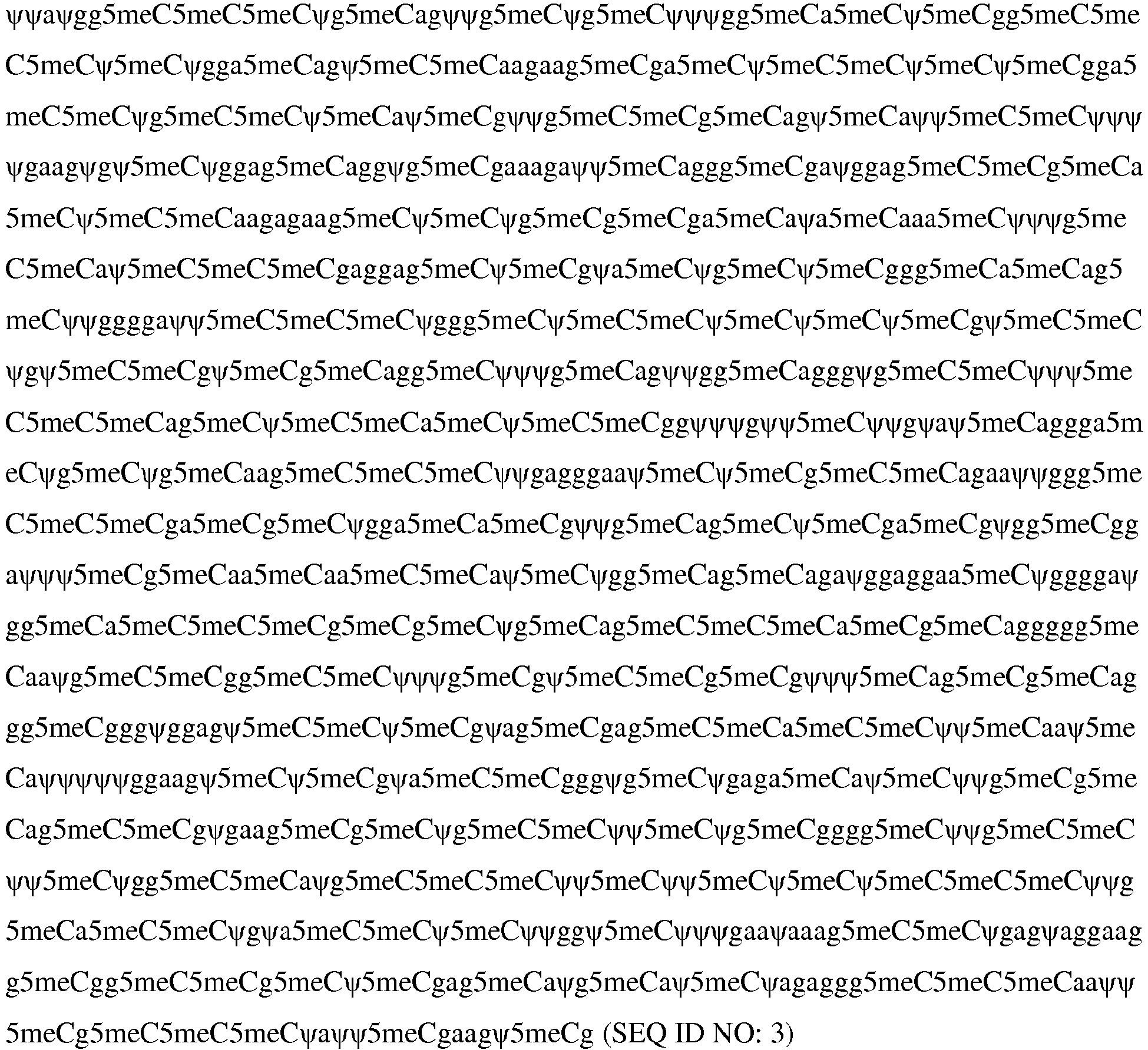
-
Figure 1 shows an Enzyme-linked immunosorbent assay (ELISA) for Human Granulocyte-Colony Stimulating Factor (G-CSF) from Chinese Hamster Ovary Cells (CHO) transfected with modRNA for G-CSF. The CHO cells were grown in CD CHO Medium with Supplement of L-Glutamine, Hypoxanthine and Thymidine. 2 x 10⁶ Cells were transfected with 24ug modRNA complexed with RNAiMax from Invitrogen in a 75cm2 culture flask from Corning with 7ml of medium. The RNA:RNAiMAX complex was formed by first incubating the RNA with CD CHO Medium in a 5X volumetric dilution for 10 minutes at room temperature. In a second vial, RNAiMAX reagent was incubated with CD CHO Medium in a 10X volumetric dilution for 10 minutes at room temperature. The RNA vial was then mixed with the RNAiMAX vial and incubated for 20-30 at room temperature before being added to the cells in a drop-wise fashion. The concentration of secreted huG-CSF in the culture medium was measured at 12 and 24 hours post-transfection. Cell supernatants were stored at -20°C. Secretion of Human Granulocyte-Colony Stimulating Factor (G-CSF) from transfected Human Embryonic Kidney cells was quantified using an ELISA kit from Invitrogen following the manufacturers recommended instructions. These data show that huG-CSF modRNA (SEQ ID NO: 3) is capable of being translated in CHO cells, and that huG-CSF is secreted out of the cells and released into the extracellular environment. Furthermore these data demonstrate that transfection of cells with modRNA huG-CSF for the production of secreted protein can be scaled up to a bioreactor or large cell culture conditions. - The nucleic acid sequence for the Heavy Chain of Rituximab is set forth in SEQ ID NO: 4:


- The nucleic acid sequence for the mRNA for the Heavy Chain of Rituximab is set forth in SEQ ID NO: 5:


- The nucleic acid sequence for the nucleic acid sequence for the Light Chain of Rituximab is set forth in SEQ ID NO: 6:

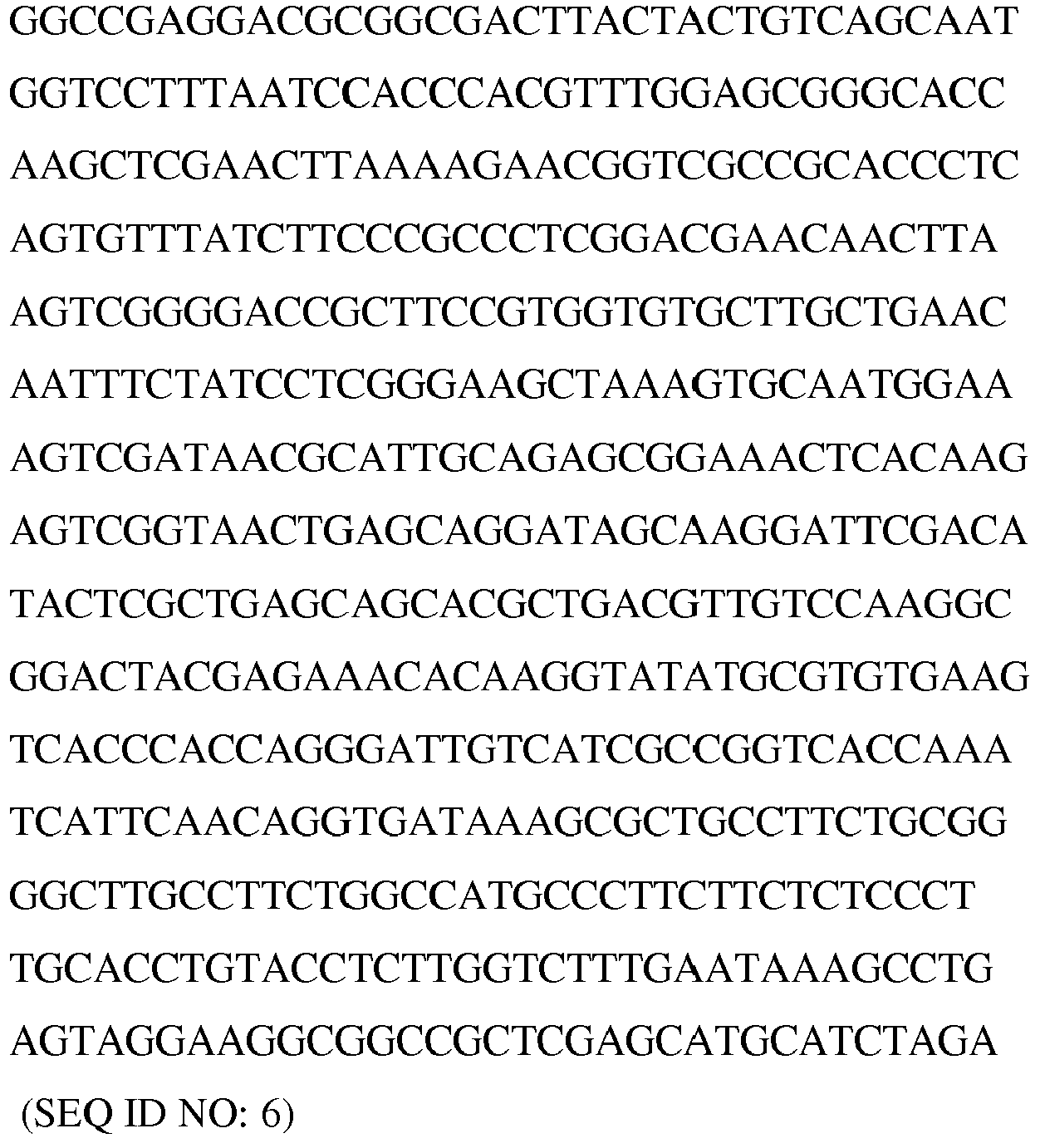
- The nucleic acid sequence for the mRNA of the Light Chain of Rituximab is set forth in SEQ ID NO: 7.
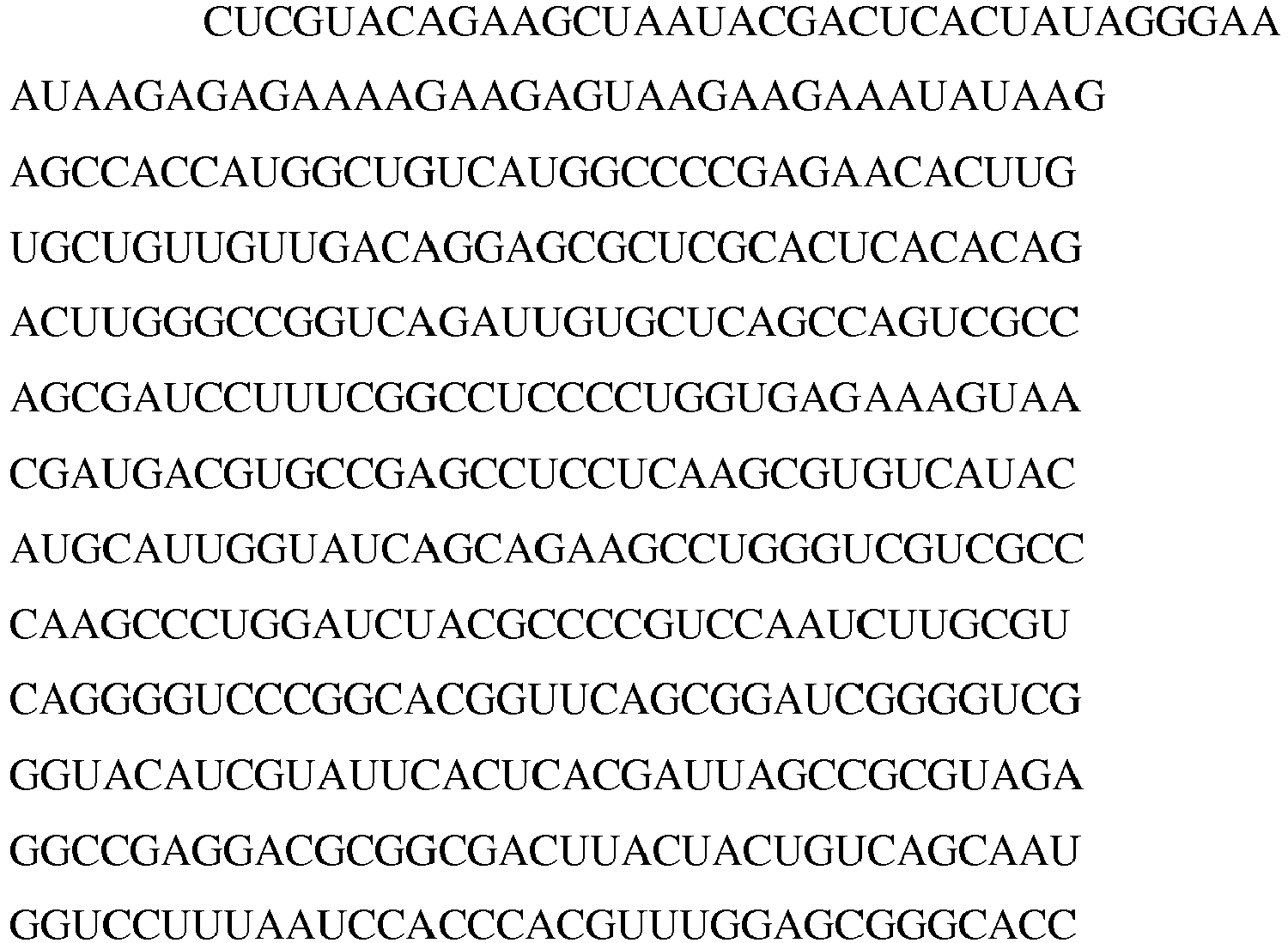

- The nucleic acid sequence for the nucleic acid sequence for the Heavy Chain of Trastuzumab is set forth in SEQ ID NO: 8:

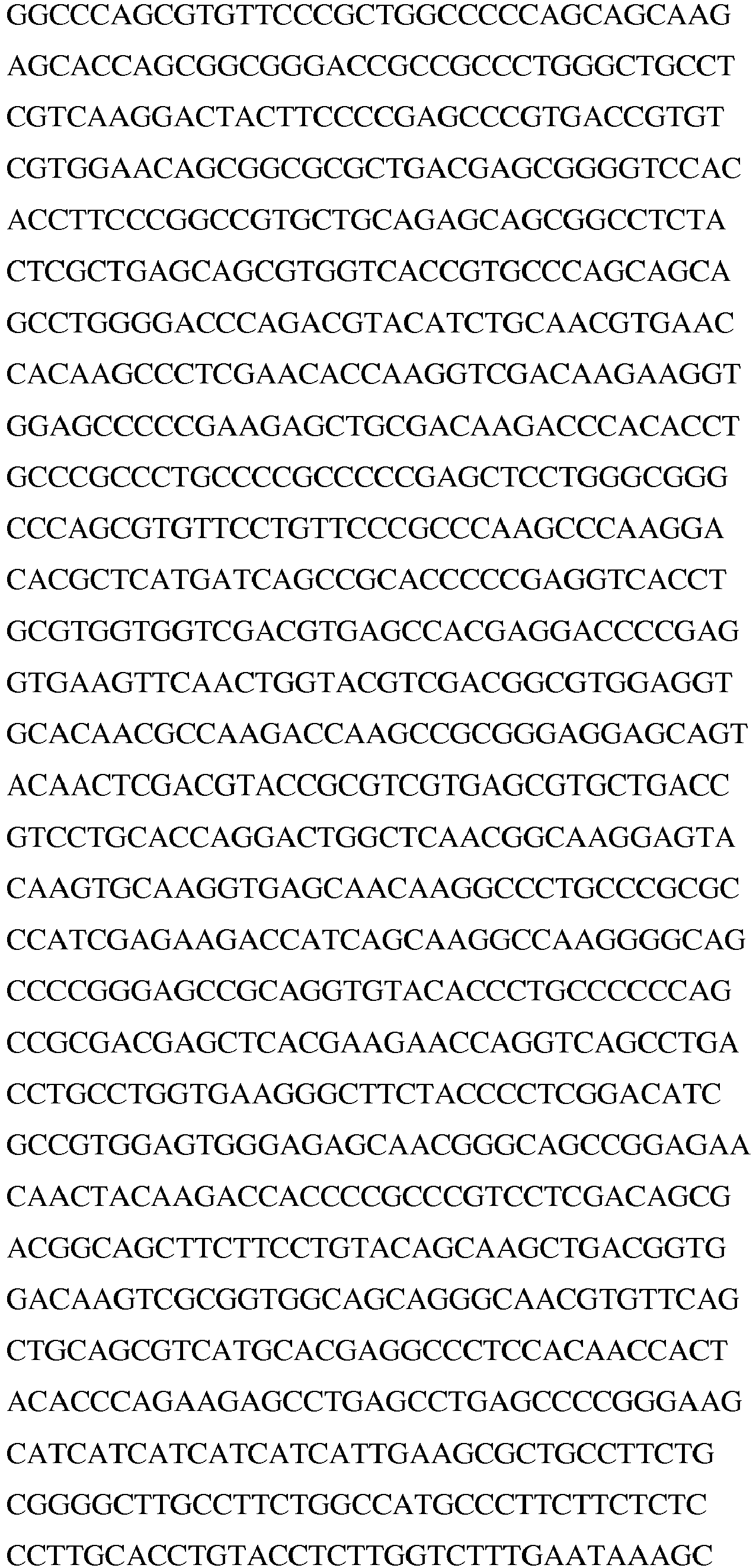

- The nucleic acid sequence of the mRNA for the Heavy Chain of Trastuzumab is set forth in SEQ ID NO: 9:


- The nucleic acid sequence for the nucleic acid sequence for the Light Chain of Trastuzumab is set forth in SEQ ID NO: 10:


- The nucleic acid sequence for the mRNA of the Light Chain of Trastuzumab is set forth in SEQ ID NO: 11:


- The nucleic acid sequence for nucleotide sequence of the wild type CERT protein is set forth in SEQ ID NO: 12:


- The protein sequence for the wild type CERT protein is set forth in SEQ ID NO: 13:


- The nucleic acid sequence for the nucleotide sequence of the Ser132A Cert mutant is set forth as SEQ ID NO: 14:


- The protein sequence of the Ser132A Cert mutant is set forth as SEQ ID NO. 15:
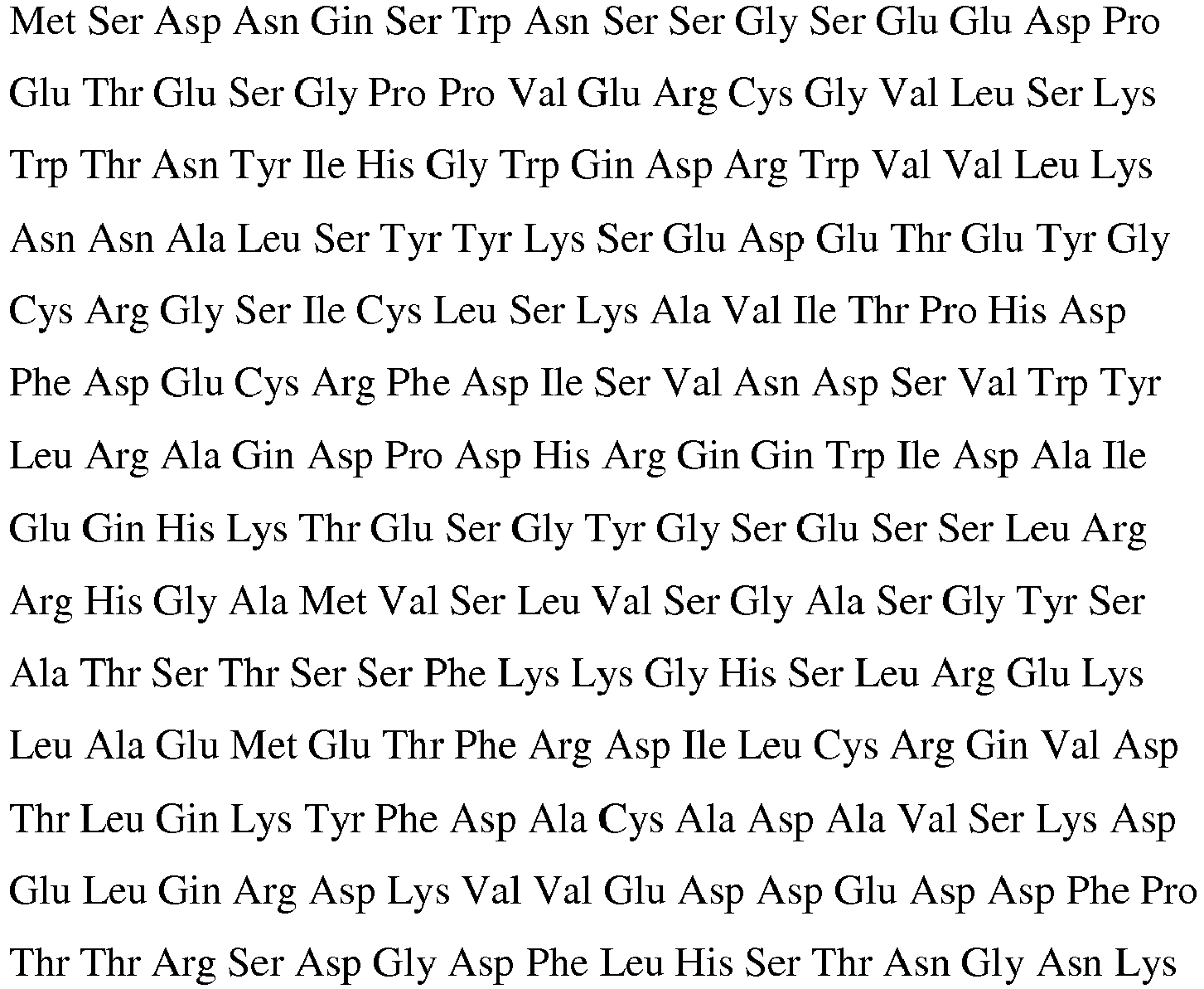

-
Figure 2 andFigure 3 show an Enzyme-linked immunosorbent assay (ELISA) for Human IgG from Chinese Hamster Ovary's (CHO) and Human Embryonic Kidney (HEK, HER-2 Negative) 293 cells transfected with human IgG modRNA , respectively. The Human Embryonic Kidney (HEK) 293 were grown in CD 293 Medium with Supplement of L-Glutamine from Invitrogen until they reached a confluence of 80-90%. The CHO cells were grown in CD CHO Medium with Supplement of L-Glutamine, Hypoxanthine and Thymidine. InFigure 2, 2 x 10⁶ cells were transfected with 24ug modRNA complexed with RNAiMax from Invitrogen in a 75cm2 culture flask from Corning in 7ml of medium. InFigure 3 , 80,000 cells were transfected with 1ug modRNA complexed with RNAiMax from Invitrogen in a 24-well plate. The RNA:RNAiMAX complex was formed by first incubating the RNA with CD 293 or CD CHO Medium in a 5X volumetric dilution for 10 minutes at room temperature. In a second vial, RNAiMAX reagent was incubated with CD 293 Medium or CD CHO Medium in a 10X volumetric dilution for 10 minutes at room temperature. The RNA vial was then mixed with the RNAiMAX vial and incubated for 20-30 at room temperature before being added to the cells in a drop-wise fashion. InFigure 2 , the concentration of secreted human IgG in the culture medium was measured at 12, 24, 36 hours post-transfection. InFigure 3 , secreted human IgG was measured at 36 hours. The culture supernatants were stored at 4 degrees. Secretion of Trastuzumab from transfected Human Embryonic Kidney 293 cells was quantified using an ELISA kit from Abcam following the manufacturers recommended instructions. This data show that a Humanized IgG antibody (Trastuzumab) modRNA (SEQ ID NOs: 6 and 7) is capable of being translated in Human Embryonic Kidney Cells and that Trastuzumab is secreted out of the cells and released into the extracellular environment. Furthermore these data demonstrate that transfection of cells with modRNA encoding Trastuzumab for the production of secreted protein can be scaled up to a bioreactor or large cell culture conditions. -
Figure 4 shows a Western Blot of CHO-K1 cells co-transfected with 1µg each of Heavy and Light Chain of Trastuzumab modRNA. In order to detect translation of protein product, cells were grown using standard protocols in 24-well plates, and cell supernatants or cell lysates were collected at 24 hours post-transfection and separated on a 12% SDS-Page gel and transferred onto a nitrocellulose membrane using the iBlot by Invitrogen. After incubation with a rabbit polyclonal antibody to Human IgG conjugated to DyLight® 594 (ab96904, abcam, Cambridge, MA) and a secondary goat polyclonal antibody to Rb IgG which was conjugated to alkaline phosphatase, the antibody was detected using Novex ® alkaline phosphatase chromogenic substrate by Invitrogen. -
Figure 5 shows CHO-K1 cells co-transfected with 500ng each of Heavy and Light Chain of Trastuzumab or Rituximab. Cells were grown in F-12K Medium from Gibco and 10 % FBS. Cells were fixed with 4% paraformaldehyde in PBS and permeabilized with 0.1% Triton X-100 in PBS for 5-10 minutes at room temperature. Cells were then washed 3X with room temperature PBS. Trastuzumab and Rituximab staining was performed using rabbit polyclonal antibody to Human IgG conjugated to DyLight® 594 (ab96904, abcam, Cambridge, MA) according to the manufacturer's recommended dilutions. Nuclear DNA staining was performed with DAPI dye from Invitrogen. The protein for Trastuzumab and Rituximab is translated and localized to the cytoplasm upon modRNA transfection. The pictures were taken 13 hours post-transfection. -
Figure 6 shows a Binding Immunoblot detection assay for Trastuzumab and Rituximab. Varying concentrations of the ErB2 peptide (ab40048, abcam, Cambridge, MA), - antigen for Trastuzumab and the CD20 peptide (ab97360, abcam, Cambridge, MA), antigen for Rituximab were run at varying concentrations (100ng/ul to Ong/ul) on a 12% SDS-Page gel and transferred onto a membrane using the iBlot from Invitrogen. The membranes were incubated for 1 hour with their respective cell supernatants from CHO-K1 cells co-transfected with 500ng each of Heavy and Light Chain of Trastuzumab or Rituximab. The membranes were blocked with 1% BSA and a secondary anti-human IgG antibody conjugated to alkaline phosphatase (abcam, Cambridge, MA) was added. Antibody detection was conducted using the Novex ® alkaline phosphatase chromogenic substrate by Invitrogen. This data show that a humanized IgG antibodies generated from modRNA are capable of recognizing and binding to their respective antigens.
- The SK-BR-3 cell line, an adherent cell line derived from a human breast adenocarcinoma, which overexpress the HER2/neu receptor can be used to compare the antiproliferative properties of modRNA generated Trastuzumab. Varying concentrations of purified Trastuzumab generated from modRNA and trastuzumab can be added to cell cultures, and their effects on cell growth can be assessed in triplicate cytotoxicity and viability assays.
- The anti-cancer effects of modRNA generated Trastuzumab can be determined by consecutive injections of 1) modRNA Trastuzumab , 2) trastuzumab, and 3) modRNA Trastuzumab + modRNA GCSF over a period of 28 days in SKOV-3 xenograft mice. The reduction in tumor growth size can be monitored over time.
- An antibody producing CHO cell line (CHO DG44) secreting a humanized therapeutic IgG antibody is transfected a single time with lipid cationic delivery agent alone (control) or a synthetic mRNA transcript encoding wild type ceramide transfer protein (CERT) or a non-phosphorylation competent Ser132A CERT mutant. CERT is an essential cytosolic protein in mammalian cells that transfers the sphingolipid ceramide from the endoplasmic reticulum to the Golgi complex where it is converted to sphingomyelin (Hanada et al., 2003). Overexpression of CERT significantly enhances the transport of secreted proteins to the plasma membrane and improves the production of proteins that are transported via the secretory pathway from eukaryotic cells thereby enhancing secretion of proteins in the culture medium. Synthetic mRNA transcripts are pre-mixed with a lipid cationic delivery agent at a 2-5:1 carrier:RNA ratio. The initial seeding density is about 2×10⁵ viable cells/mL. The synthetic mRNA transcript is delivered after initial culture seeding during the exponential culture growth phase to achieve a final synthetic mRNA copy number between 10x102 and 10x103 per cell. The basal cell culture medium used for all phases of cell inoculum generation and for growth of cultures in bioreactors is modified CD-CHO medium containing glutamine, sodium bicarbonate, insulin and methotrexate. The pH of the medium is adjusted to 7.0 with 1 N HCl or IN NaOH after addition of all components. Culture run times end on days 7, 14, 21 or 28+. Production-level 50 L scale reactors (stainless steel reactor with two marine impellers) may be used and are scalable to >10,000 L stainless steel reactors (described in commonly-assigned patent application
U.S. Ser. No. 60/436,050, filed Dec. 23, 2002 U.S. Ser. No. 10/740,645 - An antibody producing CHO cell line (CHO DG44) secreting humanized IgG antibody is transfected with lipid cationic delivery agent alone (control) or a synthetic mRNA transcript encoding wild type ceramide transfer protein or a non-phosphorylation competent Ser132A CERT mutant. Synthetic mRNA transcripts are pre-mixed with a lipid cationic delivery agent at a 2-5:1 carrier:RNA ratio. The initial seeding density was about 2×10⁵ viable cells/mL. Synthetic mRNA transcript is delivered after initial culture seeding during the exponential culture growth phase to achieve a final synthetic mRNA copy number between 10x102 and 10x103 per cell. The basal cell culture medium used for all phases of cell inoculum generation and for growth of cultures in bioreactors was modified CD-CHO medium containing glutamine, sodium bicarbonate, insulin and methotrexate. The pH of the medium is adjusted to 7.0 with 1 N HCl or IN NaOH after addition of all components. Bioreactors of 5 L scale (glass reactor with one marine impeller) are used to obtain maximum CERT protein production and secreted humanized IgG antibody curves. For continuous or fed-batch cultures, the culturing run time is increased by supplementing the culture medium one or more times daily (or continuously) with fresh medium during the run. In the a continuous and fed-batch feeding regimens, the cultures receive feeding medium as a continuously-supplied infusion, or other automated addition to the culture, in a timed, regulated, and/or programmed fashion so as to achieve and maintain the appropriate amount of synthetic mRNA:carrier in the culture. The typical method is a feeding regimen of a once per day bolus feed with feeding medium containing synthetic mRNA:carrier on each day of the culture run, from the beginning of the culture run to the day of harvesting the cells. The daily feed amount is recorded on batch sheets. Production-level 50 L scale reactors (stainless steel reactor with two marine impellers) were used and are scalable to >10,000 L stainless steel reactors. A data acquisition system (Intellution Fix 32) record temperature, pH, and dissolved oxygen (DO) throughout runs. Gas flows are controlled via rotameters. Air is sparged into the reactor via a submerged frit (5 µm pore size) and through the reactor head space for CO2 removal. Molecular oxygen was sparged through the same frit for DO control. CO2 is sparged through same frit as used for pH control. Samples of cells are removed from the reactor on a daily basis. A sample used for cell counting is typically stained with trypan blue (Sigma, St. Louis, Mo.). Cell count and cell viability determination are performed via hemocytometry using a microscope. For analysis of metabolites, additional samples are centrifuged for 20 minutes at 2000 rpm (4°C) for cell separation. Supernatant is analyzed for the following parameters: titer, sialic acid, glucose, lactate, glutamine, glutamate, pH, pO2, pCO2, ammonia, and, optionally, lactate dehydrogenase (LDH). Additional back-up samples are frozen at -20°C. To measure secreted humanized IgG antibody titers, supernatant is taken from seed-stock cultures of all stable cell pools, the IgG titer is determined by ELISA and divided by the mean number of cells to calculate the specific productivity. The highest values are the cell pools with the Ser132A CERT mutant (SEQ ID NO: 14), followed by wild type CERT (SEQ ID NO: 10 or 12). In both, IgG expression is markedly enhanced compared to carrier-alone or untransfected cells.
- Those skilled in the art will recognize, or be able to ascertain using no more than routine experimentation, many equivalents to the specific embodiments, described herein. The scope of the present disclosure is not intended to be limited to the above Description, but rather is as set forth in the appended claims.
- Those skilled in the art will recognize, or be able to ascertain using no more than routine experimentation, many equivalents to the specific embodiments in accordance with the disclosure described herein. The scope of the present disclosure is not intended to be limited to the above Description, but rather is as set forth in the appended claims.
- In the claims articles such as "a," "an," and "the" may mean one or more than one unless indicated to the contrary or otherwise evident from the context. Claims or descriptions that include "or" between one or more members of a group are considered satisfied if one, more than one, or all of the group members are present in, employed in, or otherwise relevant to a given product or process unless indicated to the contrary or otherwise evident from the context. The disclosure includes embodiments in which exactly one member of the group is present in, employed in, or otherwise relevant to a given product or process. The disclosure includes embodiments in which more than one, or all of the group members are present in, employed in, or otherwise relevant to a given product or process. Furthermore, it is to be understood that the disclosure encompasses all variations, combinations, and permutations in which one or more limitations, elements, clauses, descriptive terms, etc., from one or more of the listed claims is introduced into another claim. For example, any claim that is dependent on another claim can be modified to include one or more limitations found in any other claim that is dependent on the same base claim. Furthermore, where the claims recite a composition, it is to be understood that methods of using the composition for any of the purposes disclosed herein are included, and methods of making the composition according to any of the methods of making disclosed herein or other methods known in the art are included, unless otherwise indicated or unless it would be evident to one of ordinary skill in the art that a contradiction or inconsistency would arise.
- Where elements are presented as lists, e.g., in Markush group format, it is to be understood that each subgroup of the elements is also disclosed, and any element(s) can be removed from the group. It should it be understood that, in general, where the disclosure, or aspects of the disclosure, is/are referred to as comprising particular elements, features, etc., certain embodiments of the disclosure or aspects of the disclosure consist, or consist essentially of, such elements, features, etc. For purposes of simplicity those embodiments have not been specifically set forth in haec verba herein. It is also noted that the term "comprising" is intended to be open and permits the inclusion of additional elements or steps.
- Where ranges are given, endpoints are included. Furthermore, it is to be understood that unless otherwise indicated or otherwise evident from the context and understanding of one of ordinary skill in the art, values that are expressed as ranges can assume any specific value or subrange within the stated ranges in different embodiments of the disclosure, to the tenth of the unit of the lower limit of the range, unless the context clearly dictates otherwise.
- In addition, it is to be understood that any particular embodiment of the present disclosure that falls within the prior art may be explicitly excluded from any one or more of the claims. Since such embodiments are deemed to be known to one of ordinary skill in the art, they may be excluded even if the exclusion is not set forth explicitly herein. Any particular embodiment of the compositions of the disclosure (e.g., any protein; any nucleic acid; any method of production; any method of use; etc.) can be excluded from any one or more claims, for any reason, whether or not related to the existence of prior art.
- All cited sources, for example, references, publications, databases, database entries, and art cited herein, are incorporated into this application by reference, even if not expressly stated in the citation. In case of conflicting statements of a cited source and the instant application, the statement in the instant application shall control.
- Other embodiments are in the claims.
- Preferred embodiments of the present invention are described below and are referred to as embodiments E1-E31
-
E 1. A kit for immunoglobulin protein production, comprising a first isolated nucleic acid comprising i) a translatable region encoding the immunoglobulin protein and ii) a nucleic acid modification, wherein the first nucleic acid is capable of evading an innate immune response of a cell into which the first isolated nucleic acid is introduced, wherein the translatable region is substantially devoid of cytidine and uracil nucleotides, and packaging and instructions therefor. - E 2. The kit of
E 1, wherein the immunoglobulin protein comprises a polypeptide selected from the group consisting of a full-length antibody, a heavy chain polypeptide, a light chain polypeptide, an Fab domain, or a single chain variable fragment (ScFv) polypeptide, and the first isolated nucleic acid comprises a messenger ribonucleic acid comprising 5-methyl-cytidine and pseudouridine. - E 3. The kit of
E 1, wherein the first isolated nucleic acid comprises a nucleotide sequence selected from the group consisting of:- a) the nucleotide sequence of SEQ ID NOs: 4 and/or 6 [rituximab];
- b) a nucleotide sequence at least 95% identical to the nucleotide sequence of a);
- c) a nucleotide sequence encoding the polypeptide of SEQ ID NOs: 5 and/or 7 [rituximab];
- d) a nucleotide sequence at least 95% identical to the nucleotide sequence of c);
- e) a nucleotide sequence encoding a polypeptide at least 95% identical to SEQ ID NOs: 5 and/or 7 [rituximab];
- f) a nucleotide sequence at least 95% identical to the nucleotide sequence of e);
- g) a nucleotide sequence comprising a fragment of any one of a) - f); and
- h) a codon-optimized variant of the nucleotide sequence of any one of a) - g).
- E 4. The kit of E 3, wherein the immunoglobulin protein immuno specifically binds to a CD20 polypeptide.
- E 5. The kit of E 3, wherein the immunoglobulin protein specifically induces antibody-dependent cellular cytotoxicity of CD20+ cells when contacted therewith.
- E 6. The kit of E 3, wherein the immunoglobulin protein is produced for use in the treatment of a leukemia, a lymphoma, an organ transplant rejection, or an autoimmune disease or disorder.
- E 7. A mammalian cell generated by use of the kit of
E 1. - E 8. The kit of
E 1, wherein the first isolated nucleic acid comprises a nucleotide sequence selected from the group consisting of:- a) the nucleotide sequence of SEQ ID NOs: 8 and/or 10;
- b) a nucleotide sequence at least 95% identical to the nucleotide sequence of a);
- c) a nucleotide sequence encoding the polypeptide of SEQ ID NOs: 9 and/or 11;
- d) a nucleotide sequence at least 95% identical to the nucleotide sequence of c);
- e) a nucleotide sequence encoding a polypeptide at least 95% identical to SEQ ID NOs: 9 and/or 11;
- f) a nucleotide sequence at least 95% identical to the nucleotide sequence of e); and
- g) a nucleotide sequence comprising a fragment at least 30 nucleotides in length of any one of a) - f).
- E 9. The kit of E 8, wherein the immunoglobulin protein immuno specifically binds to a HER-2/neu receptor polypeptide.
-
E 10. The kit of E 8, wherein the immunoglobulin protein specifically induces antibody-dependent cellular cytotoxicity, apoptosis, cell cycle arrest or a combination thereof, of HER2/neu+ cells when contacted therewith. - E 11. The kit of E 8, wherein the immunoglobulin protein is produced for use in the treatment of a HER2/neu+ breast cancer.
-
E 12. An isolated immunoglobulin protein produced from a production cell comprising a first isolated nucleic acid comprising i) a translatable region encoding the immunoglobulin protein and ii) a nucleic acid modification, wherein the first nucleic acid is capable of evading an innate immune response of the cell, wherein the translatable region is substantially devoid of either cytidine or uracil nucleotides or the combination of cytidine and uracil nucleotides. - E 13. The protein of
E 12, wherein the production cell is a cell isolated from a human subject. - E 14. A pharmaceutical preparation comprising an effective amount of the protein of E 13.
- E 15. A pharmaceutical preparation comprising an effective amount of a first nucleic acid comprising i) a translatable region encoding an immunoglobulin protein and ii) a nucleic acid modification, wherein the first nucleic acid exhibits reduced degradation by a cellular nuclease and is capable of evading an innate immune response of a cell into which the first nucleic acid is introduced, wherein the translatable region is substantially devoid of cytidine and uracil nucleotides.
- E 16. The pharmaceutical preparation of E 15, wherein the first nucleic acid exhibits reduced degradation by a cellular nuclease.
- E 17. A method of producing a heterologous protein of interest in a cell, comprising the step:
- i) providing a target cell capable of protein translation; and
- ii) introducing into the target cell a composition comprising a first isolated nucleic acid comprising a translatable region encoding the heterologous protein of interest and a nucleoside modification,
- E 18. The method of E 17, further comprising the step of substantially purifying the protein of interest from the cell.
- E 19. The method of E 17, wherein the protein of interest is a secreted protein.
-
E 20. The method of E 17, wherein the protein of interest is an immunoglobulin protein. - E 21. The method of E 17, wherein the protein of interest is an intracellular protein.
- E 22. A method of increasing the production of a recombinantly expressed protein of interest in a cell, comprising the step:
- i) providing a target cell comprising a heterologous nucleic acid encoding the protein of interest; and
- ii) introducing into the target cell a composition comprising a first isolated nucleic acid comprising a translatable region encoding a translation effector protein and a nucleoside modification under conditions such that the effector protein is produced in the cell, thereby increasing the production of the recombinantly expressed protein in the cell.
- E 23. The method of E 22, wherein the protein of interest is an immunoglobulin protein. The method of E 22, wherein the protein of interest is a secreted protein.
-
E 24. The method of E 22, wherein the protein if interest is an intracellular protein. - E 25. The method of E 22, wherein the target cell is a mammalian cell.
- E 26. The method of E 22, wherein the target cell is a yeast cell.
- E 27. The method of E 22, wherein the target cell is a bacterial cell, an insect cell, or a plant cell.
- E 28. The method of E 22, wherein the translation effector protein is ceramide transfer protein (CERT).
- E 29. A method for modulating the level of a protein of interest in a target cell, comprising the steps of:
- i) modulating the activity of at least one translation effector molecule in the target cell, wherein the modulation comprises introducing into the target cell a first isolated nucleic acid comprising a translatable region encoding the translation effector protein and a nucleoside modification; and
- ii) culturing the cell.
-
E 30. A kit for protein production, comprising a first isolated nucleic acid encoding a translatable region encoding a protein, wherein the first nucleic acid comprises a nucleic acid modification, wherein the first nucleic acid displays decreased degradation in a cell into which the first isolated nucleic acid is introduced as compared to a nucleic acid not comprising a nucleic acid modification, and packaging and instructions therefor. - E 31. A kit for protein production, comprising a first isolated nucleic acid encoding a translatable region encoding a protein, wherein the first nucleic acid comprises a nucleic acid modification, wherein the first nucleic acid displays is more stable in a cell into which the first isolated nucleic acid is introduced as compared to a nucleic acid not comprising a nucleic acid modification, and packaging and instructions therefor.


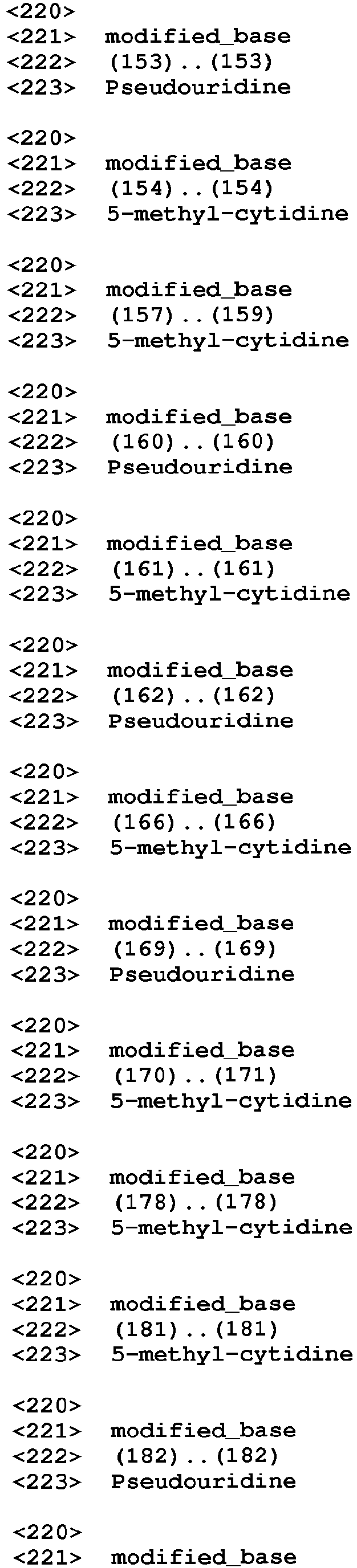
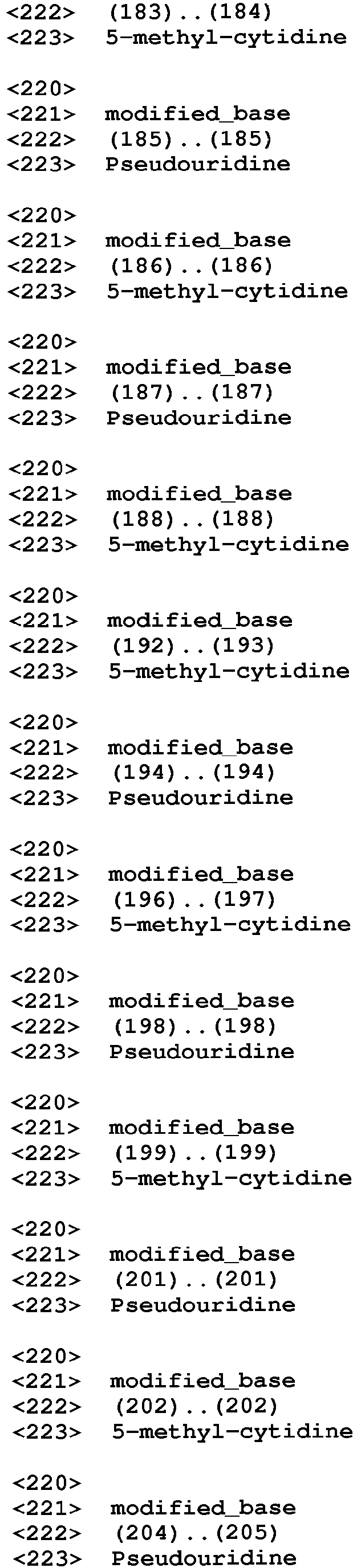


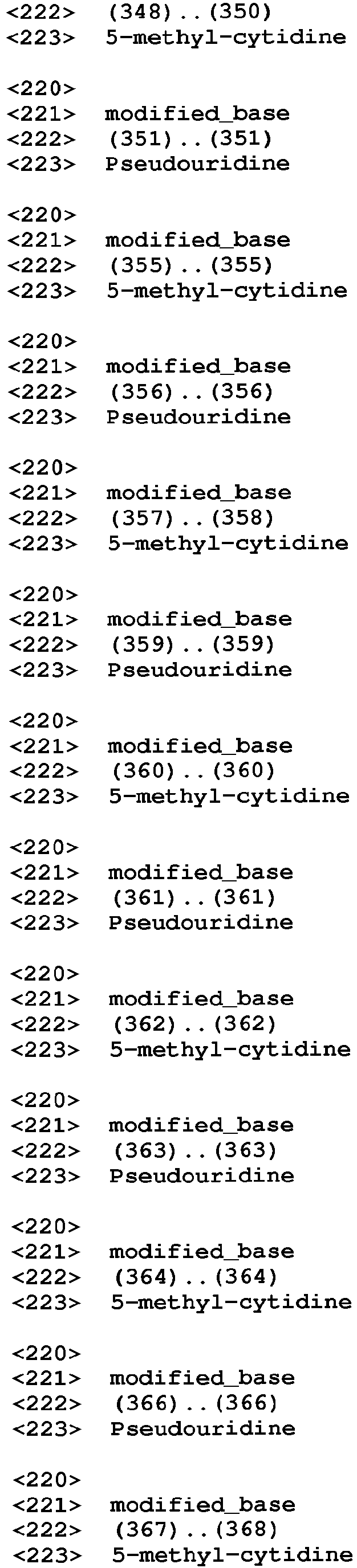

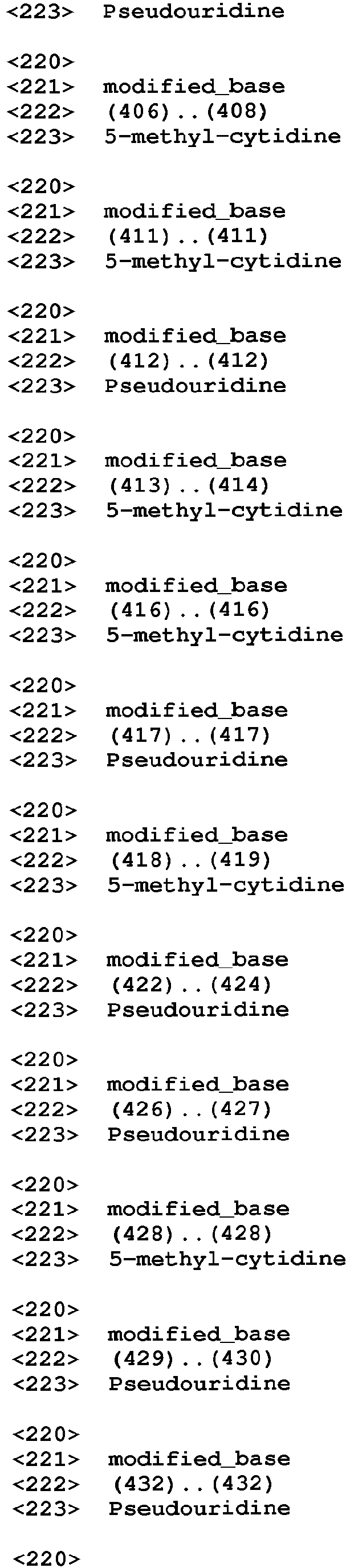
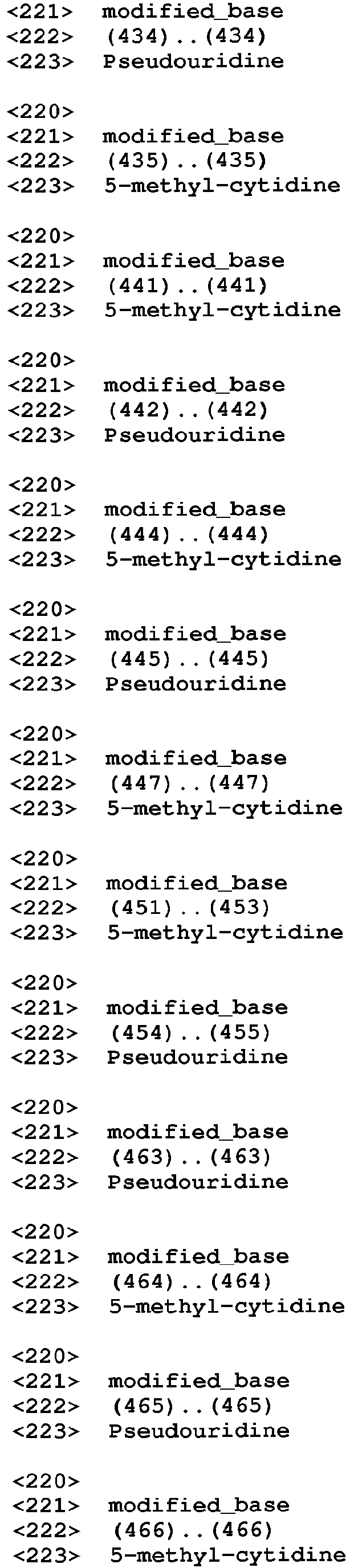


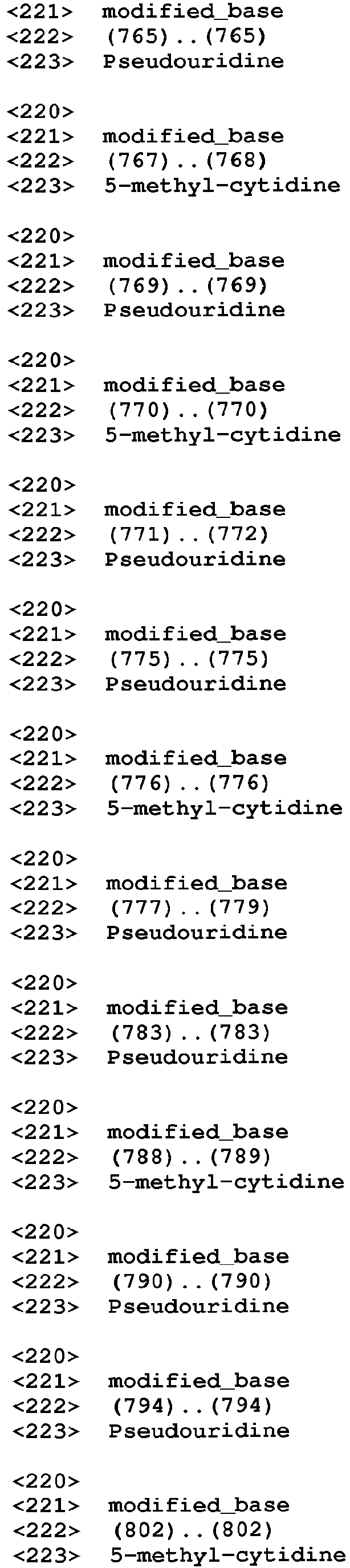


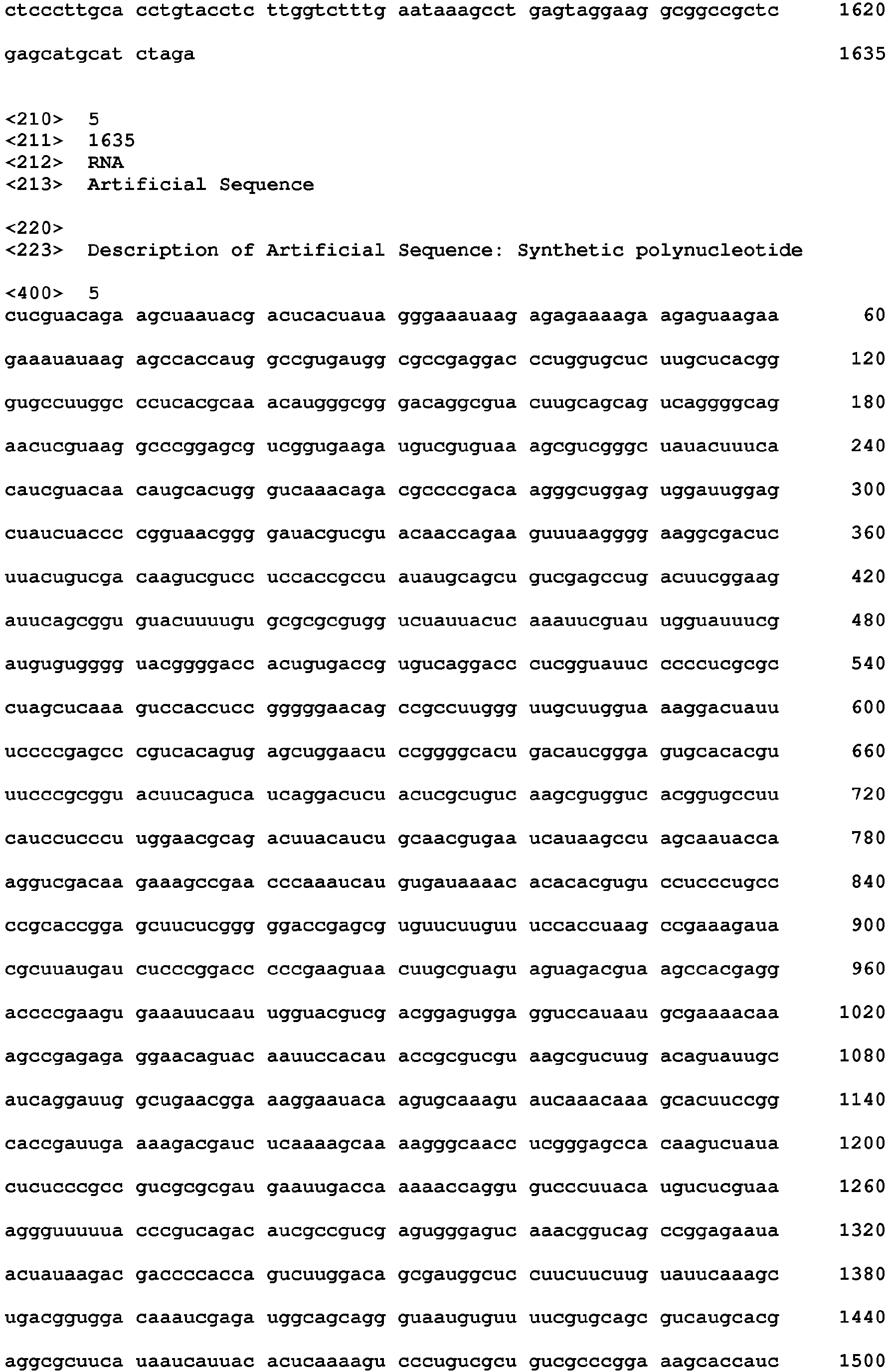

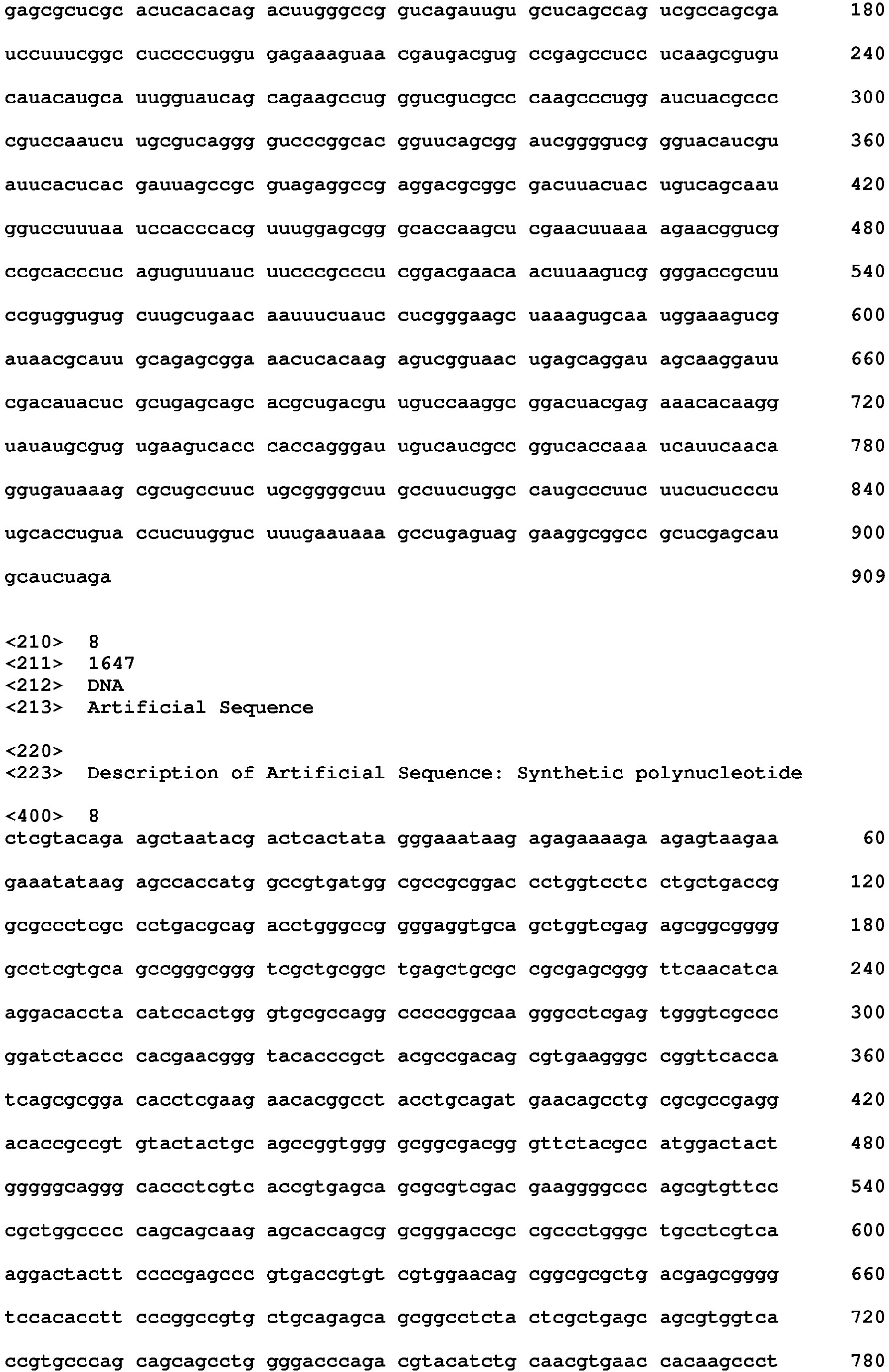
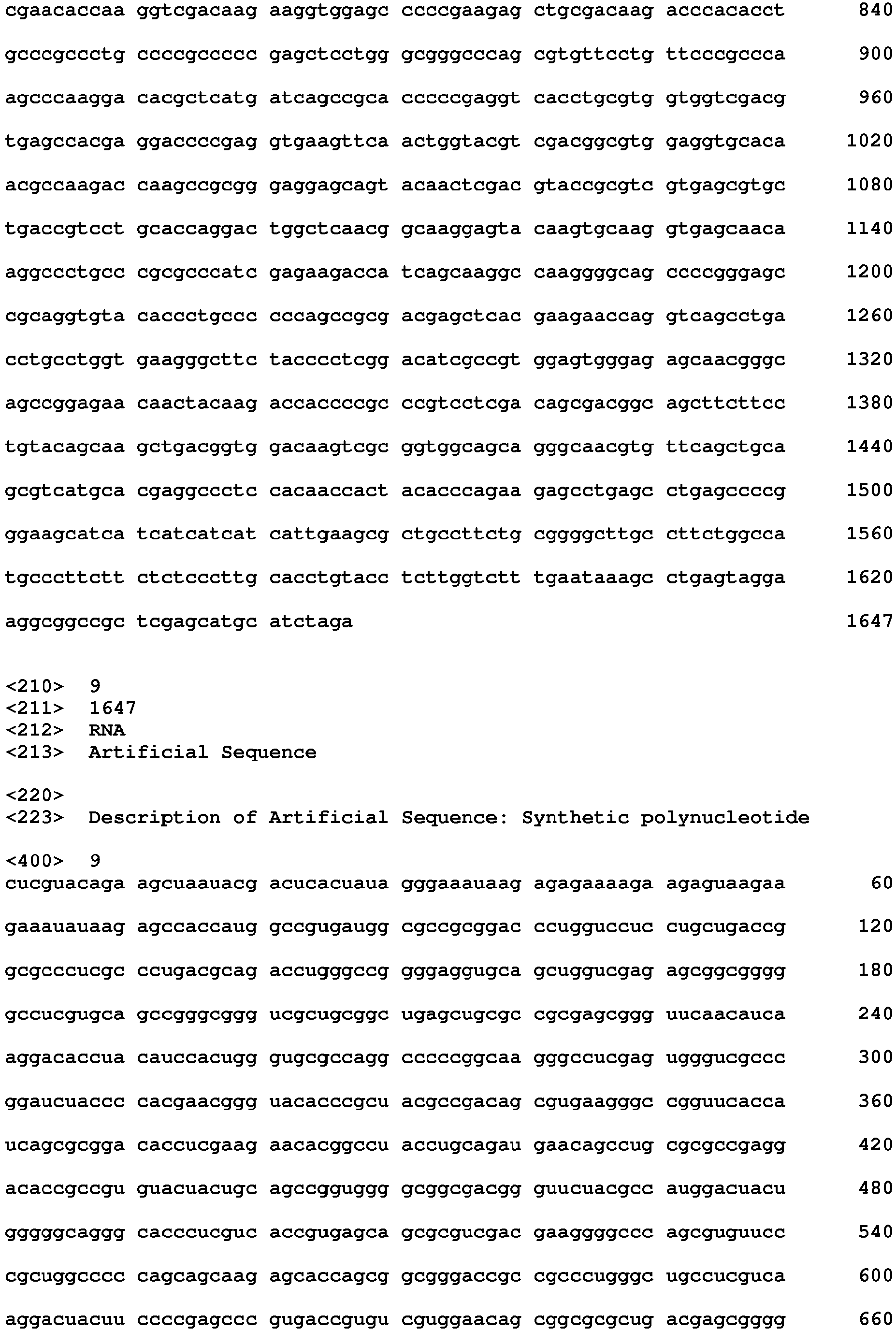
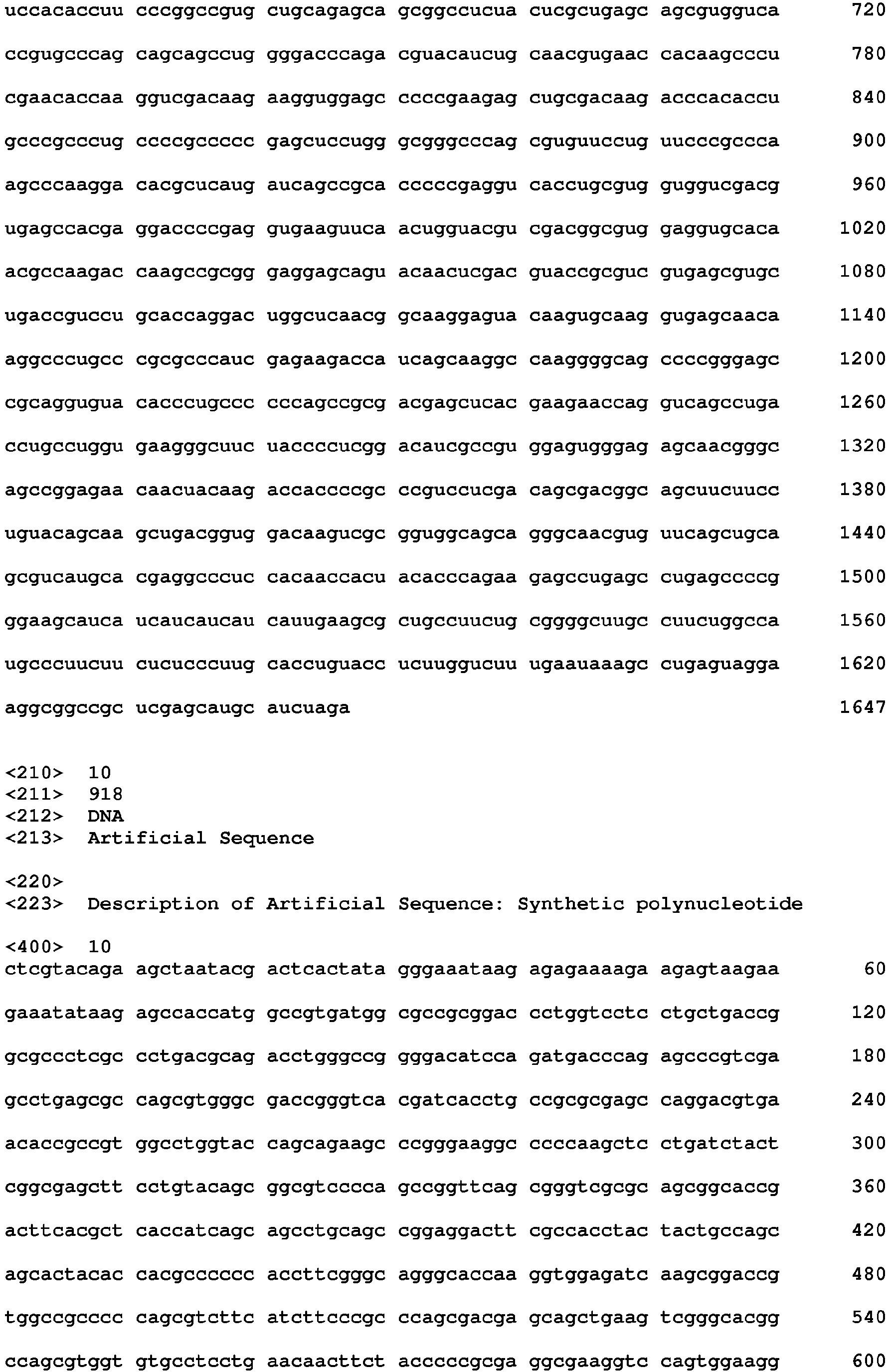


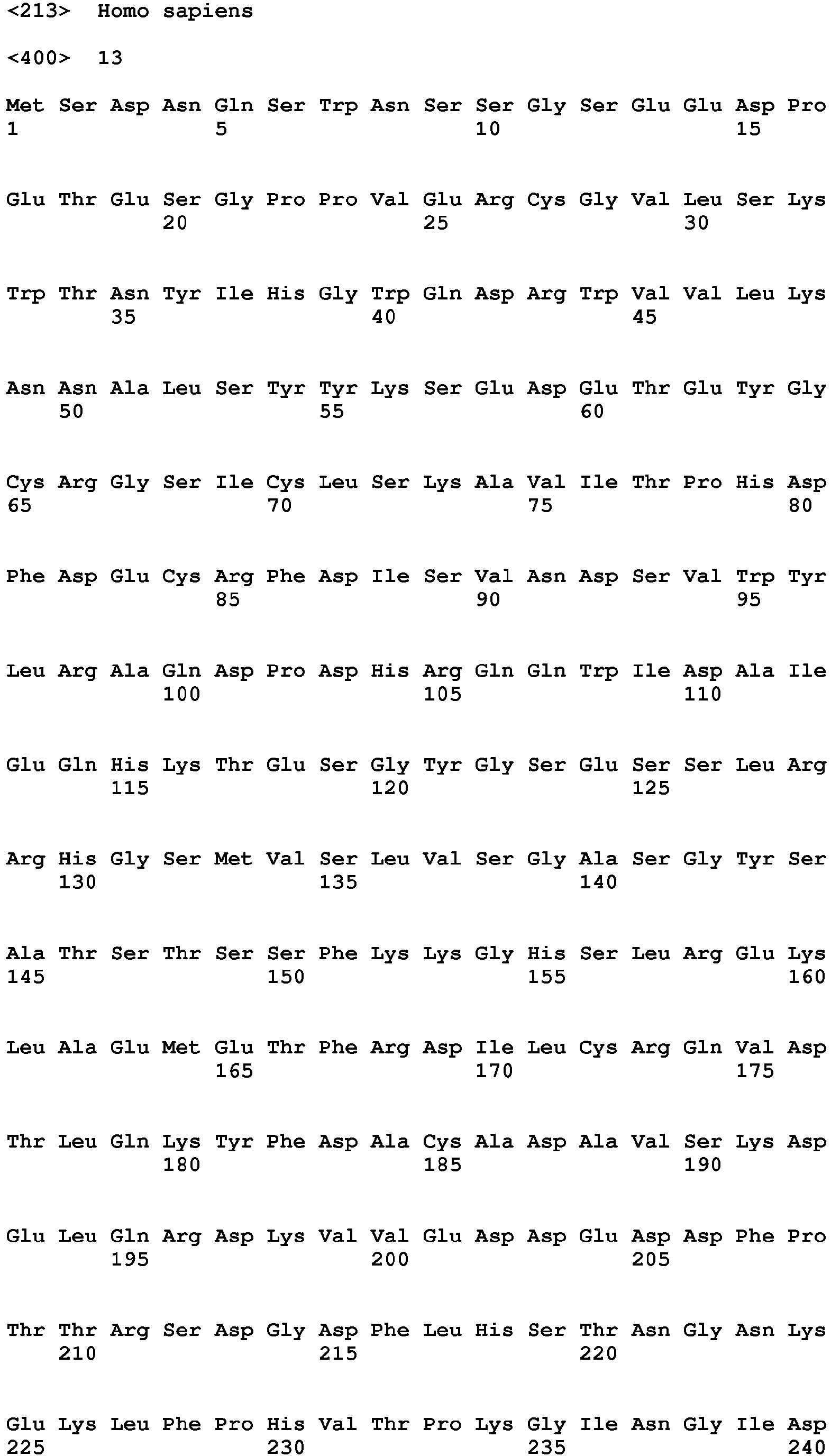


Claims (6)
- A kit for immunoglobulin protein production, comprising a first isolated nucleic acid comprising i) a translatable region encoding the immunoglobulin protein and ii) a nucleic acid modification, wherein the first nucleic acid is capable of evading an innate immune response of a cell into which the first isolated nucleic acid is introduced, wherein the translatable region is substantially devoid of either cytidine or uracil nucleotides.
- The kit of claim 1, wherein said kit is for delivering two modified mRNA constructs in vivo so as to cause intracellular translation of the mRNA constructs into heavy and light chains of an immunoglobulin protein.
- The kit of claim 2, wherein the mRNA comprises 5-methyl-cytidine and pseudouridine.
- An isolated immunoglobulin protein produced from a production cell comprising a first isolated nucleic acid comprising i) a translatable region encoding the immunoglobulin protein and ii) a nucleic acid modification, wherein the first nucleic acid is capable of evading an innate immune response of the cell, wherein the translatable region is substantially devoid of either cytidine or uracil nucleotides.
- A pharmaceutical preparation comprising an effective amount of a first nucleic acid comprising i) a translatable region encoding an immunoglobulin protein and ii) a nucleic acid modification, wherein the first nucleic acid exhibits reduced degradation by a cellular nuclease and is capable of evading an innate immune response of a cell into which the first nucleic acid is introduced, wherein the translatable region is substantially devoid of either cytidine or uracil nucleotides.
- The pharmaceutical preparation of claim 6, for delivering two modified mRNA constructs in vivo so as to cause intracellular translation of the mRNA constructs into heavy and light chains of an immunoglobulin protein.
Applications Claiming Priority (3)
| Application Number | Priority Date | Filing Date | Title |
|---|---|---|---|
| US40441310P | 2010-10-01 | 2010-10-01 | |
| PCT/US2011/054636 WO2012045082A2 (en) | 2010-10-01 | 2011-10-03 | Engineered nucleic acids and methods of use thereof |
| EP11830067.2A EP2625189B1 (en) | 2010-10-01 | 2011-10-03 | Engineered nucleic acids and methods of use thereof |
Related Parent Applications (1)
| Application Number | Title | Priority Date | Filing Date |
|---|---|---|---|
| EP11830067.2A Division EP2625189B1 (en) | 2010-10-01 | 2011-10-03 | Engineered nucleic acids and methods of use thereof |
Publications (3)
| Publication Number | Publication Date |
|---|---|
| EP3431485A1 true EP3431485A1 (en) | 2019-01-23 |
| EP3431485B1 EP3431485B1 (en) | 2020-12-30 |
| EP3431485B2 EP3431485B2 (en) | 2024-09-04 |
Family
ID=45893552
Family Applications (8)
| Application Number | Title | Priority Date | Filing Date |
|---|---|---|---|
| EP20140195389 Withdrawn EP2857413A1 (en) | 2010-10-01 | 2011-10-03 | Engineered nucleic acids and methods of use thereof |
| EP24188375.0A Pending EP4435100A3 (en) | 2010-10-01 | 2011-10-03 | Modified nucleosides, nucleotides, and nucleic acids, and uses thereof |
| EP20140195388 Withdrawn EP2857499A1 (en) | 2010-10-01 | 2011-10-03 | Engineered nucleic acids and methods of use thereof |
| EP19177059.3A Active EP3590949B1 (en) | 2010-10-01 | 2011-10-03 | Ribonucleic acids containing n1-methyl-pseudouracils and uses thereof |
| EP11830061.5A Active EP2622064B1 (en) | 2010-10-01 | 2011-10-03 | Modified nucleosides, nucleotides, and nucleic acids, and uses thereof |
| EP22173763.8A Active EP4108671B1 (en) | 2010-10-01 | 2011-10-03 | Modified nucleosides, nucleotides, and nucleic acids, and uses thereof |
| EP18179157.5A Active EP3431485B2 (en) | 2010-10-01 | 2011-10-03 | Engineered nucleic acids and methods of use thereof |
| EP11830067.2A Not-in-force EP2625189B1 (en) | 2010-10-01 | 2011-10-03 | Engineered nucleic acids and methods of use thereof |
Family Applications Before (6)
| Application Number | Title | Priority Date | Filing Date |
|---|---|---|---|
| EP20140195389 Withdrawn EP2857413A1 (en) | 2010-10-01 | 2011-10-03 | Engineered nucleic acids and methods of use thereof |
| EP24188375.0A Pending EP4435100A3 (en) | 2010-10-01 | 2011-10-03 | Modified nucleosides, nucleotides, and nucleic acids, and uses thereof |
| EP20140195388 Withdrawn EP2857499A1 (en) | 2010-10-01 | 2011-10-03 | Engineered nucleic acids and methods of use thereof |
| EP19177059.3A Active EP3590949B1 (en) | 2010-10-01 | 2011-10-03 | Ribonucleic acids containing n1-methyl-pseudouracils and uses thereof |
| EP11830061.5A Active EP2622064B1 (en) | 2010-10-01 | 2011-10-03 | Modified nucleosides, nucleotides, and nucleic acids, and uses thereof |
| EP22173763.8A Active EP4108671B1 (en) | 2010-10-01 | 2011-10-03 | Modified nucleosides, nucleotides, and nucleic acids, and uses thereof |
Family Applications After (1)
| Application Number | Title | Priority Date | Filing Date |
|---|---|---|---|
| EP11830067.2A Not-in-force EP2625189B1 (en) | 2010-10-01 | 2011-10-03 | Engineered nucleic acids and methods of use thereof |
Country Status (27)
| Country | Link |
|---|---|
| US (12) | US20120237975A1 (en) |
| EP (8) | EP2857413A1 (en) |
| JP (1) | JP2013543381A (en) |
| CN (3) | CN103429606A (en) |
| AU (2) | AU2011308496A1 (en) |
| BR (1) | BR112013007862A2 (en) |
| CA (3) | CA2821992A1 (en) |
| CY (1) | CY1125421T1 (en) |
| DE (1) | DE19177059T1 (en) |
| DK (2) | DK4108671T3 (en) |
| ES (4) | ES2925251T3 (en) |
| FI (1) | FI4108671T3 (en) |
| HR (2) | HRP20220796T1 (en) |
| HU (2) | HUE069586T2 (en) |
| IL (1) | IL225493A0 (en) |
| LT (2) | LT4108671T (en) |
| MX (1) | MX2013003681A (en) |
| NZ (1) | NZ608972A (en) |
| PL (2) | PL3590949T3 (en) |
| PT (2) | PT3590949T (en) |
| RS (2) | RS66304B1 (en) |
| RU (1) | RU2013120302A (en) |
| SG (2) | SG10201508149TA (en) |
| SI (2) | SI3590949T1 (en) |
| SM (2) | SMT202400513T1 (en) |
| WO (2) | WO2012045082A2 (en) |
| ZA (2) | ZA201303161B (en) |
Cited By (2)
| Publication number | Priority date | Publication date | Assignee | Title |
|---|---|---|---|---|
| US11872280B2 (en) | 2020-12-22 | 2024-01-16 | CureVac SE | RNA vaccine against SARS-CoV-2 variants |
| US12186389B2 (en) | 2022-10-28 | 2025-01-07 | Glaxosmithkline Biologicals Sa | Nucleic acid base vaccine against emerging SARS-CoV-2 variants |
Families Citing this family (256)
| Publication number | Priority date | Publication date | Assignee | Title |
|---|---|---|---|---|
| DE10347710B4 (en) | 2003-10-14 | 2006-03-30 | Johannes-Gutenberg-Universität Mainz | Recombinant vaccines and their use |
| US9012219B2 (en) | 2005-08-23 | 2015-04-21 | The Trustees Of The University Of Pennsylvania | RNA preparations comprising purified modified RNA for reprogramming cells |
| DE102005046490A1 (en) | 2005-09-28 | 2007-03-29 | Johannes-Gutenberg-Universität Mainz | New nucleic acid molecule comprising promoter, a transcriptable nucleic acid sequence, a first and second nucleic acid sequence for producing modified RNA with transcriptional stability and translational efficiency |
| ES2734973T3 (en) | 2009-12-01 | 2019-12-13 | Translate Bio Inc | Administration of mRNA for the increase of proteins and enzymes in human genetic diseases |
| JP2013512690A (en) | 2009-12-07 | 2013-04-18 | ザ トラスティース オブ ザ ユニバーシティ オブ ペンシルベニア | RNA preparation comprising purified modified RNA for reprogramming cells |
| WO2012000104A1 (en) | 2010-06-30 | 2012-01-05 | Protiva Biotherapeutics, Inc. | Non-liposomal systems for nucleic acid delivery |
| CA2804492A1 (en) | 2010-07-06 | 2012-01-12 | Novartis Ag | Immunisation of large mammals with low doses of rna |
| LT3243526T (en) | 2010-07-06 | 2020-02-10 | Glaxosmithkline Biologicals S.A. | Delivery of rna to trigger multiple immune pathways |
| MX2013000164A (en) | 2010-07-06 | 2013-03-05 | Novartis Ag | Liposomes with lipids having an advantageous pka- value for rna delivery. |
| WO2012019168A2 (en) | 2010-08-06 | 2012-02-09 | Moderna Therapeutics, Inc. | Engineered nucleic acids and methods of use thereof |
| HUE058667T2 (en) | 2010-08-31 | 2022-09-28 | Glaxosmithkline Biologicals Sa | Pegylated liposomes for delivery of immunogen-encoding rna |
| RS66304B1 (en) * | 2010-10-01 | 2025-01-31 | Modernatx Inc | Modified nucleosides, nucleotides, and nucleic acids, and uses thereof |
| RU2597974C2 (en) | 2010-10-11 | 2016-09-20 | Новартис Аг | Antigen delivery platforms |
| US8853377B2 (en) | 2010-11-30 | 2014-10-07 | Shire Human Genetic Therapies, Inc. | mRNA for use in treatment of human genetic diseases |
| AR085911A1 (en) * | 2011-03-16 | 2013-11-06 | Sanofi Sa | SAFE THERAPEUTIC DOSE OF A SIMILAR PROTEIN TO AN ANTIBODY WITH VUAL REGION |
| JP2014511687A (en) | 2011-03-31 | 2014-05-19 | モデルナ セラピューティクス インコーポレイテッド | Engineered nucleic acid delivery and formulation |
| PT3473267T (en) | 2011-05-24 | 2021-11-02 | Tron Translationale Onkologie An Der Univ Der Johannes Gutenberg Univ Mainz Gemeinnuetzige Gmbh | Individualized vaccines for cancer |
| CA2838069C (en) | 2011-06-08 | 2021-10-12 | Shire Human Genetic Therapies, Inc. | Lipid nanoparticle compositions and methods for mrna delivery |
| ES2656050T3 (en) | 2011-07-06 | 2018-02-22 | Glaxosmithkline Biologicals Sa | Immunogenic combination compositions and uses thereof |
| US9464124B2 (en) | 2011-09-12 | 2016-10-11 | Moderna Therapeutics, Inc. | Engineered nucleic acids and methods of use thereof |
| CN103974724B (en) | 2011-10-03 | 2019-08-30 | 现代泰克斯公司 | Modified nucleosides, nucleotides and nucleic acids and uses thereof |
| US8497124B2 (en) | 2011-12-05 | 2013-07-30 | Factor Bioscience Inc. | Methods and products for reprogramming cells to a less differentiated state |
| RU2624139C2 (en) | 2011-12-05 | 2017-06-30 | Фэктор Байосайенс Инк. | Methods and formulations for cells transfection |
| JP6407028B2 (en) | 2011-12-12 | 2018-10-17 | ザ トラスティーズ オブ ザ ユニバーシティ オブ ペンシルバニア | Protein containing MRSA PBP2a and fragments thereof, nucleic acid encoding the same, composition for preventing and treating MRSA infection and use thereof |
| MX2014007233A (en) | 2011-12-16 | 2015-02-04 | Moderna Therapeutics Inc | Modified nucleoside, nucleotide, and nucleic acid compositions. |
| WO2013143555A1 (en) | 2012-03-26 | 2013-10-03 | Biontech Ag | Rna formulation for immunotherapy |
| US9572897B2 (en) | 2012-04-02 | 2017-02-21 | Modernatx, Inc. | Modified polynucleotides for the production of cytoplasmic and cytoskeletal proteins |
| EP2834259A4 (en) | 2012-04-02 | 2016-08-24 | Moderna Therapeutics Inc | Modified polynucleotides |
| US9283287B2 (en) | 2012-04-02 | 2016-03-15 | Moderna Therapeutics, Inc. | Modified polynucleotides for the production of nuclear proteins |
| US10501512B2 (en) | 2012-04-02 | 2019-12-10 | Modernatx, Inc. | Modified polynucleotides |
| EP2859102A4 (en) | 2012-06-08 | 2016-05-11 | Shire Human Genetic Therapies | Nuclease resistant polynucleotides and uses thereof |
| BR112014030677A2 (en) | 2012-06-08 | 2022-07-19 | Shire Human Genetic Therapies | pulmonary distribution of mrna to non-pulmonary target cells |
| US9512456B2 (en) | 2012-08-14 | 2016-12-06 | Modernatx, Inc. | Enzymes and polymerases for the synthesis of RNA |
| WO2014093924A1 (en) | 2012-12-13 | 2014-06-19 | Moderna Therapeutics, Inc. | Modified nucleic acid molecules and uses thereof |
| KR102121086B1 (en) | 2012-11-01 | 2020-06-09 | 팩터 바이오사이언스 인크. | Methods and products for expressing proteins in cells |
| CA2892529C (en) | 2012-11-26 | 2023-04-25 | Moderna Therapeutics, Inc. | Terminally modified rna |
| EP4483965A3 (en) | 2012-11-28 | 2025-04-02 | BioNTech SE | Individualized vaccines for cancer |
| EP3434774A1 (en) | 2013-01-17 | 2019-01-30 | ModernaTX, Inc. | Signal-sensor polynucleotides for the alteration of cellular phenotypes |
| US10066238B2 (en) * | 2013-02-11 | 2018-09-04 | University Of Louisville Research Foundation, Inc. | Methods for producing antibodies |
| EP2968391A1 (en) | 2013-03-13 | 2016-01-20 | Moderna Therapeutics, Inc. | Long-lived polynucleotide molecules |
| EP3932947A1 (en) * | 2013-03-14 | 2022-01-05 | Translate Bio MA, Inc. | Methods and compositions for delivering mrna coded antibodies |
| SG11201507425RA (en) | 2013-03-14 | 2015-10-29 | Shire Human Genetic Therapies | Methods for purification of messenger rna |
| EP2971010B1 (en) | 2013-03-14 | 2020-06-10 | ModernaTX, Inc. | Formulation and delivery of modified nucleoside, nucleotide, and nucleic acid compositions |
| EA037922B1 (en) | 2013-03-14 | 2021-06-07 | Шир Хьюман Дженетик Терапис, Инк. | CFTR mRNA AND COMPOSITIONS FOR TREATING CYSTIC FIBROSIS IN A MAMMAL |
| US10077439B2 (en) | 2013-03-15 | 2018-09-18 | Modernatx, Inc. | Removal of DNA fragments in mRNA production process |
| US8980864B2 (en) | 2013-03-15 | 2015-03-17 | Moderna Therapeutics, Inc. | Compositions and methods of altering cholesterol levels |
| WO2014144196A1 (en) | 2013-03-15 | 2014-09-18 | Shire Human Genetic Therapies, Inc. | Synergistic enhancement of the delivery of nucleic acids via blended formulations |
| EP2971161B1 (en) | 2013-03-15 | 2018-12-26 | ModernaTX, Inc. | Ribonucleic acid purification |
| WO2014144767A1 (en) | 2013-03-15 | 2014-09-18 | Moderna Therapeutics, Inc. | Ion exchange purification of mrna |
| US10138507B2 (en) | 2013-03-15 | 2018-11-27 | Modernatx, Inc. | Manufacturing methods for production of RNA transcripts |
| DE102013005361A1 (en) | 2013-03-28 | 2014-10-02 | Eberhard Karls Universität Tübingen Medizinische Fakultät | polyribonucleotide |
| WO2014180490A1 (en) | 2013-05-10 | 2014-11-13 | Biontech Ag | Predicting immunogenicity of t cell epitopes |
| JP7019233B2 (en) | 2013-07-11 | 2022-02-15 | モデルナティエックス インコーポレイテッド | Compositions and Methods of Use Containing Synthetic polynucleotides and Synthetic sgRNAs Encoding CRISPR-Related Proteins |
| EP3041938A1 (en) * | 2013-09-03 | 2016-07-13 | Moderna Therapeutics, Inc. | Circular polynucleotides |
| WO2015048744A2 (en) | 2013-09-30 | 2015-04-02 | Moderna Therapeutics, Inc. | Polynucleotides encoding immune modulating polypeptides |
| EP3052511A4 (en) | 2013-10-02 | 2017-05-31 | Moderna Therapeutics, Inc. | Polynucleotide molecules and uses thereof |
| KR20160067219A (en) | 2013-10-03 | 2016-06-13 | 모더나 세라퓨틱스, 인코포레이티드 | Polynucleotides encoding low density lipoprotein receptor |
| EP4276176A3 (en) | 2013-10-22 | 2024-01-10 | Translate Bio, Inc. | Mrna therapy for argininosuccinate synthetase deficiency |
| WO2015061467A1 (en) | 2013-10-22 | 2015-04-30 | Shire Human Genetic Therapies, Inc. | Lipid formulations for delivery of messenger rna |
| EA201690588A1 (en) | 2013-10-22 | 2016-09-30 | Шир Хьюман Дженетик Терапис, Инк. | DELIVERY OF MRNA IN THE CNS AND ITS APPLICATION |
| MX2016005239A (en) | 2013-10-22 | 2016-08-12 | Shire Human Genetic Therapies | TREATMENT WITH MESSENGER RIBONUCLEIC ACID FOR PHENYLKETONURIA. |
| CN106061466A (en) | 2013-12-19 | 2016-10-26 | 诺华股份有限公司 | Leptin mRNA compositions and formulations |
| EP4249036A3 (en) | 2014-01-31 | 2023-10-25 | Factor Bioscience Inc. | Methods and products for nucleic acid production and delivery |
| PL4023249T3 (en) | 2014-04-23 | 2025-03-10 | Modernatx, Inc. | Nucleic acid vaccines |
| KR102739894B1 (en) | 2014-04-25 | 2024-12-05 | 샤이어 휴먼 지네틱 테라피즈 인크. | Methods for purification of messenger rna |
| ES2750686T3 (en) | 2014-05-30 | 2020-03-26 | Translate Bio Inc | Biodegradable lipids for nucleic acid administration |
| WO2015196128A2 (en) | 2014-06-19 | 2015-12-23 | Moderna Therapeutics, Inc. | Alternative nucleic acid molecules and uses thereof |
| KR102559979B1 (en) | 2014-06-24 | 2023-07-25 | 샤이어 휴먼 지네틱 테라피즈 인크. | Stereochemically enriched compositions for delivery of nucleic acids |
| CN114344275A (en) | 2014-07-02 | 2022-04-15 | 川斯勒佰尔公司 | Encapsulation of messenger RNA |
| US10407683B2 (en) | 2014-07-16 | 2019-09-10 | Modernatx, Inc. | Circular polynucleotides |
| WO2016045732A1 (en) | 2014-09-25 | 2016-03-31 | Biontech Rna Pharmaceuticals Gmbh | Stable formulations of lipids and liposomes |
| GB201418965D0 (en) * | 2014-10-24 | 2014-12-10 | Ospedale San Raffaele And Fond Telethon | |
| WO2016077125A1 (en) | 2014-11-10 | 2016-05-19 | Moderna Therapeutics, Inc. | Alternative nucleic acid molecules containing reduced uracil content and uses thereof |
| AU2015357562B2 (en) | 2014-12-05 | 2021-10-21 | Translate Bio, Inc. | Messenger RNA therapy for treatment of articular disease |
| WO2016128060A1 (en) | 2015-02-12 | 2016-08-18 | Biontech Ag | Predicting t cell epitopes useful for vaccination |
| US10758558B2 (en) | 2015-02-13 | 2020-09-01 | Translate Bio Ma, Inc. | Hybrid oligonucleotides and uses thereof |
| US11241505B2 (en) | 2015-02-13 | 2022-02-08 | Factor Bioscience Inc. | Nucleic acid products and methods of administration thereof |
| EP3900702A1 (en) | 2015-03-19 | 2021-10-27 | Translate Bio, Inc. | Mrna therapy for pompe disease |
| DK3294885T3 (en) | 2015-05-08 | 2020-08-10 | Curevac Real Estate Gmbh | METHOD OF PREPARING RNA |
| US10760070B2 (en) | 2015-05-29 | 2020-09-01 | Curevac Real Estate Gmbh | Method for producing and purifying RNA, comprising at least one step of tangential flow filtration |
| US11364292B2 (en) | 2015-07-21 | 2022-06-21 | Modernatx, Inc. | CHIKV RNA vaccines |
| ES2937963T3 (en) | 2015-07-21 | 2023-04-03 | Modernatx Inc | Infectious disease vaccines |
| WO2017020026A1 (en) | 2015-07-30 | 2017-02-02 | Modernatx, Inc. | Concatemeric peptide epitopes rnas |
| US11564893B2 (en) | 2015-08-17 | 2023-01-31 | Modernatx, Inc. | Methods for preparing particles and related compositions |
| PT3350333T (en) | 2015-09-17 | 2022-03-02 | Modernatx Inc | Polynucleotides containing a stabilizing tail region |
| US11434486B2 (en) | 2015-09-17 | 2022-09-06 | Modernatx, Inc. | Polynucleotides containing a morpholino linker |
| CA3001003A1 (en) | 2015-10-05 | 2017-04-13 | Modernatx, Inc. | Methods for therapeutic administration of messenger ribonucleic acid drugs |
| WO2017059902A1 (en) | 2015-10-07 | 2017-04-13 | Biontech Rna Pharmaceuticals Gmbh | 3' utr sequences for stabilization of rna |
| CA3001852A1 (en) | 2015-10-14 | 2017-04-20 | Translate Bio, Inc. | Modification of rna-related enzymes for enhanced production |
| CA3003090A1 (en) | 2015-10-22 | 2017-04-27 | Modernatx, Inc. | Cancer vaccines |
| EP4349404A3 (en) | 2015-10-22 | 2024-06-19 | ModernaTX, Inc. | Respiratory virus vaccines |
| CA3002922A1 (en) | 2015-10-22 | 2017-04-27 | Modernatx, Inc. | Human cytomegalovirus vaccine |
| EP3364950A4 (en) | 2015-10-22 | 2019-10-23 | ModernaTX, Inc. | VACCINES AGAINST TROPICAL DISEASES |
| CA3002819A1 (en) | 2015-10-22 | 2017-04-27 | Modernatx, Inc. | Sexually transmitted disease vaccines |
| JP6925688B2 (en) | 2015-10-22 | 2021-08-25 | モデルナティーエックス, インコーポレイテッド | Nucleic acid vaccine for varicella-zoster virus (VZV) |
| EP3368089B1 (en) | 2015-10-26 | 2025-11-05 | Translate Bio Ma, Inc. | Nanoparticle formulations for delivery of nucleic acid complexes |
| EP3387150B1 (en) | 2015-12-09 | 2019-10-02 | Novartis AG | Label-free analysis of rna capping efficiency using rnase h, probes and liquid chromatography/mass spectrometry |
| JP7080172B2 (en) | 2015-12-10 | 2022-06-03 | モデルナティエックス インコーポレイテッド | Compositions and Methods for Delivery of Therapeutic Agents |
| US10465190B1 (en) | 2015-12-23 | 2019-11-05 | Modernatx, Inc. | In vitro transcription methods and constructs |
| US20210206818A1 (en) | 2016-01-22 | 2021-07-08 | Modernatx, Inc. | Messenger ribonucleic acids for the production of intracellular binding polypeptides and methods of use thereof |
| TW201738256A (en) * | 2016-04-04 | 2017-11-01 | 日產化學工業股份有限公司 | Production method of protein |
| AU2017248189B2 (en) | 2016-04-08 | 2021-04-29 | Translate Bio, Inc. | Multimeric coding nucleic acid and uses thereof |
| US20180126003A1 (en) * | 2016-05-04 | 2018-05-10 | Curevac Ag | New targets for rna therapeutics |
| EP3241905A1 (en) * | 2016-05-06 | 2017-11-08 | Miltenyi Biotec GmbH | Method for introducing nucleic acids into a cell |
| MA45051A (en) | 2016-05-18 | 2019-03-27 | Modernatx Inc | RELAXIN-CODING POLYNUCLEOTIDES |
| MA45052A (en) | 2016-05-18 | 2019-03-27 | Modernatx Inc | POLYNUCLEOTIDES CODING FOR JAGGED1 FOR THE TREATMENT OF ALAGILLUS SYNDROME |
| WO2017218524A1 (en) | 2016-06-13 | 2017-12-21 | Rana Therapeutics, Inc. | Messenger rna therapy for the treatment of ornithine transcarbamylase deficiency |
| US12385034B2 (en) | 2016-06-24 | 2025-08-12 | Modernatx, Inc. | Methods and apparatus for filtration |
| WO2018009838A1 (en) | 2016-07-07 | 2018-01-11 | Rubius Therapeutics, Inc. | Compositions and methods related to therapeutic cell systems expressing exogenous rna |
| CN116115629A (en) | 2016-08-17 | 2023-05-16 | 菲克特生物科学股份有限公司 | Nucleic acid products and methods of administration thereof |
| EP3500581A4 (en) | 2016-08-17 | 2021-10-06 | Solstice Biologics, Ltd. | POLYNUCLEOTID CONSTRUCTIONS |
| MA46240A (en) | 2016-09-14 | 2019-07-24 | Modernatx Inc | HIGH PURITY RNA COMPOSITIONS AND METHODS FOR THEIR PREPARATION |
| TW201815818A (en) * | 2016-09-26 | 2018-05-01 | 美商碩拿生物科學有限責任公司 | Cell-associated secretion-enhancing fusion proteins |
| MA46584A (en) | 2016-10-21 | 2019-08-28 | Modernatx Inc | HUMAN CYTOMEGALOVIRUS VACCINE |
| AU2017347837A1 (en) | 2016-10-26 | 2019-06-06 | Modernatx, Inc. | Messenger ribonucleic acids for enhancing immune responses and methods of use thereof |
| MA46766A (en) | 2016-11-11 | 2019-09-18 | Modernatx Inc | INFLUENZA VACCINE |
| EP3551193A4 (en) | 2016-12-08 | 2020-08-19 | Modernatx, Inc. | NUCLEIC ACID VACCINES AGAINST RESPIRATORY VIRUS |
| US11384352B2 (en) | 2016-12-13 | 2022-07-12 | Modernatx, Inc. | RNA affinity purification |
| CN110325210A (en) | 2017-01-11 | 2019-10-11 | 小利兰·斯坦福大学托管委员会 | RSPO substitute molecule |
| JP7305543B2 (en) | 2017-01-26 | 2023-07-10 | スロゼン オペレーティング, インコーポレイテッド | Tissue-specific Wnt signal enhancing molecules and uses thereof |
| US10093706B2 (en) | 2017-01-30 | 2018-10-09 | Indiana University Research And Technology Corporation | Dominant positive hnRNP-E1 polypeptide compositions and methods |
| BR112019015797A2 (en) | 2017-02-01 | 2020-03-17 | Modernatx, Inc. | IMMUNOMODULATORY THERAPEUTIC MRNA COMPOSITIONS THAT CODE ACTIVATING ONCOGEN MUTATION PEPTIDES |
| EP3582790A4 (en) | 2017-02-16 | 2020-11-25 | ModernaTX, Inc. | HIGHLY EFFECTIVE IMMUNOGENIC COMPOSITIONS |
| MX2019010155A (en) | 2017-02-27 | 2020-12-10 | Translate Bio Inc | Novel codon-optimized cftr mrna. |
| BR112019017743A2 (en) | 2017-02-28 | 2020-04-07 | Sanofi Sa | therapeutic rna |
| US11045540B2 (en) | 2017-03-15 | 2021-06-29 | Modernatx, Inc. | Varicella zoster virus (VZV) vaccine |
| MA52262A (en) | 2017-03-15 | 2020-02-19 | Modernatx Inc | BROAD SPECTRUM VACCINE AGAINST THE INFLUENZA VIRUS |
| US11464848B2 (en) | 2017-03-15 | 2022-10-11 | Modernatx, Inc. | Respiratory syncytial virus vaccine |
| WO2018170256A1 (en) | 2017-03-15 | 2018-09-20 | Modernatx, Inc. | Herpes simplex virus vaccine |
| WO2018170347A1 (en) | 2017-03-17 | 2018-09-20 | Modernatx, Inc. | Zoonotic disease rna vaccines |
| US11905525B2 (en) | 2017-04-05 | 2024-02-20 | Modernatx, Inc. | Reduction of elimination of immune responses to non-intravenous, e.g., subcutaneously administered therapeutic proteins |
| CN106929513A (en) * | 2017-04-07 | 2017-07-07 | 东南大学 | The nano antibody of mRNA codings and its application |
| CA3063531A1 (en) | 2017-05-16 | 2018-11-22 | Translate Bio, Inc. | Treatment of cystic fibrosis by delivery of codon-optimized mrna encoding cftr |
| US11485972B2 (en) | 2017-05-18 | 2022-11-01 | Modernatx, Inc. | Modified messenger RNA comprising functional RNA elements |
| WO2018217897A1 (en) * | 2017-05-23 | 2018-11-29 | David Weiner | Compositions and method for inducing an immune response |
| WO2018224166A1 (en) | 2017-06-09 | 2018-12-13 | Biontech Rna Pharmaceuticals Gmbh | Methods for predicting the usefulness of disease specific amino acid modifications for immunotherapy |
| WO2018232357A1 (en) | 2017-06-15 | 2018-12-20 | Modernatx, Inc. | Rna formulations |
| US11597744B2 (en) | 2017-06-30 | 2023-03-07 | Sirius Therapeutics, Inc. | Chiral phosphoramidite auxiliaries and methods of their use |
| JP2020530280A (en) | 2017-07-03 | 2020-10-22 | トルク セラピューティクス, インコーポレイテッド | Immunostimulatory fusion molecule and its use |
| EP3668977A4 (en) | 2017-08-18 | 2021-04-21 | Modernatx, Inc. | Analytical hplc methods |
| US11912982B2 (en) | 2017-08-18 | 2024-02-27 | Modernatx, Inc. | Methods for HPLC analysis |
| JP7408098B2 (en) | 2017-08-18 | 2024-01-05 | モデルナティエックス インコーポレイテッド | RNA polymerase variants |
| AU2018326799A1 (en) | 2017-08-31 | 2020-02-27 | Modernatx, Inc. | Methods of making lipid nanoparticles |
| US10653767B2 (en) | 2017-09-14 | 2020-05-19 | Modernatx, Inc. | Zika virus MRNA vaccines |
| WO2019087113A1 (en) | 2017-11-01 | 2019-05-09 | Novartis Ag | Synthetic rnas and methods of use |
| CA3084061A1 (en) | 2017-12-20 | 2019-06-27 | Translate Bio, Inc. | Improved composition and methods for treatment of ornithine transcarbamylase deficiency |
| WO2019136241A1 (en) | 2018-01-05 | 2019-07-11 | Modernatx, Inc. | Polynucleotides encoding anti-chikungunya virus antibodies |
| US11911453B2 (en) | 2018-01-29 | 2024-02-27 | Modernatx, Inc. | RSV RNA vaccines |
| EP3746052A1 (en) | 2018-01-30 | 2020-12-09 | Modernatx, Inc. | Compositions and methods for delivery of agents to immune cells |
| WO2019200171A1 (en) | 2018-04-11 | 2019-10-17 | Modernatx, Inc. | Messenger rna comprising functional rna elements |
| CA3093715A1 (en) | 2018-04-19 | 2019-10-24 | Checkmate Pharmaceuticals, Inc. | Synthetic rig-i-like receptor agonists |
| AU2019301633A1 (en) | 2018-07-09 | 2021-01-28 | Surrozen Operating, Inc. | Tissue-specific Wnt signal enhancing molecules and uses |
| CN112930396B (en) | 2018-08-24 | 2024-05-24 | 川斯勒佰尔公司 | Methods for Purifying Messenger RNA |
| SG11202102058UA (en) | 2018-08-30 | 2021-03-30 | Tenaya Therapeutics Inc | Cardiac cell reprogramming with myocardin and ascl1 |
| US20230081530A1 (en) | 2018-09-14 | 2023-03-16 | Modernatx, Inc. | Methods and compositions for treating cancer using mrna therapeutics |
| MA53650A (en) | 2018-09-19 | 2021-07-28 | Modernatx Inc | PEG LIPIDS AND THEIR USES |
| WO2020061295A1 (en) | 2018-09-19 | 2020-03-26 | Modernatx, Inc. | High-purity peg lipids and uses thereof |
| CN113271926A (en) | 2018-09-20 | 2021-08-17 | 摩登纳特斯有限公司 | Preparation of lipid nanoparticles and methods of administration thereof |
| US12331320B2 (en) | 2018-10-10 | 2025-06-17 | The Research Foundation For The State University Of New York | Genome edited cancer cell vaccines |
| US20220001026A1 (en) | 2018-11-08 | 2022-01-06 | Modernatx, Inc. | Use of mrna encoding ox40l to treat cancer in human patients |
| EP3883592A1 (en) | 2018-11-21 | 2021-09-29 | Translate Bio, Inc. | Treatment of cystic fibrosis by delivery of nebulized mrna encoding cftr |
| US12667543B2 (en) | 2019-01-31 | 2026-06-30 | Modernatx, Inc. | Methods of preparing lipid nanoparticles |
| US11351242B1 (en) | 2019-02-12 | 2022-06-07 | Modernatx, Inc. | HMPV/hPIV3 mRNA vaccine composition |
| US11851694B1 (en) | 2019-02-20 | 2023-12-26 | Modernatx, Inc. | High fidelity in vitro transcription |
| MX2021010075A (en) | 2019-02-20 | 2021-12-10 | Modernatx Inc | RNA POLYMERASE VARIANTS FOR THE FORMATION OF COTRANSCRIPTIONAL CAPS. |
| KR20210149727A (en) | 2019-03-11 | 2021-12-09 | 모더나티엑스, 인크. | FED-BATCH in vitro transfer process |
| EP3938379A4 (en) | 2019-03-15 | 2023-02-22 | ModernaTX, Inc. | RNA VACCINES AGAINST HIV |
| MA55896A (en) | 2019-05-07 | 2022-03-16 | Modernatx Inc | POLYNUCLEOTIDES FOR DISRUPTING IMMUNE CELL ACTIVITY AND METHODS OF USING THEM |
| US20230086537A1 (en) | 2019-05-07 | 2023-03-23 | Modernatx, Inc. | Differentially expressed immune cell micrornas for regulation of protein expression |
| EP3987027A1 (en) | 2019-06-24 | 2022-04-27 | ModernaTX, Inc. | Endonuclease-resistant messenger rna and uses thereof |
| WO2020263985A1 (en) | 2019-06-24 | 2020-12-30 | Modernatx, Inc. | Messenger rna comprising functional rna elements and uses thereof |
| CN119569589A (en) | 2019-07-03 | 2025-03-07 | 菲克特生物科学股份有限公司 | Cationic lipids and uses thereof |
| US20230137971A1 (en) | 2019-07-11 | 2023-05-04 | Tenaya Therapeutics Inc. | Cardiac cell reprogramming with micrornas and other factors |
| US10501404B1 (en) | 2019-07-30 | 2019-12-10 | Factor Bioscience Inc. | Cationic lipids and transfection methods |
| US20220323482A1 (en) | 2019-09-11 | 2022-10-13 | Modernatx, Inc. | Lnp-formulated mrna therapeutics and use thereof for treating human subjects |
| US12611442B2 (en) | 2019-09-20 | 2026-04-28 | Translate Bio, Inc. | mRNA encoding engineered CFTR |
| AU2020372478B2 (en) | 2019-10-23 | 2026-07-16 | Checkmate Pharmaceuticals, Inc. | Synthetic RIG-I-like receptor agonists |
| US11241493B2 (en) | 2020-02-04 | 2022-02-08 | Curevac Ag | Coronavirus vaccine |
| US11576966B2 (en) | 2020-02-04 | 2023-02-14 | CureVac SE | Coronavirus vaccine |
| US12194089B2 (en) | 2020-02-04 | 2025-01-14 | CureVac SE | Coronavirus vaccine |
| IL295989A (en) | 2020-03-02 | 2022-10-01 | Tenaya Therapeutics Inc | Gene vector control by cardiomyocyte-expressed micrornas |
| AU2021232005A1 (en) * | 2020-03-04 | 2022-09-29 | Flagship Pioneering Innovations Vi, Llc | Methods and compositions for modulating a genome |
| FI20215508A1 (en) | 2020-04-09 | 2021-10-10 | Niemelae Erik Johan | Mimetic nanoparticles to prevent the spread and to reduce the infection rate of new coronaviruses |
| US12194157B2 (en) | 2020-04-09 | 2025-01-14 | Finncure Oy | Carrier for targeted delivery to a host |
| CN115811986A (en) | 2020-04-22 | 2023-03-17 | 生物技术欧洲股份公司 | coronavirus vaccine |
| US20230233474A1 (en) | 2020-05-28 | 2023-07-27 | Modernatx, Inc. | Use of mrnas encoding ox40l, il-23 and il-36gamma for treating cancer |
| BR112022026469A2 (en) * | 2020-06-26 | 2023-03-07 | Carisma Therapeutics Inc | IMMUNE CELL MRNA TRANSFECTION |
| EP4192433A2 (en) | 2020-08-06 | 2023-06-14 | Modernatx, Inc. | Compositions for the delivery of payload molecules to airway epithelium |
| US11406703B2 (en) | 2020-08-25 | 2022-08-09 | Modernatx, Inc. | Human cytomegalovirus vaccine |
| US12419948B2 (en) | 2020-08-31 | 2025-09-23 | The Broad Institute, Inc. | Immunogenic compositions and use thereof |
| US12678406B2 (en) | 2020-10-12 | 2026-07-14 | Translate Bio Inc. | Process of preparing ice-based lipid nanoparticles |
| MX2023004371A (en) | 2020-10-14 | 2023-07-26 | George Mason Res Foundation Inc | IONIZABLE LIPIDS, AND METHODS OF MANUFACTURE AND USE THEREOF. |
| JP2023549854A (en) | 2020-11-16 | 2023-11-29 | スロゼン オペレーティング, インコーポレイテッド | Liver-specific Wnt signal enhancing molecules and their uses |
| US11591544B2 (en) | 2020-11-25 | 2023-02-28 | Akagera Medicines, Inc. | Ionizable cationic lipids |
| US20240110214A1 (en) | 2020-12-09 | 2024-04-04 | BioNTech SE | Rna manufacturing |
| EP4274607A1 (en) | 2021-01-11 | 2023-11-15 | ModernaTX, Inc. | Seasonal rna influenza virus vaccines |
| WO2022155404A1 (en) * | 2021-01-14 | 2022-07-21 | Translate Bio, Inc. | Methods and compositions for delivering mrna coded antibodies |
| WO2022155530A1 (en) | 2021-01-15 | 2022-07-21 | Modernatx, Inc. | Variant strain-based coronavirus vaccines |
| KR20230135586A (en) | 2021-01-24 | 2023-09-25 | 마이클 데이비드 포레스트 | ATP synthase inhibitors - cosmetic and therapeutic uses |
| US12343375B2 (en) | 2021-02-09 | 2025-07-01 | University Of Louisville Research Foundation, Inc. | Spray dried formulation of a cholera toxin B subunit variant |
| US11524023B2 (en) | 2021-02-19 | 2022-12-13 | Modernatx, Inc. | Lipid nanoparticle compositions and methods of formulating the same |
| KR20230175196A (en) | 2021-03-23 | 2023-12-29 | 리코드 테라퓨틱스, 인크. | Polynucleotide compositions, related agents, and methods of use thereof |
| JP2024515035A (en) * | 2021-04-01 | 2024-04-04 | モデルナティエックス インコーポレイテッド | Mucosal expression of antibody structures and isotypes by mRNA |
| US12691177B2 (en) | 2021-04-23 | 2026-07-28 | Modernatx, Inc. | Stabilized formulations |
| US20220363937A1 (en) | 2021-05-14 | 2022-11-17 | Armstrong World Industries, Inc. | Stabilization of antimicrobial coatings |
| WO2023009422A1 (en) | 2021-07-26 | 2023-02-02 | Modernatx, Inc. | Processes for preparing lipid nanoparticle compositions for the delivery of payload molecules to airway epithelium |
| CN118019527A (en) | 2021-07-26 | 2024-05-10 | 摩登纳特斯有限公司 | Methods for preparing lipid nanoparticle compositions |
| CN113736768B (en) * | 2021-08-18 | 2023-06-23 | 新发药业有限公司 | Pseudo uridine synthetase mutant, mutant gene and application thereof in preparation of vitamin B2 |
| JP7875944B2 (en) | 2021-08-24 | 2026-06-18 | ビオンテック・ソシエタス・エウロパエア | In vitro transfer technology |
| US20250281583A1 (en) | 2021-10-13 | 2025-09-11 | Modernatx, Inc. | Composition of mrna-encoded il15 fusion proteins and methods of use thereof |
| EP4419716A1 (en) | 2021-10-21 | 2024-08-28 | CureVac Netherlands B.V. | Cancer neoantigens |
| JP2024539512A (en) | 2021-10-22 | 2024-10-28 | セイル バイオメディシンズ インコーポレイテッド | MRNA Vaccine Compositions |
| US20250049727A1 (en) | 2021-11-12 | 2025-02-13 | Modernatx, Inc. | Compositions for the delivery of payload molecules to airway epithelium |
| WO2023096858A1 (en) | 2021-11-23 | 2023-06-01 | Senda Biosciences, Inc. | A bacteria-derived lipid composition and use thereof |
| US12186387B2 (en) | 2021-11-29 | 2025-01-07 | BioNTech SE | Coronavirus vaccine |
| JP2025500373A (en) | 2021-12-20 | 2025-01-09 | セイル バイオメディシンズ インコーポレイテッド | Composition for MRNA treatment |
| US12529047B1 (en) | 2021-12-21 | 2026-01-20 | Modernatx, Inc. | mRNA quantification methods |
| WO2023133489A1 (en) | 2022-01-06 | 2023-07-13 | University Of Pittsburgh - Of The Commonwealth System Of Higher Education | Transcriptional therapy based-lipid nanoparticles and mrna for the treatment of end-stage liver disease |
| TW202345863A (en) | 2022-02-09 | 2023-12-01 | 美商現代公司 | Mucosal administration methods and formulations |
| US20260258113A1 (en) | 2022-04-07 | 2026-09-03 | The U.S.A., As Represented By The Secretary, Department Of Health And Human Services | Beta globin mimetic peptides and their use |
| WO2023196988A1 (en) | 2022-04-07 | 2023-10-12 | Modernatx, Inc. | Methods of use of mrnas encoding il-12 |
| WO2023199113A1 (en) | 2022-04-15 | 2023-10-19 | Smartcella Solutions Ab | COMPOSITIONS AND METHODS FOR EXOSOME-MEDIATED DELIVERY OF mRNA AGENTS |
| EP4531819A2 (en) | 2022-05-25 | 2025-04-09 | Akagera Medicines, Inc. | Lipid nanoparticles for delivery of nucleic acids and methods of use thereof |
| WO2024002985A1 (en) | 2022-06-26 | 2024-01-04 | BioNTech SE | Coronavirus vaccine |
| KR20250040656A (en) | 2022-07-06 | 2025-03-24 | 몰레큘라 악시옴, 엘엘씨 | Compositions and methods for treating pancreatic cancer |
| CN120129688A (en) * | 2022-08-26 | 2025-06-10 | 垂林克生物技术有限公司 | An efficient method for preparing highly purified 5′-capped oligonucleotides |
| WO2024083345A1 (en) | 2022-10-21 | 2024-04-25 | BioNTech SE | Methods and uses associated with liquid compositions |
| WO2024102434A1 (en) | 2022-11-10 | 2024-05-16 | Senda Biosciences, Inc. | Rna compositions comprising lipid nanoparticles or lipid reconstructed natural messenger packs |
| US20260209305A1 (en) | 2022-11-16 | 2026-07-23 | The Broad Institute Inc. | Therapeutic exploitation of sting channel activity |
| CN120380160A (en) * | 2022-12-23 | 2025-07-25 | 赛诺菲巴斯德有限公司 | Optimized tailing of messenger RNA |
| US20260241023A1 (en) | 2023-01-23 | 2026-08-20 | Yale University | Antibody oligonucleotide conjugates |
| JP2026503676A (en) | 2023-01-27 | 2026-01-29 | セイル バイオメディシンズ インコーポレイテッド | Modified lipid compositions and uses thereof |
| EP4658809A1 (en) | 2023-01-31 | 2025-12-10 | Seqirus Inc. | Capping assay |
| WO2024178305A1 (en) | 2023-02-24 | 2024-08-29 | Modernatx, Inc. | Compositions of mrna-encoded il-15 fusion proteins and methods of use thereof for treating cancer |
| WO2024189583A1 (en) | 2023-03-15 | 2024-09-19 | Kyoto Prefectural Public University Corporation | Peptide expression constructs and uses thereof |
| EP4683666A1 (en) | 2023-03-23 | 2026-01-28 | ModernaTX, Inc. | Peg targeting compounds for delivery of therapeutics |
| EP4683667A1 (en) | 2023-03-23 | 2026-01-28 | ModernaTX, Inc. | Peg targeting compounds for delivery of therapeutics |
| WO2024197307A1 (en) | 2023-03-23 | 2024-09-26 | Modernatx, Inc. | Peg targeting compounds for delivery of therapeutics |
| WO2024220625A1 (en) | 2023-04-19 | 2024-10-24 | Sail Biomedicines, Inc. | Delivery of polynucleotides from lipid nanoparticles comprising rna and ionizable lipids |
| WO2024220752A2 (en) | 2023-04-19 | 2024-10-24 | Sail Biomedicines, Inc. | Rna therapeutic compositions |
| WO2024220712A2 (en) | 2023-04-19 | 2024-10-24 | Sail Biomedicines, Inc. | Vaccine compositions |
| WO2024238726A1 (en) | 2023-05-16 | 2024-11-21 | Omega Therapeutics, Inc. | Methods and compositions for modulating methylation of a target gene |
| WO2024238723A1 (en) | 2023-05-16 | 2024-11-21 | Omega Therapeutics, Inc. | Methods and compositions for modulating pcsk9 expression |
| WO2025019742A1 (en) | 2023-07-19 | 2025-01-23 | Omega Therapeutics, Inc. | Methods and compositions for modulating ctnnb1 expression |
| EP4777526A1 (en) | 2023-09-12 | 2026-07-22 | Aadigen, LLC | Methods and compositions for treating or preventing cancer |
| WO2025072383A1 (en) | 2023-09-25 | 2025-04-03 | The Broad Institute, Inc. | Viral open reading frames, uses thereof, and methods of detecting the same |
| EP4784155A1 (en) | 2023-09-28 | 2026-08-05 | Universität Basel | Catalytic moieties for treating cancer |
| EP4788368A1 (en) | 2023-10-01 | 2026-08-12 | Vaccine Company, Inc. | Engineered middle east respiratory syndrome proteins and related methods |
| WO2025097055A2 (en) | 2023-11-02 | 2025-05-08 | The Broad Institute, Inc. | Compositions and methods of use of t cells in immunotherapy |
| WO2025129158A1 (en) | 2023-12-15 | 2025-06-19 | The Broad Institute, Inc. | Engineered arc delivery vesicles and uses thereof |
| AU2024409925A1 (en) | 2023-12-26 | 2026-08-06 | Emmune, Inc. | Systems for nucleic acid transfer |
| WO2025194138A1 (en) | 2024-03-14 | 2025-09-18 | Tessera Therapeutics, Inc. | St1cas9 compositions and methods for modulating a genome |
| WO2025224710A1 (en) | 2024-04-26 | 2025-10-30 | Vaccine Company, Inc. | Engineered orthopoxvirus proteins and related methods |
| WO2025235563A1 (en) | 2024-05-07 | 2025-11-13 | Omega Therapeutics, Inc. | Epigenetic modulation for upregulation of genes |
| WO2025250843A1 (en) | 2024-05-29 | 2025-12-04 | Vaccine Company, Inc. | Self-assembling escrt recruiting domains (erd) and methods of use thereof |
| WO2026036000A1 (en) | 2024-08-08 | 2026-02-12 | Invaio Sciences, Inc. | Nature-derived lipid particles for use in agriculture |
Citations (32)
| Publication number | Priority date | Publication date | Assignee | Title |
|---|---|---|---|---|
| US4270537A (en) | 1979-11-19 | 1981-06-02 | Romaine Richard A | Automatic hypodermic syringe |
| US4596556A (en) | 1985-03-25 | 1986-06-24 | Bioject, Inc. | Hypodermic injection apparatus |
| US4790824A (en) | 1987-06-19 | 1988-12-13 | Bioject, Inc. | Non-invasive hypodermic injection device |
| US4886499A (en) | 1986-12-18 | 1989-12-12 | Hoffmann-La Roche Inc. | Portable injection appliance |
| US4940460A (en) | 1987-06-19 | 1990-07-10 | Bioject, Inc. | Patient-fillable and non-invasive hypodermic injection device assembly |
| US4941880A (en) | 1987-06-19 | 1990-07-17 | Bioject, Inc. | Pre-filled ampule and non-invasive hypodermic injection device assembly |
| US5015235A (en) | 1987-02-20 | 1991-05-14 | National Carpet Equipment, Inc. | Syringe needle combination |
| US5064413A (en) | 1989-11-09 | 1991-11-12 | Bioject, Inc. | Needleless hypodermic injection device |
| US5141496A (en) | 1988-11-03 | 1992-08-25 | Tino Dalto | Spring impelled syringe guide with skin penetration depth adjustment |
| US5190521A (en) | 1990-08-22 | 1993-03-02 | Tecnol Medical Products, Inc. | Apparatus and method for raising a skin wheal and anesthetizing skin |
| US5312335A (en) | 1989-11-09 | 1994-05-17 | Bioject Inc. | Needleless hypodermic injection device |
| US5328483A (en) | 1992-02-27 | 1994-07-12 | Jacoby Richard M | Intradermal injection device with medication and needle guard |
| US5334144A (en) | 1992-10-30 | 1994-08-02 | Becton, Dickinson And Company | Single use disposable needleless injector |
| US5339163A (en) | 1988-03-16 | 1994-08-16 | Canon Kabushiki Kaisha | Automatic exposure control device using plural image plane detection areas |
| US5383851A (en) | 1992-07-24 | 1995-01-24 | Bioject Inc. | Needleless hypodermic injection device |
| US5417662A (en) | 1991-09-13 | 1995-05-23 | Pharmacia Ab | Injection needle arrangement |
| US5466220A (en) | 1994-03-08 | 1995-11-14 | Bioject, Inc. | Drug vial mixing and transfer device |
| US5480381A (en) | 1991-08-23 | 1996-01-02 | Weston Medical Limited | Needle-less injector |
| US5527288A (en) | 1990-12-13 | 1996-06-18 | Elan Medical Technologies Limited | Intradermal drug delivery device and method for intradermal delivery of drugs |
| US5569189A (en) | 1992-09-28 | 1996-10-29 | Equidyne Systems, Inc. | hypodermic jet injector |
| US5599302A (en) | 1995-01-09 | 1997-02-04 | Medi-Ject Corporation | Medical injection system and method, gas spring thereof and launching device using gas spring |
| WO1997013537A1 (en) | 1995-10-10 | 1997-04-17 | Visionary Medical Products Corporation | Gas pressured needle-less injection device |
| US5649912A (en) | 1994-03-07 | 1997-07-22 | Bioject, Inc. | Ampule filling device |
| WO1997037705A1 (en) | 1996-04-11 | 1997-10-16 | Weston Medical Limited | Spring-powered dispensing device for medical purposes |
| WO1998022510A2 (en) * | 1996-11-18 | 1998-05-28 | Arch Development Corporation | Methods for the production of chicken monoclonal antibodies |
| WO1999014346A2 (en) * | 1997-09-19 | 1999-03-25 | Sequitur, Inc. | SENSE mRNA THERAPY |
| US5893397A (en) | 1996-01-12 | 1999-04-13 | Bioject Inc. | Medication vial/syringe liquid-transfer apparatus |
| WO1999034850A1 (en) | 1998-01-08 | 1999-07-15 | Fiderm S.R.L. | Device for controlling the penetration depth of a needle, for application to an injection syringe |
| US5993412A (en) | 1997-05-19 | 1999-11-30 | Bioject, Inc. | Injection apparatus |
| WO2007024708A2 (en) * | 2005-08-23 | 2007-03-01 | The Trustees Of The University Of Pennsylvania | Rna containing modified nucleosides and methods of use thereof |
| WO2008052770A2 (en) * | 2006-10-31 | 2008-05-08 | Curevac Gmbh | (base-)modified rna for increasing the expression of a protein |
| WO2008083949A2 (en) * | 2007-01-09 | 2008-07-17 | Curevac Gmbh | Rna-coded antibody |
Family Cites Families (1130)
| Publication number | Priority date | Publication date | Assignee | Title |
|---|---|---|---|---|
| US2008526A (en) | 1932-11-03 | 1935-07-16 | Wappler Frederick Charles | Method and means for treating living tissue |
| US3467096A (en) | 1966-04-12 | 1969-09-16 | Ferrell S Horn | Multiple hypodermic syringe arrangement |
| BE757653A (en) | 1969-10-21 | 1971-04-16 | Ugine Kuhlmann | NEW DRUGS DERIVED FROM NUCLEIC ACIDS AND METHODS FOR THEIR PREPARATION |
| BE786542A (en) | 1971-07-22 | 1973-01-22 | Dow Corning | SUCTION DEVICE ALLOWING TO OBTAIN CELL SAMPLES |
| US3906092A (en) | 1971-11-26 | 1975-09-16 | Merck & Co Inc | Stimulation of antibody response |
| US4399216A (en) | 1980-02-25 | 1983-08-16 | The Trustees Of Columbia University | Processes for inserting DNA into eucaryotic cells and for producing proteinaceous materials |
| US5132418A (en) | 1980-02-29 | 1992-07-21 | University Patents, Inc. | Process for preparing polynucleotides |
| US4500707A (en) | 1980-02-29 | 1985-02-19 | University Patents, Inc. | Nucleosides useful in the preparation of polynucleotides |
| US4458066A (en) | 1980-02-29 | 1984-07-03 | University Patents, Inc. | Process for preparing polynucleotides |
| US4411657A (en) | 1980-05-19 | 1983-10-25 | Anibal Galindo | Hypodermic needle |
| US4973679A (en) | 1981-03-27 | 1990-11-27 | University Patents, Inc. | Process for oligonucleo tide synthesis using phosphormidite intermediates |
| US4668777A (en) | 1981-03-27 | 1987-05-26 | University Patents, Inc. | Phosphoramidite nucleoside compounds |
| US4415732A (en) | 1981-03-27 | 1983-11-15 | University Patents, Inc. | Phosphoramidite compounds and processes |
| US4401796A (en) | 1981-04-30 | 1983-08-30 | City Of Hope Research Institute | Solid-phase synthesis of polynucleotides |
| US4373071A (en) | 1981-04-30 | 1983-02-08 | City Of Hope Research Institute | Solid-phase synthesis of polynucleotides |
| US4474569A (en) | 1982-06-28 | 1984-10-02 | Denver Surgical Developments, Inc. | Antenatal shunt |
| US4588585A (en) | 1982-10-19 | 1986-05-13 | Cetus Corporation | Human recombinant cysteine depleted interferon-β muteins |
| US4737462A (en) | 1982-10-19 | 1988-04-12 | Cetus Corporation | Structural genes, plasmids and transformed cells for producing cysteine depleted muteins of interferon-β |
| US4816567A (en) | 1983-04-08 | 1989-03-28 | Genentech, Inc. | Recombinant immunoglobin preparations |
| US4579849A (en) | 1984-04-06 | 1986-04-01 | Merck & Co., Inc. | N-alkylguanine acyclonucleosides as antiviral agents |
| US4957735A (en) | 1984-06-12 | 1990-09-18 | The University Of Tennessee Research Corporation | Target-sensitive immunoliposomes- preparation and characterization |
| US4959314A (en) | 1984-11-09 | 1990-09-25 | Cetus Corporation | Cysteine-depleted muteins of biologically active proteins |
| US5036006A (en) | 1984-11-13 | 1991-07-30 | Cornell Research Foundation, Inc. | Method for transporting substances into living cells and tissues and apparatus therefor |
| US5116943A (en) | 1985-01-18 | 1992-05-26 | Cetus Corporation | Oxidation-resistant muteins of Il-2 and other protein |
| CA1288073C (en) | 1985-03-07 | 1991-08-27 | Paul G. Ahlquist | Rna transformation vector |
| EP0204401A1 (en) | 1985-04-09 | 1986-12-10 | Biogen, Inc. | Method of improving the yield of polypeptides produced in a host cell by stabilizing mRNA |
| US5017691A (en) | 1986-07-03 | 1991-05-21 | Schering Corporation | Mammalian interleukin-4 |
| US5153319A (en) | 1986-03-31 | 1992-10-06 | University Patents, Inc. | Process for preparing polynucleotides |
| US4879111A (en) | 1986-04-17 | 1989-11-07 | Cetus Corporation | Treatment of infections with lymphokines |
| US6090591A (en) | 1987-07-31 | 2000-07-18 | The Board Of Trustees Of The Leland Stanford Junior University | Selective amplification of target polynucleotide sequences |
| WO1989001050A1 (en) | 1987-07-31 | 1989-02-09 | The Board Of Trustees Of The Leland Stanford Junior University | Selective amplification of target polynucleotide sequences |
| WO1989006700A1 (en) | 1988-01-21 | 1989-07-27 | Genentech, Inc. | Amplification and detection of nucleic acid sequences |
| JP2650159B2 (en) | 1988-02-24 | 1997-09-03 | アクゾ・ノベル・エヌ・ベー | Nucleic acid amplification method |
| CA1340807C (en) | 1988-02-24 | 1999-11-02 | Lawrence T. Malek | Nucleic acid amplification process |
| EP0336562B1 (en) | 1988-03-04 | 1995-06-14 | Cancer Research Campaign Technology Ltd. | Improvements relating to antigens |
| JPH02503867A (en) | 1988-04-15 | 1990-11-15 | プロテイン デザイン ラブズ インコーポレーテッド | IL-2 receptor-specific chimeric antibody |
| US5021335A (en) | 1988-06-17 | 1991-06-04 | The Board Of Trustees Of The Leland Stanford Junior University | In situ transcription in cells and tissues |
| US5168038A (en) | 1988-06-17 | 1992-12-01 | The Board Of Trustees Of The Leland Stanford Junior University | In situ transcription in cells and tissues |
| US5130238A (en) | 1988-06-24 | 1992-07-14 | Cangene Corporation | Enhanced nucleic acid amplification process |
| US5759802A (en) | 1988-10-26 | 1998-06-02 | Tonen Corporation | Production of human serum alubumin A |
| US5047524A (en) | 1988-12-21 | 1991-09-10 | Applied Biosystems, Inc. | Automated system for polynucleotide synthesis and purification |
| US5262530A (en) | 1988-12-21 | 1993-11-16 | Applied Biosystems, Inc. | Automated system for polynucleotide synthesis and purification |
| US5530101A (en) | 1988-12-28 | 1996-06-25 | Protein Design Labs, Inc. | Humanized immunoglobulins |
| US5693622A (en) | 1989-03-21 | 1997-12-02 | Vical Incorporated | Expression of exogenous polynucleotide sequences cardiac muscle of a mammal |
| US6867195B1 (en) | 1989-03-21 | 2005-03-15 | Vical Incorporated | Lipid-mediated polynucleotide administration to reduce likelihood of subject's becoming infected |
| DE69034078T2 (en) | 1989-03-21 | 2004-04-01 | Vical, Inc., San Diego | Expression of exogenous polynucleotide sequences in vertebrates |
| US6673776B1 (en) | 1989-03-21 | 2004-01-06 | Vical Incorporated | Expression of exogenous polynucleotide sequences in a vertebrate, mammal, fish, bird or human |
| US6214804B1 (en) | 1989-03-21 | 2001-04-10 | Vical Incorporated | Induction of a protective immune response in a mammal by injecting a DNA sequence |
| US5703055A (en) | 1989-03-21 | 1997-12-30 | Wisconsin Alumni Research Foundation | Generation of antibodies through lipid mediated DNA delivery |
| US5012818A (en) | 1989-05-04 | 1991-05-07 | Joishy Suresh K | Two in one bone marrow surgical needle |
| IE66597B1 (en) | 1989-05-10 | 1996-01-24 | Akzo Nv | Method for the synthesis of ribonucleic acid (RNA) |
| US5332671A (en) | 1989-05-12 | 1994-07-26 | Genetech, Inc. | Production of vascular endothelial cell growth factor and DNA encoding same |
| US5240855A (en) | 1989-05-12 | 1993-08-31 | Pioneer Hi-Bred International, Inc. | Particle gun |
| CA2020958C (en) | 1989-07-11 | 2005-01-11 | Daniel L. Kacian | Nucleic acid sequence amplification methods |
| US5545522A (en) | 1989-09-22 | 1996-08-13 | Van Gelder; Russell N. | Process for amplifying a target polynucleotide sequence using a single primer-promoter complex |
| FR2740360B1 (en) | 1995-10-25 | 1997-12-26 | Rhone Poulenc Chimie | WATER REDISPERSABLE GRANULES COMPRISING AN ACTIVE MATERIAL IN LIQUID FORM |
| US5215899A (en) | 1989-11-09 | 1993-06-01 | Miles Inc. | Nucleic acid amplification employing ligatable hairpin probe and transcription |
| NO904633L (en) | 1989-11-09 | 1991-05-10 | Molecular Diagnostics Inc | AMPLIFICATION OF NUCLEIC ACIDS BY TRANSCRIPABLE HAIRNEL PROBE. |
| US5633076A (en) | 1989-12-01 | 1997-05-27 | Pharming Bv | Method of producing a transgenic bovine or transgenic bovine embryo |
| US5697901A (en) | 1989-12-14 | 1997-12-16 | Elof Eriksson | Gene delivery by microneedle injection |
| US5194370A (en) | 1990-05-16 | 1993-03-16 | Life Technologies, Inc. | Promoter ligation activated transcription amplification of nucleic acid sequences |
| EP0542874A4 (en) | 1990-07-25 | 1994-05-11 | Syngene Inc | Circular extension for generating multiple nucleic acid complements |
| US5489677A (en) | 1990-07-27 | 1996-02-06 | Isis Pharmaceuticals, Inc. | Oligonucleoside linkages containing adjacent oxygen and nitrogen atoms |
| US6140496A (en) | 1990-10-09 | 2000-10-31 | Benner; Steven Albert | Precursors for deoxyribonucleotides containing non-standard nucleosides |
| US6100024A (en) | 1991-02-08 | 2000-08-08 | Promega Corporation | Methods and compositions for nucleic acid detection by target extension and probe amplification |
| EP1857553A1 (en) | 1991-03-18 | 2007-11-21 | New York University | Monoclonal and chimeric antibodies specific for human tumor necrosis factor |
| US5426180A (en) | 1991-03-27 | 1995-06-20 | Research Corporation Technologies, Inc. | Methods of making single-stranded circular oligonucleotides |
| DE69229482T2 (en) | 1991-04-25 | 1999-11-18 | Chugai Seiyaku K.K., Tokio/Tokyo | RECOMBINED HUMAN ANTIBODIES AGAINST THE HUMAN INTERLEUKIN 6 RECEPTOR |
| US5169766A (en) | 1991-06-14 | 1992-12-08 | Life Technologies, Inc. | Amplification of nucleic acid molecules |
| US5199441A (en) | 1991-08-20 | 1993-04-06 | Hogle Hugh H | Fine needle aspiration biopsy apparatus and method |
| US5298422A (en) | 1991-11-06 | 1994-03-29 | Baylor College Of Medicine | Myogenic vector systems |
| US5824307A (en) | 1991-12-23 | 1998-10-20 | Medimmune, Inc. | Human-murine chimeric antibodies against respiratory syncytial virus |
| JPH07503372A (en) | 1992-01-23 | 1995-04-13 | バイカル・インコーポレイテッド | In vitro gene transfer |
| JP3368603B2 (en) | 1992-02-28 | 2003-01-20 | オリンパス光学工業株式会社 | Gene therapy treatment device |
| US6174666B1 (en) | 1992-03-27 | 2001-01-16 | The United States Of America As Represented By The Department Of Health And Human Services | Method of eliminating inhibitory/instability regions from mRNA |
| US6132419A (en) | 1992-05-22 | 2000-10-17 | Genetronics, Inc. | Electroporetic gene and drug therapy |
| US5514545A (en) | 1992-06-11 | 1996-05-07 | Trustees Of The University Of Pennsylvania | Method for characterizing single cells based on RNA amplification for diagnostics and therapeutics |
| US6670178B1 (en) | 1992-07-10 | 2003-12-30 | Transkaryotic Therapies, Inc. | In Vivo production and delivery of insulinotropin for gene therapy |
| EP0652973B1 (en) | 1992-07-31 | 1997-04-23 | BEHRINGWERKE Aktiengesellschaft | Method for introducing defined sequences at the 3' end of polynucleotides |
| US5273525A (en) | 1992-08-13 | 1993-12-28 | Btx Inc. | Injection and electroporation apparatus for drug and gene delivery |
| US5240885A (en) | 1992-09-21 | 1993-08-31 | Corning Incorporated | Rare earth-doped, stabilized cadmium halide glasses |
| WO1994009838A1 (en) | 1992-11-04 | 1994-05-11 | Denver Biomaterials, Inc. | Apparatus for removal of pleural effusion fluid |
| US5736137A (en) | 1992-11-13 | 1998-04-07 | Idec Pharmaceuticals Corporation | Therapeutic application of chimeric and radiolabeled antibodies to human B lymphocyte restricted differentiation antigen for treatment of B cell lymphoma |
| EP0752248B1 (en) | 1992-11-13 | 2000-09-27 | Idec Pharmaceuticals Corporation | Therapeutic application of chimeric and radiolabeled antibodies to human B lymphocyte restricted differentiation antigen for treatment of B cell lymphoma |
| AU688751B2 (en) | 1993-01-12 | 1998-03-19 | Biogen Idec Ma Inc. | Recombinant anti-VLA4 antibody molecules |
| FR2703253B1 (en) | 1993-03-30 | 1995-06-23 | Centre Nat Rech Scient | APPLICATOR OF ELECTRIC PULSES FOR TREATING BIOLOGICAL TISSUES. |
| US7135312B2 (en) | 1993-04-15 | 2006-11-14 | University Of Rochester | Circular DNA vectors for synthesis of RNA and DNA |
| US5773244A (en) | 1993-05-19 | 1998-06-30 | Regents Of The University Of California | Methods of making circular RNA |
| US5851829A (en) | 1993-07-16 | 1998-12-22 | Dana-Farber Cancer Institute | Method of intracellular binding of target molecules |
| US5672491A (en) | 1993-09-20 | 1997-09-30 | The Leland Stanford Junior University | Recombinant production of novel polyketides |
| US6432711B1 (en) | 1993-11-03 | 2002-08-13 | Diacrin, Inc. | Embryonic stem cells capable of differentiating into desired cell lines |
| US6096503A (en) | 1993-11-12 | 2000-08-01 | The Scripps Research Institute | Method for simultaneous identification of differentially expresses mRNAs and measurement of relative concentrations |
| US5840299A (en) | 1994-01-25 | 1998-11-24 | Athena Neurosciences, Inc. | Humanized antibodies against leukocyte adhesion molecule VLA-4 |
| US7435802B2 (en) | 1994-01-25 | 2008-10-14 | Elan Pharaceuticals, Inc. | Humanized anti-VLA4 immunoglobulins |
| ES2224113T5 (en) | 1994-02-16 | 2009-05-01 | The Government Of The Usa, As Represented By The Secretary, Department Of Health And Human Services | ANTIGEN POLYPEPTIDE ASSOCIATED WITH MELANOMA, EPITHOPOS OF THE SAME AND VACCINES AGAINST MELANOMA. |
| IL112820A0 (en) | 1994-03-07 | 1995-05-26 | Merck & Co Inc | Coordinate in vivo gene expression |
| JP3482209B2 (en) | 1994-03-18 | 2003-12-22 | ジェロン・コーポレーション | Oligonucleotides N3 '→ P5' phosphoramidate: synthesis and compounds; hybridization and nuclease resistance properties |
| US5457041A (en) | 1994-03-25 | 1995-10-10 | Science Applications International Corporation | Needle array and method of introducing biological substances into living cells using the needle array |
| WO1995026204A1 (en) | 1994-03-25 | 1995-10-05 | Isis Pharmaceuticals, Inc. | Immune stimulation by phosphorothioate oligonucleotide analogs |
| US6074642A (en) | 1994-05-02 | 2000-06-13 | Alexion Pharmaceuticals, Inc. | Use of antibodies specific to human complement component C5 for the treatment of glomerulonephritis |
| CA2190149C (en) | 1994-05-18 | 2011-01-04 | Jens Kossmann | Dna sequences coding for enzymes capable of facilitating the synthesis of linear .alpha.-1,4 glucans in plants, fungi and microorganisms |
| AU2656295A (en) | 1994-06-02 | 1996-01-04 | Chiron Corporation | Nucleic acid immunization using a virus-based infection/transfection system |
| GB9412230D0 (en) | 1994-06-17 | 1994-08-10 | Celltech Ltd | Interleukin-5 specific recombiant antibodies |
| US6239116B1 (en) | 1994-07-15 | 2001-05-29 | University Of Iowa Research Foundation | Immunostimulatory nucleic acid molecules |
| JP3053873B2 (en) | 1994-08-12 | 2000-06-19 | イムノメディクス,インコーポレイテッド | Immunoconjugates and humanized antibodies specific for B cell lymphoma cells and leukemia cells |
| US5641665A (en) | 1994-11-28 | 1997-06-24 | Vical Incorporated | Plasmids suitable for IL-2 expression |
| US5665545A (en) | 1994-11-28 | 1997-09-09 | Akzo Nobel N.V. | Terminal repeat amplification method |
| US5588960A (en) | 1994-12-01 | 1996-12-31 | Vidamed, Inc. | Transurethral needle delivery device with cystoscope and method for treatment of urinary incontinence |
| US5807718A (en) | 1994-12-02 | 1998-09-15 | The Scripps Research Institute | Enzymatic DNA molecules |
| PT795018E (en) | 1995-01-06 | 2007-12-21 | Plant Res Int Bv | Dna sequences encoding carbohydrate polymer synthesizing enzymes and method for producing transgenic plants |
| US5795587A (en) | 1995-01-23 | 1998-08-18 | University Of Pittsburgh | Stable lipid-comprising drug delivery complexes and methods for their production |
| US5824497A (en) | 1995-02-10 | 1998-10-20 | Mcmaster University | High efficiency translation of mRNA molecules |
| EP0727187B1 (en) | 1995-02-15 | 2003-08-06 | Joseph Eldor | Multiple hole spinal needle |
| US5707807A (en) | 1995-03-28 | 1998-01-13 | Research Development Corporation Of Japan | Molecular indexing for expressed gene analysis |
| US5869230A (en) | 1995-03-30 | 1999-02-09 | Beth Israel Hospital Association | Gene transfer into the kidney |
| US5986054A (en) | 1995-04-28 | 1999-11-16 | The Hospital For Sick Children, Hsc Research And Development Limited Partnership | Genetic sequences and proteins related to alzheimer's disease |
| FR2733762B1 (en) | 1995-05-02 | 1997-08-01 | Genset Sa | METHOD FOR THE SPECIFIC COUPLING OF THE HAIR OF THE 5 'END OF A RNAM FRAGMENT AND PREPARATION OF RNAM AND COMPLETE DNA |
| US5700642A (en) | 1995-05-22 | 1997-12-23 | Sri International | Oligonucleotide sizing using immobilized cleavable primers |
| US6051429A (en) | 1995-06-07 | 2000-04-18 | Life Technologies, Inc. | Peptide-enhanced cationic lipid transfections |
| US6111095A (en) | 1995-06-07 | 2000-08-29 | Merck & Co., Inc. | Capped synthetic RNA, analogs, and aptamers |
| US5889136A (en) | 1995-06-09 | 1999-03-30 | The Regents Of The University Of Colorado | Orthoester protecting groups in RNA synthesis |
| US5766903A (en) | 1995-08-23 | 1998-06-16 | University Technology Corporation | Circular RNA and uses thereof |
| US6265389B1 (en) | 1995-08-31 | 2001-07-24 | Alkermes Controlled Therapeutics, Inc. | Microencapsulation and sustained release of oligonucleotides |
| AU7073096A (en) | 1995-09-19 | 1997-04-09 | University Of Massachusetts | Inhibited biological degradation of oligodeoxynucleotides |
| US5830879A (en) | 1995-10-02 | 1998-11-03 | St. Elizabeth's Medical Center Of Boston, Inc. | Treatment of vascular injury using vascular endothelial growth factor |
| US6265387B1 (en) | 1995-10-11 | 2001-07-24 | Mirus, Inc. | Process of delivering naked DNA into a hepatocyte via bile duct |
| US6132988A (en) | 1995-10-27 | 2000-10-17 | Takeda Chemical Industries, Ltd. | DNA encoding a neuronal cell-specific receptor protein |
| CU22584A1 (en) | 1995-11-17 | 1999-11-03 | Centro Inmunologia Molecular | PHARMACEUTICAL COMPOSITIONS CONTAINING A MONOCLONAL ANTIBODY THAT RECOGNIZES THE CD6 HUMAN LEUKOCYTARY DIFFERENTIATION ANTIGEN AND ITS USES FOR THE DIAGNOSIS AND TREATMENT OF PSORIASIS |
| US6090382A (en) | 1996-02-09 | 2000-07-18 | Basf Aktiengesellschaft | Human antibodies that bind human TNFα |
| US5962271A (en) | 1996-01-03 | 1999-10-05 | Cloutech Laboratories, Inc. | Methods and compositions for generating full-length cDNA having arbitrary nucleotide sequence at the 3'-end |
| US6395292B2 (en) | 1996-02-02 | 2002-05-28 | Alza Corporation | Sustained delivery of an active agent using an implantable system |
| US6261584B1 (en) | 1996-02-02 | 2001-07-17 | Alza Corporation | Sustained delivery of an active agent using an implantable system |
| WO1997030064A1 (en) | 1996-02-16 | 1997-08-21 | Stichting Rega Vzw | Hexitol containing oligonucleotides and their use in antisense strategies |
| US6534312B1 (en) | 1996-02-22 | 2003-03-18 | Merck & Co., Inc. | Vaccines comprising synthetic genes |
| US6090391A (en) | 1996-02-23 | 2000-07-18 | Aviron | Recombinant tryptophan mutants of influenza |
| US6300487B1 (en) | 1996-03-19 | 2001-10-09 | Cell Therapuetics, Inc. | Mammalian lysophosphatidic acid acyltransferase |
| SE9601245D0 (en) | 1996-03-29 | 1996-03-29 | Pharmacia Ab | Chimeric superantigens and their use |
| TW517061B (en) | 1996-03-29 | 2003-01-11 | Pharmacia & Amp Upjohn Ab | Modified/chimeric superantigens and their use |
| US5712127A (en) | 1996-04-29 | 1998-01-27 | Genescape Inc. | Subtractive amplification |
| US5853719A (en) | 1996-04-30 | 1998-12-29 | Duke University | Methods for treating cancers and pathogen infections using antigen-presenting cells loaded with RNA |
| JP2000513571A (en) | 1996-06-05 | 2000-10-17 | カイロン コーポレイション | DP. DNA encoding 75 and steps for its use |
| US7329741B2 (en) | 1996-06-05 | 2008-02-12 | Chiron Corporation | Polynucleotides that hybridize to DP-75 and their use |
| EP0912607A2 (en) | 1996-06-21 | 1999-05-06 | Merck & Co., Inc. | Vaccines comprising synthetic genes |
| US6234990B1 (en) | 1996-06-28 | 2001-05-22 | Sontra Medical, Inc. | Ultrasound enhancement of transdermal transport |
| US5677124A (en) | 1996-07-03 | 1997-10-14 | Ambion, Inc. | Ribonuclease resistant viral RNA standards |
| US5939262A (en) | 1996-07-03 | 1999-08-17 | Ambion, Inc. | Ribonuclease resistant RNA preparation and utilization |
| US7288266B2 (en) | 1996-08-19 | 2007-10-30 | United States Of America As Represented By The Secretary, Department Of Health And Human Services | Liposome complexes for increased systemic delivery |
| US5849546A (en) | 1996-09-13 | 1998-12-15 | Epicentre Technologies Corporation | Methods for using mutant RNA polymerases with reduced discrimination between non-canonical and canonical nucleoside triphosphates |
| US6114148C1 (en) | 1996-09-20 | 2012-05-01 | Gen Hospital Corp | High level expression of proteins |
| ATE318915T1 (en) | 1996-09-24 | 2006-03-15 | Tanox Inc | GENE FAMILY OF APOPTOSIS-RELATED PEPTIDES, PEPTIDES ENCODED THEREFROM AND METHOD FOR THE PRODUCTION THEREOF |
| US6214966B1 (en) | 1996-09-26 | 2001-04-10 | Shearwater Corporation | Soluble, degradable poly(ethylene glycol) derivatives for controllable release of bound molecules into solution |
| CA2268825C (en) | 1996-10-11 | 2006-04-18 | The Regents Of The University Of California | Immunostimulatory polynucleotide/immunomodulatory molecule conjugates |
| EP0839912A1 (en) | 1996-10-30 | 1998-05-06 | Instituut Voor Dierhouderij En Diergezondheid (Id-Dlo) | Infectious clones of RNA viruses and vaccines and diagnostic assays derived thereof |
| GB9623051D0 (en) | 1996-11-06 | 1997-01-08 | Schacht Etienne H | Delivery of DNA to target cells in biological systems |
| US5980887A (en) | 1996-11-08 | 1999-11-09 | St. Elizabeth's Medical Center Of Boston | Methods for enhancing angiogenesis with endothelial progenitor cells |
| US5759179A (en) | 1996-12-31 | 1998-06-02 | Johnson & Johnson Medical, Inc. | Needle and valve assembly for use with a catheter |
| PT971946E (en) | 1997-01-21 | 2006-11-30 | Gen Hospital Corp | Selection of proteins using rna-protein fusions |
| EP0855184A1 (en) | 1997-01-23 | 1998-07-29 | Grayson B. Dr. Lipford | Pharmaceutical composition comprising a polynucleotide and an antigen especially for vaccination |
| CA2280195A1 (en) | 1997-02-07 | 1998-08-13 | Merck & Co., Inc. | Synthetic hiv gag genes |
| US6228640B1 (en) | 1997-02-07 | 2001-05-08 | Cem Cezayirli | Programmable antigen presenting cell of CD34 lineage |
| US6251665B1 (en) | 1997-02-07 | 2001-06-26 | Cem Cezayirli | Directed maturation of stem cells and production of programmable antigen presenting dentritic cells therefrom |
| US6696291B2 (en) | 1997-02-07 | 2004-02-24 | Merck & Co., Inc. | Synthetic HIV gag genes |
| US6406705B1 (en) | 1997-03-10 | 2002-06-18 | University Of Iowa Research Foundation | Use of nucleic acids containing unmethylated CpG dinucleotide as an adjuvant |
| US6306393B1 (en) | 1997-03-24 | 2001-10-23 | Immunomedics, Inc. | Immunotherapy of B-cell malignancies using anti-CD22 antibodies |
| US6261281B1 (en) | 1997-04-03 | 2001-07-17 | Electrofect As | Method for genetic immunization and introduction of molecules into skeletal muscle and immune cells |
| US5914269A (en) | 1997-04-04 | 1999-06-22 | Isis Pharmaceuticals, Inc. | Oligonucleotide inhibition of epidermal growth factor receptor expression |
| WO1998047913A2 (en) | 1997-04-18 | 1998-10-29 | The University Of Medicine And Dentistry Of New Jersey | Inhibition of hiv-1 replication by a tat rna-binding domain peptide analog |
| US5958688A (en) | 1997-04-28 | 1999-09-28 | The Trustees Of The University Of Pennsylvania | Characterization of mRNA patterns in neurites and single cells for medical diagnosis and therapeutics |
| US6235883B1 (en) | 1997-05-05 | 2001-05-22 | Abgenix, Inc. | Human monoclonal antibodies to epidermal growth factor receptor |
| US5989911A (en) | 1997-05-09 | 1999-11-23 | University Of Massachusetts | Site-specific synthesis of pseudouridine in RNA |
| US6124091A (en) | 1997-05-30 | 2000-09-26 | Research Corporation Technologies, Inc. | Cell growth-controlling oligonucleotides |
| US6589940B1 (en) | 1997-06-06 | 2003-07-08 | Dynavax Technologies Corporation | Immunostimulatory oligonucleotides, compositions thereof and methods of use thereof |
| ATE432348T1 (en) | 1997-06-06 | 2009-06-15 | Univ California | INHIBITORS OF IMMUNO-STIMULATIVE DNA SEQUENCE ACTIVITY |
| AU731909B2 (en) | 1997-07-01 | 2001-04-05 | Isis Pharmaceuticals, Inc. | Compositions and methods for the delivery of oligonucleotides via the alimentary canal |
| US5994511A (en) | 1997-07-02 | 1999-11-30 | Genentech, Inc. | Anti-IgE antibodies and methods of improving polypeptides |
| NZ502745A (en) | 1997-07-21 | 2003-02-28 | Pharmacia & Upjohn Ab | Use of superantigen conjugates for the directed cytolysis of target cells |
| JP2001511462A (en) | 1997-07-31 | 2001-08-14 | セント エリザベス メディカル センター オブ ボストン インク. | Graft treatment |
| ES2389519T3 (en) | 1997-09-18 | 2012-10-26 | The Trustees Of The University Of Pennsylvania | Attenuated vif DNA immunization cassettes for genetic vaccines |
| US6004573A (en) | 1997-10-03 | 1999-12-21 | Macromed, Inc. | Biodegradable low molecular weight triblock poly(lactide-co-glycolide) polyethylene glycol copolymers having reverse thermal gelation properties |
| AU750106B2 (en) | 1997-10-07 | 2002-07-11 | University Of Maryland Biotechnology Institute | Method for introducing and expressing RNA in animal cells |
| JP2001520048A (en) | 1997-10-20 | 2001-10-30 | ジェンザイム トランスジェニックス コーポレイション | Novel modified MSP-1 nucleic acid sequences and methods for increasing mRNA levels and protein expression in cellular systems |
| US6019747A (en) | 1997-10-21 | 2000-02-01 | I-Flow Corporation | Spring-actuated infusion syringe |
| JP2001520889A (en) | 1997-10-24 | 2001-11-06 | バレンティス,インコーポレイティド | Methods for preparing polynucleotide transfection complexes |
| DE69815707T2 (en) | 1997-11-20 | 2004-07-01 | Vical, Inc., San Diego | TREATMENT OF CANCER BY USING CYTOKIN EXPRESSIVE POLYNUCLEOTIDES AND COMPOSITIONS THEREOF |
| US7655777B2 (en) | 1997-11-24 | 2010-02-02 | Monsanto Technology Llc | Nucleic acid molecules associated with the tocopherol pathway |
| US6517869B1 (en) | 1997-12-12 | 2003-02-11 | Expression Genetics, Inc. | Positively charged poly(alpha-(omega-aminoalkyl)lycolic acid) for the delivery of a bioactive agent via tissue and cellular uptake |
| AR014940A1 (en) | 1997-12-12 | 2001-04-11 | Expression Genetics Inc | A CARRIER FOR THE RELEASE OF A BIOACTIVE AGENT, A BIODEGRADABLE POLYESTER POLYMER, COPOLIMEROS AND PHARMACEUTICAL COMPOSITIONS THAT CONNECT THEM. |
| JP2002500010A (en) | 1997-12-23 | 2002-01-08 | カイロン コーポレイション | Human Genes and Gene Expression Products I |
| US6383811B2 (en) | 1997-12-30 | 2002-05-07 | Mirus Corporation | Polyampholytes for delivering polyions to a cell |
| DE69941447D1 (en) | 1998-01-05 | 2009-11-05 | Univ Washington | INCREASED TRANSPORT USING MEMBRANE-DAMAGED SUBSTANCES |
| EP1045714A1 (en) | 1998-01-08 | 2000-10-25 | Sontra Medical, L.P. | Sonophoretic enhanced transdermal transport |
| US8287483B2 (en) | 1998-01-08 | 2012-10-16 | Echo Therapeutics, Inc. | Method and apparatus for enhancement of transdermal transport |
| US6365346B1 (en) | 1998-02-18 | 2002-04-02 | Dade Behring Inc. | Quantitative determination of nucleic acid amplification products |
| US5955310A (en) | 1998-02-26 | 1999-09-21 | Novo Nordisk Biotech, Inc. | Methods for producing a polypeptide in a bacillus cell |
| US6432925B1 (en) | 1998-04-16 | 2002-08-13 | John Wayne Cancer Institute | RNA cancer vaccine and methods for its use |
| US6429301B1 (en) | 1998-04-17 | 2002-08-06 | Whitehead Institute For Biomedical Research | Use of a ribozyme to join nucleic acids and peptides |
| GB9808327D0 (en) | 1998-04-20 | 1998-06-17 | Chiron Spa | Antidiotypic compounds |
| WO1999054455A1 (en) | 1998-04-23 | 1999-10-28 | Takara Shuzo Co., Ltd. | Method for synthesizing dna |
| US6395253B2 (en) | 1998-04-23 | 2002-05-28 | The Regents Of The University Of Michigan | Microspheres containing condensed polyanionic bioactive agents and methods for their production |
| US20020064517A1 (en) | 1998-04-30 | 2002-05-30 | Stewart A. Cederholm-Williams | Fibrin sealant as a transfection/transformation vehicle for gene therapy |
| US20090208418A1 (en) | 2005-04-29 | 2009-08-20 | Innexus Biotechnology Internaltional Ltd. | Superantibody synthesis and use in detection, prevention and treatment of disease |
| TR200003441T2 (en) | 1998-05-20 | 2001-04-20 | Expression Genetics, Inc. | A polyethylene glyco-attached poly-1-lysine polymeric gene carrier targeting hepatocyte |
| US6503231B1 (en) | 1998-06-10 | 2003-01-07 | Georgia Tech Research Corporation | Microneedle device for transport of molecules across tissue |
| US7091192B1 (en) | 1998-07-01 | 2006-08-15 | California Institute Of Technology | Linear cyclodextrin copolymers |
| TR200100254T2 (en) | 1998-07-13 | 2001-06-21 | Expression Genetics, Inc. | A poly-l-lysine-like polyester as a fusible and bacteria-degradable gene delivery carrier. |
| US6222030B1 (en) | 1998-08-03 | 2001-04-24 | Agilent Technologies, Inc. | Solid phase synthesis of oligonucleotides using carbonate protecting groups and alpha-effect nucleophile deprotection |
| CN1689646A (en) | 1998-08-11 | 2005-11-02 | 拜奥根Idec公司 | Combination therapies for B-cell lynphomas comprising administration of anti-CD20 antibody |
| GB9817662D0 (en) | 1998-08-13 | 1998-10-07 | Crocker Peter J | Substance delivery |
| US6924365B1 (en) | 1998-09-29 | 2005-08-02 | Transkaryotic Therapies, Inc. | Optimized messenger RNA |
| US20090148906A1 (en) | 1998-09-29 | 2009-06-11 | Shire Human Genetic Therapies, Inc. A Delaware Corporation | Optimized messenger rna |
| AU772881B2 (en) | 1998-11-03 | 2004-05-13 | Yale University | Multidomain polynucleotide molecular sensors |
| PT1616572E (en) | 1998-11-09 | 2010-11-11 | Biogen Idec Inc | Chimeric anti-cd20 antibody, rituxan, for use in the treatment of chronic lymphocytic leukemia |
| TR200101302T2 (en) | 1998-11-09 | 2001-10-22 | Idec Pharmaceuticals Corporation | Use of the chimeric anti-CD20 antibody as an in vitro or in vivo cleansing agent in patients receiving BMT or PBSC transplantation. |
| WO2000027340A2 (en) | 1998-11-12 | 2000-05-18 | The Children's Medical Center Corporation | USE OF t-RNA AND FRAGMENTS FOR INHIBITING ANGIOGENESIS AND COMPOSITIONS THEREOF |
| US6210931B1 (en) | 1998-11-30 | 2001-04-03 | The United States Of America As Represented By The Secretary Of Agriculture | Ribozyme-mediated synthesis of circular RNA |
| US20040171980A1 (en) | 1998-12-18 | 2004-09-02 | Sontra Medical, Inc. | Method and apparatus for enhancement of transdermal transport |
| AU3128000A (en) | 1998-12-23 | 2000-07-31 | Human Genome Sciences, Inc. | Peptidoglycan recognition proteins |
| WO2000050586A2 (en) | 1999-02-22 | 2000-08-31 | European Molecular Biology Laboratory | In vitro translation system |
| US6255476B1 (en) | 1999-02-22 | 2001-07-03 | Pe Corporation (Ny) | Methods and compositions for synthesis of labelled oligonucleotides and analogs on solid-supports |
| US7629311B2 (en) | 1999-02-24 | 2009-12-08 | Edward Lewis Tobinick | Methods to facilitate transmission of large molecules across the blood-brain, blood-eye, and blood-nerve barriers |
| EP2286792A1 (en) | 1999-02-26 | 2011-02-23 | Novartis Vaccines and Diagnostics, Inc. | Microemulsions with an adsorbent surface, comprising a microdroplet emulsion |
| AU778809B2 (en) | 1999-03-29 | 2004-12-23 | Statens Serum Institut | Method for producing a nucleotide sequence construct with optimised codons for an HIV genetic vaccine based on primary, early HIV isolate and synthetic envelope BX08 constructs |
| EP1177231B1 (en) | 1999-04-09 | 2009-08-19 | Invitrogen Dynal AS | Process for the preparation of monodisperse polymer particles |
| CA2372603C (en) | 1999-05-07 | 2015-11-17 | Genentech, Inc. | Treatment of autoimmune diseases with antagonists which bind to b cell surface markers |
| US8663692B1 (en) | 1999-05-07 | 2014-03-04 | Pharmasol Gmbh | Lipid particles on the basis of mixtures of liquid and solid lipids and method for producing same |
| US6346382B1 (en) | 1999-06-01 | 2002-02-12 | Vanderbilt University | Human carbamyl phosphate synthetase I polymorphism and diagnostic methods related thereto |
| AU4332399A (en) | 1999-06-04 | 2000-12-28 | Cheng-Ming Chuong | Rna polymerase chain reaction |
| US6611707B1 (en) | 1999-06-04 | 2003-08-26 | Georgia Tech Research Corporation | Microneedle drug delivery device |
| US6743211B1 (en) | 1999-11-23 | 2004-06-01 | Georgia Tech Research Corporation | Devices and methods for enhanced microneedle penetration of biological barriers |
| US6303573B1 (en) | 1999-06-07 | 2001-10-16 | The Burnham Institute | Heart homing peptides and methods of using same |
| NZ515957A (en) | 1999-06-08 | 2003-08-29 | Aventis Pasteur | Immunostimulant oligonucleotide |
| CA2375912C (en) | 1999-06-09 | 2014-03-11 | Immunomedics, Inc. | Immunotherapy of autoimmune disorders using antibodies which target b-cells |
| US6949245B1 (en) | 1999-06-25 | 2005-09-27 | Genentech, Inc. | Humanized anti-ErbB2 antibodies and treatment with anti-ErbB2 antibodies |
| WO2001000650A1 (en) | 1999-06-30 | 2001-01-04 | Advanced Cell Technology, Inc. | Cytoplasmic transfer to de-differentiate recipient cells |
| US6514948B1 (en) | 1999-07-02 | 2003-02-04 | The Regents Of The University Of California | Method for enhancing an immune response |
| IL147026A0 (en) | 1999-07-09 | 2002-08-14 | American Home Prod | Method and compositions for preventing the formation of aberrant rna during transcripting of a plasmid sequence |
| US8557244B1 (en) | 1999-08-11 | 2013-10-15 | Biogen Idec Inc. | Treatment of aggressive non-Hodgkins lymphoma with anti-CD20 antibody |
| DK1212422T3 (en) | 1999-08-24 | 2007-07-02 | Medarex Inc | Human CTLA-4 antibodies and their uses |
| US20050112141A1 (en) | 2000-08-30 | 2005-05-26 | Terman David S. | Compositions and methods for treatment of neoplastic disease |
| US20040106567A1 (en) | 1999-09-07 | 2004-06-03 | Hagstrom James E. | Intravascular delivery of non-viral nucleic acid |
| DE69943068D1 (en) | 1999-09-09 | 2011-02-03 | Curevac Gmbh | Transfer of mRNA using polycationic compounds |
| WO2001021810A1 (en) | 1999-09-17 | 2001-03-29 | Aventis Pasteur Limited | Chlamydia antigens and corresponding dna fragments and uses thereof |
| US6623457B1 (en) | 1999-09-22 | 2003-09-23 | Becton, Dickinson And Company | Method and apparatus for the transdermal administration of a substance |
| WO2002064799A2 (en) | 1999-09-28 | 2002-08-22 | Transkaryotic Therapies, Inc. | Optimized messenger rna |
| IL148922A0 (en) | 1999-10-06 | 2002-09-12 | Quark Biotech Inc | Method for enrichment of natural antisense messenger rna |
| US7060291B1 (en) | 1999-11-24 | 2006-06-13 | Transave, Inc. | Modular targeted liposomal delivery system |
| US6613026B1 (en) | 1999-12-08 | 2003-09-02 | Scimed Life Systems, Inc. | Lateral needle-less injection apparatus and method |
| US6277974B1 (en) | 1999-12-14 | 2001-08-21 | Cogent Neuroscience, Inc. | Compositions and methods for diagnosing and treating conditions, disorders, or diseases involving cell death |
| US6245929B1 (en) | 1999-12-20 | 2001-06-12 | General Electric Company | Catalyst composition and method for producing diaryl carbonates, using bisphosphines |
| KR20010102300A (en) | 1999-12-22 | 2001-11-15 | 간디 지오프레이 에이치. | Alpha-olefin polymerization catalyst system which contains an aromatic silane compound |
| AU2764801A (en) | 2000-01-07 | 2001-07-24 | University Of Washington | Enhanced transport of agents using membrane disruptive agents |
| EP1276901A2 (en) | 2000-01-13 | 2003-01-22 | Amsterdam Support Diagnostics B.V. | A universal nucleic acid amplification system for nucleic acids in a sample |
| US6552006B2 (en) | 2000-01-31 | 2003-04-22 | The Regents Of The University Of California | Immunomodulatory polynucleotides in treatment of an infection by an intracellular pathogen |
| WO2001055306A2 (en) | 2000-01-31 | 2001-08-02 | Human Genome Sciences, Inc. | Nucleic acids, proteins, and antibodies |
| US6602498B2 (en) | 2000-02-22 | 2003-08-05 | Shearwater Corporation | N-maleimidyl polymer derivatives |
| CA2400559C (en) | 2000-02-24 | 2012-05-01 | Washington University | Humanized antibodies that sequester .alpha..beta. peptide |
| WO2001066149A2 (en) | 2000-03-03 | 2001-09-13 | Valentis, Inc. | Nucleic acid formulations for gene delivery and methods of use |
| KR20020091170A (en) | 2000-03-31 | 2002-12-05 | 아이덱 파마슈티칼즈 코포레이션 | Combined use of anti-cytokine antibodies or antagonists and anti-cd20 for the treatment of b cell lymphoma |
| AU2001249727A1 (en) | 2000-03-31 | 2001-10-15 | Genentech, Inc. | Compositions and methods for detecting and quantifying gene expression |
| US6565572B2 (en) | 2000-04-10 | 2003-05-20 | Sdgi Holdings, Inc. | Fenestrated surgical screw and method |
| EP1274719A4 (en) | 2000-04-12 | 2004-05-19 | Human Genome Sciences Inc | ALBUMIN FUSED PROTEINS |
| US6368801B1 (en) | 2000-04-12 | 2002-04-09 | Molecular Staging, Inc. | Detection and amplification of RNA using target-mediated ligation of DNA by RNA ligase |
| US20010046496A1 (en) | 2000-04-14 | 2001-11-29 | Brettman Lee R. | Method of administering an antibody |
| US6375972B1 (en) | 2000-04-26 | 2002-04-23 | Control Delivery Systems, Inc. | Sustained release drug delivery devices, methods of use, and methods of manufacturing thereof |
| US7871598B1 (en) | 2000-05-10 | 2011-01-18 | Novartis Ag | Stable metal ion-lipid powdered pharmaceutical compositions for drug delivery and methods of use |
| US20040229271A1 (en) | 2000-05-19 | 2004-11-18 | Williams Richard B. | Compositions and methods for the identification and selection of nucleic acids and polypeptides |
| WO2001092523A2 (en) | 2000-05-30 | 2001-12-06 | Curagen Corporation | Human polynucleotides and polypeptides encoded thereby |
| WO2001093902A2 (en) | 2000-06-07 | 2001-12-13 | Biosynexus Incorporated | Immunostimulatory rna/dna hybrid molecules |
| IL153004A0 (en) | 2000-06-23 | 2003-06-24 | American Cyanamid Co | Modified morbillivirus v proteins |
| US20040005667A1 (en) | 2000-07-03 | 2004-01-08 | Giuloi Ratti | Immunisation against chlamydia pneumoniae |
| US6440096B1 (en) | 2000-07-14 | 2002-08-27 | Becton, Dickinson And Co. | Microdevice and method of manufacturing a microdevice |
| CA2416488A1 (en) | 2000-07-21 | 2002-01-31 | Glaxo Group Limited | Codon-optimized papilloma virus sequences |
| US6902734B2 (en) | 2000-08-07 | 2005-06-07 | Centocor, Inc. | Anti-IL-12 antibodies and compositions thereof |
| US6696038B1 (en) | 2000-09-14 | 2004-02-24 | Expression Genetics, Inc. | Cationic lipopolymer as biocompatible gene delivery agent |
| US20040142474A1 (en) | 2000-09-14 | 2004-07-22 | Expression Genetics, Inc. | Novel cationic lipopolymer as a biocompatible gene delivery agent |
| AU2001290078A1 (en) | 2000-09-20 | 2002-04-02 | Ruggero Della Bitta | Stem cell therapy |
| US20020164349A1 (en) | 2000-10-04 | 2002-11-07 | Weiner David B. | Compositions and methods of using capsid protein from Flaviviruses and Pestiviruses |
| US6998115B2 (en) | 2000-10-10 | 2006-02-14 | Massachusetts Institute Of Technology | Biodegradable poly(β-amino esters) and uses thereof |
| US7202226B2 (en) | 2000-10-23 | 2007-04-10 | Detroit R & D | Augmentation of wound healing by elF-4E mRNA and EGF mRNA |
| US20030077604A1 (en) | 2000-10-27 | 2003-04-24 | Yongming Sun | Compositions and methods relating to breast specific genes and proteins |
| US20020132788A1 (en) | 2000-11-06 | 2002-09-19 | David Lewis | Inhibition of gene expression by delivery of small interfering RNA to post-embryonic animal cells in vivo |
| AU2002226930A1 (en) | 2000-11-17 | 2002-05-27 | The Government Of The United States Of America, As Represented By The Secretary, Department Of Health And Human Services | Reduction of the nonspecific animal toxicity of immunotoxins by mutating the framework regions of the fv to lower the isoelectric point |
| US7776523B2 (en) | 2000-12-07 | 2010-08-17 | Novartis Vaccines And Diagnostics, Inc. | Endogenous retroviruses up-regulated in prostate cancer |
| US7708915B2 (en) | 2004-05-06 | 2010-05-04 | Castor Trevor P | Polymer microspheres/nanospheres and encapsulating therapeutic proteins therein |
| US20020130430A1 (en) | 2000-12-29 | 2002-09-19 | Castor Trevor Percival | Methods for making polymer microspheres/nanospheres and encapsulating therapeutic proteins and other products |
| EP1224943A1 (en) | 2001-01-19 | 2002-07-24 | Crucell Holland B.V. | Fibronectin as a tumor marker detected by phage antibodies |
| HUP0500244A3 (en) | 2001-01-19 | 2011-03-28 | Vironovative Bv | A virus causing respiratory tract illness in suspectible mammals |
| US20040110191A1 (en) | 2001-01-31 | 2004-06-10 | Winkler Matthew M. | Comparative analysis of nucleic acids using population tagging |
| CA2437737A1 (en) | 2001-02-14 | 2002-08-22 | Stephen D. Ginsberg | Methods and compositions of amplifying rna |
| US6652886B2 (en) | 2001-02-16 | 2003-11-25 | Expression Genetics | Biodegradable cationic copolymers of poly (alkylenimine) and poly (ethylene glycol) for the delivery of bioactive agents |
| DE10109897A1 (en) | 2001-02-21 | 2002-11-07 | Novosom Ag | Optional cationic liposomes and their use |
| US7232425B2 (en) | 2001-03-02 | 2007-06-19 | Sorenson Development, Inc. | Apparatus and method for specific interstitial or subcutaneous diffusion and dispersion of medication |
| CA2440148C (en) | 2001-03-09 | 2012-07-10 | Gene Stream Pty Ltd | Novel expression vectors |
| JP2002262882A (en) | 2001-03-12 | 2002-09-17 | Nisshinbo Ind Inc | RNA amplification method |
| FR2822164B1 (en) | 2001-03-19 | 2004-06-18 | Centre Nat Rech Scient | POLYPEPTIDES DERIVED FROM POLYMERASE RNAS, AND USES THEREOF |
| US6520949B2 (en) | 2001-04-02 | 2003-02-18 | Martin St. Germain | Method and apparatus for administering fluid to animals subcutaneously |
| DE10119005A1 (en) | 2001-04-18 | 2002-10-24 | Roche Diagnostics Gmbh | Process for protein expression starting from stabilized linear short DNA in cell-free in vitro transcription / translation systems with exonuclease-containing lysates or in a cellular system containing exonucleases |
| US20030171253A1 (en) | 2001-04-19 | 2003-09-11 | Averil Ma | Methods and compositions relating to modulation of A20 |
| AU2002315658B2 (en) | 2001-04-23 | 2007-02-08 | Lonza Cologne Gmbh | Buffer solution for electroporation and a method comprising the use of the same |
| US7560424B2 (en) | 2001-04-30 | 2009-07-14 | Zystor Therapeutics, Inc. | Targeted therapeutic proteins |
| US6777187B2 (en) | 2001-05-02 | 2004-08-17 | Rubicon Genomics, Inc. | Genome walking by selective amplification of nick-translate DNA library and amplification from complex mixtures of templates |
| WO2002090225A2 (en) | 2001-05-08 | 2002-11-14 | Magnatech International, L.P. | Electronic length control wire pay-off system and method |
| US20050137155A1 (en) | 2001-05-18 | 2005-06-23 | Sirna Therapeutics, Inc. | RNA interference mediated treatment of Parkinson disease using short interfering nucleic acid (siNA) |
| US8137911B2 (en) | 2001-05-22 | 2012-03-20 | Cellscript, Inc. | Preparation and use of single-stranded transcription substrates for synthesis of transcription products corresponding to target sequences |
| EP1404860B8 (en) | 2001-05-30 | 2013-12-25 | The Scripps Research Institute | Delivery system for nucleic acids |
| DE50214801D1 (en) | 2001-06-05 | 2011-01-13 | Curevac Gmbh | Stabilized mRNA with increased G / C content, coding for a viral antigen |
| AU2002317824A1 (en) | 2001-06-18 | 2003-01-02 | Novartis Pharma Gmbh | Novel g-protein coupled receptors and dna sequences thereof |
| US7785610B2 (en) | 2001-06-21 | 2010-08-31 | Dynavax Technologies Corporation | Chimeric immunomodulatory compounds and methods of using the same—III |
| US7547551B2 (en) | 2001-06-21 | 2009-06-16 | University Of Antwerp. | Transfection of eukaryontic cells with linear polynucleotides by electroporation |
| US20040175789A1 (en) | 2001-06-26 | 2004-09-09 | Umesh Bhatia | G protein coupled receptors and dna sequences thereof |
| SE0102327D0 (en) | 2001-06-28 | 2001-06-28 | Active Biotech Ab | A novel engineered superantigen for human therapy |
| WO2003029401A2 (en) | 2001-07-13 | 2003-04-10 | Advanced Research And Technology Institute | Peptidoglycan recognition protein encoding nucleic acids and methods of use thereof |
| US6586524B2 (en) | 2001-07-19 | 2003-07-01 | Expression Genetics, Inc. | Cellular targeting poly(ethylene glycol)-grafted polymeric gene carrier |
| US20030158133A1 (en) | 2001-08-01 | 2003-08-21 | Movsesian Matthew A. | Isoform-selective inhibitors and activators of PDE3 cyclic nucleotide phosphodiesterases |
| JP2005502344A (en) | 2001-08-27 | 2005-01-27 | ノバルティス アクチエンゲゼルシャフト | Novel G protein coupled receptor and DNA sequence thereof |
| US20040142325A1 (en) | 2001-09-14 | 2004-07-22 | Liat Mintz | Methods and systems for annotating biomolecular sequences |
| AR045702A1 (en) | 2001-10-03 | 2005-11-09 | Chiron Corp | COMPOSITIONS OF ASSISTANTS. |
| DE10148886A1 (en) | 2001-10-04 | 2003-04-30 | Avontec Gmbh | Inhibition of STAT-1 |
| US7276489B2 (en) | 2002-10-24 | 2007-10-02 | Idera Pharmaceuticals, Inc. | Modulation of immunostimulatory properties of oligonucleotide-based compounds by optimal presentation of 5′ ends |
| EP1452593B1 (en) | 2001-11-14 | 2009-04-08 | Toyo Boseki Kabushiki Kaisha | Dna synthesis promoters, dna polymerase-associated factors and utilization thereof |
| US20030138419A1 (en) | 2001-11-16 | 2003-07-24 | The University Of Tennessee Research Corporation | Recombinant antibody fusion proteins and methods for detection of apoptotic cells |
| EP1454145A2 (en) | 2001-11-29 | 2004-09-08 | Novartis AG | Method for the assessment and prognosis of sarcoidosis |
| CA2409775C (en) | 2001-12-03 | 2010-07-13 | F. Hoffmann-La Roche Ag | Reversibly modified thermostable enzymes for dna synthesis and amplification in vitro |
| US20070037147A1 (en) | 2001-12-07 | 2007-02-15 | Pablo Garcia | Endogenous retrovirus polypeptides linked to oncogenic transformation |
| US20060275747A1 (en) | 2001-12-07 | 2006-12-07 | Hardy Stephen F | Endogenous retrovirus up-regulated in prostate cancer |
| EP1578919B1 (en) | 2001-12-07 | 2010-02-17 | Novartis Vaccines and Diagnostics, Inc. | Endogenous retrovirus up-regulated in prostate cancer |
| AU2002361429A1 (en) | 2001-12-17 | 2003-06-30 | Novartis Ag | Novel g-protein coupled receptors and dna sequences thereof |
| DE10162480A1 (en) | 2001-12-19 | 2003-08-07 | Ingmar Hoerr | The application of mRNA for use as a therapeutic agent against tumor diseases |
| PT1474109E (en) | 2001-12-21 | 2010-10-25 | Alcon Inc | Use of synthetic inorganic nanoparticles as carriers for ophthalmic drugs |
| WO2003059381A2 (en) | 2002-01-18 | 2003-07-24 | Curevac Gmbh | Immunogenic preparations and vaccines on the basis of mrna |
| JP2005526497A (en) | 2002-02-04 | 2005-09-08 | ビオミラ,インコーポレーテッド | Immunostimulatory, covalently lipidated oligonucleotide |
| DE60325334D1 (en) | 2002-02-05 | 2009-01-29 | Genentech Inc | PROTEIN PURIFICATION |
| FR2835749B1 (en) | 2002-02-08 | 2006-04-14 | Inst Nat Sante Rech Med | PHARMACEUTICAL COMPOSITION IMPROVING IN VIVO GENE TRANSFER |
| DE10207178A1 (en) | 2002-02-19 | 2003-09-04 | Novosom Ag | Components for the production of amphoteric liposomes |
| AR038568A1 (en) | 2002-02-20 | 2005-01-19 | Hoffmann La Roche | ANTI-A BETA ANTIBODIES AND ITS USE |
| US7354742B2 (en) | 2002-02-22 | 2008-04-08 | Ortho-Mcneil Pharmaceutical, Inc. | Method for generating amplified RNA |
| SG165155A1 (en) | 2002-02-26 | 2010-10-28 | Maxygen Inc | Novel flavivirus antigens |
| WO2003075840A2 (en) | 2002-03-04 | 2003-09-18 | Imclone Systems Incorporated | Human antibodies specific to kdr and uses thereof |
| WO2003075892A1 (en) | 2002-03-13 | 2003-09-18 | Novartis Ag | Pharmaceutical microparticles |
| US7074596B2 (en) | 2002-03-25 | 2006-07-11 | Board Of Supervisors Of Louisiana State University And Agricultural And Mechanical College | Synthesis and use of anti-reverse mRNA cap analogues |
| IL164354A (en) | 2002-04-04 | 2010-11-30 | Coley Pharm Gmbh | Immunostimulatory g(guanine), u (uracil) - containing oligoribonucleotides |
| WO2003087815A2 (en) | 2002-04-17 | 2003-10-23 | Novartis Ag | Method for the identification of inhibitors of the binding of are-containing mrn a and an hur protein |
| GB0209539D0 (en) | 2002-04-26 | 2002-06-05 | Avecia Ltd | Monomer Polymer and process |
| EP1361277A1 (en) | 2002-04-30 | 2003-11-12 | Centre National De La Recherche Scientifique (Cnrs) | Optimization of transgene expression in mammalian cells |
| UA88599C2 (en) | 2002-05-02 | 2009-11-10 | Уайт Холдингз Корпорейшн | Conjugate-derived calicheamicin-antibody antibody, method of its preparation and methods of treatment |
| US20040018525A1 (en) | 2002-05-21 | 2004-01-29 | Bayer Aktiengesellschaft | Methods and compositions for the prediction, diagnosis, prognosis, prevention and treatment of malignant neoplasma |
| US7374930B2 (en) | 2002-05-21 | 2008-05-20 | Expression Genetics, Inc. | GLP-1 gene delivery for the treatment of type 2 diabetes |
| DE10224200C1 (en) | 2002-05-31 | 2003-08-21 | Artus Ges Fuer Molekularbiolog | Replicating RNA, useful, after reverse transcription, for analysis on microarrays, comprises conversion to cDNA then reverse transcription of this to form antisense sequences |
| AU2003237367A1 (en) | 2002-06-03 | 2003-12-19 | Chiron Corporation | Use of nrg4, or inhibitors thereof, in the treatment of colon and pancreatic cancer |
| SE0201907D0 (en) | 2002-06-19 | 2002-06-19 | Atos Medical Ab | Patches for tracheostoma valves |
| DE60334618D1 (en) | 2002-06-28 | 2010-12-02 | Protiva Biotherapeutics Inc | METHOD AND DEVICE FOR PREPARING LIPOSOMES |
| JP2006507228A (en) | 2002-07-01 | 2006-03-02 | ザ ケネス エス.ウォーレン インスティテュート,インコーポレーテッド | Recombinant tissue protective cytokine and nucleic acid encoding the same for protecting, restoring and enhancing responsive cells, tissues and organs |
| DE10229872A1 (en) | 2002-07-03 | 2004-01-29 | Curevac Gmbh | Immune stimulation through chemically modified RNA |
| GB0215509D0 (en) | 2002-07-04 | 2002-08-14 | Novartis Ag | Marker genes |
| AR040575A1 (en) | 2002-07-16 | 2005-04-13 | Advisys Inc | OPTIMIZED SYNTHETIC PLASMIDS IN EXPRESSION CODONS IN MAMMERS |
| CA2493808A1 (en) | 2002-07-24 | 2004-01-29 | Ptc Therapeutics, Inc. | Methods for identifying small molecules that modulate premature translation termination and nonsense mediated mrna decay |
| EP1393745A1 (en) | 2002-07-29 | 2004-03-03 | Hybridon, Inc. | Modulation of immunostimulatory properties of oligonucleotide-based compounds by optimal presentation of 5'ends |
| EP1386925A1 (en) | 2002-07-31 | 2004-02-04 | Girindus AG | Method for preparing oligonucleotides |
| US6653468B1 (en) | 2002-07-31 | 2003-11-25 | Isis Pharmaceuticals, Inc. | Universal support media for synthesis of oligomeric compounds |
| EP1873180B1 (en) | 2002-08-14 | 2014-05-07 | Novartis AG | Ophthalmic device made from a radiation-curable prepolymer |
| MX367615B (en) | 2002-09-06 | 2019-08-28 | Cerulean Pharma Inc | Cyclodextrin-based polymers for delivering the therapeutic agents covalently bound thereto. |
| CA2497980C (en) | 2002-09-09 | 2011-06-21 | Nektar Therapeutics Al, Corporation | Method for preparing water-soluble polymer derivatives bearing a terminal carboxylic acid |
| US7534872B2 (en) | 2002-09-27 | 2009-05-19 | Syngen, Inc. | Compositions and methods for the use of FMOC derivatives in DNA/RNA synthesis |
| ATE540978T1 (en) | 2002-10-17 | 2012-01-15 | Genmab As | HUMAN MONOCLONAL ANTIBODIES AGAINST CD20 |
| EP1795595A1 (en) | 2002-10-22 | 2007-06-13 | Eisai R&D Management Co., Ltd. | Gene specifically expressed in postmitotic dopaminergic neuron precursor cells |
| JP4651386B2 (en) | 2002-11-21 | 2011-03-16 | エピセンター テクノロジーズ | Usage of primers encoding a single strand of a double-stranded promoter |
| US7491234B2 (en) | 2002-12-03 | 2009-02-17 | Boston Scientific Scimed, Inc. | Medical devices for delivery of therapeutic agents |
| ES2347241T3 (en) | 2002-12-16 | 2010-10-27 | Genentech, Inc. | VARIATIONS OF IMMUNOGLOBULIN AND ITS USES. |
| US7625872B2 (en) | 2002-12-23 | 2009-12-01 | Dynavax Technologies Corporation | Branched immunomodulatory compounds and methods of using the same |
| US7169892B2 (en) | 2003-01-10 | 2007-01-30 | Astellas Pharma Inc. | Lipid-peptide-polymer conjugates for long blood circulation and tumor specific drug delivery systems |
| US20080227085A1 (en) | 2003-01-17 | 2008-09-18 | Pellegrini Matthew C | Methods and Systems for the Identification of Rna Regulatory Sequences and Compounds that Modulate their Function |
| US9068234B2 (en) | 2003-01-21 | 2015-06-30 | Ptc Therapeutics, Inc. | Methods and agents for screening for compounds capable of modulating gene expression |
| EP1604011A4 (en) | 2003-01-21 | 2009-12-09 | Ptc Therapeutics Inc | Methods for identifying compounds that modulate untranslated region-dependent gene expression and methods of using same |
| US8426194B2 (en) | 2003-01-21 | 2013-04-23 | Ptc Therapeutics, Inc. | Methods and agents for screening for compounds capable of modulating VEGF expression |
| US20040147027A1 (en) | 2003-01-28 | 2004-07-29 | Troy Carol M. | Complex for facilitating delivery of dsRNA into a cell and uses thereof |
| DK3417875T3 (en) | 2003-02-10 | 2020-08-31 | Biogen Ma Inc | IMMUNGLOBULIN FORMULATION AND MANUFACTURING METHOD |
| US20040167090A1 (en) | 2003-02-21 | 2004-08-26 | Monahan Sean D. | Covalent modification of RNA for in vitro and in vivo delivery |
| CA2450289A1 (en) | 2003-03-20 | 2005-05-19 | Imclone Systems Incorporated | Method of producing an antibody to epidermal growth factor receptor |
| US7320961B2 (en) | 2003-03-24 | 2008-01-22 | Abbott Laboratories | Method for treating a disease, disorder or adverse effect caused by an elevated serum concentration of an UGT1A1 substrate |
| US7704712B2 (en) | 2003-03-25 | 2010-04-27 | Stratagene California | DNA polymerase fusions and uses thereof |
| US20040242502A1 (en) | 2003-04-08 | 2004-12-02 | Galenica Pharmaceuticals, Inc. | Semi-synthetic saponin analogs with carrier and immune stimulatory activities for DNA and RNA vaccines |
| US20040202658A1 (en) | 2003-04-09 | 2004-10-14 | Genentech, Inc. | Therapy of autoimmune disease in a patient with an inadequate response to TNF-alpha inhibitor |
| JP2006525405A (en) | 2003-05-05 | 2006-11-09 | ベン‐グリオン ユニバーシティ オブ ザ ネゲヴ リサーチ アンド デベロップメント オーソリティ | Injectable cross-linked polymer preparations and their use |
| US7348004B2 (en) | 2003-05-06 | 2008-03-25 | Syntonix Pharmaceuticals, Inc. | Immunoglobulin chimeric monomer-dimer hybrids |
| TWI353991B (en) | 2003-05-06 | 2011-12-11 | Syntonix Pharmaceuticals Inc | Immunoglobulin chimeric monomer-dimer hybrids |
| SI2298347T1 (en) | 2003-05-06 | 2016-03-31 | Biogen Hemophilia Inc. | Clotting factor chimeric proteins for treatment of a hemostatic disorder |
| US9567591B2 (en) | 2003-05-15 | 2017-02-14 | Mello Biotechnology, Inc. | Generation of human embryonic stem-like cells using intronic RNA |
| GB0313132D0 (en) | 2003-06-06 | 2003-07-09 | Ich Productions Ltd | Peptide ligands |
| WO2005009346A2 (en) | 2003-06-24 | 2005-02-03 | Mirus Corporation | Inhibition of gene function by delivery of polynucleotide-based gene expression inhibitors to mammalian cells in vivo |
| GB0316089D0 (en) | 2003-07-09 | 2003-08-13 | Xo Bioscience Ltd | Differentiation method |
| US8592197B2 (en) | 2003-07-11 | 2013-11-26 | Novavax, Inc. | Functional influenza virus-like particles (VLPs) |
| US7575572B2 (en) | 2003-07-15 | 2009-08-18 | Spinal Generations, Llc | Method and device for delivering medicine to bone |
| US20050013870A1 (en) | 2003-07-17 | 2005-01-20 | Toby Freyman | Decellularized extracellular matrix of conditioned body tissues and uses thereof |
| JP5105874B2 (en) | 2003-07-18 | 2012-12-26 | アムジエン・インコーポレーテツド | Specific binding factor for hepatocyte growth factor |
| DE10335833A1 (en) | 2003-08-05 | 2005-03-03 | Curevac Gmbh | Transfection of blood cells with mRNA for immune stimulation and gene therapy |
| US20050048112A1 (en) | 2003-08-28 | 2005-03-03 | Jorg Breitenbach | Solid pharmaceutical dosage form |
| US8668926B1 (en) | 2003-09-15 | 2014-03-11 | Shaker A. Mousa | Nanoparticle and polymer formulations for thyroid hormone analogs, antagonists, and formulations thereof |
| US7135010B2 (en) | 2003-09-30 | 2006-11-14 | Damage Control Surgical Technologies, Inc. | Method and apparatus for rapid deployment chest drainage |
| ATE515577T1 (en) | 2003-10-06 | 2011-07-15 | Novartis Pharma Gmbh | USE OF GENETIC POLYMORPHISMS ASSOCIATED WITH THE EFFECTIVENESS OF TREATMENT OF AN INFLAMMATORY DISEASE |
| DE10347710B4 (en) | 2003-10-14 | 2006-03-30 | Johannes-Gutenberg-Universität Mainz | Recombinant vaccines and their use |
| US20050130201A1 (en) | 2003-10-14 | 2005-06-16 | Dharmacon, Inc. | Splint-assisted enzymatic synthesis of polyribounucleotides |
| ES2615507T3 (en) | 2003-11-05 | 2017-06-07 | Roche Glycart Ag | Antigen binding molecules with increased Fc receptor binding affinity and effector function |
| WO2005047536A2 (en) | 2003-11-13 | 2005-05-26 | Novartis Ag | Detection of genomic amplification and deletion in cancer |
| US20070054278A1 (en) | 2003-11-18 | 2007-03-08 | Applera Corporation | Polymorphisms in nucleic acid molecules encoding human enzyme proteins, methods of detection and uses thereof |
| US7699852B2 (en) | 2003-11-19 | 2010-04-20 | Zimmer Spine, Inc. | Fenestrated bone tap and method |
| US20050153333A1 (en) | 2003-12-02 | 2005-07-14 | Sooknanan Roy R. | Selective terminal tagging of nucleic acids |
| CA2548822C (en) | 2003-12-08 | 2015-08-11 | Gel-Del Technologies, Inc. | Mucoadhesive drug delivery devices and methods of making and using thereof |
| US7674884B2 (en) | 2003-12-10 | 2010-03-09 | Novimmune S.A. | Neutralizing antibodies and methods of use thereof |
| US7927873B2 (en) | 2003-12-19 | 2011-04-19 | University Of Cincinnati | Polyamides for nucleic acid delivery |
| KR20150064250A (en) | 2003-12-23 | 2015-06-10 | 제넨테크, 인크. | Novel anti-il 13 antibodies and uses thereof |
| US8957034B2 (en) | 2004-01-28 | 2015-02-17 | Johns Hopkins University | Drugs and gene carrier particles that rapidly move through mucous barriers |
| ATE440949T1 (en) | 2004-01-30 | 2009-09-15 | Maxygen Holdings Ltd | CONTROLLED READING OF STOPCODONS |
| US7309487B2 (en) | 2004-02-09 | 2007-12-18 | George Inana | Methods and compositions for detecting and treating retinal diseases |
| JP4805848B2 (en) | 2004-02-12 | 2011-11-02 | モルフォテック、インク. | Monoclonal antibodies that specifically block the biological activity of tumor antigens |
| US20070265220A1 (en) * | 2004-03-15 | 2007-11-15 | City Of Hope | Methods and compositions for the specific inhibition of gene expression by double-stranded RNA |
| JPWO2005090405A1 (en) | 2004-03-24 | 2008-04-17 | 中外製薬株式会社 | Subtype of humanized antibody against interleukin-6 receptor |
| WO2005098433A2 (en) | 2004-04-01 | 2005-10-20 | Novartis Ag | Diagnostic assays for alzheimer’s disease |
| EP1740946B1 (en) | 2004-04-20 | 2013-11-06 | Genmab A/S | Human monoclonal antibodies against cd20 |
| ES2246694B1 (en) | 2004-04-29 | 2007-05-01 | Instituto Cientifico Y Tecnologico De Navarra, S.A. | PEGILATED NANOPARTICLES. |
| WO2005108411A2 (en) | 2004-05-05 | 2005-11-17 | Isis Pharmaceuticals, Inc. | Substituted pixyl protecting groups for oligonucleotide synthesis |
| PT1765294E (en) | 2004-05-12 | 2008-12-30 | Baxter Healthcare Sa | Nucleic acid microspheres, production and delivery thereof |
| WO2005117557A2 (en) | 2004-06-01 | 2005-12-15 | San Diego State University Foundation | Expression system |
| EP1766035B1 (en) | 2004-06-07 | 2011-12-07 | Protiva Biotherapeutics Inc. | Lipid encapsulated interfering rna |
| WO2005120152A2 (en) | 2004-06-07 | 2005-12-22 | Protiva Biotherapeutics, Inc. | Cationic lipids and methods of use |
| CA2608862C (en) | 2004-06-11 | 2020-05-05 | Trustees Of Tufts College | Silk-based drug delivery system |
| WO2006046978A2 (en) | 2004-06-28 | 2006-05-04 | Argos Therapeutics, Inc. | Cationic peptide-mediated transformation |
| KR101146160B1 (en) | 2004-06-30 | 2012-07-16 | 넥타르 테라퓨틱스 | Polymer-factor ix moiety conjugates |
| DE102004035227A1 (en) | 2004-07-21 | 2006-02-16 | Curevac Gmbh | mRNA mixture for vaccination against tumor diseases |
| WO2006093526A2 (en) | 2004-07-21 | 2006-09-08 | Alnylam Pharmaceuticals, Inc. | Oligonucleotides comprising a modified or non-natural nucleobase |
| US7603349B1 (en) | 2004-07-29 | 2009-10-13 | Yahoo! Inc. | User interfaces for search systems using in-line contextual queries |
| GB0417487D0 (en) | 2004-08-05 | 2004-09-08 | Novartis Ag | Organic compound |
| SE0402025D0 (en) | 2004-08-13 | 2004-08-13 | Active Biotech Ab | Treatment of hyperproliferative disease with superantigens in combination with another anticancer agent |
| US7291208B2 (en) | 2004-08-13 | 2007-11-06 | Gore Enterprise Holdings, Inc. | Grooved active and passive adsorbent filters |
| CA2478458A1 (en) | 2004-08-20 | 2006-02-20 | Michael Panzara | Treatment of pediatric multiple sclerosis |
| CN101072876B (en) | 2004-08-26 | 2012-11-28 | 恩杰内克分子递送有限公司 | Delivery of functional nucleic acids to mammalian cells via intact minicells of bacterial origin |
| DE102004042546A1 (en) | 2004-09-02 | 2006-03-09 | Curevac Gmbh | Combination therapy for immune stimulation |
| US7501486B2 (en) | 2004-09-07 | 2009-03-10 | Burnham Institute For Medical Research | Peptides that selectively home to heart vasculature and related conjugates and methods |
| US8663599B1 (en) | 2004-10-05 | 2014-03-04 | Gp Medical, Inc. | Pharmaceutical composition of nanoparticles |
| WO2006041088A1 (en) | 2004-10-12 | 2006-04-20 | Tissue Targeting Japan Inc. | Brain disposition marrow progenitor |
| WO2006044505A2 (en) | 2004-10-13 | 2006-04-27 | Ptc Therapeutics, Inc. | Compounds for nonsense suppression, and methods for their use |
| US8057821B2 (en) | 2004-11-03 | 2011-11-15 | Egen, Inc. | Biodegradable cross-linked cationic multi-block copolymers for gene delivery and methods of making thereof |
| US20080261905A1 (en) | 2004-11-08 | 2008-10-23 | K.U. Leuven Research And Development | Modified Nucleosides for Rna Interference |
| CA2588389A1 (en) | 2004-11-23 | 2006-06-22 | Ptc Therapeutics, Inc. | Substituted phenols as active agents inhibiting vegf production |
| US7964571B2 (en) | 2004-12-09 | 2011-06-21 | Egen, Inc. | Combination of immuno gene therapy and chemotherapy for treatment of cancer and hyperproliferative diseases |
| WO2006063249A2 (en) | 2004-12-10 | 2006-06-15 | Justin Hanes | Functionalized poly (ether-anhydride) block copolymers |
| WO2006071903A2 (en) | 2004-12-28 | 2006-07-06 | Ptc Therapeutics, Inc. | Cell based methods and systems for the identification of rna regulatory sequences and compounds that modulate their functions |
| US8535702B2 (en) | 2005-02-01 | 2013-09-17 | Boston Scientific Scimed, Inc. | Medical devices having porous polymeric regions for controlled drug delivery and regulated biocompatibility |
| WO2006095259A2 (en) | 2005-03-11 | 2006-09-14 | Novartis Ag | Biomarkers for cardiovascular side-effects induced by cox-2 inhibitory compounds |
| US8415325B2 (en) | 2005-03-31 | 2013-04-09 | University Of Delaware | Cell-mediated delivery and targeted erosion of noncovalently crosslinked hydrogels |
| JP2008535857A (en) | 2005-04-07 | 2008-09-04 | ノバルティス ヴァクシンズ アンド ダイアグノスティクス インコーポレイテッド | CACNA1E in cancer diagnosis, detection and treatment |
| WO2006110585A2 (en) | 2005-04-07 | 2006-10-19 | Novartis Vaccines And Diagnostics Inc. | Cancer-related genes (prlr) |
| WO2006110776A2 (en) | 2005-04-12 | 2006-10-19 | Nektar Therapeutics Al, Corporation | Polyethylene glycol cojugates of antimicrobial agents |
| EP2295466A3 (en) | 2005-04-25 | 2011-08-17 | Pfizer Inc. | Antibodies to myostatin |
| CA2609788A1 (en) | 2005-04-26 | 2006-11-02 | Coley Pharmaceutical Gmbh | Modified oligoribonucleotide analogs with enhanced immunostimulatory activity |
| KR101318469B1 (en) | 2005-05-09 | 2013-10-23 | 메다렉스, 인코포레이티드 | Human monoclonal antibodies to programmed death 1 (pd-1) and methods for treating cancer using anti-pd-1 antibodies alone or in combination with other immunotherapeutics |
| US20070072175A1 (en) | 2005-05-13 | 2007-03-29 | Biogen Idec Ma Inc. | Nucleotide array containing polynucleotide probes complementary to, or fragments of, cynomolgus monkey genes and the use thereof |
| US20060265771A1 (en) | 2005-05-17 | 2006-11-23 | Lewis David L | Monitoring microrna expression and function |
| DE102005023170A1 (en) | 2005-05-19 | 2006-11-23 | Curevac Gmbh | Optimized formulation for mRNA |
| JP2008541770A (en) | 2005-06-03 | 2008-11-27 | ジェネンテック・インコーポレーテッド | Methods for producing antibodies having altered fucosylation levels |
| US7550264B2 (en) | 2005-06-10 | 2009-06-23 | Datascope Investment Corporation | Methods and kits for sense RNA synthesis |
| US8252275B2 (en) | 2005-06-16 | 2012-08-28 | Nektar Therapeutics | Conjugates having a degradable linkage and polymeric reagents useful in preparing such conjugates |
| JP5570721B2 (en) | 2005-06-17 | 2014-08-13 | ザ ユニバーシティ オブ ノース カロライナ アット チャペル ヒル | Nanoparticle manufacturing method, system, and material |
| US8202835B2 (en) | 2005-06-17 | 2012-06-19 | Yitzchak Hillman | Disease treatment via antimicrobial peptides or their inhibitors |
| JP5015923B2 (en) | 2005-06-30 | 2012-09-05 | アーケミックス コーポレイション | Materials and methods for generating complete 2 'modified nucleic acid transcripts |
| US8101385B2 (en) | 2005-06-30 | 2012-01-24 | Archemix Corp. | Materials and methods for the generation of transcripts comprising modified nucleotides |
| US20080220471A1 (en) | 2005-07-27 | 2008-09-11 | Genentech, Inc. | Vectors and Methods Using Same |
| US7612181B2 (en) | 2005-08-19 | 2009-11-03 | Abbott Laboratories | Dual variable domain immunoglobulin and uses thereof |
| US9012219B2 (en) | 2005-08-23 | 2015-04-21 | The Trustees Of The University Of Pennsylvania | RNA preparations comprising purified modified RNA for reprogramming cells |
| US20070048741A1 (en) | 2005-08-24 | 2007-03-01 | Getts Robert C | Methods and kits for sense RNA synthesis |
| WO2007026249A2 (en) | 2005-09-01 | 2007-03-08 | Novartis Vaccines And Diagnostics Gmbh & Co Kg | Multiple vaccination including serogroup c meningococcus |
| EP2301535B1 (en) | 2005-09-01 | 2014-05-28 | Celgene Corporation | Immunological uses of immunomodulatory compounds for vaccine and anti-infectious disease therapy |
| US8420605B2 (en) | 2005-09-07 | 2013-04-16 | The University Of Strathclyde | Hydrogel compositions |
| US20120021042A1 (en) | 2005-09-15 | 2012-01-26 | Steffen Panzner | Efficient Method For Loading Amphoteric Liposomes With Nucleic Acid Active Substances |
| DE102005046490A1 (en) | 2005-09-28 | 2007-03-29 | Johannes-Gutenberg-Universität Mainz | New nucleic acid molecule comprising promoter, a transcriptable nucleic acid sequence, a first and second nucleic acid sequence for producing modified RNA with transcriptional stability and translational efficiency |
| WO2007041774A1 (en) | 2005-10-07 | 2007-04-19 | Johnson & Johnson Research Pty Limited | Multicomponent nucleic acid enzymes and methods for their use |
| US20070087437A1 (en) | 2005-10-14 | 2007-04-19 | Jifan Hu | Methods for rejuvenating cells in vitro and in vivo |
| AU2006310339B2 (en) | 2005-11-04 | 2013-01-10 | Novartis Ag | Influenza vaccines including combinations of particulate adjuvants and immunopotentiators |
| US20070105124A1 (en) | 2005-11-08 | 2007-05-10 | Getts Robert C | Methods and kits for nucleic acid amplification |
| AU2006314757A1 (en) | 2005-11-18 | 2007-05-24 | Bioline Limited | A method for enhancing enzymatic DNA polymerase reactions |
| WO2007059782A1 (en) | 2005-11-28 | 2007-05-31 | Genmab A/S | Recombinant monovalent antibodies and methods for production thereof |
| CA2639819C (en) | 2005-11-30 | 2012-10-23 | Epicentre Technologies Corporation | Selective terminal tagging of nucleic acids |
| TWI389709B (en) | 2005-12-01 | 2013-03-21 | Novartis Ag | Transdermal therapeutic system |
| US8603457B2 (en) | 2005-12-02 | 2013-12-10 | University Of Rochester | Nonsense suppression and genetic codon alteration by targeted modification |
| JP5806444B2 (en) | 2005-12-02 | 2015-11-10 | ノバルティス アーゲー | Nanoparticles for use in immunogenic compositions |
| US7579318B2 (en) | 2005-12-06 | 2009-08-25 | Centre De La Recherche De La Scientifique | Cell penetrating peptides for intracellular delivery of molecules |
| WO2007069090A2 (en) | 2005-12-06 | 2007-06-21 | Centre National De La Recherche Scientifique | Cell penetrating peptides for intracellular delivery of molecules |
| KR20080080525A (en) | 2005-12-08 | 2008-09-04 | 노파르티스 아게 | Effect of Inhibitors of FWFR3 on Gene Transcription |
| BRPI0619794B8 (en) | 2005-12-13 | 2022-06-14 | Univ Kyoto | Use of a reprogramming factor, agent for preparing an induced pluripotent stem cell from a somatic cell and methods for preparing an induced pluripotent stem cell method and for preparing a somatic cell and use of induced pluripotent stem cells |
| JP2009519033A (en) | 2005-12-16 | 2009-05-14 | ディアト | Cell penetrating peptide conjugates for delivering nucleic acids to cells |
| WO2007077042A1 (en) | 2006-01-06 | 2007-07-12 | Topotarget Switzerland Sa | New method for the treatment of gout or pseudogout |
| ATE533782T1 (en) | 2006-01-13 | 2011-12-15 | Univ Pennsylvania | VACCINES AND IMMUNOTHERAPEUTICS WITH CODONE-OPTIMIZED IL-15 AND METHODS OF USE THEREOF |
| US20070178103A1 (en) | 2006-01-30 | 2007-08-02 | Fey Georg H | CD19-specific immunotoxin and treatment method |
| US8476234B2 (en) | 2006-02-03 | 2013-07-02 | Prolor Biotech Inc. | Long-acting coagulation factors and methods of producing same |
| US8946155B2 (en) | 2006-02-03 | 2015-02-03 | Opko Biologics Ltd. | Long-acting polypeptides and methods of producing and administering same |
| US9458444B2 (en) | 2006-02-03 | 2016-10-04 | Opko Biologics Ltd. | Long-acting coagulation factors and methods of producing same |
| DE102006007433A1 (en) | 2006-02-17 | 2007-08-23 | Curevac Gmbh | Adjuvant in the form of a lipid-modified nucleic acid |
| EP1991560B1 (en) | 2006-02-20 | 2018-04-04 | Ewha University-Industry Collaboration Foundation | Peptide having cell membrane penetrating activity |
| AU2007216998B8 (en) | 2006-02-21 | 2013-12-19 | Nektar Therapeutics | Segmented degradable polymers and conjugates made therefrom |
| WO2007100699A2 (en) | 2006-02-24 | 2007-09-07 | Novartis Ag | Microparticles containing biodegradable polymer and cationic polysaccharide for use in immunogenic compositions |
| WO2007100789A2 (en) | 2006-02-24 | 2007-09-07 | Wyeth | Gpat3 encodes a mammalian, microsomal acyl-coa:glycerol 3-phosphate acyltransferase |
| ES2752137T3 (en) | 2006-02-28 | 2020-04-03 | Biogen Ma Inc | Methods of treating inflammatory and autoimmune diseases with natalizumab |
| US7910152B2 (en) | 2006-02-28 | 2011-03-22 | Advanced Cardiovascular Systems, Inc. | Poly(ester amide)-based drug delivery systems with controlled release rate and morphology |
| GB0605217D0 (en) | 2006-03-15 | 2006-04-26 | Novartis Ag | Method and compositions for assessing acute rejection |
| US8231907B2 (en) | 2006-03-21 | 2012-07-31 | Morehouse School Of Medicine | Nanoparticles for delivery of active agents |
| JP2009534309A (en) | 2006-03-31 | 2009-09-24 | マサチューセッツ インスティテュート オブ テクノロジー | System for targeted delivery of therapeutic agents |
| CN101415405A (en) | 2006-04-04 | 2009-04-22 | Stc.Unm公司 | Swellable particles for drug delivery |
| EP2010659B1 (en) | 2006-04-14 | 2014-06-18 | CellScript, Inc. | Kits and methods for generating 5' capped RNA |
| EP1852127A1 (en) | 2006-05-02 | 2007-11-07 | Charité - Universitätsmedizin Berlin | Use of a B-cell-depleting antibody for treatment of polyoma virus infections |
| US8367113B2 (en) | 2006-05-15 | 2013-02-05 | Massachusetts Institute Of Technology | Polymers for functional particles |
| HRP20120382T1 (en) | 2006-05-24 | 2012-06-30 | Merck Serono Sa | Combination of interferon-beta and a cladribine regimen for treating multiple sclerosis |
| ES2570334T3 (en) | 2006-06-02 | 2016-05-17 | Harvard College | Surface protein remodeling |
| JP5605895B2 (en) | 2006-07-04 | 2014-10-15 | ゲンマブ エー/エス | CD20 binding molecule for treating COPD |
| ES2362376T3 (en) | 2006-07-07 | 2011-07-04 | Aarhus Universitet | NANOPARTICLES FOR THE ADMINISTRATION OF NUCLEIC ACID. |
| ATE470681T1 (en) | 2006-07-12 | 2010-06-15 | Novartis Ag | ACTINICALLY CROSS-LINKABLE COPOLYMERS FOR PRODUCING CONTACT LENSES |
| RU2009105893A (en) | 2006-07-20 | 2010-08-27 | Новартис АГ (CH) | AMIGO-2 INHIBITORS FOR TREATMENT, DIAGNOSIS OR DETECTION OF CANCER |
| EP2054036B1 (en) | 2006-07-24 | 2019-12-18 | Singh-Broemer and Company, Inc. | Solid nanoparticle formulation of water insoluble pharmaceutical substances with reduced ostwald ripening |
| WO2008016473A2 (en) | 2006-07-28 | 2008-02-07 | Applera Corporation | Dinucleotide mrna cap analogs |
| JP2010507361A (en) | 2006-07-31 | 2010-03-11 | キュアバック ゲーエムベーハー | Specifically, a nucleic acid represented by the general formula (I): GlXmGn or the general formula (II): ClXmCn, as an immunostimulant/adjuvant. |
| DE102006035618A1 (en) | 2006-07-31 | 2008-02-07 | Curevac Gmbh | Nucleic acid of the formula (I): GlXmGn, in particular as immunostimulating adjuvant |
| RU2009108289A (en) | 2006-08-07 | 2010-09-20 | Джензим Корпорейшн (Us) | COMBINED THERAPY |
| AU2007286059A1 (en) | 2006-08-18 | 2008-02-21 | Mdrna, Inc. | Dicer substrate RNA peptide conjugates and methods for RNA therapeutics |
| US8658211B2 (en) | 2006-08-18 | 2014-02-25 | Arrowhead Madison Inc. | Polyconjugates for in vivo delivery of polynucleotides |
| EP2061488B1 (en) | 2006-09-06 | 2014-07-30 | The Regents of the University of California | Selectively targeted antimicrobial peptides and the use thereof |
| PL2059532T3 (en) | 2006-09-07 | 2013-05-31 | Crucell Holland Bv | Human binding molecules capable of neutralizing the H5N1 influenza virus and their uses |
| WO2008030557A2 (en) | 2006-09-08 | 2008-03-13 | Johns Hopkins University | Compositions and methods for enhancing transport through mucus |
| US8454948B2 (en) | 2006-09-14 | 2013-06-04 | Medgenics Medical Israel Ltd. | Long lasting drug formulations |
| GB0619182D0 (en) | 2006-09-29 | 2006-11-08 | Leuven K U Res & Dev | Oligonucleotide arrays |
| AU2007303205A1 (en) | 2006-10-03 | 2008-04-10 | Tekmira Pharmaceuticals Corporation | Lipid containing formulations |
| JP2010505877A (en) | 2006-10-05 | 2010-02-25 | ザ・ジョンズ・ホプキンス・ユニバーシティー | Water-dispersible oral, parenteral and topical formulations for low water-soluble drugs using smart polymer nanoparticles |
| US8414927B2 (en) | 2006-11-03 | 2013-04-09 | Boston Scientific Scimed, Inc. | Cross-linked polymer particles |
| US7999087B2 (en) | 2006-11-15 | 2011-08-16 | Agilent Technologies, Inc. | 2′-silyl containing thiocarbonate protecting groups for RNA synthesis |
| US8242258B2 (en) | 2006-12-03 | 2012-08-14 | Agilent Technologies, Inc. | Protecting groups for RNA synthesis |
| US8399007B2 (en) | 2006-12-05 | 2013-03-19 | Landec Corporation | Method for formulating a controlled-release pharmaceutical formulation |
| NZ577405A (en) | 2006-12-06 | 2012-08-31 | Novartis Ag | Vaccines including antigen from four strains of influenza virus |
| US9034348B2 (en) | 2006-12-11 | 2015-05-19 | Chi2Gel Ltd. | Injectable chitosan mixtures forming hydrogels |
| SG10201702157QA (en) | 2006-12-18 | 2017-04-27 | Acceleron Pharma Inc | Activin-actrii antagonists and uses for increasing red blood cell levels |
| CN101611145B (en) | 2006-12-21 | 2013-08-14 | 诺维信股份有限公司 | Modified messenger RNA stabilizing sequences for expressing genes in bacterial cells |
| JP5452230B2 (en) | 2006-12-21 | 2014-03-26 | ストライカー コーポレイション | Sustained release formulations comprising biological agent crystals, polymer gels and particle suspensions |
| DE102006061015A1 (en) | 2006-12-22 | 2008-06-26 | Curevac Gmbh | Process for the purification of RNA on a preparative scale by HPLC |
| AU2007337810B2 (en) | 2006-12-22 | 2014-02-13 | Archemix Corp. | Materials and methods for the generation of transcripts comprising modified nucleotides |
| US8338166B2 (en) | 2007-01-04 | 2012-12-25 | Lawrence Livermore National Security, Llc | Sorting, amplification, detection, and identification of nucleic acid subsequences in a complex mixture |
| WO2008091799A2 (en) | 2007-01-22 | 2008-07-31 | The Trustees Of Columbia University In The City Of New York | Cell-based methods for identifying inhibitors of parkinson's disease-associated lrrk2 mutants |
| CN112279911A (en) | 2007-01-30 | 2021-01-29 | 埃皮瓦克斯公司 | Regulatory T cell epitopes, compositions and uses thereof |
| TW201627320A (en) | 2007-02-02 | 2016-08-01 | 艾瑟勒朗法瑪公司 | Variants derived from ActRIIB and their uses |
| WO2008097926A2 (en) | 2007-02-02 | 2008-08-14 | Yale University | Transient transfection with rna |
| WO2008096370A2 (en) | 2007-02-05 | 2008-08-14 | Natco Pharma Limited | An efficient and novel purification method of recombinant hg-csf |
| US8333799B2 (en) | 2007-02-12 | 2012-12-18 | C. R. Bard, Inc. | Highly flexible stent and method of manufacture |
| US8242087B2 (en) | 2007-02-27 | 2012-08-14 | K.U.Leuven Research & Development | Phosphate modified nucleosides useful as substrates for polymerases and as antiviral agents |
| EP1964922A1 (en) * | 2007-03-02 | 2008-09-03 | Boehringer Ingelheim Pharma GmbH & Co. KG | Improvement of protein production |
| HRP20121077T1 (en) * | 2007-03-02 | 2013-01-31 | Boehringer Ingelheim Pharma Gmbh & Co.Kg. | Improvement of protein production |
| CA2680206C (en) | 2007-03-05 | 2015-07-07 | Washington University | Nanoparticle delivery systems for membrane-integrating peptides |
| JP2010521966A (en) | 2007-03-20 | 2010-07-01 | ミレニアム・ファーマシューティカルズ・インコーポレイテッド | Nucleic acid encoding humanized immunoglobulin that binds to α4β7 integrin |
| JP2010525881A (en) | 2007-04-27 | 2010-07-29 | エコー セラピューティクス, インコーポレイテッド | Skin permeation device for analyte detection or transdermal drug delivery |
| ES2492943T3 (en) | 2007-04-30 | 2014-09-10 | Glaxosmithkline Llc | Administration procedures for anti-IL5 antibodies |
| WO2008135855A2 (en) | 2007-05-03 | 2008-11-13 | Pfizer Products Inc. | Nanoparticles comprising a cholesteryl ester transfer protein inhibitor and a nonionizable polymer |
| US7682789B2 (en) | 2007-05-04 | 2010-03-23 | Ventana Medical Systems, Inc. | Method for quantifying biomolecules conjugated to a nanoparticle |
| HUE040417T2 (en) | 2007-05-04 | 2019-03-28 | Marina Biotech Inc | Amino acid lipids and uses thereof |
| WO2009023311A2 (en) | 2007-05-07 | 2009-02-19 | Alba Therapeutics Corporation | Transcutaneous delivery of therapeutic agents |
| JP5296328B2 (en) | 2007-05-09 | 2013-09-25 | 独立行政法人理化学研究所 | Single-stranded circular RNA and method for producing the same |
| US8202983B2 (en) | 2007-05-10 | 2012-06-19 | Agilent Technologies, Inc. | Thiocarbon-protecting groups for RNA synthesis |
| EP2068927B1 (en) | 2007-05-14 | 2015-10-21 | MedImmune, LLC | Methods of reducing eosinophil levels |
| WO2008144365A2 (en) | 2007-05-17 | 2008-11-27 | Novartis Ag | Method for making dry powder compositions containing ds-rna based on supercritical fluid technology |
| MX2009012625A (en) | 2007-05-22 | 2009-12-07 | Novartis Ag | Methods of treating, diagnosing and detecting fgf21-associated disorders. |
| JP2010528622A (en) | 2007-05-30 | 2010-08-26 | ザ ジェネラル ホスピタル コーポレイション | Methods for generating pluripotent cells from somatic cells |
| EP2160464B1 (en) | 2007-05-30 | 2014-05-21 | Northwestern University | Nucleic acid functionalized nanoparticles for therapeutic applications |
| ES2500515T3 (en) | 2007-06-19 | 2014-09-30 | Board Of Supervisors Of Louisiana State University And Agricultural And Mechanical College | Synthesis and use of anti-reverse phosphorothioate analogues of the messenger RNA cap |
| EP2173872B1 (en) | 2007-06-29 | 2014-04-02 | CellScript, Inc. | Copy dna and sense rna |
| WO2009015071A1 (en) | 2007-07-23 | 2009-01-29 | Dharmacon, Inc. | Screening of micro-rna cluster inhibitor pools |
| US20090042825A1 (en) | 2007-08-06 | 2009-02-12 | Majed Matar | Composition, method of preparation & application of concentrated formulations of condensed nucleic acids with a cationic lipopolymer |
| US9144546B2 (en) | 2007-08-06 | 2015-09-29 | Clsn Laboratories, Inc. | Nucleic acid-lipopolymer compositions |
| EP2183390A1 (en) | 2007-08-23 | 2010-05-12 | Novartis Ag | Methods for detecting oligonucleotides |
| WO2009030254A1 (en) | 2007-09-04 | 2009-03-12 | Curevac Gmbh | Complexes of rna and cationic peptides for transfection and for immunostimulation |
| RU2595383C2 (en) | 2007-09-05 | 2016-08-27 | Ф.Хоффманн-Ля Рош Аг | Combined therapy with anti-cd20 antibodies type i and type ii |
| US8506928B2 (en) | 2007-09-07 | 2013-08-13 | The Regents Of The University Of California | Methods and compounds for targeting tissues |
| WO2009039198A2 (en) | 2007-09-17 | 2009-03-26 | The Trustees Of The University Of Pennsylvania | Generation of hyperstable mrnas |
| HUE031422T2 (en) | 2007-09-26 | 2017-07-28 | Intrexon Corp | Synthetic 5'utrs, expression vectors, and methods for increasing transgene expression |
| WO2009042892A1 (en) | 2007-09-26 | 2009-04-02 | Oregon Health & Science University | Cyclic undecapeptides and derivatives as multiple sclerosis therapies |
| HUE035101T2 (en) | 2007-09-28 | 2018-05-02 | Pfizer | Cancer Cell Targeting Using Nanoparticles |
| EP2042193A1 (en) | 2007-09-28 | 2009-04-01 | Biomay AG | RNA Vaccines |
| US8470560B2 (en) | 2007-10-03 | 2013-06-25 | The United States Of America As Represented By The Secretary Of The Army | CR-2 binding peptide P28 as molecular adjuvant for DNA vaccines |
| WO2009046738A1 (en) | 2007-10-09 | 2009-04-16 | Curevac Gmbh | Composition for treating lung cancer, particularly of non-small lung cancers (nsclc) |
| WO2009046739A1 (en) | 2007-10-09 | 2009-04-16 | Curevac Gmbh | Composition for treating prostate cancer (pca) |
| CN105770878A (en) | 2007-10-12 | 2016-07-20 | 麻省理工学院 | Vaccine Nanotechnology |
| US20090098118A1 (en) | 2007-10-15 | 2009-04-16 | Thomas Friess | Combination therapy of a type ii anti-cd20 antibody with an anti-bcl-2 active agent |
| EP2205277B1 (en) | 2007-10-22 | 2017-07-26 | Genmab A/S | Novel antibody therapies |
| KR20100113478A (en) | 2007-11-01 | 2010-10-21 | 유니버시티 오브 로체스터 | Recombinant factor viii having increased stability |
| BRPI0820407A2 (en) | 2007-11-09 | 2015-05-26 | Novartis Ag | Use of anti-cd40 antibodies |
| WO2009062348A1 (en) | 2007-11-14 | 2009-05-22 | Institute Of Microbiology, Chinese Academy Of Sciences | Methods for inhibiting influenza virus infection and their drugs |
| US20090148905A1 (en) | 2007-11-30 | 2009-06-11 | Claire Ashman | Antigen-binding constructs |
| EP2848688A1 (en) | 2007-12-10 | 2015-03-18 | Alnylam Pharmaceuticals, Inc. | Compositions and methods for inhibiting expression of factor VII gene |
| WO2009075886A1 (en) | 2007-12-11 | 2009-06-18 | The Scripps Research Institute | Compositions and methods related to mrna translational enhancer elements |
| NZ585784A (en) | 2007-12-13 | 2012-09-28 | Alnylam Pharmaceuticals Inc | siRNAs for the treatment and prevention of respiratory syncytial virus (RSV) infection |
| EP2072618A1 (en) | 2007-12-14 | 2009-06-24 | Johannes Gutenberg-Universität Mainz | Use of RNA for reprogramming somatic cells |
| CN101945667A (en) | 2007-12-21 | 2011-01-12 | 健泰科生物技术公司 | Therapy of rituximab-refractory rheumatoid arthritis patients |
| EP2248906A4 (en) | 2008-01-23 | 2012-07-11 | Ajinomoto Kk | Method of producing l-amino acid |
| WO2009093384A1 (en) | 2008-01-24 | 2009-07-30 | National Institute Of Advanced Industrial Science And Technology | Polynucleotide or analogue thereof, and gene expression regulation method using the polynucleotide or the analogue thereof |
| HRP20150528T2 (en) | 2008-01-31 | 2016-03-25 | Curevac Gmbh | NUCLEIC ACIDS CONTAINING THE FORMULA (NuGiXmGnNv) AND THOSE OF THEM ARE DERIVATIVES AS IMMUNOSTIMULATING / EXCIPIENTS |
| EP2250252A2 (en) | 2008-02-11 | 2010-11-17 | Cambridge Enterprise Limited | Improved reprogramming of mammalian cells, and the cells obtained |
| EP2240155B1 (en) | 2008-02-13 | 2012-06-06 | Intarcia Therapeutics, Inc | Devices, formulations, and methods for delivery of multiple beneficial agents |
| DE102008009920A1 (en) | 2008-02-15 | 2009-08-20 | Aj Innuscreen Gmbh | Mobile device for nucleic acid isolation |
| US20120027813A1 (en) | 2008-02-22 | 2012-02-02 | Novartis Vaccines And Diagnostics Srl | Adjuvanted influenza vaccines for pediatric use |
| US8506966B2 (en) | 2008-02-22 | 2013-08-13 | Novartis Ag | Adjuvanted influenza vaccines for pediatric use |
| US20100004313A1 (en) | 2008-02-29 | 2010-01-07 | Tbd | Modified Poloxamers for Gene Expression and Associated Methods |
| US20100004315A1 (en) | 2008-03-14 | 2010-01-07 | Gregory Slobodkin | Biodegradable Cross-Linked Branched Poly(Alkylene Imines) |
| DK2993186T3 (en) | 2008-03-14 | 2019-11-25 | Biocon Ltd | A monoclonal antibody and a method thereof |
| CA2719786A1 (en) | 2008-03-28 | 2009-10-01 | Glaxosmithkline Llc | Methods of treatment |
| WO2009127060A1 (en) | 2008-04-15 | 2009-10-22 | Protiva Biotherapeutics, Inc. | Novel lipid formulations for nucleic acid delivery |
| WO2009127230A1 (en) * | 2008-04-16 | 2009-10-22 | Curevac Gmbh | MODIFIED (m)RNA FOR SUPPRESSING OR AVOIDING AN IMMUNOSTIMULATORY RESPONSE AND IMMUNOSUPPRESSIVE COMPOSITION |
| AU2009238607B2 (en) | 2008-04-25 | 2015-08-06 | Northwestern University | Nanostructures suitable for sequestering cholesterol |
| AU2009243187C1 (en) | 2008-04-28 | 2015-12-24 | President And Fellows Of Harvard College | Supercharged proteins for cell penetration |
| WO2009134717A1 (en) | 2008-04-30 | 2009-11-05 | The Government Of The United States Of America As Represented By The Secretary Of The Department Of Health And Human Services, Centers For Disease Control And Prevention | Chimeric west nile/dengue viruses |
| US9394538B2 (en) | 2008-05-07 | 2016-07-19 | Shi-Lung Lin | Development of universal cancer drugs and vaccines |
| ES2603027T3 (en) | 2008-05-08 | 2017-02-23 | Minipumps, Llc | Methods of manufacturing drug delivery pumps |
| US8697098B2 (en) | 2011-02-25 | 2014-04-15 | South Dakota State University | Polymer conjugated protein micelles |
| CA2972694C (en) | 2008-05-13 | 2020-02-11 | University Of Washington | Diblock copolymers and polynucleotide complexes thereof for delivery into cells |
| US9738680B2 (en) | 2008-05-21 | 2017-08-22 | Rheinische Friedrich-Wilhelms-Universität Bonn | 5′ triphosphate oligonucleotide with blunt end and uses thereof |
| US20120264686A9 (en) | 2008-05-29 | 2012-10-18 | Hanall Biopharma Co. Ltd | Modified erythropoietin (epo) polypeptides that exhibit increased protease resistance and pharmaceutical compositions thereof |
| FR2931824B1 (en) | 2008-05-29 | 2014-11-28 | Centre Nat Rech Scient | PROCESS FOR RNA SYNTHESIS THROUGH CHEMICAL. |
| US20100086922A1 (en) | 2008-05-30 | 2010-04-08 | Millennium Pharmaceuticals, Inc. | Assessment of chromosomal alterations to predict clinical outcome of bortezomib treatment |
| PL215513B1 (en) | 2008-06-06 | 2013-12-31 | Univ Warszawski | New borane phosphate analogs of dinucleotides, their application, RNA particle, method of obtaining RNA and method of obtaining peptides or protein |
| TWI451876B (en) | 2008-06-13 | 2014-09-11 | Lilly Co Eli | Pegylated insulin lispro compounds |
| PT2285350T (en) | 2008-06-16 | 2018-01-04 | Pfizer | METHODS FOR THE PREPARATION OF COPOLYMERS IN DIBLOCO FUNCTIONALIZED WITH DIRECTION AGENT FOR USE IN THE MANUFACTURE OF THERAPEUTIC NANOPARTICLES |
| WO2010005726A2 (en) | 2008-06-16 | 2010-01-14 | Bind Biosciences Inc. | Therapeutic polymeric nanoparticles with mtor inhibitors and methods of making and using same |
| WO2010005723A2 (en) | 2008-06-16 | 2010-01-14 | Bind Biosciences, Inc. | Drug loaded polymeric nanoparticles and methods of making and using same |
| US20100009424A1 (en) | 2008-07-14 | 2010-01-14 | Natasha Forde | Sonoporation systems and methods |
| JP5781929B2 (en) | 2008-07-15 | 2015-09-24 | ノバルティス アーゲー | Immunogenic amphiphilic peptide composition |
| WO2010009065A2 (en) | 2008-07-15 | 2010-01-21 | Novartis Ag | Amphipathic peptide compositions |
| AU2009290137A1 (en) | 2008-09-03 | 2010-03-11 | Xenome Ltd | Libraries of peptide conjugates and methods for making them |
| JP5714490B2 (en) | 2008-09-06 | 2015-05-07 | ケムジーンズ コーポレーション | Methods for preparing oligonucleotides by RNA synthesis, phosphoramidites for synthetic RNA in the reverse direction, and bond formation in the 5 'to 3' direction for synthesis of RNA oligomers |
| WO2010027903A2 (en) | 2008-09-08 | 2010-03-11 | Fred Hutchinson Cancer Research Center | Lung cancer diagnosis |
| US20100087337A1 (en) | 2008-09-10 | 2010-04-08 | Bind Biosciences, Inc. | High Throughput Fabrication of Nanoparticles |
| AR073295A1 (en) | 2008-09-16 | 2010-10-28 | Genentech Inc | METHODS TO TREAT PROGRESSIVE MULTIPLE SCLEROSIS. MANUFACTURING ARTICLE. |
| US20120021519A1 (en) | 2008-09-19 | 2012-01-26 | Presidents And Fellows Of Harvard College | Efficient induction of pluripotent stem cells using small molecule compounds |
| WO2010037408A1 (en) | 2008-09-30 | 2010-04-08 | Curevac Gmbh | Composition comprising a complexed (m)rna and a naked mrna for providing or enhancing an immunostimulatory response in a mammal and uses thereof |
| WO2010042490A1 (en) | 2008-10-06 | 2010-04-15 | Boston Medical Center Corporation | A single lentiviral vector system for induced pluripotent (ips) stem cells derivation |
| CA2740000C (en) | 2008-10-09 | 2017-12-12 | Tekmira Pharmaceuticals Corporation | Improved amino lipids and methods for the delivery of nucleic acids |
| US8535655B2 (en) | 2008-10-10 | 2013-09-17 | Polyactiva Pty Ltd. | Biodegradable polymer—bioactive moiety conjugates |
| US8343498B2 (en) | 2008-10-12 | 2013-01-01 | Massachusetts Institute Of Technology | Adjuvant incorporation in immunonanotherapeutics |
| WO2010047765A2 (en) | 2008-10-20 | 2010-04-29 | Massachussetts Institute Of Technology | Nanostructures for drug delivery |
| US20120015899A1 (en) | 2008-10-25 | 2012-01-19 | Plant Bioscience, Limited | Modified plant virus particles and uses therefor |
| EP2365962B1 (en) | 2008-11-07 | 2017-07-05 | Massachusetts Institute of Technology | Aminoalcohol lipidoids and uses thereof |
| KR20210158864A (en) | 2008-11-10 | 2021-12-31 | 알닐람 파마슈티칼스 인코포레이티드 | Novel lipids and compositions for the delivery of therapeutics |
| CA2780482A1 (en) | 2008-11-17 | 2010-05-10 | Anil K. Sood | Hdl particles for delivery of nucleic acids |
| EP2191840A1 (en) | 2008-11-28 | 2010-06-02 | Sanofi-Aventis | Antitumor combinations containing antibodies recognizing specifically CD38 and melphalan |
| AU2009324534B2 (en) | 2008-12-10 | 2015-07-30 | Alnylam Pharmaceuticals, Inc. | GNAQ targeted dsRNA compositions and methods for inhibiting expression |
| EP2196476A1 (en) | 2008-12-10 | 2010-06-16 | Novartis Ag | Antibody formulation |
| US8512964B2 (en) | 2008-12-12 | 2013-08-20 | The Regents Of The University Of California | Targets for treatment of hypercholesterolemia |
| WO2010068866A2 (en) | 2008-12-12 | 2010-06-17 | Bind Biosciences | Therapeutic particles suitable for parenteral administration and methods of making and using same |
| EA201100765A1 (en) | 2008-12-15 | 2012-04-30 | Бинд Биосаиэнсис | Long-term circulation nanoparticles |
| WO2010083365A1 (en) | 2009-01-16 | 2010-07-22 | Glaxosmithkline Llc | Treatment of a cancer using a combination of bendamustine and an anti-cd20 antibody |
| WO2010084371A1 (en) | 2009-01-26 | 2010-07-29 | Mitoprod | Novel circular interfering rna molecules |
| US20120101148A1 (en) | 2009-01-29 | 2012-04-26 | Alnylam Pharmaceuticals, Inc. | lipid formulation |
| WO2010088927A1 (en) | 2009-02-09 | 2010-08-12 | Curevac Gmbh | Use of pei for the improvement of endosomal release and expression of transfected nucleic acids, complexed with cationic or polycationic compounds |
| US20140141089A1 (en) | 2009-02-11 | 2014-05-22 | Colorado School Of Mines | Nanoparticles, Compositions Thereof, and Methods of Use, and Methods of Making the Same |
| EP2401365B1 (en) | 2009-02-24 | 2016-04-27 | The Scripps Research Institute | Reengineering mrna primary structure for enhanced protein production |
| WO2010141135A2 (en) | 2009-03-05 | 2010-12-09 | Trustees Of Boston University | Bacteriophages expressing antimicrobial peptides and uses thereof |
| EP2810652A3 (en) | 2009-03-05 | 2015-03-11 | AbbVie Inc. | IL-17 binding proteins |
| US8685458B2 (en) | 2009-03-05 | 2014-04-01 | Bend Research, Inc. | Pharmaceutical compositions of dextran polymer derivatives |
| WO2010105277A1 (en) | 2009-03-13 | 2010-09-16 | Egen, Inc. | Compositions and methods for the delivery of biologically active rnas |
| ES2931174T3 (en) | 2009-03-20 | 2022-12-27 | Egen Inc | Polyamine derivatives |
| US20120095077A1 (en) | 2009-03-23 | 2012-04-19 | University Of Utah Research Foundation | Methods and compositions related to modified guanine bases for controlling off-target effects in rna interference |
| JP5622254B2 (en) | 2009-03-31 | 2014-11-12 | 国立大学法人東京大学 | Double-stranded ribonucleic acid polyion complex |
| EP3281947B1 (en) | 2009-04-03 | 2020-02-12 | The University of Chicago | Compositions and methods related to protein a (spa) variants |
| WO2011127032A1 (en) | 2010-04-05 | 2011-10-13 | University Of Chicago | Compositions and methods related to protein a (spa) antibodies as an enhancer of immune response |
| CN102481378A (en) | 2009-04-13 | 2012-05-30 | 法国健康和医学研究院 | Hpv particles and uses thereof |
| MX2011010971A (en) | 2009-04-17 | 2012-01-19 | Biogen Idec Inc | Compositions and methods to treat acute myelogenous leukemia. |
| EP2421563B1 (en) | 2009-04-22 | 2017-04-12 | Massachusetts Institute of Technology | Innate immune suppression enables repeated delivery of long rna molecules |
| EP3275900A1 (en) | 2009-04-27 | 2018-01-31 | Novartis AG | Compositions and methods for increasing muscle growth |
| US20110033389A1 (en) | 2009-04-29 | 2011-02-10 | Zhifeng Chen | Modified antibodies for passive immunotherapy |
| WO2010127159A2 (en) | 2009-04-30 | 2010-11-04 | Intezyne Technologies, Incorporated | Polymeric micelles for polynucleotide encapsulation |
| US8715736B2 (en) | 2009-04-30 | 2014-05-06 | Florida Agricultural And Mechanical University | Nanoparticle formulations for skin delivery |
| SG10201402054UA (en) | 2009-05-05 | 2014-09-26 | Muthiah Manoharan | Lipid compositions |
| US12371522B2 (en) | 2011-10-12 | 2025-07-29 | The Johns Hopkins University | Bioreducible poly (beta-amino ester)s for siRNA delivery |
| DE202009007116U1 (en) | 2009-05-18 | 2010-10-14 | Amoena Medizin-Orthopädie-Technik GmbH | Anti decubitus cushions |
| US8574835B2 (en) | 2009-05-29 | 2013-11-05 | Life Technologies Corporation | Scaffolded nucleic acid polymer particles and methods of making and using |
| EP2440183B1 (en) | 2009-06-10 | 2018-07-18 | Arbutus Biopharma Corporation | Improved lipid formulation |
| EP2440556A1 (en) | 2009-06-10 | 2012-04-18 | Vertex Pharmaceuticals Incorporated | Inhibitors of phosphatidylinositol 3-kinase |
| JP5894913B2 (en) | 2009-06-15 | 2016-03-30 | アルナイラム ファーマシューティカルズ, インコーポレイテッドAlnylam Pharmaceuticals, Inc. | DSRNA formulated with lipids targeting the PCSK9 gene |
| WO2010151664A2 (en) | 2009-06-26 | 2010-12-29 | Massachusetts Institute Of Technology | Compositions and methods for treating cancer and modulating stress granule formation |
| US8569256B2 (en) | 2009-07-01 | 2013-10-29 | Protiva Biotherapeutics, Inc. | Cationic lipids and methods for the delivery of therapeutic agents |
| IL292615B2 (en) | 2009-07-01 | 2023-11-01 | Protiva Biotherapeutics Inc | Nucleic acid-lipid particles, compositions comprising the same and uses thereof |
| EP2451475A2 (en) | 2009-07-06 | 2012-05-16 | Novartis AG | Self replicating rna molecules and uses thereof |
| CN102695525B (en) | 2009-07-31 | 2016-01-20 | 埃泽瑞斯公司 | RNA with a combination of unmodified and modified nucleotides for protein expression |
| EP2281579A1 (en) | 2009-08-05 | 2011-02-09 | BioNTech AG | Vaccine composition comprising 5'-Cap modified RNA |
| US20110053829A1 (en) | 2009-09-03 | 2011-03-03 | Curevac Gmbh | Disulfide-linked polyethyleneglycol/peptide conjugates for the transfection of nucleic acids |
| US20110070227A1 (en) | 2009-09-18 | 2011-03-24 | Anna-Marie Novotney-Barry | Treatment of Autoimmune and Inflammatory Diseases |
| US8859284B2 (en) | 2009-10-22 | 2014-10-14 | The United States Of America, As Represented By The Secretary Of The Navy | Delivery of nanoparticles to neurons |
| US8449916B1 (en) | 2009-11-06 | 2013-05-28 | Iowa State University Research Foundation, Inc. | Antimicrobial compositions and methods |
| WO2011060250A1 (en) | 2009-11-13 | 2011-05-19 | Bend Research, Inc. | Cationic dextran polymer derivatives |
| WO2011062965A2 (en) | 2009-11-18 | 2011-05-26 | University Of Washington Through Its Center For Commercialization | Targeting monomers and polymers having targeting blocks |
| US8530429B2 (en) | 2009-11-24 | 2013-09-10 | Arch Cancer Therapeutics, Inc. | Brain tumor targeting peptides and methods |
| ES2734973T3 (en) | 2009-12-01 | 2019-12-13 | Translate Bio Inc | Administration of mRNA for the increase of proteins and enzymes in human genetic diseases |
| DE102009056884B4 (en) | 2009-12-03 | 2021-03-18 | Novartis Ag | Vaccine Adjuvants and Improved Methods for Making Same |
| US20110245756A1 (en) | 2009-12-03 | 2011-10-06 | Rishi Arora | Devices for material delivery, electroporation, sonoporation, and/or monitoring electrophysiological activity |
| KR101770849B1 (en) | 2009-12-06 | 2017-09-05 | 바이오버라티브 테라퓨틱스 인크. | Factor viii-fc chimeric and hybrid polypeptides, and methods of use thereof |
| JP2013512690A (en) | 2009-12-07 | 2013-04-18 | ザ トラスティース オブ ザ ユニバーシティ オブ ペンシルベニア | RNA preparation comprising purified modified RNA for reprogramming cells |
| US20130189741A1 (en) | 2009-12-07 | 2013-07-25 | Cellscript, Inc. | Compositions and methods for reprogramming mammalian cells |
| EP3296398A1 (en) | 2009-12-07 | 2018-03-21 | Arbutus Biopharma Corporation | Compositions for nucleic acid delivery |
| WO2011069529A1 (en) | 2009-12-09 | 2011-06-16 | Curevac Gmbh | Mannose-containing solution for lyophilization, transfection and/or injection of nucleic acids |
| WO2011069528A1 (en) | 2009-12-09 | 2011-06-16 | Curevac Gmbh | Lyophilization of nucleic acids in lactate-containing solutions |
| DK2509634T3 (en) | 2009-12-11 | 2019-04-23 | Pfizer | Stable formulations for lyophilization of therapeutic particles |
| EP2512487A4 (en) | 2009-12-15 | 2013-08-07 | Therapeutic polymeric nanoparticles comprising corticosteroids and methods of making and using same | |
| ES2780156T3 (en) | 2009-12-15 | 2020-08-24 | Pfizer | Therapeutic compositions of polymeric nanoparticles with high glass transition temperature or high molecular weight copolymers |
| DE102009058769A1 (en) | 2009-12-16 | 2011-06-22 | MagForce Nanotechnologies AG, 10589 | Temperature-dependent activation of catalytic nucleic acids for controlled drug release |
| IN2012DN05099A (en) | 2009-12-16 | 2015-10-09 | Brigham & Womens Hospital | |
| CA2784568A1 (en) | 2009-12-18 | 2011-06-23 | The University Of British Columbia | Lipid particles for delivery of nucleic acids |
| EP2338520A1 (en) | 2009-12-21 | 2011-06-29 | Ludwig Maximilians Universität | Conjugate with targeting ligand and use of same |
| CA3009891C (en) | 2009-12-23 | 2020-09-15 | Novartis Ag | Lipids, lipid compositions, and methods of using them |
| WO2011088309A1 (en) | 2010-01-14 | 2011-07-21 | Regulus Therapeutics Inc. | Microrna compositions and methods |
| CA2788600C (en) | 2010-02-24 | 2019-12-03 | Arrowhead Research Corporation | Compositions for targeted delivery of sirna |
| CA2791278C (en) | 2010-02-25 | 2015-11-24 | The Johns Hopkins University | Sustained delivery of therapeutic agents to an eye compartment |
| WO2011112608A1 (en) | 2010-03-08 | 2011-09-15 | University Of Rochester | Synthesis of nanoparticles using reducing gases |
| WO2011116072A1 (en) | 2010-03-16 | 2011-09-22 | Escape Therapeutics, Inc. | Hybrid hydrogel scaffold compositions and methods of use |
| JP2013521805A (en) | 2010-03-16 | 2013-06-13 | ユニバーシティ・オブ・ユタ・リサーチ・ファウンデイション | Cleavageable modifications to reducing poly (amidoethyleneimine) to enhance nucleotide delivery |
| US20110230816A1 (en) | 2010-03-18 | 2011-09-22 | Tyco Healthcare Group Lp | Gels for Transdermal Delivery |
| US9149432B2 (en) | 2010-03-19 | 2015-10-06 | Massachusetts Institute Of Technology | Lipid vesicle compositions and methods of use |
| GB201005005D0 (en) | 2010-03-25 | 2010-05-12 | Angeletti P Ist Richerche Bio | New vaccine |
| EP2553019A1 (en) | 2010-03-26 | 2013-02-06 | Mersana Therapeutics, Inc. | Modified polymers for delivery of polynucleotides, method of manufacture, and methods of use thereof |
| WO2011119262A1 (en) | 2010-03-26 | 2011-09-29 | Cerulean Pharma Inc. | Methods and systems for generating nanoparticles |
| US20110247090A1 (en) | 2010-04-02 | 2011-10-06 | Intrexon Corporation | Synthetic 5'UTRs, Expression Vectors, and Methods for Increasing Transgene Expression |
| BR112012025364A2 (en) | 2010-04-07 | 2015-09-22 | Novartis Ag | parvovirus b19 virus-like particle generation method |
| US20130037977A1 (en) | 2010-04-08 | 2013-02-14 | Paul A. Burke | Preparation of Lipid Nanoparticles |
| CA2795695A1 (en) | 2010-04-09 | 2011-10-13 | The University Of Tokyo | Microrna-controlled recombinant vaccinia virus and use thereof |
| CN103002878B (en) | 2010-04-09 | 2015-07-01 | 帕西拉制药有限公司 | Method for formulating large diameter synthetic membrane vesicles |
| KR101196667B1 (en) | 2010-04-15 | 2012-11-02 | 포항공과대학교 산학협력단 | A DELEVERY SYSTEM OF ANTI-CANCER AGENT USING pH SENSITIVE METAL NANOPARTICLE |
| EP2558571A4 (en) | 2010-04-16 | 2014-09-24 | Immune Disease Inst Inc | EXPRESSION OF EXTENDED POLYPEPTIDE FROM MODIFIED SYNTHETIC RNA AND USES THEREOF |
| EP2377938A1 (en) | 2010-04-16 | 2011-10-19 | Eukarys | Capping-prone RNA polymerase enzymes and their applications |
| ES2713873T3 (en) | 2010-04-16 | 2019-05-24 | Nuevolution As | Bifunctional complexes and methods for making and using such complexes |
| WO2011133868A2 (en) | 2010-04-22 | 2011-10-27 | Alnylam Pharmaceuticals, Inc. | Conformationally restricted dinucleotide monomers and oligonucleotides |
| MX2012012567A (en) | 2010-04-28 | 2012-11-21 | Kimberly Clark Co | Method for increasing permeability of an epithelial barrier. |
| US20130156845A1 (en) | 2010-04-29 | 2013-06-20 | Alnylam Pharmaceuticals, Inc. | Lipid formulated single stranded rna |
| SG184458A1 (en) | 2010-04-30 | 2012-11-29 | Novartis Ag | Predictive markers useful in the treatment of fragile x syndrome (fxs) |
| WO2011143230A1 (en) | 2010-05-10 | 2011-11-17 | Alnylam Pharmaceuticals | Methods and compositions for delivery of active agents |
| JP2013527856A (en) | 2010-05-12 | 2013-07-04 | プロチバ バイオセラピューティクス インコーポレイティッド | Cationic lipids and methods of use |
| US10077232B2 (en) | 2010-05-12 | 2018-09-18 | Arbutus Biopharma Corporation | Cyclic cationic lipids and methods of use |
| EP2387999A1 (en) | 2010-05-21 | 2011-11-23 | CureVac GmbH | Histidine-containing solution for transfection and/or injection of nucleic acids and uses thereof |
| EP2575895A2 (en) | 2010-05-24 | 2013-04-10 | Merck Sharp & Dohme Corp. | Novel amino alcohol cationic lipids for oligonucleotide delivery |
| JP5957646B2 (en) | 2010-06-04 | 2016-07-27 | サーナ・セラピューティクス・インコーポレイテッドSirna Therapeutics,Inc. | Novel low molecular weight cationic lipids for oligonucleotide delivery |
| RU2556800C2 (en) | 2010-06-14 | 2015-07-20 | Ф.Хоффманн-Ля Рош Аг | Cell-penetrating peptides and thereof application |
| WO2011163121A1 (en) | 2010-06-21 | 2011-12-29 | Alnylam Pharmaceuticals, Inc. | Multifunctional copolymers for nucleic acid delivery |
| US10478483B2 (en) | 2010-06-25 | 2019-11-19 | Glaxosmithkline Biologicals Sa | Combinations of meningococcal factor H binding proteins |
| WO2012002760A2 (en) | 2010-07-01 | 2012-01-05 | 포항공과대학교 산학협력단 | Method for treating and diagnosing cancer by using cell-derived microvesicles |
| AU2011274367B2 (en) | 2010-07-02 | 2015-04-23 | The University Of Chicago | Compositions and methods related to protein A (SpA) variants |
| SMT202200500T1 (en) | 2010-07-06 | 2023-01-13 | Glaxosmithkline Biologicals Sa | Virion-like delivery particles for self-replicating rna molecules |
| RU2625546C2 (en) | 2010-07-06 | 2017-07-14 | Новартис Аг | Cationic emulsions "oil-in-water" |
| US9770463B2 (en) | 2010-07-06 | 2017-09-26 | Glaxosmithkline Biologicals Sa | Delivery of RNA to different cell types |
| US9192661B2 (en) | 2010-07-06 | 2015-11-24 | Novartis Ag | Delivery of self-replicating RNA using biodegradable polymer particles |
| LT3243526T (en) | 2010-07-06 | 2020-02-10 | Glaxosmithkline Biologicals S.A. | Delivery of rna to trigger multiple immune pathways |
| CA2804492A1 (en) | 2010-07-06 | 2012-01-12 | Novartis Ag | Immunisation of large mammals with low doses of rna |
| MX2013000164A (en) | 2010-07-06 | 2013-03-05 | Novartis Ag | Liposomes with lipids having an advantageous pka- value for rna delivery. |
| WO2012006623A1 (en) | 2010-07-09 | 2012-01-12 | Biogen Idec Hemophilia Inc. | Systems for factor viii processing and methods thereof |
| NZ605348A (en) | 2010-07-09 | 2015-01-30 | Biogen Idec Hemophilia Inc | Factor ix polypeptides and methods of use thereof |
| WO2012009406A2 (en) | 2010-07-13 | 2012-01-19 | University Of Utah Research Foundation | Gold particles and methods of making and using the same in cancer treatment |
| GB201012410D0 (en) | 2010-07-23 | 2010-09-08 | Medical Res Council | Intracellular immunity |
| BR112013002298A2 (en) | 2010-07-30 | 2016-05-24 | Curevac Gmbh | nucleic acid complexation with disulfide crosslinked cationic components for transfection and immune stimulation. |
| WO2012019168A2 (en) | 2010-08-06 | 2012-02-09 | Moderna Therapeutics, Inc. | Engineered nucleic acids and methods of use thereof |
| WO2012021516A2 (en) | 2010-08-09 | 2012-02-16 | The Trustees Of The University Of Pennsylvania | Nanoparticle-oligonucletide hybrid structures and methods of use thereof |
| WO2012019630A1 (en) | 2010-08-13 | 2012-02-16 | Curevac Gmbh | Nucleic acid comprising or coding for a histone stem-loop and a poly(a) sequence or a polyadenylation signal for increasing the expression of an encoded protein |
| AU2011291582A1 (en) | 2010-08-20 | 2013-03-07 | Cerulean Pharma Inc. | Conjugates, particles, compositions, and related methods |
| WO2012023044A1 (en) | 2010-08-20 | 2012-02-23 | Novartis Ag | Soluble needle arrays for delivery of influenza vaccines |
| US20130142868A1 (en) | 2010-08-20 | 2013-06-06 | University Of Washington | Circumferential Aerosol Device for Delivering Drugs to Olfactory Epithelium and Brain |
| SI4043040T1 (en) | 2010-08-31 | 2023-04-28 | Glaxosmithkline Biologicals Sa | Small liposomes for delivery of immunogen-encoding rna |
| CA2809863A1 (en) | 2010-08-31 | 2012-03-08 | Novartis Ag | Lipids suitable for liposomal delivery of protein-coding rna |
| EP3406730B1 (en) | 2010-08-31 | 2022-02-23 | Sirna Therapeutics, Inc. | Novel single chemical entities and methods for delivery of oligonucleotides |
| HUE058667T2 (en) | 2010-08-31 | 2022-09-28 | Glaxosmithkline Biologicals Sa | Pegylated liposomes for delivery of immunogen-encoding rna |
| SI3556396T1 (en) | 2010-08-31 | 2022-09-30 | Theraclone Sciences, Inc. | Neutralizing antibodies against the human immunodeficiency virus (HIV) |
| WO2012031205A2 (en) | 2010-09-03 | 2012-03-08 | The Brigham And Women's Hospital, Inc. | Lipid-polymer hybrid particles |
| EP2614074A1 (en) | 2010-09-09 | 2013-07-17 | The University of Chicago | Methods and compositions involving protective staphylococcal antigens |
| US20130236419A1 (en) | 2010-09-09 | 2013-09-12 | The University Of Chicago | Compositions and methods related to attenuated staphylococcal strains |
| US10307372B2 (en) | 2010-09-10 | 2019-06-04 | The Johns Hopkins University | Rapid diffusion of large polymeric nanoparticles in the mammalian brain |
| US8466122B2 (en) | 2010-09-17 | 2013-06-18 | Protiva Biotherapeutics, Inc. | Trialkyl cationic lipids and methods of use thereof |
| JP5961170B2 (en) | 2010-09-20 | 2016-08-02 | サーナ・セラピューティクス・インコーポレイテッドSirna Therapeutics,Inc. | Novel low molecular weight cationic lipids for oligonucleotide delivery |
| EP2619307A1 (en) | 2010-09-21 | 2013-07-31 | RiboxX GmbH | Method for synthesizing rna using dna template |
| JP2013540757A (en) | 2010-09-24 | 2013-11-07 | ザ ブリガム アンド ウィメンズ ホスピタル インコーポレイテッド | Nanostructured gel with the ability to control the release of encapsulated agent |
| WO2012050975A2 (en) | 2010-09-29 | 2012-04-19 | The University Of North Carolina At Chapel Hill | Novel circular mammalian rna molecules and uses thereof |
| EP2621480B1 (en) | 2010-09-30 | 2018-08-15 | Sirna Therapeutics, Inc. | Low molecular weight cationic lipids for oligonucleotide delivery |
| RS66304B1 (en) | 2010-10-01 | 2025-01-31 | Modernatx Inc | Modified nucleosides, nucleotides, and nucleic acids, and uses thereof |
| US10078075B2 (en) | 2011-12-09 | 2018-09-18 | Vanderbilt University | Integrated organ-on-chip systems and applications of the same |
| RU2597974C2 (en) | 2010-10-11 | 2016-09-20 | Новартис Аг | Antigen delivery platforms |
| WO2012053297A1 (en) | 2010-10-19 | 2012-04-26 | 三菱電機株式会社 | Laser processing machine control device and laser processing machine control method |
| AU2011318289A1 (en) | 2010-10-21 | 2013-03-07 | Merck Sharp & Dohme Corp. | Novel low molecular weight cationic lipids for oligonucleotide delivery |
| US9198964B2 (en) | 2010-10-29 | 2015-12-01 | Merck Sharp & Dohme Corp. | Recombinant subunit dengue virus vaccine |
| CA2816977C (en) | 2010-11-05 | 2019-10-29 | The Johns Hopkins University | Compositions and methods relating to reduced mucoadhesion |
| WO2012064429A2 (en) | 2010-11-09 | 2012-05-18 | The Regents Of The University Of California | Skin permeating and cell entering (space) peptides and methods of use thereof |
| EA027315B1 (en) | 2010-11-12 | 2017-07-31 | Дзе Трастиз Оф Дзе Юниверсити Оф Пенсильвания | Nucleic acid molecule and protein for inducing immune response against prostate cancer antigen, plasmid, expression vector, method of treatment and pharmaceutical composition |
| EA030096B1 (en) | 2010-11-16 | 2018-06-29 | Селекта Байосайенсиз, Инк. | Methods, compositions and nucleic acids for stimulating a humoral immune response |
| SI2640842T1 (en) | 2010-11-17 | 2018-09-28 | Aduro Biotech, Inc. | Methods and compositions for inducing an immune response to egfrviii |
| CA2817891C (en) | 2010-11-19 | 2021-10-12 | Idera Pharmaceuticals, Inc. | Immune regulatory oligonucleotide (iro) compounds to modulate toll-like receptor based immune response |
| US8853377B2 (en) | 2010-11-30 | 2014-10-07 | Shire Human Genetic Therapies, Inc. | mRNA for use in treatment of human genetic diseases |
| WO2012072096A1 (en) | 2010-12-03 | 2012-06-07 | Biontech Ag | Method for cellular rna expression |
| EP2651445A2 (en) | 2010-12-16 | 2013-10-23 | SPRNA GmbH | Pharmaceutical composition consisting of rna having alkali metal as counter ion and formulated with dications |
| US8501930B2 (en) | 2010-12-17 | 2013-08-06 | Arrowhead Madison Inc. | Peptide-based in vivo siRNA delivery system |
| US9394537B2 (en) | 2010-12-22 | 2016-07-19 | President And Fellows Of Harvard College | Continuous directed evolution |
| WO2012089225A1 (en) | 2010-12-29 | 2012-07-05 | Curevac Gmbh | Combination of vaccination and inhibition of mhc class i restricted antigen presentation |
| CA2976966C (en) | 2010-12-29 | 2021-11-09 | F. Hoffmann-La Roche Ag | Small molecule conjugates for intracellular delivery of nucleic acids |
| EP2661255B1 (en) | 2011-01-04 | 2021-03-10 | Brown University | Nanotubes as carriers of nucleic acids into cells |
| WO2012094574A2 (en) | 2011-01-06 | 2012-07-12 | The Johns Hopkins University | Stabilized polyribonucleotide nanoparticles |
| WO2012094653A2 (en) | 2011-01-07 | 2012-07-12 | Massachusetts Institute Of Technology | Compositions and methods for macromolecular drug delivery |
| WO2012099755A1 (en) | 2011-01-11 | 2012-07-26 | Alnylam Pharmaceuticals, Inc. | Pegylated lipids and their use for drug delivery |
| US20120189700A1 (en) | 2011-01-19 | 2012-07-26 | Zoraida Aguilar | Nanoparticle Based Immunological Stimulation |
| US20140065172A1 (en) | 2011-01-26 | 2014-03-06 | Cenix Bioscience Gmbh | Delivery system and conjugates for compound delivery via naturally occurring intracellular transport routes |
| US10363309B2 (en) | 2011-02-04 | 2019-07-30 | Case Western Reserve University | Targeted nanoparticle conjugates |
| US20140066363A1 (en) | 2011-02-07 | 2014-03-06 | Arun K. Bhunia | Carbohydrate nanoparticles for prolonged efficacy of antimicrobial peptide |
| WO2012116715A1 (en) | 2011-03-02 | 2012-09-07 | Curevac Gmbh | Vaccination in newborns and infants |
| US20120207840A1 (en) | 2011-02-10 | 2012-08-16 | Aura Biosciences, Inc. | Virion Derived Protein Nanoparticles For Delivering Diagnostic Or Therapeutic Agents For The Treatment Of Non-Melanoma Skin Cancer |
| AU2012217788A1 (en) | 2011-02-14 | 2013-08-29 | Swift Biosciences, Inc. | Polynucleotide primers and probes |
| EP2675918B1 (en) | 2011-02-15 | 2017-11-08 | Merrimack Pharmaceuticals, Inc. | Compositions and methods for delivering nucleic acid to a cell |
| US20140081012A1 (en) | 2011-02-15 | 2014-03-20 | The University Of North Carolina At Chapel Hill | Nanoparticle, liposomes, polymers, agents and proteins modified with reversible linkers |
| EP2489371A1 (en) | 2011-02-18 | 2012-08-22 | Instituto Nacional de Investigacion y Tecnologia Agraria y Alimentaria | Carrier peptides for drug delivery |
| WO2012113413A1 (en) | 2011-02-21 | 2012-08-30 | Curevac Gmbh | Vaccine composition comprising complexed immunostimulatory nucleic acids and antigens packaged with disulfide-linked polyethyleneglycol/peptide conjugates |
| JP6091435B2 (en) | 2011-02-22 | 2017-03-08 | カリフォルニア インスティチュート オブ テクノロジー | Protein delivery using adeno-associated virus (AAV) vectors |
| US8696637B2 (en) | 2011-02-28 | 2014-04-15 | Kimberly-Clark Worldwide | Transdermal patch containing microneedles |
| ES2681698T3 (en) | 2011-03-02 | 2018-09-14 | Glaxosmithkline Biologicals Sa | Combination vaccines with lower doses of antigen and / or adjuvant |
| WO2012116714A1 (en) | 2011-03-02 | 2012-09-07 | Curevac Gmbh | Vaccination in elderly patients |
| EP2683812A4 (en) | 2011-03-07 | 2014-12-03 | Massachusetts Inst Technology | METHODS FOR TRANSFECTING CELLS WITH NUCLEIC ACIDS |
| WO2012125680A1 (en) | 2011-03-16 | 2012-09-20 | Novartis Ag | Methods of treating vasculitis using an il-17 binding molecule |
| US20140212503A1 (en) | 2011-03-17 | 2014-07-31 | Hyukjin Lee | Delivery system |
| MX2013010581A (en) | 2011-03-17 | 2013-10-03 | Novartis Ag | Fgfr and ligands thereof as biomarkers for breast cancer in hr positive subjects. |
| US10357568B2 (en) | 2011-03-24 | 2019-07-23 | Glaxosmithkline Biologicals S.A. | Adjuvant nanoemulsions with phospholipids |
| CA2831392C (en) | 2011-03-28 | 2020-04-28 | Massachusetts Institute Of Technology | Conjugated lipomers and uses thereof |
| US20140005070A1 (en) | 2011-03-28 | 2014-01-02 | Novartis Ag | Markers associated with cyclin-dependent kinase inhibitors |
| JP2014511687A (en) | 2011-03-31 | 2014-05-19 | モデルナ セラピューティクス インコーポレイテッド | Engineered nucleic acid delivery and formulation |
| EP3460064B8 (en) | 2011-04-03 | 2024-03-20 | The General Hospital Corporation d/b/a Massachusetts General Hospital | Efficient protein expression in vivo using modified rna (mod-rna) |
| WO2012138530A1 (en) | 2011-04-04 | 2012-10-11 | The United States Of America, As Represented By The Secretary, Department Of Health And Human Services | 2'-o-aminooxymethyl nucleoside derivatives for use in the synthesis and modification of nucleosides, nucleotides and oligonucleotides |
| WO2012142132A1 (en) | 2011-04-11 | 2012-10-18 | Life Technologies Corporation | Polymer particles and methods of making and using same |
| WO2012142240A1 (en) | 2011-04-13 | 2012-10-18 | The Trustees Of The University Of Pennsylvania | Coated mesoporous nanoparticles |
| WO2013158127A1 (en) | 2012-04-16 | 2013-10-24 | Molecular Transfer, Inc. | Agents for improved delivery of nucleic acids to eukaryotic cells |
| US20140178894A1 (en) | 2011-04-20 | 2014-06-26 | Novartis Forschungsstiftung, Zweigniederlassung | Culture medium suitable for the culture of undifferentiated cells |
| KR101998431B1 (en) | 2011-04-26 | 2019-07-09 | 몰레큘라 익스프레스 인코포레이티드 | Liposomal formulations |
| AU2012249474A1 (en) | 2011-04-28 | 2013-11-07 | Stc.Unm | Porous nanoparticle-supported lipid bilayers (protocells) for targeted delivery and methods of using same |
| EP2702075A4 (en) | 2011-04-28 | 2015-04-22 | Jackson H M Found Military Med | NEUTRALIZATION ANTIBODIES AGAINST NIPAH AND HENDRA VIRUSES |
| JP2014515759A (en) | 2011-04-29 | 2014-07-03 | ノバルティス アーゲー | Applications related to methods of treating squamous cell carcinoma |
| HUE050142T2 (en) | 2011-04-29 | 2020-11-30 | Selecta Biosciences Inc | Tolerogenic synthetic nanocarriers to reduce antibody responses |
| US9816076B2 (en) | 2011-05-02 | 2017-11-14 | Wayne State University | Protein-induced pluripotent cell technology and uses thereof |
| UA116189C2 (en) | 2011-05-02 | 2018-02-26 | Мілленніум Фармасьютікалз, Інк. | COMPOSITION OF ANTI-α4β7 ANTIBODY |
| US8945588B2 (en) | 2011-05-06 | 2015-02-03 | The University Of Chicago | Methods and compositions involving protective staphylococcal antigens, such as EBH polypeptides |
| WO2012152810A1 (en) | 2011-05-10 | 2012-11-15 | Basf Se | Oil-in-water emulsions |
| CN103687624B (en) | 2011-05-11 | 2018-02-02 | 雷蒙特亚特特拉维夫大学有限公司 | The polymeric conjugates of targeting and its purposes |
| WO2012152910A1 (en) | 2011-05-12 | 2012-11-15 | Helmut Vockner | Novel pharmaceutical formulation |
| US10179106B2 (en) | 2011-05-12 | 2019-01-15 | Yissum Research Development Company Of The Hebrew University Of Jerusalem Ltd. | Liposomes comprising polymer-conjugated lipids and related uses |
| ES2782119T3 (en) | 2011-05-13 | 2020-09-10 | Glaxosmithkline Biologicals Sa | RSV prefusion F antigens |
| WO2012158736A1 (en) | 2011-05-17 | 2012-11-22 | modeRNA Therapeutics | Engineered nucleic acids and methods of use thereof for non-human vertebrates |
| US8691750B2 (en) | 2011-05-17 | 2014-04-08 | Axolabs Gmbh | Lipids and compositions for intracellular delivery of biologically active compounds |
| CN103052757B (en) | 2011-05-20 | 2015-02-25 | 科勒公司 | Toilet installation system and method |
| PT3473267T (en) | 2011-05-24 | 2021-11-02 | Tron Translationale Onkologie An Der Univ Der Johannes Gutenberg Univ Mainz Gemeinnuetzige Gmbh | Individualized vaccines for cancer |
| AU2012260785B2 (en) | 2011-05-25 | 2016-02-11 | Novartis Ag | Biomarkers for lung cancer |
| WO2012166923A2 (en) | 2011-05-31 | 2012-12-06 | Bind Biosciences | Drug loaded polymeric nanoparticles and methods of making and using same |
| RU2602185C2 (en) | 2011-06-02 | 2016-11-10 | Новартис Аг | Biomarkers for therapy, based on hedgehog inhibitor |
| CN107115314B (en) | 2011-06-02 | 2022-04-29 | 加利福尼亚大学董事会 | Membrane-encapsulated nanoparticles and methods of use |
| WO2012168259A1 (en) | 2011-06-06 | 2012-12-13 | Novartis Forschungsstiftung, Zweigniederlassung | Protein tyrosine phosphatase, non-receptor type 11 (ptpn11) and triple-negative breast cancer |
| CA2838069C (en) | 2011-06-08 | 2021-10-12 | Shire Human Genetic Therapies, Inc. | Lipid nanoparticle compositions and methods for mrna delivery |
| ES2795110T3 (en) | 2011-06-08 | 2020-11-20 | Translate Bio Inc | Cleavable lipids |
| WO2012170607A2 (en) | 2011-06-10 | 2012-12-13 | Novartis Ag | Use of pcsk9 antagonists |
| US8636696B2 (en) | 2011-06-10 | 2014-01-28 | Kimberly-Clark Worldwide, Inc. | Transdermal device containing microneedles |
| WO2012168491A1 (en) | 2011-06-10 | 2012-12-13 | Novartis Ag | Pharmaceutical formulations of pcsk9 antagonists |
| PE20140576A1 (en) | 2011-06-10 | 2014-05-24 | Novartis Ag | BOVINE VACCINES AND METHODS |
| US8916696B2 (en) | 2011-06-12 | 2014-12-23 | City Of Hope | Aptamer-mRNA conjugates for targeted protein or peptide expression and methods for their use |
| WO2012172495A1 (en) | 2011-06-14 | 2012-12-20 | Novartis Ag | Compositions and methods for antibodies targeting tem8 |
| CA2839196A1 (en) | 2011-06-15 | 2012-12-20 | Chrontech Pharma Ab | Injection needle and device |
| MX2013014789A (en) | 2011-06-16 | 2014-01-20 | Novartis Ag | Soluble proteins for use as therapeutics. |
| CN106995488A (en) | 2011-06-20 | 2017-08-01 | 高等教育联邦系统-匹兹堡大学 | The H1N1 influenza antigens of the width reactivity of calculation optimization |
| US9862926B2 (en) | 2011-06-27 | 2018-01-09 | Cellscript, Llc. | Inhibition of innate immune response |
| DK3473296T3 (en) | 2011-06-28 | 2020-11-09 | Inovio Pharmaceuticals Inc | MINIMALLY INVASIVE DERMAL ELECTROPORATION UNIT |
| ES2692519T3 (en) | 2011-07-01 | 2018-12-04 | Novartis Ag | Method to treat metabolic disorders |
| US20150024488A1 (en) | 2011-07-04 | 2015-01-22 | Commonwealth Scientific And Industrial Research Organisation | Nucleic acid complex |
| EP2729168A2 (en) | 2011-07-06 | 2014-05-14 | Novartis AG | Immunogenic compositions and uses thereof |
| JP6120839B2 (en) | 2011-07-06 | 2017-04-26 | ノバルティス アーゲー | Cationic oil-in-water emulsion |
| US20140141070A1 (en) | 2011-07-06 | 2014-05-22 | Andrew Geall | Liposomes having useful n:p ratio for delivery of rna molecules |
| RU2606846C2 (en) | 2011-07-06 | 2017-01-10 | Новартис Аг | Emulsions of “oil-in-water” type, which contain nucleic acids |
| ES2656050T3 (en) | 2011-07-06 | 2018-02-22 | Glaxosmithkline Biologicals Sa | Immunogenic combination compositions and uses thereof |
| EP2729501A2 (en) | 2011-07-07 | 2014-05-14 | Life Technologies Corporation | Polymer particles, nucleic acid polymer particles and methods of making and using the same |
| WO2013009736A2 (en) | 2011-07-10 | 2013-01-17 | President And Fellows Of Harvard College | Compositions and methods for self-assembly of polymers with complementary macroscopic and microscopic scale units |
| US20130012566A1 (en) | 2011-07-10 | 2013-01-10 | Aura Biosciences, Inc. | Virion Derived Protein Nanoparticles For Delivering Diagnostic Or Therapeutic Agents For The Treatment of Alopecia |
| WO2013009717A1 (en) | 2011-07-10 | 2013-01-17 | Elisabet De Los Pinos | Virion derived protein nanoparticles for delivering diagnostic or therapeutic agents for the treatment of skin-related diseases |
| GB2492999A (en) | 2011-07-20 | 2013-01-23 | Univ Central Lancashire | Neutron detector |
| US20140148503A1 (en) | 2011-07-20 | 2014-05-29 | University Of Iowa Research Foundation | Nucleic acid aptamers |
| US10376461B2 (en) | 2011-07-21 | 2019-08-13 | Croda International Plc | Branched polyether-polyamide block copolymers and methods of making and using the same |
| US9493549B2 (en) | 2011-07-25 | 2016-11-15 | The Rockefeller University | Antibodies directed toward the HIV-1 GP120 CD4 binding site with increased potency and breadth |
| US10030052B2 (en) | 2011-07-25 | 2018-07-24 | Glaxosmithkline Biologicals Sa | Parvovirus Vp1 unique region polypeptides and compositions thereof |
| CN109172819A (en) | 2011-07-29 | 2019-01-11 | 西莱克塔生物科技公司 | Generate the synthesis nano-carrier of body fluid and cytotoxic T lymphocyte (CTL) immune response |
| WO2013025834A2 (en) | 2011-08-15 | 2013-02-21 | The University Of Chicago | Compositions and methods related to antibodies to staphylococcal protein a |
| JP2014531476A (en) | 2011-08-26 | 2014-11-27 | アローヘッド リサーチ コーポレイション | Poly (vinyl ester) polymers for in vivo nucleic acid delivery |
| WO2013033438A2 (en) | 2011-08-31 | 2013-03-07 | Mallinckrodt Llc | Nanoparticle peg modification with h-phosphonates |
| US9126966B2 (en) | 2011-08-31 | 2015-09-08 | Protiva Biotherapeutics, Inc. | Cationic lipids and methods of use thereof |
| EP2750707B1 (en) | 2011-08-31 | 2018-10-24 | GlaxoSmithKline Biologicals SA | Pegylated liposomes for delivery of immunogen-encoding rna |
| EP2751107A1 (en) | 2011-09-01 | 2014-07-09 | Irm Llc | Compounds and compositions as pdgfr kinase inhibitors |
| BR112014005103A2 (en) | 2011-09-02 | 2017-07-04 | Novartis Ag | organic compositions for treating diseases associated with hsf1 |
| EP2755693A4 (en) | 2011-09-12 | 2015-05-20 | Moderna Therapeutics Inc | MODIFIED NUCLEIC ACIDS AND METHODS OF USE |
| US9464124B2 (en) | 2011-09-12 | 2016-10-11 | Moderna Therapeutics, Inc. | Engineered nucleic acids and methods of use thereof |
| WO2013039857A1 (en) | 2011-09-12 | 2013-03-21 | modeRNA Therapeutics | Engineered nucleic acids and methods of use thereof |
| WO2013038375A2 (en) | 2011-09-14 | 2013-03-21 | Novartis Ag | Methods for making saccharide-protein glycoconjugates |
| JP2014533928A (en) | 2011-09-16 | 2014-12-18 | ザ トラスティーズ オブ ザ ユニバーシティ オブ ペンシルバニア | RNA engineered T cells for treating cancer |
| EP2747761A1 (en) | 2011-09-22 | 2014-07-02 | Bind Therapeutics, Inc. | Methods of treating cancers with therapeutic nanoparticles |
| US9375388B2 (en) | 2011-09-23 | 2016-06-28 | Indian Institute Of Technology, Bombay | Nanoparticle based cosmetic composition |
| JO3476B1 (en) | 2011-09-26 | 2020-07-05 | Novartis Ag | Fusion proteins for treating metabolic disorders |
| US9458214B2 (en) | 2011-09-26 | 2016-10-04 | Novartis Ag | Dual function fibroblast growth factor 21 proteins |
| JP6250543B2 (en) | 2011-09-27 | 2017-12-20 | アルニラム・ファーマシューティカルズ・インコーポレーテッド | Dialiphatic substituted PEGylated lipids |
| WO2013045505A1 (en) | 2011-09-28 | 2013-04-04 | Novartis Ag | Biomarkers for raas combination therapy |
| CN103974724B (en) | 2011-10-03 | 2019-08-30 | 现代泰克斯公司 | Modified nucleosides, nucleotides and nucleic acids and uses thereof |
| CN104105504A (en) | 2011-10-11 | 2014-10-15 | 诺华股份有限公司 | recombinant polycistronic nucleic acid molecule |
| WO2013055971A1 (en) | 2011-10-11 | 2013-04-18 | Arizona Board Of Regents For And On Behalf Of Arizona State University | Polymers for delivering a substance into a cell |
| WO2013055331A1 (en) | 2011-10-12 | 2013-04-18 | The Curators Of The University Of Missouri | Pentablock polymers |
| KR20140103914A (en) | 2011-10-14 | 2014-08-27 | 에스티씨. 유엔엠 | Porous nanoparticle-supported lipid bilayers (protocells) for targeted delivery including transdermal delivery of cargo and methods thereof |
| CN109111523B (en) | 2011-10-14 | 2022-06-07 | 诺华股份有限公司 | Antibodies and methods for Wnt pathway related diseases |
| DK3597644T3 (en) | 2011-10-18 | 2021-11-08 | Dicerna Pharmaceuticals Inc | CATIONIC AMINLIPIDS AND USES THEREOF |
| JP2015501178A (en) | 2011-10-18 | 2015-01-15 | ミセル テクノロジーズ,インク. | Medical device for drug delivery |
| JP6162705B2 (en) | 2011-10-20 | 2017-07-12 | ノバルティス アーゲー | Biomarkers predicting responsiveness to treatment with alpha 7 nicotinic acetylcholine receptor activators |
| US20140248320A1 (en) | 2011-10-20 | 2014-09-04 | Novartis Ag | Adjuvanted influenza b virus vaccines for pediatric priming |
| US20140328759A1 (en) | 2011-10-25 | 2014-11-06 | The University Of British Columbia | Limit size lipid nanoparticles and related methods |
| WO2013061290A1 (en) | 2011-10-26 | 2013-05-02 | Nanopass Technologies Ltd. | Microneedle intradermal drug delivery device with auto-disable functionality |
| EP3574950B1 (en) | 2011-10-27 | 2021-02-17 | Sorrento Therapeutics, Inc. | Transdermal delivery of high viscosity bioactive agents |
| UA119028C2 (en) | 2011-10-27 | 2019-04-25 | Массачусеттс Інстітьют Оф Текнолоджі | N-terminal functionalized amino acid derivatives capable of forming microspheres encapsulating the drug |
| SG10201508662SA (en) | 2011-10-28 | 2015-11-27 | Presage Biosciences Inc | Methods for drug delivery |
| CA2853823C (en) | 2011-10-28 | 2016-12-20 | Integritybio Inc. | Protein formulations containing amino acids |
| WO2013062140A1 (en) | 2011-10-28 | 2013-05-02 | Kyoto University | Method for efficiently inducing differentiation of pluripotent stem cells into hepatic lineage cells |
| WO2013066903A1 (en) | 2011-10-31 | 2013-05-10 | Mallinckrodt Llc | Combinational liposome compositions for cancer therapy |
| MX363226B (en) | 2011-10-31 | 2019-03-15 | Genentech Inc | FORMULATIONS OF ANTIBODIES. |
| PL2773326T3 (en) | 2011-11-04 | 2019-06-28 | Nitto Denko Corporation | Method for sterilely producing lipid-nucleic acid particles |
| SG11201401964TA (en) | 2011-11-04 | 2014-05-29 | Agency Science Tech & Res | Self-assembled composite ultrasmall peptide-polymer hydrogels |
| WO2013067355A1 (en) | 2011-11-04 | 2013-05-10 | Novartis Ag | Low density lipoprotein-related protein 6 (lrp6) - half life extender constructs |
| WO2013067537A1 (en) | 2011-11-04 | 2013-05-10 | Univertiy Of Notre Dame Du Lac | Nanoparticle-based drug delivery |
| US20130116408A1 (en) | 2011-11-05 | 2013-05-09 | Aura Biosciences, Inc. | Virion Derived Protein Nanoparticles For Delivering Radioisotopes For The Diagnosis And Treatment Of Malignant And Systemic Disease And The Monitoring Of Therapy |
| US20130115247A1 (en) | 2011-11-05 | 2013-05-09 | Aura Biosciences, Inc. | Virion Derived Protein Nanoparticles For Delivering Radioisotopes For The Diagnosis And Treatment Of Malignant And Systemic Disease And The Monitoring Of Therapy |
| US20140287510A1 (en) | 2011-11-08 | 2014-09-25 | Novartis Forschungsstiftung, Zweigniederlassung Friedrich Miescher Institute | Rod cell-specific promoter |
| EP2776838A1 (en) | 2011-11-08 | 2014-09-17 | Novartis Forschungsstiftung, Zweigniederlassung Friedrich Miescher Institute For Biomedical Research | Early diagnostic of neurodegenerative diseases |
| EP2776022A1 (en) | 2011-11-08 | 2014-09-17 | Novartis Forschungsstiftung, Zweigniederlassung Friedrich Miescher Institute For Biomedical Research | New treatment for neurodegenerative diseases |
| US9849087B2 (en) | 2011-11-08 | 2017-12-26 | The Board Of Trustees Of The University Of Arkansas | Methods and compositions for X-ray induced release from pH sensitive liposomes |
| US10203325B2 (en) | 2011-11-09 | 2019-02-12 | Board Of Trustees Of Michigan State University | Metallic nanoparticle synthesis with carbohydrate capping agent |
| WO2013071047A1 (en) | 2011-11-11 | 2013-05-16 | Children's Medical Center Corporation | Compositions and methods for in vitro transcription of rna |
| EP2776567B1 (en) | 2011-11-11 | 2021-01-20 | Variation Biotechnologies Inc. | Compositions and methods for treatment of cytomegalovirus |
| CN104271155A (en) | 2011-11-14 | 2015-01-07 | 诺华股份有限公司 | Immunogenic complexes of polyanionic carbomers and Env polypeptides and methods of manufacture and use thereof |
| KR20140091695A (en) | 2011-11-15 | 2014-07-22 | 노파르티스 아게 | Combination of a phosphoinositide 3-kinase inhibitor and a modulator of the janus kinase 2-signal transducer and activator of transcription 5 pathway |
| KR20210021112A (en) | 2011-11-18 | 2021-02-24 | 리제너론 파마슈티칼스 인코포레이티드 | Polymer protein microparticles |
| MX2014006158A (en) | 2011-11-21 | 2014-06-19 | Novartis Ag | Methods of treating psoriatic arthritis (psa) using il-17 antagonists and psa response or non- response alleles. |
| WO2013078199A2 (en) | 2011-11-23 | 2013-05-30 | Children's Medical Center Corporation | Methods for enhanced in vivo delivery of synthetic, modified rnas |
| US20150037428A1 (en) | 2011-11-29 | 2015-02-05 | The University Of North Carolina At Chapel Hill | Geometrically engineered particles and methods for modulating macrophage or immune responses |
| CA2857502C (en) | 2011-11-30 | 2019-08-13 | 3M Innovative Properties Company | Microneedle device including a peptide therapeutic agent and an amino acid and methods of making and using the same |
| US9364549B2 (en) | 2011-11-30 | 2016-06-14 | Andreas Voigt | Hydrophobic drug-delivery material, method for manufacturing thereof and methods for delivery of a drug-delivery composition |
| WO2013082529A1 (en) | 2011-12-02 | 2013-06-06 | Yale University | Enzymatic synthesis of poly(amine-co-esters) and methods of use thereof for gene delivery |
| MX351453B (en) | 2011-12-02 | 2017-10-16 | Pegasus Laboratories Inc | Amphipathic lipid-based sustained release compositions. |
| WO2013082590A1 (en) | 2011-12-02 | 2013-06-06 | Invivo Therapeutics Corporation | Peg based hydrogel for peripheral nerve injury applications and compositions and method of use of synthetic hydrogel sealants |
| KR102055772B1 (en) | 2011-12-05 | 2019-12-13 | 나노 프리시전 메디컬, 인코포레이티드 | Device having titania nanotube membrane for drug delivery |
| US8497124B2 (en) | 2011-12-05 | 2013-07-30 | Factor Bioscience Inc. | Methods and products for reprogramming cells to a less differentiated state |
| RU2624139C2 (en) | 2011-12-05 | 2017-06-30 | Фэктор Байосайенс Инк. | Methods and formulations for cells transfection |
| US20140308304A1 (en) | 2011-12-07 | 2014-10-16 | Alnylam Pharmaceuticals, Inc. | Lipids for the delivery of active agents |
| DK2788006T3 (en) | 2011-12-07 | 2026-04-20 | Alnylam Pharmaceuticals Inc | Biodegradable lipids for the delivery of active agents |
| GB201121070D0 (en) | 2011-12-07 | 2012-01-18 | Isis Innovation | composition for delivery of biotherapeutics |
| JP6305343B2 (en) | 2011-12-07 | 2018-04-04 | アルニラム・ファーマシューティカルズ・インコーポレーテッド | Branched alkyl and cycloalkyl terminated biodegradable lipids for the delivery of active agents |
| EP2787977A4 (en) | 2011-12-09 | 2015-05-06 | Univ California | LIPOSOMAL ENCAPSULATION OF MEDICAMENTS |
| US9725687B2 (en) | 2011-12-09 | 2017-08-08 | President And Fellows Of Harvard College | Integrated human organ-on-chip microphysiological systems |
| WO2013086502A1 (en) | 2011-12-09 | 2013-06-13 | President And Fellows Of Harvard College | Organ chips and uses thereof |
| JP6407028B2 (en) | 2011-12-12 | 2018-10-17 | ザ トラスティーズ オブ ザ ユニバーシティ オブ ペンシルバニア | Protein containing MRSA PBP2a and fragments thereof, nucleic acid encoding the same, composition for preventing and treating MRSA infection and use thereof |
| US9839616B2 (en) | 2011-12-12 | 2017-12-12 | Kyowa Hakko Kirin Co., Ltd. | Lipid nano particles comprising cationic lipid for drug delivery system |
| CA2858694A1 (en) | 2011-12-12 | 2013-06-20 | Kyowa Hakko Kirin Co., Ltd. | Lipid nano particles comprising combination of cationic lipids |
| US20150000936A1 (en) | 2011-12-13 | 2015-01-01 | Schlumberger Technology Corporation | Energization of an element with a thermally expandable material |
| US9844598B2 (en) | 2011-12-13 | 2017-12-19 | Engeneic Molecular Delivery Pty Ltd | Bacterially derived, intact minicells for delivery of therapeutic agents to brain tumors |
| EP2604253A1 (en) | 2011-12-13 | 2013-06-19 | Otto Glatter | Water-in-oil emulsions and methods for their preparation |
| EP2791159A4 (en) | 2011-12-14 | 2015-10-14 | Moderna Therapeutics Inc | MODIFIED NUCLEIC ACIDS, AND SHORT-TERM CARE USES THEREOF |
| WO2013130161A1 (en) | 2011-12-14 | 2013-09-06 | modeRNA Therapeutics | Methods of responding to a biothreat |
| EP2790674B1 (en) | 2011-12-15 | 2017-11-01 | BioNTech AG | Particles comprising single stranded rna and double stranded rna for immunomodulation |
| US20140349320A1 (en) | 2011-12-15 | 2014-11-27 | The Trustees Of The University Of Pennsylvania | Using Adaptive Immunity to Detect Drug Resistance |
| BR112014014599A2 (en) | 2011-12-16 | 2017-06-13 | Massachusetts Inst Technology | alpha-aminoamidine polymers and their use |
| CN104114154A (en) | 2011-12-16 | 2014-10-22 | 阿勒根公司 | Ophthalmic compositions comprising polyvinylcaprolactam-polyvinyl acetate-polyethylene glycol graft copolymer (Soluplus) |
| EP2791169B1 (en) | 2011-12-16 | 2017-07-19 | Synthon Biopharmaceuticals B.V. | Compounds and methods for treating inflammatory diseases |
| EP2790761B1 (en) | 2011-12-16 | 2022-05-11 | Novartis AG | Passive powder aerosolization apparatus |
| MX2014007233A (en) | 2011-12-16 | 2015-02-04 | Moderna Therapeutics Inc | Modified nucleoside, nucleotide, and nucleic acid compositions. |
| WO2013090601A2 (en) | 2011-12-16 | 2013-06-20 | Massachusetts Institute Of Technology | Compact nanoparticles for biological applications |
| EP2794701B1 (en) | 2011-12-19 | 2017-03-08 | The University Of Sydney | A peptide-hydrogel composite |
| US9241829B2 (en) | 2011-12-20 | 2016-01-26 | Abbott Medical Optics Inc. | Implantable intraocular drug delivery apparatus, system and method |
| CA2859691A1 (en) | 2011-12-21 | 2013-06-27 | Moderna Therapeutics, Inc. | Methods of increasing the viability or longevity of an organ or organ explant |
| US20130195851A1 (en) | 2011-12-23 | 2013-08-01 | Genentech, Inc. | Articles of manufacture and methods for co-administration of antibodies |
| KR101963230B1 (en) | 2011-12-26 | 2019-03-29 | 삼성전자주식회사 | Protein complex comprising multi-specific monoclonal antibodies |
| US10814115B2 (en) | 2011-12-27 | 2020-10-27 | Massachusetts Institute Of Technology | Microneedle devices and uses thereof |
| WO2013098589A1 (en) | 2011-12-29 | 2013-07-04 | Novartis Ag | Adjuvanted combinations of meningococcal factor h binding proteins |
| US20140371302A1 (en) | 2011-12-29 | 2014-12-18 | Modema Therapeutics, Inc. | Modified mrnas encoding cell-penetrating polypeptides |
| EP3421601B1 (en) | 2011-12-30 | 2019-12-04 | Cellscript, Llc | Making and using in vitro-synthesized ssrna for introducing into mammalian cells to induce a biological or biochemical effect |
| MX367352B (en) | 2012-01-06 | 2019-08-16 | Gemphire Therapeutics Inc | Methods of reducing risk of cardiovascular disease. |
| WO2013106496A1 (en) | 2012-01-10 | 2013-07-18 | modeRNA Therapeutics | Methods and compositions for targeting agents into and across the blood-brain barrier |
| EP2807251B1 (en) | 2012-01-26 | 2018-01-10 | Life Technologies Corporation | Methods for increasing the infectivity of viruses |
| EP2807252B1 (en) | 2012-01-26 | 2017-05-10 | Life Technologies Corporation | Methods for increasing the infectivity of viruses |
| WO2013113325A1 (en) | 2012-01-31 | 2013-08-08 | Curevac Gmbh | Negatively charged nucleic acid comprising complexes for immunostimulation |
| WO2013113326A1 (en) | 2012-01-31 | 2013-08-08 | Curevac Gmbh | Pharmaceutical composition comprising a polymeric carrier cargo complex and at least one protein or peptide antigen |
| EP2623121A1 (en) | 2012-01-31 | 2013-08-07 | Bayer Innovation GmbH | Pharmaceutical composition comprising a polymeric carrier cargo complex and an antigen |
| EP4116338B1 (en) | 2012-02-09 | 2025-06-11 | Life Technologies Corporation | Hydrophilic polymeric particles and methods for making same |
| WO2013126564A1 (en) | 2012-02-22 | 2013-08-29 | Cerulean Pharma Inc. | Conjugates, particles, compositions, and related methods |
| US20130243867A1 (en) | 2012-02-23 | 2013-09-19 | University Of South Florida (A Florida Non-Profit Corporation) | Micelle compositions and methods for their use |
| US20130224268A1 (en) | 2012-02-27 | 2013-08-29 | Newgen Biopharma Corp. | Topical delivery of hormonal and non hormonal nano formulations, methods of making and using the same |
| AU2013224919B2 (en) | 2012-03-01 | 2017-12-07 | Amgen Research (Munich) Gmbh | Long life polypeptide binding molecules |
| DE112013001457T5 (en) | 2012-03-13 | 2014-12-04 | University Of Kwazulu-Natal | Transdermal application system |
| US10322089B2 (en) | 2012-03-14 | 2019-06-18 | The Board Of Trustees Of The Leland Stanford Junior University | Nanoparticles, nanoparticle delivery methods, and systems of delivery |
| KR102208586B1 (en) | 2012-03-16 | 2021-01-28 | 메르크 파텐트 게엠베하 | Targeting aminoacid lipids |
| HK1206268A1 (en) | 2012-03-16 | 2016-01-08 | The Johns Hopkins University | Nonlinear multi-block copolymer-drug conjugate for delivery of active ingredients |
| EP2825206A1 (en) | 2012-03-16 | 2015-01-21 | The Johns Hopkins University | Controlled release formulations for the delivery of hif-1 inhibitors |
| WO2013142349A1 (en) | 2012-03-23 | 2013-09-26 | University Of Chicago | Compositions and methods related to staphylococcal sbi |
| US9610346B2 (en) | 2012-03-23 | 2017-04-04 | International Aids Vaccine Initiative | Recombinant viral vectors |
| EP2830991A1 (en) | 2012-03-26 | 2015-02-04 | President and Fellows of Harvard College | Lipid-coated nucleic acid nanostructures of defined shape |
| WO2013143555A1 (en) | 2012-03-26 | 2013-10-03 | Biontech Ag | Rna formulation for immunotherapy |
| CA2866945C (en) | 2012-03-27 | 2021-05-04 | Curevac Gmbh | Artificial nucleic acid molecules comprising a 5'top utr |
| MX357803B (en) | 2012-03-27 | 2018-07-24 | Curevac Ag | Artificial nucleic acid molecules. |
| US9683233B2 (en) | 2012-03-27 | 2017-06-20 | Curevac Ag | Artificial nucleic acid molecules for improved protein or peptide expression |
| DK2830594T3 (en) | 2012-03-27 | 2018-08-13 | Sirna Therapeutics Inc | DIETHER-BASED BIOLOGICALLY DEGRADABLE CATIONIC LIPIDS FOR siRNA RELEASE |
| JP6211054B2 (en) | 2012-03-29 | 2017-10-11 | シャイアー ヒューマン ジェネティック セラピーズ インコーポレイテッド | Lipid-induced neutral nanoparticles |
| US20150050354A1 (en) | 2012-04-02 | 2015-02-19 | Moderna Therapeutics, Inc. | Modified polynucleotides for the treatment of otic diseases and conditions |
| EP2834259A4 (en) | 2012-04-02 | 2016-08-24 | Moderna Therapeutics Inc | Modified polynucleotides |
| US20140275229A1 (en) | 2012-04-02 | 2014-09-18 | Moderna Therapeutics, Inc. | Modified polynucleotides encoding udp glucuronosyltransferase 1 family, polypeptide a1 |
| US10501512B2 (en) | 2012-04-02 | 2019-12-10 | Modernatx, Inc. | Modified polynucleotides |
| CA2868391A1 (en) | 2012-04-02 | 2013-10-10 | Stephane Bancel | Polynucleotides comprising n1-methyl-pseudouridine and methods for preparing the same |
| US20150064115A1 (en) | 2012-04-05 | 2015-03-05 | University Of Florida Research Foundation, Inc. | Neurophilic nanoparticles |
| JP6375289B2 (en) | 2012-04-05 | 2018-08-15 | マサチューセッツ インスティテュート オブ テクノロジー | Immune stimulating composition and method of use thereof |
| WO2013152351A2 (en) | 2012-04-06 | 2013-10-10 | The Trustees Of Columbia University In The City Of New York | Fusion polypeptides and methods of use thereof |
| RU2635466C2 (en) | 2012-04-08 | 2017-11-13 | Теракоат Лтд | Preparations of thermo-abrasive hydrogel for application in treatment of utertal disorders |
| AU2013201541B2 (en) | 2012-04-11 | 2014-08-14 | Intezyne Technologies, Inc. | Block copolymers for stable micelles |
| EP2836234B1 (en) | 2012-04-12 | 2019-06-12 | Yale University | Vehicles for controlled delivery of different pharmaceutical agents |
| WO2013154766A1 (en) | 2012-04-13 | 2013-10-17 | New York University | Microrna control of ldl receptor pathway |
| US11001797B2 (en) | 2012-04-13 | 2021-05-11 | President And Fellows Of Harvard College | Devices and methods for in vitro aerosol delivery |
| AU2012377385A1 (en) | 2012-04-18 | 2014-01-23 | Arrowhead Research Corporation | Poly(acrylate) polymers for in vivo nucleic acid delivery |
| EP2838877B1 (en) | 2012-04-19 | 2018-09-12 | Sirna Therapeutics, Inc. | Novel diester and triester based low molecular weight, biodegradable cationic lipids for oligonucleotide delivery |
| WO2013163234A1 (en) | 2012-04-23 | 2013-10-31 | Massachusetts Institute Of Technology | Stable layer-by-layer coated particles |
| EP2841579B1 (en) | 2012-04-25 | 2018-10-10 | Regulus Therapeutics Inc. | Microrna compounds and methods for modulating mir-21 activity |
| EP2844295A1 (en) | 2012-05-03 | 2015-03-11 | Kala Pharmaceuticals, Inc. | Pharmaceutical nanoparticles showing improved mucosal transport |
| JP6392209B2 (en) | 2012-05-04 | 2018-09-19 | ザ・ジョンズ・ホプキンス・ユニバーシティー | Lipid-based drug carriers for rapid permeation through the mucus lining |
| US20150087671A1 (en) | 2012-05-16 | 2015-03-26 | Micell Technologies, Inc. | Low burst sustained release lipophilic and biologic agent compositions |
| US9399672B2 (en) | 2012-05-17 | 2016-07-26 | The United States Of America, As Represented By The Secretary Department Of Health And Human Services | Hepatitis C virus neutralizing antibody |
| WO2013173693A1 (en) | 2012-05-18 | 2013-11-21 | The United States Of America, As Represented By The Secretary, Department Of Health And Human Services | Nanoparticles with enhanced entry into cancer cells |
| AU2013266238B2 (en) | 2012-05-23 | 2017-07-27 | The Ohio State University | Lipid-coated albumin nanoparticle compositions and methods of making and method of using the same |
| EP2854857B1 (en) | 2012-05-25 | 2018-11-28 | CureVac AG | Reversible immobilization and/or controlled release of nucleic acid containing nanoparticles by (biodegradable) polymer coatings |
| CA2874453C (en) | 2012-06-06 | 2021-05-18 | Loma Vista Medical, Inc. | Inflatable medical devices |
| HUE041882T2 (en) | 2012-06-08 | 2019-06-28 | Nitto Denko Corp | Lipids for formulating therapeutic agents |
| JP6208750B2 (en) | 2012-06-08 | 2017-10-04 | エスリス ゲーエムベーハーethris GmbH | Pulmonary delivery of messenger RNA |
| BR112014030677A2 (en) | 2012-06-08 | 2022-07-19 | Shire Human Genetic Therapies | pulmonary distribution of mrna to non-pulmonary target cells |
| WO2013188979A1 (en) | 2012-06-20 | 2013-12-27 | Frank Gu | Mucoadhesive nanoparticle delivery system |
| US20150218252A1 (en) | 2012-06-20 | 2015-08-06 | President And Fellows Of Harvard College | Self-assembling peptides, peptide nanostructures and uses thereof |
| EP2866833B1 (en) | 2012-06-27 | 2019-05-15 | Merck Sharp & Dohme Corp. | Crystalline anti-human il-23 antibodies |
| US9150841B2 (en) | 2012-06-29 | 2015-10-06 | Shire Human Genetic Therapies, Inc. | Cells for producing recombinant iduronate-2-sulfatase |
| US9415109B2 (en) | 2012-07-06 | 2016-08-16 | Alnylam Pharmaceuticals, Inc. | Stable non-aggregating nucleic acid lipid particle formulations |
| US9956291B2 (en) | 2012-07-10 | 2018-05-01 | Shaker A. Mousa | Nanoformulation and methods of use of thyroid receptor beta1 agonists for liver targeting |
| EP2872120B1 (en) | 2012-07-16 | 2017-05-03 | Nanoderm Sciences, Inc. | Therapeutic nanoparticles with a polymyxin b as targeting agent |
| EP2687252A1 (en) | 2012-07-17 | 2014-01-22 | Sanofi-Aventis Deutschland GmbH | Drug delivery device |
| EP2687251A1 (en) | 2012-07-17 | 2014-01-22 | Sanofi-Aventis Deutschland GmbH | Drug delivery device |
| CN103566377A (en) | 2012-07-18 | 2014-02-12 | 上海博笛生物科技有限公司 | Targeted immunotherapy for cancer |
| WO2014015334A1 (en) | 2012-07-20 | 2014-01-23 | Brown University | System and methods for nanostructure protected delivery of treatment agent and selective release thereof |
| US10604543B2 (en) | 2012-07-24 | 2020-03-31 | President And Fellows Of Harvard College | Self-assembly of nucleic acid nanostructures |
| WO2014015422A1 (en) | 2012-07-27 | 2014-01-30 | Ontario Institute For Cancer Research | Cellulose-based nanoparticles for drug delivery |
| GB201213624D0 (en) | 2012-07-27 | 2012-09-12 | Univ Ulster The | Method and system for production of conjugated nanoparticles |
| US9931418B2 (en) | 2012-08-07 | 2018-04-03 | Northeastern University | Compositions for the delivery of RNA and drugs into cells |
| WO2014024193A1 (en) | 2012-08-07 | 2014-02-13 | Prodel Pharma Ltd. | Compositions and methods for rapid transmucosal delivery of pharmaceutical ingredients |
| SG11201500937UA (en) | 2012-08-08 | 2015-03-30 | Presage Biosciences Inc | Extrusion methods and devices for drug delivery |
| SG10201700973YA (en) | 2012-08-08 | 2017-04-27 | Univ Nanyang Tech | Methods of manufacturing hydrogel microparticles having living cells, and compositions for manufacturing a scaffold for tissue engineering |
| EP2882459A1 (en) | 2012-08-10 | 2015-06-17 | University of North Texas Health Science Center | Drug delivery vehicle comprising conjugates between targeting polyamino acids and fatty acids |
| WO2014027006A1 (en) | 2012-08-13 | 2014-02-20 | Edko Pazarlama Tanitim Ticaret Limited Sirketi | Bioadhesive formulations for use in drug delivery |
| EP2882706A1 (en) | 2012-08-13 | 2015-06-17 | Massachusetts Institute of Technology | Amine-containing lipidoids and uses thereof |
| US9512456B2 (en) | 2012-08-14 | 2016-12-06 | Modernatx, Inc. | Enzymes and polymerases for the synthesis of RNA |
| WO2014028209A1 (en) | 2012-08-14 | 2014-02-20 | The Trustees Of The University Of Pennsylvania | Stabilizing shear-thinning hydrogels |
| CA2881605A1 (en) | 2012-08-14 | 2014-02-20 | Aaron FROESE | Internal structured self assembling liposomes |
| JP2015524849A (en) | 2012-08-15 | 2015-08-27 | ザ・ユニバーシティ・オブ・シカゴThe University Of Chicago | Exosome-based therapy for neurodegenerative diseases |
| WO2014039185A1 (en) | 2012-09-05 | 2014-03-13 | Creighton University | Polymeric nanoparticles in a thermosensitive gel for coital-independent vaginal prophylaxis of hiv |
| US8703197B2 (en) | 2012-09-13 | 2014-04-22 | International Business Machines Corporation | Branched polyamines for delivery of biologically active materials |
| PL2895156T3 (en) | 2012-09-17 | 2019-09-30 | Pfizer Inc. | Process for preparing therapeutic nanoparticles |
| WO2014047649A1 (en) | 2012-09-24 | 2014-03-27 | The Regents Of The University Of California | Methods for arranging and packing nucleic acids for unusual resistance to nucleases and targeted delivery for gene therapy |
| WO2014052634A1 (en) | 2012-09-27 | 2014-04-03 | The University Of North Carolina At Chapel Hill | Lipid coated nanoparticles containing agents having low aqueous and lipid solubilities and methods thereof |
| WO2014093924A1 (en) | 2012-12-13 | 2014-06-19 | Moderna Therapeutics, Inc. | Modified nucleic acid molecules and uses thereof |
| EP2716655A1 (en) | 2012-10-04 | 2014-04-09 | Institut Pasteur | Neutralizing antibodies directed against Hepatitis C virus ectodomain glycoprotein E2 |
| WO2014053882A1 (en) | 2012-10-04 | 2014-04-10 | Centre National De La Recherche Scientifique | Cell penetrating peptides for intracellular delivery of molecules |
| WO2014053881A1 (en) | 2012-10-04 | 2014-04-10 | Centre National De La Recherche Scientifique | Cell penetrating peptides for intracellular delivery of molecules |
| US20140100178A1 (en) | 2012-10-04 | 2014-04-10 | Aslam Ansari | Composition and methods for site-specific drug delivery to treat malaria and other liver diseases |
| WO2014053879A1 (en) | 2012-10-04 | 2014-04-10 | Centre National De La Recherche Scientifique | Cell penetrating peptides for intracellular delivery of molecules |
| US20150202153A1 (en) | 2012-10-04 | 2015-07-23 | University Of The Witwatersrand, Johannesburg | Liposomal drug delivery system |
| WO2014053880A1 (en) | 2012-10-04 | 2014-04-10 | Centre National De La Recherche Scientifique | Cell penetrating peptides for intracellular delivery of molecules |
| WO2014064534A2 (en) | 2012-10-05 | 2014-05-01 | Chrontech Pharma Ab | Injection needle, device, immunogenic compositions and method of use |
| EP2716689A1 (en) | 2012-10-05 | 2014-04-09 | National University of Ireland, Galway | Polymer comprising a plurality of branches having at least one disulfide group and/or at least one vinyl group |
| WO2014059022A1 (en) | 2012-10-09 | 2014-04-17 | The Brigham And Women's Hospital, Inc. | Nanoparticles for targeted delivery of multiple therapeutic agents and methods of use |
| US20140106260A1 (en) | 2012-10-11 | 2014-04-17 | The Trustees Of The University Of Pennsylvania | Core-shell nanoparticulate compositions and methods |
| SG11201502896XA (en) | 2012-10-16 | 2015-05-28 | Endocyte Inc | Drug delivery conjugates containing unnatural amino acids and methods for using |
| CN112920269B (en) | 2012-10-18 | 2024-05-24 | 洛克菲勒大学 | Broadly neutralizing anti-HIV antibodies |
| AU2013336237A1 (en) | 2012-10-22 | 2015-06-11 | Sabag-Rfa Ltd | A system for delivering therapeutic agents into living cells and cells nuclei |
| JP2016503394A (en) | 2012-10-26 | 2016-02-04 | エヌライフ、セラピューティックス、ソシエダッド、リミターダNlife Therapeutics, S.L. | Compositions and methods for selective delivery of oligonucleotide molecules to cell types |
| US20150272900A1 (en) | 2012-10-26 | 2015-10-01 | The Johns Hopkins University | Layer-By-Layer Approach to Co-Deliver DNA and siRNA via AuNPs: A Potential Platform for Modifying Release Kinetics |
| WO2014066912A1 (en) | 2012-10-26 | 2014-05-01 | Vanderbilt University | Polymeric nanoparticles |
| US20150376581A1 (en) | 2012-10-29 | 2015-12-31 | Technische Universitaet Dortmund | T7 rna polymerase variants and methods of using the same |
| KR102121086B1 (en) | 2012-11-01 | 2020-06-09 | 팩터 바이오사이언스 인크. | Methods and products for expressing proteins in cells |
| WO2014071072A2 (en) | 2012-11-02 | 2014-05-08 | Pungente Michael D | Novel cationic carotenoid-based lipids for cellular nucleic acid uptake |
| EP2914723B1 (en) | 2012-11-05 | 2018-06-13 | Fondazione Centro San Raffaele | Novel targets in multiple myeloma and other disorders |
| US9975916B2 (en) | 2012-11-06 | 2018-05-22 | President And Fellows Of Harvard College | Compositions and methods relating to complex nucleic acid nanostructures |
| WO2014074289A1 (en) | 2012-11-06 | 2014-05-15 | Rochal Industries, Llp | Delivery of biologically-active agents using volatile, hydrophobic solvents |
| US9572893B2 (en) | 2012-11-07 | 2017-02-21 | Council Of Scientific And Industrial Research | Nanocomplex containing cationic peptide for biomolecule delivery |
| US9669104B2 (en) | 2012-11-07 | 2017-06-06 | Council Of Scientific And Industrial Research | Nanocomplex containing amphipathic peptide useful for efficient transfection of biomolecules |
| CN104884049A (en) | 2012-11-08 | 2015-09-02 | 克莱尔塞德生物医学股份有限公司 | Methods and devices for treating ocular diseases in human subjects |
| RU2670063C2 (en) | 2012-11-08 | 2018-10-17 | Альбумедикс А/С | Albumin variants |
| EP2917238A1 (en) | 2012-11-08 | 2015-09-16 | Eleven Biotherapeutics, Inc. | Il-6 antagonists and uses thereof |
| TW201428101A (en) | 2012-11-08 | 2014-07-16 | Inviragen Inc | Compositions, methods and uses for dengue virus serotype-4 constructs |
| WO2014071963A1 (en) | 2012-11-09 | 2014-05-15 | Biontech Ag | Method for cellular rna expression |
| CA2890529C (en) | 2012-11-09 | 2020-07-28 | Biontech Ag | Method for modification of cellular rna expression comprising interferon (ifn) receptors and signalling |
| WO2014072468A1 (en) | 2012-11-09 | 2014-05-15 | Velin-Pharma A/S | Compositions for pulmonary delivery |
| US9200119B2 (en) | 2012-11-09 | 2015-12-01 | Momentive Performance Materials Inc. | Silicon-containing zwitterionic linear copolymer composition |
| US9833502B2 (en) | 2012-11-12 | 2017-12-05 | Genvec, Inc. | Malaria antigens and methods of use |
| GB201220354D0 (en) | 2012-11-12 | 2012-12-26 | Medpharm Ltd | Dermal compositions |
| EP2916835A4 (en) | 2012-11-12 | 2016-07-27 | Redwood Bioscience Inc | Compounds and methods for producing a conjugate |
| US9943608B2 (en) | 2012-11-13 | 2018-04-17 | Baylor College Of Medicine | Multi-arm biodegradable polymers for nucleic acid delivery |
| WO2014078636A1 (en) | 2012-11-16 | 2014-05-22 | President And Fellows Of Harvard College | Nucleic acid hydrogel self-assembly |
| US9310374B2 (en) | 2012-11-16 | 2016-04-12 | Redwood Bioscience, Inc. | Hydrazinyl-indole compounds and methods for producing a conjugate |
| EP2732825B1 (en) | 2012-11-19 | 2015-07-01 | Invivogen | Conjugates of a TLR7 and/or TLR8 agonist and a TLR2 agonist |
| WO2014076709A1 (en) | 2012-11-19 | 2014-05-22 | Technion Research And Development Foundation Ltd. | Liposomes for in-vivo delivery |
| US20140141037A1 (en) | 2012-11-20 | 2014-05-22 | Novartis Ag | Rsv f prefusion trimers |
| US20150290328A1 (en) | 2012-11-20 | 2015-10-15 | Phasebio Pharmaceuticals, Inc. | Formulations of active agents for sustained release |
| EP2922574B1 (en) | 2012-11-22 | 2023-05-17 | Tagworks Pharmaceuticals B.V. | Chemically cleavable group |
| WO2014081300A1 (en) | 2012-11-22 | 2014-05-30 | Tagworks Pharmaceuticals B.V. | Channel protein activatable liposomes |
| WO2014081299A1 (en) | 2012-11-22 | 2014-05-30 | Tagworks Pharmaceuticals B.V. | Activatable liposomes |
| CA2892529C (en) | 2012-11-26 | 2023-04-25 | Moderna Therapeutics, Inc. | Terminally modified rna |
| EP2931914A4 (en) | 2012-12-13 | 2016-08-17 | Moderna Therapeutics Inc | MODIFIED POLYNUCLEOTIDES FOR MODIFYING CELL PHENOTYPE |
| HK1214962A1 (en) | 2013-01-10 | 2016-08-12 | Seqirus UK Limited | Influenza virus immunogenic compositions and uses thereof |
| EP3434774A1 (en) | 2013-01-17 | 2019-01-30 | ModernaTX, Inc. | Signal-sensor polynucleotides for the alteration of cellular phenotypes |
| EP2964234A4 (en) | 2013-03-09 | 2016-12-07 | Moderna Therapeutics Inc | HETEROLOGIST UNTRANSLATED REGIONS FOR MRNA |
| WO2014158795A1 (en) | 2013-03-12 | 2014-10-02 | Moderna Therapeutics, Inc. | Diagnosis and treatment of fibrosis |
| EP2968391A1 (en) | 2013-03-13 | 2016-01-20 | Moderna Therapeutics, Inc. | Long-lived polynucleotide molecules |
| EP2971010B1 (en) | 2013-03-14 | 2020-06-10 | ModernaTX, Inc. | Formulation and delivery of modified nucleoside, nucleotide, and nucleic acid compositions |
| WO2014144767A1 (en) | 2013-03-15 | 2014-09-18 | Moderna Therapeutics, Inc. | Ion exchange purification of mrna |
| WO2014144039A1 (en) | 2013-03-15 | 2014-09-18 | Moderna Therapeutics, Inc. | Characterization of mrna molecules |
| US20160017313A1 (en) | 2013-03-15 | 2016-01-21 | Moderna Therapeutics, Inc. | Analysis of mrna heterogeneity and stability |
| EP2971161B1 (en) | 2013-03-15 | 2018-12-26 | ModernaTX, Inc. | Ribonucleic acid purification |
| US10077439B2 (en) | 2013-03-15 | 2018-09-18 | Modernatx, Inc. | Removal of DNA fragments in mRNA production process |
| US10138507B2 (en) | 2013-03-15 | 2018-11-27 | Modernatx, Inc. | Manufacturing methods for production of RNA transcripts |
| US8980864B2 (en) | 2013-03-15 | 2015-03-17 | Moderna Therapeutics, Inc. | Compositions and methods of altering cholesterol levels |
| JP7019233B2 (en) | 2013-07-11 | 2022-02-15 | モデルナティエックス インコーポレイテッド | Compositions and Methods of Use Containing Synthetic polynucleotides and Synthetic sgRNAs Encoding CRISPR-Related Proteins |
| EP3041938A1 (en) | 2013-09-03 | 2016-07-13 | Moderna Therapeutics, Inc. | Circular polynucleotides |
| WO2015034928A1 (en) | 2013-09-03 | 2015-03-12 | Moderna Therapeutics, Inc. | Chimeric polynucleotides |
| EP3043826A4 (en) | 2013-09-13 | 2017-05-24 | Moderna Therapeutics, Inc. | Polynucleotide compositions containing amino acids |
| WO2015048744A2 (en) | 2013-09-30 | 2015-04-02 | Moderna Therapeutics, Inc. | Polynucleotides encoding immune modulating polypeptides |
| KR20160067219A (en) | 2013-10-03 | 2016-06-13 | 모더나 세라퓨틱스, 인코포레이티드 | Polynucleotides encoding low density lipoprotein receptor |
| WO2015058069A1 (en) | 2013-10-18 | 2015-04-23 | Moderna Therapeutics, Inc. | Compositions and methods for tolerizing cellular systems |
| WO2015105926A1 (en) | 2014-01-08 | 2015-07-16 | Moderna Therapeutics, Inc. | Polynucleotides for the in vivo production of antibodies |
-
2011
- 2011-10-03 RS RS20241417A patent/RS66304B1/en unknown
- 2011-10-03 PL PL19177059.3T patent/PL3590949T3/en unknown
- 2011-10-03 MX MX2013003681A patent/MX2013003681A/en not_active Application Discontinuation
- 2011-10-03 HU HUE22173763A patent/HUE069586T2/en unknown
- 2011-10-03 CN CN2011800575554A patent/CN103429606A/en active Pending
- 2011-10-03 WO PCT/US2011/054636 patent/WO2012045082A2/en not_active Ceased
- 2011-10-03 CN CN201410800005.2A patent/CN104531812A/en not_active Withdrawn
- 2011-10-03 EP EP20140195389 patent/EP2857413A1/en not_active Withdrawn
- 2011-10-03 ES ES19177059T patent/ES2925251T3/en active Active
- 2011-10-03 HU HUE19177059A patent/HUE058896T2/en unknown
- 2011-10-03 EP EP24188375.0A patent/EP4435100A3/en active Pending
- 2011-10-03 ES ES22173763T patent/ES3005233T3/en active Active
- 2011-10-03 SG SG10201508149TA patent/SG10201508149TA/en unknown
- 2011-10-03 SI SI201132062T patent/SI3590949T1/en unknown
- 2011-10-03 SI SI201132122T patent/SI4108671T1/en unknown
- 2011-10-03 US US13/252,049 patent/US20120237975A1/en not_active Abandoned
- 2011-10-03 FI FIEP22173763.8T patent/FI4108671T3/en active
- 2011-10-03 SG SG2013023973A patent/SG190679A1/en unknown
- 2011-10-03 BR BR112013007862A patent/BR112013007862A2/en not_active IP Right Cessation
- 2011-10-03 PL PL22173763.8T patent/PL4108671T3/en unknown
- 2011-10-03 AU AU2011308496A patent/AU2011308496A1/en not_active Abandoned
- 2011-10-03 EP EP20140195388 patent/EP2857499A1/en not_active Withdrawn
- 2011-10-03 DE DE19177059.3T patent/DE19177059T1/en active Pending
- 2011-10-03 CA CA2821992A patent/CA2821992A1/en not_active Abandoned
- 2011-10-03 EP EP19177059.3A patent/EP3590949B1/en active Active
- 2011-10-03 HR HRP20220796TT patent/HRP20220796T1/en unknown
- 2011-10-03 SM SM20240513T patent/SMT202400513T1/en unknown
- 2011-10-03 CN CN201410798863.8A patent/CN104531671A/en not_active Withdrawn
- 2011-10-03 EP EP11830061.5A patent/EP2622064B1/en active Active
- 2011-10-03 WO PCT/US2011/054617 patent/WO2012045075A1/en not_active Ceased
- 2011-10-03 PT PT191770593T patent/PT3590949T/en unknown
- 2011-10-03 LT LTEP22173763.8T patent/LT4108671T/en unknown
- 2011-10-03 JP JP2013531955A patent/JP2013543381A/en active Pending
- 2011-10-03 ES ES11830061T patent/ES2737960T3/en active Active
- 2011-10-03 EP EP22173763.8A patent/EP4108671B1/en active Active
- 2011-10-03 HR HRP20241701TT patent/HRP20241701T1/en unknown
- 2011-10-03 LT LTEP19177059.3T patent/LT3590949T/en unknown
- 2011-10-03 EP EP18179157.5A patent/EP3431485B2/en active Active
- 2011-10-03 SM SM20220321T patent/SMT202200321T1/en unknown
- 2011-10-03 CA CA3162352A patent/CA3162352A1/en active Pending
- 2011-10-03 ES ES18179157T patent/ES2862955T5/en active Active
- 2011-10-03 RS RS20220707A patent/RS63430B1/en unknown
- 2011-10-03 DK DK22173763.8T patent/DK4108671T3/en active
- 2011-10-03 RU RU2013120302/10A patent/RU2013120302A/en not_active Application Discontinuation
- 2011-10-03 DK DK19177059.3T patent/DK3590949T3/en active
- 2011-10-03 EP EP11830067.2A patent/EP2625189B1/en not_active Not-in-force
- 2011-10-03 PT PT221737638T patent/PT4108671T/en unknown
- 2011-10-03 NZ NZ608972A patent/NZ608972A/en not_active IP Right Cessation
- 2011-10-03 CA CA2813466A patent/CA2813466A1/en active Pending
-
2012
- 2012-05-25 US US13/481,127 patent/US20130102034A1/en not_active Abandoned
-
2013
- 2013-01-11 US US13/739,212 patent/US9334328B2/en active Active
- 2013-04-02 IL IL225493A patent/IL225493A0/en unknown
- 2013-04-30 ZA ZA2013/03161A patent/ZA201303161B/en unknown
- 2013-05-18 US US13/897,363 patent/US20130244282A1/en not_active Abandoned
-
2014
- 2014-05-20 ZA ZA2014/03666A patent/ZA201403666B/en unknown
- 2014-11-07 US US14/535,484 patent/US9701965B2/en active Active
-
2016
- 2016-04-29 US US15/143,364 patent/US9657295B2/en active Active
-
2017
- 2017-04-21 US US15/493,829 patent/US10064959B2/en active Active
- 2017-05-03 AU AU2017202958A patent/AU2017202958A1/en not_active Abandoned
- 2017-06-01 US US15/611,490 patent/US20180112221A1/en not_active Abandoned
-
2018
- 2018-07-27 US US16/047,574 patent/US20190160185A1/en not_active Abandoned
-
2020
- 2020-07-16 US US16/930,720 patent/US20210236655A1/en not_active Abandoned
-
2022
- 2022-07-29 CY CY20221100520T patent/CY1125421T1/en unknown
- 2022-10-11 US US18/045,805 patent/US12496358B2/en active Active
-
2024
- 2024-08-30 US US18/820,804 patent/US12357708B2/en active Active
Patent Citations (35)
| Publication number | Priority date | Publication date | Assignee | Title |
|---|---|---|---|---|
| US4270537A (en) | 1979-11-19 | 1981-06-02 | Romaine Richard A | Automatic hypodermic syringe |
| US4596556A (en) | 1985-03-25 | 1986-06-24 | Bioject, Inc. | Hypodermic injection apparatus |
| US4886499A (en) | 1986-12-18 | 1989-12-12 | Hoffmann-La Roche Inc. | Portable injection appliance |
| US5015235A (en) | 1987-02-20 | 1991-05-14 | National Carpet Equipment, Inc. | Syringe needle combination |
| US4790824A (en) | 1987-06-19 | 1988-12-13 | Bioject, Inc. | Non-invasive hypodermic injection device |
| US4940460A (en) | 1987-06-19 | 1990-07-10 | Bioject, Inc. | Patient-fillable and non-invasive hypodermic injection device assembly |
| US4941880A (en) | 1987-06-19 | 1990-07-17 | Bioject, Inc. | Pre-filled ampule and non-invasive hypodermic injection device assembly |
| US5339163A (en) | 1988-03-16 | 1994-08-16 | Canon Kabushiki Kaisha | Automatic exposure control device using plural image plane detection areas |
| US5141496A (en) | 1988-11-03 | 1992-08-25 | Tino Dalto | Spring impelled syringe guide with skin penetration depth adjustment |
| US5312335A (en) | 1989-11-09 | 1994-05-17 | Bioject Inc. | Needleless hypodermic injection device |
| US5064413A (en) | 1989-11-09 | 1991-11-12 | Bioject, Inc. | Needleless hypodermic injection device |
| US5503627A (en) | 1989-11-09 | 1996-04-02 | Bioject, Inc. | Ampule for needleless injection |
| US5190521A (en) | 1990-08-22 | 1993-03-02 | Tecnol Medical Products, Inc. | Apparatus and method for raising a skin wheal and anesthetizing skin |
| US5527288A (en) | 1990-12-13 | 1996-06-18 | Elan Medical Technologies Limited | Intradermal drug delivery device and method for intradermal delivery of drugs |
| US5480381A (en) | 1991-08-23 | 1996-01-02 | Weston Medical Limited | Needle-less injector |
| US5417662A (en) | 1991-09-13 | 1995-05-23 | Pharmacia Ab | Injection needle arrangement |
| US5328483A (en) | 1992-02-27 | 1994-07-12 | Jacoby Richard M | Intradermal injection device with medication and needle guard |
| US5383851A (en) | 1992-07-24 | 1995-01-24 | Bioject Inc. | Needleless hypodermic injection device |
| US5520639A (en) | 1992-07-24 | 1996-05-28 | Bioject, Inc. | Needleless hypodermic injection methods and device |
| US5704911A (en) | 1992-09-28 | 1998-01-06 | Equidyne Systems, Inc. | Needleless hypodermic jet injector |
| US5569189A (en) | 1992-09-28 | 1996-10-29 | Equidyne Systems, Inc. | hypodermic jet injector |
| US5334144A (en) | 1992-10-30 | 1994-08-02 | Becton, Dickinson And Company | Single use disposable needleless injector |
| US5649912A (en) | 1994-03-07 | 1997-07-22 | Bioject, Inc. | Ampule filling device |
| US5466220A (en) | 1994-03-08 | 1995-11-14 | Bioject, Inc. | Drug vial mixing and transfer device |
| US5599302A (en) | 1995-01-09 | 1997-02-04 | Medi-Ject Corporation | Medical injection system and method, gas spring thereof and launching device using gas spring |
| WO1997013537A1 (en) | 1995-10-10 | 1997-04-17 | Visionary Medical Products Corporation | Gas pressured needle-less injection device |
| US5893397A (en) | 1996-01-12 | 1999-04-13 | Bioject Inc. | Medication vial/syringe liquid-transfer apparatus |
| WO1997037705A1 (en) | 1996-04-11 | 1997-10-16 | Weston Medical Limited | Spring-powered dispensing device for medical purposes |
| WO1998022510A2 (en) * | 1996-11-18 | 1998-05-28 | Arch Development Corporation | Methods for the production of chicken monoclonal antibodies |
| US5993412A (en) | 1997-05-19 | 1999-11-30 | Bioject, Inc. | Injection apparatus |
| WO1999014346A2 (en) * | 1997-09-19 | 1999-03-25 | Sequitur, Inc. | SENSE mRNA THERAPY |
| WO1999034850A1 (en) | 1998-01-08 | 1999-07-15 | Fiderm S.R.L. | Device for controlling the penetration depth of a needle, for application to an injection syringe |
| WO2007024708A2 (en) * | 2005-08-23 | 2007-03-01 | The Trustees Of The University Of Pennsylvania | Rna containing modified nucleosides and methods of use thereof |
| WO2008052770A2 (en) * | 2006-10-31 | 2008-05-08 | Curevac Gmbh | (base-)modified rna for increasing the expression of a protein |
| WO2008083949A2 (en) * | 2007-01-09 | 2008-07-17 | Curevac Gmbh | Rna-coded antibody |
Non-Patent Citations (30)
| Title |
|---|
| "Biocomputing: Informatics and Genome Projects", 1993, ACADEMIC PRESS |
| "Computational Molecular Biology", 1988, OXFORD UNIVERSITY PRESS |
| "Computer Analysis of Sequence Data", 1994, HUMANA PRESS |
| "Methods in Molecular Biology", vol. 288, 2005, HUMANA PRESS, article "Oligonucleotide synthesis: methods and applications" |
| "Oligonucleotide synthesis: a practical approach", 1984, IRL PRESS |
| "Remington: The Science and Practice of Pharmacy", 2005, LIPPINCOTT WILLIAMS & WILKINS |
| "Sequence Analysis Primer", 1991, M STOCKTON PRESS |
| "Sequence Analysis Primer", 1991, M. STOCKTON PRESS |
| A. R. GENNARO: "Remington's The Science and Practice of Pharmacy", 2006, LIPPINCOTT, WILLIAMS & WILKINS |
| ALBRECHT, IMMUNOTHERAPY, vol. 2, no. 6, 2010, pages 795 - 8 |
| ANDERSON BR ET AL., NAR, 2010 |
| ARENZANA-SEISDEDOS F ET AL., NATURE, vol. 383, no. 6599, 3 October 1996 (1996-10-03), pages 400 |
| ATSCHUL, S. F. ET AL., J. MOLEC. BIOL., vol. 215, 1990, pages 403 |
| B. R. ANDERSON ET AL: "Incorporation of pseudouridine into mRNA enhances translation by diminishing PKR activation", NUCLEIC ACIDS RESEARCH, vol. 38, no. 17, 1 September 2010 (2010-09-01), pages 5884 - 5892, XP055041208, ISSN: 0305-1048, DOI: 10.1093/nar/gkq347 * |
| BUHLER ET AL., CELL, vol. 125, 2006, pages 873 - 886 |
| CARILLO ET AL., SIAM J. APPLIED MATH., vol. 48, 1988, pages 1073 |
| CARILLO, H.; LIPMAN, D., SIAM J APPLIED MATH., vol. 48, 1988, pages 1073 |
| DEVEREUX, J. ET AL., NUCLEIC ACIDS RESEARCH, vol. 12, no. 1, 1984, pages 387 |
| HARRIS; ANGAL: "Protein Purification Methods: A Practical Approach", 1995, OXFORD UNIVERSITY PRESS |
| HEINJE, G.: "Sequence Analysis in Molecular Biology", 1987, ACADEMIC PRESS |
| KARIKO K ET AL., IMMUNITY, vol. 23, 2005, pages 165 - 175 |
| KARIKO K ET AL., MOL THER, vol. 16, 2008, pages 1833 - 1840 |
| KARIKÓ KATALIN ET AL: "Incorporation of pseudouridine into mRNA yields superior nonimmunogenic vector with increased translational capacity and biological stability", MOLECULAR THERAPY, NATURE PUBLISHING GROUP, GB, vol. 16, no. 11, 1 November 2008 (2008-11-01), pages 1833 - 1840, XP002598556, ISSN: 1525-0024, [retrieved on 20080916], DOI: 10.1038/MT.2008.200 * |
| KIKLY K; LIU L; NA S; SEDGWICK JD, CURR. OPIN. IMMUNOL., vol. 18, no. 6, 2006, pages 670 - 675 |
| MCLEAN G R ET AL: "Human and murine immunoglobulin expression vector cassettes", MOLECULAR IMMUNOLOGY, PERGAMON, GB, vol. 37, no. 14, 1 October 2000 (2000-10-01), pages 837 - 845, XP027300186, ISSN: 0161-5890, [retrieved on 20001001] * |
| MEYERS; MILLER, CABIOS, vol. 4, 1989, pages 11 - 17 |
| MOTAMEDI ET AL., CELL, vol. 119, 2004, pages 789 - 802 |
| MUSUNURU K ET AL.: "From noncoding variant to phenotype via SORT1 at the lpl3 cholesterol locus", NATURE, vol. 466, 2010, pages 714 - 721 |
| ROBERT SCOPES: "Protein Purification: Principles and Practice", 1988, SPRINGER |
| ROZENSKI, J; CRAIN, P; MCCLOSKEY, J: "The RNA Modification Database: 1999 update", NUCL ACIDS RES, vol. 27, 1999, pages 196 - 197 |
Cited By (3)
| Publication number | Priority date | Publication date | Assignee | Title |
|---|---|---|---|---|
| US11872280B2 (en) | 2020-12-22 | 2024-01-16 | CureVac SE | RNA vaccine against SARS-CoV-2 variants |
| US11918643B2 (en) | 2020-12-22 | 2024-03-05 | CureVac SE | RNA vaccine against SARS-CoV-2 variants |
| US12186389B2 (en) | 2022-10-28 | 2025-01-07 | Glaxosmithkline Biologicals Sa | Nucleic acid base vaccine against emerging SARS-CoV-2 variants |
Also Published As
Similar Documents
| Publication | Publication Date | Title |
|---|---|---|
| EP3431485B1 (en) | Engineered nucleic acids and methods of use thereof | |
| JP2013543381A5 (en) | ||
| US20160022774A1 (en) | Diagnosis and treatment of fibrosis | |
| US20140371302A1 (en) | Modified mrnas encoding cell-penetrating polypeptides |
Legal Events
| Date | Code | Title | Description |
|---|---|---|---|
| PUAI | Public reference made under article 153(3) epc to a published international application that has entered the european phase |
Free format text: ORIGINAL CODE: 0009012 |
|
| STAA | Information on the status of an ep patent application or granted ep patent |
Free format text: STATUS: THE APPLICATION HAS BEEN PUBLISHED |
|
| AC | Divisional application: reference to earlier application |
Ref document number: 2625189 Country of ref document: EP Kind code of ref document: P |
|
| AK | Designated contracting states |
Kind code of ref document: A1 Designated state(s): AL AT BE BG CH CY CZ DE DK EE ES FI FR GB GR HR HU IE IS IT LI LT LU LV MC MK MT NL NO PL PT RO RS SE SI SK SM TR |
|
| STAA | Information on the status of an ep patent application or granted ep patent |
Free format text: STATUS: REQUEST FOR EXAMINATION WAS MADE |
|
| 17P | Request for examination filed |
Effective date: 20190722 |
|
| RBV | Designated contracting states (corrected) |
Designated state(s): AL AT BE BG CH CY CZ DE DK EE ES FI FR GB GR HR HU IE IS IT LI LT LU LV MC MK MT NL NO PL PT RO RS SE SI SK SM TR |
|
| STAA | Information on the status of an ep patent application or granted ep patent |
Free format text: STATUS: EXAMINATION IS IN PROGRESS |
|
| 17Q | First examination report despatched |
Effective date: 20191206 |
|
| GRAP | Despatch of communication of intention to grant a patent |
Free format text: ORIGINAL CODE: EPIDOSNIGR1 |
|
| STAA | Information on the status of an ep patent application or granted ep patent |
Free format text: STATUS: GRANT OF PATENT IS INTENDED |
|
| INTG | Intention to grant announced |
Effective date: 20200720 |
|
| GRAS | Grant fee paid |
Free format text: ORIGINAL CODE: EPIDOSNIGR3 |
|
| GRAA | (expected) grant |
Free format text: ORIGINAL CODE: 0009210 |
|
| STAA | Information on the status of an ep patent application or granted ep patent |
Free format text: STATUS: THE PATENT HAS BEEN GRANTED |
|
| AC | Divisional application: reference to earlier application |
Ref document number: 2625189 Country of ref document: EP Kind code of ref document: P |
|
| AK | Designated contracting states |
Kind code of ref document: B1 Designated state(s): AL AT BE BG CH CY CZ DE DK EE ES FI FR GB GR HR HU IE IS IT LI LT LU LV MC MK MT NL NO PL PT RO RS SE SI SK SM TR |
|
| RAP1 | Party data changed (applicant data changed or rights of an application transferred) |
Owner name: MODERNATX, INC. |
|
| REG | Reference to a national code |
Ref country code: GB Ref legal event code: FG4D |
|
| REG | Reference to a national code |
Ref country code: AT Ref legal event code: REF Ref document number: 1349832 Country of ref document: AT Kind code of ref document: T Effective date: 20210115 |
|
| REG | Reference to a national code |
Ref country code: DE Ref legal event code: R096 Ref document number: 602011069849 Country of ref document: DE |
|
| REG | Reference to a national code |
Ref country code: IE Ref legal event code: FG4D |
|
| REG | Reference to a national code |
Ref country code: NL Ref legal event code: FP |
|
| REG | Reference to a national code |
Ref country code: CH Ref legal event code: NV Representative=s name: STOLMAR AND PARTNER INTELLECTUAL PROPERTY S.A., CH |
|
| PG25 | Lapsed in a contracting state [announced via postgrant information from national office to epo] |
Ref country code: FI Free format text: LAPSE BECAUSE OF FAILURE TO SUBMIT A TRANSLATION OF THE DESCRIPTION OR TO PAY THE FEE WITHIN THE PRESCRIBED TIME-LIMIT Effective date: 20201230 Ref country code: RS Free format text: LAPSE BECAUSE OF FAILURE TO SUBMIT A TRANSLATION OF THE DESCRIPTION OR TO PAY THE FEE WITHIN THE PRESCRIBED TIME-LIMIT Effective date: 20201230 Ref country code: GR Free format text: LAPSE BECAUSE OF FAILURE TO SUBMIT A TRANSLATION OF THE DESCRIPTION OR TO PAY THE FEE WITHIN THE PRESCRIBED TIME-LIMIT Effective date: 20210331 Ref country code: NO Free format text: LAPSE BECAUSE OF FAILURE TO SUBMIT A TRANSLATION OF THE DESCRIPTION OR TO PAY THE FEE WITHIN THE PRESCRIBED TIME-LIMIT Effective date: 20210330 |
|
| REG | Reference to a national code |
Ref country code: AT Ref legal event code: MK05 Ref document number: 1349832 Country of ref document: AT Kind code of ref document: T Effective date: 20201230 |
|
| PG25 | Lapsed in a contracting state [announced via postgrant information from national office to epo] |
Ref country code: SE Free format text: LAPSE BECAUSE OF FAILURE TO SUBMIT A TRANSLATION OF THE DESCRIPTION OR TO PAY THE FEE WITHIN THE PRESCRIBED TIME-LIMIT Effective date: 20201230 Ref country code: LV Free format text: LAPSE BECAUSE OF FAILURE TO SUBMIT A TRANSLATION OF THE DESCRIPTION OR TO PAY THE FEE WITHIN THE PRESCRIBED TIME-LIMIT Effective date: 20201230 Ref country code: BG Free format text: LAPSE BECAUSE OF FAILURE TO SUBMIT A TRANSLATION OF THE DESCRIPTION OR TO PAY THE FEE WITHIN THE PRESCRIBED TIME-LIMIT Effective date: 20210330 |
|
| PG25 | Lapsed in a contracting state [announced via postgrant information from national office to epo] |
Ref country code: HR Free format text: LAPSE BECAUSE OF FAILURE TO SUBMIT A TRANSLATION OF THE DESCRIPTION OR TO PAY THE FEE WITHIN THE PRESCRIBED TIME-LIMIT Effective date: 20201230 |
|
| REG | Reference to a national code |
Ref country code: LT Ref legal event code: MG9D |
|
| PG25 | Lapsed in a contracting state [announced via postgrant information from national office to epo] |
Ref country code: CZ Free format text: LAPSE BECAUSE OF FAILURE TO SUBMIT A TRANSLATION OF THE DESCRIPTION OR TO PAY THE FEE WITHIN THE PRESCRIBED TIME-LIMIT Effective date: 20201230 Ref country code: EE Free format text: LAPSE BECAUSE OF FAILURE TO SUBMIT A TRANSLATION OF THE DESCRIPTION OR TO PAY THE FEE WITHIN THE PRESCRIBED TIME-LIMIT Effective date: 20201230 Ref country code: LT Free format text: LAPSE BECAUSE OF FAILURE TO SUBMIT A TRANSLATION OF THE DESCRIPTION OR TO PAY THE FEE WITHIN THE PRESCRIBED TIME-LIMIT Effective date: 20201230 Ref country code: PT Free format text: LAPSE BECAUSE OF FAILURE TO SUBMIT A TRANSLATION OF THE DESCRIPTION OR TO PAY THE FEE WITHIN THE PRESCRIBED TIME-LIMIT Effective date: 20210430 Ref country code: RO Free format text: LAPSE BECAUSE OF FAILURE TO SUBMIT A TRANSLATION OF THE DESCRIPTION OR TO PAY THE FEE WITHIN THE PRESCRIBED TIME-LIMIT Effective date: 20201230 Ref country code: SK Free format text: LAPSE BECAUSE OF FAILURE TO SUBMIT A TRANSLATION OF THE DESCRIPTION OR TO PAY THE FEE WITHIN THE PRESCRIBED TIME-LIMIT Effective date: 20201230 |
|
| PG25 | Lapsed in a contracting state [announced via postgrant information from national office to epo] |
Ref country code: AT Free format text: LAPSE BECAUSE OF FAILURE TO SUBMIT A TRANSLATION OF THE DESCRIPTION OR TO PAY THE FEE WITHIN THE PRESCRIBED TIME-LIMIT Effective date: 20201230 Ref country code: PL Free format text: LAPSE BECAUSE OF FAILURE TO SUBMIT A TRANSLATION OF THE DESCRIPTION OR TO PAY THE FEE WITHIN THE PRESCRIBED TIME-LIMIT Effective date: 20201230 |
|
| PG25 | Lapsed in a contracting state [announced via postgrant information from national office to epo] |
Ref country code: IS Free format text: LAPSE BECAUSE OF FAILURE TO SUBMIT A TRANSLATION OF THE DESCRIPTION OR TO PAY THE FEE WITHIN THE PRESCRIBED TIME-LIMIT Effective date: 20210430 |
|
| REG | Reference to a national code |
Ref country code: DE Ref legal event code: R026 Ref document number: 602011069849 Country of ref document: DE |
|
| PLBI | Opposition filed |
Free format text: ORIGINAL CODE: 0009260 |
|
| REG | Reference to a national code |
Ref country code: ES Ref legal event code: FG2A Ref document number: 2862955 Country of ref document: ES Kind code of ref document: T3 Effective date: 20211008 |
|
| PLAX | Notice of opposition and request to file observation + time limit sent |
Free format text: ORIGINAL CODE: EPIDOSNOBS2 |
|
| PG25 | Lapsed in a contracting state [announced via postgrant information from national office to epo] |
Ref country code: AL Free format text: LAPSE BECAUSE OF FAILURE TO SUBMIT A TRANSLATION OF THE DESCRIPTION OR TO PAY THE FEE WITHIN THE PRESCRIBED TIME-LIMIT Effective date: 20201230 |
|
| 26 | Opposition filed |
Opponent name: GLP SRL Effective date: 20210930 Opponent name: GLAXOSMITHKLINE BIOLOGICALS SA Effective date: 20210930 |
|
| PG25 | Lapsed in a contracting state [announced via postgrant information from national office to epo] |
Ref country code: DK Free format text: LAPSE BECAUSE OF FAILURE TO SUBMIT A TRANSLATION OF THE DESCRIPTION OR TO PAY THE FEE WITHIN THE PRESCRIBED TIME-LIMIT Effective date: 20201230 |
|
| PLAF | Information modified related to communication of a notice of opposition and request to file observations + time limit |
Free format text: ORIGINAL CODE: EPIDOSCOBS2 |
|
| PG25 | Lapsed in a contracting state [announced via postgrant information from national office to epo] |
Ref country code: SI Free format text: LAPSE BECAUSE OF FAILURE TO SUBMIT A TRANSLATION OF THE DESCRIPTION OR TO PAY THE FEE WITHIN THE PRESCRIBED TIME-LIMIT Effective date: 20201230 |
|
| PLBB | Reply of patent proprietor to notice(s) of opposition received |
Free format text: ORIGINAL CODE: EPIDOSNOBS3 |
|
| PG25 | Lapsed in a contracting state [announced via postgrant information from national office to epo] |
Ref country code: IS Free format text: LAPSE BECAUSE OF FAILURE TO SUBMIT A TRANSLATION OF THE DESCRIPTION OR TO PAY THE FEE WITHIN THE PRESCRIBED TIME-LIMIT Effective date: 20210430 |
|
| PG25 | Lapsed in a contracting state [announced via postgrant information from national office to epo] |
Ref country code: MC Free format text: LAPSE BECAUSE OF FAILURE TO SUBMIT A TRANSLATION OF THE DESCRIPTION OR TO PAY THE FEE WITHIN THE PRESCRIBED TIME-LIMIT Effective date: 20201230 |
|
| PG25 | Lapsed in a contracting state [announced via postgrant information from national office to epo] |
Ref country code: LU Free format text: LAPSE BECAUSE OF NON-PAYMENT OF DUE FEES Effective date: 20211003 |
|
| PG25 | Lapsed in a contracting state [announced via postgrant information from national office to epo] |
Ref country code: IE Free format text: LAPSE BECAUSE OF NON-PAYMENT OF DUE FEES Effective date: 20211003 |
|
| PLBP | Opposition withdrawn |
Free format text: ORIGINAL CODE: 0009264 |
|
| PLAY | Examination report in opposition despatched + time limit |
Free format text: ORIGINAL CODE: EPIDOSNORE2 |
|
| PG25 | Lapsed in a contracting state [announced via postgrant information from national office to epo] |
Ref country code: CY Free format text: LAPSE BECAUSE OF FAILURE TO SUBMIT A TRANSLATION OF THE DESCRIPTION OR TO PAY THE FEE WITHIN THE PRESCRIBED TIME-LIMIT Effective date: 20201230 |
|
| P01 | Opt-out of the competence of the unified patent court (upc) registered |
Effective date: 20230418 |
|
| PLBC | Reply to examination report in opposition received |
Free format text: ORIGINAL CODE: EPIDOSNORE3 |
|
| PLAP | Information related to despatch of examination report in opposition + time limit deleted |
Free format text: ORIGINAL CODE: EPIDOSDORE2 |
|
| PLAT | Information related to reply to examination report in opposition deleted |
Free format text: ORIGINAL CODE: EPIDOSDORE3 |
|
| PLAY | Examination report in opposition despatched + time limit |
Free format text: ORIGINAL CODE: EPIDOSNORE2 |
|
| PG25 | Lapsed in a contracting state [announced via postgrant information from national office to epo] |
Ref country code: SM Free format text: LAPSE BECAUSE OF FAILURE TO SUBMIT A TRANSLATION OF THE DESCRIPTION OR TO PAY THE FEE WITHIN THE PRESCRIBED TIME-LIMIT Effective date: 20201230 Ref country code: HU Free format text: LAPSE BECAUSE OF FAILURE TO SUBMIT A TRANSLATION OF THE DESCRIPTION OR TO PAY THE FEE WITHIN THE PRESCRIBED TIME-LIMIT; INVALID AB INITIO Effective date: 20111003 |
|
| PGFP | Annual fee paid to national office [announced via postgrant information from national office to epo] |
Ref country code: CH Payment date: 20231101 Year of fee payment: 13 |
|
| PG25 | Lapsed in a contracting state [announced via postgrant information from national office to epo] |
Ref country code: MK Free format text: LAPSE BECAUSE OF FAILURE TO SUBMIT A TRANSLATION OF THE DESCRIPTION OR TO PAY THE FEE WITHIN THE PRESCRIBED TIME-LIMIT Effective date: 20201230 |
|
| RAP4 | Party data changed (patent owner data changed or rights of a patent transferred) |
Owner name: MODERNATX, INC. |
|
| PUAH | Patent maintained in amended form |
Free format text: ORIGINAL CODE: 0009272 |
|
| STAA | Information on the status of an ep patent application or granted ep patent |
Free format text: STATUS: PATENT MAINTAINED AS AMENDED |
|
| 27A | Patent maintained in amended form |
Effective date: 20240904 |
|
| AK | Designated contracting states |
Kind code of ref document: B2 Designated state(s): AL AT BE BG CH CY CZ DE DK EE ES FI FR GB GR HR HU IE IS IT LI LT LU LV MC MK MT NL NO PL PT RO RS SE SI SK SM TR |
|
| REG | Reference to a national code |
Ref country code: DE Ref legal event code: R102 Ref document number: 602011069849 Country of ref document: DE |
|
| PGFP | Annual fee paid to national office [announced via postgrant information from national office to epo] |
Ref country code: NL Payment date: 20240826 Year of fee payment: 14 |
|
| PG25 | Lapsed in a contracting state [announced via postgrant information from national office to epo] |
Ref country code: MT Free format text: LAPSE BECAUSE OF FAILURE TO SUBMIT A TRANSLATION OF THE DESCRIPTION OR TO PAY THE FEE WITHIN THE PRESCRIBED TIME-LIMIT Effective date: 20201230 |
|
| PGFP | Annual fee paid to national office [announced via postgrant information from national office to epo] |
Ref country code: GB Payment date: 20240822 Year of fee payment: 14 |
|
| PGFP | Annual fee paid to national office [announced via postgrant information from national office to epo] |
Ref country code: BE Payment date: 20240917 Year of fee payment: 14 |
|
| PGFP | Annual fee paid to national office [announced via postgrant information from national office to epo] |
Ref country code: FR Payment date: 20240821 Year of fee payment: 14 |
|
| PGFP | Annual fee paid to national office [announced via postgrant information from national office to epo] |
Ref country code: IT Payment date: 20240910 Year of fee payment: 14 |
|
| PGFP | Annual fee paid to national office [announced via postgrant information from national office to epo] |
Ref country code: DE Payment date: 20240820 Year of fee payment: 14 |
|
| PGFP | Annual fee paid to national office [announced via postgrant information from national office to epo] |
Ref country code: ES Payment date: 20241104 Year of fee payment: 14 |
|
| REG | Reference to a national code |
Ref country code: ES Ref legal event code: DC2A Ref document number: 2862955 Country of ref document: ES Kind code of ref document: T5 Effective date: 20250129 |
|
| REG | Reference to a national code |
Ref country code: CH Ref legal event code: PL |
|
| PG25 | Lapsed in a contracting state [announced via postgrant information from national office to epo] |
Ref country code: CH Free format text: LAPSE BECAUSE OF NON-PAYMENT OF DUE FEES Effective date: 20241031 |
|
| PG25 | Lapsed in a contracting state [announced via postgrant information from national office to epo] |
Ref country code: TR Free format text: LAPSE BECAUSE OF FAILURE TO SUBMIT A TRANSLATION OF THE DESCRIPTION OR TO PAY THE FEE WITHIN THE PRESCRIBED TIME-LIMIT Effective date: 20201230 |
|
| REG | Reference to a national code |
Ref country code: DE Ref legal event code: R119 Ref document number: 602011069849 Country of ref document: DE |
|
| REG | Reference to a national code |
Ref country code: NL Ref legal event code: MM Effective date: 20251101 |
|
| REG | Reference to a national code |
Ref country code: BE Ref legal event code: MM Effective date: 20251031 |
|
| GBPC | Gb: european patent ceased through non-payment of renewal fee |
Effective date: 20251003 |
|
| PG25 | Lapsed in a contracting state [announced via postgrant information from national office to epo] |
Ref country code: GB Free format text: LAPSE BECAUSE OF NON-PAYMENT OF DUE FEES Effective date: 20251003 |
|
| PG25 | Lapsed in a contracting state [announced via postgrant information from national office to epo] |
Ref country code: DE Free format text: LAPSE BECAUSE OF NON-PAYMENT OF DUE FEES Effective date: 20260501 |
|
| PG25 | Lapsed in a contracting state [announced via postgrant information from national office to epo] |
Ref country code: BE Free format text: LAPSE BECAUSE OF NON-PAYMENT OF DUE FEES Effective date: 20251031 |
|
| PG25 | Lapsed in a contracting state [announced via postgrant information from national office to epo] |
Ref country code: NL Free format text: LAPSE BECAUSE OF NON-PAYMENT OF DUE FEES Effective date: 20251101 |
|
| PG25 | Lapsed in a contracting state [announced via postgrant information from national office to epo] |
Ref country code: FR Free format text: LAPSE BECAUSE OF NON-PAYMENT OF DUE FEES Effective date: 20251031 |