EP3424948B1 - Gegen vaskulären endothelialen wachstumsfaktor gerichtetes fusionspolypeptid mit peptid-elastin und selbstanordnende nanostruktur zur hemmung der angiogenese - Google Patents
Gegen vaskulären endothelialen wachstumsfaktor gerichtetes fusionspolypeptid mit peptid-elastin und selbstanordnende nanostruktur zur hemmung der angiogenese Download PDFInfo
- Publication number
- EP3424948B1 EP3424948B1 EP16898042.3A EP16898042A EP3424948B1 EP 3424948 B1 EP3424948 B1 EP 3424948B1 EP 16898042 A EP16898042 A EP 16898042A EP 3424948 B1 EP3424948 B1 EP 3424948B1
- Authority
- EP
- European Patent Office
- Prior art keywords
- seq
- ebpp
- ebp
- flt1
- gly
- Prior art date
- Legal status (The legal status is an assumption and is not a legal conclusion. Google has not performed a legal analysis and makes no representation as to the accuracy of the status listed.)
- Active
Links
Images




Classifications
-
- A—HUMAN NECESSITIES
- A61—MEDICAL OR VETERINARY SCIENCE; HYGIENE
- A61K—PREPARATIONS FOR MEDICAL, DENTAL OR TOILETRY PURPOSES
- A61K38/00—Medicinal preparations containing peptides
- A61K38/16—Peptides having more than 20 amino acids; Gastrins; Somatostatins; Melanotropins; Derivatives thereof
- A61K38/17—Peptides having more than 20 amino acids; Gastrins; Somatostatins; Melanotropins; Derivatives thereof from animals; from humans
- A61K38/18—Growth factors; Growth regulators
- A61K38/1858—Platelet-derived growth factor [PDGF]
- A61K38/1866—Vascular endothelial growth factor [VEGF]
-
- A—HUMAN NECESSITIES
- A61—MEDICAL OR VETERINARY SCIENCE; HYGIENE
- A61K—PREPARATIONS FOR MEDICAL, DENTAL OR TOILETRY PURPOSES
- A61K38/00—Medicinal preparations containing peptides
- A61K38/16—Peptides having more than 20 amino acids; Gastrins; Somatostatins; Melanotropins; Derivatives thereof
- A61K38/17—Peptides having more than 20 amino acids; Gastrins; Somatostatins; Melanotropins; Derivatives thereof from animals; from humans
- A61K38/39—Connective tissue peptides, e.g. collagen, elastin, laminin, fibronectin, vitronectin, cold insoluble globulin [CIG]
-
- A—HUMAN NECESSITIES
- A61—MEDICAL OR VETERINARY SCIENCE; HYGIENE
- A61K—PREPARATIONS FOR MEDICAL, DENTAL OR TOILETRY PURPOSES
- A61K47/00—Medicinal preparations characterised by the non-active ingredients used, e.g. carriers or inert additives; Targeting or modifying agents chemically bound to the active ingredient
- A61K47/50—Medicinal preparations characterised by the non-active ingredients used, e.g. carriers or inert additives; Targeting or modifying agents chemically bound to the active ingredient the non-active ingredient being chemically bound to the active ingredient, e.g. polymer-drug conjugates
- A61K47/51—Medicinal preparations characterised by the non-active ingredients used, e.g. carriers or inert additives; Targeting or modifying agents chemically bound to the active ingredient the non-active ingredient being chemically bound to the active ingredient, e.g. polymer-drug conjugates the non-active ingredient being a modifying agent
- A61K47/62—Medicinal preparations characterised by the non-active ingredients used, e.g. carriers or inert additives; Targeting or modifying agents chemically bound to the active ingredient the non-active ingredient being chemically bound to the active ingredient, e.g. polymer-drug conjugates the non-active ingredient being a modifying agent the modifying agent being a protein, peptide or polyamino acid
- A61K47/64—Drug-peptide, drug-protein or drug-polyamino acid conjugates, i.e. the modifying agent being a peptide, protein or polyamino acid which is covalently bonded or complexed to a therapeutically active agent
-
- A—HUMAN NECESSITIES
- A61—MEDICAL OR VETERINARY SCIENCE; HYGIENE
- A61K—PREPARATIONS FOR MEDICAL, DENTAL OR TOILETRY PURPOSES
- A61K9/00—Medicinal preparations characterised by special physical form
- A61K9/14—Particulate form, e.g. powders, Processes for size reducing of pure drugs or the resulting products, Pure drug nanoparticles
- A61K9/141—Intimate drug-carrier mixtures characterised by the carrier, e.g. ordered mixtures, adsorbates, solid solutions, eutectica, co-dried, co-solubilised, co-kneaded, co-milled, co-ground products, co-precipitates, co-evaporates, co-extrudates, co-melts; Drug nanoparticles with adsorbed surface modifiers
-
- A—HUMAN NECESSITIES
- A61—MEDICAL OR VETERINARY SCIENCE; HYGIENE
- A61P—SPECIFIC THERAPEUTIC ACTIVITY OF CHEMICAL COMPOUNDS OR MEDICINAL PREPARATIONS
- A61P43/00—Drugs for specific purposes, not provided for in groups A61P1/00-A61P41/00
-
- C—CHEMISTRY; METALLURGY
- C07—ORGANIC CHEMISTRY
- C07K—PEPTIDES
- C07K14/00—Peptides having more than 20 amino acids; Gastrins; Somatostatins; Melanotropins; Derivatives thereof
- C07K14/435—Peptides having more than 20 amino acids; Gastrins; Somatostatins; Melanotropins; Derivatives thereof from animals; from humans
- C07K14/705—Receptors; Cell surface antigens; Cell surface determinants
- C07K14/71—Receptors; Cell surface antigens; Cell surface determinants for growth factors; for growth regulators
-
- C—CHEMISTRY; METALLURGY
- C07—ORGANIC CHEMISTRY
- C07K—PEPTIDES
- C07K14/00—Peptides having more than 20 amino acids; Gastrins; Somatostatins; Melanotropins; Derivatives thereof
- C07K14/435—Peptides having more than 20 amino acids; Gastrins; Somatostatins; Melanotropins; Derivatives thereof from animals; from humans
- C07K14/78—Connective tissue peptides, e.g. collagen, elastin, laminin, fibronectin, vitronectin or cold insoluble globulin [CIG]
-
- C—CHEMISTRY; METALLURGY
- C07—ORGANIC CHEMISTRY
- C07K—PEPTIDES
- C07K16/00—Immunoglobulins [IGs], e.g. monoclonal or polyclonal antibodies
- C07K16/18—Immunoglobulins [IGs], e.g. monoclonal or polyclonal antibodies against material from animals or humans
- C07K16/28—Immunoglobulins [IGs], e.g. monoclonal or polyclonal antibodies against material from animals or humans against receptors, cell surface antigens or cell surface determinants
- C07K16/2863—Immunoglobulins [IGs], e.g. monoclonal or polyclonal antibodies against material from animals or humans against receptors, cell surface antigens or cell surface determinants against receptors for growth factors, growth regulators
-
- B—PERFORMING OPERATIONS; TRANSPORTING
- B82—NANOTECHNOLOGY
- B82Y—SPECIFIC USES OR APPLICATIONS OF NANOSTRUCTURES; MEASUREMENT OR ANALYSIS OF NANOSTRUCTURES; MANUFACTURE OR TREATMENT OF NANOSTRUCTURES
- B82Y5/00—Nanobiotechnology or nanomedicine, e.g. protein engineering or drug delivery
-
- C—CHEMISTRY; METALLURGY
- C07—ORGANIC CHEMISTRY
- C07K—PEPTIDES
- C07K2319/00—Fusion polypeptide
-
- C—CHEMISTRY; METALLURGY
- C07—ORGANIC CHEMISTRY
- C07K—PEPTIDES
- C07K2319/00—Fusion polypeptide
- C07K2319/20—Fusion polypeptide containing a tag with affinity for a non-protein ligand
-
- C—CHEMISTRY; METALLURGY
- C07—ORGANIC CHEMISTRY
- C07K—PEPTIDES
- C07K2319/00—Fusion polypeptide
- C07K2319/31—Fusion polypeptide fusions, other than Fc, for prolonged plasma life, e.g. albumin
Definitions
- the present invention relates to a fusion polypeptide and a self-assembled nanostructure for inhibiting neovascularization, and more particularly, to a fusion polypeptide for inhibiting neovascularization including a peptide specifically binding to vascular endothelial growth factor (VEGF) receptors; and a hydrophilic elastin-based polypeptide (hydrophilic EBP) linked to the peptide.
- VEGF vascular endothelial growth factor
- hydrophilic EBP hydrophilic elastin-based polypeptide
- the present invention relates to a fusion polypeptide for inhibiting neovascularization including a peptide specifically binding to VEGF receptors; a hydrophilic EBP linked to the peptide; and a hydrophobic elastin-based polypeptide (hydrophobic EBP) linked to the hydrophilic EBP, and a self-assembled nanostructure thereof.
- a fusion polypeptide for inhibiting neovascularization including a peptide specifically binding to VEGF receptors; a hydrophilic EBP linked to the peptide; and a hydrophobic elastin-based polypeptide (hydrophobic EBP) linked to the hydrophilic EBP, and a self-assembled nanostructure thereof.
- Peptides, polypeptides and proteins having specific functions may be fused together to form a multifunctional artificial chimera or fusion protein suitable for smart drug delivery systems.
- fusion proteins exhibit high specificity, high activity, long half-lives, low accumulation in certain organs, and low side effects when used in vivo.
- multifunctional fusion proteins have been prepared at the genetic level with recombinant DNA technology and the following are precisely regulated: (1) sequence and composition of amino acids, (2) fusion order, (3) monodisperse molecular weight, (4) hydrophilicity and hydrophobicity, (5) environmental responsiveness, (6) biocompatibility and biodegradability, (7) toxicity and immunogenicity, (8) pharmacokinetics and pharmacodynamics.
- the fusion proteins are expressed in high yield (0.1 to 0.5 g per liter of culture) in prokaryotic or eukaryotic expression systems, and are purified by column chromatography or inverse transition cycling (ITC) for analyzing unique phase transition behaviors induced by stimuli-responsiveness of the fusion proteins.
- ITC inverse transition cycling
- antimicrobial host-defense peptides were genetically fused with polypeptide F4 to overcome limitations of the host-defense peptides, such as low stability, short half-lives and high production cost.
- tumor-targeting antibodies were prepared in mice using a hybridoma technology, and antigen-binding variable domains of mouse antibodies were combined with human IgG to reduce immunogenicity in patients.
- a large number of artificial fusion proteins are in preclinical and clinical development, and technologies using multi-functional artificial chimeric or fusion protein-based therapeutics are growing exponentially.
- Elastin-based polypeptides are thermal response biopolymers derived from elastomeric domains. Elastin is a major protein component of the extracellular matrix (ECM). EBPs are modified to have thermal sensitivity based on an elastomeric domain and are composed of a pentapeptide repeat unit, Val-Pro-(Gly or Ala)-X aa -Gly[VP (G or A)XG]. EBPs are thermally responsive polypeptides, and transition temperatures thereof are readily controlled to form nanostructures for drug delivery.
- X aa is a guest residue and may be any amino acid except proline.
- EBPs elastin-based polypeptide with elasticity (EBPE) with a sequence of Val-Pro-Gly-X aa -Gly and the other is an elastin-based polypeptide with plasticity (EBPP) with a sequence of Val-Pro-Ala-Xaa-Gly.
- EBPE elastin-based polypeptide with elasticity
- EBPP elastin-based polypeptide with plasticity
- EBPs exhibit a lower critical solution temperature (LCST) behavior in which a reversible phase transition is observed depending on temperature.
- LCST critical solution temperature
- the LCST provides the advantage of using an easy purification method such as inverse transition cycling (ITC) and the advantage of being thermally triggered to self-assemble into particles, gels, fibers and other structures.
- ITC inverse transition cycling
- Diblocks composed of EBP blocks that have different sequences are used to form self-assembled structures.
- An EBP diblock copolymer is composed of two EBPs, in which the EBPs have different sequences and different transition temperatures (Tt) to form a self-assembled micellar structure.
- Tt transition temperatures
- EBP diblock copolymers may be fused with other functional peptides, e.g., a cell penetrating peptide capable of penetrating cells, to have functional multivalency as micellar structures.
- Soluble EBPs may be used as inert protein-based biomaterials, like poly(ethylene glycol) (PEG), and as drug delivery carriers with drugs or other functional proteins, for advanced drug delivery systems, regenerative medicine, and tissue engineering.
- PEG poly(ethylene glycol)
- EBPs may be easily purified and have stimuli-triggered phase transitions, allowing for genetic fusion with other functional proteins and exploitation of the advantages of EBPs.
- EBPs may be fused with an interleukin-1 receptor antagonist (IL-1Ra) to create an injectable drug reservoir for treating osteoarthritis.
- IL-1Ra interleukin-1 receptor antagonist
- EBP diblock copolymer is composed of two different EBP blocks, each of which has a different sequence, configuration and chain length, which allows each EBP block to have a unique transition temperature (Tt).
- Tt transition temperature
- the EBP block with a low Tt becomes insoluble
- another EBP block with a high Tt becomes soluble above the low Tt.
- the EBP diblock copolymer self-assembles into a core-shell micellar nanostructure.
- EBP diblock copolymers may be fused with other functional peptides or proteins to become functionally multivalent. Both the core and shell of the EBP micellar nanostructure may be used differently as drug delivery carriers.
- vascular endothelial growth factor vascular endothelial growth factor
- VEGF binds to two types of VEGF receptors (VEGFRs), including VEGFR1 (fms-like tyrosine kinase-1 or Flt1) and VEGFR2 (kinase insert domain-containing receptor or Flk-1/KDR), present on cell membranes.
- VEGFR1 fms-like tyrosine kinase-1 or Flt1
- VEGFR2 kinase insert domain-containing receptor or Flk-1/KDR
- anti-neovascularization strategies for treatment of ocular neovascularization include initiating a signal that inhibits neovascularization using neovascularization inhibitors such as pigment epithelial-derived factor (PEDF) and caffeic acid (CA), and blocking neovascularization signals by interfering with binding of VEGF to receptors thereof (VEGFRs).
- PEDF pigment epithelial-derived factor
- CA caffeic acid
- biomacromolecules and targeting peptides have high affinity for VEGFR1 and competitively bind to VEGFR1 as receptor antagonists
- using biomacromolecules or targeting peptides as antibodies may be a challenging strategy related to interfering with binding of VEGF to VEGF receptors.
- An anti-Fltl peptide identified by PS-SPCL (positional scanning-synthetic peptide combinatorial library) screening is a hexa-peptide having an amino acid sequence of Gly-Asn-Gln-Trp-Phe-Ile (GNQWFI).
- the anti-Fltl peptide as a VEGFR1-specific antagonist, specifically binds to VEGFR1, which prevents VEGFR1 from interacting with all VEGFR1 ligands, including placental growth factor (PIGF), as well as VEGF.
- anti-Fltl peptide-hyaluronate (HA) conjugates have been studied in connection with the formation of self-assembled micelle structures which encapsulate genistein, dexamethasone or tyrosine-specific protein kinase inhibitors.
- conjugation of the anti-Fltl peptide with HA polymers increases the half-life of the anti-Fltl peptide in the body, conjugation efficiency and micellar structures are heterogeneous due to polydisperse HA polymer molecular weights, random distribution, and inconsistency of conjugation efficiency of the anti-Fltl peptides and the HAs.
- KR 2012 0130119 discloses a drug delivery system which is composed of a shell domain that includes hyaluronic acid or pharmaceutically acceptable salt thereof and a core domain which includes water-immiscible peptides.
- WO 2015/168321 discloses a compound of elastin-like polypeptide (ELP), being coupled to the therapeutic agent.
- ELP elastin-like polypeptide
- KR 2012 0094867 discloses a composition for preventing vascularization containing an anti-FLT-1 peptide which can be used to effectively treat diseases caused by abnormal or excessive vascularization phenomenon and to enhance convenience of treatment.
- the present inventors have continued to study fusion polypeptides for inhibiting neovascularization.
- a novel fusion polypeptide in which a peptide targeting vascular endothelial growth factor (VEGF) receptors and an elastin-based polypeptide were fused was developed and the present invention was completed.
- VEGF vascular endothelial growth factor
- the present invention has been made in view of the above problems, and it is an objective of the present invention to provide a novel fusion polypeptide for use for inhibiting neovascularization.
- a fusion polypeptide for use for inhibiting neovascularization including:
- the peptide specifically binding to VEGF receptors may be a peptide that specifically binds to VEGF receptor Flt1 or Flk-1/KDR.
- the peptide specifically binding to VEGF receptors may be a peptide that specifically binds to VEGF receptor Fltl or Flk-1/KDR, and is also called "VEGF receptor-specific peptide" or "VEGF receptor-targeting peptide".
- the VEGF receptor-specific peptide may be any of anti-Fltl or anti-Flk-1/KDR (poly)peptides well known in the art.
- the peptide may be an anti-Fltl peptide [SEQ ID NO. 38], but is necessarily limited thereto.
- the hydrophilic EBP is composed of an amino acid sequence represented by Formula 1 or 2 below: Formula 1 [SEQ ID NO. 1]n; or Formula 2 [SEQ ID NO. 2]n, wherein
- the fusion polypeptide according to the present invention may further include a hydrophobic elastin-based polypeptide (hydrophobic EBP) linked to the hydrophilic EBP.
- hydrophobic EBP hydrophobic elastin-based polypeptide
- the fusion polypeptide may include of the following:
- the hydrophobic EBP may include an amino acid sequence represented by Formula 1 or 2 below: Formula 1 [SEQ ID NO. 1]n; or Formula 2 [SEQ ID NO. 2]n, wherein
- the fusion polypeptide of the present invention may be composed of an amino acid sequence corresponding to SEQ ID NO. 48, SEQ ID NO. 49, SEQ ID NO. 50 or SEQ ID NO. 51. That is, the fusion polypeptide may be represented as follows:
- the fusion polypeptide of the present invention may include an amino acid sequence corresponding to SEQ ID NO. 52 or SEQ ID NO. 53. That is, the fusion polypeptide may be represented as follows:
- the fusion polypeptide composed of a VEGF receptor-specific peptide; a hydrophilic EBP; and a hydrophobic EBP may form a self-assembled nanostructure having a core-shell structure, when the hydrophobic EBP forms a core structure and the hydrophilic EBP and the VEGF receptor-specific peptide form a shell structure by a temperature stimulus.
- the self-assembled nanostructure may include a multivalent VEGF receptor-specific peptide as a shell.
- an anti-Fit 1 peptide which is a VEGF receptor-specific peptide is exemplified.
- a fusion polypeptide composed of an anti-Fit 1 peptide; a hydrophilic EBP; and a hydrophobic EBP may form a self-assembled nanostructure having a core-shell structure, when the hydrophobic EBP forms a core structure and the hydrophilic EBP and the anti-Fltlpeptide form a shell structure by a temperature stimulus.
- the self-assembled nanostructure may include a multivalent anti-Fltl peptide as a shell, which provides greatly enhanced binding affinity to VEGF receptors.
- composition for use for treating diseases caused by neovascularization including the fusion polypeptide.
- the VEGF receptor-specific peptide of the fusion polypeptide may be non-covalently bound to a VEGF receptor to inhibit neovascularization ( FIG. 5 ).
- a fusion polypeptide composed of a VEGF receptor-specific peptide; a hydrophilic EBP; and a hydrophobic EBP is as follows.
- the fusion polypeptide may form a self-assembled nanostructure having a core-shell structure, when the hydrophobic EBP forms a core structure and the hydrophilic EBP and the VEGF receptor-specific peptide form a shell structure by a temperature stimulus, and the self-assembled nanostructure may include a multivalent VEGF receptor-specific peptide as a shell, whereby binding affinity between the self-assembled nanostructure and a VEGF receptor increases, and VEGF fails to bind to the VEGF receptor, thereby inhibiting neovascularization.
- the diseases caused by neovascularization may be any one or more selected from the group comprising diabetic retinopathy, retinopathy of prematurity, macular degeneration, choroidal neovascularization, neovascular glaucoma, eye diseases caused by corneal neovascularization, corneal transplant rejection, corneal edema, corneal opacity, cancer, hemangioma, hemangiofibroma, rheumatoid arthritis, and psoriasis, but are necessarily limited thereto.
- vascular endothelial growth factor used in the present invention refers to a factor that stimulates new blood vessel formation. VEGF binds to VEGF receptors to deliver a growth signal to vascular endothelial cells, which in turn triggers neovascularization.
- the fusion polypeptide of the present invention functions to prevent VEGF from binding to VEGF receptors.
- amino acid used in the present invention refers to a natural or artificial amino acid, preferably a natural amino acid.
- the amino acid includes glycine, alanine, serine, valine, leucine, isoleucine, methionine, glutamine, asparagine, cysteine, histidine, phenylalanine, arginine, tyrosine, tryptophan and the like.
- amino acids exhibits hydrophilicity (negative or positive charge) or hydrophobicity, and also exhibits aliphatic or aromatic properties.
- Gly (G) and Ala (A) are amino acid abbreviations.
- Gly is an abbreviation for glycine
- Ala is an abbreviation for alanine.
- glycine is represented by G and alanine by A. The abbreviations are widely used in the art.
- hydrophilic amino acid is an amino acid exhibiting hydrophilic properties, and includes lysine, arginine and the like.
- hydrophobic amino acid is an amino acid exhibiting hydrophobic properties, and includes phenylalanine, leucine and the like.
- polypeptide refers to any polymer chain composed of amino acids.
- peptide and protein may be used interchangeably with the term polypeptide, and also refer to a polymer chain composed of amino acids.
- polypeptide includes natural or synthetic proteins, protein fragments and polypeptide analogs having protein sequences.
- a polypeptide may be a monomer or polymer.
- phase transition refers to a change in the state of a material, such as when water turns into water vapor or ice turns into water.
- the polypeptide according to the present invention is basically an elastin-based polypeptide (EBP) with stimuli-responsiveness.
- EBP elastin-based polypeptide
- the "elastin-based polypeptide” is also called “elastin-like polypeptide (ELP)".
- EBP elastin-like polypeptide
- X aa refers to a "guest residue”.
- Various types of EBPs according to the present invention may be prepared by variously introducing X aa .
- EBP undergoes a reversible phase transition at a lower critical solution temperature (LCST), also referred to as a transition temperature (Tt).
- LCST critical solution temperature
- Tt transition temperature
- the physicochemical properties of EBPs are mainly controlled by combination of a pentapeptide repeat unit Val-Pro-(Gly or Ala)-X aa -Gly.
- the third amino acid of the repeat unit is responsible for determining the relative mechanical properties of the EBPs.
- the third amino acid Gly is responsible for determining elasticity
- Ala is responsible for determining plasticity. Elasticity and plasticity are properties that appear after a phase transition occurs.
- the EBP according to the present invention may be a polypeptide composed of pentapeptide repeats, and a polypeptide block, i.e., an EBP block, may be formed when the polypeptide is repeated. Specifically, a hydrophilic or hydrophobic EBP block may be formed.
- the hydrophilic or hydrophobic properties of an EBP block according to the present invention are closely related to the transition temperature of the EBP.
- the transition temperature of the EBP is also determined by the amino acid sequence of the EBP and the molecular weight thereof.
- a number of studies on the relationship between an EBP sequence and Tt have been conducted by Urry et al (see Urry D.W., Luan C.-H., Parker T.M., Gowda D.C., Parasad K.U., Reid M.C., and Safavy A. 1991. TEMPERATURE OF POLYPEPTIDE INVERSE TEMPERATURE TRANSITION DEPENDS ON MEAN RESIDUE HYDROPHOBICITY. J. Am. Chem. Soc. 113: 4346-4348 .).
- an EBP exhibits hydrophilicity when the EBP has a high Tt, and hydrophobicity when the EBP has a low Tt.
- the EBP block according to the present invention it is also possible to increase or decrease Tt by changing an amino acid sequence including guest residues and a molecular weight thereof.
- a hydrophilic or hydrophobic EBP block may be prepared.
- an EBP having Tt lower than a body temperature may be used as a hydrophobic block, whereas an EBP having Tt higher than a body temperature may be used as a hydrophilic block. Due to this property of EBPs, the hydrophilic and hydrophobic properties of EBPs may be relatively defined when EBPs are applied to biotechnology.
- EBP sequences when a plastic polypeptide block in which a plastic pentapeptide of Val-Pro-Ala-Xaa-Gly is repeated is compared with an elastic polypeptide block in which an elastic pentapeptide of Val-Pro-Gly-Xaa-Gly is repeated, the third amino acid, Gly, has higher hydrophilicity than Ala. Accordingly, the plastic polypeptide block (elastin-based polypeptide with plasticity: EBPP) exhibits a lower Tt than the elastic polypeptide block (elastin-based polypeptide with elasticity: EBPE).
- EBPs according to the present invention may exhibit hydrophilic or hydrophobic properties by adjusting Tt and may be charged using charged amino acids.
- Fusion polypeptides according to the present invention is schematically shown in FIGS. 5b and 5c .
- an EBP was fused to an anti-Flt1 peptide that specifically binds to VEGF receptors (VEGFRs).
- VEGFRs VEGF receptors
- VEGF does not bind to VEGFRs, and thus neovascularization may be inhibited.
- EBP diblock refers to a block composed of "hydrophilic EBP-hydrophobic EBP", and is also called “EBP diblock copolymer”, “EBP diblock block”, “diblock EBP” “diblock EBPs” or “diblock EBPPs”.
- the present invention relates to a new class of genetically encoded "stimuli-responsive VEGFR-targeting fusion polypeptides”.
- the fusion polypeptide is composed of an anti-Flt1 peptide acting as a receptor antagonist targeting VEGFR1 and a hydrophilic EBP block as a soluble unimer.
- the fusion polypeptide is composed of an anti-Fltl peptide acting as a receptor antagonist targeting VEGFR1; a hydrophilic EBP block; and a hydrophobic EBP block.
- the EBP diblock of the hydrophilic EBP block and the hydrophobic EBP block contributes to the formation of a temperature-triggered core-shell micellar structure.
- a fusion polypeptide composed of an anti-Fltl peptide; a hydrophilic EBP block; and a hydrophobic EBP block may form a temperature-triggered core-shell micellar structure with a multivalent anti-Fltl peptide under physiological conditions, which may increase the binding affinity of the fusion polypeptide for VEGFR1.
- the fusion polypeptide of the present invention may be presented as a polypeptide drug for treating neovascularization-related diseases.
- the fusion polypeptide of the present invention may overcome the following limitations that arise when conventional peptide drugs and peptide-polymer conjugates are applied to in vivo treatment: (1) rapid clearance by proteases; (2) time consuming and costly conjugation and purification; (3) random distribution and (appearing upon polymerization of various polymers and peptide drugs) inconsistent conjugation efficiency; and (4) heterogeneous micellar structures due to polydisperse molecular weights thereof.
- the present invention provides a VEGFR-targeting fusion polypeptide composed of thermally responsive elastin-based polypeptides (EBPs) and a vascular endothelial growth factor receptor (VEGFR)-targeting peptide.
- EBPs thermally responsive elastin-based polypeptides
- VEGFR vascular endothelial growth factor receptor
- the fusion polypeptide of the present invention was genetically engineered, expressed and purified, and the physicochemical properties thereof were analyzed.
- the EBPs were introduced as non-chromatographic purification tags and were also introduced as a stabilizer, like a poly(ethylene glycol) conjugate, for minimizing rapid in vivo degradation of VEGFR1-targeting peptides.
- the VEGFR-targeting peptide was introduced to function as a receptor antagonist by specifically binding to VEGFRs.
- a fusion polypeptide composed of a VEGFR-targeting peptide-hydrophilic EBP block exhibited a soluble unimer form.
- a fusion polypeptide composed of VEGFR-targeting peptide-hydrophilic EBP block-hydrophobic EBP block exhibited a temperature-triggered core-shell micellar structure with a multivalent VGFR-targeting peptide under physiological conditions.
- ELISA enzyme-linked immunosorbent assay
- these structures increased the binding affinity of a fusion polypeptide for VEGF receptors (see Examples below).
- the binding affinity of the VEGFR-targeting peptide to VEGFRs was greatly regulated.
- the present invention shows how the binding affinity of a VEGFR-targeting peptide can be regulated based on multivalency.
- a therapeutic composition including a fusion polypeptide for inhibiting neovascularization according to the present invention is a pharmaceutical composition.
- the pharmaceutical composition may include the fusion polypeptide and other materials that do not interfere with the function of the composition used in vivo for inhibiting neovascularization. Such other materials are not limited and may include diluents, excipients, carriers and/or other inhibitors of neovascularization.
- the fusion polypeptides for inhibiting neovascularization of the present invention are formulated for conventional human administration, for example, by formulating the fusion polypeptides with a suitable diluent, including sterile water and normal saline.
- Administration or delivery of a therapeutic composition according to the present invention may be performed through any route so long as target tissues can be reached through that route.
- the administration may be performed by direct injection into a target tissue (e.g., cardiac tissue) such as topical or intradermal, subcutaneous, intramuscular, intraperitoneal, intraarterial, intracoronary, intrathymic or intravenous injection, or intravitreal injection.
- a target tissue e.g., cardiac tissue
- the stability and/or potency of the fusion polypeptide disclosed in the present invention allow for convenient administration routes including subcutaneous, intradermal, intravenous and intramuscular routes.
- the present invention provides a method of delivering a fusion polypeptide (e.g., as a part of a composition or formulation described herein) into cells, and a method of treating, alleviating, or preventing progression of a disease in a subject.
- subject or “patient” used in the present invention refers to any vertebrate animals, including, without being limited to, humans and other primates (e.g., chimpanzees and other apes and monkey species), farm animals (e.g., cows, sheep, pigs, goats and horses), domestic mammals (e.g., dogs and cats), laboratory animals (e.g., rodents such as mice, rats and guinea pigs) and birds (e.g., domestic, wild and game birds such as chickens, turkeys and poultry, ducks, geese, and the like).
- the subject is a mammal.
- the mammal is a human.
- a fusion polypeptide or pharmaceutical composition of the present invention may contact a target cell (e.g., a mammalian cell) in vitro or in vivo.
- a target cell e.g., a mammalian cell
- a method of treating or preventing diseases caused by neovascularization including a step of administering a therapeutic composition according to the present invention to individuals.
- the fusion polypeptide of the present invention may be administered alone via any suitable route of administration effective to achieve a desired therapeutic result or may be formulated into a pharmaceutical composition.
- the administration "route" of the oligonucleotides of the present invention may include enteral, parenteral and topical administration or inhalation.
- enteral includes oral, gastrointestinal, intestinal, and rectal.
- Parenteral routes include ocular injection, intravenous, intraperitoneal, intramuscular, intraspinal, subcutaneous, topical, vaginal, topical, nasal, mucosal and pulmonary administration.
- the topical route of administration of the fusion polypeptides of the present invention refers to external application of the oligonucleotides into the epidermis, mouth and ears, eyes and nose.
- the therapeutic composition may be administered by parenteral, oral, transdermal, sustained release, controlled release, delayed release, suppository, catheter or sublingual administration.
- the fusion polypeptide included in the therapeutic composition When the fusion polypeptide included in the therapeutic composition is administered in combination with other drugs, the fusion polypeptide may be administered in an amount of 15 ⁇ g/kg or less when injected intravenously, and may be administered in an amount of 2.5 ⁇ g or less when injected intravitreally.
- a pET-21a (+) vector and BL21 (DE3) E. Coli cells were obtained from Novagen Inc. (Madison, WI, U.S.). Top10 competent cells and calcein-AM were purchased from Invitrogen (Carlsbad, CA, U.S.) and HUVECs were purchased from American Type Culture Collection (ATCC) (Virginia, U.S.). All customized oligonucleotides were synthesized by Cosmo GeneTech (Seoul, South Korea) and recombinant human VEGF-165 (rhVEGF 165 ) was obtained from Sino Biological Inc. (Beijing, China).
- Calf intestinal alkaline phosphatase CIP
- BamHI and XbaI were obtained from Fermentas (Ontario, Canada).
- AcuI and BseRI were purchased from New England Biolabs (Ipswich, MA, U.S.).
- T4 DNA ligase was obtained from Elpis Bio-tech (Taejeon, South Korea).
- DNA miniprep, gel extraction, and PCR purification kits were obtained from Geneall Biotechnology (Seoul, South Korea).
- "Dyne Agarose High” was obtained from DYNE BIO, Inc. (Seongnam, South Korea).
- Top10 cells were grown in "TB DRY” media obtained from MO BIO Laboratories, Inc. (Carlsbad. CA, U.S.).
- BL21(DE3) cells were grown in "CircleGrow” media obtained from MP Biomedicals (Solon, OH, U.S.).
- "Ready Gels, Tris - HCl 2 - 20 % precast gels” were from Bio-Rad (Hercules, CA, U.S.).
- Phosphate buffered saline (PBS, pH 7.4), kanamycin, polyethyleneamine (PEI), FITC-dextran, formalin and bovine serum albumin (BSA) were obtained from Sigma-Aldrich (St Louis, MO, U.S.).
- Matrigel was purchased from BD Biosciences (San Diego, CA, U.S.).
- Avastin also known as bevacizumab was purchased from Roche Pharma Ltd. (Reinach, Switzerland). Ketamine was obtained from Huons (Seongnam, South Korea). Xylazine was purchased from BAYER (Leverkusen, Germany). Tropicamide was purchased from Santen Pharmaceutical Co. Ltd (Kita-ku, Osaka, Japan). A stereomicroscope was obtained from Leica (Wetzlar, Germany). Recombinant human VEGF 165 protein and recombinant human VEGF R1/Flt-1 F c were purchased from R&D System (Minneapolis, MN, U.S.). Rabbit anti-human IgG F c - HRP chimeric protein and 3, 3', 5, 5' - tetramethylbenzidine (TMB) was obtained from ThermoFisher (Massachusetts, U.S.).
- EBPs having a pentapeptide repeat unit of Val-Pro-(Gly or Ala)-X aa -Gly[VP (G or A)XG] are named as follows.
- X aa may be any amino acid except Pro.
- pentapeptide repeats of Val-Pro-Ala-X aa -Gly (VPAXG) with plasticity are defined as an elastin-based polypeptide with plasticity (EBPP).
- EBPP elastin-based polypeptide with plasticity
- VPGXG elastin-based polypeptides with elasticity
- EBPP[G 1 A 3 F 2 ] 12 is an EBPP block including 12 repeats of a pentapeptide unit, SEQ ID NO. 2[VPAXG VPAXG VPAXG VPAXG VPAXG VPAXG], in which a ratio of Gly, Ala, and Phe at the fourth guest residue position (X aa ) is 1:3:2.
- EBP-EBP diblock polypeptides are named according to the composition of each block in brackets with a hyphen between blocks as in EBPP[E 1 G 4 I 1 ] 12 -EBPP[G 1 A 3 F 2 ] 12 .
- Example 3 Preparation of modified pET-21a vector for cloning seamless gene
- each oligonucleotide was prepared at a concentration of 2 ⁇ M in 50 ⁇ l of T4 DNA ligase buffer, heat treated at 95°C for 2 minutes and then slowly cooled to room temperature over 3 hours.
- annealed dsDNA i.e., a DNA insert
- 20 pmol of the annealed dsDNA and 0.1 pmol of the linearized pET-21a vector were incubated in T4 DNA ligase buffer containing 1 U of T4 DNA ligase for 30 minutes at 37°C.
- the modified pET-21a (mpET-21a) vector for cloning and expressing a seamless gene was transformed into Top10 competent cells, followed by plating the Top10 competent cells on a super optimal broth with catabolite repression (SOC) plate supplemented with 50 ⁇ g/ml ampicillin.
- SOC catabolite repression
- the DNA sequence of the mpET-21a vector was then verified by fluorescent dye terminator DNA sequencing (Applied Biosystems Automatic DNA Sequencer ABI 3730).
- EBP sequences having a pentapeptide repeat unit, Val-Pro-(Gly or Ala)-X aa -Gly, in which the fourth residues were varied in different molar ratios, were designed at the DNA level to optimize Tt below a physiological temperature.
- the DNA and amino acid sequences of EBPs with various pentapeptide repeat units for 17 EBP libraries are shown in Tables 1 and 2, respectively. [Table 1] Gene sequences corresponding to EBP libraries.
- EBPs with plasticity having a pentapeptide repeat of Val-Pro-Ala-X aa -Gly
- EBPEs EBPs with elasticity
- SEQ ID NO. 3 to 10 may be classified as gene sequences for hydrophilic EBP blocks, and SEQ ID NO. 11 to 19 may be classified as gene sequences for hydrophobic EBP blocks, in which Phe and His are incorporated.
- amino acid SEQ ID NO. 20 to 27 may be classified as hydrophilic EBP blocks, and amino acid SEQ ID NO. 28 to 36, in which Phe and His are incorporated, may be classified as hydrophobic EBP blocks.
- SEQ ID NO. 22 and 23 are classified as positively charged hydrophilic EBP blocks, and SEQ ID NO. 24 to 27 are classified as negatively charged hydrophilic EBP blocks.
- the EBP when the LCST of an EBP is lower than the body temperature, the EBP exhibits hydrophobicity, and when the LCST of an EBP is higher than the body temperature, the EBP exhibits hydrophilicity. Due to this nature of EBPs, the hydrophilic and hydrophobic properties of EBPs may be relatively defined when EBPs are applied to biotechnology.
- EBPs having a pentapeptide repeat unit Val-Pro-(Gly or Ala)-X aa -Gly [where X aa may be any amino acid except Pro], which are capable of responding to unique stimuli including temperature and pH, were designed at the DNA level.
- EBPs with plasticity (EBPPs) having a pentapeptide repeat unit of Val-Pro-Ala-X aa -Gly and EBPs with elasticity (EBPEs) having a pentapeptide repeat unit of Val-Pro-Gly-X aa -Gly were all cloned to have the same guest residue composition and ratio.
- Tables 1 and 2 represent the gene and amino acid sequences of different EBPs having respective pentapeptide units.
- EBPE[G 1 A 3 F 2 ] 12 and EBPP[G 1 A 3 F 2 ] 12 not only show almost the same molar mass, but also the fourth residues of these EBP pentapeptide units represent the same combination.
- these EBP blocks have different mechanical properties because the third amino acid residues (Ala or Gly) of the pentapeptide units are different.
- Positively and negatively charged EBPs were prepared by introducing charged amino acids such as Lys, Asp, GIu, and His as guest residues.
- each oligonucleotide was prepared at a concentration of 2 ⁇ M in 50 ⁇ l of T4 DNA ligase buffer, heat treated at 95°C for 2 minutes and then slowly cooled to room temperature over 3 hours.
- 4 ⁇ g of a modified pET-21a vector was digested and dephosphorylated with 15 U of BseRI and 10 U of FastAP thermosensitive alkaline phosphatase for 30 minutes at 37°C.
- the digested plasmid DNA was purified using a PCR purification kit, and then was eluted in 40 ⁇ l of distilled and deionized water.
- annealed dsDNA i.e., a DNA insert
- a DNA insert a DNA insert
- 90 pmol of the annealed dsDNA and 30 pmol of the linearized mpET-21a vector were incubated in T4 DNA ligase buffer containing 1 U of T4 DNA ligase for 30 minutes at 16°C.
- the ligated plasmid was transformed into Top10 chemically competent cells, followed by plating the Top10 competent cells on an SOC plate supplemented with 50 ⁇ g/ml ampicillin. DNA sequences were then confirmed by DNA sequencing.
- each EBP gene was synthesized by ligating each of 36 types of repetitive genes (as an insert) into the corresponding vector containing each of the same 36 types of repetitive genes, as follows.
- a cloning procedure for EBP libraries and fusions thereof are illustrated in FIG. 1 .
- Vectors harboring gene copies corresponding to EBP monomers were digested and dephosphorylated with 10U of XbaI, 15 U of BseRI and 10 U of FastAP thermosensitive alkaline phosphatase in CutSmart buffer for 30 minutes at 37°C.
- the digested plasmid DNA was purified using a PCR purification kit, and then was eluted in 40 ⁇ l of distilled and deionized water.
- a total of 4 ⁇ g of an EBP monomer gene was digested with 10 U of XbaI and 15 U of AcuI in CutSmart buffer for 30 minutes at 37°C. After digestion, the reaction product was separated by agarose gel electrophoresis and the insert was purified using a gel extraction kit. Ligation was performed by incubating 90 pmol of the purified insert with 30 pmol of the linearized vector in T4 DNA ligase buffer containing 1 U of T4 DNA ligase for 30 minutes at 16°C. The product was transformed into Top10 chemically competent cells, and then the cells were plated on an SOC plate supplemented with 50 ⁇ g/ml ampicillin. Transformants were initially screened by diagnostic restriction digestion on an agarose gel and further confirmed by DNA sequencing as described above.
- FIG. 1 illustrates a recursive directional ligation (RDL) method, in which EBP monomer genes are ligated to form oligomerized EBP genes.
- RDL recursive directional ligation
- the plasmid-borne gene vector harboring a gene encoding EBPP[G 1 A 3 F 2 ] 6 was double-digested by XbaI and AcuI to obtain an insert, i.e., a gene fragment encoding EBPP[G 1 A 3 F 2 ] 6 .
- the plasmid-borne gene vector for EBPP[G 1 A 3 F 2 ] 6 was double-digested by XbaI and BseRI to obtain a plasmid backbone and then the plasmid backbone was dephosphorylated by treatment with an alkaline phosphatase.
- the RDL method using two different double restriction enzymes has several advantages.
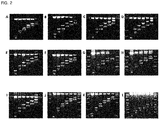
- FIG. 2 depicts the digested DNA bands of EBP libraries with DNA size markers on both end lanes.
- EBPE[A 1 G 4 I 1 ] in FIG. 2(A) clearly shows a digested DNA band corresponding to a DNA region encoding an oligomerized pentapeptide sequence containing Ala, Gly, Ile in a ratio of 1:4:1 as a guest residue. All digested DNA bands are shown as corresponding lengths as compared to the molecular size markers.
- FIG. 3 shows copper-stained SDS-PAGE gel images of the purified EBPs. EBPs shifted at least 20% more than theoretically calculated molecular weights. Two side-lanes on SDS-PAGE gels contain standard protein size markers (7, 15, 24, 35, 40, 50, 65, 90, 110, and 150 kDa, from bottom to top). In FIGS.
- EBPE[A 1 G 4 I 1 ] and EBPP[A 1 G 4 I 1 ] represent a series of corresponding proteins with a molecular weight greater than a theoretical molecular weight (for EBPE[A 1 G 4 I 1 ], 14.0, 27.7, 41.3, 55.0, and 68.6 kDa, from left to right).
- a theoretical molecular weight for EBPE[A 1 G 4 I 1 ], 14.0, 27.7, 41.3, 55.0, and 68.6 kDa, from left to right.
- positively charged EBP libraries including EBPE[K 1 G 4 I 1 ] and EBPP[K 1 G 4 I 1 ]
- positively charged EBP libraries including EBPE[K 1 G 4 I 1 ] and EBPP[K 1 G 4 I 1 ]
- nonpolar EBP libraries including EBPE[A 1 G 4 I 1 ] and EBPP[A 1 G 4 I 1 ].
- negatively charged EBP libraries including EBPE[D 1 G 4 I 1 ] and EBPP[D 1 G 4 I 1 ] have differently charged characteristics, and thus exhibited higher molecular weights than positively charged EBP libraries.
- FIG. 4 shows thermal transition behaviors of EBPs determined by measuring optical absorbance at 350nm (absorbance 350 ) at a heating rate of 1°C/min.
- Inverse transition temperature (Tt) is defined as a temperature at which the first derivative (d (OD 350 )/dT) of turbidity, which is a function of temperature, was the maximum.
- Tt Inverse transition temperature
- the Tt of an EBP was finely controlled in PBS and PBS was supplemented with 1 to 3 M sodium chloride.
- EBPE[A 1 G 4 I 1 ] 12 FIG.
- Example 5 Gene construction of anti-Flt1-EBPP[A 1 G 4 I 1 ] n and anti-Flt1-EBP diblock block (copolypeptides)
- a pair of oligonucleotides encoding an anti-Flt1 peptide acting as a VEGFR1 antagonist were chemically synthesized by Cosmo Genetech (Seoul, Korea), and linked to an oligonucleotide cassette with cohesive ends including restriction sites recognized by AcuI and BseRI.
- An oligonucleotide cassette encoding the anti-Fltl peptide was rationally designed to have no restriction sites recognized by BseRI, XbaI, AcuI and BamHI for seamless gene cloning, as shown in Table 3.
- Table 3 Gene and amino acid sequences of CPPs SEQ ID NO. Sequence Type Sequence 37 Gene Sequence GGC AAT CAG TGG TTT ATT 38 Amino acid Sequence G N Q W F I
- each plasmid containing an EBP with restriction sites recognized by BseRI, XbaI, AcuI and BamHI, and the oligonucleotide cassette were used to create genes for the fusion polypeptide libraries of anti-Flt1-EBPP[A 1 G 4 I 1 ] 3n and anti-Fltl-EBP diblock blocks.
- each oligonucleotide was prepared at a concentration of 2 ⁇ M in 50 ⁇ l of T4 DNA ligase buffer, heat treated at 95°C for 2 minutes and then the reaction solution was slowly cooled to room temperature over 3 hours.
- a plasmid vector encoding EBPP[A 1 G 4 I 1 ] 3n was digested with 15 U of BseRI in CutSmart buffer for 30 minutes at 37°C.
- the digested plasmid DNA was purified using a PCR purification kit, and then dephosphorylated with 10 U of FastAP as a thermosensitive alkaline phosphatase in CutSmart buffer for 1 hour at 37°C.
- the digested and dephosphorylated plasmid DNA was purified using a PCR purification kit, and then eluted in 40 ⁇ l of distilled and deionized water.
- Ligation was performed by incubating 90 pmol of the purified insert and 30 pmol of the linearized vector in T4 DNA ligase buffer containing 1 U of T4 DNA ligase at 16°C for 30 minutes.
- the product was transformed into Top10 chemically competent cells and the cells were plated on SOC plates supplemented with 50 ⁇ g/ml ampicillin. Transformants were initially screened by diagnostic restriction digestion on an agarose gel and further confirmed by DNA sequencing as described above.
- plasmid vectors encoding EBPP[G 1 A 3 F 2 ] n were digested with 10 U of XbaI and 15 U of BseRI in CutSmart buffer for 30 minutes at 37°C.
- the digested plasmid DNA was purified using a PCR purification kit, and then dephosphorylated with 10 U of FastAP as a thermosensitive alkaline phosphatase in CutSmart buffer for 1 hour at 37°C.
- the digested and dephosphorylated plasmid DNA was purified using a PCR purification kit, and then eluted in 40 ⁇ l of distilled and deionized water.
- Transformants were initially screened by diagnostic restriction digestion on an agarose gel and further confirmed by DNA sequencing. Plasmid vectors encoding anti-Fltl-EBP diblock blocks were prepared using BseRI, and ligation and confirmation of ligation were performed as described above.
- Example 6 Expression of genes encoding EBPs, anti-Flt1-EBPP[A 1 G 4 I 1 ] 3n and anti-Fltl-EBP diblock block and purification of gene expression products
- E. coli strain BL21(DE3) cells were transformed with each vector containing an EBP, anti-Flt1-EBPP[A 1 G 4 I 1 ] 3n or an anti-Fltl-EBP diblock block, and then inoculated in 50 ml of CircleGrow media supplemented with 50 ⁇ g/ml ampicillin. Preculture was performed in a shaking incubator at 200 rpm overnight at 37°C. 500 ml of CircleGrow media with 50 ⁇ g/ml ampicillin was then inoculated with 50 ml of the precultured CircleGrow media and incubated in a shaking incubator at 200 rpm for 16 hours at 37°C.
- the cell lysate was centrifuged in a 50 ml centrifuge tube at 13,000 rpm for 15 min at 4°C to precipitate the insoluble debris of the cell lysate.
- Supernatant containing soluble EBPs was then transferred to a new 50 ml centrifuge tube and centrifuged with 0.5% w/v of PEI at 13,000 rpm for 15 minutes at 4°C to precipitate nucleic acid contaminants.
- the inverse phase transition of the EBPs were triggered by adding sodium chloride at a final concentration of 4 M, and aggregated EBPs were separated from the lysate solution by centrifugation at 13,000 rpm for 15 minutes at 4°C.
- the aggregated EBPs were resuspended in cold PBS buffer, and the EBP solutions were centrifuged at 13,000 rpm for 15 minutes at 4°C to remove any aggregated protein contaminants. These aggregation and resuspension processes were repeated 5 to 10 times until EBP purity reached about 95 %, and the purity was determined by SDS-polyacrylamide gel electrophoresis (SDS-PAGE).
- FIG. 5a to 5d show a schematic diagram of molecular design, cloning and the anti-neovascularization function of fusion polypeptides according to the present invention.
- a fusion polypeptide corresponding to VEGFR-targeting peptide (anti-Flt1 peptide)-hydrophilic EBP-hydrophobic EBP forms a temperature-triggered core-shell micellar structure with a multivalent VEGFR-targeting peptide under physiological conditions.
- a fusion polypeptide corresponding to VEGFR-targeting peptide (anti-Flt1 peptide)-hydrophilic EBP may act as a therapeutic polypeptide due to strong non-covalent interactions between VEGFRs (in particular, VEGFR1) and the anti-Fltl peptide.
- a fusion polypeptide corresponding to VEGFR-targeting peptide (anti-Fltl peptide)-hydrophilic EBP-hydrophobic EBP forms a micelle with a multivalent anti-Fltl peptide, which increases the binding affinity of the fusion polypeptide for VEGFRs.
- EBPs were introduced to an anti-Fltl peptide as non-chromatographic purification polypeptide tags and as stabilizers.
- Modified pET-21a plasmids harboring EBPP[A 1 G 4 I 1 ] n , EBPP[E 1 G 4 I 1 ] n or EBPP[G 1 A 3 F 2 ] n (where the subscript number n of [X i Y j Z k ] n is 6, 12, 18, 24, 30 or 36) were seamlessly cloned using standard molecular biology methodology.
- multimerization and fusion of EBPP genes were executed using recursive directional ligation (RDL) to construct genes encoding EBPPs with different molecular weights and EBPP block copolymers.
- RDL recursive directional ligation
- 5a shows one method of gene cloning, by which genes for two different EBPPs and genes for an oligonucleotide cassette encoding an anti-Fltl peptide were combined to prepare a gene for anti-Flt1-EBPP[E 1 G 4 I 1 ] 12 -[G 1 A 3 F 2 ] 24 .
- An mpET-21a plasmid harboring EBPP[G 1 A 3 F 2 ] 24 was double-digested with XbaI and BseRI and dephosphorylated to prepare a linearized vector, whereas an mpET-21a plasmid harboring EBPP[E 1 G 4 I 1 ] 12 was double-digested with XbaI and BseRI to prepare an insert. After ligation, a gene for a EBPP diblock of EBPP[E 1 G 4 I 1 ] 12 -[G 1 A 3 F 2 ] 24 was prepared.
- the cloned gene was digested with BseRI, dephosphorylated, and fused with an oligonucleotide cassette encoding an anti-Fltl peptide to prepare anti-Flt1-EBPP[E 1 G 4 I 1 ] 12 -[G 1 A 3 F 2 ] 24 .
- a series of genes for anti-Fltl-EBPP[A 1 G 4 I 1 ] 3, 6, 12, 24 and anti-Flt1-EBPP[E 1 G 4 I 1 ] 12 -[G 1 A 3 F 2 ] 12, 24 were cloned, and fusion polypeptides thereof were synthesized from plasmid-borne genes in E. coli, as shown in FIG. 1 (B) .
- VEGFR-targeting peptide anti-Fltl peptide
- EBP-fusion polypeptide anti-Flt1-EBPP[A 1 G 4 I 1 ] 3, 6, 12, 24 is soluble under physiological conditions and acts as a VEGFR antagonist to compete with VEGF, thereby inhibiting delivery of neovascularization signals to cells ( FIG. 5d(i) ).
- EBPP[A 1 G 4 I 1 ] n was selected because EBPP[A 1 G 4 I 1 ] n of all lengths is hydrophilic at body temperature without any charged amino acid residues, and because EBPP[A 1 G 4 I 1 ] n helps to provide an understanding of the correlation between EBPP length and binding affinity of an anti-Fltl peptide according to EBPP blocks of four different lengths of anti-Flt1-EBPP[A 1 G 4 I 1 ] 3, 6, 12, 24 . Furthermore, as shown in FIGS.
- a fusion polypeptide[anti-Flt1-EBPP[E 1 G 4 I 1 ] 12 -[G 1 A 3 F 2 ] 12, 24 ] of VEGFR-targeting peptide (anti-Fltl peptide)-hydrophilic EBP-hydrophobic EBP may form a temperature-triggered core-shell micellar structure with a multivalent VEGFR 1-targeting peptide because of amphiphilic properties of hydrophilic EBPP[E 1 G 4 I 1 ] 12 and hydrophobic EBPP[G 1 A 3 F 2 ] 12, 24 under physiological conditions.
- hydrophobic EBPP[G 1 A 3 F 2 ] 12, 24 of two different lengths was used for micelle size control, and was used to study the effects of micelle size on the binding affinity of anti-Flt1-EBPP[E 1 G 4 I 1 ] 12 -[G 1 A 3 F 2 ] 12, 24 to VEGFRs.
- the purity of EBPs, anti-Flt1-EBPP[A 1 G 4 I 1 ] 3n and anti-Fltl-EBP diblock blocks was determined by SDS-PAGE, and gel permeation chromatography (GPC) with a high-performance liquid chromatography (HPLC) 1260 series instrument (Agilent Technologies, Palo Alto, CA, U.S.) using a Shodex GPC OHpak SB-804 HQ column (Showa Denko Co., Tokyo, Japan). Deionized water at 20°C was used as an eluent at a flow rate of 1 ml/min and the GPC column was maintained at 20°C.
- GPC gel permeation chromatography
- Low dispersity pullulan in a range of 5,900 to 200,000 g/mol was used as a standard.
- a series of EBPs, anti-Flt1-EBPP[A 1 G 4 I 1 ] 3n and anti-Fltl-EBP diblock blocks were analyzed using a refractive index detector (RID) and variable wavelength detector (VWD) at 280 nm.
- RID refractive index detector
- VWD variable wavelength detector
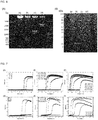
- each gene encoding anti-Flt1-EBPP[A 1 G 4 I 1 ] 3 , anti-Flt1-EBPP[A 1 G 4 I 1 ] 6 , anti-Flt1-EBPP[A 1 G 4 I 1 ] 12 or anti-Fltl-EBPP[A 1 G 4 I 1 ] 24 (354, 624, 1164 or 2244 bp, from left to right) is indicated below the respective gene fragments. Since DNA sequences digested by XbaI and BseRI are located outside genes encoding the fusion polypeptides, the DNA lengths of the genes are 66 base pairs longer than original gene lengths shown in Table 4.
- the fusion polypeptides composed of an anti-Fltl peptide and EBP blocks with different chain lengths were expressed in E. coli and purified by ITC, as previously reported for the temperature-responsive EBPs.
- a copper-stained SDS-PAGE gel (4 to 20% gradient) shown in FIG. 6(B) shows the following: Anti-Flt1-EBPP[A 1 G 4 I 1 ] n (subscript n is 3, 6, 12, or 24) was purified to have a homogeneity of at least 95% by an average of five rounds of ITC as characterized by HPLC. Compared to a standard protein migration distance, each fusion polypeptide shifted about 20 % more than theoretical molecular weights shown in Table 4, which is in good agreement with previous studies.
- the expected molecular weights of the fusion polypeptides are indicated below each band (8.19, 15.27, 29.42 and 57.72 kDa, from left to right), and lanes at both ends of the SDS-PAGE gel represent standard protein size markers (7, 15, 24, 35, 40, 50, 65, 90, 110, and 150 kDa, from bottom to top).
- FIG. 7 shows the thermal transition behaviors of EBP blocks and the thermal transition behaviors of fusion polypeptides composed of an anti-Fltl peptide and EBP blocks with different chain lengths. Based on the thermal transition behaviors, the effect of EBP block length, sodium chloride concentration and anti-Fltl peptide fusion on transition temperature (Tt) may be investigated. Turbidity profiles in FIG.
- Tt is defined as the inflection point of each thermal plot in Figure 7 and summarized in Table 5.
- Tt values in Table 5 are determined by measuring the inflection points of thermal profiles in FIG. 7 . Transition temperature was changed depending on EBPP[A 1 G 4 I 1 ] block length and sodium chloride concentration.
- EBPP[A 1 G 4 I 1 ] 3n and anti-Flt1-EBPP[A 1 G 4 I 1 ] 3n without polar amino acid residues exhibit Tt higher than 37°C under physiological conditions because Ala, Gly and Ile were introduced to the EBPPs as the guest residue of the repetitive pentapeptide unit of the EBPPs in a ratio of 1:4:1.
- Anti-Flt1-EBPP[A 1 G 4 I 1 ] 3n was hydrophilic and VEGFR binding-fusion polypeptides thereof were soluble under physiological conditions, which allowed the polypeptides to specifically bind to VEGFRs without any steric hindrance.
- the fusion polypeptides of the present invention may act as VEGFR antagonists against VEGF. Furthermore, when the effect of EBPP block length and ionic strength on thermal responsiveness was analyzed, as the EBP block length of EBPP[A 1 G 4 I 1 ] 3n and anti-Flt1-EBPP[A 1 G 4 I 1 ] 3n , and sodium chloride concentration in PBS increased, Tt thereof decreased.
- the Tt of anti-Flt1-EBPP[A 1 G 4 I 1 ] 3n was much lower than that of EBPP[A 1 G 4 I 1 ] 3n because Gly-Asn-Gln-Trp-Phe-Ile (GNQWFI) of an anti-Fltl peptide sequence for targeting VEGFRs was hydrophobic, resulting in a decrease in the Tt of anti-Flt1-EBPP[A 1 G 4 I 1 ] 3n .
- GNQWFI Gly-Asn-Gln-Trp-Phe-Ile
- the Tt of anti-Flt1-EBPP[A 1 G 4 I 1 ] 12 and the T t of anti-Flt1-EBPP[A 1 G 4 I 1 ] 24 were about 18 and 11°C lower than those of EBPP[A 1 G 4 I 1 ] 12 and EBPP[A 1 G 4 I 1 ] 24 in PBS, respectively.
- a Tt difference (DT t ) between EBPP[A 1 G 4 I 1 ] 3 and anti-Flt1-EBPP[A 1 G 4 I 1 ] 3 was more than 36°C in PBS with 2 M sodium chloride, whereas DTt between EBPP[A 1 G 4 I 1 ] 3 and anti-Flt1-EBPP[A 1 G 4 I 1 ] 3 was 23°C in PBS with 1 M sodium chloride. Therefore, as EBPP[A 1 G 4 I 1 ] block length became shorter, the Tt of anti-Flt1-EBPP[A 1 G 4 I 1 ] 3n was greatly decreased irrespective of various concentrations of sodium chloride. This data indicates that the effect of hydrophobicity of the anti-Flt1 peptide on the thermal transition of the EBPP[A 1 G 4 I 1 ] block is potentially greater.
- fusion polypeptides composed of VEGFR-targeting peptide (anti-Fltl peptide)-hydrophilic EBP-hydrophobic EBP are described.
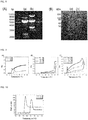
- the full lengths of those genes digested by XbaI and BseRI were confirmed by agarose gel electrophoresis as shown in FIG. 8(A) .
- each gene encoding (a) anti-Flt1-EBPP[E 1 G 4 I 1 ] 12 -[G 1 A 3 F 2 ] 12 or (b) anti-Fltl-EBPP[E 1 G 4 I 1 ] 12 -[G 1 A 3 F 2 ] 24 (2244 and 3324 bp, from left to right) is indicated below each gene fragment. Since DNA sequences digested by XbaI and BseRI are located outside genes encoding the fusion polypeptides, the lengths of these genes are 66 base pairs longer than the original gene lengths of the fusion polypeptides the shown in Table 4.
- Two different anti-Fltl-EBP diblock copolypeptides including (a) anti-Flt1-EBPP[E 1 G 4 I 1 ] 12 -[G 1 A 3 F 2 ] 12 and (b) anti-Flt1-EBPP[E 1 G 4 I 1 ] 12 -[G 1 A 3 F 2 ] 24 were expressed in E. coli and purified by one among non-chromatographic purification methods, ITC as described above for purification of a series of temperature-responsive anti-Flt1-EBPP[A 1 G 4 I 1 ] 3n .
- the expected molecular weights of the polypeptides are indicated below each band (59.9 and 90.0 kDa, from left to right), and lanes at both ends of the SDS-PAGE gel represent standard protein size markers (7, 15, 24, 35, 40, 50, 65, 90, 110, and 150 kDa, from bottom to top).
- FIG. 9 shows the thermal transition behaviors of anti-Flt1-EBP diblock copolypeptides of anti-Flt1-EBPP[E 1 G 4 I 1 ] 12 -[G 1 A 3 F 2 ] 12 and anti-Flt1-EBPP[E 1 G 4 I 1 ] 12 -[G 1 A 3 F 2 ] 24 depending on the length and concentration of a hydrophobic EBPP[G 1 A 3 F 2 ] block.
- Turbidity profiles were obtained by measuring absorbance at 350 nm at four different concentrations (12.5, 25, 50 and 100 ⁇ M) in 10 mM PBS at a heating rate of 1°C/min. As described above, Tt was measured as the inflection point of each thermal plot in FIG.
- Tt values in Table 6 are determined by measuring the inflection points of thermal profiles in FIG. 7 .
- the first phase transition occurred as a result of hydrophobic block aggregation, and was greatly affected by the length of EBPP[A 1 G 3 F 2 ].
- the fusion polypeptides thereof had the same polar EBPP[E 1 G 4 I 1 ] 12 block.
- the second phase transition was affected by a polar EBPP[E 1 G 4 I 1 ] 12 block, and the fusion polypeptides thereof had a similar second T t
- the concentration of anti-Flt1-EBP diblock blocks increased, the first T t and the second Tt gradually decreased.
- the temperature-triggered phase transition of anti-Flt1-EBP diblock copolypeptides occurs twice, because aliphatic- and hydrophobic EBPP[A 1 G 3 F 2 ] block having a low Tt and polar- and hydrophilic EBPP[E 1 G 4 I 1 ] block having a high Tt exhibit different thermal properties.
- phase transition of anti-Flt1-EBPP[E 1 G 4 I 1 ] 12 -[G 1 A 3 F 2 ] 12 occurred at 36.2 and 81.2°C at the 25 ⁇ M concentration
- phase transition of anti-Flt1-EBPP[E 1 G 4 I 1 ] 12 -[G 1 A 3 F 2 ] 24 occurred at 28.0 and 78.0°C at the same concentration.
- This data indicates that the doubled block length of the hydrophobic EBPP[A 1 G 3 F 2 ] has a significant effect on the first Tt and the second Tt, lowering the same by 8.2 and 3.2°C, respectively.
- anti-Fltl-EBP diblock copolypeptides clearly exhibited a lowered first Tt and second Tt as opposed to the phase transition behavior of diblock polypeptides without anti-Fltl, because fusion of a hydrophobic anti-Fltl peptide (Gly-Asn-Gln-Trp-Phe-Ile (GNQWFI)) and the hydrophilic EBPP[E 1 G 4 I 1 ] block of diblock polypeptides greatly decreased the first Tt of EBPP[G 1 A 3 F 2 ] and the second Tt of a hydrophilic EBPP[E 1 G 4 I 1 ] block, which was due to the proximity of these blocks.
- GNQWFI hydrophobic anti-Fltl peptide
- Tt thereof was defined as the onset temperature for phase transition, calculated from each DLS plot in FIG. 10 , and summarized in Table 7 below.
- Table 7 Tt of (a) anti-Flt1-EBPP[E 1 G 4 I 1 ] 12 -EBPP[G 1 A 3 F 2 ] 12 and (b) anti-Fltl-EBPP[E 1 G 4 I 1 ] 12 -EBPP[G 1 A 3 F 2 ] 24 (a) (b) First T t (°C) Second T t (°C) First T t (°C) Second T t (°C) Absorbance 36.2 82.3 28.0 79.2 DLS 36.0 N/A 27.0 N/A
- the first aggregation of fusion polypeptides increases the hydrodynamic radius thereof due to micelle formation.
- Anti-Flt1-EBP diblock copolypeptides existed in soluble unimer forms below the first T t of 36°C for anti-Flt1-EBPP[E 1 G 4 I 1 ] 12 -[G 1 A 3 F 2 ] 12 and below the first T t of 27°C for anti-Flt1-EBPP[E 1 G 4 I 1 ] 12 -[G 1 A 3 F 2 ] 24 , and the hydrodynamic radius (R H ) thereof at 25 ⁇ M in PBS was about 10 nm.
- the R H thereof instantaneously increased in a range of 160 and 240 nm at a slightly higher temperature than the first T t , then decreased to 28.4 and 43.6 nm.
- the anti-Fltl-EBP diblock copolypeptides formed metastable micelles due to non-equilibrium thermodynamics of amphiphile-based self-assembly and different hydrophilic-to-hydrophobic block length ratios, and then the copolypeptides formed stable micelles with constant R H values even at 50°C because self-assembly thereof reached equilibrium.
- the R H of an anti-Fltl-EBPP[E 1 G 4 I 1 ] 12 -EBPP[G 1 A 3 F 2 ] 24 micelle was 15.2 nm larger than that of the anti-Fltl-EBPP[E 1 G 4 I 1 ] 12 -EBPP[G 1 A 3 F 2 ] 12 micelle due to the doubled block length of EBPP[G 1 A 3 F 2 ] and the bigger aggregated domain of the EBPP[G 1 A 3 F 2 ] block at the core of the micellar structure thereof.
- CMCs critical micelle concentrations
- the anti-Flt1-EBPP[E 1 G 4 I 1 ] 12 -[G 1 A 3 F 2 ] 12 still formed a metastable micelle with a R H of ⁇ 125 nm and the anti-Flt1-EBPP[E 1 G 4 I 1 ] 12 -EBPP[G 1 A 3 F 2 ] 24 formed a stabilized micelle with a R H of ⁇ 44 nm.
- the anti-Fltl-EBP diblock copolypeptides formed temperature-triggered core-corona micellar structures with multivalent anti-Fit1 peptides for targeting Flt1 under physiological conditions because of the amphiphilic properties of hydrophilic EBPP[E 1 G 4 I 1 ]and hydrophobic EBPP[G 1 A 3 F 2 ].
- Example 8 Determination of specific binding of anti-Flt1-EBPP[A 1 G 4 I 1 ] 3n and anti-Fltl-EBP diblock block to Fltl
- the wells of the 96 well plate coated with the rhVEGF 165 were washed with PBS containing 0.05% Tween-20 to completely remove unattached rhVEGF 165 , and then the wells were incubated with PBS containing 3 wt% BSA at room temperature for 2 hours to block the surface of each well, which was not coated with the rhVEGF 165 . After incubation, the wells were washed with PBS containing 0.05% Tween-20 to remove unbound BSA. Next, to impart specific binding affinity between an anti-Fit1 peptide and Fltl (VEGFR1), a recombinant human Flt1-F c chimeric protein (M.W.
- the pre-incubation was carried out at room temperature for 2 hours at different concentrations within a range of 0.5 to 500 ⁇ M. Thereafter, the mixed solution was added to rhVEGF 165 -coated wells, followed by additional incubation at room temperature for 2 hours.
- the EBPP[A 1 G 4 I 1 ] 12 and EBP diblock copolypeptide (EBPP[E 1 G 4 I 1 ] 12 -EBPP[G 1 A 3 F 2 ] 12 and anti-Flt1-EBPP[E 1 G 4 I 1 ] 12 -EBPP[G 1 A 3 F 2 ] 24 ) with hydrophobic blocks (having the same concentration) of different lengths were used as a standard.
- PBS containing 0.3 w% BSA
- anti-human IgG F c - HRP was added to each well and incubated for 1 hour at room temperature, followed by washing 8 times with PBS containing 0.05 % Tween-20.
- 3, 3', 5, 5'-tetramethylbenzidine (TMB) was added to each well to indirectly determine the degree of specific binding of Flt1-F c protein to VEGF by measuring the specific interaction between the Flt1-F c protein and the anti-human IgG F c - HRP protein, and HRP-catalyzed oxidation of the TMB.
- the color intensity of the oxidized TMB was measured at 450 nm.
- Each ELISA experiment was performed three times for reproducibility.
- a fusion polypeptide of VEGFR-targeting peptide (anti-Flt1 peptide)-hydrophilic EBP are examined.
- anti-Flt1 peptide anti-Flt1 peptide-hydrophilic EBP
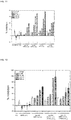
- FIG. 11 the specific binding of anti-Flt1-EBPP[A 1 G 4 I 1 ] 3n (n: integer) fusion polypeptides was characterized by enzyme-linked immunosorbent assay (ELISA).
- ELISA enzyme-linked immunosorbent assay
- 38.4 kDa recombinant human VEGF 165 protein present in a disulfide-linked homodimer was coated on wells, and then the wells were blocked by bovine serum albumin (BSA).
- BSA bovine serum albumin
- a 200.0 kDa recombinant human Flt1-F c chimeric protein present in a disulfide-linked homodimer was incubated with anti-Flt1-EBPP[A 1 G 4 I 1 ] 3n (n: 1, 2, 4, and 8) at different concentrations within a range of 0.5 to 500 ⁇ M to induce specific binding between each other, and then the mixed solution was added to the VEGF-coated wells, followed by incubation for 2 hours at room temperature.
- Human Flt1-F c chimeric protein was specifically bound to the VEGF-coated wells was determined by measuring the absorbance of oxidized chromogenic substrates upon protein-antibody binding at 450 nm using rabbit anti-human IgG F c - horseradish peroxidase (HRP) conjugates as a secondary antibody. Regardless of different concentrations, EBPP[A 1 G 4 I 1 ] 12 did not significantly inhibit specific binding between the Flt1-F c chimeric protein and VEGF.
- HRP horseradish peroxidase
- anti-Flt1-EBPP[A 1 G 4 I 1 ] 3n copolypeptides significantly inhibited an interaction between Flt1-F c and VEGF in a dose-dependent manner independent of EBPP[A 1 G 4 I 1 ] block length.
- anti-Flt1-EBPP[A 1 G 4 I 1 ] 12 showed a maximum inhibitory effect of about 75% at 500 ⁇ M, whereas anti-Flt1-EBPP[A 1 G 4 I 1 ] 24 had a lower inhibitory effect than anti-Flt1-EBPP[A 1 G 4 I 1 ] 12 , which might be the consequence of steric hindrance caused by an extended EBPP[A 1 G 4 I 1 ] chain length.
- hydrophilic EBPP[A 1 G 4 I 1 ] 3n blocks with different chain lengths were introduced to anti-Fltl peptides as VEGFR1-specific antagonists, anti-Fltl-EBPP[A 1 G 4 I 1 ] 3n copolypeptides retained high specificity of the anti-Fltl peptide for Flt1, due to the inert nature of EBPs.
- the anti-Flt1-EBPP[A 1 G 4 I 1 ] 3n copolypeptides were prepared at the gene level, and imparted the monodisperse molecular weight and enhanced stabilization of an anti-Fit1 peptide due to the inert nature of EBPs acting like PEG. This monodisperse molecular weight and stability might increase the half-life of the anti-Fit1 peptide in vivo.
- Multivalent anti-Fltl located on the outer shell of the formed self-assembled micelles increased the binding affinity of the fusion polypeptides to human Fltl (VEGFR1).
- Fltl Fltl
- ELISA enzyme-linked immunosorbent assay
- anti-Flt1-EBPP[E 1 G 4 I 1 ] 12 -EBPP[G 1 A 3 F 2 ] 12 micelles with a R H of ⁇ 125 nm in a metastable state showed a dramatically enhanced inhibitory effect ( ⁇ 95 %) on specific binding between Flt1-F c and VEGF depending on the spatial multivalent display of Flt1-targeting peptides on the micelles.
- anti-Flt1-EBPP[E 1 G 4 I 1]12 -EBPP[G 1 A 3 F 2 ] 24 micelles with a R H of ⁇ 44 nm in a stable state exhibited a similar inhibition degree compared with the degree of inhibition of soluble anti-Flt1-EBPP[A 1 G 4 I 1 ] 3n blocks.
- the two anti-Fltl-EBP diblock copolypeptides formed micelles in a concentration range from 0.5 to 500 ⁇ M at 37°C under physiological conditions, the peptides showed a much different degree of inhibition with respect to specific binding between Flt1-F c and VEGF based on the stability of micelles thereof, potentially due to different binding affinities between the Flt1-F c and the controlled spatial display of the multivalent anti-Fit1 peptides of the micellar nanostructures.
- anti-Flt1-EBPP[E 1 G 4 I 1 ] 12 -EBPP[G 1 A 3 F 2 ] 12 micelles at 250 ⁇ M had a greater inhibitory effect than anti-Flt1-EBPP[A 1 G 4 I 1 ] 3n fusion polypeptides at 500 ⁇ M, which suggested that a lower dose of the anti-Flt1-EBPP[E 1 G 4 I 1 ] 12 -EBPP[G 1 A 3 F 2 ] 12 might have a higher binding affinity to the human Flt1 protein in vivo for anti-neovascularization.
- Example 9 In vitro tubing assay of HUVECs using ant:-Flt1-EBPP[A 1 G 4 I 1 ] 12
- the calcein-labeled HUVECs at 2 ⁇ 10 4 cells/well were grown on the Matrigelcoated wells, and incubated at 37°C for 4 hours with 50 ng/ml recombinant human rhVEGF 165 and anti-Flt1-EBPP[A 1 G 4 I 1 ] 12 as a Fltl-specific antagonist at different concentrations. After incubation, it was determined whether proliferation, migration and tube formation of endothelial cells were stimulated. To clarify to what extent anti-Fltl-EBPP[A 1 G 4 I 1 ] 12 could inhibit tube formation of HUVECs, the same concentration of EBPP[A 1 G 4 I 1 ] 12 was assessed as a control.
- Avastin a recombinant humanized monoclonal antibody (mAb) against VEGF, was used as another control to compare therapeutic efficacy for anti-neovascularization based on the therapeutic efficacy of anti-Flt1-EBPP[A 1 G 4 I 1 ] 12 , as a Flt1-specific antagonist.
- the tube formation of HUVECs was photographed with Micromanipulator (Olympus, Tokyo, Japan), and quantified by measuring whole tube lengths in three random fields per well with Image lab software (Bio-Rad Laboratories, Hercules, CA, USA). When the tubing assay was performed, the tube formation of HUVECs incubated in PBS for 4 hours was used as a control. The experiment was repeated three times.
- anti-Flt1-EBPP[A 1 G 4 I 1 ] 3n (n: integer) fusion polypeptides had a high specific binding capacity to the human Flt1-F c chimeric protein, and 29.4 kDa anti-Flt1-EBPP[A 1 G 4 I 1 ] 12 showed a maximum degree of inhibition compared with soluble anti-Flt1-EBPP[A 1 G 4 I 1 ] 3n fusion polypeptides with different EBP chain lengths.
- soluble anti-Flt1-EBPP[A 1 G 4 I 1 ] 12 fusion polypeptides were assessed in HUVECs in vitro.
- Calcein-labeled HUVECs at 2 ⁇ 10 4 cells/well were grown on a 48 well plate pre-coated with Matrigel, 50 ng/ml recombinant human rhVEGF 165 was treated to stimulate proliferation, migration and tube formation of endothelial cells, and anti-Fltl-EBPP[A 1 G 4 I 1 ] 12 acting as a Fltl (VEGFR1)-specific antagonist was treated at different concentrations, followed by incubation.
- Fltl Fltl
- Avastin also named bevacizumab
- mAb humanized monoclonal antibody against VEGF
- Avastin has been widely used to treat various neovascular eye diseases, such as age-related macular degeneration (AMD) and diabetic retinopathy, based on specific binding between Avastin and VEGF.
- the tube length of HUVECs incubated with EBPP[A 1 G 4 I 1 ] 12 as a control was similar to that of HUVECs treated with rhVEGF 165 , indicating that EBPP[A 1 G 4 I 1 ] 12 had no significant effect on the tube formation of HUVECs.
- anti-Flt1-EBPP[A 1 G 4 I 1 ] 12 as a Flt1-specific antagonist as the concentration of the anti-Flt1-EBPP[A 1 G 4 I 1 ] 12 increased in a range of 0.1 to 10 ⁇ M, the tube length of HUVECs gradually decreased.
- HUVECs incubated with 10 ⁇ M anti-Fltl-EBPP[A 1 G 4 I 1 ] 12 showed no significant migration and tube formation even in the presence of rhVEGF 165 , which was similar to use of Avastin at 0.2 mg/ml. Therefore, as validated by ELISA, the anti-Flt1-EBPP[A 1 G 4 I 1 ] 12 fusion polypeptides still retained high specificity of an anti-Fit1 peptide against Flt1.
- Example 10 In vivo anti-neovascularization using anti-Flt1-EBPP[A 1 G 4 I 1 ] 12 in laser-induced choroidal neovascularization model
- 6- to 8-week-old female C57BL-6 mice were anesthetized with intraperitoneal injection of ketamine at 100 mg/kg and xylazine at 10 mg/kg, and the pupils were dilated with 5 mg/ml tropicamide, and 532 nm laser diode (150 to 210 mW, 0.1sec, 50 to 100 ⁇ M) was applied to each fundus to induce choroidal neovascularization in vivo. Multiple burns were performed in the 6, 9, 12, and 3 o'clock positions of the posterior pole of the eye with a slit-lamp delivery system. Production of bubbles at the time of laser, which indicates Bruch's membrane rupturing, is an important factor in obtaining the CNV model.
- the CNV model mice were injected in an intravitreal manner with PBS as a vehicle, EBPP[A 1 G 4 I 1 ] 12 or various concentrations of anti-Flt1-EBPP[A 1 G 4 I 1 ] 12 once a day for 5 days and anesthetized after 14 days with an intraperitoneal injection of ketamine at 100 mg/kg and xylazine at 10 mg/kg.
- mice were treated with retro-orbital injection of 100 ⁇ l ultrapure water containing 25 mg/ml FITC-dextran. Enucleated eyes were then fixed in 10 % formalin for 30 minutes at room temperature. The cornea, iris, lens, and vitreous humor were gently removed under a stereomicroscope (Leica, Wetzlar, Germany). Four radial incisions were made in the dissected retina, which was then flattened with a coverslip. Each in vivo anti-neovascularization experiment was performed with three replicates.
- anti-Fltl-EBPP[A 1 G 4 I 1 ] 3n fusion polypeptides retained anti-neovascularization activity as an antagonist against VEGFR1.
- the present inventors hypothesized that anti-Fltl-EBPP[A 1 G 4 I 1 ] 3n fusion polypeptides might show a therapeutic activity with respect to neovascularization-related eye diseases (in particular, retinal neovascular disease, age-related macular degeneration (AMD)).
- AMD age-related macular degeneration
- Intravitreal injection of anti-Fltl-EBPP[A 1 G 4 I 1 ] 12 was evaluated for the suppression of laser-induced choroidal neovascularization (CNV), which was an animal model for AMD, in C57BL-6 mice.
- CNV laser-induced choroidal neovascularization
- PBS vehicle
- EBPP[A 1 G 4 I 1 ] 12 was used as a negative control.
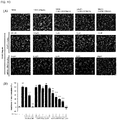
- CNV lesion volumes were imagined and evaluated with fluorescein isothiocyanate (FITC)-dextran perfused whole choroidal flat-mounts at day 14 after laser injury ( FIG. 14A ).
- FITC fluorescein isothiocyanate
- the suppressive effect of EBPP[A 1 G 4 I 1 ] 12 on a CNV lesion showed a dose dependent manner in a range from 0.5 to 25 ⁇ g in total.
- 100 ⁇ g anti-Fltl-EBPP[A 1 G 4 I 1 ] 12 showed a reduced effect on suppression of the CNV lesion, potentially due to an excessive dose of anti-Flt1-EBPP[A 1 G 4 I 1 ] 12 .
- VEGFR-targeting fusion polypeptides which are composed of thermally responsive elastin-based polypeptides (EBPs) and vascular endothelial growth factor receptor (VEGFR)-targeting peptides, were genetically manipulated, expressed, and purified and the physicochemical properties thereof were analyzed.
- EBPs thermally responsive elastin-based polypeptides
- VEGFR vascular endothelial growth factor receptor
- the EBPs were introduced as non-chromatographic purification tags and also introduced as a stabilizer, like a poly(ethylene glycol) conjugate, for minimizing rapid in vivo degradation of VEGFR-targeting peptides.
- the VEGFR-targeting peptide was introduced to function as a receptor antagonist by specifically binding to VEGFRs.
- a fusion polypeptide composed of VEGFR-targeting peptide (anti-Fltl peptide)-hydrophilic EBP exhibited a soluble unimer form.
- a fusion polypeptide composed of VEGFR-targeting peptide (anti-Fltl peptide)-hydrophilic EBP-hydrophobic EBP exhibited a temperature-triggered core-shell micellar structure with a multivalent VGFR-targeting peptide under physiological conditions.
- ELISA enzyme-linked immunosorbent assay
- anti-Flt1-EBPP[A 1 G 4 I 1 ] 3n fusion polypeptide which existed as a soluble unimer form below a transition temperature, showed a high anti-neovascularization effect in a CNV model as compared with a EBPP block as a control.
- an anti-Fltl-EBP diblock fusion polypeptide (anti-Fltl peptide-hydrophilic EBP-hydrophobic EBP) formed a temperature-triggered, self-assembled multivalent micellar nanostructure under physiological conditions, resulting in a great difference in the degree of inhibition with respect to specific binding between Flt1-F c and VEGF depending on the stability of the micellar nanostructure thereof.
- this fusion polypeptide and the self-assembled multivalent micellar nanostructure thereof with an anti-Fit1 may be used as a therapeutic polypeptide targeting neovascularization, such as treatment of retinal, corneal, choroidal neovascularization, tumor growth, cancer metastasis, diabetic retinopathy, and asthma.
- a fusion polypeptide for inhibiting neovascularization of the present invention can provide a new direction for a drug delivery system for anti-neovascularization, such as treatment of retinal, corneal, choroidal neovascularization, tumor growth, cancer metastasis, diabetic retinopathy, and asthma.
Landscapes
- Health & Medical Sciences (AREA)
- Life Sciences & Earth Sciences (AREA)
- Chemical & Material Sciences (AREA)
- Organic Chemistry (AREA)
- Medicinal Chemistry (AREA)
- General Health & Medical Sciences (AREA)
- Proteomics, Peptides & Aminoacids (AREA)
- Engineering & Computer Science (AREA)
- Immunology (AREA)
- Bioinformatics & Cheminformatics (AREA)
- Zoology (AREA)
- Gastroenterology & Hepatology (AREA)
- Molecular Biology (AREA)
- Public Health (AREA)
- Veterinary Medicine (AREA)
- Pharmacology & Pharmacy (AREA)
- Animal Behavior & Ethology (AREA)
- Biochemistry (AREA)
- Genetics & Genomics (AREA)
- Biophysics (AREA)
- Epidemiology (AREA)
- Toxicology (AREA)
- Cell Biology (AREA)
- Vascular Medicine (AREA)
- Nuclear Medicine, Radiotherapy & Molecular Imaging (AREA)
- General Chemical & Material Sciences (AREA)
- Biomedical Technology (AREA)
- Chemical Kinetics & Catalysis (AREA)
- Peptides Or Proteins (AREA)
- Medicines That Contain Protein Lipid Enzymes And Other Medicines (AREA)
- Medicinal Preparation (AREA)
Claims (11)
- Fusionspolypeptid zur Verwendung beim Hemmen von Neovaskularisation, umfassend:ein Peptid, das spezifisch an Rezeptoren des vaskulären endothelialen Wachstumsfaktors (VEGF) bindet; undein hydrophiles Polypeptid auf Elastinbasis (hydrophiles EBP), das mit dem Peptid verknüpft ist,wobei das hydrophile EBP aus einer Aminosäuresequenz besteht, die durch die nachstehende Formel 1 oder 2 dargestellt ist:
Formel 1 [SEQ ID NO: 1]n; oder
Formel 2 [SEQ ID NO: 2]n, wobei
SEQ ID NO: 1 aus [VPGXG VPGXG VPGXG VPGXG VPGXG VPGXG] besteht;SEQ ID NO: 2 aus [VPAXG VPAXG VPAXG VPAXG VPAXG VPAXG] besteht; wobein eine ganze Zahl von 1 oder mehr ist und für die Anzahl der Wiederholungen von SEQ ID NO: 1 oder SEQ ID NO: 2 steht; wobeiin Formel 1 n 1 ist und jedes X der Pentapeptid-VPGXG-Wiederholungen ausA (Ala), G (Gly) und I (Ile) im Verhältnis von 1:4:1 [SEQ ID NO: 20];K (Lys), G (Gly) und I (Ile) im Verhältnis von 1:4:1 [SEQ ID NO: 22];D (Asp), G (Gly) und I (Ile) im Verhältnis von 1:4:1 [SEQ ID NO: 24]; oderE (Glu), G (Gly) und I (Ile) im Verhältnis von 1:4:1 [SEQ ID NO: 26] besteht, oderin Formel 2 n 1 ist und jedes X der Pentapeptid-VPAXG-Wiederholungen ausA (Ala), G (Gly) und I (Ile) im Verhältnis von 1:4:1 [SEQ ID NO: 21];K (Lys), G (Gly) und I (Ile) im Verhältnis von 1:4:1 [SEQ ID NO: 23];D (Asp), G (Gly) und I (Ile) im Verhältnis von 1:4:1 [SEQ ID NO: 25]; oderE (Glu), G (Gly) und I (Ile) im Verhältnis von 1:4:1 [SEQ ID NO: 27] besteht, oderin Formel 2 n 3, 6, 12 oder 24 ist und die Pentapeptid-VPAXG-Wiederholungen SEQ ID NO: 41, SEQ ID NO: 42, SEQ ID NO: 43 oder SEQ ID NO: 44 entsprechen und jedes X der Pentapeptid-VPAXG-Wiederholungen aus A (Ala), G (Gly) und I (Ile) im Verhältnis von 1:4:1 besteht, oderin Formel 2 n 12 ist und die Pentapeptid-VPAXG-Wiederholungen [SEQ ID NO: 45] entsprechen und jedes X der Pentapeptid-VPAXG-Wiederholungen aus E (Glu), G (Gly) und I (Ile) im Verhältnis von 1:4:1 besteht. - Fusionspolypeptid zur Verwendung gemäß Anspruch 1, wobei das Peptid spezifisch an den VEGF-Rezeptor Flt1 oder Flk-1/KDR bindet.
- Fusionspolypeptid zur Verwendung gemäß Anspruch 2, wobei das Peptid ein Anti-Fltl-Peptid [SEQ ID NO: 38] ist.
- Fusionspolypeptid zur Verwendung gemäß Anspruch 1, wobei das Fusionspolypeptid ferner ein hydrophobes Polypeptid auf Elastinbasis (hydrophobes EBP) umfasst, das mit dem hydrophilen EBP verknüpft ist, und
das hydrophobe EBP aus einer Aminosäuresequenz besteht, die durch die nachstehende Formel 1 oder 2 dargestellt ist:
Formel 1 [SEQ ID NO: 1]n;
oder
Formel 2 [SEQ ID NO: 2]n,
wobeiSEQ ID NO: 1 aus [VPGXG VPGXG VPGXG VPGXG VPGXG VPGXG] besteht;SEQ ID NO: 2 aus [VPAXG VPAXG VPAXG VPAXG VPAXG VPAXG] besteht;n eine ganze Zahl von 1 oder mehr ist und für die Anzahl der Wiederholungen von SEQ ID NO: 1 oder SEQ ID NO: 2 steht; wobeiin Formel 1 n 1 ist und jedes X der Pentapeptid-VPGXG-Wiederholungen aus G (Gly), A (Ala) und F (Phe) im Verhältnis von 1:3:2 [SEQ ID NO: 28] besteht; oderin Formel 2 n 1 ist und jedes X der Pentapeptid-VPAXG-Wiederholungen aus G (Gly), A (Ala) und F (Phe) im Verhältnis von 1:3:2 [SEQ ID NO: 29];K (Lys), A (Ala) und F (Phe) im Verhältnis von 1:3:2 [SEQ ID NO: 30];D (Asp), A (Ala) und F (Phe) im Verhältnis von 1:3:2 [SEQ ID NO: 31];K (Lys) und F (Phe) im Verhältnis von 3:3 [SEQ ID NO: 32];D (Asp) und F (Phe) im Verhältnis von 3:3 [SEQ ID NO: 33];H (His), A (Ala) und I (Ile) im Verhältnis von 3:2:1 [SEQ ID NO: 34];H (His) und G (Gly) im Verhältnis von 5:1 [SEQ ID NO: 35]; oderG (Gly), C (Cys) und F (Phe) im Verhältnis von 1:3:2 [SEQ ID NO: 36] besteht, oderin Formel 2 n 12 ist und jedes X der Pentapeptid-VPAXG-Wiederholungen aus G (Gly), A (Ala) und F (Phe) im Verhältnis von 1:3:2 [SEQ ID NO: 46] besteht, oderin Formel 2 n 24 ist und jedes X der Pentapeptid-VPAXG-Wiederholungen aus G (Gly), A (Ala) und F (Phe) im Verhältnis von 1:3:2 [SEQ ID NO: 47] besteht. - Fusionspolypeptid zur Verwendung gemäß Anspruch 1, wobei das Fusionspolypeptid aus einer Aminosäuresequenz entsprechend SEQ ID NO: 48, SEQ ID NO: 49, SEQ ID NO: 50 oder SEQ ID NO: 51 besteht.
- Fusionspolypeptid zur Verwendung gemäß Anspruch 4, wobei das Fusionspolypeptid aus einer Aminosäuresequenz entsprechend SEQ ID NO: 52 oder SEQ ID NO: 53 besteht.
- Fusionspolypeptid zur Verwendung gemäß einem der Ansprüche 4 bis 6, wobei das Fusionspolypeptid eine selbst-assemblierte Nanostruktur mit Kern-Hüllen-Struktur bildet, wenn das hydrophobe EBP eine Kernstruktur bildet und das hydrophile EBP und das VEGF-Rezeptor-spezifische Peptid durch einen Temperaturreiz eine Hüllenstruktur bilden.
- Fusionspolypeptid zur Verwendung gemäß Anspruch 7, wobei die selbst-assemblierte Nanostruktur ein mehrwertiges VEGF-Rezeptor-spezifisches Peptid als Hülle umfasst.
- Zusammensetzung zur Verwendung bei der Behandlung von Krankheiten, die durch Neovaskularisation verursacht sind, umfassend das Fusionspolypeptid nach einem der Ansprüche 1 bis 3, wobei ein VEGF-Rezeptor-spezifisches Peptid des Fusionspolypeptids nicht-kovalent an einen VEGF-Rezeptor gebunden ist, um Neovaskularisation zu hemmen.
- Zusammensetzung zur Verwendung bei der Behandlung von Krankheiten, die durch Neovaskularisation verursacht sind, umfassend das Fusionspolypeptid nach einem der Ansprüche 4 bis 6, wobei
das Fusionspolypeptid eine selbst-assemblierte Nanostruktur mit Kern-Hüllen-Struktur bildet, wenn ein hydrophobes EBP eine Kernstruktur bildet und ein hydrophiles EBP und ein VEGF-Rezeptor-spezifisches Peptid durch einen Temperaturreiz eine Hüllenstruktur bilden, und
die selbst-assemblierte Nanostruktur ein mehrwertiges VEGF-Rezeptor-spezifisches Peptid als Hülle umfasst, wobei die Bindungsaffinität zwischen der selbst-assemblierten Nanostruktur und einem VEGF-Rezeptor zunimmt und VEGF nicht an den VEGF-Rezeptor bindet, wodurch Neovaskularisation gehemmt wird. - Zusammensetzung zur Verwendung gemäß Anspruch 9 oder 10, wobei es sich bei den durch Neovaskularisation verursachten Krankheiten um eine oder mehrere handelt, die aus der Gruppe ausgewählt sind, umfassend diabetische Retinopathie, Frühgeborenenretinopathie, Makuladegeneration, choroidale Neovaskularisation, neovaskuläres Glaukom, Augenerkrankungen, hervorgerufen durch Hornhautneovaskularisation, Hornhauttransplantatabstoßung, Hornhautödem, Hornhauttrübung, Krebs, Hämangiom, Hämangiofibrom, rheumatoide Arthritis und Psoriasis.
Applications Claiming Priority (2)
| Application Number | Priority Date | Filing Date | Title |
|---|---|---|---|
| KR20160042655 | 2016-04-07 | ||
| PCT/KR2016/011757 WO2017175939A1 (ko) | 2016-04-07 | 2016-10-19 | 신혈관 생성 억제를 위한 혈관내피성장인자 수용체 타겟팅 펩타이드-엘라스틴 융합 폴리펩타이드 및 자가조립 나노구조체 |
Publications (3)
| Publication Number | Publication Date |
|---|---|
| EP3424948A1 EP3424948A1 (de) | 2019-01-09 |
| EP3424948A4 EP3424948A4 (de) | 2019-10-02 |
| EP3424948B1 true EP3424948B1 (de) | 2021-07-28 |
Family
ID=60296486
Family Applications (1)
| Application Number | Title | Priority Date | Filing Date |
|---|---|---|---|
| EP16898042.3A Active EP3424948B1 (de) | 2016-04-07 | 2016-10-19 | Gegen vaskulären endothelialen wachstumsfaktor gerichtetes fusionspolypeptid mit peptid-elastin und selbstanordnende nanostruktur zur hemmung der angiogenese |
Country Status (4)
| Country | Link |
|---|---|
| US (2) | US10662236B2 (de) |
| EP (1) | EP3424948B1 (de) |
| JP (1) | JP6600405B2 (de) |
| KR (1) | KR101975743B1 (de) |
Families Citing this family (13)
| Publication number | Priority date | Publication date | Assignee | Title |
|---|---|---|---|---|
| US9840553B2 (en) | 2014-06-28 | 2017-12-12 | Kodiak Sciences Inc. | Dual PDGF/VEGF antagonists |
| NZ783685A (en) | 2015-12-30 | 2025-09-26 | Kodiak Sciences Inc | Antibodies and conjugates thereof |
| SG11202008242XA (en) | 2018-03-02 | 2020-09-29 | Kodiak Sciences Inc | Il-6 antibodies and fusion constructs and conjugates thereof |
| KR102479599B1 (ko) | 2019-04-18 | 2022-12-23 | 한양대학교 에리카산학협력단 | 색소상피유래인자 펩타이드 및 엘라스틴 기반 폴리펩타이드가 결합된 융합 폴리펩타이드 및 이를 포함하는 혈관신생 억제용 약학적 조성물 |
| US12186408B2 (en) | 2019-04-18 | 2025-01-07 | Industry-University Cooperation Foundation Hanyang University Erica Campus | Fusion polypeptides for inhibiting angiogenesis, fusion protein nanocages having multivalent peptides for inhibiting angiogenesis, and theranostic use thereof |
| KR102413729B1 (ko) * | 2019-04-18 | 2022-06-29 | 한양대학교 에리카산학협력단 | 신혈관 생성 억제용 융합 폴리펩타이드, 다가성 신혈관 생성 억제용 펩타이드를 가진 융합단백질 나노케이지 및 이의 테라노스틱스 용도 |
| KR102412681B1 (ko) | 2019-04-18 | 2022-06-27 | 한양대학교 에리카산학협력단 | 다중 자극 반응성 블록 코폴리펩타이드 기반 약물전달체 |
| AU2020364071A1 (en) | 2019-10-10 | 2022-05-26 | Kodiak Sciences Inc. | Methods of treating an eye disorder |
| KR102647526B1 (ko) * | 2020-08-25 | 2024-03-15 | 한양대학교 에리카산학협력단 | 신혈관 생성 억제용 중합 유도 자가조립에 의한 단백질-고분자 하이브리드 나노구조체 및 이의 약학적 조성물 |
| WO2022045751A1 (ko) * | 2020-08-25 | 2022-03-03 | 한양대학교 에리카산학협력단 | 자극 반응성 및 표면 부착성을 가진 점착성 엘라스틴 및 서커린 기반 다중 블록 코폴리펩타이드, 그의 자가조립 구조체 및 주사형 하이드로겔의 생접착제 응용 |
| CN112521514A (zh) * | 2020-12-21 | 2021-03-19 | 清华大学 | 一种蛋白复合物及其制备方法和应用 |
| CN113943345B (zh) * | 2021-10-14 | 2023-05-26 | 国科温州研究院(温州生物材料与工程研究所) | 一种肝素中和肽、肝素中和剂及其应用 |
| KR20250128892A (ko) | 2024-02-20 | 2025-08-28 | 한양대학교 에리카산학협력단 | 항신생혈관용 다중 자극 반응성 색소상피유래인자-엘라스틴 멀티 블록 코폴리펩타이드, 다가성 자가조립 나노구조체 및 이의 약학적 조성물 |
Family Cites Families (11)
| Publication number | Priority date | Publication date | Assignee | Title |
|---|---|---|---|---|
| ATE114458T1 (de) * | 1990-03-27 | 1994-12-15 | Bioelastics Res Ltd | Bioelastomeres arzneimittelabgabesystem. |
| US6660843B1 (en) * | 1998-10-23 | 2003-12-09 | Amgen Inc. | Modified peptides as therapeutic agents |
| JP2004231633A (ja) * | 2002-11-22 | 2004-08-19 | Emory Univ | 可塑性かつ弾性のタンパク質コポリマー |
| US8367626B2 (en) | 2006-05-12 | 2013-02-05 | Wisconsin Alumni Research Foundation | Elastin-like polymer delivery vehicles |
| EP4074327A1 (de) * | 2008-06-27 | 2022-10-19 | Duke University | Therapeutika mit elastinähnlichen peptiden |
| DE102009023115A1 (de) * | 2009-05-22 | 2010-11-25 | Dürr Systems GmbH | Verfahren und Beschichtungsanlage zum Versehen eines Werkstücks mit einer Beschichtung |
| EP2673297A2 (de) * | 2011-02-11 | 2013-12-18 | Zyngenia, Inc. | Monovalente und multivalente multispezifische komplexe und verwendungen davon |
| KR101377797B1 (ko) * | 2011-02-17 | 2014-03-26 | 가톨릭대학교 산학협력단 | 미니-PEG가 접합된 항-flt-1 펩타이드를 유효성분으로 함유하는 혈관신생 억제용 조성물 |
| KR101296329B1 (ko) | 2011-05-16 | 2013-08-14 | 포항공과대학교 산학협력단 | 히알루론산-펩타이드 컨쥬게이트 마이셀을 이용한 약물 전달 시스템 |
| WO2014028776A1 (en) * | 2012-08-15 | 2014-02-20 | Zyngenia, Inc. | Monovalent and multivalent multispecific complexes and uses thereof |
| WO2015168321A2 (en) * | 2014-04-29 | 2015-11-05 | University Of Mississippi Medical Center | Ocular compositions and methods thereof |
-
2016
- 2016-10-19 EP EP16898042.3A patent/EP3424948B1/de active Active
- 2016-10-19 KR KR1020160135510A patent/KR101975743B1/ko active Active
- 2016-10-19 US US15/744,278 patent/US10662236B2/en active Active
- 2016-10-19 JP JP2018501967A patent/JP6600405B2/ja active Active
-
2020
- 2020-04-20 US US16/853,435 patent/US11518798B2/en active Active
Non-Patent Citations (1)
| Title |
|---|
| None * |
Also Published As
| Publication number | Publication date |
|---|---|
| EP3424948A4 (de) | 2019-10-02 |
| US20200331986A1 (en) | 2020-10-22 |
| KR20170115929A (ko) | 2017-10-18 |
| JP6600405B2 (ja) | 2019-10-30 |
| KR101975743B1 (ko) | 2019-05-09 |
| JP2018528168A (ja) | 2018-09-27 |
| US11518798B2 (en) | 2022-12-06 |
| US20180208642A1 (en) | 2018-07-26 |
| US10662236B2 (en) | 2020-05-26 |
| EP3424948A1 (de) | 2019-01-09 |
Similar Documents
| Publication | Publication Date | Title |
|---|---|---|
| US11518798B2 (en) | Vascular endothelial growth factor receptor targeting peptide-elastin fusion polypeptides | |
| JP6010528B2 (ja) | Vegf−aレセプターの相互作用を阻害する改変結合タンパク質 | |
| KR101698362B1 (ko) | Vegf-a 수용체 상호작용을 억제하는 결합 단백질 | |
| US12186408B2 (en) | Fusion polypeptides for inhibiting angiogenesis, fusion protein nanocages having multivalent peptides for inhibiting angiogenesis, and theranostic use thereof | |
| KR102647526B1 (ko) | 신혈관 생성 억제용 중합 유도 자가조립에 의한 단백질-고분자 하이브리드 나노구조체 및 이의 약학적 조성물 | |
| KR102413729B1 (ko) | 신혈관 생성 억제용 융합 폴리펩타이드, 다가성 신혈관 생성 억제용 펩타이드를 가진 융합단백질 나노케이지 및 이의 테라노스틱스 용도 | |
| KR20240149322A (ko) | 신생혈관 생성 억제용 융합 폴리펩타이드 기반 자가조립 나노베지클 구조체 및 이의 용도 | |
| WO2017175939A1 (ko) | 신혈관 생성 억제를 위한 혈관내피성장인자 수용체 타겟팅 펩타이드-엘라스틴 융합 폴리펩타이드 및 자가조립 나노구조체 | |
| HK1179876B (en) | Modified binding proteins inhibiting the vegf-a receptor interaction | |
| HK1179876A (en) | Modified binding proteins inhibiting the vegf-a receptor interaction | |
| HK1161726A (en) | Binding proteins inhibiting the vegf-a receptor interaction | |
| AU2014243418A1 (en) | Modified binding proteins inhibiting the VEGF-A receptor interaction |
Legal Events
| Date | Code | Title | Description |
|---|---|---|---|
| STAA | Information on the status of an ep patent application or granted ep patent |
Free format text: STATUS: THE INTERNATIONAL PUBLICATION HAS BEEN MADE |
|
| PUAI | Public reference made under article 153(3) epc to a published international application that has entered the european phase |
Free format text: ORIGINAL CODE: 0009012 |
|
| STAA | Information on the status of an ep patent application or granted ep patent |
Free format text: STATUS: REQUEST FOR EXAMINATION WAS MADE |
|
| 17P | Request for examination filed |
Effective date: 20180115 |
|
| AK | Designated contracting states |
Kind code of ref document: A1 Designated state(s): AL AT BE BG CH CY CZ DE DK EE ES FI FR GB GR HR HU IE IS IT LI LT LU LV MC MK MT NL NO PL PT RO RS SE SI SK SM TR |
|
| AX | Request for extension of the european patent |
Extension state: BA ME |
|
| DAV | Request for validation of the european patent (deleted) | ||
| DAX | Request for extension of the european patent (deleted) | ||
| A4 | Supplementary search report drawn up and despatched |
Effective date: 20190830 |
|
| RIC1 | Information provided on ipc code assigned before grant |
Ipc: A61K 38/39 20060101ALI20190826BHEP Ipc: C07K 16/28 20060101ALI20190826BHEP Ipc: C07K 14/71 20060101AFI20190826BHEP Ipc: A61K 38/18 20060101ALI20190826BHEP Ipc: C07K 14/78 20060101ALI20190826BHEP |
|
| STAA | Information on the status of an ep patent application or granted ep patent |
Free format text: STATUS: EXAMINATION IS IN PROGRESS |
|
| 17Q | First examination report despatched |
Effective date: 20200707 |
|
| REG | Reference to a national code |
Ref country code: DE Ref legal event code: R079 Ref document number: 602016061419 Country of ref document: DE Free format text: PREVIOUS MAIN CLASS: C07K0014710000 Ipc: A61K0038180000 |
|
| GRAP | Despatch of communication of intention to grant a patent |
Free format text: ORIGINAL CODE: EPIDOSNIGR1 |
|
| RIC1 | Information provided on ipc code assigned before grant |
Ipc: C07K 14/71 20060101ALI20210205BHEP Ipc: A61K 38/39 20060101ALI20210205BHEP Ipc: A61P 43/00 20060101ALI20210205BHEP Ipc: B82Y 5/00 20110101ALI20210205BHEP Ipc: A61K 38/18 20060101AFI20210205BHEP Ipc: C07K 16/28 20060101ALI20210205BHEP Ipc: C07K 14/78 20060101ALI20210205BHEP |
|
| STAA | Information on the status of an ep patent application or granted ep patent |
Free format text: STATUS: GRANT OF PATENT IS INTENDED |
|
| INTG | Intention to grant announced |
Effective date: 20210318 |
|
| GRAS | Grant fee paid |
Free format text: ORIGINAL CODE: EPIDOSNIGR3 |
|
| GRAA | (expected) grant |
Free format text: ORIGINAL CODE: 0009210 |
|
| STAA | Information on the status of an ep patent application or granted ep patent |
Free format text: STATUS: THE PATENT HAS BEEN GRANTED |
|
| AK | Designated contracting states |
Kind code of ref document: B1 Designated state(s): AL AT BE BG CH CY CZ DE DK EE ES FI FR GB GR HR HU IE IS IT LI LT LU LV MC MK MT NL NO PL PT RO RS SE SI SK SM TR |
|
| REG | Reference to a national code |
Ref country code: GB Ref legal event code: FG4D |
|
| REG | Reference to a national code |
Ref country code: CH Ref legal event code: EP |
|
| REG | Reference to a national code |
Ref country code: AT Ref legal event code: REF Ref document number: 1414100 Country of ref document: AT Kind code of ref document: T Effective date: 20210815 |
|
| REG | Reference to a national code |
Ref country code: IE Ref legal event code: FG4D |
|
| REG | Reference to a national code |
Ref country code: DE Ref legal event code: R096 Ref document number: 602016061419 Country of ref document: DE |
|
| REG | Reference to a national code |
Ref country code: LT Ref legal event code: MG9D |
|
| REG | Reference to a national code |
Ref country code: NL Ref legal event code: MP Effective date: 20210728 |
|
| REG | Reference to a national code |
Ref country code: AT Ref legal event code: MK05 Ref document number: 1414100 Country of ref document: AT Kind code of ref document: T Effective date: 20210728 |
|
| PG25 | Lapsed in a contracting state [announced via postgrant information from national office to epo] |
Ref country code: SE Free format text: LAPSE BECAUSE OF FAILURE TO SUBMIT A TRANSLATION OF THE DESCRIPTION OR TO PAY THE FEE WITHIN THE PRESCRIBED TIME-LIMIT Effective date: 20210728 Ref country code: RS Free format text: LAPSE BECAUSE OF FAILURE TO SUBMIT A TRANSLATION OF THE DESCRIPTION OR TO PAY THE FEE WITHIN THE PRESCRIBED TIME-LIMIT Effective date: 20210728 Ref country code: PT Free format text: LAPSE BECAUSE OF FAILURE TO SUBMIT A TRANSLATION OF THE DESCRIPTION OR TO PAY THE FEE WITHIN THE PRESCRIBED TIME-LIMIT Effective date: 20211129 Ref country code: NL Free format text: LAPSE BECAUSE OF FAILURE TO SUBMIT A TRANSLATION OF THE DESCRIPTION OR TO PAY THE FEE WITHIN THE PRESCRIBED TIME-LIMIT Effective date: 20210728 Ref country code: NO Free format text: LAPSE BECAUSE OF FAILURE TO SUBMIT A TRANSLATION OF THE DESCRIPTION OR TO PAY THE FEE WITHIN THE PRESCRIBED TIME-LIMIT Effective date: 20211028 Ref country code: HR Free format text: LAPSE BECAUSE OF FAILURE TO SUBMIT A TRANSLATION OF THE DESCRIPTION OR TO PAY THE FEE WITHIN THE PRESCRIBED TIME-LIMIT Effective date: 20210728 Ref country code: FI Free format text: LAPSE BECAUSE OF FAILURE TO SUBMIT A TRANSLATION OF THE DESCRIPTION OR TO PAY THE FEE WITHIN THE PRESCRIBED TIME-LIMIT Effective date: 20210728 Ref country code: ES Free format text: LAPSE BECAUSE OF FAILURE TO SUBMIT A TRANSLATION OF THE DESCRIPTION OR TO PAY THE FEE WITHIN THE PRESCRIBED TIME-LIMIT Effective date: 20210728 Ref country code: LT Free format text: LAPSE BECAUSE OF FAILURE TO SUBMIT A TRANSLATION OF THE DESCRIPTION OR TO PAY THE FEE WITHIN THE PRESCRIBED TIME-LIMIT Effective date: 20210728 Ref country code: BG Free format text: LAPSE BECAUSE OF FAILURE TO SUBMIT A TRANSLATION OF THE DESCRIPTION OR TO PAY THE FEE WITHIN THE PRESCRIBED TIME-LIMIT Effective date: 20211028 Ref country code: AT Free format text: LAPSE BECAUSE OF FAILURE TO SUBMIT A TRANSLATION OF THE DESCRIPTION OR TO PAY THE FEE WITHIN THE PRESCRIBED TIME-LIMIT Effective date: 20210728 |
|
| PG25 | Lapsed in a contracting state [announced via postgrant information from national office to epo] |
Ref country code: PL Free format text: LAPSE BECAUSE OF FAILURE TO SUBMIT A TRANSLATION OF THE DESCRIPTION OR TO PAY THE FEE WITHIN THE PRESCRIBED TIME-LIMIT Effective date: 20210728 Ref country code: LV Free format text: LAPSE BECAUSE OF FAILURE TO SUBMIT A TRANSLATION OF THE DESCRIPTION OR TO PAY THE FEE WITHIN THE PRESCRIBED TIME-LIMIT Effective date: 20210728 Ref country code: GR Free format text: LAPSE BECAUSE OF FAILURE TO SUBMIT A TRANSLATION OF THE DESCRIPTION OR TO PAY THE FEE WITHIN THE PRESCRIBED TIME-LIMIT Effective date: 20211029 |
|
| PG25 | Lapsed in a contracting state [announced via postgrant information from national office to epo] |
Ref country code: DK Free format text: LAPSE BECAUSE OF FAILURE TO SUBMIT A TRANSLATION OF THE DESCRIPTION OR TO PAY THE FEE WITHIN THE PRESCRIBED TIME-LIMIT Effective date: 20210728 |
|
| REG | Reference to a national code |
Ref country code: DE Ref legal event code: R097 Ref document number: 602016061419 Country of ref document: DE |
|
| PG25 | Lapsed in a contracting state [announced via postgrant information from national office to epo] |
Ref country code: SM Free format text: LAPSE BECAUSE OF FAILURE TO SUBMIT A TRANSLATION OF THE DESCRIPTION OR TO PAY THE FEE WITHIN THE PRESCRIBED TIME-LIMIT Effective date: 20210728 Ref country code: SK Free format text: LAPSE BECAUSE OF FAILURE TO SUBMIT A TRANSLATION OF THE DESCRIPTION OR TO PAY THE FEE WITHIN THE PRESCRIBED TIME-LIMIT Effective date: 20210728 Ref country code: RO Free format text: LAPSE BECAUSE OF FAILURE TO SUBMIT A TRANSLATION OF THE DESCRIPTION OR TO PAY THE FEE WITHIN THE PRESCRIBED TIME-LIMIT Effective date: 20210728 Ref country code: EE Free format text: LAPSE BECAUSE OF FAILURE TO SUBMIT A TRANSLATION OF THE DESCRIPTION OR TO PAY THE FEE WITHIN THE PRESCRIBED TIME-LIMIT Effective date: 20210728 Ref country code: CZ Free format text: LAPSE BECAUSE OF FAILURE TO SUBMIT A TRANSLATION OF THE DESCRIPTION OR TO PAY THE FEE WITHIN THE PRESCRIBED TIME-LIMIT Effective date: 20210728 Ref country code: AL Free format text: LAPSE BECAUSE OF FAILURE TO SUBMIT A TRANSLATION OF THE DESCRIPTION OR TO PAY THE FEE WITHIN THE PRESCRIBED TIME-LIMIT Effective date: 20210728 |
|
| PLBE | No opposition filed within time limit |
Free format text: ORIGINAL CODE: 0009261 |
|
| STAA | Information on the status of an ep patent application or granted ep patent |
Free format text: STATUS: NO OPPOSITION FILED WITHIN TIME LIMIT |
|
| REG | Reference to a national code |
Ref country code: CH Ref legal event code: PL |
|
| REG | Reference to a national code |
Ref country code: BE Ref legal event code: MM Effective date: 20211031 |
|
| PG25 | Lapsed in a contracting state [announced via postgrant information from national office to epo] |
Ref country code: MC Free format text: LAPSE BECAUSE OF FAILURE TO SUBMIT A TRANSLATION OF THE DESCRIPTION OR TO PAY THE FEE WITHIN THE PRESCRIBED TIME-LIMIT Effective date: 20210728 |
|
| 26N | No opposition filed |
Effective date: 20220429 |
|
| PG25 | Lapsed in a contracting state [announced via postgrant information from national office to epo] |
Ref country code: LU Free format text: LAPSE BECAUSE OF NON-PAYMENT OF DUE FEES Effective date: 20211019 Ref country code: IT Free format text: LAPSE BECAUSE OF FAILURE TO SUBMIT A TRANSLATION OF THE DESCRIPTION OR TO PAY THE FEE WITHIN THE PRESCRIBED TIME-LIMIT Effective date: 20210728 Ref country code: BE Free format text: LAPSE BECAUSE OF NON-PAYMENT OF DUE FEES Effective date: 20211031 |
|
| PG25 | Lapsed in a contracting state [announced via postgrant information from national office to epo] |
Ref country code: LI Free format text: LAPSE BECAUSE OF NON-PAYMENT OF DUE FEES Effective date: 20211031 Ref country code: CH Free format text: LAPSE BECAUSE OF NON-PAYMENT OF DUE FEES Effective date: 20211031 |
|
| PG25 | Lapsed in a contracting state [announced via postgrant information from national office to epo] |
Ref country code: IE Free format text: LAPSE BECAUSE OF NON-PAYMENT OF DUE FEES Effective date: 20211019 |
|
| PG25 | Lapsed in a contracting state [announced via postgrant information from national office to epo] |
Ref country code: CY Free format text: LAPSE BECAUSE OF FAILURE TO SUBMIT A TRANSLATION OF THE DESCRIPTION OR TO PAY THE FEE WITHIN THE PRESCRIBED TIME-LIMIT Effective date: 20210728 |
|
| PG25 | Lapsed in a contracting state [announced via postgrant information from national office to epo] |
Ref country code: HU Free format text: LAPSE BECAUSE OF FAILURE TO SUBMIT A TRANSLATION OF THE DESCRIPTION OR TO PAY THE FEE WITHIN THE PRESCRIBED TIME-LIMIT; INVALID AB INITIO Effective date: 20161019 |
|
| PG25 | Lapsed in a contracting state [announced via postgrant information from national office to epo] |
Ref country code: MK Free format text: LAPSE BECAUSE OF FAILURE TO SUBMIT A TRANSLATION OF THE DESCRIPTION OR TO PAY THE FEE WITHIN THE PRESCRIBED TIME-LIMIT Effective date: 20210728 |
|
| PG25 | Lapsed in a contracting state [announced via postgrant information from national office to epo] |
Ref country code: MT Free format text: LAPSE BECAUSE OF FAILURE TO SUBMIT A TRANSLATION OF THE DESCRIPTION OR TO PAY THE FEE WITHIN THE PRESCRIBED TIME-LIMIT Effective date: 20210728 |
|
| PGFP | Annual fee paid to national office [announced via postgrant information from national office to epo] |
Ref country code: GB Payment date: 20250930 Year of fee payment: 10 |
|
| PGFP | Annual fee paid to national office [announced via postgrant information from national office to epo] |
Ref country code: FR Payment date: 20250930 Year of fee payment: 10 |
|
| PG25 | Lapsed in a contracting state [announced via postgrant information from national office to epo] |
Ref country code: TR Free format text: LAPSE BECAUSE OF FAILURE TO SUBMIT A TRANSLATION OF THE DESCRIPTION OR TO PAY THE FEE WITHIN THE PRESCRIBED TIME-LIMIT Effective date: 20210728 |
|
| PGFP | Annual fee paid to national office [announced via postgrant information from national office to epo] |
Ref country code: DE Payment date: 20250930 Year of fee payment: 10 |