EP3422848B1 - Preservation of cellular components from cells with a preservative - Google Patents
Preservation of cellular components from cells with a preservative Download PDFInfo
- Publication number
- EP3422848B1 EP3422848B1 EP17712583.8A EP17712583A EP3422848B1 EP 3422848 B1 EP3422848 B1 EP 3422848B1 EP 17712583 A EP17712583 A EP 17712583A EP 3422848 B1 EP3422848 B1 EP 3422848B1
- Authority
- EP
- European Patent Office
- Prior art keywords
- cells
- cellular components
- biological sample
- blood
- hours
- Prior art date
- Legal status (The legal status is an assumption and is not a legal conclusion. Google has not performed a legal analysis and makes no representation as to the accuracy of the status listed.)
- Active
Links
Images

Classifications
-
- A—HUMAN NECESSITIES
- A01—AGRICULTURE; FORESTRY; ANIMAL HUSBANDRY; HUNTING; TRAPPING; FISHING
- A01N—PRESERVATION OF BODIES OF HUMANS OR ANIMALS OR PLANTS OR PARTS THEREOF; BIOCIDES, e.g. AS DISINFECTANTS, AS PESTICIDES OR AS HERBICIDES; PEST REPELLANTS OR ATTRACTANTS; PLANT GROWTH REGULATORS
- A01N1/00—Preservation of bodies of humans or animals, or parts thereof
- A01N1/10—Preservation of living parts
- A01N1/12—Chemical aspects of preservation
- A01N1/122—Preservation or perfusion media
- A01N1/126—Physiologically active agents, e.g. antioxidants or nutrients
-
- C—CHEMISTRY; METALLURGY
- C07—ORGANIC CHEMISTRY
- C07C—ACYCLIC OR CARBOCYCLIC COMPOUNDS
- C07C59/00—Compounds having carboxyl groups bound to acyclic carbon atoms and containing any of the groups OH, O—metal, —CHO, keto, ether, groups, groups, or groups
- C07C59/147—Saturated compounds having only one carboxyl group and containing —CHO groups
-
- C—CHEMISTRY; METALLURGY
- C12—BIOCHEMISTRY; BEER; SPIRITS; WINE; VINEGAR; MICROBIOLOGY; ENZYMOLOGY; MUTATION OR GENETIC ENGINEERING
- C12M—APPARATUS FOR ENZYMOLOGY OR MICROBIOLOGY; APPARATUS FOR CULTURING MICROORGANISMS FOR PRODUCING BIOMASS, FOR GROWING CELLS OR FOR OBTAINING FERMENTATION OR METABOLIC PRODUCTS, i.e. BIOREACTORS OR FERMENTERS
- C12M47/00—Means for after-treatment of the produced biomass or of the fermentation or metabolic products, e.g. storage of biomass
- C12M47/04—Cell isolation or sorting
-
- G—PHYSICS
- G01—MEASURING; TESTING
- G01N—INVESTIGATING OR ANALYSING MATERIALS BY DETERMINING THEIR CHEMICAL OR PHYSICAL PROPERTIES
- G01N33/00—Investigating or analysing materials by specific methods not covered by groups G01N1/00 - G01N31/00
- G01N33/48—Biological material, e.g. blood, urine; Haemocytometers
- G01N33/50—Chemical analysis of biological material, e.g. blood, urine; Testing involving biospecific ligand binding methods; Immunological testing
- G01N33/5005—Chemical analysis of biological material, e.g. blood, urine; Testing involving biospecific ligand binding methods; Immunological testing involving human or animal cells
Definitions
- Rare cells including but not limited to circulating tumor cells (“CTC") and circulating multiple myeloma cells are found in whole blood and have been used to evaluate patients for cancer.
- CTC circulating tumor cells
- CMMC circulating multiple myeloma cells.
- CTCs and CMMCs circulating multiple myeloma cells.
- This device isolates the rare cells from blood and phenotypically identifies the type of cell that is present using imaging and fish analysis. In addition in some cases the number of cells has been used to indicate whether a patient's cancer is getting worse or in remission. With the availability of genomic analysis, there is a desire not only to phenotypically identify cells but to extract the DNA and RNA from isolated rare cells and evaluate the genotype of such rare cells.
- Rare cells are known to be fragile and the isolation of them from whole blood is a complex task. Often blood is extracted from patients and sent to labs. If such blood is not preserved, no rare cells will be isolated. There are known whole blood preservatives such as Cyto-Chex TM and CELLSAVE ® (manufactured by Streck Laboratories Inc. and Janssen Diagnostics Inc, respectively) as well as EDTA, formaldehyde., glutaraldehyde that are used to preserve CTCs in whole blood for a number of days. However, when one wants to extract nucleic acids from isolated rare cells the cells that are preserved with those preservatives have lower yields of isolated nuclei acids. Therefore it would be beneficial to invent a preservative that allows for higher yields of isolated nucleic acids. This need is met by the following invention
- the invention includes a reagent for preserving cells from a biological sample for subsequent isolation of cellular components comprising an effective amount of glyoxal.
- Examples of cells include but are not limited to red blood cells, white blood cells, platelets, B-Cells, T-cells, subsets of immune cells and rare cells.
- the preferred cells are B-cells, T-cells and rare cells.
- the term "rare cells” means a cell, a small cluster of cells, or a class of cells and their associated events that are not readily and reliably detected, or accurately quantified, in biological samples without some form of positive or negative selection enrichment or concentration being applied to the sample.
- rare cells include but are not limited to circulating tumor cells (CTC), circulating melanoma cells (CMC), circulating endothelial cells (CEC), circulating multiple myeloma cells (CMMC), circulating fetal cells, antigen-specific T cells, acute myeloid leukemia stem cells, and dendritic cells.
- CTCs circulating tumor cells
- CMCs circulating multiple myeloma cells
- CMCs circulating myeloma cells
- the particularly preferred cells are circulating tumor cells (CTCs).
- biological sample means naturally occurring extracts of a patient. Examples of such extracts include but are not limited to whole blood, bone marrow, urine, pleural effusions, saliva, lymph node fluid, and plasma.
- the preferred biological samples are whole blood and bone marrow, the particularly preferred biological sample is whole blood.
- cellular components refers to constituents of cells, including but not limited to exosomes, mircrovesicles, and nucleic acids.
- the preferred cellular components are exosomes, and nucleic acids, most preferably nucleic acids.
- nucleic acid includes DNA, RNA and all types thereof. With respect to DNA types of DNA include but are not limited ot chromosomal, mitochondrial and pathogen-derived. With respect to RNA, types of RNA non-coding and coding RNA, mRNA, tRNA, incRNA, rRNA, micro RNA, siRNA, snoRNA, piRNA, tsRNA, and srRNA.
- the preferred nucleic acid is RNA, and its preferred types are, tRNA, rRNA, and mRNA.
- the "effective amount" glyoxal is from about 0.1%percent of the reagent to about 0.5% more preferably about 0.2%.
- the reagent may comprise additional agents including but not limited to phosphates such as sodium phosphate dibasic heptahydrate, and potassium phosphate; salts such as sodium chloride, potassium chloride, disodium salt dihydrate; bases such as sodium hydroxide and calcium hydroxide; crosslinked poly ethylene glycol of varying molecular weights from about 1K to 35K; anti-coagulates such as ethylenediamine tetraacetic acid, diethylenetriamine pentaacetic acid; 1,2-diaminocyclohexane tetra acetic acid, ehtylenebis(oxyethylenenitrilo) tetraacetic acid, and ethylenediamine tetraacetic acid disodium salt dehydrate.
- phosphates such as sodium phosphate dibasic heptahydrate, and potassium phosphate
- salts such as sodium chloride, potassium chloride, disodium salt dihydrate
- bases such as sodium hydroxide and calcium hydroxide
- the preferred additional agents are selected from one or more members of the group consisting of sodium phosphate dibasic heptahydrate, potassium phosphate monobasic, sodium chloride, disodium salt dihydrate, sodium hydroxide, crosslinked poly ethylene glycol of molecular weight 20K, and ethylenediamine tetraacetic acid disodium salt dehydrate.
- the invention includes a method for preserving cellular components comprising: obtaining a biological sample and adding a reagent comprising an effective amount of glyoxal wherein said method preserves the cellular components for a sufficient period of time.
- a reagent comprising an effective amount of glyoxal wherein said method preserves the cellular components for a sufficient period of time.
- the invention includes a method of isolating cellular components comprising (a)obtaining a biological sample (b)adding a reagent comprising an effective amount of glyoxal (c) preserving the cellular components for a sufficient period of time, (d) isolating the cells from the biological sample, (e) extracting cellular components from such cells. All of the afore mentioned terms have the same meanings and preferred ranges.
- Methods of isolating cells from biological samples are known including but not limited to fluorescent-activated cell sorter, cell filtration, laser microdissection, fluorescent nanodiamonds, magnetic beads, and mircrofluidics.
- the choice of which type of isolation system should be used depends on the type of cells that are to be isolated. With respect to isolating rare cells such as CTC and CMMCs the commercial CELLSSEARCH ® system may be used as well as the experimental system (“Harpoon” see WO2015/058206 entitled “Microfluidic Sorting Using High Gradient Magnetic Fields” Examples.
- the preservative solution named as Solution 3 consists of glyoxal anti-coagulant and a cell preservative in phosphate buffer.
- the specific formula of preservative Solution 3 is as follows: 0.5 grams of sodium phosphate dibasic heptahydrate (Na2HPO4.7H2O), 0.01 grams of potassium phosphate monobasic (KH2PO4), 4.1 grams of sodium chloride, 46.0 grams of ethylenediaminetetraacetic acid, disodium salt dihydrate (Na2EDTA.2H2O), 3.6 grams of crosslinked poly ethylene glycol (PEG) of 20k molecular weight and 150ml of glyoxal (40%) were dissolved in 800ml of water with a mixer.
- PEG poly ethylene glycol
- Example 2 Stability of circulating tumor cells in blood.
- Circulating tumor cells (CTC) of epithelial origin are present in the blood of carcinoma patients at very low frequency ( ⁇ 10 / ml blood) and requires tumor cell enrichment for the detection.
- Positive and negative selections are two types of enrichment methods that are widely used. In positive selection, a specific marker present on rare tumor cells is used to isolate them from non-target cells in the blood. In negative selection, non-target cells are depleted from target cells in the blood.
- the negative selection method is used to enrich tumor cells and monitored tumor cells stability with preserved blood using the Harpoon technolog.
- the Harpoon technology uses a chip which debulks the cells of a vacuutainer of peripheral blood by size-based removal of RBCs and platelets followed by the microfluidic inertial focusing and magnetic removal of white blood cells (WBCs) labeled with magnetic beads.
- WBCs white blood cells
- the performance of new preservative Solution 3 is compared to CellSave solution and EDTA blood without preservative.
- the CellSave preservative solution was developed to preserve CTCs in blood up to 96 hours in CellSearch CTC assay.
- the CellSearch CTC assay uses magnetic particles conjugated to anti-epithelial cell adhesion molecule (EpCAM) to enrich CTCs from 7.5ml of blood (positive selection method).
- EpCAM anti-epithelial cell adhesion molecule
- tissue cultured tumor cells were spiked into normal healthy blood to mimic cancer patient samples for the evaluation of preservative solution.
- Healthy volunteer's blood directly drawn into commercially available blood preservative tubes (CellSave, Janssen Diagnostics) or EDTA (BD Biosciences) was pooled and aliquoted into 15-ml plastic conical tubes. 33ul of 30x preservative Solution 3 was added per ml of EDTA blood.
- a known number ( ⁇ 1000 cells/ml blood) of pre-labeled (with CytoTrack Red (CTR)) prostate tissue cultured tumor cells (Vcap) were spiked into blood samples (5.5ml) with different preservative conditions, mixed and stored at room temperature.
- CTR CytoTrack Red
- Vcap prostate tissue cultured tumor cells
- the product from Harpoon cell isolator which contains tumor cells were counted using Nageotte counting chamber.
- 400ul of the product was stained with 1ul of Vybrant DyeCycle Green (Life Technologies) for 5min at RT. Pipetted 105ul of the Vybrant DyeCycle Green stained product into one chamber of the Nageotte, then coverslip placed without disturbing the cells and allowed to settle for 2-5 minutes before counting in the Fluorescent Microscope (Nikon).
- the green fluorescent cells (FITC channel) counted as total (spiked tumor cells + WBCs) number of cells in the IFD product and the CTR pre-labeled spiked tumor cells as red fluorescent cells.
- the total number of tumor cells present in the product was calculated based on product volume.
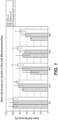
- Figure 1 shows the percentage of tumor cell recovery as a function of blood storage time. As expected, the tumor cell recovery goes down from EDTA stored blood and the tumor cell recovery is 49% at 48 hour time point. There is a trend in decrease of tumor cell recovery with CellSave blood over time. However, we know that tumor cells are stable in CellSave blood based on CellSearch assay. It is possible that some of the tumor cells from CellSave blood are lost in the Harpoon Platform for reasons that are to be determined. On the other hand, there are no trends in tumor cell recovery with preservative Solution 3 and the tumor cell recovery is always above 80% up to 72 hours.
- Table 1 Summary of percent tumor cell recovery with different blood preservatives.
- Example 3 RNA recovery and integrity from blood treated with different preservatives.
- fixatives preserve cells in a way that damages nucleic acids. These fixatives modify RNA/DNA through crosslinking which results in low nucleic acid yield and quality. Therefore, it is important to develop fixation methods that preserve cells as well as DNA&RNA to enable cellular and molecular analysis.
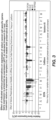
- RNA recovery and its integrity from blood treated with preservatives is checked by electrophoresis. Prior to that whole blood from healthy donors was collected in EDTA tubes and exposed to various preservatives for 24 hours. RNA was extracted from samples using Qiagen Animal Blood Protection kit following manufacturer's instructions. RNA quality and quantity was assessed by running extracted RNA on Agilent 2100 Bioanalyzer. Some preservatives currently in use today fix blood cells in a manner that makes extraction of RNA (and DNA) difficult from preserved samples. Extraction becomes inefficient following preservation and integrity of recovered nucleic acids is also compromised.
- Figure 2 shows that following treatment for 24 hours with 1% Formaldehyde or 1% Glutaraldehyde resulted in very poor recovery of RNA when compared to recovery obtained from samples not treated with preservatives (EDTA 0hr and EDTA 24hr) or samples treated for 24 hours with 1X Solution 3. Integrity of RNA recovered was also compromised following treatment with 1% Formaldehyde or 1% Glutaraldehyde when compared to EDTA controls and 1X Solution 3 treatment (note the lack of apparent bands for 28S and 18S ribosomal RNAs within dotted line box). Also note that blood samples treated with Solution 3 produced at 24 hours RNA samples of highest yield and integrity (solid black line box).
- Example 4 Stability of RNA markers with blood preserved with different preservatives.
- Figures 3 and Table 3 The results from this study are shown in Figures 3 and Table 3.
- the best preservative should maintain an expression profile that is closest to the unfixed sample at baseline (EDTA 0 hr).
- Figure 3 shows average relative expression value of the four donors plus/minus standard deviation for cancer cell line specific markers. Cancer specific gene levels decrease with time in blood samples collected into EDTA tubes containing additional no preservative. CellSave preservative improved RNA stability for some genes while other genes were not stabilized.
- the preservative Solution 3 formulation dramatically improved stability of cancer specific RNAs up to 96 hours. Variability that was seen between blood samples collected from different donors which may be due to differences in enrichment efficiency was also smallest in samples treated with Solution 3.
- Table 3 shows gene expression measurements for all the genes and samples evaluated in this experiment. Cancer cell specific gene expression levels decreased with time in unfixed EDTA samples while CellSave and Preservative Solution 3 stabilized gene expression measurements. Stabilization was the best in Solution 3 and it is particularly obvious after 96 hour incubation. Some leukocyte specific genes such as CD3 and CD8 genes decrease with time in unfixed EDTA blood and CellSave preserved blood. Most leukocyte specific genes are increased relative to the EDTA 0 hr. in blood treated with preservative Solution 3. This can be explained by an observed increase in leukocyte carry over during Harpoon enrichment using blood in preservative Solution 3.
- preservative Solution 3 prevents degradation of mRNAs present in cancer cells for up to 96 hours post blood collection. It also allows for efficient RNA recovery from treated samples. It was noted that preservative Solution 3 interferes with efficiency of white blood cell depletion on Harpoon platform. Such interference resulted in increased signal from genes expressed in white blood cells in analyzed samples. However it is important to point out that such increased signal was observed in all samples treated with mentioned novel preservative formulation and remained stable between samples processed using Harpoon platform at 0, 24, 48, 72 and 96 hours after blood collection. This again suggests that Solution 3 is very effective in preserving RNA in treated samples.
Landscapes
- Life Sciences & Earth Sciences (AREA)
- Health & Medical Sciences (AREA)
- Engineering & Computer Science (AREA)
- Chemical & Material Sciences (AREA)
- Zoology (AREA)
- General Health & Medical Sciences (AREA)
- Wood Science & Technology (AREA)
- Organic Chemistry (AREA)
- Dentistry (AREA)
- Environmental Sciences (AREA)
- Biomedical Technology (AREA)
- Biotechnology (AREA)
- Molecular Biology (AREA)
- Immunology (AREA)
- Hematology (AREA)
- Bioinformatics & Cheminformatics (AREA)
- Cell Biology (AREA)
- Biochemistry (AREA)
- Microbiology (AREA)
- Urology & Nephrology (AREA)
- Sustainable Development (AREA)
- Food Science & Technology (AREA)
- Pathology (AREA)
- Physics & Mathematics (AREA)
- General Physics & Mathematics (AREA)
- Medicinal Chemistry (AREA)
- General Engineering & Computer Science (AREA)
- Genetics & Genomics (AREA)
- Analytical Chemistry (AREA)
- Tropical Medicine & Parasitology (AREA)
- Measuring Or Testing Involving Enzymes Or Micro-Organisms (AREA)
- Biophysics (AREA)
- Physiology (AREA)
Applications Claiming Priority (2)
| Application Number | Priority Date | Filing Date | Title |
|---|---|---|---|
| US201662303886P | 2016-03-04 | 2016-03-04 | |
| PCT/US2017/020622 WO2017152028A1 (en) | 2016-03-04 | 2017-03-03 | Preservation of cellular components from cells with a preservative |
Publications (3)
| Publication Number | Publication Date |
|---|---|
| EP3422848A1 EP3422848A1 (en) | 2019-01-09 |
| EP3422848C0 EP3422848C0 (en) | 2025-02-12 |
| EP3422848B1 true EP3422848B1 (en) | 2025-02-12 |
Family
ID=58387890
Family Applications (1)
| Application Number | Title | Priority Date | Filing Date |
|---|---|---|---|
| EP17712583.8A Active EP3422848B1 (en) | 2016-03-04 | 2017-03-03 | Preservation of cellular components from cells with a preservative |
Country Status (5)
| Country | Link |
|---|---|
| US (1) | US10945428B2 (pl) |
| EP (1) | EP3422848B1 (pl) |
| ES (1) | ES3018258T3 (pl) |
| PL (1) | PL3422848T3 (pl) |
| WO (1) | WO2017152028A1 (pl) |
Family Cites Families (11)
| Publication number | Priority date | Publication date | Assignee | Title |
|---|---|---|---|---|
| NL8105898A (nl) * | 1981-12-30 | 1983-07-18 | Vaessen Schoemaker Holding Bv | Verwerking van in hoofdzaak uit organisch materiaal bestaande massa's tot gevormde producten en aldus gevormde voorwerpen. |
| US5911917A (en) * | 1990-09-04 | 1999-06-15 | Masters; Thomas R. | Preserved cellular structures |
| US5422277A (en) * | 1992-03-27 | 1995-06-06 | Ortho Diagnostic Systems Inc. | Cell fixative composition and method of staining cells without destroying the cell surface |
| WO2003019141A2 (en) | 2001-08-23 | 2003-03-06 | Immunivest Corporation | Analysis of circulating tumor cells, fragments, and debris |
| US20060008807A1 (en) | 2002-08-23 | 2006-01-12 | O'hara Shawn M | Multiparameter analysis of comprehensive nucleic acids and morphological features on the same sample |
| US20050181353A1 (en) | 2004-02-17 | 2005-08-18 | Rao Galla C. | Stabilization of cells and biological specimens for analysis |
| US20110008963A1 (en) * | 2009-07-08 | 2011-01-13 | Chimei Innolux Corporation | Method for making conductive film and film making equipment |
| US8288084B2 (en) * | 2009-07-12 | 2012-10-16 | Revive Organtech, Inc. | Composition and method for flushing and cold/cryo preserving organs, tissues, and cells |
| WO2011014741A1 (en) * | 2009-07-31 | 2011-02-03 | Artemis Health, Inc. | Methods and compositions for cell stabilization |
| US20160081328A1 (en) * | 2013-05-10 | 2016-03-24 | President And Fellows Of Harvard College | Solutions for Red Blood Cells |
| EP3560591B1 (en) | 2013-10-18 | 2021-02-17 | The General Hospital Corporation | Microfluidic sorting using high gradient magnetic fields |
-
2017
- 2017-03-03 PL PL17712583.8T patent/PL3422848T3/pl unknown
- 2017-03-03 ES ES17712583T patent/ES3018258T3/es active Active
- 2017-03-03 US US15/448,878 patent/US10945428B2/en active Active
- 2017-03-03 EP EP17712583.8A patent/EP3422848B1/en active Active
- 2017-03-03 WO PCT/US2017/020622 patent/WO2017152028A1/en not_active Ceased
Also Published As
| Publication number | Publication date |
|---|---|
| US20180055041A1 (en) | 2018-03-01 |
| EP3422848A1 (en) | 2019-01-09 |
| US10945428B2 (en) | 2021-03-16 |
| WO2017152028A1 (en) | 2017-09-08 |
| EP3422848C0 (en) | 2025-02-12 |
| ES3018258T3 (en) | 2025-05-14 |
| PL3422848T3 (pl) | 2025-05-26 |
Similar Documents
| Publication | Publication Date | Title |
|---|---|---|
| JP6750178B2 (ja) | 生物試料の安定化 | |
| EP3529374B1 (en) | Sequencing and analysis of exosome associated nucleic acids | |
| US20210238582A1 (en) | Automated and manual methods for isolation of extracellular vesicles and co-isolation of cell-free dna from biofluids | |
| AU2019250221A1 (en) | Methods for isolating microvesicles and extracting nucleic acids from biological samples | |
| CN116590279A (zh) | 一种基于羟基磁珠提取血浆游离dna的试剂盒及使用方法 | |
| EP1728078A1 (en) | Process and reagents for extraction of rna from fractionated blood leukocytes | |
| US20220349014A1 (en) | Multimodal analysis of stabilized cell-containing bodily fluid samples | |
| KR102380529B1 (ko) | 전이성 전립선 암의 진단 및 예후 예측을 위한 혈중종양세포 기반 바이오 마커 조성물 | |
| HK1216442A1 (zh) | 通过耗尽白血细胞富集循环肿瘤细胞 | |
| US20130052647A1 (en) | Methods for fractionating and processing microparticles from biological samples and using them for biomarker discovery | |
| EP1468089B1 (en) | Method to determine in vivo nucleic acid levels | |
| US20160130574A1 (en) | Methods of measuring gene expression in facs-sorted cells | |
| Bergkvist et al. | Validation and implementation of a method for microarray gene expression profiling of minor B-cell subpopulations in man | |
| US10945428B2 (en) | Preservation of cellular components from cells with a preservative | |
| JP2018509895A (ja) | 循環腫瘍細胞を配列決定するための血液試料の処理 | |
| US20200032243A1 (en) | Methods for isolating microvesicles and extracting nucleic acids from biological samples | |
| RU2554746C1 (ru) | Способ получения суммарной фракции внеклеточных нуклеиновых кислот из крови | |
| CA3022528C (en) | Automated and manual methods for isolation of extracellular vesicles and co-isolation of cell-free dna from biofluids | |
| WO2018220601A1 (en) | Sample storage system and methods of use thereof | |
| Sawitzki et al. | Whole blood |
Legal Events
| Date | Code | Title | Description |
|---|---|---|---|
| STAA | Information on the status of an ep patent application or granted ep patent |
Free format text: STATUS: UNKNOWN |
|
| STAA | Information on the status of an ep patent application or granted ep patent |
Free format text: STATUS: THE INTERNATIONAL PUBLICATION HAS BEEN MADE |
|
| PUAI | Public reference made under article 153(3) epc to a published international application that has entered the european phase |
Free format text: ORIGINAL CODE: 0009012 |
|
| STAA | Information on the status of an ep patent application or granted ep patent |
Free format text: STATUS: REQUEST FOR EXAMINATION WAS MADE |
|
| 17P | Request for examination filed |
Effective date: 20181002 |
|
| AK | Designated contracting states |
Kind code of ref document: A1 Designated state(s): AL AT BE BG CH CY CZ DE DK EE ES FI FR GB GR HR HU IE IS IT LI LT LU LV MC MK MT NL NO PL PT RO RS SE SI SK SM TR |
|
| AX | Request for extension of the european patent |
Extension state: BA ME |
|
| DAV | Request for validation of the european patent (deleted) | ||
| DAX | Request for extension of the european patent (deleted) | ||
| RAP1 | Party data changed (applicant data changed or rights of an application transferred) |
Owner name: MENARINI SILICON BIOSYSTEMS S.P.A. |
|
| STAA | Information on the status of an ep patent application or granted ep patent |
Free format text: STATUS: EXAMINATION IS IN PROGRESS |
|
| 17Q | First examination report despatched |
Effective date: 20200401 |
|
| REG | Reference to a national code |
Ref country code: DE Free format text: PREVIOUS MAIN CLASS: A01N0001000000 Ref country code: DE Ref legal event code: R079 Ref document number: 602017087684 Country of ref document: DE Free format text: PREVIOUS MAIN CLASS: A01N0001000000 Ipc: A01N0001020000 |
|
| GRAP | Despatch of communication of intention to grant a patent |
Free format text: ORIGINAL CODE: EPIDOSNIGR1 |
|
| STAA | Information on the status of an ep patent application or granted ep patent |
Free format text: STATUS: GRANT OF PATENT IS INTENDED |
|
| RIC1 | Information provided on ipc code assigned before grant |
Ipc: C12N 1/06 20060101ALI20240717BHEP Ipc: C12M 1/00 20060101ALI20240717BHEP Ipc: A01N 1/02 20060101AFI20240717BHEP |
|
| INTG | Intention to grant announced |
Effective date: 20240820 |
|
| GRAS | Grant fee paid |
Free format text: ORIGINAL CODE: EPIDOSNIGR3 |
|
| GRAA | (expected) grant |
Free format text: ORIGINAL CODE: 0009210 |
|
| STAA | Information on the status of an ep patent application or granted ep patent |
Free format text: STATUS: THE PATENT HAS BEEN GRANTED |
|
| P01 | Opt-out of the competence of the unified patent court (upc) registered |
Free format text: CASE NUMBER: APP_67516/2024 Effective date: 20241220 |
|
| AK | Designated contracting states |
Kind code of ref document: B1 Designated state(s): AL AT BE BG CH CY CZ DE DK EE ES FI FR GB GR HR HU IE IS IT LI LT LU LV MC MK MT NL NO PL PT RO RS SE SI SK SM TR |
|
| REG | Reference to a national code |
Ref country code: GB Ref legal event code: FG4D |
|
| REG | Reference to a national code |
Ref country code: CH Ref legal event code: EP |
|
| REG | Reference to a national code |
Ref country code: DE Ref legal event code: R096 Ref document number: 602017087684 Country of ref document: DE |
|
| REG | Reference to a national code |
Ref country code: IE Ref legal event code: FG4D |
|
| U01 | Request for unitary effect filed |
Effective date: 20250310 |
|
| P04 | Withdrawal of opt-out of the competence of the unified patent court (upc) registered |
Free format text: CASE NUMBER: APP_14412/2025 Effective date: 20250324 |
|
| U07 | Unitary effect registered |
Designated state(s): AT BE BG DE DK EE FI FR IT LT LU LV MT NL PT RO SE SI Effective date: 20250327 |
|
| REG | Reference to a national code |
Ref country code: GR Ref legal event code: EP Ref document number: 20250400651 Country of ref document: GR Effective date: 20250514 |
|
| U20 | Renewal fee for the european patent with unitary effect paid |
Year of fee payment: 9 Effective date: 20250425 |
|
| PG25 | Lapsed in a contracting state [announced via postgrant information from national office to epo] |
Ref country code: RS Free format text: LAPSE BECAUSE OF FAILURE TO SUBMIT A TRANSLATION OF THE DESCRIPTION OR TO PAY THE FEE WITHIN THE PRESCRIBED TIME-LIMIT Effective date: 20250512 |
|
| PGFP | Annual fee paid to national office [announced via postgrant information from national office to epo] |
Ref country code: PL Payment date: 20250408 Year of fee payment: 10 |
|
| PG25 | Lapsed in a contracting state [announced via postgrant information from national office to epo] |
Ref country code: IS Free format text: LAPSE BECAUSE OF FAILURE TO SUBMIT A TRANSLATION OF THE DESCRIPTION OR TO PAY THE FEE WITHIN THE PRESCRIBED TIME-LIMIT Effective date: 20250612 |
|
| PG25 | Lapsed in a contracting state [announced via postgrant information from national office to epo] |
Ref country code: HR Free format text: LAPSE BECAUSE OF FAILURE TO SUBMIT A TRANSLATION OF THE DESCRIPTION OR TO PAY THE FEE WITHIN THE PRESCRIBED TIME-LIMIT Effective date: 20250212 |
|
| PG25 | Lapsed in a contracting state [announced via postgrant information from national office to epo] |
Ref country code: SM Free format text: LAPSE BECAUSE OF FAILURE TO SUBMIT A TRANSLATION OF THE DESCRIPTION OR TO PAY THE FEE WITHIN THE PRESCRIBED TIME-LIMIT Effective date: 20250212 |
|
| PG25 | Lapsed in a contracting state [announced via postgrant information from national office to epo] |
Ref country code: CZ Free format text: LAPSE BECAUSE OF FAILURE TO SUBMIT A TRANSLATION OF THE DESCRIPTION OR TO PAY THE FEE WITHIN THE PRESCRIBED TIME-LIMIT Effective date: 20250212 |
|
| PG25 | Lapsed in a contracting state [announced via postgrant information from national office to epo] |
Ref country code: SK Free format text: LAPSE BECAUSE OF FAILURE TO SUBMIT A TRANSLATION OF THE DESCRIPTION OR TO PAY THE FEE WITHIN THE PRESCRIBED TIME-LIMIT Effective date: 20250212 |
|
| PLBE | No opposition filed within time limit |
Free format text: ORIGINAL CODE: 0009261 |
|
| STAA | Information on the status of an ep patent application or granted ep patent |
Free format text: STATUS: NO OPPOSITION FILED WITHIN TIME LIMIT |
|
| PG25 | Lapsed in a contracting state [announced via postgrant information from national office to epo] |
Ref country code: MC Free format text: LAPSE BECAUSE OF FAILURE TO SUBMIT A TRANSLATION OF THE DESCRIPTION OR TO PAY THE FEE WITHIN THE PRESCRIBED TIME-LIMIT Effective date: 20250212 |
|
| REG | Reference to a national code |
Ref country code: CH Ref legal event code: L10 Free format text: ST27 STATUS EVENT CODE: U-0-0-L10-L00 (AS PROVIDED BY THE NATIONAL OFFICE) Effective date: 20251224 |
|
| 26N | No opposition filed |
Effective date: 20251113 |
|
| U20 | Renewal fee for the european patent with unitary effect paid |
Year of fee payment: 10 Effective date: 20260209 |
|
| REG | Reference to a national code |
Ref country code: CH Ref legal event code: U11 Free format text: ST27 STATUS EVENT CODE: U-0-0-U10-U11 (AS PROVIDED BY THE NATIONAL OFFICE) Effective date: 20260401 |
|
| PGFP | Annual fee paid to national office [announced via postgrant information from national office to epo] |
Ref country code: GB Payment date: 20260119 Year of fee payment: 10 |
|
| PGFP | Annual fee paid to national office [announced via postgrant information from national office to epo] |
Ref country code: NO Payment date: 20260310 Year of fee payment: 10 Ref country code: IE Payment date: 20260123 Year of fee payment: 10 |
|
| PGFP | Annual fee paid to national office [announced via postgrant information from national office to epo] |
Ref country code: TR Payment date: 20260302 Year of fee payment: 10 |
|
| PGFP | Annual fee paid to national office [announced via postgrant information from national office to epo] |
Ref country code: GR Payment date: 20260211 Year of fee payment: 10 |
|
| PG25 | Lapsed in a contracting state [announced via postgrant information from national office to epo] |
Ref country code: CY Free format text: LAPSE BECAUSE OF FAILURE TO SUBMIT A TRANSLATION OF THE DESCRIPTION OR TO PAY THE FEE WITHIN THE PRESCRIBED TIME-LIMIT Effective date: 20250212 |
|
| PGFP | Annual fee paid to national office [announced via postgrant information from national office to epo] |
Ref country code: ES Payment date: 20260415 Year of fee payment: 10 |
|
| PGFP | Annual fee paid to national office [announced via postgrant information from national office to epo] |
Ref country code: CH Payment date: 20260401 Year of fee payment: 10 |