EP3414315B1 - Apparatus and method for aging wine - Google Patents
Apparatus and method for aging wine Download PDFInfo
- Publication number
- EP3414315B1 EP3414315B1 EP17749981.1A EP17749981A EP3414315B1 EP 3414315 B1 EP3414315 B1 EP 3414315B1 EP 17749981 A EP17749981 A EP 17749981A EP 3414315 B1 EP3414315 B1 EP 3414315B1
- Authority
- EP
- European Patent Office
- Prior art keywords
- barrel
- compartment
- tank
- compartments
- outlet
- Prior art date
- Legal status (The legal status is an assumption and is not a legal conclusion. Google has not performed a legal analysis and makes no representation as to the accuracy of the status listed.)
- Active
Links
Images


Classifications
-
- C—CHEMISTRY; METALLURGY
- C12—BIOCHEMISTRY; BEER; SPIRITS; WINE; VINEGAR; MICROBIOLOGY; ENZYMOLOGY; MUTATION OR GENETIC ENGINEERING
- C12H—PASTEURISATION, STERILISATION, PRESERVATION, PURIFICATION, CLARIFICATION OR AGEING OF ALCOHOLIC BEVERAGES; METHODS FOR ALTERING THE ALCOHOL CONTENT OF FERMENTED SOLUTIONS OR ALCOHOLIC BEVERAGES
- C12H1/00—Pasteurisation, sterilisation, preservation, purification, clarification, or ageing of alcoholic beverages
- C12H1/12—Pasteurisation, sterilisation, preservation, purification, clarification, or ageing of alcoholic beverages without precipitation
- C12H1/14—Pasteurisation, sterilisation, preservation, purification, clarification, or ageing of alcoholic beverages without precipitation with non-precipitating compounds, e.g. sulfiting; Sequestration, e.g. with chelate-producing compounds
-
- C—CHEMISTRY; METALLURGY
- C12—BIOCHEMISTRY; BEER; SPIRITS; WINE; VINEGAR; MICROBIOLOGY; ENZYMOLOGY; MUTATION OR GENETIC ENGINEERING
- C12G—WINE; PREPARATION THEREOF; ALCOHOLIC BEVERAGES; PREPARATION OF ALCOHOLIC BEVERAGES NOT PROVIDED FOR IN SUBCLASSES C12C OR C12H
- C12G3/00—Preparation of other alcoholic beverages
- C12G3/04—Preparation of other alcoholic beverages by mixing, e.g. for preparation of liqueurs
- C12G3/06—Preparation of other alcoholic beverages by mixing, e.g. for preparation of liqueurs with flavouring ingredients
- C12G3/07—Flavouring with wood extracts, e.g. generated by contact with wood; Wood pretreatment therefor
-
- C—CHEMISTRY; METALLURGY
- C12—BIOCHEMISTRY; BEER; SPIRITS; WINE; VINEGAR; MICROBIOLOGY; ENZYMOLOGY; MUTATION OR GENETIC ENGINEERING
- C12H—PASTEURISATION, STERILISATION, PRESERVATION, PURIFICATION, CLARIFICATION OR AGEING OF ALCOHOLIC BEVERAGES; METHODS FOR ALTERING THE ALCOHOL CONTENT OF FERMENTED SOLUTIONS OR ALCOHOLIC BEVERAGES
- C12H1/00—Pasteurisation, sterilisation, preservation, purification, clarification, or ageing of alcoholic beverages
- C12H1/02—Pasteurisation, sterilisation, preservation, purification, clarification, or ageing of alcoholic beverages combined with removal of precipitate or added materials, e.g. adsorption material
-
- C—CHEMISTRY; METALLURGY
- C12—BIOCHEMISTRY; BEER; SPIRITS; WINE; VINEGAR; MICROBIOLOGY; ENZYMOLOGY; MUTATION OR GENETIC ENGINEERING
- C12H—PASTEURISATION, STERILISATION, PRESERVATION, PURIFICATION, CLARIFICATION OR AGEING OF ALCOHOLIC BEVERAGES; METHODS FOR ALTERING THE ALCOHOL CONTENT OF FERMENTED SOLUTIONS OR ALCOHOLIC BEVERAGES
- C12H1/00—Pasteurisation, sterilisation, preservation, purification, clarification, or ageing of alcoholic beverages
- C12H1/22—Ageing or ripening by storing, e.g. lagering of beer
Definitions
- the present invention in some embodiments thereof, relates to apparatus and a method for aging wine.
- the traditional barrel has its faults, as it is very expensive, its shape is awkward for stacking and wastes considerable space in the winery.
- cleaning of wine barrels is very problematic, as the barrel is a closed vessel with a very narrow opening (50mm). Thus, every few month the barrels are emptied, cleaned by hot water or steam and refilled. This operation causes wine oxidation, wine loss and requires extensive man power.
- FR 2 712 300 to Pradier Guy teaches a barrel with an internal divider and flow to an external tank.
- the present embodiments describe a wine aging system which may combine the large and cheap aging volume of stainless steel and the benefits of oak aging, in particular the imparting of flavor and micro oxidation.
- a barrel for maturation of wine comprising a wooden exterior and an internal volume and a plurality of internal wooden surfaces extending inwardly of said wooden exterior into said internal volume, wherein said internal wooden surfaces divide said barrel into compartments, said internal wooden surfaces having openings at alternating ends of successive compartments to allow for flow of maturing wine between said compartments such that an outlet from a first compartment forms an inlet to a second compartment at a first end of said second compartment, said second compartment having an outlet at a second end of said second compartment which outlet forms an inlet to a third compartment the barrel being placed on its side and wherein said compartments and said openings form a flow path between an intake at one end of said barrel and an outlet at an opposite end of said barrel, the flow path being via lengths of said succeeding compartments, said intake and said outlet configured for connecting to an external tank, thereby to provide circulation from said external tank via said compartments along said flow path and back to said external tank.
- the barrel may comprise oak.
- each compartment has an inlet at one end and an outlet at an opposite end such that the flow path extends along a length of each compartment.
- the inlet is higher than the outlet, thereby to allow gravity to assist with flow of the maturing wine through the flow path.
- a system for maturation of wine comprising a tank and at least one of the wooden barrel as disclosed above, and flow connectors to allow circulation of maturing wine between said tank and said at least one barrel
- said wooden barrel comprises internal wooden surfaces, said internal wooden surfaces forming a succession of compartments, openings being provided between alternating ends of succeeding compartments to define a flow path through lengths of said succeeding compartments such that an outlet from a first compartment forms an inlet to a second compartment at a first end of said second compartment, said second compartment having an outlet at a second end of said second compartment which outlet forms an inlet to a third compartment, the flow path to allow said circulation of said maturing wine thereby passing through said each of said compartments and back to said tank.
- the tank is a steel tank
- the wooden barrel may have internal wooden surfaces extending into the volume of the barrel to increase the surface area of the wood, so that even though the wine spends less time in the barrel, it actually spends more time in close proximity to a wooden surface.
- the internal wooden surfaces form compartments, and openings may be provided between the compartments to allow flow of the maturing wine through the barrel.
- the volume of the at least one barrel is less than a fifth of the volume of the tank.
- the barrel is at a lower level than a top of the tank to allow gravity to assist the circulation.
- the flow connectors comprise a pump to assist the circulation.
- a plurality of barrels may be connected in series with each other and with the tank.
- a plurality of barrels may be connected in parallel with each other and in series with the tank.
- a method of maturing wine comprising circulating maturing wine between at least one wooden barrel and a tank, the wooden barrel having internal walls forming compartments and openings between said compartments, the openings being at alternating ends of succeeding compartments to form a flow path through succeeding lengths of said compartments, such that an outlet from a first compartment forms an inlet to a second compartment at a first end of said second compartment, said second compartment having an outlet at a second end of said second compartment which outlet forms an inlet to a third compartment, said circulating comprising following said flow path through said compartments of said barrel and returning to said tank.
- the barrel is placed on its side.
- the present invention in some embodiments thereof, relates to a method and apparatus for aging wine.
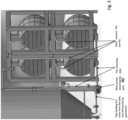
- FIG. 1 illustrates a winery aging system 10 which comprises a combination of a barrel arrangement 12 and a stainless steel tank 14, using the advantages of both systems for a shorter and cheaper wine aging process, saving money and space without giving up quality.
- Flow connectors 16 allow circulation of maturing wine between the tank and the barrel arrangement.
- the volume of barrel or arrangement of barrels is less than a fifth of the volume of the tank, and may typically be around 15%. Thus less barrel is used per volume of wine but, as will be discussed below, the barrel has internal surfaces so that the wine spends more time in close proximity to a wooden surface.
- the barrel arrangement is at a lower level than a top of the tank and thus allows gravity to assist with circulation of the wine between the barrels and the tank.
- the flow connectors may additionally comprise a pump to assist with the circulation.
- the barrel arrangement may be several barrels connected to form a flow path with the tank.
- the barrels may be connected in series between themselves and with the tank, or the barrels may be connected in parallel among themselves but in series with the tank. Alternatively two or more parallel paths may be connected, each having two or more barrels.
- Regular barrels are oval shaped, and hollow.
- the exchange of oxygen and flavors takes place in a very small fraction of overall volume of the barrel, specifically at the places where the wine and wood meet.
- the aging process is slow and inefficient, as the oxygen diffuses into the wine according to a concentration cascade.
- the micro oxidation process practically stops. The same phenomenon happens with the aroma extraction process from the barrel into the aging wine.
- Fig. 2 shows a longitudinal cross section 20 of one of the barrels of Fig. 1 .
- internal dividers 22 are installed in the barrels of the present embodiments.
- the dividers are shape fitted to the barrel to thereby construct compartments 24.
- the divider 22 contains a narrow passage or opening 26, which enables movement of the wine through the chambers.
- the openings 26 alternate between top and bottom to force the wine to flow along the length of each compartment.
- Each barrel has an inlet 28 and an outlet 30, which may be controlled with valves. As shown in Fig. 1 , the inlets and outlets are concealed from frontal view and this is to retain a traditional appearance at the winery. The inlets and the outlets may be flexibly connected together using piping, enabling the connection of several barrels in a row or in parallel in any desired configuration.
- the dividers 22 add several times more surface area, at which extraction of oak flavors is able to occur.
- the movement of the wine through the barrel refreshes the wine in contact with the external surface, thus enhancing the micro oxidation process.
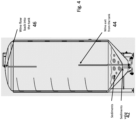
- the slow but consistent flow of wine through the barrels may prevent much of the sedimentation that generally occurs in the barrels. Rather most of the sedimentation occurs in the tank, which may then be separated and removed through a specific sediment removing valve provided for this purpose and located at the bottom of the tank - see Fig. 4 .
- the barrels may be made of the traditional oak. As shown, the barrel is placed on its side and the compartments and the openings form a flow path indicated by arrows 32 between intake 28 at one end of the barrel and outlet 30 at an opposite end of the barrel. Each compartment may have two openings, an inlet at one end and an outlet at an opposite end so that the flow path extends along a length of each compartment. Typically, the barrel inlet 28 is higher than the barrel outlet 30, thereby to allow gravity to assist with flow of the maturing wine through the flow path.
- the wine is pumped into a stainless steel tank such as that shown in Fig. 4 to which reference is now made.
- the tank is the reservoir of the aging system, and is connected to a set of barrels of the kind shown in Fig. 2 .
- the wine in the tank may be kept constantly under a bed of Argon gas to prevent oxidation.
- the barrels may typically together consist of 15% of the tank volume.
- the barrels may be connected between themselves and back to the tank.
- wine flows from the upper part of the lower third of the tank via wine outlet 44, by gravitation, into the upper barrel, then into the barrel underneath, back up into the second upper barrel and so on.
- the flow motion may be assisted by the constant emptying of the last barrel by low flow pump 40.
- the wine may thus circulate through the barrels in a very slow motion, flowing through the chambers in the barrels and back into the upper part of the tank via wine inlet 46.
- wine circulation in the tank itself is minimized, enabling the stabilization and natural sedimentation of organic and inorganic particles, and the clarification of the wine in the tank.
- the sediments gathered in the tank are removed periodically by the sedimentation valve 42.
Landscapes
- Engineering & Computer Science (AREA)
- Organic Chemistry (AREA)
- Chemical & Material Sciences (AREA)
- Wood Science & Technology (AREA)
- Life Sciences & Earth Sciences (AREA)
- Bioinformatics & Cheminformatics (AREA)
- Biochemistry (AREA)
- General Engineering & Computer Science (AREA)
- General Health & Medical Sciences (AREA)
- Genetics & Genomics (AREA)
- Health & Medical Sciences (AREA)
- Zoology (AREA)
- Food Science & Technology (AREA)
- Distillation Of Fermentation Liquor, Processing Of Alcohols, Vinegar And Beer (AREA)
- Alcoholic Beverages (AREA)
Description
- The present invention, in some embodiments thereof, relates to apparatus and a method for aging wine.
- Today, quality red and white wines are usually aged in 225-500 liter oak barrels. The barrels are very expensive and are effective for up to 4 years. As oak becomes scarce and ever stricter environmental regulations dictate the number of trees that are cut each year, the price rises.
- Wine has been aged in oak barrels for centuries. There are historical reasons for the popularity of the oak barrel, which include their shape, which enables rolling, and the assistance of the oak to control the wine aging process as it facilitates micro-oxidation through the trachea in the wood. Microoxidation enables enough oxygen for positive chemical reactions, but insufficient oxygen for the damaging ones. In addition, the flavors concentrated in the toasted oak, when coming in contact with the wine, are released into the wine and enrich its aroma profile and mouth feeling. The polyphenols in the oak are a very important factor, adding to mouthfeel and act as a natural preservant and color enhancer, enhancing the aging potential of the wine.
- Nevertheless, the traditional barrel has its faults, as it is very expensive, its shape is awkward for stacking and wastes considerable space in the winery. In addition, cleaning of wine barrels is very problematic, as the barrel is a closed vessel with a very narrow opening (50mm). Thus, every few month the barrels are emptied, cleaned by hot water or steam and refilled. This operation causes wine oxidation, wine loss and requires extensive man power.
- Because of these faults, it is common in modern wineries to age wines in stainless steel tanks. When this practice is used, it is customary to add oak wood cheeps or staves for the purposes of providing taste and aroma, and in advanced wineries a micro oxidation system is often installed. Those practices try to imitate the natural processes happening in the barrel. Unfortunately, the results are usually insufficient, and reduce the prestige of the resulting wine, causing the wineries to sell those wines under lower level labels.
-
US 3 119 321 to Deal Lewis teaches a barrel with internal dividers, for maturation of alcoholic beverages. -
FR 2 712 300 to Pradier Guy - The present embodiments describe a wine aging system which may combine the large and cheap aging volume of stainless steel and the benefits of oak aging, in particular the imparting of flavor and micro oxidation.
- According to an aspect of some embodiments of the present invention there is provided a barrel for maturation of wine comprising a wooden exterior and an internal volume and a plurality of internal wooden surfaces extending inwardly of said wooden exterior into said internal volume, wherein said internal wooden surfaces divide said barrel into compartments, said internal wooden surfaces having openings at alternating ends of successive compartments to allow for flow of maturing wine between said compartments such that an outlet from a first compartment forms an inlet to a second compartment at a first end of said second compartment, said second compartment having an outlet at a second end of said second compartment which outlet forms an inlet to a third compartment the barrel being placed on its side and wherein said compartments and said openings form a flow path between an intake at one end of said barrel and an outlet at an opposite end of said barrel, the flow path being via lengths of said succeeding compartments, said intake and said outlet configured for connecting to an external tank, thereby to provide circulation from said external tank via said compartments along said flow path and back to said external tank.
- The barrel may comprise oak.
- In an embodiment, each compartment has an inlet at one end and an outlet at an opposite end such that the flow path extends along a length of each compartment.
- In an embodiment, the inlet is higher than the outlet, thereby to allow gravity to assist with flow of the maturing wine through the flow path.
- In embodiments, a system for maturation of wine comprising a tank and at least one of the wooden barrel as disclosed above, and flow connectors to allow circulation of maturing wine between said tank and said at least one barrel, wherein said wooden barrel comprises internal wooden surfaces, said internal wooden surfaces forming a succession of compartments, openings being provided between alternating ends of succeeding compartments to define a flow path through lengths of said succeeding compartments such that an outlet from a first compartment forms an inlet to a second compartment at a first end of said second compartment, said second compartment having an outlet at a second end of said second compartment which outlet forms an inlet to a third compartment, the flow path to allow said circulation of said maturing wine thereby passing through said each of said compartments and back to said tank.
- In an embodiment, the tank is a steel tank, and the wooden barrel may have internal wooden surfaces extending into the volume of the barrel to increase the surface area of the wood, so that even though the wine spends less time in the barrel, it actually spends more time in close proximity to a wooden surface.
- In an embodiment, the internal wooden surfaces form compartments, and openings may be provided between the compartments to allow flow of the maturing wine through the barrel.
- In an embodiment, the volume of the at least one barrel is less than a fifth of the volume of the tank.
- In an embodiment, the barrel is at a lower level than a top of the tank to allow gravity to assist the circulation.
- In an embodiment, the flow connectors comprise a pump to assist the circulation.
- A plurality of barrels may be connected in series with each other and with the tank. Alternatively, a plurality of barrels may be connected in parallel with each other and in series with the tank.
- According to a third aspect of the present invention there is provided a method of maturing wine comprising circulating maturing wine between at least one wooden barrel and a tank, the wooden barrel having internal walls forming compartments and openings between said compartments, the openings being at alternating ends of succeeding compartments to form a flow path through succeeding lengths of said compartments, such that an outlet from a first compartment forms an inlet to a second compartment at a first end of said second compartment, said second compartment having an outlet at a second end of said second compartment which outlet forms an inlet to a third compartment, said circulating comprising following said flow path through said compartments of said barrel and returning to said tank. The barrel is placed on its side.
- Unless otherwise defined, all technical and/or scientific terms used herein have the same meaning as commonly understood by one of ordinary skill in the art to which the invention pertains. Although methods and materials similar or equivalent to those described herein can be used in the practice or testing of embodiments of the invention, exemplary methods and/or materials are described below. In case of conflict, the patent specification, including definitions, will control. In addition, the materials, methods, and examples are illustrative only and are not intended to be necessarily limiting.
- Some embodiments of the invention are herein described, by way of example only, with reference to the accompanying drawings. With specific reference now to the drawings in detail, it is stressed that the particulars shown are by way of example and for purposes of illustrative discussion of embodiments of the invention. In this regard, the description taken with the drawings makes apparent to those skilled in the art how embodiments of the invention may be practiced.
- In the drawings:
-
Fig. 1 is a simplified schematic diagram showing a system for maturation of wine according to a first embodiment of the present invention; -
Fig. 2 is a cross-sectional view of one of the barrels ofFIG. 1 ; -
Fig. 3 is a schematic view of a way of connecting barrels for use in the system ofFIG. 1 ; and -
Fig. 4 is a cross-sectional view of the tank ofFIG. 1 . - The present invention, in some embodiments thereof, relates to a method and apparatus for aging wine.
- Before explaining at least one embodiment of the invention in detail, it is to be understood that the invention is not necessarily limited in its application to the details of construction and the arrangement of the components and/or methods set forth in the following description and/or illustrated in the drawings and/or the Examples. The invention is capable of other embodiments or of being practiced or carried out in various ways.
- Reference is now made to
Fig. 1 , which illustrates awinery aging system 10 which comprises a combination of abarrel arrangement 12 and astainless steel tank 14, using the advantages of both systems for a shorter and cheaper wine aging process, saving money and space without giving up quality.Flow connectors 16 allow circulation of maturing wine between the tank and the barrel arrangement. - The volume of barrel or arrangement of barrels is less than a fifth of the volume of the tank, and may typically be around 15%. Thus less barrel is used per volume of wine but, as will be discussed below, the barrel has internal surfaces so that the wine spends more time in close proximity to a wooden surface. The barrel arrangement is at a lower level than a top of the tank and thus allows gravity to assist with circulation of the wine between the barrels and the tank. The flow connectors may additionally comprise a pump to assist with the circulation.
- The barrel arrangement may be several barrels connected to form a flow path with the tank. The barrels may be connected in series between themselves and with the tank, or the barrels may be connected in parallel among themselves but in series with the tank. Alternatively two or more parallel paths may be connected, each having two or more barrels.
- Regular barrels are oval shaped, and hollow. The exchange of oxygen and flavors takes place in a very small fraction of overall volume of the barrel, specifically at the places where the wine and wood meet. As a result, the aging process is slow and inefficient, as the oxygen diffuses into the wine according to a concentration cascade. Furthermore, when the wine close to the surface is saturated, the micro oxidation process practically stops. The same phenomenon happens with the aroma extraction process from the barrel into the aging wine.
- Reference is now made to
Fig. 2 which shows alongitudinal cross section 20 of one of the barrels ofFig. 1 . In the barrels of the present embodiments,internal dividers 22 are installed. The dividers are shape fitted to the barrel to thereby construct compartments 24. In the bottom or top of each compartment, thedivider 22 contains a narrow passage oropening 26, which enables movement of the wine through the chambers. Theopenings 26 alternate between top and bottom to force the wine to flow along the length of each compartment. - Each barrel has an
inlet 28 and anoutlet 30, which may be controlled with valves. As shown inFig. 1 , the inlets and outlets are concealed from frontal view and this is to retain a traditional appearance at the winery. The inlets and the outlets may be flexibly connected together using piping, enabling the connection of several barrels in a row or in parallel in any desired configuration. - The
dividers 22 add several times more surface area, at which extraction of oak flavors is able to occur. In addition, the movement of the wine through the barrel refreshes the wine in contact with the external surface, thus enhancing the micro oxidation process. In addition, the slow but consistent flow of wine through the barrels may prevent much of the sedimentation that generally occurs in the barrels. Rather most of the sedimentation occurs in the tank, which may then be separated and removed through a specific sediment removing valve provided for this purpose and located at the bottom of the tank - seeFig. 4 . - The barrels may be made of the traditional oak. As shown, the barrel is placed on its side and the compartments and the openings form a flow path indicated by
arrows 32 betweenintake 28 at one end of the barrel andoutlet 30 at an opposite end of the barrel. Each compartment may have two openings, an inlet at one end and an outlet at an opposite end so that the flow path extends along a length of each compartment. Typically, thebarrel inlet 28 is higher than thebarrel outlet 30, thereby to allow gravity to assist with flow of the maturing wine through the flow path. - When ending malolactic fermentation, or whenever the winemaker decides to start the aging process, the wine is pumped into a stainless steel tank such as that shown in
Fig. 4 to which reference is now made. The tank is the reservoir of the aging system, and is connected to a set of barrels of the kind shown inFig. 2 . In an embodiment, the wine in the tank may be kept constantly under a bed of Argon gas to prevent oxidation. The barrels may typically together consist of 15% of the tank volume. The barrels may be connected between themselves and back to the tank. As shown inFig. 3 , wine flows from the upper part of the lower third of the tank viawine outlet 44, by gravitation, into the upper barrel, then into the barrel underneath, back up into the second upper barrel and so on. The flow motion may be assisted by the constant emptying of the last barrel bylow flow pump 40. The wine may thus circulate through the barrels in a very slow motion, flowing through the chambers in the barrels and back into the upper part of the tank viawine inlet 46. In this way, wine circulation in the tank itself is minimized, enabling the stabilization and natural sedimentation of organic and inorganic particles, and the clarification of the wine in the tank. The sediments gathered in the tank are removed periodically by thesedimentation valve 42. - It is expected that during the life of a patent maturing from this application many relevant wine aging techniques and equipment will be developed and the scopes of the corresponding terms are intended to include all such new technologies a priori.
- The terms "comprises", "comprising", "includes", "including", "having" and their conjugates mean "including but not limited to".
- The term "consisting of' means "including and limited to".
- As used herein, the singular form "a", "an" and "the" include plural references unless the context clearly dictates otherwise.
- It is appreciated that certain features of the invention, which are, for clarity, described in the context of separate embodiments, may also be provided in combination in a single embodiment, and the above description is to be construed as if this combination were explicitly written. Conversely, various features of the invention, which are, for brevity, described in the context of a single embodiment, may also be provided separately or in any suitable subcombination or as suitable in any other described embodiment of the invention, and the above description is to be construed as if these separate embodiments were explicitly written. Certain features described in the context of various embodiments are not to be considered essential features of those embodiments, unless the embodiment is inoperative without those elements.
Claims (12)
- A barrel for maturation of wine comprising a wooden exterior and an internal volume and a plurality of internal wooden surfaces extending inwardly of said wooden exterior into said internal volume, wherein said internal wooden surfaces divide said barrel into compartments, said internal wooden surfaces having openings at alternating ends of successive compartments to allow for flow of maturing wine between said compartments such that an outlet from a first compartment forms an inlet to a second compartment at a first end of said second compartment, said second compartment having an outlet at a second alternate end of said second compartment which outlet forms an inlet to a third compartment the barrel being placed on its side and wherein said compartments and said openings form a flow path between an intake at one end of said barrel and an outlet at an opposite end of said barrel, the flow path being via lengths of said succeeding compartments, said intake and said outlet configured for connecting to an external tank, thereby to provide circulation from said external tank via said compartments along said flow path and back to said external tank.
- The barrel of claim 1, comprising oak.
- The barrel of claim 1, or claim 2, wherein said inlet is higher than said outlet, thereby to allow gravity to assist with flow of said maturing wine through said flow path.
- System for maturation of wine comprising a tank and at least one wooden barrel according to claim 1, 2, or 3, and flow connectors to allow circulation of maturing wine between said tank and said at least one barrel, wherein said wooden barrel comprises internal wooden surfaces, said internal wooden surfaces forming a succession of compartments, openings being provided between alternating ends of succeeding compartments to define a flow path through lengths of said succeeding compartments such that an outlet from a first compartment forms an inlet to a second compartment at a first end of said second compartment, said second compartment having an outlet at a second alternate end of said second compartment which outlet forms an inlet to a third compartment, the flow path to allow said circulation of said maturing wine thereby passing lengthwise through said each of said compartments and back to said tank.
- The system of claim 4, wherein said tank is a steel tank.
- The system of claim 4 or claim 5, wherein the volume of the at least one barrel is less than a fifth of the volume of the tank.
- The system of any one of claims 4 to 6, wherein the at least one barrel is at a lower level than a top of said tank to allow gravity to assist said circulation.
- The system of any one of claims 4 to 7, wherein the flow connectors comprise a pump to assist said circulation.
- The system of any one of claims 4 to 8, comprising a plurality of barrels connected in series with each other and with said tank.
- The system of any one of claims 4 to 9, comprising a plurality of barrels connected in parallel with each other and in series with said tank.
- A method of maturing wine comprising circulating maturing wine between at least one wooden barrel and a tank, the wooden barrel having internal walls forming compartments and openings between said compartments, the openings being at alternating ends of succeeding compartments to form a flow path through succeeding lengths of said compartments, such that an outlet from a first compartment forms an inlet to a second compartment at a first end of said second compartment, said second compartment having an outlet at a second end of said second compartment, which outlet forms an inlet to a third compartment, said circulating comprising following said flow path lengthwise through said respective compartments of said barrel and returning to said tank, the barrel being placed on its side.
- The method of claim 11, wherein circulation is sufficiently slow to allow sedimentation from said maturing wine within said tank.
Applications Claiming Priority (2)
| Application Number | Priority Date | Filing Date | Title |
|---|---|---|---|
| US201662292927P | 2016-02-09 | 2016-02-09 | |
| PCT/IL2017/050162 WO2017137991A1 (en) | 2016-02-09 | 2017-02-09 | Apparatus and method for aging wine |
Publications (3)
| Publication Number | Publication Date |
|---|---|
| EP3414315A1 EP3414315A1 (en) | 2018-12-19 |
| EP3414315A4 EP3414315A4 (en) | 2020-04-15 |
| EP3414315B1 true EP3414315B1 (en) | 2024-10-09 |
Family
ID=59563755
Family Applications (1)
| Application Number | Title | Priority Date | Filing Date |
|---|---|---|---|
| EP17749981.1A Active EP3414315B1 (en) | 2016-02-09 | 2017-02-09 | Apparatus and method for aging wine |
Country Status (9)
| Country | Link |
|---|---|
| US (1) | US11866680B2 (en) |
| EP (1) | EP3414315B1 (en) |
| CN (1) | CN108884427B (en) |
| AU (1) | AU2017218791B2 (en) |
| CL (1) | CL2018001749A1 (en) |
| ES (1) | ES2990160T3 (en) |
| PT (1) | PT3414315T (en) |
| WO (1) | WO2017137991A1 (en) |
| ZA (1) | ZA201804039B (en) |
Families Citing this family (7)
| Publication number | Priority date | Publication date | Assignee | Title |
|---|---|---|---|---|
| CN108884427B (en) | 2016-02-09 | 2023-08-15 | 阿里埃勒科学创新有限公司 | Apparatus and method for aging wine |
| IT201900006304A1 (en) * | 2019-04-24 | 2020-10-24 | Montecchio S R L | Container for vinification and storage of wine |
| FR3098578B1 (en) * | 2019-07-11 | 2021-06-04 | Malie Armand | Aging accelerator exchanger |
| CN113249183A (en) * | 2020-02-07 | 2021-08-13 | 阿里埃勒科学创新有限公司 | Apparatus and method for ageing strong liquors |
| US12122987B2 (en) * | 2021-06-30 | 2024-10-22 | Matthew T Aldenderfer | Accelerated aging of alcoholic beverages |
| CN116536130B (en) * | 2022-01-25 | 2024-11-05 | 胥伟 | A wine aging storage system and a wine aging storage method |
| US20240301334A1 (en) * | 2023-02-01 | 2024-09-12 | Bryce A. Ecklein | Process for Maturing Wine |
Family Cites Families (35)
| Publication number | Priority date | Publication date | Assignee | Title |
|---|---|---|---|---|
| US2017235A (en) | 1934-03-14 | 1935-10-15 | Leslie L Drew | Apparatus for aging alcoholic spirits |
| GB427231A (en) | 1934-05-30 | 1935-04-17 | Eric Fleming Staniland | Improved process for the clarification of beer |
| US2114009A (en) * | 1935-01-25 | 1938-04-12 | Samuel R Ramsay | Liquor aging means |
| GB500081A (en) * | 1938-02-11 | 1939-02-02 | Thomas Theodore Miller | Method of aging whiskey |
| US3119321A (en) | 1962-10-04 | 1964-01-28 | Lewis A Deal | Apparatus for aging alcoholic spirits |
| US4073955A (en) | 1976-10-07 | 1978-02-14 | Koppelman & Goodman Enterprises | Apparatus and method for aging liquor |
| GB1602832A (en) * | 1978-05-31 | 1981-11-18 | Boc Ltd | Apparatus for the treatment of aqueous waste material having a biochemical oxygen demand |
| SU1035058A1 (en) | 1980-10-27 | 1983-08-15 | Совхоз-Завод "Виноградный" | Apparatus for curing wine materials and like products |
| FR2504498A1 (en) * | 1981-04-27 | 1982-10-29 | Stem Inc Chester | Oak cask for ageing and maturing wine, whisky etc. - contains pocketed oak contacting element to speed process and extend life of cask |
| US4558639A (en) * | 1984-06-14 | 1985-12-17 | Jalger Limited | Insert for a container for aging wine |
| WO1995000401A1 (en) | 1993-06-18 | 1995-01-05 | Intellection Pty. Ltd. | Improved container for the wood maturation of wines and liquors |
| FR2712300B1 (en) | 1993-11-08 | 1996-01-05 | Guy Pradier | Machine for barrel evolution of a wine stored in tanks. |
| CN2228487Y (en) | 1995-04-21 | 1996-06-05 | 雷鸣书 | Artificial ageing device for Brandy like liquor |
| RU2086636C1 (en) * | 1995-09-19 | 1997-08-10 | Всероссийский научно-исследовательский институт консервной и овощесушильной промышленности | Juice and wine stabilization apparatus |
| BR9713780A (en) | 1996-12-20 | 2000-03-21 | Novo Nordisk As | Enzyme preparation, DNA construct, recombinant expression vector, cell comprising a content, process of producing an enzyme having endoglucanase activity, isolated enzyme, substantially pure isolated biological culture, and use of the enzyme or enzyme preparation |
| US5906151A (en) * | 1997-11-10 | 1999-05-25 | Firestone Walker, Llc | Apparatus and method for brewing an alcoholic beverage and beverage brewed by same |
| US20030008036A1 (en) * | 2001-03-20 | 2003-01-09 | Huige Nick J. | Method of using wood chips in brewing malt beverages |
| US6846503B2 (en) | 2001-04-27 | 2005-01-25 | Vickers, Jr. Marcus Ladon | Method and apparatus for production of an alcoholic beverage |
| US20030157216A1 (en) * | 2002-02-08 | 2003-08-21 | Plumb David Carl | Accelerated oak extraction method |
| AU2003901860A0 (en) * | 2003-04-16 | 2003-05-08 | Wmc Resources Ltd | A solvent extraction process |
| US20080107785A1 (en) | 2003-04-30 | 2008-05-08 | Vinterus Technologies Llc. | Method, System and Apparatus for Removing Impurities from Wine |
| US7357069B1 (en) * | 2003-07-07 | 2008-04-15 | Riverside Rockets, Ltd. | Beverage infusion spiral and methods of making and using the same |
| ITRM20040075A1 (en) | 2004-02-12 | 2004-05-12 | Giuseppe Galtieri | DEVICE FOR FLAVORING FOOD LIQUIDS SUCH AS WINE, VINEGAR, DISTILLATES AND SIMILAR. |
| CN2734760Y (en) * | 2004-10-09 | 2005-10-19 | 林金才 | Spirit bottle device |
| CN1916154A (en) * | 2006-08-19 | 2007-02-21 | 马荣昌 | Ripening device with little oxygen suppled |
| CN101227008B (en) | 2008-01-18 | 2010-09-22 | 哈尔滨工业大学 | Baffled air cathode microbial fuel cell |
| CN202595124U (en) | 2012-06-04 | 2012-12-12 | 王娇 | Quick aroma enriching and aging machine for Chinese distillate spirits |
| CN102827726A (en) | 2012-09-21 | 2012-12-19 | 李金平 | Brewing method of strong peach wine |
| CN103043335A (en) * | 2012-12-27 | 2013-04-17 | 普瑞特机械制造股份有限公司 | Stainless steel wine tank with oak tubes arranged inside |
| CN203318841U (en) | 2013-06-20 | 2013-12-04 | 王晓廷 | Wine bucket of steel wood composite structure |
| CN103523915A (en) * | 2013-10-17 | 2014-01-22 | 陕西盛迈石油有限公司 | Anaerobic baffled reactor |
| CN103865744B (en) | 2014-03-25 | 2016-04-06 | 赵东顺 | A kind of refrigeration of must tank |
| CN203768346U (en) | 2014-03-25 | 2014-08-13 | 文成县刀锋科技有限公司 | Grape wine ageing tank |
| CN108884427B (en) | 2016-02-09 | 2023-08-15 | 阿里埃勒科学创新有限公司 | Apparatus and method for aging wine |
| CN113249183A (en) * | 2020-02-07 | 2021-08-13 | 阿里埃勒科学创新有限公司 | Apparatus and method for ageing strong liquors |
-
2017
- 2017-02-09 CN CN201780007567.3A patent/CN108884427B/en active Active
- 2017-02-09 EP EP17749981.1A patent/EP3414315B1/en active Active
- 2017-02-09 US US16/076,010 patent/US11866680B2/en active Active
- 2017-02-09 AU AU2017218791A patent/AU2017218791B2/en active Active
- 2017-02-09 WO PCT/IL2017/050162 patent/WO2017137991A1/en not_active Ceased
- 2017-02-09 PT PT177499811T patent/PT3414315T/en unknown
- 2017-02-09 ES ES17749981T patent/ES2990160T3/en active Active
-
2018
- 2018-06-15 ZA ZA2018/04039A patent/ZA201804039B/en unknown
- 2018-06-26 CL CL2018001749A patent/CL2018001749A1/en unknown
Also Published As
| Publication number | Publication date |
|---|---|
| ZA201804039B (en) | 2019-03-27 |
| CN108884427A (en) | 2018-11-23 |
| CN108884427B (en) | 2023-08-15 |
| CL2018001749A1 (en) | 2018-11-16 |
| US20190177675A1 (en) | 2019-06-13 |
| US11866680B2 (en) | 2024-01-09 |
| EP3414315A1 (en) | 2018-12-19 |
| WO2017137991A1 (en) | 2017-08-17 |
| PT3414315T (en) | 2024-11-07 |
| AU2017218791B2 (en) | 2021-02-25 |
| AU2017218791A1 (en) | 2018-07-05 |
| ES2990160T3 (en) | 2024-11-29 |
| EP3414315A4 (en) | 2020-04-15 |
Similar Documents
| Publication | Publication Date | Title |
|---|---|---|
| US11866680B2 (en) | Apparatus and method for aging wine | |
| US9745545B2 (en) | Faster aging of alcoholic beverages | |
| WO2011018473A2 (en) | Tank for fermentation and method, device, and use for fermentation | |
| CN104640779A (en) | Stainless Steel Wood Composite Barrel | |
| US20160040106A1 (en) | Artificial Aging Apparatus for Spirits and Other Alcoholic Beverages | |
| DE202017007023U1 (en) | Bottle cap with integrated wooden stick for bottle-wood maturation | |
| AU2017348835B2 (en) | Barrique barrel and method for reusing a barrique barrel of this type | |
| AT507860B1 (en) | METHOD FOR THE DEALCOOLING OF BEVERAGES AND RELATED DEVICE | |
| US20090000487A1 (en) | Device for Aromatising Liquids for Human Consumption, Such as Wine, Vinegar, Distillates and the Like | |
| DE102008056795A1 (en) | Expelling undesirable, gas soluble aroma materials such as dimethyl sulfide from wort during beer production, comprises introducing cleaning gases into the wort and conveying the mixture of wort and the gases along a cleaning path | |
| DE102011107294B4 (en) | Apparatus and method for wine making | |
| EP2557047A1 (en) | Container for storing and refining an alcoholic drink (double-wood single cask) | |
| EP4267712B1 (en) | Device for the refinement of alcoholic beverages and method for the refinement of alcoholic beverages by using such a device | |
| US20250263285A1 (en) | Oak Variable Capacity Tank Lid | |
| Maytag | The Art of Distilling Whiskey and Other Spirits: An Enthusiast's Guide to the Artisan Distilling of Potent Potables | |
| WO2012175097A1 (en) | Surface extension of containers for storing and refining alcoholic drinks | |
| EP4267711B1 (en) | Control method for an ageing process of alcoholic beverages and plant for actuating such a method | |
| CN113249183A (en) | Apparatus and method for ageing strong liquors | |
| DE50597C (en) | Device for the production and treatment of sparkling wine in wooden vessels | |
| AU2003247997B2 (en) | Wood retention system | |
| DE575420C (en) | Process for accelerating the maturation of beer | |
| DE102009007898A1 (en) | Wort boiling within the course of beer brewing process, comprises targetedly passing wort steam, which is developed during wort boiling and originates from external boiler, through the wort for desorption of undesirable aroma substances | |
| EP3580322A1 (en) | Method and plant for the extraction of flavours | |
| Dovgun et al. | Cognac: Its History and Production | |
| Chapley | Bacchanalian pensioners (and pals) keep the good old days going |
Legal Events
| Date | Code | Title | Description |
|---|---|---|---|
| STAA | Information on the status of an ep patent application or granted ep patent |
Free format text: STATUS: THE INTERNATIONAL PUBLICATION HAS BEEN MADE |
|
| PUAI | Public reference made under article 153(3) epc to a published international application that has entered the european phase |
Free format text: ORIGINAL CODE: 0009012 |
|
| STAA | Information on the status of an ep patent application or granted ep patent |
Free format text: STATUS: REQUEST FOR EXAMINATION WAS MADE |
|
| 17P | Request for examination filed |
Effective date: 20180620 |
|
| AK | Designated contracting states |
Kind code of ref document: A1 Designated state(s): AL AT BE BG CH CY CZ DE DK EE ES FI FR GB GR HR HU IE IS IT LI LT LU LV MC MK MT NL NO PL PT RO RS SE SI SK SM TR |
|
| AX | Request for extension of the european patent |
Extension state: BA ME |
|
| DAV | Request for validation of the european patent (deleted) | ||
| DAX | Request for extension of the european patent (deleted) | ||
| A4 | Supplementary search report drawn up and despatched |
Effective date: 20200312 |
|
| RIC1 | Information provided on ipc code assigned before grant |
Ipc: C12G 3/07 20060101ALI20200306BHEP Ipc: C12H 1/00 20060101AFI20200306BHEP Ipc: C12H 1/02 20060101ALI20200306BHEP Ipc: C12H 1/14 20060101ALI20200306BHEP Ipc: C12H 1/22 20060101ALI20200306BHEP |
|
| STAA | Information on the status of an ep patent application or granted ep patent |
Free format text: STATUS: EXAMINATION IS IN PROGRESS |
|
| 17Q | First examination report despatched |
Effective date: 20220325 |
|
| GRAP | Despatch of communication of intention to grant a patent |
Free format text: ORIGINAL CODE: EPIDOSNIGR1 |
|
| STAA | Information on the status of an ep patent application or granted ep patent |
Free format text: STATUS: GRANT OF PATENT IS INTENDED |
|
| INTG | Intention to grant announced |
Effective date: 20240502 |
|
| GRAS | Grant fee paid |
Free format text: ORIGINAL CODE: EPIDOSNIGR3 |
|
| GRAA | (expected) grant |
Free format text: ORIGINAL CODE: 0009210 |
|
| STAA | Information on the status of an ep patent application or granted ep patent |
Free format text: STATUS: THE PATENT HAS BEEN GRANTED |
|
| AK | Designated contracting states |
Kind code of ref document: B1 Designated state(s): AL AT BE BG CH CY CZ DE DK EE ES FI FR GB GR HR HU IE IS IT LI LT LU LV MC MK MT NL NO PL PT RO RS SE SI SK SM TR |
|
| REG | Reference to a national code |
Ref country code: CH Ref legal event code: EP |
|
| REG | Reference to a national code |
Ref country code: DE Ref legal event code: R096 Ref document number: 602017085361 Country of ref document: DE |
|
| REG | Reference to a national code |
Ref country code: IE Ref legal event code: FG4D |
|
| REG | Reference to a national code |
Ref country code: PT Ref legal event code: SC4A Ref document number: 3414315 Country of ref document: PT Date of ref document: 20241107 Kind code of ref document: T Free format text: AVAILABILITY OF NATIONAL TRANSLATION Effective date: 20241028 |
|
| REG | Reference to a national code |
Ref country code: ES Ref legal event code: FG2A Ref document number: 2990160 Country of ref document: ES Kind code of ref document: T3 Effective date: 20241129 |
|
| REG | Reference to a national code |
Ref country code: GR Ref legal event code: EP Ref document number: 20240402652 Country of ref document: GR Effective date: 20241209 |
|
| P01 | Opt-out of the competence of the unified patent court (upc) registered |
Free format text: CASE NUMBER: APP_66432/2024 Effective date: 20241216 |
|
| REG | Reference to a national code |
Ref country code: LT Ref legal event code: MG9D |
|
| REG | Reference to a national code |
Ref country code: NL Ref legal event code: MP Effective date: 20241009 |
|
| REG | Reference to a national code |
Ref country code: AT Ref legal event code: MK05 Ref document number: 1730628 Country of ref document: AT Kind code of ref document: T Effective date: 20241009 |
|
| PG25 | Lapsed in a contracting state [announced via postgrant information from national office to epo] |
Ref country code: NL Free format text: LAPSE BECAUSE OF FAILURE TO SUBMIT A TRANSLATION OF THE DESCRIPTION OR TO PAY THE FEE WITHIN THE PRESCRIBED TIME-LIMIT Effective date: 20241009 |
|
| PG25 | Lapsed in a contracting state [announced via postgrant information from national office to epo] |
Ref country code: NL Free format text: LAPSE BECAUSE OF FAILURE TO SUBMIT A TRANSLATION OF THE DESCRIPTION OR TO PAY THE FEE WITHIN THE PRESCRIBED TIME-LIMIT Effective date: 20241009 |
|
| PG25 | Lapsed in a contracting state [announced via postgrant information from national office to epo] |
Ref country code: IS Free format text: LAPSE BECAUSE OF FAILURE TO SUBMIT A TRANSLATION OF THE DESCRIPTION OR TO PAY THE FEE WITHIN THE PRESCRIBED TIME-LIMIT Effective date: 20250209 Ref country code: HR Free format text: LAPSE BECAUSE OF FAILURE TO SUBMIT A TRANSLATION OF THE DESCRIPTION OR TO PAY THE FEE WITHIN THE PRESCRIBED TIME-LIMIT Effective date: 20241009 |
|
| PG25 | Lapsed in a contracting state [announced via postgrant information from national office to epo] |
Ref country code: FI Free format text: LAPSE BECAUSE OF FAILURE TO SUBMIT A TRANSLATION OF THE DESCRIPTION OR TO PAY THE FEE WITHIN THE PRESCRIBED TIME-LIMIT Effective date: 20241009 |
|
| PG25 | Lapsed in a contracting state [announced via postgrant information from national office to epo] |
Ref country code: BG Free format text: LAPSE BECAUSE OF FAILURE TO SUBMIT A TRANSLATION OF THE DESCRIPTION OR TO PAY THE FEE WITHIN THE PRESCRIBED TIME-LIMIT Effective date: 20241009 |
|
| PG25 | Lapsed in a contracting state [announced via postgrant information from national office to epo] |
Ref country code: NO Free format text: LAPSE BECAUSE OF FAILURE TO SUBMIT A TRANSLATION OF THE DESCRIPTION OR TO PAY THE FEE WITHIN THE PRESCRIBED TIME-LIMIT Effective date: 20250109 |
|
| PG25 | Lapsed in a contracting state [announced via postgrant information from national office to epo] |
Ref country code: LV Free format text: LAPSE BECAUSE OF FAILURE TO SUBMIT A TRANSLATION OF THE DESCRIPTION OR TO PAY THE FEE WITHIN THE PRESCRIBED TIME-LIMIT Effective date: 20241009 Ref country code: AT Free format text: LAPSE BECAUSE OF FAILURE TO SUBMIT A TRANSLATION OF THE DESCRIPTION OR TO PAY THE FEE WITHIN THE PRESCRIBED TIME-LIMIT Effective date: 20241009 |
|
| PG25 | Lapsed in a contracting state [announced via postgrant information from national office to epo] |
Ref country code: PL Free format text: LAPSE BECAUSE OF FAILURE TO SUBMIT A TRANSLATION OF THE DESCRIPTION OR TO PAY THE FEE WITHIN THE PRESCRIBED TIME-LIMIT Effective date: 20241009 |
|
| PG25 | Lapsed in a contracting state [announced via postgrant information from national office to epo] |
Ref country code: RS Free format text: LAPSE BECAUSE OF FAILURE TO SUBMIT A TRANSLATION OF THE DESCRIPTION OR TO PAY THE FEE WITHIN THE PRESCRIBED TIME-LIMIT Effective date: 20250109 |
|
| PG25 | Lapsed in a contracting state [announced via postgrant information from national office to epo] |
Ref country code: SM Free format text: LAPSE BECAUSE OF FAILURE TO SUBMIT A TRANSLATION OF THE DESCRIPTION OR TO PAY THE FEE WITHIN THE PRESCRIBED TIME-LIMIT Effective date: 20241009 |
|
| PG25 | Lapsed in a contracting state [announced via postgrant information from national office to epo] |
Ref country code: DK Free format text: LAPSE BECAUSE OF FAILURE TO SUBMIT A TRANSLATION OF THE DESCRIPTION OR TO PAY THE FEE WITHIN THE PRESCRIBED TIME-LIMIT Effective date: 20241009 |
|
| REG | Reference to a national code |
Ref country code: DE Ref legal event code: R097 Ref document number: 602017085361 Country of ref document: DE |
|
| PG25 | Lapsed in a contracting state [announced via postgrant information from national office to epo] |
Ref country code: EE Free format text: LAPSE BECAUSE OF FAILURE TO SUBMIT A TRANSLATION OF THE DESCRIPTION OR TO PAY THE FEE WITHIN THE PRESCRIBED TIME-LIMIT Effective date: 20241009 |
|
| PG25 | Lapsed in a contracting state [announced via postgrant information from national office to epo] |
Ref country code: RO Free format text: LAPSE BECAUSE OF FAILURE TO SUBMIT A TRANSLATION OF THE DESCRIPTION OR TO PAY THE FEE WITHIN THE PRESCRIBED TIME-LIMIT Effective date: 20241009 |
|
| PG25 | Lapsed in a contracting state [announced via postgrant information from national office to epo] |
Ref country code: SK Free format text: LAPSE BECAUSE OF FAILURE TO SUBMIT A TRANSLATION OF THE DESCRIPTION OR TO PAY THE FEE WITHIN THE PRESCRIBED TIME-LIMIT Effective date: 20241009 |
|
| PG25 | Lapsed in a contracting state [announced via postgrant information from national office to epo] |
Ref country code: CZ Free format text: LAPSE BECAUSE OF FAILURE TO SUBMIT A TRANSLATION OF THE DESCRIPTION OR TO PAY THE FEE WITHIN THE PRESCRIBED TIME-LIMIT Effective date: 20241009 |
|
| PLBE | No opposition filed within time limit |
Free format text: ORIGINAL CODE: 0009261 |
|
| STAA | Information on the status of an ep patent application or granted ep patent |
Free format text: STATUS: NO OPPOSITION FILED WITHIN TIME LIMIT |
|
| PG25 | Lapsed in a contracting state [announced via postgrant information from national office to epo] |
Ref country code: SE Free format text: LAPSE BECAUSE OF FAILURE TO SUBMIT A TRANSLATION OF THE DESCRIPTION OR TO PAY THE FEE WITHIN THE PRESCRIBED TIME-LIMIT Effective date: 20241009 |
|
| PG25 | Lapsed in a contracting state [announced via postgrant information from national office to epo] |
Ref country code: MC Free format text: LAPSE BECAUSE OF FAILURE TO SUBMIT A TRANSLATION OF THE DESCRIPTION OR TO PAY THE FEE WITHIN THE PRESCRIBED TIME-LIMIT Effective date: 20241009 |
|
| 26N | No opposition filed |
Effective date: 20250710 |
|
| REG | Reference to a national code |
Ref country code: CH Ref legal event code: PL |
|
| PG25 | Lapsed in a contracting state [announced via postgrant information from national office to epo] |
Ref country code: LU Free format text: LAPSE BECAUSE OF NON-PAYMENT OF DUE FEES Effective date: 20250209 |
|
| PG25 | Lapsed in a contracting state [announced via postgrant information from national office to epo] |
Ref country code: CH Free format text: LAPSE BECAUSE OF NON-PAYMENT OF DUE FEES Effective date: 20250228 |
|
| REG | Reference to a national code |
Ref country code: BE Ref legal event code: MM Effective date: 20250228 |
|
| PGFP | Annual fee paid to national office [announced via postgrant information from national office to epo] |
Ref country code: PT Payment date: 20251226 Year of fee payment: 10 |
|
| PG25 | Lapsed in a contracting state [announced via postgrant information from national office to epo] |
Ref country code: BE Free format text: LAPSE BECAUSE OF NON-PAYMENT OF DUE FEES Effective date: 20250228 |
|
| PGFP | Annual fee paid to national office [announced via postgrant information from national office to epo] |
Ref country code: GB Payment date: 20260126 Year of fee payment: 10 |
|
| PGFP | Annual fee paid to national office [announced via postgrant information from national office to epo] |
Ref country code: ES Payment date: 20260302 Year of fee payment: 10 |
|
| PGFP | Annual fee paid to national office [announced via postgrant information from national office to epo] |
Ref country code: DE Payment date: 20260218 Year of fee payment: 10 Ref country code: IE Payment date: 20260218 Year of fee payment: 10 |
|
| PGFP | Annual fee paid to national office [announced via postgrant information from national office to epo] |
Ref country code: IT Payment date: 20260206 Year of fee payment: 10 |
|
| PGFP | Annual fee paid to national office [announced via postgrant information from national office to epo] |
Ref country code: FR Payment date: 20260224 Year of fee payment: 10 |
|
| PGFP | Annual fee paid to national office [announced via postgrant information from national office to epo] |
Ref country code: GR Payment date: 20260206 Year of fee payment: 10 |