EP3413873B1 - New compositions - Google Patents
New compositions Download PDFInfo
- Publication number
- EP3413873B1 EP3413873B1 EP17710030.2A EP17710030A EP3413873B1 EP 3413873 B1 EP3413873 B1 EP 3413873B1 EP 17710030 A EP17710030 A EP 17710030A EP 3413873 B1 EP3413873 B1 EP 3413873B1
- Authority
- EP
- European Patent Office
- Prior art keywords
- cellulose
- active pharmaceutical
- pharmaceutical ingredient
- drug
- derivative
- Prior art date
- Legal status (The legal status is an assumption and is not a legal conclusion. Google has not performed a legal analysis and makes no representation as to the accuracy of the status listed.)
- Active
Links
Images










Classifications
-
- A—HUMAN NECESSITIES
- A61—MEDICAL OR VETERINARY SCIENCE; HYGIENE
- A61K—PREPARATIONS FOR MEDICAL, DENTAL OR TOILETRY PURPOSES
- A61K31/00—Medicinal preparations containing organic active ingredients
- A61K31/70—Carbohydrates; Sugars; Derivatives thereof
- A61K31/715—Polysaccharides, i.e. having more than five saccharide radicals attached to each other by glycosidic linkages; Derivatives thereof, e.g. ethers, esters
- A61K31/716—Glucans
- A61K31/717—Celluloses
-
- A—HUMAN NECESSITIES
- A61—MEDICAL OR VETERINARY SCIENCE; HYGIENE
- A61K—PREPARATIONS FOR MEDICAL, DENTAL OR TOILETRY PURPOSES
- A61K9/00—Medicinal preparations characterised by special physical form
- A61K9/14—Particulate form, e.g. powders, Processes for size reducing of pure drugs or the resulting products, Pure drug nanoparticles
- A61K9/141—Intimate drug-carrier mixtures characterised by the carrier, e.g. ordered mixtures, adsorbates, solid solutions, eutectica, co-dried, co-solubilised, co-kneaded, co-milled, co-ground products, co-precipitates, co-evaporates, co-extrudates, co-melts; Drug nanoparticles with adsorbed surface modifiers
- A61K9/146—Intimate drug-carrier mixtures characterised by the carrier, e.g. ordered mixtures, adsorbates, solid solutions, eutectica, co-dried, co-solubilised, co-kneaded, co-milled, co-ground products, co-precipitates, co-evaporates, co-extrudates, co-melts; Drug nanoparticles with adsorbed surface modifiers with organic macromolecular compounds
-
- A—HUMAN NECESSITIES
- A61—MEDICAL OR VETERINARY SCIENCE; HYGIENE
- A61K—PREPARATIONS FOR MEDICAL, DENTAL OR TOILETRY PURPOSES
- A61K31/00—Medicinal preparations containing organic active ingredients
- A61K31/185—Acids; Anhydrides, halides or salts thereof, e.g. sulfur acids, imidic, hydrazonic or hydroximic acids
- A61K31/19—Carboxylic acids, e.g. valproic acid
- A61K31/192—Carboxylic acids, e.g. valproic acid having aromatic groups, e.g. sulindac, 2-aryl-propionic acids, ethacrynic acid
-
- A—HUMAN NECESSITIES
- A61—MEDICAL OR VETERINARY SCIENCE; HYGIENE
- A61K—PREPARATIONS FOR MEDICAL, DENTAL OR TOILETRY PURPOSES
- A61K31/00—Medicinal preparations containing organic active ingredients
- A61K31/185—Acids; Anhydrides, halides or salts thereof, e.g. sulfur acids, imidic, hydrazonic or hydroximic acids
- A61K31/19—Carboxylic acids, e.g. valproic acid
- A61K31/195—Carboxylic acids, e.g. valproic acid having an amino group
- A61K31/196—Carboxylic acids, e.g. valproic acid having an amino group the amino group being directly attached to a ring, e.g. anthranilic acid, mefenamic acid, diclofenac, chlorambucil
-
- A—HUMAN NECESSITIES
- A61—MEDICAL OR VETERINARY SCIENCE; HYGIENE
- A61K—PREPARATIONS FOR MEDICAL, DENTAL OR TOILETRY PURPOSES
- A61K31/00—Medicinal preparations containing organic active ingredients
- A61K31/33—Heterocyclic compounds
- A61K31/395—Heterocyclic compounds having nitrogen as a ring hetero atom, e.g. guanethidine or rifamycins
- A61K31/40—Heterocyclic compounds having nitrogen as a ring hetero atom, e.g. guanethidine or rifamycins having five-membered rings with one nitrogen as the only ring hetero atom, e.g. sulpiride, succinimide, tolmetin, buflomedil
- A61K31/403—Heterocyclic compounds having nitrogen as a ring hetero atom, e.g. guanethidine or rifamycins having five-membered rings with one nitrogen as the only ring hetero atom, e.g. sulpiride, succinimide, tolmetin, buflomedil condensed with carbocyclic rings, e.g. carbazole
- A61K31/404—Indoles, e.g. pindolol
- A61K31/405—Indole-alkanecarboxylic acids; Derivatives thereof, e.g. tryptophan, indomethacin
-
- A—HUMAN NECESSITIES
- A61—MEDICAL OR VETERINARY SCIENCE; HYGIENE
- A61K—PREPARATIONS FOR MEDICAL, DENTAL OR TOILETRY PURPOSES
- A61K31/00—Medicinal preparations containing organic active ingredients
- A61K31/33—Heterocyclic compounds
- A61K31/395—Heterocyclic compounds having nitrogen as a ring hetero atom, e.g. guanethidine or rifamycins
- A61K31/54—Heterocyclic compounds having nitrogen as a ring hetero atom, e.g. guanethidine or rifamycins having six-membered rings with at least one nitrogen and one sulfur as the ring hetero atoms, e.g. sulthiame
- A61K31/5415—Heterocyclic compounds having nitrogen as a ring hetero atom, e.g. guanethidine or rifamycins having six-membered rings with at least one nitrogen and one sulfur as the ring hetero atoms, e.g. sulthiame ortho- or peri-condensed with carbocyclic ring systems, e.g. phenothiazine, chlorpromazine, piroxicam
-
- A—HUMAN NECESSITIES
- A61—MEDICAL OR VETERINARY SCIENCE; HYGIENE
- A61K—PREPARATIONS FOR MEDICAL, DENTAL OR TOILETRY PURPOSES
- A61K31/00—Medicinal preparations containing organic active ingredients
- A61K31/56—Compounds containing cyclopenta[a]hydrophenanthrene ring systems; Derivatives thereof, e.g. steroids
- A61K31/565—Compounds containing cyclopenta[a]hydrophenanthrene ring systems; Derivatives thereof, e.g. steroids not substituted in position 17 beta by a carbon atom, e.g. estrane, estradiol
-
- A—HUMAN NECESSITIES
- A61—MEDICAL OR VETERINARY SCIENCE; HYGIENE
- A61K—PREPARATIONS FOR MEDICAL, DENTAL OR TOILETRY PURPOSES
- A61K31/00—Medicinal preparations containing organic active ingredients
- A61K31/60—Salicylic acid; Derivatives thereof
- A61K31/612—Salicylic acid; Derivatives thereof having the hydroxy group in position 2 esterified, e.g. salicylsulfuric acid
- A61K31/616—Salicylic acid; Derivatives thereof having the hydroxy group in position 2 esterified, e.g. salicylsulfuric acid by carboxylic acids, e.g. acetylsalicylic acid
-
- A—HUMAN NECESSITIES
- A61—MEDICAL OR VETERINARY SCIENCE; HYGIENE
- A61K—PREPARATIONS FOR MEDICAL, DENTAL OR TOILETRY PURPOSES
- A61K47/00—Medicinal preparations characterised by the non-active ingredients used, e.g. carriers or inert additives; Targeting or modifying agents chemically bound to the active ingredient
- A61K47/30—Macromolecular organic or inorganic compounds, e.g. inorganic polyphosphates
- A61K47/36—Polysaccharides; Derivatives thereof, e.g. gums, starch, alginate, dextrin, hyaluronic acid, chitosan, inulin, agar or pectin
- A61K47/38—Cellulose; Derivatives thereof
-
- A—HUMAN NECESSITIES
- A61—MEDICAL OR VETERINARY SCIENCE; HYGIENE
- A61K—PREPARATIONS FOR MEDICAL, DENTAL OR TOILETRY PURPOSES
- A61K9/00—Medicinal preparations characterised by special physical form
- A61K9/14—Particulate form, e.g. powders, Processes for size reducing of pure drugs or the resulting products, Pure drug nanoparticles
- A61K9/16—Agglomerates; Granulates; Microbeadlets ; Microspheres; Pellets; Solid products obtained by spray drying, spray freeze drying, spray congealing,(multiple) emulsion solvent evaporation or extraction
-
- A—HUMAN NECESSITIES
- A61—MEDICAL OR VETERINARY SCIENCE; HYGIENE
- A61P—SPECIFIC THERAPEUTIC ACTIVITY OF CHEMICAL COMPOUNDS OR MEDICINAL PREPARATIONS
- A61P15/00—Drugs for genital or sexual disorders; Contraceptives
- A61P15/02—Drugs for genital or sexual disorders; Contraceptives for disorders of the vagina
-
- A—HUMAN NECESSITIES
- A61—MEDICAL OR VETERINARY SCIENCE; HYGIENE
- A61P—SPECIFIC THERAPEUTIC ACTIVITY OF CHEMICAL COMPOUNDS OR MEDICINAL PREPARATIONS
- A61P29/00—Non-central analgesic, antipyretic or antiinflammatory agents, e.g. antirheumatic agents; Non-steroidal antiinflammatory drugs [NSAID]
-
- A—HUMAN NECESSITIES
- A61—MEDICAL OR VETERINARY SCIENCE; HYGIENE
- A61P—SPECIFIC THERAPEUTIC ACTIVITY OF CHEMICAL COMPOUNDS OR MEDICINAL PREPARATIONS
- A61P5/00—Drugs for disorders of the endocrine system
- A61P5/24—Drugs for disorders of the endocrine system of the sex hormones
- A61P5/30—Oestrogens
-
- A—HUMAN NECESSITIES
- A61—MEDICAL OR VETERINARY SCIENCE; HYGIENE
- A61K—PREPARATIONS FOR MEDICAL, DENTAL OR TOILETRY PURPOSES
- A61K2121/00—Preparations for use in therapy
-
- A—HUMAN NECESSITIES
- A61—MEDICAL OR VETERINARY SCIENCE; HYGIENE
- A61K—PREPARATIONS FOR MEDICAL, DENTAL OR TOILETRY PURPOSES
- A61K2300/00—Mixtures or combinations of active ingredients, wherein at least one active ingredient is fully defined in groups A61K31/00 - A61K41/00
-
- A—HUMAN NECESSITIES
- A61—MEDICAL OR VETERINARY SCIENCE; HYGIENE
- A61K—PREPARATIONS FOR MEDICAL, DENTAL OR TOILETRY PURPOSES
- A61K31/00—Medicinal preparations containing organic active ingredients
- A61K31/16—Amides, e.g. hydroxamic acids
- A61K31/165—Amides, e.g. hydroxamic acids having aromatic rings, e.g. colchicine, atenolol, progabide
- A61K31/166—Amides, e.g. hydroxamic acids having aromatic rings, e.g. colchicine, atenolol, progabide having the carbon of a carboxamide group directly attached to the aromatic ring, e.g. procainamide, procarbazine, metoclopramide, labetalol
-
- A—HUMAN NECESSITIES
- A61—MEDICAL OR VETERINARY SCIENCE; HYGIENE
- A61K—PREPARATIONS FOR MEDICAL, DENTAL OR TOILETRY PURPOSES
- A61K31/00—Medicinal preparations containing organic active ingredients
- A61K31/56—Compounds containing cyclopenta[a]hydrophenanthrene ring systems; Derivatives thereof, e.g. steroids
- A61K31/57—Compounds containing cyclopenta[a]hydrophenanthrene ring systems; Derivatives thereof, e.g. steroids substituted in position 17 beta by a chain of two carbon atoms, e.g. pregnane or progesterone
Definitions
- This invention relates to new pharmaceutical compositions that provide for rapid release of active ingredients, such as Type 2 and 4 BCS drugs, featured with low solubility in the gastrointestinal tract.
- the invention also relates to methods of manufacturing such pharmaceutical compositions.
- GIT gastrointestinal tract
- BCS Biopharmaceutics Classification System
- M 0 the maximum dose
- V 0 the volume available for dissolution, normally 250 ml
- S app the apparent solubility of the drug in the medium.
- BCS Type 2 and 4 drugs are featured with low solubility and significant research and development has been devoted to enhance their bioavailability.
- Krishnaiah Yellela S.R ET AL “Pharmaceutical Technologies for Enhancing Oral Bioavailability of Poorly Soluble Drugs”,Journal of Bioequivalence & Bioavailability, vol. 02, no. 02, 30 March 2010 (2010-03-30 ) discloses a variety of technologies developed to enhance the oral bioavailability of poorly soluble BCS class II drugs, such as micronization, nanosizing, crystal engineering, solid dispersions, cyclodextrins, solid lipid nanoparticles and other colloidal drug delivery systems.
- the present invention pertains to enhancing the solubility and bioavailability of Type 2 and 4 BCS drugs.
- Formulations containing various APIs which are Type 2 or 4 BCS drugs are disclosed in Takagi et al. Mol. Pharm. 2006; 3(6): 631-643 ; Lindenberg et al. Eur. J. Pharm. Biopharm. 2004; 58: 265-278 ; and Pham The et al. Mol. Pharm. 2013; 10: 2445-2461 .
- These references mainly deal with those on the WHO essential drugs list.
- the invention is useful also for developmental substances since it is known that at least more than half and as much as 90% of drug candidates are poorly soluble substances.
- the molecular descriptors for typical BCS Type 2 and 4 substances can be used as summarized by Pham T. et al. Mol. Pharm. 2013; 10: 2445-2461 , provided that they contain at least one aromatic ring or polycondensed cyclic structure.
- Type 1 BCS Type 2 BCS Type 3 BCS Type 4 BCS Dose range, mg 0.3-1000 10-800 0.25-1000 2-750 Dose max mean/median, mg 135.92/60 218.49/200 210.37/50 271.86/200 Papp mean/median cm/s 46.00/34.89 43.54/36.50 4.07/1.88 4.21/2.16 Mw range 135.23-479.58 169.57-1050.39 102.11-781.05 225.18/1202.84 Mw mean/median 290.50/289.41 340.39/318.23 349.48/348.82 499.56/425.96 logP range -0.97 to 5.20 -4.61 to 5.70 -5.50 to 4.63 -0.32 to 5.10 logP mean/median 2.34/2.32 2.53/2.78 1.13/1.18 1.97/1.63 logO pH6 range -1.55 to 4.51 -8.75 to 5.10 -7.69 to 3.65 -7.
- NSAIDs are normally Type 2 or 4 BCS substances with low solubility although some of them, such as salicylic acid derivatives e.g. ASA, salicylic acid, ethenzamide, etc, or acetaminophen, are classed as Type 1 (or Type 3) substances.
- NSAIDs are a practical model of poorly soluble drugs because they are affordable and have relatively low toxicity as compared to other pharmacological classes of drugs and therefore are less hazardous for research personnel and environment.
- OTC Over-the-counter
- NSAIDs are the most frequently used individual medical products taken between 17 to 23% of the population ( Kaufman DW, et al., 2002. JAMA, 287(3):337-344 ). More than thirty billion tablets are sold annually and tens of millions of people take NSAIDs every day. For ibuprofen alone, over one hundred billion tablets have been sold OTC in USA, since it became available for consumers in 1984.
- NSAIDs act by interacting with the cyclooxygenase (COX) enzymes thereby inhibiting the arachidonic acid (AA) cascade production of prostaglandins (PGs), e.g. PGE2 and PGF2a, which play a key role in inflammation and pain.
- COX cyclooxygenase
- AA arachidonic acid
- PGE2 and PGF2a prostaglandins
- NSAIDs mimic AA to be able to inhibit COX, i.e. (i) they contain a centre of acidity or a free carboxylic group and (ii) are largely lipophilic and feature at least one aromatic ring.
- NSAIDs have a centre of acidity, typically represented by a carboxylic acid group or alternatively by enolic group, hydroxamic acid, sulfonamide, or a tetrazole ring.
- the acidic group of NSAIDs is important for H-bonding with the polar region at Arg120 and oppositely located Tyr355 of COX ( Hawkey 1999. Lancet 353:307-314 ). The presence of aromatic rings renders NSAIDs lipophilic.
- NSAIDs such as aspirin, ethenzamide, or ibuprofen
- the predominant majority of NSAIDs have 2 aromatic rings, which are capable of forming a twisted conformation relative to each other. It is believed that it is beneficial when the two rings are twisted relative to each other to a maximum degree ( Moser, et al., 1990, J. Med. Chem., 33, 2358-2368 ).
- Moser, et al., 1990, J. Med. Chem., 33, 2358-2368 the lipophilicity of NSAID molecules is essential for inhibition of COX enzymes. Furthermore, it also ensures unhindered passive diffusion across biological membranes.
- the overall lipophilic character of NSAIDs results in poor solubility-limited bioavailability, i.e. Type 2 and 4 BCS drugs.
- NSAIDs are typically used as analgesics, anti-inflammatory drugs and antipyretics, they can also be useful for treatment of primary dysmenorrhea and migraine.
- NSAIDs have poor solubility and thereby poor bioavailability. They are typically administered in high doses (due, in part, to the low solubility/bioavailability) and the peak plasma concentration is reached usually in 2 hours.
- Microcrystalline cellulose is an important tableting excipient for oral administration.
- European Pharmacopoiea defines microcrystalline cellulose (MCC) as purified, partially depolymerized cellulose, prepared by treating ⁇ -cellulose, obtained as a pulp from fibrous plant material, with mineral acids.
- MCC microcrystalline cellulose
- DP 100-350 level-off degree of polymerization
- the primary aim of treating ⁇ -cellulose with mineral acid to a so-called level-off degree of polymerization (DP 100-350) is to remove amorphous regions of cellulose, the overall degree of crystallinity of MCC does not exceed 80% as measured by XRD ( Mihranyan et al. Int. J. Pharm. 2004; 269 (2), 433-442 ).
- MCC is an essentially non-porous powder featuring a surface area around 0.5-1 m 2 /g as measured by nitrogen gas adsorption (ibid). MCC is normally produced by spray-drying of the cellulose slurry that is obtained following the acidic hydrolysis.
- PCC porous crystalline cellulose
- Nakai Y. et al., Chem. Pharm. Bull. 26(10) 2983-2989 (1978 ) discloses compositions of MCC with naphthalene, camphor and o-cresol.
- Nakai Drug Dev. Ind. Pharm. 1986; 12(7): 1017-1039 discloses formulations containing ground MCC mixtures having enhanced solubility. It is clear from Nakai (1986) that the drugs are not stable in the formulations disclosed therein. Furthermore, it is evident from the XRD data that the structure of the MCC gradually changes resulting in the MCC becoming progressively more amorphous.
- a pharmaceutical composition comprising cellulose obtained from algae, or a derivative of said cellulose, and an active pharmaceutical ingredient, wherein at least about 90% by weight of the active pharmaceutical ingredient is in an amorphous form and wherein the active pharmaceutical ingredient is:
- compositions comprising such features are hereinafter referred to together as "the compositions of the invention”.
- compositions of the invention provide for rapid release of Type 2 and 4 BCS active ingredients and an enhancement of their bioavailability in the gastrointestinal tract (GIT) following peroral administration of the composition.
- substantially all (e.g. at least about 85%) of the drug is released from the formulation in the first hour following administration of the formulation.
- the release may also be such that amount of drug released from the composition reaches a plateau within a short space of time (e.g. within about 1 hour, such as within about 15 minutes). That is, substantially all (e.g. at least about 90%) of the total amount of drug that is released during the first 24 hours may be released during the first hour (e.g. during the first 15 minutes).
- the terms "rapid release” and “intermediate release” are used interchangeably.
- the compositions of the invention are not limited to oral administration, and can be delivered by other routes, as is discussed elsewhere herein.
- rapid release will be understood by the skilled person to refer to compositions that provide, and/or are adapted to provide, for a “quick” and/or an “immediate” release of drug (in which drug is released at a sufficiently high rate for a sufficient period of time to produce a therapeutic response in a very short time) from the formulation.
- Release from the formulation refers to release of the drug from the network structure of the cellulose.
- compositions of the invention are also advantageous as they exhibit an increased physical stability of the active pharmaceutical ingredient (e.g. an increased stability of its physical form) within the formulation.
- the active pharmaceutical ingredient which is a Type 2 or 4 BCS substance
- the compositions allow the active pharmaceutical ingredient to remain in such a predominantly amorphous form for an extended period of time (e.g. up to at least 1 month, such as up to at least six months).
- the active pharmaceutical ingredient is provided in a form having a high degree of amorphicity compared to other formulations. This in turn enhances the rate of dissolution of the active pharmaceutical ingredient in surrounding media, and accelerates uptake by the body.
- Enhanced dissolution is particularly important for Type 2 and 4 BCS active ingredients as these substances have a low solubility profile.
- the overall dose of drug that is provided to the subject may be reduced while still achieving the intended therapeutic benefits.
- compositions of the invention comprise cellulose obtained from one or more species of algae by hydrolysis with strong mineral acid.
- Said cellulose may be provided either in the form in which it is naturally produced, or as a derivative of such a form, wherein the derivative is cellulose that has been chemically modified by way of a surface limited reaction involving primary and secondary alcohols.
- Derivatives that may be mentioned in this respect are produced by surface limited modification of cellulose without its dissolution.
- the chemical routes of modification may include any of the known surface limited reactions involving primary and secondary alcohols such as but not limited to TEMPO-mediated oxidation, acylation, etherification, epoxylation, sulfonation, phosphorylation, and halogenation, e.g. chlorination, bromination, or iodination.
- Such derivatives may therefore include C 1-4 alkyl ether derivatives (such as methyl cellulose and ethyl cellulose), and C 1-4 acyl ester derivatives (such cellulose acetate, cellulose propionate and cellulose butyrate).
- Such derivatives are typically only present at the 2 nd , 3 rd and 6 th carbon atoms of the D-glucose units.
- the cellulose is provided in the form of a derivative, it is a surface modified cellulose. By this we mean that the cellulose has been modified primarily at only the exposed surfaces of the network structure rather than at every modifiable position on every D-glucose unit within the cellulose network.
- the large scale structure of the cellulose that is present prior to chemical modification can be preserved during and after chemical modification.
- the surface- and bulk-modified celluloses can be discerned by their degree of crystallinity, i.e. the degree of crystallinity of surface modified cellulose will be essentially unaltered following chemical modification, whereas that of bulk modified cellulose will be significantly reduced, compared to the unmodified cellulose.
- Cellulose is a natural polymer made from D-glucose units, which condense through ⁇ (1 ⁇ 4)-glycosidic bonds. This linkage motif contrasts with that for ⁇ (1 ⁇ 4)-glycosidic bonds present in starch, glycogen, and other carbohydrates.
- Cellulose is a straight chain polymer: unlike starch, no coiling or branching occurs, and the polymer adopts an extended and rather stiff rod-like conformation, aided by the equatorial conformation of the glucose residues.
- the multiple hydroxyl groups on the glucose from one chain form hydrogen bonds with oxygen atoms on the same or on a neighbouring chain, holding the chains firmly together side-by-side and forming microfibrils with high tensile strength.
- MCC which is produced by mineral acid hydrolysis of cellulose to a level-off degree of polymerisation (DP 100-350), is particularly useful as a pharmaceutical tableting aid.
- native cellulose or cellulose I
- native cellulose is a mixture of two allomorphs: cellulose I ⁇ and cellulose I ⁇ .
- the triclinic I ⁇ allomorph is predominant in algal -bacterial celluloses, whereas the cotton-ramie types of cellulose are rich in the I ⁇ allomorph.
- the distinctive properties of highly crystalline cellulose in XRD are the very well-resolved and narrow peaks, especially at 2 ⁇ values of 14 and 16°, which are not common for the native cellulose obtained from higher plants ( Mihranyan, A. (2011), J. Appl. Polym. Sci., 119:2449-2460 ).
- the detailed discussion on distinctive properties of cellulose allomorphs can be found e.g. in Carlsson et al.
- Group 1 algae which includes green algae in which native cellulose is the major component of the cell walls and which is usually highly crystalline.
- Cladophorales Cladophora , Chaetomorpha , Rhizoclonium , and Microdyction
- Siphonocladales Valonia , Dictyosphaeria , Siphonocladus , and Boergesenia
- the cellulose derived from marine green algae for example, from Valonia or Cladophora, is featured with an exceptionally high degree of crystallinity.
- the degree of crystallinity may be around 95%, as obtained from XRD.
- the distinctive properties of highly crystalline cellulose in XRD are the very well-resolved and narrow peaks, especially at 2 ⁇ values of 14 and 16°, which are not common for the native cellulose obtained from higher plants ( Mihranyan, A. (2011), J. Appl. Polym. Sci., 119:2449-2460 ).
- One process of obtaining the cellulose from the source algae typically resembles that of production of pharmaceutical grades of MCC (e.g. Avicel TM type) and, apart from bleaching and base extraction to liberate ⁇ -cellulose, also involves mineral acid hydrolysis of the algae as described e.g. in Mihranyan et al. Int. J. Pharm. 2004; 269 (2), 433-442 . Methods are also disclosed in Ek, R., et al., Journal of Molecular Recognition, Vol. 11, 263-265 (1998 ).
- pharmaceutical grades of native cellulose may additionally include powdered cellulose (e.g. of Arbocel TM type), which is not produced by acidic hydrolysis of ⁇ -cellulose, but rather by its comminution.
- MCC as a tabletting aid is preferrable to powdered cellulose.
- MCC microcrystalline cellulose
- PCC porous crystalline cellulose
- RH relative humidity
- Marine green algae such as Boergesenia, Cladophora , and Valonia, contain broad microfibrils with a high degree of crystallinity, whereas wood cellulose has relatively high level of amorphous cellulose content.
- the cellulose microfibrils of algal origin are 10-30 nm in width as compared to microfibrils of cellulose derived from wood, which are 5 nm in width.
- PCC described by Matsumoto et al. Chem. Pharm. Bull. 46(2) 314-318 (1998 ) collapses into a non-porous structure, when exposed to fluctuating levels of humidity.
- the cellulose or derivative thereof is obtained from algae.
- the algae is a "Group 1" algae as defined by Nicolai and Preston (Proc R Soc London Ser B 1952, 140, 244 ). That is, preferred algae include green algae in which native cellulose is the major component of the cell walls and which is usually highly crystalline. To these algae belong those of the Cladophorales ( Cladophora, Chaetomorpha, Rhizoclonium , and Microdyction ) and a few members of Siphonocladales ( Valonia, Dictyosphaeria, Siphonocladus , and Boergesenia ) orders.
- Cladophorales Cladophora, Chaetomorpha, Rhizoclonium , and Microdyction
- Siphonocladales Valonia, Dictyosphaeria, Siphonocladus , and Boergesenia
- the cellulose or derivative thereof is obtained from algae of the Cladophorales and Siphonocladales order.
- the cellulose or derivative thereof may be obtained from algae of the genus Cladophora, Chaetomorpha, Rhizoclonium , or Microdyction.
- the cellulose is obtained from algae of the genus Cladophora.
- the cellulose derived from marine green algae for example, from Valonia or Cladophora, is noted to have an exceptionally high degree of crystallinity.
- the degree of crystallinity may be around 95%, as obtained from XRD.
- the cellulose derived from marine green algae for example, from Valonia or Cladophora
- can be processed e.g. via bleaching, ⁇ -cellulose extraction, acid hydrolysis, and/or spray-drying
- a relatively high surface area typically in the region of 100 m 2 /g.
- microcrystalline cellulose which has a surface area of typically about 1 m 2 /g.
- Celluloses which have a significantly lower surface area have generally been found to be much less capable of maintaining any adsorbed substances in an amorphous state.
- Wood-derived cellulose that is conventionally used in pharmaceutical excipients generally contains a much lower degree of crystallinity (for example 80% crystallinity for PCC and MCC as measured by XRD; see Mihranyan et al. Int. J. Pharm. 2004; 269 (2), 433-442 ).
- preferred celluloses and cellulose derivatives that may be mentioned includes those which are substantially crystalline.
- celluloses and cellulose derivatives that may be mentioned includes those which are at least about 80% crystalline, such as at least about 90% crystalline.
- the celluloses or cellulose derivative is at least about 95% crystalline as measured by XRD.
- the use of algae-derived cellulose in the compositions of the invention is also advantageous in that the compositions show improved long term storage characteristics, particularly under conditions of fluctuating humidity.
- the algae-derived cellulose is better able to withstand high levels of humidity and subsequent dewatering compared to many wood-derived celluloses. Exposure to humidity is known to cause certain wood-derived celluloses to undergo irreversible agglomeration upon dewatering which results in a decrease in the overall surface area to a much greater extent that is observed for algal-derived celluloses. When amorphous active substances are present within the cellulose microstructure, such changes can further lead to (re)crystallization of the active ingredient which is detrimental to the dissolution profile of the overall composition.
- algae-derived celluloses also tend to absorb much lower levels of moisture compared to other (e.g. wood-derived) celluloses. This may potentially be of benefit in retaining the drug in an amorphous state since water increases the overall molecular mobility and may act as a plasticizer.
- algal-derived celluloses or derivatives thereof to form stable amorphous mixtures with an active pharmaceutical ingredient is an important advantage for these materials.
- the data in the examples show that test materials are physically stable for up to 6 months at room temperature and 40% relative humidity, as followed by X-ray diffraction analysis.
- compositions of the invention have both good physical and good chemical stability.
- Physical stability refers to stability to undesired solid-state transformations of the drug, the excipient, or both.
- solid-state transformations include collapse of cellulose porous structure, amorphous-crystalline transformations, and the formation of polymorphs.
- a stable amorphous composition is one in which the drug in the composition remains present in a predominantly amorphous state, e.g. ⁇ 90% amorphous following long term storage (e.g. storage for at least 2 months under ambient conditions). Changes in amorphicity may be quantified using melting enthalpy data obtained in differential scanning calorimetry (DSC). Alternatively, this may be qualitatively verified by the absence of sharp peak in XRD which would otherwise be indicative of crystalline drug and/or its polymorph.
- DSC differential scanning calorimetry
- the WHO essential drugs list includes the following Type 2 and 4 BCS drug categories: antihelminthic, anticonvulsant, antiepileptic, antibacterial, antiulcerative, antihyperlipidemic, anticholelithogenic, antimanic, antimigraine, antiamebic, antiviral, diuretic, antihypertensive, antipsychotic, analgesic, antipyretic, anti-inflammatory, antihistaminic, gastroprokinetic, antidiabetic, antiasthmatic, antianginal, immunosuppressant, antiobesity, antiosteoporotic, antihyperlididemicm, antiandrogen, contraceptive, antidysmenoreic, anti parkinsonian, anticoagulant, anticancer, anti-cirrhosis (biliary), anxyolithic, sedative, antifungal.
- the compositions of the invention are particularly suited for use with these drugs.
- compositions of the invention are also particularly suited for use with drugs which are solid under ambient conditions (e.g. drugs which have a melting point of at least 25°C). Such drugs would benefit from the increased ability that algal cellulose has for retaining the drug in a predominantly amorphous state.
- composition of the invention contains an active pharmaceutical ingredient that is considered to have low solubility according to FDA BCS guidelines.
- the active pharmaceutical ingredient is one for which the highest dose strength is not completely soluble in 250 ml water over a pH range of 1 to 7.5.
- the composition of the invention contains an active pharmaceutical ingredient that has a dose number (D 0 ) greater than 1 at all pH values.
- Active ingredients that may be employed in compositions of the invention are Type 2 or 4 BCS active pharmaceutical ingredients that are molecules containing at least one aromatic ring or a polycondensed cyclic structure and that are solid under ambient conditions.
- These include among others non-steroidal anti-inflammatory drugs (NSAIDs) as normally described in pharmacological literature.
- NSAIDs are particularly suited to the compositions of the present invention due to the enhanced bioavailability, rapid release characteristics and reduced administered dose that can be achieved when used in these compositions.
- NSAIDs are useful in the treatment of dysmenorrhea and migraine, and in both cases rapid delivery of the drug aids in alleviating symptoms quickly.
- NSAIDs are also frequently suited for the compositions of the present invention given the presence of one or more aromatic rings or polycondensed cyclic structures (fully or partially saturated) and one or more hydrogen bond donors/acceptors in the drug molecule structures.
- compositions of the invention in which the active pharmaceutical ingredient is an NSAID are described in the examples.
- the invention is not limited to such drug compounds.
- the compositions of the invention contain any Type 2 or 4 BCS active pharmaceutical ingredient that is a molecule containing at least one aromatic ring or a polycondensed cyclic structure and that is solid under ambient conditions.
- compositions of the invention include steroids and cholates.
- Steroids in particular corticosteroids, are mainly used to reduce inflammation and suppress the immune system. They are used to treat conditions such as asthma, allergic rhinitis and hay fever, urticarial (hives), atopic eczema, chronic obstructive pulmonary disease (COPD), painful and inflamed joints, muscles and tendons, lupus, inflammatory bowel disease (IBD) (including Crohn's disease and ulcerative colitis), giant cell arteritis, polymyalgia rheumatica, and multiple sclerosis (MS).
- IBD inflammatory bowel disease
- MS multiple sclerosis
- Progesterone a natural steroid sex hormone, and its analogues, such as estradiol (e.g. ethynyl estradiol), progestin or estrogen, are used in treatment of primary dysmenorrhea.
- Cholates in particular cholic acid, deoxycholic acic, ursodeoxycholic acid
- Ursodeoxycholic acid is used for treatment of primary biliary cirrhosis.
- NSAIDs include propionic acid derivatives (such as alminoprofenb, benoxaprofen, carprofen, dexibuprofen, dexketoprofen, fenbufen, fenoprofen, flunoxaprofen, flurbiprofen, ibuprofen, ibuproxam, indoprofen, ketoprofen, loxoprofen, miroprofen, naproxen, oxaprozin, pirprofen, suprofen, tarenflurbil, tepoxalin, tiaprofenic acid, vedaprofen, and naproxcinod), acetic acid derivatives (such as aceclofenac, acemetacin, alclofenac, amfenac, bendazac, bromfenac, bumadizone, bufexamac,
- propionic acid derivatives such as alminoprofenb, benox
- NSAIDS include arylpropionic acid derivatives (e.g. ibuprofen, ketoprofen, flurbiprofen, and naproxen) anthranilic acid derivatives (e.g. flufenamic acid, mefenamic acid, and tolfenamic acid), acetic acid derivatives (e.g. indomethacin, and sulindac), and enolic acid derivatives (e.g. pyroxicam).
- arylpropionic acid derivatives e.g. ibuprofen, ketoprofen, flurbiprofen, and naproxen
- anthranilic acid derivatives e.g. flufenamic acid, mefenamic acid, and tolfenamic acid
- acetic acid derivatives e.g. indomethacin, and sulindac
- enolic acid derivatives e.g. pyroxicam
- active pharmaceutical ingredient may be a steroid or a cholate
- active pharmaceutical ingredients include a contraceptive such as progesterone, estradiol (e.g. ethynyl estradiol), progestin, estrogen, cholic acid, deoxycholic acic or ursodeoxycholic acid.
- Active pharmaceutical ingredients that are particularly useful in the compositions of the invention include compounds which contain at least one aromatic ring or a polycondensed (fully or partially saturated) cyclic structure, optionally wherein the molecule also contains at least one hydrogen bond donor or hydrogen bond acceptor.
- Hydrogen bond acceptors include oxygen and nitrogen atoms.
- Other active pharmaceutical ingredients that are particularly useful in the compositions of the invention include compounds which contain at least one aromatic ring or a polycondensed cyclic structure, and at least one hydrogen bond donor or hydrogen bond acceptor.
- compositions containing ibuprofen or flufenamic acid in the Examples will similarly be observed for compositions of the invention containing other drug molecules which have at least one aromatic ring or a polycondensed (fully or partially saturated) cyclic structure, particularly where the drug molecule also contains at least one hydrogen bond donor or hydrogen bond acceptor.
- the basis set was DZP and the energy cut-off was set at 300 Ry.
- the molecular systems were structurally relaxed using the iterative Conjugate Gradient (CG) method.
- Particularly preferred BCS Type 2 and 4 APIs that may be mentioned in this respect include compounds which contain at least one aromatic ring (preferably at least two aromatic rings), and at least one hydrogen bond donor or hydrogen bond acceptor.
- a further embodiment relates to compositions of the invention containing at least one active pharmaceutical ingredient (e.g. an NSAID) having such structural features (i.e. at least one (e.g. at least two) aromatic ring, and at least one hydrogen bond donor or hydrogen bond acceptor).
- Particular NSAIDs that may be mentioned in this respect include arylpropionic acid derivatives (e.g. ibuprofen, ketoprofen, flurbiprofen, naproxen), anthranilic acid derivatives (e.g.
- Particular NSAIDs having at least two aromatic rings that may be mentioned in this respect include arylpropionic acid derivatives (e.g. ketoprofen, flurbiprofen, naproxen); anthranilic acid derivatives (e.g. flufenamic acid, mefenamic acid), acetic acid derivatives (e.g. indomethacin, sulindac), and enolic acid derivatives (e.g. pyroxicam).
- compositions of the present invention are particularly suited to the delivery of active pharmaceutical ingredients that are poorly soluble.
- Type 2 and 4 BCS class NSAIDs in particular are appropriate due to the inherently low solubility (in physiological media) that is typical for such compounds.
- Type 2 and 4 BCS class NSAIDs are also particularly suited because they typical have molecular structures which contain at least one (preferably at least two) aromatic rings and a heterocycle.
- a further common feature for COX-1 inhibiting NSAIDs is a free carboxylic acid group which provides hydrogen bonding capabilities (acting as both a hydrogen bond donor and an acceptor).
- COX-2 inhibitors which normally contain two or more aromatic rings, are specifically designed so that they are void of free carboxylic acid group to enhance their specificity.
- a number of NSAIDs are Type 2 or 4 BCS drugs so their bioavailability is generally dictated by their solubility.
- a relatively high dose of the NSAID, especially COX-1 inhibitors is required in order to alleviate the recipient's symptoms sufficiently quickly.
- the poor solubility slows the rate at which the active pharmaceutical ingredient is able to be released from the formulation to be taken up by the patient.
- the use of high doses increases the risk of the occurrence of adverse side effects in a patient.
- the compositions of the invention have been found to give superior, rapid release of poorly soluble substances in physiological environments. Consequently, said compositions may be able to overcome the problems associated with poor solubility with the result that the compositions are useful for rapid delivery of pharmaceutically effective amounts of active ingredients without requiring large dosages.
- compositions containing NSAIDs are not limited to the compositions containing NSAIDs.
- the advantages may be realised for any drug which has a relatively low solubility, i.e. Type 2 and 4 BCS drugs, and which is typically administered orally to patients and has desirable structural features which enable ⁇ - ⁇ and ⁇ -OH interactions.
- the compositions of the invention may be administered by other routes, in particular transmucosally (such as via sublingual or buccal administration), or via rectal or vaginal administration.
- Active ingredients may further be employed in salt form or any other suitable form, such as e.g. a complex, solvate or prodrug thereof, or, if relevant, in any stereoisomeric form including any enantiomeric, diastereomeric or racemic form, or a combination of any of the above.
- salts of active ingredients include acid addition salts and base addition salts.
- Such salts may be formed by conventional means, for example by reaction of a free acid or a free base form of an active ingredient with one or more equivalents of an appropriate acid or base, optionally in a solvent, or in a medium in which the salt is insoluble, followed by removal of said solvent, or said medium, using standard techniques (e.g. in vacuo , by freeze-drying or by filtration). Salts may also be prepared by exchanging a counter-ion of active ingredient in the form of a salt with another counter-ion, for example using a suitable ion exchange resin.
- Examples of pharmaceutically acceptable addition salts include those derived from mineral acids, such as hydrochloric, hydrobromic, phosphoric, metaphosphoric, nitric and sulphuric acids; from organic acids, such as tartaric, acetic, citric, malic, lactic, fumaric, benzoic, glycolic, gluconic, succinic, arylsulphonic acids; and from metals such as sodium, magnesium, or preferably, potassium and calcium.
- mineral acids such as hydrochloric, hydrobromic, phosphoric, metaphosphoric, nitric and sulphuric acids
- organic acids such as tartaric, acetic, citric, malic, lactic, fumaric, benzoic, glycolic, gluconic, succinic, arylsulphonic acids
- metals such as sodium, magnesium, or preferably, potassium and calcium.
- the active pharmaceutical ingredient is present in an amorphous form.
- the active pharmaceutical ingredient is at least about 95% amorphous, at least about 98% amorphous or preferably at least about 99% amorphous.
- the degree of amorphicity in the active pharmaceutical ingredient may be determined by e.g. DSC.
- the XRD profile for a product which is in a predominantly amorphous form would be one in which sharp peaks associated with the crystalline product (i.e. the drug or its polymorphs in the compositions of the invention) are substantially absent.
- the degree of crystallinity of the active pharmaceutical ingredient may be found to be less than about 10%, when determined using DSC.
- Compositions in which at least about 90% by weight of the active pharmaceutical ingredient is present in an amorphous form may be qualitatively identified via their XRD profiles by virtue of the absence of sharp characteristic diffraction peaks typical for crystalline substances.
- the change from a crystalline to an amorphous state can be monitored using a variety of techniques. For example, differential scanning calorimetry (DSC) measurements conducted on crystalline materials will show a melting endotherm, whilst amorphous materials generally will not exhibit any such endotherm. X-ray diffraction (XRD) analysis will also show characteristic sharp peaks of high intensity for crystalline materials whereas amorphous materials will typically yield a diffraction pattern that lacks any such sharp, high intensity peaks.
- DSC differential scanning calorimetry
- XRD X-ray diffraction
- Infra-red absorption spectroscopy can also show shifts in absorption frequencies indicating molecular rearrangement and interactions between API and excipient.
- the drug is a substance that contains an aromatic group and a carbonyl group (such groups are typically present in NSAIDs)
- the changes in the frequencies of the aromatic vibrations between around 1000 and 800 cm -1
- shifts of other characteristic peaks for H-bond donors/acceptor groups may also be indicative of molecular rearrangement.
- the active pharmaceutical ingredient may be provided in any form, including a form that is crystalline or substantially crystalline.
- the weight ratio of the active pharmaceutical ingredient to the algal-derived cellulose in the composition of the invention is at most 1:3.
- the weight ratio may be at most 1:5.
- the weight ratio of the active pharmaceutical ingredient to the algal-derived cellulose in the composition is not more than 1:9.
- compositions of the invention include those in which the weight ratio of the active pharmaceutical ingredient to the algal-derived cellulose in the composition is not more than 1:3 (e.g. not more than 1:9), and the surface area of the algae-derived cellulose or derivative thereof is at least 60 m 2 /g (e.g. at least about 100 m 2 /g) as measured by N 2 gas adsorption technique according to the Brunauer Emmett Teller (BET) method.
- BET Brunauer Emmett Teller
- compositions of the invention include those in which the weight ratio of the active pharmaceutical ingredient to the algal-derived cellulose in the composition is not more than 1:3 (e.g. not more than 1:9), and the active pharmaceutical ingredient is at least about 90% amorphous.
- compositions of the invention include those in which the weight ratio of the active pharmaceutical ingredient to the algal-derived cellulose in the composition is not more than 1:5 (e.g. not more than 1:9), and the active pharmaceutical ingredient is at least about 95% amorphous.
- compositions of the invention include those in which the cellulose or derivative thereof is at least about 90% crystalline and the active pharmaceutical ingredient is at least about 90% amorphous.
- compositions of the invention may be prepared by way of a variety of routine techniques, and using standard equipment, known to the skilled person, including mixing together the active pharmaceutical ingredient and the cellulose obtained from algae, or the derivative thereof.
- the active pharmaceutical ingredient will be initially provided in a crystalline form.
- Amorphisation of the active pharmaceutical ingredient may be achieved through any technique which is capable of reducing the level of crystallinity of the active pharmaceutical ingredient in the composition without substantially degrading the cellulose component or altering adversely its physical structure. Suitable techniques include heat-assisted intensive mixing (e.g. melt extrusion), static heat sealing, intensive mixing, reduced pressure mixing, moderate heating, combined grinding and heating, and co-spray drying with a solvent.
- Heat-assisted intensive mixing for example melt extrusion
- melt extrusion is particularly useful.
- the components are heated while being mixed, while the heating temperature may be at or below the melting point of the active ingredient.
- An extruder equipped with heated compartments e.g. similar to those used for melt extrusion, is particularly useful.
- the process involves the processing of a mixture containing the active pharmaceutical ingredient (optionally initially in a substantially crystalline form) and the algae-derived cellulose.
- a classical melt extrusion process is a process during which at least one component in the blend is melted (or at least heated to close to its melting point or above its glass transition temperature) and the mixture is formed into products of different shapes and sizes by forcing the components and active substances through an orifice or die under controlled temperature, pressure, feeding rate, and screw speed.
- Suitable melt extrusion techniques that will be known to the skilled person include those described in Shah S., et al., Int. J. Pharm., 453 (2013) 233 .
- Conventional melt extrusion techniques are typically used with thermoplastic polymers, i.e. polymers that melt before they degrade.
- native cellulose such as MCC or algae-cellulose
- melt extruders and other heat-assisted intensive mixers are particularly useful in the context of the present invention.
- these techniques can also be used with the non-thermoplastic cellulose-based systems of the present invention, e.g. using single- or twin-screw extruders, preferably with a heating unit as long as the temperature inside the mixture does not exceed that at which the cellulose degrades by pyrolysis.
- the temperature inside the mixture should not exceed about 350°C, and preferably should not exceed about 300°C.
- compositions of the invention without extrusion by statically heating blends of pre-mixed active ingredient and algae-derived cellulose. The mixture is then heated to a temperature above its glass transition temperature for a sufficient period of time but below the degradation temperature of the cellulose such that the active pharmaceutical ingredient is substantially present in an amorphous form.
- the blends are heated in the range between 50 and 300 °C.
- compositions of the invention may also be prepared by static heat sealing.
- mixtures of drug and cellulose are placed in a sealed vessel.
- the mixture is then heated to a temperature above the glass transition temperature of the active pharmaceutical ingredient for a sufficient period of time (the exact period to be determined empirically depending on the quantities of the used ingredients, e.g. between 5 min and 72 hours) such that the active pharmaceutical ingredient is substantially present in an amorphous form.
- a further aspect of the invention relates to a pharmaceutical composition
- a pharmaceutical composition comprising cellulose obtained from algae, or a derivative of said cellulose, and an active pharmaceutical ingredient which is a solid under ambient conditions and is a Type 2 or 4 BCS active pharmaceutical ingredient that is a molecule which contains at least one aromatic ring or a polycondensed cyclic structure
- the composition is obtained by a process involving heating a mixture of the active pharmaceutical ingredient and cellulose or cellulose derivative to a temperature close to or above the glass transition temperature of the active pharmaceutical ingredient to produce a composition in which at least about 90% by weight of the active pharmaceutical ingredient is in an amorphous form
- said derivative of cellulose obtained from algae is cellulose that has been chemically modified by way of a surface limited reaction involving primary and secondary alcohols.
- the heating temperature may be below the glass transition temperature by no more than 5 °C.
- the mixture is heated to a temperature above about 50 °C.
- the temperature should not exceed that at which degradation of the cellulose component would occur.
- the temperature used should not exceed about 300 °C.
- Heat-assisted extrusion including melt extrusion
- the invention relates to a composition which is formed by a process involving heat-assisted extrusion of a mixture of the cellulose or cellulose derivative and the active pharmaceutical ingredient.
- the mixing time period is likely to vary according to the equipment used, and the skilled person will have no difficulty in determining by routine experimentation a suitable mixing time for a given combination of ingredient(s) empirically.
- Algae-derived celluloses and cellulose derivatives which have a high surface area are particularly preferred as these substances provide a high area of interaction with the active pharmaceutical ingredient.
- Strong interactions between the active pharmaceutical ingredient and the cellulose component help to improve the dissolution characteristics of the overall composition.
- the strength of the interactions is governed, at least in part, by the affinity between API and cellulose and further amplified over a large surface area. Strong interactions between cellulose and the active pharmaceutical ingredient can be observed in many ways, including FTIR spectroscopy or sometimes through colour changes associated with the active pharmaceutical ingredient itself, as well as through analysing the solid state fluorescence spectra of the mixture.
- compositions of the invention involves the mixing together of an active pharmaceutical ingredient and an algal-derived cellulose or derivative thereof, wherein said active pharmaceutical ingredient is a solid under ambient conditions and is a Type 2 or 4 BCS active pharmaceutical ingredient.
- the product obtained by the above-mentioned process may further be adapted by:
- compositions of the invention may further comprise one or more further commonly-employed pharmaceutical excipients.
- Suitable excipients include inactive substances that are typically used as a diluent or carrier for the active ingredients in medications. Suitable excipients also include those that are employed in the pharmaceutical arts to bulk up pharmaceutical compositions that employ very potent active ingredients, to allow for convenient and accurate dosing. Alternatively, excipients may also be employed in manufacturing processes of the compositions of the invention to aid in the handling of the active ingredient concerned.
- additives apart from diluent may be employed such as taste masking agents, glidants, superdisintegrants, coating agents, etc.
- compositions of the invention are preferably administered orally to the gastrointestinal tract and may provide for rapid release of the active pharmaceutical ingredient in the stomach and/or, preferably, the intestinal system.
- compositions of the invention may be incorporated into various kinds of pharmaceutical preparations intended for oral administration using standard techniques (see, for example, Lachman et al, "The Theory and Practice of Industrial Pharmacy”, Lea & Febiger, 3rd edition (1986 ) and “ Remington: The Science and Practice of Pharmacy", Gennaro (ed.), Philadelphia College of Pharmacy & Sciences, 19th edition (1995 )).
- compositions of the invention may also be administered to the patient through other routes, such as via transmucosal (e.g. sublingual or buccal), rectal or vaginal administration.
- transmucosal e.g. sublingual or buccal
- rectal or vaginal administration An appropriate route of administration is one which allows for rapid uptake of the active pharmaceutical ingredient into the bloodstream following administration.
- Sublingual, buccal, rectal and vaginal routes of administration are suitable in this respect as they allow the active pharmaceutical ingredient to rapidly enter into the bloodstream, thereby leading to a fast onset of action.
- compositions of the invention contain a pharmacologically effective amount of the active ingredient.
- pharmacologically effective amount we refer to an amount of active ingredient, which is capable of conferring a desired therapeutic effect on a treated patient, whether administered alone or in combination with another active ingredient. Such an effect may be objective (i.e. measurable by some test or marker) or subjective (i.e. the subject gives an indication of, or feels, an effect).
- compositions of the invention may be adapted (for example as described herein) to provide a sufficient dose of drug over the dosing interval (irrespective of the number of doses per unit time) to produce a desired therapeutic effect.
- compositions of the invention may thus be determined by the physician, or the skilled person, in relation to what will be most suitable for an individual patient. This is likely to vary with the route of administration, the type and severity of the condition that is to be treated, as well as the age, weight, sex, renal function, hepatic function and response of the particular patient to be treated.
- Suitable dosages of active ingredient in one oral delivery unit may be below 1 g, preferably below 100 mg and above 2 mg. Similar doses may also be appropriate for delivery by other routes, particularly via sublingual, buccal, rectal and vaginal administration.
- NSAIDs are typically used as analgesics, anti-inflammatory drugs and antipyretics, they can also be useful for treatment of primary dysmenorrhea and migraine.
- Dysmenorrhea is the pain associated with menstruation in women. It affects approximately 25% of women and in younger women (67-90%) it occurs without underlying problem. ( Livshitz and Seidman (2010) Pharmaceuticals, 3, 2082-2089 ). It has been found that the over-production of uterine PGs is key factor to the painful cramps that are the major symptom of dysmenorrhea. NSAIDs decrease the menstrual pain by decreasing the intrauterine pressure and lowering PGF2a levels in menstrual fluid. ( Dawood, M.Y. (1988) Am. J. Med., 20, 23-29 ).
- NSAIDs can be helpful for planning and timing in-vitro fertilization (IVF) treatments and in attenuating the progression of labour during pregnancy ( Livshitz and Seidman (2010) Pharmaceuticals, 3, 2082-2089 ).
- Enhancement of NSAIDs bioavailability may implicate important clinical effects due to two reasons: reduced side effects and rapid onset of action.
- NSAIDs Due to the low solubility/bioavailability NSAIDs are typically administered in high doses to achieve a therapeutic effect. The latter is partly the reason for the side effects associated with NSAIDs, such as gastric ulcers. Thus, lowering the dose when the bioavailability is enhanced may reduce toxic effects.
- the relief in dysmenorrhea patients is associated with the rapid onset of action. It is the rapidity with which the NSAIDs are absorbed that determines how quickly the relief is obtained. Since the onset of menstrual flow is variable, it is practical to initiate the medication at the beginning of menstruation and to continue it for 3 days if necessary. With rapidly absorbed NSAIDs, pre-treatment before the onset of dysmenorrhea is unnecessary. This is of great importance since most of the women experiencing dysmenorrhea are young sexually active women.
- fenamates and arylpropionic acid derivatives are the drugs of choice for treating dysmenorrhea. They act by suppression of menstrual fluid PGs and by a direct analgesic effect. Reduction of menstrual fluid is the result of direct inhibition of PG biosynthesis and release in endometrial tissue - a phenomenon that occurs during the first 48 hours of menstruation.
- Arylpropionic acid derivatives such as ibuprofen, flurbiprofen, ketoprofen and naproxen
- fenamates such as mefenamic acid and flufenamic acid
- arylpropionic acid derivatives are preferred as they give rise to fewer side-effects, while fenamates are known to have stronger action ( Marjoribanks J, et al., 2009. Nonsteroidal anti-inflammatory drugs for primary Dysmenorrhea, Cochrane report, Wiley ).
- the stronger mechanism of fenamate action is believed to be dual, i.e. inhibition of PG synthesis and antagonism to PG in certain tissues.
- There is a strong correlation between the solubility, dissolution rate and bioavailability of fenamates Shinkuma, et al., 1984, Int. J. Pharm., 21, 187-200 ). Varying bioavailability due to poor solubility was the reason why some fenamates have been removed from the market, e.g. flufenamic acid.
- Another effective alternative for treatment of primary dysmenorrhea is administration of contraceptives, such as progesterone.
- contraceptives such as progesterone.
- the pain associated with dysmenorrhea is postulated to result from progesterone withdrawal before the onset of menses, which causes an increase in PGs. Therefore, administration of progesterone can alleviate the symptoms of primary dysmenorrhea.
- migraine With a prevalence of 8% in males and 12-15% in females migraine is extremely common ( Diener, H.C.; Katsarava, Z.; Limmroth, V. conference 2008, 22 (Suppl. 1), 51-58 .). It is characterized by recurrent attacks of pulsatile, unilateral headache often accompanied by nausea and vomiting, photo- and phonophobia. In about 20% of patients the headache is preceded by an aura consisting of transient neurological symptoms, most frequently a scintillating scotoma.
- triptans e.g., sumatriptan (Imitrex), rizatriptan (Maxalt), eletriptan (Relpax)-have been promoted over the last 2 decades, NSAIDs still remain a treatment option for acute migraine headache.
- compositions of the invention comprising NSAIDs are therefore useful in the treatment of migraine (e.g. acute migraine headache) and/or dysmenorrhea (e.g. primary dysmenorrhea).
- migraine e.g. acute migraine headache
- dysmenorrhea e.g. primary dysmenorrhea
- a method of treatment of migraine which method comprises administration of a composition of the invention to a person suffering from, or susceptible to, such a condition.
- dysmenorrhea e.g. primary dysmenorrhea
- the references to methods of treatment by therapy in this specification are to be interpreted as references to pharmaceutical compositions and medicaments of the present invention for use in those methods.
- an active pharmaceutical ingredient e.g. an NSAID
- migraine e.g. acute migraine headache
- an active pharmaceutical ingredient e.g. an NSAID or a contraceptive
- dysmenorrhea e.g. primary dysmenorrhea
- treatment we include the therapeutic treatment, as well as the symptomatic treatment, the prophylaxis, or the diagnosis, of the condition.
- compositions of the invention comprise NSAIDs
- appropriate pharmacologically effective amounts of such compounds include those that are capable of producing (e.g. immediate) relief of pain or other symptoms when administered perorally.
- the amount of the NSAID active ingredient may be expressed as the amount in a unit dosage form. In such a case, the amount of NSAID active ingredient that may be present may be sufficient to provide a dose per unit dosage form that is in the range of between about 2 mg and about 1000 mg (e.g. about 200mg or 400 mg).
- compositions of the invention possess the advantage of reducing the risks of producing side effects that are typically associated with high doses of drugs.
- the compositions may contain a lower overall quantity of the active pharmaceutical ingredient while still providing a rapid therapeutic benefit for the patient.
- the use of a lower overall quantity of the active pharmaceutical ingredient helps to reduce the occurrence of unwanted side effects that may occur.
- NSAIDs in particular may benefit from being used in the compositions of the invention frequent usage of these drugs is associated with a substantially increased risk of gastrointestinal problems (e.g. gastrointestinal bleeding and ulcers) and kidney problems).
- compositions of the invention may also have the advantage that they may be prepared using established pharmaceutical processing methods and may employ materials that are approved for use in foods or pharmaceuticals or of like regulatory status.
- compositions of the invention may also have the advantage that they may be more efficacious than, be less toxic than, be longer acting than, be more potent than, produce fewer side effects than, be more easily absorbed than, and/or have a better pharmacokinetic profile than, and/or have other useful pharmacological, physical, or chemical properties over, pharmaceutical compositions known in the prior art, whether for use in the treatment of pain or otherwise.
- an active pharmaceutical ingredient selected from the group consisting of ibuprofen, ketoprofen, flurbiprofen, naproxen, mefenamic acid, flufenamic acid, tolfenamic acid, indomethacin, sulindac, pyroxicam, progesterone, estradiol, progestin, estrogen, cholic acid, deoxycholic acic and ursodeoxycholic acid) and the preferred algae-derived cellulose (e.g. cellulose obtained from algae of the genus Cladophora ) should be regarded as having been disclosed.
- a typical process for obtaining Cladophora-derived cellulose from a suitable source is disclosed in Mihranyan et al. Int. J. Pharm. 2004; 269 (2), 433-442 .
- algae is bleached (e.g. with NaClO 2 adjusted with acetic acid or another suitable buffer to pH 4-5) under appropriate conditions (e.g. at about 60 °C for about 3 hours).
- the solution is then cooled, filtered, washed until conductivity of the wash solution is less not more than 75 ⁇ S/cm, and dried. Typically the drying is achieved through spray-drying using an outlet temperature of not less than 95 °C.
- the resulting product is then washed until neutrality and filtered.
- the filtered product may be further washed with a basic solution (e.g. 0.5M NaOH or 17.5% w/v solution) before being dried and ground, e.g. hummer-type mill, e.g. Fitz Mill type D, UK.
- the ground material is treated using acidic hydrolysis (e.g. by adding it to a 5% HCl solution and then heating to boiling).
- the solution is then cooled, filtered, washed until the conductivity of wash water is not more than 75 ⁇ S/cm and dried, e.g. spray-dried using an outlet temperature not lower than 95 °C.
- H 2 O 2 or an alkaline metal percarbonate salt could be employed to substitute halogen atom containing bleaches (e.g. chlorites and hypochlorites) due to environmental and safety concerns (hazardous chlorine gas evolution).
- the hydrochloric acid may be substituted by another suitable mineral acid such as sulphuric acid or phosphoric acid in the acidic hydrolysis step.
- Cladophora-derived cellulose was obtained from Cladophora green algae using the method disclosed in Mihranyan et al. Int. J. Pharm. 2004; 269 (2), 433-442 .
- Heated mixtures of drug and cellulose were prepared by obtaining a physical by the process above and placing it is a sealed vial. The mixture was then heated to around 10°C higher than the corresponding melting temperature of the drug for 3 hours. All samples were used after 24 hrs from the time of preparation after cooling to room temperature.
- DSC Differential scanning calorimetry
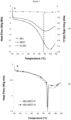
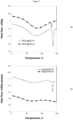
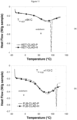
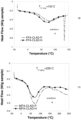
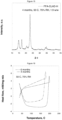
- the DSC measurements were performed with Q 2000 TA instrument (USA). The samples were first cooled from room temperature to -40°C and then heated to around 10°C higher than the melting temperature at 10°C/min heating rate. Typically, 10 mg of 1:9 drug-cellulose mixture was used per measurement. For pure substances, 1 mg of drug and 10 mg of cellulose were used per measurement. The pan containing the sample was punctured to avoid overpressure. Results are shown in Figure 1 .
- FTIR Fourier transform infrared spectroscopy
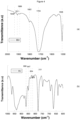
- FTIR spectrum was used to follow the interactions between the model drug and cellulose.
- the range for measurements was set from 4000 to 400 cm -1 .
- the measurements were performed with Bruker Tensor 27 FT-IR according to the pellets technique using potassium bromide (KBr).
- the amount of model drug substance in the 1:9 drug cellulose mixture was about 2 mg.
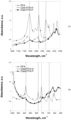
- the amount of KBr used was around 200 mg. Results are shown in Figure 4 .
- IBU-CLAD samples were prepared as described above containing various proportions of cellulose and drug: 10, 20 and 30% by weight IBU relative to the IBU-CLAD mixture. Each sample was stored at 40% relative humidity (RH) for up to 6 months. Results of XRD analyses at 1, 2, and 6 months are shown in Figure 3 .
- Naive SPF Wistar rats (HanTac:WH strain; 5-6 weeks; 100 g) were used for pharmacokinetic studies performed by oral gavage as the administration route.
- Samples of ibuprofen (3 mg) with cellulose in 1:9 weight ratio were used. The dose administered to each animal was 30 mg/kg.
- the formulations were administered by flashing the contents of the powder vial with a total of 2 ml of purified water by oral gavage.
- blood samples were collected at the following time points in relation to dosing: 0 (pre-treatment), 15, 30, 45, 60, and 120 min after dosing. At each time point 3 animals were sampled (1 animal per sample). The collected blood samples were frozen at -20°C until analysed.
- the liquid chromatography system used was a LC-10AD pump with a SIL-HTc autosampler (Shimadzu, Kyoto, Japan) and a HyPurity C18 column (3 ⁇ m particle size, 50 x 4.6 mm from Thermo Scientific, MA, USA) with a guard column (HyPurity C18 column, 3 ⁇ m particle size 10 x 4.0 mm. from Thermo Scientific, MA, USA).
- SIL-HTc autosampler Shiadzu, Kyoto, Japan
- HyPurity C18 column 3 ⁇ m particle size, 50 x 4.6 mm from Thermo Scientific, MA, USA
- a guard column HyPurity C18 column, 3 ⁇ m particle size 10 x 4.0 mm. from Thermo Scientific, MA, USA.
- SRM selected reaction monitoring
- Quantitation was performed using multiple reaction monitoring (MRM) mode to monitor product ion (m/z) transitions.
- Ibuprofen and ibuprofen-D3 SRM transitions were m/z 204.9.160.9 and m/z 207.9.163.9, respectively.
- Cone voltage (V) and collision energy (eV) were 35 and H, respectively for both ibuprofen and ibuprofen-D3.
- HPLC separation was performed using 5mM ammonium acetate as a mobile phase A (MPA) and 5mM ammonium acetate in 90:10 (v:v) acetonitrile:water as mobile phase B (MPB).
- MPA mobile phase A
- MPB mobile phase B
- the flow rate was 0.80 mL/min and the column temperature was RT °C. Isocratic elution with 45% MPB was used.
- the autosampler temperature was 4°C and the injection volume was 10 ⁇ L.
- the retention time for ibuprofen and ibuprofen-03 was 2.07 min and the total run time was 4 min.
- a basic autosampler wash 50:50 (v:v) water:methanol, was used to reduce carryover.
- Acetonitrile, methanol, ammonium acetate and formic acid were purchased from Merck (Darmstadt, Germany). The water was purified using a Milli-Q system (Millipore, Bedford, Massachusetts).
- Ibuprofen (MW206.28 g/mol) stock solution corrected for purity and salt form was prepared in duplicate (IBU#Weight#1 9.71 mg in 5ml DMSO, 9.41 mM and IBU#Weight#2 5.26 mg in 5ml DMSO, 5.0999 mM) in dimethyl sulfoxide.
- Ibuprofen-D3 (MW209.28 g/mol) stock solution (5.14 mg in 5ml DMSO, 4.912 mM) was also prepared in dimethyl sulfoxide. All stock solutions were stored at -20°C. Intermediate stock solutions in acetonitrile were kept at 4°C.
- Calibration standards were prepared by spiking blank plasma from three male Sprague-Dawley rats with ibuprofen. Calibration standard concentrations were initially selected as 5.1, 10.2, 51, 102, 510, 1020, 1530, 1785, 2040 and 5100 nM. Due to unexpectedly high concentration of ibuprofen in several samples additional calibration standards were prepared as 10200, 20400, 15300, 51000, 76500 and 100000 nM Calibration-standards were stored at -20 °C Quadratic regression analysis with 1/y weighing was performed to quantify the concentration of the standards. The determination coefficient (R2) was greater than or equal to 0.99.
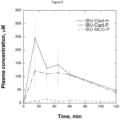
- Table 4 summarizes the results of the pharmacokinetic study in rats based on the results in Figure 6 .
- the data support the improved bioavailability and shortened peak plasma concentration time for the heated IBU-CLAD mixture.
- Table 4. IBU 30mg/kg in rats PK parameters. The results are average of 3 measurements with standard error.
- FFA and cellulose were prepared by blending the drug substance with the cellulose. Unless otherwise stated, the weight ratio between the FFA and cellulose was 1:9. The surface area of the cellulose was found to be 98.79 m 2 /g (as measured by N 2 gas adsorption technique according to the Brunauer Emmett Teller (BET) method). Typically, in a glass vial 5 mg of FFA was mixed with 45 g of the cellulose using a Vortex mixer for 15 minutes.
- BET Brunauer Emmett Teller
- Heated mixtures of FFA and cellulose were prepared by heating the physical mixture above in a sealed vial at 120 °C for 2 hours. All samples were used after 24 hrs from the time of preparation after cooling to room temperature.
- Thermal analysis was performed with TA instrument (Model Q-2000) on both cellulose-drug mixtures and pure substances,. Samples were placed inside hermetically sealed aluminium crucibles with punctured lids, in order to avoid overpressure caused by water evaporation. An empty pan was used as a reference. The analysis was conducted in the temperature range from -40°C to 150°C with a heating rate of 10°C min -1 . N 2 gas, at a flow of 50 mL min-', was applied during analysis. Initially the samples were cooled from room temperature to -40°C, then heated to 150°C and finally cooled to 25°C again. All of the samples were stored at ambient conditions for 24 hours prior to DSC measurements. For the heated cellulose-FFA mixtures the heating conditions were 120 °C for 2 hours.
- the characteristic X-ray diffraction patterns were generated using an (D8 Twin-Twin, Bruker) instrument with Bragg-Brentano geometry for both FFA, as a pure drug, and FFA in a blend with different celluloses.
- Pure FFA (5 mg) was used as the reference and 50 mg of both normal and heated samples of cellulose-FFA blends (approx. 10 wt% FFA in each sample) were scanned once during the analysis. Results are shown in Figure 8 .
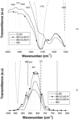
- FTIR analysis was conducted on FFA, as a pure substrate, and FFA in blend with different celluloses.
- Cellulose-FFA blends from both heated and normal, i.e. unheated, samples were analysed.
- the FTIR spectra were obtained on a Bruker Tensor 27 (Germany) with KBr pellets. A background scan on air was subtracted from all spectra using the instrument software (Opus 7.0, Bruker, Germany).
- the approximate sample content in 200 mg KBr pellets was 10 wt% (i.e. 1 wt% drug).
- the collected data was normalized with respect to C-H stretching vibration at 2897 cm -1 .
- the FTIR spectra was collected with the following parameters: 64 scans at a spectrum resolution of 4 cm -1 over a range from 4000 to 400 cm -1 . Results are shown in Figure 9 .
- Stock solution containing 10 ⁇ g mL -1 FFA was prepared by dissolving FFA in simulated intestinal fluid (SIF).
- SIF simulated intestinal fluid
- Various amounts of stock solution between 0.1 mL and 1 mL were transferred to plastic vials and frozen at -27 °C.
- the vials containing stock solution were freeze-dried overnight using a Scanvac CoolSafe 55-4 (LaboGene ApS, Lynge, Denmark).
- a total of seven working standard solutions with FFA concentration range between 0.1 and 10 ⁇ g mL -1 were prepared by dissolving the vials containing freeze-dried FFA with 1 mL of a polar solvent, consisting of Acetonitrile-DMSO (4:1, vol/vol).
- Dissolution measurements were performed with the rotating paddle technique at 37.0 ⁇ 0.5 °C and 50 rpm with SOTAX (AT7 Smart, Switzerland) dissolution apparatus.
- Simulated intestinal fluid (SIF, enzyme-free, from Sigma) was selected as the dissolution medium and prepared by diluting 20 mL of concentrated SIF with 480 mL deionized water. Normal and heated mixtures were poured to dissolution vessels with 500 mL dissolution medium and samples of 1 ml were extracted at various time points between 15 minutes and 5 hours (15 min, 30 min, 1 h, 2 h, 3h, 4h and 5 h).
- a total of seven samples with a volume of 1 mL was collected for each cellulose-FFA formulation and passed through a syringe filter into 2 ml plastic vials.
- the vials were frozen at -27 °C and further freeze-dried.
- the vials containing the freeze-dried FFA were filled with 1 mL Acetonitrile-DMSO (4:1, vol/vol) solvent and manually shaken until the collected FFA was dissolved.
- Two parallel measurements were performed for each formulation. Spectrofluorometric analysis together with previously described regression analysis was used to estimate the concentration of released FFA at different time points.
- NSAIDs such as ketoprofen, flurbiprofen, naproxen, mefenamic acid, indomethacin, pyroxicam, sulindac.
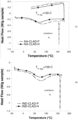
- Mixtures of drug and cellulose were prepared in the same manner as described above in respect of Example 1, i.e. for each respective active substance the mixture was heated statically to melting temperature or slightly above for 3 hours. The results of DCS measurements are shown in Figure 11 .
- Naproxen, progesterone, and ⁇ -estradiol were used as supplied by Sigma Aldrich.
- Cladophora cellulose was used as supplied by FMC Corp.
- 100 mg blends containing approximately 10% drug were prepared by mixing 10 mg drug with 90 mg of cellulose powder in 1 mL glass vials. Additionally, mixtures containing 20% (by weight) drug were made for progesterone, and mixtures containing 20% and 30% (by weight) drug were made for estradiol. The vials were sealed with plastic screw caps and vortexed for 30 seconds. Each cellulose-drug blend was analysed in both heated and unheated (normal) form. In order to form the heated cellulose-drug blends, vials containing the cellulose-drug blends were placed in a preheated oil bath for 2 hours at the same temperature as the melting point of the drug.
- drug either Naproxen, progesterone or ⁇ -estradiol
- FTIR Fourier transform infrared spectroscopy
- FTIR spectra were obtained for naproxen, progesterone and ⁇ -estradiol (each mixed with cellulose) using the processes described in Example 1.
- the approximate sample content in 200 mg KBr pellets was 10% (i.e. 1% drug).
- the collected data was normalised with respect to C-H stretching vibration at 2897 cm -1 .
- the FTIR spectra were collected with the following parameters: 32 scans at a spectrum resolution of 4 cm -1 over a range from 4000 to 400 cm -1 .
- TGA was conducted on a Mettler TG50 apparatus (10 K min -1 ; 35°C to 20°C above the melting point of the drug) on 10-20 mg samples in aluminium crucibles under a nitrogen atmosphere (60 mL min -1 ). Both normal and heated 10% mixtures were analysed and compared to the pure crystalline substance of corresponding drug content, i.e. 1-2 mg. The temperature in the furnace was continuously monitored, and the heat flow curves were collected both for heating and cooling phase to record melting or re-crystallization events.
- dissolution measurements were made on normal and heated mixtures and compared to the dissolution of the pure crystalline drug of corresponding drug content. Dissolution rate was determined by the standardized USP paddle method. Release profiles for the drug were created by spectrofluorometric analysis on samples at various time points.
- naproxen NAP
- a total of six working standard solutions with NAP concentration range between 2 and 12 ⁇ g mL -1 were prepared by dissolving the contents of the vials with 1 mL of pure acetonitrile.
- progesterone PRO the same method was used but with seven working solutions with PRO concentration range between 1.5 and 9 ⁇ g mL -1 .
- Dissolution measurements were performed using apparatus as described in Example 2. Phosphate buffer was selected as the dissolution medium. Five hundred mL of the prepared solution were used per beaker. Normal and heated mixtures were poured into the beakers containing the dissolution medium. Samples of 1 mL were extracted at various time points between 5 minutes and 6 hours. A total of twelve samples was taken per run. The contents of each sample were evaporated until all of the water had gone. The solid residue was re-dissolved in 1 mL using acetonitrile. Two parallel measurements were performed for each formulation. The dissolution rate was estimated from the average intensities of two measurements using the calibration curve as described above.
- the drug release measurements are shown in Figure 12 .
- the results show substantially accelerated release and dissolution of drug from the drug-cellulose mixtures as compared to dissolution of the pure drug. Dissolution was fastest for the drug-CLAD samples.
- Table 6 shows the enthalpies of naproxen (NAP) mixtures based on the analysis of results obtained. It is seen from Table 6 that the degree of crystallinity of NAP is suppressed in both mixtures with cellulose.
- the heated NAP-CLAD sample shows the greatest degree of amorphicity for NAP. Table 6.
- the drug release measurements are shown in Figure 13 .
- the results show accelerated release and dissolution of drug from the drug-cellulose mixtures as compared to dissolution of the pure drug. Dissolution was fastest for the drug-CLAD samples.
- the results showing accelerated drug release and dissolution for progesterone are interesting as this is evidence that such effects are potentially observable across a broad range of drug molecules (for example, progesterone does not contain a carboxylic acid group unlike most NSAIDs).
- Table 7 shows the enthalpies of progesterone (PRO) mixtures (both 10% and 20% by weight) based on the analysis of results obtained. It is seen from Table 7 that the degree of crystallinity of PRO is suppressed in all mixtures with cellulose. The two heated PRO-CLAD samples show the greatest degree of amorphicity for the drug. Table 7. Melting enthalpies of PRO in pure form and in mixtures with CLAD cellulose.
- Table 8 shows the enthalpies of ⁇ -estradiol (EST) mixtures (10, 20 and 30 wt% drug) based on the analysis of results obtained. It is seen from Table 8 that the degree of crystallinity of EST is suppressed in all mixtures with cellulose. For any given drug:cellulose ratio, the heated EST-CLAD sample showed the greater degree of amorphicity for EST. Table 8. Melting enthalpies of EST in pure form and in mixtures with CLAD cellulose.
- Heated mixtures of FFA and CLAD cellulose were prepared according to the process described in Example 2 containing 10% by weight FFA relative to the FFA-CLAD mixture. Samples were stored in gelatin capsules at 50 °C and 75% relative humidity (RH) for up to 4 months. The samples were analysed by XRD and TGA at various time points according to the methods described in Example 2. The XRD pattern obtained at 4 months is shown in Figure 15 , and the TGA results for before and after storage are shown in Figure 16 .
- TGA analysis showed that the degree of crystallinity of FFA was essentially 0% at all time points from 0 to 4 months, and thus remained significantly suppressed throughout the duration of the study.
- the XRD analysis also showed minimal evidence of an increase in the crystallinity of the FFA during storage.
Landscapes
- Health & Medical Sciences (AREA)
- Life Sciences & Earth Sciences (AREA)
- Chemical & Material Sciences (AREA)
- Veterinary Medicine (AREA)
- Public Health (AREA)
- Medicinal Chemistry (AREA)
- General Health & Medical Sciences (AREA)
- Animal Behavior & Ethology (AREA)
- Pharmacology & Pharmacy (AREA)
- Epidemiology (AREA)
- Engineering & Computer Science (AREA)
- Bioinformatics & Cheminformatics (AREA)
- Chemical Kinetics & Catalysis (AREA)
- Organic Chemistry (AREA)
- Nuclear Medicine, Radiotherapy & Molecular Imaging (AREA)
- General Chemical & Material Sciences (AREA)
- Endocrinology (AREA)
- Reproductive Health (AREA)
- Rheumatology (AREA)
- Molecular Biology (AREA)
- Gynecology & Obstetrics (AREA)
- Pain & Pain Management (AREA)
- Inorganic Chemistry (AREA)
- Diabetes (AREA)
- Pharmaceuticals Containing Other Organic And Inorganic Compounds (AREA)
- Medicinal Preparation (AREA)
- Acyclic And Carbocyclic Compounds In Medicinal Compositions (AREA)
Applications Claiming Priority (2)
| Application Number | Priority Date | Filing Date | Title |
|---|---|---|---|
| GBGB1602579.3A GB201602579D0 (en) | 2016-02-12 | 2016-02-12 | New compositions |
| PCT/GB2017/050345 WO2017137762A1 (en) | 2016-02-12 | 2017-02-10 | New compositions |
Publications (3)
| Publication Number | Publication Date |
|---|---|
| EP3413873A1 EP3413873A1 (en) | 2018-12-19 |
| EP3413873B1 true EP3413873B1 (en) | 2023-12-27 |
| EP3413873C0 EP3413873C0 (en) | 2023-12-27 |
Family
ID=55697649
Family Applications (1)
| Application Number | Title | Priority Date | Filing Date |
|---|---|---|---|
| EP17710030.2A Active EP3413873B1 (en) | 2016-02-12 | 2017-02-10 | New compositions |
Country Status (8)
| Country | Link |
|---|---|
| US (1) | US11278563B2 (enExample) |
| EP (1) | EP3413873B1 (enExample) |
| JP (2) | JP7046000B2 (enExample) |
| KR (1) | KR102828449B1 (enExample) |
| AU (1) | AU2017217331B2 (enExample) |
| ES (1) | ES2971977T3 (enExample) |
| GB (1) | GB201602579D0 (enExample) |
| WO (1) | WO2017137762A1 (enExample) |
Families Citing this family (2)
| Publication number | Priority date | Publication date | Assignee | Title |
|---|---|---|---|---|
| CN109738540A (zh) * | 2019-01-28 | 2019-05-10 | 山东鲁抗舍里乐药业有限公司 | 一种非甾体抗炎药非罗考昔含量的测定方法 |
| EP3804701A1 (de) * | 2019-10-10 | 2021-04-14 | Bayer AG | Verfahren zur herstellung einer pharmazeutischen formulierung mit kristallinen und amorphen anteilen eines wirkstoffes |
Family Cites Families (7)
| Publication number | Priority date | Publication date | Assignee | Title |
|---|---|---|---|---|
| JPH0970424A (ja) | 1995-07-04 | 1997-03-18 | Takeda Chem Ind Ltd | 粒剤の製造法 |
| DK1163234T3 (da) | 1999-03-24 | 2006-02-27 | Scherer Technologies Inc R P | Farmaceutiske formuleringer med forbedret vandoplöselighed |
| EP1401503B1 (en) | 2001-06-22 | 2007-05-09 | Pfizer Products Inc. | Pharmaceutical compositions containing a solid dispersion of a poorly-soluble drug and a solubility-enhancing polymer |
| DK1663168T3 (da) * | 2003-09-08 | 2009-06-08 | Mcneil Ab | Nikotinformuleringer og anvendelse deraf |
| CN101102753A (zh) | 2004-12-09 | 2008-01-09 | 拉格纳·Ek | 包含低结晶度纤维素的药物制剂 |
| US7834201B2 (en) | 2005-06-22 | 2010-11-16 | H. Lundbeck A/S | Crystalline base of escitalopram and orodispersible tablets comprising escitalopram base |
| EP2135601A1 (en) | 2008-06-20 | 2009-12-23 | Capsulution Nanoscience AG | Stabilization of amorphous drugs using sponge-like carrier matrices |
-
2016
- 2016-02-12 GB GBGB1602579.3A patent/GB201602579D0/en not_active Ceased
-
2017
- 2017-02-10 AU AU2017217331A patent/AU2017217331B2/en active Active
- 2017-02-10 KR KR1020187026291A patent/KR102828449B1/ko active Active
- 2017-02-10 WO PCT/GB2017/050345 patent/WO2017137762A1/en not_active Ceased
- 2017-02-10 JP JP2018542763A patent/JP7046000B2/ja active Active
- 2017-02-10 US US16/077,044 patent/US11278563B2/en active Active
- 2017-02-10 EP EP17710030.2A patent/EP3413873B1/en active Active
- 2017-02-10 ES ES17710030T patent/ES2971977T3/es active Active
-
2022
- 2022-01-06 JP JP2022001035A patent/JP2022037240A/ja not_active Withdrawn
Non-Patent Citations (1)
| Title |
|---|
| KRISHNAIAH YELLELA S.R ET AL: "Pharmaceutical Technologies for Enhancing Oral Bioavailability of Poorly Soluble Drugs", JOURNAL OF BIOEQUIVALENCE & BIOAVAILABILITY, vol. 02, no. 02, 30 March 2010 (2010-03-30), XP093058715, Retrieved from the Internet <URL:https://www.walshmedicalmedia.com/open-access/pharmaceutical-technologies-for-enhancing-oral-bioavailability-of-poorly-soluble-drugs-jbb.1000027.pdf> DOI: 10.4172/jbb.1000027 * |
Also Published As
| Publication number | Publication date |
|---|---|
| EP3413873A1 (en) | 2018-12-19 |
| JP2022037240A (ja) | 2022-03-08 |
| KR20190005826A (ko) | 2019-01-16 |
| AU2017217331A1 (en) | 2018-10-04 |
| JP2019504866A (ja) | 2019-02-21 |
| JP7046000B2 (ja) | 2022-04-01 |
| US11278563B2 (en) | 2022-03-22 |
| KR102828449B1 (ko) | 2025-07-01 |
| US20190038661A1 (en) | 2019-02-07 |
| AU2017217331B2 (en) | 2022-08-11 |
| ES2971977T3 (es) | 2024-06-10 |
| EP3413873C0 (en) | 2023-12-27 |
| WO2017137762A1 (en) | 2017-08-17 |
| GB201602579D0 (en) | 2016-03-30 |
| CA3014618A1 (en) | 2017-08-17 |
Similar Documents
| Publication | Publication Date | Title |
|---|---|---|
| PT2187741E (pt) | Formas inovadoras de éster metílico de cddo | |
| US20150004237A1 (en) | Cellulose derivatives for inhibiting crystallization of poorly water-soluble drugs | |
| CN104434805B (zh) | 一种替格瑞洛固体分散体及其制备方法 | |
| US20220265648A1 (en) | Bromocriptine Formulations | |
| JP7241807B2 (ja) | 15β-ヒドロキシ-酢酸オサテロンの結晶多形 | |
| US20220002306A1 (en) | Crystal form of upadacitinib and preparation method and use thereof | |
| Shah et al. | Quality-by-design-based development of rivaroxaban-loaded liquisolid compact tablets with improved biopharmaceutical attributes | |
| US11278563B2 (en) | Rapid release pharmaceutical formulations containing algal cellulose | |
| WO2017216584A1 (en) | New compositions | |
| Zhang et al. | The comparison of anticrystallization effects of cellulose derivatives with polyvinylpyrrolidone and poloxamer on andrographolide: In vitro and in vivo characterization | |
| CA3014618C (en) | Pharmaceutical composition comprising cellulose and an active ingredient | |
| EP2515849A1 (en) | Effervescent tablet and granule formulation comprising cefixime | |
| CN108239055B (zh) | 一种thr1442 l-天冬氨酸共晶、其制备方法及药物组合物 | |
| El-Nabarawi et al. | Impact of hydrophilic polymer solubilization on bioavailability enhancement of repaglinide by solid dispersion | |
| KR102667351B1 (ko) | 사쿠비트릴 및 아질사르탄 공형성화물, 및 이를 포함하는 약제학적 조성물 | |
| Jagtap et al. | Acrylic co-polymer and organic acid-based press coated pulsatile tablet of nifedipine using 32 factorial design: use of novel solubilizer for solubility enhancement | |
| EP3233082B1 (en) | Pharmaceutical composition comprising amorphous lenalidomide | |
| Al-Sarraf et al. | Dissolution enhancement of telmisartan by liquisolid compacts | |
| Nihei et al. | Biopharmaceutical characterization of a novel sustained‐release formulation of allopurinol with reduced nephrotoxicity | |
| EP1928425B1 (en) | Pharmaceutical formulation containing fluvastatin | |
| WO2009034409A2 (en) | Pharmaceutical compositions of rhein or diacerein | |
| CN106029063A (zh) | 包含5-{4-(氨基磺酰基)苯基}-2,2-二甲基-4-(3-氟苯基)-3(2h)-呋喃酮的药物组合物以及包含该药物组合物的胶囊制剂 | |
| Hangargekar et al. | FORMULATION AND IN-VITRO EVALUATION OF BILAYER TABLET CONTAININGZOLMITRIPTAN AND NAPROXEN | |
| TWI889121B (zh) | 包含丙酚替諾福韋或其藥學上可接受之鹽的提高穩定性的藥物組合物 | |
| KR20110115607A (ko) | 6-옥소-6,7,8,9,10,11-헥사히드로시클로헵타(c)크로멘-3-일 술파메이트 및 그의 다형체를 함유하는 고체 제약 조성물 |
Legal Events
| Date | Code | Title | Description |
|---|---|---|---|
| STAA | Information on the status of an ep patent application or granted ep patent |
Free format text: STATUS: UNKNOWN |
|
| STAA | Information on the status of an ep patent application or granted ep patent |
Free format text: STATUS: THE INTERNATIONAL PUBLICATION HAS BEEN MADE |
|
| PUAI | Public reference made under article 153(3) epc to a published international application that has entered the european phase |
Free format text: ORIGINAL CODE: 0009012 |
|
| STAA | Information on the status of an ep patent application or granted ep patent |
Free format text: STATUS: REQUEST FOR EXAMINATION WAS MADE |
|
| 17P | Request for examination filed |
Effective date: 20180808 |
|
| AK | Designated contracting states |
Kind code of ref document: A1 Designated state(s): AL AT BE BG CH CY CZ DE DK EE ES FI FR GB GR HR HU IE IS IT LI LT LU LV MC MK MT NL NO PL PT RO RS SE SI SK SM TR |
|
| AX | Request for extension of the european patent |
Extension state: BA ME |
|
| DAV | Request for validation of the european patent (deleted) | ||
| DAX | Request for extension of the european patent (deleted) | ||
| STAA | Information on the status of an ep patent application or granted ep patent |
Free format text: STATUS: EXAMINATION IS IN PROGRESS |
|
| 17Q | First examination report despatched |
Effective date: 20220207 |
|
| GRAP | Despatch of communication of intention to grant a patent |
Free format text: ORIGINAL CODE: EPIDOSNIGR1 |
|
| STAA | Information on the status of an ep patent application or granted ep patent |
Free format text: STATUS: GRANT OF PATENT IS INTENDED |
|
| INTG | Intention to grant announced |
Effective date: 20230719 |
|
| RAP1 | Party data changed (applicant data changed or rights of an application transferred) |
Owner name: VELTIO PHARMA AB |
|
| RIN1 | Information on inventor provided before grant (corrected) |
Inventor name: MIHRANYAN, ALBERT |
|
| GRAS | Grant fee paid |
Free format text: ORIGINAL CODE: EPIDOSNIGR3 |
|
| GRAA | (expected) grant |
Free format text: ORIGINAL CODE: 0009210 |
|
| STAA | Information on the status of an ep patent application or granted ep patent |
Free format text: STATUS: THE PATENT HAS BEEN GRANTED |
|
| AK | Designated contracting states |
Kind code of ref document: B1 Designated state(s): AL AT BE BG CH CY CZ DE DK EE ES FI FR GB GR HR HU IE IS IT LI LT LU LV MC MK MT NL NO PL PT RO RS SE SI SK SM TR |
|
| REG | Reference to a national code |
Ref country code: GB Ref legal event code: FG4D |
|
| REG | Reference to a national code |
Ref country code: CH Ref legal event code: EP |
|
| REG | Reference to a national code |
Ref country code: DE Ref legal event code: R096 Ref document number: 602017077884 Country of ref document: DE |
|
| REG | Reference to a national code |
Ref country code: IE Ref legal event code: FG4D |
|
| U01 | Request for unitary effect filed |
Effective date: 20240123 |
|
| U07 | Unitary effect registered |
Designated state(s): AT BE BG DE DK EE FI FR IT LT LU LV MT NL PT SE SI Effective date: 20240130 |
|
| U20 | Renewal fee for the european patent with unitary effect paid |
Year of fee payment: 8 Effective date: 20240213 |
|
| PG25 | Lapsed in a contracting state [announced via postgrant information from national office to epo] |
Ref country code: GR Free format text: LAPSE BECAUSE OF FAILURE TO SUBMIT A TRANSLATION OF THE DESCRIPTION OR TO PAY THE FEE WITHIN THE PRESCRIBED TIME-LIMIT Effective date: 20240328 |
|
| PG25 | Lapsed in a contracting state [announced via postgrant information from national office to epo] |
Ref country code: GR Free format text: LAPSE BECAUSE OF FAILURE TO SUBMIT A TRANSLATION OF THE DESCRIPTION OR TO PAY THE FEE WITHIN THE PRESCRIBED TIME-LIMIT Effective date: 20240328 |
|
| PG25 | Lapsed in a contracting state [announced via postgrant information from national office to epo] |
Ref country code: RS Free format text: LAPSE BECAUSE OF FAILURE TO SUBMIT A TRANSLATION OF THE DESCRIPTION OR TO PAY THE FEE WITHIN THE PRESCRIBED TIME-LIMIT Effective date: 20231227 Ref country code: NO Free format text: LAPSE BECAUSE OF FAILURE TO SUBMIT A TRANSLATION OF THE DESCRIPTION OR TO PAY THE FEE WITHIN THE PRESCRIBED TIME-LIMIT Effective date: 20240327 Ref country code: HR Free format text: LAPSE BECAUSE OF FAILURE TO SUBMIT A TRANSLATION OF THE DESCRIPTION OR TO PAY THE FEE WITHIN THE PRESCRIBED TIME-LIMIT Effective date: 20231227 |
|
| REG | Reference to a national code |
Ref country code: ES Ref legal event code: FG2A Ref document number: 2971977 Country of ref document: ES Kind code of ref document: T3 Effective date: 20240610 |
|
| PG25 | Lapsed in a contracting state [announced via postgrant information from national office to epo] |
Ref country code: IS Free format text: LAPSE BECAUSE OF FAILURE TO SUBMIT A TRANSLATION OF THE DESCRIPTION OR TO PAY THE FEE WITHIN THE PRESCRIBED TIME-LIMIT Effective date: 20240427 |
|
| PG25 | Lapsed in a contracting state [announced via postgrant information from national office to epo] |
Ref country code: CZ Free format text: LAPSE BECAUSE OF FAILURE TO SUBMIT A TRANSLATION OF THE DESCRIPTION OR TO PAY THE FEE WITHIN THE PRESCRIBED TIME-LIMIT Effective date: 20231227 |
|
| PG25 | Lapsed in a contracting state [announced via postgrant information from national office to epo] |
Ref country code: SK Free format text: LAPSE BECAUSE OF FAILURE TO SUBMIT A TRANSLATION OF THE DESCRIPTION OR TO PAY THE FEE WITHIN THE PRESCRIBED TIME-LIMIT Effective date: 20231227 |
|
| PG25 | Lapsed in a contracting state [announced via postgrant information from national office to epo] |
Ref country code: SM Free format text: LAPSE BECAUSE OF FAILURE TO SUBMIT A TRANSLATION OF THE DESCRIPTION OR TO PAY THE FEE WITHIN THE PRESCRIBED TIME-LIMIT Effective date: 20231227 Ref country code: SK Free format text: LAPSE BECAUSE OF FAILURE TO SUBMIT A TRANSLATION OF THE DESCRIPTION OR TO PAY THE FEE WITHIN THE PRESCRIBED TIME-LIMIT Effective date: 20231227 Ref country code: RO Free format text: LAPSE BECAUSE OF FAILURE TO SUBMIT A TRANSLATION OF THE DESCRIPTION OR TO PAY THE FEE WITHIN THE PRESCRIBED TIME-LIMIT Effective date: 20231227 Ref country code: IS Free format text: LAPSE BECAUSE OF FAILURE TO SUBMIT A TRANSLATION OF THE DESCRIPTION OR TO PAY THE FEE WITHIN THE PRESCRIBED TIME-LIMIT Effective date: 20240427 Ref country code: CZ Free format text: LAPSE BECAUSE OF FAILURE TO SUBMIT A TRANSLATION OF THE DESCRIPTION OR TO PAY THE FEE WITHIN THE PRESCRIBED TIME-LIMIT Effective date: 20231227 |
|
| PG25 | Lapsed in a contracting state [announced via postgrant information from national office to epo] |
Ref country code: PL Free format text: LAPSE BECAUSE OF FAILURE TO SUBMIT A TRANSLATION OF THE DESCRIPTION OR TO PAY THE FEE WITHIN THE PRESCRIBED TIME-LIMIT Effective date: 20231227 |
|
| PG25 | Lapsed in a contracting state [announced via postgrant information from national office to epo] |
Ref country code: PL Free format text: LAPSE BECAUSE OF FAILURE TO SUBMIT A TRANSLATION OF THE DESCRIPTION OR TO PAY THE FEE WITHIN THE PRESCRIBED TIME-LIMIT Effective date: 20231227 |
|
| PG25 | Lapsed in a contracting state [announced via postgrant information from national office to epo] |
Ref country code: MC Free format text: LAPSE BECAUSE OF FAILURE TO SUBMIT A TRANSLATION OF THE DESCRIPTION OR TO PAY THE FEE WITHIN THE PRESCRIBED TIME-LIMIT Effective date: 20231227 |
|
| REG | Reference to a national code |
Ref country code: DE Ref legal event code: R097 Ref document number: 602017077884 Country of ref document: DE |
|
| PLBE | No opposition filed within time limit |
Free format text: ORIGINAL CODE: 0009261 |
|
| STAA | Information on the status of an ep patent application or granted ep patent |
Free format text: STATUS: NO OPPOSITION FILED WITHIN TIME LIMIT |
|
| 26N | No opposition filed |
Effective date: 20240930 |
|
| U20 | Renewal fee for the european patent with unitary effect paid |
Year of fee payment: 9 Effective date: 20250228 |
|
| PG25 | Lapsed in a contracting state [announced via postgrant information from national office to epo] |
Ref country code: CY Free format text: LAPSE BECAUSE OF FAILURE TO SUBMIT A TRANSLATION OF THE DESCRIPTION OR TO PAY THE FEE WITHIN THE PRESCRIBED TIME-LIMIT; INVALID AB INITIO Effective date: 20170210 |
|
| PG25 | Lapsed in a contracting state [announced via postgrant information from national office to epo] |
Ref country code: HU Free format text: LAPSE BECAUSE OF FAILURE TO SUBMIT A TRANSLATION OF THE DESCRIPTION OR TO PAY THE FEE WITHIN THE PRESCRIBED TIME-LIMIT; INVALID AB INITIO Effective date: 20170210 |
|
| PG25 | Lapsed in a contracting state [announced via postgrant information from national office to epo] |
Ref country code: TR Free format text: LAPSE BECAUSE OF FAILURE TO SUBMIT A TRANSLATION OF THE DESCRIPTION OR TO PAY THE FEE WITHIN THE PRESCRIBED TIME-LIMIT Effective date: 20231227 |
|
| U20 | Renewal fee for the european patent with unitary effect paid |
Year of fee payment: 10 Effective date: 20260109 |
|
| REG | Reference to a national code |
Ref country code: CH Ref legal event code: U11 Free format text: ST27 STATUS EVENT CODE: U-0-0-U10-U11 (AS PROVIDED BY THE NATIONAL OFFICE) Effective date: 20260301 |
|
| PGFP | Annual fee paid to national office [announced via postgrant information from national office to epo] |
Ref country code: GB Payment date: 20260109 Year of fee payment: 10 |
|
| PGFP | Annual fee paid to national office [announced via postgrant information from national office to epo] |
Ref country code: IE Payment date: 20260109 Year of fee payment: 10 |
|
| PGFP | Annual fee paid to national office [announced via postgrant information from national office to epo] |
Ref country code: CH Payment date: 20260301 Year of fee payment: 10 |
|
| PGFP | Annual fee paid to national office [announced via postgrant information from national office to epo] |
Ref country code: ES Payment date: 20260511 Year of fee payment: 10 |