EP3411064B1 - Methods of producing viruses - Google Patents
Methods of producing viruses Download PDFInfo
- Publication number
- EP3411064B1 EP3411064B1 EP17704811.3A EP17704811A EP3411064B1 EP 3411064 B1 EP3411064 B1 EP 3411064B1 EP 17704811 A EP17704811 A EP 17704811A EP 3411064 B1 EP3411064 B1 EP 3411064B1
- Authority
- EP
- European Patent Office
- Prior art keywords
- virus
- cell culture
- cell
- nodavirus
- infected
- Prior art date
- Legal status (The legal status is an assumption and is not a legal conclusion. Google has not performed a legal analysis and makes no representation as to the accuracy of the status listed.)
- Active
Links
Images

Classifications
-
- C—CHEMISTRY; METALLURGY
- C12—BIOCHEMISTRY; BEER; SPIRITS; WINE; VINEGAR; MICROBIOLOGY; ENZYMOLOGY; MUTATION OR GENETIC ENGINEERING
- C12N—MICROORGANISMS OR ENZYMES; COMPOSITIONS THEREOF; PROPAGATING, PRESERVING, OR MAINTAINING MICROORGANISMS; MUTATION OR GENETIC ENGINEERING; CULTURE MEDIA
- C12N5/00—Undifferentiated human, animal or plant cells, e.g. cell lines; Tissues; Cultivation or maintenance thereof; Culture media therefor
- C12N5/06—Animal cells or tissues; Human cells or tissues
- C12N5/0602—Vertebrate cells
-
- C—CHEMISTRY; METALLURGY
- C12—BIOCHEMISTRY; BEER; SPIRITS; WINE; VINEGAR; MICROBIOLOGY; ENZYMOLOGY; MUTATION OR GENETIC ENGINEERING
- C12N—MICROORGANISMS OR ENZYMES; COMPOSITIONS THEREOF; PROPAGATING, PRESERVING, OR MAINTAINING MICROORGANISMS; MUTATION OR GENETIC ENGINEERING; CULTURE MEDIA
- C12N2510/00—Genetically modified cells
- C12N2510/02—Cells for production
-
- C—CHEMISTRY; METALLURGY
- C12—BIOCHEMISTRY; BEER; SPIRITS; WINE; VINEGAR; MICROBIOLOGY; ENZYMOLOGY; MUTATION OR GENETIC ENGINEERING
- C12N—MICROORGANISMS OR ENZYMES; COMPOSITIONS THEREOF; PROPAGATING, PRESERVING, OR MAINTAINING MICROORGANISMS; MUTATION OR GENETIC ENGINEERING; CULTURE MEDIA
- C12N2720/00—MICROORGANISMS OR ENZYMES; COMPOSITIONS THEREOF; PROPAGATING, PRESERVING, OR MAINTAINING MICROORGANISMS; MUTATION OR GENETIC ENGINEERING; CULTURE MEDIA dsRNA viruses
- C12N2720/00011—Details
- C12N2720/10011—Birnaviridae
- C12N2720/10034—Use of virus or viral component as vaccine, e.g. live-attenuated or inactivated virus, VLP, viral protein
-
- C—CHEMISTRY; METALLURGY
- C12—BIOCHEMISTRY; BEER; SPIRITS; WINE; VINEGAR; MICROBIOLOGY; ENZYMOLOGY; MUTATION OR GENETIC ENGINEERING
- C12N—MICROORGANISMS OR ENZYMES; COMPOSITIONS THEREOF; PROPAGATING, PRESERVING, OR MAINTAINING MICROORGANISMS; MUTATION OR GENETIC ENGINEERING; CULTURE MEDIA
- C12N2720/00—MICROORGANISMS OR ENZYMES; COMPOSITIONS THEREOF; PROPAGATING, PRESERVING, OR MAINTAINING MICROORGANISMS; MUTATION OR GENETIC ENGINEERING; CULTURE MEDIA dsRNA viruses
- C12N2720/00011—Details
- C12N2720/10011—Birnaviridae
- C12N2720/10051—Methods of production or purification of viral material
-
- C—CHEMISTRY; METALLURGY
- C12—BIOCHEMISTRY; BEER; SPIRITS; WINE; VINEGAR; MICROBIOLOGY; ENZYMOLOGY; MUTATION OR GENETIC ENGINEERING
- C12N—MICROORGANISMS OR ENZYMES; COMPOSITIONS THEREOF; PROPAGATING, PRESERVING, OR MAINTAINING MICROORGANISMS; MUTATION OR GENETIC ENGINEERING; CULTURE MEDIA
- C12N2720/00—MICROORGANISMS OR ENZYMES; COMPOSITIONS THEREOF; PROPAGATING, PRESERVING, OR MAINTAINING MICROORGANISMS; MUTATION OR GENETIC ENGINEERING; CULTURE MEDIA dsRNA viruses
- C12N2720/00011—Details
- C12N2720/10011—Birnaviridae
- C12N2720/10061—Methods of inactivation or attenuation
-
- C—CHEMISTRY; METALLURGY
- C12—BIOCHEMISTRY; BEER; SPIRITS; WINE; VINEGAR; MICROBIOLOGY; ENZYMOLOGY; MUTATION OR GENETIC ENGINEERING
- C12N—MICROORGANISMS OR ENZYMES; COMPOSITIONS THEREOF; PROPAGATING, PRESERVING, OR MAINTAINING MICROORGANISMS; MUTATION OR GENETIC ENGINEERING; CULTURE MEDIA
- C12N2770/00—MICROORGANISMS OR ENZYMES; COMPOSITIONS THEREOF; PROPAGATING, PRESERVING, OR MAINTAINING MICROORGANISMS; MUTATION OR GENETIC ENGINEERING; CULTURE MEDIA ssRNA viruses positive-sense
- C12N2770/00011—Details
- C12N2770/30011—Nodaviridae
- C12N2770/30034—Use of virus or viral component as vaccine, e.g. live-attenuated or inactivated virus, VLP, viral protein
-
- C—CHEMISTRY; METALLURGY
- C12—BIOCHEMISTRY; BEER; SPIRITS; WINE; VINEGAR; MICROBIOLOGY; ENZYMOLOGY; MUTATION OR GENETIC ENGINEERING
- C12N—MICROORGANISMS OR ENZYMES; COMPOSITIONS THEREOF; PROPAGATING, PRESERVING, OR MAINTAINING MICROORGANISMS; MUTATION OR GENETIC ENGINEERING; CULTURE MEDIA
- C12N2770/00—MICROORGANISMS OR ENZYMES; COMPOSITIONS THEREOF; PROPAGATING, PRESERVING, OR MAINTAINING MICROORGANISMS; MUTATION OR GENETIC ENGINEERING; CULTURE MEDIA ssRNA viruses positive-sense
- C12N2770/00011—Details
- C12N2770/30011—Nodaviridae
- C12N2770/30051—Methods of production or purification of viral material
-
- C—CHEMISTRY; METALLURGY
- C12—BIOCHEMISTRY; BEER; SPIRITS; WINE; VINEGAR; MICROBIOLOGY; ENZYMOLOGY; MUTATION OR GENETIC ENGINEERING
- C12N—MICROORGANISMS OR ENZYMES; COMPOSITIONS THEREOF; PROPAGATING, PRESERVING, OR MAINTAINING MICROORGANISMS; MUTATION OR GENETIC ENGINEERING; CULTURE MEDIA
- C12N2796/00—Viruses not covered by groups C12N2710/00 - C12N2795/00
Definitions
- the present invention relates to methods for producing and propagating viruses, in particular fish viruses.
- the invention also relates to cell cultures for use in methods for producing and propagating viruses for vaccines comprising viruses prepared by the methods thereof.
- IPNV infectious pancreatic necrosis virus
- PCNV pillar cell necrosis virus
- VNN viral nervous necrosis
- SPDV salmonid pancreatic disease virus
- IHNV infectious hematopoietic necrosis virus
- VHSV viral haemorrhagic septicaemia virus
- IHHNV infectious hypodermal and hematopoietic necrosis virus
- WSV white spot virus
- TSV Taura syndrome virus
- HPV hepatopancreatic parvovirus
- infectious salmon anaemia virus (ISAV) as well as others in the following families: Birnaviridae ; Rhabdoviridae ; Iridoviridae; Reoviridae; Ortomixovirus ; Paramixovirus ; Arterivirus; and Picornavirus.
- Methods of vaccine manufacture known in the art include use of embryonic eggs (e.g. bird embryos), cell (tissue) cultures (TC), live animal inoculation and/or use of transgenic animals. Investigational methods using plant, insect cells or bacteria cultures are also known.
- EPC epithelioma papulosum cyprinid
- BF-2 bluegill fry caudal trunk
- GF-1 grouper Epinephelus coioides
- SSN-1 striped snakehead fry
- SAF-1 gilt headed seabream caudal fin
- RTG-2 rainbow trout gonad 2
- CHSE-214 Chinook salmon embryonic cells
- ANK Asian grouper strain K
- the present invention provides improved methods of producing and propagating viruses which overcome some of the problems in the prior art.
- the first aspect of the present disclosure provides a method of propagating a virus comprising the steps:
- the cell culture may comprise a mixed cell line, i.e. a mixture of two or more cell lines, or a single cell line.
- the Japanese eel cell culture may comprise a single cell type or a mixture of two or more cell types.
- the Japanese eel cell culture may comprise an epithelial cell and/or a fibroblast cell.
- the cell culture comprises an epithelial cell and a fibroblast cell.
- the cell culture is the cell culture derived from Anguilla japonica designated Anguilla japonica-K deposited by the Applicant at the European Collection of Authenticated Cell Cultures (ECACC) under accession number 16062701.
- Anguilla japonica A. japonica
- Japanese eel refers to a species of anguillid eel. This is commonly found in Japan, China, Taiwan and Vietnam and is a catadromous fish, meaning that it spawns in the sea but lives partly in freshwater.
- Anguilla japonica-K (AJK), or alternatively "Anguilla genus K”
- AJK Anguilla japonica-K
- Anguilla genus K is the name given to the novel cell culture according to the present invention.
- the infected cell culture may be incubated at a temperature of between 10 and 30°C, more preferably between 15 and 28°C. It will be appreciated that the optimum incubation temperature will depend on the type and strain of the virus that is to be propagated. For example, where the virus is IPNV, the culture temperature is preferably around 15°C. For example, where the virus is nodavirus, such as betanodavirus, the culture temperature is preferably around 28°C.
- the present inventors have found that tissues collected from Anguilla japonica can be cultivated in vitro and unexpectedly form a viable cell culture for the production and propagation of viruses at surprisingly high yields. It was also surprising to observe that the cell culture was able to produce and propagate these unexpectedly high viral yields at lower incubation temperatures than commonly observed for other cell lines or cell cultures used in the field. For the purposes of the present invention, the cell culture has been called Anguilla japonica-K.
- the virus is a fish virus.
- a "fish virus” is any virus that is capable of causing symptoms or disease in fish.
- the virus may be a RNA virus or a DNA virus.
- the virus is a RNA virus.
- the virus is a double-stranded RNA virus.
- the virus is a single-stranded RNA virus, for example a positive-sense single-stranded RNA virus.
- the virus may be a virus of a family selected from the group consisting of: Nodaviridae; Birnaviridae ; Togaviridae; Rhabdoviridae ; Iridoviridae; Reoviridae ; Ortomixovirus; Paramixovirus ; Arterivirus; Picornavirus; Nimaviridae; Dicistroviridae; Parvoviridae ; and Orthomyxoviridae.
- the virus may be a virus of a family selected from the group consisting of: Nodaviridae; Birnaviridae; Togaviridae; Rhabdoviridae ; Iridoviridae; Reoviridae ; Ortomixovirus; Paramixovirus ; Arterivirus; Picornavirus; Nimaviridae; Dicistroviridae; Parvoviridae; and Orthomyxoviridae.
- the virus may be a virus of a genus selected from the group consisting of: Alphanodavirus; Betanodavirus; Aquabirnavirus ; Avibirnavirus; Blosnavirus; Entomobirnavirus; Alphavirus; Rubivirus; Novirhabdovirus ; Brevidensovirus ; Whispovirus ; Aparavirus; Brevidensovirus ; and Isavirus.
- the virus may be any fish virus known to the skilled person, some of which include infectious pancreatic necrosis virus (IPNV), pillar cell necrosis virus (PCNV), nodavirus, salmonid pancreatic disease virus (SPDV), infectious hematopoietic necrosis virus (IHNV), viral haemorrhagic septicaemia virus (VHSV), infectious hypodermal and hematopoietic necrosis virus (IHHNV), shrimp white spot virus (WSV), Taura syndrome virus (TSV), hepatopancreatic parvovirus (HPV), and infectious salmon anaemia virus (ISAV).
- IPNV infectious pancreatic necrosis virus
- PCNV pillar cell necrosis virus
- SPDV salmonid pancreatic disease virus
- IHNV infectious hematopoietic necrosis virus
- VHSV viral haemorrhagic septicaemia virus
- IHHNV infectious hypodermal and hematopoietic necrosis virus
- WSV white spot virus
- the virus is one selected from the group: nodavirus; Infectious Pancreatic Necrosis virus (IPNV); and Salmon Pancreas Disease Virus (SPDV).
- the virus may be a recombinant virus.
- the fish virus is capable of being propagated in the cell culture according to the present invention.
- recombinant virus refers to a virus produced by recombining pieces of DNA e.g. using recombinant DNA. The recombination is effected by human intervention. The term may also refer to naturally occurring recombination between virus genomes in cell infected by more than one virus strain, e.g. by homologous crossing over of nucleic acid strands or by re-assortment of genomic segments.
- the cell culture is infected with viral stock at a multiplicity of infection (MOI) of between 0.1 and 10.
- MOI refers to the ratio of agents (e.g. phage or more generally virus, bacteria) to the number of infection targets (e.g. cells).
- agents e.g. phage or more generally virus, bacteria
- the multiplicity of infection or MOI is the ratio of the number of virus particles to the number of target cells present in a defined space.
- the agent is a fish virus and the target is an Anguilla japonica-K cell.
- the Anguilla japonica-K cells may be cultured at 30°C with L-15 medium (Invitrogen) supplemented with 10% L-glutamine and 1 ⁇ L/mL of gentamicin, 7.5% foetal bovine serum (FBS). It will be appreciated that the culturing conditions e.g. media may vary depending on the virus that is to be propagated.
- L-15 medium Invitrogen
- FBS foetal bovine serum
- the Anguilla japonica-K cells may be cultured at 29°C with L-15 medium (Invitrogen) supplemented with 10% L-glutamine, 1 ⁇ L/mL of gentamicin and 7.5% foetal bovine serum (FBS). It will be appreciated that the culturing conditions e.g. media may vary depending on the virus that is to be propagated.
- L-15 medium Invitrogen
- FBS foetal bovine serum
- the Anguilla japonica-K cells may be cultured at 28°C with L-15 medium (Invitrogen) supplemented with 10% L-glutamine, 1 ⁇ L/mL of gentamicin and 7.5% foetal bovine serum (FBS).
- L-15 medium Invitrogen
- FBS foetal bovine serum
- the Anguilla japonica-K cells may be cultured at 27.5°C with L-15 medium (Invitrogen) supplemented with 10% L-glutamine, 1 ⁇ L/mL of gentamicin and 7.5% foetal bovine serum (FBS). It will be appreciated that the culturing conditions e.g. media may vary depending on the virus that is to be propagated.
- L-15 medium Invitrogen
- FBS foetal bovine serum
- the virus is harvested at a final titre between about 2 x 10 6 TCID 50 /ml to about 2 x 10 11 TCID 50 /ml.
- the final titre is at least about 2 x 10 6 TCID 50 /ml.
- the final titre is at least about 2 x 10 7 TCID 50 /ml, at least about 2 x 10 8 TCID 50 /ml, at least about 2 x 10 9 TCID 50 /ml or at least about 2 x 10 10 TCID 50 /ml. It will be appreciated that the final titre that is harvested will depend on factors such as the virus type and strain.
- Titre in the context of the present invention would be understood to mean the effective concentration of virus. Titre is commonly measured in TCID 50 /ml (50% Tissue Culture Infective Dose) i.e. the amount of virus required to kill 50% of infected hosts or to produce a cytopathic effect (CPE) in 50% of inoculated tissue culture cells.
- TCID 50 /ml 50% Tissue Culture Infective Dose
- CPE cytopathic effect
- final titre refers to the concentration of virus which has been harvested following full CPE by centrifugation of the suspension at for example 2500xg or more followed by recovery of the supernatant.
- the virus is harvested when a total cytopathic effect is observed in the cells.
- the virus is harvested from a supernatant and/or lysed cells.
- CPE cytopathic effect
- morphological changes are brought about as a consequence of viral replication which may be accompanied by accumulation of new viral particles in the cell or release of new viral particles in the supernatant.
- the second aspect of the present disclosure provides a cell culture suitable for the production of a virus, wherein the cell culture is a Japanese eel cell culture.
- the Japanese eel cell culture may comprise a single cell type or a mixture of two or more cell types.
- the Japanese eel cell culture may comprise an epithelial cell and/or a fibroblast cell.
- the cell culture comprises an epithelial cell and a fibroblast cell.
- the Japanese eel cell culture is the cell culture designated Anguilla japonica-K deposited with the European Collection of Authenticated Cell Cultures (ECACC) with accession number 16062701.
- ECACC European Collection of Authenticated Cell Cultures
- the virus is a fish virus.
- the virus may be a RNA virus or a DNA virus.
- the virus is a RNA virus.
- the virus is a double-stranded RNA virus.
- the virus is a single-stranded RNA virus, for example a positive-sense single-stranded RNA virus.
- the virus may be a virus of a family selected from the group consisting of: Nodaviridae; Birnaviridae ; Togaviridae; Rhabdoviridae ; Iridoviridae; Reoviridae ; Ortomixovirus; Paramixovirus; Arterivirus; Picornavirus; Nimaviridae; Dicistroviridae; Parvoviridae; and Orthomyxoviridae.
- the virus may be a virus of a genus selected from the group consisting of: Alphanodavirus; Betanodavirus; Aquabirnavirus; Avibirnavirus; Blosnavirus; Entomobirnavirus; Alphavirus; Rubivirus; Novirhabdovirus ; Brevidensovirus ; Whispovirus ; Aparavirus; Brevidensovirus ; and Isavirus.
- the virus may be any fish virus known to the skilled person, some of which include infectious pancreatic necrosis (IPNV), pillar cell necrosis virus (PCNV), nodavirus, salmonid pancreatic disease virus (SPDV), infectious hematopoietic necrosis virus (IHNV), viral haemorrhagic septicaemia virus (VHSV), infectious hypodermal and hematopoietic necrosis virus (IHHNV), shrimp white spot virus (WSV), Taura syndrome virus (TSV), hepatopancreatic parvovirus (HPV), infectious salmon anaemia virus (ISAV).
- IPNV infectious pancreatic necrosis
- PCNV pillar cell necrosis virus
- SPDV salmonid pancreatic disease virus
- IHNV infectious hematopoietic necrosis virus
- VHSV viral haemorrhagic septicaemia virus
- IHHNV infectious hypodermal and hematopoietic necrosis virus
- WSV white spot virus
- the virus may be one selected from the group: nodavirus; infectious pancreatic necrosis virus (IPNV); and salmon pancreas disease virus (SPDV).
- IPNV infectious pancreatic necrosis virus
- SPDV salmon pancreas disease virus
- the virus may be a recombinant virus.
- the fish virus is capable of being propagated in the cell culture according to the present invention.
- the third aspect of the present disclosure provides use of a Japanese eel cell culture to multiply a viral stock.
- viral stock would be understood by the skilled person and generally refers to a solution comprising said virus.
- the Japanese eel cell culture may comprise a single cell type or a mixture of two or more cell types.
- the Japanese eel cell culture may comprise an epithelial cell and/or a fibroblast cell.
- the cell culture comprises an epithelial cell and a fibroblast cell.
- the Japanese eel cell culture is the cell culture designated Anguilla japonica-K deposited with the European Collection of Authenticated Cell Cultures (ECACC) with accession number 16062701.
- ECACC European Collection of Authenticated Cell Cultures
- the virus is a fish virus.
- the virus may be a RNA virus or a DNA virus.
- the virus may be a virus of a family selected from the group consisting of: Nodaviridae; Birnaviridae ; Togaviridae; Rhabdoviridae ; Iridoviridae; Reoviridae ; Ortomixovirus; Paramixovirus ; Arterivirus; Picornavirus ; Nimaviridae; Dicistroviridae; Parvoviridae ; and Orthomyxoviridae.
- the virus may be a virus of a family selected from the group consisting of: Nodaviridae; Birnaviridae ; Togaviridae; Rhabdoviridae ; Iridoviridae; Reoviridae; Ortomixovirus; Paramixovirus; Arterivirus; Picornavirus; Nimaviridae ; Dicistroviridae; Parvoviridae ; and Orthomyxoviridae.
- the virus may be a virus of a genus selected from the group consisting of: Alphanodavirus; Betanodavirus; Aquabirnavirus ; Avibirnavirus; Blosnavirus ; Entomobirnavirus; Alphavirus; Rubivirus; Novirhabdovirus ; Brevidensovirus; Whispovirus ; Aparavirus; Brevidensovirus; and Isavirus.
- the virus may be any fish virus known to the skilled person, some of which include infectious pancreatic necrosis (IPNV), pillar cell necrosis virus (PCNV), Nodavirus, salmonid pancreatic disease virus (SPDV), infectious hematopoietic necrosis virus (IHNV), viral haemorrhagic septicaemia virus (VHSV), infectious hypodermal and hematopoietic necrosis virus (IHHNV), shrimp white spot virus (WSV), Taura syndrome virus (TSV), hepatopancreatic parvovirus (HPV), infectious salmon anemia virus (ISAV).
- IPNV infectious pancreatic necrosis
- PCNV pillar cell necrosis virus
- SPDV salmonid pancreatic disease virus
- IHNV infectious hematopoietic necrosis virus
- VHSV viral haemorrhagic septicaemia virus
- IHHNV infectious hypodermal and hematopoietic necrosis virus
- WSV white spot virus
- TSV
- the virus may be one selected from the group: nodavirus; Infectious Pancreatic Necrosis Virus (IPNV); and Salmon Pancreas Disease Virus (SPDV).
- IPNV Infectious Pancreatic Necrosis Virus
- SPDV Salmon Pancreas Disease Virus
- the virus may be a recombinant virus.
- the fish virus is capable of being propagated in the cell culture according to the present invention.
- the fourth aspect of the present disclosure provides an isolated Japanese eel cell infected with a virus.
- the Japanese eel cell may be an epithelial cell or a fibroblast cell.
- the Japanese eel cell is from the cell culture designated Anguilla japonica-K deposited with the European Collection of Authenticated Cell Cultures (ECACC) with accession number 16062701.
- ECACC European Collection of Authenticated Cell Cultures
- the virus is a fish virus.
- the virus may be a RNA virus or a DNA virus.
- the virus is a RNA virus.
- the virus is a double-stranded RNA virus.
- the virus is a single-stranded RNA virus, for example a positive-sense single-stranded RNA virus.
- the virus may be a virus of a family selected from the group consisting of: Nodaviridae; Birnaviridae ; Togaviridae; Rhabdoviridae ; Iridoviridae; Reoviridae ; Ortomixovirus; Paramixovirus ; Arterivirus; Picornavirus ; Nimaviridae; Dicistroviridae; Parvoviridae ; and Orthomyxoviridae.
- the virus may be a virus of a family selected from the group consisting of: Nodaviridae; Birnaviridae ; Togaviridae; Rhabdoviridae ; Iridoviridae; Reoviridae; Ortomixovirus; Paramixovirus; Arterivirus; Picornavirus; Nimaviridae; Dicistroviridae; Parvoviridae; and Orthomyxoviridae.
- the virus may be a virus of a genus selected from the group consisting of: Alphanodavirus; Betanodavirus; Aquabirnavirus ; Avibirnavirus; Blosnavirus ; Entomobirnavirus; Alphavirus; Rubivirus; Novirhabdovirus; Brevidensovirus; Whispovirus ; Aparavirus; Brevidensovirus; and Isavirus.
- the virus may be any fish virus known to the skilled person, some of which include infectious pancreatic necrosis virus (IPNV), pillar cell necrosis virus (PCNV), nodavirus, salmonid pancreatic disease virus (SPDV), infectious hematopoietic necrosis virus (IHNV), viral haemorrhagic septicaemia virus (VHSV), infectious hypodermal and hematopoietic necrosis virus (IHHNV), shrimp white spot virus (WSV), Taura syndrome virus (TSV), hepatopancreatic parvovirus (HPV), and infectious salmon anaemia virus (ISAV).
- IPNV infectious pancreatic necrosis virus
- PCNV pillar cell necrosis virus
- SPDV salmonid pancreatic disease virus
- IHNV infectious hematopoietic necrosis virus
- VHSV viral haemorrhagic septicaemia virus
- IHHNV infectious hypodermal and hematopoietic necrosis virus
- WSV white spot virus
- the virus is one selected from the group: nodavirus; Infectious Pancreatic Necrosis virus (IPNV); and Salmon Pancreas Disease Virus (SPDV).
- the virus may be a recombinant virus.
- the fish virus is capable of being propagated in the cell culture according to the present invention.
- the fifth aspect of the present disclosure provides a vaccine comprising a virus produced by a method according to the invention, for use in the prophylaxis or treatment of disease in a fish.
- the virus is in an inactivated form.
- the virus is present at a titre greater than 1 x 10 6 TCID 50 /ml, greater than 1 x 10 7 TCID 50 /ml, greater than 1 x 10 8 TCID 50 /ml, greater than 1 x 10 9 TCID 50 /ml, or greater than 1 x 10 10 TCID 50 /ml.
- Cell-based vaccines have a number of advantages over egg-based vaccines which include faster production times, easy isolation of the virus and avoidance of egg-based allergy reactions. Furthermore, cell lines and cultures can be grown in synthetic media which minimises the risks associated with animal serum. However, disadvantages of cell-based methods include increased cost and reduced viral yields.
- the cell culture of the present invention provides improvements to existing cell-based methods for producing fish vaccines.
- the sixth aspect of the present disclosure provides a kit for propagation of a virus, the kit comprising a Japanese eel cell culture and instructions for use.
- the Japanese eel cell culture may comprise a single cell type or a mixture of two or more cell types.
- the Japanese eel cell culture may comprise an epithelial cell and/or a fibroblast cell.
- the cell culture comprises an epithelial cell and a fibroblast cell.
- the cell culture is the cell culture designated Anguilla japonica-K deposited with the European Collection of Authenticated Cell Cultures (ECACC) with accession number 16062701.
- ECACC European Collection of Authenticated Cell Cultures
- the virus is a fish virus.
- the virus may be a RNA virus or a DNA virus.
- the virus is a RNA virus.
- the virus is a double-stranded RNA virus.
- the virus is a single-stranded RNA virus, for example a positive-sense single-stranded RNA virus.
- the virus may be a virus of a family selected from the group consisting of: Nodaviridae; Birnaviridae ; Togaviridae; Rhabdoviridae ; Iridoviridae; Reoviridae ; Ortomixovirus ; Paramixovirus ; Arterivirus; Picornavirus ; Nimaviridae; Dicistroviridae; Parvoviridae ; and Orthomyxoviridae.
- the virus may be a virus of a family selected from the group consisting of: Nodaviridae; Birnaviridae; Togaviridae; Rhabdoviridae ; Iridoviridae; Reoviridae; Ortomixovirus ; Paramixovirus ; Arterivirus; Picornavirus; Nimaviridae; Dicistroviridae; Parvoviridae; and Orthomyxoviridae.
- the virus may be a virus of a genus selected from the group consisting of: Alphanodavirus; Betanodavirus; Aquabirnavirus ; Avibirnavirus; Blosnavirus ; Entomobirnavirus; Alphavirus; Rubivirus; Novirhabdovirus ; Brevidensovirus; Whispovirus ; Aparavirus; Brevidensovirus; and Isavirus.
- the virus may be any fish virus known to the skilled person, some of which include infectious pancreatic necrosis virus (IPNV), pillar cell necrosis virus (PCNV), nodavirus, salmonid pancreatic disease virus (SPDV), infectious hematopoietic necrosis virus (IHNV), viral haemorrhagic septicaemia virus (VHSV), infectious hypodermal and hematopoietic necrosis virus (IHHNV), shrimp white spot virus (WSV), Taura syndrome virus (TSV), hepatopancreatic parvovirus (HPV), and infectious salmon anaemia virus (ISAV).
- IPNV infectious pancreatic necrosis virus
- PCNV pillar cell necrosis virus
- SPDV salmonid pancreatic disease virus
- IHNV infectious hematopoietic necrosis virus
- VHSV viral haemorrhagic septicaemia virus
- IHHNV infectious hypodermal and hematopoietic necrosis virus
- WSV white spot virus
- the virus is one selected from the group: nodavirus; Infectious Pancreatic Necrosis virus (IPNV); and Salmon Pancreas Disease Virus (SPDV).
- the virus may be a recombinant virus.
- the fish virus is capable of being propagated in the cell culture according to the present invention.
- the seventh aspect of the present disclosure provides a method of producing a virus comprising the steps:
- the Japanese eel cell culture may comprise a single cell type or a mixture of two or more cell types.
- the Japanese eel cell culture may comprise an epithelial cell and/or a fibroblast cell.
- the cell culture comprises an epithelial cell and a fibroblast cell.
- the Japanese eel cell culture is the cell culture designated Anguilla japonica-K deposited with the European Collection of Authenticated Cell Cultures (ECACC) with accession number 16062701.
- the virus is a fish virus.
- the virus is a RNA virus.
- the virus is a double-stranded RNA virus.
- the virus is a single-stranded RNA virus, for example a positive-sense single-stranded RNA virus.
- the virus may be a virus of a family selected from the group consisting of: Nodaviridae; Birnaviridae ; Togaviridae; Rhabdoviridae ; Iridoviridae; Reoviridae ; Ortomixovirus ; Paramixovirus ; Arterivirus; Picornavirus; Nimaviridae; Dicistroviridae; Parvoviridae ; and Orthomyxoviridae.
- the virus may be a virus of a family selected from the group consisting of: Nodaviridae; Birnaviridae; Togaviridae; Rhabdoviridae ; Iridoviridae; Reoviridae; Ortomixovirus; Paramixovirus; Arterivirus; Picornavirus; Nimaviridae; Dicistroviridae; Parvoviridae; and Orthomyxoviridae.
- the virus may be a virus of a genus selected from the group consisting of: Alphanodavirus; Betanodavirus; Aquabirnavirus ; Avibirnavirus; Blosnavirus; Entomobirnavirus; Alphavirus; Rubivirus; Novirhabdovirus ; Brevidensovirus ; Whispovirus ; Aparavirus; Brevidensovirus; and Isavirus.
- the virus may be any fish virus known to the skilled person, some of which include infectious pancreatic necrosis virus (IPNV), pillar cell necrosis virus (PCNV), nodavirus, salmonid pancreatic disease virus (SPDV), infectious hematopoietic necrosis virus (IHNV), viral haemorrhagic septicaemia virus (VHSV), infectious hypodermal and hematopoietic necrosis virus (IHHNV), shrimp white spot virus (WSV), Taura syndrome virus (TSV), hepatopancreatic parvovirus (HPV), and infectious salmon anaemia virus (ISAV).
- IPNV infectious pancreatic necrosis virus
- PCNV pillar cell necrosis virus
- SPDV salmonid pancreatic disease virus
- IHNV infectious hematopoietic necrosis virus
- VHSV viral haemorrhagic septicaemia virus
- IHHNV infectious hypodermal and hematopoietic necrosis virus
- WSV white spot virus
- the virus is one selected from the group: nodavirus; Infectious Pancreatic Necrosis virus (IPNV); and Salmon Pancreas Disease Virus (SPDV).
- the virus may be a recombinant virus.
- the fish virus is capable of being propagated in the cell culture according to the present invention.
- the cell culture is transduced with viral stock at a Multiplicity of Infection (MOI) of between 0.05 and 10, between 0.1 and 10 or between 0.1 and 1. It will be appreciated that the MOI will depend on factors such as the virus type and strain.
- MOI Multiplicity of Infection
- the virus is recovered at a final titre of the virus is between about 2 x 10 6 TCID 50 /ml and about 2 x 10 11 TCID 50 /ml.
- the final titre is at least about 2 x 10 6 TCID 50 /ml.
- the final titre is at least about 2 x 10 7 TCID 50 /ml, at least about 2 x 10 8 TCID 50 /ml, at least about 2 x 10 9 TCID 50 /ml or at least about 2 x 10 10 TCID 50 /ml. It will be appreciated that the final titre that is harvested will depend on factors such as the virus type and strain.
- the virus is harvested when a total cytopathic effect (CPE) is observed in the cells.
- CPE total cytopathic effect
- the virus is harvested from a supernatant.
- the Anguilla japonica-K cell culture of the present invention was able to produce higher viral yields that other known cell lines or cultures, such as SSN cells or CCH-1 cells.
- SSN cells or CCH-1 cells For example, for SPDV, a titre of 2x10 7 TCID 50 /ml was produced by CCH-1 cells, whereas a titre of more than two orders of magnitude was produced by cells of the invention (see Example 4).
- Anguilla japonica-K cell culture of the present invention also grows more rapidly when compared to salmonoid cell cultures.
- the eighth aspect of the present disclosure provides a method of identifying the presence of a virus in a sample, the method comprising:
- sample refers to for example bacterial, viral cells, fish cell, tissue or bodily fluid which can be obtained from any environmental source such as an animal medium that may or may not have been in contact with an animal or an artificial source such as tissue culture material.
- animal is a fish.
- the Japanese eel cell culture may comprise a single cell type or a mixture of two or more cell types.
- the Japanese eel cell culture may comprise an epithelial cell and/or a fibroblast cell.
- the cell culture comprises an epithelial cell and a fibroblast cell.
- the cell culture is the cell culture designated Anguilla japonica-K deposited with the European Collection of Authenticated Cell Cultures (ECACC) with accession number 16062701.
- ECACC European Collection of Authenticated Cell Cultures
- the method of identifying the presence of a virus in a sample may be a method of diagnosing the presence of a virus the sample. It would be appreciated that where the sample comprises a virus, the method would further comprise the steps of infecting the Japanese eel cell culture and growing the virus in the Japanese eel cell culture.
- step of incubating may be optional, depending on the virus, e.g. whether the virus is lytic or lysogenic.
- the virus is a fish virus.
- the virus may be a RNA virus or a DNA virus.
- the virus is a RNA virus.
- the virus is a double-stranded RNA virus.
- the virus is a single-stranded RNA virus, for example a positive-sense single-stranded RNA virus.
- the virus may be a virus of a family selected from the group consisting of: Nodaviridae; Birnaviridae ; Togaviridae; Rhabdoviridae ; Iridoviridae; Reoviridae ; Ortomixovirus; Paramixovirus; Arterivirus; Picornavirus; Nimaviridae; Dicistroviridae; Parvoviridae; and Orthomyxoviridae.
- the virus may be a virus of a family selected from the group consisting of: Nodaviridae; Birnaviridae; Togaviridae; Rhabdoviridae ; Iridoviridae; Reoviridae ; Ortomixovirus; Paramixovirus; Arterivirus; Picornavirus; Nimaviridae; Dicistroviridae; Parvoviridae; and Orthomyxoviridae.
- the virus may be a virus of a genus selected from the group consisting of: Alphanodavirus; Betanodavirus; Aquabirnavirus; Avibirnavirus; Blosnavirus; Entomobirnavirus; Alphavirus; Rubivirus; Novirhabdovirus ; Brevidensovirus ; Whispovirus ; Aparavirus; Brevidensovirus ; and Isavirus.
- the virus may be any fish virus known to the skilled person, some of which include infectious pancreatic necrosis virus (IPNV), pillar cell necrosis virus (PCNV), nodavirus, salmonid pancreatic disease virus (SPDV), infectious hematopoietic necrosis virus (IHNV), viral haemorrhagic septicaemia virus (VHSV), infectious hypodermal and hematopoietic necrosis virus (IHHNV), shrimp white spot virus (WSV), Taura syndrome virus (TSV), hepatopancreatic parvovirus (HPV), and infectious salmon anaemia virus (ISAV).
- IPNV infectious pancreatic necrosis virus
- PCNV pillar cell necrosis virus
- SPDV salmonid pancreatic disease virus
- IHNV infectious hematopoietic necrosis virus
- VHSV viral haemorrhagic septicaemia virus
- IHHNV infectious hypodermal and hematopoietic necrosis virus
- WSV white spot virus
- the virus is one selected from the group: nodavirus; Infectious Pancreatic Necrosis virus (IPNV); and Salmon Pancreas Disease Virus (SPDV).
- the virus may be a recombinant virus.
- the fish virus is capable of being propagated in the cell culture according to the present invention.
- the identifying step comprises one selected from the group comprising, for example: polymerase chain reaction (PCR); reverse transcription polymerase chain reaction (RT-PCR), Western Blot analysis, Northern Blot analysis, Southern Blot analysis, enzyme-linked immunosorbent assay (ELISA); electrophoretic mobility shift assay (EMSA), and/or FACS analysis.
- PCR polymerase chain reaction
- RT-PCR reverse transcription polymerase chain reaction
- Western Blot analysis Northern Blot analysis
- Southern Blot analysis Southern Blot analysis
- ELISA enzyme-linked immunosorbent assay
- ESA electrophoretic mobility shift assay
- FACS analysis electrophoretic mobility shift assay
- the ninth aspect of the present disclosure provides an isolated cell culture designated Anguilla japonica-K deposited with accession number ECACC 16062701.
- the tenth aspect of the present invention provides a method of producing an immunogenic composition comprising the steps:
- the virus is a fish virus.
- the virus may be a RNA virus or a DNA virus.
- the virus is a RNA virus.
- the virus is a double-stranded RNA virus.
- the virus is a single-stranded RNA virus, for example a positive-sense single-stranded RNA virus.
- the virus may be a virus of a family selected from the group consisting of: Nodaviridae; Birnaviridae ; Togaviridae; Rhabdoviridae ; Iridoviridae; Reoviridae ; Ortomixovirus ; Paramixovirus ; Arterivirus ; Picornavirus ; Nimaviridae; Dicistroviridae; Parvoviridae ; and Orthomyxoviridae.
- the virus may be a virus of a family selected from the group consisting of: Nodaviridae; Birnaviridae; Togaviridae; Rhabdoviridae ; Iridoviridae; Reoviridae; Ortomixovirus ; Paramixovirus ; Arterivirus; Picornavirus; Nimaviridae; Dicistroviridae; Parvoviridae; and Orthomyxoviridae.
- the virus may be a virus of a genus selected from the group consisting of: Alphanodavirus; Betanodavirus; Aquabirnavirus ; Avibirnavirus; Blosnavirus ; Entomobirnavirus; Alphavirus; Rubivirus; Novirhabdovirus ; Brevidensovirus; Whispovirus ; Aparavirus; Brevidensovirus; and Isavirus.
- the virus may be any fish virus known to the skilled person, some of which include infectious pancreatic necrosis virus (IPNV), pillar cell necrosis virus (PCNV), nodavirus, salmonid pancreatic disease virus (SPDV), infectious hematopoietic necrosis virus (IHNV), viral haemorrhagic septicaemia virus (VHSV), infectious hypodermal and hematopoietic necrosis virus (IHHNV), shrimp white spot virus (WSV), Taura syndrome virus (TSV), hepatopancreatic parvovirus (HPV), and infectious salmon anaemia virus (ISAV).
- IPNV infectious pancreatic necrosis virus
- PCNV pillar cell necrosis virus
- SPDV salmonid pancreatic disease virus
- IHNV infectious hematopoietic necrosis virus
- VHSV viral haemorrhagic septicaemia virus
- IHHNV infectious hypodermal and hematopoietic necrosis virus
- WSV white spot virus
- the virus is one selected from the group: nodavirus; Infectious Pancreatic Necrosis virus (IPNV); and Salmon Pancreas Disease Virus (SPDV).
- the virus may be a recombinant virus.
- the fish virus is capable of being propagated in the cell culture according to the present invention.
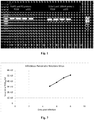
- Figure 1 shows the Amplification products for CO1 gene (left hand set, lanes 1-4) and 16S gene (right hand set, lanes 7-10) of pre master Anguilla japonica-K cell seed p118 (1&2 and 7&8 and master cell p121 (3&4 and 9&10). Lanes 5, 6, 11 and 12 are negative controls.
- the Anguilla japonica-K cell culture is of A. japonica origin.
- the cell culture was stored in 50/50 by volume of 10% DMSO in Minimal Essential Medium (MEM) and Foetal Bovine Serum (FBS) undiluted, at a density of 2 x 10 6 cells/ml.
- MEM Minimal Essential Medium
- FBS Foetal Bovine Serum
- Anguilla japonica-K cells were generally maintained at 28°C with L-15 medium (Invitrogen) supplemented with 10% L-glutamine and 1 ⁇ L/mL of gentamicin, and 7.5% Foetal Bovine Serum (FBS).
- L-15 medium Invitrogen
- FBS Foetal Bovine Serum
- the Anguilla japonica-K cells were maintained at between 15 and 28°C in Minimal Essential Medium (MEM), 7.5% Foetal Bovine Serum (FBS), 0.5% sodium bicarbonate, and 1% L-alanyl-L-Glutamine dipeptide (Glutamax).
- MEM Minimal Essential Medium
- FBS Foetal Bovine Serum
- Glutamax 1% L-alanyl-L-Glutamine dipeptide
- Anguilla japonica-K cells infected with IPN were maintained at 15°C.
- Anguilla japonica-K cells infected with nodavirus were maintained at 28°C.
- the cells were passaged at a seeding ratio of 1:6, or cell seeding rate of 1.6 x10 4 cell/cm 2 .
- the Anguilla japonica-K cell culture deposited with the ECACC relates to a sample of the pre-master cell seed at passage (p) 124. Analysis showed the cell culture to be mainly epithelial, with fibroblasts present.
- Anguilla Japonica-K cells maintained in L15 media with 2% FBS and at a density of 6 x 10 4 cells/cm 2 were inoculated with a virus (Infectious Pancreatic Necrosis (IPN), Salmon Pancreas Disease Virus (SPDV) or Nodavirus), followed by incubation at 15°C.
- IPN Infectious Pancreatic Necrosis
- SPDV Salmon Pancreas Disease Virus
- Nodavirus Nodavirus
- the cells were inoculated at a MOI of 1.0 for IPN and SPDV, and MOI's of 0.1, 0.5 and 1.0 for Nodavirus.
- the virus was harvested following full CPE by centrifugation of the suspension at 2500xg followed by recovery of the supernatant.
- the average titres of the viruses are shown in Table 2 below.
- Table 2 Virus grown in Anguilla japonica-K cells Average titre (TCID 50 /ml) at optimal harvest time over several research scale batches (cell factories) Number of batches (cell factories) Optimal harvest time in days post-infection (days) SPDV 6.6 x 10 9 5 ⁇ 15 Nodavirus 4.65 x10 10 2 7-11 IPN 1.58 x10 10 1 8-12
Landscapes
- Health & Medical Sciences (AREA)
- Engineering & Computer Science (AREA)
- Biomedical Technology (AREA)
- Life Sciences & Earth Sciences (AREA)
- Organic Chemistry (AREA)
- Chemical & Material Sciences (AREA)
- Bioinformatics & Cheminformatics (AREA)
- Genetics & Genomics (AREA)
- Biotechnology (AREA)
- Wood Science & Technology (AREA)
- Zoology (AREA)
- Microbiology (AREA)
- Biochemistry (AREA)
- General Engineering & Computer Science (AREA)
- General Health & Medical Sciences (AREA)
- Cell Biology (AREA)
- Micro-Organisms Or Cultivation Processes Thereof (AREA)
- Medicines Containing Material From Animals Or Micro-Organisms (AREA)
- Medicines Containing Antibodies Or Antigens For Use As Internal Diagnostic Agents (AREA)
- Measuring Or Testing Involving Enzymes Or Micro-Organisms (AREA)
Applications Claiming Priority (3)
| Application Number | Priority Date | Filing Date | Title |
|---|---|---|---|
| GBGB1601861.6A GB201601861D0 (en) | 2016-02-02 | 2016-02-02 | Methods of producing viruses |
| GB201618549 | 2016-11-03 | ||
| PCT/GB2017/050259 WO2017134441A1 (en) | 2016-02-02 | 2017-02-02 | Methods of producing viruses |
Publications (2)
| Publication Number | Publication Date |
|---|---|
| EP3411064A1 EP3411064A1 (en) | 2018-12-12 |
| EP3411064B1 true EP3411064B1 (en) | 2020-02-26 |
Family
ID=58018136
Family Applications (1)
| Application Number | Title | Priority Date | Filing Date |
|---|---|---|---|
| EP17704811.3A Active EP3411064B1 (en) | 2016-02-02 | 2017-02-02 | Methods of producing viruses |
Country Status (11)
| Country | Link |
|---|---|
| US (1) | US10450544B2 (enExample) |
| EP (1) | EP3411064B1 (enExample) |
| JP (1) | JP2019511208A (enExample) |
| CN (1) | CN109414494A (enExample) |
| AU (1) | AU2017215287A1 (enExample) |
| BR (1) | BR112018015527A2 (enExample) |
| CA (1) | CA3011920A1 (enExample) |
| CL (1) | CL2018002042A1 (enExample) |
| ES (1) | ES2795040T3 (enExample) |
| SG (1) | SG11201806182RA (enExample) |
| WO (1) | WO2017134441A1 (enExample) |
Families Citing this family (2)
| Publication number | Priority date | Publication date | Assignee | Title |
|---|---|---|---|---|
| CN111118171A (zh) * | 2019-12-31 | 2020-05-08 | 广东省测试分析研究所(中国广州分析测试中心) | 一种鉴别鱼翅种的dna条形码引物对、试剂盒及方法 |
| CN113122510A (zh) * | 2021-04-12 | 2021-07-16 | 中国水产科学研究院黑龙江水产研究所 | 一种传染性造血器官坏死病疫苗及其病毒在胖头鱥肌肉细胞上扩增的方法 |
Family Cites Families (6)
| Publication number | Priority date | Publication date | Assignee | Title |
|---|---|---|---|---|
| US5780448A (en) * | 1995-11-07 | 1998-07-14 | Ottawa Civic Hospital Loeb Research | DNA-based vaccination of fish |
| TWI220904B (en) * | 1998-12-03 | 2004-09-11 | Nat Science Council | An immortal cell line derived from grouper Epinephelus coioides and its applications therein |
| TWI347364B (en) * | 2003-02-19 | 2011-08-21 | Novartis Ag | Inactivated nodavirus vaccine |
| NO332608B1 (no) | 2011-03-16 | 2012-11-19 | Norwegian School Of Veterinary Science | Levende avirulent IPNV og vaksine for profylakse eller behandling av IPN-sykdom hos fisk |
| CN104531608A (zh) * | 2015-01-12 | 2015-04-22 | 福建省农业科学院生物技术研究所 | 一种欧洲鳗鲡肝脏细胞系及其构建方法和应用 |
| CN105192298A (zh) * | 2015-11-11 | 2015-12-30 | 浙江锦天生物科技有限公司 | 一种日本鳗鲡用复合微生态饲料添加剂 |
-
2017
- 2017-02-02 ES ES17704811T patent/ES2795040T3/es active Active
- 2017-02-02 CA CA3011920A patent/CA3011920A1/en not_active Abandoned
- 2017-02-02 AU AU2017215287A patent/AU2017215287A1/en not_active Abandoned
- 2017-02-02 WO PCT/GB2017/050259 patent/WO2017134441A1/en not_active Ceased
- 2017-02-02 EP EP17704811.3A patent/EP3411064B1/en active Active
- 2017-02-02 JP JP2018541216A patent/JP2019511208A/ja not_active Abandoned
- 2017-02-02 BR BR112018015527A patent/BR112018015527A2/pt not_active IP Right Cessation
- 2017-02-02 CN CN201780009494.1A patent/CN109414494A/zh active Pending
- 2017-02-02 US US16/074,501 patent/US10450544B2/en not_active Expired - Fee Related
- 2017-02-02 SG SG11201806182RA patent/SG11201806182RA/en unknown
-
2018
- 2018-07-30 CL CL2018002042A patent/CL2018002042A1/es unknown
Non-Patent Citations (1)
| Title |
|---|
| None * |
Also Published As
| Publication number | Publication date |
|---|---|
| WO2017134441A1 (en) | 2017-08-10 |
| BR112018015527A2 (pt) | 2018-12-26 |
| US10450544B2 (en) | 2019-10-22 |
| CA3011920A1 (en) | 2017-08-10 |
| EP3411064A1 (en) | 2018-12-12 |
| CN109414494A (zh) | 2019-03-01 |
| CL2018002042A1 (es) | 2019-03-22 |
| ES2795040T3 (es) | 2020-11-20 |
| SG11201806182RA (en) | 2018-08-30 |
| US20190040354A1 (en) | 2019-02-07 |
| AU2017215287A1 (en) | 2018-08-16 |
| JP2019511208A (ja) | 2019-04-25 |
Similar Documents
| Publication | Publication Date | Title |
|---|---|---|
| CN107873052B (zh) | 用于害虫控制管理的组合物和方法 | |
| Shibata et al. | In vitro characteristics of cyprinid herpesvirus 2: effect of kidney extract supplementation on growth | |
| WO2020258757A1 (zh) | 一种突变株3型鸭甲肝病毒ch-p60-117c株及构建方法 | |
| CN109321534A (zh) | 一种重组基因viii型新城疫病毒弱毒株 | |
| Jing et al. | Establishment and characterization of a heart-derived cell line from goldfish (Carassius auratus) | |
| CN106939320A (zh) | 一种伪狂犬病毒js‑2012株感染性克隆质粒、构建方法与应用 | |
| CN109321535A (zh) | 一种热稳定的新城疫病毒弱毒疫苗候选株 | |
| KR101703783B1 (ko) | 참돔 지느러미 유래 세포주의 개발 | |
| US10894081B2 (en) | Recombinant bivalent inactivated vaccine against foot-and-mouth disease virus, preparation method and use thereof | |
| EP3411064B1 (en) | Methods of producing viruses | |
| Mu et al. | FV3-like ranavirus infection outbreak in black-spotted pond frogs (Rana nigromaculata) in China | |
| Wu et al. | Identification of amino acid residues in infectious hematopoietic necrosis virus (IHNV) NV protein necessary for viral replication and pathogenicity | |
| CN105886477B (zh) | 可用于制备vii型新城疫疫苗的病毒株及其编码基因 | |
| Zheng et al. | First report of spring viremia of carp virus in Percocypris pingi in China | |
| CN111411087B (zh) | 一种鲤疱疹病毒ii型弱毒株及其应用 | |
| AU2016291813B2 (en) | Transgenic microalgae and use thereof as a feed for delivery of interfering RNA molecules | |
| CN109136200A (zh) | 一种重组传染性造血器官坏死病毒及其构建方法与应用 | |
| EP2292262A2 (fr) | Utilisation de novirhabdovirus modifiés pour l'obtention de vaccins | |
| US7718427B2 (en) | Established cell lines from Lymantria xylina | |
| KR101677231B1 (ko) | 무혈청배지(serum free medium)를 이용한 메갈로사이티바이러스의 효율적 제조방법 | |
| Zhang et al. | Establishment, characterization and application of Largemouth bronze gudgeon (Coreius guichenoti) fin and skin cell lines in disease resistance | |
| CN120041406B (zh) | 一株传染性脾肾坏死病毒自然基因缺失减毒病毒株及其应用 | |
| US10526393B2 (en) | Method for promoting virus infection and increasing virus production, by using cell line having lost BST2 gene functions | |
| US8088619B2 (en) | Established Maruca vitrata cell line | |
| Prasankok et al. | Characterization of iridovirus isolated from diseased marbled sleepy goby, Oxyeleotris marmoratus |
Legal Events
| Date | Code | Title | Description |
|---|---|---|---|
| STAA | Information on the status of an ep patent application or granted ep patent |
Free format text: STATUS: UNKNOWN |
|
| STAA | Information on the status of an ep patent application or granted ep patent |
Free format text: STATUS: THE INTERNATIONAL PUBLICATION HAS BEEN MADE |
|
| PUAI | Public reference made under article 153(3) epc to a published international application that has entered the european phase |
Free format text: ORIGINAL CODE: 0009012 |
|
| STAA | Information on the status of an ep patent application or granted ep patent |
Free format text: STATUS: REQUEST FOR EXAMINATION WAS MADE |
|
| 17P | Request for examination filed |
Effective date: 20180803 |
|
| AK | Designated contracting states |
Kind code of ref document: A1 Designated state(s): AL AT BE BG CH CY CZ DE DK EE ES FI FR GB GR HR HU IE IS IT LI LT LU LV MC MK MT NL NO PL PT RO RS SE SI SK SM TR |
|
| AX | Request for extension of the european patent |
Extension state: BA ME |
|
| RIN1 | Information on inventor provided before grant (corrected) |
Inventor name: HOFFMANN, RALF Inventor name: TOON, LINDSEY ANN |
|
| DAV | Request for validation of the european patent (deleted) | ||
| DAX | Request for extension of the european patent (deleted) | ||
| GRAP | Despatch of communication of intention to grant a patent |
Free format text: ORIGINAL CODE: EPIDOSNIGR1 |
|
| STAA | Information on the status of an ep patent application or granted ep patent |
Free format text: STATUS: GRANT OF PATENT IS INTENDED |
|
| INTG | Intention to grant announced |
Effective date: 20190924 |
|
| GRAS | Grant fee paid |
Free format text: ORIGINAL CODE: EPIDOSNIGR3 |
|
| GRAA | (expected) grant |
Free format text: ORIGINAL CODE: 0009210 |
|
| STAA | Information on the status of an ep patent application or granted ep patent |
Free format text: STATUS: THE PATENT HAS BEEN GRANTED |
|
| AK | Designated contracting states |
Kind code of ref document: B1 Designated state(s): AL AT BE BG CH CY CZ DE DK EE ES FI FR GB GR HR HU IE IS IT LI LT LU LV MC MK MT NL NO PL PT RO RS SE SI SK SM TR |
|
| REG | Reference to a national code |
Ref country code: GB Ref legal event code: FG4D |
|
| REG | Reference to a national code |
Ref country code: CH Ref legal event code: EP |
|
| REG | Reference to a national code |
Ref country code: AT Ref legal event code: REF Ref document number: 1236831 Country of ref document: AT Kind code of ref document: T Effective date: 20200315 |
|
| REG | Reference to a national code |
Ref country code: IE Ref legal event code: FG4D |
|
| REG | Reference to a national code |
Ref country code: DE Ref legal event code: R096 Ref document number: 602017012272 Country of ref document: DE |
|
| REG | Reference to a national code |
Ref country code: CH Ref legal event code: NV Representative=s name: VALIPAT S.A. C/O BOVARD SA NEUCHATEL, CH |
|
| REG | Reference to a national code |
Ref country code: GR Ref legal event code: EP Ref document number: 20200401440 Country of ref document: GR Effective date: 20200716 |
|
| PG25 | Lapsed in a contracting state [announced via postgrant information from national office to epo] |
Ref country code: RS Free format text: LAPSE BECAUSE OF FAILURE TO SUBMIT A TRANSLATION OF THE DESCRIPTION OR TO PAY THE FEE WITHIN THE PRESCRIBED TIME-LIMIT Effective date: 20200226 Ref country code: NO Free format text: LAPSE BECAUSE OF FAILURE TO SUBMIT A TRANSLATION OF THE DESCRIPTION OR TO PAY THE FEE WITHIN THE PRESCRIBED TIME-LIMIT Effective date: 20200526 Ref country code: FI Free format text: LAPSE BECAUSE OF FAILURE TO SUBMIT A TRANSLATION OF THE DESCRIPTION OR TO PAY THE FEE WITHIN THE PRESCRIBED TIME-LIMIT Effective date: 20200226 |
|
| REG | Reference to a national code |
Ref country code: NL Ref legal event code: MP Effective date: 20200226 |
|
| REG | Reference to a national code |
Ref country code: LT Ref legal event code: MG4D |
|
| PG25 | Lapsed in a contracting state [announced via postgrant information from national office to epo] |
Ref country code: HR Free format text: LAPSE BECAUSE OF FAILURE TO SUBMIT A TRANSLATION OF THE DESCRIPTION OR TO PAY THE FEE WITHIN THE PRESCRIBED TIME-LIMIT Effective date: 20200226 Ref country code: LV Free format text: LAPSE BECAUSE OF FAILURE TO SUBMIT A TRANSLATION OF THE DESCRIPTION OR TO PAY THE FEE WITHIN THE PRESCRIBED TIME-LIMIT Effective date: 20200226 Ref country code: SE Free format text: LAPSE BECAUSE OF FAILURE TO SUBMIT A TRANSLATION OF THE DESCRIPTION OR TO PAY THE FEE WITHIN THE PRESCRIBED TIME-LIMIT Effective date: 20200226 Ref country code: BG Free format text: LAPSE BECAUSE OF FAILURE TO SUBMIT A TRANSLATION OF THE DESCRIPTION OR TO PAY THE FEE WITHIN THE PRESCRIBED TIME-LIMIT Effective date: 20200526 Ref country code: IS Free format text: LAPSE BECAUSE OF FAILURE TO SUBMIT A TRANSLATION OF THE DESCRIPTION OR TO PAY THE FEE WITHIN THE PRESCRIBED TIME-LIMIT Effective date: 20200626 |
|
| PG25 | Lapsed in a contracting state [announced via postgrant information from national office to epo] |
Ref country code: NL Free format text: LAPSE BECAUSE OF FAILURE TO SUBMIT A TRANSLATION OF THE DESCRIPTION OR TO PAY THE FEE WITHIN THE PRESCRIBED TIME-LIMIT Effective date: 20200226 |
|
| PG25 | Lapsed in a contracting state [announced via postgrant information from national office to epo] |
Ref country code: RO Free format text: LAPSE BECAUSE OF FAILURE TO SUBMIT A TRANSLATION OF THE DESCRIPTION OR TO PAY THE FEE WITHIN THE PRESCRIBED TIME-LIMIT Effective date: 20200226 Ref country code: CZ Free format text: LAPSE BECAUSE OF FAILURE TO SUBMIT A TRANSLATION OF THE DESCRIPTION OR TO PAY THE FEE WITHIN THE PRESCRIBED TIME-LIMIT Effective date: 20200226 Ref country code: PT Free format text: LAPSE BECAUSE OF FAILURE TO SUBMIT A TRANSLATION OF THE DESCRIPTION OR TO PAY THE FEE WITHIN THE PRESCRIBED TIME-LIMIT Effective date: 20200719 Ref country code: DK Free format text: LAPSE BECAUSE OF FAILURE TO SUBMIT A TRANSLATION OF THE DESCRIPTION OR TO PAY THE FEE WITHIN THE PRESCRIBED TIME-LIMIT Effective date: 20200226 Ref country code: LT Free format text: LAPSE BECAUSE OF FAILURE TO SUBMIT A TRANSLATION OF THE DESCRIPTION OR TO PAY THE FEE WITHIN THE PRESCRIBED TIME-LIMIT Effective date: 20200226 Ref country code: SM Free format text: LAPSE BECAUSE OF FAILURE TO SUBMIT A TRANSLATION OF THE DESCRIPTION OR TO PAY THE FEE WITHIN THE PRESCRIBED TIME-LIMIT Effective date: 20200226 Ref country code: EE Free format text: LAPSE BECAUSE OF FAILURE TO SUBMIT A TRANSLATION OF THE DESCRIPTION OR TO PAY THE FEE WITHIN THE PRESCRIBED TIME-LIMIT Effective date: 20200226 Ref country code: SK Free format text: LAPSE BECAUSE OF FAILURE TO SUBMIT A TRANSLATION OF THE DESCRIPTION OR TO PAY THE FEE WITHIN THE PRESCRIBED TIME-LIMIT Effective date: 20200226 |
|
| REG | Reference to a national code |
Ref country code: AT Ref legal event code: MK05 Ref document number: 1236831 Country of ref document: AT Kind code of ref document: T Effective date: 20200226 |
|
| REG | Reference to a national code |
Ref country code: ES Ref legal event code: FG2A Ref document number: 2795040 Country of ref document: ES Kind code of ref document: T3 Effective date: 20201120 |
|
| REG | Reference to a national code |
Ref country code: DE Ref legal event code: R097 Ref document number: 602017012272 Country of ref document: DE |
|
| PLBE | No opposition filed within time limit |
Free format text: ORIGINAL CODE: 0009261 |
|
| STAA | Information on the status of an ep patent application or granted ep patent |
Free format text: STATUS: NO OPPOSITION FILED WITHIN TIME LIMIT |
|
| PG25 | Lapsed in a contracting state [announced via postgrant information from national office to epo] |
Ref country code: AT Free format text: LAPSE BECAUSE OF FAILURE TO SUBMIT A TRANSLATION OF THE DESCRIPTION OR TO PAY THE FEE WITHIN THE PRESCRIBED TIME-LIMIT Effective date: 20200226 |
|
| 26N | No opposition filed |
Effective date: 20201127 |
|
| PG25 | Lapsed in a contracting state [announced via postgrant information from national office to epo] |
Ref country code: SI Free format text: LAPSE BECAUSE OF FAILURE TO SUBMIT A TRANSLATION OF THE DESCRIPTION OR TO PAY THE FEE WITHIN THE PRESCRIBED TIME-LIMIT Effective date: 20200226 Ref country code: PL Free format text: LAPSE BECAUSE OF FAILURE TO SUBMIT A TRANSLATION OF THE DESCRIPTION OR TO PAY THE FEE WITHIN THE PRESCRIBED TIME-LIMIT Effective date: 20200226 |
|
| PG25 | Lapsed in a contracting state [announced via postgrant information from national office to epo] |
Ref country code: MC Free format text: LAPSE BECAUSE OF FAILURE TO SUBMIT A TRANSLATION OF THE DESCRIPTION OR TO PAY THE FEE WITHIN THE PRESCRIBED TIME-LIMIT Effective date: 20200226 |
|
| REG | Reference to a national code |
Ref country code: BE Ref legal event code: MM Effective date: 20210228 |
|
| PG25 | Lapsed in a contracting state [announced via postgrant information from national office to epo] |
Ref country code: LU Free format text: LAPSE BECAUSE OF NON-PAYMENT OF DUE FEES Effective date: 20210202 |
|
| PG25 | Lapsed in a contracting state [announced via postgrant information from national office to epo] |
Ref country code: IE Free format text: LAPSE BECAUSE OF NON-PAYMENT OF DUE FEES Effective date: 20210202 |
|
| PG25 | Lapsed in a contracting state [announced via postgrant information from national office to epo] |
Ref country code: BE Free format text: LAPSE BECAUSE OF NON-PAYMENT OF DUE FEES Effective date: 20210228 |
|
| PG25 | Lapsed in a contracting state [announced via postgrant information from national office to epo] |
Ref country code: IT Free format text: LAPSE BECAUSE OF NON-PAYMENT OF DUE FEES Effective date: 20210202 |
|
| PG25 | Lapsed in a contracting state [announced via postgrant information from national office to epo] |
Ref country code: CY Free format text: LAPSE BECAUSE OF FAILURE TO SUBMIT A TRANSLATION OF THE DESCRIPTION OR TO PAY THE FEE WITHIN THE PRESCRIBED TIME-LIMIT Effective date: 20200226 |
|
| P01 | Opt-out of the competence of the unified patent court (upc) registered |
Effective date: 20230525 |
|
| PG25 | Lapsed in a contracting state [announced via postgrant information from national office to epo] |
Ref country code: HU Free format text: LAPSE BECAUSE OF FAILURE TO SUBMIT A TRANSLATION OF THE DESCRIPTION OR TO PAY THE FEE WITHIN THE PRESCRIBED TIME-LIMIT; INVALID AB INITIO Effective date: 20170202 |
|
| PG25 | Lapsed in a contracting state [announced via postgrant information from national office to epo] |
Ref country code: MK Free format text: LAPSE BECAUSE OF FAILURE TO SUBMIT A TRANSLATION OF THE DESCRIPTION OR TO PAY THE FEE WITHIN THE PRESCRIBED TIME-LIMIT Effective date: 20200226 |
|
| PGFP | Annual fee paid to national office [announced via postgrant information from national office to epo] |
Ref country code: DE Payment date: 20250218 Year of fee payment: 9 |
|
| PGFP | Annual fee paid to national office [announced via postgrant information from national office to epo] |
Ref country code: ES Payment date: 20250318 Year of fee payment: 9 |
|
| PGFP | Annual fee paid to national office [announced via postgrant information from national office to epo] |
Ref country code: CH Payment date: 20250301 Year of fee payment: 9 Ref country code: GR Payment date: 20250217 Year of fee payment: 9 |
|
| PGFP | Annual fee paid to national office [announced via postgrant information from national office to epo] |
Ref country code: FR Payment date: 20250220 Year of fee payment: 9 |
|
| PGFP | Annual fee paid to national office [announced via postgrant information from national office to epo] |
Ref country code: GB Payment date: 20250117 Year of fee payment: 9 |
|
| PGFP | Annual fee paid to national office [announced via postgrant information from national office to epo] |
Ref country code: MT Payment date: 20250219 Year of fee payment: 9 Ref country code: TR Payment date: 20250130 Year of fee payment: 9 |