EP3409301B1 - Resorbing biodegradable medical and cosmetic composition - Google Patents
Resorbing biodegradable medical and cosmetic composition Download PDFInfo
- Publication number
- EP3409301B1 EP3409301B1 EP18175001.9A EP18175001A EP3409301B1 EP 3409301 B1 EP3409301 B1 EP 3409301B1 EP 18175001 A EP18175001 A EP 18175001A EP 3409301 B1 EP3409301 B1 EP 3409301B1
- Authority
- EP
- European Patent Office
- Prior art keywords
- composition according
- ptmc
- polysaccharide
- collagen
- vivo
- Prior art date
- Legal status (The legal status is an assumption and is not a legal conclusion. Google has not performed a legal analysis and makes no representation as to the accuracy of the status listed.)
- Active
Links
Images







Classifications
-
- A—HUMAN NECESSITIES
- A61—MEDICAL OR VETERINARY SCIENCE; HYGIENE
- A61K—PREPARATIONS FOR MEDICAL, DENTAL OR TOILETRY PURPOSES
- A61K9/00—Medicinal preparations characterised by special physical form
- A61K9/06—Ointments; Bases therefor; Other semi-solid forms, e.g. creams, sticks, gels
-
- A—HUMAN NECESSITIES
- A61—MEDICAL OR VETERINARY SCIENCE; HYGIENE
- A61K—PREPARATIONS FOR MEDICAL, DENTAL OR TOILETRY PURPOSES
- A61K47/00—Medicinal preparations characterised by the non-active ingredients used, e.g. carriers or inert additives; Targeting or modifying agents chemically bound to the active ingredient
- A61K47/30—Macromolecular organic or inorganic compounds, e.g. inorganic polyphosphates
- A61K47/34—Macromolecular compounds obtained otherwise than by reactions only involving carbon-to-carbon unsaturated bonds, e.g. polyesters, polyamino acids, polysiloxanes, polyphosphazines, copolymers of polyalkylene glycol or poloxamers
-
- A—HUMAN NECESSITIES
- A61—MEDICAL OR VETERINARY SCIENCE; HYGIENE
- A61K—PREPARATIONS FOR MEDICAL, DENTAL OR TOILETRY PURPOSES
- A61K47/00—Medicinal preparations characterised by the non-active ingredients used, e.g. carriers or inert additives; Targeting or modifying agents chemically bound to the active ingredient
- A61K47/30—Macromolecular organic or inorganic compounds, e.g. inorganic polyphosphates
- A61K47/36—Polysaccharides; Derivatives thereof, e.g. gums, starch, alginate, dextrin, hyaluronic acid, chitosan, inulin, agar or pectin
- A61K47/38—Cellulose; Derivatives thereof
-
- A—HUMAN NECESSITIES
- A61—MEDICAL OR VETERINARY SCIENCE; HYGIENE
- A61K—PREPARATIONS FOR MEDICAL, DENTAL OR TOILETRY PURPOSES
- A61K8/00—Cosmetics or similar toiletry preparations
- A61K8/02—Cosmetics or similar toiletry preparations characterised by special physical form
- A61K8/04—Dispersions; Emulsions
- A61K8/042—Gels
-
- A—HUMAN NECESSITIES
- A61—MEDICAL OR VETERINARY SCIENCE; HYGIENE
- A61K—PREPARATIONS FOR MEDICAL, DENTAL OR TOILETRY PURPOSES
- A61K8/00—Cosmetics or similar toiletry preparations
- A61K8/18—Cosmetics or similar toiletry preparations characterised by the composition
- A61K8/72—Cosmetics or similar toiletry preparations characterised by the composition containing organic macromolecular compounds
- A61K8/73—Polysaccharides
- A61K8/731—Cellulose; Quaternized cellulose derivatives
-
- A—HUMAN NECESSITIES
- A61—MEDICAL OR VETERINARY SCIENCE; HYGIENE
- A61K—PREPARATIONS FOR MEDICAL, DENTAL OR TOILETRY PURPOSES
- A61K8/00—Cosmetics or similar toiletry preparations
- A61K8/18—Cosmetics or similar toiletry preparations characterised by the composition
- A61K8/72—Cosmetics or similar toiletry preparations characterised by the composition containing organic macromolecular compounds
- A61K8/84—Cosmetics or similar toiletry preparations characterised by the composition containing organic macromolecular compounds obtained by reactions otherwise than those involving only carbon-carbon unsaturated bonds
- A61K8/85—Polyesters
-
- A—HUMAN NECESSITIES
- A61—MEDICAL OR VETERINARY SCIENCE; HYGIENE
- A61K—PREPARATIONS FOR MEDICAL, DENTAL OR TOILETRY PURPOSES
- A61K9/00—Medicinal preparations characterised by special physical form
- A61K9/0012—Galenical forms characterised by the site of application
- A61K9/0019—Injectable compositions; Intramuscular, intravenous, arterial, subcutaneous administration; Compositions to be administered through the skin in an invasive manner
-
- A—HUMAN NECESSITIES
- A61—MEDICAL OR VETERINARY SCIENCE; HYGIENE
- A61K—PREPARATIONS FOR MEDICAL, DENTAL OR TOILETRY PURPOSES
- A61K9/00—Medicinal preparations characterised by special physical form
- A61K9/0012—Galenical forms characterised by the site of application
- A61K9/0019—Injectable compositions; Intramuscular, intravenous, arterial, subcutaneous administration; Compositions to be administered through the skin in an invasive manner
- A61K9/0021—Intradermal administration, e.g. through microneedle arrays or needleless injectors
-
- A—HUMAN NECESSITIES
- A61—MEDICAL OR VETERINARY SCIENCE; HYGIENE
- A61K—PREPARATIONS FOR MEDICAL, DENTAL OR TOILETRY PURPOSES
- A61K9/00—Medicinal preparations characterised by special physical form
- A61K9/0012—Galenical forms characterised by the site of application
- A61K9/0019—Injectable compositions; Intramuscular, intravenous, arterial, subcutaneous administration; Compositions to be administered through the skin in an invasive manner
- A61K9/0024—Solid, semi-solid or solidifying implants, which are implanted or injected in body tissue
-
- A—HUMAN NECESSITIES
- A61—MEDICAL OR VETERINARY SCIENCE; HYGIENE
- A61L—METHODS OR APPARATUS FOR STERILISING MATERIALS OR OBJECTS IN GENERAL; DISINFECTION, STERILISATION OR DEODORISATION OF AIR; CHEMICAL ASPECTS OF BANDAGES, DRESSINGS, ABSORBENT PADS OR SURGICAL ARTICLES; MATERIALS FOR BANDAGES, DRESSINGS, ABSORBENT PADS OR SURGICAL ARTICLES
- A61L27/00—Materials for grafts or prostheses or for coating grafts or prostheses
- A61L27/14—Macromolecular materials
- A61L27/18—Macromolecular materials obtained otherwise than by reactions only involving carbon-to-carbon unsaturated bonds
-
- A—HUMAN NECESSITIES
- A61—MEDICAL OR VETERINARY SCIENCE; HYGIENE
- A61L—METHODS OR APPARATUS FOR STERILISING MATERIALS OR OBJECTS IN GENERAL; DISINFECTION, STERILISATION OR DEODORISATION OF AIR; CHEMICAL ASPECTS OF BANDAGES, DRESSINGS, ABSORBENT PADS OR SURGICAL ARTICLES; MATERIALS FOR BANDAGES, DRESSINGS, ABSORBENT PADS OR SURGICAL ARTICLES
- A61L27/00—Materials for grafts or prostheses or for coating grafts or prostheses
- A61L27/14—Macromolecular materials
- A61L27/20—Polysaccharides
-
- A—HUMAN NECESSITIES
- A61—MEDICAL OR VETERINARY SCIENCE; HYGIENE
- A61L—METHODS OR APPARATUS FOR STERILISING MATERIALS OR OBJECTS IN GENERAL; DISINFECTION, STERILISATION OR DEODORISATION OF AIR; CHEMICAL ASPECTS OF BANDAGES, DRESSINGS, ABSORBENT PADS OR SURGICAL ARTICLES; MATERIALS FOR BANDAGES, DRESSINGS, ABSORBENT PADS OR SURGICAL ARTICLES
- A61L27/00—Materials for grafts or prostheses or for coating grafts or prostheses
- A61L27/14—Macromolecular materials
- A61L27/26—Mixtures of macromolecular compounds
-
- A—HUMAN NECESSITIES
- A61—MEDICAL OR VETERINARY SCIENCE; HYGIENE
- A61L—METHODS OR APPARATUS FOR STERILISING MATERIALS OR OBJECTS IN GENERAL; DISINFECTION, STERILISATION OR DEODORISATION OF AIR; CHEMICAL ASPECTS OF BANDAGES, DRESSINGS, ABSORBENT PADS OR SURGICAL ARTICLES; MATERIALS FOR BANDAGES, DRESSINGS, ABSORBENT PADS OR SURGICAL ARTICLES
- A61L27/00—Materials for grafts or prostheses or for coating grafts or prostheses
- A61L27/50—Materials characterised by their function or physical properties, e.g. injectable or lubricating compositions, shape-memory materials, surface modified materials
- A61L27/52—Hydrogels or hydrocolloids
-
- A—HUMAN NECESSITIES
- A61—MEDICAL OR VETERINARY SCIENCE; HYGIENE
- A61L—METHODS OR APPARATUS FOR STERILISING MATERIALS OR OBJECTS IN GENERAL; DISINFECTION, STERILISATION OR DEODORISATION OF AIR; CHEMICAL ASPECTS OF BANDAGES, DRESSINGS, ABSORBENT PADS OR SURGICAL ARTICLES; MATERIALS FOR BANDAGES, DRESSINGS, ABSORBENT PADS OR SURGICAL ARTICLES
- A61L27/00—Materials for grafts or prostheses or for coating grafts or prostheses
- A61L27/50—Materials characterised by their function or physical properties, e.g. injectable or lubricating compositions, shape-memory materials, surface modified materials
- A61L27/58—Materials at least partially resorbable by the body
-
- A—HUMAN NECESSITIES
- A61—MEDICAL OR VETERINARY SCIENCE; HYGIENE
- A61P—SPECIFIC THERAPEUTIC ACTIVITY OF CHEMICAL COMPOUNDS OR MEDICINAL PREPARATIONS
- A61P1/00—Drugs for disorders of the alimentary tract or the digestive system
- A61P1/04—Drugs for disorders of the alimentary tract or the digestive system for ulcers, gastritis or reflux esophagitis, e.g. antacids, inhibitors of acid secretion, mucosal protectants
-
- A—HUMAN NECESSITIES
- A61—MEDICAL OR VETERINARY SCIENCE; HYGIENE
- A61P—SPECIFIC THERAPEUTIC ACTIVITY OF CHEMICAL COMPOUNDS OR MEDICINAL PREPARATIONS
- A61P13/00—Drugs for disorders of the urinary system
- A61P13/10—Drugs for disorders of the urinary system of the bladder
-
- A—HUMAN NECESSITIES
- A61—MEDICAL OR VETERINARY SCIENCE; HYGIENE
- A61P—SPECIFIC THERAPEUTIC ACTIVITY OF CHEMICAL COMPOUNDS OR MEDICINAL PREPARATIONS
- A61P15/00—Drugs for genital or sexual disorders; Contraceptives
- A61P15/10—Drugs for genital or sexual disorders; Contraceptives for impotence
-
- A—HUMAN NECESSITIES
- A61—MEDICAL OR VETERINARY SCIENCE; HYGIENE
- A61P—SPECIFIC THERAPEUTIC ACTIVITY OF CHEMICAL COMPOUNDS OR MEDICINAL PREPARATIONS
- A61P17/00—Drugs for dermatological disorders
-
- A—HUMAN NECESSITIES
- A61—MEDICAL OR VETERINARY SCIENCE; HYGIENE
- A61P—SPECIFIC THERAPEUTIC ACTIVITY OF CHEMICAL COMPOUNDS OR MEDICINAL PREPARATIONS
- A61P19/00—Drugs for skeletal disorders
- A61P19/02—Drugs for skeletal disorders for joint disorders, e.g. arthritis, arthrosis
-
- A—HUMAN NECESSITIES
- A61—MEDICAL OR VETERINARY SCIENCE; HYGIENE
- A61P—SPECIFIC THERAPEUTIC ACTIVITY OF CHEMICAL COMPOUNDS OR MEDICINAL PREPARATIONS
- A61P19/00—Drugs for skeletal disorders
- A61P19/04—Drugs for skeletal disorders for non-specific disorders of the connective tissue
-
- A—HUMAN NECESSITIES
- A61—MEDICAL OR VETERINARY SCIENCE; HYGIENE
- A61P—SPECIFIC THERAPEUTIC ACTIVITY OF CHEMICAL COMPOUNDS OR MEDICINAL PREPARATIONS
- A61P43/00—Drugs for specific purposes, not provided for in groups A61P1/00-A61P41/00
-
- A—HUMAN NECESSITIES
- A61—MEDICAL OR VETERINARY SCIENCE; HYGIENE
- A61Q—SPECIFIC USE OF COSMETICS OR SIMILAR TOILETRY PREPARATIONS
- A61Q19/00—Preparations for care of the skin
-
- C—CHEMISTRY; METALLURGY
- C08—ORGANIC MACROMOLECULAR COMPOUNDS; THEIR PREPARATION OR CHEMICAL WORKING-UP; COMPOSITIONS BASED THEREON
- C08G—MACROMOLECULAR COMPOUNDS OBTAINED OTHERWISE THAN BY REACTIONS ONLY INVOLVING UNSATURATED CARBON-TO-CARBON BONDS
- C08G18/00—Polymeric products of isocyanates or isothiocyanates
- C08G18/06—Polymeric products of isocyanates or isothiocyanates with compounds having active hydrogen
- C08G18/28—Polymeric products of isocyanates or isothiocyanates with compounds having active hydrogen characterised by the compounds used containing active hydrogen
- C08G18/40—High-molecular-weight compounds
- C08G18/42—Polycondensates having carboxylic or carbonic ester groups in the main chain
- C08G18/44—Polycarbonates
-
- A—HUMAN NECESSITIES
- A61—MEDICAL OR VETERINARY SCIENCE; HYGIENE
- A61K—PREPARATIONS FOR MEDICAL, DENTAL OR TOILETRY PURPOSES
- A61K2800/00—Properties of cosmetic compositions or active ingredients thereof or formulation aids used therein and process related aspects
- A61K2800/80—Process related aspects concerning the preparation of the cosmetic composition or the storage or application thereof
- A61K2800/91—Injection
-
- A—HUMAN NECESSITIES
- A61—MEDICAL OR VETERINARY SCIENCE; HYGIENE
- A61L—METHODS OR APPARATUS FOR STERILISING MATERIALS OR OBJECTS IN GENERAL; DISINFECTION, STERILISATION OR DEODORISATION OF AIR; CHEMICAL ASPECTS OF BANDAGES, DRESSINGS, ABSORBENT PADS OR SURGICAL ARTICLES; MATERIALS FOR BANDAGES, DRESSINGS, ABSORBENT PADS OR SURGICAL ARTICLES
- A61L2400/00—Materials characterised by their function or physical properties
- A61L2400/06—Flowable or injectable implant compositions
Definitions
- the present invention relates to the field of resorbing biodegradable medical and cosmetic compositions.
- the body's soft tissues including muscle, skin and fat can diminish, affecting appearance and/or diminishing function.
- sphincter muscles that control many of the body's autonomic functions such as control of bladder function and gastric reflux diminish with age and disease.
- tissue augmentation compounds or tissue correction compounds also referred to as tissue augmentation compounds or tissue correction compounds.
- Fillers of animal origin such as the injectable bovine collagen, have several drawbacks relating mainly to the risk of allergy and the threat of diseases such as Kreutzfeld Jacob's disease.
- filler implants comprising a suspension or emulsion of particles made of polymeric lactic acid and/or glycolic acid repeat units ( US 2003/093157 and WO 98/56431 ) have been developed.
- Other fillers are based on e.g. poly- ⁇ -caprolactone (PCL) ( WO2009/014441 ) or hyaluronic acid (HA) (Wang et al, 2007).
- a key feature of an effective, long lasting dermal filler is that it induces a foreign body response in an extent that results in the de novo synthesis of collagen, preferably type III collagen and in addition preferably ultimately in type I collagen.
- the ideal foreign body response to a long lasting dermal filler is limited to the de novo synthesis of collagen, preferably type III collagen and more preferably also and ultimately type I collagen, in addition to the resorption of the product; the collagen formation should be a result of a normal foreign body response and tissue reorganization and healing.
- a too strong foreign body response to the filler and/or any compound thereof may result in severe inflammation, formation of nodules and other unwanted effects.
- the prior art fillers have several drawbacks.
- the in vivo resorption of uncrosslinked, linear HA is quite fast, as it is typically resorbed within a few days or weeks.
- HA requires chemical crosslinking.
- a chemical crosslinker can be, however, toxic, and residual crosslinker amounts are present in the injected crosslinked HA that is used for tissue augmentation.
- the degradation of HA results in the formation of acidic products which may induce and/or enhance the inflammatory response.
- HA fillers stimulate de novo synthesis and production of significant amounts of any type of collagen which, after complete resorption of the product, will replace the volume loss providing a sustained long-lasting effect of the filler.
- Dermal fillers made with synthetic polymers such as PCL, polyglycolic acid (PGA), poly(I-lactic) acid (PLLA) also have drawbacks.
- these polymers are essencially degraded through bulk erosion, and like HA, their degradation results in the inevitable formation of acidic products.
- these polymers are semi-crystalline of structure, i.e. contain both amorphous and crystalline regions, and the amorphous regions of the polymers are degraded prior to the crystalline areas.
- the crystalline particles that (upon degradation) remain in the surrounding tissue can change the biocompatibility profile of the product - their morphology and shape can later irritate the tissue and cause inflammation.
- US2008107744 discloses injectable tissue implants comprising microparticles of poly(glycolide-cotrimethylene carbonate), polytrimethylene carbonate or poly(glycolide-co-trimethylene carbonate-codioxanone) suspended in a carrier.
- an improved synthetic filler that is resorbed essentially through a mechanism of surface erosion; that does not require crosslinking through chemical toxic compounds; that is resorbed by a process that does not release acidic by-products; preferably it has a tuneable resorption time and, importantly, induces an appropriate foreign body response with de novo synthesis of collagen, preferably type III and more preferably also and ultimately type I without undesirable side effects.
- the invention provides for an in vivo resorbable composition as defined in claim 1.
- the invention further provides for the use of an in vivo resorbable composition according to the invention for the preparation of a medicament for treating a skin abnormality or disfigurement, for controlling bladder function, for controlling gastric reflux, for treating erectile dysfunction and/or premature ejaculation, for treating vocal cords, and/or for treatment of joint and cartilage diseases.
- the invention further provides for the use of an in vivo resorbable composition according to the invention for the treatment a skin abnormality or disfigurement, for controlling bladder function, for controlling gastric reflux, for treating erectile dysfunction and/or premature ejaculation, for treating vocal cords, and/or for treatment of joint and cartilage diseases.
- the disclosure relates to a method of treating a skin abnormality or disfigurement, controlling bladder function, controlling gastric reflux, treating erectile dysfunction and/or premature ejaculation, treating vocal cords, and/or treating joint and cartilage diseases comprising administration of an in vivo resorbable composition according to the invention.
- the disclosure further relates to the use of an in vivo resorbable composition according to the invention in a cosmetic or esthetic application, preferably an application for augmenting tissue, more preferably an application as a dermal implant or dermal filler.
- PTMC poly(1,3-trimethylene carbonate)
- PTMC poly(1,3-trimethylene carbonate)
- PTMC results in an improved stimulation and synthesis of collagen, as observed already after four weeks (see examples herein below), creating a longer lasting effect.
- PTMC is an amorphous, non-crystalline, compound that is degraded enzymatically during resorption. Consequently, the resorption of PTMC involves a surface-eroding degradation behaviour by which no acidic products are formed.
- PTMC and trimethylene carbonate (TMC)-based polymers have been extensively investigated for their potential use in several biomedical applications.
- PTMC is used in the preparation of bioresorbable orthopaedic devices and other tissue reinforcement implants, abdominal anti-adhesion barriers, scaffolds for bone tissue engineering or nerve-guided regeneration, stent coating and grafts for cardiovascular applications.
- PTMC is often blended with other synthetic bioresorbable polymers such as PGA and PEG or PGA alone or the TMC monomer is copolymerized with the corresponding monomers of the bioresorbable polymers.
- Gui et al (2010) for example relates to the development of a biodegradable polymer scaffold for vascular tissue engineering comprised mainly of PGA, wherein PTMC and PEG were added to modulate degradation behaviour.
- the application in Gui et al is not an intradermal, dermal or subcutaneous application, and importantly there is no suggestion that PTMC can induce de novo synthesis of collagen, let alone already after four weeks.
- the copolymer in Gui et al comprises the semi-crystalline PGA polymer, which during resorption results in acid production.
- Mukherjee et al (2009) relates to bioabsorbable scaffold for the growth of chondrogenic cells in cartilage tissue engineering wherein PGA was used as basic polymer with PTMC added to it.
- the invention provides for an in vivo resorbable composition
- PTMC poly(1,3-trimethylene carbonate) polymer
- composition is herein referred to as a composition according to the invention.
- the term resorbable and its synonym biodegradable has herein its meaning as known in the field and typically means that the composition according to the invention will be degraded in vivo, i.e. within the body of a vertebrate, preferably a mammal.
- the terms biodegradability and resorbability of the composition according to the invention are construed in view of the PTMC since this typically has a longer in vivo biodegradability and resorbability time (resorbing time) over the gel carrier.
- the resorbable gel carrier comprises the viscoelastic feature of shear thinning.
- the composition according to the invention preferably comprises the viscoelastic feature of shear thinning.
- shear thinning herein has its meaning as known in the field and typically means the non-Newtonian behavior of fluids whose viscosity decreases under shear strain.
- Shear strain is herein defined as a strain that is parallel to an element, in contrast to a normal strain which is perpendicular to an element.
- the gel carrier is a polysaccharide gel carrier and comprises or is comprised of a polysaccharide (also referred to as a viscosity enhancing agent) selected from the group consisting of a cellulose-derivative polysaccharide, a starch, a chitin, a chitosan, a hyaluronic acid, a hydrophobically-modified polysaccharide, an alginate, a carrageenan, an agar, an agarose, an intramolecular complex of a polysaccharide, an oligosaccharide, a macrocyclic polysaccharide and a mixture thereof.
- a polysaccharide also referred to as a viscosity enhancing agent
- the polysaccharide gel carrier comprises or is comprised of a cellulose-derivative polysaccharide, preferably selected from the group consisting of carboxymethylcellulose, sodium carboxymethylcellulose, agar methylcellulose, hydroxypropyl methylcellulose, ethylcellulose, microcrystalline cellulose, oxidized cellulose and a mixture thereof; even more preferably the resorbable polysaccharide gel carrier comprises or is comprised of sodium carboxymethylcellulose.
- a density enhancing agent that may e.g.
- a resorbable gel carrier according to the invention may include varying amounts of a density enhancing agent and/or a tonicity wetting enhancing agent.
- the composition according to the invention may be stored in a container in the form of a sterile suspension.
- a container is a ready for use prefilled syringe.
- the composition may in an embodiment be lyophilized and reconstituted extemporaneously for injectable preparations.
- a container may be a vial.
- a vial may contain the composition according to the invention ready to be used.
- the water used to reconstitute extemporaneously the gel in a syringe or in a vial may be distilled water, double distilled water, sterile water or PBS (Phosphate Buffered Saline).
- the invention also provides for a container, preferably a ready to use syringe, comprising the composition according to the invention.
- a resorbable gel carrier according to the invention may further comprise a component selected from the group consisting of a cryoprotectant and a buffering agent.
- a cryoprotecting agent is a chemical which inhibits or reduces the formation of damaging ice crystals in biological tissues during cooling. Suitable cryoprotecting agents include, but are not limited to sugars and carbohydrates, such as d-mannitol, lactose, sucrose, fructose, sorbitol and dextran, with d-mannitol being preferred.
- the concentration of a cryoprotectant in the carrier of the gel may vary depending upon the intended application and the identity of the cryoprotectant chosen.
- a buffering agent is a chemical compound that is or compounds that are added to a solution to allow that solution to resist changes in pH as a result of either dilution or small additions of acids or bases. Effective buffer systems employ solutions which contain large and approximately equal concentrations of a conjugate acid-base pair (or buffering agents).
- a buffering agent employed herein may be any such chemical compound(s) which is pharmaceutically acceptable, including but not limited to salts (conjugates acids and/or bases) of phosphates and citrates.
- the resorbable polysaccharide gel carrier comprises phosphate buffered saline (PBS).
- the PTMC may be any PTMC known to the person skilled in the art.
- the PTMC is a homopolymer, a linear polymer, a branched polymer, a copolymer, a terpolymer, a blend or composite of different types of homo/co/ter-polymers, or a crosslinked polymer.
- a blend of polymers according to the invention comprising PTMC preferably further comprises a polymer selected from the group consisting of PCL, PGA, PLLA, PEG, PVA and PVP.
- Crosslinking may be performed using any method known to the person skilled in the art, such as, but not limited to, chemical crosslinking, thermal crosslinking and crosslinking by radiation; preferred is non-chemical crosslinking (e.g. crosslinking by radiation or by heat without addition of any chemical crosslinking agent) since the chemicals used for crosslinking may be toxic.
- the PTMC has a number average molecular weight (Mn) of 500 to >500.000 g/mol, preferably 500 to 600.000 g/mol, more preferably 500 to 500.000 g/mol, more preferably 100.000 to 350.000 g/mol or 50.000 to 600.000 g/mol, such as 50.000, 100.000, 125.000, 150.000, 165.000, 185.000 200.000, 225.000, 250.000, 265.000, 285.000, 300.000, 325.000, 350.000, 365.000, 385.000, 400.000, 425.00, 450,000, 465.000, 485.000, 490.000, 500.000, 525.000, 550.000, 565.000, 585.000 and 600.000 g/mol.
- Mn number average molecular weight
- Mn number average molecular weight
- Mn number average molecular weight
- the PTMC has a number average molecular weight (Mn) of about 500 to > about 500.000 g/mol, preferably about 500 to about 600.000 g/mol, more preferably about 500 to about 500.000 g/mol, more preferably about 100.000 to about 350.000 g/mol or about 50.000 to about 600.000 g/mol, such as about 50.000, about 100.000, about 125.000, about 150.000, about 165.000, about 185.000, about 200.000, about 225.000, about 250.000, about 265.000, about 285.000, about 300.000, about 325.000, about 350.000, about 365.000, about 385.000, about 400.000, about 425.000, about 450,000, about 465.000, about 485.000, about 490.000, about 500.000, about 525.000, about 550.000, about 565.000, about 585.000, and about 600.000 g/mol.
- Mn number average molecular weight
- Mn number average molecular weight
- the amount of PTMC in view of total synthetic polymer is at least 40%, 45%, 50%, 55%, 60%, 65%, 70%, 75%, 80%, 85%, 90%, or at least 95%. Most preferably, the amount of PTMC in view of total synthetic polymer is 100%.
- the PTMC may be in any form known to the person skilled in the art.
- the PTMC is in the form of a particle, such as nanoparticle and microparticle; preferably, in the form of microparticle (also referred to as "microsphere").
- Such PTMC particle preferably comprises at least 40%, 45%, 50%, 55%, 60%, 65%, 70%, 75%, 80%, 85%, 90%, or at least 95% PTMC.
- the PTMC particle consists essentially of PTMC or consists of 100% PTMC.
- Morphology of microparticles may be assessed using methods known in the art, e.g. using light microscopy or using scanning electron microscopy (looss et al, 2001, which is herein incorporated by reference).
- Microparticles can be produced using methods known in the art, such as e.g. the methods disclosed in looss et al (2001) and Chen et al (2000).
- the PTMC may be dissolved in an organic solvent such as dichloromethane (DCM).
- DCM dichloromethane
- the organic solvent can be removed by extraction evaporation.
- PTMC and/or microparticles according to the invention may be crosslinked during or after production using methods known to the person skilled in the art, as described here above.
- the composition according to the invention may comprise varying amounts of PTMC, preferably microparticles, depending upon the intended application.
- the PTMC microparticles
- the PTMC is/are preferably present in a concentration of about 1 to about 40 volume percent (v/v). Even more preferably, PTMC (microparticles) is/are present in a concentration of about 10 to about 30 volume percent (v/v) or 10 to 30 volume percent (v/v). Even more preferably, PTMC (microparticles) is/are present in a concentration of about 10 to about 40 volume percent (v/v), about 20 to about 40 volume percent (v/v), or about 30 to about 40 volume percent (v/v). Even more preferably, PTMC (microparticles) is/are present in a concentration of about 30 volume percent (v/v).
- the PTMC is/are preferably present in a concentration of 1 to 40 volume percent (v/v). Even more preferably, PTMC (microparticles) is/are present in a concentration of 10 to 30 volume percent (v/v) or 10 to 30 volume percent (v/v). Even more preferably, PTMC (microparticles) is/are present in a concentration of 10 to 40 volume percent (v/v), 20 to 40 volume percent (v/v), or 30 to 40 volume percent (v/v). Even more preferably, PTMC (microparticles) is/are present in a concentration of 30 volume percent (v/v).
- the gel carrier material is present in a concentration of about 0.2 to about 20 weight percent (w/w). More preferably, the gel carrier material is present in a concentration of 0.2 to 20 weight percent. Even more preferably, the gel carrier material is present in a concentration of about 1 to about 5 weight percent; even more preferably, the gel carrier material is present in a concentration of 1 to 5 weight percent.
- a preferred range of gel carrier material is from about 0.2 to about 8 weight percent, a more preferred range is from about 0.4 to about 7 weight percent, a more preferred range is from about 0.5 to about 6 weight percent, a more preferred range is from about 0.6 to about 5 weight percent, a more preferred range is from about 1 to about 5 weight percent.
- a preferred range of resorbable polysaccharide of the gel carrier is from 0.2 to 8 weight percent, a more preferred range is from 0.4 to 7 weight percent, a more preferred range is from 0.5 to 6 weight percent, a more preferred range is from 0.6 to 5 weight percent, a more preferred range is from 1 to 5 weight percent.
- a preferred range of gel carrier is from 0.8 to 5 weight percent, a more preferred range is from 1 to 4 weight percent, a more preferred range is from 1.8 to 4 weight percent, a more preferred range is from 2 to 4 weight percent, a more preferred range is from 3 to 4 weight percent, a more preferred range is from 3.5 to 4 weight percent.
- the composition according to the invention has a viscosity of about 5.000 to about 5.000.000 mPa.s at room temperature. Viscosity is preferably measured under atmospheric conditions and at room temperature, which is 20 degrees Celsius, and measurement is preferably performed with a rotational viscometer (e.g. Brookfield Viscometer DV2T) equipped with a suitable spindle (e.g. LV or T-Bar series) to generate a suitable torque (typically 50-75%) when a rotational speed of 1 RPM is applied.
- a rotational viscometer e.g. Brookfield Viscometer DV2T
- suitable spindle e.g. LV or T-Bar
- a further compound may be present, preferably an active compound, preferably an anesthetic.
- anesthetics include, but are not limited to, lidocaine, novocaine, benzocaine, prilocaine, ripivacaine, and propofol.
- HGH Human Growth Hormone
- the further compound may also be an excipient, such excipient is preferably of pharmaceutical grade.
- a preferred excipient is glycerol.
- Glycerol will render the composition more lubricious.
- glycerol is present in a concentration of about 0.05 to about 5 weight percent (w/w). More preferably, glycerol is present in a concentration of about 0.1 to about 4 weight percent, more preferably in a concentration of about 0.2 to about 2 weight percent.
- glycerol is present in a concentration of 0.05 to 5 weight percent (w/w). More preferably, glycerol is present in a concentration of 0.1 to 4 weight percent, more preferably in a concentration of 0.2 to 2 weight percent.
- the composition according to the invention which comprises a resorbable gel carrier (preferably an aqueous gel) and is an aqueous composition, is buffered to keep the composition at physiological pH, i.e. about pH 7.4.
- a resorbable gel carrier preferably an aqueous gel
- the buffering compound may be, but is not limited to, a phosphate and/or citrate.
- the composition according to the invention is a pharmaceutical composition, meaning that all compounds and the entire combination (i.e. the composition) is of pharmaceutical grade.
- the composition according to the invention is a cosmetic or esthetic composition. This does not exclude the composition being of pharmaceutical grade but means that it is (also) suitable for cosmetic or esthetical use.
- the composition according to the invention is suitable for augmenting tissue, preferably soft tissue such as connective tissue like tendons, ligaments, fascia, skin, fibrous tissues, fat, and synovial membranes, preferably an implant or filler for intradermal, deep-dermal, subdermal or subcutaneous use.
- tissue preferably soft tissue such as connective tissue like tendons, ligaments, fascia, skin, fibrous tissues, fat, and synovial membranes, preferably an implant or filler for intradermal, deep-dermal, subdermal or subcutaneous use.
- the disclosure relates to the medical use of the composition according to the invention.
- the invention provides for a composition according to the invention for use as a medicament, preferably for treating a skin abnormality or disfigurement, for controlling bladder function (treatment of urinary sphincter deficiency), for controlling gastric reflux (treatment of pyloric sphincter deficiency), for treating erectile dysfunction and/or premature ejaculation, for treating congenital abnormalities, for filling up gums for dental treatment, for treating vocal cords, and/or for joint and cartilage lubrication (treatment of osteoarthritis).
- a composition according to the invention for use as a medicament, preferably for treating a skin abnormality or disfigurement, for controlling bladder function (treatment of urinary sphincter deficiency), for controlling gastric reflux (treatment of pyloric sphincter deficiency), for treating erectile dysfunction and/or premature ejaculation, for treating congenital abnormalities, for filling up gums for dental treatment, for treating vocal cords, and/or for joint and
- the disclosure further relates to the use of a composition according to the invention for the preparation of a medicament for treating a skin abnormality or disfigurement, for controlling bladder function (treatment of urinary sphincter deficiency), for controlling gastric reflux (treatment of pyloric sphincter deficiency), for treating erectile dysfunction and/or premature ejaculation, for treating congenital abnormalities, for filling up gums for dental treatment, for treating vocal cords, and/or for joint and cartilage lubrication (treatment of osteoarthritis).
- bladder function treatment of urinary sphincter deficiency
- gastric reflux treatment of pyloric sphincter deficiency
- erectile dysfunction and/or premature ejaculation for treating congenital abnormalities
- congenital abnormalities for filling up gums for dental treatment, for treating vocal cords, and/or for joint and cartilage lubrication (treatment of osteoarthritis).
- the disclosure further relates to the use of a composition according to the invention for the treatment of a skin abnormality or disfigurement, for controlling bladder function (treatment of urinary sphincter deficiency), for controlling gastric reflux (treatment of pyloric sphincter deficiency), for treating erectile dysfunction and/or erectile dysfunction, for treating congenital abnormalities, for filling up gums for dental treatment, for treating vocal cords, and/or for joint and cartilage lubrication (treatment of osteoarthritis).
- bladder function treatment of urinary sphincter deficiency
- gastric reflux treatment of pyloric sphincter deficiency
- erectile dysfunction and/or erectile dysfunction for treating congenital abnormalities, for filling up gums for dental treatment, for treating vocal cords, and/or for joint and cartilage lubrication (treatment of osteoarthritis).
- the disclosure further relates to a method of treating a skin abnormality or disfigurement, for controlling bladder function (treatment of urinary sphincter deficiency), for controlling gastric reflux (treatment of pyloric sphincter deficiency), for treating erectile dysfunction and/or premature ejaculation, for treating congenital abnormalities, for filling up gums for dental treatment, for treating vocal cords, and/or for joint and cartilage lubrication (treatment of osteoarthritis) comprising administration of a composition according to the invention to a subject, preferably a mammal, preferably a human. Further medical use of the composition according to the invention is cartilage replacement, reinforcement, lubrication, and/or regeneration.
- a composition according to the invention is used as an implant or filler to treat various sphincter deficiencies such as urinary incontinence (control of bladder function).
- Loss of bladder control may be due to stress due to physical movement (coughing, sneezing, exercising) and/or to urge or leakage of large amounts at unexpected times, including sleep. All types of incontinences may be treated using a composition according to the invention regardless of the patient's age. Continence is dependent upon a compliant reservoir and sphincter efficiency that has two components: (i) the involuntary smooth muscle on the bladder neck; and (ii) the voluntary skeletal muscle of the external sphincter.
- a composition according to the invention may be added to localize compression to the sphincter muscle or urethra, thereby reducing the lumen size through one or more injections of the composition according to the invention and thus substantially reduce or eliminate urinary stress incontinence.
- a composition according to the invention may be inserted by injection into urethral or periurethral tissue.
- a typical procedure involves injecting a composition according to the invention with the aid of a cystoscope into the tissues around the neck of the bladder creating increased tissue bulk, and subsequent coaptation of the urethral lumen.
- a composition according to the invention adds bulk and helps to close the urethra to reduce stress incontinence. The injection may typically be repeated periodically for optimal results.
- a composition according to the invention is used as a filler or as an implant for controlling gastric reflux (to treat a deficiency of the pyloric sphincter).
- Gastroesophageal reflux disease involves the regurgitation of stomach gastric acid and other contents into the oesophagus or diaphragm. 70% of reflux episodes occur during spontaneous relaxations of the lower oesophageal sphincter, or due to a prolonged relaxation after swallowing. 30% occur during periods of low sphincter pressure. The primary symptom is heart burn (30 to 60 minutes after meals). Atypical manifestations of GERD include: asthma; chronic cough; laryngitis; sore throat; and non-cardiac related chest pain.
- GERD is a lifelong disease that requires lifestyle modifications as well as medical intervention. Therefore, a composition according to the invention may be injected to add bulk and localize compression to the lower oesophageal sphincter.
- a typical procedure involves injecting a composition according to the invention with the aid of an endoscope into the tissues around the lower oesophageal sphincter creating increased tissue bulk, and subsequent coaptation, normalizing sphincter pressure.
- a composition according to the invention adds bulk and helps to close the sphincter to reduce reflux. The injection may be repeated yearly for optimal results.
- a composition according to the invention may be injected using local anesthesia.
- a composition according to the invention is used as a filler or as an implant for treating erectile dysfunction (ED) that may affect men of all ages.
- ED erectile dysfunction
- a composition according to the invention may be used for treating ED.
- a typical procedure involves injecting a composition according to the invention directly at the deep fascia throughout the length of the corpus cavernosum.
- a composition according to the invention is used as a filler or as an implant for treating vocal cords.
- a composition according to the invention may be used for intra-cordal injections of the laryngeal voice generator by changing the shape of this soft tissue mass.
- the invention further provides for the use of a composition according to the invention in a cosmetic application, preferably an application for augmenting tissue, more preferably an application as a dermal implant or dermal filler.
- the word "about” or “approximately” when used in association with a numerical value preferably means that the value may be the given value (of 10) more or less 10% of the value.
- Example 1 Stimulation of production of natural de novo collagen by a composition according to the invention
- the objective of this study is to assess the potential of a dermal filler comprising representative PTMC microspheres according to the invention to stimulate natural de novo collagen production after injection in an animal model.
- Main outcome measure Histology analysis of de novo synthesis of collagen, for example type I and type III collagen.
- test product A dermal filler according to the invention (test product), a commercially available HA dermal filler, a gel carrier according to the invention (control 1) and saline solution (control 2).
- Animals Study is carried out in a total of three rabbits (New Zealand White). Test, comparator and control materials are injected into the same animal.
- Injection sites Subdermal injections are investigated. Injections are performed on both sides of the spinal column of the animal model. Test, comparator and control materials are injected into the same animal; two injections per material (one on each side), 10 injections per animal. Injections are performed to create a bolus of 0.2 mL.
- Evaluation time-points Evaluations are carried out at week 4, week 12, and week 36 after injection, at which one rabbit per time-point is euthanized by intravenous injection of sodium pentobarbital. Each of the injection areas are explanted and immediately processed for histological analysis.
- Histological staining and analysis Histological sections are stained with the routine haematoxylin and eosin dyes (1). Trichrome (2) and/or Picro-Sirius red staining (3) are performed for specific collagen detection.
- the dermal filler according to the invention stimulates natural collagen production significantly better than the comparator product and control.
- the objective of this study was to demonstrate the potential of a dermal filler according to the invention comprising poly(trimethylene carbonate) (PTMC) microspheres to stimulate natural de novo collagen production when compared to commercially available hyaluronic acid (HA)-based products, following subcutaneous administration of the compositions by injection in rabbits.
- PTMC poly(trimethylene carbonate)
- Test articles 1-3 were prepared by mixing PTMC microspheres with an aqueous gel-carrier made of carboxymethyl cellulose (CMC) at a concentration of 3.9% in phosphate-buffered saline pH 7.4, to obtain a clear gel with a minimum viscosity of 50.000 mPa.s.
- CMC microspheres were prepared by a solvent extraction method such as described in looss et al (2001).
- PTMC polymers with of number average molecular weight of 100.000 g/mol (Test article 1), 250.000 g/mol (Test article 2) and 490.000 g/mol (Test article 3) were dissolved in dichloromethane at concentrations of 5.0%, 3.5% and 1.9%, respectively.
- a total of 100 mL of the polymer solution was then emulsified in 1L of water containing 3% (w/w) of poly(vinyl alcohol) under continuous mechanical stirring at 750 rpm.
- the formed microspheres were filtrated to collect particles with a diameter ranging between 20 and 200 ⁇ m for gamma irradiation at 100 kGy.
- the PTMC microspheres were washed, mixed into the gel-carrier at a concentration of 30% (v/v), and the resultant product filled into syringes.
- Test article 4 was consisted of the gel-carrier only, i.e. without the PTMC microspheres.
- HA Comparator 1 Juvéderm® Ultra 3 (Allergan Laboratories, USA), and HA Comparator 2, Restylane® Defyne (Galderma Laboratories, USA).
- Juvéderm® ULTRA 3 is a crosslinked non-animal HA gel at a concentration of 24 mg/mL in phosphate buffer pH 7.2, and 3 mg/mL of lidocaine hydrochloride.
- Restylane® Defyne contains non-animal crosslinked sodium hyaluronate at concentration of 20 mg/mL in phosphate buffered saline at pH 7, and 3 mg/mL lidocaine hydrochloride.
- TCC total collagen content
- CRI collagen remodelling index
- the assigned rabbit was anesthetized and one subcutaneous injections of 200 ⁇ L of each article was administrated in the back skin of the animal to obtain a baseline for histologic characterization and analysis of degradation (T0 sites).
- Animals were sacrificed by an injectable barbiturate, and the implanted sites were excised (specimens of approximately 2 x 2 cm, encompassing the skin and intradermal layer), formalin-fixated and embedded in paraffin and processed for histology.
- ROI region of interest
- the healing phase secondary to prosthetic implantation or wound creation is associated with collagen remodelling: thin immature (type III) collagen fibers deposited during the early phase are progressively replaced by thick mature (type I) collagen fibers.
- Collagen is specifically coloured by the picrosirius red stain which allows the quantification of the total collagen content. Moreover, following picrosirius red staining and using cross-polarization microscopy, collagen fibers are highly birefringent and display variable shade based on the amount of type I and III collagen, the fiber thickness and packing, and the collagen molecular organization (Junqueira LC et al, 1979). Thin, loosely-arranged, immature fibers appear green while thicker, densely-packed, mature fibers appear red-orange (Alves A et al, 2015).
- the ratio of green to red-orange fibers at the level of the healing tissue can be quantified and is considered to be indicative of the collagen matrix remodelling process (Lattouf R et al, 2014).
- a picrosirius red-stained section of a lymphoid organ (rat spleen) prepared under the same conditions was used as a positive control to define the angle of polarization based on the collagen network of the splenic capsule and trabeculae, as described elsewhere (Whittaker P et al, 2005).
- TCT Total collagen content
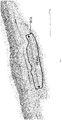
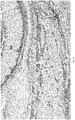
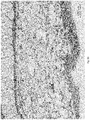
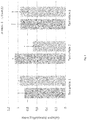
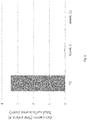
- Digitized picrosirius red-stained sections were examined with a bright-field microscope to calculate the TCC at 4 and 12 weeks of implantation. Results were expressed as the percentage of collagen surface area measured within the selected ROI and are summarized in Figure 2 . Representative photomicrographs of the histological stained sections used in this evaluation are shown in Figure 3 .
- CRI values for Test articles 1, 2 and 3 were 0.86, 1.06, and 0.95, respectively which indicates that fibers with a similar birefringence were observed, i.e. there was not a distinct difference in collagen maturity and fiber thickness within the implanted area.
- the analysis of polarized light images showed an increase in the amount of red-orange collagen fibers suggesting that the remodelling, organization and deposition of thick mature type 1 collagen fibers was initiated.
- the amount of gel-carrier was quantified through histomorphometric evaluation of the surface area of a given ROI on the SHE sections in comparison to the corresponding T0 sites.
- Histopathologic evaluation of the local tissue effects including the inflammatory response at the injection sites was conducted in adaptation to the standard (ISO 10993- 6) on the SHE and Alcian blue sections.
- test articles 1 to 3 Overtime following subcutaneous injection in the rabbit, the test articles 1 to 3 showed slight to moderate signs of degradation without inducing local side effects.
- grade of local inflammation observed with the test articles 1 to 3 was associated with the presence of the polymer microspheres, as the carrier material (test article 4), fully degraded, generated only a slight residual local inflammation.
- comparator 1 and 2 When compared to the test articles 1 to 3, comparator 1 and 2 elicited lower signs of local inflammation.
- This study aimed to investigate the neocollagenesis potential of PTMC microspheres suspended in a CMC gel-carrier in comparison to currently marketed HA-based dermal filler products, following subcutaneous administration in an animal model.
- results demonstrate that the PTMC microsphere composition according to the invention triggers a foreign body reaction in the local tissue characterized by higher stimulation of de novo synthesis and deposition of native collagen when compared to HA-based comparator products, resulting in up to a two-fold higher amount of synthesized collagen already at 4 weeks post implantation.
- the ratio of immature (type III) collagen to mature, stable collagen (type I) was shown to shift over time in favour of the mature type I collagen, indicative of a structural restoration of the extracellular matrix network with the reconstitution of collagen molecules into their native fibrillar structure.
Landscapes
- Health & Medical Sciences (AREA)
- Chemical & Material Sciences (AREA)
- Life Sciences & Earth Sciences (AREA)
- Public Health (AREA)
- Animal Behavior & Ethology (AREA)
- Veterinary Medicine (AREA)
- General Health & Medical Sciences (AREA)
- Medicinal Chemistry (AREA)
- Pharmacology & Pharmacy (AREA)
- Chemical Kinetics & Catalysis (AREA)
- Engineering & Computer Science (AREA)
- Organic Chemistry (AREA)
- Epidemiology (AREA)
- Nuclear Medicine, Radiotherapy & Molecular Imaging (AREA)
- General Chemical & Material Sciences (AREA)
- Bioinformatics & Cheminformatics (AREA)
- Dermatology (AREA)
- Transplantation (AREA)
- Oral & Maxillofacial Surgery (AREA)
- Physical Education & Sports Medicine (AREA)
- Endocrinology (AREA)
- Gynecology & Obstetrics (AREA)
- Rheumatology (AREA)
- Reproductive Health (AREA)
- Urology & Nephrology (AREA)
- Orthopedic Medicine & Surgery (AREA)
- Immunology (AREA)
- Birds (AREA)
- Inorganic Chemistry (AREA)
- Biomedical Technology (AREA)
- Dispersion Chemistry (AREA)
- Neurosurgery (AREA)
- Proteomics, Peptides & Aminoacids (AREA)
- Polymers & Plastics (AREA)
- Medicinal Preparation (AREA)
- Materials For Medical Uses (AREA)
- Pharmaceuticals Containing Other Organic And Inorganic Compounds (AREA)
- Cosmetics (AREA)
- Biological Depolymerization Polymers (AREA)
- Compositions Of Macromolecular Compounds (AREA)
Priority Applications (5)
| Application Number | Priority Date | Filing Date | Title |
|---|---|---|---|
| RS20210485A RS61739B1 (sr) | 2017-05-30 | 2018-05-30 | Resorbujuća biorazgradiva medicinska i kozmetička kompozicija |
| SM20210249T SMT202100249T1 (it) | 2017-05-30 | 2018-05-30 | Composizione medicale e cosmetica riassorbibile biodegradabile |
| PL18175001T PL3409301T3 (pl) | 2017-05-30 | 2018-05-30 | Resorbująca biodegradowalna kompozycja medyczna i kosmetyczna |
| SI201830266T SI3409301T1 (sl) | 2017-05-30 | 2018-05-30 | Resorbirni biološko razgradljiv medicinski in kozmetični sestavek |
| HRP20210657TT HRP20210657T1 (hr) | 2017-05-30 | 2021-04-26 | Resorbirajući biorazgradivi medicinski i kozmetički pripravak |
Applications Claiming Priority (1)
| Application Number | Priority Date | Filing Date | Title |
|---|---|---|---|
| EP17173563 | 2017-05-30 |
Publications (3)
| Publication Number | Publication Date |
|---|---|
| EP3409301A2 EP3409301A2 (en) | 2018-12-05 |
| EP3409301A3 EP3409301A3 (en) | 2019-02-13 |
| EP3409301B1 true EP3409301B1 (en) | 2021-02-17 |
Family
ID=59009537
Family Applications (1)
| Application Number | Title | Priority Date | Filing Date |
|---|---|---|---|
| EP18175001.9A Active EP3409301B1 (en) | 2017-05-30 | 2018-05-30 | Resorbing biodegradable medical and cosmetic composition |
Country Status (22)
| Country | Link |
|---|---|
| US (1) | US11331411B2 (da) |
| EP (1) | EP3409301B1 (da) |
| JP (1) | JP7235392B2 (da) |
| KR (4) | KR20180131478A (da) |
| CN (1) | CN110997021B (da) |
| AU (1) | AU2018277198B2 (da) |
| CA (1) | CA3065100A1 (da) |
| CY (1) | CY1124122T1 (da) |
| DK (1) | DK3409301T3 (da) |
| ES (1) | ES2868134T3 (da) |
| HR (1) | HRP20210657T1 (da) |
| HU (1) | HUE054477T2 (da) |
| LT (1) | LT3409301T (da) |
| MY (1) | MY199324A (da) |
| PH (1) | PH12019502696A1 (da) |
| PL (1) | PL3409301T3 (da) |
| PT (1) | PT3409301T (da) |
| RS (1) | RS61739B1 (da) |
| SI (1) | SI3409301T1 (da) |
| SM (1) | SMT202100249T1 (da) |
| TW (1) | TWI727174B (da) |
| WO (1) | WO2018219987A1 (da) |
Families Citing this family (2)
| Publication number | Priority date | Publication date | Assignee | Title |
|---|---|---|---|---|
| JP7295559B2 (ja) * | 2019-06-03 | 2023-06-21 | 国立大学法人 奈良先端科学技術大学院大学 | キトサン系複合体組成物及びキトサン系複合体の製造方法 |
| CN116672498B (zh) * | 2022-02-23 | 2025-07-01 | 济南格莱威医疗科技有限公司 | 一种注射用复合材料及其用途 |
Family Cites Families (15)
| Publication number | Priority date | Publication date | Assignee | Title |
|---|---|---|---|---|
| US7060287B1 (en) * | 1992-02-11 | 2006-06-13 | Bioform Inc. | Tissue augmentation material and method |
| US5599852A (en) * | 1994-10-18 | 1997-02-04 | Ethicon, Inc. | Injectable microdispersions for soft tissue repair and augmentation |
| JP4388602B2 (ja) * | 1997-02-07 | 2009-12-24 | ストライカー コーポレイション | マトリクスを含まない骨形成デバイス、移植片、およびその使用方法 |
| FR2764514B1 (fr) | 1997-06-13 | 1999-09-03 | Biopharmex Holding Sa | Implant injectable en sous-cutane ou intradermique a bioresorbabilite controlee pour la chirurgie reparatrice ou plastique et la dermatologie esthetique |
| EP1411861B1 (en) | 2001-06-29 | 2012-04-04 | Medgraft Microtech, Inc. | Biodegradable injectable implants and related methods of manufacture and use |
| US7316822B2 (en) * | 2003-11-26 | 2008-01-08 | Ethicon, Inc. | Conformable tissue repair implant capable of injection delivery |
| WO2006002365A2 (en) * | 2004-06-24 | 2006-01-05 | Angiotech International Ag | Microparticles with high loadings of a bioactive agent |
| US20080107744A1 (en) * | 2006-11-06 | 2008-05-08 | Jack Fa-De Chu | Injectable hollow tissue filler |
| CA2682034C (en) * | 2007-03-26 | 2015-01-27 | Baxter International Inc. | Injectable void filler for soft tissue augmentation |
| CN101842084B (zh) | 2007-07-26 | 2014-11-05 | 亚克蒂斯Ip有限公司 | 包含pcl的微粒及其用途 |
| BR102012010542B1 (pt) * | 2012-05-04 | 2019-09-24 | Bioactive Biomateriais Ltda. | Material injetável biorreabsorvível bioativo e processo de preparação de material injetável biorreabsorvível bioativo |
| DK3071248T3 (da) * | 2013-11-19 | 2020-11-09 | Univ Cornell | Vævsstilladsmateriale til vævsregenerering og fremgangsmåder til fremstilling |
| TWI716365B (zh) * | 2014-11-13 | 2021-01-21 | 德商梅茲製藥有限兩合公司 | 注射型真皮填充劑組合物及其套組、製備方法、與使用 |
| WO2017039435A1 (en) * | 2015-08-28 | 2017-03-09 | Rijksuniversiteit Groningen | Means and methods for sustained oxygen release in situ |
| CN106063948A (zh) * | 2016-03-30 | 2016-11-02 | 圆容生物医药无锡有限公司 | 一种长效皮下植入物及其制备方法 |
-
2018
- 2018-05-30 WO PCT/EP2018/064144 patent/WO2018219987A1/en not_active Ceased
- 2018-05-30 AU AU2018277198A patent/AU2018277198B2/en active Active
- 2018-05-30 HU HUE18175001A patent/HUE054477T2/hu unknown
- 2018-05-30 CN CN201880050911.1A patent/CN110997021B/zh active Active
- 2018-05-30 KR KR1020180062060A patent/KR20180131478A/ko not_active Ceased
- 2018-05-30 CA CA3065100A patent/CA3065100A1/en active Pending
- 2018-05-30 PT PT181750019T patent/PT3409301T/pt unknown
- 2018-05-30 EP EP18175001.9A patent/EP3409301B1/en active Active
- 2018-05-30 LT LTEP18175001.9T patent/LT3409301T/lt unknown
- 2018-05-30 RS RS20210485A patent/RS61739B1/sr unknown
- 2018-05-30 ES ES18175001T patent/ES2868134T3/es active Active
- 2018-05-30 DK DK18175001.9T patent/DK3409301T3/da active
- 2018-05-30 SM SM20210249T patent/SMT202100249T1/it unknown
- 2018-05-30 MY MYPI2019006961A patent/MY199324A/en unknown
- 2018-05-30 PL PL18175001T patent/PL3409301T3/pl unknown
- 2018-05-30 TW TW107118444A patent/TWI727174B/zh active
- 2018-05-30 US US16/618,167 patent/US11331411B2/en active Active
- 2018-05-30 SI SI201830266T patent/SI3409301T1/sl unknown
- 2018-05-30 JP JP2019566647A patent/JP7235392B2/ja active Active
-
2019
- 2019-07-11 KR KR1020190083826A patent/KR20190086419A/ko not_active Ceased
- 2019-11-28 PH PH12019502696A patent/PH12019502696A1/en unknown
-
2021
- 2021-04-26 HR HRP20210657TT patent/HRP20210657T1/hr unknown
- 2021-05-14 CY CY20211100410T patent/CY1124122T1/el unknown
-
2023
- 2023-03-24 KR KR1020230038644A patent/KR102776357B1/ko active Active
-
2025
- 2025-02-27 KR KR1020250025791A patent/KR20250034350A/ko active Pending
Non-Patent Citations (1)
| Title |
|---|
| None * |
Also Published As
| Publication number | Publication date |
|---|---|
| PT3409301T (pt) | 2021-03-25 |
| KR20180131478A (ko) | 2018-12-10 |
| ES2868134T3 (es) | 2021-10-21 |
| PH12019502696A1 (en) | 2020-07-13 |
| TW201900185A (zh) | 2019-01-01 |
| MY199324A (en) | 2023-10-24 |
| CY1124122T1 (el) | 2022-05-27 |
| US20210138110A1 (en) | 2021-05-13 |
| CN110997021A (zh) | 2020-04-10 |
| JP7235392B2 (ja) | 2023-03-08 |
| AU2018277198B2 (en) | 2023-08-31 |
| EP3409301A3 (en) | 2019-02-13 |
| SI3409301T1 (sl) | 2021-08-31 |
| HUE054477T2 (hu) | 2021-09-28 |
| AU2018277198A1 (en) | 2020-01-02 |
| JP2020521803A (ja) | 2020-07-27 |
| WO2018219987A1 (en) | 2018-12-06 |
| CN110997021B (zh) | 2022-02-15 |
| KR20250034350A (ko) | 2025-03-11 |
| HRP20210657T1 (hr) | 2021-05-28 |
| EP3409301A2 (en) | 2018-12-05 |
| LT3409301T (lt) | 2021-04-26 |
| SMT202100249T1 (it) | 2021-05-07 |
| KR20230048262A (ko) | 2023-04-11 |
| DK3409301T3 (da) | 2021-03-08 |
| PL3409301T3 (pl) | 2021-09-20 |
| KR102776357B1 (ko) | 2025-03-10 |
| BR112019025223A2 (pt) | 2020-06-16 |
| KR20190086419A (ko) | 2019-07-22 |
| CA3065100A1 (en) | 2018-12-06 |
| RS61739B1 (sr) | 2021-05-31 |
| US11331411B2 (en) | 2022-05-17 |
| TWI727174B (zh) | 2021-05-11 |
Similar Documents
| Publication | Publication Date | Title |
|---|---|---|
| Fu et al. | Injectable and thermo-sensitive PEG-PCL-PEG copolymer/collagen/n-HA hydrogel composite for guided bone regeneration | |
| Filion et al. | In vivo tissue responses to thermal-responsive shape memory polymer nanocomposites | |
| KR20250034350A (ko) | 신규한 재흡수 생분해성 의약 및 화장료 조성물 | |
| JP6164782B2 (ja) | 細胞外マトリックス材料から生理活性ゲルを製造する方法 | |
| CN107073169A (zh) | 用于组织修复的复合材料 | |
| WO2008072839A1 (en) | Dermal filler composition | |
| WO2020242420A1 (en) | A hybrid hydrogel used as a dermal filler and its production method | |
| CN115317665B (zh) | 一种聚酯粒子复合温敏即型凝胶皮下植入剂 | |
| Lee et al. | Cross-linked electrospun cartilage acellular matrix/poly (caprolactone-co-lactide-co-glycolide) nanofiber as an antiadhesive barrier | |
| RU2695343C2 (ru) | Состав fgf-18 в ксилоглюкановых гелях | |
| US20250288719A1 (en) | A tissue conductive scaffolding material | |
| US20190240379A1 (en) | Novel compositions active on adipocytes | |
| HK40001281B (en) | Resorbing biodegradable medical and cosmetic composition | |
| HK40001281A (en) | Resorbing biodegradable medical and cosmetic composition | |
| KR20230119104A (ko) | 조직 충진, 조직 간격화, 및 조직 벌크화를 위한 실크-히알루론산 조성물 | |
| BR112019025223B1 (pt) | Composição médica e cosmética biodegradável reabsorvível compreendendo poli(carbonato de 1,3-trimetileno) | |
| TWI896209B (zh) | 聚乳酸及其共聚物在製備促肌腱/韌帶生長藥物中之用途 | |
| KR101590313B1 (ko) | 콜라겐으로 구성된 주입형 피하조직재생용 바이오소재 | |
| 김현정 | Functional hydrogels designed for anti-adhesion and tissue filling | |
| Kumar et al. | Tailoring biodegradable elctrospun membrane for the potential treatment of periodontics: In vitro and in vivo evaluations | |
| Florek | A synthetic biomaterials approach to the prevention of postsurgical adhesions in neurosurgery | |
| HK1128611B (en) | Dermal filler composition | |
| HK1143070B (en) | Microparticles comprising pcl and uses thereof | |
| HK1143070A (en) | Microparticles comprising pcl and uses thereof |
Legal Events
| Date | Code | Title | Description |
|---|---|---|---|
| PUAI | Public reference made under article 153(3) epc to a published international application that has entered the european phase |
Free format text: ORIGINAL CODE: 0009012 |
|
| STAA | Information on the status of an ep patent application or granted ep patent |
Free format text: STATUS: THE APPLICATION HAS BEEN PUBLISHED |
|
| AK | Designated contracting states |
Kind code of ref document: A2 Designated state(s): AL AT BE BG CH CY CZ DE DK EE ES FI FR GB GR HR HU IE IS IT LI LT LU LV MC MK MT NL NO PL PT RO RS SE SI SK SM TR |
|
| AX | Request for extension of the european patent |
Extension state: BA ME |
|
| PUAL | Search report despatched |
Free format text: ORIGINAL CODE: 0009013 |
|
| AK | Designated contracting states |
Kind code of ref document: A3 Designated state(s): AL AT BE BG CH CY CZ DE DK EE ES FI FR GB GR HR HU IE IS IT LI LT LU LV MC MK MT NL NO PL PT RO RS SE SI SK SM TR |
|
| AX | Request for extension of the european patent |
Extension state: BA ME |
|
| RIC1 | Information provided on ipc code assigned before grant |
Ipc: A61L 27/58 20060101ALI20190104BHEP Ipc: A61L 27/18 20060101AFI20190104BHEP |
|
| STAA | Information on the status of an ep patent application or granted ep patent |
Free format text: STATUS: REQUEST FOR EXAMINATION WAS MADE |
|
| 17P | Request for examination filed |
Effective date: 20190802 |
|
| RBV | Designated contracting states (corrected) |
Designated state(s): AL AT BE BG CH CY CZ DE DK EE ES FI FR GB GR HR HU IE IS IT LI LT LU LV MC MK MT NL NO PL PT RO RS SE SI SK SM TR |
|
| STAA | Information on the status of an ep patent application or granted ep patent |
Free format text: STATUS: EXAMINATION IS IN PROGRESS |
|
| 17Q | First examination report despatched |
Effective date: 20191024 |
|
| RIN1 | Information on inventor provided before grant (corrected) |
Inventor name: SCHLIJPER, RAMON MARIA HENRICUS Inventor name: MIJNEN, PAUL WILLEM Inventor name: DOS SANTOS ROCHA, MONICA EUNICE Inventor name: GRIJPMA, DIRK WYBE Inventor name: LANKHORST, ALEXIUS JOSEPHUS Inventor name: SUPER, HENDERIKUS Inventor name: STOUTHAMER, JEFFREY MARKGREGORIUS MARIA |
|
| RAP1 | Party data changed (applicant data changed or rights of an application transferred) |
Owner name: AQPHA IP B.V. |
|
| REG | Reference to a national code |
Ref country code: HK Ref legal event code: DE Ref document number: 40001281 Country of ref document: HK |
|
| RIN1 | Information on inventor provided before grant (corrected) |
Inventor name: SUPER, HENDERIKUS Inventor name: STOUTHAMER, JEFFREY MARKGREGORIUS MARIA Inventor name: LANKHORST, ALEXIUS JOSEPHUS Inventor name: DOS SANTOS ROCHA, MONICA EUNICE |
|
| GRAP | Despatch of communication of intention to grant a patent |
Free format text: ORIGINAL CODE: EPIDOSNIGR1 |
|
| STAA | Information on the status of an ep patent application or granted ep patent |
Free format text: STATUS: GRANT OF PATENT IS INTENDED |
|
| RIC1 | Information provided on ipc code assigned before grant |
Ipc: A61P 13/10 20060101ALI20200827BHEP Ipc: A61P 19/04 20060101ALI20200827BHEP Ipc: A61P 1/04 20060101ALI20200827BHEP Ipc: A61P 17/00 20060101ALI20200827BHEP Ipc: A61P 19/02 20060101ALI20200827BHEP Ipc: A61L 27/58 20060101ALI20200827BHEP Ipc: A61P 15/10 20060101ALI20200827BHEP Ipc: A61L 27/18 20060101AFI20200827BHEP |
|
| INTG | Intention to grant announced |
Effective date: 20200930 |
|
| GRAS | Grant fee paid |
Free format text: ORIGINAL CODE: EPIDOSNIGR3 |
|
| GRAA | (expected) grant |
Free format text: ORIGINAL CODE: 0009210 |
|
| STAA | Information on the status of an ep patent application or granted ep patent |
Free format text: STATUS: THE PATENT HAS BEEN GRANTED |
|
| AK | Designated contracting states |
Kind code of ref document: B1 Designated state(s): AL AT BE BG CH CY CZ DE DK EE ES FI FR GB GR HR HU IE IS IT LI LT LU LV MC MK MT NL NO PL PT RO RS SE SI SK SM TR |
|
| REG | Reference to a national code |
Ref country code: GB Ref legal event code: FG4D |
|
| REG | Reference to a national code |
Ref country code: CH Ref legal event code: EP |
|
| REG | Reference to a national code |
Ref country code: DK Ref legal event code: T3 Effective date: 20210301 |
|
| REG | Reference to a national code |
Ref country code: DE Ref legal event code: R096 Ref document number: 602018012519 Country of ref document: DE |
|
| REG | Reference to a national code |
Ref country code: AT Ref legal event code: REF Ref document number: 1360611 Country of ref document: AT Kind code of ref document: T Effective date: 20210315 |
|
| REG | Reference to a national code |
Ref country code: IE Ref legal event code: FG4D |
|
| REG | Reference to a national code |
Ref country code: PT Ref legal event code: SC4A Ref document number: 3409301 Country of ref document: PT Date of ref document: 20210325 Kind code of ref document: T Free format text: AVAILABILITY OF NATIONAL TRANSLATION Effective date: 20210318 |
|
| REG | Reference to a national code |
Ref country code: RO Ref legal event code: EPE |
|
| REG | Reference to a national code |
Ref country code: NL Ref legal event code: FP |
|
| REG | Reference to a national code |
Ref country code: HR Ref legal event code: TUEP Ref document number: P20210657 Country of ref document: HR Ref country code: FI Ref legal event code: FGE |
|
| REG | Reference to a national code |
Ref country code: SE Ref legal event code: TRGR |
|
| REG | Reference to a national code |
Ref country code: SK Ref legal event code: T3 Ref document number: E 36997 Country of ref document: SK |
|
| REG | Reference to a national code |
Ref country code: HR Ref legal event code: T1PR Ref document number: P20210657 Country of ref document: HR |
|
| REG | Reference to a national code |
Ref country code: HR Ref legal event code: ODRP Ref document number: P20210657 Country of ref document: HR Payment date: 20210514 Year of fee payment: 4 |
|
| REG | Reference to a national code |
Ref country code: EE Ref legal event code: FG4A Ref document number: E020680 Country of ref document: EE Effective date: 20210330 |
|
| REG | Reference to a national code |
Ref country code: GR Ref legal event code: EP Ref document number: 20210401232 Country of ref document: GR Effective date: 20210614 |
|
| REG | Reference to a national code |
Ref country code: NO Ref legal event code: T2 Effective date: 20210217 |
|
| REG | Reference to a national code |
Ref country code: HU Ref legal event code: AG4A Ref document number: E054477 Country of ref document: HU |
|
| REG | Reference to a national code |
Ref country code: ES Ref legal event code: FG2A Ref document number: 2868134 Country of ref document: ES Kind code of ref document: T3 Effective date: 20211021 |
|
| REG | Reference to a national code |
Ref country code: AT Ref legal event code: UEP Ref document number: 1360611 Country of ref document: AT Kind code of ref document: T Effective date: 20210217 |
|
| REG | Reference to a national code |
Ref country code: DE Ref legal event code: R097 Ref document number: 602018012519 Country of ref document: DE |
|
| PLBE | No opposition filed within time limit |
Free format text: ORIGINAL CODE: 0009261 |
|
| STAA | Information on the status of an ep patent application or granted ep patent |
Free format text: STATUS: NO OPPOSITION FILED WITHIN TIME LIMIT |
|
| 26N | No opposition filed |
Effective date: 20211118 |
|
| REG | Reference to a national code |
Ref country code: HR Ref legal event code: ODRP Ref document number: P20210657 Country of ref document: HR Payment date: 20220510 Year of fee payment: 5 |
|
| REG | Reference to a national code |
Ref country code: HR Ref legal event code: ODRP Ref document number: P20210657 Country of ref document: HR Payment date: 20230509 Year of fee payment: 6 |
|
| P01 | Opt-out of the competence of the unified patent court (upc) registered |
Effective date: 20230522 |
|
| REG | Reference to a national code |
Ref country code: HR Ref legal event code: ODRP Ref document number: P20210657 Country of ref document: HR Payment date: 20240430 Year of fee payment: 7 |
|
| PGFP | Annual fee paid to national office [announced via postgrant information from national office to epo] |
Ref country code: SE Payment date: 20250228 Year of fee payment: 8 |
|
| REG | Reference to a national code |
Ref country code: HR Ref legal event code: ODRP Ref document number: P20210657 Country of ref document: HR Payment date: 20250513 Year of fee payment: 8 |
|
| PGFP | Annual fee paid to national office [announced via postgrant information from national office to epo] |
Ref country code: NL Payment date: 20250513 Year of fee payment: 8 |
|
| PGFP | Annual fee paid to national office [announced via postgrant information from national office to epo] |
Ref country code: SM Payment date: 20250523 Year of fee payment: 8 |
|
| PGFP | Annual fee paid to national office [announced via postgrant information from national office to epo] |
Ref country code: FI Payment date: 20250526 Year of fee payment: 8 |
|
| PGFP | Annual fee paid to national office [announced via postgrant information from national office to epo] |
Ref country code: PL Payment date: 20250522 Year of fee payment: 8 Ref country code: DE Payment date: 20250528 Year of fee payment: 8 |
|
| PGFP | Annual fee paid to national office [announced via postgrant information from national office to epo] |
Ref country code: ES Payment date: 20250612 Year of fee payment: 8 Ref country code: DK Payment date: 20250526 Year of fee payment: 8 |
|
| PGFP | Annual fee paid to national office [announced via postgrant information from national office to epo] |
Ref country code: LT Payment date: 20250509 Year of fee payment: 8 |
|
| PGFP | Annual fee paid to national office [announced via postgrant information from national office to epo] |
Ref country code: IS Payment date: 20250523 Year of fee payment: 8 Ref country code: RS Payment date: 20250514 Year of fee payment: 8 Ref country code: HU Payment date: 20250530 Year of fee payment: 8 Ref country code: NO Payment date: 20250520 Year of fee payment: 8 |
|
| PGFP | Annual fee paid to national office [announced via postgrant information from national office to epo] |
Ref country code: AL Payment date: 20250529 Year of fee payment: 8 Ref country code: LU Payment date: 20250526 Year of fee payment: 8 Ref country code: IT Payment date: 20250522 Year of fee payment: 8 Ref country code: BE Payment date: 20250526 Year of fee payment: 8 |
|
| PGFP | Annual fee paid to national office [announced via postgrant information from national office to epo] |
Ref country code: HR Payment date: 20250513 Year of fee payment: 8 |
|
| PGFP | Annual fee paid to national office [announced via postgrant information from national office to epo] |
Ref country code: LV Payment date: 20250526 Year of fee payment: 8 Ref country code: PT Payment date: 20250415 Year of fee payment: 8 |
|
| PGFP | Annual fee paid to national office [announced via postgrant information from national office to epo] |
Ref country code: EE Payment date: 20250529 Year of fee payment: 8 Ref country code: FR Payment date: 20250526 Year of fee payment: 8 |
|
| PGFP | Annual fee paid to national office [announced via postgrant information from national office to epo] |
Ref country code: MT Payment date: 20250528 Year of fee payment: 8 Ref country code: GR Payment date: 20250523 Year of fee payment: 8 Ref country code: BG Payment date: 20250527 Year of fee payment: 8 |
|
| PGFP | Annual fee paid to national office [announced via postgrant information from national office to epo] |
Ref country code: CH Payment date: 20250601 Year of fee payment: 8 |
|
| PGFP | Annual fee paid to national office [announced via postgrant information from national office to epo] |
Ref country code: AT Payment date: 20250520 Year of fee payment: 8 |
|
| PGFP | Annual fee paid to national office [announced via postgrant information from national office to epo] |
Ref country code: TR Payment date: 20250512 Year of fee payment: 8 Ref country code: SK Payment date: 20250509 Year of fee payment: 8 |
|
| PGFP | Annual fee paid to national office [announced via postgrant information from national office to epo] |
Ref country code: CZ Payment date: 20250520 Year of fee payment: 8 |
|
| PGFP | Annual fee paid to national office [announced via postgrant information from national office to epo] |
Ref country code: IE Payment date: 20250520 Year of fee payment: 8 |
|
| PGFP | Annual fee paid to national office [announced via postgrant information from national office to epo] |
Ref country code: SI Payment date: 20250512 Year of fee payment: 8 |
|
| PGFP | Annual fee paid to national office [announced via postgrant information from national office to epo] |
Ref country code: MK Payment date: 20250512 Year of fee payment: 8 |
|
| PGFP | Annual fee paid to national office [announced via postgrant information from national office to epo] |
Ref country code: CY Payment date: 20250519 Year of fee payment: 8 |
|
| PGFP | Annual fee paid to national office [announced via postgrant information from national office to epo] |
Ref country code: GB Payment date: 20260304 Year of fee payment: 9 |
|
| PGFP | Annual fee paid to national office [announced via postgrant information from national office to epo] |
Ref country code: MC Payment date: 20260326 Year of fee payment: 9 |
|
| PGFP | Annual fee paid to national office [announced via postgrant information from national office to epo] |
Ref country code: RO Payment date: 20260130 Year of fee payment: 9 |