EP3402032A1 - Inspektions- und/oder wartungssystem mit elektrischer schnittstelle - Google Patents
Inspektions- und/oder wartungssystem mit elektrischer schnittstelle Download PDFInfo
- Publication number
- EP3402032A1 EP3402032A1 EP17209142.3A EP17209142A EP3402032A1 EP 3402032 A1 EP3402032 A1 EP 3402032A1 EP 17209142 A EP17209142 A EP 17209142A EP 3402032 A1 EP3402032 A1 EP 3402032A1
- Authority
- EP
- European Patent Office
- Prior art keywords
- inspection
- electrically conductive
- housing
- unit
- maintenance
- Prior art date
- Legal status (The legal status is an assumption and is not a legal conclusion. Google has not performed a legal analysis and makes no representation as to the accuracy of the status listed.)
- Granted
Links
Images
Classifications
-
- H—ELECTRICITY
- H01—ELECTRIC ELEMENTS
- H01R—ELECTRICALLY-CONDUCTIVE CONNECTIONS; STRUCTURAL ASSOCIATIONS OF A PLURALITY OF MUTUALLY-INSULATED ELECTRICAL CONNECTING ELEMENTS; COUPLING DEVICES; CURRENT COLLECTORS
- H01R13/00—Details of coupling devices of the kinds covered by groups H01R12/70 or H01R24/00 - H01R33/00
- H01R13/62—Means for facilitating engagement or disengagement of coupling parts or for holding them in engagement
- H01R13/6205—Two-part coupling devices held in engagement by a magnet
-
- H—ELECTRICITY
- H01—ELECTRIC ELEMENTS
- H01R—ELECTRICALLY-CONDUCTIVE CONNECTIONS; STRUCTURAL ASSOCIATIONS OF A PLURALITY OF MUTUALLY-INSULATED ELECTRICAL CONNECTING ELEMENTS; COUPLING DEVICES; CURRENT COLLECTORS
- H01R13/00—Details of coupling devices of the kinds covered by groups H01R12/70 or H01R24/00 - H01R33/00
- H01R13/02—Contact members
- H01R13/22—Contacts for co-operating by abutting
- H01R13/24—Contacts for co-operating by abutting resilient; resiliently-mounted
- H01R13/2464—Contacts for co-operating by abutting resilient; resiliently-mounted characterized by the contact point
- H01R13/2478—Contacts for co-operating by abutting resilient; resiliently-mounted characterized by the contact point spherical
-
- H—ELECTRICITY
- H01—ELECTRIC ELEMENTS
- H01R—ELECTRICALLY-CONDUCTIVE CONNECTIONS; STRUCTURAL ASSOCIATIONS OF A PLURALITY OF MUTUALLY-INSULATED ELECTRICAL CONNECTING ELEMENTS; COUPLING DEVICES; CURRENT COLLECTORS
- H01R13/00—Details of coupling devices of the kinds covered by groups H01R12/70 or H01R24/00 - H01R33/00
- H01R13/64—Means for preventing incorrect coupling
-
- H—ELECTRICITY
- H01—ELECTRIC ELEMENTS
- H01R—ELECTRICALLY-CONDUCTIVE CONNECTIONS; STRUCTURAL ASSOCIATIONS OF A PLURALITY OF MUTUALLY-INSULATED ELECTRICAL CONNECTING ELEMENTS; COUPLING DEVICES; CURRENT COLLECTORS
- H01R33/00—Coupling devices specially adapted for supporting apparatus and having one part acting as a holder providing support and electrical connection via a counterpart which is structurally associated with the apparatus, e.g. lamp holders; Separate parts thereof
- H01R33/05—Two-pole devices
- H01R33/18—Two-pole devices having only abutting contacts
-
- H—ELECTRICITY
- H02—GENERATION; CONVERSION OR DISTRIBUTION OF ELECTRIC POWER
- H02J—ELECTRIC POWER NETWORKS; CIRCUIT ARRANGEMENTS OR SYSTEMS FOR SUPPLYING OR DISTRIBUTING ELECTRIC POWER; SYSTEMS FOR STORING ELECTRIC ENERGY
- H02J7/00—Circuit arrangements for charging or discharging batteries or for supplying loads from batteries
- H02J7/50—Circuit arrangements for charging or discharging batteries or for supplying loads from batteries acting upon multiple batteries simultaneously or sequentially
-
- H—ELECTRICITY
- H02—GENERATION; CONVERSION OR DISTRIBUTION OF ELECTRIC POWER
- H02J—ELECTRIC POWER NETWORKS; CIRCUIT ARRANGEMENTS OR SYSTEMS FOR SUPPLYING OR DISTRIBUTING ELECTRIC POWER; SYSTEMS FOR STORING ELECTRIC ENERGY
- H02J7/00—Circuit arrangements for charging or discharging batteries or for supplying loads from batteries
- H02J7/70—Circuit arrangements for charging or discharging batteries or for supplying loads from batteries characterised by the mechanical construction
-
- H—ELECTRICITY
- H04—ELECTRIC COMMUNICATION TECHNIQUE
- H04Q—SELECTING
- H04Q9/00—Arrangements in telecontrol or telemetry systems for selectively calling a substation from a main station, in which substation desired apparatus is selected for applying a control signal thereto or for obtaining measured values therefrom
-
- B—PERFORMING OPERATIONS; TRANSPORTING
- B08—CLEANING
- B08B—CLEANING IN GENERAL; PREVENTION OF FOULING IN GENERAL
- B08B9/00—Cleaning hollow articles by methods or apparatus specially adapted thereto
- B08B9/02—Cleaning pipes or tubes or systems of pipes or tubes
- B08B9/027—Cleaning the internal surfaces; Removal of blockages
- B08B9/04—Cleaning the internal surfaces; Removal of blockages using cleaning devices introduced into and moved along the pipes
-
- H—ELECTRICITY
- H01—ELECTRIC ELEMENTS
- H01R—ELECTRICALLY-CONDUCTIVE CONNECTIONS; STRUCTURAL ASSOCIATIONS OF A PLURALITY OF MUTUALLY-INSULATED ELECTRICAL CONNECTING ELEMENTS; COUPLING DEVICES; CURRENT COLLECTORS
- H01R2201/00—Connectors or connections adapted for particular applications
- H01R2201/20—Connectors or connections adapted for particular applications for testing or measuring purposes
-
- H—ELECTRICITY
- H04—ELECTRIC COMMUNICATION TECHNIQUE
- H04Q—SELECTING
- H04Q2209/00—Arrangements in telecontrol or telemetry systems
- H04Q2209/30—Arrangements in telecontrol or telemetry systems using a wired architecture
-
- H—ELECTRICITY
- H04—ELECTRIC COMMUNICATION TECHNIQUE
- H04Q—SELECTING
- H04Q2209/00—Arrangements in telecontrol or telemetry systems
- H04Q2209/80—Arrangements in the sub-station, i.e. sensing device
- H04Q2209/88—Providing power supply at the sub-station
Definitions
- the invention relates to an inspection and / or maintenance system with an electrical interface.
- the invention relates to a sewer inspection and / or maintenance system with an electrical interface.
- Inspection and / or maintenance systems in particular for the inspection and / or maintenance of ducts or pipes are known from the prior art.
- Inspection and / or maintenance units of such systems usually have electrical components (e.g., a camera module in an inspection system or a camera module in a flushing head) that must be powered by electrical energy. If no electrical cable for the power supply of the inspection and / or maintenance units is to be introduced into the channel, it is known to provide accumulators for the power supply in the inspection and / or maintenance units.
- Such accumulators must be charged regularly. For this purpose, the accumulator is removed from the inspection and / or maintenance units and placed in a charger for charging.
- the disadvantage here is that the housing cover of the inspection and / or maintenance unit, behind which the accumulator is arranged, must be configured at least fluid-tight to a Prevent penetration of water in the channel. This tightness can not always be guaranteed especially after repeated opening / closing.
- the housing cover is subject to a certain wear during opening / closing, which can also have a negative effect on the tightness.
- sockets are arranged on the inspection and / or maintenance units into which a plug of a charging cable can be inserted.
- the accumulator must then no longer be removed from the inspection and / or maintenance units for loading.
- these sockets must also be arranged fluid-tight and / or gas-tight on the inspection and / or maintenance units, which is possible only with considerable additional design effort.
- Object of the present invention is therefore to provide solutions that allow a structurally simple way to realize a power supply and / or data transmission to and from the inspection and / or maintenance units, at the same time the fluid and / or gas tightness the inspection and / or maintenance unit is guaranteed.
- the housing thus has at least two electrically conductive sections, i. it is also possible to provide three or more electrically conductive sections, each electrically conductive section being electrically insulated from the respective other electrically conductive sections.
- the external unit also has at least two electrical contacts, i. it is also possible to provide three or more electrical contacts.
- An electrical consumer and / or an energy store in particular a rechargeable battery, can be arranged in the housing, and the electrically conductive sections can be coupled to the electrical consumer and / or to the energy store.
- the two electrically conductive portions of the housing each have at least partially a magnetic or ferromagnetic material and the external unit has at least one magnet which magnetically when contacting the electrical contacts with the electrically conductive portions with at least one of the magnetic portions interacts.
- the external unit can be arranged on an approximately substantially flat surface of the housing, where it is held by the magnets so that the two electrical contacts of the external unit are in operative connection with the respective electrically conductive portion of the housing or held.
- the advantage here is the resulting Abumble , i. Even if, for example, unwanted and violent removal of the external unit from the inspection and / or maintenance unit, there is no damage to the external unit or to the inspection and / or maintenance unit.
- the housing and the external unit can be designed so that they can be positively and / or non-positively coupled to each other.
- the housing may have a recess in which the external unit is at least partially positive and / or non-positively receivable.
- the external unit may have movable coupling elements which, when the external unit is coupled to the housing, engage corresponding coupling recesses on the housing.
- the coupling elements may each be assigned an adjusting means, preferably a spring element.
- the spring element can be designed so that the coupling elements are pressed into the coupling recesses after receiving the external unit in the recess of the housing. When removing the external unit from the recess of the housing, the coupling elements are pressed against the spring force from the coupling recesses.
- the coupling elements may be the electrical contacts.
- the electrical contacts and the electrically conductive portions may be provided for transmission of electrical energy.
- At least one of the electrical contacts and at least one of the electrically conductive sections can be used for signal or data transmission.
- the housing of the external unit can be designed fluid and / or gas-tight.
- the external unit comprises at least one of charging unit, lighting means, permanent power supply, external accumulator, and data processing device.
- the electrical consumer can comprise at least one of data processing device, image recording device, illuminant, sensor, and manipulator.
- the system according to the invention has an inspection and / or maintenance unit and an external unit.
- Fig. 1 to Fig. 4 described a system in which the external unit is a charging unit and in which in the housing of the inspection and / or maintenance unit, an accumulator is arranged, which can be charged if necessary with the charging unit.
- an electrical load such as an external light source, as with reference to Fig. 5 is described, or a data processing device to handle over the electrical coupling to handle a data transmission, be provided.
- an external accumulator may also be provided which can be used, for example, for an emergency power supply if the energy supply for the inspection and / or maintenance unit does not occur with the accumulator arranged in the housing of the inspection and / or maintenance unit more can be guaranteed.
- an electrical load for example lighting means or an image pickup device, which is supplied with electrical energy via the electrical coupling from an external rechargeable battery.
- a data processing device such as a microcontroller, can be arranged in the housing, wherein data transmission with an external data processing device can be handled via the electrical coupling.
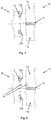
- Fig. 1 shows a schematic diagram of a system according to the invention according to a first embodiment.
- the system has an inspection and / or maintenance unit 10 and a loading unit 20.
- the inspection and / or maintenance unit 10 is also referred to below as the inspection unit 10, wherein the Invention is not limited thereto but in principle also in maintenance units can be realized.
- the inspection unit 10 has a housing in which all electrical and electronic components are accommodated, for example a camera module and / or sensors.
- a not shown here energy storage is also housed, such as an accumulator, which is provided for the power supply of the electrical and electronic components.
- the housing itself is preferably made fluid-tight and / or gas-tight.
- the housing now has a first electrically conductive section 11a and a second electrically conductive section 11b, which can carry different electrical potentials and are electrically insulated from one another, for example by means of an insulating layer 12.
- the housing can also have more than two electrically conductive sections ,
- the electrically conductive sections 11a, 11b of the housing are coupled to the accumulator, not shown here, or to a corresponding charging electronics, which in turn is coupled to the accumulator, so that the accumulator can be charged via the two electrically conductive sections 11a, 11b.
- the remaining portions of the housing may also consist of an electrically non-conductive material.
- the electrically conductive sections 11a, 11b of the housing provide contact points to which the charging unit 20 can be electrically contacted in order to supply the two electrically conductive sections 11a, 11b with an electrical current for charging the rechargeable battery.
- the voltage and / or the current intensity of the electric power provided by the charging unit 20 are hereby set so that a risk to operating personnel during the charging process is excluded, should the operating personnel accidentally come into contact with the electrically conductive portions 11a, 11b of the housing.
- a first electrical contact 22a and a second electrical contact 22b is arranged at the charging unit 20 at the charging unit 20 at the charging unit 20, a first electrical contact 22a and a second electrical contact 22b is arranged. These two electrical contacts 22a, 22b are configured and arranged on the charging unit 20 so as to come into contact with the respective electrically conductive portions 11a, 11b of the housing when the charging unit 20 is brought to the inspection unit 10. The two electrical contacts 22a, 22b are in turn coupled to an electrical power source which provides the electrical current for charging the accumulator.
- the two electrical contacts 22a, 22b are in the in Fig. 1 shown schematically slightly raised designed. However, they can also be designed, for example, as largely flat contact plates. However, the geometry of the electrical contacts 22a, 22b depends essentially on the geometry of the contact points of the electrically conductive portions 11a, 11b of the housing.
- the charging unit 20 magnets (at least one magnet), which magnetically cooperate in the approach of the charging unit 20 to the housing of the inspection unit 10 with the electrically conductive portions 11a, 11b of the housing.
- the housing has at least partially a magnetic or ferromagnetic material. With the help of the magnetic force, the charging unit 20 is then held on the housing 10.
- both the charging unit 20 and also on the housing of the inspection unit 10 each have a magnet with its positive pole and a magnet with its negative pole facing the surface of the housing or the surface of the charging unit 20.
- a reverse polarity protection can be achieved in bringing the charging unit 20 to the housing, because the magnets of the charging unit adhere to the magnet of the housing only in one orientation (in which the negative poles are facing the positive poles) of the charging unit relative to the housing.
- Fig. 2 shows an alternative embodiment of the in Fig. 1 shown system based on a schematic diagram. This in Fig. 2 System shown differs from that in Fig. 1 shown system only in the specific embodiment of the reverse polarity protection.
- a pin / groove configuration 15 to design, which only allow a way of contacting the two electrical contacts 22a, 22b with the two electrically conductive portions 11a, 11b.
- a pin is provided on the surface of the loading unit 20, which corresponds to a groove on the surface of the housing.
- a groove is provided on the surface of the loading unit 20, which corresponds to a pin on the surface of the housing. The grooves are in each case recesses or depressions on the surface, in which the respective pins can be brought into engagement.
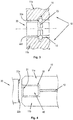
- Fig. 3 shows a further embodiment of a system according to the invention with reference to a schematic diagram.
- the housing of the inspection unit 10 has two electrically conductive portions 11a, 11b, which are electrically insulated from each other.
- a recess 13 in which the loading unit 20 is at least partially receivable by the loading unit 20 is inserted into this recess 13.
- the principle here is the same as the one in Fig. 1 shown embodiment. Because the two electrically insulated walls of the recess 13 are each part of the electrically conductive portions 11 a, 11 b of the housing, which are respectively brought into contact with the arranged on the charging unit 20 electrical contacts 22 a, 22 b, when the loading unit 20 in the recess 13th is inserted.
- the securing of the charging unit 20 in the recess 13 can also be done by means arranged on the charging unit 20 and on the wall of the recess magnet.
- this fuse is achieved by means of movably designed electrical contacts 22a, 22b, which are designed spherical here.
- the spherical electrical contacts 22a, 22b are each arranged in a radial blind hole of the charging unit 20.
- the electrical contacts 22a, 22b may also have another suitable geometry.
- the two electrical contacts 22a, 22b are each assigned an adjusting means, which is designed here as a spring element 23. With the spring elements, the electrical contacts 22a, 22b are at least partially pushed out of the respective blind hole, so that the protruding from the blind hole portion of the electrical contacts 22a, 22b can be brought into a wall-side coupling recess 14 into engagement. The electrical contacts 22a, 22b are secured against falling out of the blind holes.
- the electrical contacts 22a, 22b fulfill two purposes. On the one hand, they come into contact with the electrically conductive sections 11a, 11b of the housing in order to be able to charge the accumulator arranged in the housing. On the other hand, they secure the loading unit from too easy release from the recess 13.
- separate coupling elements can also be provided on the charging unit, which are used only for securing the charging unit in the recess 13.
- Fig. 4 shows an example of a concrete inspection and / or maintenance unit 10, the accumulator can be charged according to the invention.
- the inspection and / or maintenance unit 10 shown here is an inspection head which can be fastened, for example, to a front end of a sliding door and can be moved with the sliding door into a channel and moved there.
- the inspection head can also be mounted on a trolley.
- the inspection head 10 or the housing of the inspection head has at the distal end an axial recess 30 in which a camera module 40 is arranged.
- the opening of the recess 30 is gas-tight and / or fluid-tightly closed by a protective disk 31.
- the housing of the inspection head 10 here also has two mutually insulated electrical conductive sections 11a, 11b.
- the charging unit 20 is brought in, so that the two electrical contacts 22a, 22b are electrically contacted with the two electrically conductive sections 11a, 11b.
- a flushing head which, in addition to the flushing nozzles, also has electrical or electronic components which are supplied with electrical energy by means of an accumulator arranged in the flushing head.
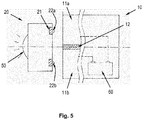
- Fig. 5 shows another example of a system according to the invention.
- the external unit has a luminous means 50 here.
- the two electrical devis2 22a and 22b are connected to the lamp 50.
- the inspection unit 10 has an accumulator 60, wherein one pole of the accumulator 60 is connected to the first electrically conductive portion 11a and the other pole of the accumulator 60 is connected to the second electrically conductive portion 11b of the housing.
Landscapes
- Engineering & Computer Science (AREA)
- Power Engineering (AREA)
- Computer Networks & Wireless Communication (AREA)
- Charge And Discharge Circuits For Batteries Or The Like (AREA)
Abstract
Description
- Die Erfindung betrifft ein Inspektions- und/oder Wartungssystem mit einer elektrischen Schnittstelle. Insbesondere betrifft die Erfindung ein Kanalinspektions- und/oder Wartungssystem mit einer elektrischen Schnittstelle.
- Inspektions- und/oder Wartungssysteme, insbesondere zur Inspektion und/oder Wartung von Kanälen bzw. Rohren sind aus dem Stand der Technik bekannt. Inspektions- und/oder Wartungseinheiten solcher Systeme weisen meist elektrische Komponenten (z.B. ein Kameramodul bei einem Inspektionssystem oder ein Kameramodul in einem Spülkopf) auf, die mit elektrischer Energie versorgt werden müssen. Sofern kein elektrisches Kabel für die Energieversorgung der Inspektions- und/oder Wartungseinheiten mit in den Kanal eingebracht werden soll, ist es bekannt, für die Energieversorgung in den Inspektions- und/oder Wartungseinheiten Akkumulatoren vorzusehen.
- Solche Akkumulatoren müssen regelmäßig aufgeladen werden. Hierzu wird der Akkumulator aus der Inspektions- und/oder Wartungseinheiten herausgenommen und zum Aufladen in ein Ladegerät gegeben. Nachteilig hierbei ist allerdings, dass die Gehäuseabdeckung der Inspektions- und/oder Wartungseinheit, hinter der der Akkumulator angeordnet ist, zumindest fluiddicht ausgestaltet sein muss, um ein Eindringen von sich im Kanal befindlichen Wasser zu verhindern. Diese Dichtigkeit kann insbesondere nach mehrmaligen Öffnen/Schließen nicht immer gewährleistet werden. Zudem unterliegt die Gehäuseabdeckung beim Öffnen/Schließen einem gewissen Verschleiß, was sich ebenfalls negativ auf die Dichtigkeit auswirken kann.
- Alternativ sind an den Inspektions- und/oder Wartungseinheiten klassische Steckbuchsen angeordnet, in die ein Stecker eines Ladekabels eingesteckt werden kann. Der Akkumulator muss dann zum Laden nicht mehr aus der Inspektions- und/oder Wartungseinheiten herausgenommen werden. Allerdings müssen auch diese Steckbuchsen fluid- und/oder gasdicht an der Inspektions- und/oder Wartungseinheiten angeordnet werden, was nur mit erheblichem konstruktiven Mehraufwand möglich ist.
- Aufgabe der vorliegenden Erfindung ist es daher, Lösungen bereitzustellen, die es auf konstruktiv einfache Art und Weise erlauben, eine Energieversorgung und/oder eine Datenübertragung von und zu der Inspektions- und/oder Wartungseinheiten zu realisieren, wobei gleichzeitig die Fluid- und/oder Gasdichtigkeit der Inspektions- und/oder Wartungseinheit gewährleistet ist.
- Gelöst wird diese Aufgabe mit einem Inspektions- und/oder Wartungssystem nach dem unabhängigen Schutzanspruch. Vorteilhaft Ausgestaltungen der Erfindung sind in den abhängigen Schutzansprüchen angegeben.
- Bereitgestellt wird demnach ein Inspektions- und/oder Wartungssystem, insbesondere ein Kanalinspektions- und/oder Wartungssystem mit einer elektrischen Schnittstelle, wobei das Inspektions- und/oder Wartungssystem
- eine Inspektions- und/oder Wartungseinheit, insbesondere eine Kanalinspektions- und/oder Wartungseinheit, und
- eine externe Einheit, die mit der Inspektions- und/oder Wartungseinheit elektrisch koppelbar ist,
aufweist, wobei - die Inspektions- und/oder Wartungseinheit ein Gehäuse aufweist,
- das Gehäuse einen ersten elektrisch leitenden Abschnitt und zumindest einen zweiten elektrisch leitenden Abschnitt aufweist, wobei die elektrisch leitenden Abschnitte gegeneinander elektrisch isoliert sind,
- die externe Einheit einen ersten elektrischen Kontakt und zumindest einen zweiten elektrischen Kontakt aufweist,
- Das Gehäuse weist also mindestens zwei elektrisch leitende Abschnitte auf, d.h. es können auch drei oder mehr elektrisch leitende Abschnitte vorgesehen sein, wobei jeder elektrisch leitende Abschnitt gegen die jeweils anderen elektrisch leitenden Abschnitte elektrisch isoliert ist.
- Entsprechend weist auch die externe Einheit mindestens zwei elektrische Kontakte auf, d.h. können auch drei oder mehr elektrische Kontakte vorgesehen sein.
- Vorteilhaft ist hierbei, dass keine herkömmlichen Stecker für eine Energieübertragung, etwa für das Aufladen eines Akkumulators, bzw. für eine Datenübertragung vorgesehen werden müssen, sodass eine potentielle Quelle für einen Fluideintritt in die Inspektions- und/oder Wartungseinheit eliminiert wird. Die Herstellung einer hermetisch dichten Inspektions- und/oder Wartungseinheit wird dadurch erheblich vereinfacht. Ferner müssen keine beweglichen Teile vorgesehen werden, sodass der Verschleiß erheblich reduziert werden kann.
- In dem Gehäuse können ein elektrischer Verbraucher und/oder ein Energiespeicher, insbesondere Akkumulator, angeordnet sein und die elektrisch leitenden Abschnitte können mit dem elektrischen Verbraucher und/oder mit dem Energiespeicher gekoppelt sein.
- Vorteilhaft ist es zudem, wenn die beiden elektrisch leitenden Abschnitte des Gehäuses jeweils zumindest abschnittsweise ein magnetisches bzw. ferromagnetisches Material aufweisen und die externe Einheit zumindest einen Magneten aufweist, der beim Kontaktieren der elektrischen Kontakte mit den elektrisch leitenden Abschnitten mit zumindest einem der magnetischen Abschnitte magnetisch zusammenwirkt.
- Damit kann die externe Einheit an einer etwa weitgehend ebenen Oberfläche des Gehäuses angeordnet werden, wo sie mittels der Magnete so gehalten wird, dass die beiden elektrischen Kontakte der externen Einheit in Wirkverbindung mit dem jeweiligen elektrisch leitenden Abschnitt des Gehäuses stehen bzw. gehalten werden.
- Vorteilhaft ist hierbei das sich daraus ergebende Abreisverhalten, d.h. auch bei einem beispielsweise ungewollten und gewaltsamen Entfernen der externen Einheit von der Inspektions- und/oder Wartungseinheit kommt es weder zu Beschädigungen an der externen Einheit noch an der Inspektions- und/oder Wartungseinheit.
- In einer Ausgestaltung der Erfindung können das Gehäuse und die externe Einheit so ausgestaltet sein, dass sie form- und/oder kraftschlüssig miteinander koppelbar sind.
- Das Gehäuse kann eine Aussparung aufweisen, in der die externe Einheit zumindest teilweise form- und/oder kraftschlüssig aufnehmbar ist.
- Hierbei kann die externe Einheit bewegbare Koppelelemente aufweisen, die beim Koppeln der externen Einheit mit dem Gehäuse in damit korrespondierende Koppelaussparungen an dem Gehäuse eingreifen.
- Den Koppelelementen kann jeweils ein Stellmittel, vorzugsweise ein Federelement zugeordnet sein. Das Federelement kann so ausgestaltet sein, dass die Koppelelemente nach Aufnahme der externen Einheit in die Aussparung des Gehäuses in die Koppelaussparungen gedrückt werden. Beim Entfernen der externen Einheit aus der Aussparung des Gehäuses werden die Koppelelemente gegen die Federkraft aus den Koppelaussparungen herausgedrückt.
- In einer vorteilhaften Ausgestaltung der Erfindung können die Koppelelemente die elektrischen Kontakte sein.
- Die elektrischen Kontakte und die elektrisch leitenden Abschnitte können für eine Übertragung von elektrischer Energie vorgesehen sein.
- Alternativ oder zusätzlich können zumindest einer der elektrischen Kontakte und zumindest einer der elektrisch leitenden Abschnitte für eine Signal- bzw. Datenübertragung verwendbar sein.
- Das Gehäuse der externen Einheit kann fluid- und/oder gasdicht ausgestaltet sein.
- Die externe Einheit zumindest eines aus Ladeeinheit, Leuchtmittel, permanente Stromversorgung, externer Akkumulator, und Datenverarbeitungseinrichtung umfassen.
- Der elektrische Verbraucher kann zumindest eines aus Datenverarbeitungseinrichtung, Bildaufnahmeeinrichtung, Leuchtmittel, Sensor, und Manipulator umfassen.
- Weitere Einzelheiten und Merkmale der Erfindung sowie konkrete, insbesondere vorteilhafte Ausführungsbeispiele der Erfindung ergeben sich aus der nachfolgenden Beschreibung in Verbindung mit der Zeichnung. Es zeigt:
- Fig. 1
- ein erfindungsgemäßes System gemäß einer ersten Ausführungsform,
- Fig. 2
- das in
Fig. 1 gezeigte System mit einem mechanischen Verpolungsschutz; - Fig. 3
- das erfindungsgemäße System gemäß einer weiteren Ausführungsform;
- Fig. 4
- ein konkretes erfindungsgemäßes System; und
- Fig. 5
- ein konkretes erfindungsgemäßes System, bei dem die externe Einheit ein Leuchtmittel ist.
- Das erfindungsgemäße System weist eine Inspektions- und/oder Wartungseinheit und eine externe Einheit auf.
- Zur Verdeutlichung der Erfindung wird nachfolgend mit Bezug auf
Fig. 1 bis Fig. 4 ein System beschrieben, bei dem die externe Einheit eine Ladeeinheit ist und bei dem in dem Gehäuse der Inspektions- und/oder Wartungseinheit ein Akkumulator angeordnet ist, der bei Bedarf mit der Ladeeinheit aufgeladen werden kann. - Anstelle der Ladeeinheit kann als externe Einheit beispielsweise auch ein elektrischer Verbraucher, etwa ein externes Leuchtmittel, wie mit Bezug auf
Fig. 5 beschreiben wird, oder eine Datenverarbeitungseinrichtung, um über die elektrische Koppelung eine Datenübertragung abzuwickeln, vorgesehen sein. In einem weiteren erfindungsgemäßen Beispiel kann anstelle der Ladeeinheit auch ein externer Akkumulator vorgesehen sein, der beispielsweise für eine Notstromversorgung verwendet werden kann, wenn mit dem im Gehäuse der Inspektions- und/oder Wartungseinheit angeordneten Akkumulator die Energieversorgung für die Inspektions- und/oder Wartungseinheit nicht mehr gewährleistet werden kann. - Anstelle des Akkumulators oder zusätzlich zum Akkumulator kann in dem Gehäuse auch ein elektrischer Verbraucher, etwa Leuchtmittel oder eine Bildaufnahmeeinrichtung, vorgesehen sein, der über die elektrische Koppelung von einem externen Akkumulator mit elektrischer Energie versorgt wird. Gemäß einem weiteren Beispiel kann in dem Gehäuse auch eine Datenverarbeitungseinrichtung, etwa ein Mikrocontroller, angeordnet sein, wobei über die elektrische Koppelung eine Datenübertragung mit einer externen Datenverarbeitungseinrichtung abgewickelt werden kann.
- Allen Ausführungsformen bzw. Ausführungsbeispielen ist gemein, dass die elektrische Koppelung zwischen der externen Einheit und der Inspektions- und/oder Wartungseinheit mit Hilfe von elektrisch leitenden Abschnitten des Gehäuses der Inspektions- und/oder Wartungseinheit, die gegeneinander elektrisch isoliert sind, und mit Hilfe von elektrischen Kontakten der externen Einheit, hergestellt wird, wobei auch die elektrischen Kontakte der externen Einheit gegeneinander elektrisch isoliert sind.
-
Fig. 1 zeigt eine Prinzipskizze eines erfindungsgemäßen Systems gemäß einer ersten Ausführungsform. Das System weist eine Inspektions- und/oder Wartungseinheit 10 und eine Ladeeinheit 20 auf. Die Inspektions- und/oder Wartungseinheit 10 wird nachfolgend vereinfacht auch als Inspektionseinheit 10 bezeichnet, wobei die Erfindung nicht hierauf beschränkt ist sondern prinzipiell auch bei Wartungseinheiten realisierbar ist. - Die Inspektionseinheit 10 weist ein Gehäuse auf, in dem sämtliche elektrischen und elektronischen Komponenten untergebracht sind, beispielsweise ein Kameramodul und/oder Sensoren. In dem Gehäuse ist ferner ein hier nicht gezeigter Energiespeicher untergebracht, etwa ein Akkumulator, der für die Energieversorgung der elektrischen und elektronischen Komponenten vorgesehen ist.
- Das Gehäuse selbst ist hierbei vorzugsweise fluid- und / oder gasdicht ausgestaltet.
- Erfindungsgemäß weist das Gehäuse nun einen ersten elektrisch leitenden Abschnitt 11a und einen zweiten elektrisch leitenden Abschnitt 11b auf, die unterschiedliche elektrische Potentiale führen können und gegeneinander elektrisch isoliert sind, etwa mittels einer Isolierschicht 12. Das Gehäuse kann aber auch mehr als zwei elektrisch leitende Abschnitte aufweisen.
- Die elektrisch leitenden Abschnitte 11a, 11b des Gehäuses sind mit dem hier nicht gezeigten Akkumulator bzw. mit einer entsprechenden Ladeelektronik, die ihrerseits mit dem Akkumulator gekoppelt ist, gekoppelt, sodass über die beiden elektrisch leitenden Abschnitte 11a, 11b der Akkumulator aufgeladen werden kann. Die übrigen Abschnitte des Gehäuses können auch aus einem elektrisch nicht leitenden Material bestehen.
- Die elektrisch leitenden Abschnitte 11a, 11b des Gehäuses stellen hierbei Kontaktstellen zur Verfügung, an die die Ladeeinheit 20 elektrisch kontaktiert werden kann, um die beiden elektrisch leitenden Abschnitte 11a, 11b mit einem elektrischen Strom für das Aufladen des Akkumulators zu beaufschlagen. Die Spannung und/oder die Stromstärke des von der Ladeeinheit 20 zu Verfügung gestellten elektrischen Stroms werden hierbei so eingestellt, dass eine Gefährdung eines Bedienpersonals während des Ladevorganges ausgeschlossen ist, sollte das Bedienpersonal versehentlich in Berührung mit den elektrisch leitenden Abschnitten 11a, 11b des Gehäuses kommen.
- An der Ladeeinheit 20 ist ein erster elektrischer Kontakt 22a und ein zweiter elektrischer Kontakt 22b angeordnet. Diese beiden elektrischen Kontakte 22a, 22b sind so ausgestaltet und an der Ladeeinheit 20 angeordnet, dass sie beim Heranführen der Ladeeinheit 20 an die Inspektionseinheit 10 in Kontakt mit den jeweiligen elektrisch leitenden Abschnitten 11a, 11b des Gehäuses kommen. Die beiden elektrischen Kontakte 22a, 22b sind ihrerseits mit einer elektrischen Stromquelle gekoppelt, die den elektrischen Strom für das Laden des Akkumulators zur Verfügung stellt.
- Die beiden elektrischen Kontakte 22a, 22b sind bei der in
Fig. 1 gezeigten Prinzipskizze leicht erhaben ausgestaltet. Sie können aber beispielsweise auch als weitgehend flache Kontaktplättchen ausgestaltet sein. Die Geometrie der elektrischen Kontakte 22a, 22b hängt aber im Wesentlichen von der Geometrie der Kontaktstellen der elektrisch leitenden Abschnitte 11a, 11b des Gehäuses ab. - Ferner sind gemäß der in
Fig. 1 gezeigten Prinzipskizze an der Ladeeinheit 20 Magnete (mindestens ein Magnet) angeordnet, die beim Heranführen der Ladeeinheit 20 an das Gehäuse der Inspektionseinheit 10 jeweils mit den elektrisch leitenden Abschnitten 11a, 11b des Gehäuses magnetisch zusammenwirken. Das Gehäuse weist hierbei zumindest abschnittsweise ein magnetisches bzw. ferromagnetisches Material auf. Mit Hilfe der Magnetkraft wird dann die Ladeeinheit 20 an dem Gehäuse 10 gehalten. - An dem Gehäuse der Inspektionseinheit 10 können ebenfalls zwei Magnete angeordnet sein, die mit den beiden Magneten 21 der Ladeeinheit korrespondieren. Vorteilhaft ist es hierbei, wenn sowohl an der Ladeeinheit 20 also auch an dem Gehäuse der Inspektionseinheit 10 jeweils ein Magnet mit seinem Pluspol und ein Magnet mit seinem Negativpol der Oberfläche des Gehäuses bzw. der Oberfläche der Ladeeinheit 20 zugewandt ist. Dadurch kann ein Verpolungsschutz beim Heranführen der Ladeeinheit 20 an das Gehäuse erreicht werden, weil die Magnete der Ladeeinheit nur bei einer Ausrichtung (bei der die Negativpole den Pluspolen zugewandt sind) der Ladeeinheit relativ zum Gehäuse an den Magneten des Gehäuses haften.
-
Fig. 2 zeigt eine alternative Ausgestaltung des inFig. 1 gezeigten Systems anhand einer Prinzipskizze. Das inFig. 2 gezeigte System unterscheidet sich von dem inFig. 1 gezeigten System lediglich in der konkreten Ausgestaltung des Verpolungsschutzes. - Um einen Verpolungsschutz zu gewährleisten, ist es gemäß der Ausgestaltung nach
Fig. 2 vorgesehen, an den sich gegenüberstehenden Oberflächen der Ladeeinheit und des Gehäuses eine Zapfen-/Nut-Konfiguration 15 auszugestalten, die lediglich eine Art der Kontaktierung der beiden elektrischen Kontakte 22a, 22b mit den beiden elektrisch leitenden Abschnitten 11a, 11b erlauben. Demnach ist an der Oberfläche der Ladeeinheit 20 ein Zapfen vorgesehen, der mit einer Nut an der Oberfläche des Gehäuses korrespondiert. Zudem ist an der Oberfläche der Ladeeinheit 20 eine Nut vorgesehen, die mit einem Zapfen an der Oberfläche des Gehäuses korrespondiert. Die Nute sind hierbei jeweils Aussparungen bzw. Vertiefungen an der Oberfläche, in die die jeweiligen Zapfen in Eingriff bringbar sind. Vorzugsweise ist nur in jener Stellung der Ladeeinheit relativ zum Gehäuse der Inspektionseinheit, bei der die beiden Zapfen in die jeweilige Nut eingreifen, eine Kontaktierung der beiden elektrischen Kontakte 22a, 22b der Ladeeinheit mit den beiden elektrisch leitenden Abschnitten 11a, 11b des Gehäuses möglich. -
Fig. 3 zeigt eine weitere Ausgestaltung eines erfindungsgemäßen Systems anhand einer Prinzipskizze. - Auch hier weist das Gehäuse der Inspektionseinheit 10 zwei elektrisch leitende Abschnitte 11a, 11b auf, die gegeneinander elektrisch isoliert sind. Im Unterschied zu der in
Fig. 1 gezeigten Ausgestaltung weist das Gehäuse hier eine Aussparung 13 auf, in der die Ladeeinheit 20 zumindest teilweise aufnehmbar ist, indem die Ladeeinheit 20 in diese Aussparung 13 eingeschoben wird. Das Prinzip ist hier jedoch dasselbe wie bei der inFig. 1 gezeigten Ausgestaltung. Denn die beiden elektrisch voneinander isolierten Wandungen der Aussparung 13 sind jeweils Teil der elektrisch leitenden Abschnitte 11a, 11b des Gehäuses, die jeweils in Kontakt mit den an der Ladeeinheit 20 angeordneten elektrischen Kontakten 22a, 22b gebracht werden, wenn die Ladeeinheit 20 in die Aussparung 13 eingeschoben wird. - Die Sicherung der Ladeeinheit 20 in der Aussparung 13 kann auch hier mittels an der Ladeeinheit 20 und an der Wandung der Aussparung angeordneten Magneten erfolgen.
- Bei der in
Fig. 3 gezeigten Ausgestaltung wird diese Sicherung mit Hilfe von beweglich ausgestalteten elektrischen Kontakten 22a, 22b erreicht, die hier kugelförmig ausgestaltet sind. Die kugelförmigen elektrischen Kontakte 22a, 22b sind jeweils in einem radialen Sackloch der Ladeeinheit 20 angeordnet. Die elektrischen Kontakte 22a, 22b können aber auch eine andere geeignete Geometrie aufweisen. - Den beiden elektrischen Kontakten 22a, 22b ist jeweils ein Stellmittel zugeordnet, das hier als Federelement 23 ausgestaltet ist. Mit den Federelementen werden die elektrischen Kontakte 22a, 22b zumindest teilweise aus dem jeweiligen Sackloch herausgedrückt, sodass der aus dem Sackloch hervorstehende Abschnitt der elektrischen Kontakte 22a, 22b in eine wandungsseitige Koppelaussparung 14 in Eingriff gebracht werden kann. Die elektrischen Kontakte 22a, 22b sind hierbei gegen ein Herausfallen aus den Sacklöchern gesichert.
- Die elektrischen Kontakten 22a, 22b erfüllen hierbei zweierlei. Zum einen gelangen sie in Kontakt mit den elektrisch leitenden Abschnitten 11a, 11b des Gehäuses, um den im Gehäuse angeordneten Akkumulator aufladen zu können. Zum anderen sichern sie die Ladeeinheit vor einem zu leichten Lösen aus der Aussparung 13.
- In einer alternativen Ausgestaltung können an der Ladeeinheit auch separate Koppelelemente vorgesehen sein, die lediglich zum Sichern der Ladeeinheit in der Aussparung 13 verwendet werden.
-
Fig. 4 zeigt eine Bespiel einer konkreten Inspektions- und/oder Wartungseinheit 10, dessen Akkumulator erfindungsgemäß aufgeladen werden kann. - Bei der hier gezeigten Inspektions- und/oder Wartungseinheit 10 handelt es sich um einem Inspektionskopf, der beispielsweise an einem vorderen Ende eines Schiebeaals befestigt werden kann und mit dem Schiebeaal in einen Kanal verbracht und dort bewegt werden kann. Der Inspektionskopf kann aber auch an einem Fahrwagen montiert werden.
- Der Inspektionskopf 10 bzw. das Gehäuse des Inspektionskopfes weist an dem distalen Ende eine axiale Aussparung 30 auf, in der ein Kameramodul 40 angeordnet ist. Die Öffnung der Aussparung 30 ist mit einer Schutzscheibe 31 gas- und/oder fluiddicht verschlossen.
- Das Gehäuse des Inspektionskopfes 10 weist auch hier zwei gegeneinander isolierte elektrische leitende Abschnitte 11a, 11b auf.
- An dem distalen Ende des Inspektionskopfes 10 wird die Ladeeinheit 20 herangeführt, sodass die beiden elektrischen Kontakte 22a, 22b elektrisch mit den beiden elektrisch leitenden Abschnitten 11a, 11b kontaktiert werden.
- Dasselbe in
Fig. 4 gezeigte Prinzip kann beispielsweise auch bei einem Spülkopf angewandt werden, der neben den Spüldüsen auch elektrische oder elektronische Komponenten aufweist, die mit einem im Spülkopf angeordneten Akkumulator mit elektrischer Energie versorgt werden. -
Fig. 5 zeigt ein weiteres Beispiel eines erfindungsgemäßen Systems. - Die externe Einheit weist hier ein Leuchtmittel 50 auf. Die beiden elektrischen Kontakt2 22a und 22b sind mit dem Leuchtmittel 50 verbunden.
- Die Inspektionseinheit 10 weist einen Akkumulator 60 auf, wobei der eine Pol des Akkumulators 60 mit dem ersten elektrisch leitenden Abschnitt 11a und der andere Pol des Akkumulators 60 mit dem zweiten elektrisch leitenden Abschnitt 11b des Gehäuses verbunden ist.
- Über die elektrischen Kopplungen
- Abschnitt 11a der Inspektionseinheit 10 zum elektrischen Kontakt 22a der externen Einheit 20, und
- Abschnitt 11b der Inspektionseinheit 10 zum elektrischen Kontakt 22b der externen Einheit 20
- Bei sämtlichen der vorstehend beschriebenen Ausgestaltungen des erfindungsgemäßen Systems kann es vorgesehen sein, das Gehäuse der Inspektionseinheit 20 fluid- und/oder gasdicht auszugestalten.
-
- 10
- Inspektions- / Wartungseinheit
- 11a
- erster elektrisch leitender Abschnitt der Inspektions- / Wartungseinheit 10
- 11b
- zweiter elektrisch leitender Abschnitt der Inspektions- / Wartungseinheit 10
- 12
- Isolierschicht / elektrisch isolierendes Material
- 13
- Aussparung des Gehäuses der Inspektions- / Wartungseinheit 10 zur Aufnahme der externen Einheit 20
- 14
- Koppelaussparungen im / am Gehäuse der Inspektions- / Wartungseinheit 10
- 15
- Zapfen-/Nut
- 20
- externe Einheit, mit der Inspektions- / Wartungseinheit 10 koppelbar, z.B. eine Ladeeinheit, eine Zusatzlicht oder ähnliches
- 21
- Magnet an der externen Einheit 20
- 22a
- erster elektrischer Kontakt der externen Einheit 20
- 22b
- zweiter elektrischer Kontakt externen Einheit 20
- 23
- Federelement
- 30
- Aussparung
- 31
- Schutzscheibe
- 40
- Kameramodul
- 50
- Leuchtmittel
- 60
- Akkumulator
Claims (14)
- Inspektions- und/oder Wartungssystem, insbesondere Kanalinspektions- und/oder Wartungssystem mit einer elektrischen Schnittstelle, wobei das Inspektions- und/oder Wartungssystem- eine Inspektions- und/oder Wartungseinheit (10), insbesondere eine Kanalinspektions- und/oder Wartungseinheit, und- eine externe Einheit (20), die mit der Inspektions- und/oder Wartungseinheit (10) elektrisch koppelbar ist,
aufweist, wobei- die Inspektions- und/oder Wartungseinheit (10) ein Gehäuse aufweist,- das Gehäuse einen ersten elektrisch leitenden Abschnitt (11a) und zumindest einen zweiten elektrisch leitenden Abschnitt (11b) aufweist, wobei die elektrisch leitenden Abschnitte (11a; 11b) gegeneinander elektrisch isoliert sind,- die externe Einheit (20) einen ersten elektrischen Kontakt (22a) und zumindest einen zweiten elektrischen Kontakt (22b) aufweist,wobei die elektrisch leitenden Abschnitte (11a; 11b) und die elektrischen Kontakte (22a; 22b) so ausgestaltet sind, dass der erste elektrische Kontakt (22a) mit dem ersten elektrisch leitenden Abschnitt (11a) und der zumindest eine zweite elektrische Kontakt (22b) mit dem zumindest einen zweiten elektrisch leitenden Abschnitt (11b) elektrisch kontaktierbar sind. - Inspektions- und/oder Wartungssystem nach dem vorgehenden Anspruch, wobei in dem Gehäuse ein elektrischer Verbraucher und/oder ein Energiespeicher, insbesondere Akkumulator, angeordnet sind und die elektrisch leitenden Abschnitte (11a; 11b) mit dem elektrischen Verbraucher und/oder mit dem Energiespeicher gekoppelt sind.
- Inspektions- und/oder Wartungssystem nach einem der vorgehenden Ansprüche, wobei die elektrisch leitenden Abschnitte (11a; 11b) des Gehäuses jeweils zumindest abschnittsweise ein magnetisches bzw. ferromagnetisches Material aufweisen und wobei die externe Einheit (20) zumindest einen Magneten (21) aufweist, der beim Kontaktieren der elektrischen Kontakte (22a; 22b) mit den elektrisch leitenden Abschnitten (11a; 11b) mit zumindest einem der magnetischen Abschnitte magnetisch zusammenwirkt.
- Inspektions- und/oder Wartungssystem nach Anspruch 1 oder 2, wobei das Gehäuse und die externe Einheit (20) so ausgestaltet sind, dass sie form- und/oder kraftschlüssig miteinander koppelbar sind.
- Inspektions- und/oder Wartungssystem nach dem vorhergehenden Anspruch, wobei das Gehäuse eine Aussparung (13) aufweist, in der die externe Einheit (20) zumindest teilweise form- und/oder kraftschlüssig aufnehmbar ist.
- Inspektions- und/oder Wartungssystem nach einem der Ansprüche 4 oder 5, wobei die externe Einheit (20) bewegbare Koppelelemente aufweist, die beim Koppeln der externen Einheit (20) mit dem Gehäuse in damit korrespondierende Koppelaussparungen (14) des Gehäuses eingreifen.
- Inspektions- und/oder Wartungssystem nach dem vorhergehenden Anspruch, wobei den Koppelelementen jeweils ein Stellmittel, vorzugsweise ein Federelement (23) zugeordnet ist.
- Inspektions- und/oder Wartungssystem nach einem der Ansprüche 6 oder 7, wobei die Koppelelemente die elektrischen Kontakte (22a; 22b) sind.
- Inspektions- und/oder Wartungssystem nach einem der vorhergehenden Ansprüche, wobei die elektrischen Kontakte (22a; 22b) und die elektrisch leitenden Abschnitte (11a, 11b) für eine Übertragung von elektrischer Energie vorgesehen sind.
- Inspektions- und/oder Wartungssystem nach einem der vorhergehenden Ansprüche, wobei zumindest einer der elektrischen Kontakte (22a; 22b) und zumindest einer der elektrisch leitenden Abschnitte (11a; 11b) für eine Signal- bzw. Datenübertragung verwendbar ist.
- Inspektions- und/oder Wartungssystem nach einem der vorhergehenden Ansprüche, wobei das Gehäuse fluid- und/oder gasdicht ausgestaltet ist.
- Inspektions- und/oder Wartungssystem nach einem der vorhergehenden Ansprüche, wobei die externe Einheit (20) zumindest eines aus Ladeeinheit, Leuchtmittel, permanente Stromversorgung, externer Akkumulator, und Datenverarbeitungseinrichtung umfasst.
- Inspektions- und/oder Wartungssystem nach einem der Ansprüche 2 bis 12, wobei der elektrische Verbraucher zumindest eines aus Datenverarbeitungseinrichtung, Bildaufnahmeeinrichtung, Leuchtmittel, Sensor, und Manipulator umfasst.
- Inspektions- und/oder Wartungseinheit (10), insbesondere eine Kanalinspektions- und/oder Wartungseinheit, wobei- die Inspektions- und/oder Wartungseinheit (10) ein Gehäuse aufweist, und- das Gehäuse einen ersten elektrisch leitenden Abschnitt (11a) und zumindest einen zweiten elektrisch leitenden Abschnitt (11b) aufweist, wobei die elektrisch leitenden Abschnitte (11a; 11b) gegeneinander elektrisch isoliert sind,wobei das Gehäuse so ausgestaltet ist, dass die beiden elektrisch leitenden Abschnitte (11a; 11b) jeweils elektrisch mit einem elektrischen Kontakt (22a; 22b) einer externen Einheit (20) in Kontakt bringbar sind.
Applications Claiming Priority (1)
| Application Number | Priority Date | Filing Date | Title |
|---|---|---|---|
| DE202017102821.6U DE202017102821U1 (de) | 2017-05-10 | 2017-05-10 | Inspektions- und/oder Wartungssystem mit elektrischer Schnittstelle |
Publications (2)
| Publication Number | Publication Date |
|---|---|
| EP3402032A1 true EP3402032A1 (de) | 2018-11-14 |
| EP3402032B1 EP3402032B1 (de) | 2022-10-26 |
Family
ID=59010772
Family Applications (1)
| Application Number | Title | Priority Date | Filing Date |
|---|---|---|---|
| EP17209142.3A Active EP3402032B1 (de) | 2017-05-10 | 2017-12-20 | Inspektions- und/oder wartungssystem mit elektrischer schnittstelle |
Country Status (3)
| Country | Link |
|---|---|
| US (1) | US10944209B2 (de) |
| EP (1) | EP3402032B1 (de) |
| DE (1) | DE202017102821U1 (de) |
Families Citing this family (1)
| Publication number | Priority date | Publication date | Assignee | Title |
|---|---|---|---|---|
| CN211150950U (zh) * | 2020-01-03 | 2020-07-31 | 康普技术有限责任公司 | 电连接器组件 |
Citations (3)
| Publication number | Priority date | Publication date | Assignee | Title |
|---|---|---|---|---|
| US20020190682A1 (en) * | 2001-03-07 | 2002-12-19 | Hagen Schempf | Gas main robotic inspection system |
| DE102008015388A1 (de) * | 2008-03-20 | 2009-06-04 | Otto Bock Healthcare Products Gmbh | System mit einer orthopädischen Einrichtung |
| US20130164949A1 (en) * | 2010-05-04 | 2013-06-27 | Qwest Communications International Inc. | Magnetic Docking Base for Handset |
Family Cites Families (23)
| Publication number | Priority date | Publication date | Assignee | Title |
|---|---|---|---|---|
| US4317969A (en) * | 1978-09-01 | 1982-03-02 | Hannes Riegler | Electrical line-connector |
| US4451113A (en) * | 1982-08-02 | 1984-05-29 | Mid Coast Electronics | Magnetic safety receptacle and plug |
| US6824415B2 (en) * | 2001-11-01 | 2004-11-30 | Andrew Corporation | Coaxial connector with spring loaded coupling mechanism |
| US7125273B2 (en) * | 2004-06-08 | 2006-10-24 | Advance Thermo Control, Ltd. | Detachable power cord apparatus |
| JP4484143B2 (ja) * | 2004-06-09 | 2010-06-16 | 日東工器株式会社 | プラグ/ソケットアセンブリ |
| US7540754B2 (en) * | 2006-01-06 | 2009-06-02 | Apple Inc. | Universal Serial Bus plug and socket coupling arrangements |
| US7001199B1 (en) * | 2005-09-23 | 2006-02-21 | Ashour Badalpour | Electrical connection |
| US7311526B2 (en) * | 2005-09-26 | 2007-12-25 | Apple Inc. | Magnetic connector for electronic device |
| US7347708B1 (en) * | 2006-08-17 | 2008-03-25 | Tzi-Chen Huang | Firm-structured plug |
| US7566224B2 (en) * | 2007-11-02 | 2009-07-28 | Hon Hai Precision Ind. Co., Ltd. | Electrical connector assembly with magnetic retention device |
| KR100940510B1 (ko) * | 2008-09-30 | 2010-02-10 | 주식회사 아이엔피 | 분리형 플러그를 가지는 헤어드라이기의 아크방지장치 |
| WO2011114957A1 (ja) * | 2010-03-16 | 2011-09-22 | オリンパスメディカルシステムズ株式会社 | コネクタシステム |
| US20130267112A1 (en) * | 2012-04-06 | 2013-10-10 | Delta Electronics (Thailand) Public Co., Ltd. | Power connector assembly and adapter plug with locking mechanism |
| US8894419B1 (en) * | 2012-08-14 | 2014-11-25 | Bby Solutions, Inc. | Magnetically connected universal computer power adapter |
| US8939785B2 (en) * | 2012-10-04 | 2015-01-27 | Gt Contact Co., Ltd. | Cable connector with spring-loaded plunger and assembly thereof |
| KR20140067356A (ko) * | 2012-11-26 | 2014-06-05 | 삼성전자주식회사 | 케이블 컨넥터 장치 |
| TWI538318B (zh) * | 2013-02-04 | 2016-06-11 | 金士頓數位股份有限公司 | 連接裝置及電子裝置總成 |
| KR101265730B1 (ko) * | 2013-02-20 | 2013-05-21 | (주)에스피에스 | 전력공급차단회로를 구비한 마그네틱 커넥터 모듈 |
| EP2779313B1 (de) * | 2013-03-14 | 2019-07-31 | Siemens Aktiengesellschaft | Elektrische Stecker- und Anschlussanordnung |
| KR102056906B1 (ko) * | 2013-03-22 | 2019-12-17 | 삼성전자주식회사 | 자성 접속 장치 |
| JP2015049717A (ja) * | 2013-09-02 | 2015-03-16 | タイコエレクトロニクスジャパン合同会社 | コネクタ、コネクタ組立体及び無線通信モジュール |
| US9017092B1 (en) * | 2014-05-07 | 2015-04-28 | Microsoft Technology Licensing, Llc | Electronic connector |
| CN105098451B (zh) * | 2014-05-13 | 2018-03-06 | 富士康(昆山)电脑接插件有限公司 | 电连接器组合 |
-
2017
- 2017-05-10 DE DE202017102821.6U patent/DE202017102821U1/de active Active
- 2017-12-20 EP EP17209142.3A patent/EP3402032B1/de active Active
-
2018
- 2018-05-08 US US15/973,833 patent/US10944209B2/en active Active
Patent Citations (3)
| Publication number | Priority date | Publication date | Assignee | Title |
|---|---|---|---|---|
| US20020190682A1 (en) * | 2001-03-07 | 2002-12-19 | Hagen Schempf | Gas main robotic inspection system |
| DE102008015388A1 (de) * | 2008-03-20 | 2009-06-04 | Otto Bock Healthcare Products Gmbh | System mit einer orthopädischen Einrichtung |
| US20130164949A1 (en) * | 2010-05-04 | 2013-06-27 | Qwest Communications International Inc. | Magnetic Docking Base for Handset |
Also Published As
| Publication number | Publication date |
|---|---|
| DE202017102821U1 (de) | 2017-05-19 |
| EP3402032B1 (de) | 2022-10-26 |
| US10944209B2 (en) | 2021-03-09 |
| US20180331467A1 (en) | 2018-11-15 |
Similar Documents
| Publication | Publication Date | Title |
|---|---|---|
| DE202008013600U1 (de) | Vorrichtung zur Herstellung einer Verbindung | |
| EP3122589B1 (de) | Als kupplung oder stecker ausgebildete steckvorrichtung | |
| DE19930642A1 (de) | Elektromechanische Verbindungsvorrichtung | |
| DE102009007359A1 (de) | Ladestation | |
| EP4294663B1 (de) | Elektrische kontakteinheit | |
| DE102019125783A1 (de) | Energieversorgungsanordnung zur Versorgung eines Kraftfahrzeugs mit elektrischer Energie über einer konduktive Steckverbindung sowie Verfahren zum Betreiben einer Energieversorgungsanordnung | |
| WO2017167327A1 (de) | Verriegelungsvorrichtung für steckverbinder | |
| DE102022112710B3 (de) | Dockingstation, Ladesystem und Computerprogrammprodukt | |
| EP3465842A1 (de) | Schnell-trennbare elektrische steckverbindung, fixierbare steckverbindung sowie verfahren zur kontaktierung eines elektrischen kontaktelements mit einem elektrischen leiter | |
| DE102014011576B3 (de) | Brandmelder mit Verriegelung und Verfahren zum Ver- und Entriegeln von einem Melderteil mit einem Sockelteil eines Brandmelders | |
| EP3402032B1 (de) | Inspektions- und/oder wartungssystem mit elektrischer schnittstelle | |
| DE10206348A1 (de) | Elektromechanische Verbindungsvorrichtung | |
| DE102008013214A1 (de) | Ladesystem | |
| DE102015117789A1 (de) | Steckdose mit Identifikationsmittel | |
| DE202018101382U1 (de) | Magnetischer elektrischer Steckverbinder | |
| DE102013009215A1 (de) | Steckvorrichtung, Aufnahmevorrichtung sowie Adaptervorrichtung zur Versorgung eines elektrisch antreibbaren Fortbewegungsmittels oder eines Hochstromverbrauchers | |
| DE69510656T2 (de) | System zum laden der batterie einer uhr ohne öffnen des deckels | |
| DE102008037738B4 (de) | Elektrische Steckverbindung und elektrisches Gerät | |
| DE102020121222A1 (de) | Hermaphroditischer Stecker | |
| DE102008057996A1 (de) | Multikontaktladegerät | |
| DE102014004501A1 (de) | Magnetische Verbindungsanordnung | |
| DE1860657U (de) | Kupplungsvorrichtung fuer elektrische ein- oder mehrfachleitungen mit kontaktstiften in der ortsbeweglichen kupplungshaelfte. | |
| DE102023129362A1 (de) | Ladesteckverbinder für Elektro- und Hybridfahrzeuge | |
| DE102010040489A1 (de) | Stromstecksystem mit Kontaktierungserkennung | |
| DE202018106611U1 (de) | Datenübertragungs- und/oder Ladekabel |
Legal Events
| Date | Code | Title | Description |
|---|---|---|---|
| PUAI | Public reference made under article 153(3) epc to a published international application that has entered the european phase |
Free format text: ORIGINAL CODE: 0009012 |
|
| STAA | Information on the status of an ep patent application or granted ep patent |
Free format text: STATUS: THE APPLICATION HAS BEEN PUBLISHED |
|
| AK | Designated contracting states |
Kind code of ref document: A1 Designated state(s): AL AT BE BG CH CY CZ DE DK EE ES FI FR GB GR HR HU IE IS IT LI LT LU LV MC MK MT NL NO PL PT RO RS SE SI SK SM TR |
|
| AX | Request for extension of the european patent |
Extension state: BA ME |
|
| STAA | Information on the status of an ep patent application or granted ep patent |
Free format text: STATUS: REQUEST FOR EXAMINATION WAS MADE |
|
| 17P | Request for examination filed |
Effective date: 20190514 |
|
| RBV | Designated contracting states (corrected) |
Designated state(s): AL AT BE BG CH CY CZ DE DK EE ES FI FR GB GR HR HU IE IS IT LI LT LU LV MC MK MT NL NO PL PT RO RS SE SI SK SM TR |
|
| STAA | Information on the status of an ep patent application or granted ep patent |
Free format text: STATUS: EXAMINATION IS IN PROGRESS |
|
| 17Q | First examination report despatched |
Effective date: 20190930 |
|
| GRAP | Despatch of communication of intention to grant a patent |
Free format text: ORIGINAL CODE: EPIDOSNIGR1 |
|
| STAA | Information on the status of an ep patent application or granted ep patent |
Free format text: STATUS: GRANT OF PATENT IS INTENDED |
|
| RIC1 | Information provided on ipc code assigned before grant |
Ipc: F16L 55/00 20060101ALN20220419BHEP Ipc: B08B 9/00 20060101ALN20220419BHEP Ipc: H04Q 9/00 20060101ALI20220419BHEP Ipc: H01R 13/62 20060101ALI20220419BHEP Ipc: H02J 7/00 20060101AFI20220419BHEP |
|
| INTG | Intention to grant announced |
Effective date: 20220518 |
|
| GRAS | Grant fee paid |
Free format text: ORIGINAL CODE: EPIDOSNIGR3 |
|
| GRAA | (expected) grant |
Free format text: ORIGINAL CODE: 0009210 |
|
| STAA | Information on the status of an ep patent application or granted ep patent |
Free format text: STATUS: THE PATENT HAS BEEN GRANTED |
|
| AK | Designated contracting states |
Kind code of ref document: B1 Designated state(s): AL AT BE BG CH CY CZ DE DK EE ES FI FR GB GR HR HU IE IS IT LI LT LU LV MC MK MT NL NO PL PT RO RS SE SI SK SM TR |
|
| REG | Reference to a national code |
Ref country code: GB Ref legal event code: FG4D Free format text: NOT ENGLISH |
|
| REG | Reference to a national code |
Ref country code: CH Ref legal event code: EP |
|
| REG | Reference to a national code |
Ref country code: DE Ref legal event code: R096 Ref document number: 502017014000 Country of ref document: DE |
|
| REG | Reference to a national code |
Ref country code: AT Ref legal event code: REF Ref document number: 1527772 Country of ref document: AT Kind code of ref document: T Effective date: 20221115 |
|
| REG | Reference to a national code |
Ref country code: IE Ref legal event code: FG4D Free format text: LANGUAGE OF EP DOCUMENT: GERMAN |
|
| REG | Reference to a national code |
Ref country code: LT Ref legal event code: MG9D |
|
| REG | Reference to a national code |
Ref country code: NL Ref legal event code: MP Effective date: 20221026 |
|
| PG25 | Lapsed in a contracting state [announced via postgrant information from national office to epo] |
Ref country code: NL Free format text: LAPSE BECAUSE OF FAILURE TO SUBMIT A TRANSLATION OF THE DESCRIPTION OR TO PAY THE FEE WITHIN THE PRESCRIBED TIME-LIMIT Effective date: 20221026 |
|
| PG25 | Lapsed in a contracting state [announced via postgrant information from national office to epo] |
Ref country code: SE Free format text: LAPSE BECAUSE OF FAILURE TO SUBMIT A TRANSLATION OF THE DESCRIPTION OR TO PAY THE FEE WITHIN THE PRESCRIBED TIME-LIMIT Effective date: 20221026 Ref country code: PT Free format text: LAPSE BECAUSE OF FAILURE TO SUBMIT A TRANSLATION OF THE DESCRIPTION OR TO PAY THE FEE WITHIN THE PRESCRIBED TIME-LIMIT Effective date: 20230227 Ref country code: NO Free format text: LAPSE BECAUSE OF FAILURE TO SUBMIT A TRANSLATION OF THE DESCRIPTION OR TO PAY THE FEE WITHIN THE PRESCRIBED TIME-LIMIT Effective date: 20230126 Ref country code: LT Free format text: LAPSE BECAUSE OF FAILURE TO SUBMIT A TRANSLATION OF THE DESCRIPTION OR TO PAY THE FEE WITHIN THE PRESCRIBED TIME-LIMIT Effective date: 20221026 Ref country code: FI Free format text: LAPSE BECAUSE OF FAILURE TO SUBMIT A TRANSLATION OF THE DESCRIPTION OR TO PAY THE FEE WITHIN THE PRESCRIBED TIME-LIMIT Effective date: 20221026 Ref country code: ES Free format text: LAPSE BECAUSE OF FAILURE TO SUBMIT A TRANSLATION OF THE DESCRIPTION OR TO PAY THE FEE WITHIN THE PRESCRIBED TIME-LIMIT Effective date: 20221026 |
|
| PG25 | Lapsed in a contracting state [announced via postgrant information from national office to epo] |
Ref country code: RS Free format text: LAPSE BECAUSE OF FAILURE TO SUBMIT A TRANSLATION OF THE DESCRIPTION OR TO PAY THE FEE WITHIN THE PRESCRIBED TIME-LIMIT Effective date: 20221026 Ref country code: PL Free format text: LAPSE BECAUSE OF FAILURE TO SUBMIT A TRANSLATION OF THE DESCRIPTION OR TO PAY THE FEE WITHIN THE PRESCRIBED TIME-LIMIT Effective date: 20221026 Ref country code: LV Free format text: LAPSE BECAUSE OF FAILURE TO SUBMIT A TRANSLATION OF THE DESCRIPTION OR TO PAY THE FEE WITHIN THE PRESCRIBED TIME-LIMIT Effective date: 20221026 Ref country code: IS Free format text: LAPSE BECAUSE OF FAILURE TO SUBMIT A TRANSLATION OF THE DESCRIPTION OR TO PAY THE FEE WITHIN THE PRESCRIBED TIME-LIMIT Effective date: 20230226 Ref country code: HR Free format text: LAPSE BECAUSE OF FAILURE TO SUBMIT A TRANSLATION OF THE DESCRIPTION OR TO PAY THE FEE WITHIN THE PRESCRIBED TIME-LIMIT Effective date: 20221026 Ref country code: GR Free format text: LAPSE BECAUSE OF FAILURE TO SUBMIT A TRANSLATION OF THE DESCRIPTION OR TO PAY THE FEE WITHIN THE PRESCRIBED TIME-LIMIT Effective date: 20230127 |
|
| REG | Reference to a national code |
Ref country code: DE Ref legal event code: R097 Ref document number: 502017014000 Country of ref document: DE |
|
| PG25 | Lapsed in a contracting state [announced via postgrant information from national office to epo] |
Ref country code: SM Free format text: LAPSE BECAUSE OF FAILURE TO SUBMIT A TRANSLATION OF THE DESCRIPTION OR TO PAY THE FEE WITHIN THE PRESCRIBED TIME-LIMIT Effective date: 20221026 Ref country code: RO Free format text: LAPSE BECAUSE OF FAILURE TO SUBMIT A TRANSLATION OF THE DESCRIPTION OR TO PAY THE FEE WITHIN THE PRESCRIBED TIME-LIMIT Effective date: 20221026 Ref country code: EE Free format text: LAPSE BECAUSE OF FAILURE TO SUBMIT A TRANSLATION OF THE DESCRIPTION OR TO PAY THE FEE WITHIN THE PRESCRIBED TIME-LIMIT Effective date: 20221026 Ref country code: DK Free format text: LAPSE BECAUSE OF FAILURE TO SUBMIT A TRANSLATION OF THE DESCRIPTION OR TO PAY THE FEE WITHIN THE PRESCRIBED TIME-LIMIT Effective date: 20221026 Ref country code: CZ Free format text: LAPSE BECAUSE OF FAILURE TO SUBMIT A TRANSLATION OF THE DESCRIPTION OR TO PAY THE FEE WITHIN THE PRESCRIBED TIME-LIMIT Effective date: 20221026 |
|
| REG | Reference to a national code |
Ref country code: CH Ref legal event code: PL |
|
| REG | Reference to a national code |
Ref country code: BE Ref legal event code: MM Effective date: 20221231 |
|
| PG25 | Lapsed in a contracting state [announced via postgrant information from national office to epo] |
Ref country code: SK Free format text: LAPSE BECAUSE OF FAILURE TO SUBMIT A TRANSLATION OF THE DESCRIPTION OR TO PAY THE FEE WITHIN THE PRESCRIBED TIME-LIMIT Effective date: 20221026 Ref country code: LU Free format text: LAPSE BECAUSE OF NON-PAYMENT OF DUE FEES Effective date: 20221220 Ref country code: AL Free format text: LAPSE BECAUSE OF FAILURE TO SUBMIT A TRANSLATION OF THE DESCRIPTION OR TO PAY THE FEE WITHIN THE PRESCRIBED TIME-LIMIT Effective date: 20221026 |
|
| PLBE | No opposition filed within time limit |
Free format text: ORIGINAL CODE: 0009261 |
|
| STAA | Information on the status of an ep patent application or granted ep patent |
Free format text: STATUS: NO OPPOSITION FILED WITHIN TIME LIMIT |
|
| 26N | No opposition filed |
Effective date: 20230727 |
|
| PG25 | Lapsed in a contracting state [announced via postgrant information from national office to epo] |
Ref country code: LI Free format text: LAPSE BECAUSE OF NON-PAYMENT OF DUE FEES Effective date: 20221231 Ref country code: IE Free format text: LAPSE BECAUSE OF NON-PAYMENT OF DUE FEES Effective date: 20221220 Ref country code: CH Free format text: LAPSE BECAUSE OF NON-PAYMENT OF DUE FEES Effective date: 20221231 |
|
| PG25 | Lapsed in a contracting state [announced via postgrant information from national office to epo] |
Ref country code: SI Free format text: LAPSE BECAUSE OF FAILURE TO SUBMIT A TRANSLATION OF THE DESCRIPTION OR TO PAY THE FEE WITHIN THE PRESCRIBED TIME-LIMIT Effective date: 20221026 Ref country code: BE Free format text: LAPSE BECAUSE OF NON-PAYMENT OF DUE FEES Effective date: 20221231 |
|
| REG | Reference to a national code |
Ref country code: AT Ref legal event code: MM01 Ref document number: 1527772 Country of ref document: AT Kind code of ref document: T Effective date: 20221220 |
|
| PG25 | Lapsed in a contracting state [announced via postgrant information from national office to epo] |
Ref country code: HU Free format text: LAPSE BECAUSE OF FAILURE TO SUBMIT A TRANSLATION OF THE DESCRIPTION OR TO PAY THE FEE WITHIN THE PRESCRIBED TIME-LIMIT; INVALID AB INITIO Effective date: 20171220 |
|
| PG25 | Lapsed in a contracting state [announced via postgrant information from national office to epo] |
Ref country code: AT Free format text: LAPSE BECAUSE OF NON-PAYMENT OF DUE FEES Effective date: 20221220 |
|
| PG25 | Lapsed in a contracting state [announced via postgrant information from national office to epo] |
Ref country code: CY Free format text: LAPSE BECAUSE OF FAILURE TO SUBMIT A TRANSLATION OF THE DESCRIPTION OR TO PAY THE FEE WITHIN THE PRESCRIBED TIME-LIMIT Effective date: 20221026 Ref country code: AT Free format text: LAPSE BECAUSE OF NON-PAYMENT OF DUE FEES Effective date: 20221220 |
|
| PG25 | Lapsed in a contracting state [announced via postgrant information from national office to epo] |
Ref country code: MK Free format text: LAPSE BECAUSE OF FAILURE TO SUBMIT A TRANSLATION OF THE DESCRIPTION OR TO PAY THE FEE WITHIN THE PRESCRIBED TIME-LIMIT Effective date: 20221026 Ref country code: IT Free format text: LAPSE BECAUSE OF FAILURE TO SUBMIT A TRANSLATION OF THE DESCRIPTION OR TO PAY THE FEE WITHIN THE PRESCRIBED TIME-LIMIT Effective date: 20221026 |
|
| PG25 | Lapsed in a contracting state [announced via postgrant information from national office to epo] |
Ref country code: MC Free format text: LAPSE BECAUSE OF FAILURE TO SUBMIT A TRANSLATION OF THE DESCRIPTION OR TO PAY THE FEE WITHIN THE PRESCRIBED TIME-LIMIT Effective date: 20221026 |
|
| PG25 | Lapsed in a contracting state [announced via postgrant information from national office to epo] |
Ref country code: MC Free format text: LAPSE BECAUSE OF FAILURE TO SUBMIT A TRANSLATION OF THE DESCRIPTION OR TO PAY THE FEE WITHIN THE PRESCRIBED TIME-LIMIT Effective date: 20221026 |
|
| PG25 | Lapsed in a contracting state [announced via postgrant information from national office to epo] |
Ref country code: BG Free format text: LAPSE BECAUSE OF FAILURE TO SUBMIT A TRANSLATION OF THE DESCRIPTION OR TO PAY THE FEE WITHIN THE PRESCRIBED TIME-LIMIT Effective date: 20221026 |
|
| PG25 | Lapsed in a contracting state [announced via postgrant information from national office to epo] |
Ref country code: MT Free format text: LAPSE BECAUSE OF FAILURE TO SUBMIT A TRANSLATION OF THE DESCRIPTION OR TO PAY THE FEE WITHIN THE PRESCRIBED TIME-LIMIT Effective date: 20221026 |
|
| PG25 | Lapsed in a contracting state [announced via postgrant information from national office to epo] |
Ref country code: TR Free format text: LAPSE BECAUSE OF FAILURE TO SUBMIT A TRANSLATION OF THE DESCRIPTION OR TO PAY THE FEE WITHIN THE PRESCRIBED TIME-LIMIT Effective date: 20221026 |
|
| PGFP | Annual fee paid to national office [announced via postgrant information from national office to epo] |
Ref country code: DE Payment date: 20251211 Year of fee payment: 9 |
|
| PGFP | Annual fee paid to national office [announced via postgrant information from national office to epo] |
Ref country code: GB Payment date: 20251219 Year of fee payment: 9 |
|
| PGFP | Annual fee paid to national office [announced via postgrant information from national office to epo] |
Ref country code: FR Payment date: 20251229 Year of fee payment: 9 |