EP3398449B1 - Verfahren zur smoltifikation in salmonidae - Google Patents
Verfahren zur smoltifikation in salmonidae Download PDFInfo
- Publication number
- EP3398449B1 EP3398449B1 EP18179282.1A EP18179282A EP3398449B1 EP 3398449 B1 EP3398449 B1 EP 3398449B1 EP 18179282 A EP18179282 A EP 18179282A EP 3398449 B1 EP3398449 B1 EP 3398449B1
- Authority
- EP
- European Patent Office
- Prior art keywords
- fish
- test
- atpase
- group
- diet
- Prior art date
- Legal status (The legal status is an assumption and is not a legal conclusion. Google has not performed a legal analysis and makes no representation as to the accuracy of the status listed.)
- Revoked
Links
Images
Classifications
-
- A—HUMAN NECESSITIES
- A23—FOODS OR FOODSTUFFS; TREATMENT THEREOF, NOT COVERED BY OTHER CLASSES
- A23K—FODDER
- A23K50/00—Feeding-stuffs specially adapted for particular animals
- A23K50/80—Feeding-stuffs specially adapted for particular animals for aquatic animals, e.g. fish, crustaceans or molluscs
-
- A—HUMAN NECESSITIES
- A23—FOODS OR FOODSTUFFS; TREATMENT THEREOF, NOT COVERED BY OTHER CLASSES
- A23K—FODDER
- A23K20/00—Accessory food factors for animal feeding-stuffs
- A23K20/10—Organic substances
- A23K20/142—Amino acids; Derivatives thereof
-
- A—HUMAN NECESSITIES
- A23—FOODS OR FOODSTUFFS; TREATMENT THEREOF, NOT COVERED BY OTHER CLASSES
- A23K—FODDER
- A23K20/00—Accessory food factors for animal feeding-stuffs
- A23K20/20—Inorganic substances, e.g. oligoelements
- A23K20/22—Compounds of alkali metals
-
- A—HUMAN NECESSITIES
- A23—FOODS OR FOODSTUFFS; TREATMENT THEREOF, NOT COVERED BY OTHER CLASSES
- A23K—FODDER
- A23K20/00—Accessory food factors for animal feeding-stuffs
- A23K20/20—Inorganic substances, e.g. oligoelements
- A23K20/24—Compounds of alkaline earth metals, e.g. magnesium
-
- Y—GENERAL TAGGING OF NEW TECHNOLOGICAL DEVELOPMENTS; GENERAL TAGGING OF CROSS-SECTIONAL TECHNOLOGIES SPANNING OVER SEVERAL SECTIONS OF THE IPC; TECHNICAL SUBJECTS COVERED BY FORMER USPC CROSS-REFERENCE ART COLLECTIONS [XRACs] AND DIGESTS
- Y02—TECHNOLOGIES OR APPLICATIONS FOR MITIGATION OR ADAPTATION AGAINST CLIMATE CHANGE
- Y02A—TECHNOLOGIES FOR ADAPTATION TO CLIMATE CHANGE
- Y02A40/00—Adaptation technologies in agriculture, forestry, livestock or agroalimentary production
- Y02A40/80—Adaptation technologies in agriculture, forestry, livestock or agroalimentary production in fisheries management
- Y02A40/81—Aquaculture, e.g. of fish
-
- Y—GENERAL TAGGING OF NEW TECHNOLOGICAL DEVELOPMENTS; GENERAL TAGGING OF CROSS-SECTIONAL TECHNOLOGIES SPANNING OVER SEVERAL SECTIONS OF THE IPC; TECHNICAL SUBJECTS COVERED BY FORMER USPC CROSS-REFERENCE ART COLLECTIONS [XRACs] AND DIGESTS
- Y02—TECHNOLOGIES OR APPLICATIONS FOR MITIGATION OR ADAPTATION AGAINST CLIMATE CHANGE
- Y02A—TECHNOLOGIES FOR ADAPTATION TO CLIMATE CHANGE
- Y02A40/00—Adaptation technologies in agriculture, forestry, livestock or agroalimentary production
- Y02A40/80—Adaptation technologies in agriculture, forestry, livestock or agroalimentary production in fisheries management
- Y02A40/81—Aquaculture, e.g. of fish
- Y02A40/818—Alternative feeds for fish, e.g. in aquacultures
Definitions
- the invention relates to fish farming, in particular to fish farming of Salmonidae, more particularly to a novel fish feed and method for smoltification and prevention of desmoltification in Salmonidae
- Salmo sp., Onchorhynchus sp. and Salvelinus sp. are strains within the family Salmonidae, which have an anadromous lifecycle. Anadromous lifecycle means the fish during its lifetime, stay in both freshwater and seawater. Salmonids in freshwater, which decide to migrate to seawater, undergo a physiological process called smoltification.
- the smoltification process are steered by endogenous processes within the fish, and these are synchronize with external signals from the environment of the fish (examples are darkness, light, water temperature, etc.).
- Smolt is the name of a salmon fish in freshwater, ready for migration to seawater.
- the smoltification process includes several endocrine signal substances, as melatonin, releasing hormones from the pituitary gland, thyroid-stimulating hormone (TSH), prolactin (PRL), growth hormone (GH) and adrenocorticotropic hormone (ACTH). These substances have an impact on several target organs within the fish body (examples are the thyroid gland and adrenal glands), which secrete signal substances which again change the appearance, behavior, growth and metabolism, body composition and capacity to maintain osmotic balance in seawater.
- TSH thyroid-stimulating hormone
- PRL prolactin
- GH growth hormone
- ACTH adrenocorticotropic hormone
- Salmonids become capable to pump salt out from the body (examples are Na + and Cl - through the gills), excrete surplus of ions through concentrated urine (examples are Ca 2+ , Mg 2+ ), and reabsorb water from the urine in the kidney.
- the smoltification process will reverse, and the fish will try to reestablish physiological balance, suitable for a life in freshwater.
- the process which is called desmoltification, might be accompanied by reduced appetite, loose scales, and from time to time moderately increased mortality.
- Winter signal could reduce daily feed uptake and growth with about 30 %. Winter signal is given for about 7 weeks, followed by summer signal (24 hour light a day) until smolt status has been achieved. Further, tanks with high density of fish (example > 70 kg/m 3 ), as observed in hatcheries with intensive production conditions, lead to fish receiving different amount of summer signal, which again cause fish to smoltify at different time. Fish living on the bottom of deep tanks, with walls of dark colors, are more likely to receive unsufficient summer signal.
- CaSR Calcium Sensing Receptors
- CaSR may be affected by different modulators, including ions (such as Ca 2+ , Mg 2+ , Cl - , Na + , H + ) and free amino acids (such as tryptophan). Stimulation of the CaSR provides an up regulation or down regulation of the variety of the cell's intracellular activity. A controlled stimulation of the CaSR can provide a response that corresponds to the smoltification process.
- fish food as it is understood in connection with the SuperSmolt ® method, and as further used in the present application, is understood to mean a feed composed of protein, fats, carbohydrates, vitamins and minerals, intended for juveniles, parr and smolt etc of salmonids in fresh water.
- a composition of such growth feed can contain these or parts of these raw materials.
- Persons skilled in the art are familiar with the types of feed that are intended for this purpose, versus feed that is intended for other species, or stages of growth.
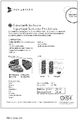
- An example of fish feed used in the SuperSmolt® method is illustrated in the product sheet shown in Fig. 1 .
- the SuperSmolt ® method makes it possible to smoltify salmonids without use of winter- and summer-signal (dark/light), but rather with the use of continuously light (24 hour/day) right up to transfer time to seawater, thus, avoiding use of growth reducing winter signal. Furthermore, using this method allows keeping the fish in the smolt window, preventing desmoltification, which allows for normal growth also during the smoltification process in fresh water.
- the SuperSmolt ® method provides overall obvious advantages in production efficiency, both in fresh water and seawater production.
- the SuperSmolt ® method has several disadvantages. That method requires the addition of large quantities of salts (ions) in the operation water, over a long period of time (3-6 weeks). This is a demanding practical issue and greatly increases cost in the production. Thus, the method is rarely used to keep fish in fresh water for a long period of time ( ⁇ 6 weeks), as the costs and practical conditions makes it unsuitable.
- the present invention therefore has as its purpose according to one aspect to provide a fish food and a method that eliminates or reduces the disadvantages of the SuperSmolt ® method. This is performed by formulating a fish feed which alone is able to smoltify the fish without the use of salts in the process water and at the same time, allows keeping the fish in the smolt window for a long period of time.
- the invention provides a simplified smoltification process compared with the SuperSmolt ®, as there is no need to add salts in the process water, and it can easily be implemented as an additional stimulus to the use of winter and summer signals, or inadequate winter and summer signals, in the smoltification process.
- the invention provides a method for smoltification in Salmonidae, wherein the method comprises the steps of:
- the fish feed comprises protein, fat, carbohydrate, vitamins, minerals and water, NaCl from 10 -100 g/kg, with added polyvalent cation receptor modulator (PVCR), for example, tryptophan or phenylalanine, 1-10 g/kg, further with added magnesium salts (Mg 2+ ), such as MgCl 2 between 0.1-100 g/kg, and calcium salts (Ca 2+ ), for example, the CaCl 2 between 0.1-100 g/kg.
- PVCR polyvalent cation receptor modulator
- Mg 2+ magnesium salts
- Ca 2+ calcium salts
- Figure 1 is a product sheet of a prior art fish feed utilized in the SuperSmolt ® method.
- the present invention provides a method for smoltification in Salmonidae wherein the method uses a fish feed to which is added salts (ions) and PVCR modulators (free amino acids) according to the following table 1. All of the numerical ranges specified should be considered to include the various intermediate ranges as if these intermediate ranges were explicitly mentioned, e.g., a range of 1-10 should be considered to also include 1-9, 1-8, 1-7 (etc); 2-10, 3-10, 4-10 (etc); 1-9, 2-8, (etc).
- PVCR modulators include the free amino acids as here mentioned, whether used alone or in combination: Tryptophan, Tyrosine, Phenylalanine, Serine, Alanine, Arginine, Histidine, Leucine, Isoleucine, Aspartic acid, Glutamic acid, Glycine, Lysine, Methionine, Proline, Glutamine, Asparagine, Threonine, Valine, and Cysteine, in concentrations between 1-10 grams/kg fish feed.
- the fish feed may comprise various combinations of the above mentioned additional constituents.
- Non-limiting examples of such combinations are:
- “Fish food” is understood here as a feed composed of protein, fats, carbohydrates, vitamins, minerals, pigments and water, suitable for juveniles, parr and smolt of salmonids in fresh water.
- a composition of such feed for growth can contain these or parts of these raw materials:
- Soya protein concentrate for example, SPC65
- soya protein for example, HiPro Soy
- pea protein flour sunflower flour
- wheat gluten for example, corn gluten
- horse beans/faba beans raps meal
- lupins poultry meal
- meat bone meal blood meal
- guargum flour microbial proteins
- algee protein shell animal flour in general
- krill flour krill hydrolysate
- fish hydrosylate fish meal (ex from the NVG herring, mackerel, horse mackerel, sandeels, capelin, anchovetas, menhaden and more)
- the fish feed used according to the method of the invention surprisingly enables:
- the invention comprises, according to one aspect, combining a feed equivalent of the SuperSmolt® feed, with added magnesium salts and/or calcium salts in the feed, while not mixing these salts in operating the water, as in the SuperSmolt ® method.
- the invention provides a method to:
- the method comprises performing the following steps:
- the fish feed used according to the present invention comprises according to one embodiment protein, fat, carbohydrate, vitamins, minerals and water, NaCl from 10-100 g/kg, with added polyvalent cation receptor modulator (PVCR), for example, tryptophan or phenylalanin, 1-10 g/kg, and added calcium salts (Ca 2+ ), for example the CaCl 2 between 0.1-100 g/kg, and magnesium salts (Mg 2+ ), such as MgCl 2 between 0.1-100 g/kg.
- PVCR polyvalent cation receptor modulator
- Ca 2+ calcium salts
- Mg 2+ magnesium salts
- the feed according to the present method is administered to the fish according to appetite, while it is in fresh water or brackish water, until smoltification occurs.
- the fish is, according to the present invention, transferred to seawater after smoltification.
- Table 2 Overview of the field trials, the lighting conditions, the water temperature and the type of test diets.
- the fish feed is understood here as a feed composed of protein, fats, carbohydrates, vitamins and minerals, suitable for parr and smolt of salmonids in fresh water.
- Test diet 1 (corresponding to SuperSmolt ® feed):
- Test diet 2 (corresponding to an embodiment of the fish feed used according to the present method):
- Sampling was performed, just before the fish received test diet/control diet and immediately before transfer of fish to seawater. In addition, sampling was performed in between, start and endpoint sampling.
- Sampling was performed, just before the fish was fed with test diet and just before the transfer of fish to seawater. Sampling was also in varying degrees, performed in between, start and endpoint sampling.
- Sampling was performed, just before the fish was fed with test diet and immediately before transfer of fish to seawater. Sampling was also in varying degrees, performed in between, start and endpoint sampling.
- the main function of the enzyme, as the alpha 1a mRNA codes for, is to pump the salts from the fresh water into the fish body. Adaption to a life in seawater means that this enzyme activity has to be decreased, and similar for the gene expression.
- the number of copies of alpha 1a mRNA in the fish's gills decrease.
- Gill tissue from the third gill bow was transferred to a tube with mRNA-later, to be analyzed for the number of copies of the alpha 1a mRNA, in accordance with a method developed by FishGuard AS (2013).
- Chloride in the blood plasma of fish in seawater test Chloride in the blood plasma of fish in seawater test.
- Diagram 1 shows the development of the Na + -K + - ATPase enzyme in the gill tissue in field trial 1, where use of test diet 1 is compared with control diet a, that is growth feed for juveniles produced by Skretting AS.
- Control diet a Test diet 1 ATPase P valu e Sig 95 % Cl Sig 99 % Cl ATPase P valu e Sig 95 % Cl Sig 99 % Cl 19.03.201 2 12.04.201 2 0,02 yes no 19.03.201 2 12.04.201 2 0,48 no no 26.04.201 2 09.05.201 2 0,01 yes yes 26.04.201 2 09.05.201 2 0,02 yes no
- Diagram 2 shows the development of the smolt index in field trial 1, where test diet 1 is compared with the control diet a, a growth feed for juveniles produced by Skretting AS.
- Chloride in blood plasma of fish in seawater challenge test is a Chloride in blood plasma of fish in seawater challenge test.
- Diagram 3 shows the development in plasma chloride in field trials 1, when use of test diet 1, and compared with control diet a, a growth feed for juveniles produced by Skretting AS.
- Diagram 4 shows the development of the Na +-K +-ATPase enzyme in gill tissue in field trial 2, when use of test diet 2, compared with control diet a, that is a growth feed for juveniles produced by Skretting as.
- Chloride in blood plasma of fish in seawater challenge test is a Chloride in blood plasma of fish in seawater challenge test.
- the smolt hatchery had no opportunity to carry out sea-water test, and no samples were taken out.
- the mortality in fresh water phase was normal. After 60 days at sea, the deaths rate was 0.62% for fish given test diet 2 and 0.71% for fish given control diet a, in fresh water.
- Replicate 2 shows that control feed gives from the second week of use (01.10.12), a variation between 1517 000 to 786 000 copies of alpha1a mRNA (freshwater ATPase). This is above the limit value for seawater tolerance (set to 1186 000 copies) for the first three samplings, while the last sampling is under the limit value.
- seawater tolerance set to 1186 000 copies
- the fish express low number of copies of the alpha 1a mRNA, 05.11.12 and 06.12.12, between 413 000 and 396 000 copies.
- Diagram 7 provides an overview of the results.
- alpha 1a mRNA freshwater ATPase
- Alpha 1a mRNA results from the test group and control group are correlated to the freshwater temperature.
- Diagram 8 shows the percentage share of these samples that are below the limit value for seawater tolerance, 1186 000 copies of the alpha 1a mRNA.
- the chart also shows the water temperature in the same period. At water temperatures between 8.1 and 8.9 °C, 90 and 100% of the values in the samples in the test group, are under the limit for seawater tolerance. This share was stable throughout the smoltification process, in the same way that the water temperature was stable.
- the corresponding values in the control group was between 20% and 100%, and the lowest share, was observed at the start of the observation period.
- Diagram 9 shows the development in smolt index in field trial 3, when use of test diet 2, compared with control diet a, a growth feed for juveniles produced by Skretting as.
- Diagram 10 and 11 show the status in plasma chloride in field trial 3, after exposure of fish in 34 ⁇ sea water in 144 hours, when use of test diet 2, compared with control diet a, in 11 weeks before the sea-water exposure.
- Diagram 12 shows the average levels of magnesium and calcium in blood plasma of salmon in fresh water and seawater.
- Diagram 13 shows the development of the Na +-K +-ATPase enzyme in gill tissue in field trial 4, where use of test diet 2 is compared with the control diet b, which is growth feed for juveniles, produced by Ewos AS.
- the experiment is carried out under natural light conditions, mostly after the autumnal Equinox.
- Diagram 15 shows the development in smolt index in field trial 4, when use of test diet 2, compared with control diet b.
- Chloride in the blood plasma of fish in the seawater challenge test Chloride in the blood plasma of fish in the seawater challenge test.
- Diagram 16 shows the development of the Na +-K +-ATPase enzyme in gill tissue in field trial 5, when use of test diet 2, vs control diet b, which is a growth feed for juveniles produced by Ewos AS.
- the results are the average of the sampling material from 3 tanks in the test, and 2 tanks in the control.
- Overview of the number of tanks and the number of fish at each sampling can be found in table 15.
- Table 15 Overview of the number of tanks and the number of fish , at each samplingpoint in field trial 5.
- Diagram 17 shows the development of the Na +-K +-ATPase enzyme activity in gill tissue in replicate 1, when use of test diet 2, compared with control diet b.
- Diagram 18 shows the development of the Na +-K +-ATPase enzyme activity in gill tissue in replicate 2a, when use of test diet 2 and compared with control diet b.
- Diagram 19 shows the development of the Na +-K +-ATPase enzyme activity in gill tissue in replicate 2b, when use of test diet 2, compared with control diet b.
- Diagram 21 shows the development in smolt index in field trial 5, when use of test diet 2, compared this with the control diet b.
- the results are the average of sampling from the 3 tanks in the test and 2 tanks in the control.
- Chloride in the blood plasma of fish in the seawater challenge test Chloride in the blood plasma of fish in the seawater challenge test.
- Diagram 22 shows the development of the Na +-K +-ATPase enzyme in gill tissue in field trial 6, when use of test diet 2, compared with control diet b, which is growth feed for juveniles produced by Ewos AS.
- the experiment is a comparison of two production methods, as the fish in the test group receiving continuously light and test diet 2, while the fish in the control group receive the classic photo manipulation (first winter signal, followed by summer signal) in combination with the control diet b (ordinary growth feed).
- Test group was transferred to the seawater after 23.09.13, while the control group was transferred to the seawater five weeks after the test group. During this period, there are observations of several significant increases in smolt index between a numbers of sampling points in the control group.
- Control diet b Test diet 2 Smolt index P value 95 % Cl 99 % Cl Smolt index P value 95 % Cl 99 % Cl 26.08.1 3 12.09.1 3 0,37 No No 26.08.1 3 12.09.1 3 0,48 No No 26.08.1 3 23.09.1 3 0,00 Yes Yes 26.08.1 3 08.10.1 3 0,11 No No 26.08.1 3 23.10.1 3 0,00 Yes Yes 12.09.1 3 23.09.1 3 0,00 Yes Yes 26.08.1 3 31.10.1 3 0,00 Yes Yes 12.09.1 3 23.09.1 3 0,00 Yes Yes 12.09.1 3 08.10.1 3 0,25 No No 12.09.1 3 23.10.1 3 0,00 Yes Yes 12.09.1 3 31.10.1 3 0,00 Yes Yes 23.09.1 3 08.10.1 3 0,15 No No 23.09.1 3 23.10.1 3 0,00 Yes Yes 23.09.1 3 31.10.1 3 0,00 Yes Yes 23.09.1 3 31.10.1 3 0,00 Yes Yes 23.09.1 3 08.10.1 3 0,15 No No 23.09.1 3 23.10.1 3 0,00 Yes Yes 23.09.1 3 31
- Chloride in the blood plasma of fish in the seawater challenge test Chloride in the blood plasma of fish in the seawater challenge test.
- Table 25 gives an overview of mortality for the seawater production.
- Table 25 Overview of mortality in seawater post transfer from freshwater.
- the presence of the CaSR in the various organs associated with the osmoregulation and endocrine activity related to the smoltification process has been demonstrated in the SuperSmolt ® method , and it is known how to influence the activity of these cells by use of ions and amino acids that stimulate the CaSR.
- the SuperSmolt ® method also provides increase in Na + -K + -ATPase enzyme activity, increase in smolt index, smolt behavior in fresh water, normal osmoregulation in seawater (34 ⁇ ), and good survival (1% mortality ⁇ after 30 days) and growth in sea-water production. All of these are traditional parameters in order to assess whether or not the fish is smoltified satisfactory, or not.
- Experience from 2002 to 2014, with more than 300 million supersmoltified salmon supports that this method employing the addition of salts to the operating water works can function as a smoltification process.
- test feeds are used in combination with traditional photo manipulation.
- continuous light or natural light is employed after the autumnal Equinox, both conditions representing a challenge to get a satisfying smoltification process, and ability to normal osmoregulation, survival and growth after transfer to seawater.
- test diet 1 is used in combination with the ordinary photo manipulation
- test diet 2 is used in combination with ordinary photo manipulation
- test diet 1 gave no significant increases in Na + -K + -ATPase enzyme activity, and similarly in the control group. Similar results were observed for the increase of the smolt index. There was no observation of significant changes in plasma chloride, after 96 hours seawater challenge test in 35 ⁇ seawater. Both the control group and the test group were within the normal range of plasma chloride, 120-150 mmol/l. The experiments, carried out at the water temperature 3-5 ° C, which should give an average dietary uptake of 0.2-0.4% daily, for this sized fish (Skretting feed table, 2009).
- test diet 1 is the type of feed used in the SuperSmolt ® method, but in combination with Ca 2+ and Mg 2+ added to the operating water.
- Test diet 2 was used in field trial 5.
- the water temperature was between 8-6 ° C the first two weeks in the smoltification process (after the given summer signal), then the water temperature first dropped to the 4° C, then 3 °C.
- the temperature drop considered as an environmental signal, which hampers the smoltification process.
- Decreasing water temperature resulted in reduced feed uptake, but it looks like the first two weeks with the highest water temperatures and relatively high feed intake of the test diet 2, has been critical of how the smoltification process ran.
- the increase in ATPase enzyme activity was significantly stronger between sampling points, early in the smoltification process, in fish that received test diet 2 (significantly within the 99% confidence interval), compared with the control group (significantly within the 95% confidence interval).
- test group in replicates 1 and 2a transferred to seawater, respectively 3 and 2 weeks earlier, than the control groups.
- Test group in replicate 2b was transferred at the same time as the control group.
- transfer to seawater of the test group was possible 4 weeks before the control fish.
- Percentage share of samples of alpha 1a mRNA (freshwater ATPase) in the test group increases significantly from the startup and to second sampling point (about 2 weeks) (diagram 20). This is a period with a water temperature of 6 °C.
- test diet 2 gives the extra stimulus for the fish in the test group, revealed as an extra boost in the ATPase enzyme production, compared to the control group.
- Late autumn transfers can be problematic in relation to achieving satisfactory size of the fish in the sea before the winter season. Such fish are more prone to winter wounds, than fish that have come in the sea earlier in the fall.
- Early autumn transfers allows to a greater extent, to utilize the higher seawater temperatures early in the fall, and how to get higher growth rates and reduced production time from transfer to slaughter.
- Late autumn transfers correlated to the declining fresh water temperature and difficulties with the smoltification process, is common in smolt production.
- Test diet 2 is a tool to achieve the earlier transfer time, on the falling water temperatures in the autumn.
- Field trial 2 was conducted on rainbow trout. This fish had received winter signal by using natural light in winter in the southern hemisphere (before the spring Equinox). After this received extra light, which served as the summer signal. Test diet 2, was used as an additional stimuli in the summer signal period. It is not usual to talk about a smoltification process in rainbow trout, but it is a fact that the rainbow trout must respond with the same physiological responses as salmon, when transferred to seawater. A preadaptation in freshwater, before transfer the fish to seawater, seems as a wise strategy to reduce osmoregulation stress in rainbow trout. Test group shows one week earlier significant increase in ATPase enzyme activity, compared with the control group.
- the hatchery had a procedure with grading out the smallest fish in a fish group, before delivery to the sea. This practice stresses the fish and cause fall in the ATPase enzyme activity, thus confirming previously experience.
- Both the test group, and control group responded with a numerical reduction in the ATPase enzyme amount after the stressor. However, only the control group have a fall in ATPase, which is significant within the 99% confidence interval. The fall in the ATPase enzyme activity in the test group is not significant. Increase in ATPase last week before transfer to seawater in the control group is not significant, but can be consider as a possible recovery after the stressor.
- Rainbow trout are exposed to emaciation (pin heads) the first time after the transfer to the sea.
- Field trial 2 indicates that the test diet 2 is a tool for better preadaptation of Rainbow trout to a life in seawater, compared to the traditional production method.
- Field trials 3, 4, and 6 are experiments carried out without the use of photo manipulation in the smoltification process.
- the fish in field trial 3 placed in a tank outside the hatchery building, was exposed for continuously artificial light. Then the fish was moved indoors, and continue to receive artificial light 24 hour/day. The experiment was carried out while the fish was indoors. Continuously light is normally insufficient to achieve a satisfying smoltification process, but it is known that such conditions combined high water temperature (> 8 ° C), can provide the fish with high ATPase enzyme activity in the gills. Such fish can perform with normally osmoregulation in seawater. However, such groups of fish often perform with an inhomogeneous smolt status within the group, unsuitable for transfer to the sea.
- One aspect that may be of importance is that the fish stood out in August and September under a dark night sky. This might been perceived as a winter signal, despite the supply of a relatively modest amount of light from artificial added light in the tank, compared with the darkness of the night sky.
- the stimulus When transferring to the hatchery in house and continuously stable light conditions without variation, the stimulus has been perceived as the summer signal in the fish. Likely, it has contributed to a smoltification process. Regardless of lighting conditions, it is with reasonable certainty, that this fish has received a suboptimal light management regime, compared with what is standard for light management of smolt.
- Test diet 2 provides earlier and higher ATPase enzyme activity, compared with the control group. This is valid throughout the experimental period of 11 weeks. There is significant increase in the test group early in the smoltification process (between the first and third sampling points), while the only significant change in the control group is the fall in the ATPase between the third and fourth sampling point. For test diet 2, there is a corresponding ATPase response as the one observed in the field trials 2 and 5.
- control group through the experimental period had significant increase and decrease in freshwater ATPase, whereas the test group did not have any significant changes. This is probably due to the fact, that the first sampling point is missing for both replicates 1 and 2 for this type of analysis, and that the test diet 2, keeps the fish at a stable low level of freshwater ATPase (chart 9 and 10).
- the control group reduces the level of freshwater ATPase to about the same level as the test group after 11 weeks in the experiment. This may be because the fish have gone into a smoltification process that has taken about 654 day° from the time the fish was moved in house of the hatchery (the supposed starting of summer signal).
- ATPase enzyme activity is 7.7 in the control group, while the test group has 9.2 at the last sampling.
- the level of the control group indicates desmoltification, alternatively the fish have been exposed to a negative environmental impact and in such cases, it is common with a significant decrease in ATPase enzyme activity.
- Freshwater ATPase levels do not support a desmoltification, rather the opposite.
- the most likely reason for the drop in ATPase enzyme activity, is a stressor. Such a stressor can be high density in small experimental tanks. This is a similar observation as observed when grading the Rainbow trout in field trials 2, where fish fed with test diet 2, maintains higher ATPase despite the added stressor, compared with the control group.
- Field trial 4 is carried out under the falling water temperature and on the falling day length after the autumnal Equinox.
- the fish are getting more darkness than light exposure through the day, and the proportion of darkness every day during the test period, is increasing. Both water temperature and reduced day length is negative signals for the smoltification process.
- these findings are similar to the one observed in field trial 3.
- Samples analyzed for alpha 1a mRNA shows for test diet 2, a significant decrease in the 99% confidence interval between sampling points. This decline are note observed in the control group. Second sampling in the test group (about 2 weeks after startup) is below the limit value for seawater tolerance, at 1.186 million copies of freshwater ATPase. This response, are observed in field trials 3, as well as in the field trial 5.
- test diet 2 is safe in use in ordinary production, as well as that it shows the effect on smoltification, despite the absence of common smoltification signals.
- fish will receive from time to time incomplete smoltification signals (missing/incomplete winter signal and summer signal), and in such situations, the test diet 2 can be used to compensate for this.
- Field trials 6 is carried out with respect to compare two different production methods, continuous light in combination with test diet 2, compared with traditional photo manipulation and ordinary growth feed.
- This production takes place in the open air, in cages in fresh water.
- the fish in the test group has received continuously light.
- the smoltification process is ended before the autumn Equinox.
- the fish gets longer days than night.
- Fish in the control group received the natural light conditions until 12. of September 2012, and the darkness at night in the period served as winter signal. When exposed to artificial light, this will be perceived as the summer signal in the fish.
- the main purpose of this experiment is to evaluate whether it is possible to transfer fish to seawater at an earlier stage, compare to what is possible with photo manipulation.
- test diet 2 in this case is able to perform transfer of smolt to seawater, 5 weeks prior to photo manipulated smolt production.
- the main reason for this is that the fish does not get winter signal, and thus can maintain normal feed intake.
- the fish reach vaccination size earlier than the fish receiving winter signal. Smoltification is done after the vaccination is carried out.
- This smolt plant cannot give an artificial winter signal, as it has outside cages in a fresh water lake.
- the smolt plant have to wait for the sufficient number of days which can give darkness during night (in August and September), and the artificial summer light signal in the smoltification process will be tweaked out in September month, after the winter signal.
- Smolt index had equal development in the test and control group in this experiment. This may be due to both the test group and control group, received more natural day light than it had in a field trial 3, 4 and 5. It is known, that light intensity affects the degree of smolt index. Bright light results in higher smolt index, than the dim light.
- Samples analyzed for alpha 1a mRNA shows for test diet 2, a significant decrease within the 99% confidence interval, between sampling points. This decline looks occurs in the control group as well, between the first and second sampling, but the decline in the test group is numerically greater than in the control group. The decline in the test group is from 6.07 million to 1.48 million copies between the first and second sampling. Comparable, the decrease in the control group is from 2.5 million to 2.23 million copies. Between the second and third sampling points, there is no signify change in the control group, but the test group continues the fall down to 0.75 million copies. The change in the test group corresponds to the one observed in the field trials 3, 4 and 5, but is somewhat delayed compare to the other.
- the mortality rate of fish fed with test diet 2 in freshwater was very low first 8 months in seawater, 0.36% in mortality.
- test diet 2 is safe in use in regular production, and that the fish can smoltify without use of photo manipulation, only with the help of the test diet 2.
- the experience of this type of production is limited, compared to the use of the SuperSmolt ® method, which combines the use of continuously light.
- cation modulators Ca 2+ , Mg 2+ are added to the operating water, in combination with Na + , Cl - and free tryptophan in the fish feed for the salmonids.
- the purpose of the SuperSmolt ® method is to transfer the salmon fish to seawater.
- the fish feed used according to the present method has all of the cation modulators in the feed itself, and does not require separately adding modulators to the operating water of the fish.
- the purpose of the method of the present invention is to transfer the salmon fish to the seawater.
- the fish feed, the method of smoltification and the areas of application are thus new in relation to the SuperSmolt ® method.
- the fish feed used according to the present method can be used as:
Landscapes
- Chemical & Material Sciences (AREA)
- Life Sciences & Earth Sciences (AREA)
- Polymers & Plastics (AREA)
- Animal Husbandry (AREA)
- Zoology (AREA)
- Engineering & Computer Science (AREA)
- Food Science & Technology (AREA)
- Inorganic Chemistry (AREA)
- Proteomics, Peptides & Aminoacids (AREA)
- Insects & Arthropods (AREA)
- Marine Sciences & Fisheries (AREA)
- Birds (AREA)
- Farming Of Fish And Shellfish (AREA)
- Fodder In General (AREA)
- Feed For Specific Animals (AREA)
- Meat, Egg Or Seafood Products (AREA)
- Coloring Foods And Improving Nutritive Qualities (AREA)
- Medicines Containing Material From Animals Or Micro-Organisms (AREA)
Claims (9)
- Verfahren zur Smoltifikation bei Salmonidae, dadurch gekennzeichnet, dass das Verfahren die Schritte umfasst von:- Bereitstellung eines Fischfutters, das Protein, Fett, Kohlenhydrate, Vitamine und Mineralien und Na+ von 3,934- 39,340 g/kg Gewicht, Mg2+ von 0,026-25,530 g/kg Gewicht, Ca2+ von 0,036-36,330 g/kg Gewicht und einen zusätzlichen polyvalenten Kationenrezeptor-Modulator (PVCR) von 1-10 g/kg Gewicht umfasst, wobei der PVCR-Modulator in Form von freier/freien Aminosäure(n) vorliegt;- Verabreichung des Fischfutters in Süßwasser an eine Population von Junglachs, bis die Fische einen Smoltifikationszustand erreichen; und- Übertragung des Fisches, der den Status der Smoltifikation erreicht hat, in das Meerwasser;wobei
das Futter in Abwesenheit der Zugabe von zusätzlichen Ionen zum Süßwasser verabreicht wird, wobei die Ionen aus Mg2+ und Ca2+ bestehen, und ferner in Abwesenheit von Photomanipulation, wobei die Photomanipulation von der Art ist, dass eine Fischpopulation künstlichen Wintersignalen ausgesetzt wird, die einen künstlichen Zeitplan von Licht und Dunkelheit umfassen, mit dem Ziel, die Smoltifikation zu induzieren. - Verfahren nach Anspruch 1, wobei das Fischfutter aufweist Protein, Fett, Kohlenhydrate, Vitamine, Mineralien und Wasser, NaCl von 10-100 g/kg Gewicht, Magnesiumsalze (Mg2+), wie beispielsweise MgCl2 zwischen 0,1-100 g/kg, und Calciumsalze (Ca2+), beispielsweise das CaCh zwischen 0,1-100 g/kg.
- Verfahren nach Anspruch 1, dadurch gekennzeichnet, dass das Fischfutter in Kombination mit einem Schema kontinuierlicher Lichtbedingungen bis zur Smoltifikation an Junglachse verabreicht wird.
- Verfahren nach Anspruch 1, dadurch gekennzeichnet, dass das Fischfutter entsprechend dem Appetit der Fische und als vollständiger Ersatz für anderes Fischfutter verabreicht wird.
- Verfahren nach Anspruch 1, dadurch gekennzeichnet, dass die freie(n) Aminosäure(n) ausgewählt aus der Gruppe bestehend aus Tryptophan, Tyrosin, Phenylalanin, Serin, Alanin, Arginin, Histidin, Leucin, Isoleucin, Asparaginsäure, Glutaminsäure, Glycin, Lysin, Methionin, Prolin, Glutamin, Asparagin, Threonin, Valin, Cystein und jeder Kombination davon, ist/sind.
- Verfahren nach Anspruch 5, dadurch gekennzeichnet, dass die freie Aminosäure Phenylalanin ist.
- Verfahren nach Anspruch 5, dadurch gekennzeichnet, dass die freie Aminosäure Tryptophan.
- Verfahren nach einem der vorhergehenden Ansprüche, dadurch gekennzeichnet, dass das Fischfutter des Weiteren Pigmente und Wasser umfasst.
- Verfahren nach einem der vorhergehenden Ansprüche, dadurch gekennzeichnet, dass das Fischfutter für Junglachs und für Junglachs im wanderfähigen Alter von Salmoniden im Süßwasser geeignet ist.
Priority Applications (2)
| Application Number | Priority Date | Filing Date | Title |
|---|---|---|---|
| SI201531448T SI3398449T1 (sl) | 2014-09-23 | 2015-09-22 | Postopek smoltifikacije pri salmonidah |
| HRP20201981TT HRP20201981T8 (hr) | 2014-09-23 | 2015-09-22 | Postupak smoltifikacije kod salmonida |
Applications Claiming Priority (3)
| Application Number | Priority Date | Filing Date | Title |
|---|---|---|---|
| US201462053826P | 2014-09-23 | 2014-09-23 | |
| EP15766520.9A EP3197290B1 (de) | 2014-09-23 | 2015-09-22 | Fischfutter und dessen anwendung bei der prophylaxe und behandlung von hämorrhagischem sälmlingssyndrom (hss) bei salmonidae |
| PCT/EP2015/071684 WO2016046182A1 (en) | 2014-09-23 | 2015-09-22 | A fish feed and method for smoltification and prevention of desmoltification in salmonidae, and for prophyaxis and treatment of haemorrhagic smolt syndrome (hss) in salmonidae |
Related Parent Applications (2)
| Application Number | Title | Priority Date | Filing Date |
|---|---|---|---|
| EP15766520.9A Division-Into EP3197290B1 (de) | 2014-09-23 | 2015-09-22 | Fischfutter und dessen anwendung bei der prophylaxe und behandlung von hämorrhagischem sälmlingssyndrom (hss) bei salmonidae |
| EP15766520.9A Division EP3197290B1 (de) | 2014-09-23 | 2015-09-22 | Fischfutter und dessen anwendung bei der prophylaxe und behandlung von hämorrhagischem sälmlingssyndrom (hss) bei salmonidae |
Publications (2)
| Publication Number | Publication Date |
|---|---|
| EP3398449A1 EP3398449A1 (de) | 2018-11-07 |
| EP3398449B1 true EP3398449B1 (de) | 2020-09-16 |
Family
ID=54148536
Family Applications (6)
| Application Number | Title | Priority Date | Filing Date |
|---|---|---|---|
| EP20212158.8A Active EP3808188B1 (de) | 2014-09-23 | 2015-09-22 | Fischfutter |
| EP19162565.6A Withdrawn EP3516965A1 (de) | 2014-09-23 | 2015-09-22 | Fischfutter und verfahren zur smoltifizierung und vorbeugung der desmolifizierung bei salmoniden sowie zur prophylaxe und behandlung des hämorrhagischen smoltsyndroms (hss) bei salmoniden |
| EP21157534.5A Active EP3858149B1 (de) | 2014-09-23 | 2015-09-22 | Fischfutter, verfahren zur herstellung von fischfutter und seine verwendung zur smoltifikation |
| EP15766520.9A Revoked EP3197290B1 (de) | 2014-09-23 | 2015-09-22 | Fischfutter und dessen anwendung bei der prophylaxe und behandlung von hämorrhagischem sälmlingssyndrom (hss) bei salmonidae |
| EP18179282.1A Revoked EP3398449B1 (de) | 2014-09-23 | 2015-09-22 | Verfahren zur smoltifikation in salmonidae |
| EP24217315.1A Pending EP4520186A3 (de) | 2014-09-23 | 2015-09-22 | Fischfutter und verfahren zur smoltifizierung und verhinderung von desmoltifizierung in salmonidae und zur prophylaxe und behandlung des hämorrhagischen smolt-syndroms (hsss) in salmonidae |
Family Applications Before (4)
| Application Number | Title | Priority Date | Filing Date |
|---|---|---|---|
| EP20212158.8A Active EP3808188B1 (de) | 2014-09-23 | 2015-09-22 | Fischfutter |
| EP19162565.6A Withdrawn EP3516965A1 (de) | 2014-09-23 | 2015-09-22 | Fischfutter und verfahren zur smoltifizierung und vorbeugung der desmolifizierung bei salmoniden sowie zur prophylaxe und behandlung des hämorrhagischen smoltsyndroms (hss) bei salmoniden |
| EP21157534.5A Active EP3858149B1 (de) | 2014-09-23 | 2015-09-22 | Fischfutter, verfahren zur herstellung von fischfutter und seine verwendung zur smoltifikation |
| EP15766520.9A Revoked EP3197290B1 (de) | 2014-09-23 | 2015-09-22 | Fischfutter und dessen anwendung bei der prophylaxe und behandlung von hämorrhagischem sälmlingssyndrom (hss) bei salmonidae |
Family Applications After (1)
| Application Number | Title | Priority Date | Filing Date |
|---|---|---|---|
| EP24217315.1A Pending EP4520186A3 (de) | 2014-09-23 | 2015-09-22 | Fischfutter und verfahren zur smoltifizierung und verhinderung von desmoltifizierung in salmonidae und zur prophylaxe und behandlung des hämorrhagischen smolt-syndroms (hsss) in salmonidae |
Country Status (19)
| Country | Link |
|---|---|
| US (2) | US20170208840A1 (de) |
| EP (6) | EP3808188B1 (de) |
| CN (2) | CN106998745B (de) |
| CA (2) | CA2958777C (de) |
| CL (4) | CL2017000674A1 (de) |
| CY (1) | CY1121659T1 (de) |
| DK (4) | DK3398449T3 (de) |
| ES (2) | ES2728552T3 (de) |
| HR (2) | HRP20190953T8 (de) |
| HU (1) | HUE044905T2 (de) |
| LT (2) | LT3197290T (de) |
| PL (4) | PL3197290T3 (de) |
| PT (2) | PT3197290T (de) |
| RS (1) | RS58906B1 (de) |
| RU (1) | RU2708168C2 (de) |
| SI (2) | SI3197290T1 (de) |
| SM (1) | SMT201900321T1 (de) |
| TR (1) | TR201908203T4 (de) |
| WO (1) | WO2016046182A1 (de) |
Families Citing this family (9)
| Publication number | Priority date | Publication date | Assignee | Title |
|---|---|---|---|---|
| CA2958777C (en) | 2014-09-23 | 2022-10-11 | Europharma As | A fish feed and method for smoltification and prevention of desmoltification in salmonidae, and for prophylaxis and treatment of haemorrhagic smolt syndrome (hss) in salmonidae |
| AU2018375995B2 (en) | 2017-12-01 | 2024-09-19 | Benchmark Genetics Iceland Hf | An aquaculture process for the production of salmon eggs |
| CA3086603A1 (en) * | 2017-12-21 | 2019-06-27 | Gis Gas Infusion Systems Inc. | Method and apparatus for fish farms |
| CN111034654A (zh) * | 2018-10-11 | 2020-04-21 | 东营市海洋经济发展研究院 | 一种太平洋银鲑鱼苗的银化方法 |
| CN111034659A (zh) * | 2019-12-24 | 2020-04-21 | 大连海洋大学 | 马口鱼苗种池塘培育方法 |
| FR3126599B1 (fr) * | 2021-09-09 | 2025-06-06 | Bretagne Chimie Fine | Composition alimentaire pour les poissons comprenant un hydrolysat à hautes teneurs en acides aminés libres et utilisations |
| NO347550B1 (en) * | 2022-07-01 | 2024-01-08 | Nutreco Ip Assets Bv | Feed for anadromous fish |
| KR102496216B1 (ko) * | 2022-07-18 | 2023-02-08 | 맥섬석 지.엠.주식회사 | 가축 혈액, 맥섬석, 법제칼슘을 이용한 양어사료용 또는 배합사료 보조용 진공 압출성형 펠렛의 제조 방법 |
| DK202370610A1 (en) | 2022-12-13 | 2024-07-12 | Zoetis Services Llc | Methods of vaccine administration to salmonids |
Citations (4)
| Publication number | Priority date | Publication date | Assignee | Title |
|---|---|---|---|---|
| WO2002030182A2 (en) | 2000-10-12 | 2002-04-18 | Marical, Inc. | Methods for raising pre-adult anadromous fish |
| WO2007057688A1 (en) | 2005-11-17 | 2007-05-24 | Institutt For Akvakulturforskning As | Method for adminstering carotenoids to salmonids |
| EP1670321B1 (de) | 2003-09-15 | 2009-07-29 | Trouw International B.V. | Fischfutter für süsswasserfische und verwendung solch eines futters |
| WO2016046182A1 (en) | 2014-09-23 | 2016-03-31 | Europharma As | A fish feed and method for smoltification and prevention of desmoltification in salmonidae, and for prophyaxis and treatment of haemorrhagic smolt syndrome (hss) in salmonidae |
Family Cites Families (13)
| Publication number | Priority date | Publication date | Assignee | Title |
|---|---|---|---|---|
| US3916832A (en) * | 1973-04-16 | 1975-11-04 | Maxwell Patrick Sweeney | Aquaculture system |
| SU1376996A1 (ru) * | 1986-05-13 | 1988-02-28 | Полярный научно-исследовательский институт морского рыбного хозяйства и океанографии им.Н.М.Книповича | Способ определени стадии смолтификации у молоди лососевых рыб |
| WO2003087331A2 (en) * | 2000-10-12 | 2003-10-23 | Marical, Inc. | Polyvalent cation-sensing receptor in atlantic salmon |
| US6463883B1 (en) * | 2000-10-12 | 2002-10-15 | Marical, Llc | Methods for raising pre-adult anadromous fish |
| CA2575905A1 (en) * | 2004-08-02 | 2006-02-09 | Universite Laval | Nutritional ingredient containing bioavailable mineral nutrients |
| CL2008001640A1 (es) * | 2007-06-08 | 2008-11-07 | Bergen Teknologioverforing As | Uso de hidroxiprolina para preparar una composicion de alemento destinada a promover el crecimiento de un animal, como peces, aves y mamiferos. |
| JP4888782B2 (ja) * | 2007-08-28 | 2012-02-29 | 株式会社片山化学工業研究所 | 養殖魚の寄生虫卵の殺滅方法 |
| CN101243778B (zh) * | 2008-03-19 | 2011-04-27 | 中国水产科学研究院淡水渔业研究中心 | 一种大银鱼苗种培育方法 |
| EP2588614A1 (de) * | 2010-06-30 | 2013-05-08 | DSM IP Assets B.V. | Sporenoberflächendisplay bioaktiver moleküle |
| CN102283162B (zh) * | 2011-07-13 | 2012-12-26 | 中国水产科学研究院黑龙江水产研究所 | 鲑科鱼类可控温孵化及养殖装置 |
| JP6243848B2 (ja) * | 2011-12-02 | 2017-12-06 | プレーリー アクア テクPrairie Aqua Tech | 高品質濃縮タンパク質のための微生物ベース・プロセス |
| TWI449790B (zh) | 2011-12-06 | 2014-08-21 | Food Industry Res & Dev Inst | 臭滷水的製造方法及所使用的發酵培養基 |
| CN103503807B (zh) * | 2013-08-21 | 2015-04-22 | 通威(成都)三文鱼有限公司 | 银鲑鱼苗培育方法 |
-
2015
- 2015-09-22 CA CA2958777A patent/CA2958777C/en active Active
- 2015-09-22 PT PT15766520T patent/PT3197290T/pt unknown
- 2015-09-22 RS RS20190663A patent/RS58906B1/sr unknown
- 2015-09-22 SI SI201530765T patent/SI3197290T1/sl unknown
- 2015-09-22 PL PL15766520T patent/PL3197290T3/pl unknown
- 2015-09-22 RU RU2017111885A patent/RU2708168C2/ru active
- 2015-09-22 EP EP20212158.8A patent/EP3808188B1/de active Active
- 2015-09-22 TR TR2019/08203T patent/TR201908203T4/tr unknown
- 2015-09-22 HR HRP20190953TT patent/HRP20190953T8/hr unknown
- 2015-09-22 CA CA3148820A patent/CA3148820A1/en active Pending
- 2015-09-22 ES ES15766520T patent/ES2728552T3/es active Active
- 2015-09-22 WO PCT/EP2015/071684 patent/WO2016046182A1/en not_active Ceased
- 2015-09-22 HU HUE15766520 patent/HUE044905T2/hu unknown
- 2015-09-22 EP EP19162565.6A patent/EP3516965A1/de not_active Withdrawn
- 2015-09-22 SM SM20190321T patent/SMT201900321T1/it unknown
- 2015-09-22 LT LTEP15766520.9T patent/LT3197290T/lt unknown
- 2015-09-22 SI SI201531448T patent/SI3398449T1/sl unknown
- 2015-09-22 EP EP21157534.5A patent/EP3858149B1/de active Active
- 2015-09-22 PL PL18179282.1T patent/PL3398449T3/pl unknown
- 2015-09-22 EP EP15766520.9A patent/EP3197290B1/de not_active Revoked
- 2015-09-22 PL PL20212158.8T patent/PL3808188T3/pl unknown
- 2015-09-22 EP EP18179282.1A patent/EP3398449B1/de not_active Revoked
- 2015-09-22 LT LTEP18179282.1T patent/LT3398449T/lt unknown
- 2015-09-22 DK DK18179282.1T patent/DK3398449T3/da active
- 2015-09-22 CN CN201580051584.8A patent/CN106998745B/zh active Active
- 2015-09-22 CN CN202011099200.9A patent/CN112219757B/zh active Active
- 2015-09-22 ES ES18179282T patent/ES2836054T3/es active Active
- 2015-09-22 US US15/329,584 patent/US20170208840A1/en not_active Abandoned
- 2015-09-22 DK DK20212158.8T patent/DK3808188T2/da unknown
- 2015-09-22 DK DK19162565.6T patent/DK3516965T2/da unknown
- 2015-09-22 EP EP24217315.1A patent/EP4520186A3/de active Pending
- 2015-09-22 PL PL21157534.5T patent/PL3858149T3/pl unknown
- 2015-09-22 PT PT181792821T patent/PT3398449T/pt unknown
- 2015-09-22 HR HRP20201981TT patent/HRP20201981T8/hr unknown
- 2015-09-22 DK DK15766520.9T patent/DK3197290T3/da active
-
2017
- 2017-03-20 CL CL2017000674A patent/CL2017000674A1/es unknown
-
2019
- 2019-02-25 CL CL2019000494A patent/CL2019000494A1/es unknown
- 2019-05-30 CY CY20191100577T patent/CY1121659T1/el unknown
-
2020
- 2020-06-17 CL CL2020001642A patent/CL2020001642A1/es unknown
- 2020-12-17 US US17/124,530 patent/US20210120846A1/en active Pending
-
2021
- 2021-02-16 CL CL2021000402A patent/CL2021000402A1/es unknown
Patent Citations (4)
| Publication number | Priority date | Publication date | Assignee | Title |
|---|---|---|---|---|
| WO2002030182A2 (en) | 2000-10-12 | 2002-04-18 | Marical, Inc. | Methods for raising pre-adult anadromous fish |
| EP1670321B1 (de) | 2003-09-15 | 2009-07-29 | Trouw International B.V. | Fischfutter für süsswasserfische und verwendung solch eines futters |
| WO2007057688A1 (en) | 2005-11-17 | 2007-05-24 | Institutt For Akvakulturforskning As | Method for adminstering carotenoids to salmonids |
| WO2016046182A1 (en) | 2014-09-23 | 2016-03-31 | Europharma As | A fish feed and method for smoltification and prevention of desmoltification in salmonidae, and for prophyaxis and treatment of haemorrhagic smolt syndrome (hss) in salmonidae |
Non-Patent Citations (13)
| Title |
|---|
| AAS ET AL.: "Nutritional responses in rainbow trout (Oncorhynchus mykiss) fed diets with different physical qualities at stable or variable environmental conditions", AQUACULTURE NUTRITION, vol. 17, pages 657 - 670, XP055527918 |
| ANONYMOUS: "Skretting feed catalogue (passage) (ENGLISH TRANSLATION ENCLOSED)", SKRETTING FEED CATALOGUE, August 2012 (2012-08-01), pages 12, XP055458500 |
| CONIGRAVE A D ET AL: "L-amino acid sensing by the extracellular Ca<2+>-sensing receptor", PROCEEDINGS OF THE NATIONAL ACADEMY OF SCIENCES, NATIONAL ACADEMY OF SCIENCES, vol. 97, no. 9, 25 April 2000 (2000-04-25), pages 4814 - 4819, XP002429948, ISSN: 0027-8424, DOI: 10.1073/PNAS.97.9.4814 * |
| DEAN BASIC ET AL.: "Short- and long-term effects of dietary L-tryptophan supplementation on the neuroendocrine stress response in seawater-reared Atlantic salmon (Salmo salar)", AQUACULTURE, vol. 388-391, 2013, pages 8 - 13, XP055668352, DOI: 10.1016/j.aquaculture.2013.01.014 |
| HOGLUND; BAKKE E; OVERLI M J; WINBERG O; NILSSON S; G E: "Suppression of aggressive behaviour in juvenile Atlantic cod (Gadus morhua) by 1- tryptophan supplementation", AQUACULTURE, vol. 249, no. 1-4, 2005, pages 525 - 531, XP005038801 |
| MARINA MACHADO ET AL.: "Dietary tryptophan and methionine as modulators of European seabass (Dicentrarchus labrax) immune status and inflammatory response", FISH & SHELLFISH IMMUNOLOGY, vol. 42, 2015, pages 353 - 362, XP055668381, DOI: 10.1016/j.fsi.2014.11.024 |
| NYLUND ET AL.: "Haemorrhagic smolt syndrome (HSS) in Norway : pathology and associated virus-like particles", DISEASES OF AQUATIC ORGANISMS, vol. 54, 17 March 2003 (2003-03-17), pages 15 - 27, XP055161956 |
| OLIVIER LEPAGE ET AL.: "Tryptophan affects both gastrointestinal melatonin production and interrenal activity in stressed and nonstressed rainbow trout", J. PINEAL RES., vol. 38, 2005, pages 264 - 271, XP055668374, DOI: 10.1111/j.1600-079X.2004.00201.x |
| RODGER ET AL.: "Haemorrhagic smolt syndrome: a severe anaemic condition in farmed salmon in Scotland", THE VETERINARY RECORD, vol. 142, 16 May 1998 (1998-05-16), pages 538 - 541, XP055458507 |
| SERGIO BASULTO: "INDUCED SALTWATER TOLERANCE IN CONNECTION WITH INORGANIC SALTS IN THE FEEDING OF ATLANTIC SALMON (SALMO SALAR L.", AQUACULTURE, vol. 8, no. 19760000, pages 45 - 55, XP055458496 |
| STEPHEN MCCORMICK; ANTHONY FARRELL; COLIN BRAUNER: "Fish Physiology: Euryhaline Fishes", vol. 32, ACADEMIC PRESS, ISBN: 9780123969514, article STEPHEN D MCCORMICK: "5 - Smolt Physiology and Endocrinology", pages: 199 - 251, XP055497266 |
| SVANTE WINBERG ET AL.: "Suppression of aggression in rainbow trout (Oncorhynchus mykiss) by dietary L-tryptophan", THE JOURNAL OF EXPERIMENTAL BIOLOGY, vol. 204, 2001, pages 3867 - 3876, XP055668363 |
| TURID SYNNOVE AAS ET AL.: "Nutritional value of feeds with different physical qualities", NOFIMA MARINE REPORT, 27 April 2009 (2009-04-27), pages 1 - 21, XP055515768 |
Also Published As
Similar Documents
| Publication | Publication Date | Title |
|---|---|---|
| EP3398449B1 (de) | Verfahren zur smoltifikation in salmonidae | |
| Harpaz et al. | Effects of adding salt to the diet of Asian sea bass Lates calcarifer reared in fresh or salt water recirculating tanks, on growth and brush border enzyme activity | |
| Jasmani et al. | Na/K-ATPase activity and osmo-ionic regulation in adult whiteleg shrimp Litopenaeus vannamei exposed to low salinities | |
| Parma et al. | Different early weaning protocols in common sole (Solea solea L.) larvae: Implications on the performances and molecular ontogeny of digestive enzyme precursors | |
| Roberts et al. | Screamer disease in Atlantic salmon, Salmo salar L., in Chile | |
| Glencross et al. | Bioactive factors in microbial biomass have the capacity to offset reductions in the level of protein in the diet of black tiger shrimp, Penaeus monodon | |
| Fox et al. | Current status of amino acid requirement research with marine penaeid shrimp | |
| Handeland et al. | Low light intensity can reduce Atlantic salmon smolt quality | |
| Fornari et al. | The efficacy of hydrolized feathermeal as a protein source in diets for juvenile catfish Ictalurus punctatus | |
| Kousoulaki et al. | Growth and tissue mineralisation of Atlantic cod (Gadus Morhua) fed soluble P and Ca salts in the diet | |
| Zhao et al. | Comparative study on the utilization of different methionine sources by channel catfish, Ictalurus punctatus (Rafinesque, 1818) | |
| Wang et al. | Effects of tank colour on feeding, growth and stress responses of young taimen Hucho taimen (Pallas, 1773). | |
| Waagbø et al. | Nutritional and metabolic disorders. | |
| Elangovan et al. | Dietary phosphorus requirement of juvenile tiger barb, Barbus tetrazona (Bleeker, 1855) | |
| Stott et al. | Using micro particle diets to replace diatoms for feeding postlarval abalone Haliotis discus discus (Reeve.) | |
| HK40044624A (en) | A method for smoltification in salmonidae | |
| Swain et al. | Multifarious biomarker approach elucidate stocking density mediated stress, modulates growth attributes in cage reared rohu, Labeo rohita (Hamilton) | |
| Sugiura | Diagnostic indicators of phosphorus status in farmed fish: routine testing in the era of environmentally sustainable aquaculture | |
| HK1241228A1 (en) | A fish feed and method for smoltification and prevention of desmoltification in salmonidae, and for prophyaxis and treatment of haemorrhagic smolt syndrome (hss) in salmonidae | |
| Durairaja et al. | Growth compensation in Asian catfish, Clarias batrachus (Linnaeus) following feed restriction and deprivation protocol | |
| HK1241228B (zh) | 用於鲑科的银化和预防鲑科的脱银化及用於预防和治疗鲑科的出血性二龄鲑综合征(hss)的鱼饲料和方法 | |
| Ahmed | The effect of dietary chromium (III) on growth and carbohydrate utilization in mirror and common carp (Cyprinus carpio) L. | |
| Vianen et al. | Food absorption and conversion monitored in cannulated rainbow trout | |
| Rahnama et al. | Short communication Effects of tank colour on feed intake, specific growth rate, growth efficiency and some physiological parameters of rainbow trout (Oncorhynchus mykiss Walbaum | |
| Hutchinson et al. | Improvements in Yellowtail Kingfish Larval Survival and Juvenile Quality |
Legal Events
| Date | Code | Title | Description |
|---|---|---|---|
| PUAI | Public reference made under article 153(3) epc to a published international application that has entered the european phase |
Free format text: ORIGINAL CODE: 0009012 |
|
| STAA | Information on the status of an ep patent application or granted ep patent |
Free format text: STATUS: THE APPLICATION HAS BEEN PUBLISHED |
|
| AC | Divisional application: reference to earlier application |
Ref document number: 3197290 Country of ref document: EP Kind code of ref document: P |
|
| AK | Designated contracting states |
Kind code of ref document: A1 Designated state(s): AL AT BE BG CH CY CZ DE DK EE ES FI FR GB GR HR HU IE IS IT LI LT LU LV MC MK MT NL NO PL PT RO RS SE SI SK SM TR |
|
| REG | Reference to a national code |
Ref country code: NO Ref legal event code: TC |
|
| STAA | Information on the status of an ep patent application or granted ep patent |
Free format text: STATUS: REQUEST FOR EXAMINATION WAS MADE |
|
| 17P | Request for examination filed |
Effective date: 20190507 |
|
| RBV | Designated contracting states (corrected) |
Designated state(s): AL AT BE BG CH CY CZ DE DK EE ES FI FR GB GR HR HU IE IS IT LI LT LU LV MC MK MT NL NO PL PT RO RS SE SI SK SM TR |
|
| STAA | Information on the status of an ep patent application or granted ep patent |
Free format text: STATUS: EXAMINATION IS IN PROGRESS |
|
| 17Q | First examination report despatched |
Effective date: 20200313 |
|
| GRAP | Despatch of communication of intention to grant a patent |
Free format text: ORIGINAL CODE: EPIDOSNIGR1 |
|
| STAA | Information on the status of an ep patent application or granted ep patent |
Free format text: STATUS: GRANT OF PATENT IS INTENDED |
|
| TPAC | Observations filed by third parties |
Free format text: ORIGINAL CODE: EPIDOSNTIPA |
|
| RAP1 | Party data changed (applicant data changed or rights of an application transferred) |
Owner name: STIM. AS |
|
| INTG | Intention to grant announced |
Effective date: 20200519 |
|
| GRAJ | Information related to disapproval of communication of intention to grant by the applicant or resumption of examination proceedings by the epo deleted |
Free format text: ORIGINAL CODE: EPIDOSDIGR1 |
|
| STAA | Information on the status of an ep patent application or granted ep patent |
Free format text: STATUS: EXAMINATION IS IN PROGRESS |
|
| GRAP | Despatch of communication of intention to grant a patent |
Free format text: ORIGINAL CODE: EPIDOSNIGR1 |
|
| STAA | Information on the status of an ep patent application or granted ep patent |
Free format text: STATUS: GRANT OF PATENT IS INTENDED |
|
| GRAS | Grant fee paid |
Free format text: ORIGINAL CODE: EPIDOSNIGR3 |
|
| GRAA | (expected) grant |
Free format text: ORIGINAL CODE: 0009210 |
|
| STAA | Information on the status of an ep patent application or granted ep patent |
Free format text: STATUS: THE PATENT HAS BEEN GRANTED |
|
| INTG | Intention to grant announced |
Effective date: 20200730 |
|
| AC | Divisional application: reference to earlier application |
Ref document number: 3197290 Country of ref document: EP Kind code of ref document: P |
|
| AK | Designated contracting states |
Kind code of ref document: B1 Designated state(s): AL AT BE BG CH CY CZ DE DK EE ES FI FR GB GR HR HU IE IS IT LI LT LU LV MC MK MT NL NO PL PT RO RS SE SI SK SM TR |
|
| REG | Reference to a national code |
Ref country code: GB Ref legal event code: FG4D |
|
| REG | Reference to a national code |
Ref country code: CH Ref legal event code: EP |
|
| REG | Reference to a national code |
Ref country code: DE Ref legal event code: R096 Ref document number: 602015059395 Country of ref document: DE |
|
| REG | Reference to a national code |
Ref country code: IE Ref legal event code: FG4D |
|
| REG | Reference to a national code |
Ref country code: AT Ref legal event code: REF Ref document number: 1313287 Country of ref document: AT Kind code of ref document: T Effective date: 20201015 |
|
| REG | Reference to a national code |
Ref country code: NO Ref legal event code: T2 Effective date: 20200916 |
|
| REG | Reference to a national code |
Ref country code: HR Ref legal event code: TUEP Ref document number: P20201981T Country of ref document: HR |
|
| REG | Reference to a national code |
Ref country code: DK Ref legal event code: T3 Effective date: 20201210 Ref country code: FI Ref legal event code: FGE |
|
| REG | Reference to a national code |
Ref country code: PT Ref legal event code: SC4A Ref document number: 3398449 Country of ref document: PT Date of ref document: 20201215 Kind code of ref document: T Free format text: AVAILABILITY OF NATIONAL TRANSLATION Effective date: 20201209 |
|
| REG | Reference to a national code |
Ref country code: NL Ref legal event code: FP |
|
| REG | Reference to a national code |
Ref country code: HR Ref legal event code: ODRP Ref document number: P20201981T Country of ref document: HR Payment date: 20201216 Year of fee payment: 6 |
|
| PG25 | Lapsed in a contracting state [announced via postgrant information from national office to epo] |
Ref country code: BG Free format text: LAPSE BECAUSE OF FAILURE TO SUBMIT A TRANSLATION OF THE DESCRIPTION OR TO PAY THE FEE WITHIN THE PRESCRIBED TIME-LIMIT Effective date: 20201216 Ref country code: GR Free format text: LAPSE BECAUSE OF FAILURE TO SUBMIT A TRANSLATION OF THE DESCRIPTION OR TO PAY THE FEE WITHIN THE PRESCRIBED TIME-LIMIT Effective date: 20201217 |
|
| REG | Reference to a national code |
Ref country code: HR Ref legal event code: T1PR Ref document number: P20201981 Country of ref document: HR |
|
| REG | Reference to a national code |
Ref country code: EE Ref legal event code: FG4A Ref document number: E020116 Country of ref document: EE Effective date: 20201210 Ref country code: AT Ref legal event code: MK05 Ref document number: 1313287 Country of ref document: AT Kind code of ref document: T Effective date: 20200916 |
|
| PG25 | Lapsed in a contracting state [announced via postgrant information from national office to epo] |
Ref country code: RS Free format text: LAPSE BECAUSE OF FAILURE TO SUBMIT A TRANSLATION OF THE DESCRIPTION OR TO PAY THE FEE WITHIN THE PRESCRIBED TIME-LIMIT Effective date: 20200916 |
|
| REG | Reference to a national code |
Ref country code: CH Ref legal event code: PK Free format text: BERICHTIGUNGEN |
|
| PG25 | Lapsed in a contracting state [announced via postgrant information from national office to epo] |
Ref country code: SM Free format text: LAPSE BECAUSE OF FAILURE TO SUBMIT A TRANSLATION OF THE DESCRIPTION OR TO PAY THE FEE WITHIN THE PRESCRIBED TIME-LIMIT Effective date: 20200916 Ref country code: RO Free format text: LAPSE BECAUSE OF FAILURE TO SUBMIT A TRANSLATION OF THE DESCRIPTION OR TO PAY THE FEE WITHIN THE PRESCRIBED TIME-LIMIT Effective date: 20200916 Ref country code: CZ Free format text: LAPSE BECAUSE OF FAILURE TO SUBMIT A TRANSLATION OF THE DESCRIPTION OR TO PAY THE FEE WITHIN THE PRESCRIBED TIME-LIMIT Effective date: 20200916 |
|
| RIN2 | Information on inventor provided after grant (corrected) |
Inventor name: NORDLY, JIM ROGER Inventor name: LYNGOEY, ARTHUR Inventor name: MANSILLA, CLAUDIO RETAMAL |
|
| RIN2 | Information on inventor provided after grant (corrected) |
Inventor name: LYNGOEY, ARTHUR |
|
| PG25 | Lapsed in a contracting state [announced via postgrant information from national office to epo] |
Ref country code: AT Free format text: LAPSE BECAUSE OF FAILURE TO SUBMIT A TRANSLATION OF THE DESCRIPTION OR TO PAY THE FEE WITHIN THE PRESCRIBED TIME-LIMIT Effective date: 20200916 Ref country code: PL Free format text: LAPSE BECAUSE OF FAILURE TO SUBMIT A TRANSLATION OF THE DESCRIPTION OR TO PAY THE FEE WITHIN THE PRESCRIBED TIME-LIMIT Effective date: 20200916 |
|
| REG | Reference to a national code |
Ref country code: DE Ref legal event code: R026 Ref document number: 602015059395 Country of ref document: DE |
|
| REG | Reference to a national code |
Ref country code: EE Ref legal event code: TH4A Ref document number: E020116 Country of ref document: EE |
|
| PLBI | Opposition filed |
Free format text: ORIGINAL CODE: 0009260 |
|
| REG | Reference to a national code |
Ref country code: ES Ref legal event code: FG2A Ref document number: 2836054 Country of ref document: ES Kind code of ref document: T3 Effective date: 20210623 |
|
| PLAX | Notice of opposition and request to file observation + time limit sent |
Free format text: ORIGINAL CODE: EPIDOSNOBS2 |
|
| PG25 | Lapsed in a contracting state [announced via postgrant information from national office to epo] |
Ref country code: SK Free format text: LAPSE BECAUSE OF FAILURE TO SUBMIT A TRANSLATION OF THE DESCRIPTION OR TO PAY THE FEE WITHIN THE PRESCRIBED TIME-LIMIT Effective date: 20200916 Ref country code: LU Free format text: LAPSE BECAUSE OF NON-PAYMENT OF DUE FEES Effective date: 20200922 Ref country code: MC Free format text: LAPSE BECAUSE OF FAILURE TO SUBMIT A TRANSLATION OF THE DESCRIPTION OR TO PAY THE FEE WITHIN THE PRESCRIBED TIME-LIMIT Effective date: 20200916 |
|
| REG | Reference to a national code |
Ref country code: FI Ref legal event code: MDE Opponent name: CARGILL, INCORPORATED |
|
| 26 | Opposition filed |
Opponent name: CARGILL, INCORPORATED Effective date: 20210614 |
|
| REG | Reference to a national code |
Ref country code: SI Ref legal event code: SP72 Inventor name: LYNGOY ARTHUR; NO Effective date: 20210826 |
|
| REG | Reference to a national code |
Ref country code: HR Ref legal event code: ODRP Ref document number: P20201981 Country of ref document: HR Payment date: 20210916 Year of fee payment: 7 |
|
| PLBB | Reply of patent proprietor to notice(s) of opposition received |
Free format text: ORIGINAL CODE: EPIDOSNOBS3 |
|
| REG | Reference to a national code |
Ref country code: HR Ref legal event code: T8IS Ref document number: P20201981 Country of ref document: HR |
|
| PG25 | Lapsed in a contracting state [announced via postgrant information from national office to epo] |
Ref country code: MT Free format text: LAPSE BECAUSE OF FAILURE TO SUBMIT A TRANSLATION OF THE DESCRIPTION OR TO PAY THE FEE WITHIN THE PRESCRIBED TIME-LIMIT Effective date: 20200916 Ref country code: CY Free format text: LAPSE BECAUSE OF FAILURE TO SUBMIT A TRANSLATION OF THE DESCRIPTION OR TO PAY THE FEE WITHIN THE PRESCRIBED TIME-LIMIT Effective date: 20200916 |
|
| PG25 | Lapsed in a contracting state [announced via postgrant information from national office to epo] |
Ref country code: MK Free format text: LAPSE BECAUSE OF FAILURE TO SUBMIT A TRANSLATION OF THE DESCRIPTION OR TO PAY THE FEE WITHIN THE PRESCRIBED TIME-LIMIT Effective date: 20200916 |
|
| REG | Reference to a national code |
Ref country code: HR Ref legal event code: ODRP Ref document number: P20201981 Country of ref document: HR Payment date: 20220909 Year of fee payment: 8 |
|
| REG | Reference to a national code |
Ref country code: CH Ref legal event code: PK Free format text: TITEL |
|
| APBM | Appeal reference recorded |
Free format text: ORIGINAL CODE: EPIDOSNREFNO |
|
| APBP | Date of receipt of notice of appeal recorded |
Free format text: ORIGINAL CODE: EPIDOSNNOA2O |
|
| APAH | Appeal reference modified |
Free format text: ORIGINAL CODE: EPIDOSCREFNO |
|
| APBM | Appeal reference recorded |
Free format text: ORIGINAL CODE: EPIDOSNREFNO |
|
| APBP | Date of receipt of notice of appeal recorded |
Free format text: ORIGINAL CODE: EPIDOSNNOA2O |
|
| P01 | Opt-out of the competence of the unified patent court (upc) registered |
Effective date: 20230515 |
|
| APBQ | Date of receipt of statement of grounds of appeal recorded |
Free format text: ORIGINAL CODE: EPIDOSNNOA3O |
|
| APBQ | Date of receipt of statement of grounds of appeal recorded |
Free format text: ORIGINAL CODE: EPIDOSNNOA3O |
|
| PGFP | Annual fee paid to national office [announced via postgrant information from national office to epo] |
Ref country code: NL Payment date: 20230809 Year of fee payment: 9 |
|
| REG | Reference to a national code |
Ref country code: HR Ref legal event code: ODRP Ref document number: P20201981 Country of ref document: HR Payment date: 20230726 Year of fee payment: 9 |
|
| PGFP | Annual fee paid to national office [announced via postgrant information from national office to epo] |
Ref country code: TR Payment date: 20230727 Year of fee payment: 9 Ref country code: NO Payment date: 20230719 Year of fee payment: 9 Ref country code: IT Payment date: 20230726 Year of fee payment: 9 Ref country code: IE Payment date: 20230811 Year of fee payment: 9 Ref country code: GB Payment date: 20230822 Year of fee payment: 9 Ref country code: FI Payment date: 20230809 Year of fee payment: 9 Ref country code: EE Payment date: 20230819 Year of fee payment: 9 |
|
| PGFP | Annual fee paid to national office [announced via postgrant information from national office to epo] |
Ref country code: SI Payment date: 20230727 Year of fee payment: 9 Ref country code: SE Payment date: 20230817 Year of fee payment: 9 Ref country code: PT Payment date: 20230719 Year of fee payment: 9 Ref country code: PL Payment date: 20230830 Year of fee payment: 9 Ref country code: IS Payment date: 20230821 Year of fee payment: 9 Ref country code: HR Payment date: 20230726 Year of fee payment: 9 Ref country code: FR Payment date: 20230817 Year of fee payment: 9 Ref country code: DK Payment date: 20230809 Year of fee payment: 9 Ref country code: DE Payment date: 20230808 Year of fee payment: 9 Ref country code: BE Payment date: 20230808 Year of fee payment: 9 |
|
| PGFP | Annual fee paid to national office [announced via postgrant information from national office to epo] |
Ref country code: LV Payment date: 20230814 Year of fee payment: 9 Ref country code: LT Payment date: 20230731 Year of fee payment: 9 |
|
| REG | Reference to a national code |
Ref country code: DE Ref legal event code: R103 Ref document number: 602015059395 Country of ref document: DE Ref country code: DE Ref legal event code: R064 Ref document number: 602015059395 Country of ref document: DE |
|
| PGFP | Annual fee paid to national office [announced via postgrant information from national office to epo] |
Ref country code: ES Payment date: 20231017 Year of fee payment: 9 |
|
| PGFP | Annual fee paid to national office [announced via postgrant information from national office to epo] |
Ref country code: CH Payment date: 20231001 Year of fee payment: 9 |
|
| APBU | Appeal procedure closed |
Free format text: ORIGINAL CODE: EPIDOSNNOA9O |
|
| RDAF | Communication despatched that patent is revoked |
Free format text: ORIGINAL CODE: EPIDOSNREV1 |
|
| STAA | Information on the status of an ep patent application or granted ep patent |
Free format text: STATUS: PATENT REVOKED |
|
| PGFP | Annual fee paid to national office [announced via postgrant information from national office to epo] |
Ref country code: AL Payment date: 20230815 Year of fee payment: 9 |
|
| RDAG | Patent revoked |
Free format text: ORIGINAL CODE: 0009271 |
|
| REG | Reference to a national code |
Ref country code: LT Ref legal event code: MM9A Effective date: 20350922 |
|
| REG | Reference to a national code |
Ref country code: CH Ref legal event code: PL |
|
| 27W | Patent revoked |
Effective date: 20240120 |
|
| GBPR | Gb: patent revoked under art. 102 of the ep convention designating the uk as contracting state |
Effective date: 20240120 |
|
| REG | Reference to a national code |
Ref country code: HR Ref legal event code: PNEV Ref document number: P20201981 Country of ref document: HR |
|
| REG | Reference to a national code |
Ref country code: EE Ref legal event code: MF4A Ref document number: E020116 Country of ref document: EE Effective date: 20240402 |
|
| REG | Reference to a national code |
Ref country code: SI Ref legal event code: NC00 Effective date: 20240611 |
|
| REG | Reference to a national code |
Ref country code: SE Ref legal event code: ECNC |
|
| PG25 | Lapsed in a contracting state [announced via postgrant information from national office to epo] |
Ref country code: LV Free format text: LAPSE BECAUSE OF NON-PAYMENT OF DUE FEES Effective date: 20240922 |
|
| PG25 | Lapsed in a contracting state [announced via postgrant information from national office to epo] |
Ref country code: IT Free format text: LAPSE BECAUSE OF NON-PAYMENT OF DUE FEES Effective date: 20240922 |