EP3396616A1 - Method and device for displaying network products on product shelf - Google Patents
Method and device for displaying network products on product shelf Download PDFInfo
- Publication number
- EP3396616A1 EP3396616A1 EP16877608.6A EP16877608A EP3396616A1 EP 3396616 A1 EP3396616 A1 EP 3396616A1 EP 16877608 A EP16877608 A EP 16877608A EP 3396616 A1 EP3396616 A1 EP 3396616A1
- Authority
- EP
- European Patent Office
- Prior art keywords
- display
- row
- column
- product shelf
- slot
- Prior art date
- Legal status (The legal status is an assumption and is not a legal conclusion. Google has not performed a legal analysis and makes no representation as to the accuracy of the status listed.)
- Ceased
Links
Images

Classifications
-
- G—PHYSICS
- G06—COMPUTING OR CALCULATING; COUNTING
- G06Q—INFORMATION AND COMMUNICATION TECHNOLOGY [ICT] SPECIALLY ADAPTED FOR ADMINISTRATIVE, COMMERCIAL, FINANCIAL, MANAGERIAL OR SUPERVISORY PURPOSES; SYSTEMS OR METHODS SPECIALLY ADAPTED FOR ADMINISTRATIVE, COMMERCIAL, FINANCIAL, MANAGERIAL OR SUPERVISORY PURPOSES, NOT OTHERWISE PROVIDED FOR
- G06Q30/00—Commerce
- G06Q30/06—Buying, selling or leasing transactions
- G06Q30/0601—Electronic shopping [e-shopping]
- G06Q30/0641—Electronic shopping [e-shopping] utilising user interfaces specially adapted for shopping
- G06Q30/0643—Electronic shopping [e-shopping] utilising user interfaces specially adapted for shopping graphically representing goods, e.g. 3D product representation
-
- G—PHYSICS
- G06—COMPUTING OR CALCULATING; COUNTING
- G06Q—INFORMATION AND COMMUNICATION TECHNOLOGY [ICT] SPECIALLY ADAPTED FOR ADMINISTRATIVE, COMMERCIAL, FINANCIAL, MANAGERIAL OR SUPERVISORY PURPOSES; SYSTEMS OR METHODS SPECIALLY ADAPTED FOR ADMINISTRATIVE, COMMERCIAL, FINANCIAL, MANAGERIAL OR SUPERVISORY PURPOSES, NOT OTHERWISE PROVIDED FOR
- G06Q30/00—Commerce
- G06Q30/06—Buying, selling or leasing transactions
- G06Q30/0601—Electronic shopping [e-shopping]
-
- G—PHYSICS
- G06—COMPUTING OR CALCULATING; COUNTING
- G06F—ELECTRIC DIGITAL DATA PROCESSING
- G06F16/00—Information retrieval; Database structures therefor; File system structures therefor
- G06F16/90—Details of database functions independent of the retrieved data types
- G06F16/95—Retrieval from the web
- G06F16/951—Indexing; Web crawling techniques
-
- G—PHYSICS
- G06—COMPUTING OR CALCULATING; COUNTING
- G06Q—INFORMATION AND COMMUNICATION TECHNOLOGY [ICT] SPECIALLY ADAPTED FOR ADMINISTRATIVE, COMMERCIAL, FINANCIAL, MANAGERIAL OR SUPERVISORY PURPOSES; SYSTEMS OR METHODS SPECIALLY ADAPTED FOR ADMINISTRATIVE, COMMERCIAL, FINANCIAL, MANAGERIAL OR SUPERVISORY PURPOSES, NOT OTHERWISE PROVIDED FOR
- G06Q30/00—Commerce
- G06Q30/06—Buying, selling or leasing transactions
- G06Q30/0601—Electronic shopping [e-shopping]
- G06Q30/0641—Electronic shopping [e-shopping] utilising user interfaces specially adapted for shopping
-
- G—PHYSICS
- G06—COMPUTING OR CALCULATING; COUNTING
- G06F—ELECTRIC DIGITAL DATA PROCESSING
- G06F16/00—Information retrieval; Database structures therefor; File system structures therefor
- G06F16/90—Details of database functions independent of the retrieved data types
- G06F16/95—Retrieval from the web
- G06F16/958—Organisation or management of web site content, e.g. publishing, maintaining pages or automatic linking
-
- G—PHYSICS
- G06—COMPUTING OR CALCULATING; COUNTING
- G06Q—INFORMATION AND COMMUNICATION TECHNOLOGY [ICT] SPECIALLY ADAPTED FOR ADMINISTRATIVE, COMMERCIAL, FINANCIAL, MANAGERIAL OR SUPERVISORY PURPOSES; SYSTEMS OR METHODS SPECIALLY ADAPTED FOR ADMINISTRATIVE, COMMERCIAL, FINANCIAL, MANAGERIAL OR SUPERVISORY PURPOSES, NOT OTHERWISE PROVIDED FOR
- G06Q30/00—Commerce
- G06Q30/02—Marketing; Price estimation or determination; Fundraising
-
- G—PHYSICS
- G06—COMPUTING OR CALCULATING; COUNTING
- G06Q—INFORMATION AND COMMUNICATION TECHNOLOGY [ICT] SPECIALLY ADAPTED FOR ADMINISTRATIVE, COMMERCIAL, FINANCIAL, MANAGERIAL OR SUPERVISORY PURPOSES; SYSTEMS OR METHODS SPECIALLY ADAPTED FOR ADMINISTRATIVE, COMMERCIAL, FINANCIAL, MANAGERIAL OR SUPERVISORY PURPOSES, NOT OTHERWISE PROVIDED FOR
- G06Q30/00—Commerce
- G06Q30/06—Buying, selling or leasing transactions
- G06Q30/0601—Electronic shopping [e-shopping]
- G06Q30/0631—Recommending goods or services
-
- G—PHYSICS
- G09—EDUCATION; CRYPTOGRAPHY; DISPLAY; ADVERTISING; SEALS
- G09F—DISPLAYING; ADVERTISING; SIGNS; LABELS OR NAME-PLATES; SEALS
- G09F9/00—Indicating arrangements for variable information in which the information is built-up on a support by selection or combination of individual elements
-
- G—PHYSICS
- G06—COMPUTING OR CALCULATING; COUNTING
- G06Q—INFORMATION AND COMMUNICATION TECHNOLOGY [ICT] SPECIALLY ADAPTED FOR ADMINISTRATIVE, COMMERCIAL, FINANCIAL, MANAGERIAL OR SUPERVISORY PURPOSES; SYSTEMS OR METHODS SPECIALLY ADAPTED FOR ADMINISTRATIVE, COMMERCIAL, FINANCIAL, MANAGERIAL OR SUPERVISORY PURPOSES, NOT OTHERWISE PROVIDED FOR
- G06Q30/00—Commerce
- G06Q30/06—Buying, selling or leasing transactions
- G06Q30/0601—Electronic shopping [e-shopping]
- G06Q30/0623—Electronic shopping [e-shopping] by investigating goods or services
Definitions
- the present disclosure relates to the field of Internet technologies, and in particular, to a method and an apparatus for displaying an online product on a product shelf.
- an operator displays an online product on a product shelf for a user to browse and purchase.
- An online product is a virtual product corresponding to an actual product or service, and an attribute of the online product includes a name, brief introduction, a logo, charging information, etc.
- a product shelf is a virtual interface for displaying an online product, and describes how online products are displayed to a user.
- the product shelf generally includes several display slots, and each display slot displays one online product. Different arrangements of the display slots form different product shelves such as a nine-rectangular-grid product shelf in which display slots are arranged in three rows and three columns and an eight-rectangular-grid product shelf in which display slots are arranged in two rows and four columns.
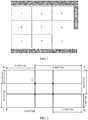
- a fixed product shelf is used for all users, and online products are successively displayed on the product shelf from top to bottom and from left to right based on priorities of the online products. For example, in a 3 ⁇ 3 nine-rectangular-grid product shelf, arrangement of the online products on the product shelf is shown in FIG. 1 .
- priorities of the online products are determined based on a matching degree of a user requirement. As such, an online product best matching the user requirement is displayed in an upper left corner of the product shelf, and this location usually does not attract attention of the user well.
- the online product best matching the user's need may be easily ignored, which affects the quality of the user's search results, and reduces the user's efficiency of obtaining online products that are needed.
- the present disclosure provides a method for displaying an online product on a product shelf, where the product shelf includes at least two display slots, each display slot displays one online product, and the method includes: obtaining online products waiting to be displayed and priorities of the online products; and displaying an online product with a higher priority on a display slot with a higher attention ranking position based on attention ranking of the display slots on the product shelf, the attention ranking of the display slots being determined based on a distance between a display slot and a visual center of the product shelf, and the visual center of the product shelf being a golden section point in an upper left corner of a product shelf display area.
- the present disclosure further provides an apparatus for displaying an online product on a product shelf, where the product shelf includes at least two display slots, each display slot displays one online product, and the apparatus includes: a product priority obtaining unit, configured to obtain online products waiting to be displayed and priorities of the online products; and a product display unit, configured to display an online product with a higher priority on a display slot with a higher attention ranking position based on attention ranking of the display slots on the product shelf, the attention ranking of the display slots being determined based on a distance between a display slot and a visual center of the product shelf, and the visual center of the product shelf being a golden section point in an upper left corner of a product shelf display area.
- the attention ranking of the display slots is determined based on the distance between the display slot and the visual center of the product shelf, and the online product with the higher priority is displayed on the display slot with a higher attention ranking position on the product shelf.
- the technical solutions can display an online product better matching a user requirement on a location attracting more attention of the user, so that the user can more quickly find a needed online product. It improves the user's search efficiency, and improves a search result.
- a person's field of vision is an area within two overlapped circles with different centers. When looking straight, the centers of two eyes' focuses reside on the two golden section points of the total length of the eyes' field of vision. Due to physiological characteristics of the human eyes, when a person looks at an object, a line of sight usually first falls on a location meeting a golden section ratio on the object.
- Two vertical section lines can be respectively drawn on a location on a line segment AB with a distance of 0.382 ⁇ AB from a point A and on a location on the line segment AB with a distance of 0.618 ⁇ AB from the point A.
- Two horizontal section lines can be respectively drawn on a location on a line segment AC with a distance of 0.382 ⁇ AC from point A and on a location on the line segment AC with a distance of 0.618 ⁇ AC from point A.
- Four intersection points of the four section lines are four golden section points of the rectangle. More details can be referred to in FIG. 2 .
- a line of sight usually first falls on the golden section point in the upper left corner (point F in FIG. 2 ).
- the distance between the point and a left border of the rectangle is 0.382 ⁇ AB
- the distance between the point and a right border of the rectangle is 0.618 ⁇ AB.
- the ratio (0.382 ⁇ AB)/(0.618 ⁇ AB) of the distance between the point and the left border of the rectangle to the distance between the point and the right border of the rectangle equals the golden section ratio 0.618.
- the ratio of a distance between the point and a top border of the rectangle to the distance between the point and a bottom border of the rectangle is also the golden section ratio.
- a product shelf is usually displayed to a user in a rectangular display area.
- a golden section point in an upper left corner of the rectangular display area of the product shelf is usually an initial visual center of the user. Therefore, an online product with a higher priority can be placed on a location closer to the initial visual center of the user based on such visual characteristic of the human eyes, so that the user can first notice the online product with higher priority.
- the implementations of the present disclosure provide new methods for displaying online products on a product shelf. Attention ranking of display slots is generated based on a distance between the display slot and the visual center of the rectangular display area of the product shelf.
- Attention ranking of display slots is generated based on a distance between the display slot and the visual center of the rectangular display area of the product shelf.
- a user can obtain related information of an online product from a server by performing an operation on a client software, and perform various transaction-related functions through interaction with the server, for example, searching for an online product, viewing online product details, placing orders, payment, etc.
- the client software and the server are accessible to each other through a network.
- the client software can run on a terminal device such as a mobile phone, a tablet computer, a personal computer (PC), or a notebook computer, or can run on a physical or logical server.
- the server usually can function as physical or logical server.
- the types of devices on the client side or the server side, and the types, protocols, etc. of communications networks between the client and the server are not limited in this implementation of the present disclosure.
- the method for displaying online products on a product shelf is applied to the client software, and a procedure of the method is shown in FIG. 3 .
- Step 310 Obtain online products waiting to be displayed and priorities of the online products.
- the client software accesses an online product display page, for example, the client software accesses an online product search result page
- the client software opens a link with online product display, etc.
- the server sends an online product related to a client software request and a priority of the online product to the client software.
- a priority can be considered as importance ranking of online products returned by the server.
- the server usually determines priorities of the online products based on different ranking criteria. For example, the server can establish a mathematical model based on data mining, machine learning, and big data analytics, and use the established mathematical model for importance ranking of the online products, so as to improve hits and sales of the online products.
- the server in response to a user's search request, can analyze a user preference, and perform importance ranking on online products satisfying a user's search purpose based on a degree of matching of the user's preference and by using the established mathematical model.
- the server can use default ranking of online products of a merchant as priorities of the online products. Ranking of priorities can be referred to in existing technologies. Details are not described again.
- a method for determining the priorities of the online products is not limited in this implementation of the present disclosure.
- Step 320 Display an online product with a higher priority on a display slot with a higher attention ranking position based on attention ranking of display slots on a product shelf.
- Attention ranking of the display slots is used to describe a degree that each display slot on a product shelf with a determined arrangement structure of the display slots attracts attention.
- a display slot with a higher attention ranking position is more quickly or easily seen by a user viewing the product shelf.
- a golden section point in an upper left corner of a rectangular display area of the product shelf is referred to as a visual center of the product shelf.
- the ratio of the distance between the point and the top border of the display area of the product shelf to the distance between the point and the bottom border of the display area of the product shelf is the golden section ratio
- the ratio of the distance between the point and the left border of the display area of the product shelf to the distance between the point and the right border of the display area of the product shelf is also the golden section ratio.
- the attention ranking of the display slots is determined based on the distance between each display slot and the visual center of the product shelf.
- a fixed point in a rectangular display area of each display slot can be selected based on actual application scenarios, and a distance between the fixed point and the visual center of the product shelf can be used as the distance between the display slot and the visual center of the product shelf.
- the fixed point may be an upper left vertex of each display slot, a geometric center of each display slot (that is, an intersection point of two diagonals in the rectangular display area of the display slot), or a visual center of each display slot.
- the attention ranking of the display slots can be determined based on the distance between the display slot and the visual center of the product shelf and a degree of attention paid to the display slot on the product shelf.
- the degree of attention paid to the display slot on the product shelf can be determined based on objective influences of the factors considered on the user's attention and locations of the display slots on the product shelf. For example, if the user's viewing habit is a factor considered, because the user is usually more accustomed to viewing the screen from left to right, a degree of attention paid to a display slot on the left can be higher than that of a display slot on the right. If user's line-of-sight conversion is considered, because horizontal line-of-sight conversion is better than vertical line-of-sight conversion, a degree of attention paid to a display slot on the right can be higher than that of a display slot at the bottom.
- the degree of attention paid to the display slot on the product shelf can be obtained based on experimental data.
- experimental data For a product shelf with a determined arrangement structure of display slots, the observing sequence of the same or different online products on each display slot can be tested using several experimenters to obtain experimental data. Such experimental data can usually reflect objective influences of various factors on the user attention.
- a first reference value of each display slot can be determined based on the distance between the display slot and the visual center of the product shelf.
- a second reference value of each display slot can be obtained based on experimental data of the degree of attention paid to the display slot on the product shelf.
- the display slots can be ranked based on a weighted sum of the first reference value and the second reference value of each display slot to determine the attention ranking of the display slots.
- the first reference value may be the distance between the display slot and the visual center of the product shelf or a function of the distance, or may be first ranking obtained based on the distance between the display slot and the visual center of the product shelf.
- the second reference value may be a value obtained based on the experimental data, or may be second ranking of the display slot based on the value.
- Weight setting for the first reference value and the second reference value can be selected based on an actual application scenario. Forms and weight settings for the first reference value and the second reference value are not limited in this implementation of the present disclosure.
- the attention ranking of the display slots on the product shelf can be determined on the client software, or can be determined on the server. For example, if a product shelf of one or more fixed arrangement structures of the display slots is used on the client software, the client software can calculate and store various types of attention ranking of the display slots during installation. The various types of attention ranking can be directly invoked or one of them can be invoked during each use. If arrangement of the display slots on the product shelf used by the client software frequently changes, the client software can calculate attention ranking of display slots on the product shelf waiting to be used before each use. As another example, the server can first calculate attention ranking of display slots on several product shelves that may be used by the client software.
- the server delivers the attention ranking to the client software, and the client software invokes the attention ranking of the display slots corresponding to the product shelf during use.
- the server can specify attention ranking of display slots on a product shelf for displaying these online products.
- a fixed arrangement structure of the display slots is usually used for all product shelves of the client software.
- display types of the client devices also varies.
- An arrangement structure of the display slots suitable for one display may have a poor display effect on another display.
- an arrangement structure of the display slots on the product shelf can be determined based on an aspect ratio of a display screen.
- the aspect ratio of the display screen is a ratio of a width to a height of the display screen, and common aspect ratios are 4:3 (1.33), 16:9 (1.78), 16:10 (1.6), etc.
- a display screen with aspect ratio within a certain range can correspond to a product shelf of an arrangement structure.
- the display slots can be arranged using a 3 ⁇ 3 nine-rectangular-grid product shelf.
- the display slots can be arranged using a 2 ⁇ 4 eight-rectangular-grid product shelf.
- the display slots are arranged using a 3 ⁇ 2 six-rectangular-grid product shelf. The first ratio range and the second ratio range do not overlap.
- the arrangement structure of the display slots on the product shelf can be determined on the client software, or can be determined on the server.
- an installation program can select and store an arrangement structure of the display slots that is suitable for the display screen of the device including the client software, and the client software can directly use the arrangement structure for displaying the online products.
- the client software can determine the arrangement structure of the display slots based on the aspect ratio of the display screen of the device.
- the client software when the client software establishes a connection to the server, or requests online products from the server, the client software reports information about its display screen (such as a resolution or an aspect ratio).
- the server can specify the arrangement structure of the display slots on the product shelf used by the client software.
- the attention ranking of the display slots is generated based on the distance between the display slot and the visual center of the rectangular display area of the product shelf.
- the online product with the higher priority is placed on the display slot with a higher attention ranking position.
- three types of attention ranking of the display slots on a product shelf of different arrangement structures of the display slots are predetermined on the client software. Attention ranking of the display slots of each arrangement structure is generated in the following way: The display slots are ranked based on the distance between the geometric center of the display slot and the visual center of the product shelf, to obtain the first ranking of each display slot. The second ranking of each display slot is obtained based on the experimental data of the degree of attention paid to the display slot on the product shelf. The display slots are ranked based on a weighted sum of the first ranking and the second ranking of each display slot to obtain the attention ranking of the display slots.
- a first product shelf is a nine-rectangular-grid product shelf in which the display slots are arranged in three rows and three columns.
- the display slots ranked in descending order of attention are: a display slot of row 1 and column 2, a display slot of row 2 and column 2, a display slot of row 3 and column 2, a display slot of row 1 and column 1, a display slot of row 1 and column 3, a display slot of row 2 and column 1, a display slot of row 2 and column 3, a display slot of row 3 and column 1, and a display slot of row 3 and column 3.
- a second product shelf is an eight-rectangular-grid product shelf in which the display slots are arranged in two rows and four columns.
- the display slots ranked in descending order of attention are: a display slot of row 1 and column 2, a display slot of row 1 and column 3, a display slot of row 2 and column 2, a display slot of row 2 and column 3, a display slot of row 1 and column 1, a display slot of row 1 and column 4, a display slot of row 2 and column 1, and a display slot of row 2 and column 4.
- a third product shelf is a six-rectangular-grid product shelf in which the display slots are arranged in three rows and two columns.
- the display slots ranked in descending order of attention are: a display slot of row 1 and column 1, a display slot of row 1 and column 2, a display slot of row 2 and column 1, a display slot of row 2 and column 2, a display slot of row 3 and column 1, and a display slot of row 3 and column 2.
- the client software accesses a page displaying the online products
- the client software receives the online products waiting to be displayed and the priorities of the online products that are delivered by the server.
- the client software reads the resolution of the display screen of the device, calculates the aspect ratio of the display screen (that is, the width of the display screen divided by the height of the display screen), and determines the arrangement structure of the display slots on the product shelf based on Table 1.
- Table 1 Aspect ratio t of the display screen Arrangement structure of the display slots 1.3 ⁇ t ⁇ 1.45
- the client software After determining the arrangement structure of display slots on the product shelf waiting to be used, based on predetermined attention ranking of the display slots that corresponds to the arrangement structure, the client software displays the online product with the highest priority on a display slot with the highest attention ranking position, and displays the online product with the second highest priority on a display slot with the second highest attention ranking position, and so on.
- an implementation of the present disclosure can further provide an apparatus for displaying an online product on a product shelf.
- the apparatus can be implemented by software, hardware, or a combination of hardware and software.
- the apparatus in logic sense is formed after a central process unit (CPU) of a device reads a corresponding computer program instruction to a memory for running.
- CPU central process unit
- the device that includes the apparatus for displaying an online product on a product shelf generally further includes other hardware such as a chip for receiving and sending a wireless signal, or other hardware such as a board for implementing a network communication function.
- FIG. 8 shows an apparatus for displaying an online product on a product shelf, according to an implementation of the present disclosure.
- the product shelf includes at least two display slots, and each display slot displays one online product.
- the apparatus includes a product priority obtaining unit and a product display unit.
- the product priority obtaining unit is configured to obtain online products waiting to be displayed and priorities of the online products.
- the product display unit is configured to display an online product with a higher priority on a display slot with a higher attention ranking position based on attention ranking of the display slots on the product shelf.
- the attention ranking of the display slots is determined based on a distance between the display slot and a visual center of the product shelf.
- the visual center of the product shelf is a golden section point in an upper left corner of a product shelf display area.
- the attention ranking of the display slots is determined based on the distance between the display slot and the visual center of the product shelf and a degree of attention paid to the display slot on the product shelf.
- the attention ranking of the display slots is determined in the following way: determining a first reference value of each display slot based on the distance between the display slot and the visual center of the product shelf; obtaining a second reference value of each display slot based on experimental data of the degree of attention paid to the display slot on the product shelf; and ranking the display slots based on a weighted sum of the first reference value and the second reference value of each display slot, to determine the attention ranking of the display slots.
- the product shelf can include: a nine-rectangular-grid product shelf in which the display slots are arranged in three rows and three columns, where the display slots ranked in descending order of attention are: a display slot of row 1 and column 2, a display slot of row 2 and column 2, a display slot of row 3 and column 2, a display slot of row 1 and column 1, a display slot of row 1 and column 3, a display slot of row 2 and column 1, a display slot of row 2 and column 3, a display slot of row 3 and column 1, and a display slot of row 3 and column 3; an eight-rectangular-grid product shelf in which the display slots are arranged in two rows and four columns, where the display slots ranked in descending order of attention are: a display slot of row 1 and column 2, a display slot of row 1 and column 3, a display slot of row 2 and column 2, a display slot of row 2 and column 3, a display slot of row 1 and column 1, a display slot of row 1 and column 4, a display slot of row 2 and column 1, and a display slot
- the distance between the display slot and the visual center of the product shelf includes a distance between a geometric center of the display slot and the visual center of the product shelf.
- an arrangement structure of the display slots on the product shelf is determined based on an aspect ratio of a display screen.
- the arrangement structure of the display slots on the product shelf is determined based on the following conditions: When the aspect ratio of the display screen falls within a first ratio range, the display slots are arranged using a 3 ⁇ 3 nine-rectangular-grid product shelf; when the aspect ratio of the display screen falls within a second ratio range, the display slots are arranged using a 2 ⁇ 4 eight-rectangular-grid product shelf; and when the aspect ratio of the display screen neither falls within the first ratio range nor the second ratio range, the display slots are arranged using a 3 ⁇ 2 six-rectangular-grid product shelf.
- the first ratio range and the second ratio range do not overlap.
- a computing device includes one or more central processing units (CPUs), an input/output interface, a network interface, and a memory.
- CPUs central processing units
- input/output interface input/output interface
- network interface network interface
- memory a memory
- the memory may include a non-persistent memory, a random access memory (RAM), and/or a non-volatile memory in a computer readable medium, for example, a read-only memory (ROM) or a flash memory (flash RAM).
- ROM read-only memory
- flash RAM flash memory
- the computer readable medium includes persistent, non-persistent, movable, and unmovable media, and can store information using any method or technology.
- the information may be a computer readable instruction, a data structure, a program module, or other data.
- An example of the computer storage medium includes but is not limited to a phase change memory (PCM), a static random access memory (SRAM), a dynamic random access memory (DRAM), a random access memory (RAM) of another type, a read-only memory (ROM), an electrically erasable programmable read-only memory (EEPROM), a flash memory or another memory technology, a compact disc read-only memory (CD-ROM), a digital versatile disc (DVD) or other optical storage, a cassette magnetic tape, tape and disk storage or another magnetic storage device or any other non-transmission media that can be configured to store information that can be accessed by the computing device.
- the computer readable medium does not include a transitory computer readable medium (transitory media) such as a modulated data signal and
- the implementations of the present disclosure can be provided as a method, a system, or a computer program product. Therefore, the present disclosure can use a form of hardware only implementations, software only implementations, or implementations with a combination of software and hardware. Moreover, the present disclosure can use a form of a computer program product that is implemented on one or more computer-usable storage media (including but not limited to a disk memory, a CD-ROM, an optical memory, etc.) that include computer-usable program code.
- computer-usable storage media including but not limited to a disk memory, a CD-ROM, an optical memory, etc.
Landscapes
- Engineering & Computer Science (AREA)
- Business, Economics & Management (AREA)
- Theoretical Computer Science (AREA)
- Accounting & Taxation (AREA)
- Finance (AREA)
- General Physics & Mathematics (AREA)
- Physics & Mathematics (AREA)
- Development Economics (AREA)
- Strategic Management (AREA)
- General Business, Economics & Management (AREA)
- Marketing (AREA)
- Economics (AREA)
- Databases & Information Systems (AREA)
- Data Mining & Analysis (AREA)
- General Engineering & Computer Science (AREA)
- Entrepreneurship & Innovation (AREA)
- Game Theory and Decision Science (AREA)
- User Interface Of Digital Computer (AREA)
- Management, Administration, Business Operations System, And Electronic Commerce (AREA)
Abstract
Description
- The present disclosure relates to the field of Internet technologies, and in particular, to a method and an apparatus for displaying an online product on a product shelf.
- With development of Internet technologies and terminal device technologies, more companies sell their products or services through a network. In an e-commerce website or an e-commerce application (APP), an operator displays an online product on a product shelf for a user to browse and purchase.
- An online product is a virtual product corresponding to an actual product or service, and an attribute of the online product includes a name, brief introduction, a logo, charging information, etc. A product shelf is a virtual interface for displaying an online product, and describes how online products are displayed to a user. The product shelf generally includes several display slots, and each display slot displays one online product. Different arrangements of the display slots form different product shelves such as a nine-rectangular-grid product shelf in which display slots are arranged in three rows and three columns and an eight-rectangular-grid product shelf in which display slots are arranged in two rows and four columns.
- In the existing technology, in an e-commerce website or an e-commerce app, a fixed product shelf is used for all users, and online products are successively displayed on the product shelf from top to bottom and from left to right based on priorities of the online products. For example, in a 3×3 nine-rectangular-grid product shelf, arrangement of the online products on the product shelf is shown in
FIG. 1 . In an application scenario in which a user searches for online products, priorities of the online products are determined based on a matching degree of a user requirement. As such, an online product best matching the user requirement is displayed in an upper left corner of the product shelf, and this location usually does not attract attention of the user well. The online product best matching the user's need may be easily ignored, which affects the quality of the user's search results, and reduces the user's efficiency of obtaining online products that are needed. - In view of this, the present disclosure provides a method for displaying an online product on a product shelf, where the product shelf includes at least two display slots, each display slot displays one online product, and the method includes: obtaining online products waiting to be displayed and priorities of the online products; and displaying an online product with a higher priority on a display slot with a higher attention ranking position based on attention ranking of the display slots on the product shelf, the attention ranking of the display slots being determined based on a distance between a display slot and a visual center of the product shelf, and the visual center of the product shelf being a golden section point in an upper left corner of a product shelf display area.
- The present disclosure further provides an apparatus for displaying an online product on a product shelf, where the product shelf includes at least two display slots, each display slot displays one online product, and the apparatus includes: a product priority obtaining unit, configured to obtain online products waiting to be displayed and priorities of the online products; and a product display unit, configured to display an online product with a higher priority on a display slot with a higher attention ranking position based on attention ranking of the display slots on the product shelf, the attention ranking of the display slots being determined based on a distance between a display slot and a visual center of the product shelf, and the visual center of the product shelf being a golden section point in an upper left corner of a product shelf display area.
- It can be seen from the earlier described technical solutions that in the implementations of the present disclosure, the attention ranking of the display slots is determined based on the distance between the display slot and the visual center of the product shelf, and the online product with the higher priority is displayed on the display slot with a higher attention ranking position on the product shelf. When applied to a user's search scenario, the technical solutions can display an online product better matching a user requirement on a location attracting more attention of the user, so that the user can more quickly find a needed online product. It improves the user's search efficiency, and improves a search result.
-
-
FIG. 1 is a schematic diagram of ranking of online products displayed on a product shelf in the existing technology; -
FIG. 2 is a schematic diagram of a golden section point of a rectangle; -
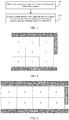
FIG. 3 is a flowchart illustrating a method for displaying an online product on a product shelf, according to an implementation of the present disclosure; -
FIG. 4 is a schematic diagram of attention ranking of display slots on a nine-rectangular-grid product shelf, according to an implementation of the present disclosure; -
FIG. 5 is a schematic diagram of attention ranking of display slots on an eight-rectangular-grid product shelf, according to an implementation of the present disclosure; -
FIG. 6 is a schematic diagram of attention ranking of display slots on a six-rectangular-grid product shelf, according to an implementation of the present disclosure; -
FIG. 7 is a structural diagram of hardware of a device suitable for an implementation of the present disclosure; and -
FIG. 8 is a logical structural diagram of an apparatus for displaying an online product on a product shelf, according to an implementation of the present disclosure. - A person's field of vision is an area within two overlapped circles with different centers. When looking straight, the centers of two eyes' focuses reside on the two golden section points of the total length of the eyes' field of vision. Due to physiological characteristics of the human eyes, when a person looks at an object, a line of sight usually first falls on a location meeting a golden section ratio on the object.
- Referring to
FIG. 2 , for a rectangular observation object, assume that the four corner points of the rectangle are respectively A, B, C, and D. Two vertical section lines can be respectively drawn on a location on a line segment AB with a distance of 0.382×AB from a point A and on a location on the line segment AB with a distance of 0.618×AB from the point A. Two horizontal section lines can be respectively drawn on a location on a line segment AC with a distance of 0.382×AC from point A and on a location on the line segment AC with a distance of 0.618×AC from point A. Four intersection points of the four section lines are four golden section points of the rectangle. More details can be referred to inFIG. 2 . When a person views the rectangle, a line of sight usually first falls on the golden section point in the upper left corner (point F inFIG. 2 ). The distance between the point and a left border of the rectangle is 0.382×AB, and the distance between the point and a right border of the rectangle is 0.618×AB. The ratio (0.382×AB)/(0.618×AB) of the distance between the point and the left border of the rectangle to the distance between the point and the right border of the rectangle equals the golden section ratio 0.618. The ratio of a distance between the point and a top border of the rectangle to the distance between the point and a bottom border of the rectangle is also the golden section ratio. - A product shelf is usually displayed to a user in a rectangular display area. When the user views the product shelf, a golden section point in an upper left corner of the rectangular display area of the product shelf is usually an initial visual center of the user. Therefore, an online product with a higher priority can be placed on a location closer to the initial visual center of the user based on such visual characteristic of the human eyes, so that the user can first notice the online product with higher priority.
- The implementations of the present disclosure provide new methods for displaying online products on a product shelf. Attention ranking of display slots is generated based on a distance between the display slot and the visual center of the rectangular display area of the product shelf. When online products are displayed on the product shelf, matching is performed between priorities of the online products and the attention ranking of the display slots, so that the user can first notice an online product with a higher priority. When the method is applied to a search scenario, the user can more quickly obtain a search result. It improves the user's search efficiency, and resolves a problem in the existing technology.
- In e-commerce, a user can obtain related information of an online product from a server by performing an operation on a client software, and perform various transaction-related functions through interaction with the server, for example, searching for an online product, viewing online product details, placing orders, payment, etc. In this implementation of the present disclosure, the client software and the server are accessible to each other through a network. The client software can run on a terminal device such as a mobile phone, a tablet computer, a personal computer (PC), or a notebook computer, or can run on a physical or logical server. The server usually can function as physical or logical server. The types of devices on the client side or the server side, and the types, protocols, etc. of communications networks between the client and the server are not limited in this implementation of the present disclosure.
- In this implementation of the present disclosure, the method for displaying online products on a product shelf is applied to the client software, and a procedure of the method is shown in
FIG. 3 . - Step 310: Obtain online products waiting to be displayed and priorities of the online products.
- When the client software accesses an online product display page, for example, the client software accesses an online product search result page, the client software opens a link with online product display, etc., the server sends an online product related to a client software request and a priority of the online product to the client software.
- A priority can be considered as importance ranking of online products returned by the server. In different application scenarios, the server usually determines priorities of the online products based on different ranking criteria. For example, the server can establish a mathematical model based on data mining, machine learning, and big data analytics, and use the established mathematical model for importance ranking of the online products, so as to improve hits and sales of the online products. As another example, in response to a user's search request, the server can analyze a user preference, and perform importance ranking on online products satisfying a user's search purpose based on a degree of matching of the user's preference and by using the established mathematical model. The server can use default ranking of online products of a merchant as priorities of the online products. Ranking of priorities can be referred to in existing technologies. Details are not described again. A method for determining the priorities of the online products is not limited in this implementation of the present disclosure.
- Step 320: Display an online product with a higher priority on a display slot with a higher attention ranking position based on attention ranking of display slots on a product shelf.
- Attention ranking of the display slots is used to describe a degree that each display slot on a product shelf with a determined arrangement structure of the display slots attracts attention. A display slot with a higher attention ranking position is more quickly or easily seen by a user viewing the product shelf.
- In this implementation of the present disclosure, a golden section point in an upper left corner of a rectangular display area of the product shelf is referred to as a visual center of the product shelf. The ratio of the distance between the point and the top border of the display area of the product shelf to the distance between the point and the bottom border of the display area of the product shelf is the golden section ratio, and the ratio of the distance between the point and the left border of the display area of the product shelf to the distance between the point and the right border of the display area of the product shelf is also the golden section ratio. As described above, when the user views the product shelf displayed on a screen, a line of sight usually first falls on the visual center of the product shelf, and an online product closer to the visual center of the product shelf is more likely to first fall within a reachable range of the user's line of sight. Therefore, in this implementation of the present disclosure, the attention ranking of the display slots is determined based on the distance between each display slot and the visual center of the product shelf.
- A fixed point in a rectangular display area of each display slot can be selected based on actual application scenarios, and a distance between the fixed point and the visual center of the product shelf can be used as the distance between the display slot and the visual center of the product shelf. For example, the fixed point may be an upper left vertex of each display slot, a geometric center of each display slot (that is, an intersection point of two diagonals in the rectangular display area of the display slot), or a visual center of each display slot.
- In addition to the distance between the display slot and the visual center of the product shelf, when attention ranking of display slots on a product shelf of certain structure is determined, other factors can also be considered, for example, habit of viewing the screen, the order of changing line of sight, etc., so as to reflect influences of these factors on user attention.
- In an implementation, the attention ranking of the display slots can be determined based on the distance between the display slot and the visual center of the product shelf and a degree of attention paid to the display slot on the product shelf. The degree of attention paid to the display slot on the product shelf can be determined based on objective influences of the factors considered on the user's attention and locations of the display slots on the product shelf. For example, if the user's viewing habit is a factor considered, because the user is usually more accustomed to viewing the screen from left to right, a degree of attention paid to a display slot on the left can be higher than that of a display slot on the right. If user's line-of-sight conversion is considered, because horizontal line-of-sight conversion is better than vertical line-of-sight conversion, a degree of attention paid to a display slot on the right can be higher than that of a display slot at the bottom.
- In an example, the degree of attention paid to the display slot on the product shelf can be obtained based on experimental data. For a product shelf with a determined arrangement structure of display slots, the observing sequence of the same or different online products on each display slot can be tested using several experimenters to obtain experimental data. Such experimental data can usually reflect objective influences of various factors on the user attention. After the experimental data is obtained, a first reference value of each display slot can be determined based on the distance between the display slot and the visual center of the product shelf. A second reference value of each display slot can be obtained based on experimental data of the degree of attention paid to the display slot on the product shelf. The display slots can be ranked based on a weighted sum of the first reference value and the second reference value of each display slot to determine the attention ranking of the display slots.
- The first reference value may be the distance between the display slot and the visual center of the product shelf or a function of the distance, or may be first ranking obtained based on the distance between the display slot and the visual center of the product shelf. The second reference value may be a value obtained based on the experimental data, or may be second ranking of the display slot based on the value. Weight setting for the first reference value and the second reference value can be selected based on an actual application scenario. Forms and weight settings for the first reference value and the second reference value are not limited in this implementation of the present disclosure.
- In an actual application scenario, the attention ranking of the display slots on the product shelf can be determined on the client software, or can be determined on the server. For example, if a product shelf of one or more fixed arrangement structures of the display slots is used on the client software, the client software can calculate and store various types of attention ranking of the display slots during installation. The various types of attention ranking can be directly invoked or one of them can be invoked during each use. If arrangement of the display slots on the product shelf used by the client software frequently changes, the client software can calculate attention ranking of display slots on the product shelf waiting to be used before each use. As another example, the server can first calculate attention ranking of display slots on several product shelves that may be used by the client software. The server delivers the attention ranking to the client software, and the client software invokes the attention ranking of the display slots corresponding to the product shelf during use. When sending online products waiting to be displayed to the client software, the server can specify attention ranking of display slots on a product shelf for displaying these online products.
- In the existing technology, in an e-commerce website or an e-commerce app, a fixed arrangement structure of the display slots is usually used for all product shelves of the client software. With more types of client devices that run the client software, display types of the client devices also varies. An arrangement structure of the display slots suitable for one display may have a poor display effect on another display.
- To avoid such case, in this implementation of the present disclosure, an arrangement structure of the display slots on the product shelf can be determined based on an aspect ratio of a display screen. The aspect ratio of the display screen is a ratio of a width to a height of the display screen, and common aspect ratios are 4:3 (1.33), 16:9 (1.78), 16:10 (1.6), etc.
- When the aspect ratio of the display screen falls within a certain range, product shelves of the same arrangement structure of the display slots can have similar display effects. Therefore, a display screen with aspect ratio within a certain range can correspond to a product shelf of an arrangement structure. For example, when the aspect ratio of the display screen is within a first ratio range, the display slots can be arranged using a 3×3 nine-rectangular-grid product shelf. When the aspect ratio of the display screen is within a second ratio range, the display slots can be arranged using a 2×4 eight-rectangular-grid product shelf. When the aspect ratio of the display screen is neither within the first ratio range nor the second ratio range, the display slots are arranged using a 3×2 six-rectangular-grid product shelf. The first ratio range and the second ratio range do not overlap.
- In an actual application scenario, the arrangement structure of the display slots on the product shelf can be determined on the client software, or can be determined on the server. For example, in a client software installation process, an installation program can select and store an arrangement structure of the display slots that is suitable for the display screen of the device including the client software, and the client software can directly use the arrangement structure for displaying the online products. Alternatively, before each use of the product shelf, the client software can determine the arrangement structure of the display slots based on the aspect ratio of the display screen of the device. As another example, when the client software establishes a connection to the server, or requests online products from the server, the client software reports information about its display screen (such as a resolution or an aspect ratio). When sending the online product, the server can specify the arrangement structure of the display slots on the product shelf used by the client software.
- It can be seen that in this implementation of the present disclosure, the attention ranking of the display slots is generated based on the distance between the display slot and the visual center of the rectangular display area of the product shelf. When the online products are displayed, the online product with the higher priority is placed on the display slot with a higher attention ranking position. When the method is applied to a search scenario, the user can notice an online product better matching a user requirement on a location that can attract more attention of the user, so that the user can more quickly obtain a search result, which improves the user's search efficiency.
- In an implementation of the present disclosure, three types of attention ranking of the display slots on a product shelf of different arrangement structures of the display slots are predetermined on the client software. Attention ranking of the display slots of each arrangement structure is generated in the following way: The display slots are ranked based on the distance between the geometric center of the display slot and the visual center of the product shelf, to obtain the first ranking of each display slot. The second ranking of each display slot is obtained based on the experimental data of the degree of attention paid to the display slot on the product shelf. The display slots are ranked based on a weighted sum of the first ranking and the second ranking of each display slot to obtain the attention ranking of the display slots.
- Referring to
FIG. 4 , a first product shelf is a nine-rectangular-grid product shelf in which the display slots are arranged in three rows and three columns. The display slots ranked in descending order of attention are: a display slot ofrow 1 andcolumn 2, a display slot ofrow 2 andcolumn 2, a display slot ofrow 3 andcolumn 2, a display slot ofrow 1 andcolumn 1, a display slot ofrow 1 andcolumn 3, a display slot ofrow 2 andcolumn 1, a display slot ofrow 2 andcolumn 3, a display slot ofrow 3 andcolumn 1, and a display slot ofrow 3 andcolumn 3. - Referring to
FIG. 5 , a second product shelf is an eight-rectangular-grid product shelf in which the display slots are arranged in two rows and four columns. The display slots ranked in descending order of attention are: a display slot ofrow 1 andcolumn 2, a display slot ofrow 1 andcolumn 3, a display slot ofrow 2 andcolumn 2, a display slot ofrow 2 andcolumn 3, a display slot ofrow 1 andcolumn 1, a display slot ofrow 1 andcolumn 4, a display slot ofrow 2 andcolumn 1, and a display slot ofrow 2 andcolumn 4. - Referring to
FIG. 6 , a third product shelf is a six-rectangular-grid product shelf in which the display slots are arranged in three rows and two columns. The display slots ranked in descending order of attention are: a display slot ofrow 1 andcolumn 1, a display slot ofrow 1 andcolumn 2, a display slot ofrow 2 andcolumn 1, a display slot ofrow 2 andcolumn 2, a display slot ofrow 3 andcolumn 1, and a display slot ofrow 3 andcolumn 2. - When the client software accesses a page displaying the online products, the client software receives the online products waiting to be displayed and the priorities of the online products that are delivered by the server.
- The client software reads the resolution of the display screen of the device, calculates the aspect ratio of the display screen (that is, the width of the display screen divided by the height of the display screen), and determines the arrangement structure of the display slots on the product shelf based on Table 1.
Table 1 Aspect ratio t of the display screen Arrangement structure of the display slots 1.3≤t<1.45 Nine-rectangular-grid product shelf in which the display slots are arranged in three rows and three columns t≥1.45 Eight-rectangular-grid product shelf in which the display slots are arranged in two rows and four columns t<1.3 Six-rectangular-grid product shelf in which the display slots are arranged in three rows and two columns - After determining the arrangement structure of display slots on the product shelf waiting to be used, based on predetermined attention ranking of the display slots that corresponds to the arrangement structure, the client software displays the online product with the highest priority on a display slot with the highest attention ranking position, and displays the online product with the second highest priority on a display slot with the second highest attention ranking position, and so on.
- If a number of online products delivered by the server exceeds a number of display slots, after the user flips the page, online products on the next page are still displayed based on attention ranking of display slots and priorities of the online products by using the earlier described method.
- Corresponding to the earlier described procedure, an implementation of the present disclosure can further provide an apparatus for displaying an online product on a product shelf. The apparatus can be implemented by software, hardware, or a combination of hardware and software. In an example that the apparatus is implemented by software, the apparatus in logic sense is formed after a central process unit (CPU) of a device reads a corresponding computer program instruction to a memory for running. In terms of hardware, in addition to a CPU, a memory, and a non-volatile memory shown in
FIG. 7 , the device that includes the apparatus for displaying an online product on a product shelf generally further includes other hardware such as a chip for receiving and sending a wireless signal, or other hardware such as a board for implementing a network communication function. -
FIG. 8 shows an apparatus for displaying an online product on a product shelf, according to an implementation of the present disclosure. The product shelf includes at least two display slots, and each display slot displays one online product. The apparatus includes a product priority obtaining unit and a product display unit. The product priority obtaining unit is configured to obtain online products waiting to be displayed and priorities of the online products. The product display unit is configured to display an online product with a higher priority on a display slot with a higher attention ranking position based on attention ranking of the display slots on the product shelf. The attention ranking of the display slots is determined based on a distance between the display slot and a visual center of the product shelf. The visual center of the product shelf is a golden section point in an upper left corner of a product shelf display area. - In an implementation, the attention ranking of the display slots is determined based on the distance between the display slot and the visual center of the product shelf and a degree of attention paid to the display slot on the product shelf.
- In the earlier described implementation, the attention ranking of the display slots is determined in the following way: determining a first reference value of each display slot based on the distance between the display slot and the visual center of the product shelf; obtaining a second reference value of each display slot based on experimental data of the degree of attention paid to the display slot on the product shelf; and ranking the display slots based on a weighted sum of the first reference value and the second reference value of each display slot, to determine the attention ranking of the display slots.
- The product shelf can include: a nine-rectangular-grid product shelf in which the display slots are arranged in three rows and three columns, where the display slots ranked in descending order of attention are: a display slot of row 1 and column 2, a display slot of row 2 and column 2, a display slot of row 3 and column 2, a display slot of row 1 and column 1, a display slot of row 1 and column 3, a display slot of row 2 and column 1, a display slot of row 2 and column 3, a display slot of row 3 and column 1, and a display slot of row 3 and column 3; an eight-rectangular-grid product shelf in which the display slots are arranged in two rows and four columns, where the display slots ranked in descending order of attention are: a display slot of row 1 and column 2, a display slot of row 1 and column 3, a display slot of row 2 and column 2, a display slot of row 2 and column 3, a display slot of row 1 and column 1, a display slot of row 1 and column 4, a display slot of row 2 and column 1, and a display slot of row 2 and column 4; and/or a six-rectangular-grid product shelf in which the display slots are arranged in three rows and two columns, where the display slots ranked in descending order of attention are: a display slot of row 1 and column 1, a display slot of row 1 and column 2, a display slot of row 2 and column 1, a display slot of row 2 and column 2, a display slot of row 3 and column 1, and a display slot of row 3 and column 2.
- Optionally, the distance between the display slot and the visual center of the product shelf includes a distance between a geometric center of the display slot and the visual center of the product shelf.
- In an example, an arrangement structure of the display slots on the product shelf is determined based on an aspect ratio of a display screen.
- In the earlier described example, the arrangement structure of the display slots on the product shelf is determined based on the following conditions: When the aspect ratio of the display screen falls within a first ratio range, the display slots are arranged using a 3×3 nine-rectangular-grid product shelf; when the aspect ratio of the display screen falls within a second ratio range, the display slots are arranged using a 2×4 eight-rectangular-grid product shelf; and when the aspect ratio of the display screen neither falls within the first ratio range nor the second ratio range, the display slots are arranged using a 3×2 six-rectangular-grid product shelf. The first ratio range and the second ratio range do not overlap.
- The previous descriptions are merely preferred implementations of the present disclosure, but are not intended to limit the present disclosure. Any modification, equivalent replacement, or improvement made without departing from the spirit and principle of the present disclosure shall fall within the protection scope of the present disclosure.
- In a typical configuration, a computing device includes one or more central processing units (CPUs), an input/output interface, a network interface, and a memory.
- The memory may include a non-persistent memory, a random access memory (RAM), and/or a non-volatile memory in a computer readable medium, for example, a read-only memory (ROM) or a flash memory (flash RAM). The memory is an example of the computer readable medium.
- The computer readable medium includes persistent, non-persistent, movable, and unmovable media, and can store information using any method or technology. The information may be a computer readable instruction, a data structure, a program module, or other data. An example of the computer storage medium includes but is not limited to a phase change memory (PCM), a static random access memory (SRAM), a dynamic random access memory (DRAM), a random access memory (RAM) of another type, a read-only memory (ROM), an electrically erasable programmable read-only memory (EEPROM), a flash memory or another memory technology, a compact disc read-only memory (CD-ROM), a digital versatile disc (DVD) or other optical storage, a cassette magnetic tape, tape and disk storage or another magnetic storage device or any other non-transmission media that can be configured to store information that can be accessed by the computing device. As described in the present specification, the computer readable medium does not include a transitory computer readable medium (transitory media) such as a modulated data signal and a carrier.
- It is further worthwhile to note that the term "include", "comprise", or any other variant is intended to cover a non-exclusive inclusion, so that a process, a method, a product, or a device that includes a list of elements not only includes those elements but also includes other elements which are not expressly listed, or further includes elements inherent to such process, method, product, or device. An element preceded by "includes a..." does not, without more constraints, preclude the existence of additional identical elements in the process, method, product, or device that includes the element.
- Persons skilled in the art should understand that the implementations of the present disclosure can be provided as a method, a system, or a computer program product. Therefore, the present disclosure can use a form of hardware only implementations, software only implementations, or implementations with a combination of software and hardware. Moreover, the present disclosure can use a form of a computer program product that is implemented on one or more computer-usable storage media (including but not limited to a disk memory, a CD-ROM, an optical memory, etc.) that include computer-usable program code.
Claims (14)
- A method for displaying an online product on a product shelf, wherein the product shelf comprises at least two display slots, each display slot displays one online product, and the method comprises:obtaining online products waiting to be displayed and priorities of the online products; anddisplaying an online product with a higher priority on a display slot with a higher attention ranking position based on attention ranking of the display slots on the product shelf, the attention ranking of the display slots being determined based on a distance between a display slot and a visual center of the product shelf, and the visual center of the product shelf being a golden section point in an upper left corner of a product shelf display area.
- The method according to claim 1, wherein the attention ranking of the display slots is determined based on the distance between the display slot and the visual center of the product shelf and a degree of attention paid to the display slot on the product shelf.
- The method according to claim 2, wherein the attention ranking of the display slots is determined in the following way:determining a first reference value of each display slot based on the distance between the display slot and the visual center of the product shelf;obtaining a second reference value of each display slot based on experimental data of the degree of attention paid to the display slot on the product shelf; andranking the display slots based on a weighted sum of the first reference value and the second reference value of each display slot, to determine the attention ranking of the display slots.
- The method according to claim 2, wherein the product shelf comprises:a nine-rectangular-grid product shelf in which the display slots are arranged in three rows and three columns, wherein the display slots ranked in descending order of attention are successively: a display slot of row 1 and column 2, a display slot of row 2 and column 2, a display slot of row 3 and column 2, a display slot of row 1 and column 1, a display slot of row 1 and column 3, a display slot of row 2 and column 1, a display slot of row 2 and column 3, a display slot of row 3 and column 1, and a display slot of row 3 and column 3;an eight-rectangular-grid product shelf in which the display slots are arranged in two rows and four columns, wherein the display slots ranked in descending order of attention are successively: a display slot of row 1 and column 2, a display slot of row 1 and column 3, a display slot of row 2 and column 2, a display slot of row 2 and column 3, a display slot of row 1 and column 1, a display slot of row 1 and column 4, a display slot of row 2 and column 1, and a display slot of row 2 and column 4; and/ora six-rectangular-grid product shelf in which the display slots are arranged in three rows and two columns, wherein the display slots ranked in descending order of attention are successively: a display slot of row 1 and column 1, a display slot of row 1 and column 2, a display slot of row 2 and column 1, a display slot of row 2 and column 2, a display slot of row 3 and column 1, and a display slot of row 3 and column 2.
- The method according to claim 1, wherein the distance between the display slot and the visual center of the product shelf comprises a distance between a geometric center of the display slot and the visual center of the product shelf.
- The method according to any one of claims 1 to 5, wherein an arrangement structure of the display slots on the product shelf is determined based on an aspect ratio of a display screen.
- The method according to claim 6, wherein the arrangement structure of the display slots on the product shelf is determined based on the following conditions: When the aspect ratio of the display screen falls within a first ratio range, the display slots are arranged using a 3×3 nine-rectangular-grid product shelf; when the aspect ratio of the display screen falls within a second ratio range, the display slots are arranged using a 2×4 eight-rectangular-grid product shelf; and when the aspect ratio of the display screen neither falls within the first ratio range nor the second ratio range, the display slots are arranged using a 3×2 six-rectangular-grid product shelf, wherein the first ratio range and the second ratio range do not overlap.
- An apparatus for displaying an online product on a product shelf, wherein the product shelf comprises at least two display slots, each display slot displays one online product, and the apparatus comprises:a product priority obtaining unit, configured to obtain online products waiting to be displayed and priorities of the online products; anda product display unit, configured to display an online product with a higher priority on a display slot with a higher attention ranking position based on attention ranking of the display slots on the product shelf, the attention ranking of the display slots being determined based on a distance between a display slot and a visual center of the product shelf, and the visual center of the product shelf being a golden section point in an upper left corner of a product shelf display area.
- The apparatus according to claim 8, wherein the attention ranking of the display slots is determined based on the distance between the display slot and the visual center of the product shelf and a degree of attention paid to the display slot on the product shelf.
- The apparatus according to claim 9, wherein the attention ranking of the display slots is determined in the following way:determining a first reference value of each display slot based on the distance between the display slot and the visual center of the product shelf;obtaining a second reference value of each display slot based on experimental data of the degree of attention paid to the display slot on the product shelf; andranking the display slots based on a weighted sum of the first reference value and the second reference value of each display slot, to determine the attention ranking of the display slots.
- The apparatus according to claim 9, wherein the product shelf comprises:a nine-rectangular-grid product shelf in which the display slots are arranged in three rows and three columns, wherein the display slots ranked in descending order of attention are successively: a display slot of row 1 and column 2, a display slot of row 2 and column 2, a display slot of row 3 and column 2, a display slot of row 1 and column 1, a display slot of row 1 and column 3, a display slot of row 2 and column 1, a display slot of row 2 and column 3, a display slot of row 3 and column 1, and a display slot of row 3 and column 3;an eight-rectangular-grid product shelf in which the display slots are arranged in two rows and four columns, wherein the display slots ranked in descending order of attention are successively: a display slot of row 1 and column 2, a display slot of row 1 and column 3, a display slot of row 2 and column 2, a display slot of row 2 and column 3, a display slot of row 1 and column 1, a display slot of row 1 and column 4, a display slot of row 2 and column 1, and a display slot of row 2 and column 4; and/ora six-rectangular-grid product shelf in which the display slots are arranged in three rows and two columns, wherein the display slots ranked in descending order of attention are successively: a display slot of row 1 and column 1, a display slot of row 1 and column 2, a display slot of row 2 and column 1, a display slot of row 2 and column 2, a display slot of row 3 and column 1, and a display slot of row 3 and column 2.
- The apparatus according to claim 8, wherein the distance between the display slot and the visual center of the product shelf comprises a distance between a geometric center of the display slot and the visual center of the product shelf.
- The apparatus according to any one of claims 8 to 12, wherein an arrangement structure of the display slots on the product shelf is determined based on an aspect ratio of a display screen.
- The apparatus according to claim 13, wherein the arrangement structure of the display slots on the product shelf is determined based on the following conditions: When the aspect ratio of the display screen falls within a first ratio range, the display slots are arranged using a 3×3 nine-rectangular-grid product shelf; when the aspect ratio of the display screen falls within a second ratio range, the display slots are arranged using a 2×4 eight-rectangular-grid product shelf; and when the aspect ratio of the display screen neither falls within the first ratio range nor the second ratio range, the display slots are arranged using a 3×2 six-rectangular-grid product shelf, wherein the first ratio range and the second ratio range do not overlap.
Applications Claiming Priority (2)
| Application Number | Priority Date | Filing Date | Title |
|---|---|---|---|
| CN201510982403.5A CN105550923A (en) | 2015-12-23 | 2015-12-23 | Method and apparatus for displaying network products on product shelf |
| PCT/CN2016/109556 WO2017107797A1 (en) | 2015-12-23 | 2016-12-13 | Method and device for displaying network products on product shelf |
Publications (2)
| Publication Number | Publication Date |
|---|---|
| EP3396616A1 true EP3396616A1 (en) | 2018-10-31 |
| EP3396616A4 EP3396616A4 (en) | 2018-10-31 |
Family
ID=55830102
Family Applications (1)
| Application Number | Title | Priority Date | Filing Date |
|---|---|---|---|
| EP16877608.6A Ceased EP3396616A4 (en) | 2015-12-23 | 2016-12-13 | Method and device for displaying network products on product shelf |
Country Status (10)
| Country | Link |
|---|---|
| US (3) | US10726474B2 (en) |
| EP (1) | EP3396616A4 (en) |
| JP (1) | JP6679731B2 (en) |
| KR (1) | KR102192866B1 (en) |
| CN (1) | CN105550923A (en) |
| AU (2) | AU2016377551A1 (en) |
| MY (1) | MY193262A (en) |
| PH (1) | PH12018501357B1 (en) |
| SG (1) | SG11201805400WA (en) |
| WO (1) | WO2017107797A1 (en) |
Families Citing this family (11)
| Publication number | Priority date | Publication date | Assignee | Title |
|---|---|---|---|---|
| CN105550923A (en) * | 2015-12-23 | 2016-05-04 | 阿里巴巴集团控股有限公司 | Method and apparatus for displaying network products on product shelf |
| CN110659090B (en) * | 2018-06-29 | 2023-03-28 | 阿里巴巴集团控股有限公司 | Method, device and system for adjusting goods channel of vending machine and computer equipment |
| CN110895899B (en) * | 2018-09-13 | 2022-07-22 | 阿里巴巴集团控股有限公司 | Guidance system, information display method, and guidance stand |
| US11341207B2 (en) * | 2018-12-10 | 2022-05-24 | Ebay Inc. | Generating app or web pages via extracting interest from images |
| KR102245986B1 (en) * | 2019-05-09 | 2021-04-29 | 동국대학교 산학협력단 | Electronic device for determining a product placement method in consideration of a relationship between a product category and a product placement area and operating method thereof |
| KR102249666B1 (en) * | 2019-06-13 | 2021-05-10 | 주식회사 비주얼캠프 | System for service shopping mall of using eye tracking technology and computing device for executing the same |
| CN111461792B (en) * | 2020-04-17 | 2022-09-16 | 支付宝(杭州)信息技术有限公司 | Business object display method and device and electronic equipment |
| CN117642765A (en) | 2021-06-07 | 2024-03-01 | 安尼派恩有限公司 | Methods, systems and non-transitory computer-readable recording media for providing content |
| US20240176413A1 (en) * | 2022-11-30 | 2024-05-30 | Ricoh Company, Ltd. | Information providing apparatus, information processing system, and information providing method |
| CN119693085B (en) * | 2024-11-01 | 2025-07-15 | 北京独擅其美品牌运营有限公司 | Display method and customization system of 3D model shopping interface |
| CN120542753A (en) * | 2025-03-26 | 2025-08-26 | 苏州协同创芯数字科技有限公司 | A product scheduling management system and method based on big data |
Family Cites Families (19)
| Publication number | Priority date | Publication date | Assignee | Title |
|---|---|---|---|---|
| JP2007122101A (en) * | 2005-10-24 | 2007-05-17 | Matsushita Electric Ind Co Ltd | Image processing apparatus and image processing method |
| US7561722B2 (en) * | 2005-12-14 | 2009-07-14 | Xerox Corporation | System and method for interactive document layout |
| CN1996363A (en) * | 2006-01-01 | 2007-07-11 | 腾讯科技(深圳)有限公司 | Information displaying method and system |
| JP2007183863A (en) * | 2006-01-10 | 2007-07-19 | Sony Corp | Advertising fee calculation program, recording medium, advertising fee calculation device |
| AU2007213336A1 (en) * | 2006-02-08 | 2007-08-16 | Dolphin Software Ltd. | Efficient display systems and methods |
| JP4984773B2 (en) * | 2006-09-14 | 2012-07-25 | セイコーエプソン株式会社 | Document editing apparatus and program |
| CN101087439B (en) * | 2007-07-03 | 2010-09-08 | 华为技术有限公司 | Method, device and display for detecting telecine signal |
| JP5168619B2 (en) * | 2007-09-12 | 2013-03-21 | 株式会社リコー | Image display data generation apparatus and image display data generation method |
| JP2010014927A (en) * | 2008-07-03 | 2010-01-21 | Seiko Epson Corp | Display device, display management system, control method of display device, and program thereof |
| US8244564B2 (en) * | 2009-03-31 | 2012-08-14 | Richrelevance, Inc. | Multi-strategy generation of product recommendations |
| WO2010141637A1 (en) | 2009-06-03 | 2010-12-09 | Like.Com | System and method for learning user genres and styles and matching products to user preferences |
| CN102346894B (en) | 2010-08-03 | 2017-03-01 | 阿里巴巴集团控股有限公司 | The output intent of recommendation information, system and server |
| CN103810216B (en) * | 2012-11-15 | 2018-08-10 | 北京京东尚科信息技术有限公司 | Article display mark sort method and server |
| US20140258849A1 (en) * | 2013-03-06 | 2014-09-11 | Google Inc. | Automatic Alignment of a Multi-Dimensional Layout |
| JP5781111B2 (en) * | 2013-03-11 | 2015-09-16 | ヤフー株式会社 | Information distribution apparatus, information distribution method, and information distribution program |
| CN104915837A (en) * | 2014-03-11 | 2015-09-16 | 携程计算机技术(上海)有限公司 | Display data calculation application method and device of product |
| US10264211B2 (en) * | 2014-03-14 | 2019-04-16 | Comcast Cable Communications, Llc | Adaptive resolution in software applications based on dynamic eye tracking |
| CN105550923A (en) | 2015-12-23 | 2016-05-04 | 阿里巴巴集团控股有限公司 | Method and apparatus for displaying network products on product shelf |
| WO2017219911A1 (en) * | 2016-06-23 | 2017-12-28 | Guangzhou Kuaizi Information Technology Co., Ltd. | Methods and systems for automatically generating advertisements |
-
2015
- 2015-12-23 CN CN201510982403.5A patent/CN105550923A/en active Pending
-
2016
- 2016-12-13 MY MYPI2018001080A patent/MY193262A/en unknown
- 2016-12-13 AU AU2016377551A patent/AU2016377551A1/en not_active Abandoned
- 2016-12-13 KR KR1020187021099A patent/KR102192866B1/en active Active
- 2016-12-13 JP JP2018533642A patent/JP6679731B2/en active Active
- 2016-12-13 WO PCT/CN2016/109556 patent/WO2017107797A1/en not_active Ceased
- 2016-12-13 EP EP16877608.6A patent/EP3396616A4/en not_active Ceased
- 2016-12-13 SG SG11201805400WA patent/SG11201805400WA/en unknown
-
2018
- 2018-06-22 US US16/015,818 patent/US10726474B2/en active Active
- 2018-06-25 PH PH12018501357A patent/PH12018501357B1/en unknown
-
2020
- 2020-06-15 AU AU2020203979A patent/AU2020203979A1/en not_active Abandoned
- 2020-07-28 US US16/941,098 patent/US11030679B2/en active Active
-
2021
- 2021-06-04 US US17/339,717 patent/US11334937B2/en active Active
Also Published As
| Publication number | Publication date |
|---|---|
| US20210295420A1 (en) | 2021-09-23 |
| US10726474B2 (en) | 2020-07-28 |
| US11334937B2 (en) | 2022-05-17 |
| EP3396616A4 (en) | 2018-10-31 |
| PH12018501357A1 (en) | 2019-02-18 |
| JP2019500697A (en) | 2019-01-10 |
| KR20180098327A (en) | 2018-09-03 |
| US20200357044A1 (en) | 2020-11-12 |
| US11030679B2 (en) | 2021-06-08 |
| WO2017107797A1 (en) | 2017-06-29 |
| AU2016377551A1 (en) | 2018-07-12 |
| AU2020203979A1 (en) | 2020-07-02 |
| CN105550923A (en) | 2016-05-04 |
| JP6679731B2 (en) | 2020-04-15 |
| US20180300789A1 (en) | 2018-10-18 |
| PH12018501357B1 (en) | 2021-07-07 |
| KR102192866B1 (en) | 2020-12-23 |
| SG11201805400WA (en) | 2018-07-30 |
| MY193262A (en) | 2022-09-29 |
Similar Documents
| Publication | Publication Date | Title |
|---|---|---|
| EP3396616A1 (en) | Method and device for displaying network products on product shelf | |
| EP2813989A2 (en) | Search method and device based on e-commerce platform | |
| WO2021223656A1 (en) | Information presentation based on graphic code recognition | |
| US11410113B2 (en) | Shipping preferences population systems and related methods | |
| US20130290355A1 (en) | Method and System of Selecting Business Object | |
| JP2018156429A (en) | Information processing apparatus, information processing method, and program | |
| EP3327652A1 (en) | Automatic selection of items for a computerized graphical advertisement display using a computer-generated multidimensional vector space | |
| CN113592530A (en) | Recommendation method and device for service provider and electronic equipment | |
| US11521244B2 (en) | Information processing device, information processing method, and information processing program | |
| US10600062B2 (en) | Retail website user interface, systems, and methods for displaying trending looks by location | |
| KR101744764B1 (en) | System for managing real estate offerings | |
| CN113515717B (en) | Navigation page updating method and device, electronic equipment and storage medium | |
| US11544765B1 (en) | Item swap feature | |
| JPWO2017104064A1 (en) | Management device, management method, non-transitory recording medium, and program | |
| KR101852766B1 (en) | Method and Apparatus for Searching Things for Sale | |
| JP2014067314A (en) | Electronic commerce server device | |
| JP7248838B1 (en) | Provision device, provision method and provision program | |
| CN111221446A (en) | Menu display method, device and equipment | |
| CN112330351B (en) | Method for selecting address, address selecting system and electronic equipment | |
| JP2018180610A (en) | INFORMATION PROCESSING APPARATUS, INFORMATION DELIVERY METHOD, AND INFORMATION DELIVERY PROGRAM | |
| TW202613844A (en) | Apparatus, method and recording medium for changing the display method of page header and search bar according to scrolling of web page | |
| KR20180044028A (en) | System and method for providing word-information | |
| CN116661648A (en) | Application recommendation method, apparatus, computer device, storage medium and computer program product | |
| KR20200018028A (en) | Server and method to provide web pages including product images and information associated with product images |
Legal Events
| Date | Code | Title | Description |
|---|---|---|---|
| STAA | Information on the status of an ep patent application or granted ep patent |
Free format text: STATUS: THE INTERNATIONAL PUBLICATION HAS BEEN MADE |
|
| PUAI | Public reference made under article 153(3) epc to a published international application that has entered the european phase |
Free format text: ORIGINAL CODE: 0009012 |
|
| STAA | Information on the status of an ep patent application or granted ep patent |
Free format text: STATUS: REQUEST FOR EXAMINATION WAS MADE |
|
| 17P | Request for examination filed |
Effective date: 20180711 |
|
| A4 | Supplementary search report drawn up and despatched |
Effective date: 20180816 |
|
| AK | Designated contracting states |
Kind code of ref document: A1 Designated state(s): AL AT BE BG CH CY CZ DE DK EE ES FI FR GB GR HR HU IE IS IT LI LT LU LV MC MK MT NL NO PL PT RO RS SE SI SK SM TR |
|
| AX | Request for extension of the european patent |
Extension state: BA ME |
|
| RIN1 | Information on inventor provided before grant (corrected) |
Inventor name: LI, JIE |
|
| DAV | Request for validation of the european patent (deleted) | ||
| DAX | Request for extension of the european patent (deleted) | ||
| STAA | Information on the status of an ep patent application or granted ep patent |
Free format text: STATUS: EXAMINATION IS IN PROGRESS |
|
| 17Q | First examination report despatched |
Effective date: 20190618 |
|
| REG | Reference to a national code |
Ref country code: DE Ref legal event code: R003 |
|
| RAP1 | Party data changed (applicant data changed or rights of an application transferred) |
Owner name: ADVANCED NEW TECHNOLOGIES CO., LTD. |
|
| STAA | Information on the status of an ep patent application or granted ep patent |
Free format text: STATUS: THE APPLICATION HAS BEEN REFUSED |
|
| 18R | Application refused |
Effective date: 20200909 |