EP3391663B1 - Ensembles haut-parleurs et procédés associés - Google Patents
Ensembles haut-parleurs et procédés associés Download PDFInfo
- Publication number
- EP3391663B1 EP3391663B1 EP16800982.7A EP16800982A EP3391663B1 EP 3391663 B1 EP3391663 B1 EP 3391663B1 EP 16800982 A EP16800982 A EP 16800982A EP 3391663 B1 EP3391663 B1 EP 3391663B1
- Authority
- EP
- European Patent Office
- Prior art keywords
- loudspeaker
- loudspeaker assembly
- loudspeakers
- direct sound
- listening position
- Prior art date
- Legal status (The legal status is an assumption and is not a legal conclusion. Google has not performed a legal analysis and makes no representation as to the accuracy of the status listed.)
- Active
Links
Images

Classifications
-
- H—ELECTRICITY
- H04—ELECTRIC COMMUNICATION TECHNIQUE
- H04R—LOUDSPEAKERS, MICROPHONES, GRAMOPHONE PICK-UPS OR LIKE ACOUSTIC ELECTROMECHANICAL TRANSDUCERS; ELECTRIC HEARING AIDS; PUBLIC ADDRESS SYSTEMS
- H04R5/00—Stereophonic arrangements
- H04R5/02—Spatial or constructional arrangements of loudspeakers
-
- H—ELECTRICITY
- H04—ELECTRIC COMMUNICATION TECHNIQUE
- H04R—LOUDSPEAKERS, MICROPHONES, GRAMOPHONE PICK-UPS OR LIKE ACOUSTIC ELECTROMECHANICAL TRANSDUCERS; ELECTRIC HEARING AIDS; PUBLIC ADDRESS SYSTEMS
- H04R1/00—Details of transducers, loudspeakers or microphones
- H04R1/02—Casings; Cabinets ; Supports therefor; Mountings therein
- H04R1/025—Arrangements for fixing loudspeaker transducers, e.g. in a box, furniture
-
- H—ELECTRICITY
- H04—ELECTRIC COMMUNICATION TECHNIQUE
- H04R—LOUDSPEAKERS, MICROPHONES, GRAMOPHONE PICK-UPS OR LIKE ACOUSTIC ELECTROMECHANICAL TRANSDUCERS; ELECTRIC HEARING AIDS; PUBLIC ADDRESS SYSTEMS
- H04R1/00—Details of transducers, loudspeakers or microphones
- H04R1/20—Arrangements for obtaining desired frequency or directional characteristics
- H04R1/32—Arrangements for obtaining desired frequency or directional characteristics for obtaining desired directional characteristic only
- H04R1/40—Arrangements for obtaining desired frequency or directional characteristics for obtaining desired directional characteristic only by combining a number of identical transducers
- H04R1/403—Arrangements for obtaining desired frequency or directional characteristics for obtaining desired directional characteristic only by combining a number of identical transducers loud-speakers
-
- H—ELECTRICITY
- H04—ELECTRIC COMMUNICATION TECHNIQUE
- H04R—LOUDSPEAKERS, MICROPHONES, GRAMOPHONE PICK-UPS OR LIKE ACOUSTIC ELECTROMECHANICAL TRANSDUCERS; ELECTRIC HEARING AIDS; PUBLIC ADDRESS SYSTEMS
- H04R29/00—Monitoring arrangements; Testing arrangements
- H04R29/001—Monitoring arrangements; Testing arrangements for loudspeakers
- H04R29/002—Loudspeaker arrays
-
- H—ELECTRICITY
- H04—ELECTRIC COMMUNICATION TECHNIQUE
- H04R—LOUDSPEAKERS, MICROPHONES, GRAMOPHONE PICK-UPS OR LIKE ACOUSTIC ELECTROMECHANICAL TRANSDUCERS; ELECTRIC HEARING AIDS; PUBLIC ADDRESS SYSTEMS
- H04R3/00—Circuits for transducers
- H04R3/12—Circuits for transducers for distributing signals to two or more loudspeakers
-
- H—ELECTRICITY
- H04—ELECTRIC COMMUNICATION TECHNIQUE
- H04R—LOUDSPEAKERS, MICROPHONES, GRAMOPHONE PICK-UPS OR LIKE ACOUSTIC ELECTROMECHANICAL TRANSDUCERS; ELECTRIC HEARING AIDS; PUBLIC ADDRESS SYSTEMS
- H04R5/00—Stereophonic arrangements
- H04R5/04—Circuit arrangements, e.g. for selective connection of amplifier inputs/outputs to loudspeakers, for loudspeaker detection, or for adaptation of settings to personal preferences or hearing impairments
-
- H—ELECTRICITY
- H04—ELECTRIC COMMUNICATION TECHNIQUE
- H04R—LOUDSPEAKERS, MICROPHONES, GRAMOPHONE PICK-UPS OR LIKE ACOUSTIC ELECTROMECHANICAL TRANSDUCERS; ELECTRIC HEARING AIDS; PUBLIC ADDRESS SYSTEMS
- H04R7/00—Diaphragms for electromechanical transducers; Cones
- H04R7/02—Diaphragms for electromechanical transducers; Cones characterised by the construction
- H04R7/12—Non-planar diaphragms or cones
-
- H—ELECTRICITY
- H04—ELECTRIC COMMUNICATION TECHNIQUE
- H04R—LOUDSPEAKERS, MICROPHONES, GRAMOPHONE PICK-UPS OR LIKE ACOUSTIC ELECTROMECHANICAL TRANSDUCERS; ELECTRIC HEARING AIDS; PUBLIC ADDRESS SYSTEMS
- H04R7/00—Diaphragms for electromechanical transducers; Cones
- H04R7/16—Mounting or tensioning of diaphragms or cones
- H04R7/18—Mounting or tensioning of diaphragms or cones at the periphery
-
- H—ELECTRICITY
- H04—ELECTRIC COMMUNICATION TECHNIQUE
- H04R—LOUDSPEAKERS, MICROPHONES, GRAMOPHONE PICK-UPS OR LIKE ACOUSTIC ELECTROMECHANICAL TRANSDUCERS; ELECTRIC HEARING AIDS; PUBLIC ADDRESS SYSTEMS
- H04R9/00—Transducers of moving-coil, moving-strip, or moving-wire type
- H04R9/02—Details
- H04R9/025—Magnetic circuit
-
- H—ELECTRICITY
- H04—ELECTRIC COMMUNICATION TECHNIQUE
- H04R—LOUDSPEAKERS, MICROPHONES, GRAMOPHONE PICK-UPS OR LIKE ACOUSTIC ELECTROMECHANICAL TRANSDUCERS; ELECTRIC HEARING AIDS; PUBLIC ADDRESS SYSTEMS
- H04R9/00—Transducers of moving-coil, moving-strip, or moving-wire type
- H04R9/06—Loudspeakers
-
- H—ELECTRICITY
- H04—ELECTRIC COMMUNICATION TECHNIQUE
- H04S—STEREOPHONIC SYSTEMS
- H04S7/00—Indicating arrangements; Control arrangements, e.g. balance control
- H04S7/30—Control circuits for electronic adaptation of the sound field
-
- H—ELECTRICITY
- H04—ELECTRIC COMMUNICATION TECHNIQUE
- H04S—STEREOPHONIC SYSTEMS
- H04S7/00—Indicating arrangements; Control arrangements, e.g. balance control
- H04S7/30—Control circuits for electronic adaptation of the sound field
- H04S7/302—Electronic adaptation of stereophonic sound system to listener position or orientation
-
- H—ELECTRICITY
- H04—ELECTRIC COMMUNICATION TECHNIQUE
- H04R—LOUDSPEAKERS, MICROPHONES, GRAMOPHONE PICK-UPS OR LIKE ACOUSTIC ELECTROMECHANICAL TRANSDUCERS; ELECTRIC HEARING AIDS; PUBLIC ADDRESS SYSTEMS
- H04R2201/00—Details of transducers, loudspeakers or microphones covered by H04R1/00 but not provided for in any of its subgroups
- H04R2201/40—Details of arrangements for obtaining desired directional characteristic by combining a number of identical transducers covered by H04R1/40 but not provided for in any of its subgroups
- H04R2201/403—Linear arrays of transducers
-
- H—ELECTRICITY
- H04—ELECTRIC COMMUNICATION TECHNIQUE
- H04R—LOUDSPEAKERS, MICROPHONES, GRAMOPHONE PICK-UPS OR LIKE ACOUSTIC ELECTROMECHANICAL TRANSDUCERS; ELECTRIC HEARING AIDS; PUBLIC ADDRESS SYSTEMS
- H04R2203/00—Details of circuits for transducers, loudspeakers or microphones covered by H04R3/00 but not provided for in any of its subgroups
- H04R2203/12—Beamforming aspects for stereophonic sound reproduction with loudspeaker arrays
-
- H—ELECTRICITY
- H04—ELECTRIC COMMUNICATION TECHNIQUE
- H04R—LOUDSPEAKERS, MICROPHONES, GRAMOPHONE PICK-UPS OR LIKE ACOUSTIC ELECTROMECHANICAL TRANSDUCERS; ELECTRIC HEARING AIDS; PUBLIC ADDRESS SYSTEMS
- H04R2205/00—Details of stereophonic arrangements covered by H04R5/00 but not provided for in any of its subgroups
- H04R2205/022—Plurality of transducers corresponding to a plurality of sound channels in each earpiece of headphones or in a single enclosure
-
- H—ELECTRICITY
- H04—ELECTRIC COMMUNICATION TECHNIQUE
- H04R—LOUDSPEAKERS, MICROPHONES, GRAMOPHONE PICK-UPS OR LIKE ACOUSTIC ELECTROMECHANICAL TRANSDUCERS; ELECTRIC HEARING AIDS; PUBLIC ADDRESS SYSTEMS
- H04R2400/00—Loudspeakers
- H04R2400/11—Aspects regarding the frame of loudspeaker transducers
-
- H—ELECTRICITY
- H04—ELECTRIC COMMUNICATION TECHNIQUE
- H04R—LOUDSPEAKERS, MICROPHONES, GRAMOPHONE PICK-UPS OR LIKE ACOUSTIC ELECTROMECHANICAL TRANSDUCERS; ELECTRIC HEARING AIDS; PUBLIC ADDRESS SYSTEMS
- H04R2430/00—Signal processing covered by H04R, not provided for in its groups
- H04R2430/01—Aspects of volume control, not necessarily automatic, in sound systems
-
- H—ELECTRICITY
- H04—ELECTRIC COMMUNICATION TECHNIQUE
- H04R—LOUDSPEAKERS, MICROPHONES, GRAMOPHONE PICK-UPS OR LIKE ACOUSTIC ELECTROMECHANICAL TRANSDUCERS; ELECTRIC HEARING AIDS; PUBLIC ADDRESS SYSTEMS
- H04R2430/00—Signal processing covered by H04R, not provided for in its groups
- H04R2430/20—Processing of the output signals of the acoustic transducers of an array for obtaining a desired directivity characteristic
-
- H—ELECTRICITY
- H04—ELECTRIC COMMUNICATION TECHNIQUE
- H04R—LOUDSPEAKERS, MICROPHONES, GRAMOPHONE PICK-UPS OR LIKE ACOUSTIC ELECTROMECHANICAL TRANSDUCERS; ELECTRIC HEARING AIDS; PUBLIC ADDRESS SYSTEMS
- H04R2499/00—Aspects covered by H04R or H04S not otherwise provided for in their subgroups
- H04R2499/10—General applications
- H04R2499/13—Acoustic transducers and sound field adaptation in vehicles
Definitions
- This invention relates to loudspeaker assemblies and associated methods.
- a loudspeaker In many situations that involve an enclosed space, for example in a room of a house or in a car, it is preferable for a loudspeaker to have a high directivity index, such that sound is projected towards a listening position where the sound is needed (for example to a driver of a car), rather than wasting energy by projecting the sound to positions where it is not needed.
- any loudspeakers deemed to have an insignificant effect at a listening position may be ignored when evaluating whether direct sound produced by multiple loudspeakers in the loudspeaker assembly is cancelled in accordance with a predetermined cancelling condition at that listening position (see e.g. the discussion of Fig. 4 below, where the contribution of L4 is ignored at P1).
- a principal radiating axis of a loudspeaker may be defined as an axis along which the loudspeaker produces direct sound at maximum amplitude (sound pressure level).
- a loudspeaker having a principle radiating axis may be referred to as a directional loudspeaker.
- H ( f ) In general, it is not possible/practical to measure H(f) for all directions, so H ( f ) is usually approximated in practice according to a defined technique.
- each pair of loudspeakers in the loudspeaker assembly may be taken to mean each possible pair of loudspeakers in the loudspeaker assembly.
- the predetermined threshold distance is 50 cm or less, more preferably 40 cm or less. This might be useful for a typical soundbar, for example.
- the loudspeakers in the loudspeaker assembly may be mounted with their principal axes in the same plane, this is not a requirement of the invention, since other arrangements may be appropriate depending on the intended application of the loudspeaker assembly (e.g. if the loudspeaker assembly is intended for use in a car).
- the voice coil is preferably configured to interact with a static magnetic field of the permanent magnet when an electric current is passed through the voice coil.
- An interaction between the voice coil and the static magnetic field of the permanent magnet preferably results in movement of the voice coil along a predetermined axis.
- Each loudspeaker may have a diaphragm that has a circular or an elliptical form.
- the loudspeaker assembly enclosure may be a vented box, or a closed box.
- Adjusting a phase and gain difference between electrical signals received by two loudspeakers may include defining a new filter/adjusting an existing filter for either/both of (the electrical signal(s) received by) those loudspeakers in the loudspeaker assembly.
- the method may include any method step implementing or corresponding to any apparatus feature described in connection with any above aspect of the invention.
- the method is preferably iterative, and may include measuring direct sound at each listening position, e.g. in an anechoic environment.
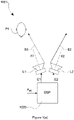
- the present examples may be viewed as building on the concept of the cardioid loudspeaker assembly 1001 described with reference to Fig. 1(a) .
- the loudspeakers may be mounted also with a certain angle relative to a z-direction where the z direction is defined as being an axis orthogonal to the upper plane of the enclosure.
- the signal processing for each loudspeaker may be a delay, a gain, and a filter, whose parameters have to be defined in function of the target directivity, directivity of the individual loudspeaker units and the mounting angles.
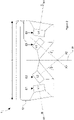
- the loudspeakers L1, L2, L3, L4 are arranged in a linear array, with each loudspeaker L1, L2, L3, L4 preferably being mounted within its own individual loudspeaker enclosure so that back radiation from each loudspeaker L1, L2, L3, L4 does not have a significant influence on other loudspeakers in the loudspeaker assembly 1.
- each loudspeaker L1, L2, L3, L4 has a respective principal radiating axis X1, X2, X3, X4 along which it produces sound.
- first angular offset between the first and second principal radiating axes X1, X2 there is a first angular offset between the first and second principal radiating axes X1, X2, a second angular offset between the first and third principal radiating axes X1, X3, and a third angular offset between the first and fourth principal radiating axes X1, X4.
- the distance between L1 and L4 is preferably no more than 50 cm.
- a first electrical signal E1 received by the first loudspeaker L1 is unfiltered, but the control unit is configured to filter second, third and fourth electrical signals E2, E3, E4 received (respectively) by the second, third and fourth loudspeakers L2, L3, L4 such that there is a first gain and phase difference between the first and second electrical signals E1, E2, a second gain and phase difference between the first and third electrical signals E1, E3, and a third gain and phase difference between the first and fourth electrical signals E1, E4.
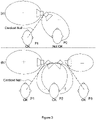
- Fig. 3 compares the operation of (a) the cardioid loudspeaker assembly 1001 of Fig. 1(a) with (b) the operation of the loudspeaker assembly 1 of Fig. 2 .
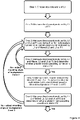
- Fig. 4 shows an example method for configuring the loudspeaker assembly 1 of Fig. 2 to obtain the operation shown in Fig. 3(b).
- Initial mounting angles of the loudspeakers L1, L2, L3, L4 may be chosen to provide a good starting point for obtaining cancellation of direct sound at each listening position, e.g. as shown in Fig. 2 .
- the loudspeakers L1, L2, L3, L4 preferably have a directivity index (according to the above definition) that is at least 6dB at a frequency of 3kHz, preferably so that loudspeaker L4 can be deemed to have an insignificant effect at listening position P1 and so that loudspeaker L1 can be deemed to have an insignificant effect at listening position P3 (as described below).
- Step 3 the direct sound produced by loudspeakers L2 and L3 at listening position P1 is measured, and a respective filter F2, F3 is defined for each of loudspeakers L2 and L3 so that the phase and amplitude of the direct sound produced by loudspeaker L1 and filtered loudspeakers L2, L3 at listening position P1 is cancelled in accordance with a predetermined cancelling condition (that requires the sound pressure level of direct sound produced by loudspeakers L1, L2, L3 at listening position P1 over 200 kHz-3kHz to be at least 12dB lower than the sound pressure level of direct sound produced by loudspeaker L1 at listening position P1).
- a predetermined cancelling condition that requires the sound pressure level of direct sound produced by loudspeakers L1, L2, L3 at listening position P1 over 200 kHz-3kHz to be at least 12dB lower than the sound pressure level of direct sound produced by loudspeaker L1 at listening position P1).
- Step 5 the direct sound produced by filtered loudspeakers L2 and L3 at listening position P3 is measured, and a filter F4 is defined for loudspeaker L4 so that the phase and amplitude of the filtered direct sound produced by loudspeakers L2, L3, L4 at listening position P3 is cancelled in accordance with the predetermined cancelling condition (that requires the sound pressure level of direct sound produced by loudspeakers L2, L3, L4 at listening position P3 over 200 kHz-3kHz to be at least 12dB lower than the sound pressure level of direct sound produced by loudspeakers L2, L3 at listening position P3).
- the effect of loudspeaker L1 at listening position P3 is ignored, since the angle of its principal radiating axis and its directivity index mean that the effect of direct sound produced by loudspeaker L1 at listening position P3 is deemed to be insignificant.
- Step 6 the direct sound produced by loudspeaker L1 and the filtered direct sound produced by loudspeakers L2, L3, L4 at listening position P2 is measured to determine whether the direct sound produced by loudspeakers L1, L2, L3, L4 at listening position P2 is cancelled in accordance with the predetermined cancelling condition (that requires the sound pressure level of direct sound produced by loudspeaker L1-L4 at listening position P2 over 200 kHz-3kHz to be at least 12dB lower than the sound pressure level of direct sound produced by loudspeaker L1 at listening position P2).
- the predetermined cancelling condition that requires the sound pressure level of direct sound produced by loudspeaker L1-L4 at listening position P2 over 200 kHz-3kHz to be at least 12dB lower than the sound pressure level of direct sound produced by loudspeaker L1 at listening position P2).
- direct sound is preferably measured in anechoic conditions, to avoid the influence of reflections.
- the sound of loudspeaker L1 is cancelled by the direct sound produced by filtered loudspeakers L2, L3.
- the direct sound produced by filtered loudspeaker L4 at listening position P1 is adequately low, and doesn't contribute significantly to the observation at position P1.
- the directivity index of the loudspeakers, the mounting angle and the electrical filtering are chosen as described above, so that cancellation of direct sound occurs at P1.
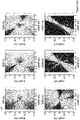
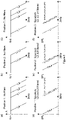
- filter 1 is a filter configured to cancel direct sound from L1 at sound at P3 and "filter 2" is a filter configured to cancel sound at P2.
- the response curve of the direct sound produced by L1 at P1 when filter 1 is applied is the substantially same as the unfiltered ("straight") direct sound produced by L1 at P3
- the response curve of the direct sound produced by L1 at P1 when filter 2 is applied is the substantially same as the unfiltered direct sound produced by L1 at P2.
Landscapes
- Engineering & Computer Science (AREA)
- Physics & Mathematics (AREA)
- Acoustics & Sound (AREA)
- Signal Processing (AREA)
- Health & Medical Sciences (AREA)
- Otolaryngology (AREA)
- General Health & Medical Sciences (AREA)
- Multimedia (AREA)
- Circuit For Audible Band Transducer (AREA)
- Obtaining Desirable Characteristics In Audible-Bandwidth Transducers (AREA)
Claims (11)
- Ensemble de haut-parleurs (1) comprenant :un premier haut-parleur (L1) configuré pour recevoir un premier signal électrique (E1), et pour produire un son le long d'un premier axe de rayonnement principal (X1) sur la base du premier signal électrique ;un deuxième haut-parleur (L2) configuré pour recevoir un deuxième signal électrique (E2), et pour produire un son le long d'un deuxième axe de rayonnement principal (X2) sur la base du deuxième signal électrique ;un troisième haut-parleur (L3) configuré pour recevoir un troisième signal électrique, et pour produire un son le long d'un troisième axe de rayonnement principal (X3) sur la base du troisième signal électrique (E3) ;un quatrième haut-parleur (L4) configuré pour recevoir un quatrième signal électrique (E4), et pour produire un son le long d'un quatrième axe de rayonnement principal (X4) sur la base du quatrième signal électrique ; etune unité de commande configurée pour produire chacun des premier, deuxième, troisième et quatrième signaux électriques sur la base d'un signal d'entrée représentatif de l'audio ;dans lequel il existe un premier décalage angulaire entre les premier et deuxième axes de rayonnement principaux, un deuxième décalage angulaire entre les premier et troisième axes de rayonnement principaux, et un troisième décalage angulaire entre les premier et quatrième axes de rayonnement principaux (X1, X4) ;dans lequel l'unité de commande est configurée pour filtrer au moins deux des premier, deuxième et troisième signaux électriques de telle sorte qu'il existe une première différence de gain et de phase entre les premier et deuxième signaux électriques et une deuxième différence de gain et de phase entre les premier et troisième signaux électriques, dans lequel l'unité de commande est configurée pour filtrer le quatrième signal électrique de telle sorte qu'il existe une troisième différence de gain et de phase entre les premier et quatrième signaux électriques (E1, E4) ;dans lequel les premier, deuxième et troisième décalages angulaires et les première, deuxième et troisième différences de gain et de phase sont configurés de telle sorte que, lorsque l'ensemble de haut-parleurs est utilisé, le son direct produit par les haut-parleurs de l'ensemble de haut-parleurs est annulé selon une condition d'annulation prédéterminée à chacune d'une première position d'écoute (P1), d'une deuxième position d'écoute (P2) et d'une troisième position d'écoute (P3) ;dans lequel l'ensemble de haut-parleurs est configuré pour être utilisé dans un espace clos ;dans lequel les haut-parleurs de l'ensemble de haut-parleurs sont montés à l'intérieur d'une enceinte d'ensemble de haut-parleurs (12) unique, les première, deuxième et troisième positions d'écoute étant situées à l'extérieur de l'enceinte d'ensemble de haut-parleurs (12) ;dans lequel les haut-parleurs sont agencés en un réseau linéaire ;dans lequel les deux haut-parleurs sur les extrémités du réseau linéaire ont des axes de rayonnement principaux qui pointent à partir des faces latérales opposées de l'enceinte d'ensemble de haut-parleurs (12) unique, dans lequel les intérieurs de deux haut-parleurs des deux haut-parleurs sur les extrémités du réseau linéaire se font au moins partiellement face et ont des axes de rayonnement principaux qui pointent à partir d'une face avant de l'enceinte d'ensemble de haut-parleurs unique, dans lequel la face avant de l'enceinte d'ensemble de haut-parleurs (12) unique fait face aux positions d'écoute ; etdans lequel les première, deuxième et troisième positions d'écoute sont agencées en un réseau linéaire.
- Ensemble de haut-parleurs selon la revendication 1, dans lequel chaque haut-parleur de l'ensemble de haut-parleurs a un indice de directivité qui est d'au moins 6 dB à une fréquence de 3 kHz.
- Ensemble de haut-parleurs selon la revendication 1 ou 2, dans lequel chaque différence de gain et de phase est de zéro en dessous de 150 Hz.
- Ensemble de haut-parleurs selon l'une quelconque des revendications précédentes, dans lequel la condition d'annulation prédéterminée à chaque position d'écoute nécessite que, sur une plage de fréquences de 200 Hz à 3 kHz, le niveau de pression sonore de son direct produit par tous les haut-parleurs dans l'ensemble de haut-parleurs à la position d'écoute soit inférieur d'au moins 12 dB au niveau de pression sonore de son direct produit par un sous-ensemble des haut-parleurs de l'ensemble de haut-parleurs à la position d'écoute.
- Ensemble de haut-parleurs selon l'une quelconque des revendications précédentes, dans lequel :
les haut-parleurs de l'ensemble de haut-parleurs sont agencés de telle sorte qu'entre chaque paire de haut-parleurs de l'ensemble de haut-parleurs, il existe une distance qui ne dépasse pas 50 cm. - Ensemble de haut-parleurs selon l'une quelconque des revendications précédentes, dans lequel il existe un décalage angulaire entre les axes de principe de chaque paire de haut-parleurs de l'ensemble de haut-parleurs qui est d'au moins 30°.
- Ensemble de haut-parleurs selon l'une quelconque des revendications précédentes, dans lequel l'enceinte d'ensemble de haut-parleurs a une forme de barre et est configurée sous forme de barre son.
- Ensemble de haut-parleurs selon l'une quelconque des revendications précédentes, dans lequel chaque haut-parleur est un haut-parleur électrodynamique qui inclut :un ensemble aimant permanent comprenant des composants métalliques et un aimant permanent ;un ensemble bobine acoustique comprenant un fil appelé bobine acoustique enroulé/entouré autour d'un tube fin appelé formeur de bobine acoustique ;un diaphragme ;un châssis ;un système de suspension qui suspend le diaphragme à partir du châssis ;dans lequel la bobine acoustique est configurée pour interagir avec un champ magnétique statique de l'aimant permanent lorsqu'un courant électrique est acheminé à travers la bobine acoustique de telle sorte qu'une interaction entre la bobine acoustique et le champ magnétique statique de l'aimant permanent entraîne un déplacement de la bobine acoustique le long d'un axe prédéterminé.
- Ensemble de haut-parleurs selon l'une quelconque des revendications précédentes, dans lequel chaque haut-parleur de l'ensemble de haut-parleurs est monté à l'intérieur de sa propre enceinte de haut-parleur individuelle de telle sorte qu'une rétrodiffusion à partir de chaque haut-parleur n'a pas une influence significative sur d'autres haut-parleurs de l'ensemble de haut-parleurs.
- Procédé de configuration d'un ensemble de haut-parleurs, l'ensemble de haut-parleurs comprenant :un premier haut-parleur (L1) configuré pour recevoir un premier signal électrique (E1), et pour produire un son le long d'un premier axe de rayonnement principal (X1) sur la base du premier signal électrique ;un deuxième haut-parleur (L2) configuré pour recevoir un deuxième signal électrique (E2), et pour produire un son le long d'un deuxième axe de rayonnement principal (X2) sur la base du deuxième signal électrique ;un troisième haut-parleur (L3) configuré pour recevoir un troisième signal électrique (E3), et pour produire un son le long d'un troisième axe de rayonnement principal (X3) sur la base du troisième signal électrique (E3) ;un quatrième haut-parleur (L4) configuré pour recevoir un quatrième signal électrique (E4), et pour produire un son le long d'un quatrième axe de rayonnement principal (X4) sur la base du quatrième signal électrique (E4) ; etune unité de commande configurée pour produire chacun des premier, deuxième, et troisième signaux électriques sur la base d'un signal d'entrée représentatif de l'audio ;dans lequel il existe un premier décalage angulaire entre les premier et deuxième axes de rayonnement principaux, un deuxième décalage angulaire entre les premier et troisième axes de rayonnement principaux et un troisième décalage angulaire entre les premier et quatrième axes de rayonnement principaux (X1, X4) ;dans lequel l'unité de commande est configurée pour filtrer au moins deux des premier, deuxième et troisième signaux électriques de telle sorte qu'il existe une première différence de gain et de phase entre les premier et deuxième signaux électriques et une deuxième différence de gain et de phase entre les premier et troisième signaux électriques, dans lequel l'unité de commande est configurée pour filtrer le quatrième signal électrique de telle sorte qu'il existe une troisième différence de gain et de phase entre les premier et quatrième signaux électriques (E1, E4) ;dans lequel l'ensemble de haut-parleurs est configuré pour être utilisé dans un espace clos ;dans lequel le procédé inclut l'ajustement des premier, deuxième et troisième décalages angulaires et des premier, deuxième et troisième différences de gain et de phase de telle sorte que, lorsque l'ensemble de haut-parleurs est utilisé, un son direct produit par les haut-parleurs de l'ensemble de haut-parleurs est annulé selon une condition d'annulation prédéterminée à chacune d'une première position d'écoute (P1), d'une deuxième position d'écoute (P2) et d'une troisième position d'écoute (P3) ;dans lequel les haut-parleurs de l'ensemble de haut-parleurs sont montés à l'intérieur d'une enceinte d'ensemble de haut-parleurs (12) unique, les première, deuxième et troisième positions d'écoute étant situées à l'extérieur de l'enceinte d'ensemble de haut-parleurs (12) ;dans lequel les haut-parleurs sont agencés en un réseau linéaire ;dans lequel les deux haut-parleurs sur les extrémités du réseau linéaire ont des axes de rayonnement principaux qui pointent à partir des faces latérales opposées de l'enceinte d'ensemble de haut-parleurs (12) unique, dans lequel les intérieurs de deux haut-parleurs des deux haut-parleurs sur les extrémités du réseau linéaire se font au moins partiellement face et ont des axes de rayonnement principaux qui pointent à partir d'une face avant de l'enceinte d'ensemble de haut-parleurs unique, dans lequel la face avant de l'enceinte d'ensemble de haut-parleurs (12) unique fait face aux positions d'écoute ; etdans lequel les première, deuxième et troisième positions d'écoute sont agencées en un réseau linéaire.
- Procédé selon la revendication 10, dans lequel la configuration de l'ensemble de haut-parleurs inclut également :(i) à une première des positions d'écoute, une mesure de son direct produit par un premier sous-ensemble des haut-parleurs de l'ensemble de haut-parleurs et, sur la base du son direct mesuré, un ajustement d'une ou de plusieurs des différences de gain et de phase de telle sorte que le son direct produit par de multiples haut-parleurs de l'ensemble de haut-parleurs est annulé selon une condition d'annulation prédéterminée à la première position d'écoute ;(ii) à une deuxième des positions d'écoute, une mesure de son direct produit par de multiples haut-parleurs de l'ensemble de haut-parleurs et une évaluation du fait que le son direct produit par les multiples haut-parleurs est annulé selon la condition d'annulation prédéterminée à la deuxième position d'écoute ;(iii) si le son direct produit par les multiples haut-parleurs n'est pas annulé selon la condition d'annulation prédéterminée à la deuxième position d'écoute, un ajustement d'un ou de plusieurs des décalages angulaires et un retour à l'étape (i) ;(iv) à une troisième des positions d'écoute, une mesure de son direct produit par un second sous-ensemble des haut-parleurs de l'ensemble de haut-parleurs et, sur la base du son direct mesuré, un ajustement de la troisième différence de gain et de phase de telle sorte que le son direct produit par de multiples haut-parleurs de l'ensemble de haut-parleurs est annulé selon une condition d'annulation prédéterminée à la troisième position d'écoute ;(v) à la deuxième position d'écoute, une mesure de son direct produit par de multiples haut-parleurs de l'ensemble de haut-parleurs et une évaluation du fait que le son direct produit par les multiples haut-parleurs est annulé selon la condition d'annulation prédéterminée à la deuxième position d'écoute ;(vi) si le son direct produit par les multiples haut-parleurs n'est pas annulé selon la condition d'annulation prédéterminée à la deuxième position d'écoute, un ajustement d'un ou de plusieurs des décalages angulaires et un retour à l'étape (i).
Applications Claiming Priority (2)
| Application Number | Priority Date | Filing Date | Title |
|---|---|---|---|
| GB1522136.9A GB2545439A (en) | 2015-12-15 | 2015-12-15 | Loudspeaker assemblies and associated methods |
| PCT/EP2016/078631 WO2017102278A1 (fr) | 2015-12-15 | 2016-11-24 | Ensembles haut-parleurs et procédés associés |
Publications (2)
| Publication Number | Publication Date |
|---|---|
| EP3391663A1 EP3391663A1 (fr) | 2018-10-24 |
| EP3391663B1 true EP3391663B1 (fr) | 2022-11-02 |
Family
ID=55274803
Family Applications (1)
| Application Number | Title | Priority Date | Filing Date |
|---|---|---|---|
| EP16800982.7A Active EP3391663B1 (fr) | 2015-12-15 | 2016-11-24 | Ensembles haut-parleurs et procédés associés |
Country Status (5)
| Country | Link |
|---|---|
| US (1) | US10880648B2 (fr) |
| EP (1) | EP3391663B1 (fr) |
| CN (1) | CN108476359B (fr) |
| GB (1) | GB2545439A (fr) |
| WO (1) | WO2017102278A1 (fr) |
Families Citing this family (8)
| Publication number | Priority date | Publication date | Assignee | Title |
|---|---|---|---|---|
| EP3935865A4 (fr) * | 2019-03-07 | 2022-11-16 | Polk Audio, LLC | Annulation active d'un rayonnement sonore avant d'un réseau de barres sonores à canal de hauteur |
| US20210274282A1 (en) * | 2019-06-17 | 2021-09-02 | Audio Accessories Group, LLC | Sound bar with various couplings |
| US11463811B2 (en) * | 2020-04-10 | 2022-10-04 | Harman International Industries, Incorporated | Speaker system with overhead sound projection |
| CN111787478A (zh) * | 2020-06-23 | 2020-10-16 | 北京小米移动软件有限公司 | 设备控制方法及装置 |
| GB2600539B (en) * | 2020-09-09 | 2023-04-12 | Tymphany Worldwide Enterprises Ltd | Method of providing audio in an automobile, and an audio apparatus for an automobile |
| DE102021203632A1 (de) | 2021-04-13 | 2022-10-13 | Kaetel Systems Gmbh | Lautsprecher, Signalprozessor, Verfahren zum Herstellen des Lautsprechers oder Verfahren zum Betreiben des Signalprozessors unter Verwendung einer Dual-Mode-Signalerzeugung mit zwei Schallerzeugern |
| GB2627479A (en) | 2023-02-23 | 2024-08-28 | Meridian Audio Ltd | Generating audio driving signals for the production of simultaneous stereo sound stages |
| US20250274711A1 (en) * | 2024-02-28 | 2025-08-28 | Gilberto Torres Ayala | Collider system for the generation and reproduction of signals from trisonic audio with zero latency |
Citations (2)
| Publication number | Priority date | Publication date | Assignee | Title |
|---|---|---|---|---|
| US5809150A (en) * | 1995-06-28 | 1998-09-15 | Eberbach; Steven J. | Surround sound loudspeaker system |
| EP2891338A1 (fr) * | 2012-08-31 | 2015-07-08 | Dolby Laboratories Licensing Corporation | Système conçu pour le rendu et la lecture d'un son basé sur un objet dans divers environnements d'écoute |
Family Cites Families (14)
| Publication number | Priority date | Publication date | Assignee | Title |
|---|---|---|---|---|
| US5870484A (en) * | 1995-09-05 | 1999-02-09 | Greenberger; Hal | Loudspeaker array with signal dependent radiation pattern |
| US5809153A (en) * | 1996-12-04 | 1998-09-15 | Bose Corporation | Electroacoustical transducing |
| JP3422281B2 (ja) * | 1999-04-08 | 2003-06-30 | ヤマハ株式会社 | 指向性拡声装置 |
| US20040109570A1 (en) * | 2002-06-21 | 2004-06-10 | Sunil Bharitkar | System and method for selective signal cancellation for multiple-listener audio applications |
| ITBS20050006A1 (it) * | 2005-01-28 | 2006-07-29 | Outline Di Noselli G & C S N C | Elemento diffusore del suono per formare sistemi di diffusori in linea verticale a direttivita' regolabile sia orizzontalmente sia verticalmente |
| US9100748B2 (en) * | 2007-05-04 | 2015-08-04 | Bose Corporation | System and method for directionally radiating sound |
| US20080273722A1 (en) * | 2007-05-04 | 2008-11-06 | Aylward J Richard | Directionally radiating sound in a vehicle |
| CN201138867Y (zh) * | 2008-01-09 | 2008-10-22 | 龚立风 | 一种有源线性阵列音响 |
| BRPI0909061A2 (pt) * | 2008-03-13 | 2015-08-25 | Koninkl Philips Electronics Nv | Arranjo de unidade para uma disposição de alto-falantes, disposição de alto-falantes, sistema de som circundante, e, métodos para prover um arranjo de unidade para uma disposição de alto-falantes. |
| JP4557054B2 (ja) * | 2008-06-20 | 2010-10-06 | 株式会社デンソー | 車載用立体音響装置 |
| GB0821999D0 (en) * | 2008-12-02 | 2009-01-07 | Pss Belgium Nv | Method and apparatus for improved directivity of an acoustic antenna |
| CN101588524A (zh) * | 2009-07-08 | 2009-11-25 | 电子科技大学 | 指向可调式微型声频定向扬声器系统 |
| CN202143200U (zh) * | 2011-05-20 | 2012-02-08 | 广州励华声光科技有限公司 | 可变指向性音箱 |
| CN202310093U (zh) * | 2011-09-27 | 2012-07-04 | 清华大学 | 锯齿状阵列式压电扬声器组 |
-
2015
- 2015-12-15 GB GB1522136.9A patent/GB2545439A/en not_active Withdrawn
-
2016
- 2016-11-24 WO PCT/EP2016/078631 patent/WO2017102278A1/fr not_active Ceased
- 2016-11-24 US US16/062,740 patent/US10880648B2/en active Active
- 2016-11-24 EP EP16800982.7A patent/EP3391663B1/fr active Active
- 2016-11-24 CN CN201680074754.9A patent/CN108476359B/zh active Active
Patent Citations (3)
| Publication number | Priority date | Publication date | Assignee | Title |
|---|---|---|---|---|
| US5809150A (en) * | 1995-06-28 | 1998-09-15 | Eberbach; Steven J. | Surround sound loudspeaker system |
| EP2891338A1 (fr) * | 2012-08-31 | 2015-07-08 | Dolby Laboratories Licensing Corporation | Système conçu pour le rendu et la lecture d'un son basé sur un objet dans divers environnements d'écoute |
| US20150223002A1 (en) * | 2012-08-31 | 2015-08-06 | Dolby Laboratories Licensing Corporation | System for Rendering and Playback of Object Based Audio in Various Listening Environments |
Also Published As
| Publication number | Publication date |
|---|---|
| US10880648B2 (en) | 2020-12-29 |
| US20200169808A1 (en) | 2020-05-28 |
| GB2545439A (en) | 2017-06-21 |
| WO2017102278A1 (fr) | 2017-06-22 |
| EP3391663A1 (fr) | 2018-10-24 |
| GB201522136D0 (en) | 2016-01-27 |
| CN108476359B (zh) | 2022-02-15 |
| CN108476359A (zh) | 2018-08-31 |
Similar Documents
| Publication | Publication Date | Title |
|---|---|---|
| US10880648B2 (en) | Loudspeaker assemblies and associated methods | |
| US10038963B2 (en) | Speaker device and audio signal processing method | |
| CN102804814B (zh) | 多通道声音重放方法和设备 | |
| CN102792712B (zh) | 扬声器系统及其操作方法 | |
| EP3439330B1 (fr) | Réglage de la hauteur perçue d'une image audio sur un écran de cinéma solide | |
| US20120269368A1 (en) | Loudspeaker array system | |
| JP2005159518A (ja) | アレースピーカ装置 | |
| KR20160001712A (ko) | 음향 신호의 렌더링 방법, 장치 및 컴퓨터 판독 가능한 기록 매체 | |
| KR20140007794A (ko) | 어레이 라우드스피커 시스템 | |
| US10945090B1 (en) | Surround sound rendering based on room acoustics | |
| KR102353871B1 (ko) | 가변 음향 라우드스피커 | |
| CN107079217A (zh) | 具有窄分散度的扩音器 | |
| EP3089476A1 (fr) | Système sonore | |
| US9843864B2 (en) | Method for operating an arrangement of sound transducers according to the wave field synthesis principle | |
| US4847904A (en) | Ambient imaging loudspeaker system | |
| Lee et al. | HRTF measurement for accurate sound localization cues | |
| US20120039480A1 (en) | Method and apparatus for improved directivity of an acoustic antenna | |
| US10440495B2 (en) | Virtual localization of sound | |
| CN107333206B (zh) | 整体式音箱及其控制方法 | |
| JP7856791B2 (ja) | 指向性音発生デバイス | |
| JP4625756B2 (ja) | ラウドスピーカのアレイシステム | |
| EP3790287A1 (fr) | Système de haut-parleur à commande de directivité actif | |
| JP7160312B2 (ja) | 音響システム | |
| Sporer et al. | Wave Field Synthesis | |
| US9729992B1 (en) | Front loudspeaker directivity for surround sound systems |
Legal Events
| Date | Code | Title | Description |
|---|---|---|---|
| STAA | Information on the status of an ep patent application or granted ep patent |
Free format text: STATUS: UNKNOWN |
|
| STAA | Information on the status of an ep patent application or granted ep patent |
Free format text: STATUS: THE INTERNATIONAL PUBLICATION HAS BEEN MADE |
|
| PUAI | Public reference made under article 153(3) epc to a published international application that has entered the european phase |
Free format text: ORIGINAL CODE: 0009012 |
|
| STAA | Information on the status of an ep patent application or granted ep patent |
Free format text: STATUS: REQUEST FOR EXAMINATION WAS MADE |
|
| 17P | Request for examination filed |
Effective date: 20180713 |
|
| AK | Designated contracting states |
Kind code of ref document: A1 Designated state(s): AL AT BE BG CH CY CZ DE DK EE ES FI FR GB GR HR HU IE IS IT LI LT LU LV MC MK MT NL NO PL PT RO RS SE SI SK SM TR |
|
| AX | Request for extension of the european patent |
Extension state: BA ME |
|
| DAV | Request for validation of the european patent (deleted) | ||
| DAX | Request for extension of the european patent (deleted) | ||
| STAA | Information on the status of an ep patent application or granted ep patent |
Free format text: STATUS: EXAMINATION IS IN PROGRESS |
|
| 17Q | First examination report despatched |
Effective date: 20200807 |
|
| GRAP | Despatch of communication of intention to grant a patent |
Free format text: ORIGINAL CODE: EPIDOSNIGR1 |
|
| STAA | Information on the status of an ep patent application or granted ep patent |
Free format text: STATUS: GRANT OF PATENT IS INTENDED |
|
| INTG | Intention to grant announced |
Effective date: 20220622 |
|
| GRAS | Grant fee paid |
Free format text: ORIGINAL CODE: EPIDOSNIGR3 |
|
| GRAA | (expected) grant |
Free format text: ORIGINAL CODE: 0009210 |
|
| STAA | Information on the status of an ep patent application or granted ep patent |
Free format text: STATUS: THE PATENT HAS BEEN GRANTED |
|
| AK | Designated contracting states |
Kind code of ref document: B1 Designated state(s): AL AT BE BG CH CY CZ DE DK EE ES FI FR GB GR HR HU IE IS IT LI LT LU LV MC MK MT NL NO PL PT RO RS SE SI SK SM TR |
|
| REG | Reference to a national code |
Ref country code: GB Ref legal event code: FG4D |
|
| REG | Reference to a national code |
Ref country code: CH Ref legal event code: EP Ref country code: AT Ref legal event code: REF Ref document number: 1529642 Country of ref document: AT Kind code of ref document: T Effective date: 20221115 |
|
| REG | Reference to a national code |
Ref country code: DE Ref legal event code: R096 Ref document number: 602016076084 Country of ref document: DE |
|
| REG | Reference to a national code |
Ref country code: IE Ref legal event code: FG4D |
|
| REG | Reference to a national code |
Ref country code: LT Ref legal event code: MG9D |
|
| REG | Reference to a national code |
Ref country code: NL Ref legal event code: MP Effective date: 20221102 |
|
| REG | Reference to a national code |
Ref country code: AT Ref legal event code: MK05 Ref document number: 1529642 Country of ref document: AT Kind code of ref document: T Effective date: 20221102 |
|
| PG25 | Lapsed in a contracting state [announced via postgrant information from national office to epo] |
Ref country code: SE Free format text: LAPSE BECAUSE OF FAILURE TO SUBMIT A TRANSLATION OF THE DESCRIPTION OR TO PAY THE FEE WITHIN THE PRESCRIBED TIME-LIMIT Effective date: 20221102 Ref country code: PT Free format text: LAPSE BECAUSE OF FAILURE TO SUBMIT A TRANSLATION OF THE DESCRIPTION OR TO PAY THE FEE WITHIN THE PRESCRIBED TIME-LIMIT Effective date: 20230302 Ref country code: NO Free format text: LAPSE BECAUSE OF FAILURE TO SUBMIT A TRANSLATION OF THE DESCRIPTION OR TO PAY THE FEE WITHIN THE PRESCRIBED TIME-LIMIT Effective date: 20230202 Ref country code: LT Free format text: LAPSE BECAUSE OF FAILURE TO SUBMIT A TRANSLATION OF THE DESCRIPTION OR TO PAY THE FEE WITHIN THE PRESCRIBED TIME-LIMIT Effective date: 20221102 Ref country code: FI Free format text: LAPSE BECAUSE OF FAILURE TO SUBMIT A TRANSLATION OF THE DESCRIPTION OR TO PAY THE FEE WITHIN THE PRESCRIBED TIME-LIMIT Effective date: 20221102 Ref country code: ES Free format text: LAPSE BECAUSE OF FAILURE TO SUBMIT A TRANSLATION OF THE DESCRIPTION OR TO PAY THE FEE WITHIN THE PRESCRIBED TIME-LIMIT Effective date: 20221102 Ref country code: AT Free format text: LAPSE BECAUSE OF FAILURE TO SUBMIT A TRANSLATION OF THE DESCRIPTION OR TO PAY THE FEE WITHIN THE PRESCRIBED TIME-LIMIT Effective date: 20221102 |
|
| PG25 | Lapsed in a contracting state [announced via postgrant information from national office to epo] |
Ref country code: RS Free format text: LAPSE BECAUSE OF FAILURE TO SUBMIT A TRANSLATION OF THE DESCRIPTION OR TO PAY THE FEE WITHIN THE PRESCRIBED TIME-LIMIT Effective date: 20221102 Ref country code: PL Free format text: LAPSE BECAUSE OF FAILURE TO SUBMIT A TRANSLATION OF THE DESCRIPTION OR TO PAY THE FEE WITHIN THE PRESCRIBED TIME-LIMIT Effective date: 20221102 Ref country code: LV Free format text: LAPSE BECAUSE OF FAILURE TO SUBMIT A TRANSLATION OF THE DESCRIPTION OR TO PAY THE FEE WITHIN THE PRESCRIBED TIME-LIMIT Effective date: 20221102 Ref country code: IS Free format text: LAPSE BECAUSE OF FAILURE TO SUBMIT A TRANSLATION OF THE DESCRIPTION OR TO PAY THE FEE WITHIN THE PRESCRIBED TIME-LIMIT Effective date: 20230302 Ref country code: HR Free format text: LAPSE BECAUSE OF FAILURE TO SUBMIT A TRANSLATION OF THE DESCRIPTION OR TO PAY THE FEE WITHIN THE PRESCRIBED TIME-LIMIT Effective date: 20221102 Ref country code: GR Free format text: LAPSE BECAUSE OF FAILURE TO SUBMIT A TRANSLATION OF THE DESCRIPTION OR TO PAY THE FEE WITHIN THE PRESCRIBED TIME-LIMIT Effective date: 20230203 |
|
| P01 | Opt-out of the competence of the unified patent court (upc) registered |
Effective date: 20230502 |
|
| PG25 | Lapsed in a contracting state [announced via postgrant information from national office to epo] |
Ref country code: NL Free format text: LAPSE BECAUSE OF FAILURE TO SUBMIT A TRANSLATION OF THE DESCRIPTION OR TO PAY THE FEE WITHIN THE PRESCRIBED TIME-LIMIT Effective date: 20221102 |
|
| REG | Reference to a national code |
Ref country code: CH Ref legal event code: PL |
|
| PG25 | Lapsed in a contracting state [announced via postgrant information from national office to epo] |
Ref country code: SM Free format text: LAPSE BECAUSE OF FAILURE TO SUBMIT A TRANSLATION OF THE DESCRIPTION OR TO PAY THE FEE WITHIN THE PRESCRIBED TIME-LIMIT Effective date: 20221102 Ref country code: RO Free format text: LAPSE BECAUSE OF FAILURE TO SUBMIT A TRANSLATION OF THE DESCRIPTION OR TO PAY THE FEE WITHIN THE PRESCRIBED TIME-LIMIT Effective date: 20221102 Ref country code: LI Free format text: LAPSE BECAUSE OF NON-PAYMENT OF DUE FEES Effective date: 20221130 Ref country code: EE Free format text: LAPSE BECAUSE OF FAILURE TO SUBMIT A TRANSLATION OF THE DESCRIPTION OR TO PAY THE FEE WITHIN THE PRESCRIBED TIME-LIMIT Effective date: 20221102 Ref country code: DK Free format text: LAPSE BECAUSE OF FAILURE TO SUBMIT A TRANSLATION OF THE DESCRIPTION OR TO PAY THE FEE WITHIN THE PRESCRIBED TIME-LIMIT Effective date: 20221102 Ref country code: CZ Free format text: LAPSE BECAUSE OF FAILURE TO SUBMIT A TRANSLATION OF THE DESCRIPTION OR TO PAY THE FEE WITHIN THE PRESCRIBED TIME-LIMIT Effective date: 20221102 Ref country code: CH Free format text: LAPSE BECAUSE OF NON-PAYMENT OF DUE FEES Effective date: 20221130 |
|
| REG | Reference to a national code |
Ref country code: DE Ref legal event code: R097 Ref document number: 602016076084 Country of ref document: DE |
|
| PG25 | Lapsed in a contracting state [announced via postgrant information from national office to epo] |
Ref country code: SK Free format text: LAPSE BECAUSE OF FAILURE TO SUBMIT A TRANSLATION OF THE DESCRIPTION OR TO PAY THE FEE WITHIN THE PRESCRIBED TIME-LIMIT Effective date: 20221102 Ref country code: LU Free format text: LAPSE BECAUSE OF NON-PAYMENT OF DUE FEES Effective date: 20221124 Ref country code: AL Free format text: LAPSE BECAUSE OF FAILURE TO SUBMIT A TRANSLATION OF THE DESCRIPTION OR TO PAY THE FEE WITHIN THE PRESCRIBED TIME-LIMIT Effective date: 20221102 |
|
| PLBE | No opposition filed within time limit |
Free format text: ORIGINAL CODE: 0009261 |
|
| STAA | Information on the status of an ep patent application or granted ep patent |
Free format text: STATUS: NO OPPOSITION FILED WITHIN TIME LIMIT |
|
| 26N | No opposition filed |
Effective date: 20230803 |
|
| PG25 | Lapsed in a contracting state [announced via postgrant information from national office to epo] |
Ref country code: IE Free format text: LAPSE BECAUSE OF NON-PAYMENT OF DUE FEES Effective date: 20221124 |
|
| PG25 | Lapsed in a contracting state [announced via postgrant information from national office to epo] |
Ref country code: SI Free format text: LAPSE BECAUSE OF FAILURE TO SUBMIT A TRANSLATION OF THE DESCRIPTION OR TO PAY THE FEE WITHIN THE PRESCRIBED TIME-LIMIT Effective date: 20221102 |
|
| PG25 | Lapsed in a contracting state [announced via postgrant information from national office to epo] |
Ref country code: HU Free format text: LAPSE BECAUSE OF FAILURE TO SUBMIT A TRANSLATION OF THE DESCRIPTION OR TO PAY THE FEE WITHIN THE PRESCRIBED TIME-LIMIT; INVALID AB INITIO Effective date: 20161124 |
|
| PG25 | Lapsed in a contracting state [announced via postgrant information from national office to epo] |
Ref country code: CY Free format text: LAPSE BECAUSE OF FAILURE TO SUBMIT A TRANSLATION OF THE DESCRIPTION OR TO PAY THE FEE WITHIN THE PRESCRIBED TIME-LIMIT Effective date: 20221102 |
|
| PG25 | Lapsed in a contracting state [announced via postgrant information from national office to epo] |
Ref country code: MK Free format text: LAPSE BECAUSE OF FAILURE TO SUBMIT A TRANSLATION OF THE DESCRIPTION OR TO PAY THE FEE WITHIN THE PRESCRIBED TIME-LIMIT Effective date: 20221102 Ref country code: IT Free format text: LAPSE BECAUSE OF FAILURE TO SUBMIT A TRANSLATION OF THE DESCRIPTION OR TO PAY THE FEE WITHIN THE PRESCRIBED TIME-LIMIT Effective date: 20221102 |
|
| PG25 | Lapsed in a contracting state [announced via postgrant information from national office to epo] |
Ref country code: MC Free format text: LAPSE BECAUSE OF FAILURE TO SUBMIT A TRANSLATION OF THE DESCRIPTION OR TO PAY THE FEE WITHIN THE PRESCRIBED TIME-LIMIT Effective date: 20221102 |
|
| PG25 | Lapsed in a contracting state [announced via postgrant information from national office to epo] |
Ref country code: TR Free format text: LAPSE BECAUSE OF FAILURE TO SUBMIT A TRANSLATION OF THE DESCRIPTION OR TO PAY THE FEE WITHIN THE PRESCRIBED TIME-LIMIT Effective date: 20221102 Ref country code: MC Free format text: LAPSE BECAUSE OF FAILURE TO SUBMIT A TRANSLATION OF THE DESCRIPTION OR TO PAY THE FEE WITHIN THE PRESCRIBED TIME-LIMIT Effective date: 20221102 |
|
| PG25 | Lapsed in a contracting state [announced via postgrant information from national office to epo] |
Ref country code: BG Free format text: LAPSE BECAUSE OF FAILURE TO SUBMIT A TRANSLATION OF THE DESCRIPTION OR TO PAY THE FEE WITHIN THE PRESCRIBED TIME-LIMIT Effective date: 20221102 |
|
| PG25 | Lapsed in a contracting state [announced via postgrant information from national office to epo] |
Ref country code: MT Free format text: LAPSE BECAUSE OF FAILURE TO SUBMIT A TRANSLATION OF THE DESCRIPTION OR TO PAY THE FEE WITHIN THE PRESCRIBED TIME-LIMIT Effective date: 20221102 |
|
| PGFP | Annual fee paid to national office [announced via postgrant information from national office to epo] |
Ref country code: DE Payment date: 20241125 Year of fee payment: 9 |
|
| PGFP | Annual fee paid to national office [announced via postgrant information from national office to epo] |
Ref country code: BE Payment date: 20241202 Year of fee payment: 9 |
|
| PGFP | Annual fee paid to national office [announced via postgrant information from national office to epo] |
Ref country code: FR Payment date: 20241121 Year of fee payment: 9 |
|
| PGFP | Annual fee paid to national office [announced via postgrant information from national office to epo] |
Ref country code: GB Payment date: 20251119 Year of fee payment: 10 |