EP3389405B1 - Ernährungszusammensetzungen und säuglingsformulierungen mit einem relativ hohen gehalt an oligofructose zur induktion von darmmikrobiotamustern in der nähe derjenigen von säuglingen, die mit menschlicher milch gefüttert werden - Google Patents
Ernährungszusammensetzungen und säuglingsformulierungen mit einem relativ hohen gehalt an oligofructose zur induktion von darmmikrobiotamustern in der nähe derjenigen von säuglingen, die mit menschlicher milch gefüttert werden Download PDFInfo
- Publication number
- EP3389405B1 EP3389405B1 EP16816627.0A EP16816627A EP3389405B1 EP 3389405 B1 EP3389405 B1 EP 3389405B1 EP 16816627 A EP16816627 A EP 16816627A EP 3389405 B1 EP3389405 B1 EP 3389405B1
- Authority
- EP
- European Patent Office
- Prior art keywords
- infants
- composition
- microbiota
- oligofructose
- fed
- Prior art date
- Legal status (The legal status is an assumption and is not a legal conclusion. Google has not performed a legal analysis and makes no representation as to the accuracy of the status listed.)
- Active
Links
Images



Classifications
-
- A—HUMAN NECESSITIES
- A23—FOODS OR FOODSTUFFS; TREATMENT THEREOF, NOT COVERED BY OTHER CLASSES
- A23L—FOODS, FOODSTUFFS OR NON-ALCOHOLIC BEVERAGES, NOT OTHERWISE PROVIDED FOR; PREPARATION OR TREATMENT THEREOF
- A23L33/00—Modifying nutritive qualities of foods; Dietetic products; Preparation or treatment thereof
- A23L33/40—Complete food formulations for specific consumer groups or specific purposes, e.g. infant formula
-
- A—HUMAN NECESSITIES
- A23—FOODS OR FOODSTUFFS; TREATMENT THEREOF, NOT COVERED BY OTHER CLASSES
- A23L—FOODS, FOODSTUFFS OR NON-ALCOHOLIC BEVERAGES, NOT OTHERWISE PROVIDED FOR; PREPARATION OR TREATMENT THEREOF
- A23L33/00—Modifying nutritive qualities of foods; Dietetic products; Preparation or treatment thereof
- A23L33/10—Modifying nutritive qualities of foods; Dietetic products; Preparation or treatment thereof using additives
- A23L33/115—Fatty acids or derivatives thereof; Fats or oils
-
- A—HUMAN NECESSITIES
- A23—FOODS OR FOODSTUFFS; TREATMENT THEREOF, NOT COVERED BY OTHER CLASSES
- A23L—FOODS, FOODSTUFFS OR NON-ALCOHOLIC BEVERAGES, NOT OTHERWISE PROVIDED FOR; PREPARATION OR TREATMENT THEREOF
- A23L33/00—Modifying nutritive qualities of foods; Dietetic products; Preparation or treatment thereof
- A23L33/10—Modifying nutritive qualities of foods; Dietetic products; Preparation or treatment thereof using additives
- A23L33/115—Fatty acids or derivatives thereof; Fats or oils
- A23L33/12—Fatty acids or derivatives thereof
-
- A—HUMAN NECESSITIES
- A23—FOODS OR FOODSTUFFS; TREATMENT THEREOF, NOT COVERED BY OTHER CLASSES
- A23L—FOODS, FOODSTUFFS OR NON-ALCOHOLIC BEVERAGES, NOT OTHERWISE PROVIDED FOR; PREPARATION OR TREATMENT THEREOF
- A23L33/00—Modifying nutritive qualities of foods; Dietetic products; Preparation or treatment thereof
- A23L33/10—Modifying nutritive qualities of foods; Dietetic products; Preparation or treatment thereof using additives
- A23L33/17—Amino acids, peptides or proteins
- A23L33/19—Dairy proteins
-
- A—HUMAN NECESSITIES
- A23—FOODS OR FOODSTUFFS; TREATMENT THEREOF, NOT COVERED BY OTHER CLASSES
- A23L—FOODS, FOODSTUFFS OR NON-ALCOHOLIC BEVERAGES, NOT OTHERWISE PROVIDED FOR; PREPARATION OR TREATMENT THEREOF
- A23L33/00—Modifying nutritive qualities of foods; Dietetic products; Preparation or treatment thereof
- A23L33/20—Reducing nutritive value; Dietetic products with reduced nutritive value
- A23L33/21—Addition of substantially indigestible substances, e.g. dietary fibres
-
- A—HUMAN NECESSITIES
- A23—FOODS OR FOODSTUFFS; TREATMENT THEREOF, NOT COVERED BY OTHER CLASSES
- A23L—FOODS, FOODSTUFFS OR NON-ALCOHOLIC BEVERAGES, NOT OTHERWISE PROVIDED FOR; PREPARATION OR TREATMENT THEREOF
- A23L33/00—Modifying nutritive qualities of foods; Dietetic products; Preparation or treatment thereof
- A23L33/30—Dietetic or nutritional methods, e.g. for losing weight
-
- A—HUMAN NECESSITIES
- A23—FOODS OR FOODSTUFFS; TREATMENT THEREOF, NOT COVERED BY OTHER CLASSES
- A23V—INDEXING SCHEME RELATING TO FOODS, FOODSTUFFS OR NON-ALCOHOLIC BEVERAGES AND LACTIC OR PROPIONIC ACID BACTERIA USED IN FOODSTUFFS OR FOOD PREPARATION
- A23V2002/00—Food compositions, function of food ingredients or processes for food or foodstuffs
Definitions
- the present invention relates to nutritional compositions for infants and young children and their health effects in infants.
- infant formula comprising a relatively high amount of oligofructose and a relatively high amount of high sn -2 palmitate triglycerides.
- infant formula provides a suitable alternative to natural breast feeding with human breast milk.
- Nutritional compositions for infants and young children are often sold as powders to be reconstituted with water or in some instances as ready to drink or concentrated liquid compositions. Those compositions are intended to cover most or all the nutritional needs of the infants or young children.
- Mother's milk is recommended for all infants. However, in some cases, breast feeding is inadequate or unsuccessful for medical reasons or the mother chooses not to breast feed. Infant formulae have been developed for these situations. Fortifiers have also been developed to enrich mother's milk or infant formula with specific ingredients.
- infant formula does not induce the identical effects on the body compared to human breast milk.
- infants fed infant formula and infants fed human breast milk can exhibit a different intestinal microbiota.
- the modulation of the gut microbiota during infancy can prospectively have a great influence in the future health status of the bodies.
- the gut microbiota can have an influence on the development of obesity later in life, on the development of a strong immune system later in life or on normal growth.
- Other long term effects have also been evidenced or described.
- a healthy intestinal microbiota is an indicator of the health of an infant and altered intestinal microbiota can be an indicator (and/or a cause) of abnormal health events such as diarrhoea, under-absorption of nutrients, colic, altered sleep, and altered growth and development.
- non-digestible carbohydrates in particular can affect the promotion of particular microbiota.
- GOS galacto-oligosaccharides
- FOS fructo-oligosaccharides
- gut microbiota and its evolution during the development of the infant is, however, a fine balance between the presence and prevalence (amount) of many populations of gut bacteria.
- Some gut bacteria are classified as “generally positive” while others are “generally negative” (or potentially or known pathogenic bacteria) in relation to their effect on the overall health of the infant.
- bacteria such as bifidobacteria
- bifidobacteria may be under-represented in infants fed conventional infant formula in comparison to breast fed infants.
- some bacterial populations are considered potentially or known pathogenic and should remain of low prevalence in the gut microbiota.
- infants fed infant formulae may not benefit from the natural, well-balanced intestinal gut microbiota of infants fed exclusively or predominantly human breast milk.
- Such natural microbiota observed in breast fed infants is indeed both well controlled over time (evolution over time) and very complex.
- Many taxa of microorganisms co-exist in the highly complex microenvironment of the gut/intestine, each in sequentially defined proportions.
- Quantitative and qualitative dimensions are to be considered when defining the microbiota of infants or young children.
- the variation over time of the gut microbiota adds to the complexity.
- WO2013068879A2 by Manjiang Yao et al., published on May 16 2013 , reports the effect of high sn-2 palmitate diets (in presence or absence of oligofructose) on the stools softness and on the induction of positive bacteria such as bifidobacteria in infants. The document remains however silent on the overall composition and diversity of the gut flora.
- Bosscher et al. 2006, discloses inulin and oligofructose as prebiotics in the prevention of intestinal infections and diseases.
- WO 2016/207061 is a document according to Art. 54(3) EPC and discloses nutritional compositions for infants and young children and their health effects in infants.
- US 2013/0289110 A1 relates to a method of promoting development of gut flora in a subject, specifically beneficial gut flora, comprising administering to the subject an edible lipid composition comprising a vegetable-derived fat source, wherein the fat source comprises triglycerides with 15-55% palmitic acid moieties out of the total fatty acids, and wherein the level of palmitic acid moieties at the sn-2 position of the glycerol backbone is at least 30% of total palmitic acid.
- the invention relates to a nutritional composition according to claim 1.
- the composition is in a powdered form.
- the composition comprises high sn -2 palmitate.
- the composition promotes or induces a gut microbiota that is closer to the microbiota of those of infants fed exclusively with human breast milk (so-called exclusively breast fed infants), in comparison to infants fed predominantly with conventional infant formula not comprising the composition of the invention.
- the infants or young children can be between 0 and 36 months, preferably between 0 and 12 months of age.
- composition of the invention has the effect of down-regulating, decreasing or inhibiting the growth as well as reducing the abundance of potentially or known pathogenic bacteria and/or promoting the abundance of beneficial bacteria (e.g. Bifidobacteria) and/or inducing a microbiota that is less diverse, in the gut of infants or young children.
- beneficial bacteria e.g. Bifidobacteria
- infant means a child under the age of 12 months.
- young child means a child aged between one and three years, also called toddler.
- An "infant or young child born by C-section” means an infant which was delivered by caesarean section. It means that the infant was not vaginally delivered.
- preterm or premature means an infant or young child that was not born at term. Generally it refers to an infant born prior to 36 weeks of gestation.
- the expression "nutritional composition” means a composition which nourishes a subject.
- This nutritional composition is usually to be taken enterally, orally, parenterally or intravenously, and it usually includes a lipid or fat source and a protein source.
- a nutritional composition is for oral use.
- hypoallergenic nutritional composition means a nutritional composition which is unlikely to cause allergic reactions.
- composition means a mixture obtained by chemical and/or biological means, which can be chemically identical to the mixture naturally occurring in mammalian milks.
- infant formula means a foodstuff intended for particular nutritional use by infants during the first four to six months of life and satisfying by itself the nutritional requirements of this category of person (Article 1.2 of the European Commission Directive 91/321/EEC of May 14, 1991 on infant formulae and follow-on formulae).
- starter infant formula means a foodstuff intended for particular nutritional use by infants during the first four months of life.
- follow-on formula means a foodstuff intended for particular nutritional use by infants aged over four months and constituting the principal liquid element in the progressively diversified diet of this category of person.
- baby food means a foodstuff intended for particular nutritional use by infants during the first years of life.
- fortifier refers to liquid or solid nutritional compositions suitable for mixing with breast milk or infant formula.
- weaning period means the period during which the mother's milk is substituted by other food in the diet of an infant.
- oligofructose refers to a fructose oligomers. It can be long chain or short chain , depending on the degree of polymerization of the oligofructose (number of monomers).
- the oligofructose of the invention is a short-chain oligofructose, most preferably it has a degree of polymerization of from 2 to 10, for example a degree of polymerization of from 2 to 8.
- sn -2 palmitate refers to palmitic acid in the sn -2 position of the triglyceride to which it is bonded.
- High sn -2 palmitate triglyceride refers to a triglyceride (TG) containing more than 33% of the palmitic acids in the sn -2 position.
- TG triglyceride
- a commercially available high sn -2 palmitate ingredient is sold by Lipid Nutrition is Betapol TM B-55. It is a triglyceride mixture derived from vegetable oil in which at least 54% of the palmitic acid is in the sn -2 position of the glycerol molecule.
- Alpha-Lactalbumin refers to a high-quality, easy-to-digest whey protein that comprises 20-25% of total human breast milk (HBM) protein and is the primary protein found in HBM.
- HBM human breast milk
- the structure of alpha-lactalbumin is comprised of 123 amino acids and 4 disulfide bridges and the protein has a molecular weight of 14.2K Daltons.
- Alpha-lactalbumin is ideal for lower protein infant formulas due to its high content of essential amino acids, particularly tryptophan.
- prebiotic means non-digestible carbohydrates that beneficially affect the host by selectively stimulating the growth and/or the activity of healthy bacteria such as bifidobacteria in the colon of humans ( Gibson GR, Roberfroid MB. Dietary modulation of the human colonic microbiota: introducing the concept of prebiotics. J Nutr. 1995;125:1401-12 ).
- probiotic means microbial cell preparations or components of microbial cells with a beneficial effect on the health or well-being of the host.
- the microbial cells are generally bacteria or yeasts.
- composition of the present invention can comprise, consist of, or consist essentially of the essential elements and limitations of the invention described herein, as well as any additional or optional ingredients, components, or limitations described herein or otherwise depending on the needs.
- an infant formula in a ready-to-consume liquid form provides 60-70 kcal/100 ml.
- Infant formula typically comprises, per 100 Kcal: about 1.8-4.5 g protein; about 3.3-6.0 g fat (lipids); about 300- 1200 mg linoleic acid; about 9-14 g carbohydrates selected from the group consisting of lactose, sucrose, glucose, glucose syrup, starch, maltodextrins and maltose, and combinations thereof; and essential vitamins and minerals.
- Lactose may be the pre-dominant carbohydrate in an infant formula.
- a liquid infant formula may contain about 67 kcal/100 ml.
- infant formula may comprise about 1.8-3.3 g protein per 100 Kcal.
- Infant formula may be in the form of a powder which can be reconstituted into a ready-to-feed liquid by adding an amount of water that results in for example a liquid having about 67 kcal/100 ml.
- An infant formula may also comprise nucleotides selected from cytidine 5'-monophosphate (CMP), uridine 5'-monophosphate (UMP), adenosine 5'-monophosphate (AMP), guanosine 5'-monophosphate (GMP) and inosine 5'-monophosphate (IMP), and mixtures thereof.
- Infant formula may also comprise lutein, zeaxanthin, fructo-oligosaccharides, galacto-oligosaccharides, sialyl-lactose, and/or fucosyl-lactose.
- Long chain polyunsaturated fatty acids such as docosahexaenoic acid (DHA) and arachidonic acid (AA) may be included in infant formula.
- Infant formula may also include free amino acids.
- Infant formula may also include other ingredients well-known in the art.
- the infant formula of this invention comprises about 5-6 g per 100 kcal of fat (triglycerides), with at least 8 wt% of this fat consisting of palmitic acid in the sn -2 position of a triglyceride. In some embodiments about 8.0-11.5 wt%, about 8.5-11.0% or about 9.0-10.0 wt% of the fat is palmitic acid in the sn -2 position of a triglyceride.
- palmitic acid comprises from about 15 to about 25%, such as from about 15 to about 20%, of the total fatty acids content of the formula, by weight, and at least from about 33%, for example, from about 35 to about 43% of the total palmitic acid content is in the sn -2 position.
- the infant formula further comprises at least one omega 6 fatty acid and at least one omega 3 fatty acid in a ratio of about 6 to about 1.
- at least one omega 6 fatty acid comprises from about 10 to about 15% by weight of the total fatty acids and at least one omega 3 fatty acid comprises from about 1.2% to about 3.6% of the total fatty acids.
- the infant formula comprises at least one omega 6 fatty acid present from about 2 to about 4% of the total weight and at least one omega 3 fatty acid present from about 0.3% to about 0.6% of the total weight.
- the fat in the infant formula of this invention comprises a variety of triglycerides typically found in milk and/or infant formula.
- the most common fatty acid residues in the triglycerides are palmitic and oleic acids.
- Fatty acid residues in addition to oleic and palmitic acids that are present include, but are not limited to linoleic acid, alpha linolenic acid, lauric acid, myristic acid, docosahexaenoic acid, and arachidonic acid.
- omega 6 fatty acid a balanced ratio of about 6:1 of omega 6 fatty acid to omega 3 fatty acid may also provide long term health benefits including protection against cardiovascular disease.
- Such balance will be achieved by formulating the present invention with vegetable oil fat sources that have omega 6 fatty acid content, such as, for example, soybean oil and sunflower oil, and omega 3 fatty acid content, for example, rapeseed, canola, flaxseed, chia, perlla or walnuts.
- omega 6 fatty acid content such as, for example, soybean oil and sunflower oil
- omega 3 fatty acid content for example, rapeseed, canola, flaxseed, chia, perlla or walnuts.
- a unique fat blend with 5 different oils will be used to achieve the modified fat blend
- the infant formula of this invention comprises from about 1.8 to about 2.2 g of total protein per 100 kcal, for example, about from 1.8 to about 2.1 g or from about 1.9 to about 2.1 g protein per 100 kcal, wherein from about 0.3 to about 0.4 g/100 kcal of protein is alpha-lactalbumin.
- the infant formula of this invention may be in the form of a ready-to-feed liquid, or may be a liquid concentrate or powdered formula that can be reconstituted into a ready-to-feed liquid by adding an amount of water that results in a liquid having about 67 kcal/100 ml.
- the infant formula of this invention includes all the ingredients that are required by law in the US or EU, including but not limited to certain vitamins, minerals, and essential amino acids. It may also include nucleotides, such as CMP, UMP, AMP, GMP and IMP, lutein, zeaxanthin, and other ingredients known in the art.
- nucleotides such as CMP, UMP, AMP, GMP and IMP, lutein, zeaxanthin, and other ingredients known in the art.
- the infant formula of this invention comprises at least 0.6 g or at least 0.7 g of oligofructose per 100 kcal of the composition. In some embodiments, it contains from about 0.6 to about 0.7 g, from about 0.7 to about 0.8 g, or from about 0.7 to about 0.9 g, oligofructose per 100 kcal.
- the oligofructose has a degree of polymerization of from 2 to 10. At least 90%, 95%, 99% or 100% of the oligofructose has a degree of polymerization of from 2 to 8 (between 2 and 8).
- the nutritional composition of the invention comprises at least 0.6 g OF /100 kcal of composition or at least 0.7 g, or at least 0.75g, or at least 0.8 g or at least 0.9 g OF /100 kcal of composition.
- a upper limit for a beneficial effect of oligofructose may; however, exist when disadvantageous side effect begins.
- Such upper limit may be for example 2.0g / 100kcal, 1.8 g /100kcal, 1.5 g /100kcal, or 1.2 g /100kcal .
- the composition of the invention comprises 5 g OF / L or 0.75 or 0.9 g OF/100kcal of composition or at last such amounts.
- oligosaccharides can be also used in the context of the invention.
- the other oligosaccharides are mixtures of sialylated oligosaccharides and GOS.
- the mixture of (other) oligosaccharides comprises N-acetylated oligosaccharides, Galacto-oligosaccharides (GOS), and Sialylated oligosaccharides.
- composition of the invention has a positive effect on the microbiota of the subject infants or young children.
- Such positive effect is characterized by the down regulation, decrease or inhibition of growth of potentially or known pathogenic bacteria while also promoting the growth of beneficial bacteria.
- Such bacteria can be naturally localized in the gut or can have an exogenous origin.
- Such changes to the growth can be measured, for example, by the analysis of the stools. Such changes to the growth can be measured preferably at 4 weeks, 8 weeks, 12 weeks, 16 weeks, or 24 weeks of age. Such changes to the growth can, for example, be evaluated by comparison to the gut microbiota of infants fed a conventional nutritional composition (e.g. infant formula) not comprising the oligofructose present in the invention.
- a conventional nutritional composition e.g. infant formula
- composition of the invention has an overall effect on a vast variety of gut bacteria.
- the changes to the abundance is particularly effective (visible/measurable) on Bifidobacterium and/or Peptostreptococcaceae, as well as the global bacterial community measures (see Figures).
- the composition of the invention provides positive health effects and contributes to the induction and maintenance of a healthy intestinal microbiota.
- a healthy gut / intestinal microbiota is ultimately linked to proper nutrient absorption, adequate growth, less colic, less diarrhoea and the best gut health.
- the microbiota induced is specific around 2 dimensions : Quantitatively the gut flora comprises more beneficial bacteria and less non-beneficial or detrimental bacteria. Qualitatively the diversity of the bacterial community resemble more to a microbiota of breast-fed infants.
- the effect of the invention can be preventive (for example avoiding the imbalance of the gut microbiota, avoiding gut infections, maintaining a healthy intestinal microbiota, inducing a healthy intestinal microbiota) or curative (restoring a healthy gut microbiota when it is impaired, helping eliminate or decrease potentially or known pathogenic populations in the gut / intestine, inducing a healthy microbiota after impairments due, for example, to diarrhoea or infections).
- the composition of the invention provides positive health effects.
- Such a healthy gut / intestinal microbiota is ultimately linked to proper nutrient absorption, adequate growth, less colic, less infection, less diarrhoea and the best gut health.
- the composition of the invention is characterized in that the health effect observed on the microbiota (i.e. modulating - down-regulating, decreasing and/or inhibiting of potentially or known pathogenic bacteria and/or up-regulating or promoting potentially or known beneficial bacteria in the gut of infants or young children) further induces the gut microbiota to be similar or more similar to the microbiota of exclusively breast-fed infants or young children (when compared to the microbiota of infants fed from a conventional composition - i.e. a composition not containing the essential features of the invention, for example not containing oligofructose). It is understood that inducing a gut microbiota which resembles / is similar to the gut microbiota of breast fed infants is beneficial as human breast milk represents the gold standard of nutrition for infants.
- the terms "promoting or inducing a gut microbiota that is closer to the microbiota of infants fed exclusively with human breast milk” means that the composition induces the promotion of the growth of beneficial bacteria, such as bifidobacteria, and/or the down-regulation of growth of the potentially or known pathogenic bacteria.
- the terms "promoting or inducing a gut microbiota that is closer to the microbiota of infants fed exclusively with human breast milk” means that the composition induces decreasing of the microbiota diversity such as to renders it closer to the microbiota of infants fed exclusively with human breast milk, in comparison to the microbiota of infants fed predominantly with a conventional nutritional composition not comprising said oligofructose in said amount,
- the terms "promoting or inducing a gut microbiota that is closer to the microbiota of infants fed exclusively with human breast milk” means that the composition induces reducing the phylogenetic and/or taxonomic distance to the microbiota of exclusively breast fed infants such as to render it closer to the microbiota of infants fed exclusively with human breast milk, in comparison to the microbiota of infants fed predominantly with a conventional nutritional composition not comprising said oligofructose in said amount,
- the phylogenetic distance can be measured by the by weighted UniFrac method, as described in the literature.
- the taxonomic distance can be measured by a Bray-Curtis distance based on genus level profiles, as described in the literature.
- the health effect related to the infant can be measured by various methods as illustrated in the example below.
- the microbiota effect is measured by the average distribution of the UniFrac distances to the breast-fed reference group (see below).
- the health effect "promoting or inducing a gut microbiota that is closer to the microbiota of infants fed exclusively with human breast milk” is further characterized by promoting or inducing a gut microflora that has a phylogenetic distance to the microbiota of breast fed infants of less than 0.3 units (measured by weighted UniFrac method), preferably less than 0.25 units, or less than 0.2 units.
- the diversity of the gut microbiota can be measured by the "Shannon index", as known in the scientific literature.
- the composition of the invention may induce a diversity of the microbiota of less than 1.8, preferably less than 1.5, more preferably less than 1.3, as measured by the Shannon diversity index.
- the modulation of the growth and/or diversity of gut bacteria is measurable in infants stools, optionally measurable at or after 8 weeks of age.
- the term "promoting and/or inducing a gut microbiota that is closer to infants fed exclusively with human breast milk” is further characterized by promoting and/or inducing a healthy growth, a healthy immune system and/or a healthy gut function, especially later in life.
- the invention also comprises the use of the composition(s) herein described for inducing the health effect(s) described herein and above, especially in target groups described, more preferably in infants most susceptible to benefit from the health benefits.
- the infants or young children are born at term. In one embodiment, the infants or young children are born pre-mature (preterm). The target infants or young children are born with a fragile or unbalanced microbiota or dysbiosis of microbiota, wherein said infants are preterm infants, infants born small for gestational age or by Caesarean-section, hospitalized infants or infants treated or having been treated by antibiotics. In one embodiment, the infants or young children are delivered by Caesarean-section. It is foreseen that the composition of the invention may be even more beneficial to infants born with possibly impaired gut microbiota orfragile infants (such as prematurely born infants and/or infants born by C-section). It is also foreseen that the composition of the invention may be even more beneficial to infants exhibiting intestinal disorders (such as diarrhea, infections or colic) after birth, for example, during the first 4 weeks after birth.
- intestinal disorders such as diarrhea, infections or colic
- said above conditions are targeted by the composition of the invention when the infants are 0-6 months of age. Without being bound by the theory, it is believed that younger infants benefit even more from the invention, especially when the infants have an "unbalanced intestinal microbiota" and/or have a fragile health condition (as exemplified by the conditions cited above).
- the infants and young children are 0-6- months, or 0-12 months or 0-36 months of age. It is foreseen that the composition of the invention may be even more beneficial to infants just after birth (0-4 weeks or 0-8 weeks) as their intestinal tract may be more fragile.
- the composition of the invention is fed to the infant or young children (or intended to be fed or instructed to be fed) during 2, 4, 8, 12 weeks or during at least 2, 4, 8, 12 weeks. In preferable embodiments, it is fed (or intended to be fed or instructed to be fed) during the first 4, 8 or 12 weeks of the life of the infant. It is believed that starting early (at birth or close to birth) is preferred to induce the intended effect.
- composition of the invention can comprise probiotics.
- the probiotics help build a healthy gut microbiota.
- the probiotics synergize with the oligofructose of the composition of the invention.
- probiotic B. lactis is commercial "BB12" available from CHr. Hansen, Denmark.
- probiotic is Bifidobacterium animalis spp. lactis (B. lactis) probiotic is CNCM I-3446.
- the dosage of probiotics can be for example between 10 5 and 10 12 cfu per gram of composition, preferably in an amount sufficient to deliver a synergistic effect with the oligosaccharides (e.g. OF) of the compositionof the present invention, and preferably between 10 6 and 10 8 cfu/g of composition.
- oligosaccharides e.g. OF
- the composition of the invention comprises a source of protein.
- protein source can, for example, deliver between 1.6.cand 3 g protein/100kcal.
- amount can be between 2.4 and 4 g/100kcal or more than 3.6 g/100kcal.
- the amount can be below 2.0g per 100 kcal, e.g. in an amount below 1.8g per 100 kcal.
- protein sources based on whey, casein and mixtures thereof may be used as well as protein sources based on soy.
- the protein source may be based on acid whey or sweet whey or mixtures thereof and may include alpha-lactalbumin and beta-lactoglobulin in any desired proportions.
- the protein source is whey predominant (more than 50% of proteins are coming from whey proteins).
- the protein of the composition are intact proteins or mostly (more than 90%) intact proteins.
- the proteins may be intact or hydrolysed or a mixture of intact and hydrolysed proteins.
- intact is meant that the main part of the proteins are intact, i.e. the molecular structure is not altered, for example, at least 80% of the proteins are not altered, such as at least 85% of the proteins are not altered, preferably at least 90% of the proteins are not altered, even more preferably at least 95% of the proteins are not altered, such as at least 98% of the proteins are not altered. In a particular embodiment, 100% of the proteins are not altered.
- hydrolysed means in the context of the present invention a protein which has been hydrolysed or broken down into its component amino acids.
- the proteins may be either fully or partially hydrolysed. It may be desirable to supply partially hydrolysed proteins (degree of hydrolysis between 2 and 20%), for example, for infants believed to be at risk of developing cow's milk allergy. If hydrolysed proteins are required, the hydrolysis process may be carried out as desired and as is known in the art. For example, whey protein hydrolysates may be prepared by enzymatically hydrolysing the whey fraction in one or more steps. If the whey fraction used as the starting material is substantially lactose free, it is found that the protein suffers much less lysine blockage during the hydrolysis process. This enables the extent of lysine blockage to be reduced from about 15% by weight of total lysine to less than about 10% by weight of lysine; for example about 7% by weight of lysine which greatly improves the nutritional quality of the protein source.
- the proteins of the composition are hydrolysed, fully hydrolysed or partially hydrolysed.
- the degree of hydrolysis (DH) of the protein can be between 8 and 40, or between 20 and 60 or between 20 and 80 or more than 10, 20, 40, 60, 80 90.
- hydrolysed proteins can have several effects on allergy: hydrolysed proteins can be less allergenic, hence triggering less immune allergic reactions. Hydrolysed proteins, especially small peptides (of lessthan 20, 10 or 5 amino acids), can induce oral tolerance hence influencing the future allergic status of the subject. It is understood that hydrolysed proteins can advantageously combine with the oligosaccharide(s) of the present invention by providing a dual effect, possibly synergistic effect by acting at least at 2 different levels in the establishment of allergic symptoms or allergic status.
- At least 70% of the proteins are hydrolysed, preferably at least 80% of the proteins are hydrolysed, such as at least 85% of the proteins are hydrolysed, even more preferably at least 90% of the proteins are hydrolysed, such as at least 95% of the proteins are hydrolysed, particularly at least 98% of the proteins are hydrolysed. In a particular embodiment, 100% of the proteins are hydrolysed.
- the hydrolysed proteins are the sole source of protein (i.e. 100% or at least 90% of protein are hydrolysed).
- the hydrolysed proteins are the primary source of protein (i.e. at least 50%, preferably 60% of proteins are hydrolysed).
- the nutritional composition of the invention comprise alpha-lactalbumin in an amount of at least 0.2 or 0.3 or 0.4 g /100kcal or at least 1.7 g, or 2.0 or 2.3, or 2.6 g / L.
- alpha-lactalbumin in a certain amount is believed to enhance the effect of the oligofructose by providing, for example, an adequate nutritional substrate to the microbiota.
- composition of the invention can also comprise further non-digestible oligosaccharides (e.g. prebiotics). They are usually in an amount between 0.3 and 10% by weight of composition.
- Prebiotics are usually non-digestible in the sense that they are not broken down and absorbed in the stomach or small intestine and thus remain intact when they pass into the colon where they are selectively fermented by potentially or known beneficial bacteria.
- prebiotics include certain oligosaccharides, such further fructo-oligosaccharides (FOS) and/or galacto-oligosaccharides (GOS).
- a combination of prebiotics may be used such as 90% GOS with 10% short chain fructo-oligosaccharides.
- the composition according to the invention can be a synthetic nutritional composition. It can be an infant formula, a starter infant formula, a follow-on formula or a fortifier such as a human milk fortifier, or a supplement.
- a fortifier such as a human milk fortifier, or a supplement.
- the composition of the invention is an infant formula, or a fortifier or a supplement intended for the first 4 or 6 months of age.
- the nutritional composition comprises triglycerides with high sn- 2 palmitate, i.e. triglycerides having more than 33% of the palmitic acids in sn-2 position.
- the infant formula of this invention comprises about 5-6 g per 100 kcal of fat (triglycerides), with at least 8 wt% of this fat consisting of palmitic acid in the sn -2 position of a triglyceride.
- fat triglycerides
- this fat consisting of palmitic acid in the sn -2 position of a triglyceride.
- at least 8%, more preferably at least 9.6% of the fat is sn -2 palmitate.
- about 8.0-11.5 wt%, about 8.5-11.0% or about 9.0-10.0 wt% of the fat is palmitic acid in the sn -2 position of a triglyceride.
- palmitic acid comprises from about 15 to about 25%, such as from about 15 to about 20%, of the total fatty acids content of the formula, by weight, and at least from about 33%, for example, from about 35 to about 43% of the total palmitic acid content is in the sn -2 position.
- the infant formula further comprises at least one omega 6 fatty acid and at least one omega 3 fatty acid in a ratio of about 6 to about 1.
- at least one omega 6 fatty acid comprises from about 10 to about 15% by weight of the total fatty acids and at least one omega 3 fatty acid comprises from about 1.2% to about 3.6% of the total fatty acids.
- the infant formula comprises at least one omega 6 fatty acid present from about 2 to about 4% of the total weight and at least one omega 3 fatty acid present from about 0.3% to about 0.6% of the total weight.
- the fat in the infant formula of this invention comprises a variety of triglycerides typically found in milk and/or infant formula.
- the most common fatty acid residues in the triglycerides are palmitic and oleic acids.
- Fatty acid residues in addition to oleic and palmitic acids that are present include, but are not limited to linoleic acid, alpha linolenic acid, lauric acid, myristic acid, docosahexaenoic acid, and arachidonic acid.
- Betapol TM B-55 is a triglyceride mixture derived from vegetable oil in which at least 54% of the palmitic acid is in the sn-2 position of the glycerol molecule.
- the fat content of the composition of the invention is about 40-50% Betapol TM B-55 by weight, for example, from about 43% to about 45% by weight.
- composition 4 is an example of the invention, whereas compositions 1, 2 and 3 are not examples of the invention and are included for comparison purposes
- Compositions 1, 2, 3, 4 are used in the experiments of figures 1 , 2 , 3 , 4 , 5 and are respectively referenced as B, D, E, A :
- B control "
- D sn ⁇ 2
- E sn ⁇ 2 + 3 g / L OF
- A sn ⁇ 2 + 5 g / L OF "
- Control Formula (not a composition of the invention), coded "control formula”.
- the Control Formula has 670 kcal / L. Ingredients are shown below: Ingredients Per 100 Kcal Per Liter Total Protein 2.0 g 13.4 g (alpha-lactalbumin) (0.3 g) (2.3 g) Total Fat 5.4 g 36g (sn-2 palmitate) (0.19 g) (1.3 g) Total Carbohydrates 11g 73 g
- the Control Formula also includes essential amino acids, minerals and trace elements, nucleotides, and various optional ingredients and food additives commonly used in infant formula.
- This formula is the same as the Control Formula, except that 9.6 wt % of the fat is sn-2 palmitate. This is accomplished by using fat that is 57% vegetable oil and 43% Betapol TM B-55 in which about 55% of the palmitic acid is in the sn-2 position. (Betapol is commercially available from Loders Croklaan, Hogeweg 1, 1521 AZ Wormerveer, P.O. Box 4, 1520 AA Wormerveer, The Netherlands)
- This formula is the same as the High sn -2 Formula except that it includes 3.0 g/ L (0.4 g per 100 kcal) oligofructose.
- This formula is the same as the High sn -2 Formula except that it includes 5.0 g/ L (0.7 g per 100 kcal) of oligofructose.
- composition of the invention is the same formula without the Betapol ingredient (which brings 9.6 wt % of the fat as sn -2 palmitate).
- Data from an 8-week randomized controlled trial of healthy Filipino infants was used to compare gut microbiota outcomes among a subset of infants fed a control formula (Control), a high sn-2 palmitate formula ( sn -2) or an identical formula with 3 g/L OF (sn-2 + 3g/L OF) or 5 g/L OF ( sn -2 + 5g/L OF), and a non-randomized HM-fed group.
- the study included 3 clinic visits (baseline, week4, and week 8) and 3 telephone calls (week 2, week 6, and a post-study follow-up call 2 weeks after the last clinic visit). At the baseline visit, participant demographics and household characteristics were collected.
- the present analysis focuses on a subset of 42 infants (9-12 per group) who provided stool samples at week 8 to be analysed for faecal microbiota composition and diversity using pyrosequencing of 16S rRNA genes.
- Formula-fed infants were randomized to receive ad libitum 1 of 4 formulas (i.e. compositions similar to the compositions of example 1): 1. a bovine milk-based, whey-predominant, alpha-lactalbumin-enriched term infant formula with a 100% vegetable fat blend (S-26 GOLD, Wyeth Nutrition, Askeaton, Ireland) ("Control”); 2. a high sn-2 palmitate formula (Control formula modified to contain 60% vegetable fat blend and 40% high sn -2 palmitate fat blend [Betapol TM , Loders Croklaan, Wormerveer, the Netherlands]) (“ sn -2"); 3.
- Stool samples were collected from a subset of infants at baseline (data not shown) and at week 8 clinic visits. Parents or legal guardians gave consent for the collection of these samples. At least 3 g of freshly passed stool was collected at the clinic by study personnel, using a scoop attached to the inner aspect of the lid of a sterile polypropylene vial, and immediately stored in a -20°C freezer. Frozen samples were shipped on dry ice to NIZO Food Research B.V., Ede, The Netherlands.
- Fluorescent in situ hybridization (FISH) analysis was initially used to determine concentrations of bacterial groups (data not shown).
- DNA was extracted from fecal samples thawed at 4 degrees Celsius using the method previously described ( Salonen A, Nikkila J, Jalanka-Tuovinen J, Immonen O, Rajilic-Stojanovic M, Kekkonen RA, Palva A, de Vos WM: Comparative analysis of fecal DNA extraction methods with phylogenetic microarray: effective recovery of bacterial and archaeal DNA using mechanical cell lysis. J Microbiol Methods 2010, 81(2):127-134 .), with minor modifications.
- faeces was used for mechanical and chemical lysis using 1.0 ml of lysis buffer (500 mM NaCl, 50 mM Tris-HCl (pH 8), 50 mM EDTA, 4% SDS) and 0.5 g of 0.1-mm zirconia beads. Nucleic acids were precipitated by addition of 260 ⁇ l of 10 M ammonium acetate, using one volume of isopropanol. Subsequently, DNA pellets were washed with 70% ethanol. Further purification of DNA was performed using the QlAamp DNA Stool Mini Kit (Qiagen, Hilden, Germany). Finally, DNA was dissolved in 200 ⁇ l Tris/EDTA buffer, and its purity and quantity were checked spectrophotometrically (ND-1000, NanoDrop Technologies, Wilmington, DE, USA).
- the population used for pyrosequencing analysis was a small subset of the PP population for faecal microbiota; the PP population consisted of formula-fed infants who received only study formula for the duration of the study, or HM-fed infants who consumed only HM; infants who completed all study visits through week 8; infants who had an available measurement at week 8 for the endpoint being analysed; and infants without any major protocol violations (e.g. infants who met the inclusion and exclusion criteria). Infants were excluded from the PP analysis population if they received medications which could potentially impact study endpoints (listed above), and HM-fed infants and formula-fed infants who had ever been breastfed were also excluded if their mothers had used these medications while the infants were being breastfed.
- Bioinformatics 26: 2460-2461 in QIIME. Taxonomy assignment of OTU representative sequences used the RDP Classifier with confidence threshold of 0.5 ( Wang,Q., Garrity,G.M., Tiedje,J.M., and Cole,J.R. 2007. Appl Environ Microbiol 73: 5261-5267 ) on the Greengenes reference database v.13.8 ( McDonald,D., Price,M.N., Goodrich,J., Nawrocki,E.P., DeSantis,T.Z., Probst,A. et al. 2012. ISME J 6: 610-618 ) in QIIME.
- the various bacterial populations are reported (population at week 8 of the study).
- the population counts and/or characterizations are reported for the 5 groups : "control" (not a composition of the invention), "sn-2” (not a composition of the invention), “ sn -2 + 3g/L OF” (not a composition of the invention), human milk (infants fed human breast milk, not a composition of the invention) and "sn -2 + 5g/LOF” (composition of the invention).
- the statistically significant differences are indicated by the P values, when present, with a threshold of 0.05.
- the relative counts of various bacterial sub-populations are reported as week 8 values (i.e., population at the end of the study).
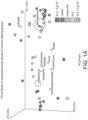
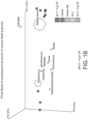
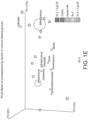
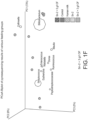
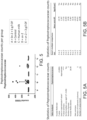
- Figures 1 shows a biplot of the pyrosequencing data.
- the bacterial communities of the 5 groups were analyzed by PCoA ordination based on the weighted UniFrac.
- the coordinates of the ten most abundant bacterial genera is indicated by grey bubbles with the names of the genera.
- the groups are separately displayed in panels A,B,C,D to better identify them.
- Human Milk ( figure 1A ) induces all the microbiota populations to be in the region of Bifidobacterium area (on the right side).
- the infant formula control figure 1C show scattered bacterial populations with a majority close to the Streptococcus area.
- figure 1D ( sn -2) also exhibits bacterial populations not clustered in the Bifidobacterium zone.
- Figure 1B ( sn -2 + 5g/L OF) clearly show that the bacterial population of this group are clustered close to the zone of Bifidobacteria, except for few samples still in the Streptococcus area. This is very similar to the group "human milk”.
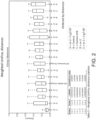
- Figure 2 quantifies what is displayed in figure 1 by evaluation the distribution of the weighted UniFrac distances between the experimental groups and the Human milk group.
- the UniFrac distance is a measure of the phylogenetic proximity of the bacterial populations.
- the A (composition of the invention), D ( sn -2) and E ( sn -2 + 3g/L OF) groups all show a smaller average distance compare to the B (Control) group.
- the smallest distance to group C human milk
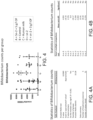
- Figure 3 shows the Shannon diversity index of the groups (i.e. how diverse the bacterial populations are in each sample). It illustrates that group A (composition of the invention) has a diversity index that is very similar to the index of the human milk group C.
- the A group is the only group showing a distribution of diversities statistically (t-test) different from the Control B group.
- Figure 4 shows the relative abundance of Bifidobacterium in the various experimental groups. It shows that the highest values are obtained for group C (human milk) and group A (composition of the invention).
- Figure 5 shows the relative abundance of Peptrostreptococcaceae in the various experimental groups (a non-desirable bacterial taxon). It shows that the lowest values are obtained for group A (composition of the invention) then group E ( sn -2 + 3g/L OF), which are both statistically undistinguishable from the reference group C (human milk). A dose effect of the OF is observed with the addition of 3g/L OF (E) and 5g/LOF (A) over the D group ( sn -2), which is still distinguishable from the group C (human milk).
Landscapes
- Life Sciences & Earth Sciences (AREA)
- Chemical & Material Sciences (AREA)
- Health & Medical Sciences (AREA)
- Food Science & Technology (AREA)
- Nutrition Science (AREA)
- Engineering & Computer Science (AREA)
- Mycology (AREA)
- Polymers & Plastics (AREA)
- Oil, Petroleum & Natural Gas (AREA)
- Proteomics, Peptides & Aminoacids (AREA)
- Pediatric Medicine (AREA)
- Coloring Foods And Improving Nutritive Qualities (AREA)
- Dairy Products (AREA)
- Pharmaceuticals Containing Other Organic And Inorganic Compounds (AREA)
- Medicines Containing Material From Animals Or Micro-Organisms (AREA)
Claims (7)
- Nährstoffzusammensetzung für Säuglinge oder Kleinkinder, umfassend- eine Menge von mindestens 0,6 g Oligofructose/100 kcal der Nährstoffzusammensetzung oder- eine Menge von mindestens 4 g/L Oligofructose, wenn die Zusammensetzung eine trinkfertige flüssige Zusammensetzung ist, oder- eine ausreichende Menge von Oligofructose, um mindestens 4 g/L Oligofructose in der rekonstituierten Zusammensetzung zu erhalten, wenn die Nährstoffzusammensetzung eine pulverförmige oder konzentrierte Zusammensetzung ist,wobei mindestens 90 % der Oligofructose einen Polymerisationsgrad zwischen 2 und 8 aufweisen undwobei die Zusammensetzung umfasst- weniger als 2 g Oligofructose/100 kcal der Nährstoffzusammensetzung oder- weniger als 15 g/L Oligofructose, wenn die Zusammensetzung eine trinkfertige flüssige Zusammensetzung ist, oder- eine ausreichende Menge von Oligofructose, um jeweils weniger als 15 g/L Oligofructose in der rekonstituierten Zusammensetzung zu erhalten, wenn die Nährstoffzusammensetzung eine pulverförmige oder konzentrierte Zusammensetzung ist, undwobei die Zusammensetzung Triglyceride mit "hohem sn-2-Palmitat" umfasst, d. h. Triglyceride, die mehr als 33 % der Palmitinsäuren in sn-2-Position aufweisen, und die Zusammensetzung Fett umfasst und mindestens 8 % des Fettes "hohes sn-2-Palmitat" ist,zum Fördern oder Induzieren einer Darmmikrobiota, die näher an der Mikrobiota von Säuglingen liegt, die ausschließlich mit menschlicher Muttermilch gefüttert werden,bei Säuglingen oder Kleinkindern zwischen 0 und 36 Monaten,wobei die Säuglinge mit einer anfälligen oder unausgeglichenen Mikrobiota oder Dysbiose von Mikrobiota geboren sind, wobei die Säuglinge Frühgeborene, für das Schwangerschaftsalter klein geborene Säuglinge, durch Kaiserschnitte gehörende Säuglinge, in einem Krankenhaus behandelte Säuglinge oder Säuglinge, die durch Antibiotika behandelt werden oder wurden, sind,wobei "Fördern oder Induzieren einer Darmmikrobiota, die näher an der Mikrobiota von Säuglingen liegt, die ausschließlich mit menschlicher Muttermilch gefüttert werden" ein Verringern der Mikrobiotadiversität umfasst, um es näher an die Mikrobiota von Säuglingen zu bringen, die ausschließlich mit menschlicher Muttermilch gefüttert werden, im Vergleich zu der Mikrobiota von Säuglingen, die überwiegend mit einer herkömmlichen Nährstoffzusammensetzung gefüttert werden, die die Oligofructose in der Menge nicht umfasst, wobei die Zusammensetzung das Wachstum von Bifidobakterien fördert und das Wachstum von Peptostreptococcaceae-Bakterien herunterreguliert, wobei die Förderung und die Herunterregulierung die relative Häufigkeit der Taxa von Bakterien beeinflussen.
- Zusammensetzung nach Anspruch 1, wobei das "Fördern oder Induzieren einer Darmmikrobiota, die näher an der Mikrobiota von Säuglingen liegt, die ausschließlich mit menschlicher Muttermilch gefüttert werden" ein Reduzieren des phylogenetischen Abstands zu der Mikrobiota von ausschließlich gestillten Säuglingen umfasst, wie es näher an der Mikrobiota von Säuglingen zu bringen, die ausschließlich mit menschlicher Muttermilch gefüttert werden, im Vergleich zu der Mikrobiota von Säuglingen, die überwiegend mit einer herkömmlichen Nährstoffzusammensetzung gefüttert werden, die Oligofructose in der Menge nicht umfasst.
- Zusammensetzung nach einem der vorstehenden Ansprüche,
dadurch gekennzeichnet, dass die Zusammensetzung eine Säuglingsnahrung oder eine Folgenahrung ist. - Zusammensetzung nach einem der vorstehenden Ansprüche
dadurch gekennzeichnet, dass die Zusammensetzung alpha-Lactalbuminproteine in einer Menge von mindestens 0,3 g/100 kcal oder 2,3 g/L der Zusammensetzung umfasst. - Zusammensetzung nach einem der vorstehenden Ansprüche, wobei die Zusammensetzung eine Diversität der Mikrobiota von weniger als 1,8 induziert, wie gemessen durch den Shannon-Diversitätsindex.
- Zusammensetzung nach einem der vorstehenden Ansprüche
dadurch gekennzeichnet, dass die Modulation des Wachstums und/oder der Diversität von Darmbakterien bei Säuglingsausscheidungen messbar ist. - Zusammensetzung nach einem der vorstehenden Ansprüche
dadurch gekennzeichnet, dass das "Fördern oder Induzieren einer Darmmikrobiota, die näher an der Mikrobiota von Säuglingen liegt, die ausschließlich mit menschlicher Muttermilch gefüttert werden" ferner gekennzeichnet ist durch das Fördern oder Induzieren einer Darmmikrobiota, die einen phylogenetischen Abstand zu der Mikrobiota von gestillten Säuglingen von weniger als 0,30 Einheiten aufweist, wie gemessen durch gewichtetes Unifac-Verfahren.
Applications Claiming Priority (2)
| Application Number | Priority Date | Filing Date | Title |
|---|---|---|---|
| US201562269261P | 2015-12-18 | 2015-12-18 | |
| PCT/EP2016/080758 WO2017102705A1 (en) | 2015-12-18 | 2016-12-13 | Nutritional compositions and infant formulas containing relatively high level of oligofructose for inducing gut microbiota patterns close to those of human milk fed infants |
Publications (2)
| Publication Number | Publication Date |
|---|---|
| EP3389405A1 EP3389405A1 (de) | 2018-10-24 |
| EP3389405B1 true EP3389405B1 (de) | 2024-01-17 |
Family
ID=57609863
Family Applications (1)
| Application Number | Title | Priority Date | Filing Date |
|---|---|---|---|
| EP16816627.0A Active EP3389405B1 (de) | 2015-12-18 | 2016-12-13 | Ernährungszusammensetzungen und säuglingsformulierungen mit einem relativ hohen gehalt an oligofructose zur induktion von darmmikrobiotamustern in der nähe derjenigen von säuglingen, die mit menschlicher milch gefüttert werden |
Country Status (8)
| Country | Link |
|---|---|
| US (1) | US20180368462A1 (de) |
| EP (1) | EP3389405B1 (de) |
| CN (1) | CN108471791A (de) |
| AU (2) | AU2016102470A6 (de) |
| ES (1) | ES2973777T3 (de) |
| MY (1) | MY192673A (de) |
| PH (1) | PH12018501150A1 (de) |
| WO (1) | WO2017102705A1 (de) |
Cited By (1)
| Publication number | Priority date | Publication date | Assignee | Title |
|---|---|---|---|---|
| EP3493686B1 (de) | 2016-08-04 | 2024-03-27 | Société des Produits Nestlé S.A. | Nährstoffzusammensetzungen und säuglingsformeln mit einer mischung von oligosacchariden und gegebenenfalls bifidobacterium lactis zur verhinderung, behandlung oder reduzierung der nicht-rotavirus-assoziierten diarrhöe |
Families Citing this family (2)
| Publication number | Priority date | Publication date | Assignee | Title |
|---|---|---|---|---|
| EP3389405B1 (de) | 2015-12-18 | 2024-01-17 | Société des Produits Nestlé S.A. | Ernährungszusammensetzungen und säuglingsformulierungen mit einem relativ hohen gehalt an oligofructose zur induktion von darmmikrobiotamustern in der nähe derjenigen von säuglingen, die mit menschlicher milch gefüttert werden |
| WO2019104390A1 (en) * | 2017-12-01 | 2019-06-06 | Freedom Foods Group IP Pty Limited | Milk substitute compositions |
Citations (5)
| Publication number | Priority date | Publication date | Assignee | Title |
|---|---|---|---|---|
| WO2011135564A1 (en) | 2010-04-26 | 2011-11-03 | Enzymotec Ltd. | Methods and lipid compositions for promoting development of gut flora |
| US20120058094A1 (en) | 2010-08-20 | 2012-03-08 | Dow Global Technologies Llc | Compositions and methods for treating obesity and related disorders by characterizing and restoring mammalian bacterial microbiota |
| WO2013068879A2 (en) | 2011-11-10 | 2013-05-16 | Pfizer Inc. | Infant formula with high sn-2 palmitate and oligofructose |
| WO2016207061A1 (en) | 2015-06-23 | 2016-12-29 | Nestec S.A. | Nutritional compositions and infant formulas containing oligofructose for reducing the load of pathogenic bacteria in the guts of infants and young children |
| WO2017102705A1 (en) | 2015-12-18 | 2017-06-22 | Nestec S.A. | Nutritional compositions and infant formulas containing relatively high level of oligofructose for inducing gut microbiota patterns close to those of human milk fed infants |
Family Cites Families (11)
| Publication number | Priority date | Publication date | Assignee | Title |
|---|---|---|---|---|
| EP1046394A3 (de) * | 1999-04-19 | 2001-10-10 | ImaRx Pharmaceutical Corp. | Neue Zusammensetzungen zur Verwendung bei der Verabreichung von Verbindungen in das Zellinnere |
| EP1062873A1 (de) * | 1999-12-13 | 2000-12-27 | N.V. Nutricia | Verbessertes Säuglingsnährpräparat, Eiweisshydrolysat zur Verwendung in solchem Säuglingsnährpräparat, und Verfahren zur Herstellung solches Hydrolysates |
| BRPI0404152A (pt) * | 2004-09-17 | 2006-06-13 | Unicamp | alimento funcional, composição probiótica, composição alimentìcia e processo de produção de alimento funcional fermentado a base de soja, contendo agentes probióticos e prebióticos |
| CA2604338A1 (en) * | 2005-04-13 | 2006-10-19 | Nestec S.A. | Infant formula with probiotics |
| US20060233915A1 (en) * | 2005-04-15 | 2006-10-19 | Bristol-Myers Squibb Company | Liquid nutritional product to supplement human milk |
| CN101061819A (zh) * | 2007-02-12 | 2007-10-31 | 石家庄三鹿集团股份有限公司 | 一种调整脂肪酸结构的婴儿配方奶粉 |
| CN102000339A (zh) * | 2010-07-16 | 2011-04-06 | 钟术光 | 缓释释药的药物载体 |
| CN102283288B (zh) * | 2011-07-04 | 2013-08-21 | 澳优乳业(中国)有限公司 | 一种添加结构油脂的婴幼儿配方羊奶粉及其制备方法 |
| CN102422900A (zh) * | 2011-11-24 | 2012-04-25 | 黑龙江飞鹤乳业有限公司 | 促进脂肪酸和钙吸收的配方奶粉及其制备方法 |
| US10000442B2 (en) * | 2014-03-27 | 2018-06-19 | Trent University | Certain metathesized natural oil triacylglycerol polyols for use in polyurethane applications and their related properties |
| CN104996576A (zh) * | 2015-08-28 | 2015-10-28 | 海普诺凯营养品有限公司 | 一种婴幼儿羊奶粉及其制备方法 |
-
2016
- 2016-12-13 EP EP16816627.0A patent/EP3389405B1/de active Active
- 2016-12-13 AU AU2016102470A patent/AU2016102470A6/en not_active Expired
- 2016-12-13 CN CN201680071605.7A patent/CN108471791A/zh active Pending
- 2016-12-13 WO PCT/EP2016/080758 patent/WO2017102705A1/en not_active Ceased
- 2016-12-13 AU AU2016374150A patent/AU2016374150A1/en active Pending
- 2016-12-13 US US16/062,968 patent/US20180368462A1/en not_active Abandoned
- 2016-12-13 MY MYPI2018701436A patent/MY192673A/en unknown
- 2016-12-13 ES ES16816627T patent/ES2973777T3/es active Active
-
2018
- 2018-05-31 PH PH12018501150A patent/PH12018501150A1/en unknown
Patent Citations (5)
| Publication number | Priority date | Publication date | Assignee | Title |
|---|---|---|---|---|
| WO2011135564A1 (en) | 2010-04-26 | 2011-11-03 | Enzymotec Ltd. | Methods and lipid compositions for promoting development of gut flora |
| US20120058094A1 (en) | 2010-08-20 | 2012-03-08 | Dow Global Technologies Llc | Compositions and methods for treating obesity and related disorders by characterizing and restoring mammalian bacterial microbiota |
| WO2013068879A2 (en) | 2011-11-10 | 2013-05-16 | Pfizer Inc. | Infant formula with high sn-2 palmitate and oligofructose |
| WO2016207061A1 (en) | 2015-06-23 | 2016-12-29 | Nestec S.A. | Nutritional compositions and infant formulas containing oligofructose for reducing the load of pathogenic bacteria in the guts of infants and young children |
| WO2017102705A1 (en) | 2015-12-18 | 2017-06-22 | Nestec S.A. | Nutritional compositions and infant formulas containing relatively high level of oligofructose for inducing gut microbiota patterns close to those of human milk fed infants |
Non-Patent Citations (6)
| Title |
|---|
| ANONYMOUS: "Orafti P95 Product Sheet ", BENEO, vol. 007, no. P95 A3-04, 1 January 2023 (2023-01-01), pages 1 - 4, XP093232850 |
| ANONYMOUS: "Orafti Synergy1 Product Sheet ", BENEO, vol. 007, no. A4-20, 1 January 2023 (2023-01-01), pages 1 - 4, XP093232853 |
| CLOSA-MONASTEROLO R.; GISPERT-LLAURADO M.; LUQUE V.; FERRE N.; RUBIO-TORRENTS C.; ZARAGOZA-JORDANA M.; ESCRIBANO J.: "Safety and efficacy of inulin and oligofructose supplementation in infant formula: Results from a randomized clinical trial", CLINICAL NUTRITION, vol. 32, no. 6, 26 February 2013 (2013-02-26), GB , pages 918 - 927, XP028776193, ISSN: 0261-5614, DOI: 10.1016/j.clnu.2013.02.009 |
| FEHR KELSEY; MOOSSAVI SHIRIN; SBIHI HIND; BOUTIN ROZLYN C.T.; BODE LARS; ROBERTSON BIANCA; YONEMITSU CHLOE; FIELD CATHERINE J.; BE: "Breastmilk Feeding Practices Are Associated with the Co-Occurrence of Bacteria in Mothers’ Milk and the Infant Gut: the CHILD Cohort Study", CELL HOST & MICROBE, vol. 28, no. 2, 12 August 2020 (2020-08-12), NL , pages 285 - 297, XP086247152, ISSN: 1931-3128, DOI: 10.1016/j.chom.2020.06.009 |
| MANJIANG YAO, ERIC L. LIEN, MARIA R.Z. CAPEDING, MARGARET FITZGERALD, KALATHUR RAMANUJAM, REBECCA YUHAS, ROBERT NORTHINGTON, JOWEN: "Effects of Term Infant Formulas Containing High sn-2 Palmitate With and Without Oligofructose on Stool Composition, Stool Characteristics, and Bifidogenicity", JOURNAL OF PEDIATRIC GASTROENTEROLOGY AND NUTRITION, vol. 59, no. 4, 1 October 2014 (2014-10-01), US , pages 440 - 448, XP055349795, ISSN: 0277-2116, DOI: 10.1097/MPG.0000000000000443 |
| TURRONI FRANCESCA, PEANO CLELIA, PASS DANIEL A., FORONI ELENA, SEVERGNINI MARCO, CLAESSON MARCUS J., KERR COLM, HOURIHANE JONATHAN: "Diversity of Bifidobacteria within the Infant Gut Microbiota", PLOS ONE, vol. 7, no. 5, 1 May 2012 (2012-05-01), pages 1 - 12, XP055894517, DOI: 10.1371/journal.pone.0036957 |
Cited By (1)
| Publication number | Priority date | Publication date | Assignee | Title |
|---|---|---|---|---|
| EP3493686B1 (de) | 2016-08-04 | 2024-03-27 | Société des Produits Nestlé S.A. | Nährstoffzusammensetzungen und säuglingsformeln mit einer mischung von oligosacchariden und gegebenenfalls bifidobacterium lactis zur verhinderung, behandlung oder reduzierung der nicht-rotavirus-assoziierten diarrhöe |
Also Published As
| Publication number | Publication date |
|---|---|
| MY192673A (en) | 2022-08-30 |
| PH12018501150A1 (en) | 2019-01-21 |
| WO2017102705A1 (en) | 2017-06-22 |
| EP3389405A1 (de) | 2018-10-24 |
| AU2016374150A1 (en) | 2018-04-26 |
| CN108471791A (zh) | 2018-08-31 |
| AU2016102470A6 (en) | 2021-08-05 |
| AU2016102470A4 (en) | 2021-07-22 |
| ES2973777T3 (es) | 2024-06-24 |
| US20180368462A1 (en) | 2018-12-27 |
Similar Documents
| Publication | Publication Date | Title |
|---|---|---|
| US11998577B2 (en) | Methods for increasing growth of beneficial bacteria in the gastrointestinal tract | |
| US10751354B2 (en) | Synthetic composition for microbiota modulation | |
| KR102606971B1 (ko) | 생애 초기에 미생물총 불균형을 회복하기 위한 l. 루테리의 용도 | |
| JP4740866B2 (ja) | 乳児向けシンバイオティック組成物 | |
| EP3331383B1 (de) | Nährstoffzusammensetzungen und säuglingsnahrungsmittelformeln mit bifidobacterium animalis ssp. lactis und optionale mischung von oligosacchariden zum induzieren einer darmbiozönose in der nähe gestillter kleinkinder | |
| JP2021152062A (ja) | 過敏性腸症候群の治療のための合成組成物および方法 | |
| AU2017341402B2 (en) | Personalized pediatric nutrition products comprising human milk oligosaccharides | |
| CA2817122A1 (en) | Composition comprising hydrolysed proteins and oligosaccharides for treating skin diseases | |
| EP3493686B1 (de) | Nährstoffzusammensetzungen und säuglingsformeln mit einer mischung von oligosacchariden und gegebenenfalls bifidobacterium lactis zur verhinderung, behandlung oder reduzierung der nicht-rotavirus-assoziierten diarrhöe | |
| US11890293B2 (en) | Synthetic composition for treating metabolic disorders | |
| TW201822650A (zh) | 含有人乳寡糖之營養組成物和彼之用途 | |
| EP3389405B1 (de) | Ernährungszusammensetzungen und säuglingsformulierungen mit einem relativ hohen gehalt an oligofructose zur induktion von darmmikrobiotamustern in der nähe derjenigen von säuglingen, die mit menschlicher milch gefüttert werden | |
| CN111698994A (zh) | 治疗小麦敏感性的hmo混合物 | |
| JP2011522793A (ja) | 高齢者における免疫系を補助するためのシアル酸 | |
| AU2016102452A4 (en) | Nutritional compositions and infant formulas containing oligofructose for reducing the load of pathogenic bacteria in the guts of infants and young children | |
| Davis | The Bifidogenicity of the Prebiotic Galactooligosaccharides |
Legal Events
| Date | Code | Title | Description |
|---|---|---|---|
| STAA | Information on the status of an ep patent application or granted ep patent |
Free format text: STATUS: UNKNOWN |
|
| STAA | Information on the status of an ep patent application or granted ep patent |
Free format text: STATUS: THE INTERNATIONAL PUBLICATION HAS BEEN MADE |
|
| PUAI | Public reference made under article 153(3) epc to a published international application that has entered the european phase |
Free format text: ORIGINAL CODE: 0009012 |
|
| STAA | Information on the status of an ep patent application or granted ep patent |
Free format text: STATUS: REQUEST FOR EXAMINATION WAS MADE |
|
| 17P | Request for examination filed |
Effective date: 20180718 |
|
| AK | Designated contracting states |
Kind code of ref document: A1 Designated state(s): AL AT BE BG CH CY CZ DE DK EE ES FI FR GB GR HR HU IE IS IT LI LT LU LV MC MK MT NL NO PL PT RO RS SE SI SK SM TR |
|
| AX | Request for extension of the european patent |
Extension state: BA ME |
|
| STAA | Information on the status of an ep patent application or granted ep patent |
Free format text: STATUS: EXAMINATION IS IN PROGRESS |
|
| DAV | Request for validation of the european patent (deleted) | ||
| DAX | Request for extension of the european patent (deleted) | ||
| 17Q | First examination report despatched |
Effective date: 20190328 |
|
| RAP1 | Party data changed (applicant data changed or rights of an application transferred) |
Owner name: SOCIETE DES PRODUITS NESTLE S.A. |
|
| P01 | Opt-out of the competence of the unified patent court (upc) registered |
Effective date: 20230623 |
|
| GRAP | Despatch of communication of intention to grant a patent |
Free format text: ORIGINAL CODE: EPIDOSNIGR1 |
|
| STAA | Information on the status of an ep patent application or granted ep patent |
Free format text: STATUS: GRANT OF PATENT IS INTENDED |
|
| INTG | Intention to grant announced |
Effective date: 20231024 |
|
| GRAS | Grant fee paid |
Free format text: ORIGINAL CODE: EPIDOSNIGR3 |
|
| GRAA | (expected) grant |
Free format text: ORIGINAL CODE: 0009210 |
|
| STAA | Information on the status of an ep patent application or granted ep patent |
Free format text: STATUS: THE PATENT HAS BEEN GRANTED |
|
| AK | Designated contracting states |
Kind code of ref document: B1 Designated state(s): AL AT BE BG CH CY CZ DE DK EE ES FI FR GB GR HR HU IE IS IT LI LT LU LV MC MK MT NL NO PL PT RO RS SE SI SK SM TR |
|
| REG | Reference to a national code |
Ref country code: GB Ref legal event code: FG4D |
|
| REG | Reference to a national code |
Ref country code: CH Ref legal event code: EP |
|
| REG | Reference to a national code |
Ref country code: DE Ref legal event code: R096 Ref document number: 602016085393 Country of ref document: DE |
|
| REG | Reference to a national code |
Ref country code: IE Ref legal event code: FG4D |
|
| REG | Reference to a national code |
Ref country code: NL Ref legal event code: FP |
|
| REG | Reference to a national code |
Ref country code: LT Ref legal event code: MG9D |
|
| REG | Reference to a national code |
Ref country code: AT Ref legal event code: MK05 Ref document number: 1649930 Country of ref document: AT Kind code of ref document: T Effective date: 20240117 |
|
| REG | Reference to a national code |
Ref country code: ES Ref legal event code: FG2A Ref document number: 2973777 Country of ref document: ES Kind code of ref document: T3 Effective date: 20240624 |
|
| PG25 | Lapsed in a contracting state [announced via postgrant information from national office to epo] |
Ref country code: IS Free format text: LAPSE BECAUSE OF FAILURE TO SUBMIT A TRANSLATION OF THE DESCRIPTION OR TO PAY THE FEE WITHIN THE PRESCRIBED TIME-LIMIT Effective date: 20240517 |
|
| PG25 | Lapsed in a contracting state [announced via postgrant information from national office to epo] |
Ref country code: LT Free format text: LAPSE BECAUSE OF FAILURE TO SUBMIT A TRANSLATION OF THE DESCRIPTION OR TO PAY THE FEE WITHIN THE PRESCRIBED TIME-LIMIT Effective date: 20240117 |
|
| PG25 | Lapsed in a contracting state [announced via postgrant information from national office to epo] |
Ref country code: GR Free format text: LAPSE BECAUSE OF FAILURE TO SUBMIT A TRANSLATION OF THE DESCRIPTION OR TO PAY THE FEE WITHIN THE PRESCRIBED TIME-LIMIT Effective date: 20240418 |
|
| PG25 | Lapsed in a contracting state [announced via postgrant information from national office to epo] |
Ref country code: RS Free format text: LAPSE BECAUSE OF FAILURE TO SUBMIT A TRANSLATION OF THE DESCRIPTION OR TO PAY THE FEE WITHIN THE PRESCRIBED TIME-LIMIT Effective date: 20240417 Ref country code: HR Free format text: LAPSE BECAUSE OF FAILURE TO SUBMIT A TRANSLATION OF THE DESCRIPTION OR TO PAY THE FEE WITHIN THE PRESCRIBED TIME-LIMIT Effective date: 20240117 |
|
| PG25 | Lapsed in a contracting state [announced via postgrant information from national office to epo] |
Ref country code: AT Free format text: LAPSE BECAUSE OF FAILURE TO SUBMIT A TRANSLATION OF THE DESCRIPTION OR TO PAY THE FEE WITHIN THE PRESCRIBED TIME-LIMIT Effective date: 20240117 |
|
| PG25 | Lapsed in a contracting state [announced via postgrant information from national office to epo] |
Ref country code: RS Free format text: LAPSE BECAUSE OF FAILURE TO SUBMIT A TRANSLATION OF THE DESCRIPTION OR TO PAY THE FEE WITHIN THE PRESCRIBED TIME-LIMIT Effective date: 20240417 Ref country code: NO Free format text: LAPSE BECAUSE OF FAILURE TO SUBMIT A TRANSLATION OF THE DESCRIPTION OR TO PAY THE FEE WITHIN THE PRESCRIBED TIME-LIMIT Effective date: 20240417 Ref country code: LT Free format text: LAPSE BECAUSE OF FAILURE TO SUBMIT A TRANSLATION OF THE DESCRIPTION OR TO PAY THE FEE WITHIN THE PRESCRIBED TIME-LIMIT Effective date: 20240117 Ref country code: IS Free format text: LAPSE BECAUSE OF FAILURE TO SUBMIT A TRANSLATION OF THE DESCRIPTION OR TO PAY THE FEE WITHIN THE PRESCRIBED TIME-LIMIT Effective date: 20240517 Ref country code: HR Free format text: LAPSE BECAUSE OF FAILURE TO SUBMIT A TRANSLATION OF THE DESCRIPTION OR TO PAY THE FEE WITHIN THE PRESCRIBED TIME-LIMIT Effective date: 20240117 Ref country code: GR Free format text: LAPSE BECAUSE OF FAILURE TO SUBMIT A TRANSLATION OF THE DESCRIPTION OR TO PAY THE FEE WITHIN THE PRESCRIBED TIME-LIMIT Effective date: 20240418 Ref country code: FI Free format text: LAPSE BECAUSE OF FAILURE TO SUBMIT A TRANSLATION OF THE DESCRIPTION OR TO PAY THE FEE WITHIN THE PRESCRIBED TIME-LIMIT Effective date: 20240117 Ref country code: BG Free format text: LAPSE BECAUSE OF FAILURE TO SUBMIT A TRANSLATION OF THE DESCRIPTION OR TO PAY THE FEE WITHIN THE PRESCRIBED TIME-LIMIT Effective date: 20240117 Ref country code: AT Free format text: LAPSE BECAUSE OF FAILURE TO SUBMIT A TRANSLATION OF THE DESCRIPTION OR TO PAY THE FEE WITHIN THE PRESCRIBED TIME-LIMIT Effective date: 20240117 |
|
| PG25 | Lapsed in a contracting state [announced via postgrant information from national office to epo] |
Ref country code: PL Free format text: LAPSE BECAUSE OF FAILURE TO SUBMIT A TRANSLATION OF THE DESCRIPTION OR TO PAY THE FEE WITHIN THE PRESCRIBED TIME-LIMIT Effective date: 20240117 Ref country code: PT Free format text: LAPSE BECAUSE OF FAILURE TO SUBMIT A TRANSLATION OF THE DESCRIPTION OR TO PAY THE FEE WITHIN THE PRESCRIBED TIME-LIMIT Effective date: 20240517 |
|
| PG25 | Lapsed in a contracting state [announced via postgrant information from national office to epo] |
Ref country code: SE Free format text: LAPSE BECAUSE OF FAILURE TO SUBMIT A TRANSLATION OF THE DESCRIPTION OR TO PAY THE FEE WITHIN THE PRESCRIBED TIME-LIMIT Effective date: 20240117 Ref country code: PT Free format text: LAPSE BECAUSE OF FAILURE TO SUBMIT A TRANSLATION OF THE DESCRIPTION OR TO PAY THE FEE WITHIN THE PRESCRIBED TIME-LIMIT Effective date: 20240517 Ref country code: PL Free format text: LAPSE BECAUSE OF FAILURE TO SUBMIT A TRANSLATION OF THE DESCRIPTION OR TO PAY THE FEE WITHIN THE PRESCRIBED TIME-LIMIT Effective date: 20240117 Ref country code: LV Free format text: LAPSE BECAUSE OF FAILURE TO SUBMIT A TRANSLATION OF THE DESCRIPTION OR TO PAY THE FEE WITHIN THE PRESCRIBED TIME-LIMIT Effective date: 20240117 |
|
| PG25 | Lapsed in a contracting state [announced via postgrant information from national office to epo] |
Ref country code: DK Free format text: LAPSE BECAUSE OF FAILURE TO SUBMIT A TRANSLATION OF THE DESCRIPTION OR TO PAY THE FEE WITHIN THE PRESCRIBED TIME-LIMIT Effective date: 20240117 |
|
| PG25 | Lapsed in a contracting state [announced via postgrant information from national office to epo] |
Ref country code: SM Free format text: LAPSE BECAUSE OF FAILURE TO SUBMIT A TRANSLATION OF THE DESCRIPTION OR TO PAY THE FEE WITHIN THE PRESCRIBED TIME-LIMIT Effective date: 20240117 |
|
| REG | Reference to a national code |
Ref country code: DE Ref legal event code: R026 Ref document number: 602016085393 Country of ref document: DE |
|
| PG25 | Lapsed in a contracting state [announced via postgrant information from national office to epo] |
Ref country code: EE Free format text: LAPSE BECAUSE OF FAILURE TO SUBMIT A TRANSLATION OF THE DESCRIPTION OR TO PAY THE FEE WITHIN THE PRESCRIBED TIME-LIMIT Effective date: 20240117 Ref country code: CZ Free format text: LAPSE BECAUSE OF FAILURE TO SUBMIT A TRANSLATION OF THE DESCRIPTION OR TO PAY THE FEE WITHIN THE PRESCRIBED TIME-LIMIT Effective date: 20240117 |
|
| PLBI | Opposition filed |
Free format text: ORIGINAL CODE: 0009260 |
|
| PLAX | Notice of opposition and request to file observation + time limit sent |
Free format text: ORIGINAL CODE: EPIDOSNOBS2 |
|
| PG25 | Lapsed in a contracting state [announced via postgrant information from national office to epo] |
Ref country code: SK Free format text: LAPSE BECAUSE OF FAILURE TO SUBMIT A TRANSLATION OF THE DESCRIPTION OR TO PAY THE FEE WITHIN THE PRESCRIBED TIME-LIMIT Effective date: 20240117 |
|
| PG25 | Lapsed in a contracting state [announced via postgrant information from national office to epo] |
Ref country code: SM Free format text: LAPSE BECAUSE OF FAILURE TO SUBMIT A TRANSLATION OF THE DESCRIPTION OR TO PAY THE FEE WITHIN THE PRESCRIBED TIME-LIMIT Effective date: 20240117 Ref country code: SK Free format text: LAPSE BECAUSE OF FAILURE TO SUBMIT A TRANSLATION OF THE DESCRIPTION OR TO PAY THE FEE WITHIN THE PRESCRIBED TIME-LIMIT Effective date: 20240117 Ref country code: RO Free format text: LAPSE BECAUSE OF FAILURE TO SUBMIT A TRANSLATION OF THE DESCRIPTION OR TO PAY THE FEE WITHIN THE PRESCRIBED TIME-LIMIT Effective date: 20240117 Ref country code: EE Free format text: LAPSE BECAUSE OF FAILURE TO SUBMIT A TRANSLATION OF THE DESCRIPTION OR TO PAY THE FEE WITHIN THE PRESCRIBED TIME-LIMIT Effective date: 20240117 Ref country code: DK Free format text: LAPSE BECAUSE OF FAILURE TO SUBMIT A TRANSLATION OF THE DESCRIPTION OR TO PAY THE FEE WITHIN THE PRESCRIBED TIME-LIMIT Effective date: 20240117 Ref country code: CZ Free format text: LAPSE BECAUSE OF FAILURE TO SUBMIT A TRANSLATION OF THE DESCRIPTION OR TO PAY THE FEE WITHIN THE PRESCRIBED TIME-LIMIT Effective date: 20240117 |
|
| 26 | Opposition filed |
Opponent name: N.V. NUTRICIA Effective date: 20241017 |
|
| PG25 | Lapsed in a contracting state [announced via postgrant information from national office to epo] |
Ref country code: IT Free format text: LAPSE BECAUSE OF FAILURE TO SUBMIT A TRANSLATION OF THE DESCRIPTION OR TO PAY THE FEE WITHIN THE PRESCRIBED TIME-LIMIT Effective date: 20240117 |
|
| PG25 | Lapsed in a contracting state [announced via postgrant information from national office to epo] |
Ref country code: IT Free format text: LAPSE BECAUSE OF FAILURE TO SUBMIT A TRANSLATION OF THE DESCRIPTION OR TO PAY THE FEE WITHIN THE PRESCRIBED TIME-LIMIT Effective date: 20240117 |
|
| PLBB | Reply of patent proprietor to notice(s) of opposition received |
Free format text: ORIGINAL CODE: EPIDOSNOBS3 |
|
| PGFP | Annual fee paid to national office [announced via postgrant information from national office to epo] |
Ref country code: ES Payment date: 20250121 Year of fee payment: 9 |
|
| PG25 | Lapsed in a contracting state [announced via postgrant information from national office to epo] |
Ref country code: SI Free format text: LAPSE BECAUSE OF FAILURE TO SUBMIT A TRANSLATION OF THE DESCRIPTION OR TO PAY THE FEE WITHIN THE PRESCRIBED TIME-LIMIT Effective date: 20240117 |
|
| PGFP | Annual fee paid to national office [announced via postgrant information from national office to epo] |
Ref country code: CH Payment date: 20250101 Year of fee payment: 9 |
|
| PG25 | Lapsed in a contracting state [announced via postgrant information from national office to epo] |
Ref country code: MC Free format text: LAPSE BECAUSE OF FAILURE TO SUBMIT A TRANSLATION OF THE DESCRIPTION OR TO PAY THE FEE WITHIN THE PRESCRIBED TIME-LIMIT Effective date: 20240117 |
|
| PG25 | Lapsed in a contracting state [announced via postgrant information from national office to epo] |
Ref country code: LU Free format text: LAPSE BECAUSE OF NON-PAYMENT OF DUE FEES Effective date: 20241213 |
|
| REG | Reference to a national code |
Ref country code: BE Ref legal event code: MM Effective date: 20241231 |
|
| PG25 | Lapsed in a contracting state [announced via postgrant information from national office to epo] |
Ref country code: BE Free format text: LAPSE BECAUSE OF NON-PAYMENT OF DUE FEES Effective date: 20241231 |
|
| PG25 | Lapsed in a contracting state [announced via postgrant information from national office to epo] |
Ref country code: IE Free format text: LAPSE BECAUSE OF NON-PAYMENT OF DUE FEES Effective date: 20241213 |
|
| PGFP | Annual fee paid to national office [announced via postgrant information from national office to epo] |
Ref country code: NL Payment date: 20251112 Year of fee payment: 10 |
|
| REG | Reference to a national code |
Ref country code: CH Ref legal event code: U11 Free format text: ST27 STATUS EVENT CODE: U-0-0-U10-U11 (AS PROVIDED BY THE NATIONAL OFFICE) Effective date: 20260101 |
|
| PGFP | Annual fee paid to national office [announced via postgrant information from national office to epo] |
Ref country code: DE Payment date: 20251104 Year of fee payment: 10 |
|
| PGFP | Annual fee paid to national office [announced via postgrant information from national office to epo] |
Ref country code: GB Payment date: 20251030 Year of fee payment: 10 |
|
| PGFP | Annual fee paid to national office [announced via postgrant information from national office to epo] |
Ref country code: FR Payment date: 20251110 Year of fee payment: 10 |