EP3387173B1 - Mehrstufige zeichentechnik zur bildung von porösen fasern - Google Patents
Mehrstufige zeichentechnik zur bildung von porösen fasern Download PDFInfo
- Publication number
- EP3387173B1 EP3387173B1 EP16873883.9A EP16873883A EP3387173B1 EP 3387173 B1 EP3387173 B1 EP 3387173B1 EP 16873883 A EP16873883 A EP 16873883A EP 3387173 B1 EP3387173 B1 EP 3387173B1
- Authority
- EP
- European Patent Office
- Prior art keywords
- fibers
- temperature
- bundle
- bath
- additive
- Prior art date
- Legal status (The legal status is an assumption and is not a legal conclusion. Google has not performed a legal analysis and makes no representation as to the accuracy of the status listed.)
- Active
Links
Images



Classifications
-
- D—TEXTILES; PAPER
- D01—NATURAL OR MAN-MADE THREADS OR FIBRES; SPINNING
- D01F—CHEMICAL FEATURES IN THE MANUFACTURE OF ARTIFICIAL FILAMENTS, THREADS, FIBRES, BRISTLES OR RIBBONS; APPARATUS SPECIALLY ADAPTED FOR THE MANUFACTURE OF CARBON FILAMENTS
- D01F1/00—General methods for the manufacture of artificial filaments or the like
- D01F1/02—Addition of substances to the spinning solution or to the melt
- D01F1/08—Addition of substances to the spinning solution or to the melt for forming hollow filaments
-
- B—PERFORMING OPERATIONS; TRANSPORTING
- B01—PHYSICAL OR CHEMICAL PROCESSES OR APPARATUS IN GENERAL
- B01D—SEPARATION
- B01D67/00—Processes specially adapted for manufacturing semi-permeable membranes for separation processes or apparatus
- B01D67/0002—Organic membrane manufacture
- B01D67/0023—Organic membrane manufacture by inducing porosity into non porous precursor membranes
-
- B—PERFORMING OPERATIONS; TRANSPORTING
- B01—PHYSICAL OR CHEMICAL PROCESSES OR APPARATUS IN GENERAL
- B01D—SEPARATION
- B01D67/00—Processes specially adapted for manufacturing semi-permeable membranes for separation processes or apparatus
- B01D67/0002—Organic membrane manufacture
- B01D67/0023—Organic membrane manufacture by inducing porosity into non porous precursor membranes
- B01D67/0025—Organic membrane manufacture by inducing porosity into non porous precursor membranes by mechanical treatment, e.g. pore-stretching
-
- B—PERFORMING OPERATIONS; TRANSPORTING
- B01—PHYSICAL OR CHEMICAL PROCESSES OR APPARATUS IN GENERAL
- B01D—SEPARATION
- B01D67/00—Processes specially adapted for manufacturing semi-permeable membranes for separation processes or apparatus
- B01D67/0002—Organic membrane manufacture
- B01D67/0023—Organic membrane manufacture by inducing porosity into non porous precursor membranes
- B01D67/0025—Organic membrane manufacture by inducing porosity into non porous precursor membranes by mechanical treatment, e.g. pore-stretching
- B01D67/0027—Organic membrane manufacture by inducing porosity into non porous precursor membranes by mechanical treatment, e.g. pore-stretching by stretching
-
- D—TEXTILES; PAPER
- D02—YARNS; MECHANICAL FINISHING OF YARNS OR ROPES; WARPING OR BEAMING
- D02J—FINISHING OR DRESSING OF FILAMENTS, YARNS, THREADS, CORDS, ROPES OR THE LIKE
- D02J1/00—Modifying the structure or properties resulting from a particular structure; Modifying, retaining, or restoring the physical form or cross-sectional shape, e.g. by use of dies or squeeze rollers
- D02J1/22—Stretching or tensioning, shrinking or relaxing, e.g. by use of overfeed and underfeed apparatus, or preventing stretch
- D02J1/223—Stretching in a liquid bath
-
- D—TEXTILES; PAPER
- D02—YARNS; MECHANICAL FINISHING OF YARNS OR ROPES; WARPING OR BEAMING
- D02J—FINISHING OR DRESSING OF FILAMENTS, YARNS, THREADS, CORDS, ROPES OR THE LIKE
- D02J1/00—Modifying the structure or properties resulting from a particular structure; Modifying, retaining, or restoring the physical form or cross-sectional shape, e.g. by use of dies or squeeze rollers
- D02J1/22—Stretching or tensioning, shrinking or relaxing, e.g. by use of overfeed and underfeed apparatus, or preventing stretch
- D02J1/228—Stretching in two or more steps, with or without intermediate steps
-
- D—TEXTILES; PAPER
- D04—BRAIDING; LACE-MAKING; KNITTING; TRIMMINGS; NON-WOVEN FABRICS
- D04H—MAKING TEXTILE FABRICS, e.g. FROM FIBRES OR FILAMENTARY MATERIAL; FABRICS MADE BY SUCH PROCESSES OR APPARATUS, e.g. FELTS, NON-WOVEN FABRICS; COTTON-WOOL; WADDING ; NON-WOVEN FABRICS FROM STAPLE FIBRES, FILAMENTS OR YARNS, BONDED WITH AT LEAST ONE WEB-LIKE MATERIAL DURING THEIR CONSOLIDATION
- D04H1/00—Non-woven fabrics formed wholly or mainly of staple fibres or like relatively short fibres
- D04H1/40—Non-woven fabrics formed wholly or mainly of staple fibres or like relatively short fibres from fleeces or layers composed of fibres without existing or potential cohesive properties
- D04H1/42—Non-woven fabrics formed wholly or mainly of staple fibres or like relatively short fibres from fleeces or layers composed of fibres without existing or potential cohesive properties characterised by the use of certain kinds of fibres insofar as this use has no preponderant influence on the consolidation of the fleece
- D04H1/4282—Addition polymers
- D04H1/4291—Olefin series
-
- D—TEXTILES; PAPER
- D04—BRAIDING; LACE-MAKING; KNITTING; TRIMMINGS; NON-WOVEN FABRICS
- D04H—MAKING TEXTILE FABRICS, e.g. FROM FIBRES OR FILAMENTARY MATERIAL; FABRICS MADE BY SUCH PROCESSES OR APPARATUS, e.g. FELTS, NON-WOVEN FABRICS; COTTON-WOOL; WADDING ; NON-WOVEN FABRICS FROM STAPLE FIBRES, FILAMENTS OR YARNS, BONDED WITH AT LEAST ONE WEB-LIKE MATERIAL DURING THEIR CONSOLIDATION
- D04H1/00—Non-woven fabrics formed wholly or mainly of staple fibres or like relatively short fibres
- D04H1/40—Non-woven fabrics formed wholly or mainly of staple fibres or like relatively short fibres from fleeces or layers composed of fibres without existing or potential cohesive properties
- D04H1/42—Non-woven fabrics formed wholly or mainly of staple fibres or like relatively short fibres from fleeces or layers composed of fibres without existing or potential cohesive properties characterised by the use of certain kinds of fibres insofar as this use has no preponderant influence on the consolidation of the fleece
- D04H1/4326—Condensation or reaction polymers
- D04H1/435—Polyesters
-
- D—TEXTILES; PAPER
- D04—BRAIDING; LACE-MAKING; KNITTING; TRIMMINGS; NON-WOVEN FABRICS
- D04H—MAKING TEXTILE FABRICS, e.g. FROM FIBRES OR FILAMENTARY MATERIAL; FABRICS MADE BY SUCH PROCESSES OR APPARATUS, e.g. FELTS, NON-WOVEN FABRICS; COTTON-WOOL; WADDING ; NON-WOVEN FABRICS FROM STAPLE FIBRES, FILAMENTS OR YARNS, BONDED WITH AT LEAST ONE WEB-LIKE MATERIAL DURING THEIR CONSOLIDATION
- D04H1/00—Non-woven fabrics formed wholly or mainly of staple fibres or like relatively short fibres
- D04H1/40—Non-woven fabrics formed wholly or mainly of staple fibres or like relatively short fibres from fleeces or layers composed of fibres without existing or potential cohesive properties
- D04H1/42—Non-woven fabrics formed wholly or mainly of staple fibres or like relatively short fibres from fleeces or layers composed of fibres without existing or potential cohesive properties characterised by the use of certain kinds of fibres insofar as this use has no preponderant influence on the consolidation of the fleece
- D04H1/4382—Stretched reticular film fibres; Composite fibres; Mixed fibres; Ultrafine fibres; Fibres for artificial leather
- D04H1/43825—Composite fibres
- D04H1/43828—Composite fibres sheath-core
-
- D—TEXTILES; PAPER
- D04—BRAIDING; LACE-MAKING; KNITTING; TRIMMINGS; NON-WOVEN FABRICS
- D04H—MAKING TEXTILE FABRICS, e.g. FROM FIBRES OR FILAMENTARY MATERIAL; FABRICS MADE BY SUCH PROCESSES OR APPARATUS, e.g. FELTS, NON-WOVEN FABRICS; COTTON-WOOL; WADDING ; NON-WOVEN FABRICS FROM STAPLE FIBRES, FILAMENTS OR YARNS, BONDED WITH AT LEAST ONE WEB-LIKE MATERIAL DURING THEIR CONSOLIDATION
- D04H1/00—Non-woven fabrics formed wholly or mainly of staple fibres or like relatively short fibres
- D04H1/40—Non-woven fabrics formed wholly or mainly of staple fibres or like relatively short fibres from fleeces or layers composed of fibres without existing or potential cohesive properties
- D04H1/42—Non-woven fabrics formed wholly or mainly of staple fibres or like relatively short fibres from fleeces or layers composed of fibres without existing or potential cohesive properties characterised by the use of certain kinds of fibres insofar as this use has no preponderant influence on the consolidation of the fleece
- D04H1/4391—Non-woven fabrics formed wholly or mainly of staple fibres or like relatively short fibres from fleeces or layers composed of fibres without existing or potential cohesive properties characterised by the use of certain kinds of fibres insofar as this use has no preponderant influence on the consolidation of the fleece characterised by the shape of the fibres
- D04H1/43916—Non-woven fabrics formed wholly or mainly of staple fibres or like relatively short fibres from fleeces or layers composed of fibres without existing or potential cohesive properties characterised by the use of certain kinds of fibres insofar as this use has no preponderant influence on the consolidation of the fleece characterised by the shape of the fibres microcellular fibres, e.g. porous or foamed fibres
-
- D—TEXTILES; PAPER
- D04—BRAIDING; LACE-MAKING; KNITTING; TRIMMINGS; NON-WOVEN FABRICS
- D04H—MAKING TEXTILE FABRICS, e.g. FROM FIBRES OR FILAMENTARY MATERIAL; FABRICS MADE BY SUCH PROCESSES OR APPARATUS, e.g. FELTS, NON-WOVEN FABRICS; COTTON-WOOL; WADDING ; NON-WOVEN FABRICS FROM STAPLE FIBRES, FILAMENTS OR YARNS, BONDED WITH AT LEAST ONE WEB-LIKE MATERIAL DURING THEIR CONSOLIDATION
- D04H1/00—Non-woven fabrics formed wholly or mainly of staple fibres or like relatively short fibres
- D04H1/40—Non-woven fabrics formed wholly or mainly of staple fibres or like relatively short fibres from fleeces or layers composed of fibres without existing or potential cohesive properties
- D04H1/44—Non-woven fabrics formed wholly or mainly of staple fibres or like relatively short fibres from fleeces or layers composed of fibres without existing or potential cohesive properties the fleeces or layers being consolidated by mechanical means, e.g. by rolling
- D04H1/46—Non-woven fabrics formed wholly or mainly of staple fibres or like relatively short fibres from fleeces or layers composed of fibres without existing or potential cohesive properties the fleeces or layers being consolidated by mechanical means, e.g. by rolling by needling or like operations to cause entanglement of fibres
- D04H1/48—Non-woven fabrics formed wholly or mainly of staple fibres or like relatively short fibres from fleeces or layers composed of fibres without existing or potential cohesive properties the fleeces or layers being consolidated by mechanical means, e.g. by rolling by needling or like operations to cause entanglement of fibres in combination with at least one other method of consolidation
- D04H1/49—Non-woven fabrics formed wholly or mainly of staple fibres or like relatively short fibres from fleeces or layers composed of fibres without existing or potential cohesive properties the fleeces or layers being consolidated by mechanical means, e.g. by rolling by needling or like operations to cause entanglement of fibres in combination with at least one other method of consolidation entanglement by fluid jet in combination with another consolidation means
-
- D—TEXTILES; PAPER
- D04—BRAIDING; LACE-MAKING; KNITTING; TRIMMINGS; NON-WOVEN FABRICS
- D04H—MAKING TEXTILE FABRICS, e.g. FROM FIBRES OR FILAMENTARY MATERIAL; FABRICS MADE BY SUCH PROCESSES OR APPARATUS, e.g. FELTS, NON-WOVEN FABRICS; COTTON-WOOL; WADDING ; NON-WOVEN FABRICS FROM STAPLE FIBRES, FILAMENTS OR YARNS, BONDED WITH AT LEAST ONE WEB-LIKE MATERIAL DURING THEIR CONSOLIDATION
- D04H13/00—Other non-woven fabrics
-
- D—TEXTILES; PAPER
- D04—BRAIDING; LACE-MAKING; KNITTING; TRIMMINGS; NON-WOVEN FABRICS
- D04H—MAKING TEXTILE FABRICS, e.g. FROM FIBRES OR FILAMENTARY MATERIAL; FABRICS MADE BY SUCH PROCESSES OR APPARATUS, e.g. FELTS, NON-WOVEN FABRICS; COTTON-WOOL; WADDING ; NON-WOVEN FABRICS FROM STAPLE FIBRES, FILAMENTS OR YARNS, BONDED WITH AT LEAST ONE WEB-LIKE MATERIAL DURING THEIR CONSOLIDATION
- D04H3/00—Non-woven fabrics formed wholly or mainly of yarns or like filamentary material of substantial length
- D04H3/005—Synthetic yarns or filaments
- D04H3/007—Addition polymers
-
- D—TEXTILES; PAPER
- D04—BRAIDING; LACE-MAKING; KNITTING; TRIMMINGS; NON-WOVEN FABRICS
- D04H—MAKING TEXTILE FABRICS, e.g. FROM FIBRES OR FILAMENTARY MATERIAL; FABRICS MADE BY SUCH PROCESSES OR APPARATUS, e.g. FELTS, NON-WOVEN FABRICS; COTTON-WOOL; WADDING ; NON-WOVEN FABRICS FROM STAPLE FIBRES, FILAMENTS OR YARNS, BONDED WITH AT LEAST ONE WEB-LIKE MATERIAL DURING THEIR CONSOLIDATION
- D04H3/00—Non-woven fabrics formed wholly or mainly of yarns or like filamentary material of substantial length
- D04H3/005—Synthetic yarns or filaments
- D04H3/009—Condensation or reaction polymers
- D04H3/011—Polyesters
-
- D—TEXTILES; PAPER
- D04—BRAIDING; LACE-MAKING; KNITTING; TRIMMINGS; NON-WOVEN FABRICS
- D04H—MAKING TEXTILE FABRICS, e.g. FROM FIBRES OR FILAMENTARY MATERIAL; FABRICS MADE BY SUCH PROCESSES OR APPARATUS, e.g. FELTS, NON-WOVEN FABRICS; COTTON-WOOL; WADDING ; NON-WOVEN FABRICS FROM STAPLE FIBRES, FILAMENTS OR YARNS, BONDED WITH AT LEAST ONE WEB-LIKE MATERIAL DURING THEIR CONSOLIDATION
- D04H3/00—Non-woven fabrics formed wholly or mainly of yarns or like filamentary material of substantial length
- D04H3/018—Non-woven fabrics formed wholly or mainly of yarns or like filamentary material of substantial length characterised by the shape
-
- B—PERFORMING OPERATIONS; TRANSPORTING
- B29—WORKING OF PLASTICS; WORKING OF SUBSTANCES IN A PLASTIC STATE IN GENERAL
- B29K—INDEXING SCHEME ASSOCIATED WITH SUBCLASSES B29B, B29C OR B29D, RELATING TO MOULDING MATERIALS OR TO MATERIALS FOR MOULDS, REINFORCEMENTS, FILLERS OR PREFORMED PARTS, e.g. INSERTS
- B29K2023/00—Use of polyalkenes or derivatives thereof as moulding material
- B29K2023/04—Polymers of ethylene
- B29K2023/06—PE, i.e. polyethylene
-
- B—PERFORMING OPERATIONS; TRANSPORTING
- B29—WORKING OF PLASTICS; WORKING OF SUBSTANCES IN A PLASTIC STATE IN GENERAL
- B29K—INDEXING SCHEME ASSOCIATED WITH SUBCLASSES B29B, B29C OR B29D, RELATING TO MOULDING MATERIALS OR TO MATERIALS FOR MOULDS, REINFORCEMENTS, FILLERS OR PREFORMED PARTS, e.g. INSERTS
- B29K2023/00—Use of polyalkenes or derivatives thereof as moulding material
- B29K2023/10—Polymers of propylene
- B29K2023/12—PP, i.e. polypropylene
-
- B—PERFORMING OPERATIONS; TRANSPORTING
- B29—WORKING OF PLASTICS; WORKING OF SUBSTANCES IN A PLASTIC STATE IN GENERAL
- B29K—INDEXING SCHEME ASSOCIATED WITH SUBCLASSES B29B, B29C OR B29D, RELATING TO MOULDING MATERIALS OR TO MATERIALS FOR MOULDS, REINFORCEMENTS, FILLERS OR PREFORMED PARTS, e.g. INSERTS
- B29K2067/00—Use of polyesters or derivatives thereof, as moulding material
-
- B—PERFORMING OPERATIONS; TRANSPORTING
- B29—WORKING OF PLASTICS; WORKING OF SUBSTANCES IN A PLASTIC STATE IN GENERAL
- B29L—INDEXING SCHEME ASSOCIATED WITH SUBCLASS B29C, RELATING TO PARTICULAR ARTICLES
- B29L2031/00—Other particular articles
- B29L2031/731—Filamentary material, i.e. comprised of a single element, e.g. filaments, strands, threads, fibres
-
- D—TEXTILES; PAPER
- D01—NATURAL OR MAN-MADE THREADS OR FIBRES; SPINNING
- D01D—MECHANICAL METHODS OR APPARATUS IN THE MANUFACTURE OF ARTIFICIAL FILAMENTS, THREADS, FIBRES, BRISTLES OR RIBBONS
- D01D5/00—Formation of filaments, threads, or the like
- D01D5/24—Formation of filaments, threads, or the like with a hollow structure; Spinnerette packs therefor
- D01D5/247—Discontinuous hollow structure or microporous structure
-
- D—TEXTILES; PAPER
- D01—NATURAL OR MAN-MADE THREADS OR FIBRES; SPINNING
- D01F—CHEMICAL FEATURES IN THE MANUFACTURE OF ARTIFICIAL FILAMENTS, THREADS, FIBRES, BRISTLES OR RIBBONS; APPARATUS SPECIALLY ADAPTED FOR THE MANUFACTURE OF CARBON FILAMENTS
- D01F6/00—Monocomponent artificial filaments or the like of synthetic polymers; Manufacture thereof
- D01F6/02—Monocomponent artificial filaments or the like of synthetic polymers; Manufacture thereof from homopolymers obtained by reactions only involving carbon-to-carbon unsaturated bonds
- D01F6/04—Monocomponent artificial filaments or the like of synthetic polymers; Manufacture thereof from homopolymers obtained by reactions only involving carbon-to-carbon unsaturated bonds from polyolefins
- D01F6/06—Monocomponent artificial filaments or the like of synthetic polymers; Manufacture thereof from homopolymers obtained by reactions only involving carbon-to-carbon unsaturated bonds from polyolefins from polypropylene
-
- D—TEXTILES; PAPER
- D01—NATURAL OR MAN-MADE THREADS OR FIBRES; SPINNING
- D01F—CHEMICAL FEATURES IN THE MANUFACTURE OF ARTIFICIAL FILAMENTS, THREADS, FIBRES, BRISTLES OR RIBBONS; APPARATUS SPECIALLY ADAPTED FOR THE MANUFACTURE OF CARBON FILAMENTS
- D01F8/00—Conjugated, i.e. bi- or multicomponent, artificial filaments or the like; Manufacture thereof
- D01F8/04—Conjugated, i.e. bi- or multicomponent, artificial filaments or the like; Manufacture thereof from synthetic polymers
- D01F8/06—Conjugated, i.e. bi- or multicomponent, artificial filaments or the like; Manufacture thereof from synthetic polymers with at least one polyolefin as constituent
Definitions
- the present invention is directed to a method for forming porous fibers.
- the fibers are formed from a thermoplastic composition containing a continuous phase, which includes a matrix polymer, and a nanoinclusion additive that is at least partially incompatible with the matrix polymer so that it becomes dispersed within the continuous phase as discrete nano-scale phase domains.
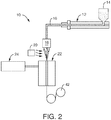
- the method of the present invention generally includes traversing a bundle of the fibers through a multi-stage drawing system that includes at least a first fluidic drawing stage and a second fluidic drawing stage. More particularly, the first drawing stage employs a first fluidic medium having a first temperature and the second drawing stage employs a second fluidic medium having a second temperature.
- the nano-scale phase domains within the fibers are able to interact in a unique manner to create a network of pores in the interior wall of the fibers.
- elongational strain experienced during drawing can initiate intensive localized shear zones and/or stress intensity zones (e.g., normal stresses) near the discrete phase domains as a result of stress concentrations that arise from the incompatibility of the materials.
- stress intensity zones e.g., normal stresses
- These shear and/or stress intensity zones cause some initial debonding in the matrix adjacent to the domains.
- the matrix located between domains can deform plastically to create internal stretched areas that locally narrow (or neck) and strain-harden.
- the polyolefin may be a copolymer of ethylene or propylene with another ⁇ -olefin, such as a C 3 -C 20 ⁇ -olefin or C 3 -C 12 ⁇ -olefin.
- olefin copolymers may be formed using a free radical or a coordination catalyst (e.g., Ziegler-Natta).
- a coordination catalyst e.g., Ziegler-Natta
- the olefin polymer is formed from a single-site coordination catalyst, such as a metallocene catalyst.
- a metallocene catalyst Such a catalyst system produces ethylene copolymers in which the comonomer is randomly distributed within a molecular chain and uniformly distributed across the different molecular weight fractions.
- Metallocene-catalyzed polyolefins are described, for instance, in U.S. Patent Nos. 5,571,619 to McAlpin et al.
- the polymeric nanoinclusion additive may also be reactive.
- a reactive nanoinclusion additive is a polyepoxide that contains, on average, at least two oxirane rings per molecule. Without intending to be limited by theory, it is believed that such polyepoxide molecules can undergo a reaction (e.g., chain extension, side chain branching, grafting, copolymer formation, etc.) with certain components of the composition to improve melt strength without significantly reducing glass transition temperature.
- the reactive additive can also provide compatibilization between the matrix polymer and other more polar additives, such as microinclusion additives, and can improve the uniformity of dispersion and reduce the size of microinclusion additives.
- the polyepoxide typically has a relatively high molecular weight, as indicated above, so that it may not only result in chain extension, but also help to achieve the desired blend morphology.
- the resulting melt flow rate of the polymer is thus typically within a range of from about 10 to about 200 grams per 10 minutes, in some embodiments from about 40 to about 150 grams per 10 minutes, and in some embodiments, from about 60 to about 120 grams per 10 minutes, determined at a load of 2160 grams and at a temperature of 190°C.
- the polyepoxide is a terpolymer formed from an epoxy-functional (meth)acrylic monomeric component, ⁇ -olefin monomeric component, and non-epoxy functional (meth)acrylic monomeric component.
- the polyepoxide may be poly(ethylene- co -methylacrylate- co -glycidyl methacrylate), which has the following structure: wherein, x, y, and z are 1 or greater.
- the overall weight percentage may also be controlled to achieve the desired benefits. For example, if the modification level is too low, the desired increase in melt strength and mechanical properties may not be achieved. The present inventors have also discovered, however, that if the modification level is too high, processing may be restricted due to strong molecular interactions (e.g., crosslinking) and physical network formation by the epoxy functional groups.
- the ratio of the melt flow rate of the microinclusion additive to the melt flow rate of the matrix polymer is typically from about 0.5 to about 10, in some embodiments from about 1 to about 8, and in some embodiments, from about 2 to about 6.
- the microinclusion additive may, for example, have a melt flow rate of from about 5 to about 200 grams per 10 minutes, in some embodiments from about 20 to about 150 grams per 10 minutes, and in some embodiments, from about 40 to about 100 grams per 10 minutes, determined at a load of 2160 grams and at a temperature at least about 40°C above its melting temperature (e.g., 210°C).
- the glass transition temperature (“T g ”) may be about 0°C or more, in some embodiments from about 5°C to about 100°C, in some embodiments from about 30°C to about 80°C, and in some embodiments, from about 50°C to about 75°C.
- the glass transition temperature may be determined by dynamic mechanical analysis in accordance with ASTM E1640-09.
- the polylactic acid has the following general structure:
- Some types of neat polyesters can absorb water from the ambient environment such that it has a moisture content of about 500 to 600 parts per million (“ppm"), or even greater, based on the dry weight of the starting polylactic acid.
- Moisture content may be determined in a variety of ways as is known in the art, such as in accordance with ASTM D 7191-05, such as described below. Because the presence of water during melt processing can hydrolytically degrade the polyester and reduce its molecular weight, it is sometimes desired to dry the polyester prior to blending.
- butene polymer generally refers to a homo- or co-polymer of an alkene monomer having four carbon atoms, including 1-butene (a-butylene), 2-butene (cis- ⁇ -butylene or trans- ⁇ -butylene), 2-methylpropene (isobutylene), cyclobutene, as well as combinations thereof.
- the butene polymer may also contain other monomers, such as propene.
- the butene polymer may be a homopolymer of butene-1 (referred to as "polybutylene").
- the molecular weight of the butene polymer may vary based on the type of polymer and degree of polymerization, it is typically desired that the butene polymer has a relatively low molecular weight, such as a number average molecular weight of about 10,000 grams per mole or less, in some embodiments about 5,000 grams per mole or less, in some embodiments about 2,000 grams per mole or less, and in some embodiments, from about 100 to about 1,000 grams per mole.
- higher molecular weight polymers may also be employed, such as those having a number average molecular weight of from about 10,000 to about 250,000 grams per mole.
- pigments may be present in an amount of no more than about 1 wt.%, in some embodiments no more than about 0.5 wt.%, and in some embodiments, from about 0.001 wt.% to about 0.2 wt.% of the thermoplastic composition.
- the bundle 102 passes through the fluidic medium until reaching the first draw bar 132. As illustrated, the bundle 102 traverses sequentially over the first draw bar 132 and then the second draw bar 134.
- the relative orientation of the draw bars 132 and 134 generally dictates the path that the bundle 102 follows as it traverses therethrough.
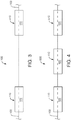
- the bars 132 and 134 are positioned in an "S-shaped" configuration so that the bundle 102 exits the second bar 134 at an angle that is approximately 180° relative to its position upon entering the first bar 132. Of course, this angle may vary, such as from about 45° to about 250°, in some embodiments from about 60° to about 200°, and in some embodiments, from about 90° to about 180°.
- the bars 132 and 134 are mounted between clamps 162 and 164 ( Fig. 7 ). The use of such clamps can allow the bars to be more readily positioned at the desired angle.
- the fiber bundle may be separated so that the individual fibers can be employed in various applications. Alternatively, the fiber bundle itself may be employed in the desired application.
- the fibers and/or fiber bundle may be employed alone or further processed into a fibrous material, such as a woven fabric, knit fabric, nonwoven web, etc.
- individual fibers derived from the drawn fiber bundle can be formed into a coherent nonwoven web structure by randomly depositing the fibers onto a forming surface (optionally with the aid of a vacuum) and then bonding the resulting web using any known technique.
- the polymer may be formed into a carded web by placing bales of fibers formed from the thermoplastic composition into a picker that separates the fibers. Next, the fibers are sent through a combing or carding unit that further breaks apart and aligns the fibers in the machine direction so as to form a machine direction-oriented fibrous nonwoven web. Once formed, the nonwoven web is typically stabilized by one or more known bonding techniques as described above to form a bonded carded web.
- the transfer delay layer may generally have any size, such as a length of about 150 mm to about 300 mm. Typically, the length of the transfer delay layer is approximately equal to the length of the absorbent article.
- the transfer delay layer may also be equal in width to the surge layer, but is typically wider. For example, the width of the transfer delay layer may be from between about 50 mm to about 75 mm, and particularly about 48 mm.
- the transfer delay layer typically has a basis weight less than that of the other absorbent members. For example, the basis weight of the transfer delay layer is typically less than about 150 grams per square meter (gsm), and in some embodiments, between about 10 gsm to about 100 gsm. If desired, the transfer delay layer may contain the fibers of the present invention, optionally in the form of a nonwoven web.
- Fibers were also formed as described in Example 2, except that the second water bath was 29°C.
- the drawn fiber had a density of 0.77 ⁇ 0.02 grams per cubic centimeter.
Landscapes
- Engineering & Computer Science (AREA)
- Textile Engineering (AREA)
- Chemical & Material Sciences (AREA)
- Chemical Kinetics & Catalysis (AREA)
- Manufacturing & Machinery (AREA)
- Mechanical Engineering (AREA)
- General Chemical & Material Sciences (AREA)
- Compositions Of Macromolecular Compounds (AREA)
- Nonwoven Fabrics (AREA)
- Artificial Filaments (AREA)
- Yarns And Mechanical Finishing Of Yarns Or Ropes (AREA)
- Spinning Methods And Devices For Manufacturing Artificial Fibers (AREA)
- Manufacture Of Porous Articles, And Recovery And Treatment Of Waste Products (AREA)
- Paper (AREA)
- Treatment Of Fiber Materials (AREA)
Claims (14)
- Verfahren zum Ausbilden von porösen Fasern, das Verfahren umfassend:Zuführen eines Faserbündels zu einem Streckwerk, das ein erstes Bad und ein zweites Bad, das sich stromabwärts vom ersten Bad befindet, enthält, wobei zumindest ein Teil der Fasern aus einer thermoplastischen Zusammensetzung gebildet ist, die eine kontinuierliche Phase enthält, die ein Matrixpolymer und einen Nanoeinschlusszusatz beinhaltet, die innerhalb der kontinuierlichen Phase in der Form von diskreten Domänen dispergiert sind, und ferner wobei das erste Bad ein erstes fluidisches Medium mit einer ersten Temperatur enthält und das zweite Bad ein zweites fluidisches Medium mit einer zweiten Temperatur enthält, wobei die erste und zweite Temperatur niedriger als die Schmelztemperatur des Matrixpolymers sind und die erste Temperatur höher als die zweite Temperatur ist; undZiehen des Faserbündels durch das erste und zweite Bad, wodurch ein poröses Netzwerk in den Fasern gebildet wird, das eine Vielzahl von Nanoporen beinhaltet; und wobei die erste Temperatur von 20 °C bis 90 °C und die zweite Temperatur von -10 °C bis 20 °C beträgt.
- Verfahren nach Anspruch 1, wobei das erste fluidische Medium und das zweite fluidische Medium Wasser sind.
- Verfahren nach Anspruch 1, wobei die erste Temperatur zumindest etwa 10 °C höher als die zweite Temperatur ist.
- Verfahren nach Anspruch 1, wobei das erste Bad erste und zweite Zugstangen enthält, die in das erste fluidische Medium eingetaucht sind, und/oder wobei das zweite Bad erste und zweite Zugstangen enthält, die in das zweite fluidische Medium eingetaucht sind; und wobei die Zugstangen vorzugsweise so positioniert sind, dass das Bündel die zweite Zugstange in einem Winkel verlässt, der ungefähr 180° relativ zum Bündel bei anfänglichem Kontakt mit der ersten Zugstange beträgt.
- Verfahren nach Anspruch 1, wobei das Faserbündel mit einem Verhältnis von etwa 1,1 bis etwa 25 gezogen wird, und/oder wobei das Bündel etwa 5 oder mehr Fasern enthält.
- Verfahren nach Anspruch 1, wobei die Nanoporen eine durchschnittliche Querschnittabmessung von etwa 800 Nanometer oder weniger aufweisen.
- Verfahren nach Anspruch 1, wobei das Matrixpolymer eine Schmelzflussrate von etwa 0,5 bis etwa 80 Gramm pro 10 Minuten aufweist, wie bestimmt bei einer Last von 2160 Gramm und bei 230 °C gemäß ASTM D1238-13; oder wobei das Matrixpolymer ein Polyester ist, oder wobei das Matrixpolymer ein Polyolefin wie beispielsweise ein im Wesentlichen isotaktisches Polypropylenhomopolymer oder ein Copolymer ist, das zumindest 90 Gew.-% Propylen enthält.
- Verfahren nach Anspruch 1, wobei die kontinuierliche Phase etwa 60 Gew.-% bis etwa 99 Gew.-% der thermoplastischen Zusammensetzung darstellt und der Nanoeinschlusszusatz etwa 0,05 Gew.-% bis etwa 20 Gew.-% der Zusammensetzung basierend auf dem Gewicht der kontinuierlichen Phase darstellt.
- Verfahren nach Anspruch 1, wobei der Nanoeinschlusszusatz ein funktionalisiertes Polyolefin beinhaltet, wie z. B. ein Polyepoxid.
- Verfahren nach Anspruch 1, wobei der Nanoeinschlusszusatz eine Schmelzflussrate von etwa 0,1 bis etwa 100 Gramm pro 10 Minuten hat, wie ermittelt bei einer Last von 2160 Gramm und bei einer Temperatur von zumindest 40 °C über der Schmelztemperatur gemäß ASTM D1238-13.
- Verfahren nach Anspruch 1, wobei die Zusammensetzung ferner einen Mikroeinschlusszusatz umfasst, der innerhalb der kontinuierlichen Phase in der Form von diskreten Domänen dispergiert ist, wobei der Mikroeinschlusszusatz vorzugsweise Polymilchsäure ist, wobei der Mikroeinschlusszusatz vorzugsweise eine Glasübergangstemperatur von etwa 0 °C oder mehr aufweist.
- Verfahren nach Anspruch 1, wobei die thermoplastische Zusammensetzung ferner einen Zwischenphasenmodifikator umfasst.
- Verfahren nach Anspruch 1, wobei das poröse Netzwerk ferner Mikroporen beinhaltet.
- Verfahren nach Anspruch 1, wobei das Faserbündel ein Bündel von extrudierten Fasern ist.
Applications Claiming Priority (2)
| Application Number | Priority Date | Filing Date | Title |
|---|---|---|---|
| US201562266120P | 2015-12-11 | 2015-12-11 | |
| PCT/US2016/065725 WO2017100511A1 (en) | 2015-12-11 | 2016-12-09 | Multi-stage drawing technique for forming porous fibers |
Publications (3)
| Publication Number | Publication Date |
|---|---|
| EP3387173A1 EP3387173A1 (de) | 2018-10-17 |
| EP3387173A4 EP3387173A4 (de) | 2019-08-14 |
| EP3387173B1 true EP3387173B1 (de) | 2021-02-03 |
Family
ID=59013587
Family Applications (1)
| Application Number | Title | Priority Date | Filing Date |
|---|---|---|---|
| EP16873883.9A Active EP3387173B1 (de) | 2015-12-11 | 2016-12-09 | Mehrstufige zeichentechnik zur bildung von porösen fasern |
Country Status (9)
| Country | Link |
|---|---|
| US (1) | US10640890B2 (de) |
| EP (1) | EP3387173B1 (de) |
| KR (1) | KR102587469B1 (de) |
| CN (1) | CN108368654B (de) |
| AU (1) | AU2016368586B2 (de) |
| BR (1) | BR112018010467B1 (de) |
| MX (1) | MX379077B (de) |
| RU (1) | RU2749032C2 (de) |
| WO (1) | WO2017100511A1 (de) |
Families Citing this family (6)
| Publication number | Priority date | Publication date | Assignee | Title |
|---|---|---|---|---|
| EP3387175B1 (de) | 2015-12-11 | 2022-09-21 | Kimberly-Clark Worldwide, Inc. | Verfahren zur formung von porösen fasern |
| EP4070947B1 (de) * | 2019-12-02 | 2024-11-27 | LX Hausys, Ltd. | Formkörper, sandwichplatte damit und verfahren zu deren herstellung |
| US20210254248A1 (en) * | 2020-02-18 | 2021-08-19 | Emd Millipore Corporation | Sterilizable porous filtration media containing nanofiber |
| CN112406071B (zh) * | 2020-11-23 | 2022-07-12 | 中国科学院宁波材料技术与工程研究所 | 耐物理老化的聚乳酸吹塑制品、其制备方法及应用 |
| WO2022150360A1 (en) * | 2021-01-07 | 2022-07-14 | Purewick Corporation | Fluid collection assemblies including at least one nonwoven material |
| US20230295393A1 (en) * | 2022-03-15 | 2023-09-21 | Ut-Battelle, Llc | Microporous polymer fibers and their use in environmental remediation |
Family Cites Families (81)
| Publication number | Priority date | Publication date | Assignee | Title |
|---|---|---|---|---|
| US3423255A (en) | 1965-03-31 | 1969-01-21 | Westinghouse Electric Corp | Semiconductor integrated circuits and method of making the same |
| US3760054A (en) * | 1969-09-08 | 1973-09-18 | Du Pont | Process for preparing porous aromatic polyamide fibers |
| DE2048006B2 (de) | 1969-10-01 | 1980-10-30 | Asahi Kasei Kogyo K.K., Osaka (Japan) | Verfahren und Vorrichtung zur Herstellung einer breiten Vliesbahn |
| CA948388A (en) | 1970-02-27 | 1974-06-04 | Paul B. Hansen | Pattern bonded continuous filament web |
| GB1453447A (en) | 1972-09-06 | 1976-10-20 | Kimberly Clark Co | Nonwoven thermoplastic fabric |
| US3932571A (en) | 1972-11-30 | 1976-01-13 | E. I. Du Pont De Nemours And Company | Process for dyeing undrawn acrylonitrile polymer filaments |
| US4100324A (en) | 1974-03-26 | 1978-07-11 | Kimberly-Clark Corporation | Nonwoven fabric and method of producing same |
| US4374888A (en) | 1981-09-25 | 1983-02-22 | Kimberly-Clark Corporation | Nonwoven laminate for recreation fabric |
| US4444710A (en) * | 1982-02-19 | 1984-04-24 | E. I. Du Pont De Nemours And Company | Process for increasing void volume of hollow filaments |
| US4937299A (en) | 1983-06-06 | 1990-06-26 | Exxon Research & Engineering Company | Process and catalyst for producing reactor blend polyolefins |
| CA1341430C (en) | 1984-07-02 | 2003-06-03 | Kenneth Maynard Enloe | Diapers with elasticized side pockets |
| EP0275581B1 (de) | 1986-12-19 | 1992-08-12 | Akzo N.V. | Herstellung von Polymilchsäure und Copolymeren daraus |
| US4766029A (en) | 1987-01-23 | 1988-08-23 | Kimberly-Clark Corporation | Semi-permeable nonwoven laminate |
| US4798603A (en) | 1987-10-16 | 1989-01-17 | Kimberly-Clark Corporation | Absorbent article having a hydrophobic transport layer |
| USD315990S (en) | 1988-08-04 | 1991-04-09 | Kimberly-Clark Corporation | Embossed wipe or similar article |
| US5218071A (en) | 1988-12-26 | 1993-06-08 | Mitsui Petrochemical Industries, Ltd. | Ethylene random copolymers |
| US5169706A (en) | 1990-01-10 | 1992-12-08 | Kimberly-Clark Corporation | Low stress relaxation composite elastic material |
| US5213881A (en) | 1990-06-18 | 1993-05-25 | Kimberly-Clark Corporation | Nonwoven web with improved barrier properties |
| US5464688A (en) | 1990-06-18 | 1995-11-07 | Kimberly-Clark Corporation | Nonwoven web laminates with improved barrier properties |
| US5272236A (en) | 1991-10-15 | 1993-12-21 | The Dow Chemical Company | Elastic substantially linear olefin polymers |
| US5248309A (en) | 1990-07-19 | 1993-09-28 | Kimberly-Clark Corporation | Thin sanitary napkin having a central absorbent zone and a method of forming the napkin |
| CA2048905C (en) | 1990-12-21 | 1998-08-11 | Cherie H. Everhart | High pulp content nonwoven composite fabric |
| US5192606A (en) | 1991-09-11 | 1993-03-09 | Kimberly-Clark Corporation | Absorbent article having a liner which exhibits improved softness and dryness, and provides for rapid uptake of liquid |
| US5278272A (en) | 1991-10-15 | 1994-01-11 | The Dow Chemical Company | Elastic substantialy linear olefin polymers |
| US6326458B1 (en) | 1992-01-24 | 2001-12-04 | Cargill, Inc. | Continuous process for the manufacture of lactide and lactide polymers |
| US5470944A (en) | 1992-02-13 | 1995-11-28 | Arch Development Corporation | Production of high molecular weight polylactic acid |
| US5350624A (en) | 1992-10-05 | 1994-09-27 | Kimberly-Clark Corporation | Abrasion resistant fibrous nonwoven composite structure |
| US5322728A (en) | 1992-11-24 | 1994-06-21 | Exxon Chemical Patents, Inc. | Fibers of polyolefin polymers |
| IT1256260B (it) | 1992-12-30 | 1995-11-29 | Montecatini Tecnologie Srl | Polipropilene atattico |
| US5472775A (en) | 1993-08-17 | 1995-12-05 | The Dow Chemical Company | Elastic materials and articles therefrom |
| US6093665A (en) | 1993-09-30 | 2000-07-25 | Kimberly-Clark Worldwide, Inc. | Pattern bonded nonwoven fabrics |
| CA2116081C (en) | 1993-12-17 | 2005-07-26 | Ann Louise Mccormack | Breathable, cloth-like film/nonwoven composite |
| CA2123330C (en) | 1993-12-23 | 2004-08-31 | Ruth Lisa Levy | Ribbed clothlike nonwoven fabric and process for making same |
| USD358035S (en) | 1994-01-10 | 1995-05-09 | Kimberly-Clark Corporation | Embossed wipe |
| US5486166A (en) | 1994-03-04 | 1996-01-23 | Kimberly-Clark Corporation | Fibrous nonwoven web surge layer for personal care absorbent articles and the like |
| ES2136214T3 (es) | 1994-03-04 | 1999-11-16 | Kimberly Clark Co | Tela no tejida fibrosa con control mejorado de derramamiento de liquido para articulos absorbentes de higiene personal y similares. |
| US5571619A (en) | 1994-05-24 | 1996-11-05 | Exxon Chemical Patents, Inc. | Fibers and oriented films of polypropylene higher α-olefin copolymers |
| US5702377A (en) | 1994-09-01 | 1997-12-30 | Kimberly-Clark Worldwide, Inc. | Wet liner for child toilet training aid |
| US5539056A (en) | 1995-01-31 | 1996-07-23 | Exxon Chemical Patents Inc. | Thermoplastic elastomers |
| US5770682A (en) | 1995-07-25 | 1998-06-23 | Shimadzu Corporation | Method for producing polylactic acid |
| EP0755956B1 (de) | 1995-07-25 | 2004-01-14 | Toyota Jidosha Kabushiki Kaisha | Verfahren zur Herstellung von Polymilchsäure |
| US6060638A (en) | 1995-12-22 | 2000-05-09 | Kimberly-Clark Worldwide, Inc. | Matched permeability liner/absorbent structure system for absorbent articles and the like |
| JP3588907B2 (ja) | 1996-03-22 | 2004-11-17 | トヨタ自動車株式会社 | ポリ乳酸の製造方法 |
| USD384819S (en) | 1996-03-22 | 1997-10-14 | Kimberly-Clark Corporation | Top surface of a wipe |
| US5843057A (en) | 1996-07-15 | 1998-12-01 | Kimberly-Clark Worldwide, Inc. | Film-nonwoven laminate containing an adhesively-reinforced stretch-thinned film |
| USD384508S (en) | 1996-08-22 | 1997-10-07 | Kimberly-Clark Worldwide, Inc. | Wipe |
| USD390708S (en) | 1996-10-31 | 1998-02-17 | Kimberly-Clark Worldwide, Inc. | Pattern for a bonded fabric |
| US5962112A (en) | 1996-12-19 | 1999-10-05 | Kimberly-Clark Worldwide, Inc. | Wipers comprising point unbonded webs |
| US6037281A (en) | 1996-12-27 | 2000-03-14 | Kimberly-Clark Worldwide, Inc. | Cloth-like, liquid-impervious, breathable composite barrier fabric |
| US6111163A (en) | 1996-12-27 | 2000-08-29 | Kimberly-Clark Worldwide, Inc. | Elastomeric film and method for making the same |
| US6015764A (en) | 1996-12-27 | 2000-01-18 | Kimberly-Clark Worldwide, Inc. | Microporous elastomeric film/nonwoven breathable laminate and method for making the same |
| US5947944A (en) | 1996-12-30 | 1999-09-07 | Kimberly-Clark Worldwide, Inc. | Stretched-thinned films comprising low crystallinity polymers and laminates thereof |
| US5931823A (en) | 1997-03-31 | 1999-08-03 | Kimberly-Clark Worldwide, Inc. | High permeability liner with improved intake and distribution |
| US5932497A (en) | 1997-09-15 | 1999-08-03 | Kimberly-Clark Worldwide, Inc. | Breathable elastic film and laminate |
| US5997981A (en) | 1997-09-15 | 1999-12-07 | Kimberly-Clark Worldwide, Inc. | Breathable barrier composite useful as an ideal loop fastener component |
| US6090325A (en) | 1997-09-24 | 2000-07-18 | Fina Technology, Inc. | Biaxially-oriented metallocene-based polypropylene films |
| US6197404B1 (en) | 1997-10-31 | 2001-03-06 | Kimberly-Clark Worldwide, Inc. | Creped nonwoven materials |
| USD418305S (en) | 1998-09-24 | 2000-01-04 | Kimberly-Clark Worldwide, Inc. | Wipe |
| US6500563B1 (en) | 1999-05-13 | 2002-12-31 | Exxonmobil Chemical Patents Inc. | Elastic films including crystalline polymer and crystallizable polymers of propylene |
| US6461457B1 (en) | 1999-06-30 | 2002-10-08 | Kimberly-Clark Worldwide, Inc. | Dimensionally stable, breathable, stretch-thinned, elastic films |
| US6642429B1 (en) | 1999-06-30 | 2003-11-04 | Kimberly-Clark Worldwide, Inc. | Personal care articles with reduced polymer fibers |
| USD428267S (en) | 1999-08-27 | 2000-07-18 | Kimberly-Clark Worldwide, Inc. | Repeating pattern for a bonded fabric |
| US6663611B2 (en) | 1999-09-28 | 2003-12-16 | Kimberly-Clark Worldwide, Inc. | Breathable diaper with low to moderately breathable inner laminate and more breathable outer cover |
| US20040002273A1 (en) | 2002-07-01 | 2004-01-01 | Kimberly-Clark Worldwide, Inc. | Liquid repellent nonwoven protective material |
| CN1312335C (zh) * | 2002-08-05 | 2007-04-25 | 东丽株式会社 | 多孔纤维 |
| US7060867B2 (en) | 2002-11-27 | 2006-06-13 | Kimberly-Clark Worldwide, Inc. | Absorbent article with a body facing liner having discretely placed lotion deposits |
| US7578957B2 (en) | 2002-12-30 | 2009-08-25 | E. I. Du Pont De Nemours And Company | Process of making staple fibers |
| US20050054255A1 (en) | 2003-09-08 | 2005-03-10 | Kimberly-Clark Worldwide, Inc. | Nonwoven fabric liner and diaper including a nonwoven laminate liner |
| US20050059941A1 (en) | 2003-09-11 | 2005-03-17 | Kimberly-Clark Worldwide, Inc. | Absorbent product with improved liner treatment |
| BR0304322B1 (pt) * | 2003-10-03 | 2013-09-24 | processo de obtenção de fibra de polietileno de alto módulo, extrusável, e fibra assim obtida | |
| JP5148093B2 (ja) * | 2005-09-28 | 2013-02-20 | 東レバッテリーセパレータフィルム株式会社 | ポリエチレン多層微多孔膜及びその製造方法、並びに電池用セパレータ |
| CA2624148A1 (en) * | 2005-09-29 | 2007-04-05 | Teijin Fibers Limited | Method of producing islands-in-sea type composite spun fiber |
| KR20130100016A (ko) * | 2011-02-07 | 2013-09-06 | 미쯔비시 레이온 가부시끼가이샤 | 다공질 중공사막의 세정 장치, 및 다공질 중공사막의 제조 방법 |
| US9617315B2 (en) * | 2011-06-01 | 2017-04-11 | Spiber Inc. | Artificial polypeptide fiber and method for producing the same |
| KR101346316B1 (ko) * | 2011-09-19 | 2014-01-06 | 송종복 | 멀티 필라멘트사를 이용한 고강도 단섬유의 제조방법 및 그 단섬유 |
| JP2016529939A (ja) * | 2013-06-12 | 2016-09-29 | キンバリー クラーク ワールドワイド インコーポレイテッド | 多孔質ポリオレフィン繊維から形成された不織布ウェブを含む吸収性物品 |
| CN105518066B (zh) * | 2013-06-12 | 2019-10-08 | 金伯利-克拉克环球有限公司 | 在包装中使用的聚烯烃膜 |
| BR112016002589B1 (pt) * | 2013-08-09 | 2021-08-03 | Kimberly-Clark Worldwide, Inc | Material polimérico flexível moldado, membro tubular, e, método de moldagem de um material polimérico |
| GB2518199A (en) * | 2013-09-13 | 2015-03-18 | Xiros Ltd | Method of producing a swellable polymer fibre |
| KR101573817B1 (ko) | 2014-05-22 | 2015-12-03 | 주식회사 디쏠 | 기격습식방사장치 |
| EP3387175B1 (de) | 2015-12-11 | 2022-09-21 | Kimberly-Clark Worldwide, Inc. | Verfahren zur formung von porösen fasern |
-
2016
- 2016-12-09 AU AU2016368586A patent/AU2016368586B2/en active Active
- 2016-12-09 WO PCT/US2016/065725 patent/WO2017100511A1/en not_active Ceased
- 2016-12-09 KR KR1020187017623A patent/KR102587469B1/ko active Active
- 2016-12-09 US US15/765,328 patent/US10640890B2/en active Active
- 2016-12-09 BR BR112018010467-1A patent/BR112018010467B1/pt active IP Right Grant
- 2016-12-09 RU RU2018121091A patent/RU2749032C2/ru active
- 2016-12-09 CN CN201680067991.2A patent/CN108368654B/zh active Active
- 2016-12-09 EP EP16873883.9A patent/EP3387173B1/de active Active
- 2016-12-09 MX MX2018006328A patent/MX379077B/es unknown
Non-Patent Citations (1)
| Title |
|---|
| None * |
Also Published As
| Publication number | Publication date |
|---|---|
| MX2018006328A (es) | 2018-08-29 |
| CN108368654A (zh) | 2018-08-03 |
| EP3387173A1 (de) | 2018-10-17 |
| CN108368654B (zh) | 2022-05-10 |
| AU2016368586A1 (en) | 2018-06-21 |
| BR112018010467B1 (pt) | 2022-11-16 |
| WO2017100511A1 (en) | 2017-06-15 |
| AU2016368586B2 (en) | 2022-03-31 |
| BR112018010467A2 (pt) | 2018-11-21 |
| RU2018121091A (ru) | 2019-12-09 |
| EP3387173A4 (de) | 2019-08-14 |
| RU2018121091A3 (de) | 2020-04-27 |
| US20180291530A1 (en) | 2018-10-11 |
| BR112018010467A8 (pt) | 2019-02-26 |
| RU2749032C2 (ru) | 2021-06-03 |
| KR20180083423A (ko) | 2018-07-20 |
| MX379077B (es) | 2025-03-11 |
| KR102587469B1 (ko) | 2023-10-11 |
| US10640890B2 (en) | 2020-05-05 |
Similar Documents
| Publication | Publication Date | Title |
|---|---|---|
| US11767615B2 (en) | Hollow porous fibers | |
| EP3152348B1 (de) | Hohle poröse fasern | |
| EP3387173B1 (de) | Mehrstufige zeichentechnik zur bildung von porösen fasern | |
| EP3387175B1 (de) | Verfahren zur formung von porösen fasern | |
| US20170362757A1 (en) | Fiber Bundle |
Legal Events
| Date | Code | Title | Description |
|---|---|---|---|
| STAA | Information on the status of an ep patent application or granted ep patent |
Free format text: STATUS: THE INTERNATIONAL PUBLICATION HAS BEEN MADE |
|
| PUAI | Public reference made under article 153(3) epc to a published international application that has entered the european phase |
Free format text: ORIGINAL CODE: 0009012 |
|
| STAA | Information on the status of an ep patent application or granted ep patent |
Free format text: STATUS: REQUEST FOR EXAMINATION WAS MADE |
|
| 17P | Request for examination filed |
Effective date: 20180626 |
|
| AK | Designated contracting states |
Kind code of ref document: A1 Designated state(s): AL AT BE BG CH CY CZ DE DK EE ES FI FR GB GR HR HU IE IS IT LI LT LU LV MC MK MT NL NO PL PT RO RS SE SI SK SM TR |
|
| AX | Request for extension of the european patent |
Extension state: BA ME |
|
| DAV | Request for validation of the european patent (deleted) | ||
| DAX | Request for extension of the european patent (deleted) | ||
| A4 | Supplementary search report drawn up and despatched |
Effective date: 20190716 |
|
| RIC1 | Information provided on ipc code assigned before grant |
Ipc: D04H 13/00 20060101ALI20190710BHEP Ipc: D01F 6/06 20060101ALN20190710BHEP Ipc: D01F 8/06 20060101ALN20190710BHEP Ipc: D01D 5/247 20060101ALN20190710BHEP Ipc: D04H 1/49 20120101AFI20190710BHEP Ipc: D02J 1/22 20060101ALI20190710BHEP Ipc: D01F 1/08 20060101ALI20190710BHEP |
|
| REG | Reference to a national code |
Ref country code: DE Ref legal event code: R079 Ref document number: 602016052377 Country of ref document: DE Free format text: PREVIOUS MAIN CLASS: D04H0001490000 Ipc: D02J0001220000 |
|
| GRAP | Despatch of communication of intention to grant a patent |
Free format text: ORIGINAL CODE: EPIDOSNIGR1 |
|
| STAA | Information on the status of an ep patent application or granted ep patent |
Free format text: STATUS: GRANT OF PATENT IS INTENDED |
|
| RIC1 | Information provided on ipc code assigned before grant |
Ipc: D01F 8/06 20060101ALN20200701BHEP Ipc: D04H 1/435 20120101ALI20200701BHEP Ipc: D01F 1/08 20060101ALI20200701BHEP Ipc: D01D 5/247 20060101ALN20200701BHEP Ipc: D04H 3/007 20120101ALI20200701BHEP Ipc: D01F 6/06 20060101ALN20200701BHEP Ipc: D04H 1/4391 20120101ALI20200701BHEP Ipc: D02J 1/22 20060101AFI20200701BHEP Ipc: D04H 3/018 20120101ALI20200701BHEP Ipc: D04H 1/4291 20120101ALI20200701BHEP Ipc: D04H 3/011 20120101ALI20200701BHEP Ipc: D04H 1/4382 20120101ALI20200701BHEP |
|
| INTG | Intention to grant announced |
Effective date: 20200723 |
|
| GRAS | Grant fee paid |
Free format text: ORIGINAL CODE: EPIDOSNIGR3 |
|
| GRAA | (expected) grant |
Free format text: ORIGINAL CODE: 0009210 |
|
| STAA | Information on the status of an ep patent application or granted ep patent |
Free format text: STATUS: THE PATENT HAS BEEN GRANTED |
|
| AK | Designated contracting states |
Kind code of ref document: B1 Designated state(s): AL AT BE BG CH CY CZ DE DK EE ES FI FR GB GR HR HU IE IS IT LI LT LU LV MC MK MT NL NO PL PT RO RS SE SI SK SM TR |
|
| REG | Reference to a national code |
Ref country code: GB Ref legal event code: FG4D |
|
| REG | Reference to a national code |
Ref country code: AT Ref legal event code: REF Ref document number: 1359719 Country of ref document: AT Kind code of ref document: T Effective date: 20210215 Ref country code: CH Ref legal event code: EP |
|
| REG | Reference to a national code |
Ref country code: DE Ref legal event code: R096 Ref document number: 602016052377 Country of ref document: DE |
|
| REG | Reference to a national code |
Ref country code: IE Ref legal event code: FG4D |
|
| REG | Reference to a national code |
Ref country code: NL Ref legal event code: MP Effective date: 20210203 |
|
| REG | Reference to a national code |
Ref country code: LT Ref legal event code: MG9D |
|
| REG | Reference to a national code |
Ref country code: AT Ref legal event code: MK05 Ref document number: 1359719 Country of ref document: AT Kind code of ref document: T Effective date: 20210203 |
|
| PG25 | Lapsed in a contracting state [announced via postgrant information from national office to epo] |
Ref country code: PT Free format text: LAPSE BECAUSE OF FAILURE TO SUBMIT A TRANSLATION OF THE DESCRIPTION OR TO PAY THE FEE WITHIN THE PRESCRIBED TIME-LIMIT Effective date: 20210604 Ref country code: NO Free format text: LAPSE BECAUSE OF FAILURE TO SUBMIT A TRANSLATION OF THE DESCRIPTION OR TO PAY THE FEE WITHIN THE PRESCRIBED TIME-LIMIT Effective date: 20210503 Ref country code: HR Free format text: LAPSE BECAUSE OF FAILURE TO SUBMIT A TRANSLATION OF THE DESCRIPTION OR TO PAY THE FEE WITHIN THE PRESCRIBED TIME-LIMIT Effective date: 20210203 Ref country code: FI Free format text: LAPSE BECAUSE OF FAILURE TO SUBMIT A TRANSLATION OF THE DESCRIPTION OR TO PAY THE FEE WITHIN THE PRESCRIBED TIME-LIMIT Effective date: 20210203 Ref country code: GR Free format text: LAPSE BECAUSE OF FAILURE TO SUBMIT A TRANSLATION OF THE DESCRIPTION OR TO PAY THE FEE WITHIN THE PRESCRIBED TIME-LIMIT Effective date: 20210504 Ref country code: LT Free format text: LAPSE BECAUSE OF FAILURE TO SUBMIT A TRANSLATION OF THE DESCRIPTION OR TO PAY THE FEE WITHIN THE PRESCRIBED TIME-LIMIT Effective date: 20210203 Ref country code: BG Free format text: LAPSE BECAUSE OF FAILURE TO SUBMIT A TRANSLATION OF THE DESCRIPTION OR TO PAY THE FEE WITHIN THE PRESCRIBED TIME-LIMIT Effective date: 20210503 |
|
| PG25 | Lapsed in a contracting state [announced via postgrant information from national office to epo] |
Ref country code: AT Free format text: LAPSE BECAUSE OF FAILURE TO SUBMIT A TRANSLATION OF THE DESCRIPTION OR TO PAY THE FEE WITHIN THE PRESCRIBED TIME-LIMIT Effective date: 20210203 Ref country code: PL Free format text: LAPSE BECAUSE OF FAILURE TO SUBMIT A TRANSLATION OF THE DESCRIPTION OR TO PAY THE FEE WITHIN THE PRESCRIBED TIME-LIMIT Effective date: 20210203 Ref country code: NL Free format text: LAPSE BECAUSE OF FAILURE TO SUBMIT A TRANSLATION OF THE DESCRIPTION OR TO PAY THE FEE WITHIN THE PRESCRIBED TIME-LIMIT Effective date: 20210203 Ref country code: LV Free format text: LAPSE BECAUSE OF FAILURE TO SUBMIT A TRANSLATION OF THE DESCRIPTION OR TO PAY THE FEE WITHIN THE PRESCRIBED TIME-LIMIT Effective date: 20210203 Ref country code: RS Free format text: LAPSE BECAUSE OF FAILURE TO SUBMIT A TRANSLATION OF THE DESCRIPTION OR TO PAY THE FEE WITHIN THE PRESCRIBED TIME-LIMIT Effective date: 20210203 Ref country code: SE Free format text: LAPSE BECAUSE OF FAILURE TO SUBMIT A TRANSLATION OF THE DESCRIPTION OR TO PAY THE FEE WITHIN THE PRESCRIBED TIME-LIMIT Effective date: 20210203 |
|
| PG25 | Lapsed in a contracting state [announced via postgrant information from national office to epo] |
Ref country code: IS Free format text: LAPSE BECAUSE OF FAILURE TO SUBMIT A TRANSLATION OF THE DESCRIPTION OR TO PAY THE FEE WITHIN THE PRESCRIBED TIME-LIMIT Effective date: 20210603 |
|
| PG25 | Lapsed in a contracting state [announced via postgrant information from national office to epo] |
Ref country code: EE Free format text: LAPSE BECAUSE OF FAILURE TO SUBMIT A TRANSLATION OF THE DESCRIPTION OR TO PAY THE FEE WITHIN THE PRESCRIBED TIME-LIMIT Effective date: 20210203 Ref country code: CZ Free format text: LAPSE BECAUSE OF FAILURE TO SUBMIT A TRANSLATION OF THE DESCRIPTION OR TO PAY THE FEE WITHIN THE PRESCRIBED TIME-LIMIT Effective date: 20210203 Ref country code: SM Free format text: LAPSE BECAUSE OF FAILURE TO SUBMIT A TRANSLATION OF THE DESCRIPTION OR TO PAY THE FEE WITHIN THE PRESCRIBED TIME-LIMIT Effective date: 20210203 |
|
| REG | Reference to a national code |
Ref country code: DE Ref legal event code: R097 Ref document number: 602016052377 Country of ref document: DE |
|
| PG25 | Lapsed in a contracting state [announced via postgrant information from national office to epo] |
Ref country code: DK Free format text: LAPSE BECAUSE OF FAILURE TO SUBMIT A TRANSLATION OF THE DESCRIPTION OR TO PAY THE FEE WITHIN THE PRESCRIBED TIME-LIMIT Effective date: 20210203 Ref country code: SK Free format text: LAPSE BECAUSE OF FAILURE TO SUBMIT A TRANSLATION OF THE DESCRIPTION OR TO PAY THE FEE WITHIN THE PRESCRIBED TIME-LIMIT Effective date: 20210203 Ref country code: RO Free format text: LAPSE BECAUSE OF FAILURE TO SUBMIT A TRANSLATION OF THE DESCRIPTION OR TO PAY THE FEE WITHIN THE PRESCRIBED TIME-LIMIT Effective date: 20210203 |
|
| PLBE | No opposition filed within time limit |
Free format text: ORIGINAL CODE: 0009261 |
|
| STAA | Information on the status of an ep patent application or granted ep patent |
Free format text: STATUS: NO OPPOSITION FILED WITHIN TIME LIMIT |
|
| 26N | No opposition filed |
Effective date: 20211104 |
|
| PG25 | Lapsed in a contracting state [announced via postgrant information from national office to epo] |
Ref country code: ES Free format text: LAPSE BECAUSE OF FAILURE TO SUBMIT A TRANSLATION OF THE DESCRIPTION OR TO PAY THE FEE WITHIN THE PRESCRIBED TIME-LIMIT Effective date: 20210203 Ref country code: AL Free format text: LAPSE BECAUSE OF FAILURE TO SUBMIT A TRANSLATION OF THE DESCRIPTION OR TO PAY THE FEE WITHIN THE PRESCRIBED TIME-LIMIT Effective date: 20210203 |
|
| PG25 | Lapsed in a contracting state [announced via postgrant information from national office to epo] |
Ref country code: SI Free format text: LAPSE BECAUSE OF FAILURE TO SUBMIT A TRANSLATION OF THE DESCRIPTION OR TO PAY THE FEE WITHIN THE PRESCRIBED TIME-LIMIT Effective date: 20210203 |
|
| PG25 | Lapsed in a contracting state [announced via postgrant information from national office to epo] |
Ref country code: IS Free format text: LAPSE BECAUSE OF FAILURE TO SUBMIT A TRANSLATION OF THE DESCRIPTION OR TO PAY THE FEE WITHIN THE PRESCRIBED TIME-LIMIT Effective date: 20210603 |
|
| PG25 | Lapsed in a contracting state [announced via postgrant information from national office to epo] |
Ref country code: MC Free format text: LAPSE BECAUSE OF FAILURE TO SUBMIT A TRANSLATION OF THE DESCRIPTION OR TO PAY THE FEE WITHIN THE PRESCRIBED TIME-LIMIT Effective date: 20210203 |
|
| REG | Reference to a national code |
Ref country code: CH Ref legal event code: PL |
|
| REG | Reference to a national code |
Ref country code: BE Ref legal event code: MM Effective date: 20211231 |
|
| PG25 | Lapsed in a contracting state [announced via postgrant information from national office to epo] |
Ref country code: LU Free format text: LAPSE BECAUSE OF NON-PAYMENT OF DUE FEES Effective date: 20211209 Ref country code: IE Free format text: LAPSE BECAUSE OF NON-PAYMENT OF DUE FEES Effective date: 20211209 |
|
| PG25 | Lapsed in a contracting state [announced via postgrant information from national office to epo] |
Ref country code: FR Free format text: LAPSE BECAUSE OF NON-PAYMENT OF DUE FEES Effective date: 20211231 Ref country code: BE Free format text: LAPSE BECAUSE OF NON-PAYMENT OF DUE FEES Effective date: 20211231 |
|
| PG25 | Lapsed in a contracting state [announced via postgrant information from national office to epo] |
Ref country code: LI Free format text: LAPSE BECAUSE OF NON-PAYMENT OF DUE FEES Effective date: 20211231 Ref country code: CH Free format text: LAPSE BECAUSE OF NON-PAYMENT OF DUE FEES Effective date: 20211231 |
|
| PG25 | Lapsed in a contracting state [announced via postgrant information from national office to epo] |
Ref country code: HU Free format text: LAPSE BECAUSE OF FAILURE TO SUBMIT A TRANSLATION OF THE DESCRIPTION OR TO PAY THE FEE WITHIN THE PRESCRIBED TIME-LIMIT; INVALID AB INITIO Effective date: 20161209 |
|
| P01 | Opt-out of the competence of the unified patent court (upc) registered |
Effective date: 20230511 |
|
| PG25 | Lapsed in a contracting state [announced via postgrant information from national office to epo] |
Ref country code: CY Free format text: LAPSE BECAUSE OF FAILURE TO SUBMIT A TRANSLATION OF THE DESCRIPTION OR TO PAY THE FEE WITHIN THE PRESCRIBED TIME-LIMIT Effective date: 20210203 |
|
| PG25 | Lapsed in a contracting state [announced via postgrant information from national office to epo] |
Ref country code: MK Free format text: LAPSE BECAUSE OF FAILURE TO SUBMIT A TRANSLATION OF THE DESCRIPTION OR TO PAY THE FEE WITHIN THE PRESCRIBED TIME-LIMIT Effective date: 20210203 |
|
| PG25 | Lapsed in a contracting state [announced via postgrant information from national office to epo] |
Ref country code: MT Free format text: LAPSE BECAUSE OF FAILURE TO SUBMIT A TRANSLATION OF THE DESCRIPTION OR TO PAY THE FEE WITHIN THE PRESCRIBED TIME-LIMIT Effective date: 20210203 |
|
| PG25 | Lapsed in a contracting state [announced via postgrant information from national office to epo] |
Ref country code: TR Free format text: LAPSE BECAUSE OF FAILURE TO SUBMIT A TRANSLATION OF THE DESCRIPTION OR TO PAY THE FEE WITHIN THE PRESCRIBED TIME-LIMIT Effective date: 20210203 |
|
| PGFP | Annual fee paid to national office [announced via postgrant information from national office to epo] |
Ref country code: GB Payment date: 20251229 Year of fee payment: 10 |
|
| PGFP | Annual fee paid to national office [announced via postgrant information from national office to epo] |
Ref country code: IT Payment date: 20251219 Year of fee payment: 10 |
|
| PGFP | Annual fee paid to national office [announced via postgrant information from national office to epo] |
Ref country code: DE Payment date: 20251229 Year of fee payment: 10 |