EP3386138B1 - Verfahren und vorrichtung zur übertragung von uplink- und downlink-daten in einem tdd-system - Google Patents
Verfahren und vorrichtung zur übertragung von uplink- und downlink-daten in einem tdd-system Download PDFInfo
- Publication number
- EP3386138B1 EP3386138B1 EP18173460.9A EP18173460A EP3386138B1 EP 3386138 B1 EP3386138 B1 EP 3386138B1 EP 18173460 A EP18173460 A EP 18173460A EP 3386138 B1 EP3386138 B1 EP 3386138B1
- Authority
- EP
- European Patent Office
- Prior art keywords
- configuration
- scell
- pcell
- subframe
- scheduling
- Prior art date
- Legal status (The legal status is an assumption and is not a legal conclusion. Google has not performed a legal analysis and makes no representation as to the accuracy of the status listed.)
- Active
Links
Images





Classifications
-
- H—ELECTRICITY
- H04—ELECTRIC COMMUNICATION TECHNIQUE
- H04L—TRANSMISSION OF DIGITAL INFORMATION, e.g. TELEGRAPHIC COMMUNICATION
- H04L1/00—Arrangements for detecting or preventing errors in the information received
- H04L1/12—Arrangements for detecting or preventing errors in the information received by using return channel
- H04L1/16—Arrangements for detecting or preventing errors in the information received by using return channel in which the return channel carries supervisory signals, e.g. repetition request signals
- H04L1/18—Automatic repetition systems, e.g. Van Duuren systems
-
- H—ELECTRICITY
- H04—ELECTRIC COMMUNICATION TECHNIQUE
- H04L—TRANSMISSION OF DIGITAL INFORMATION, e.g. TELEGRAPHIC COMMUNICATION
- H04L1/00—Arrangements for detecting or preventing errors in the information received
- H04L1/12—Arrangements for detecting or preventing errors in the information received by using return channel
- H04L1/16—Arrangements for detecting or preventing errors in the information received by using return channel in which the return channel carries supervisory signals, e.g. repetition request signals
- H04L1/18—Automatic repetition systems, e.g. Van Duuren systems
- H04L1/1867—Arrangements specially adapted for the transmitter end
- H04L1/1887—Scheduling and prioritising arrangements
-
- H—ELECTRICITY
- H04—ELECTRIC COMMUNICATION TECHNIQUE
- H04J—MULTIPLEX COMMUNICATION
- H04J3/00—Time-division multiplex systems
-
- H—ELECTRICITY
- H04—ELECTRIC COMMUNICATION TECHNIQUE
- H04L—TRANSMISSION OF DIGITAL INFORMATION, e.g. TELEGRAPHIC COMMUNICATION
- H04L1/00—Arrangements for detecting or preventing errors in the information received
- H04L1/12—Arrangements for detecting or preventing errors in the information received by using return channel
- H04L1/16—Arrangements for detecting or preventing errors in the information received by using return channel in which the return channel carries supervisory signals, e.g. repetition request signals
- H04L1/18—Automatic repetition systems, e.g. Van Duuren systems
- H04L1/1812—Hybrid protocols; Hybrid automatic repeat request [HARQ]
-
- H—ELECTRICITY
- H04—ELECTRIC COMMUNICATION TECHNIQUE
- H04L—TRANSMISSION OF DIGITAL INFORMATION, e.g. TELEGRAPHIC COMMUNICATION
- H04L1/00—Arrangements for detecting or preventing errors in the information received
- H04L1/12—Arrangements for detecting or preventing errors in the information received by using return channel
- H04L1/16—Arrangements for detecting or preventing errors in the information received by using return channel in which the return channel carries supervisory signals, e.g. repetition request signals
- H04L1/18—Automatic repetition systems, e.g. Van Duuren systems
- H04L1/1829—Arrangements specially adapted for the receiver end
- H04L1/1854—Scheduling and prioritising arrangements
-
- H—ELECTRICITY
- H04—ELECTRIC COMMUNICATION TECHNIQUE
- H04W—WIRELESS COMMUNICATION NETWORKS
- H04W72/00—Local resource management
- H04W72/20—Control channels or signalling for resource management
-
- H—ELECTRICITY
- H04—ELECTRIC COMMUNICATION TECHNIQUE
- H04L—TRANSMISSION OF DIGITAL INFORMATION, e.g. TELEGRAPHIC COMMUNICATION
- H04L1/00—Arrangements for detecting or preventing errors in the information received
- H04L1/12—Arrangements for detecting or preventing errors in the information received by using return channel
- H04L1/16—Arrangements for detecting or preventing errors in the information received by using return channel in which the return channel carries supervisory signals, e.g. repetition request signals
- H04L1/18—Automatic repetition systems, e.g. Van Duuren systems
- H04L1/1829—Arrangements specially adapted for the receiver end
- H04L1/1861—Physical mapping arrangements
-
- H—ELECTRICITY
- H04—ELECTRIC COMMUNICATION TECHNIQUE
- H04W—WIRELESS COMMUNICATION NETWORKS
- H04W72/00—Local resource management
- H04W72/12—Wireless traffic scheduling
-
- H—ELECTRICITY
- H04—ELECTRIC COMMUNICATION TECHNIQUE
- H04W—WIRELESS COMMUNICATION NETWORKS
- H04W76/00—Connection management
- H04W76/10—Connection setup
Definitions
- the present invention relates to a method and an apparatus for transmitting uplink/ downlink data on Time Division Duplexing (TDD) carriers. More particularly, the present invention relates to an apparatus for supporting self-scheduling and cross-carrier scheduling of a User Equipment (UE) on carriers with different TDD configurations so as to transmit acknowledgement channels simultaneously regardless of the scheduled carrier.
- TDD Time Division Duplexing
- LTE Long Term Evolution
- OFDMA Orthogonal Frequency Division Multiple Access
- LTE release 8 has been designed to support FDD and TDD on a single carrier and evolved to LTE release 10 which supports both the FDD and TDD.However, it restricts the TDD operation only to the case where the uplink-downlink configuration should be the same across the carriers. In release 11, the work is expected to continue on supporting TDD operation across the carriers with different uplink-downlink configurations.
- Table 1 shows the TDD configurations supported in an LTE Rel. 8 system.
- a total of 7 configurations are supported with 10 subframes in which D denotes a subframe reserved for downlink transmission, S denotes a special subframe capable of supporting both the downlink and the uplink transmission and having a guard period for switching between uplink and downlinktransmission, and U denotes a subframe reserved for uplink transmission. Since the TDD configurations differ from each other in position and number of subframes for uplink transmission, the number of Hybrid Automatic Repeat reQuest(HARQ) processes and transmission timings available for UEs vary depending on the TDD configuration.
- HARQ Hybrid Automatic Repeat reQuest
- the Physical Downlink Shared Channel (PDSCH)-HARQ-ACKnowledgement (ACK) timing relationship is defined per TDD configuration in downlinktransmission, two timings, scheduling-Physical Uplink Shared Channel (PUSCH) timing for scheduling information transmission and PUSCH-HARQ-ACK timing for data transmission and evolved Node B's (eNB's) ACK channel transmission, are defined in uplinktransmission.
- PDSCH Physical Downlink Shared Channel
- ACK Physical Uplink Shared Channel
- PUSCH Physical Uplink Shared Channel
- eNB's evolved Node B's
- Table 2 shows timing relationships of TDD configurations.
- Table 3 shows the uplink data channel transmission timing relationship for scheduling of TDD configurations.
- Table 3 shows the subframe interval of PUSCH transmitted based on the scheduling control channel received at the nth subframe of downlinktransmission. For example, if the uplink control channel is received at the 0th subframe in the configuration 3, this means that the UE transmits uplink data channel after 4 subframes.
- Table 4 shows the relationship between PUSCH transmission and eNB's ACK channel transmission timings.
- Table 4 shows the ACK channel transmission timing to the UE's PUSCH transmission in which, if the eNB has transmitted the ACK channel at the 0th downlink subframe in the configuration 3, this means that the ACK channel is transmitted for the PUSCH transmitted before 6 subframes.
- erroneous downlink data channel In the downlink HARQ process of an LTE system,which is as asynchronous system, if the erroneous downlink data channel can be retransmitted at a certain timing, erroneous uplink data channel has to be transmitted at a predefined timing in a synchronous manner.
- This can be a Round Trip Time (RTT) having a value that varies according to the TDD configuration, and if the sum of values at the same position in Tables 3 and 4 is 10, this means that RTT is 10 msec, and otherwise, another RTT can be used.
- RTT Round Trip Time
- the configurations 1, 2, 3, 4, and 5 are configurationsthat guarantee the RTT of 10 msec
- the configurations 0 and 6 are the configurations guaranteeing another RTT.
- Carrier aggregation is a technique in which a UE receives data on multiple carriers.
- the UE is assigned primary and secondary cells that are referred to as a PCell and an SCell, respectively.
- the UE can be assigned one downlink and uplink PCell and multiple downlink and uplink SCells.
- the self-scheduling is a method for transmitting, bythe eNB, different control channels to the UEs on corresponding carriers.
- the downlink control channel is transmitted at a control channel region of each carrier separately while the data channel is transmitted through the same carrier on which the data channel has been received.
- the ACK channel of the UE is transmitted only in the PCell to minimize the uplink interference and transmit the ACK channels as multiplexed.
- the ACK channel is transmitted on the carrier where the control channel for downlink scheduling has been transmitted.
- the cross-carrier scheduling is a method for receiving the control channel on a single carrier and for transmitting data channel on multiple carriers.
- the data channel for scheduling is transmitted through the PCell, and the data channel can be transmitted on all channels while the ACK channels of both the UE and the eNB are transmitted through the PCell.
- the carrier aggregation since the carrier aggregation is supported only for the same TDD configuration, the downlink and uplink transmission timings are identical across carriers and if the PCell has uplink and the SCell has uplink and vice versa such that it is possible to support the above-described self-scheduling and cross-carrier scheduling.
- the carrier aggregation can be supported depending on the TDD configurations, the supportability can be determined through super-set/subset relationship.
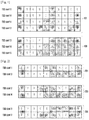
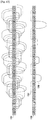
- FIG. 1 illustrates a TDD configuration with a super-set/subset relationshipaccording to the related art
- FIG. 2 illustrates a TDD configuration without a super-set/subset relationship according to the related art.
- the configuration 0 is a UL super-set of the configurations 6, 1, and 2
- the configuration 2 is a UL subset and DL super-set of the configurations 1, 6, and 0 simultaneously.
- part 201 there are no super-set/subset relationships between TDD configurations 1 and 3.
- part 203 there is no super-set/subset relationship between the TDD configurations 2 and 4.
- part 205 there is no super-set/subset relationship between the TDD configurations 3 and 2. For example, these three combinations are not fulfilling both the DL subset and the UL subset.
- Such combinations make it possible to determine whether the cross-carrier scheduling and self-scheduling can be supported depending on the type of combination. For example, if the DL of the PCell is the super-set of the SCell, the eNB supports the cross-carrier scheduling in DLs of all the SCells, and if UL super-set is DL at the PCell's UL timing, it is difficult to schedule the corresponding DL subframe. Accordingly, the self-scheduling or the cross-carrier scheduling defined in Rel. 10 can be applied to the cases of using different TDD configurations in Rel. 11 without modification in the following cases.
- an aspect of the present invention is to provide a method and an apparatus for supporting self-scheduling and cross-carrier scheduling of a User Equipment (UE) on carriers with different Time Division Duplex (TDD) configurations so as to transmit acknowledgement channels simultaneously regardless of the scheduled carrier.
- UE User Equipment
- TDD Time Division Duplex
- a feedback reception method of a base station in a TDD system is provided in appended claim 7.
- a terminal for transmitting a feedback in a TDD system is provided in appended claim 4.
- transceiver for transmitting to a base station in a PCell and an SCell, a TDD UL-DL configuration of the PCell and a TDD UL-DL configuration of the SCell differing from each other, for receiving data at a first subframe in the SCell, and for transmitting, when a UL subframe set of the SCell is a subset of a UL subframe of the PCell, a feedback corresponding to the data at a subframe predefined in association with the first subframe in the PCell according to the TDD UL-DL configuration of the SCell.
- a base station for receiving a feedback in a TDD systemis is provided in appended claim 10.
- the present invention is to provide a method and an apparatus for supporting self-scheduling and cross-carrier scheduling of a User Equipment (UE) on carriers with different Time Division Duplex (TDD) configurations so as to transmit acknowledgement channels simultaneously regardless of the scheduled carrier.
- UE User Equipment
- TDD Time Division Duplex
- Exemplary embodiments of the present invention relate to a method and an apparatus for supporting self-scheduling and cross-carrier scheduling of a User Equipment (UE) on carriers with different Time Division Duplex (TDD) configurations so as to transmit acknowledgement channels simultaneously regardless of the scheduled carrier.
- UE User Equipment
- TDD Time Division Duplex
- FIGs. 3 through 17 discussed below, and the various exemplary embodiments used to describe the principles of the present disclosure in this patent document are by way of illustration only and should not be construed in any way that would limit the scope of the disclosure. Those skilled in the art will understand that the principles of the present disclosure may be implemented in any suitably arranged communications system.
- the terms used to describe various embodiments are exemplary. It should be understood that these are provided to merely aid the understanding of the description, and that their use and definitions in no way limit the scope of the invention. Terms first, second, and the like are used to differentiate between objects having the same terminology and are in no way intended to represent a chronological order, unless where explicitly stated otherwise.
- a set is defined as a non-empty set including at least one element.
- the PDSCH HARQ timing follows the SCell timing.
- the second exemplary embodiment relates to PDSCH-HARQ timing through cross-carrier scheduling when the UL subframe of the SCell is the subset of the PCell (PDSCH-HARQ timing of cross-carrier scheduling of the SCell, if the SCell is the UL subset of the PCell).
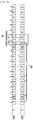
- FIG. 4 illustrates a PDSCH-HARQ timing relationship through a cross-carrier scheduling when a UL subframe of an SCell is a subset of a PCell according to a second exemplary embodiment of the present invention.
- the PCell since the PCell has more UL subframes, it is advantageous to use the Physical Uplink Control Channel (PUCCH) resource in a distributed way and follow the SCell timing.
- PUCCH Physical Uplink Control Channel
- the control channel for the SCell is not transmitted in some UL subframes of the PCell, resulting in unfairness of resource. Since the non-aligned DL subframe has no PCell timing and UL resource, it is possible to avoid HARQ timing confusion through this and reduce the complexity without defining new timing.
- the third exemplary embodiment relates to the UE's uplink data transmission corresponding to the control channel transmission and an evolved Node B's (eNB's) ACK channel transmission timings when the DL subframe of the SCell is the DL subset of the PCell (Scheduling-Physical Uplink Shared Channel (PUSCH)-HARQ timing of cross-carrier scheduling of the SCell, if the SCell is the DL subset of the PCell).
- eNB's evolved Node B's
- PUSCH Physical Uplink Shared Channel
- the HARQ timing of the corresponding UL follows the PCell timing.
- the HARQ timing of the corresponding UL follows the SCell timing.
- the fourth exemplary embodiment relates to the SCell timing of UE's ACK channel corresponding to PDSCH in self-scheduling when the SCell is neither the DL subset nor the UL subset of the PCell (PDSCH-HARQ timing of self-scheduling of the SCell, if the SCell is not the DL subset nor the UL subset of the PCell).
- FIG. 6 illustrates an SCell timing relationship between a PDSCH and a UE's acknowledgement channel with self-scheduling when an SCell is neither a DL subset nor a UL subset of a PCell according to a fourth exemplary embodiment of the present invention.
- the PDSCH of the SCell is scheduled through the self-scheduling, and the ACK channel corresponding to this follows the PDSCH-HARQ timing of the TDD configuration having the DL subframe super-set or UL subset that are common in the SCell and the PCell.
- the configurations 4 and 5 are UL subset and DL super-set of the configurations 1 and 3.
- the downlink of the SCell is the subset of the configuration 4 and the ACK channel transmission timing for this is aligned with the UL subset of the configuration 4, it becomes possible to transmit data through self-scheduling in the DL subframe of all the SCell.
- timings of the configuration 4 or 5 for the combination of the configurations 3 and 1, configuration 5 for the combination of the configurations 2 and 3, and configuration 5 for the combination of the configurations 2 and 4.
- the exemplary cases of using the timings of configuration 5 in the SCell for combinations of configurations 1 and 3, 2 and 3, and 2 and 4 can be used.
- FIG. 7 illustrates a PDSCH-HARQ timing relationship of an SCell with self-scheduling when the SCell is neither a DL subset nor a UL subset of a PCell according to a fifth exemplary embodiment of the present invention.
- the fifth exemplary embodiment is advantageous in that the downlink subframes of all SCells can be scheduled in the same situation as the fourth exemplary embodiment.
- the PCell has configuration 3 and the SCell has the configuration 1
- the ACK channel of the UE for subframe 0 in the PCell is transmitted at the subframe 4 but in the SCell transmitted at the subframe 2, as shown in FIG. 6 .
- the eNB scheduler instructs data transmissions simultaneously
- the ACK channels are received at different timings, and thus, if the retransmission occurs continuously, the delay between the two data transmissions increases, resulting in increase of scheduling complexity.
- the fifth exemplary embodiment proposes a method for following the timing of the PCell when the DL subframe of the SCell is aligned with the PCell and following the PDSCH-HARQ timing of the configuration having the DL subframe super-set or UL subset that are common in the SCell and the PCell with the configurations aggregated when the DL subframe of the SCell is not aligned with the timing of the PCell.
- the advantage of the fourth exemplary embodiment in that all DL subframes of the SCell can be scheduled and the advantage in that the HARQ timing ends at the same time.
- the DL super-set or UL subset common in the PCell and the SCell follow configuration 5, and the SCell following the timing of the configuration 5 only in the part where it is not DL-aligned with the PCell, as shown in parts 705 and 707.
- the PCell uses configuration 3
- the SCell uses configuration 2
- the ACK channels of the UE are transmitted in both the PCell and the SCell in timing order of scheduling.
- the sixth exemplary embodiment relates to the scheduling-PUSCH-HARQ timing through cross-carrier scheduling when the SCell is the DL subset but not the UL subset of the PCell.
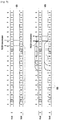
- FIG. 8 illustrates a scheduling-PUSCH-HARQ timing relationship with cross-carrier scheduling when an SCell is a DL subset but not a UL subset of a PCell according to a sixth exemplary embodiment of the present invention.
- the HARQ timing relationship for uplink data channel transmission through cross-carrier scheduling can be used as follows. If the UL subframe of the SCell is aligned with the UL subframe of the PCell, the HARQ timing of the SCell follows the timing of the PCell. Otherwise, if the UL subframe of the SCell is not aligned with the UL subframe of the PCell, the UL HARQ timing through cross-carrier scheduling of the SCell follows the SCell or SCell's UL super-set timing. This is the method for the case where the PHICH transmission resource is prepared in the PCell at the corresponding UL process timing or the ACK channel resource for E-PHICH other than PHICH of the related art is prepared.
- the carriers using configurations 2 and 4 can be aggregated. If the UL PUSCH transmission is performed with the cross-carrier scheduling and if the UL is aligned between the PCell and the SCell as shown in part 801 of FIG. 8 , it is possible to follow the timing of the PCell. If the ACK channel and data channel transmission are possible at the same timing with the PCell and if the UL is not aligned, as shown in part 803, it is possible to follow the third configuration or the SCell timing.
- the seventh exemplary embodiment relates to the PDSCH HARQ timing of the SCell with self-scheduling when the SCell is the UL subset of the PCell.
- FIG. 9 illustrates a PDSCH HARQ timing relationship of an SCell with self-scheduling when the SCell is a UL subset of a PCell according to a seventh exemplary embodiment of the present invention.
- part 901 shows an example of following the timing of the SCell for the PDSCH HARQ timing of the SCell when the SCell is the UL subset of the PCell and the self-scheduling is applied as in the first exemplary embodiment.
- This is advantageous in scheduling all the SCell downlink subframes but has a problem in that the scheduling timing of the PCell and the SCell mismatch the ACK channel timing.
- the ACK channel occurs at the same timing as the scheduling timing, as shown in part 903, and even in the case not aligned, as shown in part 905, the order of the ACK channels corresponding to the data channels occurring before and after match with the data channel occurrence order so as to avoid the increase of the scheduling complexity caused by the mismatch between the PCell and the SCell.
- the eighth exemplary embodiment relates to scheduling-PUSCH-HARQ timing when the SCell is a UL subset of the PCell and a Round Trip Time (RTT) of the PCell is not the period of 10msec.
- RTT Round Trip Time
- the RTT of the PCell is maintained as 10msec equal to the length of radio frame and thus,the cross-carrier scheduling can be applied even though the SCell has a configuration different from that of the PCell.
- the TDD configurations 0 and 6 may have 70msec and 60msec, respectively, for supporting n+1 HARQ processes with n UL subframes. Accordingly, the TDD configuration 0 has total 6 UL subframes per 10msec to handle total 7 UL HARQ processes, as shown in 1401 of FIG. 10 . In a case of TDD configuration 6, total 5 UL subframes exist for handling total 7 UL HARQ processes.
- the UL HARQ starting at the #2nd subframe performs transmission at the #4th subframe of the next radio frame and performs retransmission at different frames before 70msec elapses since the initial transmission. Accordingly, when the SCell differs from the PCell in configuration, if the number of UL subframes is less than that of the PCell, it is impossible to follow the PCell's transmission timings for all retransmission. This means that it is difficult to support scheduling completely if the RTT of the SCell does not match the RTT of the PCell when the RRT of the PCell is not 10mesec. Since the configuration 6 has the RTT of 60msec, this is the case.
- the eighth exemplary embodiment is implemented in such a way of setting the RTT of the SCell to 10msec when the UL HARQ RTT of the PCell is not 10msec and the cross-carrier scheduling is applied to UL subframe of the SCell. For example, it is possible to follow the timing of the PCell as scheduling to PUSCH timing when the SCell is aligned in at least one of the subframes 2, 4, and 7 with configuration 0, and also follow the timing of the PCell as PUSCH to PHICH timing.
- the scheduling is transmitted in the 5th and 1st subframe of the PCell and follows the timing when the Most Significant Bit (MSB) of UL index is 1 in the PCell.
- MSB Most Significant Bit
- the PHICH corresponding to the PUSCH transmission is transmitted at the 5th and 1st subframes according to the PCell timing such that the RTT of the SCell becomes 10msec.
- the scheduling is transmitted at the 0th subframe of the PCell and the acknowledgement channel corresponding to PUSCH is transmitted at 0th subframe such that the RTT of the SCell becomes 10msec.
- the reception is performed at the same timing as the PHICH transmission of (n-1)th UL HARQ in the next retransmission. If the PHICH is received initially at the PHICH transmission timing of the nth UL HARQ of the PCell, the reception is performed at the same timing as the PHICH transmission of the (n-1)th UL HARQ in the next retransmission. In this way, the cross-carrier scheduling can be applied by maintaining the SCell RTT as 10msec even when the PCell RTT is not 10msec. This process can be operated as described follows.
- the PCell uses TDD configuration 0 while the SCell uses TDD configuration 3.
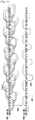
- the PCell operates with the configuration 0 and RTT of 70msec, as shown in part 1601, while the SCell operates with the configuration 3, as shown in part 1603.
- the cross-carrier scheduling is performed in the same way of FIG. 11 at subframe #2 but, at the subframe #4, the UL grant is transmitted at 0th subframe, as shown in part 1609, such that the PUSCH occurs after 4 subframes based on the UL index.
- the acknowledgement channel transmission timing follows the PCell timings as shown in FIG.
- the cross-carrier scheduling is performed in such a way that the scheduling-PUSCH timing follows the timing of the configuration 1 and the PUSCH-HARQ timing follows the timing of the PCell when the UL subframes 2,3, 4, and 6 are aligned with the SCell.
- This method is advantageous in that since the SCell maintains the RTT of 10msec, there is no mismatch of scheduling timing and acknowledge channel transmission timing between the HARQ processes of the previous scheduling and current scheduling. In addition, there is no need to define a new timing for scheduling.
- the eNB includes a controller 1201 for determining TDD configurations of configured PCell and SCell and transmission/reception timings of data channel and ACK channels, a PCell scheduler 1203 and an SCell scheduler 1205 that are responsible for the PCell and the SCell data channel and an ACK channel transmission/reception according to the timings determined by the controller.
- FIG. 17 is a block diagram illustrating a configuration of a UE according to an exemplary embodiment of the present invention.
- Exemplary embodiments of the present invention propose data channel and acknowledge channel timings of the SCell for matching the scheduling timings and ACK channel transmission timing as well as making it possible to perform scheduling at all subframes in transmitting and receiving data channel to and from the UE supporting different TDD configurations-enabled carrier aggregation.
- the proposed technology is capable of utilizing the timings of the TDD configurations of the related art without extra timing information.
- Exemplary embodiments of the present invention relate to a method and an apparatus for transmitting uplink/downlink data on the carriers having different TDD configurations supporting both the self-scheduling and cross-carrier scheduling of the UE using carriers of different TDD configurations so as to transmit acknowledgement channels at the same timings regardless of scheduled carriers.
Landscapes
- Engineering & Computer Science (AREA)
- Computer Networks & Wireless Communication (AREA)
- Signal Processing (AREA)
- Mobile Radio Communication Systems (AREA)
Claims (15)
- Verfahren durch ein Endgerät in einem drahtlosen Zeitduplex- TDD, Datenübertragungssystem, wobei das Verfahren aufweist:ein Empfangen (1101) einer ersten Nachricht, die eine erste Uplink-/Downlink-, UL/DL, Konfiguration für eine primäre Zelle, PCell, von einer Basisstation enthält;ein Empfangen (1101) einer zweiten Nachricht, die eine zweite UL/DL-Konfiguration für eine sekundäre Zelle, SCell, von der Basisstation enthält, wobei die zweite UL/DL-Konfiguration von der ersten UL/DL-Konfiguration verschieden ist;ein Empfangen eines gemeinsam benutzten physischen Downlink-Kanals, PDSCH; auf einem ersten Subframe der SCell von der Basisstation; undein Übertragen (1105) einer hybriden automatischen Wiederholungsanforderungs-Bestätigung, HARDQ-ACK, die dem PDSCH auf einem zweiten Subframe entspricht, zu der Basisstation, dadurch gekennzeichnet, dass der zweite Subframe auf Grundlage einer UL/DL-Konfiguration 4 bestimmt wird, wenn der Planungstyp für das Endgerät eine selbsttätige Planung ist, und die erste UL/DL-Konfiguration für die PCell eine UL/DL-Konfiguration 3 ist, und die zweite UL/DL-Konfiguration für die SCell eine UL/DL-Konfiguration 1 (1103) ist.
- Verfahren nach Anspruch 1, wobei der zweite Subframe auf Grundlage der zweiten UL/DL-Konfiguration für die SCell bestimmt wird, wenn der Planungstyp für das Endgerät eine selbsttätige Planung ist, und die UL-Subframes der SCell ein untergeordnetes Set der UL-Subframes der PCell sind.
- Verfahren nach Anspruch 1, wobei der zweite Subframe auf Grundlage dessen bestimmt wird, ob die DL-Subframes der SCell ein untergeordnetes Set von DL-Subframes der PCell sind.
- Endgerät für ein drahtloses Zeitduplex- TDD, Datenübertragungssystem, wobei das Endgerät aufweist:
einen Senderempfänger, der konfiguriert ist, um ein Signal zu übertragen und zu empfangen; und einen Controller, der konfiguriert ist zu:einem Empfangen (1101) einer ersten Nachricht, die eine erste Uplink-/Downlink-, UL/DL, Konfiguration für eine primäre Zelle, PCell, von einer Basisstation enthält, einem Empfangen (1101) einer zweiten Nachricht, die eine zweite UL/DL-Konfiguration für eine sekundäre Zelle, SCell, von der Basisstation enthält, wobei die zweite UL/DL-Konfiguration von der ersten UL/DL-Konfiguration verschieden ist,einem Empfangen eines gemeinsam benutzten physischen Downlink-Kanals, PDSCH; auf einem ersten Subframe der SCell von der Basisstation, undeinem Übertragen (1105) einer hybriden automatischen Wiederholungsanforderungs-Bestätigung, HARDQ-ACK, die dem PDSCH auf einem zweiten Subframe entspricht, zu der Basisstation, dadurch gekennzeichnet, dass der zweite Subframe auf Grundlage einer UL/DL-Konfiguration 4 bestimmt wird, wenn der Planungstyp für das Endgerät eine selbsttätige Planung ist, und die erste UL/DL-Konfiguration für die PCell eine UL/DL-Konfiguration 3 ist, und die zweite UL/DL-Konfiguration für die SCell eine UL/DL-Konfiguration 1 (1103) ist. - Endgerät nach Anspruch 4, wobei der zweite Subframe auf Grundlage der zweiten UL/DL-Konfiguration für die SCell bestimmt wird, wenn der Planungstyp für das Endgerät eine selbsttätige Planung ist, und die UL-Subframes der SCell ein untergeordnetes Set der UL-Subframes der PCell sind.
- Endgerät nach Anspruch 4, wobei der zweite Subframe auf Grundlage dessen bestimmt wird, ob die DL-Subframes der SCell ein untergeordnetes Set von DL-Subframes der PCell sind.
- Verfahren durch eine Basisstation einem drahtlosen Zeitduplex- TDD, Datenübertragungssystem, wobei das Verfahren aufweist:ein Übertragen (1001) einer ersten Nachricht, die eine erste Uplink-/Downlink-, UL/DL, Konfiguration für eine primäre Zelle, PCell, zu einem Endgerät enthält;ein Übertragen (1001) einer zweiten Nachricht, die eine zweite UL/DL-Konfiguration für eine sekundäre Zelle, SCell, zu dem Endgerät enthält, wobei die zweite UL/DL-Konfiguration von der ersten UL/DL-Konfiguration verschieden ist;ein Übertragen eines gemeinsam benutzten physischen Downlink-Kanals, PDSCH; auf einem ersten Subframe der SCell zu dem Endgerät; undeinem Empfangen (1005) einer hybriden automatischen Wiederholungsanforderungs-Bestätigung, HARDQ-ACK, die dem PDSCH auf einem zweiten Subframe entspricht, von dem Endgerät, dadurch gekennzeichnet, dass der zweite Subframe auf Grundlage einer UL/DL-Konfiguration 4 bestimmt wird, wenn der Planungstyp für das Endgerät eine selbsttätige Planung ist, und die erste UL/DL-Konfiguration für die PCell eine UL/DL-Konfiguration 3 ist, und die zweite UL/DL-Konfiguration für die SCell eine UL/DL-Konfiguration 1 (1003) ist.
- Verfahren nach Anspruch 7, wobei der zweite Subframe auf Grundlage der zweiten UL/DL-Konfiguration für die SCell bestimmt wird, wenn der Planungstyp für das Endgerät eine selbsttätige Planung ist, und die UL-Subframes der SCell ein untergeordnetes Set der UL-Subframes der PCell sind.
- Verfahren nach Anspruch 7, wobei der zweite Subframe auf Grundlage dessen bestimmt wird, ob die DL-Subframes der SCell ein untergeordnetes Set von DL-Subframes der PCell sind.
- Basisstation in einem drahtlosen Zeitduplex- TDD, Datenübertragungssystem, wobei die Basisstation aufweist:einen Senderempfänger, der konfiguriert ist, um ein Signal zu übertragen und zu empfangen; undeinen Controller, der konfiguriert ist zu:einem Übertragen (1001) einer ersten Nachricht, die eine erste Uplink-/Downlink-, UL/DL, Konfiguration für eine primäre Zelle, PCell, zu einem Endgerät enthält;einem Übertragen (1001) einer zweiten Nachricht, die eine zweite UL/DL-Konfiguration für eine sekundäre Zelle, SCell, zu dem Endgerät enthält, wobei die zweite UL/DL-Konfiguration von der ersten UL/DL-Konfiguration verschieden ist;einem Übertragen eine gemeinsam benutzten physischen Downlink-Kanals, PDSCH auf einem ersten Subframe der SCell zu dem Endgerät, undeinem Empfangen (1005) einer hybriden automatischen Wiederholungsanforderungs-Bestätigung, HARDQ-ACK, die dem PDSCH auf einem zweiten Subframe entspricht, von dem Endgerät, dadurch gekennzeichnet, dass der zweite Subframe auf Grundlage einer UL/DL-Konfiguration 4 bestimmt wird, wenn der Planungstyp für das Endgerät eine selbsttätige Planung ist, und die erste UL/DL-Konfiguration für die PCell eine UL/DL-Konfiguration 3 ist, und die zweite UL/DL-Konfiguration für die SCell eine UL/DL-Konfiguration 1 (1003) ist.
- Basisstation nach Anspruch 10, wobei der zweite Subframe auf Grundlage der zweiten UL/DL-Konfiguration für die SCell bestimmt wird, wenn der Planungstyp für das Endgerät eine selbsttätige Planung ist, und die UL-Subframes der SCell ein untergeordnetes Set der UL-Subframes der PCell sind.
- Basisstation nach Anspruch 10, wobei der zweite Subframe auf Grundlage dessen bestimmt wird, ob die DL-Subframes der SCell ein untergeordnetes Set von DL-Subframes der PCell sind.
- Verfahren nach Anspruch 1 oder 7, wenn der Planungstyp für das Endgerät die selbsttätige Planung ist,
wobei der zweite Subframe auf Grundlage einer UL/DL-Konfiguration 5 bestimmt wird: wenn die UL/DL-Konfiguration für die PCell eine UL/DL-Konfiguration 2 ist, und die UL/DL-Konfiguration für die SCell die UL/DL-Konfiguration 3 ist,
wenn die UL/DL-Konfiguration für die PCell die UL/DL-Konfiguration 2 ist, und die UL/DL-Konfiguration für die SCell die UL/DL-Konfiguration 4 ist, oder
wenn die UL/DL-Konfiguration für die PCell die UL/DL-Konfiguration 3 ist, und die UL/DL-Konfiguration für die SCell die UL/DL-Konfiguration 2 ist. - Endgerät nach Anspruch 4, wenn der Planungstyp für das Endgerät die selbsttätige Planung ist,
wobei der zweite Subframe auf Grundlage einer UL/DL-Konfiguration 5 bestimmt wird: wenn die UL/DL-Konfiguration für die PCell eine UL/DL-Konfiguration 2 ist, und die UL/DL-Konfiguration für die SCell die UL/DL-Konfiguration 3 ist,
wenn die UL/DL-Konfiguration für die PCell die UL/DL-Konfiguration 2 ist, und die UL/DL-Konfiguration für die SCell die UL/DL-Konfiguration 4 ist, oder
wenn die UL/DL-Konfiguration für die PCell die UL/DL-Konfiguration 3 ist, und die UL/DL-Konfiguration für die SCell die UL/DL-Konfiguration 2 ist. - Basisstation nach Anspruch 10, wenn der Planungstyp für das Endgerät die selbsttätige Planung ist, wobei der zweite Subframe auf Grundlage einer UL/DL-Konfiguration 5 bestimmt wird: wenn die UL/DL-Konfiguration für die PCell eine UL/DL-Konfiguration 2 ist, und die UL/DL-Konfiguration für die SCell die UL/DL-Konfiguration 3 ist,
wenn die UL/DL-Konfiguration für die PCell die UL/DL-Konfiguration 2 ist, und die UL/DL-Konfiguration für die SCell die UL/DL-Konfiguration 4 ist, oder
wenn die UL/DL-Konfiguration für die PCell die UL/DL-Konfiguration 3 ist, und die UL/DL-Konfiguration für die SCell die UL/DL-Konfiguration 2 ist.
Applications Claiming Priority (5)
| Application Number | Priority Date | Filing Date | Title |
|---|---|---|---|
| US201261598466P | 2012-02-14 | 2012-02-14 | |
| US201261603459P | 2012-02-27 | 2012-02-27 | |
| US201261607694P | 2012-03-07 | 2012-03-07 | |
| EP13749233.6A EP2815530B1 (de) | 2012-02-14 | 2013-02-14 | Verfahren und vorrichtung zur übertragung von uplink- und downlink-daten in einem tdd-system |
| PCT/KR2013/001154 WO2013122397A1 (en) | 2012-02-14 | 2013-02-14 | Method and apparatus for transmitting uplink and downlink data in tdd system |
Related Parent Applications (1)
| Application Number | Title | Priority Date | Filing Date |
|---|---|---|---|
| EP13749233.6A Division EP2815530B1 (de) | 2012-02-14 | 2013-02-14 | Verfahren und vorrichtung zur übertragung von uplink- und downlink-daten in einem tdd-system |
Publications (2)
| Publication Number | Publication Date |
|---|---|
| EP3386138A1 EP3386138A1 (de) | 2018-10-10 |
| EP3386138B1 true EP3386138B1 (de) | 2020-01-22 |
Family
ID=48928318
Family Applications (2)
| Application Number | Title | Priority Date | Filing Date |
|---|---|---|---|
| EP13749233.6A Active EP2815530B1 (de) | 2012-02-14 | 2013-02-14 | Verfahren und vorrichtung zur übertragung von uplink- und downlink-daten in einem tdd-system |
| EP18173460.9A Active EP3386138B1 (de) | 2012-02-14 | 2013-02-14 | Verfahren und vorrichtung zur übertragung von uplink- und downlink-daten in einem tdd-system |
Family Applications Before (1)
| Application Number | Title | Priority Date | Filing Date |
|---|---|---|---|
| EP13749233.6A Active EP2815530B1 (de) | 2012-02-14 | 2013-02-14 | Verfahren und vorrichtung zur übertragung von uplink- und downlink-daten in einem tdd-system |
Country Status (8)
| Country | Link |
|---|---|
| US (3) | US9060357B2 (de) |
| EP (2) | EP2815530B1 (de) |
| KR (1) | KR102084498B1 (de) |
| CN (1) | CN103249163B (de) |
| ES (2) | ES2675774T3 (de) |
| HU (1) | HUE048594T2 (de) |
| PL (1) | PL2815530T3 (de) |
| WO (1) | WO2013122397A1 (de) |
Families Citing this family (31)
| Publication number | Priority date | Publication date | Assignee | Title |
|---|---|---|---|---|
| KR102032846B1 (ko) * | 2011-03-24 | 2019-10-16 | 엘지전자 주식회사 | 신호 송수신 방법 및 이를 위한 장치 |
| WO2013125860A1 (ko) * | 2012-02-20 | 2013-08-29 | 엘지전자 주식회사 | 반송파 집성 시스템에서 ack/nack 전송 방법 및 장치 |
| US9526091B2 (en) * | 2012-03-16 | 2016-12-20 | Intel Corporation | Method and apparatus for coordination of self-optimization functions in a wireless network |
| KR102057865B1 (ko) * | 2012-04-24 | 2019-12-20 | 엘지전자 주식회사 | 무선 통신 시스템에서 무선 자원의 동적 할당 방법 및 이를 위한 장치 |
| JP5979968B2 (ja) * | 2012-05-11 | 2016-08-31 | 株式会社Nttドコモ | ユーザ端末、無線通信方法及び無線通信システム |
| US9497747B2 (en) * | 2012-06-22 | 2016-11-15 | Qualcomm Incorporated | Data transmission in carrier aggregation with different carrier configurations |
| KR101660193B1 (ko) * | 2012-07-20 | 2016-09-26 | 후아웨이 테크놀러지 컴퍼니 리미티드 | 이차 서빙 셀의 시분할 듀플렉스 구성을 구현하기 위한 방법과 시스템, 및 기지국 |
| KR102057868B1 (ko) * | 2012-08-01 | 2019-12-20 | 엘지전자 주식회사 | 제어 정보를 시그널링 하는 방법 및 이를 위한 장치 |
| JP6027368B2 (ja) * | 2012-08-10 | 2016-11-16 | 株式会社Nttドコモ | ユーザ端末、無線通信方法及び無線通信システム |
| US20160020875A1 (en) * | 2013-03-08 | 2016-01-21 | Lg Electronics Inc. | Method for transmitting/receiving signals using multiple carriers in wireless communication system and device therefor |
| EP3024158A4 (de) | 2013-07-16 | 2017-06-14 | Electronics and Telecommunications Research Institute | Kommunikationsverfahren in einem drahtloskommunikationssystem auf basis einer trägeraggregation |
| US20150089382A1 (en) | 2013-09-26 | 2015-03-26 | Wu-chi Feng | Application context migration framework and protocol |
| KR102127320B1 (ko) * | 2013-09-27 | 2020-06-26 | 주식회사 아이티엘 | 상향링크 스케줄링 및 harq 타이밍 방법 및 장치 |
| CN104518854B (zh) * | 2013-09-27 | 2018-03-02 | 上海诺基亚贝尔股份有限公司 | 用于tdd‑fdd联合操作的harq时序和pucch资源的配置方法 |
| KR102118750B1 (ko) | 2013-10-04 | 2020-06-03 | 이노스카이 주식회사 | 상향링크 스케줄링 및 harq 타이밍 제어 방법 및 장치 |
| US9642162B2 (en) * | 2013-10-22 | 2017-05-02 | Acer Incorporated | Signaling method to configure multiple carriers used by wireless device and base station in carrier aggregation operation |
| EP3078147B1 (de) * | 2014-01-09 | 2020-08-05 | Huawei Technologies Co., Ltd. | Trägeraggregation von tdd und fdd unterrahmen für aufwärts-harq-feedback |
| US20150200751A1 (en) * | 2014-01-10 | 2015-07-16 | Sharp Laboratories Of America, Inc. | Enhanced pucch reporting for carrier aggregation |
| KR102233094B1 (ko) * | 2014-02-07 | 2021-03-29 | 삼성전자주식회사 | 주파수 집적 시스템에서 기지국의 자원 할당 방법 및 장치 |
| CN106664706B (zh) * | 2014-07-31 | 2020-06-23 | Lg 电子株式会社 | 在支持未授权带的无线接入系统中配置传输机会时段的方法和设备 |
| JP6445142B2 (ja) * | 2014-09-01 | 2018-12-26 | エルジー エレクトロニクス インコーポレイティド | 搬送波集成を支援する無線通信システムにおける信号送受信方法及びそのための装置 |
| CN107079446B (zh) * | 2014-09-26 | 2021-08-17 | Lg 电子株式会社 | 在无线通信系统中通过终端发送和接收信号的方法和设备 |
| WO2017020289A1 (en) * | 2015-08-06 | 2017-02-09 | Qualcomm Incorporated | Techniques for flexible duplexing |
| US20190068334A1 (en) * | 2016-02-03 | 2019-02-28 | Interdigital Patent Holdings, Inc. | Methods, systems and apparatus for scheduling of subframes and hybrid automatic repeat request (harq) feedback |
| KR102632966B1 (ko) * | 2016-02-05 | 2024-02-05 | 삼성전자 주식회사 | 이동 통신 시스템에서 복수개의 프레임 구조 운용 방법 및 장치 |
| WO2017150944A1 (ko) * | 2016-03-03 | 2017-09-08 | 엘지전자 주식회사 | 무선 통신 시스템에서 무선 신호 송수신 방법 및 장치 |
| CN111770572B (zh) * | 2019-03-30 | 2023-08-04 | 华为技术有限公司 | 确定反馈信息的方法和通信装置 |
| WO2020261389A1 (ja) * | 2019-06-25 | 2020-12-30 | 株式会社Nttドコモ | 端末及び無線通信方法 |
| CN111835489B (zh) | 2019-08-16 | 2022-05-10 | 维沃移动通信有限公司 | 一种传输方法、配置方法、终端及网络侧设备 |
| CN113225817B (zh) * | 2020-02-06 | 2023-04-07 | 维沃移动通信有限公司 | 调度方法、终端及网络侧设备 |
| CN111901869B (zh) * | 2020-02-12 | 2025-02-07 | 中兴通讯股份有限公司 | 一种调度主小区的配置方法、装置、设备及储存介质 |
Family Cites Families (10)
| Publication number | Priority date | Publication date | Assignee | Title |
|---|---|---|---|---|
| CN102204154B (zh) * | 2008-10-31 | 2014-05-21 | 诺基亚公司 | 在基于分组的无线通信系统中用于时分双工操作的子帧调度的动态分配 |
| WO2010133031A1 (zh) * | 2009-05-21 | 2010-11-25 | 华为技术有限公司 | 一种载波聚合下的ack信道分配方法、设备及系统 |
| KR101763596B1 (ko) * | 2010-01-06 | 2017-08-01 | 엘지전자 주식회사 | 복수의 컴포넌트 캐리어를 지원하는 무선통신 시스템에서 크로스-캐리어 스케쥴링을 통한 데이터 전송 방법 및 장치 |
| KR101505761B1 (ko) * | 2010-09-29 | 2015-03-24 | 엘지전자 주식회사 | 시간 분할 듀플렉스 시스템에서 복수의 수신 확인 정보 전송 방법 및 장치 |
| US9819464B2 (en) * | 2010-11-02 | 2017-11-14 | Lg Electronics Inc. | Technique to provide channel format and signal processing for efficiently transmitting control information |
| KR102032846B1 (ko) * | 2011-03-24 | 2019-10-16 | 엘지전자 주식회사 | 신호 송수신 방법 및 이를 위한 장치 |
| WO2012150807A2 (ko) * | 2011-05-02 | 2012-11-08 | 엘지전자 주식회사 | 무선 접속 시스템에서 데이터 송수신 방법 및 이를 위한 기지국 |
| US9137804B2 (en) * | 2011-06-21 | 2015-09-15 | Mediatek Inc. | Systems and methods for different TDD configurations in carrier aggregation |
| WO2013025143A1 (en) * | 2011-08-12 | 2013-02-21 | Telefonaktiebolaget L M Ericsson (Publ) | Base station, user equipment and methods therein for control timing configuration assignment in a multiple cell communications network |
| WO2013105837A1 (ko) * | 2012-01-15 | 2013-07-18 | 엘지전자 주식회사 | 무선 통신 시스템에서 제어 정보 전송 방법 및 장치 |
-
2013
- 2013-02-14 PL PL13749233T patent/PL2815530T3/pl unknown
- 2013-02-14 WO PCT/KR2013/001154 patent/WO2013122397A1/en not_active Ceased
- 2013-02-14 HU HUE18173460A patent/HUE048594T2/hu unknown
- 2013-02-14 ES ES13749233.6T patent/ES2675774T3/es active Active
- 2013-02-14 EP EP13749233.6A patent/EP2815530B1/de active Active
- 2013-02-14 US US13/767,447 patent/US9060357B2/en active Active
- 2013-02-14 EP EP18173460.9A patent/EP3386138B1/de active Active
- 2013-02-14 KR KR1020130015756A patent/KR102084498B1/ko active Active
- 2013-02-14 ES ES18173460T patent/ES2773256T3/es active Active
- 2013-02-18 CN CN201310052150.2A patent/CN103249163B/zh active Active
-
2015
- 2015-06-12 US US14/738,213 patent/US9722736B2/en active Active
-
2017
- 2017-07-31 US US15/664,350 patent/US10404420B2/en active Active
Non-Patent Citations (1)
| Title |
|---|
| None * |
Also Published As
| Publication number | Publication date |
|---|---|
| US20170331597A1 (en) | 2017-11-16 |
| EP3386138A1 (de) | 2018-10-10 |
| EP2815530A4 (de) | 2015-11-25 |
| WO2013122397A1 (en) | 2013-08-22 |
| EP2815530A1 (de) | 2014-12-24 |
| CN103249163A (zh) | 2013-08-14 |
| US9060357B2 (en) | 2015-06-16 |
| ES2675774T3 (es) | 2018-07-12 |
| ES2773256T3 (es) | 2020-07-10 |
| KR20130093562A (ko) | 2013-08-22 |
| US20150280868A1 (en) | 2015-10-01 |
| CN103249163B (zh) | 2018-09-28 |
| EP2815530B1 (de) | 2018-05-23 |
| PL2815530T3 (pl) | 2018-09-28 |
| HUE048594T2 (hu) | 2020-08-28 |
| US10404420B2 (en) | 2019-09-03 |
| KR102084498B1 (ko) | 2020-03-05 |
| US9722736B2 (en) | 2017-08-01 |
| US20130208634A1 (en) | 2013-08-15 |
Similar Documents
| Publication | Publication Date | Title |
|---|---|---|
| EP3386138B1 (de) | Verfahren und vorrichtung zur übertragung von uplink- und downlink-daten in einem tdd-system | |
| EP3910843B1 (de) | Verfahren und vorrichtung zum senden und empfangen von harq-ack-rückkopplungsinformationen | |
| EP2700184B1 (de) | Verfahren und vorrichtung zum übertragen von quittierungs-/nicht-quittierungs-signalen in einem drahtlosen kommunikationssystem | |
| US9615267B2 (en) | Method and apparatus for transmitting HARQ-ACK feedback information by a user equipment in a wireless communication system | |
| EP2733883B1 (de) | Datenübertragungsverfahren und -vorrichtung in einem trägeraggregationssystem | |
| EP2805435B1 (de) | Vorrichtung und verfahren zum senden/empfangen eines physical-uplink-shared-channel-signals in einem zellulären funkkommunikationssystem zur unterstützung eines trägeraggregationsschemas | |
| CN109474371B (zh) | 一种harq-ack信息反馈方法和设备 | |
| CN103391159B (zh) | 处理tdd中harq冲突和pusch重传冲突的方法 | |
| EP3407521B1 (de) | Kommunikationsverfahren und -vorrichtung für ein trägeraggregationssystem | |
| EP2824860B1 (de) | Verfahren und vorrichtung zur implementierung einer harq-rückkopplung | |
| CA2919899C (en) | Uplink control information sending method, and user equipment and base station | |
| EP2715962B1 (de) | Verfahren und vorrichtung zur übertragung von ack-/nack-informationen | |
| CN103297208A (zh) | 一种支持pusch的harq传输的方法 | |
| CN103326833B (zh) | 一种上下行定时关系的确定方法和装置 |
Legal Events
| Date | Code | Title | Description |
|---|---|---|---|
| PUAI | Public reference made under article 153(3) epc to a published international application that has entered the european phase |
Free format text: ORIGINAL CODE: 0009012 |
|
| STAA | Information on the status of an ep patent application or granted ep patent |
Free format text: STATUS: THE APPLICATION HAS BEEN PUBLISHED |
|
| AC | Divisional application: reference to earlier application |
Ref document number: 2815530 Country of ref document: EP Kind code of ref document: P |
|
| AK | Designated contracting states |
Kind code of ref document: A1 Designated state(s): AL AT BE BG CH CY CZ DE DK EE ES FI FR GB GR HR HU IE IS IT LI LT LU LV MC MK MT NL NO PL PT RO RS SE SI SK SM TR |
|
| STAA | Information on the status of an ep patent application or granted ep patent |
Free format text: STATUS: REQUEST FOR EXAMINATION WAS MADE |
|
| 17P | Request for examination filed |
Effective date: 20190327 |
|
| RBV | Designated contracting states (corrected) |
Designated state(s): AL AT BE BG CH CY CZ DE DK EE ES FI FR GB GR HR HU IE IS IT LI LT LU LV MC MK MT NL NO PL PT RO RS SE SI SK SM TR |
|
| GRAP | Despatch of communication of intention to grant a patent |
Free format text: ORIGINAL CODE: EPIDOSNIGR1 |
|
| STAA | Information on the status of an ep patent application or granted ep patent |
Free format text: STATUS: GRANT OF PATENT IS INTENDED |
|
| RIC1 | Information provided on ipc code assigned before grant |
Ipc: H04L 1/18 20060101AFI20190628BHEP Ipc: H04J 3/00 20060101ALI20190628BHEP |
|
| INTG | Intention to grant announced |
Effective date: 20190725 |
|
| GRAS | Grant fee paid |
Free format text: ORIGINAL CODE: EPIDOSNIGR3 |
|
| GRAA | (expected) grant |
Free format text: ORIGINAL CODE: 0009210 |
|
| STAA | Information on the status of an ep patent application or granted ep patent |
Free format text: STATUS: THE PATENT HAS BEEN GRANTED |
|
| AC | Divisional application: reference to earlier application |
Ref document number: 2815530 Country of ref document: EP Kind code of ref document: P |
|
| AK | Designated contracting states |
Kind code of ref document: B1 Designated state(s): AL AT BE BG CH CY CZ DE DK EE ES FI FR GB GR HR HU IE IS IT LI LT LU LV MC MK MT NL NO PL PT RO RS SE SI SK SM TR |
|
| REG | Reference to a national code |
Ref country code: GB Ref legal event code: FG4D |
|
| REG | Reference to a national code |
Ref country code: CH Ref legal event code: EP |
|
| REG | Reference to a national code |
Ref country code: AT Ref legal event code: REF Ref document number: 1227626 Country of ref document: AT Kind code of ref document: T Effective date: 20200215 |
|
| REG | Reference to a national code |
Ref country code: IE Ref legal event code: FG4D |
|
| REG | Reference to a national code |
Ref country code: DE Ref legal event code: R096 Ref document number: 602013065421 Country of ref document: DE |
|
| REG | Reference to a national code |
Ref country code: NL Ref legal event code: MP Effective date: 20200122 |
|
| REG | Reference to a national code |
Ref country code: ES Ref legal event code: FG2A Ref document number: 2773256 Country of ref document: ES Kind code of ref document: T3 Effective date: 20200710 |
|
| REG | Reference to a national code |
Ref country code: LT Ref legal event code: MG4D |
|
| PG25 | Lapsed in a contracting state [announced via postgrant information from national office to epo] |
Ref country code: NO Free format text: LAPSE BECAUSE OF FAILURE TO SUBMIT A TRANSLATION OF THE DESCRIPTION OR TO PAY THE FEE WITHIN THE PRESCRIBED TIME-LIMIT Effective date: 20200422 Ref country code: RS Free format text: LAPSE BECAUSE OF FAILURE TO SUBMIT A TRANSLATION OF THE DESCRIPTION OR TO PAY THE FEE WITHIN THE PRESCRIBED TIME-LIMIT Effective date: 20200122 Ref country code: NL Free format text: LAPSE BECAUSE OF FAILURE TO SUBMIT A TRANSLATION OF THE DESCRIPTION OR TO PAY THE FEE WITHIN THE PRESCRIBED TIME-LIMIT Effective date: 20200122 Ref country code: PT Free format text: LAPSE BECAUSE OF FAILURE TO SUBMIT A TRANSLATION OF THE DESCRIPTION OR TO PAY THE FEE WITHIN THE PRESCRIBED TIME-LIMIT Effective date: 20200614 Ref country code: FI Free format text: LAPSE BECAUSE OF FAILURE TO SUBMIT A TRANSLATION OF THE DESCRIPTION OR TO PAY THE FEE WITHIN THE PRESCRIBED TIME-LIMIT Effective date: 20200122 |
|
| REG | Reference to a national code |
Ref country code: HU Ref legal event code: AG4A Ref document number: E048594 Country of ref document: HU |
|
| PG25 | Lapsed in a contracting state [announced via postgrant information from national office to epo] |
Ref country code: BG Free format text: LAPSE BECAUSE OF FAILURE TO SUBMIT A TRANSLATION OF THE DESCRIPTION OR TO PAY THE FEE WITHIN THE PRESCRIBED TIME-LIMIT Effective date: 20200422 Ref country code: IS Free format text: LAPSE BECAUSE OF FAILURE TO SUBMIT A TRANSLATION OF THE DESCRIPTION OR TO PAY THE FEE WITHIN THE PRESCRIBED TIME-LIMIT Effective date: 20200522 Ref country code: GR Free format text: LAPSE BECAUSE OF FAILURE TO SUBMIT A TRANSLATION OF THE DESCRIPTION OR TO PAY THE FEE WITHIN THE PRESCRIBED TIME-LIMIT Effective date: 20200423 Ref country code: HR Free format text: LAPSE BECAUSE OF FAILURE TO SUBMIT A TRANSLATION OF THE DESCRIPTION OR TO PAY THE FEE WITHIN THE PRESCRIBED TIME-LIMIT Effective date: 20200122 Ref country code: LV Free format text: LAPSE BECAUSE OF FAILURE TO SUBMIT A TRANSLATION OF THE DESCRIPTION OR TO PAY THE FEE WITHIN THE PRESCRIBED TIME-LIMIT Effective date: 20200122 Ref country code: SE Free format text: LAPSE BECAUSE OF FAILURE TO SUBMIT A TRANSLATION OF THE DESCRIPTION OR TO PAY THE FEE WITHIN THE PRESCRIBED TIME-LIMIT Effective date: 20200122 |
|
| REG | Reference to a national code |
Ref country code: CH Ref legal event code: PL |
|
| REG | Reference to a national code |
Ref country code: DE Ref legal event code: R097 Ref document number: 602013065421 Country of ref document: DE |
|
| REG | Reference to a national code |
Ref country code: BE Ref legal event code: MM Effective date: 20200229 |
|
| PG25 | Lapsed in a contracting state [announced via postgrant information from national office to epo] |
Ref country code: LU Free format text: LAPSE BECAUSE OF NON-PAYMENT OF DUE FEES Effective date: 20200214 Ref country code: MC Free format text: LAPSE BECAUSE OF FAILURE TO SUBMIT A TRANSLATION OF THE DESCRIPTION OR TO PAY THE FEE WITHIN THE PRESCRIBED TIME-LIMIT Effective date: 20200122 Ref country code: LT Free format text: LAPSE BECAUSE OF FAILURE TO SUBMIT A TRANSLATION OF THE DESCRIPTION OR TO PAY THE FEE WITHIN THE PRESCRIBED TIME-LIMIT Effective date: 20200122 Ref country code: RO Free format text: LAPSE BECAUSE OF FAILURE TO SUBMIT A TRANSLATION OF THE DESCRIPTION OR TO PAY THE FEE WITHIN THE PRESCRIBED TIME-LIMIT Effective date: 20200122 Ref country code: CZ Free format text: LAPSE BECAUSE OF FAILURE TO SUBMIT A TRANSLATION OF THE DESCRIPTION OR TO PAY THE FEE WITHIN THE PRESCRIBED TIME-LIMIT Effective date: 20200122 Ref country code: SK Free format text: LAPSE BECAUSE OF FAILURE TO SUBMIT A TRANSLATION OF THE DESCRIPTION OR TO PAY THE FEE WITHIN THE PRESCRIBED TIME-LIMIT Effective date: 20200122 Ref country code: SM Free format text: LAPSE BECAUSE OF FAILURE TO SUBMIT A TRANSLATION OF THE DESCRIPTION OR TO PAY THE FEE WITHIN THE PRESCRIBED TIME-LIMIT Effective date: 20200122 Ref country code: EE Free format text: LAPSE BECAUSE OF FAILURE TO SUBMIT A TRANSLATION OF THE DESCRIPTION OR TO PAY THE FEE WITHIN THE PRESCRIBED TIME-LIMIT Effective date: 20200122 Ref country code: DK Free format text: LAPSE BECAUSE OF FAILURE TO SUBMIT A TRANSLATION OF THE DESCRIPTION OR TO PAY THE FEE WITHIN THE PRESCRIBED TIME-LIMIT Effective date: 20200122 |
|
| REG | Reference to a national code |
Ref country code: AT Ref legal event code: MK05 Ref document number: 1227626 Country of ref document: AT Kind code of ref document: T Effective date: 20200122 |
|
| PLBE | No opposition filed within time limit |
Free format text: ORIGINAL CODE: 0009261 |
|
| STAA | Information on the status of an ep patent application or granted ep patent |
Free format text: STATUS: NO OPPOSITION FILED WITHIN TIME LIMIT |
|
| PG25 | Lapsed in a contracting state [announced via postgrant information from national office to epo] |
Ref country code: CH Free format text: LAPSE BECAUSE OF NON-PAYMENT OF DUE FEES Effective date: 20200229 Ref country code: LI Free format text: LAPSE BECAUSE OF NON-PAYMENT OF DUE FEES Effective date: 20200229 |
|
| 26N | No opposition filed |
Effective date: 20201023 |
|
| PG25 | Lapsed in a contracting state [announced via postgrant information from national office to epo] |
Ref country code: IE Free format text: LAPSE BECAUSE OF NON-PAYMENT OF DUE FEES Effective date: 20200214 Ref country code: AT Free format text: LAPSE BECAUSE OF FAILURE TO SUBMIT A TRANSLATION OF THE DESCRIPTION OR TO PAY THE FEE WITHIN THE PRESCRIBED TIME-LIMIT Effective date: 20200122 |
|
| PG25 | Lapsed in a contracting state [announced via postgrant information from national office to epo] |
Ref country code: BE Free format text: LAPSE BECAUSE OF NON-PAYMENT OF DUE FEES Effective date: 20200229 Ref country code: SI Free format text: LAPSE BECAUSE OF FAILURE TO SUBMIT A TRANSLATION OF THE DESCRIPTION OR TO PAY THE FEE WITHIN THE PRESCRIBED TIME-LIMIT Effective date: 20200122 Ref country code: PL Free format text: LAPSE BECAUSE OF FAILURE TO SUBMIT A TRANSLATION OF THE DESCRIPTION OR TO PAY THE FEE WITHIN THE PRESCRIBED TIME-LIMIT Effective date: 20200122 |
|
| PG25 | Lapsed in a contracting state [announced via postgrant information from national office to epo] |
Ref country code: TR Free format text: LAPSE BECAUSE OF FAILURE TO SUBMIT A TRANSLATION OF THE DESCRIPTION OR TO PAY THE FEE WITHIN THE PRESCRIBED TIME-LIMIT Effective date: 20200122 Ref country code: MT Free format text: LAPSE BECAUSE OF FAILURE TO SUBMIT A TRANSLATION OF THE DESCRIPTION OR TO PAY THE FEE WITHIN THE PRESCRIBED TIME-LIMIT Effective date: 20200122 Ref country code: CY Free format text: LAPSE BECAUSE OF FAILURE TO SUBMIT A TRANSLATION OF THE DESCRIPTION OR TO PAY THE FEE WITHIN THE PRESCRIBED TIME-LIMIT Effective date: 20200122 |
|
| PG25 | Lapsed in a contracting state [announced via postgrant information from national office to epo] |
Ref country code: MK Free format text: LAPSE BECAUSE OF FAILURE TO SUBMIT A TRANSLATION OF THE DESCRIPTION OR TO PAY THE FEE WITHIN THE PRESCRIBED TIME-LIMIT Effective date: 20200122 Ref country code: AL Free format text: LAPSE BECAUSE OF FAILURE TO SUBMIT A TRANSLATION OF THE DESCRIPTION OR TO PAY THE FEE WITHIN THE PRESCRIBED TIME-LIMIT Effective date: 20200122 |
|
| PGFP | Annual fee paid to national office [announced via postgrant information from national office to epo] |
Ref country code: HU Payment date: 20260227 Year of fee payment: 14 |
|
| PGFP | Annual fee paid to national office [announced via postgrant information from national office to epo] |
Ref country code: GB Payment date: 20260122 Year of fee payment: 14 |
|
| PGFP | Annual fee paid to national office [announced via postgrant information from national office to epo] |
Ref country code: ES Payment date: 20260324 Year of fee payment: 14 |
|
| PGFP | Annual fee paid to national office [announced via postgrant information from national office to epo] |
Ref country code: DE Payment date: 20260120 Year of fee payment: 14 |
|
| PGFP | Annual fee paid to national office [announced via postgrant information from national office to epo] |
Ref country code: IT Payment date: 20260121 Year of fee payment: 14 |
|
| PGFP | Annual fee paid to national office [announced via postgrant information from national office to epo] |
Ref country code: FR Payment date: 20260121 Year of fee payment: 14 |