EP3383922B1 - Offenkettiger modifizierte zellstoff und verfahren zur herstellung und verwendung - Google Patents
Offenkettiger modifizierte zellstoff und verfahren zur herstellung und verwendung Download PDFInfo
- Publication number
- EP3383922B1 EP3383922B1 EP16819746.5A EP16819746A EP3383922B1 EP 3383922 B1 EP3383922 B1 EP 3383922B1 EP 16819746 A EP16819746 A EP 16819746A EP 3383922 B1 EP3383922 B1 EP 3383922B1
- Authority
- EP
- European Patent Office
- Prior art keywords
- cellulosic pulp
- cellulosic
- cellulose
- pulp
- open chain
- Prior art date
- Legal status (The legal status is an assumption and is not a legal conclusion. Google has not performed a legal analysis and makes no representation as to the accuracy of the status listed.)
- Active
Links
Images




Classifications
-
- D—TEXTILES; PAPER
- D21—PAPER-MAKING; PRODUCTION OF CELLULOSE
- D21H—PULP COMPOSITIONS; PREPARATION THEREOF NOT COVERED BY SUBCLASSES D21C OR D21D; IMPREGNATING OR COATING OF PAPER; TREATMENT OF FINISHED PAPER NOT COVERED BY CLASS B31 OR SUBCLASS D21G; PAPER NOT OTHERWISE PROVIDED FOR
- D21H11/00—Pulp or paper, comprising cellulose or lignocellulose fibres of natural origin only
- D21H11/12—Pulp from non-woody plants or crops, e.g. cotton, flax, straw, bagasse
-
- C—CHEMISTRY; METALLURGY
- C08—ORGANIC MACROMOLECULAR COMPOUNDS; THEIR PREPARATION OR CHEMICAL WORKING-UP; COMPOSITIONS BASED THEREON
- C08B—POLYSACCHARIDES; DERIVATIVES THEREOF
- C08B1/00—Preparatory treatment of cellulose for making derivatives thereof, e.g. pre-treatment, pre-soaking, activation
- C08B1/003—Preparation of cellulose solutions, i.e. dopes, with different possible solvents, e.g. ionic liquids
-
- C—CHEMISTRY; METALLURGY
- C08—ORGANIC MACROMOLECULAR COMPOUNDS; THEIR PREPARATION OR CHEMICAL WORKING-UP; COMPOSITIONS BASED THEREON
- C08B—POLYSACCHARIDES; DERIVATIVES THEREOF
- C08B11/00—Preparation of cellulose ethers
-
- C—CHEMISTRY; METALLURGY
- C08—ORGANIC MACROMOLECULAR COMPOUNDS; THEIR PREPARATION OR CHEMICAL WORKING-UP; COMPOSITIONS BASED THEREON
- C08B—POLYSACCHARIDES; DERIVATIVES THEREOF
- C08B15/00—Preparation of other cellulose derivatives or modified cellulose, e.g. complexes
-
- C—CHEMISTRY; METALLURGY
- C08—ORGANIC MACROMOLECULAR COMPOUNDS; THEIR PREPARATION OR CHEMICAL WORKING-UP; COMPOSITIONS BASED THEREON
- C08B—POLYSACCHARIDES; DERIVATIVES THEREOF
- C08B15/00—Preparation of other cellulose derivatives or modified cellulose, e.g. complexes
- C08B15/02—Oxycellulose; Hydrocellulose; Cellulosehydrate, e.g. microcrystalline cellulose
-
- C—CHEMISTRY; METALLURGY
- C08—ORGANIC MACROMOLECULAR COMPOUNDS; THEIR PREPARATION OR CHEMICAL WORKING-UP; COMPOSITIONS BASED THEREON
- C08B—POLYSACCHARIDES; DERIVATIVES THEREOF
- C08B15/00—Preparation of other cellulose derivatives or modified cellulose, e.g. complexes
- C08B15/02—Oxycellulose; Hydrocellulose; Cellulosehydrate, e.g. microcrystalline cellulose
- C08B15/04—Carboxycellulose, e.g. prepared by oxidation with nitrogen dioxide
-
- C—CHEMISTRY; METALLURGY
- C08—ORGANIC MACROMOLECULAR COMPOUNDS; THEIR PREPARATION OR CHEMICAL WORKING-UP; COMPOSITIONS BASED THEREON
- C08B—POLYSACCHARIDES; DERIVATIVES THEREOF
- C08B15/00—Preparation of other cellulose derivatives or modified cellulose, e.g. complexes
- C08B15/05—Derivatives containing elements other than carbon, hydrogen, oxygen, halogens or sulfur
-
- C—CHEMISTRY; METALLURGY
- C08—ORGANIC MACROMOLECULAR COMPOUNDS; THEIR PREPARATION OR CHEMICAL WORKING-UP; COMPOSITIONS BASED THEREON
- C08B—POLYSACCHARIDES; DERIVATIVES THEREOF
- C08B3/00—Preparation of cellulose esters of organic acids
-
- C—CHEMISTRY; METALLURGY
- C08—ORGANIC MACROMOLECULAR COMPOUNDS; THEIR PREPARATION OR CHEMICAL WORKING-UP; COMPOSITIONS BASED THEREON
- C08B—POLYSACCHARIDES; DERIVATIVES THEREOF
- C08B5/00—Preparation of cellulose esters of inorganic acids, e.g. phosphates
-
- C—CHEMISTRY; METALLURGY
- C08—ORGANIC MACROMOLECULAR COMPOUNDS; THEIR PREPARATION OR CHEMICAL WORKING-UP; COMPOSITIONS BASED THEREON
- C08B—POLYSACCHARIDES; DERIVATIVES THEREOF
- C08B9/00—Cellulose xanthate; Viscose
-
- C—CHEMISTRY; METALLURGY
- C08—ORGANIC MACROMOLECULAR COMPOUNDS; THEIR PREPARATION OR CHEMICAL WORKING-UP; COMPOSITIONS BASED THEREON
- C08B—POLYSACCHARIDES; DERIVATIVES THEREOF
- C08B9/00—Cellulose xanthate; Viscose
- C08B9/02—Sulfidisers; Dissolvers
-
- C—CHEMISTRY; METALLURGY
- C08—ORGANIC MACROMOLECULAR COMPOUNDS; THEIR PREPARATION OR CHEMICAL WORKING-UP; COMPOSITIONS BASED THEREON
- C08L—COMPOSITIONS OF MACROMOLECULAR COMPOUNDS
- C08L1/00—Compositions of cellulose, modified cellulose or cellulose derivatives
- C08L1/08—Cellulose derivatives
- C08L1/22—Cellulose xanthate
- C08L1/24—Viscose
-
- D—TEXTILES; PAPER
- D21—PAPER-MAKING; PRODUCTION OF CELLULOSE
- D21H—PULP COMPOSITIONS; PREPARATION THEREOF NOT COVERED BY SUBCLASSES D21C OR D21D; IMPREGNATING OR COATING OF PAPER; TREATMENT OF FINISHED PAPER NOT COVERED BY CLASS B31 OR SUBCLASS D21G; PAPER NOT OTHERWISE PROVIDED FOR
- D21H11/00—Pulp or paper, comprising cellulose or lignocellulose fibres of natural origin only
- D21H11/02—Chemical or chemomechanical or chemothermomechanical pulp
Definitions
- the present disclosure generally relates to novel cellulosic pulps that have been modified to open glucose rings on the polymer chains of the cellulosic pulp, increasing accessibility of functional groups on the cellulosic pulp to chemical derivatization.
- the open chain modified cellulose of the present disclosure may be used in the manufacture of cellulosic derivative products, such as cellulose esters, cellulose ethers, and regenerated cellulose products.
- Cellulosic pulps may be prepared by chemically or mechanically separating cellulose fibers from plant-based materials, such as wood or cotton. When derived from wood, cellulosic pulps are composed of three primary components: cellulose, hemicellulose, and lignin. Cellulose is a straight-chain, unbranched polymer composed of repeating ⁇ -D-1,4-anhydroglucose monomers, as shown in Structure 1 below.
- the carbon atoms of the anhydroglucose monomers that make up cellulose chains have customarily been labeled C1 through C6 as shown in Structure 2 below, with adjacent anhydroglucose monomers connected by linkages between the C1 carbon of one glucose monomer to the C4 carbon of the next.
- Cellulosic derivative products such as cellulose esters, cellulose ethers, and regenerated cellulose products, are products derived from processes that subject cellulose to chemical reactions that replace functional groups on the anhydroglucose monomers, such as hydroxyl groups, with substituents other than hydroxyl groups.
- Such cellulosic derivative products have been made from wood or cotton-based high alpha cellulosic pulps having low or appreciable no levels of hemicellulose and lignin.
- One of the limiting factors in the conversion of cellulosic pulps into cellulosic derivative products is the accessibility of chemicals to the functional groups of the cellulose chains, such as hydroxyl groups, which limited accessibility may reduce reactivity and/or overall conversion efficacy of the reaction.
- This limited accessibility is due, at least in part, to the highly crystalline structured nature of cellulose fibers caused by bonding associated with the secondary hydroxyl groups on the C2 and C3 carbons of the ⁇ -D-1,4-anhydroglucose monomers.
- the hydroxyl group of a C2 carbon may form a hydrogen bond with the hydroxyl group of an adjacent cellulose chain, or the hydroxyl group of a C3 carbon may form a bond with the endocyclic oxygen located in between the C1 and C5 carbon of an adjacent chain.
- This bonding creates a stiff, highly crystalline structure among the individual chains of a cellulosic pulp.
- the hydroxyl groups contained within the crystalline structure of the cellulosic pulp are difficult to access for chemicals used in the conversion of cellulosic pulps into derivative products, such as cellulose ethers and regenerated cellulose products, and especially for acid catalyzed products such as cellulose esters. This limited accessibility has been found to be particularly troublesome in softwood pulps, which typically exhibit higher crystallinity than hardwood pulps.
- the present invention provides a method of making an open chain modified cellulosic pulp according to claim 1, a method of making a cellulosic derivative product according to claim 7, and an open chain modified cellulosic pulp according to claim 11.
- the present invention provides novel open chain modified cellulosic pulps having increased levels of primary alcohol groups.
- Such open chain modified cellulosic pulps exhibit improved accessibility to functional groups located on the cellulose anhydroglucose monomers, such as hydroxyl groups, leading to increased reactivity and/or conversion efficacy when used as starting materials in processes for preparing cellulosic derivative products. It is further believed that the open chain modified cellulosic pulp described herein may exhibit improved dissolution, as is often used in the manufacture of such derivative products.
- the novel open chain modified cellulosic pulps described herein may be used in place of more expensive high alpha cellulosic pulps traditionally used for such applications.
- the present invention further provides for cellulosic derivative products made from such novel open chain modified cellulosic pulps, such as cellulose esters, cellulose ethers, regenerated celluloses, and other specialty products.
- the present invention further provides methods for making novel open chain modified cellulosic pulps having increased levels of primary alcohol groups.
- the crystalline structure of a cellulosic pulp may be reduced by, first, oxidizing the secondary alcohol groups located on cellulose anhydroglucose monomers to create an oxidized pulp comprising aldehyde and/or carboxylic structures at the C2 and C3 carbons, followed by, second, subjecting the oxidized pulp to a reduction reaction to convert the aldehyde and/or carboxyl groups on the oxidized cellulose into primary alcohols.
- This ultimate transformation of secondary alcohols to primary alcohols is believed to provide an open chain modified cellulosic pulp with greater accessibility of its functional groups to further chemical derivatization as compared to traditional cellulosic pulps. Without being bound by theory, it is believed that this greater accessibility of the functional groups located on the novel open chain modified cellulosic pulps described herein, and particularly the newly created primary alcohol groups, increases at least one of dissolution, reactivity, derivatization rate, and/or level of substitution in further chemical derivatization processes, such as in esterification, etherification, or xanthation/regeneration processes.
- This increased dissolution, reactivity, derivatization rate, and/or level of substitution may allow practitioners to derivatize the novel open chain modified cellulosic pulps described herein with longer chain and/or more highly substituted or branched substituents over traditional cellulosic pulps.
- the present invention discloses open chain modified cellulosic pulps, methods of making open chain modified cellulosic pulps, and cellulosic derivative products made from such open chain modified cellulosic pulps.
- open chain modified cellulosic pulp refers to a cellulosic pulp having increased levels of primary alcohol groups at the C2 and C3 carbons located on the cellulose anhydroglucose monomers over cellulosic pulps that have not been subjected to the oxidation and reduction steps detailed herein.
- the term "primary alcohol” means an alcohol wherein the carbon that carries the hydroxyl (-OH) group is attached to only one other carbon.
- secondary alcohol means an alcohol wherein the carbon that carries the hydroxyl (-OH) group is attached to two other carbons.
- the open chain modified cellulosic pulp described herein may be derived from any common cellulosic material, including wood or cotton.
- the cellulosic pulp may be derived from softwood fiber, hardwood fiber, or mixtures thereof.
- the cellulosic pulp may be derived from softwood, such as southern pine.
- the cellulosic pulp may be derived from hardwood, such as eucalyptus.
- the cellulosic pulp may be derived from any common pulping process, including chemical, mechanical, and semi-mechanical.
- the cellulosic pulp may be derived from a chemical pulping process, for example a Kraft, sulfite, or sulfate pulps.
- the cellulosic pulp may be a Kraft pulp.
- the cellulosic pulp may be Kraft softwood southern pine.
- the cellulosic material may undergo prehydrolysis prior to pulping in order to reduce hemicellulose content.
- Prehydrolysis can be performed by any method known to those of ordinary skill in the art.
- the prehydrolysis may be an acid prehydrolysis.
- the cellulosic pulp may be subjected to prehydrolysis.
- the cellulosic pulp may be subjected to both prehydrolysis and Kraft pulping.
- the cellulosic pulp may also undergo an oxygen delignification process between Kraft pulping and the start of bleaching. This delignification process generally further reduces the lignin content and improves the effectiveness of the subsequent bleaching sequence.
- Oxygen delignification can be performed by any method known to those of ordinary skill in the art. For instance, oxygen delignification may be a conventional two-stage oxygen delignification.
- the cellulosic pulp is further subject to oxygen delignification after pulping.
- cellulosic pulps are commonly bleached, often in multi-stage sequences that traditionally comprise strongly acidic and strongly alkaline bleaching stages.
- Bleaching of wood pulp is generally conducted with the aim of selectively increasing the whiteness and/or brightness of the pulp, typically by removing lignin and other impurities, without negatively affecting physical properties.
- Bleaching of chemical pulps, such as Kraft pulps generally requires several different bleaching stages to achieve a desired whiteness and/or brightness with good selectivity.
- a bleaching sequence employs stages conducted at alternating pH ranges. This alternation is believed to aid in the removal of impurities generated in the bleaching sequence, for example, by solubilizing the products of lignin breakdown.
- the cellulosic pulp may be derived from a process comprising acid prehydrolysis, followed by Kraft pulping, followed by bleaching.
- the bleaching process may include a multi-stage bleaching sequence.
- the bleaching sequence may include a cold caustic stage.
- the bleaching sequence may include an acid sour wash stage.
- the bleaching sequence may include both a cold caustic stage and an acid sour wash stage.
- the bleaching sequence may include any additional stage or series of stages conducted under conventional conditions.
- the bleaching sequence may comprise one or more of a D, P, E, Eo, and Eop stages.
- the cellulosic pulp is oxidized to form an oxidized cellulosic pulp.
- hydroxyl groups of the glycosides of the cellulose chains can be converted, for example, to carbonyl groups, such as aldehyde and ketone groups, as well as carboxylic acid groups.
- carbonyl groups such as aldehyde and ketone groups
- carboxylic acid groups such as carboxylic acid groups.
- oxidizing cellulose are known. Depending on the oxidation method and conditions used, the type, degree, and location of the modifications may vary.
- the method of oxidation creates aldehyde and/or carboxylic structures at the C2 and C3 carbons of anhydroglucose monomers. Examples of anhydroglucose monomers carrying dialdehyde and dicarboxylic structures at the C2 and C3 carbons are shown in Structure 3 and Structure 4 below, respectively.
- dialdehyde and dicarboxylic structures effectively breaks the bond between the C2 and C3 carbons, opening up the oxidized cellulose anhydroglucose monomer ring.
- the effect of the oxidation described herein is not limited to only the formation of dialdehyde and dicarboxylic structures at the C2 and C3 carbons, but may include combinations of aldehyde, carboxylic acid, and ketone groups at the C2 and C3 carbons, as well as modifications at additional carbons, including the C6 carbon.
- a majority of the C2 and C3 carbons of the cellulosic pulp prior to oxidation are secondary alcohols.
- the oxidation process converts a plurality of the secondary alcohols at the C2 and C3 carbons to aldehyde and/or carboxyl functional groups. In some embodiments, the oxidation process converts a majority of the secondary alcohols at the C2 and C3 carbons to aldehyde and/or carboxyl functional groups.
- the oxidation of the cellulosic pulp may also affect other components of the pulp.
- the cellulosic pulp contains hemicelluloses (for example xylose, mannose, galactose, rhamnose, and/or arabinose)
- the hemicelluloses may also be modified by the oxidation process to impart aldehyde, ketone, and/or carboxylic acid structures to the hemicelluloses.
- aldehyde and/or carboxylic acids may be imparted to the hemicelluloses, which may also open up those hemicellulose monomers by breaking bonds between adjacent carbons in the monomer rings.
- the method of oxidation opens rings in the monomers of both the cellulose and the hemicellulose components of the cellulosic pulp.
- the oxidation of the cellulosic pulp comprises treating the cellulosic pulp with at least a catalytic amount of a metal catalyst and a peroxide.
- the oxidation method may comprises oxidizing the cellulosic material with iron and hydrogen peroxide.
- the source of iron can be any suitable source, as a person of skill would recognize, such as for example ferrous sulfate (for example ferrous sulfate heptahydrate), ferrous chloride, ferrous ammonium sulfate, ferric chloride, ferric ammonium sulfate, or ferric ammonium citrate.
- the method comprises oxidizing the cellulosic material with copper and hydrogen peroxide.
- the source of copper can be any suitable source as a person of skill would recognize.
- the method comprises oxidizing the cellulosic material with a combination of copper and iron and hydrogen peroxide.
- the method comprises oxidizing the cellulosic material at an acidic pH.
- the method comprises providing the cellulosic material, acidifying the cellulosic material, and then oxidizing the cellulosic material at acidic pH.
- the pH ranges from about 2 to about 6, for example from about 2 to about 5, or from about 2 to about 4.
- the cellulosic material is not subjected to alkaline conditions during or after oxidation. Without being bound by theory, it is believed that subjecting cellulose that has been oxidized to include aldehyde groups at the C2 and C3 carbons may undergo severe degradation if subjected to alkaline conditions. In some embodiments, the cellulosic material is subjected to alkaline conditions after oxidation in order to reduce the degree of polymerization of the cellulosic material. In some embodiments, the cellulosic material may be subjected to alkaline conditions only after the oxidized cellulose has further been subjected to a reduction reaction.
- the method of oxidizing the cellulosic material may involve acidifying a Kraft pulp to a pH ranging from about 2 to about 5 (using for example sulfuric acid), mixing a source of iron (for example ferrous sulfate, for example ferrous sulfate heptahydrate) with the acidified Kraft pulp at an application of from about 15 to about 300 ppm Fe +2 based on the dry weight of the Kraft pulp (for example from about 25 to about 150 ppm) at a consistency ranging from about 1% to about 15% (for example from about from about 3.5% to about 12%) and also hydrogen peroxide in an amount ranging from about 0.01% to about 2.0% based on the dry weight of the Kraft pulp (for example from about 0.05% to about 0.5%).
- a source of iron for example ferrous sulfate, for example ferrous sulfate heptahydrate
- the acidic Kraft pulp is mixed with the iron source and reacted with the hydrogen peroxide for a time period ranging from about 40 to about 240 minutes (for example from about 60 to about 90 minutes) at a temperature ranging from about 60 to about 80 °C (for example about 70°C).
- the oxidation is carried out with a catalytic amount of a metal catalyst, for example an iron or copper catalyst, and a peroxide, such as hydrogen peroxide
- a metal catalyst for example an iron or copper catalyst
- a peroxide such as hydrogen peroxide
- an acidic step such as an acidic bleaching stage, following oxidation, which step has surprisingly been found to remove much of the residual metal catalyst.
- the resultant oxidized cellulose has a residual metal catalyst content of less than 10 ppm each, for example less than 5ppm.
- the oxidation of the cellulosic material may occur at any point during production of the cellulosic material, including before or after prehydrolysis, before or after Kraft pulping, before or after oxygen delignification, before or after bleaching, or during one or more stages of a bleaching process.
- the method comprises oxidizing the cellulosic material in one or more stages of a multi-stage bleaching sequence.
- at least one acidic bleaching stage follows the oxidation stage.
- the oxidation may take place in a bleaching stage preceding the cold caustic extraction stage.
- the oxidation may take place in a bleaching stage following the cold caustic extraction stage.
- the cellulosic material may be further oxidized in one or more additional oxidation stages preceding or following the bleaching sequence.
- the oxidation may take place in a bleaching stage before the cold caustic extraction stage and in a bleaching stage following the cold caustic extraction stage.
- Methods for oxidizing a cellulosic pulp that may be used in the instant invention include those disclosed in published International Applications Nos. WO/2010/138941 , WO/2012/170183 , and WO/2013/106703 .
- the cellulosic pulp following oxidation may have a viscosity ranging from about 3 mPa•s to about 12 mPa•s, for example from about 4 mPa ⁇ s to about 10 mPa•s, from about 5 mPa ⁇ s to about 9 mPa•s, or from about 6 mPa ⁇ s to about 8 mPa•s. Viscosity may be measured according to TAPPI T230-om99.
- the viscosity of the cellulosic pulp following oxidation may be less than 12 mPa•s, less than 10 mPa•s, less than 8 mPa•s, less than 6 mPa•s, or less than 5 mPa•s.
- the oxidation process may increase the carboxyl content of the cellulosic pulp by at least 0.5 meq/100g, for example by at least 1 meq/100g, by at least 1.5 meq/100g, by at least 2.5 meq/100g, or by at least 5 meq/100g.
- Carboxyl content may be measured according to TAPPI T237-cm98.
- the cellulosic pulp following oxidation may have a carboxyl content of at least about 2 meq/100g, for example, at least about 3 meq/100g, at least about 5 meq/100g, at least about 7 meq/100g, or at least about 9 meq/100g.
- the carboxyl content of the oxidized cellulose may range from about 1 meq/100g to about 10 meq/100g, for example from about 3 meq/100g to about 6 meq/100g.
- the oxidation process may increase the aldehyde content of the cellulosic pulp by at least 1 meq/100g, for example by at least 2 meq/100g, by at least 4 meq/100g, by at least 6 meq/100g, or by at least 8 meq/100g.
- Aldehyde content may be measured according to Econotech Services LTD procedure ESM 055B.
- the cellulosic pulp following oxidation may have an aldehyde content of at least about 2 meq/100g, at least about 4 meq/100g, at least about 6 meq/100g, at least about 8 meq/100g, or at least about 12 meq/100g.
- the aldehyde content of the oxidized pulp may range from about 1 meq/100g to about 15 meq/100g, for example, from about 2 to about 12 meq/100g, or from about 3 to about 7 meq/100g.
- the cellulosic pulp following oxidation may have a ratio of carbonyl content to carboxyl content from about 5:1 to 1:5, for example from about 3:1 to about 1:3, from about 2:1 to 1:1, or from about 1.5:1 to 1:1.
- the cellulosic pulp following oxidation may have a copper number ranging from about 0.1 to about 10. Copper Number may be measured according to TAPPI T430-cm99 and is believed to be related to the level of carbonyl content. In some embodiments, the copper number of the oxidized pulp may be greater than 1, greater than 2, greater than 3, greater than 4, or greater than 5.
- the oxidation process may increase the carbonyl content of the cellulosic pulp by at least 1 meq/100g, for example at least 2 meq/100g, by at least 4 meq/100g, by at least 6 meq/100g, or by at least 8 meq/100g.
- the cellulosic pulp following oxidation may have a carbonyl content of at least about 2 meq/100g, at least about 4 meq/100g, at least about 6 meq/100g, at least about 8 meq/100g, or at least about 12 meq/100g.
- the carbonyl content of the oxidized pulp may range from about 1 meq/100g to about 16 meq/100g, for example, from about 2 to about 12 meq/100g, or from about 3 to about 7 meq/100g.
- the oxidized cellulose is subsequently subjected to a reduction reaction in order to form an open chain modified cellulosic pulp.
- a reduction reaction is any reaction that converts aldehyde and/or carboxylic acid groups on the anhydroglucose monomers to hydroxyl groups, including those at the C2 and C3 carbons.
- the resulting cellulosic pulp may exhibit primary alcohol groups at the C2 and C3 carbons, where secondary alcohol groups existed in the anhydroglucose monomers prior to oxidation and reduction.
- the effect of the reduction reaction described herein is not limited to reduction of aldehyde and carboxylic acid groups at the C2 and C3 carbons, but may include additional reduction of aldehyde, ketone, and/or carboxylic acid functional groups existing in the oxidized cellulose at other carbons as well, including at the C6 carbon and the C1 reducing end group.
- a plurality of the aldehyde groups at the C2 and C3 carbons of the oxidized cellulosic pulp are reduced to hydroxyl groups by the reduction reaction.
- a majority of the aldehyde groups at the C2 and C3 carbons of the oxidized cellulosic pulp are reduced to hydroxyl groups by the reduction reaction. In some embodiments, substantially all of the aldehyde groups at the C2 and C3 carbons of the oxidized cellulosic pulp are reduced to hydroxyl groups by the reduction reaction.
- the reduction reaction may also include reduction of aldehyde, ketone, and/or carboxylic acid groups existing in the hemicellulose components, including those imparted by the prior oxidation step.
- the reduction reaction may also result in an open chain structure on the hemicelluloses, including the presence of primary alcohol groups on the hemicelluloses where secondary alcohol groups existed prior to oxidation and reduction.
- any reducing agent that converts aldehyde and/or carboxylic acid groups on the anhydroglucose monomers to hydroxyl groups may be used in the reduction reaction.
- the reducing agent may be selected from one or more of lithium tetrahydridoaluminate(III) (also known as lithium aluminum hydride), sodium tetrahydridoborate(III) (also known as sodium borohydride), sodium cyanoborohydride, 9-BBN-pyridine, tributyltin hydride, diisobutylaluminium hydride, L-selectride, diborane, diazene, aluminum hydride, and the like.
- lithium tetrahydridoaluminate(III) also known as lithium aluminum hydride
- sodium tetrahydridoborate(III) also known as sodium borohydride
- sodium cyanoborohydride 9-BBN-pyridine
- tributyltin hydride di
- the reaction may further take place with our without a catalyst, for example a metal catalyst.
- a catalyst for example a metal catalyst.
- sodium borohydride may be used as the reducing agent.
- lithium aluminum hydride may be used as the reducing agent.
- diborane may be used as the reducing agent.
- the reduction reaction may be conducted at any pH known to be useful for the reduction reaction.
- the method comprises reduction of the oxidized cellulosic material at a neutral to alkaline pH.
- the oxidized pulp may be treated with a reducing agent in an amount of from about 0.1% to about 1% based on the dry weight of the cellulosic pulp, for example, from about 0.2% to about 0.8% or from about 0.25% to about 0.5%.
- the reduction reaction may be carried out at a pH ranging from about 6 to about 14, for example, from about 8 to about 13 or from about 10 to about 12.
- the reduction reaction may be carried out for a time period ranging from 5 to about 90 minutes (for example from about 30 to about 60 minutes) at a temperature ranging from about 60 to about 80°C (for example about 70°C).
- the reduction reaction of the cellulosic material may occur at any point during production of the cellulosic pulp that follows the oxidation step, including before or after prehydrolysis, before or after Kraft pulping, before or after oxygen delignification, before or after bleaching, or during one or more stages of the bleaching process.
- the method comprises both oxidizing and reducing the cellulosic material during one or more stages of a multi-stage bleaching sequence.
- at least one additional bleaching stage follows the oxidation and reducing stages.
- the multi-stage bleaching sequence comprises a cold caustic extraction stage
- both the oxidation and reduction processes may take place prior to the cold caustic extraction stage.
- both the oxidation and reduction processes may take place following the cold caustic extraction stage.
- the oxidation process may take place in a bleaching stage before the cold caustic extraction stage and the reducing process may take place in a bleaching stage following the cold caustic extraction stage.
- the cellulosic material may be further reduced in one or more additional reducing stages following the oxidation process.
- the multi-stage bleaching process sequence may be a five-stage bleaching sequence comprising at least one oxidation stage and at least one reduction stage.
- the multi-stage bleaching process sequence may be D 0 P*BED 2 , D 0 P*D 1 BD 2 , D 0 P*D 1 EB, D 0 ED 1 P*B, D 0 P*BP*D 2 , D 0 P*D 1 P*B, D 0 P*BP*B and the like, wherein “D” refers to a bleaching stage comprising chlorine dioxide; "P*” refers to an oxidation treatment stage, "B” refers to reduction treatment stage, and “E” refers to an alkaline extraction stage including, for example E, E O , E P , or E OP bleaching stages (wherein "E O " represents an alkaline extraction stage comprising treatment with oxygen, "E P " represents an alkaline extraction stage comprising treatment with a peroxide, and "E OP " represents an alka
- the multi-stage bleaching process sequence may be a five-stage bleaching sequence comprising at least one oxidation stage, wherein at least one reduction treatment follows the multi-stage bleaching process.
- the sequence may be D 0 P*D 1 ED 2 - B, D 0 ED 1 P*D 2 - B, D 0 P*D 1 P*D 2 - B.
- the multi-stage bleaching process sequence may be other than a five-stage bleaching sequence, for example a four-stage bleaching sequence, a three-stage bleaching sequence, or a six-stage bleaching sequence.
- the multi-stage bleaching process sequence may be D 0 EP*B, D 0 P*BD 1 , D 0 P*D 1 B, D 0 P*B, or D 0 P*BD 1 ED 2 , and the like.
- the multi-stage bleaching process sequence may be a four or three-stage bleaching sequence comprising at least one oxidation stage, wherein at least one reduction treatment follows the multi-stage bleaching process.
- the sequence may be D 0 EP*D 1 - B, D 0 P*ED 1 - B, D 0 P*D 1 E - B, D 0 ED 1 P* - B, D 0 P*D 1 P* - B, D 0 P*D 1 D 2 - B, D 0 P*D 1 - B, DEP* - B, or DP*E - B.
- the oxidized pulp may further be subjected to at least one treatment with a carboxylating agent that converts aldehyde functional groups to carboxyl functional groups.
- the carboxylation treatment may occur at any point during production of the cellulosic pulp that follows the oxidation step, including before or after prehydrolysis, before or after Kraft pulping, before or after oxygen delignification, before or after bleaching, before and/or after reduction treatment, or during one or more stages of the bleaching process.
- the carboxylation treatment may take place after oxidation and before reduction treatment.
- the carboxylation treatment may take place after oxidation and after reduction treatment.
- the carboxylation treatment may take place after oxidation and both before reduction treatment and after reduction treatment.
- the cellulose may be treated with a carboxylating agent both prior to and after oxidation.
- the carboxylating agent may be a carboxylating acid, for example, chlorous acid, acidic potassium dichromate, and/or potassium permanganate.
- the treatment of the oxidized pulp with a carboxylating agent may involve treating the oxidized pulp with a chlorous acid source, such as sodium chlorite and hydrogen peroxide or chlorine dioxide and hydrogen peroxide.
- the method comprises treating the oxidized pulp with a carboxylating agent comprising sodium chlorite and hydrogen peroxide.
- the method comprises treating the oxidized pulp with a carboxylating agent comprising chlorine dioxide and hydrogen peroxide.
- a carboxylating agent may be added to the oxidized pulp in an amount sufficient to achieve the desired carboxyl functionality of the final cellulose product.
- sodium chlorite or chlorine dioxide can be added to the oxidized cellulose as a source of chlorous acid, as a solution at a concentration from about 0.1% to about 5%, for example, from about 0.25% to about 1.5%, from about 1.5% to about 2.5%, or from about 2.5% to about 5% by weight based on the dry weight of the pulp; and hydrogen peroxide can be added at a concentration of at least about 0.1%, at least about 0.25%, at least about 0.5%, at least about 1.0%, at least about 1.5%, or at least about 2%, at least about 2.5%, or at least about 3%, for example, from about 0.1% to about 5%, or from about 0.25% to about 1%, from about 1% to about 2%, or from about 2.5% to 5% by weight based on the dry weight of the pulp.
- the carboxylating treatment may be carried out for a time and at a temperature that is sufficient to produce the desired completion of the reaction.
- the carboxylating treatment may be carried out at a temperature of at least about 55 °C, or at least about 80 °C, and for a time ranging from about 15 to about 120 minutes, for example, from about 15 to about 60 minutes, or from about 120 to about 150 minutes.
- the desired time and temperature of the carboxylating treatment will be readily ascertainable by a person of skill in the art depending on the desired conversion of aldehyde to carboxyl groups.
- the method may comprise carboxylating the cellulosic material during one or more stages of a multi-stage bleaching sequence.
- one or more of the "D" stages may be replaced with a carboxylating treatment stage “D (C/A) ,” comprising, for example, treatment with chlorine dioxide and hydgrogen peroxide or sodium chlorite and hydrogen peroxide.
- the third bleaching stage may be a D (C/A) stage
- the fifth bleaching stage may be a D (C/A) stage
- the third and fifth bleaching stages may both be D (C/A) stages
- the first, third, and fifth bleaching stages may all be D (C/A) stages.
- the third bleaching stage may be a D (C/A) stage
- the fourth bleaching stage may be a D (C/A) stage
- the first and third bleaching stages may both be D (C/A) stages
- the first and fourth bleaching stages may both be D (C/A) stages.
- the open chain modified cellulosic pulp described herein may have a length-weighted average fiber length that is about 2 mm or greater. Fiber length may be determined on a Fiber Quality Analyzer TM from OPTEST, Hawkesbury, Ontario, according to the manufacturer's standard procedures. In some embodiments, the average fiber length is no more than about 3.7 mm.
- the average fiber length is at least about 2.2 mm, about 2.3 mm, about 2.4 mm, about 2.5 mm, about 2.6 mm, about 2.7 mm, about 2.8 mm, about 2.9 mm, about 3.0 mm, about 3.1 mm, about 3.2 mm, about 3.3 mm, about 3.4 mm, about 3.5 mm, about 3.6 mm, or about 3.7 mm. In some embodiments, the average fiber length ranges from about 2 mm to about 3.7 mm or from about 2.2 mm to about 3.7 mm.
- the open chain modified cellulosic pulp described herein may have a final ISO brightness of at least about 88%, for example at least about 90%, at least about 91%, at least about 92%, or at least about 93%. Brightness may be determined according to TAPPI T525-om02.
- the open chain modified cellulosic pulp described herein may have CIE whiteness of at least about 85%, for example at least about 86%, at least about 87%, or at least about 88%. CIE Whiteness may be determined according to TAPPI Method T560.
- the open chain modified cellulosic pulp described herein may have a b* color value of less than about 3, for example less than about 2.5, less than about 2.25, or less than about 2.
- the b* color value may be determined according to TAPPI T527.
- the open chain modified cellulosic pulp described herein may have a viscosity ranging from about 3.0 mPa•s to about 20 mPa•s, for example from about 7 mPa ⁇ s to about 18 mPa•s, from about 9 mPa ⁇ s to about 18 mPa•s, from about 10 mPa ⁇ s to about 16 mPa•s, or from about 11 mPa ⁇ s to about 14 mPa•s. Viscosity may be measured according to TAPPI T230-om99.
- the measured viscosity of a sample taken after the reduction process may increase over the measured viscosity of a sample taken after the oxidation process, as the conversion of dialdehyde groups to primary alcohol groups by the reduction reaction may prevent degradation of the pulp that occurs during the alkaline conditions used in viscosity test method TAPPI T230-om99.
- the viscosity of the open chain modified cellulosic pulp described herein may be greater than 4 mPa•s, greater than 6 mPa•s, greater than 8 mPa•s, greater than 10 mPa•s, greater than 12 mPa•s, or greater than 14 mPa•s.
- the viscosity may not be significantly increased following reduction treatment as compared to the viscosity of the sample taken after the oxidation treatment.
- the viscosity of the open chain modified cellulosic pulp described herein may be less than 7 mPa•s, for example, less than 6 mPa•s, less than 5 mPa•s, less than 4 mPa•s, or less than 3 mPa•s.
- Carboxyl content may be measured according to TAPPI T237-cm98.
- the open chain modified cellulosic pulp described herein may have a carboxyl content of greater than about 6 meq/100g, greater than about 8 meq/100g, or greater than about 10 meq/100g.
- the open chain modified cellulosic pulp described herein may have an aldehyde content of less than about 2 meq/100g, for example, less than about 1 meq/100g, less than about 0.5 meq/100g, or less than about 0.1 meq/100g.
- Aldehyde content may be measured according to Econotech Services LTD procedure ESM 055B.
- the aldehyde content of the open chain modified cellulosic pulp may range from about 0.01 meq/100g to about 2 meq/100g, for example from about 0.01 meq/100g to about 1 meq/100g, or from about 0.01 meq/100g to about 0.5 meq/100g.
- the open chain modified cellulosic pulp described herein may have a copper number ranging from about 0.01 to about 5. Copper Number is measured according to TAPPI T430-cm99. In some embodiments, the copper number is less than about 4, for example, less than about 2, less than about 1, less than about 0.5, less than about 0.2, or less than about 0.1.
- the open chain modified cellulosic pulp described herein may have an carbonyl content of less than about 2 meq/100g, for example, less than about 1 meq/100g, less than about 0.5 meq/100g, or less than about 0.1 meq/100g.
- the carbonyl content of the open chain modified cellulosic pulp may range from about 0.01 meq/100g to about 2 meq/100g, for example from about 0.01 meq/100g to about 1 meq/100g, or from about 0.01 meq/100g to about 0.5 meq/100g.
- the open chain modified cellulosic pulp described herein may have a ratio of carbonyl content to carboxyl content from about 1:10 to 5:1, for example from about 1:5 to about 3:1, from about 1:3 to 1:1, or from about 1:1.5 to 1:1.
- the open chain modified cellulosic pulp described herein may have a ratio of carbonyl content to carboxyl content from about 1:20 to 1:1, for example from about 1:10 to about 1:5.
- the open chain modified cellulosic pulp described herein may have a hemicellulose content that is substantially the same as the cellulose prior to oxidation and reduction treatment.
- the hemicellulose content for a softwood Kraft fiber may range from about 14% to about 18%, for example from about 14% to about 15%.
- the hemicellulose content of a hardwood Kraft fiber may range from about 18% to about 30%.
- Hemicellulose content is calculated from the sum of the carbohydrate content of the pulp minus the cellulose content.
- Carbohydrate content is measured according to TAPPI T249-cm00 with analysis by Dionex ion chromatography.
- the open chain modified cellulosic pulp described herein may have a reduced hemicellulose content of less than about 10%, for example less than about 8%, less than about 6%, less than about 4%, or less than about 2%. In some embodiments, the open chain modified cellulosic pulp described herein may have a hemicellulose content of from about 2% to about 6%.
- the open chain modified cellulosic pulp described herein may have an R10 value ranging from about 90% to about 99%, for instance from about 93% to about 98%, or from about 95% to about 97%. In some embodiments, the open chain modified cellulosic pulp described herein may have an R18 value ranging from about 92% to about 99%, for instance from about 95% to about 99%, or from about 97% to about 99%. R18 and R10 may be measured according to TAPPI 235.
- R10 represents the residual undissolved material that is left extraction of the pulp with 10 percent by weight caustic and R18 represents the residual amount of undissolved material left after extraction of the pulp with an 18% caustic solution.
- R18 represents the residual amount of undissolved material left after extraction of the pulp with an 18% caustic solution.
- hemicellulose and chemically degraded short chain cellulose are dissolved and removed in solution.
- generally only hemicellulose is dissolved and removed in an 18% caustic solution.
- the open chain modified cellulosic pulp described herein may have a ⁇ R of less than about 4, for example less than about 3, less than about 2, less than about 1, or less than about 0.5.
- the open chain modified cellulosic pulp described herein may have a lower crystallinity than a pulp made by a process not comprising the oxidation and reduction steps disclosed herein.
- the open chain modified cellulosic pulp described herein may exhibit a crystallinity index that is reduced by at least 2% relative to the starting crystallinity index as measured before the oxidation stage, for example, by at least 5%, by at least 10%, or by at least 20%.
- Crystallinity index may be measured by X-ray diffraction, solid-state 13 C nuclear magnetic resonance, infrared spectroscopy or Ramen spectroscopy. X-ray diffraction is preferred.
- the open chain modified cellulosic pulp described herein may also have an increased percentage of C2 and C3 carbons located on the ⁇ -D-1,4-anhydroglucose monomers that are primary alcohols, compared to cellulosic pulps that have not been subjected to the oxidation and reduction steps detailed herein.
- at least about 1% of the C2 and C3 carbons of the ⁇ -D-1,4-anhydroglucose monomers of the open chain modified cellulosic pulp described herein may be primary alcohols, for example at least about 2%, at least about 5%, at least about 10%, or at least about 20%.
- the percentage of the C2 and C3 carbons of the ⁇ -D-1,4-anhydroglucose monomers of the open chain modified cellulosic pulp described herein may determine by an appropriate method, for example, spectroscopy, high performance liquid chromatography, or X-ray diffraction.
- the open chain modified cellulosic pulp described herein can be used in the production of a variety of cellulosic derivative products.
- the open chain modified cellulosic pulp described herein can be used as a partial or full substitute for high-alpha, cotton linter, or sulfite pulp in the production of such products.
- the cellulosic derivative products may be made by subjecting the open chain modified cellulosic pulp described herein to a chemical reaction that converts a plurality of hydroxyl groups on the ⁇ -D-1,4-anhydroglucose monomers of the open chain modified cellulosic pulp to substituents other than hydroxyl groups.
- the chemical reaction may be an esterification reaction.
- the chemical reaction may be an etherification reaction.
- the chemical reaction may be a xanthation reaction.
- the open chain modified cellulosic pulp described herein exhibits improved accessibility to hydroxyl groups located on the cellulose anhydroglucose monomers in the form of primary alcohols, leading to increased dissolution, reactivity and/or conversion efficacy when used as starting materials in processes for preparing cellulosic derivative products.
- the open chain modified cellulosic pulp described herein has chemical properties that make it suitable for the manufacture of cellulose ether derivative products.
- the disclosure provides a cellulose ether product derived from the open chain modified cellulosic pulp described herein.
- the cellulose ether derivative product may be chosen from ethylcellulose, methylcellulose, hydroxypropyl cellulose, carboxymethyl cellulose, hydroxypropyl methylcellulose, hydroxyethyl cellulose, hydroxyethyl methyl cellulose, and the like. It is believed that the cellulose ether derivative products of the disclosure may be used in any application where cellulose ethers are traditionally used. For example, and not by way of limitation, the cellulose ethers of the disclosure may be used in coatings, inks, binders, controlled release drug tablets, and films.
- the open chain modified cellulosic pulp described herein has chemical properties that make it suitable for the manufacture of cellulose esters.
- the disclosure provides a cellulose ester product derived from the open chain modified cellulosic pulp described herein.
- the cellulose ester derivative product may be a cellulose acetate (for example cellulose acetate, cellulose diacetate, cellulose triacetate, cellulose acetate butyrate, and cellulose acetate propionate) derived from the open chain modified cellulosic pulp described herein. It is believed that the cellulose esters derivative products of the disclosure may be used in any application where cellulose esters are traditionally used. For example, and not by way of limitation, the cellulose esters of the disclosure may be used in home furnishings, cigarettes, inks, absorbent products, medical devices, films, and plastics including, for example, LCD and plasma screens and windshields.
- the open chain modified cellulosic pulp described herein can be used in the production of a regenerated cellulose product, for example viscose, rayon, and the like.
- the manufacture of such regenerated cellulosic products often involves the derivatization of the cellulosic pulp in order to aid in dissolution of the material prior to being regenerated and spun into fibers.
- the derivatization process is a xanthation process.
- the open chain modified cellulosic pulp described herein can be used in the production of other specialty cellulosic derivative products, for example, nitrocellulose, plastic molding compounds, microcrystalline cellulose, casings, cellophane, tire cord, and the like.
- the open chain modified cellulosic pulp described herein may exhibit improved dissolution, as involved in the production of other products.
- the open chain modified cellulosic pulp described herein can be used in a lyocell product.
- a southern softwood kraft, oxygen delignified pulp was collected from the first chlorine dioxide (Do) washer of a five-stage bleach plant and used for testing.
- the D 0 pulp was further treated with P*D (c/a) BD 2 bleaching stages, where P* is an acidic catalyzed peroxide oxidation stage, D (c/a) is a chlorine dioxide stage with hydrogen peroxide added to enhance the production of chlorous acid, B is a sodium borohydride stage, and D 2 is a final chlorine dioxide stage.
- the P* stage was done with four different levels of applied H 2 O 2 and Fe +2 and each was followed by a D (c/a) stage. Each of these pulps was then treated with one of three levels of sodium borohydride, followed by the final D 2 stage with a set application of ClO 2 .
- the sodium borohydride was supplied as a commercial solution, Boromet 10 ® , from Montgomery Chemicals, Conshohocken, PA. The basic process conditions and chemical applications are shown in Table 1.
- the final bleached pulps were tested for brightness, viscosity, and functional groups, including carboxyls, aldehydes, and carbonyls (calculated from copper no.).
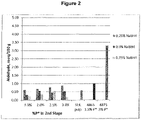
- the functional group contents are shown in Figures 1 , 2 , and 3 for carboxyl, aldehyde, and carbonyl content respectively.
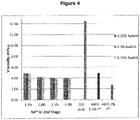
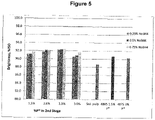
- the viscosity and brightness are shown in Figures 4 and 5 respectively.
- the results for a standard pulp bleached with a DE OP DE P D sequence (Std.) a pulp bleached with a DP*D (c/a) E P D sequence (4865)
- a pulp bleached with a DP*D (c/a) P*D (c/a) sequence (4875) are also shown in those figures.
- This example shows, among other things, that the use of a reducing agent, sodium borohydride, in the fourth stage of a bleach sequence, significantly reduces the aldehyde and carbonyl contents compared to sequences using P* without any reducing agent.
- a reducing agent sodium borohydride
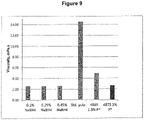
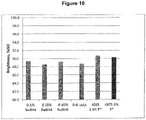
- Example 2 The same D 0 pulp from Example 1 was used for testing a DP*D (c/a) P*D (c/a) - B sequence, where a sodium borohydride treatment was done following the final D (c/a) bleaching stage. Each of the D (c/a) stages had H 2 O 2 added to enhance chlorous acid production. The sodium borohydride "B" stage treatment was done at three different levels. The process conditions and chemical applications are shown in Table 2.
- the final bleached pulps were tested for brightness, viscosity, and functional groups, including carboxyls, aldehydes, and carbonyls (calculated from copper no.).
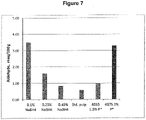
- the functional group contents are shown in Figures 6 , 7 , and 8 for carboxyl, aldehyde, and carbonyl content respectively.
- the viscosity and brightness are shown in Figures 9 and 10 respectively.
- the results for a standard pulp bleached with a DE OP DE P D sequence (Std.) a pulp bleached with a DP*D (c/a) E P D sequence (4865)
- a pulp bleached with a DP*D (c/a) P*D (c/a) sequence (4875) are also shown in those figures
- This example shows, among other things, that the aldehyde and carbonyl contents can be reduced compared to the DP*D (c/a) P*D sequence when a sufficient quantity of sodium borohydride is applied following the bleach sequence.
Landscapes
- Chemical & Material Sciences (AREA)
- Chemical Kinetics & Catalysis (AREA)
- Organic Chemistry (AREA)
- Health & Medical Sciences (AREA)
- Medicinal Chemistry (AREA)
- Polymers & Plastics (AREA)
- Biochemistry (AREA)
- Materials Engineering (AREA)
- Engineering & Computer Science (AREA)
- Life Sciences & Earth Sciences (AREA)
- General Chemical & Material Sciences (AREA)
- Polysaccharides And Polysaccharide Derivatives (AREA)
- Paper (AREA)
Claims (14)
- Verfahren zur Herstellung eines offenkettigen modifizierten Cellulosefaserstoffs, umfassend:Erhalten eines Cellulosefaserstoffs,Oxidieren des Cellulosefaserstoffs in mindestens einem Oxidationsschritt mit Wasserstoffperoxid und einem Metallkatalysator, ausgewählt aus Kupfer oder Eisen, bei einem pH-Wert von 2 bis 6, um einen oxidierten Cellulosefaserstoff zu bilden,Unterziehen des oxidierten Cellulosefaserstoffs in mindestens einem Reduktionsschritt einer Reduktionsreaktion, um einen offenkettigen modifizierten Cellulosefaserstoff zu bilden.
- Verfahren nach Anspruch 1, wobei der Cellulosefaserstoff vor dem mindestens einen Oxidationsschritt eine Kupferzahl von kleiner als 1 aufweist, wobei der Cellulosefaserstoff bei dem mindestens einen Oxidationsschritt auf eine Kupferzahl von größer als 3 oxidiert wird, und wobei die oxidierte Cellulose bei dem Reduktionsschritt auf eine Kupferzahl von kleiner als 0,5 reduziert wird.
- Verfahren nach Anspruch 1, wobei der mindestens eine Oxidationsschritt in mindestens einer Stufe eines mehrstufigen Bleichprozesses ausgeführt wird.
- Verfahren nach Anspruch 1, wobei der mindestens eine Reduktionsschritt mit einem Reduktionsmittel ausgeführt wird, ausgewählt aus mindestens einem aus Lithiumaluminiumhydrid, Natriumborhydrid, Natriumcyanoborhydrid, 9-BBN-Pyridin, Tributylzinnhydrid, Diisobutylaluminiumhydrid, L-Selektrid, Diboran, Diazen, und Aluminiumhydrid; wobei es sich bei dem Reduktionsmittel gegebenenfalls um Natriumborhydrid handelt.
- Verfahren nach Anspruch 4, wobei der mindestens eine Reduktionsschritt bei einem pH-Wert von mindestens 7 ausgeführt wird.
- Verfahren nach Anspruch 1, das weiter das Unterziehen des oxidierten Cellulosefaserstoffs mindestens einem Carboxylierungsschritt umfasst, der eine Kombination aus Natriumchlorit und Wasserstoffperoxid oder eine Kombination aus Chlordioxid und Wasserstoffperoxid umfasst; wobei der oxidierte Cellulosefaserstoff dem mindestens einen Carboxylierungsschritt gegebenenfalls nach dem mindestens einen Oxidationsschritt und vor dem mindestens einen Reduktionsschritt unterzogen wird.
- Verfahren zur Herstellung eines Cellulosederivatprodukts, umfassend:Erhalten eines offenkettigen modifizierten Cellulosefaserstoffs mit Hydroxylgruppen, der durch ein Verfahren hergestellt wird, das das Oxidieren eines Cellulosefaserstoffs, um einen oxidierten Cellulosefaserstoff zu bilden, und das Unterziehen des oxidierten Cellulosefaserstoffs einer Reduktionsreaktion umfasst; undUnterziehen des offenkettigen modifizierten Cellulosefaserstoffs einer chemischen Reaktion, die eine Vielzahl von Hydroxylgruppen in dem offenkettigen modifizierten Cellulosefaserstoff zu anderen Substituenten als Hydroxylgruppen umwandelt, um ein Cellulosederivatprodukt zu bilden,wobei das Oxidieren des Cellulosefaserstoffs mit Wasserstoffperoxid und einem Metallkatalysator, ausgewählt aus Kupfer oder Eisen, bei einem pH-Wert von 2 bis 6 ausgeführt wird.
- Verfahren nach Anspruch 7, wobei es sich bei der chemischen Reaktion um eine Veresterungsreaktion handelt; wobei das Cellulosederivatprodukt gegebenenfalls ausgewählt ist aus Ethylcellulose, Methylcellulose, Hydroxypropylcellulose, Carboxymethylcellulose, Hydroxypropylmethylcellulose, Hydroxyethylcellulose, und Hydroxyethylmethylcellulose.
- Verfahren nach Anspruch 7, wobei es sich bei der chemischen Reaktion um eine Veresterungsreaktion handelt; wobei das Cellulosederivatprodukt gegebenenfalls ausgewählt ist aus Celluloseacetat, Cellulosediacetat, Cellulosetriacetat, Celluloseacetatbutyrat, und Celluloseacetatpropionat.
- Verfahren nach Anspruch 7, wobei es sich bei der chemischen Reaktion um eine Xanthogenierungsreaktion handelt; wobei es sich bei dem Cellulosederivatprodukt gegebenenfalls um Kunstseide handelt.
- Offenkettiger modifizierter Cellulosefaserstoff, der β-D-1,4-Anhydroglucose-Monomere umfasst, die C2- und C3-Kohlenstoffe umfassen, wobei es sich bei mindestens 5 % der C2- und C3-Kohlenstoffe um primäre Alkohole handelt, wobei der Carboxylgehalt größer als 6 meq/100 g ist.
- Offenkettiger modifizierter Cellulosefaserstoff nach Anspruch 11, wobei der Hemicellulosegehalt kleiner als 4% ist; wobei das ΔR gegebenenfalls kleiner als 2 ist; weiter wobei die Viskosität gegebenenfalls mindestens 12 beträgt.
- Offenkettiger modifizierter Cellulosefaserstoff nach Anspruch 11, wobei die ISO-Helligkeit mindestens 90 % beträgt, wobei die CIE mindestens 85 % beträgt, und wobei der b*-Farbwert kleiner als 2,5 ist; wobei die Kupferzahl gegebenenfalls kleiner als 0,2 ist.
- Verfahren nach Anspruch 7, wobei der offenkettige modifizierte Cellulosefaserstoff β-D-1,4-Anhydroglucose-Monomere umfasst, die C2- und C3-Kohlenstoffe umfassen, und wobei es sich bei mindestens 5 % der C2- und C3-Kohlenstoffe um primäre Alkohole handelt.
Applications Claiming Priority (2)
| Application Number | Priority Date | Filing Date | Title |
|---|---|---|---|
| US201562261541P | 2015-12-01 | 2015-12-01 | |
| PCT/US2016/064053 WO2017095831A1 (en) | 2015-12-01 | 2016-11-30 | Open chain modified cellulosic pulps and methods of making and using the same |
Publications (2)
| Publication Number | Publication Date |
|---|---|
| EP3383922A1 EP3383922A1 (de) | 2018-10-10 |
| EP3383922B1 true EP3383922B1 (de) | 2022-10-12 |
Family
ID=57680510
Family Applications (1)
| Application Number | Title | Priority Date | Filing Date |
|---|---|---|---|
| EP16819746.5A Active EP3383922B1 (de) | 2015-12-01 | 2016-11-30 | Offenkettiger modifizierte zellstoff und verfahren zur herstellung und verwendung |
Country Status (9)
| Country | Link |
|---|---|
| US (1) | US10899847B2 (de) |
| EP (1) | EP3383922B1 (de) |
| JP (1) | JP6858775B2 (de) |
| KR (1) | KR20180100560A (de) |
| CN (1) | CN108602897B (de) |
| BR (1) | BR112018010992A2 (de) |
| CA (1) | CA3006613A1 (de) |
| CL (1) | CL2018001486A1 (de) |
| WO (1) | WO2017095831A1 (de) |
Families Citing this family (6)
| Publication number | Priority date | Publication date | Assignee | Title |
|---|---|---|---|---|
| WO2017003364A1 (en) * | 2015-06-30 | 2017-01-05 | Kth Holding Ab | Oxygen barriers based on modified cellulose fibers |
| WO2017066499A1 (en) | 2015-10-14 | 2017-04-20 | Gp Cellulose Gmbh | Novel cellulose composite materials and methods of making and using the same |
| CA3040734A1 (en) | 2016-11-16 | 2018-05-24 | Gp Cellulose Gmbh | Modified cellulose from chemical fiber and methods of making and using the same |
| RU2747621C2 (ru) * | 2017-01-18 | 2021-05-11 | Ктх Холдинг Аб | Формованный из расплава материал с высоким содержанием целлюлозных волокон |
| WO2019165324A1 (en) | 2018-02-23 | 2019-08-29 | Gp Cellulose Gmbh | Novel dissolving wood pulps and methods of making and using the same |
| US11352748B2 (en) | 2018-07-31 | 2022-06-07 | International Paper Company | Crosslinked pulps, cellulose ether products made therefrom; and related methods of making pulps and cellulose ether products |
Family Cites Families (21)
| Publication number | Priority date | Publication date | Assignee | Title |
|---|---|---|---|---|
| US3017316A (en) | 1958-06-25 | 1962-01-16 | Hooker Chemical Corp | Method of bleaching wood pulp with chlorine dioxide and sodium borohydride |
| JP3991444B2 (ja) * | 1998-05-06 | 2007-10-17 | 凸版印刷株式会社 | 延展性を有する含浸紙 |
| US6379494B1 (en) | 1999-03-19 | 2002-04-30 | Weyerhaeuser Company | Method of making carboxylated cellulose fibers and products of the method |
| US20050028292A1 (en) * | 2003-08-05 | 2005-02-10 | Weyerhaeuser Company | Methods for making carboxylated cellulosic fibers |
| US9845575B2 (en) * | 2009-05-14 | 2017-12-19 | International Paper Company | Fibrillated blend of lyocell low DP pulp |
| US9512563B2 (en) | 2009-05-28 | 2016-12-06 | Gp Cellulose Gmbh | Surface treated modified cellulose from chemical kraft fiber and methods of making and using same |
| WO2010138941A2 (en) | 2009-05-28 | 2010-12-02 | Gp Cellulose Gmbh | Modified cellulose from chemical kraft fiber and methods of making and using the same |
| US9512237B2 (en) | 2009-05-28 | 2016-12-06 | Gp Cellulose Gmbh | Method for inhibiting the growth of microbes with a modified cellulose fiber |
| US9511167B2 (en) | 2009-05-28 | 2016-12-06 | Gp Cellulose Gmbh | Modified cellulose from chemical kraft fiber and methods of making and using the same |
| JP6254078B2 (ja) * | 2011-05-23 | 2017-12-27 | ゲーペー ツェルローゼ ゲーエムベーハー | 白色度および明度が改善された針葉樹クラフト繊維、ならびにそれを作製する方法および使用する方法 |
| US9103065B2 (en) * | 2011-09-12 | 2015-08-11 | Gunze Limited | Method for producing hydrophilic cellulose fiber |
| JP5875833B2 (ja) | 2011-11-10 | 2016-03-02 | 第一工業製薬株式会社 | 増粘用セルロース繊維の製法 |
| BR112014017164A8 (pt) | 2012-01-12 | 2017-07-04 | Gp Cellulose Gmbh | método para produzir polpa kraft oxidada e fibras kraft de madeira macia |
| EP3495550A1 (de) | 2012-04-18 | 2019-06-12 | GP Cellulose GmbH | Verwendung eines tensids zur behandlung von pulpe und zur verbesserung der aufnahme von kraft-pulpe in fasern zur herstellung von viskose und anderen sekundären faserprodukten |
| JP5921960B2 (ja) * | 2012-06-04 | 2016-05-24 | 第一工業製薬株式会社 | 無機微粒子含有組成物およびそれを用いた被膜 |
| PL2954115T3 (pl) | 2013-02-08 | 2022-05-02 | Gp Cellulose Gmbh | Włókno siarczanowe z drewna iglastego o polepszonej zawartości a-celulozy i jego zastosowanie w wytwarzaniu chemicznych produktów celulozowych |
| US10138598B2 (en) | 2013-03-14 | 2018-11-27 | Gp Cellulose Gmbh | Method of making a highly functional, low viscosity kraft fiber using an acidic bleaching sequence and a fiber made by the process |
| WO2015138335A1 (en) | 2014-03-12 | 2015-09-17 | Gp Cellulose Gmbh | A low viscosity kraft fiber having an enhanced carboxyl content and methods of making and using the same |
| BR112015020000A2 (pt) | 2013-03-15 | 2017-07-18 | Gp Cellulose Gmbh | fibra kraft quimicamente modificada e métodos de fabricação da mesma |
| WO2017066499A1 (en) | 2015-10-14 | 2017-04-20 | Gp Cellulose Gmbh | Novel cellulose composite materials and methods of making and using the same |
| EP4467718A3 (de) | 2016-06-02 | 2025-02-26 | GP Cellulose GmbH | Verpackungsmaterialien mit oxidierter cellulose |
-
2016
- 2016-11-30 EP EP16819746.5A patent/EP3383922B1/de active Active
- 2016-11-30 CN CN201680078773.9A patent/CN108602897B/zh active Active
- 2016-11-30 KR KR1020187018562A patent/KR20180100560A/ko not_active Ceased
- 2016-11-30 BR BR112018010992A patent/BR112018010992A2/pt not_active IP Right Cessation
- 2016-11-30 JP JP2018528009A patent/JP6858775B2/ja not_active Expired - Fee Related
- 2016-11-30 CA CA3006613A patent/CA3006613A1/en not_active Abandoned
- 2016-11-30 US US15/780,324 patent/US10899847B2/en active Active
- 2016-11-30 WO PCT/US2016/064053 patent/WO2017095831A1/en not_active Ceased
-
2018
- 2018-06-01 CL CL2018001486A patent/CL2018001486A1/es unknown
Also Published As
| Publication number | Publication date |
|---|---|
| BR112018010992A2 (pt) | 2018-12-04 |
| CN108602897B (zh) | 2021-02-02 |
| WO2017095831A1 (en) | 2017-06-08 |
| CN108602897A (zh) | 2018-09-28 |
| JP6858775B2 (ja) | 2021-04-14 |
| US10899847B2 (en) | 2021-01-26 |
| CA3006613A1 (en) | 2017-06-08 |
| US20190382509A1 (en) | 2019-12-19 |
| JP2019500448A (ja) | 2019-01-10 |
| CL2018001486A1 (es) | 2018-10-05 |
| EP3383922A1 (de) | 2018-10-10 |
| KR20180100560A (ko) | 2018-09-11 |
| WO2017095831A9 (en) | 2017-08-03 |
Similar Documents
| Publication | Publication Date | Title |
|---|---|---|
| EP3383922B1 (de) | Offenkettiger modifizierte zellstoff und verfahren zur herstellung und verwendung | |
| US10995453B2 (en) | Low viscosity kraft fiber having reduced yellowing properties and methods of making and using the same | |
| EP2839071B1 (de) | Verwendung eines tensids zur behandlung von pulpe und zur verbesserung der aufnahme von kraft-pulpe in fasern zur herstellung von viskose und anderen sekundären faserprodukten | |
| CA2655035C (en) | Pulp reactivity enhancement | |
| KR102180512B1 (ko) | 개선된 알파 셀룰로스 함량을 갖는 연재 크래프트 섬유 및 화학적 셀룰로스 제품의 생산에서의 그의 용도 | |
| CA2836895A1 (en) | Softwood kraft fiber having improved whiteness and brightness and methods of making and using the same | |
| EP3755839B1 (de) | Neuartige chemiezellstoffe und verfahren zur herstellung und verwendung davon | |
| US2856402A (en) | Treatment of cotton linters |
Legal Events
| Date | Code | Title | Description |
|---|---|---|---|
| STAA | Information on the status of an ep patent application or granted ep patent |
Free format text: STATUS: UNKNOWN |
|
| STAA | Information on the status of an ep patent application or granted ep patent |
Free format text: STATUS: THE INTERNATIONAL PUBLICATION HAS BEEN MADE |
|
| PUAI | Public reference made under article 153(3) epc to a published international application that has entered the european phase |
Free format text: ORIGINAL CODE: 0009012 |
|
| STAA | Information on the status of an ep patent application or granted ep patent |
Free format text: STATUS: REQUEST FOR EXAMINATION WAS MADE |
|
| 17P | Request for examination filed |
Effective date: 20180607 |
|
| AK | Designated contracting states |
Kind code of ref document: A1 Designated state(s): AL AT BE BG CH CY CZ DE DK EE ES FI FR GB GR HR HU IE IS IT LI LT LU LV MC MK MT NL NO PL PT RO RS SE SI SK SM TR |
|
| AX | Request for extension of the european patent |
Extension state: BA ME |
|
| STAA | Information on the status of an ep patent application or granted ep patent |
Free format text: STATUS: EXAMINATION IS IN PROGRESS |
|
| DAV | Request for validation of the european patent (deleted) | ||
| DAX | Request for extension of the european patent (deleted) | ||
| 17Q | First examination report despatched |
Effective date: 20190315 |
|
| GRAP | Despatch of communication of intention to grant a patent |
Free format text: ORIGINAL CODE: EPIDOSNIGR1 |
|
| STAA | Information on the status of an ep patent application or granted ep patent |
Free format text: STATUS: GRANT OF PATENT IS INTENDED |
|
| INTG | Intention to grant announced |
Effective date: 20220718 |
|
| RIN1 | Information on inventor provided before grant (corrected) |
Inventor name: CARTER, BLAIR R. Inventor name: BARTGES, HARRY R. Inventor name: COURCHENE, CHARLES E. Inventor name: KEOUGH, JAMES M. Inventor name: NONNI, ARTHUR J. |
|
| GRAS | Grant fee paid |
Free format text: ORIGINAL CODE: EPIDOSNIGR3 |
|
| GRAA | (expected) grant |
Free format text: ORIGINAL CODE: 0009210 |
|
| STAA | Information on the status of an ep patent application or granted ep patent |
Free format text: STATUS: THE PATENT HAS BEEN GRANTED |
|
| AK | Designated contracting states |
Kind code of ref document: B1 Designated state(s): AL AT BE BG CH CY CZ DE DK EE ES FI FR GB GR HR HU IE IS IT LI LT LU LV MC MK MT NL NO PL PT RO RS SE SI SK SM TR |
|
| REG | Reference to a national code |
Ref country code: GB Ref legal event code: FG4D |
|
| REG | Reference to a national code |
Ref country code: CH Ref legal event code: EP |
|
| REG | Reference to a national code |
Ref country code: DE Ref legal event code: R096 Ref document number: 602016075629 Country of ref document: DE |
|
| REG | Reference to a national code |
Ref country code: IE Ref legal event code: FG4D |
|
| REG | Reference to a national code |
Ref country code: SE Ref legal event code: TRGR Ref country code: AT Ref legal event code: REF Ref document number: 1524119 Country of ref document: AT Kind code of ref document: T Effective date: 20221115 |
|
| REG | Reference to a national code |
Ref country code: NO Ref legal event code: T2 Effective date: 20221012 |
|
| PGFP | Annual fee paid to national office [announced via postgrant information from national office to epo] |
Ref country code: SE Payment date: 20221026 Year of fee payment: 7 Ref country code: NO Payment date: 20221108 Year of fee payment: 7 Ref country code: FI Payment date: 20221109 Year of fee payment: 7 |
|
| REG | Reference to a national code |
Ref country code: LT Ref legal event code: MG9D |
|
| REG | Reference to a national code |
Ref country code: NL Ref legal event code: MP Effective date: 20221012 |
|
| REG | Reference to a national code |
Ref country code: AT Ref legal event code: MK05 Ref document number: 1524119 Country of ref document: AT Kind code of ref document: T Effective date: 20221012 |
|
| PG25 | Lapsed in a contracting state [announced via postgrant information from national office to epo] |
Ref country code: NL Free format text: LAPSE BECAUSE OF FAILURE TO SUBMIT A TRANSLATION OF THE DESCRIPTION OR TO PAY THE FEE WITHIN THE PRESCRIBED TIME-LIMIT Effective date: 20221012 |
|
| PG25 | Lapsed in a contracting state [announced via postgrant information from national office to epo] |
Ref country code: PT Free format text: LAPSE BECAUSE OF FAILURE TO SUBMIT A TRANSLATION OF THE DESCRIPTION OR TO PAY THE FEE WITHIN THE PRESCRIBED TIME-LIMIT Effective date: 20230213 Ref country code: LT Free format text: LAPSE BECAUSE OF FAILURE TO SUBMIT A TRANSLATION OF THE DESCRIPTION OR TO PAY THE FEE WITHIN THE PRESCRIBED TIME-LIMIT Effective date: 20221012 Ref country code: ES Free format text: LAPSE BECAUSE OF FAILURE TO SUBMIT A TRANSLATION OF THE DESCRIPTION OR TO PAY THE FEE WITHIN THE PRESCRIBED TIME-LIMIT Effective date: 20221012 Ref country code: AT Free format text: LAPSE BECAUSE OF FAILURE TO SUBMIT A TRANSLATION OF THE DESCRIPTION OR TO PAY THE FEE WITHIN THE PRESCRIBED TIME-LIMIT Effective date: 20221012 |
|
| PGFP | Annual fee paid to national office [announced via postgrant information from national office to epo] |
Ref country code: CH Payment date: 20230220 Year of fee payment: 7 |
|
| PG25 | Lapsed in a contracting state [announced via postgrant information from national office to epo] |
Ref country code: RS Free format text: LAPSE BECAUSE OF FAILURE TO SUBMIT A TRANSLATION OF THE DESCRIPTION OR TO PAY THE FEE WITHIN THE PRESCRIBED TIME-LIMIT Effective date: 20221012 Ref country code: PL Free format text: LAPSE BECAUSE OF FAILURE TO SUBMIT A TRANSLATION OF THE DESCRIPTION OR TO PAY THE FEE WITHIN THE PRESCRIBED TIME-LIMIT Effective date: 20221012 Ref country code: LV Free format text: LAPSE BECAUSE OF FAILURE TO SUBMIT A TRANSLATION OF THE DESCRIPTION OR TO PAY THE FEE WITHIN THE PRESCRIBED TIME-LIMIT Effective date: 20221012 Ref country code: IS Free format text: LAPSE BECAUSE OF FAILURE TO SUBMIT A TRANSLATION OF THE DESCRIPTION OR TO PAY THE FEE WITHIN THE PRESCRIBED TIME-LIMIT Effective date: 20230212 Ref country code: HR Free format text: LAPSE BECAUSE OF FAILURE TO SUBMIT A TRANSLATION OF THE DESCRIPTION OR TO PAY THE FEE WITHIN THE PRESCRIBED TIME-LIMIT Effective date: 20221012 Ref country code: GR Free format text: LAPSE BECAUSE OF FAILURE TO SUBMIT A TRANSLATION OF THE DESCRIPTION OR TO PAY THE FEE WITHIN THE PRESCRIBED TIME-LIMIT Effective date: 20230113 |
|
| P01 | Opt-out of the competence of the unified patent court (upc) registered |
Effective date: 20230528 |
|
| REG | Reference to a national code |
Ref country code: DE Ref legal event code: R097 Ref document number: 602016075629 Country of ref document: DE |
|
| REG | Reference to a national code |
Ref country code: BE Ref legal event code: MM Effective date: 20221130 |
|
| PG25 | Lapsed in a contracting state [announced via postgrant information from national office to epo] |
Ref country code: SM Free format text: LAPSE BECAUSE OF FAILURE TO SUBMIT A TRANSLATION OF THE DESCRIPTION OR TO PAY THE FEE WITHIN THE PRESCRIBED TIME-LIMIT Effective date: 20221012 Ref country code: RO Free format text: LAPSE BECAUSE OF FAILURE TO SUBMIT A TRANSLATION OF THE DESCRIPTION OR TO PAY THE FEE WITHIN THE PRESCRIBED TIME-LIMIT Effective date: 20221012 Ref country code: MC Free format text: LAPSE BECAUSE OF FAILURE TO SUBMIT A TRANSLATION OF THE DESCRIPTION OR TO PAY THE FEE WITHIN THE PRESCRIBED TIME-LIMIT Effective date: 20221012 Ref country code: EE Free format text: LAPSE BECAUSE OF FAILURE TO SUBMIT A TRANSLATION OF THE DESCRIPTION OR TO PAY THE FEE WITHIN THE PRESCRIBED TIME-LIMIT Effective date: 20221012 Ref country code: DK Free format text: LAPSE BECAUSE OF FAILURE TO SUBMIT A TRANSLATION OF THE DESCRIPTION OR TO PAY THE FEE WITHIN THE PRESCRIBED TIME-LIMIT Effective date: 20221012 Ref country code: CZ Free format text: LAPSE BECAUSE OF FAILURE TO SUBMIT A TRANSLATION OF THE DESCRIPTION OR TO PAY THE FEE WITHIN THE PRESCRIBED TIME-LIMIT Effective date: 20221012 |
|
| PLBE | No opposition filed within time limit |
Free format text: ORIGINAL CODE: 0009261 |
|
| STAA | Information on the status of an ep patent application or granted ep patent |
Free format text: STATUS: NO OPPOSITION FILED WITHIN TIME LIMIT |
|
| PG25 | Lapsed in a contracting state [announced via postgrant information from national office to epo] |
Ref country code: SK Free format text: LAPSE BECAUSE OF FAILURE TO SUBMIT A TRANSLATION OF THE DESCRIPTION OR TO PAY THE FEE WITHIN THE PRESCRIBED TIME-LIMIT Effective date: 20221012 Ref country code: LU Free format text: LAPSE BECAUSE OF NON-PAYMENT OF DUE FEES Effective date: 20221130 Ref country code: AL Free format text: LAPSE BECAUSE OF FAILURE TO SUBMIT A TRANSLATION OF THE DESCRIPTION OR TO PAY THE FEE WITHIN THE PRESCRIBED TIME-LIMIT Effective date: 20221012 |
|
| 26N | No opposition filed |
Effective date: 20230713 |
|
| GBPC | Gb: european patent ceased through non-payment of renewal fee |
Effective date: 20230112 |
|
| PG25 | Lapsed in a contracting state [announced via postgrant information from national office to epo] |
Ref country code: IE Free format text: LAPSE BECAUSE OF NON-PAYMENT OF DUE FEES Effective date: 20221130 Ref country code: GB Free format text: LAPSE BECAUSE OF NON-PAYMENT OF DUE FEES Effective date: 20230112 |
|
| PG25 | Lapsed in a contracting state [announced via postgrant information from national office to epo] |
Ref country code: SI Free format text: LAPSE BECAUSE OF FAILURE TO SUBMIT A TRANSLATION OF THE DESCRIPTION OR TO PAY THE FEE WITHIN THE PRESCRIBED TIME-LIMIT Effective date: 20221012 Ref country code: BE Free format text: LAPSE BECAUSE OF NON-PAYMENT OF DUE FEES Effective date: 20221130 |
|
| PG25 | Lapsed in a contracting state [announced via postgrant information from national office to epo] |
Ref country code: HU Free format text: LAPSE BECAUSE OF FAILURE TO SUBMIT A TRANSLATION OF THE DESCRIPTION OR TO PAY THE FEE WITHIN THE PRESCRIBED TIME-LIMIT; INVALID AB INITIO Effective date: 20161130 |
|
| PG25 | Lapsed in a contracting state [announced via postgrant information from national office to epo] |
Ref country code: CY Free format text: LAPSE BECAUSE OF FAILURE TO SUBMIT A TRANSLATION OF THE DESCRIPTION OR TO PAY THE FEE WITHIN THE PRESCRIBED TIME-LIMIT Effective date: 20221012 |
|
| PG25 | Lapsed in a contracting state [announced via postgrant information from national office to epo] |
Ref country code: MK Free format text: LAPSE BECAUSE OF FAILURE TO SUBMIT A TRANSLATION OF THE DESCRIPTION OR TO PAY THE FEE WITHIN THE PRESCRIBED TIME-LIMIT Effective date: 20221012 Ref country code: IT Free format text: LAPSE BECAUSE OF FAILURE TO SUBMIT A TRANSLATION OF THE DESCRIPTION OR TO PAY THE FEE WITHIN THE PRESCRIBED TIME-LIMIT Effective date: 20221012 |
|
| REG | Reference to a national code |
Ref country code: CH Ref legal event code: PL |
|
| PG25 | Lapsed in a contracting state [announced via postgrant information from national office to epo] |
Ref country code: CH Free format text: LAPSE BECAUSE OF NON-PAYMENT OF DUE FEES Effective date: 20231130 |
|
| REG | Reference to a national code |
Ref country code: SE Ref legal event code: EUG |
|
| PG25 | Lapsed in a contracting state [announced via postgrant information from national office to epo] |
Ref country code: NO Free format text: LAPSE BECAUSE OF NON-PAYMENT OF DUE FEES Effective date: 20231130 Ref country code: FI Free format text: LAPSE BECAUSE OF NON-PAYMENT OF DUE FEES Effective date: 20231130 Ref country code: CH Free format text: LAPSE BECAUSE OF NON-PAYMENT OF DUE FEES Effective date: 20231130 Ref country code: BG Free format text: LAPSE BECAUSE OF FAILURE TO SUBMIT A TRANSLATION OF THE DESCRIPTION OR TO PAY THE FEE WITHIN THE PRESCRIBED TIME-LIMIT Effective date: 20221012 |
|
| PG25 | Lapsed in a contracting state [announced via postgrant information from national office to epo] |
Ref country code: MT Free format text: LAPSE BECAUSE OF FAILURE TO SUBMIT A TRANSLATION OF THE DESCRIPTION OR TO PAY THE FEE WITHIN THE PRESCRIBED TIME-LIMIT Effective date: 20221012 |
|
| PGFP | Annual fee paid to national office [announced via postgrant information from national office to epo] |
Ref country code: DE Payment date: 20241001 Year of fee payment: 9 |
|
| PGFP | Annual fee paid to national office [announced via postgrant information from national office to epo] |
Ref country code: FR Payment date: 20241001 Year of fee payment: 9 |
|
| PG25 | Lapsed in a contracting state [announced via postgrant information from national office to epo] |
Ref country code: SE Free format text: LAPSE BECAUSE OF NON-PAYMENT OF DUE FEES Effective date: 20231201 |
|
| PG25 | Lapsed in a contracting state [announced via postgrant information from national office to epo] |
Ref country code: TR Free format text: LAPSE BECAUSE OF FAILURE TO SUBMIT A TRANSLATION OF THE DESCRIPTION OR TO PAY THE FEE WITHIN THE PRESCRIBED TIME-LIMIT Effective date: 20221012 |