EP3379997B1 - Method to quantify photoplethysmogram (ppg) signal quality - Google Patents
Method to quantify photoplethysmogram (ppg) signal quality Download PDFInfo
- Publication number
- EP3379997B1 EP3379997B1 EP16798003.6A EP16798003A EP3379997B1 EP 3379997 B1 EP3379997 B1 EP 3379997B1 EP 16798003 A EP16798003 A EP 16798003A EP 3379997 B1 EP3379997 B1 EP 3379997B1
- Authority
- EP
- European Patent Office
- Prior art keywords
- ppg
- heartbeat waveform
- waveform
- peak
- heartbeat
- Prior art date
- Legal status (The legal status is an assumption and is not a legal conclusion. Google has not performed a legal analysis and makes no representation as to the accuracy of the status listed.)
- Active
Links
Images


Classifications
-
- A—HUMAN NECESSITIES
- A61—MEDICAL OR VETERINARY SCIENCE; HYGIENE
- A61B—DIAGNOSIS; SURGERY; IDENTIFICATION
- A61B5/00—Measuring for diagnostic purposes; Identification of persons
- A61B5/72—Signal processing specially adapted for physiological signals or for diagnostic purposes
- A61B5/7203—Signal processing specially adapted for physiological signals or for diagnostic purposes for noise prevention, reduction or removal
-
- A—HUMAN NECESSITIES
- A61—MEDICAL OR VETERINARY SCIENCE; HYGIENE
- A61B—DIAGNOSIS; SURGERY; IDENTIFICATION
- A61B5/00—Measuring for diagnostic purposes; Identification of persons
- A61B5/72—Signal processing specially adapted for physiological signals or for diagnostic purposes
- A61B5/7203—Signal processing specially adapted for physiological signals or for diagnostic purposes for noise prevention, reduction or removal
- A61B5/7207—Signal processing specially adapted for physiological signals or for diagnostic purposes for noise prevention, reduction or removal of noise induced by motion artifacts
-
- A—HUMAN NECESSITIES
- A61—MEDICAL OR VETERINARY SCIENCE; HYGIENE
- A61B—DIAGNOSIS; SURGERY; IDENTIFICATION
- A61B5/00—Measuring for diagnostic purposes; Identification of persons
- A61B5/02—Detecting, measuring or recording for evaluating the cardiovascular system, e.g. pulse, heart rate, blood pressure or blood flow
- A61B5/021—Measuring pressure in heart or blood vessels
- A61B5/02108—Measuring pressure in heart or blood vessels from analysis of pulse wave characteristics
- A61B5/02116—Measuring pressure in heart or blood vessels from analysis of pulse wave characteristics of pulse wave amplitude
-
- A—HUMAN NECESSITIES
- A61—MEDICAL OR VETERINARY SCIENCE; HYGIENE
- A61B—DIAGNOSIS; SURGERY; IDENTIFICATION
- A61B5/00—Measuring for diagnostic purposes; Identification of persons
- A61B5/02—Detecting, measuring or recording for evaluating the cardiovascular system, e.g. pulse, heart rate, blood pressure or blood flow
- A61B5/021—Measuring pressure in heart or blood vessels
- A61B5/02108—Measuring pressure in heart or blood vessels from analysis of pulse wave characteristics
- A61B5/02125—Measuring pressure in heart or blood vessels from analysis of pulse wave characteristics of pulse wave propagation time
-
- A—HUMAN NECESSITIES
- A61—MEDICAL OR VETERINARY SCIENCE; HYGIENE
- A61B—DIAGNOSIS; SURGERY; IDENTIFICATION
- A61B5/00—Measuring for diagnostic purposes; Identification of persons
- A61B5/02—Detecting, measuring or recording for evaluating the cardiovascular system, e.g. pulse, heart rate, blood pressure or blood flow
- A61B5/024—Measuring pulse rate or heart rate
- A61B5/02416—Measuring pulse rate or heart rate using photoplethysmograph signals, e.g. generated by infrared radiation
-
- A—HUMAN NECESSITIES
- A61—MEDICAL OR VETERINARY SCIENCE; HYGIENE
- A61B—DIAGNOSIS; SURGERY; IDENTIFICATION
- A61B5/00—Measuring for diagnostic purposes; Identification of persons
- A61B5/02—Detecting, measuring or recording for evaluating the cardiovascular system, e.g. pulse, heart rate, blood pressure or blood flow
- A61B5/024—Measuring pulse rate or heart rate
- A61B5/0245—Measuring pulse rate or heart rate by using sensing means generating electric signals, i.e. ECG signals
-
- A—HUMAN NECESSITIES
- A61—MEDICAL OR VETERINARY SCIENCE; HYGIENE
- A61B—DIAGNOSIS; SURGERY; IDENTIFICATION
- A61B5/00—Measuring for diagnostic purposes; Identification of persons
- A61B5/145—Measuring characteristics of blood in vivo, e.g. gas concentration or pH-value ; Measuring characteristics of body fluids or tissues, e.g. interstitial fluid or cerebral tissue
- A61B5/1455—Measuring characteristics of blood in vivo, e.g. gas concentration or pH-value ; Measuring characteristics of body fluids or tissues, e.g. interstitial fluid or cerebral tissue using optical sensors, e.g. spectral photometrical oximeters
- A61B5/14551—Measuring characteristics of blood in vivo, e.g. gas concentration or pH-value ; Measuring characteristics of body fluids or tissues, e.g. interstitial fluid or cerebral tissue using optical sensors, e.g. spectral photometrical oximeters for measuring blood gases
- A61B5/14552—Details of sensors specially adapted therefor
-
- A—HUMAN NECESSITIES
- A61—MEDICAL OR VETERINARY SCIENCE; HYGIENE
- A61B—DIAGNOSIS; SURGERY; IDENTIFICATION
- A61B5/00—Measuring for diagnostic purposes; Identification of persons
- A61B5/24—Detecting, measuring or recording bioelectric or biomagnetic signals of the body or parts thereof
- A61B5/316—Modalities, i.e. specific diagnostic methods
- A61B5/318—Heart-related electrical modalities, e.g. electrocardiography [ECG]
- A61B5/346—Analysis of electrocardiograms
- A61B5/349—Detecting specific parameters of the electrocardiograph cycle
- A61B5/35—Detecting specific parameters of the electrocardiograph cycle by template matching
-
- A—HUMAN NECESSITIES
- A61—MEDICAL OR VETERINARY SCIENCE; HYGIENE
- A61B—DIAGNOSIS; SURGERY; IDENTIFICATION
- A61B5/00—Measuring for diagnostic purposes; Identification of persons
- A61B5/24—Detecting, measuring or recording bioelectric or biomagnetic signals of the body or parts thereof
- A61B5/316—Modalities, i.e. specific diagnostic methods
- A61B5/318—Heart-related electrical modalities, e.g. electrocardiography [ECG]
- A61B5/346—Analysis of electrocardiograms
- A61B5/349—Detecting specific parameters of the electrocardiograph cycle
- A61B5/352—Detecting R peaks, e.g. for synchronising diagnostic apparatus; Estimating R-R interval
-
- A—HUMAN NECESSITIES
- A61—MEDICAL OR VETERINARY SCIENCE; HYGIENE
- A61B—DIAGNOSIS; SURGERY; IDENTIFICATION
- A61B5/00—Measuring for diagnostic purposes; Identification of persons
- A61B5/72—Signal processing specially adapted for physiological signals or for diagnostic purposes
- A61B5/7221—Determining signal validity, reliability or quality
-
- A—HUMAN NECESSITIES
- A61—MEDICAL OR VETERINARY SCIENCE; HYGIENE
- A61B—DIAGNOSIS; SURGERY; IDENTIFICATION
- A61B5/00—Measuring for diagnostic purposes; Identification of persons
- A61B5/72—Signal processing specially adapted for physiological signals or for diagnostic purposes
- A61B5/7235—Details of waveform analysis
- A61B5/7246—Details of waveform analysis using correlation, e.g. template matching or determination of similarity
-
- A—HUMAN NECESSITIES
- A61—MEDICAL OR VETERINARY SCIENCE; HYGIENE
- A61B—DIAGNOSIS; SURGERY; IDENTIFICATION
- A61B5/00—Measuring for diagnostic purposes; Identification of persons
- A61B5/72—Signal processing specially adapted for physiological signals or for diagnostic purposes
- A61B5/7235—Details of waveform analysis
- A61B5/7264—Classification of physiological signals or data, e.g. using neural networks, statistical classifiers, expert systems or fuzzy systems
-
- G—PHYSICS
- G06—COMPUTING OR CALCULATING; COUNTING
- G06F—ELECTRIC DIGITAL DATA PROCESSING
- G06F2218/00—Aspects of pattern recognition specially adapted for signal processing
- G06F2218/08—Feature extraction
- G06F2218/10—Feature extraction by analysing the shape of a waveform, e.g. extracting parameters relating to peaks
-
- G—PHYSICS
- G06—COMPUTING OR CALCULATING; COUNTING
- G06F—ELECTRIC DIGITAL DATA PROCESSING
- G06F2218/00—Aspects of pattern recognition specially adapted for signal processing
- G06F2218/12—Classification; Matching
- G06F2218/14—Classification; Matching by matching peak patterns
-
- G—PHYSICS
- G16—INFORMATION AND COMMUNICATION TECHNOLOGY [ICT] SPECIALLY ADAPTED FOR SPECIFIC APPLICATION FIELDS
- G16H—HEALTHCARE INFORMATICS, i.e. INFORMATION AND COMMUNICATION TECHNOLOGY [ICT] SPECIALLY ADAPTED FOR THE HANDLING OR PROCESSING OF MEDICAL OR HEALTHCARE DATA
- G16H50/00—ICT specially adapted for medical diagnosis, medical simulation or medical data mining; ICT specially adapted for detecting, monitoring or modelling epidemics or pandemics
- G16H50/20—ICT specially adapted for medical diagnosis, medical simulation or medical data mining; ICT specially adapted for detecting, monitoring or modelling epidemics or pandemics for computer-aided diagnosis, e.g. based on medical expert systems
Definitions
- the present invention finds application in patient monitoring systems and methods. However, it will be appreciated that the described techniques may also find application in other vital sign analysis systems, other patient measurement systems, and the like.
- Photoplethysmography is a method used to noninvasively measure blood volume changes during the cardiac cycle.
- PPG uses the change in absorption of light by tissues to measure the difference in oxygenation levels and infer the changes in blood volume.
- PPG is clinically used to measure the percentage of oxygenated saturation of blood (SpO2).
- PPG waveform analysis has also been used to calculate other clinical parameters such as pulse arrival time, estimate blood pressure etc.
- PPG measuring devices are small, portable and easy to use; hence they are widely used in hospitals and clinics to monitor patients.
- PPG signal measurement and waveform interpretation A major challenge to PPG signal measurement and waveform interpretation is the inherent noise in the signal.
- the PPG signal is transiently affected by motion artifacts; therefore, the use of the signal as an input to various algorithms can lead to erroneous results.
- signal processing techniques and compensation strategies have been developed to overcome the noise issues of the PPG waveforms, there is no method to evaluate signal quality.
- Another challenge in evaluating PPG signal quality is the fact that most PPG devices output a filtered signal in which the signal amplitude has been modified (e.g., to scale for visualization purposes). Hence, PPG waveform magnitudes are difficult to interpret and this limits the evaluation of waveforms based on magnitude thresholds.
- US patent application US 2010/0324384 A1 discloses a body-worn system that continuously measures pulse oximetry and blood pressure, along with motion, posture, and activity level, from an ambulatory patient.
- the system features an oximetry probe that comfortably clips to the base of the patient's thumb, thereby freeing up their fingers for conventional activities in a hospital, such as reading and eating.
- the probe secures to the thumb and measures time-dependent signals corresponding to LEDs operating near 660 and 905 nm. Analog versions of these signals pass through a low-profile cable to a wrist-worn transceiver that encloses a processing unit.
- an accelerometer a wireless system that sends information through a network to a remote receiver, e.g. a computer located in a central nursing station.
- US patent US 4,802,486 A discloses a method and apparatus for measuring and correlating a patient's heart activity with optical detection of the patient's blood flow.
- the method and apparatus permit more accurate determination of blood flow characteristics such as oxygen saturation and pulse rate.
- the heart activity is detected by monitoring the patient's EKG waveform, and the blood flow is detected by a non-invasive pulse oximeter.
- the occurrence of the R wave portion of the EKG signal is detected and the time delay by which an arterial pulse follows the R wave is determined to establish a time window in which an arterial is to be expected.
- the established time window provides the oximeter with a parameter enabling the oximeter to analyze the blood flow only when it is likely to present an arterial blood pulse for waveform analysis.
- the invention also includes adjusting the polarity of the detected EKG signal to have a preselected uniform upgoing or downgoing polarity.
- the present application provides new and improved systems and methods that facilitate automatically identifying and selecting clean segments of the PPG signal before PPG-derived parameters (e.g., pulse transit time, heart rate) are calculated and used in clinical decision support algorithms, thereby overcoming the above-referenced problems and others.
- PPG-derived parameters e.g., pulse transit time, heart rate
- a system that facilitates automatically detecting segments of clean photoplethysmography (PPG) signal and rejecting noisy PPG signal segments comprises a patient monitor that concurrently records unfiltered PPG signal and electrocardiograph signal (ECG) of a patient, and a beat identification module configured to receive as input the unfiltered PPG signal and concurrent ECG signal from the patient monitor, and to segment each of a plurality of heartbeats in the PPG signal using the concurrently measured ECG signal.
- PPG photoplethysmography
- the system further comprises a PPG feature extraction module configured to extract a set of features for each heartbeat in the PPG signal, the features comprising one or more waveform amplitudes and one or more pulse transitions times (PPT), and a signal quality evaluation module configured to evaluate the extracted features and classify each PPG heartbeat waveform as clean or noisy.
- the system comprises a processor configured to output, on a display, PPG signal statistics comprising identified clean PPG heartbeat waveforms for presentation to a user.
- a method for automatically detecting segments of clean photoplethysmography (PPG) signal and rejecting noisy PPG signal segments comprises receiving as input unfiltered PPG signal and concurrent ECG signal from a patient monitor, segmenting each of a plurality of heartbeats in the PPG signal using the concurrently measured ECG signal, and extracting a set of features for each heartbeat in the PPG signal, the features comprising one or more waveform amplitudes and one or more pulse transitions times (PPT).
- the method further comprises evaluating the extracted features and classifying each PPG heartbeat waveform as clean or noisy, and outputting, on a display, PPG signal statistics comprising identified clean PPG heartbeat waveforms for presentation to a user.
- a framework for evaluating PPG waveforms on a beat by beat basis.
- a set of features is derived from the PPG waveform for evaluation on a beat by beat basis. Since the actual amplitude of the PPG signal is unknown, amplitude- based features need not be used. Instead, temporal and/or shape based features are derived from the PPG waveform.
- the set of features is used to provide an indicator of the quality of each beat and overall waveform. Additionally, different weights can be assigned to each feature, which allows for PPG signal quality metric tailored to different applications.
- the PPG signal gives a measure of the oxygenation level of blood as a function of time. This information is an extremely useful vital sign which indicates patient condition. Additionally, the PPG signal can be used to estimate other vital signs such as blood pressure. The measurement of PPG signal can be performed in an unobtrusive and inexpensive manner, and therefore PPG is a very frequently measured vital sign.
- the subject innovation allows for automatic classification of the PPG signal into "clean" (i.e., usable) and "noisy" (unusable) beats to reliably measure blood oxygenation level and prediction of other parameters.
- the subject systems and methods can be employed in all clinical settings from the intensive care unit (ICU) to the emergency department (ED) and the doctor's office.
- the innovation automatically detects clean beats and uses these beats for further computations. Additionally, the innovation can be applied to algorithms and clinical decision support applications in which the PPG signal is used as an input.
- FIGURE 1 illustrates a flow diagram that shows a method for automatically detect segments of clean PPG signal and reject noisy PPG signal segments. Since the PPG signal is oscillatory, the time period of the signal is determined by the heart rate. Hence, electrocardiograph (ECG) derived R- peaks are used to segment the PPG signal into beats for further analysis. Accordingly, at 10 each of a plurality of heartbeats in a PPG waveform is segmented using an ECG signal. When performing heartbeat segmentation at 10, the ECG and PPG waveforms are simultaneously recorded. The time instance of each R peak from the ECG signal is estimated, and identified R peak indexes are used as the start point and end point of each beat.
- ECG electrocardiograph
- the PPG signal segment within each pair of consecutive R peaks is considered one PPG beat.
- a set of features derived from the PPG signal is identified, which can be used to classify whether a particular beat is "clean" or "noisy".
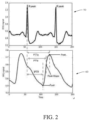
- Amplitude-based features need not be considered for beat classification since the amplitudes of the PPG signals recorded at the patient monitor are previously processed (e.g., amplitude values are scaled for visualization purposes). Rather, relative magnitude based features (e.g., amplitude of the peak relative to amplitude of the foot), time based features (see, e.g., Fig. 2 ) (e.g., time of the peak, time of the foot, and time of the peak slope), and/or shaped based features (e.g., beat matching) are used for beat classification.
- the beat is classified as noisy, at 14.
- a typical PPG beat see, e.g., Fig. 2
- the foot of the signal occurs before the peak slope, which occurs before the peak occurs. If this timing sequence is not seen in a particular beat, then the beat is classified as noisy at 14. If the timing of the wave feature meets the predefined criteria, then at 22 a determination is made regarding whether more than one peak is determined in the beat. If more than one peak is detected in a single beat then the beat is classified as noisy at 14.
- outlier data in the time-based feature data is removed. For instance, a probability distribution (e.g., a histogram) is estimated for each of the features derived from the ECG and PPG signals (e.g., PTTp, PTTs, PTTf, etc.). In one embodiment, the 5th and 95th percentile for each of these distributions is calculated to define upper and lower thresholds. An outlier is identified if the value of a feature is below or above the corresponding threshold. Beats with outliers are classified as noisy, at 14.
- a probability distribution e.g., a histogram
- heart rate range ranges from 20 beats per minute to 200 beats per minute. However, it will be understood that any suitable range may be employed in conjunction with the various systems and methods described herein. Since PPG signal classification and quantification depends on ECG derived heart rate identification, heart rates beyond physiologic limits (i.e., the predetermined heart rate range) are rejected. Any beat with heart rate values outside this range is classified as noisy, at 14.
- beat matching is performed.
- the classification of beats in the PPG signal thus comprises two (or more) iterations.
- the first iteration (steps 10-26, explained above) is used to search for clean beat candidates across the PPG waveform.
- the second iteration 28 is used to refine the results as a final classification of beats.
- a "beat template” is calculated by first interpolating and low-pass filtering each beat candidate, and then by averaging all beat candidates together. This "beat template” is subsequently used for searching beats across the PPG waveform to identify beats that match the "beat template”. Beats that pass the matching threshold are classified as "clean" beats, at 30.
- FIGURE 2 illustrates an example of PPG feature calculation from ECG signal 50 and PPG signal 52, in accordance with one or more features described herein.
- a peak pulse transit time (PTTp) is shown spanning the time between an R peak in the ECG signal 50 and the peak of an immediately subsequent PPG wave in the PPG signal 52.
- a slope pulse transit time (PTTs) is shown spanning the time between the R peak in the ECG signal 50 and a maximum slope of between the foot and peak of the immediately subsequent PPG wave in the PPG signal 52.
- a foot pulse transit time (PTTF) is shown spanning the time between the R peak in the ECG signal 50 and the foot of the immediately subsequent PPG wave in the PPG signal 52.
- FIGURE 3 illustrates a segment 60 of the PPG signal 52 classified as "clean” by the herein-described systems and methods.
- the outcomes of the feature evaluations mentioned above are collected and the waveform quality is computed on a beat level.
- each feature mentioned above classifies every beat as a clean or noisy beat.
- the overall quality of the beat is denoted as clean only if each of the evaluated features classifies the beat as clean. If the beat was classified as noisy by any single feature, then overall the beat is classified as noisy.
- the overall signal quality for the full waveform can be computed using the percentage of clean beats.
- different weights can be attached to different features, which can be combined in ways that better reflect feature importance. This feature allows the framework to be customized for the application in which the PPG signal is used.
- the overall beat quality estimate can be, e.g., a range which can be used to better characterize the signal quality.
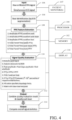
- FIGURE 4 illustrates a system that facilitates automatically detecting segments of clean PPG signal and rejecting noisy PPG signal segments.
- the system comprises a processor 100 and a computer-readable medium or memory 102 configured to perform the various acts, methods, etc., described herein.
- the processor executes a beat identification module 104 that receives as input 106 raw or unfiltered PPG signal and concurrent or simultaneous ECG signal from one or more patient monitors 107 (e.g., an ECG monitor and an SpO2 monitor or the like).
- the beat identification module segments each of a plurality of heartbeats in a PPG waveform using the concurrently measured ECG signal. For purposes of heartbeat segmentation, the ECG and PPG waveforms are simultaneously recorded by the patient monitor 107.
- the time instance of each R peak from the ECG signal is estimated by the beat identification module, and identified R peak indexes are used as the start point and end point of each beat.
- the PPG signal segment within each pair of consecutive R peaks is considered one PPG beat.
- Segmented beats are received by a PPG feature extraction module 108, which identifies a set of features derived from the PPG signal, which in turn can be used to classify whether a particular beat is "clean" or "noisy".
- the PPG feature extraction module extracts PPG signal features including but not limited to: amplitudes of the PPG waveform's peak, foot, and slope; and pulse transit times for the PPG waveform peak, foot, and slope (PTTp, PTTf, and PTTs, respectively). Amplitude-based features need not be considered for beat classification since the amplitudes of the PPG signals recorded at the patient monitor are previously processed (e.g., amplitude values are scaled for visualization purposes).
- relative magnitude based features e.g., amplitude of the R-peak relative to amplitude of the foot
- time based features see, e.g., Fig. 2
- shaped based features e.g., beat matching
- a signal quality evaluation module 110 is executed, which determines whether the signal amplitude is a non-number value. If the signal amplitude is a non-number value (e.g., due to noisy or missing data), the signal is classified as noisy. If signal amplitude is not noise (i.e., comprises a number value), then the relative magnitude of the PPG peak amplitude is analyzed to determine whether the peak amplitude of the beat is greater than then amplitude at the foot of the beat. If this is not the case then the beat is classified as noisy.
- the beat is classified as noisy.
- the signal quality evaluation module 110 determines whether wave feature timing meets predefined criteria.
- a typical PPG beat see, e.g., Fig. 2
- the foot of the signal occurs before the peak slope, which occurs before the peak occurs. If this timing sequence is not seen in a particular beat, then the beat is classified as noisy. If the timing of the wave feature meets the predefined criteria, then a determination is made regarding whether more than one peak is present in the beat. If more than one peak is detected in a single beat, then the beat is classified as noisy.
- beat matching is performed.
- the classification of beats in the PPG signal thus comprises two (or more) iterations.
- the first iteration is used to search for clean beat candidates across the PPG waveform.
- the second iteration is used to refine the results as a final classification of beats.
- a "beat template” is calculated by first interpolating and low-pass filtering each beat candidate, and then by averaging all beat candidates together. This "beat template” is subsequently used for searching beats across the PPG waveform to identify beats that match the "beat template”. Beats that pass the matching threshold are classified as "clean" beats.
- the processor 100 combines the waveform evaluation results to classify each beat as clean or noisy and outputs the results, at 112.
- the processor then calculates and outputs overall signal statistics (e.g., number of clean waveforms, number of noisy waveforms, locations thereof within the PPG signal, etc.), at 114.
- Information output by the processor can be displayed to a user on a display 116 (e.g., a computer, workstation, handheld device, or the like).
- the processor 100 executes, and the memory 102 stores, computer executable instructions for carrying out the various functions and/or methods described herein.
- the memory 102 may be a computer-readable medium on which a control program is stored, such as a disk, hard drive, or the like.
- Common forms of computer-readable media include, for example, floppy disks, flexible disks, hard disks, magnetic tape, or any other magnetic storage medium, CD-ROM, DVD, or any other optical medium, RAM, ROM, PROM, EPROM, FLASH-EPROM, variants thereof, other memory chip or cartridge, or any other tangible medium from which the processor 100 can read and execute.
- the described systems may be implemented on or as one or more general purpose computers, special purpose computer(s), a programmed microprocessor or microcontroller and peripheral integrated circuit elements, an ASIC or other integrated circuit, a digital signal processor, a hardwired electronic or logic circuit such as a discrete element circuit, a programmable logic device such as a PLD, PLA, FPGA, Graphics processing unit (GPU), or PAL, or the like.
Landscapes
- Health & Medical Sciences (AREA)
- Life Sciences & Earth Sciences (AREA)
- Engineering & Computer Science (AREA)
- Physics & Mathematics (AREA)
- Cardiology (AREA)
- Public Health (AREA)
- Surgery (AREA)
- General Health & Medical Sciences (AREA)
- Animal Behavior & Ethology (AREA)
- Veterinary Medicine (AREA)
- Molecular Biology (AREA)
- Medical Informatics (AREA)
- Biophysics (AREA)
- Pathology (AREA)
- Biomedical Technology (AREA)
- Heart & Thoracic Surgery (AREA)
- Physiology (AREA)
- Signal Processing (AREA)
- Artificial Intelligence (AREA)
- Psychiatry (AREA)
- Computer Vision & Pattern Recognition (AREA)
- Vascular Medicine (AREA)
- Fuzzy Systems (AREA)
- Evolutionary Computation (AREA)
- Mathematical Physics (AREA)
- Spectroscopy & Molecular Physics (AREA)
- Optics & Photonics (AREA)
- Measuring Pulse, Heart Rate, Blood Pressure Or Blood Flow (AREA)
- Measurement And Recording Of Electrical Phenomena And Electrical Characteristics Of The Living Body (AREA)
Applications Claiming Priority (2)
| Application Number | Priority Date | Filing Date | Title |
|---|---|---|---|
| US201562259308P | 2015-11-24 | 2015-11-24 | |
| PCT/IB2016/056762 WO2017089921A1 (en) | 2015-11-24 | 2016-11-10 | Method to quantify photoplethysmogram (ppg) signal quality |
Publications (2)
| Publication Number | Publication Date |
|---|---|
| EP3379997A1 EP3379997A1 (en) | 2018-10-03 |
| EP3379997B1 true EP3379997B1 (en) | 2024-01-10 |
Family
ID=57345997
Family Applications (1)
| Application Number | Title | Priority Date | Filing Date |
|---|---|---|---|
| EP16798003.6A Active EP3379997B1 (en) | 2015-11-24 | 2016-11-10 | Method to quantify photoplethysmogram (ppg) signal quality |
Country Status (5)
| Country | Link |
|---|---|
| US (1) | US11529101B2 (enExample) |
| EP (1) | EP3379997B1 (enExample) |
| JP (1) | JP6811773B2 (enExample) |
| CN (1) | CN108289615B (enExample) |
| WO (1) | WO2017089921A1 (enExample) |
Families Citing this family (32)
| Publication number | Priority date | Publication date | Assignee | Title |
|---|---|---|---|---|
| IT201700081018A1 (it) | 2017-07-18 | 2019-01-18 | St Microelectronics Srl | Trattamento di segnali elettrofisiologici |
| IT201700120714A1 (it) | 2017-10-24 | 2019-04-24 | St Microelectronics Srl | Procedimento per trattare segnali elettrofisiologici, sistema, veicolo e prodotto informatico corrispondenti |
| EP3479763B1 (en) | 2017-11-06 | 2023-03-01 | Tata Consultancy Services Limited | System and method for photoplethysmogram (ppg) signal quality assessment |
| EP3485813A1 (en) * | 2017-11-16 | 2019-05-22 | Koninklijke Philips N.V. | System and method for sensing physiological parameters |
| US11229404B2 (en) | 2017-11-28 | 2022-01-25 | Stmicroelectronics S.R.L. | Processing of electrophysiological signals |
| US12383204B2 (en) | 2018-12-26 | 2025-08-12 | Analytics For Life Inc. | Method and system for automated quantification of signal quality |
| CN109758141B (zh) * | 2019-03-06 | 2022-04-26 | 清华大学 | 一种心理压力监测方法、装置及系统 |
| WO2021064212A1 (en) * | 2019-10-02 | 2021-04-08 | Biosency | Method and system for evaluating the quality of ratio of ratios values |
| CA3156447A1 (en) * | 2019-10-02 | 2021-04-08 | Biosency | Method and system for evaluating the quality of a physiological signal |
| EP3865059B1 (en) * | 2020-02-13 | 2022-11-30 | Qompium | Computer-implemented method for synchronizing a photoplethysmography (ppg) signal with an electrocardiogram (ecg) signal |
| CN111248881B (zh) * | 2020-02-21 | 2022-08-02 | 乐普(北京)医疗器械股份有限公司 | 一种对血压进行预测的方法和装置 |
| CN111358454B (zh) * | 2020-03-17 | 2022-07-29 | 乐普(北京)医疗器械股份有限公司 | 一种基于差异波占比检测信号质量的方法和装置 |
| US11744501B2 (en) * | 2020-05-07 | 2023-09-05 | GE Precision Healthcare LLC | Multi-sensor patch |
| CN111557658B (zh) * | 2020-05-13 | 2022-06-03 | 东南大学苏州医疗器械研究院 | Ppg实时心率信号质量评估方法及装置、存储介质 |
| EP3918980A1 (en) * | 2020-06-02 | 2021-12-08 | CSEM Centre Suisse d'Electronique et de Microtechnique SA - Recherche et Développement | Method for classifying photoplethysmography pulses and monitoring of cardiac arrhythmias |
| KR102241799B1 (ko) * | 2020-08-06 | 2021-04-19 | 주식회사 에이티센스 | 심전도 신호의 분류 데이터를 제공하는 방법 및 전자 장치 |
| CN111988097B (zh) * | 2020-08-25 | 2022-05-13 | 青岛歌尔智能传感器有限公司 | Ppg信号的信号质量检测方法及装置和计算机可读存储介质 |
| KR20220053364A (ko) * | 2020-10-22 | 2022-04-29 | 삼성전자주식회사 | 생체 정보 측정을 위한 웨어러블 디바이스 및 방법 |
| IL303206A (en) * | 2020-11-27 | 2023-07-01 | Signalife Ltd | Oxymetry device and method for measuring fetus oxygen levels during labor |
| KR102677449B1 (ko) * | 2021-10-14 | 2024-06-20 | 삼성전자주식회사 | 생체신호 품질 평가 방법 및 생체정보 추정 장치 |
| WO2023108331A1 (zh) * | 2021-12-13 | 2023-06-22 | 中国科学院深圳先进技术研究院 | 自适应实时心电信号质量评估方法 |
| CN114469131A (zh) * | 2021-12-13 | 2022-05-13 | 中国科学院深圳先进技术研究院 | 自适应实时心电信号质量评估方法 |
| WO2023192135A1 (en) * | 2022-03-26 | 2023-10-05 | Analog Devices, Inc. | Non-invasive and non-obtrusive mean arterial pressure estimation |
| CN114912478B (zh) * | 2022-04-02 | 2024-07-16 | 浙江好络维医疗技术有限公司 | 一种脉搏波信号的干扰检测方法 |
| CN114676738B (zh) * | 2022-05-27 | 2022-08-02 | 广东玖智科技有限公司 | Ppg信号质量评估方法及装置以及ppg信号处理方法及系统 |
| CN117281468A (zh) * | 2022-06-17 | 2023-12-26 | 北京小米移动软件有限公司 | Ppg信号质量评估方法、装置、设备及存储介质 |
| US12336797B2 (en) * | 2022-10-26 | 2025-06-24 | Garmin International, Inc. | Wrist-worn electronic device with optical cardiac monitor |
| CN115670397B (zh) * | 2022-11-17 | 2023-06-02 | 北京中科心研科技有限公司 | 一种ppg伪迹识别方法、装置、存储介质及电子设备 |
| US20240180436A1 (en) * | 2022-12-06 | 2024-06-06 | Emory University | Systems, Devices and Methods for Noninvasively Determining Jugular Venous Pressure and/or Associated Metrics |
| KR102685709B1 (ko) * | 2022-12-21 | 2024-07-19 | 주식회사 아이메디신 | 품질이 검증된 생체 데이터 확보를 위한 인공지능 기반의 생체 데이터 품질 평가 방법, 장치 및 컴퓨터프로그램 |
| JP2025022180A (ja) * | 2023-08-02 | 2025-02-14 | テルモ株式会社 | プログラム、情報処理方法及び情報処理装置 |
| CN120078392A (zh) * | 2025-02-20 | 2025-06-03 | 重庆大学 | 一种基于LightGBM模型的腕部PPG信号质量评估方法 |
Family Cites Families (21)
| Publication number | Priority date | Publication date | Assignee | Title |
|---|---|---|---|---|
| US4802486A (en) | 1985-04-01 | 1989-02-07 | Nellcor Incorporated | Method and apparatus for detecting optical pulses |
| JPS62500843A (ja) * | 1985-04-01 | 1987-04-09 | ネルカ− インコ−ポレイテツド | 光学パルスの検知方法および装置 |
| US5241964A (en) | 1990-10-31 | 1993-09-07 | Medwave, Incorporated | Noninvasive, non-occlusive method and apparatus which provides a continuous indication of arterial pressure and a beat-by-beat characterization of the arterial system |
| JPH09215664A (ja) * | 1996-02-13 | 1997-08-19 | Nippon Colin Co Ltd | 自律神経機能評価装置 |
| US6684090B2 (en) | 1999-01-07 | 2004-01-27 | Masimo Corporation | Pulse oximetry data confidence indicator |
| JP4495378B2 (ja) | 1999-06-10 | 2010-07-07 | コーニンクレッカ フィリップス エレクトロニクス エヌ ヴィ | とりわけ酸素飽和度測定からの医学的測定信号のような測定信号のための品質インディケータ |
| US20060224073A1 (en) | 2005-03-30 | 2006-10-05 | Dailycare Biomedical Inc. | Integrated physiological signal assessing device |
| GB0624085D0 (en) * | 2006-12-01 | 2007-01-10 | Oxford Biosignals Ltd | Biomedical signal analysis method |
| JP4862730B2 (ja) * | 2007-04-05 | 2012-01-25 | コニカミノルタセンシング株式会社 | 脈波データ解析方法、システム、プログラム |
| US11607152B2 (en) * | 2007-06-12 | 2023-03-21 | Sotera Wireless, Inc. | Optical sensors for use in vital sign monitoring |
| KR101007354B1 (ko) * | 2008-08-25 | 2011-01-13 | 한국전자통신연구원 | 혈압 측정 장치 및 방법 |
| US20100081946A1 (en) * | 2008-09-26 | 2010-04-01 | Qualcomm Incorporated | Method and apparatus for non-invasive cuff-less blood pressure estimation using pulse arrival time and heart rate with adaptive calibration |
| US20100274102A1 (en) | 2009-04-22 | 2010-10-28 | Streamline Automation, Llc | Processing Physiological Sensor Data Using a Physiological Model Combined with a Probabilistic Processor |
| US9775529B2 (en) * | 2009-06-17 | 2017-10-03 | Sotera Wireless, Inc. | Body-worn pulse oximeter |
| JP2011024676A (ja) * | 2009-07-22 | 2011-02-10 | Sharp Corp | 脈波伝播速度算出装置、血圧測定装置、脈波伝播速度算出装置の制御方法、脈波伝播速度算出装置制御プログラムおよび該プログラムを記録したコンピュータ読み取り可能な記録媒体 |
| JP2011180067A (ja) | 2010-03-03 | 2011-09-15 | Denso Corp | 運転支援装置 |
| JP5688421B2 (ja) | 2011-02-08 | 2015-03-25 | シャープ株式会社 | 表示パネルの検査方法 |
| WO2013036718A1 (en) | 2011-09-08 | 2013-03-14 | Isis Innovation Ltd. | Determining acceptability of physiological signals |
| CN103020472B (zh) * | 2012-12-27 | 2015-12-09 | 中国科学院深圳先进技术研究院 | 基于约束估计的生理信号质量评估方法和系统 |
| CN104665768B (zh) | 2013-10-03 | 2019-07-23 | 塔塔咨询服务有限公司 | 生理参数的监测 |
| KR101483756B1 (ko) * | 2013-10-18 | 2015-01-16 | 상명대학교서울산학협력단 | 맥파 검출 방법 |
-
2016
- 2016-11-10 CN CN201680068644.1A patent/CN108289615B/zh active Active
- 2016-11-10 EP EP16798003.6A patent/EP3379997B1/en active Active
- 2016-11-10 WO PCT/IB2016/056762 patent/WO2017089921A1/en not_active Ceased
- 2016-11-10 US US15/777,247 patent/US11529101B2/en active Active
- 2016-11-10 JP JP2018524322A patent/JP6811773B2/ja active Active
Also Published As
| Publication number | Publication date |
|---|---|
| JP6811773B2 (ja) | 2021-01-13 |
| CN108289615B (zh) | 2021-08-17 |
| EP3379997A1 (en) | 2018-10-03 |
| US11529101B2 (en) | 2022-12-20 |
| US20180325457A1 (en) | 2018-11-15 |
| CN108289615A (zh) | 2018-07-17 |
| WO2017089921A1 (en) | 2017-06-01 |
| JP2018535011A (ja) | 2018-11-29 |
Similar Documents
| Publication | Publication Date | Title |
|---|---|---|
| US11529101B2 (en) | Method to quantify photoplethysmogram (PPG) signal quality | |
| Bashar et al. | Noise detection in electrocardiogram signals for intensive care unit patients | |
| Surrel et al. | Online obstructive sleep apnea detection on medical wearable sensors | |
| Charlton et al. | Breathing rate estimation from the electrocardiogram and photoplethysmogram: A review | |
| Orphanidou | Quality Assessment for the photoplethysmogram (PPG) | |
| US20240315647A1 (en) | System and Method for Characterizing Cardiac Arrhythmia | |
| EP3453321B1 (en) | Non-invasive method and system for estimating blood pressure from photoplethysmogram using statistical post-processing | |
| van Gent et al. | Heart rate analysis for human factors: Development and validation of an open source toolkit for noisy naturalistic heart rate data | |
| US12097049B2 (en) | Methods, apparatus and systems for adaptable presentation of sensor data | |
| JP6310401B2 (ja) | 生理的リズムを表す信号を処理する方法、システム及びコンピュータプログラム | |
| Shah et al. | Respiratory rate estimation during triage of children in hospitals | |
| WO2019161609A1 (zh) | 多参数监护数据分析方法和多参数监护仪 | |
| Datta et al. | Blood pressure estimation from photoplethysmogram using latent parameters | |
| CN107028603A (zh) | 使用脉搏触诊信号来检测人体内的糖尿病的装置和方法 | |
| CN110301911A (zh) | 基于光电血管容积图的被动心律失常检测装置和方法 | |
| TW202018466A (zh) | 用於體內通道感測與具有漂移頻率之可攝入感測器檢測之低功率接收器 | |
| Wong et al. | Applied machine learning for blood pressure estimation using a small, real-world electrocardiogram and photoplethysmogram dataset | |
| Zschocke et al. | Detection and analysis of pulse waves during sleep via wrist-worn actigraphy | |
| Reddy et al. | Automated hilbert envelope based respiration rate measurement from PPG signal for wearable vital signs monitoring devices | |
| US9402571B2 (en) | Biological tissue function analysis | |
| Abd Sukor et al. | Signal quality measures on pulse oximetry and blood pressure signals acquired from self-measurement in a home environment | |
| US10327648B2 (en) | Blood vessel mechanical signal analysis | |
| Shah | Vital sign monitoring and data fusion for paediatric triage | |
| Gadhoumi et al. | A statistical comparative study of photoplethysmographic signals in wrist-worn and fingertip pulse-oximetry devices | |
| JP2020039855A (ja) | 生体信号成分検出装置、生体信号成分検出方法および記録媒体 |
Legal Events
| Date | Code | Title | Description |
|---|---|---|---|
| STAA | Information on the status of an ep patent application or granted ep patent |
Free format text: STATUS: UNKNOWN |
|
| STAA | Information on the status of an ep patent application or granted ep patent |
Free format text: STATUS: THE INTERNATIONAL PUBLICATION HAS BEEN MADE |
|
| PUAI | Public reference made under article 153(3) epc to a published international application that has entered the european phase |
Free format text: ORIGINAL CODE: 0009012 |
|
| STAA | Information on the status of an ep patent application or granted ep patent |
Free format text: STATUS: REQUEST FOR EXAMINATION WAS MADE |
|
| 17P | Request for examination filed |
Effective date: 20180625 |
|
| AK | Designated contracting states |
Kind code of ref document: A1 Designated state(s): AL AT BE BG CH CY CZ DE DK EE ES FI FR GB GR HR HU IE IS IT LI LT LU LV MC MK MT NL NO PL PT RO RS SE SI SK SM TR |
|
| AX | Request for extension of the european patent |
Extension state: BA ME |
|
| DAV | Request for validation of the european patent (deleted) | ||
| DAX | Request for extension of the european patent (deleted) | ||
| RAP1 | Party data changed (applicant data changed or rights of an application transferred) |
Owner name: KONINKLIJKE PHILIPS N.V. |
|
| STAA | Information on the status of an ep patent application or granted ep patent |
Free format text: STATUS: EXAMINATION IS IN PROGRESS |
|
| 17Q | First examination report despatched |
Effective date: 20220525 |
|
| RIC1 | Information provided on ipc code assigned before grant |
Ipc: A61B 5/352 20210101ALI20230511BHEP Ipc: A61B 5/021 20060101ALI20230511BHEP Ipc: A61B 5/0245 20060101ALI20230511BHEP Ipc: A61B 5/024 20060101ALI20230511BHEP Ipc: A61B 5/00 20060101AFI20230511BHEP |
|
| GRAP | Despatch of communication of intention to grant a patent |
Free format text: ORIGINAL CODE: EPIDOSNIGR1 |
|
| STAA | Information on the status of an ep patent application or granted ep patent |
Free format text: STATUS: GRANT OF PATENT IS INTENDED |
|
| INTG | Intention to grant announced |
Effective date: 20230719 |
|
| GRAS | Grant fee paid |
Free format text: ORIGINAL CODE: EPIDOSNIGR3 |
|
| GRAA | (expected) grant |
Free format text: ORIGINAL CODE: 0009210 |
|
| STAA | Information on the status of an ep patent application or granted ep patent |
Free format text: STATUS: THE PATENT HAS BEEN GRANTED |
|
| AK | Designated contracting states |
Kind code of ref document: B1 Designated state(s): AL AT BE BG CH CY CZ DE DK EE ES FI FR GB GR HR HU IE IS IT LI LT LU LV MC MK MT NL NO PL PT RO RS SE SI SK SM TR |
|
| REG | Reference to a national code |
Ref country code: GB Ref legal event code: FG4D |
|
| REG | Reference to a national code |
Ref country code: CH Ref legal event code: EP |
|
| REG | Reference to a national code |
Ref country code: DE Ref legal event code: R096 Ref document number: 602016085276 Country of ref document: DE |
|
| REG | Reference to a national code |
Ref country code: IE Ref legal event code: FG4D |
|
| REG | Reference to a national code |
Ref country code: LT Ref legal event code: MG9D |
|
| REG | Reference to a national code |
Ref country code: NL Ref legal event code: MP Effective date: 20240110 |
|
| REG | Reference to a national code |
Ref country code: AT Ref legal event code: MK05 Ref document number: 1648214 Country of ref document: AT Kind code of ref document: T Effective date: 20240110 |
|
| PG25 | Lapsed in a contracting state [announced via postgrant information from national office to epo] |
Ref country code: NL Free format text: LAPSE BECAUSE OF FAILURE TO SUBMIT A TRANSLATION OF THE DESCRIPTION OR TO PAY THE FEE WITHIN THE PRESCRIBED TIME-LIMIT Effective date: 20240110 |
|
| PG25 | Lapsed in a contracting state [announced via postgrant information from national office to epo] |
Ref country code: NL Free format text: LAPSE BECAUSE OF FAILURE TO SUBMIT A TRANSLATION OF THE DESCRIPTION OR TO PAY THE FEE WITHIN THE PRESCRIBED TIME-LIMIT Effective date: 20240110 |
|
| PG25 | Lapsed in a contracting state [announced via postgrant information from national office to epo] |
Ref country code: IS Free format text: LAPSE BECAUSE OF FAILURE TO SUBMIT A TRANSLATION OF THE DESCRIPTION OR TO PAY THE FEE WITHIN THE PRESCRIBED TIME-LIMIT Effective date: 20240510 |
|
| PG25 | Lapsed in a contracting state [announced via postgrant information from national office to epo] |
Ref country code: LT Free format text: LAPSE BECAUSE OF FAILURE TO SUBMIT A TRANSLATION OF THE DESCRIPTION OR TO PAY THE FEE WITHIN THE PRESCRIBED TIME-LIMIT Effective date: 20240110 |
|
| PG25 | Lapsed in a contracting state [announced via postgrant information from national office to epo] |
Ref country code: GR Free format text: LAPSE BECAUSE OF FAILURE TO SUBMIT A TRANSLATION OF THE DESCRIPTION OR TO PAY THE FEE WITHIN THE PRESCRIBED TIME-LIMIT Effective date: 20240411 |
|
| PG25 | Lapsed in a contracting state [announced via postgrant information from national office to epo] |
Ref country code: RS Free format text: LAPSE BECAUSE OF FAILURE TO SUBMIT A TRANSLATION OF THE DESCRIPTION OR TO PAY THE FEE WITHIN THE PRESCRIBED TIME-LIMIT Effective date: 20240410 Ref country code: HR Free format text: LAPSE BECAUSE OF FAILURE TO SUBMIT A TRANSLATION OF THE DESCRIPTION OR TO PAY THE FEE WITHIN THE PRESCRIBED TIME-LIMIT Effective date: 20240110 |
|
| PG25 | Lapsed in a contracting state [announced via postgrant information from national office to epo] |
Ref country code: ES Free format text: LAPSE BECAUSE OF FAILURE TO SUBMIT A TRANSLATION OF THE DESCRIPTION OR TO PAY THE FEE WITHIN THE PRESCRIBED TIME-LIMIT Effective date: 20240110 |
|
| PG25 | Lapsed in a contracting state [announced via postgrant information from national office to epo] |
Ref country code: AT Free format text: LAPSE BECAUSE OF FAILURE TO SUBMIT A TRANSLATION OF THE DESCRIPTION OR TO PAY THE FEE WITHIN THE PRESCRIBED TIME-LIMIT Effective date: 20240110 |
|
| PG25 | Lapsed in a contracting state [announced via postgrant information from national office to epo] |
Ref country code: RS Free format text: LAPSE BECAUSE OF FAILURE TO SUBMIT A TRANSLATION OF THE DESCRIPTION OR TO PAY THE FEE WITHIN THE PRESCRIBED TIME-LIMIT Effective date: 20240410 Ref country code: NO Free format text: LAPSE BECAUSE OF FAILURE TO SUBMIT A TRANSLATION OF THE DESCRIPTION OR TO PAY THE FEE WITHIN THE PRESCRIBED TIME-LIMIT Effective date: 20240410 Ref country code: LT Free format text: LAPSE BECAUSE OF FAILURE TO SUBMIT A TRANSLATION OF THE DESCRIPTION OR TO PAY THE FEE WITHIN THE PRESCRIBED TIME-LIMIT Effective date: 20240110 Ref country code: IS Free format text: LAPSE BECAUSE OF FAILURE TO SUBMIT A TRANSLATION OF THE DESCRIPTION OR TO PAY THE FEE WITHIN THE PRESCRIBED TIME-LIMIT Effective date: 20240510 Ref country code: HR Free format text: LAPSE BECAUSE OF FAILURE TO SUBMIT A TRANSLATION OF THE DESCRIPTION OR TO PAY THE FEE WITHIN THE PRESCRIBED TIME-LIMIT Effective date: 20240110 Ref country code: GR Free format text: LAPSE BECAUSE OF FAILURE TO SUBMIT A TRANSLATION OF THE DESCRIPTION OR TO PAY THE FEE WITHIN THE PRESCRIBED TIME-LIMIT Effective date: 20240411 Ref country code: ES Free format text: LAPSE BECAUSE OF FAILURE TO SUBMIT A TRANSLATION OF THE DESCRIPTION OR TO PAY THE FEE WITHIN THE PRESCRIBED TIME-LIMIT Effective date: 20240110 Ref country code: BG Free format text: LAPSE BECAUSE OF FAILURE TO SUBMIT A TRANSLATION OF THE DESCRIPTION OR TO PAY THE FEE WITHIN THE PRESCRIBED TIME-LIMIT Effective date: 20240110 Ref country code: AT Free format text: LAPSE BECAUSE OF FAILURE TO SUBMIT A TRANSLATION OF THE DESCRIPTION OR TO PAY THE FEE WITHIN THE PRESCRIBED TIME-LIMIT Effective date: 20240110 |
|
| PG25 | Lapsed in a contracting state [announced via postgrant information from national office to epo] |
Ref country code: PL Free format text: LAPSE BECAUSE OF FAILURE TO SUBMIT A TRANSLATION OF THE DESCRIPTION OR TO PAY THE FEE WITHIN THE PRESCRIBED TIME-LIMIT Effective date: 20240110 Ref country code: PT Free format text: LAPSE BECAUSE OF FAILURE TO SUBMIT A TRANSLATION OF THE DESCRIPTION OR TO PAY THE FEE WITHIN THE PRESCRIBED TIME-LIMIT Effective date: 20240510 |
|
| PG25 | Lapsed in a contracting state [announced via postgrant information from national office to epo] |
Ref country code: SE Free format text: LAPSE BECAUSE OF FAILURE TO SUBMIT A TRANSLATION OF THE DESCRIPTION OR TO PAY THE FEE WITHIN THE PRESCRIBED TIME-LIMIT Effective date: 20240110 Ref country code: PT Free format text: LAPSE BECAUSE OF FAILURE TO SUBMIT A TRANSLATION OF THE DESCRIPTION OR TO PAY THE FEE WITHIN THE PRESCRIBED TIME-LIMIT Effective date: 20240510 Ref country code: PL Free format text: LAPSE BECAUSE OF FAILURE TO SUBMIT A TRANSLATION OF THE DESCRIPTION OR TO PAY THE FEE WITHIN THE PRESCRIBED TIME-LIMIT Effective date: 20240110 Ref country code: LV Free format text: LAPSE BECAUSE OF FAILURE TO SUBMIT A TRANSLATION OF THE DESCRIPTION OR TO PAY THE FEE WITHIN THE PRESCRIBED TIME-LIMIT Effective date: 20240110 |
|
| PG25 | Lapsed in a contracting state [announced via postgrant information from national office to epo] |
Ref country code: DK Free format text: LAPSE BECAUSE OF FAILURE TO SUBMIT A TRANSLATION OF THE DESCRIPTION OR TO PAY THE FEE WITHIN THE PRESCRIBED TIME-LIMIT Effective date: 20240110 |
|
| REG | Reference to a national code |
Ref country code: DE Ref legal event code: R097 Ref document number: 602016085276 Country of ref document: DE |
|
| PG25 | Lapsed in a contracting state [announced via postgrant information from national office to epo] |
Ref country code: SM Free format text: LAPSE BECAUSE OF FAILURE TO SUBMIT A TRANSLATION OF THE DESCRIPTION OR TO PAY THE FEE WITHIN THE PRESCRIBED TIME-LIMIT Effective date: 20240110 |
|
| PG25 | Lapsed in a contracting state [announced via postgrant information from national office to epo] |
Ref country code: CZ Free format text: LAPSE BECAUSE OF FAILURE TO SUBMIT A TRANSLATION OF THE DESCRIPTION OR TO PAY THE FEE WITHIN THE PRESCRIBED TIME-LIMIT Effective date: 20240110 Ref country code: EE Free format text: LAPSE BECAUSE OF FAILURE TO SUBMIT A TRANSLATION OF THE DESCRIPTION OR TO PAY THE FEE WITHIN THE PRESCRIBED TIME-LIMIT Effective date: 20240110 |
|
| PG25 | Lapsed in a contracting state [announced via postgrant information from national office to epo] |
Ref country code: SK Free format text: LAPSE BECAUSE OF FAILURE TO SUBMIT A TRANSLATION OF THE DESCRIPTION OR TO PAY THE FEE WITHIN THE PRESCRIBED TIME-LIMIT Effective date: 20240110 |
|
| PG25 | Lapsed in a contracting state [announced via postgrant information from national office to epo] |
Ref country code: SM Free format text: LAPSE BECAUSE OF FAILURE TO SUBMIT A TRANSLATION OF THE DESCRIPTION OR TO PAY THE FEE WITHIN THE PRESCRIBED TIME-LIMIT Effective date: 20240110 Ref country code: SK Free format text: LAPSE BECAUSE OF FAILURE TO SUBMIT A TRANSLATION OF THE DESCRIPTION OR TO PAY THE FEE WITHIN THE PRESCRIBED TIME-LIMIT Effective date: 20240110 Ref country code: RO Free format text: LAPSE BECAUSE OF FAILURE TO SUBMIT A TRANSLATION OF THE DESCRIPTION OR TO PAY THE FEE WITHIN THE PRESCRIBED TIME-LIMIT Effective date: 20240110 Ref country code: EE Free format text: LAPSE BECAUSE OF FAILURE TO SUBMIT A TRANSLATION OF THE DESCRIPTION OR TO PAY THE FEE WITHIN THE PRESCRIBED TIME-LIMIT Effective date: 20240110 Ref country code: DK Free format text: LAPSE BECAUSE OF FAILURE TO SUBMIT A TRANSLATION OF THE DESCRIPTION OR TO PAY THE FEE WITHIN THE PRESCRIBED TIME-LIMIT Effective date: 20240110 Ref country code: CZ Free format text: LAPSE BECAUSE OF FAILURE TO SUBMIT A TRANSLATION OF THE DESCRIPTION OR TO PAY THE FEE WITHIN THE PRESCRIBED TIME-LIMIT Effective date: 20240110 |
|
| PLBE | No opposition filed within time limit |
Free format text: ORIGINAL CODE: 0009261 |
|
| STAA | Information on the status of an ep patent application or granted ep patent |
Free format text: STATUS: NO OPPOSITION FILED WITHIN TIME LIMIT |
|
| REG | Reference to a national code |
Ref country code: DE Ref legal event code: R084 Ref document number: 602016085276 Country of ref document: DE |
|
| PG25 | Lapsed in a contracting state [announced via postgrant information from national office to epo] |
Ref country code: IT Free format text: LAPSE BECAUSE OF FAILURE TO SUBMIT A TRANSLATION OF THE DESCRIPTION OR TO PAY THE FEE WITHIN THE PRESCRIBED TIME-LIMIT Effective date: 20240110 |
|
| 26N | No opposition filed |
Effective date: 20241011 |
|
| PG25 | Lapsed in a contracting state [announced via postgrant information from national office to epo] |
Ref country code: IT Free format text: LAPSE BECAUSE OF FAILURE TO SUBMIT A TRANSLATION OF THE DESCRIPTION OR TO PAY THE FEE WITHIN THE PRESCRIBED TIME-LIMIT Effective date: 20240110 |
|
| REG | Reference to a national code |
Ref country code: GB Ref legal event code: 746 Effective date: 20241217 |
|
| PG25 | Lapsed in a contracting state [announced via postgrant information from national office to epo] |
Ref country code: SI Free format text: LAPSE BECAUSE OF FAILURE TO SUBMIT A TRANSLATION OF THE DESCRIPTION OR TO PAY THE FEE WITHIN THE PRESCRIBED TIME-LIMIT Effective date: 20240110 |
|
| REG | Reference to a national code |
Ref country code: CH Ref legal event code: PL |
|
| PG25 | Lapsed in a contracting state [announced via postgrant information from national office to epo] |
Ref country code: MC Free format text: LAPSE BECAUSE OF FAILURE TO SUBMIT A TRANSLATION OF THE DESCRIPTION OR TO PAY THE FEE WITHIN THE PRESCRIBED TIME-LIMIT Effective date: 20240110 |
|
| PG25 | Lapsed in a contracting state [announced via postgrant information from national office to epo] |
Ref country code: LU Free format text: LAPSE BECAUSE OF NON-PAYMENT OF DUE FEES Effective date: 20241110 |
|
| REG | Reference to a national code |
Ref country code: CH Ref legal event code: PL |
|
| PG25 | Lapsed in a contracting state [announced via postgrant information from national office to epo] |
Ref country code: CH Free format text: LAPSE BECAUSE OF NON-PAYMENT OF DUE FEES Effective date: 20241130 |
|
| REG | Reference to a national code |
Ref country code: BE Ref legal event code: MM Effective date: 20241130 |
|
| PG25 | Lapsed in a contracting state [announced via postgrant information from national office to epo] |
Ref country code: FI Free format text: LAPSE BECAUSE OF FAILURE TO SUBMIT A TRANSLATION OF THE DESCRIPTION OR TO PAY THE FEE WITHIN THE PRESCRIBED TIME-LIMIT Effective date: 20240110 |
|
| PG25 | Lapsed in a contracting state [announced via postgrant information from national office to epo] |
Ref country code: BE Free format text: LAPSE BECAUSE OF NON-PAYMENT OF DUE FEES Effective date: 20241130 |
|
| PG25 | Lapsed in a contracting state [announced via postgrant information from national office to epo] |
Ref country code: IE Free format text: LAPSE BECAUSE OF NON-PAYMENT OF DUE FEES Effective date: 20241110 |
|
| PGFP | Annual fee paid to national office [announced via postgrant information from national office to epo] |
Ref country code: DE Payment date: 20251126 Year of fee payment: 10 |
|
| PGFP | Annual fee paid to national office [announced via postgrant information from national office to epo] |
Ref country code: GB Payment date: 20251125 Year of fee payment: 10 |
|
| PGFP | Annual fee paid to national office [announced via postgrant information from national office to epo] |
Ref country code: FR Payment date: 20251125 Year of fee payment: 10 |
|
| PG25 | Lapsed in a contracting state [announced via postgrant information from national office to epo] |
Ref country code: HU Free format text: LAPSE BECAUSE OF FAILURE TO SUBMIT A TRANSLATION OF THE DESCRIPTION OR TO PAY THE FEE WITHIN THE PRESCRIBED TIME-LIMIT; INVALID AB INITIO Effective date: 20161110 |
|
| PG25 | Lapsed in a contracting state [announced via postgrant information from national office to epo] |
Ref country code: CY Free format text: LAPSE BECAUSE OF FAILURE TO SUBMIT A TRANSLATION OF THE DESCRIPTION OR TO PAY THE FEE WITHIN THE PRESCRIBED TIME-LIMIT; INVALID AB INITIO Effective date: 20161110 |