EP3377680B1 - Pièce de moteur d'aéronef comportant un revêtement de protection contre l'érosion et procédé de fabrication d'une telle pièce - Google Patents
Pièce de moteur d'aéronef comportant un revêtement de protection contre l'érosion et procédé de fabrication d'une telle pièce Download PDFInfo
- Publication number
- EP3377680B1 EP3377680B1 EP16815573.7A EP16815573A EP3377680B1 EP 3377680 B1 EP3377680 B1 EP 3377680B1 EP 16815573 A EP16815573 A EP 16815573A EP 3377680 B1 EP3377680 B1 EP 3377680B1
- Authority
- EP
- European Patent Office
- Prior art keywords
- coating
- chromium
- range
- substrate
- heat treatment
- Prior art date
- Legal status (The legal status is an assumption and is not a legal conclusion. Google has not performed a legal analysis and makes no representation as to the accuracy of the status listed.)
- Active
Links
Images
Classifications
-
- B—PERFORMING OPERATIONS; TRANSPORTING
- B32—LAYERED PRODUCTS
- B32B—LAYERED PRODUCTS, i.e. PRODUCTS BUILT-UP OF STRATA OF FLAT OR NON-FLAT, e.g. CELLULAR OR HONEYCOMB, FORM
- B32B15/00—Layered products comprising a layer of metal
- B32B15/04—Layered products comprising a layer of metal comprising metal as the main or only constituent of a layer, which is next to another layer of the same or of a different material
-
- B—PERFORMING OPERATIONS; TRANSPORTING
- B32—LAYERED PRODUCTS
- B32B—LAYERED PRODUCTS, i.e. PRODUCTS BUILT-UP OF STRATA OF FLAT OR NON-FLAT, e.g. CELLULAR OR HONEYCOMB, FORM
- B32B15/00—Layered products comprising a layer of metal
- B32B15/16—Layered products comprising a layer of metal next to a particulate layer
-
- B—PERFORMING OPERATIONS; TRANSPORTING
- B32—LAYERED PRODUCTS
- B32B—LAYERED PRODUCTS, i.e. PRODUCTS BUILT-UP OF STRATA OF FLAT OR NON-FLAT, e.g. CELLULAR OR HONEYCOMB, FORM
- B32B33/00—Layered products characterised by particular properties or particular surface features, e.g. particular surface coatings; Layered products designed for particular purposes not covered by another single class
-
- C—CHEMISTRY; METALLURGY
- C22—METALLURGY; FERROUS OR NON-FERROUS ALLOYS; TREATMENT OF ALLOYS OR NON-FERROUS METALS
- C22C—ALLOYS
- C22C3/00—Removing material from alloys to produce alloys of different constitution separation of the constituents of alloys
-
- C—CHEMISTRY; METALLURGY
- C25—ELECTROLYTIC OR ELECTROPHORETIC PROCESSES; APPARATUS THEREFOR
- C25D—PROCESSES FOR THE ELECTROLYTIC OR ELECTROPHORETIC PRODUCTION OF COATINGS; ELECTROFORMING; APPARATUS THEREFOR
- C25D15/00—Electrolytic or electrophoretic production of coatings containing embedded materials, e.g. particles, whiskers, wires
-
- C—CHEMISTRY; METALLURGY
- C25—ELECTROLYTIC OR ELECTROPHORETIC PROCESSES; APPARATUS THEREFOR
- C25D—PROCESSES FOR THE ELECTROLYTIC OR ELECTROPHORETIC PRODUCTION OF COATINGS; ELECTROFORMING; APPARATUS THEREFOR
- C25D3/00—Electroplating: Baths therefor
- C25D3/02—Electroplating: Baths therefor from solutions
- C25D3/04—Electroplating: Baths therefor from solutions of chromium
- C25D3/06—Electroplating: Baths therefor from solutions of chromium from solutions of trivalent chromium
-
- C—CHEMISTRY; METALLURGY
- C25—ELECTROLYTIC OR ELECTROPHORETIC PROCESSES; APPARATUS THEREFOR
- C25D—PROCESSES FOR THE ELECTROLYTIC OR ELECTROPHORETIC PRODUCTION OF COATINGS; ELECTROFORMING; APPARATUS THEREFOR
- C25D5/00—Electroplating characterised by the process; Pretreatment or after-treatment of workpieces
- C25D5/48—After-treatment of electroplated surfaces
- C25D5/50—After-treatment of electroplated surfaces by heat-treatment
-
- C—CHEMISTRY; METALLURGY
- C25—ELECTROLYTIC OR ELECTROPHORETIC PROCESSES; APPARATUS THEREFOR
- C25D—PROCESSES FOR THE ELECTROLYTIC OR ELECTROPHORETIC PRODUCTION OF COATINGS; ELECTROFORMING; APPARATUS THEREFOR
- C25D7/00—Electroplating characterised by the article coated
- C25D7/008—Thermal barrier coatings
-
- C—CHEMISTRY; METALLURGY
- C25—ELECTROLYTIC OR ELECTROPHORETIC PROCESSES; APPARATUS THEREFOR
- C25D—PROCESSES FOR THE ELECTROLYTIC OR ELECTROPHORETIC PRODUCTION OF COATINGS; ELECTROFORMING; APPARATUS THEREFOR
- C25D5/00—Electroplating characterised by the process; Pretreatment or after-treatment of workpieces
- C25D5/34—Pretreatment of metallic surfaces to be electroplated
Definitions
- the present invention relates to the general field of protective coatings against erosion.
- the invention relates more particularly to an aircraft engine part coated with a protective coating against erosion.
- aircraft or helicopter engines draw large amounts of air.
- the aspirated air is then compressed to supply the combustion chamber with oxidant.
- This air can be charged with more or less hard particles which can strike fixed or moving parts inside the engine.
- the parts impacted by these particles at high speed can see their geometry modified by erosion, which can cause engine failures.
- the deposition by electrodeposition of a coating based on hexavalent chromium on metal parts is also known. Such a method makes it possible to coat parts of complex geometries. However, such coatings generally do not have sufficient hardness for the application of the aforementioned erosion resistance.
- a method for manufacturing a chromium-based coating comprising a step of plasma spray deposition on a part of a metal alloy comprising chromium and chromium carbides Cr 3 C 2 , and a step of heat treatment of the coating during more than 200 hours.
- This method does not make it possible to treat parts with complex geometries and has the drawback of being long to produce, in particular because of the long duration of the heat treatment.
- the main object of the present invention is therefore to overcome such drawbacks by proposing an aircraft engine part coated with an erosion protection coating which exhibits satisfactory erosion resistance under the operating conditions of a aircraft engine, and which can be manufactured simply even when it has a complex geometry.
- an aircraft engine part comprising at least one metallic substrate and an erosion protection coating present on the substrate, the coating comprising at least one phase comprising at least chromium in a higher atomic content or equal to 45% and carbon at an atomic content of between 5% and 20%, said phase comprising chromium carbides Cr 7 C 3 and Cr 23 C 6 .
- chromium carbides Cr 7 C 3 and Cr 23 C 6 in the coating advantageously makes it possible to significantly improve the resistance to erosion of the coated part.
- these chromium carbides are formed following a heat treatment of a coating composition based on chromium and carbon formed on the substrate.
- the application of a heat treatment makes it possible to reinforce the coating formed by causing the carbides Cr 7 C 3 and Cr 23 C 6 to precipitate.
- Such an effect is unexpected insofar as conventionally, with chromium-based coatings of the prior art, the application of a heat treatment after deposition on the part has the effect of significantly reducing the hardness of the coating.
- the choice of producing a chromium / carbon deposit on the substrate having a particular carbon content advantageously makes it possible to form, after heat treatment, a coating comprising chromium carbides Cr 7 C 3 and Cr 23 C 6 having good resistance to erosion in the environment of an aircraft engine, as well as good adhesion to the underlying substrate.
- the presence of the carbides Cr 7 C 3 and Cr 23 C 6 is detectable in particular by X-ray diffraction (XRD).
- XRD X-ray diffraction
- the atomic carbon content in the coating must be greater than 5% in order to form sufficient carbides Cr 7 C 3 and Cr 23 C 6 and thus significantly improve the hardness of the coating. This carbon content must however be less than 20% in order not to affect the mechanical strength of the coating.
- the coating of the part according to the invention may advantageously have a high hardness, for example greater than 1500 HV (Vickers hardness). It should be noted that the coating can also comprise oxygen, in proportions which depend on the method of manufacturing the coating.
- the coating phase comprises chromium in an atomic content between 48% and 58% and carbon in an atomic content between 8% and 18%.
- the coating phase may include chromium in an atomic content between 45% and 80% and carbon in an atomic content between 5% and 20%.
- the coating phase may optionally include oxygen in an atomic content between 15% and 40%, and possibly other elements in an atomic content less than or equal to 4%, or even between 0.5% and 4% .
- the coating phase may comprise carbon in an atomic content of between 12% and 18%.
- the coating phase can comprise chromium in an atomic content of between 45% and 55%, for example between 48% and 52%.
- chromium is the only metallic element present in the coating phase.
- the coating further comprises metallic particles and / or ceramic particles.
- the volume content in the coating of metal particles and / or ceramic particles can be less than 20%, or between 5% and 15%.
- metallic particles can for example be particles of tungsten or nickel, tungsten being preferred because it is heavier and more tenacious.
- ceramic particles can for example be particles of alumina or zirconia.
- the particles are preferably dispersed in the coating phase containing chromium and carbon, said phase then playing the role of matrix for the particles. These particles make it possible to further increase the resistance to erosion, especially in the face of ingested particles of larger size.
- the metallic particles and / or the ceramic particles can have a size greater than or equal to 1 ⁇ m.
- the metallic particles and / or the ceramic particles can have a size less than or equal to 30 ⁇ m, for example between 1 ⁇ m and 30 ⁇ m.
- size is meant the average size D 50 of the particles.
- a thickness of the coating is between 5 ⁇ m and 100 ⁇ m.
- the substrate may be steel, an aluminum-based alloy, a titanium-based alloy, a nickel-based alloy, or any other metallic material that can be used in a gas turbine.
- the part may constitute a part for an aircraft engine chosen from the following: at least part of a diffuser, at least part of an axial or centrifugal compressor, at least part of a distributor, or any other part used in a turbine and likely to be subjected to an air flow.
- the heat treatment makes it possible, as explained above, to obtain a coating with improved hardness following the precipitation and coalescence of chromium carbides.
- the chromium carbides Cr 7 C 3 and Cr 23 C 6 are not detectable by X-ray diffraction (DRX) in the coating composition.
- DRX X-ray diffraction
- the coating composition can already comprise the carbides Cr 7 C 3 and Cr 23 C 6 but the latter have an average size (D50) less than or equal to 10 nm, not allowing their detection by XRD.
- the temperature of the heat treatment may preferably be between 300 ° C and 600 ° C, or even more preferably between 300 ° C and 500 ° C, for example between 400 ° C and 500 ° C.
- the duration of the heat treatment may be adapted in particular as a function of the hardness desired for the coating.
- the duration of this heat treatment can be more than 10 minutes, for example more than 15 minutes or even more than 30 minutes.
- the duration of heat treatment may for example be between 15 minutes and 280 minutes.
- the duration of the heat treatment may be adapted as a function of the temperature chosen and the hardness desired for the coating.
- the coating composition is deposited on the substrate by electrodeposition from an electrolytic bath comprising at least trivalent chromium and an organic compound.
- the part to be coated may constitute the cathode of the electroplating device, so that the reduction of the chromium ions occurs on the part.
- Such an electrodeposition deposition step is advantageous since it makes it possible to deposit the coating composition on parts of complex geometry easily, while ensuring increased control of the formation of the coating. Indeed, it is easy to modify the parameters of the electrodeposition, such as the voltage, the current, or the surface of the electrodes, for example to finely control the thickness of the coating, its speed of formation and the microstructure of the coating.
- the deposition by electrodeposition of the coating composition makes it possible to reduce the duration of the heat treatment carried out after deposition. Indeed, the electrodeposition makes it possible to obtain a homogeneous distribution of the carbon in the coating composition deposited, which is generally not the case with other deposition techniques such as plasma spraying. This homogeneous distribution of carbon then makes it possible advantageously to reduce the duration of the heat treatment necessary to form or develop the chromium carbides Cr 7 C 3 and Cr 23 C 6 in order to increase the hardness of the coating.
- the electrolytic bath further comprises metallic particles and / or ceramic particles in suspension.
- the particles in suspension are integrated into the coating composition in a homogeneous and continuous manner. Thus, no additional step is necessary to integrate the particles into the coating.
- Direct current or pulsed current can be used during electroplating.
- the choice of direct or pulsed current generally depends on the microstructure and the thickness desired for the coating.
- the method may also include a step of degreasing the surface of the substrate and a step of preparing the surface of the substrate, prior to the step of depositing the coating composition on the substrate.
- the surface preparation step can for example be carried out by chemical attack (for example an acid attack), by sandblasting, etc.
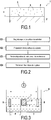
- the figure 1 shows schematically a sectional view at the surface of a part 1 of an aircraft engine according to the invention, which can for example be constituted by a turbine engine diffuser.
- Such a part 1 comprises a metal substrate 2, for example steel, aluminum, titanium, an aluminum-based alloy, a titanium-based alloy, or a nickel-based alloy.
- the substrate 2 is coated with a protective coating 3 against erosion.
- the protective coating 3 against erosion is here directly in contact with the substrate 2 and covers it.
- the coating 3 has a thickness e of between 5 ⁇ m and 100 ⁇ m.
- the coating 3 comprises a phase 4, predominantly by mass in the coating, comprising a chromium and carbon base. More specifically, phase 4 comprises chromium in an atomic content greater than or equal to 45%, and carbon in an atomic content between 5% and 20%.
- the chromium and the carbon inside phase 4 of the coating 3 are in particular present in the form of chromium carbides, of the Cr 7 C 3 and Cr 23 C 6 type .
- the coating 1 can also comprise a dispersed phase 5 within the phase 4 of chromium and carbon, comprising metallic and / or ceramic particles.
- metallic particles can for example be particles of tungsten or nickel.
- ceramic particles can be, for example, alumina or zirconia particles.
- the volume content in the coating of metal particles and / or ceramic particles is preferably less than 20%, or even more preferably, between 5% and 15%.
- the metallic particles and / or the ceramic particles can have a size of between 1 ⁇ m and 30 ⁇ m.
- the coating can be formed from phase 4 comprising chromium and carbon in which metal particles and / or ceramic particles are dispersed 5.
- the coating 3 can be formed only from phase 4 comprising chromium and carbon.
- a method of manufacturing an aircraft engine part 1 according to the invention will now be described with reference to the flow chart of the figure 2 and the diagram illustrating an electroplating device 6 of the figure 3 .
- the method which will be described comprises a step of electrodeposition of a coating composition 3 '.
- the invention is not limited to the deposition by electrodeposition of the coating composition, other techniques being available to obtain the coated part according to the invention. Examples include physical vapor deposition techniques, chemical vapor deposition techniques, or case hardening.
- a first step in the process may consist in degreasing the surface of the substrate on which a coating composition will be deposited, for example by means of an aqueous degreasing solution.
- the surface of the substrate can then be prepared (step E2) in order to ensure that the electrodeposition will be homogeneous on the substrate 2 and in order to increase its efficiency.
- To prepare the surface it is possible, in a manner known per se, to sand it, to attack it chemically (for example with an acid solution), etc.
- an electrolytic bath 7 which comprises at least chromium ions III (trivalent chromium), and an organic compound complexing for chromium ions. It is possible, for example, to use known aqueous solutions comprising chromium III chloride and a carboxylic acid as complexing agent.
- the electrolytic bath 7 can optionally be heated during the electrodeposition step.
- the electrolytic bath may include metallic and / or ceramic particles in suspension, of the type of those presented above, so that they are incorporated into the coating composition during the electrodeposition.
- the part 1 whose surface has been prepared can then be connected to the negative terminal (acting as a cathode) of a current generator 8 and immersed in the electrolytic bath 7 prepared previously.
- two electrodes 9 playing the role of anodes are connected to the positive terminal of the generator 8 and immersed in the bath 7, so that the part 1 is between the two electrodes 9 in the bath.
- the ratio of the anode surface (corresponding to the useful surface of the two electrodes 9) to the cathode surface (corresponding to the surface of the substrate 2 to be coated with the part) is preferably of the order of 4.
- the electrodes 9 forming the anodes are preferably distant from the surface of the part by a distance d of between 1 cm and 20 cm.
- the generator 8 is then switched on to initiate the electrodeposition of the coating composition 3 'on the part (step E3).
- the chromium III is reduced on the substrate 2 of the part 1, to form the coating composition 3 'comprising chromium, carbon (from the organic compound present in the bath) and metallic and / or ceramic particles. which were suspended in the bath.
- Parameters such as the surface current, the temperature of the bath and the duration of the electrodeposition may be adapted as a function in particular of the thickness of the coating which it is desired to obtain.
- the heat treatment (step E4) of the part 1 provided with the coating composition 3 ' is carried out at a temperature preferably between 250 ° C and 700 ° C, or more preferably between 300 ° C and 600 ° C, or even more preferably between 400 ° C and 500 ° C.
- the heat treatment can be carried out under an inert atmosphere.
- the duration of this heat treatment can be more than 10 minutes, for example more than 15 minutes or even more than 30 minutes.
- the duration of heat treatment may for example be between 15 minutes and 280 minutes.
- the duration of the heat treatment may be adapted as a function of the temperature chosen and the hardness desired for the coating.
- the coating 3 of the part 1 according to the invention obtained following the heat treatment step may have a hardness of more than 1500 HV (Vickers hardness), and has an erosion resistance sufficient for application in an engine d 'aircraft.
- the part 1 can for example constitute at least part of a turboprop diffuser, at least part of an axial or centrifugal compressor, for example a centrifugal impeller, at least part of a distributor, or any other part 'A turbomachine which can be subjected to an air flow.
- a part of a steel turboprop diffuser is coated with a coating by a method according to the invention.
- the surfaces to be coated have been degreased beforehand and prepared.
- the bath is heated to about 35 ° C to effect the electroplating.
- the part is immersed in the bath and connected to the negative terminal of the current generator.
- the anode electrodes are immersed in the bath and connected to the generator, as described above.
- the ratio of the anode surface to the cathode surface is equal to 4.
- a direct current of 40 A / dm 2 is imposed for 180 minutes so as to form the coating composition on the substrate. Once the electroplating has been carried out, the part is rinsed and dried.
- the part coated with the coating composition is placed in an oven, and a heat treatment at 500 ° C. for 1 hour is imposed on it.
- the coating has a thickness of approximately 35 ⁇ m.
- the hardness of the coating thus formed is approximately 2050 HV (Vickers hardness).
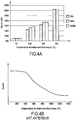
- FIG. 4B a graph showing the evolution of the hardness of a chromium-based coating deposited by electrodeposition from a chromium VI solution on a substrate, as a function of the temperature of a heat treatment carried out after deposition.
- the electrolytic bath used is a standard solution based on chromic acid having a concentration of the order of 250 g / L of CrO 3 , the solution further comprising 2.5 g / L of sulfuric acid H 2 SO 4 .
- a current of 40 A / dm 2 was used.
Landscapes
- Chemical & Material Sciences (AREA)
- Engineering & Computer Science (AREA)
- Materials Engineering (AREA)
- Metallurgy (AREA)
- Organic Chemistry (AREA)
- Chemical Kinetics & Catalysis (AREA)
- Electrochemistry (AREA)
- Mechanical Engineering (AREA)
- Electroplating Methods And Accessories (AREA)
- Other Surface Treatments For Metallic Materials (AREA)
- Electroplating And Plating Baths Therefor (AREA)
- Aviation & Aerospace Engineering (AREA)
Priority Applications (1)
| Application Number | Priority Date | Filing Date | Title |
|---|---|---|---|
| PL16815573T PL3377680T3 (pl) | 2015-11-19 | 2016-11-16 | Część silnika statku powietrznego zawierająca powłokę ochronną przeciw erozji oraz sposób wytwarzania takiej części |
Applications Claiming Priority (2)
| Application Number | Priority Date | Filing Date | Title |
|---|---|---|---|
| FR1561118A FR3043939B1 (fr) | 2015-11-19 | 2015-11-19 | Piece de moteur d'aeronef comportant un revetement de protection contre l'erosion et procede de fabrication d'une telle piece |
| PCT/FR2016/052967 WO2017085400A1 (fr) | 2015-11-19 | 2016-11-16 | Pièce de moteur d'aéronef comportant un revêtement de protection contre l'érosion et procédé de fabrication d'une telle pièce |
Publications (2)
| Publication Number | Publication Date |
|---|---|
| EP3377680A1 EP3377680A1 (fr) | 2018-09-26 |
| EP3377680B1 true EP3377680B1 (fr) | 2020-01-01 |
Family
ID=55646702
Family Applications (1)
| Application Number | Title | Priority Date | Filing Date |
|---|---|---|---|
| EP16815573.7A Active EP3377680B1 (fr) | 2015-11-19 | 2016-11-16 | Pièce de moteur d'aéronef comportant un revêtement de protection contre l'érosion et procédé de fabrication d'une telle pièce |
Country Status (10)
| Country | Link |
|---|---|
| US (1) | US10753006B2 (pl) |
| EP (1) | EP3377680B1 (pl) |
| JP (1) | JP2018536094A (pl) |
| KR (1) | KR20180095537A (pl) |
| CN (1) | CN108350595A (pl) |
| CA (1) | CA3005271C (pl) |
| FR (1) | FR3043939B1 (pl) |
| PL (1) | PL3377680T3 (pl) |
| RU (1) | RU2718032C2 (pl) |
| WO (1) | WO2017085400A1 (pl) |
Families Citing this family (5)
| Publication number | Priority date | Publication date | Assignee | Title |
|---|---|---|---|---|
| FR3095650B1 (fr) * | 2019-05-02 | 2021-04-09 | Safran Aircraft Engines | Procédé de revêtement d’une pièce de turbomachine d’aéronef |
| CN112301385A (zh) * | 2019-08-02 | 2021-02-02 | 天津大学 | 一种提高h13钢表面沉积铬层耐蚀性能的方法 |
| FR3122595B1 (fr) * | 2021-05-05 | 2024-04-26 | Safran Helicopter Engines | Procédé de fabrication d’une aube de turbine pour une turbomachine |
| CN114574802A (zh) * | 2022-03-15 | 2022-06-03 | 西安交通大学 | 一种新型碳化铬涂层及其制备方法 |
| WO2024053668A1 (ja) * | 2022-09-07 | 2024-03-14 | 日立Astemo株式会社 | めっき部材およびその製造方法 |
Family Cites Families (11)
| Publication number | Priority date | Publication date | Assignee | Title |
|---|---|---|---|---|
| US3951612A (en) | 1974-11-12 | 1976-04-20 | Aerospace Materials Inc. | Erosion resistant coatings |
| US4666733A (en) | 1985-09-17 | 1987-05-19 | Electric Power Research Institute | Method of heat treating of wear resistant coatings and compositions useful therefor |
| GB2188942B (en) * | 1986-04-11 | 1990-04-04 | Rolls Royce Plc | Protective coating |
| JPH05117868A (ja) * | 1991-10-22 | 1993-05-14 | Mitsubishi Heavy Ind Ltd | 表面処理方法 |
| US5271823A (en) * | 1992-06-17 | 1993-12-21 | Eaton Corporation | Method of making a trivalent chromium plated engine valve |
| US6004448A (en) | 1995-06-06 | 1999-12-21 | Atotech Usa, Inc. | Deposition of chromium oxides from a trivalent chromium solution containing a complexing agent for a buffer |
| RU2147630C1 (ru) * | 1998-01-05 | 2000-04-20 | Бийский технологический институт Алтайского государственного технического университета им.И.И.Ползунова | Способ получения термоупрочняемых хромовых покрытий |
| CA2700147C (en) * | 2007-10-02 | 2015-12-29 | Atotech Deutschland Gmbh | Crystalline chromium alloy deposit |
| TWI441961B (zh) | 2012-10-11 | 2014-06-21 | Chang Yi Chen | 披覆碳化鉻基金屬陶瓷電鍍層之疏水性導電工具及其製作方法 |
| FR3008718B1 (fr) | 2013-07-16 | 2016-12-09 | Snecma | Procede de fabrication d'une sous-couche metallique a base de platine sur un substrat metallique |
| US9695523B2 (en) * | 2013-10-12 | 2017-07-04 | Hamilton Sundstrand Corporation | Controlled trivalent chromium pretreatment |
-
2015
- 2015-11-19 FR FR1561118A patent/FR3043939B1/fr active Active
-
2016
- 2016-11-11 US US15/776,576 patent/US10753006B2/en active Active
- 2016-11-16 CN CN201680067135.7A patent/CN108350595A/zh active Pending
- 2016-11-16 CA CA3005271A patent/CA3005271C/fr active Active
- 2016-11-16 EP EP16815573.7A patent/EP3377680B1/fr active Active
- 2016-11-16 KR KR1020187017373A patent/KR20180095537A/ko not_active Withdrawn
- 2016-11-16 JP JP2018526150A patent/JP2018536094A/ja active Pending
- 2016-11-16 WO PCT/FR2016/052967 patent/WO2017085400A1/fr not_active Ceased
- 2016-11-16 RU RU2018122058A patent/RU2718032C2/ru active
- 2016-11-16 PL PL16815573T patent/PL3377680T3/pl unknown
Non-Patent Citations (1)
| Title |
|---|
| None * |
Also Published As
| Publication number | Publication date |
|---|---|
| KR20180095537A (ko) | 2018-08-27 |
| RU2018122058A3 (pl) | 2020-01-30 |
| EP3377680A1 (fr) | 2018-09-26 |
| CA3005271C (fr) | 2023-10-10 |
| CA3005271A1 (fr) | 2017-05-26 |
| PL3377680T3 (pl) | 2020-09-21 |
| CN108350595A (zh) | 2018-07-31 |
| FR3043939A1 (fr) | 2017-05-26 |
| RU2018122058A (ru) | 2019-12-19 |
| RU2718032C2 (ru) | 2020-03-30 |
| WO2017085400A1 (fr) | 2017-05-26 |
| JP2018536094A (ja) | 2018-12-06 |
| US20180327921A1 (en) | 2018-11-15 |
| US10753006B2 (en) | 2020-08-25 |
| FR3043939B1 (fr) | 2019-12-20 |
Similar Documents
| Publication | Publication Date | Title |
|---|---|---|
| EP3377680B1 (fr) | Pièce de moteur d'aéronef comportant un revêtement de protection contre l'érosion et procédé de fabrication d'une telle pièce | |
| EP0848079B1 (fr) | Procédé de réalisation d'un revêtement protecteur à haute efficacité contre la corrosion à haute température pour superalliages, revêtement protecteur obtenu par ce procédé et pièces protégées par ce revêtement | |
| FR2503189A1 (fr) | Composition de revetement pour superalliages resistant a l'oxydation a haute temperature et superalliages revetus de cette composition | |
| EP0370838B1 (fr) | Procédé de protection de surface de pièces métalliques contre la corrosion à température élevée, et pièce traitée par ce procédé | |
| CA2868953C (fr) | Procede d'obtention d'un revetement d'aluminiure de nickel de type .beta.-nia1 sur un substrat metallique, et piece munie d'un tel revetement | |
| US8124246B2 (en) | Coated components and methods of fabricating coated components and coated turbine disks | |
| WO2020128394A1 (fr) | Pièce de turbine en superalliage comprenant du rhenium et/ou du ruthenium et procédé de fabrication associé | |
| EP3685018B1 (fr) | Pièce de turbine en superalliage comprenant du rhénium et/ou du ruthénium et procédé de fabrication associé | |
| EP3707297B1 (fr) | Procede de fabrication d'une barriere thermique sur une piece d'une turbomachine | |
| FR3052464A1 (fr) | Procede de protection contre la corrosion et l'oxydation d'une piece en superalliage monocristallin a base de nickel exempt d'hafnium | |
| WO2015007983A2 (fr) | Procede de fabrication d'une sous-couche metallique a base de platine sur un substrat metallique | |
| EP3601634A1 (fr) | Piece de turbine en superalliage et procede de fabrication associe | |
| FR3072717B1 (fr) | Piece de turbine en superalliage comprenant du rhenium et procede de fabrication associe | |
| WO2020240130A1 (fr) | Procédé de protection contre la corrosion | |
| EP4041930A1 (fr) | Piece d'aeronef en superalliage comprenant du rhenium et/ou du ruthenium et procede de fabrication associe | |
| EP3899081B1 (fr) | Procede de fabrication d'un noyau | |
| EP1600525B1 (fr) | Procédé de fabrication ou de réparation d'un revêtement sur un substrat métallique | |
| FR2924129A1 (fr) | Procede pour realiser un revetement d'aluminiure de nickel modifie platine monophase | |
| FR3165278A1 (fr) | Procédé de revêtement d’un substrat par pulvérisation cathodique magnétron réactive et pièce comportant un tel substrat revêtu. | |
| FR3032725A1 (fr) | Procede de depot d'un revetement de protection contre l'erosion sur une piece metallique |
Legal Events
| Date | Code | Title | Description |
|---|---|---|---|
| STAA | Information on the status of an ep patent application or granted ep patent |
Free format text: STATUS: UNKNOWN |
|
| STAA | Information on the status of an ep patent application or granted ep patent |
Free format text: STATUS: THE INTERNATIONAL PUBLICATION HAS BEEN MADE |
|
| PUAI | Public reference made under article 153(3) epc to a published international application that has entered the european phase |
Free format text: ORIGINAL CODE: 0009012 |
|
| STAA | Information on the status of an ep patent application or granted ep patent |
Free format text: STATUS: REQUEST FOR EXAMINATION WAS MADE |
|
| 17P | Request for examination filed |
Effective date: 20180507 |
|
| AK | Designated contracting states |
Kind code of ref document: A1 Designated state(s): AL AT BE BG CH CY CZ DE DK EE ES FI FR GB GR HR HU IE IS IT LI LT LU LV MC MK MT NL NO PL PT RO RS SE SI SK SM TR |
|
| AX | Request for extension of the european patent |
Extension state: BA ME |
|
| DAV | Request for validation of the european patent (deleted) | ||
| DAX | Request for extension of the european patent (deleted) | ||
| GRAP | Despatch of communication of intention to grant a patent |
Free format text: ORIGINAL CODE: EPIDOSNIGR1 |
|
| STAA | Information on the status of an ep patent application or granted ep patent |
Free format text: STATUS: GRANT OF PATENT IS INTENDED |
|
| INTG | Intention to grant announced |
Effective date: 20190726 |
|
| GRAS | Grant fee paid |
Free format text: ORIGINAL CODE: EPIDOSNIGR3 |
|
| GRAA | (expected) grant |
Free format text: ORIGINAL CODE: 0009210 |
|
| STAA | Information on the status of an ep patent application or granted ep patent |
Free format text: STATUS: THE PATENT HAS BEEN GRANTED |
|
| AK | Designated contracting states |
Kind code of ref document: B1 Designated state(s): AL AT BE BG CH CY CZ DE DK EE ES FI FR GB GR HR HU IE IS IT LI LT LU LV MC MK MT NL NO PL PT RO RS SE SI SK SM TR |
|
| REG | Reference to a national code |
Ref country code: GB Ref legal event code: FG4D Free format text: NOT ENGLISH |
|
| REG | Reference to a national code |
Ref country code: CH Ref legal event code: EP Ref country code: AT Ref legal event code: REF Ref document number: 1219870 Country of ref document: AT Kind code of ref document: T Effective date: 20200115 |
|
| REG | Reference to a national code |
Ref country code: DE Ref legal event code: R096 Ref document number: 602016027515 Country of ref document: DE |
|
| REG | Reference to a national code |
Ref country code: IE Ref legal event code: FG4D Free format text: LANGUAGE OF EP DOCUMENT: FRENCH |
|
| REG | Reference to a national code |
Ref country code: NL Ref legal event code: MP Effective date: 20200101 |
|
| REG | Reference to a national code |
Ref country code: LT Ref legal event code: MG4D |
|
| PG25 | Lapsed in a contracting state [announced via postgrant information from national office to epo] |
Ref country code: PT Free format text: LAPSE BECAUSE OF FAILURE TO SUBMIT A TRANSLATION OF THE DESCRIPTION OR TO PAY THE FEE WITHIN THE PRESCRIBED TIME-LIMIT Effective date: 20200527 Ref country code: FI Free format text: LAPSE BECAUSE OF FAILURE TO SUBMIT A TRANSLATION OF THE DESCRIPTION OR TO PAY THE FEE WITHIN THE PRESCRIBED TIME-LIMIT Effective date: 20200101 Ref country code: NO Free format text: LAPSE BECAUSE OF FAILURE TO SUBMIT A TRANSLATION OF THE DESCRIPTION OR TO PAY THE FEE WITHIN THE PRESCRIBED TIME-LIMIT Effective date: 20200401 Ref country code: NL Free format text: LAPSE BECAUSE OF FAILURE TO SUBMIT A TRANSLATION OF THE DESCRIPTION OR TO PAY THE FEE WITHIN THE PRESCRIBED TIME-LIMIT Effective date: 20200101 Ref country code: RS Free format text: LAPSE BECAUSE OF FAILURE TO SUBMIT A TRANSLATION OF THE DESCRIPTION OR TO PAY THE FEE WITHIN THE PRESCRIBED TIME-LIMIT Effective date: 20200101 Ref country code: LT Free format text: LAPSE BECAUSE OF FAILURE TO SUBMIT A TRANSLATION OF THE DESCRIPTION OR TO PAY THE FEE WITHIN THE PRESCRIBED TIME-LIMIT Effective date: 20200101 |
|
| PG25 | Lapsed in a contracting state [announced via postgrant information from national office to epo] |
Ref country code: GR Free format text: LAPSE BECAUSE OF FAILURE TO SUBMIT A TRANSLATION OF THE DESCRIPTION OR TO PAY THE FEE WITHIN THE PRESCRIBED TIME-LIMIT Effective date: 20200402 Ref country code: BG Free format text: LAPSE BECAUSE OF FAILURE TO SUBMIT A TRANSLATION OF THE DESCRIPTION OR TO PAY THE FEE WITHIN THE PRESCRIBED TIME-LIMIT Effective date: 20200401 Ref country code: HR Free format text: LAPSE BECAUSE OF FAILURE TO SUBMIT A TRANSLATION OF THE DESCRIPTION OR TO PAY THE FEE WITHIN THE PRESCRIBED TIME-LIMIT Effective date: 20200101 Ref country code: IS Free format text: LAPSE BECAUSE OF FAILURE TO SUBMIT A TRANSLATION OF THE DESCRIPTION OR TO PAY THE FEE WITHIN THE PRESCRIBED TIME-LIMIT Effective date: 20200501 Ref country code: LV Free format text: LAPSE BECAUSE OF FAILURE TO SUBMIT A TRANSLATION OF THE DESCRIPTION OR TO PAY THE FEE WITHIN THE PRESCRIBED TIME-LIMIT Effective date: 20200101 Ref country code: SE Free format text: LAPSE BECAUSE OF FAILURE TO SUBMIT A TRANSLATION OF THE DESCRIPTION OR TO PAY THE FEE WITHIN THE PRESCRIBED TIME-LIMIT Effective date: 20200101 |
|
| REG | Reference to a national code |
Ref country code: DE Ref legal event code: R097 Ref document number: 602016027515 Country of ref document: DE |
|
| PG25 | Lapsed in a contracting state [announced via postgrant information from national office to epo] |
Ref country code: RO Free format text: LAPSE BECAUSE OF FAILURE TO SUBMIT A TRANSLATION OF THE DESCRIPTION OR TO PAY THE FEE WITHIN THE PRESCRIBED TIME-LIMIT Effective date: 20200101 Ref country code: ES Free format text: LAPSE BECAUSE OF FAILURE TO SUBMIT A TRANSLATION OF THE DESCRIPTION OR TO PAY THE FEE WITHIN THE PRESCRIBED TIME-LIMIT Effective date: 20200101 Ref country code: EE Free format text: LAPSE BECAUSE OF FAILURE TO SUBMIT A TRANSLATION OF THE DESCRIPTION OR TO PAY THE FEE WITHIN THE PRESCRIBED TIME-LIMIT Effective date: 20200101 Ref country code: SM Free format text: LAPSE BECAUSE OF FAILURE TO SUBMIT A TRANSLATION OF THE DESCRIPTION OR TO PAY THE FEE WITHIN THE PRESCRIBED TIME-LIMIT Effective date: 20200101 Ref country code: SK Free format text: LAPSE BECAUSE OF FAILURE TO SUBMIT A TRANSLATION OF THE DESCRIPTION OR TO PAY THE FEE WITHIN THE PRESCRIBED TIME-LIMIT Effective date: 20200101 Ref country code: DK Free format text: LAPSE BECAUSE OF FAILURE TO SUBMIT A TRANSLATION OF THE DESCRIPTION OR TO PAY THE FEE WITHIN THE PRESCRIBED TIME-LIMIT Effective date: 20200101 |
|
| PLBE | No opposition filed within time limit |
Free format text: ORIGINAL CODE: 0009261 |
|
| STAA | Information on the status of an ep patent application or granted ep patent |
Free format text: STATUS: NO OPPOSITION FILED WITHIN TIME LIMIT |
|
| REG | Reference to a national code |
Ref country code: AT Ref legal event code: MK05 Ref document number: 1219870 Country of ref document: AT Kind code of ref document: T Effective date: 20200101 |
|
| 26N | No opposition filed |
Effective date: 20201002 |
|
| PG25 | Lapsed in a contracting state [announced via postgrant information from national office to epo] |
Ref country code: AT Free format text: LAPSE BECAUSE OF FAILURE TO SUBMIT A TRANSLATION OF THE DESCRIPTION OR TO PAY THE FEE WITHIN THE PRESCRIBED TIME-LIMIT Effective date: 20200101 |
|
| PG25 | Lapsed in a contracting state [announced via postgrant information from national office to epo] |
Ref country code: SI Free format text: LAPSE BECAUSE OF FAILURE TO SUBMIT A TRANSLATION OF THE DESCRIPTION OR TO PAY THE FEE WITHIN THE PRESCRIBED TIME-LIMIT Effective date: 20200101 |
|
| PG25 | Lapsed in a contracting state [announced via postgrant information from national office to epo] |
Ref country code: MC Free format text: LAPSE BECAUSE OF FAILURE TO SUBMIT A TRANSLATION OF THE DESCRIPTION OR TO PAY THE FEE WITHIN THE PRESCRIBED TIME-LIMIT Effective date: 20200101 |
|
| REG | Reference to a national code |
Ref country code: CH Ref legal event code: PL |
|
| PG25 | Lapsed in a contracting state [announced via postgrant information from national office to epo] |
Ref country code: LU Free format text: LAPSE BECAUSE OF NON-PAYMENT OF DUE FEES Effective date: 20201116 |
|
| REG | Reference to a national code |
Ref country code: BE Ref legal event code: MM Effective date: 20201130 |
|
| PG25 | Lapsed in a contracting state [announced via postgrant information from national office to epo] |
Ref country code: LI Free format text: LAPSE BECAUSE OF NON-PAYMENT OF DUE FEES Effective date: 20201130 Ref country code: CH Free format text: LAPSE BECAUSE OF NON-PAYMENT OF DUE FEES Effective date: 20201130 |
|
| PG25 | Lapsed in a contracting state [announced via postgrant information from national office to epo] |
Ref country code: IE Free format text: LAPSE BECAUSE OF NON-PAYMENT OF DUE FEES Effective date: 20201116 |
|
| PG25 | Lapsed in a contracting state [announced via postgrant information from national office to epo] |
Ref country code: TR Free format text: LAPSE BECAUSE OF FAILURE TO SUBMIT A TRANSLATION OF THE DESCRIPTION OR TO PAY THE FEE WITHIN THE PRESCRIBED TIME-LIMIT Effective date: 20200101 Ref country code: MT Free format text: LAPSE BECAUSE OF FAILURE TO SUBMIT A TRANSLATION OF THE DESCRIPTION OR TO PAY THE FEE WITHIN THE PRESCRIBED TIME-LIMIT Effective date: 20200101 Ref country code: CY Free format text: LAPSE BECAUSE OF FAILURE TO SUBMIT A TRANSLATION OF THE DESCRIPTION OR TO PAY THE FEE WITHIN THE PRESCRIBED TIME-LIMIT Effective date: 20200101 |
|
| PG25 | Lapsed in a contracting state [announced via postgrant information from national office to epo] |
Ref country code: MK Free format text: LAPSE BECAUSE OF FAILURE TO SUBMIT A TRANSLATION OF THE DESCRIPTION OR TO PAY THE FEE WITHIN THE PRESCRIBED TIME-LIMIT Effective date: 20200101 Ref country code: AL Free format text: LAPSE BECAUSE OF FAILURE TO SUBMIT A TRANSLATION OF THE DESCRIPTION OR TO PAY THE FEE WITHIN THE PRESCRIBED TIME-LIMIT Effective date: 20200101 |
|
| PG25 | Lapsed in a contracting state [announced via postgrant information from national office to epo] |
Ref country code: BE Free format text: LAPSE BECAUSE OF NON-PAYMENT OF DUE FEES Effective date: 20201130 |
|
| PGFP | Annual fee paid to national office [announced via postgrant information from national office to epo] |
Ref country code: PL Payment date: 20241028 Year of fee payment: 9 |
|
| PGFP | Annual fee paid to national office [announced via postgrant information from national office to epo] |
Ref country code: DE Payment date: 20251118 Year of fee payment: 10 |
|
| PGFP | Annual fee paid to national office [announced via postgrant information from national office to epo] |
Ref country code: GB Payment date: 20251125 Year of fee payment: 10 |
|
| PGFP | Annual fee paid to national office [announced via postgrant information from national office to epo] |
Ref country code: IT Payment date: 20251128 Year of fee payment: 10 |
|
| PGFP | Annual fee paid to national office [announced via postgrant information from national office to epo] |
Ref country code: FR Payment date: 20251125 Year of fee payment: 10 |
|
| PGFP | Annual fee paid to national office [announced via postgrant information from national office to epo] |
Ref country code: CZ Payment date: 20251031 Year of fee payment: 10 |