EP3373683A1 - Verfahren und vorrichtung zur dienstdatenpaketverarbeitung - Google Patents
Verfahren und vorrichtung zur dienstdatenpaketverarbeitung Download PDFInfo
- Publication number
- EP3373683A1 EP3373683A1 EP15909458.0A EP15909458A EP3373683A1 EP 3373683 A1 EP3373683 A1 EP 3373683A1 EP 15909458 A EP15909458 A EP 15909458A EP 3373683 A1 EP3373683 A1 EP 3373683A1
- Authority
- EP
- European Patent Office
- Prior art keywords
- indication information
- service
- data packet
- service data
- auxiliary indication
- Prior art date
- Legal status (The legal status is an assumption and is not a legal conclusion. Google has not performed a legal analysis and makes no representation as to the accuracy of the status listed.)
- Withdrawn
Links
- 238000003672 processing method Methods 0.000 title claims abstract description 12
- 238000012545 processing Methods 0.000 claims abstract description 210
- 230000005540 biological transmission Effects 0.000 claims abstract description 74
- 238000000034 method Methods 0.000 claims abstract description 51
- 239000000969 carrier Substances 0.000 claims description 50
- 230000011664 signaling Effects 0.000 claims description 36
- 230000008569 process Effects 0.000 claims description 26
- 238000004891 communication Methods 0.000 abstract description 2
- 238000010586 diagram Methods 0.000 description 6
- 239000012634 fragment Substances 0.000 description 6
- 230000003139 buffering effect Effects 0.000 description 3
- 230000006870 function Effects 0.000 description 3
- 230000015654 memory Effects 0.000 description 3
- 238000010295 mobile communication Methods 0.000 description 2
- 238000011160 research Methods 0.000 description 2
- 230000009286 beneficial effect Effects 0.000 description 1
- 230000008014 freezing Effects 0.000 description 1
- 238000007710 freezing Methods 0.000 description 1
- 230000006872 improvement Effects 0.000 description 1
- 230000004048 modification Effects 0.000 description 1
- 238000012986 modification Methods 0.000 description 1
- 230000003287 optical effect Effects 0.000 description 1
- 230000002085 persistent effect Effects 0.000 description 1
- 230000001052 transient effect Effects 0.000 description 1
Images
Classifications
-
- H—ELECTRICITY
- H04—ELECTRIC COMMUNICATION TECHNIQUE
- H04W—WIRELESS COMMUNICATION NETWORKS
- H04W4/00—Services specially adapted for wireless communication networks; Facilities therefor
- H04W4/20—Services signaling; Auxiliary data signalling, i.e. transmitting data via a non-traffic channel
-
- H—ELECTRICITY
- H04—ELECTRIC COMMUNICATION TECHNIQUE
- H04W—WIRELESS COMMUNICATION NETWORKS
- H04W72/00—Local resource management
- H04W72/50—Allocation or scheduling criteria for wireless resources
- H04W72/56—Allocation or scheduling criteria for wireless resources based on priority criteria
-
- H—ELECTRICITY
- H04—ELECTRIC COMMUNICATION TECHNIQUE
- H04W—WIRELESS COMMUNICATION NETWORKS
- H04W72/00—Local resource management
- H04W72/20—Control channels or signalling for resource management
-
- H—ELECTRICITY
- H04—ELECTRIC COMMUNICATION TECHNIQUE
- H04W—WIRELESS COMMUNICATION NETWORKS
- H04W72/00—Local resource management
- H04W72/50—Allocation or scheduling criteria for wireless resources
- H04W72/56—Allocation or scheduling criteria for wireless resources based on priority criteria
- H04W72/566—Allocation or scheduling criteria for wireless resources based on priority criteria of the information or information source or recipient
- H04W72/569—Allocation or scheduling criteria for wireless resources based on priority criteria of the information or information source or recipient of the traffic information
-
- H—ELECTRICITY
- H04—ELECTRIC COMMUNICATION TECHNIQUE
- H04W—WIRELESS COMMUNICATION NETWORKS
- H04W76/00—Connection management
- H04W76/20—Manipulation of established connections
- H04W76/27—Transitions between radio resource control [RRC] states
-
- H—ELECTRICITY
- H04—ELECTRIC COMMUNICATION TECHNIQUE
- H04W—WIRELESS COMMUNICATION NETWORKS
- H04W72/00—Local resource management
- H04W72/20—Control channels or signalling for resource management
- H04W72/21—Control channels or signalling for resource management in the uplink direction of a wireless link, i.e. towards the network
Definitions
- the present invention relates to the communications field, and in particular, to a service data packet processing method and apparatus.
- a service data packet of a service may be transmitted between a terminal and a server, and the service data packet transmitted between the terminal and the server usually passes through a network side device such as a base station or a gateway.
- a network side device such as a base station or a gateway.
- the network side device needs to process the service data packet. For example, the network side device may schedule the service data packet, and send the scheduled service data packet to the terminal or the server.
- some services have different processing requirements for the network side device in different transmission phases. For example, some services have different requirements for a transmission delay in different transmission phases.
- a video service is used as an example. It can be learned based on research on the video service that delay requirements for each video fragment are different in an initial video loading process and a playback process. Usually, a relatively short time is required in the initial video loading process, to reduce a waiting time of a user; but when there is data in a buffer of a player in the playback process, a scheduling delay may be longer.
- a service data packet processing method includes:
- the processing priority of the service data packet is determined based on the service auxiliary indication information of the first device, and service data is processed based on the processing priority, so that processing requirements for a service in different service transmission phases are met.
- the service auxiliary indication information is scheduling indication information, and is used to instruct a network side device to quickly schedule the service data packet; or the service auxiliary indication information is a scheduling level indication, and is used to indicate a scheduling priority of the service data packet to a network side device; or the service auxiliary indication information is a type of the service data packet; or the service auxiliary indication information is a delay requirement of the service data packet, and is used to indicate a scheduling delay of the service data packet to a network side device; or the service auxiliary indication information is the processing priority of the service data packet, and is used to indicate the priority of processing the service data packet by a network side device.
- the service auxiliary indication information includes uplink service auxiliary indication information and/or downlink service auxiliary indication information
- the uplink service auxiliary indication information is used to indicate a processing requirement for an uplink service data packet
- the downlink service auxiliary indication information is used to indicate a processing requirement for a downlink service data packet.
- the method further includes: receiving direction information from the first device, where the direction information is used to indicate whether the service auxiliary indication information is uplink service auxiliary information or downlink service auxiliary information.
- the method further includes:
- the network side device may be notified of a time validity range of the service auxiliary indication information by using the valid duration, so that the network side device processes the service data packet based on the processing priority within the time validity range.
- the receiving service auxiliary indication information from a first device includes:
- the receiving service auxiliary indication information from a first device includes: receiving a service data packet from the server or the routing node, where a packet header of the service data packet carriers the service auxiliary indication information.
- a service data packet processing apparatus includes:
- the processing priority of the service data packet is determined based on the service auxiliary indication information of the first device, and service data is processed based on the processing priority, so that processing requirements for a service in different service transmission phases are met.
- the service auxiliary indication information is scheduling indication information, and is used to instruct the apparatus to quickly schedule the service data packet; or the service auxiliary indication information is a scheduling level indication, and is used to indicate a scheduling priority of the service data packet to the apparatus; or the service auxiliary indication information is a type of the service data packet; or the service auxiliary indication information is a delay requirement of the service data packet, and is used to indicate a scheduling delay of the service data packet to the apparatus; or the service auxiliary indication information is the processing priority of the service data packet, and is used to indicate the priority of processing the service data packet by the apparatus.
- the service auxiliary indication information includes uplink service auxiliary indication information and/or downlink service auxiliary indication information
- the uplink service auxiliary indication information is used to indicate a processing requirement for an uplink service data packet
- the downlink service auxiliary indication information is used to indicate a processing requirement for a downlink service data packet.
- the receiving unit is further configured to receive direction information from the first device, where the direction information is used to indicate whether the service auxiliary indication information is uplink service auxiliary information or downlink service auxiliary information.
- the processing unit is configured to: obtain valid duration; and determine, within the valid duration after the service auxiliary indication information is received, the processing priority of the service data packet based on the service auxiliary indication information.
- the apparatus may be notified of a time validity range of the service auxiliary indication information by using the valid duration, so that the apparatus processes the service data packet based on the processing priority within the time validity range.
- the receiving unit when the first device is the terminal, the receiving unit is configured to: receive radio resource control (RRC) signaling from the terminal, where the RRC signaling carries the service auxiliary indication information; or receive an uplink service data packet from the terminal, where a packet header of the uplink service data packet carriers the service auxiliary indication information, or a control information element in a packet header of the uplink service data packet carriers the service auxiliary indication information; or receive the service auxiliary indication information from the terminal by using a preset transmission resource.
- RRC radio resource control
- the receiving unit when the first device is the server or the routing node in a data transmission process, the receiving unit is configured to receive a service data packet from the server or the routing node, where a packet header of the service data packet carriers the service auxiliary indication information.
- a service data packet processing apparatus includes:
- the processing priority of the service data packet is determined based on the service auxiliary indication information of the first device, and service data is processed based on the processing priority, so that processing requirements for a service in different service transmission phases are met.
- the service auxiliary indication information is scheduling indication information, and is used to instruct the apparatus to quickly schedule the service data packet; or the service auxiliary indication information is a scheduling level indication, and is used to indicate a scheduling priority of the service data packet to the apparatus; or the service auxiliary indication information is a type of the service data packet; or the service auxiliary indication information is a delay requirement of the service data packet, and is used to indicate a scheduling delay of the service data packet to the apparatus; or the service auxiliary indication information is the processing priority of the service data packet, and is used to indicate the priority of processing the service data packet by the apparatus.
- the service auxiliary indication information includes uplink service auxiliary indication information and/or downlink service auxiliary indication information
- the uplink service auxiliary indication information is used to indicate a processing requirement for an uplink service data packet
- the downlink service auxiliary indication information is used to indicate a processing requirement for a downlink service data packet.
- the receiver is further configured to receive direction information from the first device, where the direction information is used to indicate whether the service auxiliary indication information is uplink service auxiliary information or downlink service auxiliary information.
- the processor is configured to: obtain valid duration; and determine, within the valid duration after the service auxiliary indication information is received, the processing priority of the service data packet based on the service auxiliary indication information.
- the apparatus may be notified of a time validity range of the service auxiliary indication information by using the valid duration, so that the apparatus processes the service data packet based on the processing priority within the time validity range.
- the receiver when the first device is the terminal, the receiver is configured to: receive radio resource control (RRC) signaling from the terminal, where the RRC signaling carries the service auxiliary indication information; or receive an uplink service data packet from the terminal, where a packet header of the uplink service data packet carriers the service auxiliary indication information, or a control information element in a packet header of the uplink service data packet carriers the service auxiliary indication information; or receive the service auxiliary indication information that is from the terminal by using a preset transmission resource.
- RRC radio resource control
- the receiver when the first device is the server or the routing node in a data transmission process, the receiver is configured to receive a service data packet from the server or the routing node, where a packet header of the service data packet carriers the service auxiliary indication information.
- a service data packet processing method includes:
- the sending the service auxiliary indication information to a network side device includes:
- the sending the service auxiliary indication information to a network side device includes: sending a service data packet to the network side device, where a packet header of the service data packet carriers the service auxiliary indication information.
- a service data packet processing apparatus includes:
- the sending unit is configured to: send radio resource control (RRC) signaling to the network side device, where the RRC signaling carries the service auxiliary indication information; or send an uplink service data packet to the network side device, where a packet header of the uplink service data packet carriers the service auxiliary indication information, or a control information element in a packet header of the uplink service data packet carriers the service auxiliary indication information; or send the service auxiliary indication information to the network side device by using a preset transmission resource.
- RRC radio resource control
- the sending unit is configured to send a service data packet to the network side device, where a packet header of the service data packet carriers the service auxiliary indication information.
- the service auxiliary indication information is scheduling indication information, and is used to instruct the network side device to quickly schedule the service data packet; or the service auxiliary indication information is a scheduling level indication, and is used to indicate a scheduling priority of the service data packet to the network side device; or the service auxiliary indication information is a type of the service data packet; or the service auxiliary indication information is a delay requirement of the service data packet, and is used to indicate a scheduling delay of the service data packet to the network side device; or the service auxiliary indication information is the processing priority of the service data packet, and is used to indicate the priority of processing the service data packet by the network side device.
- the service auxiliary indication information includes uplink service auxiliary indication information and/or downlink service auxiliary indication information
- the uplink service auxiliary indication information is used to indicate a processing requirement for an uplink service data packet
- the downlink service auxiliary indication information is used to indicate a processing requirement for a downlink service data packet.
- the sending unit is further configured to send direction information to the network side device, where the direction information is used to indicate whether the service auxiliary indication information is uplink service auxiliary information or downlink service auxiliary information.
- a service data packet processing apparatus includes:
- the transmitter when the first device is the terminal, the transmitter is configured to: send radio resource control (RRC) signaling to the network side device, where the RRC signaling carries the service auxiliary indication information; or send an uplink service data packet to the network side device, where a packet header of the uplink service data packet carriers the service auxiliary indication information, or a control information element in a packet header of the uplink service data packet carriers the service auxiliary indication information; or send the service auxiliary indication information to the network side device by using a preset transmission resource.
- RRC radio resource control
- the transmitter when the first device is the server or the routing node in a data transmission process, the transmitter is configured to send a service data packet to the network side device, where a packet header of the service data packet carriers the service auxiliary indication information.
- the service auxiliary indication information is scheduling indication information, and is used to instruct the network side device to quickly schedule the service data packet; or the service auxiliary indication information is a scheduling level indication, and is used to indicate a scheduling priority of the service data packet to the network side device; or the service auxiliary indication information is a type of the service data packet; or the service auxiliary indication information is a delay requirement of the service data packet, and is used to indicate a scheduling delay of the service data packet to the network side device; or the service auxiliary indication information is the processing priority of the service data packet, and is used to indicate the priority of processing the service data packet by the network side device.
- the service auxiliary indication information includes uplink service auxiliary indication information and/or downlink service auxiliary indication information
- the uplink service auxiliary indication information is used to indicate a processing requirement for an uplink service data packet
- the downlink service auxiliary indication information is used to indicate a processing requirement for a downlink service data packet.
- the sending unit is further configured to send direction information to the network side device, where the direction information is used to indicate whether the service auxiliary indication information is uplink service auxiliary information or downlink service auxiliary information.
- the processing priority of the service data packet is determined based on the service auxiliary indication information of the first device, and service data is processed based on the processing priority, so that processing requirements for a service in different service transmission phases are met.
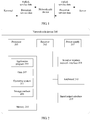
- FIG. 1 shows a network architecture of a mobile communications system applied in embodiments of the present invention.
- the network architecture includes a terminal, a network side device, and a server.
- a service data packet may be sent between the terminal and the server.
- the network side device is a device through which the service data packet sent between the terminal and the server passes.
- the service data packet sent between the terminal and the server may pass through nodes such as a base station, an SGW (Serving Gateway, serving gateway), and a PGW (PDN (Packet Data Network, packet data network) gateway, PDN gateway). These nodes are network side devices.
- a data packet further passes through a router and the like in an IP (Internet Protocol, internet protocol) network during transmission. Details are not described herein.
- a device that may send service auxiliary indication information to the network side device is referred to as a first device, and the service auxiliary indication information is used to indicate a processing requirement for a service data packet.
- the first device is at least one of the following entities: a terminal, a server, or a routing node in a service data packet transmission process.
- the network side device receives the service auxiliary indication information, determines a processing priority of the service data packet based on the service auxiliary indication information, and processes the service data packet based on the processing priority.
- the network side device receives the service auxiliary indication information, determines a processing priority of the service data packet based on the service auxiliary indication information, and processes the service data packet based on the processing priority.
- processing and/or a processing requirement in this patent include/includes but are/is not limited to: a size of an allocated transmission resource, a delay requirement in data packet transmission, a scheduling priority request, a data packet discard instruction, a sequence of data packets in a relay node, and the like.
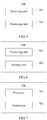
- the embodiments of the present invention further provide a network side device 200.
- the network side device 200 may greatly vary due to different configurations or different performance, and may include one or more processors 201, receivers 202, and memories 203, and one or more storage media 206 (for example, one or more mass storage devices) for storing application programs 204 or data 205.
- the memory 203 and the storage medium 206 may be transient storage or persistent storage.
- a program stored in the storage medium 206 may include one or more modules (which are not shown in the diagram), and each module may include a series of instruction operations performed on the network side device 200.
- the processor 201 may be configured to: communicate with the storage medium 206, and perform, on the network side device 200, a series of instruction operations in the storage medium 206.
- the network side device 200 may further include one or more power supplies 207, one or more wired or wireless network interfaces 208, one or more input/output interfaces 209, one or more keyboards 210, and/or one or more operating systems 211, such as Windows ServerTM, Mac OS XTM, UnixTM, LinuxTM, or FreeBSDTM.
- one or more power supplies 207 may further include one or more power supplies 207, one or more wired or wireless network interfaces 208, one or more input/output interfaces 209, one or more keyboards 210, and/or one or more operating systems 211, such as Windows ServerTM, Mac OS XTM, UnixTM, LinuxTM, or FreeBSDTM.
- the processor 201 and the receiver 202 of the network side device 200 have the following functions:
- the receiver 202 is configured to receive service auxiliary indication information from a first device.
- the service auxiliary indication information is used to indicate a processing requirement of the first device for a service data packet, and the first device is at least one of a terminal, a server, or a routing node in a service data packet transmission process.
- the processor 201 is configured to: determine a processing priority of the service data packet based on the service auxiliary indication information, and process the service data packet based on the processing priority.
- the service auxiliary indication information is scheduling indication information, and is used to instruct the network side device 200 to quickly schedule the service data packet; or the service auxiliary indication information is a scheduling level indication, and is used to indicate a scheduling priority of the service data packet to the network side device 200; or the service auxiliary indication information is a type of the service data packet; or the service auxiliary indication information is a delay requirement of the service data packet, and is used to indicate a scheduling delay of the service data packet to the network side device 200; or the service auxiliary indication information is the processing priority of the service data packet, and is used to indicate the priority of processing the service data packet by the network side device 200.
- the service auxiliary indication information includes uplink service auxiliary indication information and/or downlink service auxiliary indication information.
- the uplink service auxiliary indication information is used to indicate a processing requirement for an uplink service data packet
- the downlink service auxiliary indication information is used to indicate a processing requirement for a downlink service data packet.
- the receiver 202 is further configured to receive direction information from the first device.
- the direction information is used to indicate whether the service auxiliary indication information is uplink service auxiliary information or downlink service auxiliary information.
- the processor 201 is configured to: obtain valid duration, and determine, within the valid duration after the service auxiliary indication information is received, the processing priority of the service data packet based on the service auxiliary indication information.
- the receiver 202 is configured to: receive radio resource control (RRC) signaling from the terminal, where the RRC signaling carries the service auxiliary indication information; or receive an uplink service data packet from the terminal, where a packet header of the uplink service data packet carriers the service auxiliary indication information, or a control information element in a packet header of the uplink service data packet carriers the service auxiliary indication information; or receive the service auxiliary indication information that is from the terminal by using a preset transmission resource.
- RRC radio resource control
- the receiver 202 is configured to receive a service data packet from the server or the routing node.
- a packet header of the service data packet carriers the service auxiliary indication information, or the channel associated signaling carries the service indication information.
- An embodiment of the present invention provides a service data packet processing method.
- a first device sends service auxiliary indication information to a network side device.
- the service auxiliary indication information is used to indicate a processing requirement for a service data packet.
- the service data packet includes an uplink service data packet and/or a downlink service data packet.
- the uplink service data packet is a service data packet that is sent by a terminal to a server or a network side device
- the downlink service data packet is a service data packet that is sent by the server or the network side device to the terminal.
- the network side device may process the service data packet based on the service auxiliary indication information.
- the first device is the terminal and a processing operation performed on the service data packet is specifically a scheduling operation is used for description.
- a specific process of the method is as follows.
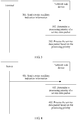
- Step 301 A terminal sends service auxiliary indication information to a network side device, where the service auxiliary indication information is used to indicate a scheduling requirement of the terminal for a service data packet.
- the service auxiliary indication information may be used to indicate a scheduling requirement for an uplink service data packet or a scheduling requirement for a downlink service data packet.
- the service auxiliary indication information may be uplink service auxiliary indication information, and the uplink service auxiliary indication information is used to indicate the scheduling requirement for the uplink service data packet.
- the service auxiliary indication information may be downlink service auxiliary indication information, and the downlink service auxiliary indication information is used to indicate the scheduling requirement for the downlink service data packet.
- the scheduling requirement herein may be scheduling existing when a service data packet passes through an air interface, or scheduling existing when the network side device sends a service data packet to a next routing node.
- the service auxiliary indication information may have the following forms.
- the service auxiliary indication information is scheduling indication information, and is used to instruct the network side device to quickly schedule the service data packet, or is used to instruct the network side device to decelerate scheduling of the service data packet.
- the service auxiliary indication information may be one bit.
- a bit 1 is used to indicate that the scheduling of the service data packet needs to be accelerated, and a bit 0 is used to indicate that the scheduling of the service data packet needs to be decelerated or does not need to be accelerated.
- a bit 0 is used to indicate that the scheduling of the service data packet needs to be accelerated, and a bit 1 is used to indicate that the scheduling of the service data packet needs to be decelerated or does not need to be accelerated.
- a bit 1 is used to indicate that the scheduling of the service data packet needs to be accelerated, and that no service auxiliary indication information is sent indicates that the scheduling of the service data packet does not need to be accelerated.
- a bit 1 is used to indicate that the scheduling of the service data packet needs to be decelerated, and that no service auxiliary indication information is sent indicates that the scheduling of the service data packet does not need to be decelerated.
- the service auxiliary indication information may be for one service or one bearer of the terminal, or may be for some services or some bearers of the terminal, or may be for all services or all bearers of the terminal. This is not limited herein.
- the terminal further needs to indicate the service or the bearer corresponding to the service auxiliary indication information.
- the terminal needs to indicate an identifier of a radio bearer corresponding to the service data packet or address information (an IP address, a TCP port number, and the like) of the service data packet.
- the information may be sent together with the service auxiliary information, or may be sent, before the service auxiliary indication information is sent, through negotiation performed between the terminal and the network side device.
- the service auxiliary indication information is a scheduling level indication, and is used to indicate a scheduling priority of the service data packet to the network side device.
- Different scheduling levels represent scheduling priorities of service data packets.
- the scheduling levels may be defined based on different requirements of different services or different service data packets for a delay.
- the scheduling level may be obtained by performing sorting by the terminal based on services that are currently performed by the terminal, and reflect scheduling requirements of the terminal for different service data packets of the performed services; or the network side device and the terminal predefine different priorities corresponding to different services or different delay requirements or different data packet types, and the terminal obtains, based on the predefined priority and a currently performed service or a type of a sent service data packet, a priority that needs to be reported.
- a scheduling level of a service data packet may specifically include four levels that are respectively a first level, a second level, a third level, and a fourth level.
- the first level indicates that a requirement for a sending delay is the highest.
- the terminal requires the network side device to preferably schedule the service data packet of the terminal after receiving the service data packet.
- the second level indicates that a requirement for a sending delay is lower than that of the first level.
- the terminal requires the network side device to schedule the service data packet of the terminal within a first time after receiving the service data packet.
- the first time may be 5 ms, 10 ms, 15 ms, or the like.
- the second level indicates that the terminal requires the network side device to schedule the service data packet of the terminal within 10 ms after receiving the service data packet.
- the third level indicates that a sending delay may be greater than that of the second level.
- the terminal requires the network side device to schedule the service data packet of the terminal within a second time after receiving the service data packet.
- the second time is greater than the preset first time.
- the preset second time may be 30 ms, 50 ms, Is, or the like.
- the third level indicates that the terminal requires the network side device to schedule the service data packet of the terminal within Is after receiving the service data packet.
- the fourth level indicates that a sending delay may be greater than that of the third level.
- the terminal requires the network side device to determine by itself a time for scheduling a service data packet of the terminal.
- two bits may be used to represent each of the four levels, for example, a bit 11 is used to represent the first level, a bit 10 is used to represent the second level, a bit 01 is used to represent the third level, and a bit 00 is used to represent the fourth level.
- the service auxiliary indication information is used to indicate a current play state of the terminal or a type of the service data packet to the network side device.
- the play state of the terminal or the type of the service data packet may reflect the scheduling requirement of the terminal for the downlink service data packet.
- a play state of playing downlink service data by the terminal may include an initial buffering phase, a playback phase, a frame freezing phase, and the like.
- the play state may further include: playing of data in a buffer is to be completed, data in a buffer starts to be played, or the terminal is in a rebuffering phase, a user performs a dragging operation, a user performs a pause operation, a program is executed in the background, and the like.
- the initial buffering phase that playing of data in a buffer is to be completed, and that the terminal is in a rebuffering phase reflect that the terminal urgently needs the network side device to schedule the downlink service data packet of the terminal. That data in a buffer starts to be played reflects that a time requirement strength in which the terminal needs the network side device to schedule the downlink service data packet of the terminal is weaker than those of the foregoing three cases.
- the type of the service data packet may be a data packet in an initial buffering phase, a data packet in a rebuffering phase, a data packet in a playback phase, or the like.
- the type of the service data packet may also reflect a play state of a player.
- the type of the service data packet may be a service type, for example, a video service, a game, a voice, background, or a streaming service.
- the service auxiliary indication information may be a delay requirement of the service data packet, and is used to indicate a scheduling delay of the service data packet to the network side device; or may be a processing priority of the service data packet, and is used to indicate the priority of processing the service data packet by the network side device.
- the terminal may send the service auxiliary indication information to the network side device in the following three manners.
- the terminal may further send direction information to the network side device.
- the direction information is used to indicate whether the service auxiliary indication information is uplink service auxiliary indication information or downlink service auxiliary indication information.
- the terminal needs to obtain the service auxiliary indication information before sending the service auxiliary indication information.
- an application layer or an architecture layer of the terminal generates the service auxiliary indication information, and sends the service auxiliary indication information to a bottom layer of the terminal, and the bottom layer of the terminal sends the service auxiliary indication information to the network side device.
- an application layer or an architecture layer of the terminal generates service reference information
- a bottom layer of the terminal generates the service auxiliary indication information based on the service reference information provided by the application layer or the architecture layer of the terminal
- the bottom layer of the terminal sends the service auxiliary indication information to the network side device.
- the application layer or the architecture layer indicates, to the bottom layer, that a first fragment packet is being scheduled and needs to be quickly sent.
- the bottom layer sets the service auxiliary indication information to 1, to instruct the network side device to accelerate scheduling.
- the first device may further send valid duration to the network side device.
- the valid duration is a valid time for the service auxiliary information sent by the first device.
- the service auxiliary information remains valid in the time period.
- Step 302 The network side device receives the service auxiliary indication information, and determines a processing priority of the service data packet based on the service auxiliary indication information.
- the network side device may be any device through which the service data packet of the terminal passes, for example, may be a base station, a RAN (Radio Access Network, radio access network), or another relay device such as a relay terminal.
- a base station may be a base station, a RAN (Radio Access Network, radio access network), or another relay device such as a relay terminal.
- RAN Radio Access Network, radio access network
- another relay device such as a relay terminal.
- the network side device may further receive the direction information from the terminal, to determine whether the auxiliary indication information is for an uplink data packet or for a downlink data packet.
- the determining a processing priority of the service data packet based on the service auxiliary indication information includes: determining the scheduling priority of the service data packet based on the service auxiliary indication information; and/or determining, based on the service auxiliary indication information, a quantity of transmission resources that are allocated to the terminal for transmitting a service data packet.
- the priority may be a time or a sequence of scheduling the service data packet.
- the network side device determines, based on the service auxiliary indication information, a time or a sequence of scheduling the uplink service data packet of the terminal, and may further determine a transmission resource for scheduling the uplink service data packet of the terminal.
- the network side device may further determine a processing priority of the uplink service data packet based on the auxiliary indication information, and send priority information to at least one routing node through which the data packet needs to pass in a transmission process.
- the network side device determines the processing priority of the service data packet based on the scheduling indication information. For example, if the scheduling indication information is used to instruct the network side device to quickly schedule the service data packet, it is determined that the processing priority of the service data packet is relatively high. If the scheduling indication information is used to instruct the network side device to decelerate the scheduling of the service data packet, it is determined that the processing priority of the service data packet is relatively low.
- the network side device determines the processing priority of the service data packet based on the scheduling level indication. For example, the scheduling level indication indicates the first level, the second level, the third level, or the fourth level. When the scheduling level indication indicates the first level, a first processing priority determined by the network side device is the highest. When the scheduling level indication indicates the second level, a second processing priority determined by the network side device is lower than the first processing priority. When the scheduling level indication indicates the third level, a third processing priority determined by the network side device is lower than the second processing priority. When the scheduling level indication indicates the fourth level, a fourth processing priority determined by the network side device is the lowest.
- the network side device determines the processing priority of the service data packet based on the indicated current play state of the terminal or the indicated type of the service data packet.
- Step 303 When receiving the service data packet of the terminal, the network side device schedules the service data packet based on the processing priority.
- the service auxiliary indication information is merely reference information used by the network side device to determine the scheduling priority or the processing priority of the data packet.
- the network side device may further consider other information, for example, an algorithm of the network side device, a current available resource of the network side device, a priority of the terminal, and a priority of a service.
- the network side device receives the valid duration, or obtains valid duration that is agreed on by the network side device and the terminal in advance, and schedules, within the valid duration after the service auxiliary indication information is received, the service data packet of the terminal based on the processing priority.
- the terminal sends the service auxiliary indication information to the network side device, and notifies, by using the service auxiliary indication information, the network side device of a processing requirement of the terminal for the service data packet of the terminal.
- the network side device may determine the processing priority of the service data packet based on the service auxiliary indication information, so as to meet a time requirement of a user for service data packet transmission.
- An embodiment of the present invention provides a service data packet processing method.
- a first device sends service auxiliary indication information to a network side device.
- the service auxiliary indication information is used to indicate a processing requirement for a service data packet.
- the service data packet includes an uplink service data packet and/or a downlink service data packet.
- the uplink service data packet is a service data packet that is sent by a terminal to a server or a network side device
- the downlink service data is a service data packet that is sent by the server or the network side device to the terminal.
- the network side device may process the service data packet based on the service auxiliary indication information.
- the first device is a server device and a processing operation performed on the service data packet is specifically a scheduling operation is used for description.
- a specific process of the method is as follows.
- Step 401 A server sends service auxiliary indication information to a network side device, where the service auxiliary indication information is used to indicate a processing requirement for a service data packet.
- the service auxiliary indication information may be used to indicate a scheduling requirement for an uplink service data packet or a scheduling requirement for a downlink service data packet.
- the service auxiliary indication information may be uplink service auxiliary indication information, and the uplink service auxiliary indication information is used to indicate the scheduling requirement for the uplink service data packet.
- the service auxiliary indication information may be downlink service auxiliary indication information, and the downlink service auxiliary indication information is used to indicate the scheduling requirement for the downlink service data packet.
- the server is a device, such as a service provider or a local storage device, that provides a service data packet for a terminal.
- the service auxiliary indication information may have the following forms.
- the service auxiliary indication information is scheduling indication information, and is used to instruct the network side device to quickly schedule the service data packet, or is used to instruct the network side device to decelerate scheduling of the service data packet.
- the service auxiliary indication information may be one bit.
- a bit 1 is used to indicate that the scheduling of the service data packet of the server needs to be accelerated, and a bit 0 is used to indicate that the scheduling of the service data packet needs to be decelerated or does not need to be accelerated.
- a bit 0 is used to indicate that the scheduling of the service data packet needs to be accelerated, and a bit 1 is used to indicate that the scheduling of the service data packet needs to be decelerated or does not need to be accelerated.
- a bit 1 is used to indicate that the scheduling of the service data packet needs to be decelerated, and that no service auxiliary indication information is sent indicates that the scheduling of the service data packet does not need to be decelerated.
- the service auxiliary indication information is a scheduling level indication, and is used to indicate a scheduling level of the service data packet to the network side device.
- Different scheduling levels represent scheduling priorities of service data packets.
- the scheduling levels may be defined based on different requirements of different services or different service data packets for a delay.
- the scheduling level may be obtained by performing sorting by the terminal based on services that are currently performed by the server, and reflect scheduling requirements of the server for different service data packets of the performed services; or the server and the terminal predefine different priorities corresponding to different services or different delay requirements or different data packet types, and the server obtains, based on the predefined priority and a currently performed service or a type of a sent service data packet, a priority that needs to be reported.
- a scheduling level of a service data packet may specifically include four levels that are respectively a first level, a second level, a third level, and a fourth level.
- the first level indicates that a requirement for a sending delay is the highest.
- the server requires the network side device to preferably schedule the service data packet of the server after receiving the service data packet.
- the second level indicates that a requirement for a sending delay is lower than that of the first level.
- the server requires the network side device to schedule the service data packet of the server within a first time after receiving the service data packet.
- the first time may be 5 ms, 10 ms, 15 ms, or the like.
- the second level indicates that the terminal requires the network side device to schedule the service data packet of the server within 10 ms after receiving the service data packet.
- the third level indicates that a sending delay may be greater than that of the second level.
- the server requires the network side device to schedule the service data packet of the server within a preset second time after receiving the service data packet.
- the second time is greater than the preset first time.
- the second time may be 30 ms, 50 ms, Is, or the like.
- the third level indicates that the server requires the network side device to schedule the service data packet of the server within Is after receiving the service data packet.
- the fourth level indicates that a sending delay may be greater than that of the third level.
- the server requires the network side device to determine by itself a time for scheduling a service data packet of the server.
- two bits may be used to represent each of the four levels, for example, a bit 11 is used to represent the first level, a bit 10 is used to represent the second level, a bit 01 is used to represent the third level, and a bit 00 is used to represent the fourth level.
- the server may send service data to the network side device, and a packet header of the service data carries the service auxiliary indication information.
- the service auxiliary indication information is carried in a reserved (reserved) bit or an option in a TCP packet header, or undefined domain in an IP packet header.
- the service auxiliary indication information is included in control information that is sent by the server to the network side device. The control information is corresponding to the service data packet.
- the server when service data is transmitted between the terminal and the server, the server needs to transmit the service data by using a transmission resource.
- the transmission resource may be a PRB (Physical Resource Block, physical resource block) or the like. Therefore, in this step, the server sends the service auxiliary indication information to the network side device by using the transmission resource used by the server.
- PRB Physical Resource Block, physical resource block
- Step 402 The network side device receives the service auxiliary indication information, and determines a processing priority of the service data packet based on the service auxiliary indication information.
- the network side device may be any device through which the service data transmitted between the terminal and the server, that is, the service data packet of the server, passes.
- the network side device may be a base station, a RAN, or another terminal.
- the network side device determines the processing priority of the service data packet based on the scheduling indication information. For example, if the scheduling indication information is used to instruct the network side device to quickly schedule the service data packet, it is determined that the processing priority of the service data packet is relatively high. If the scheduling indication information is used to instruct the network side device to decelerate the scheduling of the service data packet, it is determined that the processing priority of the service data packet is relatively low.
- the network side device determines the processing priority of the service data packet based on the scheduling level indication.
- the scheduling level indication indicates the first level, the second level, the third level, or the fourth level.
- a first processing priority determined by the network side device is the highest.
- a second processing priority determined by the network side device is lower than the first processing priority.
- a third processing priority determined by the network side device is lower than the second processing priority.
- a fourth processing priority determined by the network side device is the lowest.
- Step 403 When receiving service data of the server, the network side device schedules the service data packet based on the processing priority.
- a core network device may send the service auxiliary indication information to the network side device, and a specific implementation process is the same as that of the server. Details are not described herein.
- the core network device may be an MME (Mobility Management Entity, mobility management entity), a PGW, an SGW, a PCRF (Policy and Charging Rules Function, policy and charging rules function) unit, or the like.
- the server sends the service auxiliary indication information to the network side device, and notifies, by using the service auxiliary indication information, the network side device of the processing requirement of the server for the service data packet of the server.
- the network side device may schedule the service data packet of the server based on the service auxiliary indication information, so as to meet a time requirement of a user for service data packet transmission.
- the server and the terminal may further separately provide the service auxiliary indication information for the network side device.
- the service auxiliary indication information provided by the server may be different from the service auxiliary indication information provided by the terminal.
- the network side device determines, based on the service auxiliary indication information obtained from the server and the service auxiliary indication information obtained from the terminal, a processing priority of corresponding service data.
- an embodiment of the present invention provides a service data packet processing apparatus 500, and the apparatus 500 includes:
- the service auxiliary indication information is scheduling indication information, and is used to instruct the apparatus 500 to quickly schedule the service data packet; or the service auxiliary indication information is a scheduling level indication, and is used to indicate a scheduling priority of the service data packet to the apparatus 500; or the service auxiliary indication information is a type of the service data packet; or the service auxiliary indication information is a delay requirement of the service data packet, and is used to indicate a scheduling delay of the service data packet to the apparatus 500; or the service auxiliary indication information is the processing priority of the service data packet, and is used to indicate the priority of processing the service data packet by the apparatus 500.
- the service auxiliary indication information includes uplink service auxiliary indication information and/or downlink service auxiliary indication information.
- the uplink service auxiliary indication information is used to indicate a processing requirement for an uplink service data packet
- the downlink service auxiliary indication information is used to indicate a processing requirement for a downlink service data packet.
- the receiving unit 501 is further configured to receive direction information from the first device.
- the direction information is used to indicate whether the service auxiliary indication information is uplink service auxiliary information or downlink service auxiliary information.
- the processing unit 502 is configured to: obtain valid duration, and determine, within the valid duration after the service auxiliary indication information is received, the processing priority of the service data packet based on the service auxiliary indication information.
- the receiving unit 501 is configured to: receive radio resource control (RRC) signaling from the terminal, where the RRC signaling carries the service auxiliary indication information; or receive an uplink service data packet from the terminal, where a packet header of the uplink service data packet carriers the service auxiliary indication information, or a control information element in a packet header of the uplink service data packet carriers the service auxiliary indication information; or receive the service auxiliary indication information that is from the terminal by using a preset transmission resource.
- RRC radio resource control
- the receiving unit 501 is configured to receive a service data packet from the server or the routing node.
- a packet header of the service data packet carriers the service auxiliary indication information.
- the processing priority of the service data packet is determined based on the service auxiliary indication information of the first device, and service data is processed based on the processing priority, so that processing requirements for a service in different service transmission phases are met.
- an embodiment of the present invention provides a service data packet processing apparatus 600, and the apparatus includes:
- the sending unit 602 is configured to: send radio resource control (RRC) signaling to the network side device, where the RRC signaling carries the service auxiliary indication information; or send an uplink service data packet to the network side device, where a packet header of the uplink service data packet carriers the service auxiliary indication information, or a control information element in a packet header of the uplink service data packet carriers the service auxiliary indication information; or send the service auxiliary indication information to the network side device by using a preset transmission resource.
- RRC radio resource control
- the sending unit 602 is configured to send a service data packet to the network side device, where a packet header of the service data packet carriers the service auxiliary indication information.
- an embodiment of the present invention provides a service data packet processing apparatus 700, and the apparatus includes:
- the transmitter 702 is configured to: send radio resource control (RRC) signaling to the network side device, where the RRC signaling carries the service auxiliary indication information; or send an uplink service data packet to the network side device, where a packet header of the uplink service data packet carriers the service auxiliary indication information, or a control information element in a packet header of the uplink service data packet carriers the service auxiliary indication information; or send the service auxiliary indication information to the network side device by using a preset transmission resource.
- RRC radio resource control
- the transmitter 702 is configured to send a service data packet to the network side device, where a packet header of the service data packet carriers the service auxiliary indication information.
- the service auxiliary indication information is scheduling indication information, and is used to instruct the network side device to quickly schedule the service data packet; or the service auxiliary indication information is a scheduling level indication, and is used to indicate a scheduling priority of the service data packet to the network side device; or the service auxiliary indication information is a type of the service data packet; or the service auxiliary indication information is a delay requirement of the service data packet, and is used to indicate a scheduling delay of the service data packet to the network side device; or the service auxiliary indication information is the processing priority of the service data packet, and is used to indicate the priority of processing the service data packet by the network side device.
- the service auxiliary indication information includes uplink service auxiliary indication information and/or downlink service auxiliary indication information.
- the uplink service auxiliary indication information is used to indicate a processing requirement for an uplink service data packet
- the downlink service auxiliary indication information is used to indicate a processing requirement for a downlink service data packet.
- the sending unit is further configured to send direction information to the network side device.
- the direction information is used to indicate whether the service auxiliary indication information is uplink service auxiliary information or downlink service auxiliary information.
- the program may be stored in a computer-readable storage medium.
- the storage medium may be a read-only memory, a magnetic disk, an optical disc, or the like.
Landscapes
- Engineering & Computer Science (AREA)
- Computer Networks & Wireless Communication (AREA)
- Signal Processing (AREA)
- Mobile Radio Communication Systems (AREA)
- Data Exchanges In Wide-Area Networks (AREA)
Applications Claiming Priority (1)
| Application Number | Priority Date | Filing Date | Title |
|---|---|---|---|
| PCT/CN2015/095977 WO2017091941A1 (zh) | 2015-11-30 | 2015-11-30 | 一种处理业务数据包的方法及装置 |
Publications (2)
| Publication Number | Publication Date |
|---|---|
| EP3373683A1 true EP3373683A1 (de) | 2018-09-12 |
| EP3373683A4 EP3373683A4 (de) | 2018-11-07 |
Family
ID=58796127
Family Applications (1)
| Application Number | Title | Priority Date | Filing Date |
|---|---|---|---|
| EP15909458.0A Withdrawn EP3373683A4 (de) | 2015-11-30 | 2015-11-30 | Verfahren und vorrichtung zur dienstdatenpaketverarbeitung |
Country Status (5)
| Country | Link |
|---|---|
| US (1) | US20180279322A1 (de) |
| EP (1) | EP3373683A4 (de) |
| JP (1) | JP2019500785A (de) |
| CN (1) | CN108141866A (de) |
| WO (1) | WO2017091941A1 (de) |
Families Citing this family (5)
| Publication number | Priority date | Publication date | Assignee | Title |
|---|---|---|---|---|
| JP2020136733A (ja) * | 2019-02-13 | 2020-08-31 | シャープ株式会社 | 送信装置および受信装置 |
| WO2020225710A1 (en) * | 2019-05-03 | 2020-11-12 | Telefonaktiebolaget Lm Ericsson (Publ) | Methods for improving reliability and latency of ul configured grant or dl sps |
| CN112019312B (zh) * | 2019-05-31 | 2023-06-16 | 中兴通讯股份有限公司 | 一种服务处理方法及装置和车联网设备 |
| US11711452B2 (en) * | 2021-06-02 | 2023-07-25 | Qualcomm Incorporated | Multiplexing sidelink and radio access traffic |
| CN116867074A (zh) * | 2022-03-25 | 2023-10-10 | 大唐移动通信设备有限公司 | 信息传输方法、装置、终端设备及网络设备 |
Family Cites Families (20)
| Publication number | Priority date | Publication date | Assignee | Title |
|---|---|---|---|---|
| US7277962B2 (en) * | 2000-12-01 | 2007-10-02 | Fujitsu Limited | Method and apparatus for packet scheduling using virtual time stamp for high capacity combined input and output queued switching system |
| US7002985B2 (en) * | 2001-01-16 | 2006-02-21 | Motorola, Inc. | Method and apparatus for organizing and scheduling multimedia data transfers over a wireless channel |
| US7239879B2 (en) * | 2003-11-26 | 2007-07-03 | Lucent Technologies Inc. | Opportunistic beamforming and scheduling of users in a communication system |
| JP2006054597A (ja) * | 2004-08-10 | 2006-02-23 | Ntt Docomo Inc | スロット割当装置及びその方法 |
| DE102005035237A1 (de) * | 2005-07-25 | 2007-03-01 | T-Mobile International Ag & Co. Kg | Verfahren zur Steuerung von Ressourcen in Netzelementen eines Telekommunikationsnetzes |
| US20080165679A1 (en) * | 2007-01-10 | 2008-07-10 | Ipwireless, Inc. | Method to mitigate fraudulent usage of QoS from mobile terminals using uplink packet marking |
| US8477606B2 (en) * | 2007-01-22 | 2013-07-02 | Qualcomm Incorporated | Assured packet data services associated with communication networks |
| US7765312B2 (en) * | 2007-03-12 | 2010-07-27 | Telefonaktiebolaget L M Ericsson (Publ) | Applying policies for managing a service flow |
| US8208394B2 (en) * | 2007-10-30 | 2012-06-26 | Qualcomm Incorporated | Service data unit discard timers |
| CN101917767B (zh) * | 2008-04-18 | 2014-07-02 | 中国移动通信集团公司 | 确定资源分配优先级的方法及装置 |
| US20100002699A1 (en) * | 2008-07-01 | 2010-01-07 | Sony Corporation | Packet tagging for effective multicast content distribution |
| US8271025B2 (en) * | 2008-10-20 | 2012-09-18 | At&T Mobility Ii Llc | Device network technology selection and display in multi-technology wireless environments |
| CN101873704A (zh) * | 2009-04-24 | 2010-10-27 | 大唐移动通信设备有限公司 | 长期演进系统中资源调度方法、系统及设备 |
| WO2010133911A1 (en) * | 2009-05-20 | 2010-11-25 | Telefonaktiebolaget Lm Ericsson (Publ) | Systems and method for communicating priority information for use in scheduling the transmission of data |
| US8184560B2 (en) * | 2010-02-18 | 2012-05-22 | At&T Mobility Ii Llc | Systems and methods for managing PDP contexts in a wireless data communications network |
| EP2649760A4 (de) * | 2010-12-10 | 2014-09-03 | Nec Corp | Kommunikationssystem, steuerungsvorrichtung dafür, knotensteuerungsverfahren und programm dafür |
| CN102724713B (zh) * | 2011-03-30 | 2015-07-22 | 华为技术有限公司 | 数据包传输方法和相关装置 |
| CN102970760A (zh) * | 2012-11-12 | 2013-03-13 | 大唐移动通信设备有限公司 | 一种数据业务的调度方法及装置 |
| EP2958387B1 (de) * | 2013-03-12 | 2017-08-16 | Huawei Technologies Co., Ltd. | Datenübertragungsverarbeitungsverfahren und vorrichtung |
| US20150043446A1 (en) * | 2013-08-12 | 2015-02-12 | Qualcomm Incorporated | Method and apparatus for coexistence of device to device and lte wan communication using single communication chain |
-
2015
- 2015-11-30 EP EP15909458.0A patent/EP3373683A4/de not_active Withdrawn
- 2015-11-30 JP JP2018527903A patent/JP2019500785A/ja active Pending
- 2015-11-30 CN CN201580083305.6A patent/CN108141866A/zh active Pending
- 2015-11-30 WO PCT/CN2015/095977 patent/WO2017091941A1/zh not_active Ceased
-
2018
- 2018-05-29 US US15/991,842 patent/US20180279322A1/en not_active Abandoned
Also Published As
| Publication number | Publication date |
|---|---|
| US20180279322A1 (en) | 2018-09-27 |
| WO2017091941A1 (zh) | 2017-06-08 |
| EP3373683A4 (de) | 2018-11-07 |
| JP2019500785A (ja) | 2019-01-10 |
| CN108141866A (zh) | 2018-06-08 |
Similar Documents
| Publication | Publication Date | Title |
|---|---|---|
| US12323855B2 (en) | TSC-5G QoS mapping with consideration of assistance traffic information and PCC rules for TSC traffic mapping and 5G QoS flows binding | |
| EP2802163B1 (de) | Datenübertragungsverfahren und -vorrichtung | |
| US9906985B2 (en) | Method and device for selecting uplink data | |
| US20240259871A1 (en) | Methods, devices, and computer readable medium for communication | |
| RU2510598C2 (ru) | Способ и устройство в системе беспроводной связи | |
| US20180279322A1 (en) | Service Data Packet Processing Method And Apparatus | |
| US8630202B2 (en) | Method and apparatus for controlling buffer status report messaging | |
| US11824783B2 (en) | Maximum data burst volume (MDBV) determining method, apparatus, and system | |
| US9432873B2 (en) | Differentiation of traffic flows for uplink transmission | |
| RU2673099C1 (ru) | Базовая радиостанция, устройство передачи пакетов, беспроводной терминал, способ управления и программа | |
| US12389405B2 (en) | Methods for data transmission and a terminal device | |
| US10342025B2 (en) | Dynamic delay scheduling method and base station for voice data | |
| WO2022165447A2 (en) | Methods and apparatus for communications over data radio bearer | |
| KR20170095958A (ko) | 버퍼 상태 보고를 생성하기 위한 방법 및 장치 및 통신 시스템 | |
| US20250267656A1 (en) | Methods and apparatus for prioritizing data for transmission | |
| US20220279376A1 (en) | Communication apparatus, base station, radio resource allocation method, and computer readable medium | |
| CN107211400B (zh) | 网络准入控制方法、接入点及接入控制器 | |
| EP4266743A1 (de) | Ressourcenplanungsverfahren und -vorrichtung | |
| EP4358582B1 (de) | Qos-anpassungsverfahren und -vorrichtung, vorrichtung und medium | |
| US20250159540A1 (en) | Communication method, apparatus, and system | |
| KR102958074B1 (ko) | 다운링크 송신 방법 및 통신 장치 | |
| GB2640744A (en) | Method for transmitting data within a communication network | |
| WO2025229212A1 (en) | Method for transmitting data within a communication network | |
| WO2024104101A1 (zh) | 数据处理方法、装置、通信设备及可读存储介质 | |
| WO2025092237A1 (zh) | 数据传输控制方法、装置及存储介质 |
Legal Events
| Date | Code | Title | Description |
|---|---|---|---|
| PUAI | Public reference made under article 153(3) epc to a published international application that has entered the european phase |
Free format text: ORIGINAL CODE: 0009012 |
|
| 17P | Request for examination filed |
Effective date: 20180604 |
|
| AK | Designated contracting states |
Kind code of ref document: A1 Designated state(s): AL AT BE BG CH CY CZ DE DK EE ES FI FR GB GR HR HU IE IS IT LI LT LU LV MC MK MT NL NO PL PT RO RS SE SI SK SM TR |
|
| AX | Request for extension of the european patent |
Extension state: BA ME |
|
| A4 | Supplementary search report drawn up and despatched |
Effective date: 20181005 |
|
| RIC1 | Information provided on ipc code assigned before grant |
Ipc: H04W 72/10 20090101ALN20180929BHEP Ipc: H04W 72/12 20090101AFI20180929BHEP |
|
| DAV | Request for validation of the european patent (deleted) | ||
| DAX | Request for extension of the european patent (deleted) | ||
| STAA | Information on the status of an ep patent application or granted ep patent |
Free format text: STATUS: THE APPLICATION HAS BEEN WITHDRAWN |
|
| 18W | Application withdrawn |
Effective date: 20200508 |