EP3372657B1 - Vorrichtung zur durchführung einer hydrothermalen karbonisierungsreaktion - Google Patents
Vorrichtung zur durchführung einer hydrothermalen karbonisierungsreaktion Download PDFInfo
- Publication number
- EP3372657B1 EP3372657B1 EP17160428.3A EP17160428A EP3372657B1 EP 3372657 B1 EP3372657 B1 EP 3372657B1 EP 17160428 A EP17160428 A EP 17160428A EP 3372657 B1 EP3372657 B1 EP 3372657B1
- Authority
- EP
- European Patent Office
- Prior art keywords
- pulper
- tank
- biomass
- heat
- reaction
- Prior art date
- Legal status (The legal status is an assumption and is not a legal conclusion. Google has not performed a legal analysis and makes no representation as to the accuracy of the status listed.)
- Active
Links
Images

Classifications
-
- C—CHEMISTRY; METALLURGY
- C10—PETROLEUM, GAS OR COKE INDUSTRIES; TECHNICAL GASES CONTAINING CARBON MONOXIDE; FUELS; LUBRICANTS; PEAT
- C10L—FUELS NOT OTHERWISE PROVIDED FOR; NATURAL GAS; SYNTHETIC NATURAL GAS OBTAINED BY PROCESSES NOT COVERED BY SUBCLASSES C10G OR C10K; LIQUIFIED PETROLEUM GAS; USE OF ADDITIVES TO FUELS OR FIRES; FIRE-LIGHTERS
- C10L9/00—Treating solid fuels to improve their combustion
- C10L9/08—Treating solid fuels to improve their combustion by heat treatments, e.g. calcining
- C10L9/086—Hydrothermal carbonization
-
- C—CHEMISTRY; METALLURGY
- C10—PETROLEUM, GAS OR COKE INDUSTRIES; TECHNICAL GASES CONTAINING CARBON MONOXIDE; FUELS; LUBRICANTS; PEAT
- C10B—DESTRUCTIVE DISTILLATION OF CARBONACEOUS MATERIALS FOR PRODUCTION OF GAS, COKE, TAR, OR SIMILAR MATERIALS
- C10B53/00—Destructive distillation, specially adapted for particular solid raw materials or solid raw materials in special form
-
- B—PERFORMING OPERATIONS; TRANSPORTING
- B01—PHYSICAL OR CHEMICAL PROCESSES OR APPARATUS IN GENERAL
- B01J—CHEMICAL OR PHYSICAL PROCESSES, e.g. CATALYSIS OR COLLOID CHEMISTRY; THEIR RELEVANT APPARATUS
- B01J19/00—Chemical, physical or physico-chemical processes in general; Their relevant apparatus
- B01J19/24—Stationary reactors without moving elements inside
-
- C—CHEMISTRY; METALLURGY
- C10—PETROLEUM, GAS OR COKE INDUSTRIES; TECHNICAL GASES CONTAINING CARBON MONOXIDE; FUELS; LUBRICANTS; PEAT
- C10B—DESTRUCTIVE DISTILLATION OF CARBONACEOUS MATERIALS FOR PRODUCTION OF GAS, COKE, TAR, OR SIMILAR MATERIALS
- C10B53/00—Destructive distillation, specially adapted for particular solid raw materials or solid raw materials in special form
- C10B53/02—Destructive distillation, specially adapted for particular solid raw materials or solid raw materials in special form of cellulose-containing material
-
- C—CHEMISTRY; METALLURGY
- C10—PETROLEUM, GAS OR COKE INDUSTRIES; TECHNICAL GASES CONTAINING CARBON MONOXIDE; FUELS; LUBRICANTS; PEAT
- C10B—DESTRUCTIVE DISTILLATION OF CARBONACEOUS MATERIALS FOR PRODUCTION OF GAS, COKE, TAR, OR SIMILAR MATERIALS
- C10B57/00—Other carbonising or coking processes; Features of destructive distillation processes in general
-
- C—CHEMISTRY; METALLURGY
- C10—PETROLEUM, GAS OR COKE INDUSTRIES; TECHNICAL GASES CONTAINING CARBON MONOXIDE; FUELS; LUBRICANTS; PEAT
- C10L—FUELS NOT OTHERWISE PROVIDED FOR; NATURAL GAS; SYNTHETIC NATURAL GAS OBTAINED BY PROCESSES NOT COVERED BY SUBCLASSES C10G OR C10K; LIQUIFIED PETROLEUM GAS; USE OF ADDITIVES TO FUELS OR FIRES; FIRE-LIGHTERS
- C10L5/00—Solid fuels
- C10L5/40—Solid fuels essentially based on materials of non-mineral origin
- C10L5/44—Solid fuels essentially based on materials of non-mineral origin on vegetable substances
-
- B—PERFORMING OPERATIONS; TRANSPORTING
- B01—PHYSICAL OR CHEMICAL PROCESSES OR APPARATUS IN GENERAL
- B01J—CHEMICAL OR PHYSICAL PROCESSES, e.g. CATALYSIS OR COLLOID CHEMISTRY; THEIR RELEVANT APPARATUS
- B01J2219/00—Chemical, physical or physico-chemical processes in general; Their relevant apparatus
- B01J2219/00049—Controlling or regulating processes
- B01J2219/00051—Controlling the temperature
- B01J2219/00074—Controlling the temperature by indirect heating or cooling employing heat exchange fluids
- B01J2219/00087—Controlling the temperature by indirect heating or cooling employing heat exchange fluids with heat exchange elements outside the reactor
-
- B—PERFORMING OPERATIONS; TRANSPORTING
- B01—PHYSICAL OR CHEMICAL PROCESSES OR APPARATUS IN GENERAL
- B01J—CHEMICAL OR PHYSICAL PROCESSES, e.g. CATALYSIS OR COLLOID CHEMISTRY; THEIR RELEVANT APPARATUS
- B01J2219/00—Chemical, physical or physico-chemical processes in general; Their relevant apparatus
- B01J2219/00049—Controlling or regulating processes
- B01J2219/00051—Controlling the temperature
- B01J2219/00159—Controlling the temperature controlling multiple zones along the direction of flow, e.g. pre-heating and after-cooling
-
- C—CHEMISTRY; METALLURGY
- C10—PETROLEUM, GAS OR COKE INDUSTRIES; TECHNICAL GASES CONTAINING CARBON MONOXIDE; FUELS; LUBRICANTS; PEAT
- C10L—FUELS NOT OTHERWISE PROVIDED FOR; NATURAL GAS; SYNTHETIC NATURAL GAS OBTAINED BY PROCESSES NOT COVERED BY SUBCLASSES C10G OR C10K; LIQUIFIED PETROLEUM GAS; USE OF ADDITIVES TO FUELS OR FIRES; FIRE-LIGHTERS
- C10L2290/00—Fuel preparation or upgrading, processes or apparatus therefore, comprising specific process steps or apparatus units
- C10L2290/06—Heat exchange, direct or indirect
-
- C—CHEMISTRY; METALLURGY
- C10—PETROLEUM, GAS OR COKE INDUSTRIES; TECHNICAL GASES CONTAINING CARBON MONOXIDE; FUELS; LUBRICANTS; PEAT
- C10L—FUELS NOT OTHERWISE PROVIDED FOR; NATURAL GAS; SYNTHETIC NATURAL GAS OBTAINED BY PROCESSES NOT COVERED BY SUBCLASSES C10G OR C10K; LIQUIFIED PETROLEUM GAS; USE OF ADDITIVES TO FUELS OR FIRES; FIRE-LIGHTERS
- C10L2290/00—Fuel preparation or upgrading, processes or apparatus therefore, comprising specific process steps or apparatus units
- C10L2290/24—Mixing, stirring of fuel components
-
- Y—GENERAL TAGGING OF NEW TECHNOLOGICAL DEVELOPMENTS; GENERAL TAGGING OF CROSS-SECTIONAL TECHNOLOGIES SPANNING OVER SEVERAL SECTIONS OF THE IPC; TECHNICAL SUBJECTS COVERED BY FORMER USPC CROSS-REFERENCE ART COLLECTIONS [XRACs] AND DIGESTS
- Y02—TECHNOLOGIES OR APPLICATIONS FOR MITIGATION OR ADAPTATION AGAINST CLIMATE CHANGE
- Y02E—REDUCTION OF GREENHOUSE GAS [GHG] EMISSIONS, RELATED TO ENERGY GENERATION, TRANSMISSION OR DISTRIBUTION
- Y02E50/00—Technologies for the production of fuel of non-fossil origin
- Y02E50/10—Biofuels, e.g. bio-diesel
-
- Y—GENERAL TAGGING OF NEW TECHNOLOGICAL DEVELOPMENTS; GENERAL TAGGING OF CROSS-SECTIONAL TECHNOLOGIES SPANNING OVER SEVERAL SECTIONS OF THE IPC; TECHNICAL SUBJECTS COVERED BY FORMER USPC CROSS-REFERENCE ART COLLECTIONS [XRACs] AND DIGESTS
- Y02—TECHNOLOGIES OR APPLICATIONS FOR MITIGATION OR ADAPTATION AGAINST CLIMATE CHANGE
- Y02E—REDUCTION OF GREENHOUSE GAS [GHG] EMISSIONS, RELATED TO ENERGY GENERATION, TRANSMISSION OR DISTRIBUTION
- Y02E50/00—Technologies for the production of fuel of non-fossil origin
- Y02E50/30—Fuel from waste, e.g. synthetic alcohol or diesel
-
- Y—GENERAL TAGGING OF NEW TECHNOLOGICAL DEVELOPMENTS; GENERAL TAGGING OF CROSS-SECTIONAL TECHNOLOGIES SPANNING OVER SEVERAL SECTIONS OF THE IPC; TECHNICAL SUBJECTS COVERED BY FORMER USPC CROSS-REFERENCE ART COLLECTIONS [XRACs] AND DIGESTS
- Y02—TECHNOLOGIES OR APPLICATIONS FOR MITIGATION OR ADAPTATION AGAINST CLIMATE CHANGE
- Y02P—CLIMATE CHANGE MITIGATION TECHNOLOGIES IN THE PRODUCTION OR PROCESSING OF GOODS
- Y02P20/00—Technologies relating to chemical industry
- Y02P20/141—Feedstock
- Y02P20/145—Feedstock the feedstock being materials of biological origin
Definitions
- the present invention relates to a device for carrying out a hydrothermal Karbonmaschinesretress, comprising a reaction tank, which is connected for receiving superheated steam with a steam generator and for receiving biomass via a feed tube with a mixing tank and which for discharging a resulting in the reaction tank from superheated steam and biomass Slurry is connected to a buffer tank, wherein the mixing tank has a first heat exchanger for delivering heat to the biomass stored in the mixing tank, which with a buffer tank associated with the second heat exchanger for receiving heat from the reaction tank in the buffer tank drained slurry to a closed Heat circuit is connected, wherein the mixing tank and / or the buffer tank surrounded by at least one alongside enthusiaststragerschlange and / or are traversed.
- a hydrothermal carbonation reaction takes place in a reaction tank which is charged from a mixing tank or preheating tank.
- the mixing tank is connected via a solids pump with the reaction tank, which the biomass after a pretreatment with a lower compared to the reaction conditions in the reactor pressure and a lower temperature in the reactor promotes.
- Such a mixing tank is designed to more or less prepare a batch and then to be completely emptied into the reactor.
- the actual Karbonleitersretress then takes place in the reaction tank under a pressure of about 25 bar and at temperatures of 210 ° C to 230 ° C.
- the structures of the biomass are split in order to split the cellulose of the biomass into glucose as part of a hydrolysis.
- the actual carbonization takes place.
- a mixing of the biomass is here as well as a supply of superheated steam in order to increase the water content in the mixture and to form a slurry in which the carbonation reaction can proceed as effectively as possible.
- the initially water-soluble carbon components combine to form larger molecules.
- the former embodiment of the process provides a buffer tank into which the fully reacted slurry is removed from the reaction tank. There, the slurry is slowly cooled again at a lower pressure level.
- the process envisages converting biomass into the energy carrier biochar.
- as much energy as possible should be saved during the process, and it is also important to optimize the utilization of the system in order to work as effectively as possible in this regard.
- the object of the present invention is to further improve the energy balance and to make the process more effective.
- the invention provides as a solution to this problem, instead of a simple mixing tank to use a so-called pulper, more or less permanently store and prepare a complete day supply of biomass and thus can fill a reaction tank regularly.
- the biomass is already heated in the pulper and mixed, and preferably already mixed here superheated steam, so that the slurry already formed in the pulper and thus can be pumped very easily and quickly into the reaction tank. This reduces the downtime previously required for transporting the biomass via a solids pump into the reaction tank.
- Such heat exchangers can be realized in different ways.
- One possibility is to use the respective tank with a double-walled outer shell to surround.
- the resulting between the two outer walls hollow chamber can then be traversed by the heat transfer medium and absorb the heat depending on the location of either the interior of the two walls or give it to this.
- the pulper also has an agitator, it can be useful to carry the heat carrier in countercurrent to the resulting in the biomass flow due to the mixing.
- the respective tank may be traversed by one or more heat exchanger coils, which run through the interior of the respective tank or surround it and have as large a surface as possible due to windings and windings.
- the heat exchanger in the buffer tank would be a cooling coil, in the case of the heat exchanger in the pulper to a heating coil.
- a particularly suitable heat transfer medium is thermal oil, which is preferably used in the heat circuit.
- the pulper does not have to draw its heat solely from the heat circuit from the buffer tank.
- other sources for heating the pulper are needed.
- One step upstream of the buffer tank is excess heat from the reaction tank available, which in addition to the feed tube for supplying the slurry also has a gas pipe, via which it is connected to the pulper. If the pressure in the reaction tank is too high, excess gas, so-called purge gas, ie cleaning gas, can be released from the reaction tank, which is then brought into the pulper and raises the temperature there.
- purge gas ie cleaning gas
- a warming in the pulper must take place via a connection of the same to a steam generator.
- this may be the same steam generator that also feeds the reaction tank.
- the heating of the biomass in the pulper to its operating temperature of about 90 ° C can also be made uniform by the fact that the pulper means for mixing biomass and superheated steam are assigned.
- Such means may be stirring and mixing plants of different types, such as arrangements of mixing nozzles or a mechanical agitator with one or more Rlickarmen. Particular preference may be given to using an asymmetrical agitator which ensures that the biomass not only moves in a circle, but also forms turbulent flows.
- the purge gas can be introduced from the reaction tank into the pulper and thus contribute to the energy of the reaction tank both for heating and for mixing the biomass.
- the supply of superheated steam in the pulper also allows liquefaction of the biomass, so that it does not have to be spent with a solid pump in the reaction tank, but can be conveyed for example by a centrifugal pump. This allows a much faster feed of the reaction tank and thus reduces the life of the device between two batches. Furthermore, the centrifugal pump is also a cheaper alternative to the solids pump.
- pulper and / or the buffer tank may be useful not to manufacture the pulper and / or the buffer tank as a single construction, but rather to combine multiple tanks communicating with one another to form a pulper or a buffer tank.
- this can be used to combine low-priced tanks to a tank assembly, instead of building an expensive and very large special tank.
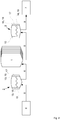
- FIG. 1 shows a schematic representation of a centrally arranged in the scheme reaction tank 1. This is connected via a feed tube 8 with a pulper 2, which feeds the reaction tank 1 with pretreated, liquefied biomass.
- the biomass in Pulper 2 comes from a bunker 6, in which large amounts of biomass are kept. Between the bunker 6 and the pulper 2 there is a conveyor unit and an impurity separation, in particular a metal separator, which processes the biomass for the pulper 2.
- an impurity separation in particular a metal separator
- a steam generator 4 which is connected to the pulper 2 via a steam pipe 11
- superheated steam is injected into the pulper 2, which heats the biomass contained in the pulper 2 on the one hand and adds water on the other hand to liquefy the biomass into a slurry.
- the slurry is mixed in the pulper 2, so that a uniform heating is ensured and the most homogeneous mixture possible.
- sand and silt will settle out of the biomass. These can be drained into a sand trap.
- reaction tank 1 at an overpressure via a gas pipe 10 so-called purge gas directly into the pulper 2, so that the escaping from the reaction tank 1 energy is retained in the system. Also, the reaction tank is fed via a steam pipe 12 from the steam generator 4 to produce the temperature required in the reaction tank 1, the required water and pressure, and thus to provide the reaction conditions for hydrothermal carbonization.
- the slurry with the carbonized biomass is discharged via a further feed pipe 8 into the buffer tank 3, which can take place via an at least partial pressure equalization between the reaction tank 1 and the buffer tank 3. Due to the pressure gradient between the two tanks 1 and 3, the slurry is sucked in this way very quickly into the buffer tank and can then cool down there. After cooling, the slurry passes through a further feed tube 8 for post-processing 7.
- process water separated from the process water 20 can be recycled back into the reaction tank 1, where a further reaction with the still contained organic loads of process water can be performed. In addition, this process water is used again in the process and does not need to be replaced by fresh water.
- the slurry in the pulper 2 and in the reaction tank 1 is heated and cooled in the buffer tank 3.
- the heat of the slurry in the buffer tank 3 can be transferred to the biomass in the pulper 2, so that less energy can escape from the system.
- This heat energy transferred to the pulper contributes to the fact that less superheated steam is needed to keep the pulper 2 at the required temperature.
- FIG. 2 shows a further schematic diagram in which possible heat exchangers 13 and 14 are shown.
- an outer shell 15 of the tanks 2, 3 double-walled it is possible to make an outer shell 15 of the tanks 2, 3 double-walled.
- a hollow chamber 16 is formed between the two walls, which may be covered on the outside with an insulating layer 17 in order to avoid heat losses.
- a first heat exchanger 13 in the pulper 2 releases the previously absorbed heat via the inner wall of the double-walled outer shell 15 and thereby heats the slurry received in the pulper 2 as it is in contact with the inner wall in question.
- the pulper 2 has a heating coil 18 which passes through the pulper 2 and also gives off heat to the slurry in its interior.
- a second heat exchanger 14 in the buffer tank 3 works in principle the same structure exactly the reverse, there takes the guided in the heat circuit 9 heat transfer heat energy from the cooling slurry and transports them through the heat circuit 9 through to the pulper 2. Accordingly, the heat exchanger coil also works as a cooling coil 19th
Landscapes
- Chemical & Material Sciences (AREA)
- Oil, Petroleum & Natural Gas (AREA)
- Organic Chemistry (AREA)
- Engineering & Computer Science (AREA)
- Materials Engineering (AREA)
- Physics & Mathematics (AREA)
- Thermal Sciences (AREA)
- Combustion & Propulsion (AREA)
- Chemical Kinetics & Catalysis (AREA)
- Processing Of Solid Wastes (AREA)
- Coke Industry (AREA)
Description
- Die vorliegende Erfindung betrifft eine Vorrichtung zur Durchführung einer hydrothermalen Karbonisierungsreaktion, umfassend einen Reaktionstank, welcher zur Aufnahme von Heißdampf mit einem Dampfbereiter und zur Aufnahme von Biomasse über ein Zuführrohr mit einem Mischtank verbunden ist und welcher zum Ablassen eines in dem Reaktionstank aus Heißdampf und Biomasse entstehenden Slurry mit einem Puffertank verbunden ist, wobei der Mischtank einen ersten Wärmeübertrager zur Abgabe von Wärme an die in dem Mischtank vorgehaltene Biomasse aufweist, welcher mit einem dem Puffertank zugeordneten zweiten Wärmeübertrager zur Aufnahme von Wärme von aus dem Reaktionstank in den puffertank abgelassenem Slurry zu einem geschlossenen Wärmekreis verbunden ist, wobei der Mischtank und/oder der Puffertank von wenigstens einer Wärmeübertragerschlange umgeben und/oder durchzogen sind.
- Solche Vorrichtungen sind bereits aus der
US 8,043,505 B2 vorbekannt. Ähnliche Lösungen sind auch in derDE 10 2010 044 200 A1 und derUS 2010/0162619 A1 beschrieben. - Ferner ist eine derartige Vorrichtung bereits aus der
DE 10 2011 001 108 A1 vorbekannt. Dort findet eine hydrothermale Karbonisierungsreaktion in einem Reaktionstank statt, der aus einem Mischtank bzw. Vorheiztank beschickt wird. Der Mischtank ist über eine Feststoffpumpe mit dem Reaktionstank verbunden, welche die Biomasse nach einer Vorbehandlung mit einem im Vergleich zu den Reaktionsbedingungen im Reaktor niedrigeren Druck und einer niedrigeren Temperatur in den Reaktor einfördert. Ein solcher Mischtank ist dafür ausgelegt, mehr oder weniger einen Batch vorzubereiten und dann vollständig in den Reaktor entleert zu werden. - Die eigentliche Karbonisierungsreaktion findet dann im Reaktionstank unter einem Druck von etwa 25 bar und bei Temperaturen von 210°C bis 230°C statt. Zunächst werden hierbei die Strukturen der Biomasse aufgespalten, um im Rahmen einer Hydrolyse die Zellulose der Biomasse in Glukose aufzuspalten. Danach erfolgt die eigentliche Karbonisierung. Eine Durchmischung der Biomasse erfolgt hierbei ebenso wie eine Zuführung von Heißdampf, um den Wasseranteil in dem Gemisch zu erhöhen und einen Slurry zu bilden, in dem die Karbonisierungsreaktion möglichst effektiv ablaufen kann. Schließlich kombinieren sich im Rahmen der abschließenden Kondensation die zunächst wasserlöslichen Kohlenstoff-Bestandteile zu größeren Molekülen.
- Nach der Reaktion sieht die frühere Ausgestaltung des Verfahrens einen Puffertank vor, in den der durchreagierte Slurry aus dem Reaktionstank verbracht wird. Dort wird der Slurry wiederum auf einem niedrigeren Druckniveau langsam abgekühlt.
- Letztlich sieht das Verfahren vor, Biomasse in den Energieträger Biokohle umzuwandeln. Um möglichst effektiv zu arbeiten, soll möglichst viel Energie während des Verfahrens eingespart werden, zudem ist es wichtig, die Auslastung des Systems zu optimieren, um auch in dieser Hinsicht möglichst effektiv zu arbeiten.
- Vor diesem Hintergrund liegt der vorliegenden Erfindung die Aufgabe zu Grunde, die Energiebilanz weiter zu verbessern und das Verfahren effektiver zu gestalten.
- Dies gelingt durch eine Vorrichtung zur Durchführung einer hydrothermalen Karbonisierungsreaktion gemäß den Merkmalen des Anspruchs 1. Weitere sinnvolle Ausgestaltungen einer solchen Vorrichtung können den sich anschließenden Unteransprüchen entnommen werden.
- Die Erfindung sieht als Lösung dieses Problems vor, anstelle eines einfachen Mischtanks einen so genannten Pulper einzusetzen, der mehr oder minder permanent einen vollständigen Tagesvorrat an Biomasse speichern und vorbereiten und damit einen Reaktionstank regelmäßig befüllen kann. Dazu wird die Biomasse bereits im Pulper erwärmt und durchmischt, sowie vorzugsweise auch bereits hier Heißdampf beigemischt, so dass der Slurry schon im Pulper entsteht und damit sehr leicht und schnell in den Reaktionstank gepumpt werden kann. Dies verringert die Standzeiten, die zuvor für den Transport der Biomasse per Feststoffpumpe in den Reaktionstank benötigt wurden.
- Besonders vorteilhaft ist aber vor allem die Verwendung eines ersten Wärmeübertragers, welcher in den Pulper integriert ist. Dieser bildet mit einem zweiten Wärmeübertrager, der in den Puffertank integriert ist und dort Wärme von dem aus dem Reaktor abgelassenen, durchreagierten Slurry aufnimmt, einen Wärmekreis. Die im Puffertank aufgenommene Wärme wird über den Wärmekreis zum Pulper transportiert und dort von der Biomasse aufgenommen. Das hierdurch wieder abkühlende Wärmemedium wird zurück zu dem zweiten Wärmeübertrager im Puffertank geleitet und kühlt dort wieder den Slurry, der seine Wärme auf das Wärmeträger überträgt.
- Es entsteht dadurch ein Wärmekreislauf, bei dem der abkühlende Slurry seine Wärme auf die aufzuheizende Biomasse überträgt und somit die einmal in das System eingespeiste Energie nachhaltig im System hält. Ferner kann, um zusätzlich von außen eingreifen zu können, wenigstens ein weiterer Wärmeübertrager in dem Wärmekreis vorgesehen sein, über den gezielt Wärme in den Wärmekreis eingespeist oder aus diesem entnommen werden kann.
- Solche Wärmeübertrager lassen sich auf unterschiedliche Weise realisieren. Eine Möglichkeit besteht darin, den jeweiligen Tank mit einer doppelwandigen Außenhülle zu umgeben. Die so zwischen den beiden Außenwänden entstehende Hohlkammer kann dann mit dem Wärmeträgermedium durchströmt werden und die Wärme je nach Einsatzort entweder von der Inneren der beiden Wände aufnehmen oder an diese abgeben. Soweit der Pulper zudem ein Rührwerk besitzt, kann es sinnvoll sein, das Wärmeträger im Gegenstrom zu dem sich aufgrund der Durchmischung ergebenden Strömung in der Biomasse zu führen.
- Hierbei kann es sinnvoll sein, eine Isolationsschicht außen auf dem Pulper und dem Puffertank aufzubringen, um die Wärmeverluste durch Abstrahlung von dem Wärmeträgermedium zu verringern.
- Alternativ oder ergänzend kann der jeweilige Tank von einer oder mehreren Wärmeübertragerschlangen durchzogen sein, welche durch das Innere des jeweiligen Tanks verlaufen oder es umgeben und aufgrund von Windungen und Wicklungen eine möglichst große Oberfläche besitzen. Im Falle des Wärmeübertragers im Puffertank würde es sich um eine Kühlschlange, im Falle des Wärmeübertragers im Pulper um eine Heizschlange handeln. Ein besonders geeignetes Wärmeträger ist Thermoöl, welches in dem Wärmekreis bevorzugt eingesetzt wird.
- Der Pulper muss seine Wärme jedoch nicht ausschließlich über den Wärmekreis aus dem Puffertank beziehen. Insbesondere beim Anfahren des Systems, wenn noch kein Slurry zum Abkühlen bereitsteht, werden andere Quellen für die Beheizung des Pulpers benötigt.
- Einen Schritt vor dem Puffertank steht überschüssige Wärme aus dem Reaktionstank zur Verfügung, welcher neben dem Zuführrohr zur Zuführung des Slurry auch ein Gasrohr aufweist, über welches er mit dem Pulper verbunden ist. Bei einem zu hohen Druck im Reaktionstank kann hierüber überschüssiges Gas, so genanntes Purgegas, also Reinigungsgas, aus dem Reaktionstank abgelassen werden, das in den Pulper verbracht wird und dort die Temperatur anhebt.
- Initial muss eine Erwärmung im Pulper jedoch über einen Anschluss desselben an einen Dampfbereiter erfolgen. Idealerweise kann dies derselbe Dampfbereiter sein, der auch den Reaktionstank speist. Durch die Zuführung von Heißdampf in den Pulper wird der größte Teil der erforderlichen Energie zum Aufheizen der Biomasse im Pulper bereitgestellt.
- Die Aufheizung der Biomasse im Pulper auf seine Betriebstemperatur von um die 90°C kann zudem dadurch vergleichmäßigt werden, dass dem Pulper Mittel zum Durchmischen von Biomasse und Heißdampf zugeordnet werden. Solche Mittel können Rühr- und Mischwerke unterschiedlicher Art sein, etwa Anordnungen von Mischdüsen oder auch ein mechanisches Rührwerk mit einem oder mehreren Rührarmen. Besonders bevorzugt kann ein asymmetrisches Rührwerk eingesetzt werden, welches dafür sorgt, dass die Biomasse nicht nur im Kreis bewegt, sondern auch turbulente Strömungen ausbildet. Im Falle der Anordnung von Mischdüsen in dem Pulper kann insbesondere das Purgegas aus dem Reaktionstank in den Pulper eingebracht werden und so die Energie des Reaktionstanks sowohl zum Beheizen als auch zum Durchmischen der Biomasse beitragen.
- Die Zuführung von Heißdampf in den Pulper erlaubt zudem eine Verflüssigung der Biomasse, so dass diese nicht mit einer Feststoffpumpe in den Reaktionstank verbracht werden muss, sondern beispielsweise durch eine Zentrifugalpumpe befördert werden kann. Dies erlaubt eine deutlich schnellere Beschickung des Reaktionstanks und reduziert damit die Standzeit der Vorrichtung zwischen zwei Batches. Ferner stellt die Zentrifugalpumpe auch eine kostengünstigere Alternative zur Feststoffpumpe dar.
- In konkreter Ausgestaltung des Pulpers kann dieser einen trichterförmigen Boden besitzen, über den schwere Bestandteile aus der Biomasse abgeschieden werden. Am Boden werden sich Sand und Schlick absetzen, die über eine Ablassöffnung an der Trichterspitze in Richtung eines Sandabscheiders aus dem Pulper ausgetragen werden.
- Schließlich ist es im Sinne einer idealen Auslastung sinnvoll, mehrere Reaktionstanks mit einem gemeinsamen Pulper zu verbinden. Hierdurch kann während der Reaktionszeit eines ersten Reaktionstanks die Befüllung des nächsten Reaktionstanks beginnen, so lange bis der erste Reaktionstank wieder entleert wird und seine Beschickung mit Biomasse erneut beginnen kann. Vorzugsweise werden von einem Pulper dadurch etwa sechs Reaktionstanks bedient. Auch für die Puffertanks gilt dasselbe, vorzugsweise werden zwei Puffertanks den durchreagierten Slurry der sechs Reaktionstanks alternativ zueinander aufnehmen.
- Ferner kann es in der praktischen Umsetzung sinnvoll sein, den Pulper und/oder den Puffertank nicht als eine einzelne Konstruktion herzustellen, sondern vielmehr mehrere miteinander kommunizierende Tanks zu einem Pulper bzw. einem Puffertank zu kombinieren. Insbesondere lassen sich dadurch günstig erwerbliche Tanks zu einer Tankanordnung kombinieren, anstatt einen teueren und besonders großen Spezialtank zu bauen.
- Die vorstehend beschriebene Erfindung wird im Folgenden anhand eines Ausführungsbeispiels näher erläutert.
- Es zeigen
- Figur 1
- eine schematische Darstellung der Funktionsweise einer erfindungsgemäßen Vorrichtung, sowie
- Figur 2
- eine schematische Darstellung des Wärmekreises sowie der Slurryzuführung.
-
Figur 1 zeigt in einer schematischen Darstellung einen im Schema mittig angeordneten Reaktionstank 1. Dieser ist über ein Zuführrohr 8 mit einem Pulper 2 verbunden, welcher den Reaktionstank 1 mit vorbehandelter, verflüssigter Biomasse beschickt. Die Biomasse im Pulper 2 stammt aus einem Bunker 6, in dem große Mengen an Biomasse vorgehalten werden. Zwischen dem Bunker 6 und dem Pulper 2 befindet sich eine Fördereinheit und eine Störstoffabscheidung, insbesondere ein Metallabscheider, welche die Biomasse für den Pulper 2 aufbereitet. Jeweils der Bedarf für einen Tagesbetrieb sämtlicher mit dem Pulper 2 verbundenen Reaktionstanks 1 wird über ein Zuführrohr 8 in den Pulper 2 verbracht und dort vorgehalten, wobei abgerufene, erwärmte Biomasse sogleich durch neue, kalte Biomasse aus dem Bunker 6 ersetzt wird. Über einen Dampfbereiter 4, der über ein Dampfrohr 11 mit dem Pulper 2 verbunden ist, wird Heißdampf in den Pulper 2 eingeblasen, welcher die im Pulper 2 enthaltene Biomasse zum Einen erwärmt und zum Anderen Wasser hinzufügt, um die Biomasse zu einem Slurry zu verflüssigen. Mithilfe eines hier nicht gezeigten asymmetrischen Rührwerks wird der Slurry in dem Pulper 2 durchmischt, so dass eine gleichmäßige Erwärmung gewährleistet ist und eine möglichst homogene Mischung entsteht. Im Bodenbereich des Pulpers 2 werden sich Sand und Schlick aus der Biomasse absetzen. Diese können in einen Sandabscheider abgelassen werden. - Zur Einsparung von Wärmeenergie wird der Reaktionstank 1 bei einem Überdruck über ein Gasrohr 10 so genanntes Purgegas direkt in den Pulper 2 abgeben, so dass die aus dem Reaktionstank 1 entweichende Energie im System erhalten bleibt. Auch der Reaktionstank wird über ein Dampfrohr 12 von dem Dampfbereiter 4 gespeist, um die im Reaktionstank 1 erforderliche Temperatur, das benötigte Wasser und den erforderlichen Druck zu erzeugen, und so die Reaktionsbedingungen für eine hydrothermale Karbonisierung zu schaffen.
- Nach der Reaktion im Reaktionstank 1 wird der Slurry mit der karbonisierten Biomasse über ein weiteres Zuführrohr 8 in den Puffertank 3 abgelassen, wobei dies über einen zumindest teilweisen Druckausgleich zwischen Reaktionstank 1 und Puffertank 3 erfolgen kann. Aufgrund des Druckgefälles zwischen den beiden Tanks 1 und 3 wird der Slurry auf diese Weise sehr schnell in den Puffertank eingesaugt und kann dort anschließend abkühlen. Nach der Abkühlung gelangt der Slurry über ein weiteres Zuführrohr 8 zur Nachbereitung 7. Im Zuge weiterer, hier nicht im Einzelnen betrachteter Verfahren kann aus dem Slurry abgeschiedenes Prozesswasser 20 wieder in den Reaktionstank 1 zurückgeführt werden, wo eine weitere Reaktion mit den noch enthaltenen organischen Frachten des Prozesswassers durchgeführt werden kann. Zudem wird hierdurch das Prozesswasser wieder im Prozess eingesetzt und muss nicht durch Frischwasser ersetzt werden.
- Insgesamt ergibt sich, dass der Slurry im Pulper 2 und im Reaktionstank 1 erwärmt und im Puffertank 3 abgekühlt wird. Durch Wärmeübertrager in den beiden Tanks 2 und 3, die einen Wärmekreis 9 zwischen diesen beiden Tanks 2 und 3 ausbilden, kann die Hitze des Slurry im Puffertank 3 auf die Biomasse im Pulper 2 übertragen werden, so dass weniger Energie aus dem System entweichen kann. Diese an den Pulper übertragene Wärmeenergie trägt dazu bei, dass weniger Heißdampf benötigt wird, um den Pulper 2 auf der erforderlichen Temperatur zu halten.
-
Figur 2 zeigt ein weiteres schematisches Schaubild, in dem mögliche Wärmeübertrager 13 und 14 dargestellt sind. Zum Einen besteht die Möglichkeit, eine Außenhülle 15 der Tanks 2, 3 doppelwandig auszugestalten. So bildet sich zwischen den beiden Wänden eine Hohlkammer 16, die außenseitig mit einer Isolationsschicht 17 bedeckt sein kann um Wärmeverluste zu vermeiden. - Ein erster Wärmetauscher 13 im Pulper 2 gibt die zuvor aufgenommene Wärme über die innere Wand der doppelwandigen Außenhülle 15 ab und erwärmt dadurch den im Pulper 2 aufgenommenen Slurry bei dessen Kontakt mit der fraglichen inneren Wand. Zusätzlich weist der Pulper 2 eine Heizschlange 18 auf, die durch den Pulper 2 hindurchläuft und auch in dessen Innerem Wärme an den Slurry abgibt.
- Ein zweiter Wärmetauscher 14 im Puffertank 3 arbeitet bei prinzipiell gleichem Aufbau genau umgekehrt, dort nimmt der in dem Wärmekreis 9 geführte Wärmeträger Wärmeenergie von dem abkühlenden Slurry auf und transportiert diese durch den Wärmekreis 9 hindurch zum Pulper 2. Entsprechend funktioniert die Wärmeübertragerschlange hier auch als Kühlschlange 19.
- Vorstehend beschrieben ist somit eine Vorrichtung zur Durchführung einer hydrothermalen Karbonisierungsreaktion, welche durch den Einsatz von Wärmeübertragern und dem Transport von Wärme durch das System die Energiebilanz zu verbessern und durch ein Vorheizen und Verflüssigen der Biomasse bereits im Pulper das Verfahren effektiver zu gestalten.
-
- 1
- Reaktionstank
- 2
- Pulper
- 3
- Puffertank
- 4
- Dampfbereiter
- 5
- Sandabscheider
- 6
- Bunker
- 7
- Nachbereitung
- 8
- Zuführrohr
- 9
- Wärmekreis
- 10
- Gasrohr
- 11
- Dampfrohr
- 12
- Dampfrohr
- 13
- erster Wärmeübertrager
- 14
- zweiter Wärmeübertrager
- 15
- Außenhülle
- 16
- Hohlkammer
- 17
- Isolationsschicht
- 18
- Heizschlange
- 19
- Kühlschlange
- 20
- Prozesswasserrückführung
Claims (9)
- Vorrichtung zur Durchführung einer hydrothermalen Karbonisierungsreaktion, umfassend einen Reaktionstank (1), welcher zur Aufnahme von Heißdampf mit einem Dampfbereiter (4) und zur Aufnahme von Biomasse über ein Zuführrohr (8) mit einem Mischtank verbunden ist und welcher zum Ablassen eines in dem Reaktionstank (1) aus Heißdampf und Biomasse entstehenden Slurry mit einem Puffertank (3) verbunden ist, wobei der Mischtank einen ersten Wärmeübertrager (13) zur Abgabe von Wärme an die in dem Mischtank vorgehaltene Biomasse aufweist, welcher mit einem dem Puffertank (3) zugeordneten zweiten Wärmeübertrager (14) zur Aufnahme von Wärme von aus dem Reaktionstank (1) in den Puffertank (3) abgelassenem Slurry zu einem geschlossenen Wärmekreis (9) verbunden ist, wobei der Mischtank und/oder der Puffertank (3) von wenigstens einer Wärmeübertragerschlange (18) umgeben und/oder durchzogen sind
dadurch gekennzeichnet, dass der Mischtank als Pulper (2) ausgeführt ist, in dem geschlossenen Wärmekreis (9) Thermoöl als Wärmeträger geführt ist und dem Wärmekreis (9) wenigstens ein dritter Wärmeübertrager zugeordnet ist, über welchen gezielt Wärme aus dem Wärmekreis (9) entnehmbar und/oder in den Wärmekreis (9) einspeisbar ist. - Vorrichtung gemäß einem der vorhergehenden Ansprüche, dadurch gekennzeichnet, dass der Pulper (2) neben dem Zuführrohr (8) auch über ein Gasrohr (10) mit dem Reaktionstank (1) verbunden und mit aus dem Reaktionstank (1) abgelassenem Reinigungsgas beschickbar ist.
- Vorrichtung gemäß einem der vorhergehenden Ansprüche, dadurch gekennzeichnet, dass der Pulper (2) zur Zuführung von Heißdampf über ein Dampfrohr (11) mit dem Dampfbereiter (4) verbunden ist.
- Vorrichtung gemäß Anspruch 3, dadurch gekennzeichnet, dass der Pulper (2) Mittel zum Durchmischen von Biomasse und Heißdampf aufweist.
- Vorrichtung gemäß Anspruch 4, dadurch gekennzeichnet, dass es sich bei den Mitteln zum Durchmischen von Biomasse und Heißdampf um ein asymmetrisches Rührwerk und/oder um eine Mischdüsenanordnung handelt.
- Vorrichtung gemäß einem der Ansprüche 3 bis 5, dadurch gekennzeichnet, dass dem Zuführrohr (8) zwischen Pulper (2) und Reaktionstank (1) eine Zentrifugalpumpe zugeordnet ist.
- Vorrichtung gemäß einem der vorhergehenden Ansprüche, dadurch gekennzeichnet, das der Pulper (2) einen trichterförmigen Boden zum Absetzen von Sand und Schlick aufweist, wobei ein der Trichterspitze zugeordneter Auslass mit einem Sandabscheider (5) verbunden ist.
- Vorrichtung gemäß einem der vorhergehenden Ansprüche, dadurch gekennzeichnet, dass einem Pulper (2) mehrere parallele gleichartige Reaktionstanks (1) zugeordnet sind.
- Vorrichtung gemäß einem der vorhergehenden Ansprüche, dadurch gekennzeichnet, dass der Pulper (2) und/oder der Puffertank (3) jeweils aus mehreren, miteinander kommunizierenden, vorzugsweise gleichartigen, Tankeinheiten hergestellt ist.
Priority Applications (7)
| Application Number | Priority Date | Filing Date | Title |
|---|---|---|---|
| DK17160428.3T DK3372657T3 (da) | 2017-03-10 | 2017-03-10 | Anordning til gennemførelse af en hydrotermisk karboniseringsreaktion |
| EP17160428.3A EP3372657B1 (de) | 2017-03-10 | 2017-03-10 | Vorrichtung zur durchführung einer hydrothermalen karbonisierungsreaktion |
| US15/596,579 US10113129B2 (en) | 2017-03-10 | 2017-05-16 | Apparatus for conducting a hydrothermal carbonization reaction |
| BR102017010693A BR102017010693A2 (pt) | 2017-03-10 | 2017-05-22 | dispositivo para a execução de uma reação de carbonização hidrotérmica |
| CN201710473595.6A CN107345146B (zh) | 2017-03-10 | 2017-06-21 | 一种进行水热碳化反应的装置 |
| SG10201800706QA SG10201800706QA (en) | 2017-03-10 | 2018-01-26 | Apparatus for conducting a hydrothermal carbonisation reaction |
| JP2018040614A JP6942311B2 (ja) | 2017-03-10 | 2018-03-07 | 水熱炭化反応を行うための装置 |
Applications Claiming Priority (1)
| Application Number | Priority Date | Filing Date | Title |
|---|---|---|---|
| EP17160428.3A EP3372657B1 (de) | 2017-03-10 | 2017-03-10 | Vorrichtung zur durchführung einer hydrothermalen karbonisierungsreaktion |
Publications (2)
| Publication Number | Publication Date |
|---|---|
| EP3372657A1 EP3372657A1 (de) | 2018-09-12 |
| EP3372657B1 true EP3372657B1 (de) | 2019-09-25 |
Family
ID=58412857
Family Applications (1)
| Application Number | Title | Priority Date | Filing Date |
|---|---|---|---|
| EP17160428.3A Active EP3372657B1 (de) | 2017-03-10 | 2017-03-10 | Vorrichtung zur durchführung einer hydrothermalen karbonisierungsreaktion |
Country Status (7)
| Country | Link |
|---|---|
| US (1) | US10113129B2 (de) |
| EP (1) | EP3372657B1 (de) |
| JP (1) | JP6942311B2 (de) |
| CN (1) | CN107345146B (de) |
| BR (1) | BR102017010693A2 (de) |
| DK (1) | DK3372657T3 (de) |
| SG (1) | SG10201800706QA (de) |
Cited By (1)
| Publication number | Priority date | Publication date | Assignee | Title |
|---|---|---|---|---|
| DE102021129783A1 (de) | 2021-11-16 | 2023-05-17 | Gesellschaft zur Förderung von Medizin-, Bio- und Umwelttechnologien e.V. | Verfahren zur Produktion von Sorptionsmaterialien aus Gärresten einer Biogasanlage |
Families Citing this family (8)
| Publication number | Priority date | Publication date | Assignee | Title |
|---|---|---|---|---|
| CN109351297B (zh) * | 2018-11-29 | 2023-10-17 | 清华大学 | 一种水热反应系统及其运行方法 |
| IT201800020320A1 (it) * | 2018-12-20 | 2020-06-20 | Daniele Basso | Impianto e procedimento per la trasformazione di biomassa |
| CN113801669B (zh) * | 2020-06-15 | 2025-04-18 | 清华大学山西清洁能源研究院 | 高含水生物质连续水热碳化系统和方法 |
| JP2022138453A (ja) * | 2021-03-10 | 2022-09-26 | 大阪瓦斯株式会社 | 燃料製造方法及び燃料製造装置 |
| KR102422280B1 (ko) * | 2021-11-17 | 2022-07-18 | 고등기술연구원연구조합 | 수열탄화공정의 직간접 이중열교환 에너지 회수시스템 및 회수방법 |
| CN219083857U (zh) * | 2021-11-23 | 2023-05-26 | 洛阳瑞昌环境工程有限公司 | 一种热化学蓄热储能供热系统 |
| CN115007063A (zh) * | 2022-06-20 | 2022-09-06 | 无锡市检验检测认证研究院 | 一种生物质燃料制备系统及工艺 |
| PT118251A (pt) * | 2022-10-11 | 2024-04-11 | Konceitinvulgar Lda | Dispositivo modular de tratamento em ciclo fechado de resíduos sólidos e liquidos orgânicos com aproveitamento do calor para aquecimento de águas sanitárias |
Citations (8)
| Publication number | Priority date | Publication date | Assignee | Title |
|---|---|---|---|---|
| DE102007062810A1 (de) | 2006-12-28 | 2008-07-17 | Dominik Peus | Anlage zur Erzeugung von Energie aus Biomasse |
| DE102009022364A1 (de) | 2009-05-22 | 2010-11-25 | Addlogic Labs Gmbh | Vorrichtung zur hydrothermalen Karbonisierung von Biomasse |
| WO2011117837A2 (en) | 2010-03-24 | 2011-09-29 | Antacor Pte. Ltd. | Method and device for treating solid-fluid mixtures |
| US8043505B2 (en) * | 2005-04-27 | 2011-10-25 | Enertech Environmental, Inc. | Treatment equipment of organic waste and treatment method |
| DE102010044200A1 (de) | 2010-07-23 | 2012-01-26 | Addlogic Labs Gmbh | Anlage für exotherme nasschemische Hochdruck-Reaktionen |
| WO2016071828A1 (fr) | 2014-11-04 | 2016-05-12 | Degremont | Procede de carbonisation hydrothermale d'une biomasse, et dispositif s'y rapportant |
| WO2016071808A1 (fr) | 2014-11-04 | 2016-05-12 | Degremont | Procede de carbonisation hydrothermale d'une biomasse, et dispositif s'y rapportant |
| US9556384B2 (en) | 2011-06-09 | 2017-01-31 | Ingelia, S.L. | Method for extracting biochemical products obtained from a process of hydrothermal carbonization of biomass |
Family Cites Families (9)
| Publication number | Priority date | Publication date | Assignee | Title |
|---|---|---|---|---|
| US6955793B1 (en) * | 1997-06-18 | 2005-10-18 | Arencibia Jr Jose P | Temperature controlled reaction vessel |
| US7909895B2 (en) * | 2004-11-10 | 2011-03-22 | Enertech Environmental, Inc. | Slurry dewatering and conversion of biosolids to a renewable fuel |
| WO2010124381A1 (en) * | 2009-04-30 | 2010-11-04 | Evegenetics Canada Inc. | Preparation of biofuels and other useful products such as 5-(hydroxymethyl)-furfural |
| US8597431B2 (en) * | 2009-10-05 | 2013-12-03 | Andritz (Usa) Inc. | Biomass pretreatment |
| DE102011001108B4 (de) | 2011-03-04 | 2015-03-12 | Ava-Co2 Schweiz Ag | Verfahren und Vorrichtung zur hydrothermalen Karbonisierung |
| DE102011001954B4 (de) | 2011-04-11 | 2013-05-08 | Orfist AG | Verfahren zur Durchführung einer hydrothermalen Karbonisierungsreaktion und Reaktionstank hierfür |
| DE102011055990A1 (de) * | 2011-12-02 | 2013-06-06 | Thomas Reichhart | Verfahren sowie Vorrichtung zur hydrothermalen Karbonisierung von Biomasse |
| WO2014178831A1 (en) * | 2013-04-30 | 2014-11-06 | Empire Technology Development Llc | Systems and methods for reducing corrosion in a reactor system |
| CN103755124A (zh) * | 2014-01-23 | 2014-04-30 | 杭州互惠环保科技有限公司 | 基于水热碳化的污泥处理方法 |
-
2017
- 2017-03-10 EP EP17160428.3A patent/EP3372657B1/de active Active
- 2017-03-10 DK DK17160428.3T patent/DK3372657T3/da active
- 2017-05-16 US US15/596,579 patent/US10113129B2/en active Active
- 2017-05-22 BR BR102017010693A patent/BR102017010693A2/pt active Search and Examination
- 2017-06-21 CN CN201710473595.6A patent/CN107345146B/zh not_active Expired - Fee Related
-
2018
- 2018-01-26 SG SG10201800706QA patent/SG10201800706QA/en unknown
- 2018-03-07 JP JP2018040614A patent/JP6942311B2/ja not_active Expired - Fee Related
Patent Citations (8)
| Publication number | Priority date | Publication date | Assignee | Title |
|---|---|---|---|---|
| US8043505B2 (en) * | 2005-04-27 | 2011-10-25 | Enertech Environmental, Inc. | Treatment equipment of organic waste and treatment method |
| DE102007062810A1 (de) | 2006-12-28 | 2008-07-17 | Dominik Peus | Anlage zur Erzeugung von Energie aus Biomasse |
| DE102009022364A1 (de) | 2009-05-22 | 2010-11-25 | Addlogic Labs Gmbh | Vorrichtung zur hydrothermalen Karbonisierung von Biomasse |
| WO2011117837A2 (en) | 2010-03-24 | 2011-09-29 | Antacor Pte. Ltd. | Method and device for treating solid-fluid mixtures |
| DE102010044200A1 (de) | 2010-07-23 | 2012-01-26 | Addlogic Labs Gmbh | Anlage für exotherme nasschemische Hochdruck-Reaktionen |
| US9556384B2 (en) | 2011-06-09 | 2017-01-31 | Ingelia, S.L. | Method for extracting biochemical products obtained from a process of hydrothermal carbonization of biomass |
| WO2016071828A1 (fr) | 2014-11-04 | 2016-05-12 | Degremont | Procede de carbonisation hydrothermale d'une biomasse, et dispositif s'y rapportant |
| WO2016071808A1 (fr) | 2014-11-04 | 2016-05-12 | Degremont | Procede de carbonisation hydrothermale d'une biomasse, et dispositif s'y rapportant |
Non-Patent Citations (2)
| Title |
|---|
| ANONYMOUS: "Pulper", WIKIPEDIA, 29 January 2019 (2019-01-29), pages 1 - 2, XP055761836 |
| ANONYMOUS: "Wärmetauscher", WIKIPEDIA, 28 May 2020 (2020-05-28), pages 1, XP055761829 |
Cited By (1)
| Publication number | Priority date | Publication date | Assignee | Title |
|---|---|---|---|---|
| DE102021129783A1 (de) | 2021-11-16 | 2023-05-17 | Gesellschaft zur Förderung von Medizin-, Bio- und Umwelttechnologien e.V. | Verfahren zur Produktion von Sorptionsmaterialien aus Gärresten einer Biogasanlage |
Also Published As
| Publication number | Publication date |
|---|---|
| JP2018159058A (ja) | 2018-10-11 |
| JP6942311B2 (ja) | 2021-09-29 |
| SG10201800706QA (en) | 2018-10-30 |
| US20180258360A1 (en) | 2018-09-13 |
| CN107345146B (zh) | 2020-07-21 |
| DK3372657T3 (da) | 2020-01-27 |
| CN107345146A (zh) | 2017-11-14 |
| BR102017010693A2 (pt) | 2018-10-30 |
| US10113129B2 (en) | 2018-10-30 |
| EP3372657A1 (de) | 2018-09-12 |
Similar Documents
| Publication | Publication Date | Title |
|---|---|---|
| EP3372657A1 (de) | Vorrichtung zur durchführung einer hydrothermalen karbonisierungsreaktion | |
| EP2681296A1 (de) | Verfahren und vorrichtung zur hydrothermalen karbonisierung | |
| DE2839663A1 (de) | Einrichtung und verfahren zur waermebehandlung von organischem kohlenstoffhaltigem material | |
| EP3197839B1 (de) | Verfahren und anordnung zur abwasserbehandlung | |
| AT509319A4 (de) | Verfahren und vorrichtung zur hydrolyse von vorzugsweise festen, organischen substraten | |
| DE102008006719B4 (de) | Verfahren und Vorrichtung zur Reinigung kontaminierter Materialien | |
| AT507469A1 (de) | Vorrichtung zur kontinuierlichen oder diskontinuierlichen hydrolyse von organischen substraten | |
| DE112006003092T5 (de) | Prozess und Vorrichtung zum Erzeugen von Festbrennstoff aus Kohle | |
| DE3718133A1 (de) | Verfahren zum konvertieren von klaerschlamm-filterkuchen durch pyrolyse zu oel, gas und koks und anlage zur durchfuehrung des verfahrens | |
| EP2697341B1 (de) | Verfahren zur durchführung einer hydrothermalen karbonisierungsreaktion und reaktionstank hierfür | |
| WO2012110325A1 (de) | Verfahren und reaktor zur hydrothermalen karbonisierung von biomasse | |
| DE102014106300B4 (de) | Dampfbereitstellungsvorrichtung und Verfahren zum Bereitstellen von Dampf | |
| DE102008008999A1 (de) | Verfahren zur thermischen Konvertierung von organischem Reststoff sowie Vorrichtung zur Durchführung des Verfahrens | |
| DE10015721A1 (de) | Verfahren zur trockenen Destillation von Industrie-Altgummi und Vorrichtung zur Durchführung des Verfahrens | |
| DE102017103363A1 (de) | Methode zur kontimuierlichen Aufbereitung von im Rahmen der Raffinerie von Rohöl auftretenden Vakuumrückständen | |
| DE60225380T2 (de) | Verfahren und Vorrichtung zur Herstellung von Brenngas aus durch thermische Zersetzung eines Feststoffzusatzes erzeugtem Gas | |
| DE202013105519U1 (de) | Vorrichtung zur Herstellung von Brennstoffen zur energetischen Nutzung | |
| DE102016200921B4 (de) | Verfahren zum Übertragen von Wärme, Wärmeübertrager und Wärmespeichervorrichtung | |
| AT516103B1 (de) | Vorrichtung und Verfahren zur insbesondere kontinuierlichen thermischen Behandlung einer Stärkesuspension | |
| DE102012011269A1 (de) | Trocknungsvorrichtung für eine Biogasanlage und ein Verfahren zum Trocknen eines Flüssigproduktes mit einer solchen Trocknungsvorrichtung | |
| DE102022118108A1 (de) | Vorrichtung zum thermischen oder thermo-chemischen Behandeln von Material | |
| DE102012102251B4 (de) | Verfahren und Vorrichtung zur Behandlung von Schadgasen | |
| WO2019001921A1 (de) | Verfahren und vorrichtung zur erzeugung von kohle aus biomasse mittels hydrothermaler carbonisierung | |
| DE576261C (de) | Verfahren und Vorrichtung zum Spalten von Kohlenwasserstoffoelen | |
| DE102009020200A1 (de) | Verfahren zum Betreiben einer Biogasanlage sowie Biogasanlage |
Legal Events
| Date | Code | Title | Description |
|---|---|---|---|
| STAA | Information on the status of an ep patent application or granted ep patent |
Free format text: STATUS: EXAMINATION IS IN PROGRESS |
|
| PUAI | Public reference made under article 153(3) epc to a published international application that has entered the european phase |
Free format text: ORIGINAL CODE: 0009012 |
|
| 17P | Request for examination filed |
Effective date: 20171027 |
|
| AK | Designated contracting states |
Kind code of ref document: A1 Designated state(s): AL AT BE BG CH CY CZ DE DK EE ES FI FR GB GR HR HU IE IS IT LI LT LU LV MC MK MT NL NO PL PT RO RS SE SI SK SM TR |
|
| AX | Request for extension of the european patent |
Extension state: BA ME |
|
| RAP1 | Party data changed (applicant data changed or rights of an application transferred) |
Owner name: HTCYCLE GMBH |
|
| GRAP | Despatch of communication of intention to grant a patent |
Free format text: ORIGINAL CODE: EPIDOSNIGR1 |
|
| STAA | Information on the status of an ep patent application or granted ep patent |
Free format text: STATUS: GRANT OF PATENT IS INTENDED |
|
| INTG | Intention to grant announced |
Effective date: 20190411 |
|
| TPAC | Observations filed by third parties |
Free format text: ORIGINAL CODE: EPIDOSNTIPA |
|
| GRAS | Grant fee paid |
Free format text: ORIGINAL CODE: EPIDOSNIGR3 |
|
| GRAA | (expected) grant |
Free format text: ORIGINAL CODE: 0009210 |
|
| STAA | Information on the status of an ep patent application or granted ep patent |
Free format text: STATUS: THE PATENT HAS BEEN GRANTED |
|
| AK | Designated contracting states |
Kind code of ref document: B1 Designated state(s): AL AT BE BG CH CY CZ DE DK EE ES FI FR GB GR HR HU IE IS IT LI LT LU LV MC MK MT NL NO PL PT RO RS SE SI SK SM TR |
|
| REG | Reference to a national code |
Ref country code: GB Ref legal event code: FG4D Free format text: NOT ENGLISH |
|
| REG | Reference to a national code |
Ref country code: CH Ref legal event code: EP |
|
| REG | Reference to a national code |
Ref country code: AT Ref legal event code: REF Ref document number: 1183838 Country of ref document: AT Kind code of ref document: T Effective date: 20191015 |
|
| REG | Reference to a national code |
Ref country code: IE Ref legal event code: FG4D Free format text: LANGUAGE OF EP DOCUMENT: GERMAN |
|
| REG | Reference to a national code |
Ref country code: DE Ref legal event code: R096 Ref document number: 502017002370 Country of ref document: DE |
|
| REG | Reference to a national code |
Ref country code: CH Ref legal event code: NV Representative=s name: NOVAGRAAF INTERNATIONAL SA, CH |
|
| REG | Reference to a national code |
Ref country code: DK Ref legal event code: T3 Effective date: 20200122 |
|
| PG25 | Lapsed in a contracting state [announced via postgrant information from national office to epo] |
Ref country code: SE Free format text: LAPSE BECAUSE OF FAILURE TO SUBMIT A TRANSLATION OF THE DESCRIPTION OR TO PAY THE FEE WITHIN THE PRESCRIBED TIME-LIMIT Effective date: 20190925 Ref country code: BG Free format text: LAPSE BECAUSE OF FAILURE TO SUBMIT A TRANSLATION OF THE DESCRIPTION OR TO PAY THE FEE WITHIN THE PRESCRIBED TIME-LIMIT Effective date: 20191225 Ref country code: LT Free format text: LAPSE BECAUSE OF FAILURE TO SUBMIT A TRANSLATION OF THE DESCRIPTION OR TO PAY THE FEE WITHIN THE PRESCRIBED TIME-LIMIT Effective date: 20190925 |
|
| REG | Reference to a national code |
Ref country code: SE Ref legal event code: TRGR |
|
| REG | Reference to a national code |
Ref country code: NL Ref legal event code: FP |
|
| REG | Reference to a national code |
Ref country code: LT Ref legal event code: MG4D |
|
| REG | Reference to a national code |
Ref country code: NO Ref legal event code: T2 Effective date: 20190925 |
|
| PG25 | Lapsed in a contracting state [announced via postgrant information from national office to epo] |
Ref country code: RS Free format text: LAPSE BECAUSE OF FAILURE TO SUBMIT A TRANSLATION OF THE DESCRIPTION OR TO PAY THE FEE WITHIN THE PRESCRIBED TIME-LIMIT Effective date: 20190925 Ref country code: GR Free format text: LAPSE BECAUSE OF FAILURE TO SUBMIT A TRANSLATION OF THE DESCRIPTION OR TO PAY THE FEE WITHIN THE PRESCRIBED TIME-LIMIT Effective date: 20191226 Ref country code: LV Free format text: LAPSE BECAUSE OF FAILURE TO SUBMIT A TRANSLATION OF THE DESCRIPTION OR TO PAY THE FEE WITHIN THE PRESCRIBED TIME-LIMIT Effective date: 20190925 |
|
| PG25 | Lapsed in a contracting state [announced via postgrant information from national office to epo] |
Ref country code: EE Free format text: LAPSE BECAUSE OF FAILURE TO SUBMIT A TRANSLATION OF THE DESCRIPTION OR TO PAY THE FEE WITHIN THE PRESCRIBED TIME-LIMIT Effective date: 20190925 Ref country code: ES Free format text: LAPSE BECAUSE OF FAILURE TO SUBMIT A TRANSLATION OF THE DESCRIPTION OR TO PAY THE FEE WITHIN THE PRESCRIBED TIME-LIMIT Effective date: 20190925 Ref country code: AL Free format text: LAPSE BECAUSE OF FAILURE TO SUBMIT A TRANSLATION OF THE DESCRIPTION OR TO PAY THE FEE WITHIN THE PRESCRIBED TIME-LIMIT Effective date: 20190925 Ref country code: PL Free format text: LAPSE BECAUSE OF FAILURE TO SUBMIT A TRANSLATION OF THE DESCRIPTION OR TO PAY THE FEE WITHIN THE PRESCRIBED TIME-LIMIT Effective date: 20190925 Ref country code: PT Free format text: LAPSE BECAUSE OF FAILURE TO SUBMIT A TRANSLATION OF THE DESCRIPTION OR TO PAY THE FEE WITHIN THE PRESCRIBED TIME-LIMIT Effective date: 20200127 Ref country code: RO Free format text: LAPSE BECAUSE OF FAILURE TO SUBMIT A TRANSLATION OF THE DESCRIPTION OR TO PAY THE FEE WITHIN THE PRESCRIBED TIME-LIMIT Effective date: 20190925 |
|
| PG25 | Lapsed in a contracting state [announced via postgrant information from national office to epo] |
Ref country code: CZ Free format text: LAPSE BECAUSE OF FAILURE TO SUBMIT A TRANSLATION OF THE DESCRIPTION OR TO PAY THE FEE WITHIN THE PRESCRIBED TIME-LIMIT Effective date: 20190925 Ref country code: SK Free format text: LAPSE BECAUSE OF FAILURE TO SUBMIT A TRANSLATION OF THE DESCRIPTION OR TO PAY THE FEE WITHIN THE PRESCRIBED TIME-LIMIT Effective date: 20190925 Ref country code: IS Free format text: LAPSE BECAUSE OF FAILURE TO SUBMIT A TRANSLATION OF THE DESCRIPTION OR TO PAY THE FEE WITHIN THE PRESCRIBED TIME-LIMIT Effective date: 20200224 Ref country code: SM Free format text: LAPSE BECAUSE OF FAILURE TO SUBMIT A TRANSLATION OF THE DESCRIPTION OR TO PAY THE FEE WITHIN THE PRESCRIBED TIME-LIMIT Effective date: 20190925 |
|
| REG | Reference to a national code |
Ref country code: DE Ref legal event code: R026 Ref document number: 502017002370 Country of ref document: DE |
|
| PLBI | Opposition filed |
Free format text: ORIGINAL CODE: 0009260 |
|
| PLAX | Notice of opposition and request to file observation + time limit sent |
Free format text: ORIGINAL CODE: EPIDOSNOBS2 |
|
| REG | Reference to a national code |
Ref country code: FI Ref legal event code: MDE Opponent name: HEINEKING, NILS |
|
| 26 | Opposition filed |
Opponent name: HEINEKING, NILS Effective date: 20200624 |
|
| PG2D | Information on lapse in contracting state deleted |
Ref country code: IS |
|
| PG25 | Lapsed in a contracting state [announced via postgrant information from national office to epo] |
Ref country code: IS Free format text: LAPSE BECAUSE OF FAILURE TO SUBMIT A TRANSLATION OF THE DESCRIPTION OR TO PAY THE FEE WITHIN THE PRESCRIBED TIME-LIMIT Effective date: 20200126 |
|
| PLBB | Reply of patent proprietor to notice(s) of opposition received |
Free format text: ORIGINAL CODE: EPIDOSNOBS3 |
|
| PG25 | Lapsed in a contracting state [announced via postgrant information from national office to epo] |
Ref country code: MC Free format text: LAPSE BECAUSE OF FAILURE TO SUBMIT A TRANSLATION OF THE DESCRIPTION OR TO PAY THE FEE WITHIN THE PRESCRIBED TIME-LIMIT Effective date: 20190925 |
|
| PG25 | Lapsed in a contracting state [announced via postgrant information from national office to epo] |
Ref country code: SI Free format text: LAPSE BECAUSE OF FAILURE TO SUBMIT A TRANSLATION OF THE DESCRIPTION OR TO PAY THE FEE WITHIN THE PRESCRIBED TIME-LIMIT Effective date: 20190925 |
|
| PG25 | Lapsed in a contracting state [announced via postgrant information from national office to epo] |
Ref country code: LU Free format text: LAPSE BECAUSE OF NON-PAYMENT OF DUE FEES Effective date: 20200310 |
|
| PG25 | Lapsed in a contracting state [announced via postgrant information from national office to epo] |
Ref country code: IE Free format text: LAPSE BECAUSE OF NON-PAYMENT OF DUE FEES Effective date: 20200310 |
|
| PLCK | Communication despatched that opposition was rejected |
Free format text: ORIGINAL CODE: EPIDOSNREJ1 |
|
| REG | Reference to a national code |
Ref country code: DE Ref legal event code: R100 Ref document number: 502017002370 Country of ref document: DE |
|
| PLBN | Opposition rejected |
Free format text: ORIGINAL CODE: 0009273 |
|
| STAA | Information on the status of an ep patent application or granted ep patent |
Free format text: STATUS: OPPOSITION REJECTED |
|
| 27O | Opposition rejected |
Effective date: 20211128 |
|
| PG25 | Lapsed in a contracting state [announced via postgrant information from national office to epo] |
Ref country code: TR Free format text: LAPSE BECAUSE OF FAILURE TO SUBMIT A TRANSLATION OF THE DESCRIPTION OR TO PAY THE FEE WITHIN THE PRESCRIBED TIME-LIMIT Effective date: 20190925 Ref country code: MT Free format text: LAPSE BECAUSE OF FAILURE TO SUBMIT A TRANSLATION OF THE DESCRIPTION OR TO PAY THE FEE WITHIN THE PRESCRIBED TIME-LIMIT Effective date: 20190925 Ref country code: CY Free format text: LAPSE BECAUSE OF FAILURE TO SUBMIT A TRANSLATION OF THE DESCRIPTION OR TO PAY THE FEE WITHIN THE PRESCRIBED TIME-LIMIT Effective date: 20190925 |
|
| PG25 | Lapsed in a contracting state [announced via postgrant information from national office to epo] |
Ref country code: MK Free format text: LAPSE BECAUSE OF FAILURE TO SUBMIT A TRANSLATION OF THE DESCRIPTION OR TO PAY THE FEE WITHIN THE PRESCRIBED TIME-LIMIT Effective date: 20190925 |
|
| PGFP | Annual fee paid to national office [announced via postgrant information from national office to epo] |
Ref country code: NO Payment date: 20230321 Year of fee payment: 7 Ref country code: FR Payment date: 20230320 Year of fee payment: 7 Ref country code: FI Payment date: 20230320 Year of fee payment: 7 Ref country code: DK Payment date: 20230323 Year of fee payment: 7 Ref country code: AT Payment date: 20230317 Year of fee payment: 7 |
|
| PGFP | Annual fee paid to national office [announced via postgrant information from national office to epo] |
Ref country code: SE Payment date: 20230315 Year of fee payment: 7 Ref country code: GB Payment date: 20230323 Year of fee payment: 7 Ref country code: DE Payment date: 20230320 Year of fee payment: 7 Ref country code: BE Payment date: 20230321 Year of fee payment: 7 |
|
| PGFP | Annual fee paid to national office [announced via postgrant information from national office to epo] |
Ref country code: NL Payment date: 20230322 Year of fee payment: 7 |
|
| PGFP | Annual fee paid to national office [announced via postgrant information from national office to epo] |
Ref country code: IT Payment date: 20230331 Year of fee payment: 7 Ref country code: CH Payment date: 20230402 Year of fee payment: 7 |
|
| REG | Reference to a national code |
Ref country code: DE Ref legal event code: R119 Ref document number: 502017002370 Country of ref document: DE |
|
| PG25 | Lapsed in a contracting state [announced via postgrant information from national office to epo] |
Ref country code: FI Free format text: LAPSE BECAUSE OF NON-PAYMENT OF DUE FEES Effective date: 20240310 |
|
| REG | Reference to a national code |
Ref country code: DK Ref legal event code: EBP Effective date: 20240331 |
|
| REG | Reference to a national code |
Ref country code: SE Ref legal event code: EUG |
|
| PG25 | Lapsed in a contracting state [announced via postgrant information from national office to epo] |
Ref country code: FI Free format text: LAPSE BECAUSE OF NON-PAYMENT OF DUE FEES Effective date: 20240310 |
|
| REG | Reference to a national code |
Ref country code: CH Ref legal event code: PL |
|
| REG | Reference to a national code |
Ref country code: NL Ref legal event code: MM Effective date: 20240401 |
|
| REG | Reference to a national code |
Ref country code: AT Ref legal event code: MM01 Ref document number: 1183838 Country of ref document: AT Kind code of ref document: T Effective date: 20240310 |
|
| GBPC | Gb: european patent ceased through non-payment of renewal fee |
Effective date: 20240310 |
|
| PG25 | Lapsed in a contracting state [announced via postgrant information from national office to epo] |
Ref country code: NL Free format text: LAPSE BECAUSE OF NON-PAYMENT OF DUE FEES Effective date: 20240401 |
|
| REG | Reference to a national code |
Ref country code: BE Ref legal event code: MM Effective date: 20240331 |
|
| PG25 | Lapsed in a contracting state [announced via postgrant information from national office to epo] |
Ref country code: NL Free format text: LAPSE BECAUSE OF NON-PAYMENT OF DUE FEES Effective date: 20240401 |
|
| PG25 | Lapsed in a contracting state [announced via postgrant information from national office to epo] |
Ref country code: DE Free format text: LAPSE BECAUSE OF NON-PAYMENT OF DUE FEES Effective date: 20241001 |
|
| PG25 | Lapsed in a contracting state [announced via postgrant information from national office to epo] |
Ref country code: NO Free format text: LAPSE BECAUSE OF NON-PAYMENT OF DUE FEES Effective date: 20240331 |
|
| PG25 | Lapsed in a contracting state [announced via postgrant information from national office to epo] |
Ref country code: BE Free format text: LAPSE BECAUSE OF NON-PAYMENT OF DUE FEES Effective date: 20240331 |
|
| PG25 | Lapsed in a contracting state [announced via postgrant information from national office to epo] |
Ref country code: GB Free format text: LAPSE BECAUSE OF NON-PAYMENT OF DUE FEES Effective date: 20240310 |
|
| PG25 | Lapsed in a contracting state [announced via postgrant information from national office to epo] |
Ref country code: FR Free format text: LAPSE BECAUSE OF NON-PAYMENT OF DUE FEES Effective date: 20240331 |
|
| PG25 | Lapsed in a contracting state [announced via postgrant information from national office to epo] |
Ref country code: AT Free format text: LAPSE BECAUSE OF NON-PAYMENT OF DUE FEES Effective date: 20240310 |
|
| PG25 | Lapsed in a contracting state [announced via postgrant information from national office to epo] |
Ref country code: NO Free format text: LAPSE BECAUSE OF NON-PAYMENT OF DUE FEES Effective date: 20240331 Ref country code: GB Free format text: LAPSE BECAUSE OF NON-PAYMENT OF DUE FEES Effective date: 20240310 Ref country code: FR Free format text: LAPSE BECAUSE OF NON-PAYMENT OF DUE FEES Effective date: 20240331 Ref country code: DE Free format text: LAPSE BECAUSE OF NON-PAYMENT OF DUE FEES Effective date: 20241001 Ref country code: BE Free format text: LAPSE BECAUSE OF NON-PAYMENT OF DUE FEES Effective date: 20240331 Ref country code: AT Free format text: LAPSE BECAUSE OF NON-PAYMENT OF DUE FEES Effective date: 20240310 Ref country code: CH Free format text: LAPSE BECAUSE OF NON-PAYMENT OF DUE FEES Effective date: 20240331 |
|
| PG25 | Lapsed in a contracting state [announced via postgrant information from national office to epo] |
Ref country code: DK Free format text: LAPSE BECAUSE OF NON-PAYMENT OF DUE FEES Effective date: 20240331 |
|
| PG25 | Lapsed in a contracting state [announced via postgrant information from national office to epo] |
Ref country code: IT Free format text: LAPSE BECAUSE OF NON-PAYMENT OF DUE FEES Effective date: 20240310 |
|
| PG25 | Lapsed in a contracting state [announced via postgrant information from national office to epo] |
Ref country code: SE Free format text: LAPSE BECAUSE OF NON-PAYMENT OF DUE FEES Effective date: 20240311 |