EP3370453B1 - Zugangsverfahren, vorrichtung und system - Google Patents
Zugangsverfahren, vorrichtung und system Download PDFInfo
- Publication number
- EP3370453B1 EP3370453B1 EP16867959.5A EP16867959A EP3370453B1 EP 3370453 B1 EP3370453 B1 EP 3370453B1 EP 16867959 A EP16867959 A EP 16867959A EP 3370453 B1 EP3370453 B1 EP 3370453B1
- Authority
- EP
- European Patent Office
- Prior art keywords
- terminal device
- information
- network device
- micro
- micro cells
- Prior art date
- Legal status (The legal status is an assumption and is not a legal conclusion. Google has not performed a legal analysis and makes no representation as to the accuracy of the status listed.)
- Active
Links
Images

Classifications
-
- H—ELECTRICITY
- H04—ELECTRIC COMMUNICATION TECHNIQUE
- H04W—WIRELESS COMMUNICATION NETWORKS
- H04W36/00—Hand-off or reselection arrangements
- H04W36/04—Reselecting a cell layer in multi-layered cells
-
- H—ELECTRICITY
- H04—ELECTRIC COMMUNICATION TECHNIQUE
- H04W—WIRELESS COMMUNICATION NETWORKS
- H04W16/00—Network planning, e.g. coverage or traffic planning tools; Network deployment, e.g. resource partitioning or cells structures
- H04W16/24—Cell structures
- H04W16/28—Cell structures using beam steering
-
- H—ELECTRICITY
- H04—ELECTRIC COMMUNICATION TECHNIQUE
- H04W—WIRELESS COMMUNICATION NETWORKS
- H04W36/00—Hand-off or reselection arrangements
- H04W36/0005—Control or signalling for completing the hand-off
- H04W36/0011—Control or signalling for completing the hand-off for data sessions of end-to-end connection
-
- H—ELECTRICITY
- H04—ELECTRIC COMMUNICATION TECHNIQUE
- H04W—WIRELESS COMMUNICATION NETWORKS
- H04W36/00—Hand-off or reselection arrangements
- H04W36/0005—Control or signalling for completing the hand-off
- H04W36/0055—Transmission or use of information for re-establishing the radio link
- H04W36/0069—Transmission or use of information for re-establishing the radio link in case of dual connectivity, e.g. decoupled uplink/downlink
- H04W36/00692—Transmission or use of information for re-establishing the radio link in case of dual connectivity, e.g. decoupled uplink/downlink using simultaneous multiple data streams, e.g. cooperative multipoint [CoMP], carrier aggregation [CA] or multiple input multiple output [MIMO]
-
- H—ELECTRICITY
- H04—ELECTRIC COMMUNICATION TECHNIQUE
- H04W—WIRELESS COMMUNICATION NETWORKS
- H04W36/00—Hand-off or reselection arrangements
- H04W36/0005—Control or signalling for completing the hand-off
- H04W36/0083—Determination of parameters used for hand-off, e.g. generation or modification of neighbour cell lists
- H04W36/0085—Hand-off measurements
- H04W36/0088—Scheduling hand-off measurements
-
- H—ELECTRICITY
- H04—ELECTRIC COMMUNICATION TECHNIQUE
- H04W—WIRELESS COMMUNICATION NETWORKS
- H04W36/00—Hand-off or reselection arrangements
- H04W36/24—Reselection being triggered by specific parameters
- H04W36/247—Reselection being triggered by specific parameters by using coverage extension
-
- H—ELECTRICITY
- H04—ELECTRIC COMMUNICATION TECHNIQUE
- H04W—WIRELESS COMMUNICATION NETWORKS
- H04W48/00—Access restriction; Network selection; Access point selection
- H04W48/16—Discovering, processing access restriction or access information
-
- H—ELECTRICITY
- H04—ELECTRIC COMMUNICATION TECHNIQUE
- H04B—TRANSMISSION
- H04B7/00—Radio transmission systems, i.e. using radiation field
- H04B7/02—Diversity systems; Multi-antenna system, i.e. transmission or reception using multiple antennas
- H04B7/04—Diversity systems; Multi-antenna system, i.e. transmission or reception using multiple antennas using two or more spaced independent antennas
- H04B7/06—Diversity systems; Multi-antenna system, i.e. transmission or reception using multiple antennas using two or more spaced independent antennas at the transmitting station
- H04B7/0613—Diversity systems; Multi-antenna system, i.e. transmission or reception using multiple antennas using two or more spaced independent antennas at the transmitting station using simultaneous transmission
- H04B7/0615—Diversity systems; Multi-antenna system, i.e. transmission or reception using multiple antennas using two or more spaced independent antennas at the transmitting station using simultaneous transmission of weighted versions of same signal
- H04B7/0619—Diversity systems; Multi-antenna system, i.e. transmission or reception using multiple antennas using two or more spaced independent antennas at the transmitting station using simultaneous transmission of weighted versions of same signal using feedback from receiving side
- H04B7/0621—Feedback content
-
- H—ELECTRICITY
- H04—ELECTRIC COMMUNICATION TECHNIQUE
- H04W—WIRELESS COMMUNICATION NETWORKS
- H04W24/00—Supervisory, monitoring or testing arrangements
- H04W24/10—Scheduling measurement reports ; Arrangements for measurement reports
-
- H—ELECTRICITY
- H04—ELECTRIC COMMUNICATION TECHNIQUE
- H04W—WIRELESS COMMUNICATION NETWORKS
- H04W36/00—Hand-off or reselection arrangements
- H04W36/08—Reselecting an access point
Definitions
- This application relates to the field of wireless communications technologies, and in particular, to methods for accessing a wireless communications system, a system, a network device and a terminal device.
- a terminal device can be connected only to one cell, and the cell is referred to as a serving cell of the UE.
- One base station may usually have one or more cells. Each cell has a specific coverage area, and the coverage area is relatively fixed. If the UE leaves a current cell and enters another cell in a moving process, the terminal device needs to be handed over to the another cell based on an existing mobility management technology.
- an existing handover procedure usually includes the following steps.
- a mobile device operating with the network may be assigned one or more wireless transmitters as a virtual cell. Transmissions to the mobile device may be broadcast from several cells simultaneously, so that the mobile device will receive the transmissions in any of the areas covered by the cells.
- the virtual cell may move as well.
- the virtual cell may consist of one or many areas covered by a wireless network, and may have a shape that is determined by geography, trajectory, wireless coverage, or other factors.
- a node e.g., evolved Node B (eNB)
- eNB evolved Node B
- a node can include computer circuitry configured to: Generate a set of precoding matrices for a set of beam cones in the spatial region; and generate a beam cone for multi-user beamforming transmissions using system information for the beam cone.
- a precoding matrix in the set of precoding matrices can be used for each beam cone, and each beam cone can cover a beam cone spatial region that differs from another beam cone spatial region of another beam cone in the spatial region.
- Each beam cone can include system information that differs from the system information of the other beam cones in the spatial region.
- this application provides access methods, a system, a network device and a terminal device, to avoid, as much as possible, transmission interruption of user information and an increase of a large amount of handover signaling due to frequent inter-cell handover.
- this application provides an access method, applicable to a wireless communications system that provides a service for a terminal device, where the method includes: configuring, by a network device, micro cell(s) for the terminal device or a terminal device group in which the terminal device is located, wherein the micro cell(s) provide a service for only the terminal device or the terminal device group, the quantity of the micro cell(s) is N, and N is a natural number greater than or equal to 1; and maintaining, by the network device, connection(s) between the micro cell(s) and the terminal device based on configuration information of the micro cell(s) after the terminal device accesses the micro cell(s).
- the configuring, by a network device, micro cell(s) for the terminal device or the terminal device group may include: configuring, by the network device, the micro cell(s) based on obtained information, and sending the configuration information of the micro cell(s) to the terminal device or the terminal device group.
- the configuring, by the network device, the micro cell(s) based on obtained information may include: determining, by the network device, receiving and sending sectors of the micro cell(s) based on the obtained information by means of sector scanning, where the sector scanning is implemented by using at least one of the following items:
- the method may further include: performing, by the network device, configuration update on the micro cell(s) based on the obtained information, and keeping, by the network device, a parameter used to trigger a handover procedure unchanged.
- the performing, by the network device, configuration update on the micro cell(s) based on the obtained information may include: updating, by the network device, the receiving and sending sectors of the micro cell(s) based on the obtained information by means of sector scanning, where the sector scanning is implemented by using at least one of the following items:
- the method includes the following steps: after the terminal device has no service, continuing, by the network device, to store context information of the terminal device, and after determining that the terminal device has a service, using the context information to process the service for the terminal device; optionally, the method further includes at least one of the following steps:
- the network device may include a first network device and a second network device, the first network device is corresponding to a first micro device, micro cell(s) that can be provided by the first micro device is corresponding to a first coverage area, the second network device is corresponding to a second micro device, micro cell(s) that can be provided by the second micro device is corresponding to a second coverage area, and the first network device configures the micro cell(s) for the terminal device and the terminal device group in which the terminal device is located, and provides the micro cell(s) for the terminal device by using the first micro device.
- the maintaining, by the network device, connection(s) between the micro cell(s) and the terminal device based on configuration information of the micro cell(s) after the terminal device accesses the micro cell(s) includes:
- the configuring, by the second network device, the micro cell(s) for the terminal device based on the information about the terminal device and the information about the micro cell(s), providing the micro cell(s) for the terminal device by using the second micro device, and keeping the parameter used to trigger a handover procedure unchanged includes:
- the network device may include a third network device, the third network device is corresponding to a third micro device and a fourth micro device, micro cell(s) that can be provided by the third micro device is corresponding to a third coverage area, micro cell(s) that can be provided by the fourth micro device is corresponding to a fourth coverage area, and the third network device configures the micro cell(s) for the terminal device by using the third micro device.
- the maintaining, by the network device, connection(a) between the micro cell(s) and the terminal device based on configuration information of the micro cell(s) after the terminal device accesses the micro cell(s) includes: after the terminal device accesses the micro cell(s), and the third network device determines that the terminal device moves from the third coverage area to the fourth coverage area, or determines that the terminal device moves into the fourth coverage area, configuring, by the third network device, the micro cell(s) corresponding to the fourth coverage area for the terminal device based on information about the terminal device and information about the micro cell(s), providing the micro cell(s) for the terminal device by using the fourth micro device, keeping the parameter used to trigger a handover procedure unchanged, and maintaining the connection(s) between the micro cell(s) and the terminal device based on the configuration information of the micro cell(s).
- the first network device and the second network device are macro base stations or controllers, and the first micro device and the second micro device are micro base stations or antenna clusters; or
- the network device includes a macro base station, the macro base station provides a macro cell, and the terminal device camps on the macro cell when there is no service to trigger the terminal device.
- the method further includes: when the terminal device has a service, sending, by the macro base station, the configuration information of the micro cell(s) to the terminal device.
- the network device sends the configuration information of the micro cell(s) to the terminal device or the terminal device group, where the configuration information includes at least one of the following items: a configuration parameter of a common feature of micro cells covered by the network device, access information of a common feature of the micro cells, and access information of each of the micro cells.
- this application provides another access method, applicable to a wireless communications system, where the method includes:
- the method may further include:
- the method may further include:
- the method further includes at least one of the following steps:
- the network device includes a macro base station, the macro base station provides a macro cell, and
- the method further includes: receiving, by the terminal device, the configuration information that is of the micro cell(s) and that is sent by the network device, where the configuration information includes at least one of the following items: a configuration parameter of a common feature of micro cells covered by the network device, access information of a common feature of the micro cells, and access information of each of the micro cells.
- the configuration information is configuration information generated when the network device establishes the micro cell(s), or configuration information updated by the network device.
- this application provides a network device, applicable to a wireless communications system that provides a service for a terminal device, where the network device includes:
- processing unit is configured to configure micro cell(s) includes: obtaining information, and configuring the micro cell(s) based on the obtained information.
- processing unit is configured to configure the micro cell(s) based on the obtained information includes: determining receiving and sending sectors of the micro cell(s) based on the obtained information by means of sector scanning, where the sector scanning is implemented by using at least one of the following items:
- the processing unit is further configured to: perform configuration update on the micro cell(s) based on the obtained information, and keep a parameter used to trigger a handover procedure unchanged.
- processing unit performs configuration update on the micro cell(s) based on the obtained information includes: updating, by the processing unit, the receiving and sending sectors of the micro cell(s) based on the obtained information by means of sector scanning, where the sector scanning is implemented by using at least one of the following items:
- the processing unit is configured to obtain information includes: obtaining at least one of the following items: a current channel condition of the terminal device or the terminal device group, a current location of the terminal device or the terminal device group, channel condition change information of the terminal device or the terminal device group, and location change information of the terminal device or the terminal device group; and/or receiving information from the terminal device or the terminal device group by using a receiving unit of the network device; and/or receiving a reference signal from the terminal device or the terminal device group by using a receiving unit of the network device.
- the processing unit is further configured to: store context information of the terminal device by using a storage unit of the network device, after the terminal device has no service, continue to store the context by using the storage unit, and after determining that the terminal device has a service, use the context information stored by the storage unit to process the service for the terminal device; and/or
- the network device is corresponding to a first micro device and a second micro device, micro cell(s) that can be provided by the first micro device is corresponding to a first coverage area, micro cell(s) that can be provided by the second micro device is corresponding to a second coverage area, and the network device configures the micro cell(s) for the terminal device by using the first micro device.
- That the processing unit is configured to maintain connection(s) between the micro cell(s) and the terminal device based on configuration information of the micro cell(s) after the terminal device accesses the micro cell(s) includes: after the terminal device accesses the micro cell(s), and it is determined that the terminal device moves from the first coverage area to the second coverage area, or it is determined that the terminal device moves into the second coverage area, configuring the micro cell(s) corresponding to the second coverage area for the terminal device based on information about the terminal device and information about the micro cell(s), providing the micro cell(s) for the terminal device by using the second micro device, keeping the parameter used to trigger a handover procedure unchanged, and maintaining the connection(s) between the micro cell(s) and the terminal device based on the configuration information of the micro cell(s).
- the network device is a macro base station or a controller, and the first micro device and the second micro device are micro base stations or antenna clusters; or the network device is a micro base station or a controller, and the first micro device and the second micro device are antenna clusters.
- the network device is a macro base station, the macro base station provides a macro cell, and the terminal device camps on the macro cell when there is no service to trigger the terminal device; and the processing unit is further configured to: when the terminal device has a service, send the configuration information of the micro cell(s) to the terminal device by using the sending unit.
- the processing unit is further configured to: before the terminal device accesses the micro cell(s), send the configuration information of the micro cell(s) to the terminal device by using the sending unit, where the configuration information includes at least one of the following items: a configuration parameter of a common feature of micro cells covered by the network device, access information of a common feature of the micro cells, and access information of each of the micro cells.
- this application provides a wireless communications system, configured to provide a service for a terminal device, where the system includes a first network device and a second network device, the first network device is corresponding to a first micro device, micro cell(s) that can be provided by the first micro device is corresponding to a first coverage area, the second network device is corresponding to a second micro device, and micro cell(s) that can be provided by the second micro device is corresponding to a second coverage area, where
- the second network device is configured to: configure the micro cell(s) for the terminal device based on the information about the terminal device and the information about the micro cell(s), provide the micro cell(s) for the terminal device by using the second micro device, and keep a parameter used to trigger a handover procedure unchanged includes: the second network device, configured to: before the terminal device enters the coverage area of the second micro device, configure, for the terminal device based on the information about the terminal device and the information about the micro cell(s), micro cell(s) that can ensure service continuity of the terminal device, provide the micro cell(s) for the terminal device by using the second micro device, and keep the parameter used to trigger a handover procedure unchanged; and after the terminal device enters the coverage area of the second micro device, perform configuration update on the micro cell(s) based on a measurement result reported by the terminal device or a result obtained after the second micro device measures a signal of the terminal device, and keep the parameter used to trigger a handover procedure unchanged.
- the first network device and the second network device are macro base stations or controllers, and the first micro device and the second micro device are micro base stations or antenna clusters; or the first network device and the second network device are micro base stations or controllers, and the first micro device and the second micro device are antenna clusters.
- this application further provides a terminal device, where a wireless communications system provides a service for the terminal device, and the terminal device includes a receiving unit, a processing unit, and a sending unit configured to send information, where
- the receiving unit is further configured to receive first information sent by the network device by using a plurality of sectors in a selectable area of the network device, where the first information is sector-related and includes at least one of a control frame, a data frame, a sequence, a reference signal, a measurement result of a sequence, and a measurement result of a reference signal; and the processing unit is further configured to: determine, based on the received first information, a sector in which the network device has best sending performance, and send, by using the sending unit, first information related to the sector with best sending performance and/or an identifier of the sector with best sending performance to the network device.
- the processing unit is further configured to control the sending unit to send first information to a plurality of sectors of the network device by using a plurality of sectors in a selectable area of the terminal device or by using a sector in which the network device has best sending performance, where the first information is sector-related and includes at least one of a control frame, a data frame, a sequence, a reference signal, a measurement result of a sequence, and a measurement result of a reference signal; and the receiving unit is further configured to receive first information related to a receiving sector of the network device and/or an identifier of a receiving sector of the network device that are/is sent by the network device after determining the receiving sector based on the first information.
- the receiving unit is further configured to receive second information sent by the network device by using a plurality of types of beamforming in a selectable area of the network device, where the second information is beamforming-related and includes at least one of a control frame, a data frame, a sequence, a reference signal, a measurement result of a sequence, and a measurement result of a reference signal; and the processing unit is further configured to: determine, based on the second information received by the receiving unit, beamforming in which the network device has best sending performance, and send, by using the sending unit of the terminal device, second information related to the beamforming with best sending performance and/or an identifier of the beamforming with best sending performance to the network device.
- the sending unit is further configured to send second information to a plurality of types of beamforming of the network device, where the second information is beamforming-related and includes at least one of a control frame, a data frame, a sequence, a reference signal, a measurement result of a sequence, and a measurement result of a reference signal; and the receiving unit is further configured to receive second information related to sending and receiving beamforming and/or an identifier of sending and receiving beamforming that are/is sent by the network device after determining the sending and receiving beamforming based on the second information.
- the network device includes a macro base station, the macro base station provides a macro cell, and the processing unit is further configured to: camp on the macro cell when there is no service to trigger the terminal device, and when there is a service, receive, by using the receiving unit, the configuration information that is of the micro cell(s) and that is sent by the macro base station.
- the processing unit is configured to: before the terminal device accesses the micro cell(s), receive the configuration information, where the configuration information includes at least one of the following items: a configuration parameter of a common feature of micro cells covered by the network device, access information of a common feature of the micro cells, and access information of each of the micro cells.
- the configuration information is configuration information generated when the network device establishes the micro cell(s), or configuration information updated by the network device.
- the information obtained by the network device includes at least one of the following items: a current channel condition of the terminal device or the terminal device group, a current location of the terminal device or the terminal device group, channel condition change information of the terminal device or the terminal device group, location change information of the terminal device or the terminal device group, information received from the terminal device or the terminal device group, and a reference signal received from the terminal device or the terminal device group.
- the network device may receive information from the terminal device or the terminal device group, and the information may include at least one of the following items: a sequence, a measurement result of a sequence, a measurement result of a reference signal, a control frame, data, an ID of the terminal device or the terminal device group, dedicated code of the terminal device or the terminal device group, an index number corresponding to dedicated code of the terminal device or the terminal device group, cell code that is bound to the terminal device or the terminal device group, an index number of cell code that is bound to the terminal device or the terminal device group, and ID(s) of the micro cell(s), where the ID(s) of the micro cell(s) are corresponding to the terminal device or the terminal device group.
- the method may further include: sending, by the network device, updated configuration information of the micro cell(s) to the terminal device or the terminal device group by using at least one of radio resource control RRC layer signaling, media access control MAC layer signaling, and physical layer control signaling.
- the access information of the common feature of the micro cells includes at least one of the following items: capability information of the common feature of the micro cells, information about a service that can be provided, a PLMN ID, TA code, carrier/frequency information, working mode information, cell logical channel configuration information, cell physical channel and signaling configuration information, and timer information; and/or the access information of each of the micro cells includes at least one of the following items: capability information of each of the micro cells, information about a service that can be provided, a PLMN ID, TA code, carrier/frequency information, working mode information, cell logical channel configuration information, cell physical channel and signaling configuration information, and timer information.
- the configuration information of the micro cell(s) includes at least one of an identifier, access information, physical layer configuration information, higher layer configuration information, and measurement information of the micro cell(s), where
- control channel in the physical layer configuration information uses an enhanced control channel, and the enhanced control channel can implement a beamforming function and carry common and/or dedicated control information of the micro cell(s).
- the processing unit may be a processor
- the sending unit may be a transmitter
- the receiving unit may be a receiver
- the storage unit may be a memory
- the micro cell(s) that provide a service for only the terminal device is allocated to the terminal device, and the connection(s) between the micro cell(s) and the terminal device is maintained based on the configuration information of the micro cell(s) after the terminal device accesses the micro cell(s). Therefore, unlike the prior art, it is ensured that frequent inter-cell handover for a reason such as movement of the terminal device is not required after the terminal device accesses the micro cell(s), service continuity is ensured, and a large amount of measurement and handover signaling is reduced. Because frequent inter-cell handover is not required, an inter-cell handover procedure failure for a reason such as a radio link failure is avoided.
- the micro cell(s) provide a service for only the terminal device, a prior-art problem that interference between terminal devices exists when there are a large quantity of terminal devices in one cell is avoided.
- one cell has only one terminal device, inter-cell interference caused by the terminal device is greatly reduced, so that complexity of an inter-cell interference coordination (Inter Cell Interference Coordination, ICIC) technology can be reduced, and a gain brought by the ICIC technology is increased.
- Inter Cell Interference Coordination Inter Cell Interference Coordination
- a main reason that handover needs to be performed between a serving cell and a target cell is as follows: Due to fixed geographical coverage areas of the serving cell and the target cell, if a terminal device moves from the geographical coverage area of the serving cell to the geographical coverage area of the target cell, because the serving cell and the target cell have different cell configuration such as cell access information including cell ID information and the like, configuration information including cell logical channel configuration information, cell physical channel and signaling configuration information, and the like, and some other information, and the terminal device needs to interact with a cell by using cell configuration, the terminal device needs to be handed over to the target cell and obtain cell configuration of the target cell, and interacts with the target cell based on information such as an ID and the cell configuration of the target cell.
- some information such as an ID and radio access information of the terminal device, and radio resource management (RRM) information, security information (such as a security algorithm and a security key), and measurement information of the UE, that the terminal device exchanges with the serving cell needs to be sent to the target cell, so that the target cell interacts with the terminal device based on the information after handover.
- RRM radio resource management
- a micro cell that provides a service for only UE is configured for the UE, so that the micro cell provides a service for only the UE after the UE accesses a system by using the micro cell; and a network device maintains a connection between the micro cell and the UE based on configuration information of the micro cell. That is, after the UE accesses the micro cell, unlike the prior art, the UE does not need to be frequently handed over between cells for a reason such as movement of the UE. For example, in an area supported by the network device, the UE does not need to be handed over between cells. If there are a plurality of network devices, the UE may not be handed over between cells in areas supported by the network devices.
- a scenario in which the UE is handed over between cells when the UE moves from an area supported by a network device to an area supported by another network device is not excluded.
- a scenario in which the UE does not need to be handed over between cells after the UE accesses the micro cell is not excluded either.
- the embodiments of the present invention are not only applicable to the LTE system, but also applicable to another wireless communications system such as a GSM system, a UMTS system, a CDMA system, or a new network system.
- the embodiments of the present invention are applicable to a system that supports a distributed cell.
- the embodiments of the present invention may be applied to an evolved communications system that supports distributed multiple-input multiple-output (Multiple Input Multiple Output, MIMO), or may be applied to a communications system that supports distributed coordinated multipoint transmission (Coordinated Multi-Point transmission, COMP).
- MIMO technology or the COMP technology may be set in a wireless access system using LTE, a Universal Mobile Telecommunications System (Universal Mobile Telecommunication System, UMTS), or another standard.
- the terminal device in the embodiments of the present invention may be user equipment (UE), or may be a handheld terminal, or may be a communications node on a household appliance, a medical device, an industrial device, an agricultural device, an aeronautical device, or the like, or may be a device similar to a communications node used for D2D communication or the like.
- the D2D communication may be point-to-point communication, point-to-multipoint group communication, public safety communication, and the like.
- the UE is used as an example in the embodiments of the present invention.
- the network device in the embodiments of the present invention is a macro base station, a micro base station, or a controller.
- the network device may be included in the foregoing various wireless communications systems, and the wireless communications systems may further include the UE.
- the wireless communications system in the embodiments of the present invention needs to provide a micro cell for the UE, a micro device that can provide a micro cell is required.
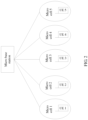
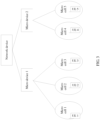
- the micro device may be a micro base station, or may be an antenna cluster. Because the system further needs to configure a micro cell for the UE, a network device that can configure a micro cell is further required. As shown in FIG. 2 , if a micro base station has a configuration function, the network device may be directly the micro base station.
- the micro base station can provide a relatively limited quantity of functions, and the antenna cluster even has no control function. Therefore, the micro device needs to be controlled by the network device.
- the network device may be a controller, or may be an existing macro base station in a network.
- the controller is collaboratively disposed with another device, for example, may be disposed in a macro base station, or may be disposed in a micro base station. If a macro base station exists, the macro base station and the micro device may be co-sited, for example, a plurality of micro devices whose geographical locations are distributedly arranged are added to a site of the macro base station.
- the macro base station and the micro device may be connected by using a microwave, a free space laser, an optical fiber, or another low and medium speed line.
- the micro device is a micro base station
- the macro base station may share a baseband system with these micro base stations, so that channel information and data information can be shared between the macro base station and the micro base station.
- a micro cell may be a cell formed by beamforming provided by one or more micro base stations.
- a micro cell may be a cell formed by beamforming provided by one or more antenna clusters.
- the micro cell may provide only one type of beamforming for the UE, or may provide a plurality of types of beamforming, and may specifically serve the UE in at least one of the following manners: macro diversity, micro diversity, a joint codebook, MBSFN-manner-based sending, a time division service, joint sending, and joint reception.
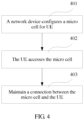
- Step 401 A network device configures a micro cell for UE, where the micro cell provides a service for only the UE.
- a quantity of configured micro cells is N, and N is a natural number greater than or equal to 1. That is, the network device may configure only one micro cell, or may configure a plurality of micro cells for the UE, and these micro cells jointly provide a service for the UE. The similar can be said for the following embodiments of this application, and details are not especially repeatedly described.
- Step 402 The UE accesses the micro cell based on configuration information of the micro cell.
- the configuration information may include at least one of an identifier, access information, physical layer configuration information, higher layer configuration information, and measurement information of the micro cell.
- Step 403 The network device maintains a connection between the micro cell and the UE based on the configuration information of the micro cell after the UE accesses the micro cell.
- the network device may release a resource of the micro cell.
- the network device allocates, to the UE, the micro cell that provides a service for only the UE, and the network device maintains the connection between the micro cell and the UE based on the configuration information of the micro cell after the UE accesses the micro cell. Therefore, unlike the prior art, it is ensured that after the UE accesses the micro cell, the micro cell can provide a service for the UE and frequent inter-cell handover for a reason that the UE moves out of an original cell coverage area is not required, service continuity is ensured, and a large amount of measurement and handover signaling is reduced. Because frequent inter-cell handover is not required, an inter-cell handover procedure failure for a reason such as a radio link failure is avoided. For example, in an area supported by the network device, the UE does not need to be handed over between cells. If there are a plurality of network devices, the UE may not be handed over between cells in areas supported by the network devices.
- the micro cell provides a service for only the UE, a prior-art problem that inter-UE interference exists when there are a large quantity of UEs in one cell is avoided.
- inter-cell interference caused by the UE is greatly reduced, so that complexity of an inter-cell interference coordination (Inter Cell Interference Coordination, ICIC) technology can be reduced, and a gain brought by the ICIC technology is increased.
- ICIC Inter Cell Interference Coordination
- the configuration information may include at least one of an identifier, access information, physical layer configuration information, higher layer configuration information, and measurement information of the micro cell.
- the UE may successfully demodulate data and/or control information from the cell based on the configuration information. For example, the UE may determine antenna port information, layer information, scrambling information, and the like based on the configuration information, to obtain a specific resource location of a reference signal in the cell. Then, the UE measures the reference signal to obtain H*W, that is, a channel matrix*a codebook, where the codebook is also referred to as a weight vector, or to obtain H, and therefore can demodulate the data and/or control information from the micro cell.
- H*W that is, a channel matrix*a codebook, where the codebook is also referred to as a weight vector, or to obtain H
- the identifier of the micro cell may include at least one of a sequence used to identify the micro cell, an index number corresponding to a sequence used to identify the micro cell, an ID of an antenna beam that forms the micro cell, a network device number, offset, and a dedicated ID of the terminal device.
- the network device number may be a number of a network device to which the micro cell belongs.
- the network device is be a micro base station, or a macro base station, or a controller collaboratively disposed in a micro base station or a macro base station.
- the physical layer configuration information of the micro cell includes at least one piece of the following information: at least one reference signal or sequence of the micro cell, where the at least one reference signal or sequence can be used for at least one of cell synchronization, channel demodulation, channel evaluation, or radio resource management (radio resources management, RRM) measurement, at least one physical channel, antenna information, a scrambling sequence index (scrambling sequence index, SCID), precoding information, channel matrix information, codebook information, layer information, a quantity of antenna ports, an antenna port number, beam optimization capability information, a valid time, valid duration, a control channel, a cyclic prefix (Cyclic Prefix, CP) length, and power control information.
- RRM radio resources management
- the control channel in the physical layer configuration information uses an enhanced control channel, and the enhanced control channel can implement a beamforming function and carry common and/or dedicated control information of the micro cell.
- the control channel in the physical layer configuration information uses a reference signal dedicated to the UE.
- step 401 that a network device configures a micro cell for UE may be specifically as follows:
- the network device configures the micro cell based on obtained information, and sends the configuration information of the micro cell to the UE.
- the network device may specifically send the configuration information to the UE by using at least one of RRC, MAC, or physical layer control signaling.
- the information obtained by the network device may be at least one of the following items: a current channel condition of the UE, a current location of the UE, channel condition change information of the UE, location change information of the UE, information received from the UE, and a reference signal received from the UE.
- the information received from the UE may be specifically at least one of the following items: a sequence, a measurement result of a sequence, a measurement result of a reference signal, a control frame, data, an ID of the UE, dedicated code of the UE, an index number corresponding to dedicated code of the UE, cell code that is bound to the UE, an index number of cell code that is bound to the UE, and an ID of the micro cell, where the ID of the micro cell is corresponding to the UE, and the correspondence includes a one-to-one correspondence or a many-to-one correspondence, that is, the ID of the micro cell may be in a one-to-one correspondence with the UE, or IDs of a plurality of micro cells may be corresponding to the UE.
- the data may include a data frame, or may be service data and the like.
- the information may be unique in an entire network, or may be unique in a local area, for example, the information is unique in an area of the micro cell that can be provided by the network device, or is unique in a local area.
- the ID of the micro cell may be a micro cell ID allocated by the network device to the UE based on the received sequence or dedicated code of the UE or the ID of the UE in a process in which the UE accesses the network device.
- the ID of the micro cell is a micro cell ID that is sent by the UE to the network device and stored by the UE in a process in which the UE accesses the network device.
- the micro cell ID stored by the UE may be previously allocated by the network device or another network device to the UE, or may be a preconfigured micro cell ID that is stored in the UE.
- the network device may configure only one micro cell for the UE, or may configure a plurality of micro cells for the UE.
- the plurality of micro cells may have a same ID or different IDs.
- the plurality of micro cells may be distinguished by using another identifier, for example, different micro cells have different reference signal configuration, different micro cells have different synchronization channel configuration, or different micro cells have different antenna information.
- Different micro cells may provide a service for the UE by using a CA (Carrier Aggregation, carrier aggregation) technology, a CoMP (Coordinated Multi-Point transmission, coordinated multipoint transmission) technology, or an LAA (Licensed Assisted Access using LTE, licensed-assisted access using LTE) technology.
- CA Carrier Aggregation, carrier aggregation
- CoMP Coordinatd Multi-Point transmission, coordinated multipoint transmission
- LAA Licensed Assisted Access using LTE, licensed-assisted access using LTE
- that the network device configures the micro cell based on obtained information may specifically include at least one of the following steps: determining receiving and sending sectors of the micro cell based on the obtained information, and determining receiving and sending beamforming of the micro cell based on the obtained information by using a beam training process. If the receiving and sending sectors and/or the receiving and sending beamforming of the micro cell are determined, a coverage area of the micro cell may be determined. Certainly, only the receiving sector or only the sending sector may be determined based on a requirement. The similar can be said for beamforming.
- the network device may specifically determine the receiving and sending sectors of the micro cell based on the obtained information by means of sector scanning.
- the UE also determines corresponding receiving and sending sectors by interacting with the network device.
- the receiving sector of the network device is the sending sector of the UE
- the sending sector of the network device is the receiving sector of the UE.
- the sector scanning may be implemented in at least one of the following manners: interaction that is between the UE and the network device and that is of a control frame and/or a data frame related to a sector, interaction that is between the UE and the network device and that is of a sequence related to a sector, interaction that is between the UE and the network device and that is of a reference signal and/or a measurement result of a reference signal related to a sector, and interaction that is between the UE and the network device and that is of a sequence and/or a measurement result of a sequence related to a sector.
- a manner of determining the sending sector by means of exchange of a control frame and/or a data frame related to a sector may be as follows:
- the network device sends, to the UE by using each sector in a selectable area of the network device, a control frame and/or a data frame corresponding to each sector.
- the UE evaluates the received control frames and/or data frames corresponding to the sectors, determines a sector in which the network device has best sending performance, and sends a control frame and/or a data frame related to the sector with best sending performance to the network device.
- the network device uses the sector to which the received control frame and/or data frame are/is related as the sending sector of the network device.
- the UE may receive, by using an omnidirectional antenna, the control frames and/or the data frames corresponding to the sectors. Therefore, the UE does not need to determine the receiving sector of the UE. Certainly, the UE may use the determined sector in which the network device has best sending performance as the receiving sector of the UE. Optionally, the network device may send a control frame and/or a data frame to each sector in a selectable area of the UE.
- the network device when determining a sector, the network device sends a control frame and/or a data frame by using each sector in the selectable area of the network device, or may send a control frame and/or a data frame to each sector in the selectable area of the UE. Actually, sending may be performed in some sectors instead of each sector in the selectable area. The similar can be said for a sector determining manner and a beamforming determining manner that are described in the following, and details are not repeatedly described.
- a manner of determining the receiving sector of the network device by means of exchange of a control frame and/or a data frame may be as follows:
- the UE may send, to some or all sectors of the network device by using each sector in a selectable area of the UE, a control frame and/or a data frame corresponding to each sector; or send, to some or all sectors of the network device by using a previously determined sending sector in which the network device has best sending performance, a control frame and/or a data frame corresponding to the sending sector in which the network device has best sending performance.
- the network device evaluates the received control frames and/or data frames corresponding to the sectors, and determines a sector in which the network device has best receiving performance as the receiving sector of the network device.
- the network device may further send, to the UE, a control frame and/or a data frame related to the receiving sector and/or an identifier of the receiving sector.
- the UE may determine the sending sector of the UE based on the received control frame and/or data frame, and/or the received identifier of the receiving sector.
- a specific implementation solution is similar to the foregoing solutions of determining a sector by using a control frame and/or a data frame, and details are not further described.
- a manner of determining the sending sector of the network device by means of interaction that is between the UE and the network device and that is of a measurement result of a reference signal related to a sector may be as follows:
- the network device sends, to the UE by using each sector in a selectable area of the network device, a reference signal dedicated to each sector.
- the UE measures the received reference signals corresponding to the sectors, determines a sector in which the network device has best sending performance, and sends an identifier of the sector with best sending performance and/or a measurement result to the network device.
- the network device determines the sending sector of the network device based on the identifier of the sector with best sending performance and/or the measurement result.
- the UE may receive a signal by using an omnidirectional antenna, or may use the sector in which the network device has best sending performance as the receiving sector of the UE.
- a manner of determining the receiving sector of the network device by means of interaction that is between the UE and the network device and that is of a measurement result of a reference signal related to a sector may be as follows:
- the UE sends, to some or all sectors of the network device by using each sector in a selectable area of the UE or by using a previously determined sector in which the network device has best sending performance, a reference signal corresponding to each sector on a UE side.
- the network device measures the received reference signals corresponding to the sectors, and determines a sector in which the network device has best receiving performance as the receiving sector of the network device.
- the network device may further send an identifier of the receiving sector and/or a measurement result to the UE.
- the UE may determine the sending sector of the UE based on the received information.
- a specific implementation solution is similar to the foregoing solutions of determining a sector by using a measurement result of a reference signal related to a sector, and details are not further described.
- the network device may determine beamforming of the micro cell based on the obtained information by using a beam training process, and the network device determines, in the beam training process, the receiving and sending beamforming of the micro cell by using at least one of the following items: interaction that is between the UE and the network device and that is of a control frame and/or a data frame related to beamforming, interaction that is between the UE and the network device and that is of a sequence related to beamforming, a measurement result that is of a reference signal related to beamforming and that is fed back by the UE, a measurement result that is of a sequence related to beamforming and that is fed back by the UE, a measurement result obtained after the network device measures a reference signal related to beamforming, and a measurement result obtained after the network device measures a sequence related to beamforming.
- a manner of determining the sending and receiving beamforming by using a control frame and/or a data frame sent by the UE may be as follows:
- the network device sends, to the UE by using each type of beamforming in a selectable area of the network device, a control frame and/or a data frame dedicated to each type of beamforming.
- the UE evaluates the received control frames and/or data frames corresponding to the types of beamforming, determines beamforming in which the network device has best sending performance, and sends a control frame and/or a data frame related to the beamforming with best sending performance to the network device.
- the network device uses beamforming corresponding to the received control frame and/or data frame as the sending and receiving beamforming of the network device.
- the UE may use the beamforming with best sending performance as sending and receiving beamforming of the UE.
- a specific implementation solution is similar to the solution of determining beamforming by using a control frame and/or a data frame.
- a difference is mainly as follows:
- the UE may feed back a sequence related to beamforming with best sending performance, a measurement result of a reference signal related to beamforming with best sending performance, or a measurement result of a sequence related to beamforming with best sending performance. Therefore, details are not further described.
- a manner of determining the sending and receiving beamforming by using a measurement result obtained after the network device measures a reference signal related to beamforming is as follows:
- the network device receives a reference signal that is sent by the UE by using each type of beamforming in a selectable area and that is dedicated to each type of beamforming, measures the received dedicated reference signals, determines beamforming with best sending performance, and uses the beamforming as the sending and receiving beamforming.
- the network device may further send, to the UE, an identifier of the beamforming and/or a measurement result of a reference signal related to beamforming.
- the UE may determine the sending and receiving beamforming based on the received information.
- a solution is similar to the foregoing solution of determining beamforming by using a measurement result of a reference signal, and details are not further described.
- the configuration information of the micro cell usually changes for a reason such as a channel condition change of the micro cell and movement of UE. Therefore, the network device may further perform configuration update on the micro cell based on the obtained information, so that the micro cell more satisfies a current situation, and better provides a service for the UE.
- the network device may perform configuration update on the micro cell based on the obtained information, for example, update the coverage area of the micro cell, update transmit power of the micro cell, and/or update at least one of a direction, a location, a width, and a weight vector of the beamforming, and send updated configuration information of the micro cell to the UE when there is a need.
- the network device keeps a parameter used to trigger a handover procedure unchanged.
- the parameter used to trigger a handover procedure includes at least one of the following items: a cell ID or a security context such as a security algorithm, a security key, and a security counter.
- the network device may adjust the coverage area of the micro cell based on movement of the UE and the like, and does not change the parameter used to trigger an inter-cell handover procedure. Therefore, the micro cell that provides a service for the UE is adjusted based on a current situation, and inter-cell handover is not triggered, so that frequent inter-cell handover in the prior art is avoided.
- that the network device performs configuration update on the micro cell based on the obtained information may include: updating the receiving and sending sectors of the micro cell, and/or updating the receiving and sending beamforming of the micro cell by using a beam training process.
- Specific implementation of determining or updating a sector and determining or updating beamforming is similar to that in the foregoing micro cell configuration process, and details are not described herein.
- the network device may release the resource of the micro cell.
- the UE usually switches from an active (active) state, in which the UE keeps continuously listening to network side signaling and/or data, to an idle (idle) state or a dormant state.
- the dormant state may be a discontinuous reception (discontinuous reception, DRX) sleep mode.
- the network device may send a wakeup command to the UE, and configure the micro cell for the UE.
- the UE ends the DRX state and accesses the configured micro cell.
- the UE may perform cell selection/reselection by interacting with the network device, to find a target cell and camp on the cell, where the target cell may be specifically a new cell; or may return to a macro cell before accessing the micro cell.
- the UE directly chooses to enter a macro cell before accessing the micro cell. If the UE cannot enter the macro cell, the UE performs cell selection/reselection by interacting with the network device and enters the DRX sleep mode.
- this embodiment of the present invention further provides the following several implementations, to quickly provide a service for the UE.
- the network device In a manner, after the UE accesses the micro cell, and the UE has no service and enters an inactive state such as the idle or the DRX state, the network device still stores context information of the UE, but the UE does not need to continuously listen to signaling/data sent by the network device. In addition, after determining that the UE subsequently needs to transmit a service, the network device directly uses the context information to process the service for the UE.
- the context information may include the ID of the UE, configuration information of each protocol layer, radio frequency information, capability information of the UE, service information and security information of the UE, and the like.
- the UE In another manner, after the UE accesses the micro cell and it is determined that there is no service, the UE always camps on the micro cell. Even if the UE has accessed a macro cell before accessing the micro cell, the UE does not return to the macro cell, and even does not access another macro cell.
- the UE camping on the micro cell is not necessarily in the idle state, and may be in a connected mode, the active state, or the like.
- the transmit power of the micro cell is minimized, so that energy consumption of the network device and the UE is reduced, and interference to another UE and network device is reduced.
- the transmit power of the micro cell is restored.
- a width of a beam may be minimized, and the UE is still in the connected mode and maintains an intermittent connection to the micro cell.
- the UE may camp on a macro cell before accessing the micro cell, and access the micro cell only when the UE has a service. Specifically, when there is no service to trigger the UE, the UE camps on the macro cell. In this case, the UE may be in the idle state. When there is a service to trigger the UE, the UE enters a connected mode, and correspondingly, the macro base station configures the micro cell for the UE. Specific configuration is described above, and details are not described again.
- the foregoing two processing manners of storing the context information and changing the transmit power may be used by means of combination, so that a service can be quickly provided for the UE, and inter-cell interference can be reduced as much as possible.
- the network device maintains the connection between the micro cell and the UE based on the configuration information of the micro cell.
- the connection is a connection existing when the UE is stationary, and may further be a connection between the UE and the micro cell during movement of the UE, or may be a connection between the UE and the micro cell during configuration update of the micro cell. Specifically, there are a plurality of cases.
- the UE moves in the current coverage area of the micro cell, and therefore the coverage area of the micro cell may not be updated.
- the network device may update the coverage area of the micro cell based on movement of the UE by using a micro device, so that the micro cell whose coverage area is updated can better provide a service for the UE.
- the UE moves in the coverage area of the micro cell that can be provided by the network device, and moves out of an original coverage area of the micro cell.
- the network device needs to update the coverage area of the micro cell and other configuration information based on a location of the UE, and keep the parameter used to trigger a handover procedure unchanged. Therefore, in this case, although the geographical location of the UE is moved to another coverage area, the UE does not need to be handed over between cells.
- the network device may be a micro base station, and the micro base station performs configuration update on the micro cell.
- the network device a controller disposed collaboratively with a macro base station or a micro base station, or a macro base station or a micro base station, and the network device performs configuration update on the micro cell by using a micro device.
- the micro device may be a micro base station, or may be an antenna cluster. If the micro device is a micro base station, the independent network device or the macro base station may perform configuration information update, or the micro base station may perform configuration update on the micro cell, or these devices may cooperatively perform configuration update on the micro cell. Specific processing of configuration update is described above, and details are not described herein again.
- the network device can send information about the UE and information about the micro cell to another micro device; configure the micro cell for the UE by using the another micro device, where the coverage area of the micro cell may overlap a previous coverage area, or may be totally different from a previous coverage area; keep the parameter used to trigger a handover procedure unchanged; and maintain the connection between the micro cell and the UE based on the configuration information of the micro cell. It is easy to see that if a location of the micro cell is updated in the foregoing first case, this implementation solution may also be used in the foregoing first case. A specific implementation solution is similar, and details are not described herein.
- the UE moves out of the coverage area of the micro cell that can be provided by the current network device.
- the current network device needs to cooperate with another network device in the system, the another network device configures the micro cell for the UE, and the another network device keeps the parameter used to trigger a handover procedure unchanged.
- the micro cell is configured by the another network device, the micro cell is still corresponding to the UE.
- the UE does not need to perform an inter-cell handover procedure even if the UE moves from the current network device to the another network device.
- the network device includes a first network device and a second network device, a first micro device is connected to the first network device, and a second micro device is connected to the second network device.
- a micro cell that can be provided by the first micro device is corresponding to a first coverage area
- a micro cell that can be provided by the second micro device is corresponding to a second coverage area.
- the first network device configures the micro cell for the UE by using the first micro device.
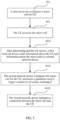
- step 403 may specifically include the following steps:
- the first network device may release the resource of the micro cell configured by the first network device in step 401.
- the first network device actively sends the information about the UE and the information about the micro cell to the second network device.
- the second network device may receive some information from the UE, and after receiving the information from the UE, obtain the information about the UE and the information about the micro cell from the first network device.
- the received information is described above, and for the information received from the UE, details are not described again.
- the second network device may configure the micro cell for the UE after the UE moves into the coverage area of the second micro device.
- the second network device may first obtain the information about the UE and the information about the micro cell before the UE moves into the coverage area of the second micro device. Specific obtaining methods are the several methods described above. Then, the second network device configures, for the UE based on the information about the UE and the information about the micro cell, a micro cell that can ensure service continuity of the UE, provides the micro cell for the UE by using the second micro device, and keeps the parameter used to trigger a handover procedure of the UE unchanged.
- the second network device may perform configuration update on the micro cell based on a measurement result and the like by using the second micro device, so that the micro cell can provide a better service for the UE.
- update method refer to the foregoing micro-cell configuration update method.
- the configuration update may be adjusting the direction, the location, the width, the weight vector, or the like of the beamforming of the micro cell, and updating a radio bearer configuration parameter, to better provide a service for the UE.
- the measurement result may be a measurement result reported by the UE, or may be a result obtained after the second micro device measures a signal of the UE.
- the wireless communications system in this embodiment of the present invention may be the system shown in FIG. 2 or FIG. 3 .
- the first network device and the second network device in steps 4031 and 4032 may be micro base stations, and the foregoing processing is directly performed by the micro base station.
- the first network device and the second network device in steps 4031 and 4032 may be controllers disposed in macro base stations or micro base stations, or macro base stations, and the network devices may perform processing by using a micro device.
- the micro device may be a micro base station, or may be an antenna cluster. If the micro device is a micro base station, some control functions may be performed by the micro base station.
- the second network device sends the information about the UE, the information about the micro cell, and the like to the second micro device, and configures the micro cell by using the second micro device. Signaling and/or data exchange between different network devices may be transmitted by using an X2/S1/OTA interface.
- the network device includes a macro base station
- the macro base station provides a macro cell. Therefore, when there is no service to trigger the UE, the UE may camp on the macro cell.
- the macro base station then sends the configuration information of the micro cell to the UE. In this manner, the network device does not need to allocate the micro cell to the UE when the UE accesses a network, so that resources of the micro cell are saved.
- the network device may further use a system message of the micro cell as the configuration information of the micro cell, and send the system message to the UE, so that the UE can quickly access the micro cell or select a suitable micro cell in a cell selection/reselection process.
- the system message of the micro cell may include at least one of the following items: a configuration parameter of a common feature of a plurality of micro cells covered by the network device, access information of a common feature of a plurality of micro cells, and access information of each of a plurality of micro cells.
- the access information may be capability information, information about a service that can be provided, a PLMN ID, TA code, carrier/frequency information, information about a working mode such as an FDD mode or a TDD mode, configuration information of a cell logical channel such as a BCCH, a RACH, or a PCCH, configuration information of a cell physical channel and cell signaling, for example, at least one piece of the following information: a PRACH, a PDSCH, a PUSCH, a PUCCH, a PDCCH, an enhanced physical control channel, reference signaling, power control, a CP length, antenna information, or beam optimization capability information, MBMS information, D2D information such as at least one of capability, resource, and synchronization information, timer information, or the like; and/or after the UE accesses the micro cell, the network device sends the configuration information of the micro cell to the UE.
- a PRACH a PDSCH, a PUSCH
- PUCCH Physical Control Channel
- the UE Before accessing the micro cell, the UE may obtain some basic configuration information of the micro cell from information such as the foregoing system message of micro cell, so that the UE can access the micro cell. After the UE accesses the micro cell, the network device sends more accurate configuration information to the UE, so that the UE can better interact with the micro cell based on the configuration information.
- the foregoing uses the UE as an example for description.
- UE of these users may be set as one UE group, and a micro cell is configured for the UE group.
- Specific processing is similar to the foregoing solution.
- the network device may perform processing based on information about one UE, or may perform processing based on information about a plurality of UEs in the UE group, for example, obtain an average value, a maximum value, or a minimum value of the information.
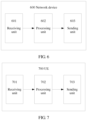
- the network device 600 in this embodiment of the present invention usually includes a sending unit 603 and a processing unit 602.
- the processing unit 602 is configured to: configure at least one micro cell for the UE, where the micro cell provides a service for only UE, and maintain a connection between the micro cell and the UE based on configuration information of the micro cell after the UE accesses the micro cell.
- the sending unit 603 is configured to send the configuration information of the micro cell to the UE.
- the network device 600 may further include a receiving unit 701, configured to receive various types of information sent by a terminal device, and may further include a storage unit, configured to store context information of the UE and the like.
- the network device specifically needs to implement the solutions in the foregoing method embodiment. Therefore, the processing unit, the receiving unit, and the sending unit of the network device need to perform corresponding processing. Specifically, a step of sending information to the UE or another network device in the foregoing method embodiment is performed by the sending unit, a step of receiving information sent by the UE or another network device is performed by the receiving unit, and processing such as configuration and measurement is performed by the processing unit. Therefore, specific processing of each unit is not described in detail.
- the UE 700 in this embodiment of the present invention usually includes a receiving unit 701, a processing unit 702, and a sending unit 703 configured to send information.
- the receiving unit 701 is configured to receive configuration information that is of the micro cell that is sent by a network device.
- the micro cell is a micro cell configured for the UE, and the micro cell provides a service for only the UE.
- the processing unit 702 is configured to: access the micro cell based on the configuration information received by the receiving unit, and maintain a connection between the UE and the micro cell based on the configuration information of the micro cell.
- the UE specifically needs to implement the solutions in the foregoing method embodiment. Therefore, the processing unit, the receiving unit, and the sending unit of the UE need to perform corresponding processing. Specifically, a step of sending information to the network device in the foregoing method embodiment is performed by the sending unit, a step of receiving information sent by the network device is performed by the receiving unit, and processing such as access and measurement is performed by the processing unit. Therefore, specific processing of each unit is not described in detail.
- the processing unit, the sending unit, and the receiving unit may be a processor, a transmitter, and a receiver.
- the system in this embodiment of the present invention may include the first network device and the second network device in the foregoing method embodiment. Specific processing of the two network devices is described in the foregoing method embodiment, and details are not described again.
- the program may be stored in a computer readable storage medium.
- the storage medium herein may be a ROM/RAM, a magnetic disk, an optical disk, and the like.
Landscapes
- Engineering & Computer Science (AREA)
- Computer Networks & Wireless Communication (AREA)
- Signal Processing (AREA)
- Computer Security & Cryptography (AREA)
- Mobile Radio Communication Systems (AREA)
Claims (15)
- Zugriffsverfahren, angewendet auf ein drahtloses Kommunikationssystem, das einen Dienst für ein Endgerät bereitstellt, und umfassend:Konfigurieren (401), durch ein Netzwerkgerät, wobei das Netzwerkgerät eine Makro-Basisstation, eine Mikro-Basisstation oder eine in einer Makro-Basisstation oder in einer Mikro-Basisstation angeordnete Steuerung, eine oder mehrere Mikrozellen für das Endgerät oder eine Endgerätegruppe, in der sich das Endgerät befindet, ist, wobei die eine oder die mehreren Mikrozellen einen Dienst nur für das Endgerät oder die Endgerätegruppe bereitstellen, die Menge der einen oder der mehreren Mikrozellen N ist und N eine natürliche Zahl größer oder gleich 1 ist; undAufrechterhalten (403), durch das Netzwerkgerät, von Verbindungen zwischen der einen oder den mehreren Mikrozellen und dem Endgerät auf Grundlage von Konfigurationsinformationen der einen oder der mehreren Mikrozellen, nachdem das Endgerät auf die eine oder die mehreren Mikrozellen zugreift;wobei das Verfahren ferner die folgenden Schritte umfasst:
nachdem das Endgerät keinen Dienst aufweist, Fortfahren, durch das Netzwerkgerät, mit Speichern von Kontextinformationen des Endgeräts, und nach einem Bestimmen, dass das Endgerät einen Dienst aufweist, Verwenden der Kontextinformationen, um den Dienst für das Endgerät zu verarbeiten. - Verfahren nach Anspruch 1, wobei das Konfigurieren (401) einer oder mehrerer Mikrozellen für das Endgerät oder die Endgerätegruppe durch das Netzwerkgerät Folgendes umfasst:
Konfigurieren, durch das Netzwerkgerät, der einen oder der mehreren Mikrozellen auf Grundlage von erhaltenen Informationen und Senden der Konfigurationsinformationen der einen oder der mehreren Mikrozellen an das Endgerät oder die Endgerätegruppe. - Verfahren nach Anspruch 2, wobei
das Konfigurieren, durch das Netzwerkgerät, der einen oder der mehreren Mikrozellen auf Grundlage von erhaltenen Informationen Folgendes umfasst:
Bestimmen, durch das Netzwerkgerät, von Empfangs- und Sendesektoren der einen oder der mehreren Mikrozellen auf Grundlage der erhaltenen Informationen mittels Sektorabtastung, wobei die Sektorabtastung unter Verwendung von mindestens einem der Folgenden umgesetzt ist:Interaktion, die zwischen dem Netzwerkgerät und dem Endgerät oder der Endgerätegruppe besteht und die aus mindestens einem Stück der folgenden sektorbezogenen Informationen besteht: einem Steuerrahmen, einem Datenrahmen, einer Sequenz, einem Referenzsignal, einem Messergebnis einer Sequenz und einem Messergebnis eines Referenzsignals; und/oderdas Konfigurieren, durch das Netzwerkgerät, der einen oder der mehreren Mikrozellen auf Grundlage von erhaltenen Informationen Folgendes umfasst:
Bestimmen, durch das Netzwerkgerät, einer oder mehrerer Mikrozellen auf Grundlage der erhaltenen Informationen unter Verwendung eines Strahltrainingsprozesses und Bestimmen, durch das Netzwerkgerät in dem Strahltrainingsprozess, von Empfangs- und Sendestrahlformungen der einen oder der mehreren Mikrozellen unter Verwendung mindestens eines der folgenden Elemente:
Interaktion, die zwischen dem Netzwerkgerät und dem Endgerät oder der Endgerätegruppe besteht und die aus mindestens einem Stück der folgenden strahlformungsbezogenen Informationen besteht: einem Steuerrahmen, einem Datenrahmen und einer Sequenz; Messergebnisse, die von einem Referenzsignal und/oder einer Sequenz in Bezug auf die Strahlformung stammen und die von dem Endgerät oder der Endgerätegruppe zurückgemeldet werden; und Messergebnisse, die erhalten werden, nachdem das Netzwerkgerät ein Referenzsignal und/oder eine Sequenz in Bezug auf Strahlformung misst. - Verfahren nach Anspruch 1, 2 oder 3, wobei das Verfahren ferner Folgendes umfasst:Durchführen, durch das Netzwerkgerät, einer Konfigurationsaktualisierung der einen oder der mehreren Mikrozellen auf Grundlage der erhaltenen Informationen und Beibehalten, durch das Netzwerkgerät, eines Parameters, der dazu verwendet wird, eine Handover-Prozedur unverändert auszulösen;wobei das Durchführen, durch das Netzwerkgerät, einer Konfigurationsaktualisierung der einen oder der mehreren Mikrozellen auf Grundlage der erhaltenen Informationen Folgendes umfasst:
Aktualisieren, durch das Netzwerkgerät, der Empfangs- und Sendesektoren der einen oder der mehreren Mikrozellen auf Grundlage der erhaltenen Informationen mittels Sektorabtastung, wobei die Sektorabtastung unter Verwendung von mindestens einem der folgenden Elemente umgesetzt ist:Interaktion, die zwischen dem Endgerät oder der Endgerätegruppe und dem Netzwerkgerät besteht und die aus mindestens einem Stück der folgenden sektorbezogenen Informationen besteht: einem Steuerrahmen, einem Datenrahmen, einer Sequenz, einem Referenzsignal, einem Messergebnis einer Sequenz und einem Messergebnis eines Referenzsignals; und/oderwobei das Durchführen, durch das Netzwerkgerät, einer Konfigurationsaktualisierung der einen oder der mehreren Mikrozellen auf Grundlage der erhaltenen Informationen Folgendes umfasst:
Aktualisieren, durch das Netzwerkgerät, der Strahlformungen der einen oder der mehreren Mikrozellen auf Grundlage der erhaltenen Informationen unter Verwendung eines Strahltrainingsprozesses und Aktualisieren, durch das Netzwerkgerät in dem Strahltrainingsprozess, der Empfangs- und Sendestrahlformungen der einen oder der mehreren Mikrozellen unter Verwendung mindestens eines der folgenden Elemente:
Interaktion, die zwischen dem Netzwerkgerät und dem Endgerät oder der Endgerätegruppe besteht und die aus mindestens einem Stück der folgenden strahlformungsbezogenen Informationen besteht: einem Steuerrahmen, einem Datenrahmen oder einer Sequenz; Messergebnisse, die von einem Referenzsignal und/oder einer Sequenz in Bezug auf die Strahlformung stammen und die von dem Endgerät oder der Endgerätegruppe zurückgemeldet werden; und Messergebnisse, die erhalten werden, nachdem das Netzwerkgerät ein Referenzsignal und/oder eine Sequenz in Bezug auf Strahlformung misst. - Verfahren nach einem der Ansprüche 1 bis 4, wobei das Netzwerkgerät ein erstes Netzwerkgerät und ein zweites Netzwerkgerät umfasst, wobei das erste Netzwerkgerät mit einem ersten Mikrogerät verbunden ist, eine oder mehrere Mikrozellen, die durch das erste Mikrogerät bereitgestellt werden können, einem ersten Abdeckungsbereich entsprechen, das zweite Netzwerkgerät mit einem zweiten Mikrogerät verbunden ist, eine oder mehrere Mikrozellen, die durch das zweiten Mikrogerät bereitgestellt werden können, einem zweiten Abdeckungsbereich entsprechen, und das erste Netzwerkgerät die eine oder die mehreren Mikrozellen für das Endgerät und die Endgerätegruppe, in der sich das Endgerät befindet, konfiguriert und die eine oder die mehreren Mikrozellen für das Endgerät unter Verwendung des ersten Mikrogeräts bereitstellt; und
das Aufrechterhalten (403), durch das Netzwerkgerät, von Verbindungen zwischen der einen oder den mehreren Mikrozellen und dem Endgerät auf Grundlage von Konfigurationsinformationen der einen oder der mehreren Mikrozellen, nachdem das Endgerät auf die eine oder die mehreren Mikrozellen zugreift, Folgendes umfasst:nachdem das Endgerät auf die eine oder die mehreren Mikrozellen zugreift und das erste Netzwerkgerät bestimmt, dass sich das Endgerät von dem ersten Abdeckungsbereich in den zweiten Abdeckungsbereich bewegt, Senden (4031), durch das erste Netzwerkgerät, von Informationen über das Endgerät und Informationen über die eine oder die mehreren Mikrozellen an das zweite Netzwerkgerät; undKonfigurieren (4032), durch das zweite Netzwerkgerät, der einen oder der mehreren Mikrozellen für das Endgerät auf Grundlage der Informationen über das Endgerät und der Informationen über die eine oder die mehreren Mikrozellen, Bereitstellen der einen oder der mehreren Mikrozellen für das Endgerät durch Verwenden des zweiten Mikrogeräts, Beibehalten des Parameters, der dazu verwendet wird, eine Handover-Prozedur unverändert auszulösen, und Aufrechterhalten (4032) der Verbindungen zwischen der einen oder den mehreren Mikrozellen und dem Endgerät auf Grundlage der Konfigurationsinformationen der einen oder der mehreren Mikrozellen; oderdas Aufrechterhalten (403), durch das Netzwerkgerät, von Verbindungen zwischen der einen oder den mehreren Mikrozellen und dem Endgerät auf Grundlage von Konfigurationsinformationen der einen oder der mehreren Mikrozellen, nachdem das Endgerät auf die eine oder die mehreren Mikrozellen zugreift, Folgendes umfasst:nachdem das Endgerät auf die eine oder die mehreren Mikrozellen zugreift und das zweite Netzwerkgerät bestimmt, dass sich das Endgerät in den zweiten Abdeckungsbereich bewegt, Erhalten, durch das zweite Netzwerkgerät, von Informationen über das Endgerät und Informationen über die eine oder die mehreren Mikrozellen von dem ersten Netzwerkgerät auf Grundlage von Informationen, die von dem Endgerät empfangen werden; undKonfigurieren (4032), durch das zweite Netzwerkgerät, der einen oder der mehreren Mikrozellen für das Endgerät auf Grundlage der Informationen über das Endgerät und der Informationen über die eine oder die mehreren Mikrozellen, Bereitstellen der einen oder der mehreren Mikrozellen für das Endgerät durch Verwenden des zweiten Mikrogeräts, Beibehalten des Parameters, der dazu verwendet wird, eine Handover-Prozedur unverändert auszulösen, und Aufrechterhalten (4032) der Verbindungen zwischen der einen oder den mehreren Mikrozellen und dem Endgerät auf Grundlage der Konfigurationsinformationen der einen oder der mehreren Mikrozellen. - Verfahren nach Anspruch 5, wobei
das Konfigurieren (4032), durch das zweite Netzwerkgerät, der einen oder der mehreren Mikrozellen für das Endgerät auf Grundlage der Informationen über das Endgerät und der Informationen über die eine oder die mehreren Mikrozellen, Bereitstellen der einen oder der mehreren Mikrozellen für das Endgerät durch Verwenden des zweiten Mikrogeräts und Beibehalten des Parameters, der dazu verwendet wird, eine Handover-Prozedur unverändert auszulösen, Folgendes umfasst:bevor das Endgerät in den zweiten Abdeckungsbereich des zweiten Mikrogeräts eintritt, Konfigurieren, durch das zweite Netzwerkgerät für das Endgerät auf Grundlage der Informationen über das Endgerät und der Informationen über die eine oder die mehreren Mikrozellen, einer oder mehrerer Mikrozellen, die die Dienstkontinuität des Endgeräts sicherstellen können, Bereitstellen der einen oder der mehreren Mikrozellen für das Endgerät durch Verwenden des zweiten Mikrogeräts und Beibehalten des Parameters, der dazu verwendet wird, eine Handover-Prozedur unverändert auszulösen; undnachdem das Endgerät in den Abdeckungsbereich des zweiten Mikrogeräts eintritt, Ausführen, durch das zweite Netzwerkgerät, einer Konfigurationsaktualisierung der einen oder der mehreren Mikrozellen auf Grundlage eines Messergebnisses, das durch das Endgerät berichtet wird, oder eines Ergebnisses, das erhalten wird, nachdem das zweite Mikrogerät ein Signal des Endgeräts misst, und Beibehalten des Parameters, der dazu verwendet wird, eine Handover-Prozedur unverändert auszulösen. - Verfahren nach einem der Ansprüche 1 bis 6, wobei die Konfigurationsinformationen der einen oder der mehreren Mikrozellen mindestens eines von einer Kennung, Zugriffsinformationen, Konfigurationsinformationen der physikalischen Schicht, Konfigurationsinformationen höherer Schichten und Messinformationen der einen oder der mehreren Mikrozellen umfassen, wobeidie Kennungen der einen oder der mehreren Mikrozellen mindestens eines von einer Sequenz, die dazu verwendet wird, die eine oder die mehreren Mikrozellen zu identifizieren, Indexnummern, die einer Sequenz entsprechen, die dazu verwendet wird, die eine oder die mehreren Mikrozellen zu identifizieren, IDs von Antennenstrahlen, die die eine oder die mehrere Mikrozellen bilden, einer Netzwerkgerätenummer, Versatz und einer dedizierten ID des Endgeräts oder der Endgerätegruppe umfassen; unddie Konfigurationsinformationen der physikalischen Schichten der einen oder der mehreren Mikrozellen mindestens ein Stück der folgenden Informationen umfassen:
mindestens ein Referenzsignal oder eine Sequenz von jeder der einen oder der mehreren Mikrozellen, wobei das mindestens eine Referenzsignal oder die mindestens eine Sequenz für mindestens eines von Zellensynchronisierung, Kanaldemodulation, Kanalauswertung oder Messung von Funkressourcenverwaltung (radio resource management - RRM), mindestens einem physikalischen Kanal, Antenneninformationen, einem Verschlüsselungssequenzindex (scrambling sequence index - SCID), Vorcodierungsinformationen, Kanalmatrixinformationen, Codebuchinformationen, Schichtinformationen, einer Menge von Antennenanschlüssen, einer Antennenanschlussnummer, Strahloptimierungsfähigkeitsinformationen, einer gültigen Zeit, gültiger Dauer, einem Steuerkanal, einer CP-Länge und Leistungssteuerinformationen verwendet werden kann. - Zugriffsverfahren, angewendet auf ein drahtloses Kommunikationssystem und umfassend:Zugreifen (402), durch ein Endgerät, auf eine oder mehrere Mikrozellen auf Grundlage von Konfigurationsinformationen der einen oder der mehreren Mikrozellen, wobei die eine oder die mehreren Mikrozellen eine oder mehrere Mikrozellen sind, die für das Endgerät oder eine Endgerätegruppe, in der sich das Endgerät befindet, konfiguriert sind und die eine oder die mehreren Mikrozellen einen Dienst nur für das Endgerät oder die Endgerätegruppe bereitstellen; undnach dem Zugreifen auf die eine oder die mehreren Mikrozellen, Aufrechterhalten (403), durch das Endgerät, einer Verbindung zwischen dem Endgerät und der einen oder den mehreren Mikrozellen auf Grundlage der Konfigurationsinformationen der einen oder der mehreren Mikrozellen;wenn ein neuer Dienst verarbeitet werden muss, nachdem ein Dienst endet, Interagieren, durch das Endgerät, mit einem Netzwerkgerät auf Grundlage von Kontextinformationen des Endgeräts, wobei das Netzwerkgerät eine Makro-Basisstation, eine Mikro-Basisstation oder eine Steuerung, die in einer Makro-Basisstation oder in einer Mikro-Basisstation angeordnet ist, ist.
- Verfahren nach Anspruch 8, wobei das Verfahren ferner Folgendes umfasst:Austauschen, durch das Endgerät, von ersten Informationen mit einem Netzwerkgerät, wobei die ersten Informationen sektorbezogen sind und mindestens eines von einem Steuerrahmen, einem Datenrahmen, einer Sequenz, einem Referenzsignal, einem Messergebnis einer Sequenz und einem Messergebnis eines Referenzsignals umfassen, wobeidas Austauschen von ersten Informationen Folgendes umfasst:
Empfangen von ersten Informationen, die durch das Netzwerkgerät gesendet werden, unter Verwendung einer Vielzahl von Sektoren in einem auswählbaren Bereich des Netzwerkgeräts, Bestimmen, auf Grundlage der empfangenen ersten Informationen, eines Sektors, in dem das Netzwerkgerät beste Sendeleistung aufweist, und Senden von ersten Informationen in Bezug auf den Sektor mit bester Sendeleistung und/oder einer Kennung des Sektors mit bester Sendeleistung an das Netzwerkgerät; und/oderdas Austauschen von ersten Informationen Folgendes umfasst: Senden, durch das Endgerät, von ersten Informationen an eine Vielzahl von Sektoren des Netzwerkgeräts unter Verwendung einer Vielzahl von Sektoren in einem auswählbaren Bereich des Endgeräts oder unter Verwendung eines Sektors, in dem das Netzwerkgerät beste Sendeleistung aufweist, und Empfangen von ersten Informationen in Bezug auf einen Empfangssektor des Netzwerkgeräts und/oder einer Kennung eines Empfangssektors des Netzwerkgeräts, die durch das Netzwerkgerät gesendet wird/werden, nachdem der Empfangssektor auf Grundlage der ersten Informationen bestimmt wurde. - Verfahren nach Anspruch 8 oder 9, wobei das Verfahren ferner Folgendes umfasst:Austauschen, durch das Endgerät, von zweiten Informationen mit dem Netzwerkgerät, wobei die zweiten Informationen strahlformungsbezogen sind und mindestens eines von einem Steuerrahmen, einem Datenrahmen, einer Sequenz, einem Referenzsignal, einem Messergebnis einer Sequenz und einem Messergebnis eines Referenzsignals umfassen, wobeidas Austauschen von zweiten Informationen Folgendes umfasst:Empfangen der zweiten ersten Informationen, die durch das Netzwerkgerät gesendet werden, unter Verwendung einer Vielzahl von Arten von Strahlformung in einem auswählbaren Bereich des Netzwerkgeräts, Bestimmen, auf Grundlage der empfangenen zweiten Informationen, von Strahlformung, bei der das Netzwerkgerät beste Sendeleistung aufweist, und Senden von zweiten Informationen in Bezug auf die Strahlformung mit bester Sendeleistung und/oder einer Kennung der Strahlformung mit bester Sendeleistung an das Netzwerkgerät; und/oderdas Austauschen von zweiten Informationen Folgendes umfasst: Senden, durch das Endgerät, der zweiten Informationen an eine Vielzahl von Arten von Strahlformung des Netzwerkgeräts und Empfangen von zweiten Informationen in Bezug auf Sende- und Empfangsstrahlformung und/oder einer Kennung von Sende- und Empfangsstrahlformung, die durch das Netzwerkgerät nach einem Bestimmen der Sende- und Empfangsstrahlformung auf Grundlage der zweiten Informationen gesendet wird/werden.
- Verfahren nach einem der Ansprüche 8 bis 10, wobei das Verfahren ferner Folgendes umfasst: Senden, durch das Endgerät, von Informationen an das Netzwerkgerät, wobei die Informationen mindestens eines der folgenden Elemente umfassen:
eine Sequenz, ein Messergebnis einer Sequenz, ein Messergebnis eines Referenzsignals, einen Steuerrahmen, Daten, eine ID des Endgeräts oder der Endgerätegruppe, dedizierten Code des Endgeräts oder der Endgerätegruppe, eine Indexnummer entsprechend dem dedizierten Code des Endgeräts oder der Endgerätegruppe, Zellencode, der an das Endgerät oder die Endgerätegruppe gebunden ist, eine Indexnummer von Zellencodes, der an das Endgerät oder die Endgerätegruppe gebunden ist, und IDs der einen oder der mehreren Mikrozellen, wobei die IDs der einen oder der mehreren Mikrozellen dem Endgerät oder der Endgerätegruppe entsprechen. - Verfahren nach einem der Ansprüche 8 bis 11, wobei die Konfigurationsinformationen der einen oder der mehreren Mikrozellen mindestens eines von einer Kennung, Zugriffsinformationen, Konfigurationsinformationen der physikalischen Schicht, Konfigurationsinformationen höherer Schichten und Messinformationen der einen oder der mehreren Mikrozellen umfassen, wobeidie Kennungen der einen oder der mehreren Mikrozellen mindestens eines von einer Sequenz, die dazu verwendet wird, die eine oder die mehreren Mikrozellen zu identifizieren, eine Indexnummer, die einer Sequenz entspricht, die dazu verwendet wird, die eine oder die mehreren Mikrozellen zu identifizieren, IDs von Antennenstrahlen, die die eine oder die mehrere Mikrozellen bilden, einer Netzwerkgerätenummer, Versatz und einer dedizierten ID des Endgeräts oder der Endgerätegruppe umfassen; unddie Konfigurationsinformationen der physikalischen Schichten der einen oder der mehreren Mikrozellen mindestens ein Stück der folgenden Informationen umfassen:
mindestens ein Referenzsignal oder eine Sequenz von jeder der einen oder der mehreren Mikrozellen, wobei das mindestens eine Referenzsignal oder die mindestens eine Sequenz für mindestens eines von Zellensynchronisierung, Kanaldemodulation, Kanalauswertung oder Messung von Funkressourcenverwaltung (RRM), mindestens einem physikalischen Kanal, Antenneninformationen, einem Verschlüsselungssequenzindex (SCID), Vorcodierungsinformationen, Kanalmatrixinformationen, Codebuchinformationen, Schichtinformationen, einer Menge von Antennenanschlüssen, einer Antennenanschlussnummer, Strahloptimierungsfähigkeitsinformationen, einer gültigen Zeit, gültiger Dauer, einem Steuerkanal, einer CP-Länge und Leistungssteuerinformationen verwendet werden kann. - Drahtloses Kommunikationssystem, das dazu konfiguriert ist, einen Dienst für ein Endgerät bereitzustellen, wobei das System ein erstes Netzwerkgerät und ein zweites Netzwerkgerät umfasst, wobei das erste Netzwerkgerät mit einem ersten Mikrogerät verbunden ist, eine oder mehrere Mikrozellen, die durch das erste Mikrogerät bereitgestellt werden können, einem ersten Abdeckungsbereich entsprechen, das zweite Netzwerkgerät mit einem zweiten Mikrogerät verbunden ist und eine oder mehrere Mikrozellen, die durch das zweiten Mikrogerät bereitgestellt werden können, einem zweiten Abdeckungsbereich entsprechen, wobeidas erste Netzwerkgerät zu Folgendem konfiguriert ist: Konfigurieren, unter Verwendung des ersten Mikrogeräts, der einen oder der mehreren Mikrozellen für das Endgerät oder eine Endgerätegruppe, in der sich das Endgerät befindet, wobei die eine oder die mehreren Mikrozellen einen Dienst nur für das Endgerät oder die Endgerätegruppe bereitstellen, die Menge der einen oder der mehreren Mikrozellen N ist und N eine natürliche Zahl größer oder gleich 1 ist; und nachdem das Endgerät auf die eine oder die mehreren Mikrozellen zugreift und das erste Netzwerkgerät bestimmt, dass sich das Endgerät von dem ersten Versorgungsgebiet in das zweite Versorgungsgebiet bewegt, Senden von Informationen über das Endgerät und Informationen über die eine oder die mehreren Mikrozellen an das zweite Netzwerkgerät; unddas zweite Netzwerkgerät zu Folgendem konfiguriert ist: Konfigurieren der einen oder der mehreren Mikrozellen für das Endgerät auf Grundlage der Informationen über das Endgerät und der Informationen über die eine oder die mehreren Mikrozellen, Bereitstellen der einen oder der mehreren Mikrozellen für das Endgerät durch Verwenden des zweiten Mikrogeräts, Beibehalten eines Parameters, der dazu verwendet wird, eine Handover-Prozedur unverändert auszulösen, und Aufrechterhalten der Verbindungen zwischen der einen oder den mehreren Mikrozellen und dem Endgerät auf Grundlage von Konfigurationsinformationen der einen oder der mehreren Mikrozellen; oderdas erste Netzwerkgerät zu Folgendem konfiguriert ist: Konfigurieren der einen oder der mehreren Mikrozellen für das Endgerät in dem ersten Abdeckungsbereich oder eine Endgerätegruppe, in der sich das Endgerät befindet;Bereitstellen der einen oder der mehreren Mikrozellen für das Endgerät unter Verwendung des ersten Mikrogeräts, wobei die eine oder die mehreren Mikrozellen einen Dienst nur für das Endgerät oder die Endgerätegruppe bereitstellen; und Senden von Informationen über das Endgerät und Informationen über die eine oder die mehreren Mikrozellen an das zweite Netzwerkgerät auf Grundlage einer Anfrage des zweiten Netzwerkgeräts; unddas zweite Netzwerkgerät zu Folgendem konfiguriert ist: nachdem das Endgerät auf die eine oder die mehreren Mikrozellen zugreift und das zweite Netzwerkgerät bestimmt, dass sich das Endgerät in den zweiten Abdeckungsbereich bewegt, Senden einer Anfrage an das erste Netzwerkgerät auf Grundlage von Informationen, die von dem Endgerät empfangen werden, und Erhalten der Informationen über das Endgerät und der Informationen über die eine oder die mehreren Mikrozellen von dem ersten Netzwerkgerät; und Konfigurieren der einen oder der mehreren Mikrozellen für das Endgerät auf Grundlage der Informationen über das Endgerät und den Informationen über die eine oder die mehreren Mikrozellen, Bereitstellen der einen oder der mehreren Mikrozellen für das Endgerät unter Verwendung des zweiten Mikrogeräts, Beibehalten eines Parameters, der dazu verwendet wird, eine Handover-Prozedur unverändert auszulösen, und Aufrechterhalten einer Verbindung zwischen der einen oder den mehreren Mikrozellen und dem Endgerät auf Grundlage von Konfigurationsinformationen der einen oder der mehreren Mikrozellen; und wobei das erste und das zweite Netzwerkgerät zu Folgendem konfiguriert sind:
nachdem das Endgerät keinen Dienst aufweist, Fortfahren mit Speichern von Kontextinformationen des Endgeräts, und nach einem Bestimmen, dass das Endgerät einen Dienst aufweist, Verwenden der Kontextinformationen, um den Dienst für das Endgerät zu verarbeiten. - Netzwerkgerät, das dazu konfiguriert ist, ein Verfahren nach einem der Ansprüche 1 bis 7 durchzuführen.
- Endgerät, das dazu konfiguriert ist, ein Verfahren nach einem der Ansprüche 8 bis 12 durchzuführen.
Applications Claiming Priority (2)
| Application Number | Priority Date | Filing Date | Title |
|---|---|---|---|
| CN201510818013.4A CN106792775B (zh) | 2015-11-23 | 2015-11-23 | 一种接入方法、装置及系统 |
| PCT/CN2016/106810 WO2017088736A1 (zh) | 2015-11-23 | 2016-11-22 | 一种接入方法、装置及系统 |
Publications (3)
| Publication Number | Publication Date |
|---|---|
| EP3370453A1 EP3370453A1 (de) | 2018-09-05 |
| EP3370453A4 EP3370453A4 (de) | 2018-11-21 |
| EP3370453B1 true EP3370453B1 (de) | 2023-08-02 |
Family
ID=58763931
Family Applications (1)
| Application Number | Title | Priority Date | Filing Date |
|---|---|---|---|
| EP16867959.5A Active EP3370453B1 (de) | 2015-11-23 | 2016-11-22 | Zugangsverfahren, vorrichtung und system |
Country Status (4)
| Country | Link |
|---|---|
| US (1) | US10383015B2 (de) |
| EP (1) | EP3370453B1 (de) |
| CN (1) | CN106792775B (de) |
| WO (1) | WO2017088736A1 (de) |
Families Citing this family (19)
| Publication number | Priority date | Publication date | Assignee | Title |
|---|---|---|---|---|
| JP6663868B2 (ja) * | 2017-01-26 | 2020-03-13 | 株式会社日立製作所 | ネットワークシステム、ネットワーク管理方法及び装置 |
| CN115515257B (zh) | 2017-06-15 | 2024-08-23 | 高通股份有限公司 | 用于多连接性模式中的用户设备移动性的技术和装置 |
| WO2018227622A1 (zh) * | 2017-06-16 | 2018-12-20 | Oppo广东移动通信有限公司 | 无线通信方法和设备 |
| CN109150254B (zh) * | 2017-06-16 | 2020-05-26 | 维沃移动通信有限公司 | 波束训练的配置参数的获取方法及装置 |
| US10211898B2 (en) * | 2017-06-26 | 2019-02-19 | At&T Intellectual Property I, L.P. | Configurable beam failure event design |
| WO2019028734A1 (en) * | 2017-08-10 | 2019-02-14 | Mediatek Singapore Pte. Ltd. | APPARATUS AND MECHANISM FOR PERFORMING BEAM MANAGEMENT AND BEAM FAILURE RECOVERY IN A NR SYSTEM |
| WO2019029814A1 (en) * | 2017-08-10 | 2019-02-14 | Huawei Technologies Co., Ltd. | COLLABORATIVE MANAGEMENT OF LATERAL LINK INTERFERENCE WITH BEAM SELECTION TECHNIQUE |
| CN108990119B (zh) * | 2018-07-10 | 2020-02-18 | 北京邮电大学 | 一种组网方法、装置、电子设备及可读存储介质 |
| KR20210042951A (ko) * | 2018-08-10 | 2021-04-20 | 광동 오포 모바일 텔레커뮤니케이션즈 코포레이션 리미티드 | 무선 통신 방법, 단말기 디바이스 및 네트워크 디바이스 |
| CN110839263B (zh) * | 2018-08-16 | 2023-08-15 | 中国移动通信有限公司研究院 | 信息配置方法、装置、设备、存储介质 |
| EP3911046A4 (de) * | 2019-02-15 | 2022-01-26 | Huawei Technologies Co., Ltd. | Kommunikationsverfahren und -vorrichtung |
| CN110198433B (zh) * | 2019-04-23 | 2021-01-01 | 视联动力信息技术股份有限公司 | 一种监控视频录制设备的接入方法及系统 |
| US11128366B2 (en) * | 2019-06-17 | 2021-09-21 | Qualcomm Incorporated | Triggered sidelink quasi-colocation parameter update |
| CN110602235B (zh) * | 2019-09-23 | 2022-08-23 | 北京中农信达信息技术有限公司 | Pb级遥感影像数据服务发布与切片方法 |
| US10805850B1 (en) * | 2019-10-03 | 2020-10-13 | Hughes Network Systems, Llc | Handover in connected mode between non-terrestrial-network and terrestrial network |
| CN114762376B (zh) * | 2020-01-03 | 2024-11-01 | 中兴通讯股份有限公司 | 用于在无线通信中配置微服务区域的方法、装置和系统 |
| CN113498126B (zh) * | 2020-04-01 | 2025-05-06 | 中兴通讯股份有限公司 | 非激活状态终端的小区重选方法、基站和计算机可读介质 |
| WO2022016387A1 (en) * | 2020-07-21 | 2022-01-27 | Lenovo (Beijing) Limited | Method and apparatus for releasing congigured grant resources |
| CN112188392B (zh) * | 2020-09-30 | 2022-10-25 | 上海物骐微电子有限公司 | 一种无线设备波束调节方法 |
Family Cites Families (7)
| Publication number | Priority date | Publication date | Assignee | Title |
|---|---|---|---|---|
| US7664504B2 (en) * | 2005-07-14 | 2010-02-16 | Sandwave Ip, Llc | Virtual cells for wireless networks |
| KR101622169B1 (ko) * | 2010-06-14 | 2016-05-18 | 삼성전자주식회사 | 펨토 기지국에 접속된 단말에게 광고를 제공하는 방법 및 매크로 기지국, 펨토 기지국, 및 단말의 통신 방법 |
| CN103796283B (zh) * | 2012-10-31 | 2017-08-04 | 华为技术有限公司 | 选择服务小区的方法、设备及系统 |
| CN104038983B (zh) * | 2013-03-07 | 2018-02-06 | 华为技术有限公司 | 终端设备的接入方法和装置 |
| EP3042456A4 (de) * | 2013-09-05 | 2017-07-12 | Intel Corporation | Adaptive sektorisierung einer räumlichen region für parallele mehrbenutzerübertragungen |
| CN104735678B (zh) * | 2013-12-24 | 2018-07-24 | 中国电信股份有限公司 | 基于宏基站实现的微小区标识获取方法和系统以及基站 |
| US9363683B2 (en) * | 2014-07-15 | 2016-06-07 | Qualcomm Incorporated | Asymmetric capability-driven methods for beam tracking in mm-wave access systems |
-
2015
- 2015-11-23 CN CN201510818013.4A patent/CN106792775B/zh active Active
-
2016
- 2016-11-22 EP EP16867959.5A patent/EP3370453B1/de active Active
- 2016-11-22 WO PCT/CN2016/106810 patent/WO2017088736A1/zh not_active Ceased
-
2018
- 2018-05-21 US US15/985,470 patent/US10383015B2/en active Active
Also Published As
| Publication number | Publication date |
|---|---|
| US20180270719A1 (en) | 2018-09-20 |
| WO2017088736A1 (zh) | 2017-06-01 |
| EP3370453A4 (de) | 2018-11-21 |
| EP3370453A1 (de) | 2018-09-05 |
| CN106792775B (zh) | 2021-10-19 |
| US10383015B2 (en) | 2019-08-13 |
| CN106792775A (zh) | 2017-05-31 |
Similar Documents
| Publication | Publication Date | Title |
|---|---|---|
| US10383015B2 (en) | Access method, apparatus, and system | |
| US11757519B2 (en) | Beam failure handling | |
| US11425576B2 (en) | System and method for millimeter wave communications | |
| US12317306B2 (en) | Transmission configuration indicator (TCI) state groups | |
| EP2984888B1 (de) | Systeme und verfahren für netzwerkanpassungsunterstützung in einem drahtlosen netzwerk | |
| US10135512B2 (en) | System and method for millimeter wave communications | |
| US20200099432A1 (en) | Methods and Apparatus Relating to Channel State Information Reporting in a Wireless Communication Network | |
| CN101478337B (zh) | 一种无线通信系统、传输方法与装置 | |
| CN109309969A (zh) | 在rrc空闲模式下控制测量处理的方法及其装置 | |
| EP3038423B1 (de) | Antennensystem und verarbeitungsverfahren | |
| CN105009679A (zh) | 一种广播消息的方法及基站、用户设备 | |
| EP3525515A1 (de) | Endgerätekonfigurationsverfahren und zugehörige kommunikationsvorrichtung | |
| US11838861B2 (en) | Handling UE context upon inactivity | |
| US12574098B2 (en) | Receive spatial configuration indication for communication between wireless devices | |
| US12615685B2 (en) | Keep-alive signal for network energy saving in a wireless network | |
| WO2022047693A1 (en) | Paging multiple devices using a common paging occasion | |
| EP4248575A1 (de) | Unterstützte strahlverwaltung zwischen frequenzbändern | |
| JP7768141B2 (ja) | 基地局装置、端末装置、通信システム及び通信方法 | |
| EP2824958A1 (de) | Knoten für drahtloses Telekommunikationsnetzwerk und Verfahren | |
| WO2025140405A1 (zh) | 传输方法、终端及网络侧设备 | |
| KR20260020887A (ko) | 무선 통신 시스템에서 빔의 불연속 전송 제어 방법 및 장치 |
Legal Events
| Date | Code | Title | Description |
|---|---|---|---|
| STAA | Information on the status of an ep patent application or granted ep patent |
Free format text: STATUS: THE INTERNATIONAL PUBLICATION HAS BEEN MADE |
|
| PUAI | Public reference made under article 153(3) epc to a published international application that has entered the european phase |
Free format text: ORIGINAL CODE: 0009012 |
|
| STAA | Information on the status of an ep patent application or granted ep patent |
Free format text: STATUS: REQUEST FOR EXAMINATION WAS MADE |
|
| 17P | Request for examination filed |
Effective date: 20180528 |
|
| AK | Designated contracting states |
Kind code of ref document: A1 Designated state(s): AL AT BE BG CH CY CZ DE DK EE ES FI FR GB GR HR HU IE IS IT LI LT LU LV MC MK MT NL NO PL PT RO RS SE SI SK SM TR |
|
| AX | Request for extension of the european patent |
Extension state: BA ME |
|
| A4 | Supplementary search report drawn up and despatched |
Effective date: 20181022 |
|
| RIC1 | Information provided on ipc code assigned before grant |
Ipc: H04W 16/28 20090101AFI20181016BHEP Ipc: H04W 48/16 20090101ALI20181016BHEP Ipc: H04W 36/00 20090101ALI20181016BHEP |
|
| DAV | Request for validation of the european patent (deleted) | ||
| DAX | Request for extension of the european patent (deleted) | ||
| STAA | Information on the status of an ep patent application or granted ep patent |
Free format text: STATUS: EXAMINATION IS IN PROGRESS |
|
| 17Q | First examination report despatched |
Effective date: 20200311 |
|
| RIC1 | Information provided on ipc code assigned before grant |
Ipc: H04B 7/06 20060101ALN20230119BHEP Ipc: H04W 16/28 20090101AFI20230119BHEP |
|
| GRAP | Despatch of communication of intention to grant a patent |
Free format text: ORIGINAL CODE: EPIDOSNIGR1 |
|
| STAA | Information on the status of an ep patent application or granted ep patent |
Free format text: STATUS: GRANT OF PATENT IS INTENDED |
|
| RIC1 | Information provided on ipc code assigned before grant |
Ipc: H04B 7/06 20060101ALN20230123BHEP Ipc: H04W 16/28 20090101AFI20230123BHEP |
|
| INTG | Intention to grant announced |
Effective date: 20230224 |
|
| GRAS | Grant fee paid |
Free format text: ORIGINAL CODE: EPIDOSNIGR3 |
|
| GRAA | (expected) grant |
Free format text: ORIGINAL CODE: 0009210 |
|
| STAA | Information on the status of an ep patent application or granted ep patent |
Free format text: STATUS: THE PATENT HAS BEEN GRANTED |
|
| AK | Designated contracting states |
Kind code of ref document: B1 Designated state(s): AL AT BE BG CH CY CZ DE DK EE ES FI FR GB GR HR HU IE IS IT LI LT LU LV MC MK MT NL NO PL PT RO RS SE SI SK SM TR |
|
| REG | Reference to a national code |
Ref country code: GB Ref legal event code: FG4D |
|
| REG | Reference to a national code |
Ref country code: CH Ref legal event code: EP |
|
| REG | Reference to a national code |
Ref country code: DE Ref legal event code: R096 Ref document number: 602016081653 Country of ref document: DE |
|
| REG | Reference to a national code |
Ref country code: IE Ref legal event code: FG4D |
|
| REG | Reference to a national code |
Ref country code: LT Ref legal event code: MG9D |
|
| REG | Reference to a national code |
Ref country code: NL Ref legal event code: MP Effective date: 20230802 |
|
| REG | Reference to a national code |
Ref country code: AT Ref legal event code: MK05 Ref document number: 1596224 Country of ref document: AT Kind code of ref document: T Effective date: 20230802 |
|
| PG25 | Lapsed in a contracting state [announced via postgrant information from national office to epo] |
Ref country code: GR Free format text: LAPSE BECAUSE OF FAILURE TO SUBMIT A TRANSLATION OF THE DESCRIPTION OR TO PAY THE FEE WITHIN THE PRESCRIBED TIME-LIMIT Effective date: 20231103 |
|
| PG25 | Lapsed in a contracting state [announced via postgrant information from national office to epo] |
Ref country code: IS Free format text: LAPSE BECAUSE OF FAILURE TO SUBMIT A TRANSLATION OF THE DESCRIPTION OR TO PAY THE FEE WITHIN THE PRESCRIBED TIME-LIMIT Effective date: 20231202 |
|
| PG25 | Lapsed in a contracting state [announced via postgrant information from national office to epo] |
Ref country code: SE Free format text: LAPSE BECAUSE OF FAILURE TO SUBMIT A TRANSLATION OF THE DESCRIPTION OR TO PAY THE FEE WITHIN THE PRESCRIBED TIME-LIMIT Effective date: 20230802 Ref country code: RS Free format text: LAPSE BECAUSE OF FAILURE TO SUBMIT A TRANSLATION OF THE DESCRIPTION OR TO PAY THE FEE WITHIN THE PRESCRIBED TIME-LIMIT Effective date: 20230802 Ref country code: PT Free format text: LAPSE BECAUSE OF FAILURE TO SUBMIT A TRANSLATION OF THE DESCRIPTION OR TO PAY THE FEE WITHIN THE PRESCRIBED TIME-LIMIT Effective date: 20231204 Ref country code: NO Free format text: LAPSE BECAUSE OF FAILURE TO SUBMIT A TRANSLATION OF THE DESCRIPTION OR TO PAY THE FEE WITHIN THE PRESCRIBED TIME-LIMIT Effective date: 20231102 Ref country code: NL Free format text: LAPSE BECAUSE OF FAILURE TO SUBMIT A TRANSLATION OF THE DESCRIPTION OR TO PAY THE FEE WITHIN THE PRESCRIBED TIME-LIMIT Effective date: 20230802 Ref country code: LV Free format text: LAPSE BECAUSE OF FAILURE TO SUBMIT A TRANSLATION OF THE DESCRIPTION OR TO PAY THE FEE WITHIN THE PRESCRIBED TIME-LIMIT Effective date: 20230802 Ref country code: LT Free format text: LAPSE BECAUSE OF FAILURE TO SUBMIT A TRANSLATION OF THE DESCRIPTION OR TO PAY THE FEE WITHIN THE PRESCRIBED TIME-LIMIT Effective date: 20230802 Ref country code: IS Free format text: LAPSE BECAUSE OF FAILURE TO SUBMIT A TRANSLATION OF THE DESCRIPTION OR TO PAY THE FEE WITHIN THE PRESCRIBED TIME-LIMIT Effective date: 20231202 Ref country code: HR Free format text: LAPSE BECAUSE OF FAILURE TO SUBMIT A TRANSLATION OF THE DESCRIPTION OR TO PAY THE FEE WITHIN THE PRESCRIBED TIME-LIMIT Effective date: 20230802 Ref country code: GR Free format text: LAPSE BECAUSE OF FAILURE TO SUBMIT A TRANSLATION OF THE DESCRIPTION OR TO PAY THE FEE WITHIN THE PRESCRIBED TIME-LIMIT Effective date: 20231103 Ref country code: FI Free format text: LAPSE BECAUSE OF FAILURE TO SUBMIT A TRANSLATION OF THE DESCRIPTION OR TO PAY THE FEE WITHIN THE PRESCRIBED TIME-LIMIT Effective date: 20230802 Ref country code: AT Free format text: LAPSE BECAUSE OF FAILURE TO SUBMIT A TRANSLATION OF THE DESCRIPTION OR TO PAY THE FEE WITHIN THE PRESCRIBED TIME-LIMIT Effective date: 20230802 |
|
| PG25 | Lapsed in a contracting state [announced via postgrant information from national office to epo] |
Ref country code: PL Free format text: LAPSE BECAUSE OF FAILURE TO SUBMIT A TRANSLATION OF THE DESCRIPTION OR TO PAY THE FEE WITHIN THE PRESCRIBED TIME-LIMIT Effective date: 20230802 |
|
| PG25 | Lapsed in a contracting state [announced via postgrant information from national office to epo] |
Ref country code: ES Free format text: LAPSE BECAUSE OF FAILURE TO SUBMIT A TRANSLATION OF THE DESCRIPTION OR TO PAY THE FEE WITHIN THE PRESCRIBED TIME-LIMIT Effective date: 20230802 |
|
| PG25 | Lapsed in a contracting state [announced via postgrant information from national office to epo] |
Ref country code: SM Free format text: LAPSE BECAUSE OF FAILURE TO SUBMIT A TRANSLATION OF THE DESCRIPTION OR TO PAY THE FEE WITHIN THE PRESCRIBED TIME-LIMIT Effective date: 20230802 Ref country code: RO Free format text: LAPSE BECAUSE OF FAILURE TO SUBMIT A TRANSLATION OF THE DESCRIPTION OR TO PAY THE FEE WITHIN THE PRESCRIBED TIME-LIMIT Effective date: 20230802 Ref country code: ES Free format text: LAPSE BECAUSE OF FAILURE TO SUBMIT A TRANSLATION OF THE DESCRIPTION OR TO PAY THE FEE WITHIN THE PRESCRIBED TIME-LIMIT Effective date: 20230802 Ref country code: EE Free format text: LAPSE BECAUSE OF FAILURE TO SUBMIT A TRANSLATION OF THE DESCRIPTION OR TO PAY THE FEE WITHIN THE PRESCRIBED TIME-LIMIT Effective date: 20230802 Ref country code: DK Free format text: LAPSE BECAUSE OF FAILURE TO SUBMIT A TRANSLATION OF THE DESCRIPTION OR TO PAY THE FEE WITHIN THE PRESCRIBED TIME-LIMIT Effective date: 20230802 Ref country code: CZ Free format text: LAPSE BECAUSE OF FAILURE TO SUBMIT A TRANSLATION OF THE DESCRIPTION OR TO PAY THE FEE WITHIN THE PRESCRIBED TIME-LIMIT Effective date: 20230802 Ref country code: SK Free format text: LAPSE BECAUSE OF FAILURE TO SUBMIT A TRANSLATION OF THE DESCRIPTION OR TO PAY THE FEE WITHIN THE PRESCRIBED TIME-LIMIT Effective date: 20230802 |
|
| REG | Reference to a national code |
Ref country code: DE Ref legal event code: R097 Ref document number: 602016081653 Country of ref document: DE |
|
| PG25 | Lapsed in a contracting state [announced via postgrant information from national office to epo] |
Ref country code: IT Free format text: LAPSE BECAUSE OF FAILURE TO SUBMIT A TRANSLATION OF THE DESCRIPTION OR TO PAY THE FEE WITHIN THE PRESCRIBED TIME-LIMIT Effective date: 20230802 |
|
| REG | Reference to a national code |
Ref country code: DE Ref legal event code: R119 Ref document number: 602016081653 Country of ref document: DE |
|
| PLBE | No opposition filed within time limit |
Free format text: ORIGINAL CODE: 0009261 |
|
| STAA | Information on the status of an ep patent application or granted ep patent |
Free format text: STATUS: NO OPPOSITION FILED WITHIN TIME LIMIT |
|
| REG | Reference to a national code |
Ref country code: CH Ref legal event code: PL |
|
| PG25 | Lapsed in a contracting state [announced via postgrant information from national office to epo] |
Ref country code: MC Free format text: LAPSE BECAUSE OF FAILURE TO SUBMIT A TRANSLATION OF THE DESCRIPTION OR TO PAY THE FEE WITHIN THE PRESCRIBED TIME-LIMIT Effective date: 20230802 |
|
| 26N | No opposition filed |
Effective date: 20240503 |
|
| PG25 | Lapsed in a contracting state [announced via postgrant information from national office to epo] |
Ref country code: LU Free format text: LAPSE BECAUSE OF NON-PAYMENT OF DUE FEES Effective date: 20231122 |
|
| PG25 | Lapsed in a contracting state [announced via postgrant information from national office to epo] |
Ref country code: CH Free format text: LAPSE BECAUSE OF NON-PAYMENT OF DUE FEES Effective date: 20231130 |
|
| PG25 | Lapsed in a contracting state [announced via postgrant information from national office to epo] |
Ref country code: MC Free format text: LAPSE BECAUSE OF FAILURE TO SUBMIT A TRANSLATION OF THE DESCRIPTION OR TO PAY THE FEE WITHIN THE PRESCRIBED TIME-LIMIT Effective date: 20230802 Ref country code: LU Free format text: LAPSE BECAUSE OF NON-PAYMENT OF DUE FEES Effective date: 20231122 Ref country code: CH Free format text: LAPSE BECAUSE OF NON-PAYMENT OF DUE FEES Effective date: 20231130 Ref country code: SI Free format text: LAPSE BECAUSE OF FAILURE TO SUBMIT A TRANSLATION OF THE DESCRIPTION OR TO PAY THE FEE WITHIN THE PRESCRIBED TIME-LIMIT Effective date: 20230802 |
|
| REG | Reference to a national code |
Ref country code: BE Ref legal event code: MM Effective date: 20231130 |
|
| REG | Reference to a national code |
Ref country code: IE Ref legal event code: MM4A |
|
| PG25 | Lapsed in a contracting state [announced via postgrant information from national office to epo] |
Ref country code: IE Free format text: LAPSE BECAUSE OF NON-PAYMENT OF DUE FEES Effective date: 20231122 Ref country code: DE Free format text: LAPSE BECAUSE OF NON-PAYMENT OF DUE FEES Effective date: 20240601 |
|
| PG25 | Lapsed in a contracting state [announced via postgrant information from national office to epo] |
Ref country code: BE Free format text: LAPSE BECAUSE OF NON-PAYMENT OF DUE FEES Effective date: 20231130 |
|
| PG25 | Lapsed in a contracting state [announced via postgrant information from national office to epo] |
Ref country code: FR Free format text: LAPSE BECAUSE OF NON-PAYMENT OF DUE FEES Effective date: 20231130 |
|
| PG25 | Lapsed in a contracting state [announced via postgrant information from national office to epo] |
Ref country code: IE Free format text: LAPSE BECAUSE OF NON-PAYMENT OF DUE FEES Effective date: 20231122 Ref country code: FR Free format text: LAPSE BECAUSE OF NON-PAYMENT OF DUE FEES Effective date: 20231130 Ref country code: DE Free format text: LAPSE BECAUSE OF NON-PAYMENT OF DUE FEES Effective date: 20240601 Ref country code: BE Free format text: LAPSE BECAUSE OF NON-PAYMENT OF DUE FEES Effective date: 20231130 |
|
| PG25 | Lapsed in a contracting state [announced via postgrant information from national office to epo] |
Ref country code: BG Free format text: LAPSE BECAUSE OF FAILURE TO SUBMIT A TRANSLATION OF THE DESCRIPTION OR TO PAY THE FEE WITHIN THE PRESCRIBED TIME-LIMIT Effective date: 20230802 |
|
| PG25 | Lapsed in a contracting state [announced via postgrant information from national office to epo] |
Ref country code: BG Free format text: LAPSE BECAUSE OF FAILURE TO SUBMIT A TRANSLATION OF THE DESCRIPTION OR TO PAY THE FEE WITHIN THE PRESCRIBED TIME-LIMIT Effective date: 20230802 |
|
| PG25 | Lapsed in a contracting state [announced via postgrant information from national office to epo] |
Ref country code: CY Free format text: LAPSE BECAUSE OF FAILURE TO SUBMIT A TRANSLATION OF THE DESCRIPTION OR TO PAY THE FEE WITHIN THE PRESCRIBED TIME-LIMIT; INVALID AB INITIO Effective date: 20161122 |
|
| PG25 | Lapsed in a contracting state [announced via postgrant information from national office to epo] |
Ref country code: HU Free format text: LAPSE BECAUSE OF FAILURE TO SUBMIT A TRANSLATION OF THE DESCRIPTION OR TO PAY THE FEE WITHIN THE PRESCRIBED TIME-LIMIT; INVALID AB INITIO Effective date: 20161122 |
|
| PGFP | Annual fee paid to national office [announced via postgrant information from national office to epo] |
Ref country code: GB Payment date: 20250930 Year of fee payment: 10 |
|
| PG25 | Lapsed in a contracting state [announced via postgrant information from national office to epo] |
Ref country code: TR Free format text: LAPSE BECAUSE OF FAILURE TO SUBMIT A TRANSLATION OF THE DESCRIPTION OR TO PAY THE FEE WITHIN THE PRESCRIBED TIME-LIMIT Effective date: 20230802 |