EP3367226A1 - Bediensystem, verfahren zum bedienen eines bediensystems und ein fahrzeug mit einem bediensystem - Google Patents
Bediensystem, verfahren zum bedienen eines bediensystems und ein fahrzeug mit einem bediensystem Download PDFInfo
- Publication number
- EP3367226A1 EP3367226A1 EP18154451.1A EP18154451A EP3367226A1 EP 3367226 A1 EP3367226 A1 EP 3367226A1 EP 18154451 A EP18154451 A EP 18154451A EP 3367226 A1 EP3367226 A1 EP 3367226A1
- Authority
- EP
- European Patent Office
- Prior art keywords
- list
- operating system
- display surface
- run
- input element
- Prior art date
- Legal status (The legal status is an assumption and is not a legal conclusion. Google has not performed a legal analysis and makes no representation as to the accuracy of the status listed.)
- Granted
Links
Images


Classifications
-
- B—PERFORMING OPERATIONS; TRANSPORTING
- B60—VEHICLES IN GENERAL
- B60K—ARRANGEMENT OR MOUNTING OF PROPULSION UNITS OR OF TRANSMISSIONS IN VEHICLES; ARRANGEMENT OR MOUNTING OF PLURAL DIVERSE PRIME-MOVERS IN VEHICLES; AUXILIARY DRIVES FOR VEHICLES; INSTRUMENTATION OR DASHBOARDS FOR VEHICLES; ARRANGEMENTS IN CONNECTION WITH COOLING, AIR INTAKE, GAS EXHAUST OR FUEL SUPPLY OF PROPULSION UNITS IN VEHICLES
- B60K35/00—Instruments specially adapted for vehicles; Arrangement of instruments in or on vehicles
-
- G—PHYSICS
- G06—COMPUTING OR CALCULATING; COUNTING
- G06F—ELECTRIC DIGITAL DATA PROCESSING
- G06F3/00—Input arrangements for transferring data to be processed into a form capable of being handled by the computer; Output arrangements for transferring data from processing unit to output unit, e.g. interface arrangements
- G06F3/01—Input arrangements or combined input and output arrangements for interaction between user and computer
- G06F3/048—Interaction techniques based on graphical user interfaces [GUI]
- G06F3/0481—Interaction techniques based on graphical user interfaces [GUI] based on specific properties of the displayed interaction object or a metaphor-based environment, e.g. interaction with desktop elements like windows or icons, or assisted by a cursor's changing behaviour or appearance
- G06F3/04817—Interaction techniques based on graphical user interfaces [GUI] based on specific properties of the displayed interaction object or a metaphor-based environment, e.g. interaction with desktop elements like windows or icons, or assisted by a cursor's changing behaviour or appearance using icons
-
- G—PHYSICS
- G06—COMPUTING OR CALCULATING; COUNTING
- G06F—ELECTRIC DIGITAL DATA PROCESSING
- G06F3/00—Input arrangements for transferring data to be processed into a form capable of being handled by the computer; Output arrangements for transferring data from processing unit to output unit, e.g. interface arrangements
- G06F3/01—Input arrangements or combined input and output arrangements for interaction between user and computer
- G06F3/048—Interaction techniques based on graphical user interfaces [GUI]
- G06F3/0481—Interaction techniques based on graphical user interfaces [GUI] based on specific properties of the displayed interaction object or a metaphor-based environment, e.g. interaction with desktop elements like windows or icons, or assisted by a cursor's changing behaviour or appearance
- G06F3/0482—Interaction with lists of selectable items, e.g. menus
-
- B—PERFORMING OPERATIONS; TRANSPORTING
- B60—VEHICLES IN GENERAL
- B60K—ARRANGEMENT OR MOUNTING OF PROPULSION UNITS OR OF TRANSMISSIONS IN VEHICLES; ARRANGEMENT OR MOUNTING OF PLURAL DIVERSE PRIME-MOVERS IN VEHICLES; AUXILIARY DRIVES FOR VEHICLES; INSTRUMENTATION OR DASHBOARDS FOR VEHICLES; ARRANGEMENTS IN CONNECTION WITH COOLING, AIR INTAKE, GAS EXHAUST OR FUEL SUPPLY OF PROPULSION UNITS IN VEHICLES
- B60K35/00—Instruments specially adapted for vehicles; Arrangement of instruments in or on vehicles
- B60K35/10—Input arrangements, i.e. from user to vehicle, associated with vehicle functions or specially adapted therefor
-
- B—PERFORMING OPERATIONS; TRANSPORTING
- B60—VEHICLES IN GENERAL
- B60R—VEHICLES, VEHICLE FITTINGS, OR VEHICLE PARTS, NOT OTHERWISE PROVIDED FOR
- B60R16/00—Electric or fluid circuits specially adapted for vehicles and not otherwise provided for; Arrangement of elements of electric or fluid circuits specially adapted for vehicles and not otherwise provided for
- B60R16/02—Electric or fluid circuits specially adapted for vehicles and not otherwise provided for; Arrangement of elements of electric or fluid circuits specially adapted for vehicles and not otherwise provided for electric constitutive elements
-
- G—PHYSICS
- G06—COMPUTING OR CALCULATING; COUNTING
- G06F—ELECTRIC DIGITAL DATA PROCESSING
- G06F3/00—Input arrangements for transferring data to be processed into a form capable of being handled by the computer; Output arrangements for transferring data from processing unit to output unit, e.g. interface arrangements
- G06F3/01—Input arrangements or combined input and output arrangements for interaction between user and computer
- G06F3/016—Input arrangements with force or tactile feedback as computer generated output to the user
-
- G—PHYSICS
- G06—COMPUTING OR CALCULATING; COUNTING
- G06F—ELECTRIC DIGITAL DATA PROCESSING
- G06F3/00—Input arrangements for transferring data to be processed into a form capable of being handled by the computer; Output arrangements for transferring data from processing unit to output unit, e.g. interface arrangements
- G06F3/01—Input arrangements or combined input and output arrangements for interaction between user and computer
- G06F3/03—Arrangements for converting the position or the displacement of a member into a coded form
- G06F3/033—Pointing devices displaced or positioned by the user, e.g. mice, trackballs, pens or joysticks; Accessories therefor
- G06F3/0362—Pointing devices displaced or positioned by the user, e.g. mice, trackballs, pens or joysticks; Accessories therefor with detection of one-dimensional [1D] translations or rotations of an operating part of the device, e.g. scroll wheels, sliders, knobs, rollers or belts
-
- G—PHYSICS
- G06—COMPUTING OR CALCULATING; COUNTING
- G06F—ELECTRIC DIGITAL DATA PROCESSING
- G06F3/00—Input arrangements for transferring data to be processed into a form capable of being handled by the computer; Output arrangements for transferring data from processing unit to output unit, e.g. interface arrangements
- G06F3/01—Input arrangements or combined input and output arrangements for interaction between user and computer
- G06F3/03—Arrangements for converting the position or the displacement of a member into a coded form
- G06F3/041—Digitisers, e.g. for touch screens or touch pads, characterised by the transducing means
-
- G—PHYSICS
- G06—COMPUTING OR CALCULATING; COUNTING
- G06F—ELECTRIC DIGITAL DATA PROCESSING
- G06F3/00—Input arrangements for transferring data to be processed into a form capable of being handled by the computer; Output arrangements for transferring data from processing unit to output unit, e.g. interface arrangements
- G06F3/01—Input arrangements or combined input and output arrangements for interaction between user and computer
- G06F3/048—Interaction techniques based on graphical user interfaces [GUI]
- G06F3/0484—Interaction techniques based on graphical user interfaces [GUI] for the control of specific functions or operations, e.g. selecting or manipulating an object, an image or a displayed text element, setting a parameter value or selecting a range
- G06F3/0485—Scrolling or panning
-
- G—PHYSICS
- G06—COMPUTING OR CALCULATING; COUNTING
- G06F—ELECTRIC DIGITAL DATA PROCESSING
- G06F3/00—Input arrangements for transferring data to be processed into a form capable of being handled by the computer; Output arrangements for transferring data from processing unit to output unit, e.g. interface arrangements
- G06F3/01—Input arrangements or combined input and output arrangements for interaction between user and computer
- G06F3/048—Interaction techniques based on graphical user interfaces [GUI]
- G06F3/0487—Interaction techniques based on graphical user interfaces [GUI] using specific features provided by the input device, e.g. functions controlled by the rotation of a mouse with dual sensing arrangements, or of the nature of the input device, e.g. tap gestures based on pressure sensed by a digitiser
- G06F3/0488—Interaction techniques based on graphical user interfaces [GUI] using specific features provided by the input device, e.g. functions controlled by the rotation of a mouse with dual sensing arrangements, or of the nature of the input device, e.g. tap gestures based on pressure sensed by a digitiser using a touch-screen or digitiser, e.g. input of commands through traced gestures
- G06F3/04883—Interaction techniques based on graphical user interfaces [GUI] using specific features provided by the input device, e.g. functions controlled by the rotation of a mouse with dual sensing arrangements, or of the nature of the input device, e.g. tap gestures based on pressure sensed by a digitiser using a touch-screen or digitiser, e.g. input of commands through traced gestures for inputting data by handwriting, e.g. gesture or text
-
- G—PHYSICS
- G06—COMPUTING OR CALCULATING; COUNTING
- G06F—ELECTRIC DIGITAL DATA PROCESSING
- G06F2203/00—Indexing scheme relating to G06F3/00 - G06F3/048
- G06F2203/048—Indexing scheme relating to G06F3/048
- G06F2203/04802—3D-info-object: information is displayed on the internal or external surface of a three dimensional manipulable object, e.g. on the faces of a cube that can be rotated by the user
Definitions
- the invention relates to an operating system, a method for operating an operating system and a vehicle with an operating system.
- Such operating systems form in vehicles a user interface or a human-machine interface via which a user can influence vehicle-integrated functions or retrieve information about a specific vehicle function.
- Essential components of the operating system are an input element, a display device and a control device, wherein the input element and the display device are coupled to the control device and the control device is designed such that it - in particular depending on an input of the user by means of the input element - a display on the Display device controls or controls.
- list element serving as a generic term, which the user can in turn select by means of the operating system in order to gain access to the desired information or functionalities.
- a change between the respectively currently selected list elements typically takes place by means of a list run or by scrolling. Since only a part of the list elements is usually displayed on the display surface for reasons of space, scroll elements usually follow one another sequentially on the display surface of the display device by means of scrolling.
- the list elements are sorted in a list with a list start and a list end.
- an operating system for a vehicle which comprises a display device with a display surface, an input element and a control device.
- the selectable list elements are sorted in a list with a list start and a list end and stored in a memory device.
- the control device is coupled to the input element and the display device, whereby in particular a communicative connection is realized on the one hand between the control device and the input element and on the other hand between the control device and the display device.
- control device is designed such that with her a reproducing display on the display surface is controlled.
- commands coming from the input element for example for a list run or for scrolling, can be visualized by the control device on the display area.
- Under taxes is basically both a cause of an ad and a modification of the displayed on the display to understand.
- control device is configured so that it controls the display surface such that at least a portion of the list elements is displayed on the display surface in the form of an endless scrolling list.
- the list elements are preferably displayed in the form of an endlessly rolling list in such a way that the top of the list and the end of the list are displayed as adjacent list elements at the same time when the list run is at the top of the list or at the end of the list.
- To switch between selected list items is a through an actuation process on the input element prompted list run or prompted scrolling provided in a list traversal direction.
- the list run is stopped in a previous list run direction, in particular stopped automatically, and the run list is restarted by a direct transition from the list end to the top of the list or by a direct transition from the list start to the end of the list only after expiry of a specified time interval, which is followed by an interruption of the actuation process on the input element, is released.
- a so-called soft stop is formed.
- the operating system is configured such that an optical, acoustic and / or haptic signal is generated immediately before and / or immediately after reaching the list start or the list end. In this case, immediately before or after such a time window is to be understood as being shorter or equal in length than the specified time interval.
- the operating system according to the invention has the advantage that the user is informed both about reaching the top of the list and the end of the list, and that he can continue the list flow in the previous list flow direction after the specified time interval to as quickly as possible To control list items that are positioned closer to the beginning of the list than to the end of the list.
- the user can start a list traversal in a list traversal direction by the input element without directing his undivided attention to the display area in order not to miss the list start or the list element when scrolling. Instead, it is informed by the optical, acoustic and / or haptic signal about the current position during list scrolling, namely about reaching the top of the list or the end of the list.
- the result is a simplified operation of the list flow, which allows the user, in particular a driver, to focus on the current traffic situation.
- the circumstance proves to be particularly advantageous that the specified time interval only begins when the actuation process for the list traversal in the previous list traversing direction has been interrupted.
- the specified time interval only begins when the actuation process for the list traversal in the previous list traversing direction has been interrupted.
- the list flow can then resume accordingly at the beginning of the list or at the end of the list.
- the driver may consciously continue the actuation process despite the sensation of an optical, acoustic and / or haptic signal when he suddenly has to devote his attention to the current traffic. Afterwards, he does not have to start over from the beginning with the selection of the list element, but instead sets the selection in a fixed position at a time determined by him, ie. H. the start of the list or the end of the list.
- the list scroll is scrolling, i. H. a list run in which list items move up to the display area.
- the operating system is part of an infotainment system.
- the control device is designed as a processor with a stored computer program. It is conceivable that the control device is spatially separated from the display device and the input element. Furthermore, it is conceivable that the memory device is integrated in the control device. For example, the display device is embedded in the dashboard. It is also conceivable that the operating system is designed such that a further optical, acoustic and / or haptic signal is sent out if after reaching the list start or the list end of the actuation process is not interrupted on the input element. The repeated signal alerts the user to the start of the list or the end of the list.
- the optical, acoustic and / or haptic signal differs from the further optical, acoustic and / or haptic signal.
- the user is first made aware of reaching the top of the list or the end of the list with an optical signal and then with an acoustic and / or haptic signal.
- the response of the user via different perception channels advantageously increases the likelihood that the user will perceive that the list start or the end of the list has been reached.
- the display surface can be controlled by the control device in such a way that when the list end or the top of the list is reached, the display surface provides an optical signal that visually points the user to the end of the list or the top of the list. For example, predominantly or exclusively an optical signal when reaching the top of the list or the end of the list.
- the use of the display area has the advantage that no additional components are required to inform the user about reaching the top of the list or the end of the list. It is conceivable that the display area changes its color when it reaches the top of the list or the end of the list or flares up for a short time. Such changes can also be noted by the user through peripheral vision.
- the display surface can be controlled by the control device such that a blank element is arranged between the top of the list and the end of the list, with the blank element in particular being different in its visual representation from the list elements.
- the blank element differs from the list elements by its color and by the fact that the blank element provides no information or collective term.
- the list item is a placeholder between the end of the list and the start of the list.
- the blank element changes its color when reaching the start of the list or the end of the list and a renewed color change, for example to the original color, takes place as soon as the specified time interval has expired.
- the user can be conveyed in an advantageous manner that he can now continue the list flow in the previous list tracing direction.
- the empty element is selectable or non-selectable.
- a non-selectable dividing line is arranged between the top of the list and the end of the list.
- the display area can be controlled by the control device in such a way that a list traversing speed depends on a list distance measured in the list traversing direction between the currently selected list element and the top of the list or between the currently selected list element and the end of the list.
- the list throughput speed becomes smaller, in particular continuously becomes smaller, until the list run stops at the end of the list or at the beginning of the list.
- an animated braking movement of the list run can be realized, which informs the user about reaching the top of the list or the end of the list.
- the display surface can be controlled by the control device in such a way that the resumption of the list run is automatically implemented after the time interval has expired. If the operating system or the control device continues the list pass automatically or independently, it is provided that without further actuation of the input element decreases the list traversal speed with increasing distance of the current list element from the top of the list or list end until the list traversal stops at a list element in the list.
- the display surface can be controlled by the control device in such a way that, after the time interval has expired, the resumption of the list run can be realized by the activation process on the input element causing the list to pass in the previous list traversal direction.
- a haptic signal for example in the form of a haptic perceptible resistance upon actuation of the input element or in the form of a haptic signal a vibration on the input element is generated.
- the additional haptic signal increases the likelihood that the user perceives the beginning of the list or the end of the list. It is conceivable that the optical and the haptic signal can be realized simultaneously or with a time delay. It is also conceivable that the haptic signal is sent out after the specified time interval to inform the user about the expiration of the time interval.
- the operating system is designed such that, immediately before and / or immediately after reaching the top of the list or the list end, an acoustic signal, for example in the form of a clicking or buzzing noise, is produced.
- an acoustic signal for example in the form of a clicking or buzzing noise.
- the optical and the acoustic signal can be realized simultaneously or with a time delay.
- the acoustic signal is emitted after the specified time interval to inform the user about the expiration of the time interval.
- a decent noise is selected as the acoustic signal so as not to frighten the user when reaching the end of the list or the top of the list.
- the display surface is controlled by the control device such that the resumption of the list traversal in a previous list traversal direction opposite list traversing direction is terminated after completion of the List flow inducing operation on the input element for a fixed time interval, wherein only after the expiration of the time interval Resumption of the list run in one of the previous list run direction following or is released in a list traversal direction opposite to the previous list traversal direction.
- the fixed time interval between 0.3 s to 3 s, preferably 0.5 s and 2 s, particularly preferably lasts between 0.75 s and 1.5 s.
- the specified time interval lasts essentially one second.
- these relatively short time intervals provide the user with sufficient time to prepare for the jump from the top of the list to the end of the list, and on the other hand, such a time interval does not delay the selection of a list element on the operating system.
- the display surface can be controlled by the control device such that the list elements are configured as list entries and / or as information windows, wherein in particular a list run along a straight or curved list pass direction is performed, preferably the straight list pass direction horizontally or vertically the display area runs.
- An information window is to be understood as meaning a planar or tiled representation on which-for example in the form of graphics or illustrations-a vehicle-relevant topic complex assigned to the list element is displayed.
- the user can set his own representation of the part of the list elements, which are displayed on the display surface, set itself.
- the input element comprises a rotary pushbutton switch, a roller, a touchscreen and / or a pushbutton on a multifunction steering wheel or on a steering column lever.
- the roller is integrated in the multifunction steering wheel.
- the input element can be arranged in an easily accessible area lying in the driver's field of vision. Accordingly, the driver does not have to devote his attention to finding the appropriate input element, for example in the center console area.
- the display surface can be controlled by the control device in such a way that the list flow changes with a primary speed or a secondary speed between the individual list elements, wherein, in particular, a changeover between the primary speed and the secondary speed takes place depending on the demand during the list run is feasible.
- This can be advantageously specifically cause a fast-forward, with the desired list element can be achieved comparatively quickly.
- Another object of the present invention is a vehicle, in particular commercial vehicle, with an operating system according to the invention.
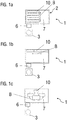
- FIGS. 1a to 1c display devices 2 for operating systems 1 are illustrated with different list traverses.
- the operating system 1 is integrated in a vehicle and serves as a user interface or as a human-machine interface.
- the operating system 1 is part of an infotainment system.
- the operating system 1 comprises an input element 3, a display device 2 and a control device 6, wherein the control device 6 is coupled to the input element 3 and the display device 2.
- the control device 6 is provided for controlling a display on the display device 2 with a display surface 7, wherein the control device 6 is designed such that it causes the display and preferably modifies or changes the display depending on an input by the input element 3.
- FIG. 1b illustrated embodiment provided that the part of the list elements 10, which are shown on the display surface 7, are arranged horizontally next to each other and a list passage direction B is aligned along a substantially horizontal direction.
- the individual list elements 10 are arranged next to one another along an arcuate course and can be moved by a movement along the curved course for changing the selected list element 10.
- the subsequent executions can be transferred to the list run types mentioned here by way of example.
- FIG. 2 a display device 2 for an operating system 1 according to a first exemplary embodiment of the present invention is shown. Specifically, it is a list run type as in FIG. 1a is shown. It is envisaged that the operating system 1 has a memory device (not shown) in which the list of list elements 10 with a list start 11 and a list end 12 is stored. In particular, in each case a list element 10 forms the list start 11 and the end of the list 12. In the in FIG. 2 displayed display area 7, the list elements 10 are arranged in the form of an endlessly scrolling list, ie on the display surface 7 closes in List fürlaufraum B list start 11 to the list end 12 at.
- the user is informed about the arrival of the list start 11 or the list end 12 by an optical, acoustic and / or haptic signal. Only after the expiry of the specified time interval can the list flow continue in the previous list traversing direction B, with a direct and in particular automatic transfer from the list start 11 to the end of the list 12 or from the end of the list 12 to the start of the list 11 for a continuation.
- the beginning of the specified time interval which is defined or defined by interrupting the operating procedure on the input element 3, proves to be advantageous, since this avoids the user accidentally continuing the list when he / she continues the optical, acoustic and / or or haptic signal is not registered or perceives.
- the user can use the operating system 1 without having to pay full attention to the display device.
- the user is made aware by an animated movement A of the list elements 10, in particular an animated braking movement, on the display surface 7 optically to the reaching of the list start 11 or Listenendes 12.
- a list traversal speed with which a list traverse takes place in a specific list traversing direction B becomes smaller until the end of the list 12 or list start 11 is reached list scrolling is not continued.
- control device 6 activates the display surface 7 in such a way that when the list start 11 or the list ending 12 is reached, an animated oscillating movement of the list elements or of all list elements with decreasing amplitude is carried out during the specified time interval.
- the user also receives an indication as to when the specified time interval has ended and a continuation of the list run is possible.
- a continuation of the list traversal in the previous list traversing direction B requires a renewed actuation process on the input element 3 or takes place automatically.
- an automatic continuation it is provided that, without further actuation of the input element 3, the list traversal speed decreases with increasing distance from the list end 12 or list start 11 until the list traversal in a list element 10 is ended.
- the user is informed about reaching the list start 11 or the list end 12 by a non-selectable element.
- the non-selectable element is a dividing line.
- the dividing line performs an animated movement, such. B. a "bounce" animation in which the dividing line 14 performs a slight oscillation movement when reaching the list start 11 or the list end 12.
- FIG. 2 shows a display device 2 for an operating system 1 according to a second exemplary embodiment of the present invention.
- a dummy element 13 is used as the optical signal when the list start 11 or the list end 12 is reached.
- the idle element 13 is arranged in the list traversing direction B between the list start 11 and the end of the list 12 and is selected in each case upon reaching the list start 11 or the list end 12 through the list traversal.
- the dummy element 13 carries no information and forms a placeholder.
- the dummy element 13 is different from the others List elements 10 by its visual representation. For example, the dummy element 13 is enlarged compared to the list elements 10 or is colored differently.
- FIG. 4 For example, a display device 2 and an input element 3 for an operating system 1 according to a third exemplary embodiment of the present invention are shown.
- the display device 7 corresponds to that of FIG. 2 in which the achievement of the list start 11 is visually indicated by an animated movement A.
- a haptic signal and an optical signal when reaching the list start 11 and the list end 12 are provided.
- a sound 5 is output from a loudspeaker of the operating system 1 or the infotainment system as an acoustic signal when the list end 12 or list start 11 is reached.
- this is a discreet acoustic signal so as not to surprise the driver.
- a haptic signal is output at the input element 3, for example in the form of a vibration on the input element 3 or a perceptible resistance in the actuation of the input element 3, with the list scroll is otherwise continued in the previous list direction B. It is conceivable that the acoustic, optical and / or haptic signal are output at the same time or with a time delay to each other. It is also conceivable that one or more acoustic, optical and / or haptic signals are used to make the user aware of the expiration of the specified time interval.
- an input element 3 for an operating system 1 according to the present invention is shown.
- This is an input element 3, which is integrated in a steering wheel 15 of the vehicle.
- the input member comprises a roller 16, the rotational movement of which can be intuitively linked to a list pass, in particular a horizontal list pass motion.
- buttons 17 are incorporated with which, for example, a selection of the selected list element 10 can be confirmed.
Landscapes
- Engineering & Computer Science (AREA)
- General Engineering & Computer Science (AREA)
- Theoretical Computer Science (AREA)
- Human Computer Interaction (AREA)
- Physics & Mathematics (AREA)
- General Physics & Mathematics (AREA)
- Mechanical Engineering (AREA)
- Chemical & Material Sciences (AREA)
- Combustion & Propulsion (AREA)
- Transportation (AREA)
- User Interface Of Digital Computer (AREA)
- Position Input By Displaying (AREA)
Abstract
Description
- Die Erfindung betrifft ein Bediensystem, ein Verfahren zum Bedienen eines Bediensystems und ein Fahrzeug mit einem Bediensystem.
- Solche Bediensysteme bilden in Fahrzeugen eine Benutzerschnittstelle bzw. eine Mensch-Maschinen-Schnittstelle, über die ein Nutzer Einfluss auf fahrzeugintegrierte Funktionen nehmen oder Informationen über eine bestimmte Fahrzeugfunktion abrufen kann. Wesentliche Bestandteile des Bediensystems sind ein Eingabeelement, eine Anzeigevorrichtung und eine Steuervorrichtung, wobei das Eingabeelement und die Anzeigevorrichtung an die Steuervorrichtung gekoppelt sind und die Steuervorrichtung derart ausgestaltet ist, dass sie - insbesondere abhängig von einer Eingabe des Nutzers mittels des Eingabeelements - eine Anzeige auf der Anzeigevorrichtung steuert bzw. kontrolliert.
- Wegen der Vielzahl an Funktionen oder abrufbaren Informationen, die an das Bediensystem gekoppelt sind, werden beispielsweise einzelne Themenkomplexe einem als Oberbegriff dienenden Listenelement, das der Nutzer wiederum mittels des Bediensystems auswählen kann, um Zugang zu den gewünschten Informationen oder Funktionalitäten zu erhalten, zugeordnet. Hierbei erfolgt ein Wechsel zwischen den jeweils aktuell angewählten Listenelementen typischerweise durch einen Listendurchlauf bzw. durch ein Scrollen. Da aus Platzgründen in der Regel nur ein Teil der Listenelemente auf der Anzeigefläche abgebildet ist, rücken mittels eines Bildlaufs üblicherweise nacheinander Listenelemente auf die Anzeigefläche der Anzeigevorrichtung nach. Dabei sind die Listenelemente in einer Liste mit einem Listenanfang und einem Listenende sortiert. Aus dem Stand der Technik sind solche Bediensysteme bekannt, bei denen der Listenanfang und das Listenende jeweils einen Anschlag bilden, an dem ein Fortsetzen des Listendurchlaufs in die bisherige Durchlaufrichtung nicht möglich ist, oder solche, bei denen die Listenelemente als Endlosliste dargestellt sind und der Listendurchlauf in Listendurchlaufrichtung beim Erreichen des Listenendes unmittelbar beim Listenanfang fortgesetzt wird. Bei einer Liste mit Anschlägen muss der Nutzer gegebenenfalls durch die gesamte Liste durchscrollen, wenn er zwischen zwei Listenelementen wechseln möchte. Dies kostet den Nutzer Zeit. Die Bediensysteme mit einer Endlosliste, bei denen der Listendurchlauf einfach am Listenanfang fortgesetzt wird, wenn das Listenende erreicht wird, erfordern ein hohes Maß an Aufmerksamkeit, damit der Nutzer nicht den Listenanfang bzw. das Listenende verpasst.
- Es ist daher eine Aufgabe der vorliegenden Erfindung ein Bediensystem bereitzustellen, mit dem im Vergleich zum Stand der Technik eine Anwahl einzelner Listenelemente einer Liste mit einem Listenanfang und einem Listenende vereinfacht ist.
- Diese Aufgabe wird durch ein Bediensystem, ein Verfahren zum Betreiben des Bediensystems und ein Fahrzeug mit einem Bediensystem mit den Merkmalen des unabhängigen Anspruchs gelöst. Vorteilhafte Ausführungsformen und Anwendungen der Erfindung ergeben sich aus den anhängigen Ansprüchen und werden in der folgenden Beschreibung unter teilweiser Bezugnahme auf die Figuren näher erläutert.
- Gemäß einem ersten Gesichtspunkt ist ein Bediensystem für ein Fahrzeug vorgesehen, das eine Anzeigevorrichtung mit einer Anzeigefläche, ein Eingabeelement und eine Steuervorrichtung umfasst. Die anwählbaren Listenelemente sind in einer Liste mit einem Listenanfang und einem Listenende sortiert und in einer Speichereinrichtung gespeichert. Zudem ist die Steuervorrichtung an das Eingabeelement und die Anzeigevorrichtung gekoppelt, wodurch insbesondere eine kommunikative Verbindung einerseits zwischen der Steuervorrichtung und dem Eingabeelement und andererseits zwischen der Steuervorrichtung und der Anzeigevorrichtung realisiert ist.
- Grundsätzlich ist die Steuervorrichtung dabei derart ausgestaltet, dass mit ihr eine wiedergebende Anzeige auf der Anzeigefläche steuerbar ist. Dadurch lassen sich beispielsweise von dem Eingabeelement kommende Befehle, beispielsweise für einen Listendurchlauf bzw. für ein Scrollen, durch die Steuervorrichtung auf der Anzeigefläche visualisieren. Unter Steuern ist dabei grundsätzlich sowohl eine Veranlassung einer Anzeige als auch eine Modifikation des auf der Anzeige Dargestellten zu verstehen.
- Dabei ist es erfindungsgemäß vorgesehen, dass die Steuervorrichtung so konfiguriert ist, dass sie die Anzeigefläche derart ansteuert, dass zumindest ein Teil der Listenelemente auf der Anzeigefläche in Form einer endlos rollierenden Liste dargestellt wird. Bevorzugt werden die Listenelemente derart in Form einer endlos rollierenden Liste dargestellt, dass auf der Anzeigefläche der Listenanfang und das Listenende zeitgleich als benachbarte Listenelemente dargestellt sind, wenn der Listendurchlauf sich am Listenanfang bzw. Listenende befindet. Zum Wechseln zwischen angewählten Listenelementen ist ein durch ein Betätigungsvorgang am Eingabeelement veranlasster Listendurchlauf bzw. veranlasstes Scrollen in eine Listendurchlaufrichtung vorgesehen. Erfindungsgemäß ist es vorgesehen, dass beim Erreichen des Listenanfangs oder des Listenendes der Listendurchlauf in eine bisherige Listendurchlaufrichtung gestoppt wird, insbesondere automatisch gestoppt wird, und eine Wiederaufnahme des gestoppten Listendurchlaufs durch einen direkten Übergang vom Listenende zum Listenanfang oder durch einen direkten Übergang vom Listenanfang zum Listenende erst nach Ablauf eines festgelegten Zeitintervalls, das sich an ein Unterbrechen des Betätigungsvorgangs am Eingabeelement anschließt, freigegeben wird. Dadurch bildet sich insbesondere ein sogenannter Softanschlag aus. Dabei ist es vorgesehen, dass das Bediensystem derart ausgestaltet ist, dass unmittelbar vor und/oder unmittelbar nach Erreichen des Listenanfangs oder des Listenendes ein optisches, akustisches und/oder haptisches Signal erzeugt wird. Hierbei ist unter unmittelbar vor bzw. nach vorzugsweise ein solches Zeitfenster zu verstehen, dass kürzer oder gleichlang wie das festgelegte Zeitintervall ist.
- Gegenüber dem Stand der Technik hat das erfindungsgemäße Bediensystem den Vorteil, dass der Nutzer sowohl über das Erreichen des Listenanfangs bzw. des Listenendes informiert wird, als auch dass er den Listendurchlauf in die bisherige Listendurchlaufrichtung nach Ablauf des festgelegten Zeitintervalls fortsetzen kann, um möglichst schnell die Listenelemente anzusteuern, die näher am Listenanfang als am Listenende positioniert sind. Insbesondere kann der Nutzer durch das Eingabeelement einen Listendurchlauf in eine Listendurchlaufrichtung beginnen, ohne seine ungeteilte Aufmerksamkeit auf die Anzeigefläche zu richten, um den Listenanfang bzw. das Listenelement beim Scrollen nicht zu verpassen. Stattdessen wird er durch das optische, akustische und/oder haptische Signal über die aktuelle Position beim Listendurchlauf, nämlich über das Erreichen des Listenanfangs oder des Listenendes, informiert. Folge ist eine vereinfachte Bedienung des Listendurchlaufs, die es dem Nutzer, insbesondere einem Fahrer, erlaubt, seinen Fokus auf die aktuelle Verkehrslage zu richten.
- Als besonders vorteilhaft erweist sich im Besonderen der Umstand, dass das festgelegte Zeitintervall erst dann beginnt, wenn der Betätigungsvorgang für den Listendurchlauf in die bisherige Listendurchlaufrichtung unterbrochen wurde. Dadurch lässt sich vermeiden, dass der Nutzer durch ein Fortsetzen des Betätigungsvorgangs am Eingabeelement versehentlich den Listendurchlauf fortsetzt, wenn er das optische, akustische und/oder haptische Signal nicht registriert. Wenn er nach einer Weile auf die Anzeigevorrichtung blickt, wird der Nutzer stattdessen erkennen, dass er sich an das Listenende oder den Listenanfang navigiert hat.
- Durch ein Unterbrechen des Betätigungsvorgangs am Eingabeelements und nach einem anschließenden Abwarten des Zeitintervalls lässt sich der Listendurchlauf dann entsprechend am Listenanfang bzw. Listenende wiederaufnehmen. Außerdem kann der Fahrer den Betätigungsvorgang bewusst trotz des Wahrnehmens eines optischen, akustischen und/oder haptischen Signals fortsetzten, wenn er plötzlich seine Aufmerksamkeit dem aktuellen Verkehr widmen muss. Im Anschluss muss er mit der Auswahl des Listenelements nicht von vorne anfangen, sondern setzt die Auswahl zu einem von ihm bestimmten Zeitpunkt an einer festgelegten Position, d. h. dem Listenanfang oder Listenende, fort. Vorzugsweise handelt es sich beim dem Listendurchlauf um einen Bildlauf, d. h. einen Listendurchlauf bei dem Listenelemente auf die Anzeigefläche nachrücken.
- Vorzugsweise ist es vorgesehen, dass das Bediensystem Teil eines Infotainmentsystems ist. Weiterhin ist es insbesondere vorgesehen, dass die Steuervorrichtung als Prozessor mit einem abgespeicherten Computerprogramm ausgebildet ist. Dabei ist es vorstellbar, dass die Steuervorrichtung räumlich getrennt ist von der Anzeigevorrichtung und dem Eingabeelement. Ferner ist es denkbar, dass die Speichereinrichtung in die Steuervorrichtung integriert ist. Beispielsweise ist die Anzeigevorrichtung in das Armaturenbrett eingelassen. Vorstellbar ist auch, dass das Bediensystem derart ausgestaltet ist, dass ein weiteres optisches, akustisches und/oder haptisches Signal ausgesendet wird, wenn nach dem Erreichen des Listenanfangs oder des Listenendes der Betätigungsvorgang am Eingabeelement nicht unterbrochen wird. Durch das wiederholte Signal wird der Nutzer erneut auf das Erreichen des Listenanfangs oder des Listenendes aufmerksam gemacht. Vorzugsweise unterscheidet sich das optische, akustische und/oder haptische Signal von dem weiteren optischen, akustischen und/oder haptischen Signal. Beispielsweise wird der Nutzer zunächst mit einem optischen Signal und anschließend mit einem akustischen und/oder haptischen Signal auf das Erreichen des Listenanfangs oder des Listenendes aufmerksam gemacht. Durch das Ansprechen des Nutzers über verschiedene Wahrnehmungskanäle wird in vorteilhafter Weise die Wahrscheinlichkeit erhöht, dass der Nutzer das Erreichen des Listenanfangs oder des Listendes wahrnimmt.
- Gemäß einer weiteren Ausführungsform der vorliegenden Erfindung ist es vorgesehen, dass die Anzeigefläche durch die Steuervorrichtung derart ansteuerbar ist, dass die Anzeigefläche beim Erreichen des Listenendes oder des Listenanfangs ein optisches Signal bereitstellt, dass den Nutzer auf das Listenende bzw. den Listenanfang visuell hinweist. Beispielsweise wird vorwiegend oder ausschließlich ein optisches Signal beim Erreichen des Listenanfangs oder des Listenendes ausgegeben. Die Nutzung der Anzeigefläche hat den Vorteil, dass keine zusätzlichen Bauteile erforderlich sind, mit denen der Nutzer über das Erreichen des Listenanfangs oder des Listenendes informiert wird. Vorstellbar ist dabei, dass die Anzeigefläche beim Erreichen des Listenanfangs oder des Listenendes seine Farbe wechselt oder kurzfristig aufflackert. Solche Veränderungen können vom Nutzer auch durch ein peripheres Sehen zur Kenntnis genommen werden.
- Vorzugsweise ist es vorgesehen, dass die Anzeigefläche durch die Steuervorrichtung derart ansteuerbar ist, dass zwischen dem Listenanfang und dem Listenende ein Leerelement angeordnet ist, wobei sich insbesondere das Leerelement in seiner visuellen Darstellung von den Listenelementen unterscheidet. Beispielsweise unterscheidet sich das Leerelement von den Listenelementen durch seine Farbe und dadurch, dass das Leerelement keine Information bzw. keinen Sammelbegriff bereitstellt. Mit anderen Worten: das Listenelement ist ein Platzhalter zwischen dem Listenende und dem Listenanfang. Weiterhin ist es vorstellbar, dass das Leerelement beim Erreichen des Listenanfangs oder des Listenendes seine Farbe wechselt und ein erneuter Farbwechsel, beispielsweise in die ursprüngliche Farbe, erfolgt, sobald das festgelegte Zeitintervall abgelaufen ist. Dadurch lässt sich dem Nutzer in vorteilhafter Weise vermitteln, dass er nun den Listendurchlauf in die bisherige Listendurchlaufrichtung fortsetzen kann. Weiterhin ist es vorstellbar, dass das Leerelement auswählbar oder nicht-auswählbar ist. Alternativ ist es auch vorstellbar, dass zwischen dem Listenanfang und dem Listenende ein nicht-auswählbare Trennlinie angeordnet ist.
- In einer weiteren vorteilhaften Ausführungsform der vorliegenden Erfindung ist es vorgesehen, dass die Anzeigefläche durch die Steuervorrichtung derart ansteuerbar ist, dass eine Listendurchlaufgeschwindigkeit abhängt von einem in Listendurchlaufrichtung bemessenen Listenabstand zwischen dem aktuell angewählten Listenelement und dem Listenanfang oder zwischen dem aktuell angewählten Listenelement und dem Listenende, wobei insbesondere mit abnehmenden Listenabstand die Listendurchlaufgeschwindigkeit kleiner wird, insbesondere kontinuierlich kleiner wird, bis der Listendurchlauf am Listenende oder am Listenanfang stoppt. Dadurch lässt sich eine animierte Bremsbewegung des Listendurchlaufs realisieren, die den Nutzer über das Erreichen des Listenanfangs oder des Listenendes informiert.
- Weiterhin ist es bevorzugt vorgesehen, dass die Anzeigefläche durch die Steuervorrichtung derart ansteuerbar ist, dass die Wiederaufnahme des Listendurchlaufs nach Ablauf des Zeitintervalls automatisch realisiert wird. Sofern das Bediensystem bzw. die Steuervorrichtung den Listendurchlauf automatisch bzw. selbstständig fortsetzt, ist es vorgesehen, dass ohne weitere Betätigung des Eingabeelements die Listendurchlaufgeschwindigkeit mit zunehmendem Abstand des aktuellen Listenelements vom Listenanfang bzw. Listenende abnimmt bis der Listendurchlauf bei einem Listenelement in der Liste stehen bleibt.
- Alternativ ist es vorgesehen, dass die Anzeigefläche durch die Steuervorrichtung derart ansteuerbar ist, dass nach Ablauf des Zeitintervalls die Wiederaufnahme des Listendurchlaufs durch den den Listendurchlauf in die bisherige Listendurchlaufrichtung veranlassenden Betätigungsvorgang am Eingabeelement realisierbar ist.
- Gemäß einer weiteren Ausführungsform der vorliegenden Erfindung ist vorgesehen, dass beim, unmittelbar vor und/oder unmittelbar nach dem Erreichen des Listenanfangs oder des Listenendes neben dem optischen Signal ein haptisches Signal, beispielsweise in Form eines haptisch wahrnehmbaren Widerstands bei der Betätigung des Eingabeelements oder in Form einer Vibration am Eingabeelement, erzeugt wird. Durch das zusätzliche haptische Signal wird die Wahrscheinlichkeit erhöht, dass der Nutzer den Listenanfang bzw. das Listenende wahrnimmt. Hierbei ist es vorstellbar, dass das optische und das haptische Signal zeitgleich oder zeitversetzt realisiert werden. Es ist auch denkbar, dass das haptische Signal nach Ablauf des festgelegten Zeitintervalls ausgesendet wird, um den Nutzer über das Ablaufen des Zeitintervalls zu informieren.
- In einer weiteren Ausführungsform der vorliegenden Erfindung ist vorgesehen, dass das Bediensystem derart gestaltet ist, dass, unmittelbar vor und/oder unmittelbar nach dem Erreichen des Listenanfangs oder des Listenendes neben dem optischen Signal ein akustisches Signal, beispielsweise in Form eines Klick- oder Brummgeräuschs, erzeugt wird. Hierbei ist es vorstellbar, dass das optische und das akustische Signal zeitgleich oder zeitversetzt realisiert werden. Es ist auch denkbar, dass das akustische Signal nach Ablauf des festgelegten Zeitintervalls ausgesendet wird, um den Nutzer über das Ablaufen des Zeitintervalls zu informieren. Vorzugsweise wird als akustisches Signal ein dezentes Geräusch gewählt, um den Nutzer nicht beim Erreichen des Listenendes oder des Listenanfangs zu erschrecken.
- Vorzugsweise ist es vorgesehen, dass die Anzeigefläche durch die Steuervorrichtung derart ansteuerbar ist, dass die Wiederaufnahme des Listendurchlaufs in eine der bisherigen Listendurchlaufrichtung entgegengesetzten Listendurchlaufrichtung nach Beendigung eines den Listendurchlauf veranlassenden Betätigungsvorgangs am Eingabeelement für ein festgelegtes Zeitintervall unterbunden wird, wobei erst nach Ablauf des Zeitintervalls die Wiederaufnahme des Listendurchlaufs in einer der bisherigen Listendurchlaufrichtung folgenden oder in einer der bisherigen Listendurchlaufrichtung entgegengesetzten Listendurchlaufrichtung freigegeben wird.
- Weiterhin ist es in einer bevorzugten Ausführungsform der vorliegenden Erfindung vorgesehen, dass das festgelegte Zeitintervall zwischen 0,3 s bis 3 s, bevorzugt 0,5 s und 2 s, besonders bevorzugt zwischen 0,75 s und 1,5 s andauert. Beispielsweise dauert das festgelegte Zeitintervall im Wesentlichen eine Sekunde an. Durch diese vergleichsweise kurzen Zeitintervalle wird dem Nutzer einerseits genügend Zeit zur Verfügung gestellt, in der er sich auf den Sprung vom Listenanfang zum Listenende vorbereiten kann, und anderseits verzögert ein solches Zeitintervall nicht die Auswahl eines Listenelements am Bediensystem.
- Insbesondere ist es vorgesehen, dass die Anzeigefläche durch die Steuervorrichtung derart ansteuerbar ist, dass die Listenelemente als Listeneinträge und/oder als Informationsfenster ausgestaltet sind, wobei insbesondere ein Listendurchlauf entlang einer geraden oder gebogenen Listendurchlaufrichtung durchgeführt wird, wobei vorzugsweise die gerade Listendurchlaufrichtung horizontal oder vertikal auf der Anzeigefläche verläuft. Unter einem Informationsfenster ist eine flächige bzw. kachelförmige Darstellung zu verstehen, auf der - beispielsweise in Form von Graphiken oder Illustrationen - ein dem Listenelement zugeordneter fahrzeugrelevanter Themenkomplex angezeigt ist. Vorzugsweise kann der Nutzer seine bevorzugte Darstellungsform des Teils der Listenelemente, die auf der Anzeigefläche abgebildet sind, selbst einrichten bzw. einstellen.
- Gemäß einer weiteren Ausführungsform der vorliegenden Erfindung ist vorgesehen, dass das Eingabeelement einen Drehdrückschalter, eine Walze, ein Touchscreen und/oder einen Taster auf einem Multifunktionslenkrad oder auf einem Lenkstockhebel umfasst. Vorstellbar ist insbesondere, dass die Walze in das Multifunktionslenkrad integriert ist. Dadurch lässt sich das Eingabeelement in einem leicht zugänglichen und im Blickfeld des Fahrers liegenden Bereich anordnen. Entsprechend muss der Fahrer seine Aufmerksamkeit nicht der Suche des passenden Eingabeelements, beispielsweise im Mittelkonsolenbereich, widmen.
- In einer weiteren Ausführungsform der vorliegenden Erfindung ist es vorgesehen, dass die Anzeigefläche durch die Steuervorrichtung derart ansteuerbar ist, dass der Listendurchlauf mit einer Primärgeschwindigkeit oder einer Sekundärgeschwindigkeit zwischen den einzelnen Listenelementen wechselt, wobei insbesondere zur Einnahme eines Vorspulmodus bedarfsabhängig ein Wechsel zwischen der Primärgeschwindigkeit zur Sekundärgeschwindigkeit während des Listendurchlaufs realisierbar ist. Dadurch lässt sich in vorteilhafter Weise gezielt ein Vorspulen veranlassen, mit dem das gewünschte Listenelement vergleichsweise schnell erreicht werden kann.
- Ein weiterer Gegenstand der vorliegenden Erfindung ist ein Verfahren zum Bedienen eines erfindungsgemäßen Bediensystems, umfassend die Schritte:
- -- Anwahl einzelner Listenelemente, die in einer Liste mit einem Listenanfang und einem Listenende sortiert sind, mittels eines Listendurchlaufs in eine Listendurchlaufrichtung,
- -- Unterbinden des Listendurchlaufs beim Erreichen des Listenanfangs oder des Listenendes und
- -- Freigabe des Listendurchlaufs in einer zur bisherigen Listendurchlaufrichtung gleichgerichteten Listendurchlaufrichtung, durch einen direkten Übergang vom Listenanfang zum Listenende oder durch einen direkten Übergang vom Listenende zum Listenanfang nach Ablauf eines festgelegten Zeitintervalls, das mit einer Unterbrechung eines Bedienvorgangs am Eingabeelement beginnt,
- Ein weiterer Gegenstand der vorliegenden Erfindung ist ein Fahrzeug, insbesondere Nutzfahrzeug, mit einem erfindungsgemäßen Bediensystem.
- Die zuvor beschriebenen bevorzugten Ausführungsformen und Merkmale der Erfindung sind beliebig miteinander kombinierbar. Weitere Einzelheiten und Vorteile der Erfindung werden im Folgenden unter Bezug auf die beigefügten Zeichnungen beschrieben. Es zeigen:
- Fig. 1a bis 1c
- Anzeigevorrichtungen mit verschiedenen Listendurchläufen;
- Fig. 2
- eine Anzeigevorrichtung für ein Bediensystem gemäß einer ersten beispielhaften Ausführungsform der vorliegenden Erfindung;
- Fig. 3
- eine Anzeigevorrichtung für ein Bediensystem gemäß einer zweiten beispielhaften Ausführungsform der vorliegenden Erfindung;
- Fig.4
- ein Eingabeelement und eine Anzeigevorrichtung für ein Bediensystem gemäß einer dritten beispielhaften Ausführungsform der vorliegenden Erfindung; und
- Fig. 5
- ein Eingabeelement für ein Bediensystem nach der vorliegenden Erfindung.
- In den
Figuren 1a bis 1c sind Anzeigevorrichtungen 2 für Bediensysteme 1 mit verschiedenen Listendurchläufen illustriert. Insbesondere handelt es sich um ein Bediensystem 1, das in ein Fahrzeug integriert ist und als Benutzerschnittstelle bzw. als Mensch-Maschinen-Schnittstelle dient. Beispielsweise ist das Bediensystem 1 Teil eines Infotainmentsystems. Hierzu umfasst das Bediensystem 1 ein Eingabeelement 3, eine Anzeigevorrichtung 2 und eine Steuervorrichtung 6, wobei die Steuervorrichtung 6 an das Eingabeelement 3 und die Anzeigevorrichtung 2 gekoppelt ist. Insbesondere ist die Steuervorrichtung 6 zur Steuerung einer Anzeige auf der Anzeigevorrichtung 2 mit einer Anzeigefläche 7 vorgesehen, wobei die Steuervorrichtung 6 derart ausgestaltet ist, dass sie die Anzeige veranlasst und vorzugsweise abhängig von einer Eingabe durch das Eingabeelement 3 die Anzeige modifiziert bzw. wechselt. Hierbei ist es vorgesehen, dass einzelne Fahrzeugfunktionalitäten oder Fahrzeuginformationen als Listenelemente 10 auf der Anzeigefläche 7 einem Nutzer zur Auswahl gestellt werden. Hierbei ist es insbesondere vorgesehen, dass der Nutzer mittels eines durch das Eingabeelement 3 veranlassten Listendurchlaufs zwischen den jeweils aktuell angewählten Listenelementen 10 wechseln kann. Um Platz auf der Anzeigefläche 7 zu sparen, ist es von Vorteil, wenn auf der Anzeigefläche 7 nur ein Teil der potentiell auswählbaren Listenelemente 10 angezeigt ist. Dabei ist es besonders bevorzugt vorgesehen, dass durch einen Bildlauf in eine Listendurchlaufrichtung bislang nicht auf der Anzeigefläche 7 dargestellte Listenelemente 10 nachrücken. InFigur 1 ist es dabei vorgesehen, dass die Listenelemente 10 übereinander angeordnet sind und eine Listendurchlaufrichtung B parallel zu einer vertikalen Richtung verläuft. Im Gegensatz dazu ist es in derFigur 1b dargestellten Ausführungsform vorgesehen, dass der Teil der Listenelemente 10, die auf der Anzeigefläche 7 dargestellt sind, horizontal nebeneinander angeordnet sind und eine Listendurchlaufrichtung B entlang einer im Wesentlichen horizontal verlaufenden Richtung ausgerichtet ist. In der inFigur 1c dargestellten Ausführungsform sind die einzelnen Listenelemente 10 entlang eines bogenförmigen Verlaufs nebeneinander angeordnet und lassen sich durch eine Bewegung entlang des bogenförmigen Verlaufs zum Wechseln des angewählten Listenelements 10 bewegen. Die sich anschließenden Ausführungen lassen sich auf die hier beispielhaft genannten Listendurchlauftypen jeweils übertragen. - In
Figur 2 ist eine Anzeigevorrichtung 2 für ein Bediensystem 1 gemäß einer ersten beispielhaften Ausführungsform der vorliegenden Erfindung dargestellt. Konkret handelt es sich um einen Listendurchlauftypen wie er inFigur 1a dargestellt ist. Dabei ist es vorgesehen, dass das Bediensystem 1 eine Speichereinrichtung (nicht dargestellt), in der die Liste an Listenelementen 10 mit einem Listenanfang 11 und einem Listenende 12 gespeichert ist, aufweist. Insbesondere bildet dabei jeweils ein Listenelement 10 den Listenanfang 11 und das Listenende 12. In der inFigur 2 dargestellten Anzeigefläche 7 sind die Listenelemente 10 in Form einer endlos rollierenden Liste angeordnet, d. h. auf der Anzeigefläche 7 schließt sich in Listendurchlaufrichtung B der Listenanfang 11 an das Listenende 12 an. - Im Gegensatz zu Endloslisten aus dem Stand der Technik, bei denen der Listendurchlauf automatisch am Listenanfang 11 bzw. Listenende 12 fortgesetzt wird, oder im Vergleich zu Listenanschlägen, bei denen ein Fortsetzen des Listendurchlaufs in die bisherige Listendurchlaufrichtung 10 grundsätzlich nicht möglich ist, wenn das Listenende 12 oder der Listenanfang 11 erreicht wird, ist es hier vorgesehen, dass beim Erreichen des Listenendes 12 oder Listenanfangs 11 der Listendurchlauf in die bisherige Listendurchlaufrichtung B gestoppt wird und nach Beendigung desjenigen Bedienvorgangs, der den Listendurchlauf in die bisherige Listendurchlaufrichtung B veranlasst hat, eine Wiederaufnahme für ein festgelegtes Zeitintervall unterbunden wird.
- Dabei wird der Nutzer über das Erreichen des Listenanfangs 11 oder des Listenendes 12 durch ein optisches, akustisches und/oder haptisches Signal informiert. Erst nach Ablauf des festgelegten Zeitintervalls lässt sich der Listendurchlauf in die bisherige Listendurchlaufrichtung B fortsetzen, wobei für eine Fortsetzung eine direkte und insbesondere automatische Überführung vom Listenanfang 11 an das Listenende 12 oder vom Listenende 12 an den Listenanfang 11 erfolgt. Dabei erweist sich insbesondere der Beginn des festgelegten Zeitintervalls, der durch das Unterbrechen des Bedienvorgangs am Eingabeelement 3 festgelegt bzw. definiert ist, als vorteilhaft, weil sich dadurch vermeiden lässt, dass der Nutzer versehentlich den Listendurchlauf fortsetzt, wenn er das optische, akustische und/oder haptische Signal nicht registriert bzw. wahrnimmt.
- Infolgedessen kann der Nutzer das Bediensystem 1 verwenden, ohne seine volle Aufmerksamkeit dauerhaft auf die Anzeigevorrichtung richten zu müssen. In dem konkreten Ausführungsbeispiel der
Figur 2 ist es vorgesehen, dass der Nutzer durch eine animierte Bewegung A der Listenelemente 10, insbesondere eine animierte Abbremsbewegung, auf der Anzeigefläche 7 optisch auf das Erreichen des Listenanfangs 11 oder Listenendes 12 aufmerksam gemacht wird. - Hierbei ist es beispielsweise vorgesehen, dass mit abnehmendem Listenabstand zwischen einem aktuell angewählten Listenelement 10 und dem Listenende 12 oder dem Listenanfang 11 eine Listendurchlaufgeschwindigkeit, mit der ein Listendurchlauf in eine bestimmte Listendurchlaufrichtung B erfolgt, kleiner wird bis beim Erreichen des Listenendes 12 oder des Listenanfangs 11 der Listendurchlauf nicht mehr fortgesetzt wird.
- Es ist auch vorstellbar, dass die Steuervorrichtung 6 die Anzeigefläche 7 derart ansteuert, dass beim Erreichen des Listenanfangs 11 oder des Listenendens 12 eine animierte oszillierende Bewegung der Listenelemente bzw. aller Listenelemente mit kleiner werdender Amplitude während des festgelegten Zeitintervalls durchgeführt wird. Dadurch erhält der Nutzer zusätzlich einen Hinweis darauf, wann das festgelegte Zeitintervall abgeschlossen ist und eine Fortsetzung des Listendurchlaufs möglich ist. Nach dem Ablauf des festgelegten Zeitintervalls ist es vorstellbar, dass ein Fortsetzen des Listendurchlaufs in die bisherige Listendurchlaufrichtung B einen erneuten Betätigungsvorgang am Eingabeelement 3 benötigt oder automatisch erfolgt. In Falle eines automatischen Fortsetzens ist es dabei vorgesehen, dass ohne weitere Betätigung des Eingabeelements 3 die Listendurchlaufgeschwindigkeit mit zunehmendem Abstand vom Listenende 12 oder Listenanfang 11 abnimmt bis der Listendurchlauf bei einem Listenelement 10 beendet wird.
- Alternativ oder ergänzend ist es vorstellbar, dass der Nutzer über das Erreichen des Listenanfangs 11 oder des Listenendes 12 durch ein nicht-auswählbares Element informiert wird. Beispielsweise ist das nicht-auswählbare Element eine Trennlinie 14. Dadurch kann der Nutzer beim Erreichen des Listenanfangs 11 oder des Listenendes 12 seinen Fokus auf die Listenelemente am Listenanfang 11 bzw. Listenende 12 richten. Vorstellbar ist auch, dass die Trennlinie eine animierte Bewegung durchführt, wie z. B. eine "Bounce"-Animation, in der beim Erreichen des Listenanfangs 11 oder des Listenendes 12 die Trennlinie 14 eine leichte Schwingungsbewegung durchführt.
- In
Figur 3 ist eine Anzeigevorrichtung 2 für ein Bediensystem 1 gemäß einer zweiten beispielhaften Ausführungsform der vorliegenden Erfindung dargestellt. Hierbei wird als optisches Signal beim Erreichen des Listenanfangs 11 oder des Listenendes 12 ein Leerelement 13 genutzt. Das Leerelement 13 ist in Listendurchlaufrichtung B gesehen zwischen dem Listenanfang 11 und dem Listenende 12 angeordnet und wird jeweils beim Erreichen des Listenanfangs 11 oder des Listenendes 12 durch den Listendurchlauf angewählt. Im Gegensatz zu den Listenelementen 10 trägt das Leerelement 13 keine Informationen und bildet einen Platzhalter. Vorzugsweise unterscheidet sich das Leerelement 13 von den anderen Listenelementen 10 durch seine visuelle Darstellung. Beispielsweise ist das Leerelement 13 gegenüber den Listenelementen 10 vergrößert oder ist anders eingefärbt. - In
Figur 4 ist eine Anzeigevorrichtung 2 und ein Eingabeelement 3 für ein Bediensystem 1 gemäß einer dritten beispielhaften Ausführungsform der vorliegenden Erfindung dargestellt. Im Wesentlichen entspricht die Anzeigevorrichtung 7 derjenigen aus derFigur 2 , in der das Erreichen des Listenanfangs 11 optisch durch eine animierte Bewegung A kenntlich gemacht wird. Zusätzlich sind hierbei ein haptisches Signal und ein optisches Signal beim Erreichen des Listenanfangs 11 und des Listenendes 12 vorgesehen. Beispielswiese wird als akustisches Signal beim Erreichen des Listenendes 12 oder des Listenanfangs 11 ein Geräusch 5, insbesondere ein Brumm- oder Klickgeräusch, aus einem Lautsprecher des Bediensystems 1 bzw. des Infotainmentsystems ausgegeben. Vorzugsweise handelt es sich hierbei um ein dezentes akustisches Signal, um den Fahrer nicht zu überraschen. Zusätzlich ist es vorgesehen, dass ein haptisches Signal am Eingabeelement 3 ausgegeben wird, beispielsweise in Form einer Vibration am Eingabeelement 3 oder eines wahrnehmbaren Widerstands bei der Betätigung des Eingabeelements 3, mit der sonst der Listendurchlauf in die bisherige Listendurchlaufrichtung B fortgesetzt wird. Dabei ist es vorstellbar, dass das akustische, optische und/oder haptische Signal zeitgleich oder zeitversetzt zueinander ausgegeben werden. Denkbar ist auch, dass eines oder mehrere akustische, optische und/oder haptische Signale dazu verwendet werden, um den Nutzer auf den Ablauf des festgelegten Zeitintervalls aufmerksam zu machen. - In
Figur 5 ist ein Eingabeelement 3 für ein Bediensystem 1 nach der vorliegenden Erfindung dargestellt. Hierbei handelt es sich um ein Eingabeelement 3, das in ein Lenkrad 15 des Fahrzeugs integriert ist. Vorzugsweise umfasst das Eingabeelement eine Walze 16, deren Drehbewegung in intuitiver Weise mit einem Listendurchlauf, insbesondere einer horizontalen Listendurchlaufbewegung, verknüpft werden kann. Zusätzlich sind Taster 17 eingelassen, mit denen beispielswiese eine Auswahl des angewählten Listenelements 10 bestätigt werden kann. - Obwohl die Erfindung unter Bezugnahme auf bestimmte Ausführungsbeispiele beschrieben worden ist, ist es für einen Fachmann ersichtlich, dass verschiedene Änderungen ausgeführt werden können und Äquivalente als Ersatz verwendet werden können, ohne den Bereich der Erfindung zu verlassen. Folglich soll die Erfindung nicht auf die offenbarten Ausführungsbeispiele begrenzt sein, sondern soll alle Ausführungsbeispiele umfassen, die in den Bereich der beigefügten Patentansprüche fallen. Insbesondere beansprucht die Erfindung auch Schutz für den Gegenstand und die Merkmale der Unteransprüche unabhängig von den in Bezug genommenen Ansprüchen.
-
- 1
- Bediensystem
- 2
- Anzeigevorrichtung
- 3
- Eingabeelement
- 5
- Geräusch
- 6
- Steuervorrichtung
- 7
- Anzeigefläche
- 10
- Listenelement
- 11
- Listenanfang
- 12
- Listenende
- 13
- Leerelement
- 14
- Trennlinie
- 15
- Lenkrad
- 16
- Walze
- 17
- Taster
- A
- Animierte Bewegung
- B
- Listendurchlaufrichtung
Claims (15)
- Bediensystem (1) für ein Fahrzeug, wobei das Bediensystem (1)-- eine Anzeigevorrichtung (2) mit einer Anzeigefläche (7),-- eine Speichereinrichtung zum Speichern von Listenelementen (10), die in einer Liste mit einem Listenanfang (11) und einem Listenende (12) sortiert sind,-- ein Eingabeelement (3) zur Anwahl eines Listenelements (10) durch einen Nutzer und-- eine Steuervorrichtung (6), die an die Anzeigevorrichtung (2) und das Eingabeelement (3) angekoppelt ist und mit der eine wiedergebende Anzeige auf der Anzeigefläche (7) steuerbar ist,umfasst,
wobei die Anzeigefläche (7) durch die Steuervorrichtung (6) derart ansteuerbar ist,- dass zumindest ein Teil der Listenelemente (10) auf der Anzeigefläche (7) in Form einer endlos rollierenden Liste angezeigt wird,- dass ein Wechsel zwischen angewählten Listenelementen (10) durch einen mittels eines Betätigungsvorgangs am Eingabeelement (3) veranlassten Listendurchlauf in eine Listendurchlaufrichtung (B) realisierbar ist,- dass beim Erreichen des Listenanfangs (11) oder des Listenendes (12) der Listendurchlauf in eine bisherige Listendurchlaufrichtung (B) gestoppt wird,- dass eine Wiederaufnahme des gestoppten Listendurchlaufs durch einen direkten Übergang vom Listenende (12) zum Listenanfang (11) oder durch einen direkten Übergang vom Listenanfang (11) zum Listenende (12) erst nach Ablauf eines festgelegten Zeitintervalls, das mit einem Unterbrechen des Betätigungsvorgangs am Eingabeelement (3) beginnt, freigegeben wird,wobei das Bediensystem (1) derart ausgestaltet ist, dass beim, unmittelbar vor und/oder unmittelbar nach Erreichen des Listenanfangs (11) oder des Listenendes (12) ein optisches, akustisches und/oder haptisches Signal erzeugt wird. - Bediensystem (1) nach Anspruchs 1, wobei die Anzeigefläche (7) durch die Steuervorrichtung (6) derart ansteuerbar ist, dass die Anzeigefläche (7) beim Erreichen des Listenendes (12) oder des Listenanfangs (11) ein optisches Signal bereitstellt.
- Bediensystem nach Anspruchs 2, wobei die Anzeigefläche (7) durch die Steuervorrichtung (6) derart ansteuerbar ist, dass zwischen dem Listenanfang (11) und dem Listenende (12) ein Leerelement (13) angeordnet ist, wobei sich insbesondere das Leerelement (13) in seiner visuellen Darstellung von den Listenelementen (10) unterscheidet.
- Bediensystem (1) nach Anspruch 2 oder 3, wobei die Anzeigefläche (7) durch die Steuervorrichtung (6) derart ansteuerbar ist, dass eine Listendurchlaufgeschwindigkeit von einem in Listendurchlaufrichtung bemessenen Listenabstand zwischen dem aktuell angewählten Listenelement (10) und dem Listenanfang (11) oder zwischen dem aktuell angewählten Listenelement (10) und dem Listenende (12) abhängt, wobei insbesondere mit abnehmendem Listenabstand die Listendurchlaufgeschwindigkeit kleiner wird, insbesondere kontinuierlich kleiner wird bis der Listendurchlauf am Listenende (11) oder am Listenanfang (12) stoppt.
- Bediensystem (1) nach einem der vorhergehenden Ansprüche, wobei die Anzeigefläche (7) durch die Steuervorrichtung (6) derart ansteuerbar ist, dass die Wiederaufnahme des Listendurchlaufs nach Ablauf des Zeitintervalls automatisch realisiert wird.
- Bediensystem (1) nach einem der vorhergehenden Ansprüche, wobei die Anzeigefläche (7) durch die Steuervorrichtung (6) derart ansteuerbar ist, dass nach Ablauf des Zeitintervalls die Wiederaufnahme des Listendurchlaufs durch den den Listendurchlauf in die bisherige Listendurchlaufrichtung (B) veranlassenden Betätigungsvorgang am Eingabeelement (3) realisierbar ist.
- Bediensystem (1) nach einem der Ansprüche 2 bis 6, wobei das Bediensystem (1) derart gestaltet ist, dass beim, unmittelbar vor und/oder unmittelbar nach dem Erreichen des Listenanfangs (12) oder des Listenendes (11) neben dem optischen Signal ein haptisches Signal, beispielsweise in Form eines haptisch wahrnehmbaren Widerstands bei der Betätigung des Eingabeelements (2) oder in Form einer Vibration am Eingabeelement (3), erzeugt wird.
- Bediensystem (1) nach einem der Ansprüche 2 bis 7, wobei das Bediensystem (1) derart gestaltet ist, dass beim, unmittelbar vor und/oder unmittelbar nach dem Erreichen des Listenanfangs (12) oder des Listenendes (11) neben dem optischen Signal ein akustisches Signal, beispielsweise in Form eines Klick- oder Brummgeräuschs (5), erzeugt wird.
- Bediensystem (1) nach einem der vorhergehenden Ansprüche, wobei die Anzeigefläche (7) durch die Steuervorrichtung (6) derart ansteuerbar ist, dass die Wiederaufnahme des Listendurchlaufs in eine der bisherigen Listendurchlaufrichtung (B) entgegengesetzten Listendurchlaufrichtung (B) nach Beendigung eines den Listendurchlauf veranlassenden Betätigungsvorgangs am Eingabeelement (3) für ein festgelegtes Zeitintervall unterbunden wird, wobei erst nach Ablauf des Zeitintervalls die Wiederaufnahme des Listendurchlaufs in einer der bisherigen Listendurchlaufrichtung (B) folgenden oder in einer der bisherigen Listendurchlaufrichtung entgegengesetzten Listendurchlaufrichtung (B) freigegeben wird.
- Bediensystem (1) nach einem der vorhergehenden Ansprüche, wobei das festgelegte Zeitintervall zwischen 0,3 s bis 3 s, bevorzugt 0,5 s und 2 s, besonders bevorzugt zwischen 0,75 s und 1,5 s andauert.
- Bediensystem (1) nach einem der vorhergehenden Ansprüche, wobei die Anzeigefläche (7) durch die Steuervorrichtung (6) derart ansteuerbar ist, dass die Listenelemente (10) als Listeneinträge und/oder als Informationsfenster ausgestaltet sind, wobei insbesondere ein Listendurchlauf entlang einer geraden oder gebogenen Listendurchlaufrichtung (B) durchgeführt wird, wobei vorzugsweise die gerade Listendurchlaufrichtung horizontal oder vertikal auf der Anzeigefläche (7) verläuft.
- Bediensystem (1) nach einem der vorhergehenden Ansprüche, wobei das Eingabeelement (3) einen Drehdrückschalter, eine Walze (16), einen Touchscreen und/oder einen Taster (17) auf einem Multifunktionslenkrad (15) oder auf einem Lenkstockhebel umfasst.
- Bediensystem (1) nach einem der vorhergehenden Ansprüche, wobei die Anzeigefläche (7) durch die Steuervorrichtung (6) derart ansteuerbar ist, dass der Listendurchlauf mit einer Primärgeschwindigkeit oder einer Sekundärgeschwindigkeit zwischen den einzelnen Listenelementen wechselt, wobei insbesondere zur Einnahme eines Vorspulmodus bedarfsabhängig ein Wechsel zwischen der Primärgeschwindigkeit zur Sekundärgeschwindigkeit während des Listendurchlaufs realisierbar ist.
- Verfahren zum Bedienen eines Bediensystem (1) nach einem der vorhergehenden Ansprüche, umfassend die Schritte:-- Anwahl einzelner Listenelemente (10), die in einer Liste mit einem Listenanfang (11) und einem Listenende (12) sortiert sind, mittels eines Listendurchlaufs in eine Listendurchlaufrichtung (B),-- Unterbinden des Listendurchlaufs beim Erreichen des Listenanfangs (11) oder des Listenendes (12) und-- Freigabe des Listendurchlaufs in einer zur bisherigen Listendurchlaufrichtung gleichgerichteten Listendurchlaufrichtung, durch einen direkten Übergang vom Listenanfang (11) zum Listenende (12) oder durch einen direkten Übergang vom Listenende (12) zum Listenanfang (11) nach Ablauf eines festgelegten Zeitintervalls, das mit einer Unterbrechung eines Bedienvorgangs am Eingabeelement (3) beginnt,wobei vom Bediensystem (1) ein optisches, akustisches und/oder haptisches Signal beim Erreichen des Listenanfangs (11) oder des Listenendes (12) ausgegeben wird.
- Fahrzeug, insbesondere Nutzfahrzeug, mit einem Bediensystem (1) nach einem der vorhergehenden Ansprüche.
Applications Claiming Priority (1)
| Application Number | Priority Date | Filing Date | Title |
|---|---|---|---|
| DE102017001806.5A DE102017001806A1 (de) | 2017-02-24 | 2017-02-24 | Bediensystem, Verfahren zum Bedienen eines Bediensystems und ein Fahrzeug mit einem Bediensystem |
Publications (2)
| Publication Number | Publication Date |
|---|---|
| EP3367226A1 true EP3367226A1 (de) | 2018-08-29 |
| EP3367226B1 EP3367226B1 (de) | 2023-10-04 |
Family
ID=61132182
Family Applications (1)
| Application Number | Title | Priority Date | Filing Date |
|---|---|---|---|
| EP18154451.1A Active EP3367226B1 (de) | 2017-02-24 | 2018-01-31 | Bediensystem, verfahren zum bedienen eines bediensystems und ein fahrzeug mit einem bediensystem |
Country Status (5)
| Country | Link |
|---|---|
| EP (1) | EP3367226B1 (de) |
| KR (1) | KR102501913B1 (de) |
| CN (1) | CN108549514B (de) |
| DE (1) | DE102017001806A1 (de) |
| RU (1) | RU2761433C2 (de) |
Families Citing this family (1)
| Publication number | Priority date | Publication date | Assignee | Title |
|---|---|---|---|---|
| CN114442880B (zh) * | 2022-01-19 | 2024-02-23 | 网易(杭州)网络有限公司 | 列表滚动方法、装置、电子设备及可读介质 |
Citations (4)
| Publication number | Priority date | Publication date | Assignee | Title |
|---|---|---|---|---|
| DE10222063A1 (de) * | 2002-05-17 | 2003-11-27 | Volkswagen Ag | Verfahren und Einrichtung zum Betrieb einer multifunktionalen Bedieneinheit in einem Kraftfahrzeug |
| US20120272181A1 (en) * | 2011-04-22 | 2012-10-25 | Rogers Sean S | Method and apparatus for intuitive wrapping of lists in a user interface |
| US20130106914A1 (en) * | 2011-11-02 | 2013-05-02 | Microsoft Corporation | Virtualized data presentation in a carousel panel |
| US20150363052A1 (en) * | 2014-06-17 | 2015-12-17 | Orange | Method for selecting an item in a list |
Family Cites Families (7)
| Publication number | Priority date | Publication date | Assignee | Title |
|---|---|---|---|---|
| DE10029191A1 (de) | 2000-06-19 | 2001-12-20 | Philips Corp Intellectual Pty | Elektronisch gesteuerter Flüssigkeitsdrehknopf als haptisches Bedienelement |
| DE10222052B4 (de) | 2002-05-17 | 2022-06-30 | Volkswagen Ag | Verfahren und Einrichtung zum Betrieb einer multifunktionalen Bedieneinrichtung in einem Kraftfahrzeug |
| US8174512B2 (en) | 2006-06-02 | 2012-05-08 | Immersion Corporation | Hybrid haptic device utilizing mechanical and programmable haptic effects |
| DE102007039442A1 (de) * | 2007-08-21 | 2009-02-26 | Volkswagen Ag | Verfahren zum Anzeigen von Informationen in einem Fahrzeug und Anzeigeeinrichtung für ein Fahrzeug |
| KR101432587B1 (ko) * | 2007-09-04 | 2014-08-21 | 엘지전자 주식회사 | 휴대단말기 및 메뉴검색 피드백 방법 |
| JP5411680B2 (ja) * | 2009-12-09 | 2014-02-12 | アルパイン株式会社 | スクロール表示装置 |
| DE102013000880A1 (de) * | 2013-01-10 | 2014-07-10 | Volkswagen Aktiengesellschaft | Verfahren und Vorrichtung zu Bereitstellen einer Benutzerschnittstelle in einem Fahrzeug |
-
2017
- 2017-02-24 DE DE102017001806.5A patent/DE102017001806A1/de not_active Withdrawn
-
2018
- 2018-01-31 EP EP18154451.1A patent/EP3367226B1/de active Active
- 2018-02-20 KR KR1020180019891A patent/KR102501913B1/ko active Active
- 2018-02-22 RU RU2018106660A patent/RU2761433C2/ru active
- 2018-02-24 CN CN201810156697.XA patent/CN108549514B/zh active Active
Patent Citations (4)
| Publication number | Priority date | Publication date | Assignee | Title |
|---|---|---|---|---|
| DE10222063A1 (de) * | 2002-05-17 | 2003-11-27 | Volkswagen Ag | Verfahren und Einrichtung zum Betrieb einer multifunktionalen Bedieneinheit in einem Kraftfahrzeug |
| US20120272181A1 (en) * | 2011-04-22 | 2012-10-25 | Rogers Sean S | Method and apparatus for intuitive wrapping of lists in a user interface |
| US20130106914A1 (en) * | 2011-11-02 | 2013-05-02 | Microsoft Corporation | Virtualized data presentation in a carousel panel |
| US20150363052A1 (en) * | 2014-06-17 | 2015-12-17 | Orange | Method for selecting an item in a list |
Also Published As
| Publication number | Publication date |
|---|---|
| KR102501913B1 (ko) | 2023-02-20 |
| BR102018003412A2 (pt) | 2018-10-30 |
| RU2018106660A3 (de) | 2021-07-19 |
| RU2761433C2 (ru) | 2021-12-08 |
| DE102017001806A1 (de) | 2018-08-30 |
| CN108549514A (zh) | 2018-09-18 |
| EP3367226B1 (de) | 2023-10-04 |
| CN108549514B (zh) | 2023-10-03 |
| KR20180098143A (ko) | 2018-09-03 |
| RU2018106660A (ru) | 2019-08-22 |
Similar Documents
| Publication | Publication Date | Title |
|---|---|---|
| EP2574881B1 (de) | Verfahren zum Betrieb eines Bediensystems für ein Fahrzeug und Bediensystem für ein Fahrzeug | |
| EP3353029B1 (de) | Benutzerschnittstellenvorrichtung zur auswahl eines betriebsmodus für automatisiertes fahren | |
| EP3224077B1 (de) | Verfahren zum betreiben einer bedienvorrichtung eines kraftfahrzeugs | |
| WO2018137787A1 (de) | Verfahren zum betreiben einer mensch-maschinen-schnittstelle sowie mensch-maschinen-schnittstelle | |
| EP3508968A1 (de) | Verfahren zum betreiben einer mensch-maschinen-schnittstelle sowie mensch-maschinen-schnittstelle | |
| WO2015110227A1 (de) | Anwenderschnittstelle und verfahren zur anpassung einer ansicht auf einer anzeigeeinheit | |
| EP3600939B1 (de) | Fahrzeug mit smart touch | |
| EP3508967A1 (de) | Verfahren zum betreiben einer mensch-maschinen-schnittstelle sowie mensch-maschinen-schnittstelle | |
| DE102014012550A1 (de) | Kraftfahrzeug-Bedienungsvorrichtung | |
| DE102013020795A1 (de) | Verfahren und Anordnung zum Steuern von Funktionen eines Kraftfahrzeugs | |
| EP2425321A1 (de) | Verfahren und vorrichtung zum anzeigen von in listen geordneter information | |
| EP2987066B1 (de) | Kraftfahrzeug mit einer anzeige- und bedienvorrichtung und entsprechendes verfahren | |
| DE102014200609B4 (de) | Berührungssensitive Bedienvorrichtung mit Mulde | |
| WO2008080448A1 (de) | Bediensystem für ein fahrzeug | |
| EP3367226B1 (de) | Bediensystem, verfahren zum bedienen eines bediensystems und ein fahrzeug mit einem bediensystem | |
| DE102009048176A1 (de) | Verfahren zum Anzeigen von Informationen in einer Menüstruktur und Vorrichtung dazu | |
| DE102007052342B4 (de) | Verfahren zum Bedienen von Einrichtungen eines Fahrzeugs | |
| EP3364283A1 (de) | Bediensystem, verfahren zum bedienen eines bediensystems und ein fahrzeug mit einem bediensystem | |
| EP2885153B1 (de) | Verfahren zum bereitstellen einer bedienvorrichtung in einem fahrzeug und bedienvorrichtung für ein fahrzeug | |
| EP4384419A1 (de) | Reduzierte bedienvorrichtung | |
| EP2984538B1 (de) | Verfahren und system zur übermittlung einer bedienungsspezifischen rückmeldung an einen nutzer bei bedienung mindestens einer berührungssensitiven einrichtung | |
| DE102012016110B4 (de) | Verfahren zum Bereitstellen einer Bedienvorrichtung in einem Fahrzeug und Bedienvorrichtung hierfür | |
| EP3749540B1 (de) | Bedienvorrichtung sowie verfahren und computerlesbares speichermedium mit instruktionen zum einrichten einer bedienvorrichtung | |
| WO2024175348A1 (de) | Verfahren zum benutzergesteuerten konfigurieren des fahr- und betriebsverhaltens in abhängigkeit von fahrzeugparametern | |
| EP4639327A1 (de) | Anzeigevorrichtung und verfahren zu deren bedienung |
Legal Events
| Date | Code | Title | Description |
|---|---|---|---|
| PUAI | Public reference made under article 153(3) epc to a published international application that has entered the european phase |
Free format text: ORIGINAL CODE: 0009012 |
|
| STAA | Information on the status of an ep patent application or granted ep patent |
Free format text: STATUS: THE APPLICATION HAS BEEN PUBLISHED |
|
| AK | Designated contracting states |
Kind code of ref document: A1 Designated state(s): AL AT BE BG CH CY CZ DE DK EE ES FI FR GB GR HR HU IE IS IT LI LT LU LV MC MK MT NL NO PL PT RO RS SE SI SK SM TR |
|
| AX | Request for extension of the european patent |
Extension state: BA ME |
|
| STAA | Information on the status of an ep patent application or granted ep patent |
Free format text: STATUS: REQUEST FOR EXAMINATION WAS MADE |
|
| 17P | Request for examination filed |
Effective date: 20190218 |
|
| RBV | Designated contracting states (corrected) |
Designated state(s): AL AT BE BG CH CY CZ DE DK EE ES FI FR GB GR HR HU IE IS IT LI LT LU LV MC MK MT NL NO PL PT RO RS SE SI SK SM TR |
|
| RAP1 | Party data changed (applicant data changed or rights of an application transferred) |
Owner name: MAN TRUCK & BUS SE |
|
| STAA | Information on the status of an ep patent application or granted ep patent |
Free format text: STATUS: EXAMINATION IS IN PROGRESS |
|
| 17Q | First examination report despatched |
Effective date: 20210604 |
|
| REG | Reference to a national code |
Ref country code: DE Free format text: PREVIOUS MAIN CLASS: G06F0003048200 Ipc: G06F0003048170 Ref country code: DE Ref legal event code: R079 Ref document number: 502018013356 Country of ref document: DE Free format text: PREVIOUS MAIN CLASS: G06F0003048200 Ipc: G06F0003048170 |
|
| GRAP | Despatch of communication of intention to grant a patent |
Free format text: ORIGINAL CODE: EPIDOSNIGR1 |
|
| RIC1 | Information provided on ipc code assigned before grant |
Ipc: G06F 3/04883 20220101ALI20230327BHEP Ipc: G06F 3/0362 20130101ALI20230327BHEP Ipc: G06F 3/0485 20130101ALI20230327BHEP Ipc: G06F 3/0482 20130101ALI20230327BHEP Ipc: G06F 3/04817 20220101AFI20230327BHEP |
|
| STAA | Information on the status of an ep patent application or granted ep patent |
Free format text: STATUS: GRANT OF PATENT IS INTENDED |
|
| INTG | Intention to grant announced |
Effective date: 20230504 |
|
| GRAS | Grant fee paid |
Free format text: ORIGINAL CODE: EPIDOSNIGR3 |
|
| GRAA | (expected) grant |
Free format text: ORIGINAL CODE: 0009210 |
|
| STAA | Information on the status of an ep patent application or granted ep patent |
Free format text: STATUS: THE PATENT HAS BEEN GRANTED |
|
| AK | Designated contracting states |
Kind code of ref document: B1 Designated state(s): AL AT BE BG CH CY CZ DE DK EE ES FI FR GB GR HR HU IE IS IT LI LT LU LV MC MK MT NL NO PL PT RO RS SE SI SK SM TR |
|
| REG | Reference to a national code |
Ref country code: GB Ref legal event code: FG4D Free format text: NOT ENGLISH |
|
| REG | Reference to a national code |
Ref country code: CH Ref legal event code: EP |
|
| REG | Reference to a national code |
Ref country code: DE Ref legal event code: R096 Ref document number: 502018013356 Country of ref document: DE |
|
| REG | Reference to a national code |
Ref country code: IE Ref legal event code: FG4D Free format text: LANGUAGE OF EP DOCUMENT: GERMAN |
|
| REG | Reference to a national code |
Ref country code: NL Ref legal event code: FP |
|
| REG | Reference to a national code |
Ref country code: SE Ref legal event code: TRGR |
|
| REG | Reference to a national code |
Ref country code: LT Ref legal event code: MG9D |
|
| PG25 | Lapsed in a contracting state [announced via postgrant information from national office to epo] |
Ref country code: GR Free format text: LAPSE BECAUSE OF FAILURE TO SUBMIT A TRANSLATION OF THE DESCRIPTION OR TO PAY THE FEE WITHIN THE PRESCRIBED TIME-LIMIT Effective date: 20240105 |
|
| PG25 | Lapsed in a contracting state [announced via postgrant information from national office to epo] |
Ref country code: IS Free format text: LAPSE BECAUSE OF FAILURE TO SUBMIT A TRANSLATION OF THE DESCRIPTION OR TO PAY THE FEE WITHIN THE PRESCRIBED TIME-LIMIT Effective date: 20240204 |
|
| PG25 | Lapsed in a contracting state [announced via postgrant information from national office to epo] |
Ref country code: LT Free format text: LAPSE BECAUSE OF FAILURE TO SUBMIT A TRANSLATION OF THE DESCRIPTION OR TO PAY THE FEE WITHIN THE PRESCRIBED TIME-LIMIT Effective date: 20231004 |
|
| PG25 | Lapsed in a contracting state [announced via postgrant information from national office to epo] |
Ref country code: ES Free format text: LAPSE BECAUSE OF FAILURE TO SUBMIT A TRANSLATION OF THE DESCRIPTION OR TO PAY THE FEE WITHIN THE PRESCRIBED TIME-LIMIT Effective date: 20231004 |
|
| PG25 | Lapsed in a contracting state [announced via postgrant information from national office to epo] |
Ref country code: LT Free format text: LAPSE BECAUSE OF FAILURE TO SUBMIT A TRANSLATION OF THE DESCRIPTION OR TO PAY THE FEE WITHIN THE PRESCRIBED TIME-LIMIT Effective date: 20231004 Ref country code: IS Free format text: LAPSE BECAUSE OF FAILURE TO SUBMIT A TRANSLATION OF THE DESCRIPTION OR TO PAY THE FEE WITHIN THE PRESCRIBED TIME-LIMIT Effective date: 20240204 Ref country code: GR Free format text: LAPSE BECAUSE OF FAILURE TO SUBMIT A TRANSLATION OF THE DESCRIPTION OR TO PAY THE FEE WITHIN THE PRESCRIBED TIME-LIMIT Effective date: 20240105 Ref country code: ES Free format text: LAPSE BECAUSE OF FAILURE TO SUBMIT A TRANSLATION OF THE DESCRIPTION OR TO PAY THE FEE WITHIN THE PRESCRIBED TIME-LIMIT Effective date: 20231004 Ref country code: BG Free format text: LAPSE BECAUSE OF FAILURE TO SUBMIT A TRANSLATION OF THE DESCRIPTION OR TO PAY THE FEE WITHIN THE PRESCRIBED TIME-LIMIT Effective date: 20240104 Ref country code: PT Free format text: LAPSE BECAUSE OF FAILURE TO SUBMIT A TRANSLATION OF THE DESCRIPTION OR TO PAY THE FEE WITHIN THE PRESCRIBED TIME-LIMIT Effective date: 20240205 |
|
| PG25 | Lapsed in a contracting state [announced via postgrant information from national office to epo] |
Ref country code: RS Free format text: LAPSE BECAUSE OF FAILURE TO SUBMIT A TRANSLATION OF THE DESCRIPTION OR TO PAY THE FEE WITHIN THE PRESCRIBED TIME-LIMIT Effective date: 20231004 Ref country code: PL Free format text: LAPSE BECAUSE OF FAILURE TO SUBMIT A TRANSLATION OF THE DESCRIPTION OR TO PAY THE FEE WITHIN THE PRESCRIBED TIME-LIMIT Effective date: 20231004 Ref country code: NO Free format text: LAPSE BECAUSE OF FAILURE TO SUBMIT A TRANSLATION OF THE DESCRIPTION OR TO PAY THE FEE WITHIN THE PRESCRIBED TIME-LIMIT Effective date: 20240104 Ref country code: LV Free format text: LAPSE BECAUSE OF FAILURE TO SUBMIT A TRANSLATION OF THE DESCRIPTION OR TO PAY THE FEE WITHIN THE PRESCRIBED TIME-LIMIT Effective date: 20231004 Ref country code: HR Free format text: LAPSE BECAUSE OF FAILURE TO SUBMIT A TRANSLATION OF THE DESCRIPTION OR TO PAY THE FEE WITHIN THE PRESCRIBED TIME-LIMIT Effective date: 20231004 |
|
| REG | Reference to a national code |
Ref country code: DE Ref legal event code: R097 Ref document number: 502018013356 Country of ref document: DE |
|
| PG25 | Lapsed in a contracting state [announced via postgrant information from national office to epo] |
Ref country code: DK Free format text: LAPSE BECAUSE OF FAILURE TO SUBMIT A TRANSLATION OF THE DESCRIPTION OR TO PAY THE FEE WITHIN THE PRESCRIBED TIME-LIMIT Effective date: 20231004 |
|
| PG25 | Lapsed in a contracting state [announced via postgrant information from national office to epo] |
Ref country code: CZ Free format text: LAPSE BECAUSE OF FAILURE TO SUBMIT A TRANSLATION OF THE DESCRIPTION OR TO PAY THE FEE WITHIN THE PRESCRIBED TIME-LIMIT Effective date: 20231004 |
|
| PG25 | Lapsed in a contracting state [announced via postgrant information from national office to epo] |
Ref country code: SK Free format text: LAPSE BECAUSE OF FAILURE TO SUBMIT A TRANSLATION OF THE DESCRIPTION OR TO PAY THE FEE WITHIN THE PRESCRIBED TIME-LIMIT Effective date: 20231004 |
|
| PG25 | Lapsed in a contracting state [announced via postgrant information from national office to epo] |
Ref country code: SM Free format text: LAPSE BECAUSE OF FAILURE TO SUBMIT A TRANSLATION OF THE DESCRIPTION OR TO PAY THE FEE WITHIN THE PRESCRIBED TIME-LIMIT Effective date: 20231004 Ref country code: SK Free format text: LAPSE BECAUSE OF FAILURE TO SUBMIT A TRANSLATION OF THE DESCRIPTION OR TO PAY THE FEE WITHIN THE PRESCRIBED TIME-LIMIT Effective date: 20231004 Ref country code: RO Free format text: LAPSE BECAUSE OF FAILURE TO SUBMIT A TRANSLATION OF THE DESCRIPTION OR TO PAY THE FEE WITHIN THE PRESCRIBED TIME-LIMIT Effective date: 20231004 Ref country code: EE Free format text: LAPSE BECAUSE OF FAILURE TO SUBMIT A TRANSLATION OF THE DESCRIPTION OR TO PAY THE FEE WITHIN THE PRESCRIBED TIME-LIMIT Effective date: 20231004 Ref country code: DK Free format text: LAPSE BECAUSE OF FAILURE TO SUBMIT A TRANSLATION OF THE DESCRIPTION OR TO PAY THE FEE WITHIN THE PRESCRIBED TIME-LIMIT Effective date: 20231004 Ref country code: CZ Free format text: LAPSE BECAUSE OF FAILURE TO SUBMIT A TRANSLATION OF THE DESCRIPTION OR TO PAY THE FEE WITHIN THE PRESCRIBED TIME-LIMIT Effective date: 20231004 |
|
| PLBE | No opposition filed within time limit |
Free format text: ORIGINAL CODE: 0009261 |
|
| STAA | Information on the status of an ep patent application or granted ep patent |
Free format text: STATUS: NO OPPOSITION FILED WITHIN TIME LIMIT |
|
| PG25 | Lapsed in a contracting state [announced via postgrant information from national office to epo] |
Ref country code: MC Free format text: LAPSE BECAUSE OF FAILURE TO SUBMIT A TRANSLATION OF THE DESCRIPTION OR TO PAY THE FEE WITHIN THE PRESCRIBED TIME-LIMIT Effective date: 20231004 |
|
| PG25 | Lapsed in a contracting state [announced via postgrant information from national office to epo] |
Ref country code: MC Free format text: LAPSE BECAUSE OF FAILURE TO SUBMIT A TRANSLATION OF THE DESCRIPTION OR TO PAY THE FEE WITHIN THE PRESCRIBED TIME-LIMIT Effective date: 20231004 |
|
| REG | Reference to a national code |
Ref country code: CH Ref legal event code: PL |
|
| 26N | No opposition filed |
Effective date: 20240705 |
|
| PG25 | Lapsed in a contracting state [announced via postgrant information from national office to epo] |
Ref country code: LU Free format text: LAPSE BECAUSE OF NON-PAYMENT OF DUE FEES Effective date: 20240131 |
|
| GBPC | Gb: european patent ceased through non-payment of renewal fee |
Effective date: 20240131 |
|
| PG25 | Lapsed in a contracting state [announced via postgrant information from national office to epo] |
Ref country code: LU Free format text: LAPSE BECAUSE OF NON-PAYMENT OF DUE FEES Effective date: 20240131 |
|
| PG25 | Lapsed in a contracting state [announced via postgrant information from national office to epo] |
Ref country code: GB Free format text: LAPSE BECAUSE OF NON-PAYMENT OF DUE FEES Effective date: 20240131 |
|
| PG25 | Lapsed in a contracting state [announced via postgrant information from national office to epo] |
Ref country code: BE Free format text: LAPSE BECAUSE OF NON-PAYMENT OF DUE FEES Effective date: 20240131 |
|
| PG25 | Lapsed in a contracting state [announced via postgrant information from national office to epo] |
Ref country code: CH Free format text: LAPSE BECAUSE OF NON-PAYMENT OF DUE FEES Effective date: 20240131 |
|
| PG25 | Lapsed in a contracting state [announced via postgrant information from national office to epo] |
Ref country code: SI Free format text: LAPSE BECAUSE OF FAILURE TO SUBMIT A TRANSLATION OF THE DESCRIPTION OR TO PAY THE FEE WITHIN THE PRESCRIBED TIME-LIMIT Effective date: 20231004 |
|
| PG25 | Lapsed in a contracting state [announced via postgrant information from national office to epo] |
Ref country code: SI Free format text: LAPSE BECAUSE OF FAILURE TO SUBMIT A TRANSLATION OF THE DESCRIPTION OR TO PAY THE FEE WITHIN THE PRESCRIBED TIME-LIMIT Effective date: 20231004 Ref country code: GB Free format text: LAPSE BECAUSE OF NON-PAYMENT OF DUE FEES Effective date: 20240131 Ref country code: CH Free format text: LAPSE BECAUSE OF NON-PAYMENT OF DUE FEES Effective date: 20240131 Ref country code: BE Free format text: LAPSE BECAUSE OF NON-PAYMENT OF DUE FEES Effective date: 20240131 |
|
| REG | Reference to a national code |
Ref country code: BE Ref legal event code: MM Effective date: 20240131 |
|
| PG25 | Lapsed in a contracting state [announced via postgrant information from national office to epo] |
Ref country code: IE Free format text: LAPSE BECAUSE OF NON-PAYMENT OF DUE FEES Effective date: 20240131 |
|
| PG25 | Lapsed in a contracting state [announced via postgrant information from national office to epo] |
Ref country code: IE Free format text: LAPSE BECAUSE OF NON-PAYMENT OF DUE FEES Effective date: 20240131 |
|
| REG | Reference to a national code |
Ref country code: AT Ref legal event code: MM01 Ref document number: 1618414 Country of ref document: AT Kind code of ref document: T Effective date: 20240131 |
|
| PG25 | Lapsed in a contracting state [announced via postgrant information from national office to epo] |
Ref country code: AT Free format text: LAPSE BECAUSE OF NON-PAYMENT OF DUE FEES Effective date: 20240131 |
|
| PG25 | Lapsed in a contracting state [announced via postgrant information from national office to epo] |
Ref country code: CY Free format text: LAPSE BECAUSE OF FAILURE TO SUBMIT A TRANSLATION OF THE DESCRIPTION OR TO PAY THE FEE WITHIN THE PRESCRIBED TIME-LIMIT; INVALID AB INITIO Effective date: 20180131 |
|
| PG25 | Lapsed in a contracting state [announced via postgrant information from national office to epo] |
Ref country code: HU Free format text: LAPSE BECAUSE OF FAILURE TO SUBMIT A TRANSLATION OF THE DESCRIPTION OR TO PAY THE FEE WITHIN THE PRESCRIBED TIME-LIMIT; INVALID AB INITIO Effective date: 20180131 |
|
| PG25 | Lapsed in a contracting state [announced via postgrant information from national office to epo] |
Ref country code: FI Free format text: LAPSE BECAUSE OF FAILURE TO SUBMIT A TRANSLATION OF THE DESCRIPTION OR TO PAY THE FEE WITHIN THE PRESCRIBED TIME-LIMIT Effective date: 20231004 |
|
| PG25 | Lapsed in a contracting state [announced via postgrant information from national office to epo] |
Ref country code: TR Free format text: LAPSE BECAUSE OF FAILURE TO SUBMIT A TRANSLATION OF THE DESCRIPTION OR TO PAY THE FEE WITHIN THE PRESCRIBED TIME-LIMIT Effective date: 20231004 |
|
| PGFP | Annual fee paid to national office [announced via postgrant information from national office to epo] |
Ref country code: NL Payment date: 20260122 Year of fee payment: 9 |
|
| PGFP | Annual fee paid to national office [announced via postgrant information from national office to epo] |
Ref country code: SE Payment date: 20260126 Year of fee payment: 9 |
|
| PGFP | Annual fee paid to national office [announced via postgrant information from national office to epo] |
Ref country code: DE Payment date: 20260127 Year of fee payment: 9 |
|
| PGFP | Annual fee paid to national office [announced via postgrant information from national office to epo] |
Ref country code: IT Payment date: 20260123 Year of fee payment: 9 |
|
| PGFP | Annual fee paid to national office [announced via postgrant information from national office to epo] |
Ref country code: FR Payment date: 20260127 Year of fee payment: 9 |