EP3362587B1 - Korrosionshemmer - Google Patents
Korrosionshemmer Download PDFInfo
- Publication number
- EP3362587B1 EP3362587B1 EP16784256.6A EP16784256A EP3362587B1 EP 3362587 B1 EP3362587 B1 EP 3362587B1 EP 16784256 A EP16784256 A EP 16784256A EP 3362587 B1 EP3362587 B1 EP 3362587B1
- Authority
- EP
- European Patent Office
- Prior art keywords
- exchange resin
- corrosion inhibitor
- coating
- ion exchange
- solution
- Prior art date
- Legal status (The legal status is an assumption and is not a legal conclusion. Google has not performed a legal analysis and makes no representation as to the accuracy of the status listed.)
- Active
Links
Images



Classifications
-
- C—CHEMISTRY; METALLURGY
- C23—COATING METALLIC MATERIAL; COATING MATERIAL WITH METALLIC MATERIAL; CHEMICAL SURFACE TREATMENT; DIFFUSION TREATMENT OF METALLIC MATERIAL; COATING BY VACUUM EVAPORATION, BY SPUTTERING, BY ION IMPLANTATION OR BY CHEMICAL VAPOUR DEPOSITION, IN GENERAL; INHIBITING CORROSION OF METALLIC MATERIAL OR INCRUSTATION IN GENERAL
- C23F—NON-MECHANICAL REMOVAL OF METALLIC MATERIAL FROM SURFACE; INHIBITING CORROSION OF METALLIC MATERIAL OR INCRUSTATION IN GENERAL; MULTI-STEP PROCESSES FOR SURFACE TREATMENT OF METALLIC MATERIAL INVOLVING AT LEAST ONE PROCESS PROVIDED FOR IN CLASS C23 AND AT LEAST ONE PROCESS COVERED BY SUBCLASS C21D OR C22F OR CLASS C25
- C23F11/00—Inhibiting corrosion of metallic material by applying inhibitors to the surface in danger of corrosion or adding them to the corrosive agent
- C23F11/08—Inhibiting corrosion of metallic material by applying inhibitors to the surface in danger of corrosion or adding them to the corrosive agent in other liquids
- C23F11/10—Inhibiting corrosion of metallic material by applying inhibitors to the surface in danger of corrosion or adding them to the corrosive agent in other liquids using organic inhibitors
- C23F11/14—Nitrogen-containing compounds
-
- C—CHEMISTRY; METALLURGY
- C23—COATING METALLIC MATERIAL; COATING MATERIAL WITH METALLIC MATERIAL; CHEMICAL SURFACE TREATMENT; DIFFUSION TREATMENT OF METALLIC MATERIAL; COATING BY VACUUM EVAPORATION, BY SPUTTERING, BY ION IMPLANTATION OR BY CHEMICAL VAPOUR DEPOSITION, IN GENERAL; INHIBITING CORROSION OF METALLIC MATERIAL OR INCRUSTATION IN GENERAL
- C23F—NON-MECHANICAL REMOVAL OF METALLIC MATERIAL FROM SURFACE; INHIBITING CORROSION OF METALLIC MATERIAL OR INCRUSTATION IN GENERAL; MULTI-STEP PROCESSES FOR SURFACE TREATMENT OF METALLIC MATERIAL INVOLVING AT LEAST ONE PROCESS PROVIDED FOR IN CLASS C23 AND AT LEAST ONE PROCESS COVERED BY SUBCLASS C21D OR C22F OR CLASS C25
- C23F11/00—Inhibiting corrosion of metallic material by applying inhibitors to the surface in danger of corrosion or adding them to the corrosive agent
- C23F11/08—Inhibiting corrosion of metallic material by applying inhibitors to the surface in danger of corrosion or adding them to the corrosive agent in other liquids
- C23F11/10—Inhibiting corrosion of metallic material by applying inhibitors to the surface in danger of corrosion or adding them to the corrosive agent in other liquids using organic inhibitors
- C23F11/14—Nitrogen-containing compounds
- C23F11/149—Heterocyclic compounds containing nitrogen as hetero atom
-
- B—PERFORMING OPERATIONS; TRANSPORTING
- B01—PHYSICAL OR CHEMICAL PROCESSES OR APPARATUS IN GENERAL
- B01J—CHEMICAL OR PHYSICAL PROCESSES, e.g. CATALYSIS OR COLLOID CHEMISTRY; THEIR RELEVANT APPARATUS
- B01J41/00—Anion exchange; Use of material as anion exchangers; Treatment of material for improving the anion exchange properties
- B01J41/04—Processes using organic exchangers
- B01J41/07—Processes using organic exchangers in the weakly basic form
-
- B—PERFORMING OPERATIONS; TRANSPORTING
- B01—PHYSICAL OR CHEMICAL PROCESSES OR APPARATUS IN GENERAL
- B01J—CHEMICAL OR PHYSICAL PROCESSES, e.g. CATALYSIS OR COLLOID CHEMISTRY; THEIR RELEVANT APPARATUS
- B01J41/00—Anion exchange; Use of material as anion exchangers; Treatment of material for improving the anion exchange properties
- B01J41/08—Use of material as anion exchangers; Treatment of material for improving the anion exchange properties
- B01J41/12—Macromolecular compounds
- B01J41/14—Macromolecular compounds obtained by reactions only involving unsaturated carbon-to-carbon bonds
-
- B—PERFORMING OPERATIONS; TRANSPORTING
- B01—PHYSICAL OR CHEMICAL PROCESSES OR APPARATUS IN GENERAL
- B01J—CHEMICAL OR PHYSICAL PROCESSES, e.g. CATALYSIS OR COLLOID CHEMISTRY; THEIR RELEVANT APPARATUS
- B01J47/00—Ion-exchange processes in general; Apparatus therefor
- B01J47/018—Granulation; Incorporation of ion-exchangers in a matrix; Mixing with inert materials
-
- C—CHEMISTRY; METALLURGY
- C09—DYES; PAINTS; POLISHES; NATURAL RESINS; ADHESIVES; COMPOSITIONS NOT OTHERWISE PROVIDED FOR; APPLICATIONS OF MATERIALS NOT OTHERWISE PROVIDED FOR
- C09D—COATING COMPOSITIONS, e.g. PAINTS, VARNISHES OR LACQUERS; FILLING PASTES; CHEMICAL PAINT OR INK REMOVERS; INKS; CORRECTING FLUIDS; WOODSTAINS; PASTES OR SOLIDS FOR COLOURING OR PRINTING; USE OF MATERIALS THEREFOR
- C09D129/00—Coating compositions based on homopolymers or copolymers of compounds having one or more unsaturated aliphatic radicals, each having only one carbon-to-carbon double bond, and at least one being terminated by an alcohol, ether, aldehydo, ketonic, acetal, or ketal radical; Coating compositions based on hydrolysed polymers of esters of unsaturated alcohols with saturated carboxylic acids; Coating compositions based on derivatives of such polymers
- C09D129/14—Homopolymers or copolymers of acetals or ketals obtained by polymerisation of unsaturated acetals or ketals or by after-treatment of polymers of unsaturated alcohols
-
- C—CHEMISTRY; METALLURGY
- C09—DYES; PAINTS; POLISHES; NATURAL RESINS; ADHESIVES; COMPOSITIONS NOT OTHERWISE PROVIDED FOR; APPLICATIONS OF MATERIALS NOT OTHERWISE PROVIDED FOR
- C09D—COATING COMPOSITIONS, e.g. PAINTS, VARNISHES OR LACQUERS; FILLING PASTES; CHEMICAL PAINT OR INK REMOVERS; INKS; CORRECTING FLUIDS; WOODSTAINS; PASTES OR SOLIDS FOR COLOURING OR PRINTING; USE OF MATERIALS THEREFOR
- C09D5/00—Coating compositions, e.g. paints, varnishes or lacquers, characterised by their physical nature or the effects produced; Filling pastes
- C09D5/08—Anti-corrosive paints
- C09D5/082—Anti-corrosive paints characterised by the anti-corrosive pigment
- C09D5/086—Organic or non-macromolecular compounds
-
- C—CHEMISTRY; METALLURGY
- C23—COATING METALLIC MATERIAL; COATING MATERIAL WITH METALLIC MATERIAL; CHEMICAL SURFACE TREATMENT; DIFFUSION TREATMENT OF METALLIC MATERIAL; COATING BY VACUUM EVAPORATION, BY SPUTTERING, BY ION IMPLANTATION OR BY CHEMICAL VAPOUR DEPOSITION, IN GENERAL; INHIBITING CORROSION OF METALLIC MATERIAL OR INCRUSTATION IN GENERAL
- C23F—NON-MECHANICAL REMOVAL OF METALLIC MATERIAL FROM SURFACE; INHIBITING CORROSION OF METALLIC MATERIAL OR INCRUSTATION IN GENERAL; MULTI-STEP PROCESSES FOR SURFACE TREATMENT OF METALLIC MATERIAL INVOLVING AT LEAST ONE PROCESS PROVIDED FOR IN CLASS C23 AND AT LEAST ONE PROCESS COVERED BY SUBCLASS C21D OR C22F OR CLASS C25
- C23F11/00—Inhibiting corrosion of metallic material by applying inhibitors to the surface in danger of corrosion or adding them to the corrosive agent
-
- C—CHEMISTRY; METALLURGY
- C23—COATING METALLIC MATERIAL; COATING MATERIAL WITH METALLIC MATERIAL; CHEMICAL SURFACE TREATMENT; DIFFUSION TREATMENT OF METALLIC MATERIAL; COATING BY VACUUM EVAPORATION, BY SPUTTERING, BY ION IMPLANTATION OR BY CHEMICAL VAPOUR DEPOSITION, IN GENERAL; INHIBITING CORROSION OF METALLIC MATERIAL OR INCRUSTATION IN GENERAL
- C23F—NON-MECHANICAL REMOVAL OF METALLIC MATERIAL FROM SURFACE; INHIBITING CORROSION OF METALLIC MATERIAL OR INCRUSTATION IN GENERAL; MULTI-STEP PROCESSES FOR SURFACE TREATMENT OF METALLIC MATERIAL INVOLVING AT LEAST ONE PROCESS PROVIDED FOR IN CLASS C23 AND AT LEAST ONE PROCESS COVERED BY SUBCLASS C21D OR C22F OR CLASS C25
- C23F11/00—Inhibiting corrosion of metallic material by applying inhibitors to the surface in danger of corrosion or adding them to the corrosive agent
- C23F11/08—Inhibiting corrosion of metallic material by applying inhibitors to the surface in danger of corrosion or adding them to the corrosive agent in other liquids
-
- C—CHEMISTRY; METALLURGY
- C23—COATING METALLIC MATERIAL; COATING MATERIAL WITH METALLIC MATERIAL; CHEMICAL SURFACE TREATMENT; DIFFUSION TREATMENT OF METALLIC MATERIAL; COATING BY VACUUM EVAPORATION, BY SPUTTERING, BY ION IMPLANTATION OR BY CHEMICAL VAPOUR DEPOSITION, IN GENERAL; INHIBITING CORROSION OF METALLIC MATERIAL OR INCRUSTATION IN GENERAL
- C23F—NON-MECHANICAL REMOVAL OF METALLIC MATERIAL FROM SURFACE; INHIBITING CORROSION OF METALLIC MATERIAL OR INCRUSTATION IN GENERAL; MULTI-STEP PROCESSES FOR SURFACE TREATMENT OF METALLIC MATERIAL INVOLVING AT LEAST ONE PROCESS PROVIDED FOR IN CLASS C23 AND AT LEAST ONE PROCESS COVERED BY SUBCLASS C21D OR C22F OR CLASS C25
- C23F11/00—Inhibiting corrosion of metallic material by applying inhibitors to the surface in danger of corrosion or adding them to the corrosive agent
- C23F11/08—Inhibiting corrosion of metallic material by applying inhibitors to the surface in danger of corrosion or adding them to the corrosive agent in other liquids
- C23F11/10—Inhibiting corrosion of metallic material by applying inhibitors to the surface in danger of corrosion or adding them to the corrosive agent in other liquids using organic inhibitors
-
- C—CHEMISTRY; METALLURGY
- C23—COATING METALLIC MATERIAL; COATING MATERIAL WITH METALLIC MATERIAL; CHEMICAL SURFACE TREATMENT; DIFFUSION TREATMENT OF METALLIC MATERIAL; COATING BY VACUUM EVAPORATION, BY SPUTTERING, BY ION IMPLANTATION OR BY CHEMICAL VAPOUR DEPOSITION, IN GENERAL; INHIBITING CORROSION OF METALLIC MATERIAL OR INCRUSTATION IN GENERAL
- C23F—NON-MECHANICAL REMOVAL OF METALLIC MATERIAL FROM SURFACE; INHIBITING CORROSION OF METALLIC MATERIAL OR INCRUSTATION IN GENERAL; MULTI-STEP PROCESSES FOR SURFACE TREATMENT OF METALLIC MATERIAL INVOLVING AT LEAST ONE PROCESS PROVIDED FOR IN CLASS C23 AND AT LEAST ONE PROCESS COVERED BY SUBCLASS C21D OR C22F OR CLASS C25
- C23F11/00—Inhibiting corrosion of metallic material by applying inhibitors to the surface in danger of corrosion or adding them to the corrosive agent
- C23F11/08—Inhibiting corrosion of metallic material by applying inhibitors to the surface in danger of corrosion or adding them to the corrosive agent in other liquids
- C23F11/10—Inhibiting corrosion of metallic material by applying inhibitors to the surface in danger of corrosion or adding them to the corrosive agent in other liquids using organic inhibitors
- C23F11/173—Macromolecular compounds
Definitions
- the present invention relates to a corrosion inhibitor and a corrosion inhibiting coating provided for coating a metal, particularly but not exclusively steel.
- the corrosion inhibitor particularly protects a sacrificial coating such as zinc or zinc alloy on galvanised steel which in turn therefore provides improved corrosion resistance to the underlying steel.
- Corrosion inhibitors sometimes referred to as corrosion inhibitive pigments in the form of sparingly soluble inorganic salt powders, dispersed within an organic coating have been traditionally used to protect a wide range of metallic surfaces, including steel and galvanised steel.
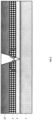
- a typical steel coating system is shown in Figure 1 and comprises a steel substrate 2, a metallic coating 4 (to sacrificially protect the steel substrate, typically comprising zinc or a zinc alloy), a conversion coating 6 (to provide improved adhesion between the metallic coating and organic coating, as well as to provide corrosion inhibition), a primer 8 and a barrier 10 (typically comprising a polymeric coating).
- the primer typically comprises a polymer and solvent mixed with a corrosion inhibitor such as zinc or strontium chromate.
- Current anti-corrosion inhibitors comprise sparingly soluble chromium salts such as zinc or strontium chromate, which have a degree of toxicity which is not environmentally acceptable.
- environmentally acceptable (Cr (VI) -free) inhibitive pigments typically based on sparingly soluble phosphate salt technologies are available, they are invariably less effective than their chromate counterparts.
- inhibitive species are progressively leached out over time, leading to a loss of coating barrier protection, whereas it would be more desirable to store the corrosion inhibitive species within the coating until such point as they are required (i.e so-called "on-demand" release).
- JP 112050744 describes the use of benzatriazole (BTA) which is incorporated in a film that is laid over a copper surface.
- BTA benzatriazole
- Copper or copper alloy materials have a natural coating of a thin copper oxide on their surface and the BTA molecule forms a covalent bond with the copper oxide to form a strong BTA polymer film on the surface of the copper or copper alloy material.
- the film is a discrete coating layer that prevents the ingress of water and air onto the surface of the metal. However, if that coating is breached then the film does not act by any kind of chemical reaction to prevent corrosion occurring, but instead the remaining film acts to retain moisture on the underlying metal surface accelerating corrosion.
- US- A.4 612 049 discloses coatings containing specific organic corrosion inhibitors (carboxylic acids substituted with benzoxazoles or benzthiazoles via a S atom). These inhibitors may first be loaded onto an ion exchange resin and then incorporated into the coating.
- the present invention seeks to overcome the problems of the prior art by providing a corrosion inhibitor and a coating including a corrosion inhibitor that can be released from a coating as and when it is needed (i.e. a 'smart' or "on-demand” inhibitor), and is also more effective and environmentally acceptable than known inhibitors and inhibitors bearing coatings or primers.
- the coating may be applied to a metal substrate as part of a coating system, such that other materials or additives may be provided in the coating, and/or additional coating layers may be applied to the substrate.
- the coating may be termed a primer.
- Organic ions are any ions that fit the general definition of an organic compound, which comprise at least carbon and hydrogen atoms.
- An organic ion in an ion exchange resin provides a corrosion inhibitor having the beneficial properties of acting as a smart release corrosion inhibitor with improved capability for providing corrosion resistance whilst also being environmentally acceptable.
- Such a corrosion inhibitor is capable of allowing dissociation of the organic ion from the ion exchange resin under the conditions of a corrosive electrolyte becoming present, and sequesters ions that have formed as a result of corrosion to form a precipitate or barrier layer to prevent further corrosion.
- the organic ion dissociates to provide protection to be zinc or zinc oxide sacrificial layer. This improves the lifespan of the sacrificial layer.
- the organic ion is benzotriazolate or derivatives thereof, such as 5 methyl benzotriazolate and others.
- Benzatriazole is a solid provided as a powder at room temperature and pressure, and disassociation to make benzatrizolate is achieved through removal of a positive hydrogen ion to achieve negatively charged benzatriazolate which is then attracted to the ion exchange resin to provide a corrosion inhibitor.
- An organic ion comprising a benzene ring, particularly benzotriazolate has been found to be beneficial.
- the azole group at one end forms a bond with the metallic surface and also metallic ions released the anodic dissolution.
- the adsorbed benzotriazole is thought to stifle electron transfer reactions while the precipitate formed by reaction of benzotriazolate anions with metal cations forms an inhibitive film which blocks the surface to further corrosive attack.
- the ion exchange resin sometimes referred to as an ion exchange polymer, is an insoluble matrix preferably formed of a plurality of particles, often referred to as beads. These beads may have a diameter of 0.5-1 mm diameter.
- the ion exchange resin provides ion exchange sites.
- the ion exchange resin is an organic anion exchange resin. It is envisaged that the organic ion exchange resin may be divinylbenzene or cross linked polystyrene. It has been found beneficial that the organic ion exchange resin is an organic anion exchange resin which attracts the organic ion to provide the corrosion inhibitor.
- the divinylbenzene is a styrene divinylbenzene copolymer having a trimethyl ammonium functional group.
- the corrosion inhibitor is contained in a polymer binder.
- the polymer binder acts to carry the corrosion inhibitor, and bind it within the polymer.
- the polymer is beneficially liquid at room temperature and pressure.
- the corrosion inhibitor is beneficially solid at room temperature and pressure, and is dispersed through the polymer binder.
- the polymer binder may be selected from one or more of an acrylic, polyurethane or polyvinyl butyral.
- the solid, preferably particulate corrosion inhibitor incorporated into the polymer binder forms an organic paint, coating or primer.
- This paint or coating can then be used to coat a substrate, such as a metal object e.g. a sheet.
- the particulate size of the corrosion inhibitor is less than 100 microns, even more preferably less than 50 microns, preferably less than 20 microns, and preferably less than 5 microns depending on the coating application.
- the particulate corrosion inhibitor is preferably dispersed through a polymer binder.
- the ratio of organic ion to ion exchange resin matrix is approximately 10% by wt of organic ion to ion exchange resin matrix.
- An example of a suitable composition is 100ml of 0.25M pH 8.2 benzotriazole in deionised water per 10g of inhibitor.
- the coating may further comprise a second corrosion inhibitor comprising an inorganic cation in a cation exchange resin which may work in synergistic action. This may be incorporated in order to provide a store for inhibiting cations. The benefit of this is to prevent corrosion induced coating failure at points where the coating is breached.
- This second corrosion inhibitor is capable of blocking cathodic disbondment or filiform corrosion.
- a suitable inorganic cation may be a cation that forms highly insoluble precipitates with hydroxide anions, examples of which are cobalt, calcium, cerium, zinc and magnesium.
- the cation exchange resin may for example be a divinyl benzene matrix with a sulphonated functional group. A sulphonated group is beneficial as maintains a negative charge holding the cation in place.
- the first and second corrosion inhibitors may be in a mixed, preferably in particulate form.
- the particulate size of the second corrosion inhibitor may be the same or similar to that of the first corrosion inhibitor.
- the organic ions are beneficially provided in solution and the method preferably further comprises the step of combining the ion exchange resin with the solution.
- the ion exchange resin is beneficially in a solid form. A plurality of modified solid beads are formed as a result of ion exchange.
- the combination of organic ions and ion exchange resin matrix are preferably mixed.
- the method preferably further comprises filtering the ion exchange resin beads from the solution, and preferably further comprises drying the beads.
- the beads are preferably heat treated.
- the method preferably further comprises breaking up the beads into smaller particles, which may be achieved through a variety of mechanical methods such as milling.
- a powder is beneficially produced by the mechanical breaking up of the beads.
- the organic ions are preferably produced by dissolving an organic compound into solution, the organic compound being capable of disassociating into at least two ions, one of the ions being the organic ion, wherein the solution has a pH of at least 7.6 or less than 3. A pH of greater than 8.3 is preferred. Increasing the pH of the solution may be achieved by adding an alkaline material such as sodium hydroxide to the solution.
- the organic ions preferably comprise benzotriazolate.
- the ion exchange resin matrix is preferably an organic anion exchange resin matrix, preferably divinylbenzene.
- the method may further comprise the steps of combining a second corrosion inhibitor formed by combining an inorganic cation with a cation exchange resin to the coating.
- the present invention has been developed to provide a smart-release corrosion inhibitor which has particular but not exclusive application in the protection of galvanised steel from corrosion.
- the inhibitor which is usually applied as a primer to a metal surface in liquid form at room temperature and pressure contains an organic ion, preferably an azole, and even more preferably benzotriazolate (BTA).
- BTA benzotriazolate
- the ion exchange resin matrix in one embodiment is a divinylbenzene copolymer with a trimethyl ammonium functional group as shown below.
- the benzene ring with the three nitrogen atoms is benzatriazolate and is negatively charged due to removal of the hydrogen cation.
- the ion exchange resin matrix is the remainder and is shown as being positively charged.
- the corrosion inhibitor structure is formed of repeating unit of the ion exchange resin with quaternary ammonium functional group with +ve charge to hold inhibiting anion (X-) of benzotriazolate in place until negatively charged corrosion electrolyte ions are present.
- benzotriazole is dissolved in water at a molar concentration of 0.25M, the pH is adjusted using NaOH to a pH of at least 8.3.
- a suitable amount through experimentation of benzatriazole is 29.78g per litre of water. Altering the pH to greater than 8.3 activates benzotriazole into benzotriazolate by causing dissociation of a hydrogen ion.
- An amount of the solution is taken which may be at room temperature, or it can also be heated, for example to 40 degrees Celsius and divinylbenzene copolymer with a trimethyl ammonium functional group is added to the solution. 10g of the divinylbenzene copolymer is added to 100ml of the solution containing the benzotriazole.
- the mixture is stirred, typically for an hour and left to settle so that beads are formed. Once the beads have settled the supernatant solution is decanted off and replaced with more 0.25M pH 8.2 benzotriazole solution in the ratio of 100ml to 10g of original weight of exchanger. This encourages more ion exchange.
- the topped up solution is stirred for another period, typically an hour and any supernatant left after a further period of settling is decanted and replaced with further solution.
- the topped up solution is stirred further, for example for a further four hours to ensure saturation of BTA within the matrix.
- the resultant beads are filtered off and washed with de-ionised water. This process ensures the exchange of the Cl anion of the divinylbenzene copolymer with the benzotriazolate is maximised.
- the beads contain a BTA in a divinyl benzene matrix.
- the beads are then dried overnight at 40 degrees Celsius and then ball milled (typically for 1 hour) to achieve a powdered form that can be added to a coating such as a primer coating.
- the powdered material that is formed may be added to a primer at a range of 1-30% w/w.
- Cation exchange resin beads e.g. Amberlite tm or Dowex tm
- the production of an inorganic cation in a cation exchange resin to provide an optional second corrosion inhibitor within the polymer binder may act synergistically and may be achieved by the following procedure: Cation exchange resin beads (e.g. Amberlite tm or Dowex tm ) were dispersed in 1 mol dm -3 aqueous solutions of the relevant metal chloride salt and the resulting suspensions stirred for 2 h. The suspensions were subsequently left to settle overnight and the supernatant decanted. The resin beads were exhaustively washed by repeated cycles of centrifugation and re-dispersion in fresh distilled water, until no chloride ions could be detected in the supernatant by silver nitrate aqueous solution testing. Finally the resin beads were dried in air and ground in a planetary mill to give a particle size of ⁇ 5 microns diameter. The second corrosion inhibitor may then be incorporated with the polymer bin
- the primer may be used in a multi-layer system on coated Hot Dip Galvanised (HDG) Steel, to protect from under-film corrosion.
- the benzotriazolate is released when it comes into contact with a corrosive electrolyte after which it sequesters the electrolyte ions.
- the primer is used on a zinc or zinc alloy surface and forms a protective layer by adhering onto the zinc surface. If there is any corrosion, the organic exchange matrix will sequester ions that have been formed as a result of the corrosion and by having the active agent in a matrix, there is also slow release of benzotriazole.
- a series of coatings was prepared by dispersing various volume fractions of the corrosion inhibitor formed of benzatriazole in an ion exchange resin matrix, which is then mixed in a polyvinyl butyral binder. This mixture was then applied to HDG steel and an in situ scanning Kelvin probe was used to evaluate the efficiency of the mixtures in inhibiting corrosion driven coating failures by cathodic delamination.
- Preliminary screening of the corrosion inhibitors at a fixed pigment volume fraction of 0.1 PVF (amount in volume of the inhibitor within the coating polymer) showed that anions and in particular organic anions slowed the delamination rate compared with a formulation where there was no binder which indicates the positive action of the anions.
- Anions from benzotriazole were unexpectedly by far the most effective.
- the Cl - anions present are sequestered into the coating and benzotriazole released simultaneously into the defect electrolyte, forming a precipitate with Zn 2+ (Zn(BTA) 2 ).
- the OH - ions produced at the cathodic delamination front are also sequestered with subsequent release of benzotriazolate, which forms an insoluble precipitate blocking interfacial electron transport.
- benzotriazole is hydrophobic in nature and binds to the metal surface in a mono layer, which then attracts other benzotriazole molecules, creating a barrier to the electrolyte and oxygen.
- Figure 2 shows that there is an eight fold decrease in the delamination rate constant where there are higher levels of corrosion inhibitor in a mixture applied to a metal surface. Delamination rates become progressively slower with increasing concentrations of the BTA -ion exchange resin matrix.
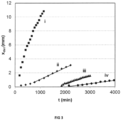
- the coating are - strontium chromate (industry standard inhibitor), chromate containing exchange matrix, zinc phosphate (current best chrome free alternative) and uninhibited once the delamination has initiated.
- Plot (i) shows an un-inhibited coating which has minimal effect on delamination.
- Plot (ii) shows the effect of a coating with 0.15% of zinc phosphate, while plot (iii) shows a standard coating of strontium chromate.
- Plot (iv) shows a coating of Amberjet (which is an copolymer having an ammonium functional group) chromate, while finally plot (v) shows a plot for a coating of the present invention.
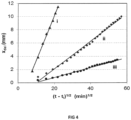
- Figure 4 shows that the presence of 2% by pigment volume of the Amb-BTA pigment in the system, vastly affects the initial rate of delamination (k del ) when compared to the unpigmented, with a small increasing effect with Amb-BTA content 0.05 and 0.1.
- the change in effect of the higher 5% and 10% by volume of Amb-BTA pigment is due to the delay in the onset of corrosion as well as the reduced the rate of corrosion.
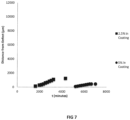
- Figure 5 shows the delamination rate with direct w/w addition of the corrosion inhibitor to a polyvinyl butyl solution and this showed that the rate of delamination is very low and also that increasing the w/w% of the corrosion inhibitor in the solution results in an increased amount of time before the delamination corrosion starts.
Landscapes
- Chemical & Material Sciences (AREA)
- Organic Chemistry (AREA)
- Engineering & Computer Science (AREA)
- Materials Engineering (AREA)
- Mechanical Engineering (AREA)
- Metallurgy (AREA)
- Chemical Kinetics & Catalysis (AREA)
- Life Sciences & Earth Sciences (AREA)
- Wood Science & Technology (AREA)
- Paints Or Removers (AREA)
Claims (11)
- Eine Beschichtung für ein Metallsubstrat, die ein Polymerbindemittel und einen teilchenförmigen Korrosionsinhibitor in dem Polymerbindemittel beinhaltet, wobei der teilchenförmige Korrosionsinhibitor Benzotriazolat oder ein Derivat davon in einem lonenaustauscherharz beinhaltet, wobei der Korrosionsinhibitor eine Teilchengröße von weniger als 100 Mikrometern aufweist.
- Beschichtung gemäß Anspruch 1, wobei das lonenaustauscherharz eine organische Anionenaustauscherharzmatrix ist, und wobei das organische lonenaustauscherharz vorzugsweise Divinylbenzol oder vernetztes Polystyrol ist; und noch mehr bevorzugt, wobei das Divinylbenzol ein Styrol-Divinylbenzol-Copolymer mit einer funktionellen Trimethylammoniumgruppe ist.
- Beschichtung gemäß einem der vorhergehenden Ansprüche, wobei die Teilchengröße des Korrosionsinhibitors weniger als 50 Mikrometer, noch bevorzugter weniger als 20 Mikrometer und noch bevorzugter weniger als 5 Mikrometer beträgt; und/oder wobei das Verhältnis von organischem ion zu lonenaustauscherharz etwa 10 Gew.-% organisches ion zu lonenaustauscherharz beträgt.
- Beschichtung gemäß einem der vorhergehenden Ansprüche, wobei der teilchenförmige Korrosionsinhibitor einen ersten Korrosionsinhibitor beinhaltet und die Beschichtung ferner einen zweiten Korrosionsinhibitor beinhaltet, der ein anorganisches Kation in einem Kationenaustauscherharz beinhaltet.
- Beschichtung gemäß einem der vorhergehenden Ansprüche, wobei das Polymerbindemittel aus einem oder mehreren von Folgendem ausgewählt ist: Acryl, Polyurethan oder Polyvinylbutyral; und/oder ferner einen zweiten Korrosionsinhibitor beinhaltet, der ein anorganisches Kation in einem Kationenaustauscherharz beinhaltet; und/oder wobei die Beschichtung in Form eines Anstrichmittels vorliegt.
- Ein Metallsubstrat, das mit einer Beschichtung gemäß einem der vorhergehenden Ansprüche beschichtet ist, und wobei das Metall vorzugsweise Stahl oder eine Legierung auf der Basis von Stahl ist.
- Ein Verfahren zum Herstellen einer Beschichtung für ein Metallsubstrat, wobei das Verfahren das Herstellen eines teilchenförmigen Korrosionsinhibitors beinhaltet, beinhaltend die folgenden Schritte:i. Bereitstellen von Benzotriazolat oder einem Derivat davon in Lösung und Zugeben eines Ionenaustauscherharzes in fester Bead-Form zu der Lösung, um modifizierte Beads zu formen;ii. Filtrieren der modifizierten Beads aus der Lösung;iii. Trocknen der modifizierten Beads;iv. Zerkleinern der modifizierten Beads in kleinere Teilchen;und Kombinieren des teilchenförmigen Korrosionsinhibitors mit einem Polymerbindemittel.
- Verfahren gemäß Anspruch 7, das das Bereitstellen von Benzotriazolat-Ionen oder Derivaten davon in Lösung und das Zugeben eines Ionenaustauscherharzes zu der Lösung beinhaltet, um die modifizierten Beads zu formen.
- Verfahren gemäß Anspruch 8, das das Filtrieren der modifizierten Beads aus der Lösung, das Trocknen der modifizierten Beads und das Zerkleinern der modifizierten Beads in kleinere Teilchen beinhaltet.
- Verfahren gemäß einem der Ansprüche 7-9, wobei die Benzotriazolat-Ionen oder Derivate davon durch Auflösen einer organischen Verbindung in Lösung produziert werden, wobei die organische Verbindung in der Lage ist, in mindestens zwei Ionen zu dissoziieren, wobei eines der Ionen das Benzotriazolat-Ion oder Derivat davon ist, wobei die Lösung einen pH-Wert von mindestens 7,6 oder weniger als 3 aufweist; und/oder wobei das lonenaustauscherharz ein organisches Anionenaustauscherharz, vorzugsweise Divinylbenzol, ist.
- Verfahren gemäß einem der Ansprüche 7-10, das ferner den Schritt des Zugebens eines zweiten Korrosionsinhibitors beinhaltet, der durch das Kombinieren eines anorganischen Kations mit einem Kationenaustauscherharz geformt wird.
Applications Claiming Priority (2)
| Application Number | Priority Date | Filing Date | Title |
|---|---|---|---|
| GB1518168.8A GB2543488B (en) | 2015-10-14 | 2015-10-14 | Corrosion inhibitor |
| PCT/GB2016/053184 WO2017064499A1 (en) | 2015-10-14 | 2016-10-14 | Corrosion inhibiter |
Publications (3)
| Publication Number | Publication Date |
|---|---|
| EP3362587A1 EP3362587A1 (de) | 2018-08-22 |
| EP3362587C0 EP3362587C0 (de) | 2023-12-20 |
| EP3362587B1 true EP3362587B1 (de) | 2023-12-20 |
Family
ID=55131021
Family Applications (1)
| Application Number | Title | Priority Date | Filing Date |
|---|---|---|---|
| EP16784256.6A Active EP3362587B1 (de) | 2015-10-14 | 2016-10-14 | Korrosionshemmer |
Country Status (4)
| Country | Link |
|---|---|
| US (1) | US11352702B2 (de) |
| EP (1) | EP3362587B1 (de) |
| GB (1) | GB2543488B (de) |
| WO (1) | WO2017064499A1 (de) |
Families Citing this family (5)
| Publication number | Priority date | Publication date | Assignee | Title |
|---|---|---|---|---|
| GB2543488B (en) | 2015-10-14 | 2022-02-02 | Hexigone Inhibitors Ltd | Corrosion inhibitor |
| GB201706574D0 (en) * | 2017-04-25 | 2017-06-07 | Univ Swansea | Corrosion inhibitor |
| US20190390065A1 (en) * | 2018-06-22 | 2019-12-26 | Covestro Llc | Waterborne compositions containing organic ion-exchangers to improve corrosion resistance |
| GB2588924B (en) * | 2019-11-14 | 2022-01-12 | Hexigone Inhibitors Ltd | Corrosion inhibitor |
| CN121195008A (zh) | 2023-04-06 | 2025-12-23 | 索基马特股份公司 | 具有防腐蚀、杀生物和力学性能增强特性的聚合物基质改性组合物 |
Citations (1)
| Publication number | Priority date | Publication date | Assignee | Title |
|---|---|---|---|---|
| US4612049A (en) * | 1983-05-14 | 1986-09-16 | Ciba-Geigy Corporation | Corrosion-inhibiting coating compositions |
Family Cites Families (29)
| Publication number | Priority date | Publication date | Assignee | Title |
|---|---|---|---|---|
| US288404A (en) * | 1883-11-13 | Attachment for printing-presses | ||
| US49167A (en) * | 1865-08-01 | Improvement in window-glass | ||
| US3899624A (en) * | 1973-04-26 | 1975-08-12 | Gen Dynamics Corp | Method for protecting surfaces against environmental damage and the resultant products |
| GB2081275B (en) * | 1980-08-09 | 1984-02-08 | British Petroleum Co | Corrosion inhibitors |
| JPS60102978A (ja) * | 1983-11-11 | 1985-06-07 | Nippon Light Metal Co Ltd | 親水性皮膜を有する素形部材 |
| GB8414125D0 (en) | 1984-06-02 | 1984-07-04 | British Petroleum Co Plc | Producing corrosion inhibiting particles |
| FR2633934B1 (fr) * | 1988-07-07 | 1994-09-09 | Comp Generale Electricite | Inhibiteur de corrosion pour liquide aqueux utilise pour les circuits de refroidissement, notamment ceux des moteurs a combustion interne |
| JPH03500416A (ja) | 1988-07-29 | 1991-01-31 | エス・アール・アイ・インターナシヨナル | 置換ピリジニウム化合物に基く協力腐食防止剤 |
| US5266230A (en) * | 1989-04-26 | 1993-11-30 | Tonen Corporation | Electroviscous fluid containing antioxidant and/or corrosion inhibitor |
| JP2795710B2 (ja) | 1990-01-19 | 1998-09-10 | 日本ペイント株式会社 | 防錆剤組成物 |
| JPH11205074A (ja) | 1998-01-19 | 1999-07-30 | Murata Mfg Co Ltd | 圧電薄膜振動子 |
| JP3348012B2 (ja) | 1998-03-30 | 2002-11-20 | 株式会社栗本鐵工所 | 塗料組成物 |
| US20040035498A1 (en) * | 2002-06-04 | 2004-02-26 | Lumimove, Inc. D/B/A/ Crosslink Polymer Research | Corrosion-responsive coating formulations for protection of metal surfaces |
| US6942899B2 (en) * | 2002-07-08 | 2005-09-13 | The Boeing Company | Coating for inhibiting oxidation of a substrate |
| US7138199B2 (en) * | 2002-10-30 | 2006-11-21 | Mohapatra Satish C | Fuel cell and fuel cell coolant compositions |
| US20040249023A1 (en) | 2003-01-17 | 2004-12-09 | Stoffer James O. | Compounds for corrosion resistant primer coatings and protection of metal substrates |
| WO2005003408A2 (en) | 2003-06-27 | 2005-01-13 | Wayne Pigment Corp. | Pigment grade corrosion inhibitor host-guest compositions and procedure |
| ZA200701537B (en) * | 2004-09-08 | 2008-10-29 | Honeywell Int Inc | Treated ion exchange resins, method of making, assemblies and heat transfer systems containing the same, and method of use |
| US8658326B2 (en) * | 2004-09-08 | 2014-02-25 | Prestone Products Corporation | Heat transfer system, fluid, and method |
| MY148568A (en) | 2004-12-09 | 2013-04-30 | Lonza Ag | Quaternary ammonium salts as a conversion coating or coating enhancement |
| US8066902B2 (en) * | 2005-06-24 | 2011-11-29 | Prestone Products Corporation | Methods for inhibiting corrosion in brazed metal surfaces and coolants and additives for use therein |
| JP4999333B2 (ja) | 2006-02-15 | 2012-08-15 | 株式会社トクヤマ | 防錆材 |
| US8287764B2 (en) | 2008-07-22 | 2012-10-16 | Akzo Nobel N.V. | Coated particles |
| FR2946664B1 (fr) | 2009-06-15 | 2011-07-29 | Eads Europ Aeronautic Defence | Particules ceramiques et compositions de revetement comprenant lesdites particules |
| WO2012089649A1 (en) | 2010-12-28 | 2012-07-05 | Akzo Nobel Chemicals International B.V. | Polyester polyamine and polyester polyquaternary ammonium corrosion inhibitors |
| CN102140642A (zh) | 2011-02-18 | 2011-08-03 | 中国科学院海洋研究所 | 一种缓释型苯甲酸根阴离子插层水滑石碳钢防腐蚀材料及其制备和应用 |
| GB2527640B (en) * | 2014-04-21 | 2022-09-21 | Wilhelm Wieland Friedrich | Corrosion inhibitors, improved paint and corrosion protection coating |
| KR101616330B1 (ko) * | 2014-07-23 | 2016-04-28 | 주식회사 한국지러스트 | 고성능 기화성 방청 조성물 및 이를 포함하는 방청필름 |
| GB2543488B (en) | 2015-10-14 | 2022-02-02 | Hexigone Inhibitors Ltd | Corrosion inhibitor |
-
2015
- 2015-10-14 GB GB1518168.8A patent/GB2543488B/en active Active
-
2016
- 2016-10-14 WO PCT/GB2016/053184 patent/WO2017064499A1/en not_active Ceased
- 2016-10-14 EP EP16784256.6A patent/EP3362587B1/de active Active
- 2016-10-14 US US15/768,152 patent/US11352702B2/en active Active
Patent Citations (1)
| Publication number | Priority date | Publication date | Assignee | Title |
|---|---|---|---|---|
| US4612049A (en) * | 1983-05-14 | 1986-09-16 | Ciba-Geigy Corporation | Corrosion-inhibiting coating compositions |
Also Published As
| Publication number | Publication date |
|---|---|
| EP3362587C0 (de) | 2023-12-20 |
| EP3362587A1 (de) | 2018-08-22 |
| WO2017064499A1 (en) | 2017-04-20 |
| GB201518168D0 (en) | 2015-11-25 |
| GB2543488A (en) | 2017-04-26 |
| US20180312981A1 (en) | 2018-11-01 |
| US11352702B2 (en) | 2022-06-07 |
| GB2543488B (en) | 2022-02-02 |
Similar Documents
| Publication | Publication Date | Title |
|---|---|---|
| EP3362587B1 (de) | Korrosionshemmer | |
| Carneiro et al. | Polyelectrolyte-modified layered double hydroxide nanocontainers as vehicles for combined inhibitors | |
| CN104619431B (zh) | 使用含有层状双氢氧化物的颗粒的涂布组合物涂布金属表面的方法 | |
| CN101321894B (zh) | 用于钢表面腐蚀防护处理的湿碰湿方法和无铬的酸性溶液 | |
| US6716370B2 (en) | Supramolecular oxo-anion corrosion inhibitors | |
| WO1998048075A1 (fr) | Tole enduite et fluide de traitement de surface pour metaux | |
| JPWO1998048075A1 (ja) | 表面処理金属板および金属表面処理液 | |
| JP6785382B2 (ja) | 塗料 | |
| WO2014020665A1 (ja) | 塗料及び被覆鋼材 | |
| Mishra et al. | Recent development in clay based functional coating for corrosion protection | |
| Ghamsarizade et al. | Study on release and inhibition action of mixed ZAPP and 8-HQ corrosion inhibitors loaded in pH-sensitive microcapsules for Mg AZ31 | |
| Kuznetsov | Triazoles as a class of multifunctional corrosion inhibitors. Review. Part III. 1, 2, 3-Benzotriazole and its derivatives. Aluminum alloys | |
| GB2593660A (en) | Metallic coated substrates | |
| US11879068B2 (en) | Corrosion inhibitor | |
| CN114981365B (zh) | 缓蚀剂 | |
| DE10327365B4 (de) | Gegenstand mit einer Korrosionsschutzschicht und dessen Verwendung | |
| WO2018074298A1 (ja) | 表面処理された亜鉛系めっき鋼板およびその製造方法 | |
| HK40053473A (en) | Corrosion inhibitor | |
| Williams et al. | Smart-release inhibition of corrosion-driven organic coating delamination on galvanized steel surfaces | |
| JP2002030461A (ja) | 耐食性複合層を有するアルミニウム系金属板 | |
| Mishra et al. | Development of polymer-based composite coatings for the gas exploration industry: polyoxometalate doped conducting polymer based self-healing pigment for polymer coatings | |
| Thorn et al. | Il Cill liitit Ci | |
| KR20230138510A (ko) | 아연 포함 코팅 상에 크롬 포함 부동태화층을 성막하는 방법 | |
| Thorn | CHARACTERISTICS OF NONTOXIC INORGANIC INHIBITORS | |
| Gichuhi | ECOFRIENDLY CORROSION INHIBITING ADDITIVES FOR TOMORROWS COATINGS |
Legal Events
| Date | Code | Title | Description |
|---|---|---|---|
| STAA | Information on the status of an ep patent application or granted ep patent |
Free format text: STATUS: THE INTERNATIONAL PUBLICATION HAS BEEN MADE |
|
| PUAI | Public reference made under article 153(3) epc to a published international application that has entered the european phase |
Free format text: ORIGINAL CODE: 0009012 |
|
| STAA | Information on the status of an ep patent application or granted ep patent |
Free format text: STATUS: REQUEST FOR EXAMINATION WAS MADE |
|
| 17P | Request for examination filed |
Effective date: 20180312 |
|
| AK | Designated contracting states |
Kind code of ref document: A1 Designated state(s): AL AT BE BG CH CY CZ DE DK EE ES FI FR GB GR HR HU IE IS IT LI LT LU LV MC MK MT NL NO PL PT RO RS SE SI SK SM TR |
|
| AX | Request for extension of the european patent |
Extension state: BA ME |
|
| DAV | Request for validation of the european patent (deleted) | ||
| DAX | Request for extension of the european patent (deleted) | ||
| RAP1 | Party data changed (applicant data changed or rights of an application transferred) |
Owner name: HEXIGONE INHIBITORS LTD |
|
| TPAC | Observations filed by third parties |
Free format text: ORIGINAL CODE: EPIDOSNTIPA |
|
| TPAC | Observations filed by third parties |
Free format text: ORIGINAL CODE: EPIDOSNTIPA |
|
| STAA | Information on the status of an ep patent application or granted ep patent |
Free format text: STATUS: EXAMINATION IS IN PROGRESS |
|
| 17Q | First examination report despatched |
Effective date: 20210623 |
|
| GRAP | Despatch of communication of intention to grant a patent |
Free format text: ORIGINAL CODE: EPIDOSNIGR1 |
|
| STAA | Information on the status of an ep patent application or granted ep patent |
Free format text: STATUS: GRANT OF PATENT IS INTENDED |
|
| RIC1 | Information provided on ipc code assigned before grant |
Ipc: B01J 47/018 20170101ALI20230616BHEP Ipc: B01J 47/00 20170101ALI20230616BHEP Ipc: B01J 41/14 20060101ALI20230616BHEP Ipc: B01J 41/12 20170101ALI20230616BHEP Ipc: C09D 5/08 20060101ALI20230616BHEP Ipc: C23F 11/14 20060101ALI20230616BHEP Ipc: C23F 11/08 20060101ALI20230616BHEP Ipc: C23F 11/00 20060101AFI20230616BHEP |
|
| INTG | Intention to grant announced |
Effective date: 20230725 |
|
| RBV | Designated contracting states (corrected) |
Designated state(s): AL AT BE BG CH CY CZ DE DK EE ES FI FR GR HR HU IE IS IT LI LT LU LV MC MK MT NL NO PL PT RO RS SE SI SK SM TR |
|
| GRAS | Grant fee paid |
Free format text: ORIGINAL CODE: EPIDOSNIGR3 |
|
| GRAA | (expected) grant |
Free format text: ORIGINAL CODE: 0009210 |
|
| STAA | Information on the status of an ep patent application or granted ep patent |
Free format text: STATUS: THE PATENT HAS BEEN GRANTED |
|
| AK | Designated contracting states |
Kind code of ref document: B1 Designated state(s): AL AT BE BG CH CY CZ DE DK EE ES FI FR GR HR HU IE IS IT LI LT LU LV MC MK MT NL NO PL PT RO RS SE SI SK SM TR |
|
| REG | Reference to a national code |
Ref country code: CH Ref legal event code: EP |
|
| REG | Reference to a national code |
Ref country code: DE Ref legal event code: R096 Ref document number: 602016084857 Country of ref document: DE |
|
| REG | Reference to a national code |
Ref country code: DE Ref legal event code: R081 Ref document number: 602016084857 Country of ref document: DE Owner name: HEXIGONE INHIBITORS LTD, GB Free format text: FORMER OWNER: HEXIGONE INHIBITORS LTD, SWANSEA, GB |
|
| REG | Reference to a national code |
Ref country code: IE Ref legal event code: FG4D |
|
| RAP4 | Party data changed (patent owner data changed or rights of a patent transferred) |
Owner name: HEXIGONE INHIBITORS LTD |
|
| U01 | Request for unitary effect filed |
Effective date: 20240117 |
|
| U07 | Unitary effect registered |
Designated state(s): AT BE BG DE DK EE FI FR IT LT LU LV MT NL PT SE SI Effective date: 20240126 |
|
| PG25 | Lapsed in a contracting state [announced via postgrant information from national office to epo] |
Ref country code: GR Free format text: LAPSE BECAUSE OF FAILURE TO SUBMIT A TRANSLATION OF THE DESCRIPTION OR TO PAY THE FEE WITHIN THE PRESCRIBED TIME-LIMIT Effective date: 20240321 |
|
| PG25 | Lapsed in a contracting state [announced via postgrant information from national office to epo] |
Ref country code: ES Free format text: LAPSE BECAUSE OF FAILURE TO SUBMIT A TRANSLATION OF THE DESCRIPTION OR TO PAY THE FEE WITHIN THE PRESCRIBED TIME-LIMIT Effective date: 20231220 |
|
| PG25 | Lapsed in a contracting state [announced via postgrant information from national office to epo] |
Ref country code: GR Free format text: LAPSE BECAUSE OF FAILURE TO SUBMIT A TRANSLATION OF THE DESCRIPTION OR TO PAY THE FEE WITHIN THE PRESCRIBED TIME-LIMIT Effective date: 20240321 Ref country code: ES Free format text: LAPSE BECAUSE OF FAILURE TO SUBMIT A TRANSLATION OF THE DESCRIPTION OR TO PAY THE FEE WITHIN THE PRESCRIBED TIME-LIMIT Effective date: 20231220 |
|
| PG25 | Lapsed in a contracting state [announced via postgrant information from national office to epo] |
Ref country code: RS Free format text: LAPSE BECAUSE OF FAILURE TO SUBMIT A TRANSLATION OF THE DESCRIPTION OR TO PAY THE FEE WITHIN THE PRESCRIBED TIME-LIMIT Effective date: 20231220 Ref country code: NO Free format text: LAPSE BECAUSE OF FAILURE TO SUBMIT A TRANSLATION OF THE DESCRIPTION OR TO PAY THE FEE WITHIN THE PRESCRIBED TIME-LIMIT Effective date: 20240320 Ref country code: HR Free format text: LAPSE BECAUSE OF FAILURE TO SUBMIT A TRANSLATION OF THE DESCRIPTION OR TO PAY THE FEE WITHIN THE PRESCRIBED TIME-LIMIT Effective date: 20231220 |
|
| PG25 | Lapsed in a contracting state [announced via postgrant information from national office to epo] |
Ref country code: IS Free format text: LAPSE BECAUSE OF FAILURE TO SUBMIT A TRANSLATION OF THE DESCRIPTION OR TO PAY THE FEE WITHIN THE PRESCRIBED TIME-LIMIT Effective date: 20240420 |
|
| PG25 | Lapsed in a contracting state [announced via postgrant information from national office to epo] |
Ref country code: CZ Free format text: LAPSE BECAUSE OF FAILURE TO SUBMIT A TRANSLATION OF THE DESCRIPTION OR TO PAY THE FEE WITHIN THE PRESCRIBED TIME-LIMIT Effective date: 20231220 |
|
| PG25 | Lapsed in a contracting state [announced via postgrant information from national office to epo] |
Ref country code: SK Free format text: LAPSE BECAUSE OF FAILURE TO SUBMIT A TRANSLATION OF THE DESCRIPTION OR TO PAY THE FEE WITHIN THE PRESCRIBED TIME-LIMIT Effective date: 20231220 |
|
| PG25 | Lapsed in a contracting state [announced via postgrant information from national office to epo] |
Ref country code: SM Free format text: LAPSE BECAUSE OF FAILURE TO SUBMIT A TRANSLATION OF THE DESCRIPTION OR TO PAY THE FEE WITHIN THE PRESCRIBED TIME-LIMIT Effective date: 20231220 Ref country code: SK Free format text: LAPSE BECAUSE OF FAILURE TO SUBMIT A TRANSLATION OF THE DESCRIPTION OR TO PAY THE FEE WITHIN THE PRESCRIBED TIME-LIMIT Effective date: 20231220 Ref country code: RO Free format text: LAPSE BECAUSE OF FAILURE TO SUBMIT A TRANSLATION OF THE DESCRIPTION OR TO PAY THE FEE WITHIN THE PRESCRIBED TIME-LIMIT Effective date: 20231220 Ref country code: IS Free format text: LAPSE BECAUSE OF FAILURE TO SUBMIT A TRANSLATION OF THE DESCRIPTION OR TO PAY THE FEE WITHIN THE PRESCRIBED TIME-LIMIT Effective date: 20240420 Ref country code: CZ Free format text: LAPSE BECAUSE OF FAILURE TO SUBMIT A TRANSLATION OF THE DESCRIPTION OR TO PAY THE FEE WITHIN THE PRESCRIBED TIME-LIMIT Effective date: 20231220 |
|
| PG25 | Lapsed in a contracting state [announced via postgrant information from national office to epo] |
Ref country code: PL Free format text: LAPSE BECAUSE OF FAILURE TO SUBMIT A TRANSLATION OF THE DESCRIPTION OR TO PAY THE FEE WITHIN THE PRESCRIBED TIME-LIMIT Effective date: 20231220 |
|
| PG25 | Lapsed in a contracting state [announced via postgrant information from national office to epo] |
Ref country code: PL Free format text: LAPSE BECAUSE OF FAILURE TO SUBMIT A TRANSLATION OF THE DESCRIPTION OR TO PAY THE FEE WITHIN THE PRESCRIBED TIME-LIMIT Effective date: 20231220 |
|
| REG | Reference to a national code |
Ref country code: DE Ref legal event code: R097 Ref document number: 602016084857 Country of ref document: DE |
|
| PLBE | No opposition filed within time limit |
Free format text: ORIGINAL CODE: 0009261 |
|
| STAA | Information on the status of an ep patent application or granted ep patent |
Free format text: STATUS: NO OPPOSITION FILED WITHIN TIME LIMIT |
|
| 26N | No opposition filed |
Effective date: 20240923 |
|
| U20 | Renewal fee for the european patent with unitary effect paid |
Year of fee payment: 9 Effective date: 20241028 |
|
| REG | Reference to a national code |
Ref country code: CH Ref legal event code: PL |
|
| PG25 | Lapsed in a contracting state [announced via postgrant information from national office to epo] |
Ref country code: MC Free format text: LAPSE BECAUSE OF FAILURE TO SUBMIT A TRANSLATION OF THE DESCRIPTION OR TO PAY THE FEE WITHIN THE PRESCRIBED TIME-LIMIT Effective date: 20231220 |
|
| PG25 | Lapsed in a contracting state [announced via postgrant information from national office to epo] |
Ref country code: CH Free format text: LAPSE BECAUSE OF NON-PAYMENT OF DUE FEES Effective date: 20241031 |
|
| PG25 | Lapsed in a contracting state [announced via postgrant information from national office to epo] |
Ref country code: IE Free format text: LAPSE BECAUSE OF NON-PAYMENT OF DUE FEES Effective date: 20241014 |
|
| PG25 | Lapsed in a contracting state [announced via postgrant information from national office to epo] |
Ref country code: CY Free format text: LAPSE BECAUSE OF FAILURE TO SUBMIT A TRANSLATION OF THE DESCRIPTION OR TO PAY THE FEE WITHIN THE PRESCRIBED TIME-LIMIT; INVALID AB INITIO Effective date: 20161014 |
|
| U21 | Renewal fee for the european patent with unitary effect paid with additional fee |
Year of fee payment: 10 Effective date: 20251230 |