EP3347090B1 - Systems for treating cardiac malfunction - Google Patents
Systems for treating cardiac malfunction Download PDFInfo
- Publication number
- EP3347090B1 EP3347090B1 EP16845150.8A EP16845150A EP3347090B1 EP 3347090 B1 EP3347090 B1 EP 3347090B1 EP 16845150 A EP16845150 A EP 16845150A EP 3347090 B1 EP3347090 B1 EP 3347090B1
- Authority
- EP
- European Patent Office
- Prior art keywords
- stimulation
- volume
- pulses
- cardiac
- setting
- Prior art date
- Legal status (The legal status is an assumption and is not a legal conclusion. Google has not performed a legal analysis and makes no representation as to the accuracy of the status listed.)
- Active
Links
Images



Classifications
-
- A—HUMAN NECESSITIES
- A61—MEDICAL OR VETERINARY SCIENCE; HYGIENE
- A61N—ELECTROTHERAPY; MAGNETOTHERAPY; RADIATION THERAPY; ULTRASOUND THERAPY
- A61N1/00—Electrotherapy; Circuits therefor
- A61N1/18—Applying electric currents by contact electrodes
- A61N1/32—Applying electric currents by contact electrodes alternating or intermittent currents
- A61N1/36—Applying electric currents by contact electrodes alternating or intermittent currents for stimulation
- A61N1/362—Heart stimulators
- A61N1/365—Heart stimulators controlled by a physiological parameter, e.g. heart potential
- A61N1/36514—Heart stimulators controlled by a physiological parameter, e.g. heart potential controlled by a physiological quantity other than heart potential, e.g. blood pressure
- A61N1/36564—Heart stimulators controlled by a physiological parameter, e.g. heart potential controlled by a physiological quantity other than heart potential, e.g. blood pressure controlled by blood pressure
-
- A—HUMAN NECESSITIES
- A61—MEDICAL OR VETERINARY SCIENCE; HYGIENE
- A61N—ELECTROTHERAPY; MAGNETOTHERAPY; RADIATION THERAPY; ULTRASOUND THERAPY
- A61N1/00—Electrotherapy; Circuits therefor
- A61N1/02—Details
- A61N1/04—Electrodes
- A61N1/05—Electrodes for implantation or insertion into the body, e.g. heart electrode
- A61N1/0587—Epicardial electrode systems; Endocardial electrodes piercing the pericardium
-
- A—HUMAN NECESSITIES
- A61—MEDICAL OR VETERINARY SCIENCE; HYGIENE
- A61N—ELECTROTHERAPY; MAGNETOTHERAPY; RADIATION THERAPY; ULTRASOUND THERAPY
- A61N1/00—Electrotherapy; Circuits therefor
- A61N1/18—Applying electric currents by contact electrodes
- A61N1/32—Applying electric currents by contact electrodes alternating or intermittent currents
- A61N1/36—Applying electric currents by contact electrodes alternating or intermittent currents for stimulation
- A61N1/362—Heart stimulators
- A61N1/3627—Heart stimulators for treating a mechanical deficiency of the heart, e.g. congestive heart failure or cardiomyopathy
-
- A—HUMAN NECESSITIES
- A61—MEDICAL OR VETERINARY SCIENCE; HYGIENE
- A61N—ELECTROTHERAPY; MAGNETOTHERAPY; RADIATION THERAPY; ULTRASOUND THERAPY
- A61N1/00—Electrotherapy; Circuits therefor
- A61N1/18—Applying electric currents by contact electrodes
- A61N1/32—Applying electric currents by contact electrodes alternating or intermittent currents
- A61N1/36—Applying electric currents by contact electrodes alternating or intermittent currents for stimulation
- A61N1/362—Heart stimulators
- A61N1/365—Heart stimulators controlled by a physiological parameter, e.g. heart potential
- A61N1/36585—Heart stimulators controlled by a physiological parameter, e.g. heart potential controlled by two or more physical parameters
-
- A—HUMAN NECESSITIES
- A61—MEDICAL OR VETERINARY SCIENCE; HYGIENE
- A61N—ELECTROTHERAPY; MAGNETOTHERAPY; RADIATION THERAPY; ULTRASOUND THERAPY
- A61N1/00—Electrotherapy; Circuits therefor
- A61N1/18—Applying electric currents by contact electrodes
- A61N1/32—Applying electric currents by contact electrodes alternating or intermittent currents
- A61N1/36—Applying electric currents by contact electrodes alternating or intermittent currents for stimulation
- A61N1/362—Heart stimulators
- A61N1/37—Monitoring; Protecting
- A61N1/3702—Physiological parameters
-
- A—HUMAN NECESSITIES
- A61—MEDICAL OR VETERINARY SCIENCE; HYGIENE
- A61N—ELECTROTHERAPY; MAGNETOTHERAPY; RADIATION THERAPY; ULTRASOUND THERAPY
- A61N1/00—Electrotherapy; Circuits therefor
- A61N1/18—Applying electric currents by contact electrodes
- A61N1/32—Applying electric currents by contact electrodes alternating or intermittent currents
- A61N1/36—Applying electric currents by contact electrodes alternating or intermittent currents for stimulation
- A61N1/362—Heart stimulators
- A61N1/365—Heart stimulators controlled by a physiological parameter, e.g. heart potential
- A61N1/36514—Heart stimulators controlled by a physiological parameter, e.g. heart potential controlled by a physiological quantity other than heart potential, e.g. blood pressure
- A61N1/36571—Heart stimulators controlled by a physiological parameter, e.g. heart potential controlled by a physiological quantity other than heart potential, e.g. blood pressure controlled by blood flow rate, e.g. blood velocity or cardiac output
-
- A—HUMAN NECESSITIES
- A61—MEDICAL OR VETERINARY SCIENCE; HYGIENE
- A61N—ELECTROTHERAPY; MAGNETOTHERAPY; RADIATION THERAPY; ULTRASOUND THERAPY
- A61N1/00—Electrotherapy; Circuits therefor
- A61N1/18—Applying electric currents by contact electrodes
- A61N1/32—Applying electric currents by contact electrodes alternating or intermittent currents
- A61N1/36—Applying electric currents by contact electrodes alternating or intermittent currents for stimulation
- A61N1/362—Heart stimulators
- A61N1/365—Heart stimulators controlled by a physiological parameter, e.g. heart potential
- A61N1/368—Heart stimulators controlled by a physiological parameter, e.g. heart potential comprising more than one electrode co-operating with different heart regions
Definitions
- the present invention relates to the field of treating cardiac malfunction, and more particularly, to systems for stimulating the heart to treat cardiac malfunction, such as congestive heart failure.
- a system for stimulating a heart to treat cardiac malfunction according to the preamble of claim 1 is known from US 7 363 077 B1 .
- a method for treating cardiac malfunction may include delivering a stimulation pattern of stimulation pulses to at least one cardiac chamber of a heart. At least one of the stimulation pulses may have a first stimulation setting configured to reduce at least one of end systolic volume (ESV) and end diastolic volume (EDV) in the heart, and at least one of the stimulation pulses may have a second stimulation setting different from the first stimulation setting.
- ESV end systolic volume
- EDV end diastolic volume
- the stimulation pattern may be configured to reduce the at least one of end systolic volume (ESV) and end diastolic volume (EDV) by at least 5% and to maintain the at least one of end systolic volume (ESV) and end diastolic volume (EDV) on average at such reduced volume for a time period of at least one hour.
- the invention provides a system for treating cardiac malfunction as defined in claim 1.
- This system for treating cardiac malfunction includes a stimulation circuit and at least one controller.
- the stimulation circuit is configured to deliver a stimulation pulse to at least one cardiac chamber of a heart of a patient.
- the at least one controller is configured to execute delivery of a stimulation pattern of stimulation pulses to the at least one cardiac chamber.
- At least one of the stimulation pulses has a first stimulation setting configured to reduce at least one of end systolic volume (ESV) and end diastolic volume (EDV) in the heart, and at least one of the stimulation pulses has a second stimulation setting different from the first stimulation setting.
- ESV end systolic volume
- EDV end diastolic volume
- the stimulation pattern as defined in claim 1 is configured to reduce the at least one of end systolic volume (ESV) and end diastolic volume (EDV) by at least 5% and maintain the at least one of the end systolic volume (ESV) and end diastolic volume (EDV) on average at such reduced volume for a time period of at least one hour.
- a healthy cardiac contraction cycle includes two phases: a systole and a diastole.
- the systole is a period of cardiac contraction, commencing with ventricular contraction.
- the systole causes blood to be ejected from the heart and into the vascular system.
- cardiac muscles relax. This period of relaxation is the diastole.
- the heart passively fills with blood from the vascular system and at the end of diastole the atria contract and provide additional filling to the ventricle. Accordingly, at the end of the diastole and just before the heart begins to contract, cardiac blood volume peaks. This peak volume is the end diastolic volume (EDV).
- EDV end diastolic volume
- EDV end systolic volume
- EDV end systolic volume
- EDV end systolic volume
- the amount of blood ejected in a heartbeat is known as the stroke volume (SV) and equals the difference between end diastolic volume (EDV) and end systolic volume (ESV).
- SV stroke volume
- EDV end diastolic volume
- EDV end systolic volume
- EF ejection fraction
- Cardiac remodeling is a phenomenon that results from cardiac load or injury, and is an accepted determinant of the clinical course of heart failure (HF). It manifests clinically as changes in size, shape, and function of the heart.
- HF heart failure
- Vasopressin antidiuretic hormone or ADH
- ADH antidiuretic hormone
- Vasopressin is known to constrict blood vessels and increase heart rate, which causes an increase in blood pressure and an increase in oxygen consumption by the heart muscle cells.
- cardiac strain since the heart beats faster and in every systole needs to eject blood against a system showing an increased resistance.
- This increased strain may cause additional hypertrophy and further loss of function.
- a vicious cycle comes into play where the cardiovascular system's attempts at reducing the effect of the damaged tissue cause additional reduction in cardiac performance.
- Interfering with cardiac filling may reduce blood pressure in hypertensive patients.
- One option for interfering with cardiac filling to reduce blood pressure may be to reduce or even eliminate atrial kick.
- Atrial kick may provide a relatively small boost to ventricle filling (10-30%) that is caused by atrial contraction before an atrioventricular (AV) valve between the atrium and the ventricle is closed. Once the ventricle begins to contract, pressure builds up in the ventricle and causes the AV valve to passively close.
- AV atrioventricular
- WO2015/094401 and WO2014/100429 both to Mika et al . describe, inter alia, methods and systems providing pacing patterns of stimulation pulses that comprise pulses configured to reduce or prevent atrial kick and also reduce or even eliminate the cardiovascular system's adaptation to the reduction in blood pressure.
- the reduction in adaptation may be achieved by reducing neurohormonal response to changes in generated pressure and stretch using specific patterns.
- Heart failure patients typically (although not exclusively) have blood pressure values that are not significantly elevated. Accordingly, in some cases, it may be preferred to reduce cardiac volumes (e.g., at least one of end diastolic volume and end systolic volume) and/or reduce cardiac strain without significantly affecting blood pressure.
- cardiac volumes e.g., at least one of end diastolic volume and end systolic volume
- Embodiments provide methods and system that may reduce the strain sensed by cardiac muscles by applying cardiac stimulations that reduce at least one of end systolic volume (ESV) and end diastolic volume (EDV) without significantly affecting the ejection fraction (EF) of the heart, and optionally also without significantly affecting blood pressure.
- ESV end systolic volume
- EDV end diastolic volume
- EF ejection fraction
- a stimulation pattern may be configured to reduce a neurohormonal response to changes in strain without significantly affecting blood pressure.
- a stimulation pattern is selected based on sensing of one or more of: at least one blood-pressure-related parameter (e.g., an indication of pretreatment and/or treatment blood pressure) and at least one cardiac-strain and/or volume-related parameter (e.g., a pressure measurement within a chamber and/or echocardiogram-derived information).
- blood-pressure-related parameter e.g., an indication of pretreatment and/or treatment blood pressure
- cardiac-strain and/or volume-related parameter e.g., a pressure measurement within a chamber and/or echocardiogram-derived information.
- reducing at least one of end diastolic volume (EDV) and end systolic volume (ESV) suppresses sympathetic stimulation, for example, by at least one of reducing wall strain and hence reducing or eliminating the activation of sympathetic pathways involved with adaptation of the cardiovascular system to changes.
- a device is configured to receive feedback information regarding one or more of the at least one blood-pressure-related parameter and at least one cardiac strain/volume related parameter. This may be performed periodically (e.g., in a periodic measurement such as a periodic checkup) and/or ongoing (e.g., with an associated or integral sensor). The information may be received, for example, via communication with a user through an input interface and/or by communication with implanted and/or external devices. Further details of suitable devices are described below in reference to Figure 8 .
- a stimulation setting means one or more parameters of one or more stimulation pulses delivered in a single cardiac cycle.
- these parameters may include one or more of: a time interval between electrical pulses that are included in a single stimulation pulse (e.g., AV delay), a period of delivery with respect to the natural rhythm of the heart, the length of a stimulation pulse or a portion thereof, and the site of delivery between two or more chambers.
- a pulse setting includes applying an excitatory pulse to a ventricle, timed in synchronization to the natural activity of an atrium of the heart.
- a pulse setting includes applying an excitatory pulse to an atrium timed in synchronization to the natural activity of a ventricle of the heart.
- a pulse setting includes applying an excitatory pulse to each of a ventricle and an atrium.
- a stimulation pattern may include a series of pulses having identical stimulation settings or a stimulation pattern may include multiple pulses each having different stimulation settings.
- a stimulation pattern may have one or more pulses having a first setting and one or more pulses having a second setting that is different from the first setting.
- a stimulation pattern may include at least one stimulation pulse having that setting.
- a stimulation pattern may include one or more cardiac cycles where no stimulation pulse is delivered, in which case the pulse(s) may be viewed as being delivered at zero power.
- a stimulation pattern may include a plurality of identical pulses or a sequence of pulses including two or more different settings.
- Two stimulation sequences in a pattern may differ in the order of pulses provided within a setting. Two or more stimulation sequences may optionally differ in their lengths (in time and/or number of heartbeats).
- a stimulation pattern may include pulses having blood pressure reduction (BPR) settings. In some embodiments, a stimulation pattern may include pulses that do not have BPR settings.
- BPR blood pressure reduction
- a plurality of patients' hearts were paced at the ventricle and atrium using a pacing pattern that included 9 to 10 pulses having a first stimulation setting (according to which the ventricle was stimulated 40-90 milliseconds after atrial activation) and 1 to 2 pulses having a second stimulation setting (according to which the ventricle was stimulated 100-180 milliseconds after atrial activation). Pulses having the first stimulation setting reduced atrial kick, while pulses having the second stimulation setting did not do so.
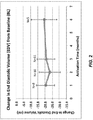
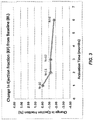
- the pacing pattern was applied continuously for a period of up to about six months. Changes in end systolic volume (ESV), end diastolic volume (EDV), and ejection fraction (EF) were derived from echocardiogram data.
- ESV end systolic volume
- EDV end diastolic volume
- EF ejection fraction
- end systolic volume (ESV) decreased by approximately 7 ml (about 15%)
- end diastolic volume (EDV) decreased by approximately 20 ml (about 17%)
- ejection fraction (EF) decreased slightly (about a 2% decrease).
- ESV end systolic volume
- EDV end diastolic volume
- EF ejection fraction
- Cardiac volume (V) in turn is a function of R 3 , so T is a direct function of V 1/3 . Therefore, when V decreases by approximately 20%, R decreases by approximately 7%, and so does T. In other words, a 20% decrease in V is (0.8 ⁇ V), and (0.8) 1/3 equals 0.93, yielding (0.93 ⁇ R), or a 0.07 (or 7%) decrease in R. Extending this analysis to the at least 5% reduction suggested by the experimental observations, when V decreases by approximately 5%, R decreases by approximately 2%, and so does T.
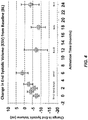
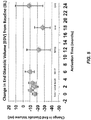
- Figures 4-6 illustrate a second set of experimental results according to a second embodiment, over a longer period of activation time (about twenty-four months), and including a greater number of patients. Similar to the first embodiment, in the experiment of the second embodiment, a plurality of patients' hearts were paced at the ventricle and atrium using a pacing pattern that included 9 to 10 pulses having a first stimulation setting (according to which the ventricle was stimulated 40-90 milliseconds after atrial activation) and 1 to 2 pulses having a second stimulation setting (according to which the ventricle was stimulated 100-180 milliseconds after atrial activation). Pulses having the first stimulation setting reduced atrial kick, while pulses having the second stimulation setting did not do so.
- the pacing pattern was applied continuously for a period of up to about twenty-four months.
- Changes in end systolic volume (ESV), end diastolic volume (EDV), and ejection fraction (EF) were derived from echocardiogram data.
- ESV end systolic volume
- EDV end diastolic volume
- EF ejection fraction
- end systolic volume (ESV) and end diastolic volume (EDV) remained at reduced levels, with values at the twenty-four month decreased by about 9% and 8%, respectively, while ejection fraction (EF) initially decreased slightly and insignificantly, and later increased steadily (to about a 2% increase at twenty-four months).
- EF ejection fraction
- a stimulation pattern may be configured to reduce the at least one of end systolic volume (ESV) and end diastolic volume (EDV) by at least 5% and maintain the at least one of end systolic volume (ESV) and end diastolic volume (EDV) on average at such reduced volume for a time period of at least one hour, including as long as three months, twenty-four months, or even longer.
- a method for treating cardiac malfunction may include delivering a stimulation pattern of stimulation pulses to at least one cardiac chamber of a heart. At least one of the stimulation pulses may have a first stimulation setting configured to reduce at least one of end systolic volume (ESV) and end diastolic volume (EDV) in the heart and at least one of the stimulation pulses may have a second stimulation setting different from the first stimulation setting.
- ESV end systolic volume
- EDV end diastolic volume
- the stimulation pattern may be configured to reduce the at least one of end systolic volume (ESV) and end diastolic volume (EDV) by at least 5% and maintain the at least one of end systolic volume (ESV) and end diastolic volume (EDV) on average at such reduced volume for a time period of at least one hour.
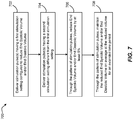
- Figure 7 illustrates a method 700 for treating cardiac malfunction that includes delivering a stimulation pattern of stimulation pulses to at least one cardiac chamber of a heart.
- the method may begin by delivering at least one stimulation pulse having a first stimulation setting configured to reduce at least one of end systolic volume (ESV) and end diastolic volume (EDV) in the heart.
- the method may continue by delivering at least one stimulation pulse having a second stimulation setting different from the first stimulation setting.
- step 706 reduces end systolic volume (ESV) and/or end diastolic volume (EDV) by at least 5% and in step 708 maintains the reduced end systolic volume (ESV) and/or end diastolic volume (EDV) on average at such reduced volume for an extended time period (e.g., at least one hour).
- ESV end systolic volume
- EDV end diastolic volume
- step 708 maintains the reduced end systolic volume (ESV) and/or end diastolic volume (EDV) on average at such reduced volume for an extended time period (e.g., at least one hour).
- the time period may be at least three months.
- the method may include a stimulation pattern configured to reduce cardiac strain by at least 2% and maintain the cardiac strain on average at such reduced strain for the time period.
- the method may include a stimulation pattern configured to maintain blood pressure within an average pressure of ⁇ 10% as compared to a pretreatment blood pressure value for the time period.
- the method may include a stimulation pattern configured to prevent cardiac remodeling in the patient.
- the method may provide that the first stimulation setting is configured to reduce or prevent atrial kick in at least one ventricle and at least one of the stimulation pulses has a second stimulation setting different from the first stimulation setting.
- the method may provide that the first stimulation setting is configured to reduce the at least one of end systolic volume (ESV) and end diastolic volume (EDV) by at least 5% and the second stimulation setting is configured to reduce a baroreflex response or adaptation to the reduction in the at least one of end systolic volume (ESV) and end diastolic volume (EDV).
- the stimulation pattern is configured not to activate a baroreceptor of the patient.
- the method may provide that the stimulation pattern is configured to reduce a baroreflex response or adaptation to the reduction in the at least one of end systolic volume (ESV) and end diastolic volume (EDV).
- ESV end systolic volume
- EDV end diastolic volume
- the method may provide that the first stimulation setting is configured to reduce the at least one of end systolic volume (ESV) and end diastolic volume (EDV) by at least 5% and the second stimulation setting is configured to reduce a neuronal response or adaptation to the reduction in the at least one of end systolic volume (ESV) and end diastolic volume (EDV).
- ESV end systolic volume
- EDV end diastolic volume
- EDV end diastolic volume
- the method may provide that the stimulation pattern is configured to reduce a neuronal response or adaptation to the reduction in the at least one of end systolic volume (ESV) and end diastolic volume (EDV).
- ESV end systolic volume
- EDV end diastolic volume
- the method may provide that the first stimulation setting is configured to reduce the at least one of end systolic volume (ESV) and end diastolic volume (EDV) by at least 5% and the second stimulation setting is configured to increase hormonal secretion.
- ESV end systolic volume
- EDV end diastolic volume
- the method may provide that the stimulation pattern is configured to increase hormonal secretion.
- the system of the present invention provides that the first stimulation setting comprises stimulating a ventricle of the heart 40-90 milliseconds after atrial activation.
- the method may provide that the second stimulation setting comprises stimulating an atrium of the heart to thereby produce atrial stimulation.
- the system of the present invention provides that the second stimulation setting comprises stimulating a ventricle of the heart 100-180 milliseconds after atrial activation.
- the method may provide that the second stimulation setting comprises allowing a natural AV delay to occur.
- the system may provide that the stimulation pattern includes at least 4 consecutive heartbeats having the first stimulation setting for every 1 consecutive heartbeat having the second stimulation setting.
- the system may provide that the stimulation pattern includes at least 8 consecutive heartbeats having the first stimulation setting for every 1 consecutive heartbeat having the second stimulation setting.
- the method may provide that the stimulation pattern comprises at least one stimulation pulse having a third stimulation setting different from the first and second stimulation settings.
- the method may provide that the cardiac malfunction is associated with an increase in at least one of end systolic volume (ESV) and end diastolic volume (EDV).
- ESV end systolic volume
- EDV end diastolic volume
- the method may provide that the cardiac malfunction is congestive heart failure.
- the method may further include applying the stimulation pattern at a stimulation pattern configuration for a first period, sensing at least one parameter indicative of at least one of end systolic volume (ESV), end diastolic volume (EDV), cardiac strain, and blood pressure for the first period, and adjusting the stimulation pattern configuration according to the sensing.
- ESV end systolic volume
- EDV end diastolic volume
- cardiac strain cardiac strain
- blood pressure for the first period
- adjusting the stimulation pattern includes adjusting at least one of the first stimulation setting and the second stimulation setting.
- adjusting the stimulation pattern configuration includes adjusting at least one of the number and proportion of at least one of stimulation pulses having the first stimulation setting and stimulation pulses having the second stimulation setting within the stimulation pattern.
- the invention provides a system for treating cardiac malfunction.
- the system includes a stimulation circuit configured to deliver a stimulation pulse to at least one cardiac chamber of a heart of a patient, and at least one controller configured to execute delivery of a stimulation pattern of stimulation pulses to the at least one cardiac chamber.
- At least one of the stimulation pulses have a first stimulation setting configured to reduce at least one of end systolic volume (ESV) and end diastolic volume (EDV) in the heart and at least one of the stimulation pulses have a second stimulation setting different from the first stimulation setting.
- ESV end systolic volume
- EDV end diastolic volume
- the stimulation pattern may be configured to reduce the at least one of end systolic volume (ESV) and end diastolic volume (EDV) by at least 5% and maintain the at least one of end systolic volume (ESV) and end diastolic volume (EDV) on average at such reduced volume for a time period of at least one hour.
- the at least one controller may be configured to receive input data relating to at least one sensed parameter indicative of at least one of end systolic volume (ESV), end diastolic volume (EDV), cardiac strain, and blood pressure for the time period and to adjust the stimulation pattern configuration according to the at least one sensed parameter.
- ESV end systolic volume
- EDV end diastolic volume
- cardiac strain cardiac strain
- blood pressure blood pressure
- system may further comprise at least one sensor configured to sense the at least one sensed parameter and to communicate the input data to the at least one controller.
- the at least one controller, the stimulation circuit, and the at least one sensor may be combined in a single device.
- FIG 8 illustrates an embodiment of a system 800 for treating cardiac malfunction, which includes a stimulation circuit and at least one controller as described above.
- System 800 may be constructed and have components similar to a cardiac pacemaker essentially as known in the art with some modifications as discussed herein.
- the system, or device is implantable.
- the system comprises components that may provide additional and/or alternative electrical treatments of the heart (e.g., defibrillation).
- System 800 may be configured for implantation in the body of a patient essentially as is known in the art for implantable pacemakers, optionally with some modifications as discussed herein.
- System 800 may include a biocompatible body 51, one or more controllers 52, a power source 53, and a telemetry unit 56.
- Body 51 may comprise a housing for encasing a plurality of components of the system.
- Controller(s) 52 may be configured to control the operation of the system, and may implement any of the embodiments and methods disclosed herein.
- controller(s) 52 may control the delivery of stimulation pulses.
- power source 53 may include a battery.
- power source 53 may include a rechargeable battery.
- power source 53 may include a battery that is rechargeable by induction.
- telemetry unit 56 may be configured to communicate with one or more other units and/or components.
- telemetry unit 56 may be configured to communicate with an external programmer and/or a receiving unit for receiving data recorded on system 800 during operation.
- system 800 may include one or more electrodes and/or sensors.
- the electrodes and/or sensors may be integrated in system 800, attached thereto, and/or connectable therewith.
- the electrodes may include ventricular electrode(s) 561 configured to pace at least one ventricle. Additionally or alternatively, the system may be connected, optionally via wires or wirelessly, to at least one implanted artificial valve 562.
- system 800 may comprise one or more atrial electrode(s) 57 for pacing one or more atria, and/or one or more atrial sensors 58 for sensing the onset of atrial excitation, and/or one or more sensors 59 for providing other feedback parameters (e.g., a blood-pressure-related parameter and a cardiac strain/volume related parameter).
- atrial electrode(s) 57 for pacing one or more atria
- atrial sensors 58 for sensing the onset of atrial excitation
- sensors 59 for providing other feedback parameters (e.g., a blood-pressure-related parameter and a cardiac strain/volume related parameter).
- sensor(s) 59 may comprise one or more pressure sensors, electrical sensors (e.g., ECG monitoring), flow sensors, heart rate sensors, activity sensors, and/or volume sensors.
- Sensor(s) 59 may include mechanical sensors and/or electronic sensors (e.g., ultrasound sensors, electrodes, and/or RF transceivers).
- sensor(s) 59 may communicate with system 800 via telemetry.
- ventricular electrode(s) 561 and/or atrial electrode(s) 57 may be standard pacing electrodes.
- Ventricular electrode(s) 561 may be positioned relative to the heart at positions as known in the art for ventricular pacing.
- ventricular electrode(s) may be placed in and/or near one or more of the ventricles.
- atrial electrode(s) 57 may be placed in and/or near one or more of the atria.
- atrial electrode(s) 57 may be attached to the one or more atria at one or more positions selected to provide early detection of atrial excitation or depolarization.
- atrial electrode(s) 57 may be attached to the right atrium near the site of the sinoatrial (SA) node.
- SA sinoatrial
- One position of ventricular electrode(s) 561 may be such that pacing may reduce or minimize the prolongation of QRS when the heart is paced, to reduce or even minimize dyssynchrony. In some embodiments, this position is on the ventricular septum near the Bundle of His. Ventricular electrode(s) 561 may additionally or alternatively be placed on the epicardium of the heart or in coronary veins. More than one electrode can be placed on the ventricles to provide biventricular pacing, optionally to reduce dyssynchrony.
- System 800 may include a pulse generator, or stimulation circuit, configured to deliver a stimulation pulse to at least one cardiac chamber.
- the pulse generator, or stimulation circuit may include some or all standard capabilities of a conventional pacemaker.
- Controller 52 may be configured to control the pulse generator, or stimulation circuit.
- Atrial sensor(s) 58 (and optionally other electrode sensors configured to sense other heart chambers) may be connected to system 800 via specific circuits that amplify the electrical activity of the heart and allow sampling and detection of the activation of the specific chamber.
- Other circuits may be configured to deliver stimulation to a specific electrode to pace the heart, creating propagating electrical activation.
- one or more additional sensors 59 may be placed in and/or on one or more of the atria and/or in and/or on one or more of the ventricles and/or in and/or on one or more other locations that might optionally be adjacent the heart.
- one or more sensors may be placed on and/or in vena cava and/or on one or more arteries and/or within one or more cardiac chambers. These sensors may measure pressure, or other indicators, such as, for example, impedance and/or flow.
- controller 52 may comprise or be a microprocessor powered by power source 53.
- system 800 may comprise a clock 54, for example, generated by a crystal.
- System 800 may comprise an internal memory 55 and/or be connected to external memory.
- device may connect to an external memory via telemetry unit 56.
- telemetry unit 56 may be configured to allow communication with external devices such as a programmer and/or one or more of sensors 59. Any and all feedback information and/or a log of device operation may be stored in internal memory 55 and/or relayed by telemetry unit 56 to an external memory unit.
- controller 52 may operate in accordance with at least one embodiment of a method described herein.
- system 800 may comprise one or more sensors for sensing one or more feedback parameters to control the application of the AV delay and/or its magnitude.
Landscapes
- Health & Medical Sciences (AREA)
- Cardiology (AREA)
- Life Sciences & Earth Sciences (AREA)
- Heart & Thoracic Surgery (AREA)
- Engineering & Computer Science (AREA)
- Biomedical Technology (AREA)
- Nuclear Medicine, Radiotherapy & Molecular Imaging (AREA)
- Radiology & Medical Imaging (AREA)
- Animal Behavior & Ethology (AREA)
- General Health & Medical Sciences (AREA)
- Public Health (AREA)
- Veterinary Medicine (AREA)
- Hematology (AREA)
- Physiology (AREA)
- Biophysics (AREA)
- Hospice & Palliative Care (AREA)
- Physics & Mathematics (AREA)
- Fluid Mechanics (AREA)
- Electrotherapy Devices (AREA)
Applications Claiming Priority (3)
| Application Number | Priority Date | Filing Date | Title |
|---|---|---|---|
| US201562217299P | 2015-09-11 | 2015-09-11 | |
| US15/259,282 US10342982B2 (en) | 2015-09-11 | 2016-09-08 | Methods and systems for treating cardiac malfunction |
| PCT/US2016/051023 WO2017044794A1 (en) | 2015-09-11 | 2016-09-09 | Methods and systems for treating cardiac malfunction |
Publications (3)
| Publication Number | Publication Date |
|---|---|
| EP3347090A1 EP3347090A1 (en) | 2018-07-18 |
| EP3347090A4 EP3347090A4 (en) | 2019-04-24 |
| EP3347090B1 true EP3347090B1 (en) | 2021-11-03 |
Family
ID=58240156
Family Applications (1)
| Application Number | Title | Priority Date | Filing Date |
|---|---|---|---|
| EP16845150.8A Active EP3347090B1 (en) | 2015-09-11 | 2016-09-09 | Systems for treating cardiac malfunction |
Country Status (9)
| Country | Link |
|---|---|
| US (2) | US10342982B2 (enExample) |
| EP (1) | EP3347090B1 (enExample) |
| JP (1) | JP6999545B2 (enExample) |
| KR (1) | KR102630590B1 (enExample) |
| CN (1) | CN108025173B (enExample) |
| AU (1) | AU2016319787B2 (enExample) |
| CA (1) | CA2996312C (enExample) |
| ES (1) | ES2898781T3 (enExample) |
| WO (1) | WO2017044794A1 (enExample) |
Cited By (7)
| Publication number | Priority date | Publication date | Assignee | Title |
|---|---|---|---|---|
| US11389658B2 (en) | 2015-09-11 | 2022-07-19 | Backbeat Medical, Llc | Methods and systems for treating cardiac malfunction |
| US11406829B2 (en) | 2004-02-12 | 2022-08-09 | Backbeat Medical, Llc | Cardiac stimulation apparatus and method for the control of hypertension |
| US11426589B2 (en) | 2016-04-22 | 2022-08-30 | Backbeat Medical, Llc | Methods and systems for controlling blood pressure |
| US11452875B2 (en) | 2012-12-21 | 2022-09-27 | Backbeat Medical, Llc | Methods and systems for lowering blood pressure through reduction of ventricle filling |
| US11529520B2 (en) | 2006-09-25 | 2022-12-20 | Backbeat Medical, Llc | Methods and apparatus to stimulate heart atria |
| US11577059B2 (en) | 2005-03-02 | 2023-02-14 | Backbeat Medical, Llc | Methods and apparatus to increase secretion of endogenous naturetic hormones |
| US11759639B2 (en) | 2008-09-08 | 2023-09-19 | Backbeat Medical, Llc | Methods and apparatus to stimulate the heart |
Families Citing this family (1)
| Publication number | Priority date | Publication date | Assignee | Title |
|---|---|---|---|---|
| CA3082402A1 (en) * | 2017-11-13 | 2019-05-16 | Promptu Systems Corporation | Systems and methods for adaptive proper name entity recognition and understanding |
Citations (1)
| Publication number | Priority date | Publication date | Assignee | Title |
|---|---|---|---|---|
| WO2007044279A1 (en) * | 2005-10-07 | 2007-04-19 | Medtronic, Inc. | Method and apparatus for monitoring and optimizing atrial function |
Family Cites Families (146)
| Publication number | Priority date | Publication date | Assignee | Title |
|---|---|---|---|---|
| NL254009A (enExample) | 1959-09-23 | 1900-01-01 | ||
| US3683934A (en) | 1968-08-31 | 1972-08-15 | Bohdan A Bukowiecki | Method and apparatus for providing synchronized stimulus and coupled stimulation from an implanted heart stimulator having a constant rhythm |
| US3814106A (en) | 1972-04-14 | 1974-06-04 | American Optical Corp | Atrial and ventricular pacer having independent rate controls and means to maintain a constant av delay |
| FR2248020B1 (enExample) | 1973-10-18 | 1977-05-27 | Pequignot Michel | |
| US4407287A (en) | 1981-02-17 | 1983-10-04 | Medtronic, Inc. | Atrial and ventricular-only pacemaker responsive to premature ventricular contractions |
| US4686988A (en) | 1984-10-19 | 1987-08-18 | Sholder Jason A | Pacemaker system and method for measuring and monitoring cardiac activity and for determining and maintaining capture |
| JPH0210421Y2 (enExample) | 1984-12-24 | 1990-03-15 | ||
| US4719921A (en) | 1985-08-28 | 1988-01-19 | Raul Chirife | Cardiac pacemaker adaptive to physiological requirements |
| DE3607821A1 (de) | 1986-03-08 | 1987-09-10 | Bayer Ag | Aminoester-dihydropyridine, verfahren zur herstellung und ihre verwendung |
| US5163429A (en) | 1987-10-06 | 1992-11-17 | Leonard Bloom | Hemodynamically responsive system for treating a malfunctioning heart |
| US4899752A (en) | 1987-10-06 | 1990-02-13 | Leonard Bloom | System for and method of therapeutic stimulation of a patient's heart |
| US5318595A (en) | 1989-09-25 | 1994-06-07 | Ferek Petric Bozidar | Pacing method and system for blood flow velocity measurement and regulation of heart stimulating signals based on blood flow velocity |
| US5199428A (en) | 1991-03-22 | 1993-04-06 | Medtronic, Inc. | Implantable electrical nerve stimulator/pacemaker with ischemia for decreasing cardiac workload |
| US5154171A (en) | 1991-06-15 | 1992-10-13 | Raul Chirife | Rate adaptive pacemaker controlled by ejection fraction |
| US5213098A (en) | 1991-07-26 | 1993-05-25 | Medtronic, Inc. | Post-extrasystolic potentiation stimulation with physiologic sensor feedback |
| US5334222A (en) | 1992-11-03 | 1994-08-02 | Cardiac Pacemakers, Inc. | Cardiac stimulating apparatus and method for heart failure therapy |
| US5971911A (en) | 1993-06-17 | 1999-10-26 | Wilk; Peter J. | Intrapericardial assist device and associated method |
| US5800334A (en) | 1993-06-17 | 1998-09-01 | Wilk; Peter J. | Intrapericardial assist device and associated method |
| US5601615A (en) | 1994-08-16 | 1997-02-11 | Medtronic, Inc. | Atrial and ventricular capture detection and threshold-seeking pacemaker |
| US5612380A (en) | 1994-09-27 | 1997-03-18 | The Scripps Research Institute | Method for sleep induction |
| US5601613A (en) | 1995-02-07 | 1997-02-11 | Pacesetter, Inc. | Method and apparatus for providing enhanced 2:1 block response with rate-responsive AV delay in a pacemaker |
| US6271015B1 (en) | 1995-06-12 | 2001-08-07 | The Scripps Research Institute | Fatty-acid amide hydrolase |
| EP0755696B1 (fr) | 1995-07-25 | 2004-02-18 | ELA MEDICAL (Société anonyme) | Stimulateur cardiaque double chambre |
| US5891176A (en) | 1996-05-09 | 1999-04-06 | Pacesetter, Inc. | System and method for providing hemodynamically optimal pacing |
| US6123662A (en) | 1998-07-13 | 2000-09-26 | Acorn Cardiovascular, Inc. | Cardiac disease treatment and device |
| EP1779890B8 (en) | 1997-07-16 | 2009-07-08 | Metacure Limited | Smooth muscle controller |
| WO1999004836A1 (en) | 1997-07-22 | 1999-02-04 | Chase Medical Inc. | Catheter system and method for posterior epicardial revascularization and intracardiac surgery on a beating heart |
| US5928271A (en) | 1998-02-25 | 1999-07-27 | Medtronic, Inc. | Atrial anti-arrhythmia pacemaker and method using high rate atrial and backup ventricular pacing |
| US6314322B1 (en) | 1998-03-02 | 2001-11-06 | Abiomed, Inc. | System and method for treating dilated cardiomyopathy using end diastolic volume (EDV) sensing |
| US6067470A (en) | 1998-03-05 | 2000-05-23 | Mower Family Chf Treatment Irrevocable Trust | System and method for multiple site biphasic stimulation to revert ventricular arrhythmias |
| US7110817B2 (en) | 1998-05-08 | 2006-09-19 | Cardiac Pacemakers, Inc. | Method and apparatus for optimizing ventricular synchrony during DDD resynchronization therapy using adjustable atrio-ventricular delays |
| US7158830B2 (en) | 1998-05-08 | 2007-01-02 | Cardiac Pacemakers, Inc. | Method and apparatus for optimizing stroke volume during DDD resynchronization therapy using adjustable atrio-ventricular delays |
| US6241678B1 (en) | 1998-08-21 | 2001-06-05 | Aga Medical Corporation | Sizing catheter for measuring septal defects |
| US7713282B2 (en) | 1998-11-06 | 2010-05-11 | Atritech, Inc. | Detachable atrial appendage occlusion balloon |
| US8257428B2 (en) | 1999-08-09 | 2012-09-04 | Cardiokinetix, Inc. | System for improving cardiac function |
| US7674222B2 (en) | 1999-08-09 | 2010-03-09 | Cardiokinetix, Inc. | Cardiac device and methods of use thereof |
| US6450942B1 (en) | 1999-08-20 | 2002-09-17 | Cardiorest International Ltd. | Method for reducing heart loads in mammals |
| US6377852B1 (en) | 2000-01-20 | 2002-04-23 | Pacesetter, Inc. | Implanatable cardiac stimulation device and method for prolonging atrial refractoriness |
| US6507756B1 (en) | 2000-04-03 | 2003-01-14 | Medtronic, Inc. | Dual chamber pacing system having time-adaptive AV delay |
| ES2312430T3 (es) | 2000-05-16 | 2009-03-01 | Suntory Limited | Composicion normalizadora del ritmo circadiano. |
| US7618364B2 (en) | 2000-06-12 | 2009-11-17 | Acorn Cardiovascular, Inc. | Cardiac wall tension relief device and method |
| US7623926B2 (en) | 2000-09-27 | 2009-11-24 | Cvrx, Inc. | Stimulus regimens for cardiovascular reflex control |
| US6985774B2 (en) | 2000-09-27 | 2006-01-10 | Cvrx, Inc. | Stimulus regimens for cardiovascular reflex control |
| US6580946B2 (en) | 2001-04-26 | 2003-06-17 | Medtronic, Inc. | Pressure-modulated rate-responsive cardiac pacing |
| US6628988B2 (en) | 2001-04-27 | 2003-09-30 | Cardiac Pacemakers, Inc. | Apparatus and method for reversal of myocardial remodeling with electrical stimulation |
| US7346394B2 (en) | 2001-04-27 | 2008-03-18 | Cardiac Pacemakers, Inc. | Cardiac stimulation at high ventricular wall stress areas |
| US6665564B2 (en) | 2001-05-21 | 2003-12-16 | Cardiac Pacemakers, Inc. | Cardiac rhythm management system selecting A-V delay based on interval between atrial depolarization and mitral valve closure |
| ITRM20010356A1 (it) | 2001-06-21 | 2002-12-23 | Sigma Tau Ind Farmaceuti | "5-alogeno derivati della triptamina utili come ligandi del recettore5-ht6 e/o 5-ht7 della serotonina. |
| IL160654A0 (en) | 2001-08-28 | 2004-07-25 | Medtronic Inc | Implantable medical device for treating cardiac mechanical dysfunction by electrical stimulation |
| US8571653B2 (en) | 2001-08-31 | 2013-10-29 | Bio Control Medical (B.C.M.) Ltd. | Nerve stimulation techniques |
| US6871096B2 (en) | 2001-10-26 | 2005-03-22 | Medtronic, Inc. | System and method for bi-ventricular fusion pacing |
| US6795732B2 (en) | 2001-10-30 | 2004-09-21 | Medtronic, Inc. | Implantable medical device employing sonomicrometer output signals for detection and measurement of cardiac mechanical function |
| US6668195B2 (en) | 2001-10-30 | 2003-12-23 | Medtronic, Inc. | Methods and apparatus for reducing the likelihood of atrial fibrillation |
| US6832113B2 (en) | 2001-11-16 | 2004-12-14 | Cardiac Pacemakers, Inc. | Non-invasive method and apparatus for cardiac pacemaker pacing parameter optimization and monitoring of cardiac dysfunction |
| US6666826B2 (en) | 2002-01-04 | 2003-12-23 | Cardiac Pacemakers, Inc. | Method and apparatus for measuring left ventricular pressure |
| US7155284B1 (en) | 2002-01-24 | 2006-12-26 | Advanced Bionics Corporation | Treatment of hypertension |
| US6963777B2 (en) | 2002-03-13 | 2005-11-08 | Cardiac Pacemakers, Inc. | Cardiac rhythm management system and method using time between mitral valve closure and aortic ejection |
| US6882882B2 (en) | 2002-04-22 | 2005-04-19 | Medtronic, Inc. | Atrioventricular delay adjustment |
| US6934586B2 (en) | 2002-04-22 | 2005-08-23 | Medtronic, Inc. | Cardiac resynchronization with adaptive A1-A2 and/or V1-V2 intervals |
| US8036745B2 (en) | 2004-06-10 | 2011-10-11 | Bio Control Medical (B.C.M.) Ltd. | Parasympathetic pacing therapy during and following a medical procedure, clinical trauma or pathology |
| US7277761B2 (en) * | 2002-06-12 | 2007-10-02 | Pacesetter, Inc. | Vagal stimulation for improving cardiac function in heart failure or CHF patients |
| US7041061B2 (en) | 2002-07-19 | 2006-05-09 | Cardiac Pacemakers, Inc. | Method and apparatus for quantification of cardiac wall motion asynchrony |
| US7162300B2 (en) | 2003-01-13 | 2007-01-09 | Medtronic, Inc. | Synchronized atrial anti-tachy pacing system and method |
| US6887207B2 (en) | 2003-02-26 | 2005-05-03 | Medtronic, Inc. | Methods and apparatus for estimation of ventricular afterload based on ventricular pressure measurements |
| US7092755B2 (en) | 2003-03-18 | 2006-08-15 | Pacesetter, Inc. | System and method of cardiac pacing during sleep apnea |
| US6871088B2 (en) | 2003-03-20 | 2005-03-22 | Medtronic, Inc. | Method and apparatus for optimizing cardiac resynchronization therapy |
| CN1202871C (zh) | 2003-04-18 | 2005-05-25 | 清华大学 | 微型轴流式血泵的优化非恒速控制方法 |
| US7647103B2 (en) | 2003-04-23 | 2010-01-12 | Medtronic, Inc. | Addressing pacemaker syndrome |
| US7069079B2 (en) | 2003-04-24 | 2006-06-27 | Medtronic, Inc. | Pressure regulated atrio-ventricular delay for multi-site pacing |
| US20040215255A1 (en) | 2003-04-25 | 2004-10-28 | Vries Janneke De | Accurate identification of intrinsic atrial activity during overdrive pacing |
| US7445593B2 (en) | 2003-06-18 | 2008-11-04 | The Texas A&M University System | Device for proactive modulation of cardiac strain patterns |
| US7092759B2 (en) | 2003-07-30 | 2006-08-15 | Medtronic, Inc. | Method of optimizing cardiac resynchronization therapy using sensor signals of septal wall motion |
| US20050038478A1 (en) | 2003-08-11 | 2005-02-17 | Klepfer Ruth N. | Activation recovery interval for classification of cardiac beats in an implanted device |
| ES2295932T3 (es) | 2003-09-12 | 2008-04-16 | Nmt Medical, Inc. | Dispositivo para evitar la formacion de trombos en el apendice atrial izquierdo. |
| JP2007506731A (ja) | 2003-09-26 | 2007-03-22 | ファイザー・プロダクツ・インク | Npyy5受容体アンタゴニストによる急速眼球運動(rem)睡眠妨害に関連する神経障害の治療 |
| US7142916B2 (en) | 2003-10-07 | 2006-11-28 | Medtronic, Inc. | Cardiac pacing modality having improved blanking, timing, and therapy delivery methods for extra-systolic stimulation pacing therapy |
| US7233824B2 (en) | 2003-10-07 | 2007-06-19 | Medtronic, Inc. | Secure and efficacious therapy delivery for an extra-systolic stimulation pacing engine |
| US7184832B2 (en) | 2003-10-07 | 2007-02-27 | Medtronic, Inc. | Refractory period tracking and arrhythmia detection |
| US9002452B2 (en) | 2003-11-07 | 2015-04-07 | Cardiac Pacemakers, Inc. | Electrical therapy for diastolic dysfunction |
| JP4755111B2 (ja) | 2003-12-24 | 2011-08-24 | カーディアック ペースメイカーズ, インコーポレイテッド | 圧反射刺激システム |
| US7486991B2 (en) | 2003-12-24 | 2009-02-03 | Cardiac Pacemakers, Inc. | Baroreflex modulation to gradually decrease blood pressure |
| US7706884B2 (en) | 2003-12-24 | 2010-04-27 | Cardiac Pacemakers, Inc. | Baroreflex stimulation synchronized to circadian rhythm |
| US7643875B2 (en) | 2003-12-24 | 2010-01-05 | Cardiac Pacemakers, Inc. | Baroreflex stimulation system to reduce hypertension |
| US8070708B2 (en) | 2004-02-03 | 2011-12-06 | V-Wave Limited | Device and method for controlling in-vivo pressure |
| US8086315B2 (en) | 2004-02-12 | 2011-12-27 | Asap Medical, Inc. | Cardiac stimulation apparatus and method for the control of hypertension |
| US20050222640A1 (en) | 2004-02-12 | 2005-10-06 | Schwartz Robert S | Heart muscle stimulator and pacing method for treating hypertension |
| US20050234543A1 (en) | 2004-03-30 | 2005-10-20 | Nmt Medical, Inc. | Plug for use in left atrial appendage |
| GB0416320D0 (en) | 2004-07-21 | 2004-08-25 | Imp College Innovations Ltd | An apparatus and a method for programming a pacemaker |
| US7363077B1 (en) * | 2004-11-09 | 2008-04-22 | Pacesetters, Inc. | Adaptive timing interval control method for treating congestive heart failure |
| US7289849B2 (en) | 2005-01-28 | 2007-10-30 | Cardiac Pacemakers, Inc. | Atrial pacing therapy for treating mitral regurgitation |
| US20060173504A1 (en) | 2005-01-28 | 2006-08-03 | Qingsheng Zhu | Electrical pacing therapy for treating mitral regurgitation |
| US8224444B2 (en) | 2005-02-18 | 2012-07-17 | Bio Control Medical (B.C.M.) Ltd. | Intermittent electrical stimulation |
| US8165674B2 (en) | 2005-03-02 | 2012-04-24 | Backbeat Medical, Inc. | Methods and apparatus to increase secretion of endogenous naturetic hormones |
| US7286873B2 (en) | 2005-03-31 | 2007-10-23 | Medtronic, Inc. | Method of optimizing mechanical heart rate during delivery of coupled or paired pacing |
| US7493161B2 (en) | 2005-05-10 | 2009-02-17 | Cardiac Pacemakers, Inc. | System and method to deliver therapy in presence of another therapy |
| US7904158B2 (en) | 2005-04-28 | 2011-03-08 | Medtronic, Inc. | Measurement of coronary sinus parameters to optimize left ventricular performance |
| US7580747B1 (en) | 2005-07-13 | 2009-08-25 | Pacesetter, Inc. | Inducing premature atrial contractions for the purpose of monitoring autonomic tone, risk of sudden cardiac death and ischemic events |
| US9125732B2 (en) | 2005-07-25 | 2015-09-08 | Vascular Dynamics, Inc. | Devices and methods for control of blood pressure |
| WO2007021258A1 (en) | 2005-08-11 | 2007-02-22 | Schwartz Robert S | Heart muscle stimulator and pacing method for treating hypertension |
| US7725173B2 (en) | 2005-08-24 | 2010-05-25 | Ge Healthcare Finland Oy | Measurement of responsiveness of a subject with lowered level of consciousness |
| US7650181B2 (en) | 2005-09-14 | 2010-01-19 | Zoll Medical Corporation | Synchronization of repetitive therapeutic interventions |
| US20070073352A1 (en) | 2005-09-28 | 2007-03-29 | Euler David E | Method and apparatus for regulating a cardiac stimulation therapy |
| US20070239037A1 (en) * | 2005-10-05 | 2007-10-11 | Stefano Ghio | Interventricular delay as a prognostic marker for reverse remodeling outcome from cardiac resynchronization therapy |
| CN2897151Y (zh) | 2006-03-10 | 2007-05-09 | 上海莱恩生物医学科技有限公司 | 心脏导管工作站 |
| US7877144B2 (en) | 2006-07-26 | 2011-01-25 | Medtronic, Inc. | Predicting chronic optimal A-V intervals for biventricular pacing via observed inter-atrial delay |
| US7869874B2 (en) | 2006-09-25 | 2011-01-11 | G&L Consulting, Llc | Methods and apparatus to stimulate heart atria |
| US8046070B2 (en) | 2006-11-07 | 2011-10-25 | Cardiac Pacemakers, Inc. | Pre-excitation pacing for treatment of hypertension |
| US20080114408A1 (en) | 2006-11-13 | 2008-05-15 | Shuros Allan C | Method and device for simulated exercise |
| US8019416B2 (en) | 2006-11-13 | 2011-09-13 | Cardiac Pacemakers, Inc. | Reduction of AV delay for treatment of cardiac disease |
| US7711420B2 (en) | 2007-03-19 | 2010-05-04 | Cardiac Pacemakers, Inc. | Closed-loop control of cardioprotective pre-excitation pacing |
| US7676264B1 (en) | 2007-04-13 | 2010-03-09 | Pacesetter, Inc. | Systems and methods for use by an implantable medical device for evaluating ventricular dyssynchrony based on T-wave morphology |
| WO2008137452A1 (en) | 2007-05-04 | 2008-11-13 | Kenergy Royalty Company, Llc | Implantable high efficiency digital stimulation device |
| US20080281368A1 (en) | 2007-05-09 | 2008-11-13 | Cherik Bulkes | Implantable digital device for tissue stimulation |
| US8027724B2 (en) | 2007-08-03 | 2011-09-27 | Cardiac Pacemakers, Inc. | Hypertension diagnosis and therapy using pressure sensor |
| US8010198B2 (en) | 2007-09-13 | 2011-08-30 | Cardiac Pacemakers, Inc. | Systems and methods for avoiding neural stimulation habituation |
| US8972007B2 (en) | 2007-09-25 | 2015-03-03 | Cardiac Pacemakers, Inc. | Variable shortening of AV delay for treatment of cardiac disease |
| US8352032B2 (en) | 2007-11-01 | 2013-01-08 | Cardiac Pacemakers, Inc. | Monitoring right ventricular hemodynamic function during pacing optimization |
| US9005106B2 (en) | 2008-01-31 | 2015-04-14 | Enopace Biomedical Ltd | Intra-aortic electrical counterpulsation |
| US7956756B2 (en) | 2008-02-19 | 2011-06-07 | Alan Kubey | REM-sleep directed visual alarm system and method |
| EP2268354A1 (en) | 2008-03-13 | 2011-01-05 | Cardiac Pacemakers, Inc. | Autonomic balance monitoring to control intermittent therapy |
| US8380307B2 (en) | 2008-03-18 | 2013-02-19 | Biotronik Crm Patent Ag | Switch polarity pacing to improve cardiac resynchronization therapy |
| US20090247893A1 (en) | 2008-03-27 | 2009-10-01 | The General Electric Company | Method and apparatus for measuring responsiveness of a subject |
| JP2011519665A (ja) | 2008-05-08 | 2011-07-14 | カーディアック ペースメイカーズ, インコーポレイテッド | 房室遅延時間計算システム |
| US8155739B2 (en) | 2008-06-20 | 2012-04-10 | Pacesetter, Inc. | Cardiac resynchronization therapy optimization using mechanical dyssynchrony and shortening parameters from realtime electrode motion tracking |
| US8768469B2 (en) * | 2008-08-08 | 2014-07-01 | Enteromedics Inc. | Systems for regulation of blood pressure and heart rate |
| WO2010019444A1 (en) | 2008-08-12 | 2010-02-18 | Cardiac Pacemakers, Inc. | Pressure-driven intermittent pacing therapy |
| US8340763B2 (en) | 2008-09-08 | 2012-12-25 | Backbeat Medical, Inc. | Methods and apparatus to stimulate heart atria |
| EP2349467B1 (en) | 2008-10-06 | 2017-08-23 | Cardiac Pacemakers, Inc. | Dynamic cardiac resynchronization therapy by tracking intrinsic conduction |
| US8929983B2 (en) | 2008-11-10 | 2015-01-06 | Cardiac Pacemakers, Inc. | Reverse hysteresis and mode switching for intermittent pacing therapy |
| US8050760B2 (en) | 2008-11-13 | 2011-11-01 | Pacesetter, Inc. | System and method for evaluating mechanical cardiac dyssynchrony based on multiple impedance vectors using an implantable medical device |
| US8755881B2 (en) | 2009-01-30 | 2014-06-17 | Medtronic, Inc. | Pacing therapy adjustment based on ventriculo-atrial delay |
| DE102009002397A1 (de) | 2009-04-15 | 2010-10-21 | Biotronik Crm Patent Ag | Herzmonitor |
| US8571656B2 (en) | 2009-12-15 | 2013-10-29 | Cardiac Pacemakers, Inc. | Ventricular pacing to augment atrial natriuretic hormone production |
| US20110160787A1 (en) | 2009-12-30 | 2011-06-30 | Medtronic, Inc. | Optimization of av delay using ventricular pressure signal |
| EP2374503B1 (fr) | 2010-04-08 | 2012-07-11 | Sorin CRM SAS | Dispositif médical implantable actif de stimulation vagale à optimisation du remplissage ventriculaire |
| US8509893B2 (en) | 2010-10-27 | 2013-08-13 | Medtronic, Inc. | Supraventricular stimulation to control ventricular rate |
| WO2012064743A2 (en) | 2010-11-08 | 2012-05-18 | The Johns Hopkins University | Methods for improving heart function |
| US10016233B2 (en) | 2010-12-06 | 2018-07-10 | Biosense Webster (Israel) Ltd. | Treatment of atrial fibrillation using high-frequency pacing and ablation of renal nerves |
| US8892204B2 (en) | 2010-12-17 | 2014-11-18 | Medtronic, Inc. | Aortic pacing to control cardiac afterload |
| US8478403B2 (en) | 2011-02-23 | 2013-07-02 | Pacesetter, Inc. | Implantable systems and methods for use therewith for monitoring and modifying arterial blood pressure without requiring an intravascular pressure transducer |
| US9008769B2 (en) | 2012-12-21 | 2015-04-14 | Backbeat Medical, Inc. | Methods and systems for lowering blood pressure through reduction of ventricle filling |
| WO2015094401A1 (en) | 2013-12-19 | 2015-06-25 | Backbeat Medical, Inc. | Methods and systems for controlling blood pressure by controlling atrial pressure |
| EP2964249A1 (en) * | 2013-03-06 | 2016-01-13 | Acorda Therapeutics, Inc. | Therapeutic dosing of a neuregulin or a fragment thereof for treatment or prophylaxis of heart failure |
| US9370662B2 (en) | 2013-12-19 | 2016-06-21 | Backbeat Medical, Inc. | Methods and systems for controlling blood pressure by controlling atrial pressure |
| US10342982B2 (en) | 2015-09-11 | 2019-07-09 | Backbeat Medical, Inc. | Methods and systems for treating cardiac malfunction |
| US10485658B2 (en) | 2016-04-22 | 2019-11-26 | Backbeat Medical, Inc. | Methods and systems for controlling blood pressure |
-
2016
- 2016-09-08 US US15/259,282 patent/US10342982B2/en active Active
- 2016-09-09 JP JP2018512118A patent/JP6999545B2/ja active Active
- 2016-09-09 CN CN201680052604.8A patent/CN108025173B/zh active Active
- 2016-09-09 KR KR1020187010005A patent/KR102630590B1/ko active Active
- 2016-09-09 ES ES16845150T patent/ES2898781T3/es active Active
- 2016-09-09 CA CA2996312A patent/CA2996312C/en active Active
- 2016-09-09 EP EP16845150.8A patent/EP3347090B1/en active Active
- 2016-09-09 WO PCT/US2016/051023 patent/WO2017044794A1/en not_active Ceased
- 2016-09-09 AU AU2016319787A patent/AU2016319787B2/en active Active
-
2019
- 2019-06-05 US US16/431,776 patent/US11389658B2/en active Active
Patent Citations (1)
| Publication number | Priority date | Publication date | Assignee | Title |
|---|---|---|---|---|
| WO2007044279A1 (en) * | 2005-10-07 | 2007-04-19 | Medtronic, Inc. | Method and apparatus for monitoring and optimizing atrial function |
Cited By (17)
| Publication number | Priority date | Publication date | Assignee | Title |
|---|---|---|---|---|
| US12029909B2 (en) | 2004-02-12 | 2024-07-09 | Backbeat Medical, Llc | Cardiac stimulation apparatus and method for the control of hypertension |
| US11406829B2 (en) | 2004-02-12 | 2022-08-09 | Backbeat Medical, Llc | Cardiac stimulation apparatus and method for the control of hypertension |
| US12440653B2 (en) | 2005-03-02 | 2025-10-14 | Backbeat Medical, Llc | Methods and apparatus to increase secretion of endogenous naturetic hormones |
| US11577059B2 (en) | 2005-03-02 | 2023-02-14 | Backbeat Medical, Llc | Methods and apparatus to increase secretion of endogenous naturetic hormones |
| US12605554B2 (en) | 2006-09-25 | 2026-04-21 | Backbeat Medical, Llc | Methods and apparatus to stimulate heart atria |
| US11529520B2 (en) | 2006-09-25 | 2022-12-20 | Backbeat Medical, Llc | Methods and apparatus to stimulate heart atria |
| US12239839B2 (en) | 2008-09-08 | 2025-03-04 | Backbeat Medical, Llc | Methods and apparatus to stimulate the heart |
| US11759639B2 (en) | 2008-09-08 | 2023-09-19 | Backbeat Medical, Llc | Methods and apparatus to stimulate the heart |
| US11986661B2 (en) | 2012-12-21 | 2024-05-21 | Backbeat Medical, Llc | Methods and systems for lowering blood pressure through reduction of ventricle filling |
| US11712567B2 (en) | 2012-12-21 | 2023-08-01 | Backbeat Medical, Llc | Methods and systems for controlling blood pressure by controlling atrial pressure |
| US12208271B2 (en) | 2012-12-21 | 2025-01-28 | Backbeat Medical, Llc | Methods and systems for controlling blood pressure by controlling atrial pressure |
| US12246180B2 (en) | 2012-12-21 | 2025-03-11 | Backbeat Medical, Llc | Methods and systems for controlling blood pressure by controlling atrial pressure |
| US11452875B2 (en) | 2012-12-21 | 2022-09-27 | Backbeat Medical, Llc | Methods and systems for lowering blood pressure through reduction of ventricle filling |
| US12458805B2 (en) | 2012-12-21 | 2025-11-04 | Backbeat Medical, Llc | Methods and systems for lowering blood pressure through reduction of ventricle filling |
| US11389658B2 (en) | 2015-09-11 | 2022-07-19 | Backbeat Medical, Llc | Methods and systems for treating cardiac malfunction |
| US11969598B2 (en) | 2016-04-22 | 2024-04-30 | Backbeat Medical, Llc | Methods and systems for controlling blood pressure |
| US11426589B2 (en) | 2016-04-22 | 2022-08-30 | Backbeat Medical, Llc | Methods and systems for controlling blood pressure |
Also Published As
| Publication number | Publication date |
|---|---|
| KR20180051601A (ko) | 2018-05-16 |
| KR102630590B1 (ko) | 2024-01-26 |
| JP6999545B2 (ja) | 2022-01-18 |
| AU2016319787A1 (en) | 2018-03-29 |
| US20190351237A1 (en) | 2019-11-21 |
| JP2018526135A (ja) | 2018-09-13 |
| US20170072203A1 (en) | 2017-03-16 |
| CN108025173B (zh) | 2022-03-04 |
| US11389658B2 (en) | 2022-07-19 |
| ES2898781T3 (es) | 2022-03-08 |
| AU2016319787B2 (en) | 2021-05-27 |
| CA2996312C (en) | 2024-02-20 |
| CA2996312A1 (en) | 2017-03-16 |
| CN108025173A (zh) | 2018-05-11 |
| EP3347090A1 (en) | 2018-07-18 |
| EP3347090A4 (en) | 2019-04-24 |
| US10342982B2 (en) | 2019-07-09 |
| WO2017044794A1 (en) | 2017-03-16 |
Similar Documents
| Publication | Publication Date | Title |
|---|---|---|
| US11389658B2 (en) | Methods and systems for treating cardiac malfunction | |
| US12246180B2 (en) | Methods and systems for controlling blood pressure by controlling atrial pressure | |
| JP7672471B2 (ja) | 血圧を制御するシステム | |
| JP6457530B2 (ja) | 心房内圧を制御することによって血圧を制御するシステム | |
| US9370662B2 (en) | Methods and systems for controlling blood pressure by controlling atrial pressure | |
| JP2005501617A (ja) | 電気刺激により心臓のメカニカル機能不全を治療するシステム | |
| WO2023235722A1 (en) | Methods and systems for controlling blood pressure |
Legal Events
| Date | Code | Title | Description |
|---|---|---|---|
| STAA | Information on the status of an ep patent application or granted ep patent |
Free format text: STATUS: THE INTERNATIONAL PUBLICATION HAS BEEN MADE |
|
| PUAI | Public reference made under article 153(3) epc to a published international application that has entered the european phase |
Free format text: ORIGINAL CODE: 0009012 |
|
| STAA | Information on the status of an ep patent application or granted ep patent |
Free format text: STATUS: REQUEST FOR EXAMINATION WAS MADE |
|
| 17P | Request for examination filed |
Effective date: 20180409 |
|
| AK | Designated contracting states |
Kind code of ref document: A1 Designated state(s): AL AT BE BG CH CY CZ DE DK EE ES FI FR GB GR HR HU IE IS IT LI LT LU LV MC MK MT NL NO PL PT RO RS SE SI SK SM TR |
|
| AX | Request for extension of the european patent |
Extension state: BA ME |
|
| DAV | Request for validation of the european patent (deleted) | ||
| DAX | Request for extension of the european patent (deleted) | ||
| A4 | Supplementary search report drawn up and despatched |
Effective date: 20190327 |
|
| RIC1 | Information provided on ipc code assigned before grant |
Ipc: A61N 1/362 20060101ALI20190321BHEP Ipc: A61N 1/36 20060101AFI20190321BHEP |
|
| STAA | Information on the status of an ep patent application or granted ep patent |
Free format text: STATUS: EXAMINATION IS IN PROGRESS |
|
| 17Q | First examination report despatched |
Effective date: 20200604 |
|
| RAP1 | Party data changed (applicant data changed or rights of an application transferred) |
Owner name: BACKBEAT MEDICAL, LLC |
|
| RIC1 | Information provided on ipc code assigned before grant |
Ipc: A61N 1/36 20060101AFI20210329BHEP Ipc: A61N 1/365 20060101ALI20210329BHEP Ipc: A61N 1/368 20060101ALN20210329BHEP |
|
| GRAP | Despatch of communication of intention to grant a patent |
Free format text: ORIGINAL CODE: EPIDOSNIGR1 |
|
| STAA | Information on the status of an ep patent application or granted ep patent |
Free format text: STATUS: GRANT OF PATENT IS INTENDED |
|
| INTG | Intention to grant announced |
Effective date: 20210521 |
|
| GRAS | Grant fee paid |
Free format text: ORIGINAL CODE: EPIDOSNIGR3 |
|
| GRAA | (expected) grant |
Free format text: ORIGINAL CODE: 0009210 |
|
| STAA | Information on the status of an ep patent application or granted ep patent |
Free format text: STATUS: THE PATENT HAS BEEN GRANTED |
|
| RIN1 | Information on inventor provided before grant (corrected) |
Inventor name: BURKHOFF, DANIEL Inventor name: SHERMAN, DARREN Inventor name: MIKA, YUVAL |
|
| AK | Designated contracting states |
Kind code of ref document: B1 Designated state(s): AL AT BE BG CH CY CZ DE DK EE ES FI FR GB GR HR HU IE IS IT LI LT LU LV MC MK MT NL NO PL PT RO RS SE SI SK SM TR |
|
| REG | Reference to a national code |
Ref country code: GB Ref legal event code: FG4D |
|
| REG | Reference to a national code |
Ref country code: AT Ref legal event code: REF Ref document number: 1443425 Country of ref document: AT Kind code of ref document: T Effective date: 20211115 Ref country code: CH Ref legal event code: EP |
|
| REG | Reference to a national code |
Ref country code: IE Ref legal event code: FG4D |
|
| REG | Reference to a national code |
Ref country code: DE Ref legal event code: R096 Ref document number: 602016065834 Country of ref document: DE |
|
| REG | Reference to a national code |
Ref country code: SE Ref legal event code: TRGR |
|
| REG | Reference to a national code |
Ref country code: LT Ref legal event code: MG9D |
|
| REG | Reference to a national code |
Ref country code: ES Ref legal event code: FG2A Ref document number: 2898781 Country of ref document: ES Kind code of ref document: T3 Effective date: 20220308 |
|
| REG | Reference to a national code |
Ref country code: NL Ref legal event code: MP Effective date: 20211103 |
|
| REG | Reference to a national code |
Ref country code: AT Ref legal event code: MK05 Ref document number: 1443425 Country of ref document: AT Kind code of ref document: T Effective date: 20211103 |
|
| PG25 | Lapsed in a contracting state [announced via postgrant information from national office to epo] |
Ref country code: RS Free format text: LAPSE BECAUSE OF FAILURE TO SUBMIT A TRANSLATION OF THE DESCRIPTION OR TO PAY THE FEE WITHIN THE PRESCRIBED TIME-LIMIT Effective date: 20211103 Ref country code: LT Free format text: LAPSE BECAUSE OF FAILURE TO SUBMIT A TRANSLATION OF THE DESCRIPTION OR TO PAY THE FEE WITHIN THE PRESCRIBED TIME-LIMIT Effective date: 20211103 Ref country code: FI Free format text: LAPSE BECAUSE OF FAILURE TO SUBMIT A TRANSLATION OF THE DESCRIPTION OR TO PAY THE FEE WITHIN THE PRESCRIBED TIME-LIMIT Effective date: 20211103 Ref country code: BG Free format text: LAPSE BECAUSE OF FAILURE TO SUBMIT A TRANSLATION OF THE DESCRIPTION OR TO PAY THE FEE WITHIN THE PRESCRIBED TIME-LIMIT Effective date: 20220203 Ref country code: AT Free format text: LAPSE BECAUSE OF FAILURE TO SUBMIT A TRANSLATION OF THE DESCRIPTION OR TO PAY THE FEE WITHIN THE PRESCRIBED TIME-LIMIT Effective date: 20211103 |
|
| PG25 | Lapsed in a contracting state [announced via postgrant information from national office to epo] |
Ref country code: IS Free format text: LAPSE BECAUSE OF FAILURE TO SUBMIT A TRANSLATION OF THE DESCRIPTION OR TO PAY THE FEE WITHIN THE PRESCRIBED TIME-LIMIT Effective date: 20220303 Ref country code: PT Free format text: LAPSE BECAUSE OF FAILURE TO SUBMIT A TRANSLATION OF THE DESCRIPTION OR TO PAY THE FEE WITHIN THE PRESCRIBED TIME-LIMIT Effective date: 20220303 Ref country code: PL Free format text: LAPSE BECAUSE OF FAILURE TO SUBMIT A TRANSLATION OF THE DESCRIPTION OR TO PAY THE FEE WITHIN THE PRESCRIBED TIME-LIMIT Effective date: 20211103 Ref country code: NO Free format text: LAPSE BECAUSE OF FAILURE TO SUBMIT A TRANSLATION OF THE DESCRIPTION OR TO PAY THE FEE WITHIN THE PRESCRIBED TIME-LIMIT Effective date: 20220203 Ref country code: NL Free format text: LAPSE BECAUSE OF FAILURE TO SUBMIT A TRANSLATION OF THE DESCRIPTION OR TO PAY THE FEE WITHIN THE PRESCRIBED TIME-LIMIT Effective date: 20211103 Ref country code: LV Free format text: LAPSE BECAUSE OF FAILURE TO SUBMIT A TRANSLATION OF THE DESCRIPTION OR TO PAY THE FEE WITHIN THE PRESCRIBED TIME-LIMIT Effective date: 20211103 Ref country code: HR Free format text: LAPSE BECAUSE OF FAILURE TO SUBMIT A TRANSLATION OF THE DESCRIPTION OR TO PAY THE FEE WITHIN THE PRESCRIBED TIME-LIMIT Effective date: 20211103 Ref country code: GR Free format text: LAPSE BECAUSE OF FAILURE TO SUBMIT A TRANSLATION OF THE DESCRIPTION OR TO PAY THE FEE WITHIN THE PRESCRIBED TIME-LIMIT Effective date: 20220204 |
|
| PG25 | Lapsed in a contracting state [announced via postgrant information from national office to epo] |
Ref country code: SM Free format text: LAPSE BECAUSE OF FAILURE TO SUBMIT A TRANSLATION OF THE DESCRIPTION OR TO PAY THE FEE WITHIN THE PRESCRIBED TIME-LIMIT Effective date: 20211103 Ref country code: SK Free format text: LAPSE BECAUSE OF FAILURE TO SUBMIT A TRANSLATION OF THE DESCRIPTION OR TO PAY THE FEE WITHIN THE PRESCRIBED TIME-LIMIT Effective date: 20211103 Ref country code: RO Free format text: LAPSE BECAUSE OF FAILURE TO SUBMIT A TRANSLATION OF THE DESCRIPTION OR TO PAY THE FEE WITHIN THE PRESCRIBED TIME-LIMIT Effective date: 20211103 Ref country code: EE Free format text: LAPSE BECAUSE OF FAILURE TO SUBMIT A TRANSLATION OF THE DESCRIPTION OR TO PAY THE FEE WITHIN THE PRESCRIBED TIME-LIMIT Effective date: 20211103 Ref country code: DK Free format text: LAPSE BECAUSE OF FAILURE TO SUBMIT A TRANSLATION OF THE DESCRIPTION OR TO PAY THE FEE WITHIN THE PRESCRIBED TIME-LIMIT Effective date: 20211103 Ref country code: CZ Free format text: LAPSE BECAUSE OF FAILURE TO SUBMIT A TRANSLATION OF THE DESCRIPTION OR TO PAY THE FEE WITHIN THE PRESCRIBED TIME-LIMIT Effective date: 20211103 |
|
| REG | Reference to a national code |
Ref country code: DE Ref legal event code: R097 Ref document number: 602016065834 Country of ref document: DE |
|
| PLBE | No opposition filed within time limit |
Free format text: ORIGINAL CODE: 0009261 |
|
| STAA | Information on the status of an ep patent application or granted ep patent |
Free format text: STATUS: NO OPPOSITION FILED WITHIN TIME LIMIT |
|
| 26N | No opposition filed |
Effective date: 20220804 |
|
| PG25 | Lapsed in a contracting state [announced via postgrant information from national office to epo] |
Ref country code: AL Free format text: LAPSE BECAUSE OF FAILURE TO SUBMIT A TRANSLATION OF THE DESCRIPTION OR TO PAY THE FEE WITHIN THE PRESCRIBED TIME-LIMIT Effective date: 20211103 |
|
| PG25 | Lapsed in a contracting state [announced via postgrant information from national office to epo] |
Ref country code: SI Free format text: LAPSE BECAUSE OF FAILURE TO SUBMIT A TRANSLATION OF THE DESCRIPTION OR TO PAY THE FEE WITHIN THE PRESCRIBED TIME-LIMIT Effective date: 20211103 |
|
| PG25 | Lapsed in a contracting state [announced via postgrant information from national office to epo] |
Ref country code: MC Free format text: LAPSE BECAUSE OF FAILURE TO SUBMIT A TRANSLATION OF THE DESCRIPTION OR TO PAY THE FEE WITHIN THE PRESCRIBED TIME-LIMIT Effective date: 20211103 |
|
| REG | Reference to a national code |
Ref country code: BE Ref legal event code: MM Effective date: 20220930 |
|
| P01 | Opt-out of the competence of the unified patent court (upc) registered |
Effective date: 20230508 |
|
| PG25 | Lapsed in a contracting state [announced via postgrant information from national office to epo] |
Ref country code: LU Free format text: LAPSE BECAUSE OF NON-PAYMENT OF DUE FEES Effective date: 20220909 |
|
| PG25 | Lapsed in a contracting state [announced via postgrant information from national office to epo] |
Ref country code: IE Free format text: LAPSE BECAUSE OF NON-PAYMENT OF DUE FEES Effective date: 20220909 |
|
| PG25 | Lapsed in a contracting state [announced via postgrant information from national office to epo] |
Ref country code: BE Free format text: LAPSE BECAUSE OF NON-PAYMENT OF DUE FEES Effective date: 20220930 |
|
| PG25 | Lapsed in a contracting state [announced via postgrant information from national office to epo] |
Ref country code: HU Free format text: LAPSE BECAUSE OF FAILURE TO SUBMIT A TRANSLATION OF THE DESCRIPTION OR TO PAY THE FEE WITHIN THE PRESCRIBED TIME-LIMIT; INVALID AB INITIO Effective date: 20160909 |
|
| PG25 | Lapsed in a contracting state [announced via postgrant information from national office to epo] |
Ref country code: CY Free format text: LAPSE BECAUSE OF FAILURE TO SUBMIT A TRANSLATION OF THE DESCRIPTION OR TO PAY THE FEE WITHIN THE PRESCRIBED TIME-LIMIT Effective date: 20211103 |
|
| PG25 | Lapsed in a contracting state [announced via postgrant information from national office to epo] |
Ref country code: MK Free format text: LAPSE BECAUSE OF FAILURE TO SUBMIT A TRANSLATION OF THE DESCRIPTION OR TO PAY THE FEE WITHIN THE PRESCRIBED TIME-LIMIT Effective date: 20211103 |
|
| PG25 | Lapsed in a contracting state [announced via postgrant information from national office to epo] |
Ref country code: TR Free format text: LAPSE BECAUSE OF FAILURE TO SUBMIT A TRANSLATION OF THE DESCRIPTION OR TO PAY THE FEE WITHIN THE PRESCRIBED TIME-LIMIT Effective date: 20211103 |
|
| PG25 | Lapsed in a contracting state [announced via postgrant information from national office to epo] |
Ref country code: MT Free format text: LAPSE BECAUSE OF FAILURE TO SUBMIT A TRANSLATION OF THE DESCRIPTION OR TO PAY THE FEE WITHIN THE PRESCRIBED TIME-LIMIT Effective date: 20211103 |
|
| REG | Reference to a national code |
Ref country code: CH Ref legal event code: U11 Free format text: ST27 STATUS EVENT CODE: U-0-0-U10-U11 (AS PROVIDED BY THE NATIONAL OFFICE) Effective date: 20251001 |
|
| PGFP | Annual fee paid to national office [announced via postgrant information from national office to epo] |
Ref country code: DE Payment date: 20250929 Year of fee payment: 10 |
|
| PGFP | Annual fee paid to national office [announced via postgrant information from national office to epo] |
Ref country code: IT Payment date: 20250919 Year of fee payment: 10 |
|
| PGFP | Annual fee paid to national office [announced via postgrant information from national office to epo] |
Ref country code: GB Payment date: 20250929 Year of fee payment: 10 |
|
| PGFP | Annual fee paid to national office [announced via postgrant information from national office to epo] |
Ref country code: FR Payment date: 20250925 Year of fee payment: 10 |
|
| PGFP | Annual fee paid to national office [announced via postgrant information from national office to epo] |
Ref country code: SE Payment date: 20250927 Year of fee payment: 10 |
|
| PGFP | Annual fee paid to national office [announced via postgrant information from national office to epo] |
Ref country code: CH Payment date: 20251001 Year of fee payment: 10 |
|
| PGFP | Annual fee paid to national office [announced via postgrant information from national office to epo] |
Ref country code: ES Payment date: 20251001 Year of fee payment: 10 |