EP3339270A1 - Silicon nitride sintered compact with high thermal conductivity, and method for manufacturing same - Google Patents
Silicon nitride sintered compact with high thermal conductivity, and method for manufacturing same Download PDFInfo
- Publication number
- EP3339270A1 EP3339270A1 EP16837302.5A EP16837302A EP3339270A1 EP 3339270 A1 EP3339270 A1 EP 3339270A1 EP 16837302 A EP16837302 A EP 16837302A EP 3339270 A1 EP3339270 A1 EP 3339270A1
- Authority
- EP
- European Patent Office
- Prior art keywords
- silicon nitride
- sintered body
- thermal conductivity
- powder
- hours
- Prior art date
- Legal status (The legal status is an assumption and is not a legal conclusion. Google has not performed a legal analysis and makes no representation as to the accuracy of the status listed.)
- Granted
Links
Images



Classifications
-
- C—CHEMISTRY; METALLURGY
- C04—CEMENTS; CONCRETE; ARTIFICIAL STONE; CERAMICS; REFRACTORIES
- C04B—LIME, MAGNESIA; SLAG; CEMENTS; COMPOSITIONS THEREOF, e.g. MORTARS, CONCRETE OR LIKE BUILDING MATERIALS; ARTIFICIAL STONE; CERAMICS; REFRACTORIES; TREATMENT OF NATURAL STONE
- C04B35/00—Shaped ceramic products characterised by their composition; Ceramics compositions; Processing powders of inorganic compounds preparatory to the manufacturing of ceramic products
- C04B35/515—Shaped ceramic products characterised by their composition; Ceramics compositions; Processing powders of inorganic compounds preparatory to the manufacturing of ceramic products based on non-oxide ceramics
- C04B35/58—Shaped ceramic products characterised by their composition; Ceramics compositions; Processing powders of inorganic compounds preparatory to the manufacturing of ceramic products based on non-oxide ceramics based on borides, nitrides, i.e. nitrides, oxynitrides, carbonitrides or oxycarbonitrides or silicides
- C04B35/584—Shaped ceramic products characterised by their composition; Ceramics compositions; Processing powders of inorganic compounds preparatory to the manufacturing of ceramic products based on non-oxide ceramics based on borides, nitrides, i.e. nitrides, oxynitrides, carbonitrides or oxycarbonitrides or silicides based on silicon nitride
- C04B35/593—Shaped ceramic products characterised by their composition; Ceramics compositions; Processing powders of inorganic compounds preparatory to the manufacturing of ceramic products based on non-oxide ceramics based on borides, nitrides, i.e. nitrides, oxynitrides, carbonitrides or oxycarbonitrides or silicides based on silicon nitride obtained by pressure sintering
- C04B35/5935—Shaped ceramic products characterised by their composition; Ceramics compositions; Processing powders of inorganic compounds preparatory to the manufacturing of ceramic products based on non-oxide ceramics based on borides, nitrides, i.e. nitrides, oxynitrides, carbonitrides or oxycarbonitrides or silicides based on silicon nitride obtained by pressure sintering obtained by gas pressure sintering
-
- C—CHEMISTRY; METALLURGY
- C04—CEMENTS; CONCRETE; ARTIFICIAL STONE; CERAMICS; REFRACTORIES
- C04B—LIME, MAGNESIA; SLAG; CEMENTS; COMPOSITIONS THEREOF, e.g. MORTARS, CONCRETE OR LIKE BUILDING MATERIALS; ARTIFICIAL STONE; CERAMICS; REFRACTORIES; TREATMENT OF NATURAL STONE
- C04B35/00—Shaped ceramic products characterised by their composition; Ceramics compositions; Processing powders of inorganic compounds preparatory to the manufacturing of ceramic products
- C04B35/515—Shaped ceramic products characterised by their composition; Ceramics compositions; Processing powders of inorganic compounds preparatory to the manufacturing of ceramic products based on non-oxide ceramics
- C04B35/58—Shaped ceramic products characterised by their composition; Ceramics compositions; Processing powders of inorganic compounds preparatory to the manufacturing of ceramic products based on non-oxide ceramics based on borides, nitrides, i.e. nitrides, oxynitrides, carbonitrides or oxycarbonitrides or silicides
- C04B35/584—Shaped ceramic products characterised by their composition; Ceramics compositions; Processing powders of inorganic compounds preparatory to the manufacturing of ceramic products based on non-oxide ceramics based on borides, nitrides, i.e. nitrides, oxynitrides, carbonitrides or oxycarbonitrides or silicides based on silicon nitride
- C04B35/593—Shaped ceramic products characterised by their composition; Ceramics compositions; Processing powders of inorganic compounds preparatory to the manufacturing of ceramic products based on non-oxide ceramics based on borides, nitrides, i.e. nitrides, oxynitrides, carbonitrides or oxycarbonitrides or silicides based on silicon nitride obtained by pressure sintering
-
- C—CHEMISTRY; METALLURGY
- C04—CEMENTS; CONCRETE; ARTIFICIAL STONE; CERAMICS; REFRACTORIES
- C04B—LIME, MAGNESIA; SLAG; CEMENTS; COMPOSITIONS THEREOF, e.g. MORTARS, CONCRETE OR LIKE BUILDING MATERIALS; ARTIFICIAL STONE; CERAMICS; REFRACTORIES; TREATMENT OF NATURAL STONE
- C04B35/00—Shaped ceramic products characterised by their composition; Ceramics compositions; Processing powders of inorganic compounds preparatory to the manufacturing of ceramic products
- C04B35/622—Forming processes; Processing powders of inorganic compounds preparatory to the manufacturing of ceramic products
- C04B35/626—Preparing or treating the powders individually or as batches ; preparing or treating macroscopic reinforcing agents for ceramic products, e.g. fibres; mechanical aspects section B
- C04B35/62605—Treating the starting powders individually or as mixtures
- C04B35/62645—Thermal treatment of powders or mixtures thereof other than sintering
- C04B35/62675—Thermal treatment of powders or mixtures thereof other than sintering characterised by the treatment temperature
-
- C—CHEMISTRY; METALLURGY
- C04—CEMENTS; CONCRETE; ARTIFICIAL STONE; CERAMICS; REFRACTORIES
- C04B—LIME, MAGNESIA; SLAG; CEMENTS; COMPOSITIONS THEREOF, e.g. MORTARS, CONCRETE OR LIKE BUILDING MATERIALS; ARTIFICIAL STONE; CERAMICS; REFRACTORIES; TREATMENT OF NATURAL STONE
- C04B35/00—Shaped ceramic products characterised by their composition; Ceramics compositions; Processing powders of inorganic compounds preparatory to the manufacturing of ceramic products
- C04B35/622—Forming processes; Processing powders of inorganic compounds preparatory to the manufacturing of ceramic products
- C04B35/626—Preparing or treating the powders individually or as batches ; preparing or treating macroscopic reinforcing agents for ceramic products, e.g. fibres; mechanical aspects section B
- C04B35/62605—Treating the starting powders individually or as mixtures
- C04B35/62645—Thermal treatment of powders or mixtures thereof other than sintering
- C04B35/6268—Thermal treatment of powders or mixtures thereof other than sintering characterised by the applied pressure or type of atmosphere, e.g. in vacuum, hydrogen or a specific oxygen pressure
-
- C—CHEMISTRY; METALLURGY
- C04—CEMENTS; CONCRETE; ARTIFICIAL STONE; CERAMICS; REFRACTORIES
- C04B—LIME, MAGNESIA; SLAG; CEMENTS; COMPOSITIONS THEREOF, e.g. MORTARS, CONCRETE OR LIKE BUILDING MATERIALS; ARTIFICIAL STONE; CERAMICS; REFRACTORIES; TREATMENT OF NATURAL STONE
- C04B35/00—Shaped ceramic products characterised by their composition; Ceramics compositions; Processing powders of inorganic compounds preparatory to the manufacturing of ceramic products
- C04B35/622—Forming processes; Processing powders of inorganic compounds preparatory to the manufacturing of ceramic products
- C04B35/64—Burning or sintering processes
- C04B35/645—Pressure sintering
-
- C—CHEMISTRY; METALLURGY
- C04—CEMENTS; CONCRETE; ARTIFICIAL STONE; CERAMICS; REFRACTORIES
- C04B—LIME, MAGNESIA; SLAG; CEMENTS; COMPOSITIONS THEREOF, e.g. MORTARS, CONCRETE OR LIKE BUILDING MATERIALS; ARTIFICIAL STONE; CERAMICS; REFRACTORIES; TREATMENT OF NATURAL STONE
- C04B2235/00—Aspects relating to ceramic starting mixtures or sintered ceramic products
- C04B2235/02—Composition of constituents of the starting material or of secondary phases of the final product
- C04B2235/30—Constituents and secondary phases not being of a fibrous nature
- C04B2235/38—Non-oxide ceramic constituents or additives
- C04B2235/3852—Nitrides, e.g. oxynitrides, carbonitrides, oxycarbonitrides, lithium nitride, magnesium nitride
- C04B2235/3873—Silicon nitrides, e.g. silicon carbonitride, silicon oxynitride
-
- C—CHEMISTRY; METALLURGY
- C04—CEMENTS; CONCRETE; ARTIFICIAL STONE; CERAMICS; REFRACTORIES
- C04B—LIME, MAGNESIA; SLAG; CEMENTS; COMPOSITIONS THEREOF, e.g. MORTARS, CONCRETE OR LIKE BUILDING MATERIALS; ARTIFICIAL STONE; CERAMICS; REFRACTORIES; TREATMENT OF NATURAL STONE
- C04B2235/00—Aspects relating to ceramic starting mixtures or sintered ceramic products
- C04B2235/02—Composition of constituents of the starting material or of secondary phases of the final product
- C04B2235/30—Constituents and secondary phases not being of a fibrous nature
- C04B2235/38—Non-oxide ceramic constituents or additives
- C04B2235/3891—Silicides, e.g. molybdenum disilicide, iron silicide
-
- C—CHEMISTRY; METALLURGY
- C04—CEMENTS; CONCRETE; ARTIFICIAL STONE; CERAMICS; REFRACTORIES
- C04B—LIME, MAGNESIA; SLAG; CEMENTS; COMPOSITIONS THEREOF, e.g. MORTARS, CONCRETE OR LIKE BUILDING MATERIALS; ARTIFICIAL STONE; CERAMICS; REFRACTORIES; TREATMENT OF NATURAL STONE
- C04B2235/00—Aspects relating to ceramic starting mixtures or sintered ceramic products
- C04B2235/02—Composition of constituents of the starting material or of secondary phases of the final product
- C04B2235/30—Constituents and secondary phases not being of a fibrous nature
- C04B2235/44—Metal salt constituents or additives chosen for the nature of the anions, e.g. hydrides or acetylacetonate
- C04B2235/444—Halide containing anions, e.g. bromide, iodate, chlorite
- C04B2235/445—Fluoride containing anions, e.g. fluosilicate
-
- C—CHEMISTRY; METALLURGY
- C04—CEMENTS; CONCRETE; ARTIFICIAL STONE; CERAMICS; REFRACTORIES
- C04B—LIME, MAGNESIA; SLAG; CEMENTS; COMPOSITIONS THEREOF, e.g. MORTARS, CONCRETE OR LIKE BUILDING MATERIALS; ARTIFICIAL STONE; CERAMICS; REFRACTORIES; TREATMENT OF NATURAL STONE
- C04B2235/00—Aspects relating to ceramic starting mixtures or sintered ceramic products
- C04B2235/02—Composition of constituents of the starting material or of secondary phases of the final product
- C04B2235/50—Constituents or additives of the starting mixture chosen for their shape or used because of their shape or their physical appearance
- C04B2235/54—Particle size related information
- C04B2235/5418—Particle size related information expressed by the size of the particles or aggregates thereof
- C04B2235/5445—Particle size related information expressed by the size of the particles or aggregates thereof submicron sized, i.e. from 0,1 to 1 micron
-
- C—CHEMISTRY; METALLURGY
- C04—CEMENTS; CONCRETE; ARTIFICIAL STONE; CERAMICS; REFRACTORIES
- C04B—LIME, MAGNESIA; SLAG; CEMENTS; COMPOSITIONS THEREOF, e.g. MORTARS, CONCRETE OR LIKE BUILDING MATERIALS; ARTIFICIAL STONE; CERAMICS; REFRACTORIES; TREATMENT OF NATURAL STONE
- C04B2235/00—Aspects relating to ceramic starting mixtures or sintered ceramic products
- C04B2235/60—Aspects relating to the preparation, properties or mechanical treatment of green bodies or pre-forms
- C04B2235/604—Pressing at temperatures other than sintering temperatures
-
- C—CHEMISTRY; METALLURGY
- C04—CEMENTS; CONCRETE; ARTIFICIAL STONE; CERAMICS; REFRACTORIES
- C04B—LIME, MAGNESIA; SLAG; CEMENTS; COMPOSITIONS THEREOF, e.g. MORTARS, CONCRETE OR LIKE BUILDING MATERIALS; ARTIFICIAL STONE; CERAMICS; REFRACTORIES; TREATMENT OF NATURAL STONE
- C04B2235/00—Aspects relating to ceramic starting mixtures or sintered ceramic products
- C04B2235/65—Aspects relating to heat treatments of ceramic bodies such as green ceramics or pre-sintered ceramics, e.g. burning, sintering or melting processes
- C04B2235/658—Atmosphere during thermal treatment
-
- C—CHEMISTRY; METALLURGY
- C04—CEMENTS; CONCRETE; ARTIFICIAL STONE; CERAMICS; REFRACTORIES
- C04B—LIME, MAGNESIA; SLAG; CEMENTS; COMPOSITIONS THEREOF, e.g. MORTARS, CONCRETE OR LIKE BUILDING MATERIALS; ARTIFICIAL STONE; CERAMICS; REFRACTORIES; TREATMENT OF NATURAL STONE
- C04B2235/00—Aspects relating to ceramic starting mixtures or sintered ceramic products
- C04B2235/65—Aspects relating to heat treatments of ceramic bodies such as green ceramics or pre-sintered ceramics, e.g. burning, sintering or melting processes
- C04B2235/66—Specific sintering techniques, e.g. centrifugal sintering
- C04B2235/661—Multi-step sintering
- C04B2235/662—Annealing after sintering
-
- C—CHEMISTRY; METALLURGY
- C04—CEMENTS; CONCRETE; ARTIFICIAL STONE; CERAMICS; REFRACTORIES
- C04B—LIME, MAGNESIA; SLAG; CEMENTS; COMPOSITIONS THEREOF, e.g. MORTARS, CONCRETE OR LIKE BUILDING MATERIALS; ARTIFICIAL STONE; CERAMICS; REFRACTORIES; TREATMENT OF NATURAL STONE
- C04B2235/00—Aspects relating to ceramic starting mixtures or sintered ceramic products
- C04B2235/70—Aspects relating to sintered or melt-casted ceramic products
- C04B2235/72—Products characterised by the absence or the low content of specific components, e.g. alkali metal free alumina ceramics
- C04B2235/721—Carbon content
-
- C—CHEMISTRY; METALLURGY
- C04—CEMENTS; CONCRETE; ARTIFICIAL STONE; CERAMICS; REFRACTORIES
- C04B—LIME, MAGNESIA; SLAG; CEMENTS; COMPOSITIONS THEREOF, e.g. MORTARS, CONCRETE OR LIKE BUILDING MATERIALS; ARTIFICIAL STONE; CERAMICS; REFRACTORIES; TREATMENT OF NATURAL STONE
- C04B2235/00—Aspects relating to ceramic starting mixtures or sintered ceramic products
- C04B2235/70—Aspects relating to sintered or melt-casted ceramic products
- C04B2235/72—Products characterised by the absence or the low content of specific components, e.g. alkali metal free alumina ceramics
- C04B2235/723—Oxygen content
-
- C—CHEMISTRY; METALLURGY
- C04—CEMENTS; CONCRETE; ARTIFICIAL STONE; CERAMICS; REFRACTORIES
- C04B—LIME, MAGNESIA; SLAG; CEMENTS; COMPOSITIONS THEREOF, e.g. MORTARS, CONCRETE OR LIKE BUILDING MATERIALS; ARTIFICIAL STONE; CERAMICS; REFRACTORIES; TREATMENT OF NATURAL STONE
- C04B2235/00—Aspects relating to ceramic starting mixtures or sintered ceramic products
- C04B2235/70—Aspects relating to sintered or melt-casted ceramic products
- C04B2235/96—Properties of ceramic products, e.g. mechanical properties such as strength, toughness, wear resistance
-
- C—CHEMISTRY; METALLURGY
- C04—CEMENTS; CONCRETE; ARTIFICIAL STONE; CERAMICS; REFRACTORIES
- C04B—LIME, MAGNESIA; SLAG; CEMENTS; COMPOSITIONS THEREOF, e.g. MORTARS, CONCRETE OR LIKE BUILDING MATERIALS; ARTIFICIAL STONE; CERAMICS; REFRACTORIES; TREATMENT OF NATURAL STONE
- C04B2235/00—Aspects relating to ceramic starting mixtures or sintered ceramic products
- C04B2235/70—Aspects relating to sintered or melt-casted ceramic products
- C04B2235/96—Properties of ceramic products, e.g. mechanical properties such as strength, toughness, wear resistance
- C04B2235/9607—Thermal properties, e.g. thermal expansion coefficient
Definitions
- the present invention relates to a silicon nitride sintered body with high thermal conductivity and a method for manufacturing the same, and particularly, to a silicon nitride sintered body manufactured using a non-oxide-based sintering aid.
- Al 2 O 3 aluminum oxide
- AlN aluminum nitride
- SiC silicon carbide
- Si 3 N 4 silicon nitride
- Aluminum oxide (Al 2 O 3 ) has been mainly produced industrially due to its low production costs, but its low thermal conductivity and mechanical properties make it unsuitable for use in highly-integrated and high-performance circuits that have been recently developed.
- aluminum nitride (AlN) which is an insulator having high thermal conductivity, has been widely used as a heat dissipation plate or a substrate for a highly integrated semiconductor device, but has a problem of a short lifespan due to degradation of thermal stability and mechanical properties.
- Silicon nitride is a ceramic which is difficult to sinter and has been commonly used in combination with alumina (Al 2 O 3 ), zirconia (ZrO 2 ), or yttria (Y 2 O 3 ) as a sintering aid to manufacture a high-density sintered body as disclosed in Japanese Unexamined Patent Application Publication No. 2005-225744 .
- a method for manufacturing a silicon nitride sintered body with high thermal conductivity which comprises the steps of: obtaining a slurry by mixing a silicon nitride powder and a non-oxide-based sintering aid; obtaining a mixed powder by drying the slurry; forming a compact by pressurizing the mixed powder; and sintering the compact.
- the silicon nitride powder may be thermally pretreated at 1,400 to 1,600 °C under a nitrogen or argon atmosphere for 1 to 15 hours to reduce defects present in the powder.
- the thermally pretreated silicon nitride powder may have oxygen and carbon contents of less than 1 wt% and an average particle diameter of 0.5 to 0.8 ⁇ m.
- the non-oxide-based sintering aid may be a rare earth fluoride which may be volatilized when being sintered, and preferably is one or more selected from the group consisting of YF 3 , YbF 3 , LaF 3 , NdF 3 , GdF 3 and ErF 3 .
- the non-oxide-based sintering aid may be a magnesium silicide-based compound which may be volatilized when being sintered, and preferably is one or more selected from the group consisting of MgSiN 2 and Mg 2 Si.
- the non-oxide-based sintering aid may be included at a content of 0.1 to 10 wt%, preferably 0.5 to 5 wt% based on a total weight of the silicon nitride powder and the non-oxide-based sintering aid.
- the step of forming the compact may be performed through cold isostatic pressing under a pressure condition of 100 to 400 MPa.
- the step of sintering the compact may be performed by applying a pressure of 10 to 50 MPa under a nitrogen atmosphere at 1,700 to 1,800 °C for 1 to 20 hours.
- the method according to the present invention may further comprise the step of thermally post-treating the sintered body at 1,800 to 1,850 °C for 3 to 10 hours for purification.
- a silicon nitride sintered body with high thermal conductivity which has a bending strength of 660 to 870 MPa and a thermal conductivity of 70 W/mK or more.
- the silicon nitride (Si 3 N 4 ) sintered body according to the present invention has a high mechanical strength of about 660 to 870 MPa and a high thermal conductivity of 70 W/mK or more.
- the silicon nitride sintered body with high thermal conductivity according to the present invention has excellent thermal and mechanical properties as well as high thermal conductivity, and thus can be used for various purposes such as materials for a PCB substrate, heat dissipation plates, mechanical components and the like.
- a non-oxide-based sintering aid capable of minimizing the concentration (content) of oxygen in a sintered body is used to manufacture the sintered body.
- a silicon nitride ingredient powder in which defects present therein are effectively controlled is used to manufacture the sintered body.
- FIG. 1 is a flowchart of a manufacturing process according to the present invention.
- a method for manufacturing a silicon nitride sintered body according to the present invention comprises the steps of: a) obtaining a slurry by mixing a silicon nitride powder and a non-oxide-based sintering aid; b) obtaining a mixed powder by drying the slurry; c) forming a compact by pressurizing the mixed powder; and d) sintering the compact.
- the silicon nitride ingredient powder a commercially available powder may be used as is or a commercially available powder may be thermally pretreated at 1,400 to 1,600 °C under a nitrogen or argon atmosphere for 1 to 15 hours for use.
- the silicon nitride powder may be thermally pretreated to reduce defects present in the silicon nitride powder, and a sintered body may be manufactured using the silicon nitride powder to obtain a sintered body with high thermal conductivity.
- An oxygen content of a silicon nitride powder which is not thermally pretreated is 1.27 wt%, and may be controlled to less than 1 wt% by thermally treating the silicon nitride power.
- a silicon vacancy in the silicon nitride powder is minimized, and thus thermal conductivity of a sintered body may be increased.
- a carbon content of the thermally pretreated silicon nitride powder may be less than 1 wt%.
- such a silicon nitride powder may have an average particle diameter of 0.5 to 0.8 ⁇ m.
- the non-oxide-based sintering aid is used to minimize the concentration of oxygen in a sintered body.
- a rare earth fluoride, a magnesium silicide-based compound, or a mixture thereof may be used. That is, in the present invention, a rare earth fluoride or a magnesium silicide-based compound is used instead of a rare earth oxide or a magnesium oxide conventionally used in the manufacture of a silicon nitride sintered body.
- the rare earth fluoride may be one or more selected from the group consisting of YF 3 , YbF 3 , LaF 3 , NdF 3 , GdF 3 and ErF 3
- the magnesium silicide-based compound may be one or more selected from the group consisting of MgSiN 2 and Mg 2 Si.
- the rare earth fluoride and the magnesium silicide-based compound have high volatility, and thus may minimize the formation of a secondary phase when being sintered.
- the presence of the secondary phase may cause phonon scattering which results in the degradation of thermal conductivity.
- the formation of a secondary phase may be minimized to reduce phonon scattering which results in the degradation of thermal conductivity, and thus a sintered body with high thermal conductivity may be obtained.
- the silicon nitride powder may be included at 80 to 99.8 wt%, preferably 90 to 99 wt%, and the non-oxide-based sintering aid may be included at 0.1 to 10 wt%, preferably 0.5 to 5 wt% based on a total weight of the silicon nitride powder and the non-oxide-based sintering aid.
- the non-oxide-based sintering aid When the non-oxide-based sintering aid is included at less than 0.1 wt%, a sintering process may not be smoothly performed. On the other hand, when the non-oxide-based sintering aid is included at greater than 10 wt%, a liquid amount is increased, and thus mechanical strength, thermal conductivity and the like of a sintered body may be degraded.
- the silicon nitride powder and the non-oxide-based sintering aid are mixed with and dispersed in an organic solvent (e.g., isopropanol) to prepare a slurry.
- an organic solvent e.g., isopropanol
- the mixing and dispersing process may be performed at a speed of 125 to 350 rpm at room temperature for 2 to 48 hours.
- the slurry While being stirred with a magnetic bar to prevent the slurry from precipitating, the slurry is primarily dried at 70 to 150 °C for 0.5 to 2 hours and secondarily dried in a vacuum oven at 80 to 150 °C for 2 to 24 hours to prepare a mixed powder.
- the mixed powder is pressurized to form a compact.
- the compact may be formed under a pressure condition of 100 to 400 MPa.
- a pressurizing method such as cold isostatic pressing may be used to form a compact having a constant density.
- the compacts are stacked in layers in a graphite sleeve, the graphite sleeve containing the compacts is placed in a sintering reactor (e.g., graphite furnace), and then the compacts are sintered to manufacture sintered bodies.
- a sintering reactor e.g., graphite furnace
- the sintering process of the compact may be performed through hot-press sintering, pressureless sintering, gas pressure sintering, or the like.
- the hot-press sintering may be performed under a pressure condition of 10 to 50 MPa and a nitrogen atmosphere at 1,700 to 1,800 °C for 1 to 20 hours.
- a compact may be prevented from being oxidized in the sintering process by maintaining a nitrogen atmosphere during the hot-press sintering.
- the sintered body thus manufactured may be further subjected to a thermally post-treating process at 1,800 to 1,850 °C for 3 to 10 hours.
- the thermally post-treating process is a purification process for removing defects (e.g., Yb-precipitates, dislocations, or the like) present in a grain or at a grain boundary in the sintered body.
- defects e.g., Yb-precipitates, dislocations, or the like
- the thermally post-treating process the growth of a grain in the sintered body may be suppressed or a formed secondary phase may be removed. Accordingly, phonon scattering which results in the degradation of thermal conductivity is decreased, and thus thermal conductivity of the sintered body may be improved.
- the slurry While being stirred with a magnetic bar to prevent the slurry thus prepared from precipitating, the slurry was primarily dried at 120 °C for 1.5 hours and secondarily dried in a vacuum oven at 60 °C for 1 hour to prepare a mixed powder.
- the compacts thus formed were stacked in layers in a graphite sleeve, and graphite spacers were introduced between the compacts to prevent the compacts from being brought into contact with one another. Afterward, the graphite sleeve containing the compacts was placed in a graphite furnace, and the compacts were sintered under a nitrogen atmosphere at 1,800 °C for 2 hours and uniaxially pressurized at a pressure of 25 MPa to manufacture a sintered body.
- a sintered body was manufactured in the same manner as Example 1 except that ingredient powders consisting of compositions listed in Table 1 below were used.
- a sintered body was manufactured in the same manner as Example 1 except that ingredient powders consisting of compositions listed in Table 1 below were used.
- Example 2 Comparative Example 1 Comparative Example 2 Si 3 N 4 powder (oxygen content: 1.27 wt% and average particle diameter: 0.5 to 0.8 ⁇ m) 9.2 g (92 wt%) 9.2 g (92 wt%) 9.2 g (92 wt%) 9.2 g (92 wt%) 9.2 g (92 wt%) MgSiN 2 powder (average particle diameter: 3.0 ⁇ m) 0.3 g (3 wt%) 0.3 g (3 wt%) - - MgO powder (average particle diameter: 1.0 ⁇ m) - - 0.3 g (3 wt%) 0.3 g (3 wt%) YF 3 0.5 g (5 wt%) - - YbF 3 - 0.5 g (5 wt%) - - Y 2 O 3 - - 0.5 g (5 wt%) -
- each sintered body according to Examples 1 and 2 and Comparative Examples 1 and 2 was polished and plasma-etched. Afterward, the microstructure of the sintered body was identified using an electron microscope, the result of which is shown in FIG. 2 .
- the sintered bodies according to Examples 1 and 2 of the present invention exhibited higher thermal conductivities compared to the sintered bodies according to Comparative Examples 1 and 2. This is considered to be due to the fact that, as the sintered bodies according to the present invention have a smaller amount of a secondary phase part, phonon scattering caused by the secondary phase is reduced, and thus thermal conductivity is improved.
- the slurry While being stirred with a magnetic bar to prevent the slurry thus prepared from precipitating, the slurry was primarily dried at 120 °C for 1.5 hours and secondarily dried in a vacuum oven at 60 °C for 1 hour to prepare a mixed powder.
- the compacts thus formed were stacked in layers in a graphite sleeve, and graphite spacers were introduced between the compacts to prevent the compacts from being brought into contact with one another. Afterward, the graphite sleeve containing the compacts was placed in a graphite furnace, and the compacts were sintered under a nitrogen atmosphere at 1,750 °C for 2 hours and uniaxially pressurized at a pressure of 25 MPa to manufacture a sintered body.
- the sintered body thus manufactured was thermally post-treated at 1,850 °C for 4 hours.
- a sintered body was manufactured in the same manner as Example 3 except that ingredient powders consisting of compositions listed in Table 3 below were used.
- a sintered body was manufactured in the same manner as Example 3 except that ingredient powders consisting of compositions listed in Table 3 below were used.
- Example 3 A sintered body was manufactured in the same manner as Example 3 except that ingredient powders consisting of compositions listed in Table 3 below were used.
- Ingredient powder Example 3 Example 4 Comparative Example 3 Comparative Example 4 Si 3 N 4 powder (oxygen content: 1.27 wt% and average particle diameter: 0.5 to 0.8 ⁇ m) 9.5 g (95 wt%) 9.5 g (95 wt%) 9.5 g (95 wt%) 9.5 g (95 wt%) MgSiN 2 powder (average particle diameter: 3.0 ⁇ m) 0.2 g (2 wt%) 0.2 g (2 wt%) 0.2 g (2 wt%) 0.2 g (2 wt%) 0.2 g (2 wt%) 0.2 g (2 wt%) YF 3 0.3 g (3 wt%) - - - YbF 3 - 0.3 g (3 wt%) - - Y 2 O 3 - - 0.3 g (3 wt%) - Yb 2
- each sintered body according to Examples 3 and 4 and Comparative Examples 3 and 4 was polished and plasma-etched. Afterward, the microstructure of the sintered body was identified using an electron microscope, the result of which is shown in FIG. 3 .
- the sintered bodies according to Examples 3 and 4 of the present invention exhibited a smaller amount of a secondary phase part (white part) compared to the sintered bodies according to Comparative Examples 3 and 4.
- the sintered bodies according to Examples 3 and 4 of the present invention exhibited higher thermal conductivities compared to the sintered bodies according to Comparative Examples 3 and 4. This is considered to be due to the fact that, as a secondary phase formed during a sintering process is removed through thermal post-treatment, phonon scattering caused by the secondary phase is reduced, and thus thermal conductivity is improved.
- the slurry While being stirred with a magnetic bar to prevent the slurry thus prepared from precipitating, the slurry was primarily dried at 120 °C for 1.5 hours and secondarily dried in a vacuum oven at 60 °C for 1 hour to prepare a mixed powder.
- the compacts thus formed were stacked in layers in a graphite sleeve, and graphite spacers were introduced between the compacts to prevent the compacts from being brought into contact with one another. Afterward, the graphite sleeve containing the compacts was placed in a graphite furnace, and the compacts were sintered under a nitrogen atmosphere at 1,750 °C for 2 hours and uniaxially pressurized at a pressure of 25 MPa to manufacture a sintered body.
- a sintered body was manufactured in the same manner as Example 5 except that ingredient powders consisting of compositions listed in Table 5 below were used, wherein a Si 3 N 4 powder was thermally pretreated under a nitrogen atmosphere at 1,500 °C for 4 hours.
- a sintered body was manufactured in the same manner as Example 5 except that ingredient powders consisting of compositions listed in Table 5 below were used, wherein a Si 3 N 4 powder was thermally pretreated under a nitrogen atmosphere at 1,500 °C for 10 hours.
- Ingredient powder Example 5 Example 6
- Example 7 Si 3 N 4 powder (average particle diameter: 0.5 to 0.8 ⁇ m) 9.5 g (95 wt%) - - Si 3 N 4 powder thermally pretreated for 4 hours (average particle diameter: 0.5 to 0.8 ⁇ m) - 9.5 g (95 wt%) - Si 3 N 4 powder thermally pretreated for 10 hours (average particle diameter: 0.5 to 0.8 ⁇ m) - - 9.5 g (95 wt%) MgSiN 2 powder (average particle diameter: 3.0 ⁇ m) 0.2 g (2 wt%) 0.2 g (2 wt%) 0.2 g (2 wt%) YbF 3 0.3 g (3 wt%) 0.3 g (3 wt%)
- the sintered body according to Example 5 was thermally post-treated at 1,830 °C for 3 hours.
- the sintered body according to Example 5 was thermally post-treated at 1,830 °C for 7 hours.
- the sintered body according to Example 5 was thermally post-treated at 1,830 °C for 10 hours.
- the sintered body according to Example 6 was thermally post-treated at 1,830 °C for 3 hours.
- the sintered body according to Example 6 was thermally post-treated at 1,830 °C for 7 hours.
- the sintered body according to Example 6 was thermally post-treated at 1,830 °C for 10 hours.
- the sintered body according to Example 7 was thermally post-treated at 1,830 °C for 3 hours.
- the sintered body according to Example 7 was thermally post-treated at 1,830 °C for 7 hours.
- the sintered body according to Example 7 was thermally post-treated at 1,830 °C for 10 hours.
- thermal conductivity of a sintered body was increased to a maximum of 120 W/mK by using a thermally pretreated Si 3 N 4 powder and thermally post-treating a sintered body as in the present invention. Also, it can be confirmed that a sintered body having a high bending strength ranging from 660 to 870 MPa was manufactured according to the manufacturing method of the present invention.
Landscapes
- Engineering & Computer Science (AREA)
- Chemical & Material Sciences (AREA)
- Ceramic Engineering (AREA)
- Manufacturing & Machinery (AREA)
- Materials Engineering (AREA)
- Structural Engineering (AREA)
- Organic Chemistry (AREA)
- Inorganic Chemistry (AREA)
- Physics & Mathematics (AREA)
- Thermal Sciences (AREA)
- Ceramic Products (AREA)
Abstract
Description
- The present invention relates to a silicon nitride sintered body with high thermal conductivity and a method for manufacturing the same, and particularly, to a silicon nitride sintered body manufactured using a non-oxide-based sintering aid.
- As materials for a ceramic substrate, aluminum oxide (Al2O3), aluminum nitride (AlN), silicon carbide (SiC), silicon nitride (Si3N4), and the like have been commonly used. Aluminum oxide (Al2O3) has been mainly produced industrially due to its low production costs, but its low thermal conductivity and mechanical properties make it unsuitable for use in highly-integrated and high-performance circuits that have been recently developed. Also, aluminum nitride (AlN), which is an insulator having high thermal conductivity, has been widely used as a heat dissipation plate or a substrate for a highly integrated semiconductor device, but has a problem of a short lifespan due to degradation of thermal stability and mechanical properties.
- Research is being actively conducted on a method of improving thermal conductivity of silicon nitride (Si3N4) having excellent mechanical properties. Silicon nitride is a ceramic which is difficult to sinter and has been commonly used in combination with alumina (Al2O3), zirconia (ZrO2), or yttria (Y2O3) as a sintering aid to manufacture a high-density sintered body as disclosed in Japanese Unexamined Patent Application Publication No.
2005-225744 - In Japanese Laid-Open Patent No.
3476504 - However, when a common sintering aid is used as described above, a large amount of a secondary phase remains or the content of oxygen in a material is high, and thus thermal conductivity may be decreased due to defects caused by the high oxygen content.
- It is an aspect of the present invention to provide a silicon nitride sintered body manufactured by using a non-oxide-based sintering aid capable of minimizing the concentration of oxygen introduced into a sintered body, and a method for manufacturing the same.
- In order to accomplish the above objectives, according to an embodiment of the present invention, there is provided a method for manufacturing a silicon nitride sintered body with high thermal conductivity, which comprises the steps of: obtaining a slurry by mixing a silicon nitride powder and a non-oxide-based sintering aid; obtaining a mixed powder by drying the slurry; forming a compact by pressurizing the mixed powder; and sintering the compact.
- The silicon nitride powder may be thermally pretreated at 1,400 to 1,600 °C under a nitrogen or argon atmosphere for 1 to 15 hours to reduce defects present in the powder.
- The thermally pretreated silicon nitride powder may have oxygen and carbon contents of less than 1 wt% and an average particle diameter of 0.5 to 0.8 µm.
- The non-oxide-based sintering aid may be a rare earth fluoride which may be volatilized when being sintered, and preferably is one or more selected from the group consisting of YF3, YbF3, LaF3, NdF3, GdF3 and ErF3.
- The non-oxide-based sintering aid may be a magnesium silicide-based compound which may be volatilized when being sintered, and preferably is one or more selected from the group consisting of MgSiN2 and Mg2Si.
- The non-oxide-based sintering aid may be included at a content of 0.1 to 10 wt%, preferably 0.5 to 5 wt% based on a total weight of the silicon nitride powder and the non-oxide-based sintering aid.
- The step of forming the compact may be performed through cold isostatic pressing under a pressure condition of 100 to 400 MPa.
- The step of sintering the compact may be performed by applying a pressure of 10 to 50 MPa under a nitrogen atmosphere at 1,700 to 1,800 °C for 1 to 20 hours.
- The method according to the present invention may further comprise the step of thermally post-treating the sintered body at 1,800 to 1,850 °C for 3 to 10 hours for purification.
- In addition, according to another embodiment of the present invention, there is provided a silicon nitride sintered body with high thermal conductivity which has a bending strength of 660 to 870 MPa and a thermal conductivity of 70 W/mK or more.
- The silicon nitride (Si3N4) sintered body according to the present invention has a high mechanical strength of about 660 to 870 MPa and a high thermal conductivity of 70 W/mK or more.
- The silicon nitride sintered body with high thermal conductivity according to the present invention has excellent thermal and mechanical properties as well as high thermal conductivity, and thus can be used for various purposes such as materials for a PCB substrate, heat dissipation plates, mechanical components and the like.
-
-
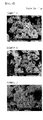
FIG. 1 is a flowchart of a process of manufacturing a silicon nitride sintered body with high thermal conductivity according to the present invention. -
FIG. 2 shows reference images for describing Experimental Example 1 of the present invention. -
FIG. 3 shows reference images for describing Experimental Example 3 of the present invention. -
FIG. 4 shows reference images for describing Experimental Example 5 of the present invention. -
FIG. 5 shows reference images for describing Experimental Example 6 of the present invention. - Hereinafter, exemplary embodiments of the present invention will be described with reference to the accompanying drawings. Embodiments disclosed in the present invention are intended to illustrate and not limit the technical spirit of the present invention. Since the illustrated drawings magnify only essential principal elements and omit auxiliary elements for the purpose of clarity of the present invention, the present invention should not be interpreted only based on the drawings.
- In the present invention, in order to obtain a silicon nitride sintered body with high thermal conductivity, a non-oxide-based sintering aid capable of minimizing the concentration (content) of oxygen in a sintered body is used to manufacture the sintered body.
- In addition, in order to obtain a silicon nitride sintered body with high thermal conductivity, a silicon nitride ingredient powder in which defects present therein are effectively controlled is used to manufacture the sintered body.
-
FIG. 1 is a flowchart of a manufacturing process according to the present invention. A method for manufacturing a silicon nitride sintered body according to the present invention comprises the steps of: a) obtaining a slurry by mixing a silicon nitride powder and a non-oxide-based sintering aid; b) obtaining a mixed powder by drying the slurry; c) forming a compact by pressurizing the mixed powder; and d) sintering the compact. - As the silicon nitride ingredient powder, a commercially available powder may be used as is or a commercially available powder may be thermally pretreated at 1,400 to 1,600 °C under a nitrogen or argon atmosphere for 1 to 15 hours for use. In the present invention, the silicon nitride powder may be thermally pretreated to reduce defects present in the silicon nitride powder, and a sintered body may be manufactured using the silicon nitride powder to obtain a sintered body with high thermal conductivity. An oxygen content of a silicon nitride powder which is not thermally pretreated is 1.27 wt%, and may be controlled to less than 1 wt% by thermally treating the silicon nitride power. When an oxygen content is controlled to less than 1 wt% as described above, a silicon vacancy in the silicon nitride powder is minimized, and thus thermal conductivity of a sintered body may be increased. In this case, a carbon content of the thermally pretreated silicon nitride powder may be less than 1 wt%. Also, such a silicon nitride powder may have an average particle diameter of 0.5 to 0.8 µm.
- The non-oxide-based sintering aid is used to minimize the concentration of oxygen in a sintered body. As the non-oxide-based sintering aid, a rare earth fluoride, a magnesium silicide-based compound, or a mixture thereof may be used. That is, in the present invention, a rare earth fluoride or a magnesium silicide-based compound is used instead of a rare earth oxide or a magnesium oxide conventionally used in the manufacture of a silicon nitride sintered body.
- The rare earth fluoride may be one or more selected from the group consisting of YF3, YbF3, LaF3, NdF3, GdF3 and ErF3, and the magnesium silicide-based compound may be one or more selected from the group consisting of MgSiN2 and Mg2Si. The rare earth fluoride and the magnesium silicide-based compound have high volatility, and thus may minimize the formation of a secondary phase when being sintered. The presence of the secondary phase may cause phonon scattering which results in the degradation of thermal conductivity. In the present invention, the formation of a secondary phase may be minimized to reduce phonon scattering which results in the degradation of thermal conductivity, and thus a sintered body with high thermal conductivity may be obtained.
- When the silicon nitride powder and the non-oxide-based sintering aid are mixed, the silicon nitride powder may be included at 80 to 99.8 wt%, preferably 90 to 99 wt%, and the non-oxide-based sintering aid may be included at 0.1 to 10 wt%, preferably 0.5 to 5 wt% based on a total weight of the silicon nitride powder and the non-oxide-based sintering aid.
- When the non-oxide-based sintering aid is included at less than 0.1 wt%, a sintering process may not be smoothly performed. On the other hand, when the non-oxide-based sintering aid is included at greater than 10 wt%, a liquid amount is increased, and thus mechanical strength, thermal conductivity and the like of a sintered body may be degraded.
- The silicon nitride powder and the non-oxide-based sintering aid are mixed with and dispersed in an organic solvent (e.g., isopropanol) to prepare a slurry. The mixing and dispersing process may be performed at a speed of 125 to 350 rpm at room temperature for 2 to 48 hours.
- While being stirred with a magnetic bar to prevent the slurry from precipitating, the slurry is primarily dried at 70 to 150 °C for 0.5 to 2 hours and secondarily dried in a vacuum oven at 80 to 150 °C for 2 to 24 hours to prepare a mixed powder.
- Then, the mixed powder is pressurized to form a compact. The compact may be formed under a pressure condition of 100 to 400 MPa. Also, a pressurizing method such as cold isostatic pressing may be used to form a compact having a constant density.
- Afterward, the compacts are stacked in layers in a graphite sleeve, the graphite sleeve containing the compacts is placed in a sintering reactor (e.g., graphite furnace), and then the compacts are sintered to manufacture sintered bodies. Through such a sintering process, a pore is minimized and thus a sintered body with a dense structure may be obtained.
- The sintering process of the compact may be performed through hot-press sintering, pressureless sintering, gas pressure sintering, or the like. The hot-press sintering may be performed under a pressure condition of 10 to 50 MPa and a nitrogen atmosphere at 1,700 to 1,800 °C for 1 to 20 hours. A compact may be prevented from being oxidized in the sintering process by maintaining a nitrogen atmosphere during the hot-press sintering.
- The sintered body thus manufactured may be further subjected to a thermally post-treating process at 1,800 to 1,850 °C for 3 to 10 hours. The thermally post-treating process is a purification process for removing defects (e.g., Yb-precipitates, dislocations, or the like) present in a grain or at a grain boundary in the sintered body. Through the thermally post-treating process, the growth of a grain in the sintered body may be suppressed or a formed secondary phase may be removed. Accordingly, phonon scattering which results in the degradation of thermal conductivity is decreased, and thus thermal conductivity of the sintered body may be improved.
- Ingredient powders consisting of compositions listed in Table 1 below were added to 100 ml of an isopropanol solvent, and then the mixture was subjected to ball milling using a silicon nitride ball at room temperature at 300 rpm for 24 hours to prepare a slurry.
- While being stirred with a magnetic bar to prevent the slurry thus prepared from precipitating, the slurry was primarily dried at 120 °C for 1.5 hours and secondarily dried in a vacuum oven at 60 °C for 1 hour to prepare a mixed powder.
- 2.0 g of the mixed powder thus prepared was taken, added to a mold, and then subjected to cold isostatic pressing under a pressure condition of 200 MPa to form a discoid compact having a diameter of 20 mm and a thickness of 2.5 mm.
- The compacts thus formed were stacked in layers in a graphite sleeve, and graphite spacers were introduced between the compacts to prevent the compacts from being brought into contact with one another. Afterward, the graphite sleeve containing the compacts was placed in a graphite furnace, and the compacts were sintered under a nitrogen atmosphere at 1,800 °C for 2 hours and uniaxially pressurized at a pressure of 25 MPa to manufacture a sintered body.
- A sintered body was manufactured in the same manner as Example 1 except that ingredient powders consisting of compositions listed in Table 1 below were used.
- A sintered body was manufactured in the same manner as Example 1 except that ingredient powders consisting of compositions listed in Table 1 below were used.
- A sintered body was manufactured in the same manner as Example 1 except that ingredient powders consisting of compositions listed in Table 1 below were used.
[Table 1] Ingredient powder Example 1 Example 2 Comparative Example 1 Comparative Example 2 Si3N4 powder (oxygen content: 1.27 wt% and average particle diameter: 0.5 to 0.8 µm) 9.2 g (92 wt%) 9.2 g (92 wt%) 9.2 g (92 wt%) 9.2 g (92 wt%) MgSiN2 powder (average particle diameter: 3.0 µm) 0.3 g (3 wt%) 0.3 g (3 wt%) - - MgO powder (average particle diameter: 1.0 µm) - - 0.3 g (3 wt%) 0.3 g (3 wt%) YF3 0.5 g (5 wt%) - - - YbF3 - 0.5 g (5 wt%) - - Y2O3 - - 0.5 g (5 wt%) - Yb2O3 - - - 0.5 g (5 wt%) - The surface of each sintered body according to Examples 1 and 2 and Comparative Examples 1 and 2 was polished and plasma-etched. Afterward, the microstructure of the sintered body was identified using an electron microscope, the result of which is shown in
FIG. 2 . - Referring to
FIG. 2 , it can be confirmed that the sintered bodies according to Examples 1 and 2 of the present invention exhibited a smaller amount of a secondary phase part (white part) compared to the sintered bodies according to Comparative Examples 1 and 2. - Thermal conductivity of each sintered body according to Examples 1 and 2 and Comparative Examples 1 and 2 was measured through a laser flash method, the result of which is shown in Table 2 below.
[Table 2] Classification Example 1 Example 2 Comparative Example 1 Comparative Example 2 Thermal conductivity (k) 58.8 62.9 55.1 53.6 - Referring to Table 2, it can be confirmed that the sintered bodies according to Examples 1 and 2 of the present invention exhibited higher thermal conductivities compared to the sintered bodies according to Comparative Examples 1 and 2. This is considered to be due to the fact that, as the sintered bodies according to the present invention have a smaller amount of a secondary phase part, phonon scattering caused by the secondary phase is reduced, and thus thermal conductivity is improved.
- Ingredient powders consisting of compositions listed in Table 3 below were added to 100 ml of an isopropanol solvent, and then the mixture was subjected to ball milling using a silicon nitride ball at room temperature at 300 rpm for 24 hours to prepare a slurry.
- While being stirred with a magnetic bar to prevent the slurry thus prepared from precipitating, the slurry was primarily dried at 120 °C for 1.5 hours and secondarily dried in a vacuum oven at 60 °C for 1 hour to prepare a mixed powder.
- 2.0 g of the mixed powder thus prepared was taken, added to a mold, and then subjected to cold isostatic pressing under a pressure condition of 200 MPa to form a discoid compact having a diameter of 20 mm and a thickness of 2.5 mm.
- The compacts thus formed were stacked in layers in a graphite sleeve, and graphite spacers were introduced between the compacts to prevent the compacts from being brought into contact with one another. Afterward, the graphite sleeve containing the compacts was placed in a graphite furnace, and the compacts were sintered under a nitrogen atmosphere at 1,750 °C for 2 hours and uniaxially pressurized at a pressure of 25 MPa to manufacture a sintered body.
- Then, the sintered body thus manufactured was thermally post-treated at 1,850 °C for 4 hours.
- A sintered body was manufactured in the same manner as Example 3 except that ingredient powders consisting of compositions listed in Table 3 below were used.
- A sintered body was manufactured in the same manner as Example 3 except that ingredient powders consisting of compositions listed in Table 3 below were used.
- A sintered body was manufactured in the same manner as Example 3 except that ingredient powders consisting of compositions listed in Table 3 below were used.
[Table 3] Ingredient powder Example 3 Example 4 Comparative Example 3 Comparative Example 4 Si3N4 powder (oxygen content: 1.27 wt% and average particle diameter: 0.5 to 0.8 µm) 9.5 g (95 wt%) 9.5 g (95 wt%) 9.5 g (95 wt%) 9.5 g (95 wt%) MgSiN2 powder (average particle diameter: 3.0 µm) 0.2 g (2 wt%) 0.2 g (2 wt%) 0.2 g (2 wt%) 0.2 g (2 wt%) YF3 0.3 g (3 wt%) - - - YbF3 - 0.3 g (3 wt%) - - Y2O3 - - 0.3 g (3 wt%) - Yb2O3 - - - 0.3 g (3 wt%) - The surface of each sintered body according to Examples 3 and 4 and Comparative Examples 3 and 4 was polished and plasma-etched. Afterward, the microstructure of the sintered body was identified using an electron microscope, the result of which is shown in
FIG. 3 . - Referring to
FIG. 3 , it can be confirmed that the sintered bodies according to Examples 3 and 4 of the present invention exhibited a smaller amount of a secondary phase part (white part) compared to the sintered bodies according to Comparative Examples 3 and 4. - Thermal conductivity of each sintered body according to Examples 3 and 4 and Comparative Examples 3 and 4 was measured through a laser flash method, the result of which is shown in Table 4 below.
[Table 4] Classification Example 3 Example 4 Comparative Example 3 Comparative Example 4 Thermal conductivity (k) 79.8 84.3 71.8 75.8 - Referring to Table 4, it can be confirmed that the sintered bodies according to Examples 3 and 4 of the present invention exhibited higher thermal conductivities compared to the sintered bodies according to Comparative Examples 3 and 4. This is considered to be due to the fact that, as a secondary phase formed during a sintering process is removed through thermal post-treatment, phonon scattering caused by the secondary phase is reduced, and thus thermal conductivity is improved.
- Ingredient powders consisting of compositions listed in Table 5 below were added to 100 ml of an isopropanol solvent, and then the mixture was subjected to ball milling using a silicon nitride ball at room temperature at 300 rpm for 24 hours to prepare a slurry.
- While being stirred with a magnetic bar to prevent the slurry thus prepared from precipitating, the slurry was primarily dried at 120 °C for 1.5 hours and secondarily dried in a vacuum oven at 60 °C for 1 hour to prepare a mixed powder.
- 2.0 g of the mixed powder thus prepared was taken, added to a mold, and then subjected to cold isostatic pressing under a pressure condition of 200 MPa to form a discoid compact having a diameter of 20 mm and a thickness of 2.5 mm.
- The compacts thus formed were stacked in layers in a graphite sleeve, and graphite spacers were introduced between the compacts to prevent the compacts from being brought into contact with one another. Afterward, the graphite sleeve containing the compacts was placed in a graphite furnace, and the compacts were sintered under a nitrogen atmosphere at 1,750 °C for 2 hours and uniaxially pressurized at a pressure of 25 MPa to manufacture a sintered body.
- A sintered body was manufactured in the same manner as Example 5 except that ingredient powders consisting of compositions listed in Table 5 below were used, wherein a Si3N4 powder was thermally pretreated under a nitrogen atmosphere at 1,500 °C for 4 hours.
- A sintered body was manufactured in the same manner as Example 5 except that ingredient powders consisting of compositions listed in Table 5 below were used, wherein a Si3N4 powder was thermally pretreated under a nitrogen atmosphere at 1,500 °C for 10 hours.
[Table 5] Ingredient powder Example 5 Example 6 Example 7 Si3N4 powder (average particle diameter: 0.5 to 0.8 µm) 9.5 g (95 wt%) - - Si3N4 powder thermally pretreated for 4 hours (average particle diameter: 0.5 to 0.8 µm) - 9.5 g (95 wt%) - Si3N4 powder thermally pretreated for 10 hours (average particle diameter: 0.5 to 0.8 µm) - - 9.5 g (95 wt%) MgSiN2 powder (average particle diameter: 3.0 µm) 0.2 g (2 wt%) 0.2 g (2 wt%) 0.2 g (2 wt%) YbF3 0.3 g (3 wt%) 0.3 g (3 wt%) 0.3 g (3 wt%) - The contents of oxygen and carbon contained in each Si3N4 powder used in Examples 5, 6, and 7 were measured through a hot-gas extraction method using inorganic CS/ONH analysis (CS800/ONH-2000, Eltra, Haan, Germany), the result of which is shown in Table 6 below. Also, the microstructure of each Si3N4 powder was identified using an electron microscope, the result of which is shown in
FIG. 4 .[Table 6] Classification Oxygen content (%) Carbon content (%) Si3N4 powder in Example 5 1.273 0.116 Si3N4 powder in Example 6 0.979 0.106 Si3N4 powder in Example 7 0.969 0.100 - Referring to Table 6, it can be confirmed that, as a Si3N4 powder was thermally pretreated, the contents of oxygen and carbon which are impurities were decreased.
- In addition, referring to
FIG. 4 , it can be confirmed that a grain did not grow even when a Si3N4 powder was thermally pretreated for 10 hours to remove oxygen and carbon which are impurities. - The sintered body according to Example 5 was thermally post-treated at 1,830 °C for 3 hours.
- The sintered body according to Example 5 was thermally post-treated at 1,830 °C for 7 hours.
- The sintered body according to Example 5 was thermally post-treated at 1,830 °C for 10 hours.
- The sintered body according to Example 6 was thermally post-treated at 1,830 °C for 3 hours.
- The sintered body according to Example 6 was thermally post-treated at 1,830 °C for 7 hours.
- The sintered body according to Example 6 was thermally post-treated at 1,830 °C for 10 hours.
- The sintered body according to Example 7 was thermally post-treated at 1,830 °C for 3 hours.
- The sintered body according to Example 7 was thermally post-treated at 1,830 °C for 7 hours.
- The sintered body according to Example 7 was thermally post-treated at 1,830 °C for 10 hours.
- Properties of each sintered body according to Examples 8 to 16 were evaluated, the results of which are shown in Table 7 below. Also, the microstructure of each sintered body was identified using an electron microscope, the result of which is shown in
FIG. 5 . Here, bending strength was measured using a sample with a size of 3.0×4.0×35 mm through a three-point bending test (crosshead speed: 0.5 mm/min).[Table 7] Classification Thermal post-treatment time Density (g/cm3) Thermal conductivity (k) Bending strength (MPa) Example 8 3 hours 3.22 75.5 916.1 Example 9 7 hours 3.21 84.4 862.1 Example 10 10 hours 3.22 96.9 792.1 Example 11 3 hours 3.21 79.7 890.8 Example 12 7 hours - - - Example 13 10 hours - - - Example 14 3 hours 3.19 101.2 871.4 Example 15 7 hours 3.2 109.9 727.8 Example 16 10 hours 3.21 120.1 699.6 - Referring to Table 7, it can be confirmed that thermal conductivity of a sintered body was increased to a maximum of 120 W/mK by using a thermally pretreated Si3N4 powder and thermally post-treating a sintered body as in the present invention. Also, it can be confirmed that a sintered body having a high bending strength ranging from 660 to 870 MPa was manufactured according to the manufacturing method of the present invention.
Claims (13)
- A method for manufacturing a silicon nitride sintered body with high thermal conductivity, comprising the steps of:a) obtaining a slurry by mixing a silicon nitride powder and a non-oxide-based sintering aid;b) obtaining a mixed powder by drying the slurry;c) forming a compact by pressurizing the mixed powder; andd) sintering the compact.
- The method of claim 1, wherein the silicon nitride powder is thermally pretreated at 1,400 to 1,600 °C under a nitrogen or argon atmosphere for 1 to 15 hours.
- The method of claim 2, wherein the thermally pretreated silicon nitride powder has an oxygen content of less than 1 wt% and an average particle diameter of 0.5 to 0.8 µm.
- The method of claim 2, wherein the thermally pretreated silicon nitride powder has a carbon content of less than 1 wt%.
- The method of claim 1, wherein the non-oxide-based sintering aid comprises a rare earth fluoride.
- The method of claim 5, wherein the rare earth fluoride is one or more selected from the group consisting of YF3, YbF3, LaF3, NdF3, GdF3 and ErF3.
- The method of claim 5, wherein the non-oxide-based sintering aid further comprises a magnesium silicide-based compound.
- The method of claim 7, wherein the magnesium silicide-based compound is one or more selected from the group consisting of MgSiN2 and Mg2Si.
- The method of claim 1, wherein the non-oxide-based sintering aid is included at a content of 0.1 to 10 wt% based on a total weight of the silicon nitride powder and the non-oxide-based sintering aid.
- The method of claim 1, wherein the step of forming the compact is performed by cold isostatic pressing under a pressure condition of 100 to 400 MPa.
- The method of claim 1, wherein the step of sintering the compact is performed by applying a pressure of 10 to 50 MPa under a nitrogen atmosphere at 1,700 to 1,800 °C for 1 to 20 hours.
- The method of claim 1, further comprising the step of e) thermally post-treating the sintered body at 1,800 to 1,850 °C for 3 to 10 hours.
- A silicon nitride sintered body with high thermal conductivity, which is manufactured by the method according to any one of claims 1 to 12 and has a bending strength of 660 to 870 MPa and a high thermal conductivity of 70 W/mK or more.
Applications Claiming Priority (2)
| Application Number | Priority Date | Filing Date | Title |
|---|---|---|---|
| KR1020150115551A KR101794410B1 (en) | 2015-08-17 | 2015-08-17 | Sintered silicon nitride having high thermal conductivity and Manufacturing method thereof |
| PCT/KR2016/009021 WO2017030360A1 (en) | 2015-08-17 | 2016-08-17 | Silicon nitride sintered compact with high thermal conductivity, and method for manufacturing same |
Publications (3)
| Publication Number | Publication Date |
|---|---|
| EP3339270A1 true EP3339270A1 (en) | 2018-06-27 |
| EP3339270A4 EP3339270A4 (en) | 2018-08-01 |
| EP3339270B1 EP3339270B1 (en) | 2020-02-26 |
Family
ID=58051366
Family Applications (1)
| Application Number | Title | Priority Date | Filing Date |
|---|---|---|---|
| EP16837302.5A Active EP3339270B1 (en) | 2015-08-17 | 2016-08-17 | Method for manufacturing a silicon nitride sintered body with high thermal conductivity |
Country Status (5)
| Country | Link |
|---|---|
| US (1) | US20180237347A1 (en) |
| EP (1) | EP3339270B1 (en) |
| JP (1) | JP6651628B2 (en) |
| KR (1) | KR101794410B1 (en) |
| WO (1) | WO2017030360A1 (en) |
Cited By (1)
| Publication number | Priority date | Publication date | Assignee | Title |
|---|---|---|---|---|
| EP3846596A4 (en) * | 2018-08-29 | 2022-05-11 | Kabushiki Kaisha Toshiba | SILICON NITRIDE SUBSTRATE AND SILICON NITRIDE PRINTED CIRCUIT BOARD |
Families Citing this family (11)
| Publication number | Priority date | Publication date | Assignee | Title |
|---|---|---|---|---|
| CN110483060B (en) * | 2019-08-19 | 2021-09-07 | 福建华清电子材料科技有限公司 | High-thermal-conductivity silicon nitride ceramic and preparation method thereof |
| KR102555662B1 (en) * | 2020-01-06 | 2023-07-18 | 주식회사 케이씨씨 | Method for Preparing Silicon Nitride Sintered Body and The Silicon Nitride Sintered Body Prepared by The Same |
| CN111244255B (en) * | 2020-01-20 | 2022-08-05 | 昆明理工大学 | Addition of LaF 3 Of InGaO 3 (ZnO) superlattice thermoelectric material and preparation method thereof |
| KR102459473B1 (en) * | 2020-09-04 | 2022-10-26 | 한국재료연구원 | Silicon nitride sintered body substrate and manufacturing method thereof |
| CN113697810A (en) * | 2021-08-27 | 2021-11-26 | 广东工业大学 | Non-oxide Y3Si2C2Sintering aid, high-performance silicon nitride ceramic substrate and preparation method thereof |
| CN114478022B (en) * | 2021-12-31 | 2023-01-03 | 南通威斯派尔半导体技术有限公司 | High-reliability aluminum nitride copper-clad ceramic substrate and preparation method thereof |
| CN116444277A (en) * | 2022-01-07 | 2023-07-18 | 埃克诺新材料(大连)有限公司 | Preparation method of oversized silicon nitride ceramic ball for oversized bearing |
| KR102727296B1 (en) * | 2022-06-22 | 2024-11-08 | 오씨아이 주식회사 | Method for Regenerating silicon nitride substrate |
| CN116462515B (en) * | 2023-03-13 | 2024-06-21 | 乐山职业技术学院 | Silicon nitride ceramic substrate and preparation method thereof |
| CN117303917B (en) * | 2023-09-23 | 2024-07-30 | 南通三责精密陶瓷有限公司 | A silicon nitride ceramic sintering aid, high thermal conductivity silicon nitride ceramic and preparation method |
| CN117776738A (en) * | 2023-11-24 | 2024-03-29 | 福建理工大学 | A method for preparing high-hardness and high-toughness silicon nitride ceramics by spark plasma sintering |
Family Cites Families (16)
| Publication number | Priority date | Publication date | Assignee | Title |
|---|---|---|---|---|
| US4122155A (en) * | 1977-01-03 | 1978-10-24 | General Electric Company | Preparation of silicon nitride powder |
| US4264550A (en) * | 1979-12-20 | 1981-04-28 | Ford Motor Company | Method of making silicon nitride base cutting tools -II |
| JP3476504B2 (en) | 1993-05-19 | 2003-12-10 | 東芝タンガロイ株式会社 | Silicon nitride based sintered body and its coated sintered body |
| JPH10251069A (en) * | 1997-03-14 | 1998-09-22 | Toshiba Corp | Silicon nitride circuit board and semiconductor device |
| JP2001181053A (en) * | 1999-12-22 | 2001-07-03 | Sumitomo Electric Ind Ltd | Silicon nitride sintered product and method for producing the same |
| JP4332828B2 (en) * | 2000-05-25 | 2009-09-16 | 日立金属株式会社 | High thermal conductivity silicon nitride sintered body, substrate using the same, circuit board for semiconductor device |
| JP3565425B2 (en) * | 2000-09-20 | 2004-09-15 | 日立金属株式会社 | Method for producing silicon nitride-based powder and method for producing silicon nitride-based sintered body |
| DE10146227B4 (en) * | 2000-09-20 | 2015-01-29 | Hitachi Metals, Ltd. | Silicon nitride sintered body, printed circuit board and thermoelectric module |
| JP3648541B2 (en) * | 2000-10-19 | 2005-05-18 | 独立行政法人産業技術総合研究所 | High thermal conductivity silicon nitride ceramics and method for producing the same |
| JP3603115B2 (en) * | 2000-12-25 | 2004-12-22 | 独立行政法人産業技術総合研究所 | Sintering and forming method for anisotropic porous silicon nitride ceramics |
| JP2005225744A (en) | 2004-02-10 | 2005-08-25 | Hiroo Kobayashi | Method for manufacturing silicon nitride sintered compact |
| CN1246253C (en) * | 2004-05-17 | 2006-03-22 | 清华大学 | Manufacturing method of high thermoconductivity high trength silicon nitride ceramic |
| US7157394B2 (en) * | 2004-07-17 | 2007-01-02 | Adams Sr James Hugo | Stoichiometrically balanced silicon nitride ceramic for high performance cutting tools |
| JP4997431B2 (en) * | 2006-01-24 | 2012-08-08 | 独立行政法人産業技術総合研究所 | Method for producing high thermal conductivity silicon nitride substrate |
| CN101100388B (en) * | 2007-07-17 | 2010-06-09 | 清华大学 | Silicon nitride ceramic material with high thermal conductivity and preparation method thereof |
| CN101215174B (en) * | 2008-01-09 | 2010-06-09 | 广西师范大学 | A kind of transparent β-silicon nitride ceramic and its preparation method |
-
2015
- 2015-08-17 KR KR1020150115551A patent/KR101794410B1/en active Active
-
2016
- 2016-08-17 JP JP2018527706A patent/JP6651628B2/en active Active
- 2016-08-17 EP EP16837302.5A patent/EP3339270B1/en active Active
- 2016-08-17 WO PCT/KR2016/009021 patent/WO2017030360A1/en not_active Ceased
- 2016-08-17 US US15/753,500 patent/US20180237347A1/en not_active Abandoned
Cited By (2)
| Publication number | Priority date | Publication date | Assignee | Title |
|---|---|---|---|---|
| EP3846596A4 (en) * | 2018-08-29 | 2022-05-11 | Kabushiki Kaisha Toshiba | SILICON NITRIDE SUBSTRATE AND SILICON NITRIDE PRINTED CIRCUIT BOARD |
| US11512023B2 (en) | 2018-08-29 | 2022-11-29 | Kabushiki Kaisha Toshiba | Silicon nitride substrate and silicon nitride circuit board |
Also Published As
| Publication number | Publication date |
|---|---|
| JP2018528152A (en) | 2018-09-27 |
| EP3339270A4 (en) | 2018-08-01 |
| KR20170021418A (en) | 2017-02-28 |
| JP6651628B2 (en) | 2020-02-19 |
| US20180237347A1 (en) | 2018-08-23 |
| KR101794410B1 (en) | 2017-11-07 |
| WO2017030360A1 (en) | 2017-02-23 |
| EP3339270B1 (en) | 2020-02-26 |
Similar Documents
| Publication | Publication Date | Title |
|---|---|---|
| EP3339270B1 (en) | Method for manufacturing a silicon nitride sintered body with high thermal conductivity | |
| US9938444B2 (en) | Method for producing silicon nitride substrate | |
| JP5444384B2 (en) | High thermal conductivity aluminum nitride sintered body | |
| JP5231823B2 (en) | Polycrystalline MgO sintered body, method for producing the same, and MgO target for sputtering | |
| JP4955936B2 (en) | High thermal conductivity and high strength silicon nitride ceramics and method for producing the same | |
| US6383963B1 (en) | Sintered alumina-based ceramics and process for producing same | |
| WO2007126784A2 (en) | Toughened silicon carbide and method for making the same | |
| KR960016070B1 (en) | Sintered aluminium nitride and its production | |
| KR101681184B1 (en) | Composition for Pressureless Sintered Silicon Carbide Material Having Low-Resistivity, Sintered Body and the Producing Method of the Same | |
| US5391339A (en) | Continuous process for producing alumina-titanium carbide composites | |
| JP3537241B2 (en) | Method for producing silicon nitride sintered body | |
| US20190210928A1 (en) | Ceramic component and method of forming same | |
| KR20220050306A (en) | Pressureless sintered SiC ceramics with 1~30 Ωcm electrical resistivity, its composition, and method for producing the same | |
| JP3929335B2 (en) | Aluminum nitride sintered body and method for producing the same | |
| Xu et al. | α‐SiAlON Ceramics Obtained by Slip Casting and Pressureless Sintering | |
| KR20230045356A (en) | Pressureless solid state sintered SiC ceramics with low electrical resistivity, its composition and method for producing the same | |
| JP4564257B2 (en) | High thermal conductivity aluminum nitride sintered body | |
| KR102626997B1 (en) | Composition for manufacturing AlN ceramics including Sc2O3 as sintering aid and the AlN ceramics and the manufacturing method of the same | |
| Lyckfeldt et al. | Pressing and sintering developments of freeze granulated Si3N4 materials | |
| JP5265859B2 (en) | Aluminum nitride sintered body | |
| JP2008156142A (en) | Aluminum nitride sintered body and method for producing the same | |
| JP2023153568A (en) | Aluminum nitride sintered body | |
| KR20250075289A (en) | Electrically discharge machinable pressureless solid state sintered SiC ceramics, its composition and method for producing the same | |
| EP3301080B1 (en) | Ceramic component comprising sic and method of forming the same | |
| KR20140044963A (en) | Alumina-based sintered body and the preparation method thereof |
Legal Events
| Date | Code | Title | Description |
|---|---|---|---|
| STAA | Information on the status of an ep patent application or granted ep patent |
Free format text: STATUS: THE INTERNATIONAL PUBLICATION HAS BEEN MADE |
|
| PUAI | Public reference made under article 153(3) epc to a published international application that has entered the european phase |
Free format text: ORIGINAL CODE: 0009012 |
|
| STAA | Information on the status of an ep patent application or granted ep patent |
Free format text: STATUS: REQUEST FOR EXAMINATION WAS MADE |
|
| 17P | Request for examination filed |
Effective date: 20180209 |
|
| AK | Designated contracting states |
Kind code of ref document: A1 Designated state(s): AL AT BE BG CH CY CZ DE DK EE ES FI FR GB GR HR HU IE IS IT LI LT LU LV MC MK MT NL NO PL PT RO RS SE SI SK SM TR |
|
| AX | Request for extension of the european patent |
Extension state: BA ME |
|
| A4 | Supplementary search report drawn up and despatched |
Effective date: 20180704 |
|
| RIC1 | Information provided on ipc code assigned before grant |
Ipc: C04B 35/593 20060101AFI20180627BHEP Ipc: C04B 35/626 20060101ALI20180627BHEP |
|
| DAV | Request for validation of the european patent (deleted) | ||
| DAX | Request for extension of the european patent (deleted) | ||
| REG | Reference to a national code |
Ref country code: DE Ref legal event code: R079 Ref document number: 602016030793 Country of ref document: DE Free format text: PREVIOUS MAIN CLASS: C04B0035584000 Ipc: C04B0035593000 |
|
| RIC1 | Information provided on ipc code assigned before grant |
Ipc: C04B 35/626 20060101ALI20190812BHEP Ipc: C04B 35/593 20060101AFI20190812BHEP |
|
| GRAP | Despatch of communication of intention to grant a patent |
Free format text: ORIGINAL CODE: EPIDOSNIGR1 |
|
| STAA | Information on the status of an ep patent application or granted ep patent |
Free format text: STATUS: GRANT OF PATENT IS INTENDED |
|
| INTG | Intention to grant announced |
Effective date: 20191007 |
|
| GRAS | Grant fee paid |
Free format text: ORIGINAL CODE: EPIDOSNIGR3 |
|
| GRAA | (expected) grant |
Free format text: ORIGINAL CODE: 0009210 |
|
| STAA | Information on the status of an ep patent application or granted ep patent |
Free format text: STATUS: THE PATENT HAS BEEN GRANTED |
|
| AK | Designated contracting states |
Kind code of ref document: B1 Designated state(s): AL AT BE BG CH CY CZ DE DK EE ES FI FR GB GR HR HU IE IS IT LI LT LU LV MC MK MT NL NO PL PT RO RS SE SI SK SM TR |
|
| REG | Reference to a national code |
Ref country code: GB Ref legal event code: FG4D |
|
| REG | Reference to a national code |
Ref country code: CH Ref legal event code: EP |
|
| REG | Reference to a national code |
Ref country code: DE Ref legal event code: R096 Ref document number: 602016030793 Country of ref document: DE |
|
| REG | Reference to a national code |
Ref country code: AT Ref legal event code: REF Ref document number: 1237449 Country of ref document: AT Kind code of ref document: T Effective date: 20200315 |
|
| REG | Reference to a national code |
Ref country code: IE Ref legal event code: FG4D |
|
| PG25 | Lapsed in a contracting state [announced via postgrant information from national office to epo] |
Ref country code: FI Free format text: LAPSE BECAUSE OF FAILURE TO SUBMIT A TRANSLATION OF THE DESCRIPTION OR TO PAY THE FEE WITHIN THE PRESCRIBED TIME-LIMIT Effective date: 20200226 Ref country code: NO Free format text: LAPSE BECAUSE OF FAILURE TO SUBMIT A TRANSLATION OF THE DESCRIPTION OR TO PAY THE FEE WITHIN THE PRESCRIBED TIME-LIMIT Effective date: 20200526 Ref country code: RS Free format text: LAPSE BECAUSE OF FAILURE TO SUBMIT A TRANSLATION OF THE DESCRIPTION OR TO PAY THE FEE WITHIN THE PRESCRIBED TIME-LIMIT Effective date: 20200226 |
|
| REG | Reference to a national code |
Ref country code: NL Ref legal event code: MP Effective date: 20200226 |
|
| REG | Reference to a national code |
Ref country code: LT Ref legal event code: MG4D |
|
| PG25 | Lapsed in a contracting state [announced via postgrant information from national office to epo] |
Ref country code: BG Free format text: LAPSE BECAUSE OF FAILURE TO SUBMIT A TRANSLATION OF THE DESCRIPTION OR TO PAY THE FEE WITHIN THE PRESCRIBED TIME-LIMIT Effective date: 20200526 Ref country code: GR Free format text: LAPSE BECAUSE OF FAILURE TO SUBMIT A TRANSLATION OF THE DESCRIPTION OR TO PAY THE FEE WITHIN THE PRESCRIBED TIME-LIMIT Effective date: 20200527 Ref country code: LV Free format text: LAPSE BECAUSE OF FAILURE TO SUBMIT A TRANSLATION OF THE DESCRIPTION OR TO PAY THE FEE WITHIN THE PRESCRIBED TIME-LIMIT Effective date: 20200226 Ref country code: SE Free format text: LAPSE BECAUSE OF FAILURE TO SUBMIT A TRANSLATION OF THE DESCRIPTION OR TO PAY THE FEE WITHIN THE PRESCRIBED TIME-LIMIT Effective date: 20200226 Ref country code: IS Free format text: LAPSE BECAUSE OF FAILURE TO SUBMIT A TRANSLATION OF THE DESCRIPTION OR TO PAY THE FEE WITHIN THE PRESCRIBED TIME-LIMIT Effective date: 20200626 Ref country code: HR Free format text: LAPSE BECAUSE OF FAILURE TO SUBMIT A TRANSLATION OF THE DESCRIPTION OR TO PAY THE FEE WITHIN THE PRESCRIBED TIME-LIMIT Effective date: 20200226 |
|
| PG25 | Lapsed in a contracting state [announced via postgrant information from national office to epo] |
Ref country code: NL Free format text: LAPSE BECAUSE OF FAILURE TO SUBMIT A TRANSLATION OF THE DESCRIPTION OR TO PAY THE FEE WITHIN THE PRESCRIBED TIME-LIMIT Effective date: 20200226 |
|
| PG25 | Lapsed in a contracting state [announced via postgrant information from national office to epo] |
Ref country code: PT Free format text: LAPSE BECAUSE OF FAILURE TO SUBMIT A TRANSLATION OF THE DESCRIPTION OR TO PAY THE FEE WITHIN THE PRESCRIBED TIME-LIMIT Effective date: 20200719 Ref country code: DK Free format text: LAPSE BECAUSE OF FAILURE TO SUBMIT A TRANSLATION OF THE DESCRIPTION OR TO PAY THE FEE WITHIN THE PRESCRIBED TIME-LIMIT Effective date: 20200226 Ref country code: ES Free format text: LAPSE BECAUSE OF FAILURE TO SUBMIT A TRANSLATION OF THE DESCRIPTION OR TO PAY THE FEE WITHIN THE PRESCRIBED TIME-LIMIT Effective date: 20200226 Ref country code: LT Free format text: LAPSE BECAUSE OF FAILURE TO SUBMIT A TRANSLATION OF THE DESCRIPTION OR TO PAY THE FEE WITHIN THE PRESCRIBED TIME-LIMIT Effective date: 20200226 Ref country code: SK Free format text: LAPSE BECAUSE OF FAILURE TO SUBMIT A TRANSLATION OF THE DESCRIPTION OR TO PAY THE FEE WITHIN THE PRESCRIBED TIME-LIMIT Effective date: 20200226 Ref country code: CZ Free format text: LAPSE BECAUSE OF FAILURE TO SUBMIT A TRANSLATION OF THE DESCRIPTION OR TO PAY THE FEE WITHIN THE PRESCRIBED TIME-LIMIT Effective date: 20200226 Ref country code: RO Free format text: LAPSE BECAUSE OF FAILURE TO SUBMIT A TRANSLATION OF THE DESCRIPTION OR TO PAY THE FEE WITHIN THE PRESCRIBED TIME-LIMIT Effective date: 20200226 Ref country code: EE Free format text: LAPSE BECAUSE OF FAILURE TO SUBMIT A TRANSLATION OF THE DESCRIPTION OR TO PAY THE FEE WITHIN THE PRESCRIBED TIME-LIMIT Effective date: 20200226 Ref country code: SM Free format text: LAPSE BECAUSE OF FAILURE TO SUBMIT A TRANSLATION OF THE DESCRIPTION OR TO PAY THE FEE WITHIN THE PRESCRIBED TIME-LIMIT Effective date: 20200226 |
|
| REG | Reference to a national code |
Ref country code: AT Ref legal event code: MK05 Ref document number: 1237449 Country of ref document: AT Kind code of ref document: T Effective date: 20200226 |
|
| REG | Reference to a national code |
Ref country code: DE Ref legal event code: R097 Ref document number: 602016030793 Country of ref document: DE |
|
| PLBE | No opposition filed within time limit |
Free format text: ORIGINAL CODE: 0009261 |
|
| STAA | Information on the status of an ep patent application or granted ep patent |
Free format text: STATUS: NO OPPOSITION FILED WITHIN TIME LIMIT |
|
| PG25 | Lapsed in a contracting state [announced via postgrant information from national office to epo] |
Ref country code: IT Free format text: LAPSE BECAUSE OF FAILURE TO SUBMIT A TRANSLATION OF THE DESCRIPTION OR TO PAY THE FEE WITHIN THE PRESCRIBED TIME-LIMIT Effective date: 20200226 Ref country code: AT Free format text: LAPSE BECAUSE OF FAILURE TO SUBMIT A TRANSLATION OF THE DESCRIPTION OR TO PAY THE FEE WITHIN THE PRESCRIBED TIME-LIMIT Effective date: 20200226 |
|
| 26N | No opposition filed |
Effective date: 20201127 |
|
| PG25 | Lapsed in a contracting state [announced via postgrant information from national office to epo] |
Ref country code: SI Free format text: LAPSE BECAUSE OF FAILURE TO SUBMIT A TRANSLATION OF THE DESCRIPTION OR TO PAY THE FEE WITHIN THE PRESCRIBED TIME-LIMIT Effective date: 20200226 Ref country code: PL Free format text: LAPSE BECAUSE OF FAILURE TO SUBMIT A TRANSLATION OF THE DESCRIPTION OR TO PAY THE FEE WITHIN THE PRESCRIBED TIME-LIMIT Effective date: 20200226 |
|
| PG25 | Lapsed in a contracting state [announced via postgrant information from national office to epo] |
Ref country code: MC Free format text: LAPSE BECAUSE OF FAILURE TO SUBMIT A TRANSLATION OF THE DESCRIPTION OR TO PAY THE FEE WITHIN THE PRESCRIBED TIME-LIMIT Effective date: 20200226 |
|
| REG | Reference to a national code |
Ref country code: CH Ref legal event code: PL |
|
| GBPC | Gb: european patent ceased through non-payment of renewal fee |
Effective date: 20200817 |
|
| PG25 | Lapsed in a contracting state [announced via postgrant information from national office to epo] |
Ref country code: CH Free format text: LAPSE BECAUSE OF NON-PAYMENT OF DUE FEES Effective date: 20200831 Ref country code: LU Free format text: LAPSE BECAUSE OF NON-PAYMENT OF DUE FEES Effective date: 20200817 Ref country code: LI Free format text: LAPSE BECAUSE OF NON-PAYMENT OF DUE FEES Effective date: 20200831 |
|
| REG | Reference to a national code |
Ref country code: BE Ref legal event code: MM Effective date: 20200831 |
|
| PG25 | Lapsed in a contracting state [announced via postgrant information from national office to epo] |
Ref country code: FR Free format text: LAPSE BECAUSE OF NON-PAYMENT OF DUE FEES Effective date: 20200831 |
|
| PG25 | Lapsed in a contracting state [announced via postgrant information from national office to epo] |
Ref country code: BE Free format text: LAPSE BECAUSE OF NON-PAYMENT OF DUE FEES Effective date: 20200831 Ref country code: GB Free format text: LAPSE BECAUSE OF NON-PAYMENT OF DUE FEES Effective date: 20200817 Ref country code: IE Free format text: LAPSE BECAUSE OF NON-PAYMENT OF DUE FEES Effective date: 20200817 |
|
| PG25 | Lapsed in a contracting state [announced via postgrant information from national office to epo] |
Ref country code: TR Free format text: LAPSE BECAUSE OF FAILURE TO SUBMIT A TRANSLATION OF THE DESCRIPTION OR TO PAY THE FEE WITHIN THE PRESCRIBED TIME-LIMIT Effective date: 20200226 Ref country code: MT Free format text: LAPSE BECAUSE OF FAILURE TO SUBMIT A TRANSLATION OF THE DESCRIPTION OR TO PAY THE FEE WITHIN THE PRESCRIBED TIME-LIMIT Effective date: 20200226 Ref country code: CY Free format text: LAPSE BECAUSE OF FAILURE TO SUBMIT A TRANSLATION OF THE DESCRIPTION OR TO PAY THE FEE WITHIN THE PRESCRIBED TIME-LIMIT Effective date: 20200226 |
|
| PG25 | Lapsed in a contracting state [announced via postgrant information from national office to epo] |
Ref country code: MK Free format text: LAPSE BECAUSE OF FAILURE TO SUBMIT A TRANSLATION OF THE DESCRIPTION OR TO PAY THE FEE WITHIN THE PRESCRIBED TIME-LIMIT Effective date: 20200226 Ref country code: AL Free format text: LAPSE BECAUSE OF FAILURE TO SUBMIT A TRANSLATION OF THE DESCRIPTION OR TO PAY THE FEE WITHIN THE PRESCRIBED TIME-LIMIT Effective date: 20200226 |
|
| PGFP | Annual fee paid to national office [announced via postgrant information from national office to epo] |
Ref country code: DE Payment date: 20250721 Year of fee payment: 10 |
|
| REG | Reference to a national code |
Ref country code: DE Ref legal event code: R082 Ref document number: 602016030793 Country of ref document: DE Representative=s name: VUILLERMOZ, BRUNO, FR |