EP3335211B1 - Durch ein sicheres integriertes luftraumverwaltungssystem gesteuertes flugzeug - Google Patents
Durch ein sicheres integriertes luftraumverwaltungssystem gesteuertes flugzeug Download PDFInfo
- Publication number
- EP3335211B1 EP3335211B1 EP16756742.9A EP16756742A EP3335211B1 EP 3335211 B1 EP3335211 B1 EP 3335211B1 EP 16756742 A EP16756742 A EP 16756742A EP 3335211 B1 EP3335211 B1 EP 3335211B1
- Authority
- EP
- European Patent Office
- Prior art keywords
- aircraft
- siam
- rpas
- pilot
- management system
- Prior art date
- Legal status (The legal status is an assumption and is not a legal conclusion. Google has not performed a legal analysis and makes no representation as to the accuracy of the status listed.)
- Active
Links
Images






Classifications
-
- B—PERFORMING OPERATIONS; TRANSPORTING
- B64—AIRCRAFT; AVIATION; COSMONAUTICS
- B64C—AEROPLANES; HELICOPTERS
- B64C39/00—Aircraft not otherwise provided for
- B64C39/02—Aircraft not otherwise provided for characterised by special use
- B64C39/024—Aircraft not otherwise provided for characterised by special use of the remote controlled vehicle type, i.e. RPV
-
- B—PERFORMING OPERATIONS; TRANSPORTING
- B64—AIRCRAFT; AVIATION; COSMONAUTICS
- B64D—EQUIPMENT FOR FITTING IN OR TO AIRCRAFT; FLIGHT SUITS; PARACHUTES; ARRANGEMENT OR MOUNTING OF POWER PLANTS OR PROPULSION TRANSMISSIONS IN AIRCRAFT
- B64D45/00—Aircraft indicators or protectors not otherwise provided for
- B64D45/0015—Devices specially adapted for the protection against criminal attack, e.g. anti-hijacking systems
- B64D45/0031—Devices specially adapted for the protection against criminal attack, e.g. anti-hijacking systems means for overriding or restricting access to flight controls
-
- G—PHYSICS
- G08—SIGNALLING
- G08G—TRAFFIC CONTROL SYSTEMS
- G08G5/00—Traffic control systems for aircraft
- G08G5/20—Arrangements for acquiring, generating, sharing or displaying traffic information
- G08G5/26—Transmission of traffic-related information between aircraft and ground stations
-
- G—PHYSICS
- G08—SIGNALLING
- G08G—TRAFFIC CONTROL SYSTEMS
- G08G5/00—Traffic control systems for aircraft
- G08G5/30—Flight plan management
- G08G5/32—Flight plan management for flight plan preparation
-
- G—PHYSICS
- G08—SIGNALLING
- G08G—TRAFFIC CONTROL SYSTEMS
- G08G5/00—Traffic control systems for aircraft
- G08G5/50—Navigation or guidance aids
- G08G5/56—Navigation or guidance aids for two or more aircraft
-
- G—PHYSICS
- G08—SIGNALLING
- G08G—TRAFFIC CONTROL SYSTEMS
- G08G5/00—Traffic control systems for aircraft
- G08G5/50—Navigation or guidance aids
- G08G5/57—Navigation or guidance aids for unmanned aircraft
-
- G—PHYSICS
- G08—SIGNALLING
- G08G—TRAFFIC CONTROL SYSTEMS
- G08G5/00—Traffic control systems for aircraft
- G08G5/70—Arrangements for monitoring traffic-related situations or conditions
- G08G5/72—Arrangements for monitoring traffic-related situations or conditions for monitoring traffic
- G08G5/727—Arrangements for monitoring traffic-related situations or conditions for monitoring traffic from a ground station
-
- H—ELECTRICITY
- H04—ELECTRIC COMMUNICATION TECHNIQUE
- H04B—TRANSMISSION
- H04B7/00—Radio transmission systems, i.e. using radiation field
- H04B7/14—Relay systems
- H04B7/15—Active relay systems
- H04B7/185—Space-based or airborne stations; Stations for satellite systems
- H04B7/18502—Airborne stations
- H04B7/18506—Communications with or from aircraft, i.e. aeronautical mobile service
-
- H—ELECTRICITY
- H04—ELECTRIC COMMUNICATION TECHNIQUE
- H04W—WIRELESS COMMUNICATION NETWORKS
- H04W12/00—Security arrangements; Authentication; Protecting privacy or anonymity
- H04W12/06—Authentication
- H04W12/062—Pre-authentication
-
- G—PHYSICS
- G08—SIGNALLING
- G08G—TRAFFIC CONTROL SYSTEMS
- G08G5/00—Traffic control systems for aircraft
- G08G5/50—Navigation or guidance aids
- G08G5/55—Navigation or guidance aids for a single aircraft
-
- G—PHYSICS
- G08—SIGNALLING
- G08G—TRAFFIC CONTROL SYSTEMS
- G08G5/00—Traffic control systems for aircraft
- G08G5/50—Navigation or guidance aids
- G08G5/58—Navigation or guidance aids for emergency situations, e.g. hijacking or bird strikes
Definitions
- the field of the invention relates to a secure integrated airspace management (SIAM) system; and to that SIAM system.
- SIAM secure integrated airspace management
- RPAS Remotely Piloted Aircraft Systems
- UAS Unmanned Aircraft Systems
- UAV Unmanned Airborne Vehicles
- RPAV Remotely Piloted Airborne Vehicles
- simply 'drones' - are an area of emerging technology that is gaining increasing worldwide notoriety in both civilian and military contexts.
- Drone numbers and drone applications are increasing rapidly and the sky is becoming more congested with UAVs. With more drones in the US than manned aircraft already, it is clear that this issue will only get worse. Therefore an airspace management system for low flying aircraft (i.e. below 152,4 m (500 feet)) is required very quickly.
- the drone industry is calling for a global standard airspace management system to facilitate safe integration for all, rather than a variety of systems with the inherent compatibility risks and demands.
- RPAS To protect the flying public, RPAS must be fully incorporated into National Airspace Management so that they are visible to Air Traffic Controllers and general, commercial, and business aviation/aircraft. However, unsecured RPAS control channels and/or clear channel recordings of what they see are vulnerable to significant adverse exploitation. In addition, existing regulations covering collision avoidance in civil aircraft operations need to be reviewed by regulators to ensure RPAS operations meet safe aircraft separation standards. Specific collision avoidance requirements for RPAS operations may also need to be established that recognise the capabilities of new and emerging technologies (such as camera, infrared, acoustic sensor) being considered in the development of autonomous sense-and avoid manoeuvring systems. Importantly therefore, governments must also adopt policies that assure the integrity of RPAS control security is established and maintained in all conditions and operational scenarios, and that RPAS control and flight safety is demonstrated before airspace integration is considered.
- new and emerging technologies such as camera, infrared, acoustic sensor
- RPAS applications will use significant radio bandwidth for telemetry from the RPAS, particularly for real time imagery. Since many recreational and light-commercial RPAS will operate at an altitude under 152,4 m (500 feet), the effect of altitude will result in impacts on other users of the same frequency within a foot print that increases in size with RPAS altitude. Poorly planned choices of spectrum for RPAS could impact adversely other aeronautical spectrum users as well as unlicensed users and cellular radiotelephone systems that were planned assuming users were purely terrestrial.
- RPAS can be an effective and efficient means of conducting particular operations for national security and social good, and are considered to have significant potential for a wide range of commercial applications, there are also many risks and issues that need to be acknowledged and addressed.
- a secure integrated airspace management system including one or more secure global registries or databases storing:
- a system according to claim 9 including the secure integrated airspace management system of any of Claims 1 to 8, the system including the aircraft.
- the disclosure includes an aircraft comprising:
- a vehicle comprising:
- SAM secure integrated airspace management
- a final aspect of the disclosure is a method of authorizing a pilot or operator to operate an aircraft, comprising the steps of:
- RPAS Remotely Piloted Aircraft Systems
- SIAM offers a viable and robust solution to the major issues confronting policy makers in relation to RPAS typically operating below 152.4 m (500 feet).
- SIAM provides the functionality and operational capabilities that address two overarching issues:
- SIAM is a global system capable of operating across geopolitical boundaries.
- the aircraft and pilot registers are global databases, capable of tracking both drones and pilots wherever they operate in the world. It is the global nature of the system that adds real and significant value to the industry as a whole.
- SIAM is a base system capable of delivering against a set of well-defined requirements.
- a number of implementation methods are employed in order to:
- SIAM important features and capabilities of SIAM are, but not limited to:
- a secure website may be established where both commercial and private users may register to and obtain a valid Key and Licence.
- An RPAS Key Category gives the pilot specific flight permissions.
- the SIM Manufacturer may embed a secure unique ID based on the GSM technology IMSI number.
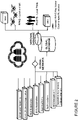
- the RPAS verifies presence of valid RPAS Key before flight and communicates with SIAM via Globally Standardized Mobile Communications (13), for flight planning, location tracking and NFZ management.
- the position and track of each aircraft may be transmitted each 30 seconds to a central server or database where it is logged. This information may then be aggregated with all craft in an area and transmitted for airspace management applications, services, and warnings.
- a Globally Standardized Data Sharing Platform (14) hosts SIAM central databases and processors and is linked to LRKI - Licensed RPAS Key Issuer (Resellers and RelmaTech).
- the sharing platform also communicates with NAA- National Aviation Agency (16).
- Hard No Fly Zones and Soft No Fly Zones may be uploaded to the aircraft and added to its database at any time. Any airspace breaches by an aircraft are also logged.
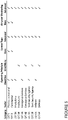
- Figure 2 is a diagram illustrating the modular functionality, registers and databases of the system. Examples of functionality may include: admin and reporting, RPAS registration, pilot registration, regulation and policy, approval to fly, flight tracking, NFZ management, and separation assurance and collision warning.
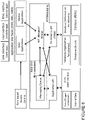
- FIG. 3 is a diagram illustrating the server architecture layout. Secure communications to a server are setup in order to for example check registration and licence as well as download any new soft no fly zones.
- the remotely piloted aircraft system comprises an authentication module that has an identity uniquely associated with a specific pilot that is programmed to enable, when used with a communications module, authenticated and encrypted data communications with the secure integrated airspace management (SIAM) system that is local to the aircraft, or is at a remote server.
- SIAM secure integrated airspace management
- GSM authentication process An example of a GSM authentication process that may be used is the following:
- HNFZ Hard No Fly Zones
- the retailer accesses the SIAM web portal and completes and submits an online registration application form on behalf of and with information provided by the acquiring pilot.
- the registration form also includes the RPAS Key information.
- SIAM Central Pilot Identity Register (SIAM.CPIR) automatically receives and processes the registration application form, using several secure online databases to validate the details provided (i.e. carry out an ID and contact phone check).
- the online registration process should only take a few minutes.
- SIAM.CPIR adds the Key registration to its database, sets the status of the Key to ACTIVE, and notifies the retailer accordingly by displaying a 'success' advisory script.
- SIAM.CPIR also advises the acquiring pilot by sending a text message to the mobile phone nominated on the registration form as the pilot's 'operational contact number'. This is the number to which SIAM will communicate with the pilot, particularly any advisory messages requiring the pilot's attention during flight operations enabled by the pilot's RPAS Key. The pilot then finalises the transaction with the retailer and takes possession of the activated Key.
- SIAM.CPIR will notify the retailer accordingly by displaying a 'failed' advisory script containing information outlining the reason(s) for failure. SIAM will not add the registration to the SIAM.CPIR database, nor will it send the acquiring pilot a text message to the nominated mobile phone. The retailer will be able to change the information on the online registration form and resubmit it.
- the pilot To conduct an RPAS flight operation, the pilot must first install his/her RPAS Key into the RPAS Key receptacle in the aircraft. This allows the aircraft systems to be activated (i.e. the aircraft is completely disabled unless a valid RPAS Key is correctly installed in the aircraft).
- the pilot can then launch the RPAS and carry out the intended mission.
- the pilot's Key will cause a set suite of information including aircraft and pilot identification, and aircraft position, heading, speed and altitude (AGL) to be automatically transmitted to SIAM every 30 seconds while the aircraft systems are activated, whether the aircraft is on the ground or in flight.
- AGL aircraft position, heading, speed and altitude
- the pilot shuts down the aircraft systems and removes his/her Key from the aircraft, disabling the aircraft from further operation until a valid Key is reinstalled in the aircraft.
- SIAM civil aviation operations using SIAM.
- the fundamental needs of SIAM may also apply to all civil aviation operations - whether the pilot is physically on-board the aircraft or remote from it. Therefore, by applying the same innovative approach, the primary elements of the SIAM for RPAS solution can also be integrated to provide a safe and secure airspace management solution that meets the same needs for civil aircraft operating in the national airspace, and as such SIAM has been developed with an eye to civil aviation use.
- SIAM has a wide range of capabilities that can be ideally used for civil aviation operations.
- SIAM's four key elements are all relevant to civil aviation operations. While well-established air traffic control facilities and procedures govern manned aviation, SIAM's key elements can play a significant role in providing a safer and more secure managed airspace.
- Incident Management and Reporting are SIAM Core System elements and also can be implemented for civil aviation use; Incident Management can be used to provide data on restricted areas or corridors where civil aircraft are not permitted, and can be used to support separation assurance and collision warning functionality. Reporting can be used to provide a live stream to air traffic control, system statistics and data covering aircraft tracks as required.
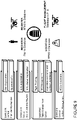
- FIG. 4 shows a diagram illustrating the different SIAM aircraft modules.
- the elements of the SIAM EMM are the SIAM smart card reader, the SIAM control module and the GSM/Satellite modem.
- the aircraft on-board GPS unit is also shown.
- a SIAM Control Module ( Figure 4 ) obtains aircraft location details from the aircraft's onboard GPS. It is envisaged that the SIAM Control Module would be positioned close to the 'Black Box' flight data recorder for security and anti-tamper reasons, and therefore is a separate element from the SIAM Smart Card Reader.
- the Control Module accesses the GSM or satellite modem (depending on aircraft type) to broadcast its position back to the SIAM Core System. Data traffic is designed to be "bursty" in nature, and requires very low bandwidth for effective communications.
- GSM or satellite modem The choice of GSM or satellite modem is made based on the type and operation of the aircraft. Unpressurised aircraft fly at altitudes typically below 3048m (10.000 feet) and so can be assumed to be able to make GSM connections. These aircraft could be fitted with either GSM modem or satellite modem options. Pressurised aircraft typically fly at high altitudes and so require satellite modems to be fitted to ensure effective communications at all times. In some case it could be envisaged that a combination GSM/satellite modem could be fitted to pressurised aircraft, utilising whichever transmission path provides a quality, cost-effective link for the altitude at which they are operating.
- SIAM Flight Management Centre takes the secure location updates and uses them to produce a track of the aircraft's flight, which can be tagged with the aircraft digital identity and pilot's digital identity information.
- the pilot will have access to this moving map display through the SIAM system.
- the display will also plot other aircraft in the region that are active in the SIAM system. This can include both manned and unmanned aircraft being monitored by the SIAM system.
- the SIAM.FMC can also be used to set up and manage permanent and temporary restricted airspace areas where civil aircraft are not permitted to fly, such as military restricted areas or operational time curfews.
- SIAM Core System handles incident management as one of its primary features.
- SIAM Central Incident Management (SIAM.CIM) system provides the facility to notify aircraft if they are approaching restricted airspace. In the case of a breach, pilots and authorities are notified of the infringement to enable them to take further action as required.
- SIAM may establish restricted zones based on advice from local civil aviation safety authorities. This may include cities, flight corridors for scheduled passenger aircraft, military zones, high security areas, high density living areas, etc.
- the SIAM.CIM system may also have the capability of separation assurance and collision warning which can be used to alert aircraft if regulated minimum separation distances are at risk of being breached.
- System performance metrics may be reported to 3 rd party application data.
- SIAM.CRF is the Central Reporting Framework which can be used to, for example:
- RPAS flights against current regulations may be tracked, no fly zones may also be established and monitor.
- a live feed is also established from the system to air traffic control.
- the air traffic controllers may be able to, for example:
- Pilots may also have access to a display comprising a moving map.
- This section provides an outline of how the SIAM system may be used for RPAS and how it may benefit society.
- SIAM works in combination with existing transportation systems to ensure that RPAS operations are safe for the potential range of users and scenarios.
- SIAM uses state-of-the-art technologies to:
- SIAM's Aircraft and Pilot Databases are secure global registries containing:
- SIAM requires each aircraft be fitted with an Embedded Mobile Module (EMM) during manufacture.
- EMM Embedded Mobile Module
- SIAM requires that, at the time of sale, the aircraft owner be registered against the aircraft serial number.
- the RPAS Key is an on-board SIM-type digital device that provides communications between the RPAS and SIAM, enabling Key validation, pilot identification, aircraft and owner identification, RPAS activation and real time flight monitoring.
- SIAM's Flight Management Centre authorises and supervises flights according to Flight Operations Rules and Procedures as endorsed by the International Civil Aviation Organisation (ICAO) and national civil aviation regulatory agencies.
- IAO International Civil Aviation Organization
- An RPAS must have installed a registered and activated RPAS Key for the aircraft to operate.
- SIAM determines from information received from the RPAS Key and that entered by the pilot via the Pilot App whether the flight to be undertaken is LOS or BLOS.
- SIAM enables the establishment, display, supervision and enforcement of long term (permanent) and short term (temporary) No Fly Zones (NFZs).
- SIAM may provide separation assurance and collision warning capabilities through an innovative 'My Zone', real-time airspace display, and warning messages to RPAS pilots.
- SIAM enables authorities to:
- SIAM capabilities including separation assurance and collision warning, and the ability to interface with control systems designed to simultaneously operate multiple drones, ensure that drones can be safely operated within an secure integrated managed airspace.
- SIAM With the global take up of low flying drones continuing at a rapid pace, SIAM answers the concerns of policy makers, regulators and the public, making SIAM the enabling solution for which the emerging drone industry has been waiting.
- This section provides an outline of the technology and approach used to create a Secure Integrated Airspace Management (SIAM) system for RPAS operations typically operating below 152.4m (500 feet)
- SIAM Secure Integrated Airspace Management
- a technical overview first provides a high level summary of the various aspects of the solution.
- a description of the technology used to create and manage secure identity data for both the aircraft and the pilot, and how this is communicated and managed by SIAM is also provided.
- a section on airspace management outlines how digital identity is used and managed in combination with real time aircraft location tracking, and how permanent and temporary No Fly Zones are set up and managed. Finally a description is provided on how No Fly Zones are enforced. The reporting capabilities of SIAM are also presented.
- SIAM integrates proven technologies and concepts used in civil aviation, cloud computing, mobile communications and information management. It is the unique combination of this range of complex but established technologies that has created the highly innovative SIAM system.
- SIAM provides the following key functionality through separate technology modules:
- SIAM comprises a number of elements, which combine to form the system:
- ISAM (RPAS) high level logic is the following:
- SIAM RPAS key registration and reporting framework SIAM RPAS key registration and reporting framework (SIAM.CIPR and SIAM.CRF)
- SIAM system-specific integrated mobile broadband
- Figure 6 The general architecture of the SIAM system is shown in Figure 6 , with various User and RPAS interfaces connecting into the main system.
- System architecture and data flow is very similar to that used in high performance, secure financial trading systems, and is optimised for cloud deployment facilitating global operation.
- the SIAM Core System has been ported to ACS (Amazon Cloud Server), a Tier 1 cloud infrastructure solution providing a high availability server platform.
- DJI Phantom 3 the base aircraft platform to work with, combined with a variety of off the shelf GSM development modules, smart cards and smart card readers.
- SIAM Digital identity in SIAM is achieved with the use of Smart Card technology.
- Mobile SIM technology combined with a SIAM app embedded on the SIM, or Smart Card. This technology has demonstrated over the last 15 years that it is highly secure, provides unique identifiers for the pilot and the aircraft, can host secure applications, and has scaled to over 3 billion devices without being spoofed or hacked.
- the system is as follows:
- FIG. 7 shows an overview of the RPAS Key and RPAS embedded Mobile Module.
- the RPAS Key is an enhanced GSM SIM card; additional code and functionality is embedded securely on the SIM at point of manufacture.
- the Embedded Mobile Module comprises the GSM Modem and the SIAM RPAS Application, shown in blue.
- the RPAS Control System and the RPAS GPS are the control system and native GPS built into the RPAS aircraft (depicted in Orange).
- the RPAS Key ( Figure 7 ) is a cell-phone SIM (Secure Identity Module) card with an embedded SIAM RPAS Application.
- SIM Secure Identity Module
- the SIAM RPAS Key (SIM) contains both GSM and SIAM applications; both applications have the same high security level and are used to perform two different tasks:
- the RPAS key is a highly secure and trusted micro-processor which contains the unique pilot identity number (SIAM.PI - analogous to the IMSI number in the cellphone system) which is used to identify and validate the pilot and his/her permissions to fly the aircraft. A valid RPAS Key is always needed for flight.
- SIAM.PI unique pilot identity number
- the Embedded Mobile Module ( Figure 7 ) is a miniature cell-phone module which characteristically has ultra-low power consumption (typically 25mW in idle state - 1.25W average power during burst transmit) while being physically small and low weight (typically 10-20gm).
- the units are manufactured in high volume today (found in more than 3 billion mobile handsets) and are low cost.
- Each Mobile Module has a unique digital identity (the Aircraft Identity Number, SIAM.AIN) which is used by SIAM to identify the aircraft and its owner.
- SIAM.AIN is analogous to the IMEI number used in a mobile handset.
- the AIN is communicated back to the central server for each flight for validity checking.
- Aircraft AIN Details of the Aircraft AIN are provided to SIAM by the RPAS manufacturer and details of the owner are captured at the time of sale, again analogous to buying a mobile phone.
- the SIAM system stores pilot and aircraft identities in two separate central databases; the Central Pilot Identity Register (SIAM.CPIR) and the Central Aircraft Identity Register (SIAM.CAIR).
- SIAM.CPIR Central Pilot Identity Register
- SIAM.CAIR Central Aircraft Identity Register
- the SIAM.CPIR is used to validate the status of a pilot's licence.
- the pilot's licence can be shown to be valid, to have lapsed, or to have been suspended or revoked through infringement.
- SIAM When a pilot inserts his/her RPAS Key into an aircraft, SIAM interrogates the SIAM.CPIR and CIAM.CAIR databases to validate ownership and permissions for specific pilots to fly specific aircraft.
- FIG. 8 shows the work flow for SIAM Identity checking.
- the work flow for identity management for flight is as follows:
- Airspace Management takes place in the SIAM Core System and is handled by the SIAM.FMC interacting with the two SIAM databases SIAM.CPIR and SIAM.CAIR as shown in Figure 9 .
- RPAS Central to airspace management is the location of the RPAS. Accurate location is best provided by satellite positioning systems, demonstrating accuracy to approximately 1m in the case of GPS, or cm/mm accuracy using the European Galileo system. Satellite based positioning is far more accurate than location derived from mobile signals; SIAM therefore uses proven off-the-shelf satellite technology for high accuracy, reliable location.
- the application on the SIAM RPAS Key obtains the RPAS position from the GPS module in the RPAS via API (Application Program Interface) and then transmits that location securely via the mobile network using a highly efficient short data burst to the SIAM servers.
- SIAM combines the location data with the identity data to plot RPAS location and identity on a map.
- SIAM currently utilises established Google mapping data to show RPAS tracks, but any third party mapping source could be used.
- SIAM.FMC can establish No Fly Zones (both permanent and temporary). This is achieved by drawing a region to represent the NFZ. Access to the system is provided by a secure portal with secure login. Only authorised users can establish or remove NFZs. Map data, including flight tracks and NFZs, can be viewed securely by users of the system (e.g. government agencies, air traffic control, etc.), and by pilots via the SIAM App. All flight paths are logged and stored for a period of time (as determined by regulatory requirements) should post-flight follow up be required. A separation assurance and collision warning feature may also be provided. Flight tracks may be analysed in real time to determine if there is risk of convergence, and operating pilots notified accordingly.
- Incident management is executed in SIAM via SIAM.CIM. This module monitors flight paths and compares the tracks with established No Fly Zones.
- a warning is sent to the pilot advising him/her that if they continue on their course then they will breach a NFZ. If an RPAS breaches a NFZ the pilot will be instructed to exit the zone. If the pilot does not respond a signal will be sent to the RPAS control system via the embedded Mobile Module advising the RPAS control system that a return to base or return to pilot condition has been met, and the RPAS will activate its Return to Base or Return to Pilot feature. (Note that, for legal reasons, SIAM does not command the RPAS or its pilot to take an action - it provides an advisory service to the RPAS pilot and the RPAS control system.)
- SIAM.CIM can then advise the appropriate authorities that an infringement has occurred and, if required, issue an infringement notice on behalf of authorities to the offending RPAS owner and/or pilot. As flight tracks are automatically logged and stored, SIAM retains evidence of the infringement. SIAM.CIM can also change the status of the pilot's Key in SIAM.CPIR to 'suspended' or 'revoked' based on the infringement rules, as approved by regulatory authorities and law enforcement agencies, thereby disallowing the pilot from conducting future flights until the active infringement has been legally dealt with and the suspension lifted.
- the capabilities of SIAM.CIM may also be expanded to include incident reporting of separation breaches and near collisions.
- SIAM.CRF SIAM Reporting Framework
- Basic output provides details of system performance and incident reporting. Output includes:
- SIAM live feeds can also be fed into civil aviation air traffic control systems for monitoring RPAS traffic above and below 152.4 m (500 feet), bringing the safe integration of RPAS into the national airspace closer to reality.
- a portal for 3rd parties to use the system may be provided, either for monitoring traffic or to run specific applications. APIs and command sets may be made available.
- the capabilities of SIAM may provide enormous benefit to 3rd party users for a wide range of applications, be they recreational, commercial, institutional, or government related.
- SIAM utilises innovative world-class technology and techniques to provide a global, secure, scalable, proven solution to address the issues of policy makers, regulators, and the public.
- the development system has been ported to Amazon Cloud Servers and already has logged flight tracks in both the UK and the US.
- Working in combination with existing transportation systems SIAM ensures that low level drone operations are safe for the full range of personal, commercial, institutional, government, civil service, national security and defence users.
- Drone aircraft and pilot identification is solved by employing proven digital identity techniques and secure global databases, while real time airspace monitoring combined with the management of permanent and temporary no fly zones ensures safe drone operation for all.
- SIAM is the enabling solution that the emerging drone industry needs.
- SIAM provides unique digital device and pilot/driver identification in a secure, reliable, scalable manner. This is achieved via the IMEI number of an Embedded Mobile Module that is incorporated into the vehicle.
- the EMM may be embedded in a variety of vehicles and objects:
- Attaching an EMM or equivalent control unit to an object will allow it to be uniquely identified.
- Data associated with the digital identification can then be position/location, ownership, home location. This technique can be used for high value items, items requiring high security, items whose physical location is critical due to dangerous properties etc.
- the RPAS Key/SIM/Key is used to provide the secure identity of the pilot or driver of the vehicle.
- the Key can be used to identify the person responsible for safe transit/passage or care/maintenance of the object.
- the Key may be assigned privileges or permissions depending on its use - aircraft pilot flight permissions relating to licence type, or access permissions if an object or vehicle etc.
- the combined presence of the EMM and the Key can be used to enable permitted operation of the vehicle or device, or to enable specific action to be taken. For example:
- This functionality applies across air, land and sea, and supports uses cases ranging from speed and distances restrictions to anti-theft.
- a further example is Security and Accountability - it is difficult to steal a vehicle that requires this type of ID device to start and operate it.
- SIAM SIAM
- the interaction of the EMM and the Key allows "Black Box" functionality to be initiated.
- the internal memory on the Key can store position and other data on a rolling basis (the Key memory is also used as a buffer to handle to condition where communications drops out). In this way a rolling record of situational data can be stored on the device as well as in the SIAM Core System so that if there is an incident records can be downloaded from the Key and analysed.
- Examples of data that may be stored in the black box of the controller are, but not limited to:
- SIAM monitors the position of digitally identified vehicles or objects.
- Basic tracking is the core of SIAM. Digitally identified objects have their positions tracked via satellite navigation technology. The position is obtained wither from the vehicle's/object's on-board satellite location system, or optionally from a location system incorporated into the EMM. The position can be monitored and compared with basic flight permissions or parameters:
- GPS Globalstar Satellite Navigation System
- GLONASS Globalstar Satellite Navigation System
- Galileo Galileo
- GLONASS accuracy is comparable.
- SIAM shortening
- SIAM incorporates communications capability with the EMM. Communications is secure, scalable, reliable, and low bandwidth in its requirement. Communications is data based and utilises 2G/3G/4G/5G technology. Variants of the SIAM system may also use satellite communications or direct radio technology such as LORA or Wi-Fi. ADS-B may also be used as a transmission path. In fact any wireless communication protocol could be exploited.
- Burst transmission may be used to communicate:
- SIAM Core System combines the various elements of the system and coordinates behaviour and action.
- SIAM Identity solution utilises a SIM and Embedded Mobile Module (EMM).
- EMM hardware module is directly installed in the aircraft (RPAS or CA aircraft) and provides an inbuilt mechanism for identity (SIAM.AIN).
- the EMM also incorporates a basic cell phone transmitter and so incorporates a secure communications path.
- the EMM is installed in the aircraft at the point of manufacture, or is retrofitted by the manufacturer or authorised workshop. The manufacturer or authorised workshop provides details of the aircraft, its owner and the fitted SIAM.AIN to the SIAM system.
- EMM module may collect the tracking data from the sensor (GPS ,Barometer) and upload the tracking data to backend server. This also may include storage local flight path, ALG information, FTP download Flight Path as well as store the debugging information
- the system could be configures such that the SIM is presented to the RPAS or aircraft via a smart card reader.
- This reader would connect to the aircraft system physically via USB port or other interface, or wirelessly via Bluetooth or Wi-Fi or other wireless technique.
- a SIM card would need to be present before aircraft operation could take place.
- a further option for pilot validation would be via Smartphone.
- the SIAM Pilot app would need to be loaded onto the smartphone, and the pilot would enter his credentials, including licence number, into the phone. At the point of entry the details would be validated against records held centrally, and a passcode would be needed to complete authentication.
- the smartphone can communicate with a module in the aircraft to enable flight to take place. Connection can take place wirelessly or via cable, and in the case of the RPAS could be with the aircraft or the controller. Once again, verification that the pilot is present and his/her credentials are valid is done before flight can take place.
- the Smartphone could be used as the transmitter for location and flight status data if required. Further, the identity of the aircraft would be entered into the SIAM Pilot app by the pilot prior to take off, and pilot's credentials can be verified against aircraft type. Further, the data entered by the pilot can be verified by ATC separately if required.
- a variant of this approach is to use a purpose-built device with internal module.
- a purpose-built device with internal module.
- devices utilised for this purpose such as a GPS unit carried by the pilot or TETRA/PMR terminal etc.
- This device would replace the smartphone, though a method of enabling separate communications may be required for data transmission (such as pairing with a smartphone and using the hotspot facility) depending on the facilities of the host device.
- Fitting the aircraft with a transponder allows supplementary secure communication for position determination, collision avoidance and separation assurance, or for communications; aircraft to ground, aircraft to aircraft.
- GPS Global System for Mobile Communications
- GLONASS Russian
- the GPS/GLONASS receiver can be integral to the aircraft with an API used to pass data to the EMM, or can be integrated into the EMM.
- Galileo European
- GLONASS Global System for Mobile Communications
- satellite communications provide a more effective communications path.
- the principles of digital identification of the aircraft and the pilot are upheld.
- Wi-Fi capability can be incorporated into the EMM to facilitate localised communications between a vehicle and its starting location, its destination when arrived, or between two or more vehicles.
- ADS-B is used as a communications method in manned aircraft, and is being adapted for use by unmanned aircraft.
- ADS-B could be used as a mechanism for SIAM. Some adaption may be required to harden the technology with respect to security to avoid spoofing for example.
- Bubble concept surround any object with a bubble (micro and nano no fly zones)
- Basic no fly zones are a set of geographical references which form a boundary. This boundary is then tested again location data for each nearby vehicle or object. Any vehicle or object approaching the NFZ is warned about a possible breach of the NFZ ahead. On breach SIAM takes the appropriate action given the nature of the breach.
- Moving NFZs can be established around sensitive vehicles or objects, and around RPAS as part of collision avoidance and separation assurance applications.
- the principle is the same as per Basic NFZs except the geographical boundary is moving.
- a dynamic NFZ is managed in the same way as a basic or moving NFZ.
- the boundary of the NFZ is tested against the location of nearby vehicles.
Landscapes
- Engineering & Computer Science (AREA)
- Aviation & Aerospace Engineering (AREA)
- Physics & Mathematics (AREA)
- General Physics & Mathematics (AREA)
- Computer Networks & Wireless Communication (AREA)
- Signal Processing (AREA)
- Astronomy & Astrophysics (AREA)
- Computer Security & Cryptography (AREA)
- Traffic Control Systems (AREA)
- Radar, Positioning & Navigation (AREA)
- Remote Sensing (AREA)
Claims (17)
- Sicheres integriertes Luftraumverwaltungssystem, wobei das sichere integrierte Luftraumverwaltungssystem ein oder mehrere sichere globale Register oder Datenbanken umfasst, die Folgendes speichern:(i) eindeutige digitale Flugzeug-Identifikationsnummern ("Flugzeug-IDs");(ii) Einzelheiten zu jedem registrierten Eigentümer eines Flugzeugs ("Eigentümer-IDs");(iii) Einzelheiten zu jedem Piloten eines Flugzeugs ("Piloten-IDs");wobei das sichere integrierte Luftraumverwaltungssystem dazu konfiguriert ist, vor einem Flug von einem Authentifizierungsmodul in einem Flugzeug Daten zu empfangen, das die Identität seines Piloten ("Piloten-ID") und die Identität des Flugzeugs ("Flugzeug-ID") angeben, wobei die Flugzeug-ID eine auf der International Mobile Equipment Identity basierende Formatnummer ist;
und das sichere integrierte Luftraumverwaltungssystem dazu konfiguriert ist, das Flugzeug dann anhand von Informationen, die in den sicheren globalen Registern oder Datenbanken gespeichert sind, zu validieren und zu authentifizieren und ein Signal zu senden, das das Flugzeug zum Fliegen autorisiert und ohne das dem Flugzeug nicht erlaubt wird, zu fliegen; und wobei das sichere integrierte Luftraumverwaltungssystem dazu konfiguriert ist, von einem Kommunikationsmodul in jedem Flugzeug, das es validiert und authentifiziert hat, Standortdaten, wie den Kurs, die Position, die Geschwindigkeit und die Höhe zu empfangen, so dass das sichere integrierte Luftraumverwaltungssystem alle diese Flugzeuge verfolgen kann. - Sicheres integriertes Luftraumverwaltungssystem nach Anspruch 1, wobei das sichere integrierte Luftraumverwaltungssystem dazu konfiguriert ist, regelmäßige Übertragungen, die die Piloten-ID und Flugzeug-ID sowie Position, Kurs, Geschwindigkeit und Höhe des Flugzeugs umfassen, zu empfangen und zu protokollieren.
- Sicheres integriertes Luftraumverwaltungssystem nach einem der vorhergehenden Ansprüche, wobei das sichere integrierte Luftraumverwaltungssystem dazu konfiguriert ist, Flugzeug-Identifikations- und Flugzeug-Standortdaten (einschließlich Position, Kurs, Geschwindigkeit und Höhe) an ein Luftraum- oder Flugverkehrsverwaltungssystem zu senden.
- Sicheres integriertes Luftraumverwaltungssystem nach einem der vorhergehenden Ansprüche, wobei das sichere integrierte Luftraumverwaltungssystem mit einem Radarsystem verbunden ist, das alle Flugzeuge in einer Region erfasst, und dem Radarsystem Standortinformationen für alle Flugzeuge bereitstellt, die es authentifiziert hat, wodurch dem Radarsystem ermöglicht wird, alle Flugzeuge zu bestimmen, die nicht authentifiziert sind.
- Sicheres integriertes Luftraumverwaltungssystem nach einem der vorhergehenden Ansprüche, wobei das sichere integrierte Luftraumverwaltungssystem die zellularen Kommunikationen zwischen dem sicheren integrierten Luftraumverwaltungssystem und dem Kommunikationsmodul verarbeitet und den Versuch einer Störung der zellularen Kommunikationen mit dem Flugzeug erkennt, und wenn eine Störung erkannt wird, das sichere integrierte Luftraumverwaltungssystem dann Informationen in Bezug auf das Störsignal speichert, die eines oder mehrere umfassen von: Standort, Zeit, Feldstärke.
- Sicheres integriertes Luftraumverwaltungssystem nach einem der vorhergehenden Ansprüche, wobei die Piloten-ID eine auf der International Mobile Subscriber Identity basierende Formatnummer ist.
- Sicheres integriertes Luftraumverwaltungssystem nach einem der vorhergehenden Ansprüche, wobei das sichere integrierte Luftraumverwaltungssystem dazu konfiguriert ist, eine SMS-Nachricht an einen Bediener des Flugzeugs zu senden, wobei das Flugzeug ein unbemanntes Flugzeug ist, wenn sich das Flugzeug einem vordefinierten Abstand von einer Flugverbotszone nähert.
- Sicheres integriertes Luftraumverwaltungssystem nach einem der vorhergehenden Ansprüche, wobei das Luftraumverwaltungssystem alle ein Flugzeug betreffende Vorfälle, wie etwa Luftraumverletzungen, aufzeichnet.
- System, umfassend das sichere integrierte Luftraumverwaltungssystem nach einem der vorhergehenden Ansprüche, wobei das System das Flugzeug umfasst.
- System nach Anspruch 9, wobei das Authentifizierungsmodul und das Kommunikationsmodul Teile eines eingebetteten mobilen Moduls sind.
- System nach Anspruch 10, wobei das eingebettete mobile Modul in dem sicheren integrierten Luftraumverwaltungssystem registriert und aktiviert werden muss, um betriebsbereit zu sein, und das eingebettete mobile Modul sowohl im Flugzeug vorhanden als auch durch das sichere integrierte Luftraumverwaltungssystem validiert und authentifiziert sein muss.
- System nach einem der Ansprüche 9 bis 11, wobei das Authentifizierungsmodul die Flugzeug-ID und die Piloten-ID liest und diese Daten oder verschlüsselte Versionen dieser Daten an das sichere integrierte Luftraumverwaltungssystem sendet, und wobei das sichere integrierte Luftraumverwaltungssystem die Flugzeug-ID und die Piloten-ID prüft und bei Validierung ein Authentifizierungssignal an das Authentifizierungsmodul über das Kommunikationsmodul sendet.
- System nach einem der Ansprüche 9 bis 12, wobei sich eine lokale, flugzeugbasierte Luftraumverwaltungssystemanwendung auf einer SIM-Karte (Subscriber Identification Module) befindet, die im Authentifizierungsmodul enthalten ist und dieselbe Sicherheitsstufe wie eine GSM-Anwendung (Global System for Mobile Communication) oder eine andere zellulare Kommunikationsanwendung auf der SIM-Karte aufweist.
- System nach einem der Ansprüche 9 bis 13, wobei eine lokale, flugzeugbasierte Luftraumverwaltungssystemanwendung zur Validierung und Authentifizierung des Piloten gegenüber dem sicheren integrierten Luftraumverwaltungssystem verwendet wird.
- System nach einem der Ansprüche 9 bis 14, wobei das sichere integrierte Luftraumverwaltungssystem dazu konfiguriert ist, eine aktualisierbare Liste von harten und weichen Flugverbotszonen für jedes von ihm verfolgte Flugzeug zu speichern.
- System nach einem der Ansprüche 9 bis 15, wobei das Kommunikationsmodul eine Schnittstelle bildet mit, oder integriert ist in, oder Standortdaten verwendet oder deren Verwendung ermöglicht von einem oder mehreren von: einem Standortmodul des Global Positioning System (GPS) oder des Global Navigation Satellite System (GNSS) in dem Flugzeug; Kartierungsdaten von Türmen des Global System for Mobile Communication (GSM) oder eines anderen Mobilfunkstandards; Kartierungsdaten von Wi-Fi oder eines anderen drahtlosen Datenstandards; Kartierungsdaten von Bluetooth und Long-Range ("LoRa").
- System nach einem der Ansprüche 9 bis 16, wobei das Kommunikationsmodul drahtlose Kommunikationsprotokolle, wie etwa WiFi, Long-range ("LoRa"), Satelliten- oder Mobilfunkstandards, wie 2G, 3G, 4G oder 5G verwendet.
Applications Claiming Priority (8)
| Application Number | Priority Date | Filing Date | Title |
|---|---|---|---|
| GBGB1512639.4A GB201512639D0 (en) | 2015-07-17 | 2015-07-17 | Remote piloted aircraft system |
| GBGB1517065.7A GB201517065D0 (en) | 2015-09-28 | 2015-09-28 | Remote piloted aircraft system |
| GBGB1518883.2A GB201518883D0 (en) | 2015-10-26 | 2015-10-26 | Remote piloted aircraft system |
| GBGB1519218.0A GB201519218D0 (en) | 2015-10-30 | 2015-10-30 | Remote piloted aircraft system |
| GBGB1519380.8A GB201519380D0 (en) | 2015-11-03 | 2015-11-03 | Remote piloted aircraft system |
| GBGB1521363.0A GB201521363D0 (en) | 2015-12-03 | 2015-12-03 | Remote piloted aircraft system |
| GBGB1602534.8A GB201602534D0 (en) | 2016-02-12 | 2016-02-12 | Remote piloted aircraft system |
| PCT/GB2016/052170 WO2017013417A1 (en) | 2015-07-17 | 2016-07-18 | An aircraft controlled by a secure integrated airspace management system |
Publications (2)
| Publication Number | Publication Date |
|---|---|
| EP3335211A1 EP3335211A1 (de) | 2018-06-20 |
| EP3335211B1 true EP3335211B1 (de) | 2022-09-07 |
Family
ID=56799485
Family Applications (1)
| Application Number | Title | Priority Date | Filing Date |
|---|---|---|---|
| EP16756742.9A Active EP3335211B1 (de) | 2015-07-17 | 2016-07-18 | Durch ein sicheres integriertes luftraumverwaltungssystem gesteuertes flugzeug |
Country Status (4)
| Country | Link |
|---|---|
| US (2) | US20180218619A1 (de) |
| EP (1) | EP3335211B1 (de) |
| GB (1) | GB2542474A (de) |
| WO (1) | WO2017013417A1 (de) |
Families Citing this family (63)
| Publication number | Priority date | Publication date | Assignee | Title |
|---|---|---|---|---|
| US10853756B2 (en) * | 2016-03-02 | 2020-12-01 | International Business Machines Corporation | Vehicle identification and interception |
| US10643406B2 (en) * | 2016-04-20 | 2020-05-05 | Gopro, Inc. | Data logging in aerial platform |
| CN114419932A (zh) | 2016-09-27 | 2022-04-29 | 深圳市大疆创新科技有限公司 | Uav系统的部件和用户管理 |
| US10710710B2 (en) * | 2016-10-27 | 2020-07-14 | International Business Machines Corporation | Unmanned aerial vehicle (UAV) compliance using standard protocol requirements and components to enable identifying and controlling rogue UAVS |
| US11924353B2 (en) * | 2017-01-25 | 2024-03-05 | Ford Global Technologies, Llc | Control interface for autonomous vehicle |
| US10876820B2 (en) | 2017-02-28 | 2020-12-29 | Collateral Opportunities, Llc | Method and system for utilizing jet engines to clear drones from airspace |
| CN106973042A (zh) * | 2017-03-07 | 2017-07-21 | 南京嘉谷初成通信科技有限公司 | 一种通过第二代身份证认证管控无人机的方法 |
| CN107454131A (zh) * | 2017-03-28 | 2017-12-08 | 亿航智能设备(广州)有限公司 | 通过移动网络共享无人机控制权的装置及方法 |
| US10338609B2 (en) * | 2017-03-31 | 2019-07-02 | T-Mobile Usa, Inc. | Authorizing drone access to fulfillment centers |
| US10885797B2 (en) * | 2017-04-17 | 2021-01-05 | International Business Machines Corporation | Methods and systems for managing drones with drone operating parameters |
| US11272418B2 (en) * | 2017-04-28 | 2022-03-08 | Kddi Corporation | Wireless communication device, communication control method, and computer program |
| CN108810941B (zh) * | 2017-05-05 | 2021-04-20 | 华为技术有限公司 | 一种网络接入方法、网络设备及终端 |
| CN108702356A (zh) * | 2017-05-19 | 2018-10-23 | 深圳市大疆创新科技有限公司 | 身份验证方法、设备、机器可读存储介质以及系统 |
| WO2018218293A1 (en) * | 2017-05-30 | 2018-12-06 | Dec-Uav Pty Ltd | Controller and vehicle identification system |
| US10389432B2 (en) | 2017-06-22 | 2019-08-20 | At&T Intellectual Property I, L.P. | Maintaining network connectivity of aerial devices during unmanned flight |
| EP3422598B1 (de) * | 2017-06-29 | 2022-01-05 | Deutsche Telekom AG | Auf ein steuersignal eines superior client schaltbares unbemanntes luftfahrzeug |
| EP3668126A4 (de) * | 2017-08-10 | 2021-01-20 | Beijing Xiaomi Mobile Software Co., Ltd. | Verfahren und vorrichtung für zugang zu unbemanntem luftfahrzeug |
| WO2019047066A1 (zh) | 2017-09-06 | 2019-03-14 | 北京小米移动软件有限公司 | 无人机接入方法及装置 |
| JP6634423B2 (ja) * | 2017-09-26 | 2020-01-22 | Kddi株式会社 | 運行管理方法及び運行管理装置 |
| ES2819826T3 (es) | 2017-11-24 | 2021-04-19 | Frequentis Comsoft Gmbh | Procedimiento y sistema para la asignación dinámica de direcciones en Modo S |
| US10783251B2 (en) | 2017-12-27 | 2020-09-22 | Intel Corporation | Tamper-resistant geo-fence system for drones |
| WO2019153197A1 (zh) | 2018-02-08 | 2019-08-15 | 北京小米移动软件有限公司 | 无人机指示方法及装置 |
| US10755584B2 (en) * | 2018-02-13 | 2020-08-25 | General Electric Company | Apparatus, system and method for managing airspace for unmanned aerial vehicles |
| RU2698246C1 (ru) * | 2018-06-04 | 2019-08-23 | Акционерное общество "Российская корпорация ракетно-космического приборостроения и информационных систем" (АО "Российские космические системы") | Многоуровневая система навигационно-информационного обеспечения органов исполнительной власти и способ её формирования и/или применения |
| US10841746B2 (en) * | 2018-06-07 | 2020-11-17 | UST Global (Singapore) Pte. Ltd. | Group travel and map integration tool for online and offline connectivity and location tracking in real time |
| CN109145794B (zh) * | 2018-08-10 | 2021-09-24 | 大连理工大学 | 一种海洋牧场网箱的健康监测方法 |
| US20200057133A1 (en) * | 2018-08-14 | 2020-02-20 | International Business Machines Corporation | Drone dashboard for safety and access control |
| US10847040B2 (en) * | 2018-08-21 | 2020-11-24 | The Boeing Company | Restricted airspace monitoring systems and methods |
| US11908333B2 (en) * | 2018-11-16 | 2024-02-20 | Hungarocontrol Zrt | Procedure of determining aircraft position and arrangement for carrying out the procedure |
| CN110661563A (zh) * | 2018-11-17 | 2020-01-07 | 珠海市磐石电子科技有限公司 | 一种行驶装置的行驶控制系统及监控方法 |
| US10861341B2 (en) * | 2018-12-11 | 2020-12-08 | Honeywell International Inc. | Method and system for prompting aircraft task reminders |
| US11159368B2 (en) * | 2018-12-17 | 2021-10-26 | Sap Se | Component integration |
| US11356901B2 (en) | 2018-12-18 | 2022-06-07 | Aero5G, Inc. | In-flight communication and method for improved quality of service for 5G network |
| CN112052918B (zh) * | 2019-06-05 | 2022-05-10 | 华为技术有限公司 | 一种无人机身份标识模组及存储方法 |
| JP7242461B2 (ja) * | 2019-07-12 | 2023-03-20 | 三菱重工業株式会社 | 脅威対処システム |
| US11958183B2 (en) | 2019-09-19 | 2024-04-16 | The Research Foundation For The State University Of New York | Negotiation-based human-robot collaboration via augmented reality |
| EP4049508A1 (de) * | 2019-10-21 | 2022-08-31 | Flylogix Limited | Flugsteuerungssysteme, bodengestützte kontrollzentren, ferngesteuertes flugzeug und verfahren |
| GB2605039A (en) * | 2019-11-06 | 2022-09-21 | Ge Aviation Systems Llc | Systems and methods for providing an aviation approval services platform |
| US20210300551A1 (en) * | 2020-03-25 | 2021-09-30 | Tencent America LLC | Systems and methods for unmanned aerial system communication |
| CN111610538A (zh) * | 2020-05-26 | 2020-09-01 | 郝建新 | 一种无人机导航诱骗系统 |
| AU2021296857A1 (en) * | 2020-06-24 | 2023-02-23 | Leolabs, Inc. | A system and method for orbital collision screening |
| US11693399B2 (en) * | 2020-09-01 | 2023-07-04 | Ge Aviation Systems Llc | Systems and methods for market based deconfliction for unmanned traffic management |
| EP3979034B1 (de) * | 2020-10-05 | 2025-01-01 | Advanced Laboratory on Embedded Systems S.r.l. | Sicherheitsmonitor |
| KR20220046731A (ko) * | 2020-10-07 | 2022-04-15 | 현대자동차주식회사 | 자율주행장치 및 정밀지도 생성방법 |
| US20240064683A1 (en) * | 2021-01-05 | 2024-02-22 | Lenovo (Singapore) Pte. Ltd. | Receiving a subscription for accessing a local server |
| EP4027579B1 (de) * | 2021-01-11 | 2023-07-12 | The Boeing Company | Verfahren zur initialisierung eines räumlichen vertrauensschlüsselnetzes für eine sensorplattformanordnung unter verwendung von gerichteter nahfeldkommunikation |
| JP2022129948A (ja) * | 2021-02-25 | 2022-09-06 | 株式会社Liberaware | 無人飛行体の飛行管理方法、無人飛行体の飛行管理システムおよび管理端末 |
| CN113009862B (zh) * | 2021-02-25 | 2023-07-21 | 成都科创时空科技有限公司 | 一种基于LoRa的遥控器 |
| CN113365370B (zh) * | 2021-05-24 | 2022-09-02 | 内蒙古工业大学 | 一种基于LoRa技术的智能移动系统 |
| CN113268082B (zh) * | 2021-06-03 | 2022-09-06 | 一飞(海南)科技有限公司 | 无人机编队表演舞步航点快速下载保存和获取的方法、系统 |
| CN113900444B (zh) * | 2021-10-09 | 2024-02-23 | 广东汇天航空航天科技有限公司 | 一种飞行器的控制方法和装置 |
| CN113990112B (zh) * | 2021-10-25 | 2023-01-31 | 浙江这里飞科技有限公司 | 一种无人机的监管方法、装置、电子设备及存储介质 |
| WO2023148176A1 (en) * | 2022-02-01 | 2023-08-10 | Nchain Licensing Ag | Method and system for permission management |
| IL293455A (en) | 2022-05-30 | 2023-12-01 | D Fend Solutions Ad Ltd | Detection of remotely controlled aerial vehicle through a managed network |
| CN115134123B (zh) * | 2022-06-01 | 2023-05-05 | 北京航空航天大学 | 一种民航acars地空数据链匿名安全会话方法和装置 |
| KR20240019454A (ko) * | 2022-08-04 | 2024-02-14 | 현대자동차주식회사 | Uam 항공기에 대한 공격을 방어하기 위한 인증 방법 및 장치 |
| US12168523B2 (en) * | 2022-10-14 | 2024-12-17 | Beta Air, Llc | Apparatus and method for displaying pilot authority |
| FR3142825B1 (fr) * | 2022-12-06 | 2026-02-20 | Thales Sa | Méthode pour contrôler à distance le vol d’un aéronef et module de communication associé |
| CN118212811A (zh) * | 2022-12-15 | 2024-06-18 | 中兴通讯股份有限公司 | 无人机的控制方法、终端及系统 |
| CN116707862B (zh) * | 2023-04-28 | 2024-07-12 | 哈尔滨工程大学 | 一种基于多网络融合模型的ads-b信号认证方法 |
| US20240409247A1 (en) * | 2023-06-09 | 2024-12-12 | The Mitre Corporation | Adjustable arm mount and data transmission module |
| CN117334088A (zh) * | 2023-10-25 | 2024-01-02 | 苏武 | 一种基于航迹运行的空中交通管理系统 |
| CN119892290B (zh) * | 2025-03-26 | 2025-06-13 | 中联德冠科技(北京)有限公司 | 一种基于违规无人机识别的无人机反制方法及系统 |
Citations (1)
| Publication number | Priority date | Publication date | Assignee | Title |
|---|---|---|---|---|
| EP2648174A2 (de) * | 2012-03-19 | 2013-10-09 | Hughey & Phillips, LLC | Beleuchtungs- und Zusammenstoßwarnsystem |
Family Cites Families (8)
| Publication number | Priority date | Publication date | Assignee | Title |
|---|---|---|---|---|
| US7379795B2 (en) * | 2003-06-26 | 2008-05-27 | Michael Arnouse | Apparatus, system and method for aircraft security and anti-hijacking intervention |
| US8788118B2 (en) * | 2006-09-06 | 2014-07-22 | Jeffrey A. Matos | Systems and methods for detecting and managing the unauthorized use of an unmanned aircraft |
| US7835824B2 (en) * | 2006-09-06 | 2010-11-16 | Matos Jeffrey A | Systems and methods for detecting and managing the unauthorized use of a unmanned aircraft |
| US20140018976A1 (en) * | 2012-07-13 | 2014-01-16 | Honeywell International Inc. | System and method for unmanned system data collection, management, and reporting |
| US20150066342A1 (en) * | 2013-09-05 | 2015-03-05 | Flying Software Labs, LLC | Flight scheduling, dispatch and check-in |
| FR3019923A1 (fr) * | 2014-04-14 | 2015-10-16 | Johnson Contr Automotive Elect | Systeme d'autorisation d'acces et/ou d'autorisation d'utilisation pour un vehicule et procede de controle d'autosisation d'acces et/ou d'autorisation d'utilisation |
| CN107409051B (zh) * | 2015-03-31 | 2021-02-26 | 深圳市大疆创新科技有限公司 | 用于生成飞行管制的认证系统和方法 |
| CN105225540A (zh) * | 2015-10-21 | 2016-01-06 | 杨珊珊 | 无人飞行器的飞行区域监控装置及其监控方法 |
-
2016
- 2016-07-18 WO PCT/GB2016/052170 patent/WO2017013417A1/en not_active Ceased
- 2016-07-18 GB GB1612431.5A patent/GB2542474A/en not_active Withdrawn
- 2016-07-18 US US15/745,580 patent/US20180218619A1/en not_active Abandoned
- 2016-07-18 EP EP16756742.9A patent/EP3335211B1/de active Active
-
2020
- 2020-10-26 US US17/079,694 patent/US20210043096A1/en not_active Abandoned
Patent Citations (1)
| Publication number | Priority date | Publication date | Assignee | Title |
|---|---|---|---|---|
| EP2648174A2 (de) * | 2012-03-19 | 2013-10-09 | Hughey & Phillips, LLC | Beleuchtungs- und Zusammenstoßwarnsystem |
Also Published As
| Publication number | Publication date |
|---|---|
| GB201612431D0 (en) | 2016-08-31 |
| US20210043096A1 (en) | 2021-02-11 |
| US20180218619A1 (en) | 2018-08-02 |
| WO2017013417A1 (en) | 2017-01-26 |
| GB2542474A (en) | 2017-03-22 |
| EP3335211A1 (de) | 2018-06-20 |
Similar Documents
| Publication | Publication Date | Title |
|---|---|---|
| US20210043096A1 (en) | Aircraft controlled by a secure integrated airspace management system | |
| US9734723B1 (en) | Process and system to register and regulate unmanned aerial vehicle operations | |
| US11961093B2 (en) | Authentication systems and methods for generating flight regulations | |
| US12067885B2 (en) | Systems and methods for geo-fencing device communications | |
| US11145212B2 (en) | Unmanned aerial vehicle systems | |
| CN108513560B (zh) | 管制空域中的无人飞行载具 | |
| CN107409174B (zh) | 用于管制无人飞行器操作的系统和方法 | |
| CN107407915B (zh) | 用于生成飞行管制的认证系统和方法 | |
| CN107533331B (zh) | 具有动态特性的地理围栏设备 | |
| CN107430403B (zh) | 具有地理围栏设备级别的系统和方法 | |
| CN107408351B (zh) | 用于生成飞行管制的认证系统和方法 | |
| BE1023995B1 (nl) | Platform voor Coördinatie van Operaties op Zeer Laag Niveau | |
| CN107430402B (zh) | 用于对地理围栏设备进行标识和认证的系统和方法 | |
| JP7146834B2 (ja) | 無人航空機(uav)の動作に対して認証のレベルを判定する方法及びシステム | |
| CN107531324A (zh) | 用于移动地理围栏的系统和方法 | |
| CN107615359A (zh) | 用于检测未经授权的无人飞行器活动的认证系统和方法 | |
| US12632874B2 (en) | Authentication systems and methods for generating flight regulations |
Legal Events
| Date | Code | Title | Description |
|---|---|---|---|
| STAA | Information on the status of an ep patent application or granted ep patent |
Free format text: STATUS: THE INTERNATIONAL PUBLICATION HAS BEEN MADE |
|
| PUAI | Public reference made under article 153(3) epc to a published international application that has entered the european phase |
Free format text: ORIGINAL CODE: 0009012 |
|
| STAA | Information on the status of an ep patent application or granted ep patent |
Free format text: STATUS: REQUEST FOR EXAMINATION WAS MADE |
|
| 17P | Request for examination filed |
Effective date: 20180219 |
|
| AK | Designated contracting states |
Kind code of ref document: A1 Designated state(s): AL AT BE BG CH CY CZ DE DK EE ES FI FR GB GR HR HU IE IS IT LI LT LU LV MC MK MT NL NO PL PT RO RS SE SI SK SM TR |
|
| AX | Request for extension of the european patent |
Extension state: BA ME |
|
| DAV | Request for validation of the european patent (deleted) | ||
| DAX | Request for extension of the european patent (deleted) | ||
| STAA | Information on the status of an ep patent application or granted ep patent |
Free format text: STATUS: EXAMINATION IS IN PROGRESS |
|
| 17Q | First examination report despatched |
Effective date: 20200226 |
|
| GRAP | Despatch of communication of intention to grant a patent |
Free format text: ORIGINAL CODE: EPIDOSNIGR1 |
|
| STAA | Information on the status of an ep patent application or granted ep patent |
Free format text: STATUS: GRANT OF PATENT IS INTENDED |
|
| INTG | Intention to grant announced |
Effective date: 20220207 |
|
| GRAS | Grant fee paid |
Free format text: ORIGINAL CODE: EPIDOSNIGR3 |
|
| RAP3 | Party data changed (applicant data changed or rights of an application transferred) |
Owner name: RELMATECH LIMITED |
|
| GRAA | (expected) grant |
Free format text: ORIGINAL CODE: 0009210 |
|
| STAA | Information on the status of an ep patent application or granted ep patent |
Free format text: STATUS: THE PATENT HAS BEEN GRANTED |
|
| AK | Designated contracting states |
Kind code of ref document: B1 Designated state(s): AL AT BE BG CH CY CZ DE DK EE ES FI FR GB GR HR HU IE IS IT LI LT LU LV MC MK MT NL NO PL PT RO RS SE SI SK SM TR |
|
| REG | Reference to a national code |
Ref country code: GB Ref legal event code: FG4D |
|
| REG | Reference to a national code |
Ref country code: CH Ref legal event code: EP Ref country code: AT Ref legal event code: REF Ref document number: 1517715 Country of ref document: AT Kind code of ref document: T Effective date: 20220915 |
|
| REG | Reference to a national code |
Ref country code: IE Ref legal event code: FG4D |
|
| REG | Reference to a national code |
Ref country code: DE Ref legal event code: R096 Ref document number: 602016074844 Country of ref document: DE |
|
| REG | Reference to a national code |
Ref country code: LT Ref legal event code: MG9D |
|
| REG | Reference to a national code |
Ref country code: NL Ref legal event code: MP Effective date: 20220907 |
|
| PG25 | Lapsed in a contracting state [announced via postgrant information from national office to epo] |
Ref country code: SE Free format text: LAPSE BECAUSE OF FAILURE TO SUBMIT A TRANSLATION OF THE DESCRIPTION OR TO PAY THE FEE WITHIN THE PRESCRIBED TIME-LIMIT Effective date: 20220907 Ref country code: RS Free format text: LAPSE BECAUSE OF FAILURE TO SUBMIT A TRANSLATION OF THE DESCRIPTION OR TO PAY THE FEE WITHIN THE PRESCRIBED TIME-LIMIT Effective date: 20220907 Ref country code: NO Free format text: LAPSE BECAUSE OF FAILURE TO SUBMIT A TRANSLATION OF THE DESCRIPTION OR TO PAY THE FEE WITHIN THE PRESCRIBED TIME-LIMIT Effective date: 20221207 Ref country code: LV Free format text: LAPSE BECAUSE OF FAILURE TO SUBMIT A TRANSLATION OF THE DESCRIPTION OR TO PAY THE FEE WITHIN THE PRESCRIBED TIME-LIMIT Effective date: 20220907 Ref country code: LT Free format text: LAPSE BECAUSE OF FAILURE TO SUBMIT A TRANSLATION OF THE DESCRIPTION OR TO PAY THE FEE WITHIN THE PRESCRIBED TIME-LIMIT Effective date: 20220907 Ref country code: FI Free format text: LAPSE BECAUSE OF FAILURE TO SUBMIT A TRANSLATION OF THE DESCRIPTION OR TO PAY THE FEE WITHIN THE PRESCRIBED TIME-LIMIT Effective date: 20220907 |
|
| REG | Reference to a national code |
Ref country code: AT Ref legal event code: MK05 Ref document number: 1517715 Country of ref document: AT Kind code of ref document: T Effective date: 20220907 |
|
| PG25 | Lapsed in a contracting state [announced via postgrant information from national office to epo] |
Ref country code: HR Free format text: LAPSE BECAUSE OF FAILURE TO SUBMIT A TRANSLATION OF THE DESCRIPTION OR TO PAY THE FEE WITHIN THE PRESCRIBED TIME-LIMIT Effective date: 20220907 Ref country code: GR Free format text: LAPSE BECAUSE OF FAILURE TO SUBMIT A TRANSLATION OF THE DESCRIPTION OR TO PAY THE FEE WITHIN THE PRESCRIBED TIME-LIMIT Effective date: 20221208 |
|
| PG25 | Lapsed in a contracting state [announced via postgrant information from national office to epo] |
Ref country code: SM Free format text: LAPSE BECAUSE OF FAILURE TO SUBMIT A TRANSLATION OF THE DESCRIPTION OR TO PAY THE FEE WITHIN THE PRESCRIBED TIME-LIMIT Effective date: 20220907 Ref country code: RO Free format text: LAPSE BECAUSE OF FAILURE TO SUBMIT A TRANSLATION OF THE DESCRIPTION OR TO PAY THE FEE WITHIN THE PRESCRIBED TIME-LIMIT Effective date: 20220907 Ref country code: PT Free format text: LAPSE BECAUSE OF FAILURE TO SUBMIT A TRANSLATION OF THE DESCRIPTION OR TO PAY THE FEE WITHIN THE PRESCRIBED TIME-LIMIT Effective date: 20230109 Ref country code: ES Free format text: LAPSE BECAUSE OF FAILURE TO SUBMIT A TRANSLATION OF THE DESCRIPTION OR TO PAY THE FEE WITHIN THE PRESCRIBED TIME-LIMIT Effective date: 20220907 Ref country code: CZ Free format text: LAPSE BECAUSE OF FAILURE TO SUBMIT A TRANSLATION OF THE DESCRIPTION OR TO PAY THE FEE WITHIN THE PRESCRIBED TIME-LIMIT Effective date: 20220907 Ref country code: AT Free format text: LAPSE BECAUSE OF FAILURE TO SUBMIT A TRANSLATION OF THE DESCRIPTION OR TO PAY THE FEE WITHIN THE PRESCRIBED TIME-LIMIT Effective date: 20220907 |
|
| PG25 | Lapsed in a contracting state [announced via postgrant information from national office to epo] |
Ref country code: SK Free format text: LAPSE BECAUSE OF FAILURE TO SUBMIT A TRANSLATION OF THE DESCRIPTION OR TO PAY THE FEE WITHIN THE PRESCRIBED TIME-LIMIT Effective date: 20220907 Ref country code: PL Free format text: LAPSE BECAUSE OF FAILURE TO SUBMIT A TRANSLATION OF THE DESCRIPTION OR TO PAY THE FEE WITHIN THE PRESCRIBED TIME-LIMIT Effective date: 20220907 Ref country code: IS Free format text: LAPSE BECAUSE OF FAILURE TO SUBMIT A TRANSLATION OF THE DESCRIPTION OR TO PAY THE FEE WITHIN THE PRESCRIBED TIME-LIMIT Effective date: 20230107 Ref country code: EE Free format text: LAPSE BECAUSE OF FAILURE TO SUBMIT A TRANSLATION OF THE DESCRIPTION OR TO PAY THE FEE WITHIN THE PRESCRIBED TIME-LIMIT Effective date: 20220907 |
|
| REG | Reference to a national code |
Ref country code: DE Ref legal event code: R097 Ref document number: 602016074844 Country of ref document: DE |
|
| P01 | Opt-out of the competence of the unified patent court (upc) registered |
Effective date: 20230414 |
|
| PG25 | Lapsed in a contracting state [announced via postgrant information from national office to epo] |
Ref country code: NL Free format text: LAPSE BECAUSE OF FAILURE TO SUBMIT A TRANSLATION OF THE DESCRIPTION OR TO PAY THE FEE WITHIN THE PRESCRIBED TIME-LIMIT Effective date: 20220907 Ref country code: AL Free format text: LAPSE BECAUSE OF FAILURE TO SUBMIT A TRANSLATION OF THE DESCRIPTION OR TO PAY THE FEE WITHIN THE PRESCRIBED TIME-LIMIT Effective date: 20220907 |
|
| PLBE | No opposition filed within time limit |
Free format text: ORIGINAL CODE: 0009261 |
|
| STAA | Information on the status of an ep patent application or granted ep patent |
Free format text: STATUS: NO OPPOSITION FILED WITHIN TIME LIMIT |
|
| PG25 | Lapsed in a contracting state [announced via postgrant information from national office to epo] |
Ref country code: DK Free format text: LAPSE BECAUSE OF FAILURE TO SUBMIT A TRANSLATION OF THE DESCRIPTION OR TO PAY THE FEE WITHIN THE PRESCRIBED TIME-LIMIT Effective date: 20220907 |
|
| 26N | No opposition filed |
Effective date: 20230608 |
|
| PG25 | Lapsed in a contracting state [announced via postgrant information from national office to epo] |
Ref country code: SI Free format text: LAPSE BECAUSE OF FAILURE TO SUBMIT A TRANSLATION OF THE DESCRIPTION OR TO PAY THE FEE WITHIN THE PRESCRIBED TIME-LIMIT Effective date: 20220907 |
|
| PG25 | Lapsed in a contracting state [announced via postgrant information from national office to epo] |
Ref country code: MC Free format text: LAPSE BECAUSE OF FAILURE TO SUBMIT A TRANSLATION OF THE DESCRIPTION OR TO PAY THE FEE WITHIN THE PRESCRIBED TIME-LIMIT Effective date: 20220907 |
|
| PG25 | Lapsed in a contracting state [announced via postgrant information from national office to epo] |
Ref country code: MC Free format text: LAPSE BECAUSE OF FAILURE TO SUBMIT A TRANSLATION OF THE DESCRIPTION OR TO PAY THE FEE WITHIN THE PRESCRIBED TIME-LIMIT Effective date: 20220907 |
|
| REG | Reference to a national code |
Ref country code: CH Ref legal event code: PL |
|
| REG | Reference to a national code |
Ref country code: BE Ref legal event code: MM Effective date: 20230731 |
|
| PG25 | Lapsed in a contracting state [announced via postgrant information from national office to epo] |
Ref country code: LU Free format text: LAPSE BECAUSE OF NON-PAYMENT OF DUE FEES Effective date: 20230718 |
|
| PG25 | Lapsed in a contracting state [announced via postgrant information from national office to epo] |
Ref country code: LU Free format text: LAPSE BECAUSE OF NON-PAYMENT OF DUE FEES Effective date: 20230718 |
|
| REG | Reference to a national code |
Ref country code: IE Ref legal event code: MM4A |
|
| PG25 | Lapsed in a contracting state [announced via postgrant information from national office to epo] |
Ref country code: CH Free format text: LAPSE BECAUSE OF NON-PAYMENT OF DUE FEES Effective date: 20230731 |
|
| PG25 | Lapsed in a contracting state [announced via postgrant information from national office to epo] |
Ref country code: IT Free format text: LAPSE BECAUSE OF FAILURE TO SUBMIT A TRANSLATION OF THE DESCRIPTION OR TO PAY THE FEE WITHIN THE PRESCRIBED TIME-LIMIT Effective date: 20220907 Ref country code: BE Free format text: LAPSE BECAUSE OF NON-PAYMENT OF DUE FEES Effective date: 20230731 |
|
| PG25 | Lapsed in a contracting state [announced via postgrant information from national office to epo] |
Ref country code: IE Free format text: LAPSE BECAUSE OF NON-PAYMENT OF DUE FEES Effective date: 20230718 |
|
| PG25 | Lapsed in a contracting state [announced via postgrant information from national office to epo] |
Ref country code: IE Free format text: LAPSE BECAUSE OF NON-PAYMENT OF DUE FEES Effective date: 20230718 |
|
| PG25 | Lapsed in a contracting state [announced via postgrant information from national office to epo] |
Ref country code: BG Free format text: LAPSE BECAUSE OF FAILURE TO SUBMIT A TRANSLATION OF THE DESCRIPTION OR TO PAY THE FEE WITHIN THE PRESCRIBED TIME-LIMIT Effective date: 20220907 |
|
| PG25 | Lapsed in a contracting state [announced via postgrant information from national office to epo] |
Ref country code: BG Free format text: LAPSE BECAUSE OF FAILURE TO SUBMIT A TRANSLATION OF THE DESCRIPTION OR TO PAY THE FEE WITHIN THE PRESCRIBED TIME-LIMIT Effective date: 20220907 |
|
| PG25 | Lapsed in a contracting state [announced via postgrant information from national office to epo] |
Ref country code: CY Free format text: LAPSE BECAUSE OF FAILURE TO SUBMIT A TRANSLATION OF THE DESCRIPTION OR TO PAY THE FEE WITHIN THE PRESCRIBED TIME-LIMIT; INVALID AB INITIO Effective date: 20160718 |
|
| PG25 | Lapsed in a contracting state [announced via postgrant information from national office to epo] |
Ref country code: HU Free format text: LAPSE BECAUSE OF FAILURE TO SUBMIT A TRANSLATION OF THE DESCRIPTION OR TO PAY THE FEE WITHIN THE PRESCRIBED TIME-LIMIT; INVALID AB INITIO Effective date: 20160718 |
|
| PGFP | Annual fee paid to national office [announced via postgrant information from national office to epo] |
Ref country code: DE Payment date: 20250728 Year of fee payment: 10 |
|
| PGFP | Annual fee paid to national office [announced via postgrant information from national office to epo] |
Ref country code: GB Payment date: 20250730 Year of fee payment: 10 |
|
| PGFP | Annual fee paid to national office [announced via postgrant information from national office to epo] |
Ref country code: FR Payment date: 20250721 Year of fee payment: 10 |
|
| PG25 | Lapsed in a contracting state [announced via postgrant information from national office to epo] |
Ref country code: TR Free format text: LAPSE BECAUSE OF FAILURE TO SUBMIT A TRANSLATION OF THE DESCRIPTION OR TO PAY THE FEE WITHIN THE PRESCRIBED TIME-LIMIT Effective date: 20220907 |