EP3328537B1 - Verfahren zur herstellung eines mikroporösen kohlenstoffs und dadurch erhaltener mikroporöser kohlenstoff - Google Patents
Verfahren zur herstellung eines mikroporösen kohlenstoffs und dadurch erhaltener mikroporöser kohlenstoff Download PDFInfo
- Publication number
- EP3328537B1 EP3328537B1 EP16763574.7A EP16763574A EP3328537B1 EP 3328537 B1 EP3328537 B1 EP 3328537B1 EP 16763574 A EP16763574 A EP 16763574A EP 3328537 B1 EP3328537 B1 EP 3328537B1
- Authority
- EP
- European Patent Office
- Prior art keywords
- upo
- atom
- group
- carbonization
- formula
- Prior art date
- Legal status (The legal status is an assumption and is not a legal conclusion. Google has not performed a legal analysis and makes no representation as to the accuracy of the status listed.)
- Active
Links
Images




Classifications
-
- B—PERFORMING OPERATIONS; TRANSPORTING
- B01—PHYSICAL OR CHEMICAL PROCESSES OR APPARATUS IN GENERAL
- B01J—CHEMICAL OR PHYSICAL PROCESSES, e.g. CATALYSIS OR COLLOID CHEMISTRY; THEIR RELEVANT APPARATUS
- B01J20/00—Solid sorbent compositions or filter aid compositions; Sorbents for chromatography; Processes for preparing, regenerating or reactivating thereof
- B01J20/02—Solid sorbent compositions or filter aid compositions; Sorbents for chromatography; Processes for preparing, regenerating or reactivating thereof comprising inorganic material
- B01J20/20—Solid sorbent compositions or filter aid compositions; Sorbents for chromatography; Processes for preparing, regenerating or reactivating thereof comprising inorganic material comprising free carbon; comprising carbon obtained by carbonising processes
-
- B—PERFORMING OPERATIONS; TRANSPORTING
- B01—PHYSICAL OR CHEMICAL PROCESSES OR APPARATUS IN GENERAL
- B01D—SEPARATION
- B01D53/00—Separation of gases or vapours; Recovering vapours of volatile solvents from gases; Chemical or biological purification of waste gases, e.g. engine exhaust gases, smoke, fumes, flue gases, aerosols
- B01D53/02—Separation of gases or vapours; Recovering vapours of volatile solvents from gases; Chemical or biological purification of waste gases, e.g. engine exhaust gases, smoke, fumes, flue gases, aerosols by adsorption, e.g. preparative gas chromatography
-
- B—PERFORMING OPERATIONS; TRANSPORTING
- B01—PHYSICAL OR CHEMICAL PROCESSES OR APPARATUS IN GENERAL
- B01J—CHEMICAL OR PHYSICAL PROCESSES, e.g. CATALYSIS OR COLLOID CHEMISTRY; THEIR RELEVANT APPARATUS
- B01J20/00—Solid sorbent compositions or filter aid compositions; Sorbents for chromatography; Processes for preparing, regenerating or reactivating thereof
- B01J20/28—Solid sorbent compositions or filter aid compositions; Sorbents for chromatography; Processes for preparing, regenerating or reactivating thereof characterised by their form or physical properties
- B01J20/28054—Solid sorbent compositions or filter aid compositions; Sorbents for chromatography; Processes for preparing, regenerating or reactivating thereof characterised by their form or physical properties characterised by their surface properties or porosity
- B01J20/28078—Pore diameter
- B01J20/2808—Pore diameter being less than 2 nm, i.e. micropores or nanopores
-
- B—PERFORMING OPERATIONS; TRANSPORTING
- B01—PHYSICAL OR CHEMICAL PROCESSES OR APPARATUS IN GENERAL
- B01J—CHEMICAL OR PHYSICAL PROCESSES, e.g. CATALYSIS OR COLLOID CHEMISTRY; THEIR RELEVANT APPARATUS
- B01J20/00—Solid sorbent compositions or filter aid compositions; Sorbents for chromatography; Processes for preparing, regenerating or reactivating thereof
- B01J20/30—Processes for preparing, regenerating, or reactivating
- B01J20/3078—Thermal treatment, e.g. calcining or pyrolizing
-
- B—PERFORMING OPERATIONS; TRANSPORTING
- B01—PHYSICAL OR CHEMICAL PROCESSES OR APPARATUS IN GENERAL
- B01J—CHEMICAL OR PHYSICAL PROCESSES, e.g. CATALYSIS OR COLLOID CHEMISTRY; THEIR RELEVANT APPARATUS
- B01J20/00—Solid sorbent compositions or filter aid compositions; Sorbents for chromatography; Processes for preparing, regenerating or reactivating thereof
- B01J20/30—Processes for preparing, regenerating, or reactivating
- B01J20/3085—Chemical treatments not covered by groups B01J20/3007 - B01J20/3078
-
- C—CHEMISTRY; METALLURGY
- C01—INORGANIC CHEMISTRY
- C01B—NON-METALLIC ELEMENTS; COMPOUNDS THEREOF; METALLOIDS OR COMPOUNDS THEREOF NOT COVERED BY SUBCLASS C01C
- C01B3/00—Hydrogen; Gaseous mixtures containing hydrogen; Separation of hydrogen from mixtures containing it; Purification of hydrogen; Reversible storage of hydrogen
- C01B3/0005—Reversible storage of hydrogen, e.g. by hydrogen getters or electrodes
- C01B3/001—Reversible storage of hydrogen, e.g. by hydrogen getters or electrodes characterised by the uptaking media; Treatment thereof
- C01B3/0018—Inorganic elements or compounds, e.g. oxides, nitrides, borohydrides or zeolites; Solutions thereof
- C01B3/0021—Elemental carbon, e.g. active carbon, carbon nanotubes or fullerenes
-
- C—CHEMISTRY; METALLURGY
- C01—INORGANIC CHEMISTRY
- C01B—NON-METALLIC ELEMENTS; COMPOUNDS THEREOF; METALLOIDS OR COMPOUNDS THEREOF NOT COVERED BY SUBCLASS C01C
- C01B32/00—Carbon; Compounds thereof
- C01B32/30—Active carbon
- C01B32/312—Preparation
- C01B32/342—Preparation characterised by non-gaseous activating agents
-
- C—CHEMISTRY; METALLURGY
- C01—INORGANIC CHEMISTRY
- C01B—NON-METALLIC ELEMENTS; COMPOUNDS THEREOF; METALLOIDS OR COMPOUNDS THEREOF NOT COVERED BY SUBCLASS C01C
- C01B32/00—Carbon; Compounds thereof
- C01B32/30—Active carbon
- C01B32/312—Preparation
- C01B32/342—Preparation characterised by non-gaseous activating agents
- C01B32/348—Metallic compounds
-
- B—PERFORMING OPERATIONS; TRANSPORTING
- B01—PHYSICAL OR CHEMICAL PROCESSES OR APPARATUS IN GENERAL
- B01D—SEPARATION
- B01D2253/00—Adsorbents used in seperation treatment of gases and vapours
- B01D2253/10—Inorganic adsorbents
- B01D2253/102—Carbon
-
- B—PERFORMING OPERATIONS; TRANSPORTING
- B01—PHYSICAL OR CHEMICAL PROCESSES OR APPARATUS IN GENERAL
- B01D—SEPARATION
- B01D2253/00—Adsorbents used in seperation treatment of gases and vapours
- B01D2253/30—Physical properties of adsorbents
- B01D2253/302—Dimensions
- B01D2253/306—Surface area, e.g. BET-specific surface
-
- B—PERFORMING OPERATIONS; TRANSPORTING
- B01—PHYSICAL OR CHEMICAL PROCESSES OR APPARATUS IN GENERAL
- B01D—SEPARATION
- B01D2253/00—Adsorbents used in seperation treatment of gases and vapours
- B01D2253/30—Physical properties of adsorbents
- B01D2253/302—Dimensions
- B01D2253/311—Porosity, e.g. pore volume
-
- B—PERFORMING OPERATIONS; TRANSPORTING
- B01—PHYSICAL OR CHEMICAL PROCESSES OR APPARATUS IN GENERAL
- B01D—SEPARATION
- B01D2257/00—Components to be removed
- B01D2257/10—Single element gases other than halogens
- B01D2257/108—Hydrogen
-
- B—PERFORMING OPERATIONS; TRANSPORTING
- B01—PHYSICAL OR CHEMICAL PROCESSES OR APPARATUS IN GENERAL
- B01D—SEPARATION
- B01D2257/00—Components to be removed
- B01D2257/50—Carbon oxides
- B01D2257/504—Carbon dioxide
-
- B—PERFORMING OPERATIONS; TRANSPORTING
- B01—PHYSICAL OR CHEMICAL PROCESSES OR APPARATUS IN GENERAL
- B01D—SEPARATION
- B01D2257/00—Components to be removed
- B01D2257/70—Organic compounds not provided for in groups B01D2257/00 - B01D2257/602
- B01D2257/702—Hydrocarbons
- B01D2257/7022—Aliphatic hydrocarbons
- B01D2257/7025—Methane
-
- Y—GENERAL TAGGING OF NEW TECHNOLOGICAL DEVELOPMENTS; GENERAL TAGGING OF CROSS-SECTIONAL TECHNOLOGIES SPANNING OVER SEVERAL SECTIONS OF THE IPC; TECHNICAL SUBJECTS COVERED BY FORMER USPC CROSS-REFERENCE ART COLLECTIONS [XRACs] AND DIGESTS
- Y02—TECHNOLOGIES OR APPLICATIONS FOR MITIGATION OR ADAPTATION AGAINST CLIMATE CHANGE
- Y02C—CAPTURE, STORAGE, SEQUESTRATION OR DISPOSAL OF GREENHOUSE GASES [GHG]
- Y02C20/00—Capture or disposal of greenhouse gases
- Y02C20/20—Capture or disposal of greenhouse gases of methane
-
- Y—GENERAL TAGGING OF NEW TECHNOLOGICAL DEVELOPMENTS; GENERAL TAGGING OF CROSS-SECTIONAL TECHNOLOGIES SPANNING OVER SEVERAL SECTIONS OF THE IPC; TECHNICAL SUBJECTS COVERED BY FORMER USPC CROSS-REFERENCE ART COLLECTIONS [XRACs] AND DIGESTS
- Y02—TECHNOLOGIES OR APPLICATIONS FOR MITIGATION OR ADAPTATION AGAINST CLIMATE CHANGE
- Y02C—CAPTURE, STORAGE, SEQUESTRATION OR DISPOSAL OF GREENHOUSE GASES [GHG]
- Y02C20/00—Capture or disposal of greenhouse gases
- Y02C20/40—Capture or disposal of greenhouse gases of CO2
-
- Y—GENERAL TAGGING OF NEW TECHNOLOGICAL DEVELOPMENTS; GENERAL TAGGING OF CROSS-SECTIONAL TECHNOLOGIES SPANNING OVER SEVERAL SECTIONS OF THE IPC; TECHNICAL SUBJECTS COVERED BY FORMER USPC CROSS-REFERENCE ART COLLECTIONS [XRACs] AND DIGESTS
- Y02—TECHNOLOGIES OR APPLICATIONS FOR MITIGATION OR ADAPTATION AGAINST CLIMATE CHANGE
- Y02E—REDUCTION OF GREENHOUSE GAS [GHG] EMISSIONS, RELATED TO ENERGY GENERATION, TRANSMISSION OR DISTRIBUTION
- Y02E60/00—Enabling technologies; Technologies with a potential or indirect contribution to GHG emissions mitigation
- Y02E60/30—Hydrogen technology
- Y02E60/32—Hydrogen storage
-
- Y—GENERAL TAGGING OF NEW TECHNOLOGICAL DEVELOPMENTS; GENERAL TAGGING OF CROSS-SECTIONAL TECHNOLOGIES SPANNING OVER SEVERAL SECTIONS OF THE IPC; TECHNICAL SUBJECTS COVERED BY FORMER USPC CROSS-REFERENCE ART COLLECTIONS [XRACs] AND DIGESTS
- Y02—TECHNOLOGIES OR APPLICATIONS FOR MITIGATION OR ADAPTATION AGAINST CLIMATE CHANGE
- Y02P—CLIMATE CHANGE MITIGATION TECHNOLOGIES IN THE PRODUCTION OR PROCESSING OF GOODS
- Y02P20/00—Technologies relating to chemical industry
- Y02P20/151—Reduction of greenhouse gas [GHG] emissions, e.g. CO2
-
- Y—GENERAL TAGGING OF NEW TECHNOLOGICAL DEVELOPMENTS; GENERAL TAGGING OF CROSS-SECTIONAL TECHNOLOGIES SPANNING OVER SEVERAL SECTIONS OF THE IPC; TECHNICAL SUBJECTS COVERED BY FORMER USPC CROSS-REFERENCE ART COLLECTIONS [XRACs] AND DIGESTS
- Y02—TECHNOLOGIES OR APPLICATIONS FOR MITIGATION OR ADAPTATION AGAINST CLIMATE CHANGE
- Y02P—CLIMATE CHANGE MITIGATION TECHNOLOGIES IN THE PRODUCTION OR PROCESSING OF GOODS
- Y02P20/00—Technologies relating to chemical industry
- Y02P20/151—Reduction of greenhouse gas [GHG] emissions, e.g. CO2
- Y02P20/156—Methane [CH4]
Definitions
- This invention relates to carbon-based materials of high microporosity obtained from the activation of hyper-cross-linked porous aromatic polymers (Hyper-Cross-linked Polymers, HCP), resulting in an increase in surface area and total pore volume. In particular there is an increase in micropore volume (both supermicropores and ultramicropores).
- the pores so obtained are capable of adsorbing gases, particularly hydrogen, methane and carbon dioxide.
- porous carbons have received great attention in recent decades on account of their hydrophobic nature, high porosity and surface area, good thermal and mechanical stability and high adsorption capacity [ Lu, AH.; Dai, S. Porous Materials for Carbon Dioxide Capture; Springer: Heidelberg, DE, 2014. p. 22-41 ].
- Porous carbons are generally synthesized from the carbonization of carbon-based precursors, mainly using two methods: i) physical activation, which implies pyrolysis of the precursor at high temperatures in the presence of gases such as carbon dioxide, steam, or others; or ii) chemical activation, in which the precursor is carbonized at lower temperatures in the presence of an activating agent such as an alkaline hydroxide or transition metal oxides [ Z. Hu, M. P. Srinivasan, Y. Ni, Adv. Mater. 2000, 12, 62 . b) Y. Zou, B.-X. Han, Energy Fuels 2001, 15, 1383 . c) A. Ahmadpour, D. D. Do, Carbon 1996, 34, 471 .].
- porous carbons have been developed from various precursors, mainly: i) conventional carbons obtained from the carbonization and activation of renewable precursors based on biomass; and ii) carbons deriving from synthetic polymers.
- the latter class of carbons is very broad and has the advantage that the chemical compositions of the carbons produced, as well as pore morphology and distribution, can be better controlled [ Lu, A-H.; Dai, S. Porous Materials for Carbon Dioxide Capture; Springer: Heidelberg, DE, 2014. p. 22-41 ].
- porous carbons replicated from porous materials (hard template porous carbons) such as zeolites [ T. Kyotani, Z.Ma, A.
- MOFs Metal-Organic Frameworks
- PAFs Porous Aromatic Frameworks
- Li, Y.; Ben, T.; Zhang, B.; Fu, Y.; Qiu, S. Scientific Reports, 2013, 3, 2420 are systems in which the porous material acts as a template on a nanometric scale, so that the porous network of the initial material is maintained in the final carbon.
- Microporous carbons obtained from three-dimensional (3D) aromatic polymers are described in the prior art.
- microporous carbons obtained from PAF have been described in Li, Y.; Ben, T.; Zhang, B.; Fu, Y.; Qiu, S. Scientific Reports, 2013, 3, 2420 .
- Y. Li et al. have reported porous carbons obtained by chemical activation at various temperatures (500-900°C) of the porous polymer PAF-1, characterized by smaller surface area and pore volume than the starting material, but with a better capacity for the storage of CO 2 , CH 4 and H 2 in comparison with the starting material, particularly at low pressures.
- This improvement in adsorbent capacity has been attributed to the bimodal pore distribution which also includes 8 ⁇ pores that have greater affinity for gases stored with the adsorbent.
- US 2011/224070 describes a method of forming microporous carbon materials from polymeric precursors such as phenolic resins.
- micropore is understood to mean pores having pore dimensions smaller than 20 ⁇ . Micropores are in turn subdivided into two groups, that is ultramicropores (less than 7 ⁇ ) and supermicropores (from 7 to 20 ⁇ ).
- This invention describes the preparation of microporous carbons from materials belonging to the class of 3D hyper-cross-linked polymers (known as HCP), in particular microporous carbons deriving from hyper-cross-linked polymers which can be obtained using a Friedel-Crafts reaction between a tetrahedral aromatic monomer and the cross-linking agent formaldehyde dimethyl acetal (FDA) in the presence of ferric chloride (FeCl 3 ) as catalyst.
- FDA formaldehyde dimethyl acetal
- FeCl 3 ferric chloride
- one object of this invention is to provide a process for the preparation of a microporous carbon from a porous aromatic HCP polymer, the process being at the same time simple, cheap and easy to scale up.
- Another object of this invention is that of providing a microporous carbon absorbing gases having improved gas adsorption properties and capable of being prepared through a simple, cheap and easy to scale up process.
- the scope of this invention also includes the use of gas-adsorbing microporous carbon which can be obtained by the method according to the invention to store a gas, in particular hydrogen, methane and/or carbon dioxide.
- this carbon can be obtained by a method of preparation which makes use of an HCP polymer obtained from widely available solvents and catalysts that are not therefore excessively expensive or particularly difficult to scale up.
- the advantageous and unexpected properties of the microporous carbon which can be obtained by the method according to this invention are demonstrated in particular in the experimental section of this description.
- the method of preparation according to the invention comprises a synthesis stage in which a Friedel-Crafts reaction is carried out using a Friedel-Crafts catalyst, a tetrahedral monomer of general formula (I) as defined below and formaldehyde dimethyl acetal (FDA) as a cross-linking agent.
- a synthesis stage in which a Friedel-Crafts reaction is carried out using a Friedel-Crafts catalyst, a tetrahedral monomer of general formula (I) as defined below and formaldehyde dimethyl acetal (FDA) as a cross-linking agent.
- FDA formaldehyde dimethyl acetal
- the present inventors have in fact observed that in the presence of an activating agent, preferably with a ratio by weight with respect to the polymer of between 0.5:1 and 8:1, the activating heat treatment at a temperature within the range from 500 to 950°C results in a considerable increase in the quantity of micropores, especially those having pore sizes below 7 ⁇ , together with an obvious increase in surface area (see Table 1 below).
- an activating agent preferably with a ratio by weight with respect to the polymer of between 0.5:1 and 8:1
- the activating heat treatment at a temperature within the range from 500 to 950°C results in a considerable increase in the quantity of micropores, especially those having pore sizes below 7 ⁇ , together with an obvious increase in surface area (see Table 1 below).
- the microporous carbon used in the method of preparation according to the invention is prepared from a hyper-cross-linked polymer synthesized from tetrahedral monomers of formula (I), whose structure is illustrated below: in which A is selected from a C atom, a Si atom, a Ge atom, a Sn atom, an adamantane group, an ethane group and an ethene group, in which each of B, C, D and E are ring structures selected from monovalent radicals of the compounds benzene, naphthalene, anthracene, phenanthrene, pyrene, optionally having one or more substituents selected from nitro, amino, hydroxyl, sulfonyl, halogen, phenyl, alkyl, haloalkyl, hydroxyalkyl, aminoalkyl, aryl, alkenyl and alkynyl groups.
- A is selected from a C atom, a Si atom,
- a halogen preferred as optional substituent is fluorine; alkyls preferred as optional substituents are methyl, ethyl, propyl, butyl; haloalkyls preferred as optional substituents are chloromethyl, chloroethyl; hydroxyalkyls preferred as optional substituents are hydroxymethyl, hydroxyethyl; amino alkyls preferred as optional substituents are aminomethyl, aminoethyl; aryls preferred as optional substituents are benzene, toluene, phenol, aniline, acetophenone, benzaldehyde, benzoic acid, o-xylene, m-xylene, p-xylene, benzonitrile, biphenyl; alkenyls preferred as optional substituents are ethenyl, propenyl, 1-methylethenyl, butenyl.
- a preferred tetrahedral monomer for use in the method according to the invention is a compound of formula (I) in which each of the ring structures B, C, D and E is a monovalent radical of benzene having optionally one or more substituents as defined above.
- a particularly preferred tetrahedral monomer is tetraphenylmethane, in which A is a carbon atom and each of B, C, D and E is an unsubstituted monovalent radical of benzene, that is to say a phenyl radical.
- Suitable Friedel-Crafts catalysts for use in the method of preparation according to the invention of the HCP polymer used in the preparation of the microporous carbon are BF 3 , BeCl 2 , TiCl 4 , SbCl 5 , SnCl 4 , FeCl 3 , AlCl 3 , Sc(OTf) 3 , Mo(CO) 6 , SeCl 4 , TeCl 4 , sulfuric acid, hydrofluoric acid and super acids, such as for example HF ⁇ SbF or HSO 3 F ⁇ SbF 5 .
- the most preferred catalyst is FeCl 3 .
- Suitable aprotic organic solvents for use in the method according to the invention for the HCP polymer used in the preparation of microporous carbon include both polar solvents and apolar solvents.
- Specific examples of solvents are dichloroethane, toluene, benzene, nitromethane (CH 3 NO 2 ), carbon disulfide and chlorobenzene.
- the most preferred solvent is dichloroethane.
- the concentration of monomer of formula (I) in the aprotic organic solvent lies within the range from 0.001 to 0.6 M.
- the molar ratio of monomer of formula (I) to FDA lies within the range from 1:3 to 1:40.
- the chemical structure of the porous polymer used as a precursor to obtain the microporous carbon obtained by the process described in this invention is illustrated by the following general formula (II): in which A, B, C, D and E are as defined above in relation to formula (I), and in which n is an integer preferably between 200 and 6000.
- the thermal activation which makes it possible to obtain the microporous carbon used in the process of preparation according to the invention provides for impregnation of the HCP polymer of formula (II) with a solution of an activating agent in a solvent, in which the ratio of activating agent to polymer lies between 0.5:1 and 8:1.
- the reaction mixture is kept stirred for a time of between 10 minutes and 18 hours.
- the ratio of activating agent to polymer lies between 3:1 and 4:1.
- the activating heat treatment is carried out at a temperature within the range from 500 to 950°C, preferably at a temperature within the range from 700 to 900°C, and even more preferably at a temperature within the range from 750 to 800°C.
- the activating agent is selected from potassium hydroxide (KOH), sodium hydroxide (NaOH), potassium carbonate (K 2 CO 3 ), sodium carbonate (Na 2 CO 3 ), zinc chloride (ZnCl 2 ) or phosphoric acid (H 3 PO 4 ).
- KOH potassium hydroxide
- NaOH sodium hydroxide
- K 2 CO 3 potassium carbonate
- Na 2 CO 3 sodium carbonate
- ZnCl 2 zinc chloride
- H 3 PO 4 phosphoric acid
- a particularly preferred activating agent is potassium hydroxide (KOH).
- suitable solvents for mixing the activating agent for use in the method of preparation according to the invention are water, ethanol, methanol, acetonitrile, tetrahydrofuran and dimethylformamide, or mixtures of those solvents with water up to 50% v/v.
- the most preferred solvents are water and ethanol, or a mixture of these up to 50% v/v.
- the concentration of activating agent in the solvent lies within the range between 0.01 M and 22 M.
- the mixture is dewatered by distillation on a Rotavapor at a temperature of between 25°C and 160°C, or a flow of inert gas (nitrogen or argon) for a time of between 0 minutes and 18 hours.
- the activating treatment is carried out under a flow of inert gas, in which the gas is preferably selected from N 2 and Ar.
- isothermal conditions are maintained for a time of between 10 minutes and 5 hours.
- the preferred time is 60 minutes.
- the heating gradient is between 0.1°C/min and 50°C/min.
- the carbonaceous product is washed with water, hydrochloric acid (HCl) in a concentration of between 0.5 M and 5 M, and again with water to neutral pH.
- HCl hydrochloric acid
- UPO-7 The material obtained is referred to as UPO-7 (so described in European Patent Application no. EP15425022 ).
- 1 g of UPO-7 material was added to a 1 M solution of KOH in ethanol (95% v/v in water) with a material : KOH ratio of 1:4 by weight, and left stirring overnight. Subsequently the mixture was dewatered under vacuum at 50°C and the solid was placed in an alumina crucible, which was in turn placed inside a quartz tube. Carbonization was carried out under a flow of nitrogen with a temperature gradient of 2°C/min up to the temperature of 750°C and held under isothermal conditions at 750°C for 60 minutes.
- UPO-7 The material obtained is referred to as UPO-7 (so described in European Patent Application no. EP15425022 ).
- 1 g of UPO-7 material was added to a 1 M solution of KOH in ethanol (95% v/v in water) with a material : KOH ratio of 1:4 by weight, and left stirring overnight. Subsequently the mixture was dewatered under vacuum at 50°C and the solid was placed in an alumina crucible, which was in turn placed inside a quartz tube. Carbonization was carried out under a flow of nitrogen with a temperature gradient of 2°C/min up to the temperature of 800°C and held under isothermal conditions at 800°C for 60 minutes.
- UPO-9 The material obtained is referred to as UPO-9 (so described in European Patent Application no. EP15425022 ).
- 1 g of UPO-9 material was added to a 1 M solution of KOH in ethanol (95% v/v in water) with a material : KOH ratio of 1:4 by weight, and left stirring overnight. Subsequently the mixture was dewatered under vacuum at 50°C and the solid was placed in an alumina crucible, which was in turn placed inside a quartz tube. Carbonization was carried out under a flow of nitrogen with a temperature gradient of 2°C/min up to the temperature of 750°C and held under isothermal conditions at 750°C for 60 minutes.
- Ferric chloride (5.84 g, 0.036 mol) and tetraphenyladamantane (TPA 1 g, 0.0023 mol) were suspended in dichloromethane (DCE, 135 ml). The resulting mixture was vigorously stirred at ambient temperature to obtain a uniform solution and then formaldehyde dimethylacetal (FDA, 2.76 g, 0.036 mol) was added dropwise. The resulting dense gel was stirred at ambient temperature for 4 hours and then heated under reflux for 17 hours. After cooling to ambient temperature the gel was diluted with ethanol and washed several times with water until the pH became neutral, and finally dried in a stove overnight at 100°C.
- DCE dichloromethane
- UPO-21 The material obtained is referred to as UPO-21.
- 1 g of UPO-21 material was added to a 6 M solution of KOH in water with a material : KOH ratio of 1:3 by weight, and left stirring for 5 hours. Subsequently the mixture was placed in an alumina crucible, which was in turn placed inside a quartz tube. Carbonization was carried out under a flow of nitrogen with a temperature gradient of 2°C/min up to the temperature of 800°C and held under isothermal conditions at 800°C for 120 minutes. After carbonization the material obtained was washed with deionized water, 2 M HCl and with successive wash cycles with deionized water to neutral pH. The resulting material was dried in a stove at 110°C for 18 hours (sample described as C-UPO-4 ).
- UPO-22 The material obtained is referred to as UPO-22.
- 1 g of UPO-22 material was added to a 6 M solution of KOH in water with a material : KOH ratio of 1:3 by weight, and left stirring for 5 hours. Subsequently the mixture was placed in an alumina crucible, which was in turn placed inside a quartz tube. Carbonization was carried out under a flow of nitrogen with a temperature gradient of 2°C/min up to the temperature of 800°C and held under isothermal conditions at 800°C for 120 minutes. After carbonization the material obtained was washed with deionized water, 2 M HCl and with successive wash cycles with deionized water to neutral pH. The resulting material was dried in a stove at 110°C for 18 hours (sample described as C-UPO-5 ).
- Ferric chloride (7.78 g, 0.048 mol) and 1,1,2,2-tetraphenylethane (TPEa 1 g, 0.003 mol) were suspended in dichloromethane (DCE, 135 ml). The resulting mixture was vigorously stirred at ambient temperature to obtain a clear solution and then formaldehyde dimethylacetal (FDA, 3.65 g, 0.048 mol) was added dropwise. The resulting dense gel was stirred at ambient temperature for 4 hours and then heated under reflux for 17 hours. After cooling to ambient temperature the gel was diluted with ethanol and washed several times with water until the pH became neutral, and finally dried in a stove overnight at 100°C.
- DCE dichloromethane
- UPO-23 The material obtained is referred to as UPO-23.
- 1 g of UPO-23 material was added to a 6 M solution of KOH in water with a material : KOH ratio of 1:3 by weight, and left stirring for 5 hours. Subsequently the mixture was placed in an alumina crucible, which was in turn placed inside a quartz tube. Carbonization was carried out under a flow of nitrogen with a temperature gradient of 2°C/min up to the temperature of 800°C and held under isothermal conditions at 800°C for 120 minutes. After carbonization the material obtained was washed with deionized water, 2 M HCl and with successive wash cycles with deionized water to neutral pH. The resulting material was dried in a stove at 110°C for 18 hours (sample described as C-UPO-6 ).
- UPO-24 The material obtained is referred to as UPO-24.
- 1 g of UPO-24 material was added to a 1 M solution of KOH in ethanol (95% v/v in water) with a material : KOH ratio of 1:4 by weight, and left stirring overnight. Subsequently the mixture was dewatered under vacuum at 50°C and the solid was placed in an alumina crucible, which was in turn placed inside a quartz tube. Carbonization was carried out under a flow of nitrogen with a temperature gradient of 2°C/min up to the temperature of 750°C and held under isothermal conditions at 750°C for 60 minutes. After carbonization the material obtained was washed with deionized water, 2 M HCl and with successive wash cycles with deionized water to neutral pH. The resulting material was dried in a stove at 110°C for 18 hours (sample described as C-UPO-7 ).
- Ferric chloride (7.78 g, 0.048 mol) and 1,1,2,2-tetraphenylethane (TPEa 1 g, 0.003 mol) were suspended in dichloromethane (DCE, 135 ml). The resulting mixture was vigorously stirred at ambient temperature to obtain a clear solution and then formaldehyde dimethylacetal (FDA, 3.65 g, 0.048 mol) was added dropwise. The resulting dense gel was stirred at ambient temperature for 4 hours and then heated under reflux for 17 hours. After cooling to ambient temperature the gel was diluted with ethanol and washed several times with water until the pH became neutral, and finally dried in a stove overnight at 100°C.
- DCE dichloromethane
- UPO-23 The material obtained is referred to as UPO-23.
- 1 g of UPO-23 material was added to a 1 M solution of KOH in ethanol (95% v/v in water) with a material : KOH ratio of 1:4 by weight, and left stirring overnight. Subsequently the mixture was dewatered under vacuum at 50°C and the solid was placed in an alumina crucible, which was in turn placed inside a quartz tube. Carbonization was carried out under a flow of nitrogen with a temperature gradient of 2°C/min up to the temperature of 750°C and held under isothermal conditions at 750°C for 60 minutes.
- Textural analysis relating to both specific surface area and pore size distribution in the samples was obtained by physisorption of N 2 . Measurement was carried out at low temperatures (77K), and at increasing pressure values of between 10 -7 and 1 bar.
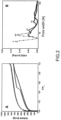
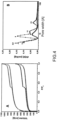
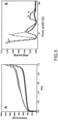
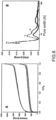
- All the isotherms show a net increase in the quantity of gas adsorbed after the carbonization process, particularly at low pressures (400-700 cm 3 /g).
- the profiles of the adsorption isotherms show a pseudo-Langmuir adsorption isotherm for samples C-UPO-1, C-UPO-2 and C-UPO-3; this shows that the resulting carbons are wholly microporous, unlike the starting polymers which also have mesoporosity as revealed by the presence of hysteresis peaks in the pressure range P/P 0 0.45-1.
- the pore distributions obtained after activation are mostly characterized by the appearance of ultramicropores of dimensions 5 ⁇ or below.
- the microporous carbons present in the literature obtained from 3D polymers comparable to the hyper-cross-linked polymers (like the UPO-n) show the opposite behaviour: one example is provided by carbonized PAFs (Porous Aromatic Frameworks) [ Li, Y.; Ben, T.; Zhang, B.; Fu, Y.; Qiu, S. Scientific Reports, 2013, 3, 2420 ], which are characterized by a fall in surface area and total pore volume following activating treatment, while the pore distribution remains almost microporous with a family of pores in the range 8-14 ⁇ .
- PAFs Porous Aromatic Frameworks
- C-UPO-1, C-UPO-2 and C-UPO-3 deriving from polymers prepared from the precursor TPM the microporous volume is more than 60% of the total.
- These carbons are mainly characterized by families of ultramicropores smaller than 5 ⁇ and families of micropores lying within the range 8-14 ⁇ , which nevertheless have appreciable importance for the storage of gas.
- a particularly promising carbon is C-UPO-1, which is characterized by a microporous volume of 1.02 ⁇ , of which 4.5 ⁇ ultramicropores represent a percentage of more than 65% of the total micropore volume. This material is greatly indicated for the storage of hydrogen, carbon dioxide and methane at low pressures.
- the carbons obtained from polymers deriving from precursors other than TPM are also characterized by families of ultramicropores smaller than 5 ⁇ , and families of micropores lying within the range 8-14 ⁇ .
- carbons C-UPO-7 and C-UPO-8 do not have the family of ultramicropores and are characterized by small micropores of around 9 ⁇ . However these are characterized by higher surface area and micropore volume in the C-UPO-1-8 series of carbons. Table 1.
- Sample Precursor Precursor FDA ratio (mol) Activation temperature (OC) SSA BET (a) [m 2 /g] V TOTAL (b) [cc/g] V MICRO(c) [cc/g] ⁇ 7 ⁇ 7 ⁇ 20 Total UPO-7 TPM 1:8 -- 1435 1.09 -- 0.31 0.31 C-UPO-1 UPO-7 -- 750 2527 1.09 0.69 0.33 1.02 UPO-7 TPM 1:8 -- 1435 1.09 -- 0.31 0.31 C-UPO-2 UPO-7 -- 800 2318 1.21 0.14 0.5 0.64 UPO-9 TPM 1:8 -- 793 0.61 -- 0.18 0.18 C-UPO-3 UPO-9 -- 750 2396 1.11 0.20 0.51 0.71 UPO-21 TPA 1:16 -- 1115 0.72 0.16 0.18 0.34 C-UPO-4 UPO-21 -- 800 2641 1.30 0.19 0.55 0.74 UPO-22 TPS 1:16 -- 1000 1.06 0.13 0.15 0.28 C-UPO-5 UPO-22 -- 800 2190 1.72 0.14 0.
Landscapes
- Chemical & Material Sciences (AREA)
- Organic Chemistry (AREA)
- Chemical Kinetics & Catalysis (AREA)
- Analytical Chemistry (AREA)
- Inorganic Chemistry (AREA)
- Engineering & Computer Science (AREA)
- Nanotechnology (AREA)
- General Chemical & Material Sciences (AREA)
- Oil, Petroleum & Natural Gas (AREA)
- Physics & Mathematics (AREA)
- Thermal Sciences (AREA)
- Materials Engineering (AREA)
- Combustion & Propulsion (AREA)
- Carbon And Carbon Compounds (AREA)
Claims (14)
- Verfahren zur Herstellung eines mikroporösen Kohlenstoffs, umfassend den Schritt des Unterziehens eines hypervernetzten Polymers der Formel (II):
 wobei A ausgewählt ist aus einem C-Atom, einem Si-Atom, einem Ge-Atom, einem Sn-Atom, einer Adamantangruppe, einer Ethangruppe und einer Ethengruppe, und worin es sich bei B, C, D und E jeweils um eine Ringstruktur handelt, die ausgewählt ist aus den Resten der Verbindungen Benzol, Naphthalin, Anthracen, Phenanthren, Pyren, gegebenenfalls mit einem oder mehreren Substituenten, ausgewählt aus Nitro-, Amino-, Hydroxyl-, Sulfonyl-, Halogen-, Phenyl-, Alkyl-, Halogenalkyl-, Hydroxyalkyl-, Aminoalkyl-, Aryl-, Alkenyl- und Alkinylgruppen, und worin n eine ganze Zahl zwischen 200 und 6000 ist, einer Karbonisierungs-Wärmebehandlung bei einer Temperatur in einem Bereich von 500 bis 950 °C in Gegenwart eines Aktivierungsmittels in einem Lösungsmittel,wobei der erhaltene mikroporöse Kohlenstoff durch eine erhöhte BET-Oberfläche und eine erhöhte Menge an Mikroporen, die eine Porengröße unter 7 Å aufweisen, gekennzeichnet ist, im Vergleich zu dem hypervernetzten Polymer von Formel (II) vor der Karbonisierung, wobei die BET-Oberfläche und die Menge an Mikroporen, die eine Porengröße unter 7 Å aufweisen, wie in der Beschreibung offenbart gemessen werden.
 - Verfahren nach Anspruch 1, wobei das Aktivierungsmittel aus der Gruppe ausgewählt ist, die aus Kaliumhydroxid (KOH), Natriumhydroxid (NaOH), Kaliumcarbonat (K2CO3), Natriumcarbonat (Na2CO3), Zinkchlorid (ZnCl2) und Phosphorsäure (H3PO4) besteht.
- Verfahren nach Anspruch 1 oder 2, wobei das Gewichtsverhältnis zwischen dem Aktivierungsmittel und dem hypervernetzten Polymer von Formel (II) zwischen 0,5 : 1 und 8 : 1, vorzugsweise zwischen 3 : 1 und 4 : 1 liegt.
- Verfahren nach einem der Ansprüche 1 bis 3, wobei die Karbonisierungs-Wärmebehandlung bei einer Temperatur im Bereich von 700 bis 900 °C, vorzugsweise bei einer Temperatur im Bereich von 750 bis 800 °C, durchgeführt wird.
- Verfahren nach einem der Ansprüche 1 bis 4, wobei das Lösungsmittel für das Aktivierungsmittel aus der Gruppe bestehend aus Wasser, Ethanol, Methanol, Acetonitril, Tetrahydrofuran, Dimethylformamid und Mischungen davon ausgewählt ist.
- Verfahren nach einem der Ansprüche 1 bis 5, wobei die Konzentration des Aktivierungsmittels in dem Lösungsmittel in einem Bereich von 0,01 M bis 22 M liegt.
- Verfahren nach einem der Ansprüche 1 bis 6, wobei die Karbonisierungs-Wärmebehandlung für eine Zeit zwischen 10 Minuten und 5 Stunden unter einem Inertgasstrom durchgeführt wird.
- Verfahren nach einem der Ansprüche 1 bis 7, wobei das hypervernetzte Polymer von Formel (II), wie in Anspruch 1 definiert, durch die Reaktion eines Monomers der Formel (I) hergestellt wird:

- Verfahren nach Anspruch 8, wobei die Konzentration des Monomers der Formel (I) in dem aprotischen organischen Lösungsmittel im Bereich von 0,001 bis 0,6 M liegt.
- Verfahren nach Anspruch 8 oder 9, wobei das aprotische organische Lösungsmittel aus der Gruppe bestehend aus Dichlorethan (DCE), Toluol, Benzol, Nitromethan (CH3NO2), Schwefelkohlenstoff und Chlorbenzol ausgewählt ist.
- Verfahren nach einem der Ansprüche 8 bis 10, wobei der Friedel-Crafts-Katalysator aus der Gruppe bestehend aus BF3, BeCl2, TiCl4, SbCl5, SnCl4, FeCl3, AlCl3, Sc(OTf)3, Mo(CO)6, SeCl4, TeCl4, Schwefelsäure, Flusssäure und Supersäuren ausgewählt ist.
- Verfahren nach einem der Ansprüche 8 bis 11, wobei das Molverhältnis des Monomers von Formel (I) zu dem FDA im Bereich von 1 : 3 bis 1 : 40 liegt.
- Mikroporöser Kohlenstoff, der durch Carbonisierung eines hypervernetzten Polymers der Formel (II) erhalten wird:
 wobei A ausgewählt ist aus einem C-Atom, einem Si-Atom, einem Ge-Atom, einem Sn-Atom, einer Adamantangruppe, einer Ethangruppe und einer Ethengruppe, und worin es sich bei B, C, D und E jeweils um eine Ringstruktur handelt, die ausgewählt ist aus den Resten der Verbindungen Benzol, Naphthalin, Anthracen, Phenanthren, Pyren, gegebenenfalls mit einem oder mehreren Substituenten, ausgewählt aus Nitro-, Amino-, Hydroxyl-, Sulfonyl-, Halogen-, Phenyl-, Alkyl-, Halogenalkyl-, Hydroxyalkyl-, Aminoalkyl-, Aryl-, Alkenyl- und Alkinylgruppen, und worin n eine ganze Zahl zwischen 200 und 6000 ist,wobei die Karbonisierung nach dem Verfahren eines der Ansprüche 1 bis 12 durchgeführt wird, wobei der mikroporöse Kohlenstoff durch eine erhöhte BET-Oberfläche und eine erhöhte Menge an Mikroporen, die eine Porengröße unter 7 Å aufweisen, gekennzeichnet ist, im Vergleich zu dem hypervernetzten Polymer von Formel (II) vor der Karbonisierung, wobei die BET-Oberfläche und die Menge an Mikroporen, die eine Porengröße unter 7 Å aufweisen, wie in der Beschreibung offenbart gemessen werden.
 - Verwendung des mikroporösen Kohlenstoffs nach Anspruch 13 zur Speicherung von Wasserstoff, Methan oder Kohlendioxid.
Applications Claiming Priority (2)
| Application Number | Priority Date | Filing Date | Title |
|---|---|---|---|
| ITUB2015A002715A ITUB20152715A1 (it) | 2015-07-31 | 2015-07-31 | Procedimento di preparazione di carbone microporoso e carbone microporoso cosi ottenuto. |
| PCT/IB2016/054551 WO2017021843A1 (en) | 2015-07-31 | 2016-07-29 | A method of preparing a microporous carbon and the microporous carbon thereby obtained |
Publications (3)
| Publication Number | Publication Date |
|---|---|
| EP3328537A1 EP3328537A1 (de) | 2018-06-06 |
| EP3328537C0 EP3328537C0 (de) | 2025-01-01 |
| EP3328537B1 true EP3328537B1 (de) | 2025-01-01 |
Family
ID=54364570
Family Applications (1)
| Application Number | Title | Priority Date | Filing Date |
|---|---|---|---|
| EP16763574.7A Active EP3328537B1 (de) | 2015-07-31 | 2016-07-29 | Verfahren zur herstellung eines mikroporösen kohlenstoffs und dadurch erhaltener mikroporöser kohlenstoff |
Country Status (3)
| Country | Link |
|---|---|
| EP (1) | EP3328537B1 (de) |
| IT (1) | ITUB20152715A1 (de) |
| WO (1) | WO2017021843A1 (de) |
Families Citing this family (6)
| Publication number | Priority date | Publication date | Assignee | Title |
|---|---|---|---|---|
| CN107081133B (zh) * | 2017-05-31 | 2019-11-15 | 华东理工大学 | 多孔有机物作为抗生素吸附剂的应用 |
| IT201700073326A1 (it) | 2017-06-30 | 2018-12-30 | Sol Spa | Procedimento di preparazione di un materiale micro- e mesoporoso adsorbente per gas e materiale micro- e mesoporoso adsorbente così ottenuto. |
| CN108557798B (zh) * | 2018-05-29 | 2021-07-16 | 上海应用技术大学 | 一种利用星状聚合物可控制备过渡金属负载的含氮多孔碳复合材料的方法 |
| US11235306B2 (en) | 2019-05-01 | 2022-02-01 | King Fahd University Of Petroleum And Minerals | Phenothiazine based crosslinked polymer and methods thereof |
| CN114275759B (zh) * | 2021-12-02 | 2023-11-28 | 莆田学院 | 一种层次孔碳材料及其制备方法与应用 |
| CN115094440B (zh) * | 2022-07-20 | 2023-03-28 | 齐齐哈尔大学 | 钴/四氧化三铁/碳纳米管/c多孔微球制氢催化剂的制备方法 |
Family Cites Families (3)
| Publication number | Priority date | Publication date | Assignee | Title |
|---|---|---|---|---|
| US20100331436A1 (en) * | 2009-06-29 | 2010-12-30 | Shilun Qiu | Porous Polymer and Synthetic Method Thereof |
| US20110224070A1 (en) * | 2010-03-10 | 2011-09-15 | Gm Global Technology Operations, Inc. | Microporous carbon material and methods of forming same |
| EP2829319A1 (de) * | 2013-07-23 | 2015-01-28 | SOL S.p.A. | Poröses organisches Polymer zur Adsorption von Gas und Verfahren zur Herstellung davon |
-
2015
- 2015-07-31 IT ITUB2015A002715A patent/ITUB20152715A1/it unknown
-
2016
- 2016-07-29 WO PCT/IB2016/054551 patent/WO2017021843A1/en not_active Ceased
- 2016-07-29 EP EP16763574.7A patent/EP3328537B1/de active Active
Non-Patent Citations (2)
| Title |
|---|
| YANQIANG LI ET AL: "SI [Supporting Information] Ultrahigh Gas Storage in KOH Activated Carbonized PAFs", SCIENTIFIC REPORTS, 13 August 2013 (2013-08-13), pages 1 - 23, XP055686079, Retrieved from the Internet <URL:https://www.nature.com/articles/srep02420#Sec5> [retrieved on 20200415] * |
| YANQIANG LI ET AL: "Ultrahigh Gas Storage both at Low and High Pressures in KOH-Activated Carbonized Porous Aromatic Frameworks", SCIENTIFIC REPORTS, vol. 3, 13 August 2013 (2013-08-13), pages 1 - 5, XP055266234, DOI: 10.1038/srep02420 * |
Also Published As
| Publication number | Publication date |
|---|---|
| EP3328537A1 (de) | 2018-06-06 |
| EP3328537C0 (de) | 2025-01-01 |
| ITUB20152715A1 (it) | 2017-01-31 |
| WO2017021843A1 (en) | 2017-02-09 |
Similar Documents
| Publication | Publication Date | Title |
|---|---|---|
| EP3328537A1 (de) | Verfahren zur herstellung eines mikroporösen kohlenstoffs und dadurch erhaltener mikroporöser kohlenstoff | |
| EP3271068B1 (de) | Verfahren zur herstellung eines gasabsorbierenden, porösen, aromatischen, hyperverzweigten polymers | |
| Liu et al. | Copper benzene-1, 3, 5-tricarboxylate (Cu-BTC) metal-organic framework (MOF) and porous carbon composites as efficient carbon dioxide adsorbents | |
| EP2829319A1 (de) | Poröses organisches Polymer zur Adsorption von Gas und Verfahren zur Herstellung davon | |
| Peng et al. | N-doped porous carbons derived from a polymer precursor with a record-high N content: Efficient adsorbents for CO2 capture | |
| JP5542146B2 (ja) | 酸素含有量を制御した非常に多孔質の活性炭 | |
| Ren et al. | Synthesis of a porous aromatic framework for adsorbing organic pollutants application | |
| Sun et al. | Functional materials derived from open framework templates/precursors: synthesis and applications | |
| Kim et al. | Highly enhanced gas sorption capacities of N-doped porous carbon spheres by hot NH3 and CO2 treatments | |
| EP3421126B1 (de) | Verfahren zur herstellung eines gas-adsorbierenden mikro- und mesoporösen kohlenstoffs | |
| Liu et al. | Controlled synthesis of highly dispersed platinum nanoparticles in ordered mesoporous carbons | |
| Carrasco et al. | Small-pore driven high capacitance in a hierarchical carbon via carbonization of Ni-MOF-74 at low temperatures | |
| US20210213436A1 (en) | Ordered macroporous metal-organic framework single crystals and preparation method thereof | |
| KR101815540B1 (ko) | 미세기공 고분자 이온성 액체 분리막, 그의 제조방법 및 그의 용도 | |
| EP2256086B1 (de) | Mikroporöses kohlenstoffhaltiges material, herstellungsverfahren dafür und verfahren zur speicherung von wasserstoff unter verwendung eines mikroporösen kohlenstoffhaltigen materials | |
| JP2018505777A (ja) | 高窒素ドープメソポーラス炭素複合材の製造方法 | |
| Chen et al. | Hyper-crosslinked aromatic polymers with improved microporosity for enhanced CO 2/N 2 and CO 2/CH 4 selectivity | |
| Wang et al. | Fabrication of hierarchical N-doped carbon nanotubes for CO2 adsorption | |
| Liu et al. | Homochiral metal phosphonate nanotubes | |
| CN111517323B (zh) | 一种原位氮掺杂多孔碳材料及其制备方法 | |
| CN104177576A (zh) | 一种亚胺基有机多孔聚合物骨架材料及其制备方法 | |
| Zhao et al. | Polycarbazole and biomass-derived flexible nitrogen-doped porous carbon materials for gas adsorption and sensing | |
| CN105195188A (zh) | 镍-碳化钨/多孔碳纳米纤维复合催化剂及中间体与制备 | |
| US9731249B2 (en) | Polymeric molecular sieve membranes for gas separation | |
| US20210087063A1 (en) | Nanostructured Carbons and Methods of Preparing the Same |
Legal Events
| Date | Code | Title | Description |
|---|---|---|---|
| STAA | Information on the status of an ep patent application or granted ep patent |
Free format text: STATUS: THE INTERNATIONAL PUBLICATION HAS BEEN MADE |
|
| PUAI | Public reference made under article 153(3) epc to a published international application that has entered the european phase |
Free format text: ORIGINAL CODE: 0009012 |
|
| STAA | Information on the status of an ep patent application or granted ep patent |
Free format text: STATUS: REQUEST FOR EXAMINATION WAS MADE |
|
| 17P | Request for examination filed |
Effective date: 20180214 |
|
| AK | Designated contracting states |
Kind code of ref document: A1 Designated state(s): AL AT BE BG CH CY CZ DE DK EE ES FI FR GB GR HR HU IE IS IT LI LT LU LV MC MK MT NL NO PL PT RO RS SE SI SK SM TR |
|
| AX | Request for extension of the european patent |
Extension state: BA ME |
|
| DAV | Request for validation of the european patent (deleted) | ||
| DAX | Request for extension of the european patent (deleted) | ||
| STAA | Information on the status of an ep patent application or granted ep patent |
Free format text: STATUS: EXAMINATION IS IN PROGRESS |
|
| 17Q | First examination report despatched |
Effective date: 20200421 |
|
| GRAP | Despatch of communication of intention to grant a patent |
Free format text: ORIGINAL CODE: EPIDOSNIGR1 |
|
| STAA | Information on the status of an ep patent application or granted ep patent |
Free format text: STATUS: GRANT OF PATENT IS INTENDED |
|
| RIC1 | Information provided on ipc code assigned before grant |
Ipc: C01B 32/348 20170101ALI20240630BHEP Ipc: C01B 32/342 20170101ALI20240630BHEP Ipc: C01B 3/00 20060101ALI20240630BHEP Ipc: B01D 53/02 20060101ALI20240630BHEP Ipc: B01J 20/28 20060101ALI20240630BHEP Ipc: B01J 20/30 20060101ALI20240630BHEP Ipc: B01J 20/20 20060101AFI20240630BHEP |
|
| INTG | Intention to grant announced |
Effective date: 20240730 |
|
| GRAS | Grant fee paid |
Free format text: ORIGINAL CODE: EPIDOSNIGR3 |
|
| GRAA | (expected) grant |
Free format text: ORIGINAL CODE: 0009210 |
|
| STAA | Information on the status of an ep patent application or granted ep patent |
Free format text: STATUS: THE PATENT HAS BEEN GRANTED |
|
| AK | Designated contracting states |
Kind code of ref document: B1 Designated state(s): AL AT BE BG CH CY CZ DE DK EE ES FI FR GB GR HR HU IE IS IT LI LT LU LV MC MK MT NL NO PL PT RO RS SE SI SK SM TR |
|
| REG | Reference to a national code |
Ref country code: GB Ref legal event code: FG4D |
|
| REG | Reference to a national code |
Ref country code: DE Ref legal event code: R096 Ref document number: 602016090801 Country of ref document: DE |
|
| REG | Reference to a national code |
Ref country code: CH Ref legal event code: EP |
|
| REG | Reference to a national code |
Ref country code: IE Ref legal event code: FG4D |
|
| U01 | Request for unitary effect filed |
Effective date: 20250101 |
|
| U07 | Unitary effect registered |
Designated state(s): AT BE BG DE DK EE FI FR IT LT LU LV MT NL PT RO SE SI Effective date: 20250110 |
|
| PG25 | Lapsed in a contracting state [announced via postgrant information from national office to epo] |
Ref country code: PL Free format text: LAPSE BECAUSE OF FAILURE TO SUBMIT A TRANSLATION OF THE DESCRIPTION OR TO PAY THE FEE WITHIN THE PRESCRIBED TIME-LIMIT Effective date: 20250101 |
|
| PG25 | Lapsed in a contracting state [announced via postgrant information from national office to epo] |
Ref country code: ES Free format text: LAPSE BECAUSE OF FAILURE TO SUBMIT A TRANSLATION OF THE DESCRIPTION OR TO PAY THE FEE WITHIN THE PRESCRIBED TIME-LIMIT Effective date: 20250101 |
|
| PG25 | Lapsed in a contracting state [announced via postgrant information from national office to epo] |
Ref country code: IS Free format text: LAPSE BECAUSE OF FAILURE TO SUBMIT A TRANSLATION OF THE DESCRIPTION OR TO PAY THE FEE WITHIN THE PRESCRIBED TIME-LIMIT Effective date: 20250501 Ref country code: NO Free format text: LAPSE BECAUSE OF FAILURE TO SUBMIT A TRANSLATION OF THE DESCRIPTION OR TO PAY THE FEE WITHIN THE PRESCRIBED TIME-LIMIT Effective date: 20250401 |
|
| PG25 | Lapsed in a contracting state [announced via postgrant information from national office to epo] |
Ref country code: HR Free format text: LAPSE BECAUSE OF FAILURE TO SUBMIT A TRANSLATION OF THE DESCRIPTION OR TO PAY THE FEE WITHIN THE PRESCRIBED TIME-LIMIT Effective date: 20250101 |
|
| PG25 | Lapsed in a contracting state [announced via postgrant information from national office to epo] |
Ref country code: GR Free format text: LAPSE BECAUSE OF FAILURE TO SUBMIT A TRANSLATION OF THE DESCRIPTION OR TO PAY THE FEE WITHIN THE PRESCRIBED TIME-LIMIT Effective date: 20250402 |
|
| PG25 | Lapsed in a contracting state [announced via postgrant information from national office to epo] |
Ref country code: CZ Free format text: LAPSE BECAUSE OF FAILURE TO SUBMIT A TRANSLATION OF THE DESCRIPTION OR TO PAY THE FEE WITHIN THE PRESCRIBED TIME-LIMIT Effective date: 20250101 |
|
| U20 | Renewal fee for the european patent with unitary effect paid |
Year of fee payment: 10 Effective date: 20250624 |
|
| PG25 | Lapsed in a contracting state [announced via postgrant information from national office to epo] |
Ref country code: SM Free format text: LAPSE BECAUSE OF FAILURE TO SUBMIT A TRANSLATION OF THE DESCRIPTION OR TO PAY THE FEE WITHIN THE PRESCRIBED TIME-LIMIT Effective date: 20250101 |
|
| PGFP | Annual fee paid to national office [announced via postgrant information from national office to epo] |
Ref country code: GB Payment date: 20250722 Year of fee payment: 10 |
|
| PGFP | Annual fee paid to national office [announced via postgrant information from national office to epo] |
Ref country code: CH Payment date: 20250801 Year of fee payment: 10 |
|
| PG25 | Lapsed in a contracting state [announced via postgrant information from national office to epo] |
Ref country code: SK Free format text: LAPSE BECAUSE OF FAILURE TO SUBMIT A TRANSLATION OF THE DESCRIPTION OR TO PAY THE FEE WITHIN THE PRESCRIBED TIME-LIMIT Effective date: 20250101 |
|
| PLBE | No opposition filed within time limit |
Free format text: ORIGINAL CODE: 0009261 |
|
| STAA | Information on the status of an ep patent application or granted ep patent |
Free format text: STATUS: NO OPPOSITION FILED WITHIN TIME LIMIT |
|
| 26N | No opposition filed |
Effective date: 20251002 |