EP3328413B1 - Materialien und verfahren zur behandlung und beurteilung von ischämischem und/oder reperfusionsbeschädigtem gewebe und/oder dafür anfälligem gewebe - Google Patents
Materialien und verfahren zur behandlung und beurteilung von ischämischem und/oder reperfusionsbeschädigtem gewebe und/oder dafür anfälligem gewebe Download PDFInfo
- Publication number
- EP3328413B1 EP3328413B1 EP16831435.9A EP16831435A EP3328413B1 EP 3328413 B1 EP3328413 B1 EP 3328413B1 EP 16831435 A EP16831435 A EP 16831435A EP 3328413 B1 EP3328413 B1 EP 3328413B1
- Authority
- EP
- European Patent Office
- Prior art keywords
- tissue
- msc
- ischemic
- transcriptome
- mscs
- Prior art date
- Legal status (The legal status is an assumption and is not a legal conclusion. Google has not performed a legal analysis and makes no representation as to the accuracy of the status listed.)
- Active
Links
Images







Classifications
-
- A—HUMAN NECESSITIES
- A01—AGRICULTURE; FORESTRY; ANIMAL HUSBANDRY; HUNTING; TRAPPING; FISHING
- A01N—PRESERVATION OF BODIES OF HUMANS OR ANIMALS OR PLANTS OR PARTS THEREOF; BIOCIDES, e.g. AS DISINFECTANTS, AS PESTICIDES OR AS HERBICIDES; PEST REPELLANTS OR ATTRACTANTS; PLANT GROWTH REGULATORS
- A01N1/00—Preservation of bodies of humans or animals, or parts thereof
- A01N1/10—Preservation of living parts
- A01N1/12—Chemical aspects of preservation
- A01N1/122—Preservation or perfusion media
- A01N1/126—Physiologically active agents, e.g. antioxidants or nutrients
-
- A—HUMAN NECESSITIES
- A61—MEDICAL OR VETERINARY SCIENCE; HYGIENE
- A61K—PREPARATIONS FOR MEDICAL, DENTAL OR TOILETRY PURPOSES
- A61K35/00—Medicinal preparations containing materials or reaction products thereof with undetermined constitution
- A61K35/12—Materials from mammals; Compositions comprising non-specified tissues or cells; Compositions comprising non-embryonic stem cells; Genetically modified cells
- A61K35/28—Bone marrow; Haematopoietic stem cells; Mesenchymal stem cells of any origin, e.g. adipose-derived stem cells
-
- C—CHEMISTRY; METALLURGY
- C12—BIOCHEMISTRY; BEER; SPIRITS; WINE; VINEGAR; MICROBIOLOGY; ENZYMOLOGY; MUTATION OR GENETIC ENGINEERING
- C12N—MICROORGANISMS OR ENZYMES; COMPOSITIONS THEREOF; PROPAGATING, PRESERVING, OR MAINTAINING MICROORGANISMS; MUTATION OR GENETIC ENGINEERING; CULTURE MEDIA
- C12N5/00—Undifferentiated human, animal or plant cells, e.g. cell lines; Tissues; Cultivation or maintenance thereof; Culture media therefor
-
- C—CHEMISTRY; METALLURGY
- C12—BIOCHEMISTRY; BEER; SPIRITS; WINE; VINEGAR; MICROBIOLOGY; ENZYMOLOGY; MUTATION OR GENETIC ENGINEERING
- C12N—MICROORGANISMS OR ENZYMES; COMPOSITIONS THEREOF; PROPAGATING, PRESERVING, OR MAINTAINING MICROORGANISMS; MUTATION OR GENETIC ENGINEERING; CULTURE MEDIA
- C12N5/00—Undifferentiated human, animal or plant cells, e.g. cell lines; Tissues; Cultivation or maintenance thereof; Culture media therefor
- C12N5/06—Animal cells or tissues; Human cells or tissues
- C12N5/0602—Vertebrate cells
- C12N5/0652—Cells of skeletal and connective tissues; Mesenchyme
- C12N5/0662—Stem cells
- C12N5/0667—Adipose-derived stem cells [ADSC]; Adipose stromal stem cells
-
- G—PHYSICS
- G01—MEASURING; TESTING
- G01N—INVESTIGATING OR ANALYSING MATERIALS BY DETERMINING THEIR CHEMICAL OR PHYSICAL PROPERTIES
- G01N2570/00—Omics, e.g. proteomics, glycomics or lipidomics; Methods of analysis focusing on the entire complement of classes of biological molecules or subsets thereof, i.e. focusing on proteomes, glycomes or lipidomes
-
- G—PHYSICS
- G01—MEASURING; TESTING
- G01N—INVESTIGATING OR ANALYSING MATERIALS BY DETERMINING THEIR CHEMICAL OR PHYSICAL PROPERTIES
- G01N33/00—Investigating or analysing materials by specific methods not covered by groups G01N1/00 - G01N31/00
- G01N33/48—Biological material, e.g. blood, urine; Haemocytometers
- G01N33/50—Chemical analysis of biological material, e.g. blood, urine; Testing involving biospecific ligand binding methods; Immunological testing
- G01N33/5005—Chemical analysis of biological material, e.g. blood, urine; Testing involving biospecific ligand binding methods; Immunological testing involving human or animal cells
- G01N33/5008—Chemical analysis of biological material, e.g. blood, urine; Testing involving biospecific ligand binding methods; Immunological testing involving human or animal cells for testing or evaluating the effect of chemical or biological compounds, e.g. drugs, cosmetics
- G01N33/5082—Supracellular entities, e.g. tissue, organisms
- G01N33/5088—Supracellular entities, e.g. tissue, organisms of vertebrates
Definitions
- the present description relates generally to the fields of tissue and organ preservation and/or assessment.
- Tissue and organ failure is a global cause of death.
- tissue engraftment or organ transplant is the preferred therapy to prevent tissue and organ failure.
- donor tissue and organs may not be "available" for transplantation, for example, because they are functionally compromised, or would become functionally compromised during ex vivo transport.
- nearly 70% of hearts from donors who have consented to donation remain non-utilized because the hearts are functionally compromised or are logistically unsuitable for transport to the recipient within a four- to six-hour window of ischemia, after which heart function is compromised.
- PTD primary graft dysfunction
- ischemic and/or I/R injury Current methods for preventing or at least minimizing ischemic and/or I/R injury include rapid intervention to restore lost blood flow, improvement in surgical techniques and instrumentation, and controlled cooling and warming of the heart before, during, and after potentially damaging cardiac invents and interventions.
- DENIS ANGOULVANT ET AL "Mesenchymal stem cell conditioned media attenuates in vitro and ex vivo myocardial reperfusion injury", JOURNAL OF HEART AND LUNG TRANSPLANTATION, US, (20110101), vol. 30, no. 1, doi:10.1016/j.healun.2010.08.023, iSSN 1053-2498, pages 95 - 102 , discloses that in vitro cell injury was significantly reduced by MSC, MSC CM and CsA. PI3K inhibitors significantly attenuated the protection afforded by MSC CM but not growth factor inhibitors. Ex vivo experimentation showed that MSC CM significantly reduced myocardial ischemia/reperfusion injury.
- JAE-HYUNG LEE ET AL "Analysis of Transcriptome Complexity Through RNA Sequencing in Normal and Failing Murine Hearts", CIRCULATION RESEARCH, US, (20111209), vol. 109, no. 12, doi:10.1161/CIRCRESAHA.111.249433, iSSN 0009-7330, pages 1332 - 1341 discloses use of transcriptome profiles in hearts as a central issue to better understand cardiac physiology and disease.
- composition for use in the prevention or treatment of ischemic injury and/or reperfusion injury and/or injury to the heart comprising:
- the at least a portion of MSC-CM comprises exosomes separated from the MSC-CM.
- a method of treating tissue comprising:
- the tissue is cardiac tissue comprised by a heart, and wherein the heart is an adult heart, an infant heart, or a neonatal heart.
- the contacting step comprises perfusing the organ tissue with the composition for the treatment period.
- the contacting step prevents, at least in part, ischemic damage in the tissue, thereby improving and/or preserving tissue function.
- the contacting step prevents, at least in part, reperfusion damage in the tissue, thereby improving and/or preserving tissue function.
- the method further comprises:
- the analyzing step comprises analysis of one or more of following genes: Lonrf1, Chd6, Rhobtb1, Wipf3, Raph1, Slc41a3, Per2, Colq, Cldn5, Timp3, Hlf, Per Bcl9, Apold1, Cys1, Wee1, Mthfd1l, Col5a3, Sorbs1, Spon2, Slc43a3, Clmp, Rbp1, Prickle Nfic, Slc6a6, Nxn, Gpcpd1, Tef, Podn, Mmp14, Smco4, Slc39a14, Eif5a2, Tm4sf1, Slc4a8 Polr2a, Best3, Acot1, Xdh, Id1, Usp2, Zbtb16, Sox4, Plcb4, Dusp18, 2210011C24Rik, Sex Gja5, Plcd3, Arntl, Hspa1b, Eepd1, Rcan1, Ppplr3a, Pall
- the tissue is evaluated as suitable for transplantation if expression of one or more of ARNT1, TNF, CLDN5, Col5a3, and Slc41a3 is the same or decreased relative to the baseline transcriptome and/or if expression of one or more of MTHFD1, LONRF1, RHOBTB1, Cycs1, Hhipl1, and FAM107a is the same or increased relative to the baseline transcriptome; In certain embodiments, the tissue is evaluated as unsuitable for transplantation if expression of one or more of ARNT1, TNF, CLDN5, Col5a3, and Slc41a3 is increased relative to the standard and/or if expression of one or more of MTHFD1, LONRF1, RHOBTB1, Cycs1, Hhipl1, and FAM107a is decreased relative to the baseline transcriptome.
- the transcriptomic profile of the tissue is determined before the contacting step, during the contacting step, and/or after the contacting step; and wherein the results of the comparison are used to determine further treatment of the tissue with the composition.
- the results of the comparison are used to identify suitability of the tissue for transplant.
- the method further comprises contacting the tissue with a composition comprising at least a portion of MSC-CM for a treatment period, and repeating comparison of the transcriptome of the contacted tissue to a baseline transcriptome measured in a matched set of tissue, wherein the tissue is evaluated as suitable for transplantation if, according to the repeated comparison, expression of one or more of ARNT1, TNF, CLDN5, Col5a3, and Slc41a3 is the same or decreased relative to the baseline transcriptome and/or if expression of one or more of MTHFD1, LONRF1, RHOBTB1, Cycs1, Hhipl1, and FAM107a is the same or increased relative to the baseline transcriptome.
- compositions comprising a secretion from mesenchymal stem cells (MSCs) and/or at least a portion of mesenchymal stem cell-conditioned medium (MSC-CM), also referred to herein as "MSC compositions", can be used to preserve (at least in part) and/or rescue (at least in part) tissue from ischemic and/or reperfusion injury.
- MSCs mesenchymal stem cells
- MSC-CM mesenchymal stem cell-conditioned medium
- MSCs also known as mesenchymal stromal cells, can effect in a tissue one or more of inflammation, reactive oxygen species, apoptosis, angiogenesis, and proliferation of tissue-endogenous stem-like cells.
- MSCs secrete a plurality of paracrine factors, such as cytokines, chemokines, and factors that regulate in a tissue one or more of apoptosis, inflammation, immunity, and angiogenesis.
- the MSCs are derived from adipose tissue (Ad-MSCs) .
- the MSC composition comprises at least a portion of a medium conditioned with the MSCs (i.e., MSC conditioned medium (MSC-CM), such as Ad-MSC conditioned medium (Ad-MSC-CM)).
- MSC-CM MSC conditioned medium
- Ad-MSC-CM Ad-MSC conditioned medium
- tissue and organs in a variety of functional states (e.g., abnormal tissue/organ function, such as impaired function).
- tissues and organs characterized by being susceptible to ischemia and hypoxia-induced progressive cell damage are suitable for use with the materials and methods provided herein.
- cardiac tissue, (claimed) lung tissue, pancreatic tissue, skin, cartilage, bone, and/or cornea (not claimed) tissue are suitable for use with the materials and methods provided herein.
- hearts,(claimed) kidneys, lungs, livers, hands, feet, and/or faces (not claimed) are suitable for use with materials and methods provided herein.
- tissues and/or organs obtained from adults, infants and/or neonatals are suitable for use with the materials and methods provided herein.
- perfusion of Ad-MSC-CM into adult, infant, or neonatal hearts protects the hearts (at least in part) from loss of function caused by ischemic injury and/or reperfusion injury. At least some of the compounds Ad-MSCs secrete into the cell culture medium provide a protective and/or restorative effect on adult, infant, and neonatal cardiac tissue.
- Ad-MSC-CM can be used to treat human or animal patients before or after the patient undergoes an ischemic event. It is also contemplated that the compositions provided herein can be used to reduce or prevent reperfusion damage to adult, infant, or neonatal cardiac tissue. Pre-treatment of the MSCs used to condition the MSC-CM may also improve treatment of cardiac tissue before, during, and/or after an ischemic and/or reperfusion event. Therapeutic benefit of the disclosed method and composition may be measured and/or monitored by way of functional assays and/or molecular assays, such as the transcriptomic profiling provided herein. Further, the transcriptomic profiling disclosed herein may be used to evaluate tissues and/or organs to determine the presence, absence, and/or level of ischemic and/or reperfusion damage.
- compositions provided herein comprise MSC secretions and/or MSC-conditioned medium (MSC-CM) suitable for use in prevention or treatment of ischemic injury and/or reperfusion injury and/or injury to the heart.
- MSC-CM MSC-conditioned medium
- MSCs can be obtained for various sources, such as, for example, bone marrow (BM), peripheral blood, adipose tissue, placenta, umbilical cord, or from pluripotent stem cells, such as embryonic stem cells, fetal stem cells, adult stem cells, or induced pluripotent stem cells (iPSCs).
- BM bone marrow
- adipose tissue placenta
- umbilical cord or from pluripotent stem cells, such as embryonic stem cells, fetal stem cells, adult stem cells, or induced pluripotent stem cells (iPSCs).
- pluripotent stem cells such as embryonic stem cells, fetal stem cells, adult stem cells, or induced pluripotent stem cells (iPSCs).
- the MSCs are obtained from adipose tissue.
- Adipose-derived MSCs also referred to herein as adipose stem cells (ASCs)
- ASCs adipose stem cells
- Ad-MSCs can be cultured in a cell culture medium, in vitro. After a period of time in culture, the Ad-MSCs can be separated from the medium, and the medium collected. This medium, conditioned with Ad-MSCs, is referred to as Ad-MSC-conditioned medium (Ad-MSC-CM), and it contains various components secreted by the Ad-MSCs during the period of culture time.
- Ad-MSC-CM Ad-MSC-conditioned medium
- the factors secreted by MSCs may include microvesicles, extracellular vesicles (EVs) and/or the MSCs exosome, and can be found in the cell culture medium where the MSCs are cultured.
- This medium, conditioned by exposure to MSCs, is referred to herein as conditioned medium (CM).
- Medium may be conditioned with MSCs for a range of times to obtain suitable MSC-CM, such as, for example, between about 20 minutes to 96 hours, 20 minutes to 72 hours, 20 minutes to 60 hours, 20 minutes to 48 hours, 20 minutes to 36 hours, 20 minutes to 24 hours, 20 minutes to 12 hours or 20 minutes to 6 hours.
- Compositions suitable for use with the disclosed method may comprise all or a portion of MSC-CM .
- MSC-CM may be perfused into a tissue, without further treatment to alter the composition of the MSC-CM .
- the MSC-CM may be diluted, concentrated, or separated to obtain a specific portion of the CM, or combined with one or more other compounds or compositions, such as, for example a solution for transporting and/or preserving an organ (e.g., UW solution, Stanford solution, Steen solution etc.).
- the MSC compositions provided herein may be used as an adjunct to an organ transport/preservation solution.
- the composition provided herein comprises EVs separated from MSC-CM .
- EVs contain cargos of factors that may be unstable in the extracellular milieu, such as microRNAs.
- the composition provided herein comprises exosomes separated from MSC-CM .
- a composition suitable for use in the disclosed method comprises exosomes separated from MSC-CM , such as, for example, Ad-MSC-CM .
- An MSC composition comprising exosomes may be beneficial, at least because, relative to an MSC composition comprising all the contents of and MSC-CM , its composition may be easier to define, standardize, assay for toxicity, and/or store for a time period (e.g., improved shelf life).
- the MSCs used to condition the CM may be "preconditioned" with one or more treatments.
- preconditioned we mean exposed to a treatment, such as, for example, an environmental condition, one or more small molecules and/or proteins.
- the MSCs used to condition the CM are exposed to hypoxic conditions (e.g., less than 10% O 2 , less than 5% O 2 , or about 1% O 2 ).
- Hypoxia may be induced in the MSC cell culture in a variety of ways, such as, for example, by altering the gas composition the cells are exposed to or by providing one or more chemical inducer of hypoxia to the MSCs in culture.
- the MSCs used to condition the CM are exposed to TNF-alpha.
- tissue preparation suitable for transplantation comprises an organ or a segment thereof and an MSC composition, as described herein.
- MSC composition protects (at least in part) and/or reverses (at least in part) ischemic and/or reperfusion injury of the tissue, thereby preparing the tissue such that it is suitable for transplantation.
- an ex vivo method of treating a tissue with an MSC composition is provided.
- treating we mean preventing and/or mitigating, at least in part, ischemic and/or reperfusion injury of the tissue or rescuing, at least in part, the tissue from ischemic and/or reperfusion injury.
- a tissue may be perfused with an MSC composition disclosed herein, for a period of time, thereby preventing or mitigating ischemic and/or reperfusion injury of the tissue or rescuing the tissue from ischemic and/or reperfusion injury.
- Various systems for perfusing tissues and organs are known, such as, for example, the Langendorff system or a tissue/organ bath system.
- the tissue may be treated ex vivo.
- the donor organ is maintained ex vivo for a period of time. During this time, there is inadequate blood flow to the organ, and consequently inadequate oxygen supply to the organ.
- This period of ischemia also referred to herein as an ischemic event
- ischemia damages the organ, as discussed above.
- blood supply returns to the tissue i.e., reperfusion
- it can injure the tissue for example by causing inflammation and oxidative stress, rather than restoring normal tissue function.
- Cardioplegia is another example in which an organ undergoes a period of ischemia and is suitable for treatment with the method provided herein.
- compositions are for use in treating ischemic injury and/or reperfusion injury and/or injury to the heart.
- ischemic injury and/or reperfusion injury and/or injury For example, during myocardial infarction the heart undergoes ischemia, which damages cardiac tissue.
- perfusion of tissue with an MSC composition may be carried out before, during and/or after an ischemic event.
- the heart in an effort to recover a heart from a brain-dead donor, the heart may be treated using the method provided herein prior to cold ischemia.
- the heart in an effort to recover a heart donated after circulatory death, the heart may be treated using compositions for use as disclosed after a period of warm (in situ) ischemia.
- a patient undergoing or having recently undergone myocardial infarction may be treated using compositions for use as disclosed.
- treatment may be systemic, wherein the MSC composition is provided to the patient systemically, or local, wherein the MSC composition is provided locally to the heart such as, for example, by way of intracoronary delivery or retrograde venous infusion.
- the perfusion may be carried out before and/or during reperfusion.
- Perfusion with a suitable MSC composition may be carried out at various doses over various time periods.
- MSC concentration may be provided in a range of about 1X-1 0X before, during and/or after ischemia.
- the MSC composition is provided as an adjunct to treatment with an organ transport/preservation solution, such as UW solution, Stanford solution, Steen solution, etc.
- results of tissue treatment with a suitable MSC composition may be measured in a variety of ways, such as, for example, by functional assay (i.e., to determine one or more indicator of tissue/organ function), or molecular assay (i.e. , to determine one or more molecular feature of the tissue/organ) .
- functional assay i.e., to determine one or more indicator of tissue/organ function
- molecular assay i.e. , to determine one or more molecular feature of the tissue/organ
- one or more functional assay is used to determine results of the treatment, wherein results of the functional assay are compared to a standard.
- the standard for a functional assay may be indicative or a normally functioning tissue/organ , or an abnormally functioning tissue/organ (e.g., a tissue/organ having impaired function).
- one or more molecular assay is used to determine results of the treatment, wherein results of the molecular assay are compared to a standard.
- the standard for a molecular assay may be indicative or a normally functioning tissue/organ , or an abnormally functioning tissue/organ (e.g., a tissue/organ having impaired function).
- the molecular assay is a transcriptomic assay, used to determine a level of transcript expression of a plurality of genes.
- the inventors have determined a gene expression profile, also referred to herein as a "transcriptomic profile”, or a “fingerprint”, for normal cardiac tissue.
- the inventors have also determined that cardiac tissues having various levels of ischemic damage have transcriptomic profiles that differ from the normal cardiac transcriptomic profile.
- tissue becomes progressively ischemic its transcriptome will vary to a greater degree from normal. Such variance, may be in proportion (although not necessarily linear proportion) to the degree and time of ischemia, and in proportion to the functional damage to the tissue, It is contemplated that this relationship between ischemic damage and transcriptome profile variance will present in warm ischemia, such as that sustained within the body upon inadequate blood flow or circulatory death (e.g., myocardial infarction). It is also contemplated that this relationship between ischemic damage and transcriptome profile variance will present in cold ischemia, such as that sustained by an organ that is removed from the body of a donor in order to transport it to a recipient.
- the inventors have found that in the context of cold ischemia, conducted in the presence of prior perfusion with a standard preservation solution, that there is a progressive alteration in the transcriptomic profile of cardiac tissue, at 0, 2 and 6 hours of ischemia. Under these circumstances, using a statistical stringency criterion of false discovery rate less than .05, only 184 of over 13,000 individual RNA transcripts tested were statistically detectably different between 0 and 6 hours of ischemia (0 hours of ischemia being a "standard” or "normal”) . It is contemplated that this relatively low number of transcripts deviating statistically significantly from normal is a consequence of the cooling and preservation treatments.
- genes whose expression was decreased by ischemia include: redox regulated tumor suppressor genes; MTHFD1 , a cytosolic trifunctional THF synthese and NADPH producer that is frequently deleted in cancer (ID: 4522 for human and ID: 1081 56 for mouse); LONRF1 , an ATP-dependent SOS protease that is frequently deleted in cancer (ID: 9 1 694 for human and ID: 244421 for mouse); RHOBTB1 , a member of the rho family of GTPases needed for actin cytoskeleton associated signaling, which is frequently deleted in cancer (ID: 9886 for human and ID: 69288 for mouse); Cycsl , a cilia associated gene that is lost in polycystic kidney disease, regulated by thiol redox and myristoylation and binds to IGF1 ; HhipM , a quinone oxidoreductase, regulated by thiol redox (abnormalities in this gene
- genes whose expression was increased by ischemia include: redox, pH, and catabolite activated cell danger response genes, such as ARNT1 , aryl hydrocarbon nuclear transpoter, which facilitates tryptophan metabolite activated cell danger signalling (ID: 405 for human); Spon2, spondin 2, an extracellular matrix protein (ID: 1041 7 for human and ID: 100689 for mouse); TNF, tumor necrosis factor, a classic cell danger/innate immunity signaling molecule (ID: 7 1 24 for human and ID: 2 1926 for mouse); CLDN5, claudin5, a classic cell danger response suppressor, tight junction protein, which is frequently deleted in the autism syndrome velo-cardial-facial syndrome (ID: 7 1 22 for human and ID: 12741 for mouse); Col5a3, collagen 5a3 fibrillar collagen gene, which is critical for heart structural maintenance (ID: 50509 for human and ID: 53867 for mouse); and Sic41 a3, which is a magnesium transporter needed to maintain intra
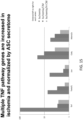
- transcriptomic profiles of various gene families are representative of ischemic, non-ischemic, and/or recovered tissues, such as, for example, the TNF family of genes, complex I, III, IV and/or V of the mitochondrial electron transport chain, and/or the mitochondrial ribosomal family of genes.
- the methods include evaluating a tissue or organ for ischemic damage is provided.
- the method involves providing a sample of a tissue, analyzing at least a portion of the transcriptome of the sample, and comparing the analyzed portion of the transcriptome to a standard.
- the method involved analyzing the expression of transcripts of one or more of the following genes: Lonrfl , Chd6, Rhobtbl , Wipf3, Raph I , SIc41 a3, Per2, Colq, Cldn5, Timp3, Hlf, Per3, Bcl9, Apold I , Cys1 , Wee1 , Mthfd i l , Col5a3, Sorbsl , Spon2, Slc43a3, Clmp, Rbp1 , Prickle3, Nfic, Slc6a6, Nxn, Gpcpd I , Tef, Podn, Mmp1 4, Smco4, SIc39a1 4, Eif5a2, Tm4sf1 , Slc4a8, Polr2a, Best3, Acotl , Xdh, Id 1, Usp2, Zbtb1 6, Sox4, Plcb4, Dusp1 8, 221 001 1C24Rik, Sex, G
- the method involves analyzing the expression of one or more of: MTHFD1 , LONRF1 , RHOBTB1 , Cycsl , HhipM , FAM 107a, ARNT1 , Spon2, TNF, CLDN5, Col5a3 and SIc41 a3.
- evaluating a tissue or organ may be used to determine the extent of ischemic injury in a tissue/organ.
- evaluating a tissue or organ may be used to determine the level of efficacy of a method of treating the tissue/organ with an MSC composition, as provided herein.
- the methods disclosed may be for evaluating organs for transplant is provided.
- the method involves analyzing the transcriptome of an organ stored in vitro in a transplant buffer for at least 2 hours and comparing the transcriptome of the organ to a baseline transcriptome measured in a matched set of organs immediately after harvesting.
- the organ is evaluated as suitable for transplantation if expression of one or more of ARNT1 , TNF, CLDN5, Col5a3, and Sic41 a3 is the same or decreased relative to the baseline transcriptome and/or if expression of one or more of MTHFD1 , LONRF1 , RHOBTB1 , Cycsl , HhipM , and FAM 107a is the same or increased relative to the baseline transcriptome.
- the organ is evaluated as unsuitable for transplantation if expression of one or more of ARNT1 , TNF, CLDN5, Col5a3, and Sic41 a3 is increased relative to the standard and/or if expression of one or more of MTHFD1 , LONRF 1, RHOBTB1 , Cycsl , HhipM , and FAM 107a is decreased relative to the baseline transcriptome.
- the method further involves contacting the organ with a composition comprising at least a portion of MSC-CM for a treatment period, and repeating comparison of the transcriptome of the organ to a baseline transcriptome measured in a matched set of organs immediately after harvesting.
- a tissue or organ may be assayed using one or more functional and/or molecular assays, to evaluate its status (e.g., extent of ischemic and/or reperfusion damage, and/or suitability for transplantation), before, during, and/or after treatment with the method provided herein.
- a practitioner can monitor the health of a tissue or organ, for example, during ex vivo transport, during treatment, post-treatment, and/or over the course of transplantation. Monitoring may allow a practitioner to determine if the tissue or organ is suitable for transplantation.
- kits for carrying out the methods disclosed herein typically comprise two or more components required for treatment of a tissue or organ, as provided herein.
- Components of the kit include one or more MSC compositions, and one or more of compounds, reagents, containers, equipment, and instructions for using the kit. Accordingly, the methods described herein may be performed by utilizing pre-packaged kits provided herein.
- the kit comprises one or more MCS composition and instructions.
- the instructions comprise one or more protocols for preparing and/or using the MSC composition in the method provided herein.
- the kit comprises primers and reagents for analyzing at least a portion of a tissue's transcriptomic profile and instructions comprising one or more protocols for analyzing the transcriptome, such as, for example, instructions for comparison to one or more standards.
- the kit comprises one or more standards (e.g., standard comprising a biological sample, or representative transcript expression data).
- the kit comprises MSC-CM , as described herein.
- the kit may contain a container comprising one or more doses of MSC-CM and instructions for using the MSC-CM .
- the kit may further comprise one or more organ transplant/preservation composition, such as UW solution, Stanford solution, Steen solution etc.
- the kit comprises Ad-MSC-CM , as described herein.
- the kit may contain container comprising one or more doses of Ad-MSC-CM and instructions for using the Ad-MSC-CM .
- the kit may comprising a composition comprising exosomes separated from Ad-MSC-CM .
- Ad-MSCs adipose-derived mesenchymal stem cells
- Ad-MSC-CM Ad-MSC conditioned medium
- Example 1 Treatment of Cardiac Tissue with MSC-CM Prior to- and Post-ischemia
- the cells were obtained from frozen stocks of cells, cultured from human lipoaspirate samples, which were previously collected in the inventor's laboratory within an IRB-approved protocol. Samples were selected from three healthy adult donors aged 21-45. Prior to use, Ad-MSC were routinely analyzed with fluorescent activated cell sorting (FACS) and appropriate differentiation potential demonstrated to confirm cellular characteristics, as harmonized by multiple groups, and accepted by the International Society for Cellular Therapy.
- FACS fluorescent activated cell sorting
- Ad-MSCs were isolated from abdominal subcutaneous fat of two additional healthy human female donors. All isolations were conducted using standard methods. Ad-MSC cell stocks had been frozen at passages 2 and 3 and had been phenotypically characterized based on cell surface markers of MSCs (CD1 0, CD1 3, CD29, CD73, CD44).
- Ad-MSC CM was generated by incubating 10 ml of serum- free medium over an Ad-MSC monolayer (75 cm 2 , at 4 ⁇ 10 4 cells/cm 2 or equivalent) for 72 hours, and was concentrated, as described previously by centrifugation through Amicon Ultra Centrifugal Filter units with membranes selective for >3 kDa (EMD Millipore).
- mice were isolated from adult male C57BL/6 mice. Briefly, after mice were anesthetized and heparinized, mouse hearts were rapidly excised and placed in 4°C K-H solution. The aorta was cannulated immediately on the Langendorff apparatus and a three-way stopcock above the aortic root was used to infuse treatment reagents or create global ischemia. LVDP and the maximal positive and negative values of the first derivative of pressure (+dP/dt and -dP/dt) were recorded using a PowerLab 8 preamplifier/digitizer (AD Instruments Inc., Milford, MA). Coronary flow was measured by collecting pulmonary artery effluent.
- the heart was infused with hyperkalemic cardioplegia (15 mM K+ in University of Wisconsin [UW] solution) and stored in UW solution at 37°C for 20 min or at 4°C for six hours.
- hyperkalemic cardioplegia 15 mM K+ in University of Wisconsin [UW] solution
- baseline cardiac function in hearts was measured at 7, 8, 10, and 11 days after birth.
- ASC-CM was delivered into the myocardium via coronary infusion before global ischemia of isolated rat hearts (Langendorff). Functional recovery was determined during reperfusion. Pre-treatment of cardiac tissue with ASC-CM significantly improved post-ischemic myocardial functional recovery in neonatal rat hearts following global I/R injury.
- ASC-CM-increased functional recovery was associated with up-regulated myocardial STAT3 activation and reduced apoptotic protein caspase-3 levels.
- pre-treatment with ASC-CM did not induce any significant changes to the production of myocardial cytokines ( FIG. 6 ).
- ASC-CM was delivered into the myocardium isolated adult mouse hearts, neonatal and infant rat hearts, after a global ischemic event.
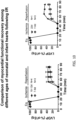
- Post-ischemic infusion of ASC-CM significantly improved myocardial functional recovery in adult mouse hearts in a dose-dependent manner ( FIG. 8 ).
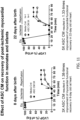
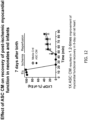
- Post-ischemic infusion of ASC-CM improved myocardial function in neonatal and infant mouse hearts in a dose-dependent manner ( FIGS. 10-12 ).
- Example 2 Transcriptomic profiling of cold-preserved cardiac tissue exposed to 6 hours of ischemia
- Isolated mouse hearts (4 hearts/treatment) were treated under following four conditions, mimicking those used to transport human hearts and/or the treatment provided herein:
- RNAs were sequenced from each heart using known methods. ⁇ 13,000 genes were identified and quantitated (1-600,000) using known methods.
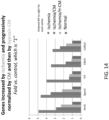
- transcript expression of Mthfdl , Lonrf1, Rhobtbl , Cys 1, HhipM and Fam 107a were decreased during ischemia (relative to normal) and progressively restored towards their normal non-ischemic levels ("1 ") by treatment with Ad-MSC CM and Ad-MSC-CM obtained during hypoxia (H-CM) .
- transcript expression of Arntl, Spon2, Tnf, Cldn5, Col5a3 and Sic41 a3 were increased during ischemia (relative to normal) and progressively restored towards their normal non-ischemic levels ("1 ") by treatment with Ad-MSC CM and Ad-MSC-CM obtained during hypoxia (H-CM).
- transcript expression of multiple TNF pathway genes are increased during ischemia (blue) progressively restored towards their normal non-ischemic levels ("1 ”) upon treatment with Ad-MSC-CM and Ad-MSC-H-CM obtained during hypoxia.
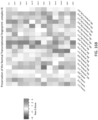
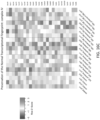
- transcript expression of multiple mitochondrial electron transport chain complexes (I, III, IV and V) and the mitochondrial ribosomal family were differentially expressed in ischemic tissue and progressively restored towards their normal non-ischemic levels upon treatment with Ad-MSC-CM
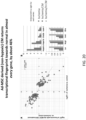
- component analysis based on linear combination of six genes increased by ischemia (Y axis) and six genes decreased by ischemia (X axis) confirms progressive restoration of transcript expression towards normal by treatment with Ad-MSC-CM and Ad-MSC-H-CM.
- Ad-MSC-H-CM potently restores gene expression towards non-ischemic control levels.
- the log 2 ratio of expression in untreated ischemic hearts/normal non-ischemic hearts is plotted on the X-axis, and the log 2 ratio of expression in ischemic hearts exposed to hypoxic Ad-MSC CM (HCM) /untreated ischemic hearts.
- HCM hypoxic Ad-MSC CM
- the transcriptional "fingerprint” demonstrates widespread restoration towards normal, reflected by the negative (-0.73) slope of the correlation line.
- Ad-MSC-CM treatment returns cardiac tissue transcriptional fingerprint towards normal in almost every gene, by about 46%
- Ad-MSC-H-CM treatment returns cardiac tissue transcriptional fingerprint towards normal in almost every gene, by about 75%.
- hASCs Human ASCs
- EGM-2-MV medium Human ASCs
- ASCs were switched to EBM-2/5% FBS.
- the medium was replaced with fresh EBM-2/5% FBS, and ASCs were placed in either normoxic (21 % 0 2 ) or hypoxic (1% 0 2 ) conditions for 72 hours.
- ASCs can also be cultured in the presence of TNFD .
- the CM from ASCs was collected, and cell numbers were determined by a hemacytometer. Experiments were generally conducted in triplicate using media derived from each of the three donor cell cultures, to exclude idiosyncratic behavior of cells from a particular donor.
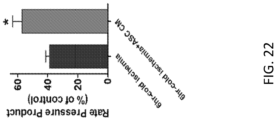
- CM from Ad-MSC preserved function of isolated mouse hearts during conditions commonly used to transport human donor hearts.
- Mouse hearts were isolated from mice and immediately perfused on the Langendorff apparatus with 1 ml of UW solution either without or containing CM from Ad-MSC. (Final concentration of the CM was 8x original).
- RVP spontaneous rate x left-ventricular developed pressure
- the 184 differentially expressed genes include: Lonrfl , Chd6, Rhobtbl , Wipf3, Raphl , Slc4 1a3, Per2, Colq, Cldn5, Timp3, Hlf, Per3, Bcl9, Apold I , Cys1 , Wee1 , Mthfd I l , Col5a3, Sorbsl , Spon2, Slc43a3, Clmp, Rbp1 , Prickle3, Nfic, Slc6a6, Nxn, Gpcpd I , Tef, Podn, Mmp1 4, Smco4, SIc39a1 4, Eif5a2, Tm4sf1 , Slc4a8, Polr2a, Best3, Acotl , Xdh, Id 1, Usp2, Zbtb1 6, Sox4, Plcb4, Dusp1 8, 221 001 1C24Rik, Sex, Gja5, Plcd3, Arntl, Hs
Landscapes
- Health & Medical Sciences (AREA)
- Life Sciences & Earth Sciences (AREA)
- Engineering & Computer Science (AREA)
- Biomedical Technology (AREA)
- Chemical & Material Sciences (AREA)
- Zoology (AREA)
- Biotechnology (AREA)
- Cell Biology (AREA)
- Wood Science & Technology (AREA)
- Developmental Biology & Embryology (AREA)
- General Health & Medical Sciences (AREA)
- Bioinformatics & Cheminformatics (AREA)
- Immunology (AREA)
- Organic Chemistry (AREA)
- Genetics & Genomics (AREA)
- Microbiology (AREA)
- Biochemistry (AREA)
- Hematology (AREA)
- General Engineering & Computer Science (AREA)
- Medicinal Chemistry (AREA)
- Virology (AREA)
- Pharmacology & Pharmacy (AREA)
- Epidemiology (AREA)
- Animal Behavior & Ethology (AREA)
- Public Health (AREA)
- Veterinary Medicine (AREA)
- Rheumatology (AREA)
- Molecular Biology (AREA)
- Dentistry (AREA)
- Environmental Sciences (AREA)
- Urology & Nephrology (AREA)
- Physics & Mathematics (AREA)
- Tropical Medicine & Parasitology (AREA)
- Toxicology (AREA)
- Food Science & Technology (AREA)
- Analytical Chemistry (AREA)
- General Physics & Mathematics (AREA)
- Pathology (AREA)
- Medicines Containing Material From Animals Or Micro-Organisms (AREA)
- Biophysics (AREA)
Claims (8)
- Zusammensetzung zur Verwendung bei der Vorbeugung oder Behandlung von ischämischer Beschädigung und/oder Reperfusionsbeschädigung und/oder Beschädigung des Herzens, umfassend:- mindestens einen Teil eines mesenchymalen Stammzell-konditionierten Mediums (MSC-CM), wobei das MSC-CM ein Medium umfasst, das durch Kontakt mit aus Fettgewebe gewonnenen MSCs konditioniert wird; und- die MSCs unter hypoxischen Bedingungen behandelt wurden, die ausgewählt sind aus weniger als 10 % O2, weniger als 5 % O2 oder 1 % O2; und wobei die MSCs mit TNF-alpha behandelt wurden.
- Zusammensetzung zur Verwendung gemäß Anspruch 1, wobei der mindestens eine Teil von MSC-CM von dem MSC-CM getrennte Exosome umfasst.
- Ex-vivo-Verfahren zur Behandlung von Gewebe, umfassend:- Kontaktieren des Gewebes mit einer Zusammensetzung, die mindestens einen Teil eines MSC-konditionierten Mediums (MSC-CM) umfasst, für einen Behandlungszeitraum, wobei das MSC-CM ein Medium umfasst, das durch Kontakt mit aus Fettgewebe gewonnenen MSCs konditioniert wird;die MSCs unter hypoxischen Bedingungen behandelt wurden, die ausgewählt sind aus weniger als 10 % O2, weniger als 5 % O2 oder 1 % O2; undwobei die MSCs mit TNF-alpha behandelt wurden,wobei das Gewebe Herzgewebe ist und das Gewebe in einem Organ umfasst ist, wobei das Organ ex vivo oder exkorporal aufbewahrt wird.
- Verfahren nach Anspruch 3, wobei das Gewebe Herzgewebe ist, das in einem Herz umfasst ist, und wobei das Herz ein Erwachsenenherz, ein Säuglingsherz oder ein Neugeborenenherz ist.
- Verfahren nach einem der Ansprüche 3 oder 4, wobei der Kontaktierungsschritt das Perfundieren des Organgewebes mit der Zusammensetzung für den Behandlungszeitraum umfasst, und/oder wobei der Kontaktierungsschritt, mindestens teilweise, ischämischer Schädigung in dem Gewebe vorbeugt, wodurch die Gewebefunktion verbessert und/oder bewahrt wird; und/oder wobei der Kontaktierungsschritt, mindestens teilweise, Reperfusionsschädigung in dem Gewebe vorbeugt, wodurch die Gewebefunktion verbessert und/oder bewahrt wird.
- Verfahren nach einem der Ansprüche 3-5, ferner umfassend:- Analysieren des Transkriptoms des kontaktierten Gewebes; und- Vergleichen des Transkriptoms des kontaktierten Gewebes mit einem Baseline-Transkriptom, das in einem übereinstimmenden nicht-ischämischen Gewebe gemessen wurde, wodurch das Gewebe beurteilt wird;wobei der Analysierungsschritt die Analyse eines oder mehrerer der folgenden Gene umfasst: Lonrf1, Chd6, Rhobtb1, Wipf3, Raph1, Slc41a3, Per2, Colq, Cldn5, Timp3, Hlf, Per3, Bcl9, Apold1, Cys1, Wee1, Mthfd1l, Col5a3, Sorbs1, Spon2, Slc43a3, Clmp, Rbp1, Prickle3, Nfic, Slc6a6, Nxn, Gpcpd1, Tef, Podn, Mmp14, Smco4, Slc39a14, Eif5a2, Tm4sf1, Slc4a8, Polr2a, Best3, Acot1, Xdh, Id1, Usp2, Zbtb16, Sox4, Plcb4, Dusp18, 2210011C24Rik, Sex, Gja5, Plcd3, Arntl, Hspalb, Eepd1, Rcan1, Ppp1r3a, Palld, Mylk4, Cobll1, Nppb, Plekho2, Sox7, Cry2, Tmem171, Vamp5, Dpy19l3, Dnajb1, Mrpl28, Fry, Flt1, Neurl3, Naca, Neb, Bmp4, Hif3a, Npc1, Phf5a, Ccrn4l, Lrrc52, Synpo2, Cntfr, Ppfia4, Inhbb, Acot11, Sh2d4a, Ciart, Dctpp1, Cipc, Naa60, Leo1, Rgs16, Sik3, Gm15417, Pik3r1, Gern, Slco5a1, Gng11, Wnk2, Fam107a, Arhgap20, Guk1, Mapk10, Herpud1, Nme3, Zmiz1, Ubap2, Fosl2, Hyal1, Gbp5, Pdcd7, Jun, Hhipl1, Mcf2l, Cox6a1, Ptprm, Dvl3, Fam212a, Adh1, Smim20, Vwa1, Tmtc1, Hspa1a, Fxn, Fkbp2, Eda, Cdpf1, Cdc42bpa, ligp1, Sorbs2, Lzts1, Clic5, Ctnnbip1, Actn1, Fmo2, Mid1ip1, Paqr6, Tmem37, Atf7ip, Fis1, Foxo3, Adamtsl4, S100a16, Tnf, Ncoa3, Sp2, Gas1, Vstm4, Unc119b, Cry1, Ptpn18, Lmo4, Rasl11a, Pcdh1, Irs1, Myeov2, Adora2a, Rreb1, Phf19, Rem1, Man2a1, Atp10d, Vamp8, Ttpal, Ucp2, Sertad1, Usp54, Ncor2, Ier2, Dnal4, Bri3bp, Mbnl2, Prepl, Uqcr11, 2210407C18Rik, Epas1, Gngt2, Thra, Ptk2b, Hint2, Ubr2, Plcg2, Gimap1, Stk35, Ndufb9 und Wnt5b;wobei das Gewebe als für eine Transplantation geeignet beurteilt wird, wenn die Expression eines oder mehrerer von ARNT1, TNF, CLDN5, Col5a3 und Slc41a3 relativ zu dem Baseline-Transkriptom gleich oder vermindert ist und/oder wenn die Expression eines oder mehrerer von MTHFD1, LONRF1, RHOBTB1, Cycs1, Hhipl1 und FAM107a relativ zu dem Baseline-Transkriptom gleich oder erhöht ist, oder das Gewebe als für eine Transplantation ungeeignet beurteilt wird, wenn die Expression eines oder mehrerer von ARNT1, TNF, CLDN5, Col5a3 und Slc41a3 relativ zu dem Standard erhöht ist und/oder wenn die Expression eines oder mehrerer von MTHFD1, LONRF1, RHOBTB1, Cycs1, Hhipl1 und FAM107a relativ zu dem Baseline-Transkriptom vermindert ist.
- Verfahren nach Anspruch 6, wobei das transkriptomische Profil des Gewebes vor dem Kontaktierungsschritt, während des Kontaktierungsschritts und/oder nach dem Kontaktierungsschritt bestimmt wird; und wobei die Ergebnisse des Vergleichs verwendet werden, um weitere Behandlung des Gewebes mit der Zusammensetzung zu bestimmen; und/oder wobei die Ergebnisse des Vergleichs verwendet werden, um die Eignung des Gewebes für eine Transplantation zu identifizieren.
- Verfahren nach einem der Ansprüche 3-7, ferner umfassend das Kontaktieren des Gewebes mit einer Zusammensetzung, die mindestens einen Teil von MSC-CM umfasst, für einen Behandlungszeitraum und Wiederholen des Vergleichs des Transkriptoms des kontaktierten Gewebes mit einem Baseline-Transkriptom, das in einem übereinstimmenden Gewebesatz gemessen wurde, wobei das Gewebe als für eine Transplantation geeignet beurteilt wird, wenn, gemäß dem wiederholten Vergleich, die Expression eines oder mehrerer von ARNT1, TNF, CLDN5, Col5a3 und Slc41a3 relativ zu dem Baseline-Transkriptom gleich oder vermindert ist und/oder wenn die Expression eines oder mehrerer von MTHFD1, LONRF1, RHOBTB 1, Cycs1, Hhipl1 und FAM107a relativ zu dem Baseline-Transkriptom gleich oder erhöht ist.
Applications Claiming Priority (3)
| Application Number | Priority Date | Filing Date | Title |
|---|---|---|---|
| US201562198661P | 2015-07-29 | 2015-07-29 | |
| US201662328994P | 2016-04-28 | 2016-04-28 | |
| PCT/US2016/044799 WO2017019986A1 (en) | 2015-07-29 | 2016-07-29 | Materials and methods for treating and evaluating ischemic and/or reperfusion-injured tissue and/or tissue susceptible to same |
Publications (3)
| Publication Number | Publication Date |
|---|---|
| EP3328413A1 EP3328413A1 (de) | 2018-06-06 |
| EP3328413A4 EP3328413A4 (de) | 2019-07-24 |
| EP3328413B1 true EP3328413B1 (de) | 2024-09-04 |
Family
ID=57886916
Family Applications (1)
| Application Number | Title | Priority Date | Filing Date |
|---|---|---|---|
| EP16831435.9A Active EP3328413B1 (de) | 2015-07-29 | 2016-07-29 | Materialien und verfahren zur behandlung und beurteilung von ischämischem und/oder reperfusionsbeschädigtem gewebe und/oder dafür anfälligem gewebe |
Country Status (4)
| Country | Link |
|---|---|
| US (2) | US20180220642A1 (de) |
| EP (1) | EP3328413B1 (de) |
| CA (1) | CA2993955A1 (de) |
| WO (1) | WO2017019986A1 (de) |
Families Citing this family (14)
| Publication number | Priority date | Publication date | Assignee | Title |
|---|---|---|---|---|
| JP2021526556A (ja) | 2018-05-30 | 2021-10-07 | ダイレクト バイオロジクス エルエルシー | 成長因子および細胞外小胞を凍結または粉状にした、間葉系幹細胞(msc)の調製物を含む助剤、ならびにその使用方法 |
| CN109266603A (zh) * | 2018-08-29 | 2019-01-25 | 浙江大学 | 一种提高心梗疗效的外泌体及应用 |
| BR112021015549A2 (pt) | 2019-02-07 | 2021-10-26 | Direct Biologics Llc | Método para tratar osteoartrite com uma combinação de exossomos de células tronco mesenquimais, células tronco mesenquimais sinoviais e andaimes |
| IT201900002155A1 (it) * | 2019-02-14 | 2020-08-14 | Univ Degli Studi Padova | Vescicole extracellulari da cellule geneticamente modificate iperesprimenti SerpinB3 per uso come agenti terapeutici |
| US10881693B2 (en) | 2019-04-09 | 2021-01-05 | Combangio, Inc. | Processes for making and using a mesenchymal stem cell derived secretome |
| CA3146433A1 (en) | 2019-07-18 | 2021-01-21 | Direct Biologics Llc | Preparations comprising mesenchymal stem cells and cannabinoids and methods of their use |
| WO2021207282A2 (en) | 2020-04-07 | 2021-10-14 | Combangio, Inc. | Lyophilized mesenchymal stem cell derived secretome and uses thereof |
| US12590310B2 (en) | 2020-04-22 | 2026-03-31 | Direct Biologics, Llc | Methods and compositions for treating inflammatory conditions associated with infectious disease |
| CN111705127A (zh) * | 2020-08-13 | 2020-09-25 | 苏伟坤 | Col5a3突变基因及其在原发性青光眼基因检测中的应用 |
| CN111876427A (zh) * | 2020-08-13 | 2020-11-03 | 苏伟坤 | 一种col5a3缺失突变基因及其检测试剂盒 |
| CN111876426A (zh) * | 2020-08-13 | 2020-11-03 | 苏伟坤 | 第49881位点发生突变的col5a3突变基因及其应用 |
| CN111850111A (zh) * | 2020-08-13 | 2020-10-30 | 苏伟坤 | 第150位点发生突变的col5a3突变基因及其检测试剂盒 |
| WO2023022432A1 (ko) * | 2021-08-17 | 2023-02-23 | 아주대학교산학협력단 | 퇴행성 관절염 예방, 치료 또는 진단용 조성물 |
| US12502407B2 (en) | 2024-04-25 | 2025-12-23 | Direct Biologics, Llc | Treatment of fistula with bone marrow mesenchymal stem cell derived extracellular vesicles |
Family Cites Families (11)
| Publication number | Priority date | Publication date | Assignee | Title |
|---|---|---|---|---|
| EP1599602B1 (de) * | 2003-02-14 | 2015-01-14 | Beth Israel Deaconess Medical Center, Inc. | Vorraussagen von abstossung |
| US20070072294A1 (en) * | 2004-09-30 | 2007-03-29 | Doronin Sergey V | Use of human stem cells and/or factors they produce to promote adult mammalian cardiac repair through cardiomyocyte cell division |
| JP2008544957A (ja) * | 2005-05-10 | 2008-12-11 | ユナイテッド ステイツ オブ アメリカ デパートメント オブ ヴェテランズ アフェアーズ | 間充織幹細胞による腎疾患及び多臓器不全の治療法と間充織幹細胞馴化培地 |
| EP2617428A1 (de) * | 2006-08-15 | 2013-07-24 | Agency for Science, Technology and Research | Mit mesenchymalen Stammzellen konditioniertes Medium |
| EP2076116A4 (de) * | 2006-10-11 | 2010-04-07 | Gen Hospital Corp | Zusammensetzungen, verfahren und vorrichtungen zur behandlung von lebererkrankungen |
| WO2011127090A1 (en) * | 2010-04-05 | 2011-10-13 | Medstar Health Research Institute, Inc. | Conditioned medium obtained form stem cells and its use in therapy |
| JP6431850B2 (ja) * | 2013-01-09 | 2018-11-28 | ユナイテッド セラピューティクス コーポレイション | プロスタサイクリンおよび間葉系幹細胞による脈管障害の処置 |
| WO2014193895A1 (en) * | 2013-05-29 | 2014-12-04 | Allocure, Inc. | Ex vivo perfusion of donor organs prior to transplantation using mesenchymal stem cells |
| US10634686B2 (en) * | 2013-09-23 | 2020-04-28 | University of Pittsburgh—of the Commonwealth System of Higher Education | Biomarkers related to organ function |
| US10143709B2 (en) * | 2014-05-06 | 2018-12-04 | Indiana University Research And Technology Corporation | Use of ASC and ASC-CM to treat ARDS, SARS, and MERS |
| WO2015191545A1 (en) * | 2014-06-09 | 2015-12-17 | University Of Washington | Methods of protection against ischemia reperfusion injury |
-
2016
- 2016-07-29 EP EP16831435.9A patent/EP3328413B1/de active Active
- 2016-07-29 WO PCT/US2016/044799 patent/WO2017019986A1/en not_active Ceased
- 2016-07-29 CA CA2993955A patent/CA2993955A1/en active Pending
- 2016-07-29 US US15/748,102 patent/US20180220642A1/en not_active Abandoned
-
2022
- 2022-02-07 US US17/666,528 patent/US20220264872A1/en active Pending
Also Published As
| Publication number | Publication date |
|---|---|
| CA2993955A1 (en) | 2017-02-02 |
| US20220264872A1 (en) | 2022-08-25 |
| EP3328413A1 (de) | 2018-06-06 |
| WO2017019986A1 (en) | 2017-02-02 |
| EP3328413A4 (de) | 2019-07-24 |
| US20180220642A1 (en) | 2018-08-09 |
Similar Documents
| Publication | Publication Date | Title |
|---|---|---|
| US20220264872A1 (en) | Materials and methods for treating and evaluating ischemic and/or reperfusion-injured tissue and/or tissue susceptible to same | |
| Wang et al. | Tet2-mediated clonal hematopoiesis in nonconditioned mice accelerates age-associated cardiac dysfunction | |
| Shao et al. | Hematopoietic stem cell senescence and cancer therapy-induced long-term bone marrow injury | |
| Worrall et al. | Modulation of in vivo alloreactivity by inhibition of inducible nitric oxide synthase. | |
| Matthay | Resolution of pulmonary edema. Thirty years of progress | |
| Wang et al. | Pretreatment with adult progenitor cells improves recovery and decreases native myocardial proinflammatory signaling after ischemia | |
| Chang et al. | Single-cell transcriptomic identified HIF1A as a target for attenuating acute rejection after heart transplantation | |
| CN105994254A (zh) | 一种dc细胞的冻存液及冻存方法 | |
| CN109078168B (zh) | 靶向补体抑制剂在制备改善脑死亡供肝药物中的应用 | |
| Scott et al. | Bone marrow-or adipose-mesenchymal stromal cell secretome preserves myocardial transcriptome profile and ameliorates cardiac damage following ex vivo cold storage | |
| Jameel et al. | Long-term functional improvement and gene expression changes after bone marrow-derived multipotent progenitor cell transplantation in myocardial infarction | |
| Zhang et al. | Vam3 ameliorates total body irradiation-induced hematopoietic system injury partly by regulating the expression of Nrf2-targeted genes | |
| Wu et al. | Nrf2 is crucial to graft survival in a rodent model of heart transplantation | |
| CN101084305B (zh) | 胰岛的分离方法 | |
| EP1235485A2 (de) | Lungenstammzellen und lungenregeneration | |
| Noda et al. | Single‐center experience of ex vivo lung perfusion and subsequent lung transplantation | |
| Sakata et al. | Cardioprotective effect of interleukin-11 against warm ischemia-reperfusion injury in a rat heart donor model | |
| Ohsumi et al. | Therapeutic effect of surfactant inhalation during warm ischemia in an isolated rat lung perfusion model | |
| Tobin et al. | Dual roles for bone marrow‐derived Sca‐1 cells in cardiac function | |
| Moor et al. | Comparative analysis of kidney transplantation modeled using precision-cut kidney slices and kidney transplantation in pigs | |
| Shi et al. | Tubule-Derived GDF15 Limits Renal Transplant Injury by Reprogramming Macrophage Responses | |
| Chen et al. | Knockdown of Galectin-3 confers myocardial protection against ischemia-reperfusion injury, modulating oxidative stress, inflammatory response, and the peroxisome proliferator-activated receptor g signaling pathway | |
| Basaran et al. | Heat stress increases the effectiveness of early ischemic preconditioning in spinal cord protection | |
| TWI558402B (zh) | Novel pharmaceutical compositions and their use for the treatment of lung injury | |
| Yasin | Removing the cells from adult bone marrow derived stem cell therapy does not eliminate cardioprotection |
Legal Events
| Date | Code | Title | Description |
|---|---|---|---|
| STAA | Information on the status of an ep patent application or granted ep patent |
Free format text: STATUS: THE INTERNATIONAL PUBLICATION HAS BEEN MADE |
|
| PUAI | Public reference made under article 153(3) epc to a published international application that has entered the european phase |
Free format text: ORIGINAL CODE: 0009012 |
|
| STAA | Information on the status of an ep patent application or granted ep patent |
Free format text: STATUS: REQUEST FOR EXAMINATION WAS MADE |
|
| 17P | Request for examination filed |
Effective date: 20180228 |
|
| AK | Designated contracting states |
Kind code of ref document: A1 Designated state(s): AL AT BE BG CH CY CZ DE DK EE ES FI FR GB GR HR HU IE IS IT LI LT LU LV MC MK MT NL NO PL PT RO RS SE SI SK SM TR |
|
| AX | Request for extension of the european patent |
Extension state: BA ME |
|
| DAV | Request for validation of the european patent (deleted) | ||
| DAX | Request for extension of the european patent (deleted) | ||
| RIC1 | Information provided on ipc code assigned before grant |
Ipc: A61K 38/17 20060101AFI20190315BHEP Ipc: A01N 1/02 20060101ALI20190315BHEP Ipc: C12N 15/63 20060101ALI20190315BHEP Ipc: A61K 35/28 20150101ALI20190315BHEP Ipc: C07K 14/435 20060101ALI20190315BHEP |
|
| A4 | Supplementary search report drawn up and despatched |
Effective date: 20190625 |
|
| RIC1 | Information provided on ipc code assigned before grant |
Ipc: C12N 15/63 20060101ALI20190618BHEP Ipc: A61K 38/17 20060101AFI20190618BHEP Ipc: A01N 1/02 20060101ALI20190618BHEP Ipc: C07K 14/435 20060101ALI20190618BHEP Ipc: A61K 35/28 20150101ALI20190618BHEP |
|
| STAA | Information on the status of an ep patent application or granted ep patent |
Free format text: STATUS: EXAMINATION IS IN PROGRESS |
|
| 17Q | First examination report despatched |
Effective date: 20210415 |
|
| GRAP | Despatch of communication of intention to grant a patent |
Free format text: ORIGINAL CODE: EPIDOSNIGR1 |
|
| STAA | Information on the status of an ep patent application or granted ep patent |
Free format text: STATUS: GRANT OF PATENT IS INTENDED |
|
| INTG | Intention to grant announced |
Effective date: 20240404 |
|
| GRAS | Grant fee paid |
Free format text: ORIGINAL CODE: EPIDOSNIGR3 |
|
| GRAA | (expected) grant |
Free format text: ORIGINAL CODE: 0009210 |
|
| STAA | Information on the status of an ep patent application or granted ep patent |
Free format text: STATUS: THE PATENT HAS BEEN GRANTED |
|
| RAP3 | Party data changed (applicant data changed or rights of an application transferred) |
Owner name: INDIANA UNIVERSITY RESEARCH AND TECHNOLOGYCORPORATION |
|
| AK | Designated contracting states |
Kind code of ref document: B1 Designated state(s): AL AT BE BG CH CY CZ DE DK EE ES FI FR GB GR HR HU IE IS IT LI LT LU LV MC MK MT NL NO PL PT RO RS SE SI SK SM TR |
|
| REG | Reference to a national code |
Ref country code: GB Ref legal event code: FG4D |
|
| REG | Reference to a national code |
Ref country code: CH Ref legal event code: EP |
|
| REG | Reference to a national code |
Ref country code: IE Ref legal event code: FG4D |
|
| REG | Reference to a national code |
Ref country code: DE Ref legal event code: R096 Ref document number: 602016089272 Country of ref document: DE |
|
| REG | Reference to a national code |
Ref country code: LT Ref legal event code: MG9D |
|
| REG | Reference to a national code |
Ref country code: NL Ref legal event code: MP Effective date: 20240904 |
|
| PG25 | Lapsed in a contracting state [announced via postgrant information from national office to epo] |
Ref country code: NO Free format text: LAPSE BECAUSE OF FAILURE TO SUBMIT A TRANSLATION OF THE DESCRIPTION OR TO PAY THE FEE WITHIN THE PRESCRIBED TIME-LIMIT Effective date: 20241204 |
|
| PG25 | Lapsed in a contracting state [announced via postgrant information from national office to epo] |
Ref country code: PL Free format text: LAPSE BECAUSE OF FAILURE TO SUBMIT A TRANSLATION OF THE DESCRIPTION OR TO PAY THE FEE WITHIN THE PRESCRIBED TIME-LIMIT Effective date: 20240904 Ref country code: GR Free format text: LAPSE BECAUSE OF FAILURE TO SUBMIT A TRANSLATION OF THE DESCRIPTION OR TO PAY THE FEE WITHIN THE PRESCRIBED TIME-LIMIT Effective date: 20241205 Ref country code: FI Free format text: LAPSE BECAUSE OF FAILURE TO SUBMIT A TRANSLATION OF THE DESCRIPTION OR TO PAY THE FEE WITHIN THE PRESCRIBED TIME-LIMIT Effective date: 20240904 |
|
| PG25 | Lapsed in a contracting state [announced via postgrant information from national office to epo] |
Ref country code: BG Free format text: LAPSE BECAUSE OF FAILURE TO SUBMIT A TRANSLATION OF THE DESCRIPTION OR TO PAY THE FEE WITHIN THE PRESCRIBED TIME-LIMIT Effective date: 20240904 |
|
| PG25 | Lapsed in a contracting state [announced via postgrant information from national office to epo] |
Ref country code: LV Free format text: LAPSE BECAUSE OF FAILURE TO SUBMIT A TRANSLATION OF THE DESCRIPTION OR TO PAY THE FEE WITHIN THE PRESCRIBED TIME-LIMIT Effective date: 20240904 |
|
| PG25 | Lapsed in a contracting state [announced via postgrant information from national office to epo] |
Ref country code: HR Free format text: LAPSE BECAUSE OF FAILURE TO SUBMIT A TRANSLATION OF THE DESCRIPTION OR TO PAY THE FEE WITHIN THE PRESCRIBED TIME-LIMIT Effective date: 20240904 |
|
| PG25 | Lapsed in a contracting state [announced via postgrant information from national office to epo] |
Ref country code: ES Free format text: LAPSE BECAUSE OF FAILURE TO SUBMIT A TRANSLATION OF THE DESCRIPTION OR TO PAY THE FEE WITHIN THE PRESCRIBED TIME-LIMIT Effective date: 20240904 |
|
| PG25 | Lapsed in a contracting state [announced via postgrant information from national office to epo] |
Ref country code: PL Free format text: LAPSE BECAUSE OF FAILURE TO SUBMIT A TRANSLATION OF THE DESCRIPTION OR TO PAY THE FEE WITHIN THE PRESCRIBED TIME-LIMIT Effective date: 20240904 Ref country code: NO Free format text: LAPSE BECAUSE OF FAILURE TO SUBMIT A TRANSLATION OF THE DESCRIPTION OR TO PAY THE FEE WITHIN THE PRESCRIBED TIME-LIMIT Effective date: 20241204 Ref country code: LV Free format text: LAPSE BECAUSE OF FAILURE TO SUBMIT A TRANSLATION OF THE DESCRIPTION OR TO PAY THE FEE WITHIN THE PRESCRIBED TIME-LIMIT Effective date: 20240904 Ref country code: HR Free format text: LAPSE BECAUSE OF FAILURE TO SUBMIT A TRANSLATION OF THE DESCRIPTION OR TO PAY THE FEE WITHIN THE PRESCRIBED TIME-LIMIT Effective date: 20240904 Ref country code: GR Free format text: LAPSE BECAUSE OF FAILURE TO SUBMIT A TRANSLATION OF THE DESCRIPTION OR TO PAY THE FEE WITHIN THE PRESCRIBED TIME-LIMIT Effective date: 20241205 Ref country code: FI Free format text: LAPSE BECAUSE OF FAILURE TO SUBMIT A TRANSLATION OF THE DESCRIPTION OR TO PAY THE FEE WITHIN THE PRESCRIBED TIME-LIMIT Effective date: 20240904 Ref country code: ES Free format text: LAPSE BECAUSE OF FAILURE TO SUBMIT A TRANSLATION OF THE DESCRIPTION OR TO PAY THE FEE WITHIN THE PRESCRIBED TIME-LIMIT Effective date: 20240904 Ref country code: BG Free format text: LAPSE BECAUSE OF FAILURE TO SUBMIT A TRANSLATION OF THE DESCRIPTION OR TO PAY THE FEE WITHIN THE PRESCRIBED TIME-LIMIT Effective date: 20240904 |
|
| REG | Reference to a national code |
Ref country code: AT Ref legal event code: MK05 Ref document number: 1719676 Country of ref document: AT Kind code of ref document: T Effective date: 20240904 |
|
| PG25 | Lapsed in a contracting state [announced via postgrant information from national office to epo] |
Ref country code: NL Free format text: LAPSE BECAUSE OF FAILURE TO SUBMIT A TRANSLATION OF THE DESCRIPTION OR TO PAY THE FEE WITHIN THE PRESCRIBED TIME-LIMIT Effective date: 20240904 |
|
| P01 | Opt-out of the competence of the unified patent court (upc) registered |
Free format text: CASE NUMBER: APP_10344/2025 Effective date: 20250228 |
|
| PG25 | Lapsed in a contracting state [announced via postgrant information from national office to epo] |
Ref country code: PT Free format text: LAPSE BECAUSE OF FAILURE TO SUBMIT A TRANSLATION OF THE DESCRIPTION OR TO PAY THE FEE WITHIN THE PRESCRIBED TIME-LIMIT Effective date: 20250106 Ref country code: IS Free format text: LAPSE BECAUSE OF FAILURE TO SUBMIT A TRANSLATION OF THE DESCRIPTION OR TO PAY THE FEE WITHIN THE PRESCRIBED TIME-LIMIT Effective date: 20250104 |
|
| PG25 | Lapsed in a contracting state [announced via postgrant information from national office to epo] |
Ref country code: RO Free format text: LAPSE BECAUSE OF FAILURE TO SUBMIT A TRANSLATION OF THE DESCRIPTION OR TO PAY THE FEE WITHIN THE PRESCRIBED TIME-LIMIT Effective date: 20240904 Ref country code: SM Free format text: LAPSE BECAUSE OF FAILURE TO SUBMIT A TRANSLATION OF THE DESCRIPTION OR TO PAY THE FEE WITHIN THE PRESCRIBED TIME-LIMIT Effective date: 20240904 |
|
| PG25 | Lapsed in a contracting state [announced via postgrant information from national office to epo] |
Ref country code: EE Free format text: LAPSE BECAUSE OF FAILURE TO SUBMIT A TRANSLATION OF THE DESCRIPTION OR TO PAY THE FEE WITHIN THE PRESCRIBED TIME-LIMIT Effective date: 20240904 Ref country code: AT Free format text: LAPSE BECAUSE OF FAILURE TO SUBMIT A TRANSLATION OF THE DESCRIPTION OR TO PAY THE FEE WITHIN THE PRESCRIBED TIME-LIMIT Effective date: 20240904 |
|
| PG25 | Lapsed in a contracting state [announced via postgrant information from national office to epo] |
Ref country code: CZ Free format text: LAPSE BECAUSE OF FAILURE TO SUBMIT A TRANSLATION OF THE DESCRIPTION OR TO PAY THE FEE WITHIN THE PRESCRIBED TIME-LIMIT Effective date: 20240904 |
|
| PG25 | Lapsed in a contracting state [announced via postgrant information from national office to epo] |
Ref country code: SK Free format text: LAPSE BECAUSE OF FAILURE TO SUBMIT A TRANSLATION OF THE DESCRIPTION OR TO PAY THE FEE WITHIN THE PRESCRIBED TIME-LIMIT Effective date: 20240904 Ref country code: IT Free format text: LAPSE BECAUSE OF FAILURE TO SUBMIT A TRANSLATION OF THE DESCRIPTION OR TO PAY THE FEE WITHIN THE PRESCRIBED TIME-LIMIT Effective date: 20240904 |
|
| REG | Reference to a national code |
Ref country code: DE Ref legal event code: R097 Ref document number: 602016089272 Country of ref document: DE |
|
| PG25 | Lapsed in a contracting state [announced via postgrant information from national office to epo] |
Ref country code: DK Free format text: LAPSE BECAUSE OF FAILURE TO SUBMIT A TRANSLATION OF THE DESCRIPTION OR TO PAY THE FEE WITHIN THE PRESCRIBED TIME-LIMIT Effective date: 20240904 |
|
| PLBE | No opposition filed within time limit |
Free format text: ORIGINAL CODE: 0009261 |
|
| STAA | Information on the status of an ep patent application or granted ep patent |
Free format text: STATUS: NO OPPOSITION FILED WITHIN TIME LIMIT |
|
| 26N | No opposition filed |
Effective date: 20250605 |
|
| PG25 | Lapsed in a contracting state [announced via postgrant information from national office to epo] |
Ref country code: SE Free format text: LAPSE BECAUSE OF FAILURE TO SUBMIT A TRANSLATION OF THE DESCRIPTION OR TO PAY THE FEE WITHIN THE PRESCRIBED TIME-LIMIT Effective date: 20240904 |
|
| PGFP | Annual fee paid to national office [announced via postgrant information from national office to epo] |
Ref country code: DE Payment date: 20250729 Year of fee payment: 10 |
|
| PGFP | Annual fee paid to national office [announced via postgrant information from national office to epo] |
Ref country code: GB Payment date: 20250728 Year of fee payment: 10 |
|
| PGFP | Annual fee paid to national office [announced via postgrant information from national office to epo] |
Ref country code: FR Payment date: 20250728 Year of fee payment: 10 |
|
| REG | Reference to a national code |
Ref country code: CH Ref legal event code: H13 Free format text: ST27 STATUS EVENT CODE: U-0-0-H10-H13 (AS PROVIDED BY THE NATIONAL OFFICE) Effective date: 20260224 |
|
| PG25 | Lapsed in a contracting state [announced via postgrant information from national office to epo] |
Ref country code: LU Free format text: LAPSE BECAUSE OF NON-PAYMENT OF DUE FEES Effective date: 20250729 |
|
| REG | Reference to a national code |
Ref country code: BE Ref legal event code: MM Effective date: 20250731 |
|
| PG25 | Lapsed in a contracting state [announced via postgrant information from national office to epo] |
Ref country code: BE Free format text: LAPSE BECAUSE OF NON-PAYMENT OF DUE FEES Effective date: 20250731 |