EP3307752B1 - Ternary mixtures of 6'-sl, lnnt and lst c - Google Patents
Ternary mixtures of 6'-sl, lnnt and lst c Download PDFInfo
- Publication number
- EP3307752B1 EP3307752B1 EP16806994.6A EP16806994A EP3307752B1 EP 3307752 B1 EP3307752 B1 EP 3307752B1 EP 16806994 A EP16806994 A EP 16806994A EP 3307752 B1 EP3307752 B1 EP 3307752B1
- Authority
- EP
- European Patent Office
- Prior art keywords
- cys
- phe
- lnnt
- amino acid
- substituted
- Prior art date
- Legal status (The legal status is an assumption and is not a legal conclusion. Google has not performed a legal analysis and makes no representation as to the accuracy of the status listed.)
- Active
Links
Images

Classifications
-
- A—HUMAN NECESSITIES
- A61—MEDICAL OR VETERINARY SCIENCE; HYGIENE
- A61K—PREPARATIONS FOR MEDICAL, DENTAL OR TOILETRY PURPOSES
- A61K31/00—Medicinal preparations containing organic active ingredients
- A61K31/70—Carbohydrates; Sugars; Derivatives thereof
- A61K31/702—Oligosaccharides, i.e. having three to five saccharide radicals attached to each other by glycosidic linkages
-
- C—CHEMISTRY; METALLURGY
- C07—ORGANIC CHEMISTRY
- C07H—SUGARS; DERIVATIVES THEREOF; NUCLEOSIDES; NUCLEOTIDES; NUCLEIC ACIDS
- C07H3/00—Compounds containing only hydrogen atoms and saccharide radicals having only carbon, hydrogen, and oxygen atoms
- C07H3/04—Disaccharides
-
- A—HUMAN NECESSITIES
- A61—MEDICAL OR VETERINARY SCIENCE; HYGIENE
- A61P—SPECIFIC THERAPEUTIC ACTIVITY OF CHEMICAL COMPOUNDS OR MEDICINAL PREPARATIONS
- A61P31/00—Antiinfectives, i.e. antibiotics, antiseptics, chemotherapeutics
- A61P31/04—Antibacterial agents
-
- A—HUMAN NECESSITIES
- A61—MEDICAL OR VETERINARY SCIENCE; HYGIENE
- A61P—SPECIFIC THERAPEUTIC ACTIVITY OF CHEMICAL COMPOUNDS OR MEDICINAL PREPARATIONS
- A61P31/00—Antiinfectives, i.e. antibiotics, antiseptics, chemotherapeutics
- A61P31/12—Antivirals
-
- C—CHEMISTRY; METALLURGY
- C07—ORGANIC CHEMISTRY
- C07H—SUGARS; DERIVATIVES THEREOF; NUCLEOSIDES; NUCLEOTIDES; NUCLEIC ACIDS
- C07H1/00—Processes for the preparation of sugar derivatives
-
- C—CHEMISTRY; METALLURGY
- C07—ORGANIC CHEMISTRY
- C07H—SUGARS; DERIVATIVES THEREOF; NUCLEOSIDES; NUCLEOTIDES; NUCLEIC ACIDS
- C07H3/00—Compounds containing only hydrogen atoms and saccharide radicals having only carbon, hydrogen, and oxygen atoms
- C07H3/06—Oligosaccharides, i.e. having three to five saccharide radicals attached to each other by glycosidic linkages
-
- C—CHEMISTRY; METALLURGY
- C07—ORGANIC CHEMISTRY
- C07H—SUGARS; DERIVATIVES THEREOF; NUCLEOSIDES; NUCLEOTIDES; NUCLEIC ACIDS
- C07H5/00—Compounds containing saccharide radicals in which the hetero bonds to oxygen have been replaced by the same number of hetero bonds to halogen, nitrogen, sulfur, selenium, or tellurium
- C07H5/04—Compounds containing saccharide radicals in which the hetero bonds to oxygen have been replaced by the same number of hetero bonds to halogen, nitrogen, sulfur, selenium, or tellurium to nitrogen
- C07H5/06—Aminosugars
-
- C—CHEMISTRY; METALLURGY
- C12—BIOCHEMISTRY; BEER; SPIRITS; WINE; VINEGAR; MICROBIOLOGY; ENZYMOLOGY; MUTATION OR GENETIC ENGINEERING
- C12P—FERMENTATION OR ENZYME-USING PROCESSES TO SYNTHESISE A DESIRED CHEMICAL COMPOUND OR COMPOSITION OR TO SEPARATE OPTICAL ISOMERS FROM A RACEMIC MIXTURE
- C12P19/00—Preparation of compounds containing saccharide radicals
- C12P19/18—Preparation of compounds containing saccharide radicals produced by the action of a glycosyl transferase, e.g. alpha-, beta- or gamma-cyclodextrins
-
- C—CHEMISTRY; METALLURGY
- C12—BIOCHEMISTRY; BEER; SPIRITS; WINE; VINEGAR; MICROBIOLOGY; ENZYMOLOGY; MUTATION OR GENETIC ENGINEERING
- C12Y—ENZYMES
- C12Y204/00—Glycosyltransferases (2.4)
- C12Y204/99—Glycosyltransferases (2.4) transferring other glycosyl groups (2.4.99)
Definitions
- the present invention relates to ternary mixtures of human milk oligosaccharides (HMOs), particularly mixtures of 6'-O-sialyllactose (6'-SL), lacto-N-neotetraose (LNnT) and sialyllacto-N-tetraose c (LST c), a process for making the ternary mixtures, and applications of the ternary mixtures in human health.
- HMOs human milk oligosaccharides
- 6'-SL 6'-O-sialyllactose
- LNnT lacto-N-neotetraose
- LST c sialyllacto-N-tetraose c
- HMOs have become the subject of much interest in recent years due to their roles in numerous biological processes occurring in the human organism.
- Mammalian milk contains at least 130 of these complex oligosaccharides ( Urashima et al: Milk Oligosaccharides, Nova Biomedical Books, New York, 2011, ISBN: 978-1-61122-831-1 ).
- HMOs the only source of HMOs had been mammalian milk which contains mostly water, together with 55-70 g/l lactose, 24-59 g/l lipids, ca. 13 g/l proteins, 5-15 g/l HMOs and ca. 1.5 g/l minerals.
- LNnT can be made as described in WO 2011/100980 and WO 2013/044928
- LNT can be synthesized as described in WO 2012/155916 and WO 2013/044928
- a mixture of LNT and LNnT can be made as described in WO 2013/091660
- 2'-FL can be made as described in WO 2010/115934 and WO 2010/115935
- 3-FL can be made as described in WO 2013/139344
- 6'-SL and salts thereof can be made as described in WO 2010/100979 .
- WO 01/04341 and WO 2007/101862 describe how to make core human milk oligosaccharides optionally substituted by fucose or sialic acid using genetically modified E. coli.
- sialylated oligosaccharides can be made as described in EP-A-577580 .
- US 2004/0219158 describes compositions and methods related to diagnosis and therapy of medical conditions involving infection with Pseudomonas bacteria, including oligosaccharides for the inhibition of Pseudomonas bacteria.
- US2014/0187464 describes a synthetic mixture of at least six oligosaccharides in the treatment of the microbiota in a mammal.
- microbiome the resident community of microbes
- the human digestive tract plays a major role in health and disease.
- the human host can suffer consequences.
- Recent research has implicated microbiome imbalances in disorders as diverse as cancer, obesity, inflammatory bowel disease, psoriasis, asthma, and possibly even autism.
- HMOs are believed to positively modulate the microbiome, and they are of increasing interest for this purpose.
- the remarkable diversity of HMOs, coupled with their lack of availability has hampered studies of the specific functions of individual HMOs.
- a first aspect of this invention relates to a first mixture of HMOs consisting essentially of 6'-O-sialyllactose (6'-SL), lacto-N-neotetraose (LNnT) and sialyllacto-N-tetraose c (LST c).
- the molar ratio of LST c relative to (6'-SL + LNnT) is at least 1:18, advantageously at least 1:8, more advantageously at least 1:5, even more advantageously at least 1:3.
- the molar ratio of 6'-SL relative to LNnT is 0.18-5.5, more advantageously 0.3-3, still more advantageously about 1.
- a second aspect of this invention relates to a process for making the first HMO mixture by reacting a 6'-SL donor and an LNnT acceptor in the presence of an ⁇ 2,6-transsialidase and then removing lactose and the ⁇ 2,6-transsialidasefrom the reaction medium.
- the process involves the use 6'-SL and LNnT in a molar ratio of 1:3 to 3:1, advantageously 1:2 to 2:1, more advantageously 1:1, with an ⁇ 2,6-transsialidase having a conversion rate of at least 20 % up to 55 %, advantageously at least 30 %, more advantageously at least 40 %, even more advantageously at least 45 %, for the reaction of 6'-SL and LNnT.
- a third aspect of this invention relates to a second mixture of HMOs which consists essentially of 6'-SL, LNnT, LST c and lactose.
- a second mixture of HMOs which consists essentially of 6'-SL, LNnT, LST c and lactose.
- a fourth aspect of this invention relates to a process for making the second HMO mixture by reacting a 6'-SL donor and an LNnT acceptor in the presence of an ⁇ 2,6-transsialidase, and then removing the ⁇ 2,6-transsialidase from the reaction medium.
- the resulting reaction mixture is a second HMO mixture of this invention.
- a fifth aspect of this invention relates to an anti-infective composition for use in treating bacterial infections comprising 6'-SL, LNnT and LST c.
- This composition contains a mixture of a plurality of different HMOs with novel properties and biological activities. Specifically, the composition increases Bifidobacterium abundance of the microbiome in a human. Further, the composition inhibits pathogen binding, and thereby protects the host from infection, especially infections of the respiratory tract. The composition can also be used to treat and/or reduce the risk of a broad range of bacterial infections of a human, especially infections of the respiratory tract.
- the anti-infective composition is advantageously the first or second mixture of this invention, more advantageously the first mixture, as described above.
- a sixth aspect of this invention relates to a composition for modulating the microbiome of a human, in particular a non-infant individual, to increase Bifidobacterium abundance, the composition comprising 6'-SL, LNnT and LST c, advantageously the first or second mixture of this invention, more advantageously the first mixture, as described above.
- a mixture of 6'-SL, LNnT and LST c possess an anti-infective activity and therefore can be used as an anti-infective composition, e.g. for treating bacterial infections through specific modulation of the microbiome and by preventing binding of pathogens to epithelial cells.
- the mixture increases Bifidobacterium abundance of the microbiome.
- the mixture also reduces Firmicutes abundance of the microbiome, especially Clostridia species.
- the mixture also binds a range of respiratory pathogens which inhibits binding of these pathogens to the epithelial cells. In this way, the mixture provides a form of protection against infections, especially infections of the respiratory tract.
- the present invention relates to synthetic HMO mixtures.
- synthetic mixture or “synthetic composition” designates a mixture or composition which is artificially prepared and preferably mean a mixture or composition containing at least one compound that is produced ex vivo chemically and/or biologically, e.g. by means of chemical reaction, enzymatic reaction or recombinantly.
- synthetic is used as opposite to "natural”, and means that a synthetic mixture or composition of the invention is not identical to a natural composition or mixture, like human milk, or at least one HMO of the mixture or the composition is not originated from a natural source, like e.g. human milk.
- the mixture of this invention can be a first mixture of HMOs consisting essentially of 6'-SL, LNnT and LST c.
- the molar ratio of HMOs in the first mixture may vary. In one embodiment, the molar ratio of LST c relative to a combination 6'-SL + LNnT is at least 1:18. In another embodiment, this ratio may be at least 1:8. Certain ratios of LST c relative to a combination 6'-SL + LNnT in the first mixture, such as at least 1:5 or at least 1:3, may be preferred in some embodiments. In some other embodiments the first HMO mixture may have a molar ratio of 6'-SL relative to LNnT of 0.18-5.5 or 0.3-3, preferably about 1.
- the first HMO mixture can be readily obtained by a process, which involves treating a 6'-SL donor and an LNnT acceptor, with an ⁇ 2,6-transsialidase and then removing lactose and the ⁇ 2,6-transsialidase from the reaction medium.
- this process comprises the step of contacting 6'-SL and LNnT in a molar ratio of preferably 1:3 to 3:1 or 1:2 to 2:1, such as around 1:1, with an ⁇ 2,6-transsialidase having a conversion rate for the reaction 6'-SL and LNnT of at least 20 %, up to about 55 %, preferably at least 30 % such as from at least 30 % to about 50 %, at least 40 % or at least 45 %.
- the reaction mixture, so-produced, containing LST c, lactose, unreacted 6'-SL, LNnT and ⁇ 2,6-transsialidase, is then subjected to conventional purification steps to remove substances other than 6'-SL, LNnT and LST c, i.e. ⁇ 2,6-transsialidase and lactose.
- the ⁇ 2,6-transsialidase can be inactivated and removed, e.g. by denaturation followed by centrifugation or ultrafiltration, to produce a mixture consisting essentially of 6'-SL, LNnT, LST c and lactose.
- the lactose in this mixture can then be separated from the 6'-SL, LNnT and LST c e.g. by cascade ultra- and/or nanofiltration, or the lactose can first be treated with lactase to degrade it to glucose and galactose which can then be separated from the 6'-SL, LNnT and LST c by ultra- and/or nanofiltration.
- lactose, unreacted 6'-SL, LNnT and ⁇ 2,6-transsialidase recombinantly, i.e.
- the purification of the HMO mixture may be done using steps of removal of the cell material from the fermentation broth followed by removing non-carbohydrate particulates and contaminants like salts, charged molecules, proteins, DNA, colorizing/caramel bodies, etc., to produce a mixture consisting essentially of 3'-SL, 3-FL, FSL and lactose. Separation of lactose can be conducted as described above.
- the mixture of this invention can also be a second mixture of HMOs which consists essentially of 6'-SL, LNnT, LST c and lactose.
- this second mixture consists essentially of 6'-SL, LNnT, LST c and lactose.
- this second mixture consists essentially of 6'-SL, LNnT, LST c and lactose.
- the second HMO mixture of the invention can be obtained by carrying out the process as described above, which does not comprise a step of removing lactose from the obtained HMO mixtures.
- 6'-SL and LNnT are reacted in a molar ratio of preferably 1:3 to 3:1, more preferably 1:2 to 2:1, even more preferably 1:1, with an ⁇ 2,6-transsialidase wherein the conversion rate is at least 20 %, advantageously at least 30 %, more advantageously at least 40 %, even more advantageously at least 45 %.
- the molar ratio of 6'-SL to LNnT is 0.3-3.
- a first or a second HMO mixture having a molar ratio of (6'-SL + LNnT) to LST c of 2-13 and a molar ratio of 6'-SL to LNnT of 0.33-3 can be made.
- a first or a second HMO mixture having a molar ratio of (6'-SL + LNnT) to LST c of 2.44-8 and a molar ratio of 6'-SL to LNnT of 1 can be made.
- a first or a second HMO mixture having a molar ratio of (6'-SL + LNnT) to LST c of 2-12 and a molar ratio of 6'-SL to LNnT of 0.2-5 can be made.
- a first or a second HMO mixture having a molar ratio of (6'-SL + LNnT) to LST c of 2-8 and a molar ratio of 6'-SL to LNnT of 0.33-3 can be made.
- a first or a second HMO mixture having a molar ratio of (6'-SL + LNnT) to LST c of 2.44-5 and a molar ratio of 6'-SL to LNnT of 1 can be made.
- a first or a second HMO mixture having a molar ratio of (6'-SL + LNnT) to LST c of 3.7-14 and a molar ratio of 6'-SL to LNnT of 0.25-4.1 can be made.
- a first or a second HMO mixture having a molar ratio of (6'-SL + LNnT) to LST c of 3.7-10 and a molar ratio of 6'-SL to LNnT of 0.39-2.54 can be made.
- a first or a second HMO mixture having a molar ratio of (6'-SL + LNnT) to LST c of 3.7-6 and a molar ratio of 6'-SL to LNnT of 1 can be made.
- a first or a second HMO mixture having a molar ratio of (6'-SL + LNnT) to LST c of 4-12 and a molar ratio of 6'-SL to LNnT of 2.43-5 can be made.
- a first or a second HMO mixture having a molar ratio of (6'-SL + LNnT) to LST c of 2.44-13 and a molar ratio of 6'-SL to LNnT of 1-2.82 can be made.
- a first or a second HMO mixture having a molar ratio of (6'-SL + LNnT) to LST c of 2.44-13 and a molar ratio of 6'-SL to LNnT of 0.35-1 can be made.
- a first or a second HMO mixture having a molar ratio of (6'-SL + LNnT) to LST c of 4-12 and a molar ratio of 6'-SL to LNnT of 0.20-0.41 can be made.
- ⁇ 2,6-transsialidase means any wild type or engineered sialidase that is able to transfer a sialyl residue to the 6-position of a, preferably terminal, galactose unit in an oligosaccharide acceptor.
- the ⁇ 2,6-transsialidase should be regioselective with regard to the LNnT acceptor since it contains two galactosyl units.
- the ⁇ 2,6-transsialidases used for this purpose shall be regioselective to the terminal galactosyl residue of the LNnT, that is the formation of LST c (depicted as compound A ) is preferred over that of compound B and/or compound C (see Scheme 1).
- LST c the formation of LST c
- the reaction should be stopped before there is significant by-product formation. This time point can be easily determined by well-known enzyme kinetic measurements and in case of the most specific enzymes no by-products can be observed even at 45 % of conversion when 6'-SL and LNnT are employed in equimolar ratio. The conversion without by-product occurrence may be higher when either 6'-SL or LNnT is used in excess.
- the ⁇ 2,6-transsialidase used in making the HMO mixtures of this invention can be any wild type enzyme having ⁇ 2,6-transsialidase activity, such as an ⁇ 2,6-sialyl transferase from Photobacterium damselae JT0160 ( US 5827714 , US 6255094 , Yamamoto et al. J. Biochem. 123, 94 (1998 )), Photobacterium sp. JT-ISH-224 ( US 7993875 , US 8187838 , Tsukamoto et al. J. Biochem. 143, 187 (2008 )) P.
- an ⁇ 2,6-sialyl transferase from Photobacterium damselae JT0160 ( US 5827714 , US 6255094 , Yamamoto et al. J. Biochem. 123, 94 (1998 )
- Photobacterium sp. JT-ISH-224 US 7993875 , US
- the ⁇ 2,6-transsialidase used in making the HMO mixtures of this invention preferably has an amino acid sequence that is substantially identical with the amino acid sequence of SEQ ID No.1, and which comprises at least one of:
- the ⁇ 2,6-transsialidase used in making the HMO mixtures of this invention is preferably a mutated ⁇ 2,6-transsialidase having an amino acid sequence which is substantially identical with SEQ ID No.1 (i.e. has at least 60 percent (%) identity with the amino acid sequence of SEQ ID No.1) and has been mutated (i.e. one amino acid has been replaced by another amino acid) at one or more amino acid positions (numbering corresponding to alignment of the amino acid sequence with SEQ ID No.1) as follows:
- amino acid sequence of SEQ ID No.1 corresponds to the amino acid sequence of the P. leiognathi JT-SHIZ-119 sialyl transferase truncated by its signal peptide ( ⁇ 2-15).
- mutated ⁇ 2,6-transsialidases defined above show improved regioselectivity in comparison with the wild-type (non-mutated) parent enzyme having an identical amino acid sequence with that of SEQ ID No.1 or other corresponding wild-type (non-mutated) enzymes having an amino acid sequence which is substantially identical with SEQ ID No.1, and from which wild-type enzymes the mutants stem.
- the mutated ⁇ 2,6-transsialidases according to the invention show not only a transsialidase, preferably an ⁇ 2,6-transsialidase, activity but a sialyl transferase, preferably an ⁇ 2,6-sialyl transferase, activity too.
- nucleic acid or amino acid sequences preferably mean that the two or more sequences are the same or have at least about 60 % of nucleotides or amino acid residues in common when compared and aligned for maximum correspondence over a comparison window or designated sequences of nucleic acids or amino acids (i.e. the sequences have at least about 60 percent (%) identity).
- Percent identity of nucleic acid or amino acid sequences can be measured using a BLAST 2.0 sequence comparison algorithms with default parameters, or by manual alignment and visual inspection (see e.g. http://www.ncbi.nlm.nih.gov/BLAST/).
- the percent identity of either: i) a polypeptide fragment that is "substantially identical" with a polypeptide of SEQ ID No.1 or ii) a nucleic acid sequence that encodes a polypeptide fragment and that is "substantially identical" with a nucleic acid sequence encoding a polypeptide of SEQ ID No.1 is preferably at least 65 %, more preferably at least 70 %, still more preferably at least 75 %, even more preferably at least 80 %, yet more preferably at least 85 %, still even more preferably at least 90 %, yet even more preferably at least 92 %, especially at least 93 %, more especially at least 94 %, even more especially at least 95 %, yet even more especially at least 96 %, particularly at least 97 %, more particularly at least 98 %, and most particularly at least 99 % identical to SEQ ID No.1.
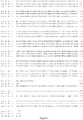
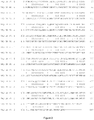
- the position of a mutation in the amino acid sequence of the novel engineered (mutated) transsialidases of the invention with reference to SEQ ID No.1 means that the position is defined by alignment of the test transsialidase sequence with SEQ ID No.1 using either a protein sequence comparison algorithm or by manual alignment and visual inspection mentioned above. Examples of such aligned sequences are shown in Fig. 1-3 .
- An example of an algorithm that is suitable for determining percent identity, sequence similarity and making alignment is the BLAST 2.2.20+ algorithm, which is described in Altschul et al. Nucl. Acids Res.
- BLAST 2.2.20+ is used to determine percent sequence identity for the nucleic acids and proteins of the invention.
- Software for performing BLAST analyses is publicly available through the National Center for Biotechnology Information (http://www.ncbi.nlm.nih.gov/). Examples of sequence alignment algorithms are CLUSTAL Omega (http://www.ebi.ac.uk/Tools/msa/clustalo/).
- EMBOSS Needle http://www.ebi.ac.uk/Tools/psa/emboss_needle/
- MAFFT http://mafft.cbrc.jp/alignment/server/
- MUSCLE http://www.ebi.ac.uk/Tools/msa/muscle/
- the preferred wild type ⁇ 2,6-sialyl transferases with a substantially identical amino acid sequence with SEQ ID No.1, that is having at least about 60 percent sequence identity (determined by BLAST) with SEQ ID No.1, are listed in Table 1.
- ⁇ 2,6-sialyl transferases with a substantially identical amino acid sequence with SEQ ID No.1 that can be mutated to have an ⁇ 2,6-transsialidase activity with improved regioselectivity, are the sialyl transferase from P. leiognathi JT-SHIZ-119 or its ⁇ 2-15 truncated variant, the sialyl transferase from P. leiognathi JT-SHIZ-145 or its ⁇ 2-15 truncated variant, or the sialyl transferase from P. damselae JT0160 or its ⁇ 2-15 truncated variant, more preferably the sialyl transferase from P. leiognathi JT-SHIZ-119 or its ⁇ 2-15 truncated variant.
- the amino acid sequence which is substantially identical with the amino acid sequence of SEQ ID No.1 is preferably the sialyl transferase from P. leiognathi JT-SHIZ-119 or its ⁇ 2-15 truncated variant, the sialyl transferase from P. leiognathi JT-SHIZ-145 or its ⁇ 2-15 truncated variant, or the sialyl transferase from P. damselae JT0160 or its ⁇ 2-15 truncated variant, and has the following mutations (numbering corresponding to alignment of the amino acid sequence with SEQ ID No.1):
- the amino acid sequence which is substantially identical with the amino acid sequence of SEQ ID No.1 is an amino acid sequence which is at least 90% identical with the amino acid sequence of SEQ ID No.1, more preferably the amino acid sequence of the sialyl transferase from P. leiognathi JT-SHIZ-119 or its ⁇ 2-15 truncated variant, or the sialyl transferase from P. leiognathi JT-SHIZ-145 or its ⁇ 2-15 truncated variant, particularly the sialyl transferase from P. leiognathi JT-SHIZ-119 or its ⁇ 2-15 truncated variant, and comprises mutation(s) at the following amino acid positions (numbering corresponding to alignment of the amino acid sequence with SEQ ID No.1):
- the amino acid sequence which is at least 90% identical with the amino acid sequence of SEQ ID No.1 is the sialyl transferase from P. leiognathi JT-SHIZ-119 or its ⁇ 2-15 truncated variant, which is mutated at the following amino acid positions (numbering corresponding to alignment of the amino acid sequence with SEQ ID No.1):
- the amino acid sequence which is substantially identical, particularly at least 90 % identical, with SEQ ID No.1 has at least two, preferably at least three, mutations at amino acid positions selected from the group consisting of amino acid positions as follows (numbering corresponding to alignment of the amino acid sequence with SEQ ID No.1):
- mutated ⁇ 2,6-transsialidases are characterized by even more improved regioselectivity towards the terminal galactosyl moiety vs an internal galactosyl moiety of LNnT compared to the one-point mutated enzymes disclosed above in transsialidase and/or sialyl transferase reactions.
- the amino acid sequence which is substantially identical, particularly at least 90% identical, with SEQ ID No.1 has at least two, preferably at least three, mutations at amino acid positions selected from the group consisting of amino acid positions as follows (numbering corresponding to alignment of the amino acid sequence with SEQ ID No.1):
- the amino acid sequence which is substantially identical with the amino acid sequence of SEQ ID No.1 is preferably the amino acid sequence of the sialyl transferase from P. leiognathi JT-SHIZ-119 or its ⁇ 2-15 truncated variant, the sialyl transferase from P. leiognathi JT-SHIZ-145 or its ⁇ 2-15 truncated variant, or the sialyl transferase from P.
- damselae JT0160 or its ⁇ 2-15 truncated variant comprising at least two, preferably at least three, mutations at amino acid positions selected from the group consisting of the following positions as follows (numbering corresponding to alignment of the amino acid sequence with SEQ ID No.1): at position 156 Gly is substituted by Ser, Thr, Cys, Tyr, Asn, Gln or Trp, preferably Ser, Cys or Tyr;
- the amino acid sequence which is substantially identical, particularly at least 90 % identical, with the amino acid sequence of SEQ ID No.1 is preferably the sialyl transferase from P. leiognathi JT-SHIZ-119 or its ⁇ 2-15 truncated variant, or the sialyl transferase from P. leiognathi JT-SHIZ-145 or its ⁇ 2-15 truncated variant, comprising at least two, preferably at least three, mutations at amino acid positions selected from the group consisting of the following positions (numbering corresponding to alignment of the amino acid sequence with SEQ ID No.1):
- the an amino acid sequence which is substantially identical, particularly at least 90 % identical, with the amino acid sequence of SEQ ID No.1 is preferably the sialyl transferase from P. leiognathi JT-SHIZ-119 or its ⁇ 2-15 truncated variant, comprising at least two, preferably at least three, mutations at amino acid positions selected from the group consisting of the following positions as follows:
- the amino acid sequence which is substantially identical, particularly at least 90 % identical, with the amino acid sequence of SEQ ID No.1 is the sialyl transferase from P. leiognathi JT-SHIZ-119 or its ⁇ 2-15 truncated variant, contains the following mutations: A218Y, N222R and G349S (numbering corresponding to alignment of the amino acid sequence with SEQ ID No.1).
- the transsialidase activity of the ⁇ 2,6-transsialidase is greater than its hydrolytic activity.
- the hydrolysis of LST c may become significant at a certain time point, due to the increasing concentration of LST c, which is then degraded into LNnT and sialic acid.
- the reaction should be stopped before there is significant product hydrolysis. This time point can be easily determined by well-known enzyme kinetic measurements.
- the ⁇ 2,6-transsialidases for making the HMO mixtures of this invention are preferably selected from the ⁇ 2,6-transsialidases that lack hydrolytic activity, or at least have significantly reduced hydrolytic activity, and have a high degree of regioselectivity as discussed above.
- the process of this invention can be suitably carried out at room temperature (e.g. 15-50, preferably 20-37 °C) at a pH of 6-8, preferably at around 6, for 15 min to 24 hours.
- room temperature e.g. 15-50, preferably 20-37 °C
- a pH of 6-8 preferably at around 6, for 15 min to 24 hours.
- any of the HMO mixtures of the invention are produced by a microorganism genetically modified to express an ⁇ 2,6-transsialidase as described above.
- Methods of genetic modifications of microorganisms for recombinant production of biologically active molecules and molecular manipulation of enzyme molecules are well-known in the art, see e.g. Green MR & Sambrook J: Molecular Cloning: A Laboratory Manual, 4th ed, 2012, CSHL PRESS .
- the HMO mixtures containing 6'-SL, LNnT and LST c are anti-infective compositions, therefore they can be advantageously used for treating viral and/or bacterial infections, especially infections of the respiratory tract.
- the anti-infective compositions of this invention can be a pharmaceutical composition.
- the pharmaceutical composition may further contain a pharmaceutically acceptable carrier, e.g. phosphate buffered saline solution, mixtures of ethanol in water, water and emulsions such as an oil/water or water/oil emulsion, as well as various wetting agents or excipients.
- a pharmaceutically acceptable carrier e.g. phosphate buffered saline solution, mixtures of ethanol in water, water and emulsions such as an oil/water or water/oil emulsion, as well as various wetting agents or excipients.
- the pharmaceutical composition of the invention may also contain other materials that do not produce an adverse, allergic or otherwise unwanted reaction when administered to a patient.
- the carriers and other materials can include solvents, dispersants, coatings, absorption promoting agents, controlled release agents, and one or more inert excipients, such as starches, polyols, granulating agents, microcrystalline cellulose, diluents, lubricants, binders, and disintegrating agents.
- tablet dosages of the anti-infective compositions can be coated by standard aqueous or nonaqueous techniques.
- the anti-infective compositions of this invention can be nutritional compositions.
- a nutritional composition can be formulated as a rehydration solution or a dietary maintenance or supplement for elderly individuals or immunocompromised individuals.
- Macronutrients such as edible fats, carbohydrates and proteins can also be included in such nutritional compositions.
- Edible fats include, for example, coconut oil, soy oil and monoglycerides and diglycerides.
- Carbohydrates include, for example, glucose, edible lactose and hydrolysed corn-starch.
- Proteins include, for example, soy protein, whey, and skim milk.
- Vitamins and minerals e.g. calcium, phosphorus, potassium, sodium, chloride, magnesium, manganese, iron, copper, zinc, selenium, iodine, and vitamins A, E, D, C, and B complex
- vitamins A, E, D, C, and B complex can also be included in such nutritional compositions.
- the anti-infective compositions of this invention can be administered orally, e.g. as a tablet, capsule, or pellet containing a predetermined amount of the first or the second mixture, or as a powder or granules containing a predetermined concentration of the first mixture or the second mixture, or a gel, paste, solution, suspension, emulsion, syrup, bolus, electuary, or slurry, in an aqueous or nonaqueous liquid, containing a predetermined concentration of the first or the second mixture.
- Orally administered composition can include binders, lubricants, inert diluents, flavouring agents, and humectants.
- Orally administered compositions such as tablets can optionally be coated and can be formulated so as to provide sustained, delayed or controlled release of the first or the second mixture therein.
- compositions of this invention can also be administered by rectal suppository, aerosol tube, naso-gastric tube or direct infusion into the Gl tract or stomach.
- Anti-infective pharmaceutical compositions of this invention can also additionally include therapeutic agents such as antiviral agents, antibiotics, probiotics, analgesics, and anti-inflammatory agents.
- therapeutic agents such as antiviral agents, antibiotics, probiotics, analgesics, and anti-inflammatory agents.
- the proper dosage of these compositions for a patient can be determined in a conventional manner, based upon factors such as the patient's immune status, body weight and age. In some cases, the dosage will be at a concentration similar to that found for 6'-SL, LNnT and/or LST c in human breast milk.
- the required amount would generally be in the range from about 200 mg to about 20 g per day, in certain embodiments from about 300 mg to about 15 g per day, from about 400 mg to about 10 g per day, in certain embodiments from about 500 mg to about 10 g per day, in certain embodiments from about 1 g to about 10 g per day.
- Appropriate dose regimes can be determined by methods known to those skilled in the art.
- the invention provides a compositions for modulating the microbiome of a human, in particular a non-infant individual, to increase Bifidobacterium abundance, comprising 6'-SL, LNnT and LST c, advantageously the first or second mixture of this invention, more advantageously the first mixture, as described above.
- Non-infant human , “non-infant individual” or “non-infant” preferably means a human of 3 years of age and older.
- a non-infant human can be a child, a teenager, an adult or an elderly person.
- a total of 20 male and female patients are recruited to participate in the study. After a screening visit and run-in period of 1-2 weeks, the patients are selected and randomized into two groups, each of 10 patients. One group is administered the treatment product containing 5 grams of a combination of LNnT, 6'-SL and LST c, and one group the placebo product (2 grams of glucose) for 8 weeks.
- the treatment product and the placebo are in powder form in a unit dosage container.
- the patients are eligible to participate if they are at least 18 years of age. All recruited patients are able and willing to understand and comply with the study procedures. Patients are excluded if: they have participated in a clinical study one month prior to screening visit; they have abnormal results in the screening tests which are clinically relevant for study participation; they are suffering for a severe disease such as malignancy, diabetes, severe coronary disease, kidney disease, neurological disease, or severe psychiatric disease or any condition which can confound the results of the study; used highly dosed probiotic supplements (yoghurt allowed) for 3 months prior to the study; consumed antibiotic drugs 3 months prior to the study; consumed on a regular basis any medication that might interfere with symptom evaluation 2 weeks prior to the study; and pregnant or lactating.
- a severe disease such as malignancy, diabetes, severe coronary disease, kidney disease, neurological disease, or severe psychiatric disease or any condition which can confound the results of the study
- used highly dosed probiotic supplements (yoghurt allowed) for 3 months prior to the study
- consumed antibiotic drugs 3 months
- faecal samples are collected and equipment for new samples are distributed. Patients are familiarised with an interactive internet enabled system which records data daily and are provided with either treatment or control products. Subjects are reminded not to change their usual diet during the study. Blood samples are collected for biomarker studies. The faecal samples are stored at -80 °C until analysis. Faecal samples are subjected to 16S rRNA sequencing analysis.
- the study runs for 8 weeks with the patients consuming either a placebo or a treatment product daily. Patients are instructed to consume the products in the morning with breakfast. Compliance is monitored through the interactive internet enabled system. The patients also use the system to record:
- This questionnaire includes 15 items covering five dimensions (abdominal pain, indigestion, reflux, diarrhoea, constipation) and uses a seven-graded Likert scale.
- the faecal analysis indicates that the treatment patients have increased abundance of Bifidobacterium.
- Ten 5-day old Sprague-Dawley rats are individually housed to avoid contamination between rats and provided with irradiated food and water.
- the rats are separated into 2 groups of 5 rats: a treatment group and a control group.
- a mixture of LNnT, 6'-SL and LST c is added to the drinking water of the treatment group at a total concentration of 40 mg/ml.
- the water of the control group is not altered (Day 0).
- Fresh water is administered daily and all rats have free access to the drinking water.
- the rats are fed a rodent chow and are given fresh chow daily.
- the rats are subjected to nasal washing using a saline solution.
- the solution is recovered and the number of viable bacteria is obtained by counting colonies on agar plates.
- the rats are monitored for 1 week and are then euthanized (Day 10).
- the lungs are harvested.
- Fresh stool pellets are obtained at Day 0, 3 and 10.
- the samples are immediately frozen and stored at -80 °C.
- DNA is extracted using a 96-well PowerSoil DNA Isolation Kit (MO-BIO). A minimum of one sample-well per plate is kept empty to serve as a negative control during PCR. PCR is done with the forward primer S-D-Bact-0341-b-S-17 and reverse primer S-D-Bact-0785-a-A-21 ( Klindworth et al.
- These are universal bacterial 16S rDNA primers, which target the V3-V4 region.
- the following PCR program is used: 98°C for 30 sec, 25x (98° C for 10 s, 55°C for 20 s, 72°C for 20 s), 72°C for 5 min.
- Amplification is verified by running the products on a 1 % agarose gel.
- Barcodes are added in a nested PCR using the Nextera Index Kit V2 (Illumina) with the following PCR program: 98°C for 30 sec, 8x (98°C for 10 s, 55°C for 20 s, 72°C for 20 s), 72°C for 5 min. Attachment of primers is verified by running the products on a 1 % agarose gel.
Landscapes
- Chemical & Material Sciences (AREA)
- Organic Chemistry (AREA)
- Health & Medical Sciences (AREA)
- Life Sciences & Earth Sciences (AREA)
- General Health & Medical Sciences (AREA)
- Engineering & Computer Science (AREA)
- Biochemistry (AREA)
- Genetics & Genomics (AREA)
- Biotechnology (AREA)
- Molecular Biology (AREA)
- Chemical Kinetics & Catalysis (AREA)
- General Chemical & Material Sciences (AREA)
- Wood Science & Technology (AREA)
- Zoology (AREA)
- Public Health (AREA)
- Veterinary Medicine (AREA)
- Animal Behavior & Ethology (AREA)
- Pharmacology & Pharmacy (AREA)
- Medicinal Chemistry (AREA)
- Nuclear Medicine, Radiotherapy & Molecular Imaging (AREA)
- Oncology (AREA)
- Communicable Diseases (AREA)
- General Engineering & Computer Science (AREA)
- Bioinformatics & Cheminformatics (AREA)
- Virology (AREA)
- Microbiology (AREA)
- Epidemiology (AREA)
- Enzymes And Modification Thereof (AREA)
- Preparation Of Compounds By Using Micro-Organisms (AREA)
Priority Applications (1)
| Application Number | Priority Date | Filing Date | Title |
|---|---|---|---|
| PL16806994T PL3307752T3 (pl) | 2015-06-09 | 2016-06-09 | Mieszaniny trójskładnikowe 6’-sl, lnnt i lst c |
Applications Claiming Priority (2)
| Application Number | Priority Date | Filing Date | Title |
|---|---|---|---|
| EP15171177 | 2015-06-09 | ||
| PCT/IB2016/053412 WO2016199071A1 (en) | 2015-06-09 | 2016-06-09 | TERNARY MIXTURES OF 6'-SL, LNnT and LST c |
Publications (3)
| Publication Number | Publication Date |
|---|---|
| EP3307752A1 EP3307752A1 (en) | 2018-04-18 |
| EP3307752A4 EP3307752A4 (en) | 2019-03-13 |
| EP3307752B1 true EP3307752B1 (en) | 2021-04-07 |
Family
ID=53397841
Family Applications (1)
| Application Number | Title | Priority Date | Filing Date |
|---|---|---|---|
| EP16806994.6A Active EP3307752B1 (en) | 2015-06-09 | 2016-06-09 | Ternary mixtures of 6'-sl, lnnt and lst c |
Country Status (7)
| Country | Link |
|---|---|
| US (2) | US10695359B2 (pl) |
| EP (1) | EP3307752B1 (pl) |
| CN (1) | CN107614511B (pl) |
| DK (1) | DK3307752T3 (pl) |
| ES (1) | ES2870973T3 (pl) |
| PL (1) | PL3307752T3 (pl) |
| WO (1) | WO2016199071A1 (pl) |
Families Citing this family (16)
| Publication number | Priority date | Publication date | Assignee | Title |
|---|---|---|---|---|
| EP3645545A4 (en) | 2017-06-30 | 2021-05-05 | Glycom A/S | PURIFICATION OF OLIGOSACCHARIDES |
| KR102897437B1 (ko) * | 2017-07-26 | 2025-12-08 | 크리스찬 한센 에이치엠오 게엠베하 | 시알릴트랜스퍼라제 및 시알릴화 올리고당류 생산에서의 그의 용도 |
| WO2023066907A1 (en) | 2021-10-18 | 2023-04-27 | Dsm Ip Assets B.V. | A method for providing an amorphous hmo product by drying |
| WO2024121153A1 (en) | 2022-12-05 | 2024-06-13 | Inbiose N.V. | Use of a sialylated saccharide for maintaining or improving mobility in a healthy subject |
| AU2023388801A1 (en) | 2022-12-05 | 2025-07-17 | Inbiose N.V. | Sialylated saccharide for use in the prevention or treatment of an inflammatory disease and/or autoimmune disease |
| AU2024266306A1 (en) | 2023-05-04 | 2025-12-11 | Inbiose N.V. | Method to reduce feed conversion ratio in a farmed animal |
| AU2024296530A1 (en) | 2023-07-13 | 2026-02-26 | Globachem N.V. | Method to improve a plant's growth, development and resistance to (a)biotic stress |
| LU504743B1 (en) * | 2023-07-13 | 2025-01-14 | Inbiose Nv | Method to improve a plant's growth, development and resistance to (a)biotic stress |
| LU504742B1 (en) | 2023-07-13 | 2025-01-14 | Globachem N V | Method to improve a plant's growth, development and resistance to (a)biotic stress |
| LU507488B1 (en) * | 2024-06-14 | 2025-12-15 | Inbiose Nv | Method to improve a plant's growth, development and resistance to (a)biotic stress |
| LU504744B1 (en) * | 2023-07-13 | 2025-01-14 | Inbiose Nv | Method to improve a plant's growth, development and resistance to (a)biotic stress |
| AU2024297426A1 (en) * | 2023-07-13 | 2026-02-26 | Globachem N.V. | Method to improve a plant's growth, development and resistance to (a)biotic stress |
| AU2024287855A1 (en) * | 2023-07-13 | 2026-02-26 | Globachem N.V. | Method to improve a plant's growth, development and resistance to (a)biotic stress |
| WO2025012478A1 (en) | 2023-07-13 | 2025-01-16 | Inbiose N.V. | Method to improve a plant's growth, development and resistance to (a)biotic stress |
| LU505364B1 (en) | 2023-10-25 | 2025-04-25 | Globachem N V | Method to improve a plant's growth, development and resistance to (a)biotic stress |
| WO2025087575A1 (en) | 2023-10-25 | 2025-05-01 | Inbiose N.V. | Method to improve a plant's growth, development and resistance to (a)biotic stress |
Family Cites Families (25)
| Publication number | Priority date | Publication date | Assignee | Title |
|---|---|---|---|---|
| JPH0686684A (ja) | 1992-05-26 | 1994-03-29 | Monsanto Co | シアロ抱合体の合成 |
| US5827714A (en) | 1994-12-07 | 1998-10-27 | Japan Tobacco Inc. | β-galactoside-α-2, 6-sialyltransferase, and a process for producing from Photobacterium |
| US5736533A (en) * | 1995-06-07 | 1998-04-07 | Neose Technologies, Inc. | Bacterial inhibition with an oligosaccharide compound |
| JP3140976B2 (ja) | 1997-02-28 | 2001-03-05 | 日本たばこ産業株式会社 | β−ガラクトシド−α2,6−シアル酸転移酵素をコードする遺伝子 |
| FR2796082B1 (fr) | 1999-07-07 | 2003-06-27 | Centre Nat Rech Scient | Procede de production d'oligosaccharides |
| EP1332759B1 (en) * | 2002-02-04 | 2005-09-28 | Kyowa Hakko Kogyo Co., Ltd. | Pharmaceutical and nutritional compositions containing a di- or oligosaccharide as insulin secretion promoter |
| US20040219158A1 (en) * | 2003-05-02 | 2004-11-04 | Glycomimetics, Inc. | Compositions and methods for diagnosis and therapy of medical conditions involving infection with pseudomonas bacteria |
| DK1991690T3 (da) | 2006-03-09 | 2014-04-14 | Centre Nat Rech Scient | Fremgangsmåde til fremstilling af sialylerede oligosaccharider |
| WO2007105305A1 (ja) | 2006-03-14 | 2007-09-20 | Japan Tobacco Inc. | 新規なβ-ガラクトシド-α2,6-シアル酸転移酵素、それをコードする遺伝子およびその製造方法 |
| JP5189585B2 (ja) | 2007-03-02 | 2013-04-24 | 日本たばこ産業株式会社 | 新規なβ−ガラクトシド−α2,6−シアル酸転移酵素、それをコードする遺伝子および酵素活性を向上させる方法 |
| EP2060257A1 (en) * | 2007-11-08 | 2009-05-20 | Nestec S.A. | Prevention and treatment of secondary infections following viral infection |
| EP2417144B1 (en) | 2009-04-07 | 2017-08-23 | Glycom A/S | Synthesis of 2'-o-fucosyllactose |
| AU2010259548A1 (en) | 2009-06-12 | 2012-01-19 | Japan Tobacco Inc. | Novel protein and gene that codes therefor |
| KR20120138772A (ko) | 2010-02-19 | 2012-12-26 | 글리콤 에이/에스 | 6’?o?시알릴락토오스 및 중간체의 제조 |
| EP2536737B1 (en) | 2010-02-19 | 2017-05-31 | Glycom A/S | A method for preparation of the tetrasaccharide lacto-n-neotetraose (lnnt) containing n-acetyllactosamine |
| JP2014513985A (ja) | 2011-05-13 | 2014-06-19 | グリコム アー/エス | 人乳オリゴ糖(hmo)又はその前駆体の形成方法 |
| EP2522232A1 (en) * | 2011-05-13 | 2012-11-14 | Nestec S.A. | Nutritional products comprising human milk oligosaccharides and methods for manufacture thereof |
| PL2707380T3 (pl) | 2011-05-13 | 2021-01-11 | Glycom A/S | Dywersyfikacja oligosacharydów mleka kobiecego (hmo) lub ich prekursorów |
| CN103703012A (zh) | 2011-05-13 | 2014-04-02 | 格礼卡姆股份公司 | 乳糖-n-四糖的制造 |
| EP2760875A4 (en) | 2011-09-30 | 2015-08-26 | Glycom As | SYNTHESIS OF HMO NUCLEAR STRUCTURES |
| WO2013091660A1 (en) | 2011-12-23 | 2013-06-27 | Glycom A/S | A method for obtaining crystalline lacto-n-tetraose and lacto-n-neotetraose precursors and mixtures thereof |
| EP2828275B1 (en) | 2012-03-20 | 2017-03-01 | Glycom A/S | Synthesis of the trisaccharide 3-o-fucosyllactose and intermediates thereof |
| SG11201406022YA (en) * | 2012-03-27 | 2014-10-30 | Abbott Lab | Methods for modulating cell-mediated immunity using human milk oligosaccharides |
| EP2861609A4 (en) | 2012-06-14 | 2015-11-04 | Glycom As | IMPROVING STABILITY AND PURITY AND INCREASING THE BIOAVAILABILITY OF HUMAN MILK OLIGOSACCHARIDES OR PRECURSORS OR MIXTURES THEREOF |
| ES2891731T3 (es) * | 2013-05-22 | 2022-01-31 | Glycom As | Mezcla sintética de oligosacáridos para el tratamiento de la microbiota de un mamífero |
-
2016
- 2016-06-09 PL PL16806994T patent/PL3307752T3/pl unknown
- 2016-06-09 WO PCT/IB2016/053412 patent/WO2016199071A1/en not_active Ceased
- 2016-06-09 DK DK16806994.6T patent/DK3307752T3/da active
- 2016-06-09 EP EP16806994.6A patent/EP3307752B1/en active Active
- 2016-06-09 US US15/579,818 patent/US10695359B2/en active Active
- 2016-06-09 CN CN201680033589.2A patent/CN107614511B/zh active Active
- 2016-06-09 ES ES16806994T patent/ES2870973T3/es active Active
-
2020
- 2020-06-26 US US16/913,590 patent/US20200316098A1/en not_active Abandoned
Non-Patent Citations (1)
| Title |
|---|
| None * |
Also Published As
| Publication number | Publication date |
|---|---|
| US10695359B2 (en) | 2020-06-30 |
| US20180161350A1 (en) | 2018-06-14 |
| US20200316098A1 (en) | 2020-10-08 |
| PL3307752T3 (pl) | 2021-11-02 |
| EP3307752A4 (en) | 2019-03-13 |
| CN107614511B (zh) | 2020-10-23 |
| EP3307752A1 (en) | 2018-04-18 |
| DK3307752T3 (en) | 2021-06-14 |
| ES2870973T3 (es) | 2021-10-28 |
| WO2016199071A1 (en) | 2016-12-15 |
| CN107614511A (zh) | 2018-01-19 |
Similar Documents
| Publication | Publication Date | Title |
|---|---|---|
| EP3307752B1 (en) | Ternary mixtures of 6'-sl, lnnt and lst c | |
| US10946032B2 (en) | Mixtures of HMOs | |
| US11173171B2 (en) | Mixtures of human milk oligosaccharides comprising 3′-O-sialyllactose | |
| Garrido et al. | A molecular basis for bifidobacterial enrichment in the infant gastrointestinal tract | |
| EP3881680B1 (en) | Methods and compositions relating to microbial treatment | |
| US20220395520A1 (en) | Compositions comprising hmos, their production and use for the prevention and/or treatment of viral and/or bacterial infections | |
| EP2764090B1 (en) | Generation of psa-only producing mutant strain | |
| CN110267663A (zh) | 聚糖聚合物及其相关方法 | |
| Bidart et al. | The lactose operon from Lactobacillus casei is involved in the transport and metabolism of the human milk oligosaccharide core-2 N-acetyllactosamine | |
| EP4634377A1 (en) | Mutated lacto-n-biosidase | |
| Wang et al. | Gut microbiota and immune regulation by Lactobacillus delbrueckii subsp. bulgaricus LB42: From preclinical safety assessment to clinical evidence | |
| Chukamnerd et al. | Whole-Genome Sequencing of Blood-Isolated Lactobacillus johnsonii in Thailand: Clinical Implications and Public Health Relevance | |
| Collins | Insights Into the Role of Bifidobacterium in Neonatal Intestinal Maturation | |
| NADU | METAGENOMIC STUDY OF THE LARGE INTESTINAL BACTERIAL FLORA IN SOUTH INDIA | |
| HK1201291B (en) | Generation of psa-only producing mutant strain |
Legal Events
| Date | Code | Title | Description |
|---|---|---|---|
| STAA | Information on the status of an ep patent application or granted ep patent |
Free format text: STATUS: THE INTERNATIONAL PUBLICATION HAS BEEN MADE |
|
| PUAI | Public reference made under article 153(3) epc to a published international application that has entered the european phase |
Free format text: ORIGINAL CODE: 0009012 |
|
| STAA | Information on the status of an ep patent application or granted ep patent |
Free format text: STATUS: REQUEST FOR EXAMINATION WAS MADE |
|
| 17P | Request for examination filed |
Effective date: 20180108 |
|
| AK | Designated contracting states |
Kind code of ref document: A1 Designated state(s): AL AT BE BG CH CY CZ DE DK EE ES FI FR GB GR HR HU IE IS IT LI LT LU LV MC MK MT NL NO PL PT RO RS SE SI SK SM TR |
|
| AX | Request for extension of the european patent |
Extension state: BA ME |
|
| DAV | Request for validation of the european patent (deleted) | ||
| DAX | Request for extension of the european patent (deleted) | ||
| A4 | Supplementary search report drawn up and despatched |
Effective date: 20190211 |
|
| RIC1 | Information provided on ipc code assigned before grant |
Ipc: C07H 3/04 20060101ALI20190205BHEP Ipc: A61K 31/702 20060101ALI20190205BHEP Ipc: C07H 5/06 20060101AFI20190205BHEP Ipc: C12P 19/12 20060101ALI20190205BHEP Ipc: A61K 31/7016 20060101ALI20190205BHEP |
|
| GRAP | Despatch of communication of intention to grant a patent |
Free format text: ORIGINAL CODE: EPIDOSNIGR1 |
|
| STAA | Information on the status of an ep patent application or granted ep patent |
Free format text: STATUS: GRANT OF PATENT IS INTENDED |
|
| INTG | Intention to grant announced |
Effective date: 20201027 |
|
| GRAS | Grant fee paid |
Free format text: ORIGINAL CODE: EPIDOSNIGR3 |
|
| GRAA | (expected) grant |
Free format text: ORIGINAL CODE: 0009210 |
|
| STAA | Information on the status of an ep patent application or granted ep patent |
Free format text: STATUS: THE PATENT HAS BEEN GRANTED |
|
| AK | Designated contracting states |
Kind code of ref document: B1 Designated state(s): AL AT BE BG CH CY CZ DE DK EE ES FI FR GB GR HR HU IE IS IT LI LT LU LV MC MK MT NL NO PL PT RO RS SE SI SK SM TR |
|
| REG | Reference to a national code |
Ref country code: GB Ref legal event code: FG4D |
|
| REG | Reference to a national code |
Ref country code: CH Ref legal event code: EP Ref country code: AT Ref legal event code: REF Ref document number: 1379579 Country of ref document: AT Kind code of ref document: T Effective date: 20210415 |
|
| REG | Reference to a national code |
Ref country code: DE Ref legal event code: R096 Ref document number: 602016055746 Country of ref document: DE |
|
| REG | Reference to a national code |
Ref country code: IE Ref legal event code: FG4D |
|
| REG | Reference to a national code |
Ref country code: CH Ref legal event code: NV Representative=s name: NOVAGRAAF INTERNATIONAL SA, CH |
|
| REG | Reference to a national code |
Ref country code: SE Ref legal event code: TRGR |
|
| REG | Reference to a national code |
Ref country code: NL Ref legal event code: FP |
|
| REG | Reference to a national code |
Ref country code: DK Ref legal event code: T3 Effective date: 20210608 |
|
| REG | Reference to a national code |
Ref country code: LT Ref legal event code: MG9D |
|
| REG | Reference to a national code |
Ref country code: AT Ref legal event code: MK05 Ref document number: 1379579 Country of ref document: AT Kind code of ref document: T Effective date: 20210407 |
|
| REG | Reference to a national code |
Ref country code: ES Ref legal event code: FG2A Ref document number: 2870973 Country of ref document: ES Kind code of ref document: T3 Effective date: 20211028 |
|
| PG25 | Lapsed in a contracting state [announced via postgrant information from national office to epo] |
Ref country code: LT Free format text: LAPSE BECAUSE OF FAILURE TO SUBMIT A TRANSLATION OF THE DESCRIPTION OR TO PAY THE FEE WITHIN THE PRESCRIBED TIME-LIMIT Effective date: 20210407 Ref country code: FI Free format text: LAPSE BECAUSE OF FAILURE TO SUBMIT A TRANSLATION OF THE DESCRIPTION OR TO PAY THE FEE WITHIN THE PRESCRIBED TIME-LIMIT Effective date: 20210407 Ref country code: HR Free format text: LAPSE BECAUSE OF FAILURE TO SUBMIT A TRANSLATION OF THE DESCRIPTION OR TO PAY THE FEE WITHIN THE PRESCRIBED TIME-LIMIT Effective date: 20210407 Ref country code: BG Free format text: LAPSE BECAUSE OF FAILURE TO SUBMIT A TRANSLATION OF THE DESCRIPTION OR TO PAY THE FEE WITHIN THE PRESCRIBED TIME-LIMIT Effective date: 20210707 Ref country code: AT Free format text: LAPSE BECAUSE OF FAILURE TO SUBMIT A TRANSLATION OF THE DESCRIPTION OR TO PAY THE FEE WITHIN THE PRESCRIBED TIME-LIMIT Effective date: 20210407 |
|
| PG25 | Lapsed in a contracting state [announced via postgrant information from national office to epo] |
Ref country code: PT Free format text: LAPSE BECAUSE OF FAILURE TO SUBMIT A TRANSLATION OF THE DESCRIPTION OR TO PAY THE FEE WITHIN THE PRESCRIBED TIME-LIMIT Effective date: 20210809 Ref country code: NO Free format text: LAPSE BECAUSE OF FAILURE TO SUBMIT A TRANSLATION OF THE DESCRIPTION OR TO PAY THE FEE WITHIN THE PRESCRIBED TIME-LIMIT Effective date: 20210707 Ref country code: RS Free format text: LAPSE BECAUSE OF FAILURE TO SUBMIT A TRANSLATION OF THE DESCRIPTION OR TO PAY THE FEE WITHIN THE PRESCRIBED TIME-LIMIT Effective date: 20210407 Ref country code: LV Free format text: LAPSE BECAUSE OF FAILURE TO SUBMIT A TRANSLATION OF THE DESCRIPTION OR TO PAY THE FEE WITHIN THE PRESCRIBED TIME-LIMIT Effective date: 20210407 Ref country code: GR Free format text: LAPSE BECAUSE OF FAILURE TO SUBMIT A TRANSLATION OF THE DESCRIPTION OR TO PAY THE FEE WITHIN THE PRESCRIBED TIME-LIMIT Effective date: 20210708 Ref country code: IS Free format text: LAPSE BECAUSE OF FAILURE TO SUBMIT A TRANSLATION OF THE DESCRIPTION OR TO PAY THE FEE WITHIN THE PRESCRIBED TIME-LIMIT Effective date: 20210807 |
|
| REG | Reference to a national code |
Ref country code: DE Ref legal event code: R097 Ref document number: 602016055746 Country of ref document: DE |
|
| PG25 | Lapsed in a contracting state [announced via postgrant information from national office to epo] |
Ref country code: SM Free format text: LAPSE BECAUSE OF FAILURE TO SUBMIT A TRANSLATION OF THE DESCRIPTION OR TO PAY THE FEE WITHIN THE PRESCRIBED TIME-LIMIT Effective date: 20210407 Ref country code: SK Free format text: LAPSE BECAUSE OF FAILURE TO SUBMIT A TRANSLATION OF THE DESCRIPTION OR TO PAY THE FEE WITHIN THE PRESCRIBED TIME-LIMIT Effective date: 20210407 Ref country code: RO Free format text: LAPSE BECAUSE OF FAILURE TO SUBMIT A TRANSLATION OF THE DESCRIPTION OR TO PAY THE FEE WITHIN THE PRESCRIBED TIME-LIMIT Effective date: 20210407 Ref country code: EE Free format text: LAPSE BECAUSE OF FAILURE TO SUBMIT A TRANSLATION OF THE DESCRIPTION OR TO PAY THE FEE WITHIN THE PRESCRIBED TIME-LIMIT Effective date: 20210407 Ref country code: CZ Free format text: LAPSE BECAUSE OF FAILURE TO SUBMIT A TRANSLATION OF THE DESCRIPTION OR TO PAY THE FEE WITHIN THE PRESCRIBED TIME-LIMIT Effective date: 20210407 Ref country code: MC Free format text: LAPSE BECAUSE OF FAILURE TO SUBMIT A TRANSLATION OF THE DESCRIPTION OR TO PAY THE FEE WITHIN THE PRESCRIBED TIME-LIMIT Effective date: 20210407 |
|
| PLBE | No opposition filed within time limit |
Free format text: ORIGINAL CODE: 0009261 |
|
| STAA | Information on the status of an ep patent application or granted ep patent |
Free format text: STATUS: NO OPPOSITION FILED WITHIN TIME LIMIT |
|
| REG | Reference to a national code |
Ref country code: BE Ref legal event code: MM Effective date: 20210630 |
|
| 26N | No opposition filed |
Effective date: 20220110 |
|
| PG25 | Lapsed in a contracting state [announced via postgrant information from national office to epo] |
Ref country code: LU Free format text: LAPSE BECAUSE OF NON-PAYMENT OF DUE FEES Effective date: 20210609 |
|
| PG25 | Lapsed in a contracting state [announced via postgrant information from national office to epo] |
Ref country code: IS Free format text: LAPSE BECAUSE OF FAILURE TO SUBMIT A TRANSLATION OF THE DESCRIPTION OR TO PAY THE FEE WITHIN THE PRESCRIBED TIME-LIMIT Effective date: 20210807 Ref country code: AL Free format text: LAPSE BECAUSE OF FAILURE TO SUBMIT A TRANSLATION OF THE DESCRIPTION OR TO PAY THE FEE WITHIN THE PRESCRIBED TIME-LIMIT Effective date: 20210407 |
|
| PG25 | Lapsed in a contracting state [announced via postgrant information from national office to epo] |
Ref country code: BE Free format text: LAPSE BECAUSE OF NON-PAYMENT OF DUE FEES Effective date: 20210630 |
|
| P01 | Opt-out of the competence of the unified patent court (upc) registered |
Effective date: 20230520 |
|
| PG25 | Lapsed in a contracting state [announced via postgrant information from national office to epo] |
Ref country code: CY Free format text: LAPSE BECAUSE OF FAILURE TO SUBMIT A TRANSLATION OF THE DESCRIPTION OR TO PAY THE FEE WITHIN THE PRESCRIBED TIME-LIMIT Effective date: 20210407 |
|
| PG25 | Lapsed in a contracting state [announced via postgrant information from national office to epo] |
Ref country code: HU Free format text: LAPSE BECAUSE OF FAILURE TO SUBMIT A TRANSLATION OF THE DESCRIPTION OR TO PAY THE FEE WITHIN THE PRESCRIBED TIME-LIMIT; INVALID AB INITIO Effective date: 20160609 |
|
| PG25 | Lapsed in a contracting state [announced via postgrant information from national office to epo] |
Ref country code: MK Free format text: LAPSE BECAUSE OF FAILURE TO SUBMIT A TRANSLATION OF THE DESCRIPTION OR TO PAY THE FEE WITHIN THE PRESCRIBED TIME-LIMIT Effective date: 20210407 |
|
| PGFP | Annual fee paid to national office [announced via postgrant information from national office to epo] |
Ref country code: NL Payment date: 20240415 Year of fee payment: 9 |
|
| PGFP | Annual fee paid to national office [announced via postgrant information from national office to epo] |
Ref country code: PL Payment date: 20240327 Year of fee payment: 9 |
|
| PGFP | Annual fee paid to national office [announced via postgrant information from national office to epo] |
Ref country code: IE Payment date: 20240410 Year of fee payment: 9 |
|
| PGFP | Annual fee paid to national office [announced via postgrant information from national office to epo] |
Ref country code: IT Payment date: 20240513 Year of fee payment: 9 |
|
| PGFP | Annual fee paid to national office [announced via postgrant information from national office to epo] |
Ref country code: TR Payment date: 20240523 Year of fee payment: 9 Ref country code: SE Payment date: 20240410 Year of fee payment: 9 |
|
| PG25 | Lapsed in a contracting state [announced via postgrant information from national office to epo] |
Ref country code: MT Free format text: LAPSE BECAUSE OF FAILURE TO SUBMIT A TRANSLATION OF THE DESCRIPTION OR TO PAY THE FEE WITHIN THE PRESCRIBED TIME-LIMIT Effective date: 20210407 |
|
| PGFP | Annual fee paid to national office [announced via postgrant information from national office to epo] |
Ref country code: CH Payment date: 20240701 Year of fee payment: 9 Ref country code: ES Payment date: 20240702 Year of fee payment: 9 |
|
| PGFP | Annual fee paid to national office [announced via postgrant information from national office to epo] |
Ref country code: DE Payment date: 20250521 Year of fee payment: 10 |
|
| PGFP | Annual fee paid to national office [announced via postgrant information from national office to epo] |
Ref country code: GB Payment date: 20250522 Year of fee payment: 10 Ref country code: DK Payment date: 20250618 Year of fee payment: 10 |
|
| PGFP | Annual fee paid to national office [announced via postgrant information from national office to epo] |
Ref country code: FR Payment date: 20250508 Year of fee payment: 10 |
|
| REG | Reference to a national code |
Ref country code: CH Ref legal event code: H13 Free format text: ST27 STATUS EVENT CODE: U-0-0-H10-H13 (AS PROVIDED BY THE NATIONAL OFFICE) Effective date: 20260127 |
|
| REG | Reference to a national code |
Ref country code: SE Ref legal event code: EUG |
|
| REG | Reference to a national code |
Ref country code: NL Ref legal event code: MM Effective date: 20250701 |
|
| PG25 | Lapsed in a contracting state [announced via postgrant information from national office to epo] |
Ref country code: NL Free format text: LAPSE BECAUSE OF NON-PAYMENT OF DUE FEES Effective date: 20250701 |